Article

Experimental Study on Anti-Frosting Superhydrophobic Coatings for Energy Equipment Surfaces

1
Marine Engineering, College of Engineering, Ocean University of China, Qingdao 266000, China
2
Qingdao Special Equipment Inspection and Research Institute, Qingdao 266000, China
*
Authors to whom correspondence should be addressed.
Sustainability 2026, 18(7), 3283; https://doi.org/10.3390/su18073283
Submission received: 11 February 2026 / Revised: 19 March 2026 / Accepted: 25 March 2026 / Published: 27 March 2026
(This article belongs to the Section Sustainable Engineering and Science)

Abstract

Wind and solar power generation represent crucial forms of clean energy utilisation, where generation efficiency is paramount. However, clean energy facilities such as wind turbine blades and photovoltaic sheets frequently cease operation during low temperatures due to ice and frost accumulation, resulting in energy wastage. This study investigates the mechanism of low-temperature surface frost formation through observational experiments. By comparing the temporal progression of frost accumulation on four materials—HIPS (high-impact polystyrene), ABS (Acrylonitrile Butadiene Styrene), acrylic, and acrylic sheet with low-temperature flexible superhydrophobic coating (LFSC)—it validates the anti-frost capabilities of superhydrophobic surfaces. The experimental results show that, under the same conditions, surface frosting gradually decreases as the contact angle of the material increases. After 15 min of frosting, the frost layer thicknesses of the four materials were 0.057 mm, 0.101 mm, 0.105 mm, and 0.275 mm, respectively, and the frost coverage per unit area was 12%, 68%, 76%, and 88%, respectively. The frost formed on the superhydrophobic coating surface was loose and thin, with a frost suppression efficiency exceeding 80%. In contrast, the three materials—HIPS, ABS, and untreated acrylic sheets—exhibited significant frost particle accumulation, and as time progressed, a cycle of frost crystal growth, melting, and regrowth occurred. This study demonstrates that superhydrophobic surfaces possess excellent frost-inhibiting capabilities, which can reduce the energy consumption associated with traditional defrosting methods such as heating and spraying chemical de-icing agents, thereby enabling the sustainable use of energy.

1. Introduction

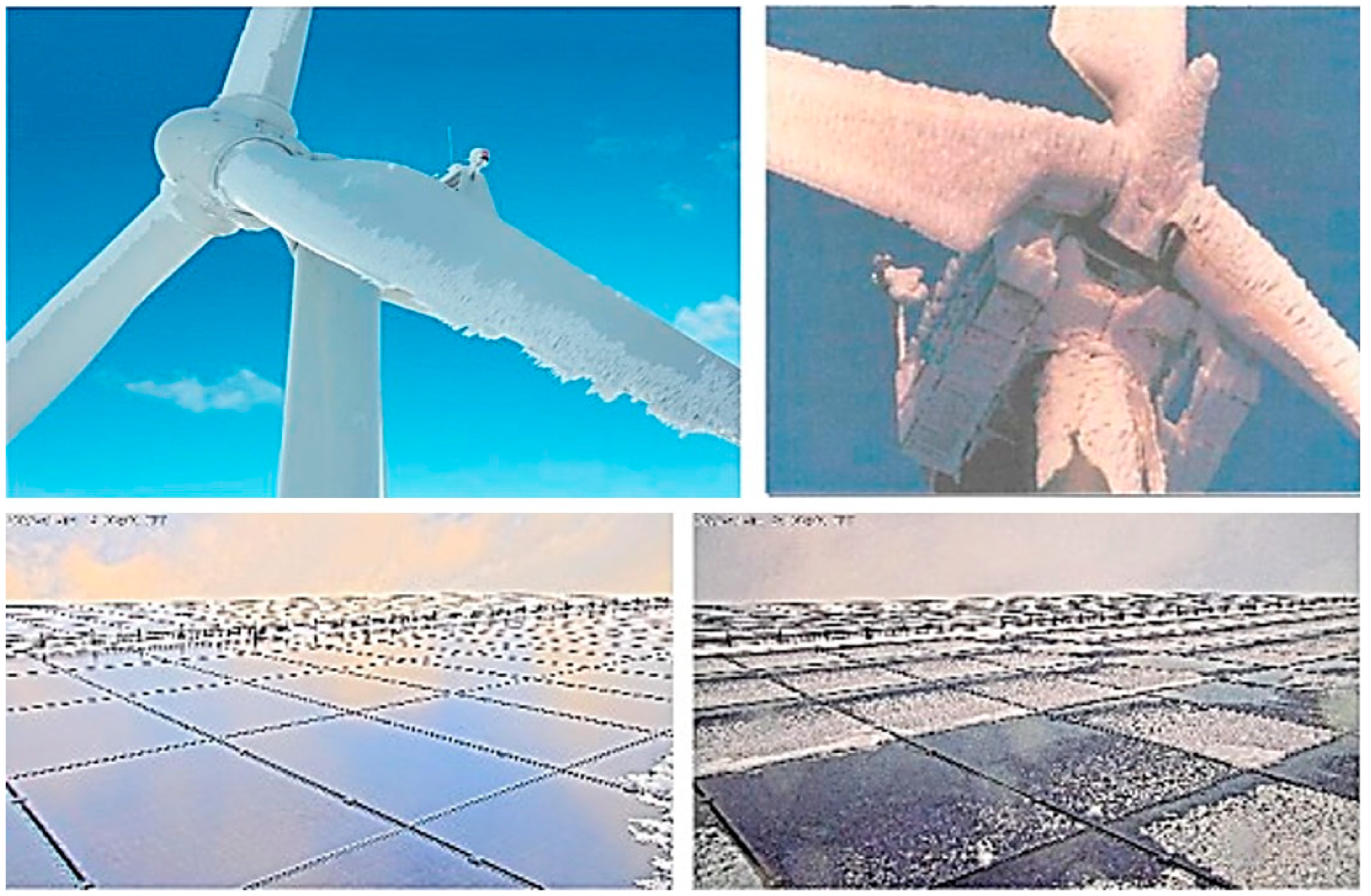
Wind power generation and solar photovoltaic power generation, as mature and widely applied renewable energy technologies, represent core pathways to achieving global carbon peak and carbon neutrality objectives, playing an indispensable role in energy structure transformation [1]. However, in cold or high-altitude regions, as shown in Figure 1, the surfaces of wind turbine blades and photovoltaic panels are highly susceptible to icing and frosting at low temperatures. The frost layer can distort the aerodynamic profile of the blades and significantly reduce the light transmittance of the photovoltaic panels, leading to decreased power generation efficiency, increased equipment vibration, and even forced shutdowns, resulting in significant energy losses and economic costs [2,3,4]. Conventional de-icing methods, such as electrical heating and chemical de-icing agents, are currently widely adopted but suffer from high energy consumption, low efficiency, potential equipment damage, and environmental pollution [5,6]. Therefore, delving into the mechanisms of low-temperature surface frost formation, systematically investigating the frosting characteristics and action mechanisms of different microscopic surface structures, and identifying effective methods to delay frost layer formation have become critical scientific and technological issues. These efforts are essential for enhancing energy utilisation efficiency, ensuring the reliable operation of equipment systems, and promoting the green and low-carbon development of related industries, thereby advancing the sustainable development of clean energy.
Frost formation is essentially a complex phase transition process whereby water vapour in moist air condenses upon cold surfaces. When the solid surface temperature falls below both the air’s dew point and freezing point, water vapour contacting the cold surface undergoes an initial stage of either condensation followed by nucleation and freezing, or direct sublimation nucleation. This is followed by a series of sequential steps: droplet coalescence, growth at the tips of solidifying droplets, frost layer expansion, and structural aggregation. Ultimately, this process forms a frost layer exhibiting the characteristic properties of a porous medium [9].
Surface frost formation, as a complex physical process involving multiphase flow, coupled heat and mass transfer with phase change, has long attracted numerous scholars to conduct in-depth research across multiple dimensions, including theoretical analysis, experimental observation, and numerical simulation. Early investigations focused on quantifying the influence of environmental parameters. Li et al. [10] conducted experimental studies on frost deposition on horizontal low-temperature surfaces under free convection. They quantified the coupled effects of cold surface temperature and ambient humidity on frost layer growth rate and final density under free convection conditions, establishing the classic parametric relationship governing frost layer growth. With advances in observational techniques, research has shifted towards micro-dynamics. Zheng et al. [11] employed visualisation methods to investigate the freezing process on vertical copper surfaces, superhydrophobic surfaces, and hybrid patterned surfaces. They discovered that surface wetting properties effectively regulate the distribution, size, and freezing sequence of initial condensation droplets, thereby guiding the propagation pathways of subsequent frost branches and the macroscopic morphology of the frost layer. He et al. [12] further focused on the ‘edge effect’ of millimetre-scale structural edges on the anti-frost performance of superhydrophobic surfaces. Experiments demonstrated that this ‘edge effect’ represents a common failure mode for anti-frosting on superhydrophobic surfaces, where millimetre-scale structural edges preferentially induce ice nucleation, leading to rapid frost layer propagation from the edges towards the centre. Wang et al. [13] combined experiments with simulations to investigate frost layer growth behaviour under ultra-low dew point conditions. They revealed that frost layer growth kinetics under extreme dry conditions differ markedly from those in conventional environments, with frost structures exhibiting greater porosity. A predictive model applicable to these special operating conditions was established.
Based on an understanding of the mechanisms of frost formation, the development of long-lasting, low-energy passive anti-frost coatings has become a research focus. Gu et al. [14] applied superhydrophobic coatings to aluminium finned heat exchangers in air-source heat pumps, confirming their potential for delaying frost formation and reducing defrosting energy consumption, thereby providing a case study for coating applications in refrigeration equipment. Li et al. [15] developed an enhanced superhydrophobic coating incorporating a flexible intermediate layer. This coating exhibits stable corrosion resistance, frost delay, and long-term weathering performance. It demonstrated excellent behaviour in mechanical abrasion, chemical corrosion, and UV ageing tests while maintaining superior hydrophobicity and anti-icing properties, achieving a significant improvement in durability.
Addressing the anti-icing requirements for wind turbine blades and photovoltaic sheets, Fakorede et al. [7] conducted a comprehensive review and comparative analysis of various anti-icing systems suitable for cold-climate wind turbines. They noted that while active heating methods are reliable, they exhibit high energy consumption, whereas passive coating methods face durability challenges. Ma et al. [16] explored porous surfaces infused with lubricants for wind turbine blade de-icing, finding this technology significantly reduces ice adhesion strength. However, issues concerning lubricant consumption and replenishment limit its long-term outdoor application. Li et al. [17] specifically investigated the durability and dynamic de-icing performance of elastomeric coatings on wind turbine blades. They discovered that elastomeric coatings, owing to their flexibility, better withstand the shear stresses generated during repeated freeze/thaw cycles, thereby exhibiting a longer service life than rigid coatings. Nevertheless, their photothermal conversion efficiency is typically lower than that of rigid coatings. de-icing cycles, their flexibility enables better tolerance of shear stresses generated during ice detachment, resulting in longer service life compared to rigid coatings. However, their photothermal conversion efficiency is typically lower than rigid coatings, highlighting the necessity for future development of composite coatings combining toughness with high photothermal efficiency. Ji et al. [18] combined high-fidelity CFD(Computational Fluid Dynamics)simulations with wind tunnel experiments to quantify the impact of varying ice morphologies and coverage rates on power generation efficiency, establishing precise correlations between ice formation patterns and aerodynamic losses. Nevertheless, the ice geometries employed remained based on idealised models, differing from the complex morphologies of natural ice accumulation. Manni et al. [8] further investigated the impact of de-icing nanomaterial coatings on solar sheets in high-latitude regions, discovering that certain coatings may slightly affect light transmittance while reducing ice accumulation, necessitating a balance between anti-icing performance and optical loss. Przybyszewski et al. [19] employed dual/tri-functional cage-type sesamsiloxane-modified transparent coatings to successfully impart surface de-icing properties to photovoltaic glass while maintaining high light transmittance, achieving a unified optical and anti-icing performance. Sun et al. [20] developed a composite film with high photothermal conversion efficiency. Under simulated solar irradiation, the film surface rapidly heated above freezing point, enabling self-powered passive de-icing. Its de-icing efficiency significantly surpassed conventional electric heating, offering an innovative solution for outdoor equipment such as photovoltaic sheets.
A large body of literature has demonstrated the superior performance of superhydrophobic surfaces in delaying ice formation and reducing ice adhesion strength; however, most studies have used metal, glass, or silicon wafers as substrates and conducted tests under ideal conditions. However, the engineering materials actually used on the surfaces of clean energy facilities—such as wind turbine blades and photovoltaic panels—include polymeric materials like HIPS, ABS, and acrylic. The surface properties of these single-component polymeric materials differ significantly from those of metal substrates, and research on the behavior of typical engineering polymeric materials under low-temperature frosting conditions remains scarce. Currently, research on the anti-icing performance and mechanisms of superhydrophobic surfaces in low-temperature environments is largely concentrated in the sub-freezing range of −5 °C to −10 °C. Studies on the characteristics of superhydrophobic surfaces regarding nucleation, frost crystal growth, and frost layer accumulation under the extreme −20 °C conditions actually faced by clean energy equipment in frigid regions remain insufficient. Systematic experimental observations are still needed to understand the crystalline morphologies that superhydrophobic surfaces adopt to suppress frost layer accumulation and prevent abnormal frost crystal growth. The interaction between the microstructure of superhydrophobic surfaces and frost crystals remains unclear, and there is a lack of in-depth understanding of key scientific issues such as changes in nucleation energy barriers and heat and mass transfer. Therefore, systematically analyzing the distribution of frost crystal heterogeneous nucleation sites, growth kinetics, and microstructure–ice crystal interaction mechanisms under −20 °C conditions through high-precision in situ observation methods holds significant theoretical value and practical significance for verifying the engineering applicability, performance stability, and evaluation reliability of superhydrophobic coatings in clean energy acquisition and storage.
This study focuses on the frosting phenomenon on the surfaces of clean energy equipment. We selected three commonly used polymer materials—HIPS, ABS, acrylic—commonly used on the surfaces of clean energy equipment—along with a superhydrophobic coating material. By establishing a low-temperature frosting experimental platform, we systematically recorded and compared the evolution and morphological changes in frost layers across different time scales for the four materials. We conducted a comparative analysis of parameters such as frost layer morphology, coverage, and thickness to evaluate the anti-frosting performance of superhydrophobic surfaces under −20 °C conditions and to elucidate the underlying mechanisms. This provides experimental evidence for the low-temperature protection of clean energy facilities.

2. Experiments and Methods

2.1. Establishment of the Experimental Platform

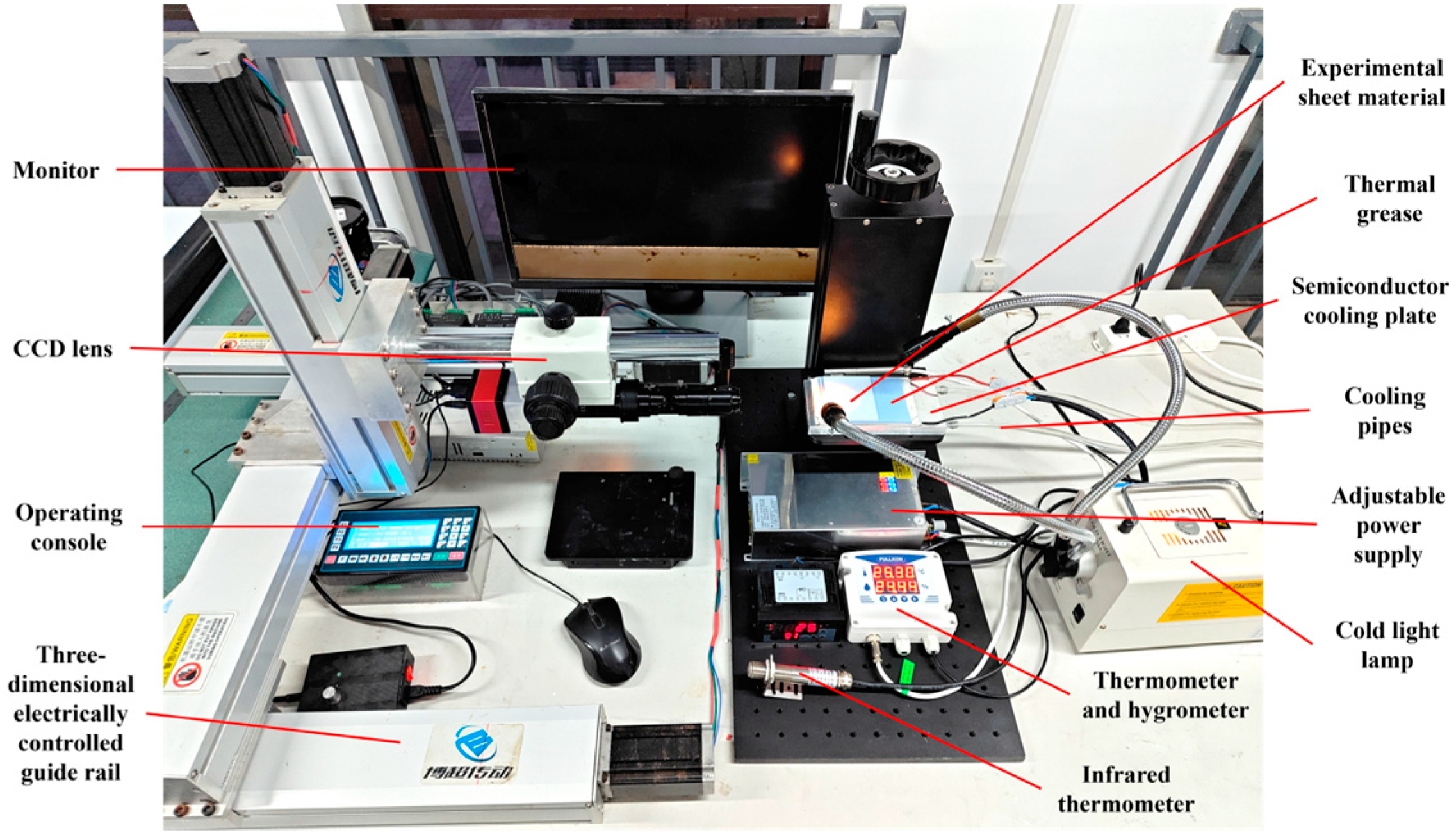
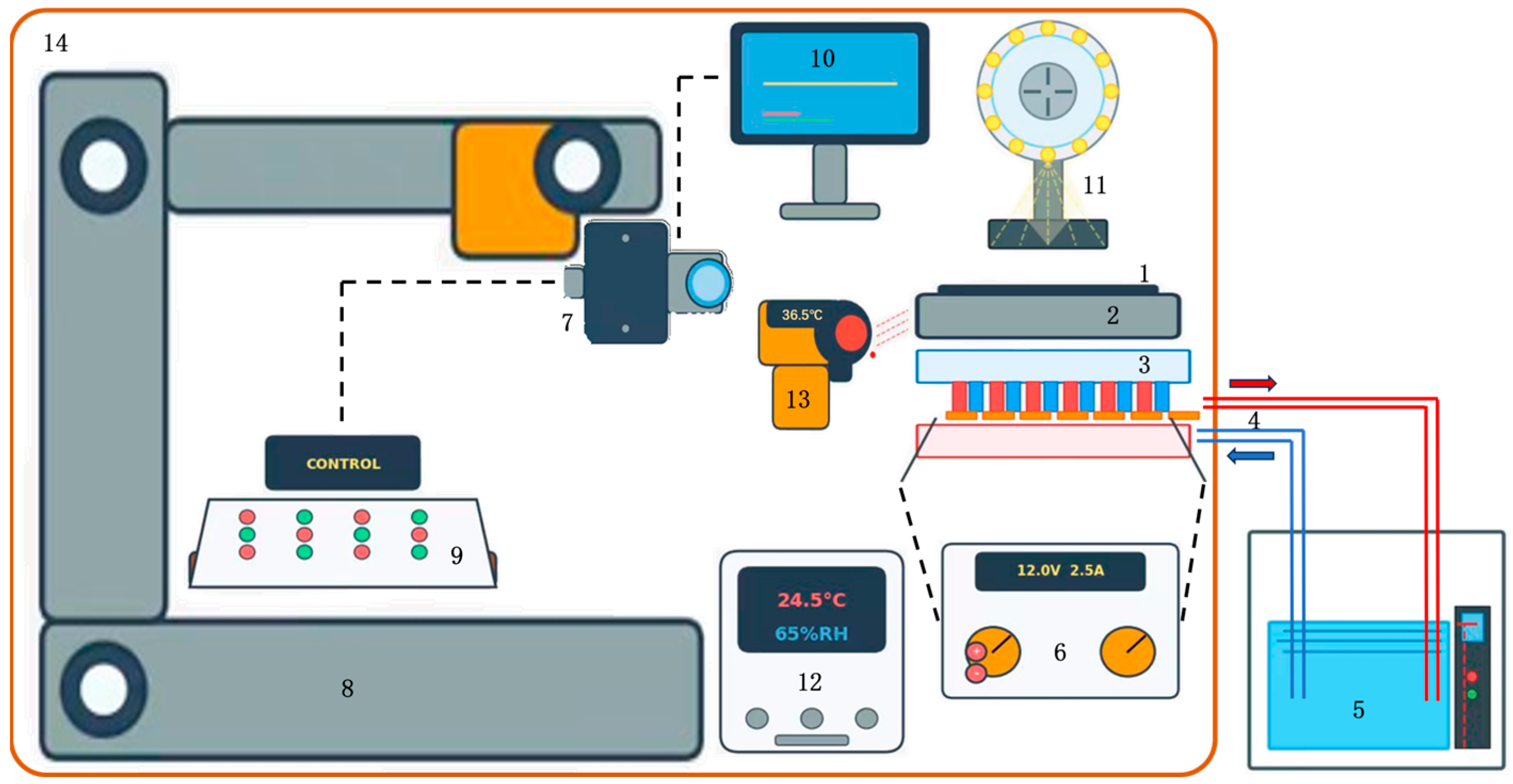
To observe and investigate frost formation on surfaces of materials with varying degrees of hydrophilicity and hydrophobicity, this paper independently designed and constructed a low-temperature surface frost observation experimental platform. The design principle of the experimental setup is illustrated in Figure 2.
The Low-Temperature Surface Frosting Observation Experimental Platform comprises four components: the frosting platform, the refrigeration and temperature control system, the frosting observation system, and the data acquisition system. It enables precise control of experimental conditions and real-time observation of the frosting process.
The frosting platform consists of an experimental sheet material and thermal grease. The experimental sheet material is positioned atop the thermal grease, receiving cold energy transmitted from below and serving as the observation subject for low-temperature surface frosting experiments.
The refrigeration and temperature control system comprises equipment including a semiconductor cooling plate, cooling water pipes, a constant-temperature circulating water bath, and an adjustable power supply. It is primarily employed to supply cooling capacity to the frosting platform and regulate the surface temperature of the experimental sheets. The semiconductor cooling plate is positioned beneath the frosting platform, with its cold surface temperature controlled via connection to the adjustable power supply [21]. When direct current passes through, heat absorption and heat dissipation occur on opposite sides of the plate. The heat-absorbing side faces upwards, contacting thermal grease to deliver the required cooling to the frosting platform. The heat-dissipating side faces downwards, connected to cooling pipes for liquid cooling. The other end of these pipes connects to the thermostatic circulating water bath, absorbing heat from the plate’s heat-emitting side to maintain a constant surface temperature on the test sheets during experiments.
The frost observation system comprises a CCD (Charge-coupled Device) lens, three-dimensional electrically controlled guide rails, an operating console, a monitor, and a cold light lamp. It is primarily used to observe and record the frosting process under varying hydrophilic and hydrophobic conditions. During experimental filming, the CCD lens captures the frost formation on the surface of experimental sheet material, while the cold light lamp serves as an auxiliary light source, with its position and brightness adjustable via fibre optics. The CCD lens is mounted on the three-dimensional electrically controlled guide rails. The operating console enables adjustment of the shooting position, angle, and mode. Captured footage is transmitted to the monitor for real-time viewing and storage, facilitating subsequent data processing and analysis post-experiment.
The data acquisition system comprises equipment such as thermometer and hygrometer and infrared thermometer, primarily employed to record experimental environmental conditions. The thermometer and hygrometer probes are positioned around the frosting platform to record ambient temperature and relative humidity throughout the experiment. The infrared thermometer measures real-time surface temperatures of the test sheets to monitor and ensure the frosting process occurs under constant surface conditions. The layout of the low-temperature surface frosting observation platform is shown in Figure 3, while Table 1 details the principal equipment employed.

2.2. Selection of Experimental Materials

This study selected four materials for comparative testing, namely HIPS (high-impact polystyrene), ABS (Acrylonitrile Butadiene Styrene), acrylic, and acrylic sheet with low-temperature flexible superhydrophobic coating (LFSC), all used in renewable energy installations. The aim was to evaluate the impact of varying hydrophilic and hydrophobic surface properties on frost formation behaviour.
HIPS plastic is an impact-modified material formed by introducing a rubber phase into polystyrene, and it can be used in photovoltaic power generation to manufacture additional insulation layers [22]. ABS plastic is an engineering plastic with excellent comprehensive properties, and can be used in wind power generation for the leading edges of small wind turbine blades, and in photovoltaic power generation for manufacturing photovoltaic sheet support structures [23,24]. Acrylic is a transparent engineering plastic with favourable thermoplasticity and light transmission properties. It is commonly employed in wind power generation for manufacturing wind turbine blades and in photovoltaic power generation as lightweight transparent covering materials, such as protective covers for photovoltaic sheets [25,26,27,28].
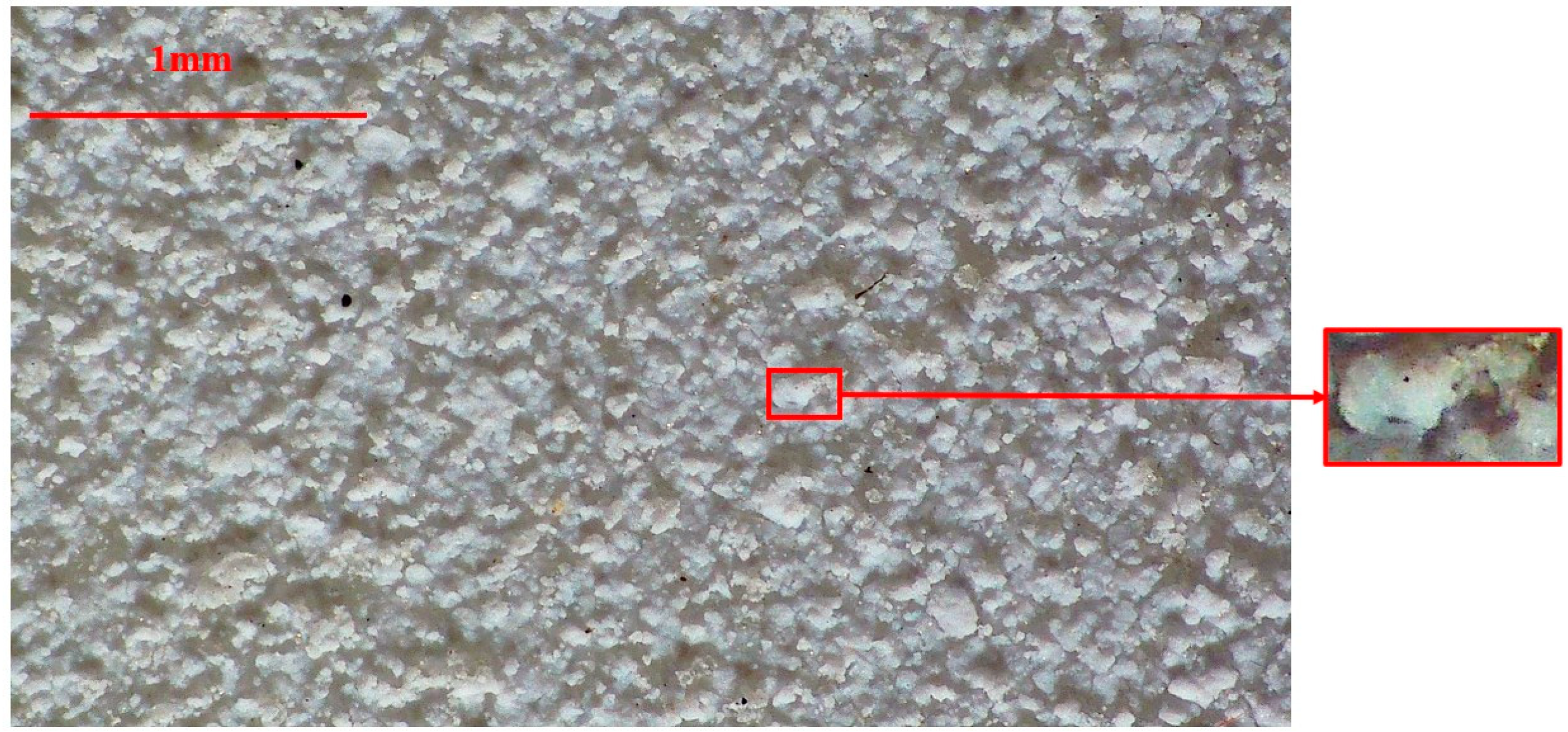
The LFSC constitutes the core experimental subject of this study. Based on biomimetic principles, this coating incorporates flexible siloxane segments into the main chain to synthesise a modified silicone-fluorine copolymer matrix. This confers exceptional flexibility and low-temperature adaptability upon the coating. Furthermore, by compounding with environmentally friendly materials such as HDTMS (Hexadecyltrimethoxysilane) and functional fillers like nano-SiO2, establishing a micro-nano dual structure comprising micrometre-scale protrusions and nanoscale wax-like structures. This achieves low surface energy and high hydrophobicity. The coating is uniformly applied via spraying onto clean acrylic substrates, forming the LFSC [29,30]. As shown in Figure 4, the surface characteristics of the LFSC under a CCD lens reveal micro- and nano-scale papillae structures resembling a lotus leaf surface, as highlighted in the figure.
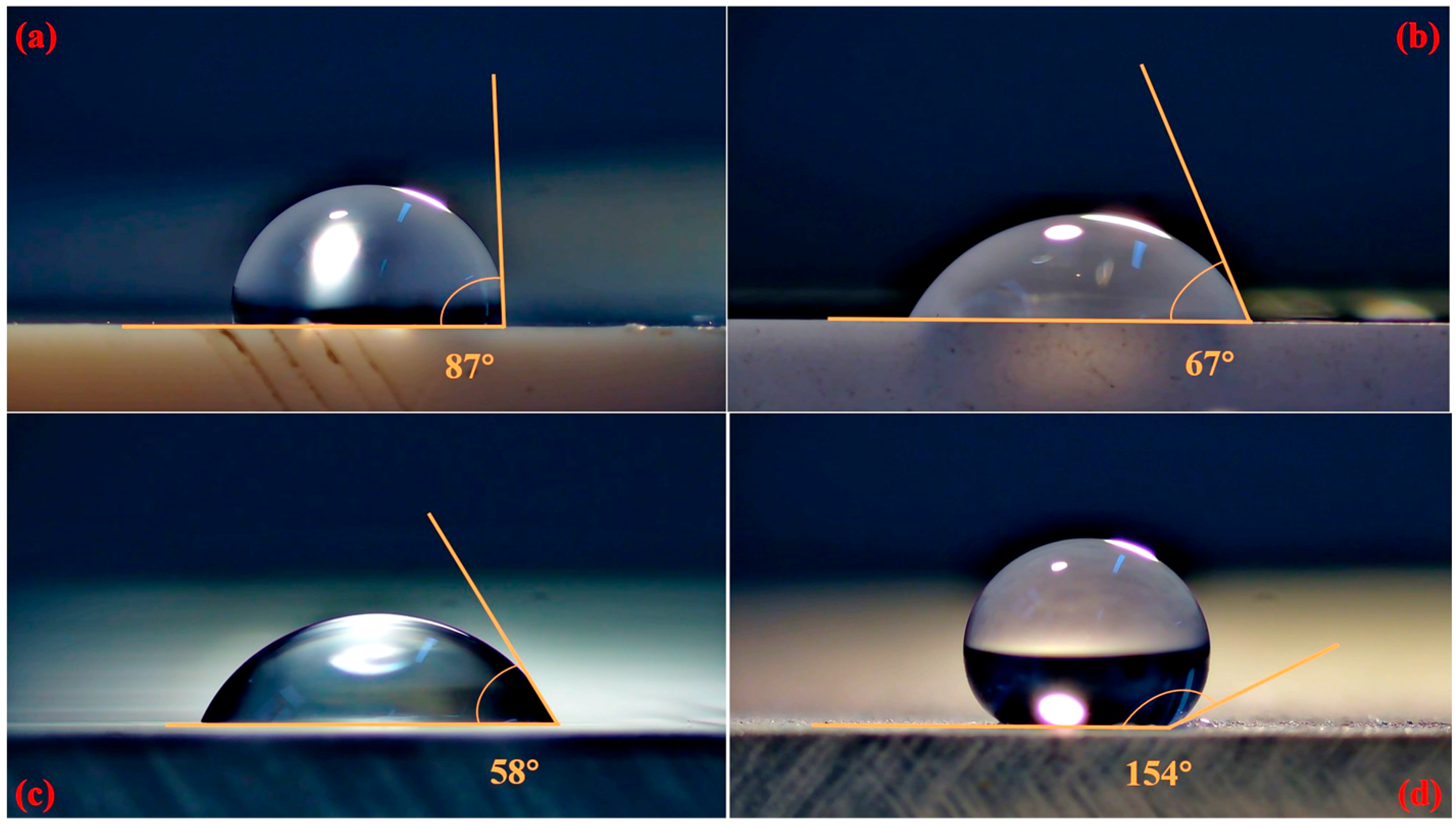
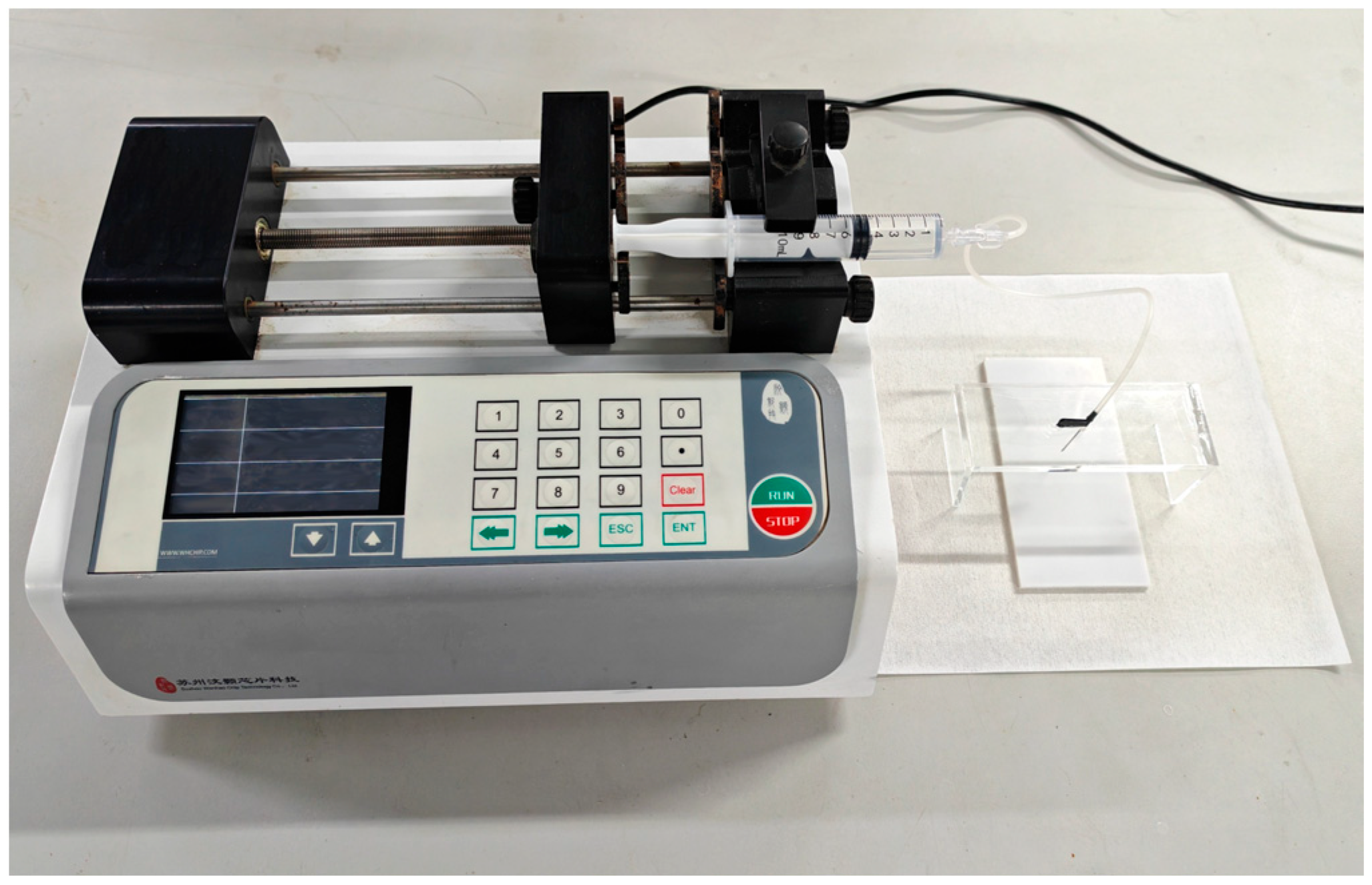
The four materials selected for this study were 5 mm thick and measured 50 mm × 100 mm. Prior to the frosting experiments, a static contact angle measurement platform was constructed as shown in Figure 5. The static contact angle of the samples was measured at room temperature (25 ± 1 °C). Deionized water with a droplet volume of 0.03 mL was used as the test liquid. The flow rate and velocity of the test liquid were set and controlled using a syringe to ensure that the droplet fell vertically and smoothly onto the test plate. Multiple measurements were taken at five different locations on the surface of each sample plate, and the average value was calculated [31,32].
The static contact angle of HIPS (Figure 6a) is 87° (±3°), which is close to the threshold between hydrophilic and hydrophobic properties; the static contact angle of ABS (Figure 6b) is 67° (±2°), classifying it as a hydrophilic material. The static contact angle of acrylic (Figure 6c) is 58° (±4°), also classifying it as a hydrophilic material. The static contact angle of the prepared acrylic sheet with LFSC (Figure 6d) is 154° (±1.5°), demonstrating superhydrophobic properties.
In response to the practical application requirements for wind turbine blades and photovoltaic panels to withstand low-temperature icing, this study systematically evaluated the service performance of LFSC in these scenarios. This study conducted the following physical, chemical, and mechanical property tests: Under a 100 g load, the coating surface was subjected to 50 cycles of abrasion against 800-grit sandpaper; the contact angle remained at 151°, maintaining its superhydrophobic state, demonstrating excellent abrasion resistance. After being tightly adhered with 3M tape and rapidly peeled off, the coating showed no significant damage and no noticeable decline in hydrophobicity after more than 50 cycles, indicating a strong bond between the functional layer and the primer layer; after continuous UV irradiation for several days, the contact angle of the coating surface remained at 152°, still above 150°, indicating that the HDTMS-modified SiO2 structure possesses good resistance to UV aging. Table 2 compares the properties of this coating with those of some coatings from other existing studies.

2.3. Experimental Procedure

This experiment observes the frosting process on a low-temperature surface. The sample surface temperature was set to −20 °C to simulate the surface temperature of clean energy equipment in dry, cold winter conditions. This temperature represents typical operating conditions in high-latitude winters; wind turbine blades and photovoltaic panels operating in high-latitude regions can easily reach and remain stable at this temperature level for extended periods during the night, when there is no solar radiation or when strong radiation causes cooling. This temperature is below the critical temperature for heterogeneous nucleation of water, allowing for rapid frost formation, while remaining above the glass transition temperature of the superhydrophobic coating, ensuring that the LFSC retains its flexibility. The experiment achieved this constant boundary condition using a semiconductor cooling plate and a thermostatic circulating water bath, focusing on studying frosting behavior under constant cooling drive while eliminating interfering factors such as solar radiation fluctuations and sudden changes in wind speed found in real-world environments. The specific experimental procedure is as follows:
(1) Clean and wipe the four types of test panels to ensure the surfaces are free of impurities and moisture, then place them in a drying oven for 30 min.
(2) Start the experimental refrigeration system and set the target temperature to −20 °C.
(3) Using an infrared thermometer, select five measurement points evenly distributed across the cold surface of the cooling plate. Record the current temperatures and calculate the average until the average temperature stabilizes at −20 °C and remains constant for 30 min.
(4) Use a thermo-hygrometer to record ambient temperature and humidity, and monitor the surface temperature of the test panels and environmental parameters in real-time throughout the experiment.
(5) Place the test panels on thermal grease and start the observation timer; adjust the focus of the top and side CCD cameras for filming, using a cold light lamp for supplementary lighting; and after 15 min of continuous observation, stop recording and save the vertical and horizontal views.
(6) Remove the test panels, wash, wipe, and dry them again to ensure consistent initial experimental conditions; repeat the above frosting test steps three times for each type of panel. After all experiments are completed, shut down all equipment on the platform.
(7) Record vertical images at 0, 5, 10, and 15 min; count the number of frost crystal nuclei and calculate the frost coverage within a designated 1 mm × 1 mm area; analyze the diffusion patterns and distribution of the frost layer; record horizontal images at the same time points; and analyze the vertical growth patterns of the frost layer and measure its thickness.

3. Results

Experiments measured the static contact angles of HIPS, ABS, acrylic, and acrylic sheets with LFSC to be 87° (±3°), 67° (±2°), 58° (±4°), and 154° (±1.5°), respectively. Throughout the duration of the low-temperature surface frost observation experiment, the measured environmental parameters exhibited excellent stability. The surface temperature of the test sheets remained within the range of −20.0 ± 0.2 °C with minimal fluctuations, satisfying the constant-temperature requirements for the experiment. The deviation between measurements taken at various points on the test sheet surface using the infrared thermometer was less than 0.3 °C, indicating good temperature uniformity across the frosting platform.
The thermometer and hygrometer recorded stable ambient temperatures of 18.0 ± 0.3 °C and relative humidity of 25 ± 1%. During the initial 30 s after placing the experimental sheet material onto the frosting platform, environmental parameters fluctuated slightly but rapidly stabilised within 60 s. The frosting process primarily commenced after the experimental sheet material’s surface temperature stabilised, rendering this transient fluctuation negligible for subsequent frost formation.

3.1. Evolution of Frost Morphology on Different Material Surfaces

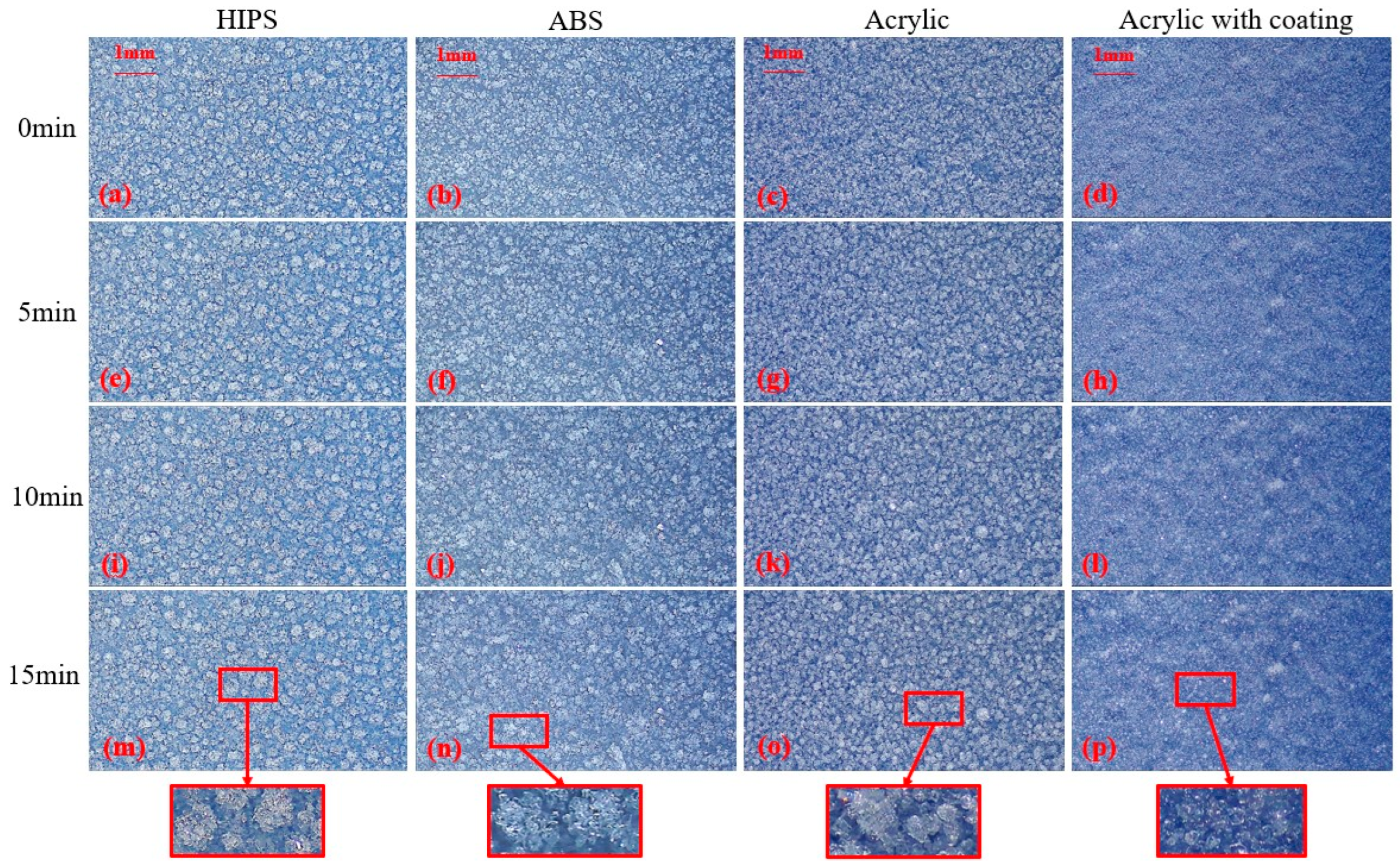
Under the vertical lens observation perspective, four vertical frosting views of the sheet surfaces at 0 min, 5 min, 10 min, and 15 min were obtained, as shown in Figure 7.
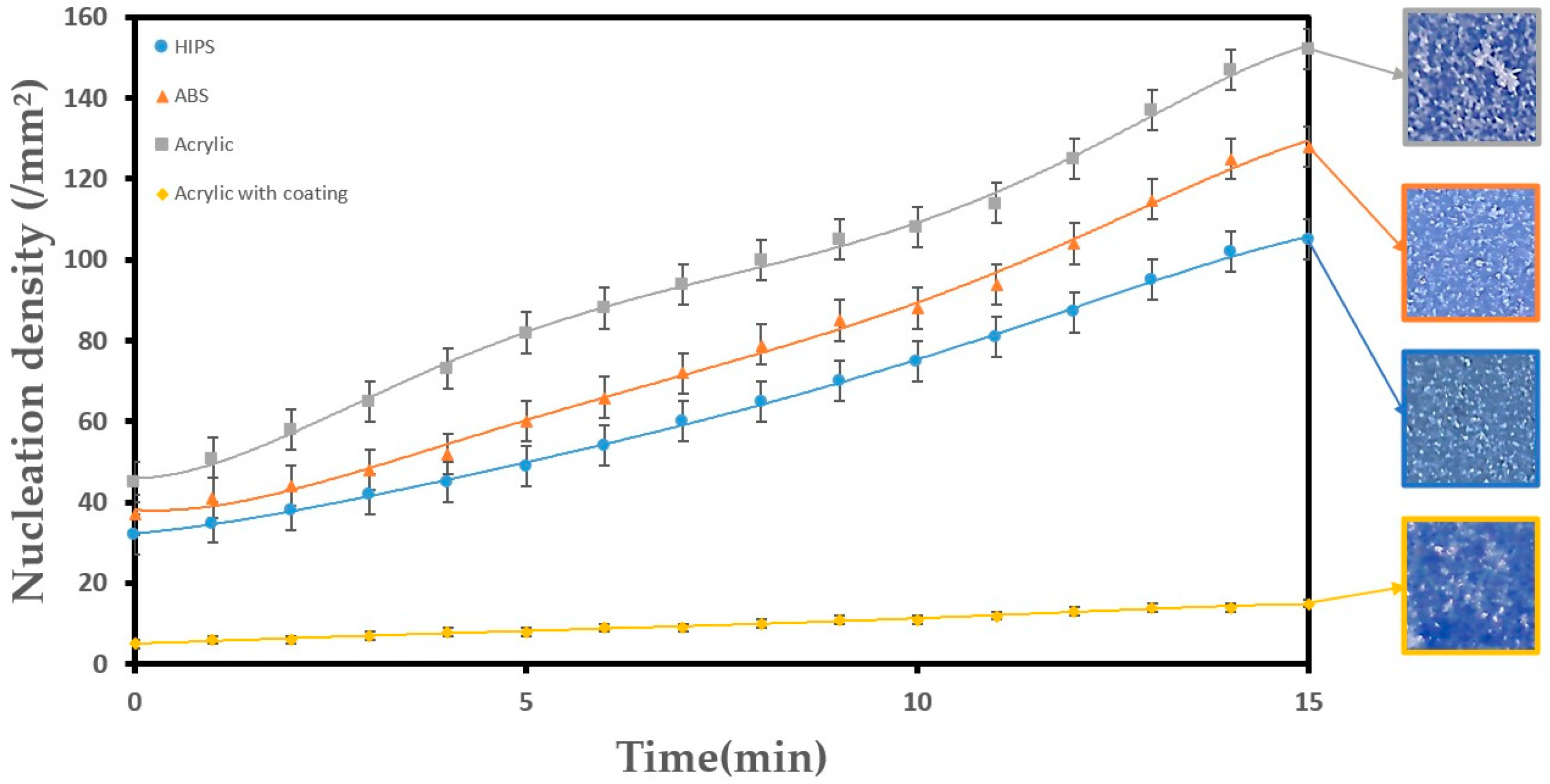
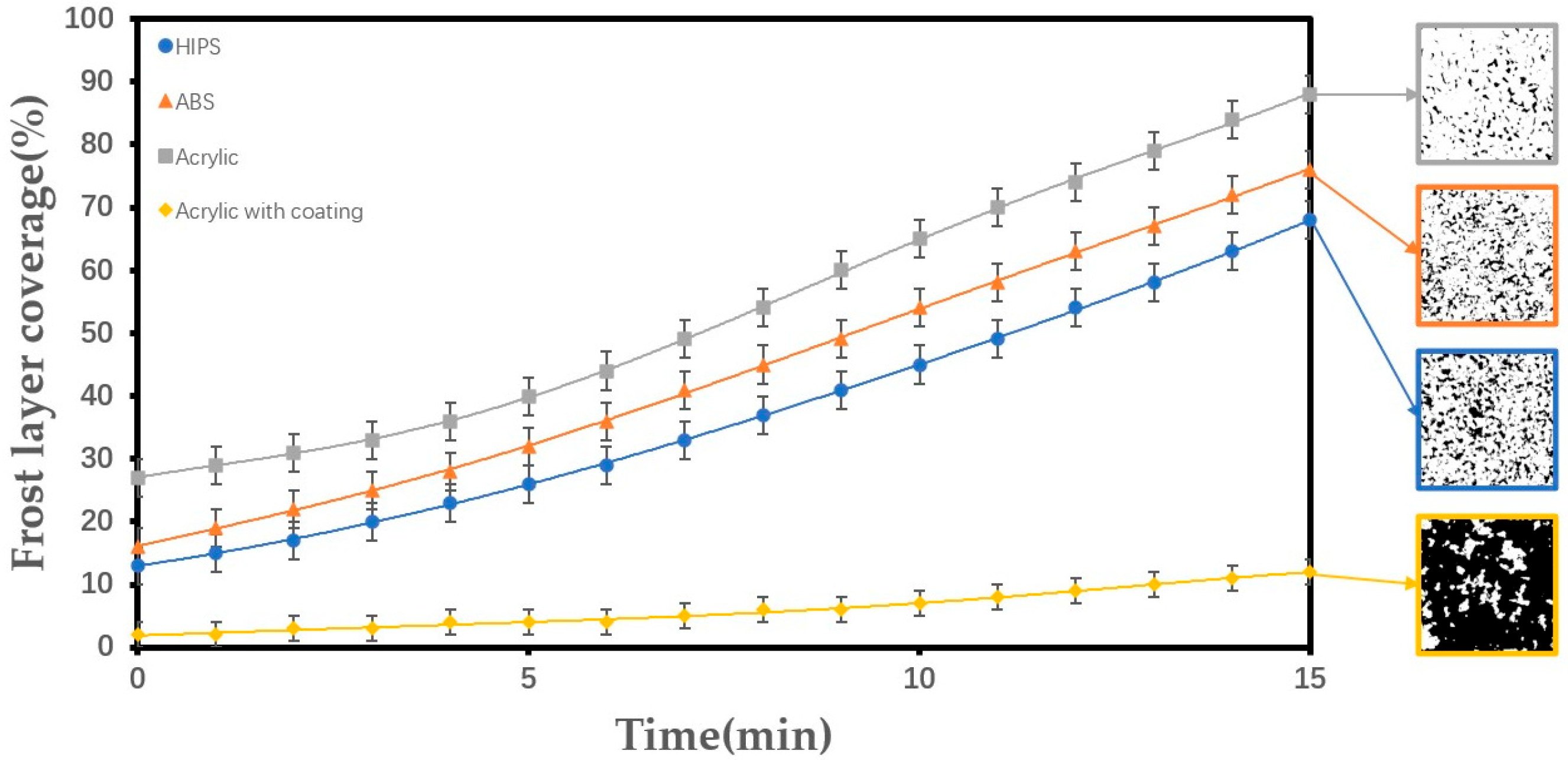
At five minutes of frost formation, the nucleation density on the HIPS surface (Figure 7e) was markedly lower, averaging approximately 49 per square millimeter. Individual frost crystals were smaller in size and showed minimal aggregation into regional nucleation clusters. The frost crystals were distributed relatively uniformly across the surface, with a frost layer coverage of approximately 26%. The nucleation density on the ABS surface (Figure 7f) was slightly higher than that on the HIPS surface, averaging approximately 60 per square millimeter. A distinct tendency for frost crystals to aggregate on the surface was observed, with some crystals beginning to coalesce into clusters. This phenomenon is associated with the surface’s microscopic irregularities, and the frost layer coverage was approximately 32%. The acrylic sheet surface (Figure 7g) exhibited a significantly higher nucleation density than the previous two materials, with dense frost crystals already formed, averaging approximately 82 per square millimeter. The frost crystals were densely packed and continuous, forming irregular clusters. The frost layer coverage was relatively high, at approximately 40%. In contrast, the acrylic sheet surface coated with LFSC (Figure 7h) exhibited distinctly different frosting behaviour. The surface nucleation density was extremely low, averaging approximately 8 per square millimeter, representing only one-tenth of that on the bare acrylic sheet. Frost crystals were extremely small and isolated, appearing only sporadically on the protrusions of the papillary structure. Virtually no significant frost formation was observable, with most surface areas remaining clean. The frost coverage rate was merely 4%, demonstrating a pronounced frost delay effect.
At 10 min of frost formation, frost crystal growth accelerated on the HIPS surface (Figure 7i), with an average nucleation density of approximately 75 per square millimeter. Larger frost crystals appeared, exhibiting localised aggregation though remaining generally dispersed. Coverage increased significantly to 45%. On the ABS surface (Figure 7j), frost crystal growth exhibited anisotropy, with faster growth rates and higher aggregation along surface protrusions. The average nucleation density was approximately 88 per square millimeter, and the frost layer coverage reached 54%. On the acrylic sheet surface (Figure 7k), frost crystals markedly enlarged, with some regions beginning to interconnect and form a continuous frost layer. Nucleation density growth slowed due to aggregation, averaging approximately 108 per square millimeter, with a frost layer coverage of 65%. On the acrylic sheet surface with LFSC (Figure 7l), individual frost crystals exhibited pronounced growth. However, the overall frost crystal count and coverage increased only marginally to 11 per square millimeter and 7%, respectively, remaining substantially lower than other materials. Frost crystals continued to grow in isolation without any tendency towards coalescence.
At 15 min of frost formation, the HIPS surface (Figure 7m) exhibited an average frost crystal nucleation density of approximately 105 per square millimeter, with coverage significantly increasing to 68%. Small-scale frost crystal aggregation occurred locally, though overall distribution remained dispersed. This indicates that lateral expansion of frost crystals on the HIPS surface was negligible, with growth predominantly occurring in the vertical direction. The frost crystal structure on the ABS surface (Figure 7n) exhibited greater complexity, gradually forming clusters of varying sizes along the surface texture. The average nucleation density was approximately 128 per square millimeter, with coverage continuing to increase to 76%. The acrylic sheet surface (Figure 7o) was almost entirely covered by a frost layer, with frost crystals fully developed into a continuous, dense structure. The average nucleation density was approximately 152 per square millimeter, and the frost layer coverage reached 88%. On the acrylic sheet surface with LFSC (Figure 7p), the frost crystal density increased only marginally, with a nucleation density of approximately 15 per square millimeter. The frost crystals exhibited an extremely sparse distribution, forming an ‘island-like’ pattern. Most areas of the surface remained frost-free, with coverage persisting at a low level of merely 12%.
Figure 8 illustrates the temporal variation in nucleation density across the surfaces of four distinct experimental sheets. Vertically oriented frost images were subjected to binarisation processing, enabling statistical analysis of frost coverage evolution over time for each sheet type, as presented in Figure 9. Throughout the 15 min low-temperature surface frosting process, both nucleation density and frost coverage exhibited sustained growth at comparable rates. HIPS exhibited a relatively low frosting rate, possessing the highest initial contact angle compared to ABS and acrylic surfaces. Its surface structure reduced frosting speed while constraining lateral expansion of frost crystals. ABS demonstrated a slower initial frosting rate, with an accelerating trend in the middle to late stages. Its micrometre-scale rough surface structure created strong adhesion between the frost layer and substrate, guiding frost crystal growth. Acrylic sheets exhibited a frosting rate that accelerated initially before slowing throughout the experiment, primarily due to limited space for frost crystal aggregation and growth, with competition among crystals reducing growth rates. Acrylic sheets coated with LFSC demonstrated an extremely low frosting rate. Frost crystals grew in isolated forms, struggling to coalesce into a dense frost layer. The resulting loose frost structure was prone to detachment, delivering excellent frost suppression performance.

3.2. Growth Morphology and Thickness of Frost Layers on Different Material Surfaces

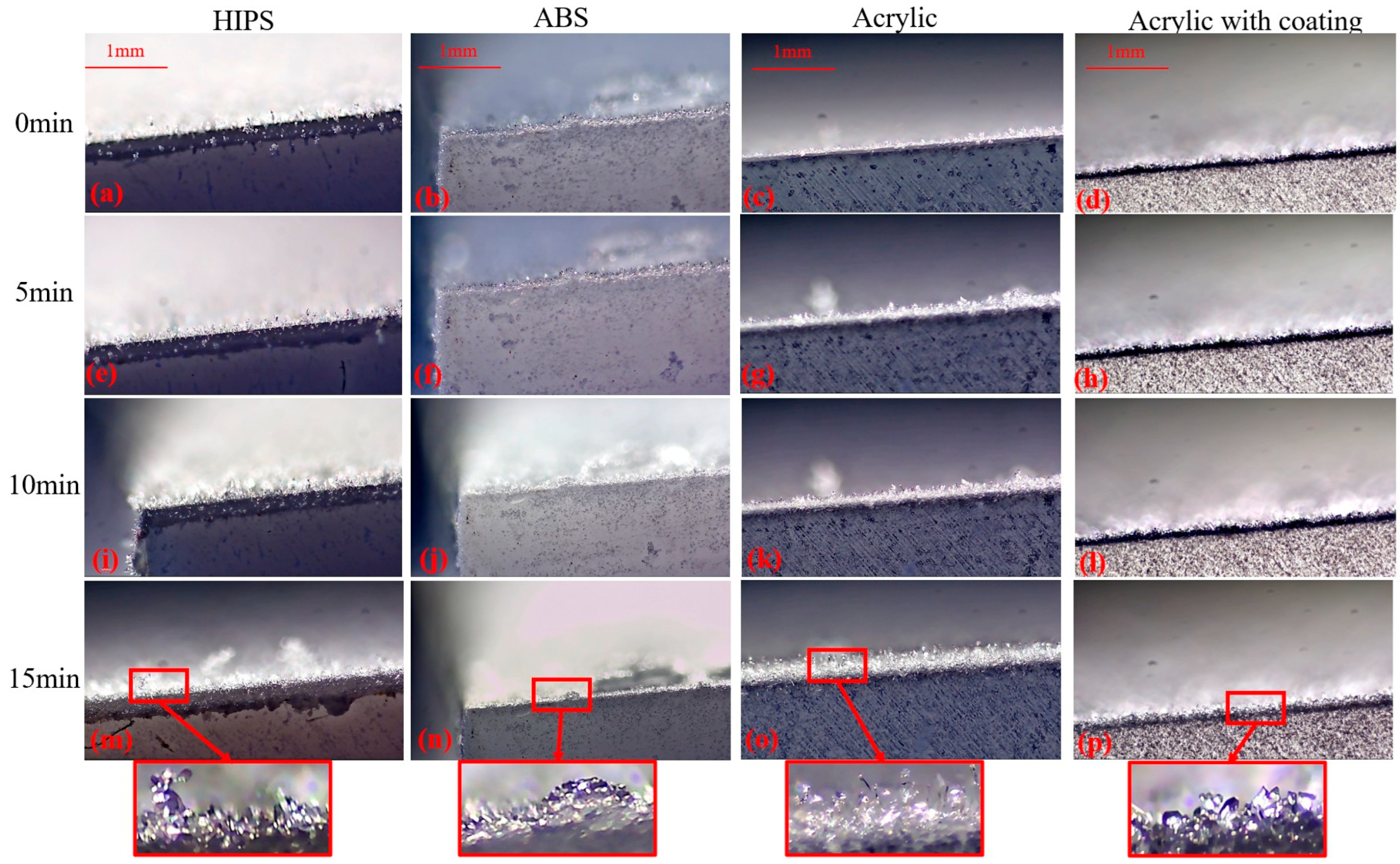
Under the observation angle of the lateral lens, the lateral frost patterns on the four sheet surfaces at 0 min, 5 min, 10 min, and 15 min are shown in Figure 10. This study employed a non-contact optical measurement method based on CCD imaging to quantitatively characterize the thickness of frost layers. By simultaneously capturing lateral-view images containing a high-precision scale, a conversion relationship between pixel space and actual physical dimensions was established to quantify the thickness. Using image processing software, the actual thickness was calculated by calibrating the vertical pixel distance from the frost layer surface to the substrate reference plane. To account for the inherent irregularities in the frost layer’s morphology, statistical analysis was performed on multiple measurement points to determine the average thickness and standard deviation.
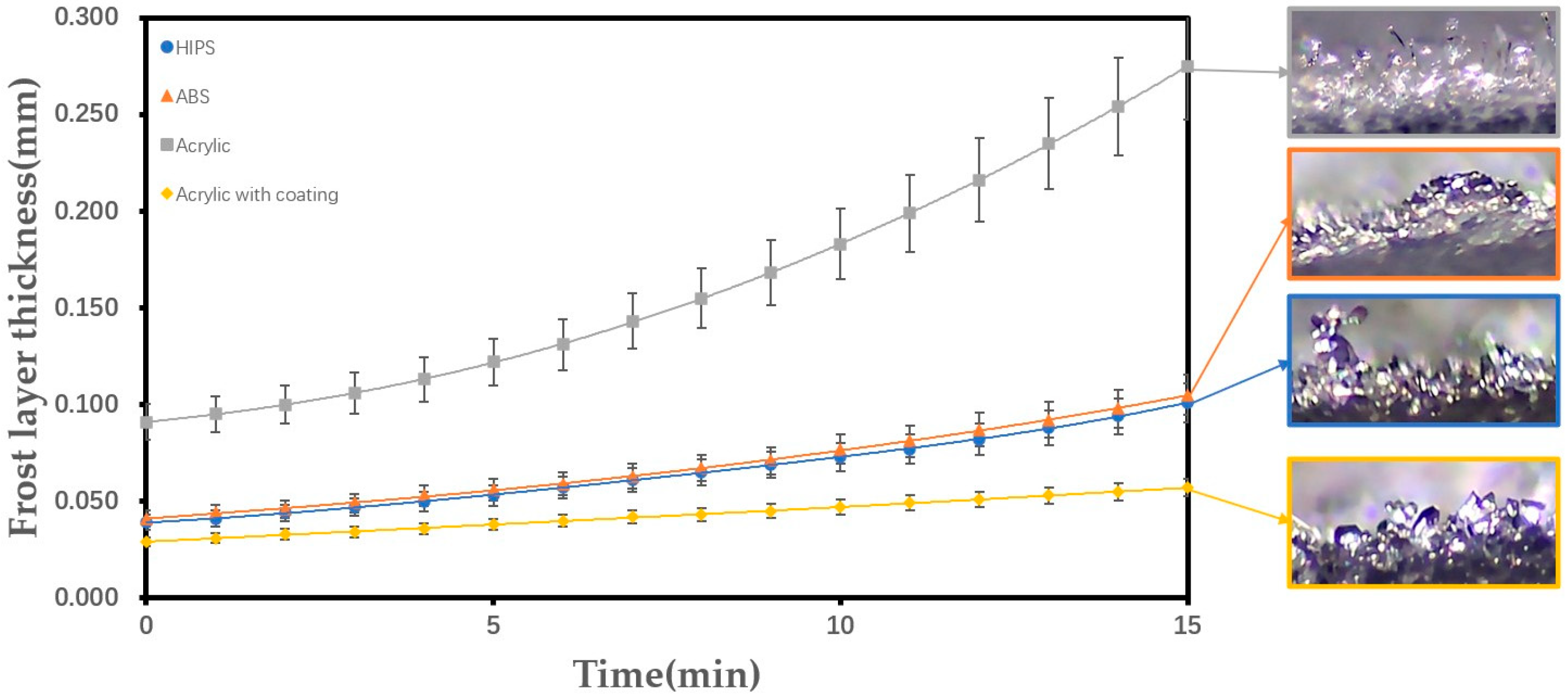
At 5 min of frost formation (Figure 10e), the HIPS surface exhibits a low frost layer density with wide voids between frost crystals. The frost layer is relatively thin, featuring elongated crystals that are thicker at the top and taper towards the base. At 10 min of frost formation (Figure 10i), the frost layer density increased but remained non-compact, with a slight increase in thickness. This occurred because the heavier, thicker upper sections of frost crystals broke off midway during growth and fell onto the surface; At 15 min of frost formation (Figure 10m), the frost layer density showed no significant change but its thickness continued to increase. Concurrently, longer dendrites grew vertically. Under higher magnification, these dendrites were observed to branch laterally at their tips. Substrate frost crystals exhibited some degree of aggregation, yet numerous voids persisted within the frost layer. The final measured thickness of the frost layer on the HIPS surface was approximately 0.101 mm.
At 5 min of frost formation (Figure 10f), the frost layer density on the ABS surface was higher than that on the HIPS surface, with a similarly thin frost layer. Short frost crystals were distributed across the sheet surface, showing no pronounced tendency to grow vertically upwards. At 10 min of frost formation (Figure 10j), the frost layer density increased markedly, with a significant rise in thickness. Individual frost crystals remained small but began to aggregate within limited areas. By 15 min (Figure 10n), the frost layer had become densely packed, with continued but slower thickening. Small clusters of crystals emerge, and magnification reveals multiple small, block-like frost crystals aggregating. Upon melting at the top, these crystals re-form frost within the clusters. The internal voids within the frost layer are minimal, with the final measured thickness of the frost layer on the ABS surface being approximately 0.105 mm.
At five minutes of frost formation (Figure 10g), the frost layer on the acrylic sheet surface exhibited higher density than both the ABS and HIPS surfaces, with elongated dendrites already appearing. These dendrites were slender and grew in diverse directions. By ten minutes of frost formation (Figure 10k), the frost layer had become densely packed, with internal voids scarcely visible. The frost layer thickness showed a marked increase, with frost crystals compressing each other as they grew upwards, and some frost crystals coalescing at the base layer. After 15 min of frosting (Figure 10o), the frost layer had fully accumulated with significantly increased thickness. Crystal clusters grew substantially, producing numerous slender dendrites. Under magnification, it was observed that topmost dendrites melted and fell, rapidly accumulating and aggregating at the base. Upper-layer dendrites grew in chaotic directions; after competitive growth, only some could protrude to the upper surface. The final measured frost layer thickness on the acrylic surface was approximately 0.275 mm.
The surface of the acrylic sheet with LFSC did not form a frost layer after 5 min of frosting (Figure 10h), exhibiting fine crystal grains that were sparsely distributed across the surface. The crystal grain height was the lowest among the four materials tested. After 10 min of frost formation (Figure 10l), frost crystal density increased moderately, with individual crystals enlarging in volume. However, crystals remained largely non-interfering, showing no signs of aggregation; After 15 min of frost formation (Figure 10p), frost accumulation remained inconspicuous. Granule growth ceased, with crystals gradually adopting a hemispherical shape. Individual crystal height and size showed negligible change from the initial state. Under high magnification, frost crystals exhibited independent growth with a narrow-ended, wide-midsection morphology. Following melting at the apex, recrystallisation occurred only slowly upon the original crystal. Ultimately, the frost layer thickness on the acrylic sheet with the LFSC was measured at merely 0.057 mm, the thinnest among the four substrates.
Figure 11 illustrates the temporal variation in frost layer thickness across four distinct experimental sheet surfaces. The experiments clearly demonstrate that the growth rates of frost layers on HIPS and ABS are remarkably similar, whilst acrylic exhibits the greatest frost layer thickness. Moreover, as time progresses, the rate of increase in acrylic’s frost layer thickness continues to accelerate. The anti-frost efficacy of the LFSC proves exceptionally pronounced in the thickness dimension. The frost layer on the acrylic sheet coated with this treatment measures merely 15% of that on the untreated acrylic sheet, exhibiting an extremely low growth rate. This substantial disparity demonstrates the coating’s outstanding advantage in inhibiting vertical frost layer growth.

4. Discussion

Based on 15 min frosting observations of different panel materials conducted through low-temperature surface frosting experiments, it can be seen that the degree of frosting on the four panel types follows a gradient pattern: acrylic panels > ABS panels > HIPS panels > acrylic panels with LFSC. Acrylic panels exhibited the most severe frosting with the largest coverage area, while the panels with the superhydrophobic coating showed the least frosting. with frost crystals forming isolated hemispherical structures, demonstrating exceptional overall anti-frost performance.
Throughout the experiment, the superhydrophobic surface consistently maintained the lowest frost coverage rate and thinnest average frost layer thickness. The LFSC demonstrated frost suppression efficiency exceeding 80%, with slight improvement over time. Compared to the most severely frosted acrylic sheet surface, frost coverage was reduced by nearly 90%. This highly effective frost suppression capability holds significant importance for extending the operational lifespan of clean energy facilities.
  • An increase in the contact angle elevates the critical nucleation energy barrier, thereby increasing the difficulty of frost crystal nucleation.
In experiments, nucleation sites on superhydrophobic surfaces are sparse and randomly distributed. For such surfaces, the extremely high contact angle results in minimal droplet contact area, thereby substantially increasing the critical nucleation energy barrier and significantly elevating the difficulty of heterogeneous nucleation [35,36]. Once an ice droplet forms, the saturated vapour pressure of ice being lower than that of supercooled water causes surrounding water vapour molecules to preferentially migrate to and sublimate onto this existing ice crystal surface. This triggers rapid vertical and horizontal growth of the frost crystal at that point, forming tall ‘frost patches’. In regions distant from frost patches, the protective air cushion and low surface energy persistently inhibit new nucleation. Consequently, the nucleation density on superhydrophobic surfaces is markedly lower than on the other three materials. This growth pattern itself is inefficient, as water vapour must diffuse over greater distances to reach growth sites, thereby increasing the difficulty of frost crystal nucleation.
2.
Micro-nano structures on superhydrophobic surfaces reduce thermal conductivity efficiency, thereby slowing the growth rate of frost layers.
The anti-frost performance of superhydrophobic surfaces fundamentally relies upon the air cushion captured within their rough micro- and nanostructures. When droplets are placed upon such rough surfaces, air becomes trapped beneath the apex of the droplet’s microstructure, creating a metastable non-wetting state known as the Cassie-Baxter state [37]. Experimental observations confirming this mechanism reveal droplets suspended atop the micro-nanostructures, forming point contacts with the substrate. In this state, the solid–liquid contact area is minimal, with the majority of the surface isolated by an air layer. This results in the formation of a loose, porous frost layer possessing a larger specific surface area and increased diffusion pathways. The presence of this air layer results in a low effective thermal conductivity for the frost layer, significantly impeding heat transfer. This maintains a relatively high effective surface temperature, thereby slowing the rate of water vapour condensation and reducing the rate of frost layer thickening [38,39].
3.
Constraints imposed by rough surfaces on the orientation of frost crystal growth.
During the frost layer growth phase, the formation of ice bridges constitutes a critical step leading to the rapid and continuous coverage of surfaces by successive frost layers. The micro-nano structural spacing on superhydrophobic surfaces, comparable to frost crystal dimensions, coupled with unique micro-wetness and structural characteristics, physically inhibits and delays this process. When frost crystals grow to a certain size, their expansion becomes physically constrained by the microstructures [40,41]. The hemispherical frost crystals observed experimentally indicate that crystal growth is impeded, permitting only limited vertical expansion. This spatial constraint effect hinders lateral coalescence of frost crystals, resulting in slow coverage growth. Constrained by the surface microstructure, condensed water droplets remain trapped atop the microstructures, struggling to wet the structural grooves. The growth of the frost layer requires water vapour migration across the substrate surface. Consequently, the associated growth pathways between two ice nuclei no longer involve short-range diffusion along the solid surface but instead necessitate long-range gas-phase diffusion through the air layer. This significantly increases the difficulty of connecting different frost crystals and prolongs the time required for frost layer formation.
Experiments have confirmed that improving surface wettability by increasing the static contact angle can effectively intervene in the thermodynamic evolution of frost layers in typical low-temperature environments, significantly reducing frost coverage and delaying the onset of frost formation. This provides new experimental evidence for passive anti-icing and de-icing technologies. When combined with low-power active de-icing systems, this approach can substantially reduce curtailment of wind and solar power caused by icing, increase the annual utilization hours of equipment, and directly boost clean energy generation. Compared to traditional active de-icing methods, this approach offers the potential advantages of low energy consumption and continuous, uninterrupted operation.
Experiments observed that anti-icing efficiency slightly increased as the icing process progressed, providing positive indications for the coating’s long-term service under continuous low-temperature conditions. Applying this LFSC to the surfaces of wind turbine blades can effectively inhibit the adhesion and accumulation of frost on the leading edges and airfoil surfaces, thereby maintaining the aerodynamic profile of the blades and reducing power losses caused by increased surface roughness. Coating photovoltaic glass surfaces with this coating can delay frost coverage, maintain the optical transmittance of modules, and ensure the effective power output of photovoltaic power stations under low-temperature, low-light conditions.
This technology can extend the continuous operation cycle of equipment, reduce the frequency of manual de-icing and maintenance costs, avoid increased structural loads and fatigue damage caused by ice accumulation, and extend the service life of the units. The research findings provide critical technical support for addressing the issue of surface icing on clean energy equipment in cold and high-altitude regions. This technical approach can replace traditional chemical de-icing agents, eliminate the ecological risks posed by harmful substances such as ethylene glycol to soil and water sources, reduce energy consumption associated with active de-icing, and achieve dual optimization of environmental and economic benefits. Against the backdrop of the global energy transition, breakthroughs in anti-icing technology will unlock the vast renewable energy potential of high-altitude, cold regions, drive the large-scale deployment of wind and solar power in extremely cold environments, enhance the climate resilience and power supply reliability of renewable energy systems, and provide crucial technical support for building a clean, low-carbon, safe, and efficient modern energy system.


5. Conclusions

This study focuses on the phenomenon of surface frost formation on clean energy equipment. Utilising a self-developed low-temperature frost observation platform, a systematic comparison was conducted between HIPS, ABS, acrylic and acrylic sheets with LFSC under conditions of −20 °C cold surface temperature, 18 °C ambient temperature, and 25% relative humidity. The study analysed their effects on parameters such as frost layer morphology, coverage, and thickness, whilst providing an in-depth analysis of the frost suppression mechanism of superhydrophobic surfaces. This offers novel insights for mitigating surface frosting on clean energy equipment. Applying superhydrophobic coatings to wind turbine blades or photovoltaic sheets can significantly delay ice accumulation. When combined with low-power active de-icing technologies, efficient ice removal requires minimal energy input, substantially reducing the energy consumption of entire anti-icing systems, while simultaneously reducing or eliminating the need for environmentally harmful chemical de-icing agents. This approach supports sustainable energy utilisation, safeguards the secure operation of clean energy equipment, enhances operational efficiency, and promotes the long-term development of clean energy.

Author Contributions

Conceptualization, H.L. and J.S.; methodology, H.L.; formal analysis, H.L.; investigation, H.L.; resources, H.L.; data curation, H.L. and K.H.; writing—original draft preparation, H.L. and J.S.; writing—review and editing, H.Y. and J.Z.; visualization, H.L. and K.H.; supervision, J.S. and H.Y.; project administration, H.Y.; funding acquisition, J.S. and H.Y. All authors have read and agreed to the published version of the manuscript.

Funding

This research was funded by the Shandong Provincial Natural Science Foundation, grant number ZR2023ME146; the Qingdao Science and Technology Benefiting People Demonstration Project, grant number 25-1-5-cspz-4-nsh; the Postdoctoral Fellowship Program of China Postdoctoral Science Foundation, grant number GZC20252079; and the Laboratory Research Fund Project, Ocean University of China, grant number 842551017.

Institutional Review Board Statement

Not applicable.

Informed Consent Statement

Not applicable.

Data Availability Statement

The original contributions presented in this study are included in the article. Further inquiries can be directed to the corresponding authors.

Conflicts of Interest

The authors declare no conflicts of interest.

References

  1. Sun, H.; Zou, H.; Wen, J.; Ke, W.; Kou, L. Optimal Scheduling Considering Carbon Capture and Demand Response under Uncertain Output Scenarios for Wind Energy. Sustainability 2024, 16, 970. [Google Scholar] [CrossRef]
  2. Cai, C.; Guo, J.; Song, X.; Zhang, Y.; Wu, J.; Tang, S.; Jia, Y.; Xing, Z.; Li, Q. Review of Data-Driven Approaches for Wind Turbine Blade Icing Detection. Sustainability 2023, 15, 1617. [Google Scholar] [CrossRef]
  3. Gao, L.; Tao, T.; Liu, Y.; Hu, H. A field study of ice accretion and its effects on the power production of utility-scale wind turbines. Renew. Energy 2021, 167, 917–928. [Google Scholar] [CrossRef]
  4. Kolerski, T.; Radan, P.; Gąsiorowski, D. Ice Load Characteristics on Floating Photovoltaic Platform. Energies 2021, 14, 2466. [Google Scholar] [CrossRef]
  5. Stoyanov, D.B.; Nixon, J.D.; Sarlak, H. Analysis of derating and anti-icing strategies for wind turbines in cold climates. Appl. Energy 2021, 288, 116610. [Google Scholar] [CrossRef]
  6. Nowak, K.; Rabczak, S. Technical and Economic Analysis of the External Surface Heating System on the Example of a Car Park. Energies 2020, 13, 6530. [Google Scholar] [CrossRef]
  7. Fakorede, O.; Feger, Z.; Ibrahim, H.; Ilinca, A.; Perron, J.; Masson, C. Ice protection systems for wind turbines in cold climate: Characteristics, comparisons and analysis. Renew. Sustain. Energy Rev. 2016, 65, 662–675. [Google Scholar] [CrossRef]
  8. Manni, M.; Failla, M.C.; Nocente, A.; Lobaccaro, G.; Jelle, B.P. The influence of icephobic nanomaterial coatings on solar cell sheets at high latitudes. Sol. Energy 2022, 248, 76–87. [Google Scholar] [CrossRef]
  9. Gu, T.; Zhao, Y.; Liu, Y.; Wang, D. A Review of Condensation Frosting—Mechanisms and Promising Solutions. Crystals 2023, 13, 493. [Google Scholar] [CrossRef]
  10. Li, L.; Liu, Z.; Li, Y.; Dong, Y. Frost deposition on a horizontal cryogenic surface in free convection. Int. J. Heat Mass Transf. 2017, 113, 166–175. [Google Scholar] [CrossRef]
  11. Zheng, J.-W.; Wu, Y.-L.; Yang, K.-S.; Yu, B.-W.; Wang, C.-C. Freezing processes for a vertically copper, superhydrophobic, and hybrid patterned surface—A visualization study. Appl. Therm. Eng. 2023, 228, 120447. [Google Scholar] [CrossRef]
  12. He, H.; Lyu, N.; Liang, C.; Wang, F.; Zhang, X. Experimental study on anti-frost property and edge effect of superhydrophobic surface with millimeter-scale geometries. Int. J. Heat Mass Transf. 2024, 220, 124926. [Google Scholar] [CrossRef]
  13. Wang, J.; Wang, J.; Xie, L.; Peng, F.; Shi, L. Analysis of frost layer growth behavior on cryogenic surfaces in ultralow dew point environments by experimental tests and numerical simulations. Int. Commun. Heat Mass Transf. 2024, 154, 107415. [Google Scholar] [CrossRef]
  14. Gu, Y.; He, G.; Li, S.; Ding, W.; Li, H.; Duan, J. Study on Frost-Suppression Characteristics of Superhydrophobic Aluminum Surface Heat Exchanger Applied in Air Source Heat Pump. Sustainability 2022, 14, 1954. [Google Scholar] [CrossRef]
  15. Li, X.; Ma, C.; Shi, T.; Yang, H.; Zhang, C.; Qi, W.; Li, C.; Liu, R.; He, W.; Liu, Y. Waterborne robust superhydrophobic PFDTES@TiO2-PU coating with stable corrosion resistance, long-term environmental adaptability, and delayed icing functions on Al–Li alloy. J. Mater. Res. Technol. 2024, 32, 3357–3370. [Google Scholar] [CrossRef]
  16. Ma, L.; Zhang, Z.; Gao, L.; Liu, Y.; Hu, H. An exploratory study on using Slippery-Liquid-Infused-Porous-Surface (SLIPS) for wind turbine icing mitigation. Renew. Energy 2020, 162, 2344–2360. [Google Scholar] [CrossRef]
  17. Li, K.; Xue, Z.; Jiang, D.; Chen, Z.; Si, Q.; Liu, J.; Zhou, Y. Study on Durability and Dynamic Deicing Performance of Elastomeric Coatings on Wind Turbine Blades. Coatings 2024, 14, 870. [Google Scholar] [CrossRef]
  18. Ji, Y.; Wang, J.; Wen, H.; Liu, C.; Liu, Y.; Zhang, D. Impact of Blade Ice Coverage on Wind Turbine Power Generation Efficiency: A Combined CFD and Wind Tunnel Study. Energies 2025, 18, 3448. [Google Scholar] [CrossRef]
  19. Przybyszewski, B.; Ziętkowska, K.; Grzęda, D.; Kozera, R.; Boczkowska, A.; Liszewska, M.; Pakuła, D.; Sztorch, B.; Przekop, R.E. Anti-icing transparent coatings modified with bi- and tri-functional octaspherosilicates for photovoltaic sheets. Colloids Surf. A Physicochem. Eng. Asp. 2024, 703, 135402. [Google Scholar] [CrossRef]
  20. Sun, F.; Tian, G.; Liu, H.; Wu, D.; Wang, X. Solar photothermal self-deicing composite films based on fluorinated polyimide and phosphorene nanoflakes for passive anti-icing of photovoltaic sheets. Mater. Today Sustain. 2024, 26, 100794. [Google Scholar]
  21. Mo, X.; Yu, Z.; Guo, M.; Hua, H. Embedded liquid cooling module for high-power semiconductor devices. Appl. Therm. Eng. 2025, 278, 127168. [Google Scholar] [CrossRef]
  22. Izquierdo, M.; de Agustín, P.; Martín, E. A Micro Photovoltaic-heat Pump System for House Heating by Radiant Floor: Some Experimental Results. Energy Procedia 2014, 48, 865–875. [Google Scholar] [CrossRef]
  23. Ang, E.; Honra, J. Performance Analysis of a Novel 3D-Printed Three-Blade Savonius Wind Turbine Rotor with Pointed Deflectors. Fluids 2026, 11, 9. [Google Scholar] [CrossRef]
  24. Papaharalabos, G.; Greenman, J.; Melhuish, C.; Ieropoulos, I. A novel small scale Microbial Fuel Cell design for increased electricity generation and waste water treatment. Int. J. Hydrogen Energy 2015, 40, 4263–4268. [Google Scholar] [CrossRef]
  25. Sun, J.; Han, H.; Ahn, S.; Jung, S.; Ha, S.K. Development of Lightweight Thermoplastic Acrylic PMMA Composites and Characterization of Their Mechanical Properties. Polymers 2025, 17, 1563. [Google Scholar] [CrossRef]
  26. Cheng, X.; Du, B.; He, J.; Long, W.; Su, G.; Liu, J.; Fan, Z. Liming Chen, A review of thermoplastic composites on wind turbine blades. Compos. Part B Eng. 2025, 299, 112411. [Google Scholar] [CrossRef]
  27. Minoofar, G.; Kandeloos, A.J.; Koochaki, M.S.; Momen, G. Progress in Icephobic Coatings for Wind Turbine Protection: Merging Chemical Innovation with Practical Implementation. Crystals 2025, 15, 139. [Google Scholar] [CrossRef]
  28. Nishioka, K.; Ikematsu, K.; Ota, Y.; Araki, K. Sandblasting durability of acrylic and glass Fresnel lenses for concentrator photovoltaic modules. Sol. Energy 2012, 86, 3021–3025. [Google Scholar] [CrossRef]
  29. Shi, X.; Liu, F.; Chai, C.; Liu, Y.; Bai, W.; Li, D.; Zhang, J.; Feng, L. A durable superhydrophobic coating based on waterborne polyurethane/SiO2-HDTMS fabricated via a two-step spray method. Colloids Surf. A Physicochem. Eng. Asp. 2026, 728, 138727. [Google Scholar] [CrossRef]
  30. Rajabimashhadi, Z.; Naghizadeh, R.; Zolriasatein, A.; Bagheri, S.; Mele, C.; Esposito Corcione, C. Hydrophobic, Mechanical, and Physical Properties of Polyurethane Nanocomposite: Synergistic Impact of Mg(OH)2 and SiO2. Polymers 2023, 15, 1916. [Google Scholar] [CrossRef]
  31. Jafari, M.; Jung, J. Direct Measurement of Static and Dynamic Contact Angles Using a Random Micromodel Considering Geological CO2 Sequestration. Sustainability 2017, 9, 2352. [Google Scholar] [CrossRef]
  32. Sharbati, P.; Sadaghiani, A.K.; Koşar, A. On the effect of static and dynamic contact angles on humid air condensation heat transfer. Int. J. Heat Mass Transf. 2024, 219, 124929. [Google Scholar] [CrossRef]
  33. Liu, Z.; Zhang, L.; Yan, H.; Guo, J.; Yuan, L.; Lu, H.; Yin, L. One-step fabricated multifunctional nanocomposite coatings with dynamic dewetting and active deicing for harsh environments. Prog. Org. Coat. 2025, 206, 109386. [Google Scholar] [CrossRef]
  34. Lu, H.; Zheng, C. Comparison of Dust Deposition Reduction Performance by Super-Hydrophobic and Super-Hydrophilic Coatings for Solar PV Cells. Coatings 2022, 12, 502. [Google Scholar] [CrossRef]
  35. Zhang, L.; Li, Y.; Wang, B.; Shen, J.; Du, J.; Xie, X.; Gu, Y. Mechanistic and experimental analysis of frost suppression performance of a superhydrophobic aluminum surface. Int. J. Heat Fluid Flow 2026, 117, 110052. [Google Scholar] [CrossRef]
  36. Jian, Y.; Gao, H.; Yan, Y. Fabrication of a superhydrophobic micron-nanoscale hierarchical structured surface for delayed icing and reduced frosting. Surf. Interfaces 2022, 34, 102353. [Google Scholar] [CrossRef]
  37. Gao, R.; Song, M.; Chao, C.Y.H.; Lin, S.; Zhang, L.; Zhang, X. Review on condensation frosting and defrosting experiments for superhydrophobic surfaces. Appl. Therm. Eng. 2024, 236, 121691. [Google Scholar] [CrossRef]
  38. Luo, H.; Wang, X.; Li, Q.; Liu, H.; Chen, L.; Shan, D.; Guo, B.; Xu, J. Anti-Icing and Frost Property of Superhydrophobic Micro-Nano Structures with Embossed Micro-Array Channels. Materials 2025, 18, 4813. [Google Scholar] [CrossRef] [PubMed]
  39. Shen, Y.; Jin, M.; Wu, X.; Tao, J.; Luo, X.; Chen, H.; Lu, Y.; Xie, Y. Understanding the frosting and defrosting mechanism on the superhydrophobic surfaces with hierarchical structures for enhancing anti-frosting performance. Appl. Therm. Eng. 2019, 156, 111–118. [Google Scholar] [CrossRef]
  40. Yu, F.; Chen, H.; Li, Y.; Wang, Z.; Wang, W.; Liu, Z. Effect of hydrophobic surfaces on frost formation initial stage from ordinary-low to cryogenic temperatures. Int. Commun. Heat Mass Transf. 2026, 171, 110103. [Google Scholar] [CrossRef]
  41. He, H.; Lyu, N.; Liang, C.; Wang, F.; Zhang, X. Effect of micro-nano structure on anti-frost and defrost performance of the superhydrophobic fin surfaces. Exp. Therm. Fluid Sci. 2023, 144, 110878. [Google Scholar] [CrossRef]
Figure 1. Icing and Frosting Diagram for Clean Energy Equipment [7,8].
Sustainability 18 03283 g001
Figure 2. Schematic Diagram of Low-Temperature Surface Frosting Observation Experimental Platform: 1. Experimental sheet material; 2. Thermal grease; 3. Semiconductor cooling plate; 4. Cooling pipes; 5. Constant-temperature circulating water bath; 6. Adjustable power supply; 7. CCD (Charge-coupled Device) lens; 8. Three-dimensional electrically controlled guide rail; 9. Operating console; 10. Monitor; 11. Cold light lamp; 12. Thermometer and hygrometer; 13. Infrared thermometer; 14. Experimental bench.
Sustainability 18 03283 g002
Figure 3. Layout Plan for Laboratory Benches.
Sustainability 18 03283 g003
Figure 4. Surface characteristics of frost-free low-temperature flexible superhydrophobic coatings.
Sustainability 18 03283 g004
Figure 5. Static contact angle measurement platform.
Sustainability 18 03283 g005
Figure 6. Static contact angles of four experimental substrates: (a) HIPS; (b) ABS; (c) Acrylic; (d) Acrylic sheet with the low-temperature flexible superhydrophobic coating.
Sustainability 18 03283 g006
Figure 7. Vertical frost formation images on the surfaces of four sheet types at 0, 5, 10, and 15 min.
Sustainability 18 03283 g007
Figure 8. Graph showing the variation in nucleation density over time on the surfaces of four different experimental sheets.
Sustainability 18 03283 g008
Figure 9. Graph showing the change in frost layer coverage over time for four different experimental sheet surfaces.
Sustainability 18 03283 g009
Figure 10. Images of transverse frost formation on the surfaces of four types of sheets at 0, 5, 10, and 15 min.
Sustainability 18 03283 g010
Figure 11. Graph showing the change in frost layer thickness over time for four different experimental sheet surfaces.
Sustainability 18 03283 g011
Table 1. List of Laboratory Equipment.
EquipmentBrand and ModelKey ParametersMargin of Error
Thermometer and hygrometerFULLKON
TH800SW2CD
Temperature: −40–80 °C
Humidity: 0–100%
Temperature: ±0.3 °C
Humidity: ±1%
Infrared thermometerSA0530ACTemperature: −50–300 °CTemperature: ±0.5 °C
Semiconductor cooling plateTEC1-13936 SR17 V 16 A 339.7 W
Maximum temperature difference: 66 °C
/
Adjustable power supplyHJS-1000-5-1800~24 V 40 A 1000 W/
CCD lensZCHR HD-2K2560 × 1440 60 FPS/
Cold light lampCOSSIM L-150A150 W halogen/
Constant-temperature circulating water bathTENLIN DC-20066 L/min/
Table 2. Comparison of Coating Properties.
CoatingContact AngleCoating Style
LFSC154° (±1.5°)Sustainability 18 03283 i001
P-CNT/PDMS/EP coatings [33]150.43°Sustainability 18 03283 i002
super-hydrophobic coating [34]158°Sustainability 18 03283 i003
Disclaimer/Publisher’s Note: The statements, opinions and data contained in all publications are solely those of the individual author(s) and contributor(s) and not of MDPI and/or the editor(s). MDPI and/or the editor(s) disclaim responsibility for any injury to people or property resulting from any ideas, methods, instructions or products referred to in the content.