2. Literature Review
Research findings highlight solar energy’s potential to be significantly high and the most useful option available for energy security in Afghanistan, but denoting limited capital hinders utility-scale projects [
31]. In addition, it is found that small-scale energy generation is the most appropriate option for growing nations. Moreover, the study highlights the vital role of power supply in the improvement of all sectors [
32].
Furthermore, scholarly work highlights the economic feasibility aspect of PV systems while highlighting that rural populations in developing countries may require political intervention by means of allocating funds and subsidies for covering the initial costs. Moreover, it is important to keep in mind the cultural habits and values of the local population to increase the social acceptance rate and sustainability of these projects [
33].
Findings in previous research show that the success of energy projects is not only bound to the use of affordable technologies but also to a careful examination of social-cultural and political aspects. To address this, they developed a model named Diffusion of Innovation, which helps policymakers to address different social, cultural, and political issues at different stages of implementation of these programs to ensure their long-term sustainability [
34].
Meanwhile, research was conducted using two case studies in the Shebar and Sheikh Ali communities in the Parwan and Bamyan provinces of Afghanistan. It assessed how community-based renewable energy projects (CREs) implemented in these two communities changed economic and social status [
28].
A similar study conducted in Kenya found that businesses extended their working hours by an average of 3.88 h. Moreover, there was a growth in entrepreneurial activities, with 33 new micro-enterprises. It disproportionately benefited women-led households and contributed to gender inequality reduction [
35]. Likewise, a study in Badakhshan, Afghanistan, states that previously, the community residents used local generators or kerosene for lighting purposes. However, after electrification, health status improved, as the number of visits decreased in the local hospital [
30].
Equally important, a broader study on the development effects of rural electrification in various countries found access to electricity increases school enrollment by 7% on average, especially benefiting girls. It also improves other educational outcomes such as years of schooling, attendance, literacy, and time allocated to study at home [
36].
Additionally, a study on the environmental sustainability of 21 different system configurations for electrifying off-grid rural communities, which included PV, wind, diesel generators, and batteries, indicates that PV systems, whether at the household or community level, are the most environmentally friendly options with the lowest impact on climate change and fossil fuel depletion. The study also notes that batteries are essential for improving system reliability [
37].
Similarly, a GIS-based study for rural electrification in Afghanistan collected data in the form of digitalized maps and integrated them to identify optimal solutions. The study found that, considering the available resources, the best options were either solar systems or grid connectivity [
29].
Additionally, research highlights the growing gap between energy demand and supply in Afghanistan. On top of that, Afghanistan’s domestic power transmission line is limited and needs to be extended for a stable energy supply. In addition, the government must learn from the experiences of other developing countries and adopt finance-related measures [
38].
Recent studies on rural electrification emphasize that technology alone does not determine project success. Rather, outcomes depend on the interaction between energy demand, settlement geography, affordability, financing, governance capacity, and social acceptance. Comparative evidence from developing countries shows that decentralized solar PV is often favored for remote and low-density settlements, while mini-grids or hybrid systems become more suitable where demand is more concentrated and productive use is stronger. This comparative framing is particularly relevant for Afghanistan, where geography, infrastructure limitations, and institutional fragility make context-sensitive electrification planning essential [
39].
Existing studies on rural electrification in Afghanistan and comparable developing country settings can be broadly grouped into four categories: resource-assessment studies, policy or institutional reviews, socio-economic impact studies, and techno-economic system studies [
20,
26]. Resource-assessment studies are useful for identifying renewable potential, but they typically do not determine which decentralized system configuration is most appropriate at the village level [
40]. Policy reviews identify institutional barriers yet often lack direct linkage to household affordability and technical design. Socio-economic studies demonstrate the welfare benefits of electricity access but may not specify the cost structure and operational feasibility of alternative system types. Techno-economic studies, meanwhile, often compare configurations without embedding the analysis in real household survey evidence. The present study contributes by linking these dimensions in a single village-level framework [
39,
41].
2.1. Policy Review
The policy review is structured to support the three research questions by examining implementation barriers, financing mechanisms, and institutional conditions relevant to decentralized PV adoption in rural communities.
2.1.1. Global Energy Policy Shifts and Trends
Energy policies were previously heavily centered on national grid extension as a primary mode of electrification. This approach is economically not viable in countries with vast and inaccessible terrains. As a result, recently many governments revised their policies to incorporate decentralized energy generation technologies [
42].
In addition, the rise in distributed generation is one of the most important shifts in energy policies globally. The shift is mainly driven by technological advancement in renewable energy technologies, which have become increasingly cost-competitive. These policy shifts are motivated by the ambition to increase energy security, reduce transmission losses, and provide reliable power for remote areas [
43].
Moreover, there has been a modal shift in policies from fossil fuel to renewable energy sources. This shift is motivated by the global consensus to reduce carbon emissions and combat climate change, as per the Paris Agreement [
44].
Global energy policies evolved from a focus on just providing access to electricity to ensuring that energy is reliable, affordable, and sustainable. This depicts a broader understanding of energy access, which is enabling an economic development environment [
39].
2.1.2. Review of Afghanistan’s Current Energy Policies
There are two developed policies for renewable energy in Afghanistan. The first one is Afghanistan’s rural renewable energy policy, which was jointly developed by the Ministry of Energy and Water (MEW) and the Ministry of Rural Rehabilitation and Development (MRRD) of Afghanistan in 2013. The second one is Afghanistan’s renewable energy policy developed by the MEW of Afghanistan in 2015. These policies lay a foundation for the implementation and development of renewable energy in Afghanistan, particularly in rural and remote communities where there is no or limited access to electricity [
41].
Afghanistan’s Rural Renewable Energy Policy aims to improve rural economic, social and environmental conditions through renewable energy that aligns with wider national development strategies. The policy sets a phased implementation approach (short-term: 2016, medium-term: 2021, long-term: 2027) to promote small-scale community-based systems and promote private sector involvement. It finds tax exemption and providing financial incentives encouraging for private sector involvement [
41].
Although both ministries hold responsibility for policy implementation, MRRD primarily concentrates on rural electrification. The main implementation barrier of renewable energy technologies highlighted by this policy is the initial cost of these technologies. However, the prices of renewable energy technologies have fallen drastically from the time of policy development. Moreover, the policy acknowledges the lack of capacity at various levels of government and within the private sector, which in turn affects the promotion and implementation of renewable energy technologies. The policy recognizes off-grid energy solutions as more economically viable for remote areas than grid extension. This includes standalone systems designed for specific needs of the communities and mini grids. The policy emphasizes community engagement in the operation and maintenance of these renewable energy systems [
41].
The second policy, called Afghanistan’s National Renewable Energy Policy, developed by MEW, aims to achieve a renewable share of 95% of Afghanistan’s energy demand, which would be 4500–5000 MW by 2032. Furthermore, the policy finds the role of renewables fundamental in the economy’s growth and poverty reduction. In support of this statement, it quotes the target of reaching an electrification rate of 65% by 2032 from the master plan of the energy sector of Afghanistan. Moreover, the policy encourages private sector involvement through public–private partnerships (PPPs) [
45].
The policy is to be implemented in two phases, the first phase (2015–2020) fostering renewable energy development and, more importantly, strengthening institutional coordination between public and private sectors. The policy recognizes the challenges of reaching remote communities and finds off-grid renewable systems more economically viable than national grid extension. The second phase (2021–2032) remains undeveloped. Afghanistan’s electricity market is a monopoly; Da Afghanistan Breshna Sherkat (DABS) is the only authority responsible for the production, transmission, and distribution of electricity all over the country. The second phase of the policy was intended to open up the market to private players, which would have resulted in a shift towards a more competitive and diversified energy market [
41].
2.1.3. A Review of Other Developing Countries’ Policies
Rural electrification is a significant challenge faced by developing countries; over the years many countries developed different schemes to tackle this issue.
For instance, in India, the Deen Dayal Upadhyaya Gram Jyoti Yojana (DDUGJY) scheme was launched in 2014 with ambitions to provide 24 × 7 power and strengthen the power distribution systems in rural areas and provide decentralized power solutions, mainly through solar systems for remote areas. The scheme had a total investment of
$9.5 billion, which resulted in social and economic development, enhanced health, education, agricultural activities and social security in the electrified villages [
46].
Likewise, another scheme called Jawaharlal Nehru National Solar Mission (JNNSM) is one of India’s key initiatives under the National Action Plan on Climate Change (NAPCC). Established in 2010, it aims to make India a global leader in solar power by installing 22 GW of solar power, both grid-connected and off-grid, by 2022 through three phases of deployment [
47]. As a result of these schemes and other similar schemes, India achieved an electrification rate of 99.2% as of 2022 [
48].
When it comes to Kenya, a country in Sub-Saharan Africa where only one-third of people have access to electricity, the country has expanded its rural energy access through Pay as You Go (PAYG) Solar Home Systems (SHSs). The PAYG model proves to be a potential model for dissemination of SHSs in rural communities, as it offers a promising model from a sustainability point of view [
49].
In addition, the working mechanism of PAYG is such that an energy service provider sells or rents solar PV systems in exchange for regular mobile payments, allowing customers to pay for the system in small and manageable increments rather than making a large upfront payment [
50]. SHSs are equipped with Global System for Mobile (GSM) technology, which allows the service provider to remotely control the system. The service provider can disconnect the service in the case of non-payment. There are two ownership models: one in which customers gradually pay off the total cost in one to three years and own the SHS, known as the lease-to-own model, and the other model, known as the usage-based payment model, which involves customers prepaying for the electricity supply. Unlike the first model, the customer will never own the system. Over the period of 2015–2020, over 8 million people gained access to electricity through the PAYG model [
51].
Moreover, another remarkable initiative that is the largest national program globally for off-grid electrification is the Bangladesh SHSs program. The program was initiated in 2003 and was led by Infrastructure Development Company Ltd. (IDCOL), Dhaka, Bangladesh and continued till 2018. In its lifespan, the program facilitated over 4.1 million SHSs installations, providing electric power to approximately 20 million people. The offered programs in the SHSs program ranged from 10 to 300 Wp, providing basic household needs from lighting to powering fans and televisions. To make SHSs affordable, small grants were provided to reduce the overall cost. These grants were up to 19% of the SHSs cost in 2003 and gradually decreased to 5% in 2017 [
52].
The program had a profound impact on quality of life in the rural areas; children were allowed to study longer and were provided with more comfort and convenience, causing a significant reduction in kerosene reliance, with an estimated saving of four billion liters of kerosene from 2003 to 2021, equivalent to
$908 million in savings [
52].
In addition, Bangladesh’s SHSs program is a historic step in rural electrification, demonstrating the potential of off-grid solutions to provide affordable and sustainable energy access. It offers valuable lessons for other countries aiming to obtain universal access to electricity through off-grid renewable energy technologies [
52].
Furthermore, different nations and international organizations have implemented policy frameworks to resolve the challenge of rural electrification [
21]. These frameworks contain financial incentives, technology deployment strategies and regulatory structures. Successful policy frameworks and public–private partnerships ensure the broad coverage of these programs. This partnering is a key to achieving Sustainable Development Goals (SDGs) [
53].
Also, financial incentives play an important role in attracting investments and participation of the private sector in rural electrification. Subsidies, tax incentives and grants provided by governments make these projects economically viable for both private and public stakeholders [
54]. Regulations must facilitate renewable energy integration and create an atmosphere that encourages private sector investment. This will contribute to the long-term success and sustainability of the projects [
40].
Similar studies have looked for overall feasibility and applicability, but most of these studies are very general. Moreover, factors such as social impacts and policy reform strategies for promoting these initiatives have not been studied so far, which are equally as important as previous design and feasibility studies. More importantly, researchers found the link between rural electrification and policy framework and its relationship with the long-term success and sustainability of rural electrification projects. However, in the case of Afghanistan, a study of the constitutional and regulatory framework of the country is missing. Moreover, a framework or a mechanism that focuses on developing a practical way of implementing a mechanism in compliance with the social and economic conditions of rural areas, added to by an existing policy analysis and determination of factors hindering rural electrification, is yet to be found.
Based on the reviewed literature, a clear gap exists in developing a site-specific yet scalable energy development model that integrates technical system design, economic feasibility, and policy dimensions for rural areas in Afghanistan. Therefore, the objective of this study is to develop a photovoltaic-based decentralized energy development model and apply it to a representative rural community to evaluate its technical requirements, economic viability, and policy implications.
Although this study focuses on solar PV, other renewable energy options also have relevance for rural electrification in Afghanistan. Small-scale hydropower can be effective in mountainous regions with stable streamflow and sufficient head, but its applicability is highly seasonal and site-specific, especially in areas with variable water availability or harsh winter conditions. Wind energy may also contribute to selected high-wind corridors; however, its feasibility depends on local wind-speed consistency, access for installation, and maintenance capability. Compared with these alternatives, solar PV offers a more modular, rapidly deployable, and geographically flexible solution for dispersed Afghan settlements such as Syahgel, where household demand is relatively low, settlement patterns are scattered, and institutional support for complex operation remains limited. Nevertheless, future rural electrification planning in Afghanistan could benefit from location-specific assessments of hybrid systems that combine solar PV with micro-hydro or wind where resource conditions are favorable.
3. Methodology
Syahgel has been chosen for several reasons which complement decentralized energy solutions, such as its geographic location, accessibility and relevance to research objectives.
The proposed method for this research is a mixed method, since this study deals with both quantitative data, such as cost and benefits, and qualitative data, such as policy dimensions. This method will provide a more comprehensive understanding than either of the methods alone.
In this study, the technical development of the photovoltaic electrification options was embedded directly within the methodological framework rather than treated as a separate stand-alone section. The design process began by defining the electrification scope of the study area and identifying the two most relevant decentralized supply configurations for Syahgel village: multi-tier SHSs for individual households and a community-based microgrid for shared service provision. This selection was based on the settlement pattern of the village, the dispersed location of households, existing energy-use practices, and the need to compare both household-level and community-level electrification pathways under the same analytical conditions. The next step involved estimating household electricity demand using the survey data collected from 30 households. Information on appliance ownership, desired future appliance use, current lighting constraints, and household willingness to pay was used to construct realistic daily load profiles for different service levels. Based on these demand estimates, the study developed multi-tier SHS configurations to reflect different levels of household energy access while also designing a community microgrid alternative capable of serving aggregated village demand. System architecture was then determined by matching PV generation, storage requirements, inverter needs, and expected daily consumption patterns. In the case of SHSs, each household was treated as an independent unit with its own generation and storage capacity, while the microgrid model assumed centralized generation and storage with electricity distributed to connected users through a shared network. This distinction was important not only for technical sizing, but also for evaluating maintenance requirements, operational complexity, and comparative affordability. After defining the system configurations, the technical performance of the proposed systems was assessed using PVsyst simulations based on local solar resource conditions, component specifications, and demand assumptions. The simulation outputs were then used as inputs for the economic evaluation, including capital cost, operating cost, replacement assumptions, and affordability analysis. In this way, the PV system development model formed an integrated part of the overall methodology, linking household survey evidence, technical system sizing, and economic comparison within a single analytical framework.
Meanwhile, the quantitative component will quantify the economic costs and benefits associated with rural electrification by collecting numerical data from surveys and existing statistics. The study measures the initial investment costs needed and economic benefits such as increased productivity, health and enhanced educational opportunities because of electricity access. The gathered data is then analyzed using PVsyst simulation software Version 7.4.6 for their economic viability and potential return on investment and localized cost of energy.
Likewise, the qualitative component delves into in-depth policy analysis to understand the existing policy framework and identify the potential reforms needed to facilitate the PV technology adoption.
The research uses both primary and secondary data for analysis. Primary data is collected from Syahgel through a detailed questionnaire containing 44 questions divided into seven sections: present energy availability scenario, education, health, economy, awareness and perception about PV technology, willingness to adopt PV technology and policy and support.
Moreover, the sampling method for primary data collection is the simple random sample method, since it is a small community and most answers to the questionnaire questions almost followed the same rhythm among respondents.
The questionnaire was administered to all 30 households in Syahgel, achieving a 100% response rate. Because the survey was conducted during the summer period, the recorded demand profile primarily reflects warm-season household usage and may understate winter lighting and heating-related energy needs. In each household, the questionnaire was answered primarily by the head of household, male and female adults. However, the responses were not systematically analyzed as a separate gender-disaggregated dataset for all variables. This ensures that the data reflects household-level decision-making regarding energy use, affordability, and willingness to adopt PV technologies.
In addition, the secondary data is collected from esteemed journals, research papers, established resources and agencies, and policy documents.
Following the data collection process, the primary data collected is analyzed, and the key findings are visualized through charts and graphs. For design and cost analysis, the study uses PVsyst simulation software for the basic design to find the initial costs related to electrification of the specific community and the equipment needed. The qualitative data is analyzed by finding correlations between electrification and factors such as education, health and economic indicators. Content analysis of the primary data, such as questionnaires, is done to identify common themes and patterns.
The interpretation of the data is in the context of research questions and hypothesis, and based on the findings, actionable recommendations for policymakers, stakeholders and other related parties are provided.
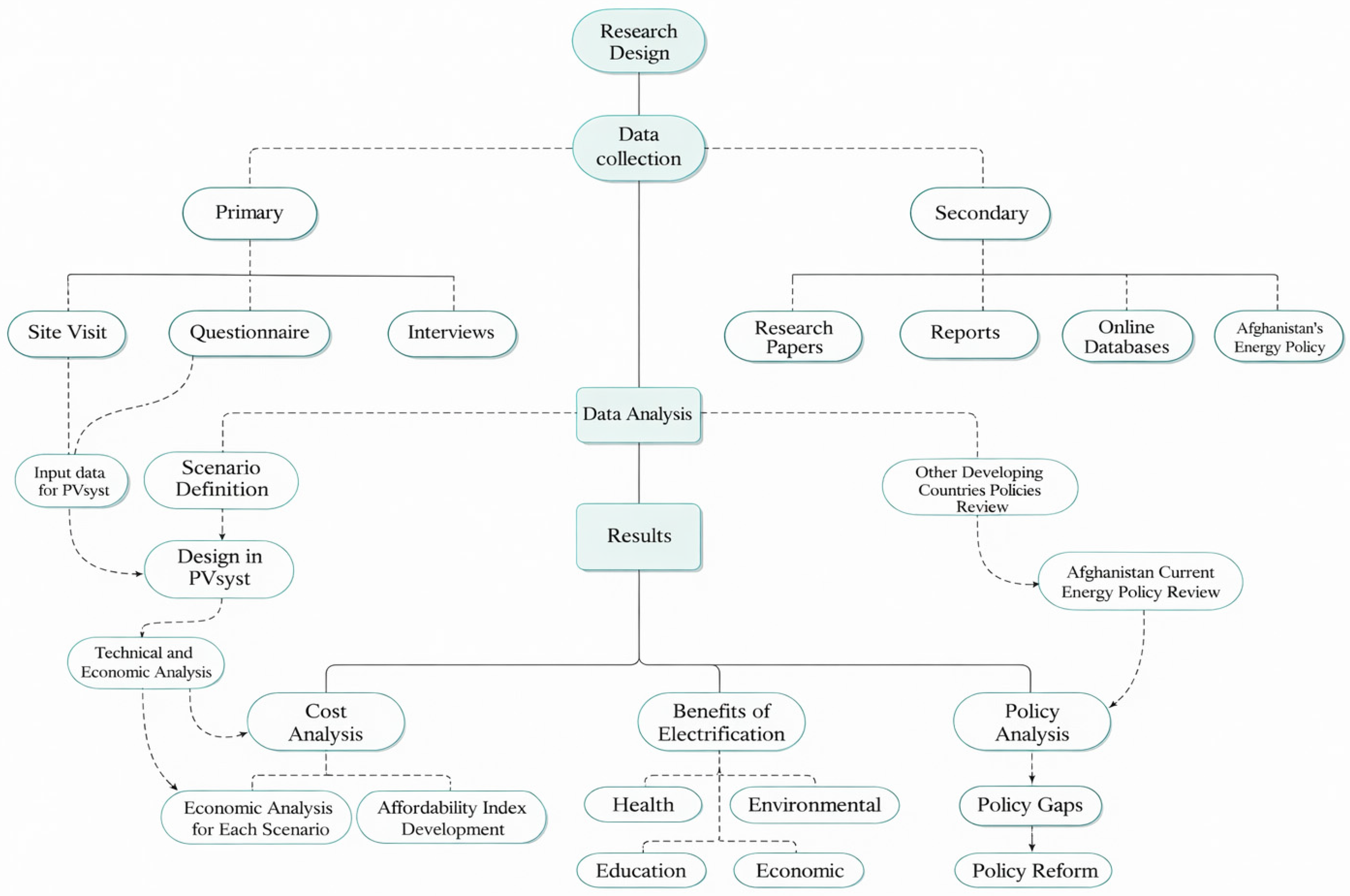
Furthermore, on the policy side, a comparative review of successful policy frameworks from other developing countries that have successfully implemented solar PV technology is studied. Moreover, the gap analysis in the existing policies in Afghanistan is done, and evidence-based recommendations are proposed for policy reform. The detailed research structure flow chart is illustrated in
Figure 1.
For primary data collection, surveys and questionnaires are essential for collecting data from the respondents, as they help develop a broad understanding of the impact of rural electrification on different aspects such as health, education and economic activities. Moreover, it helps in obtaining a realistic image of their current situation and the challenges they face. If this data was collected from other sources, some parameters and facts might have been hindered. Additionally, the primary data is collected from a geographically dispersed population, and no secondary data is available about this location and its residents. Therefore, collecting the primary data through a questionnaire seems to be the most efficient method for collecting authentic data.
In the same vein, secondary data, from government official reports and policies, research, and NGO (Non-Governmental Organizations) publications, provide a historical context and the background information necessary. Moreover, utilizing secondary data is a cost-effective and time-saving method, allowing the researcher to build on previous studies.
In addition, the PVsyst provides comprehensive technical and economic simulation capabilities. Moreover, it is accurate software used by professionals worldwide for design and research. In contrast to other software, PVsyst offers more detailed analysis of component sizing and performance, which is a crucial part of this study.
3.1. Economic Analysis Framework
To systematically assess the economic viability of decentralized solar PV, a standard financial evaluation framework was adopted. This framework links the technical design outputs (energy generation, system sizing, component lifetime) with the cost structure of each electrification option. The analysis integrates all capital costs, replacement costs, operational and maintenance expenses, and the expected annual benefits from electricity access. These cost and benefit streams were evaluated across the full project lifetime to determine long-term economic performance. The indicators used are NPV, IRR, ROI, payback period, and LCOE, which allow a consistent comparison of different decentralized solar PV and reflect methodologies commonly applied in rural electrification and decentralized energy assessments.
The economic evaluation is based on the technically sized system, including PV capacity, battery storage, and inverter requirements. All economic indicators are therefore directly linked to the energy system’s actual power output and annual electricity generation.
where CF
t is cash flow in year t, r is the discount rate, n is the lifetime of the project, and CF
0 is the initial investment [
55].
IRR is the value of r that satisfies [
55]
The ROI can be calculated using the formula [
56]
where
The LCOE is calculated using
where C
t is cost in year t (CAPEX, O&M, replacement), E
t is the energy delivered in year t, r is the discount rate, and n is the project lifetime [
55,
57].
3.2. PVsyst Design Inputs and Assumptions
The assumptions summarized above were selected to reflect realistic operating conditions for decentralized PV deployment in rural Afghanistan. In particular, the irradiation profile, component choices, battery configuration, discount rate, and replacement assumptions were chosen to ensure that the technical simulations remain consistent with local climatic conditions, household demand patterns, and actual affordability constraints. This provides a transparent basis for comparing SHSs and microgrid configurations under the same analytical framework. The PVsyst simulation inputs and assumptions used in this study are presented in
Table 1.
Although the simulation is based on a typical meteorological year, actual seasonal performance in rural Afghanistan is expected to vary, particularly between summer and winter. Winter conditions may reduce effective solar generation while increasing evening lighting demand and other cold-season energy needs, which can influence battery autonomy requirements and loss-of-load risk. The present analysis therefore provides a robust baseline design, but future work should incorporate explicit seasonal load variation and winter-oriented sensitivity testing to further refine system sizing and reliability estimates.
4. Case Study Site Description
This section applies the proposed energy development model to a representative rural community to quantify system size, energy output, and economic performance. The case study serves to validate the model under realistic socio-economic and technical conditions relevant to Afghanistan.
Although this research chooses a specific site for a better and in-depth analysis, its implication is throughout the country due to shared standards of living in these communities and similar regions worldwide. Our idea behind choosing a specific site revolves around increased accuracy and avoiding general assumptions. This would help us to obtain a stronger and clearer vision of community electrification impacts and a detailed study that has never existed before in the context of Afghanistan and similar regions.
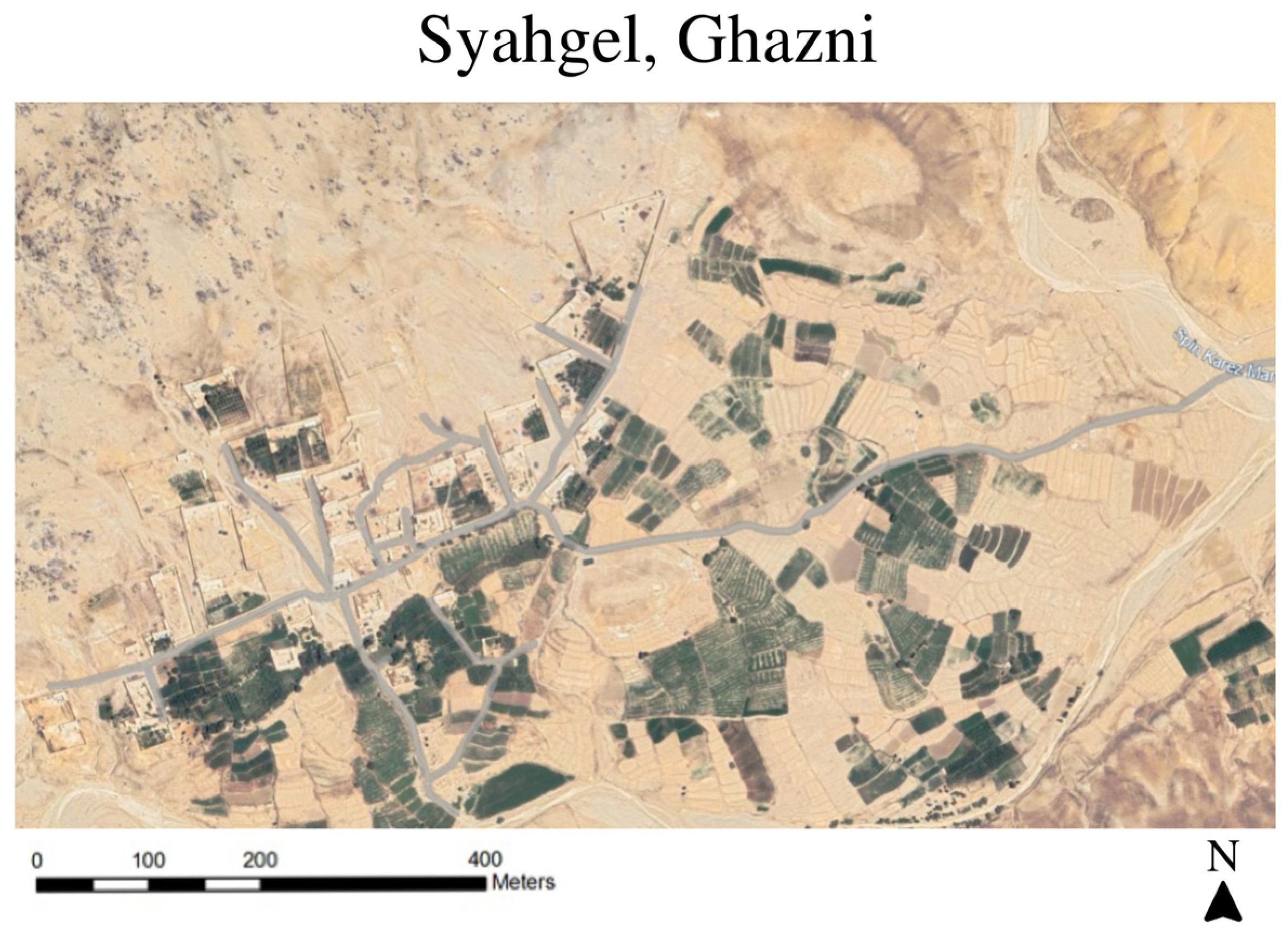
Syahgel, a small community located in Ghazni, Afghanistan (33.52° N, 68.29° E), is a lesser-known community, even to residents of Ghazni province. The community is a sum of 30 households with an average household size of 10 people and a total community population of approximately 316 people.
While Syahgel provides a representative case for low-access rural communities in Afghanistan, the findings should be interpreted in light of the study limitations discussed in
Section 5.6, particularly with respect to sample size, seasonal data capture, and site-specific conditions. As shown in
Figure 2, the satellite view of Syahgel village in Ghazni Province, Afghanistan, was generated using Google Earth Pro.
The community is surrounded by mountains; this fact makes access to the area more challenging. This topography impacts the feasibility of certain types of energy infrastructure, such as transmission lines. Extending the grid to this difficult terrain requires significant investment in poles, cables, and transformers. The cost of grid extension increases dramatically in such terrains, added to by low power demand and return on investment, which makes it an economically unviable option. These logistical limitations limit the choice of technology for electrification to decentralized systems such as solar power systems. In addition, men in the community are farmers and are also involved in animal husbandry. Women primarily manage household responsibilities while also contributing significantly to agricultural labor. Moreover, the community has almost no infrastructure. In the case of grid connectivity, small population size and accessibility challenges seem to be the main reasons for its disconnectivity. In addition, there is no health clinic, official school, or even a small shop in the community. However, one of the residents offered two rooms in his house for primary schooling, where boys and girls can study up to the 4th class. For higher classes, boys must go to the nearest school, which is an hour’s cycling distance away, while for the girls, it is limited to 4th class only. For healthcare assistance they must travel to the Khogyani district health clinic.
5. Results and Discussion
5.1. Cost Analysis
A comparative analysis is conducted between various developed SHS tiers and a community-based microgrid. This comparison aims to evaluate the technical, economic, and social impacts of each solution to determine the most viable option for electrification.
5.1.1. Collected Data from the Site
Syahgel is a completely off-grid site with no electricity connection. Considering its geographical terrain, the grid extension is unexpected and economically not viable. Most of the community households rely on DC LED lamps, which provide limited lighting in one or two rooms for a few hours nightly. Access to modern life equipment with limited financial resources to afford a stand-alone system remains unattainable without any external help.
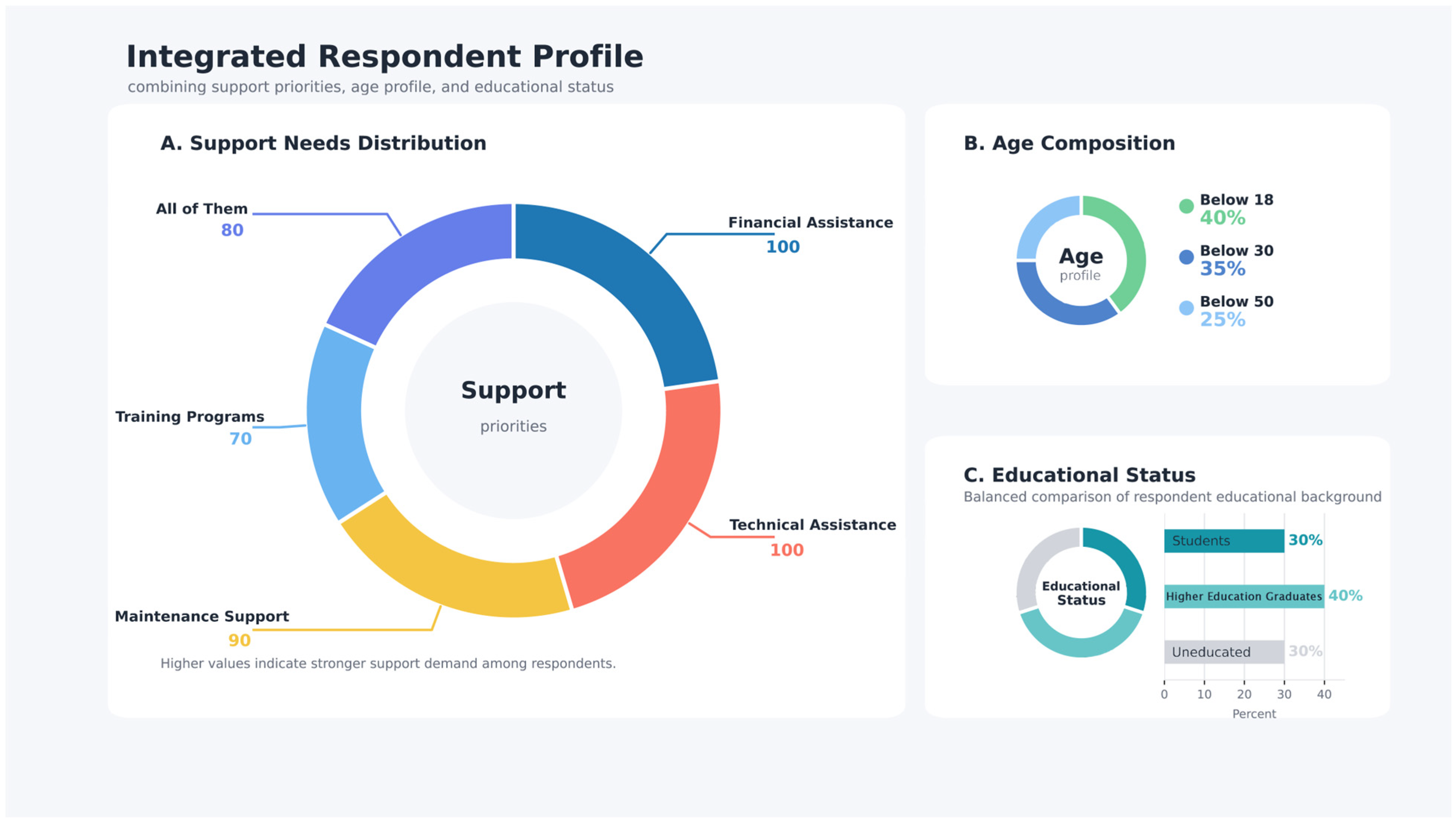
Figure 3 illustrates both the types of assistance required for PV adoption and the demographic profile of respondents in terms of age and education.
Two primary modes of off-grid rural electrification using PV technology are independent SHSs or a community-based microgrid. Suitability of both depends on community size, electrical demand, accessibility, reliability, and long-run sustainability.
5.1.2. Technical Analysis and Comparison of SHS and Microgrid
Based on electricity demand in remote communities, which is primarily low, a five-tier SHS and a community-based microgrid are developed to meet various power demands in Syahgel and similar communities. Each SHS tier is designed to meet a specific range of power needs. Households can choose a tier as per their power demand, illustrated in
Table 2.
The first two tiers supply basic power needs, while the third tier fulfills intermediate power needs. Household equipment in the first three tiers operates on direct current (DC); they are the simplest tiers with the lowest electrification. The fourth and fifth tiers are classified as full electrification; households can power up modern home appliances. The main SHS components in the basic and intermediate electrification tiers are solar panels, DC-DC converters, and batteries. While the full-electrification SHS’s main components are solar panels, DC-AC inverters, and batteries.
On the other hand, a community-based microgrid is a centralized way of distributed generation, serving the community households. In other words, all the households will be connected to a larger common source. Therefore, its power capacity is higher, which meets various community electricity needs. As presented in
Table 3, the community-based microgrid is illustrated conceptually.
To better understand the energy usage in each tier and microgrid, the list of appliances, operation hours, and daily energy usage are shown in
Table 4.
In contrast to SHSs, microgrids are more flexible in terms of power demand. Certain households that need more power at certain times can access it. This resulted in an increase in system efficiency. Moreover, a community microgrid is a productive source of energy, powering small businesses or community services (schools, health clinics). Additionally, microgrids are more scalable as the power demand grows over time within the community. Microgrids are centralized maintenance, reducing the burden on a single household.
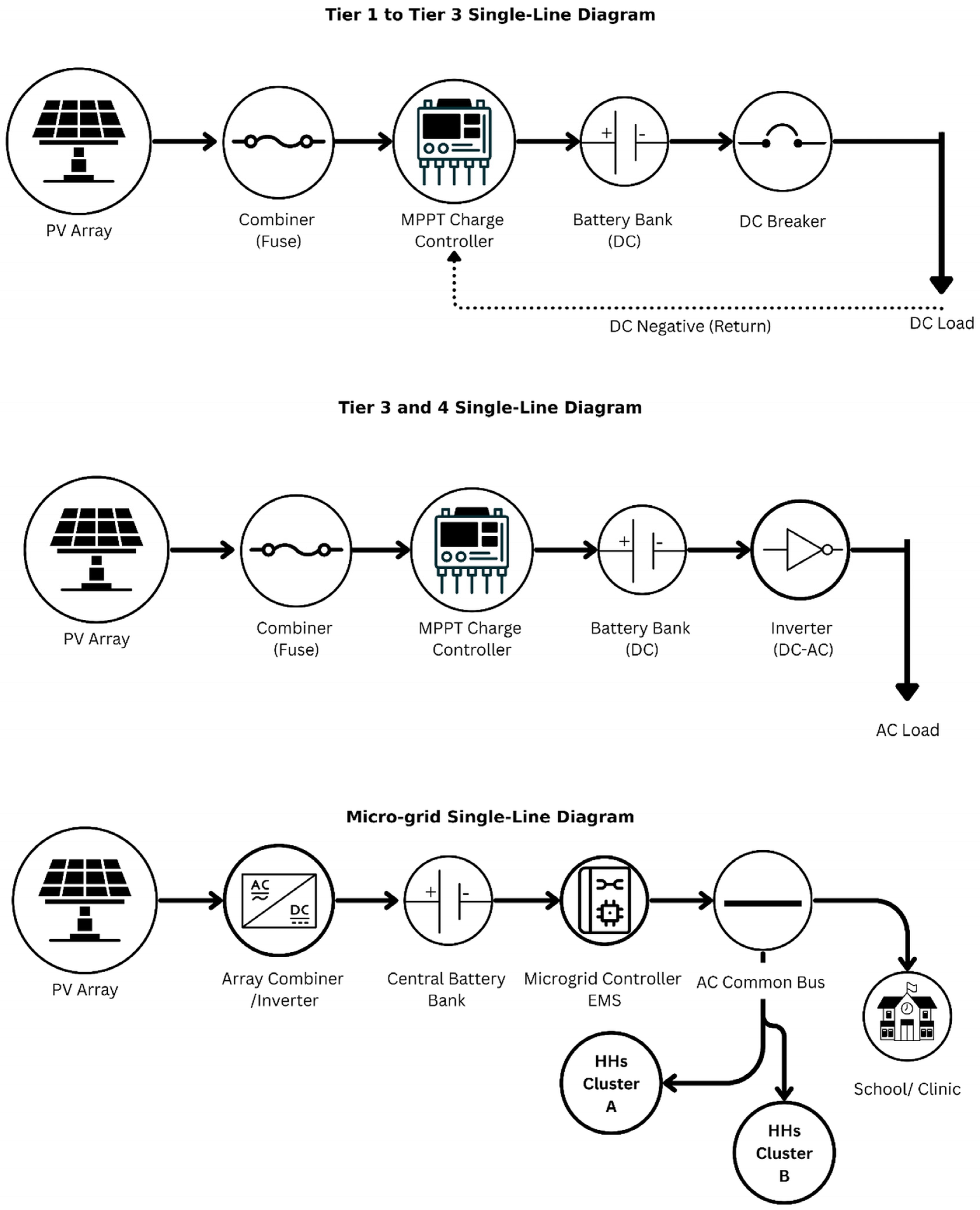
Figure 4 illustrates the SHS and microgrid single-line diagrams.
Looking at the other side of the coin, a community microgrid requires additional infrastructure for electricity distribution to community households. Moreover, while maintenance operations are ongoing, the entire community’s power supply is disrupted. A microgrid also involves a load management and balance system, making it more complex, whereas SHSs does not require distribution infrastructure and also does not have management complexities. It also offers a quick and flexible solution for basic energy needs.
Each of these characteristics makes both electrification scenarios unique, and the choice between them relies on site-specific characteristics. Households relatively close to each other and larger community sizes make microgrid infrastructure economically more viable. However, SHSs are more suitable for dispersed, remote households, where setting up a community grid is not feasible due to geographical challenges or lower population density.
Prior to any judgment for Syahgel, it is important to economically assess the two electrification scenarios.
5.1.3. Economic Analysis and Comparison of Electrification Scenarios
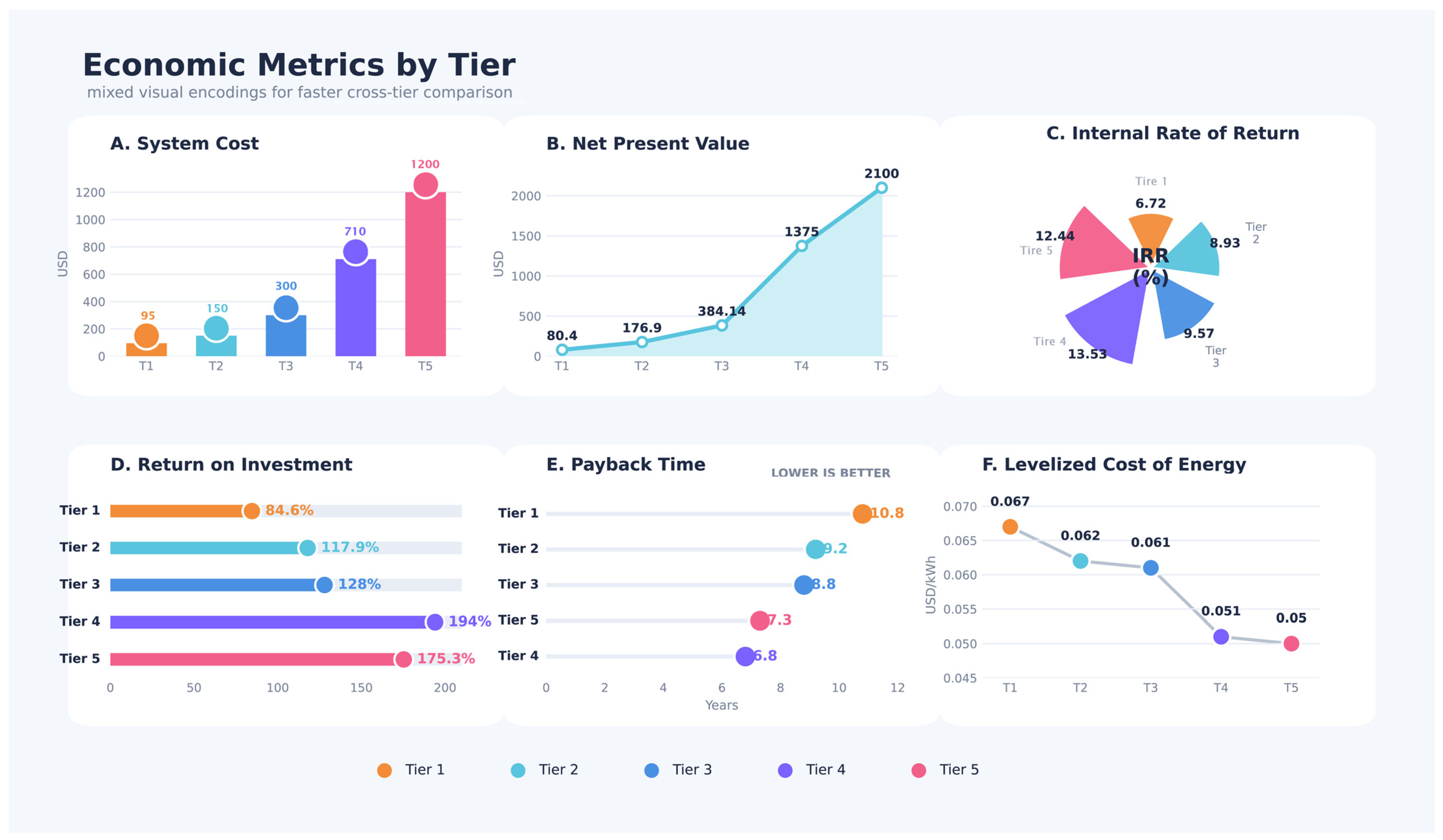
The economic analysis includes both Capital Expenditure (CAPEX) and Operating Expenditure (OPEX). Based on the lifetime of system components such as batteries, the analysis includes an annual provision for replacement. To enumerate the economic analysis, we need an estimated selling price. Although the community has no electricity access whatsoever, we considered the price of electricity in Ghazni city, a flat rate of 6 afghanis, or $0.09 per kWh, to find the minimum savings even if the community had the grid connection.
Figure 5 demonstrates SHSs costs, Net Present Value (NPV), Internal Rate of Return (IRR), Return on Investment (ROI), Payback Time, and Localized Cost of Energy (LCOE) for each tier.
The basic electrification category is the most affordable option for the low-income households, starting from
$95.
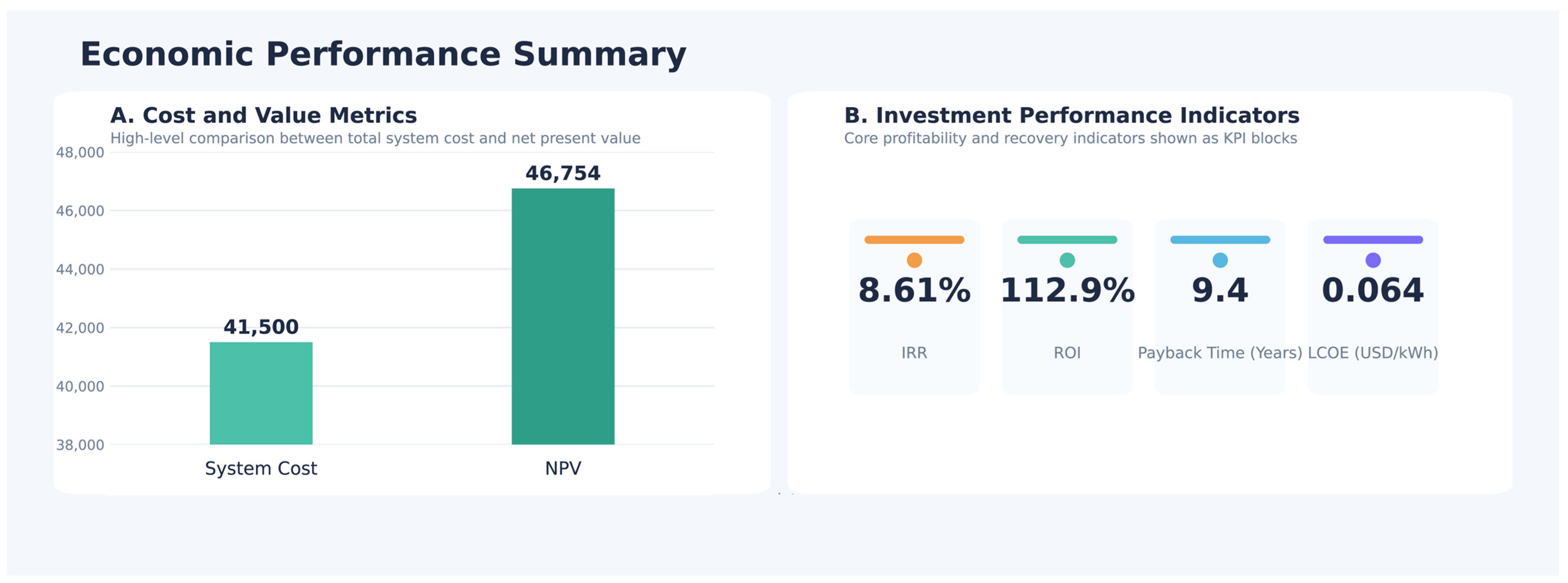
Figure 6 depicts similar economic analysis for a community microgrid.
Often microgrids are considered economically more viable. However, the absence of infrastructure in the community, such as a distribution system, the salaries and operation costs and a huge battery bank make the community microgrid a more expensive choice for Syahgel. For instance, the 5th tier costs $1200, whereas a microgrid costs $1383 per household.
A preliminary sensitivity check indicates that a 20% increase in battery price increases LCOE by 8–12%, while a 10% increase in annual demand reduces LCOE by 4–6%. Although this sensitivity analysis is not exhaustive, it highlights the dominance of battery replacement cycles in long-term costs.
Annual average household income in Syahgel is
$1920. To economically evaluate each electrification scenario, an affordability index, which is the ratio of initial investment and the average annual income, is developed. Values near to zero show a more affordable option, depicted in
Table 5.
An affordability index of 0.049 means that only 4.9% of a household’s annual income is sufficient to buy the system. Greater values mean allocating a higher percentage of the household’s annual income.
Tiers 1 and 2 are categorized as affordable choices, while tiers 3 and 4 are classified as choices with moderate affordability. Tier 5 and microgrids, while being a better option, are unaffordable.
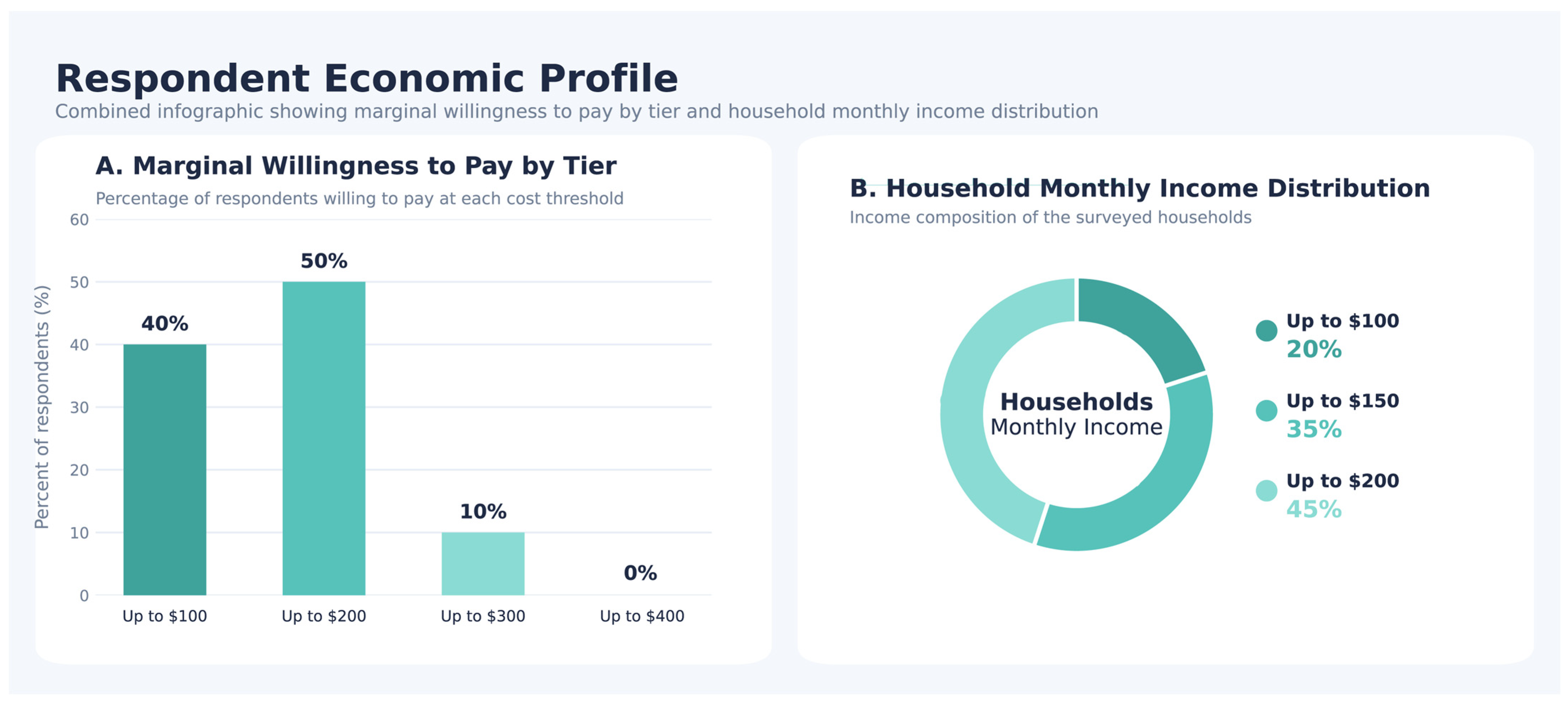
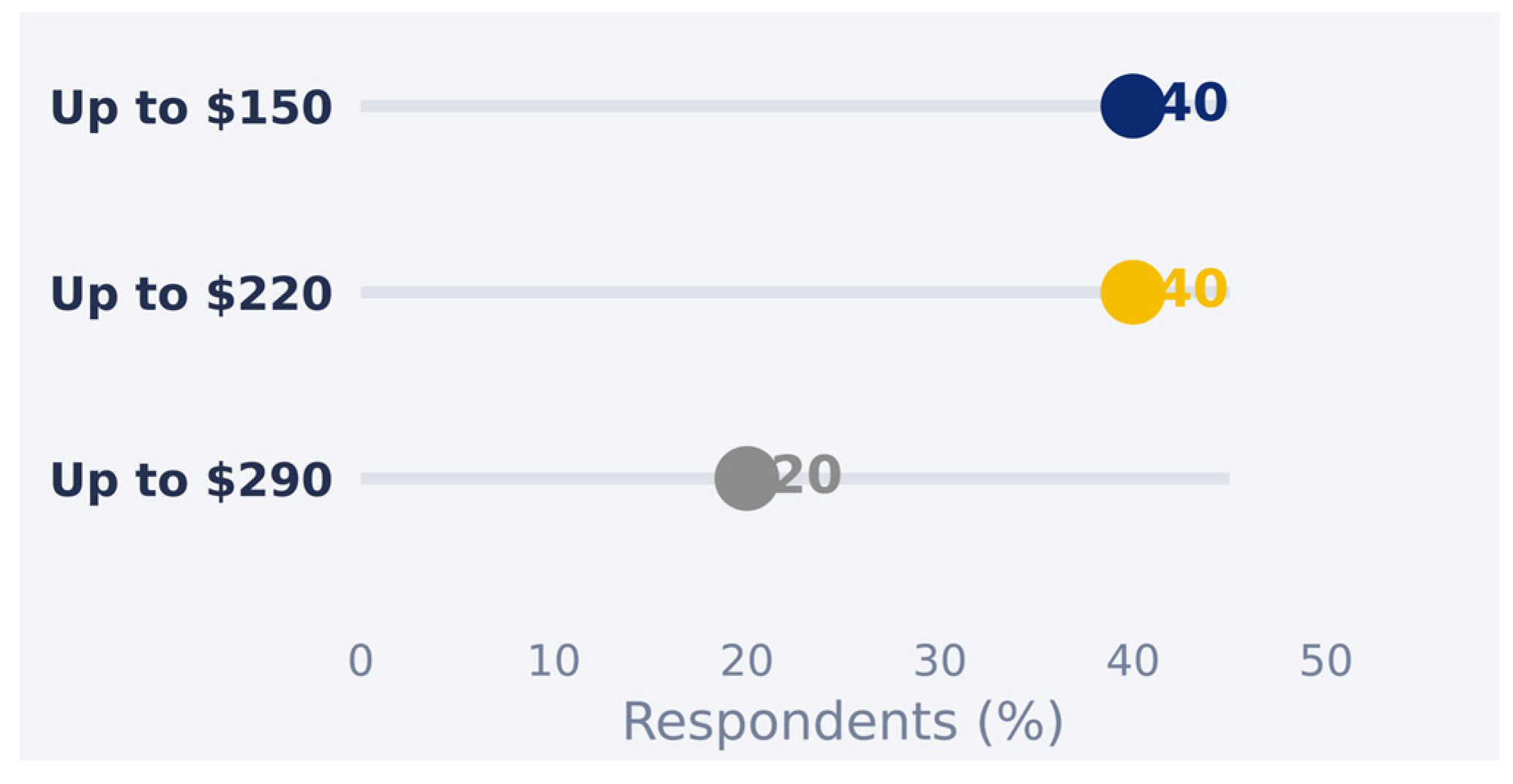
Figure 7 presents households’ willingness to pay for PV system adoption alongside their monthly income distribution. The relatively high annual OPEX assigned to the community microgrid reflects the costs associated with shared-system operation rather than equipment maintenance alone. These include routine technical inspection, battery-bank and inverter supervision, minor distribution-network maintenance, basic fault response, and local system administration. Unlike SHSs, whose maintenance burden is mostly household-level and component-specific, the microgrid requires coordinated operation of common infrastructure. For this reason, its annual operating cost was treated as substantially higher in the comparative assessment.
Most of the households would struggle to afford them without financial assistance, subsidies or micro-financing options. Is there any option in the context of Afghanistan to make these systems more affordable?
5.2. Financing Scenarios
5.2.1. Government Subsidies
One of the biggest barriers in rural electrification is the high upfront cost for a low-income rural household. Initiatives such as subsidies play a crucial role in the promotion of rural electrification; they help to reduce the financial burden on low-income households in underserved regions. Subsidies can take many forms, such as direct financial support, tax incentives, and grants. Subsidies that cover a part of the cost will immediately lower initial investment. Since SHSs are individually owned and have lower costs, this makes them more suitable for direct subsidies. Their implementation does not need community-wide coordination.
Other forms of subsidies, such as tax incentives or grants, especially for microgrids, will play a pivotal role for electrifying a larger network of customers. These subsidies will attract private sector participation in rural communities’ electrification efforts. It will encourage private companies to invest in microgrids and SHSs sales.
Funding electrification schemes requires high capital expenditure from the government. However, Afghanistan has historically received international aid for its development; rural electrification can be a focus area to consider, and cooperation with international organizations and donor agencies can help secure funding.
5.2.2. The Role of Private Sector
Private sector involvement plays a crucial role in rural electrification, particularly through community-based microgrids. There is significant potential for business opportunities driven by growing energy demand and recognition of electricity as a key factor in economic development. With the global focus on sustainability, clean energy and global electrification goals, this is a rapidly expanding market.
Solar-based microgrids are more economical compared to conventional grid extensions in remote areas. Moreover, they are easily scalable and support staged implementation that allows investors to start from a small capacity and expand based on the community needs and future demand growth, decreasing the risk associated with large upfront investments. Additionally, community-based projects create a sense of ownership and responsibility within the community. Involving the residents in maintenance and operation enhances trust, ensures system operational efficiency, and promotes sustainability in the long run. Additionally, the alignment of these projects with United Nations affordable and clean energy goals enhances the reputation of the investor. Moreover, the government of Afghanistan supports rural electrification initiatives through tax incentives and PPPs. Which reduces the investment costs and risks, making it easier to invest in this sector.
5.2.3. Provision of Micro-Loans
Many households with low income, larger family sizes, or higher electricity demand require higher tiers. However, they lack enough capital to buy the desired tier. In such cases, the provision of interest-free microloans for a duration of 3 to 4 years allows them to spread out the cost of these systems over time. They can repay the borrowed amount in regular instalments. In fact, provision of microloans without interest is a form of subsidy from the government in support of rural electrification. Moreover, the government would recompense the amount within a few years, avoiding a high economic burden.
If the government is not economically strong enough, an alternative approach is involving the private sector for the provision of small loans by creating microfinance institutions (MFIs). While the private sector is interested in loans and investments that generate revenue, the government of Afghanistan prohibits all business deals that involve any form of interest. However, cost-plus financing could be an alternative option for loan-providing institutions such as banks and MFIs. They can purchase the PV systems and sell them at a higher price, which includes their profit margin. The customer pays back the amount over an agreed period. This approach might increase the financial burden on households; a better modification is a blend of subsidies, loans, and private sector involvement. The government exempts private institutions from tax and customs fees as a form of subsidy, which will lower the overall cost of systems for these institutions. Then, selling these systems to rural customers at market price will cover their profit margin.
The loan repayment schedule should align with households’ income patterns. Most of the community residents are farmers and may have seasonal income; loan payback terms should match their cash inflows. Providing financial access to rural households to invest in solar energy solutions bridges the affordability gap and makes it easier for communities to adopt clean energy technologies.
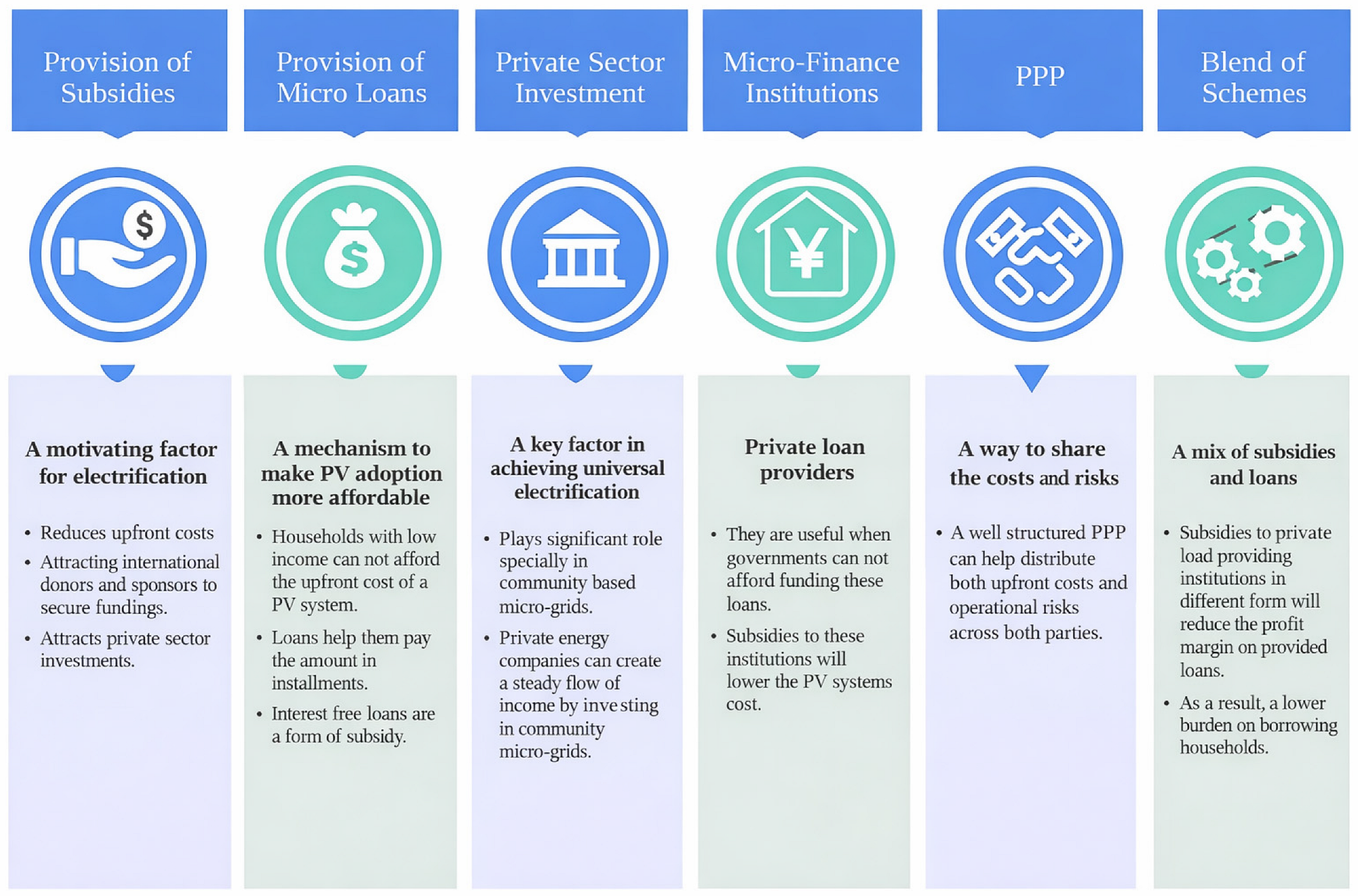
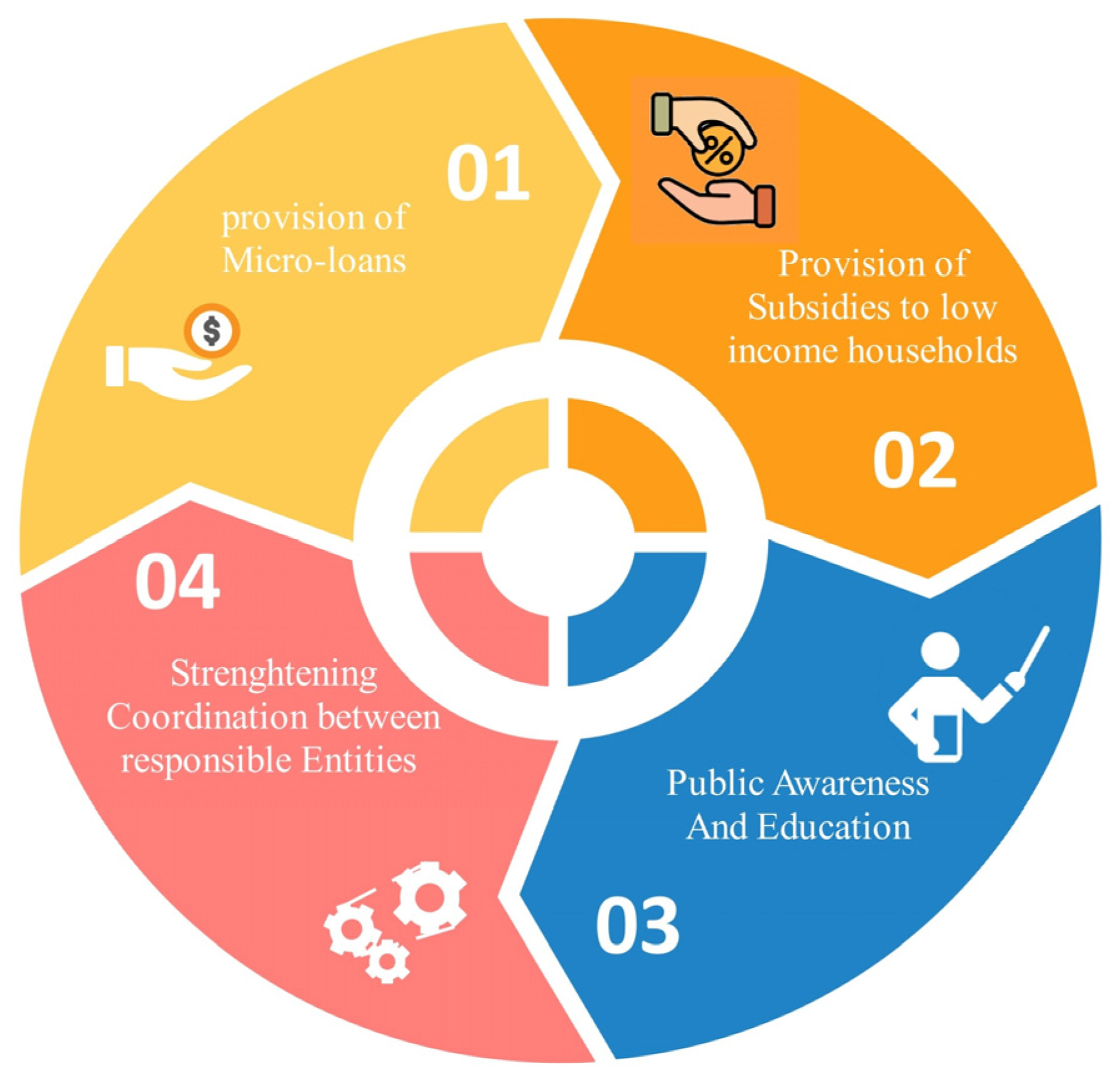
A summary of financing mechanisms is represented in
Figure 8. To showcase the effect of these mechanisms on systems cost and affordability, different scenarios are developed in
Table 6.
Figure 8 summarizes the financing architecture needed to improve solar affordability in low-income rural settings. The figure shows that affordability does not depend on one mechanism alone, but on the interaction of subsidies, concessional loans, private participation, and institutional support. This supports the argument that decentralized electrification policy in Afghanistan should combine demand-side affordability measures with supply-side investment incentives.
In the current Afghan context, however, formal bank loans and centrally administered subsidy programs may not always be accessible or reliable for remote rural households. For this reason, practical implementation may also require alternative financing channels such as community savings groups, rotating credit associations, village-level cooperative purchasing, NGO-backed installment plans, supplier credit, or pay-as-you-go-inspired repayment arrangements adapted to local conditions. These mechanisms may be more realistic in fragile institutional settings and can complement, rather than replace, formal subsidy or credit frameworks.
The provision of microloans significantly reduces the system’s cost and extends the payment period. In the smaller systems with a 3-year loan repayment plan, there is a 67% increase in the purchase power or affordability of the systems, while larger systems with 4-year loan repayment plans make systems 75% more affordable to Syahgel residents. From other perspectives, a 3-year loan makes a tier 3 SHS nearly as affordable as a tier 1 SHS with no supporting financing mechanism.
A provision of 10–30% of subsidies will directly reduce the price of the systems and increase affordability of the systems by that percentage.
5.3. Benefits from Rual Electrification
5.3.1. Health Benefits
The community residents suffer from several types of preventable diseases related to eyes and the respiratory system, mainly due to the use of traditional biomass such as dried animal manure, firewood, and crop residues.
Electrification can significantly reduce the use of traditional biomass by providing clean water heating, resulting in reduction of health and fire risks. Electrification also reduces the use of other low-quality fuels like kerosene for lighting, thus lowering indoor air pollution and improving health outcomes, particularly respiratory conditions, for women and children.
5.3.2. Education Improvement
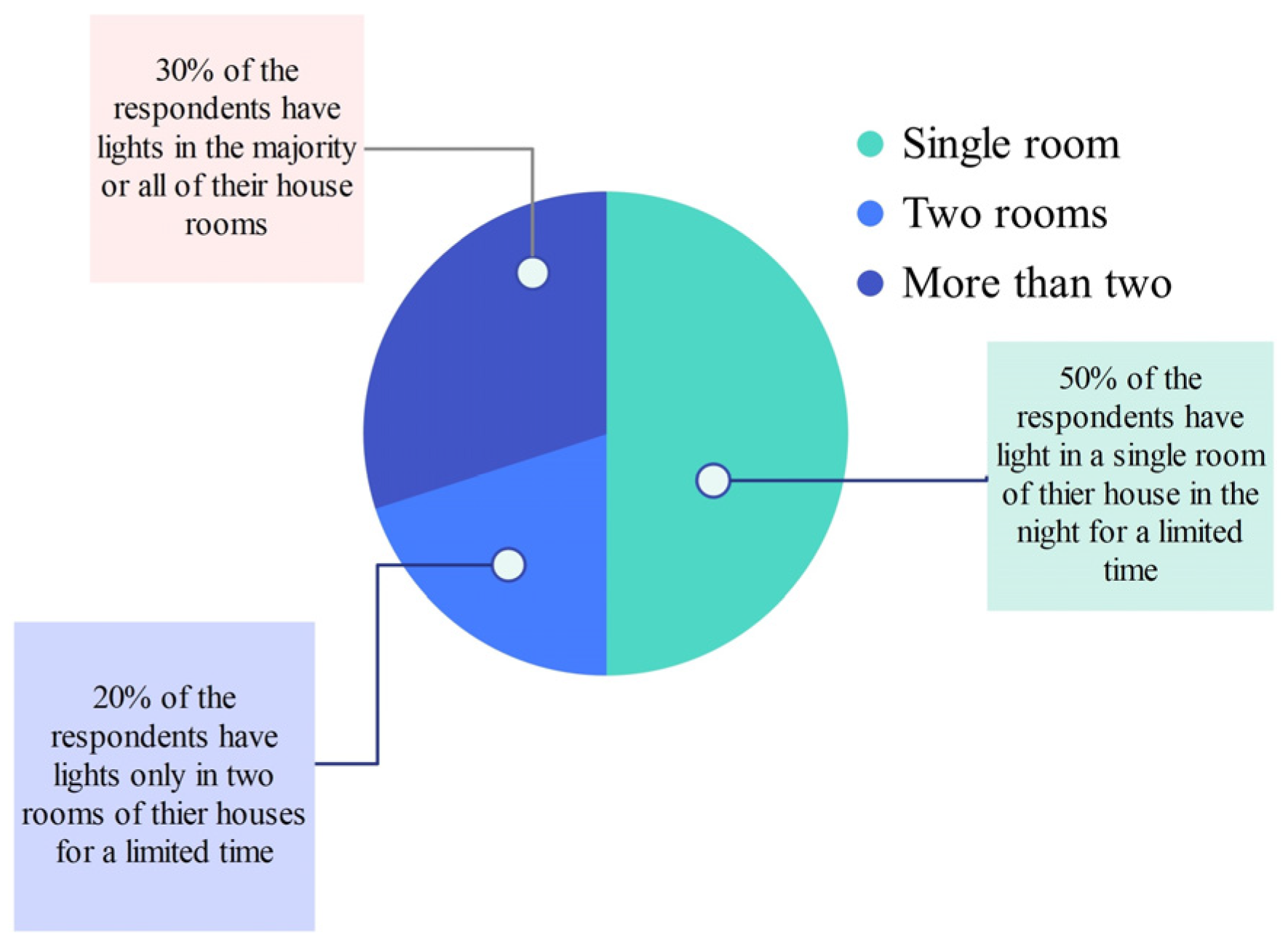
Most households have lighting in a single room, for a limited time at night. During the day students attend school and help their families with house chores, collect firewood for cooking and water heating, and work in agricultural fields. Students have difficulty studying due to work during the day and limited lighting at night. The bright lights provided in each room by the proposed electrification scheme will significantly increase students’ ability to study for longer hours at night.
Moreover, for tiers that offer water heating, the time spent on collecting firewood will decrease significantly. Almost all the questionnaire respondents agreed that no access to electricity has negatively affected their educational performance and their ability to learn new skills.
Figure 9 indicates that limited night-time lighting currently constrains educational activity within households. The concentration of lighting in only one or two rooms suggests that children’s study time and household flexibility are restricted by inadequate energy access. This finding supports the argument that even low-tier SHSs can generate meaningful social benefits by extending usable hours after sunset.
5.3.3. Environmental Benefits
Syahgel’s residents rely on traditional biomass such as animal manure, crop residues, and firewood for cooking and heating. Electrification decreases the amount of emissions and reliance on traditional biomass. This leads to a remarkable reduction in PAHs, EC, VOCs, and other hazardous pollutant emissions and helps in mitigating deforestation.
The estimated economic savings from reduced fuelwood use also imply environmental co-benefits, but the present dataset records expenditure rather than direct physical fuel quantity. Therefore, precise conversion into kilograms of wood saved or tons of CO2 avoided would require locally validated fuel-price and emission-conversion factors. Future work should incorporate direct measurement of household biomass consumption to quantify avoided wood use, deforestation pressure, and emissions more rigorously.
5.3.4. Improved Income Generation and Fuel Savings
Electrification leads to creating new income-generating opportunities and improves the quality of existing ones. Especially for women, continuing their income-generating activities for extended hours at night leads to a reduction in the financial dependency of women and improves the overall economy of households. Moreover, shops will remain open for longer hours with improved services and refrigerated drinks in the summer.
Additionally, households buy fuelwood annually, as other forms of traditional biomass do not meet all their needs, as depicted in
Figure 10. Based on similar studies, an average of 25% of savings on fuelwood is expected. The average expenditure on fuelwood is
$206 in Syahgel community households. Expected savings are
$51.5 per house and a total of
$1545 at the community level each year.
Figure 10 illustrates that fuelwood expenditure remains a significant recurring household cost, which reinforces the economic relevance of electrification beyond lighting alone. The observed spending distribution suggests that reducing dependence on traditional fuels can produce direct annual savings for a large share of households. This also strengthens the economic rationale for combining SHSs adoption with clean cooking and water-heating transitions in future interventions.
5.3.5. Women Empowerment
The potential contribution of electrification to women’s empowerment emerged primarily through household-level qualitative responses and the broader literature on rural energy access, rather than through a fully gender-disaggregated statistical analysis in the present dataset. Access to the TV enables women to observe customs and the rights women practice in other societies. This exposure can gradually influence social norms and strengthen women’s decision-making roles within households. This increases the awareness among women and their ability to participate in decision-making within the family. Additionally, mobility and sense of security improve. Women will have more time tutoring their children, socializing, visiting and making new friends, and improving their social life.
After electrification, households experience higher safety, comfort and convenience. Currently, households often spend their night in the darkness once their charged batteries are discharged shortly.
5.4. Energy System Implications and Scalability
The results demonstrate that decentralized PV-based systems are particularly suitable for Afghan rural areas where grid extension is technically challenging or economically inefficient. The modular nature of the proposed system allows scalability in response to future demand growth, making it adaptable to demographic and economic changes. Compared to centralized grid expansion, decentralized systems reduce transmission losses, improve resilience, and accelerate electrification timelines.
5.5. Policy Reform Strategies
After reviewing developing countries’ rural electrification schemes and Afghanistan’s rural electrification policies, we now try to find the policy gaps and factors hindering Afghanistan’s rural electrification.
Afghanistan’s energy policies have often been inconsistent due to political instability and changing governments. In the long run, this inconsistency hampers planning and investment in renewable energy projects. The solution is establishing an independent energy regulatory body that can ensure policy continuity.
In terms of PV adoption, efforts have been made to promote solar energy. However, the adoption rates remain low due to a lack of clear incentives and support mechanisms. Afghanistan should learn from other developing countries and introduce feed-in tariffs, tax incentives, and subsidies for PV installations. Rural communities cannot provide the initial investment for PV systems; establishing micro-financing schemes and loans can help in overcoming this barrier. In our site visit, all the respondents were interested in receiving loans for SHS installations, with loan payback in small instalments in a period of three to four years. Additionally, subsidies for the very low-income households to adopt solar systems are beneficial.
Global energy policies support rural electrification for remote communities through decentralized renewable energy systems, mostly through PV technology. Afghanistan’s policy also finds decentralized renewable energy technologies as a viable solution, especially for provinces like Daykundi, Ghor, and Nuristan, where network connections are not viable due to the geographical terrain. But where does the policy lag behind? Countries like India and Bangladesh have set more aggressive and clear targets, such as reaching full rural electrification or installing a certain capacity of renewable energy by a specific year. This includes specific milestones and measurable objectives to drive more focused implementation.
Moreover, project funding heavily relies on donors and the public sector, which is a potential weakness. Other developing countries, such as Kenya, have developed innovative financing mechanisms, such as microfinancing and energy service company (ESCO) models, and established green energy funds to attract private investment. Therefore, the policy could be improved by incorporating similar innovative financing mechanisms.
To further strengthen Afghanistan’s policy, it’s important to have strong coordination between involved institutions to ensure efficient implementation. Establishing a dedicated renewable energy agency or enhancing coordination between existing entities improves the process. Moreover, the policy should further emphasize public awareness and education, particularly in rural areas. In our survey in Syahgel, residents were unaware of solar energy technologies and how they can be used other than just using them for water pumping, which they used for agricultural activities. A national awareness campaign that educates communities on the benefits and proper usage of solar PV technology is essential for demonstrating real-world benefits such as improved health, reduced expenses, and education. Moreover, offering training on basic system maintenance can foster community ownership and long-term sustainability.
Capacity building should be treated as a core implementation component rather than a secondary activity. In remote villages, a practical approach would involve three layers: basic user training for all beneficiary households on battery care, load management, and fault recognition; targeted training for one or two village-level technicians who can handle routine troubleshooting and simple repairs; and establishment of a minimal spare-parts and service linkage with district-level suppliers or partner organizations. Such a model would improve system longevity, reduce downtime, and strengthen community confidence in decentralized PV systems.
Figure 11 translates the study’s policy findings into a practical reform agenda. The figure shows that successful rural electrification in Afghanistan requires simultaneous action on affordability, institutional coordination, local awareness, and targeted support for low-income households. Rather than treating policy reform as a single legal adjustment, the figure highlights the need for an implementation-oriented package of financial, technical, and governance measures.
Financing policy should therefore recognize both formal and informal channels of rural energy investment, especially in contexts where banking penetration and state implementation capacity remain weak.
5.6. Discussion
The findings of this study contribute to the rural electrification literature in three main ways. First, they confirm the importance of matching electrification technology to settlement density, household demand, and institutional capacity rather than assuming a single universal solution. Second, they show that in remote Afghan settings with low and dispersed demand, SHSs can outperform community microgrids in affordability and operational practicality, even when microgrids may offer broader service potential in more concentrated settlements. Third, the study extends the existing literature by combining technical design, household-level affordability analysis, and policy reform assessment within one case-specific framework. This integrated approach helps explain not only which technology is preferable in Syahgel, but also why its adoption depends on financing design, maintenance capacity, and governance support.
While the results clearly demonstrate the advantages of SHSs for small and dispersed rural settlements like Syahgel, it is important to recognize that microgrids offer substantial benefits in communities with larger populations, higher load diversity, and local economic activity. Microgrids provide greater reliability, enable productive uses of energy, and support community facilities such as schools and clinics. Therefore, the superiority of SHSs in this study should be interpreted within the specific demographic, geographic, and economic context of Syahgel [
9,
16,
58]. This conclusion should not be interpreted as excluding other renewable technologies, since micro-hydro, wind, or hybrid systems may be preferable in Afghan regions with stronger resource availability and more concentrated demand. In different Afghan regions, particularly those with higher population density, microgrids may outperform SHSs both socially and economically. This contextual framing strengthens the generalizability of the findings [
16,
26,
56].
5.6.1. The Role of Private Sector Involvement in Microgrid Sustainability
Private sector involvement in microgrids ensures that there is not only the capital to build them but also the technical expertise to operate and maintain them [
53]. Private companies often have technical resources to make sure that the grid is maintained and operates efficiently in the long run [
11]. It is important because a well-functioning microgrid requires frequent maintenance, upgrades, and technical support, which rural communities cannot handle by themselves. Moreover, in Syahgel, the annual maintenance cost is around
$4000 for a community microgrid, which can be significant for low-income households. In many cases people may refuse to pay, or contributions may be insufficient. If no private company is involved in covering and managing these costs, or if the community ownership is not well organized or properly financed, microgrid operations will collapse. Additionally, the community does not have the technical expertise to manage, operate, and troubleshoot the system [
35]. Without a dedicated entity overseeing the microgrid, technical failures can accumulate, leading to breakdowns in service. A private company will create a business model that is sustainable and ensures cost recovery. Which often includes a tariff system in which users pay based on their energy consumption, creating a steady revenue flow to cover maintenance costs. In the absence of an organized billing system, people may simply not see the value in continuing to pay for a system that is perceived as unreliable or poorly managed [
20,
48].
These concerns may lead to even a complete shutdown of the system, decreasing trust in renewable energy projects and electrification efforts. In short, a microgrid is a viable option only under two conditions: first, if it is managed and operated by a private company or through a PPP for a rural community’s electrification. Secondly, It is economically more viable for larger populated communities. This makes microgrids not a suitable choice for small communities such as Syahgel [
4,
12].
This result is consistent with broader rural electrification experience showing that microgrid sustainability depends not only on technical installation but also on revenue collection, operational accountability, and long-term maintenance arrangements. In many developing country contexts, systems underperform when ownership is unclear or when there is no dedicated operator responsible for service continuity, tariff administration, and repair coordination [
36,
39].
5.6.2. SHSs as a Low-Maintenance Alternative to Microgrids
SHSs are a more viable option for small communities such as Syahgel. Since SHSs is individually owned and maintained by the household, there is no need for collective maintenance and reliance on community contribution. Moreover, they require less maintenance, are self-sufficient and have a reduced risk of failure, making them a better choice for remote and less-populated communities like Syahgel [
23].
The lower-maintenance character of SHSs is linked not only to system size, but also to system structure. Because each household operates an independent unit, SHSs do not require a shared distribution network, central control equipment, collective tariff management, or coordinated fault response [
50,
53]. A technical problem in one SHS affects only one household and can often be resolved through simple troubleshooting or component replacement. By contrast, microgrids require ongoing management of shared infrastructure, including battery banks, inverters, protection systems, wiring networks, and user connections. This increases both the technical complexity and the institutional burden of operation, especially in remote areas where professional maintenance services are scarce [
9,
58].
In operational terms, SHSs are more manageable for dispersed rural households because their maintenance requirements are simpler, less frequent, and less dependent on external technical support. Routine SHSs maintenance typically includes panel cleaning, visual inspection of wiring and mounting structures, battery condition checks, and replacement of small balance-of-system components when needed. For household-scale systems, these activities are generally low-cost and can often be performed by users after basic orientation or by local technicians with limited training [
11]. By contrast, community microgrids require more structured operation and maintenance arrangements, including inverter supervision, battery-bank management, distribution-line inspection, fault detection, meter reading, tariff collection, and periodic technical servicing. These tasks demand trained personnel and an organized management entity. Therefore, while microgrids can offer wider service capability, SHSs remain operationally more suitable for small, geographically dispersed settlements where technical capacity, financing, and institutional continuity are limited [
22,
49].
Table 7 presents a comparative overview of the maintenance characteristics of SHSs and community micro-grids in rural Afghan settings.
Further work can incorporate advanced cost-optimization approaches such as mixed-integer programming or multi-objective optimization, as demonstrated in similar rural electrification work [
58]. Likewise, long-term financial benefit strategies combining subsidies, PAYG schemes, and optimal loan structures could be explored following models presented in [
59]. Integrating these techniques would enhance the robustness of techno-economic analysis and provide deeper insights for policymakers.
The stronger performance of SHSs in Syahgel is also consistent with studies showing that household-scale systems are often more suitable in low-density settlements where loads are modest and users are geographically dispersed. In such settings, the modularity of SHSs reduces both network costs and institutional complexity. However, this advantage becomes less pronounced where productive loads, community facilities, or concentrated settlement patterns justify shared infrastructure [
60].
This maintenance advantage becomes especially important in villages such as Syahgel, where dispersed households, limited technical capacity, and weak local service chains increase the risk of prolonged system downtime for centralized community systems [
22].
5.6.3. Policy Reform Recommendations
To utilize Afghanistan’s potential for rural electrification, the government must adopt an aggressive, detailed approach with clear and specific goals, private sector engagement, financing solutions, and institutional reforms [
41]. With a focus on decentralized solutions, strong community engagement, and international partnerships, Afghanistan will not only increase energy access but will also make a significant contribution to broader development goals, such as poverty reduction, better health outcomes, and economic expansion [
43].
From a policy perspective, the present findings reinforce the view that technology deployment must be supported by enabling institutions, finance mechanisms, and local capacity building. The Afghan case demonstrates that policy ambition alone is insufficient unless implementation frameworks include measurable targets, affordability support, coordination mechanisms, and community-level awareness and technical training [
2,
22,
39].
5.7. Limitations of the Study
Despite the strengths of the mixed-method design, this study acknowledges several areas where further refinement could enhance future research.
Sample size: The analysis is based on 30 households from a single rural community, providing a focused and detailed understanding of local energy-use patterns, though broader generalization may require future studies with larger samples. Accordingly, the policy implications of the study are intended as context-informed recommendations rather than nationally representative conclusions.
Seasonal bias: The household survey was conducted during the summer months, and although the technical model used a typical meteorological year, actual winter demand and seasonal irradiation variability may alter optimal PV capacity, storage requirements, and service reliability. Future studies should therefore include multi-season load measurements and explicit seasonal sensitivity analysis.
Respondent bias: Self-reported expenditures and energy-use patterns may be influenced by social desirability or recall limitations.
Market price variability: Equipment prices for PV modules, batteries, and inverters in rural Afghanistan can fluctuate due to import conditions, highlighting the importance of regularly updated market assessments to refine cost estimates.
Security and access constraints: The remote, mountainous terrain limited repeated site visits and prevented direct winter load measurements.
Gender-disaggregated analysis: Although both male and female adults contributed to household responses, the dataset was not structured for a full variable-by-variable gender comparison of willingness to pay, appliance preference, or perceived benefits.
These limitations should be considered when interpreting the economic and policy implications of the study and can guide future research toward multi-season, multi-site analysis.
Future research should extend the analysis to multiple villages, multi-season demand profiles, and comparative renewable energy scenarios in order to further validate and generalize the present findings.
6. Conclusions
This research demonstrates that solar PV systems are an effective and practical solution for rural electrification in Afghanistan, particularly in remote areas like Syahgel. A community microgrid is an efficient way of powering communities. However, through technical, economical, and policy analysis, the study confirms that SHSs are more affordable and low maintenance than community microgrids in small, geographically isolated communities.
While microgrids can support community services and higher loads, their implementation in low-density and infrastructure-deficient regions like Syahgel is costlier, requiring a $1383 investment per household compared to SHS tiers starting from $95. Basic SHS tiers 1 and 2 require only 5% of the average household income, making them accessible to most households. However, higher tiers of SHSs and microgrids remain unaffordable without external support.
To bridge this affordability gap, this study evaluates financing mechanisms such as subsidies (10–30%) and interest-free loans (3–4 years). Results show that they can boost the affordability by up to 75%, thus enabling wider adoption. Furthermore, rural electrification is expected to reduce annual fuelwood expenses by $51.5 per household, improve health outcomes, extend study hours, and improve income-generating activities, especially for women.
From a policy standpoint, although Afghanistan’s current energy policies highlight subsidies and tax incentives as beneficial, they lack clear targets and enforcement mechanisms and financial instruments and remain undeveloped. The successful implementation of these systems requires a multi-dimensional approach, including technical innovation, community engagement, and strong policy frameworks. By learning from international best practices and addressing local barriers, Afghanistan can achieve significant progress by unlocking its solar energy potential to uplift rural communities and drive sustainable development.
This study adds to the rural electrification literature by demonstrating the value of an integrated framework that combines technical design, affordability assessment, and policy analysis at the village level. Theoretically, it shows that decentralized electrification outcomes are shaped not only by technology performance, but also by settlement structure, household income, maintenance capacity, and policy design. Practically, the findings provide actionable guidance for policymakers, development agencies, and private-sector actors seeking to expand rural energy access in Afghanistan through context-appropriate solar deployment, targeted subsidies, concessional finance, and stronger implementation institutions.




 ,
,