High-Resolution Urban Wind Risk Assessment for Emergency Management Using UAV–CFD Integrated Modeling


Abstract
1. Introduction
2. Methodological Framework for Urban Wind Risk Assessment
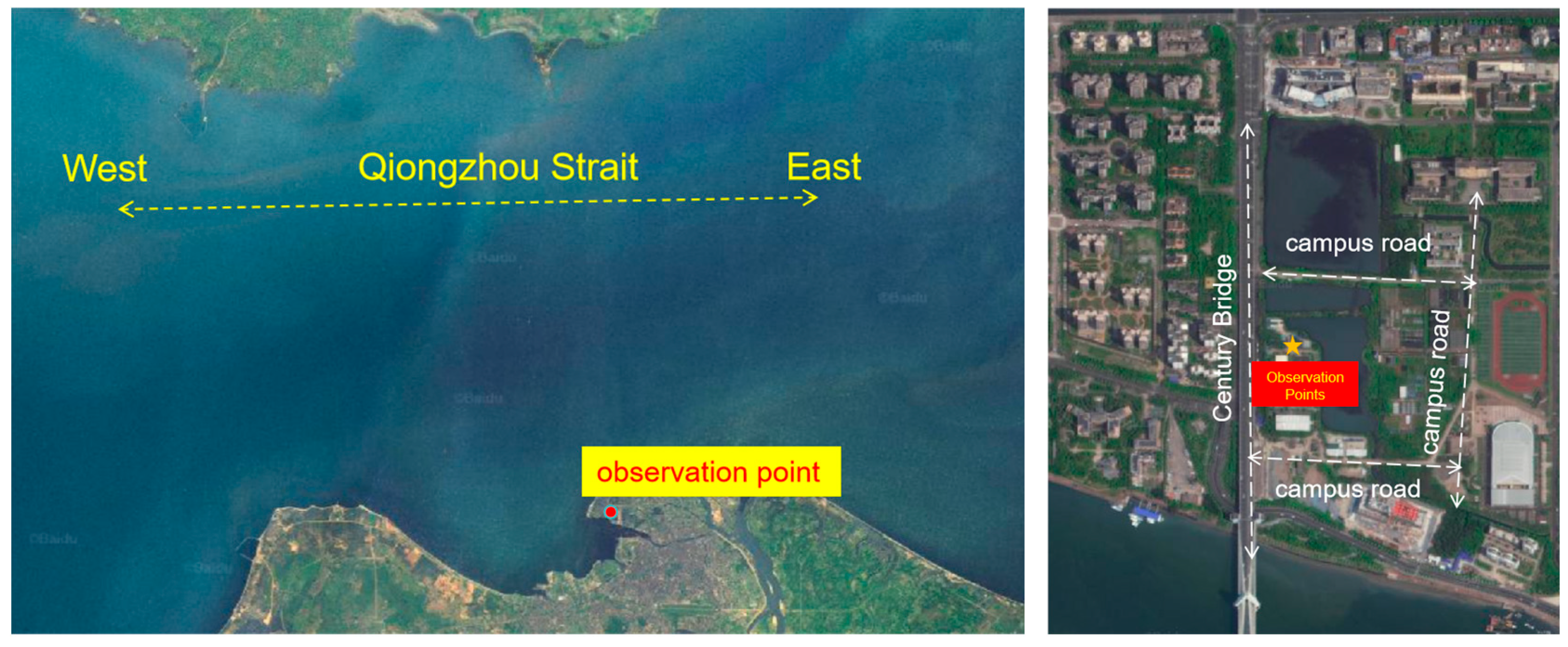
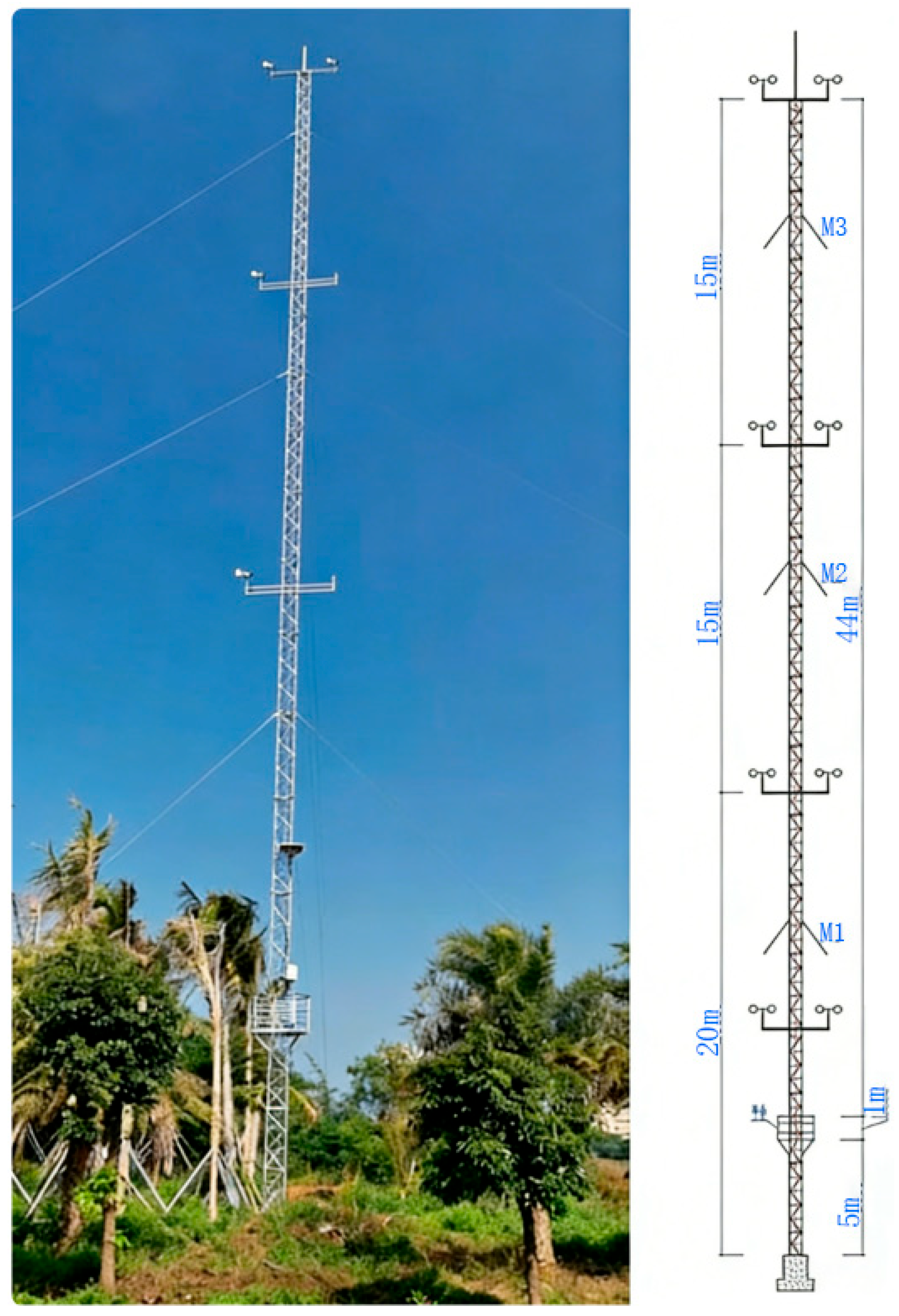
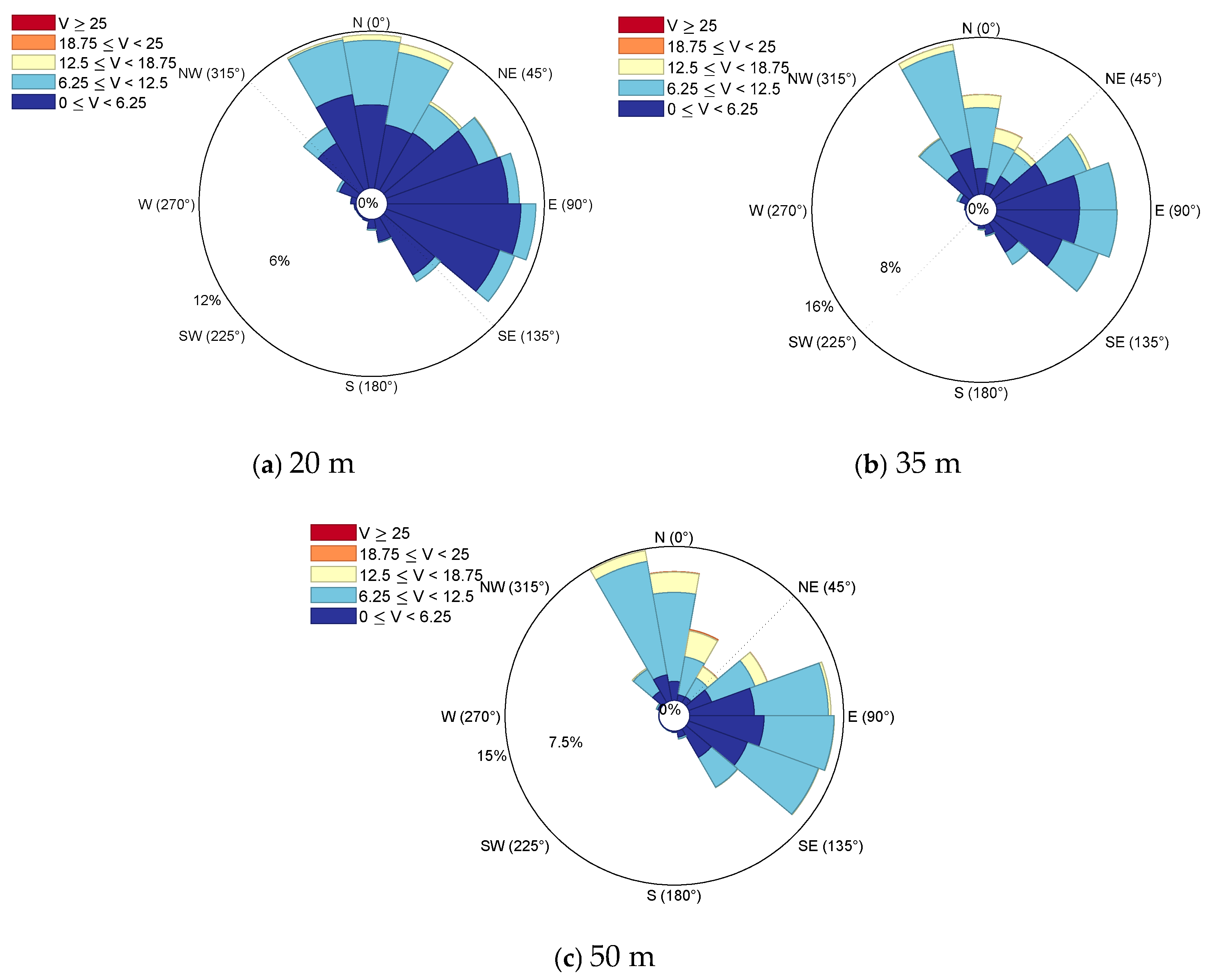
2.1. Field Measurement of Wind Field
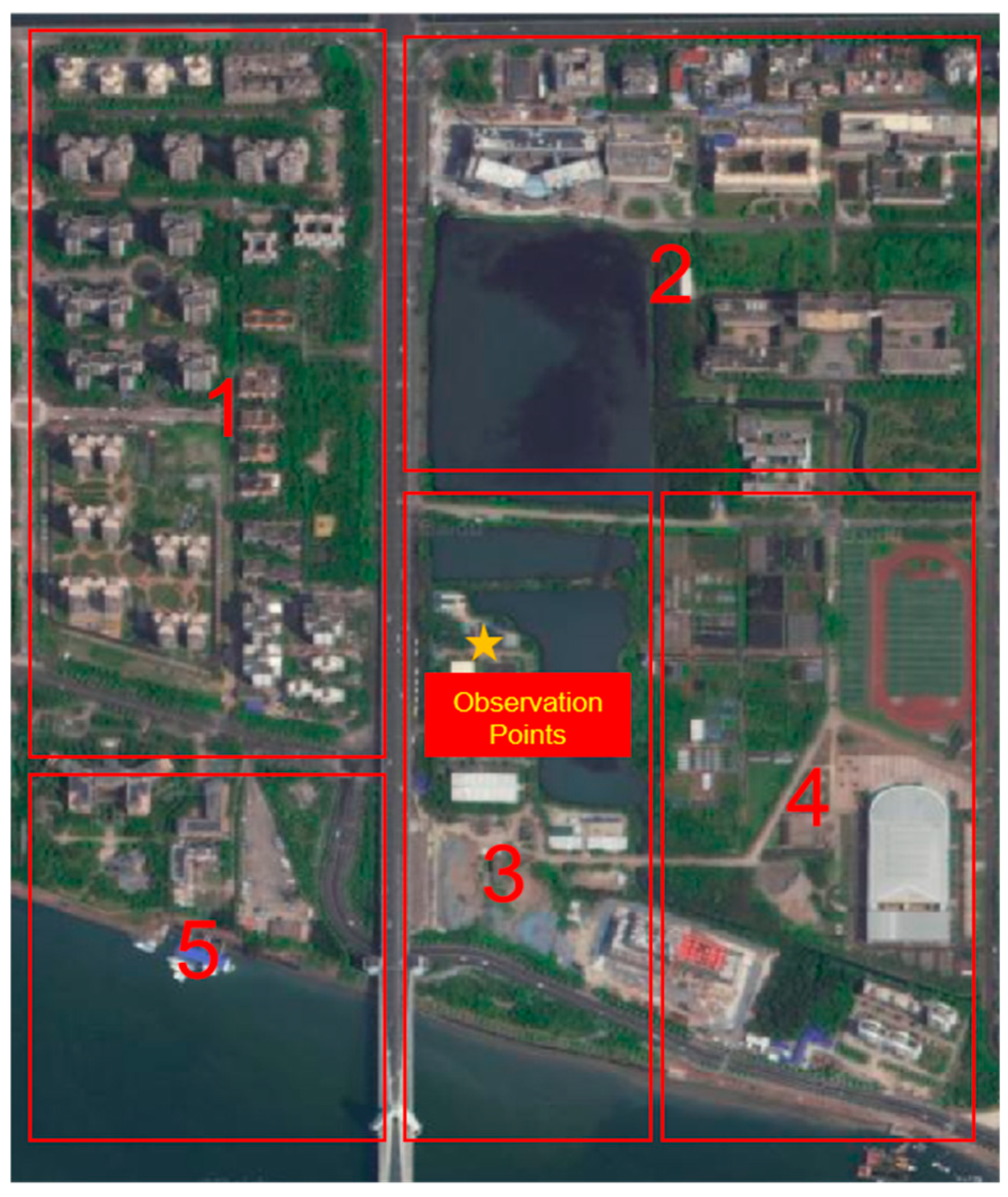
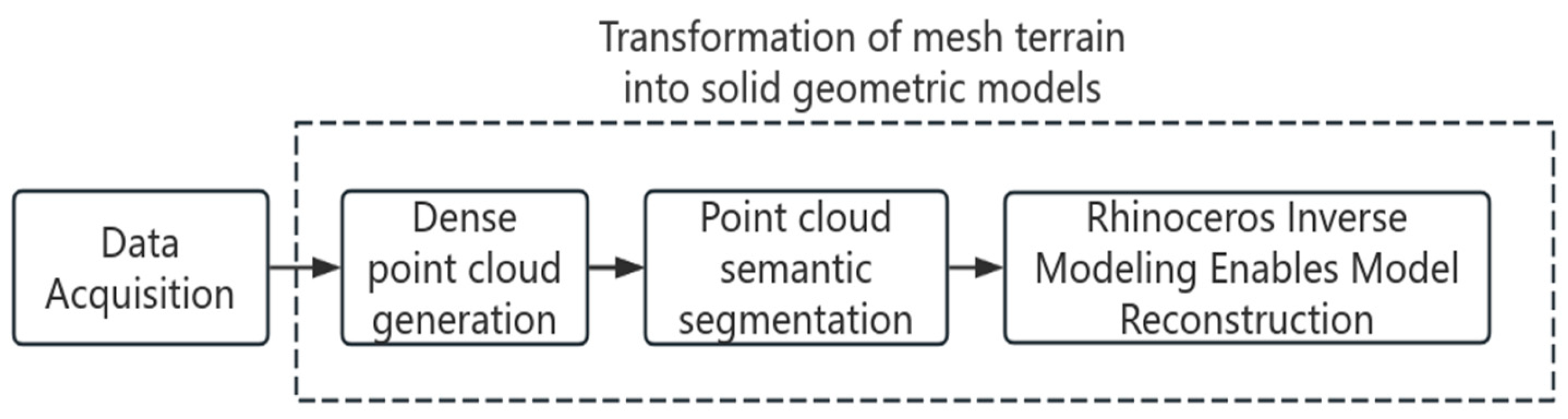
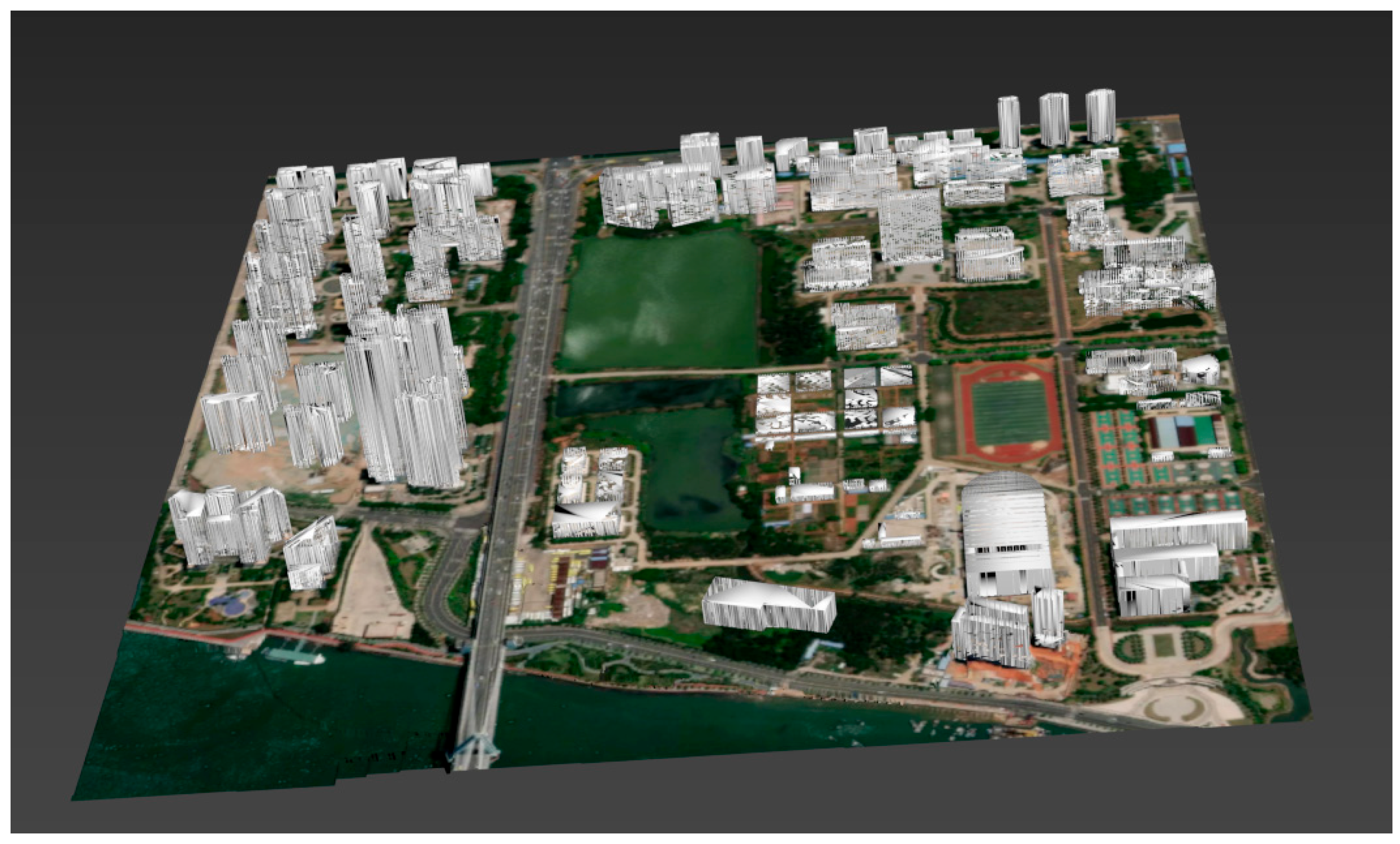
2.2. Complex Terrain Modeling Method Based on UAV
2.3. CFD Numerical Method
3. Results and Discussion
3.1. Spatial Reliability for Decision-Making Based on UAV
3.2. Numerical Analysis and Verification of Wind Environment
3.3. Implications for Emergency Management and Urban Resilience
4. Limitations and Scope Conditions
5. Conclusions
Author Contributions
Funding
Institutional Review Board Statement
Informed Consent Statement
Data Availability Statement
Acknowledgments
Conflicts of Interest
References
- Duarte, C.M.; Ferreira, J.C.; Fortes, J. Risk Modelling in Urban Coastal Areas to Support Adaptation to Climate Change and Extreme Weather Events: Early Warning, Emergency Planning and Risk Management Systems. J. Coast. Res. 2020, 95, 785–789. [Google Scholar] [CrossRef]
- Renault, M.A.; Bailey, B.N.; Stoll, R.; Pardyjak, E.R. A rapid method for computing 3-D high-resolution vegetative canopy winds in weakly complex terrain. Front. Earth Sci. 2023, 11, 1251056. [Google Scholar] [CrossRef]
- Rakib, M.I.; Nay, S.; Evans, S.; Clausen, P. Wind Regimes in Urban Environments: Experimental Comparison with the IEC 61400.2-2013 Open Terrain Wind Model. In Wind Energy Exploitation in Urban Environment; Research Topics in Wind Energy; Springer: Cham, Switzerland, 2019; Volume 8, pp. 201–204. [Google Scholar]
- Tabrizi, A.B.; Whale, J.; Lyons, T.; Urmee, T.; Peinke, J. Modelling the structural loading of a small wind turbine at a highly turbulent site via modifications to the Kaimal turbulence spectra. Renew. Energy 2017, 105, 288–300. [Google Scholar] [CrossRef]
- Mei, S.; Hang, J.; Fan, Y.; Yuan, C.; Xue, Y. CFD simulations on the wind and thermal environment in urban areas with complex terrain under calm conditions. Sustain. Cities Soc. 2025, 118, 113611. [Google Scholar] [CrossRef]
- Xie, M.; Chen, J.; Zhang, Q.; Li, H.; Fu, M.; Breuste, J. Dominant landscape indicators and their dominant areas influencing urban thermal environment based on structural equation model. Ecol. Indic. 2019, 111, 105992. [Google Scholar] [CrossRef]
- Hang, J.; Luo, Z.; Sandberg, M.; Gong, J. Natural ventilation assessment in typical open and semi-open urban environments under various wind directions. Build. Environ. 2013, 70, 318–333. [Google Scholar] [CrossRef]
- Singh, C.H.; Mishra, V.; Jain, K. High-resolution mapping of forested hills using real-time UAV terrain following. ISPRS Ann. Photogramm. Remote Sens. Spat. Inf. Sci. 2023, 10, 665–671. [Google Scholar] [CrossRef]
- Ju, P.; Li, M.; Wang, J. Review of research advances in cfd techniques for the simulation of urban wind environments. Fluid Dyn. Mater. Process. 2022, 18, 449–462. [Google Scholar] [CrossRef]
- Shukla, D.; Azad, H.K.; Abhishek, K.; Shitharth, S. Disaster management ontology—An ontological approach to disaster management automation. Sci. Rep. 2023, 13, 8091. [Google Scholar] [CrossRef]
- Shi, H.; Chen, Y.; Gao, H.; Zhao, H. Effects of typhoon and upwelling on Chlorophyll-a distribution in the northeastern coast of Hainan during Summer. PLoS ONE 2023, 17, 1371. [Google Scholar] [CrossRef]
- Tse, K.T.; Zhang, X.; Weerasuriya, A.U.; Li, S.W.; Kwok, K.C.S.; Mak, C.M.; Niu, J. Adopting ‘lift-up’ building design to improve the surrounding pedestrian-level wind environment. Build. Environ. 2017, 117, 154–165. [Google Scholar] [CrossRef]
- Kuo, C.-Y.; Tzeng, C.-T.; Ho, M.-C.; Lai, C.-M. Wind Tunnel Studies of a Pedestrian-Level Wind Environment in a Street Canyon between a High-Rise Building with a Podium and Low-Level Attached Houses. Energies 2015, 8, 10942–10957. [Google Scholar] [CrossRef]
- Xu, X.; Yang, Q.; Yoshida, A.; Tamura, Y. Characteristics of pedestrian-level wind around super-tall buildings with various configurations. J. Wind Eng. Ind. Aerodyn. 2017, 166, 61–73. [Google Scholar] [CrossRef]
- Yu, J.; Stathopoulos, T.; Li, M. Discussion of “wind-tunnel testing of low- and midrise buildings under heterogeneous upwind terrains”. J. Struct. Eng. 2025, 151, 07025001. [Google Scholar] [CrossRef]
- Yang, J.; Shi, B.; Shi, Y.; Marvin, S.; Zheng, Y.; Xia, G. Air pollution dispersal in high density urban areas: Research on the triadic relation of wind, air pollution, and urban form. Sustain. Cities Soc. 2019, 54, 101941. [Google Scholar] [CrossRef]
- Harding, C.; Hasiuk, F.; Wood, A. Touchterrain—3d printable terrain models. ISPRS Int. J. Geo Inf. 2021, 10, 108. [Google Scholar] [CrossRef]
- Hruby, F.; Ressl, R.; de la Borbolla del Valle, G. Geovisualization with immersive virtual environments in theory and practice. Int. J. Digit. Earth 2018, 12, 123–136. [Google Scholar] [CrossRef]
- Sameer, M.A.; Mohammed, A.A. A study on seismic performance of tall buildings with transfer plate. Int. J. Appl. Eng. Res. 2019, 14, 1849–1859. [Google Scholar]
- Potsis, T.; Stathopoulos, T. Wind induced peak pressures on low-rise building roofs via dynamic terrain computational methodology. J. Wind Eng. Ind. Aerodyn. J. Int. Assoc. Wind Eng. 2024, 245, 105630. [Google Scholar] [CrossRef]
- Kim, Y.C.; Tamura, Y.; Yoon, S.-W. Proximity effect on low-rise building surrounded by similar-sized buildings. J. Wind. Eng. Ind. Aerodyn. 2015, 146, 150–162. [Google Scholar] [CrossRef]
- Ahmad, F.; Majumder, D.; Ranjit, R.; Gupta, A.; Manhart, M. Preliminary study on the spread of air-borne pollutants in urban environment: A cfd simulation approach. Sci. Rep. 2025, 15, 18836. [Google Scholar] [CrossRef]
- Liu, S.; Pan, W.; Zhang, H.; Cheng, X.; Long, Z.; Chen, Q. CFD simulations of wind distribution in an urban community with a full-scale geometrical model. Build. Environ. 2017, 117, 11–23. [Google Scholar] [CrossRef]
- Nakamura, M.; Hamba, F. A rans model for shock/turbulence interaction. Seisan Kenkyu 2023, 75, 19–23. [Google Scholar]
- Yu, J.; Stathopoulos, T.; Li, M. Estimating exposure roughness based on google earth. J. Struct. Eng. 2021, 147, 04020353. [Google Scholar] [CrossRef]
- Rajasekarababu, K.B.; Vinayagamurthy, G.; Selvi Rajan, S. Evaluation of CFD URANS turbulence models for the building under environmental wind flow with experimental validation. J. Appl. Fluid Mech. 2022, 15, 1387–1401. [Google Scholar] [CrossRef]
- Hedlund, A. Evaluation of rans turbulence models for the simulation of channel flow. Dep. Inf. Technol. 2014, 202–205. [Google Scholar]
- Shirzadi, M.; Mirzaei, P.A.; Naghashzadegan, M. Improvement of k-epsilon turbulence model for cfd simulation of atmospheric boundary layer around a high-rise building using stochastic optimization and monte carlo sampling technique. J. Wind Eng. Ind. Aerodyn. 2017, 171, 366–379. [Google Scholar] [CrossRef]
- Guilmineau, E.; Deng, G.B.; Queutey, P.; Visonneau, M.; Wackers, J. Assessment of turbulence models for flow around three-dimensional geometries. In Proceedings of the Notes on Numerical Fluid Mechanics and Multidisciplinary Design; Springer: Cham, Switzerland, 2018; pp. 255–264. [Google Scholar]
- Li, J.; You, W.; Ding, W. Evaluation of the CFD simulation method for wind prediction in complex urban spatial forms. Int. J. Environ. Sci. Technol. 2025, 22, 11319–11344. [Google Scholar] [CrossRef]
- Kim, B.; Kim, H.S.; Suh, J.; Kwak, H.D. Prediction of lateral and angular eccentricity effects on plain annular seal performance using transient 3d CFD. J. Mech. Sci. Technol. 2025, 39, 3039–3048. [Google Scholar] [CrossRef]
- Huang, M.; Liao, S.; Lou, W.; Lin, W.; Kareem, A. Multi-scale simulation of typhoon wind field at building scale utilizing mesoscale model with nested large eddy simulation. J. Wind Eng. Ind. Aerodyn. 2024, 249, 105733. [Google Scholar] [CrossRef]
- Cui, Y.; Liu, Z.; Wu, H.; Sun, P.; Zhou, F. Evaluation of urban transportation resilience under extreme weather events. Appl. Sci. 2024, 14, 2076–3417. [Google Scholar] [CrossRef]





| Method Type | 20 m | 35 m | 50 m | |
|---|---|---|---|---|
| (m/s) | Measured | 9.01 | 9.81 | 11.12 |
| CFD | 10.13 | 10.96 | 12.21 | |
| Relative Error | 12.43% | 11.72% | 9.80% | |
| Iu (%) | Measured | 0.38 | 0.34 | 0.26 |
| CFD | 0.33 | 0.29 | 0.23 | |
| Relative Error | −13.16% | −14.71% | −11.53% |
Disclaimer/Publisher’s Note: The statements, opinions and data contained in all publications are solely those of the individual author(s) and contributor(s) and not of MDPI and/or the editor(s). MDPI and/or the editor(s) disclaim responsibility for any injury to people or property resulting from any ideas, methods, instructions or products referred to in the content. |
© 2026 by the authors. Licensee MDPI, Basel, Switzerland. This article is an open access article distributed under the terms and conditions of the Creative Commons Attribution (CC BY) license.
Share and Cite
Pei, F.; Chen, X.; Mu, Y.; Pei, C.; Zeng, J. High-Resolution Urban Wind Risk Assessment for Emergency Management Using UAV–CFD Integrated Modeling. Sustainability 2026, 18, 3268. https://doi.org/10.3390/su18073268
Pei F, Chen X, Mu Y, Pei C, Zeng J. High-Resolution Urban Wind Risk Assessment for Emergency Management Using UAV–CFD Integrated Modeling. Sustainability. 2026; 18(7):3268. https://doi.org/10.3390/su18073268
Chicago/Turabian StylePei, Fang, Xiantao Chen, Yongzhong Mu, Cheng Pei, and Jiadong Zeng. 2026. "High-Resolution Urban Wind Risk Assessment for Emergency Management Using UAV–CFD Integrated Modeling" Sustainability 18, no. 7: 3268. https://doi.org/10.3390/su18073268
APA StylePei, F., Chen, X., Mu, Y., Pei, C., & Zeng, J. (2026). High-Resolution Urban Wind Risk Assessment for Emergency Management Using UAV–CFD Integrated Modeling. Sustainability, 18(7), 3268. https://doi.org/10.3390/su18073268