1. Introduction
In recent years, as the importance of cultural development has become increasingly prominent in China, historical architecture has gradually transformed into a new functional space for urban growth, balancing the dual demands of urbanization and social-cultural promotion [
1]. The shift from material use to a higher level of emotional and experiential demand has driven a transition toward experience-oriented design in historical architecture [
2]. Previous studies have shown that the quality of interpretation significantly affects how visitors perceive and understand heritage values [
3]. In cultural heritage contexts, interpretive approaches and historical storytelling can shape visitors’ educational, experiential, emotional, and entertainment value [
4]. Therefore, rather than assuming that all current experience design for historical buildings is inadequate, this study argues more cautiously that some existing experience formats still provide limited support for communicating deeper cultural meanings beyond physical form, especially for non-specialist visitors.
Most visitors, especially those without architectural backgrounds, struggle to differentiate between various historical sites after their visits, diminishing their motivation and enthusiasm for the experience. This issue is also closely related to cultural sustainability, as the long-term vitality of historical architectural spaces depends not only on physical conservation but also on the effective interpretation, transmission, and public understanding of their cultural values.
With the development of digital technology, an enduring virtual reality system, encompassing both digital replicas of the real world and native elements of the virtual world, offers new opportunities for experience design in historical spaces. Existing research mainly focuses on two areas: architectural preservation and restoration, as well as revitalization and renewal [
5,
6]. On one hand, explorations such as Wan Fei’s digital preservation of the Nanyue Ancient Post Road [
7] and Daniele’s VR archeological reconstruction of a Neolithic virtual settlement [
8] have successfully recreated and enabled interaction with historical buildings that are of high heritage value, severely fragmented, or exist only in documentation. On the other hand, scholars are also exploring how digital technology integrates with the revitalization of historical architecture in educational and esthetic contexts. For example, Zhang Qing’s VR interactive platform, based on Chinese intangible cultural heritage—shadow puppetry [
9], demonstrates that the integration of technology can facilitate the creative transformation and innovative development of traditional arts. Additionally, Chung et al. [
10] found that user acceptance of technology is a key factor in enhancing the experience and satisfaction with digital interaction technologies. Tom Dieck et al. [
11] confirmed that comfortable and user-friendly devices can encourage positive user behaviors during interactions with technological tools. Moreover, the user interface should be simple, intuitive, and aligned with the overall atmosphere of the digital environment. For smoother operation, the size of the virtual images loaded should also match the device’s capacity.
Although digital interactive technologies have greatly supported the experience design of historical architecture, several challenges remain [
12,
13,
14]:
- (1)
In terms of methodological development, there is still room for improvement in both theoretical and practical aspects of gamified interaction within the experience design of Chinese historical spaces;
- (2)
Regarding efficacy validation, current data primarily relies on subjective feedback, with limited interpretation of objective data. Thus, this study takes an architectural perspective to explore a case-based design and evaluation framework for gamified interaction in historic spaces.
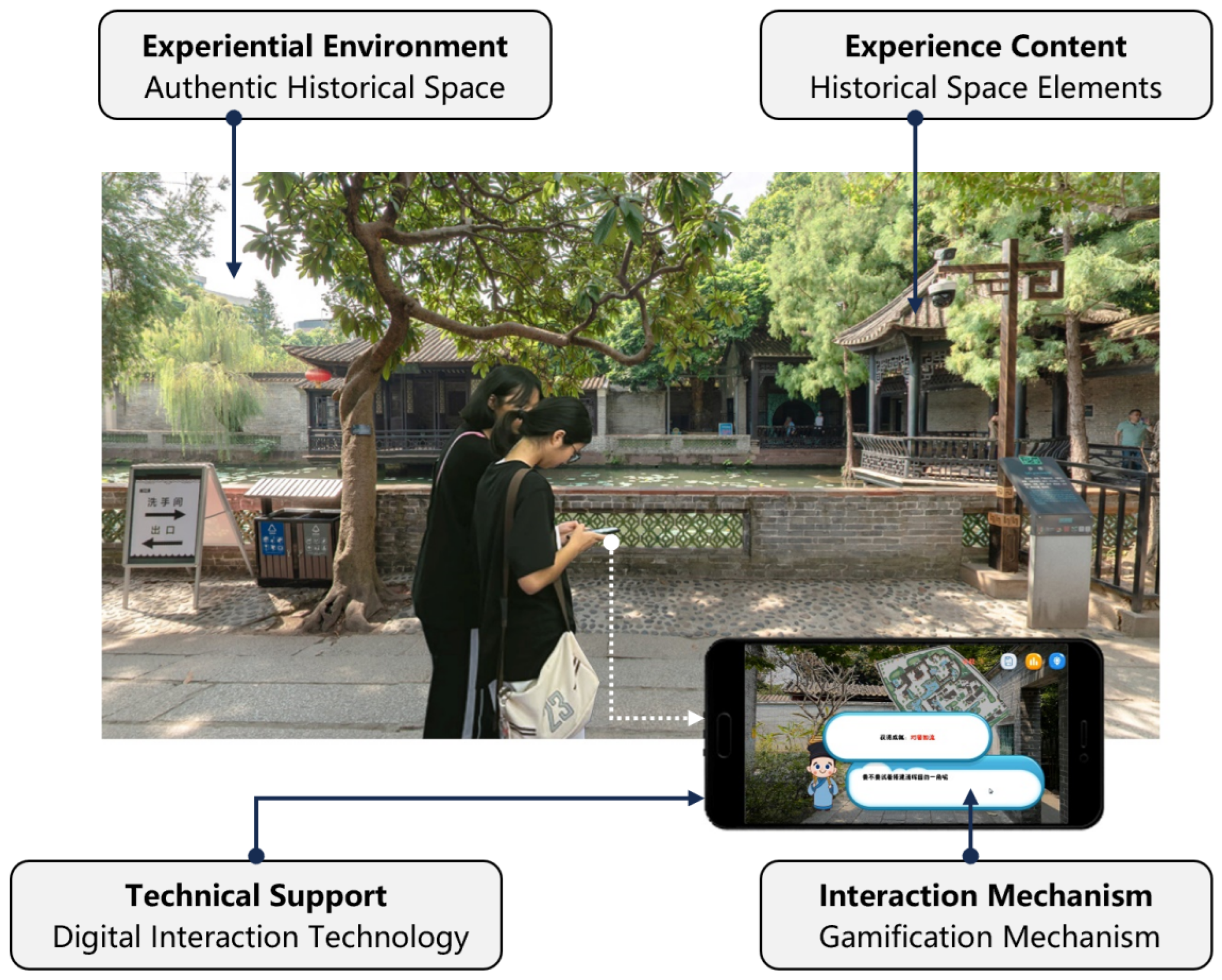
Further, the study conducts empirical validation using Qinghui Garden, a real historical building in China. By comparing digital technologies with traditional forms of experience, the research explores the effects of gamified interaction in historical space experiences. This study defines real-space gamified interaction as a mobile, on-site, task-driven interpretive experience in which the material and immaterial elements of a historic space serve as the content of exploration, while visitors are guided through missions, feedback, and rewards in the real environment. It differs from augmented reality (AR) in that AR overlays computer-generated information onto the real-world environment, whereas the present study does not rely on real-time visual superimposition. Instead, it uses mobile terminals and 2D scene-based interfaces to organize and guide visitors’ on-site exploration (
Figure 1).
This study aims to collect quantitative data, both objective and subjective, to analyze the performance of different experience methods in historical spaces regarding experiential effectiveness. It specifically explores the following three research questions:
- -
RQ1: Do tourists exhibit different behavioral characteristics in the space when influenced by free experience, traditional guided experience, or real-world gamified interaction?
- -
RQ2: Are there differences in tourists’ cognitive performance and experiential perceptions of spatial information under the influence of free experience, traditional guided experience, or real-world gamified interaction?
- -
RQ3: In the real application of historical spaces, can the real-world gamified interaction method and its corresponding technology be accepted by tourists and demonstrate good operability?
3. Methodology
3.1. Research Object
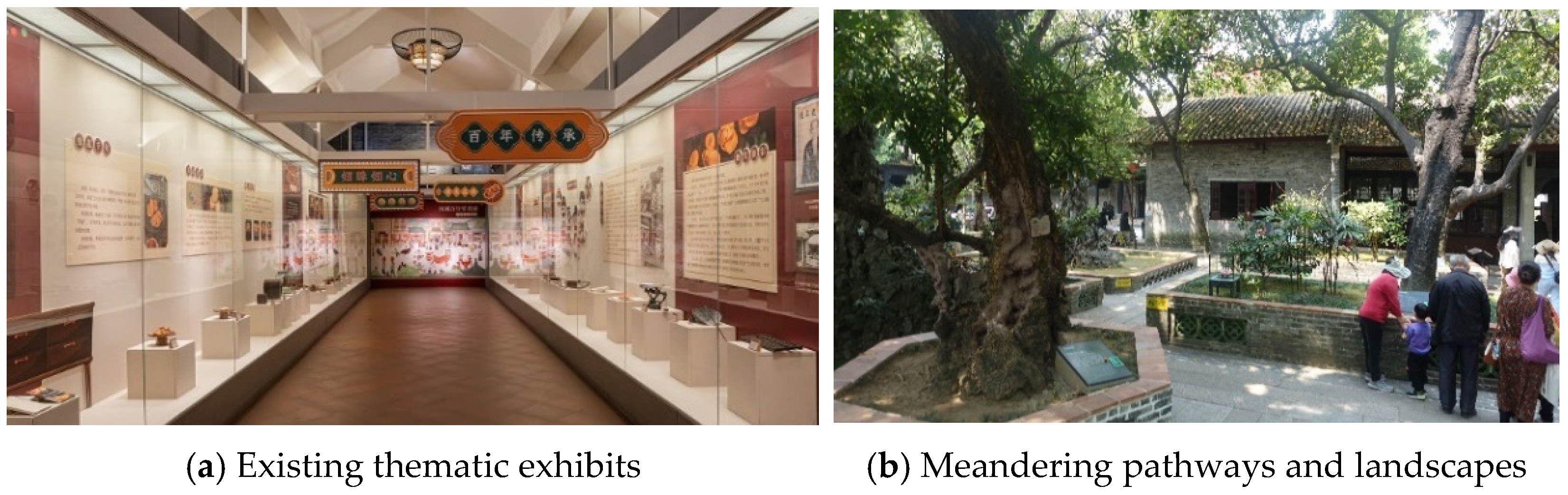
The research object is Qinghui Garden, a historical Lingnan-style garden that originated in the Ming Dynasty. Covering an area of about 22,000 square meters, it is also one of China’s top ten famous gardens. The architectural style of Qinghui Garden blends traditional Chinese gardens with Western influences, offering a rich variety of cultural information that is typically presented through traditional experiential methods within the space. However, in preliminary interviews, tourists reported difficulties in spatial and informational cognition, as well as a lack of engagement during their visit. These challenges provide an important basis for applying the proposed real-world gamified interaction method in this research (
Figure 5).
Participants for the experiment were recruited randomly at the ticket entrance of Qinghui Garden, with a total of 54 healthy, mentally sound volunteers without severe visual impairments participating in the study. The group included 27 men and 27 women (
Table 1). Given the practical constraints of field recruitment in a real-world heritage setting, together with the time-intensive experimental procedure and the need for continuous behavioral data collection, this sample size was considered appropriate for the comparative experiment. Participants were divided into three experimental groups: the free experience group, the traditional guided experience group, and the real-world gamified interaction group, with 18 people in each group. Prior to the experiment, participants were fully informed of any potential risks and signed informed consent forms. The experimental process consisted of four stages: “experiment briefing—pre-experience questionnaire—experiment—post-experience questionnaire.” The experiment was conducted on regular weekdays when no special events were scheduled and visitor density was relatively low. To minimize the influence of temporal and environmental variations, the three experimental groups were carried out in parallel on the same day.
To further clarify the implementation of the experiment, the detailed procedure is described as follows.
- (1)
Briefing and device preparation
Participants were first informed of the experimental procedure and signed informed consent forms. Tracking devices were then distributed and adjusted to ensure proper alignment with participants’ field of view, minimizing interference with natural behavior and data recording. Participants in different groups received corresponding materials, including route maps for the guided group and application access for the gamified interaction group.
- (2)
Pre-experience questionnaire
Participants completed a questionnaire collecting demographic information, prior knowledge, visitation frequency, and initial interest levels, establishing a baseline for subsequent evaluation.
- (3)
On-site experience and behavioral data collection
Participants engaged in the assigned experience mode within Qinghui Garden while behavioral data were continuously recorded. The free exploration group navigated the space independently. The guided group completed the visit using a recommended route and mobile audio explanations. The gamified interaction group followed application-based guidance to complete task-based activities, including spatial navigation, check-in learning tasks, and quiz interactions. After completing the experience, all participants returned to the starting point, where data collection was checked for completeness before removing the recording devices.
- (4)
Post-experience questionnaire
After a short rest, participants completed a questionnaire assessing cognitive performance, technology usability, experience satisfaction, and future behavioral intentions. Additional questions on interaction preferences were included for the gamified interaction group. The test items were based on on-site interpretive content. To complement the questionnaire data, semi-structured interviews were conducted with selected participants to collect additional subjective feedback and support further interpretation of the results. Each interview lasted approximately 10 min.
3.2. Design of Real-World Gamified Interaction Experience
Based on previous discussions of the experience design model and the gamified interaction development process, it was found that the design process typically follows the stages of exploration, design, and validation. Building on this foundation, this research proposes a real-world gamified interaction design model for historical spaces, consisting of five steps: “analyze experience needs—analyze spatial information—define experience goals—design and develop gamified interaction—test and iterate”. In this study, the quality of the gamified design was supported by a theory-based design process, iterative testing, and post-experience usability evaluation. In particular, the gamified group showed relatively strong performance in clarity, reliability, and perceived support for architectural knowledge acquisition.
- (1)
Analysis of experiential needs
Experiential needs encompass both user experience needs and historical space needs.
First, regarding user experience needs, the researcher conducted observations and interviews at the entrance of Qinghui Garden on both a weekday and a weekend to collect data on audience characteristics. Four main visitor types were identified: guided tour groups, sightseers, learners, and casual leisure visitors. Tour groups were found to have weaker links with Qinghui Garden’s experience design as they primarily followed external guides. Leisure visitors, mostly locals familiar with the space, represented a small portion of the visitor population and were not a focus of this study. The experiential needs of sightseers and learners will guide subsequent design strategies.
Second, the needs of the historical space focus on the social value and functional attributes that must be realized during its preservation and revitalization. Qinghui Garden’s current needs are centered on cultural heritage display and education. In this experiment, only detachable interactive devices and data collection equipment were introduced, ensuring no damage to the historical buildings or disruption to park order.
- (2)
Analysis of spatial information
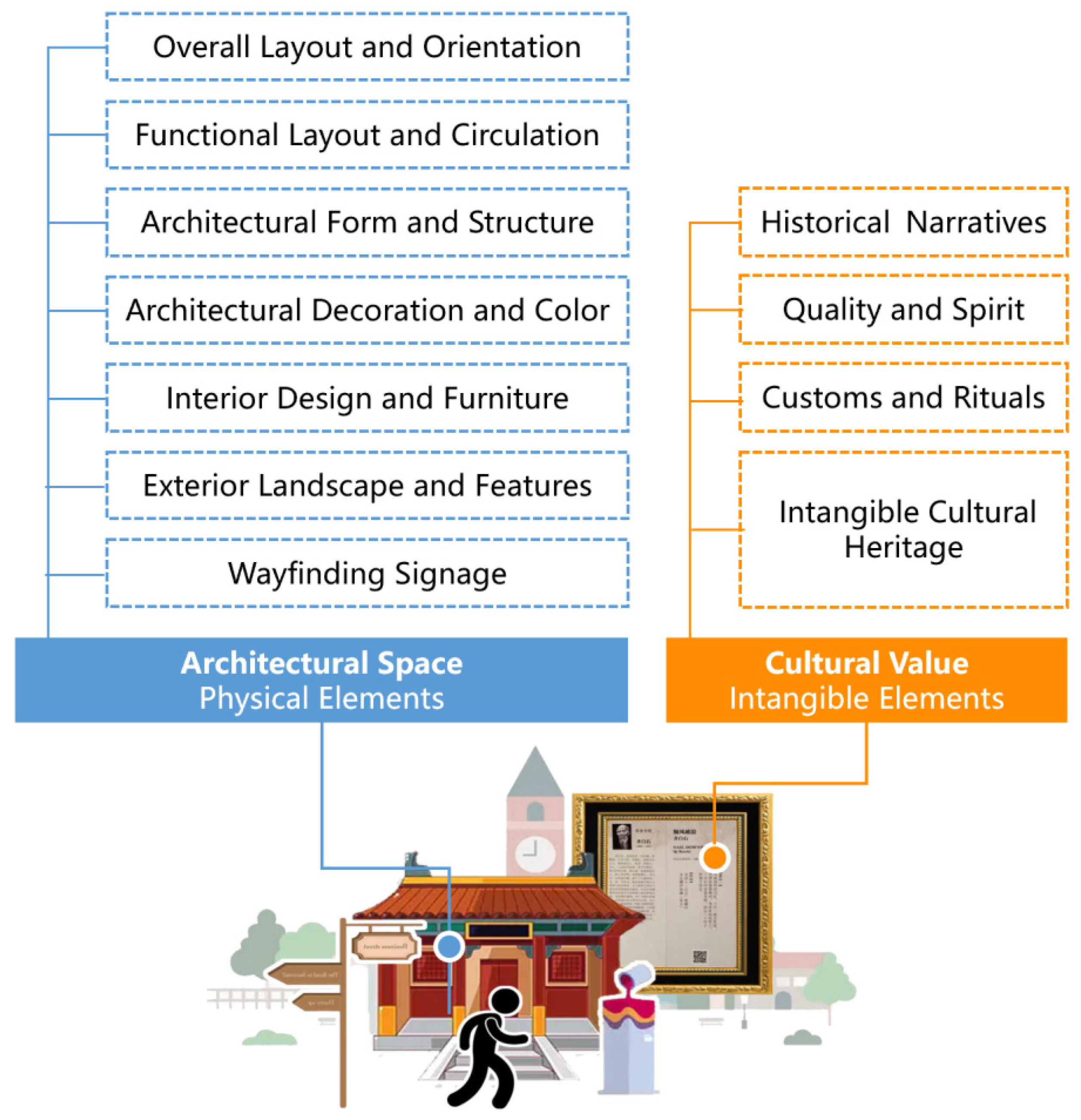
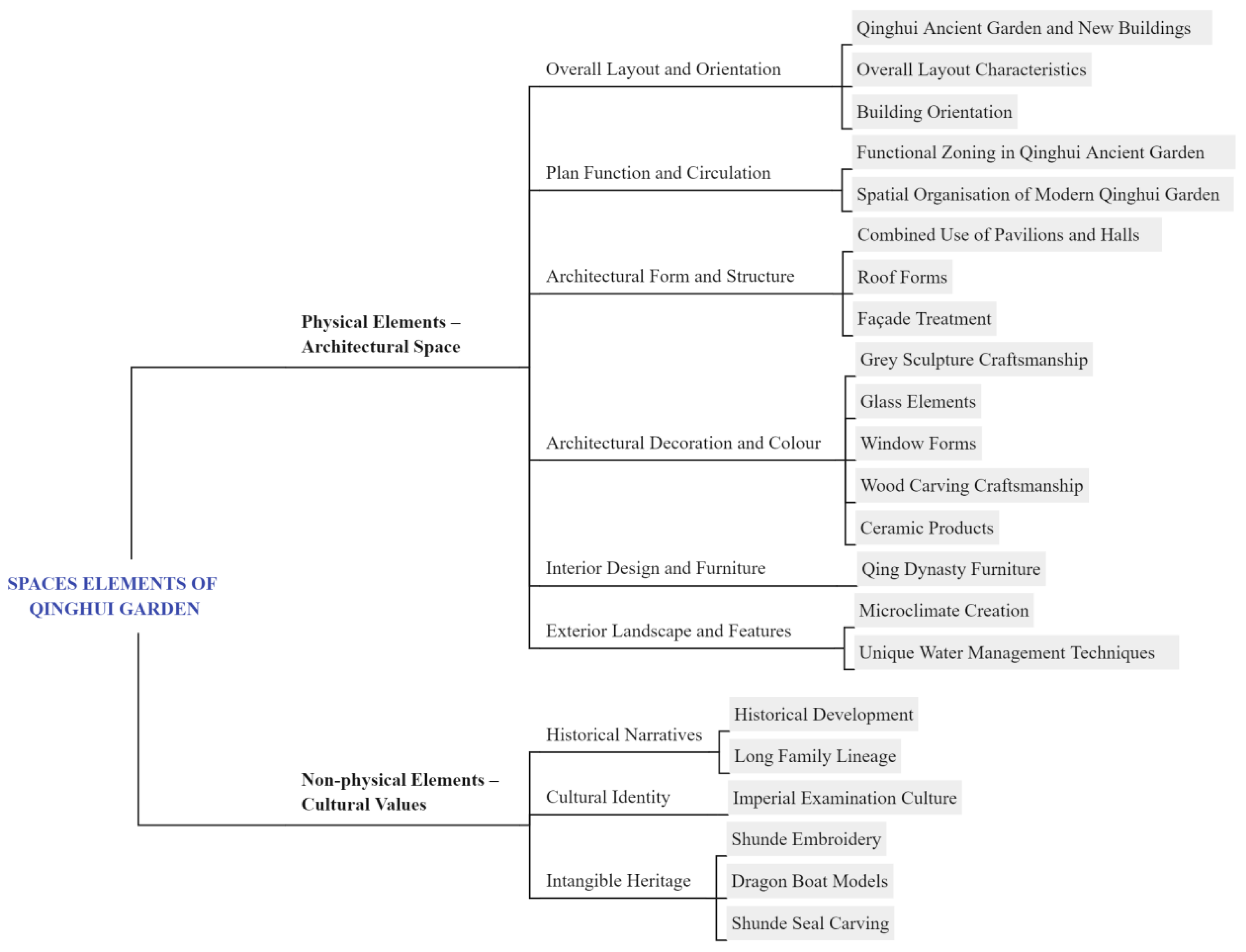
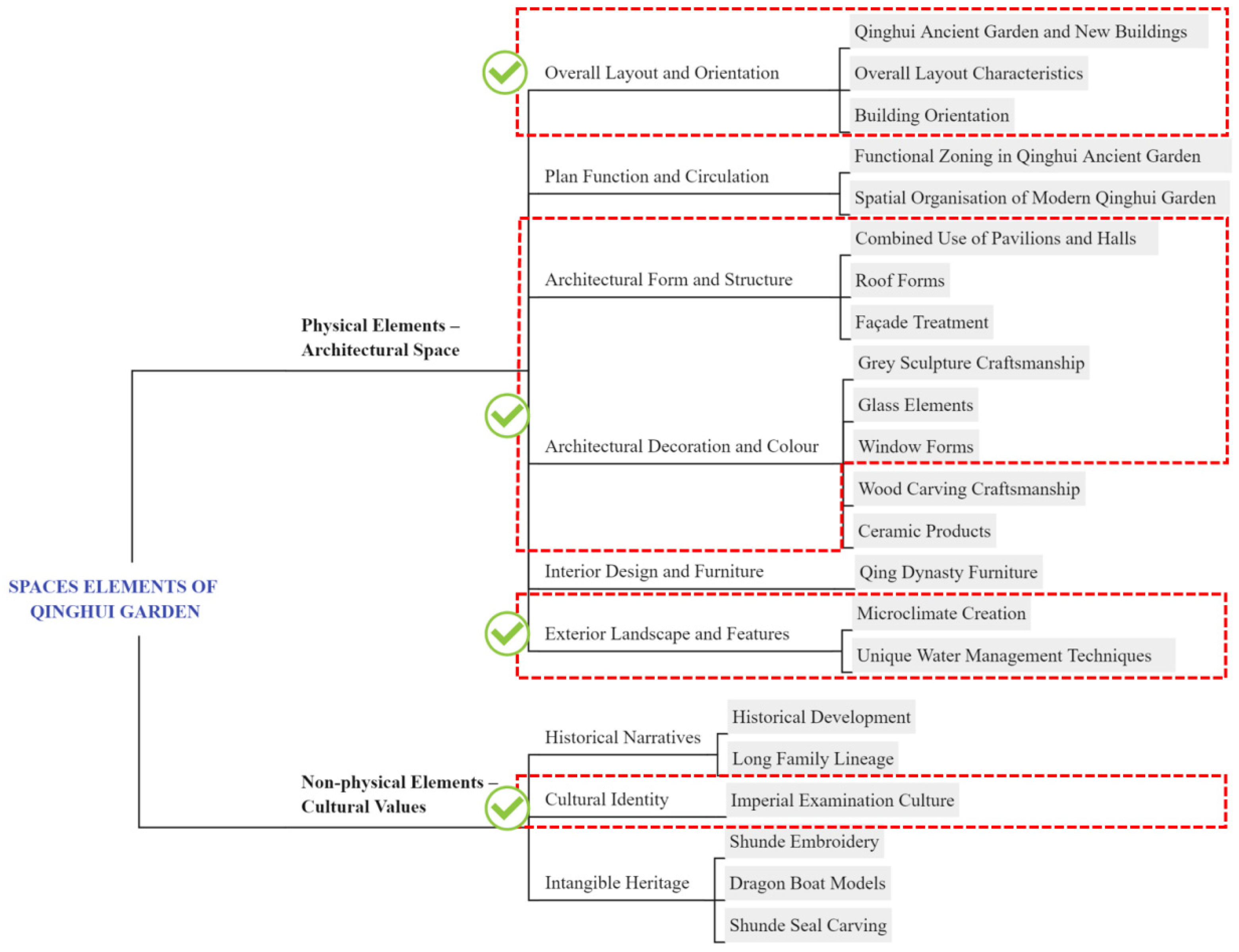
Analyzing spatial information involves the identification and analysis of existing information within the real-world space. The study focuses on the material and intangible elements of Qinghui Garden, although intangible cultural information is limited and not included in this study’s scope. The framework of spatial elements in Qinghui Garden is shown in
Figure 6.
- (3)
Defining experience goals
Experience goals serve as the design direction and evaluation standard for the real-world gamified interaction. The primary goal of Qinghui Garden’s gamified interaction experience is to create a platform that guides visitor behaviors, comparing its effectiveness with traditional experience methods. The experience goals must meet the following criteria:
Incorporate gamification and clear guidance.
Ensure information content is derived from the spatial display.
Present information that is both professional and appropriately challenging.
- (4)
Design and development of real-world gamified interaction
The design and development process is divided into four sections: spatial design, gamification design, visual design, and interaction development.
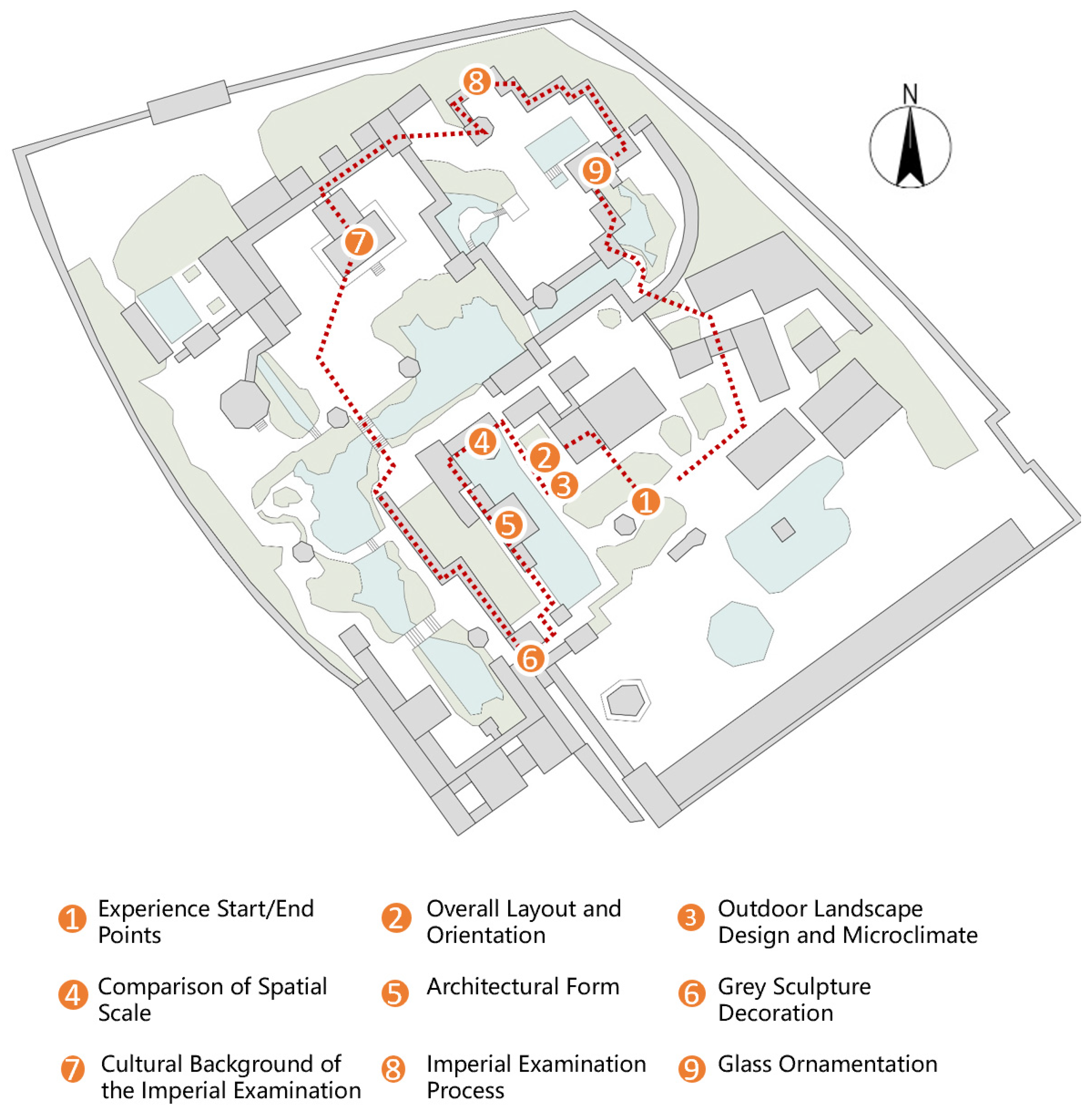
First is spatial design, including space renovation, space reorganization, and circulation design. In this study, the focus is solely on flowline design. To prevent extended experiences from causing visitor fatigue, it is necessary to control the scale of development and the duration of the experience. Therefore, the elements for this real-world gamified interaction experience are selected based on two factors: the richness of the content and its cultural value, as shown in
Figure 7.
Based on this, the interactive spaces are determined. The selected experiential spatial elements are organized through a logical framework of information, considering both the associated objects and the hierarchical levels of the information. The experiential content is structured to connect material to immaterial aspects, from a macro to a micro scale, and from outdoor to indoor spaces. The sequence of experiences is determined accordingly, as shown in
Figure 8. After each spatial interaction, visitors will be guided to the next interaction point, but their specific movement flow will not be restricted (
Figure 8).
Second is the gamification design, which consists of three parts: defining the experience theme, identifying key attributes, and creating a gamification prototype.
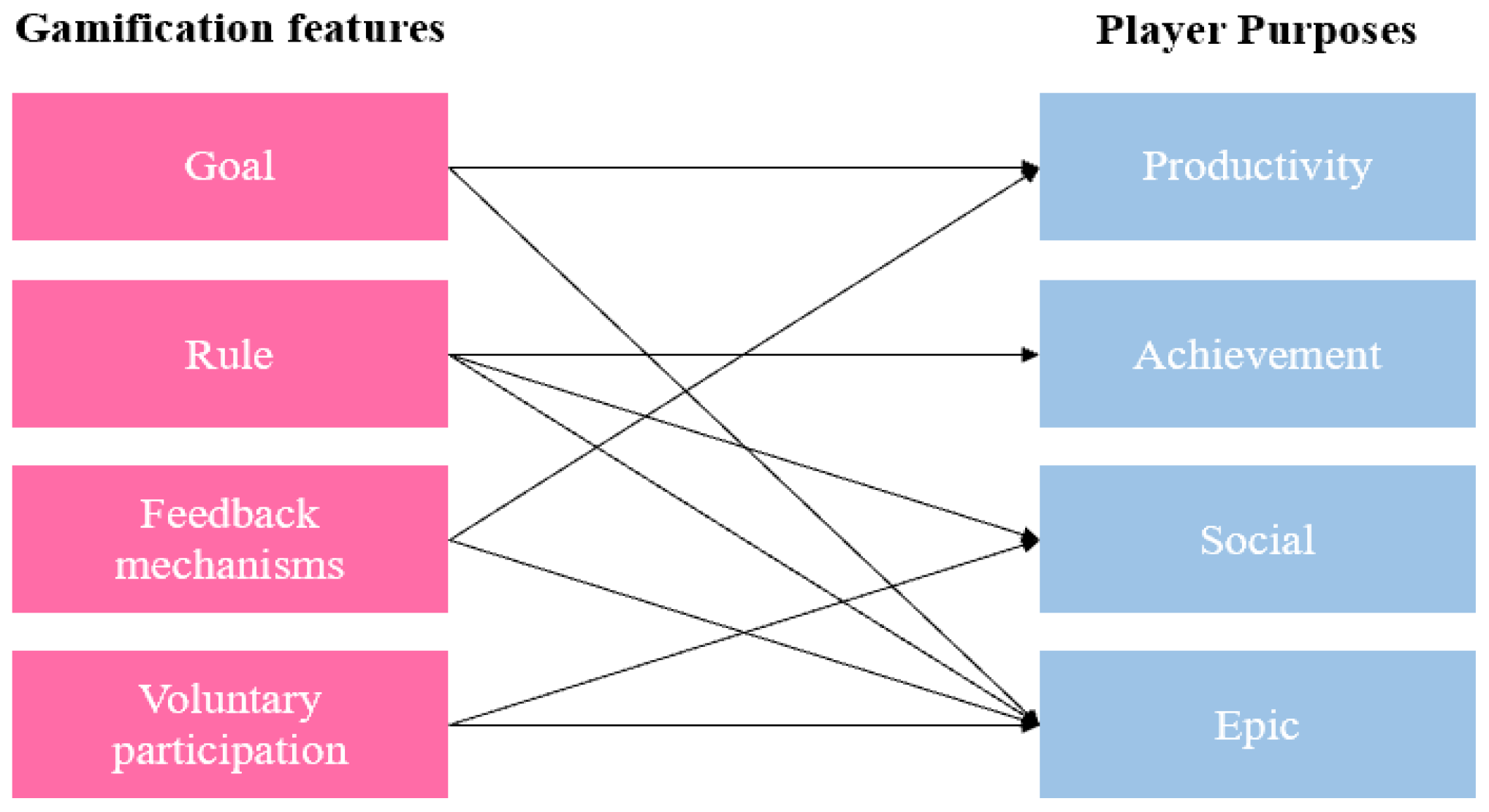
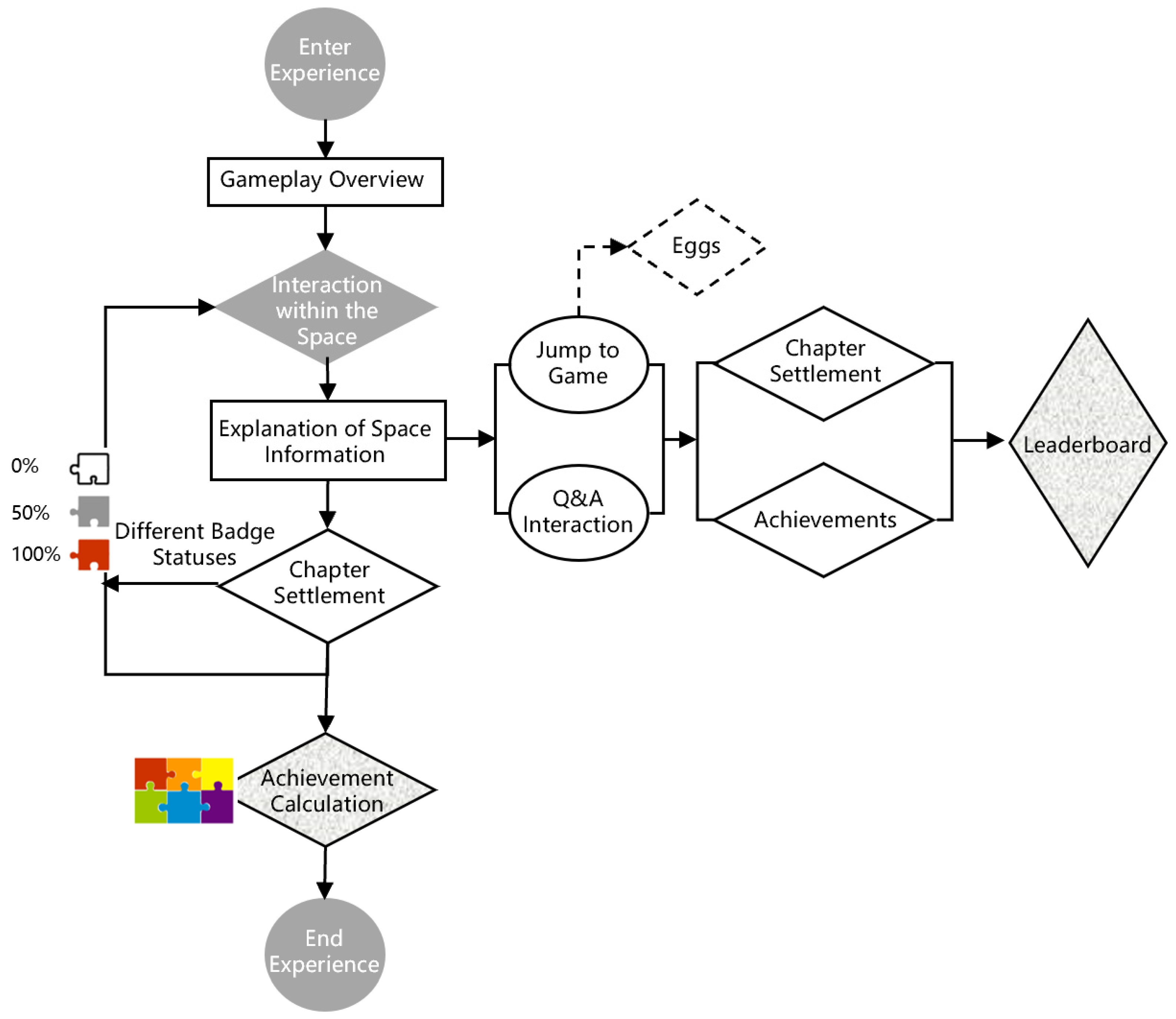
In the beginning, the interactive experience theme is determined. Based on the previous analysis of Qinhui Garden’s spatial information and visitor characteristics, the theme is centered around the architectural layout and imperial examination culture of Qinhui Garden. It targets visitors who are interested in historical experiences and digital interaction, with a virtual guide and gamification rewards serving as the core of the interactive guidance platform. Next, the basic attributes of the gamified interaction experience for Qinhui Garden are identified. These include aspects of audience interaction, the ending state of the experience, and the reward mechanisms. A user incentive system is incorporated into the gamified interaction design. Lastly, a gamification prototype diagram of the real-world interactive experience is developed.
The comprehensive analysis indicates that the design adopts a task-driven format where virtual characters provide narration and missions. The platform allows for multiple participants simultaneously and introduces a mildly competitive leaderboard. The conclusion of the experience aligns with the natural end of the tour, and the reward system is based on intangible achievements, such as badges. Ultimately, the gamified interaction prototype for Qinhui Garden is visualized in the form of a diagram (
Figure 9).
Third is visual Design, involving creating the space setup, character design, and interface design, all of which aim to establish a visual connection between the space and the storyline of the experience.
Fourth is interaction development, including hardware facilities, software development, and feedback mechanism development to implement the previously designed concepts through technical means. After considering the requirements of the real-world gamified interaction and the challenges of practical application, a comparison of commonly used technologies was conducted. Ultimately, this study chose mobile devices based on Unity3D (version 2023.2.20f1) software as the hardware platform for the gamified interaction experience. For the space setup, 2D images captured from the real-world environment were used to represent the spaces (
Table 2).
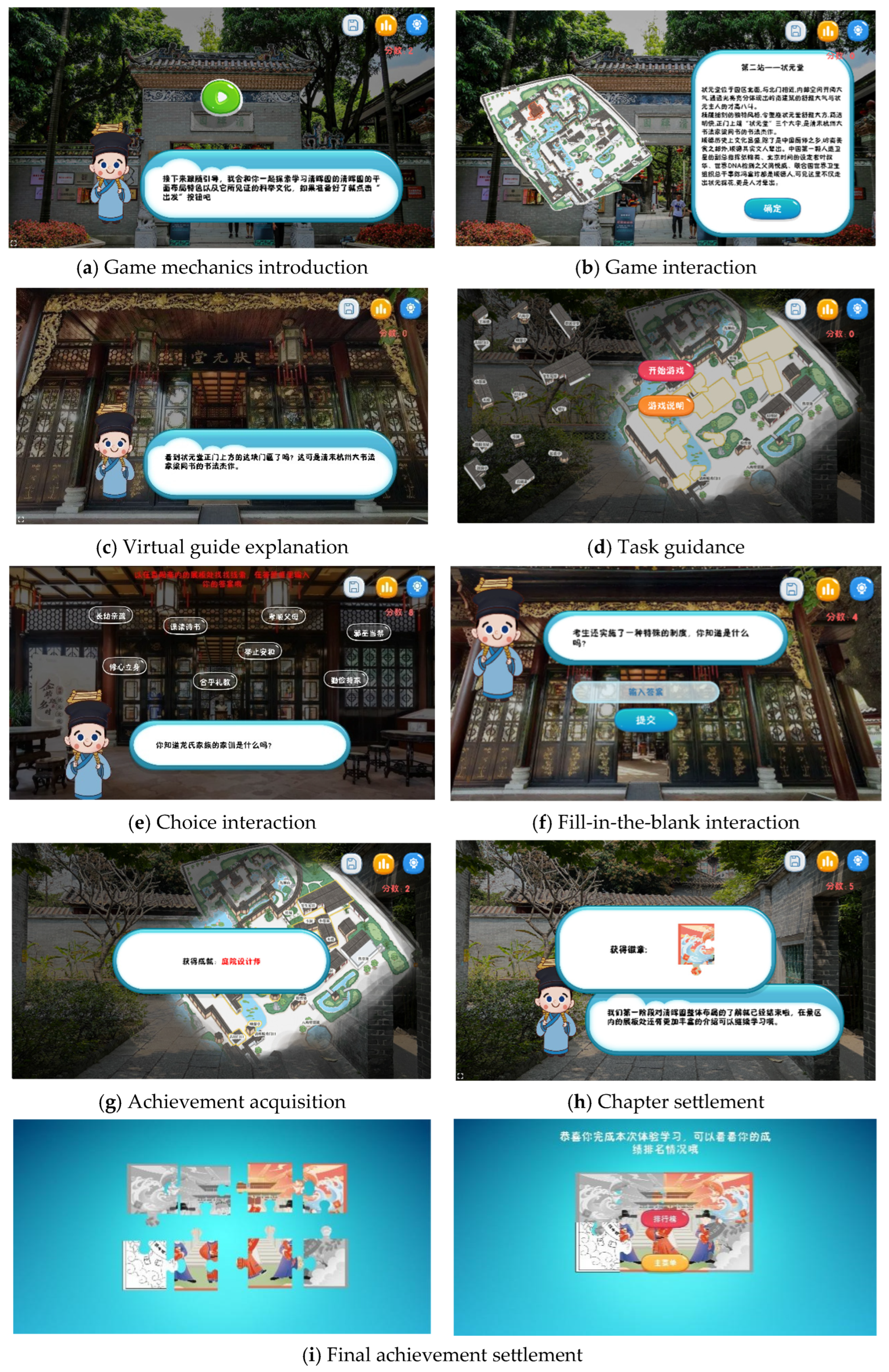
The specific experience and interaction feedback process includes six main steps: user login and gameplay introduction, task point guidance, virtual guide narration and interaction, achievement acquisition, chapter conclusion, and final achievement settlement (
Figure 10).
- (5)
Testing and iteration
Finally, visitor experience testing was conducted to identify problems in the design scheme and support subsequent optimization and iterative refinement. Both subjective and objective data were collected to assess the visitor experience and cognitive responses during the interaction process. The testing results were then used as a basis for adjusting and improving the gamified interaction design in the historical space.
3.3. Evaluation System for the Effectiveness of Gamified Interaction Experiences
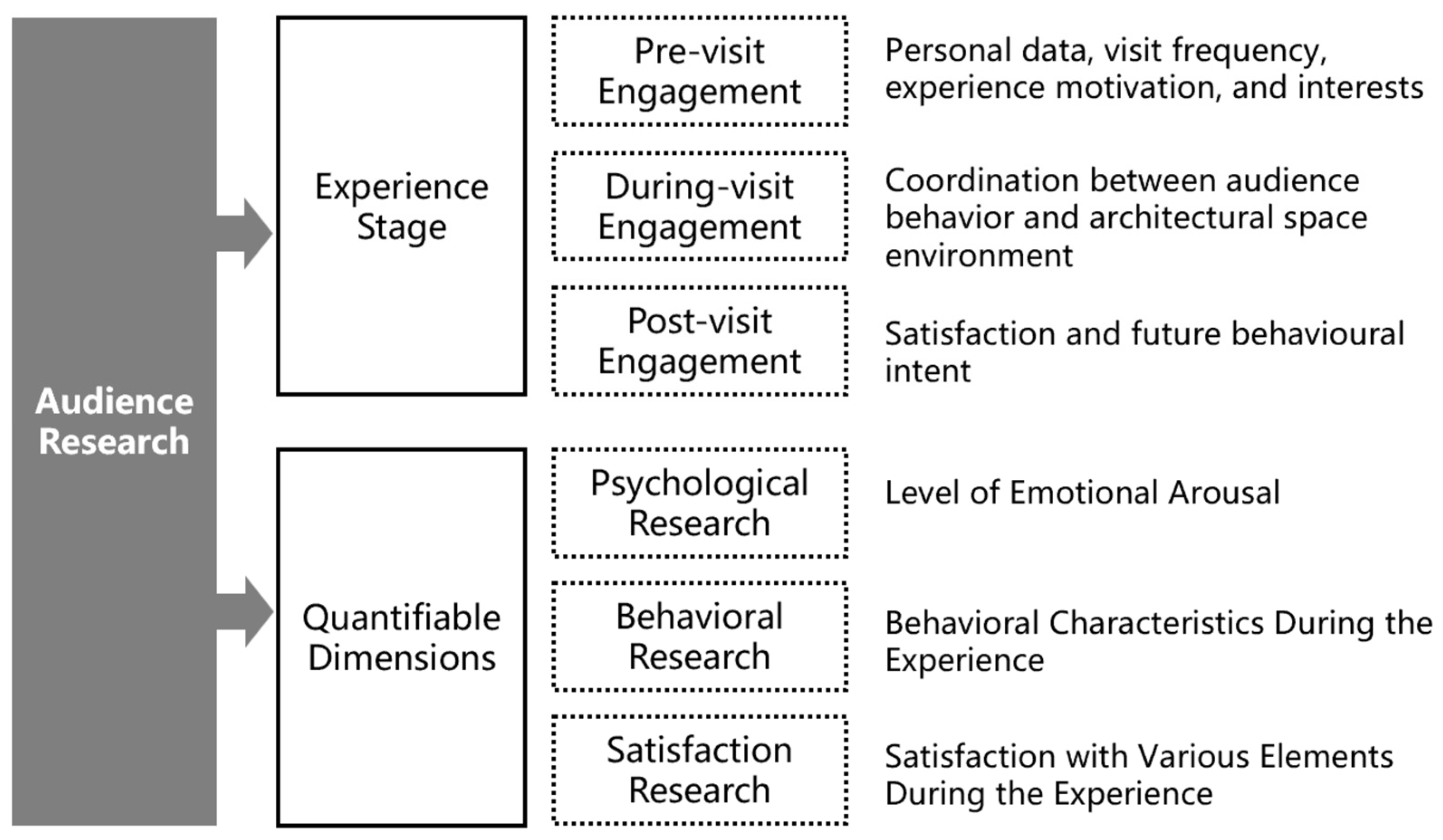
Based on discussions from various disciplines regarding the evaluation of experience design effectiveness, the educational perspective focuses on learning outcomes and psychological states; the architectural perspective emphasizes spatial elements and audience research; while the human–computer interaction perspective concentrates on usability and user enjoyment. However, four fundamental dimensions of experience effectiveness evaluation can be distilled from the user’s perspective: motivation, behavioral characteristics, cognitive performance, and subjective perception [
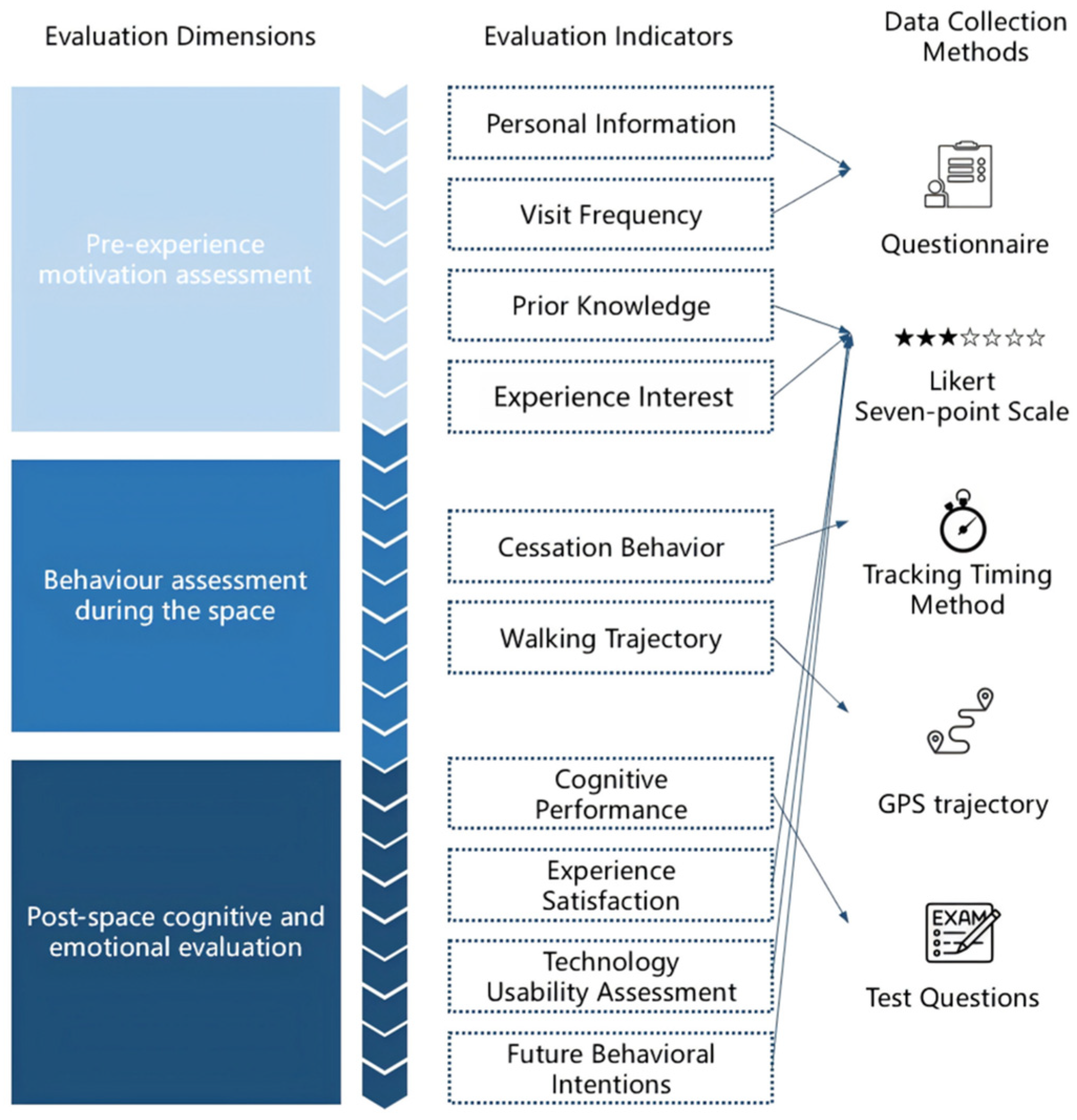
53]. Thus, based on these dimensions and with audience research in architecture as the core, this study constructs an experience design evaluation system. It includes three parts: pre-experience motivation evaluation, behavioral evaluation during the experience, and post-experience cognitive and perception evaluation, with corresponding indicators and data collection methods as shown in the figure (
Figure 11).
- (1)
Pre-experience motivation evaluation
The pre-experience motivation evaluation focuses on assessing participants’ motivation for engagement. The evaluation metrics include four parts: basic personal information, visitation frequency, prior knowledge, and experience interest.
Basic personal information is used to describe the demographic characteristics of the study group and to screen and verify if the group meets the experimental requirements. In this study, the collected personal information indicators include gender, age, region of origin, education level, and occupation. The data collection method was through a questionnaire.
Visitation frequency affects the audience’s familiarity with the object of experience, and differing levels of familiarity contribute to varying participation motivations [
54,
55]. Therefore, the questionnaire collected data on visitation frequency, categorized into five levels: never visited, 1–2 times a year, 3–5 times a year, 1–2 times a month, and 3 or more times a month.
Prior knowledge base influences both the cognitive motivation for the experience and provides a reference benchmark for evaluating cognitive enhancement after the experience [
56]. Due to the difficulty in quantifying cultural knowledge through detailed questions, a seven-point Likert scale was used to gather subjective ratings in this study.
Experience interest refers to an individual’s sustained attention and desire to engage with the subject [
57]. This data was collected using a seven-point Likert scale for subjective scoring, allowing participants to express their interest in the experience through detailed descriptions.
- (2)
Behavioral evaluation during the experience
Behavioral data reflects visitors’ processes and preferences during the experience and verifies whether visitors engage as expected, thus assessing the effectiveness of the experience design. It also provides guidance for optimizing future spatial planning. This study uses tracking and timing methods to collect behavioral characteristics. First, with reference to Serrell’s standardized method [
58], three types of research variables were determined for this study: stopping behavior, other behaviors, and space variables. Space variables, as external spatial factors that may affect visitor behavior, are not closely related to the research questions of this study and are thus treated as control variables. During the experiment, these conditions are kept consistent (
Table 3).
Next is to identify the-tracking observation methods. Tracking observation can be divided into manual observation and technical observation. While manual observation offers flexibility in capturing unexpected behaviors and emotional changes, it demands more human resources. Therefore, this experiment opts for technical observation. After comparing various positioning technologies in terms of application scenarios, equipment cost, operational difficulty, and positioning accuracy, GPS technology was found to be most suitable for behavioral evaluation in historical spaces and was thus selected for the empirical study (
Table 4).
- (3)
Post-experience evaluation of cognition and perception
The post-experience evaluation focuses on assessing the impact of the gamified interaction design on visitors’ cognitive performance and satisfaction. The evaluation indicators include cognitive performance, experience satisfaction, technology usability assessment, and future behavioral intentions.
The cognitive performance evaluation includes objective test scores and subjective spatial cognition assessments. First, objective test scores involve quiz questions based on the information provided during the experience. To account for visitors’ varying levels of expertise, easy-to-understand multiple-choice, true/false, and image recognition questions are used, avoiding abstract language in the descriptions. Subjective spatial cognition is assessed through a Likert scale, asking participants to reflect on their enhanced understanding of spatial layouts and memory of their movement paths during the experience. Together, these metrics allow for a comprehensive evaluation of participants’ spatial cognition improvement.
Experience satisfaction is evaluated based on the previously discussed hedonic user experience framework, focusing on three dimensions: attractiveness, engagement, and novelty. Additionally, for gamified interactive experiences, a preference survey on interaction elements and forms is conducted to assess the effectiveness of different gamification components.
Technology usability assessment, adapted from computer science standards, is quantified in terms of efficiency, clarity, and reliability. Efficiency refers to the ease with which the experience guides visitors through the content; clarity assesses whether instructions and explanations are straightforward and deepen visitors’ understanding of the space elements; and reliability examines whether the experience provided predictable, secure support to guide visitors in their actions.
Future Behavioral Intentions include the sustained cognitive interest in the space and the willingness to recommend the experience to others. This can be measured through the willingness to share the experience, which verifies the level of approval among visitors and indirectly reflects their satisfaction. Additionally, it can assess how the experience enhances visitors’ cognitive motivation towards the space.
4. Results Analysis
4.1. Pre-Experience Motivation Analysis
- (1)
Analysis of visitation frequency and subjective knowledge reserves
To determine whether there were differences in participants’ prior knowledge of the experience object, which could influence their motivation and serve as a baseline for evaluating cognitive enhancement, cross-tabulation (Chi-square) and variance analyses were conducted on the visitation frequency and subjective knowledge reserves of the three participant groups, as shown in
Table 5 and
Table 6. The results showed no significant differences between the groups in terms of visitation frequency or prior knowledge reserves. The median visitation frequency to cultural spaces for all three groups was between 3 and 5 times a year. Therefore, it can be concluded that the participants had relatively balanced motivation and cognitive baselines before the experience.
- (2)
Analysis of experience interest
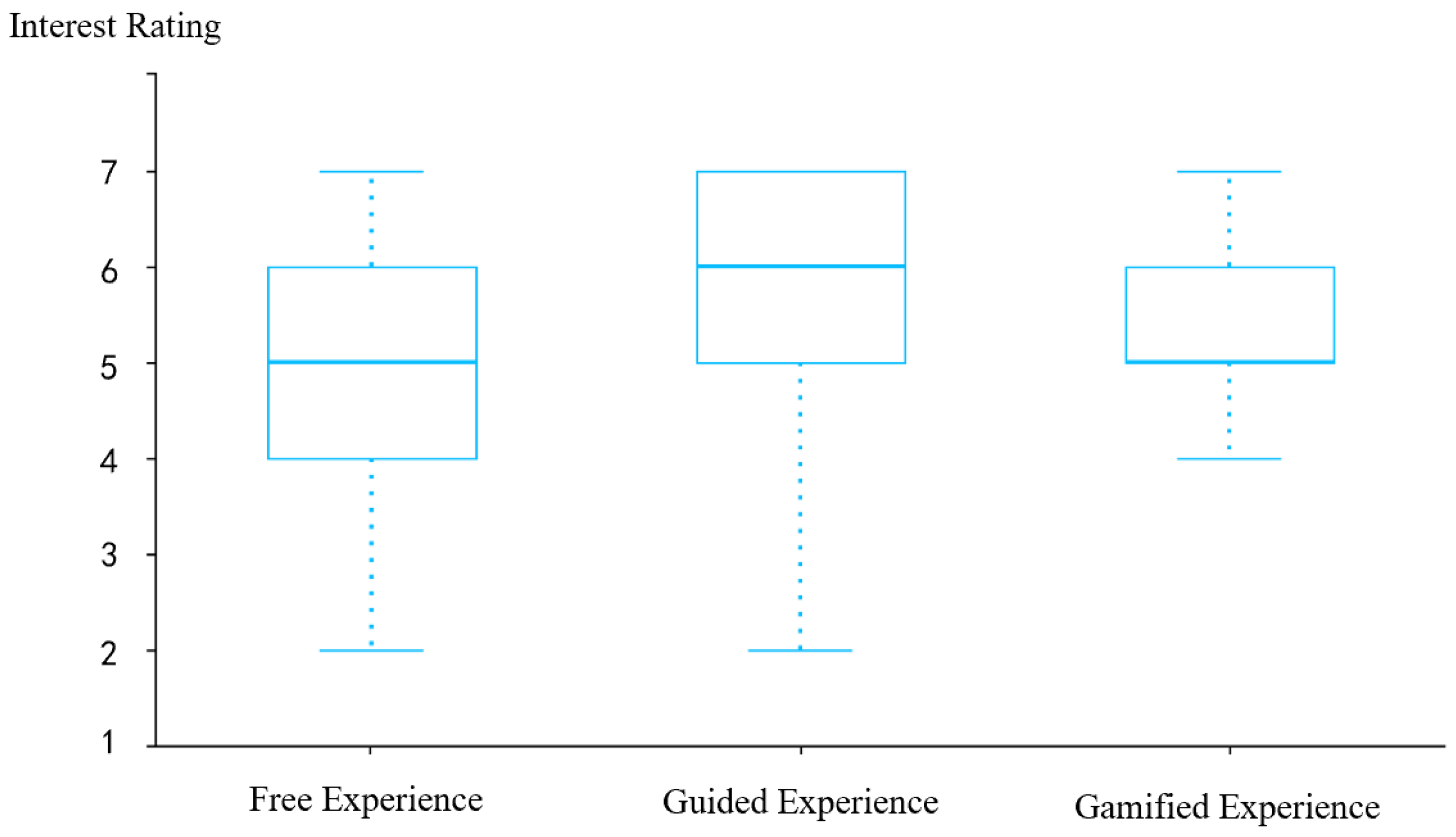
In terms of experience interest, participants’ interest in cultural spaces, interest in Qinghui Garden, and interest in real-world gamified interaction were assessed. No significant differences were observed between the three groups regarding interest in cultural spaces and Qinghui Garden. However, a significant difference was found in their interest in “real-world gamified interaction,” as visually shown through the box plots of the three groups (
Figure 12). Overall, participants displayed a positive attitude towards the gamified interaction experience.
To further investigate factors that might influence the level of interest in real-world gamified interaction, independent sample T-tests and Levene’s test for homogeneity of variance were conducted with gender, age, and education level as variables. Gender (t = −0.190, p = 0.850 > 0.05) showed no significant difference, while age (F = 8.555, p = 0.001 < 0.05) and education level (F = 5.859, p = 0.011 < 0.05) demonstrated significant differences.
Given that education level may be influenced by different educational periods, a two-way ANOVA was conducted using age and education as categorical variables and the interest in gamified interaction as the dependent variable. The results showed that education level did not exhibit significant effects (F = 1.809, p = 0.148 > 0.05), whereas age did (F = 14.211, p = 0.009 < 0.05). A follow-up one-way ANOVA on age revealed that participants under the age of 35 were significantly more interested in the gamified guide format than those over 36 years old, with an average score exceeding 6 points. Interest sharply declined for participants over 46 years old, with average scores around 3 points. Interviews indicated that younger participants had a higher acceptance of new technologies and interactive formats, whereas older participants’ interest was hindered by factors such as the difficulty of operating smart devices and the physical and psychological decline that comes with aging.
4.2. Behavioral Analysis During the Experience
- (1)
Total experience duration
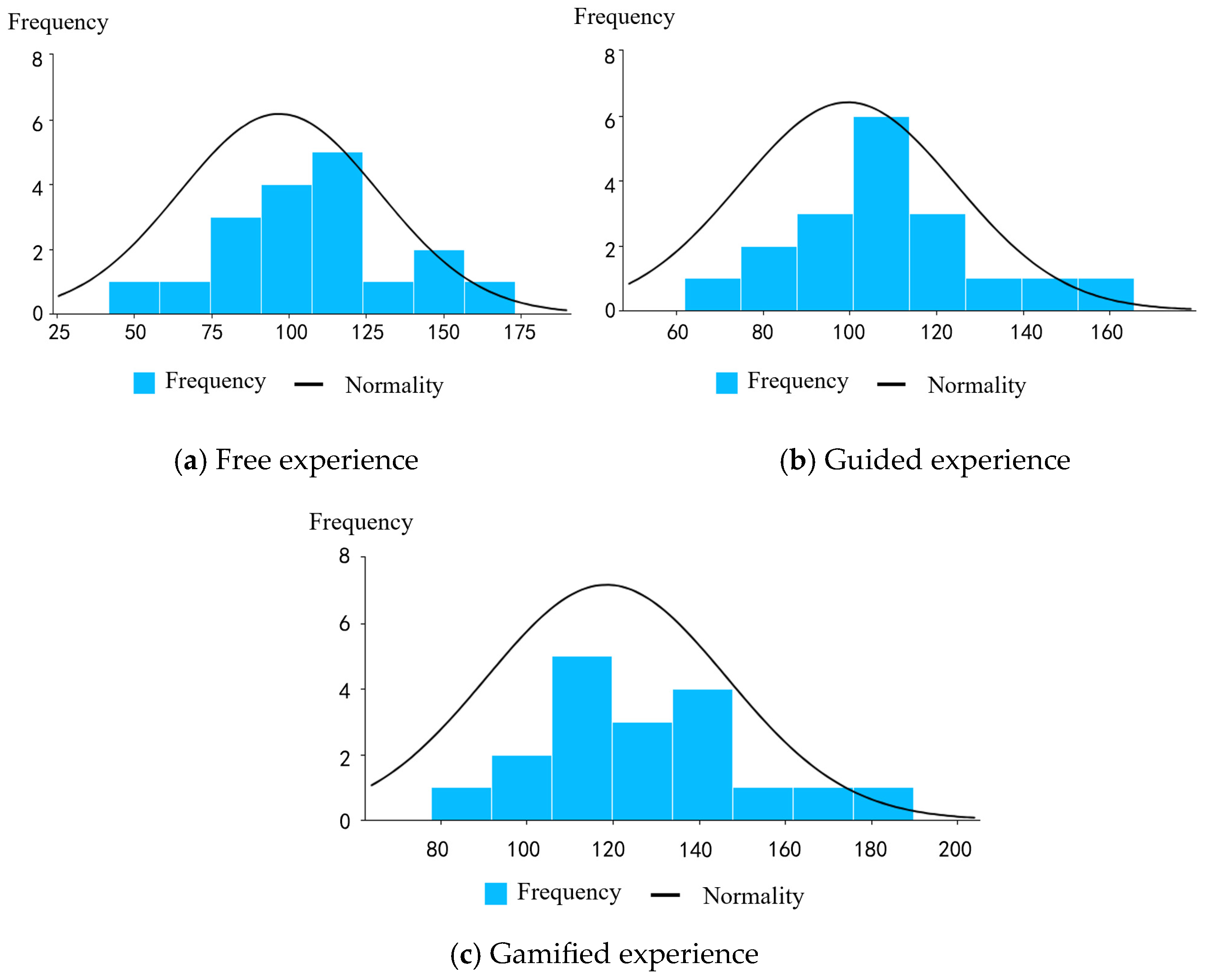
For the total experience duration, normality tests were conducted. Given that the sample size of each group was smaller than 50, the Shapiro–Wilk test was used. The results indicated no significant differences, suggesting that the data from all three groups exhibit normality.
In terms of average duration, the free exploration group and the guided tour group showed similar results, while the gamified experience group had a higher average duration, with an increase of approximately 20 min, representing a 19.8% improvement. The distribution of total experience duration for each group is illustrated in the histogram (
Figure 13), which shows that the guided tour group had the highest kurtosis in total experience time, while the free exploration group had the lowest, with the gamified experience group falling in between. This suggests that the total experience time in the guided tour group was more concentrated around the mean compared to the other two groups, likely due to the inclusion of structured guidance and audio narration. These fixed elements contributed to a more uniform experience duration among the guided tour participants.
- (2)
Number of stops
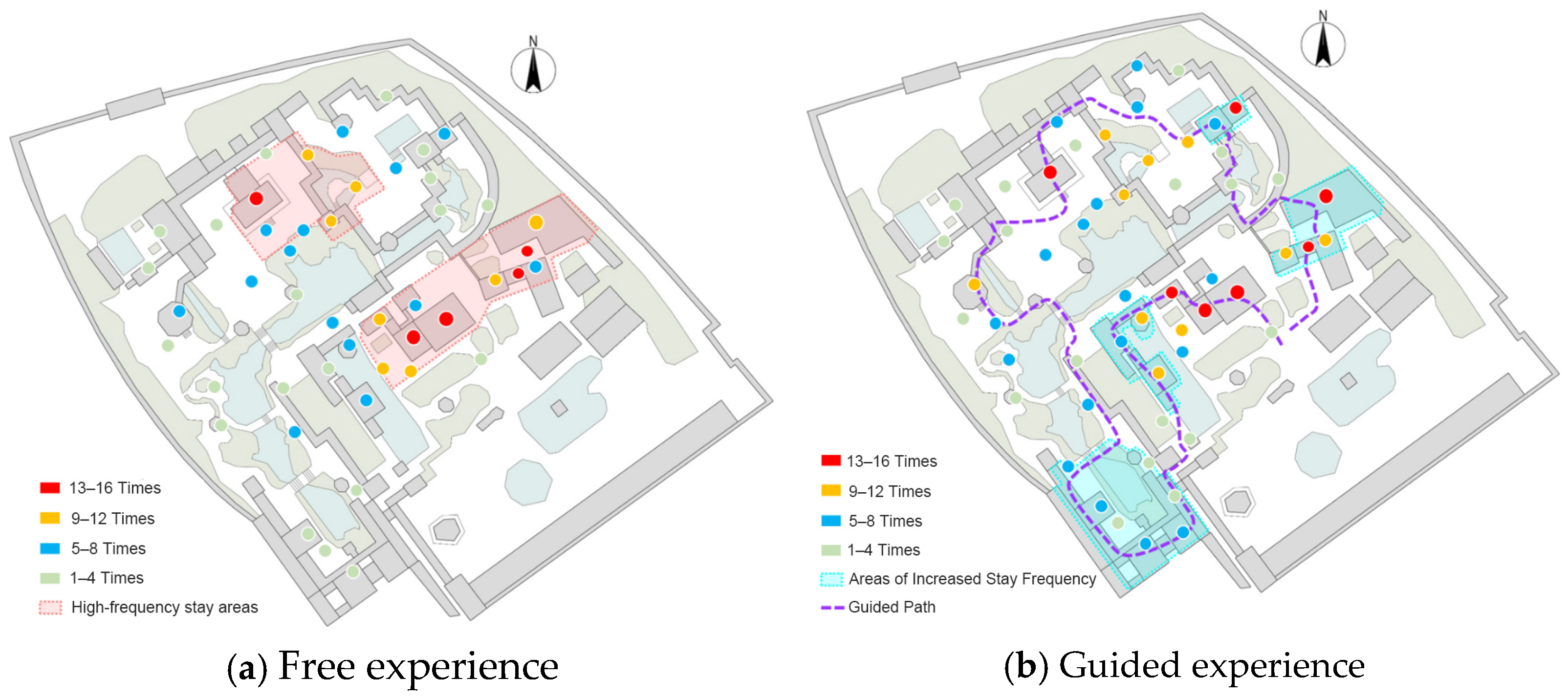
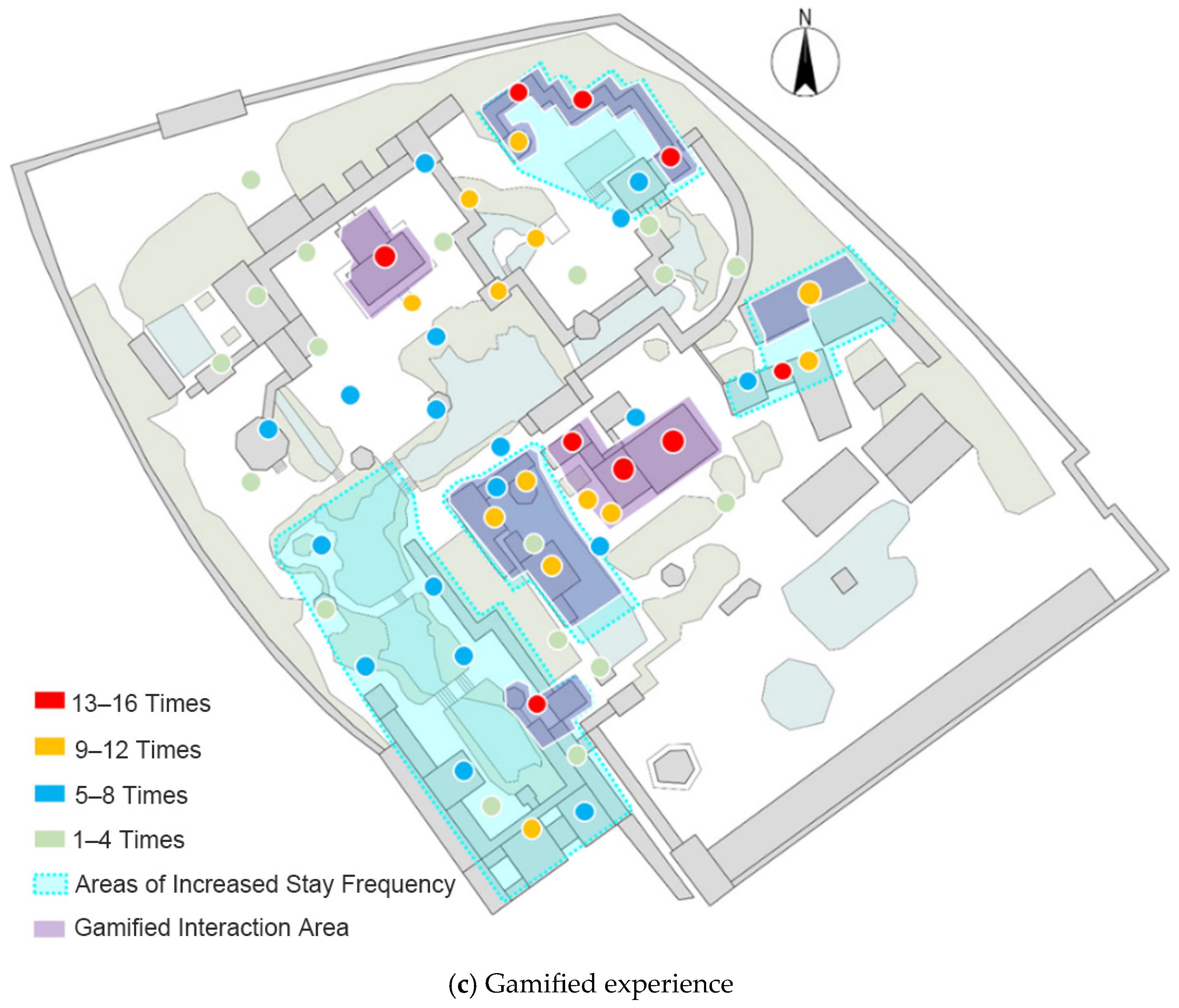
Using video data of the visitors’ movements, their stopping points and the number of stops during the space experience were collected and organized. To account for proximity and clarity, stopping points within the same building space and those close in distance were merged. The frequency of stops at each point indicates the number of visitors who paused at that specific location within each experimental group. The stop data for each group is shown in
Figure 14.
The free exploration group exhibited a higher inclination to stop at open outdoor spaces, the starting point of the tour, and richly designed interior exhibition spaces. The guided tour group demonstrated the influence of the guided path, with a slight increase in stop frequency along the tour route. The gamified experience group also showed an increase in the number of stops within designated spaces. However, this increase was less affected by objective factors such as space location, building characteristics, and exhibition design, as evidenced by the data collected in the northern corridor of Qinghui Garden. In this area, the free exploration and guided tour groups had relatively low stop frequencies due to the simple corridor structure, large-scale exhibition panels, and less notable architectural value and location. However, during the gamified experience, this area, being an essential interaction point, attracted over 81% of participants to stop.
- (3)
Stop factors
The factors contributing to the length of time visitors stopped at various space elements were collected and analyzed using variance analysis, as shown in
Table 7. The results indicated no significant differences between the three groups. Common factors that resulted in longer stop durations included outdoor rest areas, small outdoor landscape features, and exhibition panels. In contrast, shorter stop durations were observed for details of construction and decoration, architectural forms and structures, and heritage display and restoration elements.
- (4)
Walking path trajectories
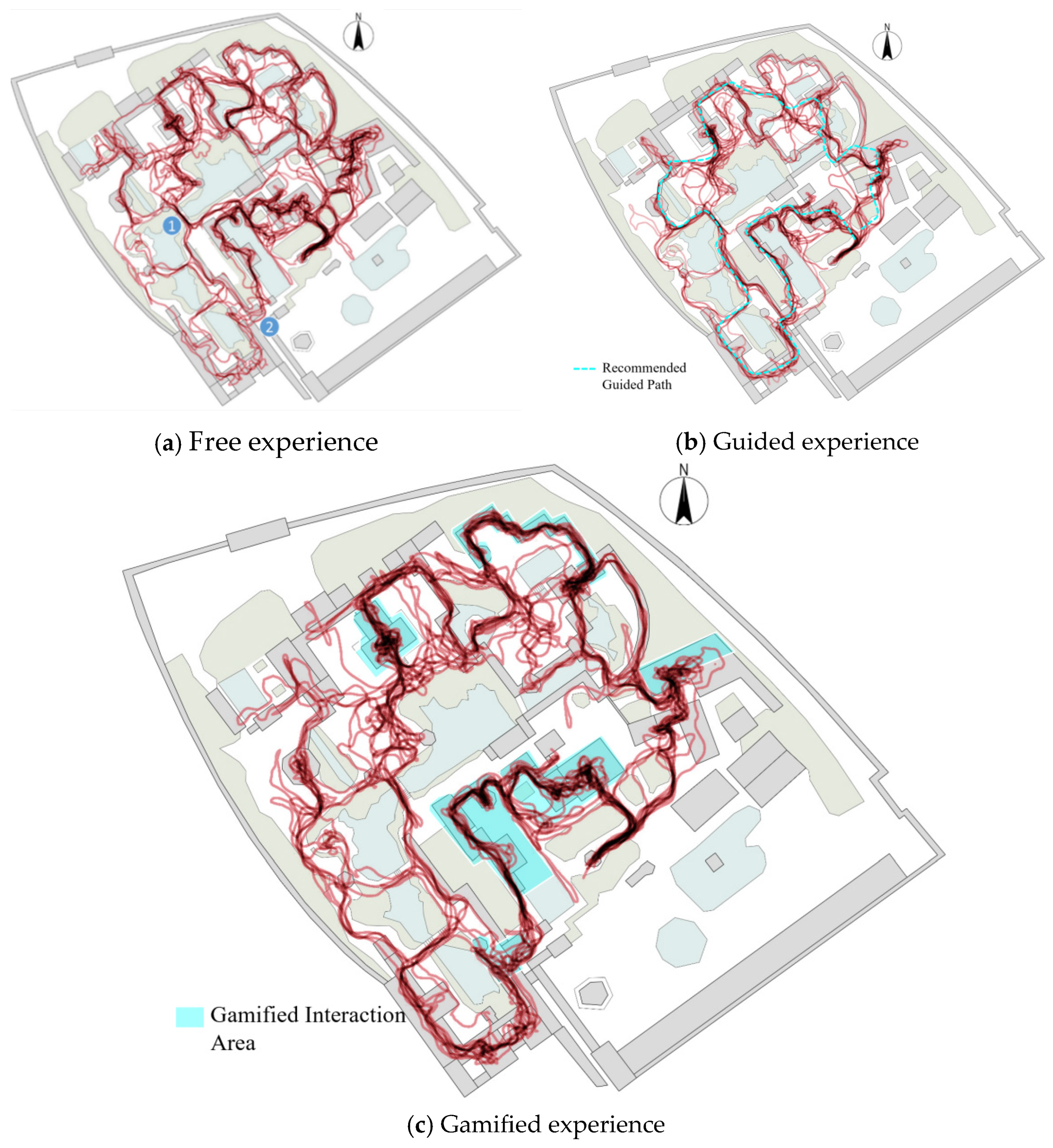
Path choices can reflect visitors’ behavior and cognitive decision-making during the space experience. GPS data collected during the experiment was overlaid to create path trajectory maps for each group. Each line represents the walking path of a participant, with varying shades of color indicating overlapping paths. Through post-experience interviews, the relationship between path distribution and experience form can be analyzed. The path distribution is shown in
Figure 15.
Visitors in the free exploration group exhibited diverse and spontaneous walking patterns, with most activity concentrated in the central, northern, and eastern areas of Qinghui Garden, while the western area had fewer visitors. This may be related to the limited visibility of the 2nd space node leading to the western area. In the guided tour group, the spatial activity was more evenly distributed, with no significant variations. The yellow guided path in the figure shows that participants in this group had a higher overlap in their trajectories along the tour route, which reduced the likelihood of wandering or retracing steps. The gamified experience group exhibited similar behavior to the guided tour group, with relatively balanced spatial activity, but with a higher complexity in walking patterns. This is because the gamified experience provided only guidance on the spaces to visit, without a clear path, requiring visitors to navigate using signs and space elements as clues.
4.3. Post-Experience Cognitive and Perception Analysis
- (1)
Cognitive performance
Cognitive performance was assessed through objective test scores and subjective spatial cognition ratings. For the objective test scores, normality and variance tests were conducted to examine the participants’ knowledge in various areas. Significant differences were found in two categories, “overall layout and orientation” (F = 3.807, p = 0.030 < 0.05) and “site plan of building clusters” (F = 3.638, p = 0.035 < 0.05), requiring further analysis using Welch’s ANOVA to explore these differences. Other test categories did not show significant differences and were analyzed using standard variance analysis, as shown in the table.
For the subjective spatial cognition ratings, participants were asked to evaluate their spatial perception of Qinghui Garden from a subjective perspective after the experience. These evaluations were quantified using a scale-based approach. After confirming homogeneity of variance, a variance analysis was conducted, which revealed no significant differences in subjective spatial cognition ratings among the three groups (
Table 8).
- (2)
Subjective satisfaction
Subjective satisfaction was evaluated across three dimensions: attraction, engagement, and novelty. After confirming the homogeneity of variances, an analysis of variance (ANOVA) was conducted. The results indicated significant improvements in visitor satisfaction in the gamified experience group for all three dimensions: attraction, engagement, and novelty, as shown in
Table 9.
Following the ANOVA, further post hoc multiple comparisons were performed to explore the pairwise differences among the three groups in the dimensions with significant variations. Since the sample sizes were equal across the three groups, Tukey’s post hoc multiple comparison method was selected, as shown in
Table 10.
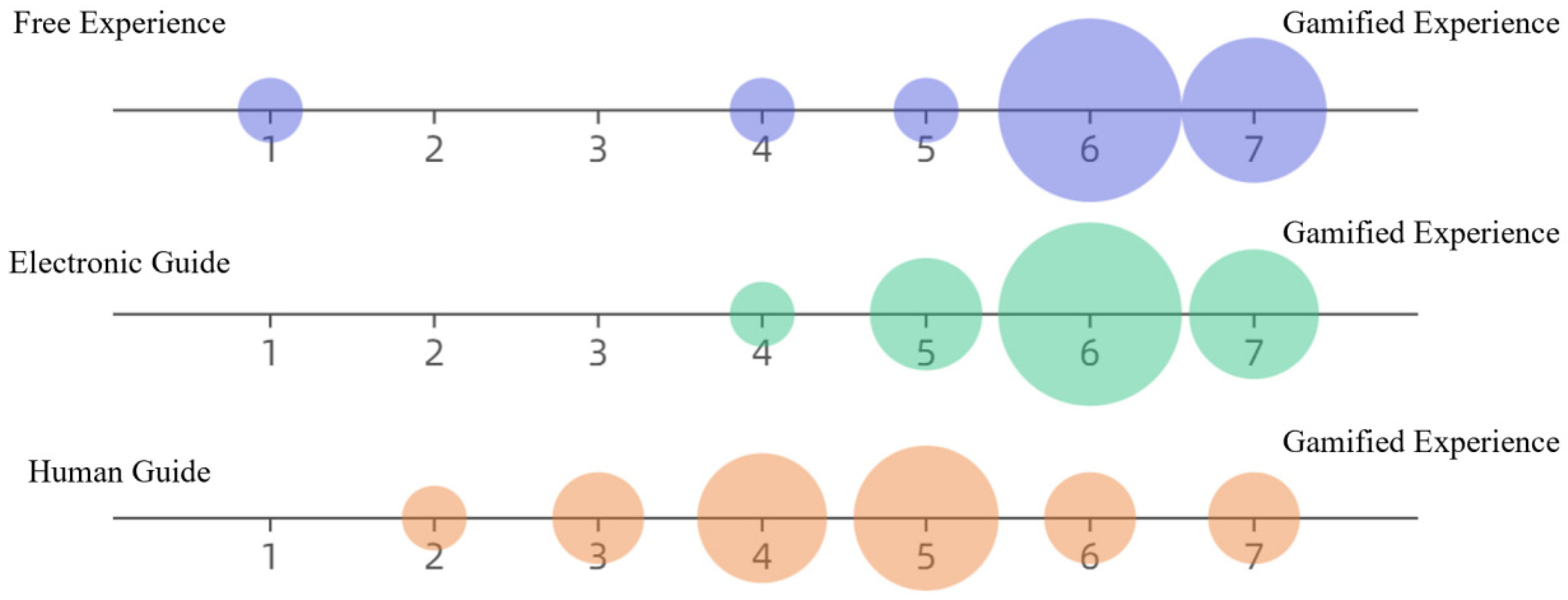
To further understand visitors’ interaction preferences in the gamified experience, this section of the questionnaire was exclusively available to the gamified experience group. It was divided into two parts: preferences for gamified interaction elements and preferences for experience formats. First, a comprehensive analysis of the rankings of gamified interaction element preferences was conducted. The overall rankings were obtained using the formula (Σ frequency × weight)/total number of responses for each item, where the weight was determined by the position of the option in the ranking. Second, the preferences for experience formats were analyzed, comparing the real-space gamified interaction experience with three mainstream experience formats. The results were visualized in a bubble chart (
Table 11,
Figure 16).
- (3)
Technology usability
After normality and homogeneity of variance tests, an ANOVA was conducted, as shown in
Table 12. The results revealed significant differences in clarity and reliability of the experience across the three groups. In terms of reliability, both the guided tour group and the gamified experience group performed significantly better than the free exploration group, with a difference exceeding 1.1. However, the ANOVA results for experience efficiency showed no significant differences across the three groups.
- (4)
Future behavioral intentions
ANOVA results showed that the real-space gamified interaction had a positive effect on enhancing motivation for continued engagement. However, the influence of different experience formats on visitors’ cognitive motivation and willingness to share was limited. Specifically, there were no significant differences across the three groups in their intent to learn more about the space or to recommend the experience to friends and family (
Table 13).
5. Discussion and Conclusions
The findings provide positive answers to the three research questions. First, visitor behavior differed across the three experience formats. Second, differences were also observed in cognitive performance and subjective experience perception. Third, the real-space gamified interaction method and its corresponding technological implementation were generally acceptable and operable for visitors. These results suggest that introducing task-oriented and digitally mediated interaction into historical architectural spaces can meaningfully influence how visitors move through, attend to, and understand heritage environments.
- (1)
Differences in behavioral characteristics across experience formats
The differences in visitor behavior across the experience formats were primarily observed in three aspects: total experience time, stopping spaces, and walking paths.
The first is total experience time. The gamified experience group extended the average experience duration by approximately 19.8% compared to the other two groups. This increase was mainly due to the design of the gamified interaction, which required visitors to spend more time to complete the experience. In contrast, the guided tour, with its fixed route and narration time, resulted in a more concentrated total experience duration around the group average.
The second is stopping behavior in the space.
In terms of spatial distribution, different experience formats led to varying patterns in the number and distribution of visitor stops, while also reflecting some commonalities. For differences, visitors in the free exploration group showed a stronger inclination to stop at the beginning and end points of the experience, midpoints, and spaces with intuitively engaging exhibits. In the guided tour group, the tour route guided visitors and slightly increased stop frequency along the route. The real-space gamified interaction increased the number of stops in designated spaces through the design of interactive storylines and content, and this increase was less affected by objective factors such as spatial location, building characteristics, or exhibition design. However, this increase should be interpreted cautiously from an architectural perspective, as it may reflect behavioral guidance driven by task design rather than an actual enhancement of the space’s inherent architectural appeal or spatial quality. This also points to a potential design challenge in gamified interaction: when mandatory mission points are overly emphasized, visitors’ attention may shift from spatial appreciation to task completion.
Common features included a higher willingness of visitors to stop in open outdoor spaces compared to narrow outdoor spaces across all groups. Specifically, in the northern part of Qinghui Garden, where the outdoor space has a D/H ratio of approximately 2, the frequency of stops was higher than in the southwestern area, where the D/H ratio is less than or equal to 1.
From the perspective of spatial elements, the single stop duration for different space elements did not show significant differences among the three groups. Visitors generally spent more time stopping at outdoor elements and exhibition panels, while their stop durations were shorter for specialized architectural elements.
The third is walking path trajectories. The walking trajectories of the free exploration group were more random, leading to uneven activity distribution in the space. Visitors tended to be more active in spaces with high visibility and engaging features. The guided tour group exhibited higher activity along the tour route. In the gamified experience group, activity increased in areas designed for interaction, but the walking paths were more complex, indicating that the lack of a clear route increased the difficulty of navigation for visitors.
- (2)
Differences in cognitive performance and experience perception among visitor groups in the space
The differences in cognitive performance and experience perception among the visitor groups primarily focused on two aspects: cognitive performance and experience satisfaction.
The first is cognitive performance. In terms of objective test scores, the gamified experience group had the highest average total score, while the free exploration group had the lowest. Specifically, cognitive improvements were more pronounced in physical elements, whereas the enhancement in intangible information, such as cultural history, was limited. This is closely related to the sufficiency of explanations and the scientific dissemination of these two types of information.
The second is experience satisfaction. In terms of dimensions like attraction, engagement, novelty, and the willingness to re-engage, the gamified experience group significantly outperformed the other two groups. However, its effectiveness in motivating visitors’ subsequent cognitive engagement and willingness to share was limited.
These findings can also be interpreted in relation to similar international studies on digital heritage and gamified experience design. Previous research has generally shown that technology-mediated heritage experiences, including VR, AR, and gamified systems, can improve visitor engagement, perceived novelty, and satisfaction by making cultural content more accessible and interactive. The present study is broadly consistent with this trend, particularly in showing that real-space gamified interaction enhanced attraction, engagement, novelty, and several dimensions of objective cognitive performance. However, compared with many international studies that focus primarily on museum interfaces, virtual reconstructions, or screen-based heritage interpretation, this study further demonstrates the value of embedding gamified interaction directly within an existing historical environment. In this sense, the contribution of the present research lies not only in confirming the experiential advantages of digital mediation but also in showing that low-intervention, site-based gamified design can influence visitors’ movement patterns, stopping behavior, and spatial cognition in a real heritage setting.
- (3)
Evaluation of the impact of real-space gamified interaction on experience effectiveness
The experimental results validated research question 3, revealing differences in the acceptance and operability of real-space gamified interaction design methods and their corresponding technological forms in the context of historical space experiences:
The first is interest and acceptance of the experience. Visitor interest in the real-space gamified interaction experience was correlated with age. Visitors under the age of 35 demonstrated a higher tolerance for this new technology and experience format. Conversely, visitors over the age of 35 exhibited a significantly lower acceptance and willingness to engage with the gamified real-space interaction. Therefore, this experience format presents an age-related distinction in its acceptance, making it challenging to serve as a universal experience for all age groups.
The second is the evaluation of technological usability. The real-space gamified interaction experience demonstrated notable improvements in the clarity of guidance, explanation, and in enhancing architectural-related cognition, particularly in the dimensions of reliability and clarity. However, in the dimensions of experience efficiency and clarity in deepening knowledge of the imperial examination culture, there were no significant differences compared to the free exploration and guided tour groups. This suggests that the current gamified experience has limited optimization effects on visitor experience in terms of accessibility, ease of operation, and fluidity. On the other hand, it also indicates that the current gamified experience, which uses mobile devices as interactive tools, has not imposed a significant operational burden on visitors’ real-space interactions.
The third is preferences for gamified interaction elements.
In terms of gamified elements, games, puzzle (badge) collection, and achievements were generally considered the most motivating factors for continued participation. In contrast, quiz interactions ranked the lowest in overall evaluation due to their lack of feedback significance and the uninteresting process of repeatedly searching for answers and inputting them in the space. Additionally, the evaluation of leaderboards showed significant differences within the group, likely related to the atmosphere of the historical space, the psychological characteristics of visitors, and some design flaws in this experience.
Beyond the evaluation of individual gamified elements, participants also expressed preferences regarding different experience formats. Most participants preferred the real-space gamified interaction experience when compared to free exploration and electronic guide devices. However, when compared to guided tours, most visitors maintained a neutral stance or leaned slightly towards the gamified experience. This is because the interpersonal interaction in real spaces during a guided tour remains a feature that is difficult to replace with the more fixed content and human–machine interaction in the gamified experience.
In conclusion, the real-space gamified interaction experience generally outperformed the other two groups in cognitive performance and subjective evaluation. It also more effectively guided visitor movement patterns within the space and enhanced interactive behavior in specific spaces. However, its impact on improving spatial cognitive performance and subsequent cognitive motivation was not significant. This may be due to the fact that the current gamified experience format has not yet constructed a broader spatial cognition system and lacks a stronger connection with visitors’ interactions and behaviors within the real space. From the perspective of cultural sustainability, the proposed method may contribute to the sustainable communication and revitalization of historical architectural spaces by enhancing visitor engagement, heritage interpretation, and educational experience while maintaining relatively low physical intervention in the real environment. Beyond improving visitor experience, this method may also support cultural sustainability by enhancing the interpretation, communication, and revitalization of historical architectural spaces through relatively low-impact digital interaction.
6. Limitations and Future Research Direction
First, regarding experience design, there is room for optimization in the integration of the real-space gamified interaction experience with the real environment, due to considerations of time and development scale. The current design lacks a closer connection between visitor interactions and behaviors in the real space. For example, the interactive experience is not linked to the real-time positioning of visitors within the space, requiring them to find their way between interaction points, which affects the immersion and continuity of the experience. Additionally, there is a lack of consideration for individual visitor motivation preferences and cognitive differences in the experience design.
Second, in terms of data collection, several limitations exist regarding the sample size, data dimensionality, and potential manual processing errors. Due to the relatively high cognitive and operational requirements for participants and the comparatively long experimental duration, the number of participants in each experimental group was limited to 18 in order to ensure data quality and experimental stability. Although the collected samples exhibited consistent patterns and observable differences, the relatively small sample size may still limit the statistical power of the analysis and increase the risk of Type II errors. In addition, given the extended duration of the experiment and the substantial walking activities involved, GPS and first-person perspective video were used to collect behavioral data. This approach required additional manual processing when converting image and behavioral information into analyzable data, which may introduce potential errors. Furthermore, the limited dimensionality and quantity of the data restricted deeper analysis of visitors’ spatial behavioral characteristics, such as whether different experience formats produce differences in eye-tracking-based cognition. Future studies could involve larger and more diverse participant samples to further verify the general applicability of real-space gamified interaction experiences and explore potential differential effects across different participant groups.
Third, the present study evaluated the overall effectiveness of the mobile-based gamified interactive experience, but did not isolate the separate effects of gamification mechanisms, mobile-interface interaction, and increased dwell time. Thus, the higher cognitive scores observed in the gamified group may partly reflect the combined influence of these factors. Future research could clarify this by controlling visit duration or introducing a non-gamified mobile condition with matched exposure time.
Finally, the comparative experimental design could benefit from adding a horizontal comparison with guided tours. The visitor preference questionnaire for the real-space gamified interaction group revealed that the overall evaluation of guided tours was higher than that of both free exploration and electronic guide experiences. Therefore, future research could further refine the comparative experimental design by incorporating more diverse experience formats, such as guided tours, to assess the effectiveness of real-space gamified interaction experiences.
In summary, future research should continue to refine the design methods and content, diversify the types of interactive devices, expand the range of study participants, and, where possible, employ more professional physiological data collection equipment to deepen the understanding of the effectiveness of real-space gamified interaction in historical space experiences, thereby advancing the development and evaluation of historical space experience design.