Article

Commercial-Scale Evaluation of Finishing Diet Containing Poultry By-Product and Insect Meals for Sparus aurata: From Fish Welfare to Consumer Acceptance


by
Lina Fernanda Pulido-Rodríguez
1,†,
Tommaso Petochi
2,†,
Giulia Secci
1,*,
Adja Cristina Lira de Medeiros
1,
Valeria Donadelli
2,
Patrizia Di Marco
2,
Federica Di Giacinto
3,
Giovanna Marino
2,
Alessandro Longobardi
2,
Fabrizio Capoccioni
4,
Violeta Di Marzio
3,
Francesco Pomilio
3,
Gloriana Cardinaletti
5 and
Giuliana Parisi
1
1
Department of Agriculture, Food, Environment and Forestry (DAGRI), University of Firenze, Via delle Cascine 5, 50144 Firenze, Italy
2
Italian National Institute for Environmental Protection and Research (ISPRA), 00144 Rome, Italy
3
Istituto Zooprofilattico Sperimentale dell’Abruzzo e del Molise “G. Caporale”, 64100 Teramo, Italy
4
Consiglio per la Ricerca in Agricoltura e l’Analisi dell’Economia Agraria (CREA), Centro “Zootecnia e Acquacoltura”, Monterotondo, 00015 Rome, Italy
5
Department of Agricultural, Food, Environmental and Animal Sciences (Di4A), University of Udine, 33100 Udine, Italy
*
Author to whom correspondence should be addressed.
These authors contributed equally to this work.
Sustainability 2026, 18(7), 3235; https://doi.org/10.3390/su18073235
Submission received: 7 February 2026 / Revised: 12 March 2026 / Accepted: 17 March 2026 / Published: 26 March 2026
(This article belongs to the Section Sustainable Food)

Abstract

Sustainable expansion of global aquaculture relies on innovative alternative diets that reduce dependence on marine-derived ingredients. Poultry by-product meal (PBM) and insect meal have emerged as promising protein sources, yet their combined use under commercial farming conditions remains poorly explored. This study evaluated a plant-based finishing diet low in marine proteins and supplemented with 10% Hermetia illucens larvae meal (HIM) and 30% PBM (H10P30) and compared it with a conventional commercial diet (COM) in gilthead sea bream (Sparus aurata) reared on a land-based farm for 65 days. Health and welfare indicators, product safety, fillet quality, fatty acid profile, oxidative status, and consumer acceptance were assessed. Fish fed the H10P30 diet showed a significantly higher body weight and specific growth rate and a lowered feed conversion ratio than COM-fed fish. No external or internal lesions or liver histopathological alterations related to the H10P30 diet were observed. While the diet influenced the fatty acid profile of raw fillets, differences disappeared after cooking, except for a higher C22:6n-3 content in cooked H10P30 fillets. Sensory analysis penalised COM fillets due to the perceived hard texture and low juiciness. In summary, incorporating both PBM and HIM into a plant-based finishing diet serves as a viable feeding strategy for gilthead sea bream, contributing to improved feed sustainability.

1. Introduction

Global aquaculture production has maintained an increasing trend, surpassing capture fisheries in 2022 and contributing significantly to the 2030 Agenda for Sustainable Development and the Blue Economy. Notably, the finfish sector accounts for 65.2% of total aquaculture output [1]. Given this scenario, the scaling-up of feed production and the substitution of fish meal with unconventional protein derivatives represent critical requirements for the sustainable long-term growth of aquaculture production [2].
Extensive global efforts over the last few decades have successfully identified ways to reduce or eliminate through alternative ingredients, initially by using plant protein sources and, more recently, processed animal proteins [3,4]. While included in the diets of carnivorous fish, plant-based ingredients have revealed several limitations, often associated with suboptimal nutrient digestibility, leading to poor performance and worsening animal health and welfare [5,6,7]. Furthermore, reliance on plant-based ingredients for fish feed creates conflicts with both the human food agricultural sector and terrestrial animal feed production [8]. Several studies have demonstrated the potential of poultry by-product meals (PBMs) and insect meals (IMs) as viable alternative ingredients to fish meal and plant-based meal, due to their high nutritional value [9], as well as their sustainability as ingredients derived from circular bioeconomy processes [8,10,11]. To date, scarce are the studies which have investigated the combined use of PBM and IM as an approach for fulfilling the nutrient requirements of a range of cultured organisms and to promote a more sustainable industry [11,12,13,14,15].
Gilthead sea bream (Sparus aurata) is a marine fish species largely farmed in the Mediterranean region, with 323,544 tonnes produced in 2023 [16], several studies have investigated the effects of PBM or IM used individually as alternatives to fish meal [17,18,19,20,21]. These studies suggest that these alternative protein sources can support satisfactory fish growth performance and feed utilisation, without compromising animal health and welfare while ensuring the nutritional quality of the fillets. The combined inclusion of PBM and IM in diets for gilthead sea bream has only recently been investigated. Fish fed a plant-based diet supplemented with PBM (30%) and black soldier fly (Hermetia illucens) meal (HIM) (10%) showed effective adaptation in terms of growth performance with no adverse effects on the physical or chemical characteristics of fillets when compared to a fishmeal-based control diet [22]. Additionally, this dietary formulation improved lipid absorption in the midgut and did not induce significant histopathological alterations in the liver or digestive tract [23]. Nevertheless, the application of such protein combinations in large-scale trials under commercial farming conditions in Mediterranean species remains poorly studied [13,24] and requires further investigation [19,25]. In the European context, this is partly due to the relatively recent regulatory framework authorising the use of these alternatives in aquafeeds [26,27,28].
One of the current issues concerning the relationship between research and industry in aquaculture is whether differences in experimental settings, particularly the small-scale facilities typically used in scientific studies, may result in variability in fish performance compared to full-scale farming systems [29]. Considering previous results from controlled laboratory studies on sea bream [12,22], the present research aimed to compare the overall performance of this species under different diets and commercial farming conditions. Specifically, fish were fed either a conventional fish meal-based commercial diet or a plant meal-based finishing test diet, low in marine-derived protein and supplemented with PBM and HIM. The finishing phase, at the end of the on-growing period, usually lasts about 1–4 months in sea bream [30,31]; it is a critical phase for determining the final product quality and market value. During this period, it is essential to carefully optimise the dietary strategies and husbandry practices to minimise stress and disease outbreaks, reduce mortality and improve both animal welfare and product quality before harvesting, while also meeting consumer expectations.
Accordingly, the current study placed particular emphasis on the ethical aspects of fish welfare, as well as the quality and safety attributes relevant to consumers. The effects of the two diets were therefore evaluated using an integrated, multidisciplinary approach, addressing operational welfare indicators, microbiological and chemical contaminants in the fillets, and nutritional and organoleptic quality traits, as well as consumer perception.

2. Materials and Methods

2.1. Feeding Trial and Husbandry Conditions

The present feeding trial was carried out at the Maribrin s.r.l. commercial intensive land-based tank fish farm (Brindisi, Apulia, Italy). For this study, a total of 4800 gilthead sea bream (mean initial body weight 270 g) were randomly selected from indoor rearing tanks and stocked in four outdoor concrete tanks at approximately 12 kg/m3. The aquaculture facility was equipped with a flow-through water system supplied by saline wells, ensuring relatively uniform water parameters throughout the facility. Fish were acclimated for one week to the new tanks; however, no acclimation to different physicochemical water parameters was required, as water conditions were uniform throughout the entire facility and corresponded to those used for the entire duration of the trial: dissolved O2 8–11 mg/L, water temperature 23–23.5 °C, pH 6.9–7.2, CO2 11–12 mg/L, and a salinity of 38 ppt. Water quality parameters were recorded through the farm’s monitoring system. After acclimation, 2400 fish allocated in two tanks (duplicate conditions) were fed with a commercial diet from Eredi Rossi Silvio feed mills (COM, 4fish Royalmarine Golden 6 mm) and served as the control group, whereas the remaining two replicates (2400 fish in total) were fed the test diet (H10P30) provided by Veronesi S.r.l. feed mills (Verona, Italy), containing both poultry by-product (PBM) and black soldier fly (HIM) meals. The feed was distributed twice a day, seven days a week, at about 1.2–1.3% body weight. The amount of feed distributed was recorded and appetite, general health and mortality rate were monitored daily. The trial lasted 65 days, from late November 2020 to late January 2021.

2.2. Diet Formulation

The tested COM and H10P30 finishing diets were isoproteic (45%) and grossly isolipidic (18–19.4%, respectively). The H10P30 diet was formulated to be rich in conventional plant protein sources while maintaining a low marine protein content (5.5% of the diet; as-fed basis). In this diet, a portion of plant proteins were replaced with animal-based counterparts. Specifically, 10% and 30% of the plant proteins were replaced with proteins derived from HIM and PBM, respectively. These percentages correspond to dietary inclusion levels of 8.1 g/100 g for HIM and 20.6 g/100 g for PBM (both on an as-fed basis). The diet (pellet size 6 mm) was made by an extrusion process by Veronesi feed mill company. The complete formulations are reported in Pulido-Rodríguez [13], while the chemical composition and fatty acid profile of the two diets are shown in Table 1.

2.3. Fish Sampling

At 66th day of the trial, 25 fish per tank (n = 50 fish per dietary group) fasted for 24 h were sampled to assess the health and welfare status. Fish were humanely euthanized by exposure to an overdose of tricaine methanesulphonate (MS-222 PHARMAQ, Fordingbridge Hampshire, UK) in an anaesthetic bath at a concentration of 300 mg/L [32] followed by percussive stunning. All sampled fish underwent biometric measurements, autopsies and liver weighing. Liver samples (n = 6 for each group) were further collected, fixed in Bouin solution for 12 h and stored in 70% ethanol for histological analysis. Five other fish per tank were sampled, immediately stunned, kept at 4 °C and transferred to the laboratory within 24 h for the subsequent analyses of fish health and safety parameters. Microbiological analyses were performed immediately, whereas fish allotted to chemical contaminant analysis were stored at −20 °C. Additionally, 15 fish per tank (n = 30 fish per dietary treatment) were killed with a blow to the head, weighed and stored at −80 °C until the analyses of physical–chemical and oxidative status of fillets and product quality.

2.4. Fish Health and Welfare

2.4.1. Operational Welfare Indicators

The total fish biomass and the amount of feed administered in the COM and H10P30 groups were recorded at the end of the trial. Furthermore, the body weight (BW, g) and total length (TL, cm) of each sampled fish were measured. Growth and feeding indices were calculated as follows [33]:
Specific growth rate (SGR) = [(ln final body weight − ln initial body weight)/days] × 100
Feed conversion ratio (FCR) = feed administered/weight gain
Feed intake (FI) = feed administered/[(initial biomass + final biomass)/2/days]
Fulton’s condition factor (K) = [(body weight /total length3] × 100
The mortality rate was assessed daily by technical operators based on a visual check.
All sampled fish were subjected to necropsy and inspected for sign of damage to the skin, eyes, gills and internal organs. Fin integrity was assessed by evaluating the occurrence and severity of splitting and erosion on all fins based on values of 0 (no damage) to 3 (severe damage) [33,34]. The liver condition of each fish was analysed both in situ and after dissection according to Donadelli [12]. Briefly, the organ was weighed for the determination of the hepatosomatic index (HSI), calculated as
Hepatosomatic index (HSI) = [(liver weight (g)/total body weight (g)] × 100
The degree of lipidosis was photo-documented and independently scored by two operators using a 1–3 scale (low, medium and high), based on differences in the tissue colour and consistency due to the different amounts of fat accumulation.

2.4.2. Histological Analysis

Liver sub-samples were further processed for histological analysis according to Donadelli [12]. Tissue was dehydrated, clarified, embedded in paraffin (Bio-Optica, Milan, Italy) and sectioned at 5 µm. The sections were stained with Hematoxylin–Eosin (H-E, Bio-Optica, Milan, Italy) and examined under a DMLB microscope (Leica, Wetzler, Germany) for the observation of potential histopathological alterations and also for verifying the macroscopical analysis.

2.5. Food Safety and Product Quality

2.5.1. Analysis of Fillet Microbiological and Chemical Contaminants

Fish were tested to verify compliance with the legislative seafood safety requirements regarding chemical [35] and microbiological parameters [36,37].
For each tank, the chemical and microbiological analyses of the fillets were carried out in a pool of three and two fish, respectively, for a total of ten fish per dietary treatment. A list of the analytical methods applied is provided in Supplementary Table S1.

2.5.2. Physical Analyses of Raw and Cooked Fillets

Before the analyses, the fish were thawed overnight in a refrigerated room (4 °C). Then, the fish were filleted and individually weighted. The right-side fillets (n = 20 for each dietary group) were analysed as raw. The flesh colour was instrumentally measured at cranial, medial, and caudal positions (Minolta CR-200 Chroma Meter, Konica Minolta, Chiyoda, Japan). The CIELab colour scale [38] was utilised to express the colour value in terms of lightness (L*), redness (a*), and yellowness (b*) index. Fillet texture was quantified as the peak shear force using a Zwick Roell® 109 texturometer (Ulm, Germany). The device was equipped with a 1 kN load cell and a 7 cm Warner-Bratzler shear blade, with the crosshead speed maintained at 30 mm/min. The data collected were analysed by Test-Xpert2 3.0 software and the results were expressed in Newtons. The water holding capacity (WHC) was assessed according to Iaconisi [39] and calculated based on the amount of water retained by 2 g of raw minced fillet after centrifugation (1500 rpm for 5 min).
The remaining left-side fillets of each dietary group were steam-cooked. Specifically, the fillets were weighed, individually wrapped in aluminium foil to avoid contact with water and retain all the liquids released, and then put into a stainless-steel fish steamer (Sambonet Paderno Industrie, Novara, Italy). Fillet portions were cooked until the temperature of 62 °C was reached in the core of the product (approximately 20 min), measured using a cooking thermometer (Bengt EK, Båstad, Sweden). Once cooked, the fillets were manually dried with common cooking paper and weighed to calculate the cooking loss (%); then, the colour and texture of the cooked fillets were analysed as previously described for the raw samples.

2.5.3. Analysis of Chemical Composition and Oxidative Status of Fillets

Moisture, ash, and crude protein in both the raw and cooked fillets were determined in accordance with the Association of Official Agricultural Chemists method [40]. The total lipid content was extracted according to Folch [41], then the total lipids were gravimetrically quantified.
Following base-catalyzed trans-esterification [42], the resulting fatty acid methyl esters (FAMEs) were analyzed using a Varian GC 430 gas chromatograph (Varian Inc., Palo Alto, CA, USA) equipped with a flame ionization detector and a Supelco Omegawax™ 320 m column (Supelco, Bellefonte, PA, USA). Operating parameters were adopted from Secci [43], and chromatograms were managed with the Galaxie Data System 1.9.302.952 (Varian Inc., Palo Alto, CA, USA). Individual fatty acids were identified by matching retention times with a Supelco 37-component standard (Supelco, Bellefonte, PA, USA). Quantitative analysis was performed via calibration curves, with tricosanoic acid (C23:0, Supelco, Bellefonte, PA, USA) serving as the internal standard.
Conjugated dienes (CD) and thiobarbituric acid reactive substances (TBARS) were quantified according to the spectrophotometric methods previously published [44,45]. The primary (CD) and secondary oxidation products (TBARS) were expressed as mmol hydroperoxides (mmol Hp) and malondialdehyde equivalents (mg MDA-equivalent) on 100 g fillet, respectively.

2.5.4. Consumer Test

The fillets for the consumer test were packed in plastic bags and transported in Styrofoam containers with ice to the company Merieux Nutriscience, located in Prato (Italy). Eighty consumers (40% men and 60% women; from 25 to 65 years old) were recruited to conduct a blind product liking test following the method details in Bruni [46].
Consumers were selected based only on their familiarity with the target fish species. Before the session, each fillet was divided into 4–5 homogeneous portions of about 2 cm × 2 cm. Each portion was packed in aluminium foil, identified by a three-digit code, and steam-cooked (1800D Thermostatic bath, Fratelli Galli, Milano, Italy) to a core temperature of 62 °C. The samples were individually presented to the consumers, in a random order, in the wrapped foil.
Overall liking was the primary parameter assessed during the sensory session by using a 9-point scale, then consumers evaluated the liking of 4 attributes (visual appearance, smell, flavour, and consistency); the appropriateness of the level of colour, visual consistency, odour, aroma intensity, salty flavour intensity, consistency, juiciness, and fibrosity was measured by using a just-about-right scale (5-points scale). Consumers had a rest of 60 s between two samples during which they ate a cracker and drank half-glass of mineral water.

2.6. Statistical Analysis

The datasets on fish size, somatic indices and liver lipidosis were analysed by the Kruskal–Wallis H-test, while the physical condition of fins was measured by applying the Mann–Whitney U test. Product quality data were subjected to a two-way ANOVA using the General Linear Model (GLM) procedure of SAS/STAT 9.3 [47], considering diet (D; 2 levels: commercial and H10P30) and thermal treatment (T; 2 levels: raw and cooked) as fixed effects. The diet was the sole fixed factor considered for water holding capacity and cooking loss. Tuckey’s HSD test was utilised for post hoc comparisons. Consumer test data were analysed using XL-stat software 2021.1 (Addinsoft, Paris, France) by one-way ANOVA to determine the effect of the diet, while a penalty analysis was applied to appropriateness data to evaluate the decreases in overall liking. Dunnett’s test was used as a post hoc analysis to identify significant differences in liking. In all cases, the significance level was set at p < 0.05.

2.7. Ethical Statement

The farming activities were conducted in compliance with European Directive 98/58/EC on the protection of animals kept for farming purposes. All procedures involving fish sampling were performed according to national legislation (D.Lgs. 26/2014) and to EU legal frameworks relating to the protection of animals used for scientific purposes (Directive 2010/63/EU). The trial was approved by the Ethics Committee of the University of Udine (authorisation number 2/2020).

3. Results

3.1. Fish Health and Welfare

Growth performance, somatic and feeding indices, and cumulative mortality recorded in fish fed the two diets for 65 days are summarised in Table 2. At the end of the trial, based on the biometric measurements collected from each sampled fish, the group fed the H10P30 diet showed a significant increase (p < 0.05) in total length, body weight and specific growth rate (SGR) compared to fish fed the COM diet, with no differences in condition factor (K). When considering the total fish biomass and amount of feed administered, an improved SGR (0.74 vs. 0.63) and feed conversion ratio (FCR), despite a lower feed intake (FI), were also observed in the H10P30 group. The cumulative mortality was below 2% in both groups.
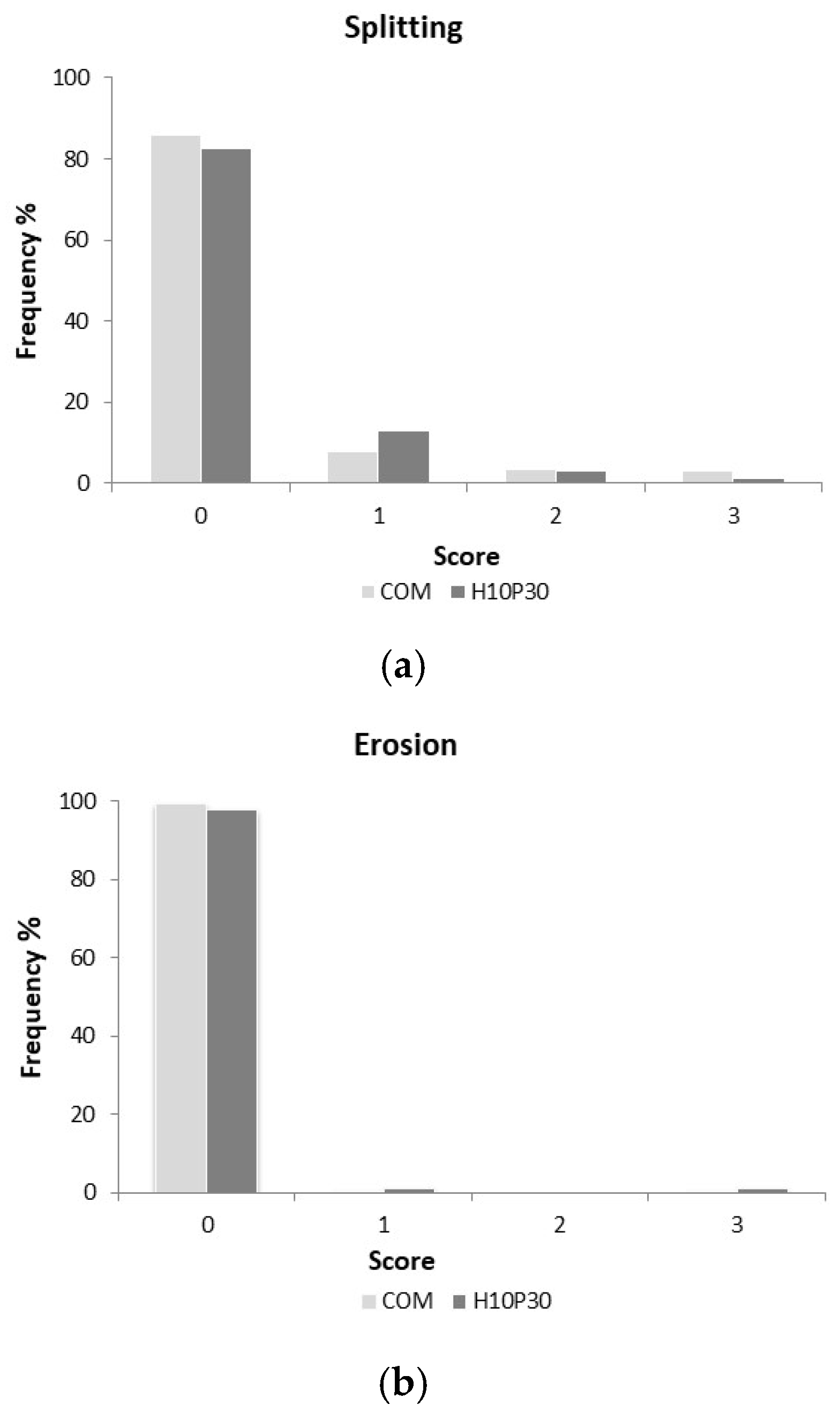
Gross physical examination revealed an overall good health status of fish fed with the COM and H10P30 diets. Externally, no significant alterations were observed in the skin, eyes and gills. Most fish maintained their fin integrity with no significant differences between the two groups. Fin erosion was rarely observed and over 80% of the specimens showed no fin splitting (Figure 1).
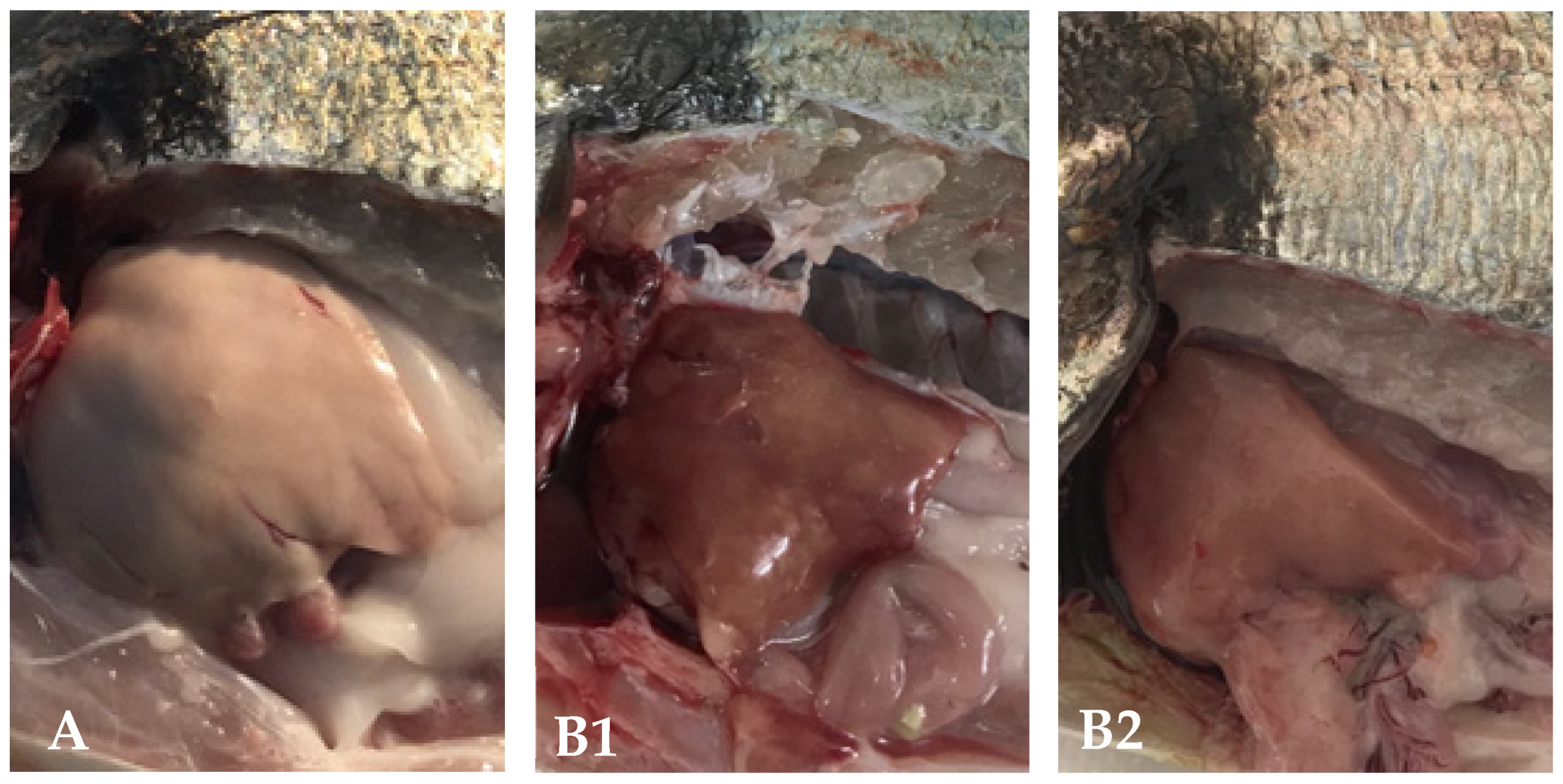
Internal autopsy revealed no lesions on internal organs. Focusing on the liver, the H10P30 specimens exhibited livers ranging from a uniform brownish colour to samples with localised or widespread lighter areas, whereas the livers of the COM group were mostly characterised by different shades of yellow (Figure 2). The consistency of the liver was maintained in most of the fish examined and only few livers from the COM group were more brittle, with a loss of consistency. Low-to-severe fat accumulation was observed in the livers of both groups; however, the overall liver condition of the COM group was significantly more severe (p < 0.05). Indeed, the COM group was characterised by moderate-to-severe lipidosis (score 1 = 10%; score 2 = 36%; score 3 = 48%) compared to H10P30 specimens mostly showing a low-to-medium degree of lipidosis, with some samples displaying a high level (score 1 = 15%; score 2 = 61%; score 3 = 24%). The HSI did not show any significant difference between groups.
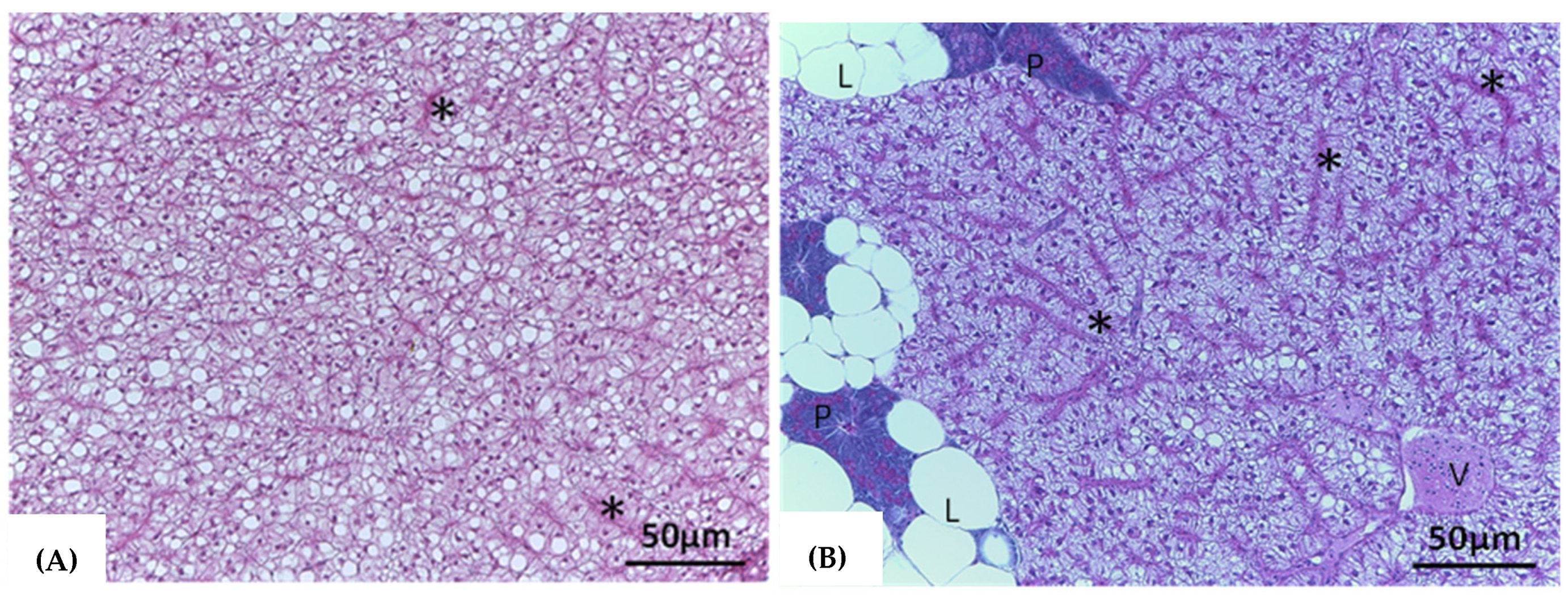
Histological analysis of liver tissue revealed no histopathological alterations in sea bream fed the two different diets. In both groups, the liver parenchyma showed a regular structure with hepatocytes arranged in cords and the bile ducts with a pervious lumen. Slight differences were observed in the degree of lipid accumulation within hepatocytes. The COM group exhibited moderate accumulation overall, with focal areas showing more severe lipid infiltration, whereas the H10P30 group predominantly displayed low-to-moderate hepatocyte lipid accumulation (Figure 3).

3.2. Microbiological and Chemical Contaminant Analysis of Fillets

Food safety analyses on fillets of fish fed both the COM and H10P30 test diets showed similar results. Microbial pathogens including Salmonella spp., Listeria monocytogenes, Escherichia coli, Hepatitis A Virus (HAV), Vibrio parahaemolyticus, Vibrio cholerae, Vibrio spp., Shigella, and Norovirus GI and GII were below the detection levels of the method. For the Enumeration method carried out for Pseudomonas spp., Coagulase-positive Staphylococci (Staphylococcus aureus and other species) at 37 °C, E. coli and Total Coliforms Enterococci were below the quantification level (<10 CFU/g). Results from the determination of heavy metals (mercury, arsenic, lead, and cadmium on whole product) and dioxins, DL-PCBs, dioxins + DL-PCBs, and the sum of NDL-PCBs, all expressed on whole product at a 12% moisture content, showed that all chemical contaminants were below the legal limits [35].

3.3. Physical and Chemical Analyses of Fillets

The physical quality parameters of the fillets are summarised in Table 3. The diet did not significantly affect either raw or cooked fillet weights, which were 108.99 g and 122.67 g (raw) and 102.19 g and 113.92 g (cooked) in the COM and H10P30 groups, respectively.
The WHC was similar between groups, measured at 94.24% in COM and 93.80% in H10P30 fillets, with no significant dietary effect (p > 0.05). Likewise, the cooking loss was not significantly different, at 6.03% in COM and 7.15% in H10P30 fillets (p > 0.05). Regardless of the diet, cooking significantly increased both the L* and b* colour values of the fillets (p < 0.0001). In contrast, fillet hardness significantly decreased after thermal treatment (p < 0.0001). There was no significant interaction between diet and thermal treatment for any of the measured physical parameters.
Table 4 shows the fillet chemical composition. Both diet and thermal treatment significantly reduced the moisture content of the fillets (p < 0.05), although their interaction was not significant. Total lipid content was unaffected by either diet or thermal treatment (p > 0.05), while the diet significantly affected the fillet fatty acid (FA) profile (p < 0.05). Overall, monounsaturated fatty acids (MUFAs) prevailed over the other lipid classes in both dietary groups, with significantly higher amount in the H10P30 group (29.78% in COM vs. 32.55% of total FAME in H10P30). Fillets from fish fed the H10P30 diet contained higher concentrations of eicosapentaenoic acid (EPA; C20:5n-3), docosapentaenoic acid (DPA; C22:5n-3), and docosahexaenoic acid (DHA; C22:6n-3) compared to the COM group (p < 0.05), resulting in a higher total n-3 PUFA content (p < 0.05). Conversely, the COM group was richer in linoleic acid (C18:2n-6) than the other one (p < 0.05). As C18:2n-6 is the predominant n-6 PUFA, a similar trend was observed for the total n-6 PUFA content. Although no significant differences were found in total saturated fatty acids (SFAs), the levels of lauric (C12:0) and myristic (C14:0) acids were significantly higher in the H10P30 group (p < 0.05).
The oxidative status of the fillets is reported in Table 5. Both CD and TBARS contents were unaffected by diet (p > 0.05). However, cooking significantly increased TBARS levels in the fillets (p < 0.05). No significant interaction between diet and thermal treatment was observed for the oxidative parameters.

3.4. Consumer Test

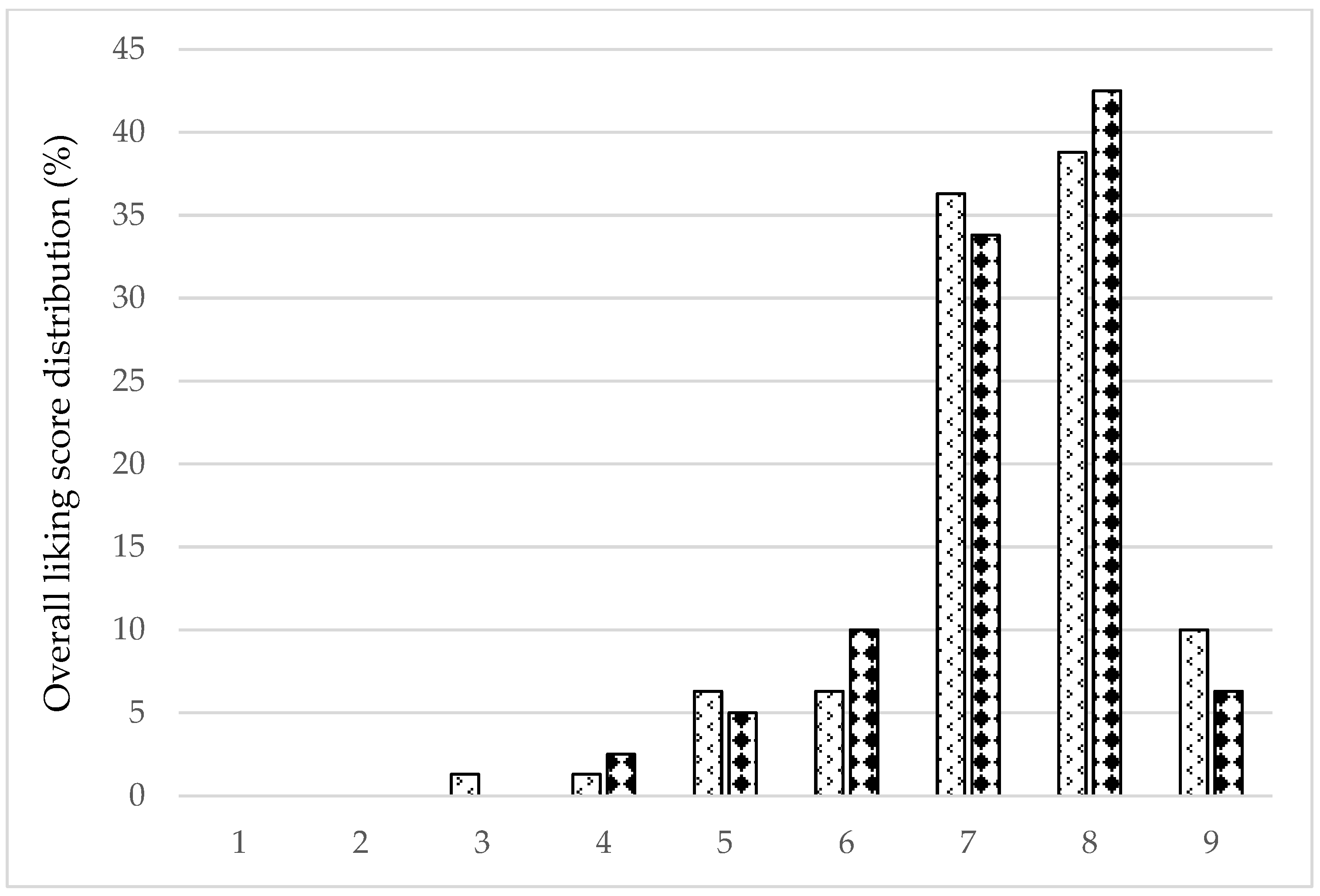
No significant differences were observed in overall consumer liking between the two fillet groups (Figure 4); both were highly appreciated, with mean scores above 7 on a 9-point hedonic scale across all evaluated attributes. Specifically, average scores were 7.04 for appearance, 7.05 for odour, 7.24 for flavour, 7.04 for texture, and 7.30 for overall liking. In the COM group, 9% of consumers gave a score of 5 or lower (indicating disliking), while 91% rated the fillets positively. Similarly, for the H10P30 fillets, 93% of consumers provided favourable ratings, with only 7% giving a score of 5 or lower.
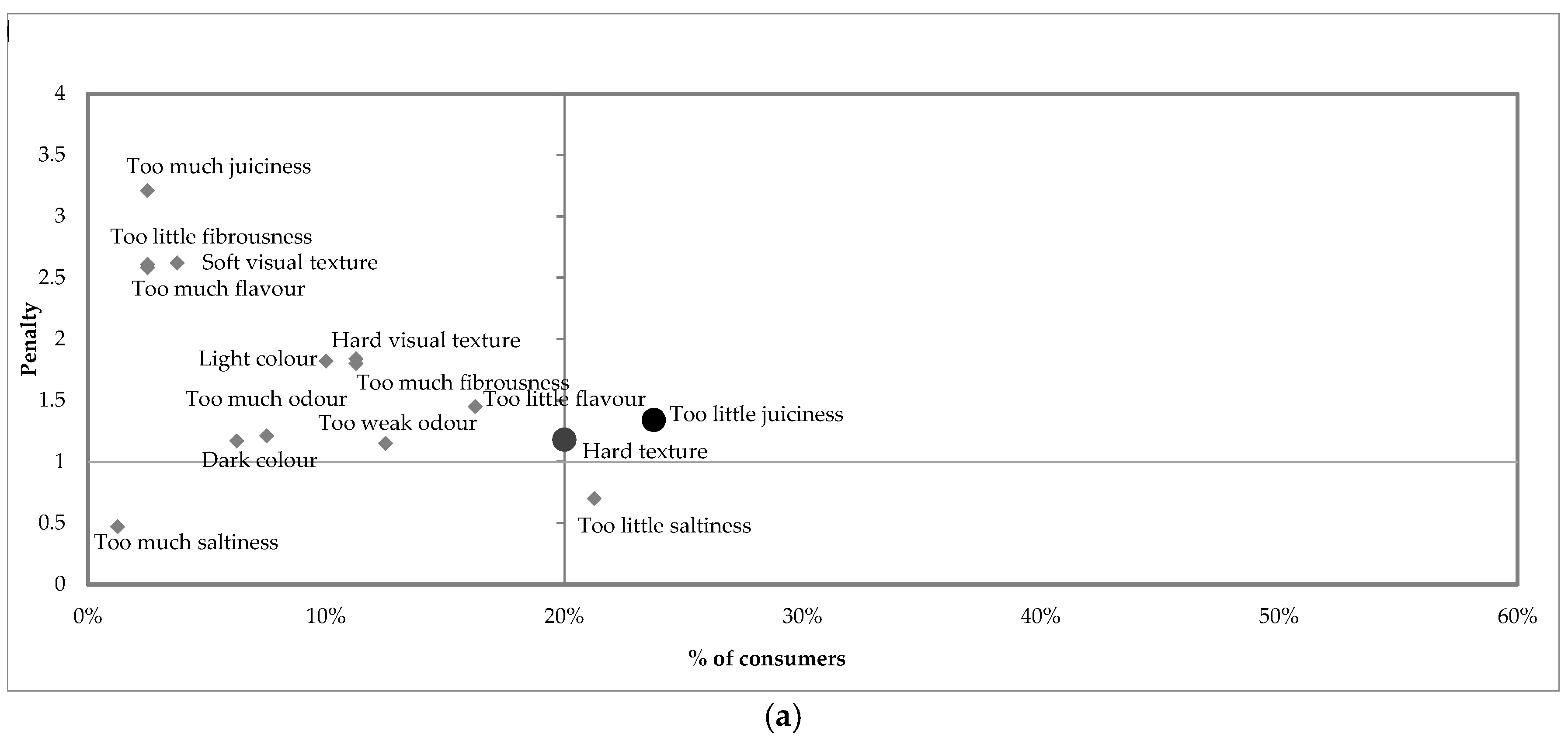
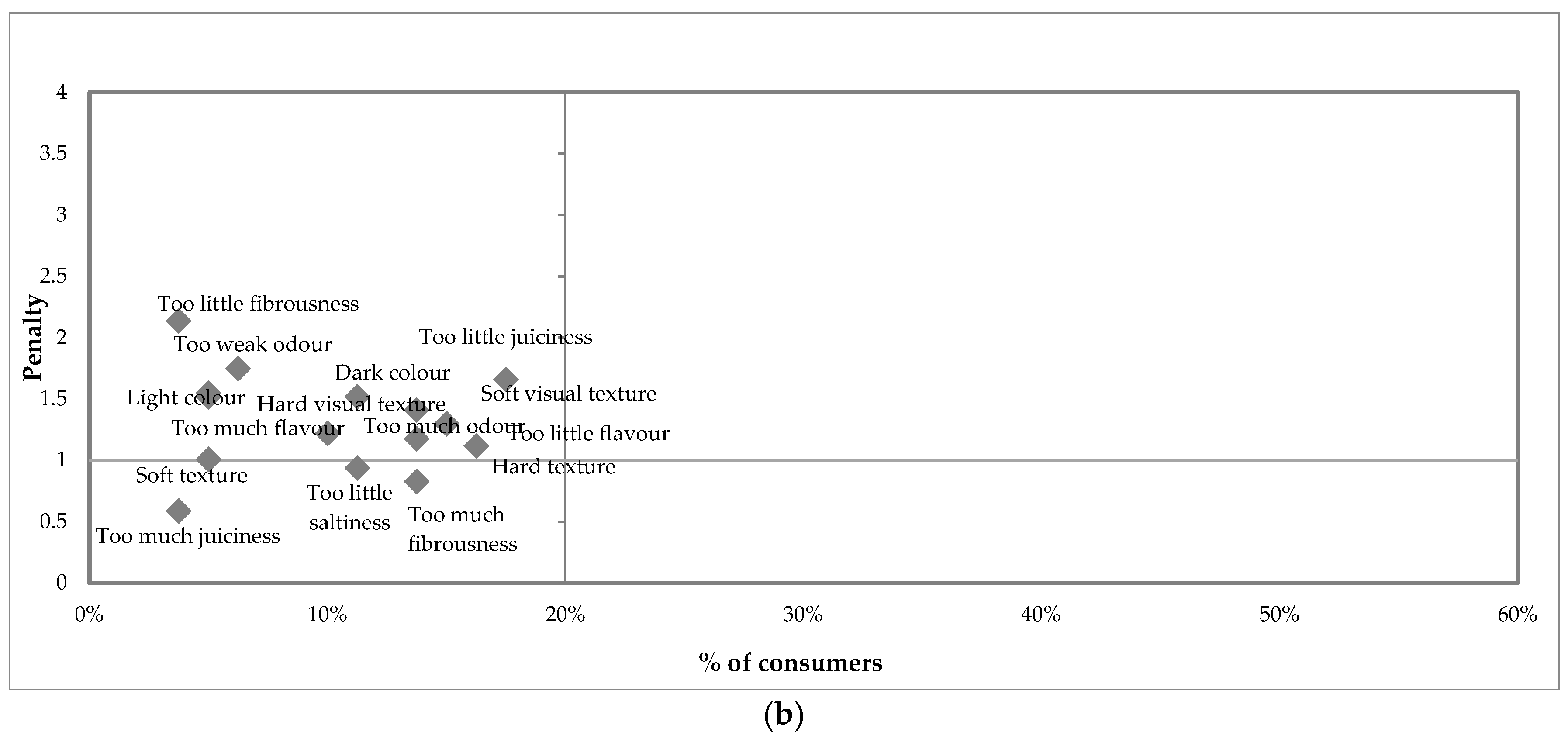
Figure 5a and Figure 5b present the results of the penalty analysis for the COM and H10P30 fillets, respectively. As shown in Figure 5a, more than 20% of consumers identified insufficient juiciness and weak aroma as the main negative drivers of overall liking in the COM fillets. Additionally, over 20% of consumers perceived the COM samples as under-salted, although this attribute did not significantly affect the overall liking score. In contrast, the penalty analysis of the H10P30 samples (Figure 5b) indicated that none of the evaluated sensory attributes had a negative impact on overall liking.

4. Discussion

Over recent decades, innovative feed formulations for farmed fish have increasingly incorporated alternatives to fish meal to improve the sustainability of aquaculture production, with poultry by-product meal (PBM) and insect meal (IM) emerging as two of the most promising options [48,49]. Regarding Mediterranean farmed fish, such as gilthead sea bream and European sea bass (Dicentrarchus labrax), several recent studies have investigated the effects of these ingredients, either separately or in combination, primarily under laboratory or small-scale experimental conditions. Only a limited number of studies have been conducted under practical farming conditions, either in land-based tanks [13] or in floating sea cages [24]. Furthermore, the focus of these studies was on growth performance and product quality without addressing animal welfare, product safety, and sensory and consumer testing. In this context, the present study provides a commercial-scale evaluation of a finishing diet containing PBM and HIM for gilthead sea bream, using an integrated and multidisciplinary approach. The results of the feeding trial were assessed across a broad range of parameters, encompassing fish welfare and product quality and safety, as well as consumer acceptance, to provide a comprehensive assessment of the dietary strategy under investigation.

4.1. Fish Health and Welfare

Providing farmed fish with diets that meet species-specific nutritional requirements is essential to ensure their welfare [50,51]. Appropriate feeding strategies, including the composition of aquafeed, are a major criterion for meeting animal welfare standards, contributing to the sustainability of European aquaculture production [52,53]. Given recent trends toward alternative protein sources in fish feed, their implications for fish health and welfare have gained significant prominence [54]. Focusing on gilthead sea bream, recent studies investigating the effects of alternative diets have primarily focused on growth performance and the health of certain internal organs, with limited attention given to a more comprehensive assessment of welfare [55].
In this study, the health and welfare of gilthead sea bream fed COM or H10P30 diets were assessed by analysing various operational welfare indicators (OWIs), including direct animal-based indicators such as appetite, growth, somatic and feeding indices, the condition of external organs (e.g., skin, eyes, and fins) and mortality rate, together with indirect welfare indicators such as water quality and stocking density [56]. These OWIs can be influenced by diet and represent informative, robust and appropriate parameters for on-farm use with Mediterranean marine fish [57,58,59]. In the present study, gilthead sea bream fed for 65 days with the H10P30 diet showed improved growth parameters compared to fish fed with the COM diet, resulting in a significantly higher body weight and SGR and a better FCR. These results agree with other findings in sea bream fed a similar diet under experimental conditions [22]. Higher growth performance, although not significant, has also been reported in European sea bass fed a similar diet for 66 days under commercial farming conditions [13]. Other studies report the replacement of up to 15–35% of fish meal with HIM without impairing growth, feed efficiency, stress parameters or gut histological conditions of gilthead sea bream [60,61]. The use of a low level of HIM in the H10P30 diet, together with PBM, may have promoted the intake of functional components (e.g., chitin and antimicrobial peptides) that improve gut welfare and ensure a well-balanced amino acid composition, thereby favouring digestibility and maintaining the palatability of the test diet [23,62]. Furthermore, Mastoraki [63] further reported that the nutrient digestibility of diets containing different IMs, including 19.5% HIM, was not affected in gilthead sea bream. The H10P30 test diet may thus provide a more balanced or bioavailable nutrient profile compared to the COM diet, resulting in a better FCR (1.75 vs. 1.97) despite the lower FI. Better growth performance and lower FI were also reported in subadult European sea bass fed for 21 weeks on a plant-based diet with the same content of PBM and HIM, compared to fish fed control diets high in plant- or fish-derived ingredients [62]. In addition, the condition factor (K) showed no difference between groups, indicating a good nutritional status and no emaciation in fish fed H10P30 and COM diets. Furthermore, no significant changes in fish feeding behaviour (e.g., appetite and anticipatory response) were reported by farm operators during the feeding trial, suggesting that neither group was under stress or subjected to poor environmental conditions and that the diet composition and feeding regime were appropriate to meet the fish’s appetite [56,58].
Nutritional deficiencies (e.g., in fatty acid content and micronutrients) in fish diets may affect the condition of the skin, fins, eyes and gills, resulting in various types of injuries including haemorrhages, ulcers, and cataracts [64,65,66]. In the present study, data on external physical OWIs were comparable between gilthead sea bream fed the H10P30 and COM diets. The fish were in good health, with a mortality rate below 2%; no lesions were observed on external organs, and fin integrity was maintained.
The H10P30 diet thus appears to be suitable for the finishing phase without compromising the condition of external organs. The effect of marine resource-free diets on fin and eye condition was also recently investigated in Atlantic salmon (Salmo salar), with reports of no detrimental effects [67]. Other factors, such as the feeding practices, the suitable environmental conditions maintained during the trial, and the maximum stocking density of 18–19 kg/m3, a level commonly reached under intensive farming of gilthead sea bream [68], could have further contributed to limiting external injuries [33,58].
The condition of internal organs is regarded as a key indicator related to nutrition and feeding for an overall welfare assessment on farms [69]. In the present trial, no gross lesions were observed in the gut, spleen or liver, suggesting that neither diet induced acute or chronic detrimental effects on gilthead sea bream during the finishing phase. Attention was given to the liver health as an improper diet can significantly alter the liver’s metabolic functions, thus affecting fish nutritional status, growth, survival and welfare [70,71,72]. The liver condition of sea bream fed H10P30 and COM diets did not show substantial differences overall. Furthermore, the diet did not affect the HSI. The lower HSI observed in fish fed the H10P30 diet, although not significant, could be due to the higher content of plant-based ingredients than the COM diet, which might have reduced lipid retention in the liver [73]. Upon internal gross examination, fish fed the COM diet showed a higher liver lipid accumulation in line with the reports in gilthead sea bream fed standard commercial feeds [33].
Histological analysis confirmed that the liver tissue was generally in good condition in both groups, showing no significant alterations or inflammation related to the diet. A lower level of lipid accumulation was also observed in the H10P30 group compared to the COM group. Previous studies under experimental conditions have confirmed that a combined diet formulation with PBM and HIM successfully supports a favourable liver health status in gilthead sea bream [12,23]. Similarly, subadult gilthead sea bream fed for 96 days with a diet containing 10% HIM and 10.7% PBM showed no alteration of liver morphology and a lower amount of hepatic lipid deposition [74]. In this study, the histological features were consistent with the macroscopic liver observations. While any correlation between gross and microscopic liver condition should be more deeply investigated, the external liver condition (e.g., lipid accumulation, colour, and consistency) can be considered a useful operation indicator to assess the health and welfare of gilthead sea bream on farms. The overall results support the hypothesis that PBM and HIM can be viably used to substitute vegetable proteins in a vegetable-based diet for gilthead sea bream during the finishing phase, without compromising growth, health, or welfare.

4.2. Fish Safety, Quality and Consumers Acceptance

Chemical contaminants such as polychlorinated biphenyls (PCBs), dioxins, and heavy metals are known to pose potential risks to food safety in aquaculture. However, the rearing system can influence the contamination levels through the environment and inputs, such as feeds. In this regard, Trocino [75] reported significantly higher levels of dioxin-like PCBs in fillets from European sea bass reared in extensive systems compared to those raised in intensive systems. Furthermore, that study identified a correlation between feed contamination and contaminant levels in fish reared under intensive conditions. In the present study, all measured contaminant concentrations were below the maximum levels established by EU regulations. These results aligned with the findings of Trocino [75], who noted that even in the most contaminated cases, levels remained within legal safety limits.
Previous studies conducted at research facilities, investigating the replacement of marine ingredients with plant-based, insect, or PBM sources in diet for marine species [76,77] or freshwater species [78], have shown that WHC is not significantly influenced by dietary treatment. The present findings confirm that this remains true when the experimental diet is administered to fish reared in a commercial farming setting. However, the impact of diet on texture remains a debated topic that warrants further investigation. Castro et al. [79] noted that the texture of raw fillets is influenced by several biological factors, including fish size, diet, storage time, and temperature. The same authors also reported that the lipid content does not produce measurable changes in texture, thereby supporting our current results. Unlike texture, the influence of diet on fillet and skin colour is well-documented [80]. For example, gilthead sea bream fed with vegetable oil and proteins exhibited significant different colour values in both skin and muscle [81]. Regarding insect meal inclusion, recently Pulcini et al. [82] used image analysis as a rapid and low-cost method and reported no visible changes in the skin colour of gilthead sea bream fed diets with 8.16 or 32% black soldier fly.
When developing new aquafeeds, assessing not only zootechnical performance but also the nutritional quality of the final product is essential to ensure benefits for human health. Previous studies have shown that increasing dietary lipids from 16 to 21% does not significantly alter the lipid content of gilthead sea bream fillets [83]. Moreover, alternative feeds have shown negligible effects on the proximate composition of gilthead sea bream [77] and European sea bass [84] fillet. Nevertheless, the nutritional value of fish is largely determined by the fatty acid (FA) composition, particularly polyunsaturated fatty acids (PUFAs). It is well established that fish FA profiles generally reflect their dietary intake [22,23,77], a trend confirmed by the current study. The commercial diet (COM) was rich in n-6 PUFAs, followed by MUFAs, SFAs, and n-3 PUFAs. In contrast, the H10P30 diet followed the order MUFA > SFA > n-6 PUFA > n-3 PUFA. A key distinction between the diets lies in their n-6/n-3 PUFA ratios, 3.18 in the commercial feed compared to only 1.05 in H10P30. This difference is due to a significantly higher n-6 PUFA content in the commercial feed (33.79 vs. 15.73%). As noted by several authors [78,85], replacing fish oils with vegetable oils increases n-6 PUFA levels while reducing n-3 long-chain PUFAs. This is supported by the presence of soybean oil in the commercial diet, which led to higher levels of C18:2n-6 and total n-6 PUFAs and lower levels of EPA and DHA in the COM diet than in H10P30. Notably, the EPA content in the H10P30 fillets (1.23% of total FAs) was substantially lower than in corresponding diet (4.66%), suggesting that fish preferentially utilise EPA for energy while retaining DHA in muscle tissue, a phenomenon previously observed [78,86].
The cooking process induces several structural changes in fish fillets [87], notably reduced moisture and increased lipid concentration, primarily due to heat-induced muscle fibre shrinkage [88]. Heat also denatures muscle proteins, thereby altering fillet tenderness [87,88]. Elevated L* values post-cooking may be attributed to myosin denaturation, which increases light scattering, while increased b* values may result from Maillard reactions [89]. Cooking also affects quality-related parameters such as the FA profile, primarily through oxidation and diffusion [90]. While several studies have reported cooking-related changes in FA composition [87,91], the FA profile in the current study remained largely stable due to the mild nature of steam-cooking. Additionally, a recent study demonstrated that long-chain PUFAs, which are more prone to oxidation, are preferentially located at the sn-2 position of triglycerides (TGs) [18]. This position is more resistant to oxidative damage than the sn-1 or sn-3 positions [92]. Since FA composition is directly linked to human health, the use of steam-cooking effectively preserved the nutritional quality of the fish fillet.
Changes in feed ingredients can influence the sensory attributes of fish fillets; therefore, consumer acceptance must be carefully considered. Our findings indicate that replacing the commercial feed with the H10P30 diet did not negatively impact consumer acceptance; on the contrary, the fillets were highly appreciated and exhibited no critical sensory deficiencies. Although the results of sensory trials may depend on the evaluation method employed (e.g., trained panel vs. consumer testing), the overall feed formulation, and the fish species under investigation [93], they provide a useful tool for feed manufacturers and fish farmers. Indeed, such data can facilitate the transition toward more sustainable aquafeeds containing alternative ingredients that might otherwise raise concerns or scepticism among consumers.

5. Conclusions

The overall findings suggest that the combined inclusion of poultry by-product meal and Hermetia illucens meal can effectively and partially replace vegetable proteins in a plant-based finishing diet for gilthead sea bream, thereby contributing to improve feed sustainability. The H10P30 diet tested in this trial demonstrated positive effects on fish growth without compromising health or welfare, while ensuring fillet quality traits and safety comparable to those of fish fed the commercial diet. The results of the current study underline the importance of adopting a multidisciplinary “farm to fork” approach when investigating the introduction of new ingredients or the substitution of conventional ones in diets for farmed marine fish.

Supplementary Materials

The following supporting information can be downloaded at: https://www.mdpi.com/article/10.3390/su18073235/s1, Table S1. List of microbiological and chemical methods applied in the assessment of food safety in fish fillets; Table S2. Mean ± standard error of the fatty acid profile (g FA/100 g total FAME) of raw fillets and cooked fillets as affected by the dietary treatment.

Author Contributions

Conceptualization, F.P., G.C., G.M. and G.P.; methodology, G.M.; formal analysis, A.L., A.C.L.d.M., F.D.G., G.P., L.F.P.-R., P.D.M., T.P., V.D. and V.D.M.; investigation, A.L., A.C.L.d.M., F.C., G.M., G.S., L.F.P.-R., P.D.M., T.P. and V.D.; resources, A.L., F.C., F.P., G.C., G.M., G.P., P.D.M. and V.D.M.; data curation, A.C.L.d.M., F.C., G.S., L.F.P.-R., T.P., V.D. and F.P.; writing—original draft preparation, A.C.L.d.M., F.D.G., G.S., L.F.P.-R., P.D.M., T.P. and V.D.; writing—review and editing, A.L., L.F.P.-R., F.C., F.D.G., G.C., G.M., G.P., G.S., P.D.M., T.P., V.D. and V.D.M.; visualisation, F.D.G., G.S., T.P., V.D. and V.D.M.; supervision, F.P., G.M. and G.P.; funding acquisition, G.C., G.M. and G.P.; project administration, G.C. All authors have read and agreed to the published version of the manuscript.

Funding

This research was funded by Ager Agroalimentare e Ricerca Foundation, grant number AGER2-SUSHIN Cod 2016-0112, within the SUSHIN (SUstainable fiSH feeds INnovative ingredients) project.

Institutional Review Board Statement

The animal study protocol was approved by the Ethics Committee of the University of Udine (protocol code 02/2020, date of approval 11 September 2020).

Informed Consent Statement

Informed consent was obtained from all subjects involved in the study.

Data Availability Statement

The data presented in this study are available on request from the corresponding author since they derived from a commercial trial.

Acknowledgments

The authors would like to express their deepest gratitude to Emilio Tibaldi for conceiving and leading the SuSHIN project. His scientific rigour and guidance throughout the trial were fundamental to the completion of the research. The authors are grateful to the technical staff of the Maribrin s.r.l. fish farm (Brindisi, Italy) for their valuable assistance during the trial. Thanks to Alberta Mandich for her valuable contribution to the interpretation of the histological analyses and to Monica Borgogno (Merieux Nutriscience, Prato, Italy) for her support in the data analysis of consumer liking data.

Conflicts of Interest

The authors declare no conflicts of interest. The funders had no role in the design of the study; in the collection, analyses, or interpretation of data; in the writing of the manuscript; or in the decision to publish the results.

Abbreviations

The following abbreviations are used in this manuscript:
PBMPoultry by-product meal
HIMHermetia illucens larvae meal
COMCommercial diet
IMInsect meal
FAMEFatty acid methyl ester
SDStandard deviation
SFASaturated fatty acid
MUFAMonounsaturated fatty acid
PUFAPolyunsaturated fatty acid
BWBody weight
TLTotal length
SGRSpecific growth rate
FCRFeed conversion ratio
FIFeed intake
KCondition factor
HSIHepatosomatic index
FAFatty acid
CDConjugated dienes
TBARSThiobarbituric aid reactive substance
OWIsOperational welfare indicators

References

  1. FAO. The State of World Fisheries and Aquaculture 2024—Blue Transformation in Action; FAO: Rome, Italy, 2024. [Google Scholar] [CrossRef]
  2. Serra, V.; Pastorelli, G.; Tedesco, D.E.A.; Turin, L.; Guerrini, A. Alternative protein sources in aquafeed: Current scenario and future perspectives. Vet. Anim. Sci. 2024, 25, 100381. [Google Scholar] [CrossRef] [PubMed]
  3. Lim, C.E.; Webster, C.D.; Lee, C.S. Alternative Protein Sources in Aquaculture Diets; Haworth Press: New York, NY, USA, 2008; 571p. [Google Scholar]
  4. Hua, K.; Cobcroft, J.M.; Cole, A.; Condon, K.; Jerry, D.R.; Mangott, A.; Praeger, C.; Vucko, M.J.; Zeng, C.; Zenger, K.; et al. The future of aquatic protein: Implications for protein sources in aquaculture diets. One Earth 2019, 1, 316–329. [Google Scholar] [CrossRef]
  5. Duan, Z.; Zhang, C.; Huang, L.; Lan, Q.; Hu, J.; Li, X.; Leng, X. An evaluation of replacing fish meal with fermented soybean meal in diet of hybrid snakehead (Channa argus × Channa maculata): Growth, nutrient utilization, serum biochemical indices, intestinal histology, and microbial community. Aquac. Nutr. 2022, 1, 2964779. [Google Scholar] [CrossRef]
  6. Zaretabar, A.; Ouraji, H.; Abedian Kenari, A.; Yeganeh, S.; Esmaeili, M.; Keramat Amirkolaee, A. One step toward aquaculture sustainability of a carnivorous species: Fish meal replacement with barley protein concentrate plus wheat gluten meal in Caspian brown trout (Salmo trutta caspius). Aquac. Rep. 2021, 20, 100714. [Google Scholar] [CrossRef]
  7. Qian, Y.-F.; Limbu, M.S.; Qiao, F.; Luo, Y.; Chen, L.-Q.; Zhang, M.-L.; Du, Z.-Y. Seeking the best alternatives: A systematic review and meta-analysis on replacing fishmeal with plant protein sources in carnivorous fish species. Rev. Aquacult. 2024, 16, 1099–1126. [Google Scholar] [CrossRef]
  8. Colombo, S.M.; Roy, K.; Mraz, J.; Wan, A.H.L.; Davies, S.J.; Tibbetts, S.M.; Øverland, M.; Francis, D.S.; Rocker, M.M.; Gasco, L.; et al. Towards achieving circularity and sustainability in feeds for farmed blue foods. Rev. Aquacult. 2023, 15, 1115–1141. [Google Scholar] [CrossRef]
  9. Maulu, S.; Langi, S.; Hasimuna, O.J.; Missinhoun, D.; Munganga, B.P.; Hampuwo, B.M.; Gabriel, N.N.; Elsabagh, M.; Van Doan, H.; Abdul Kari, Z.; et al. Recent advances in the utilization of insects as an ingredient in aquafeeds: A review. Anim. Nutr. 2022, 11, 334–349. [Google Scholar] [CrossRef]
  10. Dhiman, S.; Mukherjee, G.; Kumar, A.; Krishan, B. Alternative proteins from waste streams: A circular economy roadmap for sustainable food systems. Sustain. Food Technol. 2026. [Google Scholar] [CrossRef]
  11. Chaklader, M.R.; Chung, W.H.; Howieson, J.; Fotedar, R.A. combination of Hermetia illucens reared on fish waste and poultry by-product meal improves sensory and physicochemical quality of farmed Barramundi filets. Front. Nutr. 2022, 8, 788064. [Google Scholar] [CrossRef]
  12. Donadelli, V.; Di Marco, P.; Mandich, A.; Finoia, M.G.; Cardinaletti, G.; Petochi, T.; Longobardi, A.; Tibaldi, E.; Marino, G. Effects of dietary plant protein replacement with insect and poultry by-product meals on the liver health and serum metabolites of sea bream (Sparus aurata) and sea bass (Dicentrarchus labrax). Animals 2024, 14, 241. [Google Scholar] [CrossRef]
  13. Pulido-Rodriguez, L.F.; Bruni, L.; Secci, G.; Moutinho, S.; Peres, H.; Petochi, T.; Marino, G.; Tibaldi, E.; Parisi, G. Growth, hepatic enzymatic activity, and quality of European seabass fed on Hermetia illucens and poultry by-product meal in a commercial farm. Animals 2024, 14, 1449. [Google Scholar] [CrossRef]
  14. Rimoldi, S.; Di Rosa, A.R.; Oteri, M.; Chiofalo, B.; Hasan, I.; Saroglia, M.; Terova, G. The impact of diets containing Hermetia illucens meal on the growth, intestinal health, and microbiota of gilthead seabream (Sparus aurata). Fish. Physiol. Biochem. 2024, 50, 1003–1024. [Google Scholar] [CrossRef] [PubMed]
  15. Bušelić, I.; Trumbić, Ž.; Hrabar, J.; Lepen-Pleić, I.; Šegvić-Bubić, T.; Kaitetzidou, E.; Tibaldi, E.; Bočina, I.; Grubišić, L.; Sarropoulou, E. Unravelling the intricate language of fish guts: Impact of plant-based vs. plant-insect-poultry-based diets on intestinal pathways in European seabass. Aquaculture 2025, 594, 741385. [Google Scholar] [CrossRef]
  16. FAO. Global Aquaculture Production Quantity (1950–2023); FAO: Rome, Italy, 2025; Available online: https://www.fao.org/fishery/statistics-query/en/aquaculture/aquaculture_quantity (accessed on 19 December 2025).
  17. Karapanagiotidis, I.T.; Psofakis, P.; Mente, E.; Malandrakis, E.; Golomazou, E. Effect of fishmeal replacement by poultry by-product meal on growth performance, proximate composition, digestive enzyme activity, haematological parameters and gene expression of gilthead sea bream (Sparus aurata). Aquac. Nutr. 2019, 25, 3–14. [Google Scholar] [CrossRef]
  18. Pulido-Rodriguez, L.; Secci, G.; Maricchiolo, G.; Gasco, L.; Gai, F.; Serra, A.; Conte, G.; Parisi, G. Effect of dietary black soldier fly larvae meal on fatty acid composition of lipids and sn-2 position of triglycerides of marketable size gilthead sea bream fillets. Aquaculture 2022, 546, 737351. [Google Scholar] [CrossRef]
  19. Rimoldi, S.; Di Rosa, A.R.; Armone, R.; Chiofalo, B.; Hasan, I.; Saroglia, M.; Kalemi, V.; Terova, G. The replacement of fish meal with poultry by-product meal and insect exuviae: Effects on growth performance, gut health and microbiota of the European seabass, Dicentrarchus labrax. Microorganisms 2024, 12, 744. [Google Scholar] [CrossRef] [PubMed]
  20. Basili, M.; Randazzo, B.; Caccamo, L.; Guicciardi, S.; Meola, M.; Perdichizzi, A.; Quero, G.M.; Maricchiolo, G. Effect of graded inclusion of black soldier fly (Hermetia illucens, Linnaeus, 1758) pre-pupae meal in diets for gilthead seabream (Sparus aurata, Linnaeus, 1758) on gut microbiome and liver morphology. Fish Physiol. Biochem. 2025, 51, 85. [Google Scholar] [CrossRef]
  21. Fernandes, A.M.; Calduch-Giner, J.À.; Pereira, G.V.; Gonçalves, A.T.; Dias, J.; Johansen, J.; Silva, T.; Naya-Català, F.; Piazzon, C.; Sitjà-Bobadilla, A.; et al. Sustainable fish meal-free diets for gilthead sea bream (Sparus aurata): Integrated biomarker response to assess the effects on growth performance, lipid metabolism, antioxidant defense and immunological status. Animals 2024, 14, 2166. [Google Scholar] [CrossRef] [PubMed]
  22. Pulido-Rodriguez, L.F.; Cardinaletti, G.; Secci, G.; Randazzo, B.; Bruni, L.; Cerri, R.; Olivotto, I.; Tibaldi, E.; Parisi, G. Appetite regulation, growth performances and fish quality are modulated by alternative dietary protein ingredients in gilthead sea bream (Sparus aurata) culture. Animals 2021, 11, 1919. [Google Scholar] [CrossRef]
  23. Randazzo, B.; Zarantoniello, M.; Cardinaletti, G.; Cerri, R.; Giorgini, E.; Belloni, A.; Contò, M.; Tibaldi, E.; Olivotto, I. Hermetia illucens and poultry by-product meals as alternatives to plant protein sources in gilthead sea bream (Sparus aurata) diet: A multidisciplinary study on fish gut status. Animals 2021, 11, 677. [Google Scholar] [CrossRef]
  24. Šegvić-Bubić, T.; Zrnčić, S.; Tibaldi, E.; Pleadin, J.; Oraić, D.; Balenović, I.; Lešić, T.; Kudumija, N.; Cvitić, I.; Zupičić, I.G.; et al. Commercial sea cage farming assessment of sustainable diets on growth performance and fillet quality of gilthead sea bream and European sea bass. Future Foods 2025, 12, 100747. [Google Scholar] [CrossRef]
  25. Vergara-Rubín, V.J.; Guevara-Carrasco, V.R.; Yance-Flores, B.; Marchán-Timorán, A.; Bustamante-Gonzales, P. Substituting fishmeal with poultry by-product meal enhances economic efficiency in rainbow trout (Oncorhynchus mykiss) farming. Animals 2025, 15, 2723. [Google Scholar] [CrossRef]
  26. Commission Regulation (EU) 56/2013 of 16 January 2013 amending Annexes I and IV to Regulation (EC) No 999/2001 of the European Parliament and of the Council laying down rules for the prevention, control and eradication of certain transmissible spongiform encephalopathies. Off. J. Eur. Union 2013, L 21, 3–16.
  27. Commission Regulation (EU) 2017/893 of 24 May 2017 amending Annexes I and IV to Regulation (EC) No 999/2001 of the European Parliament and of the Council and Annexes X, XIV and XV to Commission Regulation (EU) No 142/2011 as regards the provisions on processed animal protein. Off. J. Eur. Union 2017, L 138, 92–116.
  28. Commission Regulation (EU) 2021/1372 of 17 August 2021 amending Annex IV to Regulation (EC) No 999/2001 of the European Parliament and of the Council as regards the prohibition to feed non-ruminant farmed animals, other than fur animals, with protein derived from animals. Off. J. Eur. Union 2021, L 295, 1–17.
  29. Føre, M.; Alver, M.O.; Alfredsen, J.A.; Senneset, G.; Espmark, Å.; Terjesen, B.F. Modelling how the physical scale of experimental tanks affects salmon growth performance. Aquaculture 2018, 495, 731–737. [Google Scholar] [CrossRef]
  30. Benedito-Palos, L.; Navarro, J.C.; Bermejo-Nogales, A.; Saera-Vila, A.; Kaushik, S.; Pérez-Sánchez, J. The time course of fish oil wash-out follows a simple dilution model in gilthead sea bream (Sparus aurata L.) fed graded levels of vegetable oils. Aquaculture 2009, 288, 98–105. [Google Scholar] [CrossRef]
  31. Fountoulaki, E.; Vasilaki, A.; Hurtado, R.; Grigorakis, K.; Karacostas, I.; Nengas, I.; Rigos, G.; Kotzamanis, Y.; Venou, B.; Alexis, M.N. Fish oil substitution by vegetable oils in commercial diets for gilthead sea bream (Sparus aurata L.); effects on growth performance, flesh quality and fillet fatty acid profile: Recovery of fatty acid profiles by a fish oil finishing diet under fluctuating water temperatures. Aquaculture 2009, 289, 317–326. [Google Scholar] [CrossRef]
  32. Topic Popovic, N.; Strunjak-Perovic, I.; Coz-Rakovac, R.; Barisic, J.; Jadan, M.; Persin Berakovic, A.; Sauerborn Klobucar, R. Tricaine Methane-Sulfonate (MS-222) application in fish anaesthesia. J. Appl. Ichthyol. 2012, 28, 553–564. [Google Scholar] [CrossRef]
  33. Di Marco, P.; Petochi, T.; Marino, G.; Priori, A.; Finoia, M.G.; Tomassetti, P.; Porrello, S.; Giorgi, G.; Lupi, P.; Bonelli, A.; et al. Insights into organic farming of European sea bass Dicentrarchus labrax and gilthead sea bream Sparus aurata through the assessment of environmental impact, growth performance, fish welfare and product quality. Aquaculture 2017, 471, 92–105. [Google Scholar] [CrossRef]
  34. Person-Le Ruyet, J.; Le Bayon, N. Effects of temperature, stocking density and farming conditions on fin damage in European sea bass (Dicentrarchus labrax). Aquat. Living Resour. 2009, 22, 349–362. [Google Scholar] [CrossRef]
  35. Commission Regulation (EU) 2023/915 of 25 April 2023 on maximum levels for certain contaminants in food and repealing Regulation (EC) No 1881/2006. Off. J. Eur. Union 2023, L 119, 103–157.
  36. Commission Regulation (EC) No 2073/2005 of 15 November 2005 on microbiological criteria for foodstuffs. Off. J. Eur. Union 2005, L 338, 1–26.
  37. Standing Committee for Relations between the State, the Regions and the Autonomous Provinces of Trento and Bolzano. Implementation Guidelines on the Application of Regulation (EC) No 2073/2005, as Amended, on Microbiological Criteria for Foodstuffs (Rep. Atti 41/CSR); Standing Committee for Relations between the State, the Regions and the Autonomous Provinces of Trento and Bolzano: Rome, Italy, 3 March 2016. [Google Scholar]
  38. CIE. Official Recommendations on Uniform Colour Space, Colour Difference Equations and Metric Colour Terms; CIE Publication No. 15; CIE Publication: Vienna, Austria, 1976. [Google Scholar]
  39. Iaconisi, V.; Bonelli, A.; Pupino, R.; Gai, F.; Parisi, G. Mealworm as dietary protein source for rainbow trout: Body and fillet quality traits. Aquaculture 2018, 484, 197–204. [Google Scholar] [CrossRef]
  40. AOAC. Official Methods of Analysis of AOAC International, 19th ed.; Latimer, G.W., Jr., Ed.; AOAC: Gaithersburg, MD, USA, 2012. [Google Scholar]
  41. Folch, J.; Lees, M.; Sloane Stanley, G.H. A simple method for the isolation and purification of total lipids from animal tissues. J. Biol. Chem. 1957, 226, 497–509. [Google Scholar] [CrossRef] [PubMed]
  42. Morrison, W.R.; Smith, L.M. Preparation of fatty acid methyl esters and dimethylacetals from lipids. J. Lipid Res. 1964, 5, 600–608. [Google Scholar] [CrossRef]
  43. Secci, G.; Mancini, S.; Iaconisi, V.; Gasco, L.; Basto, A.; Parisi, G. Can the inclusion of black soldier fly (Hermetia illucens) in diet affect the flesh quality/nutritional traits of rainbow trout (Oncorhynchus mykiss) after freezing and cooking? Int. J. Food Sci. Nutr. 2019, 70, 161–171. [Google Scholar] [CrossRef]
  44. Srinivasan, S.; Xiong, Y.L.; Decker, E.A. Inhibition of protein and lipid oxidation in beef heart surimi-like material by antioxidants and combinations of pH, NaCl, and buffer type in the washing media. J. Agric. Food Chem. 1996, 44, 119–125. [Google Scholar] [CrossRef]
  45. Vyncke, W. Direct Determination of the thiobarbituric acid value in trichloracetic acid extracts of fish as a measure of oxidative rancidity. Fette Seifen Anstrichm. 1970, 72, 1084–1087. [Google Scholar] [CrossRef]
  46. Bruni, L.; Belghit, I.; Lock, E.J.; Secci, G.; Taiti, C.; Parisi, G. Total replacement of dietary fish meal with black soldier fly (Hermetia illucens) larvae does not impair physical, chemical or volatile composition of farmed Atlantic salmon (Salmo salar L.). J. Sci. Food Agric. 2020, 100, 1038–1047. [Google Scholar] [CrossRef]
  47. SAS. SAS/STAT 9.3 User’s Guide. User’s Guide; SAS Institute Inc.: Cary, NC, USA, 2011. [Google Scholar]
  48. Luthada-Raswiswi, R.; Mukaratirwa, S.; O’Brien, G. Animal protein sources as a substitute for fishmeal in aquaculture diets: A systematic review and meta-analysis. Appl. Sci. 2021, 11, 3854. [Google Scholar] [CrossRef]
  49. Fantatto, R.R.; Mota, J.; Ligeiro, C.; Vieira, I.; Guilgur, L.G.; Santos, M.; Murta, D. Exploring sustainable alternatives in aquaculture feeding: The role of insects. Aquac. Rep. 2024, 37, 102228. [Google Scholar] [CrossRef]
  50. Oliva-Teles, A. Nutrition and health of aquaculture fish. J. Fish Dis. 2012, 35, 83–108. [Google Scholar] [CrossRef] [PubMed]
  51. Pietsch, C. Editorial: Fish welfare in aquaculture and research—Where are we going? Animals 2025, 15, 2367. [Google Scholar] [CrossRef]
  52. EC; European Commission. Communication from the Commission to the European Parliament, the Council, the European Economic and Social Committee and the Committee of the Regions. Strategic Guidelines for a More Sustainable and Competitive EU Aquaculture for the Period 2021 to 2030. COM (2021) 236 Final; EC, European Commission: Brussels, Belgium, 2021.
  53. AAC, Aquaculture Advisory Council. Code of Good Practices on Fish Welfare Among Aquaculture Producers; AAC 2024-5; AAC: Brussels, Belgium, 2024; 17p. [Google Scholar]
  54. Aragão, C.; Gonçalves, A.T.; Costas, B.; Azeredo, R.; Xavier, M.J.; Engrola, S. Alternative proteins for fish diets: Implications beyond growth. Animals 2022, 12, 1211. [Google Scholar] [CrossRef]
  55. Porcino, N.; Genovese, L. Review on alternative meals for gilthead seabream, Sparus aurata. Aquac. Res. 2022, 53, 2109–2145. [Google Scholar] [CrossRef]
  56. Noble, C.; Gismervik, K.; Iversen, M.H.; Kolarevic, J.; Nilsson, J.; Stien, L.H.; Turnbull, J.F. (Eds.) Welfare Indicators for Farmed Atlantic Salmon: Tools for Assessing Fish Welfare; Nofima: Tromsø, Norway, 2018; 351p, ISBN 978-82-8296-556-9. [Google Scholar]
  57. Petochi, T.; Cardia, F.; Massaccesi, C.; Marino, G. ThePerformFISH Welfare Scoring Tool for Farmed Sea Bass and Sea Bream. In Proceedings of the 2023 IEEE International Workshop on Measurements and Applications in Veterinary and Animal Sciences, Naples, Italy, 26–28 April 2023; ISBN 979-8-3503-3461-6. [Google Scholar]
  58. Arechavala López, P.; Bassett, D.; Llorente Manzanares, M.; Pacchiarini, T.; Xandri Royo, P.M. Code of Good Practices on Fish welfare and Fish Welfare Indicators; Publications Office of the European Union: Luxembourg, 2025. [Google Scholar] [CrossRef]
  59. Bordignon, F.; Ferrarese, L.; Solimeo, A.; Di Leva, V.; Trocino, A. Animal-based measures for operational welfare indicators at wholesale level in gilthead seabream (Sparus aurata) reared in the Mediterranean Sea. Aquaculture 2025, 603, 742417. [Google Scholar] [CrossRef]
  60. Di Rosa, A.R.; Caccamo, L.; Pansera, L.; Oteri, M.; Chiofalo, B.; Maricchiolo, G. Influence of Hermetia illucens larvae meal dietary inclusion on growth performance, gut histological traits and stress parameters in Sparus aurata. Animals 2023, 13, 339. [Google Scholar] [CrossRef] [PubMed]
  61. Busti, S.; Bonaldo, A.; Candela, M.; Scicchitano, D.; Trapella, G.; Brambilla, F.; Guidou, C.; Trespeuch, C.; Sirri, F.; Dondi, F.; et al. Hermetia illucens larvae meal as an alternative protein source in practical diets for gilthead sea bream (Sparus aurata): A study on growth, plasma biochemistry and gut microbiota. Aquaculture 2024, 578, 740093. [Google Scholar] [CrossRef]
  62. Pleić, I.L.; Bušelić, I.; Messina, M.; Hrabar, J.; Žuvić, L.; Talijančić, I.; Žužul, I.; Pavelin, T.; Anđelić, I.; Pleadin, J.; et al. A plant-based diet supplemented with Hermetia illucens alone or in combination with poultry by-product meal: One step closer to sustainable aquafeeds for European seabass. J. Anim. Sci. Biotechnol. 2022, 13, 77. [Google Scholar] [CrossRef]
  63. Mastoraki, M.; Panteli, N.; Kotzamanis, Y.P.; Gasco, L.; Antonopoulou, E.; Chatzifotis, S. Nutrient digestibility of diets containing five different insect meals in gilthead sea bream (Sparus aurata) and European sea bass (Dicentrarchus labrax). Anim. Feed Sci. Technol. 2022, 292, 115425. [Google Scholar] [CrossRef]
  64. Bjerkås, E.; Breck, O.; Waagbo, R. The Role of Nutrition in Cataract Formation in Farmed Fish; CABI: Wallingford, UK, 2006; 16p. [Google Scholar]
  65. Ellis, T.; Oidtmann, B.; St-Hilaire, S.; Turnbull, J.F.; North, B.P.; MacIntyre, C.M.; Nikolaidis, J.; Hoyle, I.; Kestin, S.C.; Knowles, T.G. Fin Erosion in Farmed Fish; Branson, E.G., Ed.; Fish Welfare; Wiley-Blackwell: Oxford, UK, 2008; pp. 121–149. [Google Scholar]
  66. Rodger, H.D.; Henry, L.; Mitchell, S.O. Non-infectious gill disorders of marine salmonid fish. Rev. Fish Biol. Fish. 2011, 21, 423–440. [Google Scholar] [CrossRef]
  67. McLean, E.; Campbell, K.B.; Kuhn, D.D.; Tlusty, M.F.; Barrows, F.T. The impact of marine resources-free diets on quality attributes of Atlantic salmon. Fishes 2024, 9, 37. [Google Scholar] [CrossRef]
  68. Mozes, N.; Papandroulakis, N.; Vergara, J.M.; Biswas, A.; Takii, K.; Ntatsopoulos, A. Production System; Pavlidis, M.A., Mylonas, C.C., Eds.; Sparidae. Biology and Aquaculture of Gilthead Sea Bream and Other Species; Wiley-Blackwell: Oxford, UK, 2011; pp. 169–198. [Google Scholar]
  69. Pettersen, J.M.; Bracke, M.B.M.; Midtlyng, P.J.; Folkedal, O.; Stien, L.H.; Steffenak, H.; Kristiansen, T.S. Salmon welfare index model 2.0: An extended model for overall welfare assessment of caged Atlantic salmon, based on a review of selected welfare indicators and intended for fish health professionals. Rev. Aquacult. 2014, 6, 162–179. [Google Scholar] [CrossRef]
  70. Bruslé, J.; Gonzàlez i Anadon, G. The Structure and Function of Fish Liver. In Fish Morphology; Datta Munshi, J.S., Dutta, H.M., Eds.; Routledge: London, UK, 2017; pp. 95–111. ISBN 978-0-203-75599-0. [Google Scholar]
  71. Eliasen, K.; Patursson, E.J.; McAdam, B.J.; Pino, E.; Morro, B.; Betancor, M.; Baily, J.; Rey, S. Liver colour scoring index, carotenoids and lipid content assessment as a proxy for lumpfish (Cyclopterus lumpus L.) health and welfare condition. Sci. Rep. 2020, 10, 8927. [Google Scholar] [CrossRef]
  72. Roberts, R.J. Nutritional Pathology. In Fish Nutrition, 4th ed.; Hardy, R.W., Kaushik, S.J., Eds.; Academic Press: London, UK, 2022; pp. 823–855. ISBN 978-0-12-819587-1. [Google Scholar]
  73. Villasante, A.; Figueroa, E.; Godoy, K.; Dantagnan, P.; López-Polo, J.; Opazo, R.; Romero, J. Impact of plant-based diets on hepatosomatic index, circulating globulins and growth in rainbow trout (Oncorhynchus mykiss). Fishes 2025, 10, 110. [Google Scholar] [CrossRef]
  74. Anedda, R.; Melis, R.; Palomba, A.; Vitangeli, I.; Biosa, G.; Braca, A.; Antonini, M.; Moroni, F.; Rimoldi, S.; Terova, G.; et al. Balanced replacement of fish meal with Hermetia illucens meal allows efficient hepatic nutrient metabolism and increases fillet lipid quality in gilthead sea bream (Sparus aurata). Aquaculture 2023, 576, 739862. [Google Scholar] [CrossRef]
  75. Trocino, A.; Xiccato, G.; Majolini, D.; Tazzoli, M.; Tulli, F.; Tibaldi, E.; Messina, C.M.; Santulli, A. Levels of dioxin-like polychlorinated biphenyls (DL-PCBs) and metals in European sea bass from fish farms in Italy. Food Chem. 2012, 134, 333–338. [Google Scholar] [CrossRef]
  76. Álvarez, A.; Fontanillas, R.; Hernández-Contreras, A.; Hernández, M.D. Partial replacement of fish oil with vegetal oils in commercial diets: The effect on the quality of gilthead sea bream (Sparus aurata). Anim. Feed. Sci. Technol. 2020, 265, 114504. [Google Scholar] [CrossRef]
  77. Busti, S.; Magnani, M.; Badiani, A.; Silvi, M.; Baldi, G.; Soglia, F.; Petracci, M.; Sirri, F.; Gasco, L.; Brambilla, F.; et al. Effect of different inclusion levels of defatted Hermetia illucens larvae meal on fillet quality of gilthead sea bream (Sparus aurata). J. Insects Food Feed 2023, 9, 1615–1629. [Google Scholar] [CrossRef]
  78. Bruni, L.; Secci, G.; Husein, Y.; Faccenda, F.; de Medeiros, A.C.L.; Parisi, G. Is it possible to cut down fishmeal and soybean meal use in aquafeed limiting the negative effects on rainbow trout (Oncorhynchus mykiss) fillet quality and consumer acceptance? Aquaculture 2021, 543, 736996. [Google Scholar] [CrossRef]
  79. Castro, P.L.; Caballero, M.J.; Ginés, R.; Penedo, J.C.; Montero, D.; Lastilla, M.T.; Izquierdo, M. Linseed oil inclusion in sea bream diets: Effect on muscle quality and shelf life. Aquac. Res. 2015, 46, 75–85. [Google Scholar] [CrossRef]
  80. Pereira da Costa, D.; Campos Miranda-Filho, K. The use of carotenoid pigments as food additives for aquatic organisms and their functional roles. Rev. Aquacult. 2020, 12, 1567–1578. [Google Scholar] [CrossRef]
  81. Matos, E.; Gonçalves, A.; Bandarra, N.; Colen, R.; Nunes, M.L.; Valente, L.M.P.; Dinis, M.T.; Dias, J. Plant proteins and vegetable oil do not have detrimental effects on post-mortem muscle instrumental texture, sensory properties and nutritional value of gilthead seabream. Aquaculture 2012, 358, 205–212. [Google Scholar] [CrossRef]
  82. Pulcini, D.; Capoccioni, F.; Franceschini, S.; Martinoli, M.; Tibaldi, E. Skin pigmentation in gilthead sea bream (Sparus aurata) fed conventional and novel protein sources in diets deprived of fish meal. Animals 2020, 10, 2138. [Google Scholar] [CrossRef]
  83. Pelusio, N.F.; Scicchitano, D.; Parma, L.; Dondi, F.; Brini, E.; D’Amico, F.; Candela, M.; Yúfera, M.; Gilannejad, N.; Moyano, F.J.; et al. Interaction between dietary lipid level and seasonal temperature changes in gilthead sea bream Sparus aurata: Effects on growth, fat deposition, plasma biochemistry, digestive enzyme activity, and gut bacterial community. Front. Mar. Sci. 2021, 8, 664701. [Google Scholar] [CrossRef]
  84. Abdel-Tawwab, M.; Khalil, R.H.; Metwally, A.A.; Shakweer, M.S.; Khallaf, M.A.; Abdel-Latif, H.M. Effects of black soldier fly (Hermetia illucens L.) larvae meal on growth performance, organs-somatic indices, body composition, and hemato-biochemical variables of European sea bass, Dicentrarchus labrax. Aquaculture 2020, 522, 735136. [Google Scholar] [CrossRef]
  85. Gu, X.; Ding, Z.L.; Yuan, Z.Z.; Yang, S.; Fei, H. Recent developments and applications of vegetable oil in fish feed. Eur. J. Lipid Sci. Technol. 2025, 127, e202300235. [Google Scholar] [CrossRef]
  86. Tocher, D.R. Omega-3 long-chain polyunsaturated fatty acids and aquaculture in perspective. Aquaculture 2015, 449, 94–107. [Google Scholar] [CrossRef]
  87. Abraha, B.; Admassu, H.; Mahmud, A.; Tsighe, N.; Shui, X.W.; Fang, Y. Effect of processing methods on nutritional and physico-chemical composition of fish: A review. MOJ Food Process. Technol. 2018, 66, 376–382. [Google Scholar] [CrossRef]
  88. Melis, R.; Vitangeli, I.; Anedda, R. Effect of fish diet and cooking mode on the composition and microstructure of ready-to-eat fish fillets of gilthead sea bream (Sparus aurata) juveniles. J. Food Compos. Anal. 2022, 114, 104847. [Google Scholar] [CrossRef]
  89. Wang, K.; Lin, X.; Zhao, W.; Fan, X.; Yu, W.; Ma, Z.; Yu, C.; Dong, X. Low-temperature steaming improves eating quality of whitefish. J. Texture Stud. 2020, 51, 830–840. [Google Scholar] [CrossRef]
  90. Conchillo, A.; Ansorena, D.; Astiasarán, I. The effect of cooking and storage on the fatty acid profile of chicken breast. Eur. J. Lipid Sci. Technol. 2004, 106, 301–306. [Google Scholar] [CrossRef]
  91. Pankyamma, V.; Madhusudana Rao, B.; Debbarma, J.; Pallela Panduranga Naga, V. Physicochemical, microstructural, and microbial qualities of dehydrated Tuna chunks: Effects of microwave power and drying methods. J. Food Process. Preserv. 2021, 45, e15426. [Google Scholar] [CrossRef]
  92. Zhang, H.; Zhao, H.; Zhang, Y.; Shen, Y.; Su, H.; Jin, J.; Jin, Q.; Wang, X. Characterization of positional distribution of fatty acids and triacylglycerol molecular compositions of marine fish oils rich in Omega-3 polyunsaturated fatty acids. Biomed. Res. Int. 2018, 1, 3529682. [Google Scholar] [CrossRef] [PubMed]
  93. Shaviklo, A.R. The influence of insect-derived and marine-based diets on sensory quality of poultry meat and egg: A systematic review. J. Food Sci. Technol. 2023, 60, 1903–1922. [Google Scholar] [CrossRef]
Figure 1. Frequency of fin lesions—(a) splitting and (b) erosion—in gilthead sea bream fed the commercial (COM) or test (H10P30) diets over a 65-day period. Lesion scores range from 0 (no damage) to 3 (severe damage).
Sustainability 18 03235 g001
Figure 2. Macroscopic appearance of the livers in gilthead sea bream fed the COM diet (A) or H10P30 diet (B1,B2), showing varying degrees of fat accumulation.
Sustainability 18 03235 g002
Figure 3. Liver histological micrographs of gilthead sea bream fed the COM diet (A) or H10P30 diet (B), showing slight differences in hepatocyte lipid accumulation. Legend: sinusoid (*), blood vessel (V), pancreas (P), and adipose tissue (L). Hematoxylin-eosin staining. 200× magnification.
Sustainability 18 03235 g003
Figure 4. Overall liking score distribution (%). Scores from 1 to 3 are not liked fillets; scores 4–5 are not sufficiently liked fillets; scores from 6 to 9 are liked fillets. Dotted bars: COM group; squared bars: H10P30 group.
Sustainability 18 03235 g004
Figure 5. (a) Penalty analysis of COM group; (b) penalty analysis of H10P30 group. Circles are the attributes that significantly (p < 0.05) penalised the overall liking score of the gilthead sea bream fillet.
Sustainability 18 03235 g005aSustainability 18 03235 g005b
Table 1. Chemical composition (% as fed) and fatty acid profile (g/100 g of total fatty acid methyl esters; mean ± SD of three replicates) of the commercial (COM) and test (H10P30) diets.
COMH10P30
Chemical composition
Crude protein45.045.0
Total lipids18.019.4
Fibre1.61.8
Ash9.08.0
Calcium1.81.7
Phosphor1.21.1
Sodium0.40.2
Fatty acids
C14:01.3 ± 0.14.0 ± 0.4
C16:014.8 ± 0.514.8 ± 0.4
C18:04.7 ± 0.03.8 ± 0.1
∑ SFAs 122.2 ± 0.726.4 ± 1.1
C16:1n-72.0 ± 0.24.3 ± 0.2
C18:1n-926.7 ± 0.530.2 ± 0.8
∑ MUFAs33.2 ± 0.441.8 ± 0.8
C18:2n-632.6 ± 0.514.3 ± 0.7
∑ n-6 PUFAs33.8 ± 0.515.7 ± 1.2
C18:3n-35.3 ± 0.03.4 ± 0.0
C20:5n-31.2 ± 0.04.7 ± 0.0
C22:6n-33.2 ± 0.05.2 ± 0.1
∑ n-3 PUFAs10.6 ± 0.215.1 ± 0.7
1 SFAs: saturated fatty acids; MUFAs: monounsaturated fatty acids; PUFAs: polyunsaturated fatty acids. The following FAs, whose content was found below 1% of the total fatty acid methyl esters (FAMEs), were utilised for calculating the classes of FAs but are not listed in the table: C12:0, C13:0, C14:1n-5, isoC15:0, C15:0, isoC16:0, C16:1n-9, C16:2n-4, C17:0, C16:3n-4, C17:1, C16:4n-1, C18:1n-7, C18:2n-4, C18:3n-6, C18:3n-4, C18:4n-3, C18:4n-1, C20:0, C20:1n-11, C20:1n-7, C20:1n-9,C20:2n-6, C20:3n-6, C20:4n-6, C20:3n-3, C20:4n-3, C22:0, C22:1n-11, C22:1n-9, C22:1n-7, C22:2n-6, C21:5n-3, C22:4n-6, C22:5n-6, C24:0, and C24:1n-9.
Table 2. Growth parameters and somatic indices (mean ± SD), feeding indices and cumulative mortality of gilthead sea bream fed the commercial (COM) or test (H10P30) diets over a 65-day period.
COMH10P30
Total Length (cm)29.0 ± 1.5 b29.5 ± 1.7 a
Body Weight (g)397.8 ± 57.4 b425.9 ± 74.9 a
Condition Factor (K)1.62 ± 0.1 1.65 ± 0.1
Hepatosomatic Index (HSI)1.65 ± 0.3 1.59 ± 0.3
Specific Growth Rate (SGR)0.58 ± 0.2 b0.70 ± 0.2 a
Feed Intake (FI)11.611.4
Feed Conversion Ratio (FCR)1.971.75
Mortality (%)1.91.4
a,b: different superscripts indicate significant differences (p < 0.05) between dietary treatments.
Table 3. Colour and maximum shear force values (N) of fillets from gilthead sea bream fed commercial (COM) or experimental (H10P30) diets.
Diet, DThermal Treatment, Tp-Value 1RMSE 2
COMH10P30RawCookedDTD × T
L* 364.2664.7447.2781.73ns<0.0001ns1.77
a*−0.33−0.37−0.24−0.45nsnsns0.76
b*4.303.99−0.618.90ns<0.0001ns0.88
Shear force52.1552.7473.9130.98ns<0.0001ns9.43
1 ns: not significant (p > 0.05); 2 RMSE: root mean square error; 3 L*, lightness; a*, redness index; b*, yellowness index.
Table 4. Chemical composition (g/100 g fillet) and fatty acid profile (mg FA/100 g fillet) of the gilthead sea bream fillets fed the commercial (COM) or experimental (H10P30) diets.
Diet, DThermal Treatment, Tp-Value 1RMSE 2
COMH10P30RawCookedDTD × T
Moisture66.9765.5768.5364.010.01<0.0001ns1.57
Total lipids9.699.599.1810.10nsnsns2.01
C12:0 2.5530.6915.8017.44<0.0001nsns6.63
C14:067.03118.2487.9197.36<0.0001nsns24.77
C16:0711.29716.04668.58758.75nsnsns172.93
C16:1n-7142.94193.68158.21178.410.001nsns43.64
C18:0191.63164.38166.42189.59nsnsns43.83
C18:1n-799.97118.98103.48115.470.03nsns26.52
C18:1n-91189.701358.741197.911350.54nsnsns316.95
C18:2n-61180.56890.83970.911100.470.001nsns240.86
C18:3n-3154.31137.46137.40154.37nsnsns34.37
C20:1n-946.0268.0453.5360.52<0.0001nsns15.14
C20:5n-349.48102.3971.4680.42<0.0001nsns21.94
C22:5n-332.0454.9540.5546.44<0.0001nsns11.00
C22:6n-3178.08217.87183.33212.620.010.05ns46.10
∑SFAs 31013.281073.28977.681108.89nsnsns253.54
∑MUFAs1546.531822.781582.421786.890.04nsns419.40
∑n-3PUFAs451.02562.32474.12539.220.01nsns121.11
∑n-6PUFAs1266.55960.651043.551183.650.001nsns260.85
1 ns: not significant (p > 0.05); 2 RMSE: root mean square error; 3 SFAs: saturated fatty acids; MUFAs: monounsaturated fatty acids; PUFAs: polyunsaturated fatty acids. The following FAs, whose content was below 30 mg FA/100 g fillet (equivalent of 1% of the total FAME), were utilised for calculating the classes of FAs but are not listed in the table: 14:1n-5, C15:0, C16:1n-9, C16:2n-4, C17:0, C16:3n-4, C16:4n-1, C17:1, C18:2n-4, C18:3n-6, C18:3n-4, C18:4n-3, C18:4n-1, C20:0, C20:1n-11, C20:1n-7, C20:2n-6, C20:3n-6, C20:4n-6, C20:3n-3, C20:4n-3, C22:0, C22:1n-11, C22:1n-7, C22:2n-6, C21:5n-3, C22:4n-6, C22:5n-6, C22:1n-9, and C24:1n-9.
Table 5. Conjugated dienes (CD, mmol Hp/100 g of fillet) and thiobarbituric acid reactive substances (TBARS, mg MDA-eq./100 g fillet) of the raw and cooked fillets of gilthead sea bream fed the commercial (COM) or experimental (H10P30) diets.
Diet, DThermal Treatment, Tp-Value 1RMSE 2
COMH10P30RawCookedDTD × T
CD0.210.230.210.23nsnsns0.05
TBARS0.150.120.050.22ns<0.0001ns0.12
1 ns: not significant (p > 0.05); 2 RMSE: root mean square error.
Disclaimer/Publisher’s Note: The statements, opinions and data contained in all publications are solely those of the individual author(s) and contributor(s) and not of MDPI and/or the editor(s). MDPI and/or the editor(s) disclaim responsibility for any injury to people or property resulting from any ideas, methods, instructions or products referred to in the content.