1. Introduction
Modern supply chains have become the main artery of the global economy, profoundly shaping the production, circulation, and consumption patterns. The global trade of intermediate goods, which refers to the trade of goods used for the production of other goods, accounted for approximately 48.5% of the global trade volume in 2023, maintaining a relatively high level overall, reflecting the deep integration of global supply chains. In 2022, China’s total social logistics volume reached 34.76 trillion yuan, underscoring its scale as a cornerstone of economic activity. Efficient supply chain management can significantly reduce enterprise operating costs, shorten product launch cycles, and enhance customer response speed. Moreover, in recent years, geopolitical conflicts, the COVID-19 pandemic, and other emergencies have repeatedly impacted global supply chain networks, highlighting their strategic security attributes. Resilient supply chains that can quickly reconfigure and respond flexibly are crucial for ensuring the supply of key materials and maintaining the continuous operation of industries, and have become a core concern of industrial policies of various countries.
Alongside its role in supporting economic expansion, the supply chain has gradually become a critical locus of energy consumption and carbon emissions. As stated in the International Energy Agency’s (IEA) World Energy Outlook, the freight transportation and industrial processing stages, which constitute the core operational components of the supply chain, account for a significant portion of global emissions. In particular, logistics-related activities alone contribute close to one-tenth of total global carbon emissions, underscoring the environmental externalities embedded in modern supply chain systems. Specifically in the logistics aspect, global logistics transportation accounts for approximately 10% of the global total emissions. Further, according to the report Strengthening the Chain: Industry Insights to Accelerate Sustainable Supply Chain Transformation by the Carbon Disclosure Project (CDP), the supply chain emissions at the enterprise level (Scope 3) are on average 26 times that of operational emissions (Scope 1 and Scope 2).
Enterprises must convey transparency and actions at all levels of the supply chain to mitigate environmental effects and prepare for the future of their businesses. As the global manufacturing hub, China’s large-scale production and logistics system makes the issue of carbon emissions in supply chains particularly salient. The transition to a low-carbon supply chain is not only the core for addressing the climate crisis and fulfilling environmental responsibilities, but also a strategic measure for enterprises to cope with increasingly tightened carbon regulations, meet green product requirements, and gain long-term competitive advantages.
Against this background, prior research has increasingly examined how supply chain structures and management practices adapt to low-carbon development requirements. Firstly, some studies have begun to construct a multi-dimensional assessment system for low-carbon supply chains [
1,
2]. On this basis, existing literature widely utilizes game theory models to examine the effects of carbon policies, consumer preferences, and interactions among supply chain members on emission reduction decisions [
3,
4,
5]. Additionally, existing literature also extensively explores low-carbon production technologies [
6] and typical digital technologies [
7,
8], which promote emission reduction collaboration by enhancing transparency and optimizing decision-making.
Although the research results are abundant, they still have obvious limitations. Firstly, most of the studies rely on theoretical modeling and numerical simulation, resulting in the lack of support from real evidence for the universality and robustness of their conclusions in complex real-world scenarios. Secondly, the existing studies mostly focus on the micro-gameplay among internal members of the supply chain or the effect analysis of a single policy, failing to integrate the macro national industrial policies, the meso supply chain network reconfiguration, and the micro enterprise management practices in an organic way. At the same time, as a typical emerging economy, China lacks causal evidence and in-depth analysis on how to drive low-carbon transformation through systematic management innovation at the supply chain level.
This study aims to address this key question from the perspective of Chinese enterprises’ innovation: How does supply chain management drive its low-carbon transformation? Specifically, we focus on whether and how supply chain management can and will promote enterprises’ low-carbon technological innovation (LCTI). The motivation for addressing this issue lies in the fact that, on the one hand, the realization of China’s carbon emission goals urgently requires finding effective emission reduction paths throughout the industrial chain and supply chain. On the other hand, relevant research needs to go beyond single model assumptions and test the driving effect of supply chain management practices on LCTI in real policy intervention scenarios.
The Supply Chain Innovation and Application Pilot Program (SCIAPP) of China provides an excellent quasi-natural experiment scenario for this purpose. It actively advocates the full greenness of the supply chain, providing a clear policy shock for the research. Specifically, we consider SCIAPP as a quasi-experimental approach. By using trial enterprises and non-pilot enterprises as experimental group and comparison group, respectively, we apply the difference-in-differences (DID) technique to conduct an empirical analysis of how systematic improvement of supply chain management can substantially catalyze LCTI from the perspective of micro enterprises.
Based on the legitimacy theory [
9] and the dynamic capabilities theory [
10], this paper constructs a conceptual framework for policy-driven supply chain management upgrade to promote LCTI. This study holds that the SCIAPP can enhance environmental perception through green management, strengthen resource integration and risk mitigation through digital management, and release collaboration and transformation capabilities through efficient management.
Specifically, first, the SCIAPP requires pilot enterprises to be guided by green development throughout the entire process, entire chain, and entire link, to prioritize the purchase of environmental protection products and equipment, and to promote the establishment of reverse logistics systems. This creates direct demand and implementation scenarios for research and application of carbon-reducing technologies. Second, the SCIAPP encourages trial enterprises to implement modern information technologies to innovate supply chain technologies. Digitalization enhances supply chain transparency and risk identification, enabling enterprises to track carbon footprints more accurately and providing impetus for the advancement of carbon-efficient digital technologies. Third, the SCIAPP prompts enterprises to achieve cost reduction and efficiency improvement through supply chain collaboration integration. Efficiency improvement not only saves resources and energy but also transforms and invests financial and management resources into the ability and willingness to innovate low-carbon technologies.
This research makes some important marginal contributions. First, this study integrates the legitimacy theory with the dynamic capabilities theory to construct a complete theoretical framework and analyze the SCIAPP. While existing studies have examined policy drivers using game-theoretic approaches [
3,
5,
11] or focused on single technologies such as blockchain [
7], they largely treat external pressures and internal capabilities in isolation. Our framework bridges this gap by revealing how SCIAPP converts legitimacy pressure into explicit demands and resource support, enabling firms to develop the dynamic capabilities necessary for substantive LCTI. This integrated perspective advances understanding of how firms navigate complex institutional environments to achieve green strategic transformation. In addition, our approach complements recent work applying dynamic capabilities theory to digital transformation [
12,
13] by explicitly modeling how policy interventions systematically shape capability development through three distinct pathways, including green orientation, digitalization, and efficiency enhancement, rather than treating capability building as an undifferentiated process.
Second, this paper establishes and validates a comprehensive mechanism model that moves beyond fragmented analyses of individual factors. Prior research has examined low-carbon technologies in specific contexts [
6,
14], digital empowerment through tools like blockchain [
7,
8], or coordination contracts [
4,
11], but lacks a systematic analysis of how supply chain management as an integrated capability drives LCTI. Specifically, we explicitly propose and empirically test three core management pathways through which SCIAPP operates. While Lin et al. (2025) [
12] demonstrate that digital technology adoption enhances carbon performance through adaptive, absorptive, and innovative capabilities, and Yang et al. (2025) [
13] show that supply chain digitization promotes low-carbon transformation via similar dynamic capabilities, our study advances this line of inquiry by revealing the specific mechanisms, including greenification, digitalization, and efficiency enhancement, through which a comprehensive supply chain policy simultaneously activates these capability-building processes. This triple-mechanism framework provides a more nuanced understanding of how policy interventions can be holistically designed to build firms’ dynamic capabilities across multiple dimensions.
Third, we have moved from theoretical modeling to policy-driven empirical testing, providing causal evidence from the Chinese context and more universally applicable reference suggestions. While prior studies predominantly employ game theory and optimization models for theoretical deductions [
3,
5], we leverage large-scale enterprise panel data and DID methodology to establish causal effects. Moreover, unlike prior studies often confined to single-industry cases such as automobiles [
11], agriculture [
5], or construction [
14], our multi-industry sample ensures that findings possess broader representativeness. Further, by demonstrating how LCTI subsequently enhances supply chain resilience through green and digital pathways, resonating with Lin et al. (2025) [
12] and Yang et al. (2025) [
13], we extend the analysis to reveal the complete “policy-innovation-resilience” transmission chain. At the same time, this research also holds significant reference value for the low-carbon transformation of supply chains in other countries, especially developing countries.
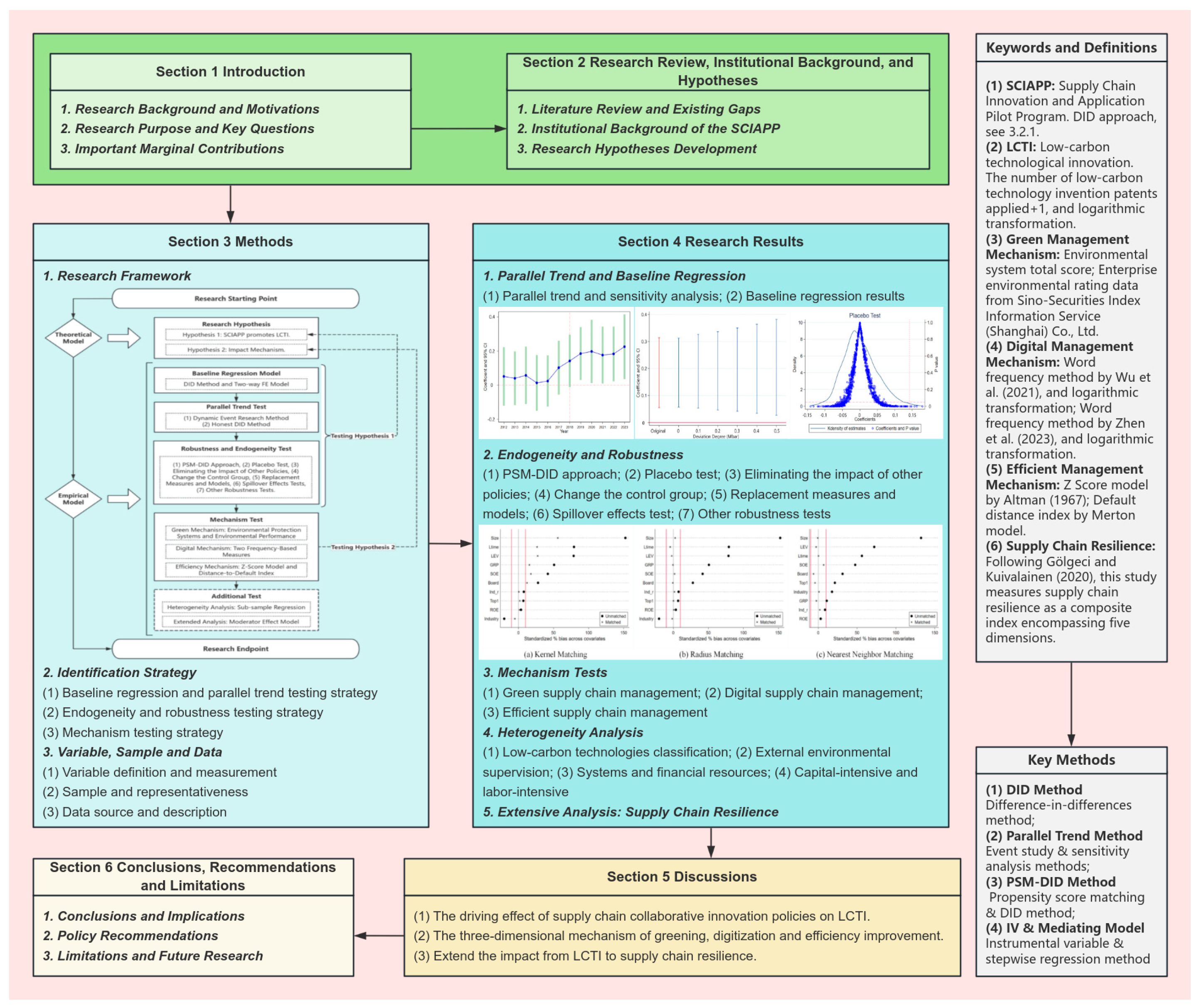
Figure 1 summarizes the structure and content of the entire paper. The remaining sections of this paper are structured as follows.
Section 2 reviews the relevant literature, introduces the institutional background and formulates the hypotheses.
Section 3 describes the methods, including the research framework, identification strategies, variables, sample, and data.
Section 4 presents the parallel trends and baseline regression results, endogeneity and robustness test results, mechanism test results, heterogeneity and extension analysis results.
Section 5 discusses these results and engages in dialogue with existing literature.
Section 6 summarizes the research conclusions and proposes policy recommendations and limitations.
5. Discussion
This study engages in a profound dialogue, verification, and expansion with existing literature, offering fresh theoretical perspectives and empirical evidence for understanding the micro-mechanisms and macro-consequences of the low-carbon transformation driven by supply chain management policies.
First, at the policy effect level, this study not only confirmed but also deepened the classic theory regarding the role of institutional pressure in driving green innovation. Existing studies have primarily concentrated on direct impacts of environmental regulatory tools such as carbon taxes and emission rights trading [
3]. However, this study found that a comprehensive policy centered on supply chain collaborative innovation can also have a significant quasi-regulatory effect on LCTI. This verifies the explanatory power of the legitimacy theory, which states that enterprises will actively innovate to reshape their legitimacy to satisfy the evolving expectations of stakeholders for sustainable supply chains. More importantly, this study reveals the heterogeneity of this effect. Policy dividends are more concentrated among enterprises that have established environmental management systems or have actively conducted environmental disclosures. This expands existing knowledge, indicating that external policy pressure must be combined with the internal response capabilities of enterprises to efficiently transform into innovation outcomes.
Second, at the mechanism level, this study systematically integrates and empirically validates the multi-dimensional driving framework of greenification, digitalization, and efficiency. Existing literature either separately analyzes the empowering effect of digital technology [
27] or explores the optimization of emission reduction through supply chain cooperation [
33]. This study demonstrates that SCIAPP functions through three paths simultaneously, including greenification exerts institutional pressure, digitalization provides innovative tools and collaborative platforms, and efficiency creates the resource foundation and financial space for implementing innovations. This is in line with the fundamental concept of dynamic capability theory that enterprises need to integrate internal and external resources to cope with environmental changes, and extends the applicable scenario of this theory from internal enterprise management to cross-organizational supply chain network governance.
Finally, this study extends the discussion of policy impacts from the enterprises’ own innovation to the resilience of the whole supply chain network, expanding the value assessment dimension of LCTI. Some studies have verified the direct impact of policies on enterprises’ innovation or emission reduction [
11], while this study found that LCTI driven by policies can ultimately strengthen the resilience of the supply chain in multiple dimensions, such as resistance, recovery, and operation. This conclusion is of crucial significance, as it elevates the strategic significance of enterprises’ low-carbon activities from compliance costs or social responsibility to the core assets for building long-term competitive advantages and risk-resistance capabilities. This provides a causal evidence chain from China’s policy practice for the conceptual discussions on low-carbon supply chain resilience [
1,
2], indicating that low-carbon transformation and resilience-building practices are coordinated and unified, jointly constituting the cornerstone of a sustainable supply chain.