Article

Humanizing Active Mobility Corridors: A Conceptual Framework for Walkability in the Dammam Metropolitan Area, Saudi Arabia


by
Yaman Adnan Alsaeedi
*,
Maher S. Alshammari
and
Ali M. Alqahtany
Department of Urban and Regional Planning, College of Architecture and Planning, Imam Abdulrahman Bin Faisal University, Dammam 31441, Saudi Arabia
*
Author to whom correspondence should be addressed.
Sustainability 2026, 18(7), 3180; https://doi.org/10.3390/su18073180
Submission received: 23 December 2025 / Revised: 2 February 2026 / Accepted: 20 March 2026 / Published: 24 March 2026
(This article belongs to the Section Sustainable Urban and Rural Development)

Abstract

The Dammam Metropolitan Area (DMA) has been experiencing tremendous growth driven by increasing population and the oil industry. This has culminated in the development of the DMA, where the transportation system is reliant on automobiles, wide arterials, and a disjointed pedestrian environment. With the increasing progression of the Vision 2030 initiative, the Kingdom of Saudi Arabia (KSA) is focusing on livability and sustainable mobility. However, despite the massive efforts, the concepts of humanizing active mobility corridors remain insufficiently developed across Saudi cities. The paper will discuss the conceptual framework for developing the active mobility corridors of the DMA, an initiative of walkability, livability, and sustainable mobility with specific regard to the study region’s climatic and cultural environment. The methodology relies on qualitative desktop research supported by a structured and iterative literature synthesis using snowballing techniques. The resulting framework positions active mobility not merely as a transport function, but as a multidimensional system that promotes inclusion, comfort, and environmental resilience. Offering design and policy principles tailored to hot-arid Gulf contexts that contributes to national efforts to advance Quality of Life objectives under Vision 2030. Ultimately, this framework aims to contribute in human-centered mobility across the KSA and similar urban areas.

1. Introduction

The global discourse on sustainable urban development has increasingly emphasized human-centered active mobility and walkability as essential components of livable, inclusive, and environmentally responsible cities [1,2,3]. Active mobility, encompassing walking and cycling, not only reduces greenhouse gas emissions and traffic congestion but also promotes public health, social interaction, and equitable access to urban opportunities [4,5]. However, walkability in hot-arid urban environments is often constrained by extreme heat, high humidity, and sociocultural factors that limit outdoor pedestrian activity [6].
In the Gulf Cooperation Council (GCC) countries, rapid urbanization, economic growth driven by oil revenues, and historical preference for car-oriented planning have produced sprawling, low-density cities with fragmented pedestrian environments [7,8]. These development patterns have created substantial barriers to sustainable mobility and have contributed to reduced quality of urban life [7].
Saudi Arabia’s Vision 2030 represents a strategic national response to these challenges, placing livable cities, quality of life, and sustainable mobility at the core of the country’s future development agenda [9,10,11]. The Quality of Life Program explicitly promotes active lifestyles, enhanced public spaces, and pedestrian-friendly environments as pathways toward healthier and more inclusive urban futures [10].
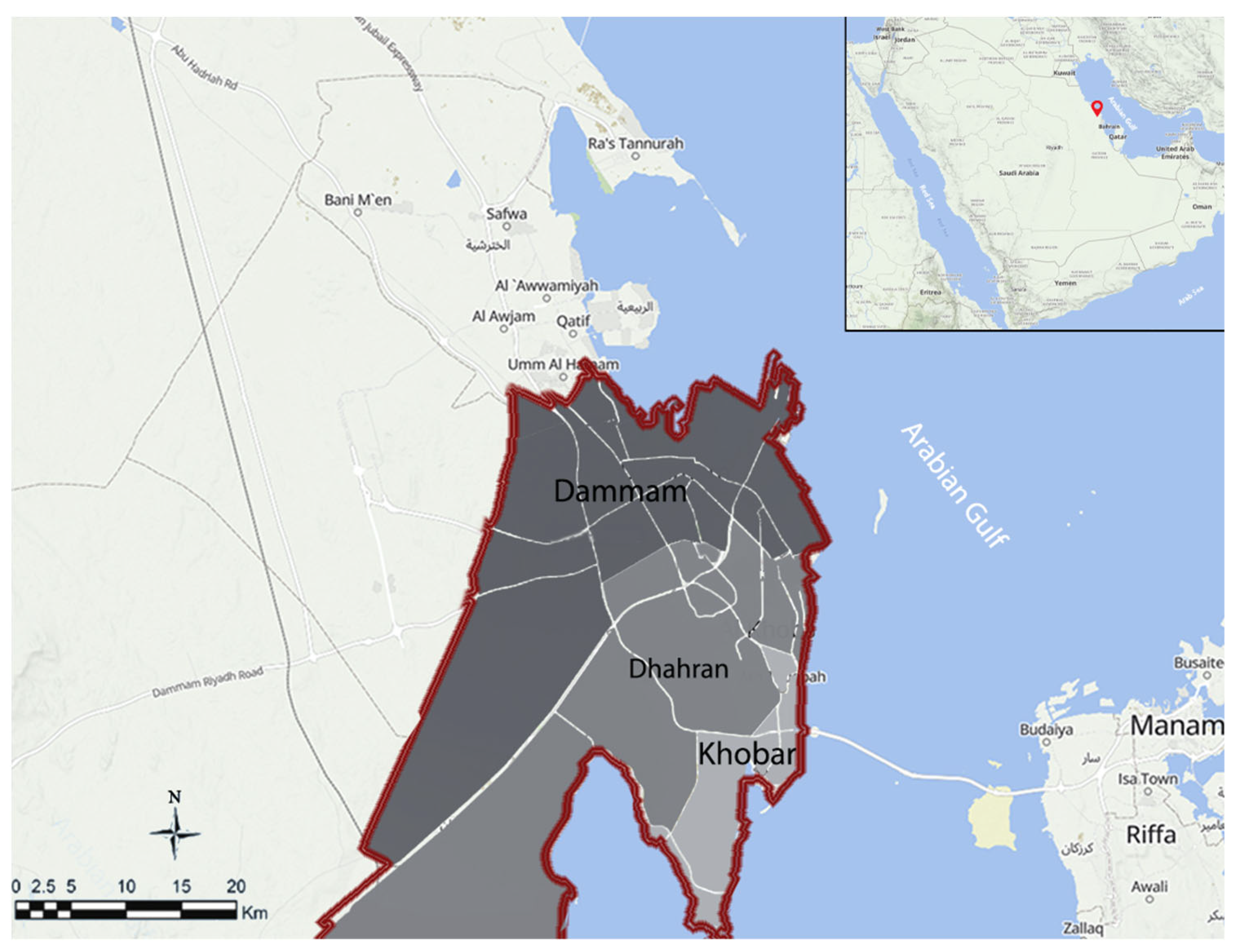
The Dammam Metropolitan Area (DMA), comprising Dammam, Dhahran, and Al-Khobar, constitutes the largest urban cluster in the Eastern Province and serves as an important administrative, industrial, and residential center (see Figure 1). Like many other Saudi and Gulf cities, the DMA has experienced rapid, car-dependent growth [12]. This pattern has resulted in wide arterials, disjointed sidewalks, excessive surface parking, and limited thermal comfort for pedestrians [13,14,15].
Currently, one of the key components of national development agendas in the rapidly transforming Gulf cities is the pursuit of sustainable urbanism [12,16]. Saudi Arabia’s Vision 2030 explicitly emphasizes livable cities and active mobility as key pathways to healthier, inclusive, and environmentally responsible urban futures [9,10]. However, a large portion of the Dammam Metropolitan Area is still dominated by car-centric planning, with pedestrian corridors often subordinated to vehicle movement. This results in underutilized public spaces, fragmented sidewalks, and limited comfort [13,15,17].
The central challenge, therefore, is not merely to provide basic pedestrian and cycling infrastructure, but to humanize active mobility corridors, that is, to transform them into inclusive, comfortable, socially vibrant, and culturally resonant lived spaces [1,18]. Globally, the humanization of mobility has emerged as a response to the environmental and social consequences of automobile dependence. Cities such as Copenhagen, Singapore, and Barcelona have redefined streets as public spaces that prioritize pedestrians and cyclists, integrating mobility with health, environment, and social cohesion objectives [19,20]. While these international examples provide valuable inspiration, the present framework is deliberately adapted to the hot-arid climate and socio-cultural norms of Gulf cities, rather than replicating these models directly. However, it is impractical and culturally insensitive to apply these models to Gulf cities immediately. Context-specific strategies are necessary due to the climatic realities of high temperatures and humidity, as well as sociocultural dynamics related to gender and privacy [18].
Walking is still a marginal daily mode of transportation in the DMA, influenced by sociocultural norms, gender roles, and lifestyle choices in addition to environmental characteristics [14]. Understanding these dynamics is crucial for humanizing pedestrian corridors and aligning urban design with the lived realities of residents [1,18,21]. To promote sustainable urbanism, the DMA has started implementing active mobility initiatives like shared walking-cycling pathways and pedestrian promenades in the main cities, Dammam, Dhahran, and Al-Khobar. However, challenges of inclusivity, safety, and connectivity still exist [13,22].
The humanization of active mobility also aligns with contemporary urban theories emphasizing livability and placemaking. Scholars argue that walkable environments contribute not only to environmental sustainability but also to social equity and psychological well-being [14]. Walkability becomes an indicator of urban quality and civic vitality when it is viewed as both a physical and cultural phenomenon. In the Saudi context, improving walkability necessitates concurrent consideration of social acceptance, governance, and design [14]. Coherent design standards and maintenance frameworks require institutional coordination between municipalities, developers, and ministries like the Ministry of Municipalities and Housing (MOMAH) [23]. Walking can be transformed from a necessity to a valued aspect of urban life through community engagement and awareness initiatives [24].
The DMA offers a strategic setting for developing a conceptual framework for humanizing active mobility corridors as one of the Kingdom’s fastest-growing metropolitan regions, which faces mounting pressure to balance economic expansion with environmental and social sustainability [12]. In this sense, the DMA is treated as a representative and high-priority Gulf metropolitan region that concentrates many of the climatic, morphological, and socio-cultural challenges addressed by the framework, while the conceptual model itself is intentionally designed to be transferable to other hot-arid cities. Its coastal geography, dispersed urban form, and socio-cultural diversity make it a valuable testbed for exploring integrated design strategies [15,25]. This paper develops a conceptual framework for humanizing active mobility corridors in the Dammam Metropolitan Area, with particular attention to the region’s hot-arid climate and sociocultural particularities. The framework positions active mobility as a multidimensional system that simultaneously advances inclusion, thermal comfort, environmental resilience, and alignment with national Vision 2030 objectives. Drawing on global and regional literature rather than new empirical data, the framework identifies three interrelated dimensions crucial for humanizing active mobility corridors: (1) spatial and design quality, (2) social and cultural context, and (3) policy and governance mechanisms, each reflecting a layer of complexity that must be addressed to achieve genuine humanization in mobility planning [1,6].
This study contributes to the ongoing dialog on livable cities in the Gulf region. It offers a qualitative analysis based on theoretical and practical insights for urban planners, designers, and policymakers seeking to operationalize human-centered principles in environments shaped by climatic extremes and rapid modernization. The ultimate objective is to promote cities where active mobility is not merely tolerated but celebrated as an integral component of sustainable, inclusive, and culturally resonant urban life [9,10].
The remainder of this paper is organized as follows. Section 2 provides a review of relevant literature on human-centered urbanism, walkability, and mobility in hot-arid contexts. Section 3 outlines the materials and methodology, detailing the qualitative and desktop-based approach used to develop the conceptual framework. Section 4 introduces the proposed framework, integrating spatial, social, and policy dimensions. Section 5 discusses its potential application within the DMA, outlining strategic pathways for implementation. Section 6 presents policy implications aligned with national sustainability goals, while Section 7 concludes with recommendations for future research and practice.

2. Background and Literature Review

2.1. Human-Centered Urbanism and Livability

Human-centered urbanism lies at the heart of how we discuss making cities sustainable and livable. The idea is simple: build cities for people primarily, rather than vehicles or economic functions [26]. Urban pioneers like Jan Gehl and William Whyte pushed this idea forward. They emphasized that the quality of urban life is determined by the human experience of public spaces, the comfort, safety, and pleasure of everyday movement and interaction [1]. Cities that put people first focus on accessibility, inclusiveness, and creating spaces that engage the senses. When urban design gets these things right, it strengthens public health, brings communities together, and gives places a stronger sense of identity [18]. Vision 2030 takes this further, treating walkable and inclusive environments as key signs of a vibrant city. It situates walkable, inclusive, and human-centered environments as core indicators of urban vitality, highlighting the role of streets and corridors as cultural and social spaces [9,27]. Livability encompasses factors such as cultural values, safety perceptions, and the ease of social connection. If a city wants to be sustainable, it needs to care about more than just green tech or efficient layouts. Residents’ emotional and cultural needs matter just as much [28].
In Saudi cities such as Dammam, livability hinges on striking a balance between rapid modernization and preserving social norms and environmental comfort. That is where the idea of “humanizing” urban space comes in. It is about weaving together physical and non-physical factors, so the residents’ feeling of belonging to the city. Livable streets are those that prioritize pedestrians, reduce physical and psychological barriers, and integrate esthetic and climatic considerations [29]. Human-centered planning emphasizes fair access to opportunities, services, and social life while redefining mobility as a human right [23]. In this sense, the humanization of mobility corridors functions as both a design and a governance challenge, demanding intersectoral collaboration among planners, health professionals, environmental agencies, and community organizations [6].

2.2. Active Mobility and Walkability Concepts

Walking and cycling are examples of active mobility that promote social connection, environmental sustainability, and health [16]. The degree to which urban settings allow for accessible, comfortable, and safe pedestrian mobility is referred to as walkability [30]. Walkability in the Gulf is influenced by socio-cultural acceptability, urban esthetics, climate adaptation, and sidewalk continuity, connectivity, and land-use mix [15,17,29]. Academic definitions of walkability usually include aspects that are perceptual, social, and physical. A walkable environment must meet the four criteria: utility, safety, comfort, and interest [24]. These criteria underscore that walking is not merely a functional activity but an experiential one shaped by design quality and context.
Micro-scale urban features such as street width, shading, greenery, building frontage, and the existence of social amenities need to be taken into consideration when designing walkable settings [22]. Walking is consistently encouraged by compact urban designs with varied land-uses, fine-grained street networks, and active frontages [13]. However, people’s subjective judgments of safety, cultural acceptability, and social inclusivity also influence walkability and influence whether or not they prefer to walk [18].
Walkability is especially susceptible to thermal comfort and the availability of shade in hot, dry conditions. Research from the Middle East has shown that even at short distances, pedestrian activity drastically declines as temperatures rise above comfort levels [15]. It has been demonstrated that design elements like trees, covered pathways, and shaded arcades greatly increase pedestrian comfort in these situations [31]. Walking behavior is influenced by a complex system created by the interaction of these environmental elements with sociocultural dynamics [30].
Due to urban architecture influenced by reliance on cars, economic prosperity, and cultural values that prioritize comfort and privacy, active mobility has historically received less attention in the Gulf region [32]. The challenge for urban planners is to reimagine streets not simply as transport conduits but as social environments that enable meaningful human experience [18]. Humanizing mobility corridors means treating walking as an integral part of daily life rather than an afterthought in infrastructure planning [1].

2.3. Urban Environment and Social Behavior

Recent studies indicate that the configuration and accessibility of urban green spaces influence patterns of social interaction and everyday mobility. Alshehri et al. reported that in Jubail, green spaces connected with safe and continuous pedestrian corridors were associated with higher levels of social engagement and more frequent use of outdoor areas. According to these results, active mobility corridors function in neighborhoods as social interfaces as well as channels for movement [7]. In this context, social-environmental elements that affect pedestrian activity include socially supportive public areas and comfortable surroundings.
Evidence from Dammam studies provides additional insight into the relationship between public parks and walkability. Maniruzzaman et al. reported that residents’ satisfaction with urban parks was associated with factors such as amenity quality, seating availability, lighting, and the visual connection between parks and surrounding streets. The authors concluded that incorporating pedestrian routes with recreational areas and daily destinations can enhance the usability of walking settings based on these findings [22]. These findings suggest that esthetic conditions and the availability of amenities are important design elements associated with walking frequency and pedestrian happiness.

2.4. Morphological Factors Affecting Pedestrian Behavior

Street connectivity, service accessibility, and internal housing configurations are examples of neighborhood design features that have been demonstrated to affect inhabitants’ everyday mobility habits, especially in times of crisis like the COVID-19 pandemic [33]. Communities that have integrated land-use patterns, balanced densities, and easy access to important locations are more likely to promote walking and lessen dependency on private automobiles [33]. These results reinforce that morphological attributes, specifically density, land-use mix, and street connectivity, are considered key spatial form factors that contribute to shaping mobility patterns.

2.5. Climatic and Cultural Determinants in Gulf Cities

Hot-arid conditions restrict the use of corridors, making hot and dry circumstances difficult for outdoor pedestrian movement [24,34]. Pedestrian patterns are further shaped by social conventions, gender expectations, and family-oriented lifestyles, which affect who walks, when, and where [14,18,35]. Research conducted in Riyadh, Jeddah, Al-Khobar, and the Kingdom of Bahrain highlights how sociocultural constraints and climate discomfort interact to restrict walking behavior [28,29,30,31].
In coastal regions such as the DMA, high temperatures combined with humidity and limited shading make outdoor activity challenging for much of the year. Despite the climate, the region’s traditional urban forms, such as courtyards, covered markets, and narrow alleys, were created to reduce heat exposure and promote social interaction [23]. However, modern planning paradigms imported during the mid-twentieth century largely abandoned these vernacular principles in favor of wide roads, zoning segregation, and air-conditioned interiors [26].
Cultural factors further influence mobility behavior in Gulf cities. The acceptability of walking is frequently influenced by social norms of gender, privacy, and family structure, especially in mixed-use public areas [18]. Despite recent modest changes toward more inclusivity, societal norms still limit women’s utilization of public outdoor spaces in many Saudi circumstances [18]. These norms, in combination with urban design factors, can lower the inclination to walk when safety or privacy is perceived to be inadequate, even if physical infrastructure exists [36]. Therefore, achieving humanized mobility in Dammam requires addressing both tangible and intangible barriers to pedestrian activity.
The perception of walking as an undesirable or inconvenient mode of transport is also reinforced by social status. In Saudi society, owning a car has traditionally been seen as a sign of prosperity and modernity [35]. Because of this, walking is not always seen as a healthy or environmentally responsible decision, but rather as an indication of a lower socioeconomic position. Redesigning physical areas and changing societal narratives around mobility are also necessary to dispel these misconceptions. Public awareness campaigns, education initiatives, and cultural programming can help normalize walking as a desirable activity aligned with national development and environmental stewardship [35].
Climate-sensitive design plays a critical role in changing public perceptions about walking. Pedestrian corridors can be transformed into civic experiences that convey identity and pride by including green infrastructure, shade, and visually appealing public art [37]. In this sense, the coastal terrain of the DMA presents both opportunities and challenges. Although the heat and humidity are intense, the abundance of sea breezes and waterfront areas gives natural cooling potential if used with careful design [25]. Planners may design spaces that make walking feasible and enjoyable by combining cultural awareness with climate adaptability.

2.6. Toward Humanizing Urban Corridors in Saudi Arabia

Recent policy reforms under Vision 2030 have opened new pathways for rethinking mobility in Saudi cities. As part of the country’s urban development goal, the Quality-of-Life Program places a strong emphasis on improving public areas and encouraging active lifestyles [9,27]. It is now the responsibility of municipalities throughout the Kingdom, especially those in the Eastern Province, to implement policies that encourage walking, bicycling, and social interaction. Nevertheless, these efforts frequently continue to be dispersed or restricted to well-known experimental programs [38]. A comprehensive, human-centered framework is needed to guide the planning, design, and management of active mobility corridors in a culturally appropriate and environmentally responsive manner.
Humanized corridors integrate physical, social, and cultural considerations, emphasizing spaces that are safe, comfortable, inclusive, and socially engaging [30]. Compact, mixed-use neighborhoods, well-maintained sidewalks, shaded streets, and culturally responsive design foster active mobility and community interaction [13,18,21]. Humanizing urban corridors requires moving beyond physical infrastructure toward the integration of spatial, social, and institutional dimensions [20]. First, the spatial and design dimension involves reconfiguring streets to enhance thermal comfort, safety, and esthetic quality. This may include implementing shaded sidewalks, cooling vegetation, pedestrian-scale lighting, and materials that reduce surface heat. Second, the social and cultural dimension emphasizes the role of perception, identity, and inclusion. Streets must accommodate diverse users, including women, children, elderly people, and those with disabilities, through design and policy measures that ensure accessibility and safety [36]. Finally, the policy and governance dimension underscores the need for coordination among municipal authorities, developers, and community organizations to institutionalize human-centered planning principles [27].
These three dimensions form the conceptual basis of the framework proposed in this paper, which aims to bridge the gap between design practice, policy intent, and everyday experience. It positions active mobility as a catalyst for urban transformation and social inclusion, rather than a supplementary feature of transport infrastructure. For the DMA, applying such a framework means translating Vision 2030s broad objectives into actionable urban strategies. Those that promote health, reduce emissions, and build a sense of community ownership of public space [9].
According to the literature, livable and sustainable cities arise when culture, transportation, and the environment all coexist harmoniously [1]. Gulf towns need to shift their planning paradigms away from the dominance of vehicles and toward human experience to achieve this goal. The ability to incorporate social and cultural awareness into urban planning processes will be just as important to this change as technological innovation. To synthesize the literature reviewed in Section 2.1, Section 2.2, Section 2.3 and Section 2.4, (Table 1) presents the key thematic dimensions relevant to human-centered urbanism and active mobility in the DMA.

3. Materials and Methodology

This study adopts a qualitative, desktop-based research design to explore the humanization of active mobility corridors in the Dammam Metropolitan Area (DMA). Because the study examines perceptions, geographical meanings, sociocultural effects, and governance structures, where the complex phenomena cannot be adequately captured by quantitative or numerical approaches alone, qualitative approaches are required. Interpreting contextual subtleties, combining various knowledge sources, and creating an integrated conceptual framework pertinent to the distinct climatic and sociocultural circumstances of Gulf cities are all made possible by qualitative analysis. Accordingly, this study is explicitly positioned as a conceptual framework paper supported by a structured, qualitative synthesis of existing empirical and policy evidence. It adopts a qualitative, desktop-based research design that synthesizes academic literature, policy reports, and technical documents related to humanizing active mobility corridors in hot-arid Gulf contexts. Within this qualitative, desktop-based design, the proposed framework consolidates existing knowledge into a conceptual structure that future empirical and modeling studies in the DMA can formalize, calibrate, and test. During the preparation of this work, the authors used ChatGPT Plus in order to assist with literature summarization and improve the readability of the discussion section.

3.1. Literature Identification and Selection

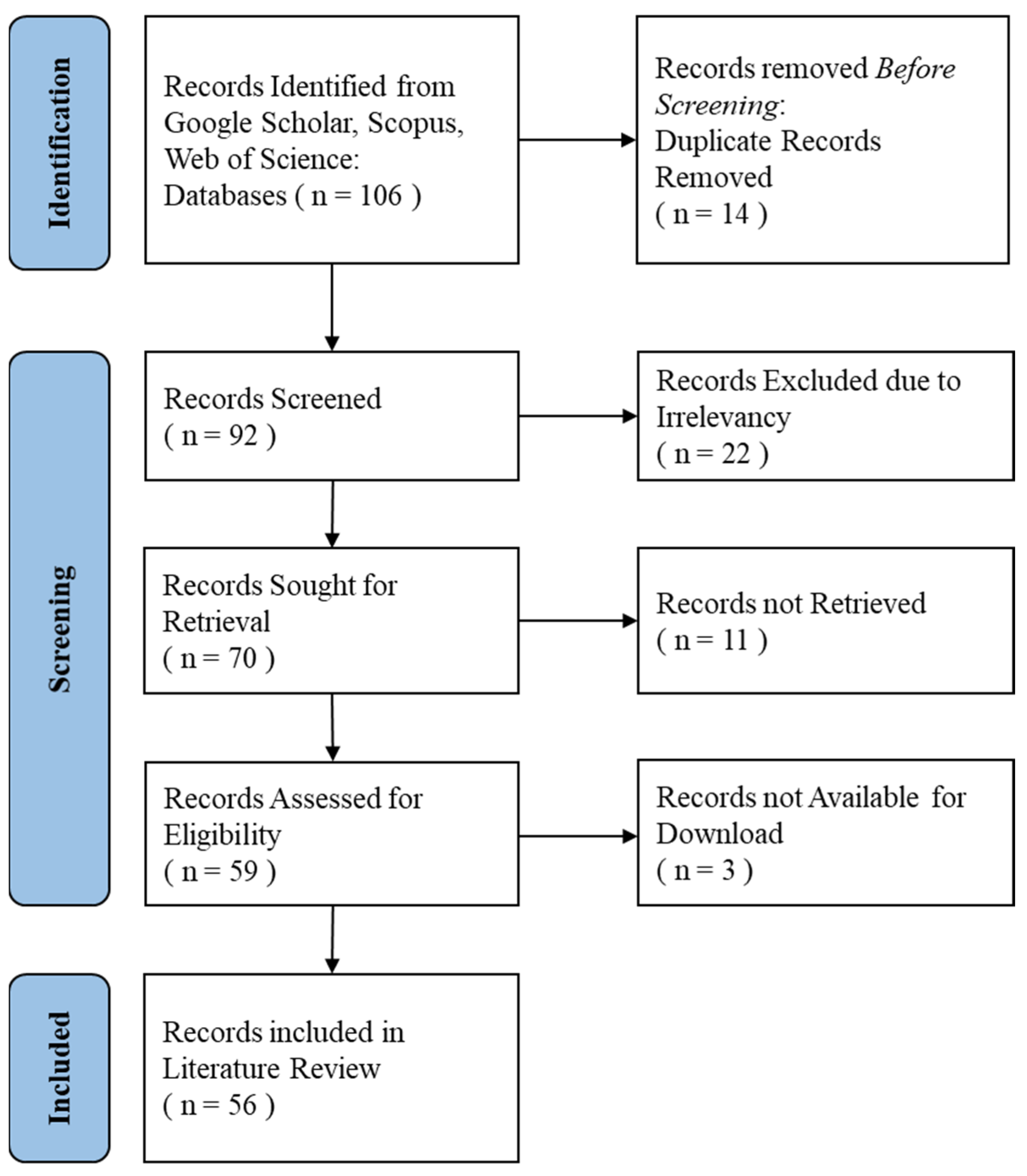
The literature review synthesizes studies on humanized active mobility corridors, walkability, and pedestrian mobility in Saudi Arabia, the Gulf area, and selected international contexts with a similar climate. Studies were identified through systematic searches on Google Scholar, Scopus and Web of Science platforms, using themes such as urbanization, humanization, pedestrian behavior, walkability, Vision 2030, and socio-urban development. A snowball technique was applied to the most relevant studies to identify new sources and ensure comprehensive coverage of methodologically rigorous and contextually aligned research. The search strategy was therefore structured to meet the full reproducibility standards of a systematic review protocol; a comprehensive, database-based systematic review with PRISMA-style reporting is identified as an important avenue for future work, as shown in Figure 2. Sources were then selected based on empirical relevance, methodological rigor, and contextual similarity to the environmental and socio-cultural conditions of the DMA. As another choice filter. Priority was given to studies conducted in hot-arid climates, Gulf cities, or Saudi Arabia.

3.2. Document and Policy Analysis

In the second stage, academic articles, policy reports, technical manuals, governmental documents, and institutional publications were analyzed thematically. The analysis focused on extracting insights related to:
  • spatial and micro-scale design determinants
  • socio-cultural influences on walking behavior
  • climatic constraints and thermal comfort
  • governance, policy, and institutional gaps
  • lessons from international humanization practices
Policy and governmental documents are treated as goal-oriented sources that primarily reveal official priorities and institutional arrangements; their normative bias is acknowledged, and they are not used to claim unbiased empirical outcomes but to frame the governance context within which humanized active-mobility strategies must operate.

3.3. Conceptual Synthesis

Findings from the literature and document analysis were synthesized into an integrative conceptual framework linking spatial and design elements, socio-cultural dynamics, and governance and policy structures. The whole process is reflected in Figure 2. The suggested conceptual framework for creating humanized active mobility corridors in the DMA is presented in the next section, where it integrates the theoretical insights discussed here into a coherent framework for sustainable urban transformation.

3.4. Novelty and Potential for Replicability

The principal novelty of the proposed framework lies in its integrated treatment of three mutually reinforcing dimensions (spatial/design quality, social-cultural context, and policy/governance mechanisms) specifically tailored to the climatic extremes and strong sociocultural particularities of hot-arid Gulf cities.
While many existing walkability frameworks focus predominantly on either physical design or policy aspects, the current model explicitly bridges these layers and embeds them within the unique socio-cultural and environmental realities of the GCC region (gender norms, privacy expectations, thermal discomfort, family-oriented lifestyles, and the symbolic status of private vehicles).
The qualitative-synthetic desktop methodology (literature synthesis and thematic policy/document analysis) offers a low-cost, replicable first step that can precede more resource-intensive empirical studies (e.g., heat mapping, large-scale pedestrian surveys, or longitudinal behavioral observation). Building on this foundation, subsequent research can translate the three dimensions into measurable indicators and develop multi-criteria evaluation, simulation, and optimization models that operationalize the framework for corridor prioritization and investment decisions. The framework’s structure is sufficiently flexible to allow adaptation to other GCC capitals and large cities (e.g., Riyadh, Jeddah, Doha, Manama, Kuwait City) and other hot-arid developing contexts (North Africa, parts of South Asia) with appropriate local adjustment of cultural and governance parameters. Consequently, subsequent empirical studies in the DMA and other Gulf cities are encouraged to build on this framework through on-site pedestrian surveys, microclimatic/thermal comfort assessments, and engagement with local stakeholders such as residents, planners, and municipal officials.
Recent publications on walkability and active mobility corridors increasingly emphasizes the value of qualitative inquiry in capturing the human experience of walking environments. These qualitative studies have demonstrated that perceptions of safety, comfort, social interaction, and environmental meaning play a decisive role in shaping walking behavior. For instance, Homoud and Jarrar employed field observations and qualitative assessment to evaluate walkability in Riyadh’s Al-Falah neighborhood, identifying human-scale design, shading, land-use diversity, and social activity as critical determinants of pedestrian comfort in arid urban contexts [43]. Similarly, Ferrer et al. used in-depth interviews and thematic analysis to explore short walking trips in Spanish cities, revealing how micro-scale urban elements, such as sidewalk continuity, street enclosure, and perceived traffic risk, strongly influence walkability [44]. These studies underscore the importance of experiential and contextual dimensions in understanding active mobility corridors, reinforcing the legitimacy of qualitative-only approaches in walkability research.
More recent qualitative research further strengthens the conceptual foundation for humanizing active mobility corridors. Al Hammadi, through interviews and urban design analysis in Bahrain, demonstrated that walkability is deeply shaped by cultural expectations, thermal comfort, and social norms, factors that are difficult to quantify but central to pedestrian experience [45]. Mehta advanced a qualitative framework for evaluating public space quality based on observational methods, highlighting how comfort, inclusiveness, and opportunities for social engagement enhance walkability at the street level [46]. In addition, Otsuka et al. showed that participatory qualitative techniques, including citizen narratives and walking interviews, provide critical insights into perceived walkability and neighborhood attachment [47]. These studies validate qualitative methodologies as essential tools for developing human-centered conceptual frameworks for walkability, particularly in contexts where social, climatic, and cultural factors shape everyday mobility practices.

4. Conceptual Framework for Humanizing Active Mobility Corridors

Humanizing active mobility corridors in the Dammam Metropolitan Area (DMA) requires a multidimensional understanding of how spatial, social, and institutional forces interact to shape urban experience. The suggested conceptual framework views humanization as a comprehensive change in how mobility, space, and culture interact within the urban fabric, as opposed to viewing walking or bicycle infrastructure as technical enhancements to road networks. To direct the creation of inclusive, comfortable, and culturally grounded mobility settings, the framework integrates knowledge from urban design theory, environmental psychology, cultural geography, and policy studies [6,48,49].
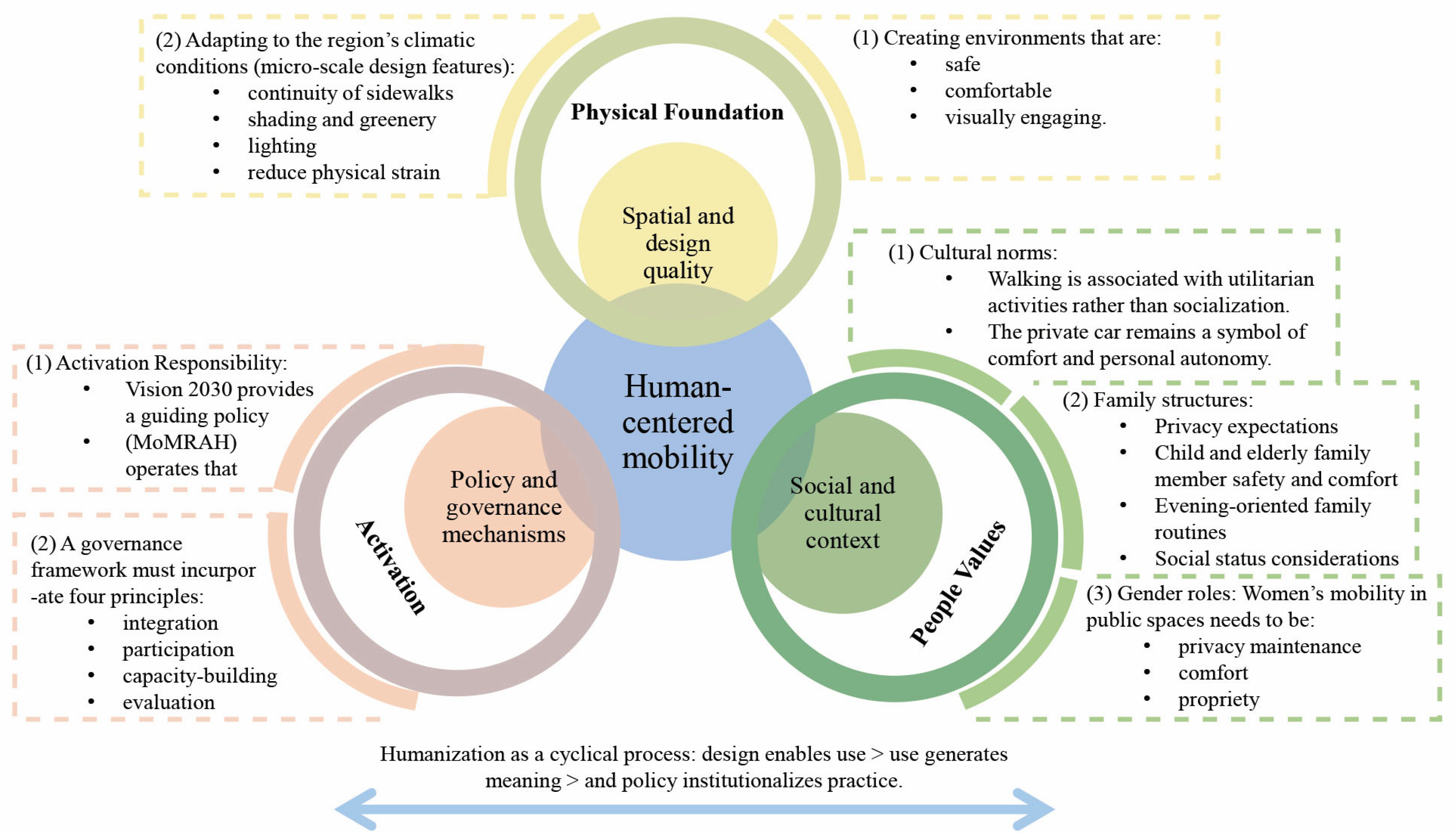
The concept is fundamentally organized around three interrelated elements: spatial and design quality, social and cultural environment, and policy and governance processes. Each of these factors represents a layer of influence that needs to be integrated to achieve sustainable and human-centered mobility. These factors are mutually reinforcing rather than hierarchical: social approval is necessary for the success of spatial design, and supportive institutional structures are necessary for this. These relationships are conceptually depicted in (Figure 3) as overlapping spheres, indicating the dynamic interplay of cultural meaning, physical form, and policy framework in the process of humanization.

4.1. Spatial and Design Dimension

The spatial and design dimension constitutes the physical foundation of humanized mobility corridors. It involves creating environments that are safe, comfortable, and visually engaging, while adapting to the region’s climatic conditions. The significance of micro-scale design elements in affecting pedestrian behavior is highlighted in international literature [17,29]. These elements include sidewalk continuity, shading, lighting, greenery, and visual permeability. These design elements also require acting as environmental mediators, improving thermal comfort and lowering physical strain in hot, dry regions like the DMA.
Humanized corridors prioritize the sensory experience of movement. Elements such as shaded arcades, colonnades, pergolas, or street trees provide cooling, while materials with low heat absorption minimize glare and surface temperature [31]. Urban planners in the Gulf have increasingly recognized that thermal comfort is a crucial component of social inclusion rather than just an engineering issue [18]. Pedestrians are marginalized by both design and climate in the absence of welcoming, shaded streets.
Spatial design should encourage accessibility and continuity in addition to comfort. Walking is encouraged via continuous pedestrian walkways that connect important locations, such as parks, schools, mosques, and business districts, by providing clear, easy routes [36]. On the other hand, discontinuous crossings or broken sidewalks disrupt the flow of traffic and deter people from using them. In a similar vein, pedestrian activity on local streets should be given priority in spatial hierarchy, incorporating safe crossing locations and traffic-calming strategies. In hot climates where outdoor activity frequently transitions into the evening, lighting and visibility are crucial adaptations that improve safety and extend the usability of public areas into the evening [15].
Esthetic involvement is another important concept in this dimension. People’s perceptions of comfort and belonging are influenced by the sensory aspects of space, including color, texture, scale, and visual rhythm. Instead of being a means of transportation, humanized corridors create a sense of place by using design to encourage exploration and engagement [18]. Reintroducing local identity through architectural language, landscape features, and art installations can help close the gap between traditional cultural values and modern urban life in the DMA, which is dominated by modernist urban grids. Regional identity can also be strengthened by incorporating desert and coastal esthetics through vegetation, materials, and spatial rhythm.
Spatial design thus acts as the most visible and tangible component of the humanization framework. However, as the next dimension highlights, successful implementation depends equally on the social and cultural acceptance of walking as a valued practice [14].

4.2. Social and Cultural Dimension

The social and cultural dimension acknowledges that physical design is not the only way to humanize mobility. In addition to being physical spaces, streets are social institutions [20]. The use of public spaces in Saudi cities is closely linked to gender roles, family arrangements, and cultural norms. In the DMA, gender-responsive design can include family-friendly rest areas with shaded benches and stroller space, semi-enclosed seating that offers a degree of privacy while retaining visual oversight for safety, and, where culturally appropriate, segments of corridors or time windows that accommodate gender-segregated walking or group activities [50,51]. Thus, building for humanized mobility necessitates comprehending how people’s attitudes, beliefs, and actions influence their propensity to interact with urban settings.
Walking is still viewed as a necessity rather than a recreational or social activity in many Gulf communities. The private vehicle continues to represent comfort, status, and individual freedom [35]. Reframing walking as a desirable and contemporary lifestyle option in line with environmental, community, and health principles is necessary to change this behavioral pattern. Integrating playground pockets, picnic spots, prayer facilities, and small kiosks into corridors can support women, children, and multigenerational groups, reinforcing walking as a socially acceptable and convenient part of daily routines rather than an exceptional activity. Rethinking societal narratives around walking can be greatly aided by awareness campaigns, urban events, and educational activities [14]. Targeted campaigns using municipal social media, local influencers, and health-sector partnerships can normalize images of women and families walking in well-designed public spaces, thereby gradually reshaping social norms around outdoor pedestrian activity.
Another crucial component of the social dimension is gender inclusion. Social expectations about privacy and propriety have historically limited women’s mobility in public areas throughout the Kingdom [18]. However, these standards are gradually changing due to continuing social changes and the growing presence of women in the workforce [18]. By making public areas secure, comfortable, and welcoming, urban design may facilitate this shift. While well-lit spaces and active frontages promote social presence, features like transparent shopfronts, clear sightlines, and accessible facilities add to a sense of security [6,36,40].
Moreover, humanized mobility corridors serve as platforms for social interaction and community identity. To reframe walking as a desirable lifestyle option, municipalities in the DMA could align corridor interventions with national and regional initiatives under the Vision 2030 Quality of Life Program, such as community walking challenges, ‘Walk Dammam’ or ‘Khobar Steps’ campaigns, and school-based active route to school programs that link physical activity with health, environmental stewardship, and national pride. They can promote a sense of community and shared ownership when they are created with participation from locals. Workshops, surveys, and design charrettes are examples of participatory planning techniques that let locals voice their views and assist planners in comprehending the symbolic meanings associated with certain locations [30,32]. In line with Vision 2030’s objective of creating dynamic, involved communities, this participatory method not only improves design outputs but also fortifies social cohesion [9].
Ultimately, the social and cultural dimension guarantees that humanized mobility is based on everyday experience and local identity. It ensures that corridors become dynamic, inclusive, and significant aspects of urban life by bridging the gap between design intention and social reality [18].

4.3. Policy and Governance Dimension

While spatial and social dimensions define the experiential aspects of mobility, their realization depends on the strength of policy and governance mechanisms. One of the biggest obstacles to integrating urban mobility in Saudi Arabia is still institutional fragmentation [17,42]. Transportation, public works, urban planning, and environmental management are all overseen by many bodies, frequently with overlapping or conflicting duties. Therefore, a governance architecture that promotes coordination, accountability, and policy consistency across administrative boundaries is necessary to humanize active mobility corridors.
At the national level, Vision 2030 offers a framework policy that puts sustainability and quality of life first. Then, through design guidelines, zoning laws, and public space initiatives, the Ministry of Municipalities and Housing (MOMAH) and the Eastern Province Municipality play a key role in operationalizing these goals [9,27]. However, current rules frequently concentrate on vehicle access and parking requirements rather than providing specific criteria for pedestrian and bicycle infrastructure [15]. The humanization agenda needs to be advanced by updating existing standards to incorporate human-centered and microclimate-sensitive criteria. This also requires local authorities to assess existing urban conditions and develop context-specific, phased transition plans that respond to local needs and bridge the gap between current urban realities and the objectives of Saudi Vision 2030 [17,42].
The four fundamental principles: integration, participation, capacity-building, and evaluation, also need to be included in a governance structure that promotes humanized mobility. Integration refers to aligning transport planning with land-use, environmental management, and public health policies. Then, to ensure that design and policy reflect community needs, participation entails including local stakeholders and citizens in decision-making. Capacity-building focuses on equipping planners and municipal staff with the skills and tools necessary to design climate-appropriate and inclusive spaces. Lastly, to track development and guide adaptive management, evaluation comprises the establishment of quantifiable measures, such as pedestrian satisfaction, safety levels, and microclimatic comfort [40]. Municipalities may be encouraged to test human-centered strategies through pilot projects and financial incentives. For example, establishing “model corridors” in key locations like Dammam or Al-Khobar could function as demonstrative projects highlighting the advantages of active mobility and influencing public opinion [17].
Furthermore, collaboration with the private sector and academic institutions can enhance innovation and knowledge exchange. Universities in the Eastern Province, such as Imam Abdulrahman Bin Faisal University, can provide research support, while developers can integrate human-centered design into new mixed-use projects. International partnerships may also offer technical expertise in sustainable mobility planning [16].
Ultimately, governance is the enabling dimension of the framework. Without institutional support, even the most well-designed spatial and social interventions risk remaining isolated or unsustainable. A coherent policy environment, anchored in Vision 2030 and reinforced through local regulatory frameworks, ensures that humanized active mobility corridors become integral to the Kingdom’s broader urban transformation agenda [9,27].

4.4. Integrating the Three Dimensions

The integration of spatial, social, and governance dimensions forms the conceptual heart of the humanization framework. In practice, this integration means that design interventions (like shaded walkways) are thought of for their social and cultural resonance in addition to their physical advantages. A shaded pedestrian path next to a mosque or public park, for instance, serves both climatic and communal goals, strengthening the connection between mobility and social life [36]. Likewise, design principles should be adaptable enough to accommodate cultural variety within the DMA, and policy measures must be grounded in local socioeconomic reality.
The integrated structure of this framework is consistent with broader planning perspectives that emphasize coordination across environmental, social, cultural, and governance-related dimensions. This consistency is supported by AlQahtany, Rezgui, and Li, who highlight the importance of planning processes that connect physical design with institutional and community-specific considerations [52]. Their emphasis on context-responsive and multidimensional coordination reinforces the rationale for examining active mobility corridors as components of a wider planning system in which spatial, social, and governance factors operate collectively.
The framework offers a foundation for future empirical investigation and application by incorporating these relationships into a conceptual model. It helps politicians create logical legislation, helps planners choose intervention priorities, and provides researchers with a methodical way to look at how design, culture, and governance are interdependent. The framework provides a route that aligns with Vision 2030’s goal of fostering sustainable, livable, and human-centered urban settings within the Dammam Metropolitan Area.

5. Application and Discussion

The Dammam Metropolitan Area (DMA) presents a distinctive laboratory for examining the challenges and opportunities of humanizing active mobility corridors in Saudi Arabia. This region, which serves as the Eastern Province’s main urban cluster, mixes a harsh climate, deeply ingrained sociocultural customs, and rapid development. Despite having different levels of urban development, the DMA’s main cities, Dammam, Dhahran, and Al-Khobar, share a planning heritage that is focused on segregated land-uses and automobile-oriented architecture [12,15]. When the conceptual framework created in this study is applied to the DMA, it reveals both systemic obstacles and prospective avenues for transforming mobility in a way that is sustainable and human centered.
In this environment, the framework’s three dimensions: spatial and design, social and cultural, and policy and governance, intersect to show how institutional reform, behavioral change, and technology solutions are required to advance simultaneously. The urban fabric of the DMA is interpreted through these dimensions in the debate that follows, providing methods that are in line with both local and national plans [9,27].

5.1. Spatial and Design Considerations

The physical layout of the DMA reflects planning philosophies that prioritized vehicle mobility in the mid-to-late twentieth century, resulting in low-density expansion and unsustainable urban patterns [12]. The urban landscape is dominated by large parking lots, wide multilane roads, and disjointed pedestrian pathways [12,15]. When they exist, sidewalks are frequently small, unshaded, or blocked by utilities and signage. Street networks in residential areas often end in cul-de-sacs, limiting continuous walking paths, and intersections favor vehicle turning radii over pedestrian safety [29]. Thus, the urban form reinforces private car dependence, limiting the potential for sustainable mobility transitions.
Modifying these areas to prioritize human comfort and continuity first is necessary to apply the spatial and design dimensions of the framework. The first concept is connectedness, which entails making sure that bike and pedestrian paths create a cohesive, continuous network that connects residential neighborhoods with parks, schools, mosques, and business districts [17]. Planners can connect disjointed communities like Dammam and Al-Khobar, where land-use segregation is severe, by creating “green corridors” or linear parks. These networks would promote bicycling and walking while offering recreational and ecological benefits. It is worth noting that in the DMA’s hot-arid and coastal-humid climate, extensive use of irrigated vegetation and misting systems must be balanced against water scarcity, long-term maintenance costs, and infrastructure durability; climate-responsive design should therefore prioritize drought-tolerant species, efficient irrigation, and strategically located cooling interventions rather than uniform application along all corridors.
The second principle is thermal comfort, a defining factor for pedestrian activity in the Gulf’s hot-arid climate [51]. Study from comparable settings demonstrates that regular shading, such as that provided by trees, colonnades, or tensile structures, can lower perceived temperature by several degrees, increasing outdoor usability throughout the summer [44]. For Dammam, an integrated shade plan combining vegetation and architectural canopies might transform key arterial roadways such as Prince Mohammad Bin Fahd Road or King Saud Street into comfortable pedestrian corridors [22,29]. Comfort levels could be further increased by using localized cooling systems, misting stations, and reflective pavement. While high-albedo and reflective pavement materials can reduce surface heat accumulation and mitigate the urban heat island effect, their application must be carefully calibrated to avoid excessive glare and visual discomfort in strongly sunlit conditions, for example, by combining moderately reflective surfaces with shading elements and texture finishes.
Third, esthetics and small details that impact perception must be considered in street-level design. Uninviting building setbacks and boring facades frequently dominate the DMA’s streetscapes. Monotonous facades and uninviting building setbacks often dominate the DMA’s streetscapes. Introducing visual variation through facade articulation, public art, and landscaping can foster psychological comfort and place identity [18]. Benches, lights, water fountains, and directional signage are examples of pedestrian amenities that convey care and attention, enticing people to stay and interact with the surroundings [40]. Incorporating coastal architectural elements, like sea-breeze corridors or coral-inspired patterns, can help boost local character and increase locals’ emotional attachment to public areas [25].
Retrofitting existing infrastructure instead of starting from scratch presents a significant challenge in the DMA. There is not enough room for new sidewalks or bike lanes in many neighborhoods, especially in Dammam’s older districts. Without requiring significant renovation, innovative spatial techniques like curb extensions, shared roadways, or reusing underutilized parking strips can restore space for walkers [17]. Low-cost trial projects that increase public support for long-term improvements can also be temporary or tactical interventions, such as pedestrianized weekends or shaded pop-up sidewalks [18]. If proven effective, these interventions could hasten the adoption of policies and inspire similar initiatives in other Saudi cities.

5.2. Social and Cultural Adaptation

The success of spatial interventions ultimately rests on social and cultural acceptance, even though they constitute the visible layer of humanization. walking is still viewed mainly as a functional necessity rather than a leisure activity, with private vehicles preferred for comfort and status [15,22]. Better design and new social narratives about mobility are necessary to change these prejudices. Public opinion can be changed by awareness efforts that connect walking to national pride, health, environmental stewardship, and Vision 2030 goals [17]. The social value of walkable environments can be further illustrated by community events like walking festivals, night markets, or temporary pedestrianizations [18].
Inclusion of all genders is still crucial. Many metropolitan areas still do not adequately support women’s comfort and safety, notwithstanding recent legislation. While mixed-use development and family-friendly seating areas can meet cultural preferences, improved lighting, visibility, and active frontages can improve perceptions of safety [17,18,40].
Aligning corridor design with local activity patterns is another aspect of cultural adaptation, especially when it comes to evening use because of midday heat. Longer and more inclusive pedestrian activity can be promoted by improving evening illumination, cooling, and amenities, in addition to shaded rest areas and smaller businesses [25].
Participation in the community enhances stewardship and a sense of belonging. Residents can influence corridor design through participatory workshops and digital platforms, boosting legitimacy and advancing the social cohesion objectives of Vision 2030 [17,18]. Ultimately, humanized mobility becomes socially durable when it conforms to Saudi customs of hospitality, family life, and community identity, guaranteeing that it is viewed as an evolution of local culture rather than an imported model.

5.3. Policy and Governance Implications

The institutional structure of urban governance in the DMA remains a key determinant of implementation success. Fragmentation across ministries and municipalities can create gaps in responsibility for pedestrian infrastructure and design standards [22,29,42]. The policy and governance dimension of the framework, therefore, emphasizes coordination, integration, and accountability as essential for realizing humanized mobility corridors.
Most local planning laws currently place a high priority on parking requirements and vehicle throughput, with little attention paid to infrastructure for bicyclists or pedestrians. Because there are no standard rules, every project takes a different strategy, which leads to inconsistent accessibility and quality [42]. A comprehensive Active Mobility Design Manual could be developed by the Eastern Province Municipality to address this issue, specifying minimum design criteria, thermal comfort benchmarks, and universal accessibility requirements. To guarantee policy alignment, this handbook should be synchronized with the national Vision 2030 Quality of Life indicators [15].
The multi-agency coordination necessary for integrated transportation planning must also be addressed via governance change. To align transport infrastructure with land-use and environmental goals, organizations, including the Ministry of Transport and Logistics Services, MOMAH, and local municipalities, must work together [18]. Establishing interagency task teams or “mobility councils” could facilitate the sharing of knowledge, collaboration on funding, and monitoring of trial programs. A proposed a “Dammam Metropolitan Mobility Council” (DMMC) that would act as a coordination platform chaired by the Eastern Province Amanah, with defined representation from MOMAH, the Ministry of Transport and Logistics Services, relevant Vision 2030 program centers, and local municipalities; its mandate would include approving metropolitan active-mobility priorities, harmonizing design standards, coordinating funding packages, and overseeing performance monitoring across the DMA’s corridors. Within this structure, sectoral responsibilities remain with existing agencies, but corridor-level decisions on design standards, phasing, and performance targets would require DMMC approval, thereby reducing overlaps and ensuring policy coherence. A governance matrix clarifying roles and accountability, (for example, assigning MOMAH to design standards, the Ministry of Transport and Logistics Services to multimodal integration, municipalities to local implementation and maintenance, and the DMMC to coordination and evaluation) can help make responsibilities visible and reduce the risk of fragmented interventions. These suggestions are presented as illustrative applications of the policy–governance dimension derived from the desk-based synthesis, and they should be further tested and refined through context-specific empirical, institutional, and legal analyses in future studies.
Building capacity is another essential element. In collaboration with academic institutions like Imam Abdulrahman Bin Faisal University, specialized training programs and design studios can improve local proficiency in participatory and climate-sensitive design to be trained in human-centered urbanism [40]. Institutional capacity could be further increased through exchange programs with global cities that have expertise with sustainable mobility, such as Singapore and Copenhagen [16].
Financial mechanisms are also important. Both initial investment and ongoing funds for upkeep, shade, and landscaping are needed to implement humanized pathways. A workable solution is provided by public–private partnerships (PPPs), which let commercial developers improve corridors in return for development rights or branding [17]. Private sector involvement can be boosted by incentive schemes like density bonuses or lower parking requirements for projects that incorporate walkability features. To prevent public–private partnerships from concentrating investments only in high-income or highly profitable corridors, PPP frameworks should include explicit equity clauses that require parallel investments in underserved neighborhoods, as well as transparent criteria for corridor selection linked to need-based indicators such as walkability gaps, safety deficits, and social vulnerability. The DMMC could be tasked with reviewing PPP proposals against equity benchmarks and ensuring that value-capture mechanisms are partly reinvested into low-income and peripheral areas, thereby aligning private investment with Vision 2030’s social justice objectives.
To maintain long-term impact, monitoring and evaluation should be institutionalized. Pedestrian counts, safety data, comfort perception surveys, and decreases in regional carbon emissions are a few examples of indicators. Public trust and accountability are strengthened by transparent reporting of these metrics [18].
Lastly, the governance dimension emphasizes how crucial legislative support is. Humanized mobility will become an enforceable right rather than a choice if walkability and public space quality are codified in national and local rules [22,45]. The DMA may move from ad hoc efforts to a complete, sustainable mobility system by integrating these concepts into the institutional and legal framework. In the DMA, for instance, implementing shaded, continuous pedestrian routes along key arterials and waterfront promenades can simultaneously address thermal comfort, perceived safety, and social inclusivity, especially when backed by coordinated municipal regulations.

5.4. Opportunities and Strategic Pathways

Applying the conceptual framework to the DMA reveals significant opportunities for advancing humanized mobility. The area has several hidden benefits, such as a seaside location that encourages outdoor recreation, a young and educated populace, and an increasing government commitment to livability under Vision 2030 [22,53]. To fully utilize these resources, legislative reform, cultural adaptation, and physical design must be strategically coordinated.
An efficient way to operate the framework is through pilot projects, which provide an efficient mechanism to operationalize and test components of urban mobility frameworks before full-scale deployment [54]. The concrete advantages of humanized transportation can be illustrated by setting up one or two “model corridors” in prominent locations, like King Saud Street in Dammam or the Al-Khobar Corniche. All three of the framework’s components: climate-sensitive design, social programming, and institutional cooperation, should be incorporated into these experiments. Successful tactics can be expanded throughout the metropolitan area after evaluation [17].
Smart technologies can further enhance active mobility management. Sensor-based street lighting, real-time thermal comfort monitoring, and mobile applications for route planning can improve user experience while generating data to inform decision-making [15]. These technologies produce feedback loops that continuously improve corridor operations and design when paired with venues for participatory involvement. Smart technologies such as sensor-based lighting and thermal comfort monitoring can support the spatial and design dimension by dynamically adjusting lighting levels, identifying heat-stress hotspots along corridors, and informing the placement of shade structures and cooling interventions. Smart-city strategies are being embraced as a means of promoting sustainable urban practices in Saudi cities’ current development trajectory. Integrating smart technologies, including real-time environmental monitoring, mobility data systems, and intelligent street infrastructure, can contribute to improving the performance, safety, and accessibility of pedestrian and cycling networks [15,55]. Enhancing walkability in hot-arid contexts requires incorporating these technological and managerial components in addition to physical design considerations [29]. From a social and cultural perspective, deploying cameras and sensors in public spaces must be carefully calibrated to respect privacy expectations; anonymized data collection, clear public communication about data use, and preference for non-intrusive sensing (e.g., aggregate pedestrian counts rather than individual tracking) are essential to maintain public trust. At the governance level, a designated data steward, potentially housed within the Dammam Metropolitan Mobility Council or the Eastern Province Municipality, should coordinate the storage, analysis, and public reporting of active-mobility data, ensuring that digital tools inform corridor planning, performance monitoring, and budgeting. Given the DMA’s relatively high smartphone penetration and ongoing digitalization under national e-government and smart-city programs, route-planning apps and real-time information platforms are technically feasible, but their design must consider digital inclusion by providing simple interfaces, multilingual options, and complementary non-digital information (e.g., signage) for elderly or low-income residents with limited smartphone access. As a practical starting point, pilot projects along high-traffic corridors such as the Al-Khobar Corniche or central Dammam promenades could combine smart lighting, thermal sensors, and wayfinding applications, generating evidence on user acceptance, technical performance, and governance needs before metropolitan-scale deployment. The framework component of this study, which looks at planning and governance issues impacting pedestrian behavior, is in line with the enhancement of active mobility corridors.
Educational institutions and research centers in the Eastern Province can function as living laboratories for innovation. Universities and municipalities could work together to test novel materials or shading techniques, assess thermal comfort, and investigate pedestrian behavior [40]. These collaborations support evidence-based policies and encourage experimentation. Alqahtany and Jamil reported that incorporating educational strategies and community participation into the planning process can contribute to supporting healthier and more sustainable urban environments. According to their study, citizens who participate in planning-related activities are more likely to be aware of active mobility behaviors and to support suggested urban improvements [55]. These results pertain to the socio-cultural aspect of the conceptual framework in this study, which considers how community engagement and attitudes affect the use of active mobility corridors.
Moreover, experiences from shaded boulevards in Dubai and cooling-enhanced pedestrian zones in Abu Dhabi illustrate that successful climate-adaptive corridors in Gulf cities often rely on finely tuned combinations of shading, vegetation, and materials, supported by robust maintenance regimes and clear design standards.
DMA’s transformation needs to ultimately be guided by a coherent narrative that links sustainability, culture, and national identity. Public excitement and institutional momentum can be generated by framing active mobility as a component of Saudi Arabia’s larger environmental and social revolution [56]. In conclusion, using the conceptual framework emphasizes that humanizing mobility in the DMA is a social and technical undertaking that reflects the Kingdom’s changing understanding of urban development. The DMA has the potential to become a regional model for inclusive, sustainable, and culturally based urban development through integrated design interventions, social engagement tactics, and governance reform.

6. Policy Implications

Humanizing active transportation corridors in DMA requires coordinated activity across spatial design, social engagement, and governance institutions, as the conceptual framework previously given emphasizes. The planning, regulation, and management of mobility by current institutions must be critically examined to translate this framework into practical policy. The main policy implications are divided into five interconnected areas in the discussion that follows: (1) integrated planning and interagency coordination; (2) design and regulatory reform; (3) funding and implementation mechanisms; (4) capacity-building and public awareness; and (5) monitoring and evaluation. When taken as a whole, these domains create an ecosystem that enables Saudi municipalities to implement Vision 2030 goals about sustainability, livability, and human-centered urban development [17,22].

6.1. Integrated Planning and Institutional Coordination

One of the main barriers to improving walkability in the DMA is institutional fragmentation [42]. Public health, housing, transportation, and the environment are all divided among several ministries whose mandates seldom overlap in daily practice [22,29]. This limited coordination leads to isolated interventions, such as sidewalk sections, misaligned shade initiatives, or unfinished bike routes. Establishing a metropolitan-level coordination body, such as a Dammam Metropolitan Mobility Council led by the Eastern Province Municipality and comprising MOMAH, the Ministry of Transport and Logistics Services, and the Quality-of-Life Program Center, is a crucial policy solution [17]. To ensure that mobility corridors align with broader land-use, environmental, and social goals, such a council would integrate design standards, funding, and performance monitoring [15].
Improved spatial integration also requires embedding active-mobility principles in master and local plans. Mapping corridors as green mobility networks that link schools, parks, mosques, and transit stops would strengthen accessibility rather than mere circulation [22]. Walking networks would grow naturally as the city expands if new subdivision permissions were contingent on the continuation of pedestrian paths [17]. Likewise, coordinated planning between the main cities: Dammam, Dhahran, and Al-Khobar, is essential to prevent jurisdictional gaps that currently interrupt pedestrian continuity [15].

6.2. Design and Regulatory Reform

It is necessary to update current urban design regulations to translate the spatial and design dimensions of the framework into policy. Although pedestrian-oriented features are rarely required, current Saudi development standards place a strong emphasis on setbacks, parking ratios, and road widths [17,22]. Therefore, under MOMAH’s jurisdiction, a specific Active Mobility Design Manual should be established, setting guidelines for:
  • minimum sidewalk width, continuity, and accessibility;
  • required shading ratios and tree spacing;
  • material reflectivity and permeability criteria for thermal comfort;
  • lighting levels and way-finding signage;
  • integration of rest points and street furniture.
Walkability would become an enforced legal necessity, rather than a discretionary esthetic consideration, due to such codification. The manual could draw from international references such as the NACTO Global Street Design Guide, while adapting specifications to Gulf climatic realities [15].
Form-based rules may take the place of traditional zoning in important urban areas to speed up compliance. To ensure human scale and active frontages, these laws control the physical shape of streets and buildings rather than only land-use [30]. A pilot program in Dammam’s waterfront or Al-Khobar’s commercial district could show how design regulations result in real improvements in quality of life.

6.3. Funding and Implementation Mechanisms

Financial sustainability remains essential for translating policy ambitions into built outcomes [22]. Diverse finance techniques are required since traditional public budgets frequently favor vehicle infrastructure, leaving pedestrian initiatives underfunded. In exchange for advertising rights or regulatory incentives like lower parking restrictions or quicker permitting, public–private partnerships (PPPs) might draw private investment for corridor upgrades [17]. Value-capture mechanisms are also promising. Value-capture mechanisms also hold promise: global evidence shows that walkability increases nearby property values, allowing municipalities to reclaim part of this uplift through betterment levies or tax-increment financing to reinvest in active-mobility projects [15,30]. Corporate social-responsibility contributions from major employers like Saudi Aramco could further support corridor improvements [16].
Implementation should proceed through phased, demonstrative actions. Pop-up shade structures, weekend pedestrianizations, and community street painting events are examples of short-term tactical interventions that enable low-risk testing and foster public support [17]. While long-term plans formalize active mobility as a routine part of transportation planning, medium-term initiatives would link these pilots into a cohesive metropolitan network [16]. Learning and adaptation are made possible by this stepwise approach without exceeding administrative or budgetary capabilities [15].

6.4. Capacity Building and Public Awareness

People who can create, carry out, and support policies are essential to their effectiveness. Thus, the foundation of sustainable transformation is capacity-building. Most Saudi engineers and planners have received training in automobile-centric paradigms; there is still a dearth of specialist training on climate adaptation and human-centered design [22]. This gap can be filled by creating professional development programs in collaboration with academic institutions like Imam Abdulrahman Bin Faisal University. A new generation of practitioners skilled in the technical and cultural facets of mobility would be produced through short courses, design studios, and continuing education credentials in walkability planning [17].
Beyond professionals, public awareness must evolve. A successful humanization agenda depends on cultural acceptance of walking as desirable and dignified. Municipalities can partner with the Ministry of Health and local NGOs to promote “Walk Dammam” or “Khobar Steps” campaigns linking walking to wellness, sustainability, and national pride [15]. Events such as community walking festivals or car-free days reinforce collective ownership of public space while normalizing pedestrian activity across genders and age groups [30]. Schools could integrate “active route to school” programs to cultivate walking habits from an early age [16].
Additionally, media framing is important because it can gradually change societal norms by portraying pedestrians as active citizens rather than as traffic jams [22]. A positive feedback loop between policy, perception, and participation might be created by showcasing success stories of inclusive design elements, women’s walking clubs, or shaded boulevards on municipal social media platforms [15].

6.5. Monitoring, Evaluation, and Accountability

Transparent and ongoing review is essential to the credibility of policies. Therefore, creating a performance-monitoring system specifically for active mobility is the last implementation pillar. Important indications could consist of [16,17,22,30,56]:
  • percentage of streets meeting the active-mobility standard;
  • pedestrian counts and modal-share statistics;
  • user satisfaction surveys;
  • accident and safety data;
  • average thermal comfort index along priority corridors.
Digital tools like sensors and GIS mapping are appropriate combined with community reporting applications that let locals report maintenance problems. Annual “State of Walkability in the DMA” reports would encourage intermunicipal competition for improvement and accountability [15].
High-level policy visibility would also be ensured by incorporating these metrics into the larger Vision 2030 Quality of Life Index. Ministries and localities are encouraged to keep financing and emphasis when pedestrian comfort is made a national KPI [30]. While collaborations with foreign agencies (such as the World Bank and UN-Habitat) can compare Saudi progress to worldwide best practices, independent academic audits can increase credibility [22,29].

6.6. Cross-Cutting Considerations

All the mentioned policy domains are supported by two overarching themes: resilience and equity. Equity demands that humanized corridors serve diverse populations, not only affluent districts but also lower-income neighborhoods and industrial zones where mobility deprivation is most acute [22]. By prioritizing these areas, Vision 2030’s social-justice components are addressed, ensuring that sustainable mobility promotes inclusiveness rather than gentrification [16].
Resilience, meanwhile, connects urban planning and climate adaptation. By reducing the effects of heat islands and enhancing stormwater management, shaded green pathways serve as ecological infrastructure [17]. Municipal spending aligns with the national Saudi Green Initiative when resilience factors are incorporated into corridor design [15].

6.7. Synthesis

The policy implications outlined above illustrate how the conceptual framework moves from theory to practice. The geographical, social, and governance dimensions all translate into concrete policy tools, such as funding programs, institutional councils, design manuals, and public awareness campaigns. When taken as a whole, these actions reframe urban mobility as a multisectoral endeavor rather than just a transportation issue.
In sum, humanizing mobility corridors in the DMA will require persistent governmental determination and community cooperation. When people enjoy the convenience, security, and esthetic appeal of well-planned streets, they become supporters of additional reform.

7. Conclusions and Future Research Directions

The Dammam Metropolitan Area (DMA) serves as an example of both the opportunities and the challenges associated with Saudi Arabia’s transportation system transformation, which is a major issue in modern urban growth. In a setting that has long been molded by automotive dependence and rapid modernization, this study theorized how humanizing active transportation corridors may increase walkability, inclusiveness, and sustainability. The study presented an integrated framework connecting the spatial, social, and governance aspects of mobility change, drawing on human-centered urbanism, environmental design, and sociocultural research.
The framework highlights that walkability in the Gulf cannot be achieved by infrastructure alone. Planning priority requires shifting from engineering efficiency to human experience. In hot, dry cities like Dammam, Dhahran, and Al-Khobar, the spatial dimension emphasizes the necessity of continuous, shaded, and thermally comfortable pedestrian networks. The social dimension demonstrates how mobility is closely linked to identity, behavior, and cultural norms, necessitating methods that are considerate of gender, family dynamics, and regional activity patterns. The governance factor emphasizes that transforming design goals into long-lasting urban outcomes, institutional coordination, updated standards, and accountability systems are essential.
Conceptually, the study frames humanized mobility as a holistic socio-spatial process that connects street-level design with metropolitan governance. It contributes regionally relevant insight to the limited literature on Gulf walkability, emphasizing the importance of contextual adaptation rather than importing external models. Policy implications include the need for multi-level coordination, active-mobility design manuals, inter-agency councils, and diversified funding strategies. Complementary awareness and education initiatives can shift public attitudes, creating a positive feedback loop between demand for walkability and government action.
The conceptual framework presented in this study provides urban planners, designers, and decision-makers in the Dammam Metropolitan Area, and potentially in other GCC cities, with a practical decision-support tool for advancing human-centered active mobility.
More specifically, the framework can be used to:
  • guide the integration of microclimate adaptation, cultural sensitivity, and governance coordination already in the earliest project briefs and feasibility studies;
  • serve as a reference structure when developing local active mobility design manuals and performance indicators;
  • inform the selection of priority corridors and the design of pilot projects that can demonstrate tangible improvements in thermal comfort, pedestrian satisfaction, social interaction, and perceived safety;
  • support evidence-based advocacy toward municipal councils, developers, and ministries for shifting investment priorities from vehicle-centric to human-centered infrastructure.
Ultimately, applying this framework can help transform mobility corridors from mere transport channels into vibrant social and ecological spaces, contributing directly to the quality-of-life and sustainability goals articulated in Saudi Vision 2030.
Future research should validate and refine the framework through empirical methods, including microclimate modeling, systematic pedestrian behavior observation, user perception surveys, and longitudinal evaluation of pilot corridor interventions in the DMA and other Saudi/Gulf cities.

Author Contributions

Conceptualization, Y.A.A. and M.S.A.; methodology, Y.A.A. and A.M.A.; software, Y.A.A.; validation, Y.A.A. and M.S.A.; formal analysis, Y.A.A. and A.M.A.; investigation, Y.A.A.; resources, Y.A.A. and M.S.A.; data curation, Y.A.A.; writing—original draft preparation, Y.A.A. and M.S.A.; writing—review and editing, Y.A.A. and A.M.A.; visualization, Y.A.A.; supervision, M.S.A. and A.M.A.; project administration, Y.A.A.; funding acquisition, Y.A.A. All authors have read and agreed to the published version of the manuscript.

Funding

This research received no external funding.

Institutional Review Board Statement

Not applicable.

Informed Consent Statement

Not applicable.

Data Availability Statement

The datasets generated and analyzed in this study are available upon request to the corresponding author.

Acknowledgments

During the preparation of this work, the authors used ChatGPT Plus in order to assist with literature summarization and improve the readability of the discussion section. After using the tool, the authors reviewed and edited the content as needed and take full responsibility for the content of the publication.

Conflicts of Interest

The authors declare no conflicts of interest.

Abbreviations

The following abbreviations are used in this manuscript:
DMADammam Metropolitan Area
DMMCDammam Metropolitan Mobility Council
GCCGulf Cooperation Council
KSAKingdom of Saudi Arabia
MOMAHMinistry of Municipalities and Housing
NGONon-Governmental Organizations
PPPPublic–Private Partnership

References

  1. Gehl, J. Cities for People; Island Press: Washington, DC, USA, 2013. [Google Scholar]
  2. Walkable City Rules: 101 Steps to Making Better Places-Jeff Speck-Google Books. Available online: https://books.google.com.sa/books?hl=en&lr=&id=DRlvDwAAQBAJ&oi=fnd&pg=PP1&dq=Speck+J.+Walkable+city+rules:+101+steps+to+making+better+places.+Island+Press%3B+2018+Oct+15.&ots=9VBEfNqQ-N&sig=dLWoJ-_FQpCZ8cYIOD6RmljHMqY&redir_esc=y#v=onepage&q&f=false (accessed on 18 January 2026).
  3. WHO Compendium of Innovative Health Technologies for Low-Resource Settings 2024—World Health Organization—Google Books. Available online: https://books.google.com.sa/books?hl=en&lr=&id=l38VEQAAQBAJ&oi=fnd&pg=PR5&dq=%5B47%5D%09WHO%092024%09Urban+Mobility+Guidelines+for+LMICs%09World+Health+Org.%09Intro%09Active+mobility+health+links+in+hot+climates%09who.int/publications%09High+(Saudi+NCD+strategy)&ots=i3OEAqvRFA&sig=tZC1s0168Z3PQtpiACjI3Qw3Qs4&redir_esc=y#v=onepage&q&f=false (accessed on 13 January 2026).
  4. Dano, U.L.; Abubakar, I.R.; AlShihri, F.S.; Ahmed, S.M.S.; Alrawaf, T.I.; Alshammari, M.S. A multi-criteria assessment of climate change impacts on urban sustainability in Dammam Metropolitan Area, Saudi Arabia. Ain Shams Eng. J. 2023, 14, 102062. [Google Scholar] [CrossRef]
  5. Homoud, M.; Jarrar, O.M. Walkability in Riyadh: A Comprehensive Assessment and Implications for Sustainable Community—Al-Falah Case Study. Sustainability 2024, 16, 8073. [Google Scholar] [CrossRef]
  6. Gao, S.; Ismail, H.N.; Liu, W.; Tan, P.Y. A Systematic Literature Review on Factors and Outcomes of Park Perceived Accessibility. J. Plan. Lit. 2026. [Google Scholar] [CrossRef]
  7. Alshehri, R.M.; Alzenifeer, B.M.; Alqahtany, A.M.; Alrawaf, T.; Alsayed, A.H.; Afify, H.M.N.; Elmoghazy, Z.A.A.; Alshammari, M.S. Impact of Urban Green Spaces on Social Interaction and Sustainability: A Case Study in Jubail, Saudi Arabia. Sustainability 2025, 17, 4467. [Google Scholar] [CrossRef]
  8. de Siqueira, G.; Pojani, D.; Adeel, A. What is the best strategy to densify a sprawling city? Evidence from the Arabian Peninsula. J. Urban. Int. Res. Placemaking Urban Sustain. 2025, 1–20. [Google Scholar] [CrossRef]
  9. Saudi Vision 2030. Available online: https://www.vision2030.gov.sa/en (accessed on 14 December 2025).
  10. Quality of Life Program. Available online: https://www.vision2030.gov.sa/en/explore/programs/quality-of-life-program (accessed on 15 December 2025).
  11. En-Annual Report-Vision2030-2024. Available online: https://www.vision2030.gov.sa/media/25042025ev1/En-Annual%20Report-Vision2030-2024.pdf (accessed on 7 January 2026).
  12. Aboukorin, A.A.; Al-shihri, F.S. Rapid Urbanization and Sustainability in Saudi Arabia: The Case of Dammam Metropolitan Area. J. Sustain. Dev. 2015, 8, 52. [Google Scholar] [CrossRef]
  13. Bin Sulaiman, F. Full Article: Striding Towards Sustainable Urban Livability: Evaluating Walkability Efficiency vis-a-vis Population Dynamics in Saudi Arabia Cities. Available online: https://www.tandfonline.com/doi/full/10.1080/23311886.2024.2340428 (accessed on 14 December 2025).
  14. Hasan, R.A.; Alhomaidat, F.; Albdour, M.S. Social norms and perceptions of Saudis on active transportation. Front. Built Environ. 2024, 10, 1369704. [Google Scholar] [CrossRef]
  15. Rahman, M.T.; Nahiduzzaman, K.M.; Rahman, M.T.; Nahiduzzaman, K.M. Examining the Walking Accessibility, Willingness, and Travel Conditions of Residents in Saudi Cities. Int. J. Environ. Res. Public Health 2019, 16, 545. [Google Scholar] [CrossRef]
  16. Pojani, D.; Stead, D.; Pojani, D.; Stead, D. Sustainable Urban Transport in the Developing World: Beyond Megacities. Sustainability 2015, 7, 7784–7805. [Google Scholar] [CrossRef]
  17. Aloshan, M.; Gharieb, M.; Heba, K.M.; Khalil, R.; Alhumaid, M.H.; Ezz, M.S. Promoting Urban Corridors in Saudi City Center to Enhance Walkability Using Multi-Criteria Decision-Analysis Methods. Sustainability 2024, 16, 9255. [Google Scholar] [CrossRef]
  18. Almahmood, M.; Schulze, O.; Carstensen, T.A.; Jørgensen, G. The Sidewalk as a Contested Space: Women’s Negotiation of Socio-Spatial Processes of Exclusion in Public Urban Space in Saudi Arabia; The Case of Al Tahlia Street. Plan. Pract. Res. 2018, 33, 186–210. [Google Scholar] [CrossRef]
  19. Ashour, K.; Al-Shamali, W. Pedestrianization as a Strategy for Placemaking. The case of the Wakalat Street in Amman. J. Public Space 2020, 5, 263–276. [Google Scholar] [CrossRef]
  20. UN-Habitat (Ed.) The value of sustainable urbanization. In World Cities Report, No. 2020; UN-Habitat: Nairobi, Kenya, 2020. [Google Scholar]
  21. Almatar, K. Rehumanize the Streets and Make Them More Smart and Livable in Arab Cities: Case Study: Tahlia Street; Riyadh City, Saudi Arabia. Sustainability 2024, 16, 3376. [Google Scholar] [CrossRef]
  22. Maniruzzaman, K.M.; Alqahtany, A.; Abou-Korin, A.; Al-Shihri, F.S. An analysis of residents’ satisfaction with attributes of urban parks in Dammam city, Saudi Arabia. Ain Shams Eng. J. 2021, 12, 3365–3374. [Google Scholar] [CrossRef]
  23. Ministry of Municipalities and Housing. Available online: https://momah.gov.sa/en (accessed on 15 December 2025).
  24. Hasibuan, H.S.; Permana, C.T. Socio-cultural characteristics of people and the shape of transitoriented development (TOD) in Indonesia: A mobility culture perspective. J. Transp. Land Use 2022, 15, 295–314. [Google Scholar] [CrossRef]
  25. Atef Elhamy Kamel, M. Encouraging walkability in GCC cities: Smart urban solutions. Smart Sustain. Built Environ. 2013, 2, 288–310. [Google Scholar] [CrossRef]
  26. Yearly & Monthly Weather—Dammam, Saudi Arabia. Available online: https://www.weather-atlas.com/en/saudi-arabia/dammam-climate (accessed on 14 December 2025).
  27. Babalik-Sutcliffe, E. Ela Babalik-Sutcliffe—Turkey. disP Plan. Rev. 2015, 51, 80–81. [Google Scholar] [CrossRef]
  28. Almesbahi, R.; Ibrahim, A. How to Facilitate Walkability in Hot-Airid Cities? The Case of Jeddah. In The International Research & Innovation Forum; Springer Nature: Cham, Switzerland, 2025; pp. 313–326. [Google Scholar] [CrossRef]
  29. AlQahtany, A.; Abdelhamid, H.T.; Shinawi, A.; AlQahtani, A.; Alshabibi, N.M. Assessing the relationship between sidewalk walkability and pedestrians’ travel behaviors in hot arid regions: Khobar, Saudi Arabia. J. Urban. Int. Res. Placemaking Urban Sustain. 2024, 17, 137–163. [Google Scholar] [CrossRef]
  30. Talen, E.; Koschinsky, J. The Walkable Neighborhood: A Literature Review. Int. J. Sustain. Land Use Urban Plan. 2013, 1, 42–63. [Google Scholar] [CrossRef]
  31. El Samaty, H.S. Optimizing neighborhood park enclosures for pedestrian mobility: A space syntax case study in northern Riyadh. Ain Shams Eng. J. 2025, 16, 103603. [Google Scholar] [CrossRef]
  32. Babalık, E. Urban mobility after COVID-19: A developing-country perspective. Town Plan. Rev. 2021, 92, 165–170. [Google Scholar] [CrossRef]
  33. Aldossary, N.A.; AlQahtany, A.M.; Alyami, S.H.; Aldossary, N.A.; AlQahtany, A.M.; Alyami, S.H. Locality of Residential Areas in COVID-19 Pandemic Conditions: Analysis of Neighborhoods and Housing Design in Saudi Arabia. Infrastructures 2023, 8, 9. [Google Scholar] [CrossRef]
  34. Aljawabra, F.; Nikolopoulou, M. Thermal comfort in urban spaces: A cross-cultural study in the hot arid climate. Int. J. Biometeorol. 2018, 62, 1901–1909. [Google Scholar] [CrossRef] [PubMed]
  35. Nahiduzzaman, K.M.; Campisi, T.; Shotorbani, A.M.; Assi, K.; Hewage, K.; Sadiq, R. Influence of Socio-Cultural Attributes on Stigmatizing Public Transport in Saudi Arabia. Sustainability 2021, 13, 12075. [Google Scholar] [CrossRef]
  36. Qi, J.; Mazumdar, S.; Vasconcelos, A.C. Understanding the relationship between urban public space and social cohesion: A systematic review. Int. J. Community Well-Being 2024, 7, 155–212. [Google Scholar] [CrossRef]
  37. Moussa, R.A. Humanization of Street Median Islands: Utilizing Pedestrian Quality Needs Indicators for Saudi Urban Transformation. Sustainability 2025, 17, 1661. [Google Scholar] [CrossRef]
  38. Al-Khobar Governorate. Saudipedia. Available online: https://saudipedia.com/en/article/1187/geography/provinces-and-cities/al-khobar-governorate (accessed on 14 December 2025).
  39. Making a Hot, Arid, Desert Arab City More Livable: Investigating the Role of Street Design in Enhancing Walkability in Riyadh, Saudi Arabia—ProQuest. Available online: https://www.proquest.com/openview/4fa5f5e5cfa3e0b6a84de654ebbbd91e/1?pq-origsite=gscholar&cbl=44156 (accessed on 14 December 2025).
  40. Madigan, C.D.; Grimmett, C.; Sweet, S.N.; Daley, A.J.; Kettle, V.E.; Phillips, B.; Graham, H.E. Understanding adult’s experiences and perceptions of how to maintain physical activity: A systematic review and qualitative synthesis. Int. J. Behav. Med. 2025, 32, 687–701. [Google Scholar] [CrossRef]
  41. Al-Kodmany, K. Title: Placemaking in the High-Rise City: Architectural and Urban Design Analyses. Available online: https://www.semanticscholar.org/paper/Title-%3A-Placemaking-in-the-High-Rise-City-%3A-and-Al-Kodmany/4a08c37798a993ee853b9be3d8ff5396449f6cfe (accessed on 10 January 2026).
  42. Aldegheishem, A. Urban Growth Management in Riyadh, Saudi Arabia: An Assessment of Technical Policy Instruments and Institutional Practices. Sustainability 2023, 15, 10616. [Google Scholar] [CrossRef]
  43. Alosaimi, F.; Fageir, M.; Alfraidi, S.; Elsayed, A.; Zeinelabdein, R. The humanization of urban neighborhoods; the case of Al-Falah project in Riyadh, Saudi Arabia. Habitat Int. 2025, 162, 103433. [Google Scholar] [CrossRef]
  44. Ferrer, S.; Ruiz, T.; Mars, L. A qualitative study on the role of the built environment for short walking trips. Transp. Res. Part F Traffic Psychol. Behav. 2015, 33, 141–160. [Google Scholar] [CrossRef]
  45. Al Hammadi, F.A. Understanding the Impact of Socio-Cultural, Built Environment, and Policy Factors on Walkability in Bahrain: The Case Study of Hidd City. Ph.D. Dissertation, Newcastle University, Newcastle, UK, 2023. [Google Scholar]
  46. Mehta, V. Evaluating public space. J. Urban Des. 2014, 19, 53–88. [Google Scholar] [CrossRef]
  47. Otsuka, N.; Welsch, J.; Lättman, K.; Prichard, E.; van der Vlugt, A.L.; De Vos, J. Walking in urban neighbourhoods−Insights from a mixed methods approach and citizen science in walkability research. Transp. Res. Interdiscip. Perspect. 2025, 33, 101588. [Google Scholar] [CrossRef]
  48. Aldossary, N.A.; Alzahrani, A.A.; Alghamdi, J.K.; Alqahtany, A.; Jamil, R.; Alyami, S.H. A procedural framework to identify critical indicators for the protection of environment and ecosystem during sustainable urban development in South-Western Saudi Arabia. Sustainability 2022, 15, 195. [Google Scholar] [CrossRef]
  49. Alyami, S.H.; Abd El Aal, A.K.; Alqahtany, A.; Aldossary, N.A.; Jamil, R.; Almohassen, A.; Alzenifeer, B.M.; Kamh, H.M.; Fenais, A.S.; Alsalem, A.H. Developing a holistic resilience framework for critical infrastructure networks of buildings and communities in Saudi Arabia. Buildings 2023, 13, 179. [Google Scholar] [CrossRef]
  50. Alshimeimri, M.; AlGhamdi, M. The Effect of Different Built Environments on Walking Behavior Among Women in Riyadh. J. Archit. Plan. 2025, 37, 267–282. [Google Scholar]
  51. Ali-Toudert, F.; Mayer, H. Numerical study on the effects of aspect ratio and orientation of an urban street canyon on outdoor thermal comfort in hot and dry climate. Build. Environ. 2006, 41, 94–108. [Google Scholar] [CrossRef]
  52. AlQahtany, A.; Rezgui, Y.; Li, H. A proposed model for sustainable urban planning development for environmentally friendly communities. Archit. Eng. Des. Manag. 2013, 9, 176–194. [Google Scholar] [CrossRef]
  53. Saad, M.A.A.; Alsayel, A. From Vision to System in the Gulf: T-NEVs, Pilot Operations, Unified MaaS, and the Smart Urban Mobility Authority (SUMA). Am. J. Urban Plan. Smart City 2025, 1, 40–62. [Google Scholar]
  54. Shaheen, L.; Bouzekri, I. Enhancing Walkability in Smart Cities: A Comprehensive Literature Review and Strategic Framework. Int. J. Res. Sci. Innov. (IJRSI) 2024, XI, 117–126. [Google Scholar] [CrossRef]
  55. Alqahtany, A.; Jamil, R. Evaluation of Educational Strategies in the Design Process of Infrastructure for a Healthy Sustainable Housing Community. Ain Shams Eng. J. 2022, 13, 101665. [Google Scholar] [CrossRef]
  56. Ding, D.; Gebel, K. Built environment, physical activity, and obesity: What have we learned from reviewing the literature? Health Place 2012, 18, 100–105. [Google Scholar] [CrossRef] [PubMed]
Figure 1. Location of Dammam Metropolitan Area (DMA). (Source: MapTiler).
Sustainability 18 03180 g001
Figure 2. Review Methodology Flowchart based on PRISMA Protocol.
Sustainability 18 03180 g002
Figure 3. Conceptual framework for humanizing active mobility corridors in the Dammam Metropolitan Area (DMA), illustrating the three interrelated dimensions: spatial and design, social and cultural, policy and governance, within the broader context of Vision 2030 and sustainable urbanism. (Source: Data extracted from the literature in Section 2; the figure was generated by the author).
Sustainability 18 03180 g003
Table 1. Key Themes and Concepts in Human-Centered Urbanism and Active Mobility.
ThemeSub-Theme/FocusKey Concepts/DefinitionsRepresentative References
Human-Centered UrbanismUrban design for peopleCities designed primarily for human experience; prioritizing comfort, safety, social interaction, and cultural identity over vehicles or purely economic functions[1,18,27]
LivabilityHolistic urban qualityEncompasses environmental, social, and psychological dimensions; includes safety, cultural values, social participation, and emotional well-being[12,39]
Pedestrian-Friendly StreetsStreet planning/designPrioritizes pedestrians, reduces barriers, integrates esthetics and climate adaptation, and ensures equitable access to services and social life[14,23,32,34]
Active MobilityWalking and cyclingSupports health, social interaction, and environmental sustainability; influenced by connectivity, sidewalk continuity, shading, land-use mix, and social norms[3,14,15,17,21,22]
WalkabilityExperiential qualityEnvironments that are safe, comfortable, visually interesting, and socially acceptable include micro-scale urban elements such as trees, shading, street width, and building frontage[13,18,24,29,31]
Climatic DeterminantsHot-arid adaptationThermal comfort, shading, vegetation, and sea breeze utilization influence corridor usability and pedestrian behavior[24,34,39]
Cultural DeterminantsSocio-cultural normsGender roles, privacy, family-centered lifestyles, social perceptions of physical activity, and car ownership as status[6,14,18,35,36,40]
Humanizing Urban CorridorsPolicy and governanceIntegration of spatial, social, and institutional dimensions; safe, comfortable, inclusive streets; coordinated planning among municipalities, developers, and communities[9,13,18,20,21,27,41]
Integration of Livability and MobilityUrban transformationHumanized corridors to implement Vision 2030 objectives: health, reduced emissions, community ownership, and social inclusion[1,9,27,42]
Disclaimer/Publisher’s Note: The statements, opinions and data contained in all publications are solely those of the individual author(s) and contributor(s) and not of MDPI and/or the editor(s). MDPI and/or the editor(s) disclaim responsibility for any injury to people or property resulting from any ideas, methods, instructions or products referred to in the content.