1. Introduction
After years of development, the variety and quantity of daily vegetable consumption in China have reached a relatively stable structure. Due to factors such as the short shelf life of vegetables, high storage costs, and consumers’ high demand for freshness, vegetable supply is generally dominated by local sources. However, in recent years, the market price of open-field celery—a common household vegetable—has often experienced roller-coaster-like fluctuations [
1]. Sometimes oversupply drives prices below cost [
2], and this causes reducing the planting area at other times, which causes shortages that push prices several times higher than normal [
3]. Excess planting area leads to a drop in prices, which in turn reduces the planting area in the following year. The reduction in planting area then causes vegetable prices to rise. This price increase prompts an expansion of planting area in the next year, starting a new cycle of price fluctuations. Some studies used many equations to predict the future price using the cobweb theory, and all of them failed [
4,
5]. Such cyclical volatility has become an important factor affecting farmers’ income, market stability, and household consumption. One key measure to address this issue is to use technologies such as big data and satellite remote sensing to monitor pre-planting acreage, issue early warnings in advance, and guide farmers to diversify risks.
Currently, crop planting areas are mainly obtained from remote sensing images using various extraction methods. The main extraction approaches include: visual interpretation, supervised classification, and automatic classification [
6,
7,
8,
9]. Visual interpretation relies on pre-established interpretation markers for different land cover types; human interpreters compare and identify land categories one by one based on comprehensive judgment. Its advantage is high interpretation accuracy. For example, Wang et al. [
10] (2023) produced China’s land-use maps from 1980 to 2020 using manual visual interpretation, achieving an accuracy of over 90%. The drawbacks are that interpretation quality depends on the interpreter’s experience, it is time-consuming, labor-intensive, and inefficient, and accuracy correlates with the interpreter’s expertise—the more experienced the interpreter, the higher the accuracy. Nowadays, with improvements in supervised and automatic classification accuracy, visual interpretation is rarely used in research. Supervised classification uses established interpretation markers for various land types and classification algorithms such as maximum likelihood to automatically identify land categories from remote sensing images. With the widespread application of high-resolution remote sensing imagery, object-based methods have been incorporated into the supervised classification process, continuously improving its accuracy [
11,
12,
13]. Automatic classification employs methods such as support vector machines, random forests, neural networks, and deep learning to automatically extract land categories from remote sensing images. Currently, this classification approach is still in the exploratory stage and has not been used for large-scale land cover extraction. Therefore, object-based supervised classification is widely used for extracting land-cover/land-use information.
The key to establishing early warning information lies in obtaining the annual planting area of celery. Remote sensing imagery is the primary method for acquiring the celery planting area. Shandong Province is a major vegetable-growing region, where celery yield and price significantly influence national vegetable prices. Yucheng City is one of the main celery-producing areas. Therefore, this study takes Yucheng City, Shandong Province, as a case study. Using long-term remote sensing time-series data and leveraging temporal differences in crop growth periods, we extract annual celery planting areas. By combining these with annual celery price information, we identify the profit–loss thresholds, which means an empirical break-even point, for celery planting area from the growers’ perspective. The study proposes a threshold for supply–demand balance in the celery planting area, which can serve as a reference for government early warnings in annual celery acreage regulation and provides a basis for establishing a nationwide early warning system in the future.
2. Study Area
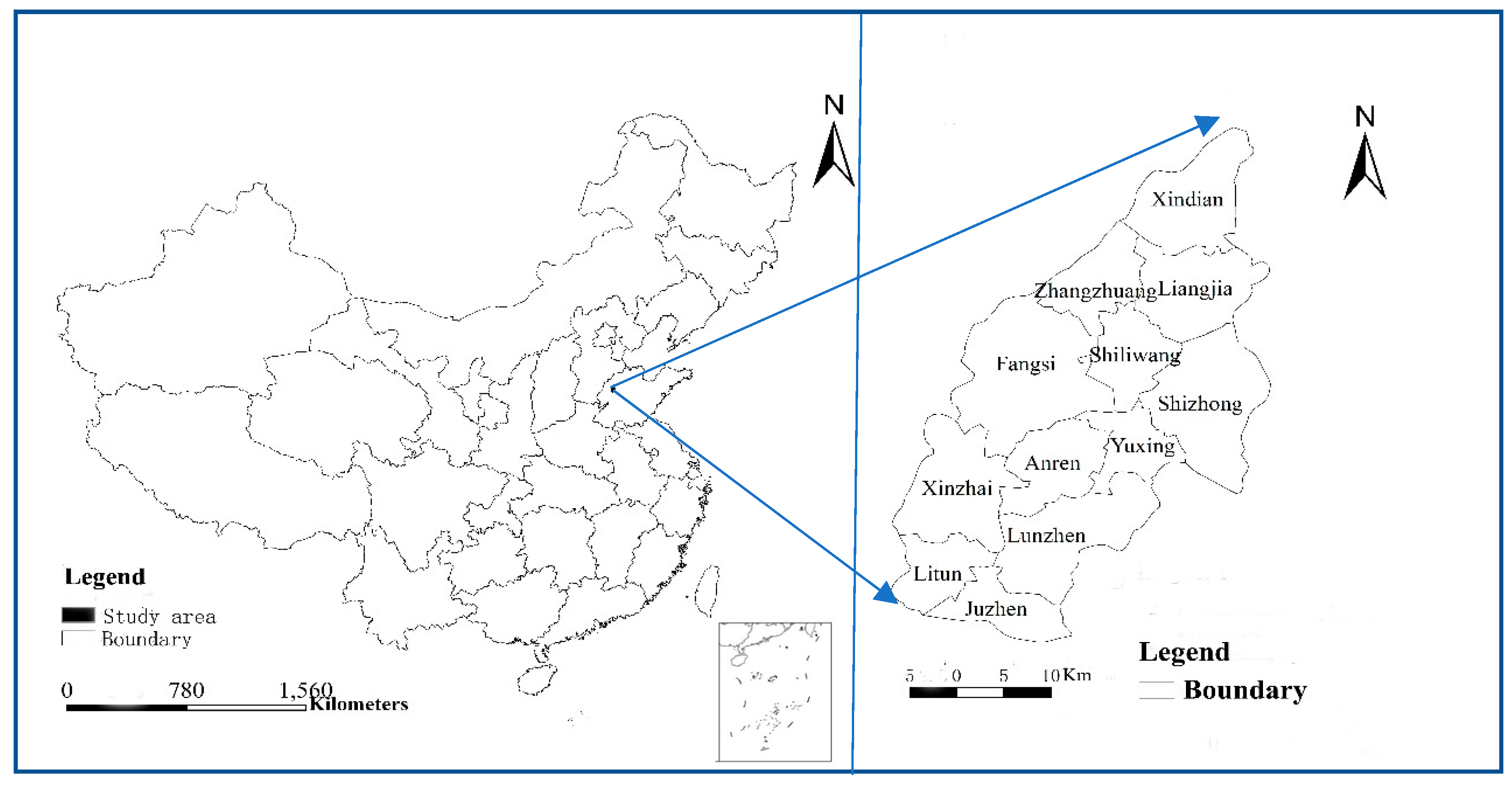
Yucheng City (N 36°40′32″–37°12′19″, E 116°22′24″–116°44′56″) is located in northwestern Shandong Province, China (
Figure 1). The city is composed of 12 townships, with a total area of 990 km
2 [
14]. The altitude in the study area ranges from 19.3 to 27.3 m above mean sea level. Average annual rainfall is 555.5 mm, and annual mean temperature is 13.3 °C. The major crop types planted in this area include corn, wheat, vegetables, and soybeans.
3. Data and Methods
3.1. Data
The October wholesale price of celery and data on celery and other land-use categories in Yucheng City from 2017 to 2024 were used in the analysis. The wholesale price of celery in October during the study period was sourced from the local Bureau of Agriculture, Animal Husbandry, and Fisheries. The annual data for celery and other land-use categories from 2017 to 2024 were derived from Sentinel-2 images. Sentinel-2 images recorded in late July or early August, September, and mid-October each year from 2017 to 2024 were used to obtain annual data on celery and other land-use categories. Sentinel-2 images were downloaded from the Copernicus Data Space Center (
www.copernicus.eu). Huanjing-2A images recorded in late July or early August, September, and late October each year were used to replace cloud-covered portions of the Sentinel-2 images. Huanjing-2A images were downloaded from the China Centre for Resources Satellite Data and Application (
www.cresda.cn).
3.2. Methods
3.2.1. Celery and Other LUCC Category Classification
The study area is a major grain-producing region in China, where two crops are planted annually. The primary grain cropping pattern is the rotation of wheat and corn. To increase income, some farmers plant celery and Chinese cabbage in early August after the wheat harvest. To extract the celery planting area, the study area was classified into the following categories: celery field, corn field, Chinese cabbage fields, water bodies, forest land, residential and industrial land, and vegetable greenhouses (
Table 1). For the wheat–corn cropping system, the wheat is planted generally around 15 October each year and harvested in early June in the next year, and corn is planted immediately. For the wheat–celery cropping system, the wheat is also planted around 15 October each year, and harvested in early June of the next year, and the celery is planted in early August. For the wheat–Chinese cabbage cropping system, the wheat is planted and harvested in the same period as the wheat–celery cropping system. Chinese cabbage planting generally starts around 10 August, with harvest beginning around 20 November.
3.2.2. NDVI Calculation
The NDVI values were calculated according to Equation (1):
For Sentinel imagery and Huanjing-2 (HJ-2A/B) satellite images, NIR and RED refer to the reflectance values measured by bands 4 and 3, respectively. NDVI computes values between −1 and 1.
3.2.3. Replacing Cloud-Covered Sentinel Imagery with Huanjing-2 Satellite Data Concurrently
Some areas in the Sentinel NDVI image were covered by clouds, resulting in partial information loss. Therefore, wavelet analysis was employed in MATLAB R2025b to replace these areas with Huanjing-2 (HJ-2A/B) satellite NDVI image from the same period. First, in ENVI 5.3, perform cross-sensor calibration by comparing the NDVI difference of completely dark targets between cloudy and cloud-free images, and then add this difference to all NDVI values of the cloud-free image. Second, the area that is covered by cloud is identified in MATLAB with the cloud identification function, with the cloudthresh value set as 0.05. Then, wavelet decomposition was performed on the NDVI images from the same period using Formulas (2) and (3) to extract their high-frequency and low-frequency coefficients with a MATLAB function (wavedec2(NDVI image, level, waveletName), where Level = 3, and waveletName = “sym4”). Third, the low-frequency coefficient of Sentinel for the areas that the cloud covered was fused with the HJ-2 imagery NDVI. Finally, wavelet reconstruction and post-processing were performed to get the high-quality NDVI images with the MATLAB function (waverec2).
where
is the wavelet function, t is time, j is the scale parameter (scaling factor), and k is the translation parameter.
The brief code snippet for the cloud detection and wavelet decomposition is in the following:
%cloud detection
cloudMask = NDVI_cloudy_norm < cloudThresh;
% Morphological post-processing to refine the cloud mask
cloudMask = bwareaopen(cloudMask, 50);
cloudMask = imfill(cloudMask, ‘holes’);
se = strel(‘disk’, 2);
cloudMask = imdilate(cloudMask, se);
% Perform wavelet decomposition on the cloudy NDVI
[C_cloudy, S_cloudy] = wavedec2(NDVI_cloudy_norm, level, waveletName);
% Perform wavelet decomposition on the cloud-free NDVI
[C_clear, S_clear] = wavedec2(NDVI_clear_norm, level, waveletName);
% Reconstruct the NDVI image from the fused coefficients
NDVI_fused_norm = waverec2(C_fused, S_cloudy, waveletName);
NDVI_fused_norm=NDVI_fused_norm(1:size(NDVI_cloudy_norm,1), 1:size(NDVI_cloudy_norm,2));
3.2.4. Classification Process
In September, the NDVI values of both forest land and all cultivated land reached their peak, while the NDVI values of residential/industrial land and vegetable greenhouses remained at their lowest, as did those of water bodies. Leveraging this characteristic, water bodies, vegetable greenhouses, and residential/industrial land were extracted from the September NDVI imagery using an object-based supervised classification method. From mid-July to early August, the NDVI values of corn-planted fields and forest land had already reached relatively high values, while the NDVI values of celery and Chinese cabbage-planted fields remained at their minimum. Based on this, celery and Chinese cabbage-planted fields were extracted from the imagery of this period. In mid-October, celery and corn had been harvested, while the NDVI values of Chinese cabbage-planted fields were still at their peak. Accordingly, Chinese cabbage-planted fields were extracted from the imagery of this period.
To assess the accuracy of image classification, 50 points for the celery class per period were randomly used, and a comparison between original images and interpretation results for some years in part of the study area was selected. Those sample points were randomly selected and then compared with their corresponding types from the visual interpretation of color composites. The overall accuracy of the classification for each period was over 90%, and the kappa values show that the classification results were at very high levels (
Table 2 and
Table 3).
3.2.5. Acquiring the Threshold of the Celery Cultivation Area
To analyze the threshold for celery supply–demand balance, the research team conducted a survey in early August 2025 using semi-structured interviews with celery farmers to obtain the break-even wholesale price for celery cultivation. Above this break-even price, farmers can profit from planting celery; below it, they incur losses.
To analyze the relationship between celery price and planting area, correlation analysis was performed between vegetable planting area and wholesale price (Formula (4)):
where r is the coefficient of correlation. Xi is the price for a year (yuan/kg), and Yi is the celery planting area for a year (ha).
is the mean planting area during the research period (ha), and
is the mean price during the research period (yuan/kg).
To get the threshold, the planting area was used as the independent variable, with price as the dependent variable. Using the grid search method, all possible values within the planting area range from 2017 to 2024 were systematically tested one by one in STATA. Finally, the planting area corresponding to the maximum R2 was selected as the optimal threshold.
3.2.6. Calculation of Landscape Fragmentation
To understand the status of farming households, landscape fragmentation was calculated using the following Formula (5):
where
is the landscape fragmentation index.
is the total number of patches of all types in the landscape.
is the total number of patches after removing the smallest patch from the study area. MPS is the mean patch size for the entire landscape (m
2).
is the number of patches of a specific patch type. A is the total landscape area (m
2).
4. Results and Analysis
4.1. Characteristics of Celery Price Fluctuation
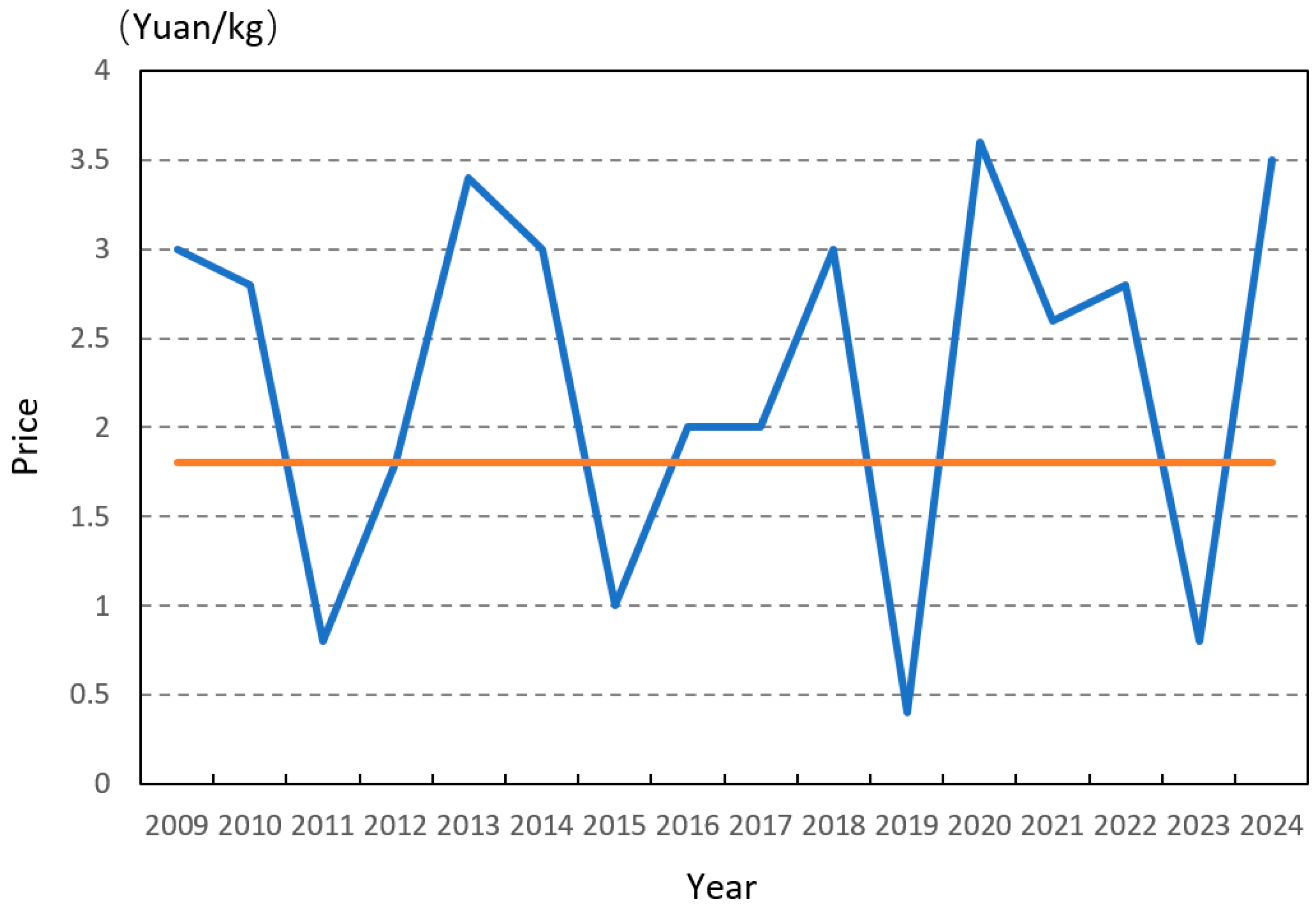
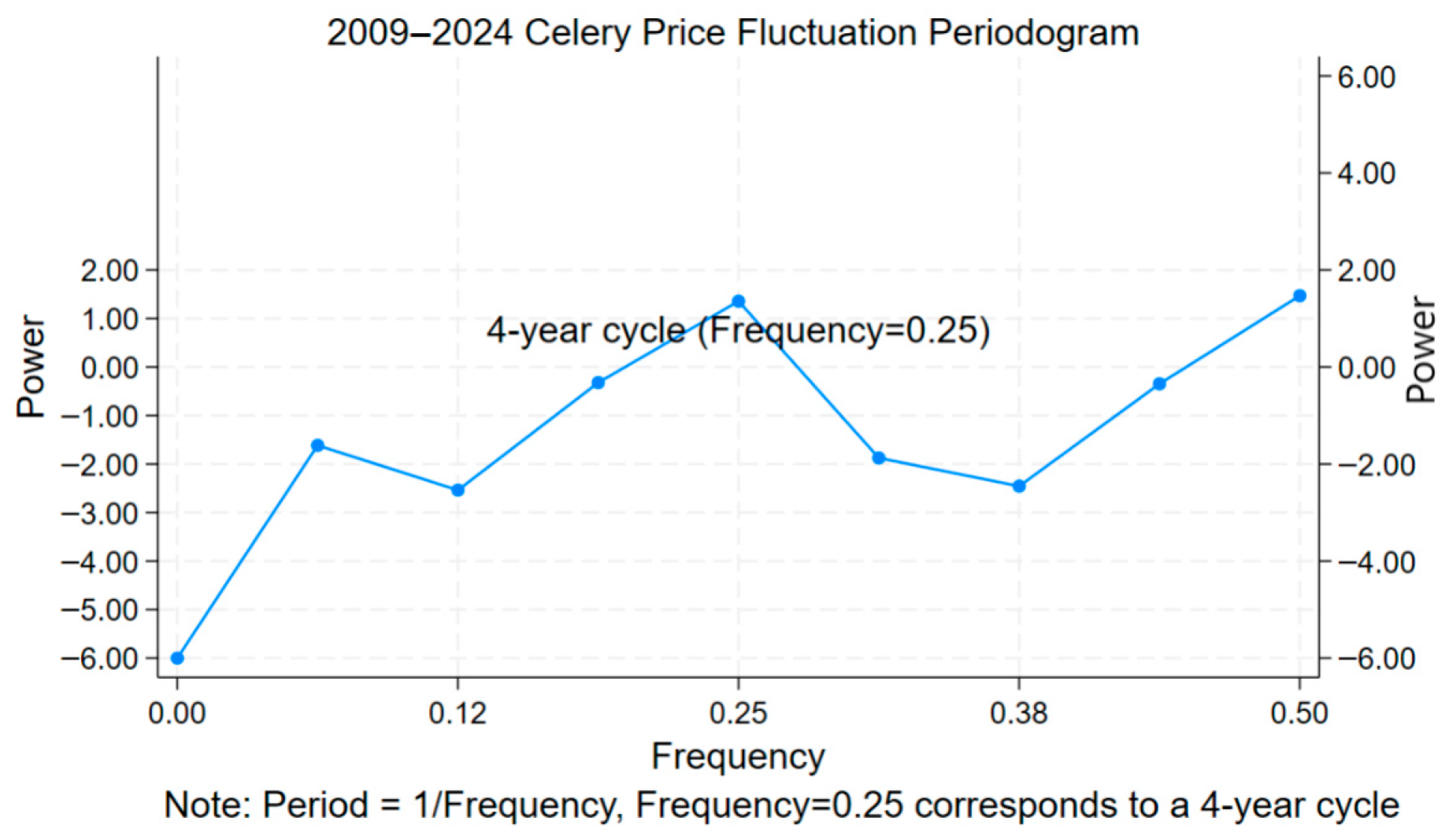
Figure 2 shows the changes in the wholesale price of celery in October each year from 2009 to 2024. Comparing the wholesale price of celery with its cost price, it is found that there is a cycle in the fluctuation of the wholesale price of celery. In October 2011, the wholesale price of celery was 0.8 yuan/kg, lower than the break-even price of 1.8 yuan/kg. In the following years, the wholesale price of celery gradually increased, reaching a recent peak of 3.4 yuan/kg in October 2013. By October 2014, the wholesale price of celery had slightly decreased to 3 yuan/kg. In October 2015, the wholesale price once again fell below the break-even price, dropping to 1.0 yuan/kg. In order to evaluate the cycle of the price fluctuation, the spectral analysis was used, and the periodogram was calculated. The periodogram indicates that the wholesale price of celery fell below the break-even price once every four years, and the result is significant (
Figure 3).
4.2. The Relationship Between Celery Cultivation Area Changes and Price Fluctuations
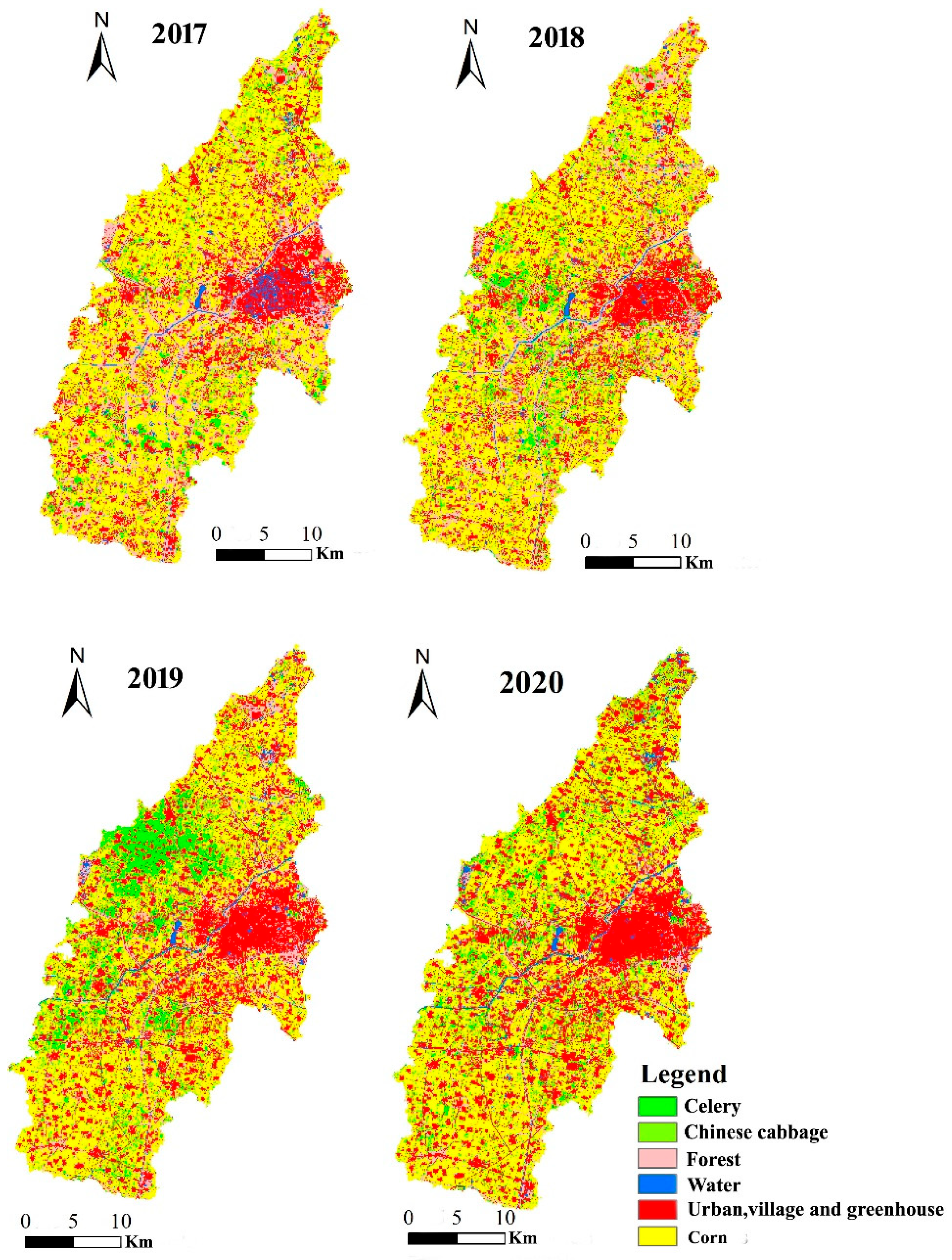
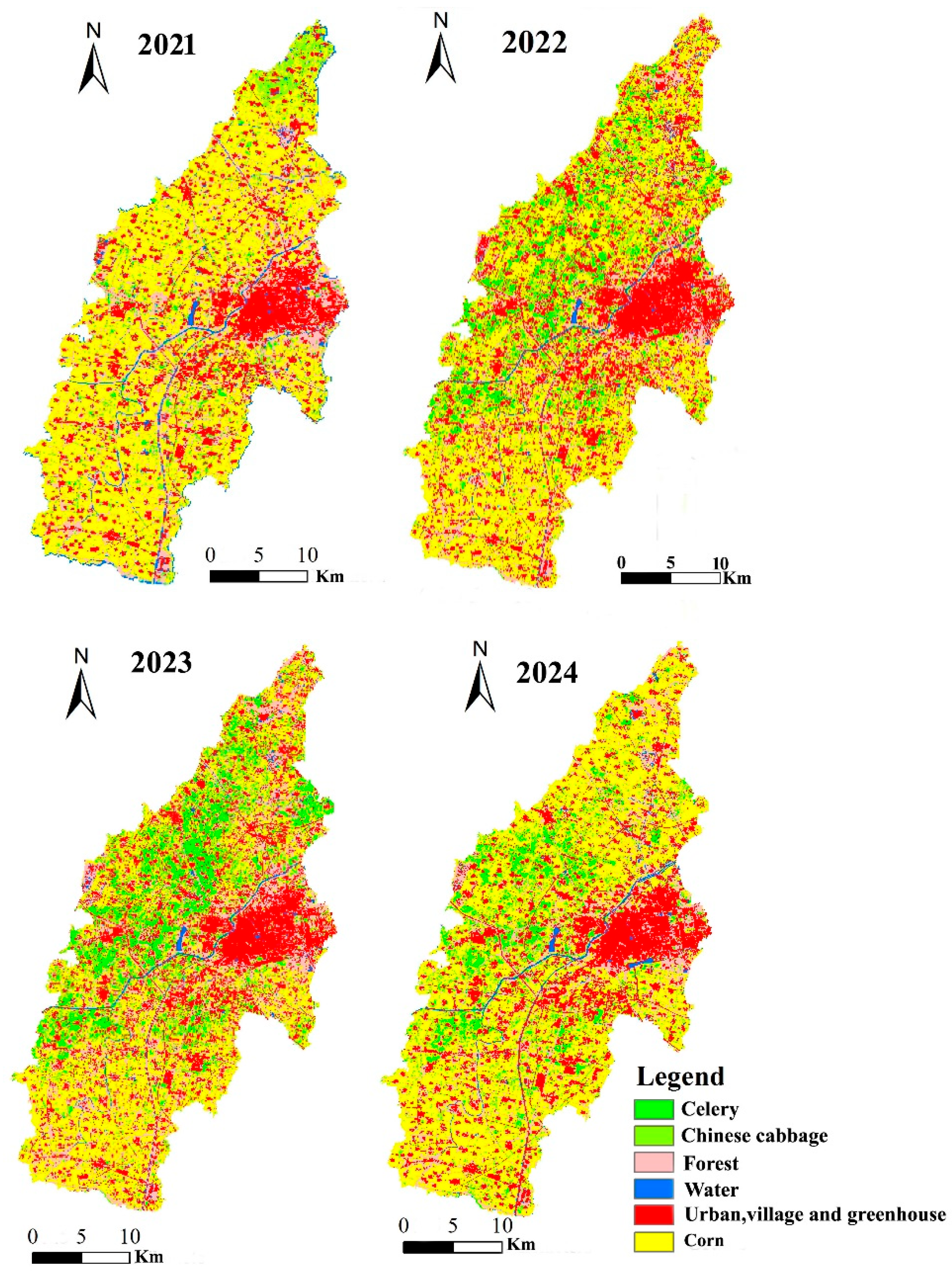
Due to the lack of remote sensing imagery that could be used to identify celery during its characteristic growth periods prior to 2016, cultivation data was only extracted for the years 2017–2024. Using three-phase Sentinel-2 imagery captured annually before planting, during the growth period (September), and after harvest, celery cultivation data for 2017–2024 was obtained through supervised classification.
According to
Figure 4 and
Figure 5 and
Table 4, the main celery cultivation area fluctuated between 7415 ha and 17,399 ha from 2017 to 2024. A negative correlation exists between celery price and cultivation area, with a correlation coefficient of −0.56. In 2017 and 2018, the celery cultivation areas were 7415 ha and 10,564 ha, respectively. During this period, demand consistently exceeded supply, keeping the wholesale price above the cost price and resulting in profits for growers. These consecutive years of profitability led to a continued expansion of the cultivation area to 13,885 ha in 2019, which exceeded local market demand. Consequently, the wholesale price dropped to 0.4 yuan/kg. This price was far below the break-even price of 1.8 yuan/kg, causing widespread losses among celery growers.
These losses prompted a reduction in the cultivation area to 10,446 ha in 2020. At this time, due to supply falling short of demand, the wholesale price rose to 1.8 yuan/kg, leading to widespread profitability for growers. After profiting, some growers, concerned that expanded cultivation the following year would lead to oversupply, ceased planting in 2021. This reduced the cultivation area to 7146 ha. The reduced area resulted in continued undersupply in October 2021, keeping the price above the break-even price and allowing growers to sustain profits.
Two consecutive years of profitability led to a further expansion of the cultivation area to 10,737 ha in 2022. The market continued to experience supply below demand, keeping the wholesale price above the break-even price and ensuring grower profits. Three consecutive years of profitability encouraged farmers to continue expanding the cultivation area in 2023, reaching 17,399 ha. This led to an oversupply in the market, causing the wholesale price to fall below the break-even price and resulting in widespread losses for growers.
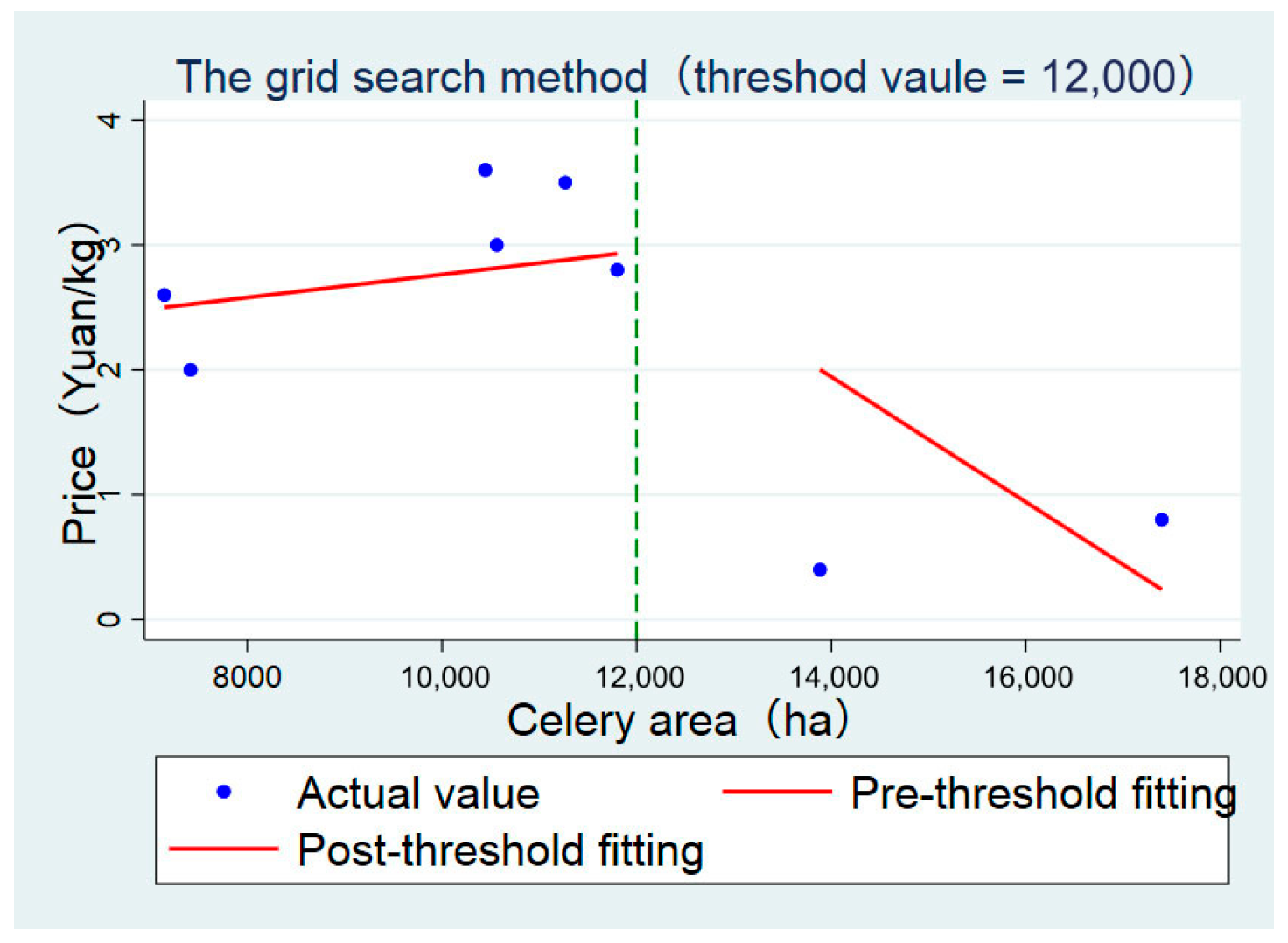
To get the threshold, the grid search method was employed to examine the T-value (threshold value). The result is shown in
Figure 6. The area is the dependent variable. The price is the independent variable. The results demonstrate that the R
2 of the T-value is 0.5722 (
Table 5). Therefore, 12,000 ha can serve as a threshold for assessing profitability in celery cultivation. However, the T-value set as 12,000 only relies on a relatively small number of observations, and the T-value was still under discussion.
4.3. Characteristics of Changes in Celery Landscape Fragmentation
To analyze changes among growers, landscape fragmentation and the average area per patch were calculated using Formula (5), and the results are shown in
Table 6. According to
Table 6, the fragmentation index shows a gradually decreasing trend. This indicates that the celery cultivation area has progressively increased during the study period, and connectivity between patches has improved. Between 2017 and 2024, the average area per patch exhibited a gradually increasing trend. The average area per patch was 1092 m
2, 1121 m
2, 1663 m
2, 1817 m
2, and 2854 m
2 in 2017, 2018, 2019, 2022, and 2023, respectively. The total number of patches in the study area shows a gradually decreasing trend. Between 2017 and 2024, the total number of celery patches in the study area was 94,237, 83,493, and 60,958 in 2018, 2019, and 2023, respectively.
5. Discussion
According to field surveys, in major celery-producing regions of North China, such as Shandong, Hebei, and Henan Provinces and so on, summer is characterized by high temperatures and heavy rainfall. Open-field celery cultivation during this season is prone to issues like seedling death and root rot, resulting in low yields. Large-scale cultivation is not feasible, and profits are low. Autumn is the optimal season for open-field celery cultivation in Shandong. During this period, temperatures gradually decrease, and the diurnal temperature difference increases, which is conducive to celery growth, leading to higher yields, better quality, and, consequently, higher profits. Therefore, growers in the study area primarily cultivate celery in early August and implement a celery–wheat crop rotation to maximize benefits.
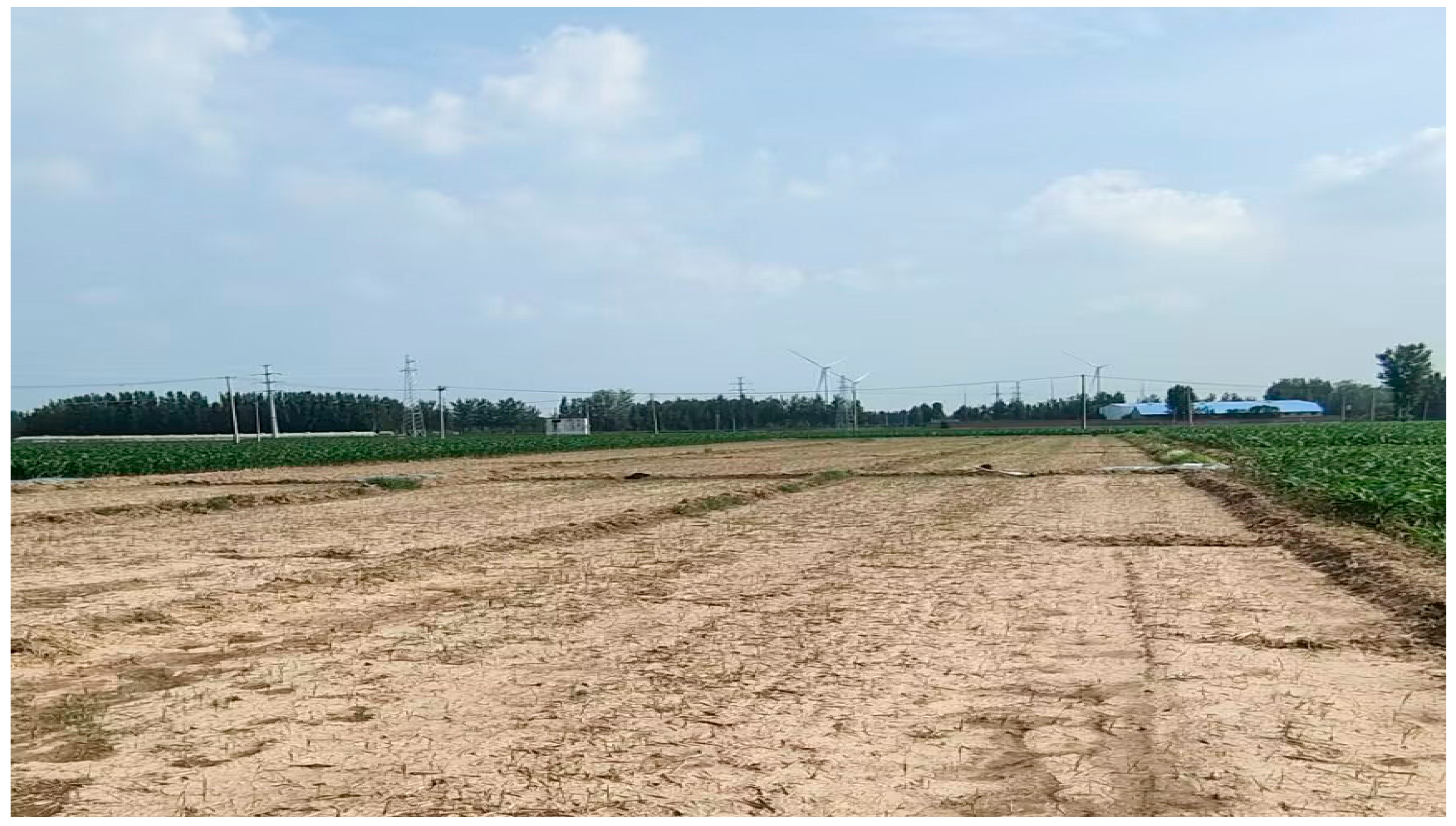
The transplanting time for autumn celery typically occurs in early August, which is about one and a half months after the wheat harvest. At this time, only the farmland intended for celery and Chinese cabbage remains fallow (
Figure 7). For land planted with other crops, the NDVI values in remote sensing imagery are already near their peak. Since Chinese cabbage cultivation generally yields low profits year-round, the vast majority of local farmers use the reserved fallow land to plant celery. Consequently, farmland still fallow in early August is generally used for cultivating autumn celery.
Therefore, the government can utilize remote sensing imagery from July to early August to estimate the cultivation area of autumn celery for that year. If the area of fallow land reaches or exceeds the historical celery cultivation area associated with periods when the wholesale price fell below the break-even price, authorities can proactively guide farmers to plant other crops to avoid causing significant losses for them. This method is not only applicable to Shandong Province but also to acreage early-warning systems or pre-plant monitoring mechanisms used elsewhere in China or internationally, such as China’s garlic, ginger, and cabbage acreage monitoring programs, USDA’s planted acreage forecasts, and EU early-season crop area monitoring under CAP2.
6. Conclusions
The annual celery wholesale prices were obtained from the local Commerce Bureau, and break-even prices were gotten from our field investigation. Through object-based supervised classification of remote sensing imagery, celery cultivation areas for each year from 2017 to 2024 were extracted from three key time periods: late July to early August, September, and mid-October. The analysis examined the fluctuation patterns of celery wholesale prices over the past 16 years, as well as the characteristics of the celery cultivation area and the timing of prices falling below the break-even point with spectral analysis and piecewise regression. It was found that there was a four-year price cycle for celery wholesale prices in the study area between 2009 and 2024, and the celery plantation area’s threshold was 13,885 ha. When the celery planting area surpasses 12,000 hectares, the market price drops below the production cost, causing farmers to operate at a loss.
Since the optimal period for large-scale autumn celery cultivation in the study area is early August, after the wheat harvest in early June, the land intended for celery planting remains fallow from July to early August. This characteristic can be leveraged to accurately extract the specific area designated for celery cultivation in the current year from remote sensing imagery. If it is found that the area intended for celery cultivation this year reaches or exceeds the threshold area associated with periods when wholesale prices fell below the cost price, the local government at the county level can proactively guide farmers to allocate part of this reserved land to alternative crops through interviews with local village heads, to maximize growers’ profits. The methodology of celery extraction could also be applicable to other remote-sensing-based agricultural monitoring such as China’s cabbage acreage monitoring programs, USDA’s planted acreage forecasts, and EU early-season crop area monitoring under CAP2. This study also has some limitations that affect the results’ accuracy, such as the sensor fusion uncertainty and annual climate anomalies.
Author Contributions
Conceptualization, Q.L.; Methodology, Q.L.; Validation, Q.L. and G.D.; Formal analysis, Y.Z.; Investigation, Q.L., G.D. and Y.Z.; Resources, Q.L.; Writing—original draft, Q.L.; Writing—review & editing, Q.L. and G.D.; Funding acquisition, Q.L. and Y.Z. All authors have read and agreed to the published version of the manuscript.
Funding
This article is supported by the Shandong Natural Science Foundation (ZR2020MG064), National Social Science Fund Project of China (20BJL086), and Jinan science and technology project (XKY1607).
Institutional Review Board Statement
Not applicable.
Informed Consent Statement
Not applicable.
Data Availability Statement
The original contributions presented in this study are included in the article. Further inquiries can be directed to the corresponding author.
Conflicts of Interest
There are no conflicts of interest in this article.
References
- Ren, J.; Ma, X.D. Different expected cobweb models in the form of difference equations and their stability. J. Contemp. Financ. Res. 2020, 2020, 96–104, (In Chinese with English Abstract). [Google Scholar]
- Qiao, Y.; Kang, M.S.; Ahn, B.I. Analysis of Factors Affecting Vegetable Price Fluctuation: A Case Study of South Korea. Agriculture 2023, 13, 577. [Google Scholar] [CrossRef]
- Gavrilescu, C. Romanian vegetables—A trade balance analysis. Agric. Econ. Rural Dev. 2023, 20, 241–254. [Google Scholar] [CrossRef]
- Piotras, G. Cobweb theory, market stability, and price expectations. J. Hist. Econ. Thought 2023, 45, 137–161. [Google Scholar] [CrossRef]
- Hommes, C. Carl’s nonlinear cobweb. J. Econ. Dyn. Control 2018, 91, 7–20. [Google Scholar] [CrossRef]
- Lu, Q.; Kang, L.; Shao, H.; Zhao, Z.; Chen, Q.; Bi, X.; Shi, P. Investigating marsh sediment dynamics and its driving factors in Yellow River delta for wetland restoration. Ecol. Eng. 2016, 90, 307–313. [Google Scholar] [CrossRef]
- Xu, G.; Zhu, X.; Fu, D.J.; Dong, J.W.; Xiao, X.M. Automatic land cover classification of geo-tagged field photos by deep learning. Environ. Model. Softw. 2017, 91, 127–134. [Google Scholar] [CrossRef]
- Liu, J.Y.; Ning, J.; Kuang, W.H.; Xu, X.L.; Zhang, S.W.; Yan, C.Z.; Li, R.D.; Wu, S.X.; Hu, Y.F.; Du, G.M.; et al. Spatio-temporal patterns and characteristics of land-use change in China during 2010–2015. Acta Geogr. Sin. 2018, 73, 789–802, (In Chinese with English Abstract). [Google Scholar]
- Zhang, H.S.; Li, J.; Wang, T.; Lin, H.; Zheng, Z.H.; Li, Y.; Lu, Y.F. A manifold learning approach to urban land cover classification with optical and radar data. Landsc. Urban Plan. 2018, 172, 11–24. [Google Scholar] [CrossRef]
- Wang, S.H.; Xu, X.L.; Cao, W. Spatial and temporal changes of erosion in the black soil region of Northeast China from 2000 to 2020. Resour. Sci. 2023, 45, 951–965, (In Chinese with English Abstract). [Google Scholar] [CrossRef]
- Wang, C.Y.; Xu, A.G.; Li, X.L. Supervised Classification High-Resolution Remote-Sensing Image Based on Interval Type-2 Fuzzy Membership Function. Remote Sens. 2018, 10, 710. [Google Scholar] [CrossRef]
- Yuan, J.W.; Wu, C.; Du, B.; Zhang, L.P.; Wang, S.G. Analysis of Urban Land Use Landscape Pattern Based on GF-5 Hyperspectral Remote Sensing Images. J. Remote Sens. 2020, 24, 465–478, (In Chinese with English Abstract). [Google Scholar]
- Liu, J.J.; Liu, Z.H.; Liu, L.; Ma, X.D.; Liu, X.D.; Li, F. Classification of Urban Buildings Based on Remote Sensing Images. Geomat. Spat. Inf. Technol. 2021, 44, 130–133, (In Chinese with English Abstract). [Google Scholar]
- Dezhou Statistic Bureau. Statistic Yearbook of Dezhou City; China Statistic Press: Beijing, China, 2024; (In Chinese with English Abstract).
| Disclaimer/Publisher’s Note: The statements, opinions and data contained in all publications are solely those of the individual author(s) and contributor(s) and not of MDPI and/or the editor(s). MDPI and/or the editor(s) disclaim responsibility for any injury to people or property resulting from any ideas, methods, instructions or products referred to in the content. |