Article

Evaluation and Promotion Strategy of Rural Human Settlements for Aging in Chongqing

1
New Liberal Arts Laboratory of Sustainable Development in Rural Western China, School of Geographical Sciences, Southwest University, Chongqing 400715, China
2
Laboratory of Rural Human Settlements Research, School of Geographic Sciences, Southwest University, Chongqing 400715, China
*
Author to whom correspondence should be addressed.
Sustainability 2026, 18(6), 3048; https://doi.org/10.3390/su18063048
Submission received: 21 January 2026 / Revised: 10 March 2026 / Accepted: 11 March 2026 / Published: 20 March 2026

Abstract

The current global population aging trend has intensified, especially in rural areas. As vital spatial carriers supporting multiple activities of older adults, rural human settlements have become key settings for addressing the challenges of aging. However, current efforts to improve rural human settlements primarily focus on enhancing the overall appearance of villages. This approach fails to adequately address the specific needs of older adults. Chongqing is a typical mountainous city, facing deep aging and significant regional disparities. It is also confronted with realities such as spatial fragmentation, scattered facilities, and low service accessibility. So Chongqing urgently requires systematic assessment and targeted interventions. To transcend the traditional one-size-fits-all governance in rural human settlements, the concept of “rural human settlements for aging” is introduced in this article, to establish an age-sensitive governance logic. Based on 2023 cross-sectional data, this article evaluates the level of the rural human settlements in Chongqing by establishing an index system, and employs global spatial correlation and local spatial correlation to analyze the spatial correlation patterns. The geographic detector model and the obstacle degree model are used to delve into the key obstacle factors influencing and hindering rural human settlements. The results indicate that despite exhibiting a pronounced spatial clustering pattern, spatial disparities remain quite evident. The spatial differentiation presents a pattern of “high in the west and low in the east, led by a single core area.” Elderly service facilities constitute the main external obstacle. The relationship between social security and family support within welfare systems represents the primary internal obstacle. Transportation conditions serve as the key interactive obstacle. Based on an analysis of the primary obstacles in each region, the promotion strategy is categorized into three types: facility enhancement type, characteristic amplification type and comprehensive upgrading type. This article aims to advance the transformation of rural human settlements from “universal design” to “age-friendly design.” It provides a reference framework for rural human settlements development in the context of an aging population.

1. Introduction

The current global population aging trend has intensified [1], especially in rural areas. As a result of the large influx of young adults from rural to urban areas, the rural population is aging faster than the urban population. Rural areas have been pushed to the forefront of the response to population aging [2]. The United Nations World Population Prospects 2024 indicates that China is one of the countries with the fastest population aging rate globally, in the late stage of the demographic transition [3]. The population aging rate in rural areas is 7.99% higher than in urban areas in China according to seventh population census data [4]. Projections suggest that by 2050, the proportion of the rural population aged 65 and above will reach 28.1% to 30.9% [5]. Aging is in a serious urban–rural inversion of population aging, and the gap between the two is showing a tendency to widen [6]. Therefore, how to enhance the quality of life and well-being of the rural older adults, thereby better addressing global demographic trends, has become a critical issue of concern for countries worldwide. Both the international community and the Chinese government have introduced a series of policies, such as Agenda 21 [7], the 2030 Agenda for Sustainable Development (SDGs) [8], and China’s Five-Year Action Program for Rural Human Settlements Improvement and Upgrading (2021–2025) [9]. These documents contain extensive references to rural communities and human settlements. Current efforts on rural human settlements have achieved some success in areas such as waste management, sewage treatment, and infrastructure development in China [10,11]. However, these implementations center on enhancing the village appearance for all villagers, considering villagers as a homogeneous group and lacking the identification and differentiation of age differences. The large group of rural older adults and their unique needs for human settlements have not been adequately catered for. Under the influence of filial piety in China’s Confucian culture, the concepts of “honoring parents” and “attachment to the countryside” are deeply rooted in the minds of older adults in rural areas [12]. Most choose home-based and village-based care services, tending to be more reliant on the surrounding human settlements than urban ones [13]. However, the construction of the Chinese elderly service system has long been based on the idea of “focusing on urban areas and neglecting rural areas” [14,15]. In the currently constructed human settlements, problems such as lagging home care construction, insufficient resources and facilities, and imperfect elderly service systems have not yet been resolved [16]. These problems result in human settlements that fall far short of achieving the goals of “aged with support, aged with ensurance, aged with meaning”.
Against this backdrop, this paper innovatively breaks away from the homogenized development logic prevalent in traditional rural human settlement improvements, establishing an age-sensitive analytical framework. Focusing on rural human settlement development in the context of population aging, it introduces the core concept of “rural human settlements for aging”. This provides a new cognitive perspective for advance the transformation of rural human settlements from “universal design” to “age-friendly design.” Based on an analysis of the primary obstacles in each region, this study categorizes promotion strategy and implements targeted measures. Economic, social, and institutional factors are integrated into the construction of human settlements, trying to create spaces that harmonize with rural ecological and cultural contexts. This approach aims to provide a practical Chinese model for developing countries and underdeveloped regions.
The results of the analysis enabled us to address the following research questions:
Q1: What research approach should be adopted for studying human settlements in the context of population aging?
Q2: What spatial patterns does the level of rural human settlements for aging in Chongqing?
Q3: How to identify the shortcomings of human settlements in the current aging process?
Q4: How to tailor human settlements to better accommodate and serve older adults in rural areas?
The article is organized as follows. The next section will conduct a more in-depth literature review, identifying limitations in existing research. By analyzing related concepts such as aging, age-friendly environments, livable communities, and lifelong communities, it will define the essence of rural human settlements for aging and clarify the research approach of this paper. Section 3 describes the study area and data sources. Section 4 introduces the research methodology. Section 5 contains the results analysis, including spatial differentiation characteristics, spatial correlation patterns, identification of obstacle factors. Section 6 analyzes the primary obstacles in each region and designs differentiated promotion strategy. Section 7 presents the discussion. Section 8 concludes the paper.

2. Literature Review and Research Strategy

2.1. Literature Review

Early research on population aging primarily focused on describing demographic characteristics and forecasting trends [17,18]. It was treated as a singular demographic structural shift. Scholars examined the pace and scale of the elderly population’s growth [19] and its impact on labor markets and social security systems [20]. The phenomenon of population aging faced initial debates between the “burden theory” and the “opportunity theory” [21,22]. As research deepened, the academic community has gradually come to recognize that population aging is both a process of gradual change in the age structure in time and a process of unbalanced dynamic evolution of population distribution in space [23,24]. Geographical perspectives begin to emerge, focusing on the spatial distribution patterns of older adults [25], migration and mobility patterns [26], influencing factors and driving mechanisms [27,28], and the spatial accessibility of elderly service facilities [29]. Research paradigms underwent a significant shift. Scholars increasingly examined the interaction between population aging and external environments, including the impact of human settlements on older adults. Human settlements encompass natural, economic, and social dimensions, forming an organic combination of material and non-material structures essential for sustaining residents’ activities [30,31]. As a vital spatial carrier supporting the daily living, social interactions, and other survival activities, human settlements are fundamental to the elders’ well-being [32]. Within human settlements, the mechanisms by which natural elements—such as air quality [33], temperature variations [34,35], and blue-green spaces [36]—impact the physiological health of older adults have been extensively validated. Additionally, the pathways through which social and cultural factors—including public policy [37], community belonging [38], and crime situation [39]—influence older adults’ psychological well-being and social engagement have been thoroughly explored. This research trajectory demonstrates that studies about population aging have evolved from early, single-perspective descriptions of phenomena to systematic analyses of multidimensional influencing factors. Among these factors, human settlements serve as a critical medium. This development lays the theoretical foundation for subsequent research on age-friendly environments and aging-adaptive design.
As research on the relationship between human settlements and older adults has increased, concepts such as age-friendly environments, age-friendly communities [40], livable communities [41], and lifelong communities [42] have emerged. The concept of an age-friendly environment originates from the ecological model of aging [43]. In 2007, the WHO defined an “age-friendly environment” as “a material space and social environment that promotes active aging and improves health, well-being, and quality of life” for the first time [44]. Early discussions on age-friendly environments primarily adopted an urban perspective [45,46], exploring the mechanisms through which the built environment impacts the health and well-being of older adults. It was argued that such environments should compensate for and support functional decline resulting from aging [47]. Other studies suggest that age-friendly environments should encompass both physical spaces (accessible transportation, safe housing, local facilities, etc.) and social spaces (social support, opportunities for participation, community activities, etc.) [48,49]. At the practical level, age-friendly design construction prioritizes service facilities [50], housing [51], public spaces [52] and so on [53]. It emphasizes aligning with the distribution patterns and mobility characteristics of older adults [54], while addressing their physiological and psychological needs. The aforementioned research has advanced the development and construction of age-friendly environments and age-friendly communities, providing a conceptual framework for understanding how material and immaterial dimensions jointly shape older adults’ well-being. However, early related concepts were predominantly developed within urban contexts, primarily addressing urban environments and local government’s actions about cities. They have insufficiently addressed the specific needs of rural areas [55], thereby limiting their applicability in suburban and rural settings.
Rural areas face the realities of territorial dispersion and dependence on supra-local policies, which impact opportunities for active aging. Challenges to sustainable rural development are exacerbated [56,57], triggering a chain reaction of consequences such as reduced land use efficiency [6,58], transformation of traditional social governance [59], and inadequate provision of public services. The outflow of young labor has led to abandoned farmland, weakening the land’s role in providing social security for rural older adults [60]. The household size is also shrinking, weakening the family’s role [61,62]. The socialized elderly care model involving multiple stakeholders has yet to mature in rural areas [63]. The challenges of rural elderly care are becoming increasingly severe. These circumstances have imposed new demands on rural human settlements. Age-friendly construction requires different evaluation indexes and development models from urban areas [64]. Developed countries have taken the lead in conducting research, primarily focusing on physical space design [65], social service network [66,67,68], and community participation mechanisms [69]. Regarding physical space design, environmental coordination can be enhanced through measures such as barrier-free design [70], age-friendly housing retrofits [71], and public transportation network upgrades [72]. Regarding social service network, research has examined healthcare resource allocation [73] and digital health services [74], exploring innovative models like “time banks” to activate community care resources [75]. For community participation mechanisms, specific consideration should be given to rural seniors’ aging trajectories, experiences, and community engagement [37], investigating which key components most effectively promote self-fulfillment and self-worth [76]. However, relevant research in developed countries is typically grounded in relatively well-developed rural infrastructure and formal welfare systems. These studies focus on enhancing the well-being and self-actualization of older adults through technological and institutional innovations. Their implementation pathways exhibit a distinct “Western-centric orientation” [77,78]. This contrasts markedly with the realities in developing countries.
Rural areas in developing countries face greater environmental challenges in healthy aging [79]. Older adults experience multiple deprivations including extreme poverty, inadequate infrastructure, and weakened social support networks [80,81,82]. The core challenge lies in addressing basic survival needs and care deficits. These regions cannot rely solely on technological and facility investments. They also require informal institutions [83,84], intergenerational support networks [85], and social capital [86,87] to establish fundamental safety nets for survival. The Ghanaian rural case demonstrates that chronic disease patients primarily rely on informal family care networks. Religious communities and charitable organizations provide practical support, financial assistance, and social connections, filling gaps in the formal care system [83]. Research on rural China further indicates that in the harsh reality of nearly 100% lack of formal care, informal institutions such as filial piety serve as both obstacles and resources. It is necessary to transform individual social capital into collective social capital through the development of village community organizations [86]. It is evident that rural areas in developing countries are more urgent for environmental improvement. They grapple with more foundational and security-related challenges. However, most studies adopt a micro-level qualitative approach. Analyses cover only a few aspects, lacking a systematic perspective and research framework. A theoretical paradigm and practical pathway with broader applicability have yet to be established.

2.2. Concept Proposal and Research Strategy

In summary, the existing research on rural human settlements and aging encompasses multiple dimensions including the physical environment, service systems, and social relationships. They provide an in-depth micro-level analysis, laying a certain foundation for this study. However, they have paid less attention to mountainous rural areas in developing countries. There has been insufficient exploration of the impact mechanisms in complex topographical regions. The research perspectives have often been confined to single dimensions, focusing on facility allocation, policy implementation, or social participation and so on. A comprehensive spatial perspective is needed to systematically examine the issue of current problems. Rural areas inherently face structural inequalities. This fragmented perspective struggles to address the holistic demands of rural governance. Moreover, the aforementioned studies primarily rely on qualitative research and case analyses, with limited quantitative exploration of multiple interacting factors. Consequently, they struggle to provide sufficient theoretical support for age-sensitive governance logic.
Accordingly, this article proposes and centers on the concept of “rural human settlements for aging,” constructing a research strategy from four dimensions: contextual realities, conceptual implications, empirical analysis, and enhancement pathways (Figure 1). Beginning with the historical context and regional challenges, the introduction clarifies the actual realities and value orientation. Secondly, this article analyzes the conceptual connotation of “rural human settlements for aging” from a multi-dimensional perspective, referencing concepts of “rural human settlements” and “aging”. Finally, by measuring the level of rural human settlements for aging in Chongqing, we design a differentiated promotion strategy by identifying and analyzing regional primary obstacle, hoping to overcome practical challenges in rural human settlements.
Based on this background, this study focuses on the specific needs of the elderly population in rural areas, aiming to create human settlements accommodating and serving older people. Drawing on the aforementioned classification and related concepts, it deconstructs the rural human settlements into material and non-material dimensions. The material level supports the aging population’s diminished capacity due to aging [88]. The non-material level compensates for the psychological confusion and emotional gap caused by the lack of social roles and companionship of the elderly population [89]. Building upon it, this study proposes the concept of “rural human settlements for aging”. It means that from older people’s perspective, based on their behavioral characteristics and physiological, safety, and social needs, the material and non-material dimensions of the rural human settlements are designed, modified, or evaluated to improve the quality of life and well-being of the aging population. It is also aimed at upgrading the overall level of development of villages to comply with the basic national policy of active response to population aging and rural revitalization. The core is accommodating and serving older people in rural areas, while considering other interests and access rights of others. The process can be understood as follows: on one hand, rural human settlements are targeted for enhancement, with the goal of making it better accommodating older people. Based on an analysis of the current situation and regional challenges, its material and non-material elements are appropriately allocated and utilized. On the other hand, the reconstructed rural human settlements, through absorption, reorganization, and renewal, aims to serve the daily lives of the elderly. It functions as the foundational condition and constituent element of rural development, reducing the various material and non-material barriers encountered by seniors in village life and addressing the structural challenges of rural elderly care. The optimized rural human settlements serve as a multifaceted space for the elderly to engage in daily activities, sports, recreation, and social interactions. It not only provides a human settlement better accommodating and serving the needs of older people, but also promotes addressing the shortcomings in rural elderly care services and the high-quality development of the rural population through the reallocation of public resources.

3. Study Area and Data Source

3.1. Study Area

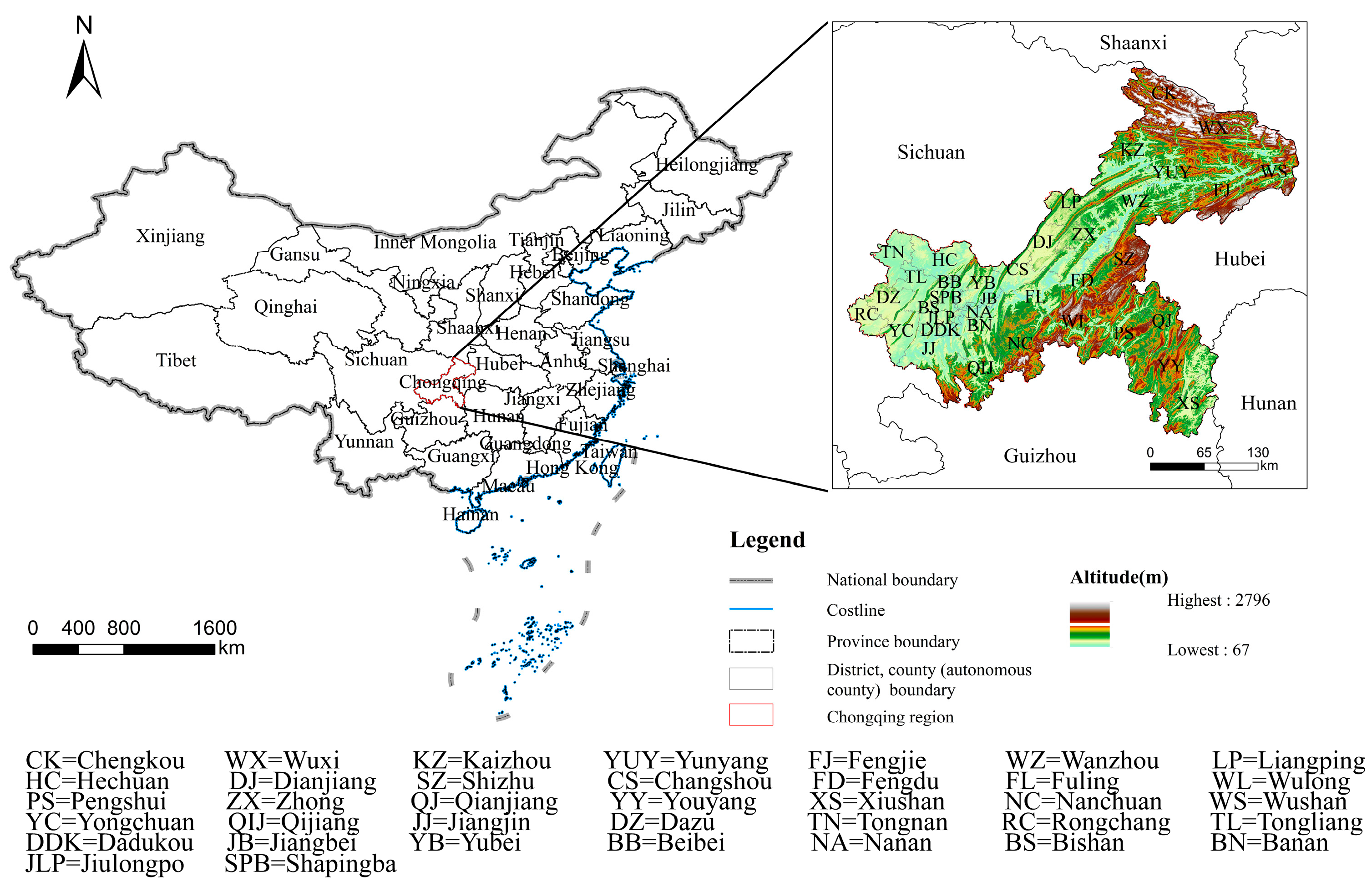
This study selected Chongqing Municipality as the research area (Figure 2). It is located in southwest China, at the upper reaches of the Yangtze River, with a total area of 82,400 km2 under its jurisdiction. Chongqing underwent administrative restructuring recently. Because the foundational geographic information and socioeconomic statistical data relied upon by this research are based on the pre-restructuring administrative framework, this study maintains the original 37 county-level administrative divisions Yuzhong District has a 100% urbanization rate and is not included in this study) to ensure data consistency. Chongqing is primarily divided into three parts: the main city metropolitan area, the townships in the Wuling Mountains in southeastern Chongqing, and the townships in the Three Gorges Reservoir area in northeastern Chongqing. The main city metropolitan area is located in the western part of Chongqing and is divided into central urban areas and new areas. The central urban areas include nine districts: Dadukou, Jiangbei, Shapingba, Jiulongpo, Nan’an, Beibei, Yubei, Banan and Yuzhong. They are political, cultural, and commercial centers with high economic activity. The new areas include 12 districts: Fuling, Changshou, Jiangjin, Hechuan, Yongchuan, Nanchuan, Qijiang, Dazu, Bishan, Tongliang, Tongnan, and Rongchang.
Chongqing is China’s youngest municipality directly under the central government. It encompasses hilly terrain, mountainous regions, and areas blending hills and mountains, featuring diverse topography and strong regional complexity. By the end of 2024, the elderly population aged 60 and above in Chongqing was 25.11% of the total population, 3.11% higher than the national average, ranking among the top cities nationwide. The huge urban–rural population mobility makes Chongqing exhibit a low urbanization rate and high rural population aging characteristics [48]. Therefore, Chongqing is both typical and representative in terms of its topography and aging population phenomenon. In recent years, Chongqing has made gradual improvements in rural sanitation by promoting some key projects, such as rural “three clean-ups and one reform” projects, “two sides of the green hills a thousand miles of forest belt” projects, and “four good rural roads” projects. However, the implementation process has not fully considered the unique needs of rural older persons regarding the human environment. This approach struggles to meet the new era’s demands of “aged with support, aged with ensurance, aged with meaning”. Also, Chongqing is known as a “mountainous city”, with mountains and hills accounting for more than 70% of its land area. The terrain is highly uneven, affecting the daily travel of the rural elderly population and limiting their range of activities. It also increases the difficulty of obtaining medical and pension services. This poses multiple constraints on the silver economy development in terms of transportation, communication, and infrastructure, creating a dilemma where markets exist but are difficult to tap into. Therefore, the construction of aging rural human settlements in Chongqing is characterized by typicality and urgency, as a microcosm of China. This can take advantage of its transportation and radiation effects to promote the overall improvement of the human settlements in Southwest China. Moreover, it also provides real cases for the differentiated design of the aging-appropriate path of rural human settlements. It provides a research paradigm and Chinese samples for the global aging-appropriate research of human settlements.
Note: Figure 2 is created using the standard map with review number GS(2024)0650 downloaded from the National Geographic Information Public Service Platform website: https://www.tianditu.gov.cn/ (accessed on 10 December 2025). The base map has not been modified.

3.2. Data Source

This article is based on 2023 cross-sectional data, comprising both spatial data and attribute data. Spatial data primarily consist of maps of China and Chongqing Municipality. The source is indicated in Figure 2. DEM data are 30 m-resolution NASA data. Attribute data such as miles of “four good rural roads” per 10,000 people in rural areas, rural sanitary latrine penetration rate, coverage rate of village reading rooms, amount of Old Age Allowance for persons aged 80 and above, number of road traffic accidents and criminal case clearance rate are derived from calculations based on official websites of the Chongqing People’s Government, the Chongqing Municipal Bureau of Civil Affairs, the Chongqing Transportation Commission and Chongqing Agricultural and Rural Committee and other official sources. Other attribute data are obtained from the Chongqing Statistical Yearbook 2024, Chongqing Regional Statistical Yearbook 2024, related yearly statistical bulletins or government work reports. (Data included in Chongqing Statistical Yearbook 2024, Chongqing Regional Statistical Yearbook 2024 and statistical bulletins are based on statistics compiled as of early 2024, reflecting survey results from 2023.) In addition, relevant policy documents included in this study are from the official websites of the People’s Government of China, the Chongqing Agriculture and Rural Committee and the Chongqing People’s Government.

4. Methods

4.1. Establishing Index System and Calculating Index Weights

(1) Index Selection
This study selected a total of 19 indexes. Focusing on “accommodating and serving older adults in rural areas,” the index system was constructed by integrating point, line, and area data, in accordance with SDG-related standards [8] and drawing upon relevant research (Table 1). The rationale for selection is outlined below.
On the material dimension, this study constructs an index system based on rural elders’ activity characteristics and Jan Gehl’s theory of public life. The daily activities of rural seniors primarily consist of housework, chatting, taking walks, farming labor and so on [90,91]. Most activities occur within the home [90], with a limited range of movement. Beyond indoor activities occurring within residential spaces, older adults’ activities are categorized into necessary activities, optional activities, and social activities according to the classification of Gehl’s classification (applicable to semi-public and public spaces) [92]. Necessary activities include compulsory and essential tasks such as housework, rest, and medical visits, which take place within living space and elderly service facilities. Optional activities manifest as leisure and recreational behaviors voluntarily engaged in by individuals, such as sitting, chatting, or taking walks, occurring within living space and cultural and sports service facilities. Social activities include board games, square dancing, and shopping, primarily taking place in cultural and sports service facilities, like cultural squares and stadiums. Therefore, based on the venues involved, the material dimension of rural human settlements is appropriately divided into three aspects: living space, elderly service facilities, and cultural and sports service facilities.
For older adults, living space serves as the primary setting for daily activities [93] and essential functional areas, forming one of core components of human settlements [30]. It is integral to ensuring the goal of “aged with support”, providing psychological identity and a sense of belonging [94]. Due to the decline in older adults’ ability to live independently, t, the proportion of aging-adapted households of older adults with special difficulties (X1), serves as an index, reflecting the adaptability of living space for seniors experiencing physiological decline. Research indicates that crowded living conditions and inadequate sanitary facilities exacerbate the risk of infectious diseases among older adults [95,96], undermining their dignity in daily life. Therefore, two indexes—the rural per capita housing area (X2) and the rural sanitary latrine penetration rate (X3)—are selected to evaluate basic housing quality from the perspectives of spaciousness and cleanliness, respectively. The community road system is also strongly correlated with overall environmental satisfaction among older adults [97], serving as a crucial safeguard for their social activities. The “Four Good Rural Roads” (X4) initiative refers to rural highways that meet the requirements of “well-built, well-managed, well-maintained, and well-operated.” This index is selected to characterize the level of rural road construction and measure the accessibility and safety of living space.
Elderly care facilities cater to both optional and social activities for older adults. They effectively supplement the limitations of family caregiving [98], ensuring that basic living and health needs are met. Among these, the township senior care service centers (X5) serve as regional comprehensive service platforms, with their coverage rate selected as an index reflecting the level of specialization and integration in elderly care services. The inclusion of the coverage rate of village mutual aid senior care points (X6) stems from the consideration of mutual aid elderly care. As a model emphasizing intra-village mutual support, it holds significant development potential [99]. Additionally, care for vulnerable groups represents a significant gap in rural elderly care services [100]. These groups include the oldest-old and seniors lacking self-care abilities. The coverage rate of village centralized care facilities for disabled special hardship cases (X7) is selected as an index to measure the level of care provided to these groups. These three indexes, each emphasizing different aspects, are crucial factors in measuring social pension equity [101].
Cultural and sports service facilities serve as vital platforms for social activities, impacting their sense of life value and life quality [102]. These facilities address their spiritual needs [103] and promote social engagement. Therefore, two indexes—the coverage rate of village reading rooms (X8) and the number of cultural and sports venues per 10,000 population (X9)—are incorporated into the system. Village reading rooms provide spaces for quiet participation activities and lifelong learning, helping to slow cognitive decline among older adults. Cultural and sports venues support dynamic participation activities, enabling individuals to rebuild social roles and enhance self-efficacy [103]. These facilities create opportunities for intergenerational exchange and informal socializing, playing a significant role in alleviating loneliness among rural older adults.
The construction of the non-material index system is based on Maslow’s hierarchy of needs theory [104]. Research on left-behind elderly in rural China indicates that survival and safety needs within Maslow’s framework hold significant weight in elderly needs assessment, while self-actualization needs carry the lowest weighting [105]. Furthermore, compared to urban areas, social activities exert a more pronounced positive effect on the health of rural elderly [106], reflecting their stronger social needs. Therefore, the criteria of non-material index system are to meet survival, safety, and social needs of rural older adults. It is divided into three aspects: protection and welfare, health and safety, and relations and social aspects.
Economic security is a crucial prerequisite for meeting basic survival needs [104]. The aspect of protection and welfare is established to address these survival requirements. China’s older adults exhibit a relatively low labor participation rate [4], making social and households’ support their primary sources of security and finance. The amount of old age allowance for persons aged 80 and above (X10) serves as an index reflecting targeted fiscal support for the oldest-old population. Participation rates in pension insurance significantly influence the life satisfaction [107]. The coverage rate (X11) is selected as an index to reflect the capacity of social pension security systems. The index of the income remitted or brought back by rural migrant workers (X12) reflects the households’ financial capacity to support elderly care. In rural areas where children working away from home is common, intergenerational economic transfers serve as a vital source for maintaining the living standards of the elderly [108]. This index effectively captures the actual efficacy of family-based eldercare functions.
In the health and safety aspect, the ecological environment significantly impacts the physical and mental health of the elderly [109]. The forest cover (X13) is selected as an index to measure the livability of the ecological environment. Human resource allocation in healthcare services is one of the core elements of medical and elderly care services, providing the necessary talent and technical support [110]. The index of the number of healthcare personnel per 10,000 people (X14) is selected to measure the level of healthcare workforce allocation. Perceived public safety significantly impacts the life satisfaction of rural older adults [111]. The number of road traffic accidents(X15) and the criminal case clearance rate (X16) collectively influence older adults’ perception of safety, influencing their sense of trust in public spaces. So they are incorporated into the index system.
Finally, to fulfill the goal of “aged with meaning” and promote social activities among older adults, an aspect of relations and social has been established. This aims to address the social needs of older adults, enhance their social participation, and foster a sense of social value. Social relationships serve as vital bonds sustaining the lives of older adults, encompassing connections with family, neighbors, and others [112]. Therefore, two indexes—the number of cases of mediated marital and the family disputes per 10,000 people (X17) and the number of cases of mediated neighborhood disputes per 10,000 people (X18)—are incorporated to reflect the harmony of family and neighborly relationships. Concurrently, the percentage of rural residents’ expenditure on recreation and socialization (X19) is adopted as an index to representing the engagement in entertainment and social activities.
This index system exhibits the following distinct characteristics: First, it is demand-oriented, with most indexes targeting specific needs of the elderly (such as aging-adapted households, accessible healthcare and social engagement) rather than generic measures. Second, it prioritizes vulnerability, emphasizing support for vulnerable elderly populations through indexes like senior allowances, mutual aid senior care points, and “four good rural roads”. Third, environmental interactivity emphasizes the dynamic interaction between older adults and their physical and social environments. The selected indexes balance objectivity and representativeness. They encompass internationally comparable core dimensions (such as transportation, healthcare, and safety), also reflecting specific concerns in rural older adults (such as senior care service centers and intergenerational family support).
In summary, the material dimension is divided into three aspects: living space, elderly service facilities, and cultural and sports service facilities. The non-material dimension is categorized into three aspects: protection and welfare, health and safety, and relations and social. This framework establishes a measurement system for the level of rural human settlements for aging, comprising six aspects and 19 indexes. Its purpose is to advance the goals of “aged with support, aged with ensurance, aged with meaning” through spatial adaptation.
(2) Standardization
Because the index system contains both positive and negative indexes, to eliminate the problem of difficulty comparing different quantities at the same level, the polar deviation standardization method is used to standardize the data for positive and negative indexes, respectively.
For a positive index:
Z i j = X i j min X i j / max X i j min X i j
For a negative index:
Z i j = max X i j X i j / max X i j min X i j
In this formula, Z i j is the value of the index after standardization, X i j is the value of the specific evaluation index of a subsection, i is the ith region of Chongqing, and j is the specific jth evaluation index item.
(3) Empowerment and Composite Value
The entropy method determines the weights of the indexes. Usually, the smaller the value of information entropy, the greater the degree of variation of the index, the more information it provides, the more significant role it plays in the comprehensive evaluation, and the larger the corresponding weight. The formula for calculating the entropy value of the index is as follows:
① Perform coordinate translation on dimensionless data to eliminate the impact of logarithmic calculations on standardized metric values, where C represents the translation magnitude (set to C = 0.0001 in this paper):
X i j = Z i j + C  
② The weight of the jth evaluation index for the ith district/county relative to that index:
Y i j = X i j / i = 1 n X i j  
③ Entropy calculation. The formula for calculating the entropy value of the index is as follows:
e j = i = 1 n P i j ln P i j / ln m
In this formula, m denotes the number of indexes in the index system. m = 19. n denotes the number of regions in Chongqing. n = 37.
④ Calculate the weight of the index:
W j = 1 e j / j = 1 m 1 e j
⑤ Combining the standardized values of each evaluation index and their weights, the evaluation values of the aging status quo level of rural human settlements in 37 districts and counties of Chongqing (Yuzhong, with an urbanization rate of 100%, is not included in the scope of this study) are measured (Table 1). They are calculated as follows:
S i = i = 1 n j = 1 k W i Z i j
In this formula, k indicates the criterion layers in the index system, i.e., k = 6.

4.2. Spatial Correlation Analysis

Spatial correlation analysis is a method for studying the degree of interdependence among observed values of variables within a specific region, primarily encompassing global spatial autocorrelation and local spatial autocorrelation. Global spatial autocorrelation describes the spatial correlation and variation characteristics of the level of rural human settlements for aging across the entire Chongqing. Local spatial autocorrelation characterizes the spatial correlation and spatial variation of the level of rural human settlements for aging within each district and county of Chongqing. The calculation formulas are as follows:
G l o b a l   M o r a n I = i = 1 n j 1 , i = 1 n W i j X i X ¯ X ¯ X j / S 2   i = 1 n j 1 , i = 1 n W i j
L o c a l   M o r a n I = X i X ¯ / S 2 j = 1 n W i j X j X ¯
In this formula, n is the total number of regions in Chongqing. n = 37. X i is the comprehensive score in the ith region. S 2   is the variance of all the comprehensive scores. W i j is the spatial weight. The Moran’s I index ranges from −1 to 1. A value greater than 0 indicates positive correlation, less than 0 indicates negative correlation, and a value of 0 indicates random distribution.
This study selects the contiguity edges corners method to establish a spatial weight matrix. This method defines weights based on topological adjacency relationships. It is suitable for spatial autocorrelation analysis, spatial regression models, and spatial clustering analysis using areal data. If two regions share a common boundary or node, the weight is set to 1; otherwise, it is 0.

4.3. Geographic Detector Model

The geographic detector model is a set of statistical methods for detecting and utilizing spatial heterogeneity, providing a holistic assessment of index influence. It comprises four modules: the heterogeneity and factor detector, risk detector, interaction detector, and ecological detector. All data used in this study are continuous. During the data preprocessing stage, the natural breakpoint method is employed to transform continuous data into categorical data. Five categories are established. Then, use heterogeneity and factor detector. The heterogeneity and factor detector enables a comprehensive assessment can be conducted on the influence of each index. This identifies the primary barrier indexes affecting the overall level of rural human settlements for aging in Chongqing. The specific formula is as follows:
q = 1 h = 1 L N h σ h 2 / N σ 2    
In this formula, N h denotes the number of samples for a given index within type h. N represents the total number of samples across the entire study area. L denotes the number of categories for the given index. σ 2 is the discrete variance for the entire region. The value of q represents spatial differentiation strength, with a range of [0, 1]. A higher value indicates greater influence of this index on the spatial distribution of the human settlements.
The interaction detector in the geographic detector model is used to analyze interactions among different factors, evaluating whether multiple factors interacting together increase or decrease explanatory power for the dependent variable. The interaction detector is further employed to analyze interactions among obstacle factors. Interaction types are shown in Table 2.

4.4. Obstacle Degree Analysis

The computational results of the geographic detector model are holistic. It cannot examine the influence of different indexes in the same region. Therefore, the obstacle degree model is introduced. Obstacle degree model is a mathematical, statistical method to determine the key factors hindering the effective development of things. It has been widely used in research by various disciplines on influence factors. It can calculate the obstacle degree of for different indexes within each region, as well as the obstacle degree of the guideline level. It facilitates discussions on dominant obstructions on a region-by-region basis. The specific formula is as follows:
P i j = 1 Z i j W i / j = 1 m 1 Z i j W i ( i = 1 , 2 , 3 , , 37 )
V i j = j = 1 m P i j ( i = 1 , 2 , 3 , , 37 )
In this formula, W i is the weight of the given index. Z i j is the standardized value of individual indexes based on the extreme difference standardization method. P i j is the degree of impediment of the jth index to promoting rural human settlements for aging in the ith region. V i j is the degree of impediment at each guideline level. m is the number of indexes in the same region. m = 20. In the same region, the sum of obstacle degree for all indexes equals 100%. The index with the highest value represents the key obstacle constraining improvements in this region’s human settlements.

4.5. Robustness Test

To examine the sensitivity of this study’s results to different index weighting methods and spatial weight matrices, robustness tests were conducted using the following approaches:
(1) Pearson Coefficient
The entropy weighting method is employed to assign index weights. To assess the robustness of evaluation outcomes across different weighting approaches, Pearson coefficient is conducted to compare the results based on the entropy weighting method, the equal weighting method and the CRITIC weighting method. The equal weighting method assigns identical weights to all indexes (0.0526). The CRITIC weighting method, an objective weighting technique, operates on the principle that index weights should be determined based on the comparative strength within each index and the conflict between indexes. Using these two weighting methods, the comprehensive cores are calculated and compared with the entropy weighting method results. Pearson correlation coefficient analysis is performed to calculate the correlation coefficient. Subsequently, the fluctuations in rankings across regions are compared. This process assesses the robustness of the evaluation result. The specific formula for the Pearson correlation coefficient is as follows:
r = i = 1 n X i X ¯ Y i Y ¯ / i = 1 n X i X ¯ 2   i = 1 n Y i Y ¯ 2
In this formula, X i Y i   represent the scores using different weighting methods.
(2) Kappa Coefficient This study selects the contiguity edges corners method to establish a spatial weight matrix. To examine the robustness of the results of spatial correlation analysis against different spatial weight matrix, this study introduces an Inverse Distance Weighting (IDW) spatial weight matrix. This outcome is compared with the LISA clustering results derived from the contiguity edges corners method. The Kappa coefficient is applied to assess the consistency between the two classification sets, thereby evaluating the robustness of the spatial correlation patterns. The construction of IDW weights adheres to the first law of geography, whose core principle states that closer distances imply stronger spatial interactions, while greater distances result in weaker influences. Weights are inversely proportional to distance. The formula for calculating the Kappa coefficient is as follows:
K = P o P e / 1 P e  
In this formula, P o represents the observed agreement rate. P e represents the expected agreement rate.

5. Results

5.1. Spatial Differentiation Characteristics

5.1.1. Results and Analysis

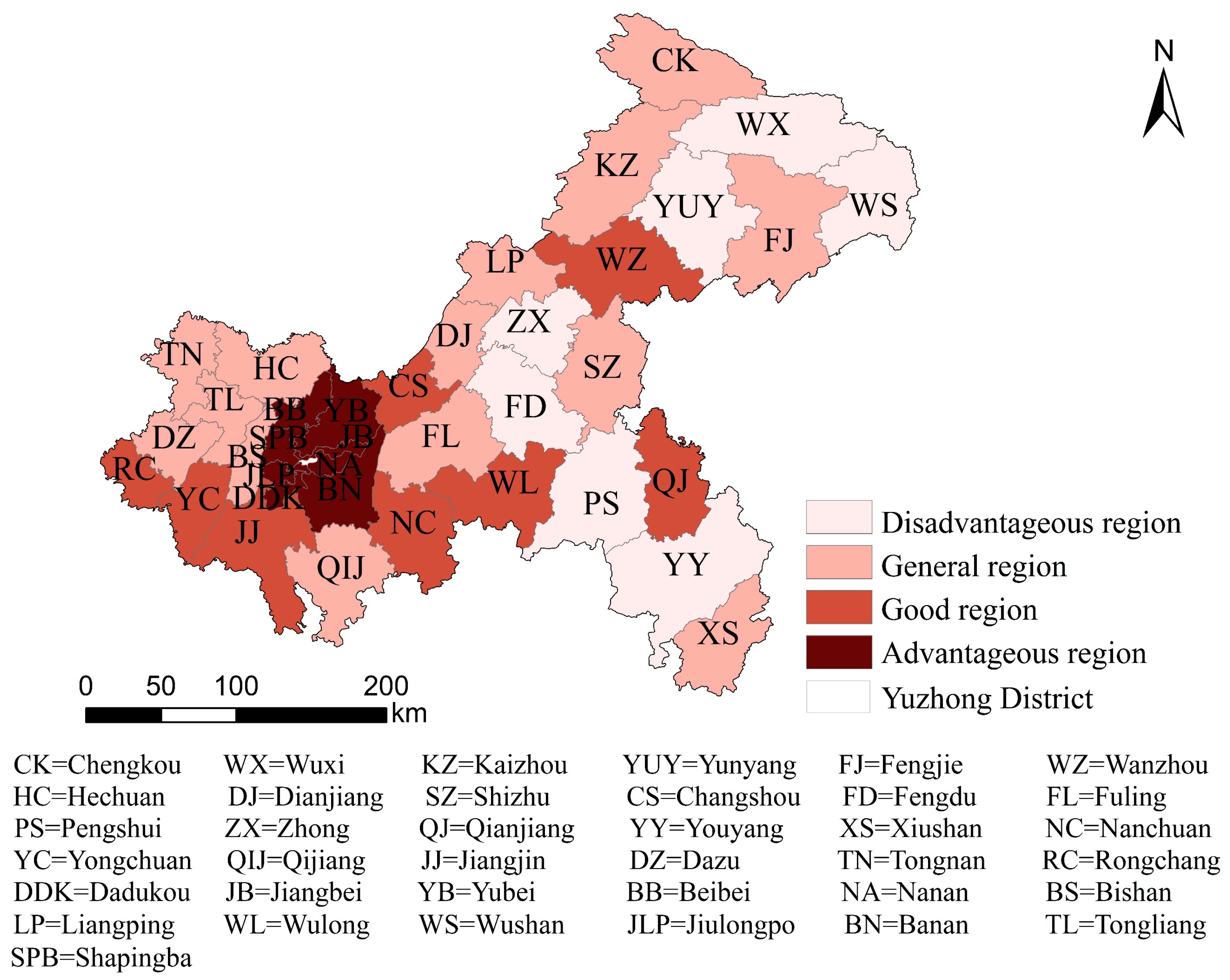
The results indicate that the comprehensive scores of rural human settlements for aging in 37 districts and counties of Chongqing are between 0.14 and 0.81 (Figure 3). Using the natural breakpoint method in ArcGIS 10.6 software, four categories were identified: disadvantageous region, general region, good region, and advantageous regions. The spatial pattern exhibits a “high in the west and low in the east, led by a single core area” distribution (Figure 3). Advantageous regions are mainly distributed in western Chongqing, with the central urban area as the high-value core area, presenting a localized stratum structure of “High in the center, low around the perimeter”. In contrast, low-value areas are mainly clustered in eastern Chongqing, except for Qianjiang and Wanzhou. This reflects the current reality of uneven regional development and limited core-driven capacity. The standard deviation of scores in different areas is 0.17, indicating significant disparities and pronounced spatial imbalances. The data generally exhibit an “olive-shaped” distribution. The number of general regions exceeds the combined total of advantageous, good, and disadvantageous districts. This indicates that most regions in Chongqing are not yet fully prepared for the aging society and that there is still much room for improvement in the rural human environment. Particularly in eastern rural areas, deficiencies are especially pronounced. The spatial pattern of cultural and sports service facilities is similar to that of elderly care facilities. Large areas in northeastern and southeastern Chongqing have become facility-deficient zones, solidifying the “core-periphery” phenomenon and supply–demand imbalances.
(1) Material Dimensions
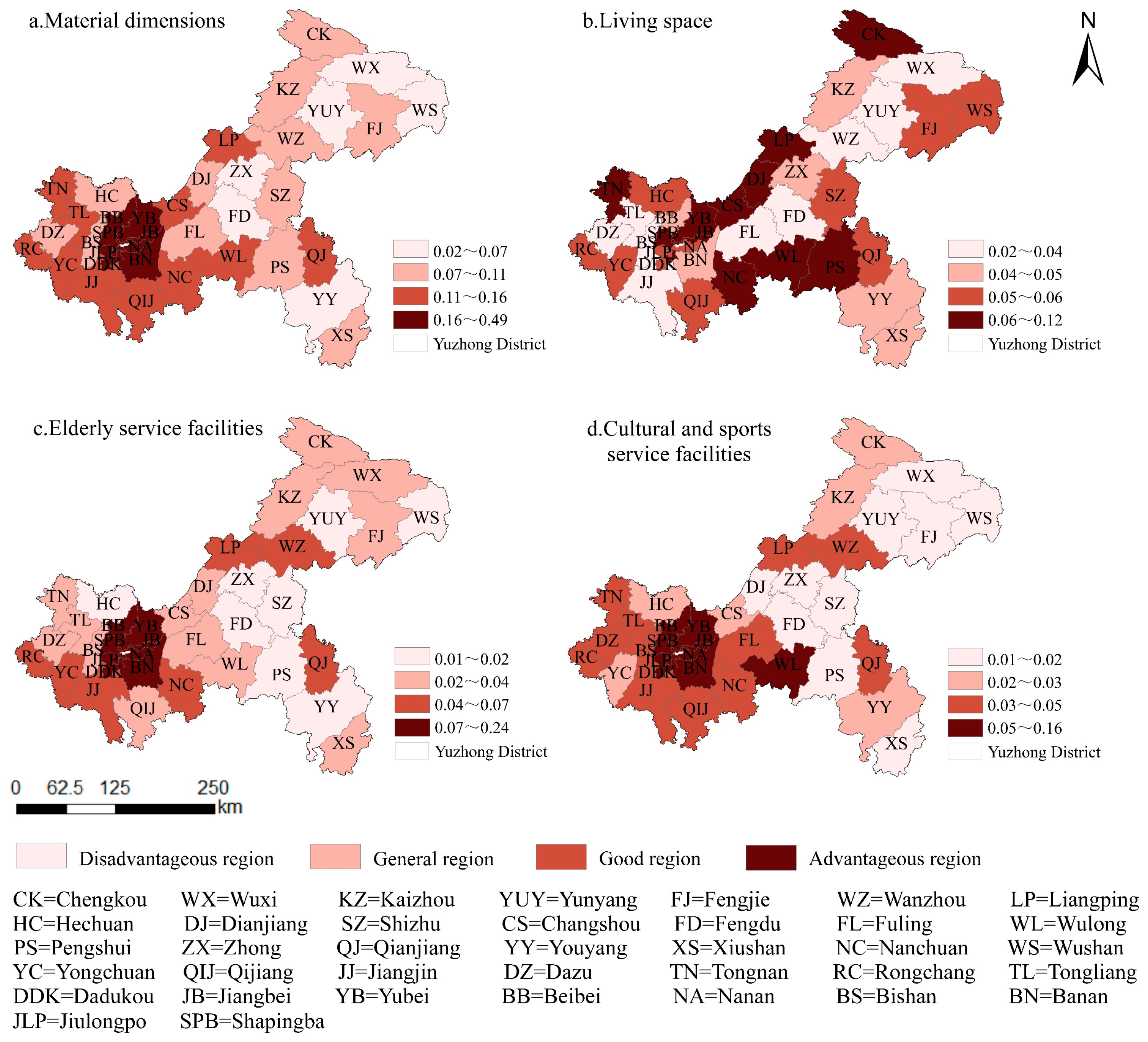
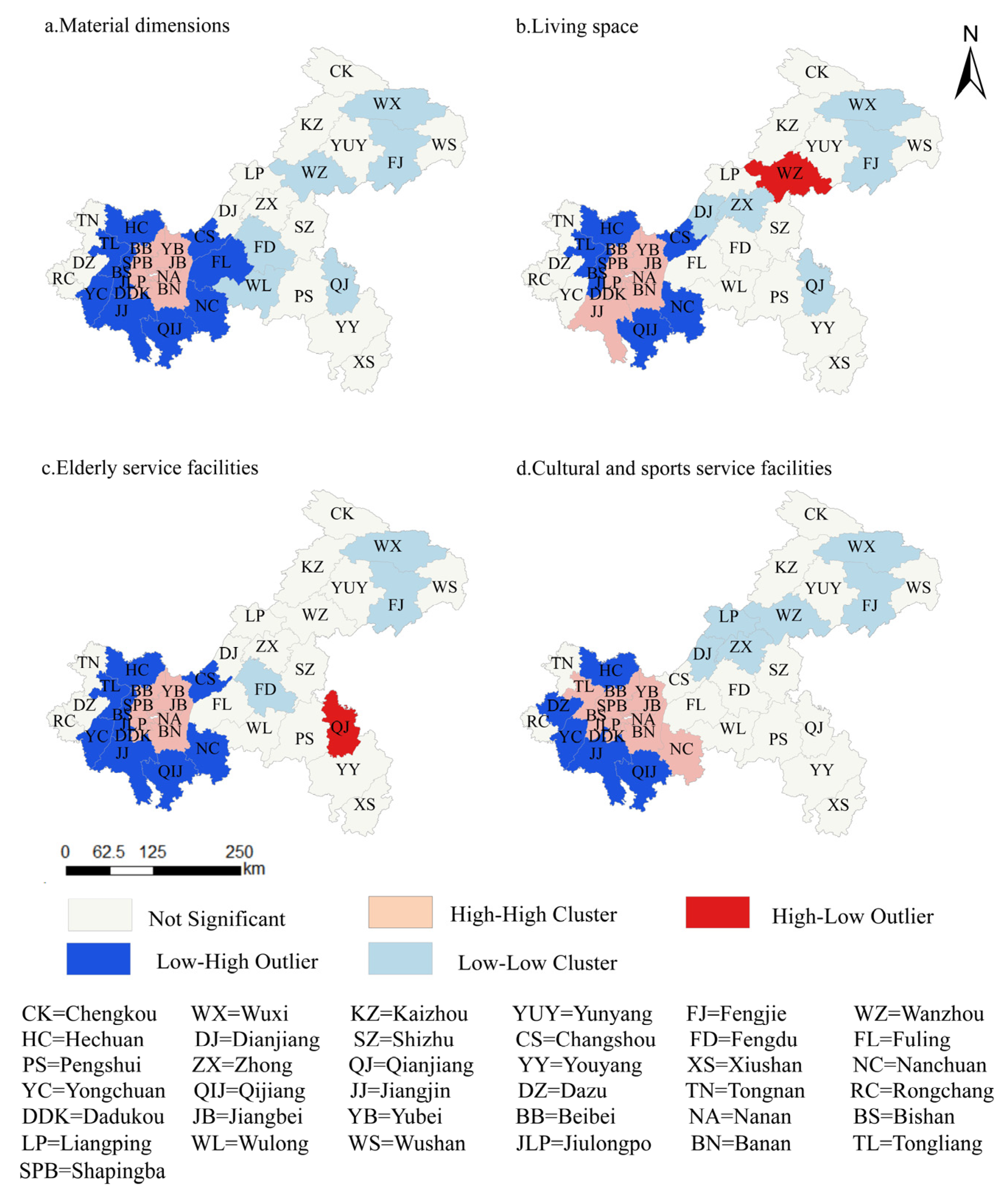
The material dimensions include living space, elderly service facilities, and cultural and sports service facilities (Figure 4). For living space, it shows the characteristics of northeast-southwest oriented band distribution, with lower levels in the Wuxi-Jiangjin area and higher levels at both ends. Most high-value areas are located in the northeastern ecological conservation zone and the southeastern Wuling Mountain region of Chongqing. These areas feature vast expanses with sparse populations, where rural housing predominantly consists of low-density detached structures. They offer large per capita living space and exert minimal ecological pressure. The combination of spacious living conditions and high-quality natural environments creates an advantage for age-friendly residential spaces. The Wuxi-Jiangjin area lies within a transitional fault zone, between an ecological conservation zone and a densely urbanized region. Its spatial advantages are fragmented. These areas remain in the early stages of aging-friendly design and barrier-free renovations, making it difficult to effectively support the needs of older adults and their care service. The spatial pattern of elderly care facilities generally exhibits a model of “higher in the west, lower in the east, with localized peaks.” In the western region, central urban areas form high-density cores, creating a distinct concentric zone structure with decreasing density outward. However, their reach remains limited. Most areas in the northeast and southeast are relatively disadvantageous. The eastern region is relatively distant from the resource-rich central urban area. Situated at the periphery of agglomeration effects and locational advantages, it has developed a regional shortfall in elderly care facilities. Topographical factors contribute to its vast expanse with sparse population and dispersed administrative villages, necessitating a greater service radius. This exacerbates the imbalance between supply and demand.
Note: Because different indexes have different weights, so the scores of indexes are different. The scores of b, c and d in Figure 4 are the sum of the scores earned in the corresponding indexes. So the score ranges of b, c and d are different. Consequently, the criteria for classifying areas as disadvantageous, general, good, or advantageous are not uniform. Classification follows the principle of maximizing differences between categories while minimizing differences within categories. The same logic applies to Figure 5.
Overall, the spatial pattern of material dimensions exhibits “higher in the west and lower in the east, with localized disparities.” Aging-friendly construction faces significant regional imbalances and structural shortcomings. Advantageous regions are primarily concentrated in the central urban areas with well-developed infrastructure, relatively mature elderly care industries, and high rates of aging-friendly renovations. However, their radiating influence remains limited, failing to extend benefits to eastern remote and mountainous regions effectively. Most rural areas in the east still face significant gaps in infrastructure and service provision. Multiple shortcomings compound spatially, creating an amplified effect where “1 + 1 > 2”. While the central urban areas concentrate facilities, rural living space faces squeeze from urbanization. Northeastern Chongqing, though an ecologically valuable area with superior living space, faces the challenge of isolated cultural and sports service facilities. Southeastern Chongqing, meanwhile, suffers from a dual disadvantage of living space and elderly services facilities, resulting in a compound deprivation. Low-value regions in three aspects overlap in parts of northeastern and southeastern Chongqing. These areas exhibit spatial disadvantage lock-in due to the combined effects of topographical constraints, weak foundational conditions, and population outflow.
(2) Non-material Dimensions
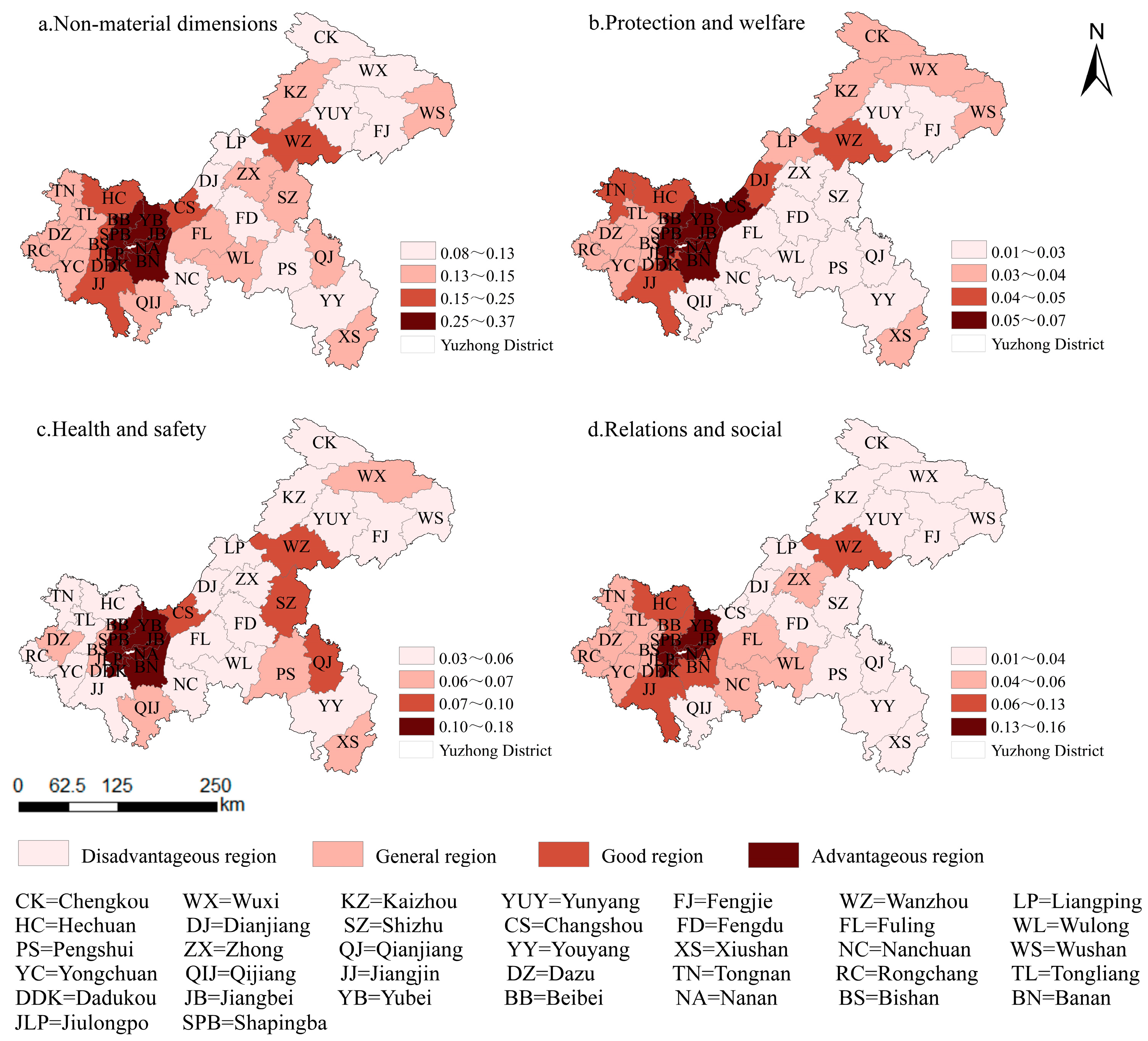
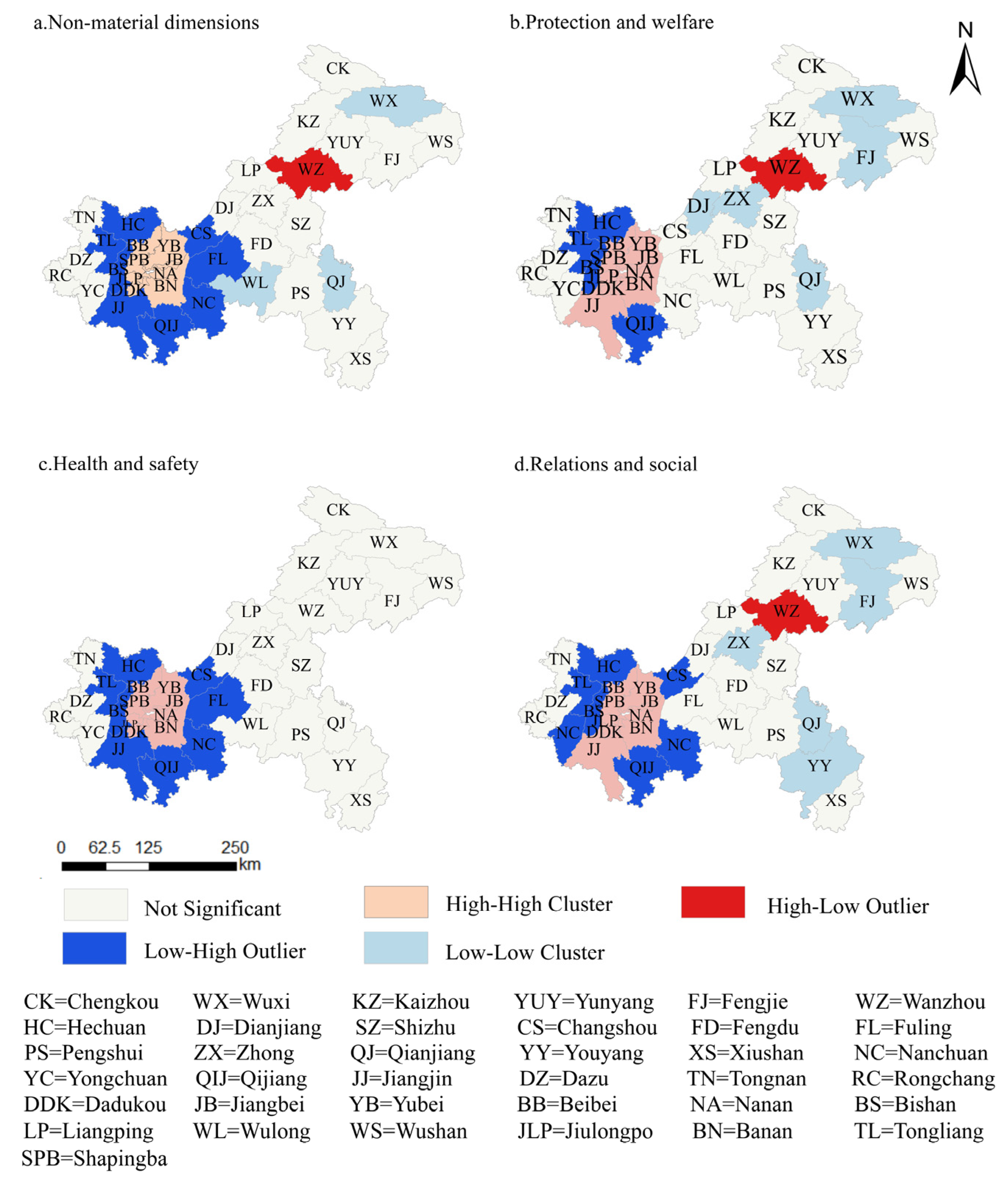
The non-material dimension encompasses three aspects: protection and welfare, health and safety, and relations and social (Figure 5). The aspect of protection and welfare exhibits a spatial pattern characterized by “high in the northwest, low in the southeast”. Advantageous areas largely coincide with the central urban areas. These regions exhibit high levels of industrialization and urbanization, robust local finances, and elevated wage levels and remittance income. Consequently, older adults there enjoy more disposable income. In contrast, rural areas in the southeastern, characterized by weaker industries and significant displacement of family-based eldercare functions, exhibit far greater reliance on social security. These regions demonstrate a spatial mismatch between “welfare depressions” and “high-demand areas.” The aspect of health and safety exhibits a spatial pattern characterized by “dual-core clusters with abrupt transitions.” This reveals the administrative center dependency in the allocation of healthcare resources and public security conditions. Also, spatial spillover effects are constrained by boundaries. In the east, Shizhu, Wanzhou, and Qianjiang form high-value core zones. In the west, the central urban areas serve as the leading hub. Both regions adhere to the administrative center effect. However, there is a lack of organic connection between the two cores. The core area’s capacity to radiate and drive development is weak. This reflects how geographical barriers, administrative divisions, and transportation costs collectively form invisible barriers to resource flow. Relations and social exhibits a spatial pattern characterized by “higher density in the west and lower in the east, with localized peaks.” The urbanization rates are high in the west. Despite significant outflow of young and middle-aged adults, intergenerational spatial proximity remains relatively close. “Weekend families” and “migratory reunions” sustain emotional bonds. Concurrently, urban communities maintain high frequencies of neighborhood interaction. Older adults benefit from diverse avenues for social engagement. Wanzhou serves as the gateway to northeastern Chongqing. Historically characterized by thriving commerce and high social connectivity, it has evolved into a secondary high-value core. Eastern regions are low-value zones, facing the grim reality of social relationships becoming increasingly barren. Household elder care is steadily eroding due to population mobility. Community-based elder care is gradually failing as social networks disintegrate.
Overall, a spatial pattern of “led by two core areas” is presented in the non-material dimension. Areas with high levels include the western region centered around the central urban areas, as well as Kaizhou, Shizhu, Zhong, and other locations. The northeastern and southeastern ends are relatively disadvantageous. The “dual deprivation” compounds in eastern mountainous regions, in the aspects of protection and welfare security, relations and social. Older adults receive only minimal welfare benefits due to weak local finances. Compounded by population outflow, families become scattered and neighbors grow distant. They find themselves trapped in a dual predicament of material deprivation and emotional isolation. The districts and counties in central Chongqing, such as Fuling and Fengdu, lie along transitional fault lines in high-value zones. They are neither included in the central urban area’s influence sphere nor close to the secondary centers such as Wanzhou and Qianjiang. These regions urgently need to break through spatial barriers. Chongqing should also accelerate the transformation of non-material promotion from “gradient decay” to “balanced coordination.”

5.1.2. Robustness Analysis on Evaluation Results

To test the robustness of the evaluation results under different weighting methods for indexes, this study introduces equal weighting method and CRITIC weighting method. They are used to calculate the comprehensive scores of rural human settlements for aging. The results of scores are then compared to those based on the entropy weighting method described above. First, Pearson correlation coefficient analysis is performed on the scores using the entropy weighting method and the equal weighting method. The results show that the Pearson correlation coefficients exceed 0.90 (p < 0.01), indicating extremely strong correlations. For over 80% of regions, the ranking differences fall within five positions (Table 3). Then, Pearson correlation coefficient analysis is performed on the scores using the entropy weighting method and the CRITIC weighting method. The results show that the Pearson correlation coefficients exceed 0.75 (p < 0.01), indicating extremely strong correlations. For over 60% of regions, the ranking differences fall within five positions (Table 4). This indicates a high degree of consistency in the evaluation results. Furthermore, the standard deviations of the evaluation scores for the entropy weighting method, equal weighting method, and CRITIC weighting method were 0.17, 0.15, and 0.14, respectively, showing remarkable similarity among them. This further confirms the robustness of the evaluation results across different weighting methods.

5.2. Spatial Correlation Patterns

5.2.1. Results and Analysis

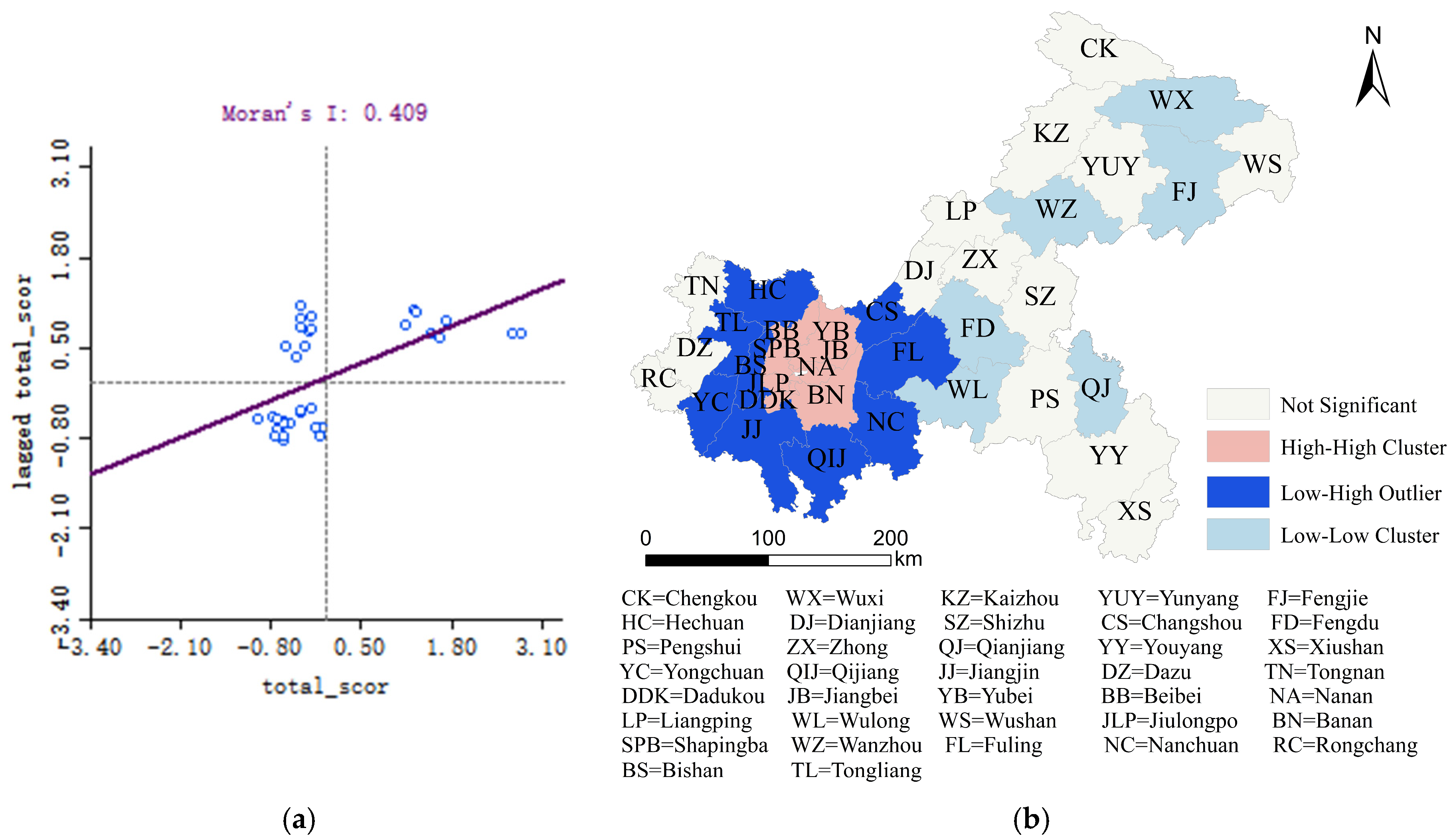
The results indicate that the Global Moran’s I index for the level of rural human settlements for aging in Chongqing is 0.409. The Z-value of 4.33. The p-value was 0.001, indicating statistically significant differences at this level. The results demonstrate that the Global Moran’s I exhibits statistical significance, showing a significant positive correlation in spatial distribution with a clustering effect (Figure 6). H-H clusters overlap Chongqing’s central urban area. The scale effect of age-friendly construction has begun to emerge within this area. However, the L-H clusters forming a ring-shaped distribution encircling the central urban areas. A “transitional break zone” has been created, resulting in the H-H clusters forming a highly compact “single-core isolated island.” The advantages in rural human settlements are highly concentrated in administrative and economic hubs. The spatial spillover effects of the core needs improvement. L-L clusters are primarily distributed across northeastern and central Chongqing, exhibiting a relatively dispersed pattern. This indicates that low-level areas are not homogeneous contiguous zones. They are interspersed throughout the region. This spatial configuration suggests that challenges are not confined to specific geographic zones. Tailored and precise interventions are needed to overcome regional shortcomings.
Next, a spatial correlation analysis is conducted on the six aspects of rural human settlements for aging to reveal their spatial autocorrelation features. The Moran’s I index values are all positive (Table 5). All these values pass the significance test at the 5% level, indicating a pronounced spatial clustering pattern. This demonstrates that rural human settlements for aging and its guideline levels exhibit a significant positive correlation in its spatial distribution. Below is a detailed analysis.
(1) Material dimension
The material dimension encompasses living space, elderly service facilities, and cultural and sports service facilities (Figure 7). The H-H clustering results and L-H clustering results across these three aspects exhibit similar characteristics to Figure 6, the overall level of rural human settlements for aging. They are featured as distinct “transition break zones” and small regional scale effects. In terms of living space, Wanzhou, as the gateway to northeastern Chongqing, boasts significantly higher level than surrounding areas. Its distinct H-L cluster formation creates an “island effect,” preventing its advantages from spreading into the hinterland of the reservoir area. Future efforts should focus on key resource corridors and transportation routes. It needs to enhance the outreach capabilities, thereby driving coordinated development across the northeastern region. In terms of elderly service facilities, Qianjiang exhibits an H-L cluster isolated in the southeastern, similarly creating an “island effect.” This reflects the achievements of policy support in ethnic minority regions. Future efforts should focus on opening policy channels and breaking the low-value lock-in phenomenon surrounding. Regarding cultural and sports service facilities, L-L clusters are concentrated in northeastern Chongqing, forming contiguous areas. Ecological conservation zones and impoverished mountainous regions have fallen into a “facility desert.”
(2) Non-material dimension
The non-material dimension includes three aspects: protection and welfare, health and safety, and relations and social (Figure 8). The spatial scope of H-H clustering results overlaps the central urban areas, while the spatial scope of the L-H clustering surrounds. Identical characteristics are shown in the results of these three aspects. In terms of protection and welfare, the contiguous distribution of L-L clusters indicates certain regional synergies in the northeast. Wanzhou exhibits an exceptionally high value. By leveraging its prominent advantages of regional centers and utilizing synergistic effects, a chain reaction of improvements can be triggered across the northeast, thereby reducing institutional transition costs. The same applies to the aspect of relations and social. By tapping into the tradition of mutual aid within migrant cultures, rural community governance improvements and innovations can be advanced comprehensively at the county level. By tapping into the tradition of mutual aid, rural community governance improvements and innovations can be advanced at the county level. Cultivating social capital can better used to break the cycle of low-value lock-in. In the periphery of the central urban area, the L-H cluster zone, community building initiatives can be explored. The semi-acquaintance society can be broken down through spatial mobility.
The aforementioned characteristics demonstrate that central urban areas possess strong capabilities for aggregating key factors such as population, capital, and technology. Moving forward, institutional channels and factor mobility should be enhanced to extend high-quality elderly care resources, advanced management models, and mature industrial expertise to surrounding regions. This will further leverage radiating and driving influence on surrounding areas, particularly rural regions. The northeastern region is predominantly characterized by mountainous terrain and rolling hills. Its rugged topography and limited transportation accessibility create inherent natural barriers. Wanzhou, which has frequently functioned as an independent H-L entity, could serve as a pivotal breakthrough point to overcome the challenges in the eastern region during future development. Wuxi and Fengjie have repeatedly demonstrated significant L-L clustering, exhibiting notable regional synergistic effects. The two areas should leverage their strategic location at the junction of Chongqing, Shaanxi, and Hubei provinces along the Yangtze River waterway. By integrating Wanzhou as a key node, they can establish a development pattern characterized by “one core, two cooperating points” in the northeast.

5.2.2. Robustness Analysis on Spatial Clustering Results

To assess the robustness of spatial clustering results under different spatial weighting matrices, this study incorporates the Inverse Distance Weighting (IDW) spatial weighting matrix. The spatial clustering outcomes are compared with the results based on the contiguity edges corners method. Consistency between the two classification sets is evaluated using the Kappa coefficient.
The results indicate that the Kappa coefficients for outcomes based on the two spatial weight matrices exceeded 0.6 (p < 0.01) (Table 6). This demonstrates a high degree of consistency in clustering results, confirming the robustness of spatial clustering patterns across different spatial weight matrix configurations.

5.3. Obstacle Factors Identification and Interaction Analysis

5.3.1. Obstacle Factors Identification

The factor detector in geographic detectors is employed to assess the influence of each index on the overall level of rural human settlements for aging. The test results showed that the q-values for all indexes were greater than or equal to 0.3, indicating that each index holds practical significance for the level of rural human settlements for aging. We selected indexes with a confidence level exceeding 95% that rank highly in influencing the level of rural human settlements for aging in Chongqing (Table 7). These include the following: coverage rate of village mutual aid senior care points (X5), coverage rate of village centralized care facilities for disabled special hardship cases (X7), coverage rate of village reading room (X8), number of cultural and sports venues per 10,000 population (X9), income remitted or brought back by rural migrant workers (X12), number of healthcare personnel per 10,000 people (X14), and criminal case clearance rate (X16). Among these, X5, X7, X8 and X9 belong to material dimensions. X12, X14 and X16 belong to non-material dimensions.
In summary, service facilities represent the key obstacle constraining the level of rural human settlements at material dimensions. The urbanization process has led to a significant outflow of young and middle-aged adults from rural areas, resulting in prominent phenomena of left-behind and empty-nest elderly. The family-based elderly care function continues to weaken, necessitating the establishment of care institutions and mutual-aid organizations to compensate for the diminished family support system. The development of cultural and sports service facilities directly addresses the widespread lack of spiritual and cultural enrichment among rural seniors. It represents a vital component in extending public services to rural areas, promoting social participation among the elderly, and enabling meaningful engagement in later life. At non-material dimensions, shortcomings in family-based eldercare financial security, healthcare staffing, and public safety are particularly pronounced. As the primary source of income for rural seniors’ financial security, the importance of support from adult children is self-evident. Family financial support continues to play an irreplaceable role in the development of rural eldercare today, crucial to the promotion of non-material dimensions for aging. Moreover, as eldercare models evolve, rural seniors’ demand for social services is deepening and diversifying. Their care and safety needs require urgent fulfillment, while prominent issues in healthcare staffing and public safety within non-material dimensions demand immediate attention.

5.3.2. Interaction Analysis

Rural human settlements, as a complex and comprehensive system, often faces fluctuations across multiple factors. Conducting single-factor obstacle analysis risks an overly narrow perspective. It relies on the assumption that other factors remain constant, resulting in a rough estimation of key regional shortcomings [113]. To enhance decision-making precision for optimization pathways and prevent coordination deficiencies within the holistic, structural framework of rural development under urban–rural integration, this study further conducts an interaction analysis of obstacles. Results indicate no single aspect independently influences aging-friendliness, combining to exert a synergistic effect. Among these, elderly service facilities constitute the main external obstacle. The relationship between social security and family support within welfare systems represent the primary internal obstacle. Transportation conditions serve as the key interactive obstacle (Table 8).
Elderly service facilities constitute a vital component of the safety net and play a crucial role in addressing deficiencies in rural public services. Interaction analysis reveals that the coverage rate of village mutual aid senior care points (X5) exhibits an influence exceeding 0.80 when interacting with all other variables. Similarly, the coverage rate of village centralized care facilities for disabled special hardship cases (X7) demonstrates an influence surpassing 0.95 when interacting with all other variables. This indicates that elderly service facilities constrain the level of rural human settlements for aging at various levels, representing a major external obstacle. At the micro level, the location and service radius of elderly service facilities directly impact the quality of interactions between individual seniors and their living spaces, cultural and sports services, neighbors, and family members [114,115]. Locating facilities near neighborhoods or villages not only ensures physical accessibility to medical, cultural, and recreational services but also facilitates platforms for intergenerational exchange and community participation [116], providing spatial vehicles for revitalizing neighborhood relations and supplementing family care. At the macro level, these factors collectively reflect structural shifts in the flow of resources between urban and rural areas. The rational layout and high-quality operation of elderly service facilities depend on fiscal support for welfare levels, improvements in ecological environment quality, and the continuous infusion of resources such as medical personnel. In summary, elderly service facilities do not exist in isolation. Through their spatial layout and service efficacy, they form nested interactions with subsystems within human settlements. The impact of elderly service facilities interacting with other factors on the level of human settlements for aging essentially reflects the allocation and flow of high-quality public service elements between urban and rural areas within the elderly care sector [117].
The influence of the amount of Old Age Allowance for persons aged 80 and above (X10) ∩ the income remitted and brought back by rural migrant workers (X12), the influence of the coverage rate of basic pension insurance (X11) ∩ the income remitted and brought back by rural migrant workers (X12) are both greater than 0.95. This indicates that the relationship between social security and family support within welfare systems significantly impacts the level of rural human settlements for aging. Social security is characterized by formal institutions. Family support is characterized by intergenerational reciprocity. These two systems do not simply overlap linearly. They engage in deep synergy and mutual construction with multiple human settlement factors such as public service facilities, ecological environment, and social relationships. Together, they form an endogenous dynamic system driving the evolution of rural human settlements toward age-friendly environments. The institutional intervention of social security has embedded the state and market as formal support entities within rural social networks through institutionalization. Rather than merely overlaying existing social networks, it engages in profound interaction with the social capital and informal institutions. On one hand, it has spawned new physical nodes such as community care centers. This has altered the layout of public service facilities. It has also become a spatial vehicle for reshaping rural social interactions and accumulating new forms of social capital. Additionally, beyond traditional kinship ties, social security establishes new social connections by regulating contracts and service delivery, based on professional rights and obligations. This builds an institutionalized foundation of trust, enabling older adults to draw support simultaneously from both kinship and neighborhood networks [118], effectively expanding the density and breadth of their social support networks. The traditional monolithic “family-clan” support structure is shifting toward a complex network structure of “family-community-market-state” multi-party coordination [119,120]. Therefore, the evolving relationship between social security and family support has driven the transformation of human settlements from traditional support systems to modern age-friendly ecosystems, enabling a comprehensive and systematic upgrade. The development of human settlements has evolved from fulfilling basic survival needs to becoming an integrated platform for formal and informal support systems.
The results of detecting interactions between the transportation conditions factor and other factors consistently reveal bilinear or nonlinear reinforcement effects. This indicates that enhancing the level of rural human settlements for aging cannot rely solely on constructing regional relate facilities or material infrastructure. Transportation conditions indirectly influence regional resource coordination through accessibility, safety, and service provision capacity, forming fundamental geographic barriers that affect service accessibility. These barriers constrain regional elderly care resources and capabilities, making traffic conditions the key interactive obstacles. The interactive influence between miles of “four good rural roads” per 10,000 people in rural areas (X2) and the number of road traffic accidents (X15) is 0.953. This indicates that road construction conditions interact with road safety conditions, influencing elderly rural residents’ travel range and safety. Consequently, this affects their activities and significantly impacts the promotion of the level for aging. The interactive influence between road safety conditions and elderly service facilities, as well as cultural and sports facilities, underscores the importance of road safety around service facilities for enhancing aging-friendly environments. Miles of “four good rural roads” per 10,000 people in rural areas (X2) ∩ Number of cultural and sports venues per 10,000 population (X9) = 0.980. This indicates a strong interactive influence between road construction conditions and cultural and sports facilities. The sophistication of transportation infrastructure not only affects accessibility between cultural and sports facilities but also impacts the exchange of information, technology, and capital both within the region and with external areas. This, in turn, influences factor aggregation, affecting the promotion of the level of human settlements for aging and the broader rural construction landscape.
Additionally, social security conditions represent a significant obstacle factor affecting the level of human settlements for aging. The criminal clearance rate (X16), as the primary obstacle, exhibits a determination coefficient q of 0.735. The interaction between the number of road traffic accidents (X15) and other factors also exceeds 0.8. This indicates that social security conditions exert a substantial influence. These factors create the psychological and physical prerequisites for enhancing seniors’ willingness to participate in activities and social interactions, thereby expanding their activity radius [121,122]. Simultaneously, safe road environments synergize with the location of elderly service facilities and cultural and sports service facilities, transforming social improvements into tangible mobility freedom for seniors. This profoundly shapes public space organization and social network interaction [123]. A safe and reliable environment also serves as a crucial condition for attracting urban retirees to return to their hometowns for aging and guiding social capital investment, serving as a significant influencing factor in the silver economy.

6. Promotion Strategy of Rural Human Settlements for Aging

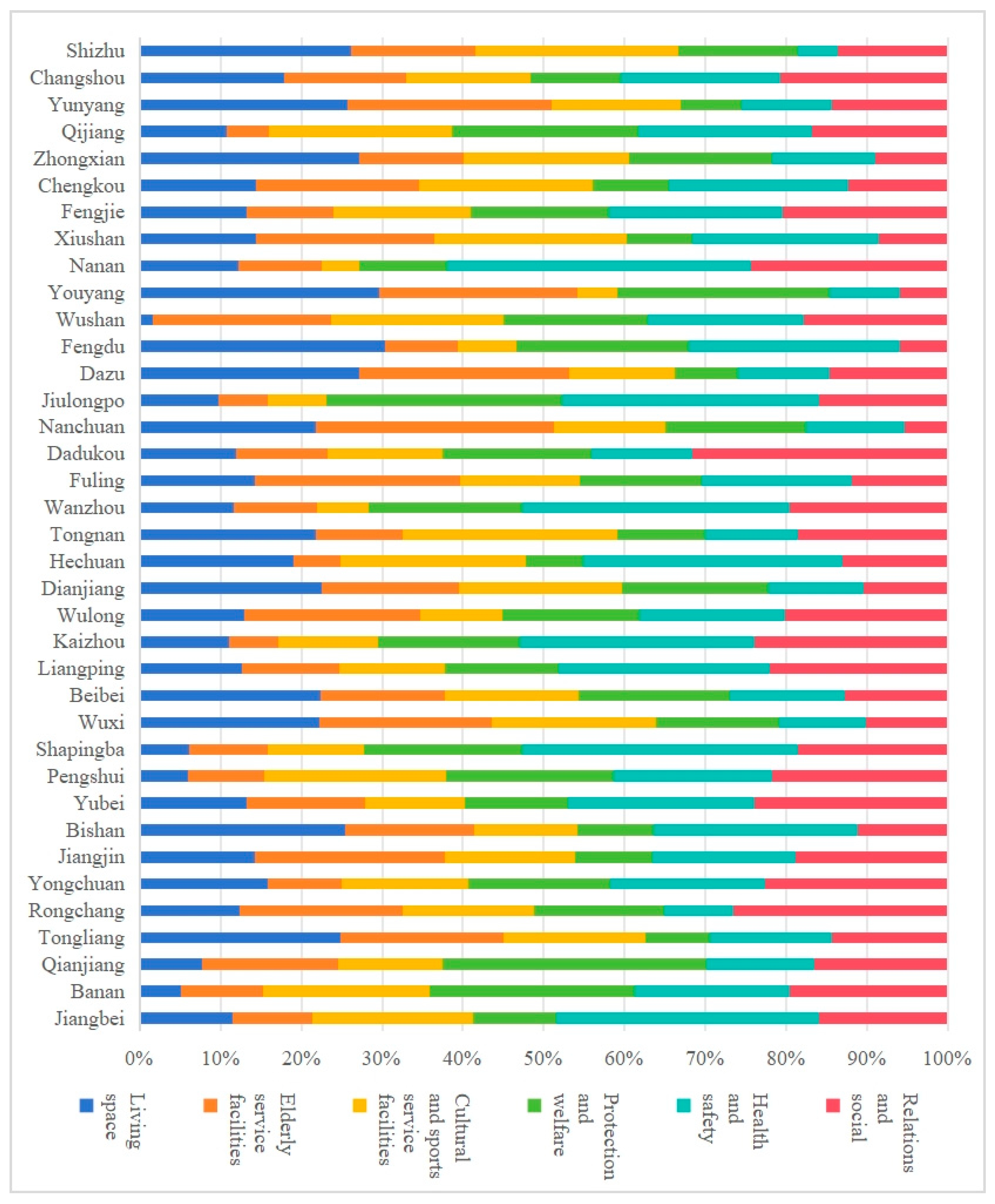
The geographic detector cannot examine the influence of different indexes in the same region. So this article uses obstacle degree model to calculate the obstacle degree of the guideline within each region level, identifying the primary obstacles in each region (Figure 9).
Based on obstacle degree analysis and interaction analysis, the promotion strategies in Chongqing are divided into three types: facility enhancement type, characteristic amplification type, and comprehensive upgrading type. Tailored ways are designed according to primary obstacles and spatial differences to address the challenges of aging-friendly upgrades faced by different regions, thereby specifically enhancing the overall quality of the human environment (Table 9).
(1)
Facility enhancement type
The regions whose single dominant obstacle or main obstacles are all material belong to facility enhancement type. There are 13 districts or counties. These regions must prioritize addressing weaknesses and strengthening deficiencies. The core challenges in these areas include insufficient coverage of elderly service facilities, low-level living space for aging, and shortages of cultural service facilities. Efforts should focus on “addressing shortcomings and strengthening weak areas” through policy tools such as specialized plans and fiscal subsidies.
For areas facing a single dominant obstacle, targeted improvements should focus on addressing that specific obstacle. Beibei identifies living space as its single dominant obstacle. Reference can be made to the renovation plan for rural housing in Northeast China [124]. Some initiatives are as follows: strengthen the promotion of safety renovations; focus on low-cost renovations, such as enhancing slip resistance and improving sanitary conditions. The implementation process is government-led. Village committees conduct door-to-door surveys and collaborate with multiple stakeholders to execute the initiative, such as specialized renovation companies, rural collective economic organizations, and elderly households. Beibei is named as the “backyard garden” for other districts in the central urban areas. By tapping into its ecological and geographical advantages, opportunities can be identified to break into the silver economy.
Jiangjin and Fuling face the single primary obstacle of elderly service facilities, necessitating a focus on increasing the density of them. Locations and service areas can be determined based on the distribution density and behavioral space of older adults [54]. By scaling up existing facilities to reduce construction costs, they can achieve compact layouts. The entire process must be led by government planning. Village committees can collaborate with enterprises, rural collective economic organizations, and other entities to implement renovation and expansion projects. In the short term (1–2 years), the coverage rate of elderly care service facilities will significantly increase. In the medium-to-long term (3–5 years), the goal is to achieve full coverage of village mutual-aid elderly care centers.
For dual-barrier areas like Tongliang and Dazu, a “hardware-first, service-coordinated” approach is required. Establishing barrier-free public environments such as age-friendly restrooms and wheelchair access should be prioritized. Drawing on the Latvian case study of repurposing underutilized buildings into age-friendly social housing [125], rural idle resources can be converted into integrated senior care service centers, combining medical, cultural, and recreational function. The government can attract multiple stakeholders through floor area ratio compensation policies, achieving multiple benefits through social investment.
Wuxi faces the obstacles of elderly service facilities, cultural and sports service facilities and living space, which requires the government to prioritize planning as the highest priority to prevent resource misallocation at the source. Development positioning should promote complementarity between institutional care and traditional family-based care, while spatial layout should guide elderly services toward integration with family structures and rural communities.
(2)
Characteristic amplification type
The regions belonging to characteristic amplification type face primarily non-material obstacles, encompassing 14 administrative units. These areas exhibit shortcomings in fiscal support, public security, and social relations, yet possess relatively sound material conditions. Their promotion strategy should center on “highlighting unique characteristics and leveraging comparative advantages”. Public policy tools such as ecological compensation and social mutual-aid organizations should be employed to strengthen the soft environment.
Jiangbei, Shapingba, and Wanzhou face the single dominant obstacle of health and safety. The highest priority for these areas should focus on forest ecosystem restoration to create rural landscapes with distinctive Chongqing’s characteristics. Planning will be primarily organized by the district government like forestry bureaus and ecological environment bureaus. Based on nature-based solutions and ecological compensation, the goal is to unify ecological benefits with age-friendly functionality. Among these, Wanzhou serves as a pivotal node within the spatial clustering pattern. Integrating green development with transportation upgrades can serve as a breakthrough point. By collaborating with Wuxi and Fengjie, a “one core, two cooperating points” development pattern can be established. This approach will drive improvements in the rural human settlements across the northeastern region through targeted initiatives. As one of the core districts within the main urban area, Jiangbei possesses distinct advantages in its technology-driven industries. So the following suggestion is offered for reference. Jiangbei may study the case of aging-friendly strategies in rural Shizhu, Chongqing [126]. Innovative pathways for digital age-friendly villages can be explored. This involves developing a health monitoring app for the elderly that integrates natural ecology features.
For areas with single dominant obstacle of relations and social, such as Changshou, Qianjiang, Yongchuan, and Dadukou, priority should be given to cultivating rural social capital and social support networks, while exploring diverse channels for social participation. Research in Northeast China’s rural areas indicates that community social capital serves as a crucial protective factor for rural elderly health. Structural social capital (e.g., participation in senior associations) exerts a more significant impact on health than relational social capital, as rural seniors rely more heavily on organized mutual aid than individual social networks [127]. Therefore, strengthening self-management organizations, optimizing neighborly relations, and consolidating internal rural social capital are recommended. Simultaneously, these regions can draw upon the rural mutual aid experience of Handan, Hebei Province [128]. Younger seniors can be encouraged to serve older seniors and healthy seniors to serve ill seniors, forming a contractual relationship of “senior mutual aid.” By exploring systems such as “time banks” [129], community care resources can be activated, intergenerational support networks can be established. The elderly can be encouraged to transition from “family dependency” to “community mutual support.”
Yubei faces dual challenges in health and safety, relations and social issues. It can leverage its geographical advantage as an aviation hub and the governance strengths of its smart city initiatives. It can seize new opportunities in the silver economy. It should tap into the potential advantages of rural diversified economic development and advance the construction of an integrated urban–rural governance community.
Other regions such as Fengdu, Jiulongpo, Fengjie, and Nan’an face dual challenges. They possess abundant tourism resources and demonstrate robust development in rural tourism. They can explore a promotion path combining “green development with innovative elderly care models.” This involves promoting green industrial transformation while deeply integrating it with elderly care services. Efforts should be made to explore the development of integrated agri-cultural-tourism models for the silver economy. Drawing on the case of Shihe Village, Dalian’s rural homestay operation, introduce market elements such as enterprises and social capital. Idle farmhouses can be converted into senior-friendly homestays, exploring resource integration and cost-sharing mechanisms [130]. This approach aims to enhance the endogenous momentum of rural elderly care. The following timeline can be planned. A survey of idle rural housing resources can be completed in the short term (1–2 years). Demonstration sites for senior-friendly homestays can be established in the medium term (3–5 years). An integrated model combining agritourism, cultural tourism and silver economy can be developed in the long term (5 years or more).
(3)
Comprehensive upgrading type
The regions belonging to comprehensive upgrading type face both material and non-material obstacles. Primarily, they include 10 districts and counties. These areas collectively confront a series of complex challenges: regional development remains uneven; supporting infrastructure is inadequate; rural elderly care service capabilities require strengthening. Therefore, these regions should strengthen the coordinated development of both material and non-material dimensions. Through public policy tools such as industrial integration and paired assistance programs, we can achieve a combination of targeted breakthroughs and comprehensive remediation.
For areas like Bishan, Hechuan, and Banan with relatively strong economic and industrial foundations, priority should be given to advancing an integration model of “industry + elderly care”, transforming the goal of “aged with support” into a value chain. Market elements and social enterprises should be introduced to revitalize homestead and farmland resources, capitalizing land resources to boost seniors’ property income.
Wulong and Rongchang face dual obstacles in elderly care facilities, relations and social. Priority should be given to expanding the coverage of mutual aid senior care points and senior care service centers. Referencing the case of Z Town in Beijing [131], a “grid-based” governance system can be implemented to establish a multi-tiered, multi-functional elderly care service team. Community participation and neighborly mutual assistance should be encouraged. Township governments shall select facility sites and organize personnel. Village committees shall implement the paired assistance mechanism. The following timeline can be planned. In the short term (1–2 years), the coverage of elderly service facilities can be expanded. In the medium term (3–5 years), a grid-based paired assistance system can be established. In the long term (5 years or more), institutional costs can be reduced and the efficiency of social capital utilization enhanced.
Regions such as Youyang, Xiushan, and Chengkou face multiple obstacles that require urgent, targeted solutions. Priority should be given to comprehensive upgrades centered on “spatial revitalization + community co-creation.” Leveraging natural landscapes, environmental beautification and functional enhancements should create social, productive, and recreational spaces suitable for the elderly. Simultaneously, a collaborative planning and construction mechanism can be established, involving village committees, rural talents, and villagers to promote rational resource allocation and strengthen community identity. The following timeline can be planned. In the short term (1–2 years), environmental beautification and functional integration can be implemented. In the medium term (3–5 years), a collaborative planning and co-construction mechanism can be established. In the long term (5 years or more), multidimensional optimization can be achieved, spanning both material and non-material aspects. By leveraging social governance innovation and community participation as connecting links, the goal of “aged with meaning” can take root in remote mountain areas.
Overall, areas facing a single dominant obstacle should implement targeted measures, focusing on addressing the primary obstacle. Areas facing multiple obstacles should adopt a comprehensive spatial perspective and systemic thinking, prioritizing the enhancement of material deficiencies. Building upon improved infrastructure, local characteristic is vital. By combining targeted breakthroughs with comprehensive improvements, economic, social, institutional, cultural, and other factors can be systematically integrated into a promotion strategy to structurally improve elderly care. Clear coordination mechanisms can be established among multi-level governments. Simultaneously, diverse stakeholders such as enterprises and social organizations should be actively engaged. This approach will effectively enhance the endogenous momentum and sustainable development of rural human settlements.

7. Discussion

7.1. Contributions to Sustainable Development Goals

Currently, amidst the United Nations Decade of Healthy Ageing (2021–2030), countries worldwide are actively exploring ways to reduce health inequalities and improve the quality of life for older adults, their families, and communities. This study demonstrates that rural human settlements for aging play a pivotal role in proactively addressing the challenges of global population aging and making contributions to achieving the Sustainable Development Goals (SDGs 3, 10, 11).
(1) Contribution to Good Health and Well-being (SDGs 3): Research and construction of rural human settlements for aging directly promote the physical and mental well-being of older adults by improving infrastructure and elderly care facilities, enhancing residential hygiene conditions, and increasing daily convenience. This approach reduces health risks stemming from poor surrounding environments, supporting the achievement of healthy aging. By analyzing main obstacles, it clarifies primary challenges for promotion. It comprehensively considers the level of both material and non-material dimension for aging, fostering a community atmosphere that “aged with support, aged with ensurance, aged with meaning”. By prioritizing human-centered design, it reduces health inequalities at their source, providing a comprehensive environmental framework that enables sustainable human settlements to actively support the national policy of active response to population aging.
(2) Contribution to Reduced Inequalities (SDGs 10): The promotion strategy specifically addresses the multiple challenges faced by rural older people in housing conditions, health levels, and opportunities for social participation by optimizing resource allocation and service provision. These efforts narrow the gap between urban and rural areas in living surroundings and service accessibility, focusing on bridging development disparities within both urban–rural contexts and among elderly groups themselves. This ensures rural seniors enjoy equal access to livable environments and community support. This not only addresses developmental shortcomings through improved facilities and services, but also fosters intergenerational integration and social inclusion by strengthening seniors’ social networks. This approach enhances the quality of life for older adults while effectively mitigating structural inequalities within rural communities, thereby helping to bridge the gaps between urban and rural areas as well as across generations.
(3) Contribution to Sustainable Communities (SDGs 11): This article transforms the abstract concept of “inclusive” within the SDGs 11 into a precise response to the specific needs of rural older adults. This approach transcends the one-size-fits-all logic prevalent in traditional human settlements governance. The promotion strategy for rural human settlements incorporates multifaceted considerations including infrastructure, social systems, and institutional frameworks, rather than relying solely on physical environment upgrades or external investments. Through comprehensive improvements to the human settlement environment, their inclusiveness for the elderly is enhanced. This provides an actionable governance solution for building sustainable villages. In this process, rural areas become not only homelands that preserve nostalgia, but also more resilient spaces.

7.2. Innovation and Feasibility

This study addresses the pressing challenge of an aging population. Within this context, it aims to better serve the elderly population and advance the implementation of national policies for actively responding to population aging. The research concentrates on the issue of rural human settlements for aging and promotion strategy, achieving the following innovations. First, traditional rural policies, including those concerning human settlement, have largely focused on villagers of all ages. This has resulted in a dual neglect. Rural policies overlook elderly issues, while elderly policies overlook the rural context [132]. As a theoretical response to this problem, this study proposes the concept of “rural human settlements for aging”, centered on better accommodating and serving older adults in rural areas. This concept transcends the traditional “one-size-fits-all” governance, emphasizing an age-sensitive governance logic. It highlights the challenges faced in human settlements’ research and construction within the context of population aging. Second, the concept of age-friendly environments and related indicators exhibit a strong urban orientation and industrial center bias [64]. Older adults in low-income countries experience and perceive age-friendly environments differently [46]. Therefore, developing countries and rural areas require employing distinct standards and frameworks. This study focuses on rural regions in developing countries, incorporating a structural perspective examining multiple factors, including social, institutional, and cultural dimensions. It offers important insights for the institutional design of rural governance and aging policies. Interventions focused exclusively on improving infrastructure are insufficient without integrated territorial development and urban–rural coordination strategies. Improving rural human settlements should align with broader policies aimed at territorial equity and reducing spatial imbalances. For instance, in the promotion strategy section, this article proposes that some regions should implement “grid-based” paired assistance programs, while others should leverage ecological environments to foster multi-stakeholder collaboration in community development. These strategies not only address the reality revealed by Adonteng-Kissi et al. that “informal care networks fill gaps in formal systems in rural developing countries” [83], but also align closely with the policy orientation emphasized by Buffel et al. to “break spatial age discrimination and establish a spatial justice framework” [133,134], providing actionable solutions for age-friendly rural development. Moreover, some promotion strategies provide spatial frameworks and demand guidance for the targeted implementation of the silver economy in rural areas. The analysis of regionally differentiated needs and geographical obstacles offers critical insights for developing tailored innovations in products and services within the silver economy. This approach helps transform the challenges of rural population aging into new opportunities for domestic demand growth and industrial development.
In practical implementation, the promotion strategy of rural human settlements demonstrates considerable applicability and scalability. This approach is particularly relevant for other similar regions in China and for some developing countries worldwide. First, this model possesses universal applicability to real-world contexts. Many regions, like Chongqing, face severe aging challenges, coupled with uneven levels of aging-friendly infrastructure within their territories. For a long time, most older adults in developing countries have relied partially or entirely on informal support provided by their families [135]. As labor migration and economic globalization erode traditional informal support systems [86], the security provided by family-based eldercare is increasingly weakened [136]. It is necessary to take a broader community-centered approach to rural elderly care rather than confining it solely within the household. Human settlements serve as the foundational setting and vital vehicle. The promotion strategy of human settlements for aging can more effectively leverage community resources, improve seniors’ quality of life, and thereby alleviate societal pressures on eldercare. Secondly, this study demonstrates considerable economic feasibility. Analysis of obstacles indicates that the impact of economic security provided by policies and governments constitutes only one aspect. Research on the American rural movement similarly indicates that government support is not indispensable. Key drivers of village development include human capital, civic engagement, and support from existing organizations [137]. Enhancing rural areas requires greater emphasis on leveraging regional characteristics as a focal point. This involves harnessing the organizational synergy of social networks and the intrinsic motivation fostered by resource coordination, beyond passive reliance on government services and external investment. Passive acceptance risks creating dependence on a single channel for improving human settlements, which is detrimental to sustainable development. Given the limited coverage of government-provided elderly care services, the mechanisms and strategies explored in this study hold greater feasibility in developing countries or resource-constrained regions, particularly those with pronounced regional characteristics but inadequate infrastructure or services.

7.3. Limitations and Prospects

This paper also has limitations: Firstly, rural human settlements are open and complex, undergoing continuous development and evolution. This study’s evaluation of rural human settlement environments is based solely on 2023 cross-sectional data, failing to capture the continuous trajectory of changes before and after policy implementation. With the release of future multi-period data, subsequent research may integrate projections on aging, internal migration, labor force dynamics, or the long-term impacts of public policies. The aging level is in a state of dynamic development. As future multi-period data become available, subsequent analyses may explore more in regional asymmetries in aging, its dynamic evolution, and long-term health benefits, refer to the explanatory framework outlined in the article about urban horizons in China [138]. Research methodologies should be continually adjusted based on macro-level observations, incorporating projections regarding aging, internal migration, labor force dynamics, and the long-term impacts of public policies. Second, constrained by data availability, this study employs county-level statistics for analysis. Considerations regarding qualitative analysis and institutional perspectives are not fully comprehensive. Subsequent research may incorporate field surveys or village-level sample data. By comprehensively analyzing demographic, economic, and social factors within the region, the micro-foundations of the conclusions can be further validated. In addition, the mechanism and pattern of inputs of the various actors linked through the elements of capital, labor, information, services, and technology to exert the synergies of multiple actors in the process of promoting rural human settlements for aging is also a vital element for future study. This study takes Chongqing as the research area. Future research may incorporate other regions of China or countries with similar development dynamics for comparative analysis. It will also integrate micro-level case studies to evaluate the concrete implementation outcomes of its practice.

8. Conclusions

This study focuses on rural human settlements in the context of population aging, systematically evaluating the spatial differentiation characteristics, the spatial correlation patterns, the main obstacle indexes and obstacles’ degree of aging-friendly rural living environments based on 2023 cross-sectional data from 37 districts and counties in Chongqing. The main conclusions are as follows:
Firstly, the current insufficient attention to the special needs of rural older adults must be addressed. This article breaks through the homogenization logic in traditional governance and innovatively proposes the core concept of “rural human settlements for aging”. It constructs an “age-sensitive” logic, providing a new cognitive perspective to promote the transformation of rural human settlements from “universal design” to “age-friendly design”.
Secondly, the level of rural human settlements for aging in Chongqing exhibits significant spatial heterogeneity, characterized by a spatial pattern of “high in the west, low in the east, led by a single core area”. Spatial clustering results indicate that H-H clusters are highly concentrated in the central urban areas, forming a “single-core island” with room for improvement in spatial outreach capabilities. L-L clusters are interspersed across northeastern and southeastern areas, presenting a fragmented pattern that urgently requires tailored interventions.
Thirdly, rural human settlements in the context of population aging are a complex social spatial system. The quality is influenced by local factors, national policy decisions, and development strategies. Elderly service facilities represent the primary external constraint, exerting nested impacts on multiple subsystems of human settlements through spatial layout and service efficiency. The relationship between social security and family support constitutes the main internal obstacle, driving the transformation of rural settlements from a traditional support system to a modern age-friendly ecosystem. Transportation conditions constitute the primary interactive obstacle. Through accessibility and safety, they indirectly affect resource coordination and service availability, forming a fundamental geographic constraint.
Lastly, this article develops targeted promotion strategy based on the dominant obstacles in each region. It systematically integrates economic, social, and institutional factors into human settlements, structurally establishing rural elderly service systems, hoping to provide an actionable Chinese model for other countries and regions.

Author Contributions

Conceptualization, X.C. and C.W.; methodology, X.C. and C.W.; software, X.C.; validation, X.C. and G.C.; formal analysis, X.C.; investigation, X.C.; resources, X.C. and C.W.; data curation, X.C.; writing—original draft preparation, X.C. and G.C.; writing—review and editing, X.C., C.W. and G.C.; visualization, X.C.; supervision, C.W. and G.C.; project administration, C.W.; funding acquisition, C.W. All authors have read and agreed to the published version of the manuscript.

Funding

This research was funded by the National Social Science Foundation of China grant number 23AZD031.

Institutional Review Board Statement

Not applicable.

Informed Consent Statement

Not applicable.

Data Availability Statement

The raw data supporting the conclusions of this article will be made available by the authors on request.

Conflicts of Interest

The authors declare no conflicts of interest.

References

  1. Lutz, W.; Sanderson, W.; Scherbov, S. The coming acceleration of global population aging. Nature 2008, 451, 716–719. [Google Scholar] [CrossRef] [PubMed]
  2. Spatial-Temporal Evolution Characteristics and Its Driving Mechanism of Urban-Rural Inversion of Population Aging in China. (In Chinese). Available online: https://link.cnki.net/doi/10.13284/j.cnki.rddl.003379 (accessed on 10 March 2026).
  3. World Population Prospects 2024. Available online: https://population.un.org/wpp/ (accessed on 3 March 2026).
  4. Seventh National Population Census of the People’s Republic of China. Available online: https://www.stats.gov.cn/english/PressRelease/202105/t20210510_1817185.html (accessed on 3 March 2026).
  5. A Study on China’s Rural Population and Rural Transformation Towards 2050. (In Chinese). Available online: https://link.cnki.net/doi/10.13246/j.cnki.iae.2025.06.001 (accessed on 10 March 2026).
  6. Liu, Y.; Zang, Y.; Yang, Y. China’s rural revitalization and development: Theory, technology and management. J. Geogr. Sci. 2020, 30, 1923–1942. [Google Scholar] [CrossRef]
  7. United Nations. Agenda 21: Programme of Action for Sustainable Development, Rio Declaration on Environment and Development, Statement of Forest Principles: The Final Text of Agreements Negotiated by Governments at the United Nations Conference on Environment and Development (UNCED), 3–14 June 1992, Rio de Janeiro, Brazil; United Nations Department of Public Information: New York, NY, USA, 1993; Available online: https://www.un.org/zh/documents/treaty/21stcentury (accessed on 3 March 2026).
  8. The 2030 Agenda for Sustainable Development. Available online: https://sdgs.un.org/goals (accessed on 3 March 2026).
  9. Five-Year Action Program for Rural Human Settlements Improvement and Upgrading (2021–2025). Available online: https://www.gov.cn/zhengce/2021-12/05/content_5655984.htm (accessed on 3 March 2026).
  10. Pan, Z.; Zhao, Y.; Peng, D.; Alexandre, C.L.; Cheng, S.; Chen, J.; Li, Z. Promoting the Establishment of China’s Rural Domestic Wastewater Standard System Based on the 6S Principle. Water 2025, 17, 313. [Google Scholar] [CrossRef]
  11. The Effects of Rural Living Environment Improvement Programs: Evidence from a Household Survey in 7 Provinces of China. (In Chinese). Available online: https://link.cnki.net/doi/10.19744/j.cnki.11-1235/f.2021.0163 (accessed on 10 March 2026).
  12. Liu, J. Elderly Care, Intergenerational Relationships and Social Change in Rural China, 1st ed.; Palgrave Macmillan: Singapore, 2019; pp. 137–155. [Google Scholar]
  13. Zhan, H.J.; Liu, J.; Qiu, F. Aging in Place with Few Children and Social Services—Understanding Structural and Cultural Lags in Rural China. J. Appl. Gerontol. 2024, 43, 860–869. [Google Scholar] [CrossRef]
  14. Ao, Y.; Li, M.; Peng, P.; Zhou, Z.; Zuo, J.; Martek, I. Equity in public decision-making: A dynamic comparative study of urban–rural elderly care institution resource allocation in China. Hum. Soc. Sci. Commun. 2024, 11, 1526. [Google Scholar]
  15. Li, M.; Peng, P.; Zhu, H.; Ao, Y.; Zhou, Z.; Long, Y.; Martek, I. Assessing the gap: Resource efficiency of institutionalised elderly care in urban and rural China. Public Health 2025, 238, 45–52. [Google Scholar] [CrossRef] [PubMed]
  16. Bottlenecks and Breakthroughs in the High-Quality Development of Rural Elderly Care Services Against the Backdrop of Rural Revitalization. (In Chinese). Available online: https://kns.cnki.net/kcms2/article/abstract?v=JITlTmCwHjJdVl7z9VsqMd_KnyVGvJbfROhTEkIegCuyuPs3zaUKgLQn3MAj3Z0Q06VJPVG20630ClPuSsJVxwgrtt9vUdBsehT3uQlHCS0sUDxzJnfhNZMklBwRUltGPGKOJ5IGlWq9J_XJDwojhHs--PhRs9I_9GQg2JSSkzTYG-mgKU8J4Q==&uniplatform=NZKPT&language=CHS (accessed on 10 March 2026).
  17. Kinsella, K.; Suzman, R. Demographic dimensions of population aging in developing countries. Am. J. Hum. Biol. 1992, 4, 3–8. [Google Scholar] [CrossRef]
  18. Kim, Y.J.; Schoen, R. Population momentum expresses population aging. Demography 1997, 34, 421–427. [Google Scholar] [CrossRef] [PubMed]
  19. Grigsby, J.S.; Olshansky, S.J. The demographic components of population aging in China. J. Cross Cult. Gerontol. 1989, 4, 307–334. [Google Scholar] [CrossRef] [PubMed][Green Version]
  20. Schoeni, R.F.; Ofstedal, M.B. Key themes in research on the demography of aging. Demography 2010, 47, S5–S15. [Google Scholar] [CrossRef] [PubMed]
  21. Cumming, E.; Henry, W.E. Growing Old: The Process of Disengagement; Basic Books: New York, NY, USA, 1961. [Google Scholar]
  22. Havighurst, R.J. Activity theory. In Processes of Aging: Social and Psychological Perspectives; Williams, R.H., Tibbitts, C., Donahue, W., Eds.; Atherton Press: New York, NY, USA, 1961; Volume 1, pp. 299–320. [Google Scholar]
  23. Jolly, C.L. Four Theories of Population Change and the Environment. Popul. Environ. 1994, 16, 61–90. [Google Scholar] [CrossRef]
  24. Schwanen, T.; Hardill, I.; Lucas, S. Spatialities of ageing: The co-construction and co-evolution of old age and space. Geoforum 2012, 43, 1291–1295. [Google Scholar] [CrossRef]
  25. Biggar, J.C. Reassessing elderly sunbelt migration. Res. Aging 1980, 2, 177–190. [Google Scholar] [CrossRef]
  26. Chang, X.; Ma, L.; Cui, X.; Tao, T.; Zhao, S. Spatial Equity Evaluation of Rural Eldercare Service Resources Based on Accessibility: A Case Study of Huanxian County of Gansu Province, China. Chin. Geogr. Sci. 2024, 34, 869–885. [Google Scholar] [CrossRef]
  27. Edmonston, B.; Lee, S.M. Residential mobility of elderly Canadians: Trends and determinants. Can. J. Aging 2014, 33, 378–399. [Google Scholar] [CrossRef] [PubMed]
  28. Bahar, H.İ.; Laçiner, S.; Bal, İ.; Özcan, M. Older migrants to the Mediterranean: The Turkish example. Popul. Space Place 2009, 15, 509–522. [Google Scholar] [CrossRef]
  29. Wang, M.; Wang, S.; Yang, H. Exploring the spatial-temporal distribution and evolution of population aging and social-economic indicators in China. BMC Public Health 2021, 21, 966. [Google Scholar]
  30. Doxiadis, C.A. Action for Human Settlements; Athens Publishing Center: Athens, Greece, 1975. [Google Scholar]
  31. Fang, C.; Ma, H.; Bao, C.; Wang, Z.; Li, G.; Sun, S.; Fan, Y. Urban-rural human settlements in China: Objective evaluation and subjective well-being. Humanit. Soc. Sci. Commun. 2022, 9, 395. [Google Scholar] [CrossRef]
  32. Cong, X.; Li, X.; Gong, Y. Spatiotemporal evolution and driving forces of sustainable development of urban human settlements in China for SDGs. Land 2021, 10, 993. [Google Scholar] [CrossRef]
  33. Sandström, T.; Frew, A.J.; Svartengren, M.; Viegi, G. The need for a focus on air pollution research in the elderly. Eur. Respir. J. Suppl. 2003, 40, 92s–95s. [Google Scholar] [CrossRef]
  34. Terho, H.; Asko, J. The common cold. Lancet 2003, 361, 51–59. [Google Scholar] [PubMed]
  35. Hu, K.; Guo, Y.; Stefan, H.S.; Liu, W.; Linda, S.; Yang, X.; Zhong, J.; Fei, F.; Chen, F.; Zhang, Y.; et al. Evidence for urban-rural disparity in temperature: Mortality relationships in Zhejiang Province, China. Environ. Health Perspect. 2019, 127, 37001. [Google Scholar] [CrossRef] [PubMed]
  36. Lin, C.; Wu, L. Green and blue space availability and self-rated health among seniors in China: Evidence from a national survey. Int. J. Environ. Res. Public Health 2021, 18, 545. [Google Scholar] [CrossRef] [PubMed]
  37. Krawchenko, T.; Keefe, J.; Manuel, P.; Rapaport, E. Coastal climate change, vulnerability and age friendly communities: Linking planning for climate change to the age-friendly communities agenda. J. Rural Stud. 2016, 44, 55–62. [Google Scholar] [CrossRef]
  38. Wanless, D.; Mitchell, B.A.; Wister, A.V. Social determinants of health for older women in Canada: Does rural–urban residency matter? Can. J. Aging 2010, 29, 233–247. [Google Scholar] [CrossRef] [PubMed]
  39. Ogliari, G.; Ryg, J.; Andersen-Ranberg, K.; Scheel-Hincke, L.L.; Masud, T. Perceived neighbourhood environment and falls among community-dwelling adults: Cross-sectional and prospective findings from the Survey of Health, Ageing and Retirement in Europe (SHARE). Eur. J. Ageing 2022, 19, 1121–1134. [Google Scholar] [CrossRef]
  40. Menec, V.H.; Means, R.; Keating, N.; Parkhurst, G.; Eales, J. Conceptualizing age-friendly communities. Can. J. Aging 2011, 30, 479–493. [Google Scholar] [CrossRef] [PubMed]
  41. AARP. Livable Communities: An Evaluation Guide; AARP Public Policy Institute: Washington, DC, USA, 2005; pp. 2–18. [Google Scholar]
  42. Harding, E.D. Towards Lifetime Neighborhoods: Designing Sustainable Communities for All; Department for Communities and Local Government: London, UK, 2007.
  43. Lawton, M.P.; Simon, B. The ecology of social relationships in housing for the elderly. Gerontologist 1968, 8, 108–115. [Google Scholar] [CrossRef] [PubMed]
  44. WHO. Global Age-Friendly Cities: A Guide; World Health Organization Press: Geneva, Switzerland, 2007. [Google Scholar]
  45. Keating, N.; Eales, J.; Phillips, J.E. Age-friendly rural communities: Conceptualizing ‘best fit’. Can. J. Aging 2013, 32, 319–332. [Google Scholar] [CrossRef]
  46. Torku, A.; Chan, A.P.C.; Young, B.R. Age-friendly cities and communities: A review and future directions. Ageing Soc. 2021, 33, 159–179. [Google Scholar] [CrossRef]
  47. Chen, M.; Bolt, G.; Hooimeijer, P. The impact of residential environment on older people‘s capabilities to live independently: A survey in Beijing. BMC Public Health 2024, 24, 821. [Google Scholar] [CrossRef] [PubMed]
  48. Scharlach, A.; Lehning, A. Ageing-friendly communities and social inclusion in the United States of America. Aging Soc. 2013, 33, 110–136. [Google Scholar] [CrossRef]
  49. Khambhaita, P. Age-friendly cities and communities: A global perspective. Ageing Soc. 2019, 39, 1552–1553. [Google Scholar] [CrossRef]
  50. Xia, Z.; Wang, X.; Wang, H.; Jiang, J.; Chen, S.; Cao, H. Age-friendly street construction: The synergy of the physical environment in old urban communities in Suzhou. Buildings 2024, 14, 3378. [Google Scholar] [CrossRef]
  51. Inspirations from the Deployment and Development Experiences of the Community-Based Elderly Facilities in Japan for China. (In Chinese). Available online: https://link.cnki.net/doi/10.19830/j.upi.2019.670 (accessed on 10 March 2026).
  52. Han, J.; Ma, H.; Wang, M.; Li, J. Construction and improvement strategies of an age-friendly evaluation system for public spaces in affordable housing communities: A case study of Shenzhen. Front. Public Health 2024, 12, 1399852. [Google Scholar] [CrossRef]
  53. Jian, I.Y.; Mo, K.H.; Ng, E.; Chen, W.X.; Jim, C.Y.; Woo, J. Age-friendly spatial design for residential neighbourhoods in a compact city: Participatory planning with older adults and stakeholders. Habitat Int. 2025, 161, 103428. [Google Scholar] [CrossRef]
  54. Li, Y.; Zhao, R.; Zhang, X. Aging-friendly design strategies for community public service facilities based on context analysis. Front. Public Health 2025, 13, 1649904. [Google Scholar] [CrossRef] [PubMed]
  55. Zhang, C.; Loukaitou-Sideris, A. Comparing age-friendly city and community policies from China and the world: A systematic review. Front. Public Health 2026, 13, 1707802. [Google Scholar] [CrossRef] [PubMed]
  56. Liu, Y.; Li, Y. Revitalize the world’s countryside. Nature 2017, 548, 275–277. [Google Scholar] [CrossRef]
  57. Liu, Y.; Song, X.; Huang, S.; Xu, M. Research on the Impact of Population Aging on Agricultural Sustainable Development. Sustainability 2025, 17, 4738. [Google Scholar] [CrossRef]
  58. Liu, J.; Fang, Y.; Wang, G.; Liu, B.; Wang, R. The aging of farmers and its challenges for labor-intensive agriculture in China: A perspective on farmland transfer plans for farmers’ retirement. J. Rural Stud. 2023, 100, 103013. [Google Scholar] [CrossRef]
  59. From Fragmentation to Integration: Transformation and Restructuring of Rural Elderly Care Governance. (In Chinese). Available online: https://link.cnki.net/doi/10.13891/j.cnki.mer.2025.05.008 (accessed on 10 March 2026).
  60. Wang, W. Analysis on the development of rural family elderly care system under the background of land transfer. Aging Res. 2023, 10, 227–234. [Google Scholar] [CrossRef]
  61. Chen, F.; Liu, G. Population aging in China. In International Handbook of Population Aging; Uhlenberg, P., Ed.; Springer: Dordrecht, The Netherlands, 2009; Volume 1, pp. 30–35. [Google Scholar]
  62. Zhang, Y.; Goza, F.W. Who will care for the elderly in China?: A review of the problems caused by China’s one-child policy and their potential solutions. J. Aging Stud. 2006, 20, 151–164. [Google Scholar] [CrossRef]
  63. The Impacts of the New Demographic Normal of Population Aging and Declining Birthrate on Integrated Urban-Rural Development and Its Strategic Response. (In Chinese). Available online: https://link.cnki.net/doi/10.15884/j.cnki.issn.1007-0672.2025.03.001 (accessed on 10 March 2026).
  64. Rugel, E.J.; Chow, C.K.; Corsi, D.J.; Hystad, P.; Rangarajan, S.; Yusuf, S.; Lear, S.A. Developing indicators of age-friendly neighbourhood environments for urban and rural communities across 20 low-, middle-, and high-income countries. BMC Public Health 2022, 22, 87. [Google Scholar] [CrossRef]
  65. Research on the Evolution Mechanism and Governance Strategy of the Adaptive Aging Renewal of Japanese Settlements. (In Chinese). Available online: https://link.cnki.net/doi/10.19830/j.upi.2020.107 (accessed on 10 March 2026).
  66. Fields, B.; Yanes, C.; Ennis, M.; Toto, P. Community Aging in Place, Advancing Better Living for Elders (CAPABLE) program: Understanding the potential involvement of care partners. Health Soc. Care Community 2022, 30, E1212–E1219. [Google Scholar] [CrossRef] [PubMed]
  67. Allen, J.C.; Rickards, T.S.; Roberts, C.L.H.; Baird, E.S. Aging in Place and ‘The Little Things’: Prioritizing Mobile Health and Social Care in Rural Communities. J. Aging Soc. Policy 2025, 37, 1302–1318. [Google Scholar] [CrossRef] [PubMed]
  68. Brown, D.L.; Glasgow, N.; Kulcsar, L.J.; Sanders, S.; Thiede, B.C. The multi-scalar organization of aging-related services in US rural places. J. Rural Stud. 2019, 68, 219–229. [Google Scholar] [CrossRef]
  69. Matysiak, T. What Makes a Rural Community Age-Friendly? Insights into Aging in Place in Small Iowa Towns. J. Aging Soc. Policy 2025, 37, 1319–1338. [Google Scholar] [CrossRef] [PubMed]
  70. Campbell, N. Aging in place: The evolution of accessible housing over two decades. J. Aging Environ. 2025, 1–18. [Google Scholar] [CrossRef]
  71. Chen, K.; Wang, W. Housing conditions, cooking fuels, and health-related quality of life among rural middle-aged and elderly in northwest China: A ten-year balanced panel study. Prev. Med. Rep. 2024, 36, 102475. [Google Scholar] [CrossRef] [PubMed]
  72. Mirza, N.A.; Hulko, W. The complex nature of transportation as a key determinant of health in primary and community care restructuring initiatives in rural Canada. J. Aging Stud. 2022, 60, 101002. [Google Scholar] [CrossRef]
  73. Chukwusa, E.; Verne, J.; Polato, G.; Taylor, R.; Higginson, I.J.; Gao, W. Urban and rural differences in geographical accessibility to inpatient palliative and end-of-life (PEoLC) facilities and place of death: A national population-based study in England, UK. Int. J. Health Geogr. 2019, 18, 8. [Google Scholar] [CrossRef] [PubMed]
  74. Fersch, B.; Noe, E.B.; Thuesen, A.A.; Langer, B. The rural risk of digital exclusion: A case study of municipal digital health and social care services in Denmark. SSM Qual. Res. Health 2025, 7, 100537. [Google Scholar] [CrossRef]
  75. Leung, W.K.S.; Chang, M.K.; Cheung, M.L.; Shi, S. Swift trust development and prosocial behavior in time banking: A trust transfer and social support theory perspective. Comput. Hum. Behav. 2022, 129, 107137. [Google Scholar] [CrossRef]
  76. Cao, Q.C.; Pope, N.; Greenfield, E. “I‘m part of something that matters”: Exploring what older adults value through their engagement in age-friendly community initiatives. J. Gerontol. Soc. Work 2024, 67, 715–737. [Google Scholar] [CrossRef] [PubMed]
  77. Zhang, X.; Warner, M.E. Cross-agency collaboration to address rural aging: The role of county government. J. Aging Soc. Policy 2024, 36, 302–324. [Google Scholar] [CrossRef] [PubMed]
  78. Bao, M.; Tian, B. Rural integration and resource integration: A study on the sustainable pathway of social work intervention in rural elderly care services. Sustainability 2026, 18, 1397. [Google Scholar] [CrossRef]
  79. Kim, S.; Lee, Y. Perceived Barriers to Rural Elderly Women’s Health-Promoting Behaviors: An Ecological Perspective. Int. J. Environ. Res. Public Health 2020, 17, 6107. [Google Scholar]
  80. van Boetzelaer, E.; Rathod, L.; Keating, P.; Pellecchia, U.; Sharma, S.; Nickerson, J.; van de Kamp, J.; Franco, O.H.; Smith, J.; Escobio, F.; et al. Health needs of older people and age-inclusive health care in humanitarian emergencies in low-income and middle-income countries: A systematic review. Lancet Healthy Longev. 2025, 6, 100663. [Google Scholar] [CrossRef]
  81. Dableh, S.; Frazer, K.; Stokes, D.; Kroll, T. Access of older people to primary health care in low and middle-income countries: A systematic scoping review. PLoS ONE 2024, 19, e0298973. [Google Scholar] [CrossRef] [PubMed]
  82. Al Asmri, M.; Almalki, M.J.; Fitzgerald, G.; Clark, M. The public health care system and primary care services in Saudi Arabia: A system in transition. East. Mediterr. Health J. 2020, 26, 468–476. [Google Scholar] [CrossRef]
  83. Family and Community Role in the Provision of Informal Care for Older People Living with Chronic Life-Limiting Illnesses in Rural Ghana. Available online: https://webvpn.swu.edu.cn/https/537775736869676568616f78756565212aae45f5769c8683de4f2d551be3ff4c9c/core/journals/social-policy-and-society/article/family-and-community-role-in-the-provision-of-informal-care-for-older-people-living-with-chronic-lifelimiting-illnesses-in-rural-ghana/674B2029F7A0B58A904B1A8C4681723A (accessed on 3 March 2026).
  84. Oware, P.M.; Zembe, Y.; Zembe-Mkabile, W. Reconfiguration of informal social protection systems of older adults in Sub-Saharan Africa amid the COVID-19 pandemic: A narrative review. Soc. Sci. 2025, 14, 200. [Google Scholar] [CrossRef]
  85. Gyan, C.; Kwakye, J. Building resiliency in community development: The experiences of women in rural communities in Ghana. Soc. Incl. 2025, 13, 8705. [Google Scholar] [CrossRef]
  86. Lin, Z.; Qian, Y.; Gill, T.M.; Hou, X.; Allore, H.; Chen, S.; Chen, X. Absence of care among community-dwelling older adults with dementia and functional limitations. Nat. Aging 2025, 5, 548–557. [Google Scholar] [CrossRef]
  87. Li, Z.; Wu, M.; Qin, Y.; Li, T.; Zheng, X. Social capital and rural household energy poverty: Evidence from the China Family Panel Studies. Energy 2025, 335, 138286. [Google Scholar] [CrossRef]
  88. Gitlin, L. Environmental Adaptations for Individuals with Functional Difficulties and Their Families in the Home and Community; Springer: New York, NY, USA, 2015; pp. 45–65. [Google Scholar]
  89. Bossé, R.; Aldwin, C.M.; Levenson, M.R.; Workmandaniels, K. How stressful is retirement? findings from the normative aging study. J. Gerontol. 1991, 46, 9–14. [Google Scholar] [CrossRef] [PubMed]
  90. Zhang, Q.; Qiu, Z. Exploring daily activity patterns on the typical day of older adults for supporting aging-in-place in China’s rural environment. Int. J. Environ. Res. Public Health 2020, 17, 8416. [Google Scholar] [CrossRef]
  91. Marcellini, F.; Giuli, C.; Gagliardi, C.; Papa, R. Aging in Italy: Urban-rural differences. Arch Gerontol. Geriatr. 2007, 44, 243–260. [Google Scholar] [CrossRef]
  92. Jan, G. Life Between Buildings, 4th ed.; China Architecture & Building Press: Beijing, China, 2002; pp. 200–223. [Google Scholar]
  93. Oswald, F.; Wahl, H.-W. Dimensions of the meaning of home in later life. In Home and Identity in Late Life: International Perspectives; Springer Publishing Company: Berlin/Heidelberg, Germany, 2005. [Google Scholar]
  94. Park, S.; Ko, Y.J. The Sociocultural Meaning of “My Place”: Rural Korean Elderly People’s Perspective of Aging in Place. Asian Nurs. Res. 2020, 14, 97–104. [Google Scholar] [CrossRef] [PubMed]
  95. Liljas, A.; Barboza, M.; Basanisi, C.; Muzzi, G.; Nigussie, A.H.; Agerholm, J.; Burström, B.; Lose, E. Risk factors for infection in older adults with home care: A mixed methods systematic review with meta-analysis. BMC Public Health 2025, 25, 1645. [Google Scholar] [CrossRef] [PubMed]
  96. Brewer, T.F.; Zhang, M.; Gordon, D.; Chung, R.Y.N.; Dejene, N.; Fonta, C.L.; Grieve, T.; Halleröd, B.; Harris, R.; Lanau, A.; et al. Housing, sanitation and living conditions affecting SARS-CoV-2 prevention interventions in 54 African countries. Epidemiol. Infect. 2021, 149, e183. [Google Scholar] [CrossRef] [PubMed]
  97. Li, K.; Huang, Y.Z.; May, W.B.; Wu, Q.H.; Liang, Q.T. Evaluating age-friendly community environments: Model development and application in Guangzhou, China. Public Health Nurs. 2026, 43, 380–393. [Google Scholar] [CrossRef]
  98. Wang, Y.; Wu, B.; Yang, W. Can formal home and community-based care substitute informal care? Evidence from Chinese Longitudinal Healthy Longevity Survey. BMC Geriatr. 2024, 24, 730. [Google Scholar] [CrossRef]
  99. Dou, H.; Wang, C.; Cheng, G.; Lei, X.; Xu, S. The vision of younger-seniors-based elderly care in rural China: Based on population aging predictions from 2020 to 2050. Humanit. Soc. Sci. Commun. 2025, 12, 669. [Google Scholar] [CrossRef]
  100. Addressing the Challenge of the Urban-Rural Reversal of Aging with Quality Population Development. (In Chinese). Available online: https://link.cnki.net/doi/10.13240/j.cnki.caujsse.2024.02.002 (accessed on 10 March 2026).
  101. Cheng, T.; Liu, C.; Yang, H.; Wang, N.; Liu, Y. From service capacity to spatial equity: Exploring a multi-stage decision-making approach for optimizing elderly-care facility distribution in the city centre of Tianjin, China. Sustain. Cities Soc. 2022, 85, 104076. [Google Scholar] [CrossRef]
  102. Mao, R.; Yang, X.; Zhang, D. Older adults’ service demands in community sports parks for active aging: A Kano model approach. Front. Public Health 2025, 13, 1703037. [Google Scholar]
  103. An Analysis of Ways for Retirement Living Supported by Community Sports Culture from the Perspective of “Retirement Living Supported by Culture”. (In Chinese). Available online: https://link.cnki.net/doi/10.16237/j.cnki.cn44-1404/g8.2014.04.014 (accessed on 10 March 2026).
  104. Maslow, A. A theory of human motivation. Psychol. Rev. 1943, 50, 370–396. [Google Scholar] [CrossRef]
  105. Construction of Evaluation System for Needs of Social Support for Left-Behind Elderly in Rural Based on Maslow’s Hierarchy of Needs Theory. (In Chinese). Available online: https://link.cnki.net/doi/10.16460/j.issn1008-9969.2022.08.001 (accessed on 10 March 2026).
  106. Liu, W.; Zheng, R.; Zhang, W. Differences in the influence of daily behavior on health among older adults in urban and rural areas: Evidence from China. Front. Public Health 2023, 11, 1259204. [Google Scholar] [CrossRef]
  107. Xia, Y.; Wang, G.; Yang, F. A nationwide study of the impact of social quality factors on life satisfaction among older adults in rural China. Sci. Rep. 2024, 11, 11614. [Google Scholar] [CrossRef]
  108. The Impact of Labor Migration on Healthy Well-Being of Elderly Left Behind in Rural China: Studies Based on Surveys in Inflow and Outflow Places. (In Chinese). Available online: https://kns.cnki.net/kcms2/article/abstract?v=JITlTmCwHjLIv0pR6zjrJbeZOcv0aimiCIUXvg3uUsq0KpRuO6zgTdCY7PeoJzq5CzwqdVXuca7E5ufFWQwXeNlm0AIbFhDbBXX1F49op6yWHrZ0AjuSvLztxar9-lixJWh08GcdC6VqIRE3QF3OEM8YJwIJVYXHBRMt5oEXjKjp9Ucf-7Q_mw==&uniplatform=NZKPT&language=CHS (accessed on 10 March 2026).
  109. Fu, W.; Wu, X.; Lyu, L.; Cheng, G.; Geng, Y.; Ding, Y. Residential greenness associate with psychiatric problem and physical-psychological multimorbidity among 6900 Chinese middle-aged and older adults. Sci. Rep. 2025, 15, 40222. [Google Scholar] [CrossRef] [PubMed]
  110. Analysis of Manpower Policy of Integrated Medical and Nursing Care Services in Home Communities in China. (In Chinese). Available online: https://kns.cnki.net/kcms2/article/abstract?v=JITlTmCwHjJLrWaYZab81cT3nyPZrjMXuh-hCjf0ZHtR5gbF3YUnbz9NnkFZxuzn0ak8CYvBtNaE6KnFzHAjFlWHcTwLbWDDM8J9pKUXQIkzY-QHB8nYTqK5elXete27QGNedqNeMaKOFDOs9fsIfRGpNUF7E2LIE80VFrlrNMLrBW04LX_a6g==&uniplatform=NZKPT&language=CHS (accessed on 10 March 2026).
  111. Vecchio, G.; Ochoa-Covarrubias, G.; Luneke, A.; Pérez-Duarte-Fernández, A. Public safety and security for older people when walking: Perceptions and practices in Santiago de chile and Guadalajara, Mexico. Urbano 2025, 28, 122–133. [Google Scholar] [CrossRef]
  112. Bath, P.A.; Deeg, D. Social engagement and health outcomes among older people: Introduction to a special section. Eur. J. Ageing. 2005, 2, 24–30. [Google Scholar] [CrossRef]
  113. Beck, T.; Levine, R.; Loayza, N. Finance and the sources of growth. J. Financ. Econ. 2020, 58, 261–300. [Google Scholar] [CrossRef]
  114. Di, X.; Wang, L. The Impact of Accessibility of Community Elderly Care Services on Quality of Life of the Elderly. Healthcare 2025, 13, 99. [Google Scholar] [CrossRef]
  115. Chen, Y.; Liu, B.; Shen, Y.; Li, L. Assessing accessibility to service facilities for older people in age-restricted communities from the perspective of equity. J. Transp. Health 2022, 27, 101515. [Google Scholar] [CrossRef]
  116. Dong, W.; Zhu, J.; Dong, Y.; Zhao, Y. Linking mobility-supportive neighborhood environment to social relationships in older adults: The roles of social interaction and community type. J. Transp. Health 2025, 45, 102204. [Google Scholar] [CrossRef]
  117. He, H.; Chen, Y.; Liu, Y.; Gu, Y.; Gu, Y. Equity of elderly care facility allocation in a multi-ethnic city under the aging background. Int. J. Environ. Res. Public Health 2023, 20, 3291. [Google Scholar] [CrossRef]
  118. Zhang, Z.; Wang, Z.; Qiu, Z. Unveiling the Evolution of Eldercare Facilities in Rural China: Tracing the Trajectory from Eldercare Support Pattern and Service to Facilities for the Aging Population. Healthcare 2023, 11, 2474. [Google Scholar] [CrossRef]
  119. Zhang, Y.; Zhang, C. Practice models of rural China‘s ageing in place: From the perspective of multiple collaborative governance. China Perspect. 2023, 9–18. [Google Scholar]
  120. Legal System Provision for Rural Collective Pension Schemes in China. (In Chinese). Available online: https://link.cnki.net/doi/10.14111/j.cnki.zgfx.2025.02.002 (accessed on 10 March 2026).
  121. Wen, Z.; Zheng, C.; Hao, J.; Yu, S. Built environment and elderly safety risks in old residential communities under urban renewal. Urban Sci. 2026, 10, 54. [Google Scholar] [CrossRef]
  122. Evenson, K.R.; Block, R.; Roux, A.V.D.; McGinn, A.P.; Wen, F.; Rodríguez, D.A. Associations of adult physical activity with perceived safety and police-recorded crime: The Multi-ethnic Study of Atherosclerosis. Int. J. Behav. Nutr. Phys. Act. 2012, 9, 146. [Google Scholar] [CrossRef]
  123. Zhang, Z.; Zhan, Z.; Li, Y. Enhancing age-friendly rural public space design. Buildings 2025, 15, 3078. [Google Scholar] [CrossRef]
  124. A Study of Rural Adaptive Housing for the Aged in the Severely Cold Region in Northeast China. (In Chinese). Available online: https://kns.cnki.net/kcms2/article/abstract?v=JITlTmCwHjL65BiPO8Xaw0y2ibCBn7jynD6VvWNlgY-8y_f03ANViR76k_rX62dzuoausMXG_Gf5JnvUcw2UE29775O4yQbvp828WRMBeaC1VyoQuZLhGVYypubfWPTdHbzoAZ5LVWN0I-J7ccV4WrTsbjSZXTZ2YSchX74Naj9sp9iwPqcNqA==&uniplatform=NZKPT&language=CHS (accessed on 10 March 2026).
  125. Sanchaniya, R.J.; Cerneckiene, J.; Geipele, I.; Kundzina, A.; Jansons, L.; Pudzis, E.; Drukis, P. Determinants of Property Reuse for Age-Friendly Social Housing Development in Shrinking and Ageing Cities: Evidence from Latvia. Land 2025, 14, 2375. [Google Scholar] [CrossRef]
  126. Chen, K.; Lei, Y.; Liu, Q.; Shao, J.; Yang, X. Integrating Aging-Friendly Strategies into Smart City Construction: Managing Vulnerability in Rural Mountainous Areas. Buildings 2025, 15, 2885. [Google Scholar] [CrossRef]
  127. Lu, N.; Xu, S.; Zhang, J. Community social capital, family social capital, and self-rated health among older rural Chinese adults: Empirical evidence from rural Northeastern China. Int. J. Environ. Res. Public Health 2021, 18, 5516. [Google Scholar] [CrossRef]
  128. Research on the Organizational Foundations of the Countryside-Based Community’s Mutual-Aid Elderly Care. (In Chinese). Available online: https://link.cnki.net/urlid/11.4558.G.20230118.1110.003 (accessed on 10 March 2026).
  129. Advantages, Challenges, and Countermeasures for the Development of Rural “Time Bank” Elderly Care Models. (In Chinese). Available online: https://kns.cnki.net/kcms2/article/abstract?v=JITlTmCwHjJZyt3kzy8Omn7FRE7SPaTnDuMv44lQ7i1-Bi7mcWnaaL7Kz4f32K8JvOlb3t-61o2Dk4huLQCFr3mskjaK5j3jWcwgQMsSsNrPSPyZiEv_4DfXfbX1xCajoRZ-fGv7MXQyK9z5lcVmibdnfRQfypuH4JEm5tMYWrqA-Z8ufZxSjA==&uniplatform=NZKPT&language=CHS (accessed on 10 March 2026).
  130. A Study on the Multivariate Collaborative Spatial Governance Mechanism of Homestay Villages: Taking Beigou Village, Huairou District, Beijing as an Example. (In Chinese). Available online: https://kns.cnki.net/kcms2/article/abstract?v=JITlTmCwHjLQA9Xv9_rgVbU82E8V39bLatwh1OuHx7dMRvE74lrDqriAGxCvLUhlkCNlO17jbC3e8LeSE3ITNHTiBiDUmaHfmgzdBBowpZzsoffb10bNHVAy5ycgOnzMz5lTesliO7mHqNCRN_lKUFC8dVeDfHNgGULAXHtuYQWexlbWGO6rtw==&uniplatform=NZKPT&language=CHS (accessed on 10 March 2026).
  131. The Construction Path of Village-Community Elderly Care Community Under the Mutual Aid Elderly Care Model: An Empirical Study Based on Z Town, Beijing. (In Chinese). Available online: https://kns.cnki.net/kcms2/article/abstract?v=JITlTmCwHjJstljDYP4S4sXrUCni3uwrtAsoGDwJSrIdY2zQU_kkZ9KCEREdld_op26EeaOQZ46Itkgi75lAvRzcpPpe4FxpU3TOVQmnPRDxaPXPZgmuzXU4j3q_srL75v6cHo-hB5k-11tsKtiQIg9lR-wfQ66pPTx0UH1tUAqdpEnhSrdC9A==&uniplatform=NZKPT&language=CHS (accessed on 10 March 2026).
  132. Zhou, J.; Walsh, K.; Mahon, M.; O’Connor, N. Policy discourses on homecare services for rural older people in Ireland: Spatial and age-based drivers of narratives and absences. J. Rural Stud. 2025, 116, 103630. [Google Scholar] [CrossRef]
  133. Gupta, M.; Buffel, T.; Phillipson, C. Ageing in Place in Urban Environments: Critical Perspectives. Sociol. Inq. 2020, 95, 854–856. [Google Scholar] [CrossRef]
  134. Buffel, T.; van Hees, P. Reimagining Age-Friendly Communities: Urban Ageing and Spatial Justice; Policy Press: Bristol, UK, 2024. [Google Scholar]
  135. Zhang, Z.; Chen, H. The Relationship among Community Environment, Behavior, Activity Ability, and Self-Rated Health of Older Adults: A Hierarchical and Multi-Dimensional Comparative Study. Int. J. Environ. Res. Public Health 2021, 18, 7387. [Google Scholar] [CrossRef]
  136. Elderly Services and Rural-Family Elderly Care: Evidence from the Pilot Reform of Home and Community-Based Elderly Care Services in China. (In Chinese). Available online: https://link.cnki.net/doi/10.16538/j.cnki.jfe.20231120.404 (accessed on 10 March 2026).
  137. Chiu, Y.T. Socioeconomic factors influencing the growth and sustainability of the village movement. J. Aging Res. 2025, 2025, 5295292. [Google Scholar] [CrossRef]
  138. Morán Uriel, J.; Camerin, F.; Córdoba Hernández, R. Urban Horizons in China: Challenges and Opportunities for Community Intervention in a Country Marked by the Heihe-Tengchong Line. In Diversity as Catalyst: Economic Growth and Urban Resilience in Global Cityscapes; Siew, G., Allam, Z., Cheshmehzangi, A., Eds.; Springer: Singapore, 2024; pp. 105–125. [Google Scholar]
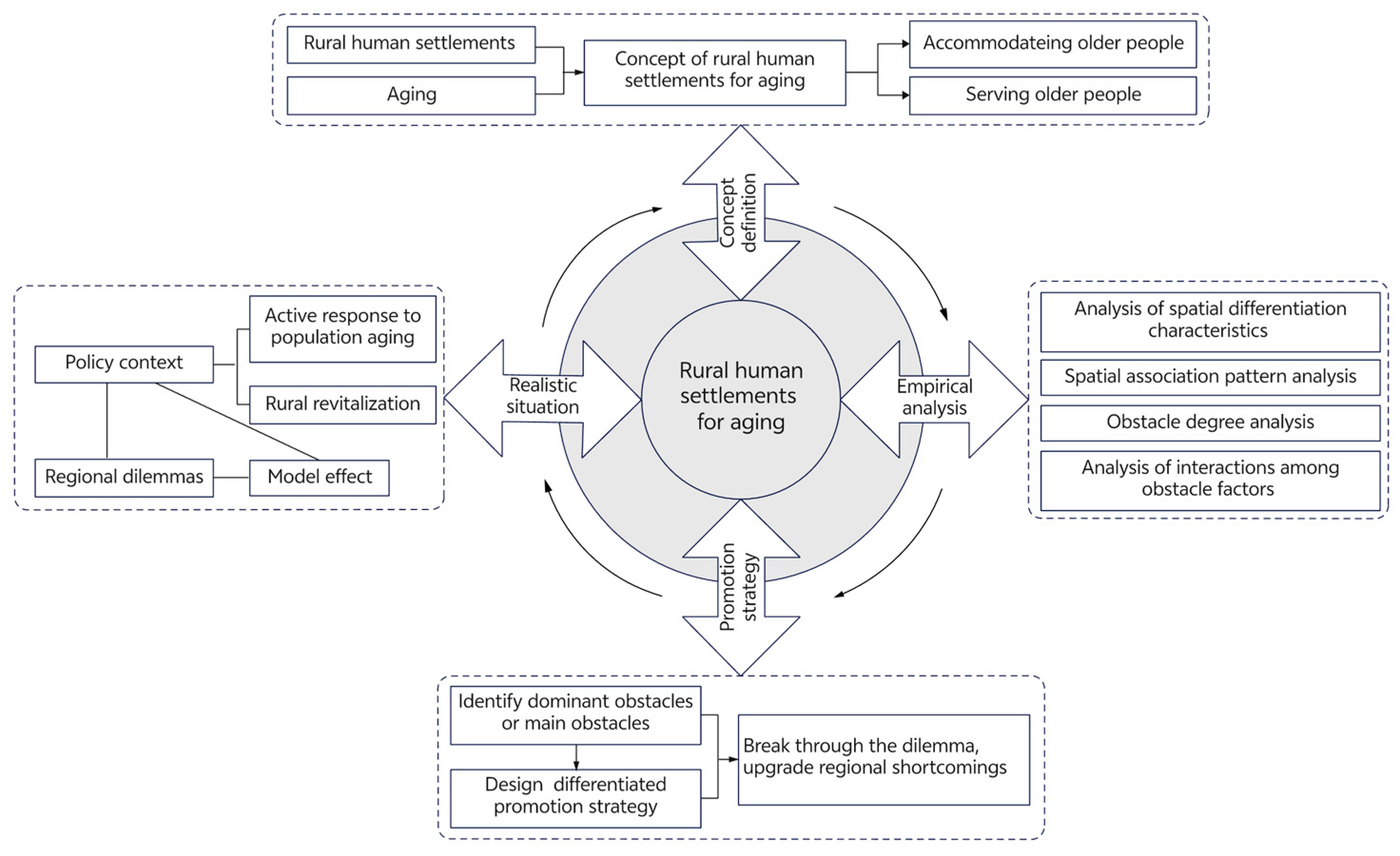
Figure 1. The research strategy adopted in this study.
Sustainability 18 03048 g001
Figure 2. Location of the study area.
Sustainability 18 03048 g002
Figure 3. Spatial differentiation characteristics of the level of rural human settlements for aging in Chongqing in 2023.
Sustainability 18 03048 g003
Figure 4. Spatial differentiation characteristics of the level of material dimensions in Chongqing in 2023.
Sustainability 18 03048 g004
Figure 5. Spatial differentiation characteristics of the level of non-material dimensions in Chongqing in 2023.
Sustainability 18 03048 g005
Figure 6. Moran scatter plot (a) and LISA of the level of rural human settlements for aging in Chongqing (b) in 2023.
Sustainability 18 03048 g006
Figure 7. LISA of the level of material dimensions in Chongqing in 2023.
Sustainability 18 03048 g007
Figure 8. LISA of the level of non-material dimensions in Chongqing in 2023.
Sustainability 18 03048 g008
Figure 9. The proportion of obstacles in promoting rural human settlements for aging in Chongqing in 2023.
Sustainability 18 03048 g009
Table 1. The evaluation index system for measuring the level of rural human settlements for aging.
System LayerIndexSignificance of IndexIndex
Unit
Index
Weigh
Material dimensionsLiving space X1: Proportion of aging-adapted households of older adults with special difficulties (+)Characterizing the level of housing adaptations for older adults%0.0092
X2: Miles of “ Four Good Rural Roads” per 10,000 people in rural areas (+)Characterizing the level of rural road constructionkm/10,000
people
0.0603
X3: Rural per capita housing area (+)Characterizing the residential
living environment
m2/per
person
0.0531
X4: Rural sanitary latrine penetration rate (+)Characterizing the cleanliness around living space%0.0146
Elderly service
facilities
X5: Coverage rate of village mutual aid senior care points (+)Characterizing the distribution of specialized and integrated elderly care service institutions%0.0218
X6: Coverage rate of township senior care service centers (+)Characterizing the distribution of self-managed and mutual-aid elderly care facilities%0.0995
X7: Coverage rate of village centralized care facilities for disabled special hardship cases (+)Characterizing the distribution of care facilities for elderly individuals with disabilities%0.1305
Cultural and sports service facilitiesX8: Coverage rate of village reading rooms (+)Characterizing the distribution of rural reading rooms%0.1014
X9: Number of cultural and sports venues per 10,000 population (+)Representing the level of cultural and sports environment-0.0855
Non-material dimensionsProtection and welfareX10: Amount of Old Age Allowance for persons aged 80 and above (+)Representing the level of financial welfare support for the elderlyyuan 0.0135
X11: Coverage rate of basic pension insurance (+)Characterizing the social coverage of pension insurance%0.0290
X12: Income remitted or brought back by rural migrant workers (+)Represents a household’s financial capacity to support elderly careyuan0.0489
Health
and
safety
X13: Forest cover (+)Characterizing the level of forest greening%0.0335
X14: Number of healthcare personnel per 10,000 people (+)Characterizing medical service capabilitiesper 10,000 people0.0574
X15: Number of road traffic accidents per 10,000 people (−)Characterizing the traffic
safety environment
-0.0172
X16: Criminal case clearance rate (+)Representing the social
security environment
%0.0355
Relations and
social
X17: Number of cases of mediated marital and family disputes per 10,000 people (−)Representing the harmony of family relationships-0.0427
X18: Number of cases of mediated neighborhood disputes per 10,000 people (−)Representing the harmony in neighborhood relations-0.0619
X19: Percentage of rural residents’ expenditure on recreation and socialization (+)Representing the engagement in entertainment and social activities%0.0351
Table 2. Interaction types of the interaction detectors.
Interaction CharacteristicsInteraction Types
q(X1 ∩ X2) > q(X1) + q(X2)Nonlinear enhancement
q(X1 ∩ X2) < min[q(X1), q(X2)]Nonlinear weakening
q(X1 ∩ X2) > max[q(X1), q(X2)]Bi-factor enhancement
min[q(X1), q(X2)] < q(X1 ∩ X2) < max[q(X1), q(X2)]Bi-factor weakening
q(X1 ∩ X2) = q(X1) + q(X2)Independent
Table 3. Pearson correlation coefficient analysis comparing entropy weighting method and equal weighting method.
Comprehensive ScoreMaterial DimensionLiving SpaceElderly Service FacilitiesCultural and Sports Service FacilitiesNon-Material DimensionProtection and WelfareHealth and SafetyRelations and Social
Pearson’s r0.988 0.979 0.925 0.931 0.999 0.994 0.971 0.978 0.999
p0.000 0.000 0.000 0.000 0.000 0.000 0.000 0.000 0.000
ranking differences fall within five positions353629313733353337
Table 4. Pearson correlation coefficient analysis comparing entropy weighting method and CRITIC weighting method.
Comprehensive ScoreMaterial DimensionLiving SpaceElderly Service FacilitiesCultural and Sports Service FacilitiesNon-Material DimensionProtection and WelfareHealth and SafetyRelations and Social
Pearson’s r0.964 0.928 0.930 0.799 0.999 0.938 0.958 0.826 0.999
p0.000 0.000 0.000 0.000 0.000 0.000 0.000 0.000 0.000
ranking differences fall within five positions323032283723362537
Table 5. Moran’s I index of material, non-material dimension and their sub-dimensions.
Material DimensionLiving SpaceElderly Service FacilitiesCultural and Sports Service FacilitiesNon-Material DimensionProtection and WelfareHealth and SafetyRelations and Social
Moran’s I0.2860.0080.2580.3860.4450.3970.3470.494
Z3.3092.3302.9244.2914.5994.0903.6575.078
p0.0060.0050.0100.0020.0010.0010.0030.001
Table 6. Kappa coefficient analysis comparing contiguity edges corners method and inverse distance weighting method.
Comprehensive ScoreMaterial DimensionLiving SpaceElderly Service FacilitiesCultural and Sports Service FacilitiesNon-Material DimensionProtection and WelfareHealth and SafetyRelations and Social
κ0.6670.7830.60.7730.680.7010.8550.6230.737
Z5.6787.0365.2266.5555.4366.1416.2944.5846.616
p0.000 0.000 0.000 0.000 0.000 0.000 0.000 0.000 0.000
Table 7. p-values and q-values of primary obstacle factors.
X5X7X8X9X12X14X16
q0.8200.9710.8200.6810.8760.8860.735
p0.0000.0000.0030.0060.0080.0000.004
Table 8. Interactions of obstacle factors in promoting rural human settlements for aging in Chongqing in 2023.
X1X2X3X4X5X6X7X8X9X10X11X12X13X14X15X16X17X18X19
X10.420
X20.6750.394
X30.7690.5950.166
X40.8990.8110.6730.314
X50.9030.8910.9000.8670.820
X60.6380.6570.5210.5280.8860.093
X70.9760.9780.9850.9830.9810.9810.971
X80.9030.8910.9000.8670.8250.8860.9810.820
X90.8940.9800.8980.7320.8930.8480.9780.8930.681
X100.7870.4710.4600.4550.8880.4280.9810.8880.7250.119
X110.5860.5310.4400.4970.9050.3500.9810.9050.7480.2880.032
X120.9140.9270.9410.9060.9450.9360.9750.9450.9400.9870.9880.876
X130.8090.7730.7600.6140.8750.6490.9840.8750.9180.5460.5960.9580.364
X140.9210.9320.9600.9240.9460.9370.9770.9460.9430.9350.9130.9060.9540.886
X150.9320.9530.9300.8880.9520.8900.9830.9520.9420.8130.8140.9110.8150.9150.789
X160.8780.7570.8570.8830.8940.7990.9810.8940.9420.6850.6640.8910.8330.8920.9180.636
X170.7550.5530.6360.7970.9070.8240.9850.9070.9270.4450.4950.9150.6070.9140.8270.7630.094
X180.6800.7540.5640.7420.9710.5040.9810.9710.9180.4560.3540.9300.7900.9370.8600.7180.6570.184
X190.6990.6240.4870.6730.9370.5710.9800.9370.8690.5380.1770.9100.6390.9160.8540.6600.4600.4820.127
Table 9. Classification of promotion pathways for 37 districts and counties in Chongqing.
ClassificationDominant Obstacle or Main ObstaclesArea
Facility enhancement
type
Living space single dominant obstacleBeibei
Elderly service facilities single dominant obstacleJiangjin, Fuling
Elderly service facilities-cultural and sports service main obstaclesWushan
Living space-elderly service facilities main obstaclesTongliang, Dazu, Nanchuan, Yunyang
Living space-cultural and sports service main obstaclesDianjiang, Tongnan, Shizhu, Zhong
Living space-elderly service facilities-cultural and sports service main obstaclesWuxi
Characteristic amplification
type
Health and safety single dominant obstacleJiangbei, Wanzhou, Shapingba
Relations and social single dominant obstacleChangshou, Qianjiang, Yongchuan, Dadukou
Protection and welfare-health and safety main obstaclesFengdu, Jiulongpo
Health and safety-relations and social main obstaclesKaizhou, Fengjie, Yubei, Liangping, Nanan
Comprehensive upgrading
type
Living space-health and safety main obstaclesBishan
Elderly service facilities-relations and social main obstaclesWulong, Rongchang
Cultural and sports service-health and safety main obstaclesHechuan
Cultural and sports service-protection and welfare main obstaclesBanan
Living space-elderly service facilities-protection and welfare main obstaclesYouyang
Elderly service facilities-cultural and sports service-health and safety main obstaclesXiushan, Chengkou
Cultural and sports service-protection and welfare-health and safety main obstaclesQijiang
Cultural and sports service-protection and welfare-relations and social main obstaclesPengshui
Disclaimer/Publisher’s Note: The statements, opinions and data contained in all publications are solely those of the individual author(s) and contributor(s) and not of MDPI and/or the editor(s). MDPI and/or the editor(s) disclaim responsibility for any injury to people or property resulting from any ideas, methods, instructions or products referred to in the content.