Article

Brand Trust as Value Chain Governance: How Perceived Consumer Demand Reshapes Profit Distribution in Mongolia’s Cashmere Industry


School of Economics and Management, Zhejiang Sci-Tech University, Hangzhou 310018, China
*
Author to whom correspondence should be addressed.
Sustainability 2026, 18(6), 2970; https://doi.org/10.3390/su18062970
Submission received: 29 December 2025 / Revised: 24 January 2026 / Accepted: 29 January 2026 / Published: 18 March 2026

Abstract

This study examines brand trust as a governance mechanism within the Mongolian cashmere value chain and explores its impact on profit distribution and business relationships. Using a qualitative methodology involving key stakeholder interviews, document analysis and case studies, the study shows that brand trust acts as a powerful form of soft power. It institutionalises values such as ethical sourcing and sustainability, which simultaneously strengthen consumer loyalty and reconfigure power dynamics upstream. Transparency and traceability are the tools that enforce compliance with brand standards. These findings extend global value chain theory by incorporating intangible factors such as trust and reputation into models of value creation and distribution. Consequently, policies aimed at enhancing brand trust are presented as a viable strategy to promote sustainable and equitable outcomes in similar resource-based sectors.

1. Introduction

Entrepreneurship is booming in Mongolia, with startups spearheading the development of new products and brands. With 3319 new trademarks registered in a single year, the Intellectual Property Office’s official data reflects this trend and adds to the total of over 71,000 legally protected Mongolian and international brands. A significant portion of companies still operate without official registration in spite of this expansion, frequently as a result of inadequate institutional support and a lack of legal knowledge. To create a distinctive brand identity and improve one’s standing in the market, it is essential to register a trademark and protect intellectual property rights. Strong branding affects not only company performance like stock returns, market share, and investor confidence [1], but consumers are also willing to pay more for well-known brands. These factors demonstrate the long-lasting significance of brand equity.
Despite being the second-largest producer of premium raw cashmere in the world, Mongolia only receives a small portion of the value created by this luxury commodity. Less than 15% of its cashmere is processed domestically; the majority is exported as raw material, with China and Italy accounting for the majority of value-added activities. This export-focused approach has limited Mongolia’s capacity to retain economic gains at home and impeded local industrial upgrading. Global demand is changing, though, and this opens up new opportunities. Customers are favoring brands that prioritize environmental sustainability, cultural authenticity, and supply chain transparency. By employing brand trust as a tactical instrument, Mongolian producers can take advantage of these trends and increase their domestic market share.
The role of brand trust as a form of governance has been studied in the past, including by [2], who looked at how eco-friendly practices and quality assurance contribute to trust. The study analyzes trust as a dynamic and useful form of governance using [3] trust scale in conjunction with Interbrand’s brand valuation framework. Early research on brand equity, such as the seminal work of [1], frequently ignored the relational and perceptual aspects of consumer trust in favor of financial valuation techniques like projecting future revenue attributable to a brand. While Mongolia is known worldwide as a producer of premium raw cashmere, it remains peripheral in the global value chain (GVC), with most value addition occurring abroad. Prior research has emphasized the role of quality assurance and sustainability in building consumer trust [2], yet a critical gap remains.
This study addresses a significant gap in the literature. While extensive research documents the existence and marketing benefits of brand trust and ethical sourcing (e.g., consumer loyalty, price premiums), little attention has been paid to how these intangibles function as active governance tools that reconfigure power and redistribute profits within global value chains (GVCs). Prior work often treats trust as an outcome at the consumer-firm interface or a compliance requirement. We shift the focus, investigating brand trust as a system of ‘soft’ governance that coordinates inter-firm behavior in contexts of weak formal institutions. Our contribution is to re-theorize brand trust from a passive asset to an active governance mechanism within GVC theory, using Mongolia’s cashmere industry as a critical case. Consequently, this study moves the debate on sustainable GVCs from a focus on compliance with standards to an analysis of governance through intangible assets. We demonstrate that in the 21st-century economy, consumer-facing narratives are not just marketing but a source of regulatory power, enabling peripheral producers to rewrite the rules of value capture. This reconceptualization provides a new lens for understanding development in resource-rich economies by seeking to answer the following research questions:
Research Questions
  • How does value chain governance in Mongolia’s cashmere industry depend on brand trust?
  • How much does consumer trust help with functional upgrading and value retention?
  • In what ways do brand-mediated, trust-based governance mechanisms redistribute profits?
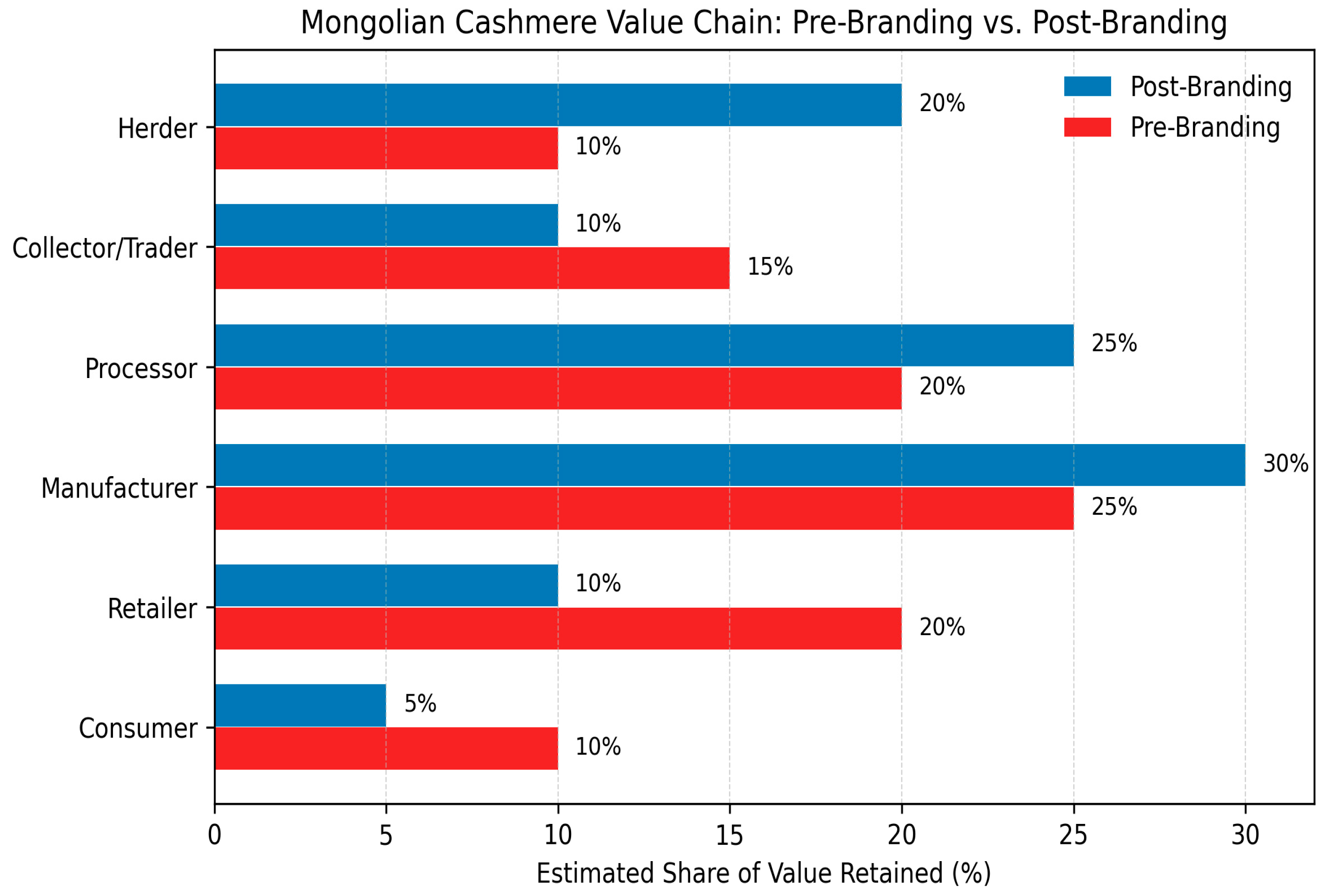
In the Mongolian cashmere value chain, brand trust plays a crucial governance role, as the figure illustrates. All parties involved in this system, from herders to final consumers, cultivate informal relationships with one another rather than using formal contracts. Local bargaining power is significantly increased by this mechanism, which incorporates ethical narrative, transparency, and stability into the chain. Figure 1 emphasizes how trust has two distinct functions: it is both an active regulatory framework that regulates social and economic interactions and a resultant product. Raw material exports with little domestic value addition were the industry’s defining feature prior to branding. The majority of profits were taken by foreign processors, international brands, and intermediaries, limiting Mongolian herders to only 10–15 percent of the final product value.
On the other hand, the post-branding scenario shows a significant rise in domestic value capture. Authentic storytelling, certified ethical sourcing, full traceability, and other trust-building techniques help vertically integrated businesses secure a larger share of the total value created. This allows domestic manufacturers to keep about 35–40 percent more value by managing higher-margin operations like design, production, and direct sales, while also enabling premium payments and long-term partnerships for herders. This shift demonstrates how brand trust acts as an unofficial institutional force that facilitates significant economic upgrading for resource-dependent economies by rebalancing power dynamics within global production networks.

2. Literature Review

2.1. Brand Trust in Consumer Research and Valuation Models

Consumers’ willingness to rely on a brand, impacted by its perceived competence, dependability, and integrity, is commonly referred to as brand trust [4]. Traceability, authenticity of origin, and socially conscious production methods are some of the factors that affect trust in markets that place a high value on ethics and luxury. Trust in luxury and ethical marketplaces is based on traceability, origin authenticity, and ethical behavior [5]. Researchers have created a variety of methods to gauge a brand’s worth and credibility over the last thirty years. In 1998, Refs. [6,7,8,9] proposed basic consumer-based brand equity models that include brand associations, loyalty, developed awareness, and perceived quality. The integrated nature of Interbrand’s work is particularly distinctive in that it connects a brand’s financial performance and strategic planning to how consumers view it.

2.2. The Evolution and Limitations of Brand Equity Valuation

The academic and professional pursuit of measuring brand equity has yielded diverse models, traditionally categorized into three core approaches: financial, consumer-based, and hybrid [10].
  • Financial and Market-Based Approaches. These models prioritize quantifying brand value in monetary terms for balance sheets, transactions, or investor communication. Comparative market methods estimate value by benchmarking against similar brands, yet they often overlook unique brand perceptions [11]. Cost-based and residual value models allocate a portion of a firm’s market value to its brand but are criticized for their rigidity and inability to capture the intangible drivers of future earnings [1,6]. While instrumental for financial reporting, these approaches largely treat brand equity as a downstream financial outcome, offering limited insight into the governance mechanisms that create it.
  • Consumer-Centric Approaches. In contrast, these models focus on the perceptual foundations of brand value. Brand Equity Ten [6] and Customer-Based Brand Equity (CBBE) Pyramid [7] identify core components like brand awareness, loyalty, perceived quality, and associations. Brand Identity Prism [8] further details how a brand’s constructed identity shapes these associations. These frameworks excel at mapping the cognitive architecture of brand equity but are often disconnected from concrete financial performance metrics.
  • Hybrid and Comprehensive Models. To bridge this gap, integrative models have emerged. Notably, Interbrand’s valuation methodology and similar frameworks combine projected financial earnings with an analysis of the brand’s role in driving purchase decisions and its strength in the market [12]. These models acknowledge that brand value originates in consumer perception but must be validated through financial performance.
The Identified Gap: Governance Through Brand Trust. Despite this evolution, a predominant focus remains on measuring the financial manifestation of brand equity or its static perceptual components. Few models delve deeply into the dynamic relational process where brand equity is governed and sustained. Specifically, the role of brand trust defined as a consumer’s confident reliance on a brand based on its perceived competence, integrity, and benevolence [4] is under-theorized as a governance mechanism. Trust reduces transaction costs, mitigates risk, and fosters loyalty, actively governing the relationship between consumer perception and long-term brand value [13]. This governance function is particularly critical in institutional contexts characterized by higher perceived risk, such as resource-based or emerging economies like Mongolia, where consumer reliance on trustworthy signals is paramount. The current literature lacks a focused examination of how brand trust operates as this crucial upstream governance variable, linking corporate actions (e.g., sustainability pledges) to downstream brand equity in such unique environments.

2.3. Global Value Chain (GVC) Theory

Ref. [14] defined the GVC theory investigates the global coordination of production and distribution. Suppliers are reduced to a low-margin role in buyer-driven chains because branding and quality control are centralized with the top companies. Upgrading possibilities exist, but they rely on manufacturers assuming more strategic roles. The transition to brand-driven governance in Mongolia signifies a change from a supporting supplier to a key player. examines how production and distribution are coordinated across international networks. Based on the degrees of control and coordination between lead companies and their suppliers, it divides governance into five categories: market, relational, captive, modular, and hierarchical. In buyer-driven chains, producers are relegated to low-margin positions like raw material suppliers while leaders concentrate on branding, product design, and quality control. However, suppliers have an advantage thanks to pathways to functional, product, process, and industry upgrading.
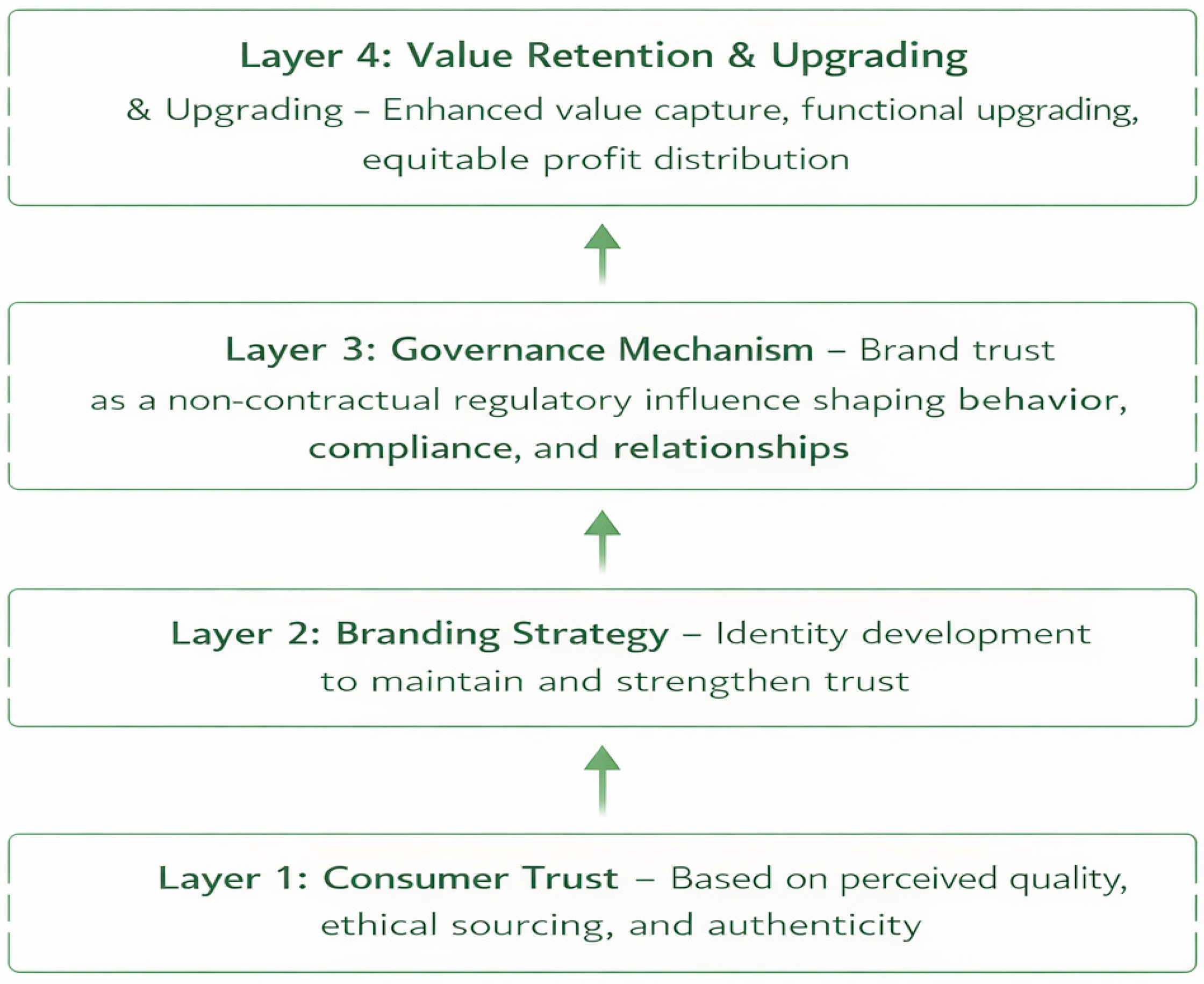
In order to help Mongolian cashmere producers move from being ancillary suppliers to key players in the value chain, this study offers a conceptual framework that reinterprets brand trust as a type of soft governance as shown in Figure 2. Four interconnected layers make up the framework.

2.4. Trust as Governance

Trust often makes up for the lack of strong legal frameworks in situations where formal institutions are weak, reducing transactional risks and promoting stability in business dealings [3,15]. According to [3] Hirose, this type of trust is “relational capital”, an intangible but vital resource developed via consistent communication, openness between parties, and shared cultural significance. This is particularly important in identity-sensitive industries like textiles, where trust functions as a strong but unofficial governance mechanism that affects both the power dynamics between suppliers and buyers as well as production standards. Deliberate attempts to establish brand trust in the Mongolian cashmere industry through operational transparency, sustainability pledges, and cultural narrative can successfully ensure upstream compliance without a significant reliance on formal regulation. Trust thus serves two purposes: it increases end-user loyalty. Specifically, brand trust is crucial in what could be called the “price chain regime”, where it acts as a key informal institution influencing actors’ communication and distribution of profits. Although formal structures and power imbalances are the focus of traditional analyses of such regimes [14,16], an increasing amount of research emphasizes the importance of informal governance, which includes social norms, trust, and shared ethical values, in forming business relationships [17,18]. As a relational form of governance, brand trust promotes cooperation and openness by utilizing consumer perceptions and credibility [19]. By grounding expectations in moral and social obligations rather than the ability to be enforced by the law, this reduces transaction costs and stops opportunistic behavior [20,21]. Trust affects downstream margins and bargaining power as well as blends in this way. These relational dynamics promote adherence to social norms rather than just contractual ones, which reduces uncertainty and transaction costs [22]. For example, rather than due to legally binding contracts, herders may continuously provide premium raw cashmere because they wish to continue to be associated with a reliable brand. Similarly, even in the absence of direct monitoring, supplier behavior is aligned with brand values through normative incentives such as brand commitments to sustainability and authenticity. This system is further strengthened by mechanisms for traceability and transparency. These tools increase brand trust by empowering customers to validate ethical and quality claims, which puts pressure on suppliers to meet expectations [16]. Trust serves as a collective regulatory mechanism within the price chain in this way, frequently taking precedence over formal contractual rules and having a direct impact on how profits are allocated among participants.

2.5. Integrating Consumer Sentiment and Firm-Level Governance: A Transmission Model

This study bridges the consumer-firm and inter-firm levels by conceptualizing brand trust as a transmission mechanism of governance. We do not conflate these levels but analyze the causal chain between them: a core yet often implicit dynamic in GVCs. The model posits that aggregated consumer sentiment (demand for ethics, authenticity) creates a market signal. Firm-level strategy (brand positioning, sourcing standards) interprets and institutionalizes this signal. Finally, this strategy is enacted as inter-firm governance over upstream suppliers (herders, processors), affecting compliance, pricing, and value distribution. Therefore, consumer perception is treated as the critical exogenous input, mediated and enacted by firms. This integrated perspective is essential to explain how distant market preferences reshape power and profit in localized production networks, moving beyond studies that examine only one end of this chain.

2.6. Analytical Framework: Synthesizing Interbrand, Ethical Branding, and GVC Governance

The literature on ethical consumption emphasizes how consumers are increasingly drawn to companies that support ethical labor practices, environmental concerns, or socially conscious behavior [23,24]. In addition to improving brand recognition and removing obstacles to entry, this alignment also boosts customer retention, which raises the price the business can charge. According to Interbrand’s study, a brand’s long-term value is significantly influenced by its perceived integrity, which is defined as how closely a brand’s declared, intended, or actual behavior aligns with human values. Shared values are another source of emotional attachment and loyalty in addition to product attributes. Resource-based economies benefit from ethical branding as a competitive advantage. In addition to allowing their brand identity to include ethical values, Mongolian cashmere producers are able to stand out in competitive markets.

3. Methodology

Semi-structured interviews, participant observation, and secondary data analysis are used to support the qualitative-dominant, literature-centered design of this study. In line with constructivist epistemologies that prioritize meaning-making in socioeconomic systems, this method makes it easier to conduct a thorough analysis of trust-based governance in the Mongolian cashmere industry [25].

3.1. Justification for a Qualitative-Dominant Approach

A qualitative-dominant approach was selected as the most appropriate methodology to achieve the research objectives. While brand trust can be measured quantitatively as a construct, the processes by which it governs inter-firm relations, enforces standards, and redistributes value are complex, context-bound, and not yet sufficiently modeled. Quantitative studies excel at confirming correlations (e.g., between trust and purchase intention) but are less suited to uncovering the relational mechanisms and strategic interpretations that link consumer perceptions to upstream profit distribution. This study seeks to open the ‘black box’ of this governance process. Semi-structured interviews are essential to capture the nuanced, often informal, negotiations and power dynamics between herders, processors, and brands that quantitative data would miss. Thus, the qualitative approach is justified not by the novelty of the concepts but by the underexplored nature of their function as a governance system within a specific GVC.

3.2. Theoretical Framework

The theories and models of global value chain (GVC) governance, ethical branding, and brand trust were compiled through a critical literature review as shown in Table 1. The framework was informed by two analytical stances: Interbrand’s valuation methodology, recognized by ISO 10668 for monetary brand valuation, incorporates financial metrics and consumer perception [26]. Financial analysis, brand influence, and brand strength are the three pillars that its framework emphasizes. Brand strength is assessed using a variety of weighted criteria, including marketing support, global reach, stability, and leadership (see Table 2). The trust-oriented governance model developed by [3] views trust as a type of soft regulation and relational capital. The [27] report on the Turkish textile industry provided insights that supplemented these frameworks. The report highlighted governance as social regulation that impacts labor, sustainability, and upgrading, in addition to economic coordination.
The theories and models of global value chain (GVC) governance, ethical branding, and brand trust were compiled through a critical literature review. The analytical framework for this study was informed by two complementary stances:
Interbrand’s valuation methodology, recognized by ISO 10668 for monetary brand valuation, incorporates financial metrics and consumer perception [26]. For this study, we focus on the three core pillars of its framework which are Financial Analysis, Brand Influence, and Brand Strength as they provide a direct analytical bridge between brand value and GVC governance. Specifically:
Financial Analysis quantifies the economic outcome of governance, measuring the value retained by trusted brands.
Brand Influence captures the source of governance power, reflecting the consumer loyalty that allows brands to dictate upstream standards.
Brand Strength (assessed via weighted criteria like leadership, stability, and global reach see Table 2) represents the brand’s structural capacity to enforce norms and coordinate actors across the chain.
This brand-centric view is complemented by the trust-oriented governance model developed by [3], which views trust not as an outcome but as a dynamic form of soft regulation and relational capital. This model explains how the influence and strength identified by Interbrand are operationalized within value chain relationship through informal norms, reputational incentives, and relational enforcement.
Finally, insights from the [27] report on the Turkish textile industry supplement these frameworks by explicitly highlighting governance as a form of social regulation that impacts labor, sustainability, and economic upgrading, in addition to mere coordination. This perspective ensures our analysis captures the socio-economic dimensions of brand-led governance in Mongolia’s cashmere sector.
In synthesis, this integrated framework allows us to trace a clear governance logic: Brand Strength (Interbrand) establishes the capability, which is enacted through Trust (Hirose) as a relational mechanism, to achieve tangible Financial and developmental Upgrading outcomes (Interbrand/UNDP) within the GVC.
The relative impact of each factor on financial performance is indicated by its weight. Leadership and global reach, for example, receive the highest scores (25 each), indicating pricing power and market resilience. Because it has an indirect impact on brand value, protection, despite being crucial for risk mitigation, gets the lowest rating. The combination of these scores determines a brand’s strength score, which in turn affects the discount rate used in valuation. The higher the brand’s estimated value, the lower the perceived investment risk. Along with the brand valuation frameworks developed by [3,26], this study also draws on a larger body of research on value chain development that emphasizes the complex nature of governance in international production networks. Value chains function as both social governance systems and economic structures, as demonstrated in the UNDP report on the Turkish textile industry from 2021. A comparative framework that places the Mongolian cashmere sector’s transition to brand-driven governance within a global textile framework is provided by the UNDP report, which further divides governance types into buyer-driven and producer-driven chains. Furthermore, the study’s conclusions about the importance of ethical branding and transparency in enhancing operational control and domestic value retention are reflected in the report’s emphasis on upgrading trajectories, which include functional upgrading through expanded production roles and social upgrading through improved labor standards. The UNDP report’s main findings are as follows: No Common Standards for Sustainability: The report highlights the lack of standard guidelines for Mongolia’s sustainable cashmere production. This gap causes herders, producers, traders, buyers, and brands to act in fragmented ways, which can make it challenging to ensure ethical social, environmental, and economic practices.
Threats and Concerns: Goat overgrazing has harmed the environment and reduced biodiversity. Additionally, because pastoralism is a market-based profession, farmers experience unstable incomes due to shifting market prices and demands. Market Demand for Sustainability The importance of sustainability in cashmere sourcing is becoming more widely recognized by international consumers and brands. However, in order to accomplish this, there must be more standardization and visibility of practices, which are currently lacking. A unified vision is necessary for establishing and executing sustainable cashmere production standards, according to the report. Two of the biggest obstacles to the supply chain are its complexity and its inability to trace back to the herders. Value Chain Governance Talk about the ways that governance across the cashmere value chain is impacted by the absence of consistent sustainability standards. a focus on bringing disparate parties together who have nothing in common. Consumer Attitude and Profit Allocation: Examine how the rising demand for sustainable products by consumers influences the distribution of profits. It is true that companies that are committing to sustainability might be able to charge more, but the herders who are using this practice will not benefit financially if there is no traceability or way to track from the point of collection to the production process. Brand Trust: Examine how brand trust can serve as a mechanism for value chain governance. The same companies that consumers perceive to be most dedicated to sustainability can spread back up the supply chain and inform producers and herders that consumers will only purchase their goods.

3.3. Semi-Structured Interviews

A total of 28 semi-structured interviews were conducted with key stakeholders in the Mongolian cashmere value chain: Nomadic herders (n = 14), including both independent herders and cooperative members, selected to capture geographic diversity (Gobi Desert, Arkhangai, Bayankhongor, Khovd). Executives of vertically integrated brands (n = 6), including GOBI, EVSEG, Cashmere Holding, Arig Gal, and Natural Textile Group. GOBI and EVSEG were prioritized because they are the largest and most internationally visible firms, serving as representative cases of brand-led, vertically integrated governance. Government policymakers and advisors (n = 4), specializing in trade, industry, and rural development. NGO representatives and branding/value chain consultants (n = 4), offering external perspectives on sustainability and consumer perception. Based on the literature review, the interview guide was developed with the following topics in mind: (1) the role of brand trust in establishing inter-firm relationships; (2) adherence to quality and sustainability standards; and (3) profit allocation dynamics. Purposive sampling [28] was used as the sampling strategy to guarantee coverage of a range of organizational structures and roles. Despite the sample’s small size, its diversity of roles and abundance of references allowed for a thorough capture of the intricate connections between governance, trust, and value distribution. Saturation: Interviews were conducted until recurrent themes became apparent, indicating that thematic saturation had been achieved [29].

3.4. Data Collection: Interviews, Sampling, and Protocol

Guided by the governance transmission model outlined in Section 2.5, data collection focused on firm-level actors (brands, herders, processors) as the primary sites where consumer sentiment is interpreted and transformed into governance practice.
To investigate the on-the-ground dynamics of brand trust and governance, this study employed semi-structured interviews as a primary data collection method. A total of 28 interviews were conducted between June and September 2025 with key stakeholders across the Mongolian cashmere value chain. Participants were selected through purposive sampling to ensure representation of critical roles and perspectives [29]. The participant breakdown was as follows:
Nomadic Herders (n = 14): Including both independent herders and cooperative members from major cashmere-producing regions (Gobi Desert, Arkhangai, Bayankhongor, Khovd) to capture geographic and operational diversity.
Brand Executives (n = 6): Senior leaders from vertically integrated firms, namely GOBI, EVSEG, Cashmere Holding, Arig Gal, and Natural Textile Group. GOBI and EVSEG were prioritized as representative cases due to their market leadership and international visibility, exemplifying brand-led governance models.
Government Policymakers (n = 4): Officials and advisors specializing in trade, industry, and rural development policy.
NGO Representatives and Consultants (n = 4): Experts providing external perspectives on sustainability standards, branding, and value chain development.
The interview guide was developed based on the thematic framework from the literature review. The semi-structured format ensured core themes were addressed while allowing for probing follow-ups. Examples of primary guiding questions include:
For Herders/Processors: “Can you describe your relationship with the brands you supply? What role does mutual understanding play compared to a formal contract?”; “Has a brand ever asked you to change your practices (e.g., for sustainability)? What motivated your decision to comply?”
For Brand Executives: “How do you communicate your brand’s story of authenticity and sustainability, and how do you verify these claims upstream?”; “Do you perceive consumer trust as a tool for influencing your suppliers’ behavior and standards?”
For Policymakers/Consultants: “What are the main barriers preventing Mongolian producers from capturing a greater share of the final retail value?”
Interviews were conducted until thematic saturation was achieved, with recurrent patterns emerging clearly across the dataset, indicating that sufficient depth and breadth had been captured for robust analysis. The strategic selection of information-rich participants from across the value chain ensured a comprehensive exploration of the complex linkages between trust, governance, and economic upgrading.

3.5. Operationalizing Consumer Perception

This study operationalizes the critical variable of consumer perception through the lens of value chain actors, rather than via direct consumer surveys. Our methodological focus is on how consumer demand is interpreted, internalized, and enacted by firms as a governance mechanism. Data on consumer perception is derived from three interlinked sources within the chain: (1) Brand executives’ firsthand accounts of how they perceive and strategically respond to consumer values (e.g., ethics, traceability); (2) Corporate documents (brand narratives, marketing campaigns, sustainability reports) that constitute the primary channel through which firms communicate with and shape consumer perception; and (3) Expert analyses from consultants and NGO reports detailing market trends. This approach allows us to trace how perceived and anticipated consumer sentiment is translated into tangible business practices, contracts, and standards upstream, which is the core governance process under investigation.

3.6. Supplementary Methods: Observation and Secondary Data

To contextualize the interview data, limited participant observation was conducted during field visits to herder communities and industry events. Furthermore, secondary data analysis included corporate reports, NGO publications (e.g., UNDP reports), government trade statistics, and brand marketing materials. This triangulation of methods strengthened the validity and contextual richness of the findings.

3.7. Researcher Positionality and Reflexivity

Two levels of participant observation were used to lessen the dependence on self-reported narratives: direct observation of negotiation dynamics and compliance mechanisms during the signing of Herder-brand contracts in Bayankhongor and Arkhangai. visits to GOBI and EVSEG factories, where labor procedures and sustainability measures were recorded. In addition to interviews, these observations shed light on the discrepancy between corporate narratives and actual implementation.

3.8. Secondary Data and Case Documentation

To triangulate findings, multiple secondary sources were analyzed:
Financial data: Export prices (National Statistics Office of Mongolia) compared against retail margins of branded products (Interbrand, corporate disclosures). This enabled quantification of value retention across the chain. Corporate documents: Sustainability reports, brand narratives, and marketing campaigns of GOBI, EVSEG, and Cashmere Holding. NGO and trade reports: [27], Sustainable Fibre Alliance assessments, and sector-specific NGO studies

3.9. Addressing Potential Biases

The primary researcher is a Mongolia’s Cashmere Industry deep familiarity with the local pastoral and industrial context, which facilitated access and trust during interviews. To mitigate potential bias from this insider perspective, data interpretation was systematically discussed with the co-authors [one of whom is an external scholar, and the supervisor], and emerging themes were validated through member-checking with selected participants [30]. A reflective journal was maintained to document methodological decisions and assumptions throughout the research process. The following three possible sources of bias were discussed: Self-reporting bias: Herders and processors may exaggerate their adherence to standards. Cross-referencing with NGO reports and closely observing herder-brand interactions helped to lessen this.

3.10. Analytical Strategy

Observation notes, interview transcripts, and secondary documents were all thematically coded (using NVivo) in accordance with the three main research questions: redistribution, upgrading, and governance. Comparing the finances (export versus. retail prices) were included in the qualitative coding matrix to support assertions regarding the redistribution of profits. By ensuring both conceptual depth and empirical robustness, this mixed, triangulated approach makes it possible to analyze brand trust as a measurable governance mechanism influencing value chain outcomes in addition to as a perception.
Data from interviews, observations, and documents were imported into NVivo software for systematic analysis. An initial round of open coding identified emergent concepts. These were subsequently organized into a structured codebook aligned with the core research questions on governance, upgrading, and redistribution (axial coding). Finally, selective coding was used to refine the core categories and establish the relationships between them, as presented in the findings.

4. Findings

Positively, brand trust is a key mechanism that helps retain domestic values and promote sustainable practices through ethical sourcing, as well as capture a significant portion of profits [31]. Brands that prioritize traceability and transparency, for instance, attract astute global consumers and boost hero income by enhancing product authenticity. Nevertheless, difficulties are also brought about by the brand-interested governance’s decentralized structure. According to [18], the absence of a centralized regulatory body may result in inconsistent standards and a possible decline in the long-term stability of supplier relationships, which could erode the coordination of the entire price chain. Maintaining stakeholder trust and cooperation requires a careful balancing act between these dynamics. Mongolian brands also strategically use moral stories to set their wool products apart in the highly competitive global market. Using three emerging themes as a framework, this section presents the study’s core findings: (1) building trust through branding, (2) using brand trust as informal governance, and (3) enhancing functionality through brand-mediated relationships. These conclusions are supported by secondary financial data, stakeholder interviews, and document analysis.

4.1. Institutionalization of Trust Through Branding

Prominent Mongolian companies like GOBI and EVSEG strategically integrate trust into their brand image, as evidenced by stakeholder perspectives, company reports, and brand stories. These businesses create a symbolic value that speaks to the concerns of the global consumer by embracing a discourse of environmental sustainability, herder empowerment, and traceability. With an emphasis on transparency, ethical sourcing, and uniqueness as key components of brand strength, these narratives align with Interbrand’s values of authenticity and differentiation [26]. In addition to highlighting the product’s place of origin, the “From Herder to Runway” campaigns position the brand as a steward of ecological and cultural uniqueness. Trust is thus formalized as a relational norm and a strategic asset in brand appraisal.

4.2. Brand Trust as Informal Governance

The findings imply that even in the absence of official contracts, many herders and primary processors participate in these voluntary measures, despite the possibility that enforcement of environmental, animal welfare, and fiber quality requirements may be limited. Among the motivations mentioned in the interviews are the potential for improved access to the premium market and reputational advantages. Relational equity dictates value chain transactions over legal enforcement in what [32] calls trust-based governance, which is reflected in this pattern of behavior. One way to conceptualize this kind of trust between network actors is as soft governance that promotes stability and collaboration among decentralized actors. Herders said they would be just as pleased to follow brand-oriented procedures (e.g., A. not overgrazing, maintaining the separation of fiber classes), after they realized that their adherence would create legitimacy and continuity as a component of a broader value chain procedure.

4.3. Brand Valuation: Financial Models and Implications

There are two models that allows us to calculate how brand trust affects the bottom line:
Brand Strength Multiplier and the S-Curve Model
The Brand Strength Multiplier and the S-Curve Model are two models that enable us to determine the impact of brand trust on the bottom line. Ref. [26] shows the strength of a brand as a multiplier, typically displayed as an S-curve. Because stronger brands command higher price-to-sales ratios, these multiples capture the positive relationship between brand power and financial results. The logic is always the same: Stronger brands garner greater customer loyalty, lower risk premiums, and higher revenue projections. However, the maximum multiplier varies by industry and fluctuates with the market. Hirose’s model of brand valuation (Japan) The Ministry of Economy, Trade and Industry (METI) methodology in Japan employs the brand valuation model that was initially created by Professor Yoshikuni Hirose of Waseda University. It measures the expected profitability of an organization with and without recognizable branding in order to separate out the contribution of branding to financial results [32]. Investors and decision makers can assess the financial case for brand-making investments by using the method, which values the brand by comparing net returns with and without branding. In industries like cashmere, where product differentiation is otherwise very minimal, these models support the idea that trust-based branding is a quantifiable creator of value rather than merely a marketing gimmick.

4.4. Functional Upgrading Through Brand-Mediated Relationships

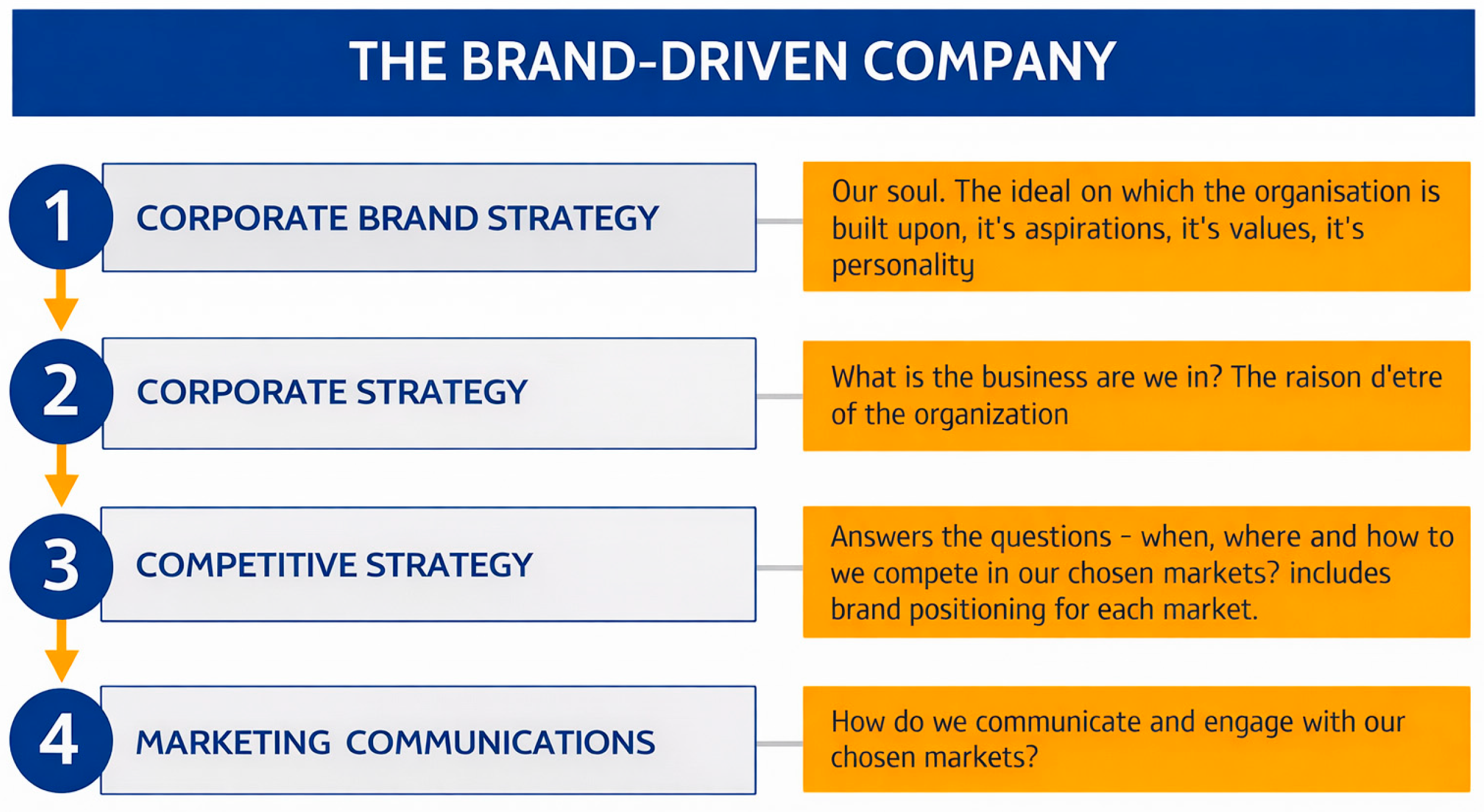
Vertically integrated cashmere companies in Mongolia have benefited from quantifiable profitability and increased governance autonomy by creating consumer-facing branding and using digital storytelling. Financial data leads us to the conclusion that these forms retain 35–40% more value domestically than exporters of raw fiber. According to [33], functional upgrading is the trend whereby businesses move from processing low-value volumes to extracting higher-valued ones through branding, market differentiation, and relational trust. It also backs up Interbrand’s assertion that authentic brand building will result in higher financial performance and future profits. This idea of high consumer awareness and loyalty to domestic companies of Mongolia’s textiles and apparel is, in fact, supported by some recent survey data [34]. In the third table, for example [34], over 65 percent of consumers who participated in the survey consider ethical production and product source to be important considerations when making purchases, which supports the significance of traceability narratives found in brand documentation. Additionally, we discover some evidence in Figure 3. The willingness to pay more and the frequency of repeat purchases are considerably higher for brands that are perceived as being more transparent and socially conscious. Customers’ desire for reputable brands aligns with the notion that brand trust is a type of governance that not only shapes consumer-producer relationships but also establishes standards for sustainability and quality throughout the value chain. This boosts the relatability.

5. Discussion

5.1. Cultural Specificities and Governance in Mongolia

Recognizing Mongolia’s distinct sociocultural and environmental context is essential when contrasting the country’s cashmere industry with that of Turkey [27]. Mongolian herders engage in semi-nomadic and nomadic pastoralism in delicate grassland ecosystems, in contrast to industrialized systems. Their customs place a strong emphasis on ecological balance, which influences consumer perceptions of authenticity and ethical production as well as the quality of raw cashmere. Although centralized enforcement is curtailed by this decentralized production system, local communities’ informal, trust-based regulation is strengthened. The textile industry in Turkey, on the other hand, depends on more centralized industrial governance. This analogy emphasizes how brand trust develops as a governance mechanism in Mongolia due to its cultural and ecological setting.

5.2. Brand Trust as Hybrid Governance

According to the results, brand trust in Mongolia’s cashmere value chain acts as a hybrid governance system, shifting power from foreign consumers to domestic brands like GOBI and EVSEG. In addition to achieving greater margins through relational trust and symbolic differentiation, these companies communicate credibility to global consumers through narratives of sustainability, authenticity, and traceability. In this case, brand-driven governance where Mongolian companies actively influence production standards and customer expectations replaces buyer-driven governance, which is dominated by external lead firms. These findings are consistent with a larger body of GVC literature that increasingly believes that governance encompasses social regulation as well as economic coordination [16,33].

5.3. Social Regulation and Developmental Governance

UNDP’s reports in 2016 and 2021 emphasize that value chains shape not only economic transactions but also labor conditions, migration flows, and sustainability practices. In Mongolia, brand narratives of herder empowerment and ecological sustainability substitute for formal regulation. This reflects the trend toward developmental governance, where governance mechanisms are used not just for compliance but also for upgrading, institution building, and inclusive value capture. Mongolia extends this argument by showing how intangible assets brand trust, authenticity, and relational capital enable functional upgrading. Local firms move beyond raw exports, retaining profits through branding and differentiated market positioning.

5.4. Consumer Perceptions and Traceability

Consumer survey data [34] highlight the importance of brand trust in sustaining customer loyalty and premium pricing. Perceived authenticity and transparency strongly influence willingness to pay (PWP), while consumers increasingly demand digital traceability tools and verifiable social responsibility commitments. Yet, the benefits remain unevenly distributed. Without standardized traceability and certification systems, many herders are excluded from the premiums generated downstream [35]. While brand-led sustainability initiatives enhance competitiveness, their redistributive effects remain fragmented and inequitable.

5.5. Trust as Relational and Institutional Governance

According to [32] model, Mongolian herders and processors adopt brand-aligned norms sustainable grazing, quality separation, timely delivery not through contracts but via relational embeddedness and reputational incentives. This is consistent with GVC theory, which emphasizes relational governance in contexts of weak institutional enforcement [33]. At the same time, trust is increasingly institutionalized through branding strategies, echoing [26] framework. Core elements such as authenticity, differentiation, and consistency transform intangible values into governance tools that stabilize supply relationships and reduce transaction costs.

5.6. Reframing Governance in GVCs

This study broadens the conceptualization of governance in GVCs by demonstrating how ethical branding and consumer-facing trust can substitute for hierarchical buyer control. Whereas traditional GVCs rely on contracts, audits, and compliance systems led by Northern buyers, Mongolia’s experience shows that branding enables producer-driven governance, with value captured closer to the source. This aligns with calls to expand GVC theory toward developmental governance [16], where governance serves local development and strategic autonomy. Mongolian firms are not only responding to consumer demand but actively reshaping value chain hierarchies through trust-based mechanisms grounded in cultural authenticity and ethical positioning.

5.7. Interpreting Figure 3: From Buyer-Driven to Brand-Driven Governance

Figure 3 illustrates the transition from buyer-led to brand-driven governance. Consumer perceptions particularly authenticity, sustainability, and ethical production shape brand evaluations, which in turn influence profit distribution. Enhanced transparency and traceability strengthen consumer loyalty and compel upstream suppliers to adopt higher standards. This cascade effect shows how consumer-driven trust mechanisms translate into tangible economic outcomes, increasing local autonomy and value capture in the Mongolian cashmere sector.

5.8. Future Research Directions

Future research should explore how trust-based governance operates in other Mongolian resource-dependent sectors, such as artisanal mining, indigenous farming, and handicrafts, where cultural authenticity and resource stability are equally important. Moreover, methodologies for measuring consumer trust need further development. Emerging technologies such as AI-based sentiment analysis, blockchain, and social media data mining offer promising tools for capturing real-time perceptions and institutionalizing trust in global value chains [36].

6. Conclusions and Policy Implications

This study establishes that brand trust functions as a transformative, intangible infrastructure for governance in global value chains. By empirically tracing how perceived consumer demand for ethics and authenticity is converted into bargaining power and profit redistribution in Mongolia’s cashmere industry, we provide a replicable model for ‘soft upgrading.’ This model challenges the deterministic view of peripheral producers in GVCs, showing that strategic branding can actively reconfigure chain hierarchies rather than merely adapting to them.
The study examines both the advantages and drawbacks of brand-led governance in Mongolia’s cashmere value chain. Brand trust directly links consumer perceptions to supplier practices, creating a feedback loop that enhances quality, coordination, and economic upgrading along the entire chain. The findings position brand trust as an active and under-researched mode of value chain governance, particularly vital in contexts characterized by weak formal institutions and structural dependency. For Mongolian firms, trust-based branding has become a strategic tool for ensuring quality control, improving supply chain coordination, and fostering a more equitable distribution of value among stakeholders. By leveraging narratives of authenticity, traceability, and sustainability, Mongolian brands are not only differentiating themselves in competitive global markets but are also actively reconfiguring traditional governance hierarchies within global value chains (GVCs).
This research makes distinct contributions that advance the existing literature in three key areas. First, it moves beyond the predominant view of brand trust as a mere marketing outcome or consumer sentiment. By synthesizing Interbrand’s valuation framework with Hirose’s trust-based governance theory, we reconceptualize brand trust as a dynamic, intangible asset that functions as a de facto governance mechanism. This bridges a significant gap between GVC governance literature which traditionally emphasizes lead-firm power, contracts, and standards and branding literature focused on equity and consumer perception. Second, it provides an empirical, context-rich analysis of how this trust-governance operates in a resource-dependent, peripheral economy. While prior studies [27] have noted the social dimensions of governance, our findings detail the precise mechanisms such as relational enforcement, reputational incentives, and narrative-driven value, captured through which intangible brand strength translates into tangible power shifts and profit redistribution (35–40% greater domestic value retention). Finally, the study offers a replicable analytical model. The integration of Interbrand’s pillars (Financial Analysis, Brand Influence, Brand Strength) with GVC upgrading trajectories provides future researchers with a framework to quantify and compare the governance role of intangibles in other commodity-based or culturally embedded value chains, such as artisanal mining, indigenous textiles, or sustainable agriculture.
In conclusion, this article demonstrates that in an era of ethically conscious consumption, brand trust is not a peripheral concern but a central lever of GVC governance. For policymakers and industry actors in Mongolia and similar economies, the implication is clear: supporting frameworks that build credible, transparent branding is not just a marketing strategy but a critical developmental tool for sustainable value chain upgrading. Future research should test this trust-based governance model in other sectors and explore the potential of digital technologies (e.g., blockchain for traceability, AI for sentiment analysis) to scale and institutionalize these intangible, yet powerful, regulatory forces.

6.1. Policy Implications

6.1.1. Investing in Branding as a National Strategy

Governments should view branding not just as a marketing tool, but as a form of soft power in global markets. Building brands based on origin, ethical production and cultural authenticity can significantly improve competitiveness. At the same time, structural barriers such as limited infrastructure, insufficient access to finance and weak value chain integration need to be addressed so that producers can meet international standards and achieve greater value.

6.1.2. Develop Traceability and Transparency Infrastructure

Sustaining trust at scale requires digital traceability tools and certification systems. Public–private partnerships should invest in blockchain, AI-enabled certification, and smart contracts to verify authenticity, ensure accountability, and enhance consumer confidence

6.1.3. Encourage Collaborative and Inclusive Governance

In order for co-governance structures to be effective, they must incorporate public institutions, manufacturers, processors, herders, and brand experts. These partnerships can guarantee that upstream actors benefit from sustainability and that governance continues to be socially inclusive.

6.1.4. Examine Replicability in Other Resource-Dependent Sectors

The trust-based governance model ought to be tested in other resource-dependent and culturally diverse sectors, like indigenous agriculture, artisanal mining, and craft industries. These industries are promising settings for imitation because they share similar characteristics, such as a strong reliance on authenticity and lax institutional enforcement.

6.2. Future Directions

Future studies should look more closely at how new technologies like blockchain, artificial intelligence (AI)-powered certification, and consumer sentiment analysis can institutionalize trust and lessen information asymmetries in global value chains. Policymakers, companies, and development specialists will be able to take actionable insights from an understanding of how consumer perceptions, technology tools, and governance models interact.

7. Limitations

The study’s primary drawback is the restricted availability of thorough financial data for private enterprises operating in the Mongolian cashmere sector, which makes it difficult to conduct a quantitative analysis of the dynamics of profit distribution. This discrepancy should be addressed in future studies by incorporating cutting-edge technologies like blockchain to improve value chain traceability and transparency. In addition to providing objective data for analyzing consumer confidence and examining value flow, blockchain technology offers a safe, irreversible ledger for confirming the origin and movement of wool [37].
Furthermore, the study relies on self-reported perceptions gleaned from stakeholder interviews, and does not include direct data from end-consumers. This introduces potential biases, including social desirability, recall error, and strategic response from interviewed actors reporting their perceptions of consumer demand. While our methodological focus was deliberately on how brands mediate consumer sentiment, the absence of direct consumer data means the precise strength and drivers of consumer trust are inferred rather than measured. Although triangulation with secondary data (e.g., brand marketing, industry reports) mitigates this risk, future research would benefit from incorporating direct consumer surveys or experimental methods to objectively measure brand loyalty, trust, and willingness-to-pay.
Third, because the research is cross-sectional, it is not possible to observe the temporal dynamics of trust-based governance mechanisms. The sustainability and scalability of a trust-based governance approach over time particularly under the influence of market shocks, regulatory changes, and technological disruptions require longitudinal investigation due to the dynamic nature of global value chains and branding strategies.
Although this study’s contributions to the understanding of trust-based governance in Mongolia’s cashmere value chain are unique, the article’s scope is limited by the availability of data (i.e., exclusive financial information) and its reliance on mediated and self-reported metrics. In order to better understand the sustainability of “trust-based” governance arrangements, future work must include data sets spanning a longer time period and more dimensions, as suggested by the [27] report’s longitudinal perspective.

Author Contributions

Conceptualization, B.B. and D.C.S.N.; Methodology, B.B., D.C.S.N. and C.F.; Software, N/A; Validation, C.F.; Formal Analysis, B.B. and D.C.S.N.; Investigation, B.B.; Resources, D.C.S.N. and C.F.; Data Curation, B.B.; Writing—Original Draft Preparation, B.B.; Writing—Review and Editing, D.C.S.N. and C.F.; Visualization, B.B.; Supervision, C.F.; Project Administration, B.B. All authors have read and agreed to the published version of the manuscript.

Funding

This research received no external funding.

Institutional Review Board Statement

The study was conducted in accordance with the Declaration of Helsinki. Ethical review and approval were waived for this study by Zhejiang Sci-Tech University, China Ethics Committee due to the nature of the research involving semi-structured interviews with professionals and stakeholders, which did not involve sensitive personal data or vulnerable populations, and was classified as minimal-risk social science research.

Informed Consent Statement

Informed consent was obtained verbally from all interview subjects involved in the study, as approved by the ethical review waiver. Participation was voluntary, and the purpose and use of the interviews were explained prior to commencement.

Data Availability Statement

The qualitative data (interview transcripts and notes) generated and analyzed during this study are not publicly available due to participant confidentiality and privacy agreements. Anonymized summaries of the data supporting the reported findings are available from the corresponding author upon reasonable request. All publicly available secondary data (reports, financial statements) are cited in the references.

Acknowledgments

The authors would like to thank the herders, brand executives, and policymakers in Mongolia who generously shared their time and insights for this research. We also acknowledge the administrative support provided by Zhejiang Sci-Tech University, China during the preparation of this manuscript. The authors have thoroughly reviewed, edited, and validated all content and take full responsibility for the final publication.

Conflicts of Interest

The authors declare no conflicts of interest.

References

  1. Simon, C.J.; Sullivan, M.W. The Measurement and Determinants of Brand Equity: A Financial Approach. Mark. Sci. 1993, 12, 28–52. [Google Scholar] [CrossRef]
  2. Chaudhuri, A.; Holbrook, M.B. The Chain of Effects from Brand Trust and Brand Affect to Brand Performance: The Role of Brand Loyalty. J. Mark. 2001, 65, 81–93. [Google Scholar] [CrossRef]
  3. Hirose, K. Trust in Global Business: Relational Capital in the Digital Age; Cambridge University Press: Cambridge, UK, 2016. [Google Scholar]
  4. Delgado-Ballester, E.; Munuera-Alemán, J.L. Does Brand Trust Matter to Brand Equity? J. Prod. Brand Manag. 2005, 14, 187–196. [Google Scholar] [CrossRef]
  5. Han, H.; Hsu, L.T.J.; Sheu, C. Application of the Theory of Planned Behavior to Green Hotel Choice: Testing the Effect of Environmentally Friendly Activities. Tour. Manag. 2012, 33, 862–875. [Google Scholar] [CrossRef]
  6. Aaker, D.A. Measuring Brand Equity across Products and Markets. Calif. Manag. Rev. 1996, 38, 102–120. [Google Scholar] [CrossRef]
  7. Keller, K.L. Conceptualizing, Measuring, and Managing Customer-Based Brand Equity. J. Mark. 1993, 57, 1–22. [Google Scholar] [CrossRef]
  8. Kapferer, J.-N. The New Strategic Brand Management: Creating and Sustaining Brand Equity Long Term, 4th ed.; Kogan Page: London, UK, 2008. [Google Scholar]
  9. Srivastava, R.K.; Shocker, A.D. Brand Equity: A Perspective on Its Meaning and Measurement. Mark. Sci. Inst. Rep. 1991, 91–124. [Google Scholar]
  10. Salinas, G.; Ambler, T. A Taxonomy of Brand Valuation Practice: Methodologies and Purposes. J. Brand Manag. 2009, 17, 39–61. [Google Scholar] [CrossRef]
  11. Kerin, R.A.; Sethuraman, R. Exploring the Brand Value–Shareholder Value Nexus for Consumer Goods Companies. J. Acad. Mark. Sci. 1998, 26, 260–273. [Google Scholar] [CrossRef]
  12. Interbrand. Brand Valuation; Interbrand: New York, NY, USA, 2000. [Google Scholar]
  13. Morgan, R.M.; Hunt, S.D. The Commitment–Trust Theory of Relationship Marketing. J. Mark. 1994, 58, 20–38. [Google Scholar] [CrossRef]
  14. Gereffi, G.; Humphrey, J.; Sturgeon, T. The Governance of Global Value Chains. Rev. Int. Polit. Econ. 2005, 12, 78–104. [Google Scholar] [CrossRef]
  15. Williamson, O.E. The Mechanisms of Governance; Oxford University Press: Oxford, UK, 1996. [Google Scholar]
  16. Ponte, S.; Sturgeon, T. Explaining Governance in Global Value Chains: A Modular Theory-Building Effort. Rev. Int. Polit. Econ. 2014, 21, 195–223. [Google Scholar] [CrossRef]
  17. Barrett, P.; Cooper, M.; Jamal, K. Globalization and the Coordinating of Work in Multinational Audits. Account. Organ. Soc. 2005, 30, 1–24. [Google Scholar] [CrossRef]
  18. Humphrey, J.; Schmitz, H. How Does Insertion in Global Value Chains Affect Upgrading in Industrial Clusters? Reg. Stud. 2002, 36, 1017–1027. [Google Scholar] [CrossRef]
  19. Erdem, T.; Swait, J. Brand Credibility, Brand Consideration, and Choice. J. Consum. Res. 2004, 31, 191–198. [Google Scholar] [CrossRef]
  20. Granovetter, M. Economic Action and Social Structure: The Problem of Embeddedness. Am. J. Sociol. 1985, 91, 481–510. [Google Scholar] [CrossRef]
  21. Uzzi, B. Social Structure and Competition in Interfirm Networks: The Paradox of Embeddedness. Adm. Sci. Q. 1997, 42, 35–67. [Google Scholar] [CrossRef]
  22. Dyer, J.H.; Singh, H. The Relational View: Cooperative Strategy and Sources of Interorganizational Competitive Advantage. Acad. Manag. Rev. 1998, 23, 660–679. [Google Scholar] [CrossRef]
  23. Raynolds, L.T. Mainstreaming Fair Trade Coffee: From Partnership to Traceability. World Dev. 2009, 37, 1083–1093. [Google Scholar] [CrossRef]
  24. Barrientos, S.; Gereffi, G. A New Paradigm for a Changing World. Int. Labour Rev. 2011, 150, 319–340. [Google Scholar] [CrossRef]
  25. Creswell, J.W.; Poth, C.N. Qualitative Inquiry and Research Design: Choosing Among Five Approaches, 4th ed.; SAGE Publications: Thousand Oaks, CA, USA, 2018. [Google Scholar]
  26. Interbrand. Best Global Brands Report; Interbrand: New York, NY, USA, 2023; Available online: https://interbrand.com (accessed on 28 January 2026).
  27. Guest, G.; Bunce, A.; Johnson, L. How Many Interviews Are Enough? Field Methods 2006, 18, 59–82. [Google Scholar] [CrossRef]
  28. United Nations Development Programme (UNDP). Value Chain Development and Migration: The Case of the Textile Industry in Turkey (TR62); UNDP: New York, NY, USA, 2021. [Google Scholar]
  29. Patton, M.Q. Qualitative Research and Evaluation Methods, 4th ed.; SAGE Publications: Thousand Oaks, CA, USA, 2015. [Google Scholar]
  30. Lincoln, Y.S.; Guba, E.G. Naturalistic Inquiry; SAGE Publications: Beverly Hills, CA, USA, 1985. [Google Scholar]
  31. Kaplinsky, R. Spreading the Gains from Globalization: What Can Be Learned from Value Chain Analysis? Probl. Econ. Transit. 2004, 47, 74–115. [Google Scholar] [CrossRef]
  32. Poppo, L.; Zenger, T.R. Do Formal Contracts and Relational Governance Function as Substitutes or Complements? Strateg. Manag. J. 2002, 23, 707–725. [Google Scholar] [CrossRef]
  33. Gereffi, G. Global Value Chains and Development: Redefining the Contours of 21st Century Capitalism. Compet. Change 2018, 25, 124–126. [Google Scholar] [CrossRef]
  34. GreenSoft LLC. Consumer Perceptions and Brand Loyalty in the Mongolian Textile and Apparel Market: Survey Report; GreenSoft LLC: Ulaanbaatar, Mongolia, 2023; Available online: https://cdn.greensoft.mn/uploads/users/45/files/A_4_2_1%20survey%20MO%20print.pdf (accessed on 28 January 2026).
  35. United Nations Development Programme (UNDP). Mongolia Human Development Report 2020: From Vulnerability to Sustainability; UNDP: New York, NY, USA, 2020. [Google Scholar]
  36. Gibbon, P.; Bair, J.; Ponte, S. Governing Global Value Chains: An Introduction. Econ. Soc. 2008, 37, 315–338. [Google Scholar] [CrossRef]
  37. Kshetri, N. Blockchain’s Roles in Meeting Key Supply Chain Management Objectives. Int. J. Inf. Manag. 2018, 39, 80–89. [Google Scholar] [CrossRef]
Figure 1. Mongolian cashmere value chain: pre-branding vs. post-branding. Source: Authors’ compilation.
Sustainability 18 02970 g001
Figure 2. The multi-layered model of brand trust as value chain governance. Source: Authors’ compilation.
Sustainability 18 02970 g002
Figure 3. The shift from buyer-driven to brand-driven governance. Source: Authors’ compilation.
Sustainability 18 02970 g003
Table 1. Brand valuation models’ overview. Source: Authors’ compilation.
Model TypeModel NameKey Focus
1. Capital Market-Oriented ModelSimon & Sullivan approachDetermines the present value of all future income linked to the brand.
2. Market Value-Oriented ModelMarket comparison approach (Sander)Compares brand value against similar market brands; may neglect brand-specific consumer perceptions.
3. Cost-Based ModelCost-based approachAssumes higher brand investment leads to higher brand value; overlooks less funded but well-known brands.
4. Enterprise Value ModelEnterprise value approach (Repenn)Focuses on operational value but lacks flexibility for brand uniqueness.
5. Earning Capacity ModelEarnings multiplier model (Kern’s x-times)Forecasts future potential using multipliers; susceptible to subjective bias.
6. Price Premium ModelPrice premium approachEvaluates value by comparing prices of branded vs. unbranded products.
7. Consumer-Oriented ModelsAaker, Kapferer, Keller approach in consumer based modelAaker: brand equity components; Kapferer: brand identity prism; Keller: brand awareness and image effects.
8. Hybrid Consumer-Financial ModelInterbrand Model approachIntegrates consumer perceptions with financial metrics for holistic valuation.
Table 2. Brand strength evaluation criteria (Interbrand model). Source: Authors’ compilation.
FactorEvaluation CriteriaMax Score
LeadershipMarket share, brand perception, category dominance25
StabilityHistorical performance, loyalty, customer satisfaction15
MarketGrowth potential, market size, competition10
Global ReachInternational presence, export history25
TrendConsumer relevance, alignment with sustainability and innovation10
Marketing SupportQuality and reach of marketing campaigns, brand distinctiveness10
ProtectionLegal protection (trademarks), brand strategy and governance5
Total 100
Disclaimer/Publisher’s Note: The statements, opinions and data contained in all publications are solely those of the individual author(s) and contributor(s) and not of MDPI and/or the editor(s). MDPI and/or the editor(s) disclaim responsibility for any injury to people or property resulting from any ideas, methods, instructions or products referred to in the content.