Review

Hygrothermal and Climatic Energy Retrofit Strategies for Net-Zero Buildings: Performance Impacts and Occupant Health

1
Green Energy and EPC Services, Leicester LE4 9LG, UK
2
School of Leadership, Management and Marketing, De Montfort University, The Gateway, Leicester LE1 9BH, UK
3
School of Engineering and Sustainable Development, De Montfort University, The Gateway, Leicester LE1 9BH, UK
*
Author to whom correspondence should be addressed.
Sustainability 2026, 18(6), 2950; https://doi.org/10.3390/su18062950
Submission received: 23 January 2026 / Revised: 2 March 2026 / Accepted: 13 March 2026 / Published: 17 March 2026

Abstract

The high energy consumption in the building sector and the increasing impacts of climate change have necessitated the transition to net-zero-energy buildings (NZEBs), in which energy retrofit strategies play a key role. However, neglecting moisture transport and climatic design while improving energy efficiency often leads to reduced building performance, material deterioration, worse occupant health, and indoor environmental problems. This review examines in detail the basic mechanisms of moisture transport, including diffusion, capillary action, and airborne moisture transport, and illustrates how poor moisture control affects thermal performance and resident health. Additionally, a comparative analysis of the impact of retrofit strategies implemented in different climatic regions on energy efficiency, carbon emission reduction, moisture-related failures and net-zero goals is conducted. At the same time, the need exists to incorporate awareness regarding the adverse effects on the health of occupants. This systematic review analyzed 120 peer-reviewed studies published from 1994 to 2026, covering different climatic regions (e.g., cold, temperate, warm–humid, etc.). The analysis found that the energy savings rates were reported to range from 18% to 45%, while the moisture-related failures in inappropriately retrofitted buildings were observed to increase by up to 32% in some cold regions. This research review provides a comprehensive advisory framework for domestic residents to take remedial steps until retrofit experts gain access in order to prevent health risks from mold and moisture ingress, which can contribute to a healthy lifestyle and a net-zero-energy building.

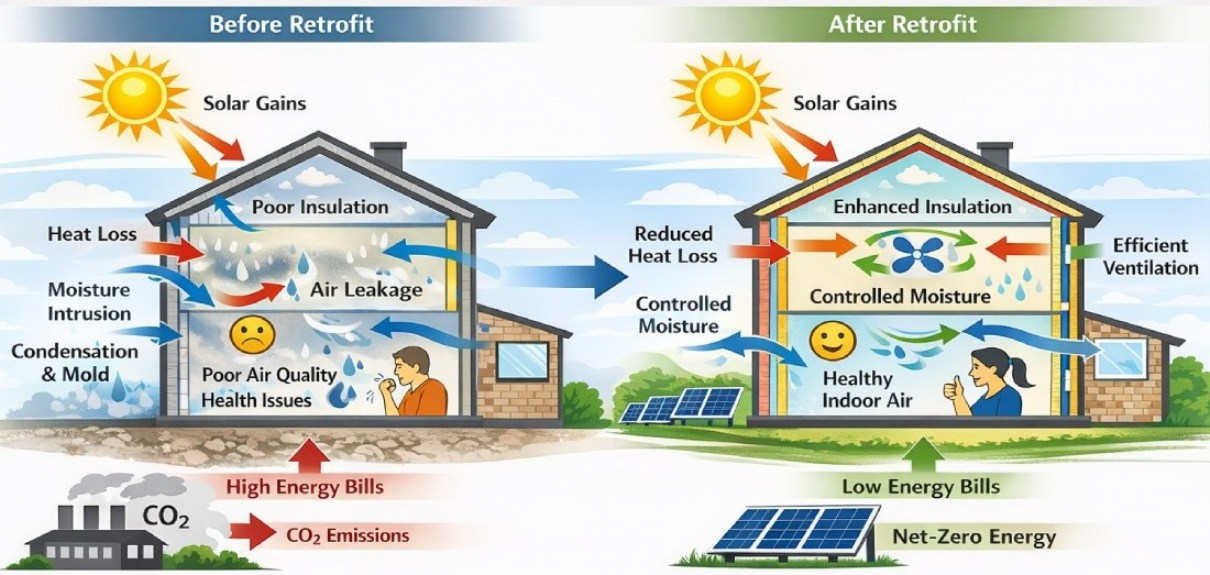
Graphical Abstract

1. Introduction

The building sector is one of the largest energy-consuming sectors globally, with residential and non-residential buildings accounting for approximately 35–40% of the total energy consumption [1]. This results in significant increases in carbon dioxide emissions, which contribute to climate change, environmental imbalances, and negative impacts on human health [2]. In light of these challenges, the concept of net-zero-energy buildings (NZEBs) has become central to global policies and building research, where a building generates as much energy from renewable sources as it consumes on an annual basis [2,3,4]. Energy recovery strategies are considered to be an effective means of bringing existing buildings to net-zero standards, including improved insulation, airtightness, advanced ventilation systems, and energy-saving devices. However, several studies have shown that, if these retrofit measures ignore hygrothermal behavior, especially moisture transport and control, they can lead to moisture problems, mold growth, material deterioration, and reduced indoor environmental quality rather than improving the overall performance of the building [5,6,7].
Moisture transport occurs in buildings through various physical mechanisms, including diffusion, capillary action, and air convection [8,9]. This process not only affects thermal performance but also causes long-term structural damage due to condensation and latent moisture deposits on interior surfaces. The main problem is that most existing retrofit studies focus only on energy savings and do not give due importance to the effects on moisture, mold, and occupant health [10,11,12,13]. Furthermore, in net-zero-energy buildings, if indoor environmental quality (IEQ), adequate ventilation and dehumidification systems are neglected during energy retrofit, the health of occupants may be at risk, especially children, the elderly and people with compromised immune systems [10,11,12].
The existing research focuses more on energy efficiency but has failed to address hygrothermal impacts and occupant health protection in an integrated manner [3,5]. In addition, comparisons of retrofit performance across different climatic regions are limited, and there is little research on pre-retrofit remedial measures and occupant awareness [4,6,13]. This is why a comprehensive, health-based and hygrothermal approach is needed to simultaneously achieve energy savings, humidity control and occupant safety during the transition to NZEBs.
Energy recovery measures include improving the building envelope, such as insulating walls and ceilings, increasing airtightness, and using modern ventilation systems [14,15,16]. These measures not only significantly reduce energy consumption but also improve indoor thermal comfort. Research has shown that effective retrofit strategies can reduce energy use by 30 to 60% [17,18]. However, focusing on energy savings alone is not enough as modern studies emphasize that, if hygrothermal performance (i.e., the interaction of heat and moisture) is ignored during retrofit, problems such as moisture accumulation, condensation, mold growth, and deterioration of indoor air quality can arise, which directly affect the health of occupants [3,19].
According to research studies, high indoor humidity provides a favorable environment for the growth of mold, bacteria, and other microorganisms [20,21,22,23]. These factors can cause health problems, such as respiratory diseases, allergies, asthma, and eye and skin irritation, especially for children, the elderly, and people with weakened immune systems. Furthermore, high humidity also affects the long-term performance of building materials, such as wood, insulation, and concrete, leading to structural deterioration and increased repair costs [24]. Indoor environmental quality includes air quality, thermal comfort, humidity, and lighting. If adequate ventilation and moisture removal systems are not included during retrofit, low-energy buildings can actually turn into “unhealthy buildings” [25].
The main objective of this article is to present a comprehensive and critical analysis of energy retrofit strategies that can achieve net-zero-energy buildings while also ensuring the health of occupants. This article reviews the basic mechanisms of moisture transport in buildings, the hygrothermal effects of retrofit measures, and their performance in different climatic regions. Furthermore, this research highlights that understanding the interrelationship between energy performance, moisture-related failures, and health impacts is essential and that pre-retrofit remedial measures and occupant awareness play a key role in this regard [6,13].

2. Research Methodology

2.1. Review Design and Data Source

This study was conducted as a structured integrative literature review, which aimed to comprehensively understand the relationship between energy retrofit, hygrothermal performance and occupant health and to integrate the results of different research studies. The review examined published studies on building energy performance, moisture behavior, indoor environmental quality and health impacts within a common framework to clarify how energy retrofit strategies not only result in energy savings but also in moisture hazards and impacts on occupant health. The scope of this study covers different building types, climatic conditions and retrofit methods, so it is organized as a structured and thematic analysis-based review rather than a narrative or traditional review in order to present the evidence from different studies in a comparative manner.
This review did not adopt a meta-analysis approach because of the significant heterogeneity in the selected studies’ methodologies, data types, building types, climatic regions, and performance indicators. Many of the studies included experimental observations, numerical modeling, case studies, and review articles, and it was not possible to directly combine the results numerically. Similarly, the measurements of energy efficiency, moisture transport, indoor air quality, and health effects were based on different criteria and scales, making a quantitative meta-analysis impractical. Instead, a systematic and integrated review approach was considered to be more appropriate, which would organize the results of different studies in a thematic and comparative manner to clarify the relationship between energy retrofit, hygrothermal performance, and residential health. This methodology helped to present the effects of retrofit strategies in different climatic regions and building types in a comprehensive perspective, and this approach was found to be suitable for combining energy efficiency as well as moisture hazards and health protection aspects.
The scientific literature search for this research review was primarily conducted through the Scopus database as it provides comprehensive access to peer-reviewed articles on the energy performance, hygrothermal behavior and indoor environmental quality of buildings. Additionally, Google Scholar was used as a secondary search platform to complement relevant studies and access interdisciplinary content to include research articles published in different journals or research fields that illustrate the interrelationship between energy retrofit, moisture issues and occupant health. This dual search strategy ensured that important and up-to-date research content on energy, hygrothermal performance and health was included in a comprehensive manner.

2.2. Search Strategy

A systematic and stepwise search strategy was used to comprehensively collect relevant studies on energy retrofit, hygrothermal performance, and occupant health. Keywords and their combinations were used for this purpose, including energy retrofit, net-zero-energy buildings, hygrothermal performance, moisture transport, indoor air quality, and occupant health. These terms were combined using Boolean operators, such as AND and OR. For example, searches such as “energy retrofit AND moisture”, “net-zero buildings AND indoor air quality”, and “hygrothermal performance OR moisture risk” were performed to retrieve studies from different research perspectives [26]. The aim of this systematic search strategy was to integrate evidence from different research areas—such as building energy efficiency, hygrothermal modeling, and indoor environmental health—to present the impacts of energy retrofits in a comprehensive and comparative perspective. This approach enabled access to studies published in international journals and helped to include important and authoritative material on the topic.

2.3. Inclusion and Exclusion Criteria

This systematic literature review set clear inclusion and exclusion criteria for selecting studies to include authoritative and relevant scientific evidence on energy efficiency, hygrothermal performance, and occupant health. The inclusion criteria included peer-reviewed research articles that directly addressed building energy efficiency, retrofit strategies, moisture transport, indoor environmental quality, or occupant health. The review primarily included studies on the building envelope, insulation, airtightness, ventilation, and hygrothermal performance of residential and other buildings to comprehensively analyze the interplay between energy and moisture. In addition, preference was given to studies that described the effects, performance outcomes, or moisture-related hazards of retrofit measures in different climatic regions to allow for comparative analysis. The exclusion criteria excluded articles that contained only theoretical discussions on energy systems unrelated to buildings, industrial processes, or those that were not related to the energy performance or hygrothermal behavior of buildings. Similarly, non-peer-reviewed materials, abstracts, and studies that did not have a clear relationship to humidity, indoor air quality, or occupant health were also excluded. In addition, studies that were not directly related to the topic or for which the full text was not available were excluded. These clear criteria ensured that the selected literature was directly relevant to the main research topic—the interrelationship between energy retrofit, humidity hazards, and occupant health—and provided a reliable basis for the analysis.

2.4. Screening Process

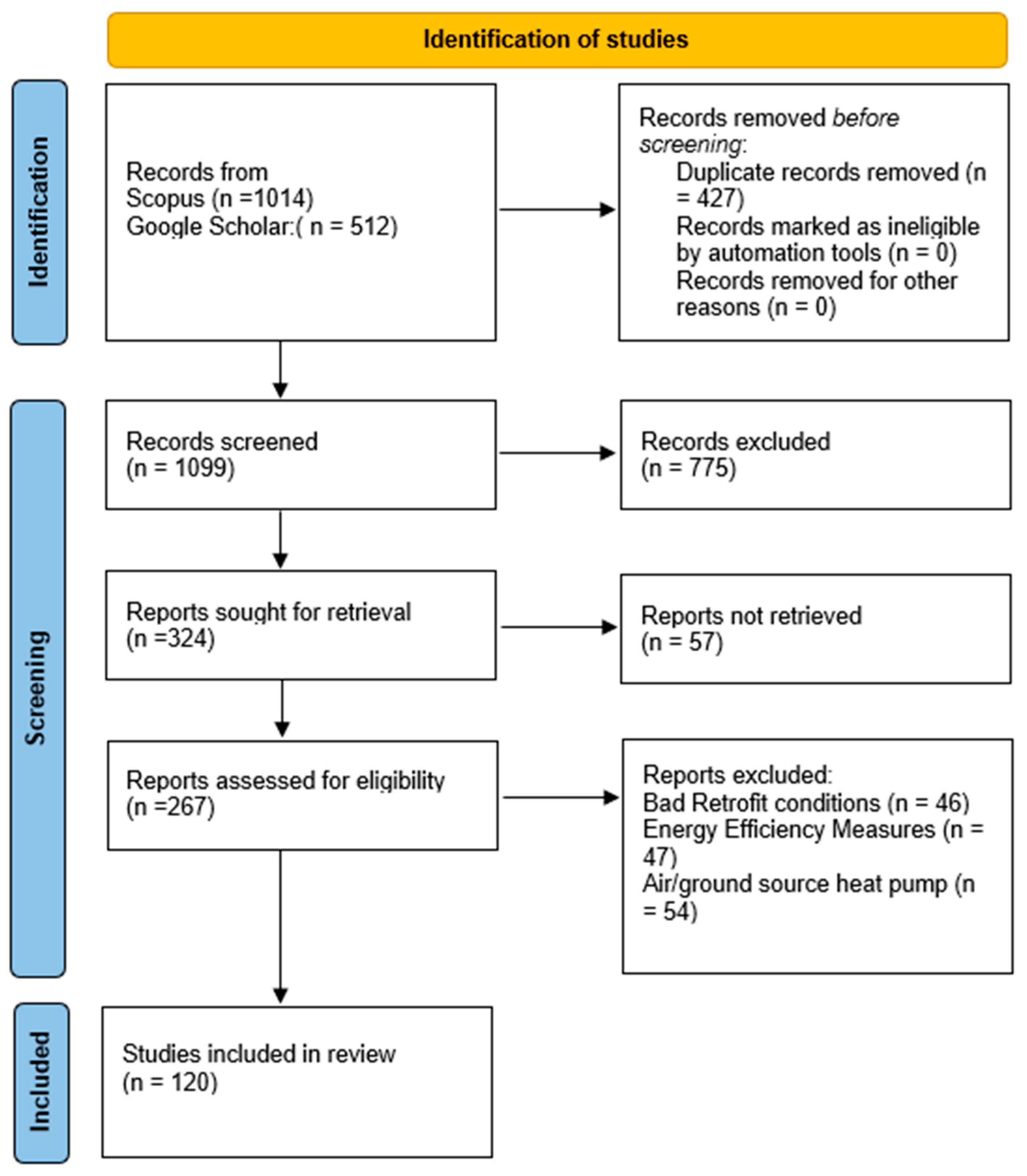
The initial stage of the literature search yielded a number of research articles through selected keywords and their combinations, with the main objective of collecting studies related to energy retrofit, hygrothermal performance, moisture issues and occupant health. After the initial search, an initial screening of the articles at the title and abstract level was performed to exclude studies that were not relevant to the topic. In this stage, articles were removed that dealt with energy systems unrelated to buildings, industrial applications or topics that were not directly related to moisture behavior, indoor environmental quality or occupant health. After the initial screening, the full texts were reviewed and studies that clarified the relationship between energy retrofit, hygrothermal performance, moisture risks and occupant health were selected. As a result of this stage, a total of approximately 126 peer-reviewed research articles were included in this review, which were used for thematic and comparative analysis. The selected studies included a variety of research methodologies—such as numerical modeling, case studies, experimental observations, and review articles—which were then organized into thematic categories and analyzed in the context of energy efficiency, moisture issues, and climate impacts. This screening process was adopted to ensure that the included studies were directly relevant to the main research topic and could comprehensively describe the relationship between energy retrofit and hygrothermal performance.
The stepwise identification, screening, eligibility, and inclusion process is illustrated in Figure 1.

2.5. Use of AI-Assisted Tools in the Preparation of Images

During the preparation of conceptual diagrams and visual summaries, AI-assisted tools were used solely for the purposes of drafting the layout and graphical structuring. In particular, ChatGPT-Plus (5.4) and an AI-based image generation tool (Copilot-basic) were used to help organize the flowchart structure and format the visual elements. Further details of AI-generated images are described in the captions of the particular figures.
Subsequently, all the images were manually reviewed, technically verified, and further refined by the authors themselves to ensure scientific accuracy and compliance with the established principles of “building physics”. In particular, close attention was paid to the hygrothermal mechanisms (effects of moisture and heat), moisture transfer reflections, ventilation logic, and retrofit layout to avoid any misunderstandings or misconceptions.
The final versions of all the images represent the authors’ scientific interpretation and have been critically reviewed to ensure that no physical processes or building science concepts are misrepresented.

3. Thematic Literature Synthesis

3.1. Mechanisms of Moisture Transport in Buildings

Moisture transport in buildings is a complex hygrothermal process that has profound effects on energy efficiency, material durability, and indoor environmental quality (IEQ). Imbalanced moisture control not only leads to thermal damage but also to mold, condensation, and serious health problems. Understanding the underlying moisture transport mechanisms has become essential in modern energy retrofit strategies [27].

3.1.1. Vapor Diffusion

Diffusion of moisture is a fundamental physical mechanism for moisture transport in buildings, in which water vapor moves from areas of higher vapor pressure to areas of lower pressure [27]. This process depends on the vapor permeability of the materials in the building envelope. If walls, ceilings, and floors are not designed properly, vapor diffusion can cause condensation on interior surfaces, which ultimately leads to mold growth and material failure. The use of moisture-resistant materials, standard detailing of building components, and implementation of effective moisture control measures are key methods to prevent water ingress and control vapor diffusion [28,29].
When a building is made more airtight during an energy retrofit, the natural pathways for vapor to escape are limited. If vapor barriers are not positioned and oriented correctly, moisture becomes trapped within the wall, creating a hygrothermal imbalance [30,31]. Research has shown that improperly installed vapor-control layers can cause internal condensation in cold areas and external moisture ingress in hot and humid areas [32]. This problem not only affects thermal efficiency but also poses serious risks to resident health, such as respiratory diseases and allergies. Therefore, it is essential to consider material selection, layering, and weather conditions to control evaporative diffusion in net-zero-energy buildings.
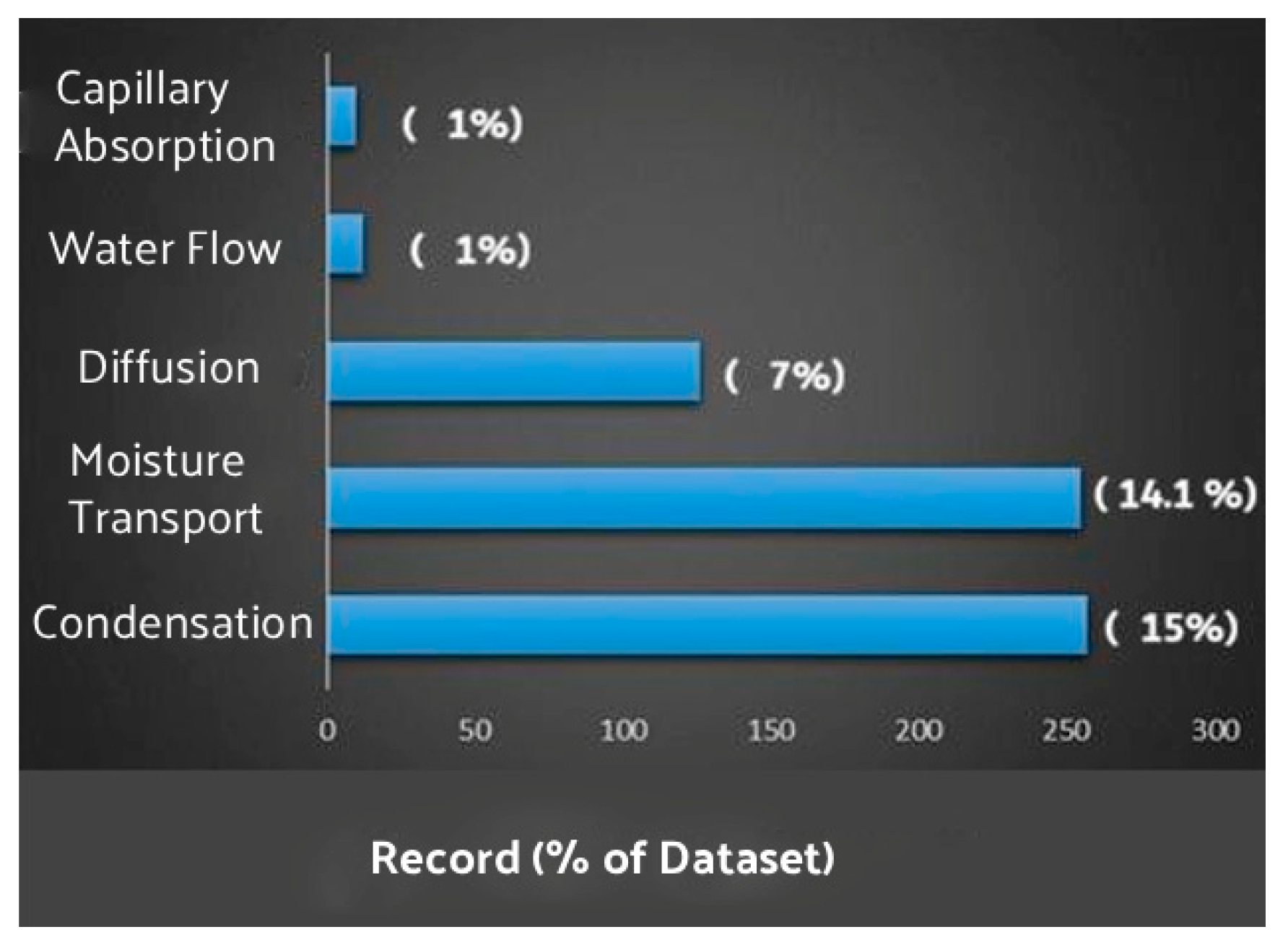
As shown in Figure 2, most of the research on moisture transfer in buildings has focused on the vapor phase and condensation. In contrast, little has been written about the liquid phase, such as capillary absorption, even though this process is the main cause of groundwater rise in building walls.
Water vapor diffusion is the process in which water vapor (vapor) moves through a material (such as concrete or insulation) due to a pressure difference. This process is more pronounced in large pores (macropores) and affects the drying speed and durability of the building. Similarly, when the pores or holes of the material become very small (nanopores), the flow of liquid water stops there. In this case, the moisture in the form of vapor sticks to the inner surface of the pores (adsorption), which is called surface diffusion. The data illustrated in this figure are derived from the study by Lopez-Carreon et al. (2025) [28].

3.1.2. Capillary Action and Adsorption of Materials

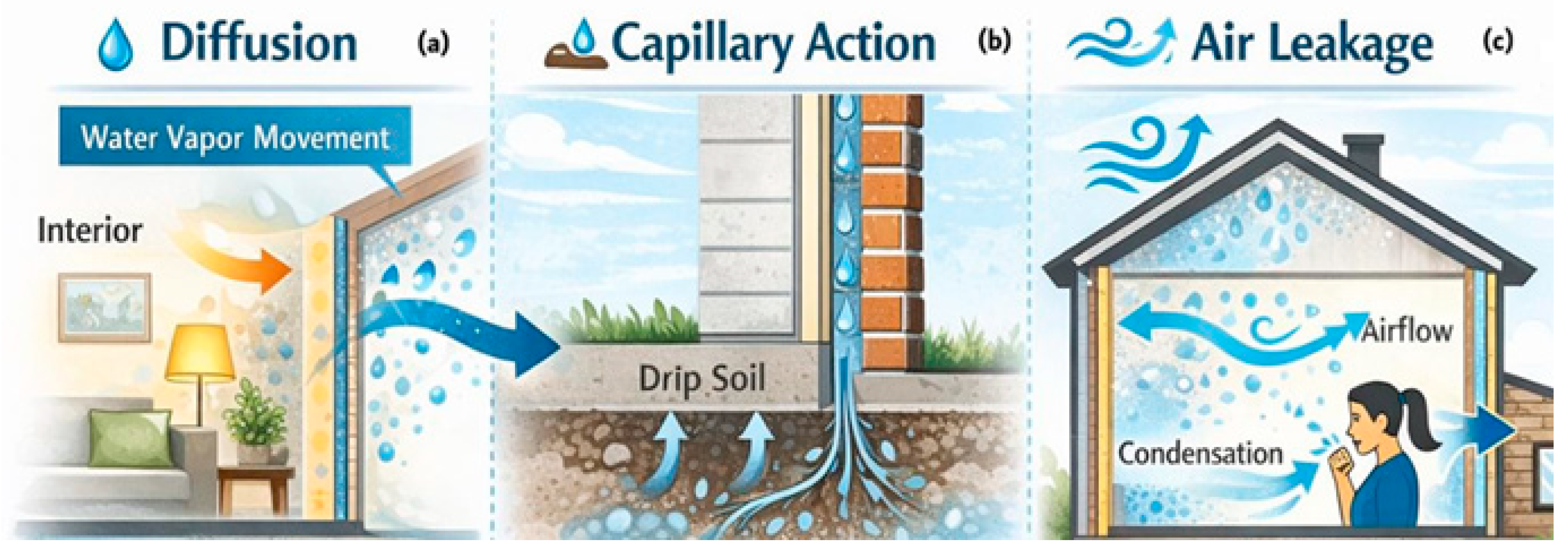
Capillary action is the mechanism by which liquid water moves upward or sideways through fine-pored building materials, such as brick, concrete and mortar. This process is particularly prominent in foundations, ground walls and lower floors, where ground moisture can directly penetrate the building structure. Due to ‘capillary action’ in the foundations of buildings, ground moisture rises through bricks and porous materials; this damages the building structure over time. The mechanisms of diffusion, capillary action and air leakage are illustrated in Figure 3. To prevent this, proper grading of the ground and an effective drainage system are necessary to keep surface water away from the building foundations and prevent moisture from entering [33]. During energy retrofits, attention is often paid to thermal insulation, but protective layers against ground moisture are often neglected. This results in the insulation material becoming damp, which reduces its thermal resistance and increases thermal energy loss. Studies have shown that damp insulation can lose up to 30–50% of its performance [34].
A major problem with capillary moisture is that it remains unnoticed for long periods of time but, over time, causes structural weakness, efflorescence and fungal growth [35]. These factors not only shorten the lifespan of the building but also adversely affect indoor air quality. Therefore, it is important to make capillary breaks, waterproofing layers, and proper drainage systems an integral part of the design in a net-zero-energy retrofit.

3.1.3. Air Leakage and Infiltration

Airborne moisture transport is considered to be the fastest and most dangerous way for moisture to enter buildings [36]. When warm humid air enters walls through cracks, joints, or poor sealing, it reaches cold surfaces and causes condensation [28,37]. The goal of increasing airtightness in energy retrofits is to reduce energy loss, but, if ventilation is not appropriately managed, indoor humidity levels can rise to dangerous levels. According to research, airborne moisture transport can be many times faster than evaporative diffusion [38].
This process causes mold growth, wood rot, and rust in metal components. From a health perspective, it increases the number of fungal spores and harmful particles in indoor air, which increase the risk of asthma and other respiratory diseases. Therefore, it is essential to incorporate mechanical ventilation systems (such as HRV and MVHR) in modern net-zero buildings, along with airtight construction [39].

3.1.4. Hygrothermal Coupling

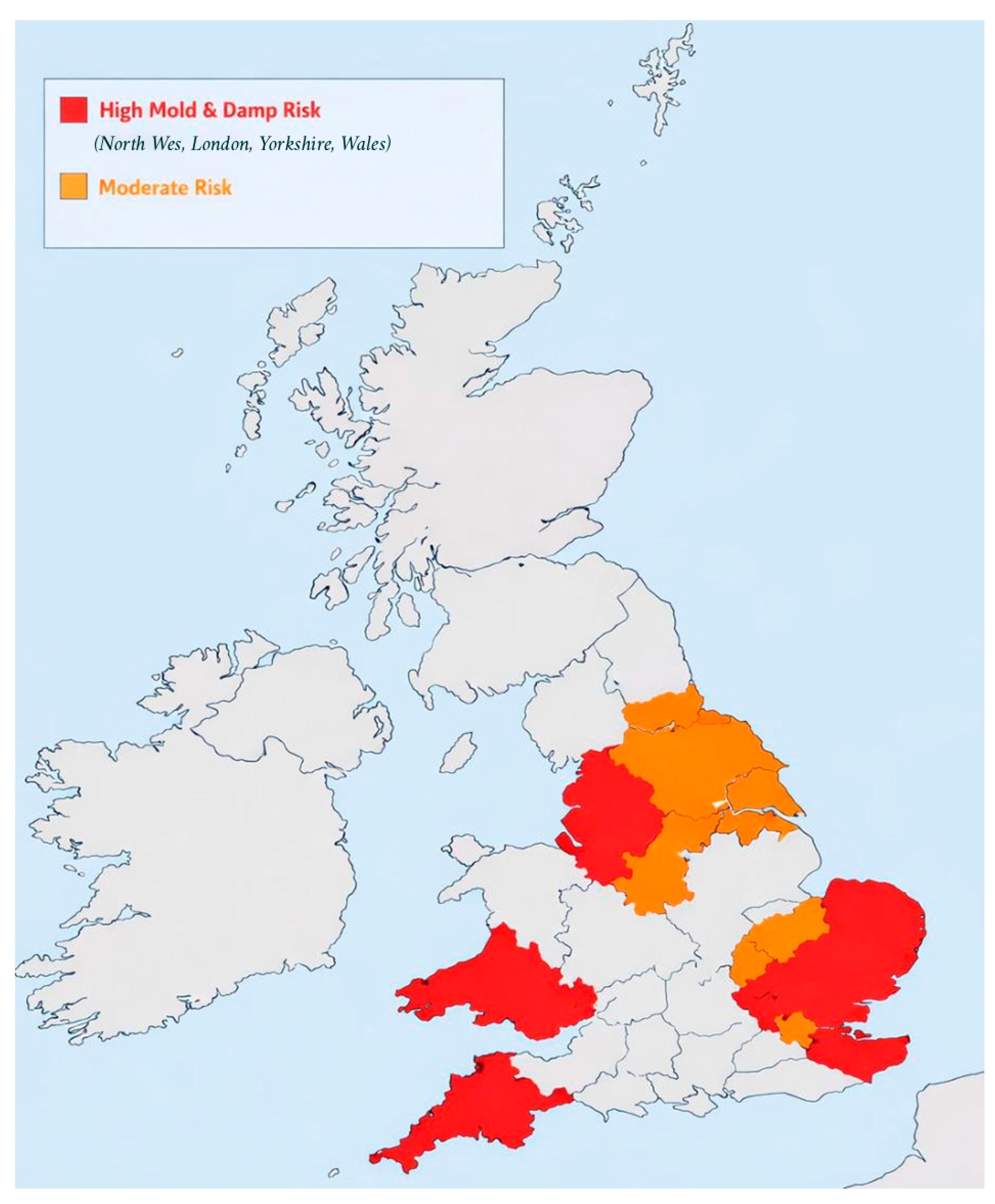
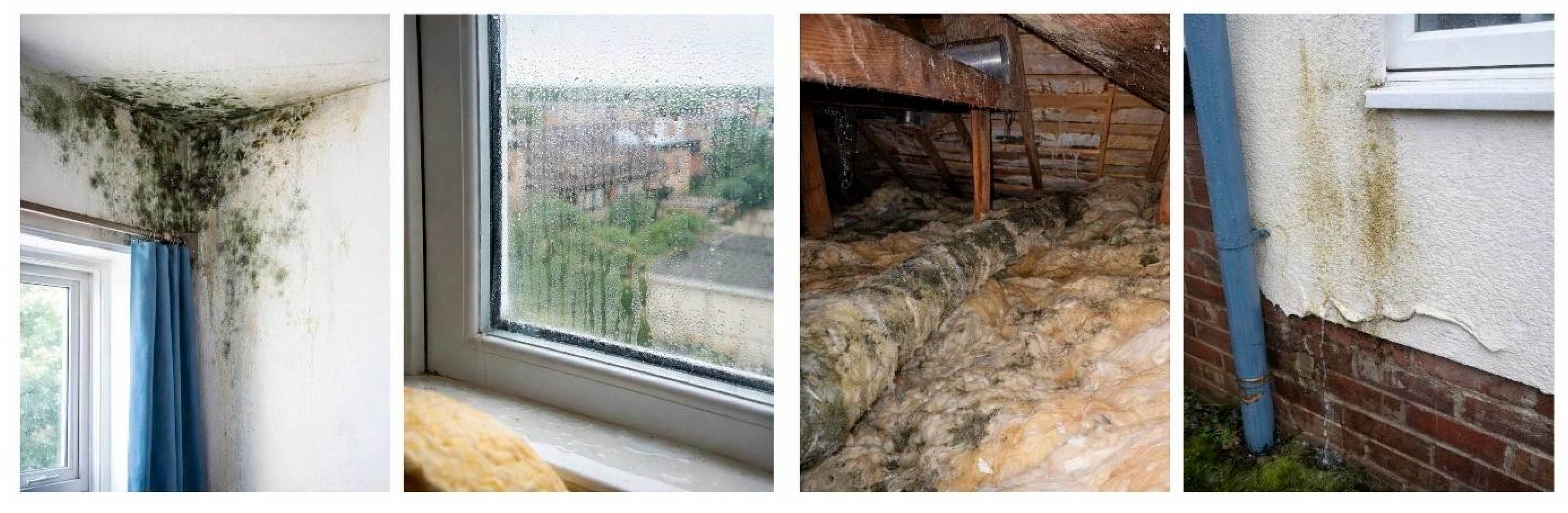
Moisture transport in real buildings rarely occurs by a single mechanism; rather, the combined effect of diffusion, capillary action, and air leakage determines the hygrothermal performance of a building [30]. Ignoring these interactions is considered to be a major cause of retrofit failures. When a building is suddenly made airtight to save energy, the moisture balance changes. If there is no coordinated design of insulation, vapor control, and ventilation, internal moisture is trapped, leading to long-term condensation and mold problems. Recart and Dossick (2022) [40] elaborated that, due to capillary action, moisture in the ground rises up the walls and damages the building. To prevent this, proper slope of the ground around the building and an effective drainage system are very important. If water accumulates near the foundations, it enters the walls and causes moisture and structural defects [40]. Recent studies emphasize that a combination of hygrothermal simulation, field data, and post-retrofit monitoring is essential to achieve net-zero goals. Without this integrated approach, energy savings may come at the expense of health and sustainability [40,41]. This review, therefore, emphasizes that moisture should be viewed as a combined health, sustainability, and performance challenge rather than an energy issue. High mold and damp risk in the UK is visualized in Figure 4.

3.2. Interaction Between Moisture Control and Energy Retrofit

The primary goal of energy retrofits is to reduce the energy consumption and increase the thermal efficiency of buildings. However, if these measures are not coordinated with moisture control principles, these strategies can severely affect the hygrothermal balance of a building [43]. Moisture control is critical during energy retrofits as moisture buildup in insulation reduces its ability to retain heat and can increase heat loss by up to 12%. Research shows that using an external waterproof membrane protects walls from mold, while installing a vapor barrier in the wrong place can trap moisture inside and cause damage. The success of a retrofit depends on choosing materials that are durable and have good moisture management capabilities [44].
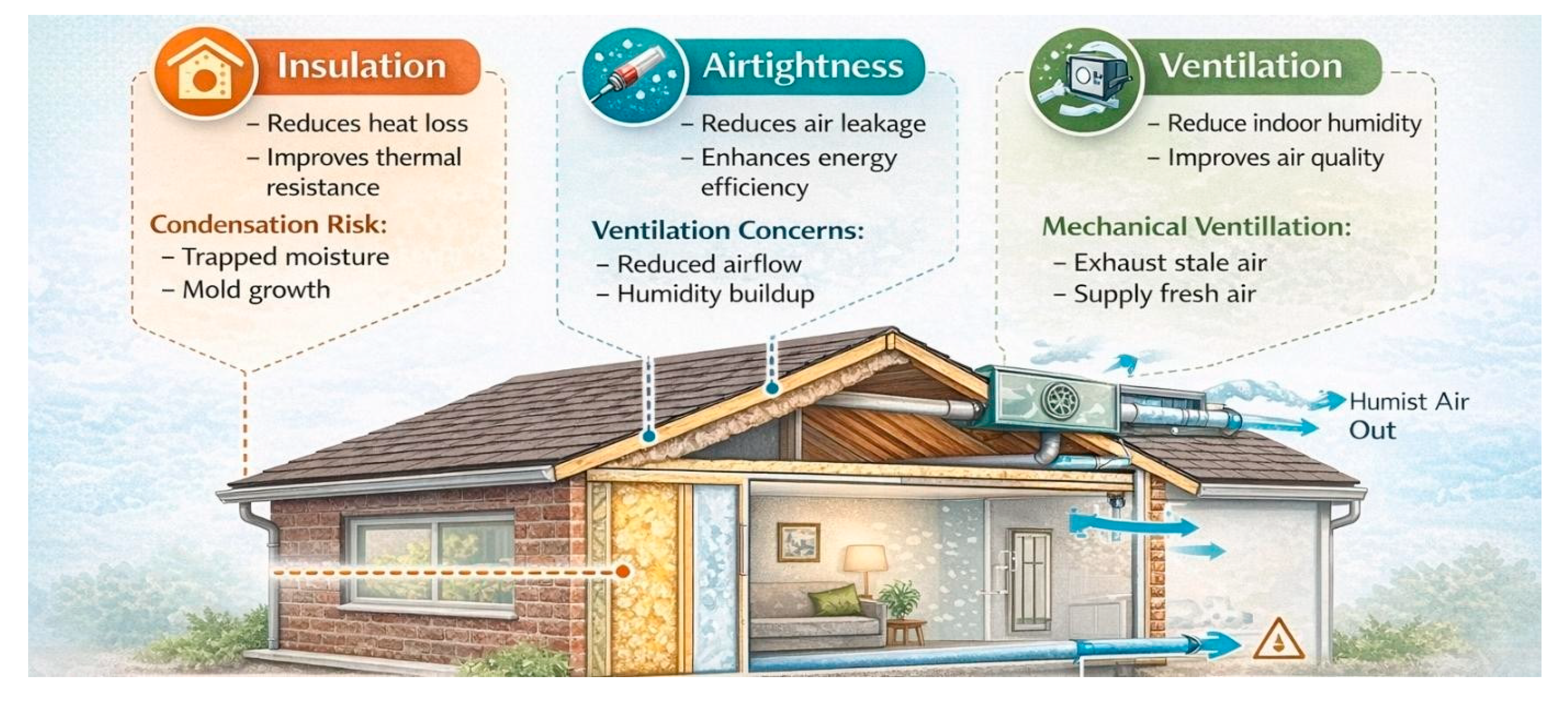
Insulation installed without an adequate vapor barrier and drainage layer increases the risk of condensation inside the walls [45]. Especially in cold or temperate climates, warm and humid indoor air can condense on cold surfaces of the walls, causing mold growth and deterioration of building materials [46]. Similarly, airtightness measures, although reducing energy loss, can increase indoor humidity levels in the event of inadequate ventilation, significantly reducing indoor air quality (IEQ) [47]. Retrofit measures such as insulation, airtightness, and advanced ventilation systems directly change the way moisture flows, accumulates, and escapes, which can in turn affect the performance of the indoor environment and the health of the occupants [48].

3.2.1. Airtightness and Moisture Trap Issues

Improving airtightness is considered to be a fundamental strategy in energy retrofits as it significantly reduces thermal energy loss by reducing unnecessary air leakage [49]. However, if airtightness is implemented without comprehensive humidity control, it can lead to moisture trapping within the building envelope, which poses serious risks to both hygrothermal performance and the physical and mental health of occupants [50].
Airtight buildings restrict natural air movement, resulting in internally generated moisture, such as water vapor from cooking, bathing, breathing, and household activities, not being able to escape to the outside. This moisture accumulates within walls, ceilings, and insulation, causing condensation, mold growth, and biological contamination. Research has shown that making homes ‘airtight’ reduces the number of outdoor pollutants (such as PM2.5) that enter, but a lack of proper ventilation increases indoor pollution and CO2 levels. The consequences for dampness and mold are complex, where a lack of ventilation can increase the risk of dampness and mold growth. Therefore, the use of digital sensors and improved ventilation systems are essential to save energy as well as protect human health [51]. Similarly, other research shows that changing the ventilation system from natural to mechanical reduced indoor CO2 levels from 1000 to 836 ppm and significantly reduced humidity, improving air quality. However, the use of mechanical systems and the blockage of filters resulted in an increase in the spread of fine dust particles (PM2.5) and bacteria indoors. Collectively, modern ventilation is great for energy and freshness, but it must be used in conjunction with regular cleaning of filters and proper management of air pollution [52].
Furthermore, the wrong combination of air seals and vapor-control layers can create a “moisture trap”, where moisture cannot dry out inside or escape to the outside. This problem is especially noticeable in cold or humid climates, where temperature differences cause a dew point to form inside the walls. In order to save energy as well as reduce the risks of moisture, it is necessary to design air seals with balanced mechanical ventilation, select appropriate vapor barriers, and consider weather conditions. In this way, a healthy, sustainable, and net-zero-energy building can be achieved [53].

3.2.2. Moisture Hazards in Insulation Selection

The main purpose of insulation is to reduce heat flow, but, if its hygroscopic behavior is ignored, it can create serious moisture problems rather than saving energy. Some insulating materials, such as fiberglass or mineral wool, significantly lose their thermal performance if they become damp. Moisture-laden insulation not only fails to effectively block heat but also provides a favorable environment for the growth of mold, fungus, and bacteria [54]. The interplay between building energy use, moisture-related issues, and their subsequent impact on occupant health is summarized in Table 1. In contrast, closed-cell insulation, such as spray foam, limits moisture ingress, but, if used in the wrong location or without vapor control, it can cause moisture to be trapped inside the wall. As demonstrated in Figure 5, the implementation of retrofit interventions leads to notable improvements in the building envelope’s integrity.
It is essential to consider the climate zone, age of the building, construction materials, and indoor humidity levels when choosing insulation. In cold areas, improper placement of vapor retarders can increase internal condensation, while vapor-permeable materials are more suitable in humid areas. In addition, when adding modern insulation to older buildings, it is important to maintain the drying potential of the walls. Otherwise, moisture can accumulate and cause long-term structural damage and health problems [26]. Therefore, insulation should be selected not only on the basis of thermal resistance (R-value) but also with a comprehensive analysis of moisture control, vapor flow and weather conditions to ensure energy savings as well as a healthy and sustainable indoor environment [55].
Table 1. Energy use and moisture-related issues in buildings.
IssueImpactRelationship Between Energy and Health
Moisture IntrusionCondensation, Mold, and Poor Indoor Air QualityHealth: allergies, respiratory illnesses
Energy: increased heat loss [37,56]
Air LeakageEnergy Waste, Indoor Temperature FluctuationsEnergy: increased heating/cooling bills
Health: substandard indoor air [57]
Poor InsulationHeat Loss, High Energy ConsumptionEnergy: higher bills
Health: uncomfortable indoor
environment in winter or summer [58]
Mold and
Microbial Growth
Poor Air Quality, Allergies, and Health IssuesHealth: risk of respiratory illnesses, allergic rhinitis and skin irritation
Energy: increased cost of air filtration and ventilation [26,56,59]
Insufficient VentilationPoor Indoor Air Quality, Excessive HumidityHealth: respiratory diseases
Energy: overuse of HVAC systems [60]

3.3. Performance Impacts of Hygrothermal Retrofit Strategies

Recent research shows that hygrothermal retrofit strategies can result in energy savings of approximately 15–25% while also significantly reducing mold and condensation risks [61]. This section illustrates that focusing on energy savings alone does not meet net-zero-energy building goals. Hygrothermal and hygrothermal design must be considered to simultaneously improve building performance, energy efficiency, and occupant health [62]. Occupant Health Implications of Moisture and Mold.
Moisture-related problems in buildings are directly related to the health of occupants, especially in buildings where energy retrofits have been carried out without proper hygrothermal design. If airtightness is increased after retrofitting but ventilation and moisture removal are not properly managed, the humidity level in the indoor environment can rise to dangerous levels. In this situation, it becomes easy for mold, fungus, and bacteria to grow, seriously affecting indoor air quality (IEQ).
According to the World Health Organization (WHO), dampness and mold in homes increase the risk of asthma by up to 50%, which is extremely dangerous for the respiratory health of children and the elderly. Lack of ventilation in modern airtight homes and humidity levels above 60% lead to the spread of mold, which leads to medical problems, such as ‘sick building syndrome’. Children, the elderly, and those with pre-existing respiratory or immune system diseases are especially susceptible to these problems caused by moisture. If humidity is not controlled in retrofitted buildings, these health problems can take on a long-term form, which not only affects quality of life but also increases healthcare costs [63,64].
Furthermore, poor indoor air quality associated with humidity can affect the mental health of occupants. Persistent odors, suffocation, and uncomfortable heating conditions cause mental stress, fatigue, and reduced work capacity [65]. Recent studies indicate that adopting a humidity-aware retrofit strategy can not only save energy but also significantly reduce health risks, as shown in Table 2 [66,67]. Therefore, to achieve net-zero-energy buildings, it is essential to include occupant health as a fundamental criterion in retrofit design, not just energy efficiency.
Spores and mycotoxins released by mold enter the human body through inhalation and cause various diseases [26]. Research reflects that mycotoxins cause neuroinflammation by deregulating the body’s immune system, which is devastating for mental health. In addition to asthma, these toxins have been linked to problems such as memory loss (Alzheimer’s) and muscle weakness (multiple sclerosis). The body’s natural immune system tries to block these substances, but continued exposure weakens this system [71]. According to other research, mycotoxins directly attack the central nervous system (CNS) rather than the lungs, where they combine with human tissues to form ‘neo-antigens’ that cause autoimmune diseases. Serum antibody testing is a more accurate method than urine testing as these toxins cross the blood–brain barrier and cause neurological damage. This situation, caused by moisture and salinity in buildings, is a serious environmental hazard, which requires both scientific monitoring of the indoor environment and medical treatment to overcome [72].
Fungal spores (such as Aspergillus and Penicillium) are a major source of biological contamination in both indoor and outdoor environments, reaching the lower parts of the lungs and causing severe allergies and infections. Humidity, temperature and wind speed play a key role in the spread of these spores, which can cause ‘type-1’ hypersensitivity and chronic respiratory diseases in immune-compromised individuals. Understanding the seasonal data and distribution patterns of these spores is crucial for the prevention of allergic and mycotic diseases [73]. Therefore, a constantly humid indoor environment is closely related to asthma, allergies, rhinitis, eye irritation, skin diseases, and long-term respiratory diseases. Children, the elderly, pregnant women, and people with weakened immune systems are especially susceptible to these effects.
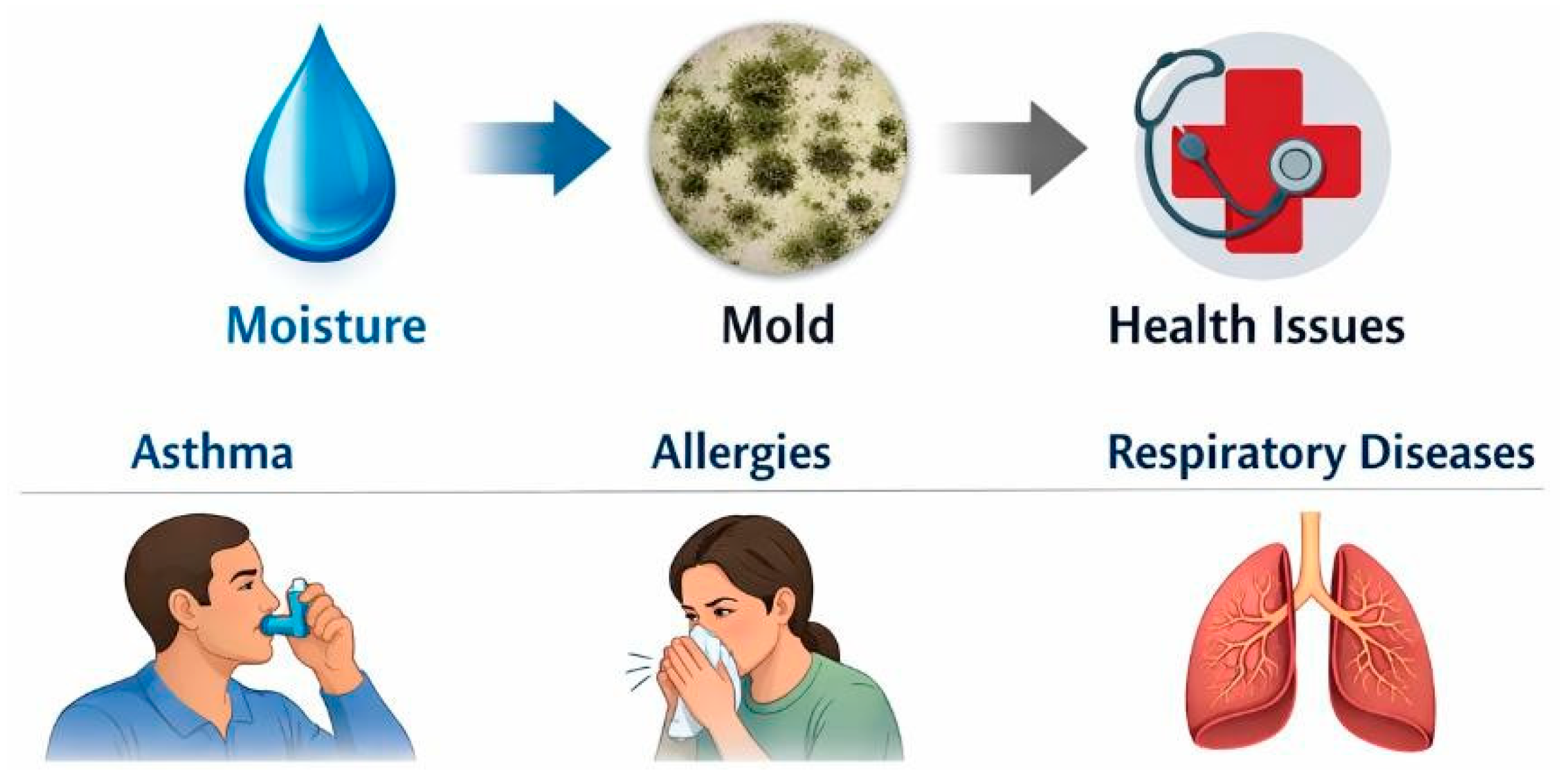
Dampness and mold are not only associated with health issues, as shown in Figure 6, but also contribute to stress, sleep disturbances, and reduced overall quality of life. Recent studies have shown that people living in damp homes have a 30–50% increased risk of respiratory diseases, especially in cold and humid climates. In the context of energy retrofit, these problems are exacerbated if the building is made airtight but without adequate ventilation, evaporation, and humidity control. Therefore, a hygrothermal retrofit strategy is essential not only for energy savings but also for the protection of occupant health.
Children’s immune systems are not yet fully developed, making them more susceptible to the effects of mold and airborne contaminants. Research suggests that exposure to damp and mold indoors during childhood increases the risk of respiratory tract infections (RTIs) and problems such as cough by 30% to 70%. A meta-analysis has shown that children living in airtight and damp homes are more susceptible to air pollution and fungal spores than adults [74].
Older adults may experience pre-existing respiratory or cardiovascular problems in the presence of humidity and mold. Research has shown that high humidity in homes (RH 75%) increases the risk of cardiovascular diseases (CVDs) and lung problems in the elderly as it increases the activity of inflammatory substances (CRP and IL-6) and platelets in the body. The study shows that simply reducing humidity to 45% by using a dehumidifier not only reduces the risk of heart attack but also significantly improves lung function. For the elderly, controlling indoor humidity in cold and humid weather is essential to save their lives and prevent blockage of blood vessels (atherosclerosis) [75]. Similarly, humid and polluted indoor environments can increase the severity and frequency of asthma attacks in asthmatics [76]. Educating residents about simple precautions—such as recommended ventilation, identification of moisture sources, and cleaning—before retrofitting can provide immediate protection.

4. Results

4.1. Thermal Efficiencies

When the amount and quality of insulation in a building are selected according to climatic conditions and humidity factors, heat loss through walls, roofs, and floors is reduced. This results in a significant reduction in heating and cooling energy consumption, which is fundamental to achieving net-zero-energy goals [69,77]. Research shows that hygrothermal retrofit strategies can achieve energy savings of approximately 15–25% with the right combination of insulation and airtightness while maintaining stable indoor building temperatures, as explained in Table 3 [78]. Furthermore, increasing thermal efficiency reduces the strain on HVAC systems, extending system lifespan and improving energy efficiency.
According to research, if the design parameters are chosen correctly, the building can become a ‘prosumer’ by generating 146% more electricity than it needs [80]. Research shows that adapting the current design to the warmer climate of 2080 could save up to 52% in the future. To achieve the net-zero (NZEB) target, the use of technologies such as green roofs and Trombe walls, taking into account not only the current but also future climate conditions, is essential [41,81].

4.2. Reducing Carbon Emissions

Reduced energy consumption directly leads to reduced carbon emissions as most buildings still rely on fossil fuels. By reducing heat loss through hygrothermal design, the retrofit strategy reduces energy requirements and also improves the efficiency of HVAC systems. For example, in a cold area, the combination of hygrothermal insulation and airtightness not only saves energy but also significantly reduces CO2 emissions by reducing electricity or gas consumption. Internal insulation in particular reduces the ability of walls to dry out, so it is essential to plan for ‘hygrothermal simulation’ and suitable ventilation at the early design stage. A detailed inspection of the building is essential before retrofitting to avoid thermal bridging and structural damage caused by moisture. Correct location and material selection of the vapor barrier are key to avoiding ‘dew point’ and condensation. Prioritize moisture management, not just energy saving, to ensure the sustainability of the building after retrofit [40]. This also reduces the carbon footprint of the building over its lifecycle. Recent research has shown that implementing hygrothermal retrofit strategies can reduce building CO2 emissions by approximately 10–20%. According to research, prefabricated walls are more ‘airtight’ than traditional construction because their junctions are designed to prevent air infiltration. Improved quality control in factory-made panels significantly reduces thermal bridging and heat loss, while the use of natural insulation, such as ‘hemp fiber’, further improves thermal performance without the risk of condensation. The correct use of foam (SPFoam) in joints is key to preventing air and heat loss [82]. The use of advanced technologies, such as aerogels and phase-change materials (PCMs), can increase the heat absorption capacity of buildings by up to 70% and reduce indoor temperatures by up to 16 °C. Smart windows and adaptive facades can save up to 35.9 kWh/m2 of electricity per year, which is key to achieving carbon emission reduction goals [83]. However, further research is needed on the long-term hygrothermal performance, economic feasibility and market acceptance of these technologies.

4.3. Comparative Review of Performance in Different Climatic Zones

The effectiveness of hygrothermal retrofit strategies varies depending on the climatic conditions.
The effects of retrofits on the thermal and hygrothermal performance of a building manifest in different ways in cold, humid, hot, and dry regions. The potential for moisture transport and condensation in a building varies in each climatic region due to differences in internal humidity, temperature fluctuations, and external air pressure. A study showed that the success of hygrothermal retrofits depends on the local climate, with the condensation risk in cold and humid regions of Korea (Incheon) differing from other regions. The same wall can suffer from different moisture problems in different cities (e.g., Incheon vs. Busan), so a “one-size-fits-all” strategy fails. Simply installing a weather barrier (WRB) on the outside of the insulation can, in some circumstances, trap moisture inside and increase the risk of mold [84].
In cold and humid regions, it is important to provide adequate insulation and vapor passages with high airtightness so that internal moisture does not accumulate and cause mold or condensation problems. In hot and humid regions, ventilation and moisture removal systems are more important so that humidity levels are controlled along with heat. In dry regions, retrofit strategies are mostly aimed at energy savings and maintaining thermal stability, while moisture problems are relatively rare. As shown in Figure 7, the damage caused by moisture in walls poses significant risks to building integrity. Research shows that moisture-aware retrofit measures are more effective in energy savings and occupant health in cold and humid areas, while, in warm areas, a combination of adequate ventilation and roof/wall insulation improves performance [85,86].

4.4. Critical Analysis of Past Case Studies

UK: Solid-wall houses retrofitted with internal insulation [87].
A long-term case study was conducted of two historic solid-wall houses retrofitted with internal insulation and examined for hygrothermal performance, ventilation and moisture issues after approximately 7–8 years. The results showed that, in Retrofit A, the walls recorded high humidity and drying difficulties due to poor insulation specifications, which resulted in high moisture levels inside the walls and lower-than-designed energy efficiency.
In Retrofit B, the adequate insulation and ventilation system showed improved thermal performance, but the moisture content inside the insulation was still high, raising concerns about long-term stability. Both buildings demonstrated that the effects of moisture transport within the wall, wall fatigue and long weather cycles significantly affected the retrofit results. Without a complete hygrothermal design and psychological assessments, insulation and airtightness measures alone do not solve moisture problems, especially in historic/concrete walls.
Korea: Exterior wall retrofit in modern historic buildings [88].
A hygrothermal analysis of retrofits on the exterior concrete walls of three modern historic buildings in Korea was conducted. It examined the moisture transport of different insulation materials and the effects on the buildings’ thermal/humidity profiles for 10 years. According to the results, all the insulation materials showed increased moisture content during the winter, especially when vapor retarders were installed in areas with poor moisture permeability. Some materials (such as PF board) had low moisture cycling but still raised concerns about high moisture content in future seasons. This study demonstrated that improper use of vapor barriers or poor insulation selection can lead to further moisture accumulation behind the curtain and internal hygrothermal failures, especially if the initial moisture is not estimated. The choice of insulation and moisture barrier must be correct depending on the climatic and structural conditions; otherwise, moisture problems persist even after retrofit.
Belgium: Vapor barrier vs. capillary-active insulation [89].
A recent study compared the hygrothermal response of different walls, where the moisture performance under vapor-tight and capillary-active insulation systems was analyzed. Vapor barrier insulation showed a slight improvement in thermal energy performance but sometimes increased moisture levels and mold/frost-related risks. The capillary-active system handled moisture better, allowing the hygrothermal response to be closer to that of the building’s uninsulated walls. Weather changes also affected the moisture response of both systems, meaning that environmental conditions are a key factor in retrofit design. Focusing solely on thermal performance does not yield better results; it is important to look at moisture mechanisms and weather effects to reduce long-term failures.
These case studies illustrate that post-retrofit moisture-related failures arise from many causes, such as incorrect insulation, inconsistent design, poor vapor control, or inadequate prediction of weather conditions, and their solutions cannot be limited to energy savings alone. The current research patterns suggest that pre-retrofit hygrothermal assessment, appropriate material selection, ventilation strategies, and weather-specific design are critical to the success of the retrofit [90].
As shown in Table 4, the effectiveness of retrofit strategies is strongly dependent on the local climate. Although retrofitting in colder regions has been shown to significantly reduce heating energy, it also increases the risk of interstitial condensation. In contrast, in warmer and more humid regions, despite modest energy savings, indoor humidity challenges persist. This comparative analysis emphasizes the need for retrofit designs that are informed by local climate and hygrothermal (the interaction of moisture and temperature) knowledge rather than a one-size-fits-all approach based solely on energy savings.

5. Discussion

5.1. Lessons Learned from Failures

Past experience has taught us that, if material properties and hygrothermal balance are ignored in the race to make buildings “net-zero”, energy saving becomes the death of the building itself. The indiscriminate use of vapor-tight modern insulation materials in historic buildings has led to unnecessary moisture accumulation inside the walls and structural decay as these materials destroy the natural ability of ancient walls to “breathe”. The innovative approach suggests that, instead of focusing only on thermal resistance, it is essential to choose “capillary-active” materials so that moisture can escape and the sustainability of the building is not affected [91,92].
In terms of human health and future climate resilience, a major failure in energy retrofitting projects has been to give secondary importance to the health of residents and indoor air quality (IAQ); building only airtight buildings led to problems such as “sick building syndrome” and mold, which posed serious risks to human health. In addition, design strategies without taking into account future climate change made buildings vulnerable to extreme heat waves, which led to unexpected increases in energy demand. Therefore, the lesson is that future recovery strategies should be based not only on current data but also on dynamic climate modeling and health-based ventilation principles [93,94].

5.2. Energy vs. Moisture Dilemma

Modern retrofit strategies to improve energy efficiency—such as increasing insulation, improving airtightness, and increasing the efficiency of heating systems—have been shown to be effective in reducing energy use and carbon emissions in buildings. Several studies have shown that effective energy retrofit measures can significantly reduce energy consumption and improve thermal comfort, particularly by improving the envelope of existing buildings [95,96]. However, these measures also present a fundamental challenge, which can be called the “Energy–Moisture Dilemma” [97].
Several research reviews have emphasized that it is not sufficient to focus solely on improving thermal performance but hygrothermal performance must also be taken into account [40,42]. For example, the addition of internal insulation improves thermal performance, but, if the risks of moisture flow and condensation are not adequately assessed, moisture can accumulate inside walls, leading to material failure and structural problems [40,98]. Similarly, the effects of airtightness and insulation may differ in different climatic regions; humidity problems may be more severe in cold and humid regions, while indoor humidity control becomes more complex in warm and humid regions [14,38]. This discrepancy indicates that energy efficiency and humidity control cannot be viewed in isolation. Measures taken to achieve energy targets must be integrated with hygrothermal analysis to develop design and retrofit solutions that not only save energy but also reduce humidity risks. Measures such as balanced ventilation systems, moisture flow analysis, and selection of insulation according to climatic conditions play an important role in this regard [87,91,99].
Furthermore, this discrepancy is directly related to occupant health. High humidity and inadequate ventilation can result in poor indoor air quality, which can lead to respiratory diseases, allergies, and other health problems [11,74,76]. Therefore, it is important to integrate energy savings as well as health protection into retrofit strategies so that low-energy buildings can truly provide sustainable and healthy living environments [100]. In this context, this balance between energy and humidity emerges as a key design challenge, requiring an integrated hygrothermal approach. Future retrofit strategies must simultaneously consider energy efficiency, humidity control, and indoor environmental quality to ensure the sustainability of buildings and the health of occupants while achieving net-zero-energy goals.

5.3. Health Impacts and Design Errors

An analysis of the health impacts of energy retrofit measures on occupants shows that, when buildings are airtight and insulated but do not incorporate adequate ventilation and humidity control systems, indoor humidity levels can increase, leading to mold, microbial contamination, and reduced indoor air quality [11,48,73]. Various studies have reported increased risks of respiratory diseases, allergies, and asthma in buildings affected by moisture and mold, especially in cases where air exchange was reduced after retrofit or moisture sources were not analyzed in advance [22,101]. This indicates that negative health effects can occur if hygrothermal factors are ignored despite improvements in energy efficiency. Table 5 provides a comprehensive breakdown of how specific design failures correlate with respiratory and physiological health issues.
The common design errors include implementing insulation and air-sealing measures without analyzing moisture fluxes and weather conditions, which can lead to problems such as moisture accumulation in walls and ceilings, material deterioration, and deterioration of indoor air quality [30,37,44]. Similarly, inadequate or ineffective mechanical ventilation systems can increase indoor pollutants and moisture concentrations, further increasing health risks [47]. This evidence suggests that retrofit designs must incorporate hygrothermal analysis, adequate ventilation, and weather-sensitive material selection to balance energy efficiency and health protection [102].

5.4. Durability and Long-Term Monitoring

The fundamental scientific issue of durability after energy retrofit is that heat and moisture flow paths in the building envelope are altered, creating “time-dependent” risks of material moisture, slough/efflorescence, thermal performance, and biological growth (mold). Evidence suggests that repeated wetting–drying cycles and high RH not only increase mold risk but can also affect the long-term mechanical performance of wood and some insulation materials [22,24,26]. Similarly, diffusion-open or capillary-active internal insulation systems can increase moisture accumulation and durability risk if the boundary conditions (weather, internal loads, and ventilation) are incorrect [30,32,44]. Therefore, “performance” cannot be measured solely by initial energy savings; a scientifically sound approach is to evaluate Energy–Moisture–Durability together, e.g., with hygrothermal modeling, including expected indoor humidity, material moisture content, and condensation/mold indices, as part of the performance targets [103,104]. To ensure the continued success of the energy upgrades, Table 6 presents the key indicators required for long-term sustainability monitoring.
The need for long-term monitoring is also increased because, in many retrofits, failure does not occur immediately but rather is “latent” after several seasons (e.g., moisture accumulation behind interior insulation or reduced efficiency in ventilation units/ducts). In practice, this means monitoring key hygrothermal parameters—e.g., indoor RH/temperature, surface RH/temperature (at critical junctions), moisture content from sensors embedded in walls/insulation, and ventilation airflow/heat-recovery efficiency—for at least 1–2 heating/cooling seasons after the retrofit [105,106]. In addition, maintenance-ready designs (such as inspection points, replaceable seals, and continuity checks of vapor-control layers) improve durability [37]. Furthermore, hygrothermal loads may change in future climate scenarios, increasing the need for monitoring + periodic reassessment [107].
Table 6. Key indicators for sustainability and long-term monitoring after retrofit.
Monitoring Parameter Measurement Location/MethodMonitoring PeriodScientific Objective/InterpretationKey References
Indoor temperature and relative humidity (RH)Data loggers in living roomsAt least 12–24 months (two seasonal cycles)Identifying indoor humidity trends and condensation risks[47,50,79]
Surface temperature and RH (critical junctions)External wall–ceiling joints, window surroundsContinuous in cold and humid weatherAssessing the risk of mold and condensation[30,62,64]
Moisture content in wall/insulation Embedded moisture sensors or periodic inspectionLong-term (annual review)Assessment of material durability and moisture accumulation[27,28,29,30,31,32,104]
Ventilation efficiency (airflow, ACH) Mechanical ventilation units and ductsAfter retrofit and annuallyVerification of air exchange and indoor pollution control[47,49,60]
Thermal efficiency (U-value drift) Thermal imaging or modelingAfter 1–2 years and periodicallyAssessment of long-term insulation performance and thermal loss[104,108]
Visual inspection (mold/condensation) Internal surfaces, hidden cavitiesAfter each seasonIdentification of early damage and need for repair[45,61]

5.5. The Role of Hygrothermal Retrofit in Achieving Net-Zero Goals

In order to achieve the goals of net-zero-energy buildings, it is essential to consider effective moisture control alongside energy efficiency measures. The benefits of hygrothermal retrofit strategies include:
  • Substantial hygrothermal design and humidity control improve the efficiency of HVAC systems and reduce energy waste [109].
  • Reduced energy consumption results in lower CO2 emissions, which is critical to achieving net-zero-energy goals [73].
  • Moisture and mold control improves indoor air quality, reducing the risk of allergies and respiratory diseases.
  • Effective moisture control extends the life of a building’s structural and thermal components, ensuring the long-term effectiveness of the retrofit.
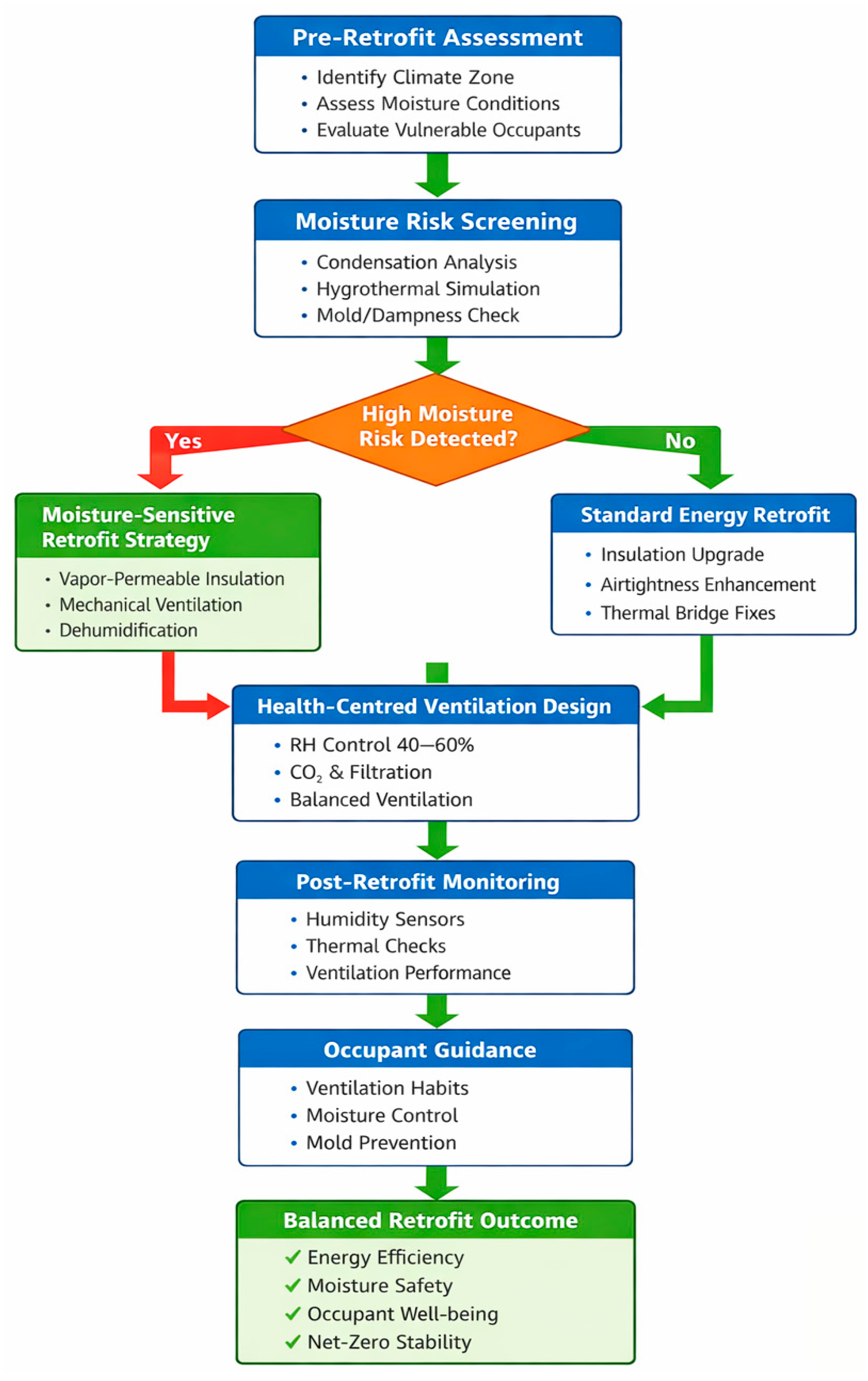
Therefore, moisture-aware retrofit strategies are essential to achieving net-zero-energy building goals as they simultaneously ensure energy savings, carbon reduction, occupant health, and building sustainability. Herein, the main goal of hygrothermal retrofit strategies is not only to save energy but also to ensure occupant health and building sustainability. The relationship between energy use, moisture management, and their cumulative effect on health is synthesized in the framework presented in Figure 8. Also, Table 7 provides a critical overview of the current problems in the field and highlights the most promising innovative aspects for future development.
Figure 8 presents a structured “decision-support framework” designed to guide practitioners in understanding the complex balance between energy savings, moisture risks, and occupant health. Unlike traditional retrofit guidance—which prioritizes only thermal performance (heat retention)—this framework integrates climate testing, hygrothermal risk screening, ventilation strategies, and long-term monitoring into a coherent step-by-step process. By introducing clear “decision nodes” based on moisture risks and occupant vulnerability, this model shifts retrofit planning from a purely “energy-based” to a “health-based” logic. This systematic approach aims to reduce unintended hygrothermal failures (problems caused by moisture) while also maintaining ‘net-zero’ performance goals.

5.6. Post-2020 Research Evolution and Emerging Directions

Research on hygrothermal retrofit and net-zero buildings has undergone significant theoretical, policy, and technical changes since 2020, moving the field beyond a purely energy-saving narrative to an integrated climate- and health-based framework. Pre-2020 studies were largely limited to energy efficiency, U-value improvements, and envelope upgrades [15,17,25], whereas post-2020 research has focused on climate variability, future scenarios, and indoor environmental quality [6,67,90].

5.6.1. Climate-Scenario-Based Hygrothermal Modeling

Pre-2020 research typically relied on historical climate data or representative climate years (TMY). However, recent studies are incorporating future climate scenarios, such as RCP 4.5 and RCP 8.5, into hygrothermal modeling, allowing retrofit designs to be evaluated in the context of future humidity, thermal stress, and precipitation variations [52,57].
This shift has introduced “climate-resilient retrofit” as a new research dimension, where the performance of the building envelope is tested under long-term climate uncertainty [45,83]. In particular, attention is being paid to the effects of future humidity intensity in the cases of masonry walls and internal insulation [15,66]. Nevertheless, the lack of uniform hygrothermal risk indicators for different climatic regions is still a significant research gap, which has also been identified in recent reviews [40,44].

5.6.2. Smart Monitoring, IoT and AI-Driven Moisture Control

The integration of digital technologies into building monitoring and control systems has increased rapidly since 2020. IoT-based sensor networks, continuous humidity and temperature monitoring, and data-driven control systems are enabling real-time management of hygrothermal performance [6,99].
AI-driven predictive control systems are being used to better control indoor humidity, attempting to balance both energy savings and health [48,51]. Furthermore, Digital Twin-based models, which combine real-field data with numerical modeling, are being used in hygrothermal failure detection and long-term performance assessment [6,35,99].
However, the application of these smart technologies is still largely limited to experimental or high-income contexts, and there is limited evidence on their efficacy in low-resource residential buildings—providing a clear direction for future research.

5.6.3. Post-COVID-19 Health-Centered Retrofit Paradigm

Ventilation, indoor air quality, and relative humidity have begun to be viewed as core indicators of health in the post-COVID-19 era rather than just energy balance [18,110]. In previous studies, the role of ventilation was largely in the context of thermal recovery and energy efficiency [47,49], while recent research is also focusing on the relationship between pathogen transmission, humidity regulation, and immune response [75,110].
The health impacts of mold and humidity have also been more systematically analyzed in post-2020 studies, including respiratory diseases, allergies, and the effects of long-term exposure [38,52,57]. Furthermore, recent interdisciplinary studies have attempted to integrate energy retrofit, hygrothermal performance, and health indicators [57].
Nevertheless, comprehensive models integrating the quantitative interrelationships of energy, humidity, and health are still limited, demonstrating the need for future collaboration between engineering and health sciences.
Although the post-2020 research has introduced several new directions, the following gaps still stand out:
  • A lack of standardized classification of hygrothermal risk in future climate scenarios.
  • A lack of long-term field data on AI/IoT-based humidity control.
  • A lack of a joint quantitative model of health, energy, and humidity.
  • Limited evidence on the application of smart retrofit technologies in low-resource residential buildings.
Acknowledging these gaps and articulating them as directions for future research transforms this review into a forward-looking scientific contribution rather than a mere historical summary.

6. Proposed Conceptual Framework

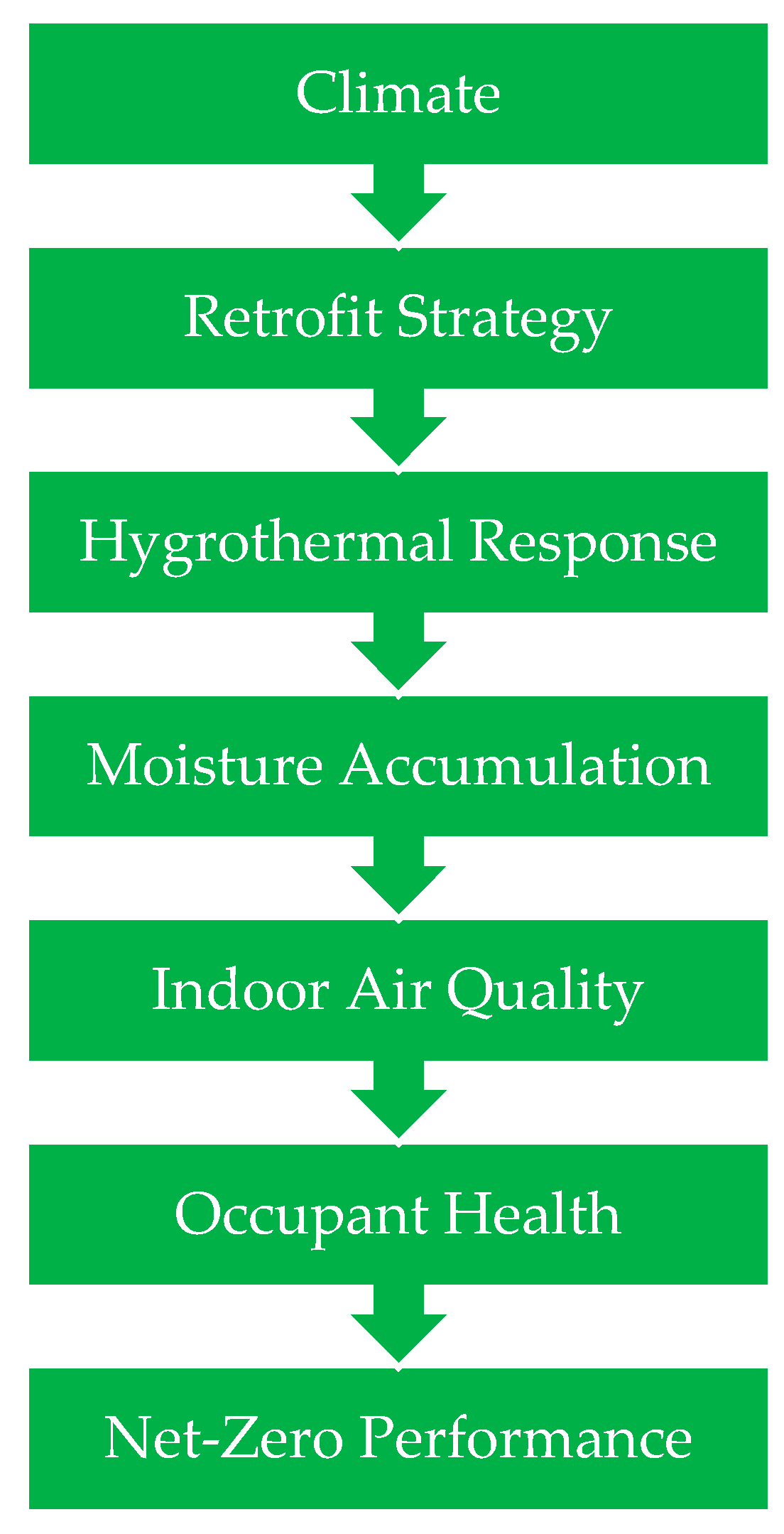
This study presents a conceptual framework to clarify the relationship between energy recovery, hygrothermal performance, and occupant health. Previous analyses have shown that the impact of retrofit measures is not limited to energy savings alone but also affects the heat and humidity balance within the building, indoor environmental quality, and ultimately the health of occupants. Therefore, an integrated model is needed that describes the relationship between climatic conditions, retrofit strategies, and hygrothermal response in a logical order and clarifies how these factors together affect the achievement of net-zero-energy goals, as shown in Figure 9 [13,41].
This conceptual framework explains how weather conditions and selected retrofit strategies alter the hygrothermal behavior of a building, which can result in different moisture accumulation or control trends. These changes affect indoor air quality and occupant health and ultimately impact the overall energy performance of the building and the achievement of net-zero goals. This framework makes it possible to view energy performance, moisture risks, and health protection in an integrated perspective, which can help to make future design and retrofit strategies more comprehensive and sustainable [27,41].

7. Policy and Design Implications

7.1. Policy Implications

For the successful implementation of hygrothermal retrofit strategies, technical measures alone are not enough. Appropriate policy frameworks and design guidelines are also necessary. Policymakers and designers need to understand that the goals of net-zero-energy buildings are not limited to energy savings but must also take into account occupant health, indoor air quality, and building sustainability [40,111,112,113].
  • Governments and Building Codes Should Clarify the Principles of Moisture and Energy Control During Retrofits So That All New and Existing Projects Are Consistent in Their Standards
  • Financial Incentives and Subsidy Programs Should Promote the Use of Technologies and Materials That Are Hygrothermal and Energy-Efficient
  • Awareness and Training Programs Are Essential for Designers, Contractors, and Residents to Ensure That Moisture Control and Energy-Saving Measures Are Effective at a Practical Level
Research studies have shown that hygrothermal retrofit strategies do not achieve their full potential without appropriate policy and design guidelines, while a comprehensive policy and design approach can simultaneously improve energy, health, and sustainability [114,115].

7.2. Design Implications

  • Moisture Control Must Be Incorporated into Retrofit Plans from an Early Stage So That the Combination of Insulation, Airtightness, and Ventilation Does Not Result in Hygrothermal Failures
  • The Selection of Materials Should Be Tailored to the Climatic Conditions and the Building Structure, Such as the Correct Use of Vapor Barriers in Cold Regions and Efficient Ventilation Systems in Hot and Humid Regions
  • Thermal and Hygrothermal Modeling Can Help to Predict Problems in Advance, Improving the Quality of Design and Implementation

7.3. Pre-Retrofit Remedial Measures and Occupant Awareness

Pre-retrofit remedial measures are critical to the hygrothermal performance of a building and the health of its occupants before an energy retrofit is implemented. In most cases, retrofitting is a lengthy and expensive process, during which occupants are exposed to issues such as damp, mold, and poor indoor air quality (IAQ). Pre-retrofit remedial measures include identifying and controlling sources of indoor moisture, such as repairing leaks, using local ventilation in bathrooms and kitchens, and installing hygrometers to monitor indoor humidity levels [116]. In addition, placing furniture at an appropriate distance from exterior walls, improving natural ventilation, and using temporary dehumidifiers are effective in reducing moisture accumulation [117].
Occupant awareness plays a central role in this process. Research has shown that a major cause of moisture and mold problems is human behavior, such as inadequate ventilation, indoor clothing, or unbalanced heating. If occupants are educated or trained about the effects of moisture, mold symptoms, and early warning measures, health risks and structural damage can be significantly reduced [118].

7.4. Ways to Control Household Humidity (Daily Habits)

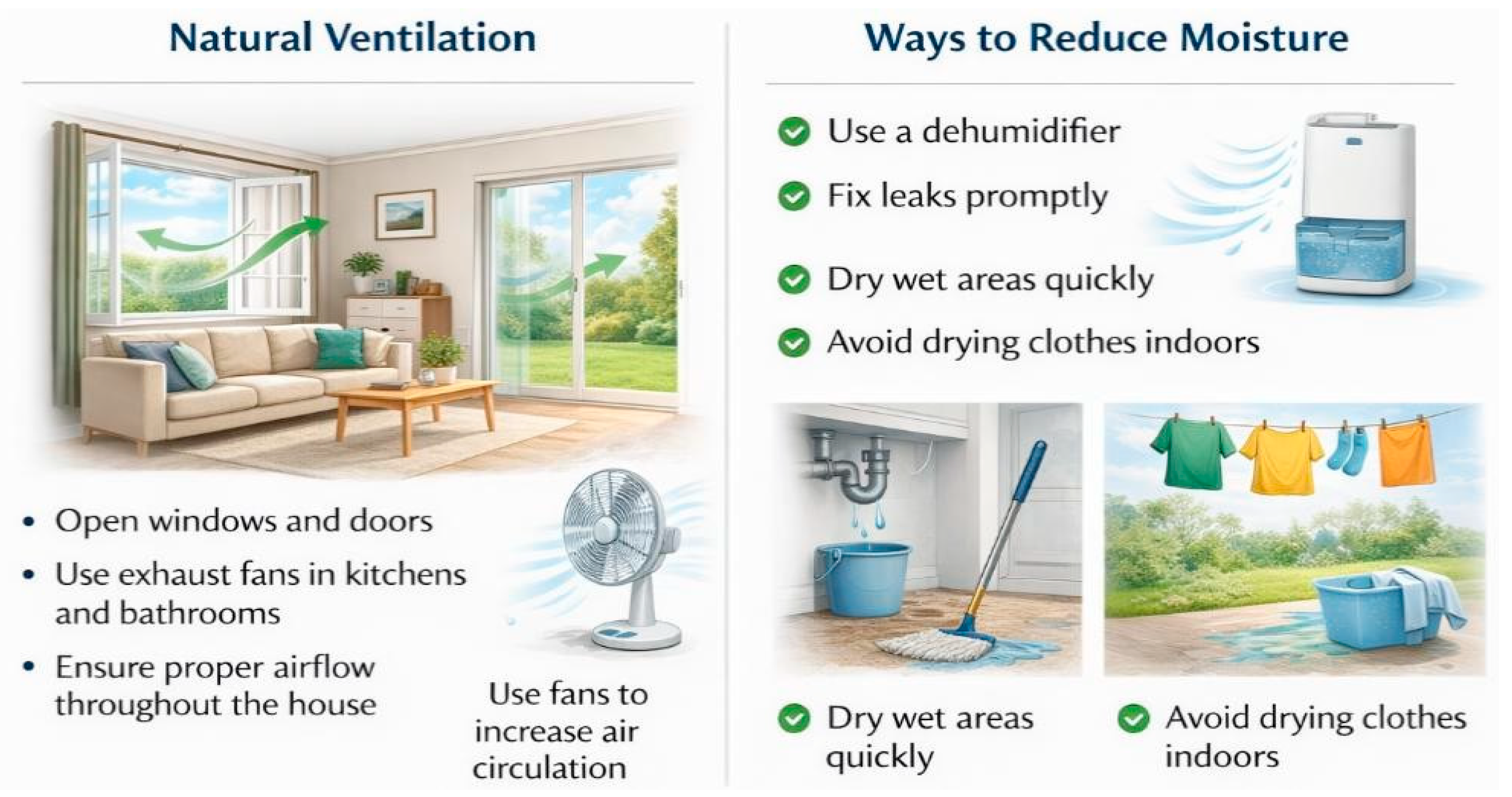
A practical measure is to improve natural and mechanical ventilation. Accurate use of exhaust fans in kitchens and bathrooms, timely opening of windows, and cross-ventilation help to remove humidity. In addition, daily household habits play an important role in humidity control. For example, opening doors for a short time after showering instead of keeping them closed, using a hood or exhaust while cooking, and avoiding drying clothes inside can significantly reduce indoor humidity, as shown in Figure 10. Furthermore, the use of a home hygrometer can keep occupants informed of humidity levels, allowing for timely preventive measures [119,120]. Improving occupant awareness and attitudes is a fundamental and necessary step towards net-zero-energy buildings.
Most mold and moisture problems in homes are the result of ignorance and misuse rather than technical defects. Therefore, it is essential to educate occupants about the dangers of moisture, condensation, and mold. Educational interventions can include simple guidelines, visual awareness materials, and community-level workshops that teach occupants how moisture is created and how it can be controlled [120]. For example, the importance of maintaining RH (relative humidity) between 40 and 60% or recognizing early signs of mold can motivate occupants to take timely action, as seen in Figure 10. Behavioral interventions, such as daily ventilation habits, consistent use of exhaust fans, and improved home cleaning practices, reduce health risks. Therefore, interventions based on occupant awareness can significantly reduce indoor moisture and mold problems, even without retrofitting.

8. Limitations

Research in the area of hygrothermal retrofit strategies has provided several important insights into energy savings, hygrothermal performance, and occupant health, but there are still several knowledge gaps that provide opportunities for future research.

8.1. Key Knowledge Gaps

(a)
Most studies are based on 5–10 years of data, while the full lifespan of retrofitted buildings is 50–100 years. There is a lack of studies on moisture and thermal response over the long term.
(b)
The current research is mostly limited to Europe, North America, and Africa, but practical case studies are lacking in other regions, such as Asia and the Middle East.
(c)
More statistical and long-term research is needed on the relationship between moisture-related failures and occupant health.
(d)
Extensive research is needed on the effects of capillary-active insulation, vapor-control systems, and smart ventilation technologies.
(e)
There is still a lack of comprehensive, extensive, and practical data on advanced materials and technologies, such as capillary-active insulation, vapor barriers, and smart ventilation systems. In addition, a close examination of historical building materials and different insulation types is essential to resolve the ambiguity in material properties. The understanding of weather uncertainties will provide key guidance to experts in the sustainable restoration of ancient buildings and the selection of the most suitable materials [89].

8.2. Study Limitations

The main scientific reason for not including a meta-analysis in this study was the significant heterogeneity among the included studies. Over a hundred selected research articles varied in research methods, measurement indicators, building types, climatic conditions, and performance outcomes; some studies were based on numerical modeling, while others were based on field case studies or experimental observations. Energy efficiency, moisture content, indoor air quality, and health-related indicators were reported in different units and scales, making their integration into a common statistical framework unlikely to provide reliable results. The literature evidence also suggests that the diversity in methodology and data types in studies on the energy performance and hygrothermal behavior of buildings poses limitations for meta-analysis, and that, in such situations, thematic or structured reviews are considered to be more appropriate [41,56,104].
Other limitations of this study include geographical and climatic heterogeneity as the selected studies were conducted in different climatic and building contexts, which may limit the direct generalizability of the results [50,79]. Furthermore, some studies focused more on energy efficiency while reporting on long-term effects of humidity or indicators related to occupant health on a limited scale, making comprehensive quantitative comparisons difficult. Although the data sources included authoritative international journals, different research designs and measurement standards limited the uniform analysis of the results. Despite these limitations, this structured review elucidated the interrelationship between energy retrofit, hygrothermal performance and health through thematic and comparative analysis and provided a coherent framework for future research, which could provide a basis for more qualitative and long-term studies.

8.3. Geographic and Methodological Limitations

A major limitation of this review is related to geographical diversity as the included studies are from different climatic regions and building contexts, such as cold, temperate and warm–humid regions. Differences in building materials, design, usage patterns and local climatic conditions significantly affect hygrothermal performance and moisture hazards, so it is not always possible to directly apply the results obtained in one region to another [45,46,50,51,53]. Furthermore, some studies were limited to specific climatic conditions or building types, which may affect the generalizability of the results at a global level.
There was also significant variation in methodology among the included studies, including numerical modeling, laboratory experiments, field observations and case studies. These different methodologies resulted in differences in performance indicators, measurement methods and reporting standards, which limited the direct comparative analysis of the results [57,67]. Some studies focused more on energy efficiency while reporting limited data on long-term effects of humidity or health, making comprehensive interdisciplinary analysis difficult. Nevertheless, by combining these diverse studies in a thematic and comparative manner, this review has attempted to clarify important trends between energy retrofit, hygrothermal performance, and occupant health, although the need for standardized methodologies and long-term field monitoring in future research remains.

9. Future Research Directions

9.1. Future Work

  • Modeling energy, humidity, IAQ, and human health factors together to develop comprehensive retrofit strategies.
  • Real-time data on indoor humidity and temperature can be used to monitor and predict retrofit performance.
  • Investigating the social, economic, and environmental impacts of humidity-aware retrofits to enable better policymaking.
The existence of these limitations highlights that, while the existing research has provided the basic principles for moisture and energy retrofit strategies, there is a pressing need for larger, longer-term, and seasonally diverse studies to fully elucidate the true impacts of retrofits and principles of best practice.

9.2. Interdisciplinary Research (Engineering + Health Sciences)

The current research in the area of hygrothermal retrofit strategies is largely limited to technical aspects, such as thermal performance, insulation, airtightness, and energy efficiency. However, in order to fully understand the impacts on residential health, it is essential to foster interdisciplinary research between engineering and health sciences.
The benefits of interdisciplinary research include that engineering principles model the effects of moisture movement, thermal bridges, and insulation in walls, lofts, and floors, while health sciences analyze the effects on occupant health, allergies, respiratory diseases, and IAQ. This combination produces real and practical results. Moreover, health science methods, such as longitudinal studies, surveys, and biometric sensing, can be combined with engineering data to understand how retrofit measures affect occupant health and indoor air quality.
The research makes it clear that technical or health-focused studies alone are not enough. To achieve net-zero-energy goals, sustainable building life, and occupant health, it is essential that engineering and health science experts work together to develop principles for retrofit design and implementation.

10. Conclusions

This research review presents an integrated analysis of energy retrofit strategies associated with hygrothermal and climatic factors that play a fundamental role in achieving net-zero-energy building goals, energy efficiency, occupant health, and the long-term sustainability of buildings. The results demonstrate that retrofit measures based solely on energy savings are not sufficient; if moisture transport, ventilation, and climatic conditions are ignored, these measures can lead to energy waste, material deterioration, and reduced indoor environmental quality. The fundamental mechanisms of moisture in buildings—such as evaporative diffusion, capillary action, and air leakage—directly affect thermal performance and structural integrity, and, if not properly controlled, they increase the risks of condensation, mold, and long-term damage. A thematic analysis of this review showed that imbalances between insulation, airtightness and ventilation can lead to hygrothermal failures, while balanced and climate-friendly designs can provide energy savings, carbon emission reductions and improved occupant health outcomes.
The analytical evidence also showed that the effectiveness of retrofit strategies depends on the climatic region, material selection and design integration, and that the same solutions do not produce the same results in different environments. The effects of damp and mold are particularly dangerous for children, the elderly and vulnerable individuals, highlighting the need to incorporate a health-based approach into retrofit design. Furthermore, the conceptual framework proposed in the study clarified that the relationship between climate, retrofit strategies and hygrothermal response affects indoor air quality, occupant health and net-zero performance. Therefore, future retrofit strategies must incorporate hygrothermal modeling, long-term monitoring, and interdisciplinary collaboration to balance energy savings and health protection.
From a policy and design perspective, this review emphasizes that only moisture-aware, climate-responsive, and health-based retrofit strategies can be effective for sustainable net-zero buildings. Designers, policymakers, and residents should consider energy efficiency, indoor environmental quality, and occupant well-being in an integrated framework. Long-term field data, comparative studies in different climate zones, and testing of advanced materials and technologies will be important for future research to enable the creation of hygrothermally safe and healthy net-zero buildings.

Author Contributions

Conceptualization, M.K., S.U.H. and M.A.; introduction, M.K., S.U.H. and M.A.; data collection, M.K. and M.A.; writing—original draft preparation, M.K., S.U.H. and M.A.; writing—review and editing, M.K., S.U.H. and M.A.; visualization, M.K. and M.A.; revising, improving the research framework and technical analysis of the data, H.M.A.A. All authors have read and agreed to the published version of the manuscript.

Funding

This research received no external funding.

Institutional Review Board Statement

Not applicable.

Informed Consent Statement

Not applicable.

Data Availability Statement

The original contributions presented in this study are included in the article. Further inquiries can be directed to the corresponding author.

Acknowledgments

During the preparation of this study, the authors are grateful to Scopus and Google Scholar for providing access to relevant scientific literature and references. In addition, limited technical support was obtained from digital support tools, such as Adobe Photoshop CC, ChatGPT-Plus 5.4 and Gemini 3 Flash, to streamline the writing process and analytical structure. All manuscripts and suggestions received from these tools were carefully reviewed by the authors themselves, and necessary edits were made for the final published material.

Conflicts of Interest

Authors Musaddaq Azeem and Muhammad Kashif are employed by the company Green Energy and EPC Services Ltd., UK. The remaining authors declare that the research was conducted in the absence of any commercial or financial relationships that could be construed as potential conflicts of interest.

References

  1. Pérez-Lombard, L.; Ortiz, J.; Pout, C. A review on buildings energy consumption information. Energy Build. 2008, 40, 394–398. [Google Scholar] [CrossRef]
  2. Le, A.; Rodrigo, N.; Domingo, N.; Senaratne, S. Policy mapping for net-zero-carbon buildings: Insights from leading countries. Buildings 2023, 13, 2766. [Google Scholar] [CrossRef]
  3. Chel, A.; Kaushik, G. Renewable energy technologies for sustainable development of energy efficient building. Alex. Eng. J. 2018, 57, 655–669. [Google Scholar] [CrossRef]
  4. Aliabadi, A.A.; Moradi, M.; McLeod, R.M.; Calder, D.; Dernovsek, R. How much building renewable energy is enough? The vertical city weather generator (VCWG v1. 4.4). Atmosphere 2021, 12, 882. [Google Scholar] [CrossRef]
  5. Roberts, B.M.; Rossi, V.; Gorse, C.; Li, M.; Lomas, K. Airtightness Retrofit and Construction Practices, Unintended Consequences, and Ventilation Practices: Gathering Evidence to Improve Airtightness in the UK Housing Stock; UK Government: London, UK, 2025.
  6. Sawadogo, M.; Godin, A.; Duquesne, M.; Hamami, A.E.A.; Belarbi, R. A review on numerical modeling of the hygrothermal behavior of building envelopes incorporating phase change materials. Buildings 2023, 13, 3086. [Google Scholar] [CrossRef]
  7. Singh, J. Toxic moulds and indoor air quality. Indoor Built Environ. 2005, 14, 229–234. [Google Scholar] [CrossRef]
  8. Lstiburek, J.; Carmody, J. Moisture control for new residential buildings. In Moisture Control in Buildings; ASTM International: West Conshohocken, PA, USA, 1994; p. 321. [Google Scholar]
  9. Viljanen, M.; Bergman, J.; Grabko, S.; Xiaoshu, L.; Yrjölä, R. Ensuring the Long Service Life of Unheated Buildings. Evaluation Methods to Avoid Moisture Damage in Unheated Buildings; U.S. Department of Energy Office of Scientific and Technical: Oak Ridge, TN, USA, 1999.
  10. Guarnieri, G.; Olivieri, B.; Senna, G.; Vianello, A. Relative humidity and its impact on the immune system and infections. Int. J. Mol. Sci. 2023, 24, 9456. [Google Scholar] [CrossRef]
  11. Mendell, M.J.; Mirer, A.G.; Cheung, K.; Tong, M.; Douwes, J. Respiratory and allergic health effects of dampness, mold, and dampness-related agents: A review of the epidemiologic evidence. Environ. Health Perspect. 2011, 119, 748. [Google Scholar] [CrossRef]
  12. Nag, P.K. Sick building syndrome and other building-related illnesses. In Office Buildings: Health, Safety and Environment; Springer: Singapore, 2018; pp. 53–103. [Google Scholar]
  13. Jacobs, D.E.; Forst, L. Occupational safety and health and healthy housing: A review of opportunities and challenges. J. Public Health Manag. Pract. 2017, 23, 36–45. [Google Scholar] [CrossRef]
  14. Lou, H.L.; Hsieh, S.H. Towards zero: A review on strategies in achieving net-zero-energy and net-zero-carbon buildings. Sustainability 2024, 16, 4735. [Google Scholar] [CrossRef]
  15. Kamel, E.; Memari, A.M. Residential building envelope energy retrofit methods, simulation tools, and example projects: A review of the literature. Buildings 2022, 12, 954. [Google Scholar] [CrossRef]
  16. Al-Tamimi, N. Building envelope retrofitting strategies for energy-efficient office buildings in Saudi Arabia. Buildings 2022, 12, 1900. [Google Scholar] [CrossRef]
  17. Monna, S.; Juaidi, A.; Abdallah, R.; Albatayneh, A.; Dutournie, P.; Jeguirim, M. Towards sustainable energy retrofitting, a simulation for potential energy use reduction in residential buildings in Palestine. Energies 2021, 14, 3876. [Google Scholar] [CrossRef]
  18. Sharma, S.K.; Mohapatra, S.; Sharma, R.C.; Alturjman, S.; Altrjman, C.; Mostarda, L.; Stephan, T. Retrofitting existing buildings to improve energy performance. Sustainability 2022, 14, 666. [Google Scholar] [CrossRef]
  19. Tran, V.V.; Park, D.; Lee, Y.C. Indoor air pollution, related human diseases, and recent trends in the control and improvement of indoor air quality. Int. J. Environ. Res. Public Health 2020, 17, 2927. [Google Scholar] [CrossRef]
  20. Mastellone, M.; Ruggiero, S.; Papadaki, D.; Barmparesos, N.; Fotopoulou, A.; Ferrante, A.; Assimakopoulos, M.N. Energy, environmental impact and indoor environmental quality of add-ons in buildings. Sustainability 2022, 14, 7605. [Google Scholar] [CrossRef]
  21. Xie, L.; Fan, L.; Zhang, D.; Liu, J. Passive Energy Conservation Strategies for Mitigating Energy Consumption and Reducing CO2 Emissions in Traditional Dwellings of Peking Area, China. Sustainability 2023, 15, 16459. [Google Scholar] [CrossRef]
  22. Adan, O.C.; Samson, R.A. (Eds.) Fundamentals of Mold Growth in Indoor Environments and Strategies for Healthy Living; Springer: Berlin/Heidelberg, Germany, 2011. [Google Scholar]
  23. Wu, H.; Wong, J.W.C. Current challenges for shaping the sustainable and mold-free hygienic indoor environment in humid regions. Lett. Appl. Microbiol. 2020, 70, 396–406. [Google Scholar] [CrossRef]
  24. Wang, J.; Cao, X.; Liu, H. A review of the long-term effects of humidity on the mechanical properties of wood and wood-based products. Eur. J. Wood Wood Prod. 2021, 79, 245–259. [Google Scholar] [CrossRef]
  25. Liu, C.; Sharples, S.; Mohammadpourkarbasi, H. A review of building energy retrofit measures, passive design strategies and building regulation for the low carbon development of existing dwellings in the hot summer–cold winter region of China. Energies 2023, 16, 4115. [Google Scholar] [CrossRef]
  26. Dinet, J.; Favart, M.; Passerault, J.M. Searching for information in an online public access catalogue (OPAC): The impacts of information search expertise on the use of Boolean operators. J. Comput. Assist. Learn. 2004, 20, 338–346. [Google Scholar] [CrossRef]
  27. Brambilla, A.; Sangiorgio, A. Moisture and Buildings: Durability Issues, Health Implications and Strategies to Mitigate the Risks; Woodhead Publishing: Cambridge, UK, 2021. [Google Scholar]
  28. Lopez-Carreon, I.; Jahan, E.; Yari, M.H.; Esmizadeh, E.; Riahinezhad, M.; Lacasse, M.; Xiao, Z.; Dragomirescu, E. Moisture Ingress in Building Envelope Materials:(II) Transport Mechanisms and Practical Mitigation Approaches. Buildings 2025, 15, 762. [Google Scholar] [CrossRef]
  29. IAQ. Moisture Control Guidance for Building Design, Construction and Maintenance; EPA 402-F-13053; US Environmental Protection Agency: Washington, DC, USA, 2013.
  30. Jensen, N.F.; Odgaard, T.R.; Bjarløv, S.P.; Andersen, B.; Rode, C.; Møller, E.B. Hygrothermal assessment of diffusion open insulation systems for interior retrofitting of solid masonry walls. Build. Environ. 2020, 182, 107011. [Google Scholar] [CrossRef]
  31. Rode, C.; Grau, K. Moisture buffering and its consequence in whole building hygrothermal modeling. J. Build. Phys. 2008, 31, 333–360. [Google Scholar] [CrossRef]
  32. Künzel, H.; Dewsbury, M. Moisture control design has to respond to all relevant hygrothermal loads. UCL Open Environ. 2022, 4, e037. [Google Scholar] [CrossRef] [PubMed]
  33. Straube, J.F. Moisture in buildings. ASHRAE J. 2002, 44, 15–19. [Google Scholar]
  34. Azeem, M.; Boughattas, A.; Wiener, J.; Havelka, A. Mechanism of liquid water transport in fabrics; a review. Fibres Text. 2017, 4, 58–65. [Google Scholar]
  35. Mydin, M.A.O.; Omar, R.; Azian, F.U.M.; Nawi, M.; Kadir, H. Establishing the Taxonomy of Building Defects Triggered by Moisture Intrusion and Dampness. J. Adv. Res. Fluid Mech. Therm. Sci. 2024, 119, 211–228. [Google Scholar] [CrossRef]
  36. Bolashikov, Z.D.; Melikov, A.K. Methods for air cleaning and protection of building occupants from airborne pathogens. Build. Environ. 2009, 44, 1378–1385. [Google Scholar] [CrossRef] [PubMed]
  37. Trechsel, H.R.; Vigener, N.W. Investigating moisture damage caused by building envelope problems. In Moisture Control in Buildings: The Key Factor in Mold Prevention, 2nd ed.; ASTM International: West Conshohocken, PA, USA, 2009; pp. 160–179. [Google Scholar]
  38. Božič, A.; Kanduč, M. Relative humidity in droplet and airborne transmission of disease. J. Biol. Phys. 2021, 47, 1–29. [Google Scholar] [CrossRef]
  39. Farooq, F. MVHR System Evaluation Based on Ventilation Effectiveness and Human Comfort in Bedrooms of Low-Carbon UK Dwellings. Doctoral Dissertation, Cardiff University, Cardiff, UK, 2024. [Google Scholar]
  40. Recart, C.; Dossick, C.S. Hygrothermal behavior of post-retrofit housing: A review of the impacts of the energy efficiency upgrade strategies. Energy Build. 2022, 262, 112001. [Google Scholar] [CrossRef]
  41. Azeem, M.; Amor, N.; Kashif, M.; Tabassum, W.A.; Noman, M.T. A Systems Approach to Thermal Bridging for a Net Zero Housing Retrofit: United Kingdom’s Perspective. Sustainability 2025, 17, 11325. [Google Scholar] [CrossRef]
  42. UK Regions Most Affected by Mould and Damp. Available online: https://www.ukmeds.co.uk/blog/uk-regions-most-affected-by-mould-and-damp? (accessed on 22 January 2026).
  43. Steeman, M.; De Paepe, M.; Janssens, A. Impact of whole-building hygrothermal modelling on the assessment of indoor climate in a library building. Build. Environ. 2010, 45, 1641–1652. [Google Scholar] [CrossRef]
  44. Gori, V.; Marincioni, V.; Altamirano-Medina, H. Retrofitting traditional buildings: A risk-management framework integrating energy and moisture. Build. Cities 2021, 2, 411–424. [Google Scholar] [CrossRef]
  45. Cho, W.; Iwamoto, S.; Kato, S. Condensation risk due to variations in airtightness and thermal insulation of an office building in warm and wet climate. Energies 2016, 9, 875. [Google Scholar] [CrossRef]
  46. Orlik-Kożdoń, B. Effect of indoor climatic conditions on the risk of water vapor condensation and mould growth. J. Build. Eng. 2024, 95, 110198. [Google Scholar] [CrossRef]
  47. Godish, T.; Spengler, J.D. Relationships between ventilation and indoor air quality: A review. Indoor Air 1996, 6, 135–145. [Google Scholar] [CrossRef]
  48. Mewomo, M.C.; Toyin, J.O.; Iyiola, C.O.; Aluko, O.R. Synthesis of critical factors influencing indoor environmental quality and their impacts on building occupants health and productivity. J. Eng. Des. Technol. 2023, 21, 619–634. [Google Scholar] [CrossRef]
  49. Manz, H.; Huber, H.; Helfenfinger, D. Impact of air leakages and short circuits in ventilation units with heat recovery on ventilation efficiency and energy requirements for heating. Energy Build. 2001, 33, 133–139. [Google Scholar] [CrossRef]
  50. Ryan, B.; Bristow, D.N. Climate change and hygrothermal performance of building envelopes: A review on risk assessment. Int. J. Technol. 2023, 14, 1461–1475. [Google Scholar] [CrossRef]
  51. Alaidroos, A.; Mosly, I. Preventing mold growth and maintaining acceptable indoor air quality for educational buildings operating with high mechanical ventilation rates in hot and humid climates. Air Qual. Atmos. Health 2023, 16, 341–361. [Google Scholar] [CrossRef]
  52. Mohammed, M.O. Surface microbial contamination and air quality before and after regular cleaning procedures. Atmosphere 2023, 14, 352. [Google Scholar] [CrossRef]
  53. Sudhakar, K.; Winderl, M.; Priya, S.S. Net-zero building designs in hot and humid climates: A state-of-art. Case Stud. Therm. Eng. 2019, 13, 100400. [Google Scholar] [CrossRef]
  54. Pasanen, A.L.; Kasanen, J.P.; Rautiala, S.; Ikäheimo, M.; Rantamäki, J.; Kääriäinen, H.; Kalliokoski, P. Fungal growth and survival in building materials under fluctuating moisture and temperature conditions. Int. Biodeterior. Biodegrad. 2000, 46, 117–127. [Google Scholar] [CrossRef]
  55. Salthammer, T.; Morrison, G.C. Temperature and indoor environments. Indoor Air 2022, 32, 13022. [Google Scholar] [CrossRef] [PubMed]
  56. Ortiz, M.; Itard, L.; Bluyssen, P.M. Indoor environmental quality related risk factors with energy-efficient retrofitting of housing: A literature review. Energy Build. 2020, 221, 110102. [Google Scholar] [CrossRef]
  57. Haroon, M.U.; Ozarisoy, B.; Altan, H. Factors affecting the indoor air quality and Occupants’ thermal comfort in urban agglomeration regions in the hot and humid climate of Pakistan. Sustainability 2024, 16, 7869. [Google Scholar] [CrossRef]
  58. Lomas, K.J.; Kane, T. Summertime temperatures and thermal comfort in UK homes. Build. Res. Inf. 2013, 41, 259–280. [Google Scholar] [CrossRef]
  59. Bekö, G.; Clausen, G.; Weschler, C.J. Is the use of particle air filtration justified? Costs and benefits of filtration with regard to health effects, building cleaning and occupant productivity. Build. Environ. 2008, 43, 1647–1657. [Google Scholar] [CrossRef]
  60. Bearg, D.W. Indoor Air Quality and HVAC Systems; Routledge: London, UK, 2019. [Google Scholar]
  61. Agrafiotis, C.; Tsoutsos, T. Energy saving technologies in the European ceramic sector: A systematic review. Appl. Therm. Eng. 2001, 21, 1231–1249. [Google Scholar] [CrossRef]
  62. Tariku, F.; Kumaran, K.; Fazio, P. Application of a Whole-Building Hygrothermal model in energy, durability, and indoor humidity retrofit design. J. Build. Phys. 2015, 39, 3–34. [Google Scholar] [CrossRef]
  63. Heseltine, E.; Rosen, J. (Eds.) WHO Guidelines for Indoor Air Quality: Dampness and Mould; WHO: Geneva, Switzerland, 2009. [Google Scholar]
  64. Crook, B.; Burton, N.C. Indoor moulds, sick building syndrome and building related illness. Fungal Biol. Rev. 2010, 24, 106–113. [Google Scholar] [CrossRef]
  65. Venugopal, V.; Rekha, S.; Manikandan, K.; Latha, P.K.; Vennila, V.; Ganesan, N.; Kumaravel, P.; Chinnadurai, S.J. Heat stress and inadequate sanitary facilities at workplaces–an occupational health concern for women? Glob. Health Action 2016, 9, 31945. [Google Scholar] [CrossRef]
  66. Pergantis, E.N.; Dhillon, P.; Premer, L.D.R.; Lee, A.H.; Ziviani, D.; Kircher, K.J. Humidity-aware model predictive control for residential air conditioning: A field study. Build. Environ. 2024, 266, 112093. [Google Scholar] [CrossRef]
  67. Schroderus, S.; Kuurola, P.; Kempe, M.; Fedorik, F.; Leivo, V.; Haverinen-Shaughnessy, U. Impacts of building energy retrofits on energy consumption, indoor environment, and hygrothermal performance in future climate scenarios. Energy Build. 2025, 347, 116413. [Google Scholar] [CrossRef]
  68. Brandt, M.; Brown, C.; Burkhart, J.; Burton, N.; Cox-Ganser, J.; Damon, S.; Falk, H.; Fridkin, S.; Garbe, P.; McGeehin, M.; et al. Mold prevention strategies and possible health effects in the aftermath of hurricanes and major floods. MMWR Recomm. Rep. 2006, 55, 1–27. [Google Scholar] [PubMed]
  69. Mendell, M.J.; Macher, J.M.; Kumagai, K. Measured moisture in buildings and adverse health effects: A review. Indoor Air 2018, 28, 488–499. [Google Scholar] [CrossRef] [PubMed]
  70. Vanderschelden, B.; Vandemeulebroucke, I.; De Kock, T.; Cnudde, V.; Van Den Bossche, N. SAMIRA: Balancing accuracy and cost in hygrothermal simulations. J. Build. Phys. 2026, 49, 487–529. [Google Scholar] [CrossRef]
  71. Abou-Donia, M.B.; Lieberman, A.; Curtis, L. Neural autoantibodies in patients with neurological symptoms and histories of chemical/mold exposures. Toxicol. Ind. Health 2018, 34, 44–53. [Google Scholar] [CrossRef] [PubMed]
  72. Šťastný, P.; Gašparík, J.; Makýš, O. Analysis of moisture and salinity of historical constructions before and after the application of REMEDIATIONS. J. Build. Eng. 2021, 41, 102785. [Google Scholar] [CrossRef]
  73. Oliveira, M.; Ribeiro, H.; Delgado, J.L.; Abreu, I. Seasonal and intradiurnal variation of allergenic fungal spores in urban and rural areas of the North of Portugal. Aerobiologia 2009, 25, 85–98. [Google Scholar] [CrossRef]
  74. Mazur, L.J.; Kim, J. Committee on Environmental Health, Spectrum of noninfectious health effects from molds. Pediatrics 2006, 118, 1909–1926. [Google Scholar] [CrossRef] [PubMed]
  75. Utegenov, R.B.; Sapozhnikov, S.S.; Bessonov, I.S. Atherosclerotic plaque structure according to optical coherence tomography in patients with coronary artery disease living in extreme weather conditions. Russ. J. Cardiol. 2024, 29, 5865. [Google Scholar] [CrossRef]
  76. Han, Y.Y.; Lee, Y.L.; Guo, Y.L. Indoor environmental risk factors and seasonal variation of childhood asthma. Pediatr. Allergy Immunol. 2009, 20, 748–756. [Google Scholar] [CrossRef]
  77. Dong, Y.; Kong, J.; Mousavi, S.; Rismanchi, B.; Yap, P.S. Wall insulation materials in different climate zones: A review on challenges and opportunities of available alternatives. Thermo 2023, 3, 38–65. [Google Scholar] [CrossRef]
  78. Mahdavi Adeli, M.; Farahat, S.; Sarhaddi, F. Increasing thermal comfort of a net-zero energy building inhabitant by optimization of energy consumption. Int. J. Environ. Sci. Technol. 2020, 17, 2819–2834. [Google Scholar] [CrossRef]
  79. Mahdavi Adeli, M.; Farahat, S.; Sarhaddi, F. Optimization of Energy Consumption in Net-Zero Energy Buildings with Increasing Thermal Comfort of Occupants. Int. J. Photoenergy 2020, 1, 9682428. [Google Scholar] [CrossRef]
  80. Depecker, P.; Menezo, C.; Virgone, J.; Lepers, S. Design of buildings shape and energetic consumption. Build. Environ. 2001, 36, 627–635. [Google Scholar] [CrossRef]
  81. de Oliveira, R.S.; de Oliveira, M.J.L.; Nascimento, E.G.S.; Sampaio, R.; Nascimento Filho, A.S.; Saba, H. Renewable energy generation technologies for decarbonizing urban vertical buildings: A path towards net zero. Sustainability 2023, 15, 13030. [Google Scholar] [CrossRef]
  82. Piggot-Navarrete, J.; Blanchet, P.; Cogulet, A.; Cabral, M.R. Hygrothermal and airtightness performance assessment of prefabricated lightweight wall systems for cold climates. J. Build. Eng. 2024, 98, 111500. [Google Scholar] [CrossRef]
  83. Liu, X. Design, Development and Characterisation of a Building Integrated Photovoltaic Smart Window System for Electricity Generation and Adaptive Daylighting Control; University of Nottingham: Nottingham, UK, 2021. [Google Scholar]
  84. Bomberg, M.; Pazera, M.; Zhang, J.; Haghighat, F. Weather-resistive barriers: Assessment of their performance 1. In Research in Building Physics; CRC Press: Boca Raton, FL, USA, 2020; pp. 135–141. [Google Scholar]
  85. Viitanen, H.; Vinha, J.; Salminen, K.; Ojanen, T.; Peuhkuri, R.; Paajanen, L.; Lähdesmäki, K. Moisture and bio-deterioration risk of building materials and structures. J. Build. Phys. 2010, 33, 201–224. [Google Scholar] [CrossRef]
  86. Less, B.; Walker, I.; Levinson, R. A Literature Review of Sealed and Insulated Attics—Thermal, Moisture and Energy Performance; Lawrence Berkeley National Laboratory: Berkeley, CA, USA, 2016.
  87. Campbell, N.; McGrath, T.; Nanukuttan, S.; Brown, S. Monitoring the hygrothermal and ventilation performance of retrofitted clay brick solid wall houses with internal insulation: Two UK case studies. Case Stud. Constr. Mater. 2017, 7, 163–179. [Google Scholar] [CrossRef]
  88. Chae, Y.; Kim, S.H. Selection of retrofit measures for reasonable energy and hygrothermal performances of modern heritage building under dry cold and hot humid climate: A case of modern heritage school in Korea. Case Stud. Therm. Eng. 2022, 36, 102243. [Google Scholar] [CrossRef]
  89. Dang, X.; Vereecken, E.; Janssen, H.; Roels, S. Hygrothermal response of masonry facades with vapour-tight or capillary-active internal insulation under current and future climate scenarios. Built Herit. 2025, 9, 23. [Google Scholar] [CrossRef]
  90. Felius, L.C.; Dessen, F.; Hrynyszyn, B.D. Retrofitting towards energy-efficient homes in European cold climates: A review. Energy Effic. 2020, 13, 101–125. [Google Scholar] [CrossRef]
  91. Klõšeiko, P. Hygrothermal Performance of Masonry Walls Retrofitted with Interior Insulation in Cold Climate. Ph.D. Thesis, Tallinn University of Technology, Tallinn, Estonia, 2022. [Google Scholar]
  92. Carrer, P.; de Oliveira Fernandes, E.; Santos, H.; Hänninen, O.; Kephalopoulos, S.; Wargocki, P. On the development of health-based ventilation guidelines: Principles and framework. Int. J. Environ. Res. Public Health 2018, 15, 1360. [Google Scholar] [CrossRef]
  93. Nik, V.M.; Kalagasidis, A.S. Impact study of the climate change on the energy performance of the building stock in Stockholm considering four climate uncertainties. Build. Environ. 2013, 60, 291–304. [Google Scholar] [CrossRef]
  94. Del Coz Diaz, J.J.; Martínez-Luengas, A.L.; Adam, J.M.; Rodríguez, A.M. Non-linear hygrothermal failure analysis of an external clay brick wall by FEM—A case study. Constr. Build. Mater. 2011, 25, 4454–4464. [Google Scholar] [CrossRef]
  95. Jayamaha, D.L. Energy-Efficient Building Systems; Mcgraw-Hill Publishing Company: Columbus, OH, USA, 2007; pp. 14–116. [Google Scholar]
  96. Kwong, Q.J.; Adam, N.M.; Sahari, B.B. Thermal comfort assessment and potential for energy efficiency enhancement in modern tropical buildings: A review. Energy Build. 2014, 68, 547–557. [Google Scholar] [CrossRef]
  97. Tainter, J.A.; Patzek, T.W. Our energy and complexity dilemma: Prospects for the future. In Drilling Down: The Gulf Oil Debacle and Our Energy Dilemma; Springer: New York, NY, USA, 2011; pp. 185–214. [Google Scholar]
  98. Day, K.C. Risk management of moisture in exterior wall systems. In Research in Building Physics; CRC Press: Boca Raton, FL, USA, 2020; pp. 535–544. [Google Scholar]
  99. Trivedi, V.; Gharib, M. AI-Driven Water Management: Transforming Conservation Strategies Through IoT Integration. In Data-Driven Sustainability: Harnessing Technology for A Greener Future and Environmental Resilience; Springer Nature: Cham, Switzerland, 2026; pp. 319–329. [Google Scholar]
  100. Sartori, I.; Hestnes, A.G. Energy use in the life cycle of conventional and low-energy buildings: A review article. Energy Build. 2007, 39, 249–257. [Google Scholar] [CrossRef]
  101. Nabinger, S.; Persily, A. Impacts of airtightening retrofits on ventilation rates and energy consumption in a manufactured home. Energy Build. 2011, 43, 3059–3067. [Google Scholar] [CrossRef]
  102. Bu, S.; Shen, G.; Anumba, C.J.; Wong, A.K.; Liang, X. Literature review of green retrofit design for commercial buildings with BIM implication. Smart Sustain. Built Environ. 2015, 4, 188–214. [Google Scholar] [CrossRef]
  103. Jalili, H.; Ouahbi, T.; Eid, J.; Taibi, S.; Hamrouni, I. Exploring Historical Perspectives in Building Hygrothermal Models: A Comprehensive Review. Buildings 2024, 14, 1786. [Google Scholar] [CrossRef]
  104. Tariku, F.; Kumaran, K.; Fazio, P. Determination of indoor humidity profile using a whole-building hygrothermal model. Build. Simul. 2011, 4, 61–78. [Google Scholar] [CrossRef][Green Version]
  105. Shah, N.B.; Kochkin, V. Moisture Performance of High-R Wall Systems; No. DOE/EE-1784; Home Innovation Research Labs: Upper Marlboro, MD, USA, 2018. [Google Scholar]
  106. Chow, D.H.C.; Li, Z.; Darkwa, J. The effectiveness of retrofitting existing public buildings in face of future climate change in the hot summer cold winter region of China. Energy Build. 2013, 57, 176–186. [Google Scholar] [CrossRef]
  107. Martín-Garín, A.; Millán-García, J.A.; Terés-Zubiaga, J.; Oregi, X.; Rodríguez-Vidal, I.; Baïri, A. Improving energy performance of historic buildings through hygrothermal assessment of the envelope. Buildings 2021, 11, 410. [Google Scholar] [CrossRef]
  108. Alkhatib, H.; Lemarchand, P. Assessing thermal performance: An experimental study on U-value variability in building fabric elements. Results Eng. 2025, 25, 103730. [Google Scholar] [CrossRef]
  109. Moghaddasi, H.; Culp, C.; Vanegas, J.; Ehsani, M. Net zero energy buildings: Variations, clarifications, and requirements in response to the Paris Agreement. Energies 2021, 14, 3760. [Google Scholar] [CrossRef]
  110. Patil, M.P.; Salama, A.M. Shaping a future research agenda across diverse knowledge spaces in architecture and urbanism–through the lens of Archnet-IJAR. Archnet-IJAR Int. J. Archit. Res. 2024, 18, 693–718. [Google Scholar] [CrossRef]
  111. Coelho, G.B.; Silva, H.E.; Henriques, F.M. Calibrated hygrothermal simulation models for historical buildings. Build. Environ. 2018, 142, 439–450. [Google Scholar] [CrossRef]
  112. Dimitrov, R.S. The Paris agreement on climate change: Behind closed doors. Glob. Environ. Politics 2016, 16, 1–11. [Google Scholar] [CrossRef]
  113. Hilbrecht, R.; Cruickshank, C.A.; Baldwin, C.; Scharf, N. A Rapid Review of Hygrothermal Performance Metrics for Innovative Materials in Building Envelope Retrofits. Energies 2025, 18, 5016. [Google Scholar] [CrossRef]
  114. Tian, C.; Ahmad, N.A.; Abd Rased, A.N.N.W.; Wang, S.; Tian, H. Establishing energy-efficient retrofitting strategies in rural housing in China: A systematic review. Results Eng. 2024, 24, 103653. [Google Scholar] [CrossRef]
  115. Kosow, H.; Weimer-Jehle, W.; León, C.D.; Minn, F. Designing synergetic and sustainable policy mixes-a methodology to address conflictive environmental issues. Environ. Sci. Policy 2022, 130, 36–46. [Google Scholar] [CrossRef]
  116. Qin, M.; Hou, P.; Wu, Z.; Wang, J. Precise humidity control materials for autonomous regulation of indoor moisture. Build. Environ. 2020, 169, 106581. [Google Scholar] [CrossRef]
  117. Sauni, R.; Uitti, J.; Jauhiainen, M.; Kreiss, K.; Sigsgaard, T.; Verbeek, J.H. Remediating buildings damaged by dampness and mould for preventing or reducing respiratory tract symptoms, infections and asthma. Evid.-Based Child Health A Cochrane Rev. J. 2013, 8, 944–1000. [Google Scholar] [CrossRef] [PubMed]
  118. Winkler, J.; Munk, J.; Woods, J. Effect of occupant behavior and air-conditioner controls on humidity in typical and high-efficiency homes. Energy Build. 2018, 165, 364–378. [Google Scholar] [CrossRef]
  119. Zaharieva, S.; Georgiev, I.; Georgiev, S.; Borodzhieva, A.; Todorov, V. A Method for Forecasting Indoor Relative Humidity for Improving Comfort Conditions and Quality of Life. Atmosphere 2025, 16, 315. [Google Scholar] [CrossRef]
  120. Harriet, A.; Burge, H.A.; Su, H.J.; Spengler, J.D. Moisture, Organisms, and Health Effects. In Moisture Control in Buildings; ASTM International: West Conshohocken, PA, USA, 1994; p. 84. [Google Scholar]
Figure 1. PRISMA flow diagram illustrating the literature identification, screening, eligibility, and inclusion process.
Sustainability 18 02950 g001
Figure 2. Moisture transfer in buildings.
Sustainability 18 02950 g002
Figure 3. Moisture transport mechanism. (a) Air vapor moves through vapor-permeable materials from high-humidity areas to lower-humidity areas. (b) Ground moisture wicks up through porous buildings due to capillary suction. (c) Moisture air infiltration through gaps and cracks in the building envelope, leading to condensation inside walls.
Sustainability 18 02950 g003
Figure 4. Mold and damp risk areas in UK. Source: https://www.ukmeds.co.uk/ (accessed on 22 January 2026) [42].
Sustainability 18 02950 g004
Figure 5. Impact of retrofit measures on building envelope (developed with the support of ChatGPT).
Sustainability 18 02950 g005
Figure 6. Mold exposure and health effects explained (developed with the support of Adobe Photoshop CC).
Sustainability 18 02950 g006
Figure 7. Mold, condensation issues in homes and moisture damage in loft and walls.
Sustainability 18 02950 g007
Figure 8. Health-oriented decision-support framework for balancing energy efficiency, moisture risk, and occupant well-being in building retrofits. The diagram integrates climate assessment, hygrothermal risk screening, ventilation design, and post-retrofit monitoring into a structured process.
Sustainability 18 02950 g008
Figure 9. Integrated conceptual framework.
Sustainability 18 02950 g009
Figure 10. Immediate remedial actions at home (developed with the support of ChatGPT-Plus 5.4).
Sustainability 18 02950 g010
Table 2. Sources, effects and control strategies of humidity [37,68,69,70].
Source of MoistureStructural ImpactHealth ImpactMitigation Strategy
Rainwater penetrationWall degradation, corrosion of materials, reduced thermal
resistance
Mold spores, respiratory irritationExternal
weatherproofing,
appropriate flashing system
Ground rising moistureFoundation
weakening, material decay, salt stains, mold
Allergies, asthma, microbial exposureDamp-proof courses, drainage improvement, capillary breaks
Indoor activities (cooking, bathing,
breathing)
Condensation, wetting of insulationAsthma, moisture- related diseasesMechanical ventilation, exhaust fans, awareness
Air leakageCondensation inside walls, heat lossRespiratory
problems, poor indoor air
Airtightness, sealing of cracks
Cold surfaces/thermal bridgesSurface condensation, moldEye and lung sensitivityThermal breaks, improved insulation
Poor vapor barrierMoisture trapping, material rottingLong-term health problemsProperly placed vapor barrier, hygrothermal
design
Table 3. Retrofit strategies’ effects on energy reduction and moisture risk [77,78,79].
Retrofit StrategyEnergy Reduction (%)Moisture RiskSuitable Climate Zone
External Wall Insulation30–45MediumCold/Moderate
Internal Wall Insulation20–35HighCold
Airtightness Improvement15–25High (if no ventilation)All
Mechanical
Ventilation (MVHR)
10–20LowCold/Humid
Roof Insulation20–40LowAll
Table 4. Cross-study comparison of retrofit strategies across climate zones: energy performance, moisture risks, and health outcomes.
Climate ZoneTypical Retrofit TypeReported Energy SavingsMoisture-Related Risks/FailuresHealth/IAQ Outcomes
Cold Climate (e.g., Northern Europe, Canada)Internal insulation of solid masonry walls; airtightness improvement25–45% reduction in heating demand [17,30,77]Interstitial condensation; mold growth behind insulation; freeze–thaw damage [30,36]Increased mold-related respiratory risks if ventilation inadequate [11,74]
Temperate ClimateExternal insulation systems; MVHR installation20–40% energy reduction [15,63]Moisture trapping due to vapor barriers; thermal bridging [44,62]Improved IAQ with balanced ventilation; risk if poorly commissioned [47,56]
Hot–Humid ClimateEnvelope sealing + mechanical cooling systems18–35% cooling energy savings [25,53]Elevated indoor RH; surface condensation in air-conditioned spaces [45,51]Higher risk of microbial growth; IAQ degradation without dehumidification [22,23]
Mixed ClimateCombined insulation + adaptive ventilation strategies20–50% total energy reduction [18,79]Seasonal moisture cycling; material deterioration [24,37]Improved comfort if humidity controlled; health risks in poorly monitored buildings [48,84]
Historic/Heritage BuildingsCapillary-active internal insulation; diffusion-open systems15–30% energy savings [30,45]Salt migration; moisture buffering variability [66]Mold risk reduced when moisture buffering optimized [31,71]
Table 5. Health impacts and common design errors.
Design/Retrofit IssueHygrothermal ConsequencesPotential Health EffectsKey References
High airtightness but insufficient ventilationIncreased indoor humidity, condensation, mold growthRespiratory diseases, allergies, asthma[11,19,48,73]
Added insulation without moisture analysisMoisture accumulation within walls/ceilings, material deteriorationReduced indoor air quality, health problems in susceptible individuals[30,37,44]
Poor or ineffective mechanical ventilationConcentration of pollutants and moistureHeadaches, eye/skin irritation, sick building symptoms[47,60,74]
Not designing for climatic conditionsIncreased moisture hazards in different climatesLong-term health risks and discomfort[22,53,84]
Table 7. Problems with potential research and innovative aspects [14,37,42].
Current ProblemsPotential ResearchInnovation Aspects
Poor link between health and retrofitcommon framework on humidity + healthmultidisciplinary approach
Limited climate datalong-term studies in different regionsclimate-specific design
Lack of occupant awarenessbehavioral researchhuman-centered retrofit
Post-retrofit failure datafailure analysis modelsperformance-based design
Lack of research on low-cost solutionslow-budget humidity control techniquesdeveloping country focus
Disclaimer/Publisher’s Note: The statements, opinions and data contained in all publications are solely those of the individual author(s) and contributor(s) and not of MDPI and/or the editor(s). MDPI and/or the editor(s) disclaim responsibility for any injury to people or property resulting from any ideas, methods, instructions or products referred to in the content.