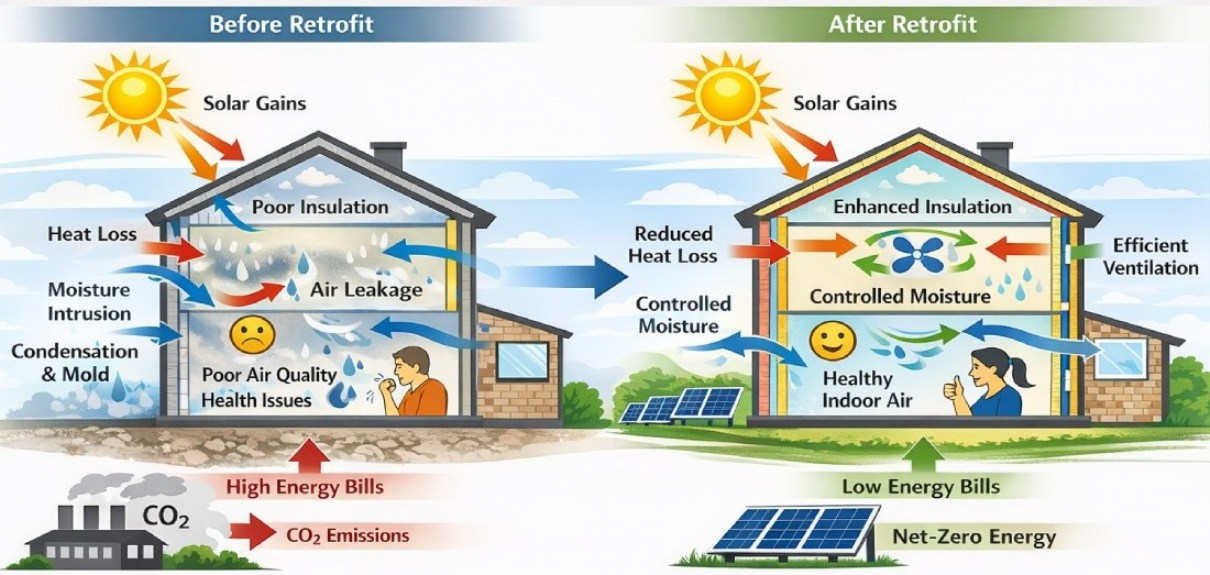
Hygrothermal and Climatic Energy Retrofit Strategies for Net-Zero Buildings: Performance Impacts and Occupant Health


Abstract
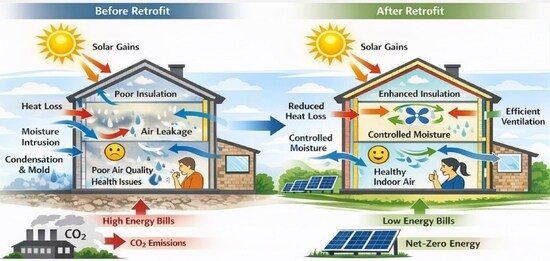
1. Introduction
2. Research Methodology
2.1. Review Design and Data Source
2.2. Search Strategy
2.3. Inclusion and Exclusion Criteria
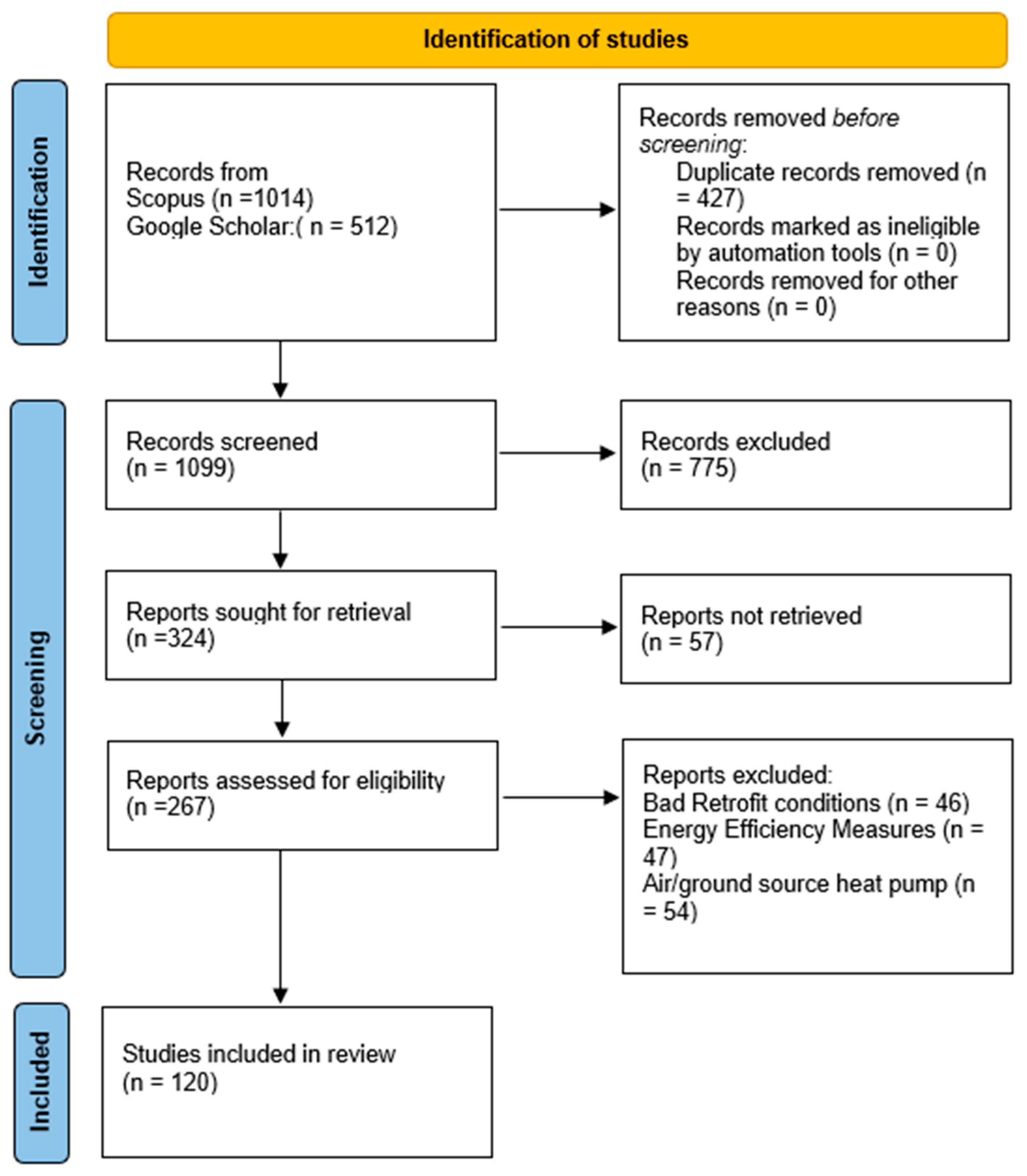
2.4. Screening Process
2.5. Use of AI-Assisted Tools in the Preparation of Images
3. Thematic Literature Synthesis
3.1. Mechanisms of Moisture Transport in Buildings
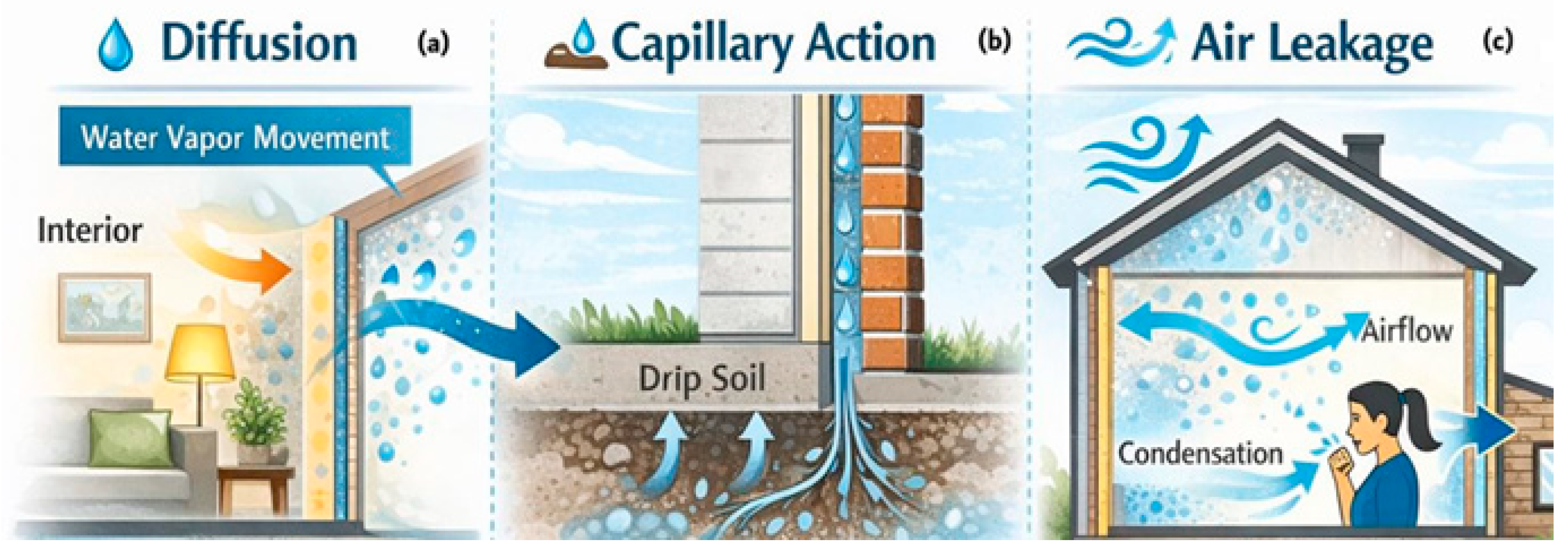
3.1.1. Vapor Diffusion
3.1.2. Capillary Action and Adsorption of Materials
3.1.3. Air Leakage and Infiltration
3.1.4. Hygrothermal Coupling
3.2. Interaction Between Moisture Control and Energy Retrofit
3.2.1. Airtightness and Moisture Trap Issues
3.2.2. Moisture Hazards in Insulation Selection

| Issue | Impact | Relationship Between Energy and Health |
|---|---|---|
| Moisture Intrusion | Condensation, Mold, and Poor Indoor Air Quality | Health: allergies, respiratory illnesses Energy: increased heat loss [37,56] |
| Air Leakage | Energy Waste, Indoor Temperature Fluctuations | Energy: increased heating/cooling bills Health: substandard indoor air [57] |
| Poor Insulation | Heat Loss, High Energy Consumption | Energy: higher bills Health: uncomfortable indoor environment in winter or summer [58] |
| Mold and Microbial Growth | Poor Air Quality, Allergies, and Health Issues | Health: risk of respiratory illnesses, allergic rhinitis and skin irritation Energy: increased cost of air filtration and ventilation [26,56,59] |
| Insufficient Ventilation | Poor Indoor Air Quality, Excessive Humidity | Health: respiratory diseases Energy: overuse of HVAC systems [60] |
3.3. Performance Impacts of Hygrothermal Retrofit Strategies
4. Results
4.1. Thermal Efficiencies
4.2. Reducing Carbon Emissions
4.3. Comparative Review of Performance in Different Climatic Zones
4.4. Critical Analysis of Past Case Studies
5. Discussion
5.1. Lessons Learned from Failures
5.2. Energy vs. Moisture Dilemma
5.3. Health Impacts and Design Errors
5.4. Durability and Long-Term Monitoring
| Monitoring Parameter | Measurement Location/Method | Monitoring Period | Scientific Objective/Interpretation | Key References |
|---|---|---|---|---|
| Indoor temperature and relative humidity (RH) | Data loggers in living rooms | At least 12–24 months (two seasonal cycles) | Identifying indoor humidity trends and condensation risks | [47,50,79] |
| Surface temperature and RH (critical junctions) | External wall–ceiling joints, window surrounds | Continuous in cold and humid weather | Assessing the risk of mold and condensation | [30,62,64] |
| Moisture content in wall/insulation | Embedded moisture sensors or periodic inspection | Long-term (annual review) | Assessment of material durability and moisture accumulation | [27,28,29,30,31,32,104] |
| Ventilation efficiency (airflow, ACH) | Mechanical ventilation units and ducts | After retrofit and annually | Verification of air exchange and indoor pollution control | [47,49,60] |
| Thermal efficiency (U-value drift) | Thermal imaging or modeling | After 1–2 years and periodically | Assessment of long-term insulation performance and thermal loss | [104,108] |
| Visual inspection (mold/condensation) | Internal surfaces, hidden cavities | After each season | Identification of early damage and need for repair | [45,61] |
5.5. The Role of Hygrothermal Retrofit in Achieving Net-Zero Goals
- Substantial hygrothermal design and humidity control improve the efficiency of HVAC systems and reduce energy waste [109].
- Reduced energy consumption results in lower CO2 emissions, which is critical to achieving net-zero-energy goals [73].
- Moisture and mold control improves indoor air quality, reducing the risk of allergies and respiratory diseases.
- Effective moisture control extends the life of a building’s structural and thermal components, ensuring the long-term effectiveness of the retrofit.
5.6. Post-2020 Research Evolution and Emerging Directions
5.6.1. Climate-Scenario-Based Hygrothermal Modeling
5.6.2. Smart Monitoring, IoT and AI-Driven Moisture Control
5.6.3. Post-COVID-19 Health-Centered Retrofit Paradigm
- A lack of standardized classification of hygrothermal risk in future climate scenarios.
- A lack of long-term field data on AI/IoT-based humidity control.
- A lack of a joint quantitative model of health, energy, and humidity.
- Limited evidence on the application of smart retrofit technologies in low-resource residential buildings.
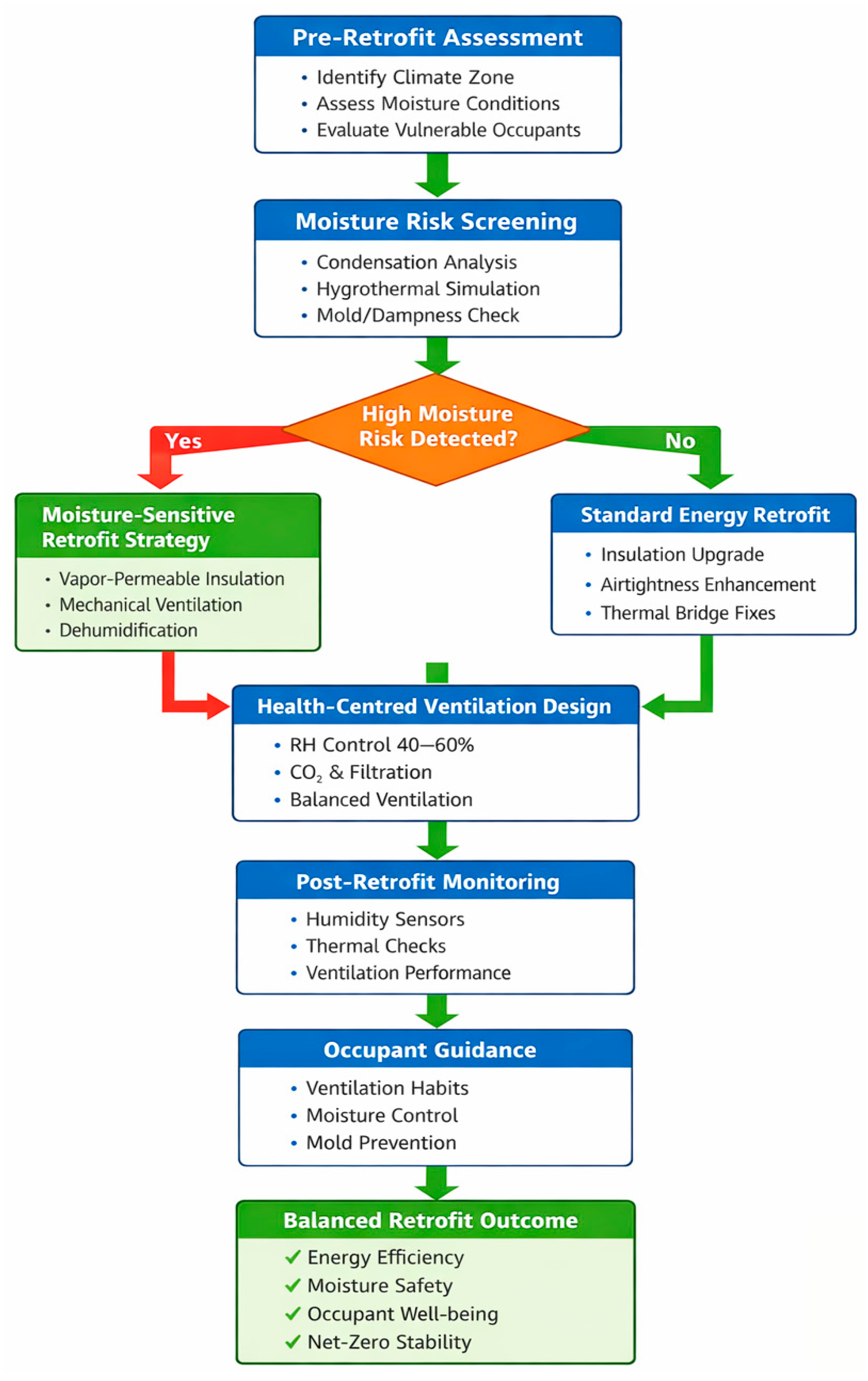
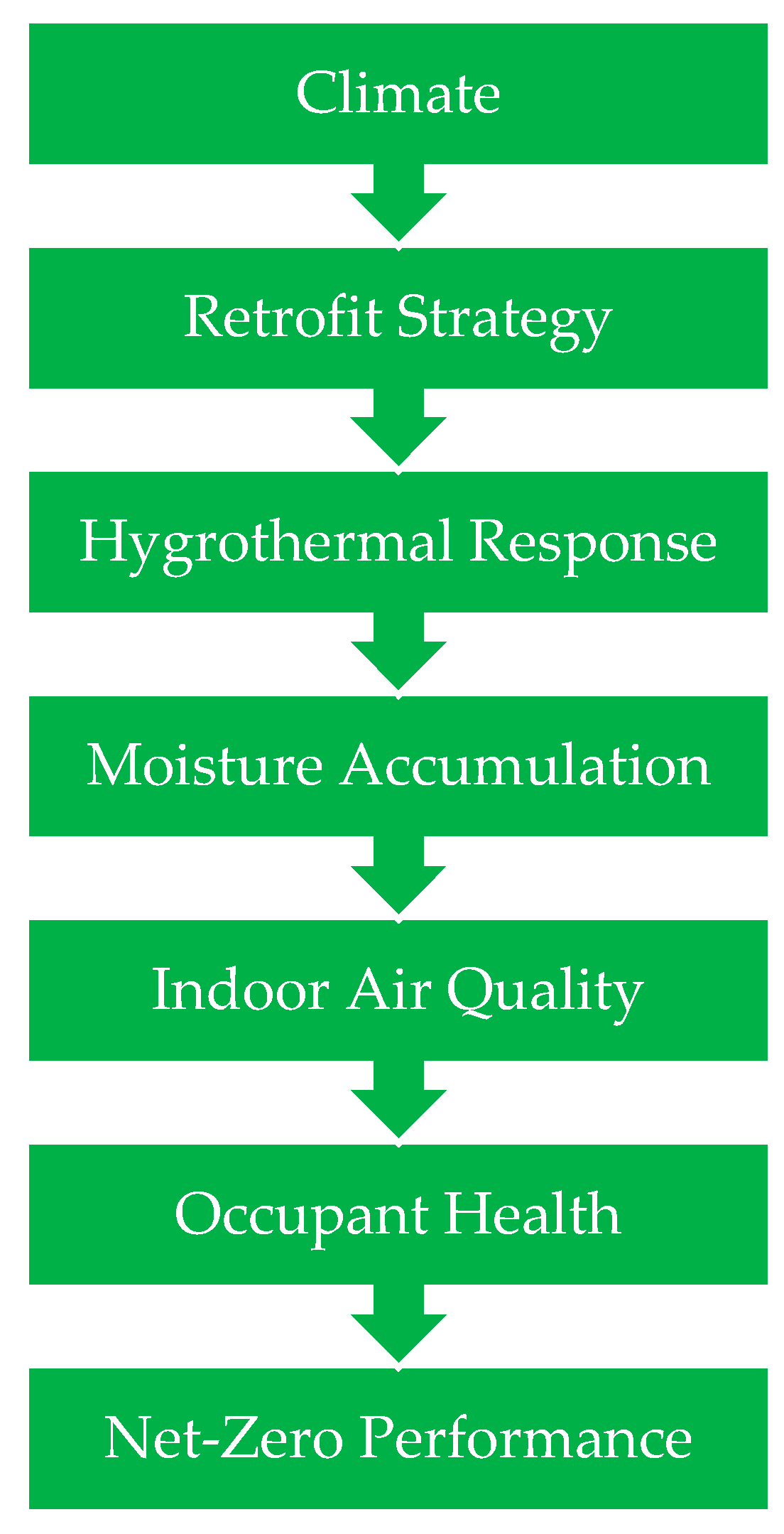
6. Proposed Conceptual Framework
7. Policy and Design Implications
7.1. Policy Implications
- Governments and Building Codes Should Clarify the Principles of Moisture and Energy Control During Retrofits So That All New and Existing Projects Are Consistent in Their Standards
- Financial Incentives and Subsidy Programs Should Promote the Use of Technologies and Materials That Are Hygrothermal and Energy-Efficient
- Awareness and Training Programs Are Essential for Designers, Contractors, and Residents to Ensure That Moisture Control and Energy-Saving Measures Are Effective at a Practical Level
7.2. Design Implications
- Moisture Control Must Be Incorporated into Retrofit Plans from an Early Stage So That the Combination of Insulation, Airtightness, and Ventilation Does Not Result in Hygrothermal Failures
- The Selection of Materials Should Be Tailored to the Climatic Conditions and the Building Structure, Such as the Correct Use of Vapor Barriers in Cold Regions and Efficient Ventilation Systems in Hot and Humid Regions
- Thermal and Hygrothermal Modeling Can Help to Predict Problems in Advance, Improving the Quality of Design and Implementation
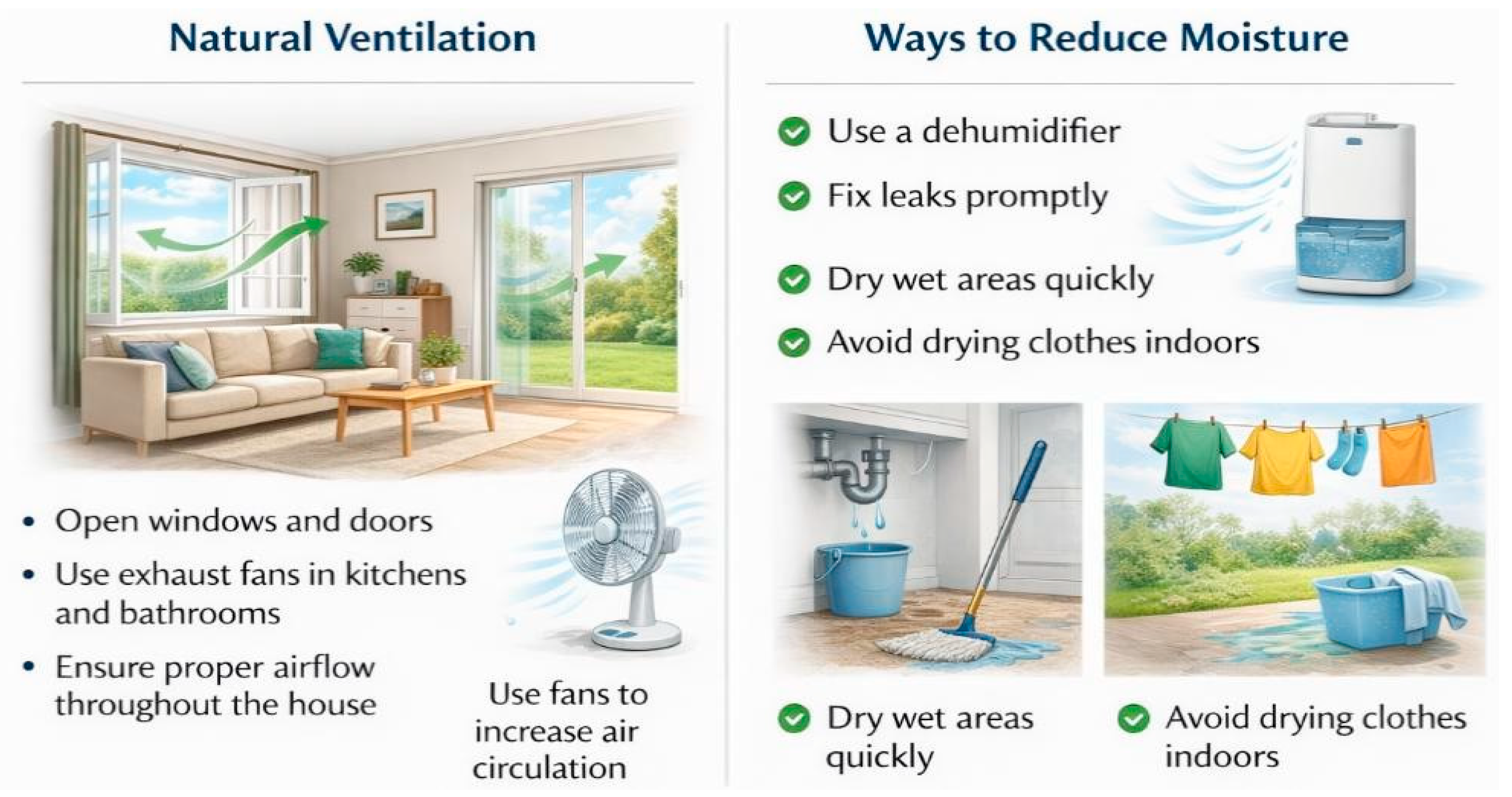
7.3. Pre-Retrofit Remedial Measures and Occupant Awareness
7.4. Ways to Control Household Humidity (Daily Habits)
8. Limitations
8.1. Key Knowledge Gaps
- (a)
- Most studies are based on 5–10 years of data, while the full lifespan of retrofitted buildings is 50–100 years. There is a lack of studies on moisture and thermal response over the long term.
- (b)
- The current research is mostly limited to Europe, North America, and Africa, but practical case studies are lacking in other regions, such as Asia and the Middle East.
- (c)
- More statistical and long-term research is needed on the relationship between moisture-related failures and occupant health.
- (d)
- Extensive research is needed on the effects of capillary-active insulation, vapor-control systems, and smart ventilation technologies.
- (e)
- There is still a lack of comprehensive, extensive, and practical data on advanced materials and technologies, such as capillary-active insulation, vapor barriers, and smart ventilation systems. In addition, a close examination of historical building materials and different insulation types is essential to resolve the ambiguity in material properties. The understanding of weather uncertainties will provide key guidance to experts in the sustainable restoration of ancient buildings and the selection of the most suitable materials [89].
8.2. Study Limitations
8.3. Geographic and Methodological Limitations
9. Future Research Directions
9.1. Future Work
- Modeling energy, humidity, IAQ, and human health factors together to develop comprehensive retrofit strategies.
- Real-time data on indoor humidity and temperature can be used to monitor and predict retrofit performance.
- Investigating the social, economic, and environmental impacts of humidity-aware retrofits to enable better policymaking.
9.2. Interdisciplinary Research (Engineering + Health Sciences)
10. Conclusions
Author Contributions
Funding
Institutional Review Board Statement
Informed Consent Statement
Data Availability Statement
Acknowledgments
Conflicts of Interest
References
- Pérez-Lombard, L.; Ortiz, J.; Pout, C. A review on buildings energy consumption information. Energy Build. 2008, 40, 394–398. [Google Scholar] [CrossRef] [Scilit]
- Le, A.; Rodrigo, N.; Domingo, N.; Senaratne, S. Policy mapping for net-zero-carbon buildings: Insights from leading countries. Buildings 2023, 13, 2766. [Google Scholar] [CrossRef] [Scilit]
- Chel, A.; Kaushik, G. Renewable energy technologies for sustainable development of energy efficient building. Alex. Eng. J. 2018, 57, 655–669. [Google Scholar] [CrossRef] [Scilit]
- Aliabadi, A.A.; Moradi, M.; McLeod, R.M.; Calder, D.; Dernovsek, R. How much building renewable energy is enough? The vertical city weather generator (VCWG v1. 4.4). Atmosphere 2021, 12, 882. [Google Scholar] [CrossRef] [Scilit]
- Roberts, B.M.; Rossi, V.; Gorse, C.; Li, M.; Lomas, K. Airtightness Retrofit and Construction Practices, Unintended Consequences, and Ventilation Practices: Gathering Evidence to Improve Airtightness in the UK Housing Stock; UK Government: London, UK, 2025.
- Sawadogo, M.; Godin, A.; Duquesne, M.; Hamami, A.E.A.; Belarbi, R. A review on numerical modeling of the hygrothermal behavior of building envelopes incorporating phase change materials. Buildings 2023, 13, 3086. [Google Scholar] [CrossRef] [Scilit]
- Singh, J. Toxic moulds and indoor air quality. Indoor Built Environ. 2005, 14, 229–234. [Google Scholar] [CrossRef] [Scilit]
- Lstiburek, J.; Carmody, J. Moisture control for new residential buildings. In Moisture Control in Buildings; ASTM International: West Conshohocken, PA, USA, 1994; p. 321. [Google Scholar]
- Viljanen, M.; Bergman, J.; Grabko, S.; Xiaoshu, L.; Yrjölä, R. Ensuring the Long Service Life of Unheated Buildings. Evaluation Methods to Avoid Moisture Damage in Unheated Buildings; U.S. Department of Energy Office of Scientific and Technical: Oak Ridge, TN, USA, 1999.
- Guarnieri, G.; Olivieri, B.; Senna, G.; Vianello, A. Relative humidity and its impact on the immune system and infections. Int. J. Mol. Sci. 2023, 24, 9456. [Google Scholar] [CrossRef] [Scilit]
- Mendell, M.J.; Mirer, A.G.; Cheung, K.; Tong, M.; Douwes, J. Respiratory and allergic health effects of dampness, mold, and dampness-related agents: A review of the epidemiologic evidence. Environ. Health Perspect. 2011, 119, 748. [Google Scholar] [CrossRef] [Scilit]
- Nag, P.K. Sick building syndrome and other building-related illnesses. In Office Buildings: Health, Safety and Environment; Springer: Singapore, 2018; pp. 53–103. [Google Scholar]
- Jacobs, D.E.; Forst, L. Occupational safety and health and healthy housing: A review of opportunities and challenges. J. Public Health Manag. Pract. 2017, 23, 36–45. [Google Scholar] [CrossRef] [Scilit]
- Lou, H.L.; Hsieh, S.H. Towards zero: A review on strategies in achieving net-zero-energy and net-zero-carbon buildings. Sustainability 2024, 16, 4735. [Google Scholar] [CrossRef] [Scilit]
- Kamel, E.; Memari, A.M. Residential building envelope energy retrofit methods, simulation tools, and example projects: A review of the literature. Buildings 2022, 12, 954. [Google Scholar] [CrossRef] [Scilit]
- Al-Tamimi, N. Building envelope retrofitting strategies for energy-efficient office buildings in Saudi Arabia. Buildings 2022, 12, 1900. [Google Scholar] [CrossRef] [Scilit]
- Monna, S.; Juaidi, A.; Abdallah, R.; Albatayneh, A.; Dutournie, P.; Jeguirim, M. Towards sustainable energy retrofitting, a simulation for potential energy use reduction in residential buildings in Palestine. Energies 2021, 14, 3876. [Google Scholar] [CrossRef] [Scilit]
- Sharma, S.K.; Mohapatra, S.; Sharma, R.C.; Alturjman, S.; Altrjman, C.; Mostarda, L.; Stephan, T. Retrofitting existing buildings to improve energy performance. Sustainability 2022, 14, 666. [Google Scholar] [CrossRef] [Scilit]
- Tran, V.V.; Park, D.; Lee, Y.C. Indoor air pollution, related human diseases, and recent trends in the control and improvement of indoor air quality. Int. J. Environ. Res. Public Health 2020, 17, 2927. [Google Scholar] [CrossRef] [Scilit]
- Mastellone, M.; Ruggiero, S.; Papadaki, D.; Barmparesos, N.; Fotopoulou, A.; Ferrante, A.; Assimakopoulos, M.N. Energy, environmental impact and indoor environmental quality of add-ons in buildings. Sustainability 2022, 14, 7605. [Google Scholar] [CrossRef] [Scilit]
- Xie, L.; Fan, L.; Zhang, D.; Liu, J. Passive Energy Conservation Strategies for Mitigating Energy Consumption and Reducing CO2 Emissions in Traditional Dwellings of Peking Area, China. Sustainability 2023, 15, 16459. [Google Scholar] [CrossRef] [Scilit]
- Adan, O.C.; Samson, R.A. (Eds.) Fundamentals of Mold Growth in Indoor Environments and Strategies for Healthy Living; Springer: Berlin/Heidelberg, Germany, 2011. [Google Scholar]
- Wu, H.; Wong, J.W.C. Current challenges for shaping the sustainable and mold-free hygienic indoor environment in humid regions. Lett. Appl. Microbiol. 2020, 70, 396–406. [Google Scholar] [CrossRef] [Scilit]
- Wang, J.; Cao, X.; Liu, H. A review of the long-term effects of humidity on the mechanical properties of wood and wood-based products. Eur. J. Wood Wood Prod. 2021, 79, 245–259. [Google Scholar] [CrossRef] [Scilit]
- Liu, C.; Sharples, S.; Mohammadpourkarbasi, H. A review of building energy retrofit measures, passive design strategies and building regulation for the low carbon development of existing dwellings in the hot summer–cold winter region of China. Energies 2023, 16, 4115. [Google Scholar] [CrossRef] [Scilit]
- Dinet, J.; Favart, M.; Passerault, J.M. Searching for information in an online public access catalogue (OPAC): The impacts of information search expertise on the use of Boolean operators. J. Comput. Assist. Learn. 2004, 20, 338–346. [Google Scholar] [CrossRef] [Scilit]
- Brambilla, A.; Sangiorgio, A. Moisture and Buildings: Durability Issues, Health Implications and Strategies to Mitigate the Risks; Woodhead Publishing: Cambridge, UK, 2021. [Google Scholar]
- Lopez-Carreon, I.; Jahan, E.; Yari, M.H.; Esmizadeh, E.; Riahinezhad, M.; Lacasse, M.; Xiao, Z.; Dragomirescu, E. Moisture Ingress in Building Envelope Materials:(II) Transport Mechanisms and Practical Mitigation Approaches. Buildings 2025, 15, 762. [Google Scholar] [CrossRef] [Scilit]
- IAQ. Moisture Control Guidance for Building Design, Construction and Maintenance; EPA 402-F-13053; US Environmental Protection Agency: Washington, DC, USA, 2013.
- Jensen, N.F.; Odgaard, T.R.; Bjarløv, S.P.; Andersen, B.; Rode, C.; Møller, E.B. Hygrothermal assessment of diffusion open insulation systems for interior retrofitting of solid masonry walls. Build. Environ. 2020, 182, 107011. [Google Scholar] [CrossRef] [Scilit]
- Rode, C.; Grau, K. Moisture buffering and its consequence in whole building hygrothermal modeling. J. Build. Phys. 2008, 31, 333–360. [Google Scholar] [CrossRef] [Scilit]
- Künzel, H.; Dewsbury, M. Moisture control design has to respond to all relevant hygrothermal loads. UCL Open Environ. 2022, 4, e037. [Google Scholar] [CrossRef] [Scilit] [PubMed]
- Straube, J.F. Moisture in buildings. ASHRAE J. 2002, 44, 15–19. [Google Scholar]
- Azeem, M.; Boughattas, A.; Wiener, J.; Havelka, A. Mechanism of liquid water transport in fabrics; a review. Fibres Text. 2017, 4, 58–65. [Google Scholar]
- Mydin, M.A.O.; Omar, R.; Azian, F.U.M.; Nawi, M.; Kadir, H. Establishing the Taxonomy of Building Defects Triggered by Moisture Intrusion and Dampness. J. Adv. Res. Fluid Mech. Therm. Sci. 2024, 119, 211–228. [Google Scholar] [CrossRef] [Scilit]
- Bolashikov, Z.D.; Melikov, A.K. Methods for air cleaning and protection of building occupants from airborne pathogens. Build. Environ. 2009, 44, 1378–1385. [Google Scholar] [CrossRef] [Scilit] [PubMed]
- Trechsel, H.R.; Vigener, N.W. Investigating moisture damage caused by building envelope problems. In Moisture Control in Buildings: The Key Factor in Mold Prevention, 2nd ed.; ASTM International: West Conshohocken, PA, USA, 2009; pp. 160–179. [Google Scholar]
- Božič, A.; Kanduč, M. Relative humidity in droplet and airborne transmission of disease. J. Biol. Phys. 2021, 47, 1–29. [Google Scholar] [CrossRef] [Scilit]
- Farooq, F. MVHR System Evaluation Based on Ventilation Effectiveness and Human Comfort in Bedrooms of Low-Carbon UK Dwellings. Doctoral Dissertation, Cardiff University, Cardiff, UK, 2024. [Google Scholar]
- Recart, C.; Dossick, C.S. Hygrothermal behavior of post-retrofit housing: A review of the impacts of the energy efficiency upgrade strategies. Energy Build. 2022, 262, 112001. [Google Scholar] [CrossRef] [Scilit]
- Azeem, M.; Amor, N.; Kashif, M.; Tabassum, W.A.; Noman, M.T. A Systems Approach to Thermal Bridging for a Net Zero Housing Retrofit: United Kingdom’s Perspective. Sustainability 2025, 17, 11325. [Google Scholar] [CrossRef] [Scilit]
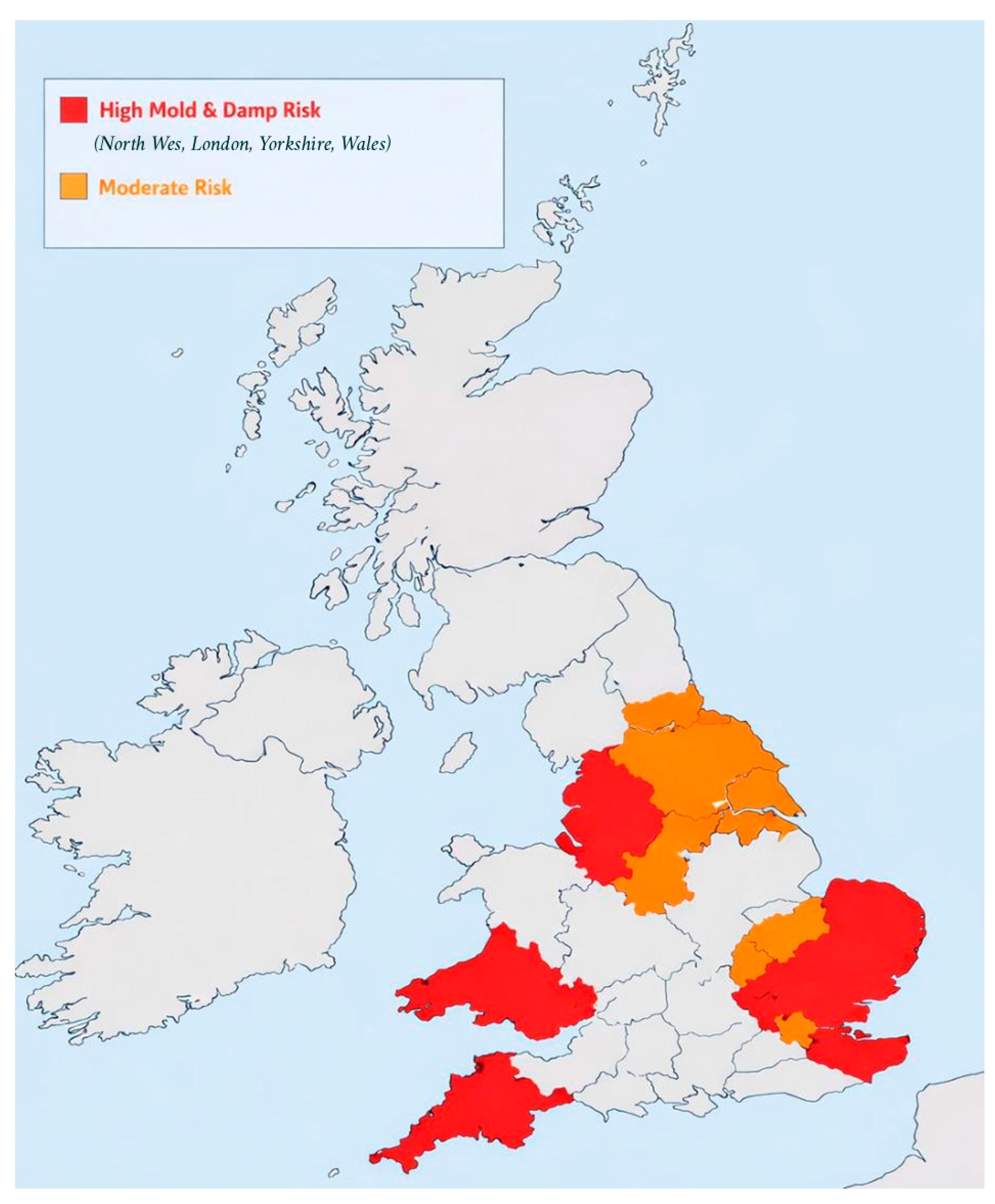
- UK Regions Most Affected by Mould and Damp. Available online: https://www.ukmeds.co.uk/blog/uk-regions-most-affected-by-mould-and-damp? (accessed on 22 January 2026).
- Steeman, M.; De Paepe, M.; Janssens, A. Impact of whole-building hygrothermal modelling on the assessment of indoor climate in a library building. Build. Environ. 2010, 45, 1641–1652. [Google Scholar] [CrossRef] [Scilit]
- Gori, V.; Marincioni, V.; Altamirano-Medina, H. Retrofitting traditional buildings: A risk-management framework integrating energy and moisture. Build. Cities 2021, 2, 411–424. [Google Scholar] [CrossRef] [Scilit]
- Cho, W.; Iwamoto, S.; Kato, S. Condensation risk due to variations in airtightness and thermal insulation of an office building in warm and wet climate. Energies 2016, 9, 875. [Google Scholar] [CrossRef] [Scilit]
- Orlik-Kożdoń, B. Effect of indoor climatic conditions on the risk of water vapor condensation and mould growth. J. Build. Eng. 2024, 95, 110198. [Google Scholar] [CrossRef] [Scilit]
- Godish, T.; Spengler, J.D. Relationships between ventilation and indoor air quality: A review. Indoor Air 1996, 6, 135–145. [Google Scholar] [CrossRef] [Scilit]
- Mewomo, M.C.; Toyin, J.O.; Iyiola, C.O.; Aluko, O.R. Synthesis of critical factors influencing indoor environmental quality and their impacts on building occupants health and productivity. J. Eng. Des. Technol. 2023, 21, 619–634. [Google Scholar] [CrossRef] [Scilit]
- Manz, H.; Huber, H.; Helfenfinger, D. Impact of air leakages and short circuits in ventilation units with heat recovery on ventilation efficiency and energy requirements for heating. Energy Build. 2001, 33, 133–139. [Google Scholar] [CrossRef] [Scilit]
- Ryan, B.; Bristow, D.N. Climate change and hygrothermal performance of building envelopes: A review on risk assessment. Int. J. Technol. 2023, 14, 1461–1475. [Google Scholar] [CrossRef] [Scilit]
- Alaidroos, A.; Mosly, I. Preventing mold growth and maintaining acceptable indoor air quality for educational buildings operating with high mechanical ventilation rates in hot and humid climates. Air Qual. Atmos. Health 2023, 16, 341–361. [Google Scholar] [CrossRef] [Scilit]
- Mohammed, M.O. Surface microbial contamination and air quality before and after regular cleaning procedures. Atmosphere 2023, 14, 352. [Google Scholar] [CrossRef] [Scilit]
- Sudhakar, K.; Winderl, M.; Priya, S.S. Net-zero building designs in hot and humid climates: A state-of-art. Case Stud. Therm. Eng. 2019, 13, 100400. [Google Scholar] [CrossRef] [Scilit]
- Pasanen, A.L.; Kasanen, J.P.; Rautiala, S.; Ikäheimo, M.; Rantamäki, J.; Kääriäinen, H.; Kalliokoski, P. Fungal growth and survival in building materials under fluctuating moisture and temperature conditions. Int. Biodeterior. Biodegrad. 2000, 46, 117–127. [Google Scholar] [CrossRef] [Scilit]
- Salthammer, T.; Morrison, G.C. Temperature and indoor environments. Indoor Air 2022, 32, 13022. [Google Scholar] [CrossRef] [Scilit] [PubMed]
- Ortiz, M.; Itard, L.; Bluyssen, P.M. Indoor environmental quality related risk factors with energy-efficient retrofitting of housing: A literature review. Energy Build. 2020, 221, 110102. [Google Scholar] [CrossRef] [Scilit]
- Haroon, M.U.; Ozarisoy, B.; Altan, H. Factors affecting the indoor air quality and Occupants’ thermal comfort in urban agglomeration regions in the hot and humid climate of Pakistan. Sustainability 2024, 16, 7869. [Google Scholar] [CrossRef] [Scilit]
- Lomas, K.J.; Kane, T. Summertime temperatures and thermal comfort in UK homes. Build. Res. Inf. 2013, 41, 259–280. [Google Scholar] [CrossRef] [Scilit]
- Bekö, G.; Clausen, G.; Weschler, C.J. Is the use of particle air filtration justified? Costs and benefits of filtration with regard to health effects, building cleaning and occupant productivity. Build. Environ. 2008, 43, 1647–1657. [Google Scholar] [CrossRef] [Scilit]
- Bearg, D.W. Indoor Air Quality and HVAC Systems; Routledge: London, UK, 2019. [Google Scholar]
- Agrafiotis, C.; Tsoutsos, T. Energy saving technologies in the European ceramic sector: A systematic review. Appl. Therm. Eng. 2001, 21, 1231–1249. [Google Scholar] [CrossRef] [Scilit]
- Tariku, F.; Kumaran, K.; Fazio, P. Application of a Whole-Building Hygrothermal model in energy, durability, and indoor humidity retrofit design. J. Build. Phys. 2015, 39, 3–34. [Google Scholar] [CrossRef] [Scilit]
- Heseltine, E.; Rosen, J. (Eds.) WHO Guidelines for Indoor Air Quality: Dampness and Mould; WHO: Geneva, Switzerland, 2009. [Google Scholar]
- Crook, B.; Burton, N.C. Indoor moulds, sick building syndrome and building related illness. Fungal Biol. Rev. 2010, 24, 106–113. [Google Scholar] [CrossRef] [Scilit]
- Venugopal, V.; Rekha, S.; Manikandan, K.; Latha, P.K.; Vennila, V.; Ganesan, N.; Kumaravel, P.; Chinnadurai, S.J. Heat stress and inadequate sanitary facilities at workplaces–an occupational health concern for women? Glob. Health Action 2016, 9, 31945. [Google Scholar] [CrossRef] [Scilit]
- Pergantis, E.N.; Dhillon, P.; Premer, L.D.R.; Lee, A.H.; Ziviani, D.; Kircher, K.J. Humidity-aware model predictive control for residential air conditioning: A field study. Build. Environ. 2024, 266, 112093. [Google Scholar] [CrossRef] [Scilit]
- Schroderus, S.; Kuurola, P.; Kempe, M.; Fedorik, F.; Leivo, V.; Haverinen-Shaughnessy, U. Impacts of building energy retrofits on energy consumption, indoor environment, and hygrothermal performance in future climate scenarios. Energy Build. 2025, 347, 116413. [Google Scholar] [CrossRef] [Scilit]
- Brandt, M.; Brown, C.; Burkhart, J.; Burton, N.; Cox-Ganser, J.; Damon, S.; Falk, H.; Fridkin, S.; Garbe, P.; McGeehin, M.; et al. Mold prevention strategies and possible health effects in the aftermath of hurricanes and major floods. MMWR Recomm. Rep. 2006, 55, 1–27. [Google Scholar] [PubMed]
- Mendell, M.J.; Macher, J.M.; Kumagai, K. Measured moisture in buildings and adverse health effects: A review. Indoor Air 2018, 28, 488–499. [Google Scholar] [CrossRef] [Scilit] [PubMed]
- Vanderschelden, B.; Vandemeulebroucke, I.; De Kock, T.; Cnudde, V.; Van Den Bossche, N. SAMIRA: Balancing accuracy and cost in hygrothermal simulations. J. Build. Phys. 2026, 49, 487–529. [Google Scholar] [CrossRef] [Scilit]
- Abou-Donia, M.B.; Lieberman, A.; Curtis, L. Neural autoantibodies in patients with neurological symptoms and histories of chemical/mold exposures. Toxicol. Ind. Health 2018, 34, 44–53. [Google Scholar] [CrossRef] [Scilit] [PubMed]
- Šťastný, P.; Gašparík, J.; Makýš, O. Analysis of moisture and salinity of historical constructions before and after the application of REMEDIATIONS. J. Build. Eng. 2021, 41, 102785. [Google Scholar] [CrossRef] [Scilit]
- Oliveira, M.; Ribeiro, H.; Delgado, J.L.; Abreu, I. Seasonal and intradiurnal variation of allergenic fungal spores in urban and rural areas of the North of Portugal. Aerobiologia 2009, 25, 85–98. [Google Scholar] [CrossRef] [Scilit]
- Mazur, L.J.; Kim, J. Committee on Environmental Health, Spectrum of noninfectious health effects from molds. Pediatrics 2006, 118, 1909–1926. [Google Scholar] [CrossRef] [Scilit] [PubMed]
- Utegenov, R.B.; Sapozhnikov, S.S.; Bessonov, I.S. Atherosclerotic plaque structure according to optical coherence tomography in patients with coronary artery disease living in extreme weather conditions. Russ. J. Cardiol. 2024, 29, 5865. [Google Scholar] [CrossRef] [Scilit]
- Han, Y.Y.; Lee, Y.L.; Guo, Y.L. Indoor environmental risk factors and seasonal variation of childhood asthma. Pediatr. Allergy Immunol. 2009, 20, 748–756. [Google Scholar] [CrossRef] [Scilit]
- Dong, Y.; Kong, J.; Mousavi, S.; Rismanchi, B.; Yap, P.S. Wall insulation materials in different climate zones: A review on challenges and opportunities of available alternatives. Thermo 2023, 3, 38–65. [Google Scholar] [CrossRef] [Scilit]
- Mahdavi Adeli, M.; Farahat, S.; Sarhaddi, F. Increasing thermal comfort of a net-zero energy building inhabitant by optimization of energy consumption. Int. J. Environ. Sci. Technol. 2020, 17, 2819–2834. [Google Scholar] [CrossRef] [Scilit]
- Mahdavi Adeli, M.; Farahat, S.; Sarhaddi, F. Optimization of Energy Consumption in Net-Zero Energy Buildings with Increasing Thermal Comfort of Occupants. Int. J. Photoenergy 2020, 1, 9682428. [Google Scholar] [CrossRef] [Scilit]
- Depecker, P.; Menezo, C.; Virgone, J.; Lepers, S. Design of buildings shape and energetic consumption. Build. Environ. 2001, 36, 627–635. [Google Scholar] [CrossRef] [Scilit]
- de Oliveira, R.S.; de Oliveira, M.J.L.; Nascimento, E.G.S.; Sampaio, R.; Nascimento Filho, A.S.; Saba, H. Renewable energy generation technologies for decarbonizing urban vertical buildings: A path towards net zero. Sustainability 2023, 15, 13030. [Google Scholar] [CrossRef] [Scilit]
- Piggot-Navarrete, J.; Blanchet, P.; Cogulet, A.; Cabral, M.R. Hygrothermal and airtightness performance assessment of prefabricated lightweight wall systems for cold climates. J. Build. Eng. 2024, 98, 111500. [Google Scholar] [CrossRef] [Scilit]
- Liu, X. Design, Development and Characterisation of a Building Integrated Photovoltaic Smart Window System for Electricity Generation and Adaptive Daylighting Control; University of Nottingham: Nottingham, UK, 2021. [Google Scholar]
- Bomberg, M.; Pazera, M.; Zhang, J.; Haghighat, F. Weather-resistive barriers: Assessment of their performance 1. In Research in Building Physics; CRC Press: Boca Raton, FL, USA, 2020; pp. 135–141. [Google Scholar]
- Viitanen, H.; Vinha, J.; Salminen, K.; Ojanen, T.; Peuhkuri, R.; Paajanen, L.; Lähdesmäki, K. Moisture and bio-deterioration risk of building materials and structures. J. Build. Phys. 2010, 33, 201–224. [Google Scholar] [CrossRef] [Scilit]
- Less, B.; Walker, I.; Levinson, R. A Literature Review of Sealed and Insulated Attics—Thermal, Moisture and Energy Performance; Lawrence Berkeley National Laboratory: Berkeley, CA, USA, 2016.
- Campbell, N.; McGrath, T.; Nanukuttan, S.; Brown, S. Monitoring the hygrothermal and ventilation performance of retrofitted clay brick solid wall houses with internal insulation: Two UK case studies. Case Stud. Constr. Mater. 2017, 7, 163–179. [Google Scholar] [CrossRef] [Scilit]
- Chae, Y.; Kim, S.H. Selection of retrofit measures for reasonable energy and hygrothermal performances of modern heritage building under dry cold and hot humid climate: A case of modern heritage school in Korea. Case Stud. Therm. Eng. 2022, 36, 102243. [Google Scholar] [CrossRef] [Scilit]
- Dang, X.; Vereecken, E.; Janssen, H.; Roels, S. Hygrothermal response of masonry facades with vapour-tight or capillary-active internal insulation under current and future climate scenarios. Built Herit. 2025, 9, 23. [Google Scholar] [CrossRef] [Scilit]
- Felius, L.C.; Dessen, F.; Hrynyszyn, B.D. Retrofitting towards energy-efficient homes in European cold climates: A review. Energy Effic. 2020, 13, 101–125. [Google Scholar] [CrossRef] [Scilit]
- Klõšeiko, P. Hygrothermal Performance of Masonry Walls Retrofitted with Interior Insulation in Cold Climate. Ph.D. Thesis, Tallinn University of Technology, Tallinn, Estonia, 2022. [Google Scholar]
- Carrer, P.; de Oliveira Fernandes, E.; Santos, H.; Hänninen, O.; Kephalopoulos, S.; Wargocki, P. On the development of health-based ventilation guidelines: Principles and framework. Int. J. Environ. Res. Public Health 2018, 15, 1360. [Google Scholar] [CrossRef] [Scilit]
- Nik, V.M.; Kalagasidis, A.S. Impact study of the climate change on the energy performance of the building stock in Stockholm considering four climate uncertainties. Build. Environ. 2013, 60, 291–304. [Google Scholar] [CrossRef] [Scilit]
- Del Coz Diaz, J.J.; Martínez-Luengas, A.L.; Adam, J.M.; Rodríguez, A.M. Non-linear hygrothermal failure analysis of an external clay brick wall by FEM—A case study. Constr. Build. Mater. 2011, 25, 4454–4464. [Google Scholar] [CrossRef] [Scilit]
- Jayamaha, D.L. Energy-Efficient Building Systems; Mcgraw-Hill Publishing Company: Columbus, OH, USA, 2007; pp. 14–116. [Google Scholar]
- Kwong, Q.J.; Adam, N.M.; Sahari, B.B. Thermal comfort assessment and potential for energy efficiency enhancement in modern tropical buildings: A review. Energy Build. 2014, 68, 547–557. [Google Scholar] [CrossRef] [Scilit]
- Tainter, J.A.; Patzek, T.W. Our energy and complexity dilemma: Prospects for the future. In Drilling Down: The Gulf Oil Debacle and Our Energy Dilemma; Springer: New York, NY, USA, 2011; pp. 185–214. [Google Scholar]
- Day, K.C. Risk management of moisture in exterior wall systems. In Research in Building Physics; CRC Press: Boca Raton, FL, USA, 2020; pp. 535–544. [Google Scholar]
- Trivedi, V.; Gharib, M. AI-Driven Water Management: Transforming Conservation Strategies Through IoT Integration. In Data-Driven Sustainability: Harnessing Technology for A Greener Future and Environmental Resilience; Springer Nature: Cham, Switzerland, 2026; pp. 319–329. [Google Scholar]
- Sartori, I.; Hestnes, A.G. Energy use in the life cycle of conventional and low-energy buildings: A review article. Energy Build. 2007, 39, 249–257. [Google Scholar] [CrossRef] [Scilit]
- Nabinger, S.; Persily, A. Impacts of airtightening retrofits on ventilation rates and energy consumption in a manufactured home. Energy Build. 2011, 43, 3059–3067. [Google Scholar] [CrossRef] [Scilit]
- Bu, S.; Shen, G.; Anumba, C.J.; Wong, A.K.; Liang, X. Literature review of green retrofit design for commercial buildings with BIM implication. Smart Sustain. Built Environ. 2015, 4, 188–214. [Google Scholar] [CrossRef] [Scilit]
- Jalili, H.; Ouahbi, T.; Eid, J.; Taibi, S.; Hamrouni, I. Exploring Historical Perspectives in Building Hygrothermal Models: A Comprehensive Review. Buildings 2024, 14, 1786. [Google Scholar] [CrossRef] [Scilit]
- Tariku, F.; Kumaran, K.; Fazio, P. Determination of indoor humidity profile using a whole-building hygrothermal model. Build. Simul. 2011, 4, 61–78. [Google Scholar] [CrossRef] [Scilit]
- Shah, N.B.; Kochkin, V. Moisture Performance of High-R Wall Systems; No. DOE/EE-1784; Home Innovation Research Labs: Upper Marlboro, MD, USA, 2018. [Google Scholar]
- Chow, D.H.C.; Li, Z.; Darkwa, J. The effectiveness of retrofitting existing public buildings in face of future climate change in the hot summer cold winter region of China. Energy Build. 2013, 57, 176–186. [Google Scholar] [CrossRef] [Scilit]
- Martín-Garín, A.; Millán-García, J.A.; Terés-Zubiaga, J.; Oregi, X.; Rodríguez-Vidal, I.; Baïri, A. Improving energy performance of historic buildings through hygrothermal assessment of the envelope. Buildings 2021, 11, 410. [Google Scholar] [CrossRef] [Scilit]
- Alkhatib, H.; Lemarchand, P. Assessing thermal performance: An experimental study on U-value variability in building fabric elements. Results Eng. 2025, 25, 103730. [Google Scholar] [CrossRef] [Scilit]
- Moghaddasi, H.; Culp, C.; Vanegas, J.; Ehsani, M. Net zero energy buildings: Variations, clarifications, and requirements in response to the Paris Agreement. Energies 2021, 14, 3760. [Google Scholar] [CrossRef] [Scilit]
- Patil, M.P.; Salama, A.M. Shaping a future research agenda across diverse knowledge spaces in architecture and urbanism–through the lens of Archnet-IJAR. Archnet-IJAR Int. J. Archit. Res. 2024, 18, 693–718. [Google Scholar] [CrossRef] [Scilit]
- Coelho, G.B.; Silva, H.E.; Henriques, F.M. Calibrated hygrothermal simulation models for historical buildings. Build. Environ. 2018, 142, 439–450. [Google Scholar] [CrossRef] [Scilit]
- Dimitrov, R.S. The Paris agreement on climate change: Behind closed doors. Glob. Environ. Politics 2016, 16, 1–11. [Google Scholar] [CrossRef] [Scilit]
- Hilbrecht, R.; Cruickshank, C.A.; Baldwin, C.; Scharf, N. A Rapid Review of Hygrothermal Performance Metrics for Innovative Materials in Building Envelope Retrofits. Energies 2025, 18, 5016. [Google Scholar] [CrossRef] [Scilit]
- Tian, C.; Ahmad, N.A.; Abd Rased, A.N.N.W.; Wang, S.; Tian, H. Establishing energy-efficient retrofitting strategies in rural housing in China: A systematic review. Results Eng. 2024, 24, 103653. [Google Scholar] [CrossRef] [Scilit]
- Kosow, H.; Weimer-Jehle, W.; León, C.D.; Minn, F. Designing synergetic and sustainable policy mixes-a methodology to address conflictive environmental issues. Environ. Sci. Policy 2022, 130, 36–46. [Google Scholar] [CrossRef] [Scilit]
- Qin, M.; Hou, P.; Wu, Z.; Wang, J. Precise humidity control materials for autonomous regulation of indoor moisture. Build. Environ. 2020, 169, 106581. [Google Scholar] [CrossRef] [Scilit]
- Sauni, R.; Uitti, J.; Jauhiainen, M.; Kreiss, K.; Sigsgaard, T.; Verbeek, J.H. Remediating buildings damaged by dampness and mould for preventing or reducing respiratory tract symptoms, infections and asthma. Evid.-Based Child Health A Cochrane Rev. J. 2013, 8, 944–1000. [Google Scholar] [CrossRef] [Scilit] [PubMed]
- Winkler, J.; Munk, J.; Woods, J. Effect of occupant behavior and air-conditioner controls on humidity in typical and high-efficiency homes. Energy Build. 2018, 165, 364–378. [Google Scholar] [CrossRef] [Scilit]
- Zaharieva, S.; Georgiev, I.; Georgiev, S.; Borodzhieva, A.; Todorov, V. A Method for Forecasting Indoor Relative Humidity for Improving Comfort Conditions and Quality of Life. Atmosphere 2025, 16, 315. [Google Scholar] [CrossRef] [Scilit]
- Harriet, A.; Burge, H.A.; Su, H.J.; Spengler, J.D. Moisture, Organisms, and Health Effects. In Moisture Control in Buildings; ASTM International: West Conshohocken, PA, USA, 1994; p. 84. [Google Scholar]


| Source of Moisture | Structural Impact | Health Impact | Mitigation Strategy |
|---|---|---|---|
| Rainwater penetration | Wall degradation, corrosion of materials, reduced thermal resistance | Mold spores, respiratory irritation | External weatherproofing, appropriate flashing system |
| Ground rising moisture | Foundation weakening, material decay, salt stains, mold | Allergies, asthma, microbial exposure | Damp-proof courses, drainage improvement, capillary breaks |
| Indoor activities (cooking, bathing, breathing) | Condensation, wetting of insulation | Asthma, moisture- related diseases | Mechanical ventilation, exhaust fans, awareness |
| Air leakage | Condensation inside walls, heat loss | Respiratory problems, poor indoor air | Airtightness, sealing of cracks |
| Cold surfaces/thermal bridges | Surface condensation, mold | Eye and lung sensitivity | Thermal breaks, improved insulation |
| Poor vapor barrier | Moisture trapping, material rotting | Long-term health problems | Properly placed vapor barrier, hygrothermal design |
| Retrofit Strategy | Energy Reduction (%) | Moisture Risk | Suitable Climate Zone |
|---|---|---|---|
| External Wall Insulation | 30–45 | Medium | Cold/Moderate |
| Internal Wall Insulation | 20–35 | High | Cold |
| Airtightness Improvement | 15–25 | High (if no ventilation) | All |
| Mechanical Ventilation (MVHR) | 10–20 | Low | Cold/Humid |
| Roof Insulation | 20–40 | Low | All |
| Climate Zone | Typical Retrofit Type | Reported Energy Savings | Moisture-Related Risks/Failures | Health/IAQ Outcomes |
|---|---|---|---|---|
| Cold Climate (e.g., Northern Europe, Canada) | Internal insulation of solid masonry walls; airtightness improvement | 25–45% reduction in heating demand [17,30,77] | Interstitial condensation; mold growth behind insulation; freeze–thaw damage [30,36] | Increased mold-related respiratory risks if ventilation inadequate [11,74] |
| Temperate Climate | External insulation systems; MVHR installation | 20–40% energy reduction [15,63] | Moisture trapping due to vapor barriers; thermal bridging [44,62] | Improved IAQ with balanced ventilation; risk if poorly commissioned [47,56] |
| Hot–Humid Climate | Envelope sealing + mechanical cooling systems | 18–35% cooling energy savings [25,53] | Elevated indoor RH; surface condensation in air-conditioned spaces [45,51] | Higher risk of microbial growth; IAQ degradation without dehumidification [22,23] |
| Mixed Climate | Combined insulation + adaptive ventilation strategies | 20–50% total energy reduction [18,79] | Seasonal moisture cycling; material deterioration [24,37] | Improved comfort if humidity controlled; health risks in poorly monitored buildings [48,84] |
| Historic/Heritage Buildings | Capillary-active internal insulation; diffusion-open systems | 15–30% energy savings [30,45] | Salt migration; moisture buffering variability [66] | Mold risk reduced when moisture buffering optimized [31,71] |
| Design/Retrofit Issue | Hygrothermal Consequences | Potential Health Effects | Key References |
|---|---|---|---|
| High airtightness but insufficient ventilation | Increased indoor humidity, condensation, mold growth | Respiratory diseases, allergies, asthma | [11,19,48,73] |
| Added insulation without moisture analysis | Moisture accumulation within walls/ceilings, material deterioration | Reduced indoor air quality, health problems in susceptible individuals | [30,37,44] |
| Poor or ineffective mechanical ventilation | Concentration of pollutants and moisture | Headaches, eye/skin irritation, sick building symptoms | [47,60,74] |
| Not designing for climatic conditions | Increased moisture hazards in different climates | Long-term health risks and discomfort | [22,53,84] |
| Current Problems | Potential Research | Innovation Aspects |
|---|---|---|
| Poor link between health and retrofit | common framework on humidity + health | multidisciplinary approach |
| Limited climate data | long-term studies in different regions | climate-specific design |
| Lack of occupant awareness | behavioral research | human-centered retrofit |
| Post-retrofit failure data | failure analysis models | performance-based design |
| Lack of research on low-cost solutions | low-budget humidity control techniques | developing country focus |
Disclaimer/Publisher’s Note: The statements, opinions and data contained in all publications are solely those of the individual author(s) and contributor(s) and not of MDPI and/or the editor(s). MDPI and/or the editor(s) disclaim responsibility for any injury to people or property resulting from any ideas, methods, instructions or products referred to in the content. |
© 2026 by the authors. Licensee MDPI, Basel, Switzerland. This article is an open access article distributed under the terms and conditions of the Creative Commons Attribution (CC BY) license.
Share and Cite
Kashif, M.; Ul Haq, S.; Azeem, M.; Ali, H.M.A. Hygrothermal and Climatic Energy Retrofit Strategies for Net-Zero Buildings: Performance Impacts and Occupant Health. Sustainability 2026, 18, 2950. https://doi.org/10.3390/su18062950
Kashif M, Ul Haq S, Azeem M, Ali HMA. Hygrothermal and Climatic Energy Retrofit Strategies for Net-Zero Buildings: Performance Impacts and Occupant Health. Sustainability. 2026; 18(6):2950. https://doi.org/10.3390/su18062950
Chicago/Turabian StyleKashif, Muhammad, Saif Ul Haq, Musaddaq Azeem, and Hafiz Muhammad Asad Ali. 2026. "Hygrothermal and Climatic Energy Retrofit Strategies for Net-Zero Buildings: Performance Impacts and Occupant Health" Sustainability 18, no. 6: 2950. https://doi.org/10.3390/su18062950
APA StyleKashif, M., Ul Haq, S., Azeem, M., & Ali, H. M. A. (2026). Hygrothermal and Climatic Energy Retrofit Strategies for Net-Zero Buildings: Performance Impacts and Occupant Health. Sustainability, 18(6), 2950. https://doi.org/10.3390/su18062950