1. Introduction
Healthcare systems across the world are under significant and sustained pressure. Rising demand, workforce constraints and increasing complexity mean that many systems are struggling to deliver care that is safe, effective and accessible for current populations, while also remaining viable for future generations [
1,
2,
3]. Alongside these operational pressures, there is growing recognition that the organization, supply and delivery of healthcare itself has a substantial impact on both population health and the natural environment [
4].
Environmental impacts are no longer peripheral to healthcare delivery. The contribution of healthcare systems to carbon emissions, resource consumption and waste generation exacerbates climate change and environmental degradation, which in turn drive poor health outcomes and widen health inequalities [
5]. Healthcare therefore faces a fundamental tension between its mission to improve health and its unintended contribution to environmental and planetary harm [
4]. Despite this recognition, there remains limited clarity about how healthcare organizations can respond to environmental challenges within the constraints of everyday service delivery [
6]. Sustainability initiatives are frequently led by specialist estates or environmental teams rather than embedded within mainstream quality improvement activity [
7], limiting integration, ownership and scalability.
This fragmentation is particularly significant given that many healthcare systems have adopted structured improvement methodologies to address inefficiency and quality concerns. One of the most widely adopted approaches is Lean, traditionally focused on the systematic identification and removal of non-value-adding waste [
8]. While Lean has been extensively applied to improve efficiency and quality, its potential contribution to environmental sustainability outcomes remains conceptually underdeveloped.
The unsustainability of current healthcare models has been widely documented. The World Health Organization estimates that 20–40% of health spending is wasted through inefficiency [
9]. Modern sustainability discourse is often traced to the Brundtland Commission’s call for development that is socially and environmentally sustainable [
10]. Sustainability is commonly conceptualized as comprising three interdependent pillars: environmental protection, economic viability and social equity [
11]. However, the continued expansion of healthcare systems, driven by technological and pharmaceutical advances, is increasingly described as financially and environmentally unsustainable [
12]. Environmental stewardship may be understood as the responsible use of natural resources and protection of the natural environment through more sustainable healthcare practices [
13].
Healthcare accounts for approximately 4.4% of global greenhouse gas emissions [
14], exceeding emissions from the aviation sector [
15]. Hospitals are particularly energy-intensive due to continuous operation and infrastructure requirements [
16]. Given its ethical commitment to “first do no harm”, healthcare has an inherent responsibility to reduce its environmental footprint [
17]. Professional bodies have recognized the role of clinicians and healthcare staff in improving sustainability through changes to practice and care delivery [
18]. Nevertheless, sustainable waste management, reduction in single-use items and supply-chain reform remain challenging in highly regulated environments [
19].
In response to inefficiency and quality concerns, healthcare organizations have increasingly adopted improvement methodologies such as Lean [
20]. Lean originated within the Toyota Production System [
21] and is widely regarded as one of the most commonly used process improvement methodologies in healthcare internationally [
22]. It has been adapted for healthcare in ways that emphasize workforce engagement as a core element of improvement [
23] and combines structured tools with a philosophy of continuous improvement [
24,
25,
26,
27,
28]. Lean has therefore been proposed as a potential vehicle for addressing sustainability challenges within healthcare systems [
29]. Examples include applications in mental health and community services [
30], as well as attempts to align Lean with environmental goals in specialties such as hand surgery [
31] and nephrology [
32].
The conceptualization of waste in healthcare has been shaped by Berwick and Hackbarth’s identification of six categories of waste, including overtreatment and administrative complexity [
33], reinforcing evidence that approximately one-fifth of healthcare expenditure may be wasteful [
34,
35]. However, research suggests that environmental waste—including energy, water, materials and carbon emissions—has rarely been incorporated into Lean performance metrics [
36]. The prevailing “buy–use–dispose” model reflects limited adoption of circular economy principles in healthcare [
37]. While some alignment exists between cost-reduction and environmental objectives [
3], healthcare institutions remain responsible for a significant proportion of national carbon footprints [
38]. Increasingly, organizations are mandated to commit to measurable carbon reduction targets and sustainability objectives at board level [
5,
39].
Despite these developments, Lean and sustainability have largely evolved along parallel tracks. Lean initiatives tend to prioritize operational efficiency and financial performance through established conceptions of waste [
8,
33,
34,
35], while environmental programs are frequently treated as separate strategic agendas [
6,
7]. Reviews of Lean–Green integration have predominantly focused on industrial and manufacturing contexts, examining performance metrics and integration models rather than healthcare service delivery [
40]. Although some studies demonstrate potential alignment between Lean and environmental outcomes in healthcare [
29,
31,
32], integration remains inconsistent and under-theorized.
Existing reviews have primarily reported interventions and outcomes rather than developing explanatory accounts of how, why and under what contextual conditions Lean healthcare interventions may generate environmental sustainability outcomes [
40]. In realist terms, they have not articulated context–mechanism–outcome explanations [
41]. No realist synthesis has yet developed program theory clarifying the generative mechanisms through which environmental sustainability goals become intentionally embedded within Lean healthcare improvement practice. This represents a clear theoretical and practical gap.
The aim of this realist review is therefore to develop explanatory program theory clarifying how and under what conditions Lean healthcare improvement interventions may generate environmental sustainability outcomes.
The review is guided by the following research questions:
What contextual factors facilitate the design of Lean healthcare improvement interventions that include environmental sustainability outcomes, and what mechanisms enable their inclusion?
What contextual factors facilitate the deployment of Lean healthcare improvement interventions that include environmental sustainability outcomes in their design, and what mechanisms enable stakeholder engagement leading to the achievement of anticipated environmental outcomes?
Together, these questions directed the literature search, data extraction and synthesis processes, ensuring that analysis focused on identifying the generative mechanisms linking Lean healthcare improvement interventions to environmental sustainability outcomes.
2. Methods
Realist inquiry comprises two complementary components: realist review (secondary evidence synthesis) and realist evaluation (primary data collection) [
42,
43]. This section outlines the methodology for the realist review reported in this paper.
This review was conducted as a realist synthesis and reported in accordance with the RAMESES (Realist and Meta-narrative Evidence Syntheses: Evolving Standards) publication standards for realist reviews [
44,
45,
46]. The completed RAMESES reporting checklist is provided in
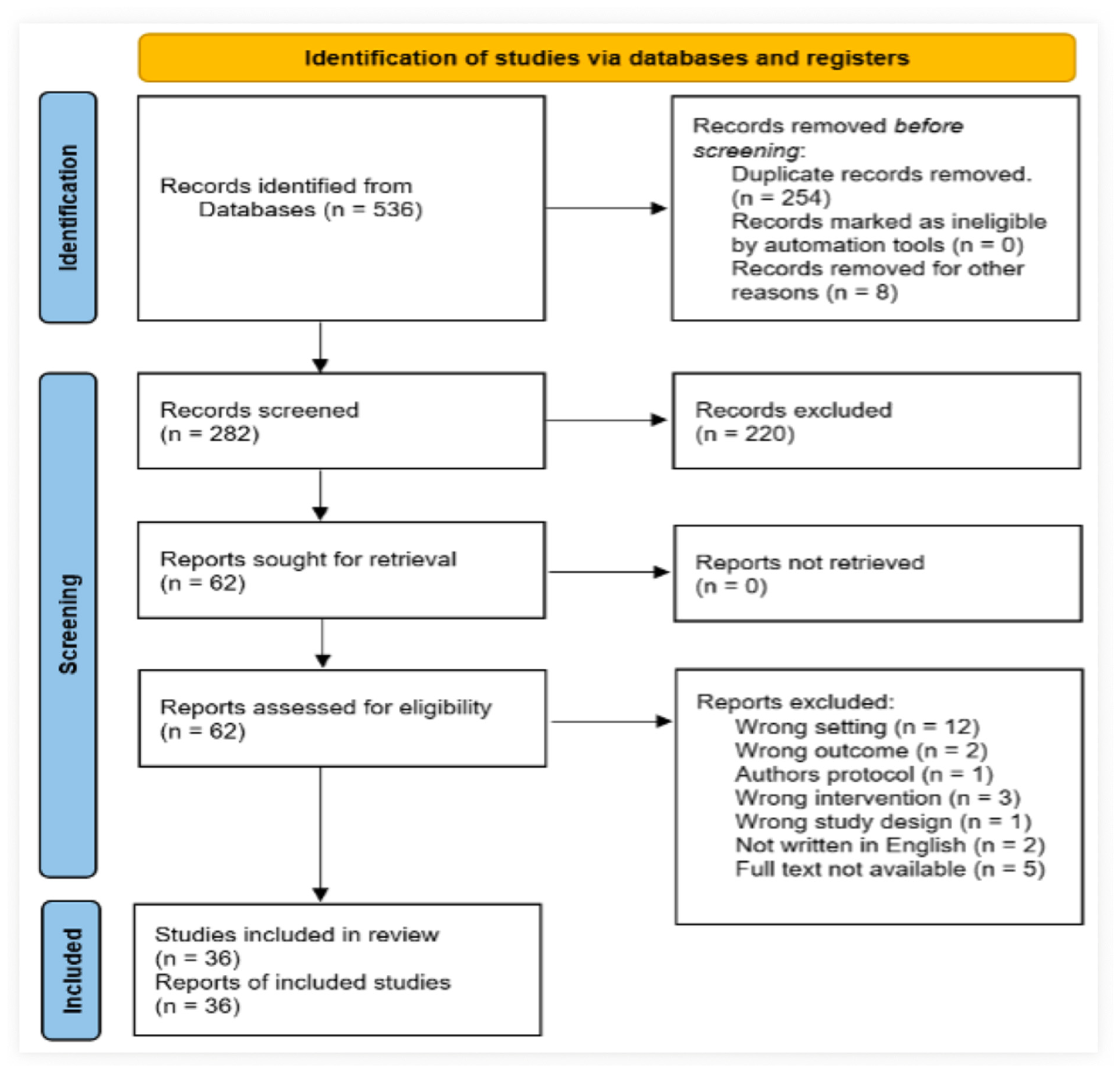
Supplementary File S1. Structured search and screening procedures were documented using a PRISMA flow diagram. The review protocol was registered with PROSPERO (CRD42024565950).
Examples from past and current practice and wider industry experience informed the initial scope of the review [
47,
48]. A realist review seeks to explain not only ‘what works’ but also ‘for whom, why it works, and in what circumstances’ by developing and testing program theories expressed as Context, Mechanism, Outcome Configurations (CMOCs) [
46,
49,
50]. In this review, contexts refer to the organizational, professional or system conditions in which Lean interventions are implemented. Mechanisms describe how individuals or groups interpret and respond to the resources or opportunities introduced by the intervention. Outcomes are the intended or unintended effects that occur when particular mechanisms are activated in specific contexts [
46]. CMOCs are therefore used to explain patterns of causation, rather than simple associations between an intervention and its effects. The review refines earlier iterations of the program theories.
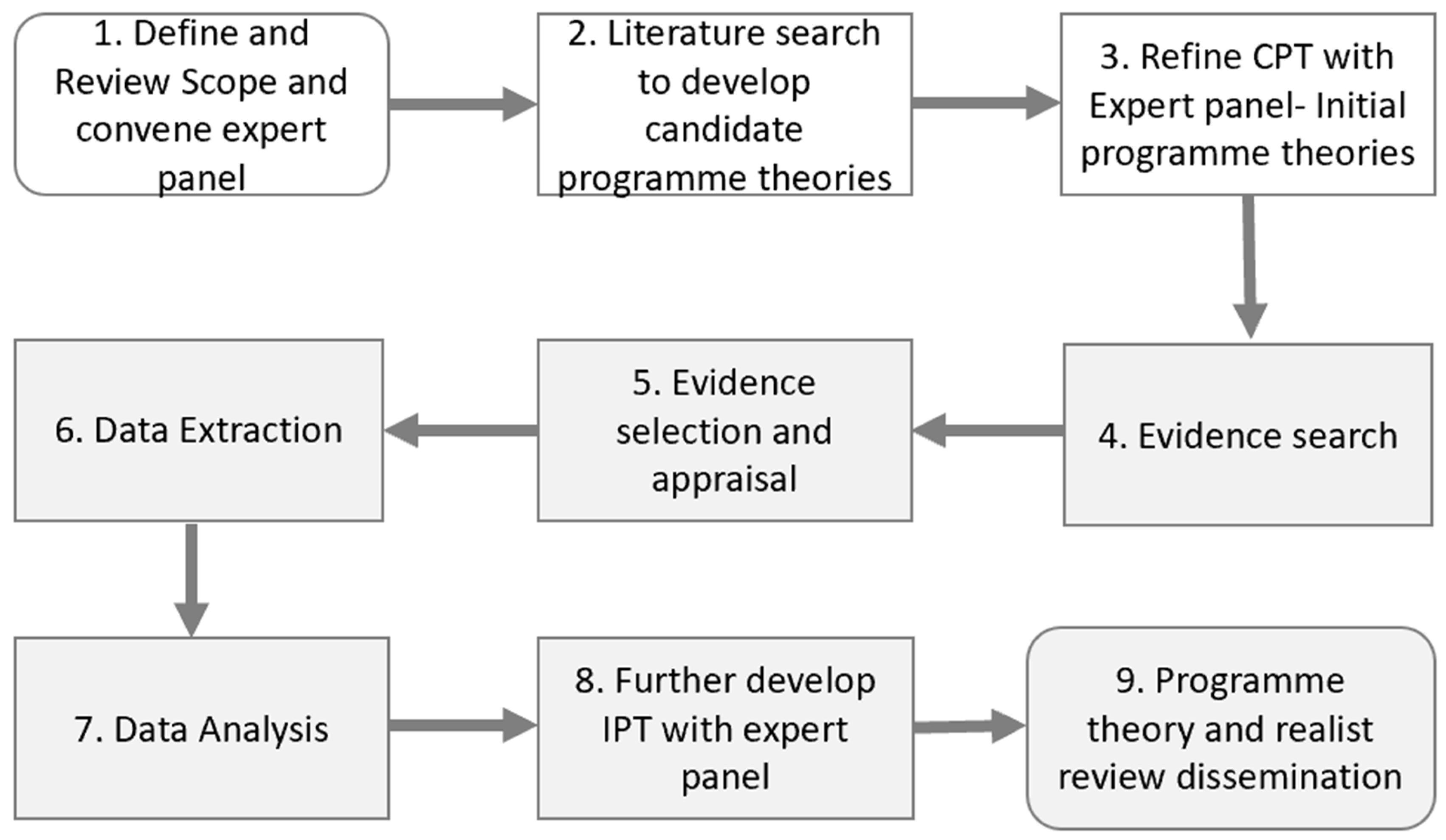
Program theories evolve through stages: Candidate Program Theories (CPTs), Initial Program Theories (IPTs), and Program Theories (PTs). For this review the process comprised nine stages (
Figure 1). Stages 1–3 (scoping review, development of CPTs, and expert-panel adjudication into IPTs) are fully described in the published protocol [
4] and are summarized only briefly here. This paper begins at the point where that protocol ends, with seven refined IPTs, and reports how these IPTs were tested, refined and consolidated into PTs through Stages 4–9 of the review.
2.1. Aim
This realist review aims to develop program theory explaining how the intentional inclusion of environmental sustainability goals within Lean healthcare improvement interventions may generate environmental sustainability outcomes, and to inform their integration into Lean practice. The review specifically examined how the seven IPTs, developed and refined through expert panel adjudication [
4], operated across different contexts and how they could be further refined into PTs.
2.2. Rationale for Using Realist Review
The degree to which environmental sustainability is integrated into Lean improvement interventions may vary, and the field is evolving [
47]. The inclusion of environmental sustainability goals in Lean healthcare interventions by organizations committed to both Lean and environmental responsibility is underreported in the literature [
48], with no clear understanding of the contexts in which Lean interventions that include sustainability outcomes occur, nor of the mechanisms that encourage engagement in these interventions, leading to specific anticipated sustainability outcomes.
Realist review has been successfully used in studying Lean healthcare interventions [
20,
49,
50], supporting its use to address the research questions posed in this paper. Stakeholders with an interest in healthcare can range from academics, clinical, administrative and other healthcare professionals to patients and other citizens, as well as providers or commissioners of services and other contributors who may be able to provide insights [
51].
This paper reports how a realist review was used to consider evidence of the use of Lean in healthcare settings adapted for the measurement and reduction in the environmental impact of delivering care. Drawing on the current literature and best practice, the review examines examples from current practice and wider industry experience where “Lean–Green” has been used and will provide important evidence to support the future adoption of Lean approaches in healthcare to strengthen the environmental dimension of sustainable care.
2.3. The Development of Program Theories
This review followed the RAMESES publication standards [
44,
52,
53]. Although there were no changes to the search strategy included in the methodology set out in the published protocol [
4], realist review is an explicitly iterative and adaptive, theory-driven approach, in which search and inclusion criteria may be revisited and refined as program theories are developed and tested, rather than fixed in advance as in conventional systematic reviews [
52,
53]. The iterative nature of the realist review resulted in a widening of the initial inclusion criteria to allow Lean–Green initiatives in other industry settings that might be relevant to developments in healthcare to be considered. These were subsequently described as studies which were ‘not directly relevant’ but had the potential to provide insights into the application of Lean–Green interventions in healthcare.
The published protocol [
4] detailed eight IPTs, which had been developed through expert-panel refinement of the CPTs. One IPT was subsequently tested and judged as not applicable (because it related to contexts without a Lean intervention) and was therefore not carried forward to this review, leaving seven IPTs (
Table 1). As set out in the protocol, this review contributes to a better understanding of how Lean interventions, which include sustainability outcomes in their design, work in specific contexts, and of the mechanisms that they activate that lead to observed outcomes [
54].
While
Table 1 presents the seven IPTs developed through the adjudication of the CPTs [
4], the subsequent realist synthesis involved testing and refining these IPTs through the development and comparison of Context–Mechanism–Outcome configurations (CMOCs). As the evidence was analyzed, we found that CMOCs rarely aligned with a single IPT. Instead, identified mechanisms were activated across different contexts, meaning that several IPTs could contribute to a particular explanatory configuration or PT. The refinement process was therefore not linear; rather, patterns across CMOCs were iteratively examined and refined to develop fewer explanatory PTs, consistent with realist approaches to theory development [
42,
52,
55,
56,
57]. Through this process, four PTs were identified, representing the most coherent and parsimonious explanatory patterns emerging from the realist synthesis.
To support transparency in the theory refinement process,
Table 2 summarizes how the seven IPTs contributed to the four PTs. The full CMOC-level mapping between “Relevant IPT(s)” and the PT to which each CMOC contributes is provided in
Supplementary File S2.
The realist review involved the analysis and interpretation of existing data relating to the seven IPTs in
Table 1. It entailed a realist approach to a retrospective review of the literature [
55], acknowledging that theories cannot and do not always offer explanations or predict outcomes in every context [
42,
52,
56,
57]. An engaged expert panel provided extended expertise and validated findings and program theories iteratively, ensuring rigor [
58]. For this study, a panel was convened that consisted of international subject experts with a particular interest in either the practical or academic application of Lean methods in healthcare [
11,
59], the environmental effect of healthcare through organization and delivery, or the impact on individuals [
60,
61]. Their role was to provide feedback, challenge findings, and develop further insights into the information already collected to determine the theories for further investigation and testing. A clear and understandable interpretation of realist review results was an additional benefit of expert panel engagement [
58]. The panel’s adjudication of the CPTs resulted in the seven IPTs used in this realist review, and they continued to provide guidance throughout the later stages of theory refinement, consistent with best practice [
45,
62].
2.3.1. Evidence Search
An evidence search based on keywords derived from the elicited IPTs from steps 1–3 (
Figure 1) [
63] was undertaken in the following databases: CINAHL, EBSCOhost, ProQuest, MEDLINE, PubMed, BMJ Best Practice, EMBASE, Web of Science, Green FILE, Scopus, ScienceDirect Journals, CAB Direct, JSTOR and Google Scholar. Studies that were relevant to the review questions and involved Lean and environmental sustainability outcomes in healthcare were identified. The searches were conducted for the literature published between 1987 and September 2024, with additional filters applied for title and abstract fields, all keywords, and English language publications. Support was provided by the University College Dublin specialist librarian to ensure that the approach was robust. Keywords utilized within a word string were developed as follows:
Hospital or healthcare or “health care” OR “Green hospital” OR “Green surgery” OR Clinic* OR “General Practice*” OR “Hospitals” [Mesh] AND Lean OR “Six Sigma” OR “Toyota production system” OR “quality improvement AND Green OR Environment OR environmental OR waste OR “environmental sustainability” OR “Eco-friendly health care” OR Environmental, Social and Governance” OR ESG OR sustainability.
The development of these keyword strings was instrumental in the reproducibility and effectiveness of the search and was guided by the use of the previously developed and described inclusion and exclusion criteria within the PICO framework (
Table 3).
Tracking tables were completed for each search to ensure that the integrity of the process was maintained and documented, including details of the use of any filters. Searches were reported in line with PRISMA guidelines for systematic reviews [
64] and congruent with RAMESES guidelines [
45]. The internet search engines and electronic databases used for the scoping exercise to develop the CPTs [
4] were interrogated again to carry out a more comprehensive evidence search. This search was augmented by a search of:
Any literature citing the included papers;
The literature cited in the reference lists of included papers;
Gray literature and websites of relevant organizations;
Any further suggestions from the expert panel.
The population–intervention–comparison–outcome (PICO) framework, commonly used in systematic reviews to structure a question about an intervention, helped to determine inclusion and exclusion criteria [
65]. The PICO (
Table 3) outlines the inclusion and exclusion criteria, generated following development of the IPTs. As noted, the inclusion and exclusion criteria were refined, and further iterative searches were undertaken as the review progressed [
66] as it was recognized that some of the studies originated from outside the healthcare sector but had been identified due to the use of common language. Use of the PICO was helpful to ensure that the selection of items for inclusion was systematic, consistent, and independent of any factors that may have affected the direction or interpretation of results, such as sample size or funding source.
The search criteria reflected realist review methodology in not excluding the gray literature that may suggest and illuminate causal factors [
67]. In line with the methodology, iterative and purposive searches were conducted to gather further evidence or wider theories to explain findings and to assist in theory refinement [
68]. The need for further searches, search terms and strategies was assessed as the review progressed. Search results from each electronic database search and other sources were imported into the Covidence reference management software, and duplicates removed.
2.3.2. Selection and Appraisal of Documents
In line with best practice for transparency in evidence retrieval, the flow of documents through the search, screening, eligibility and inclusion stages was mapped using a PRISMA-style flow diagram [
64]. While PRISMA is not intended to prescribe realist review methodology, it offers a clear and widely recognized structure for reporting how documents progressed from identification to inclusion (
Figure 2).
Retrieved documents were selected based on their relevance to the research questions and on their contribution to the development of the IPTs [
66]. Brennan and colleagues [
69] advise that when seeking to inform the program theory reviewers should be cognizant that even ‘small sections of the primary study to test a very specific hypothesis about the relationships between context, mechanisms and outcomes’ should be considered. Retrieved documents contributed to a high-quality collection of papers [
2]. For a realist review, the selection of studies for analysis and synthesis is based on relevance to the research question and scientific rigor [
53]. Relevance refers to whether a study can contribute to building or testing a program theory, while rigor refers to the credibility and trustworthiness of the methods used to collect the relevant data [
63]. Papers were included based on both their rigor and their ability to contribute to testing or refining the IPTs [
70]. Consistent with realist methodology, studies were not weighted according to methodological hierarchy, such as ranking qualitative, quantitative, mixed-methods, or case-based designs [
20,
62,
63]. Instead, confidence in individual CMOCs was informed by the richness of explanatory data, the coherence of context–mechanism–outcome patterns across sources, and the extent to which findings contributed to program theory refinement [
53,
63].
2.3.3. Data Extraction
Data extraction was a three-step process. Firstly, an initial screening of identified papers by title and abstract, followed by a full-text retrieval and finally appraisal. Initial screening by title and abstract was undertaken in duplicate by authors 1 and 2. Each title and abstract was reviewed using the identified inclusion and exclusion criteria (
Table 3). Authors 1 and 2 screened documents blind for initial relevance and richness while author 3 further assessed the included documents and resolved any differences in opinion. Any remaining queries or disparities were discussed by all three authors.
Throughout the entire process, the authors adhered to the criteria outlined in the RAMESES guidelines [
45]. However, it was clear from the initial abstract reading that the intervention of Lean–Green was more established in industries other than healthcare and that their experience was potentially relevant to healthcare. For this reason, the authors discussed and agreed the inclusion of some papers (
n = 13; see
Table 3) that did not meet the population criteria set out in
Table 3. In realist research this approach is encouraged to glean the widest possible evidence, providing that the scope of the review does not change direction and that the information provides insights into the program theories under consideration [
54].
To facilitate the data extraction process, the IPT being ‘tested’ through the realist review was first made salient through the development and use of bespoke data extraction forms adapted from the work of Rycroft-Malone et al. [
71] and incorporating elements from training by Justin Jagosh. This ensured that the forms were based on the theoretical framework underpinning the review. Pawson, Greenhalgh, Harvey and Walshe [
66,
72] advise that standardized data extraction forms are unsuitable for realist reviews and that tailored forms grounded in the distinctive theoretical framework guiding a particular review should always be used [
73]. To ensure transparency in the application of relevance and rigor criteria, the structured realist data extraction and appraisal form was completed for every included study. These forms captured contextual detail, mechanisms, outcomes, theoretical positioning, and explicit judgments regarding richness and rigor. Each paper was independently assessed by Author 1 and Author 2. Where differences in judgement occurred, these were resolved through discussion with Author 3. A fully worked exemplar of the extraction and appraisal process is provided in
Supplementary File S3, and a completed form was generated for all included studies.
In line with RAMESES guidance, all data was subjected to the question “is that piece of data credible and trustworthy?”. For realist researchers [
63,
74], trustworthiness relates to the evidence source and they propose an additional aspect of rigor relating to the coherence of the program theories. Where the trustworthiness of the data was of concern, whether it was from theory or real-world examples, careful consideration was given to the safety of generalizing from it. In such cases, additional evidence was sought from other sources to corroborate findings. This approach ensured the necessary rigor in refining the program theories and ensuring their coherence.
The bespoke data extraction forms were used to extract and review information relevant to refining each IPT through the identification of contextual factors, mechanisms and outcomes relating to the research questions. Studies were examined to ascertain the response of participants to the resources that the intervention had provided. These responses may have been material, social, emotional or political [
75] and generated actions. Therefore, they were conceptualized as generative mechanisms. The forms were further adapted for the collection and consideration of the gray literature.
2.4. Analysis and Synthesis
Following data extraction, the selected papers were entered into the specialized qualitative software, NVivo 15 [
76], which has been used in realist reviews to facilitate coding and thematic analysis of the data to identify CMOCs [
2,
77]. NVivo was used to organize and retrieve data to support realist reasoning, rather than to generate themes. It enabled the comparison of data across contexts, the testing of emerging program theories and the transparent documentation of theory refinement decisions. Theoretical interpretation was conducted by the research team using realist logic, with NVivo supporting, but not driving, the process.
The heterogeneous body of evidence reviewed, comprising stakeholder perspectives, the peer-reviewed literature, and the gray literature, enabled robust testing of the IPTs. While some IPTs were supported, others were refined through new insights. For instance, Zhu et al. [
78] conceptualize healthcare supply chains as a dimension of social sustainability because of their effects on community and human health, such as supply-chain pressures that limit patients’ access to medicines. This finding informed the refinement of IPT 5 to ensure that their insight was represented in the PT.
2.4.1. Document Characteristics
The characteristics of the included documents were examined to understand the breadth, depth, and distribution of the evidence base informing IPT refinement. This descriptive mapping does not constitute analysis in itself but provides important contextual insight into the nature of the evidence, the balance of healthcare and non-healthcare sources, and potential gaps that shaped subsequent theory development.
Table 4 summarizes the types of studies included in the review and their relevance to healthcare. As shown, the evidence base was dominated by healthcare case studies and interviews, supplemented by systematic reviews and conceptual contributions from non-healthcare sectors. The distribution reflects both the early stage of Lean and Green integration in healthcare and the more mature methodological development of Lean–Green models in other sectors. The healthcare case studies offered practical examples of how Lean–Green efforts were initiated and operationalized. The non-healthcare papers were considered where they contributed theoretical and methodological insights [
45,
53], particularly in relation to environmental measurement and circularity.
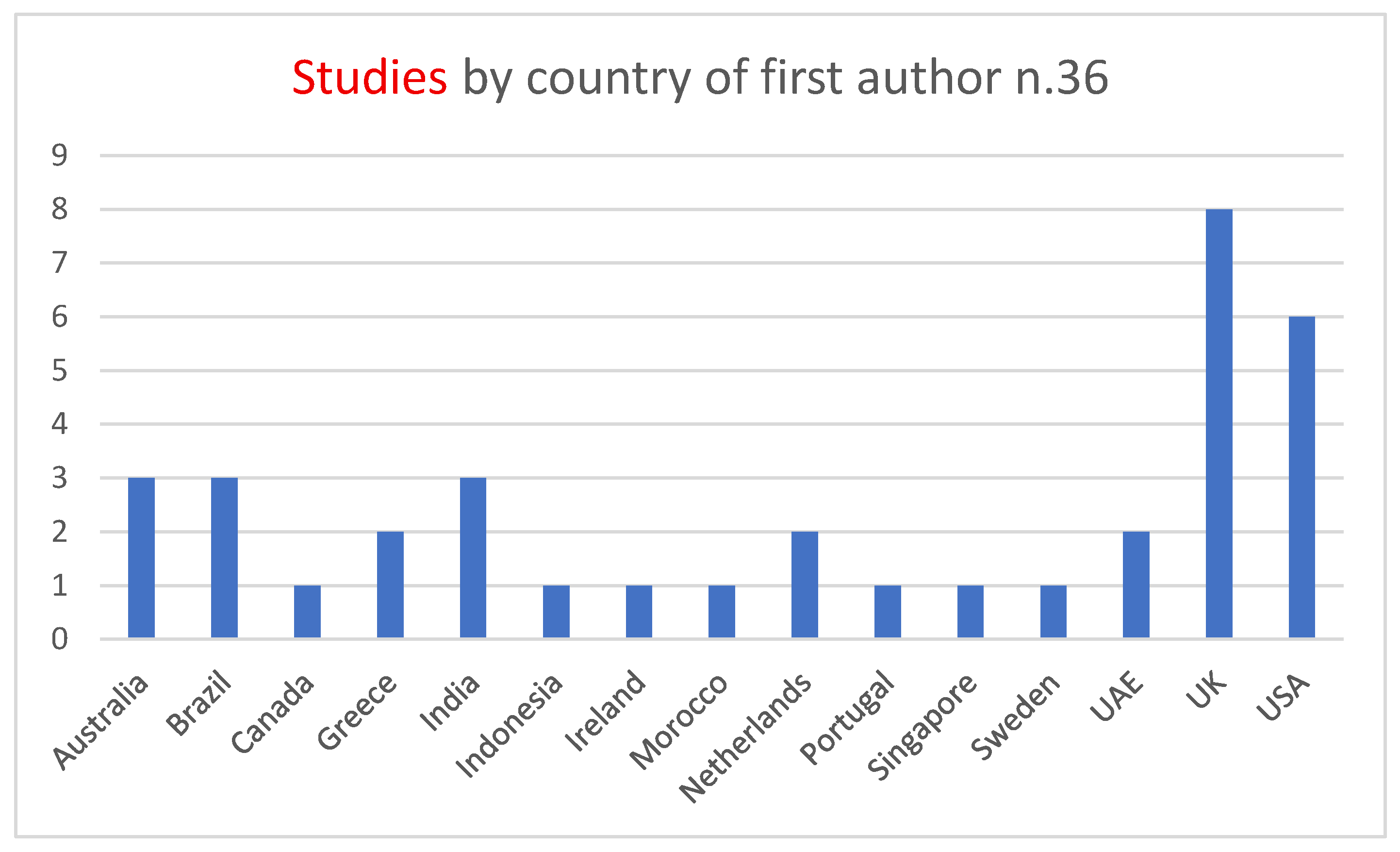
To explore contextual variation, the included studies were also mapped by the country of the first author (
Figure 3). This helped to identify whether particular regions were leading in Lean–Green innovation and whether cultural, regulatory, or infrastructural contexts may have shaped program mechanisms.
The geographical spread demonstrated that while Lean–Green activity is emerging internationally, there is considerable variability in maturity and focus. The concentration of papers from Europe and North America also suggests the potential influence of policy pressures and Net Zero mandates on the proliferation of Lean–Green initiatives. Finally,
Table 5 presents the publication years of included studies. This illustrates the temporal development of the field and whether interest in Lean–Green integration has increased over time.
The clear upward trajectory in publication numbers, especially after 2020, indicates growing awareness of the environmental impact of healthcare and increasing interest in aligning Lean methodologies with sustainability goals. The more recent increase in healthcare-specific papers reflects an emerging recognition of the need for structured, measurable approaches to achieving environmental outcomes in clinical settings.
2.4.2. Document Familiarization
The initial reading of the articles was conducted at a high level to develop an understanding of the broader context in which the intervention was introduced and to gain insight into local circumstances and the key drivers behind its application. This information-gathering stage highlighted differences across countries, industries and healthcare specialties. At this stage, their relevance was not analyzed; they were simply noted as potentially important.
Articles were then grouped into ‘directly related’ and ‘relevant to healthcare’ categories to support comparison between healthcare and non-healthcare contexts. Classifying a paper as ‘not directly related’ did not imply it lacked useful insights. These papers were reviewed for potential ‘nuggets’ that might later help to refine or reconfigure the IPTs, even if their relevance was less immediately obvious.
As most published Lean–Green studies report positive findings, the possibility of publication bias is acknowledged. The realist task was to identify patterns of causal factors that could be mapped into preliminary CMOCs, helping to refine or refute the IPTs. Specific insights from authors or participant quotations were particularly helpful in ascertaining what enabled or hindered particular outcomes. Particular attention was paid to identifying shifts in people’s reasoning, motivation, beliefs or behavior that contributed to these outcomes, recognizing the limitations of inferring such mechanisms from published texts.
When considering the directly related healthcare-based articles, care was taken not to allow the authors’ professional backgrounds to influence how the findings were interpreted. While insider knowledge can help in understanding the nuances of the context, it also carries the risk of assuming meaning based on prior experience. It was therefore important to remain close to what was actually presented in each paper and to focus on identifying what appeared to have triggered particular mechanisms, even when this was not always explicit. However, after data was extracted from all papers, practical insights specific to Lean–Green interventions began to emerge, supporting a refinement of the IPTs through a process of abstraction. These insights laid the foundation for the more detailed CMOC alignment process described next.
2.4.3. CMO Alignment
This process was undertaken by aligning key data from each article with the CMOCs in the seven IPTs. Articles were color coded to distinguish between those directly and indirectly relevant to the review questions, providing visual support to enhance the analysis. The process of CMOC alignment facilitated the systematic identification of relevant extracts, quotations, and contextual cues, which were examined in relation to each IPT. Through iterative comparison across sources, recurring patterns in how contexts and mechanisms were associated with outcomes were identified and interpreted as demi-regularities, contributing to theory refinement [
79]. These recurring patterns provided early indications of generative causation across different contexts. There were examples of where a particular mechanism was likely to have been activated across cases which related to completely different contexts [
80,
81]. This supported a meaningful pattern of activation and helped to identify common mechanisms, which in turn supported the refinement of the IPTs.
As realist research focuses on exploring ontological depth, it was important to be explicit about the three levels of reality when considering the evidence in the studies reviewed. These comprise the empirical (observable), the actual, and the real. Actual events are generated through the activation of underlying mechanisms. The real is more difficult to ascertain because these mechanisms are latent and not directly observable. Awareness of these ontological levels of reality helped in the consideration and identification of potential CMOCs that might not have been explicit in the reviewed texts.
The iterative refinement of the theories from seven IPTs to four PTs required several approaches across different stages. All 36 studies were first subjected to a test of the rigor of their approach, then of relevance and richness. This alerted the research team to the inclusion of studies situated outside of healthcare settings but that were, nevertheless, potentially relevant to the testing of the IPTs. Given the nascent development of Lean–Green in healthcare, the research team agreed to extract any contexts, mechanisms and outcomes from these studies that might help refine the IPTs.
The contexts, mechanisms and outcomes identified were discussed in detail by the research team and mapped to each IPT. This resulted in the first refinement of the seven IPTs. Given the specificity of the initial inclusion and exclusion criteria, the studies deemed to be “not directly relevant” (
n = 13) were considered and five studies were excluded from full program theory testing following realist appraisal due to limited explanatory contribution. These studies are listed in
Supplementary File S4 together with the rationale for exclusion. In each case, the study lacked sufficient contextual detail to support CMOC development. However, eight papers, although scoring Low or Moderate on first consideration, provided data that was illuminating and relevant to practical applications in healthcare settings.
The next phase of data interrogation required forensic consideration to investigate generative causation. All but the five excluded studies were included in this iteration of data analysis. Data were extracted and mapped to contexts, mechanisms and outcomes for each IPT. This information was collected in a ‘check in document’ [
82] to record decisions which further identified demi-regularities across the IPTs, with the potential of a smaller number of refined PTs.
In parallel, studies that had been identified through citation chasing and snowballing were considered to ensure that no other insights that might impact on the articulation of contexts, mechanisms and outcomes would be excluded. There was evidence from the gray literature that was helpful in confirming the CMOCs in healthcare and associated industries. Whilst useful, none of these studies were explicitly included nor did they extend the scope of the review.
Further stakeholder engagement, including discussions with primary authors of key papers [
80,
81] provided clarification of study details and strengthened the evolving theoretical framework through their insights.
2.4.4. Case Study Assessment
Two rounds of reviewing, extracting and comparing data across the selection of 13 detailed case studies provided the richness required to understand generative causation consequent upon the introduction of the Lean–Green intervention [
83]. Following the review and interrogation of the gray literature, the authors determined that enough data had been gathered to reach a state of ‘theory saturation’ [
84,
85]. Reaching this state facilitated progression toward the final refinement of the PTs.
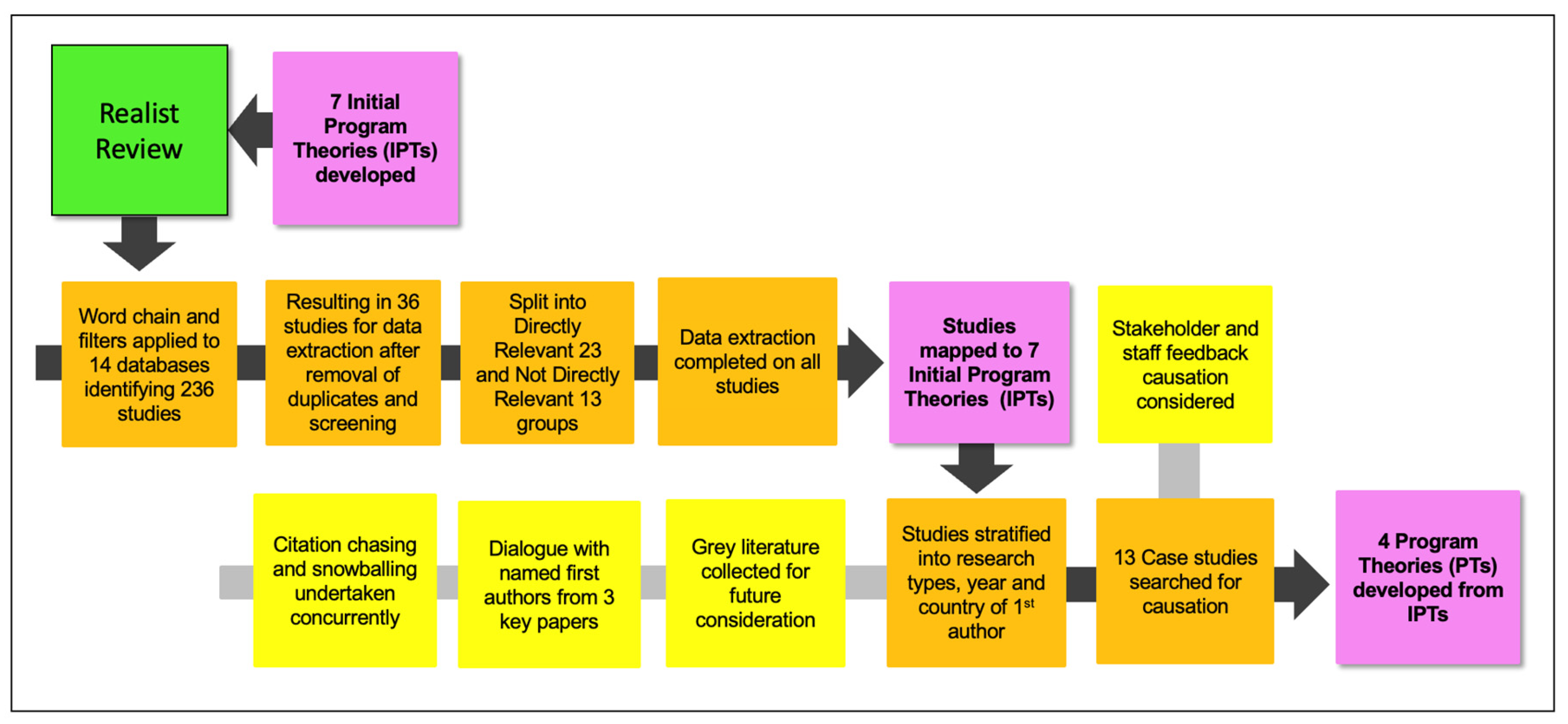
Figure 4 provides a visual summary of the processes undertaken during this review, showing how IPTs were refined into PTs through cycles of searching, analysis, and stakeholder input.
3. Findings
The findings are presented as refined Context–Mechanism–Outcome Configurations (CMOCs) developed through realist explanatory synthesis, rather than as thematic categories. As described, evidence was compared across studies to examine how similar Lean interventions generated different outcomes in different contexts, with attention to variations in organizational mandate, leadership support, professional role, and team dynamics. Where apparent contradictions or tensions were identified, for example, where similar interventions produced positive outcomes in some settings but limited impact in others, these were interrogated by examining differences in contextual conditions and the mechanisms they appeared to trigger or constrain. This process informed the refinement, consolidation, or rejection of explanatory propositions and contributed directly to the development of the PTs.
3.1. Evidence of Lean Applied to Environmental Protection in Healthcare
We confirmed the findings of Singh [
29] who found little evidence of either an intentional application or adaptation of Lean methods explicitly for the pursuit of environmental protection in healthcare settings. The most compelling evidence appeared in the form of case studies, where the application of a Lean methodology to healthcare processes was limited to specialty teams in hospital settings, most commonly in high carbon-intensive areas like operating theaters [
86] and intensive care units [
87]. These studies provided further insight into the approach of clinical teams and highlighted recurring patterns of team motivation and engagement that informed theory development relating to teams.
The limited number of case studies available may be due to publication and reporting bias, as other teams are not using or reporting Lean as their intervention or because, where it has been tried, it has been unsuccessful and not published. However, with the diverse nature of clinical and support services in hospital settings and the proliferation of Lean as a methodology globally, combined with increasing attention to the environmental crisis, there was an expectation within the research team that more contemporary examples would be available.
Those that were found were small-scale, personally led and with positive results [
88], with real clarity of the drivers for change [
89] within the context of a health system under pressure and intense scrutiny. To connect with the concerns of staff members about the impact of healthcare on the environment seems an obvious opportunity for engagement, but in all case studies, this appeared to be driven by the individual, not by the organization, highlighting a recurring pattern of individually initiated action rather than organizationally endorsed activity.
Inevitably, this points to questioning the genuine commitment of organizations and their leaders to understand and deliver on the Net Zero agenda in anything but a superficial way.
The management of waste is crucial to support sustainable healthcare efforts, although economic and clinical priorities are often cited as barriers to eco-friendly practices in daily operations [
6]. Single-use disposables result in significant waste and highlight the need for alternative solutions through sustainable procurement processes [
37,
38]. Single-use items were promoted as part of infection control measures [
90] but now need to be harmonized with healthcare sustainability outcomes. The wider financial and access pressures on healthcare organizations and aged physical assets requiring capital investment also serve to delay and compromise progress. The speed of implementation in clinical practice of new technologies such as digital medicine and AI [
91] serves only to increase the burden of healthcare on natural resources.
Such observations suggest that organizational drivers, expectations, and priorities, such as addressing customer service and quality, as in other businesses [
92], are increasingly important and may play an influential role in shaping whether staff feel supported or legitimized in adapting their preferred improvement approaches to incorporate environmental considerations. Education around the wider environmental impact of healthcare [
81] can act as a catalyst for changing personal and professional behavior by increasing awareness, motivation and perceived responsibility among staff. A consistent pattern emerged whereby environmental improvement efforts were initiated through individual motivation rather than explicit organizational direction [
31,
93].
3.2. Case Study Interpretation
Of the directly related articles, thirteen provided examples of the use of Lean to address environmental sustainability through changing clinical practices in the specialisms of respiratory [
94], pharmacy [
95], orthopedics [
88,
96], hand surgery [
31], nephrology [
32], dermatology [
97] and physiotherapy [
89]. The evidence in these papers provided insights into what had motivated individuals within teams to initiate the work. Some potential mechanisms became apparent, including recognition of the need to change their practice to make a contribution to environmental sustainability, peer pressure, and a personal or professional desire to reduce unnecessary waste.
These patterns suggested that engagement was often activated at the level of the team, with shared motivations and team-based dynamics [
31,
96], often inspired by other teams, appearing to play a central role in how environmental improvements were pursued. In addition, the development of new guidance to address environmental protection appeared to be motivating for some individuals, with a specific focus on the sharing of environmental education with new trainees [
98,
99].
In many of the clinical papers, there was an acknowledgement of the need for circularity and a recognition of clinicians’ positional power to influence both procurement and manufacturers [
88,
89]. Circularity in healthcare refers to reusability and recyclability in contrast to the current costly and wasteful dependency on single-use items. This approach can be applied to medical devices as well as supplies and demonstrates a proactive shift to tackle waste at its source. All these case studies used an improvement approach, some based on a Lean methodology, and all provided some measure of environmental impact assessment. A further observation was the narrow nature of the case study; that is, limited to a specialty or department [
78]. In these papers, the consideration of the social impact was referenced but rarely examined in detail, with the exception of Fylan and Allison [
80] who intentionally sought out views from stakeholders, including service users. The evidence also confirmed a predominantly linear way of thinking within healthcare, with a “buy, use, dispose” approach, where the vast majority of emissions mainly arise [
100]. Across these case studies, there was a clear desire, and a practical need, to move clinical practice toward more circular models [
78], although this was sometimes implicit, embedded within practices designed more to remove waste than to prevent it.
Publication bias, where journals choose to prioritize papers that have positive findings [
101], is a recognized problem. In healthcare, it may be that manuscripts are not even created when there have not been measurable outcomes, given the time and effort required to achieve publication. This produces a different bias, where important findings about interventions that did not deliver anticipated results are not available to those considering similar endeavors. This may be why the case studies reviewed provided predominantly positive results that supported the IPTs.
This realist review does not treat these positive reports as evidence that the intervention is inherently effective. It does not aggregate success rates or privilege favorable outcomes. Instead, it examines what worked, what did not work, for whom, and under what conditions [
42,
66].
In line with realist guidance on relevance, richness and rigor [
63], studies were considered for their explanatory contribution rather than the direction of their findings. During synthesis, attention was given to limits, contradictions and boundary conditions across studies. Where environmental gains were small in scale, dependent on individual champions, confined to single specialties, or not sustained beyond the originating team, these features were treated as analytically significant rather than dismissed.
The resulting Program Theories therefore explain the circumstances in which Lean approaches may support environmental sustainability, and the circumstances in which they may not, consistent with transparent realist theory refinement [
44,
49,
77,
79].
3.3. Program Theories
Following completion of the review of the published studies, case analyses and the gray literature, four PTs were developed. These represent the consolidation of the seven IPTs tested during the realist synthesis. Through the iterative comparison of Context–Mechanism–Outcome configurations (CMOCs), recurring explanatory patterns were identified and abstracted into higher-order PTs clarifying how Lean healthcare improvement approaches may generate environmental sustainability outcomes under specific contextual conditions. The PTs are articulated at the level of mid-range explanation and were developed through iterative abstraction from CMOC patterns identified in the included evidence [
42,
66]. In realist terms, mechanisms are understood as changes in reasoning triggered by contextual resources rather than fixed psychological traits [
77]. Consistent with this interpretation, mechanisms in the PTs may reflect both the resources introduced through organizational structures or interventions and the reasoning responses they activate among actors. The mechanisms presented here therefore reflect explanatory accounts of how organizational structures, education, identity and collective practice shaped decision-making and action within the cases reviewed. The intention is to explain observable patterns in the evidence rather than to construct a comprehensive social theory. The detailed CMOCs that underpin this consolidation, including illustrative excerpts and traceability to the included studies, are provided in
Supplementary File S2. The tables below summarize the consolidated CMOCs associated with each Program Theory. They do not reproduce every configuration identified in the review; rather, they present the principal CMOC patterns that informed the abstraction of each PT. The narrative accompanying each table focuses on explaining the central generative mechanism and level of operation, while the
Supplementary Material provides the full analytic detail.
3.3.1. Program Theory 1: Organization-Driven
The consolidated CMOCs underpinning PT1 are presented in
Table 6. These configurations capture the structural conditions and mechanisms through which sustainability becomes institutionally embedded.
PT1 describes a structurally driven pathway in which, within the organizational settings analyzed, environmental sustainability becomes embedded when it is institutionally legitimized. Structural legitimization may alter organizational reasoning by reframing environmental sustainability as a core performance objective rather than a discretionary initiative, which in turn enables allocation of resources, measurement, and accountability structures necessary for sustained carbon and cost reduction. Across the supporting CMOCs, sustainability shifts from peripheral concern to strategic priority when Lean is embedded within governance systems, financial performance is monitored, and carbon reduction mandates are externally imposed.
The dominant mechanism operates through organizational reasoning: across the cases reviewed, when sustainability was formally legitimized within governance and performance systems, decision-makers interpret it as a core performance objective rather than a discretionary concern. Alignment between cost and carbon objectives enables sustainability to be formally resourced, measured and incorporated into established Lean systems. This theory operates primarily at governance level and explains how sustainability is stabilized within organizational architecture rather than relying solely on individual motivation.
3.3.2. Program Theory 2: Education-Driven
The CMOCs underpinning PT2 are summarized in
Table 7. These configurations reflect how sustainability is activated through structured education and professional development.
PT2 explains how sustainability becomes activated when environmental literacy is integrated into Lean education. The dominant mechanism is cognitive activation combined with moral alignment. In several of the included studies, cognitive activation reshaped staffs’ understanding of waste, enabling environmental considerations to be recognized as part of quality improvement rather than external to it, thereby motivating intentional application of Lean tools to carbon and material waste. Where sustainability becomes integrated into professional definitions of quality, staff are more likely to mobilize Lean tools. Where it remains peripheral, knowledge does not translate into action. When staff understand healthcare’s environmental footprint and see sustainability framed as consistent with organizational values, Lean tools are applied intentionally to environmental challenges.
Unlike PT1, this pathway does not depend primarily on mandate. It builds internal capability and professional commitment, enabling sustainability to be pursued through informed action.
3.3.3. Program Theory 3: Individual-Driven
The CMOCs informing PT3 are presented in
Table 8. These highlight the role of professional identity and individual agency.
PT3 centers on identity-based professional agency. In the accounts reviewed, recognition of environmental concerns altered professional reasoning by signaling that sustainability is legitimate and valued. This enables individuals to exercise discretionary effort and integrate environmental considerations into their own roles. Here, leadership functions through acknowledgement rather than mandate. When environmental concerns are recognized, individuals experience validation that enables autonomous environmental action.
Lean methods provide the means, but the generative driver is moral commitment and professional pride. In this pathway, pride reflects reinforcement of professional identity; when environmental action is recognized as consistent with clinical excellence, individuals are more likely to direct effort toward sustainability rather than competing performance priorities. This pathway explains how sustainability initiatives can emerge locally, even where structural mandate is limited.
3.3.4. Program Theory 4: Team-Driven
The CMOCs underpinning PT4 are summarized in
Table 9. These configurations capture how sustainability becomes operationalized collectively within teams.
PT4 describes sustainability as a collective practice. The dominant mechanism is collective efficacy. This may strengthen shared belief in the team’s capacity to effect change, enabling coordinated problem-solving and sustained implementation of environmental improvements. Within cohesive Lean-trained teams, environmental and cost considerations become integrated into routine problem-solving. This pathway explains how sustainability is translated into measurable and scalable change through coordinated team action.
3.4. Distinct Pathways and Their Interrelationship
The four PTs describe distinct, though interrelated, pathways through which environmental sustainability may become embedded within Lean healthcare improvement. They operate at different levels of the system and are defined by different dominant mechanisms.
PT1 is structurally driven. It explains how sustainability becomes embedded when it is legitimized and governed at organizational level. Here, environmental objectives are authorized, aligned with financial priorities, and incorporated into formal performance systems. The primary driver is institutional mandate and resourcing.
PT2 is capability driven. It explains how sustainability becomes embedded when staff develop the knowledge and ethical framing necessary to apply Lean intentionally to environmental challenges. The defining feature is cognitive and moral alignment through education and professional development.
PT3 is identity driven. It explains how sustainability becomes embedded through individual professional agency. When environmental responsibility is recognized and validated, staff integrate sustainability into their roles because it aligns with their values and sense of purpose.
PT4 is collectively driven. It explains how sustainability becomes operationalized within cohesive teams that integrate environmental and cost considerations into routine problem-solving. The central driver is collective efficacy and coordinated action.
Although certain enabling conditions, such as Lean capability and leadership support, appear across more than one pathway, their function differs according to level. At organizational level, leadership authorizes and governs. Within education, it enables investment and framing. At individual level, it validates and encourages. At team level, it supports coordination and implementation. The mechanisms are therefore not interchangeable.
In practice, these pathways are not mutually exclusive. Sustainability integration is strongest when they align: where governance provides mandate and measurement, education builds capability, individuals exercise agency, and teams translate intent into measurable improvement. The PTs therefore describe layered pathways of change rather than competing explanations.
3.5. Expert Consideration of the Program Theories
The four PTs were again presented to and adjudicated by the expert panel, who provided further feedback to ensure appropriate interpretation of results [
58]. As already described, the expert panel plays a central role in realist reviews by providing insights, expertise, and validation throughout the process. Their involvement at this stage helped to ensure that the refined PTs were robust, contextually sensitive, and reflective of the complexities inherent in the intervention’s implementation and outcomes [
62] and were therefore ready for field testing as part of a following realist evaluation.
3.6. Summary of Findings
The realist review strengthened and refined the IPTs through iterative comparison of contexts, mechanisms and outcomes across the literature reviewed. In keeping with realist logic, variation and tension within the evidence were treated as analytically informative, contributing to refinement and bounding of the emerging PTs rather than being resolved or eliminated [
42,
66].
Engagement with environmental sustainability varied considerably across healthcare professionals. Some clinicians described acting as self-driven ambassadors for planetary health, influenced by increasing “climate health consciousness” [
102], visible specialty-specific waste [
31], or broader social influences such as family prompts [
81]. Others required structural incentives or organizational prompts before engaging. This variation clarified that environmental knowledge alone is insufficient to generate action. Rather, engagement appears contingent on whether sustainability becomes integrated into professional identity and everyday reasoning. This refinement sharpened the distinction between the capability-driven pathway (PT2) and the identity-driven pathway (PT3).
A recurring tension was evident between formal organizational mandate and observable leadership behavior. While carbon reduction targets and top-down initiatives were emphasized, senior leadership commitment was positioned as a primary driving factor for adoption and sustainability [
103]. This suggests that formal mandate alone may be insufficient unless it is translated into leadership behaviors that are visible and enacted in everyday practice. In several cases, teams appeared to appropriate organizational sustainability rhetoric to legitimize their own work, even where managerial engagement was inconsistent. This pattern refined and bounded PT1, based on variation observed across the studies, by distinguishing between symbolic endorsement and structural embedding. It also clarified that identity-based agency (PT3) may initiate local action in contexts of weak leadership, while sustained organizational embedding requires alignment with governance, resourcing and measurement structures.
The evidence further highlighted a dual dynamic around pride and organizational alignment. Pride in acting, and feeling aligned with stated sustainability commitments, emerged as a powerful driver of engagement [
104]. However, initiatives that failed to demonstrate financial or productivity gains were sometimes discontinued, with withdrawal of organizational support diminishing momentum. This contrast refined the boundary between initiation and institutionalization. Identity-based commitment may catalyze local initiatives, but structural and financial alignment appears necessary for durability and scale. In realist terms, the outcome is contingent on the interaction between contextual authorization and professional reasoning [
77].
Variation was also observed in the use of improvement methodology. In some settings, Lean practices appeared sufficiently embedded to be implicit and therefore under-described. In others, participants new to Lean reported difficulty applying technical tools to environmental challenges. This informed refinement of the education-driven (PT2) and team-driven (PT4) pathways by highlighting that capability and collective competence condition whether environmental intentions translate into measurable outcomes.
Where explicit environmental education was present, it was frequently described as influential and sometimes emotionally catalytic [
104]. Engagement was not confined to particular demographic groups, with gender, age and professional role showing no consistent association with participation [
104,
105]. Peer influence and professional reputation also shaped behavior, with specialty clusters such as respiratory medicine disseminating practical adaptations through publication and guidance [
94]. In addition, multiple case studies identified the leverage clinicians may exert over procurement and manufacturer behavior [
88,
89], extending sustainability influence beyond the immediate team context.
Taken together, these patterns do not render the PTs contradictory. Rather, they clarify that the pathways operate at different but interacting levels. Organizational mandate may enable scale and stability (PT1). Education may activate capability (PT2). Professional identity may initiate discretionary effort (PT3). Collective efficacy may translate intent into coordinated and measurable change (PT4). Where these drivers are aligned, sustainability initiatives appear more likely to persist and scale. Where they are misaligned, efforts remain localized, fragile or short-lived. The tensions identified in the evidence therefore serve to bound and refine, rather than undermine, the explanatory scope of the PTs.
4. Discussion
4.1. Comparison with the Existing Literature and Pace of Adoption
Although several systematic reviews have examined Lean–Green approaches [
106,
107,
108], healthcare settings have not been a specific focus. This realist review addresses this gap by explicating CMOCs and, specifically, the generative causal mechanisms through which Lean–Green interventions operate in healthcare services. However, the scope for direct comparison between other sectors and healthcare is limited due to the small number of published studies of Lean–Green in this sector, a constraint also highlighted in the protocol [
4].
While useful lessons can be drawn from industrial and manufacturing studies, the mechanisms they describe cannot be assumed to translate straightforwardly into healthcare. Lean implementation in healthcare has consistently been shown to be highly context-sensitive and shaped by organizational culture [
20,
22], professional practice [
1], and governance structures [
24,
26]. Healthcare delivery operates in environments characterized by clinical risk, regulatory oversight, professional autonomy and variability in patient need [
1,
30]. Unlike production settings, care processes are rarely linear or centrally controlled, and clinical judgment may legitimately override standardized process logic where patient safety is concerned [
8,
26]. These structural characteristics mean that mechanisms driving environmental performance in industry may operate differently, or may be constrained, within healthcare contexts.
In industrial settings, cost reduction and process standardization frequently operate as dominant and relatively uncontested drivers of change. However, as realist inquiry into Lean implementation in healthcare has demonstrated, the translation of Lean from industry into clinical settings is neither automatic nor neutral; it is mediated by professional values, patient-centered priorities and organizational culture [
20]. Mechanisms that depend primarily on efficiency or throughput may be reinterpreted, resisted or reshaped where they appear to conflict with safety, care quality or professional judgment [
20,
26]. Consequently, alignment between environmental sustainability and operational performance in healthcare cannot be presumed on the basis of industrial precedent. It must instead be negotiated and embedded within governance structures and professional practice environments [
20,
24].
For this reason, concepts such as Lean–Green 4.0 were treated in this review as sensitizing rather than prescriptive frameworks. Their relevance lies in illustrating potential integration of environmental and operational metrics; however, their application within healthcare depends on how local conditions enable, reshape, or limit such mechanisms [
26]. The synthesis therefore examined not whether industrial models could be imported wholesale, but how healthcare-specific contextual conditions influence the extent to which Lean improvement activity can incorporate environmental sustainability goals.
Within the constraints described above, the review suggests that healthcare has been slower to integrate environmental and operational objectives than some industrial sectors [
109]. This includes limited appreciation of healthcare’s environmental impact and insufficient collaboration with stakeholders upstream and downstream of care delivery [
32]. The capacity of healthcare to pivot and redesign quickly also remains constrained in some areas [
97]. For example, the use of widely available video-conferencing by GPs [
110], which can significantly reduce travel-related emissions, has not consistently been adopted as a first-choice option for patient engagement. This uneven uptake illustrates the ongoing tension between established clinical norms and more sustainable alternatives within healthcare systems [
110]. The contribution of healthcare and non-healthcare studies to the PTs was examined during the CMOC refinement process. As detailed in
Supplementary File S2, each Context–Mechanism–Outcome configuration was mapped to the relevant IPT and to the PT to which it contributed. This mapping shows that the majority of CMOC evidence informing the education-driven, individual-driven and team-driven pathways was derived from healthcare studies, while a smaller number of industrial and public-sector studies contributed primarily to organization-level mechanisms, particularly in relation to governance, strategic alignment and performance management. In keeping with realist principles, these non-healthcare studies were retained where they offered theoretically transferable insights, while interpretation of the PTs remained grounded in healthcare organizational contexts.
4.2. Financial Imperatives and Social Dimensions of Sustainability
Most of the papers reviewed cite financial improvement and efficiency as major drivers for organizational change. As made explicit within one paper, if there is no tangible financial benefit to improvement work, even where measurable environmental gains exist, it is unlikely to be supported [
31]. Although reference was made to the Triple Bottom Line, including financial, social and environmental impacts [
100], the balance remains weighted towards financial performance in healthcare practice. Some papers suggested possible links between environmental sustainability and cost reduction, but these were often indirect or cautiously framed [
95]. This evidence informed refinement of Program Theory 1 to make explicit the centrality of financial drivers in shaping organizational decision-making.
Fylan and Allision [
80] identified only tangential engagement with social elements of sustainability, suggesting that these dimensions remain underdeveloped. Patients were generally positive about greener healthcare provided their own care was not compromised. Within healthcare-focused studies, discourse on environmental protection is gradually emerging, including the use of CO
2 equivalent metrics and procedural proxies such as waste weight, water use and single-use item counts. Tools such as Healthcare CA, developed in collaboration with Brighton Medical School [
111], may support practitioners in quantifying and contextualizing environmental impacts.
4.3. Leadership Priorities and Organizational Context
Environmental sustainability does not appear consistently high on the agenda of healthcare leaders. Access to services and financial viability continue to be prioritized in policy and practice [
32,
89,
97]. Stakeholder engagement with senior influencers revealed passive interest but limited intention to adapt improvement models to address environmental outcomes [
81], despite statutory duties requiring consideration of emissions and environmental targets. This misalignment reflects a broader pattern of limited strategic engagement with sustainability [
6].
Long-term environmental considerations are frequently overshadowed by short-term pressures to deliver care. The broader use of the term “sustainability” to describe service resilience and capacity may further dilute environmental imperatives within organizational discourse.
4.4. Healthcare Staff Perspectives and Professional Agency
Healthcare staff who hold personal concerns about the environment often recognize wasteful practices within their professional settings and express a desire to act, provided they feel safe, confident and supported [
87]. Where staff have autonomy, they frequently seek to demonstrate impact using familiar methodologies, including Lean or other QI approaches [
89]. When professional organizations or organizational leaders visibly endorse environmental action, staff appear more willing to engage within their teams and spheres of influence [
97,
99]. Increasing productivity and enhancing quality while positively impacting the environment has been identified as a potential benefit of integrating Lean and Green [
105,
107], and this dual framing appears to resonate with clinicians, who seek assurance that environmental improvements will not compromise care standards [
86].
Engagement is influenced by the availability of credible peer-reviewed evidence [
97] and by relevance at specialty level, for example in hand surgery [
86]. Hierarchical structures may deter engagement [
95], although sustainability education can mitigate such barriers and enable participation across staff groups [
105,
112].
4.5. Lean Methodology, Scope and Lifecycle Considerations
Lean interventions in healthcare are typically implemented within tightly bounded clinical processes, defined by explicit start and end points, to address process waste [
88,
96]. This boundedness supports feasibility but shapes the scope of environmental attention. For example, reducing drape use in hand surgery may reduce physical waste and lower cost and disposal time [
86]. However, few case studies extend analysis beyond the immediate clinical process to consider upstream manufacturing, transport energy, carbon intensity of theater environments, pharmaceutical impacts or staff and patient travel [
95,
113].
4.6. Procurement, Circularity and System-Level Collaboration
During program theory development, an environmental training program highlighted the interface between clinicians, waste management, procurement and sustainability stakeholders. These groups rarely engage collectively [
88,
89] and report significant time pressures. Procurement officers described limited capacity to verify suppliers’ environmental credentials despite national requirements linking a proportion of procurement value to sustainability outcomes [
114]. Social impacts, including labor exploitation within supply chains [
115], were acknowledged but perceived as remote from routine decision-making. These constraints persist despite the EU positioning of public procurement as central to environmentally responsible markets [
116].
Collectively, these findings informed refinement of program theories to emphasize intentional collaboration among procurement, sustainability, waste management and QI practitioners. Such collaboration may support movement away from linear “buy–use–dispose” models towards more circular approaches to resource use in healthcare [
37].
4.7. Hospitals as Anchor Organizations and Extended Stakeholders
The gray literature highlights hospitals as ‘anchor organizations’ within their communities, with economic and environmental responsibilities including significant travel-related emissions [
117]. Examples of hospitals acting as partners in local carbon reduction initiatives have increased [
118], supported by government mandates promoting renewable energy use [
118]. Third-sector engagement further extends sustainability efforts beyond hospital boundaries [
119].
Patients and relatives are broadly supportive of Net Zero ambitions in healthcare, provided care quality is maintained [
80]. Healthcare workers have demonstrated willingness to engage with a wider range of stakeholders, including manufacturers, logistics providers and waste management experts [
89], and clinicians’ influence on supply chains has been recognized [
88,
89]. However, time constraints remain a persistent barrier [
81], reinforcing the limited incorporation of full lifecycle analysis within routine decision-making.
4.8. Future Perspectives and Lean–Green Evolution
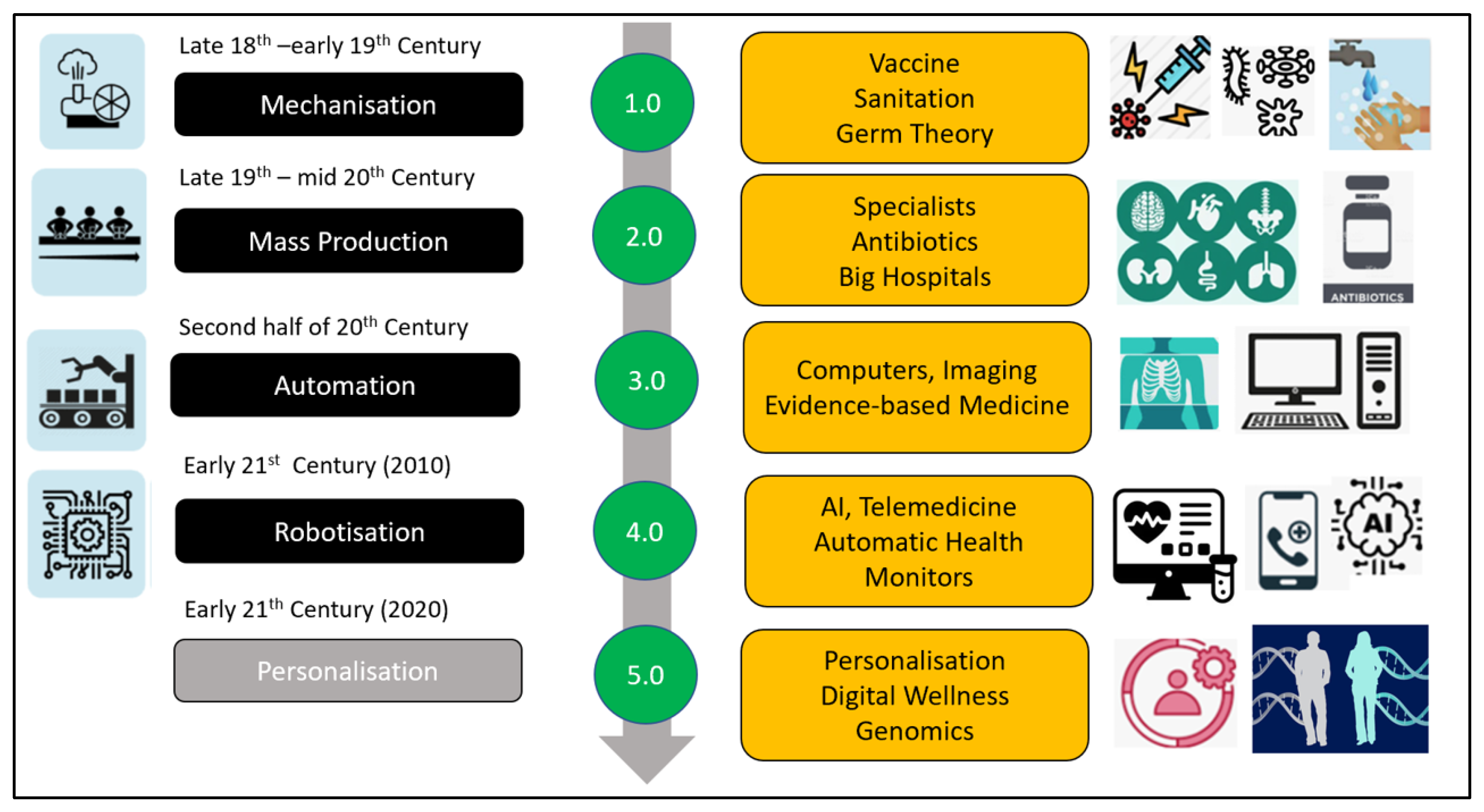
Industries outside healthcare have advanced circularity and technological adoption through Lean–Green 4.0 approaches within Industry 4.0 contexts [
120]. Healthcare has been exposed to similar drivers of change but lacks the track record of adopting and adapting new technologies at the pace required [
110,
121]. Understanding how other sectors have incorporated digitalization and robotics within Lean practice provides insight into the scale of adaptation necessary [
122].
Figure 5 illustrates the progression of successive industrial revolutions and their corresponding influence on healthcare development, providing context for the emerging integration of digital technologies, automation, and sustainability within Lean–Green 4.0.
These comparisons underline the scale of transformation required if Lean healthcare improvement is to fully integrate environmental sustainability within routine practice and system design.
4.9. Implications for Policy and Practice
The four program theories developed in this review seek to explain how Lean interventions support environmental sustainability in healthcare. They highlight the importance of staff empowerment, cross-sector collaboration and setting clear organizational priorities. The findings have important implications for organizational policy, system design, and the everyday practices of clinical teams. They illustrate how environmentally focused Lean improvement work becomes possible when the appropriate organizational, relational, and contextual conditions are present.
At a policy level, stronger alignment between national sustainability requirements and organizational improvement frameworks is necessary to drive environmental performance as an integral element of healthcare quality. Embedding environmental indicators in regulators’ reporting structures would help create the organizational conditions set out in Program Theory 1.
At an organizational level, a public commitment to sustainability is now critical. The review highlights the importance of developing a culture that enables staff to feel confident, supported, and authorized to engage in environmentally focused improvement activity. Teams in sites such as Newcastle Hospitals NHS Trust demonstrated that environmental action often emerges when local leaders visibly endorse it [
118].
For clinical teams, the findings reinforce the value of integrating environmental considerations into existing Lean, and potentially other, methodologies, rather than expecting staff to adopt entirely new approaches. This consideration provides a pragmatic way to extend Lean analysis without overwhelming teams, encouraging them to consider necessity, location, and material choice as part of every process improvement.
For procurement, sustainability and waste management colleagues, the program theories emphasize the importance of intentional collaboration and mutual understanding for positive action. Identifying clinical champions to support coordination across these occupational groups is necessary if we are to move from the prevailing linear “buy–use–dispose” model towards a more circular approach.
Taken together, these implications offer practical direction for how healthcare organizations can embed environmentally sustainable outcomes within Lean improvement activity as part of routine practice and decision-making.
4.10. Strengths and Limitations
A key strength of this review lies in the breadth and diversity of the evidence base, drawing on both healthcare and non-healthcare sectors and enabling cross-sector comparison where sustainability approaches are more mature. The inclusion of detailed case studies within healthcare provided the contextual depth necessary for realist analysis and supported the refinement of mechanisms within the emerging PTs. The review adhered to RAMESES publication standards [
44,
45], and theory development was conducted through iterative CMOC alignment with explicit documentation of analytic decisions to enhance transparency [
79]. Illustrative examples of the included literature included studies from healthcare contexts [
124], industry settings [
125,
126], and papers from either sector that did not contribute directly to theory development but influenced discussion [
127]. As noted during the screening and appraisal process, several studies were excluded where they offered limited explanatory contribution to the realist synthesis, particularly where the analysis focused on technical optimization or conceptual modelling without examination of organizational context, mechanisms, or governance structures relevant to healthcare delivery [
128,
129,
130,
131,
132].
At the same time, several limitations warrant consideration. The number of published studies of Lean–Green within healthcare remains limited, as previously identified [
29]. This scarcity restricts opportunities for direct comparison and reduces the empirical density available for mechanism refinement within realist synthesis. Much of the healthcare evidence comprised specialty-specific case studies and practitioner-authored reports. While these offered essential contextual insight, their localized and interpretive nature may limit transferability beyond the reported settings. In addition, several practitioner-authored case studies may reflect institutional positioning or advocacy intentions, particularly where sustainability initiatives are presented as exemplars of innovation. In realist synthesis, such sources are not treated as neutral evaluations of effectiveness but as situated accounts that illuminate how interventions are framed, legitimized and enacted within specific contexts [
44,
77,
133]. Accordingly, claims of success were interrogated for the contextual conditions and reasoning processes described, rather than accepted at face value. The analytic focus remained on mechanism development and contextual explanation, consistent with realist principles of relevance and rigor [
45,
79]. Institutional affiliation did not confer evidential privilege, and practitioner-authored reports were appraised using the same relevance and rigor criteria as all other sources. The predominance of positive examples also raises the possibility of publication and reporting bias, a risk partly addressed through the deliberate inclusion of the gray literature [
134], recognizing that published studies are subject to selective dissemination patterns [
101].
The interpretive character of realist synthesis also requires reflection. Mechanisms are not directly observable but must be inferred from reported actions, reasoning processes and contextual cues [
135]. In several instances, contextual detail was limited, requiring careful abstraction to identify plausible generative mechanisms. Although such inference is intrinsic to realist methodology, it introduces the potential for analytic subjectivity, underscoring the importance of transparent documentation of interpretive decisions [
79].
The role of the expert panel similarly merits consideration. Expert engagement is a recognized component of realist inquiry, contributing contextual insight and theoretical challenge during program theory development and refinement [
44,
45,
49,
55,
58,
60]. However, the use of an expert panel introduces the possibility of perspective-based bias, as interpretations may reflect particular professional, disciplinary or sectoral standpoints. In this review, the panel adjudicated CPTs into IPTs prior to formal testing and subsequently reviewed the refined PTs following synthesis to assess coherence and contextual plausibility [
58,
62]. The PTs were developed through structured evidence synthesis by the research team, supported by customized data extraction forms (
Supplementary File S3) [
71] and iterative cross-review by Researchers 1, 2 and 3. While the panel reviewed the emerging and eventual PTs for contextual relevance and real-world plausibility, consistent with the advisory function described in the realist synthesis literature [
77,
79], analytical decisions regarding refinement were grounded in the extracted evidence. All IPTs were treated as provisional and were tested, refined or refuted through systematic engagement with the literature consistent with realist principles [
77,
133]. The adjudication and refinement processes were documented to preserve transparency and analytic traceability [
79].
Finally, the restriction to English-language publications may have excluded relevant work from non-English speaking contexts. Although mapping of first-author geography demonstrated international representation, the predominance of evidence from Europe and North America reflects broader publication and indexing patterns and may under-represent sustainability approaches emerging from the Global South.
Taken together, these limitations reflect both the emerging nature of scholarship on Lean–Green within healthcare and the interpretive character of realist synthesis. Nonetheless, the approach enabled the identification of generative patterns across heterogeneous sources, supporting the development of explanatory PTs grounded in available evidence [
44].
4.11. Dissemination and Further Research
The dissemination of the findings of the realist review conforms to the RAMESES reporting guidelines [
45]. Academic dissemination will include peer-reviewed publications, conference presentations, and integration with the previously published protocol [
4]. Engagement with healthcare, academic, and industry audiences will support wider awareness of Lean–Green as an emerging field of scholarship and practice.
Practice-focused dissemination will occur through direct engagement with sustainability teams, procurement groups, clinical educators, and quality improvement practitioners, enabling the program theories to inform ongoing improvement activity, consistent with realist evaluation.
The next stage of the doctoral study is a realist evaluation of the program theories with stakeholders in two European sites involved in Lean healthcare interventions with explicit sustainability aims. This evaluation will test and refine the theories developed here, deepening understanding of how organizational conditions and mechanisms interact to support or constrain environmentally aligned practice.
The realist evaluation will also be published, and, together, the realist review and evaluation will support knowledge mobilization and contribute to the evidence base on environmentally sustainable improvement practices in healthcare.