


Abstract
Genetically modified foods represent an important application of modern biotechnology and remain a subject of public debate. Attitudes toward consumption are more likely to be influenced by varying levels of scientific knowledge. University students from the College of Science and the College of Agricultural and Food Sciences at King Faisal University, Saudi Arabia, are expected to possess the basic knowledge that may affect their attitudes toward consumption of genetically modified foods. This study aimed to assess undergraduate students’ knowledge as a predictor of future attitudes toward consumption of genetically modified foods. Using a descriptive method, an electronic questionnaire was administered to a random sample of 300 participants during the first semester of the academic year 2025/2026. Data were analyzed using confirmatory factor analysis and t-tests. The results indicate that students possess a moderate level of scientific knowledge. Their future attitudes toward consuming genetically modified foods were also moderate. Prior studying of genetics and biotechnology courses significantly affects students’ scientific knowledge and future attitudes toward consumption of genetically modified food. The students strongly supported strict regulations, but they expressed hesitation regarding consumption regardless of scientific assurances of safety. No statistically significant differences in knowledge or attitudes based on specialization or gender were found. The authors recommend integrating ethical and social considerations of this kind of food into educational curricula to support informed decision-making among future professionals.
1. Introduction
Recent decades have seen rapid advancements in genetic engineering, with genetically modified foods (GMFs) emerging as a significant outcome of scientific progress [1,2,3]. GMFs involve manipulating the genetic material of organisms in ways that do not occur naturally through mating or natural recombination [4,5]. Since their commercial introduction in the mid-1990s, these technologies offer innovative solutions to urgent global problems, including food insecurity, malnutrition, and the environmental consequences of intensive agriculture [6,7,8]. By enhancing traits like pest resistance, drought tolerance, and nutritional content, GMFs offer increased yields and resilience [9,10,11]. For example, genetically modified rice has been specifically engineered to improve grain volume and nutrient density for direct human consumption, addressing simultaneous global issues of hunger and malnutrition, while newer applications focus on photosynthesis-enhanced staple crops and waste-reducing gene-edited fruits [12,13,14].
Genetically modified organisms (GMOs) are plants, animals, or microorganisms whose genetic material has been altered in ways that do not occur naturally, and in agriculture, they are known as genetically modified foods (GMFs) [5]. GMFs address global challenges such as food insecurity, malnutrition, and environmental impacts by exhibiting traits like pest and disease resistance, tolerance to drought and salinity, and improved nutritional content and shelf life, which can increase crop yields, reduce chemical inputs, and improve food quality at lower costs [9,11,15]. Beyond agriculture, genetic modification techniques offer solutions to climate change, biodiversity loss, pollution, and limited water and arable land, with applications in industry, bioremediation, medicine, and healthcare, making GM technologies a powerful tool for enhancing food production, food security, and sustainable agriculture [2,3,6,7].
The application of GM technology remains highly controversial [16]. Critics consistently raise concerns over potential long-term health risks, such as allergenicity and controversial associations with cancer, as well as ecological disruptions like gene flow, biodiversity loss, and market control by large biotechnology corporations [17,18,19]. Compounded by perceived gaps in independent long-term studies, public perception is highly variable and often shaped by trust in institutions, media messaging, social influence pathways, and underlying food values rather than scientific consensus [20,21,22,23]. These ongoing global debates highlight the critical role of university education in developing scientifically informed attitudes toward biotechnologies. Previous research indicates a strong correlation between higher education and biotechnology acceptance, with knowledge and opinions significantly affected by academic majors [24].
In Saudi Arabia, the monitoring and regulation of GMFs are strictly overseen by the Saudi Food and Drug Authority (SFDA). Under the Saudi technical regulations established in 2011 (SFDA.FD/GSO 2141 and 2142), the SFDA mandates clear labeling of any food products or agricultural commodities containing more than 1% genetically modified ingredients [25]. However, there remains a lack of publicly available, comprehensive data on the exact retail volume and market share of GMFs within the Saudi market. Research in Saudi Arabia about awareness or consumption of GMFs has predominantly focused on the general public or broad university communities [26,27,28,29]. Students in scientific disciplines are a critical group; they are the upcoming architects of the food system, and their ability to objectively evaluate biotechnological risks and benefits will heavily influence future research, education, and public understanding of GMFs [30,31]. This represents a significant gap regarding students enrolled in specialized, scientifically oriented programs. Therefore, the present study will highlight: (1) What is the level of scientific knowledge concerning GMFs among students at the College of Science and students at the College of Agricultural and Food Sciences at King Faisal University? (2) What are the predicted future attitudes of these College of Sciences students and College of Agriculture and Food Science students toward GMF consumption? (3) Do the study variables (gender and college specialization) have a statistically significant impact on students’ scientific knowledge and future attitudes toward GMF consumption?
The scarcity of quantitative market data highlights the importance of studies assessing the scientific knowledge and future consumption attitudes of university students toward GMFs, particularly those enrolled in biological and agricultural sciences. Such assessments provide valuable baseline insights for policymakers and stakeholders concerned with the development of sustainable food systems in the Kingdom. By focusing on this specific group, this study offers important evidence on whether specialized scientific training can help bridge the gap between technological innovation and public distrust. This issue is particularly relevant in regions such as Saudi Arabia, where achieving long-term food security under extreme environmental constraints requires a workforce capable of implementing advanced and sustainable solutions. Accordingly, this research examines whether a specialized academic background is associated with higher biotechnology literacy and more informed acceptance of GMFs.
2. Materials and Methods
2.1. General Background
Using a descriptive method [32], an electronic questionnaire was administered to a random sample of undergraduate students from the College of Science and the College of Agricultural and Food Science at King Faisal University.
2.2. Participants
Three hundred male and female undergraduate students from the College of Science and the College of Agricultural and Food Science at King Faisal University participated in this study during the first semester of the academic year 2025/2026. Details about the participants, aged 18–22 years, are as follows:
- In total, 125 students (86 of the 480 females and 39 of the 90 males) were enrolled in the academic program “Biology”, College of Sciences, Department of Biological Science (https://www.kfu.edu.sa/en/pages/PSDetails.aspx?sid=22, accessed on 5 March 2026);
- In total, 175 of the 500 females were enrolled in the academic program “Food Science and Technology”, College of Agriculture and Food Science, Department of Food Science and Nutrition (https://www.kfu.edu.sa/en/pages/PSDetails.aspx?sid=39, accessed on 5 March 2026).
A self-administered electronic questionnaire was provided to the sample students. The distribution of study samples according to different criteria is outlined in Table 1.
Table 1.
Distribution of the research participants.
2.3. Instrument and Procedures
A questionnaire was prepared to measure the predicted future attitudes among King Faisal University students from the College of Science and the College of Agriculture and Food Science regarding the consumption of GMFs, based on their levels of scientific knowledge. The questionnaire consists of 24 items divided into two domains. The first domain addressed three axes. The first axis addresses academic knowledge through 7 items, the second axis focuses on cultural knowledge of GMFs through 5 items, while the third axis focuses on scientific awareness of the benefits related to the consumption of GMFs through 6 items. The second domain addressed future consumption attitudes in light of the students’ current knowledge through 6 items. The items of the questionnaire were designed according to the three-point Likert scale, assigning a number to each option from one to three. Response options varied by section: Academic Knowledge was assessed using ‘Yes’, ‘No’, and ‘Do not know’, while Cultural Knowledge, Scientific Awareness, and Future Attitudes Toward Consumption were measured using ‘Agree’, ‘Disagree’, and ‘To some extent’. ‘Yes’ and ‘Agree’ equal ‘high’ values and ‘No’ and ‘Disagree’ equal ‘low’ values in the explanation.
Nine experts specializing in measurement and evaluation, curriculum and teaching methods, and biological sciences were consulted to provide their feedback on the questionnaire. Their feedback helped improve the content and develop the final version of the questionnaire. A field experiment was performed with a sample of 50 male and female students to assess the scale’s reliability. The reliability of each item was analyzed individually, in addition to the overall reliability of the scale, by calculating Cronbach’s alpha value. Cronbach’s alpha coefficients of the questionnaire are outlined in Table 2.
Table 2.
Cronbach’s alpha coefficients of the questionnaire and subscales.
Table 2 showed that the reliability values ranged between 0.79 and 0.72 for the scientific knowledge dimension and reached 0.83 for the future orientations dimension. These results highlighted that the scale possessed a high level of reliability, enhancing its accuracy and validity to achieve the study’s objective. Confirmatory factor analysis was also used through the AMOS software, version 25, to verify the validity and reliability of the questionnaire through structural modeling
2.4. Data Analysis
Confirmatory Factor Analysis
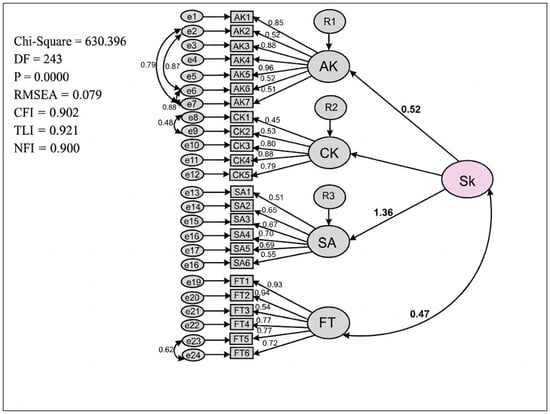
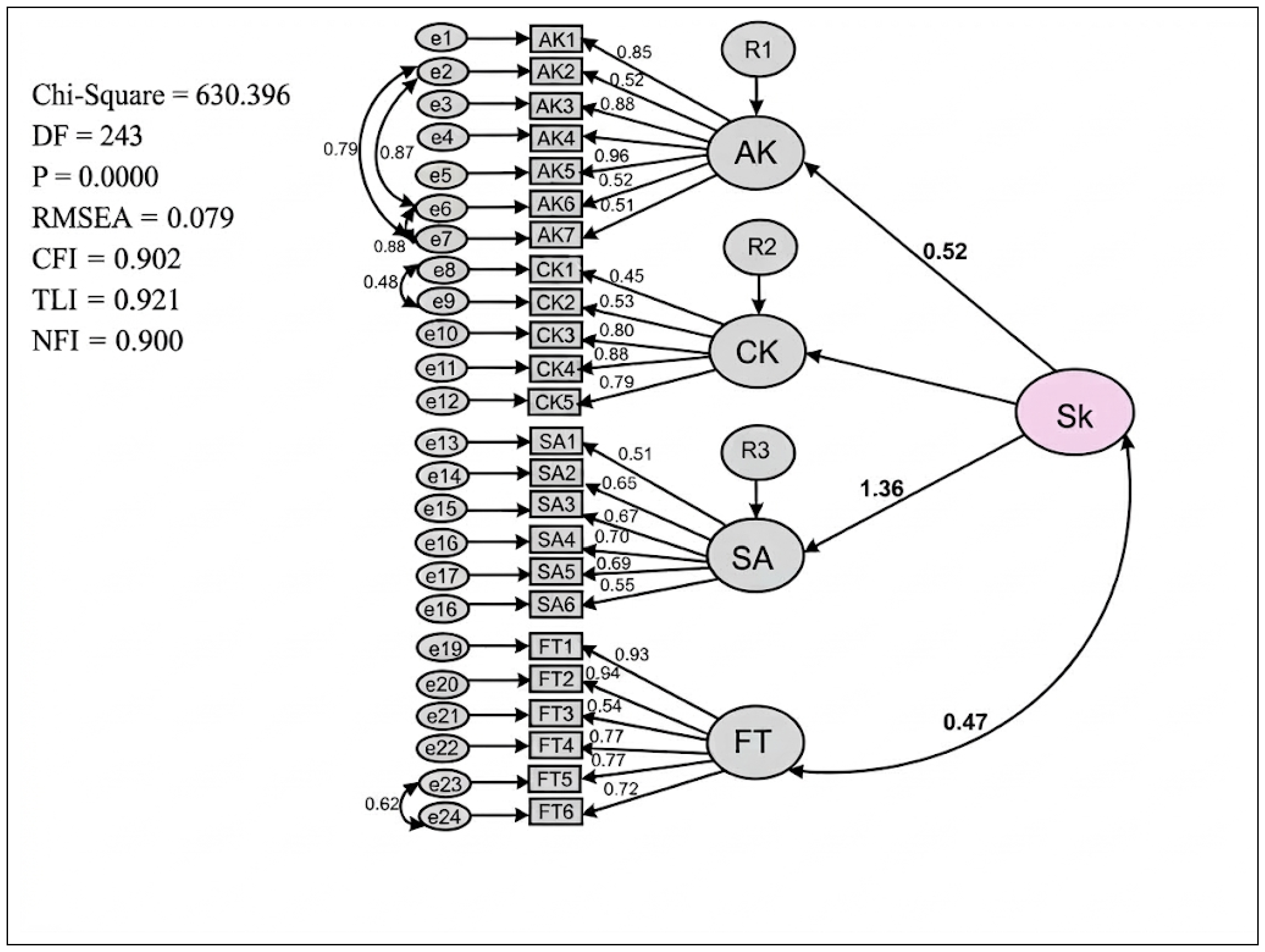
Structural Equation Modeling (SEM), also called Confirmatory Factor Analysis (CFA), is used to construct instruments, test validity, and categorize the effects of interventions. In the instrument design stage, CFA is used to identify the internal structure of the instrument and check core dimensions and factor loadings on scale items. CFA assessed the validity of the model while it diagrammed the proposed model relationship between items. Moreover, the parameters were estimated by the maximum likelihood estimation, as shown in Figure 1.
Figure 1.
Confirmatory factor analysis results of the adopted model, indicating relationships between scale items and dimensions.
Figure 1 showed that when evaluating the model’s adequacy using confirmatory factor analysis, favorable results appeared through several indicators. The chi-square value was high, indicating that the model explains the data structure well. As for the RMSEA index, it was 0.079, which is less than the standard of 0.08, indicating a satisfactory fit between the model and the data. The CFI index was 0.902 and the TLI was 0.921, both exceeding the minimum acceptable threshold of 0.90, reflecting significant compatibility. Additionally, the NFI value was 0.900, providing further support for the model’s quality. As for the chi-square index, it was 630.396 with 243 degrees of freedom and a P-value of 0.000, which is an expected result with complex and large models, indicating that the model is suitable for the data. Overall, these results indicate that the preliminary model has been constructed and presented appropriately, with a notable alignment with the studied data.
SPSS-30 program was used to analyze the data. Percentages, means, and standard deviations were calculated for each item in the questionnaire. T-test was conducted to determine the presence of statistically significant differences between the mean responses of the study participants.
3. Results
Question 1: What is the level of scientific knowledge concerning GMFs among students at the College of Science and students at the College of Agricultural and Food Sciences at King Faisal University? Table 3 shows the mean and standard deviation of their responses to each statement.
Table 3.
Means and standard deviations of scientific knowledge levels regarding GMFs in the first domain.
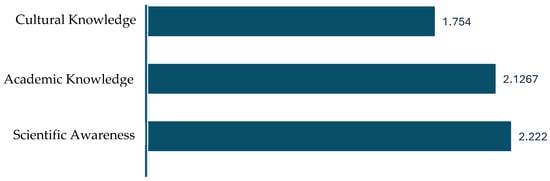
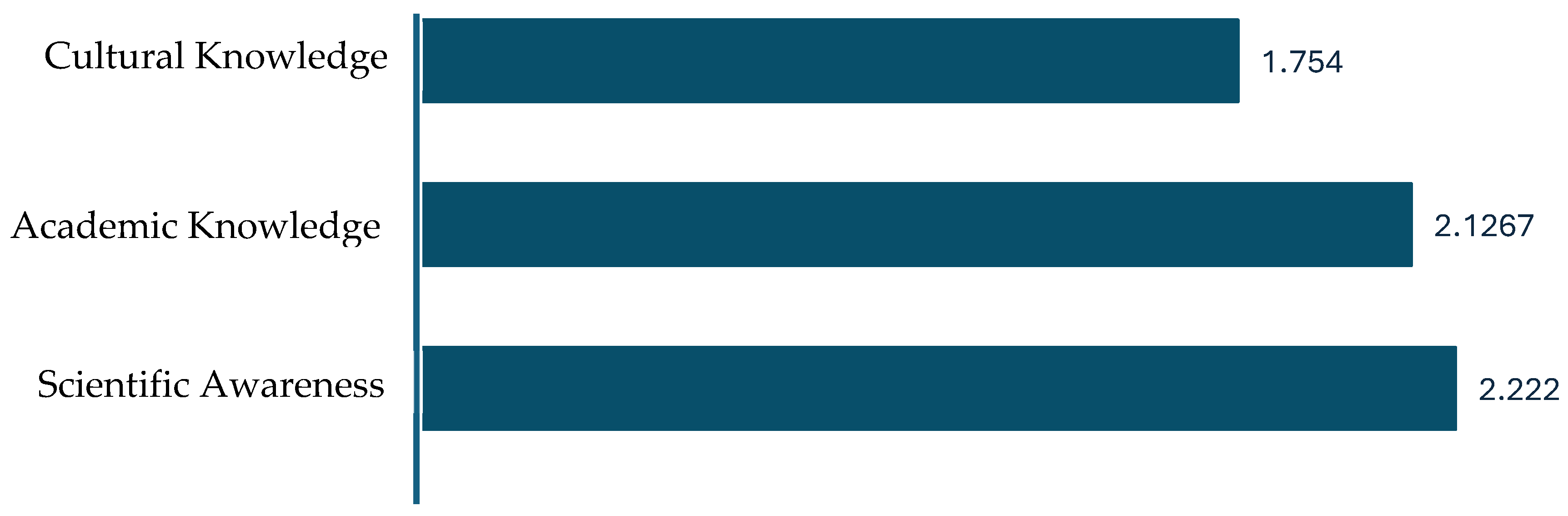
Table 3 and Figure 2 show that the level of scientific knowledge regarding GMFs among students of the College of Sciences and students at the College of Agriculture and Food Science at King Faisal University ranked second, with a mean score of 2.034, which corresponds to a moderate level. Scientific awareness ranked first, with a mean score of 2.222, which corresponds to a moderate level. Academic knowledge has a mean score of 2.127, which also corresponds to a moderate level. Lastly, cultural knowledge ranked last, with a mean score of 1.754, corresponding to a moderate level.
Figure 2.
Means of scientific knowledge levels.
Question 2: What are the predicted future attitudes of these students at the College of Sciences and students at the College of Agriculture and Food Science toward GMF consumption? Table 4 shows the mean and standard deviation of students’ responses to each statement in the second axis.
Table 4.
Means and standard deviations of future attitude levels regarding GMFs in the second domain.
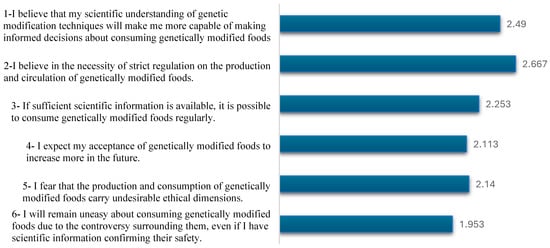
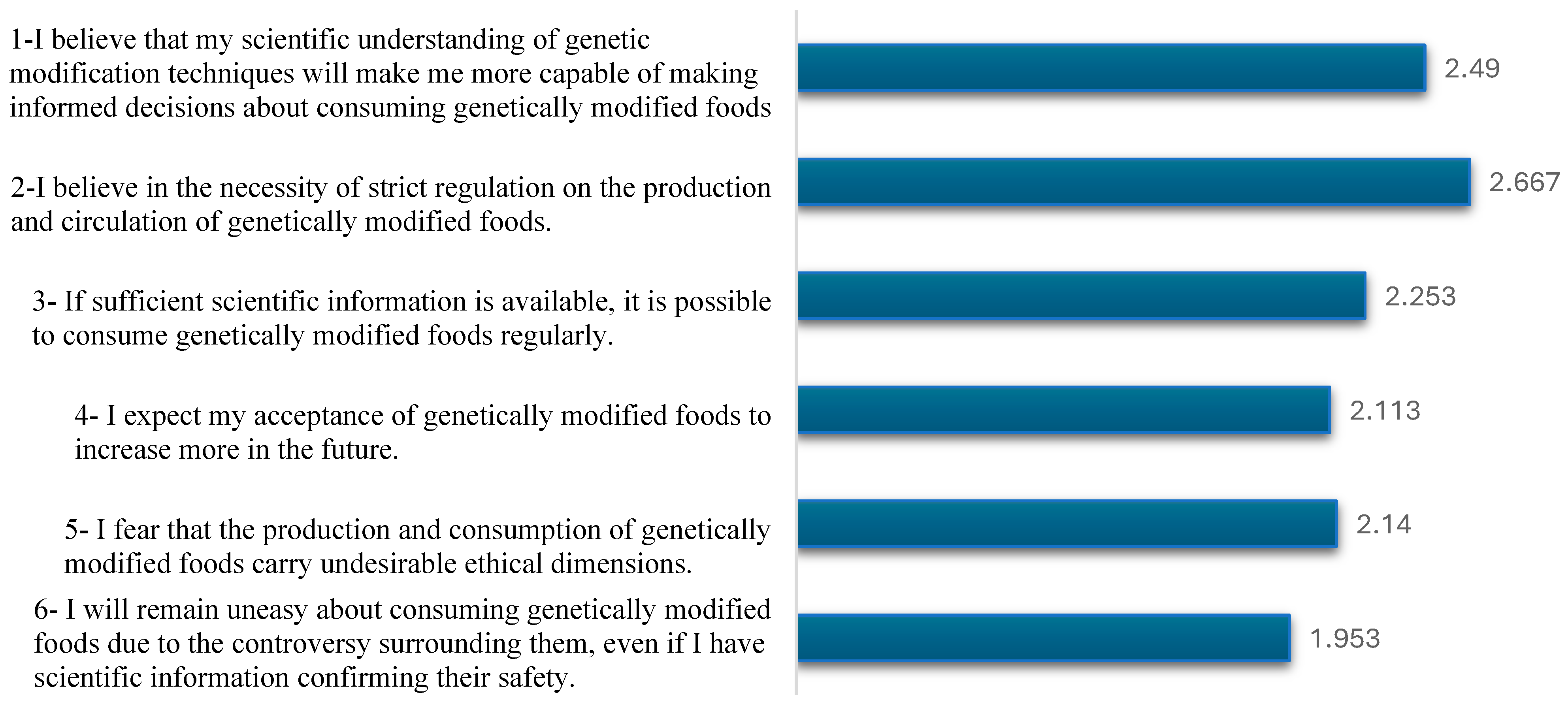
Table 4 and Figure 3 show that the future attitudes of students from the department of biological sciences at the College of Science and students from the College of Agricultural and Food Sciences at King Faisal University toward the consumption of GMFs are at a moderate level, 2.269. The highest arithmetic means for statement number 2, “I believe in the necessity of strict regulation on the production and circulation of GMFs,” is 2.667, which corresponds to a high degree. Statement number 1, “I believe that my scientific understanding of genetic modification techniques will make me more capable of making informed decisions about consuming GMFs,” came in second place, with an average of 2.490, which corresponds to a high score. Statement number 6, “I will remain uneasy about consuming GMFs due to the controversy surrounding them, even if I have scientific information confirming their safety,” ranked last, with an average score of 1.953, which is a moderate level.
Figure 3.
The mean scores for each item of the future attitudes domain.
Question 3: Do the study variables (gender and college specialization) have a statistically significant impact on students’ scientific knowledge and future attitudes toward GMF consumption? Table 5 shows the results of the T-test for the differences between the two groups in terms of the gender variable and the college variable.
Table 5.
Means, standard deviations, and T-test regarding scientific knowledge and future attitudes toward consuming GMFs according to gender and college.
Table 5 shows that there are no statistically significant differences at the significance level (α ≤ 0.05) in scientific knowledge concerning GMFs attributed to gender, which suggests that the level of scientific knowledge among males and females is nearly equal (t = 2.086). The results also indicate that there are no significant differences between males and females in their future attitudes toward GMF consumption (t = 1.694).
The results presented in Table 5 also reveal no statistically significant differences in scientific knowledge attributed to the college variable at the significance level (t = 3.725), suggesting that the scientific knowledge of students from both colleges is approximately equal. The results also show no significant differences between the students of both colleges regarding their future attitudes toward GMF consumption (t = 4.091).
Concerning prior knowledge, the results presented in Table 5 indicate the presence of statistically significant differences at the significance level (α ≤ 0.05) in scientific knowledge attributed to the variable of prior knowledge. This suggests that students with prior knowledge performed better than students without prior knowledge, as indicated by the t-value (t = 5.311). The results also show significant differences between students with prior knowledge and those without prior knowledge regarding future attitudes toward the consumption of GMFs, as reflected by the t-value (t = 6.95).
4. Discussion
The present study indicates that students from both the College of Science and the College of Agricultural and Food Sciences at King Faisal University possess a moderate level of scientific (academic) knowledge about GMFs. No significant differences were observed between students from the two colleges in terms of their scientific knowledge. However, when considering prior study of genetics or biotechnology courses, students who had previously studied these courses demonstrated significantly higher levels of scientific knowledge about GMFs compared with those who had not taken such courses. Students from the two colleges are enrolled in different academic programs. Students in the Biology program in the College of Science study several core courses that provide foundational knowledge related to GMFs, including General Genetics, Molecular Biology, Microbial Genetics, and Plant Biotechnology. On the other hand, students in the College of Agricultural and Food Sciences are enrolled in the specialized program of Food Science and Technology, which includes courses focused on food production and consumption (links to both programs are provided in the Section 2). Some courses, such as Fundamentals of Biotechnology and Food Biotechnology, are expected to provide more advanced knowledge about food biotechnology, including GMFs. Therefore, courses in both programs likely provide students with fundamental academic knowledge about GMFs, distinguishing them from students who have not taken such courses. Formalized education is a primary driver of GMF purchase intentions and a critical factor in overcoming biological myths among university students [19,33].
The moderate level of GMF scientific knowledge observed among the students highlights a critical need for targeted curriculum enhancements. Moving forward, equipping these future professionals with more advanced and specialized biotechnology knowledge will be essential for effectively managing agricultural innovations and supporting Saudi Arabia’s long-term food security goals. On the other hand, the findings revealed that the awareness dimension ranked first, achieving the highest mean score among all dimensions, with no significant differences between students from the College of Science and the College of Agricultural and Food Sciences. The absence of significant differences between the two colleges suggests that scientific and cultural awareness of GMFs is molded by a combination of a shared educational background and broader cultural exposure, rather than by distinct academic tracks alone. The low level of cultural knowledge among the participating students is likely attributed to the fact that agricultural biotechnology has not historically been a topic of public or cultural debate in Saudi Arabia, highlighting the need to strengthen media science popularization regarding GMFs.
Regarding future attitudes, students demonstrated a balance between awareness and responsibility. They strongly emphasized the need for strict regulation while expressing relative confidence in their scientific ability to make consumption decisions. Their awareness of the need for regulatory frameworks to protect safety and enhance trust ranked highest. While trust in scientific knowledge was evident, some hesitation remained regarding personal consumption. Recent models suggest that such decisions are increasingly influenced by social influence pathways and ‘food values’, where consumers weigh scientific safety against personal ethics and perceived naturalness [22,23]. Moreover, the role of ‘actively open-minded thinking’ has been identified as a key psychological trait in determining how students translate biotechnology knowledge into civic action or acceptance [21]. Significant differences were revealed between students with prior knowledge and those without prior knowledge regarding future attitudes toward the consumption of GMFs. Although the students demonstrated moderate knowledge, their strong belief that GMF consumption should be restricted aligns perfectly with the strict regulatory and labeling controls currently enforced by the SFDA, showing an intuitive grasp of national food safety priorities.
The present study found no statistically significant differences in scientific knowledge or future attitudes toward GMFs between male and female students. This suggests that both genders possess similar levels of knowledge and show similar willingness to consume GMFs. The similarity in attitudes indicates that gender may not be a major determinant of perceptions toward GMFs; rather, shared educational exposure and cultural context likely play more influential roles. It is also possible that male and female students rely on similar sources of information regarding biotechnology and food-related innovations. Consequently, awareness initiatives may be more effective if designed as unified educational programs rather than gender-specific interventions. This finding is consistent with previous research in Saudi Arabia. For example, Al-Khayri and Hassan [27] reported no significant gender differences among university students. However, other studies such as Pasha and Amir [34] observed gender-related differences in awareness among citizens, faculty members, and university students in Tabuk, suggesting that demographic or regional factors may influence perceptions.
More broadly, the cautious attitudes observed in the present study are consistent with international research indicating that public perceptions of GMFs often remain conservative despite varying levels of awareness. Studies in Europe have reported similar concerns, with health risks frequently identified as a key factor influencing consumer reluctance. For instance, research in Poland and the Czech Republic revealed high levels of concern regarding GMFs, particularly related to perceived health risks [35]. Likewise, although students in Albania demonstrated relatively high awareness of genetically modified organisms (GMOs), many still preferred organic products [36]. Comparable skepticism has also been observed in the United States, where even highly educated populations often associate GMFs with potential environmental and health risks [37].
In Asia, attitudes toward GMFs appear more complex and are frequently shaped by information sources and educational background. Recent cross-national surveys in Japan and China indicate that perceived safety remains the strongest predictor of willingness to consume new gene-edited varieties, such as non-browning fruits [14]. In China, for example, the internet serves as the primary source of information, while trust in governmental and scientific institutions remains limited [16]. Similarly, studies in Bangladesh and Japan indicate that awareness and acceptance vary according to demographic factors, educational exposure, and product type [11,38]. Research from African countries also highlights the importance of knowledge and institutional trust. Limited awareness and misconceptions about GMFs have been reported in Zimbabwe, while acceptance in Nigeria has been associated with trust in scientists and religious leaders [39,40]. In South Africa, consumer acceptance has been linked to perceived personal benefits such as lower prices and longer shelf life [41], whereas studies in Uganda emphasize the role of education and institutional trust in shaping public perceptions [42].
Within the Middle East, similar patterns of cautious awareness have been observed. In Turkey, although general awareness of GMOs is relatively high, confusion with other concepts such as hormones and persistent health concerns remains common [43]. Evidence from Lebanon, however, demonstrates that targeted educational interventions can significantly improve knowledge and perceptions [44]. In Saudi Arabia, previous studies consistently report cautious public attitudes and a demand for transparency. For example, university students in Riyadh were generally found to be reluctant against purchasing labeled GMFs despite understanding the basic principles. Other studies have also reported knowledge gaps among Saudi residents in Makkah [28], gender-related differences in awareness in Tabuk [34], and relatively high awareness but persistent concerns about potential risks in Taif [29]. Collectively, these findings suggest that while awareness of GMFs is increasing, concerns about safety, trust, and perceived risks continue to shape public attitudes.
5. Conclusions and Recommendations
Our study provides clear evidence that students from both the Department of Biological Sciences and the College of Agricultural and Food Sciences possess moderate and nearly identical levels of scientific knowledge and future attitudes. This indicates a shared academic experience that transcends their specific specializations. The absence of significant differences between colleges suggests that attitudes toward GMFs are shaped more by shared educational and cultural factors than by distinct academic tracks. Current educational efforts appear successful in unifying student awareness. This reinforces the need to invest in initiatives that deepen scientific understanding and constructively guide attitudes, promoting informed decision-making on GMF issues.
5.1. Limitations
A limitation of this study is that the sample was restricted to students from a single university, specifically the College of Agricultural and Food Sciences and the Department of Biological Sciences, which may limit the generalizability of the findings to the broader Saudi university population. Future studies should include larger and more diverse samples from multiple universities and disciplines and consider additional factors such as students’ academic performance and prior experimental experience.
5.2. Recommendations
- Curricula should integrate specialized units using targeted methods, such as comparative case studies, to specifically address cognitive gaps like the distinction between genetic modification and traditional breeding, alongside their applications, risks, and benefits.
- Educational content should be enriched with the social, economic, and ethical dimensions of GMFs, their role in global food security, and a neutral scientific perspective on the ongoing debate.
- Critical thinking and research skills need to be enhanced among students. This objective can be achieved by organizing interactive workshops and seminars aimed at developing their ability to evaluate different sources of information related to GMFs. Such skills will help them distinguish reliable scientific facts from rumors or misinformation, contributing to the formation of an informed and neutral opinion based on evidence.
- Efforts should be made to link theoretical knowledge with practical applications and field experiences by organizing field visits to specialized research laboratories in genetic engineering and tissue culture.
- Strict enforcement and transparent tracking of existing SFDA policies are essential, and actively communicating how these local safety standards are met will enhance community trust and encourage informed use.
Author Contributions
Conceptualization, D.A.A. and A.E.A.E.H.; methodology, A.A.H.; software, S.A.E. and S.Z.A.; validation, S.A.E., M.M.H. and S.Z.A.; formal analysis, S.A.E.; investigation, D.A.A.; resources, A.E.A.E.H.; data curation, A.E.A.E.H.; writing—original draft preparation, A.A.H. and S.Z.A.; writing—review and editing, S.Z.A.; visualization, A.A.H.; supervision, D.A.A.; project administration, M.M.H.; funding acquisition, S.Z.A. All authors have read and agreed to the published version of the manuscript.
Funding
This work was supported by the Deanship of Scientific Research, Vice Presidency for Graduate Studies and Scientific Research, King Faisal University, Saudi Arabia [grant No. KFU260537].
Institutional Review Board Statement
The study was conducted in accordance with the Declaration of Helsinki, and approved by the Ethical Committee at King Faisal University under remit No. KFU-REC-2025-MAY- ETHICS 3375, date of approval 8 May 2025.
Informed Consent Statement
Informed consent was obtained from all subjects involved in this study. All students in the study sample signed written consent during their responses to the questionnaire without obligations, with the assurance that they could withdraw at any time without liability. The scope of the consent was participation, data use, and consent to publish.
Data Availability Statement
The data can be made available by contacting the corresponding author.
Acknowledgments
The researchers thank the Deanship of Scientific Research at King Faisal University, Al-Ahsa 31982, for providing the research fund used to pay for publication, research grant No. KFU260537.
Conflicts of Interest
The author declares that there have no conflicts of interests regarding the publication of this manuscript. In addition, no ethical issues, including plagiarism, informed consent, misconduct, data fabrication and/or falsification, double publication and/or submission, and redundancies, have been breached by the authors.
Abbreviations
| GMOs | Genetically Modified Organisms |
| GMFs | Genetically Modified Food |
| SEM | Structural Equation Modeling |
| CFA | Confirmatory Factor Analysis |
| SFDA | Saudi Food and Drug Authority |
References
- Zhang, C.; Wohlhueter, R.; Zhang, H. Genetically modified foods: A critical review of their promise and problems. Food Sci. Hum. Wellness 2016, 5, 116–123. [Google Scholar] [CrossRef] [Scilit]
- Adeyeye, S.A.; Idowu-Adebayo, F. Genetically modified and biofortified crops and food security in developing countries: A review. Nutr. Food Sci. 2019, 49, 978–986. [Google Scholar] [CrossRef] [Scilit]
- Medani, K.R.; Neill, A.; Garrod, G.; Ojo, M.; Hubbard, C. Societal perceptions and attitudes towards genetically modified (GM) crops, feed, and food products in the Middle East, North Africa, and Turkey (MENAT) region: A systematic literature review. Food Qual. Prefer. 2024, 117, 105148. [Google Scholar] [CrossRef] [Scilit]
- World Health Organization (WHO). Food Genetically Modified; WHO: Geneva, Switzerland, 2014. Available online: https://www.who.int/news-room/questions-and-answers/item/food-genetically-modified (accessed on 5 March 2026).
- FAOSTAT. Food and Agriculture Data; Food and Agriculture Organization of the United Nations: Rome, Italy, 2016; Available online: https://www.fao.org/home/en/ (accessed on 5 March 2026).
- Georges, F.; Ray, H. Genome editing of crops: A renewed opportunity for food security. GM Crops Food 2017, 8, 1–12. [Google Scholar] [CrossRef] [Scilit] [PubMed]
- Dupont-Inglis, J.; Borg, A. Destination bioeconomy. The path towards a smarter, more sustainable future. New Bio-Technol. 2018, 40, 140–143. [Google Scholar] [CrossRef] [Scilit] [PubMed]
- Muddassir, M.; Al-Zahrani, K.H. General overview Awareness of genetically modified food among consumers. Int. J. Agric. Biosci. 2022, 11, 48–52. [Google Scholar] [CrossRef] [Scilit]
- Hefferon, K.L. Nutritionally enhanced food crops; progress and perspectives. Int. J. Mol. Sci. 2015, 16, 3895–3914. [Google Scholar] [CrossRef] [Scilit] [PubMed]
- Turnbull, C.; Lillemo, M.; Hvoslef-Eide, T. Global regulation of genetically modified crops amid the gene-edited crop boom a review. Front. Plant Sci. 2021, 12, 630396. [Google Scholar] [CrossRef] [Scilit]
- Das, A.; Sumit, A.F. Knowledge and attitude towards genetically modified foods: A quantitative cross-sectional study among the educated subjects in the four largest divisions of Bangladesh. J. Adv. Biotechnol. Exp. Ther. 2023, 6, 198–209. [Google Scholar] [CrossRef] [Scilit]
- Kobayashi, K.; Wang, X.; Wang, W. Genetically modified rice is associated with hunger, health, and climate resilience. Foods 2023, 12, 2776. [Google Scholar] [CrossRef] [Scilit]
- Menary, J.; Capell, T.; Rahaman, E.H.; Hechanova, S.L.; Tallada, A.G.; Fuller, S.S. What farmers think about using crop biotechnology to boost photosynthesis in rice and potato. Sci. Rep. 2026, 16, 895. [Google Scholar] [CrossRef] [Scilit] [PubMed]
- Pittman, A.; Kemper, N.; McFadden, B.; Durand-Morat, A.; Nalley, L.; Rider, S. Consumer acceptance of gene-edited non-browning bananas to reduce food waste. Discov. Food 2026, 6, 70. [Google Scholar] [CrossRef] [Scilit]
- Del-Aguila-Arcentales, S.; Alvarez-Risco, A.; Rojas-Osorio, M.; Meza-Perez, M.; Simbaqueba-Uribe, J.; Talavera-Aguirre, R.; Mayo-Alvarez, L.; Espinoza-Ipanaque, P.; Davies, N.; Yanez, J. Analysis of genetically modified foods and consumer: 25 years of research indexed in Scopus. J. Agric. Food Res. 2025, 19, 101594. [Google Scholar] [CrossRef] [Scilit]
- Cui, K.; Shoemaker, S.P. Public perception of genetically-modified (GM) food: A nationwide Chinese consumer study. npj Sci. Food 2018, 2, 10. [Google Scholar] [CrossRef] [Scilit] [PubMed]
- Lauterbach, J.J.; Bantle, C. For more diversity, better taste and my own health: Exploring organic consumers’ purchasing motives for heirloom vegetable varieties. Sustainability 2022, 14, 4068. [Google Scholar] [CrossRef] [Scilit]
- Vega Rodríguez, A.; Rodriguez-Oramas, C.; Sanjuán Velázquez, E.; Hardisson de la Torre, A.; Rubio Armendáriz, C.; Carrascosa Iruzubieta, C. Myths and realities about genetically modified food: A risk-benefit analysis. Appl. Sci. 2022, 12, 2861. [Google Scholar] [CrossRef] [Scilit]
- Bukovnik, K.; Torkar, G. Myths in biology: Students’ opinion towards vaccination, climate change, genetically modified organisms and evolution. Acta Biol. Slov. 2025, 69, 52–62. [Google Scholar] [CrossRef] [Scilit]
- Catherine, K.N.; Mugiira, B.R.; Muchiri, N.J. Public perception of genetically modified organisms and the implementa-tion of biosafety measures in Kenya. Adv. Agric. 2024, 2024, 5544617. [Google Scholar] [CrossRef] [Scilit]
- Segrè Cohen, A.; Bearth, A.; Otten, C.D. The role of actively open-minded thinking in willingness to take civic and political action on genome-edited food in the United States and Switzerland. Front. Psychol. 2025, 16, 1565928. [Google Scholar] [CrossRef] [Scilit]
- Selvaggi, R.; Yagi, K.; Pappalardo, G.; Nayga, R.M. Public acceptance for genetic engineering techniques: The role of food values-based information. Sci. Rep. 2026, 16, 7083. [Google Scholar] [CrossRef] [Scilit]
- Zhang, X.; Chen, A.; Jin, J. Beyond risk-benefit perceptions: Social influence pathways in public attitudes toward genetic modification in China. Chin. J. Commun. 2026, 1–19. [Google Scholar] [CrossRef] [Scilit]
- Laux, C.M.; Mosher, G.A.; Freeman, S.A. Factors affecting college students’ knowledge and opinions of genetically modified foods. J. Technol. Stud. 2010, 36, 2–11. [Google Scholar] [CrossRef] [Scilit]
- Saudi Food and Drug Authority (SFDA). General Requirements for Genetically Modified Processed Food and Feed; Technical Regulation No. SFDA.FD/GSO 2142:2011; SFDA: Riyadh, Saudi Arabia, 2011. Available online: https://www.fao.org/fileadmin/user_upload/gmfp/docs/GSO-2142-2011-E.pdf (accessed on 5 March 2026).
- Al-Jebreen, D.H. Perceptions and attitudes of Riyadh University students towards products derived from genetically modified crops in Saudi Arabia. Pak. J. Biol. Sci. 2010, 13, 28–33. [Google Scholar] [CrossRef] [Scilit]
- Al-Khayri, J.M.; Hassan, M.I. Socio-demographic factors influencing public perception of genetically modified food in Saudi Arabia. Am. J. Food Technol. 2012, 7, 101–112. [Google Scholar] [CrossRef] [Scilit]
- Shori, A.B.; Ayinde, O.L. Awareness of GM food proliferation in Saudi Arabia: A case study of Makkah city. J. Assoc. Arab. Univ. Basic Appl. Sci. 2013, 13, 8–13. [Google Scholar] [CrossRef] [Scilit]
- Shami, A.A. Assessment of people’s perception of genetically modified foods and their risk or benefits to human health in Saudi Arabia. Biosci. Biotechnol. Res. Asia 2022, 19, 1003–1008. [Google Scholar] [CrossRef] [Scilit]
- Wnuk, A.; Kozak, M. Knowledge about and attitudes to GMOs among students from various specializations. Outlook Agric. 2011, 40, 337–342. [Google Scholar] [CrossRef] [Scilit]
- Öz, B.; Unsal, F.M.; Movassaghi, H. Consumer attitudes toward genetically modified food in the United States: Are Mil-lennials different? J. Transnatl. Manag. 2018, 23, 3–21. [Google Scholar] [CrossRef] [Scilit]
- Creswell, J.W.; Creswell, J.D. Research Design: Qualitative, Quantitative, and Mixed Methods Approaches; Sage Publications: Thousand Oaks, CA, USA, 2017. [Google Scholar]
- Ngo, T.T.; Le, T.N.; Phan, T.Y. How knowledge influences the purchase intention of generation Z toward genetically modified foods. J. Agric. Food Res. 2026, 26, 102694. [Google Scholar] [CrossRef] [Scilit]
- Pasha, F.; Amir, M. Genetically modified food: A (KPA) case study in Tabuk Saudi Arabia. Res. J. Life Sci. Bioinform. Pharm. Chem. Sci. 2018, 4, 761–779. [Google Scholar] [CrossRef]
- Cabelkova, I.; Sanova, P.; Hlavacek, M.; Broz, D.; Smutka, L.; Prochazka, P. The moderating role of perceived health risks on the acceptance of genetically modified food. Front. Public Health 2024, 11, 1275287. [Google Scholar] [CrossRef] [Scilit]
- Rumano, M.; Xhuveli, B.; Fjolla, S. Knowledge and attitudes of high school students toward genetically modified foods. J. Biol. Stud. 2025, 8, 83–94. [Google Scholar] [CrossRef] [Scilit]
- Hadi, R. Gap between scientists and lay public remains: Genetically modified food knowledge negatively influences opinions. J. Stud. Res. 2022, 11, 100–104. [Google Scholar] [CrossRef] [Scilit]
- Mine, A.; Okamoto, S.; Myojin, T.; Hamada, M.; Imamura, T. Basic biology education in high school and acceptance of genetically modified food in Japan. PLoS ONE 2023, 18, e0281493. [Google Scholar] [CrossRef] [Scilit]
- Chagwena, D.T.; Sithole, B.; Masendu, R.; Chikwasha, V.; Maponga, C.C. Knowledge, attitudes and perceptions towards genetically modified foods in Zimbabwe. Afr. J. Food Agric. Nutr. Dev. 2019, 19, 14752–14768. [Google Scholar] [CrossRef] [Scilit]
- Egbe, N.E.; Bukar, A.B.; Adebayo, A.A. Assessment of public awareness, attitudes toward and acceptance of genetically modified foods in the city of Kaduna, Kaduna State, Northern Nigeria. Niger. J. Biotechnol. 2019, 36, 103–112. [Google Scholar] [CrossRef] [Scilit]
- Zuydam, S.C.; Kempen, E. Exploring consumer beliefs of genetically modified foods and their influence on food security in South Africa. Agric. Food Secur. 2025, 14, 21. [Google Scholar] [CrossRef] [Scilit]
- Mwanga, E.C.; Kazibwe, F. Assessing Knowledge and Understanding of Genetically Modified Organisms (GMOs) among University Students in Uganda. East Afr. J. Interdiscip. Stud. 2025, 8, 269–282. [Google Scholar] [CrossRef] [Scilit]
- Göncü, S.; Harmankaya, Y. A survey study on the Genetically Modified Organism (GMO) knowledge levels and attitudes of the consumers. MOJ Ecol. Environ. Sci. 2023, 8, 31–35. [Google Scholar] [CrossRef] [Scilit]
- Hassan, H.F.; Yassine, H.; Chaaban, A.; Chehaitly, A.; Skaineh, Z.; Cherri, N.; Ibrahim, J.N. Public knowledge, attitudes, and perceptions toward genetically modified foods in Lebanon. GM Crops Food 2025, 16, 144–155. [Google Scholar] [CrossRef] [Scilit]

Disclaimer/Publisher’s Note: The statements, opinions and data contained in all publications are solely those of the individual author(s) and contributor(s) and not of MDPI and/or the editor(s). MDPI and/or the editor(s) disclaim responsibility for any injury to people or property resulting from any ideas, methods, instructions or products referred to in the content. |
© 2026 by the authors. Licensee MDPI, Basel, Switzerland. This article is an open access article distributed under the terms and conditions of the Creative Commons Attribution (CC BY) license.