1. Introduction
The 2030 Agenda for Sustainable Development established 17 Sustainable Development Goals (SDGs), emphasizing the highly interconnected nature of these goals and targets and the need for countries to manage potential synergies and trade-offs in policy formulation and implementation [
1]. In practice, despite broad international consensus, overall SDG progress remains uneven, with several goals advancing slowly or even stagnating in certain regions [
2]. Under such conditions, understanding how different SDGs interact—whether reinforcing or constraining each other—has become a critical prerequisite for enhancing policy coherence, optimizing resource allocation, and reducing unintended conflicts among development objectives [
3].
Existing studies generally recognize that interactions among SDGs manifest as either synergies or trade-offs and that these interactions are highly context-dependent and systemically complex [
4]. To improve policy prioritization and cross-sectoral coordination, Nilsson et al. proposed an analytical framework centered on “interaction mapping,” highlighting the importance of identifying the direction and strength of target interactions within specific contexts [
3]. Building on this framework, Pradhan et al. quantified SDG interactions at the global scale and revealed relatively stable synergy and trade-off clusters among different goals, providing a methodological benchmark for subsequent empirical research [
5]. Comparative studies at the national and regional levels also indicate that development pathways and policy instruments can substantially reshape SDG interaction structures, underscoring the need for sub-national empirical evidence [
6].
At the sectoral level, the coupling relationships among energy, water, food, and economic systems have been widely discussed as a major source of SDG synergies and trade-offs. For example, water reuse may generate synergies between water conservation and production, while simultaneously increasing energy consumption and costs [
7,
8]. Similarly, the expansion of cash crops can enhance income levels but may undermine food security and ecosystem services [
9]. Studies on clean energy transitions and water and sanitation systems also demonstrate that interaction pathways among SDGs are strongly shaped by institutional settings and technological conditions [
10,
11]. Collectively, these findings suggest that SDG interactions are not static or unidirectional but evolve dynamically with changes in resource endowments, industrial structures, and governance capacities [
4,
11]. Recent review studies further emphasize that although synergies tend to dominate at the aggregate level, persistent trade-offs remain and are strongly conditioned by regional development contexts and governance capacity [
12].
Although the literature on SDG synergies and trade-offs has expanded rapidly, existing empirical evidence remains heavily concentrated at global, national, or major metropolitan scales [
5,
13]. Such large-scale analyses often average out intra-regional heterogeneity and overlook the role of localized development conditions and policy interventions. In response, recent studies have begun to explore SDG interactions at sub-national scales, such as islands or urban agglomerations, to better capture spatial differentiation relevant to governance practice. For instance, Bai et al. demonstrated pronounced spatial heterogeneity in SDG interaction patterns across Hainan Island, showing that identical goal combinations can exhibit distinct interaction structures in different locations [
14]. Domestic studies at the city scale have also examined SDG progress and spatial patterns, linking SDG performance to factor endowments, industrial structure, and urbanization processes [
15,
16]. Nevertheless, fine-grained analysis of how SDG interaction mechanisms vary jointly across space and time remains limited.
This limitation is particularly evident in policy-supported regions, such as old revolutionary base areas, resource-based regions, and key ecological functional zones. These regions are typically characterized by policy superposition, strong development path dependency, pronounced urban–rural dual structures, and marked internal heterogeneity, all of which can substantially reshape the transmission pathways and interaction directions among SDGs [
16]. However, empirical research on SDG synergies and trade-offs in such regions remains scarce. On the one hand, most existing studies focus on overall correlations or static network structures, making it difficult to assess whether interaction relationships change across space and over time. On the other hand, differences in SDG interaction mechanisms across dominant functional zone types—such as growth-oriented zones versus ecological conservation zones—have received insufficient attention [
17,
18], limiting the policy relevance of current findings.
From a methodological perspective, correlation analysis, clustering methods, and network analysis are widely used to identify overall associative structures among SDGs [
19]. While effective in revealing general patterns of synergy and trade-off, these approaches often assume spatial and temporal stability in relationships. Such assumptions constrain their ability to capture non-stationarity arising from long-term structural transformation, policy shocks, or tightening ecological constraints. Advances in spatial econometric methods provide new opportunities to address this limitation. The theoretical foundation of geographically weighted approaches lies in the recognition that spatial processes are inherently non-stationary, as formalized in the seminal work of Fotheringham et al. [
20]. Geographically Weighted Regression (GWR) allows relationships to vary across space, and its extension—Geographically and Temporally Weighted Regression (GTWR)—further incorporates temporal dynamics, enabling the simultaneous examination of spatial heterogeneity and temporal evolution [
21]. Compared with global correlation analysis, GTWR is better suited to answer regionally relevant governance questions, such as where particular SDG interactions are strongest, how they evolve over time, and whether their directions change. Nevertheless, the application of GTWR in SDG synergy–trade-off research remains limited, especially in policy-supported regions [
14,
22].
Against this background, this study focuses on eight prefecture-level cities in the former Central Soviet Area of Jiangxi Province, a typical policy-supported region undergoing long-term economic restructuring under strong ecological and social constraints. Using continuous panel data from 2001 to 2022, we construct a four-dimensional SDG-oriented evaluation framework encompassing economic development and industrial transformation, social equity and livelihood security, resource utilization and environmental protection, and sustainable cities and communities. Based on this framework, we adopt an analytical logic of “trend assessment–association identification–spatiotemporal modeling” to systematically examine SDG interactions. Specifically, linear trend analysis is used to characterize long-term SDG evolution, Spearman’s rank correlation is applied to identify overall synergies and trade-offs, and GTWR is employed to capture the spatiotemporal non-stationarity of interaction relationships across cities and years.
Based on the above theoretical and empirical considerations, this study proposes the following hypotheses:
H1. Interactions among the selected SDGs in the former Central Soviet Area are dominated by synergies, while stable trade-offs persist between development-oriented goals and resource–environment-related goals.
H2. The strength and direction of SDG synergies and trade-offs exhibit significant spatiotemporal non-stationarity, varying across cities and over time.
H3. SDG interaction patterns differ systematically across functional zone types, with growth-oriented zones exhibiting stronger development-related synergies, whereas ecological and cultural conservation zones face more pronounced development–environment trade-offs.
By addressing these hypotheses, this study aims to enrich the empirical literature on SDG interactions at the sub-national scale and to provide policy-relevant insights for differentiated governance in policy-supported regions.
2. Study Area
This study focuses on the Jiangxi component of the Revitalization and Development Plan for the Former Central Soviet Areas of Jiangxi, Fujian, and Guangdong, approved in 2014. The study area is a typical policy-supported region undergoing economic restructuring while facing ecological protection and livelihood improvement pressures, making it suitable for examining synergies and trade-offs among SDGs related to economic development (SDG8–9), social equity and public services (SDG1, SDG3–4, SDG10), resource efficiency and environmental protection (SDG6–7, SDG15), and urban–rural sustainability (SDG2, SDG11).
Jiangxi Province is characterized by a mountainous–hilly landscape and dense river systems, resulting in relatively strong ecological endowments in several areas. Meanwhile, industrial development and urban expansion have increased pressures on water use, energy consumption, and environmental management, which are closely associated with the resource and environmental SDGs addressed in this study. Economically, cities in the former Central Soviet Area show notable heterogeneity in industrial foundations and transformation pathways. Some cities play a stronger role as regional growth poles with increasing investment and infrastructure improvement, whereas others retain more traditional industrial structures and face greater constraints in upgrading, innovation input, and reducing energy intensity. Socially, the region includes both rapidly urbanizing and predominantly rural areas, where urban–rural income gaps and the uneven distribution of health and education resources remain important development challenges.
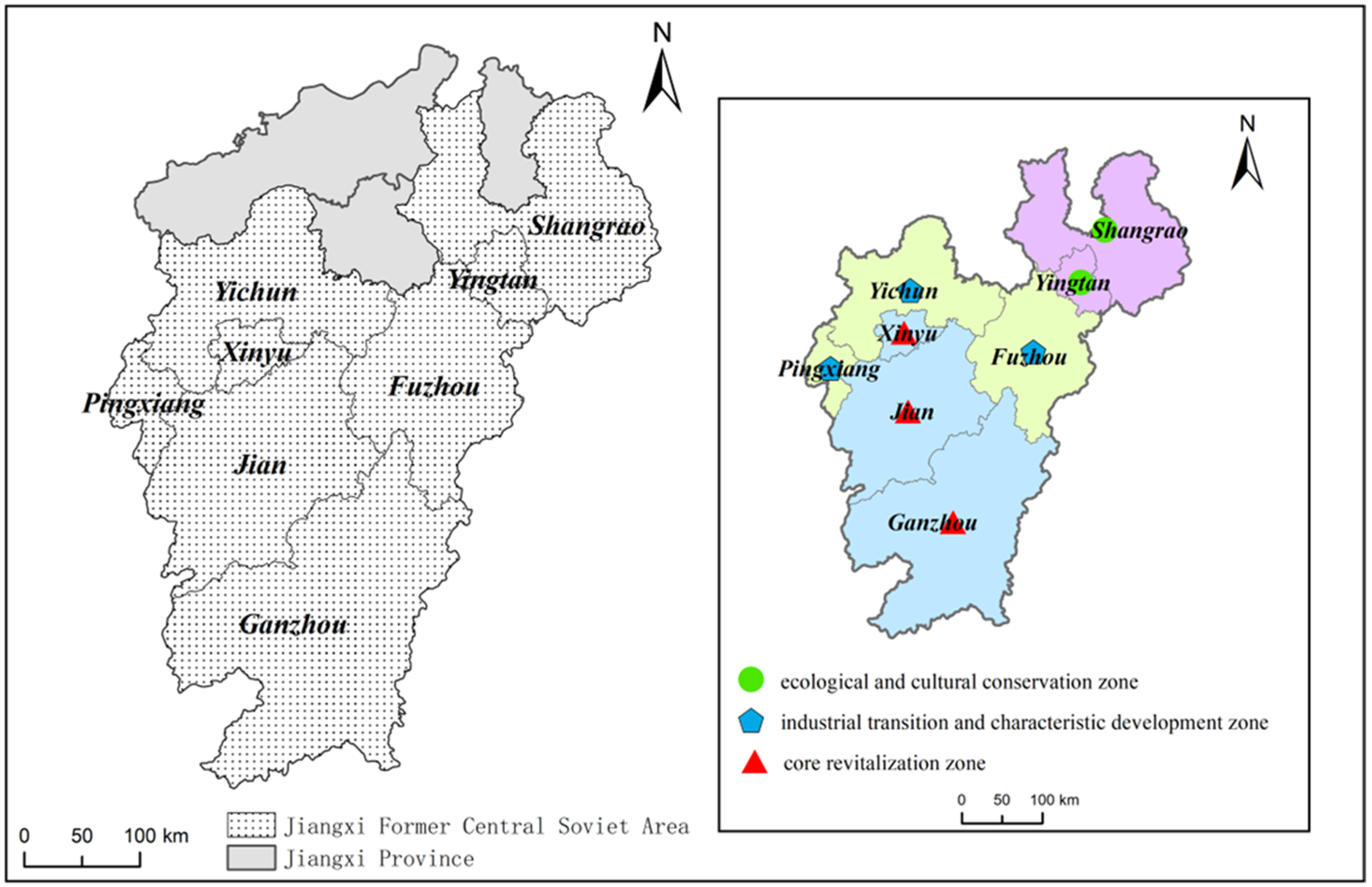
To capture spatial heterogeneity in SDG interactions under differentiated policy support, eight prefecture-level cities were selected as analytical units: Ganzhou, Ji’an, Xinyu, Fuzhou, Shangrao, Yichun, Pingxiang, and Yingtan. Following the strategic positioning in national functional zoning and the revitalization plan, these cities were further classified into three functional zones (
Figure 1): (1) Core Revitalization Zone (Ganzhou, Ji’an, Xinyu), (2) Industrial Transformation and Specialized Development Zone (Fuzhou, Yichun, Pingxiang), and (3) Ecological and Cultural Conservation Zone (Shangrao, Yingtan). This zoning provides a consistent basis for comparing SDG interaction patterns across different development orientations.
3. Materials and Methods
To systematically analyze the complex interactions among the Sustainable Development Goals (SDGs) and their spatiotemporal evolution, this study constructs a quantitative analytical framework that follows a “trend assessment → correlation identification → spatiotemporal simulation” logic. 1. Trend Assessment: Linear regression is first employed to characterize the evolutionary trajectory of each individual SDG. 2. Correlation Identification: Spearman’s rank correlation coefficient is then utilized to quantify the synergies and trade-offs between SDG indicators. 3. Spatiotemporal Simulation: Finally, a Geographically and Temporally Weighted Regression (GTWR) model is applied to reveal the non-stationary characteristics of key SDG relationships across both space and time. This sequential application of methods forms the core analytical framework of the study.
3.1. Data Sources and Indicator System Construction
To evaluate the spatiotemporal dynamics of sustainable development in the former Central Soviet Area of Jiangxi Province, this study constructed an SDG-oriented assessment framework that integrates both the global SDG agenda and regional development priorities. Specifically, the framework was developed in accordance with the core principles of the United Nations 2030 Agenda for Sustainable Development, while also reflecting local policy orientations stated in the Several Opinions on Supporting the Revitalisation and Development of Former Central Soviet Areas such as Southern Jiangxi (2012) and the Revitalisation and Development Plan for the Former Central Soviet Areas in Jiangxi, Fujian and Guangdong (2014). This dual anchoring ensures that the indicator system captures not only internationally recognized sustainability objectives, but also the key development tasks and constraints faced by the study region.
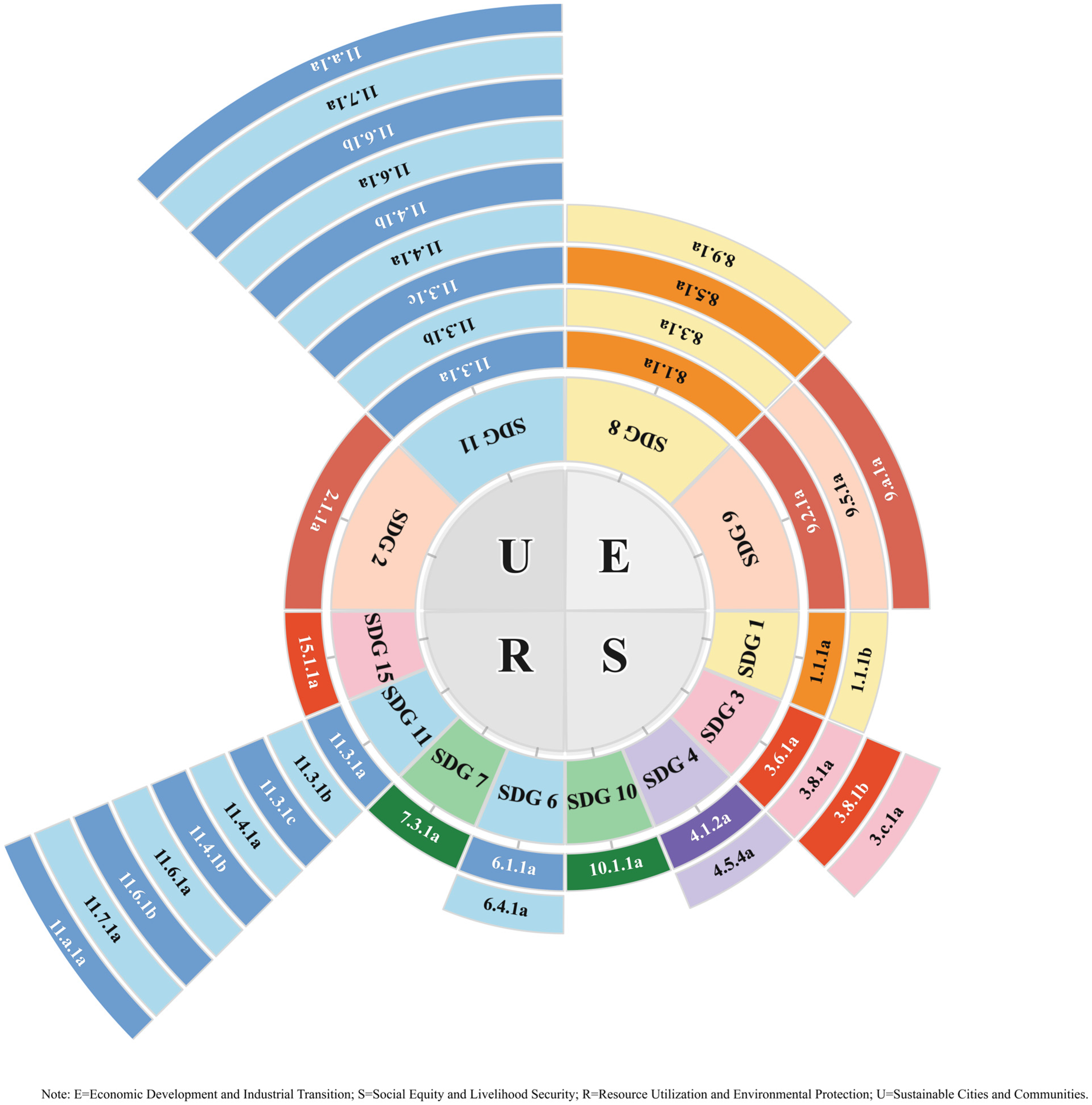
Based on these considerations, we established a comprehensive evaluation framework consisting of four analytical dimensions, 11 SDGs, and 30 measurable indicators. The four dimensions were designed to represent major development processes that are most relevant to the region’s long-term transformation, including economic restructuring, social welfare improvement, ecological conservation, and urban–rural sustainability.
The first dimension, Economic Development and Industrial Transformation, focuses on SDG8 (Decent Work and Economic Growth) and SDG9 (Industry, Innovation and Infrastructure). It contains seven indicators that capture the overall economic scale, employment support, industrial upgrading, investment capacity, and innovation potential, such as gross regional product and the industrial structure upgrading index.
The second dimension, Social Equity and Livelihood Security, corresponds to SDG1 (No Poverty), SDG3 (Good Health and Well-being), SDG4 (Quality Education), and SDG10 (Reduced Inequalities). This dimension includes nine indicators reflecting income conditions, social security coverage, health-care capacity, and education investment, such as the disposable income of urban and rural residents and hospital beds per thousand inhabitants.
The third dimension, Resource Utilization and Environmental Protection, integrates SDG6 (Clean Water and Sanitation), SDG7 (Affordable and Clean Energy), SDG11 (Sustainable Cities and Communities), and SDG15 (Life on Land). It comprises indicators such as energy consumption per unit of GDP and forest coverage rate, aiming to capture the region’s resource-use efficiency, environmental pressure, and ecological endowment under different development pathways.
The fourth dimension, Sustainable Cities and Communities, focuses on SDG2 (Zero Hunger) and also incorporates SDG11 (Sustainable Cities and Communities) from the perspective of urban–rural livability and spatial restructuring. It contains indicators such as total grain production and green space coverage in built-up areas, reflecting the region’s capacity for food security and livability improvement during urbanization and spatial restructuring.
It should be noted that some SDGs—particularly SDG11—are inherently cross-cutting and may be meaningfully interpreted from multiple perspectives (e.g., environmental management, resource efficiency, urban services, and urban–rural coordination). Therefore, in this study, the four dimensions are used primarily as an analytical and narrative framework to organize the indicator system, rather than as strictly independent or mutually exclusive SDG groupings. Importantly, to ensure methodological rigor, each indicator is assigned to a specific SDG only once in the aggregation process, and no indicator is duplicated in SDG score computation. In other words, the repeated appearance of SDG11 across dimensions reflects its multifaceted conceptual role, rather than computational double-counting.
The primary data for this study span from 2001 to 2022. All data were obtained from authoritative statistical sources, including the Statistical Yearbook of Jiangxi Province, municipal statistical yearbooks across Jiangxi, and the Statistical Bulletin on National Economic and Social Development. These sources ensure the credibility, comparability, and temporal continuity of the dataset.
During data compilation, minor gaps were identified for certain indicators in specific years (e.g., 2001 and 2005). Two complementary strategies were adopted to address missing values. When an indicator showed stable continuity before and after the missing year, linear interpolation was applied. For isolated missing years without a clear trend, the mean value of adjacent years was used as a substitute. These treatments preserved the integrity of the panel dataset and ensured the feasibility of subsequent spatiotemporal analyses. The complete indicator list and the indicator–SDG correspondence (including units, directions, and data sources) are reported in
Table A1.
3.2. Functional Area Division Methodology
To enable a robust analysis of the spatial heterogeneity in SDG interactions, this study adopts a multi-pronged framework that integrates policy guidance, functional alignment, and data validation to classify the eight prefecture-level cities into three distinct functional zones. This classification establishes analytical units that are not only consistent with overarching national and regional development strategies but are also substantiated by empirical evidence.
The delineation is guided by three core principles:
Policy-Driven Alignment: The primary basis for classification is the strategic positioning of each city as defined in authoritative national and provincial planning documents.
Functional Homogeneity: Drawing on the conceptual foundation of China’s National Master Plan for Functional Zones, the classification ensures that cities within the same zone share a core developmental focus (e.g., economic revitalization, ecological conservation).
Empirical Verifiability: Objective statistical indicators are employed to cross-validate and reinforce the policy-based classification, thereby enhancing its objectivity and transparency.
This classification is the outcome of a multi-criteria decision-making process. The specific rationale and supporting evidence for each zone are detailed in
Table 1 below.
The classification process is as follows: (1) Text Parsing: Systematically analyze planning documents to extract qualitative positioning keywords for each city; (2) Preliminary Categorization: Group cities based on their qualitative positioning; (3) Data Validation: Collect quantitative indicator data (averages across the study period) to examine whether preliminarily categorized cities exhibit intra-group similarity and inter-group differences in these metrics; (4) Comprehensive Adjustment: Incorporate geographic proximity and developmental stage to make final determinations.
For instance, validation revealed that cities in the ecological conservation zone possess unique world-class natural heritage and maintain the lowest levels of energy and water consumption per unit of GDP, aligning with their high-priority conservation. Meanwhile, cities in the industrial transformation zone exhibited markedly higher average energy consumption per unit of GDP than those in the core zone, supporting the policy-based classification. It is noteworthy that some indicators (e.g., forest coverage rate) showed complex patterns across zones, a point we revisit in the Discussion to elucidate the nuanced interplay between policy mandates and local sustainability pathways. This process ensures the zoning is both policy-grounded and empirically informed.
3.3. Data Processing and Standardization
Prior to model analysis, we systematically cleaned and normalized the raw data. First, we processed five indicators: the urban-rural income ratio, energy consumption per unit of GDP, water consumption per unit of GDP, domestic waste collection volume, and traffic accident fatalities. These indicators are negatively correlated. We reversed their direction using Formula (1):
This step ensured that increases in all indicator values uniformly represented improvements in sustainable development levels.
Subsequently, to eliminate incomparability between indicators arising from differences in units of measurement and magnitude, we performed standardization. This approach normalized all indicator values within the range [0, 1]. The conversion formula is given by Equation (2).
Following this pre-processing and standardization, we obtained the processed panel data. This dataset possesses both sound time-series characteristics and spatial unit comparability. This establishes a reliable foundation for subsequent in-depth statistical analysis.
3.4. Trend Analysis Method of Sustainable Development Goals
To characterize the long-term evolution trajectories of individual indicators and the integrated sustainable development goals, this study employs trend analysis methodology. This approach utilizes ordinary least squares regression models for time-series trend fitting.
For each standardized indicator
Y, a univariate linear regression equation is established with its corresponding year
T as the independent variable. The year
T is converted into a continuous sequence starting from 1. The regression equation is expressed as Formula (3):
In this equation, represents the regression coefficient. Its sign indicates the direction of the indicator’s evolution, while its magnitude indicates the rate of evolution. denotes the random error term.
Model fit is assessed via the coefficient of determination . The statistical significance of regression coefficients is determined through t-tests, with a significance level set at 0.05.
Furthermore, this study synthesizes annual composite scores for each SDG. This is achieved by taking the arithmetic mean of all indicator scores belonging to the same SDG.
Subsequently, the aforementioned trend analysis methodology was reapplied to the composite SDG scores. This enabled a systematic revelation of the sustainable development trajectory within the former Central Soviet Area of Jiangxi Province across two distinct levels: the micro-indicator level and the macro-objective level. This approach facilitates the identification of both the overall trajectory and the disparity in progress across various dimensions.
3.5. SDG Interaction Analysis Based on Spearman Correlation
To quantitatively assess the interrelationship patterns among different Sustainable Development Goal (SDG) indicators, this study employs Spearman’s rank correlation coefficient for analysis. This constitutes a non-parametric statistical method.
This approach, namely Spearman’s rank correlation, possesses specific advantages. It does not require data to strictly adhere to a normal distribution [
12]. Concurrently, it exhibits robustness to outliers. Consequently, this method proves more suitable for panel data analysis within socio-economic domains, where data may exhibit skewed distributions [
12].
For two variables
X and
Y with
n observations each, we compute their Spearman correlation coefficient
. The calculation formula is shown in Equation (4):
In this formula, represents the difference in rank between the i-th observation of variables X and Y.
This study performs calculations based on panel data from eight cities spanning 2001–2022. Calculations were performed for all possible indicator pairs to obtain their respective values.
Subsequently, we defined relationships between indicator pairs by reference to commonly used threshold standards in international comparable studies [
14]. Specifically, three categories were delineated: the first being strong synergistic relationships (
> 0.5). The second category denotes strong trade-offs (
< −0.5). The third category represents non-significant relationships (−0.5 ≤
≤ 0.5).
By statistically analyzing the proportions and distributions of these three relationship types within and between different SDGs, we can systematically reveal the regional sustainable development goal interaction network. This facilitates understanding the network’s overall structure and identifying its key nodes.
3.6. Geographically and Temporally Weighted Regression Models
To dissect the bidirectional influence mechanisms among the four core dimensions, this study constructed a Geographically Time-Weighted Regression (GTWR) model. Specifically, each dimension was successively treated as the dependent variable, with the remaining three dimensions serving as corresponding independent variables. Through this approach, a total of 12 GTWR models were established. These models were respectively employed to estimate influence coefficients in different directions, aiming to identify directional variations and asymmetric characteristics within synergistic relationships. The GTWR model extends the geographic weighted regression framework to incorporate temporal dimensions. This model permits regression coefficients to vary according to spatial coordinates and temporal points, thereby enabling a more nuanced characterization of localized relationships and spatio-temporal evolution patterns [
21]. Its fundamental model expression is shown in Equation (5):
In this formula,
denotes the spatial coordinates (longitude and latitude) and time of the
i-th sample point.
represents the regression coefficient of the
-th independent variable, varying with both space and time.
is an independent and identically distributed random error term. This model estimates local parameters by incorporating spatially and temporally weighted kernel functions. This methodology has been extensively applied in studies of regional disparities and spatio-temporal evolution [
21]. The present research employs the GTWR model for focused analysis, examining interactions among core dimensions: economic development, social equity, resource-environmental sustainability, and sustainable urbanization. We concentrate on the intensity and directionality of these interactions, with analyses specifically conducted across distinct geographical areas within Jiangxi’s former Central Soviet Region. The analysis will also be conducted across different developmental stages. Consequently, this study provides profound scientific grounds for formulating differentiated, precision-targeted regional sustainable development policies. In the specific calculations, the model employs Gaussian kernel functions. Spatial and temporal bandwidths are optimally determined based on the modified Akaike information criterion. This optimization process aims to adaptively capture the local-scale characteristics of data dependencies [
21].
4. Results
To elucidate the trajectory of sustainable development and the interrelationships among its various objectives within Jiangxi’s former Central Soviet Area, this study constructs a comprehensive evaluation system. The system is grounded in the United Nations Sustainable Development Goals (SDGs) framework, while also incorporating local policy priorities. It encompasses four dimensions: (1) Economic Development and Industrial Transformation; (2) Social Equity and Livelihood Security; (3) Resource Utilization and Environmental Protection; and (4) Sustainable Cities and Communities. Corresponding to 11 specific SDG targets, the system comprises a total of 30 indicators. The overall framework is illustrated in
Figure 2, and the complete indicator list with definitions and sources is provided in
Table A1.
4.1. Overall Development Trends for the SDGs
Table 2 reports the linear trend estimation results for 30 sustainability-related indicators in the former Central Soviet Area of Jiangxi Province over the period 2001–2022. At the indicator level, the majority of variables exhibit statistically significant improvements over time. Specifically, 23 out of 30 indicators (76.7%) show significant upward trends at the 5% significance level, indicating a generally positive development trajectory across multiple sustainability dimensions.
Indicators with strong and stable upward trends are mainly concentrated in the domains of economic performance (SDG8 and SDG9), income growth (SDG1), healthcare capacity (SDG3), and urban development (SDG11). Core economic indicators demonstrate particularly pronounced and consistent growth patterns. For instance, regional gross domestic product and urban household disposable income both increase significantly, with high coefficients of determination (R2 = 0.966 and 0.971, respectively), reflecting sustained economic expansion during the study period. Similarly, healthcare-related indicators, including medical resource availability and service capacity, display strong positive trends with high explanatory power, suggesting continuous improvements in public health infrastructure.
Notable progress is also observed in resource-use and environmental efficiency. After inverse normalization (so that higher values indicate higher efficiency), indicators such as energy consumption per unit of GDP and water consumption per unit of GDP exhibit statistically significant upward trends (R2 = 0.876 and 0.776, respectively), reflecting improvements in efficiency rather than scale expansion. These results indicate that economic growth in the region has been accompanied by gradual gains in resource utilization efficiency.
In contrast, several indicators do not exhibit statistically significant trends. Indicators related to food security (SDG2), educational outcomes (SDG4), and income distribution (SDG10) show weak or statistically insignificant temporal changes, suggesting comparatively slower progress or higher interannual variability in these domains. Within SDG11, while most urban-related indicators improve significantly, a small number display non-significant trends, indicating uneven advancement across different aspects of urban sustainability.
Only a limited number of indicators show significant downward trends. The decline in the rural resident population reflects ongoing urbanization processes, while the downward trend in domestic waste collection volume—after normalization—indicates reduced waste generation intensity and enhanced waste management effectiveness. These downward trends therefore likely correspond to structural transformation rather than deterioration in sustainability performance.
At the aggregate SDG level, trend analysis of composite scores reveals that eight out of eleven SDGs—SDG1, SDG3, SDG6, SDG7, SDG8, SDG9, SDG11, and SDG15—exhibit statistically significant improving trends (p < 0.05). Among them, SDG9 (Industry, Innovation and Infrastructure) and SDG3 (Good Health and Well-being) demonstrate the most robust progress, with very high explanatory power (R2 = 0.990 and 0.981, respectively). In contrast, the composite scores of SDG2 (Zero Hunger), SDG4 (Quality Education), and SDG10 (Reduced Inequalities) increase without reaching statistical significance, highlighting persistent development bottlenecks.
Overall, the trend analysis indicates that sustainable development in the former Central Soviet Area of Jiangxi has been characterized by broad-based progress accompanied by marked heterogeneity across goals. While economic growth, social welfare, and resource-efficiency objectives have advanced steadily, progress in food security, educational equity, and income distribution has been comparatively slower, providing an empirical basis for subsequent interaction and trade-off analysis.
4.2. Overall Characteristics of Trade-Offs and Synergies Between SDGs and Indicators
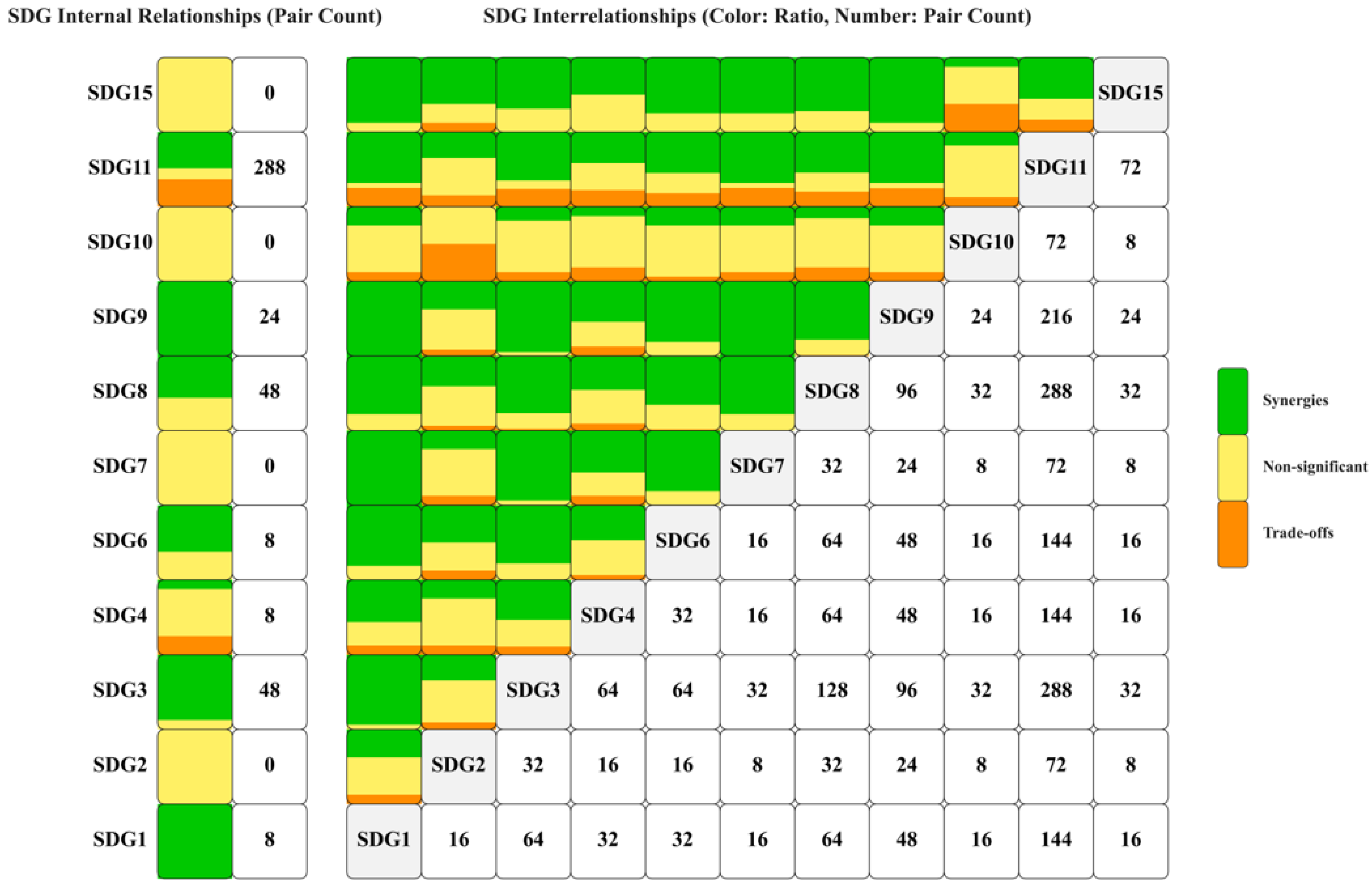
A total of 11 SDGs and 30 indicators were included, yielding 3048 cross-indicator pair relationships (
Figure 3). The results reveal a clear and consistent interaction structure across the region. Synergistic relationships dominate the SDG interaction network, accounting for the majority of statistically significant SDG pairings, while trade-offs constitute a comparatively smaller share.
At the level of internal SDG coherence, several goals exhibit highly coordinated development. In particular, SDG1 (No Poverty) and SDG9 (Industry, Innovation and Infrastructure) display 100% internal synergy, indicating that all indicator pairs within these goals move in a mutually reinforcing manner over time. This suggests strong internal consistency in the evolution of poverty reduction outcomes and industrial–infrastructure development indicators. By contrast, SDG11 (Sustainable Cities and Communities) shows a markedly different internal pattern, with a relatively high internal trade-off ratio (36.8%), indicating heterogeneous trajectories among its constituent indicators.
From the perspective of cross-SDG interactions, the dominance of synergy is accompanied by a selective and asymmetric distribution of trade-offs. Rather than being evenly spread across all goal combinations, trade-offs are concentrated among a limited number of SDG pairs, while most SDG combinations are characterized by either synergistic or non-significant relationships. This pattern indicates that conflicts among SDGs are localized rather than systemic within the regional sustainability framework.
Overall,
Figure 3 demonstrates that the SDG system in the former Central Soviet Area of Jiangxi Province is characterized by a synergy-oriented interaction structure, with a small number of SDGs and SDG pairings acting as potential coordination bottlenecks. These structural characteristics provide a quantitative foundation for subsequent spatial and directional analyses of SDG interactions.
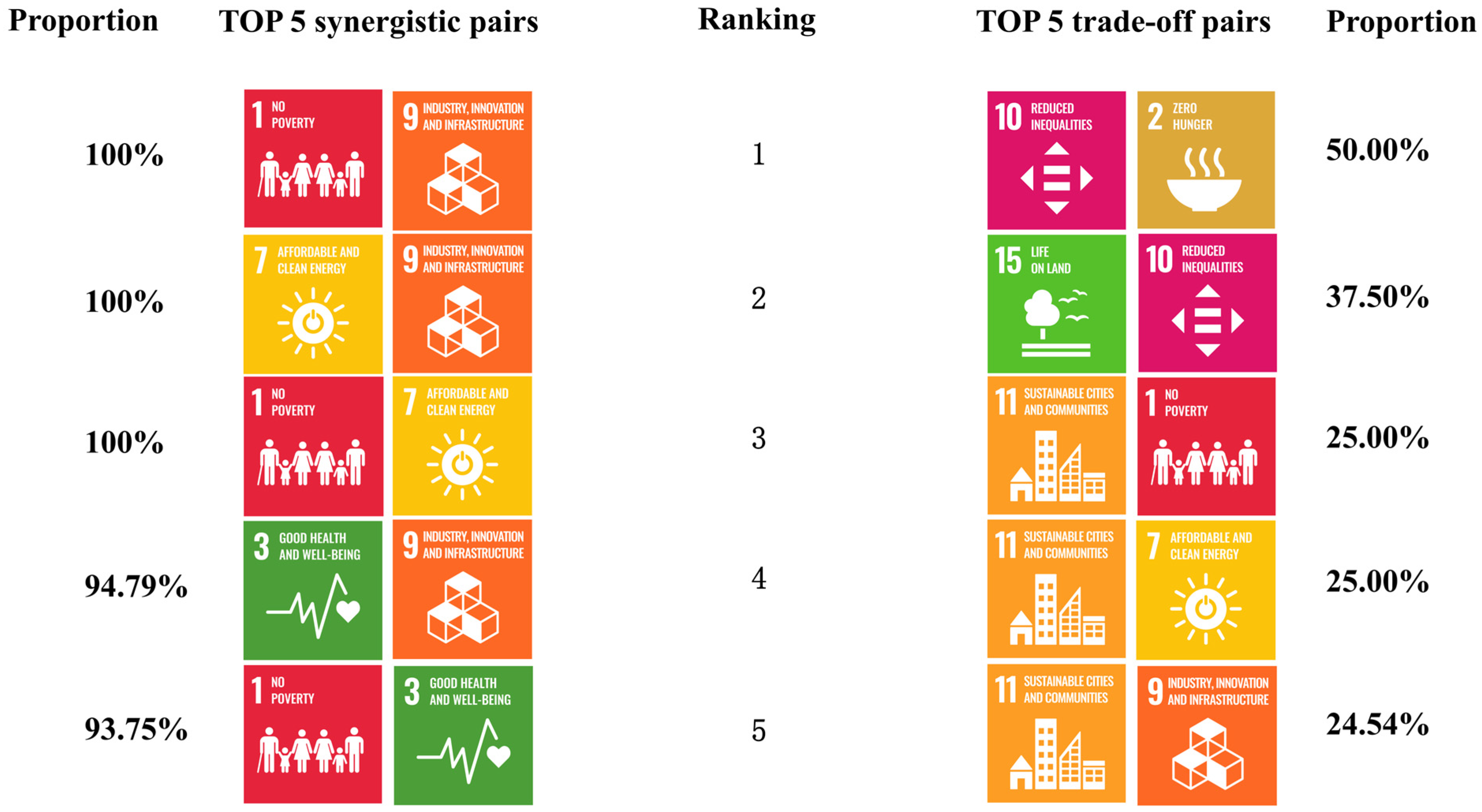
Figure 4 further ranks the strongest synergistic and trade-off SDG pairings identified in the former Central Soviet Area of Jiangxi Province. The results reveal that synergistic interactions are concentrated around a small number of highly consistent goal combinations, while trade-offs remain comparatively limited but structurally selective.
Among all SDG pairings, the strongest synergies are observed for combinations involving industrial development, poverty reduction, clean energy, and health outcomes. In particular, three SDG pairs reach complete synergy (100%): SDG9–SDG1, SDG9–SDG7, and SDG7–SDG1. These are followed by SDG9–SDG3 with a synergy ratio of 94.79%, and SDG3–SDG1 with 93.75%. The dominance of these pairings indicates that improvements in infrastructure and innovation (SDG9) are consistently aligned with progress in poverty alleviation (SDG1), energy sustainability (SDG7), and health-related development (SDG3) within the regional dataset.
In contrast, the strongest trade-offs are more unevenly distributed and appear in a smaller subset of SDG combinations. The most pronounced conflict occurs between SDG10 and SDG2, which exhibits the highest trade-off ratio (50%). Additional trade-off pairs include SDG15–SDG10 (37.50%) and several pairings centered on SDG11, such as SDG11–SDG1, SDG11–SDG7, and SDG11–SDG9, all with trade-off ratios close to 25%.
A notable structural feature is that SDG11 (Sustainable Cities and Communities) is involved in multiple relatively high trade-off relationships. This suggests that, compared with other goals, urban sustainability indicators display more heterogeneous interaction patterns across the SDG network, functioning as a potential coordination bottleneck within the regional sustainability system.
Overall,
Figure 4 highlights that SDG interactions in the former Central Soviet Area are characterized by highly concentrated synergy hubs (centered on SDG9, SDG1, SDG7, and SDG3) alongside a limited set of persistent trade-off pairings, particularly those involving equity (SDG10), food security (SDG2), and urban sustainability (SDG11). These ranked relationships provide a basis for identifying priority areas in subsequent spatial and functional-zone analyses.
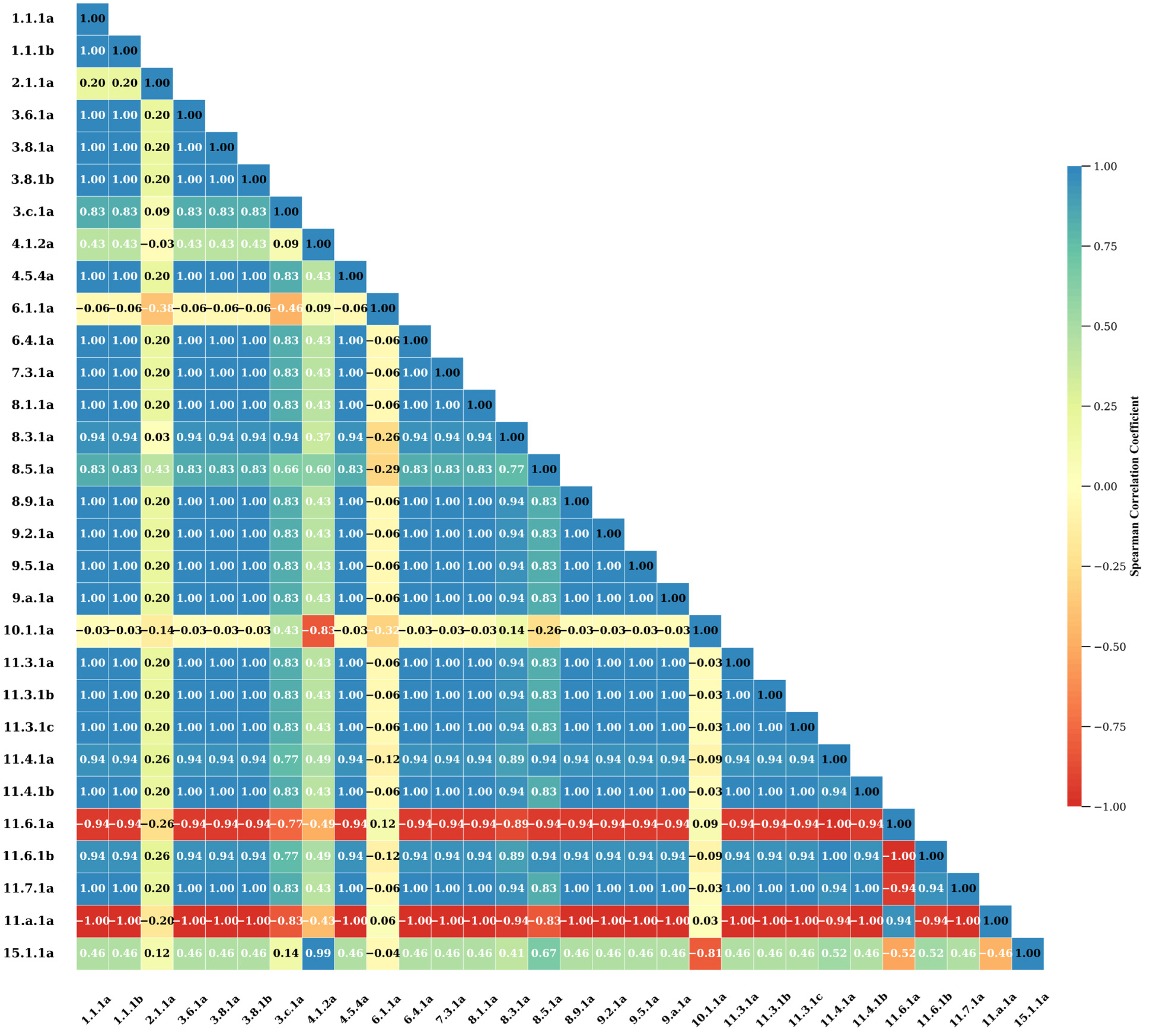
This study selects Ganzhou City as a case study, employing Spearman’s rank correlation to systematically evaluate 435 indicator pairs derived from 30 sustainable development indicators. The results (
Figure 5) show that synergistic relationships (correlation coefficient > 0.5) account for 59.5% of all pairs, trade-offs (correlation coefficient < −0.5) for 11.3%, and non-significant relationships (|r| ≤ 0.5) for 29.2%. This distribution indicates that synergies dominate the inter-objective relationships in Ganzhou’s sustainable development process, reflecting the inherent mutual reinforcement within the SDG framework, while trade-offs remain relatively limited.
Strong synergistic patterns were identified, including perfect synchronization between urban and rural income growth, high synergy between healthcare service development and ecological conservation, and perfect positive correlations between educational investment and economic growth, energy efficiency, and tourism revenue. These relationships reveal a virtuous cycle linking livelihood improvement, economic growth, and environmental protection.
Conversely, several significant trade-offs emerged: opposing trends in urban and rural population structures; an inverse relationship between waste collection and harmless treatment volumes; and negative correlations of both energy efficiency and technological innovation with rural population size. These trade-offs reflect structural tensions arising from rapid urbanization and infrastructure transformation.
As a core area of Jiangxi’s former Central Soviet Area, Ganzhou’s results illustrate the broader interactive pattern across sustainability dimensions in the region—a complex network characterized primarily by synergies, supplemented by selective trade-offs.
4.3. The Spatial Characteristics of Trade-Off and Synergy Between Sustainable Development Goals and Indicators
4.3.1. City Sustainable Development Trade-Offs and Synergy Models
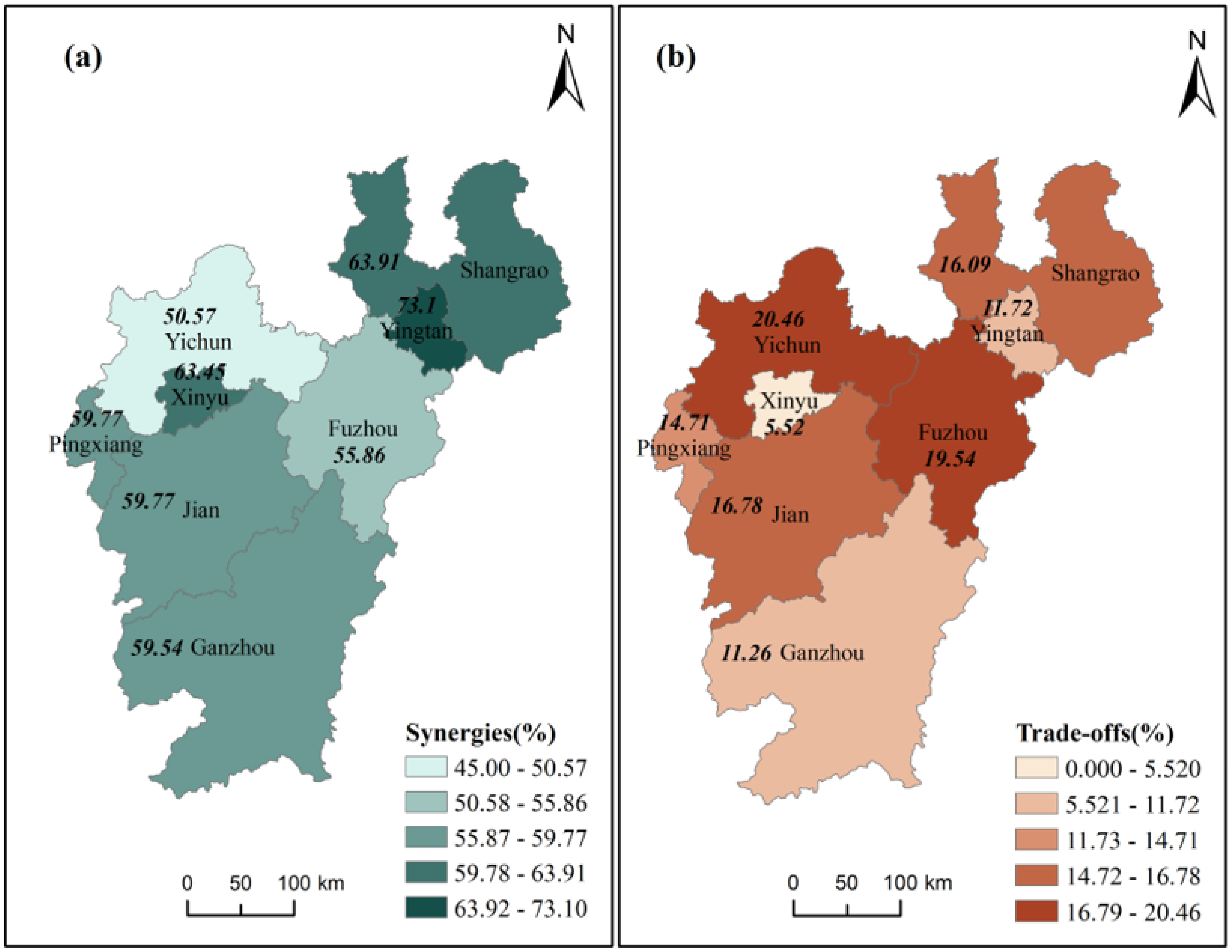
This study elucidates the characteristics of synergistic effects among SDG indicators in the former Central Soviet Area of Jiangxi. At the regional level, synergistic relationships generally dominate; however, these effects exhibit pronounced spatial heterogeneity, following an uneven east–west distribution pattern (
Figure 6).
Spatially, synergy strength shows an east-high, west-low gradient. The average synergy ratio in the eastern cities (Yingtan, Shangrao, Fuzhou) is 64.29%, significantly higher than the 58.62% observed in the five western cities. Yingtan stands out as a high-synergy zone, with a synergy ratio of 73.1% and a trade-off ratio of only 11.72%, representing an ideal “high-synergy, low-trade-off” development model. In contrast, Yichun and Fuzhou form low-synergy zones, with synergy ratios of 50.57% and 55.86%, respectively, and face relatively stronger trade-off constraints.
Although all cities fall within the synergy-dominant category, marked internal variations exist, with Yingtan demonstrating the most pronounced synergistic advantage.
This spatial pattern likely relates to regional functional positioning. The eastern zone serves as an ecological and cultural conservation area, where high-quality ecological resources may facilitate synergistic development between conservation and green industries. Conversely, parts of the western zone are designated industrial transformation areas, where greater development pressures increase the difficulty of coordinating multiple objectives.
4.3.2. Functional-Zone Differences in SDG Synergies and Trade-Offs
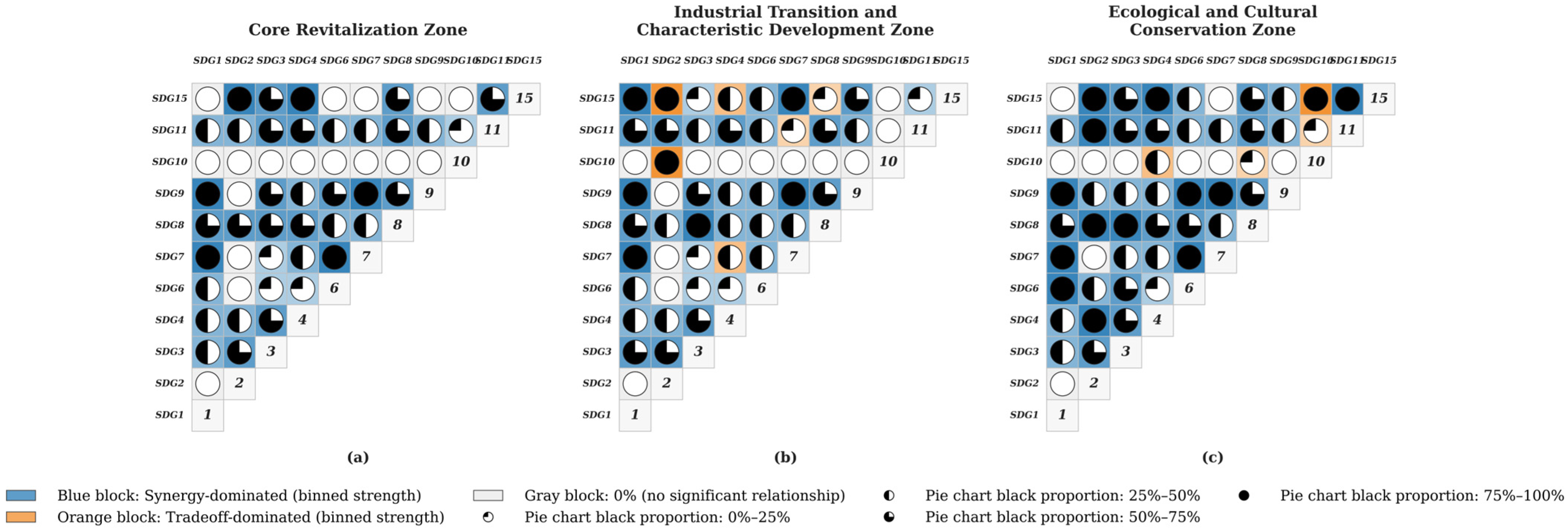
Figure 7 compares the patterns and intensities of SDG synergies and trade-offs across the three functional zones of the former Central Soviet Area of Jiangxi Province, based on Spearman correlation analysis with ∣ρ∣ > 0.5 as the threshold for significant relationships. The results reveal pronounced spatial heterogeneity in SDG interaction structures, manifested in both the overall balance between synergies and trade-offs and the specific SDG pairs involved.
In the Core Revitalization Zone, SDG interactions are predominantly synergy-oriented. The strongest synergistic relationship is observed between SDG1 (No Poverty) and SDG7 (Affordable and Clean Energy), with a synergy ratio of 100%, indicating consistent co-movement among their indicators. Despite the overall dominance of synergies, a notable trade-off emerges between SDG1 and SDG11 (Sustainable Cities and Communities), with a trade-off ratio of 16.7% based on multiple indicator pairings. At the aggregate level, this zone exhibits a relatively high average synergy ratio (49.1%) and the lowest average trade-off ratio (3.4%) among the three zones, suggesting generally coordinated development with localized tensions.
The Industrial Transformation and Characteristic Development Zone displays the most conflict-prone interaction structure. Although certain SDG pairs, such as SDG1–SDG7, remain fully synergistic, this zone exhibits a complete trade-off (100%) between SDG2 (Zero Hunger) and SDG10 (Reduced Inequalities). While this result is derived from a limited number of indicator pairs, it highlights a distinctive interaction pattern not observed in the other zones. Overall, this zone records the lowest average synergy ratio (46.2%) and the highest average trade-off ratio (7.1%), indicating greater difficulty in aligning multiple sustainability objectives during the development transition.
By comparison, the Ecological and Cultural Conservation Zone demonstrates the strongest overall synergy performance. Full synergy is observed between SDG1 and SDG6 (Clean Water and Sanitation) across all relevant indicator pairs, reflecting consistent alignment between livelihood-related and resource-related indicators. At the same time, a complete trade-off occurs between SDG10 and SDG15 (Life on Land), indicating the coexistence of strong synergies and selective conflicts. This zone achieves the highest average synergy ratio (57.2%), while maintaining a moderate average trade-off ratio (5.2%), reflecting relatively high compatibility among development objectives alongside specific coordination challenges.
A comparative assessment across the three functional zones indicates a clear gradient in SDG interaction structures. The Ecological and Cultural Conservation Zone is characterized by the strongest synergies, the Industrial Transformation and Characteristic Development Zone by the most pronounced trade-offs, and the Core Revitalization Zone occupies an intermediate position. Moreover, the dominant trade-off configurations differ across zones, involving distinct SDG dimensions rather than a uniform set of conflicts. These results demonstrate that SDG interactions are highly context-dependent, varying systematically with functional zoning, and provide empirical evidence for spatial differentiation in regional sustainability dynamics.
4.3.3. The Influence of Multi-Dimensional Situation of Former Central Soviet Area in Jiangxi Province on Sustainable Development Goals
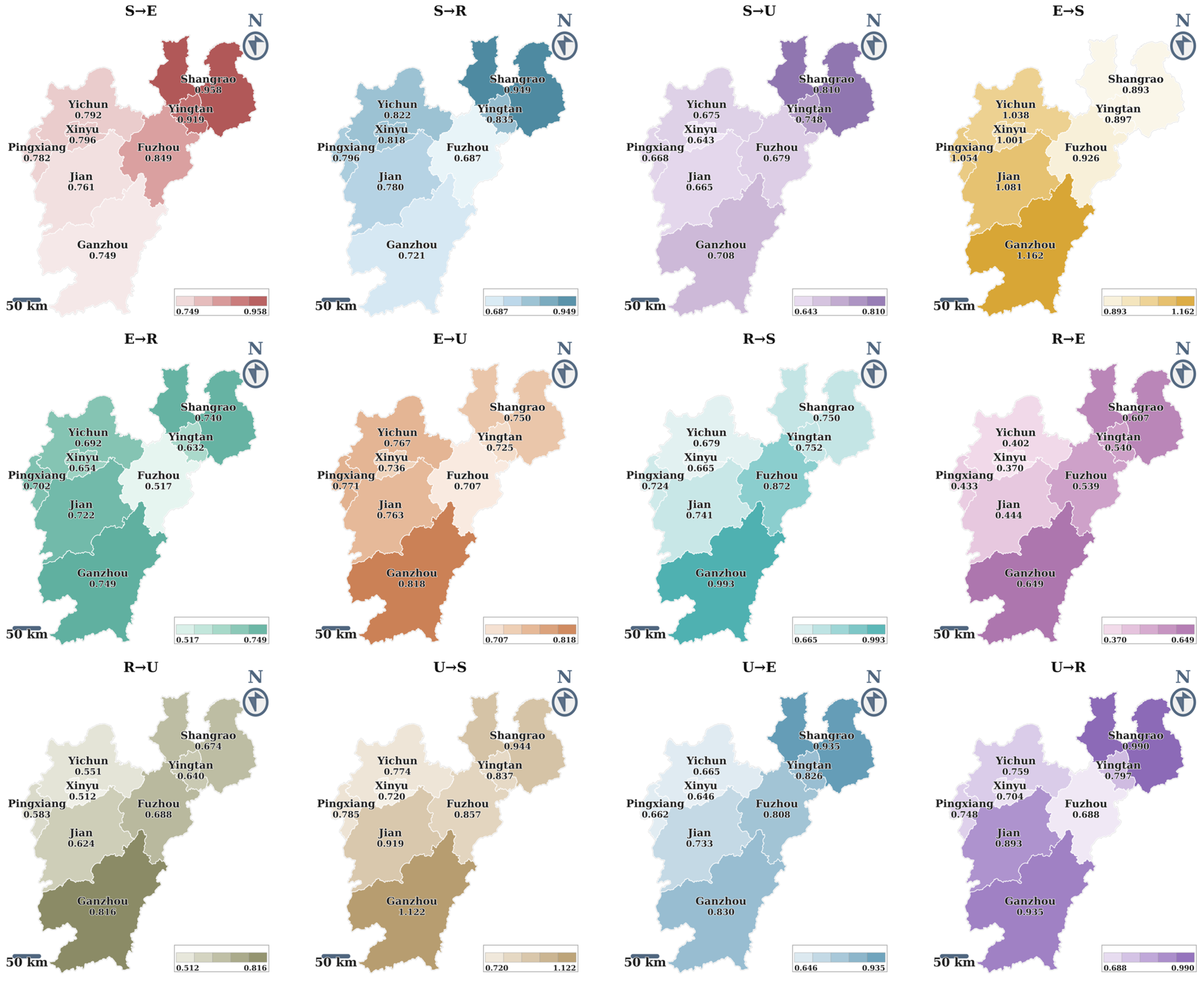
Figure 8 presents the spatiotemporal relationships among the four composite dimensions of sustainable development—economic development and industrial transition (E), social equity and livelihood security (S), resource utilization and environmental protection, and sustainable cities and communities (U)—estimated using the Geographically and Temporally Weighted Regression (GTWR) model. Twelve directional relationships were examined to capture the intensity, directionality, and spatial variability of inter-dimensional influences across the former Central Soviet Area of Jiangxi Province.
The results indicate a pervasive pattern of positive synergies across all four dimensions, accompanied by pronounced directional asymmetry. A clear bidirectional association is observed between economic development (E) and social equity (S). On average, the estimated association from social equity to economic development (S → E) is slightly stronger (mean coefficient = 1.0065) than the reverse association from economic development to social equity (E → S; mean coefficient = 0.8258), indicating asymmetric coupling between these two dimensions.
By comparison, interactions involving the resource utilization and environmental protection dimension exhibit comparatively weaker associations. The estimated association from R to economic development (R → E) reaches a mean coefficient of 0.6759, while the reverse pathway (E → R) shows the lowest mean coefficient among the examined directions (0.4978). This pattern suggests that resource–environmental responses are less synchronized with economic dynamics than interactions within the socio-economic subsystem.
The sustainable cities and communities dimension (U) demonstrates consistently positive associations with the other dimensions, though with varying magnitude. The strongest estimated association is observed from social equity to urban sustainability (S → U; coefficient = 0.8698), while the reverse association (U → S) is more moderate (coefficient = 0.6995), indicating differentiated interaction intensities rather than uniform mutual reinforcement.
In addition to directional heterogeneity, the GTWR results reveal substantial spatial variation in association strength. For example, the coefficient for the E → S relationship reaches 0.9582 in Shangrao but decreases to 0.7493 in Ganzhou, illustrating pronounced geographic differentiation in inter-dimensional linkages.
Overall, the spatiotemporal analysis identifies a core interaction axis centered on economic development and social equity, characterized by strong bidirectional coupling, while the resource–environment and urban sustainability dimensions exhibit more variable and context-dependent interaction patterns. These results demonstrate that SDG interactions in the former Central Soviet Area are not only directionally asymmetric but also spatially heterogeneous, directly addressing the study’s objective of revealing how, in which direction, and where multi-dimensional sustainable development goals interact over space and time.