Article

Spatial Clustering of Front Yard Landscapes: Implications for Urban Soil Conservation and Green Infrastructure Sustainability in the Río Piedras Watershed

by
L. Kidany Sellés
1 and
Elvia J. Meléndez-Ackerman
2,*
1
Department of Biology, University of Puerto Rico, Río Piedras, PR 00925, USA
2
Department of Environmental Sciences, University of Puerto Rico at Río Piedras, San Juan, PR 00925, USA
*
Author to whom correspondence should be addressed.
Sustainability 2026, 18(6), 2821; https://doi.org/10.3390/su18062821
Submission received: 27 January 2026 / Revised: 25 February 2026 / Accepted: 5 March 2026 / Published: 13 March 2026

Abstract

Current sustainability discourse promotes sustainable yard practices as a means for residents to contribute to urban environmental health and soil conservation. Social–ecological research suggests that yard practices are shaped by multiscale social drivers, including social contagion, whereby visible expressions of individuality in front yard design are copied by nearby neighbors. This study evaluated residential areas within the Río Piedras Watershed (RPWS) in the San Juan metropolitan area to assess evidence of social contagion in front yard configuration and vegetation structure, and to examine whether these variables were associated with socio-demographic and economic characteristics when spatial effects were considered. A total of 6858 front yards across six highly urbanized sites were analyzed using Google Earth Street View imagery. Housing lot sizes were quantified, and yards were classified into eight landscape configurations based on green and gray cover elements. Woody vegetation structures, including trees, shrubs, and palms, were also quantified to generate estimates of functional diversity and a front yard quality index. Significant differences in yard characteristics were observed among sites. Spatial analyses revealed significant clustering at distances of 65–80 m, particularly for front yard configuration, while clustering of woody vegetation density was weaker. Local clustering patterns and the distribution of outliers varied across sites. Spatial lag models indicated that lot area positively influenced yard configuration and quality, and the density and diversity of woody vegetation. While socio-economic variables were not significant predictors of yard quality, their effects cannot be discarded. Overall, results are consistent with social contagion processes but also highlight neighborhood design as a key driver of clustering, alongside widespread conversion of green to paved front yards, with implications for soil and green infrastructure loss as well as environmental and human health in the RPWS.

1. Introduction

The decrease in public green spaces in cities has triggered growing concerns for environmental and human health [1]. One of the objectives in the Sustainable Development Goals calls for cities to be “inclusive, safe, resilient and sustainable” [2]. Cities are particularly vulnerable to climate-related risks given their high population and gray infrastructure densities [3]. There is agreement that investing in nature-based solutions—including green infrastructure and ecosystem-based approaches—is key to developing climate-resilient and sustainable cities [4,5]. In highly urbanized areas, a large fraction of green space exists inside people’s yards [6,7,8,9]. Residential yards can be primary contributors to a variety of urban ecosystem services and disservices depending on their land cover composition [10,11,12,13]. For example, lawn-dominated front yards, which are common landscape forms in cities, can contribute to climate regulation, given their potential for soil carbon accumulation [14,15], and these benefits are further improved when woody elements are integrated into lawns [16]. Yard landscapes may also include paved components that can limit their capacity to provide ecological benefits by destroying soil structure and isolating it from other biophysical elements [17,18]. While impervious components serve other functions to residents, they cannot only contribute to increases in local temperatures but can also reduce available soil to support vegetation and diminish beneficial ecosystem services at various scales [8]. Residential green spaces are, for the most part, private areas where the quality and quantity of green space are most likely determined by a diversity of social factors [19,20,21,22], which may generate inequities in how ecosystem services are distributed among city residents. Examining the spatial patterns of yard characteristics and understanding the social processes that may influence them is crucial for understanding the potential contributions that residential yards can provide to the overall provision of ecosystem services in cities, especially when implementing green infrastructure initiatives at the residential scale. It may also help urban planners facilitate the development of strategies to better inform and support green infrastructure planning in cities and to promote the incorporation of private residential green areas in municipal plans.
Front yards represent social–ecological systems where the configuration, composition, and provision of ecosystem services are influenced by multiscale social dynamics [19]. Numerous studies have pointed to the importance of household-level socio-economic characteristics as drivers of management decisions in residential green spaces [19,21,23,24]. For instance, in the city of San Juan, Puerto Rico, ownership and age have been evidenced to positively influence % of green area and the number of trees in yards, while household income was positively associated with total yard area and % of yard green space [20]. In many cities, people with wealth-related advantages (i.e., income and education) may be more likely to have green components in their yards because they have the resources to manage them [25,26,27,28]. In other cities, disadvantaged communities may be transforming green areas into impervious cover because of local changes in socio-economic characteristics [29]. On the other hand, the effect of wealth is far from being a generalized phenomenon, as other social factors may also play an important role [20,26,30,31]. Population density, for instance, can strongly influence changes to the structure of residential yards [32]. Household size can also be positively correlated to the number of rooms per dwelling, which could require residents to expand the built area at the expense of green structures on the property [33]. An increase in household size can increase household car ownership [34], which would require the expansion of paved surfaces to increase residential parking space [35]. Yet socio-economic factors at the household scale fail to explain all the observed variability in yard landscapes.
Studies have suggested that front yard variation can be driven at least partly through social contagion processes [36,37], which could relate to their connection to sidewalks. Sidewalks in front of single-family houses, in many cases, can be considered an extension of front yards given the influence of homeowners on these spaces [38,39]. Front yards and sidewalks can operate as a social–spatial system where landscaping practices are observed and potentially adopted by nearby neighbors through social contagion processes [40,41]. The incorporation and/or preservation of natural components in front yards (including the sidewalk) can represent an opportunity for residents to express themselves [42,43,44]. These “green” expressions can be copied by other neighbors and become a norm that can work as a mechanism of social contagion, which results in similar front yard landscapes across the neighborhood [41]. On the contrary, individuality can generate unique front yard landscapes within the neighborhood [45]. Some of these “unique” management decisions that deviate from the norm could be copied by nearby neighbors [46], spreading or generating a ‘social contagion’ that spatially manifests as clusters of similar front yard landscapes within neighborhoods [47]. Therefore, the size and type of front yard clusters can provide information about the processes that generate them, and the stage of the social contagion effect [36,48].
A study evaluating the influence of social contagion processes on urban green infrastructure variation showed that the distribution and structure of vegetation is the most copied yard feature at the street-block scale for the Hochelaga–Maisonneuve District (8.2 km2) in Montreal, demonstrating that yards separated by 9 m to 36 m in distance (approx. one to four nearby front yards) were significantly similar [48]. Another study evaluated the characteristics of sidewalk gardens in the City of Ann Arbor in Michigan, USA, showing that clusters related to the presence of sidewalk gardens peaked within a 91 m radius, but that the highest clustering of easement gardens occurred at very local scales among neighbors with direct visual access [36]. Overall, the combined results of these studies indicate that at least in some cases, processes occurring at the neighborhood scale and/or within the neighborhood could contribute to generating spatial clusters of front yard characteristics through mechanisms operating beyond the household scale. These processes need to be understood when the goal is to effectively generate recommendations about green infrastructure policies that include residential areas and, in particular, people’s yards.
This work focuses on residential yards in the Río Piedras Watershed (RPWS), a tropical and highly urbanized watershed that is mostly located within the San Juan municipality on the island of Puerto Rico. Previous results show that yard size may be a major driver of yard vegetation in terms of the diversity and abundance of plants [20], and that the quality and quantity of yard vegetation across the RPWS can be partly explained by several socio-economic factors at the household scale (i.e., age of the residents and housing ownership) [20,22]. Socio-demographic–economic variables at the household scale have also been shown to influence yard management decisions across the RPWS [21]. These studies also indicate that there is a considerable amount of variation (54%) in the diversity and abundance of plants that remains unexplained [20,22]. A study conducted in 2014 in RPWS neighborhoods, in which residents were surveyed about the origin of their plants, indicated that while the majority of residents bought plants from retail stores, a similar amount obtained plants via gifts that came from friends, family, and/or neighbors, or that plants were either historically planted or arrived through natural dispersal [49]. Another study found that in three RPWS neighborhoods, green space at the plot scale had been reduced over time, but that rates of green area loss appeared to differ across neighborhoods [29]. The combined results of these studies suggest that socio-environmental factors operating outside the household scale may also be important in determining the green characteristics of yards in this city. Understanding what drives variation in yard spaces would be key to informing green infrastructure planning that is inclusive of residential areas.
The main goal of this study was to test for the potential presence of social contagion by evaluating the spatial distribution of green and gray components of front yards and documenting the extent of spatial clustering within urban developments with shared initial front yard morphologies. We aimed to evaluate what social factors could be driving these processes and their consequences to the sustainability of the city and communities. The following questions and hypotheses were addressed: (1) Is there evidence for spatial autocorrelation (suggestive of social contagion) on front yard configurations and variables related to vegetation structure (i.e., density of different types of woody plants), and at what scale? (2) Is there an association between yard configuration and vegetative composition with socio-economic–demographic characteristics when spatial effects are considered? A working hypothesis for this study was that social contagion processes influence front yard management, resulting in spatial clustering of similar front yard characteristics at the street-block scale, which is a potential indicator of the influence of nearby neighbors on individual yard decisions. Another hypothesis was that household socio-economic characteristics at the census tract scale would be associated with variation in front yard configuration and vegetation characteristics (suggestive of socio-demographic feedback). For example, it was expected that average household size and the percentage of rented houses would be negatively associated with front yard green cover and the presence of woody elements, while lot area would be positively associated with the occurrence of front yard green element data and the quality of yards, given results from prior studies in the RPWS [20,21]. Lot area is a feature that is not determined by the resident but is rather decided by top-down decisions [50], which adds another layer of complexity to the social factors that influence yard decisions.

2. Materials and Methods

2.1. Study Area

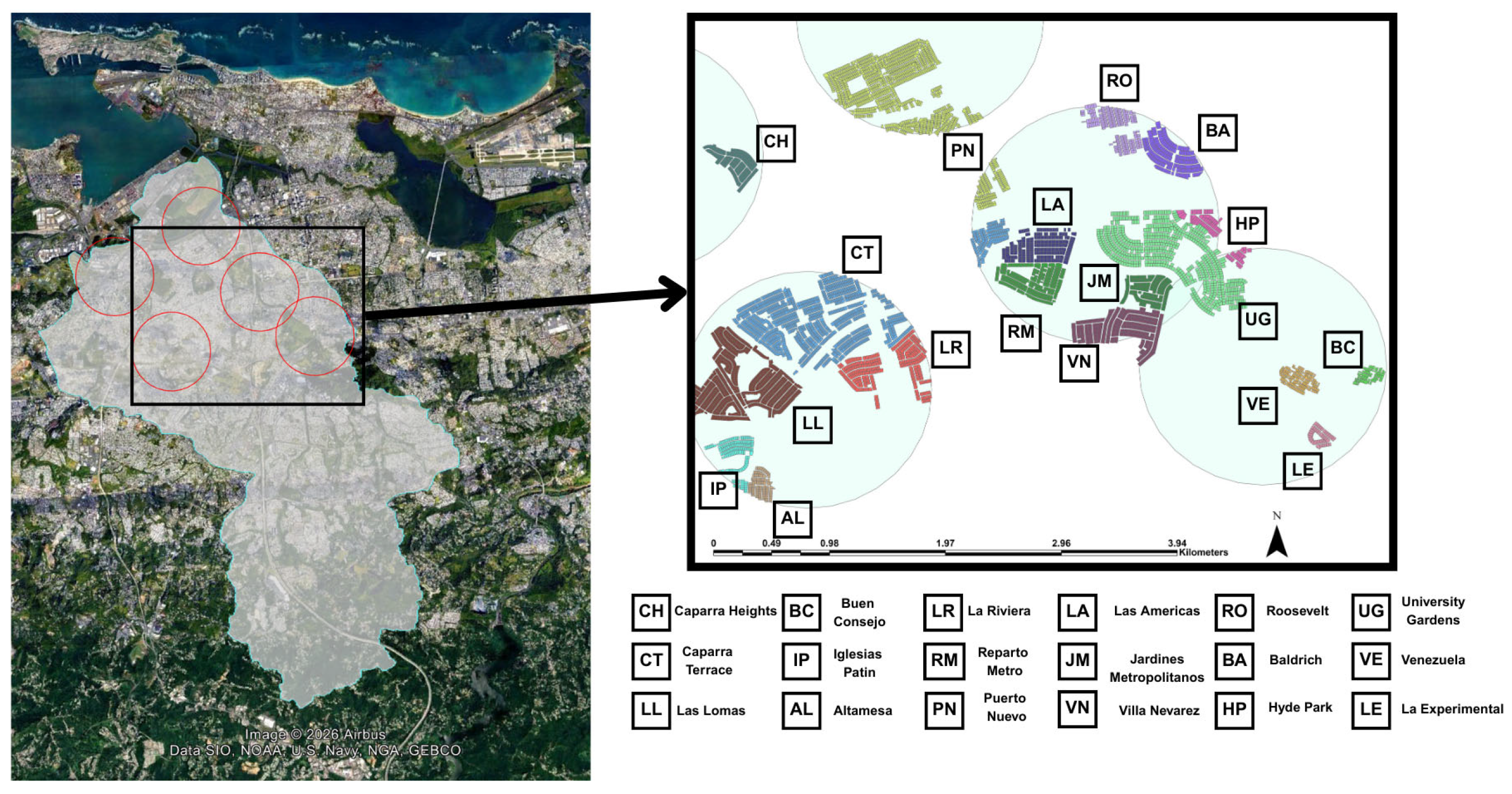
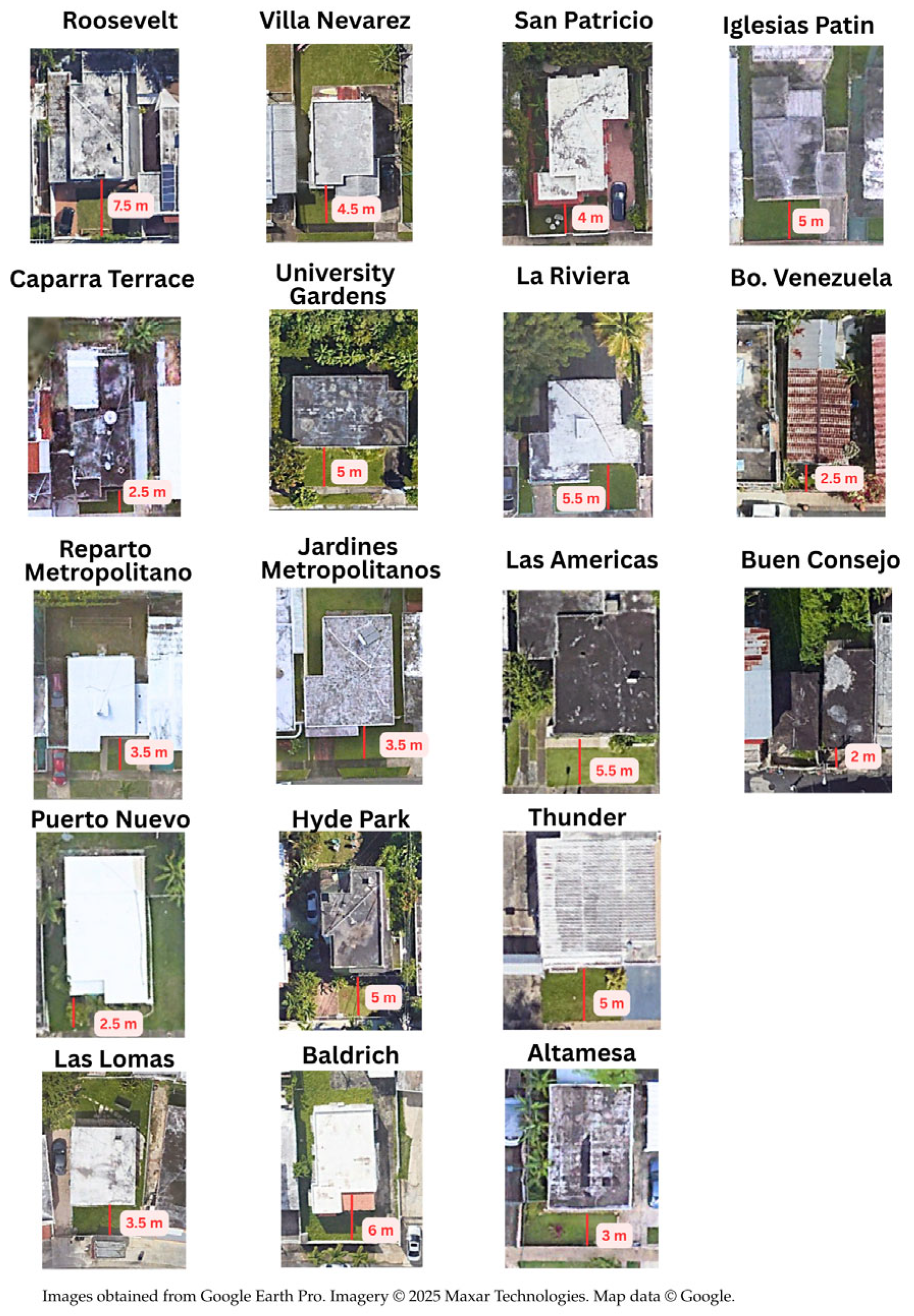
The study sites for this work were located within the Río Piedras Watershed (RPWS) (Figure 1), which is mostly immersed within the boundaries of San Juan, Puerto Rico, and comprises a total area of 49 km2 [51]. The RPWS is a tropical watershed with mean annual rainfall that ranges from 1509 mm to 1755 mm and a mean annual temperature between 25.7 °C and 25.9 °C [51]. The RPWS area underwent an extensive process of urban development in the 1940s, caused by an economic transformation that went from being agriculture-based to industry-based [52]. At the time, San Juan was the center of economic activity and, as a result, several governmental programs subsidized the construction of single-family homes in the areas near the main urban center for people to move into [53]. All these complexes started out with front yards extending more than 2 m from the front of the house to the sidewalk (Figure 2). Since 2009, 13 study areas (1 km2 diameter) within RPWS have been studied using socio-ecological–technical approaches by the San Juan ULTRA network, a long-term action-research network established by the USDA Forest Service [21,22,51,54,55]. This study focused on five of the sampling areas (hereafter ‘sites’) located in the more urbanized portion of the RPWS (Figure 1) [29]. The sites include most of the single-family urban developments during the initial stages of intense urbanization of San Juan that peaked between 1950 and 1960 [52]. Most of these neighborhoods were constructed over what were considered highly productive soils used for agriculture [56].
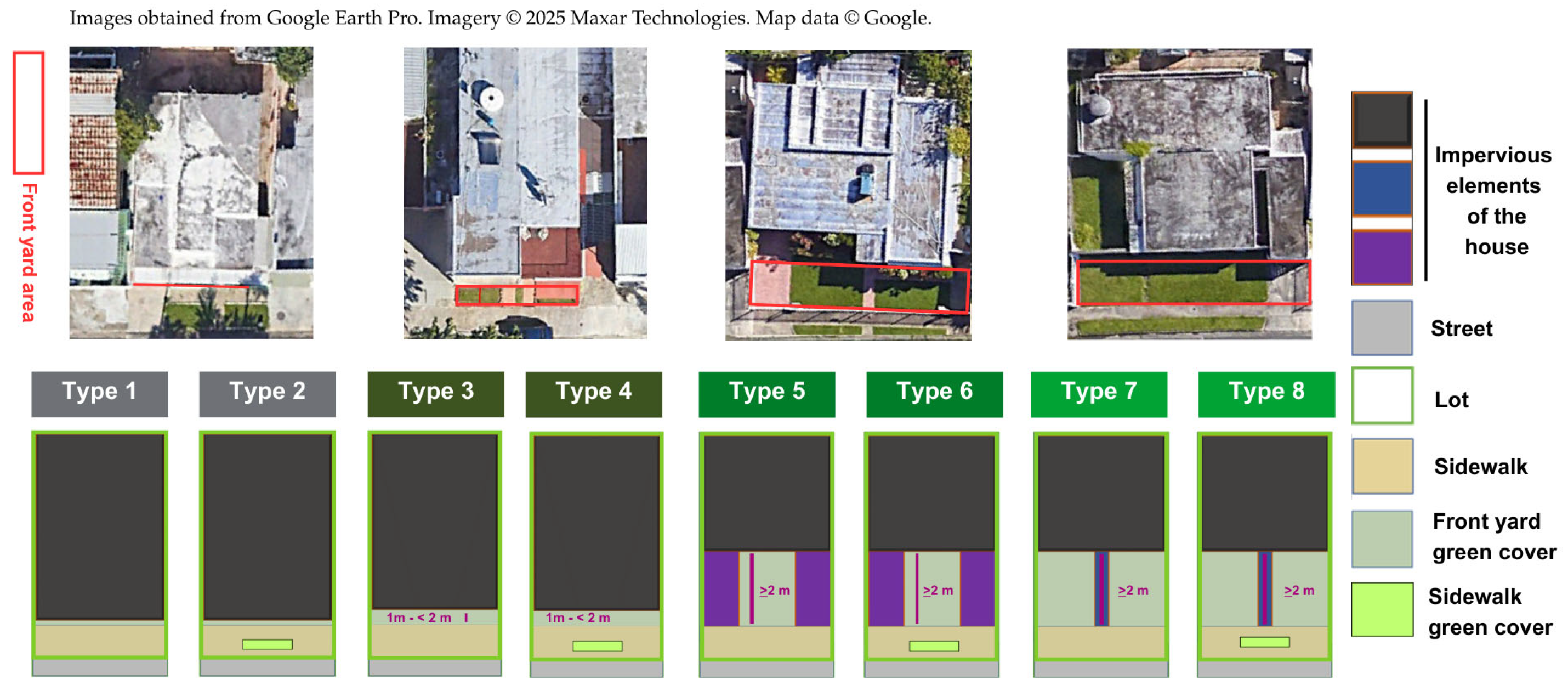
An advantage of focusing on these neighborhoods within the context of testing for social contagion is that the urban developments represented by many of these neighborhoods were constructed during similar periods and shared similar initial front yard configurations (i.e., the greenest front yard configurations that were at least 2 m from the house, lawns with no additional vegetation, and a green sidewalk strip, see Figure 3), which would help support a hypothesis of changes in yard configurations due to social contagion vs. other alternatives (shared development histories, shared landscape designs, planning designs, or parcel morphologies), at least in some neighborhoods.

2.2. Design

A total of 6858 front yards occurring on single-family housing units across the five SJ ULTRA study sites were evaluated for different characteristics using photointerpretation of Google Earth Pro (version 7.3.6; Google LLC, Mountain View, CA, USA) images (February 2016) using the Streetview tool. When photointerpretation was limited using Street View images, aerial images (April 2016) from Google Earth were used to fill gaps (~5% of house plots). On each house, a polygon was created to generate a plot boundary that included the whole property, along with the sidewalk and its adjacent green strip if there was one. For each polygon, a front yard was classified into eight different configurations based on the length of green area in the front yard (from the main structure to the sidewalk) and the presence/absence of paved/built components (Figure 3). Type 1 yards had configurations where the green cover was less than 1 m in depth, and there was no additional green strip along the sidewalk. In type 2 yards, the green cover was less than 1 m in depth, but it contained an added green strip adjacent to the sidewalk. Type 3 yards had green areas that extended between 1 m and 2 m in depth but had no green strip along the sidewalk. Type 4 yards had green areas that also extended between 1 m and 2 m in depth, but had a green strip along the sidewalk. Yards 5 to 8 all shared the feature of a front yard green space larger than 2 m in depth, but they differed in the distribution of green and built elements. Both type 5 and 6 yards had two built features that occurred in different combinations (i.e., a walkway to and from the house to the sidewalk and driveway, two walkways or two driveways). Type 5 yards did not have a green strip along the sidewalk, but type 6 yards did. Type 7 and 8 yards were yards where the main green space extended beyond 2 m in depth and only had one walkway or one driveway, but the type 8 configuration had a green strip along the sidewalk, while the type 7 yard did not (Figure 3). Using photo interpretation, variables related to the presence of woody vegetation (i.e., the number of trees, the number of palms, and the number of shrubs) were also recorded. Each of these variables was divided by the plot area to generate density values. The presence and absence data for the different functional groups were used to assign a functional diversity score that ranged from “0” (no functional groups present) to “3” (all three functional groups present). Variation in yard configuration and vegetation density was used to construct a “front yard quality index”. To construct this index, the values for each yard metric were standardized by the highest value across all yards, and then the standardized values were added for each yard using the following equation:
F Y Q I i = ( Y T S i m a x ( Y T S ) + W D i m a x ( W D ) + N W T i m a x ( N W T ) )
where
  • FYQIi: Front yard quality index for yard i.
  • YTSi: Yard configuration score for yard i, a score that equals the yard type.
  • WDi: Woody density for yard i.
  • NWTi: Number of woody types (tree, shrub, and palm) present in yard i.
  • max(X): Maximum value of variable X across all yards.
With this index, the lowest possible value is “0.13” and the highest possible value is “3”. Yards were understood as complex spatial systems that integrate built and unbuilt areas, each composed of distinct elements and arrangements that together shape overall yard form and greenness. In developing the yard index, we sought to distill this complexity into a single, interpretable value that somewhat reflected alignment with sustainability ideals in terms of a yard contribution to overall “greenness” in one of its forms (green space, woody cover, or diversity) similar to what was generated by Meléndez-Ackerman et al., but this time incorporating built elements [20]. It should be noted that this index should be considered only as a proxy of yard quality that would need validation in terms of how it may relate to ecological function or visual quality. The use of Street View images for photointerpretation may have limitations due to temporal mismatches between images and seasonal variation that may result in interpretative uncertainties [57]. To minimize these uncertainties, both the Street View and aerial images were extracted from the same climatic season (i.e., dry season) for Puerto Rico and were only two months apart. It should also be noted that because photointerpretation was focused on woody species, which are perennial, it is unlikely that the small month mismatch added significant uncertainties to their detection. Also, changes in front yard configurations between the Street View images and aerial images were not detected through the photointerpretation process.
Socio-economic data at the census tract level was acquired from census blocks inside the study sites using the US Census for 2016 [58] to match the image year. The specific variables extracted were household median income (USD), percent of people with Bachelor’s degrees (a proxy of formal education level), average household size, percent of houses occupied by renters, and median residents’ age (yr). Some of the variables were selected based on their potential role in influencing vegetation or yard management at RPWS based on previous studies at RPWS [20,21,22].

2.3. Statistical Analysis

Descriptive statistics were provided for all socio-environmental variables. Differences in yard characteristics (yard area, yard configuration score, total woody plant density, tree density, palm density, shrub density, functional diversity score, and front yard quality index) between the five SJ ULTRA sites were tested using Kruskal–Wallis tests followed by post hoc Dunn tests when significant. To evaluate the occurrence and extent of spatial clustering in the data, two spatial autocorrelation analyses were performed. One analysis used Global Moran’s I to evaluate the global autocorrelation for all the dependent variables in this study. A second analysis used Anselin Moran’s I and Cluster analysis with outliers to examine the local autocorrelation of the data and determine the presence and type of clusters and outliers. Plots of Anselin Moran’s I as a function of linear distance were also constructed to determine the distance at which local spatial clusters developed, and maps were constructed to visualize the occurrence, distribution, and scale of spatial clusters.
Correlation analyses were conducted to evaluate relationships among socio-economic variables using census tract mean values (N = 23). Multicollinearity among candidate predictors was assessed using variance inflation factors (VIF). Variables with high collinearity (VIF > 5) were considered for removal. Median age and household median income exhibited high VIF values and strong correlations with other predictors and were excluded from subsequent models. The percentage of households with a Bachelor’s degree was retained as an education proxy due to lower collinearity with the remaining variables and theoretical relevance. AIC-based model selection was used in an exploratory framework to confirm that the removal of variables indeed improved the model parsimony. The final set of predictors (lot area, % rented, average household size, and % with Bachelor’s degree) was applied consistently across all models to facilitate comparison among response variables. Regression analyses were also conducted to evaluate the relative contribution of yard configuration vs. vegetation variables to the variation in the front yard quality index.
Spatial dependence in the regression models was evaluated using the Anselin Moran’s I test with the lm.morantest function in R (v. 4.5.1) to identify response variables exhibiting significant spatial autocorrelation. For variables with significant Moran’s I values (front yard configuration and front yard quality index), Lagrange Multiplier (LM) diagnostics were conducted using the lm.RStests function to determine the most appropriate spatial regression model. Based on these diagnostics, spatial lag models (SLM) were selected for the spatially autocorrelated response variables. For response variables that did not show significant spatial autocorrelation, generalized additive models (GAMs) were fitted to account for potential non-linear relationships. Spatial analyses were performed using ArcGIS Pro Version 3.3, and all regression analyses, including Moran’s I and LM tests, were conducted in R using the packages spatialreg (1.3.6), spdep (1.3.13), car (3.1.3), spldv (0.1.3), and lmtest (0.9.40).

3. Results

3.1. Social Traits

US Census data for 23 census tracts representing 18 urban developments indicated that almost half of the houses are occupied by renters and that the average household size is between two and three persons per household (Table 1). On average, the population residing across all census tracts was 40 years of age, earning approximately 22,000 USD, with less than one-third having a higher education degree at or above a Bachelor’s degree (Table 1). Across the SJ ULTRA sites, socio-demographic and economic variables appear to be distributed differently among the different sectors studied (Table 2). In general, the Avenida Central, Río Piedras, and San Patricio sites had the highest percentages of houses occupied by renters and the highest proportion of residents with Bachelor’s degrees relative to the Puerto Nuevo and Las Lomas sites (Table 2). When considering the median household income and median age, the Las Lomas site consistently showed the lowest household income and the lowest median resident age (Table 2). All sites showed consistently small household sizes, with most sites showing averages very close to two people per household (Table 2). Most socio-economic variables were correlated with each other and with plot area (Figure S1). Moderate but significant positive correlations were found among lot areas, household median income, percentage of residents with Bachelor’s degrees and above, and the median residents’ age. In contrast, negative correlations were found between lot area and household size and between household size and median residents’ age. Income was not correlated with household size.

3.2. Front Yard Traits

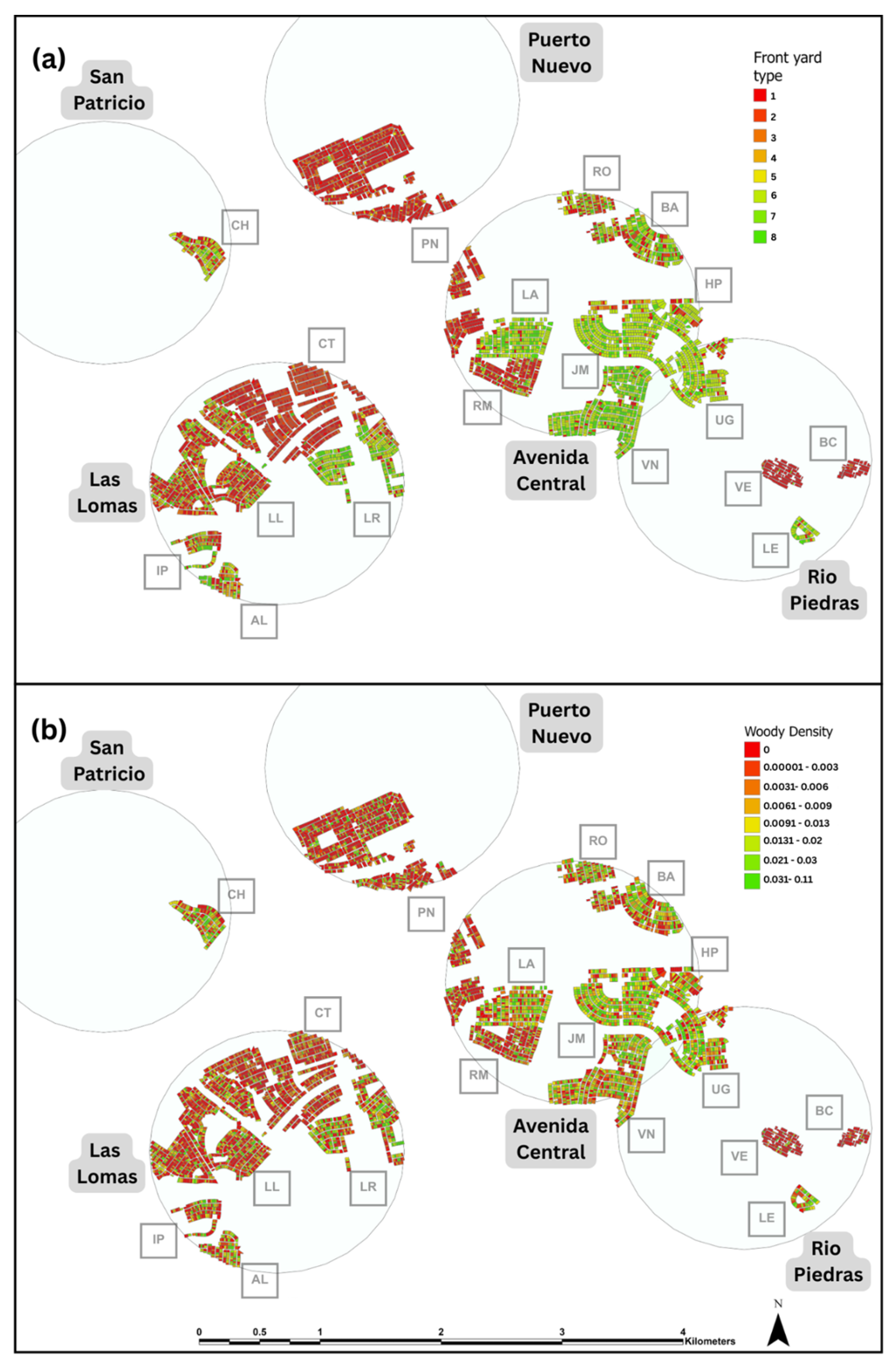
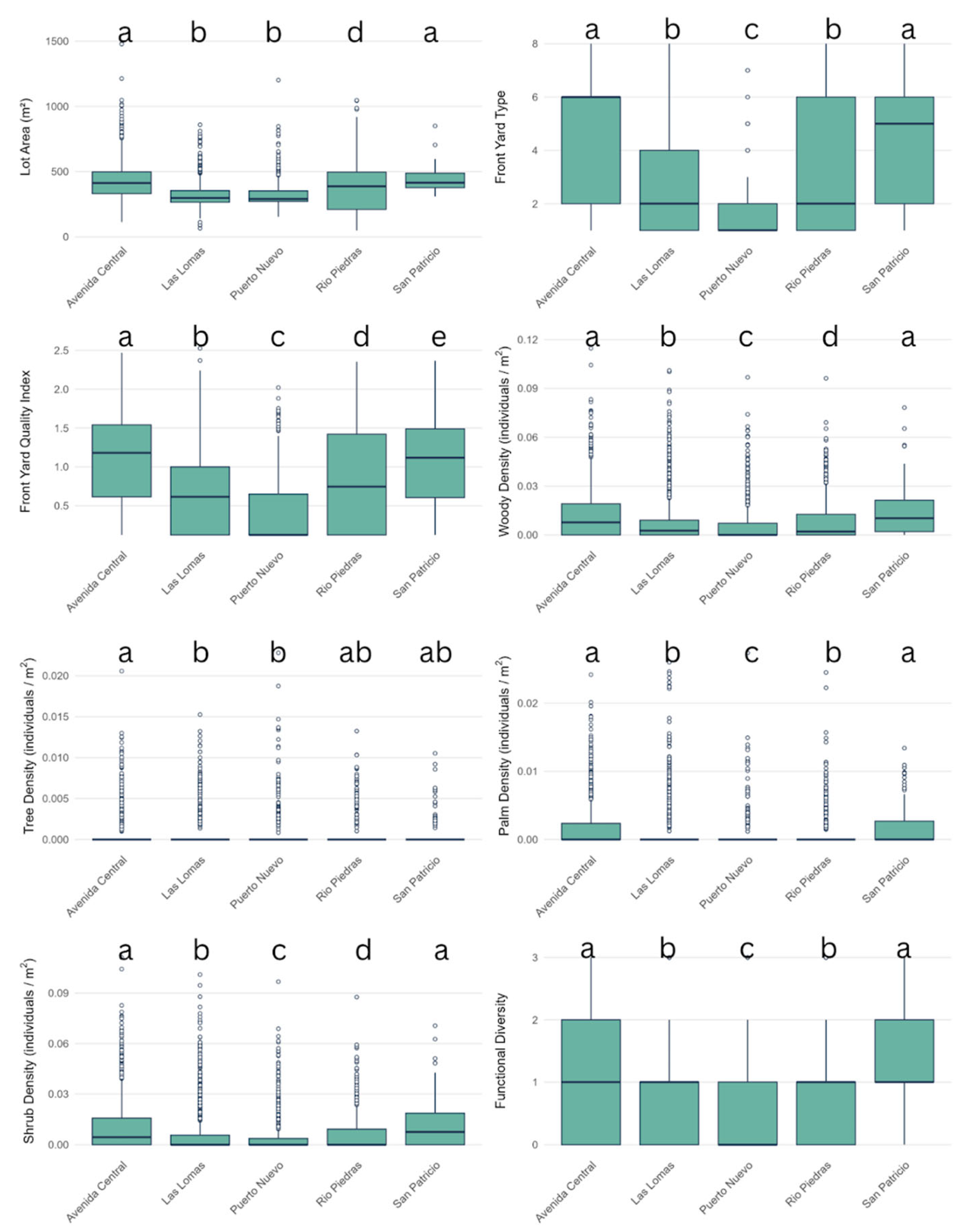
When considering the distribution of front yard configurations and woody density across study sites, there are concentrations of high and low values for both front yard traits (Figure 4). Approximately 37.5% of yards in the combined targeted areas within RPWS were type 1 (yards less than 1 m in depth, without green strips along sidewalks) (Table 3). Even when type 1 yards were the most common type for the study area, it was the dominant yard type (>46% of houses) only in Las Lomas, Puerto Nuevo, and Río Piedras (Table 3). The greenest yard configurations (Types 6 and 8), which had the largest green cover and kept the green strip along the sidewalk, were dominant yard types only in Las Américas and San Patricio sites (Table 3). The scores for yard functional diversity and the yard quality indexes were generally low (average functional diversity ± SE: 0.84 ± 0.01; average yard quality index scores: 0.79 ± 0.007), and plot sizes exhibited a large variation in area (range: 49.68 to 1480 m2). All yard variables showed significant differences among the six SJ ULTRA sites following Kruskal–Wallis tests (Figure 5). Post hoc Dunn tests showed that Avenida Central and San Patricio had significantly higher values for front yard configuration scores, shrub density, palm density, and yard functional diversity scores than all of the other SJ ULTRA sites examined (Figure 5). Tree density was higher at Avenida Central than at the Las Lomas and Puerto Nuevo sites, but all other comparisons were non-significant (Figure 5). The front yard quality index showed significant differences among all site comparisons, with significantly greater values for Avenida Central, followed by San Patricio, Río Piedras, Las Lomas, and Puerto Nuevo (Figure 5). Greener yard configuration types and yards with woody vegetation were more frequently found in neighborhoods within Avenida Central and Río Piedras, and less frequently in neighborhoods within the Puerto Nuevo and Las Lomas study sites (Table 3). Regression analyses showed that yard configuration score (β = 0.54), woody diversity (β = 0.48), and woody density (β = 0.19) were all positively associated with the front yard quality index (all p < 0.001), with the model explaining nearly all variance in the response (R2 ≈ 1).

3.3. Front Yard Clusters and Outliers

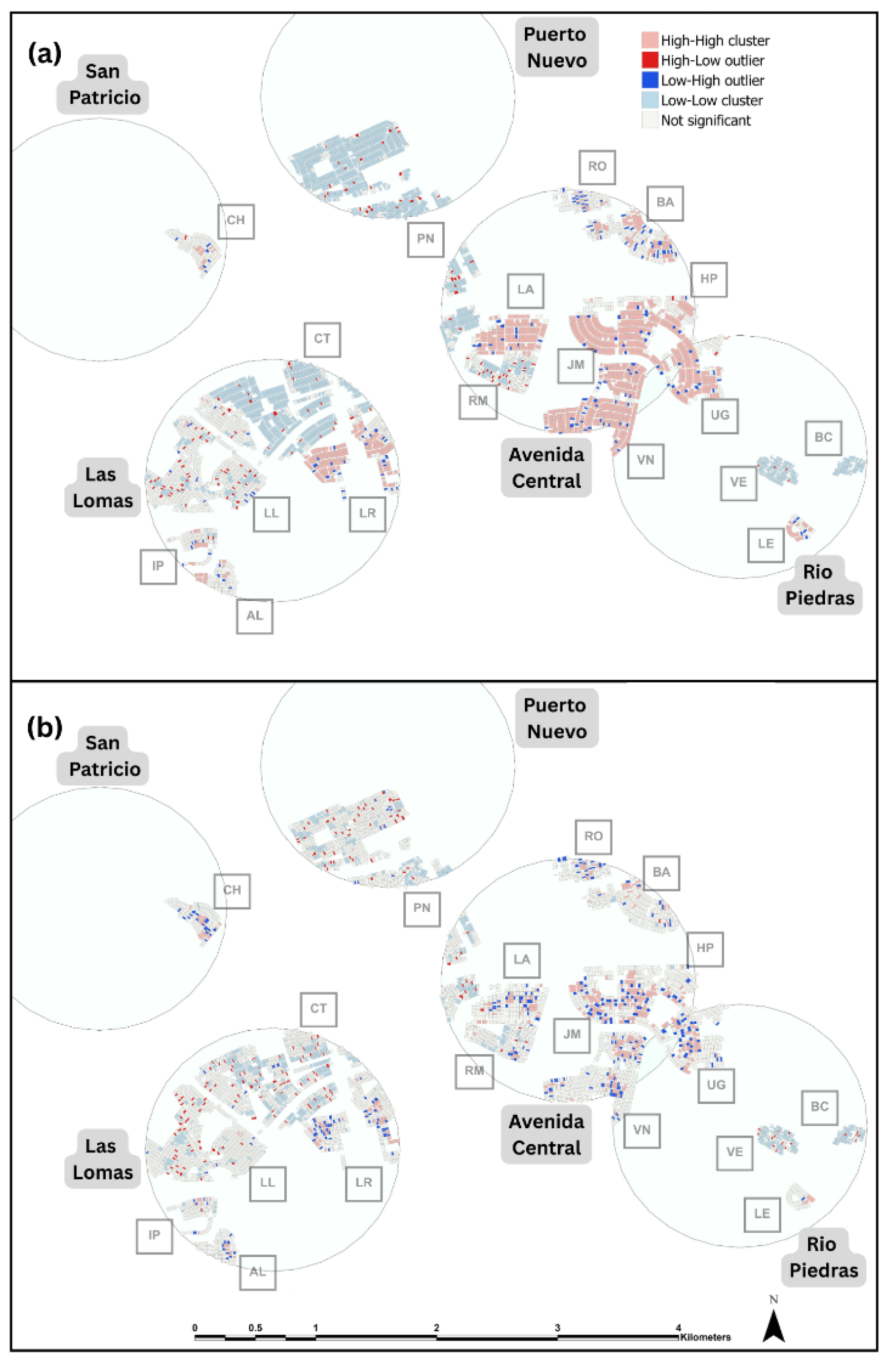
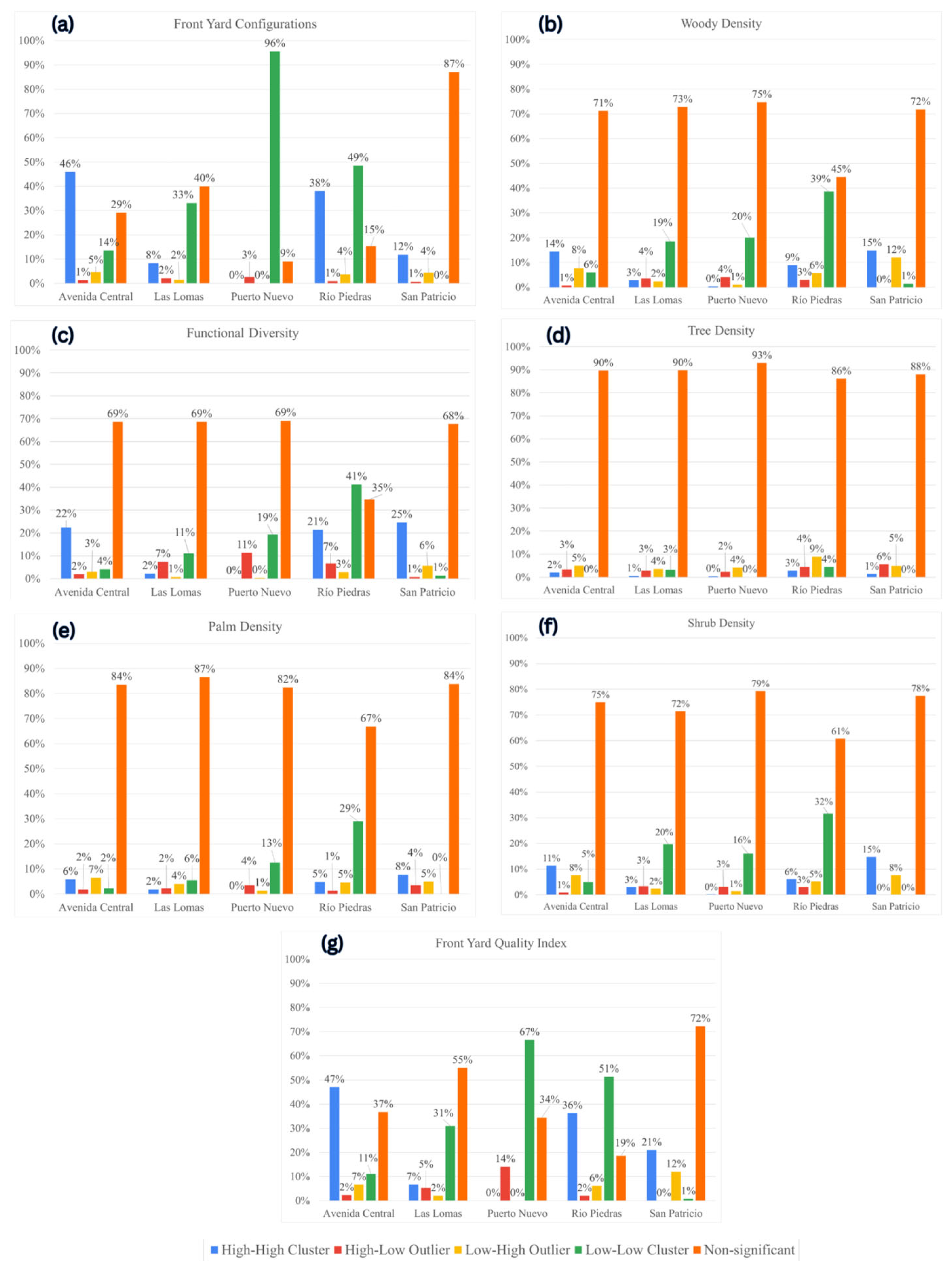
Results from the Global Moran’s test indicated that all the yard variables showed significant positive spatial autocorrelations, indicating that front yards that were closer to each other tended to be more similar to each other (clustered) in yard characteristics (Table 4). The spatial scale at which clustering was strongest (higher Moran’s I values) for all the yard variables ranged between 65 m and 80 m (Table 4). The largest maximum cluster distance was obtained for lot area, and the lowest cluster distances were obtained for variables related to the density of woody plants and, most specifically, to palm density, shrub density, and wood density (Table 4). The highest frequencies of clusters were found for the variables front yard quality index, front yard configuration, and woody plant density (Figure 6). However, their occurrence was unequally distributed across neighborhoods, with a higher concentration of clusters appearing in Las Lomas (negative clusters), Puerto Nuevo (negative clusters), and Avenida Central (positive clusters) (Figure 6). Positive clusters (i.e., yards with high values surrounded by other yards with high values) in yard configuration occurred mostly in Avenida Central (46% of front yards), and large negative clusters (i.e., yards with low values surrounded by low yard values) occurred mostly in Puerto Nuevo (96% of front yards) and Río Piedras (49% of front yards) (Figure 7). Results also showed variation in the distribution of clusters among neighborhoods within a site. Positive clusters within Avenida Central occurred mostly within four neighborhoods: Villa Nevárez, Jardines Metropolitanos, University Gardens, and Las Américas, while negative clusters within the Puerto Nuevo and Las Lomas sites were mostly evident across two neighborhoods: Caparra Terrace and Puerto Nuevo (Figure 6). Positive clusters for vegetation variables were less common and were primarily located at the Avenida Central site in the neighborhoods of Villa Nevárez, Jardines Metropolitanos, and University Gardens (Figure 7). Positive clusters for functional diversity were not as large as those for yard configuration and yard quality index but were mostly located in the Avenida Central site in the neighborhoods of Villa Nevárez, Jardines Metropolitano, University Gardens, and Baldrich (Figure 6 and Figure 7). In addition, negative clusters for functional diversity were not as large as their positive cluster counterparts and were mostly located in the Las Lomas, Río Piedras, and Puerto Nuevo study sites (Figure 6 and Figure 7).
The frequency of front yards classified as outliers (i.e., yards surrounded by dissimilar yards) also differed between study areas and did not surpass 14% of plots for any of the front yard characteristics evaluated (Figure 7). That frequency was lowest when considering outliers for front yard configuration scores (4.7% of all plots) in comparison to the other yard variables (front yard quality index: 8.5%; functional diversity: 8.3%; woody density: 6.9%; tree density: 7.6%; shrub density: 6.8%; and palm density: 6.7%). Even when woody density and front yard quality index presented the largest frequency of outliers relative to the other variables examined, the type of outliers (positive vs. negative) and their frequencies were not equally distributed among sites (Figure 7). Woody density and front yard configuration showed the highest frequencies of negative outliers (i.e., low-value front yards surrounded by high-value front yards) in San Patricio (woody density = 12%, front yard configuration = 4%), Avenida Central (woody density = 8%, front yard configuration = 5%), and Río Piedras (woody density = 6%, front yard configuration = 4%) (Figure 6). Meanwhile, the highest frequency of positive outliers (i.e., high-value plots surrounded by low-value plots) was found for front yard configuration in Puerto Nuevo (3%) and Las Lomas (2%). For functional diversity, the highest frequency of positive outliers was found in Puerto Nuevo (11%), Las Lomas (7%), and Río Piedra (7%) (Figure 7). Despite the presence of significant clustering across the neighborhoods, not all plots presented clustering. Indeed, yard variables that were based entirely on vegetation elements (woody density and palm, shrub, and tree density) had a larger percentage of houses that did not follow a clustering pattern (all sites but Río Piedras has >60% of front yards with no clustering) relative to variables that considered built and unbuilt elements (yard configuration type) where the number of plots per site that were non-clustered was quite variable across sites, but generally exhibited lower values (i.e., yard configuration type, with four out of five sites having > 55%; and for font yard quality index: four out of five sites > 40%) (Figure 7). When considering yard configuration type and yard quality index, San Patricio was the site that showed the highest percentage of non-clustered houses (72–88%), while Río Piedras showed the lowest (>20%) (Figure 7).
Spatial lag models for autocorrelated variables showed that front yard configuration and front yard quality index were positively influenced by lot area (Table 5). However, socio-economic variables did not significantly influence front yard configuration nor front yard quality index (Table 5). Model diagnostics showed that spatial effects were more relevant for explaining variation in front yard configuration than front yard quality (Table 5). Even when Pseudo R2 values were high in both models (Nagelkerke Pseudo R2 > 70%), only the model explaining front yard configuration scores was significant (Table 5).
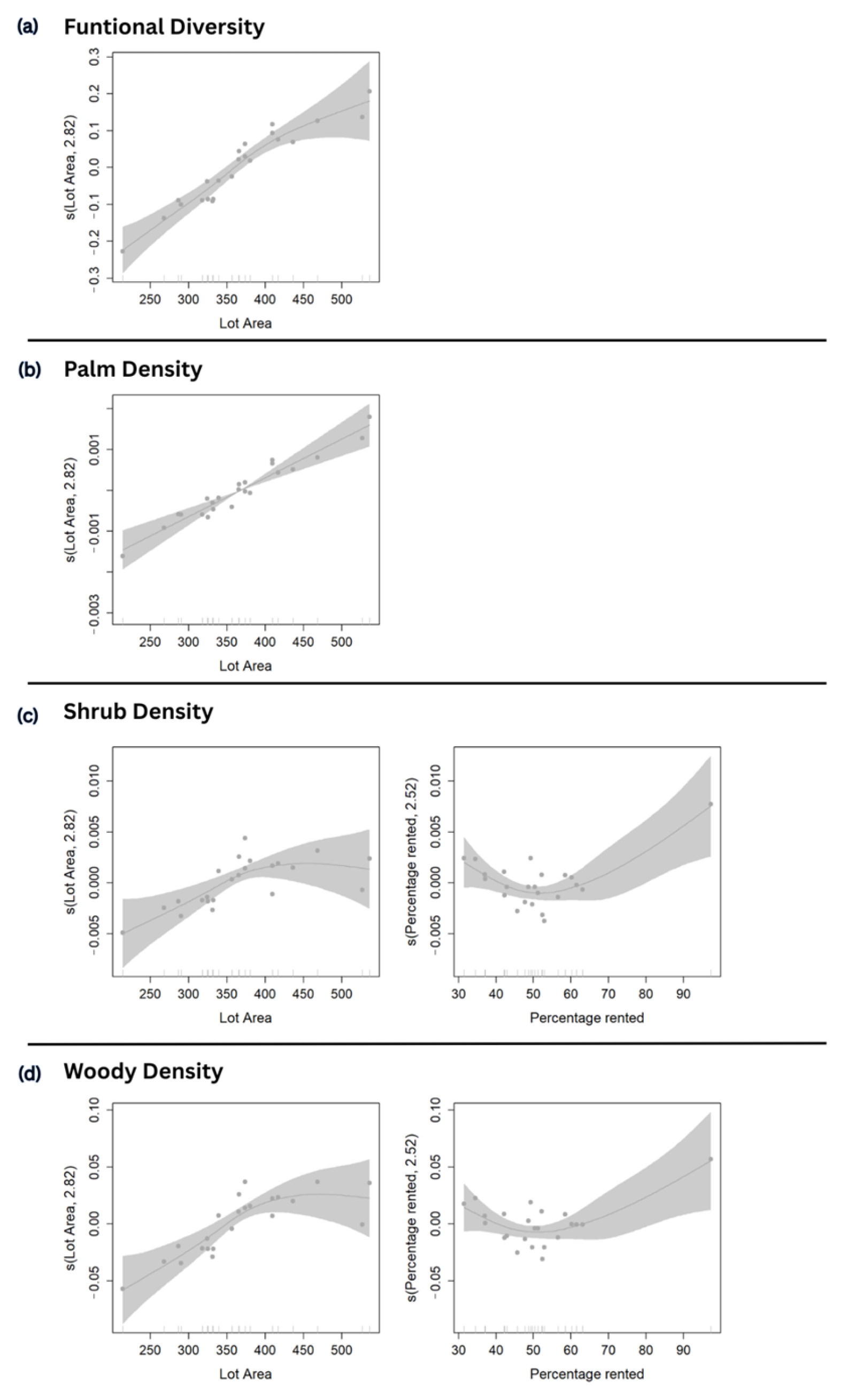
Results from the generalized additive models (GAMs) showed that lot area was a significant predictor for all variables except for tree density, with particularly strong effects observed for palm density and functional diversity (Table 6). Larger lots resulted in higher wood and plant densities and higher values of functional diversity (Figure 8). Aside from area, the percentage of rented homes was also significantly associated with woody density and shrub density, with a larger percentage of renters associated with larger wood and shrub densities (Table 6, Figure 8). Neither average household size nor percentage of residents with a Bachelor’s degree showed significant effects on any of the response variables. GAM performance metrics varied across vegetation outcomes, but when significant, adjusted R2 values were above 0.82, indicating that a large fraction of the variation was explained by significant predictor variables (Table 6).

4. Discussion

This work aimed to evaluate the existence of spatial patterns in front yard characteristics based on the distribution of built and unbuilt components of residential yards (front yard configuration), and the density of different types of woody vegetation as a way to understand how elements of yard quality may be influenced by processes about the yard space that occur at different spatial scales (household, urban development, and city sectors). A working hypothesis was that, given findings from prior studies [36,59,60], front yard characteristics would show clustering patterns (suggestive of social contagion) at the street-block scale and would also be influenced by socio-economic factors at the household scale based upon the prior literature from social–ecological studies in San Juan (e.g., [20,21,61]). Prior studies in San Juan suggest that variation in vegetative cover in residential areas in this city can be influenced in part by bottom-up processes related to household socio-economic factors, and resident attitudes about woody vegetation [20,21,61]. Results for front yard configurations show that front yards sharing similar characteristics expand beyond the street-block scale. Moreover, although neighborhoods started with type 6 or type 8 front yards, houses with smaller lot sizes presented predominant land conversion changes toward highly paved front yards. These results suggest that, even when social contagion may be a mechanism that has influenced the retention or replacement of vegetative cover in front yards, developer actions related to plot size and built space (top-down processes) are also important factors influencing these actions, and can limit the collective ecological functionality of residential green spaces and their potential to provide soil and vegetation ecosystem services. Prior studies in San Juan also support the potential role of top-down processes (e.g., developer decisions [29]; nursery trade and legacy effects through prior owners [49]) as potential factors that can also influence yard vegetation elements. Below, we discuss the rationale for these conclusions and how results align with studies on how near neighbors may influence yard management decisions.
The literature suggests that in some cases, yard characteristics could be the result of processes related to ‘social contagion’, where visible yard practices have expanded through observation, imitation, or neighborhood norms [37]. Studies that have explicitly addressed and statistically evaluated this phenomenon have been conducted primarily in temperate cities and often have found positive spatial autocorrelations for traits related to yard vegetation, suggestive of spatial contagion processes where ‘green’ yards promote ‘green’ yards [36,37,48,62]. Other factors, such as household socio-demographic or economic characteristics [36,37] and shared ecological environments [62], may also be important in shaping yard characteristics along with social contagion processes. Previous studies on social contagion evaluated aspects of front yards that highlighted their overall appearance (i.e., level of ornamentation, visual appeal, front yard tidiness, specific types of flowering plants, etc.) and focused on vegetation aspects of yards [36,48,62]. Results from the current study contribute to the available literature by evaluating not only the abundance and diversity of yard vegetation elements but also by including variation in yard configurations as defined by the arrangement and cover of built space and space occupied by vegetation. In agreement with studies cited above, results here showed evidence of positive spatial autocorrelations and the appearance of multiple clusters with sizes peaking at small distances (<100 m), a result suggestive of social contagion processes [36]. However, this study also showed that clusters based on yard configurations also came in two distinct forms. One type of cluster (i.e., low–low) was dominated by yards with high amounts of built space (or low-quality), while another cluster type was dominated by yards with large amounts of green space (i.e., high–high) and woody vegetation (i.e., high-quality), suggestive of two contrasting types of contagion pathways (see below).
Results also show that the distribution of the two observed contagion pathways (low–low and high–high) was not uniform across study sites or urban developments, suggesting that social contagion behaviors manifest differently across urban developments. Low–low clusters associated with low-quality front yard configurations were more common in Puerto Nuevo, Caparra Terrace, and Reparto Metropolitano, which are large single-family house developments that were built with similar designs and lot sizes (238 m2 to 250 m2) [63]. These developments were promoted by the government and facilitated by permits, tax exemptions, and/or subsidies to families during Puerto Rico’s housing crisis [64]. Beginning with Puerto Nuevo in 1948, followed by Caparra Terrace and Reparto Metropolitano [63], these neighborhoods were marketed as expandable properties, a mindset that may have encouraged paving or construction over yard areas. In contrast, high–high clusters, associated with high-quality yards, were more common in University Gardens, Villa Nevárez, Jardines Metropolitanos, and Las Américas developments, which featured larger lots (325 m2 to 450 m2) and amenities that targeted different upper-middle-class residents, judging by advertisement narratives and higher sale prices (Table S2.1). Larger lot sizes may have reduced pressure to convert green space into built areas. A prior study of Puerto Nuevo, Caparra Terrace, and University Gardens urban developments showed significant losses of green space within housing lots across all three but at different rates (Puerto Nuevo > Caparra > University Gardens), attributing variation partly to initial differences in lot sizes and built area [29]. In Puerto Nuevo and Caparra Terrace, smaller lot sizes and the desire to increase amenities were cited as potential drivers of yard changes. Evidence for the influence of initial lot size on later yard configurations can be seen in the adjacent neighborhoods of Reparto Metropolitano (~250 m2 lots) [63] and Las Américas (~375 m2 lots) (Table S2.2). Built in the same decade and originally characterized by similar front yard configurations (type 8; Figure 3), they now display marked differences. Reparto Metropolitano is dominated by low–low configurations, whereas Las Américas is dominated by high–high configurations (Figure 5 and Figure 6). The combined results not only show that yard conversions occur at a larger scale than previously reported [29] but also that initial differences in lot sizes and amenities may partly explain the two observed contagion pathways of yard transformations across different neighborhoods. And yet other factors are also possible.
Aside from developers determining initial lot areas, other top-down factors not studied here may also facilitate land conversion at the yard scale. For example, residents of Puerto Nuevo have indicated that the municipality has implemented projects involving the reconstruction of the sidewalks to create new parking spaces in some parts of Puerto Nuevo (personal communications). Aerial images do show how sidewalk reconstruction has led to the loss of green areas for sidewalks and to make space for cars (Figure S3).
Socio-economic differences have also been proposed as drivers of plot-level land conversion since Puerto Nuevo and Caparra Terrace, developed to serve low- to low–middle-class residents [64], have lower household incomes than University Gardens [25]. However, results also failed to show significant associations between household-level socioeconomic factors and yard configurations. This contrasts with the literature showing that larger lots are typically sold at higher prices [65,66] and prior findings at RPWS linking yard area to household income [20]. The discrepancy likely reflects methodological differences and statistical limitations, including the smaller sample size used here (23 census tracts versus 363 units in the prior study) and the use of aggregated census tract income data, which reduces variability compared to household-level measures.
In addition to overall yard configurations, results showed that positive spatial autocorrelations suggestive of social contagion were also evident for the total density of woody plants. In this case, clusters were less frequent and smaller than those observed for yard configurations, occurring at a scale more comparable to the street block. However, an important result is that even when weaker, the density of woody plants also generated dichotomous clusters (low-quality vs. high-quality) with distribution patterns that were similar to those observed for yard configurations. Low-quality yard clusters based on the overall density of woody plants were more common in developments like Puerto Nuevo, Caparra Terrace, and Reparto Metropolitano, and high-quality yard clusters were more common in developments like University Gardens, Villa Nevárez, Jardines Metropolitanos, and Las Américas. The distribution of high-quality yard clusters based on the density of woody plants may be explained in part by differences among urban developments in lot sizes (Tables S2.2 and S2.3) Prior work in the San Juan metropolitan area has shown that yard size is indeed the most important factor influencing the abundance of woody stems and species diversity in residential yards [20,61]. Once autocorrelation effects were accounted for, results from this study were also consistent in that lot area was the most important factor influencing most vegetation characteristics (i.e., woody density, shrub density, palm density, and functional diversity). However, tree density was not related to the lot area. Another contrasting result between this study and others at RPWS is the observed relationship between woody plant density and shrub density and household socio-economic factors. Studies by Meléndez-Ackerman et al. and Olivero-Lora et al. showed that socio-economic factors such as resident age and ownership (percent number of owners) were positively associated with the variation in the density of trees and plants in yards [20,61]. In those studies, the density of trees was higher in larger yards with older residents who were also owners. While this study confirms the positive role of lot size and woody vegetation, the % number of renters also seemed to have a positive role, which was unexpected. The newly observed positive relationships between the density of woody plants and shrubs in census blocks and the percentage of renters may have resulted from a variety of reasons. First, the current study focused on the most urbanized area of the Río Piedras Watershed, while the studies by Meléndez-Ackerman et al. and Olivero-Lora et al. included residential areas distributed across a larger sector of the watershed, which likely included a wider range of socio-demographic and yard variation at the household scale than that observed in this study [20,61]. Reduced variation may have weakened potential statistical relationships between dependent and independent variables. Second, the methods employed by Meléndez-Ackerman et al. and Olivero-Lora et al. were somewhat different as they relied on household surveys and actual field censuses of yard vegetation (front and backyards), whereas here, socio-demographic profiles were obtained from secondary US Census data, and vegetation data relied on photointerpretation of only front yard vegetation, which may be less precise [20,61]. Also, those studies were conducted several years before this study, and residential sites might have experienced socio-demographic and environmental changes, which may have influenced some of the relationships between vegetation and household socio-demographic factors. For example, Meléndez-Ackerman et al. cautioned of dynamic socio-demographic changes at the residential scale (increase in the % of older residents and reduction in the % of owners), which may lead to changes in yard green spaces [20]. Indeed, the San Juan metropolitan area has been experiencing a decrease in the occupation of households by owners [67] and a concomitant increase in the use of housing for short-term rentals driven by a real-estate industry catering to tourists [68]. These changes may explain in part the observed positive relationships between the percentage of houses occupied by renters and the density of woody plants and shrubs. While relationships (or a lack thereof) between socio-economic factors and yard characteristics in this study should be interpreted cautiously, it is also important to note that the positive effect of yard size on yard vegetation density remained consistent despite the sampling design limitations.
Another important result of this study is the presence of yard outliers in yard characteristics (e.g., low-quality yards surrounded by high-quality yards or high-quality yards surrounded by low-quality yards). The nature and distribution of these outliers may provide valuable information about challenging areas, areas of concern, or areas of opportunity for green interventions. For example, the presence of low–high outliers (highly paved front yard configurations surrounded by front yard configurations with high green cover, Figure 6a) in this study could signal an emerging impermeabilization process in developments dominated by high-quality yards, potentially occurring before a contagion process begins. High–low outliers (green front yard configurations surrounded by highly paved front yard configurations) in developments dominated by highly paved yards could signal the presence of residents with pro-environmental yard behaviors, even when their surrounding neighbors may not exhibit similar behaviors. Special attention should be paid to the fact that several neighborhoods (Las Lomas, Iglesias Patín, Caparra Heights, and Roosevelt), lacking large spatial autocorrelation tendencies, showed small, dispersed clusters of different types. These neighborhoods may point to areas of opportunity for the expansion of greening initiatives (i.e., where high–high clusters are emerging) or for their implementation. In contrast, the low–low clusters represent areas of higher pavement footprint, where soil and green infrastructure functions are being lost, and potentially represent areas where residents may not necessarily “care” about their surroundings [43,44]. On the other hand, a prior study suggested that preferences for trees and perceptions of tree-related problems may help explain, at least in part, the observed variation in yard tree density in San Juan neighborhoods, and stated that even when residents within Puerto Nuevo indicated to prefer having trees on their properties, they also showed a higher rate of perceived tree-related disservices than those in developments within Avenida Central [61]. Regardless of the root causes of yard conversion, a disappearing front yard would mean fewer opportunities for connectivity among nearby community members, as front yards are common spaces for social interaction [59].
Green infrastructure planning is key for sustainable and resilient cities [69]. Under this premise, the observed widespread transformation of yard land cover from previous (natural/vegetated) to impervious (concrete/asphalt) surfaces would reduce the capacity of cities to be sustainable and resilient. Increases in paved surfaces in residential areas would represent lost opportunities to generate important ecosystem services generated by soils and green infrastructure (e.g., natural water infiltration and evapotranspiration, carbon sequestration, food production, surface temperature reduction, and air and water purification) [70]. High impervious cover and reduced ecosystem services lead to a cascade of urban problems, such as elevated land temperatures, which contribute to the urban heat island effect, increased urban run-off and flooding probabilities, and reduced air and water quality [71]. These problems not only affect environmental health, but they also diminish the health and quality of life of urban residents [72]. For example, heatwaves in the city of San Juan [73] and other areas [74] have been linked to excess mortality and increased morbidity, particularly in vulnerable populations (elderly and children). Managing the ratio of paved and unpaved areas, especially in residential areas, should be a priority for developing climate-resilient and livable cities.
Spatial studies like the one presented here can be used to set ratios of paved and unpaved areas in residential areas and help planners identify areas in need of green infrastructure interventions (i.e., residential areas where green space has been depleted) and even identify early the communities where green spaces are currently in the process of losing green areas. Indeed, our results showed that the yard conversion to built space is occurring at a much greater spatial scale than previously reported in RPWS communities [29]. Development of strategies to limit or mitigate these conversions necessitates a thorough evaluation of the root causes of those changes. If, for example, developer decisions on lot areas and design lead to a subsequent increase in yard built space to meet resident needs, and if lot area drives vegetation cover and diversity, then state and municipal agencies could use results to reevaluate their minimum lot-size requirements. For areas where land conversion has occurred, increasing yard green cover through removing paved surfaces might be challenging and would require understanding the residents’ motivations for such changes through surveys [75]. Participatory planning processes, although hard to implement as well, are crucial to secure acceptance for green infrastructure interventions and other nature-based solutions to address complex socio-environmental challenges [76]. Likewise, these processes could be supported by environmental education campaigns that promote yard conservation. The environmental education literature suggests that conservation outcomes are best achieved when focused on local issues and integrating and developing social capital [77,78]. Housing identified as a high–low outlier for trees or yard quality may host residents with pro-environmental behaviors that could be approached and engaged as collaborators in community-based planning and educational activities. Likewise, if social contagion has a role in spreading yard management behaviors, identifying the types of yard clusters may help identify areas where pro-environmental yard management practices may have a better chance of success via contagion-like processes. In the case of San Juan communities, which exhibit several environmental vulnerabilities [73], linking local variation in yard green cover to variation in important ecosystem services and public health outcomes through scientific research could strengthen education campaigns.

5. Conclusions

This study contributes to the urban socio-ecological literature by exploring the potential spread of yard management decisions through ‘social-contagion’ by testing the spatial autocorrelation of yard characteristics in a tropical city. A major finding is the rapid land conversion at the yard scale from unpaved to paved or constructed surfaces of front yards that seems to be more pronounced in some sectors than others. Results suggest that initial decisions by developers regarding lot size and initial house amenities may prompt the loss of green space in front yards. This conversion has important implications for the provision of ecosystem services by yards in residential areas. In that context, visualization of yard conversion patterns, such as those provided here, provides useful information for city planners as they help identify challenging areas and areas of opportunity for the implementation of green infrastructure interventions in different communities. They can also help set ideal ratios of paved and unpaved areas and design neighborhood-level strategies by informing them about the factors that may drive these changes. It is important to consider that while results suggest that progressive land conversion from unpaved to paved may result from social contagion, fully demonstrating this mechanism of land conversion may require further studies to evaluate its dynamics (emergence and rate of change) using a spatio-temporal approach that also evaluates its root causes through ground surveys of households or neighborhoods. Likewise, the growing number of social–ecological studies of residential spaces in the municipality of San Juan, a tropical city, contributes to reducing the existing geographic bias of urban socio-ecological studies as they are less common in Latin American and African cities relative to other regions [79,80]. The patterns of front yard paving observed here represent threats to the ecological functioning of residential soils and to social cohesion within neighborhoods that could translate into reduced capacity for the implementation of green infrastructure practices.

Supplementary Materials

The following supporting information can be downloaded at: https://www.mdpi.com/article/10.3390/su18062821/s1, Figure S1: Scatter plots and Spearman correlation analyses to evaluate the level of association of all the evaluated variables. Asterisks indicate significant correlation coefficients at p < 0.05 (* p < 0.05, ** p < 0.01, *** p < 0.001); Figure S2: Contribution of the three components for the Front Yard Quality Index (FYQI); Figure S3: Aerial images focusing on sidewalk changes in Puerto Nuevo. Two images show different dates: (a) before the sidewalk reconstruction in 2006 and (b) after the reconstruction in 2016; Table S1: Approximate Construction Dates for 17 Urban Developments studied in the article; Table S2: Newspaper Articles with details of original design, prices and amenities for houses. Compilation of promotions and newspaper articles illustrating information of lot sizes and housing amenities; Table S2.1: Housing Prices Reported in Advertisements; Table S2.2: Summary of advertisements related to housing sales in urban developments in the lower Río Piedras Watershed, San Juan, Puerto Rico published between 1950 and 1974; Table S2.3: List of advertisements that were found to show images of original housing unit designs showing front yards for the urban developments in the northern region of the Rio Piedras Watershed; Table S2.4: References for Ads related to housing sales between 1950 and 1975.

Author Contributions

Conceptualization, L.K.S. and E.J.M.-A.; methodology, L.K.S. and E.J.M.-A.; software, L.K.S.; validation, L.K.S. and E.J.M.-A.; formal analysis, L.K.S. and E.J.M.-A.; investigation, L.K.S. and E.J.M.-A.; resources, E.J.M.-A.; data curation, L.K.S.; writing—original draft preparation, L.K.S.; writing—review and editing, L.K.S. and E.J.M.-A.; visualization, L.K.S. and E.J.M.-A.; supervision, E.J.M.-A.; project administration, L.K.S. and E.J.M.-A.; funding acquisition, L.K.S. and E.J.M.-A.; manuscript revisions, L.K.S. and E.J.M.-A. All authors have read and agreed to the published version of the manuscript.

Funding

Funding for this research expired in 2024. This study was partially supported by the National Science Foundation—Graduate Research Fellowship Program (Grant number: 1744619) and by the Puerto Rico Natural Resource Career Tracts Program (Grant number: 2017-38422-27131).

Institutional Review Board Statement

Not Applicable.

Informed Consent Statement

Not Applicable.

Data Availability Statement

The dataset supporting the findings of this study is openly available at https://doi.org/10.5281/zenodo.18939097.

Acknowledgments

This study is based on dissertation work submitted by L. K. Sellés to the University of Puerto Rico, Río Piedras, in partial fulfillment of the requirements for a PhD degree in biology. We greatly appreciate critical comments from the two anonymous reviewers.

Conflicts of Interest

The authors declare no conflicts of interest.

Abbreviations

The following abbreviations are used in this manuscript:
RPWSRío Piedras Watershed
FYQIFront yard quality index
WDWoody density
YTSYard configuration score
NWTNumber of woody types

References

  1. Colding, J.; Gren, Å.; Barthel, S. The Incremental Demise of Urban Green Spaces. Land 2020, 9, 162. [Google Scholar] [CrossRef]
  2. Guo, H. SDG11 Sustainable Cities and Communities. In Big Earth Data in Support of the Sustainable Development Goals (2023)–China; Springer: Berlin/Heidelberg, Germany, 2025; pp. 61–122. [Google Scholar]
  3. Mansur, A.V.; Brondízio, E.S.; Roy, S.; Hetrick, S.; Vogt, N.D.; Newton, A. An Assessment of Urban Vulnerability in the Amazon Delta and Estuary: A Multi-Criterion Index of Flood Exposure, Socio-Economic Conditions and Infrastructure. Sustain. Sci. 2016, 11, 625–643. [Google Scholar] [CrossRef]
  4. Dorst, H.; Van der Jagt, A.; Raven, R.; Runhaar, H. Urban Greening through Nature-Based Solutions–Key Characteristics of an Emerging Concept. Sustain. Cities Soc. 2019, 49, 101620. [Google Scholar] [CrossRef]
  5. Mosisa, G.B.; Bedadi, B.; Dalle, G.; Tassie, N. Nature-Based Solutions for Urban Climate Resilience: Implementation, Contribution, and Effectiveness. Nat.-Based Solut. 2025, 8, 100245. [Google Scholar] [CrossRef]
  6. Nowak, D.J.; Rowntree, R.A.; McPherson, E.G.; Sisinni, S.M.; Kerkmann, E.R.; Stevens, J.C. Measuring and Analyzing Urban Tree Cover. Landsc. Urban Plan. 1996, 36, 49–57. [Google Scholar] [CrossRef]
  7. Haase, D.; Jänicke, C.; Wellmann, T. Front and Back Yard Green Analysis with Subpixel Vegetation Fractions from Earth Observation Data in a City. Landsc. Urban Plan. 2019, 182, 44–54. [Google Scholar] [CrossRef]
  8. Lin, B.; Meyers, J.; Barnett, G. Understanding the Potential Loss and Inequities of Green Space Distribution with Urban Densification. Urban For. Urban Green. 2015, 14, 952–958. [Google Scholar] [CrossRef]
  9. Mathieu, R.; Freeman, C.; Aryal, J. Mapping Private Gardens in Urban Areas Using Object-Oriented Techniques and Very High-Resolution Satellite Imagery. Landsc. Urban Plan. 2007, 81, 179–192. [Google Scholar] [CrossRef]
  10. Schifman, L.A.; Prues, A.; Gilkey, K.; Shuster, W.D. Realizing the Opportunities of Black Carbon in Urban Soils: Implications for Water Quality Management with Green Infrastructure. Sci. Total Environ. 2018, 644, 1027–1035. [Google Scholar] [CrossRef]
  11. Grant, J.; Manuel, P.; Joudrey, D. A Framework for Planning Sustainable Residential Landscapes. J. Am. Plan. Assoc. 1996, 62, 331–344. [Google Scholar] [CrossRef]
  12. Gaston, K.J.; Warren, P.H.; Thompson, K.; Smith, R.M. Urban Domestic Gardens (IV): The Extent of the Resource and Its Associated Features. Biodivers. Conserv. 2005, 14, 3327–3349. [Google Scholar] [CrossRef]
  13. Coder, R.D. Identified Benefits of Community Trees and Forests; University of Georgia Cooperative Extension Service, Forest Resources Unit: Athens, GA, USA, 2011; Available online: https://openscholar.uga.edu/record/25398/files/ (accessed on 10 January 2026).
  14. Monteiro, J.A. Ecosystem Services from Turfgrass Landscapes. Urban For. Urban Green. 2017, 26, 151–157. [Google Scholar] [CrossRef]
  15. Bormann, F.H.; Balmori, D.; Geballe, G.T. Redesigning the American Lawn: A Search for Environmental Harmony; Yale University Press: New Haven, CT, USA, 2001. [Google Scholar]
  16. Huyler, A. A Comparison of Soil Carbon Dynamics in Residential Yards with and without Trees. Urban Ecosyst. 2017, 20, 87–96. [Google Scholar] [CrossRef]
  17. Charzyński, P.; Hulisz, P.; Piotrowska-Długosz, A.; Kamiński, D.; Plak, A. Sealing Effects on Properties of Urban Soils. In Urban Soils; CRC Press: Boca Raton, FL, USA, 2017; pp. 155–174. ISBN 1315154250. [Google Scholar]
  18. O’Riordan, R.; Davies, J.; Stevens, C.; Quinton, J.N. The Effects of Sealing on Urban Soil Carbon and Nutrients. Soil 2021, 7, 661–675. [Google Scholar] [CrossRef]
  19. Cook, E.M.; Hall, S.J.; Larson, K.L. Residential Landscapes as Social-Ecological Systems: A Synthesis of Multi-Scalar Interactions between People and Their Home Environment. Urban Ecosyst. 2012, 15, 19–52. [Google Scholar] [CrossRef]
  20. Meléndez-Ackerman, E.J.; Santiago-Bartolomei, R.; Vila-Ruiz, C.P.; Santiago, L.E.; García-Montiel, D.; Verdejo-Ortiz, J.C.; Manrique-Hernández, H.; Hernández-Calo, E. Socioeconomic Drivers of Yard Sustainable Practices in a Tropical City. Ecol. Soc. 2014, 19, 20. [Google Scholar] [CrossRef]
  21. Meléndez-Ackerman, E.J.; Nytch, C.J.; Santiago-Acevedo, L.E.; Verdejo-Ortiz, J.C.; Santiago-Bartolomei, R.; Ramos-Santiago, L.E.; Muñoz-Erickson, T.A. Synthesis of Household Yard Area Dynamics in the City of San Juan Using Multi-Scalar Social-Ecological Perspectives. Sustainability 2016, 8, 481. [Google Scholar] [CrossRef]
  22. Olivero-Lora, S.; Rojas-Sandoval, J.; Melendez-Ackerman, E.J.; Orengo-Rolon, J. Hurricane Driven Changes in Vegetation Structure and Ecosystem Services in Tropical Urban Yards: A Study Case in San Juan, Puerto Rico. Urban Ecosyst. 2022, 25, 1431–1444. [Google Scholar] [CrossRef]
  23. Folke, C. Resilience: The Emergence of a Perspective for Social-Ecological Systems Analyses. Glob. Environ. Change 2006, 16, 253–267. [Google Scholar] [CrossRef]
  24. Roy Chowdhury, R.; Larson, K.; Grove, M.; Polsky, C.; Cook, E.; Onsted, A.; Ogden, L. A Multi-Scalar Approach to Theorizing Socio-Ecological Dynamics of Urban Residential Landscapes. Cities Environ. (CATE) 2011, 4, 6. [Google Scholar]
  25. Hope, D.; Gries, C.; Zhu, W.; Fagan, W.F.; Redman, C.L.; Grimm, N.B.; Nelson, A.L.; Martin, C.; Kinzig, A. Socioeconomics Drive Urban Plant Diversity. Proc. Natl. Acad. Sci. USA 2003, 100, 8788–8792. [Google Scholar] [CrossRef] [PubMed]
  26. Kirkpatrick, J.B.; Daniels, G.D.; Davison, A. Temporal and Spatial Variation in Garden and Street Trees in Six Eastern Australian Cities. Landsc. Urban Plan. 2011, 101, 244–252. [Google Scholar] [CrossRef]
  27. Bigirimana, J.; Bogaert, J.; De Cannière, C.; Bigendako, M.J.; Parmentier, I. Domestic Garden Plant Diversity in Bujumbura, Burundi: Role of the Socio-Economical Status of the Neighborhood and Alien Species Invasion Risk. Landsc. Urban Plan. 2012, 107, 118–126. [Google Scholar] [CrossRef]
  28. Wang, H.F.; Qureshi, S.; Knapp, S.; Friedman, C.R.; Hubacek, K. A Basic Assessment of Residential Plant Diversity and Its Ecosystem Services and Disservices in Beijing, China. Appl. Geogr. 2015, 64, 121–131. [Google Scholar] [CrossRef]
  29. Ramos-Santiago, L.E.; Villanueva-Cubero, L.; Santiago-Acevedo, L.E.; Rodriguez-Melendez, Y.N. Green Area Loss in San Juan’s Inner-Ring Suburban Neighborhoods: A Multidisciplinary Approach to Analyzing Green/Gray Area Dynamics. Ecol. Soc. 2014, 19, 4. [Google Scholar] [CrossRef]
  30. Grove, J.M.; Troy, A.R.; O’Neil-Dunne, J.P.M.; Burch, W.R.; Cadenasso, M.L.; Pickett, S.T.A. Characterization of Households and Its Implications for the Vegetation of Urban Ecosystems. Ecosystems 2006, 9, 578–597. [Google Scholar] [CrossRef]
  31. Luck, G.W.; Smallbone, L.T.; O’Brien, R. Socio-Economics and Vegetation Change in Urban Ecosystems: Patterns in Space and Time. Ecosystems 2009, 12, 604–620. [Google Scholar] [CrossRef]
  32. Aznarez, C.; Svenning, J.C.; Pacheco, J.P.; Have Kallesøe, F.; Baró, F.; Pascual, U. Luxury and Legacy Effects on Urban Biodiversity, Vegetation Cover and Ecosystem Services. NPJ Urban Sustain. 2023, 3, 47. [Google Scholar] [CrossRef]
  33. Lowry, J.H.; Baker, M.E.; Ramsey, D. Determinants of Urban Tree Canopy in Residential Neighborhoods: Household Characteristics, Urban Form, and the Geophysical Landscape. Urban Ecosyst. 2012, 15, 247–266. [Google Scholar] [CrossRef]
  34. Maltha, Y.; Kroesen, M.; Van Wee, B.; Van Daalen, E. Changing Influence of Factors Explaining Household Car Ownership Levels in the Netherlands. Transp. Res. Rec. 2017, 2666, 103–111. [Google Scholar] [CrossRef]
  35. Christiansen, P.; Fearnley, N.; Hanssen, J.U.; Skollerud, K. Household Parking Facilities: Relationship to Travel Behaviour and Car Ownership. In Proceedings of the Transportation Research Procedia; Elsevier B.V.: Amsterdam, The Netherlands, 2017; Volume 25, pp. 4185–4195. [Google Scholar]
  36. Hunter, M.C.R.; Brown, D.G. Spatial Contagion: Gardening along the Street in Residential Neighborhoods. Landsc. Urban Plan. 2012, 105, 407–416. [Google Scholar] [CrossRef]
  37. Locke, D.H.; Ossola, A.; Minor, E.; Lin, B.B. Spatial Contagion Structures Urban Vegetation from Parcel to Landscape. People Nat. 2022, 4, 88–102. [Google Scholar] [CrossRef]
  38. Voorhees, A.M. Constructing, Maintaining and Financing Sidewalks in New Jersey; Rutgers University: New Brunswick, NJ, USA, 2006. [Google Scholar]
  39. Loukaitou-Sideris, A.; Ehrenfeucht, R. “This Is My Front Yard!” Claims and Informal Property Rights on Sidewalks; The MIT Press: Cambridge, MA, USA, 2014. [Google Scholar]
  40. Nassauer, J.I.; Wang, Z.; Dayrell, E. What Will the Neighbors Think? Cultural Norms and Ecological Design. Landsc. Urban Plan. 2009, 92, 282–292. [Google Scholar] [CrossRef]
  41. Locke, D.H.; Roy Chowdhury, R.; Grove, J.M.; Martin, D.G.; Goldman, E.; Rogan, J.; Groffman, P. Social Norms, Yard Care, and the Difference between Front and Back Yard Management: Examining the Landscape Mullets Concept on Urban Residential Lands. Soc. Nat. Resour. 2018, 31, 1169–1188. [Google Scholar] [CrossRef]
  42. Jopling, C.F. Puerto Rican Houses in Sociohistorical Perspective; University of Tennessee Press: Knoxville, TN, USA, 1988. [Google Scholar]
  43. Nassauer, J.I. The Aesthetics of Horticulture: Neatness as a Form of Care. Am. Soc. Hortic. Sci. 1988, 23, 973–977. [Google Scholar] [CrossRef]
  44. Li, J.; Nassauer, J.I. Cues to Care: A Systematic Analytical Review. Landsc. Urban Plan. 2020, 201, 103821. [Google Scholar] [CrossRef]
  45. Nassauer, I.J. Messy Ecosystems, Orderly Frames. Landsc. J. 1995, 2, 161–170. [Google Scholar] [CrossRef]
  46. Chartrand, T.L.; van Baaren, R. Human Mimicry. Adv. Exp. Soc. Psychol. 2009, 41, 219–274. [Google Scholar] [CrossRef]
  47. Nassauer, J.I. Care and Stewardship: From Home to Planet. Landsc. Urban Plan. 2011, 100, 321–323. [Google Scholar] [CrossRef]
  48. Zmyslony, J.; Gagnon, D. Residential Management of Urban Front-Yard Landscape: A Random Process? Landsc. Urban Plan. 1998, 40, 295–307. [Google Scholar] [CrossRef]
  49. Torres-Camacho, K.A.; Meléndez-Ackerman, E.J.; Díaz, E.; Correa, N.; Vila-Ruiz, C.; Olivero-Lora, S.; Erazo, A.; Fontánez, J.; Santiago, L.; Seguinot, J. Intrinsic and Extrinsic Drivers of Yard Vegetation in Urban Residential Areas: Implications for Conservation Planning. Urban Ecosyst. 2017, 20, 403–413. [Google Scholar] [CrossRef]
  50. Colwell, P.; Scheu, T. Public Land Use Constraints: Lot and House Configuration. J. Real Estate Res. 1998, 16, 201–218. [Google Scholar] [CrossRef]
  51. Lugo, A.E.; González, O.M.R.; Pedraza, C.R.; Service, F. The Río Piedras Watershed and Its Surrounding Environment; USDA Forest Service: Washington, DC, USA, 2011. [Google Scholar]
  52. Dietz, J.L. Economic History of Puerto Rico: Institutional Change and Capitalist Development; Princeton University Press: Princeton, NJ, USA, 1986. [Google Scholar]
  53. Sepulveda Rivera, A. Puerto Rico Urbano: Atlas Histórico de La Ciudad Puertorriqueña; Archivo Digital Nacional de Puerto Rico: San Juan, Puerto Rico, 2004; Volume 4. [Google Scholar]
  54. Garcia-Montiel, D.C.; Verdejo-Ortiz, J.C.; Santiago-Bartolomei, R.; Vila-Ruiz, C.P.; Santiago, L.; Melendez-Ackerman, E. Food Sources and Accessibility and Waste Disposal Patterns across an Urban Tropical Watershed: Implications for the Flow of Materials and Energy. Ecol. Soc. 2014, 19, 37. [Google Scholar] [CrossRef]
  55. Nytch, C.J.; Meléndez-Ackerman, E.J.; Pérez, M.E.; Ortiz-Zayas, J.R. Rainfall Interception by Six Urban Trees in San Juan, Puerto Rico. Urban Ecosyst. 2019, 22, 103–115. [Google Scholar] [CrossRef]
  56. López, D.-M.; Aide, T.M.; Thomlinson, J.R.; Lpez, T.M.; Aide, T.M.; Thomlinson, J.R. Expansion Agricultural Lands and in the Loss of Rico Puerto Prime. Ambio J. Human. Environ. 2001, 30, 49–54. [Google Scholar] [CrossRef]
  57. Kim, J.; Jang, K.M. An Examination of the Spatial Coverage and Temporal Variability of Google Street View (GSV) Images in Small-and Medium-Sized Cities: A People-Based Approach. Comput. Environ. Urban Syst. 2023, 102, 101956. [Google Scholar] [CrossRef]
  58. U.S. Census Bureau. American Community Survey 5-Year Estimates: Census Tract Data, San Juan Municipio, Puerto Rico. 2016. Available online: https://data.census.gov/table?g=040XX00US72_050XX00US72127$1400000&y=2016 (accessed on 10 January 2023).
  59. Taylor, R.B. Human Territorial Functioning: An Empirical, Evolutionary Perspective on Individual and Small Group Territorial Cognitions, Behaviors, and Consequences; Cambridge University Press: Cambridge, UK, 1988; Volume 8. [Google Scholar]
  60. Ryan, C.D.; Groffman, P.M.; Grove, J.M.; Hall, S.J.; Heffernan, J.B.; Hobbie, S.E.; Locke, D.H.; Morse, J.L.; Neill, C.; Nelson, K.C.; et al. Ecological Homogenization of Soil Properties in the American Residential Macrosystem. Ecosphere 2022, 13, e4208. [Google Scholar] [CrossRef]
  61. Olivero-Lora, S.; Meléndez-Ackerman, E.; Santiago, L.; Santiago-Bartolomei, R.; García-Montiel, D. Attitudes toward Residential Trees and Awareness of Tree Services and Disservices in a Tropical City. Sustainability 2020, 12, 117. [Google Scholar] [CrossRef]
  62. Zmyslony, J.; Gagnon, D. Path Analysis of Spatial Predictors of Front-Yard Landscape in an Anthropogenic Environment. Landsc. Ecol. 2000, 15, 357–371. [Google Scholar] [CrossRef]
  63. Arroyo, M. Surge Una Nueva Ciudad de 100,000 Habitantes. El Imparcial, 17 December 1955; pp. 65–72. Available online: https://gpa.eastview.com/eida/newspapers/eida19551217-01.1.65 (accessed on 10 June 2025).
  64. Vivoni Farage, E. Ever New San Juan: Architecture and Modernization in the Twentieth Century; AACUPR: San Juan, Puerto Rico, 2000. [Google Scholar]
  65. Asabere, P.K.; Colwell, P.F. The Relative Lot Size Hypothesis: An Empirical Note. Urban Stud. 1985, 22, 355–357. [Google Scholar] [CrossRef]
  66. Clauretie, T.M.; Li, H. Land Values: Size Matters. J. Real Estate Financ. Econ. 2019, 58, 80–110. [Google Scholar] [CrossRef]
  67. Data USA San Juan. PR—Housing & Living. Available online: https://datausa.io/profile/geo/san-juan-pr?redirect=true#housing (accessed on 15 November 2025).
  68. Foundation for Puerto Rico. The State of Housing in Puerto Rico; National Association of Latino Community Asset Builders (NALCAB): San Juan, Puerto Rico, 2023; Available online: https://foundationforpuertorico.org/en/the-state-of-housing-in-puerto-rico/ (accessed on 15 August 2025).
  69. Kumar, P.; Sahani, J.; Corada Perez, K.; Ahlawat, A.; Andrade, M.d.F.; Athanassiadou, M.; Cao, S.J.; Collins, L.; Dey, S.; Di Sabatino, S.; et al. Urban Greening for Climate Resilient and Sustainable Cities: Grand Challenges and Opportunities. Front. Sustain. Cities 2025, 7, 1595280. [Google Scholar] [CrossRef]
  70. Ivanova, A.; Randhir, R.; Randhir, T.O. Nature-Based Solutions for Resilience: A Global Review of Ecosystem Services from Urban Forests and Cover Crops. Diversity 2026, 18, 47. [Google Scholar] [CrossRef]
  71. Hobbie, S.E.; Grimm, N.B. Nature-Based Approaches to Managing Climate Change Impacts in Cities. Philos. Trans. R. Soc. B Biol. Sci. 2020, 375, 20190124. [Google Scholar] [CrossRef] [PubMed]
  72. Rigolon, A.; Browning, M.H.E.M.; McAnirlin, O.; Yoon, H. Green Space and Health Equity: A Systematic Review on the Potential of Green Space to Reduce Health Disparities. Int. J. Environ. Res. Public Health 2021, 18, 2563. [Google Scholar] [CrossRef]
  73. Méndez-Lázaro, P.; Muller-Karger, F.E.; Otis, D.; McCarthy, M.J.; Rodríguez, E. A Heat Vulnerability Index to Improve Urban Public Health Management in San Juan, Puerto Rico. Int. J. Biometeorol. 2018, 62, 709–722. [Google Scholar] [CrossRef]
  74. Hou, Y.; Li, J.; Li, G.; Qi, W. Negative Effects of Urbanization on Plants: A Global Meta-Analysis. Ecol. Evol. 2023, 13, e9894. [Google Scholar] [CrossRef]
  75. Murtagh, N.; Frost, R. Motivations for Urban Front Gardening: A Quantitative Analysis. Landsc. Urban Plan. 2023, 238, 104835. [Google Scholar] [CrossRef]
  76. Plüschke-Altof, B.; Loewen, B.; Calderon, C.; Chebotareva, M.; Tuula-Fjodorov, R.; Gäckle, J. Nature-Based Solutions and Public Participation: Unpacking Tensions in Sustainable City Development in Northern Europe. Land 2025, 14, 1649. [Google Scholar] [CrossRef]
  77. Iyengar, R.; Bajaj, M. After the Smoke Clears: Toward Education for Sustainable Development in Bhopal, India. Comp. Educ. Rev. 2011, 55, 424–456. [Google Scholar] [CrossRef]
  78. Ardoin, N.M.; Bowers, A.W.; Roth, N.W.; Holthuis, N. Environmental Education and K-12 Student Outcomes: A Review and Analysis of Research. J. Environ. Educ. 2018, 49, 1–17. [Google Scholar] [CrossRef]
  79. Dobbs, C.; Escobedo, F.J.; Clerici, N.; de la Barrera, F.; Eleuterio, A.A.; MacGregor-Fors, I.; Reyes-Paecke, S.; Vásquez, A.; Zea Camaño, J.D.; Hernández, H.J. Urban Ecosystem Services in Latin America: Mismatch between Global Concepts and Regional Realities? Urban Ecosyst 2019, 22, 173–187. [Google Scholar] [CrossRef]
  80. Richards, D.; Masoudi, M.; Oh, R.R.Y.; Yando, E.S.; Zhang, J.; Friess, D.A.; Grêt-Regamey, A.; Tan, P.Y.; Edwards, P.J. Global Variation in Climate, Human Development, and Population Density Has Implications for Urban Ecosystem Services. Sustainability 2019, 11, 6200. [Google Scholar] [CrossRef]
Figure 1. Study area. The Río Piedras Watershed (RPWS) is red, and the study sites are the circles in light blue. Inside the study sites, there are neighborhoods illustrated with different colors and letters (inside squares) and within neighborhoods there are sampling units (house lots).
Sustainability 18 02821 g001
Figure 2. Current front yard configurations for 18 residential developments in San Juan that best resemble the original footprint of the housing development and show what was likely the original front yard extension from the front of the house to the sidewalk. Corner houses were not considered to create this Figure.
Sustainability 18 02821 g002
Figure 3. Scheme of the different types of front yards based on their configuration, which included the extension and presence of green and gray components. Examples for each of the front yard types with aerial images at 67 m of height (top row) and images of the Street View tool for the same houses. Here are (from left to right) type 2, type 4, type 6, and type 8.
Sustainability 18 02821 g003
Figure 4. Maps showing the distribution of (a) front yard configurations and values for (b) woody density (number of individual plants/m2 of lot area). See Figure 1 for identification of urban developments. Neighborhood names are as follows: CH = Caparra Heights; CT = Caparra Terrace; LL = Las Lomas; BC = Buen Consejo; IP = Iglesias Patin; AL = Altamesa; LR = La Riviera; RM = Reparto Metropolitano; PN = Puerto Nuevo; LA = Las Américas; JM = Jardines Metropolitanos; VN = Villa Nevárez; RO = Roosevelt; BA = Baldrich; HP = Hyde Park; UG = University Gardens; VE = Venezuela; and LE = La Experimental.
Sustainability 18 02821 g004
Figure 5. Boxplots showing variation in yard characteristics at five study sites in the Río Piedras Watershed in San Juan, Puerto Rico. Different letters within a given variable represent significant differences among study sites at p < 0.05, using Kruskal–Wallis tests followed by post hoc Dunn tests with the Bonferroni corrections.
Sustainability 18 02821 g005
Figure 6. Maps showing the results from the Anselin Local Moran’s I for: (a) front yard configuration types and (b) woody density (number of individual plants/m2 of lot area). Clusters and outliers definitions are as follows: High–High = cluster of high values surrounded by other high values; High–Low = outlier with a high value surrounded by low values; Low–High = outlier with a low value surrounded by high values; and Low–Low = cluster of low values surrounded by other low values. Neighborhood names are as follows: CH = Caparra Heights; CT = Caparra Terrace; LL = Las Lomas; BC = Buen Consejo; IP = Iglesias Patín; AL = Altamesa; LR = La Riviera; RM = Reparto Metropolitano; PN = Puerto Nuevo; LA = Las Américas; JM = Jardines Metropolitanos; VN = Villa Nevárez; RO = Roosevelt; BA = Baldrich; HP = Hyde Park; UG = University Gardens; VE = Venezuela; and LE = La Experimental.
Sustainability 18 02821 g006
Figure 7. Bar plots that show the frequency distribution of different types of clusters and outliers for the study area. Clusters and outliers definitions are as follow: High–High = cluster of high values surrounded by other high values; High–Low = outlier with a high value surrounded by low values; Low–High = outlier with a low value surrounded by high values; and Low–Low = cluster of low values surrounded by other low values. Results are shown in the following order: (a) front yard type; (b) front yard quality index; (c) functional diversity; (d) palm density; (e) shrub density; (f) tree density; and (g) woody density. For each study site, the total number of front yards evaluated were: Avenida Central = 2259; Las Lomas = 2844; Puerto Nuevo = 1036; Río Piedras = 577; and San Patricio = 142.
Sustainability 18 02821 g007
Figure 8. Smooth term plots from generalized additive models (GAMs) showing the partial effects of socio-economic predictors and lot area on front-yard vegetation characteristics with no spatial autocorrelation. The x-axis shows predictor values (e.g., lot area), and the y-axis shows the smooth effect (s(Lot Area, 2.82)), where values above zero indicate a positive effect and those below zero indicate a negative effect. Solid lines = fitted smooths; shaded areas = 95% confidence intervals. Only significant effects (p < 0.05;) are shown. Panels: (a) functional diversity, (b) palm density, (c) shrub density, and (d) woody density.
Sustainability 18 02821 g008
Table 1. Summary of the descriptive statistics [(mean, standard error (SE), minimum (min), and maximum (max))] for all the numerical variables used in this study describing yard vegetation, form, and socio-economic and demographic characteristics. [(mean, standard error (SE), minimum (min), and maximum (max)]. Sample sizes for Yard Vegetation and Yard Configuration variables = 6858 houses. Values for socio-economic variables were derived from data provided by the US Census (2016) and represent the averages from 23 census tracts.
VariableMean ± SE MinMax
Front Yard Vegetation
  Woody density (individuals/m2)0.009 ± 0.000100.11
  Tree density (individuals/m2)0.0007 + 0.000200.02
  Palm density (individuals/m2)0.001 + 0.0000300.03
  Shrub density (individuals/m2)0.007 + 0.000100.11
  Functional diversity (functional types present)0.84 + 0.0103
Front Yard Configuration
  FQY quality index 0.79 + 0.0070.132.53
  Lot area (m)362.03 + 1.4349.681480
Household Characteristics
  Percentage of houses occupied by renters (%)50.6 + 0.131.597.2
  Average household size2.44 + 0.0031.813
  Percentage of residents with Bachelor’s degree (%)32.87 + 0.213.469
  Median age (yrs)42.66 + 0.121.558
  Household median income (USD)22,368.7 + 98.63216.042,022.0
Table 2. Summary statistics of socio-economic characteristics for each of the SJ ULTRA study areas. Error values represent standard errors around the means based on the values for the census tracts within each study site.
Study SitePercentage RentedHousehold
Size
Percentage with Bachelor’s DegreeMedian
Age
Median
Income
Number of Census Tracts
Avenida Central 46.7 ± 0.22.28 ± 0.00446.7 ± 0.348.5 ± 0.127,546 ± 167.99
Las Lomas24.9 ± 0.22.58 ± 0.00124.9 ± 0.137.2 ± 0.118,509 ± 106.310
Puerto Nuevo25.2 ± 0.22.635 ± 0.00725.2 ± 0.0341.22 ± 0.122,940 ± 111.44
Río Piedras47.1 ± 0.42.286 ± 0.00647.1 ± 0.947.0 ± 0.227,270 ± 447.65
San Patricio41.1 ± 02.04 ± 041.1 ± 0.051.3 ± 025,750.0 ± 01
Table 3. Frequency distribution of the different configurations (types) of front yards across five sites of the Río Piedras Watershed in San Juan, Puerto Rico (n = 6788).
Study SiteType 1Type 2Type 3Type 4Type 5Type 6Type 7Type 8
Avenida Central 474
(21.3%)
202
(9.1%)
46
(2.1%)
62
(2.8%)
52
(2.3%)
906
(40.7%)
22
(1%)
464
(20.8%)
Las Lomas1006
(35.6%)
767
(27.2%)
174
(6.2%)
186
(6.6%)
107
(3.8%)
260
(9.2%)
96
(3.4%)
228
(8.1%)
Puerto Nuevo769
(74.7%)
47
(4.6%)
184
(17.9%)
10
(1%)
14
(1.4%)
1
(0.1%)
5
(0.5%)
0
(0%)
Río Piedras262
(46.4%)
21
(3.7%)
8
(1.4%)
5
(0.9%)
6
(1.1%)
187
(33.2%)
5
(0.9%)
70
(12.4%)
San Patricio28
(19.7%)
27
(19%)
2
(1.4%)
5
(3.5%)
10
(7%)
61
(43%)
0
(0%)
9
(6.3%)
Table 4. Results from the Global Moran’s I test under randomization for all the front yards (n = 6858). These tests were performed with a ‘nearest neighbor value’ of k = 5, expected Moran’s I: −0.00015, and variance: 0.00005.
Dependent VariablesObserved Moran’s IStandard Deviate (Z-Value)p-ValueDistance for Highest Moran’s I
Front yard configuration0.5878.37<<0.000175 m
Woody density0.1620.98<<0.000165 m
Tree density0.034.77<<0.000170 m
Palm density0.0810.25<<0.000165 m
Shrub density0.1418.34<<0.000165 m
Functional diversity0.2330.75<<0.000175 m
FY quality index0.4864.97<<0.000175 m
Lot area0.6790.49<<0.000180 m
Table 5. Results from the spatial lag models (SLM) for spatially autocorrelated (based on the k = 3 nearest neighbor) response variables at the census tract scale (n = 23): front yard type and front yard quality index. Lagrange Multiplier (LM) tests were performed to test if SLM were preferred. Values on each cell correspond to the regression coefficients (β) for each predictor. Bold numbers represent statistically significant values for estimates (p < 0.05).
Independent VariablesFront Yard ConfigurationsFY Quality Index
Lot Areaβ = 0.02 ***β = 0.004 ***
% Rentedβ = 0.03β = 0.003
Average household sizeβ = 0.76β = 0.047
% with Bachelor’s degreeβ = −0.001β = −0.0009
Rho0.400.31
LR test value5.173.31
p-value0.02 *0.07
Wald Statistic5.863.57
z-value2.421.89
Nagelkerke pseudo R20.700.76
Significance codes for the models: *** p < 0.001; * p < 0.05.
Table 6. Results from the generalized additive models (GAMs) for all other variables. Values on each cell correspond to the regression coefficients (F-values) for each predictor. Bold numbers represent statistically significant values for estimates (p < 0.05). Effective degrees of freedom (EDF) are shown in parentheses to explain if the relationship is linear (EDF ~ 1) or non-linear (EDF > 1). Sample size = 23.
Independent
Variables
Woody
Density
Tree
Density
Palm
Density
Shrub
Density
Functional
Diversity
Lot areaF = 7.72 ** (2.82)F = 4.17 (1)F = 37.11 *** (1)F = 4.67 * (2.58)F = 23.94 *** (2.53)
% RentedF = 2.52 * (2.51)F = 0.13 (1.38)F = 2.27 (2.80)F = 5.44 * (2.65)F = 0.07 (1)
Average household sizeF = 3.53 (1)F = 0.06 (1.16)F = 0.17 (1)F = 3.30 (1)F = 0.25 (1)
% with Bachelor’s degreeF = 0.73 (1)F = 0.07 (1.29)F = 2.61 (4.46)F = 0.68 (1)F = 2.61 (3.57)
Adjusted R20.860.300.850.820.93
Deviance explained90.6%45.3%91.2%87.7%95.5%
REML score–40.27–113.07–111.03–79.41–24.93
Scale estimate0.00029.06 × 10–85.79 × 10–82.84 × 10–60.001
Significance codes for the models: *** p < 0.001; ** p < 0.01; * p < 0.05
Disclaimer/Publisher’s Note: The statements, opinions and data contained in all publications are solely those of the individual author(s) and contributor(s) and not of MDPI and/or the editor(s). MDPI and/or the editor(s) disclaim responsibility for any injury to people or property resulting from any ideas, methods, instructions or products referred to in the content.