Review

Micro- and Nanoplastics in Agroecosystems: Plant Uptake, Food Safety, and Implications for Human Health


by
Stefania D’Angelo
Department of Medical, Human Movement, and Well-Being Sciences (DiSMMeB), Parthenope University of Naples, 80133 Naples, Italy
Sustainability 2026, 18(6), 2817; https://doi.org/10.3390/su18062817
Submission received: 6 February 2026 / Revised: 9 March 2026 / Accepted: 11 March 2026 / Published: 13 March 2026

Abstract

Micro- and nanoplastics (MNPs) are being found, with growing frequency, in agroecosystems, where soils function as major sinks and direct interfaces with food crops. This review shows an integrated soil–plant–food analytical framework and synthesizes evidence on MNPs behavior in soils (dispersion, aging, aggregation), plant uptake pathways (root vs. foliar, including atmospheric deposition), tissue translocation, and plant physiological responses. Across crop species and exposure conditions, convergent patterns included oxidative stress, disruption of nutrient homeostasis, impaired photosynthesis, and growth penalties, with magnitude modulated by particle size, polymer type, and surface chemistry within specific soil–plant contexts. Occurrence of MNPs in edible tissues of leafy, root, and fruit vegetables is critically appraised, as well as its implications for food safety and potential dietary exposure. Key uncertainties persist, including heterogeneous analytical methods, scarce long-term field datasets, and limited alignment between laboratory doses and environmental concentrations. These constraints translate into priorities for exposure assessment and risk governance, including the need for standardized metrics, harmonized quality criteria, and field-scale monitoring aligned with agronomic practices. By re-centering the analysis on crops and food systems while acknowledging human exposure implications, the review provides a decision-oriented basis for research and mitigation.

1. Introduction

Plastics’ durability and pervasive use have led to widespread environmental contamination by micro- and nanoplastics (MNPs). While early research centered on marine ecosystems, converging evidence now shows that agricultural soils are major reservoirs of MNPs due to inputs from sewage sludge, composts, plastic mulches, and atmospheric deposition [1,2,3]. These inputs position agroecosystems as critical interfaces where MNPs interact with plant roots and leaves, translocate to edible tissues, and potentially reach consumers through diet [4]. Moreover, recent reviews show sewage sludge and compost as dominant sources of terrestrial accumulation, with soils acting as long-term environmental sinks for microplastics [5].
Within this broader framework, growing scientific attention has focused on microplastics (MPs), defined as plastic particles smaller than 5 mm. Early observations in the 1970s documented the presence of synthetic fibers and industrial plastic pellets in marine environments, proving that plastic contamination extends well beyond coastal zones to remote ocean regions [6,7]. However, the term “microplastics” was only formally introduced in 2004, when their ecological significance was first clearly articulated and a widely adopted definition was proposed [8,9,10]. Since the 2010s, international research activity has expanded rapidly, driven by increasing recognition of the global scale of microplastic contamination and its potential ecological and health implications. Advances in analytical techniques, particularly Fourier transform infrared and Raman spectroscopy, have enabled more precise identification and characterization of plastic particles. Accumulating experimental evidence shows that MPs can be ingested by marine and terrestrial organisms, act as vectors for chemical contaminants and microorganisms, and potentially enter the human food chain. At the same time, regulatory attention from international institutions, including the United Nations and the European Union, has helped classify MPs as emerging contaminants and supported targeted research and mitigation initiatives.
Despite this progress, quantitative assessments of microplastic stocks across environmental compartments stay fragmented and incomplete. Global inventories of surface and ocean MPs typically report quantities in the hundreds of kilotonnes but often overlook particles suspended in the water column or deposited in sediment, resulting in substantial underestimation of total marine loads [11,12,13,14,15]. Recent estimates suggest that terrestrial systems, particularly agricultural soils, may host between 1.5 and 6.6 million tonnes of MPs globally, positioning cropland as a major reservoir of plastic contamination [16,17]. Agricultural soils receive MPs through multiple pathways, including sewage sludge application, compost use, and the degradation of plastic mulch films, complicating efforts to evaluate long-term ecological and agronomic implications. Overall, these findings highlight the need for integrated assessments of MP distribution and impacts within soil–air–plant systems, with particular attention to consequences for food production and food security.
This review adopts a soil → plant → food framework, first summarizing MNPs’ behavior in soils (dispersion, aggregation, weathering), then evaluating plant uptake and translocation pathways and the resulting physiological responses, and finally appraising evidence of MNPs in edible tissues and the associated implications for food safety and exposure assessment.

2. Literature Search Strategy

The literature search was conducted across Web of Science, Scopus, PubMed, and Google Scholar using combinations of keywords related to microplastics, nanoplastics, agricultural soils, plant uptake, food crops, and food safety. Reference lists of relevant articles and recent reviews were additionally screened to ensure comprehensive coverage of the field. The search covered publications from the past two decades up to February 2026, with priority given to peer-reviewed studies.

3. Micro- and Nanoplastics

In soils, particle weathering (aging) alters polymer crystallinity, introduces oxygen-containing functional groups, and modifies surface charge, thereby changing hydrophobicity, colloidal stability, and sorption behavior [1]. Together with ionic strength, pH, organic matter, and clay minerals, these changes govern aggregation–disaggregation dynamics and attachment to soil colloids or root surfaces [2,4]. Aging typically increases surface roughness and reactive sites, potentially enhancing interactions with dissolved organic matter and co-contaminants while also influencing plant–tissue adhesion [2]. Dispersion is promoted under low ionic strength and by organic ligands, while multivalent cations, high salinity, and polyvalent organic matter favor hetero aggregation and deposition. Because these processes are crop- and soil-context dependent, they alter MNP bioavailability and the relative importance of root vs. foliar pathways across agroecosystems [5].
Plastics include a diverse group of polymers whose functional properties are improved through the incorporation of additives such as fillers, stabilizers, pigments, foaming agents, lubricants, flame retardants, and plasticizers [18,19].
MPs, defined as plastic particles smaller than 5 mm, are now recognized as emerging contaminants of global concern and are ubiquitously distributed in aquatic and terrestrial ecosystems [20,21,22,23]. Recent global assessments show that agricultural soils are a major reservoir of plastic contamination, with MPs originating from multiple sources and showing high spatial and methodological variability [17,23,24,25].
MPs reach terrestrial and high-salinity environments through multiple pathways, including aquaculture activities, sewage sludge applications, and other agricultural amendments [26]. Field surveys along the Bohai Sea coast, for example, have reported MPs abundances ranging from 1.3 to 14,712.5 particles kg−1, with particle morphology and spatial variability strongly linked to local anthropogenic pressures such as mariculture, coastal tourism, and port development [27]. Another critical dimension of microplastic pollution is their capacity for long-range atmospheric transport, which favors dispersal to remote regions and enhances environmental persistence in diverse ecosystems [28,29]. This process contributes to the progressive accumulation of MPs in saline and semi-saline habitats, with potentially significant ecological implications.
Each year, large quantities of plastic waste enter the soil, particularly in regions where waste management regulations are insufficiently enforced [30,31,32]. Although plastics are inherently resistant to biodegradation due to their chemical stability and low density, a combination of physical, chemical, and biological processes, including mechanical abrasion, ultraviolet radiation, oxidation, hydrolysis, and biodegradation, results in their fragmentation into progressively smaller particles, commonly classified as MPs and nanoplastics (NPs) [32]. These particles occur in a range of morphologies, including fragments, fibers, pellets, films, spheres, and foams.
Plastics are characterized by a high resistance to biological degradation due to their chemical structure, a property that has enabled their widespread global use but also underlies their long-term environmental persistence. Over time, plastic materials undergo fragmentation processes that generate progressively smaller particles, commonly classified as MPs (diameter < 5 mm) and NPs (diameter < 1 μm). These particles originate from the combined action of physical, chemical, and photochemical processes that occur in different environmental compartments [33,34].
Among the fragmentation mechanisms, ultraviolet-induced photodegradation plays a central role. Solar radiation promotes the cleavage of polymer bonds and the formation of free radicals, accelerating structural deterioration, particularly in terrestrial and marine environments exposed to direct sunlight [35]. Mechanical abrasion further contributes to size reduction through wind, wave dynamics, particle-to-particle friction, and human activities such as tillage, vehicular traffic, and agricultural operations. In parallel, chemical processes, including oxidation and hydrolysis, weaken polymer structures in the presence of oxygen, water, and environmental contaminants, increasing their susceptibility to fragmentation, especially under conditions of high salinity and temperature variability [36,37].
Particles smaller than one millimeter in size are of particular concern due to their high environmental mobility and their ability to interact with living organisms, potentially leading to human exposure through multiple routes [38,39]. The polymer types most often reported in environmental micro- and nanoplastics include polyethylene (PE), polyethylene terephthalate (PET), polypropylene (PP), polystyrene (PS), polyvinyl chloride (PVC), polyamides (PA), and polycarbonate (PC) [40,41].
Major sources of micro- and nanoplastics include a wide range of consumer and industrial products, such as plastic bags, packaging films, toys, containers, tubes, pharmaceutical bottles, caps, automotive components, and synthetic fabrics [32]. Knowledge of polymer composition is therefore essential to find the main sources of contamination and predict the fate and environmental behavior of these particles. The widespread use and persistence of these materials explain the pervasive presence of plastic particles in ecosystems worldwide, underscoring the urgent need for improved management, monitoring, and mitigation strategies.

4. Origin and Environmental Dispersion of Micro- and Nanoplastics (MNPs)

The interplay between photodegradation, mechanical abrasion, and chemical degradation explains the ubiquitous presence of micro- and nanoplastics in soils, aquatic systems, and the atmosphere. Due to their small size and low density, these particles show a high capacity for long-range transport, allowing their dispersion to remote ecosystems and contributing to contamination along the global food chain [42].

4.1. Agricultural Sources of Micro- and Nanoplastics

Agriculture is a major route of introduction of MNPs into terrestrial ecosystems, due to the widespread use of plastic materials and the land application of by-products from urban and industrial activities. The most significant sources include wastewater and sewage sludge, compost and organic soil improvers, plastic mulch films, and agricultural packaging materials. Sewage sludge generated during wastewater treatment is widely used as fertilizer as part of circular economic strategies. However, these biosolids have high concentrations of MNPs, from synthetic textile fibers, cosmetics, and industrial waste. In Europe, 8–10 million tonnes of sewage sludge are produced annually, approximately 40% of which is used on agricultural land, with an estimated input of 31,000–42,000 tonnes of MNPs annually [43]. Compost and organic amendments. Compost derived from municipal solid waste is another important source of MNPs. During composting, plastic residues fragment into smaller particles that are then incorporated into agricultural soils. Recent estimates suggest that 63,000 tonnes of MNPs and NPs are deposited annually in European agricultural soil, through combined applications of compost and sewage sludge [44].
Plastic mulch films, mostly made of polyethylene, are widely used to reduce evaporation, improve water use efficiency, and control weeds. Their photochemical and mechanical degradation results in the direct release of MNPs into soil, where they can persist for extended periods. In Europe, annual use of plastic for mulching is estimated at 85,000 tonnes, with recycling rates below 40% [45]. Agricultural fields treated with conventional mulches often show microplastic concentrations exceeding 350 particles per kilogram of soil [43]. Combined, the application of sludge and compost, mulch films, and agricultural plastic materials (bags, pipes, nets, containers) create a chronic and continuous input of plastic debris into soils. The progressive fragmentation of these materials, favored by environmental conditions and agricultural practices, increases the abundance of MNPs and can alter the structure, hydrology, and composition of the soil microbiome, thus affecting fertility and plant–soil interactions [46].

4.2. Environmental Implications in Agricultural Soils

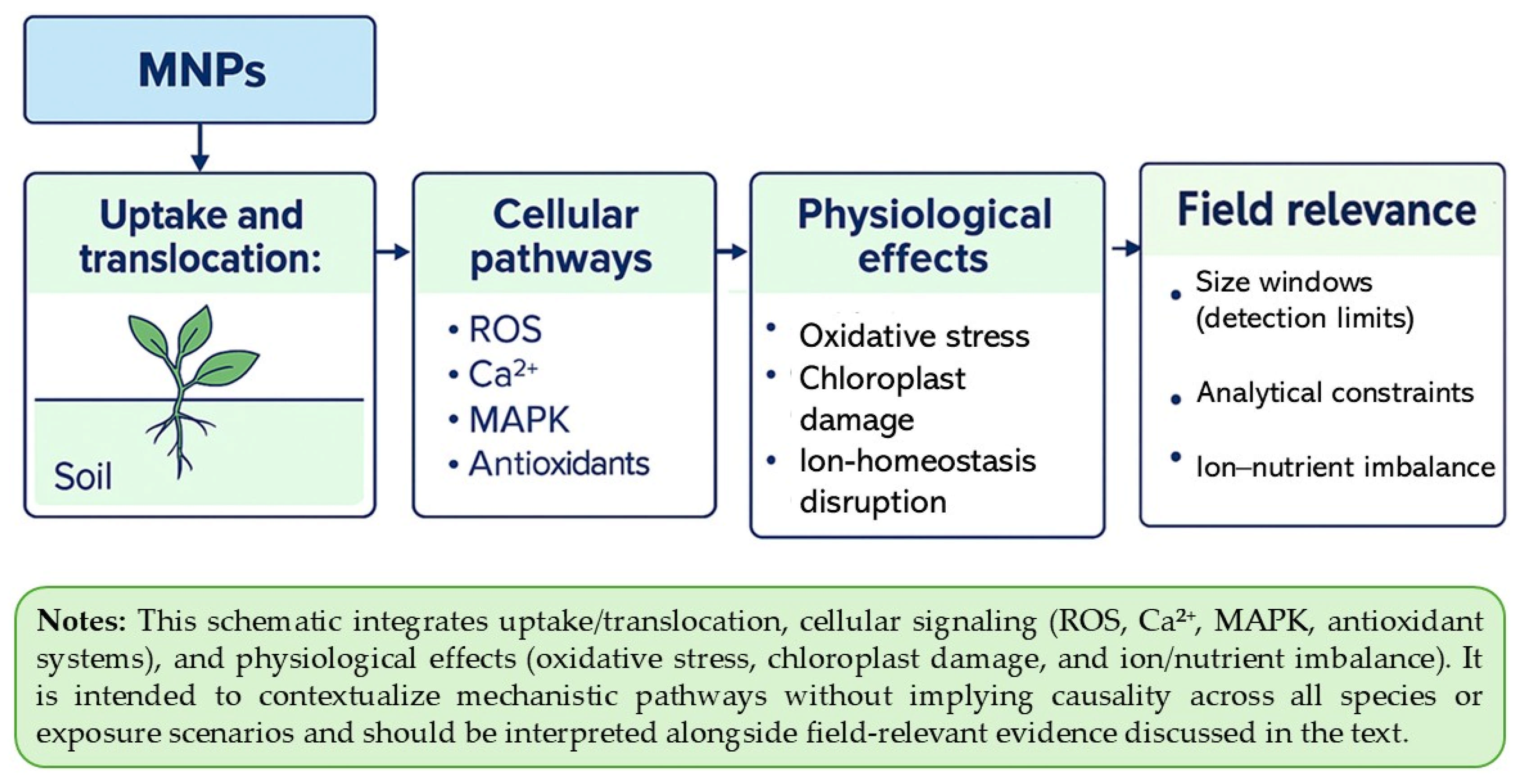
Microplastic contamination in agricultural soils is not limited to passive accumulation but has significant environmental implications. The presence of MPs and NPs can alter soil structure, reduce water retention capacity, and interfere with microbial activity, ultimately compromising soil fertility and biodiversity. Importantly, growing evidence shows that MNPs can be absorbed by plant roots, facilitating their entry into the food chain and raising concerns about food safety and human health [47] (Figure 1).

5. Uptake and Translocation of Micro- and Nanoplastics in Plants

Many controlled condition studies use particle loads that exceed typical field concentrations to ensure detection or amplify mechanistic effects [4,48]. While informative for hazard identification, these scenarios can overstate agronomic impacts if interpreted without environmental context [1]. Distinguishing mechanistic from field-relevant evidence highlights the need for harmonized exposure metrics and long-term field validation to reduce uncertainty and guide crop-risk assessment [2,4].
The influence of particle surface charge on plant translocation depends on plant species, tissue anatomy, and soil–solution chemistry [4]. Highly negative particles may show strong electrostatic interactions with cation-rich cell-wall matrices and apoplastic components, while positively charged particles may interact with negatively charged pectins and membranes, with outcomes modulated by calcium crosslinking, pH, and ionic strength [1,48]. Root exudates further alter near-root charge environments and steric stabilization, producing species-specific patterns of mobility [4]. In saline or alkaline soils, charge screening and cation bridging can enhance deposition and limit symplastic transport, while in organic-matter-rich soils, ligand exchange and corona formation may increase clear mobility [2,48]. These context effects emphasize the need to report soil properties, rhizosphere chemistry, and particle surface characteristics alongside uptake metrics.
Plastic particles present in the atmosphere can settle on plant leaf surfaces and penetrate through microcracks or natural openings, thus entering plant tissues. Once internalized, these particles can be translocated through the vascular system, mainly through the xylem, to shoots, leaves, fruits, and other edible organs [4,49,50].
Plant contamination by plastic particles occurs mainly through two pathways: root uptake and foliar uptake. Plastic particles present in soil or irrigation water can be absorbed by the roots and then translocated to surface and edible tissues, as proven in various horticultural and cereal crops [51,52,53]. Similarly, atmospheric particles can settle on leaf surfaces and be directly absorbed, contributing to the accumulation of plastic in plant tissues and its later transfer through the food chain [54,55].
The presence of MNPs in soils and plants has been shown to induce metabolic and physiological alterations by interfering with processes essential for plant growth and development. From a human health perspective, the ingestion of plastic particles has been associated with inflammatory responses, metabolic disorders, and alterations in the gut microbiota, potentially contributing to the development of chronic diseases [56,57,58]. Furthermore, MNPs can function as vectors for chemical additives and concomitant environmental contaminants, thus amplifying their potential toxicological effects [59].
The uptake of MPs and NPs by edible plants is a complex process influenced by multiple factors, including particle size, shape, polymer composition, surface charge, and anatomical and physiological characteristics of the plant, as well as soil and atmospheric conditions [49,51,60]. Roots constitute the primary interface with contaminated soils, where micro- and nanometer-sized particles can penetrate tissues through microlesions or openings in the rhizodermis, particularly in elongation zones and regions of active growth such as the root tip. NPs show greater penetration potential due to their small size and ability to move along apoplastic and symplastic pathways [44,51]. After overcoming root barriers, sub micrometer MPs and NPs can be transported via the upward flow of the xylem to leaves and fruits [51,52].
In addition to root uptake, foliar uptake has appeared as an increasingly relevant exposure route, particularly in urban and industrialized environments. Experimental evidence shows that leaves can directly absorb airborne MNPs through their stomata, especially when particle diameter is less than approximately 2 µm. Stomatal aperture, regulated by environmental factors such as light, humidity, and CO2 concentration, strongly influences particle entry [54,55]. Leaf characteristics, including the presence of trichomes, further enhance the retention of airborne particles, favoring their surface accumulation. While the cuticle acts as a hydrophobic barrier, it can also facilitate microplastic uptake, especially in the presence of organic contaminants that increase surface affinity. Deposited particles can remain attached to leaf surfaces, posing a direct risk at the time of consumption, or penetrate internal tissues and, in some cases, access the vascular system [52,54,61].
From a physiological and agronomic perspective, MNPs uptake can impair multiple plant functions, including water and nutrient uptake by roots, photosynthetic efficiency, through stomatal obstruction and oxidative stress, and the translocation of mineral nutrients. These effects can result in reduced crop productivity and increased accumulation of plastic contaminants in edible tissues, with important implications for food safety and human health [49,56,57]. Although several experimental studies have proven the uptake and translocation of nanoplastics in plants, the evidence for microplastic internalization under realistic soil conditions is still limited and sometimes contradictory, highlighting the need for further studies under field relevant conditions.
Plastic particles can reach humans through the consumption of contaminated plant products or animal-derived foods. Although their toxicological implications are still being studied, growing experimental evidence suggests potential risks associated with chronic exposure to multicellular plastic particles [4,49,50].

6. Micro- and Nanoplastics: Characteristics and Distribution in Horticultural Products

In controlled experimental systems, both root uptake and translocation of MNPs from roots to shoots have been consistently proven in a wide range of plant species. While the presence of stomata, epidermal structures approximately 25 µm long and 3–10 µm wide, allows for the potential foliar entry of very small particles, most experimental evidence on MNPs uptake has focused on the root system, which is a primary interface with contaminated soils [49,51]. MNPs readily adhere to root surfaces due to their large contact area and interactions with root exudates, helping later transfer to stems, leaves, and other above-ground organs [49].
In soil and cropping systems, microplastic particles are detected as fragments, films, and pellets [4,49]. Beyond size and morphology, polymer composition is a key determinant of particle behavior, influencing environmental persistence, mobility, and interactions with plant tissues. Polymers such as polystyrene, polyethylene, and polypropylene exhibit distinct patterns of uptake and translocation, partly governed by surface charge and physicochemical properties that modulate cell wall adhesion and penetration through biological barriers [49,51]. Together, these factors explain the observed variability in MNPs accumulation across plant species, tissues, and experimental conditions.
Evidence of microplastic contamination is not limited to seedlings or experimental crops but extends to horticultural products intended for human consumption. Studies on carrots, radishes, lettuce, peas, tomatoes, and other vegetables have proven the presence of both micro- and nanoscale plastic particles in roots and, in some cases, shoots and leaves, showing transfer from roots to shoots under realistic exposure scenarios [62]. Analysis of collected fruits and vegetables has documented the presence of MNPs in carrots, lettuce, broccoli, apples, and pears, with particle sizes in the low micrometer range and marked variability among species and tissues. In these studies, carrots often showed the highest particle counts among vegetables, while fruits such as apples showed elevated levels of contamination, highlighting species-specific and tissue-dependent differences in microplastic accumulation. Importantly, these results prove that particle uptake is not limited to the nanometer range, as relatively large MNPs were also detected within plant tissues. Table 1 summarizes current evidence on the presence of MNPs in various plant-derived foods, highlighting their occurrence in edible tissues and the main exposure pathways reported in the literature [54,63,64,65,66,67,68,69,70,71,72,73,74,75,76,77,78,79,80,81,82,83,84,85,86]. Consistent with these findings, atmospheric deposition is increasingly recognized as a relevant source of terrestrial contamination, suggesting that crops with large leaf surface areas may be particularly susceptible to airborne MNPs [87].
Taken together, these findings gain relevance when framed within current public health recommendations. The World Health Organization finds the Mediterranean diet as one of the most effective dietary patterns for the prevention of non-communicable diseases and for the maintenance of long-term health, explicitly recommending a minimum intake of at least 400 g per day (approximately five portions) of fruits and vegetables, excluding starchy roots such as potatoes and cassava. Although nutritionally beneficial, this dietary guidance inherently increases human exposure to plant-derived foods that are increasingly recognized as potential carriers of MNPs [88,89].
Importantly, fruits and vegetables are also major dietary sources of phytochemicals, with polyphenols being one of the most abundant and biologically active classes. Polyphenolic compounds, including flavonoids, phenolic acids, stilbenes, and lignans, are well known for their strong antioxidant and anti-inflammatory properties and for their ability to modulate cellular redox balance, mitochondrial function, and inflammatory signaling pathways [90,91,92,93,94,95,96]. These mechanisms closely overlap with the key biological processes disrupted by MNPs exposure, such as excessive reactive oxygen species production, chronic low-grade inflammation, and impairment of epithelial barrier integrity. Experimental evidence suggests that polyphenols can attenuate oxidative stress, regulate NF-κB- and Nrf2-dependent pathways, and preserve cellular homeostasis, thereby potentially counteracting some of the molecular and cellular effects associated with plastic particle exposure.
Thus, plant-based foods are a complex exposure interface in which potential contamination by MNPs coexists with a high content of bioactive compounds that may partially mitigate adverse biological responses. Nevertheless, the widespread detection of plastic particles in fruits, leafy and root vegetables, and spices raises important questions about food quality and safety, particularly in the absence of specific national or international regulatory thresholds for plastic contamination in food. Given the pervasive distribution of MNPs in agricultural environments and along food supply chains, systematic assessment of MNPs in plant-based foods remains highly relevant, not only from an environmental perspective but also in relation to dietary exposure, nutritional value, and preventive health strategies. Distinguishing between primary and secondary MNPs further contributes to finding contamination sources and pathways, thereby supporting the development of targeted monitoring and mitigation approaches within agri-food systems [43].
These considerations underscore the importance of elucidating the physiological and molecular responses elicited by MNPs, particularly those related to oxidative stress and inflammatory signaling, in both plant and human systems.

7. Impacts of Micro- and Nanoplastics on Plant Physiology

MNPs are increasingly recognized as emerging environmental stressors affecting terrestrial and aquatic ecosystems, including plant systems. MPs and NPs can interfere with essential physiological and biochemical processes such as primary metabolism, redox balance, and photosynthetic performance. These alterations can compromise plant growth, crop productivity, and, on a larger scale, the sustainability of food production systems [48,58,97].
At the cellular level, exposure to MPs, and particularly NPs due to their smaller size and greater reactivity, induces oxidative stress by promoting the excessive generation of reactive oxygen species (ROS). Elevated levels of ROS compromise membrane integrity, denature proteins, and cause damage to nucleic acids, leading to impaired enzymatic activity and hormonal signaling. Numerous studies have reported that MNP-induced oxidative stress alters antioxidant defense systems, including enzymatic and non-enzymatic components, and triggers changes in the expression of stress-related genes. Consequently, plant resilience to added abiotic or biotic stressors can be significantly reduced [98,99,100,101].
Among the physiological processes affected by MPs and NPs, photosynthesis appears to be one of the most sensitive. Experimental studies consistently report significant decreases in chlorophyll a and b contents, along with declines in photosynthetic efficiency and carbon assimilation. A recent global meta-analysis based on 157 studies and over 3000 observations documented average reductions in photosynthetic performance ranging from 7% to 12% in terrestrial plants and aquatic primary producers, with maximum reductions reaching approximately 18% in the presence of high levels of microplastic contamination [102]. These negative effects have been attributed to multiple, often concomitant, mechanisms, including oxidative damage to chloroplast ultrastructure, interference with electron transport chains, stomatal obstruction, and impaired nutrient uptake [95,103].
Alterations in photosynthetic performance inevitably translate into reduced plant growth and crop yields, raising concerns about the long-term sustainability of agricultural systems. Model-based scenarios suggest that MNP-induced reductions in photosynthetic efficiency could translate into yield penalties for major staples (e.g., wheat, rice, maize) on the order of ~4–14%, contingent on exposure assumptions and simulation parameters rather than long-term field measurements [102].
Molecular-level mechanisms. Recent studies show that plant responses to MNPs involve conserved molecular signaling pathways. Exposure can trigger compartment-specific reactive oxygen species (ROS) bursts that interact with Ca2+ signaling and mitogen-activated protein kinase (MAPK) cascades, leading to the activation of stress-responsive and antioxidant genes. Hormonal crosstalk involving abscisic acid, salicylic acid, jasmonic acid, and ethylene further modulates stomatal behavior, nutrient homeostasis, and defense adjustments under MNP exposure [104]. Calcium-dependent protein kinases (CDPKs/CPKs) and receptor-like cytoplasmic kinases (RLCKs) function as central hubs decoding Ca2+ signatures and coordinating ROS production, transcriptional reprogramming, and cell wall remodeling. Transcriptomic and multi-omics analyses also report alterations in chloroplast ultrastructure, redox enzymes, nutrient-transporter expression, and regulatory RNAs in plants exposed to MPs/NPs, linking molecular perturbations to the physiological outcomes described above [48,105].
In addition to these direct physiological effects, MNPs can indirectly influence plant productivity by altering soil physical properties, water holding capacity, and microbial community composition. Such changes can further worsen plant stress under field conditions, particularly in agroecosystems already exposed to climate variability and resource limitations [106]. The impacts of MP- and NP-induced stress are not limited to terrestrial environments. Similar reductions in photosynthetic activity have been observed in marine algae and phytoplankton, which form the basis of aquatic food webs. Model-based estimates suggest that impaired primary production could lead to annual losses of fish and seafood biomass ranging from approximately 1 to over 20 million tonnes. These findings highlight the potential relevance of plastic pollution for the sustainability of fisheries, aquaculture, and marine ecosystem services [102,107].
When considered collectively, potential reductions in terrestrial crop yields and aquatic primary productivity should be presented as model-based projections, not as empirically observed global trends [108,109]. These estimates rely on assumptions concerning exposure intensity, ecosystem sensitivity and trophic-transfer dynamics, and therefore carry substantial uncertainty [110]. International reports (e.g., FAO/UNEP) highlight plastic pollution as a growing pressure on agri-food systems [43,107], but the quantitative links to global food and fisheries outputs remain assumption-dependent and should be confirmed against field-relevant data [110].
Bridging statement (food-chain transfer and human exposure—caution). While experimental evidence supports MNPs uptake by plants and translocation to edible tissues, later transfer to humans stays limited by analytical constraints and sparse field-scale datasets; so, inferences about human internalization are provisional and should be framed cautiously [111,112]. To reconcile high-dose laboratory scenarios with agricultural conditions, harmonized exposure metrics (including particle-size range and detection limits) and long-term field validation are needed to enable cross-study comparability and robust risk appraisal. In this review, dietary exposure is therefore treated as scenario-based and assumption-dependent, pending standardized methods and multi-year datasets cautiously [111,112].

8. Implications for Human Health and Food Security

The accumulation of MNPs in edible plant tissues stands for a growing concern for dietary exposure and food safety. MNPs can reach consumers primarily through contaminated plant-based foods, derived food products, and indirectly through animal products originating from livestock exposed to contaminated feed. This scenario raises questions about chronic exposure, internal accumulation, and potential toxicological effects, with implications for public health and food system resilience [113,114].
Dietary intake is considered the dominant exposure pathway, as MNPs have been detected in a variety of food commodities. Biomonitoring studies show that ingested MNPs may accumulate along gastrointestinal barriers, while inhaled particles may deposit in the respiratory system [115]. The presence of MNPs in human lung tissue further supports the persistence of airborne exposures, consistent with epidemiological data reporting increased respiratory risks in occupationally exposed populations [116,117,118]. Drinking water makes up an added route of exposure due to contamination of surface waters and distribution systems [113].
Current estimates suggesting that an average adult may ingest between 50,000 and 120,000 plastic particles per year should be interpreted as scenario-based approximations, as they depend strongly on the particle size ranges detectable with available analytical methods, the detection limits adopted in different studies, and the assumptions used to extrapolate dietary and inhalation exposure [111,119,120]. These values therefore provide a sign of the potential magnitude of chronic low-dose exposure rather than a precise measurement and should be considered with proper caution [114].
Toxicological studies consistently show oxidative stress, chronic inflammation, and altered cellular homeostasis as key mechanisms underlying MNP-induced effects [115,121]. Their small size also allows MNPs to act as carriers for additives and environmental contaminants, such as phthalates and bisphenols, raising more concerns about combined particle- and chemical-mediated effects [122,123,124].
From an agri-food perspective, the presence of MNPs in edible plant and animal tissues adds an added pressure to food systems already facing climate stress and soil degradation. Reports from international organizations show that reduced crop yields combined with increasing contamination may worsen food insecurity in vulnerable regions [43,45,125].
Emerging biomonitoring studies show that MNPs can be detected in human tissues, including semen, showing reproductive tract exposure [126,127,128], and may distribute systemically to multiple organs [114,129,130]. Evidence of transplacental transfer further raises concerns about prenatal exposure during sensitive developmental windows [131]. MNP accumulation has also been reported in cirrhotic liver tissue, where impaired barrier function may favor retention [132], and particles have been detected in human urine, suggesting partial renal clearance [133,134].
Signals have also appeared for the cardiovascular system, with MNPs shown in atherosclerotic plaques and associated with a higher risk of major adverse cardiovascular events [98]. These findings have led to increased attention toward inflammatory and barrier-related pathways potentially affected by MNPs.
Recent reports of MNPs in human brain tissue derive from observational post-mortem analyses and therefore cannot prove any causal link with neurological conditions [135]. Higher particle burdens have been documented in some individuals diagnosed with dementia, but these findings are preliminary associations rather than evidence of direct involvement in neurodegenerative pathways [135,136]. Evaluations by risk-assessment authorities highlight methodological uncertainties in detection and quantification, underscoring the need for cautious interpretation [137]. Although these studies show that MNPs can cross biological barriers and persist in neural tissues, their clinical significance is still unclear and requires dedicated mechanistic and longitudinal research [111].
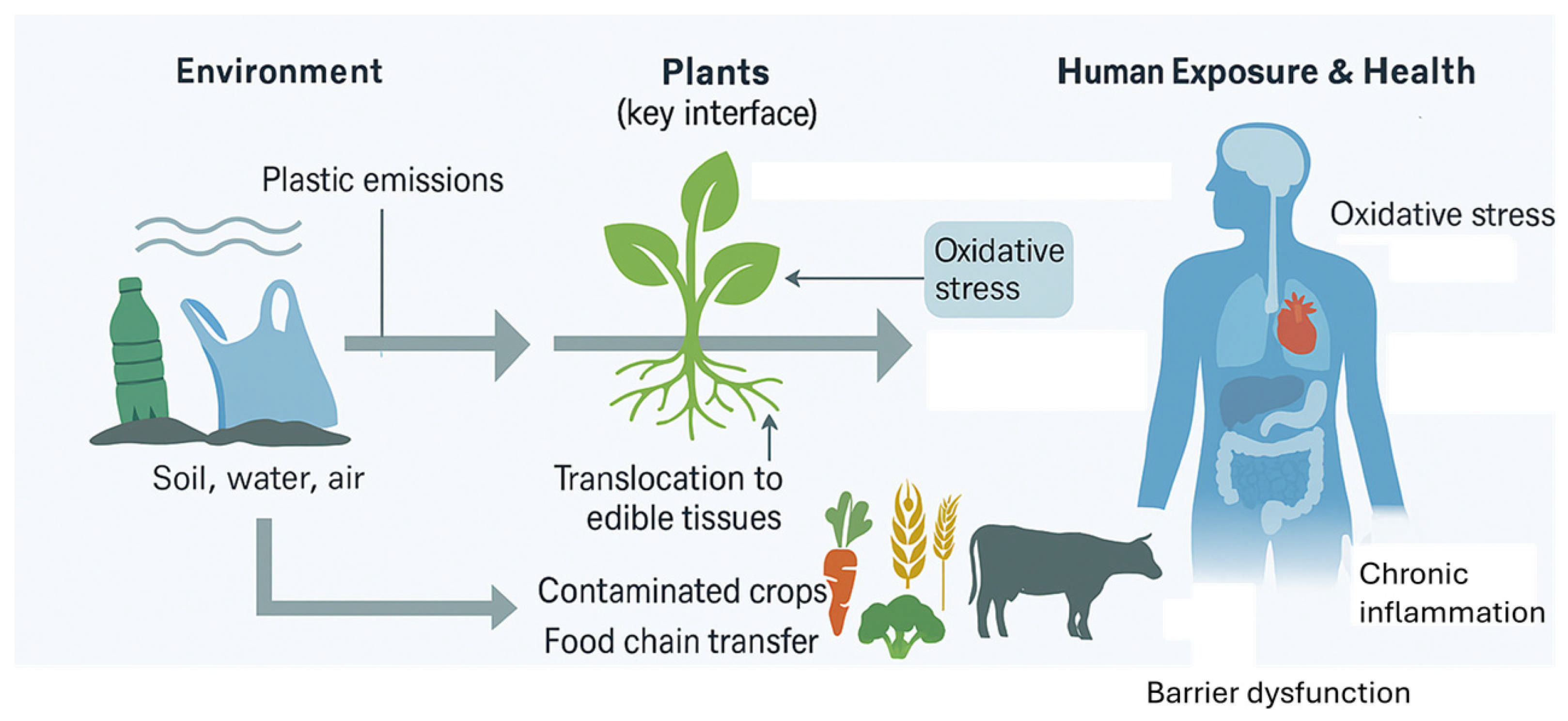
Overall, the available evidence shows that MNPs represent an emerging environmental determinant of food safety and human exposure. While the health implications of chronic low-dose intake require further clarification, their presence in edible tissues underscores the need for field-relevant exposure assessments, improved analytical methods, and preventive strategies aimed at reducing contamination within agricultural systems (Figure 2).

9. Conclusions

Micro- and nanoplastics pollution are a pervasive, multidimensional sustainability challenge whose implications extend beyond environmental contamination to encompass plant physiology, agri-food systems, and human health. The body of available evidence provides strong and convergent support that MNPs are taken up by plants via root and foliar pathways and can be translocated to edible tissues under experimental and field relevant conditions, with later transfer to humans through plant and animal-derived foods. This delineates a plausible exposure continuum linking plastic emissions, agri-food systems, and health risk, without asserting universal validity across all species, polymers, and exposure scenarios.
In plant systems, MNPs exposure is consistently associated with perturbations of metabolic regulation, redox balance, and photosynthetic efficiency; across multiple species, polymer types, and particle sizes, these alterations have been linked to measurable reductions in yield related traits in experimental and modeling studies, particularly at defined concentration ranges and under environmental contexts that mirror field stressors such as climate pressure and soil degradation. Collectively, these effects challenge the sustainability and resilience of agricultural systems under conditions of increasing environmental stress.
In humans, a growing body of evidence shows that MNPs can cross biological barriers and accumulate in vulnerable tissues, including the placenta, cardiovascular compartments, and the brain. The detection of MNPs in atherosclerotic plaques has been associated with an increased risk of major adverse cardiovascular events in prospective settings, while postmortem analyses suggest higher burdens in brain tissue than in other organs and elevated levels in individuals with dementia. Regulatory appraisals, however, underscore the need for methodological caution and independent replication. Across organ systems, experimental and clinical observations converge on shared biological responses, oxidative stress, chronic inflammation, mitochondrial dysfunction, and barrier impairment, reflecting conserved stress pathways observed across polymer types and exposure routes.
Although the human evidence remains heterogeneous and largely observational, limiting causal inference, the consistency of signals across exposure pathways, biological systems, and experimental models supports biological plausibility and justifies concern. Given the persistence of plastics, the cumulative nature of exposure, and the heightened vulnerability of sensitive populations, including fetuses, children, and individuals with chronic diseases, the application of the precautionary principle is called for. Advancing risk assessment will require coordinated efforts to harmonize analytical methods, standardize exposure metrics, and support large-scale longitudinal cohorts capable of linking environmental contamination, dietary exposure, and health outcomes over time. In parallel, upstream interventions, reducing plastic inputs into agroecosystems, limiting contamination along supply chains, promoting safer material design, and ensuring effective end-of-life management, represent critical levers to curb exposure while preserving agricultural productivity and ecosystem function.
In summary, despite remaining uncertainties, particularly about long-term human health risks, MNPs represent an emerging, non-negligible risk at the intersection of environmental pollution, food security, and public health. Addressing this challenge will require coordinated scientific, regulatory, and societal action aligned with sustainability goals, aimed not only at mitigating exposure but also at safeguarding the resilience of food systems and population health over the long term.

Funding

This research received no external funding.

Institutional Review Board Statement

Not applicable.

Informed Consent Statement

Not applicable.

Data Availability Statement

The original contributions presented in this study are included in the article. Further inquiries can be directed at the author.

Conflicts of Interest

The author declares no conflicts of interest.

References

  1. Mohasin, M.; Habib, K.; Rao, P.S. Microplastics in agricultural soils: Sources, impacts, and mitigation strategies. Environ. Monit. Assess. 2025, 197, 684. [Google Scholar] [CrossRef]
  2. Garbounis, G.; Karasali, H.; Komilis, D. Origin, Occurrence and Threats of Microplastics in Agricultural Soils: A Comprehensive Review. Sustainability 2026, 18, 1524. [Google Scholar] [CrossRef]
  3. Öling-Wärnå, V. Overview of Microplastics in Agriculture Settings; Serie R: Rapporter 6/2025; Novia University of Applied Sciences: Vaasa, Finland, 2025; ISBN 978-952-7526-55-2. ISSN 1799-4179. [Google Scholar]
  4. Chen, Z.; Carter, L.J.; Banwart, S.A.; Kay, P. Microplastics in soil–plant systems: Current knowledge, research gaps, and future directions. Agronomy 2025, 15, 1519. [Google Scholar] [CrossRef]
  5. Arab, M.; Yu, J.; Nayebi, B. Microplastics in Sludges and Soils: A Comprehensive Review on Distribution, Characteristics, and Effects. Chem. Eng. 2024, 8, 86. [Google Scholar] [CrossRef]
  6. Buchanan, J.B. Pollution by synthetic fibres. Mar. Pollut. Bull. 1971, 2, 23–24. [Google Scholar] [CrossRef]
  7. Carpenter, E.J.; Smith, K.L. Plastics on the Sargasso Sea surface. Science 1972, 175, 1240–1241. [Google Scholar] [CrossRef]
  8. Colton, J.B.; Knapp, F.D.; Burns, B.R. Plastic particles in surface waters of the Northwestern Atlantic. Science 1974, 185, 491–497. [Google Scholar] [CrossRef]
  9. Wong, C.S.; Green, D.R.; Cretney, W.J. Quantitative tar and plastic waste in surface waters of the North Pacific Ocean. Mar. Pollut. Bull. 1974, 5, 44–48. [Google Scholar]
  10. Thompson, R.C.; Olsen, Y.; Mitchell, R.P.; Davis, A.; Rowland, S.J.; John, A.W.; McGonigle, D.; Russell, A.E. Lost at sea: Where is all the plastic? Science 2004, 304, 838. [Google Scholar] [CrossRef]
  11. Borrelle, S.B.; Ringma, J.; Law, K.L.; Monnahan, C.C.; Lebreton, L.; McGivern, A.; Murphy, E.; Jambeck, J.; Leonard, G.H.; Hilleary, M.A.; et al. Predicted growth in plastic waste exceeds efforts to mitigate plastic pollution. Science 2020, 369, 1515–1518. [Google Scholar] [CrossRef]
  12. Everaert, G.; Van Cauwenberghe, L.; De Rijcke, M.; Koelmans, A.A.; Mees, J.; Vandegehuchte, M.; Janssen, C.R. Risk assessment of microplastics in the ocean: Modelling approach and first conclusions. Environ. Pollut. 2018, 242, 1930–1938. [Google Scholar] [CrossRef]
  13. Lebreton, L.; Andrady, A. Future scenarios of global plastic waste generation and disposal. Palgrave Commun. 2019, 5, 6. [Google Scholar] [CrossRef]
  14. van Sebille, E.; Wilcox, C.; Lebreton, L.; Maximenko, N.; Hardesty, B.D.; van Franeker, J.A.; Eriksen, M.; Siegel, D.J.; Galgani, F.; Law, K.L. A global inventory of small floating plastic debris. Environ. Res. Lett. 2015, 10, 124006. [Google Scholar] [CrossRef]
  15. Everaert, G.; De Rijcke, M.; Lonneville, B.; Janssen, C.R.; Backhaus, T.; Mees, J.; van Sebille, E.; Koelmans, A.A.; Catarino, A.I.; Vandegehuchte, M.B. Risks of floating microplastic in the global ocean. Environ. Pollut. 2020, 267, 115499. [Google Scholar] [CrossRef]
  16. He, D.; Bristow, K.; Filipović, V.; Lv, J.; He, H. Microplastics in Terrestrial Ecosystems: A Scientometric Analysis. Sustainability 2020, 12, 8739. [Google Scholar] [CrossRef]
  17. Kedzierski, M.; Cirederf-Boulant, D.; Palazot, M.; Yvin, M.; Bruzaud, S. Continents of plastics: An estimate of the stock of microplastics in agricultural soils. Sci. Total Environ. 2023, 880, 163294. [Google Scholar] [CrossRef] [PubMed]
  18. Geyer, R.; Jambeck, J.R.; Law, K.L. Production, use, and fate of all plastics ever made. Sci. Adv. 2017, 3, e1700782. [Google Scholar] [CrossRef]
  19. OECD. Global Plastics Outlook: Economic Drivers, Environmental Impacts and Policy Options; OECD Publishing: Paris, France, 2022. [Google Scholar] [CrossRef]
  20. Swain, P.R.; Parida, P.K.; Majhi, P.J.; Behera, B.K.; Das, B.K. Microplastics as Emerging Contaminants: Challenges in Inland Aquatic Food Web. Water 2025, 17, 201. [Google Scholar] [CrossRef]
  21. de Souza Machado, A.A.; Kloas, W.; Zarfl, C.; Hempel, S.; Rillig, M.C. Microplastics as an emerging threat to terrestrial ecosystems. Glob. Change Biol. 2018, 24, 1405–1416. [Google Scholar] [CrossRef]
  22. Omidoyin, K.C.; Jho, E.H. Environmental occurrence and ecotoxicological risks of plastic leachates in aquatic and terrestrial environments. Sci. Total Environ. 2024, 954, 176728. [Google Scholar] [CrossRef]
  23. Yang, L.; Zhang, Y.; Kang, S.; Wang, Z.; Wu, C. Microplastics in soil: A review on methods, occurrence, sources, and potential risk. Sci. Total Environ. 2021, 780, 146546. [Google Scholar] [CrossRef] [PubMed]
  24. Yu, L.; Zhang, J.; Liu, Y.; Chen, L.; Tao, S.; Liu, W. Distribution characteristics of microplastics in agricultural soils from the largest vegetable production base in China. Sci. Total Environ. 2021, 756, 143860. [Google Scholar] [CrossRef] [PubMed]
  25. Xu, S.; Zhao, R.; Sun, J.; Sun, Y.; Xu, G.; Wang, F. Microplastics change soil properties, plant performance, and bacterial communities in salt-affected soils. J. Hazard. Mater. 2024, 471, 134333. [Google Scholar] [CrossRef] [PubMed]
  26. Lu, K.; Que, Y.; Wang, L.; Wang, Y.; Qiu, J.; Jia, Y.; Ding, C.; Wang, D.; Cheng, W.; Zhang, Y. Environmental exposure pathways of microplastics and their toxic effects on ecosystems and the nervous system. Front. Toxicol. 2025, 7, 1649282. [Google Scholar] [CrossRef]
  27. Zhou, Q.; Zhang, H.; Fu, C.; Zhou, Y.; Dai, Z.; Yuan, L.; Tu, C.; Luo, Y. The distribution and morphology of microplastics in coastal soils adjacent to the Bohai Sea and the Yellow Sea. Geoderma 2018, 322, 201–208. [Google Scholar] [CrossRef]
  28. Enyoh, C.E.; Verla, A.W.; Verla, E.N.; Ibe, F.C.; Amaobi, C.E. Airborne microplastics: A review study on method for analysis, occurrence, movement and risks. Environ. Monit. Assess. 2019, 191, 668. [Google Scholar] [CrossRef]
  29. Evangeliou, N.; Grythe, H.; Klimont, Z.; Heyes, C.; Eckhardt, S.; Lopez-Aparicio, S.; Stohl, A. Atmospheric transport is a major pathway of microplastics to remote regions. Nat. Commun. 2020, 11, 3381. [Google Scholar] [CrossRef]
  30. De Falco, F.; Gullo, M.P.; Gentile, G.; Di Pace, E.; Cocca, M.; Gelabert, L.; Brouta-Agnésa, M.; Rovira, A.; Escudero, R.; Villalba, R.; et al. Evaluation of microplastic release caused by textile washing processes of synthetic fabrics. Environ. Pollut. 2018, 236, 916–925. [Google Scholar] [CrossRef]
  31. Eriksen, M.; Lebreton, L.C.; Carson, H.S.; Thiel, M.; Moore, C.J.; Borerro, J.C.; Galgani, F.; Ryan, P.G.; Reisser, J. Plastic pollution in the World’s oceans: More than 5 trillion plastic pieces weighing over 250,000 tons afloat at sea. PLoS ONE 2014, 9, e111913. [Google Scholar] [CrossRef]
  32. Gan, Q.; Cui, J.; Jin, B. Environmental microplastics: Classification, sources, fates, and effects on plants. Chemosphere 2023, 313, 137559. [Google Scholar] [CrossRef]
  33. Kushwaha, M.; Shankar, S.; Goel, D.; Singh, S.; Rahul, J.; Rachna, K.; Singh, J. Microplastics pollution in the marine environment: A review of sources, impacts and mitigation. Mar. Pollut. Bull. 2024, 209, 117109. [Google Scholar] [CrossRef] [PubMed]
  34. Gewert, B.; Plassmann, M.M.; MacLeod, M. Pathways for degradation of plastic polymers floating in the marine environment. Environ. Sci. Process. Impacts 2015, 17, 1513–1521. [Google Scholar] [CrossRef] [PubMed]
  35. Singh, B.; Sharma, N. Mechanistic implications of plastic degradation. Polym. Degrad. Stab. 2008, 93, 561–584. [Google Scholar] [CrossRef]
  36. Shah, A.A.; Hasan, F.; Hameed, A.; Ahmed, S. Biological degradation of plastics: A comprehensive review. Biotechnol. Adv. 2008, 26, 246–265. [Google Scholar] [CrossRef]
  37. Lambert, S.; Wagner, M. Environmental performance of plastic polymers. Chemosphere 2018, 190, 5–12. [Google Scholar] [CrossRef]
  38. Rose, P.K.; Jain, M.; Kataria, N.; Sahoo, P.K.; Garg, V.K.; Yadav, A. Microplastics in multimedia environment: A systematic review on its fate, transport, quantification, health risk, and remedial measures. Groundw. Sustain. Dev. 2023, 20, 100889. [Google Scholar] [CrossRef]
  39. Mamun, A.A.; Prasetya, T.A.E.; Dewi, I.R.; Ahmad, M. Microplastics in human food chains: Food becoming a threat to health safety. Sci. Total Environ. 2023, 858, 159834. [Google Scholar] [CrossRef]
  40. Sajjad, M.; Huang, Q.; Khan, S.; Khan, M.A.; Liu, Y.; Wang, J.; Lian, F.; Wang, Q.; Guo, G. Microplastics in the soil environment: A critical review. Environ. Technol. Innov. 2022, 27, 102408. [Google Scholar] [CrossRef]
  41. Liu, N.; Li, Z.; Cheng, S.; Monikh, F.A.; Ye, Z.; Ma, T.; Zheng, L.; Wang, X.; Ni, B.J.; Chen, Z.; et al. Extracting and characterizing microplastics and nanoplastics from environmental samples. Nat. Protoc. 2025. [Google Scholar] [CrossRef]
  42. Allen, S.; Allen, D.; Phoenix, V.R.; Le Roux, G.; Jiménez, P.D.; Simonneau, A.; Binet, S.; Galop, D. Atmospheric transport and deposition of microplastics. Nat. Geosci. 2019, 12, 339–344. [Google Scholar] [CrossRef]
  43. FAO. Microplastics in Food Commodities: A Food Safety Review on Human Exposure Through Dietary Sources; Food Safety and Quality Series No. 18; Food and Agriculture Organization of the United Nations: Rome, Italy, 2022. [Google Scholar] [CrossRef]
  44. Zhang, L.; Lucini, L.; Trevisan, M. Microplastics in organic fertilizers and compost. Sci. Total Environ. 2024, 902, 165896. [Google Scholar] [CrossRef]
  45. UNEP. Turning off the Tap: How the World Can End Plastic Pollution and Create a Circular Economy; United Nations Environment Programme: Nairobi, Kenya, 2023; Available online: https://www.unep.org/resources/turning-off-tap-end-plastic-pollution-create-circular-economy (accessed on 5 February 2026).
  46. Solanki, P.; Jain, S.; Mehrotra, R.; Mago, P.; Dagar, S. Microplastics in Agricultural Soil and Their Impact: A Review. Nat. Environ. Pollut. Technol. 2024, 23, 2143–2155. [Google Scholar] [CrossRef]
  47. Li, L.; Luo, Y.; Li, R.; Li, R.; Zhou, Q.; Peijnenburg, W.J.G.M.; Yin, N.; Yang, J.; Tu, C.; Zhang, Y. Effective uptake of submicrometre plastics by crop plants via a crack-entry mode. Nat. Sustain. 2020, 3, 929–937. [Google Scholar] [CrossRef]
  48. Wong, A.E.; Taylor, G. Plants and microplastics: Growing impacts in the terrestrial environment. Front. Plant Sci. 2025, 16, 1666047. [Google Scholar] [CrossRef] [PubMed]
  49. Azeem, I.; Adeel, M.; Ahmad, M.A.; Shakoor, N.; Jiangcuo, G.D.; Azeem, K.; Ishfaq, M.; Shakoor, A.; Ayaz, M.; Xu, M.; et al. Uptake and accumulation of nano/microplastics in plants: A critical review. Nanomaterials 2021, 11, 2935. [Google Scholar] [CrossRef]
  50. Li, H.; Hong, J.; Zeng, L.; Wang, C. Microplastic Contamination across the Soil–Plant–Human Continuum: Mechanisms and Chain-Specific Governance. Earth Environ. Sustain. 2025, 1, 195–201. [Google Scholar] [CrossRef]
  51. Zhefu, Y.; Xiaolu, X.; Liang, G.; Rong, J.; Yin, L. Uptake and Transport of Micro/Nanoplastics in Terrestrial Plants. Sci. Total Environ. 2024, 907, 168155. [Google Scholar] [CrossRef]
  52. Farooq, M.A.; Hannan, F.; Zou, H.-X.; Zhou, W.; Zhao, D.-S.; Ayyaz, A.; Ullah Asad, M.A.; Ahmad, R.; Yan, X. Microplastics in Soil–Plant Systems: Impacts on Soil Health, Plant Toxicity, and Multiomics Insights. Plant Cell Rep. 2025, 44, 283. [Google Scholar] [CrossRef]
  53. Du, H.; Peng, C.; Li, Y.; Shi, X.; Liu, C.; Liu, W.; Wang, L. Absorption of Microplastics by Terrestrial Plants and Their Ecological Risk. New Contam. 2025, 1, e003. [Google Scholar] [CrossRef]
  54. Li, Y.; Zhang, J.; Xu, L.; Li, R.; Zhang, R.; Li, M.; Ran, C.; Rao, Z.; Wei, X.; Chen, M.; et al. Leaf Absorption Contributes to Accumulation of Microplastics in Plants. Nature 2025, 641, 666–673. [Google Scholar] [CrossRef]
  55. Peijnenburg, W. Airborne Microplastics Enter Plant Leaves and End Up in Our Food. Nature 2025, 641, 666–667. [Google Scholar] [CrossRef]
  56. Pal, S.; Dutta Gupta, S.; Sen Guha, P.; Saha, N. Microplastics as Emerging Stressors in Plants: Biochemical and Metabolic Responses. Environ. Geochem. Health 2025, 47, 530. [Google Scholar] [CrossRef] [PubMed]
  57. Ishfaq, M.; Shakoor, N.; Rillig, M.C.; Geilfus, C.-M. Airborne Microplastics in Leaves and Food Safety Risks. Trends Plant Sci. 2025, 30, 1063–1065. [Google Scholar] [CrossRef] [PubMed]
  58. Chaudhary, H.D.; Shah, G.; Bhatt, U.; Singh, H.; Soni, V. Microplastics and Plant Health: A Comprehensive Review of Sources, Distribution, Toxicity, and Remediation. npj Emerg. Contam. 2025, 1, 8. [Google Scholar] [CrossRef]
  59. Singh, S.; Naeem, M.; Großkinsky, D.K.; Avasthe, R.; Freitas, H.; Babu, S. Editorial: Impact of Microplastics on Soil Health and Plant Physiology in Agricultural Ecosystems. Front. Plant Sci. 2025, 16, 1718582. [Google Scholar] [CrossRef]
  60. Yavas, I.; ul Din, K.; Hussain, S.; Naeem, M.S.; Albadrani, G.M.; Muneeba; Kara, E.; Surmen, M. Uptake and Transport of Nanoparticles in Plants. In Plant Nanotechnology Fundamentals and Methodologies; Al-Khayri, J.M., Anju, T.R., Jain, S.M., Eds.; Springer: Cham, Switzerland, 2025; pp. 99–121. [Google Scholar] [CrossRef]
  61. Nature Research News. Airborne Microplastics Infiltrate Plant Leaves. Phys.org. 2025. Available online: https://phys.org/news/2025-04-airborne-microplastics-infiltrate-environmental.html (accessed on 21 January 2026).
  62. EFSA Panel on Contaminants in the Food Chain (CONTAM). Risk Assessment of Microplastics in Food. EFSA J. 2016, 14, e04513. [CrossRef]
  63. Dong, Y.; Gao, M.; Song, Z.; Qiu, W. Uptake and Translocation of Polystyrene Micro- and Nanoplastics in Carrot Plants. Environ. Pollut. 2021, 275, 116732. [Google Scholar] [CrossRef]
  64. Tympa, L.-E.; Katsara, K.; Moschou, P.N.; Kenanakis, G.; Papadakis, V.M. Do microplastics enter our food chain via root vegetables? A Raman based spectroscopic study on raphanus sativus. Materials 2021, 14, 2329. [Google Scholar] [CrossRef]
  65. Gong, W.; Zhang, W.; Jiang, M.; Li, S.; Liang, G.; Bu, Q.; Xu, L.; Zhu, H.; Lu, A. Species-dependent response of food crops to polystyrene nanoplastics and microplastics. Sci. Total Environ. 2021, 796, 148750. [Google Scholar] [CrossRef]
  66. Gong, J.; Liu, W.; Jiang, G.; Zhang, Y.; Wang, L.; Meng, L. Polystyrene Nanoplastics in Lettuce Roots: Uptake, Accumulation, and Phytotoxic Effects. Environ. Pollut. 2021, 269, 116201. [Google Scholar] [CrossRef]
  67. Giorgetti, L.; Spanò, C.; Muccifora, S.; Bottega, S.; Barbieri, F.; Bellani, L.; Ruffini Castiglione, M. Exploring the interaction between polystyrene nanoplastics and Allium cepa during germination: Internalization in root cells, induction of toxicity and oxidative stress. Plant Physiol. Biochem. 2020, 149, 170–177. [Google Scholar] [CrossRef]
  68. Kim, S.-W.; Park, H.; Lee, J.; Choi, M.-J.; Kweon, H.-S.; An, Y.-J. Systemic Distribution of Polystyrene Nanoplastics in Pea Plants (Pisum sativum). J. Agric. Food Chem. 2022, 70, 12345–12354. [Google Scholar]
  69. Kim, D.; Kim, H.; Lee, J.; Choi, M.-J.; Kweon, H.-S.; An, Y.-J. Evidence of Parental Transfer of Nanoplastics in Pea (Pisum sativum) Plants. J. Hazard. Mater. 2024, 465, 133516. [Google Scholar] [CrossRef] [PubMed]
  70. Sahasa, R.G.K.; Dhevagi, P.; Poornima, R.; Ramya, A.; Moorthy, P.S.; Bharani, A.; Karthikeyan, S. Effect of Polyethylene Microplastics on Seed Germination of Blackgram (Vigna mungo L.) and Tomato (Solanum lycopersicum L.). Environ. Adv. 2023, 11, 100349. [Google Scholar] [CrossRef]
  71. Shorobi, F.M.; Vyavahare, G.D.; Seok, Y.J.; Park, J.H. Effect of Polypropylene Microplastics on Seed Germination and Nutrient Uptake of Tomato and Cherry Tomato Plants. Chemosphere 2023, 329, 138679. [Google Scholar] [CrossRef]
  72. Oliveri Conti, G.; Ferrante, M.; Banni, M.; Favara, C.; Nicolosi, I.; Cristaldi, A.; Fiore, M.; Zuccarello, P. Micro- and nano-plastics in edible fruit and vegetables. The first diet risks assessment for the general population. Environ. Res. 2020, 187, 109677. [Google Scholar] [CrossRef]
  73. Nassar, S.; Tatan, B.; Mortula, M.M.; Fattah, K.P.; Atabay, S. Microplastics Contamination on the Surfaces of Fruits and Vegetables: Abundance, Characteristics, and Exposure Assessment. Microplastics 2025, 4, 61. [Google Scholar] [CrossRef]
  74. Aydın, R.B.; Yozukmaz, A.; Şener, İ.; Temiz, F.; Giannetto, D. Occurrence of Microplastics in Most Consumed Fruits and Vegetables from Turkey and Public Risk Assessment for Consumers. Life 2023, 13, 1686. [Google Scholar] [CrossRef]
  75. Rajendran, K.; Rajendiran, R.; Peter, R.; Pasupathi, M.S.; Ahamed, S.B.N.; Kalyanasundaram, P.; Velu, R.K. Validation of Microplastics Accumulation on Edible Fruits and Vegetables. Biol. Forum—Int. J. 2023, 15, 348–355. [Google Scholar]
  76. Shorobi, F.M.; Park, J.H. Effect of polyethylene terephthalate (PET) microplastics on radish and carrot growth, nutrient uptake, and physiological stress responses. Appl. Biol. Chem. 2025, 68, 66. [Google Scholar] [CrossRef]
  77. Sun, H.; Lei, C.; Yuan, Y.; Xu, J.; Han, M. Nanoplastic impacts on the foliar uptake, metabolism and phytotoxicity of phthalate esters in corn (Zea mays L.) plants. Chemosphere 2022, 304, 135309. [Google Scholar] [CrossRef]
  78. Srećkov, Z.; Mrkonjić, Z.; Bojović, M.; Nikolić, O.; Radić, D.; Vasić, V. Microplastic Uptake in Vegetables: Sources, Mechanisms, Transport and Food Safety. Toxics 2025, 13, 609. [Google Scholar] [CrossRef]
  79. Gao, M.; Liu, Y.; Song, Z. Effects of polyethylene microplastic on the phytotoxicity of di-n-butyl phthalate in lettuce (Lactuca sativa L. var. ramosa Hort). Chemosphere 2019, 237, 124482. [Google Scholar] [CrossRef]
  80. Zhang, L.; Vaccari, F.; Ardenti, F.; Fiorini, A.; Tabaglio, V.; Puglisi, E.; Trevisan, M.; Lucini, L. The dosage- and size-dependent effects of micro- and nanoplastics in lettuce roots and leaves at the growth, photosynthetic, and metabolomics levels. Plant Physiol. Biochem. 2024, 208, 108531. [Google Scholar] [CrossRef] [PubMed]
  81. Li, Z.; Li, Q.; Li, R.; Zhao, Y.; Geng, J.; Wang, G. Physiological responses of lettuce (Lactuca sativa L.) to microplastic pollution. Environ. Sci. Pollut. Res. 2020, 7, 30306–30314. [Google Scholar] [CrossRef] [PubMed]
  82. Jadhav, B.; Medyńska-Juraszek, A. Microplastic-Mediated Heavy Metal Uptake in Lettuce (Lactuca sativa L.): Implications for Food Safety and Agricultural Sustainability. Molecules 2025, 30, 2370. [Google Scholar] [CrossRef]
  83. Colzi, I.; Renna, L.; Bianchi, E.; Castellani, M.B.; Coppi, A.; Pignattelli, S.; Loppi, S.; Gonnelli, C. Impact of microplastics on growth, photosynthesis and essential elements in Cucurbita pepo L. J. Hazard. Mater. 2022, 423, 127238. [Google Scholar] [CrossRef]
  84. Lazăr, N.N.; Călmuc, M.; Milea, Ș.A.; Georgescu, P.L.; Iticescu, C. Micro and nano plastics in fruits and vegetables: A review. Heliyon 2024, 10, e28291. [Google Scholar] [CrossRef] [PubMed]
  85. Jahedi, F.; Turner, A.; Haghighi Fard, N.J. Spices under the microscope: First detection and characterization of microplastics in turmeric, black pepper, and chili. Case Stud. Chem. Environ. Eng. 2026, 13, 101334. [Google Scholar] [CrossRef]
  86. Zbucki, Ł.; Plażuk, E. Mechanical Grinding of Spices in Grinders with Polymeric Burrs and Transfer of Microplastics to Food. Health Probl. Civiliz. 2024, 18, 339–353. [Google Scholar] [CrossRef]
  87. Brahney, J.; Mahowald, N.; Prank, M.; Cornwell, G.; Klimont, Z.; Matsui, H.; Prather, K.A. Constraining the atmospheric limb of the plastic cycle. Proc. Natl. Acad. Sci. USA 2021, 118, e2020719118. [Google Scholar] [CrossRef] [PubMed]
  88. World Health Organization; Food and Agriculture Organization. Diet, Nutrition and the Prevention of Chronic Diseases; WHO Technical Report Series 916; WHO: Geneva, Switzerland, 2003. [Google Scholar]
  89. Zhou, J.; Xia, R. Leafy Vegetable Assimilation of Atmospheric Microplastics/Nanoplastics: An Overlooked Source in Human Food? Environ. Sci. Technol. Lett. 2024, 11, 51–53. [Google Scholar] [CrossRef]
  90. D’Angelo, S. Current Evidence on the Effect of Dietary Polyphenols Intake on Brain Health. Curr. Res. Nutr. Food Sci. 2020, 16, 1170–1182. [Google Scholar] [CrossRef]
  91. Ferrara, L.; Joksimovic, M.; D’Angelo, S. Could Polyphenolic Food Intake Help in the Control of Type 2 Diabetes? A Narrative Review of the Last Evidence. Curr. Res. Nutr. Food Sci. 2022, 18, 785–798. [Google Scholar] [CrossRef]
  92. Perrone, P.; D’Angelo, S. Hormesis and health: Molecular mechanisms and the key role of polyphenols. Food Chem. Adv. 2025, 7, 101030. [Google Scholar] [CrossRef]
  93. D’Angelo, S. Diet and Aging: The Role of Polyphenol-Rich Diets in Slow Down the Shortening of Telomeres: A Review. Antioxidants 2023, 12, 2086. [Google Scholar] [CrossRef]
  94. Perrone, P.; De Rosa, C.; D’Angelo, S. Mediterranean Diet and Agri-Food By-Products: A Possible Sustainable Approach for Breast Cancer Treatment. Antioxidants 2025, 14, 789. [Google Scholar] [CrossRef]
  95. D’Angelo, S.; Martino, E.; Cacciapuoti, G. Effects of Annurca Apple (Malus pumila cv Annurca) Polyphenols on Breast Cancer Cells. Curr. Nutr. Food Sci. 2019, 15, 745–751. [Google Scholar] [CrossRef]
  96. D’Angelo, S.; Sammartino, D. Protective Effect of Annurca Apple Extract Against Oxidative Damage in Human Erythrocytes. Curr. Nutr. Food Sci. 2015, 11, 248–256. [Google Scholar] [CrossRef]
  97. Mohsin, M.A.; Abd Zaid, A.H. Microplastic Pollution in the Environment: A Chemical Engineering Perspective on Sources, Fate, and Mitigation Strategies. Polymers 2025, 18, 29. [Google Scholar] [CrossRef]
  98. Kumar, D.; Biswas, J.K.; Mulla, S.I.; Singh, R.; Shukla, R.; Ahanger, M.A.; Shekhawat, G.S.; Verma, K.K.; Siddiqui, M.W.; Seth, C.S. Micro and nanoplastics pollution: Sources, distribution, uptake in plants, toxicological effects, and innovative remediation strategies for environmental sustainability. Plant Physiol. Biochem. 2024, 213, 108795. [Google Scholar] [CrossRef] [PubMed]
  99. Li, J.; Yu, S.; Yu, Y.; Xu, M. Effects of Microplastics on Higher Plants: A Review. Bull. Environ. Contam. Toxicol. 2022, 109, 241–265. [Google Scholar] [CrossRef] [PubMed]
  100. Wang, Z.; Wang, Y.; Zhang, J.; Feng, G.; Miao, S.; Lu, R.; Tian, X.; Ye, Y. Antioxidant Intervention Against Microplastic Hazards. Antioxidants 2025, 14, 797. [Google Scholar] [CrossRef]
  101. Jia, L.; Liu, L.; Zhang, Y.; Fu, W.; Liu, X.; Wang, Q.; Tanveer, M.; Huang, L. Microplastic stress in plants: Effects on plant growth and their remediations. Front. Plant Sci. 2023, 14, 1226484. [Google Scholar] [CrossRef]
  102. Zhu, R.; Zhang, Z.; Zhang, N.; Zhong, H.; Zhou, F.; Xing, B. A global estimate of multiecosystem photosynthesis losses under microplastic pollution. Proc. Natl. Acad. Sci. USA 2025, 122, e2423957122. [Google Scholar] [CrossRef] [PubMed]
  103. Nield, D. Microplastics Are Disrupting Photosynthesis, And The Impact Could Be Huge. ScienceAlert 2025. [Google Scholar]
  104. Ravi, B.; Foyer, C.H.; Pandey, G.K. The integration of reactive oxygen species (ROS) and calcium signalling in abiotic stress responses. Plant Cell Environ. 2023, 46, 1985–2006. [Google Scholar] [CrossRef]
  105. Azupio, S.; Wang, Y.; Obeng, J.; Issah, A.K.; Chu, J.; Zhang, H.; Xie, Q.; Jiang, X. Calcium-dependent protein kinases as central hubs in plant abiotic stress signaling: Mechanisms and prospects for crop improvement. Front. Plant Sci. 2026, 16, 1711405. [Google Scholar] [CrossRef]
  106. Athulya, P.A.; Waychal, Y.; Rodriguez-Seijo, A.; Devalla, S.; Doss, C.G.P.; Chandrasekaran, N. Microplastic interactions in the agroecosystems: Methodological advances and limitations in quantifying microplastics from agricultural soil. Environ. Geochem. Health 2024, 46, 85. [Google Scholar] [CrossRef]
  107. Râpă, M.; Cârstea, E.M.; Șăulean, A.A.; Popa, C.L.; Matei, E.; Predescu, A.M.; Predescu, C.; Donțu, S.I.; Dincă, A.G. An Overview of the Current Trends in Marine Plastic Litter Management for a Sustainable Development. Recycling 2024, 9, 30. [Google Scholar] [CrossRef]
  108. Friedland, K.D.; Stock, C.; Duplisea, D.; Drinkwater, K.F.; Hjollo, S.S.; Xing, X. Pathways between Primary Production and Fisheries Yields of Large Marine Ecosystems. PLoS ONE 2012, 7, e28945. [Google Scholar] [CrossRef] [PubMed]
  109. Conti, L.; Scardi, M. Fisheries yield and primary productivity in large marine ecosystems. Mar. Ecol. Prog. Ser. 2010, 410, 233–244. [Google Scholar] [CrossRef]
  110. Ryan-Keogh, T.J.; Tagliabue, A.; Thomalla, S.J. Global decline in net primary production underestimated by climate models. Commun. Earth Environ. 2025, 6, 75. [Google Scholar] [CrossRef]
  111. World Health Organization. Dietary and Inhalation Exposure to Nano- and Microplastic Particles and Potential Implications for Human Health; WHO: Geneva, Switzerland, 2022. [Google Scholar]
  112. Qiu, G.; Wang, Q.; Wang, T.; Zhang, S.; Song, N.; Yang, X.; Zeng, Y.; Sun, Z.; Wu, G.; Yu, H. Microplastic risk assessment and toxicity in plants: A review. Environ. Chem. Lett. 2024, 22, 209–226. [Google Scholar] [CrossRef]
  113. Karak, P.; Parveen, A.; Modak, A.; Adhikari, A.; Chakrabortty, S. Microplastic Pollution: A Global Environmental Crisis Impacting Marine Life, Human Health, and Potential Innovative Sustainable Solutions. Int. J. Environ. Res. Public Health 2025, 22, 889. [Google Scholar] [CrossRef]
  114. Cox, K.D.; Covernton, G.A.; Davies, H.L.; Dower, J.F.; Juanes, F.; Dudas, S.E. Human Consumption of Microplastics. Environ. Sci. Technol. 2019, 53, 7068–7074. [Google Scholar] [CrossRef]
  115. Leslie, H.A.; van Velzen, M.J.M.; Brandsma, S.H.; Vethaak, A.D.; Garcia-Vallejo, J.J.; Lamoree, M.H. Discovery and quantification of plastic particle pollution in human blood. Environ. Int. 2022, 163, 107199. [Google Scholar] [CrossRef]
  116. Jenner, L.C.; Rotchell, J.M.; Bennett, R.T.; Cowen, M.; Tentzeris, V.; Sadofsky, L.R. Detection of microplastics in human lung tissue using μFTIR spectroscopy. Sci. Total Environ. 2022, 831, 154907. [Google Scholar] [CrossRef]
  117. Amato-Lourenço, L.F.; Dos Santos Galvão, L.; de Weger, L.A.; Hiemstra, P.S.; Vijver, M.G.; Mauad, T. An emerging class of air pollutants: Potential effects of microplastics to respiratory human health? Sci. Total Environ. 2020, 749, 141676. [Google Scholar] [CrossRef]
  118. Prata, J.C. Airborne microplastics: Consequences to human health? Environ. Pollut. 2018, 234, 115–126. [Google Scholar] [CrossRef]
  119. Vdovchenko, A.; Resmini, M. Mapping Microplastics in Humans: Analysis of Polymer Types, and Shapes in Food and Drinking Water—A Systematic Review. Int. J. Mol. Sci. 2024, 25, 7074. [Google Scholar] [CrossRef] [PubMed]
  120. Heo, S.J.; Moon, N.; Kim, J.H. A systematic review and quality assessment of estimated daily intake of microplastics through food. Rev. Environ. Health 2024, 40, 371–392. [Google Scholar] [CrossRef] [PubMed]
  121. Deng, Y.; Zhang, Y.; Lemos, B.; Ren, H. Tissue accumulation of microplastics in mice and biomarker responses suggest widespread health risks of exposure. Sci. Rep. 2017, 7, 46687. [Google Scholar] [CrossRef]
  122. Zhang, X.; Wang, H.; Peng, S.; Kang, J.; Xie, Z.; Tang, R.; Xing, Y.; He, Y.; Yuan, H.; Xie, C.; et al. Effect of microplastics on nasal and intestinal microbiota of the high-exposure population. Front. Public Health 2022, 10, 1005535. [Google Scholar] [CrossRef] [PubMed]
  123. Meeker, J.D.; Sathyanarayana, S.; Swan, S.H. Phthalates and other additives in plastics: Human exposure and associated health outcomes. Philos. Trans. R. Soc. Lond. B Biol. Sci. 2009, 364, 2097–2113. [Google Scholar] [CrossRef]
  124. Paramasivam, A.; Murugan, R.; Jeraud, M.; Dakkumadugula, A.; Periyasamy, R.; Arjunan, S. Additives in Processed Foods as a Potential Source of Endocrine-Disrupting Chemicals: A Review. J. Xenobiot. 2024, 14, 1697–1710. [Google Scholar] [CrossRef]
  125. Lakhiar, I.A.; Yan, H.; Zhang, J.; Wang, G.; Deng, S.; Bao, R.; Zhang, C.; Syed, T.N.; Wang, B.; Zhou, R.; et al. Plastic Pollution in Agriculture as a Threat to Food Security, the Ecosystem, and the Environment: An Overview. Agronomy 2024, 14, 548. [Google Scholar] [CrossRef]
  126. Chen, Y.; Cheng, C.; Xu, W.; Cui, Y.; Tian, Y.; Jiang, Y.; Yuan, Y.; Qian, R.; Wang, Y.; Zheng, L.; et al. Occurrence, toxicity and removal of polystyrene microplastics and nanoplastics in human sperm. Environ. Chem. Lett. 2024, 22, 2159–2165. [Google Scholar] [CrossRef]
  127. Zhang, C.; Zhang, G.; Sun, K.; Ren, J.; Zhou, J.; Liu, X.; Lin, F.; Yang, H.; Cao, J.; Nie, L.; et al. Association of mixed exposure to microplastics with sperm dysfunction: A multi-site study in China. eBioMedicine 2024, 108, 105369. [Google Scholar] [CrossRef]
  128. Guo, Y.; Rong, M.; Fan, Y.; Teng, X.; Jin, L.; Zhao, Y. The Presence of Microplastics in Human Semen and Their Associations with Semen Quality. Toxics 2025, 13, 566. [Google Scholar] [CrossRef]
  129. Wright, S.L.; Kelly, F.J. Plastic and Human Health: A Micro Issue? Environ. Sci. Technol. 2017, 51, 6634–6647. [Google Scholar] [CrossRef]
  130. Vethaak, A.D.; Legler, J. Microplastics and human health. Science 2021, 371, 672–674. [Google Scholar] [CrossRef]
  131. Ragusa, A.; Svelato, A.; Santacroce, C.; Catalano, P.; Notarstefano, V.; Carnevali, O.; Papa, F.; Rongioletti, M.C.A.; Baiocco, F.; Draghi, S.; et al. Plasticenta: First evidence of microplastics in human placenta. Environ. Int. 2021, 146, 106274. [Google Scholar] [CrossRef]
  132. Horvatits, T.; Tamminga, M.; Liu, B.; Sebode, M.; Carambia, A.; Fischer, L.; Püschel, K.; Huber, S.; Fischer, E.K. Microplastics detected in cirrhotic liver tissue. eBioMedicine 2022, 82, 104147. [Google Scholar] [CrossRef]
  133. O’Callaghan, L.; Olsen, M.; Tajouri, L.; Beaver, D.; Hudson, C.; Alghafri, R.; McKirdy, S.; Goldsworthy, A. Plastic induced urinary tract disease and dysfunction: A scoping review. J. Expo. Sci. Environ. Epidemiol. 2025, 35, 770–784. [Google Scholar] [CrossRef]
  134. Massardo, S.; Verzola, D.; Alberti, S.; Caboni, C.; Santostefano, M.; Eugenio Verrina, E.; Angeletti, A.; Lugani, F.; Ghiggeri, G.M.; Bruschi, M.; et al. MicroRaman spectroscopy detects microplastics in human urine and kidney tissue. Environ. Int. 2024, 184, 108444. [Google Scholar] [CrossRef]
  135. Nihart, A.J.; Garcia, M.A.; El Hayek, E.; Liu, R.; Olewine, M.; Kingston, J.D.; Castillo, E.F.; Gullapalli, R.R.; Howard, T.; Bleske, B.; et al. Bioaccumulation of microplastics in decedent human brains. Nat. Med. 2025, 31, 1114–1119. [Google Scholar] [CrossRef]
  136. Campen, M.; Nihart, A.; Garcia, M.; Liu, R.; Olewine, M.; Castillo, E.; Bleske, B.; Scott, J.; Howard, T.; Gonzalez-Estrella, J.; et al. Bioaccumulation of Microplastics in Decedent Human Brains Assessed by Pyrolysis Gas Chromatography-Mass Spectrometry. Res. Sq. 2024, rs.3.rs.4345687. [Google Scholar] [CrossRef]
  137. Federal Institute for Risk Assessment (BfR). Microplastics: Discrepancy Between Scientific Knowledge and Public Perception; Communication No. 055/2025; German Federal Institute for Risk Assessment: Berlin, Germany, 2025; Available online: https://www.bfr.bund.de/en/notification/microplastics-discrepancy-between-scientific-knowledge-and-public-perception/ (accessed on 2 February 2026).
Figure 1. Conceptual framework illustrating the soil-to-plant continuum of micro- and nanoplastic (MNPs) contamination, including uptake and translocation pathways, cellular signaling responses, physiological effects, and field-relevant constraints.
Sustainability 18 02817 g001
Figure 2. Micro-nanoplastics in agri-food systems: from environmental contamination to human health.
Sustainability 18 02817 g002
Table 1. Micro- and nanoplastics in commonly consumed fruits, vegetables, and spices.
Food ItemFood CategoryPlastic SizeEdible PartMain EvidenceExposure PathwayRefs.
Apple
(Malus domestica)
FruitMNPs < 10 µm (1.5–2.5 µm)PulpMNPs internalized in fruit tissuesMixed
(root + atmospheric)
[72,73]
Pear
(Pyrus communis)
FruitMNPs < 10 µmPulpMNPs in edible tissuesMixed
(root + atmospheric)
[72,74]
Grape
(Vitis vinifera)
FruitMNPs < 5 mmSkinHigh surface microplastic contaminationSurface contamination
(atmospheric deposition)
[72,75]
Tomato (Solanum
lycopersicum)
Fruit vegetableMNPs < 5 mm (mostly <100 µm)Fruit surfaceSurface contamination by MPsSurface/handling contamination[71,74]
Cucumber (Cucumis sativus)Fruit vegetableMNPs < 5 mmPeelMNPs detected on peelSurface contamination[73,74]
Carrot
(Daucus carota)
Root vegetableMNPs < 10 µm (min 1.51 µm)RootRoot uptake and
accumulation
Root uptake (soil)[63,72,76]
Corn
(Zea mays L.)
Cereal cropMNPs within the nanometric size range (<1000 nm)Leaves/aerialLeaf uptake; contaminant
interactions
Foliar uptake[48,77]
Potato (Solanum tuberosum)Tuber vegetableMNPs < 10 µmTuberTranslocation from soil to storage organRoot uptake (soil)[73,74,75]
Peas
(Pisum sativum L.)
LegumeMNPs in the nanoscale range (<1000 nm)Seeds (peas)Systemic uptake and
distribution
Root uptake → systemic[69,78]
Radish
(Raphanus sativus)
Root vegetableMNPs~100 nm–1 µmRoot & leavesMNPs overcome
Casparian strip
Root uptake → translocation[64,74]
Lettuce
(Lactuca sativa)
Leafy vegetableMNPs < 10 µm (up to 2.52 µm)LeavesMNPs detected leaf tissuesRoot uptake + atmospheric[79,80,81,82]
Cucurbita
(Cucurbita pepo L.)
Fruit/vegMNPs within the micrometric size range (<1000 µm)Root uptakeImpaired growth/photosynthesisRoot uptake[83]
Spinach
(Spinacia oleracea)
Leafy vegetableMNPs < 10 µm; possible NPsLeavesAtmospheric uptake through stomataFoliar uptake (stomatal)[54,84]
Rocket
(Eruca sativa)
Leafy vegetableMNPs < 10 µmLeavesAtmospheric deposition and assimilationFoliar/atmospheric[54,84]
Cabbage
(Brassica oleracea)
Leafy vegetableMNPs 1–10 µmLeavesTranslocation from roots to leavesRoot uptake → translocation[48,72]
Swiss chard (Beta vulgaris var. cicla)Leafy vegetableMNPs < 10 µmLeaves & petiolesAccumulation in edible tissuesRoot uptake + atmospheric[48,72]
Chicory
(Cichorium intybus)
Leafy vegetableMNPs < 10 µmLeavesSoil- and air-derived contaminationMixed (root + atmospheric)[84]
Turmeric powder (Curcuma longa)SpiceMNPs mostly <100 µm; fibers & fragmentsPowdered rhizomeDetected in all tested samplesPostharvest
contamination
[75,85,86]
Black pepper
(Piper nigrum)
SpiceMNPs mostly <100 µm; fibers & fragmentsPeppercornsMarket samples; milling-related MNPsProcessing-related
contamination
[75,85,86]
Red chili powder (Capsicum spp.)SpiceMNPs mostly <100 µm; fibers & fragmentsDried pericarp/seedsHighest average MNP among tested spicesPostharvest/
processing
[75,85]
Disclaimer/Publisher’s Note: The statements, opinions and data contained in all publications are solely those of the individual author(s) and contributor(s) and not of MDPI and/or the editor(s). MDPI and/or the editor(s) disclaim responsibility for any injury to people or property resulting from any ideas, methods, instructions or products referred to in the content.