1. Introduction
In the context of the global transition towards sustainable development and the increasing importance of ESG criteria in the financial sector, understanding the mechanisms shaping banks’ green image becomes particular relevant. A bank’s green image is the way in which customers perceive a bank, the media and the public in terms of its environmental commitment. It can result from actual actions (green banking), public relations activities, and declarations and promises [
1,
2,
3]. Taking into account the emotional colouring of the image, the literature distinguishes between negative, indifferent (neutral) and positive images [
4]. A positive green image of a financial institution can bring it tangible benefits, such as improving the bank’s overall image and brand reputation [
1,
5,
6], increasing customer loyalty and trust [
7], or strengthening the bank’s position relative to its competitors [
8].
The mechanisms that shape such an image can be explained on the basis of signalling theory and legitimacy theory. According to the former theory, the bank’s environmental activities and their communication function as signals to reduce the information asymmetry between the financial institution and its customers [
9]. In the banking sector, where services are intangible and heterogeneous, environmental responsibility signals can reinforce the perceived credibility and long-term orientation of the bank [
10]. Legitimacy theory, on the other hand, indicates that organisations seek social acceptance by aligning their actions with the norms and values prevalent in society. Under conditions of increasing environmental awareness among younger generations, banks’ pro-environmental activities may be an important factor in building their legitimacy, which may translate into a positive assessment of their green image [
11,
12,
13].
Research to date has mainly focused on the analysis of the impact of pro-environmental activities on the image and financial performance of banks organised as public limited companies [
7,
14,
15,
16]. In contrast, a limited number of studies have focused on cooperative banks, despite the fact that their operating model, based on loyalty and relationality, may be conducive to building a genuine green image [
10,
17,
18]. In particular, there is a lack of empirical studies analysing the determinants of the perception of the green image of cooperative banks among young consumers on a regional basis [
19,
20].
The younger generations (Generations Y and Z) show greater sensitivity to environmental issues than other segments of bank customers, which justifies an in-depth analysis of this consumer group [
21,
22,
23,
24,
25]. In Poland, cooperative banks face significant demographic challenges. The age structure of customers indicates an ageing customer base, and activities aimed at attracting younger customers remain limited in their effectiveness [
18]. In this context, understanding the mechanisms shaping the green image of cooperative banks among young consumers is of both theoretical and practical importance.
Accordingly, the central research problem of this article can be formulated as follows: What socio-demographic, economic, psychological and behavioural factors determine the perception of the green image of cooperative banks among young consumers?
The main objective of the article is to empirically analyse the level of the green image of cooperative banks and to identify its determinants among young customers in a selected region of Poland.
The article contributes to the sustainable banking literature by focusing the analysis on cooperative banks, which differ from commercial banks in their operating model and scale, customer relations and social role. In addition, a major value added is the inclusion of a group of young bank customers in the study, which shows particular sensitivity to environmental issues and has so far been studied mainly in the context of commercial banks. Thirdly, the inclusion of socio-demographic and economic, psychological, and behavioural determinants in a single empirical model enables a more comprehensive understanding of the factors influencing the positive evaluation of the green image. In this way, the article adds to the existing literature, which to date has mainly focused on large banks organised as joint stock companies.
With the study’s main objective in mind, the paper is divided into six parts: introduction, theoretical frame and research hypothesis, materials and methods, results, discussion, and conclusions.
2. Theoretical Frame and Hypothesis
2.1. The Greening of Banks and Its Image Implications
Environmental protection requires the involvement of all market players, including financial institutions [
14,
26]. The scope of banks’ environmental protection activities most often includes environmental management practices (e.g., green procurement, monitoring resource use), financial reporting, ad hoc environmental initiatives (e.g., sponsorship), the presence of products supporting environmental protection in their product range, and the consideration of environmental risk in their financial operations (e.g., the bank’s non-financing of investments in the mining industry) [
27,
28].
Among the factors motivating financial institutions to take environmental requirements into account in their operations, direct and indirect factors are distinguished. G. Borys [
28] distinguishes among indirect factors: global trends in the development of the socio-economic–environmental system, the increase in the importance of pro-environmental policies, which enforce the need to comply with the law and set the necessary minimum of environmental measures that a bank is forced to take, and the emergence and adoption of the concept of sustainable development.
Direct rationales are the benefits resulting from the actual greening of banks. Among them, the following stand out: the benefits of acquiring new markets and new customer segments, the synergy effects between the economic and environmental objectives of banking activities (e.g., rational consumption of energy, water, paper, etc.), the benefits of expanding the bank’s product range with new banking services related to environmental protection and the strengthening of the banks’ pro-environmental position vis-à-vis their competitors. According to numerous studies, more and more consumers, especially younger ones, are now preferring to buy products/services from environmentally responsible companies [
29].
In the financial and marketing literature, the term green image refers to the general perception of a financial institution as environmentally responsible and taking pro-environmental measures. According to previous research, the green image of a financial institution includes actual pro-environmental activities, communication and promotion of these activities, and the perception of their authenticity and credibility [
28].
In light of the above considerations, the following research hypothesis was formulated:
H1: Young consumers have a positive perception of the green image of cooperative banks.
The presented hypothesis is justified by legitimacy theory, which holds that organisations that adapt their activities to prevailing social norms, including growing environmental sensitivity, may gain social acceptance among young consumers.
The green image of a cooperative bank depends not only on the institution’s actions but also on how customers perceive its pro-environmental activities. According to signalling theory, recipients may evaluate the same signals differently depending on individual characteristics. The literature indicates that the perception of an organisation’s image is shaped both by the objective characteristics of the institution and by the characteristics of the recipients, which may modify the evaluation. In the presented research, the green image is understood as the overall assessment of the cooperative bank in terms of environmental responsibility, shaped both by the actual activities and the way they are communicated and perceived by young consumers [
1,
3].
2.2. Factors Determining the Green Image of the Bank
Research on image perception indicates that the evaluation of financial institutions may differ across groups of customers distinguished by their socio-demographic, economic, psychological, and behavioural characteristics. In this study, the following variables were analysed, with theoretical and empirical justification for their potential influence on the green image evaluation of cooperative banks:
Gender: Differences between men and women in environmental attitudes and perceptions of green initiatives may influence how consumers evaluate the bank’s green image. Previous studies indicate that women often exhibit stronger pro-environmental attitudes, which may increase sensitivity to sustainable banking practices [
30,
31,
32].
Education level: This can affect environmental awareness and knowledge, potentially shaping perceptions of the bank’s environmentally responsible activities. Empirical evidence shows that higher education correlates with greater awareness and appreciation of green initiatives [
27,
30,
33].
Household size: Household composition may influence pro-environmental behaviour. For example, singles and couples without children tend to engage more in environmentally responsible practices than couples with children, suggesting that household size may indirectly affect perceptions of a bank’s green image [
34].
Average income per household member: This may affect both the ability and willingness to support or engage with environmentally friendly services. Prior research has found that income influences consumers’ capacity to adopt sustainable choices [
30,
35,
36].
Customer’s risk propensity in the financial market: This reflects individual attitudes toward financial decisions and responsiveness to green initiatives. Individuals more comfortable with financial risk may be more open to adopting new sustainable banking products [
37,
38].
Personality type: Certain personality characteristics, such as conscientiousness or openness, may correlate with environmental concern and responsiveness to sustainable practices [
39,
40,
41].
Membership in a cooperative bank: This may determine the degree of engagement and familiarity with the bank, potentially influencing the evaluation of its green image [
42,
43].
Type of bank customer: This distinguishes between clients who use only the cooperative bank (exclusive loyalty) and those who use both cooperative and commercial banks (shared loyalty). Exclusively loyal cooperative bank customers may be more aware of and responsive to sustainability initiatives, whereas shared customers may perceive these initiatives differently [
7,
44].
These variables were selected because previous research and theoretical considerations suggest that they significantly influence how young consumers evaluate the green image of financial institutions.
The analysis proceeds in two stages: first, differences in the evaluation of the green image across these groups are examined; second, a logistic regression model is applied to estimate the impact of the selected variables on the likelihood of a positive evaluation.
Based on these considerations, the following research hypotheses were formulated:
H2: The evaluation of the green image of cooperative banks differs significantly depending on the socio-demographic, economic, psychological, and behavioural characteristics of young consumers.
H3: Selected socio-demographic, economic, psychological, and behavioural factors significantly influence the likelihood of a positive evaluation of the green image of cooperative banks among young consumers.
3. Materials and Methods
The study used both primary and secondary sources (national and international literature). Primary data were the main source of data for analysis and inference. The primary research tool was an interview questionnaire. Structured interviews, based on the questionnaire, were conducted between July and September 2024. Statistical analyses were performed using Statistica software (version 13.0; TIBCO Software Inc., Palo Alto, CA, USA).
The subjects of the study were young consumers belonging to generations Y and Z. For the purposes of this study, these groups were collectively treated as “consumers of the young generation”. Despite differences in the requirements and criteria for evaluating green brand image, representatives of Generation Y and Z share common characteristics in their perceptions of brand image, including high sensitivity to pro-environmental communication and a positive perception of transparent and socially responsible brands. From a marketing research methodology perspective, combining these generations into a single category of young consumers is justified because it allows analysis of general trends in brand image perception within this age group, compared with other consumer groups, such as consumers 40+ or silver banking customers. Only adults (aged 18 and over) took part in the study, as they have full legal capacity in the banking market.
The study’s spatial scope covered the Małopolskie Voivodeship. The adoption of this region was justified by the local nature of cooperative banks’ activities in Poland and by the region’s historical significance. In 1890, in Czernichów near Kraków, Franciszek Stefczyk founded the first savings and loan cooperative, which gave rise to Polish cooperative banking.
The research proper was preceded by a pilot study aimed at methodological verification of the research tool (12 respondents). Testing the questionnaire allowed checking the correct order of questions, the way answers were scaled and coded, respondents’ reactions to individual questions, and the average measurement time.
In the presented research, the green image is understood as the overall assessment of the cooperative bank in terms of environmental responsibility, shaped both by the actual activities and the way they are communicated and perceived by young consumers.
The study used a 7-point numerical scale to measure the overall green image of cooperative banks. Respondents rated the bank’s image on seven items, with each item described verbally to clearly indicate the direction and intensity of the rating:
1—Very negative green image;
2—Negative green image;
3—Rather negative green image;
4—Neutral;
5—Rather positive green image;
6—Positive green image;
7—Very positive green image.
The empirical tests proper were then conducted. Due to the impossibility of obtaining customer lists for cooperative banks operating in the study area (bank secrecy), non-random purposive sampling was used, as a random sampling frame could not be prepared. Such a sample selection for the study does not ensure representativeness of the entire population of young consumers in Poland.
The study involved 256 respondents (the minimum sample size was set at this level). Among the participants, 50.4% were women and 49.6% were men (
Table 1). Analysis of the respondents’ educational levels shows that the research sample was dominated by those with secondary education (almost 63%). One-third of the participants in the study had a tertiary education. Compared to the other groups separated by education level, the share of people with vocational education was the lowest, at less than 6%. In the structure of the surveyed population, families consisting of at least five persons dominated. The number of one- and two-person households was the fewest (2.3%).
Another criterion for dividing the population was the amount of average monthly disposable income per person in the respondent’s family. In the conducted research, only two income categories were distinguished: up to PLN 3167 and from PLN 3168. The boundary between the ranges was set at the average disposable income for households in Poland in 2024, which was PLN 3167 [
45]. According to the study, the disposable income per household member for every fourth respondent was lower than the national average.
In addition to socio-demographic and economic factors, the image of a financial institution is also determined by psychological factors. Two variables of this nature were taken into account in the research: personality type and attitude to risk in the financial market (
Table 2). DISC personality types and risk propensity were assessed in the form of a brief self-assessment, without the use of a validated psychometric tool. These methods are exploratory in nature and only allow a rough assessment of the respondents’ psychological characteristics.
Personality is a set of distinguishing human characteristics, such as self-confidence, a tendency to dominate, independence, submissiveness or adaptability [
46]. The DISC personality model was adopted for the research. This model was developed by psychologist W. Marston. The model distinguishes four personality types: D (dominant)—dominant personality; I (influencing)—inspiring personality; S (steady)—supportive personality; and C (cautious)—considerate personality. In the interview, the characteristics of each personality type were presented to the respondents. The study participants then subjectively identified their personality type. Most people indicated the first type (34.3%). Respondents were least likely to select Type S (20.0%).
The second psychological variable analysed was the respondent’s willingness to take risks in the financial market. J. Grable [
47] defines it as the maximum level of uncertainty that a person is willing to accept when making a financial decision, which applies to almost every part of social and economic life. According to the survey, nearly 60% of interviewees declared neutrality in this regard. Willingness to take financial risks was reported by 1 in 3 respondents. In contrast, risk avoidance in the financial market was reported by 7.5% of respondents.
According to the classification used in the literature [
48], in addition to socio-demographic, economic, and psychological factors, behavioural factors related to consumers’ actual market behaviour are also distinguished, which play an essential role in image analyses. Two factors from this group were taken into account in the study: membership in a cooperative bank and being a commercial bank customer.
As shown in
Table 3, 27% of the respondents were members of the cooperative bank whose services they used. Almost 31% of the respondents, in addition to their account in a cooperative bank, also had an individual account in a commercial bank.
The following methods were used to realise the objectives and hypotheses of the study:
A critical-cognitive analysis of the theoretical output contained in domestic and foreign literature;
Analysis of the community structure;
Survey method (direct questionnaire interviews, n = 256);
Statistical methods (descriptive statistics, Student’s t-test, one-way analysis of variance—F statistic (ANOVA), logistic regression model);
Graphical and tabular methods of presentation of results.
The one-factor analysis of variance enabled testing the differences between the averages obtained across the different groups. This method was used to determine differences in the assessment of the green image of cooperative banks depending on the characteristics of the respondents analysed. When the analysis of variance indicated significant differences between the averages under consideration, a more thorough test of the differences between the averages of the different groups was applied using the Tukey Test [
49,
50]. When only two groups were analysed, Student’s
t-test for unrelated groups was used. A significance level of
p = 0.05 was used for the calculations.
A logistic regression model was used to determine the probability of the analysed factors influencing the positive green image of cooperative banks. Before conducting the logistic regression analysis, the collinearity of the independent variables was assessed. The tolerance index values do not indicate a significant collinearity problem.
For the purposes of logistic regression, the dependent variable was transformed into a dichotomous one: scores from 1 to 4 were classified as a negative or indifferent image, and scores from 5 to 7 as a ‘positive’ image of the bank. This approach is consistent with the aim of the analysis, which was to estimate the probability of a positive image perception by young consumers.
4. Results
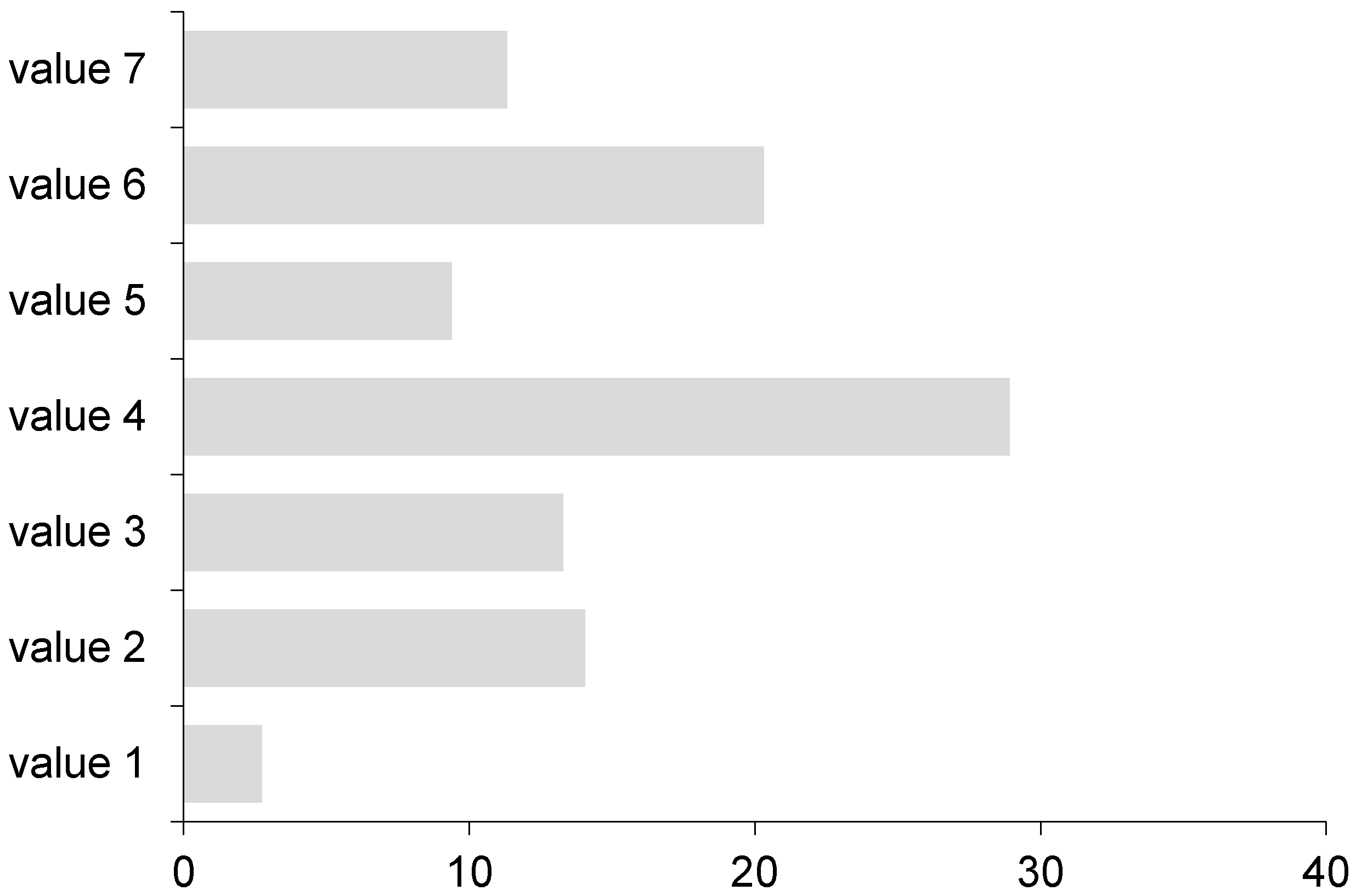
As the study shows, the green image of cooperative banks in the analysed group of respondents is neutral. The average value of the answers given by the respondents was 4.34. The range of evaluations of those participating in the study was from 1 (extremely negative evaluation), indicated by less than 3% of the respondents, to 7 (very positive image), marked by 11.33% of the respondents. The most frequently selected answer was evaluation 4, denoting a neutral image (
Figure 1).
The green image of a bank is shaped by various factors. One of these is a set of determinants related to customers’ socio-demographic and economic characteristics. Research among young consumers identified factors that differentiate the assessment of the green image of cooperative banks. Among the socio-demographic and economic determinants, the factors that influenced the bank’s image in the eyes of young people were gender, education, and average net disposable income per household member.
As shown in
Table 4, the green image of cooperative banks was rated higher by women, who perceived it as rather positive. Men, on the other hand, held a neutral image of the bank. Taking respondents’ educational level into account, it can be concluded that perceptions of the cooperative bank sector differ between those with secondary education and other groups distinguished by this characteristic. Differences were also observed between groups of respondents distinguished by their average net disposable income. Those with lower incomes tended to have a positive image of the cooperative banking sector, whereas respondents with higher incomes assessed it negatively.
As already mentioned, two factors were included in the group of psychological determinants: the respondent’s risk propensity and the declared personality type. Both determinants were found to be statistically significantly associated with customers’ opinion of cooperative banks (
Table 5). Analysis using the Tukey test showed significant differences between those with risk aversion and the other groups identified on the basis of this criterion. Respondents with risk aversion were characterised by a very positive green image of cooperative banks, while the image in the other groups was indifferent. For the second characteristic analysed, statistically significant differences were found in the mean scores between respondents declaring attitude C and those who indicated type I and type S personalities.
As shown in
Table 6, the determinant of the green image of cooperative banks is membership in banking cooperatives. A more positive image of the cooperative bank sector was shown by shareholders of these banks.
The next behavioural factor analysed—using only the services of a cooperative bank—turned out to be a factor that did not differentiate the population surveyed. Both those using only cooperative bank services and respondents who were customers of both cooperative and commercial banks were characterised by a neutral green image of cooperative banks.
A logistic regression model was used to determine the likelihood of the analysed factors influencing the positive evaluation of the green image of cooperative banks. Eight factors were used to construct the model (
Table 7).
In the first stage of the analysis, a results sheet was generated for the eight independent variables (
Table 8). The results sheet shows the model parameter evaluations, the probability level, and the odds ratio for a unit change in each parameter.
At the second stage of the analysis, an attempt was made to construct a logistic regression model using the calculated values. Taking into account the estimated coefficients, the logistic regression model for the eight independent variables took the form:
For the resulting model, the chi-square value (40.558) is highly statistically significant (
p = 0.000). The results presented in
Table 8 indicate that the level of education (X
2) and the respondent’s attitude towards risk in the financial market (X
6) were significant predictors of a positive assessment of the green image of cooperative banks. On the other hand, other factors such as gender (X
1), number of people in the household (X
3), income level (X
4), personality type (X
5), the fact of using a commercial bank (X
7) and membership in a cooperative bank (X
8) proved to be insignificant (
p > 0.05 level). Therefore, another logistic regression model, devoid of these variables, was considered at a later stage of the study. Only statistically significant determinants were included in the analysis.
As shown in
Table 9, all the analysed variables are statistically significant at the
p < 0.05 level. The calculated values of parameter evaluations allow the model under consideration to be written in the following form:
Among the model’s factors, education level significantly affected the probability of a positive assessment of the green image of cooperative banks. Respondents with secondary education were approximately twice as likely to rate the bank’s green image positively compared to those with vocational education (OR = 2.024). No significant difference was observed for respondents with higher education, whose odds were similar to the vocational education group.
The positive evaluation of the green image of cooperative banks also depended on the respondent’s willingness to take risks in the financial market. Statistical analysis showed that a positive perception of cooperative banks was most likely among risk-averse respondents in the analysed sample of young consumers. Respondents with a neutral attitude toward financial risk had odds of a positive perception approximately 0.29 times those of risk-averse respondents (OR = 0.286), while risk-tolerant respondents had even lower odds compared to risk-averse respondents.
To assess the stability of these results, an alternative logistic regression specification was estimated by including two additional predictors that were nearly statistically significant. The extended model reduced −2 Log Likelihood from 316.58 (χ2 = 33.78, p < 0.001) to 311.30 (χ2 = 39.07, p < 0.001); however, the improvement in model fit (Δ−2LL = 5.29; df = 2) did not reach statistical significance at the 0.05 level. Importantly, the direction and statistical significance of the two main predictors remained unchanged across specifications, suggesting that the core findings are relatively stable and not highly sensitive to minor modifications of the model structure.
5. Discussion
In the surveyed sample, slightly more than 40% of participants from the young generation segment rated the green image of cooperative banks positively. This result can be interpreted in the context of the activities undertaken by cooperative banks in Poland in the field of green banking. These institutions are undertaking several green banking initiatives. They are systematically increasing their involvement in financing sustainable projects and supporting customers in the green transformation process, including by creating new sources of financing. In addition, they are reducing financing for projects with high ESG risks and aiming to reduce their carbon footprint as part of rational self-management [
55].
As already mentioned, the literature lacks results from other authors’ studies on the issue analysed. Nevertheless, the green image of banks is important for Poles. The report “Environmental attitudes of Poles” [
56] shows that as many as 48% of the surveyed customers would be willing to transfer their accounts to a bank that stands out particularly for its environmental care. Customers aged 18 to 24 would be most likely to do so.
In the surveyed sample, the factors that differentiated the assessment of the green image of cooperative banks among young participants were gender, education level, and income level. The results obtained are consistent with those of other studies that analysed the impact of these characteristics on consumers’ pro-environmental behaviour and attitudes, which constitute an important background for shaping the perception of the green image of financial institutions [
57]. Research by J.A. Roberts and D.R. Bacon [
31] indicates that women are more likely than men to prioritise environmental issues, which may translate into a more positive assessment of banks’ green image. Convergent findings were also reported by D. Samadahl and R. Robertson [
30], highlighting that women are more likely to exhibit environmentally friendly attitudes and behaviours, which promote greater sensitivity to banks’ environmental actions.
In the research presented here, the group that rated the green image of cooperative banks highest were those with a secondary education. The results obtained are different from those presented in the literature, according to which the assessment of the banks’ image—including their pro-environmental character—increases with increasing education level [
33,
51]. The observed discrepancy may be due to the peculiarities of the sample surveyed, which included young consumers, some of whom were in the middle of their studies and were still formally enrolled in secondary education. It can be assumed that after graduating from higher education and transitioning to the group of respondents with higher education, this relationship could change, taking a direction consistent with the results reported by other authors.
In the studies conducted, those with lower incomes expressed a more positive green image of cooperative banks. This situation may be due to the specifics of green financial products, which in some cases are more affordable, e.g., mortgages for the construction of energy-efficient houses offered at lower interest rates or with reduced margins compared to standard loans. As a result, people with lower incomes may perceive banks’ green measures as genuine support rather than mere image.
These findings are also reflected in the literature. Although many studies indicate that with increasing income, the level of environmental awareness and interest in green products increases, lower-income consumers also show interest in green solutions, as confirmed by V. Griskevicius and co-authors [
36]. In the case of financial services, accessibility and price benefits may influence the bank’s positive evaluation more than income level.
In the study conducted, the two psychological factors analysed—personality type and risk propensity in financial markets—differentiated the evaluation of the bank’s green image. Although different personality typologies have been adopted in the literature, other authors’ results confirm that personality traits are important for green attitudes. M. Ko and co-authors [
40] points out that personality type shapes the propensity for green behaviour. Similarly, A. Uikey and co-authors [
41] emphasise that extraversion significantly influences ecological consumerism. These results align with our observations, suggesting that personality type may play an important role in perceptions of the green image of cooperative banks.
The second factor that differentiated the evaluation of a bank’s green image was its willingness to take risks in financial markets. In this case, the highest ratings of the bank’s green image were given by those characterised as risk-averse. This may indicate that financially cautious customers perceive banks’ green activities as part of long-term sustainability, responsible management and reputational risk mitigation, which positively influences their assessment of the institution. These results are consistent with the findings of A. Stolarska [
37], who indicates that customers with high risk aversion attach particular importance to the image of the bank as a stable and responsible institution. Also, A. Dąbkowska [
38] emphasises that non-financial activities, including pro-environmental ones, strengthen trust and a positive image of the bank, especially among customers who prefer security and predictability.
Analysis of the data showed that membership in a cooperative bank significantly affects the assessment of the institution’s green image. People who were co-owners of a cooperative bank were more likely to rate the institution’s green image higher. According to M. Marcinkowska [
43], this may be due to a sense of belonging to the institution and identification with its mission and values. Higher ratings of the green image may also be related to the perception of membership in a cooperative bank as a form of socially responsible investment. In this view, the decision to commit capital may take into account not only economic factors but also the compatibility of the bank’s mission with its members’ social and environmental values [
42].
Although F-analysis indicated the significance of six factors, logistic regression showed significance only for education and attitudes towards risk. The remaining variables were not significant in the logistic model, meaning that their impact on the likelihood of perceiving a green bank image is small when all factors are considered simultaneously [
58].
6. Conclusions
A bank’s image is the impression consumers form of the bank, encompassing assessments of the financial offer, the level of security and personnel, as well as perceptions of the bank’s social and environmental responsibility activities. The findings confirm that, in a highly competitive and increasingly digitalised banking environment, the green image of banks constitutes an important strategic asset. This is particularly relevant for cooperative banks, for which it may support the strengthening of local identity and enhance their appeal to younger generations.
This article attempts an empirical analysis of the level of the green image of cooperative banks and the identification of its determinants among young customers in a selected region of Poland. The conducted research enabled the assessment of the green image of cooperative banks among young participants included in the study. The results obtained indicate that the green image of cooperative banks in this group of consumers is assessed as indifferent (neutral). This means there are no grounds for adopting the first research hypothesis (H1), which posits that the green image of cooperative banks in the assessment of the young generation is positive.
The neutral assessment of the green image of cooperative banks among young consumers suggests that these institutions may not be fully exploiting the potential of environmental activities as a tool for building relationships with this customer group. This points to the need to intensify and better target marketing communication for environmental activities. First, banks should improve the transparency of their environmental communications, as implementing this measure is relatively low-cost. Secondly, it is worthwhile to implement environmental education programmes that can increase environmental awareness and a positive perception of the bank, among customers who are less inclined to take risks. The green image of a cooperative bank can also be supported by long-term green investments, but their costs are high compared to other measures.
The research also identified factors that differentiate the assessment of the green image of cooperative banks among young consumers in the analysed sample. Among the socio-demographic and economic determinants, gender, education level, and average disposable income per household member were found to positively influence young consumers’ perception of the banks’ green image. Regarding psychological determinants, two variables were considered: the respondent’s willingness to take risks and their declared personality type. Both were statistically significant in shaping the assessment of the green image. Among the behavioural determinants, membership in a cooperative bank was shown to significantly differentiate the green image perception. The presented research findings therefore support the second research hypothesis (H2), according to which the assessment of the green image of cooperative banks differs significantly depending on the socio-demographic and economic, psychological, and behavioural characteristics of young consumers.
The results suggest the need to segment cooperative banks’ communication activities to build a green image, while taking into account the socio-demographic, economic, psychological, and behavioural profiles of young customers.
The constructed logistic regression model enabled the identification of consumer characteristics that increase the likelihood of a positive evaluation of the green image of cooperative banks among young consumers in the analysed sample. Of the variables analysed, two showed a statistically significant impact: the educational level of young people and the declared willingness to take risks, both of which increase the probability of a positive evaluation of the green image. The obtained results therefore support the third research hypothesis (H3), according to which selected socio-demographic, economic, psychological, and behavioural factors significantly influence the likelihood of a positive evaluation of the green image of cooperative banks among the analysed group of consumers.
The results of the logistic regression model complement the observations from the earlier analysis of the differentiating factors (H2). While the descriptive analysis indicated that the green image of cooperative banks among young consumers varies according to a number of characteristics, the regression model allowed us to precisely identify which factors have a statistically significant impact on the probability of a positive green image. In this way, the developed logistic regression model not only confirms the observed diversity in perceptions of the green image, but also identifies the factors that are crucial for effectively shaping the image of cooperative banks among young customers.
Given that the green image of a bank is a variable category, it would be interesting to continue research in this area to determine the dynamics and directions of the changes. A valuable addition to the research would also be the identification of perceptions of the green image of cooperative banks across other customer segments, e.g., among older people or in different regions of Poland.
Limitations
A limitation of the study was the lack of random sampling, resulting from the unavailability of complete lists of cooperative bank customers due to banking secrecy, which limits the possibility of generalising the results to the entire population.
As all variables were measured by a single questionnaire, the risk of common method bias (CMB) cannot be excluded.
Due to the self-reporting nature of the measurement, there is a risk of social desirability bias, which consists of the tendency of respondents to present their opinions and attitudes in a socially acceptable way. In particular, the assessment of personality traits relied on a self-reported DISC questionnaire, which may introduce additional respondent bias.
Although a robustness check using alternative model specifications was conducted, the findings remain specific to the analysed dataset. Further research incorporating additional variables or alternative samples would strengthen the generalizability of the results.