Article

Sustainable Geopolymer Synthesis from Calcined Pumice: Reactivity, Mechanical Performance, and Water Resistance


1
Igdir Vocational School of Technical Sciences, Igdir University, 76000 Igdir, Türkiye
2
Department of Civil Engineering, Faculty of Engineering, Igdir University, 76000 Igdir, Türkiye
3
Civil Engineering Department, Postgraduate Education Institute, Igdir University, 76000 Igdir, Türkiye
4
Department of Civil Engineering, Istanbul Gelisim University, 34310 Istanbul, Türkiye
*
Author to whom correspondence should be addressed.
Sustainability 2026, 18(6), 2685; https://doi.org/10.3390/su18062685
Submission received: 6 February 2026 / Revised: 27 February 2026 / Accepted: 3 March 2026 / Published: 10 March 2026

Abstract

This study investigates the feasibility of using calcined pumice as a sustainable precursor for geopolymer production. Natural pumice was calcined at different temperatures (600, 750, and 900 °C) and durations (1, 2, and 4 h). The effects of calcination were evaluated through color change, particle size distribution, scanning electron microscopy, energy-dispersive X-ray spectroscopy, Fourier transform infrared spectroscopy, and X-ray diffraction. The results showed that calcination induced structural and mineralogical modifications in pumice, including increased disorder in the aluminosilicate network and partial recrystallization, which enhanced its reactivity. Consequently, geopolymer mortars produced with calcined pumice exhibited significantly improved compressive strength, with the highest strength of 53.5 MPa obtained for the sample calcined at 750 °C for 1 h, corresponding to an 84.5% increase compared to the mortar produced with raw pumice. In addition, calcination at 600 °C and 900 °C significantly improved water resistance. Considering mechanical performance, durability-related properties, and energy efficiency together, the calcination condition of 600 °C for 2 h was identified as the optimum treatment. These findings demonstrate that calcined pumice is a promising and sustainable precursor for geopolymer production.

1. Introduction

Ordinary Portland cement (OPC), the primary powder binder used in the construction industry, is an industrial product that requires substantial quantities of natural resources and is associated with considerable greenhouse gas emissions. The current annual global production of OPC is approximately 4.2 billion tons, and this amount is expected to increase to nearly 6 billion tons by 2050 [1]. Carbon dioxide emissions originating from biomass fuels used in OPC production, especially from the decomposition of limestone during clinker formation (CaCO3 → CaO + CO2), account for approximately 8% of global greenhouse gas emissions, which represents a significant contribution [2,3]. As production volumes continue to rise to meet increasing demand, greenhouse gas emissions from this sector are expected to increase accordingly. Even if environmentally friendly energy sources are adopted in OPC production, eliminating the CO2 released during limestone decomposition remains challenging. These environmental concerns have led to the emergence of geopolymer materials as an environmentally friendly and sustainable alternative to OPC binders [4,5,6]. Cement-free sustainable construction materials are of primary importance for a greener environment. Therefore, further research is required for the standardization process of sustainable geopolymers.
Sustainable and eco-friendly geopolymer binders are produced through the reaction of aluminosilicate source materials with alkaline activators, typically sodium-based solutions. This chemical interaction leads to construction materials that exhibit high mechanical performance, enhanced durability, and a lower environmental footprint. Because the geopolymerization process utilizes industrial by-products and proceeds through a relatively green and sustainable reaction mechanism, the resulting binder offers a more environmentally responsible alternative for the construction sector [3,7]. During geopolymerization, a three-dimensional network structure is formed in which SiO4 and AlO4/AlO5 tetrahedral units are linked through shared oxygen atoms, creating new aluminosilicate frameworks [3]. These reactions ultimately produce a hardened material characterized by an amorphous, interconnected three-dimensional aluminosilicate network, which is responsible for its structural integrity and long-term performance [8]. Previous studies have shown that the mechanical performance, stress–strain response, and durability of alkali-activated materials are strongly influenced by precursor characteristics and matrix densification, while curing conditions significantly affect reaction kinetics, hydration product formation, and strength development [9,10].
The final properties of geopolymers are primarily governed by the characteristics of the precursor material used in their composition. For a material to be suitable as a geopolymer precursor, it should possess high fineness, high alumina and silica contents, and sufficient reactivity, which is generally associated with an amorphous rather than a crystalline structure [11]. Traditionally, industrial by-products such as blast furnace slag and fly ash, which are formed under high-temperature conditions, have been widely used as geopolymer precursors due to their favorable chemical composition and reactivity [12]. Metakaolin, produced by the calcination of kaolin clay, is another well-established precursor that meets these requirements. However, these materials are not locally available in all regions, and their transportation leads to additional environmental and economic burdens [13]. Furthermore, their chemical composition may vary depending on the source, which can affect the consistency and standardization of geopolymer production [9]. For this reason, increasing attention has been directed toward naturally occurring aluminosilicate materials as alternative geopolymer precursors [14,15]. These materials are often abundantly available in specific regions, require minimal processing, and can provide a more sustainable and cost-effective solution compared to industrial by-products. Therefore, the utilization of naturally occurring materials can offer a promising pathway for improving the sustainability, regional applicability, and long-term feasibility of geopolymer production [16,17].
Natural pumice is a volcanic material generated during explosive eruptions and is commonly found in regions with volcanic activity. Since it can be used without extensive chemical treatment, its environmental burden remains relatively low, allowing it to be considered a sustainable binder material [3]. When ground into a fine powder, pumice exhibits pozzolanic behavior, contributing to its reactivity in cementitious and geopolymeric systems [18]. In addition, pumice is widely available and abundantly distributed worldwide. Türkiye alone possesses approximately 14% of the global pumice reserves, corresponding to more than 3 billion cubic meters [19]. Its physical and chemical characteristics also tend to show limited variation between different geographical sources, which is particularly important for the standardization of geopolymer production, especially when such materials are intended for structural applications. Additionally, its utilization in geopolymer binder production can create a new industrial sector, contributing to economic development and employment in regions where it is abundantly available [20]. Despite these advantages, pumice-based geopolymers often fail to achieve complete geopolymerization, even under heat-curing conditions. As a result, they tend to exhibit sensitivity to water and aggressive aqueous environments, which limits their long-term durability [21,22]. In this context, thermal activation through calcination is expected to enhance the reactivity of pumice, thereby improving both the mechanical strength and water resistance of the resulting geopolymer systems.
Calcination, which involves exposing natural aluminosilicate source materials to high temperatures, is widely reported in the literature as an effective method for enhancing their reactivity [23,24]. When natural materials are heated to temperatures below their melting point, typically up to about 900 °C, chemically bound water is removed and the stable, highly ordered molecular structures begin to break down. As a result, the material transforms into a more amorphous and thermodynamically unstable state with increased reactivity [25]. At relatively low temperatures (<500 °C), the breakdown of crystalline phases is insufficient, whereas excessively high temperatures (>900 °C) may lead to sintering and recrystallization, which in turn reduce reactivity [26,27]. Therefore, the optimal calcination temperature is generally reported to lie between 600 and 900 °C, with an exposure duration of up to 4 h, in order to achieve maximum activation efficiency [28,29,30,31,32,33].
In this study, pumice was selected as the primary precursor due to its wide availability and potential for sustainable geopolymer production. The main variables investigated were the calcination parameters, namely temperature (600, 750, and 900 °C) and duration (1, 2, and 4 h), while material proportioning and curing conditions were kept constant. Although natural pumice has been previously investigated as a geopolymer precursor [20,34,35,36,37], studies focusing on calcined pumice and systematically evaluating the influence of calcination parameters on geopolymer performance remain limited. To address this gap, the calcined pumice was characterized through color variation, particle size distribution, and detailed microstructural and chemical analyses using scanning electron microscopy, energy-dispersive X-ray spectroscopy, Fourier transform infrared spectroscopy, and X-ray diffraction. In addition to the compressive strength of geopolymer mortars produced with the different calcined pumices, their resistance to water exposure was also evaluated, since residual strength after water exposure is a key indicator of the degree of geopolymerization and the integrity of the three-dimensional network structure formed during synthesis [38,39].

2. Experimental Program

2.1. Materials

Natural pumice utilized in this research originated from the Ararat region in Iğdır, Türkiye. The pumice was first oven-dried at 105 °C for 24 h to remove moisture. After drying, it was pulverized using a laboratory ball mill operating in dry mode. The milling process was performed at a rotational speed of 115 rpm for 3 h, with a ball-to-powder mass ratio of 10:1. Two milling chambers with capacities of 6 L and 9 L were used simultaneously to obtain a fine powder suitable for geopolymer production. The chemical composition of the ground pumice was determined using X-ray fluorescence (XRF), and the results are presented in Table 1.
A mixture of sodium hydroxide (NaOH) solution and sodium silicate (Na2SiO3) solution was used as the alkali activator. Sodium hydroxide with a purity of 98% was taken from a local firm and dissolved in water to obtain 10 M sodium hydroxide solution. The sodium hydroxide solution was prepared in advance and allowed to rest for 24 h before use. The sodium silicate solution, with a weight ratio of SiO2/Na2O = 2.04 and a SiO2 content of 24.50%, was also taken from a local firm. A sodium silicate/sodium hydroxide ratio of 2.5 was selected to obtain better geopolymerization for the pumice-based geopolymers. Sodium silicate and sodium hydroxide solutions were mixed for 3 min and the combined activator was kept at room temperature for 30 min prior to being added to the mixture for geopolymer mortar production.
Standard sand complying with TS EN 196–1 [40] was used as the aggregate.

2.2. Calcination Steps of Pumice

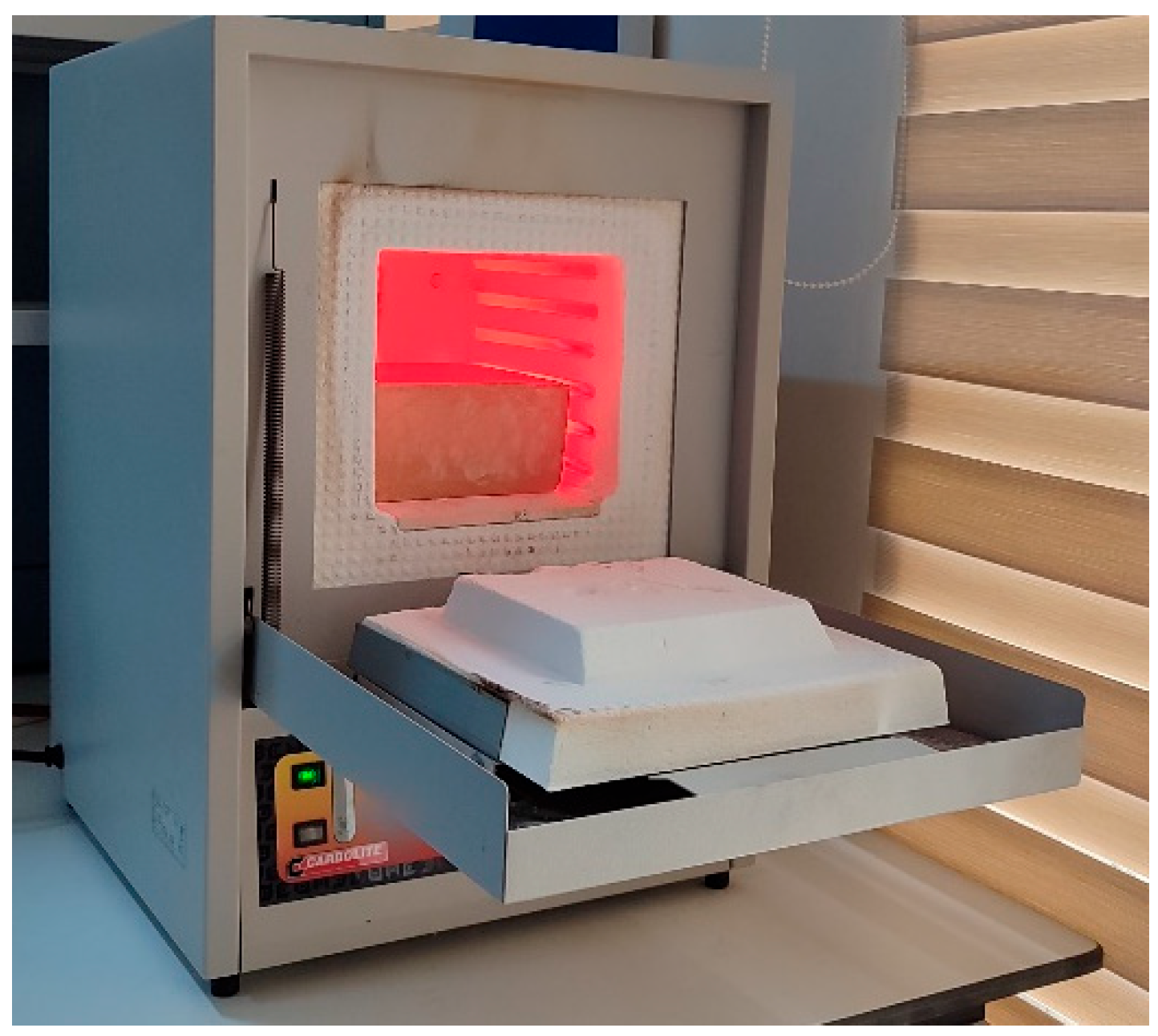
The calcination of pumice was carried out by applying three different temperatures (600 °C, 750 °C, and 900 °C) for three different durations (1 h, 2 h, and 4 h) in a muffle furnace (Figure 1). The pumice was placed in an open container, and the furnace temperature was increased at a rate of 10 °C per minute until the target temperature was reached. After holding the pumice at the specified temperatures (600, 750, and 900 °C) for the designated durations (1, 2, and 4 h), it was removed from the furnace and left to cool at room temperature (23 ± 2 °C).

2.3. Sample Preparation and Curing

The geopolymer mortars were produced in a cement mixer compliant with TS EN 196-1 [40]. The mixing procedure, which was the same for all geopolymer mortars, was completed in three steps: (i) the solid materials consisting of pumice and standard sand were mixed at 62 rpm for 1 min; (ii) the pre-prepared alkali activator solution was added to the homogeneous solid mixture and mixing was continued at 62 rpm for another 1 min; and (iii) the mixture was further mixed at 125 rpm for 1 min. The mix proportions, which were the same for all geopolymer mortar mixtures, are given in Table 2.
The freshly prepared geopolymer mortar was placed into plastic cube molds (40 × 40 × 40 mm) in two successive layers, with each layer consolidated by 60 jolts on a jolting table. After leveling the surfaces, the molds were sealed and placed in an oven at 75 ± 2 °C for 48 h. At the end of this period, specimens were demoulded and wrapped again with waterproof tape. After the initial 48 h ambient-curing, demoulded specimens were cured at 90 ± 2 °C for 24 h. Following the curing stage, the specimens were transferred from the oven and maintained in a controlled laboratory environment (23 ± 2 °C; RH 55 ± 5%) prior to testing.

2.4. Experimental Methods

The 28-day compressive strength of the mortar specimens was determined according to TS EN 196-1 [40]. This compressive strength value was designated as dry compressive strength. To evaluate the water resistance of the geopolymer mortars, 28-day cured specimens were immersed in water for 72 h. After completion of immersion period, their compressive strength was measured in saturated surface-dry condition and regarded as wet compressive strength. The reported compressive strength values represent the average of three companion geopolymer specimens.
For the microstructural analyses, particle size characterization of the raw pumice was carried out using the Malvern Mastersizer 3000 (Malvern Panalytical Ltd., Malvern, UK) based on laser diffraction. Also, a ZEISS Gemini Sigma 300 (Carl Zeiss AG, Oberkochen, Germany) scanning electron microscope (SEM) equipped with energy-dispersive X-ray spectroscopy (EDX) was utilized to examine the microstructure of the raw and calcined pumice powders, and EDX analysis was used for semi-quantitative elemental analysis. Moreover, the mineralogical composition of raw pumice and calcined pumice samples was investigated by X-ray diffraction (XRD) using an Empyrean instrument (Malvern Panalytical, Almelo, The Netherlands). Measurements were performed in the 2θ range of 10–80° with a step size of 0.02°. Furthermore, molecular bonding structures of the raw and calcined pumice samples were examined by Fourier transform infrared spectroscopy (FTIR) with a PerkinElmer 400 FT-IR/FT-FIR spectrometer (Spotlight 400 imaging system, PerkinElmer Inc., Waltham, MA, USA). The spectra were recorded in the wavenumber range of 4000–450 cm−1.

3. Results and Discussion

3.1. Characterization of Raw and Calcined Pumice

To assess the influence of calcination on pumice, raw and calcined samples were subjected to comprehensive physical, chemical, microstructural, and mineralogical characterization.

3.1.1. Effect of Calcination on Pumice Color

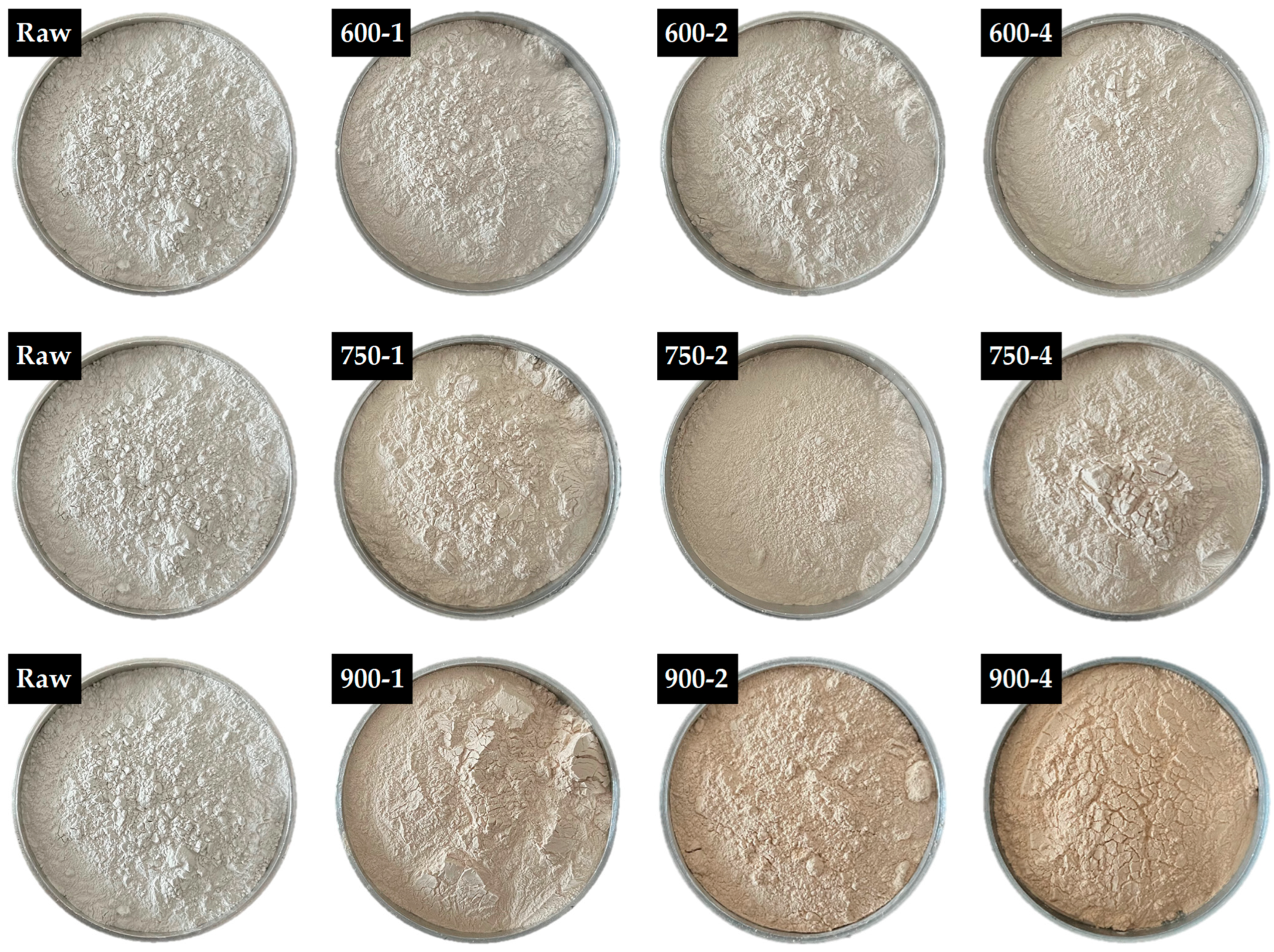
The visual appearance of the raw pumice and the calcined pumice samples at different temperatures and durations is presented in Figure 2. As can be observed, calcination shifts the light gray color of pumice toward brownish tones. With increasing calcination temperature and duration, the pumice generally exhibits progressively darker brown shades. Similar color changes have also been reported in previous studies [41] and are commonly associated with the recrystallization of certain minerals, the oxidation of iron oxides such as magnetite, and their transformation into hematite. In the context of the present study, the gradual darkening of pumice color from light gray to brown with increasing calcination temperature and duration can be attributed to the oxidation of iron-bearing phases and the structural reorganization of the glassy phase [42]. Prolonged calcination at elevated temperatures promotes the oxidation of Fe2+ ions to Fe3+, leading to the formation of hematite and other Fe(III) oxides, which contributes to the observed darkening of the color. In addition, densification of the glassy phase and a reduction in microstructural porosity may enhance light absorption, further contributing to the perception of darker color tones.

3.1.2. Microstructural and Elemental Characteristics (SEM/EDX)

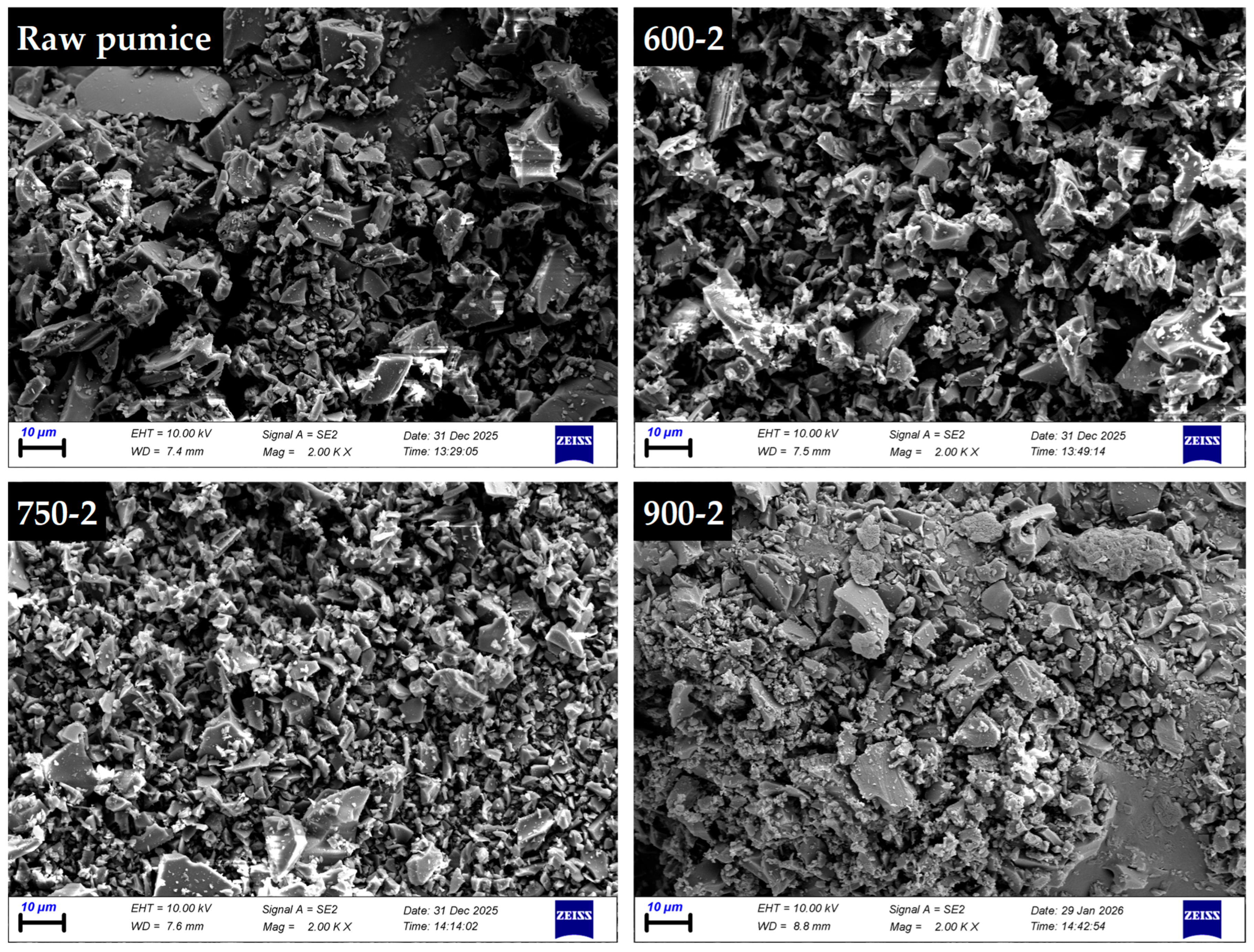
Figure 3 presents the SEM micrographs of the pumice samples. As can be seen from Figure 3, calcination did not cause a significant change in the surface morphology of pumice. Similarly, Alraddadi [41] reported that the surface morphology of black volcanic ash was not substantially affected by calcination at elevated temperatures. Nevertheless, agglomerated particles can be observed in the micrograph of the pumice calcined at 600 °C. In addition, the micrographs of pumice samples calcined at 750 °C and 900 °C indicate a higher presence of finer particles compared to the raw pumice.
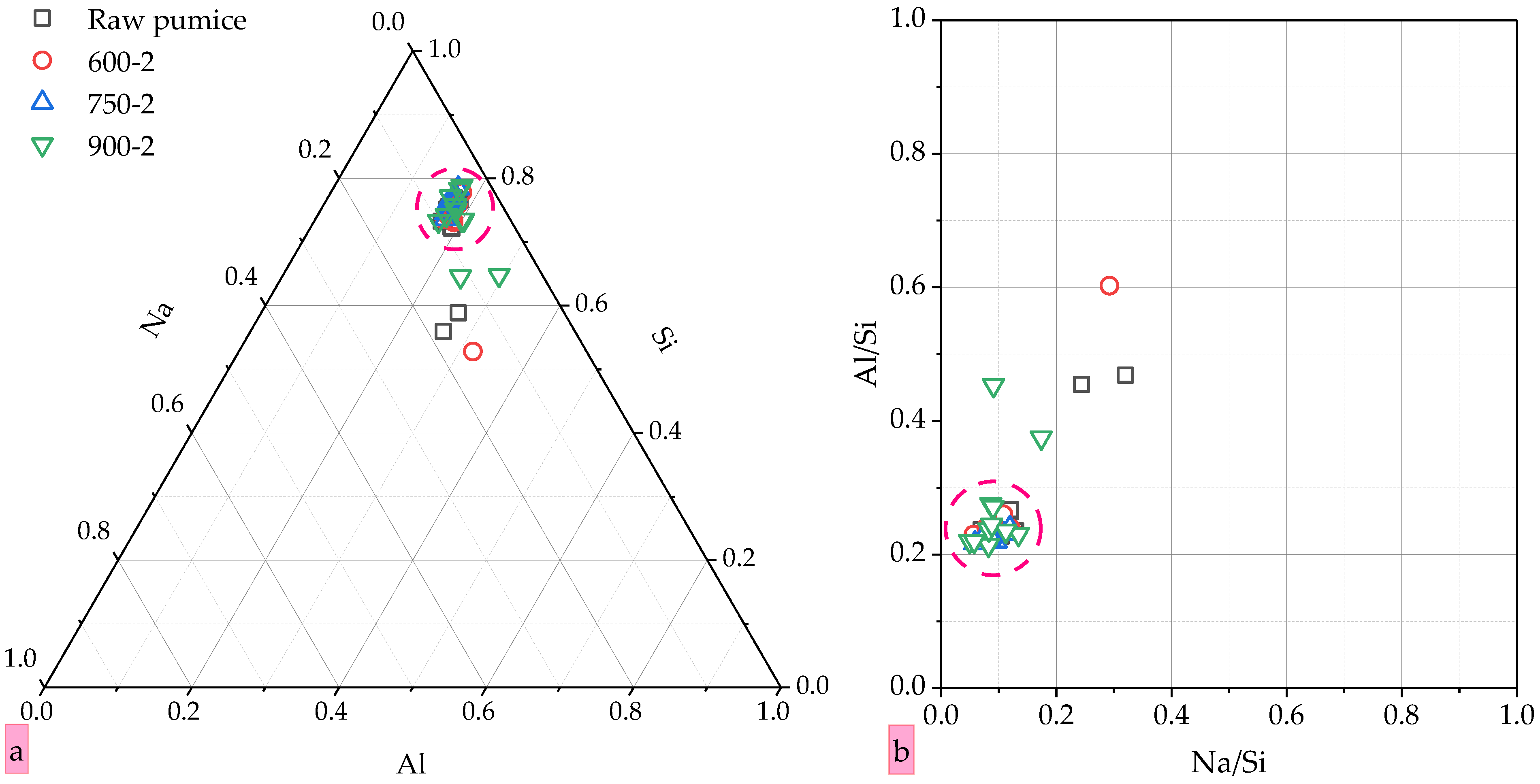
To examine the effect of calcination on the chemical composition of pumice, EDX point analyses were performed. Measurements were taken from ten points for each pumice sample, and the average elemental contents (atomic %) obtained from these points are presented in Table 3. Figure 4 illustrates the Na–Al–Si ternary diagram and the Al/Si and Na/Si ratios, as pumice is primarily composed of these elements, which also play a key role in geopolymerization reactions by forming N-A-S-H gel products. As can be seen, calcination carried out at different temperatures did not lead to a noticeable alteration in the chemical composition of pumice. Moreover, the chemical compositions of the raw and calcined pumice particles vary only within a narrow range, as highlighted by the red dashed circle in Figure 4. Similarly, Kılıç and Sertabipoğlu [19] reported that calcination does not cause a significant alteration in the chemical composition of volcanic pumice.

3.1.3. Particle Size Distribution

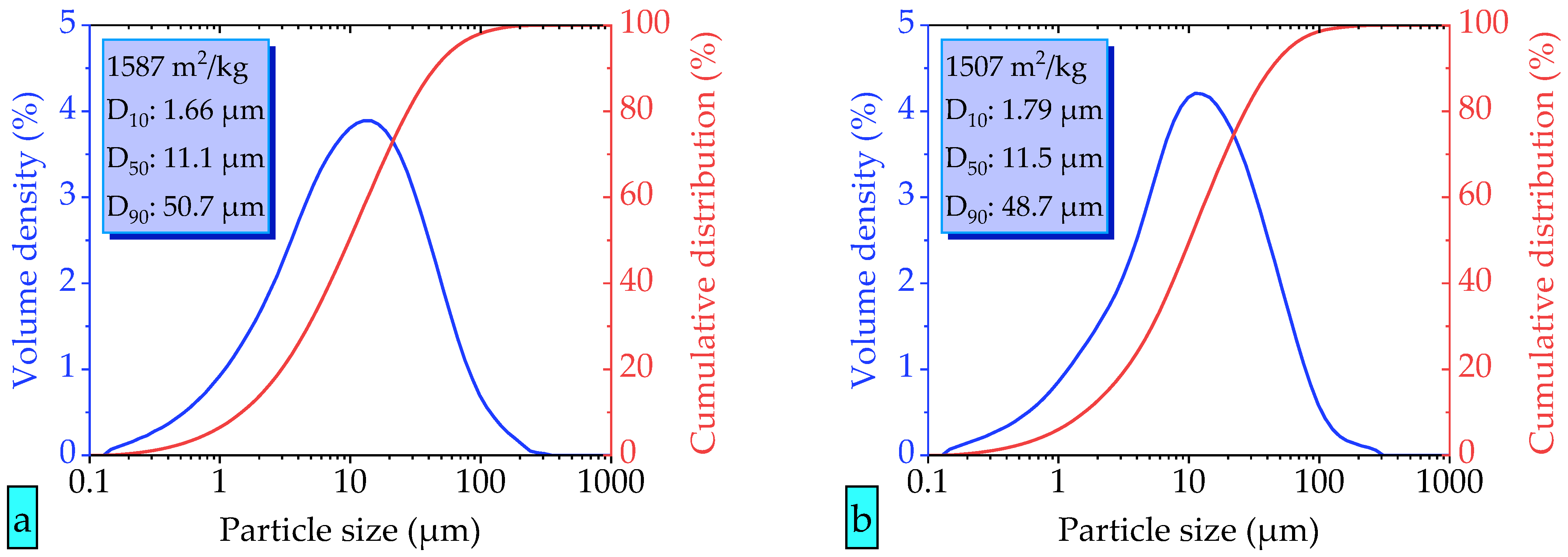
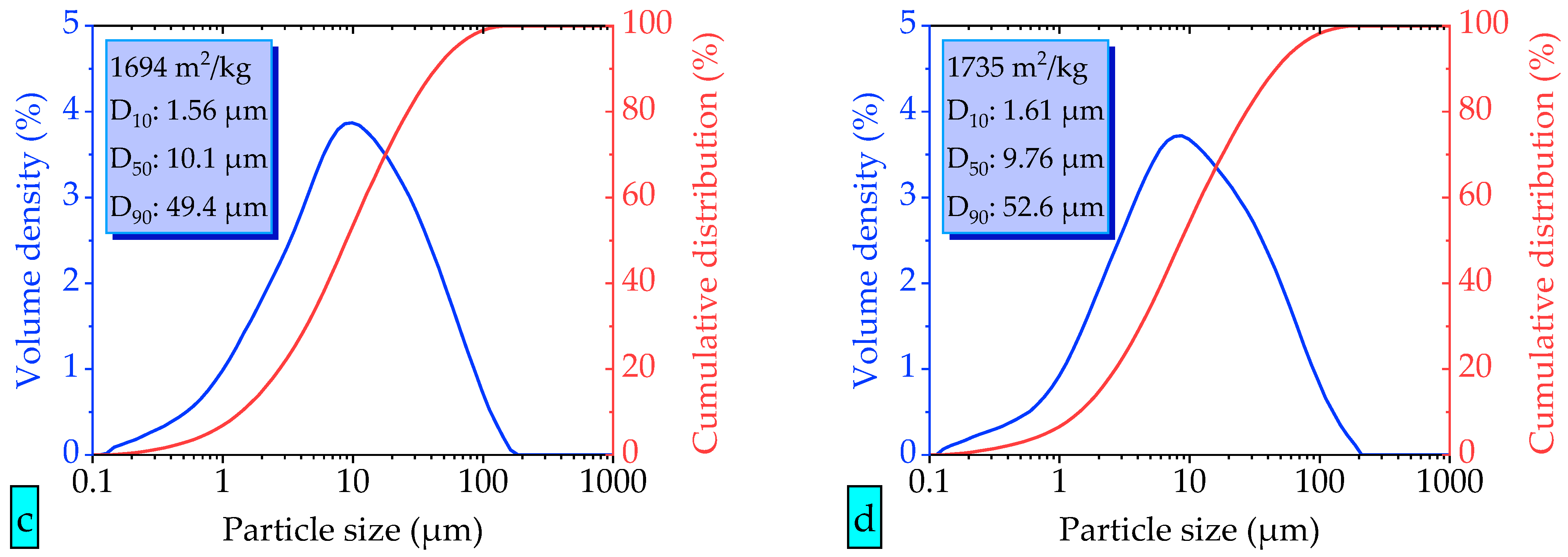
The particle size distributions of raw pumice and pumice samples calcined at different temperatures (600 °C, 750 °C, and 900 °C) for 2 h are presented in Figure 5. The figure also includes the specific surface area as well as the D10, D50, and D90 values obtained from laser particle size analysis. The specific surface area of the raw pumice was measured as 1587 m2/kg. Calcination at 600 °C for 2 h resulted in a slight decrease in the surface area to 1507 m2/kg. This reduction may be attributed to the agglomeration of finer particles, as visually observed in Figure 3, leading to an increase in effective particle size [43,44]. Particle agglomeration has been associated with the dehydroxylation of clay minerals, such as kaolinite, present in natural materials like pumice at elevated temperatures; this process promotes particle aggregation and consequently results in an increase in particle size [45].
In contrast, the specific surface areas of pumice samples calcined at 750 °C and 900 °C for 2 h increased to 1694 m2/kg and 1735 m2/kg, respectively. Moreover, the D50 values of these two calcined pumice samples were lower than that of the raw pumice. Similarly, Kılıç and Sertabipoğlu [19] reported that calcination led to a reduction in the particle size of pumice accompanied by an increase in Blaine fineness. Comparable trends have also been reported in other studies [43]. Although a clear relationship between calcination temperature and particle size or surface area cannot be conclusively established, the results indicate that calcination may induce both agglomeration of finer particles and fragmentation leading to particle size reduction. In addition, for porous and glassy materials such as pumice, it has been reported that sintering at high temperatures can reduce porosity and increase the specific gravity of the material [46].

3.1.4. Functional Group Analysis (FTIR)

Pumice is a volcanic geological material with a high content of silica (SiO2) and alumina (Al2O3), and its chemical composition makes it a potential precursor for geopolymer synthesis. However, pumice and pumice-like volcanic materials obtained directly from natural sources generally exhibit low reactivity [47].
This is because the participation of precursor materials in geopolymerization reactions is closely related to the mineralogical structure and reactivity of their aluminosilicate phases. The mineral structure of pumice varies depending on the cooling conditions of volcanic ejecta and typically consists of predominantly amorphous and semi-amorphous phases, along with small amounts of crystalline components. In geopolymer production, a highly reactive precursor generally requires an amorphous structure containing soluble aluminosilicate species. FTIR spectroscopy is a useful technique for identifying the amorphous and crystalline structures of natural aluminosilicate materials, such as pumice, which directly influence their reactivity [48].
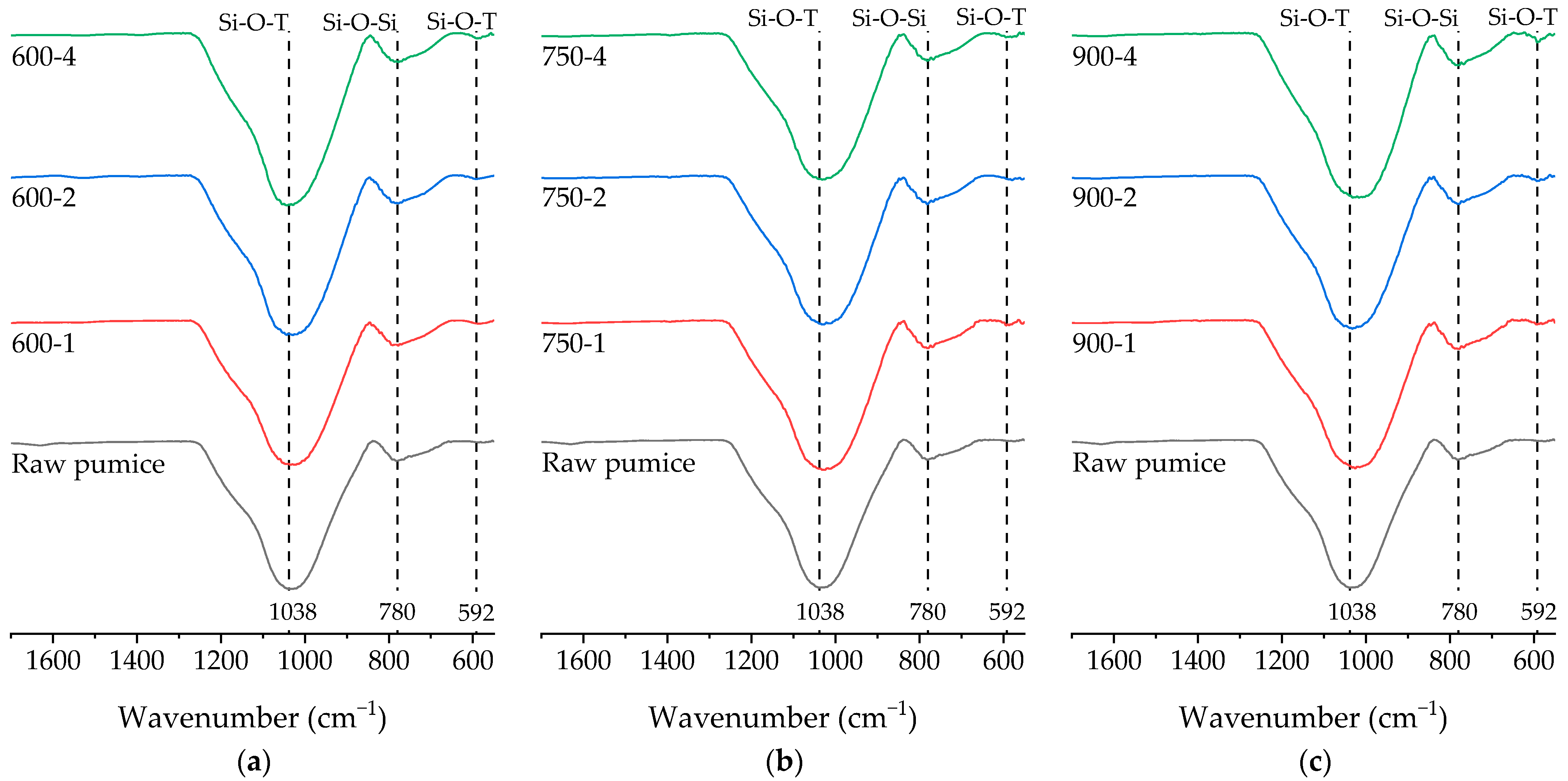
The FTIR spectra of the pumice samples calcined at different temperatures and durations, together with that of the raw pumice, are presented in Figure 6. In general, the intensity of FTIR absorption bands correlates with the amount of the associated phases according to the Beer–Lambert law. However, variations in the chemical environment of a bond can affect the position, intensity, and width of the corresponding peaks [49]. Typically, amorphous structures appear in FTIR spectra as broad bands or shoulders rather than sharp, well-defined peaks. The relationships between the main FTIR bands associated with the reactivity of raw and calcined pumice powders and their corresponding chemical bond structures are discussed below.
The most prominent FTIR band observed in the pumice samples is the main absorption band located in the 1250–950 cm−1 region, which is generally attributed to the asymmetric stretching vibrations of Si–O–T bonds (T = Si or Al) [50]. The raw pumice sample exhibited a strong and distinct peak at 1038 cm−1 within this region. After calcination, this band became broader at the base, and the single sharp peak gradually transformed into a more complex profile with the appearance of shoulders and secondary sub-peaks. As the FTIR peaks broaden and lose sharpness, it indicates a loss of structural order within the silicate network [51]. This structural disorder leads the precursor material into a less stable state and, consequently, increases its reactivity as a result of calcination.
The main absorption band was observed to shift toward lower wavenumbers after heat treatment. This shift suggests that Al atoms are increasingly incorporated into tetrahedral positions within the aluminosilicate network, thereby weakening the Si–O–T bonds. Such structural changes facilitate the dissolution of silicate and aluminate species in alkaline environments, promoting more effective geopolymerization. In particular, the sample calcined at 750 °C for 1 h exhibited a broader main absorption band with a slight shift, while maintaining a similar peak depth. In contrast, samples treated at 900 °C or subjected to prolonged calcination durations exhibited signs of over-calcination. In these cases, the main FTIR band became significantly sharper and deeper, indicating increased structural ordering. This suggests that excessive heat treatment promotes recrystallization, which reduces the reactivity of the material.
The FTIR band located in the 800–740 cm−1 range is attributed to the symmetric stretching vibrations of Si–O–Si bonds associated with quartz or other silica polymorphs [48,50]. In the raw pumice sample, a peak appears at approximately 780 cm−1. With calcination, this peak becomes more pronounced without a significant shift in position, indicating a more ordered atomic arrangement within the amorphous matrix. In the most severely treated sample (900 °C—4 h), a sharper and more defined double peak was observed, which is characteristic of crystalline quartz. This confirms that prolonged exposure to high temperatures can induce partial crystallization of the silicate network.
The broad FTIR band in the 650–500 cm−1 range corresponds to Si–O–Si and Si–O–Al bending vibrations associated with long-range structural ordering in glassy and semi-glassy phases [52]. While this band is barely visible in raw pumice, it becomes more pronounced with increasing calcination severity, particularly around 592 cm−1. At moderate calcination conditions (600–750 °C and 1–2 h), the band remains broad and shallow, reflecting a largely disordered structure. However, in the 900 °C—4 h sample, this band becomes sharper and more distinct, indicating the development of a more ordered aluminosilicate framework.
The FTIR band in the 1670–1640 cm−1 range is associated with H–O–H bending vibrations of physically adsorbed water [53,54,55]. In the raw pumice, a weak peak appears at approximately 1633 cm−1, which completely disappears after calcination. This behavior indicates dehydroxylation and the removal of physically bound water.

3.1.5. Mineralogical Characteristics (XRD)

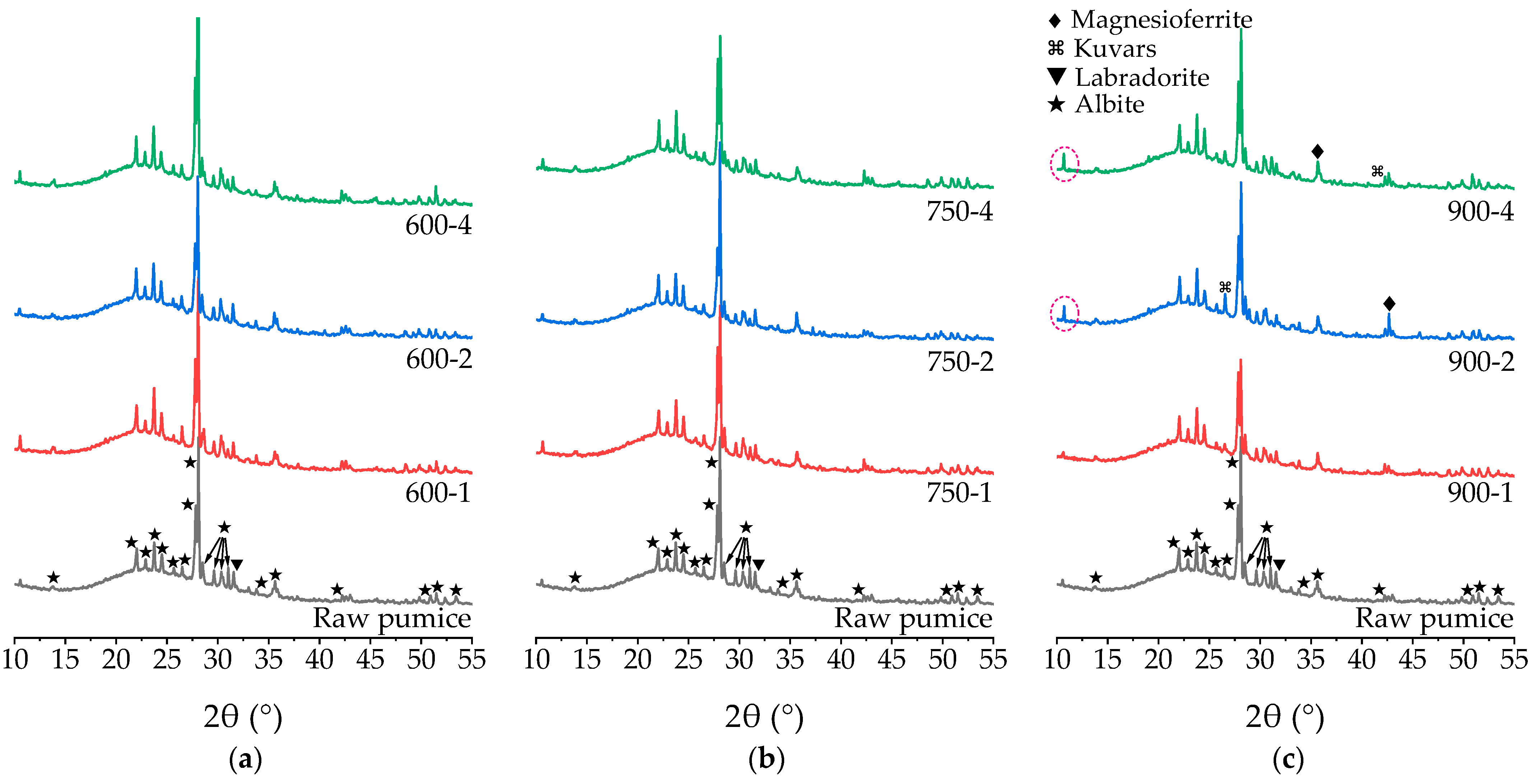
Figure 7 presents the XRD patterns of raw pumice compared with pumice calcined at 600, 750, and 900 °C. As seen in the figure, the XRD patterns of the raw and calcined samples are generally similar and indicate that pumice is mainly composed of albite (NaAlSi3O8 PDF #96-900-0703), with minor amounts of labradorite ((Na,Ca)(Si,Al)4O8 PDF #96-900-0746) also detected. However, some changes in peak intensities are observed after calcination. Calcination at 900 °C, particularly for 1 h, leads to a slight reduction in the intensity of the dominant peak of pumice located at approximately 28.1° of 2θ. A further change is observed at approximately 2θ = 10.6°, where a poorly defined peak in the raw pumice becomes clearly pronounced after calcination, especially at 900 °C for 2 and 4 h (marked with a pink dashed circle). This peak indicates the presence of zeolitic-like silica and reflects a thermally induced rearrangement of the silicate network, as also evidenced by the FTIR results discussed above. Such behavior can be attributed to the reduction in the amorphous volcanic glass phase, which enhances the detectability of crystalline silicate phases.
Some calcined pumice samples show the appearance of a small diffraction peak at approximately 2θ = 28.9°. This peak is likely related to aluminosilicate phases such as albite. It becomes more discernible due to the reduction in the amorphous phase after calcination. The peak observed in the range of approximately 31.03–31.10° is clearly visible in the XRD pattern of the raw pumice and can be attributed to albite. Although its intensity generally decreases after calcination, the peak remains well defined in the sample calcined at 900 °C for 4 h. This suggests that albite is not completely eliminated but partially preserved within the thermally modified structure. Moreover, the peak located at approximately 31.6° (2θ) can be attributed to plagioclase feldspar within the albite–labradorite series. The slight decrease in its intensity after calcination, particularly at 900 °C, indicates partial structural disordering.
In the raw pumice, the reflection near 35.6° 2θ is consistent with albite. After calcination, the same angular region is better explained by magnesioferrite, as indicated by the concurrent presence of the ~42.9° reflection. This also explains the color change in pumice from light gray to brown after calcination, as shown in Figure 3.
The XRD patterns of the raw and calcined pumice indicate that most crystalline phases are largely preserved after calcination [46]. An increase in the intensity of some XRD peaks is also observed [41,42,43]. The effect of calcination on the mineralogy of pumice can be summarized by the recrystallization of certain minerals, an increase in the prominence of feldspar phases, particularly albite, together with quartz, and the oxidation of iron oxides [56].

3.2. Compressive Strength

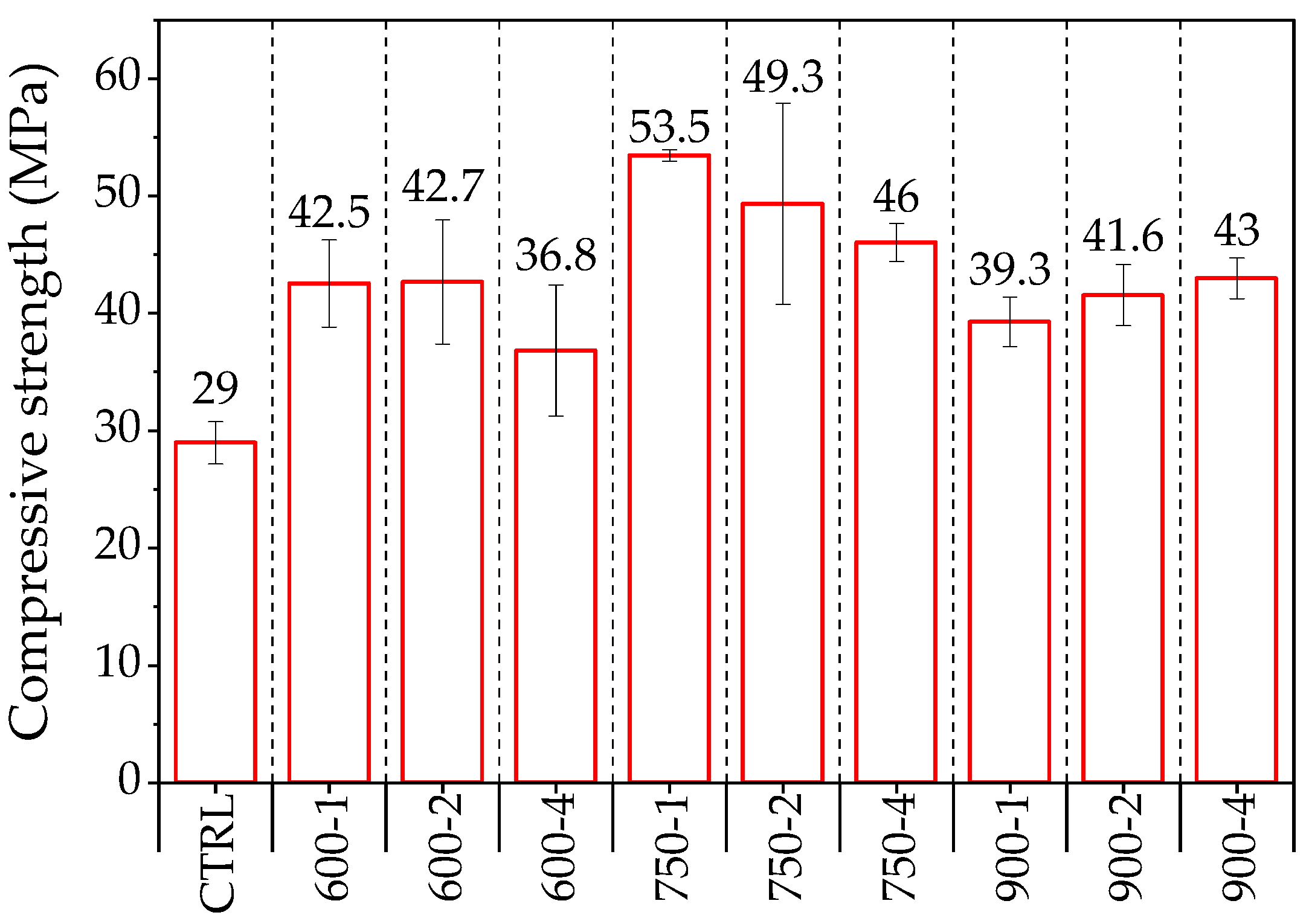
Figure 8 presents the compressive strength results of the pumice-based geopolymer (PGP) mortar specimens measured in the dry state at 28 days. As seen in Figure 8, the compressive strength of the PGP mortar produced with raw pumice was 29.0 MPa, whereas all PGP mortars produced with calcined pumice exhibited higher strength values. The compressive strength of the PGP mortars increased by 27.1% to 84.5% as a result of calcination, clearly indicating that calcination enhances the mechanical performance of PGP systems. At a calcination temperature of 600 °C, increasing the calcination duration from 2 to 4 h resulted in a 13.8% decrease in compressive strength. A similar trend was observed for the PGP mortars produced using pumice calcined at 750 °C. At this temperature, the PGP mortar prepared with pumice calcined for 1 h achieved the highest compressive strength among all mixtures, reaching 53.5 MPa, while a continuous decrease in strength was observed with longer calcination durations. In contrast, an opposite trend was observed for the PGP mortars produced using pumice calcined at 900 °C. While the compressive strength of the mortar produced with pumice calcined for 1 h was relatively low (39.3 MPa), a gradual increase in compressive strength was observed with increasing calcination duration at this temperature. Specifically, extending the duration to 2 and 4 h resulted in strength increases of 5.9% and 9.4%, respectively.
Some studies have reported that calcination at high temperatures may reduce the reactivity of natural materials [42,46]. However, in the present study, the increase in compressive strength of the PGP mortars after calcination indicates that the pumice became more reactive as a result of heat treatment. This enhancement in reactivity is considered to be related not only to the formation of new amorphous phases, but rather to changes in mineral reactivity, as evidenced by the XRD patterns (Figure 7) [29]. In addition, the removal of hydroxyl groups during calcination, as discussed in Section 3.1.4, increases the susceptibility of the pumice to alkaline activation, which is consistent with the higher compressive strength values obtained for the PGP mortars incorporating calcined pumice. Moreover, the band shifts observed in the FTIR spectra further support this increase in strength. As discussed previously, the increased incorporation of Al atoms into tetrahedral sites and the associated weakening of the Si–O–T bonds are considered key factors contributing to the enhanced mineral reactivity. In particular, the pumice calcined at 750 °C for 1 h exhibits a broader main absorption band with a slight shift while maintaining a similar peak depth, which is consistent with this structural modification. As a result, the geopolymer mortar produced using this calcined pumice achieved a compressive strength of 53.5 MPa, corresponding to an 84.5% increase compared to the mortar prepared with raw pumice (29.0 MPa).

3.3. Water Resistance

Compressive strength testing of OPC concrete samples is performed under wet or moist conditions, since drying generally leads to higher measured strength values. This reduction in strength under wet conditions is mainly attributed to the dilatational effect of water adsorbed within the calcium–silicate–hydrate (C–S–H) phase, where the confined water exerts a wedge-like action between adjacent solid phases, resulting in a typical strength decrease of approximately 10–15% [57,58].
Geopolymer binders, however, demonstrate a fundamentally different response to moisture. The ratio of wet to dry compressive strength, defined as the water resistance index by [58], shows considerable variation depending on the geopolymer composition. Therefore, water resistance serves as a key indicator for assessing the long-term performance of geopolymer binders, which, as noted by [59], are alkali-activated materials formed from silica and aluminum sources that harden under highly alkaline conditions into a rigid solid capable of maintaining stability in water.
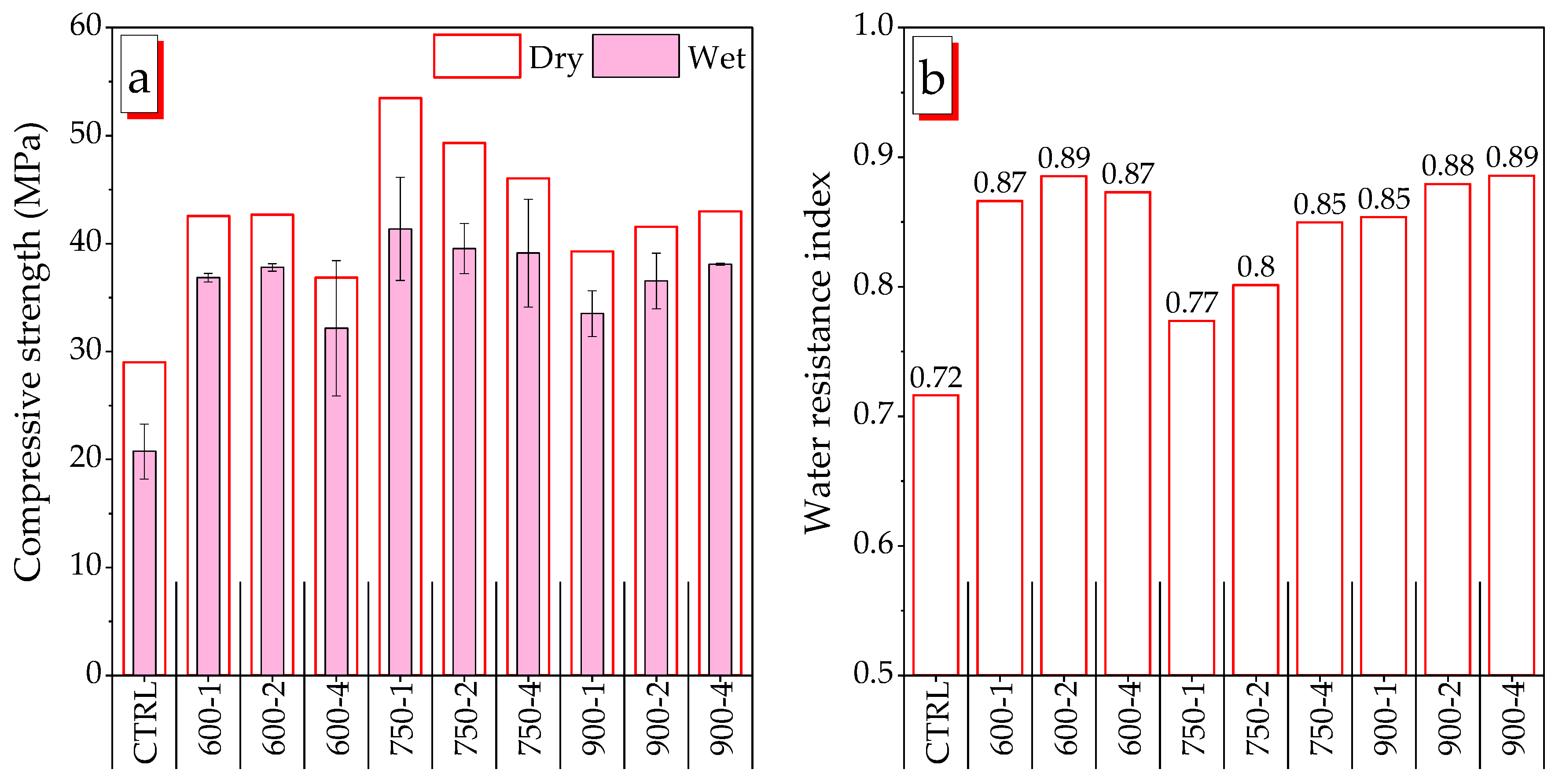
The dry and wet compressive strengths of the 28-day PGP mortars are presented in Figure 9a, while the water resistance indices are shown in Figure 9b. As illustrated in Figure 9a, the wet compressive strength of the PGP mortar produced with raw pumice was 20.8 MPa. In contrast, the wet compressive strengths of the PGP mortars produced using calcined pumice ranged from 32.2 to 41.4 MPa, corresponding to strength increases of approximately 54.8% to 99.0% compared to the raw pumice-based mortar. The variation in wet compressive strength with calcination duration follows a trend similar to that observed for dry compressive strength. While an increase in calcination duration at 750 °C led to a reduction in compressive strength, the opposite behavior was observed at 900 °C, where longer calcination durations resulted in higher compressive strength values.
The water resistance index of the PGP mortar produced with raw pumice was 0.72, which is significantly lower than that of OPC mortars and concretes. In addition to its low dry and wet compressive strengths, the low water resistance index indicates that geopolymer binders produced using raw pumice are not suitable for structures exposed to frequent wetting–drying cycles. Considering that most construction structures are regularly subjected to moisture and water exposure, improving the water resistance of PGP binders is therefore of critical importance. With calcination, the water resistance indices of the PGP mortars increased significantly. The only exceptions were the mortars produced with pumice calcined at 750 °C for 1 and 2 h, which exhibited water resistance indices of 0.77 and 0.80, respectively. For the other calcination conditions, the water resistance performance became comparable to that of OPC mortars and concretes [57].
The highest dry and wet compressive strengths among all PGP mortars were obtained from those prepared with pumice calcined at 750 °C for 1 and 2 h. However, the water resistance index of these two mortars was significantly lower than that of all other calcined PGP mortars. For PGP mortars produced using calcined pumice other than those calcined at 750 °C for 1 and 2 h, the water resistance index ranged between 0.85 and 0.89. Considering that the dry compressive strength of OPC-based materials is generally about 10–15% higher than their wet compressive strength [60,61], geopolymer binders with a water resistance index above 0.85 can also be regarded as resistant to water exposure. Therefore, it can be concluded that calcination enables PGP binders to exhibit adequate water resistance, allowing PGP mortars to reach acceptable levels in terms of both strength and durability.

3.4. Sustainability Assessment and Environmental Perspective

Sustainability has become a decisive criterion in the evaluation of alternative binder systems, particularly in view of the urgent need to reduce the environmental footprint of cementitious materials. Ordinary Portland cement (OPC) production requires clinkerization at temperatures of approximately 1450 °C and is inherently associated with high energy consumption and significant CO2 emissions. For this reason, geopolymer technology has been widely investigated as a lower-carbon alternative. However, a rigorous sustainability assessment must extend beyond a simple comparison with OPC and also consider the long-term availability, industrial dependency, and environmental implications of commonly used geopolymer precursors.
Fly ash-, slag-, and metakaolin-based binders are currently the most extensively studied and applied geopolymer precursors due to their high reactivity and favorable mechanical performance [12,58]. Nevertheless, each of these materials presents important sustainability constraints. Metakaolin requires dedicated calcination at elevated temperatures (typically in the range of 700–900 °C for approximately 1–2 h), implying additional energy demand and associated emissions [62]. In addition, metakaolin-based systems are generally associated with significantly higher water demand in concrete-scale applications [63], which may adversely affect workability, mixture optimization, and overall environmental efficiency due to increased alkali activator or admixture requirements. Ground granulated blast furnace slag and fly ash, although often described as industrial by-products, are intrinsically dependent on steel production and coal-fired power generation, respectively [17,64]. The ongoing transition toward electric arc furnaces, increased steel recycling, and more efficient production technologies is expected to reduce slag generation. Moreover, a substantial proportion of the currently available blast furnace slag is already utilized in OPC and blended cements, limiting its additional CO2 reduction potential [65]. In some regions, slag has evolved from a low-cost by-product into a commercially valuable product, occasionally exceeding the price of Portland clinker, which further complicates its characterization as an abundant waste material [12,65,66].
Fly ash is produced in large quantities worldwide (more than 544 million tons annually); however, its quality is highly variable, and approximately 80% is reportedly disposed of in landfills, indicating that only a limited fraction is effectively suitable for use in cement and concrete applications [67]. More importantly, coal combustion remains one of the largest anthropogenic sources of CO2 emissions, and many countries are progressively phasing out coal-fired power plants [68]. As a result, the long-term supply of fly ash is uncertain. Both fly ash and slag are regionally concentrated and unevenly distributed. In countries such as Türkiye, iron–steel plants and thermal power stations are typically located in specific industrial zones, while large parts of the country remain geographically distant from these sources [20]. Increasing transportation distances not only raise material costs but also enlarge the carbon footprint, thereby weakening the overall sustainability argument for their widespread use in all regions [13,17].
Within this broader sustainability framework, natural pumice offers an alternative pathway that is less dependent on other industrial sectors. As a volcanic material with significant reserves in Türkiye [69], pumice is already widely used in lightweight masonry units, indicating established extraction practices and processing infrastructure. While volcanic material extraction must comply with environmental regulations and may be restricted in protected areas, controlled quarrying in designated zones enables regulated and sustainable utilization. Therefore, resource availability and regional accessibility constitute important sustainability advantages for pumice-based systems.
Although thermal activation was recommended in the present study to enhance reactivity, the optimum condition was identified as calcination at 600 °C for 2 h when compressive strength, water resistance, and energy efficiency were evaluated together. This activation temperature is substantially lower than that required for OPC clinker production and generally lower than that used for metakaolin production. The performance improvements achieved under this moderate thermal treatment—particularly the significant enhancement in water resistance and durability—suggest that the associated energy input can be technically and environmentally justified when assessed from a service-life perspective. Improved durability reduces maintenance frequency and potential replacement needs, thereby contributing positively to life-cycle sustainability.
Accordingly, when energy demand, durability performance, industrial dependency, transportation-related impacts, and regional resource availability are collectively considered, calcined-pumice-based geopolymer systems represent a viable and regionally grounded sustainable alternative.

4. Conclusions and Future Perspectives

In this study, pumice calcined at different temperatures (600, 750, and 900 °C) and durations (1, 2, and 4 h) was characterized in terms of color change, particle size distribution, microstructural features, and chemical properties. The compressive strength and water resistance of pumice-based geopolymer (PGP) mortars produced with these calcined pumices were also investigated. The main conclusions of this study are as follows:
  • Increasing calcination temperature and duration promoted the oxidation of iron oxides, leading to a progressive color change in pumice from light gray to dark brown.
  • Laser particle size distribution results and SEM observations showed that calcination caused both particle agglomeration and partial fragmentation of pumice particles.
  • Although calcination did not significantly alter the chemical composition of pumice, it induced structural modifications by increasing disorder in the three-dimensional network, as evidenced by FTIR band broadening, peak shifts, and the removal of hydroxyl groups. These changes were accompanied by mineralogical rearrangements observed in XRD patterns, including partial recrystallization, increased prominence of feldspar and silica phases, and a reduction in the amorphous volcanic glass content.
  • PGP mortars produced with calcined pumice exhibited significantly higher compressive strength than those prepared with raw pumice. In addition, calcination markedly improved the water resistance of the PGP mortars, particularly for samples calcined at 600 and 900 °C.
  • Considering compressive strength, water resistance, and energy efficiency together, the calcination condition of 600 °C for 2 h was identified as the optimum treatment.
This study indicates that heat-cured PGPs produced with calcined pumice show promising performance in terms of strength and water resistance. Future studies are recommended to focus on ambient-cured systems. In addition, further research is suggested to examine the environmental and economic aspects of PGP materials produced with calcined pumice, alongside their mechanical and long-term durability performance.

Author Contributions

Conceptualization, C.K. and E.Y.; methodology, C.K., E.Y., M.D. and A.N.; software, C.K.; validation, C.K. and E.Y.; formal analysis, C.K.; investigation, C.K. and M.D.; resources, C.K. and E.Y.; data curation, C.K.; writing—original draft preparation, C.K. and E.Y.; writing—review and editing, C.K., E.Y. and A.N.; visualization, C.K.; supervision, C.K. and E.Y.; project administration, C.K. All authors have read and agreed to the published version of the manuscript.

Funding

This research received no external funding.

Institutional Review Board Statement

Not applicable.

Informed Consent Statement

Not applicable.

Data Availability Statement

Data will be made available on request.

Conflicts of Interest

The authors declare no conflict of interest.

References

  1. Kaptan, K.; Cunha, S.; Aguiar, J. A review: Construction and demolition waste as a novel source for CO2 reduction in Portland cement production for concrete. Sustainability 2024, 16, 585. [Google Scholar] [CrossRef]
  2. Miller, S.A.; Habert, G.; Myers, R.J.; Harvey, J.T. Achieving net zero greenhouse gas emissions in the cement industry via value chain mitigation strategies. One Earth 2021, 4, 1398–1411. [Google Scholar] [CrossRef]
  3. Al-Antaki, T.S.W.; Niş, A. Effect of Basaltic Pumice Powder on the Mechanical and Thermal Resistance Properties of Sustainable Alkali-Activated Mortars. Sustainability 2025, 17, 11281. [Google Scholar] [CrossRef]
  4. Singh, N.B.; Middendorf, B. Geopolymers as an alternative to Portland cement: An overview. Constr. Build. Mater. 2020, 237, 117455. [Google Scholar] [CrossRef]
  5. Niş, A.; Altundal, M.B. Durability performance of alkali-activated concretes exposed to sulfuric acid attack. Rev. Constr. 2023, 22, 16–35. [Google Scholar] [CrossRef]
  6. Zhang, J.; Shang, S.; Huo, Z.; Chen, J.; Wang, Y. Elemental Design of Alkali-Activated Materials with Solid Wastes Using Machine Learning. Materials 2024, 17, 4573. [Google Scholar] [CrossRef]
  7. Yuan, Z.; Jia, Y.; Sun, J.; Zhang, X.; Hu, Y.; Han, X. Study on the Properties of High Fly Ash Content Alkali-Activated Fly Ash Slag Pastes and Fiber-Reinforced Mortar Under Normal Temperature Curing. Materials 2024, 17, 5668. [Google Scholar] [CrossRef]
  8. Giannopoulou, I.; Nicolaides, D. Inorganic Polymers (Geopolymers). In Fire Safety Engineering-Measures, Policies, Applications: Measures, Policies, Applications; IntechOpen: London, UK, 2025; p. 81. [Google Scholar]
  9. Wu, R.; Gu, Q.; Gao, X.; Huang, J.; Guo, Y.; Zhang, H. Effect of curing conditions on the alkali-activated blends: Microstructure, performance and economic assessment. J. Clean. Prod. 2024, 445, 141344. [Google Scholar] [CrossRef]
  10. Wu, R.; Gu, Q.; Gao, X.; Luo, Y.; Zhang, H.; Tian, S.; Ruan, Z.; Huang, J. Effect of basalt fibers and silica fume on the mechanical properties, stress-strain behavior, and durability of alkali-activated slag-fly ash concrete. Constr. Build. Mater. 2024, 418, 135440. [Google Scholar] [CrossRef]
  11. Dwibedy, S.; Parhi, S.K.; Panda, S.; Panigrahi, S.K. Performance of precursor characteristics in the realisation of geopolymer concrete: A review. Mag. Concr. Res. 2024, 76, 1404–1423. [Google Scholar] [CrossRef]
  12. Karaaslan, C. Unary, binary and ternary use of slag, nano-CaCO3, and cement to enhance freeze-thaw durability in fly ash-based geopolymer concretes. J. Build. Eng. 2025, 99, 111631. [Google Scholar] [CrossRef]
  13. Provis, J.L. Alkali-activated materials. Cem. Concr. Res. 2018, 114, 40–48. [Google Scholar] [CrossRef]
  14. Ghafoori, N.; Najimi, M.; Radke, B. Natural Pozzolan-based geopolymers for sustainable construction. Environ. Earth Sci. 2016, 75, 1110. [Google Scholar] [CrossRef]
  15. Demirel, M.; Karaaslan, C. Alkali-Füzyon Yöntemiyle Aktive Edilen Volkanik Küller ile Geopolimer Üretimi. J. Inst. Sci. Technol. 2025, 15, 975–985. [Google Scholar] [CrossRef]
  16. Haddad, R.H.; Alshbuol, O. Production of geopolymer concrete using natural pozzolan: A parametric study. Constr. Build. Mater. 2016, 114, 699–707. [Google Scholar] [CrossRef]
  17. Firdous, R.; Stephan, D.; Djobo, J.N.Y. Natural pozzolan based geopolymers: A review on mechanical, microstructural and durability characteristics. Constr. Build. Mater. 2018, 190, 1251–1263. [Google Scholar] [CrossRef]
  18. Djobo, J.N.Y.; Elimbi, A.; Tchakouté, H.K.; Kumar, S. Mechanical activation of volcanic ash for geopolymer synthesis: Effect on reaction kinetics, gel characteristics, physical and mechanical properties. RSC Adv. 2016, 6, 39106–39117. [Google Scholar] [CrossRef]
  19. Kılıç, A.; Sertabipoğlu, Z. Effect of heat treatment on pozzolanic activity of volcanic pumice used as cementitious material. Cem. Concr. Compos. 2015, 57, 128–132. [Google Scholar] [CrossRef]
  20. Karaaslan, C.; Yener, E.; Bağatur, T.; Polat, R.; Gül, R.; Alma, M.H. Synergic effect of fly ash and calcium aluminate cement on the properties of pumice-based geopolymer mortar. Constr. Build. Mater. 2022, 345, 128397. [Google Scholar] [CrossRef]
  21. Yener, E.; Karaaslan, C. Curing Time and Temperature Effect on the Resistance to Wet-Dry Cycles of Fly Ash Added Pumice Based Geopolymer. Cem. Based Compos. 2020, 1, 19–25. [Google Scholar] [CrossRef]
  22. Tahwia, A.M.; Abdellatief, M.; Salah, A.; Youssf, O. Valorization of recycled concrete powder, clay brick powder, and volcanic pumice powder in sustainable geopolymer concrete. Sci. Rep. 2025, 15, 11049. [Google Scholar] [CrossRef]
  23. Öksüzer, N. The effect of calcination on alkali-activated lightweight geopolymers produced with volcanic tuffs. J. Aust. Ceram. Soc. 2023, 59, 1053–1063. [Google Scholar] [CrossRef]
  24. Mu, F.; Zou, S.; Sun, Z.; Yang, J. Evaluation of the pozzolanic reactivity of volcanic rock powder at different calcination temperatures and the performance of sodium silicate-activated volcanic rock powder geopolymer. Constr. Build. Mater. 2025, 475, 141257. [Google Scholar] [CrossRef]
  25. Tchadjie, L.; Ekolu, S. Enhancing the reactivity of aluminosilicate materials toward geopolymer synthesis. J. Mater. Sci. 2018, 53, 4709–4733. [Google Scholar] [CrossRef]
  26. Wang, M.; Jia, D.; He, P.; Zhou, Y. Influence of calcination temperature of kaolin on the structure and properties of final geopolymer. Mater. Lett. 2010, 64, 2551–2554. [Google Scholar] [CrossRef]
  27. Elimbi, A.; Tchakoute, H.; Njopwouo, D. Effects of calcination temperature of kaolinite clays on the properties of geopolymer cements. Constr. Build. Mater. 2011, 25, 2805–2812. [Google Scholar] [CrossRef]
  28. Bondar, D.; Lynsdale, C.; Milestone, N.; Hassani, N.; Ramezanianpour, A. Effect of heat treatment on reactivity-strength of alkali-activated natural pozzolans. Constr. Build. Mater. 2011, 25, 4065–4071. [Google Scholar] [CrossRef]
  29. Hamidi, M.; Kacimi, L.; Cyr, M.; Clastres, P. Evaluation and improvement of pozzolanic activity of andesite for its use in eco-efficient cement. Constr. Build. Mater. 2013, 47, 1268–1277. [Google Scholar] [CrossRef]
  30. Rieger, D.; Kovářík, T.; Říha, J.; Medlín, R.; Novotný, P.; Bělský, P.; Kadlec, J.; Holba, P. Effect of thermal treatment on reactivity and mechanical properties of alkali activated shale–slag binder. Constr. Build. Mater. 2015, 83, 26–33. [Google Scholar] [CrossRef]
  31. Diffo, B.K.; Elimbi, A.; Cyr, M.; Manga, J.D.; Kouamo, H.T. Effect of the rate of calcination of kaolin on the properties of metakaolin-based geopolymers. J. Asian Ceram. Soc. 2015, 3, 130–138. [Google Scholar] [CrossRef]
  32. Demirel, M.; Karaaslan, C. Effect of Calcination Temperature and Duration on the Compressive Strength and Water Resistance of Volcanic Ash-Based Geopolymer Mortars. In International Eurasia Congress of Building Materials, Architecture and Engineering Sciences; IKSAD Publications: Ankara, Turkey, 2024; pp. 70–76. [Google Scholar]
  33. Albayrak, E.; Özen, S. Enhancing Geopolymer Synthesis Through Calcination: Increasing the Potential of Natural Material Utilization. Open Ceram. 2025, 22, 100796. [Google Scholar] [CrossRef]
  34. Karaaslan, C.; Yener, E.; Bağatur, T.; Polat, R. Improving the durability of pumice-fly ash based geopolymer concrete with calcium aluminate cement. J. Build. Eng. 2022, 59, 105110. [Google Scholar] [CrossRef]
  35. Safari, Z.; Kurda, R.; Al-Hadad, B.; Mahmood, F.; Tapan, M. Mechanical characteristics of pumice-based geopolymer paste. Resour. Conserv. Recycl. 2020, 162, 105055. [Google Scholar] [CrossRef]
  36. Kalatehjari, R.; Najafi, E.K.; Asadi, A.; Brook, M. New Zealand pumicite as a precursor in producing alkaline cement with aluminate-based activators. Case Stud. Constr. Mater. 2024, 21, e04008. [Google Scholar] [CrossRef]
  37. Yadollahi, M.M.; Benli, A.; Demirboğa, R. The effects of silica modulus and aging on compressive strength of pumice-based geopolymer composites. Constr. Build. Mater. 2015, 94, 767–774. [Google Scholar] [CrossRef]
  38. Wang, S.; Yu, L.; Xu, L.; Wu, K.; Yang, Z. The failure mechanisms of precast geopolymer after water immersion. Materials 2021, 14, 5299. [Google Scholar] [CrossRef]
  39. Mao, N.; Wu, D.; Chen, K.; Cao, K.; Huang, J. Combining experiments and molecular dynamics simulations to investigate the effects of water on the structure and mechanical properties of a coal gangue-based geopolymer. Constr. Build. Mater. 2023, 389, 131556. [Google Scholar] [CrossRef]
  40. TS-EN-196-1; Çimento Deney Metotları-Bölüm 1: Dayanım Tayini (Methods of Testing Cement-Part 1: Determination of Strength). TSE: Ankara, Turkey, 2016.
  41. Alraddadi, S. Effects of calcination on structural properties and surface morphology of black volcanic ash. J. Phys. Commun. 2020, 4, 105002. [Google Scholar] [CrossRef]
  42. Khan, K.; Amin, M.N.; Usman, M.; Imran, M.; Al-Faiad, M.A.; Shalabi, F.I. Effect of fineness and heat treatment on the pozzolanic activity of natural volcanic ash for its utilization as supplementary cementitious materials. Crystals 2022, 12, 302. [Google Scholar] [CrossRef]
  43. Ababneh, A.; Matalkah, F.; Aqel, R. Pre-treatment of volcanic tuff for use in high volume cement replacement. J. Sustain. Cem.-Based Mater. 2024, 13, 243–255. [Google Scholar] [CrossRef]
  44. Yanguatin, H.; Ramírez, J.H.; Tironi, A.; Tobón, J.I. Effect of thermal treatment on pozzolanic activity of excavated waste clays. Constr. Build. Mater. 2019, 211, 814–823. [Google Scholar] [CrossRef]
  45. Fabbri, B.; Gualtieri, S.; Leonardi, C. Modifications induced by the thermal treatment of kaolin and determination of reactivity of metakaolin. Appl. Clay Sci. 2013, 73, 2–10. [Google Scholar] [CrossRef]
  46. Mboya, H.A.; King’ondu, C.K.; Njau, K.N.; Mrema, A.L. Measurement of pozzolanic activity index of scoria, pumice, and rice husk ash as potential supplementary cementitious materials for Portland cement. Adv. Civ. Eng. 2017, 2017, 6952645. [Google Scholar] [CrossRef]
  47. Bondar, D.; Lynsdale, C.; Milestone, N.B.; Hassani, N.; Ramezanianpour, A.A. Effect of type, form, and dosage of activators on strength of alkali-activated natural pozzolans. Cem. Concr. Compos. 2011, 33, 251–260. [Google Scholar] [CrossRef]
  48. Lee, W.; Van Deventer, J. Use of infrared spectroscopy to study geopolymerization of heterogeneous amorphous aluminosilicates. Langmuir 2003, 19, 8726–8734. [Google Scholar] [CrossRef]
  49. Merriman, S.; Chandra, D.; Borowczak, M.; Dhinojwala, A.; Benko, D. Simultaneous determination of additive concentration in rubber using ATR-FTIR spectroscopy. Spectrochim. Acta Part A Mol. Biomol. Spectrosc. 2022, 281, 121614. [Google Scholar] [CrossRef]
  50. Ellerbrock, R.H.; Stein, M.; Schaller, J. Comparing silicon mineral species of different crystallinity using Fourier transform infrared spectroscopy. Front. Environ. Chem. 2024, 5, 1462678. [Google Scholar] [CrossRef]
  51. Stein, M.; Georgiadis, A.; Gudat, D.; Rennert, T. Formation and properties of inorganic Si-contaminant compounds. Environ. Pollut. 2020, 265, 115032. [Google Scholar] [CrossRef]
  52. Lee, W.; Van Deventer, J. Structural reorganisation of class F fly ash in alkaline silicate solutions. Colloids Surf. A Physicochem. Eng. Asp. 2002, 211, 49–66. [Google Scholar] [CrossRef]
  53. Panias, D.; Giannopoulou, I.P.; Perraki, T. Effect of synthesis parameters on the mechanical properties of fly ash-based geopolymers. Colloids Surf. A Physicochem. Eng. Asp. 2007, 301, 246–254. [Google Scholar] [CrossRef]
  54. Korniejenko, K.; Kejzlar, P.; Louda, P. The influence of the material structure on the mechanical properties of geopolymer composites reinforced with short fibers obtained with additive technologies. Int. J. Mol. Sci. 2022, 23, 2023. [Google Scholar] [CrossRef]
  55. Oliwa, K.; Kozub, B.; Łoś, K.; Łoś, P.; Korniejenko, K. Assessment of durability and degradation resistance of geopolymer composites in water environments. Materials 2025, 18, 3892. [Google Scholar] [CrossRef]
  56. Lahmar, S.M.; Ammar, B.K.B.; Kessal, O. Enhancing high-performance concrete with local andesite and calcined marl: Insights from heat treatment and untreated conditions. Constr. Build. Mater. 2024, 457, 139370. [Google Scholar] [CrossRef]
  57. Neville, A.M. Properties of Concrete; Longman: London, UK, 1995; Volume 4. [Google Scholar]
  58. Karaaslan, C.; Şek, Ş.; Turan, C. Utilising High-Ambient-Temperature Curing in the Development of Low-Calcium Geopolymers. Buildings 2025, 15, 2974. [Google Scholar] [CrossRef]
  59. Rees, C.A.; Provis, J.L.; Lukey, G.C.; van Deventer, J.S. Attenuated total reflectance fourier transform infrared analysis of fly ash geopolymer gel aging. Langmuir 2007, 23, 8170–8179. [Google Scholar] [CrossRef] [PubMed]
  60. Mindess, S.; Young, F.; Darwin, D. Concrete, 2nd ed.; Prentice-Hall: Saddle River, NJ, USA, 2003. [Google Scholar]
  61. Mehta, P.K.; Monteiro, P.J. Concrete: Microstructure, Properties, and Materials; McGraw-Hill Education: Columbus, OH, USA, 2014. [Google Scholar]
  62. Erdoǧan, T.Y. Beton (Concrete); ODTÜ Geliştirme Vakfı Yayıncılık ve İletişim: Ankara, Turkey, 2007. [Google Scholar]
  63. Abbass, A.M.; Firdous, R.; Yankwa Djobo, J.N.; Stephan, D.; Elrahman, M.A. The role of chemistry and fineness of metakaolin on the fresh properties and heat resistance of blended fly ash-based geopolymer. SN Appl. Sci. 2023, 5, 136. [Google Scholar] [CrossRef]
  64. Djobo, J.N.Y.; Elimbi, A.; Tchakouté, H.K.; Kumar, S. Volcanic ash-based geopolymer cements/concretes: The current state of the art and perspectives. Environ. Sci. Pollut. Res. 2017, 24, 4433–4446. [Google Scholar] [CrossRef]
  65. Environment, U.; Scrivener, K.L.; John, V.M.; Gartner, E.M. Eco-efficient cements: Potential economically viable solutions for a low-CO2 cement-based materials industry. Cem. Concr. Res. 2018, 114, 2–26. [Google Scholar]
  66. Provis, J.L.; Bernal, S.A. Geopolymers and related alkali-activated materials. Annu. Rev. Mater. Res. 2014, 44, 299–327. [Google Scholar] [CrossRef]
  67. Amran, M.; Fediuk, R.; Murali, G.; Avudaiappan, S.; Ozbakkaloglu, T.; Vatin, N.; Karelina, M.; Klyuev, S.; Gholampour, A. Fly ash-based eco-efficient concretes: A comprehensive review of the short-term properties. Materials 2021, 14, 4264. [Google Scholar] [CrossRef]
  68. Husika, A.; Zecevic, N.; Numic, I.; Dzaferovic, E. Scenario analysis of a coal reduction share in the power generation in Bosnia and Herzegovina until 2050. Sustainability 2022, 14, 13751. [Google Scholar] [CrossRef]
  69. Elyigit, B.; Ekinci, C.E. Investigation of the Mechanical and Physical Properties of Acidic Pumice Aggregate-Reinforced Lightweight Concrete Under High-Temperature Exposure. Buildings 2025, 15, 2505. [Google Scholar] [CrossRef]
Figure 1. Muffle furnace used for the calcination of pumice samples.
Sustainability 18 02685 g001
Figure 2. Visual appearance of raw pumice and pumice samples calcined at different temperatures and durations.
Sustainability 18 02685 g002
Figure 3. SEM micrographs of raw pumice and calcined pumice samples.
Sustainability 18 02685 g003
Figure 4. (a) Na–Al–Si ternary diagram and (b) Al/Si and Na/Si ratios obtained from EDX point analyses.
Sustainability 18 02685 g004
Figure 5. Particle size distributions of the pumice samples: (a) raw pumice and (bd) pumice calcined at 600, 750, and 900 °C for 2 h, respectively.
Sustainability 18 02685 g005aSustainability 18 02685 g005b
Figure 6. FTIR spectra of pumice samples, showing comparisons between raw pumice and pumice calcined at (a) 600 °C, (b) 750 °C, and (c) 900 °C.
Sustainability 18 02685 g006
Figure 7. XRD patterns of pumice samples: raw pumice compared with pumice calcined at (a) 600 °C, (b) 750 °C, and (c) 900 °C.
Sustainability 18 02685 g007
Figure 8. Twenty-eight-day dry compressive strength of PGP mortars.
Sustainability 18 02685 g008
Figure 9. Twenty-eight-day dry and wet compressive strengths of PGP mortars (a) and water resistance indices (b).
Sustainability 18 02685 g009
Table 1. Chemical compositions of pumice (wt.%).
CaOSiO2Al2O3Fe2O3MgONa2OK2OSO3TiO2P2O5SrOMn3O4LOI
2.6667.7514.093.120.994.372.450.060.440.130.060.053.81
LOI: Loss on ignition.
Table 2. Mix proportions (g).
Sodium Hydroxide SolutionSodium Silicate SolutionPumiceStandard Sand
121.5303.86751350
Table 3. EDS results (atomic %, average of ten points) of raw pumice and calcined pumice samples.
AlCaFeKNaOSi
Raw pumice6.71.30.71.23.062.124.9
600-26.91.30.71.42.860.426.3
750-26.50.90.91.32.559.228.7
900-27.62.20.91.32.557.328.1
Disclaimer/Publisher’s Note: The statements, opinions and data contained in all publications are solely those of the individual author(s) and contributor(s) and not of MDPI and/or the editor(s). MDPI and/or the editor(s) disclaim responsibility for any injury to people or property resulting from any ideas, methods, instructions or products referred to in the content.