Photovoltaic Consumption Modelling of a Construction Materials Factory for Sustainability-Based Sizing Strategy
 ,
,  ,
, 
Abstract
1. Introduction
2. Experimental Methodology
- (1)
- Economic sensitivity to energy tariffs: Payback periods are intrinsically linked to the cost of electricity drawn from the grid and the compensation rates for surplus energy exported. The financial magnitude of both variables is dictated by a constantly evolving energy market [38], making long-term projections increasingly complex [39]. This volatility undermines the robustness of the payback period as a standalone indicator of economic potential.
- (2)
- Decarbonization of the electrical distribution system: Avoided CO2 emissions are typically calculated using emission intensity ratios (e.g., tCO2/kWh [40]) provided by the electrical grid. However, the progressive integration of cleaner energy sources is steadily reducing these values. Consequently, evaluating environmental impact based solely on avoided tonnage may lead to diminishing values over time, as they are heavily influenced by external decarbonization policies rather than the installation’s inherent performance.
2.1. Identification of Key Performance Indicators of the System in the Case Study
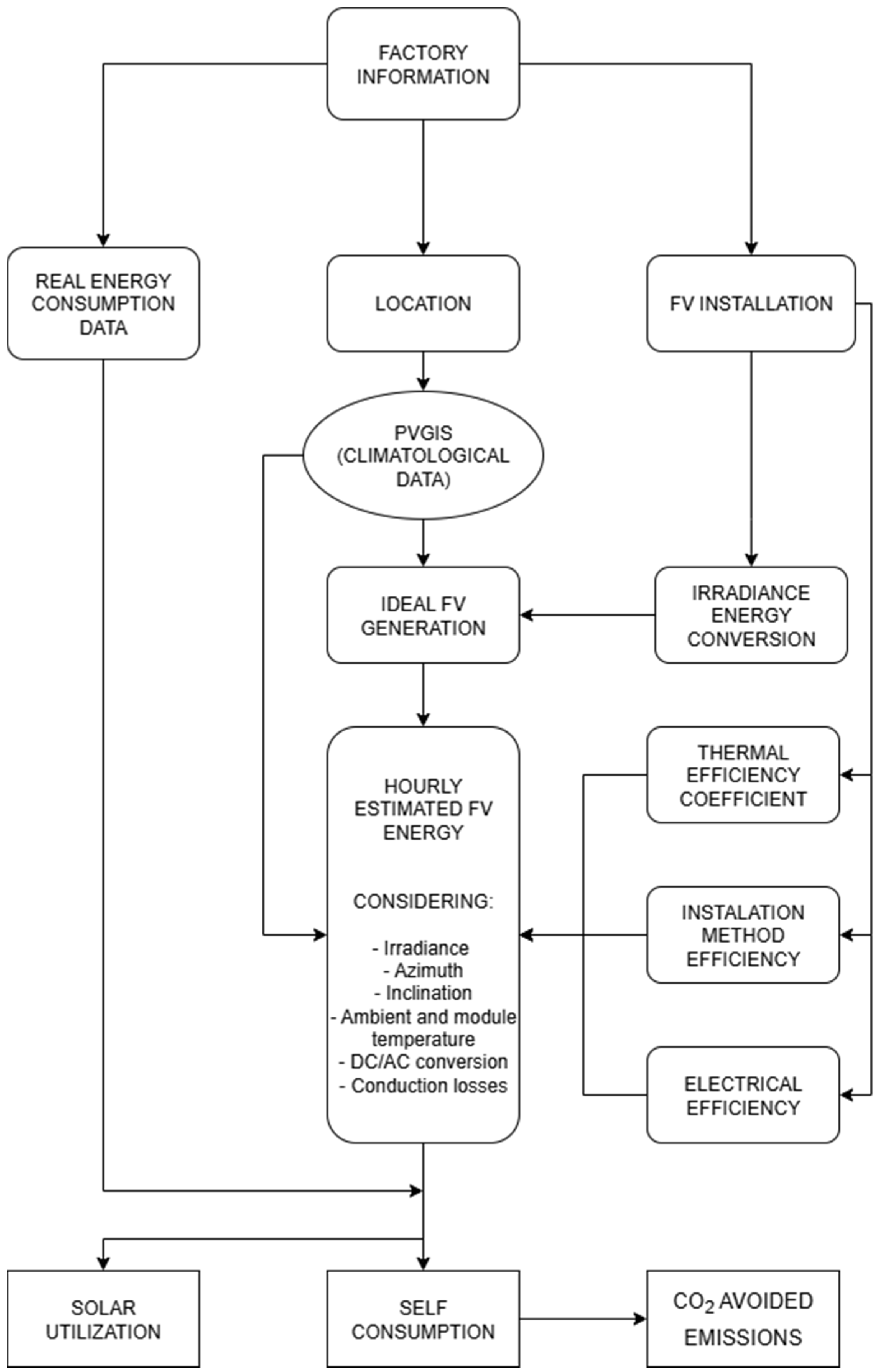
- (1)
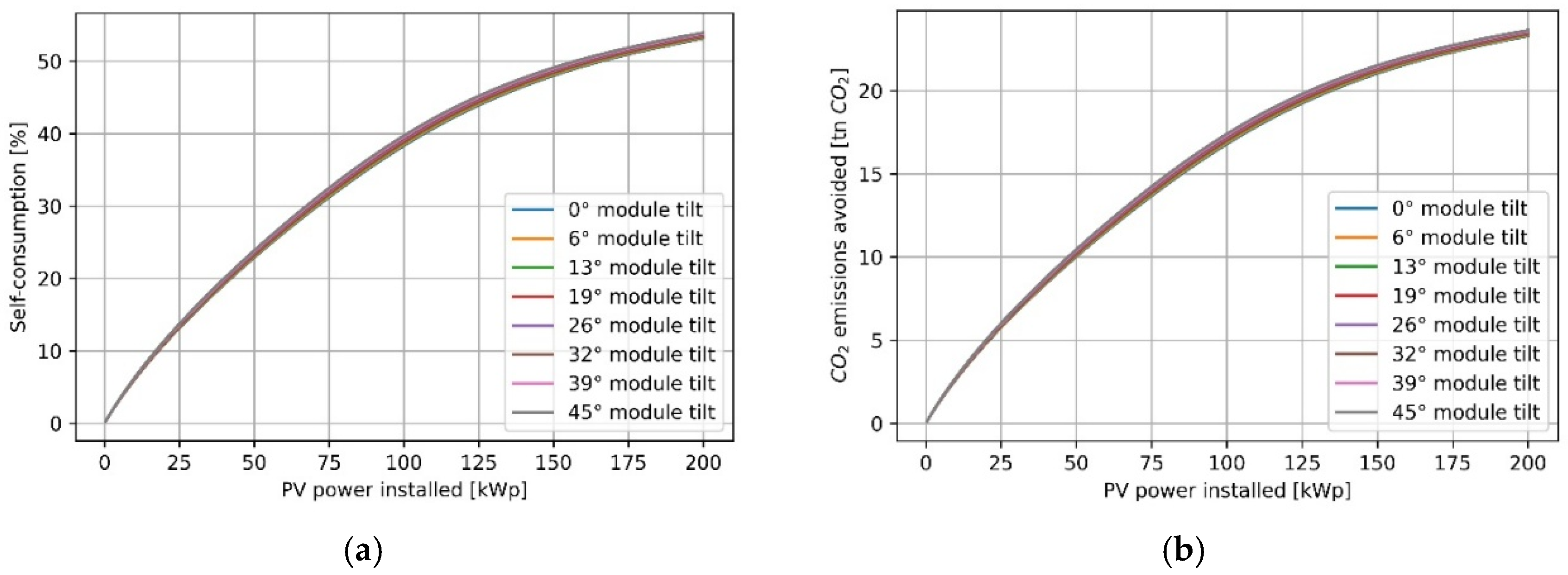
- Self-consumption: This metric quantifies the percentage of the factory’s energy demand met directly by the PV installation, which carries zero associated emissions. Independent of grid decarbonization trends, this value provides an accurate representation of the installation’s intrinsic environmental impact.
- (2)
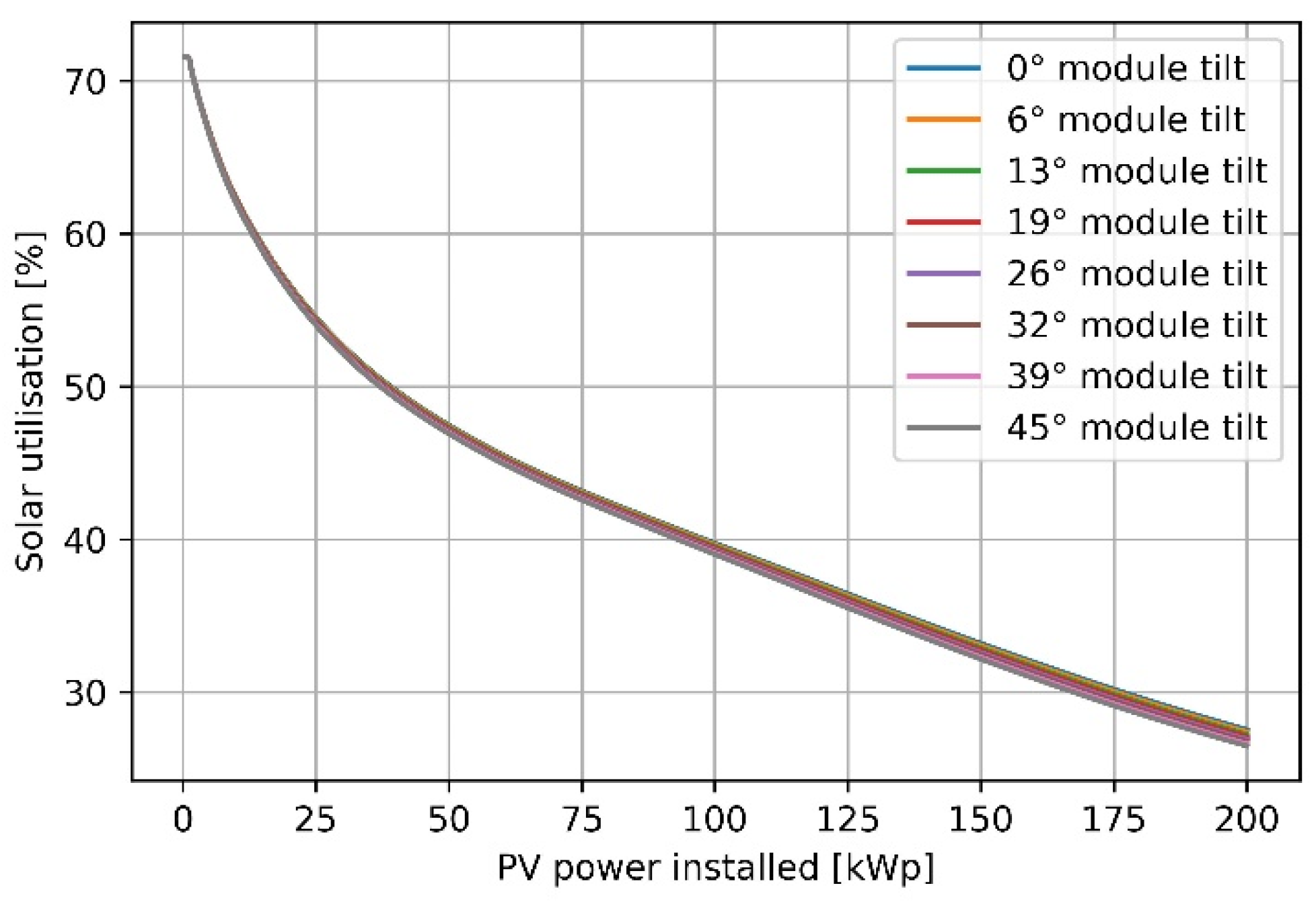
- Solar utilization: This indicates the percentage of generated PV energy consumed on-site, with the remainder exported as surplus. Since the financial savings from self-consumption consistently outweigh those from surplus compensation, solar utilization reflects the installation’s economic potential before the application of fluctuating energy tariffs.
- (3)
- CO2 emissions avoided: This is calculated by applying the grid’s emission intensity factor to the energy consumed on-site. By linking renewable energy usage directly to emissions displacement, this variable serves as a clear metric for climate change mitigation.
2.2. System Modelling Description
2.2.1. Factory Consumption Analysis
- (1)
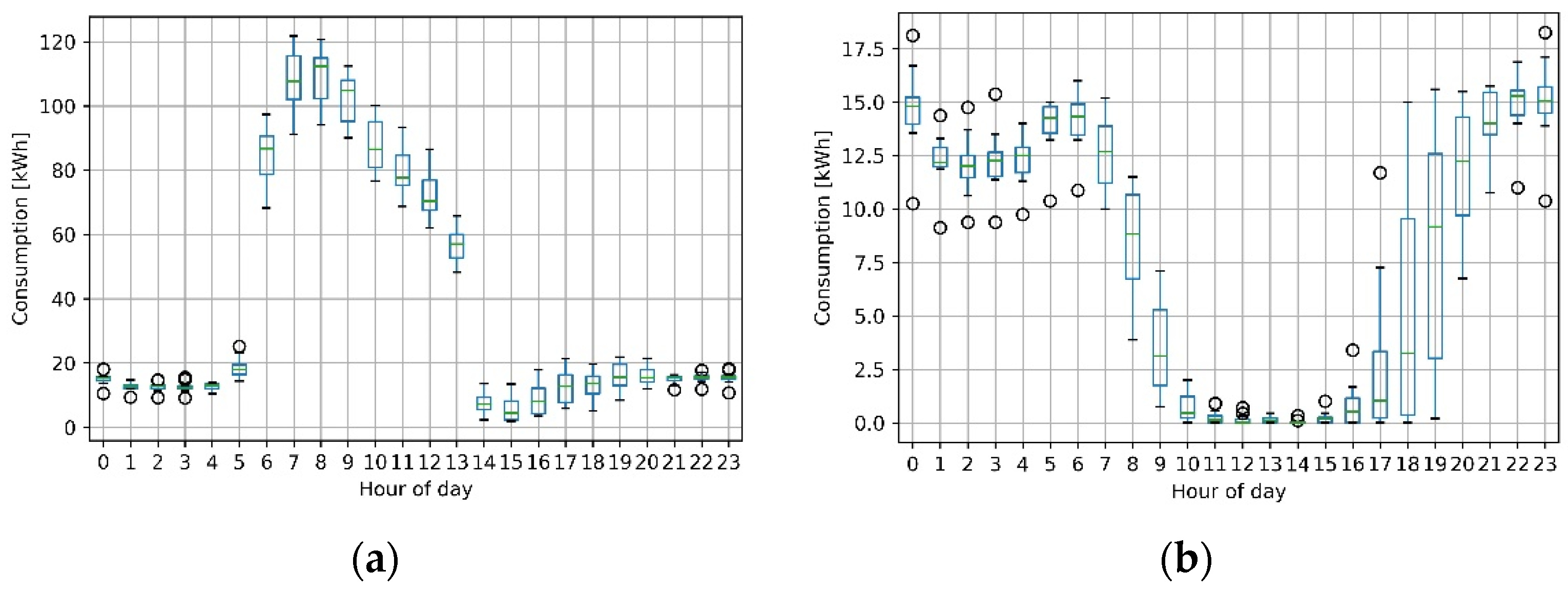
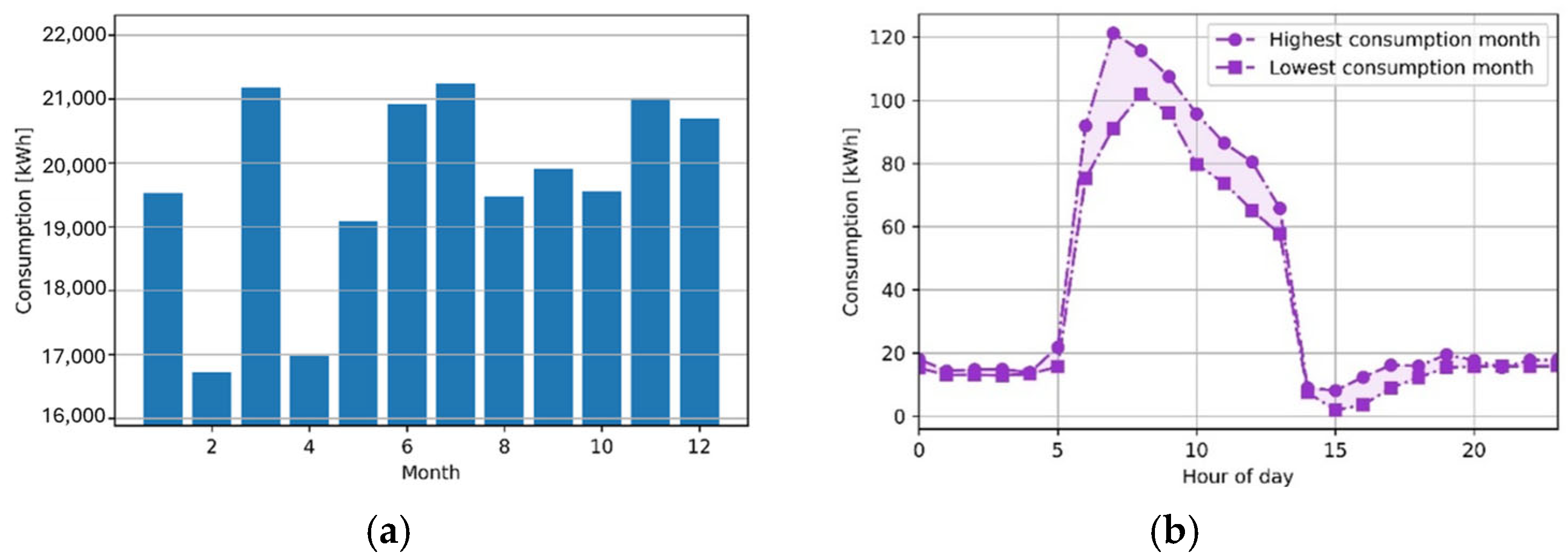
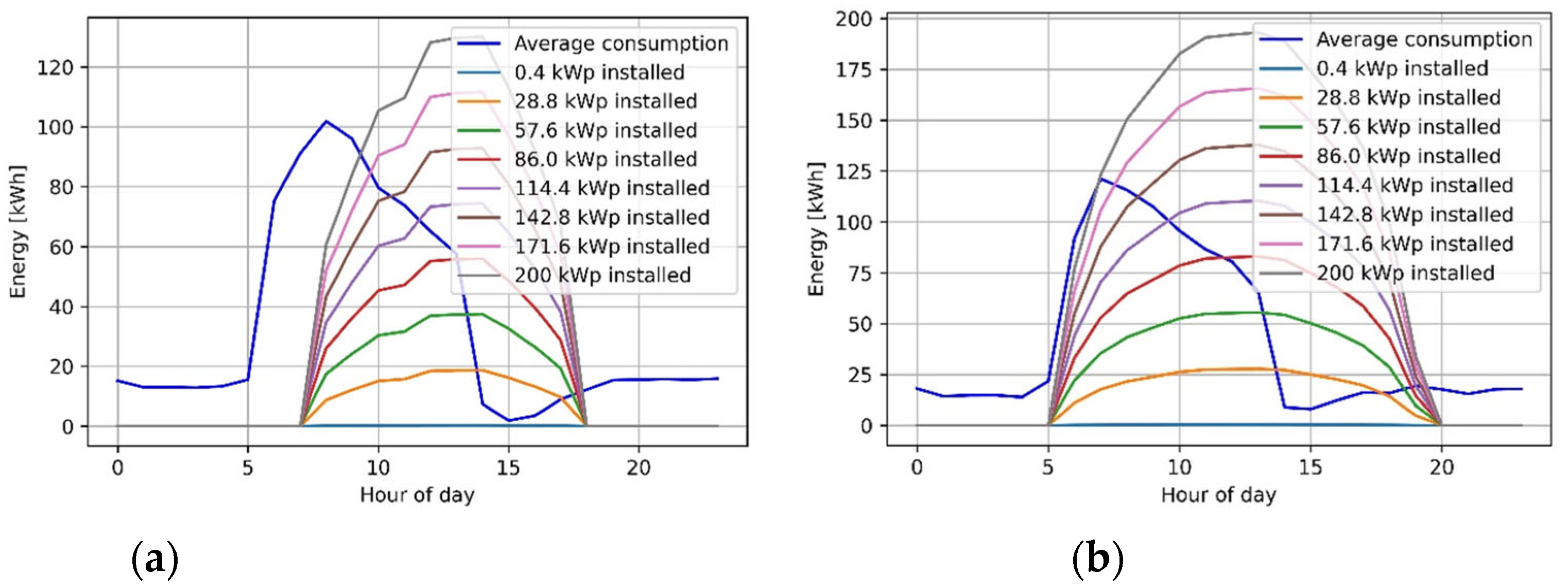
- Consumption within the 6:00 a.m. to 2:00 p.m. range, which shows the fluctuation of the factory’s production in each month. This difference is not necessarily related to the volume of production but could also be due to the type of product manufactured and, therefore, the energy consumption associated with each process.
- (2)
- Consumption within the 3:00 p.m. to 6:00 p.m. range, with a relatively stable gap of approximately 7 kW, which is attributed to air-conditioning equipment operating during office working hours.
2.2.2. Solar Resource Analysis
2.2.3. Ambient Temperature and Module Temperature Analysis
2.2.4. Photovoltaic Module Analysis
- Nominal power: 400 W.
- Thermal loss coefficient: 0.0037 °C−1.
- Nominal temperature: 25 °C.
- Nominal irradiance: 1000 W/m2.
2.2.5. System Performance Losses
2.2.6. Global Photovoltaic Performance Analysis
2.2.7. Model Evaluation Variables
2.2.8. Methodological Validation Using PVGIS
2.3. Simulation Based on the Model
3. Results and Discussion
3.1. Consumption and Photovoltaic Generation Curves Comparison
3.2. Self-Consumption Analysis
3.3. CO2 Avoided Emissions Analysis
3.4. Solar Utilization Analysis
3.5. Pareto Front for Sustainability-Based Sizing Decision Strategy
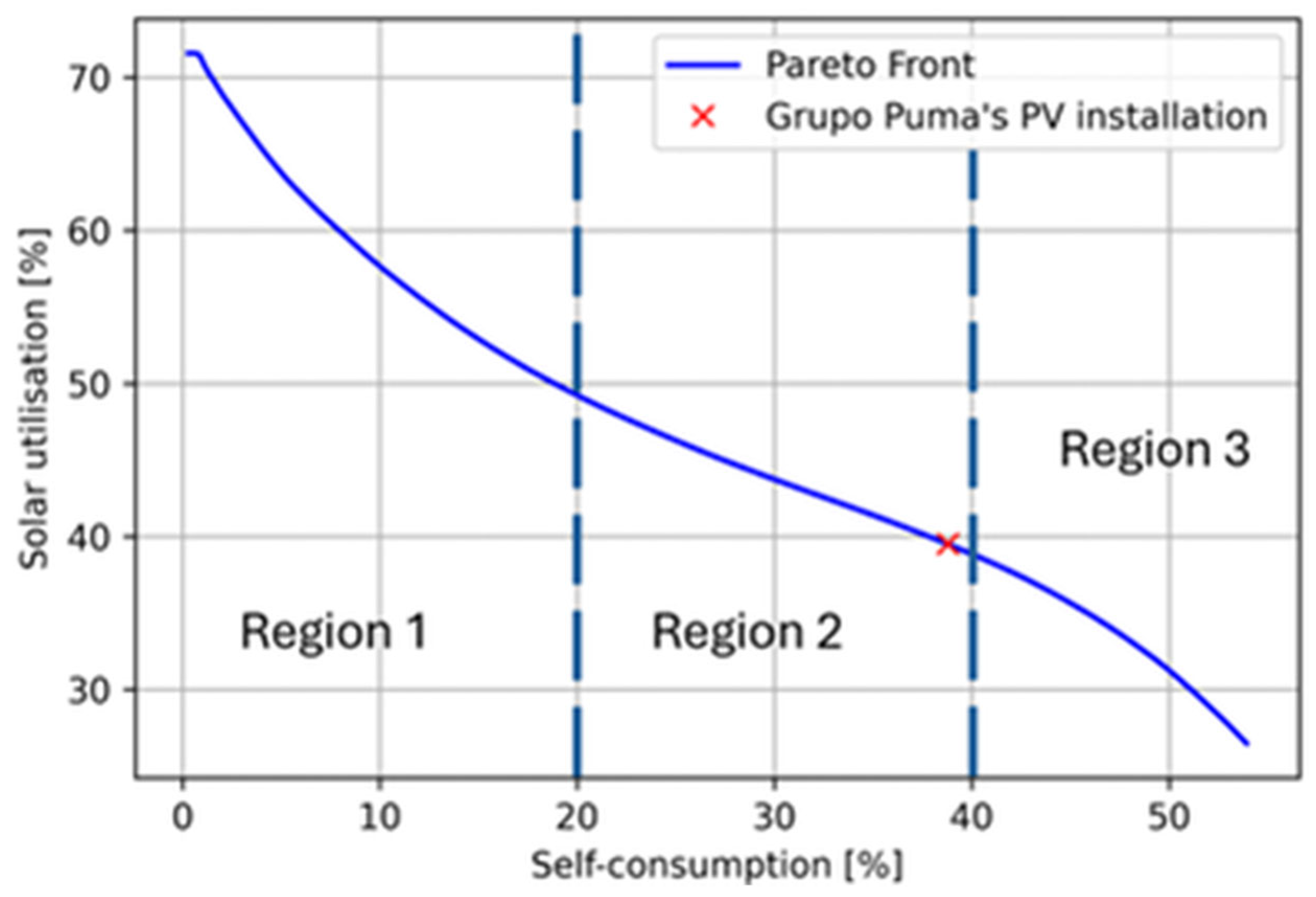
- Figure 14 illustrates the conflict between these two variables, where one objective typically improves at the expense of the other. Based on the Pareto front analysis, three distinct regions have been identified:
- Region 1: Economic performance zone: for installations with up to 20% self-consumption, the system achieves its highest solar utilization values (50–70%). While this range yields the highest economic performance, its environmental impact remains relatively modest.
- Region 2: Intermediate zone: within the 20–40% self-consumption range, an approximately linear variation occurs between the intermediate values of both decision variables. Notably, increases in self-consumption of up to 20% can be achieved at a cost of only 10% in solar utilization. This implies that in this region, the factory’s sustainability can be substantially improved with only minor reductions in economic efficiency.
- Region 3: Higher sustainability zone: beyond 40% self-consumption, further increases require significant decreases in solar utilization. This region is primarily restricted to facilities willing to prioritize maximum sustainability over the economic yield of their PV installation.
4. Conclusions
- (1)
- Sustainability plans frequently lack a comprehensive approach to renewable energy; while they often address ISO standards and life cycle strategies, they provide limited guidance regarding practical implementation or performance evaluation.
- (2)
- Photovoltaic installations represent a widespread and effective solution for incorporating renewable energy into industrial production processes. However, conventional KPIs for such studies (specifically CO2 emissions and payback periods) lack long-term consistency as they are subject to fluctuations in the energy market and ongoing grid decarbonization. In this context, self-consumption, solar utilization, and avoided CO2 emissions are proposed as a stable trinomial of KPIs to robustly measure both the environmental and economic potential of a PV installation. The results demonstrate that Grupo Puma’s current installation achieves an optimal balance, reaching self-consumption levels near 39% and solar utilization of approximately 40%, thereby proportionally reducing CO2 emissions into the atmosphere.
- (3)
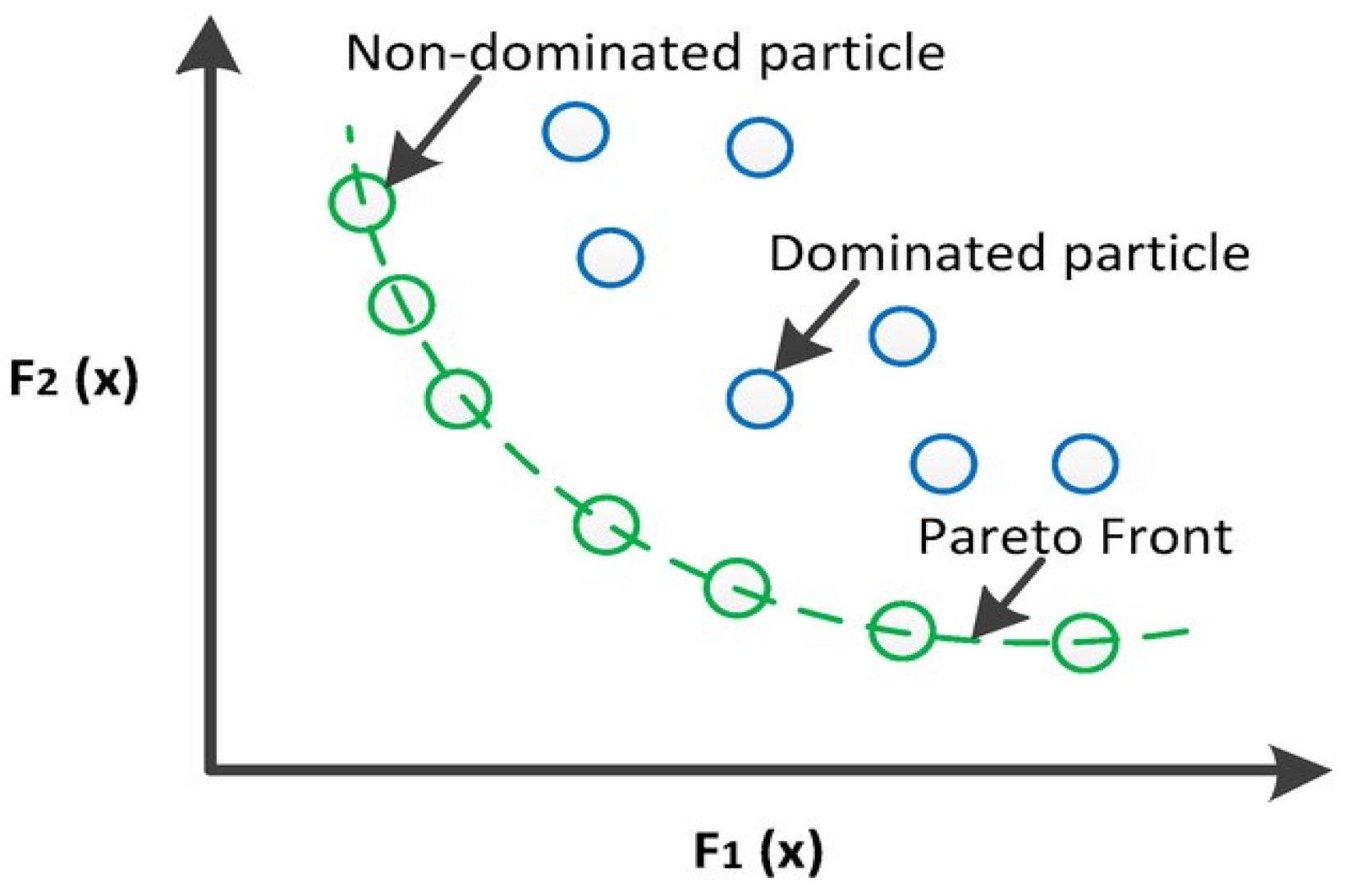
- Through Pareto front analysis, which illustrates the conflict between the proposed KPIs, it is possible to identify various types of facilities based on whether their potential is primarily environmental or economic. A central contribution of this work has been the evaluation of conflicting and independent objectives to find a balance between two often contrasting priorities: economy and sustainability. In this case, three distinct regions were defined: an economic performance zone (up to 20% self-consumption with high solar utilization of 50–70%), an intermediate zone (20–40% self-consumption), and a high sustainability zone (exceeding 40% self-consumption). The study reveals that within the intermediate zone, it is possible to increase self-consumption by up to 20% at the cost of reducing solar utilization by only 10%, demonstrating that sustainability can be significantly improved with minor losses in economic efficiency. Ultimately, this approach allows for the evaluation of existing PV installations according to their environmental performance, as well as the sizing of new systems based on these integrated sustainability–economic criteria.
Author Contributions
Funding
Institutional Review Board Statement
Informed Consent Statement
Data Availability Statement
Acknowledgments
Conflicts of Interest
Nomenclature
| Direct irradiance ( | |
| Diffuse irradiance ( | |
| Albedo irradiance ( | |
| Total irradiance ( | |
| Ambient temperature (°C) | |
| Module temperature (°C) | |
| Module reference temperature (°C) | |
| Thermal efficiency | |
| Mounting method efficiency | |
| Electrical efficiency | |
| Nominal DC peak power of module (W) | |
| AC real power of module (W) | |
| C | Power consumption (W) |
| SelfCom | Self-consumption |
| SolarUtil | Solar utilization |
| EmiAvoid | emissions avoided (tn ) |
References
- Luqman, M.; Rayner, P.J.; Gurney, K.R. On the impact of urbanisation on CO2 emissions. npj Urban Sustain. 2023, 3, 6. [Google Scholar] [CrossRef]
- Yu, J.; Kang, Y.; Zhai, Z. Advances in research for underground buildings: Energy, thermal comfort and indoor air quality. Energy Build. 2020, 215, 109916. [Google Scholar] [CrossRef]
- Wang, H.; Chen, D.; Duan, H.; Yin, F.; Niu, Y. Characterizing urban building metabolism with a 4D-GIS model: A case study in China. J. Clean. Prod. 2019, 228, 1446–1454. [Google Scholar] [CrossRef]
- Zhao, J.-W.; Peng, F.-L.; Wang, T.-Q.; Zhang, X.-Y.; Jiang, B.-N. Advances in master planning of urban underground space (UUS) in China. Tunn. Undergr. Space Technol. 2016, 55, 290–307. [Google Scholar] [CrossRef]
- European Commission. 2018 European Semester: Country Reports; European Commission: Brussels, Belgium, 2018. [Google Scholar]
- Askar, R.; Karaca, F.; Salles, A.; Lukyanenko, A.; Puma, G.C.C.; Tavares, V.; Khaidarova, A.; Nadaždi, A.; Pineda-Martos, R.; Díaz-Cabrera, J.M.; et al. Driving the Built Environment Twin Transition: Synergising Circular Economy and Digital Tools. In Driving the Built Environment Twin Transition: Synergising Circular Economy and Digital Tools; Springer Tracts in Civil Engineering; Springer Nature: Berlin/Heidelberg, Germany, 2024; pp. 459–505. [Google Scholar] [CrossRef]
- de Brito, J.; Evangelista, L.; Silvestre, J.D. 11-Equivalent functional unit in recycled aggregate concrete. In New Trends in Eco-Efficient and Recycled Concrete; Woodhead Publishing: Cambridge, UK, 2019; pp. 293–327. [Google Scholar] [CrossRef]
- Li, J.; Xiao, F.; Zhang, L.; Amirkhanian, S.N. Life cycle assessment and life cycle cost analysis of recycled solid waste materials in highway pavement: A review. J. Clean. Prod. 2019, 233, 1182–1206. [Google Scholar] [CrossRef]
- Linares, R.; López-Uceda, A.; Piccinali, A.; Martínez-Ruedas, C.; Galvín, A.P. LCA applied to comparative environmental evaluation of aggregate production from recycled waste materials and virgin sources. Environ. Sci. Pollut. Res. 2024, 31, 44023–44035. [Google Scholar] [CrossRef]
- Miller, I.; Gençer, E.; Vogelbaum, H.S.; Brown, P.R.; Torkamani, S.; O’Sullivan, F.M. Parametric modeling of life cycle greenhouse gas emissions from photovoltaic power. Appl. Energy 2019, 238, 760–774. [Google Scholar] [CrossRef]
- Huang, L.; Krigsvoll, G.; Johansen, F.; Liu, Y.; Zhang, X. Carbon emission of global construction sector. Renew. Sustain. Energy Rev. 2018, 81, 1906–1916. [Google Scholar] [CrossRef]
- Abdalla, A.N.; Nazir, M.S.; Tao, H.; Cao, S.; Ji, R.; Jiang, M.; Yao, L. Integration of energy storage system and renewable energy sources based on artificial intelligence: An overview. J. Energy Storage 2021, 40, 102811. [Google Scholar] [CrossRef]
- Lakhouit, A.; Alhathlaul, N.; El Mokhi, C.; Hachimi, H. Assessing the Environmental Impact of PV Emissions and Sustainability Challenges. Sustainability 2025, 17, 2842. [Google Scholar] [CrossRef]
- Rediske, G.; Michels, L.; Siluk, J.C.M.; Rigo, P.D.; Rosa, C.B.; Lima, A.C. A proposed set of indicators for evaluating the performance of the operation and maintenance of photovoltaic plants. Appl. Energy 2024, 354, 122158. [Google Scholar] [CrossRef]
- Shadram, F.; Mukkavaara, J. Exploring the effects of several energy efficiency measures on the embodied/operational energy trade-off: A case study of swedish residential buildings. Energy Build. 2019, 183, 283–296. [Google Scholar] [CrossRef]
- Aruta, G.; Ascione, F.; Bianco, N.; Iovane, T.; Mastellone, M.; Mauro, G.M. Optimizing the energy transition of social housing to renewable nearly zero-energy community: The goal of sustainability. Energy Build. 2023, 282, 112798. [Google Scholar] [CrossRef]
- Rogelj, J.; Huppmann, D.; Krey, V.; Riahi, K.; Clarke, L.; Gidden, M.; Nicholls, Z.; Meinshausen, M. A new scenario logic for the Paris Agreement long-term temperature goalt. Nature 2019, 573, 357–363. [Google Scholar] [CrossRef]
- Transforming Our World: The 2030 Agenda for Sustainable Development. 2015. Available online: https://digitallibrary.un.org/record/1654217?ln=es&v=pdf (accessed on 17 October 2025).
- Li, T.; Roskilly, A.P.; Wang, Y. Life cycle sustainability assessment of grid-connected photovoltaic power generation: A case study of Northeast England. Appl. Energy 2018, 227, 465–479. [Google Scholar] [CrossRef]
- Michael-Ahile, T.; Samuels, J.A.; Booysen, M.J. Optimizing Battery Energy Storage and Solar Photovoltaic Systems for Lower-to-Middle-Income Schools amidst Load-Shedding. Energy Sustain. Dev. 2025, 85, 101675. [Google Scholar] [CrossRef]
- Norouzi, M.; Haddad, A.N.; Jiménez, L.; Mohajerani, M.; Boer, D. Long-Term Decarbonization Prediction of Buildings Accounting for Temporal Variations in Grid and Material Emission Factors: A Case Study of Timber-Framed Passive Houses in the United Kingdom. Renew. Energy 2025, 242, 122476. [Google Scholar] [CrossRef]
- Bulut, U. The impacts of non-renewable and renewable energy on CO2 emissions in Turkey. Environ. Sci. Pollut. Res. 2017, 24, 15416–15426. [Google Scholar] [CrossRef]
- Kouka, K.; Masmoudi, A.; Abdelkafi, A.; Krichen, L. Dynamic energy management of an electric vehicle charging station using photovoltaic power. Sustain. Energy Grids Netw. 2020, 24, 100402. [Google Scholar] [CrossRef]
- Chou, J.-S.; Nguyen, H.-M. Simulating long-term energy consumption prediction in campus buildings through enhanced data augmentation and metaheuristic-optimized artificial intelligence. Energy Build. 2024, 312, 114191. [Google Scholar] [CrossRef]
- Cui, Y.; Geng, Z.; Zhu, Q.; Han, Y. Review: Multi-objective optimization methods and application in energy saving. Energy 2017, 125, 681–704. [Google Scholar] [CrossRef]
- Zhang, B.; Hu, W.; Cao, D.; Li, T.; Zhang, Z.; Chen, Z.; Blaabjerg, F. Soft actor-critic –based multi-objective optimized energy conversion and management strategy for integrated energy systems with renewable energy. Energy Convers. Manag. 2021, 243, 114381. [Google Scholar] [CrossRef]
- Kirimtat, A.; Krejcar, O.; Ekici, B.; Tasgetiren, M.F. Multi-objective energy and daylight optimization of amorphous shading devices in buildings. Sol. Energy 2019, 185, 100–111. [Google Scholar] [CrossRef]
- Han, Z.; Li, X.; Sun, J.; Wang, M.; Liu, G. An interactive multi-criteria decision-making method for building performance design. Energy Build. 2023, 282, 112793. [Google Scholar] [CrossRef]
- Mawson, V.J.; Hughes, B.R. Optimisation of HVAC control and manufacturing schedules for the reduction of peak energy demand in the manufacturing sector. Energy 2021, 227, 120436. [Google Scholar] [CrossRef]
- van Duin, J.H.R.; Geerlings, H.; Verbraeck, A.; Nafde, T. Cooling down: A simulation approach to reduce energy peaks of reefers at terminals. J. Clean. Prod. 2018, 193, 72–86. [Google Scholar] [CrossRef]
- Wu, M.H.; Ng, T.S.; Skitmore, M. Sustainable building envelope design by considering energy cost and occupant satisfaction. Energy Sustain. Dev. 2016, 31, 118–129. [Google Scholar] [CrossRef]
- Ahmad, T.; Zhang, D.; Huang, C.; Zhang, H.; Dai, N.; Song, Y.; Chen, H. Artificial intelligence in sustainable energy industry: Status Quo, challenges and opportunities. J. Clean. Prod. 2021, 289, 125834. [Google Scholar] [CrossRef]
- Gielen, D.; Boshell, F.; Saygin, D.; Bazilian, M.D.; Wagner, N.; Gorini, R. The role of renewable energy in the global energy transformation. Energy Strategy Rev. 2019, 24, 38–50. [Google Scholar] [CrossRef]
- International Energy Agency. Digitalization and Energy Analysis; International Energy Agency: Paris, France, 2017. [Google Scholar]
- Ministerio para la Transformación Digital y de la Función Pública. Estrategia de Inteligencia Artificial; Ministry for Digital Transformation and Public Function: Madrid, Spain, 2024. [Google Scholar]
- Ministerio para la Transformación Digital y de la Función Pública. Programa Nacional de Algoritmos Verdes (PNAV); Ministry for Digital Transformation and Public Function: Madrid, Spain, 2023. [Google Scholar]
- Grupo Puma. Grupo Puma, la Empresa. 2024. Available online: https://www.grupopuma.com/es-BS/empresa (accessed on 30 June 2025).
- European Environment Agency. Greenhouse Gas Emission Intensity of Electricity Generation; European Environment Agency: Copenhagen, Denmark, 2024. [Google Scholar]
- Steidle Neto, A.J.; Lopes, D.d.C. Grid-connected PV system for dairy farms. J. Energy Power Technol. 2024, 6, 1–17. [Google Scholar] [CrossRef]
- Boscaino, V.; Ditta, V.; Marsala, G.; Panzavecchia, N.; Tinè, G.; Cosentino, V.; Cataliotti, A.; Di Cara, D. Grid-connected photovoltaic inverters: Grid codes, topologies and control techniques. Renew. Sustain. Energy Rev. 2024, 189, 113903. [Google Scholar] [CrossRef]
- European Commission. PVGIS—Photovoltaic Geographical Information System; European Commission: Brussels, Belgium, 2024. [Google Scholar]
- Bamisile, O.; Acen, C.; Cai, D.; Huang, Q.; Staffell, I. The Environmental Factors Affecting Solar Photovoltaic Output. Renew. Sustain. Energy Rev. 2025, 208, 115073. [Google Scholar] [CrossRef]
- Alhmoud, L. Why does the PV plant operate ineffectively? Energies 2023, 16, 4074. [Google Scholar] [CrossRef]
- Díaz-Bello, D.; Vargas-Salgado, C.; Águila-León, J.; Lara-Vargas, F. Methodology to Estimate the Impact of the DC to AC Power Ratio, Azimuth, and Slope on Clipping Losses of Solar Photovoltaic Inverters: Application to a PV System Located in Valencia Spain. Sustainability 2023, 15, 2797. [Google Scholar] [CrossRef]
- Mahesh, K.; Nallagownden, P.; Elamvazuthi, I. Advanced Pareto Front Non-Dominated Sorting Multi-Objective Particle Swarm Optimization for Optimal Placement and Sizing of Distributed Generation. Energies 2016, 9, 982. [Google Scholar] [CrossRef]
- Jing, T.; Zhao, Y. Optimizing energy consumption in smart buildings: A model for efficient energy management and renewable integration. Energy Build. 2024, 323, 114754. [Google Scholar] [CrossRef]
- Fei, W.; Opoku, A.; Agyekum, K.; Oppon, J.A.; Ahmed, V.; Chen, C.; Lok, K.L. The Critical Role of the Construction Industry in Achieving the Sustainable Development Goals (SDGs): Delivering Projects for the Common Good. Sustainability 2021, 13, 9112. [Google Scholar] [CrossRef]
- Wurster, T.; Schubert, M. Mismatch Loss in Photovoltaic Systems. Sol. Energy 2014, 105, 505–511. [Google Scholar] [CrossRef]
- Ciarreta, A.; Pizarro-Irizar, C.; Zarraga, A. Renewable energy regulation and structural breaks: An empirical analysis of Spanish electricity price volatility. Energy Econ. 2020, 88, 104749. [Google Scholar] [CrossRef]
- González-Peña, D.; García-Ruiz, I.; Díez-Mediavilla, M.; Dieste-Velasco, M.I.; Alonso-Tristán, C. Photovoltaic Prediction Software: Evaluation with Real Data from Northern Spain. Appl. Sci. 2021, 11, 5025. [Google Scholar] [CrossRef]
- Singh, Y.K.; Dubey, S.; Rajput, P.; Singh, K.Y.; Pandey, K. Real-Time and Modelled Perfor-mance Assessment and Validation Studies of PV Modules Operating in Varied Climatic Zones. Energy Built Environ. 2025, 6, 585–595. [Google Scholar] [CrossRef]
- Ma, T.; Guo, Z.; Shen, L.; Liu, X.; Chen, Z.; Zhou, Y.; Zhang, X. Performance Modelling of Photovoltaic Modules under Actual Operating Conditions Considering Loss Mechanism and Energy Distribution. Appl. Energy 2021, 298, 117205. [Google Scholar] [CrossRef]
- Ortiz-Peña, A.; Gil-Ruano, P.H.; Honrubia-Escribano, A.; Gallego-Giner, I.; Gómez-Lázaro, E. Real Data-Based Performance Analysis of a Solar Photovoltaic Plant on Toledo University Campus. Renew. Energy 2026, 257, 124770. [Google Scholar] [CrossRef]
- Jacobson, M.Z.; Jadhav, V. World Estimates of PV Optimal Tilt Angles and Ratios of Sunlight Incident upon Tilted and Tracked PV Panels Relative to Horizontal Panels. Sol. Energy 2018, 169, 55–66. [Google Scholar] [CrossRef]
- Barbón, A.; Bayón-Cueli, C.; Bayón, L.; Rodríguez-Suanzes, C. Analysis of the Tilt and Azimuth Angles of Photovoltaic Systems in Non-Ideal Positions for Urban Applications. Appl. Energy 2022, 305, 117802. [Google Scholar] [CrossRef]
- Jiménez-Castillo, G.; Muñoz-Rodríguez, F.J.; Martinez-Calahorro, A.J.; Tina, G.M.; Rus-Casas, C. Impacts of array orientation and tilt angles for photovoltaic self-sufficiency and self-consumption indices in olive mills in Spain. Electronics 2020, 9, 348. [Google Scholar] [CrossRef]







| Input | Variable | Output |
|---|---|---|
| PV module nominal power. | Number of PV modules | Solar utilization |
| PV module thermal loss coefficient | Tilt | Self-consumption |
| PV module nominal temperature | Azimuth | CO2 emissions avoided |
| PV module nominal irradiance | ||
| PV installation electrical efficiency | ||
| Irradiance | ||
| Temperature |
Disclaimer/Publisher’s Note: The statements, opinions and data contained in all publications are solely those of the individual author(s) and contributor(s) and not of MDPI and/or the editor(s). MDPI and/or the editor(s) disclaim responsibility for any injury to people or property resulting from any ideas, methods, instructions or products referred to in the content. |
© 2026 by the authors. Licensee MDPI, Basel, Switzerland. This article is an open access article distributed under the terms and conditions of the Creative Commons Attribution (CC BY) license.
Share and Cite
Lopera-Rodríguez, M.; Díaz-Cabrera, J.M.; Dorado-Ruíz, S.; Pérez Galvín, A. Photovoltaic Consumption Modelling of a Construction Materials Factory for Sustainability-Based Sizing Strategy. Sustainability 2026, 18, 2673. https://doi.org/10.3390/su18062673
Lopera-Rodríguez M, Díaz-Cabrera JM, Dorado-Ruíz S, Pérez Galvín A. Photovoltaic Consumption Modelling of a Construction Materials Factory for Sustainability-Based Sizing Strategy. Sustainability. 2026; 18(6):2673. https://doi.org/10.3390/su18062673
Chicago/Turabian StyleLopera-Rodríguez, Manuel, Juan Manuel Díaz-Cabrera, Selena Dorado-Ruíz, and Adela Pérez Galvín. 2026. "Photovoltaic Consumption Modelling of a Construction Materials Factory for Sustainability-Based Sizing Strategy" Sustainability 18, no. 6: 2673. https://doi.org/10.3390/su18062673
APA StyleLopera-Rodríguez, M., Díaz-Cabrera, J. M., Dorado-Ruíz, S., & Pérez Galvín, A. (2026). Photovoltaic Consumption Modelling of a Construction Materials Factory for Sustainability-Based Sizing Strategy. Sustainability, 18(6), 2673. https://doi.org/10.3390/su18062673