1. Introduction
The building and construction sector is a major contributor to global environmental impact. According to the United Nations Environment Programme (UNEP), in 2022 the sector accounted for 34% of global energy demand and 37% of energy- and process-related CO
2 emissions [
1]. In this context, the development of alternative construction materials with lower embodied energy, reduced process emissions, and improved recyclability has become a priority.
Gypsum-based materials offer relevant advantages for non-structural applications due to their comparatively low calcination temperature, widespread availability, and compatibility with recycled constituents. However, conventional gypsum manufacturing is typically based on casting processes with high water demand, which leads to increased porosity, longer demolding times, and limited mechanical performance. As a result, productivity and achievable strength are constrained when compared with industrially vibrocompressed prefabricates.
Recent literature reinforces the relevance of gypsum-based systems as low-impact construction materials, particularly when combined with recycled constituents or optimized manufacturing routes. Studies on gypsum composites incorporating waste-derived additions and plant-based fibers have reported promising thermal and moisture-regulation performance while maintaining suitable properties for building applications [
2,
3]. In parallel, a recent study on vibrocompressed gypsum concrete demonstrated the feasibility of processing ultra-stiff gypsum mixtures by vibropressing and highlighted the importance of technological parameter optimization [
4].
This study builds on that context and addresses the limited experimental evidence available for calcium sulfate prefabricates produced by vibrocompression. Specifically, it develops and characterizes vibrocompressed calcium sulfate elements manufactured with semi-dry mixtures, retarding additives, and gypsum-based aggregates (including recycled gypsum), and compares their performance with conventional vibrocompressed concrete units. The work is linked to patent application P202300065 (Miguel Hernández University), which describes the proposed manufacturing route.
The calcium sulfate base is additivated with retarders and different proportions of aggregates or mineral fillers, previously manufactured from calcium sulfate itself, with the procedure being the object of the invention. Until now, the manufacture of calcium sulfate-based products has focused exclusively on casting, a method that requires specific molds and prolonged setting times, which limits its productive efficiency. Furthermore, the high water/gypsum ratio required to obtain a fluid paste produces porous, heavy, and low-strength elements. Improvements in this process usually depend on the use of release agents, additives, or reinforcements such as cellulose [
5,
6].
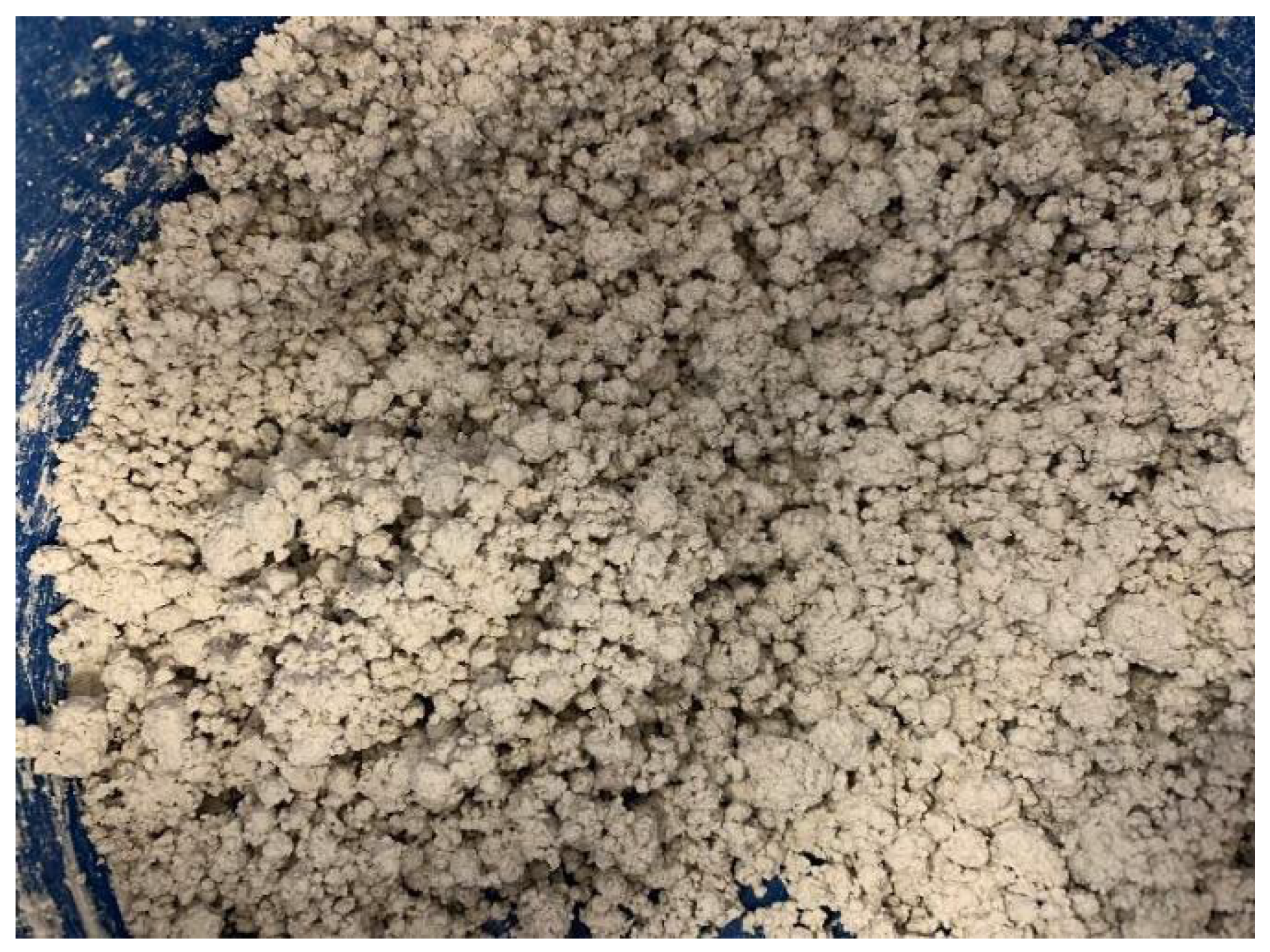
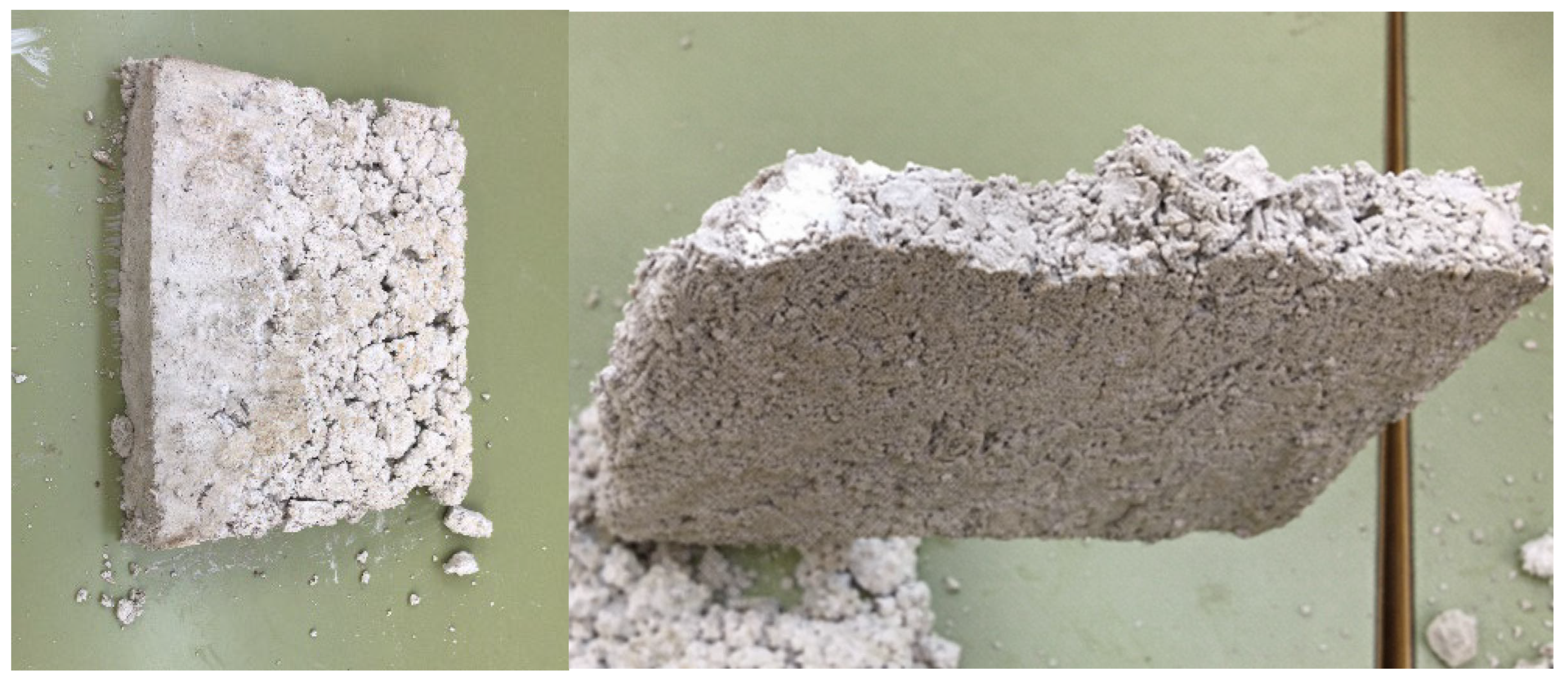
This new development abandons the concept of fluid gypsum, achieving a semi-dry mix (
Figure 1) that significantly reduces mixing water. Retarding additives are used for the process; in our case, a citric acid base with silicon dioxide, as described in Spanish patent ES2392062 [
7].
The objective of the development is the manufacturing of prefabricated elements as described, particularly blocks or bricks, which employ the mechanical vibrocompression process.
Despite the extensive use of gypsum-based materials in construction, their application has traditionally been limited to casting processes with high water demand, long setting times, and reduced mechanical performance. While vibrocompression is widely established in concrete prefabrication, its application to calcium sulfate-based systems remains scarcely explored. To date, there is a lack of systematic experimental studies evaluating the mechanical, thermal, acoustic, and fire performance of vibrocompressed gypsum prefabricates manufactured with reduced water content and recycled aggregates.
This study aims to address this gap by developing and experimentally characterizing vibrocompressed calcium sulfate prefabricated elements, assessing their physical, mechanical, thermal, acoustic, and fire behavior, and benchmarking their performance against conventional concrete solutions.
In this manuscript, sustainability implications are discussed at a preliminary material/process-route level and are not presented as a full quantitative environmental assessment.
2. Materials and Methods
In this first development stage, the manufactured vibrocompressed calcium sulfate units are intended for non-load-bearing interior applications (e.g., interior partition walls) and not for direct exposure to outdoor environmental conditions. The manufacturing process is divided into the following stages:
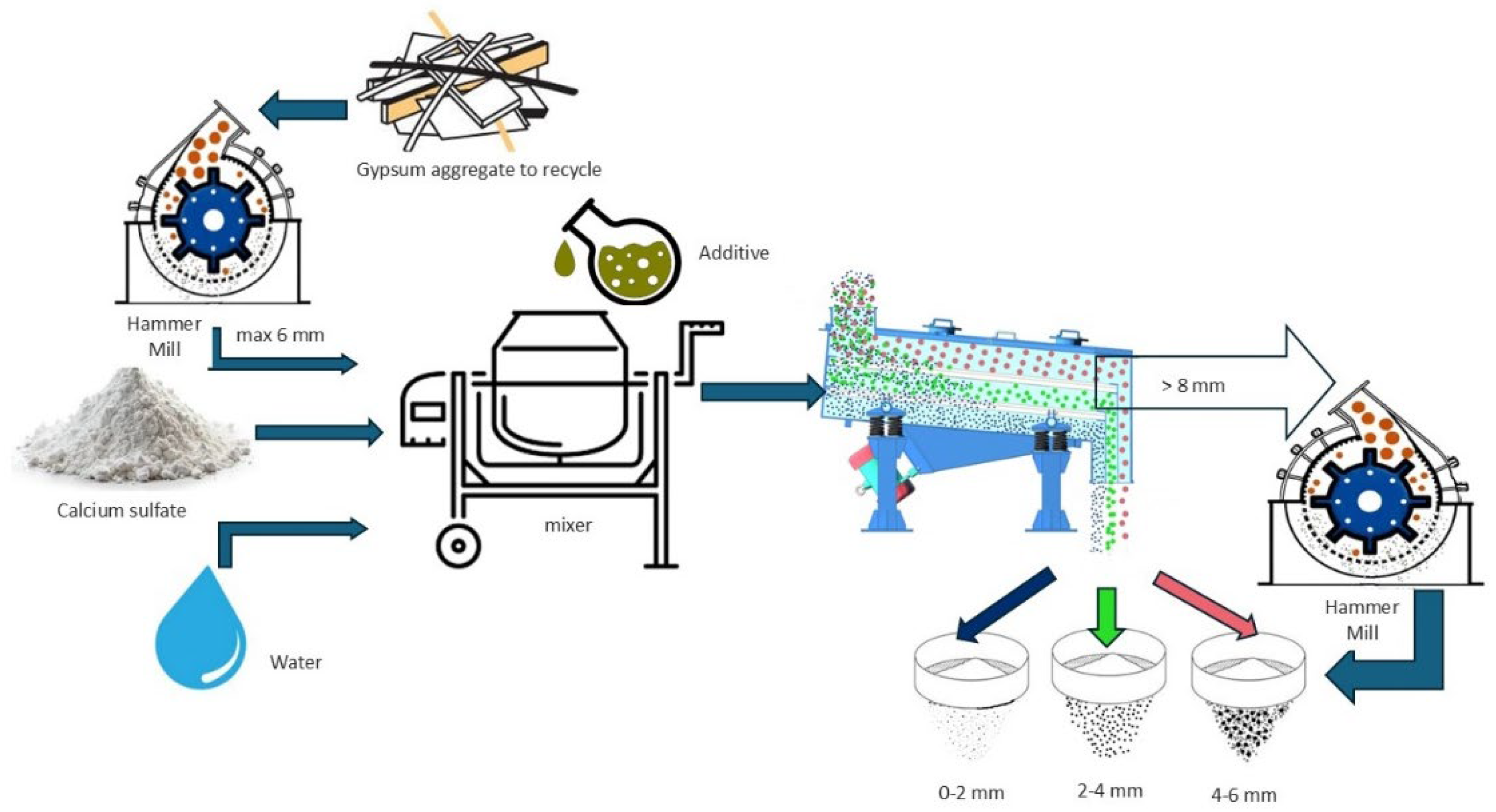
Quarry aggregate selection: This aggregate is sieved for a maximum size of 8/6 mm. Therefore, it is sieved to classify it and eliminate particles smaller than 0.125 mm, as well as those larger than 8.00 mm, which are passed through the hammer mill (
Figure 2). Each type of aggregate has different properties, but they are classified as soft or non-heavy aggregates when compared to those used in concrete. All aggregates used are gypsum-based. The quarry aggregate is obtained from gypsum extraction/sieving processes, whereas the prefabricated aggregate is artificially produced from calcined gypsum and can incorporate recycled gypsum-based materials. However, the production of artificial aggregate based on calcined gypsum, as well as the potential incorporation of recycled materials—such as gypsum plasterboard—does require an additional processing stage. For this, starting from gypsum (binder), with the addition of water (220 g/1000 g of gypsum), it is mixed (planetary mixer) until a granular mass is obtained. Once dry, it is sieved to classify it, eliminating particles smaller than 0.125 mm. It will then be incorporated into the vibrocompression manufacturing process.
For the production of the artificial gypsum aggregate (
Figure 2), water was added at a dosage of 220 g per 1000 g of gypsum to promote controlled hydration of the calcined gypsum and to form a semi-dry granular mass suitable for subsequent crushing/sieving and reuse as aggregate. The purpose of this step is not to cast a final product but to generate a gypsum-based granular filler/aggregate with controlled particle size for the vibrocompression process.
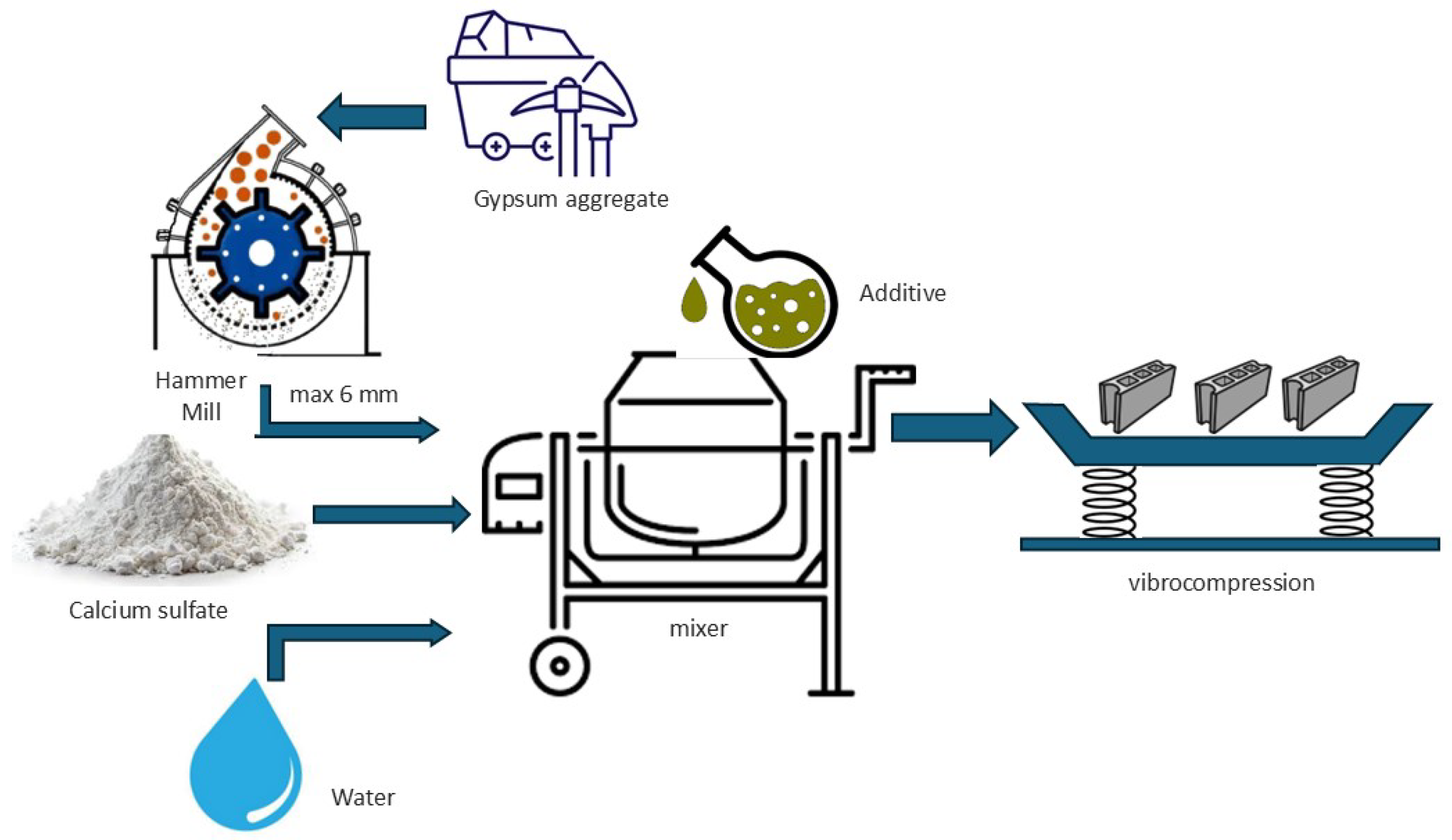
The processing equipment used in
Figure 2 and
Figure 3 corresponds to standard industrial gypsum/prefabrication machinery. A planetary mixer (500 L capacity in preliminary trials and 750 L capacity in the block-production stage) was used for mixing. A hammer mill was used for crushing gypsum pieces and recycled gypsum-based material, and a manual mesh sieve was used for particle-size classification and for removing excessive fines before incorporation into the vibrocompression mix.
Mixing and feeding the blend: The adopted dosage for gypsum prefabricates has been 50% aggregate and 50% building gypsum. The amount of water added, as already indicated, is 220 g per 1000 g of gypsum. The aggregate is pre-wetted to improve adhesion and reduce water absorption during mixing [
8] (
Figure 3). In the block manufacturing stage, the added water fulfills two functions: (i) hydration and setting of the calcium sulfate hemihydrate binder and (ii) achievement of a semi-dry consistency compatible with mold filling and vibrocompression. The additive (citric acid/colloidal silica-based system) acts as a fluidizer-superplasticizer and setting retarder, improving workability and particle dispersion without increasing the water content and extending the workable time required for industrial compaction.
Industrial vibrocompression equipment and process constraints.
Industrial vibrocompression equipment and process constraints. The prefabricated elements were manufactured under real industrial production conditions using a mobile vibrocompression machine (LOREV 1010/A). The equipment configuration and operating sequence impose part of the process conditions (mold filling, compaction-vibration stage, and demolding sequence), which were kept constant throughout the experimental campaign to ensure comparability among mixtures.
The technological production sequence of the vibrocompressed blocks was as follows: (1) preparation and granulometric classification of gypsum-based aggregates; (2) semi-dry mixing of gypsum binder, aggregate, water, and additive in a planetary mixer; (3) feeding of the mix into the mold; (4) initial compaction by the machine pressing system (counter-mold/impact stage); (5) controlled vibration and additional compaction; (6) demolding; and (7) palletization and conditioning/drying before testing. Process control was based on maintaining constant mold geometry, dosing, and machine operating conditions.
Special attention was paid to the vibration stage, since excessive vibration may cause segregation of particles (heavier vs. lighter fractions), while excess fines can lead to sticky behavior in the mold and increased water demand. Therefore, granulometric control and limitation of fines were considered key process variables for stable manufacturing.
Accordingly, the study was designed as a process-validation campaign and an initial material-characterization stage under fixed industrial conditions. It was not intended as a full parametric optimization of machine settings (e.g., pressure, vibration amplitude/frequency, or cycle time). Therefore, the influence of the mixture composition was evaluated within the operating window allowed by the equipment and the selected mold configuration.
All specimens included in each test series were produced under the same machine setup and manufacturing sequence. Reported values correspond to the mean ± standard deviation for each series.
The pressure applied during compaction in the vibrocompression press [
4] is a key factor in the quality of the final product.
Piston actuation area: 15,546.33 mm2.
Piston load (900 kg) 8829 N.
Pressure used in manufacturing: (5.78 kg/cm2) 0.567 N/mm2.
Maximum pressure achievable in fixed presses: up to (20 kg/cm2) 1.96 N/mm2.
Pressing directly affects the material’s density and strength. Higher pressure means greater density and hardness, but it does not always improve physical properties. In this case, a balance has been sought to maintain a low weight and easy handling of the pieces [
9].
During manufacturing, the molds (50.00 cm × 7.00 cm × 21.50 cm, with walls of 1.50 cm) were designed with a height of 21.50 cm, but the material was compressed to 18.00 cm, reducing 3.50 cm in the process. This controlled compaction improves strength without compromising the handleability of the pieces.
Each mold allows the manufacturing of 13 pieces. For the experimental campaign, three independent batches (three separate mixes) were produced, resulting in a total of 39 prefabricated units. All units were manufactured under the same machine configuration and mold setup to ensure comparability among mixtures.
Testing standards and data reporting. In addition to the testing standards, the production framework adopted in this study was based on controlled industrial manufacturing conditions using a mobile vibrocompression machine (LOREV 1010/A). Although there is no specific harmonized standard for vibrocompressed gypsum prefabricated blocks equivalent to conventional concrete masonry production, the process was carried out under fixed and reproducible operating conditions (mold geometry, filling sequence, compaction-vibration stage, and demolding sequence). The raw materials were selected and described according to applicable standards and manufacturer specifications, including building gypsum B1 in accordance with EN 13279-1/EN 13279-2 [
10,
11].
Compressive strength was determined according to UNE-EN 772-1 [
12], and dry density was determined according to UNE-EN 772-13 [
13]. The reported values are presented as mean ± standard deviation for each test series. Given the process-validation nature of this study, the statistical treatment was limited to descriptive statistics at this stage, and no inferential statistical analysis (e.g., ANOVA) was applied.
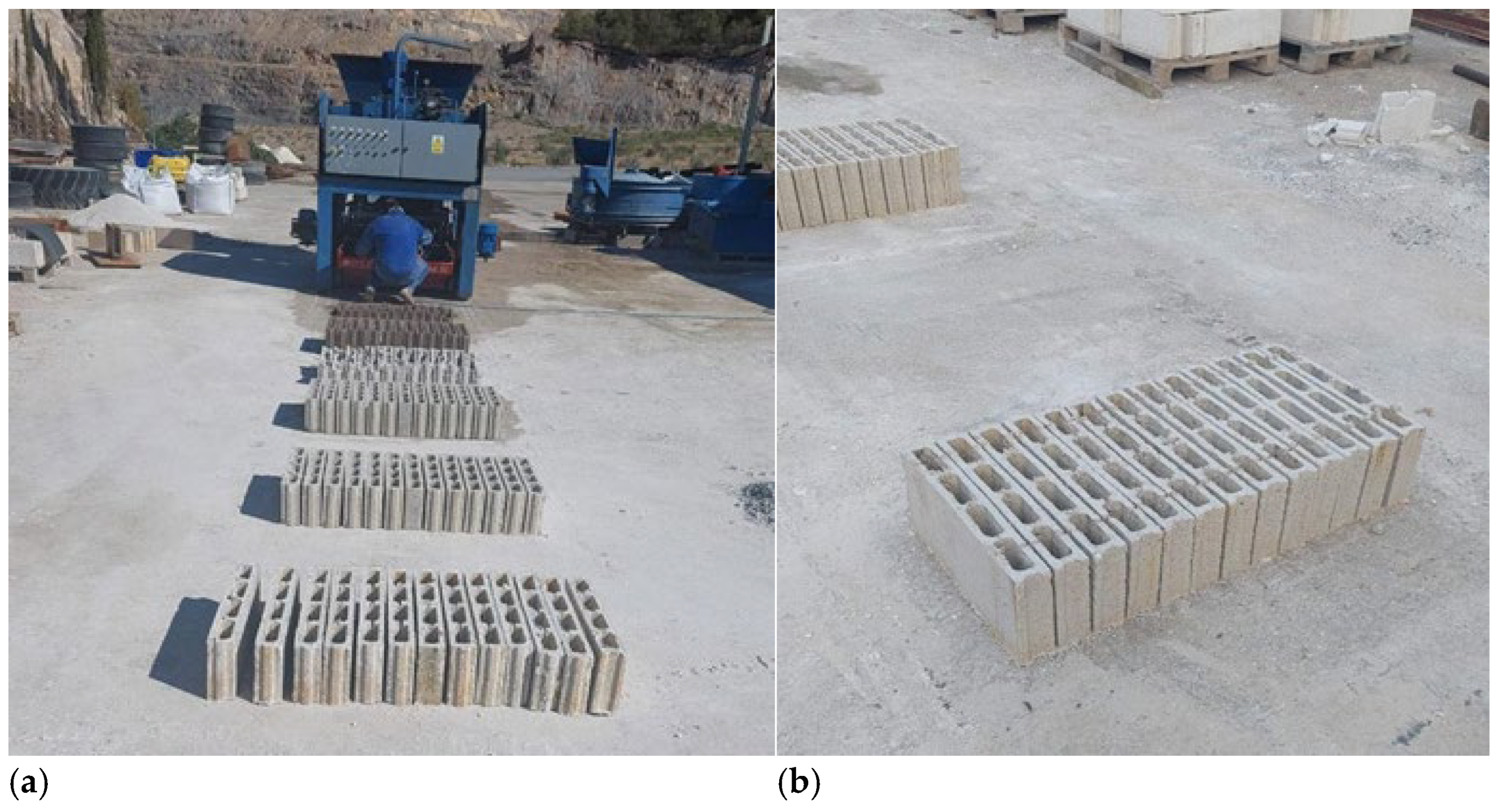
The final dimensions of the obtained pieces were 50.00 cm × 7.00 cm × 18.00 cm, ensuring a standardized and reproducible size for future productions (
Figure 4).
All manufacturing parameters were maintained within controlled tolerances to ensure reproducibility. Variations in water-to-gypsum ratio were kept within ±5%, and compaction pressure deviations did not exceed ±0.02 N/mm2.
Post-processing and testing condition. Due to the gypsum-based nature of the system, the production stages are described in terms of setting, demolding, and conditioning/drying rather than cement-type curing. After demolding and palletization (10–20 min operational window), the units were conditioned under air-dry laboratory conditions prior to testing.
2.1. Raw Materials
2.1.1. Water
As indicated, water is an essential component in the formation of calcium sulfate (CaSO
4·½H
2O)-based blocks, as it participates in the hydration and subsequent setting of gypsum. Traditionally, as previously mentioned, the manufacture of prefabricated gypsum elements has employed the casting method, in which water/gypsum ratios range between 0.50 and 0.80 [
14]. However, in the vibrocompression method, significantly lower ratios are required, between 0.18 and 0.20, as the objective is to reduce the material’s porosity and improve its mechanical strength. An excess of water in the mixture leads to an increase in porosity, which reduces the density and mechanical strength of the final material [
15]. This is because, during drying, free water that does not react with calcium sulfate evaporates, leaving voids that compromise the structural cohesion of the matrix [
9].
Previous studies have shown that a low water/gypsum ratio improves the compressive strength and durability of the material, fundamental characteristics in prefabricated construction elements [
16]. It is also known that the mixing water temperature, around 25 °C, favors uniform and controlled setting, minimizing the presence of dissolved salts that could alter the gypsum’s hydration kinetics [
17]. The presence of ions in the water can accelerate or retard setting depending on their concentration [
18]. In the development of the described process, the amount of water used is 220 g per 1000 g of gypsum, which is within the optimal range to minimize porosity and maximize the mechanical strength of the blocks. The attached table shows the data on the analysis of the water used in the development from the Padul area, Granada, where one of the test sites for our study is located (
Table 1).
2.1.2. Binder
Gypsum (calcium sulfate hemihydrate, CaSO
4·½H
2O) properties depend on its quality and composition, directly affecting the final product’s mechanical and physical properties, including its strength, porosity, and setting [
19].
Thus, the first classification of gypsum can be based on its purity [
7,
9,
14,
15,
16,
17,
18,
19,
20,
21]. Impure gypsum requires more water and can lead to products with lower strength [
14].
In this study, β-gypsum with a purity greater than 75% was used, complying with UNE-EN 13279-1 for B1 building gypsum. The present work focuses on this material as a baseline industrial formulation for process validation [
21]. According to the standard classification, β1 gypsum is suitable for mechanical projection and manual application, with minimum compressive strength values of 2.00 N/mm
2 and flexural strength of 1.00 N/mm
2. The characteristics of the gypsum used in the tests are shown in
Table 2.
Given the gypsum-based nature of the system, the production and post-processing stages were described in terms of setting, demolding, and conditioning/drying periods, rather than cement-type curing.
2.1.3. Aggregates
A proportion of gypsum aggregate (between 60% and 40% aggregate) is added to the calcium sulfate, with the proportion depending on the quality of the gypsum and its subsequent pressing. The aggregate can be prefabricated from the gypsum itself (artificial aggregate) or directly obtained from the quarry. In any case, its incorporation into the process is essential, as it acts as a reinforcement within the matrix, increasing the mechanical strength and compaction of the final material and reducing porosity due to its ability to occupy space between gypsum particles, which improves the durability of the prefabricated product. Regarding granulometry, the reference for the manufacturing of vibrocompressed concrete blocks based on Bolomey’s relationship has been followed. Manufacturing has also been limited to a maximum aggregate size of 6 mm (
Table 3). Thus, the manufacturing range follows the following distribution.
2.1.4. Additive
Gypsum is a material highly dependent on water content and setting kinetics, so the incorporation of additives directly influences its behavior. The main functions of this additive in the context of the vibrocompression process are as a fluidizer and superplasticizer. It reduces the viscosity of the mixture without the need to increase the amount of water [
18], improving fluidity and facilitating mold filling. It also improves the dispersion of gypsum particles and their stability [
16], reducing agglomeration and improving compaction, allowing a lower water/gypsum ratio to be obtained, which decreases porosity and increases the mechanical strength of the prefabricated [
15].
Furthermore, it also needs to act as a setting retarder, controlling the reaction rate of hemihydrate gypsum (CaSO
4·½H
2O) with water, preventing excessively rapid hydration that could generate internal stresses and microcracks. This is necessary for industrial processes where a longer workability time is required to facilitate handling and compaction by controlling crystal formation [
17] in the application of the vibrocompression process [
9]. The base used in the development employs Citric Acid (C
6H
8O
7), or Polycarboxylic Acid (of COOH type), and Colloidal Silicon Dioxide (SiO
2), the latter being a nanomaterial that modifies the rheology of the gypsum paste, offering several advantages.
The physical-chemical characteristics of the additive used in the tests are reported in
Table 4.
In the context of vibrocompressed gypsum prefabricates, it has been used in doses of 2.00 g per 1000.00 g of gypsum.
3. Results
3.1. Granulometric Analysis
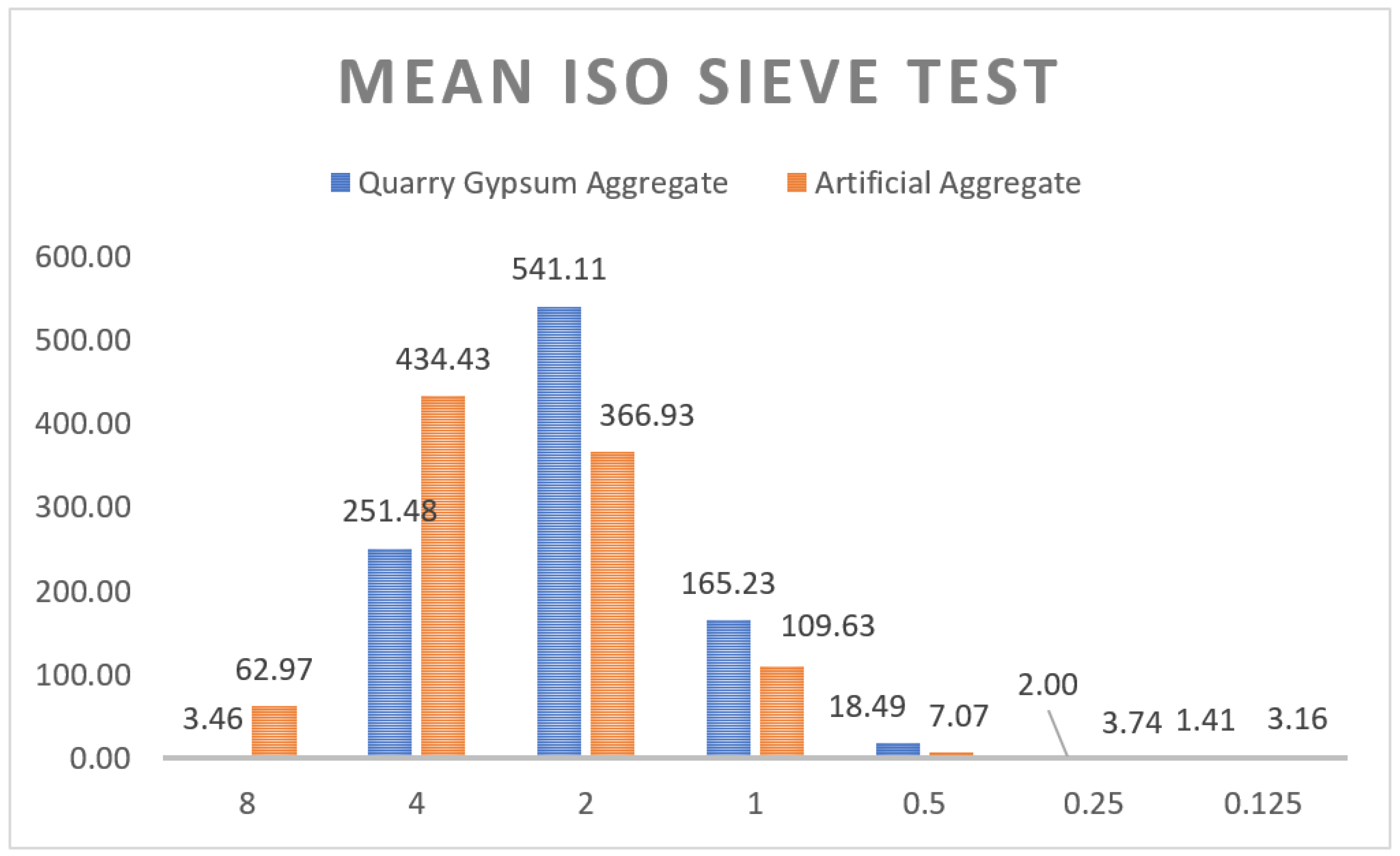
To define the process, a granulometric analysis of standardized sieves is important to obtain a uniform base with which to establish a subsequent manufacturing procedure. The granulometric analysis of the aggregates used in manufacturing is shown in
Table 5 and
Figure 5. The aggregate used, which refers to that received directly from the quarry (supply already milled and sieved, eliminating coarse material), shows a small deviation with respect to the artificially produced aggregate. However, it did not prove problematic for manufacturing.
This analysis allows us to identify or correct the manufacturing process. For example, we observe that the 2.00 mm sieve has the largest proportion, and from a homogenization perspective, this percentage could be reduced, and those of 0.50 mm and 1.00 mm could be increased. Also, an excess of fines causes the mixture to “stick” to the mold, besides requiring more water to agglomerate; and water, as indicated, implies a decrease in strength (more open capillary network). Furthermore, this excess water also affects drying time. However, fine material also provides uniformity to the prefabricated element and a cleaner pore wall.
3.2. Physical and Mechanical Analysis
Evaluation was performed according to standard UNE-EN 772-1:11. In this phase, a first approximation of the basic mechanical properties was obtained to determine the normalized compressive strength (
Table 6); this being the compressive strength of air-dried pieces multiplied by a shape factor, determining the width and height according to the draft European Standard EN 772-16 [
23].
The prefabricated aggregate provides better mechanical behavior, although there was a smaller percentage of the 2.00 mm sieve, and that may affect the result, bringing it closer to the quarry aggregate.
According to UNI-EN-772-13:01, the dry absolute density and the dry apparent density of masonry units were determined (
Table 7).
According to the apparent dry density values, the prefabricated aggregate mix shows a slightly lower density than the quarry aggregate mix, while both systems remain within a comparable lightweight range. The present study reports the initial physical and mechanical parameters required for process validation and technical feasibility assessment, including granulometric control, normalized compressive strength, and dry density (absolute and apparent). A complete engineering characterization (e.g., flexural strength, thermal conductivity, acoustic performance, fire resistance, moisture sensitivity, and long-term durability) is outside the scope of this first process-validation stage and is currently being addressed in ongoing research.
3.3. Microscopy
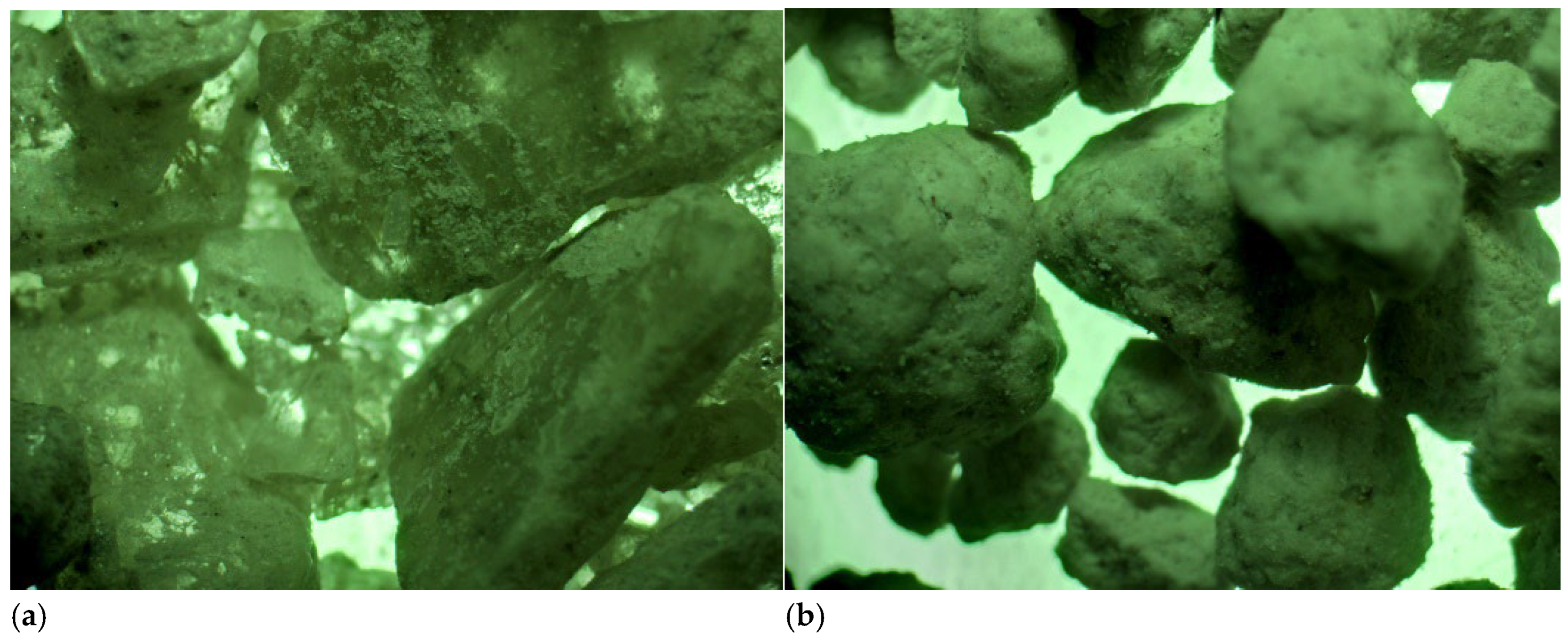
The microscopic analysis was performed with an optical microscope/magnifying glass with a Moticam Images Plus 30 digital camera (×30), which provides certain data about the aggregates. We observe in the figure how the quarry aggregate has a crystalline structure with some porosity, allowing light to pass through the matrix, while in the artificial aggregate (b), the aggregate is denser (
Figure 6).
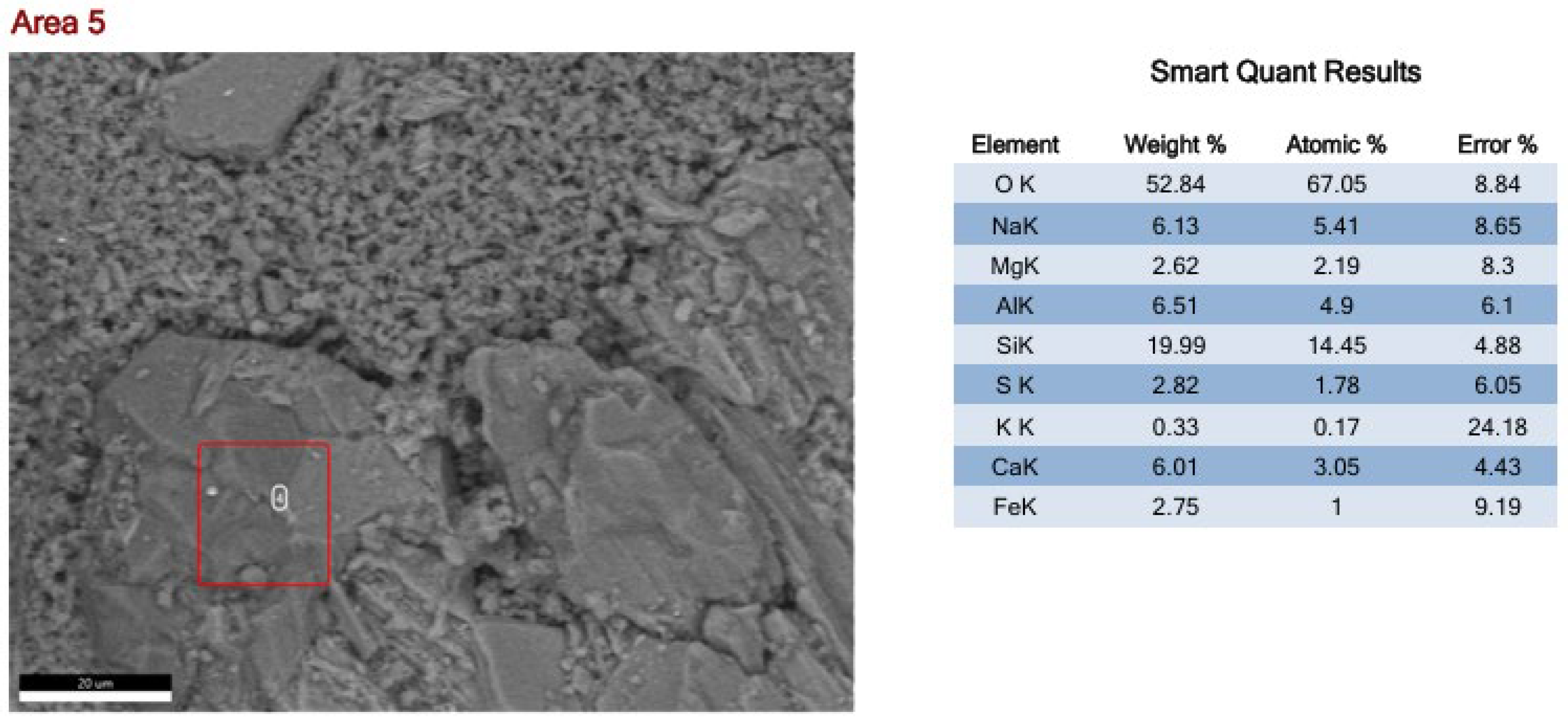
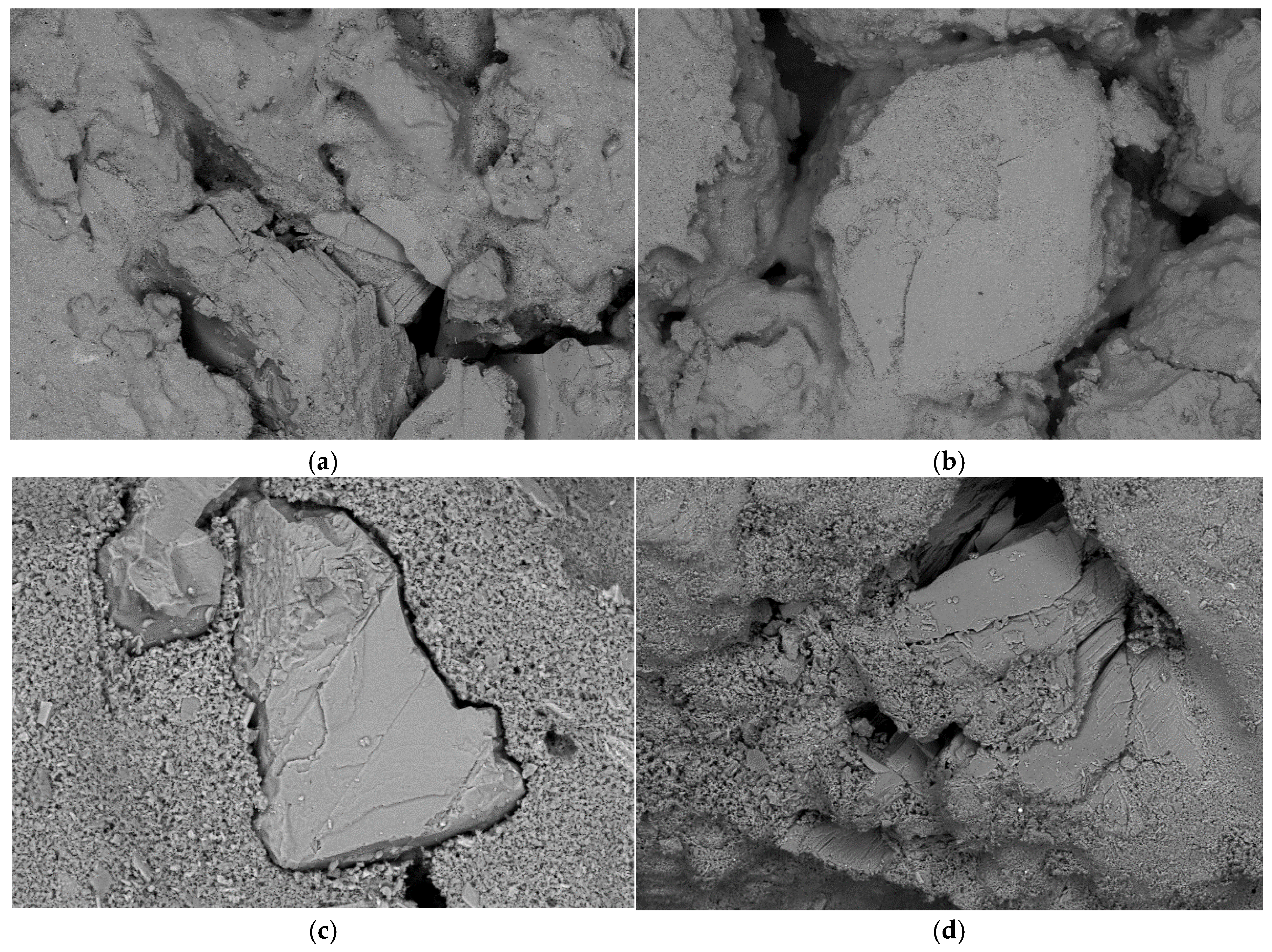
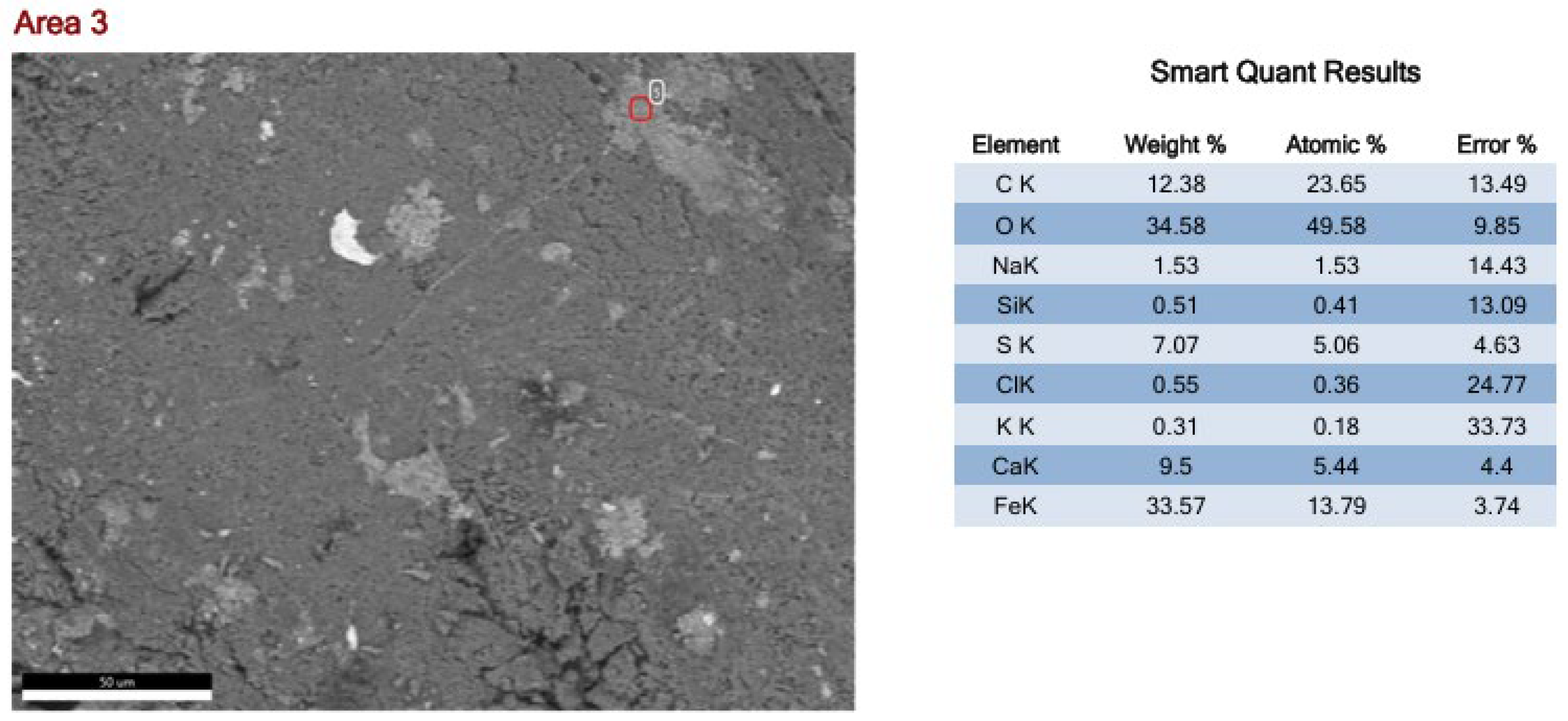
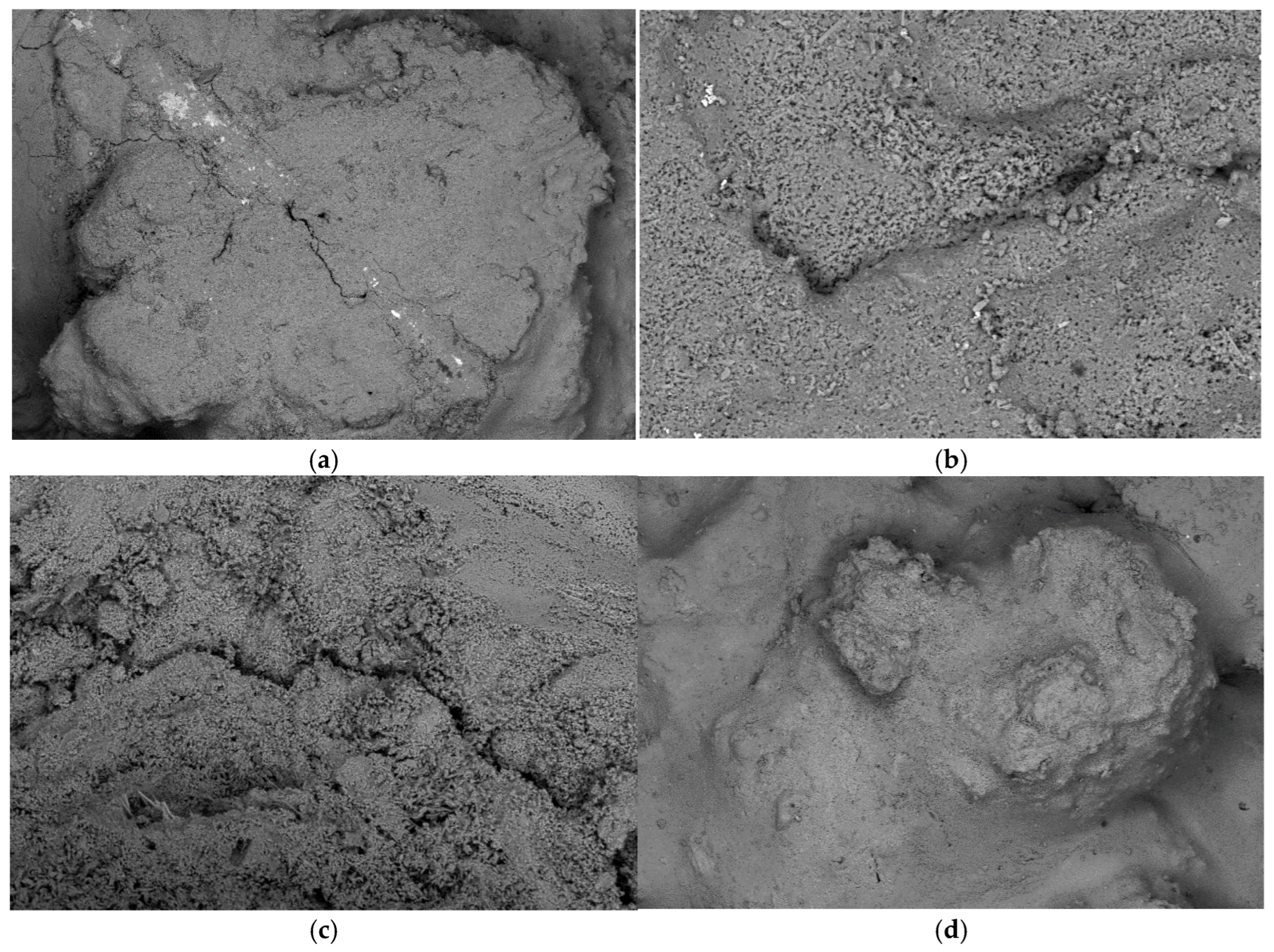
A specific analysis was conducted using electron microscopy (
Figure 7 and
Figure 8).
A better integration of the gypsum matrix is observed in these latter aggregates, and therefore, this type of prefabricated aggregate provides better properties.
The optical and SEM observations provide qualitative evidence consistent with the measured macroscopic behavior: the reduced water content and vibrocompression process likely decrease capillary porosity and improve particle packing, while prefabricated gypsum aggregates appear to promote better matrix–aggregate integration. Although pore-size distribution and ITZ characteristics were not quantified in this study, the observed microstructural densification is consistent with the improvements in normalized compressive strength and dimensional stability.
4. Discussion
After the detailed analysis of the materials used and the manufacturing process in the production of vibrocompressed gypsum prefabricates [
24], the following conclusions can be drawn regarding the selection and behavior of the materials, it being relevant that the water used in the mixture is a determining factor in the quality of the prefabricate. Although a proportion of 220 g of water per 1000 g of gypsum has been used, this can be optimized to 180–200 g, reducing the porosity of the matrix; this will further improve the final strength of the material. While the main binder, the building gypsum (CaSO
4·½H
2O) used, has a purity of 75–80% and has been shown to be suitable for the vibrocompression process, a higher purity gypsum could increase the aggregate content. Further optimization of the binder system may include assessing the influence of gypsum purity and hemihydrate type on water demand, compaction behavior, and final mechanical performance.
The incorporation of prefabricated gypsum aggregates, which supports circular-economy strategies through material reuse and waste valorization, has improved the compactness and dimensional stability of the final product. The use of the superplasticizer and setting retarder additive, based on colloidal silicon dioxide and citric acid, is reinforced. This additive has allowed for an improvement in the fluidity of the mixture without the need to increase the amount of water, which has optimized the mixing and pressing process.
The vibrocompression process has been key to achieving a denser and more resistant structure. A compaction pressure of approximately 0.58 N/mm
2 was applied, corresponding to a total load of 8829 N, enabling the production of elements with enhanced structural stability without compromising workability (
Figure 11).
The applied compression has reduced the height of the pieces from 21.50 cm to 18.00 cm, ensuring an optimal balance between density and ease of handling. This data facilitates decision-making for the development of other formats. The dosage of materials has been standardized, which has allowed for achieving controlled and reproducible performance in the manufacturing of the prefabricated. The study shows improvements in strength, porosity reduction, and a more efficient manufacturing process compared to conventional systems. The vibrocompression system applied to gypsum has demonstrated clear improvements in productive efficiency and product quality compared to the casting process. By reducing the amount of water used, a denser and more resistant matrix is achieved. Furthermore, the possibility of incorporating recycled aggregates reinforces its value within the framework of the circular economy.
The present work should be understood as a process-validation and performance-demonstration stage for vibrocompressed calcium sulfate prefabricates. A commercially available β-gypsum (B1 type, UNE-EN 13279-1) and a representative 50/50 gypsum-aggregate dosage were selected as baseline conditions to evaluate technical feasibility and compare aggregate types (quarry vs. prefabricated/recycled gypsum aggregate). Therefore, the reported formulation should not be interpreted as a fully optimized mix design.
Future optimization should include (i) a systematic assessment of gypsum purity and α/β hemihydrate blending ratios and (ii) factorial experimental designs to quantify the effect of aggregate dosage (within the 40–60% process window) and particle-size distribution on packing density, pore structure, and mechanical performance.
This manuscript does not present a full life cycle assessment (LCA) or a multi-criteria sustainability evaluation. Its contribution is focused on process validation and initial performance characterization of vibrocompressed calcium sulfate prefabricates. The environmental and economic implications are discussed at a preliminary technical level and will be quantified in future work through dedicated LCA and techno-economic analyses.
The present study should be interpreted as a process-validation and material-performance study rather than a full sustainability assessment. Therefore, sustainability-related implications are discussed here at a preliminary technical level (process route and material potential), while quantitative confirmation through LCA, energy assessment, and techno-economic analysis remains part of future research.
5. Conclusions
This study demonstrates that the application of vibrocompression to calcium sulfate hemihydrate (CaSO4·½H2O) represents a technically feasible and industrially scalable alternative to conventional gypsum casting processes. The proposed manufacturing approach enables the production of prefabricated elements with reduced water content, shorter production cycles, and improved physical performance, while maintaining compatibility with existing vibrocompression technologies commonly used in concrete prefabrication.
The reduction of the water-to-gypsum ratio to 0.22 (220 g per 1000 g of gypsum), compared to conventional casting ratios of 0.50–0.80, resulted in normalized compressive strength values of up to 2.90 N/mm2, in accordance with UNE-EN 772-1:11. This decrease in mixing water significantly reduced internal porosity, yielding net dry densities of approximately 1228 kg/m3, which are suitable for lightweight, non-structural masonry and partition applications. Although the compressive strength remains lower than that of structural concrete, the obtained values are fully adequate for non-load-bearing elements, where thermal, acoustic, and fire performance are critical.
The vibrocompression process, applying a compaction pressure of approximately 0.58 N/mm2, proved to be a key factor in achieving enhanced material cohesion and dimensional stability. Controlled compaction reduced the mold height from 21.50 cm to 18.00 cm, providing an optimal balance between density, mechanical performance, and ease of handling. This manufacturing strategy also allows high adaptability to different prefabricated formats, including blocks, hollow bricks, and coffered slabs.
The incorporation of recycled and prefabricated gypsum aggregates supports circular-economy strategies through the reuse of gypsum-based aggregates and waste valorization, eliminating industrial waste and promoting continuous material reuse. In addition, the complete elimination of cement from the formulation, together with the low-energy requirements associated with gypsum calcination and the absence of firing or kiln processes, significantly reduces the carbon footprint of the proposed system. These characteristics position vibrocompressed gypsum prefabricates as a promising sustainable construction material, aligned with decarbonization strategies and circular economy principles.
The valorization of plasterboard waste further reinforces the circular nature of the proposed system and supports future work on full-scale implementation and life-cycle assessment.
Future research should address long-term durability and engineering applicability through specific durability testing, including water immersion softening coefficient, wet–dry cycling, freeze–thaw resistance, and moisture sensitivity, together with full-scale industrial implementation and comprehensive life cycle assessment (LCA) studies.
Accordingly, sustainability-related conclusions in this work should be interpreted as preliminary and process-oriented (technical plausibility and material-route potential), pending quantitative confirmation through future LCA and cost analyses with defined system boundaries and functional units.
6. Patents
This work is based on international patent P202300065, entitled
PREFABRICATED ELEMENT FOR CONSTRUCTION AND ASSOCIATED METHOD
The patent holder is the Miguel Hernández University.




 ,
,