


Abstract
This research aims to examine how the concept of sustainability is understood through metaphors. The research was conducted in accordance with qualitative research principles. The study group was determined using criterion sampling and consisted of 160 prospective teachers studying at a university who had taken and completed the “Sustainable Development and Education” course. Research data were collected through forms containing the statement, “Sustainability is similar to … Because …”. The data were analyzed through metaphor analysis within a content analysis framework. In total, 160 valid metaphors related to sustainability were identified and organized into three conceptual categories. The results indicate that prospective teachers primarily perceived sustainability in environmental terms, with comparatively less emphasis placed on economic and social dimensions. In addition, sustainability was frequently interpreted as a responsibility to future generations.
1. Introduction
Sustainability is one of the most important concepts of our time. This concept is the preservation of existing environmental, economic, and social resources and their transfer to future generations [1]. In other words, sustainability is the uninterrupted existence of an ecosystem, society, or any system that requires continuity, without disruption, depletion, or overuse of resources [2]. Sustainable development, on the other hand, is a development approach that meets the needs of the present without jeopardizing the possibility of meeting the needs of future generations [3]. Sustainable development is a global development agenda that addresses social, economic, and environmental dimensions holistically [4]. The fact that limited natural resources will be insufficient in the face of the ever-increasing world population is inevitable. This situation raises the possibility that the world may face the threat of extinction in the near future, encouraging both institutions and individuals at the global level to develop various measures and action plans [5,6]. Education is a fundamental tool that enables individuals to develop knowledge, values, and responsibility in achieving sustainable development goals [7].
Sustainability, which can be interpreted as an effort to ensure that existing resources are accessible to future generations, is based on meeting the needs of the present while not depleting the life resources of future generations, and striking a balance between these two time periods. In the literature, the concept of sustainability is addressed in three dimensions: economic, social, and environmental [8]. Economic sustainability enables sustainable economic growth by prioritizing the protection of natural capital. In this context, developing environmental protection policies, increasing efficiency in resource use, reducing pollution levels, and creating an economy that benefits from technological innovations are among the main goals of economic sustainability [9]. The economic dimension of sustainability is the establishment of a production system that meets current consumption needs while not ignoring future needs. Aiming for the best economic growth for humanity and ensuring the sustainability of this growth is the main goal [10]. Economic sustainability involves a transformation process that takes into account not only the continuity of existing economic activities but also environmental responsibility. In this context, it is important to encourage the use of renewable energy sources, to establish a balance between the economic system and the natural environment, to use resources more efficiently, and most importantly, to re-evaluate the economic structure with an environmentally friendly approach [11,12].
Social sustainability aims to improve the quality of life in society and create an inclusive social structure where everyone has equal access to basic needs. Social sustainability encompasses elements such as preventing discrimination, creating safe living spaces, ensuring workplace safety, and increasing economic well-being. The fundamental principle underlying social sustainability is to achieve sustainable development while meeting the needs of the present without jeopardizing the living conditions of future generations [13]. It focuses on fundamental elements such as ensuring fairness in income distribution, promoting democratic participation, and protecting human rights. Issues such as education, basic infrastructure, justice, freedom, malnutrition, housing, and health are among the decisive factors in achieving social sustainability [14,15].
Environmental sustainability is the use of natural resources without harming the functioning of the ecosystem and the efficient transfer of these resources to future generations [16]. Environmental sustainability is described as a process of establishing a balance that prioritizes meeting human needs without disrupting the natural environment [17]. This includes activities such as preventing waste from harming the environment, preferring renewable resources, and making various efforts for a clean environment [18]. Environmental sustainability is based on considering the environmental impacts of production and consumption activities and using natural resources efficiently. This concept, which covers a wide range of areas from the selection of energy sources to preventing environmental pollution with waste, has gained even more importance, especially as the effects of climate change become more pronounced each year [19].
Sustainability has become a global priority encompassing environmental protection, economic development, and social well-being. Accordingly, education plays a crucial role in achieving the sustainable development goals. Sustainable development education aims to develop the knowledge, skills, values, and attitudes necessary for a sustainable society in individuals [7]. Education given from an early age, during which individuals develop positive attitudes and behaviors towards the environment, is important for internalizing sustainability [20]. Sustainability education focuses on transforming behaviors and ways of thinking beyond simply transferring information [21]. At this point, the idea that education systems and teachers are the driving force behind this transformation comes to the forefront. Teacher training is crucial in integrating sustainability into the education system [21,22]. For sustainable development education to be delivered effectively, teachers are expected to have sufficient knowledge and awareness on this subject. It is stated that teachers’ understanding of sustainable development is mostly environmentally focused and more limited [23,24]. Therefore, it is considered important to examine the understanding and perceptions of prospective teachers regarding sustainability before they begin their careers.
While many studies exist on environmental issues when considering prospective teachers, studies on sustainability are more limited. When research is examined, it is known that there are studies that address prospective teachers’ views on sustainability and education in this area in terms of different variables. Studies examining prospective teachers’ views on sustainable development [25]; their awareness levels regarding sustainable development [2]; their perceptions of the use of visual materials in teaching environmental sustainability issues [26]; and their views on the concept of “education for sustainability” [27] are all available in the field. Previous research indicates that teachers, teacher candidates, and even university students generally perceive sustainability primarily as an environmental concept, while social and economic dimensions are addressed to a more limited extent [23,24,28,29]. In light of this, it can be interpreted that the concept of sustainability is often perceived primarily as an environmental concept, rather than as a multidimensional structure. Therefore, examining perceptions of sustainability through metaphors is particularly important.
Metaphors are cognitive tools that reveal how individuals make sense of abstract concepts [30]. Reflecting individuals’ ways of thinking, metaphors facilitate the understanding and interpretation of abstract concepts. Metaphor analysis allows researchers to examine social phenomena more deeply, uncover the underlying causes of these phenomena, and question existing assumptions. The use of metaphors allows researchers to approach phenomena from different perspectives, while participants, through the questions posed, have the opportunity to explain, rethink, and express what these metaphors represent for them [31,32]. As a qualitative method, metaphor analysis contributes to researchers revealing thought patterns and perspectives on a particular subject by examining the meanings carried by the metaphors used. In this way, it is possible to uncover and evaluate various meanings by examining expressions related to metaphors [33,34,35].
Metaphors are not merely linguistic embellishments, but cognitive mechanisms. Conceptual Metaphor Theory argues that metaphors are not merely decorative expressions used in language, but are an integral part of individuals’ ways of thinking and conceptualizing [30]. According to this approach, people understand abstract concepts not directly, but through more concrete areas and experiences close to their own [36]. Therefore, metaphors offer clues about how individuals think about a concept and within which mental frameworks they construct it. In this context, sustainability, as a multidimensional and abstract concept, is not something individuals can directly experience; rather, it is constructed through mental associations. When dealing with a multi-dimensional and abstract concept like sustainability, the metaphors produced are significant in revealing how prospective teachers understand this concept and with which areas of experience they relate it. In line with this theoretical perspective, the study adopted a metaphor-based approach aimed at revealing participants’ mental representations of sustainability.
Research using metaphor analysis frequently addresses individuals’ perceptions of the environment and related concepts [37,38,39]. Despite being a concept closely related to the environment, studies on the metaphorical perception of sustainability that directly address it are limited in the literature. Considering previous research, it is understood that university students mostly approach sustainability within a framework of continuity, persistence, and future-oriented understanding; while prospective teachers’ metaphorical perceptions of sustainability may differ depending on their knowledge level, education, and experiences in the teaching process [11,40,41,42,43,44]. This research will reveal the perspectives and perceptions of future teachers regarding such an important concept as sustainability through metaphors. Given the scarcity of research in this context and the aim of this study, the goal is to establish a vision for how to ensure prospective teachers understand the concept of sustainability correctly during their pre-professional training. The study aims to examine how prospective teachers conceptualize sustainability through metaphors and to explore the conceptual categories that emerge from these metaphorical representations. In line with this aim, the study seeks to answer the following research questions:
- How do prospective teachers conceptualize sustainability through the metaphors they produce?
- What conceptual categories emerge from these metaphorical representations?
- What do these categories reveal about prospective teachers’ understanding of sustainability?
By addressing these questions, the study seeks to contribute to the development of sustainability-oriented course content in teacher education and to provide a clearer understanding of prospective teachers’ conceptualizations of sustainability. Furthermore, the findings are expected to inform discussions on how sustainability is addressed within teacher training programs.
2. Materials and Methods
This research is a qualitative study aiming to examine prospective teachers’ perceptions of the concept of sustainability through metaphors. Metaphor analysis was used in the research. In determining the study group, criterion sampling, one of the purposeful sampling methods, was used. The basic principle of criterion sampling is to study all cases that meet a predetermined set of criteria. The criterion(s) mentioned here can be created by the researcher or a pre-prepared list of criteria can be used [35,45]. The criteria used in determining the sample of the research were having taken the “Sustainable Development and Education” course at the university where the research was conducted, successfully completing this course, and demonstrating a voluntary desire to participate in the research. Demographic information about the participants is presented in Table 1.
Table 1.
Demographic information regarding participants.
Table 1 presents demographic information about the participants. Accordingly, 112 female and 48 male participants were included in the study. In addition, in the evaluation conducted within the context of the program they were enrolled in, it was determined that 32 of the prospective teachers were in the Mathematics and Science Education Department, 44 in Basic Education, 43 in Turkish and Social Sciences Education, 12 in Psychological Counseling and Guidance, 15 in Fine Arts Education, and 14 in Foreign Languages Education Department.
A form was created to determine prospective teachers’ perceptions of sustainability and to identify what they associate this concept with. The first section of the data collection tool asked participants to write their demographic information, including gender and registered field (teaching). The second section of the form contained an incomplete sentence: “Sustainability is similar to … Because …”. Prospective teachers were asked to complete this sentence according to their understanding of the concept. They were given sufficient time to complete the form, generally within 10 to 15 min.
The data obtained were analyzed using a metaphor analysis approach based on content analysis. Content analysis is an analytical method that allows for the systematic encoding of textual data and their grouping under meaningful categories [46,47].
Within metaphor analysis, recurring patterns may indicate the presence of similar conceptual mappings among participants [30,36]. Therefore, during the analysis process, metaphors were grouped not only on the basis of surface-level expressions but also on the basis of the meaning frameworks they represented. Accordingly, when forming categories, greater emphasis was placed on the underlying conceptual structures than on linguistic similarity.
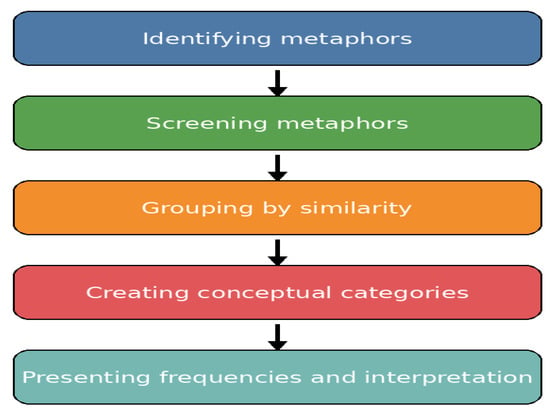
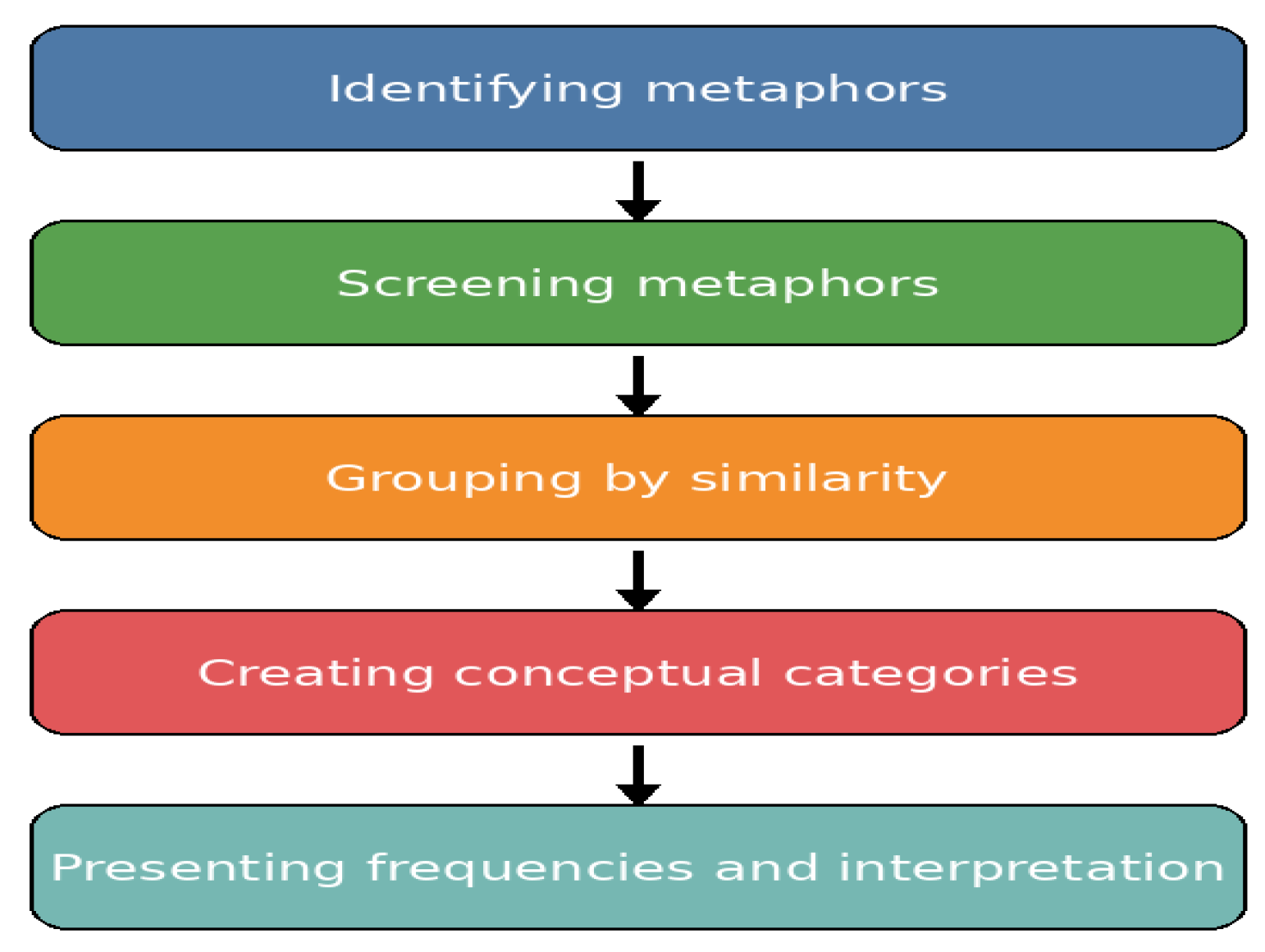
In the analysis process, the metaphors developed by the participants were first examined, valid metaphorical expressions were identified and listed. Inappropriate forms and metaphors were filtered out. Then, the metaphors were grouped considering their similarities. Following this process, conceptual categories were created based on common semantic features. The created categories were presented along with their frequency values and interpreted. The metaphor analysis process is presented in Figure 1.
Figure 1.
Metaphor analysis process.
The process of encoding metaphors and creating conceptual categories was carried out independently by two researchers. During the initial re-view of the responses, statements that did not clearly include a metaphor or lacked a meaningful explanation were not included in the analysis. As a result, the final dataset consisted of 160 valid metaphors. Following the encoding process, the researchers met to compare the categories, and in cases where consensus could not be reached, a common decision was achieved through discussion. Any differences in coding were discussed until consensus was reached. The inter-coder agreement rate (91%) was calculated based on the independent categorization of these 160 metaphors. The consensus formula proposed by Miles and Huberman was used to determine inter-coder reliability [48]. Accordingly, the analysis was considered reliable, with an agreement rate of 91%. The category construction followed an inductive approach. Metaphors were first coded openly based on their semantic content, and similar expressions were grouped into conceptual categories. After the categories were established, they were examined in relation to the existing literature on sustainability. It was observed that the emergent categories aligned with the widely recognized environmental, economic, and social dimensions of sustainability. Thus, the alignment with sustainability dimensions was interpretive rather than predetermined. In presenting the findings, the frequencies of the metaphors within each conceptual category were provided, and word clouds generated according to frequency density were also displayed in table format.
3. Results
This section presents the results of the research. Accordingly, metaphors related to sustainability, their frequencies, and conceptual categories formed based on the rationale behind the metaphors are provided. A word cloud for each metaphor group is also presented under each conceptual category. Direct quotations related to metaphors in each dimensions are arranged according to the participants’ opinions. The forms were numbered from 1 to 160 by the researcher. In the coding of participants, the first statement indicates the order of the forms, and the following statement indicates gender. Female participants are coded with the letter “F” and male participants with the letter “M”. As a result of the analyses, the metaphors obtained regarding the concept of sustainability were grouped under three main conceptual categories. These categories are classified as “Sustainability as renewal/cyclicity/continuity” “Sustainability as resource management and balance” and “Sustainability as social values and intergenerational transmission”.
3.1. Results Related to the Renewal/Cyclicity/Continuity Category
Metaphors related to this category are presented in Table 2. Examination of Table 2 reveals that a total of 15 metaphors were generated for this category.
Table 2.
Metaphors and word cloud related to the category of renewal/cyclicity/continuity.
A considerable number of the metaphors produced by prospective teachers emphasize renewal, cyclicity, and continuity as key aspects of sustainability. Rather than describing sustainability as the preservation of a fixed state, participants tend to frame it as an ongoing process that continually renews itself. The frequent use of the metaphor “breath” (f = 36) indicates that sustainability is perceived as essential for the continuation of life. Likewise, metaphors such as “recycling” “nature’s cycle” “water cycle” “wheel” and “pattern” underline the repetitive and cyclical character of sustainability. In contrast, metaphors including “seed” “tree” “life” and “garden care” highlight renewal, growth, and development. Metaphors such as “time” and “marathon” point to the long-term nature of sustainability, suggesting endurance and persistence. Meanwhile, references to “science” “doctor” and “artificial intelligence” reflect an understanding of sustainability as a process that requires awareness, protection, and intentional action. Taken together, these metaphors suggest that sustainability is understood as a continuous and life-oriented process, sustained through renewal and long-term commitment. Direct quotations related to this category are presented below. Participants were coded according to form number and gender (e.g., 45.F = Form 45, female; 33.M = Form 33, male).
One participant (45.F), using the metaphor of “breath” justified their position by saying, “… because sustainability, like breathing, is a process that must continue without interruption; if it is interrupted, life becomes difficult”.
A prospective teacher (122.F) who used the metaphor of “recycling” explained it as follows: “… because sustainability reminds me of the recycling process and the continuous reuse of waste. Thus, it brings to mind a process where materials we use in daily life can be reused and the burden on the environment can be reduced”.
Using the metaphor of “the cycle of nature”, one participant (54.M) stated their opinion as follows: “… because sustainability, like nature, always happens and continues in a cyclical manner”.
Using the metaphor of the “water cycle”, one participant (78.F) said, “… because water renews itself through the water cycle. It is also possible to renew nature through sustainability”.
One participant (33.M), who preferred the “wheel” metaphor, stated, “… as the wheel turns, a new movement emerges; sustainability is also such a continuous cycle”.
Using the metaphor of “pattern”, participant (11.F) justified their reasoning by saying, “… patterns involve a regular repetition; sustainability, like these patterns, gains meaning through the continuation of a cyclical order”.
A prospective teacher (67.M) who used the metaphor of “seed” stated, “… when a seed is planted in the soil, it grows, bears fruit and produces seeds again; sustainability is like that”.
One participant (88.F), using the metaphor of a “tree”, expressed her view by saying, “… a tree enters a cycle of self-renewal every year; sustainability, when supported, allows it to renew itself”.
“Life” a participant using the metaphor (157.M) expressed his opinion with the statement, “… because we are trying to ensure its continuation in life, just like sustainability”.
One participant used the metaphor of “garden maintenance” (39.M), “… because it requires constant attention, you have to be meticulous while tending your garden and leave no gaps, otherwise things might go wrong…” he stated.
One participant (160.F), using the metaphor of “time” justified their reasoning by saying, “… because it should flow like time and reach the future”.
Using the metaphor of a “marathon” one participant (84.M) said, “… because sustainability is a long-term and patient process; just like a marathon”.
Participant (12.F), who used the metaphor of “science”, expressed her opinion with the statement “… science constantly develops, renews, and progresses; sustainability similarly requires renewal and research”.
Using the metaphor of “doctor”, participant (21.F) stated, “… just as a doctor heals a patient, sustainability contributes to the improvement of the environment and life”.
Using the metaphor of “artificial intelligence”, participant (50.M) explained their reasoning by saying, “… because artificial intelligence gets better as it develops; sustainability also gains importance by developing and renewing itself”.
3.2. Results Related to the Resource Management and Balance Category
Metaphors related to this category are presented in Table 3. Examination of Table 3 reveals that a total of 3 metaphors were generated for this category.
Table 3.
Metaphors related to the resource management and balance category.
The metaphors grouped under the conceptual category of resource management and balance indicate that participants associate sustainability with conscious regulation and responsible use. Rather than viewing sustainability as an abstract principle, they tend to frame it in terms of practical control and moderation. The frequent use of the metaphor “saving” (f = 19) suggests that sustainability is primarily understood as avoiding waste and using resources carefully. Other metaphors such as “stability” and “money” further emphasize balance, planning, and the long-term management of resources. Taken together, these metaphors suggest that sustainability is conceptualized as maintaining continuity through deliberate restraint, thoughtful management, and the balanced allocation of resources. Direct quotations related to this category are presented below.
One participant (52.F) who used the metaphor of “saving” stated, “… because to sustain something, you have to use it sparingly; just like saving”.
One participant (60.F), using the metaphor of “stability” expressed their view by saying, “… because sustainability requires steady progress; if there is a disruption, the process breaks down”.
One participant (88.M), using the metaphor of “money”, emphasized the importance of managing resources correctly in terms of sustainability, saying, “… because money runs out if it is not managed correctly; sustainability reminds me of the necessity of managing resources correctly”.
3.3. Metaphors Related to the Category of Social Values and Intergenerational Transmission
Metaphors related to this category are presented in Table 4. Examination of Table 4 reveals that a total of 4 metaphors were generated for this category.
Table 4.
Metaphors for social values and intergenerational transmission.
The metaphors grouped under the conceptual category of social values and intergenerational transmission indicate that participants understand sustainability within the framework of social bonds, cultural continuity, and responsibility toward future generations. The prominence of the metaphor “heritage” (f = 6) suggests that sustainability is perceived as something to be preserved and passed on. Other metaphors such as “friendship”, “culture”, and “mother” further emphasize solidarity, shared responsibility, care, and the transmission of values across generations. Taken together, these metaphors show that sustainability is not viewed solely as an environmental or economic issue, but also as a social and ethical commitment centered on continuity and intergenerational responsibility. Direct quotations related to this category are presented below.
A prospective teacher (93.F) using the metaphor of “heritage” stated, “… because passing on resources and nature to future generations is like leaving a legacy”.
One participant (90.M), who preferred the metaphor of “friendship”, stated, “… we must protect the things we value, such as friendship; sustainability deserves this protection as well”.
One participant (40.M), using the metaphor of “culture”, stated “… sustainability, like culture, must be passed on to future generations; it is a debt”.
One participant (71.F), using the metaphor of “mother”, justified her explanation by saying, “… a mother thinks about her child’s future; sustainability is about thinking about the future of nature and humanity”.
3.4. Holistic Evaluation of the Results
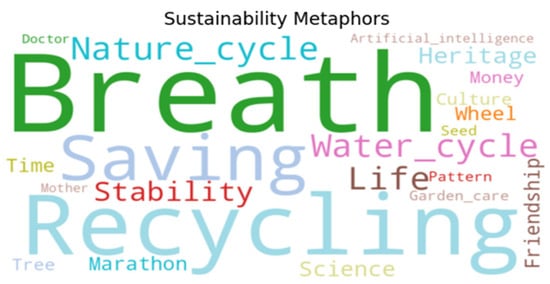
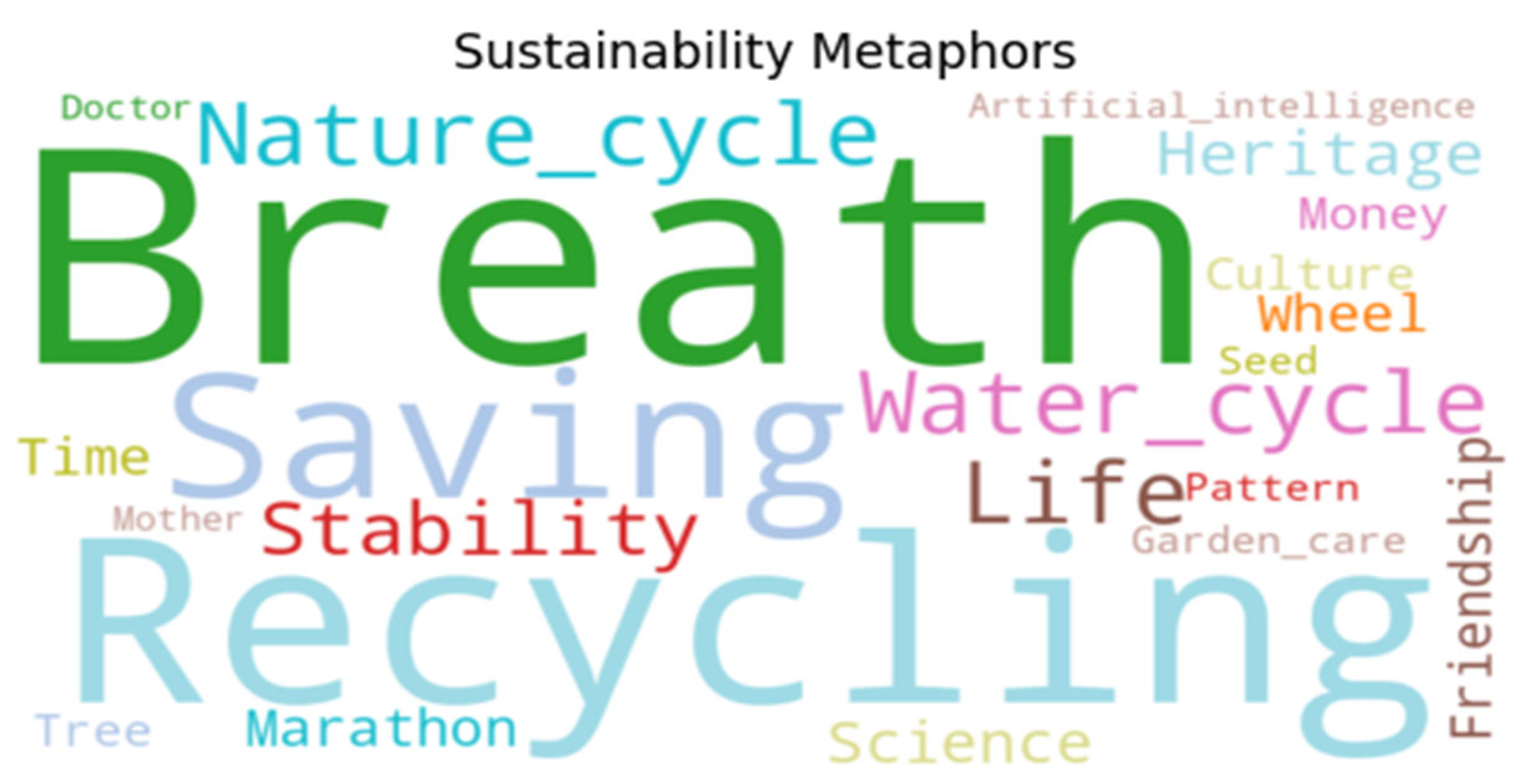
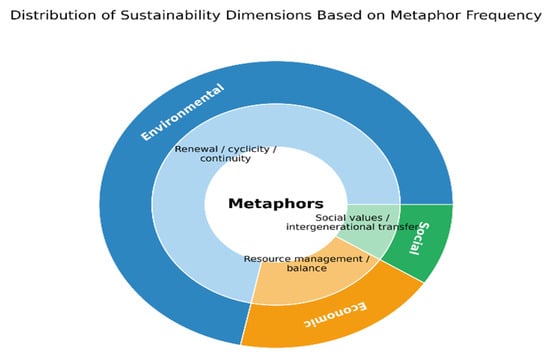
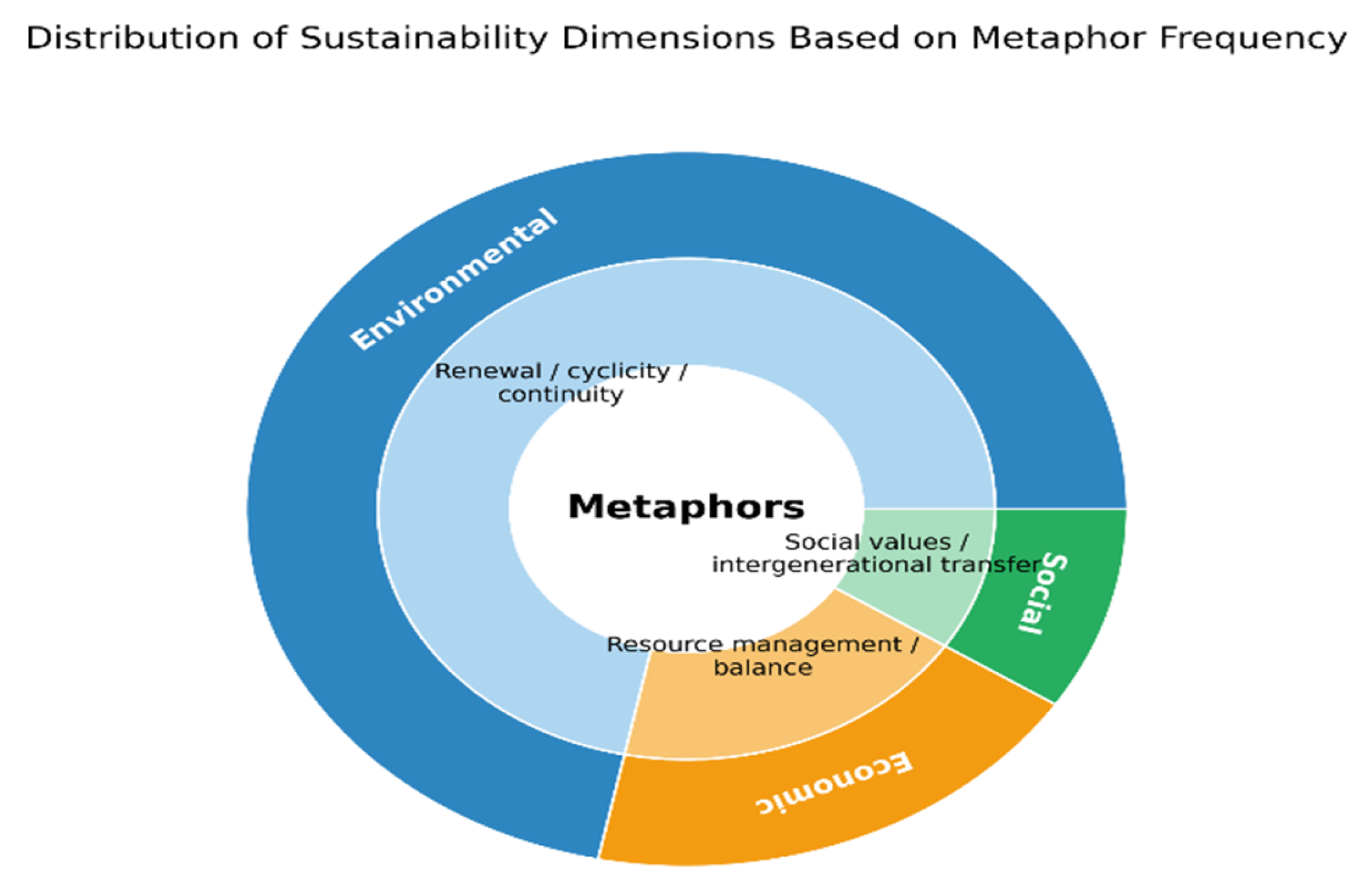
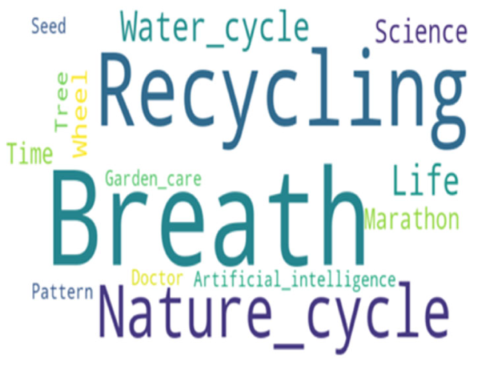
When examining Figure 2 above, it is seen that the most prominent metaphors are Breath, Recycling, and Saving. When examining Figure 3, it is noteworthy that the three distinct semantic categories formed during the research process align with the sustainability literature, specifically with the dimensions of environmental, economic and social sustainability. Accordingly, a relationship has been established between metaphors emphasizing renewal and cyclicity and environmental sustainability, those emphasizing social values and social sustainability, and those emphasizing resource management and economic sustainability. Figure 3 also presents the proportion of these metaphor groups within the metaphors developed by prospective teachers in a pie chart. It is striking that prospective teachers developed the most frequent metaphors in the context of environmental sustainability.
Figure 2.
Word cloud of all metaphors.
Figure 3.
Distribution according to metaphor frequencies.
4. Discussion
This study, conducted to determine prospective teachers’ metaphorical perceptions of the concept of sustainability, presents the results based on the findings obtained. When the obtained metaphors were examined, the participants’ metaphors regarding sustainability were grouped into three semantic categories. These categories were formed in conceptual dimensions such as “renewal, cyclicity, and continuity”, “resource management and balance”, and “social values and intergenerational transmission”. The “renewal, cyclicity, and continuity” category particularly emphasizes environmental sustainability and highlights the emphasis on circular continuity. The “resource management and balance” category particularly emphasizes economic sustainability and highlights the emphasis on the effective use of resources. The “social values and intergenerational transmission” category, on the other hand, emphasizes the social dimension of sustainability, the social transmission dimension. In this context, it was revealed that prospective teachers do not see sustainability only as an environmentally focused concept; they attribute multifaceted meanings to it, such as continuity, resource management, and social responsibility. In a study sustainability addressed as balancing environmental, economic and social dimensions [8]. Similarly, in other the studies [22,42], it was observed that participants defined sustainability through different frameworks of meaning. These studies are consistent with the findings of this research. Accordingly, it should be stated that prospective teachers fundamentally perceive and interpret sustainability in the context of environmental, economic, and social sustainability concepts.
In this research, prospective teachers interpreted sustainability most intensely within the context of environmental sustainability, focusing on “renewal and continuity”. Indeed, most metaphors were derived in this dimension. This finding shows that sustainability is understood through the protection of natural resources and the continuity of the ecosystem and the environment, as evidenced by the metaphors derived such as breath, recycling, nature’s cycle, water cycle, life, tree, seed, time, marathon, wheel, pattern, garden maintenance, science, artificial intelligence and doctor. Accordingly, environmental sustainability was central to the participants’ perceptions. Similarly, studies examining university students’ perceptions of sustainability have shown that students mostly associate the concept of sustainability with its environmental dimension [29]. This finding parallels previous studies showing that sustainability is mostly perceived by prospective teachers in the context of environmental protection and the continuity of natural resources [21,23,24,28]. Research indicates that prospective teachers perceive the environmental, economic, and social dimensions of sustainability, but the concept is perceived most predominantly through its environmental dimension, followed by its economic dimension, and finally its social dimension [23]. Indeed, environmental sustainability is defined as the preservation of the self-renewal capacity of natural systems [17]. Sustainability education is often addressed through the lens of environmental problems [22]. The dominance of environmental metaphors over other dimensions in the current research may stem from the fact that the concept of sustainability is mostly associated with environmental protection in daily life and public discourse. Teacher candidates may have learned about sustainability largely within an environmentally centered framework during their previous educational experiences. Therefore, even if sustainability was addressed in a multi-dimensional way within the course, the influence of these environmentally focused associations ingrained in the participants’ minds may have persisted. Indeed, it may not always be easy for existing cognitive structures to be completely transformed by a short-term learning experience. This situation highlights the importance of addressing sustainability in teacher education programs not only at the level of content but also at the conceptual level in a balanced manner. In particular, supporting the economic and social dimensions with more visible and concrete learning experiences may contribute to prospective teachers’ developing in a more holistic understanding of sustainability.
Another category associated with sustainability in this research is “resource management and balance”. This category, related to economic sustainability, includes the metaphors of saving, stability, and money. Economic sustainability has been defined as the efficient use of resources and the achievement of long-term well-being [9]. The fact that participants in the current study, which presents the concepts of saving, stability, and money as metaphors suggests that while sustainability is a responsibility linked to individual actions, it is also perceived as having an economic dimension. The most limited number of metaphors in this research were derived from this dimension. This situation has been interpreted as indicating that prospective teachers have difficulty in interpreting the economic dimension of sustainability. This finding is consistent with research in the literature that shows teachers experience uncertainty in the context of the economic dimension of sustainability [24]. The relatively limited presence of resource-management metaphors may reflect the widespread tendency to equate sustainability primarily with environmental protection in everyday discourse. Public and educational narratives often foreground environmental concerns, which may lead prospective teachers to associate sustainability more readily with nature-related concepts. In contrast, economic sustainability, being more abstract and requiring systems-level thinking, can be more difficult to express metaphorically. This also suggests that prospective teachers may have limited knowledge and awareness regarding economic sustainability. In the context of teacher education, these findings indicate that sustainability should be considered as a multidimensional concept, and that the economic and social dimensions should be addressed with the same conceptual depth as the environmental dimension.
The third conceptual category of the research was identified as “social values and intergenerational transmission” and this includes the metaphors of culture, heritage, friendship, and mother. It was understood that these concepts emphasize the social dimension of sustainability. This finding shows that prospective teachers perceive the concept of sustainability as an intergenerational responsibility and interpret it as something that needs to be protected. Specifically, culture, heritage, and friendship are metaphors that need to be preserved and transmitted; the mother metaphor, with its protective power, refers to the dimension of sustainability that needs to be maintained. This is consistent with the literature on social sustainability. Social sustainability has been defined as the preservation of social values and the achievement of intergenerational justice [15]. Sustainability can be transformed into lasting behaviors through education [7]. In this context, exploring how prospective teachers understand and interpret sustainability becomes essential for promoting its holistic integration into education.
5. Conclusions
This study aimed to determine prospective teachers’ perceptions of the concept of sustainability. Accordingly, it was observed that the metaphors developed by prospective teachers during the research process fell into three distinct semantic categories, and these categories largely coincided with the environmental, economic, and social sustainability dimensions found in the literature. However, participants primarily conceptualized sustainability within the context of environmental sustainability. It is noteworthy that metaphors related to social and economic sustainability were limited in the study. Accordingly, in line with the literature, participants in this study conceptualized sustainability through its environmental dimension rather than as a holistic structure. The more limited metaphors related to economic and social sustainability suggest that participants had difficulty perceiving the concept of sustainability as a multi-dimensional structure. Therefore, considering that prospective teachers’ perceptions of the concept of sustainability depend on both their personal experiences and the content and quality of their education, it is deemed important to include more sustainability education in teacher training programs. At this point, it becomes important to consider how sustainability-related courses in teacher education programs are framed and implemented. Giving greater visibility to the economic and social dimensions through concrete examples and classroom practices may help prospective teachers move beyond an exclusively environmental understanding of sustainability. Discussing real-life cases, examining problem situations that involve multiple dimensions at once, and creating space for reflective dialogue can support a more comprehensive perspective. In addition, establishing interdisciplinary connections may contribute to a deeper and more balanced understanding of sustainability. Therefore, it should be considered that teachers who have internalized and learned the concept of sustainability in its various dimensions (environmental, social, economic) will also have more developed skills in teaching this concept to individuals. It should not be forgotten that teacher education plays a decisive role in transmitting sustainability to future generations and in creating sustainable societies.
6. Limitations
This study has several limitations. Research data was obtained from prospective teachers at a specific university taking the “Sustainable Development and Education” course. Therefore, the generalization of the findings is limited. The data in the study is limited to the participants’ metaphorical statements. Since the justifications for the metaphors are based on the participants’ subjective interpretations, they may not reflect all dimensions of the perception of sustainability. Although participants in this study were enrolled in six different academic departments, the analysis was conducted at a collective level. The focus of the study was to explore prospective teachers’ overall metaphorical understandings of sustainability rather than to compare disciplinary differences. For this reason, possible variations across departments were not examined in detail. Future research may build on these findings by adopting a comparative approach to better understand how academic backgrounds shape metaphorical perceptions of sustainability. Although metaphor analysis is a powerful method for revealing participants’ conceptual perceptions, data collection techniques such as interviews or observations aimed at an in-depth examination of the understanding of sustainability were not used. In this context, sustainability-themed research should also be conducted using alternative research designs that combine different data collection methods.
Author Contributions
Conceptualization, A.Ü.K. and E.Y.; methodology, A.Ü.K. and E.Y.; validation, A.Ü.K. and E.Y.; formal analysis, A.Ü.K. and E.Y.; investigation, A.Ü.K. and E.Y.; resources, A.Ü.K. and E.Y.; writing—original draft preparation, A.Ü.K. and E.Y.; writing—review and editing, A.Ü.K. and E.Y.; visualization, A.Ü.K. and E.Y.; supervision, A.Ü.K.; project administration, A.Ü.K. All authors have read and agreed to the published version of the manuscript.
Funding
This research received no external funding.
Institutional Review Board Statement
In order to conduct this study, ethical approval was obtained from Fırat University Social and Human Sciences Research Ethics Committee on 25 February 2025, session numbered 2025/05. (Document Date and Number: 26 February 2025-32370).
Informed Consent Statement
Informed consent was obtained from all participants involved in the study.
Data Availability Statement
The datasets generated and analyzed during the current study are not publicly available to preserve research participants’ privacy but are available from the corresponding author on reasonable request. This article was prepared using the data from the paper presented at the 14th International Zeugma Conference on Scientific Research (9–10 September 2025).
Conflicts of Interest
The authors declare no conflicts of interest.
References
- Gündüz, T.; Zorluoğlu, S.L.; Şahintürk, A. Views of pre-service science teachers on sustainable development awareness. Eğitimde Kuram Ve Uygul. 2024, 19, 183–200. [Google Scholar] [CrossRef] [Scilit]
- Öztürk-Demirbaş, Ç. Öğretmen adaylarının sürdürülebilir kalkınma farkındalık düzeyleri. Marmara Coğrafya Derg. 2015, 31, 300–316. [Google Scholar] [CrossRef] [Scilit]
- World Commission on Environment and Development. Our Common Future; Oxford University Press: Oxford, UK, 1987. [Google Scholar]
- United Nations. Transforming Our World: The 2030 Agenda for Sustainable Development; United Nations: New York, NY, USA, 2015. [Google Scholar]
- Beyazyol, E.; Ataman, B. Sürdürülebilirlik raporlaması ve BIST sürdürülebilirlik endeksine tabi şirketlerde bir araştırma. Öneri Derg. 2023, 18, 110–145. [Google Scholar] [CrossRef] [Scilit]
- Kurt, G.; Akdur, R. Under what conditions does climate change worry contribute to climate action in turkey: What moderates this relationship? Sustainability 2024, 16, 2269. [Google Scholar] [CrossRef] [Scilit]
- UNESCO. Education for Sustainable Development Goals: Learning Objectives; UNESCO: Paris, France, 2017. [Google Scholar]
- Purvis, B.; Mao, Y.; Robinson, D. Three pillars of sustainability: In search of conceptual origins. Sustain. Sci. 2019, 14, 681–695. [Google Scholar] [CrossRef] [Scilit]
- Msengi, I.; Doe, R.; Wilson, T.; Fowler, D.; Wigginton, C.; Olorunyomi, S.; Banks, I.; Morel, R. Assessment of knowledge and awareness of “sustainability” initiatives among college students. Renew. Energy Environ. Sustain. 2019, 4, 6. [Google Scholar] [CrossRef] [Scilit]
- Basiago, A.D. Economic, social, and environmental sustainability in development theory and urban planning practice. Environmentalist 1998, 19, 145–161. [Google Scholar] [CrossRef] [Scilit]
- Fischer, D.; King, J.; Rieckmann, M.; Barth, M.; Büssing, A.; Hemmer, I.; Lindau-Bank, D. Teacher education for sustainable development: A review of an emerging research field. J. Teach. Educ. 2022, 73, 509–524. [Google Scholar] [CrossRef] [Scilit]
- Özdemir, S.; Elmacıoğlu, N. Türkiye’nin çevresel dirençliliğinin değerlendirilmesi: Iklim adaptasyonu ve sürdürülebilirlik üzerine çok kriterli analiz. Veriml. Derg. 2025, 59, 415–430. [Google Scholar] [CrossRef] [Scilit]
- Herremans, I.M.; Reid, R.E. Developing awareness of the sustainability concept. J. Environ. Educ. 2002, 34, 16–20. [Google Scholar] [CrossRef] [Scilit]
- Bramley, G.; Power, S. Urban Form and Social Sustainability: The role of density and housing type. Environ. Plan. B Plan. Des. 2009, 36, 30–48. [Google Scholar] [CrossRef] [Scilit]
- Vallance, S.; Perkins, H.C.; Dixon, J.E. What is social sustainability? A clarification of concepts. Geoforum 2011, 42, 342–348. [Google Scholar] [CrossRef] [Scilit]
- Tıraş, H.H. Sürdürülebilir kalkınma ve çevre: Teorik bir inceleme. Kahramanmaraş Sütçü İmam Üniversitesi İktisadi Ve İdari Bilim. Fakültesi Derg. 2012, 2, 57–73. [Google Scholar]
- Morelli, J. Environmental sustainability: A definition for environmental professionals. J. Environ. Sustain. 2011, 1, 2. [Google Scholar] [CrossRef] [Scilit]
- Kaypak, Ş. Küreselleşme sürecinde sürdürülebilir bir kalkınma için sürdürülebilir bir çevre. Karamanoğlu Mehmetbey Üniversitesi Sos. Ve Ekon. Araştırmalar Derg. 2011, 2011, 19–33. [Google Scholar]
- Güneş, H. The relationship between environmental impact assessment practices and climate change indicators in Turkey: Institutional analysis of ecological adaptation. Int. J. Soc. Humanit. Sci. Res. 2025, 12, 1163–1168. [Google Scholar] [CrossRef]
- Zsóka, Á.; Szerényi, Z.M.; Széchy, A.; Kocsis, T. Greening due to environmental education? Environmental knowledge, attitudes, consumer behavior and everyday pro-environmental activities of Hungarian high school and university students. J. Clean. Prod. 2013, 48, 126–138. [Google Scholar] [CrossRef] [Scilit]
- Wals, A.E. Learning Our Way to Sustainability. J. Educ. Sustain. Dev. 2011, 5, 177–186. [Google Scholar] [CrossRef] [Scilit]
- Tilbury, D. Education for Sustainable Development: An Expert Review of Processes and Learning’ Paris: UNESCO. 2011. Available in Spanish, French and English. ED-2010/WS/46. Available online: https://sdgs.un.org/sites/default/files/publications/927unesco10.pdf (accessed on 2 February 2026).
- Summers, M.; Corney, G.; Childs, A. Student teachers’ conceptions of sustainable development: The starting-points of geographers and scientists. Educ. Res. 2004, 46, 163–182. [Google Scholar] [CrossRef] [Scilit]
- Borg, C.; Gericke, N.; Höglund, H.-O.; Bergman, E. Subject- and experience-bound differences in teachers’ conceptual understanding of sustainable development. Environ. Educ. Res. 2014, 20, 526–551. [Google Scholar] [CrossRef] [Scilit]
- Selvi, M.; Selvi, M.; Güven-Yıldırım, E.; Köklükaya, A.N. Analysis of teacher candidates’ views on sustainable development. JRES 2018, 5, 87–104. [Google Scholar]
- Muthersbaugh, D.; Kern, A. Pre-Service teachers’ use of images in integrating environmental sustainability lessons. J. Teach. Educ. Sustain. 2012, 14, 67–79. [Google Scholar] [CrossRef] [Scilit]
- Evans, N.; Whitehouse, H.; Hickey, R. Pre-service teachers’ conceptions of education for sustainability. Aust. J. Teach. Educ. 2012, 37, 1–12. [Google Scholar] [CrossRef] [Scilit]
- Kagawa, F. Dissonance in students’ perceptions of sustainable development and sustainability: Implications for curriculum change. Int. J. Sustain. High. Educ. 2007, 8, 317–338. [Google Scholar] [CrossRef] [Scilit]
- Abowardah, E.S.; Labib, W.; Aboelnagah, H.; Nurunnabi, M. Students’ perception of sustainable development in higher education in Saudi Arabia. Sustainability 2024, 16, 1483. [Google Scholar] [CrossRef] [Scilit]
- Lakoff, G.; Johnson, M. Metaforlar: Hayat, anlam ve dil; Demir, G.Y., Ed.; İthaki Yayınları: İstanbul, Turkey, 2015. [Google Scholar]
- Saban, A. Okula ilişkin metaforlar. Kuram Ve Uygulamada Eğitim Yönetimi 2008, 55, 459–496. [Google Scholar]
- Redden, S.M. Metaphor analysis. In The International Encyclopedia of Communication Research Methods; Wiley: Hoboken, NJ, USA, 2017. [Google Scholar] [CrossRef] [Scilit]
- Saban, A. Öğretmen adaylarının öğrenci kavramına ilişkin sahip oldukları zihinsel imgeler. Türk Eğitim Bilim. Derg. 2009, 7, 281–326. [Google Scholar]
- Armstrong, S.L.; Davis, H.S.; Paulson, E.J. The subjectivity problem: Improving triangulation approaches in metaphor analysis studies. Int. J. Qual. Methods 2011, 10, 151–163. [Google Scholar] [CrossRef] [Scilit]
- Yıldırım, A.; Şimşek, H. Sosyal bilimlerde nitel araştırma yöntemleri; Seçkin Yayıncılık: Ankara, Turkey, 2016. [Google Scholar]
- Kövecses, Z. Metaphor: A Practical Introduction; Oxford University Press: Oxford, UK, 2002. [Google Scholar]
- Aydın, F. Üniversite öğrencilerinin “çevre” kavramına ilişkin metaforik algıları. Doğu Coğrafya Derg. 2011, 16, 25–44. [Google Scholar]
- Shepardson, D.P.; Niyogi, D.; Roychoudhury, A.; Hirsch, A. Conceptualizing climate change in the context of a climate system: Implications for climate and environmental education. Environ. Educ. Res. 2012, 18, 323–352. [Google Scholar] [CrossRef] [Scilit]
- Kaya, M.F. Sosyal bilgiler öğretmen adaylarının çevre sorunlarına ilişkin algıları: Metafor analizi örneği. J. Turk. Stud. 2014, 9, 917. [Google Scholar] [CrossRef] [Scilit]
- Sterling, S. Transformative learning and sustainability: Sketching the conceptual ground. Learn. Teach. High. Educ. 2010, 5, 17–33. [Google Scholar]
- Wals, A.E.J.; Peters, M.A. Flowers of resistance: Citizen science, ecological democracy and the transgressive education paradigm. In Sustainability Science: Key Issues (Key Issues in Environment and Sustainability); König, A., Ravetz, J., Eds.; Routledge: Philadelphia, PA, USA, 2017. [Google Scholar]
- Gökmen, A. An investigation of future educational leaders’ metaphoric perceptions regarding sustainability according to their knowledge levels. Online J. Educ. Teach. (IOJET) 2021, 8, 1151–1171. [Google Scholar]
- Çayak, S. Investigation of metaphorical perceptions of university students on the concept of sustainability. J. Educ. Recreat. Patterns (JERP) 2022, 3, 13–24. [Google Scholar] [CrossRef] [Scilit]
- Schellings, G.; Koopman, M.; Beijaard, D. Exploring metaphors and metaphorically written narratives in student teachers’ professional identity work. Educ. Sci. 2024, 14, 1022. [Google Scholar] [CrossRef] [Scilit]
- Patton, M.Q. Qualitative Research & Evaluation Methods, 4th ed.; Sage: Thousand Oaks, CA, USA, 2015. [Google Scholar]
- Miles, M.B.; Huberman, A.M.; Saldaña, J. Qualitative Data Analysis: A Methods Sourcebook, 3rd ed.; Sage: Thousand Oaks, CA, USA, 2014. [Google Scholar]
- Krippendorff, K. Content Analysis: An Introduction to Its Methodology; Sage Publications: Thousand Oaks, CA, USA, 2018. [Google Scholar]
- Miles, M.B.; Huberman, A.M. Qualitative Data Analysis: An Expanded Sourcebook, 2nd ed.; Sage: Thousand Oaks, CA, USA, 1994. [Google Scholar]



Disclaimer/Publisher’s Note: The statements, opinions and data contained in all publications are solely those of the individual author(s) and contributor(s) and not of MDPI and/or the editor(s). MDPI and/or the editor(s) disclaim responsibility for any injury to people or property resulting from any ideas, methods, instructions or products referred to in the content. |
© 2026 by the authors. Licensee MDPI, Basel, Switzerland. This article is an open access article distributed under the terms and conditions of the Creative Commons Attribution (CC BY) license.