1. Introduction
Blue tourism has emerged as one of the fastest-expanding frontiers of global tourism growth, driven by climate-induced coastal desirability, platform-mediated mobility, and state-led blue economy strategies that increasingly frame oceans as spaces of accumulation, investment, and geopolitical value. Over the past decade, marine and coastal environments have been repositioned within national and transnational development agendas as underutilised assets capable of delivering economic growth, environmental stewardship, and international competitiveness. Within these agendas, tourism is frequently promoted as a key mechanism for translating blue economy ambitions into local development outcomes, often privileging investment logics and market expansion over questions of social governance and distributive justice (Hall & Page, 2014; OECD, 2016; Steinberg, 2001; UNEP, 2018) [
1,
2,
3,
4].
In this paper, blue tourism refers to tourism activities embedded within blue economy development strategies, where marine and coastal spaces are treated as economic assets governed through sustainability-oriented policy frameworks. Institutional capacity is understood as the ability of public authorities to regulate tourism growth through enforcement, coordination, and accountability across governance scales. Social consent refers to the continued acceptance of tourism expansion by resident communities, grounded in perceptions of fairness, access, and legitimacy. Platform capitalism denotes the organisation of tourism markets through data-driven digital intermediaries that reshape regulatory authority, market access, and value extraction.
Despite the optimistic framing of blue tourism within sustainability and development discourse, these strategies rest on a critical assumption: that the institutional capacity and social consent required to govern rapid coastal tourism expansion already exist. Increasingly, this assumption appears fragile. Although blue tourism occupies a prominent position in national and international policy agendas, the institutional and social foundations required to govern its growth remain uneven, fragmented, and insufficiently theorised within tourism scholarship. Governance failures in tourism are rarely the result of policy absence; rather, they reflect weak enforcement, limited policy learning, and fragmented institutional arrangements, particularly at the local scale where tourism’s social and spatial impacts are most acutely experienced (Hall, 2011) [
5]. Similarly, sustainability governance in tourism has struggled to confront power asymmetries and distributive outcomes, often privileging managerial coordination over political accountability and equity (Saarinen, 2020; Scott et al., 2017) [
6,
7].
Importantly, these governance challenges are not spatially uniform. From a regional science and spatial development perspective, blue tourism unfolds across coastal regions characterised by markedly different institutional capacities, development trajectories, and regulatory traditions. In regions with relatively mature governance systems, tourism growth may be moderated through planning controls, fiscal instruments, and institutional coordination. In contrast, many high-growth coastal regions, particularly in emerging economies and parts of the Global South, experience acute mismatches between the pace of tourism expansion and local regulatory capacity (Nicholls et al., 2014) [
8]. In such contexts, blue tourism amplifies existing patterns of uneven regional development, producing differentiated outcomes in housing markets, land use, labour conditions, and access to coastal commons. Recognising this spatial heterogeneity is essential for understanding why similar blue tourism strategies generate divergent governance outcomes across regions.
Against this backdrop, this paper advances the central argument that blue tourism should be analysed not primarily as a sustainability management challenge, but as a governance regime embedded in an implicit and increasingly strained social contract between communities, markets, and institutions. Tourism development has historically relied on tacit forms of community tolerance embedded in labour markets, housing systems, and mobility dynamics (Adger, 2000; Williams & Hall, 2000) [
9,
10]. More recent scholarship has made explicit that tourism governance is grounded in principles of social justice and legitimacy, even when these principles remain implicit in policy discourse (Bennett, 2019; Jamal & Camargo, 2018) [
11,
12]. Under contemporary blue tourism regimes, however, the balance between perceived benefits and incurred costs is increasingly disrupted, placing this implicit social contract under strain.
The limitations of existing governance frameworks are reflected in the dominant orientation of blue tourism scholarship itself. Research has largely privileged ecological monitoring and destination management instruments such as carrying capacity analysis, sustainability indicators, certification schemes, and visitor impact mitigation. Reviews of sustainable tourism research demonstrate how these tools have come to dominate academic and policy discourse, reinforcing an understanding of tourism pressure as a technical optimisation problem rather than a governance challenge with social and political consequences (Bramwell et al., 2017; Gössling et al., 2020) [
13,
14]. While such approaches have enhanced environmental awareness and measurement, they have also depoliticised tourism growth by abstracting it from questions of authority, legitimacy, and distribution (Castree, 2008; Harvey, 2005) [
15,
16].
As a result, blue tourism expansion is increasingly associated with regulatory fragmentation, social displacement, and declining trust between communities, markets, and governing institutions (Blázquez-Salom et al., 2019) [
17]. Research on community resilience illustrates how narratives of adaptability can obscure deeper structural vulnerabilities, creating the appearance of governance capacity while leaving underlying power imbalances unaddressed (Cheer et al., 2019) [
18]. Similarly, studies of overtourism backlash demonstrate that resistance and protest are not isolated planning failures but cumulative expressions of social contract strain, reflecting long-standing grievances related to access, affordability, and quality of life (Milano et al., 2019) [
19].
These tensions are further intensified by the rise of platform capitalism within blue tourism systems. Digital platforms governing accommodation, marine excursions, and travel intermediation facilitate rapid capital mobility while frequently exceeding the regulatory reach of local authorities. Political economy analyses situate these platforms within broader accumulation regimes that weaken local fiscal capacity and regulatory authority (Mosedale, 2016) [
20]. Zuboff’s analysis of surveillance capitalism highlights how platforms consolidate power through data extraction and algorithmic control, generating enforcement asymmetries and governance paralysis as planning systems struggle to adapt to rapidly evolving market structures (Dredge & Jamal, 2015; Jessop, 2016; Zuboff, 2019) [
21,
22,
23].
Despite mounting evidence of these dynamics, tourism scholarship has yet to consolidate a coherent theoretical framework capable of explaining how blue tourism reshapes citizenship, rights, and obligations in coastal spaces. Calls for a stronger political economy of tourism repeatedly highlight the field’s reluctance to confront power and inequality directly (Bianchi, 2018) [
24], while disciplinary fragmentation limits the development of integrated governance insights (Hall & Williams, 2008) [
25]. In the absence of an explicit governance lens, policy responses continue to default to technical adjustments that treat symptoms rather than structural drivers, reinforcing cycles of resistance, backlash, and policy failure (Milano et al., 2019; Sheller, 2018) [
19,
26].
This study responds to these limitations by repositioning blue tourism within a social contract and governance framework that foregrounds institutional capacity, platform power, and distributive outcomes. Drawing on a systematic review and critical interpretive synthesis of 562 peer-reviewed journal articles, the paper pursues three objectives: (1) to diagnose how blue tourism has been conceptualised and governed within existing scholarship; (2) to identify systematic theoretical blind spots related to legitimacy, distribution, and power; and (3) to advance a governance-centred framework that explains when and why blue tourism becomes socially contested and difficult to govern. The central thesis is that blue tourism is not merely a sustainability challenge but a governance regime that actively renegotiates access, rights, and legitimacy in coastal spaces. By shifting analytical attention from optimisation to governability, this paper advances both theoretical and policy-relevant contributions to debates on sustainable tourism governance in an era of accelerating climate, capital, and mobility pressures (Higham et al., 2019; Scott et al., 2023) [
27,
28].
2. Methodology
2.1. Review Design and Epistemological Positioning
This study adopts a systematic literature review combined with Critical Interpretive Synthesis (CIS) to examine how tourism in marine and coastal contexts has been conceptualised, governed, and problematised within sustainability-oriented scholarship. The purpose of the review is not to aggregate empirical effect sizes or evaluate intervention outcomes, but to diagnose conceptual fragmentation, governance blind spots, and normative assumptions embedded within dominant research traditions.
CIS is particularly appropriate where concepts are inconsistently defined, disciplinary boundaries are porous, and power relations are insufficiently theorised. In line with this approach, academic publications are treated as discursive artefacts that reflect prevailing epistemic priorities, institutional logics, and silences, rather than as neutral repositories of evidence. This epistemological positioning supports theory-building and critical explanation rather than descriptive accumulation.
2.2. Data Source and Search Strategy
The primary dataset was retrieved from Dimensions.ai, selected deliberately over Scopus and Web of Science for three reasons.
First, Dimensions provides broader interdisciplinary coverage, including sustainability science, development studies, environmental governance, and policy-relevant tourism research that is often underrepresented in traditional citation databases. Second, Dimensions integrates linked policy documents and applied research outputs, which is particularly important for analysing governance-oriented scholarship embedded in blue economy and coastal development debates. Third, Dimensions enables fine-grained filtering using the ANZSRC Field of Research classification, allowing the review to retain analytical coherence within tourism scholarship while capturing governance-relevant work that may not be labelled explicitly as tourism research.
The dataset was exported on 31 December 2025, ensuring temporal completeness for the review period.
2.3. Search Strategy and Inclusion Parameters
To avoid tourism-centric bias and capture governance and development studies in which tourism is frequently embedded but not always foregrounded, the search strategy combined tourism, blue economy, and governance vocabularies using nested Boolean logic. Searches were conducted in the Title and Abstract fields.
The final search string was as follows:
(“marine tourism” OR “coastal tourism” OR “ocean tourism”) AND (“blue economy” OR “marine economy” OR “coastal economy” OR “ocean economy” OR “blue growth” OR “marine development” OR “coastal development”) AND (governance OR policy OR regulation* OR institution* OR housing OR “land use” OR platform* OR “social impact*” OR justice OR community OR legitimacy)
To ensure analytical relevance, results were filtered to the following:
Peer-reviewed journal articles,
Published between 2016 and 2025, reflecting the institutionalisation of blue economy discourse,
Classified under ANZSRC 2020 [
29] Field of Research 3508 (Tourism).
2.4. Identification, Screening, and Eligibility (PRISMA Logic)
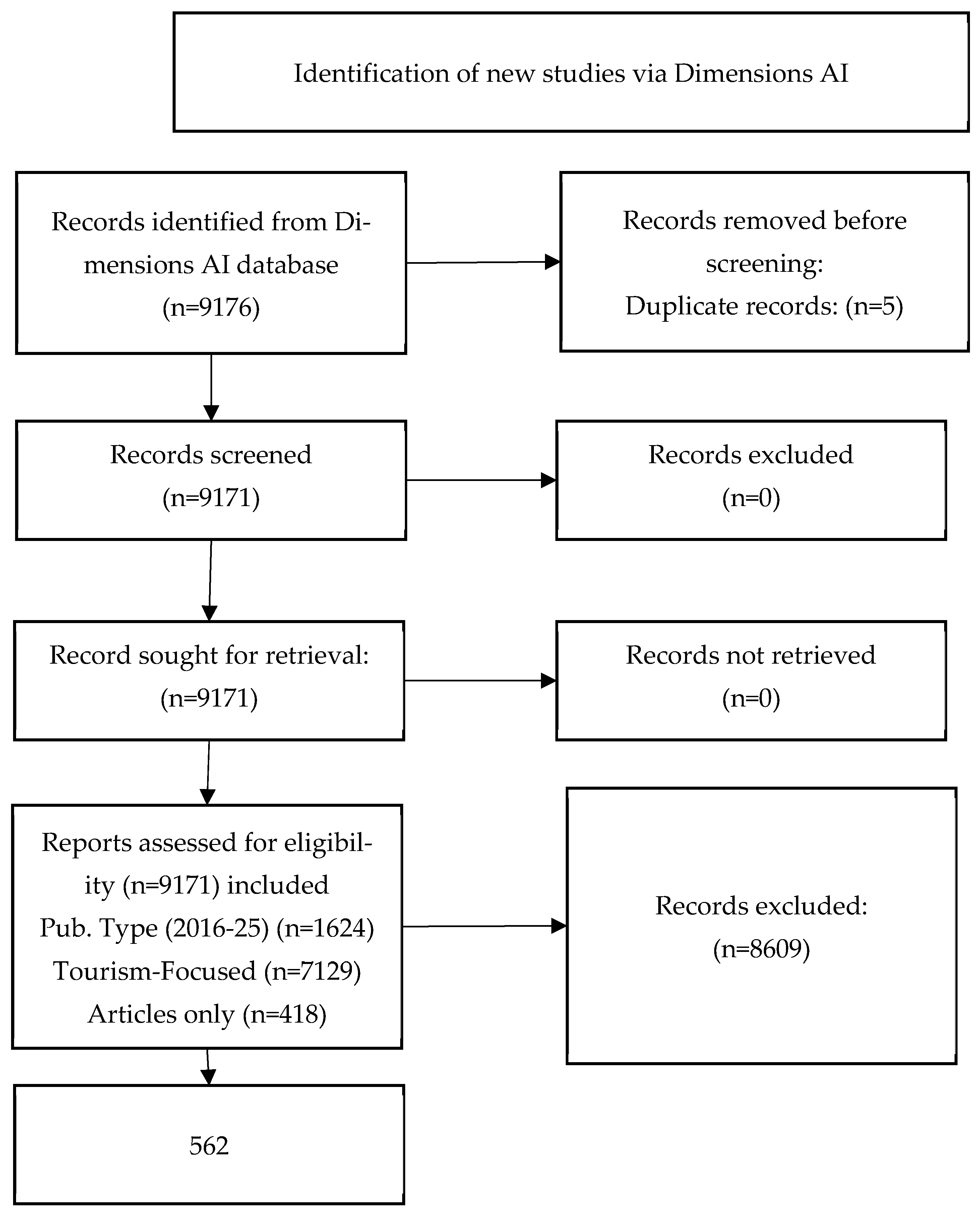
The review followed PRISMA 2020 [
30] guidelines to ensure transparency and replicability (
Figure 1).
The initial search returned 9176 records. Duplicate entries (n = 5) were removed prior to screening. Titles and abstracts were reviewed to confirm relevance to tourism in marine or coastal contexts. Given the database-level filters applied, no additional exclusions were made at this stage.
Full-text screening applied three eligibility criteria. Studies were required to:
Explicitly examine tourism activities in marine, coastal, or ocean-adjacent environments;
Engage with governance, policy, institutional, social, or distributive dimensions; and
Contribute conceptual, empirical, or policy-relevant insights applicable to tourism systems.
A total of 8614 records were excluded during full-text screening due to publication type exclusions, lack of substantive tourism engagement, or purely technical ecological focus. The final analytical corpus comprised 562 peer-reviewed journal articles.
2.5. Analytical Framework and Coding Procedures
The final corpus was imported into qualitative analysis software and analysed using a hybrid deductive–inductive coding framework.
Deductive codes were derived from the study’s governance and social contract orientation and included:
Governance scale (local, regional, national, transnational);
Conceptualisation of residents (stakeholders, beneficiaries, citizens, absent actors);
Treatment of housing and land use;
Role of platforms and financial intermediaries;
Sustainability framing (managerial, distributive, justice-oriented);
Presence or absence of legitimacy and consent assumptions.
Inductive coding was subsequently applied to capture emergent themes, contradictions, and recurring discursive patterns not anticipated a priori. This iterative process ensured sensitivity to disciplinary variation while maintaining analytical coherence.
2.6. Synthesis and Theory Development
Synthesis prioritised pattern detection, omission analysis, and conceptual realignment rather than thematic enumeration. Studies were compared across journals, disciplines, governance scales, and regional contexts to identify systematic tendencies in problem framing and recurring deferrals of political and distributive questions.
Particular attention was paid to how governance failures were displaced into technical sustainability language and how assumptions of social consent were normalised rather than interrogated. The final stage reconstructed the literature into a governance-centred interpretive model linking tourism expansion to institutional capacity, housing pressures, platform power, and social legitimacy.
2.7. Methodological Contribution
By deploying a systematic review as a diagnostic and theory-building instrument, this methodology extends conventional review approaches beyond synthesis toward epistemic critique. It demonstrates how structured evidence aggregation can be mobilised to interrogate what blue tourism scholarship has systematically overlooked, thereby opening new analytical and policy-relevant directions for sustainability-oriented tourism governance research.
3. Findings
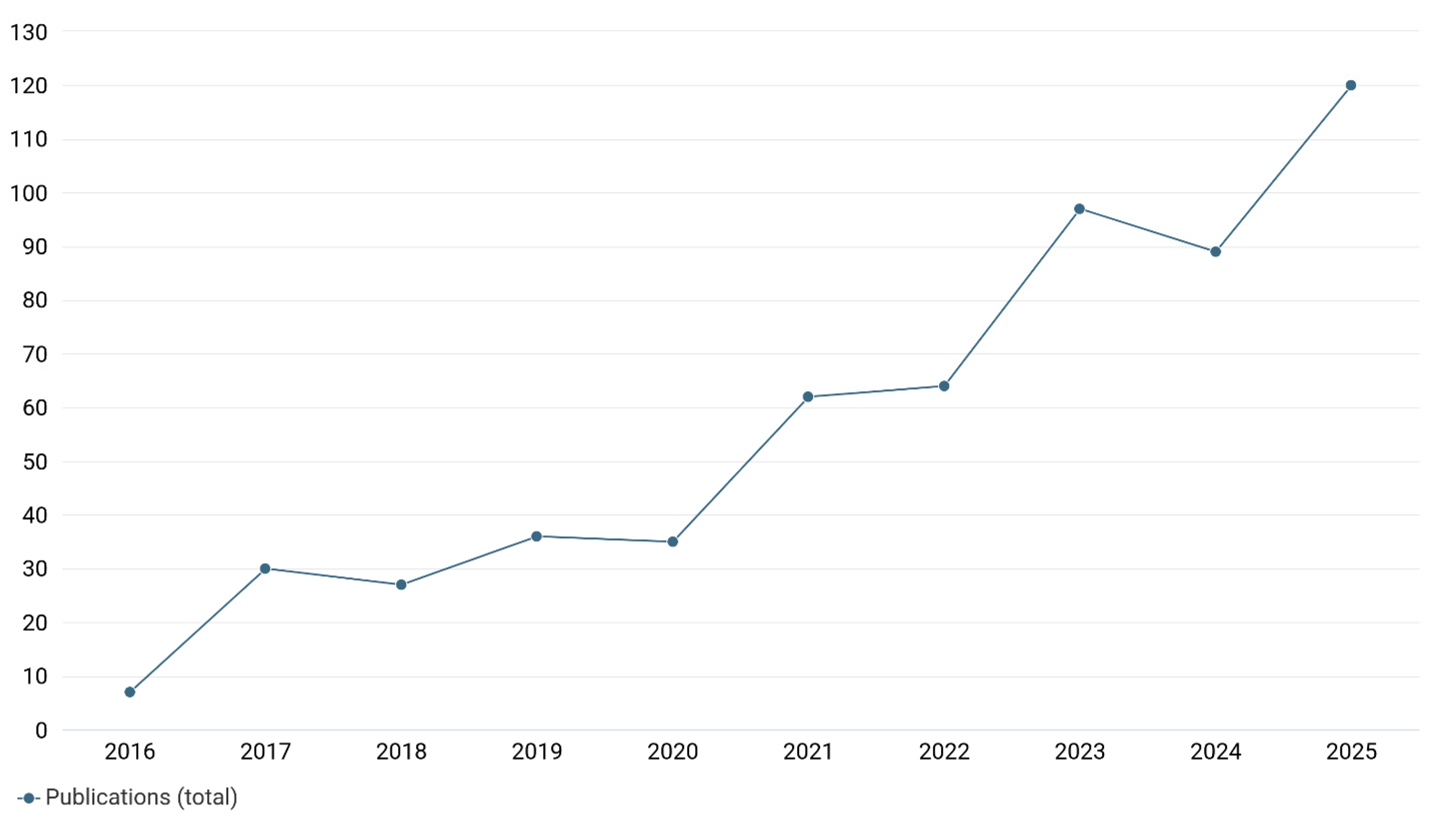
Figure 2 reveals a pronounced acceleration in blue tourism publications, particularly after 2020, with annual outputs rising sharply to approximately 120 articles by 2025. This temporal pattern is consistent with recent observations that tourism research growth increasingly mirrors policy agendas and global development narratives rather than endogenous theoretical consolidation (Gössling et al., 2020; Becken & Loehr, 2022) [
14,
31]. The post-2020 inflexion aligns closely with the institutional embedding of blue economy strategies within sustainability and recovery frameworks, suggesting that blue tourism scholarship has expanded in response to heightened policy salience rather than disciplinary maturation (UNEP, 2021; UNWTO, 2021) [
32,
33].
This finding converges with recent bibliometric evidence indicating that sustainability-oriented tourism subfields have experienced rapid growth since the COVID-19 period (Hall et al., 2022) [
34]. However, it deviates from claims that such expansion signals theoretical consolidation or paradigm formation. Instead, the sustained acceleration without subsequent stabilisation suggests that blue tourism is evolving as a policy-driven research assemblage rather than a cohesive analytical field, reinforcing concerns raised by recent governance-oriented critiques (Becken & Loehr, 2022) [
31].
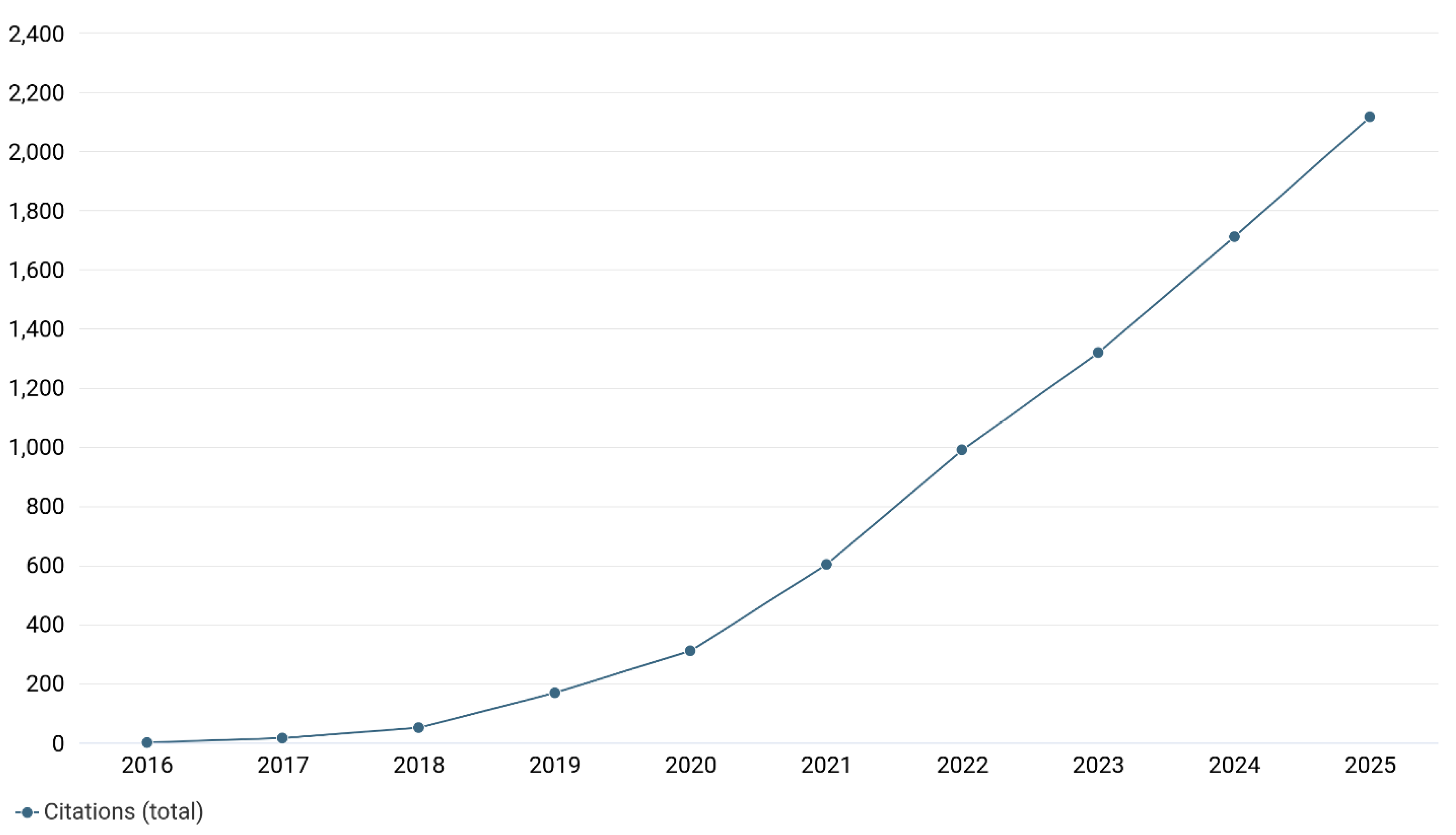
Figure 3 demonstrates exponential growth in cumulative citations, exceeding 2000 by 2025. At first glance, this pattern appears to confirm recent assertions that blue tourism has achieved mainstream visibility within tourism scholarship (Hall et al., 2022; UNWTO, 2021) [
33,
34]. Citation acceleration is often interpreted as a proxy for intellectual influence and field consolidation in contemporary bibliometric analyses (Donthu et al., 2021) [
35].
However, the citation trajectory observed here reflects concentration rather than diffusion. A relatively small cluster of publications accounts for a disproportionate share of citations, primarily those aligned with sustainability management, blue economy policy, and destination competitiveness narratives. This finding qualifies recent optimistic assessments that increased citation activity reflects pluralistic knowledge development (Fennell & Cooper, 2020) [
36]. Instead, it supports emerging critiques that citation dynamics in tourism increasingly reinforce dominant policy-compatible framings while marginalising governance-critical and distributive perspectives (Bianchi et al., 2023) [
24].
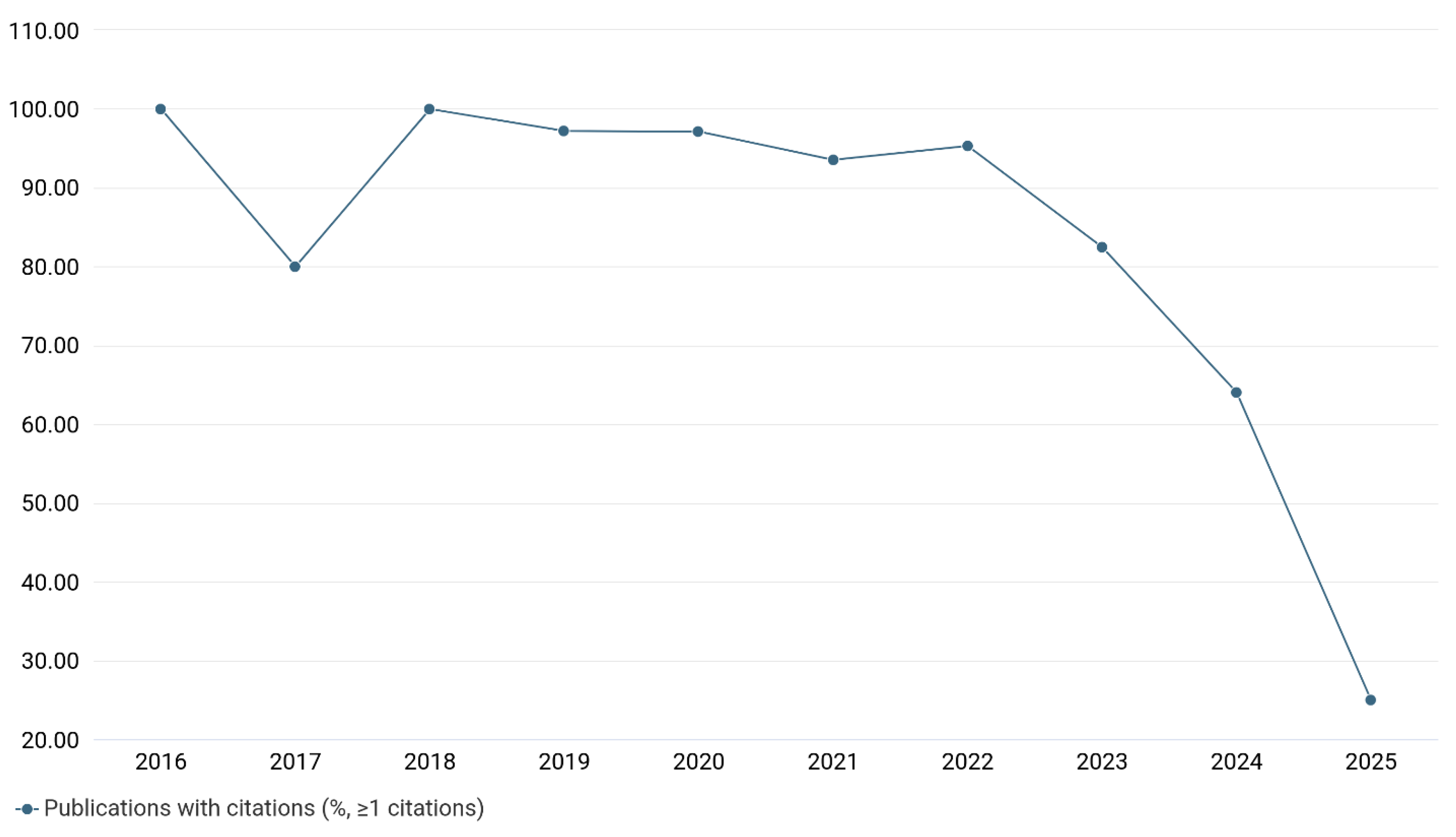
Figure 4 presents a particularly consequential finding: despite growth in publication volume and cumulative citations, the proportion of publications receiving at least one citation declines sharply after 2022, falling to approximately 25% by 2025. This pattern contradicts recent expectations that rapid post-pandemic publication growth would enhance integration and cross-fertilisation across tourism research domains (Hall et al., 2022; Saarinen, 2020) [
7,
34].
While recent literature suggests that expanding sustainability research fosters interdisciplinarity and innovation (UNWTO, 2021; Fennell & Cooper, 2020) [
33,
36], the observed decline in citation uptake indicates conceptual dilution rather than integration. Many newer studies fail to enter the core knowledge network, suggesting thematic repetition, incremental contribution, and weak theoretical anchoring. This finding aligns with recent warnings that policy-driven tourism research risks saturation and diminishing marginal insight when growth outpaces conceptual development (Bianchi et al., 2018; Becken & Loehr, 2022) [
24,
31].
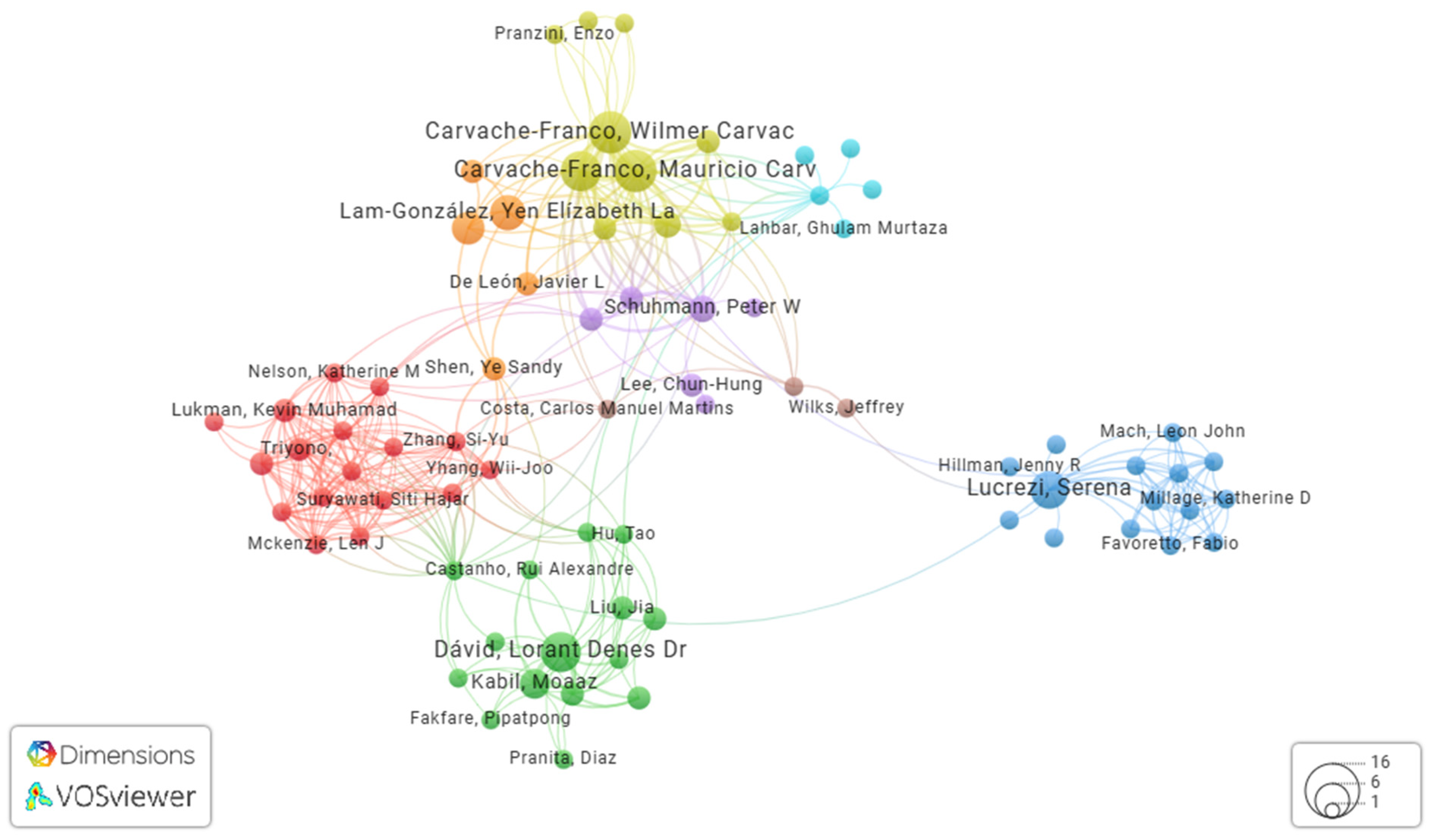
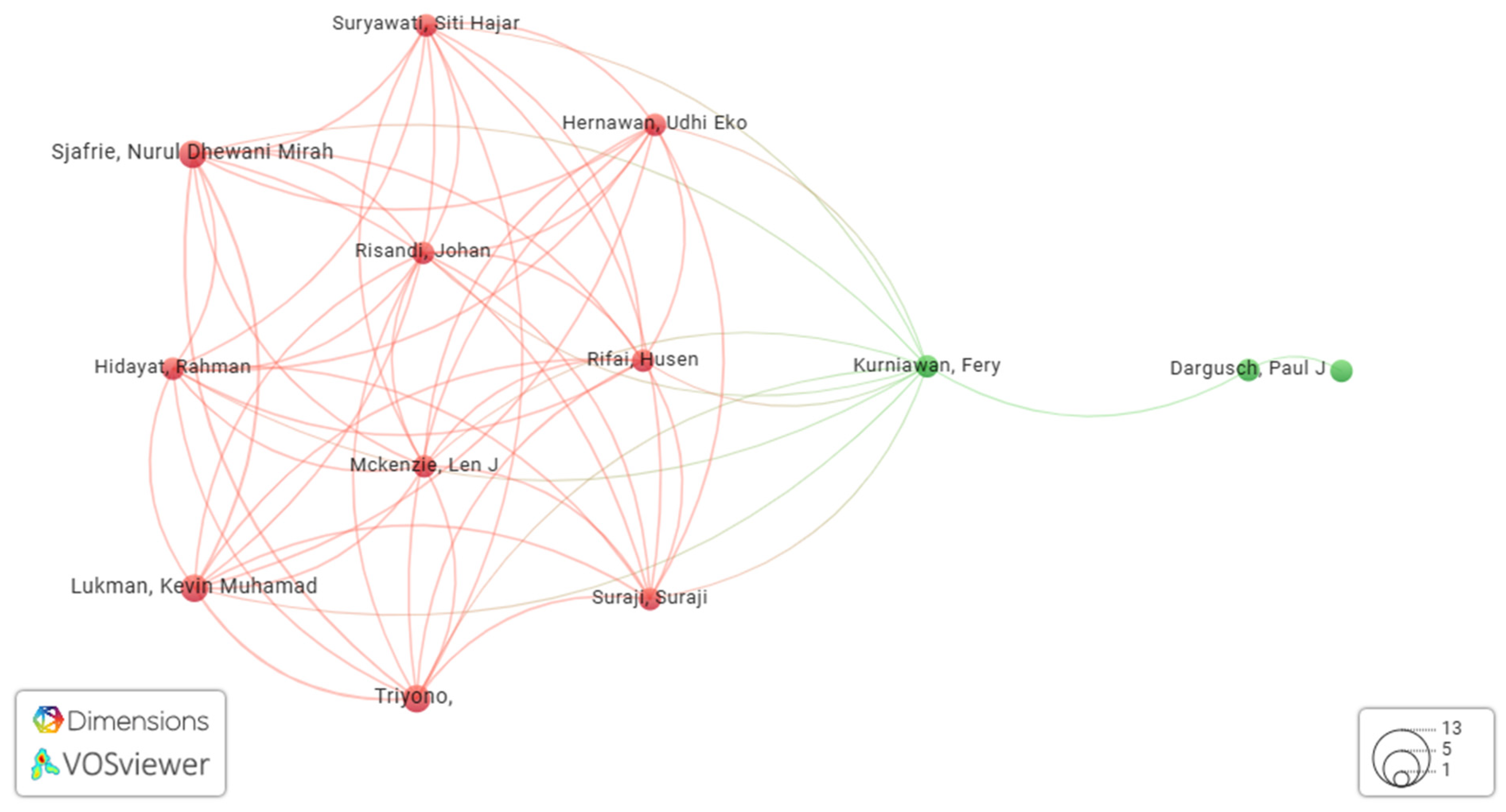
Figure 5 and
Figure 6 map co-authorship networks within blue tourism research and reveal a highly clustered epistemic structure. Dense internal collaboration is evident within dominant clusters, while cross-cluster connectivity remains weak. Such clustering is often interpreted as a sign of field maturation in recent bibliometric studies (Donthu et al., 2021) [
35], and in this sense the findings partially concur with contemporary expectations.
However, the configuration of clustering observed here is analytically significant. Dominant clusters are organised around environmental management, sustainability performance, and destination competitiveness. Governance-oriented, justice-based, and political economy perspectives remain peripheral and weakly connected (Higham & Cohen, 2019) [
37]. Notably, this finding deviates from claims that tourism research is becoming more integrative and cross-disciplinary in response to global crises (Fennell & Cooper, 2020) [
36]. Instead, the evidence suggests parallel epistemic communities that coexist without sustained dialogue, constraining theoretical advancement and reinforcing dominant framing.
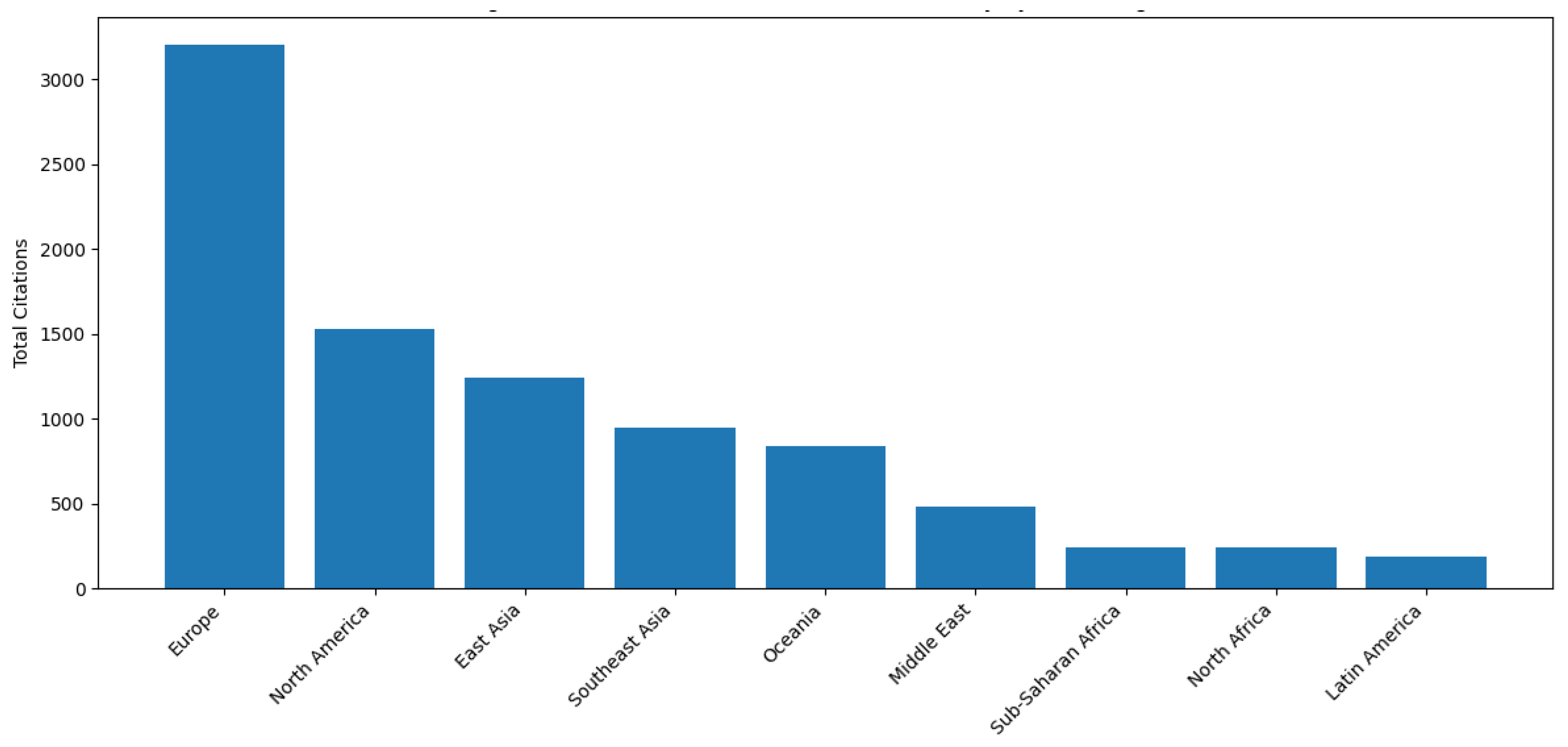
Figure 7 shows total citation counts aggregated by authors’ institutional regions based on Dimensions data. Citation intensity is highly uneven across regions, with Europe, North America, and East Asia accounting for the majority of scholarly influence, while regions most exposed to coastal vulnerability and tourism-induced displacement remain marginal.
Figure 7 reveals a pronounced geographic asymmetry in epistemic influence within blue tourism scholarship (see
Appendix A). Europe emerges as the dominant citation hub by output, citation and dominance, followed by North America and East Asia (see
Appendix B,
Appendix D and
Appendix E). Together, these regions account for the majority of total citations, indicating that agenda-setting power in blue tourism research remains concentrated in high-income, institutionally dense research systems.
By contrast, Sub-Saharan Africa, North Africa, and Latin America exhibit substantially lower citation intensity, despite being regions where coastal tourism growth, climate exposure, and governance fragility are most acute (see
Appendix D and
Appendix E). This imbalance suggests that blue tourism knowledge production is largely shaped by epistemic centres rather than impact zones (see
Appendix A and
Appendix C). While Indonesia has the highest number of outputs (86), the United States with 46 publication records has the highest number of citations, 1022, compared with Indonesia’s 539.
This pattern converges with recent critiques that sustainability-oriented tourism research remains dominated by Global North institutions, even when empirical cases are drawn from the Global South (Bianchi et al., 2018; Becken & Loehr, 2022) [
24,
31]. At the same time, it deviates from policy narratives that frame blue tourism as a globally inclusive and knowledge-sharing development pathway (UNEP, 2021; UNWTO, 2021) [
32,
33].
The spatial concentration of citations mirrors the governance asymmetries identified in the conceptual analysis: those regions with the greatest regulatory capacity and research infrastructure are also those most able to define what constitutes “sustainable” or “manageable” blue tourism.
4. Discussion
The systematic review of 562 peer-reviewed journal articles reveals a field that has expanded rapidly in volume but unevenly in analytical depth. Empirically, blue tourism scholarship has grown alongside the institutionalisation of the blue economy agenda, particularly since the mid-2010s, reflecting intensified policy interest in oceans as sites of economic growth, environmental management, and geopolitical strategy (Bennett et al., 2021; Piketty, 2014; UNEP, 2021) [
32,
38,
39]. Bibliometric evidence confirms this acceleration, with publication output increasing sharply after 2018 and citation activity concentrating in a limited number of epistemic centres (Donthu et al., 2021; Hall et al., 2022) [
34,
35]. However, this quantitative expansion has not been matched by equivalent conceptual development. Instead, the literature displays a persistent imbalance: extensive engagement with environmental sustainability and destination management coexists with a systematic under-theorisation of governance capacity, distributive outcomes, and social legitimacy (Bianchi et al., 2018; Becken & Loehr, 2022) [
24,
31].
Importantly, this imbalance is not merely thematic but structural. Citation mapping shows that Europe and North America dominate epistemic influence even where empirical case studies are disproportionately drawn from Southeast Asia, East Asia, and other high-pressure coastal regions. This production–influence asymmetry mirrors broader patterns in tourism knowledge production, where theoretical frameworks are shaped in regions with comparatively strong regulatory capacity while insights from impact zones are absorbed primarily as empirical illustration (Hall et al., 2022) [
34]. As a result, governance failures are often framed as contingent or context-specific challenges rather than as systemic features of contemporary blue tourism regimes (Bianchi et al., 2018) [
24].
4.1. Managerial Dominance and the Technocratic Turn
Across the corpus, blue tourism is most commonly conceptualised through managerial and ecological lenses. Studies privilege technical instruments such as carrying capacity assessment, environmental impact monitoring, certification schemes, and visitor behaviour management. This emphasis reflects what has been described as a broader “technocratic turn” in sustainability governance, in which complex socio-political tensions are reframed as problems of optimisation and efficiency (Fletcher et al., 2019; Fletcher et al., 2022; Hall & Williams, 2019) [
40,
41,
42].
While such approaches contribute valuable environmental insights, their cumulative effect is to depoliticise tourism growth. Sustainability is overwhelmingly operationalised as environmental performance, with social outcomes treated as secondary or derivative (Saarinen, 2020) [
7]. This orientation normalises assumptions of governability that are poorly aligned with coastal contexts characterised by weak institutions, fiscal constraints, and exposure to mobile capital (Hall et al., 2022) [
34].
4.2. Governance as Context Rather than Analytical Object
Although governance terminology appears frequently, it is rarely treated as a central analytical concern. Governance is typically invoked as policy context rather than examined as a system of institutional design, enforcement capacity, and power relations. Few studies interrogate who governs blue tourism, at what scale, and with what authority. Multi-level governance dynamics—particularly interactions between local authorities and transnational actors—remain weakly theorised, despite growing recognition that tourism governance failures are often scalar in nature (Becken & Loehr, 2022; Harvey, 2005) [
16,
31].
This omission is consequential. Publication and citation patterns indicate that theoretical consolidation occurs at national or international levels, while impacts such as congestion, displacement, and environmental degradation materialise locally. Governance failure is thus rendered analytically invisible, normalised as a contextual constraint rather than recognised as a structural condition of tourism systems shaped by fragmented authority and capital mobility (Bianchi et al., 2018; Hall et al., 2022) [
24,
34].
4.3. Housing, Land Use, and Displacement
One of the most significant blind spots concerns housing and land use. Despite mounting evidence that coastal tourism growth intensifies housing unaffordability, labour exclusion, and residential displacement, these dynamics remain marginal within blue tourism research (Blázquez-Salom et al., 2019) [
17]. Where housing is addressed, it is typically framed as an external contextual pressure rather than as an endogenous outcome of tourism systems. This mirrors broader critiques that tourism scholarship often remains disconnected from urban political economy and spatial development debates (Colomb & Novy, 2021) [
43].
Bibliometric patterns reinforce this marginalisation. Regions experiencing acute housing pressure contribute substantial empirical material but exert limited citation influence, limiting the integration of displacement and land-use conflict into dominant theoretical frameworks (Bianchi et al., 2018) [
24].
4.4. Platform Capitalism and Regulatory Blind Spots
Digital platforms are widely acknowledged across the corpus, yet they are predominantly framed as facilitators of access, efficiency, and innovation. Only a limited subset of studies conceptualises platforms as institutional actors exercising regulatory power through data asymmetry, algorithmic pricing, and jurisdictional arbitrage, despite extensive political economy literature recognising platforms as governance actors (Kenney & Zysman, 2020; Srnicek, 2021) [
44,
45].
This omission is particularly consequential in blue tourism contexts, where platforms operate transnationally while regulatory responsibility remains local. Treating platforms as neutral technologies rather than political–economic institutions helps explain why local governance responses frequently appear reactive or ineffective (Fletcher et al., 2022) [
41].
4.5. Legitimacy, Consent, and the Social Contract
Across the corpus, communities are overwhelmingly framed as stakeholders rather than as rights-bearing actors. Resident perspectives are commonly captured through satisfaction surveys or participatory mechanisms, reinforcing a managerial conception of engagement. Resistance and protest are often interpreted as planning failures rather than as signals of legitimacy erosion (Milano et al., 2019) [
46].
Explicit theorisation of consent is rare. The literature seldom asks whether communities continue to accept tourism growth or how legitimacy erodes over time. By assuming consent, blue tourism research obscures the implicit social contract underpinning tourism development and limits its ability to account for political backlash and governance breakdown (Adger, 2000; Bianchi et al., 2018; Saarinen, 2020) [
7,
9,
24].
Taken together, the findings indicate a fundamental misalignment between the growth of blue tourism and the analytical frameworks used to study it. The literature has advanced environmental monitoring and management tools but has largely avoided confronting blue tourism as a governance regime that redistributes rights, risks, and resources. Housing displacement, platform power, and legitimacy erosion emerge not as anomalies but as structural outcomes of tourism systems operating beyond institutional capacity.
5. Conclusions
5.1. Theoretical Contribution
This study makes a theoretical contribution by repositioning blue tourism from a sectoral sustainability challenge to a governance regime embedded in a fragile social contract. While recent tourism scholarships increasingly acknowledge the political nature of sustainability transitions, blue tourism research has largely remained anchored in managerial and ecological paradigms that assume governability, incrementalism, and social consent (Hall et al., 2022; Becken & Loehr, 2022) [
31,
34]. This paper departs from that trajectory by demonstrating that blue tourism operates as a redistributive system that actively reshapes rights to housing, coastal access, and participation in decision-making (Spenceley et al., 2017) [
47]. It argues that blue tourism should be understood as a site of social contract renegotiation rather than a sector requiring optimisation.
Contemporary debates in tourism governance have begun to recognise limits to growth-oriented sustainability narratives, particularly in contexts of overtourism, platform capitalism, and climate stress (Bianchi et al., 2018; Fletcher et al., 2022) [
24,
41]. However, these debates have rarely been extended explicitly to marine and coastal tourism systems. By synthesising evidence from 562 peer-reviewed articles, this study shows that blue tourism research systematically abstracts governance from questions of legitimacy and consent. Governance is treated as a background condition rather than as a contested institutional process through which authority, responsibility, and accountability are negotiated.
The core theoretical advance lies in conceptualising legitimacy erosion as endogenous to blue tourism systems, not as an external social reaction. Recent work on tourism backlash and resistance has highlighted growing community contestation in coastal and urban destinations (Milano et al., 2019; Novy & Colomb, 2021) [
43,
46], yet much of this literature still frames conflict as a response to mismanagement rather than as evidence of a breached social contract. This indicates that legitimacy is insufficiently theorised and empirically examined.
Furthermore, the findings extend contemporary political economy critiques of tourism by explicitly integrating platform capitalism into blue tourism theory. While platforms are increasingly acknowledged as transformative forces in tourism, they are often analysed as market innovations rather than as regulatory actors exercising power through data control, pricing algorithms, and jurisdictional arbitrage (Kenney & Zysman, 2020; Srnicek, 2021) [
44,
45]. This paper theorises platforms as central to governance fragmentation in blue tourism, explaining why local regulatory responses frequently fail despite increasing technical sophistication.
Overall, the study contributes to emerging debates on knowledge power in tourism research. Recent bibliometric analyses have shown that sustainability scholarship is shaped by epistemic centres located primarily in the Global North (Hall et al., 2022) [
34]. By empirically demonstrating a disconnect between publication volume and citation influence, this paper advances the argument that blue tourism governance is shaped not only by institutional asymmetries on the ground, but also by epistemic hierarchies that determine which problems are theorised and which remain invisible.
Taken together, the theoretical contribution of this study is threefold:
- (1)
It reframes blue tourism as a governance regime rather than a managerial domain;
- (2)
It introduces social contract theory as a lens for understanding legitimacy erosion in coastal tourism; and
- (3)
It integrates platform power and epistemic inequality into the analysis of tourism governance.
5.2. Limits and Scope of the Study
This study has several important limitations that also delimit the scope of its contributions. First, the analysis is based on a systematic review and critical interpretive synthesis of peer-reviewed literature rather than on primary empirical observation. Consequently, the study does not measure governance performance, legitimacy outcomes, or displacement effects directly. Instead, it interrogates how these issues are conceptualised, framed, and marginalised within existing blue tourism scholarship. Claims regarding governance strain and social contract dynamics should therefore be interpreted as analytical inferences grounded in the literature patterns, not as empirical diagnoses of specific destinations.
Second, while the review identifies housing, platform power, and legitimacy as structurally significant dimensions of blue tourism governance, it does not evaluate the effectiveness of particular policy instruments or regulatory interventions. The study is concerned with conceptual and epistemic gaps rather than policy implementation outcomes. Future research could extend this framework through comparative case studies, institutional analyses, or mixed-method designs that empirically test how governance capacity and consent evolve in specific coastal contexts.
Third, the bibliometric component of the analysis reflects publication and citation practices within indexed academic journals and does not capture informal knowledge production, grey literature, or community-based perspectives. As a result, the epistemic inequalities identified in this study should be understood as features of academic knowledge systems rather than as comprehensive representations of all blue tourism governance debates.
This paper deliberately adopts a governance and social contract lens and does not attempt to provide a comprehensive theory of the blue economy or marine conservation. Its contribution lies in reframing blue tourism as a governance regime that redistributes rights, risks, and responsibilities, thereby opening new avenues for theory development rather than closing debate.
5.3. Policy Implications
First, blue tourism policy must move beyond environmental performance metrics. While ecological indicators remain essential, they are insufficient for assessing whether tourism growth remains socially legitimate. Policymakers should integrate housing affordability, access to coastal space, and labour stability as core governance indicators, not as peripheral social considerations.
Second, platform governance must be treated as a central regulatory issue. Local and national authorities cannot rely solely on destination management tools to govern transnational platforms. Coordinated regulatory frameworks addressing data access, taxation, and enforcement capacity are essential if blue tourism is to remain governable in practice rather than in principle.
Third, coastal governance requires explicit mechanisms for consent and accountability. Participation processes that frame communities as stakeholders are inadequate in contexts of cumulative displacement and risk. Policymaking must acknowledge that tolerance for tourism is conditional and revocable, and that legitimacy erodes when costs are imposed without reciprocal benefit.
In essence, knowledge production itself requires recalibration. The dominance of managerial framings reflects not only policy preferences but also epistemic hierarchies within tourism research. Supporting theory-building research from high-impact coastal regions and integrating insights from urban planning, political economy, and public administration are essential steps toward more credible and just blue tourism governance.
In the absence of these shifts, blue tourism risks becoming politically unsustainable. The challenge facing policymakers and scholars alike is no longer how to expand blue tourism efficiently, but whether it can be governed in ways that maintain social legitimacy under accelerating pressures of climate change, capital mobility, and coastal urbanisation.
5.4. Future Direction
Future research should extend this governance-centred framework through empirically grounded case studies and systematic regional comparisons. In-depth studies of specific coastal destinations would allow examination of how institutional capacity, platform penetration, and housing pressures interact under different regulatory regimes. Comparative research across regions with varying levels of state capacity, market exposure, and climate risk would further clarify how blue tourism governance challenges manifest unevenly across spatial contexts. Longitudinal analyses could also track how legitimacy, consent, and resistance evolve over time as tourism intensifies. Finally, integrating tourism research more explicitly with urban planning, regional science, and environmental governance scholarship would strengthen understanding of how blue tourism reshapes spatial development trajectories beyond the destination scale.
In conclusion, this study set out to interrogate whether the rapid expansion of blue tourism research has been matched by equivalent advances in governance understanding. The evidence suggests it has not. While blue tourism scholarship has grown rapidly and diversified empirically, it remains conceptually constrained by technocratic sustainability paradigms that prioritise optimisation over legitimacy, and management over governance.
The systematic review infers that blue tourism is increasingly governed through fragmented institutional arrangements in which responsibility is diffused, authority is mismatched to scale, and social consent is assumed rather than earned. Housing displacement, restricted access to coastal commons, and exposure to environmental risk are not unintended side effects of blue tourism growth; they are structural outcomes of tourism systems operating beyond regulatory and democratic capacity. The central challenge is not improving efficiency, but governing tourism growth in ways that maintain legitimacy, protect access to coastal commons, and align economic activity with institutional capacity. Without such a shift, blue tourism risks becoming increasingly contested, fragile, and politically unsustainable.