Article

Postharvest Quality Retention of Citrus limon L. cv. Kagzi Lemon Under Cold Storage Using Chitosan and Aloe Vera Gel Coatings


1
Department of Horticulture, Faculty of Agriculture, PMAS Arid Agriculture University, Rawalpindi 46300, Pakistan
2
Department of Botany, University of Okara, Okara 56300, Pakistan
3
Institute of Soil and Environmental Science, PMAS Arid Agriculture University, Rawalpindi 46300, Pakistan
4
Central Laboratories, King Faisal University, P.O. Box 420, Al-Ahsa 31982, Saudi Arabia
5
Centre for Water and Environmental Studies, King Faisal University, Al-Ahsa 31982, Saudi Arabia
6
Date Palm Research Centre of Excellence, King Faisal University, P.O. Box 420, Al-Ahsa 31982, Saudi Arabia
*
Authors to whom correspondence should be addressed.
Sustainability 2026, 18(5), 2568; https://doi.org/10.3390/su18052568
Submission received: 16 January 2026 / Revised: 19 February 2026 / Accepted: 2 March 2026 / Published: 5 March 2026
(This article belongs to the Section Sustainable Food)

Abstract

Lemon (Citrus limon L.) is a widely cultivated citrus fruit valued for its nutritional and medicinal properties; however, it is highly perishable and prone to postharvest losses. This study aimed to evaluate the efficacy of natural edible coatings, chitosan (CS) and aloe vera gel (AV gel), applied individually and in combination, in preserving the postharvest quality of lemon fruits during 60 days of cold storage at 4 °C and 85% relative humidity. Nine treatments were tested, including a control, two concentrations of CS (2% and 3%), two concentrations of AV (10% and 15%), and four combinations of CS and AV gel. Various quality parameters were monitored at 0-, 10-, 20-, 30-, 40-, 50-, and 60-day intervals, including weight loss, fruit decay, juice content, firmness, total soluble solids (TSS), titratable acidity (TA), total sugars (TS), reducing sugars (RS), non-reducing sugars (NRS), total phenolic content (TPC), total antioxidant capacity (TAC), and antioxidant enzyme activities (catalase, peroxidase and superoxide dismutase) were monitored at 10-day intervals. The results demonstrated that the combined coating of 2% CS and 10% AV was the most effective in minimizing weight loss (34.25%) and decay incidence (9.22%) at day 60, while maintaining biochemical quality, including higher vitamin C content, phenolic content, and antioxidant activity. This research highlights the potential of CS and AV gel-based coatings as eco-friendly alternatives to synthetic preservatives for extending shelf life.

1. Introduction

Lemon (Citrus limon L.) is a high-quality and nutritious citrus fruit from the Rutaceae family. They are widely consumed globally due to their taste and health benefits [1]. They are rich in antioxidant compounds, organic acids, vitamin C, flavonoids, phenolic acids, and minerals [2,3]. The peel also contains pectin and essential oils [4]. Lemons are not only consumed when fresh but are also processed into various products, such as lemon juice, lemon sauce, and lemon essential oil, thereby enhancing their value and utility [5].
Lemons are typically grown in tropical zones with warm climates, but they can also be cultivated commercially in subtropical zones [6]. Lemons were first introduced in southern Italy in 200 A.D. and later expanded their range to become a widely cultivated crop in top lemon-producing countries like India, Spain, Egypt, Iraq, Argentina, and the US by 700 A.D. [7]. Based on most recent data FAO, [8], Spain is the leading exporter of lemons, accounting for over EUR 4 billion in value, followed by Turkey, Mexico, South Africa, and the Netherlands, with about 1,035,000 tons, comprising 215,000 tons of “Verna” lemons and 820,000 tons of “Fino” lemons of Spain’s production [9]. In Pakistan, all four provinces grow citrus fruit, but Punjab produces more than 95% of the harvest because of its larger population, ideal growing environment, and sufficient water supply. Pakistan’s main citrus-growing regions are Jhang, Sahiwal, Lahore, Multan, Sargodha, Gujranwala, Sialkot, Mianwali, KPK, and Balochistan.
At harvest, the lemon must meet the quality standards imposed by customers. Customers demand little more than just a visually appealing fruit (size, color, firmness, etc.); they prefer qualities like taste, aroma, and nutritional value, etc. [10]. Lemon is a non-climacteric in nature with low respiration and ethylene production rates, allowing for long-term storage without significant softening or compositional changes. A significant quantity of lemons is wasted annually due to inadequate storage and marketing infrastructure, despite their high citric acid content (4.52% to 5.82%) [11]. Whereas juice content and ascorbic acid diminished with the rise in storage temperature. During storage, lemons are vulnerable to various diseases, including stem end rot, sour rot, pink mold, green mold, and blue mold, which are primarily due to pathogens like Penicillium roseum, P. digitatum, P. italicum, and Geotricum candidum [7]. Storage conditions are critical for boosting the shelf life of fruits, regulating market supply, and transportation over long distances. Hence, to increase the shelf life of lemon and other fruits as well, effective storage conditions and approaches such as pre-cooling, chemical treatment, and low temperature should be adopted to allow the fruits to stay fresh for around 12 to 15 days, depending on the variety, at room temperature [12]. Edible coatings like chitosan, derived from crustacean shells, and aloe vera gel, rich in bioactive polysaccharides, offer biodegradable, safe solutions for extending fruit shelf life.
Chitosan, an edible coating, is a naturally occurring carbohydrate that is commercially produced from seafood shells. It is a safe, eco-friendly, and cost-effective solution for the enhancement of the shelf life of agricultural products [7]. Chitosan forms a protective barrier that slows respiration and has antimicrobial properties, while aloe vera gel retains moisture and delays ripening. These coatings can preserve fruit quality and reduce decay during cold storage [13]. Its biocompatibility and biosafety make it an appealing option for plant protection and natural fungicide, making it a popular choice among researchers who use it to increase the storage life of fruits [14].
Aloe vera (AV) gel obtained from the internal portion of the leaf (leaf parenchyma cells) is one of the organic edible coatings that comprises an active component named mucilaginous polysaccharides with effective medical and therapeutic properties. Aloe vera gel can be efficient in enhancing shelf life, preserving the quality of the orange fruit, and decreasing postharvest losses during storage [15]. This study was conducted to evaluate the individual and combined effects of chitosan and aloe vera gel coatings on lemon fruits during storage, to reduce postharvest losses and enhance quality and shelf life. This study was designed with the aim of minimizing postharvest decay and improving the overall quality of lemon fruits. The specific objectives were to enhance the natural defense mechanisms of lemon against postharvest infections, reduce microbial spoilage, and extend the fruit’s shelf life and storage potential through the application of natural edible coatings such as chitosan and aloe vera gel.
Although numerous studies have investigated edible coatings for postharvest preservation of citrus fruits, limited information is available on the synergistic effects of composite chitosan–aloe vera gel coatings on lemon (Citrus limon L. cv. Kagzi Lemon) under prolonged cold storage conditions. The present study is novel in that it evaluates multiple composite formulations, monitors a comprehensive set of physicochemical, biochemical, and enzymatic quality indicators over a 60-day cold storage period, and links coating performance with antioxidant defense responses. This integrated approach provides new insight into the structure–function relationship of natural composite coatings in citrus postharvest management.

2. Materials and Methods

  • Material
Healthy, uniform, and disease-free mature lemon fruits (Citrus limon L. cv. Kagzi Lemon) were collected from the orchard of Koont Research Farm, PMAS-Arid Agriculture University, Rawalpindi. Chitosan from shrimp shells (2% and 3%) (≥75% deacetylated, molecular weight: 190,000–375,000 Da, Sigma Aldrich, Darmstadt, Germany) was dissolved 1% acetic acid under continuous magnetic stirring until complete dissolution was achieved. Aloe vera gel was extracted from mature, healthy leaves. The epidermis was carefully removed, and the inner gel was collected, homogenized using a laboratory blender, and filtered through muslin cloth to remove fibrous material. The filtered gel was diluted with distilled water to obtain 10% and 15% concentrations before use. Glycerol was added as a plasticizer at 0.5% of the solution to improve film flexibility.
  • Methods
Fruits were washed with distilled water and dipped in respective coating solutions for 10 min, while control fruits were dipped in water. After air-drying, the fruits were stored at 4 °C with 85% relative humidity for 60 days. A pictorial representation of the experimental methodology for postharvest treatment and storage of lemon fruit, Figure 1.
Data were recorded at 10-day intervals (0 to 60 days) on parameters including weight loss, fruit decay, juice content, firmness, pH, TSS, ascorbic acid, titratable acidity, total sugars, reducing sugars, non-reducing sugars, total phenolic content, total antioxidant content, catalase (CAT), peroxidase (POD), and superoxide dismutase (SOD). The experiment was laid out in a completely randomized design (CRD) with factorial arrangement, and data were analyzed using ANOVA in Statistic 8.1 software with LSD test at a 5% significance level. The fruits were selected and divided into nine treatments, including the control, with three replications each. Treatments included 2% and 3% CS, 10% and 15% AV gel, and their combinations Table 1.
  • Methodology for Physico-Chemical and Biochemical Parameters
  • Weight Loss (%) and Fruit Decay (%)
The weight loss of lemon fruits was calculated by weighing the fruits at the beginning and after each storage interval using a digital balance. The percentage weight loss was determined according to the formula of [7]:
Weight   loss ( % ) = weight   before   storage weight   after   storage weight   after   storage   × 100
Fruit decay was monitored visually during storage. Diseased or rotten fruits were separated and counted, and the percentage of decayed fruits was calculated as:
Fruit   Rot ( % ) = no   of   infected   fruits Total   number   of   fruits
  • Juice Content (%) and Firmness (kg cm−2)
Juice was extracted from each fruit using a manual juice extractor and weighed using a digital balance. The percentage juice content was calculated as:
Juice   weight ( % ) = Average   juice   weight   of   fruit Average   fruit   weight   × 100
Fruit firmness was determined using a penetrometer (Model FT327) fitted with a cylindrical probe. The compression force (kg cm−2) required to penetrate the fruit flesh to a depth of 10 mm was recorded. Samples will be equilibrated at room temperature for one hour before measurement [16].
  • Total Soluble Solids (°Brix), Titratable Acidity (TA%), pH, and Ascorbic Acid (mg/100 g)
TSS was measured using a digital hand-held refractometer (Model HI96899). A few drops of fresh juice were placed on the prism, and readings were recorded directly in °Brix. The refractometer was calibrated with distilled water before each use.
TA was determined by titrating 10 mL of lemon juice (diluted with 40 mL distilled water) against 0.1 N NaOH using phenolphthalein as an indicator until a light pink endpoint appeared [17]. The acidity was calculated as:
T.A ( % ) = NaOH   used ( mL ) × Normality   of   NaOH ( N ) × 0.067 Volume   of   juice   used ( mL ) × 100
The pH of fresh lemon juice was measured with a digital pH meter (Model MP220, Mettler Toledo, Gießen, Germany), calibrated with standard buffers before each set of measurements.
Ascorbic Acid content was analyzed following the method of Hans et al. [18]. Lemon juice extract was centrifuged at 10,000 rpm for 10 min, and the supernatant absorbance was measured at 243 nm using a spectrophotometer (SP-1100). Vitamin C was calculated as:
Ascorbic   Acid ( mg 100   g ) = Absorbant   of   Sample   at   243   nm 0.293   × 100
  • Total Sugars (%), Reducing Sugars (%) and Non-Reducing Sugars (%)
Total sugar content was determined following Horwitz et al. [17]. The prepared juice sample was hydrolyzed with hydrochloric acid, neutralized with NaOH, and titrated against Fehling’s solution. The percentage of total sugars was calculated using:
TS ( % ) = 25 × X Z
Reducing sugars were determined by titrating the clarified juice sample against Fehling’s solution, using methylene blue as an indicator, until a brick-red endpoint was observed. The reducing sugar percentage was calculated as:
RS ( % ) = 6.25 × X Y
Non-reducing sugars were calculated by difference using the formula:
% Non reducing   sugar = 0.95 × ( %   Total   sugar %   Reducing   sugar )
  • Total Phenolic Content (mg GAE) and Total Antioxidant Content (%)
The TPC of lemon juice was determined using the Folin–Ciocalteu method, and results were expressed as mg gallic acid equivalents per 100 g fresh weight [19]. Diluted juice extract was reacted with Folin reagent and sodium carbonate, incubated at room temperature for 1 h, and the absorbance was recorded at 765 nm.
Total antioxidant content was measured by using the DPPH radical scavenging method. Juice extract was mixed with ethanol and DPPH solution, incubated in the dark for 30 min, and the absorbance was measured at 517 nm. The antioxidant activity was expressed as percentage inhibition
Antioxidant   Activity ( % ) = 100 ( AC AS ) AC
  • Determination of Anti-oxidative Enzyme Activities
In this procedure, 1 mL of lemon juice extract was used with 2 mL of potassium phosphate buffer with a PH of 7. The solution was filled in Eppendorf tubes, then the solution was vortexed for 1 min and centrifuged at 10,000 rpm for 10 min to achieve complete homogenization. The supernatant from each of the tubes was collected after centrifuging and used for enzyme analysis. After centrifugation, the solid part (pellet) was discarded, and the clear liquid (supernatant) was collected. This supernatant was used to test the activities of catalase (CAT), peroxidase (POD), and superoxide dismutase (SOD).
The technique, as described by Liu et al. [20], was used to measure the activity of the catalase enzyme. In this method, the absorbance of the reaction mixture comprising enzyme extract and H2O2 (50 µL of each) was recorded at a wavelength of 240 nm on a spectrophotometer. The activity of CAT was calculated as “U mg−1 protein”. CAT activity in ‘lemon’ juice samples was determined by using the method as outlined by Liu et al. [20].
CAT   activity = Δ   Absorbance × 1000 43.6 × mg   of   protein
By using the technique outlined by Liu et al. [20] was used to assess POD activity. This approach involved preparing the reaction mixture by adding A solution prepared using 100 µL H2O2, 100 µL guaiacol, and 800 µL potassium phosphate buffer (pH 5), followed by a gentle stirring. Afterward prepared mixture of (50 µL) was mixed with (50 µL) lemon juice, and then the mixture was shifted to the 96-well plate using a spectrophotometer, and the absorbance at 470 nm was recorded separately for each sample. The activity of POD reading was measured in “U mg-1 protein”. POD activity was analyzed using the method of Liu et al. [20] with some modifications. POD activity was calculated using the formula given below:
POD   activity = Δ   Absorbance × 1000 43.6 × mg   of   protein
The activity of the superoxidase dismutase was analyzed using the method presented by Štajner et al. [21]. This approach involved the use of different chemicals such as Triton-X, methionine, potassium phosphate buffer (pH 5), nitro-blue tetrazolium, and riboflavin. The activity of the SOD enzyme was expressed as “U mg-1 protein”.
  • Organoleptic Evaluation
Sensory quality (color, texture, aroma, and taste) was assessed by a trained panel of ten members using a 9-point hedonic scale (1 = extremely poor, 9 = excellent) at the end of the storage period. The evaluation protocol followed standard postharvest sensory analysis guidelines.

3. Results

3.1. Weight Loss (%) and Fruit Decay (%)

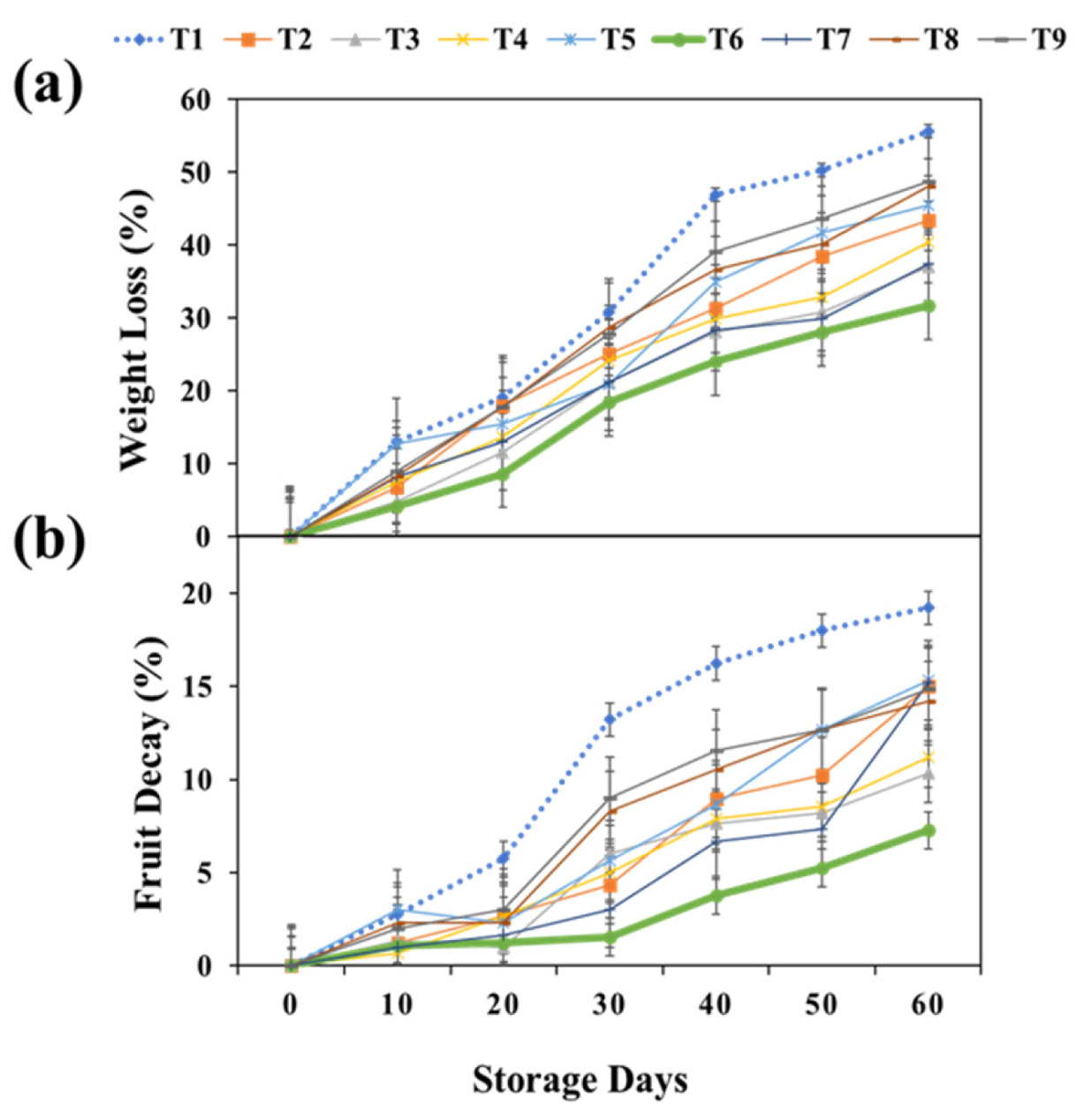
Statistical analysis revealed significant differences (p ≤ 0.05) among treatments, storage intervals, and their interactions. Weight loss increased progressively throughout the 60-day storage period across all treatments. The untreated control exhibited the maximum weight loss (55.66%) by day 60, indicating excessive moisture loss, whereas 2% CS + 10% AV showed the lowest weight loss (34.25%), confirming its superior role in minimizing dehydration Figure 2a. Over the 60-day storage period, the incidence of fruit decay increased in all treatments, with marked differences across treatments. The control showed the highest decay rate, reaching 16.79%, by the 60th day of the 60-day storage period. Treatments using AV alone or high concentrations, e.g., 15% AV (15.33), 3% CS + 10% AV (14.88), 3% CS + 10% AV (14.22), also had higher decay at the end of 60 storage days. In contrast, 2% CS + 10% AV maintained the lowest decay rate of (9.22%) across the storage period. 3% CS and 2% CS + 15% AV followed, with decay percentages of (10.33%) and (15.22%), respectively. Decay remained below 5% until day 20, then escalated sharply after day 30, Figure 2b.

3.2. Juice Content (%) and Firmness (kg cm−2)

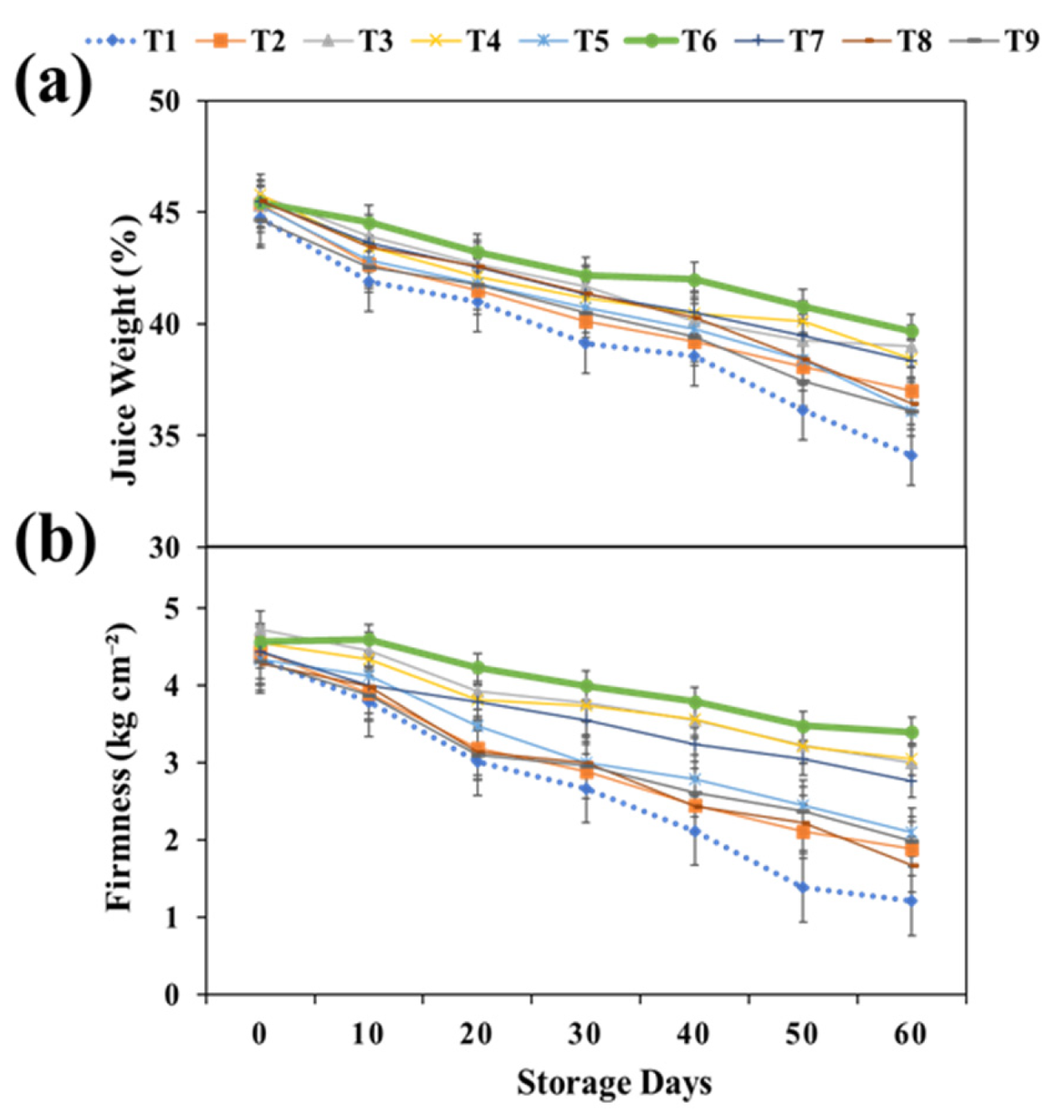
The result showed significant differences (p ≤ 0.05) in all treatments, days, and their interaction with juice weight (%) during the 60-day storage period. The juice content of lemons during storage varied notably across treatments. The highest average juice content was recorded in 2% CS + 10% AV with 42.22%, followed by 3% CS with 41.77% and 10% AV with 41.65%, while the control had the lowest average juice content (40.12%) over the storage period, Figure 3a. The firmness of lemon gradually decreased throughout the storage period, with distinct variations among treatments. The control exhibited the fastest decline, dropping from 1.21 on day 60. In contrast, 2% CS + 10% AV maintained the highest firmness, 3.25 at day 60, followed closely by 3% CS (3.22) and 2% CS + 15% AV (3.33). By the end of storage, 2% CS + 10% AV preserved about 72% of its initial firmness, whereas the control lost more than 70% Figure 3b.

3.3. Total Soluble Solids (TSS °Brix), pH, TA and Ascorbic Acid (mg/100 g)

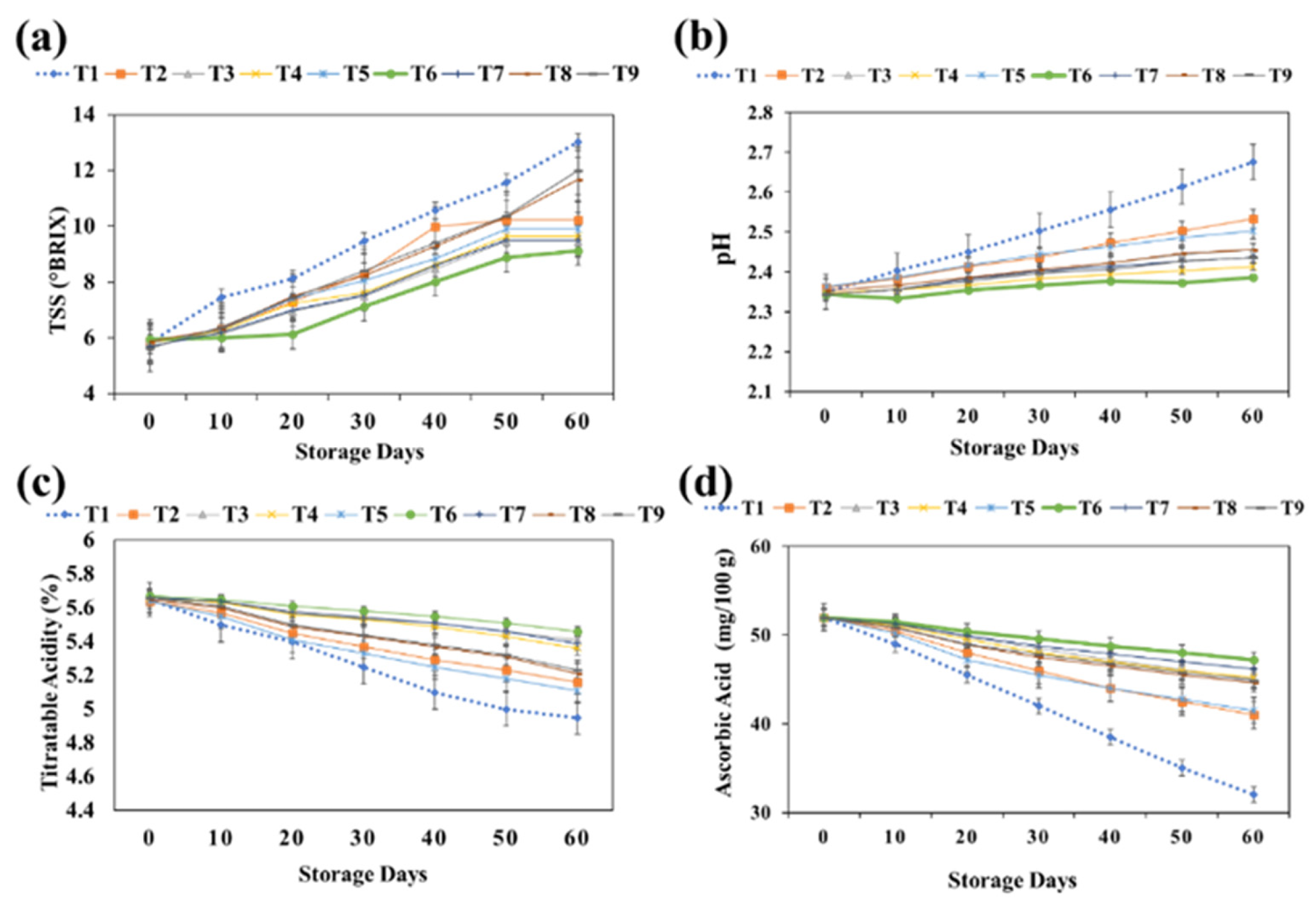
The average TSS values across all treatments showed a clear difference in how coatings affected the ripening process. The highest average TSS was recorded in the control (9.32), indicating faster ripening and water loss in uncoated lemons. Among the treated fruits, 2% CS + 10% AV had the lowest average TSS (7.58), showing that this treatment was most effective in delaying the increase in sugars. Other treatments like 3% CS (7.71) and 2% CS + 15% AV (7.72) also performed better, Figure 4a. The pH of lemon juice slowly increased in all treatments during 60 days of storage. According to the statistical results, treatments, storage days, and their interaction had a significant effect (p < 0.05) on pH. The control showed the highest pH value at day 60 (2.6767), while lower pH values were found in 2% CS + 10% AV and 10% AV, which means they helped maintain the juice’s acidity Figure 4b. The total acidity (T.A.) of lemon juice decreased over time in all treatments during storage. The statistical results showed that days, treatments, and their interaction had a highly important effect (p < 0.05) on T.A. T.A. was found highest value in 2% CS + 10% AV at 5.576, while the lowest was in the control at 5.264. According to the LSD test, 2% CS + 10% AV, 3% CS, and 2% CS + 15% AV were in group “A”, meaning they had the best ability to retain acidity, while T1 showed the most decline. These results indicate that CS and AV, especially in combination, help preserve the acidity of lemon juice during storage Figure 4c. The Vitamin C of lemon juice slowly decreased during 60 days of storage across all treatments. Among all treatments, the highest Vitamin C retention was found in 2% CS + 10% AV (49.64), indicating superior preservation, followed closely by 2% CS + 15% AV, showing better preservation ability. On the other hand, the control had the lowest Vitamin C levels by day 60 of the storage period. Statistical analysis (ANOVA) showed that both storage days and treatments had a significant effect on Vitamin C content (p < 0.05). This means that edible coatings, especially the combination of CS and AV, helped reduce the loss of ascorbic acid during the storage period (Figure 4d).

3.4. Sugars

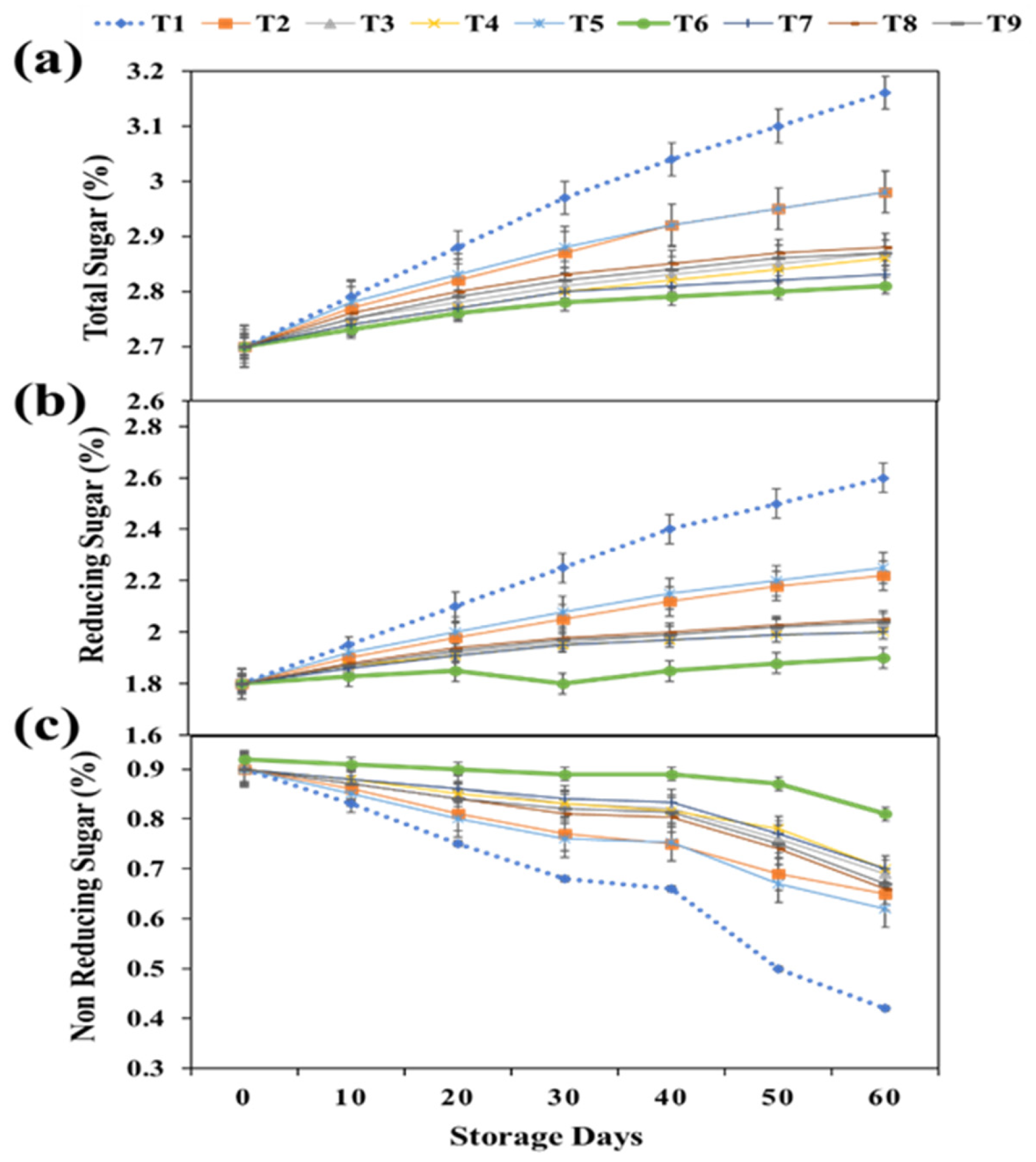
The total sugar content in lemon juice exhibited a consistent upward trend throughout the 60-day storage period across all treatments. Among the treatments, the control consistently showed the highest total sugar content, reaching 3.16 by day 60, while 2% CS + 10% AV recorded the lowest total sugar levels (2.81). ANOVA showed that treatment differences were statistically significant (p ≤ 0.05), confirming the effectiveness of coatings in moderating sugar increases during storage Figure 5a. The data showed that RS content increased steadily in all treatments over the 60-day storage period. The control showed the highest reducing sugar (2.23%). The lowest values were observed in the combined treatments of CS and AV, particularly in 2% CS + 10% AV, with an average of (1.91%), followed by 2% CS + 15% AV with (1.92), and 3% CS with (1.94). The statistical data showed highly notable differences (p < 0.05) between treatments, storage days, and their interaction. LSD grouping showed that the control formed a separate group with significantly higher reducing sugar compared to all other treatments, Figure 5b. Analysis of variance showed that treatment, days, and their interaction had a highly significant effect (p < 0.05) on non-reducing sugar content. The results indicated a consistent and significant decline in non-reducing sugar content in lemon juice during 60 days of storage. Among the treatments, 2% CS + 10% AV showed the highest retention overall mean (0.8381), followed by 2% CS + 15% AV with (0.8262), and 3% CS with (0.82), while the control had the lowest mean (0.6771). The decreasing trend is evident across all treatments over storage days, with treatments containing a combination of CS and AV being more efficient in maintaining non-reducing sugar levels Figure 5c.

3.5. Total Phenolic Content and Total Antioxidant Capacity

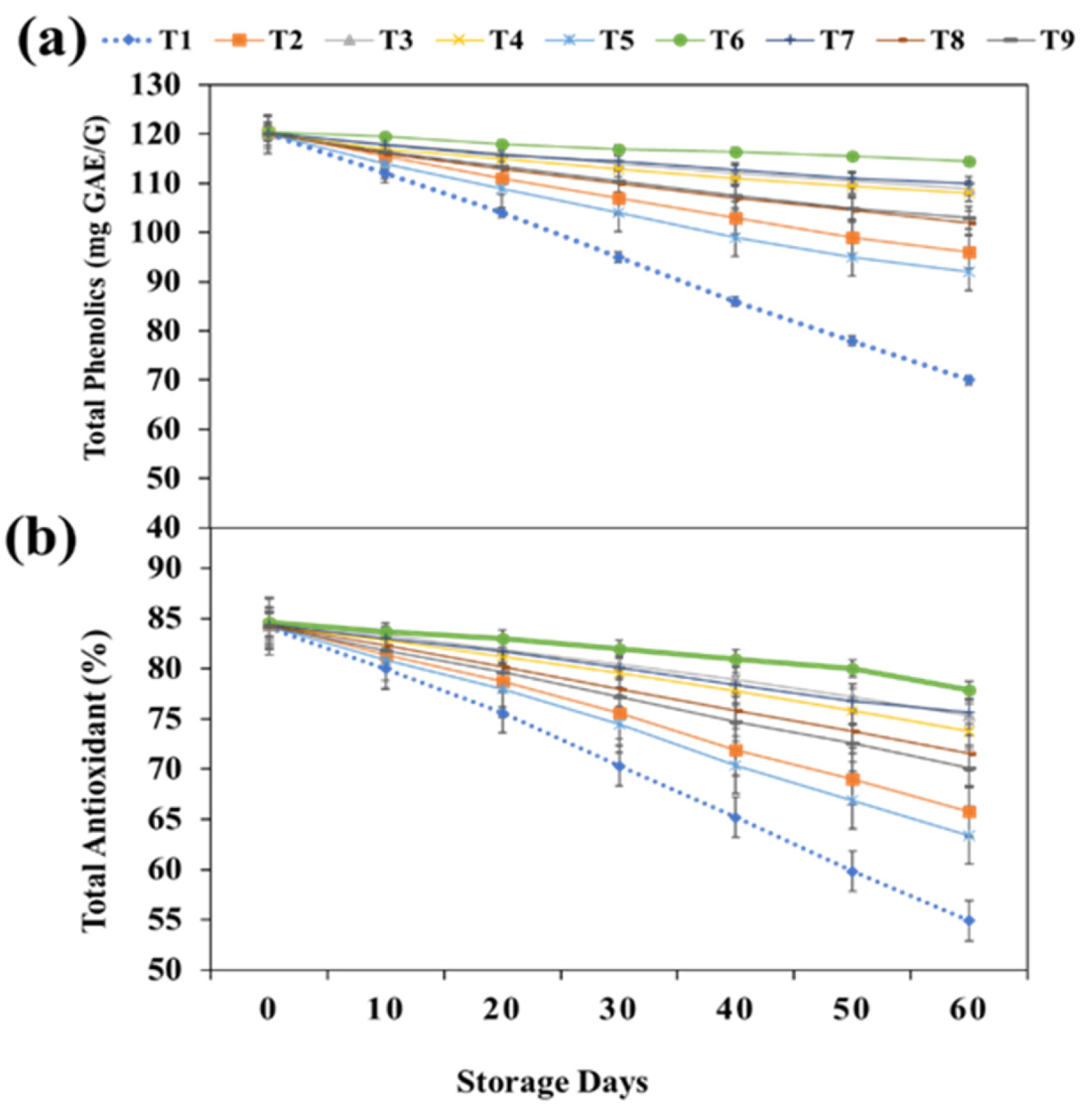
The result exhibited no differences (p ≥ 0.05) in all treatments, storage periods, and the interaction. The TPC of juice declines throughout the 60 storage days; however, the rate of decline across all treatments. Treatment 2% CS + 10% AV consistently retained the highest phenolic levels throughout storage and had the highest overall average (115.91), followed closely by 2% CS + 15% AV (114.59) and 3% CS (114.26), showing their better efficacy in maintaining phenolic chemicals due to the antioxidant and protective film-forming qualities of CS and AV. Whereas, the control showed the lowest retention was observed with average values of (95.01), suggesting that the control was less effective in minimizing the degradation of phenolics during storage, Figure 6a. The DPPH method was used to evaluate the total antioxidant activity in fruit juice during 60 days of cold storage. The result showed significant differences (p ≤ 0.05) in all treatments, storage periods, and the interaction. The antioxidant content of lemon juice showed a clear decreasing trend over the 60-day storage period across all treatments. Among the treatments, 2% CS + 10% AV consistently preserved the highest antioxidant levels throughout storage, with an average value of 80.99. It was followed by 3% CS and 2% CS + 15% AV. In contrast, the control showed the greatest loss of antioxidants, with an average of 69.99. ANOVA results confirmed that the effects of treatments, storage days, and their interaction were all highly significant (p < 0.05), Figure 6b.

3.6. Anti-Oxidative Enzymatic Activity (U/mg Protein)

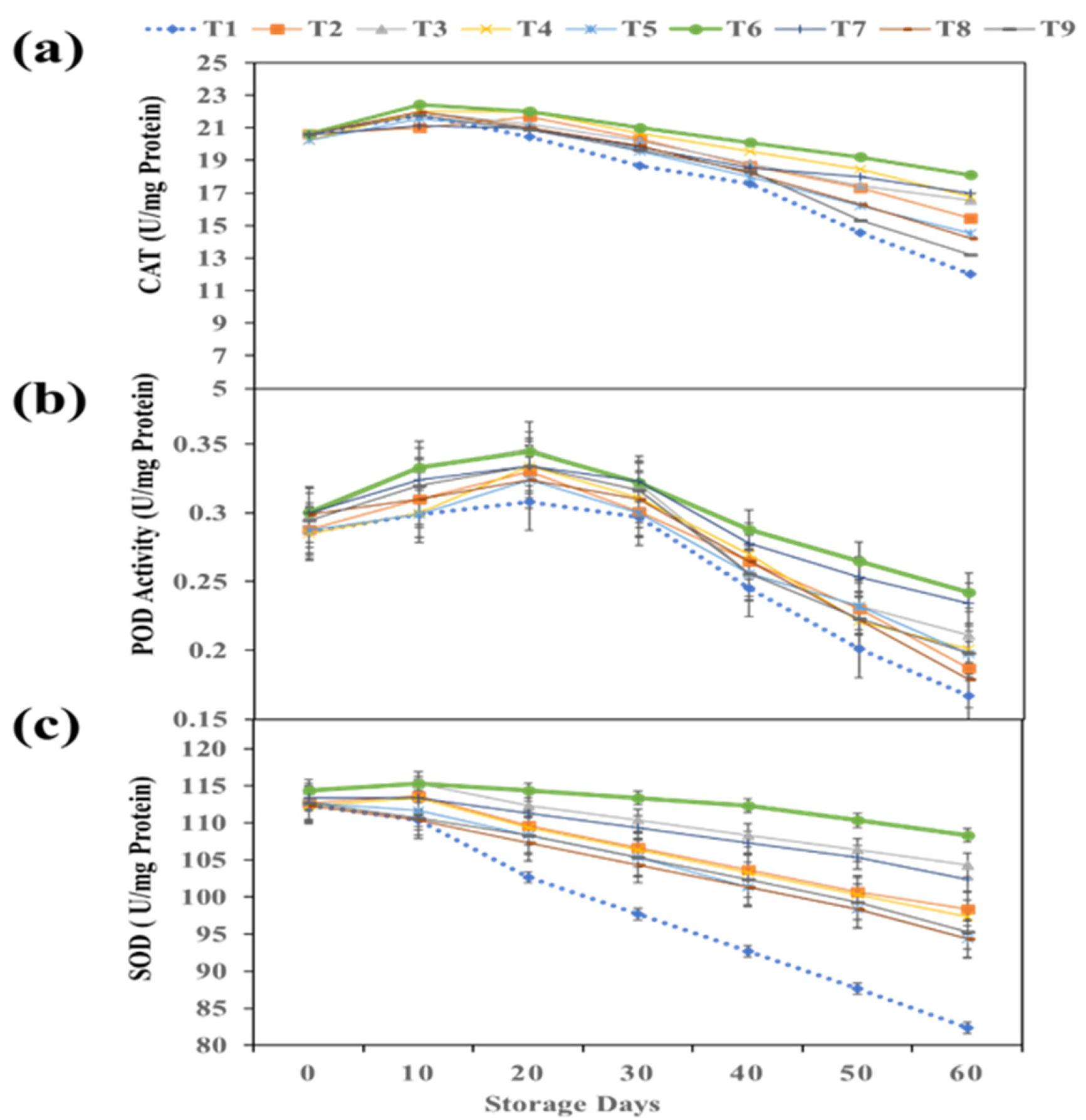
Catalase (CAT) activity increased during storage but reduced over time. After 60 days, all nine treatments were statistically different from each other, 2% CS + 10% AV exhibiting the highest CAT activity (20.50), while the lowest value was recorded in the control (18.16). The interaction effect showed significant variations (p ≤ 0.05) between treatments and storage periods. CAT activity consistently decreased over time, with each interval differing significantly. The decline was more pronounced after 40 days of storage, reflecting a progressive loss of enzyme activity during prolonged storage. A significant interaction (Treatment × Days) further confirmed that the rate of CAT decline varied among treatments. 2% CS + 10% AV maintained higher activity throughout storage, indicating better preservation of antioxidant enzymes, while the control showed the fastest reduction in CAT activity Figure 7a. Peroxidase (POD) activity in lemon juice was significantly influenced by treatments and storage duration. The results showed non-significant differences (p ≥ 0.05) in all treatments, storage periods, and the interaction. According to the LSD grouping, all treatments differed significantly, with 2% CS + 10% AV showing the highest POD activity (0.299), while the control recorded the lowest value (0.257). POD activity gradually decreased with increasing storage duration. The decline became more prominent after 40 days of storage, indicating reduced enzymatic activity during prolonged cold storage. The (treatment × storage) interaction was statistically non-significant, suggesting that although POD activity declined over time, the rate of reduction followed a similar trend across all treatments. Overall, 2% CS + 10% AV maintained the highest POD levels throughout storage, while the control consistently showed the lowest activity. Figure 7b. Superoxide dismutase (SOD) activity in lemon juice was significantly affected by treatments, storage duration, and their interaction (p ≤ 0.05). LSD grouping indicated that 2% CS + 10% AV maintained the highest SOD activity (112.61), while the lowest value was observed in the control (97.95). The results showed significant differences (p ≤ 0.05) in all treatments, storage periods, and the interaction. The decline was more pronounced after 30 days of storage, showing a steady reduction in antioxidant enzyme activity over time. The interaction (Treatment × Days) was also significant (p ≤ 0.05), suggesting that the rate of decrease in SOD activity during storage varied across treatments. Overall, 2% CS + 10% AV preserved the highest enzyme activity throughout the storage period, while the control showed the most rapid decline Figure 7c.

3.7. Visual Quality of Lemon

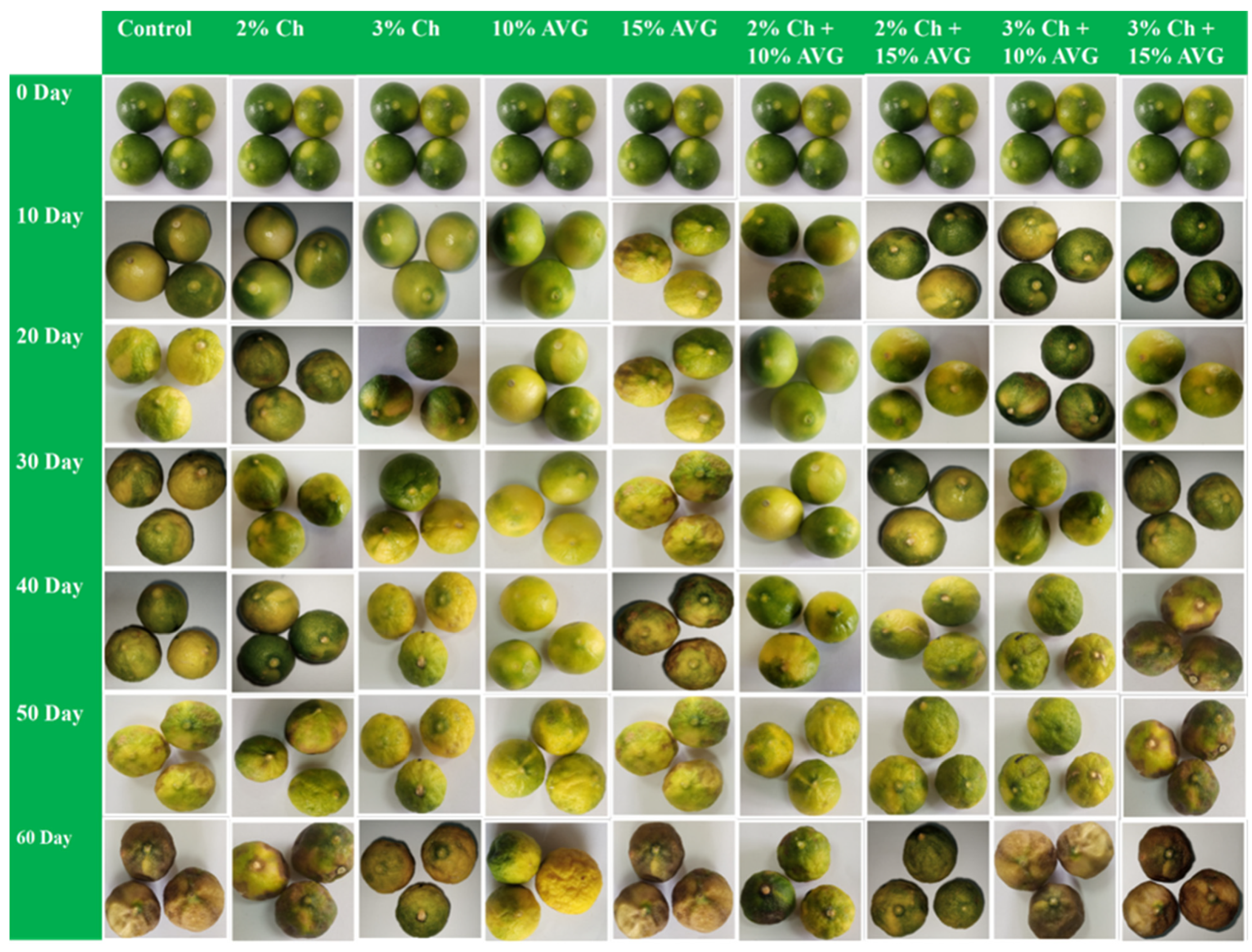
Representative images showing the effect of different treatments on the visual quality of lemon fruits during 60 days of storage are presented in Figure 8. The untreated control exhibited rapid deterioration, including shriveling, discoloration, and visible decay after 30 days, while fruits coated with chitosan and aloe vera gel combinations, particularly 2% CS + 10% AV, retained a fresher appearance with minimal surface blemishes throughout storage Table 2. These observations visually support the quantitative results of weight loss, decay percentage, firmness, and biochemical analyses, confirming the superior role of composite coatings in maintaining fruit quality during prolonged storage.

4. Discussion

The delayed senescence and spoilage observed in composite-coated fruits can be attributed to the improved barrier properties of the CS–AV gel matrix, which reduces oxygen permeability and water vapor transmission. This modified internal atmosphere lowers respiration rate and ethylene sensitivity, thereby slowing metabolic activity. In addition, the interaction between chitosan functional groups and polysaccharides in aloe vera gel likely enhances film integrity, contributing to improved adhesion on fruit epidermis. These synergistic structural properties translate into functional benefits by maintaining cellular redox balance, stabilizing membrane integrity, and preserving antioxidant enzyme activities. During postharvest storage, moisture loss in citrus is primarily driven by transpiration and respiration. Edible coatings, particularly chitosan and aloe vera gel, function as semi-permeable barriers that regulate gas exchange and reduce water loss. Jurić et al. [22] reported that chitosan coatings, especially in combination with wax, effectively reduced water loss and maintained firmness in mandarins. Al-Zahrani et al. [23] further highlighted chitosan’s role in delaying oxidative reactions, thereby extending shelf life. While aloe vera gel alone provides limited protection Pimsorn et al. [24], composite formulations demonstrate synergistic effects. Abou-Zaid et al. [25] found that aloe vera blended with tea tree oil improved moisture retention, whereas Das et al. [26] documented substantial reductions in weight loss in lemons using aloe vera–wax–eugenol coatings. Citrus fruit decay is largely caused by pathogenic fungi such as Penicillium spp. Chitosan exerts direct antifungal effects by inhibiting spore germination and indirectly by inducing host defense responses [14]. Shah et al. [27] demonstrated that chitosan combined with aloe vera gel significantly reduced decay in mango, a finding equally relevant to citrus fruits. Niu et al. [28] confirmed that chitosan–CMC coatings reduced both decay and weight loss in mandarins. By suppressing microbial activity and reinforcing antioxidant defenses, chitosan-based coatings offer a dual mechanism that effectively delays postharvest deterioration. Overall, these results confirm that combined coatings, particularly T6, are highly effective in slowing both weight loss and fungal decay, thus extending lemon storage life more efficiently than individual coatings. Loss of juice content results from transpiration and respiration. Composite coatings reduced these processes by lowering vapor permeability and respiration rate. Similar findings were reported by Niu et al. [28], where composite coatings preserved juice content and other internal quality attributes in mandarins. Pimsorn et al. [24] observed that aloe vera alone was less effective, while Amin et al. [29] documented a 33% reduction in vapor transmission using chitosan–aloe vera coatings enriched with essential oils. Firmness preservation is associated with reduced enzymatic degradation of cell wall components and maintenance of turgor pressure. Chitosan suppresses softening enzymes and oxidative reactions [14], while aloe vera enhances structural integrity. Combined coatings such as T6 and T7 provided superior barrier properties, reducing moisture loss and preserving firmness. These results align with Zhang et al. [30], who reported that chitosan composites delay softening by reinforcing cell wall structure. Overall, the combined application of chitosan and aloe vera gel preserved both juice content and firmness, ensuring better consumer acceptability and marketability during extended storage. The rise in TSS is a typical indicator of ripening and metabolic sugar accumulation, which was moderated in coated fruits. Riseh et al. [31] demonstrated chitosan’s ability to reduce enzymatic sugar breakdown, while Amin et al. [29] found that chitosan–AVG–essential oil blends slowed sugar accumulation. The lower pH in coated fruits reflects reduced organic acid degradation, consistent with findings by Romanazzi et al. [14]. Aloe vera alone had minimal impact [24], but in combination with chitosan, coatings better preserved acidity [32]. TA decline is a common ripening phenomenon due to citric acid utilization in respiration, which was slowed under chitosan–based coatings. Similarly, vitamin C degradation was minimized in coated fruits, aligning with Nikhil et al. [33], who showed chitosan-based formulations improve antioxidant retention. Overall, these findings demonstrate that T6 effectively moderated biochemical changes, delayed ripening, and preserved acidity and Vitamin C, thereby maintaining nutritional quality during storage. Reducing sugars decreased progressively during storage, with coated fruits exhibiting a slower decline than the control, indicating reduced metabolic and respiratory activity. Chitosan–aloe vera coatings likely suppressed respiration by forming a semi-permeable barrier, thereby stabilizing sugar metabolism, as similarly reported in recent Sustainability studies [31]. Niu et al. [28] observed similar stabilization of sugar profiles in mandarins using chitosan-based coatings. Aloe vera alone was less effective [24], whereas composite formulations provided better control [29]. The retention of non-reducing sugars under T6 suggests coatings suppressed sucrose hydrolysis by limiting invertase activity, consistent with Rasouli et al. [34]. Overall, T6 not only delayed sugar accumulation but also preserved non-reducing sugars, reflecting slowed ripening and enhanced metabolic stability. Phenolic degradation is commonly caused by enzymatic oxidation and moisture loss. Edible coatings reduce oxygen permeability, thereby protecting phenolic compounds. Jurić et al. [22] reported higher phenolic retention in coated mandarins compared with controls. Similarly, Amin et al. [29] highlighted the effectiveness of chitosan–aloe vera–essential oil coatings in maintaining antioxidant compounds by limiting oxidative stress. Fruit antioxidants such as catalase (CAT), peroxidase (POD), and superoxide dismutase (SOD) decompose harmful reactive oxygen species (ROS) and thus protect fruit quality during storage [35]. CAT is essential in converting hydrogen peroxide into water and oxygen, thereby preventing oxidative bursts that could accelerate the senescence process [36]. The higher CAT activity in coated fruits suggests that CS and AV coatings mitigated oxidative stress by maintaining cellular enzyme integrity. Similar observations have been reported in mango and persimmon fruits coated with AV and CS, which showed significantly higher CAT activity and prolonged storability compared to untreated fruits [37,38]. POD plays a dual role in postharvest physiology, being involved in ROS detoxification and lignin biosynthesis, which strengthens cell walls and enhances resistance to pathogen attack [35]. The decline in POD activity was extended with a storage period, suggesting depletion of the fruit’s antioxidative activity. Previous studies also reported similar trends: CS coatings enhanced POD activity in loquat and Japanese plum, delaying tissue browning and microbial spoilage [35]. AV gel has likewise been linked to improved POD activity, providing a protective antioxidant barrier [38]. The maintenance of higher POD activity under the combined coating in this study highlights its effectiveness in reinforcing antioxidant defenses and reducing oxidative stress-induced deterioration in lemons. SOD is a primary ROS-scavenging enzyme that catalyzes the dismutation of superoxide radicals into hydrogen peroxide, preventing oxidative damage to membranes and macromolecules [36]. The ability of CS to elicit defense responses has been reported in strawberries and apples, where CS coatings significantly increased SOD activity during storage [39]. Similarly, AV gel coatings have been shown to preserve higher SOD activity in guava and mango fruits, delaying senescence and quality deterioration [37,40]. The present results indicate that the synergistic action of CS and AV was most effective in sustaining SOD activity, thereby delaying the onset of oxidative stress in lemon fruits. The superior performance of T6 confirms that composite coatings provide both physical protection and biochemical stability, delaying phenolic and antioxidant losses during cold storage. Overall, the combined coating of chitosan and aloe vera (T6) significantly preserved phenolics and antioxidants, thereby maintaining both functional quality and health-promoting attributes of lemons. Coatings significantly delayed visible shriveling and microbial growth in lemons. Similarly, Niu et al. [28] demonstrated that composite chitosan–CMC coatings effectively preserved external appearance and reduced fungal decay in mandarins. In line with these reports, the present study confirms that the integration of CS and AV gel provides a synergistic barrier effect, thereby enhancing both the visual and physiological quality of citrus fruits during storage.

5. Conclusions

The findings of this study confirm that the use of chitosan and aloe vera gel, especially in combination, serves as an effective postharvest treatment to enhance the storage life and quality of lemon fruits. The composite coating, particularly 2% CS + 10% AV, demonstrated the best overall performance by significantly reducing weight loss and decay, maintaining pulp firmness and juice content, and preserving biochemical properties such as vitamin C, phenolic content, and antioxidant capacity.
These coatings functioned as biodegradable, semi-permeable films that reduced respiration rate, delayed senescence, and mitigated oxidative and microbial spoilage. This study demonstrated that chitosan and aloe vera gel composite coatings effectively preserved postharvest quality and reduced storage losses of lemon fruits. The main limitation of this research lies in its laboratory-scale application and absence of commercial-scale validation. Future research should focus on optimizing coating concentration for large-scale applications, evaluating economic feasibility, and assessing consumer acceptance. Integration of advanced analytical techniques and commercial storage trials will further enhance the practical applicability of natural edible coatings in sustainable postharvest management.

Author Contributions

Conceptualization, write up, A.K. and M.L.; methodology, supervision, S.U.R.; formal analysis, S.J.; investigation, M.N.S.; resources, A.G.; data curation, K.M.A.R.; visualization, M.M.; writing—review and editing, M.M. All authors have read and agreed to the published version of the manuscript.

Funding

The authors extend their appreciation to the Deanship of Scientific Research, Vice Presidency for Graduate Studies and Scientific Research, King Faisal University (KFU), Saudi Arabia, for funding this research work under the project Grant KFU 260885.

Institutional Review Board Statement

Not applicable.

Informed Consent Statement

Not applicable.

Data Availability Statement

The original contributions presented in this study are included in the article. Further inquiries can be directed to the corresponding author(s).

Acknowledgments

The authors would like to express their sincere gratitude to the Department of Horticulture, PMAS Arid Agriculture University Rawalpindi, for providing laboratory and technical support throughout the course of this research. Special thanks are extended to the supervisor whose guidance and assistance contributed to the successful completion of this study.

Conflicts of Interest

The authors declare no conflicts of interest.

Abbreviations

The following abbreviations are used in this manuscript:
CSChitosan
AV gelAloe vera gel
TSSTotal soluble solids
TATitratable acidity
TSTotal sugar
RSReducing sugar
NRSNon-reducing sugar
TPCTotal phenolic content
TACTotal antioxidant capacity
CATCatalase
PODPeroxidase
SODSuperoxide Dismutase

References

  1. Howlader, N.C.; Hossain, M.M.; Rabbani, M.G.; Basunia, A.K.; Hasan, M.M.; Saima, U. Effect of irrigation intervals on the growth, yield, and fruit quality of lemon (Citrus limon L.). Plant Physiol. Soil Chem. 2024, 4, 20–25. [Google Scholar] [CrossRef]
  2. Falls, N.; Singh, D.; Anwar, F.; Verma, A.; Kumar, V. Amelioration of neurodegeneration and cognitive impairment by lemon oil in an experimental model of stressed mice. Biomed. Pharmacother. 2018, 106, 575–583. [Google Scholar] [CrossRef] [PubMed]
  3. Zhu, Z.; Wang, J.; Tang, L.; Tang, J.; Liu, D.; Geng, F. Quantitative metabolomic analysis reveals the fractionation of active compounds during lemon fruit juicing. Food Res. Int. 2023, 169, 112829. [Google Scholar] [CrossRef] [PubMed]
  4. Rizaldy, D.; Insanu, M.; Sabila, N.; Haniffadli, A.; Zahra, A.A.; Pratiwi, S.N.E.; Fidrianny, I. Lemon (Citrus limon L.): Antioxidative activity and its marker compound. Biointerface Res. Appl. Chem. 2023, 13, 21. [Google Scholar]
  5. Jiang, H.; Zhang, W.; Xu, Y.; Chen, L.; Cao, J.; Jiang, W. An advance on nutritional profile, phytochemical profile, nutraceutical properties, and potential industrial applications of lemon peels: A comprehensive review. Trends Food Sci. Technol. 2022, 124, 219–236. [Google Scholar] [CrossRef]
  6. Dubey, A.; Arvind, K.; Vipin, K.; Sanjay, K.T.; Shalini, S.; Amit, K. Enhancing yield and economic returns of lemon (Citrus limon) cv. Pant Lemon-1 through optimized foliar application of micronutrients under western Uttar Pradesh conditions. Pharm. Innov. J. 2023, 12, 1166–1171. [Google Scholar]
  7. Basit, A.; Ullah, I.; Shah, S.T. Effect of Stevia rebaudiana leaf extract on the quality and shelf life of lemon fruits during storage. Pure Appl. Biol. 2019, 8, 1456–1468. [Google Scholar] [CrossRef]
  8. FAO. Citrus Fruit—Fresh and Processed Statistical Bulletin. Available online: https://www.fao.org/3/cb6492en/cb6492en.pdf (accessed on 20 December 2025).
  9. Badiche-El Hilali, F.; Valverde, J.M.; García-Pastor, M.E.; Serrano, M.; Castillo, S.; Valero, D. Melatonin postharvest treatment in leafy ‘Fino’ lemon maintains quality and bioactive compounds. Foods 2023, 12, 979. [Google Scholar] [CrossRef]
  10. Serna-Escolano, V.; Martínez-Romero, D.; Giménez, M.J.; Serrano, M.; García-Martínez, S.; Valero, D.; Valverde, J.M.; Zapata, P.J. Enhancing antioxidant systems by preharvest treatments with methyl jasmonate and salicylic acid leads to maintenance of lemon quality during cold storage. Food Chem. 2021, 338, 128044. [Google Scholar] [CrossRef]
  11. Gutiérrez-Pozo, M.; Serna-Escolano, V.; Giménez-Berenguer, M.; Giménez, M.J.; Zapata, P.J. Preharvest application of essential oils reduces fungal decay in lemons. Agriculture 2023, 13, 1437. [Google Scholar] [CrossRef]
  12. Kayesh, E.; Das, S.; Roni, M.S.; Rajib, M.M.R.; Islam, M.M.; Sultana, H. Shelf life and quality of Sorboti lemon as affected by different chemicals and storage temperature. Arch. Agric. Environ. Sci. 2018, 3, 303–309. [Google Scholar] [CrossRef]
  13. Romanazzi, G.; Feliziani, E.; Sivakumar, D. Chitosan, a biopolymer with triple action on postharvest decay of fruit and vegetables. Front. Microbiol. 2018, 9, 2745. [Google Scholar] [CrossRef] [PubMed]
  14. Romanazzi, G.; Moumni, M. Role of chitosan coatings in skeletal defense and decay inhibition in stored citrus fruit. Postharvest Biol. Technol. 2022, 189, 111777. [Google Scholar]
  15. Abdollahi, M.; Bazargani-Gilani, B.; Aghajani, N.; Daraei Garmakhany, A. Response surface optimization of Aloe vera gel coating enriched with golpar essential oil on fresh-cut orange fruit. J. Food Process. Preserv. 2022, 46, e17019. [Google Scholar] [CrossRef]
  16. Pocharski, W.J.; Konopacka, D.; Zwierz, J. Comparison of Magness–Taylor pressure test with non-destructive firmness measurements. Int. Agrophys. 2000, 14, 303–309. [Google Scholar]
  17. Horwitz, W. Official Methods of Analysis; AOAC International: Washington, DC, USA, 1960; p. 222. [Google Scholar]
  18. Hans, P.; Dhillon, S.; Singh, G.; Arora, S. Ascorbic acid content of fruits and juices available in Ludhiana, India. Plant Foods Hum. Nutr. 1992, 42, 41–47. [Google Scholar]
  19. Shui, G.; Leong, L.P. Determination of total phenolic content using the Folin–Ciocalteu method. J. Food Compos. Anal. 2006, 19, 666–672. [Google Scholar]
  20. Liu, D.; Zou, J.; Meng, Q.; Zou, J.; Jiang, W. Uptake, accumulation, and oxidative stress in garlic under lead phytotoxicity. Ecotoxicology 2009, 18, 134–143. [Google Scholar] [CrossRef]
  21. Štajner, D.; Popović, B. Comparative study of antioxidant capacity in organs of different Allium species. Open Life Sci. 2009, 4, 224–228. [Google Scholar] [CrossRef]
  22. Jurić, S.; Bureš, M.S.; Vlahoviček-Kahlina, K.; Stracenski, K.S.; Fruk, G.; Jalšenjak, N.; Bandić, L.M. Chitosan-based layer-by-layer edible coatings for mandarin preservation. Food Chem. X 2023, 17, 100575. [Google Scholar] [CrossRef]
  23. Al Zahrani, N.A.; Gad, M.M.; Fikry, A.M.; Ahmed, A.E.; El-Tarabily, K.A.; Elakkad, H.A.; Elesawi, I.E. Efficacy of chitosan nanoparticles and wax coatings on mandarins. Saudi J. Biol. Sci. 2024, 31, 103894. [Google Scholar] [CrossRef]
  24. Pimsorn, O.; Kramchote, S.; Suwor, P. Effects of Aloe vera gel coating on lime fruit quality during storage. Hortic. J. 2022, 91, 416–423. [Google Scholar] [CrossRef]
  25. Abou-Zaid, E.A.; Hussein, A.S.; Sultan, R.; Abo-Elyousr, K.A.; Sallam, N.M.; Khalil Bagy, H.M. Improvement of postharvest quality of Balady lime fruit using Aloe vera gel. J. Plant Pathol. 2024, 106, 1715–1729. [Google Scholar] [CrossRef]
  26. Das, B.; Devi, L.S.; Dutta, J.; Kumar, S. Eugenol and Aloe vera blended wax-based coating for Kaji lemon. Food Chem. X 2024, 22, 101349. [Google Scholar] [CrossRef] [PubMed]
  27. Shah, S.; Hashmi, M.S. Chitosan–Aloe vera gel coating delays postharvest decay of mango fruit. Hortic. Environ. Biotechnol. 2020, 61, 279–289. [Google Scholar] [CrossRef]
  28. Niu, C.; Liu, L.; Farouk, A.; Chen, C.; Ban, Z. Layer-by-layer chitosan-based coatings for citrus fruit quality maintenance. Horticulturae 2023, 9, 715. [Google Scholar] [CrossRef]
  29. Amin, F.S.; Khan, M.A.; Ali, Z. Chitosan–Aloe vera–essential oil coatings to extend citrus shelf life. J. Food Preserv. 2023, 47, 1–12. [Google Scholar]
  30. Zhang, L.; Wang, W.; He, W.; Du, T.; Wang, S.; Hu, P.; Pan, B.; Jin, J.; Liu, L.; Wang, J. Tailored slow-release film for ultra-persistent preservation of perishables. Food Chem. 2024, 430, 136993. [Google Scholar] [CrossRef]
  31. Riseh, R.S.; Vatankhah, M.; Hassanisaadi, M.; Shafiei-Hematabad, Z.; Kennedy, J.F. Advancements in coating technologies using chitosan. Int. J. Biol. Macromol. 2024, 254, 127677. [Google Scholar] [CrossRef]
  32. Kaur, J.; Jawandha, S.K.; Gill, P.P.S.; Grewal, S.K.; Singh, H.; Adhikary, T. Beeswax enriched gibberellic acid coatings preserve lemon quality. Acta Physiol. Plant. 2023, 45, 93. [Google Scholar] [CrossRef]
  33. Nikhil; Jawandha, S.K.; Gill, P.P.S.; Bajaj, K.; Dhiman, D.; Singh, A. Preservation effect of chitosan and salicylic acid composite coatings on lemons. J. Food Meas. Charact. 2025, 19, 644–655. [Google Scholar] [CrossRef]
  34. Rasouli, M.; Saba, M.K.; Ramezanian, A. Inhibitory effects of salicylic acid and Aloe vera gel on orange fruit. Sci. Hortic. 2019, 247, 27–34. [Google Scholar] [CrossRef]
  35. Meitha, K.; Pramesti, Y.; Suhandono, S. Reactive oxygen species and antioxidants in postharvest fruits. Int. J. Food Sci. 2020, 2020, 8817778. [Google Scholar] [CrossRef] [PubMed]
  36. Hajebi, R.; Rastegar, S.; Faramarzi, S. Edible coatings derived from Aloe vera gel and chitosan for mango quality. J. Food Meas. Charact. 2021, 15, 2932–2942. [Google Scholar] [CrossRef]
  37. Saleem, M.S.; Ejaz, S.; Anjum, M.A.; Ali, S.; Hussain, S.; Nawaz, A.; Naz, S.; Maqbool, M.; Abbas, A.M. Aloe vera gel coating delays softening in persimmon fruit. J. Food Sci. Technol. 2022, 59, 3296–3306. [Google Scholar] [CrossRef]
  38. Adiletta, G.; Gliottone, G.; Di Matteo, M.; Petriccione, M. Response of antioxidant systems to chitosan treatment in plum. Foods 2022, 11, 853. [Google Scholar] [CrossRef]
  39. Zhang, S.; Chen, C.; Lu, D.; Yu, T.; Zheng, X. Postharvest chitosan treatment suppresses oxidative stress in apples. Front. Plant Sci. 2022, 13, 959762. [Google Scholar]
  40. Rehman, M.A.; Asi, M.R.; Hameed, A.; Bourquin, L.D. Effect of Aloe vera gel on shelf life and antioxidant enzymes of guava fruit. Foods 2020, 9, 1361. [Google Scholar] [CrossRef]
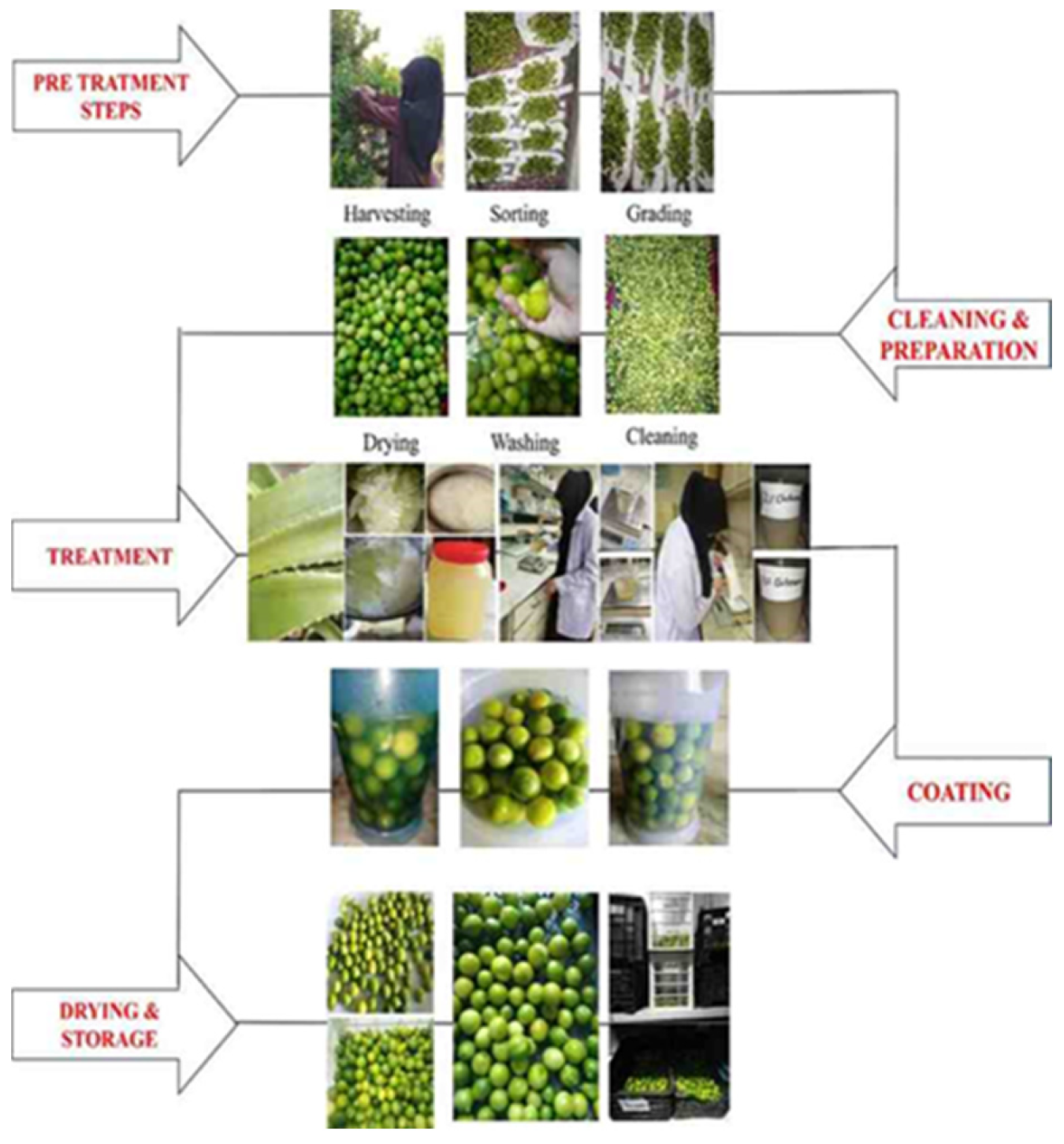
Figure 1. Flow chart of the research methodology.
Sustainability 18 02568 g001
Figure 2. (a) Effect of CS and AV coatings on the Weight Loss (%) of lemon during 60 days of storage (±SE); (b) Effect of CS and AV coatings on Fruit Decay (%) of lemon during 60 days of storage (±SE).
Sustainability 18 02568 g002
Figure 3. (a) Effect of CS and AV coatings on Juice Content (%) of lemon during storage (±SE); (b) Effect of CS and AV coatings on Firmness (kg cm−2) of lemon during storage (±SE).
Sustainability 18 02568 g003
Figure 4. (a) Effect of CS and AV coatings on TSS (°Brix) of lemon during storage (±SE); (b) Effect of CS and AV coatings on pH of lemon during storage (±SE); (c) Effect of CS and AV coatings on T.A of lemon during storage (±SE); (d) Effect of CS and AV coatings on Ascorbic acid of lemon during storage (±SE).
Sustainability 18 02568 g004
Figure 5. (a) Effect of CS and AV coatings on Total Sugars (%) of lemon during storage (±SE); (b) Effect of CS and AV coatings on Reducing Sugars (%) of lemon during storage (±SE); (c) Effect of CS and AV coatings on Non-reducing Sugars (%) of lemon during storage.
Sustainability 18 02568 g005
Figure 6. (a) Effect of CS and AV coatings on the Total Phenolic Content of lemon during storage (±SE); (b) Effect of CS and AV coatings on Total Antioxidant Capacity of lemon during storage (±SE).
Sustainability 18 02568 g006
Figure 7. (a) Effect of CS and AV coatings on CAT (U/mg protein) of lemon during storage (±SE); (b) effect of CS and AV coatings on POD (U/mg protein) of lemon during storage (±SE); (c) effect of CS and AV coatings on SOD (U/mg protein) of lemon during storage (±SE).
Sustainability 18 02568 g007
Figure 8. Visual changes in lemon fruit during storage days at 4 °C and 85% RH under different CS and AV treatment.
Sustainability 18 02568 g008
Table 1. Treatment of different natural coatings applied to the lemon fruits.
T1Control
T22% CS
T33% CS
T410% AV
T515% AV
T62% CS + 10% AV
T72% CS + 15% AV
T83% CS + 10% AV
T93% CS + 15% AV
Table 2. Mean organoleptic scores for color, texture, aroma, and taste of lemon fruits under different postharvest treatments during 60 days of storage.
TreatmentsColor (±SE)Texture (±SE)Aroma (±SE)Taste (±SE)
Control4.2 ± 0.12 c3.9 ± 0.15 c4.5 ± 0.10 c4.1 ± 0.11 c
2% CS6.8 ± 0.08 b6.9 ± 0.12 b6.7 ± 0.09 b6.5 ± 0.10 b
3% Ch7.0 ± 0.10 b7.1 ± 0.09 b6.8 ± 0.07 b6.9 ± 0.08 b
10% AV6.5 ± 0.11 b6.7 ± 0.14 b6.6 ± 0.12 b6.4 ± 0.10 b
15% AV6.2 ± 0.10 b6.3 ± 0.11 b6.0 ± 0.09 b6.1 ± 0.10 b
2% CS + 10% AV8.5 ± 0.09 a8.7 ± 0.08 a8.4 ± 0.07 a8.6 ± 0.06 a
2% CS + 15% AV7.8 ± 0.10 a8.0 ± 0.09 a7.6 ± 0.08 a7.9 ± 0.09 a
3% CS + 10% AV7.2 ± 0.08 b7.3 ± 0.10 b7.0 ± 0.09 b7.1 ± 0.08 b
3% CS + 15% AV7.0 ± 0.07 b7.2 ± 0.08 b7.1 ± 0.07 b7.0 ± 0.08 b
a,b,c statistical lettering and purpose is to differentiate means.
Disclaimer/Publisher’s Note: The statements, opinions and data contained in all publications are solely those of the individual author(s) and contributor(s) and not of MDPI and/or the editor(s). MDPI and/or the editor(s) disclaim responsibility for any injury to people or property resulting from any ideas, methods, instructions or products referred to in the content.