Article

Why AI Adoption Fails to Create Digital Green Innovation: The Transformative Role of Knowledge-Based Dynamic Capabilities


Newcastle Business School, The University of Newcastle, Callaghan, NSW 2308, Australia
*
Author to whom correspondence should be addressed.
Sustainability 2026, 18(5), 2560; https://doi.org/10.3390/su18052560
Submission received: 31 January 2026 / Revised: 28 February 2026 / Accepted: 4 March 2026 / Published: 5 March 2026

Abstract

Environmental challenges, such as climate change, resource scarcity, and pollution, increasingly demand organizational strategies that integrate artificial intelligence (AI) into sustainable innovation. This study examines how employee-level artificial intelligence capabilities (AIC) enable digital green innovation, a strategic approach that leverages AI-powered digital technologies to enhance green product development, green processes, and sustainable supply chains. Drawing on knowledge-based view (KBV) and the dynamic capability view (DCV), this study develops a theoretical framework linking AIC, knowledge-based dynamic capabilities (KBDC), and digital green innovation. Using survey data from 299 employees in Chinese High-Tech firms, results show that higher employee AIC strengthens KBDC, which in turn facilitates effective digital green innovation. The findings contribute theoretically by extending the antecedents of digital green innovation to the individual level and clarifying the multilevel mechanism through which AIC translates into organizational environmental performance, thereby enhancing both theories’ explanatory power in digital environments. Practically, the study highlights the importance for environmental managers of strengthening employee AIC and organizational KBDC to implement AI-driven sustainability strategies more effectively.

1. Introduction

Sustainability has become one of the most pressing imperatives for organizations as they navigate intensifying pressures from climate change, resource depletion, and environmental regulations [1]. At the same time, artificial intelligence (AI)’s ability to operate autonomously and diverge from human cognitive processes, unlike other digital technologies [2], positions it as a particularly promising tool for addressing sustainability challenges by decoding environmental complexity, mitigating systemic uncertainty, and leveraging ecological interconnectivity [3]. Building on this potential, ref. [4] have conceptualized digital green innovation that is defined as the convergence of AI-powered digital innovation and current green innovation representing a paradigm shift that unites AI-driven digital and green innovation into one and a more resilient model, underscoring the critical importance of enhancing digital green innovation performance for achieving green product development, green processes, and green supply chains.
However, despite its promise, AI adoption creates a paradox [5]. On the one hand, AI can support sustainability; on the other hand, inappropriate deployment may increase carbon footprints and even exacerbate organizational pollution [6]. These risks are often rooted in internal confusion and distrust arising from AI’s unprecedented autonomy, which can undermine strategic alignment and lead to unsustainable outcomes [7]. This tension raises a critical question: under what conditions does AI truly advance digital green innovation?
To address this problem, scholars highlight the role of artificial intelligence capabilities (AIC). AIC is defined as an organization’s ability to integrate AI with human intelligence by developing complementary resources to drive business value. Without sufficient AIC, organizations risk digital-driven disadvantages in sustainability [8]. Yet, how employees’ AIC translates into digital green innovation outcomes remains underexplored, particularly through organizational-level mechanisms. Grounded in the knowledge-based view (KBV) and the dynamic capability view (DCV), this research develops a theoretical framework that demonstrates the process pathways through which employee AIC enables digital green innovation. Developing green innovation requires the organization to reconfigure knowledge resources to build adaptive capabilities that meet stakeholders’ sustainability expectations [9]. Meanwhile, digital technology capability plays a crucial role in enhancing organizations’ knowledge management and adaptive processes [10]. Both KBV and DCV provide valuable frameworks for examining the role of digital technology capabilities in sustainable business value [11]. They emphasize that organizations must continuously create and apply knowledge through digital technology to meet sustainability challenges, providing a strong theoretical foundation for this research. Building on KBV and DCV, knowledge-based dynamic capabilities (KBDC) emerge as a concept that combines insights from two theories, defined as acquiring, generating, and combining knowledge to adapt resources and processes. While KBDC focuses on how organizations mobilize and reconfigure knowledge, its role in linking employee AIC with digital green innovation remains unclear. Addressing this gap, this study investigates how KBDC mediates the relationship between AIC and digital green innovation, thereby explaining the multilevel process through which individual digital capabilities are translated into sustainable innovation practices. Therefore, this research investigates how KBDC mediates the relationship between employee AIC and digital green innovation.
This research makes two theoretical contributions. First, it extends the antecedents of digital green innovation related to digital technological capabilities to the individual level. Second, it advances research on technology-related green innovation by integrating the KBV and DCV, offering a more comprehensive explanation of the multilevel process through which individual capabilities are transformed, via knowledge mechanisms at the meso level, into enhanced environmental performance.
This research also offers two practical contributions for environmental managers. First, it emphasizes the importance of enhancing employees’ AIC for green performance by providing systematic training, clarifying workflows, and refining job design. Second, it highlights the importance of managers building a KBDC within their organizations for digital green innovation.

2. Theoretical Foundation

2.1. Digital Green Innovation

Sustainability now drives corporate success, and integrating AI-driven digital technologies into real economies is crucial, enhancing innovation, efficiency, and cost-effectiveness [1,12,13,14]. Green innovation necessitates that organizations create environmentally sustainable products and processes, such as utilizing green materials and eco-conscious designs, to minimize material consumption, reduce pollutant emissions, and lower the use of energy resources like water and electricity [1]. By merging AI with green R&D, green production, and green management processes, organizations can achieve intelligent upgrades in production and management processes, such as smart workshops, smart factories, and smart logistics [4], further enhancing resource efficiency and environmental friendliness. Currently, AI-driven advanced green technologies are becoming a core driver of organizational innovation, sustainability, and transformative upgrading, integrating modern digital technologies with sustainability to balance innovation and environmental protection [15]. Consequently, enhancing organizational digital green innovation performance has emerged as a pivotal research frontier in contemporary management research [4]. Therefore, this research focuses on how organizations can strengthen their digital green innovation performance.

2.2. Theoretical Foundations on Enabling Digital Green Innovation

To achieve digital green innovation performance, organizations are progressing from internal transformation to external cooperation, and from isolated solutions to overall system optimization [4]. This shift means that focal organizations face increasing pressure from a broader range of stakeholders (such as clients, government, and workers) regarding their responsibility in conducting sustainable activities [16]. Organizations need to align with the evolving green and environmental expectations of stakeholders under the evolving regulations, ensuring their satisfaction as partners in the value generation process [9,17], a trend that becomes even more pronounced in the digital environment. This situation makes the environment of focal organizations more dynamic, demanding that organizations possess superior adaptability [9], which highlights the challenges of enhancing organizational digital green innovation. However, the approaches for realizing this performance remain unclear [18].
The dynamic capability view (DCV) has served as a main theoretical lens to explain why some organizations are better positioned to leverage digital technologies for superior digital green innovation [9,17]. DCV emphasizes that dynamic capability is essential for organizations to adapt to evolving sustainability demands by reconfiguring their resources and processes [19]. According to this perspective, environmentally oriented organizations achieve sustainable strategic success by undertaking exploratory or developmental organizational changes, restructuring their core resources and capabilities, and striving for green competitive advantage and improved environmental governance outcomes [1,20]. Restructuring is largely due to the challenge of data and information overload arising from multiple green stakeholders [1], requiring organizations to determine which issues should be prioritized. Ordinary operational capabilities in management, operations, and governance are no longer sufficient [21]. More importantly, while AI acts as a lower-order dynamic capability, it provides organizations with a certain degree of digital flexibility to respond to market turbulence, it remains insufficient for building sustained environmental performance advantages [17]. Hence, cultivating specific higher-order dynamic capability is necessary to effectively identify, interpret, and learn from massive data and information, thereby enabling organizations to rapidly leverage AI to cope with market changes and competitive pressures [22].
Despite its advantages, the development and application of dynamic capability face challenges. Their use of dynamic capability varies greatly across organizations, largely due to high investment costs. More experienced and knowledgeable organizations know when and how to initiate change, thereby reducing costs and improving environmental alignment [23]. Thus, strong dynamic capability alone is insufficient; organizations must continuously generate new knowledge to overcome cognitive rigidity and maintain competitiveness [24,25]. In response, recent KBV scholars emphasize the complementarity of KBV and DCV, leading to the KBDC framework [26,27,28]. KBVs knowledge as the key resource for organizational agility and sustainable value creation [28]. From the KBDC perspective, knowledge acquisition allows organizations to capture external knowledge, knowledge generation develops internal knowledge, and knowledge combination integrates both to create novel solutions [28]. Compared with related concepts, KBDC differs from organizational learning, which abstractly focuses on cross-level knowledge flow processes, by representing a manifestation of that process at the level of knowledge resources. Additionally, while KBDC encompasses absorptive capacity, which primarily deals with external knowledge, they form a more comprehensive analytical framework by integrating both internal and external knowledge activities. This knowledge-centered approach enables organizations to evolve their capabilities in dynamic digital environments, driving superior digital green innovation. Accordingly, this research explores the role of KBDC in facilitating digital green innovation in the AI adoption context, extending the explanatory power of both KBV and DCV in digital green contexts.

2.3. Digital Green Innovation Driven by AIC: AI–Employee Collaboration

Despite research demonstrating the substantial advantages of AI for environmental performance [4], with unprecedented autonomy, AI raises issues of transparency, bias, ethics, workforce shifts, and decision quality [7,29,30,31,32], often exacerbate organizational dynamics, fostering employee tensions, conflicts, and a pervasive sense of mistrust [33], which in turn hinders AI from evolving in the way managers anticipate, ultimately leading to failures in environmental performance. As the achievement of organizational digital green innovation performance remains practically unstable and theoretically underexplored [1], a clear AI strategy is essential to strengthen AI–human integration based on harmonious coexistence and potentially advance digital green innovation.
AIC is considered a valuable organizational strategy to deploy; it has distinct uniqueness compared to concepts such as digital fluency and IT ambidexterity. It directly addresses the core of the “AI value creation paradox” by focusing on explaining why identical technologies yield divergent outcomes across different organizations, rather than addressing basic digital tool proficiency or IT resource balancing strategies. In terms of theoretical construction, it differs from the related concept of hybrid intelligence by moving beyond a descriptive vision to offer a prescriptive action framework grounded in the RBV. While the significance of AIC in overcoming challenges to achieve business value has been acknowledged by scholars, most research [2,22,34,35,36] has largely concentrated on the organizational level. Recent research, however, has shifted attention to the individual level, highlighting the importance of integrating AI with human employees [37]. Addressing this gap is critical, since employee-level digital mindset and competencies often play a more decisive role in digital transformation than organizational-level strategies [38]. Ref. [1] argue that AI’s inefficacy in addressing environmental issues often results from insufficient understanding of this emerging technology. Understanding and interpreting algorithms by employees can help address issues such as AI biases, discrimination, and inaccuracies [37]. Moreover, as noted by [37], AI has the potential to create new employment opportunities for workers, although this viewpoint remains subject to debate. Furthermore, the combination of advanced human intelligence can facilitate the modification and enhancement of AI algorithms, thereby alleviating the adverse effects associated with AI transparency [39]. Overall, the effective integration of AI with human employees can address AI’s inherent limitations, amplify its applications, and enable organizations to generate sustainable value. Thus, successful integration requires a multi-dimensional capability architecture at the employee level, comprising understanding, skills, trust, and clarity regarding their roles in AI-driven workflows [8,37]. This framework forms the essential building blocks for creating employee AIC. Although these have begun to explore employee-level AIC, its relationship with digital green innovation remains largely unexamined. This oversight may prevent organizations from realizing the full value of their AI investments. Therefore, this research is the first to introduce this employee-level AIC framework and apply it empirically in the context of digital green innovation, aiming to respond to [37]’s research call, focusing on employee AIC strategy development and examining its relationship with digital green innovation performance.
Building upon the theoretical foundations and empirical evidence reviewed, this research investigates the effect of employee-level AIC on digital green innovation, with KBDC serving as the underlying mechanism.

3. Hypothesis Development

3.1. The Role of AIC on Digital Green Innovation

Scholars have explored the relationship between technology-related organizational capabilities and technology-driven green innovation. For instance, ref. [40] confirmed the positive impact of digital green strategies on digital green innovation performance. Ref. [41] demonstrated that big data capabilities positively influence big data driven green innovation. Ref. [42] verified that big data analytics capabilities positively affect green process innovation in digital contexts.
From a theoretical perspective, according to the KBV [43] and the DCV [19], the sustainability of organizations lies in their unique capabilities. Therefore, the strategic development of core organizational capabilities as distinctive resources is essential for organizations to attain and maintain both performance and environmental advantages [4,44,45]. Ref. [46] argue that organizations need to better understand and implement AI technologies in order to effectively leverage them to promote green innovation. Therefore, building and enhancing digital organizational capabilities is crucial for effectively leveraging digital technology to drive green innovation [42,47]. Through deploying an employee AIC strategy, the potential of AI can be fully harnessed, promoting the effective integration of human employees and AI [37], thereby helping organizations achieve sustainable business value derived from their capability to utilize knowledge flexibly [19,43]. Conversely, advanced AI-related innovation tools effectively complement essential human creative skills, particularly in the areas of new product development and service enhancement [48]. Thus, this research proposes the following hypothesizes the following:
H1. 
AIC (Employee level) has a positive and direct influence on digital green innovation.

3.2. Mediating Role of KBDC

Employee AIC can potentially promote organizational digital green innovation; however, to realize its full impact and achieve higher environmental outcomes, it must be aggregated and transformed into organizational KBDC.
AIC is critical for the development of KBDC. Scholars note that AI enables organizations to connect stakeholders across boundaries, enriching social networks for knowledge acquisition [49]. Ref. [50] further observed that AI not only helps organizations maintain existing knowledge but also continuously generates new knowledge by classifying, organizing, storing, and retrieving information [51] while discovering previously unknown patterns and insights in data [52]. Additionally, AI excels at contextualizing knowledge by ensuring that the right information reaches the right individuals at the optimal time, making its application more precise [53]. In this way, AI-driven knowledge application can effectively recombine both internal and external knowledge to meet specific demands and optimize knowledge utilization [50]. Yet, knowledge creation remains human-centered, requiring effective AI–human integration to realize synergistic potential; otherwise, these processes may be undermined [54,55].
Simultaneously, current research underscores the indispensable role of knowledge-based capabilities in driving AI-supported green innovation [1,4,56]. The capability of knowledge acquisition enables organizations to collect, integrate, and apply relevant external information and knowledge [57], which supports the design of digitalized green business models that better align with the expectations of multiple stakeholders [1]. Conversely, organizations can also generate new knowledge from their previous experiences with digital green innovation, applying it more cost-effectively in their ongoing digital green innovation practices [1]. Furthermore, the knowledge combination capability involves integrating external knowledge with the existing knowledge base, ultimately enhancing the organization’s green innovation performance by generating knowledge tailored to specific environmental needs [56]. This knowledge can be extensive and cross-disciplinary, encompassing various types of information, including technological knowledge, market trends, environmental policies, and stakeholder preferences. Enabling organizations to align resource allocation with dynamic and continuously changing environmental conditions [58,59]. Accordingly, this research hypothesizes the following:
H2. 
The relationship between AIC and digital green innovation is mediated by knowledge acquisition capability.
H3. 
The relationship between AIC and digital green innovation is mediated by knowledge generation capability.
H4. 
The relationship between AIC and digital green innovation is mediated by knowledge combination capability.
Figure 1 presents the theoretical framework of this study, illustrating the hypothesized relationships among the constructs.

4. Research Methodology

4.1. Sample and Data Collection

This research collected data via a questionnaire survey of mid-level employees in Chinese high-tech firms. China was chosen because of its rapid AI development [60,61] and related employee adjustment pressures [62], as well as its policy focus on innovation and green development [63]. These conditions create unique tensions between technological advancement and employee resistance to AI-driven green innovation, offering insights for broader contexts. These high-tech organizations in China also excel in AI utilization and emphasize knowledge as a core competitive advantage. To select appropriate respondents, this study following [37]’s research employed purposive sampling using expert-validated inclusion screening questions designed to identify purposive mid-level employees-such as project leaders, team leaders, and business operation heads-who met specific criteria: (1) have at least two years of experience in their current organization, ensuring familiarity with its operational processes, resource management, and strategic planning; (2) be knowledgeable about AI technologies and their potential applications in various business contexts; (3) have practical experience in applying AI to work-related tasks; (4) be employed by an organization that has engaged in AI pilot projects or implemented AI in business operations within the past 2–5 years; (5) hold managerial roles; (6) participated in senior management strategy discussions and contribute to organizational planning; (7) demonstrate a thorough understanding of the organization’s business operations, strategic goals, and performance metrics. These criteria have been validated by [37] to ensure that participants understand employee engagement with AI (employee AIC) and strategic AI outcomes (KBDC and digital green innovation performance). This study received approval from the University of Newcastle’s Human Research Ethics Committee (Approval No. H-2023-0430) on 7 February 2024, prior to the commencement of data collection. Employees were surveyed via the Wenjuanxing professional team during the period of March to April 2024. Firms of varying size, region, and age were randomly chosen from a database of registered high-tech firms. They were informed of the research purpose; all personal data was anonymized and securely stored. Following [64], the sample size is over five times (58 × 5 = 290) the number of measurement items. In total, 299 valid responses were collected across China, deemed sufficient for this research, mainly consisting of the firms with over 100 employees, aged 9–15 years, concentrated in high-tech hubs such as Guangdong, Beijing, and Shanghai (See Table 1).

4.2. Questionnaire Design

The survey included demographic information about high-tech organizations and items related to four key variables, each measured on a five-point Likert scale. All measurement instruments were adapted from well-established research (see Appendix A). AIC was assessed through four items adapted from [37]. KBDC was measured using three items adapted from [28]. Digital green innovation was measured using a scale from [4]. To ensure the accuracy of the scales, a forward and backward translation method was employed. The scales were translated into Chinese by three bilingual participants. (all with master’s degrees and business backgrounds), and the wording was adjusted to fit the Chinese cultural context and language norms to ensure accuracy. Each of the three participants translated the Chinese questionnaire back into English, and any differences were discussed until a satisfactory consensus was reached. Subsequently, a pre-test of the questionnaire was conducted with 20 employees from high-tech enterprises, and after confirming its accuracy, the final version of the questionnaire was formed.

5. Empirical Tests and Analysis Results

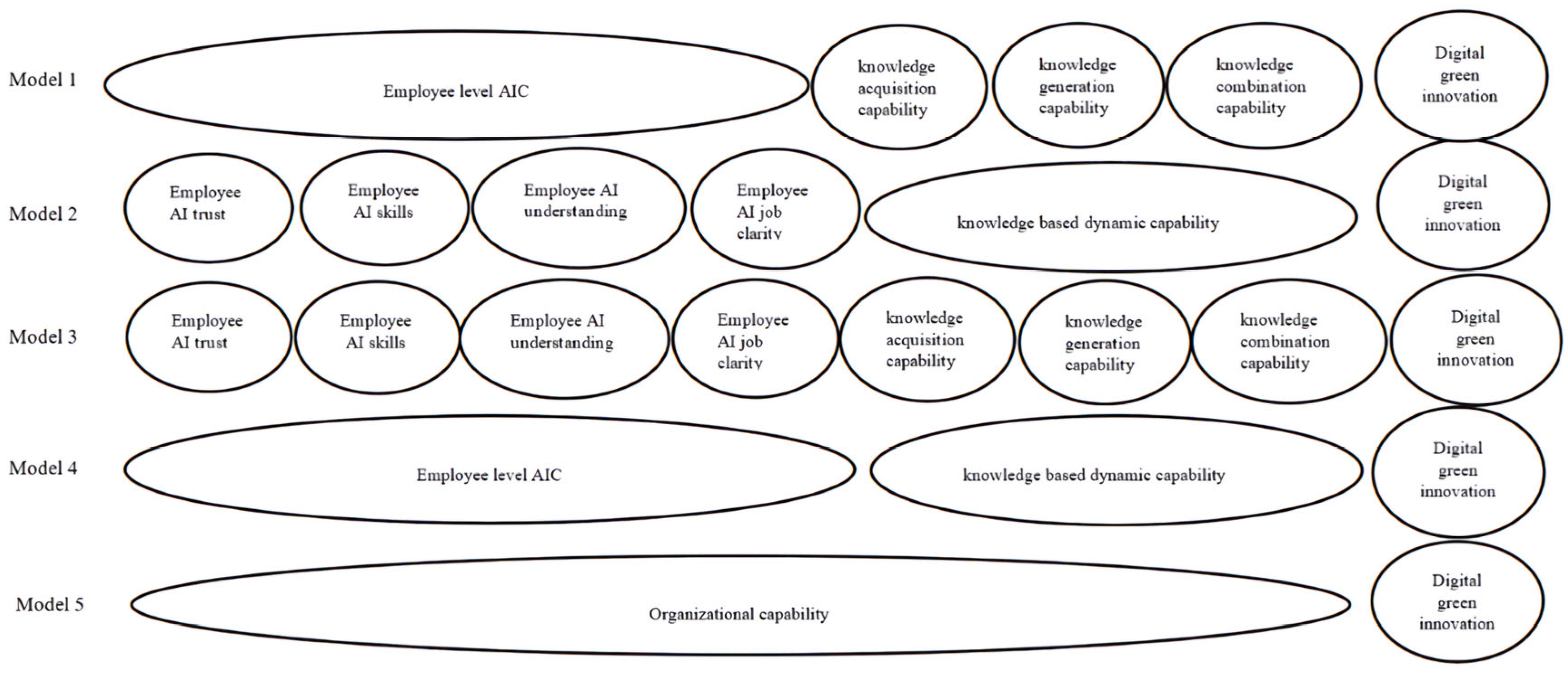
This research tested the reliability and validity of all constructs in the proposed model. Using SPSS 27, Cronbach’s alpha values ranged from 0.8 to 1 on both the pilot and full samples, indicating strong internal consistency. Confirmatory factor analysis (CFA) in SPSS AMOS 23 was conducted to compare model fit (Figure 2). This research followed the approach of [65] regarding the relationship between AIC and its complementary resource dimensions and suggested the conceptualised employee AIC as a higher-order reflective construct comprising AI understanding, skills, job clarity, and trust. This conceptualisation is common and theoretically justified because these dimensions are empirically and conceptually intertwined. Skills bridge understanding and job clarity, and their collective effectiveness requires interaction with trust [37]. These dimensions synthesize prior RBV-based literature on AI–employee complementary resources by [37], thereby capturing a broad and representative coverage of the existing construct of employee AIC. Identifying dimensions of AIC through a literature-based synthesis aligns with established approaches in the management field, as similar dimension identification has been employed in prior high-impact research published in leading journals, such as [11]. Empirically, the data supported the specification of AIC as a higher-order construct. Table 2 presents a comparison of model fit indices across the five models. Among these, Model 1, which conceptualized the four dimensions of AIC as a second-order construct, demonstrated the best fit to the data. This model exhibited the most desirable fit statistics (χ2/df closest to 1; NFI, GFI, TLI, and CFI values nearest to 1; and the lowest RMSEA and SRMR values) and was most consistent with our theoretical hypothesis. Table 3 showed that all standardized factor loadings exceeded 0.70, except AI job clarity (0.683), which remained acceptable. Convergent validity was supported as all AVE values were above 0.5 and CR values above 0.7. Discriminant validity was confirmed since the square root of each AVE exceeded inter-construct correlations (Table 4). Overall, the constructs demonstrated strong reliability and validity, establishing a solid basis for further analysis. For clarity, KBDC’s three dimensions are abbreviated as KAC (Knowledge Acquisition Capability), KGC (Knowledge Generation Capability), and KCC (Knowledge Combination Capability).

5.1. Common Method Bias

To assess common method bias (CMB), this research uses the full collinearity variance inflation factors (VIFs) approach [66]. Our model VIF is less than 3.3 (see Table 5), which is acceptable. These results suggest that CMB is not a serious concern in this study.

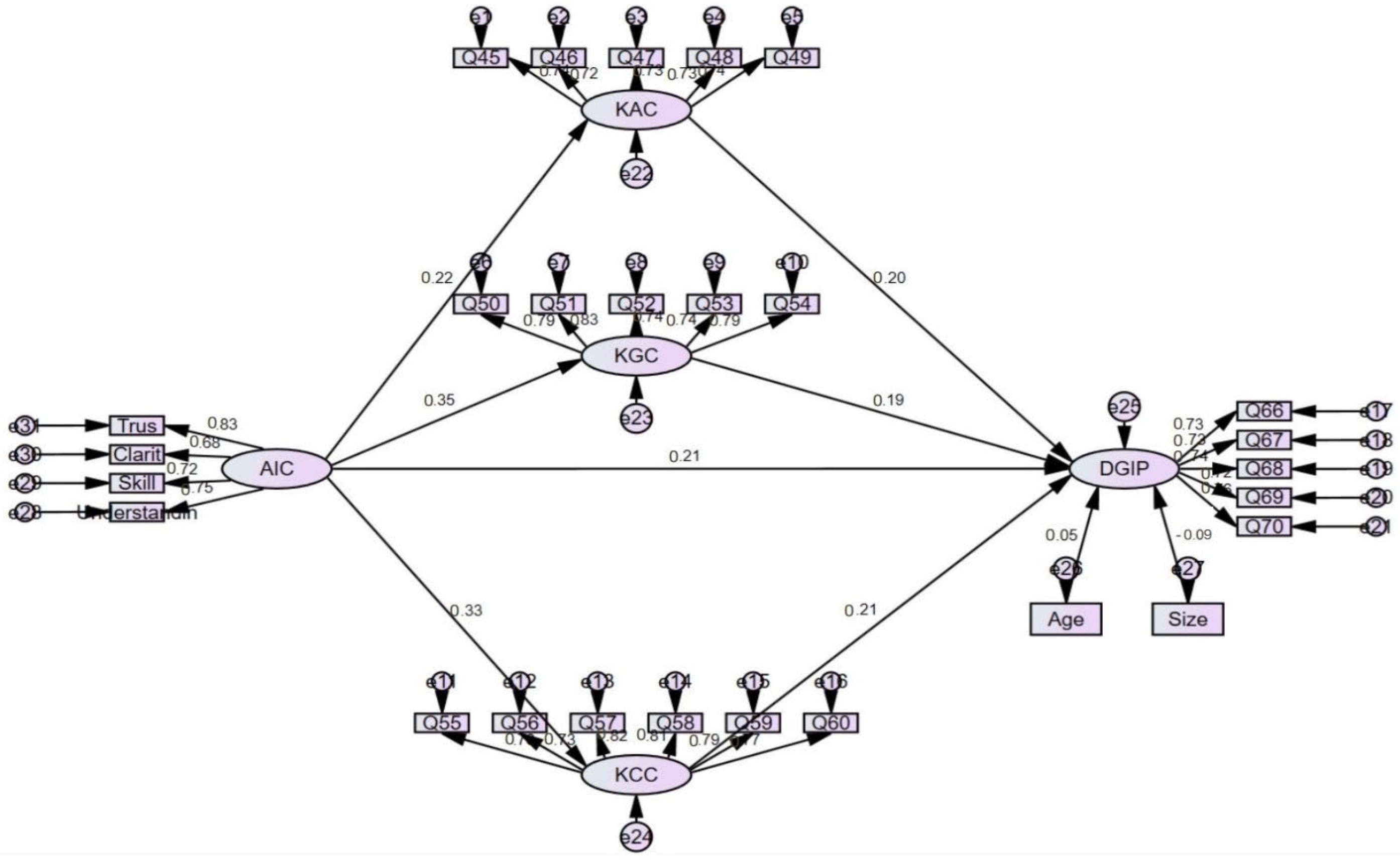
5.2. Structural Equation Model

The conceptual framework was assessed using structural equation modelling with SPSS AMOS 23 (Figure 3), employing the maximum likelihood estimation method. All estimated parameters fell within the standard acceptable limits (χ2/df = 1.260; NFI = 0.898; GFI = 0.912; TLI = 0.974; CFI = 0.977; RMSEA = 0.030; SRMR = 0.072), confirming that the model fit is adequate (Table 6). Table 7 shows that AIC significantly enhances digital green innovation (β = 0.206, p < 0.05), confirming H1. Additionally, AIC positively affects KAC (β = 0.223, p < 0.05), KGC (β = 0.352, p < 0.05), and KCC (β = 0.330, p < 0.05), which in turn significantly influence digital green innovation (KAC: β = 0.196, p < 0.05; KGC: β = 0.193, p < 0.05; KCC: β = 0.212, p < 0.05). These findings validate H2, H3, and H4 by demonstrating that KAC, KGC, and KCC mediate the AIC-digital green innovation relationship. The bootstrap analysis (5000 resamples, 95% confidence intervals) further confirms that the total effect of AIC on digital green innovation is significant (effect = 0.387, 95% CI [0.252, 0.516]), with a significant direct effect (effect = 0.206, 95% CI [0.057, 0.350]). All three indirect paths are significant: KAC (effect = 0.044, 95% CI [0.013, 0.103]), KGC (effect = 0.068, 95% CI [0.019, 0.140]), and KCC (effect = 0.070, 95% CI [0.026, 0.138]) each serve as significant partial mediators in the relationship between AIC and digital green innovation, as none of the confidence intervals include zero (see Table 8).

6. Discussion

This research reveals the mediating role of KBDC in explaining how employee AIC drives organizational digital green innovation. Prior studies examining how digital technology capability affects environmental performance [1,67,68] predominantly adopted a DCV perspective. However, DCV overlooks the micro-foundations of capability building, particularly knowledge creation and reconfiguration, which are critical in fast-changing sustainability contexts. This research combines DCV with KBV, providing a more comprehensive explanation of how digital green innovation emerges. Specifically, we show that KBDC integrates the knowledge management process with dynamic capability, thereby translating AI strategies into digital green innovation and strengthening organizational sustainability performance. This finding extends [24] conceptual arguments by providing empirical evidence that AI, as a general-purpose technology, requires KBDC to ensure its outputs are directed toward green objectives and embedded in organizational sustainability strategies.
A further contribution lies in highlighting how employees’ AIC contributes to the generation of KBDC within organizations. Cultivating AIC strengthens employees’ ability to collaborate with AI systems, which in turn enhances knowledge flows and reconfiguration across organizational boundaries. This process illustrates how human–AI collaboration generates new insights, aligns internal and external knowledge resources, and supports adaptive sustainability practices. Our findings are consistent with prior conceptual work on knowledge management processes in human-AI collaboration [53,69]. More importantly, they also empirically demonstrate that continuous knowledge creation helps organizations overcome cognitive rigidity and lays the foundation for building dynamic capability. This finding advances [70] view that digital technologies, such as AI, act as catalysts for organizational change. Effective knowledge management processes are also crucial for developing digital green innovations. Our findings also align with prior studies emphasizing the role of knowledge-based capabilities in supporting AI-enabled green innovation [1,4,56]. Specifically, digital green innovation stems from organizations’ capability to acquire external knowledge, generate new knowledge internally, and combine it with existing knowledge to create flexible context-specific insights for stakeholders. This study clarifies how AIC—through KBDC—activates knowledge processes that not only foster green innovation but also enable organizations to align more effectively with the sustainability expectations of diverse stakeholders. Our results also demonstrate that employees’ AIC significantly enhances digital green innovation performance. Employees with stronger AIC are better able to understand AI systems and develop the skills needed to mitigate challenges related to transparency and trust [39]. This not only clarifies the decision-making logic of AI applications but also fosters more positive psychological and emotional responses among employees [52,71]. AI adoption also redefines employees’ roles and responsibilities, providing them with a clearer understanding of “what,” “how,” and “when” to act in an AI-driven work environment, thereby enabling them to better cope with uncertainty and pressure. This clarity greatly reduces their anxiety and concerns, contributing to lower turnover rates, increased commitment, and enhanced job satisfaction and overall performance [11,37,55]. Together, these factors establish a more stable human foundation for leveraging AI to achieve digital green innovation goals.
Finally, the findings emphasize that the business value of AI remains fundamentally human-centered. Organizations cannot rely solely on technology; rather, the integration of human knowledge and AI capabilities is essential for advancing environmental performance. This underscores the importance of designing AI strategies that prioritize human–AI integration, consistent with [50], and highlights that employee AIC is not just a technical skill but a strategic resource for sustainability.

7. Theoretical Contributions

This research presents two theoretical contributions. First, the empirical findings demonstrate that developing employees’ AIC significantly enhances digital green innovation performance. This extends environmental performance research by identifying employee-level AIC as micro-foundations for digital green innovation and underscores the need to embed employee-level AI strategies into environmental performance frameworks. In doing so, the study also responds to the call by [37] to examine the organizational impact of employee-level AI capabilities. Our evidence shows that digital technological capabilities extend down to the individual level, and that employees’ AIC are a critical antecedent of digital green innovation. To the best of our knowledge, this is the first empirical study to directly link individual-level AI strategy with AI-enabled digital green innovation.
Second, this research addresses calls to examine mediating effects of green innovation in the context of technological capability development [72]. The results show that the KBDC acts as a knowledge mechanism linking employee-level AIC to digital green innovation, thereby extending technology-related green innovation research. Specifically, the study illustrates a multilevel process in which individual capabilities at the micro level are transformed through organizational mechanisms at the meso level into enhanced environmental performance. This research builds on and extends technology-related green innovation research theory, suggesting that merely focusing on dynamic capability may not be sufficient for organizations to respond quickly to the expectations of various stakeholders. Continuous knowledge creation is vital for overcoming cognitive limitations and effectively addressing changes [25]. Thus, this research innovatively integrates the KBV and DCV theoretical perspectives, providing a more comprehensive and specific explanation of the theoretical process through which AI and employee collaboration achieve digital green innovation. Moreover, it also validates the conceptual hypothesis proposed by [11] that strategically leveraging IT enables organizations to build new knowledge-based organizational capabilities, thereby supporting flexible and adaptive sustainability strategies.

8. Practical Contributions

This research also presents two practical contributions for environmental practitioners. First, most existing applications of AI in sustainable performance primarily focus on providing technical solutions [1]. The findings highlight that beyond technological investment or data accumulation, organizations need to have an AI strategy closely aligned with digital environmental objectives. Managers must improve employees’ trust in AI, their understanding, and AI-related skills of its environmental applications through systematic training and communication. Additionally, managers should establish clear workflows and job descriptions, specifying how, when, and in which processes AI tools can assist employees in completing their green innovation-related tasks. They should also promptly adjust employees’ work content to adapt to the introduction of AI. These enable employees to better apply AI in ways that directly support green research and eco-friendly production to achieve sustainable management practices.
Secondly, by clarifying the mediating role of KBDC, this research provides important insights for environmental practitioners seeking to leverage AI for digital green innovation performance. To ensure that AI can fully realise its potential, effective management of organizational knowledge is central to this technology [73]. Under the influence of AI applications, managers should invest in building the organization’s green-related knowledge management system, such as introducing dedicated environmental knowledge repositories, collaboration platforms, or innovation forums, so that AI-derived knowledge can be effectively acquired, generated, and combined. This newly created knowledge constitute the micro-foundations of dynamic capability, enabling organizations to adapt to the evolving expectations of diverse green stakeholders and to advance digital green innovation. Additionally, managers can utilize the KBDC scale developed in this research to enable them to monitor the impact of employee AIC on their digital green innovation performance processes and make real-time adjustments to their environmental strategies.

9. Future Research

Two limitations of this research need to be acknowledged. Firstly, the theoretical model was validated using data exclusively from high-tech firms in China, which may restrict the broader applicability of the results. Future research could examine whether these findings apply across different industries and geographic contexts. Secondly, this research employed a cross-sectional design to examine the relationship between AIC and digital green innovation. Future research could adopt a longitudinal approach to better uncover the causal mechanisms and dynamic evolution of this relationship.

Author Contributions

Conceptualization, Z.J. and F.T.; methodology, Z.J. and F.T.; software, Z.J.; validation, Z.J.; formal analysis, Z.J. and F.T.; investigation, Z.J. and F.T.; resources, Z.J. and F.T.; data curation, Z.J. and F.T.; writing—original draft preparation, Z.J. and F.T.; writing—review and editing, Z.J. and F.T.; visualization, Z.J. and F.T.; supervision, F.T.; project administration, Z.J. and F.T.; funding acquisition, Z.J. and F.T. All authors have read and agreed to the published version of the manuscript.

Funding

This research received no external funding.

Institutional Review Board Statement

Ethical approval for this study was granted by the Human Research Ethics Committee of The University of Newcastle (Approval No. H-2023-0430; approved on 7 February 2024).

Informed Consent Statement

A consent statement was presented on the cover page of the survey, and proceeding with the survey indicated participants’ consent to take part in the study.

Data Availability Statement

The data presented in this study are available on request from the corresponding author.

Conflicts of Interest

The authors declare no conflicts of interest.

Abbreviations

The following abbreviations are used in this manuscript:
AIArtificial Intelligence
KACKnowledge Acquisition Capability
KGCKnowledge Generation Capability
KCCKnowledge Combination Capability
AICArtificial Intelligence Capabilities
KBVKnowledge-Based View
DCVDynamic Capability View
KBDCKnowledge-based Dynamic Capabilities
CMBCommon Method Bias
VIFsVariance Inflation Factors

Appendix A. Study Measures

Employee Level Artificial Intelligence Capabilities (AIC)37 items
AI trustChowdhury et al. (2022) [37]I have confidence in the use of AI technology.
I believe AI technology can facilitate routine and trivial tasks through automation.
I believe my organization will be able operate AI technology reliably or consistently without failing.
I believe that AI technology will consistently operate providing adequate and efficient results within a broad spectrum of processes.
I believe AI adoption will result in creation of new jobs.
I have a positive attitude towards adoption of AI.
I believe AI technology can help in developing new skills which will benefit my career development activities.
I have a positive attitude towards its impact of intra-organizational business operations.
I believe AI will positively change employee dynamics within the organization.
AI adoption will not result in reduced focus on human skills such as creative intellect in my job.
I believe AI adoption will enhance the quality of my work.
AI job role clarityChowdhury et al. (2022) [37]I have clarity in social hierarchy where AI and human will co-exist (i.e., social status of employees being higher than AI systems) will drive AI adoption within my organization/sector.
I have clarity on how my roles and responsibilities will change as a result of AI adoption.
I have clarity on the expectations from my work as a result of AI adoption.
I have clarity on the organizational strategy towards AI adoption.
I have clarity on how my performance will be measured in an environment where AI–employees will coexist.
I have clarity how the nature of my work will change.
I have clarity on how AI systems will be used in my organization.
I have clarity on why AI systems will be used for specific tasks in my organization.
I have clarity on the role of human intelligence within a collaborative working environment where AI–employees will coexist.
I have clarity on the nature of collaboration between AI–employee to accomplish business activities.
AI skillsChowdhury et al. (2022) [37]I have knowledge about AI systems.
I have relevant skills to use AI systems in my work.
I have competencies to understand how AI systems will execute.
I have developed new skills because of AI education.
I have recognized certifications demonstrating knowledge in AI.
I have skills to interpret the AI outputs.
I have skills to prepare inputs for AI systems.
AI understandingChowdhury et al. (2022) [37]I understand the capabilities of AI systems.
I understand the limitations of AI systems.
I understand the context of using AI.
I understand what to expect from AI systems.
I understand the purpose of using AI.
I understand the benefits of using AI for the organization.
I understand the benefits of using AI in my daily job activities.
I understand that AI will enhance the efficiency of my work.
I understand that AI will enable to accomplish analytical activities efficiently and effectively in my job.
Knowledge-Based Dynamic Capability (KBDC)16 items
Knowledge acquisition capabilityZheng et al. (2011) [28]Our firm could acquire technological knowledge.
Our firm could acquire marketing knowledge.
Our firm could acquire managerial knowledge.
Our firm could acquire manufacturing and process knowledge.
Our firm could acquire other knowledge and expertise.
Knowledge generation capabilityZheng et al. (2011) [28]Our firm could create technological knowledge.
Our firm could create marketing knowledge.
Our firm could create managerial knowledge.
Our firm could create knowledge.
Our firm could create technological knowledge.
Knowledge combination capabilityZheng et al. (2011) [28]Our firm could combine internal and external knowledge.
Our firm could integrate knowledge from different segments, teams and individuals.
Our firm could combine knowledge in different technological or market fields.
Our firm could combine new knowledge with the original knowledge pool.
Our firm could adapt the internal structure and process to combine knowledge effectively.
Our firm could coordinate internal and external networks to combine knowledge effectively.
Digital Green Innovation5 items
Digital green innovationYin and Yu (2022) [4]The use of artificial intelligence to produce green products to increase customer satisfaction.
Using artificial intelligence to increase the market share of green products.
Using artificial intelligence to increase the performance of green product production process.
Use artificial intelligence to increase sales of green products.
The number of enterprise digital green related patents increased.
Notice: The items were prepared using a 5-point Likert scale (1 = completely disagree; 2 = disagree; 3 = neither agree nor disagree; 4 = agree; 5 = completely agree).

References

  1. Lin, J.; Zeng, Y.; Wu, S.; Luo, X.R. How does artificial intelligence affect the environmental performance of organizations? The role of green innovation and green culture. Inf. Manag. 2024, 61, 103924. [Google Scholar] [CrossRef]
  2. Rana, N.P.; Chatterjee, S.; Dwivedi, Y.K.; Akter, S. Understanding dark side of artificial intelligence (AI) integrated business analytics: Assessing firm’s operational inefficiency and competitiveness. Eur. J. Inf. Syst. 2022, 31, 364–387. [Google Scholar] [CrossRef]
  3. Dwivedi, Y.K.; Hughes, L.; Ismagilova, E.; Aarts, G.; Coombs, C.; Crick, T.; Duan, Y.; Dwivedi, R.; Edwards, J.; Eirug, A. Artificial Intelligence (AI): Multidisciplinary perspectives on emerging challenges, opportunities, and agenda for research, practice and policy. Int. J. Inf. Manag. 2021, 57, 101994. [Google Scholar] [CrossRef]
  4. Yin, S.; Yu, Y. An adoption-implementation framework of digital green knowledge to improve the performance of digital green innovation practices for industry 5.0. J. Clean. Prod. 2022, 363, 132608. [Google Scholar] [CrossRef]
  5. Ayoub, H.S.; Sopuru, J.C. Reconfiguring Strategic Capabilities in the Digital Era: How AI-Enabled Dynamic Capability, Data-Driven Culture, and Organizational Learning Shape Firm Performance. Sustainability 2026, 18, 1157. [Google Scholar] [CrossRef]
  6. Kopka, A.; Grashof, N. Artificial intelligence: Catalyst or barrier on the path to sustainability? Technol. Forecast. Soc. Change 2022, 175, 121318. [Google Scholar] [CrossRef]
  7. Davenport, T.; Guha, A.; Grewal, D.; Bressgott, T. How artificial intelligence will change the future of marketing. J. Acad. Mark. Sci. 2020, 48, 24–42. [Google Scholar] [CrossRef]
  8. Chowdhury, S.; Dey, P.; Joel-Edgar, S.; Bhattacharya, S.; Rodriguez-Espindola, O.; Abadie, A.; Truong, L. Unlocking the value of artificial intelligence in human resource management through AI capability framework. Hum. Resour. Manag. Rev. 2023, 33, 100899. [Google Scholar] [CrossRef]
  9. Singh, S.K.; Del Giudice, M.; Chiappetta Jabbour, C.J.; Latan, H.; Sohal, A.S. Stakeholder pressure, green innovation, and performance in small and medium-sized enterprises: The role of green dynamic capabilities. Bus. Strategy Environ. 2022, 31, 500–514. [Google Scholar] [CrossRef]
  10. Li, L.; Zhu, W.; Wei, L.; Yang, S. How can digital collaboration capability boost service innovation? Evidence from the information technology industry. Technol. Forecast. Soc. Change 2022, 182, 121830. [Google Scholar] [CrossRef]
  11. Mikalef, P.; Gupta, M. Artificial intelligence capability: Conceptualization, measurement calibration, and empirical study on its impact on organizational creativity and firm performance. Inf. Manag. 2021, 58, 103434. [Google Scholar] [CrossRef]
  12. Arashpour, M. AI explainability framework for environmental management research. J. Environ. Manag. 2023, 342, 118149. [Google Scholar] [CrossRef] [PubMed]
  13. Santos, M.R.; Carvalho, L.C. AI-driven participatory environmental management: Innovations, applications, and future prospects. J. Environ. Manag. 2025, 373, 123864. [Google Scholar] [CrossRef] [PubMed]
  14. Shiwei, W.; Jinmin, D.; Shuang, P. How Does Digital Economy Promote Green Innovation? Empirical Evidence from Chinese Cities. China Econ. Transit. (CET) 2022, 5, 408. [Google Scholar]
  15. Wang, B.; Tao, F.; Fang, X.; Liu, C.; Liu, Y.; Freiheit, T. Smart manufacturing and intelligent manufacturing: A comparative review. Engineering 2021, 7, 738–757. [Google Scholar] [CrossRef]
  16. Bohari, A.A.M.; Skitmore, M.; Xia, B.; Teo, M.; Khalil, N. Key stakeholder values in encouraging green orientation of construction procurement. J. Clean. Prod. 2020, 270, 122246. [Google Scholar] [CrossRef]
  17. Chin, T.; Shi, Y.; Singh, S.K.; Agbanyo, G.K.; Ferraris, A. Leveraging blockchain technology for green innovation in ecosystem-based business models: A dynamic capability of values appropriation. Technol. Forecast. Soc. Change 2022, 183, 121908. [Google Scholar] [CrossRef]
  18. Liu, X.; Liu, F.; Ren, X. Firms’ digitalization in manufacturing and the structure and direction of green innovation. J. Environ. Manag. 2023, 335, 117525. [Google Scholar] [CrossRef]
  19. Teece, D.J.; Pisano, G.; Shuen, A. Dynamic capabilities and strategic management. Strateg. Manag. J. 1997, 18, 509–533. [Google Scholar] [CrossRef]
  20. Teece, D.J. The foundations of enterprise performance: Dynamic and ordinary capabilities in an (economic) theory of firms. Acad. Manag. Perspect. 2014, 28, 328–352. [Google Scholar] [CrossRef]
  21. Chatterjee, S.; Chaudhuri, R.; Kumar, A.; Aránega, A.Y.; Biswas, B. Development of an integrative model for electronic vendor relationship management for improving technological innovation, social change and sustainability performance. Technol. Forecast. Soc. Change 2023, 186, 122213. [Google Scholar] [CrossRef]
  22. Reis, C.; Ruivo, P.; Oliveira, T.; Faroleiro, P. Assessing the drivers of machine learning business value. J. Bus. Res. 2020, 117, 232–243. [Google Scholar] [CrossRef]
  23. Fainshmidt, S.; Wenger, L.; Pezeshkan, A.; Mallon, M.R. When do dynamic capabilities lead to competitive advantage? The importance of strategic fit. J. Manag. Stud. 2019, 56, 758–787. [Google Scholar] [CrossRef]
  24. Kaur, V. Knowledge-based dynamic capabilities: A scientometric analysis of marriage between knowledge management and dynamic capabilities. J. Knowl. Manag. 2023, 27, 919–952. [Google Scholar] [CrossRef]
  25. Khaksar, S.M.S.; Chu, M.-T.; Rozario, S.; Slade, B. Knowledge-based dynamic capabilities and knowledge worker productivity in professional service firms The moderating role of organisational culture. Knowl. Manag. Res. Pract. 2023, 21, 241–258. [Google Scholar] [CrossRef]
  26. Han, Y.; Chen, G. The relationship between knowledge sharing capability and innovation performance within industrial clusters: Evidence from China. J. Chin. Econ. Foreign Trade Stud. 2018, 11, 32–48. [Google Scholar] [CrossRef]
  27. Lee, J.-C.; Chen, C.-Y. Exploring the determinants of software process improvement success: A dynamic capability view. Inf. Dev. 2019, 35, 6–20. [Google Scholar] [CrossRef]
  28. Zheng, S.; Zhang, W.; Du, J. Knowledge-based dynamic capabilities and innovation in networked environments. J. Knowl. Manag. 2011, 15, 1035–1051. [Google Scholar] [CrossRef]
  29. Du, S.; Xie, C. Paradoxes of artificial intelligence in consumer markets: Ethical challenges and opportunities. J. Bus. Res. 2021, 129, 961–974. [Google Scholar] [CrossRef]
  30. Faraj, S.; Pachidi, S.; Sayegh, K. Working and organizing in the age of the learning algorithm. Inf. Organ. 2018, 28, 62–70. [Google Scholar] [CrossRef]
  31. Krakowski, S.; Luger, J.; Raisch, S. Artificial intelligence and the changing sources of competitive advantage. Strateg. Manag. J. 2023, 44, 1425–1452. [Google Scholar] [CrossRef]
  32. Rampersad, G. Robot will take your job: Innovation for an era of artificial intelligence. J. Bus. Res. 2020, 116, 68–74. [Google Scholar] [CrossRef]
  33. Huang, M.H.; Rust, R.; Maksimovic, V. The feeling economy: Managing in the next generation of artificial intelligence (AI). Calif. Manag. Rev. 2019, 61, 43–65. [Google Scholar] [CrossRef]
  34. Hossain, M.A.; Agnihotri, R.; Rushan, M.R.I.; Rahman, M.S.; Sumi, S.F. Marketing analytics capability, artificial intelligence adoption, and firms? Competitive advantage: Evidence from the manufacturing industry. Ind. Mark. Manag. 2022, 106, 240–255. [Google Scholar] [CrossRef]
  35. Fountaine, T.; McCarthy, B.; Saleh, T. Building the AI-powered organization. Harv. Bus. Rev. 2019, 97, 62–73. [Google Scholar]
  36. Makridakis, S. The forthcoming Artificial Intelligence (AI) revolution: Its impact on society and firms. Futures 2017, 90, 46–60. [Google Scholar] [CrossRef]
  37. Chowdhury, S.; Budhwar, P.; Dey, P.K.; Joel-Edgar, S.; Abadie, A. AI-employee collaboration and business performance: Integrating knowledge-based view, socio-technical systems and organisational socialisation framework. J. Bus. Res. 2022, 144, 31–49. [Google Scholar] [CrossRef]
  38. Cetindamar Kozanoglu, D.; Abedin, B. Understanding the role of employees in digital transformation: Conceptualization of digital literacy of employees as a multi-dimensional organizational affordance. J. Enterp. Inf. Manag. 2021, 34, 1649–1672. [Google Scholar] [CrossRef]
  39. Wilson, H.J.; Daugherty, P.R. Collaborative intelligence: Humans and AI are joining forces. Harv. Bus. Rev. 2018, 96, 114–123. [Google Scholar]
  40. Yin, S.; Yu, Y.; Zhang, N. The effect of digital green strategic orientation on digital green innovation performance: From the perspective of digital green business model innovation. Sage Open 2024, 14, 21582440241261130. [Google Scholar] [CrossRef]
  41. Hao, S.; Zhang, H.; Song, M. Big data, big data analytics capability, and sustainable innovation performance. Sustainability 2019, 11, 7145. [Google Scholar] [CrossRef]
  42. Tian, H.; Li, Y.; Zhang, Y. Digital and intelligent empowerment: Can big data capability drive green process innovation of manufacturing enterprises? J. Clean. Prod. 2022, 377, 134261. [Google Scholar] [CrossRef]
  43. Grant, R.M. Toward a knowledge-based theory of the firm. Strateg. Manag. J. 1996, 17, 109–122. [Google Scholar] [CrossRef]
  44. Li, D.; Zheng, M.; Cao, C.; Chen, X.; Ren, S.; Huang, M. The impact of legitimacy pressure and corporate profitability on green innovation: Evidence from China top 100. J. Clean. Prod. 2017, 141, 41–49. [Google Scholar] [CrossRef]
  45. Sahoo, S.; Kumar, A.; Upadhyay, A. How do green knowledge management and green technology innovation impact corporate environmental performance? Understanding the role of green knowledge acquisition. Bus. Strategy Environ. 2023, 32, 551–569. [Google Scholar] [CrossRef]
  46. Engelman, R.M.; Fracasso, E.M.; Schmidt, S.; Zen, A.C. Intellectual capital, absorptive capacity and product innovation. Manag. Decis. 2017, 55, 474–490. [Google Scholar] [CrossRef]
  47. Makhloufi, L. Do knowledge sharing and big data analytics capabilities matter for green absorptive capacity and green entrepreneurship orientation? Implications for green innovation. Ind. Manag. Data Syst. 2024, 124, 978–1004. [Google Scholar] [CrossRef]
  48. Ameen, N.; Tarba, S.; Cheah, J.H.; Xia, S.; Sharma, G.D. Coupling artificial intelligence capability and strategic agility for enhanced product and service creativity. Br. J. Manag. 2024, 35, 1916–1934. [Google Scholar] [CrossRef]
  49. Malone, T.W. How human-computer ‘superminds’ are redefining the future of work. MIT Sloan Manag. Rev. 2018, 59, 34–41. [Google Scholar]
  50. Jarrahi, M.H.; Kenyon, S.; Brown, A.; Donahue, C.; Wicher, C. Artificial intelligence: A strategy to harness its power through organizational learning. J. Bus. Strategy 2023, 44, 126–135. [Google Scholar] [CrossRef]
  51. Paschen, J.; Wilson, M.; Ferreira, J.J. Collaborative intelligence: How human and artificial intelligence create value along the B2B sales funnel. Bus. Horiz. 2020, 63, 403–414. [Google Scholar] [CrossRef]
  52. Khan, A.N.; Soomro, M.A.; Pitafi, A.H. AI and employee performance: The role of knowledge and techno-pessimism in the digital age. J. Knowl. Manag. 2025, 30, 172–191. [Google Scholar] [CrossRef]
  53. Davenport, T. Managing Support Knowledge with AI: Talla Helps Toast; Forbes: Jersey City, NJ, USA, 2019. [Google Scholar]
  54. Arias-Pérez, J.; Vélez-Jaramillo, J. Understanding knowledge hiding under technological turbulence caused by artificial intelligence and robotics. J. Knowl. Manag. 2022, 26, 1476–1491. [Google Scholar] [CrossRef]
  55. Makarius, E.E.; Mukherjee, D.; Fox, J.D.; Fox, A.K. Rising with the machines: A sociotechnical framework for bringing artificial intelligence into the organization. J. Bus. Res. 2020, 120, 262–273. [Google Scholar] [CrossRef]
  56. Robertson, J.; Caruana, A.; Ferreira, C. Innovation performance: The effect of knowledge-based dynamic capabilities in cross-country innovation ecosystems. Int. Bus. Rev. 2023, 32, 101866. [Google Scholar] [CrossRef]
  57. Lee, M.-J.; Kim, Y.; Roh, T. Exploring the role of digital servitization for green innovation: Absorptive capacity, transformative capacity, and environmental strategy. Technol. Forecast. Soc. Change 2024, 207, 123614. [Google Scholar] [CrossRef]
  58. Ambrosius, J. Strategic talent management in emerging markets and its impact on employee retention: Evidence from Brazilian MNCs. Thunderbird Int. Bus. Rev. 2018, 60, 53–68. [Google Scholar] [CrossRef]
  59. Winter, S.G. Understanding dynamic capabilities. Strateg. Manag. J. 2003, 24, 991–995. [Google Scholar] [CrossRef]
  60. China, A. Development Report 2018; China Institute for Science and Technology Policy at Tsinghua University: Beijing, China, 2018. [Google Scholar]
  61. Yang, C.; Huang, C. Quantitative mapping of the evolution of AI policy distribution, targets and focuses over three decades in China. Technol. Forecast. Soc. Change 2022, 174, 121188. [Google Scholar] [CrossRef]
  62. Manyika, J.; Chui, M.; Miremadi, M.; Bughin, J.; George, K.; Willmott, P.; Dewhurst, M. A future that works: AI, automation, employment, and productivity. McKinsey Glob. Inst. Res. Tech. Rep. 2017, 60, 1–135. [Google Scholar]
  63. Jiang, Y.; Guo, Y.; Bashir, M.F.; Shahbaz, M. Do renewable energy, environmental regulations and green innovation matter for China’s zero carbon transition: Evidence from green total factor productivity. J. Environ. Manag. 2024, 352, 120030. [Google Scholar] [CrossRef] [PubMed]
  64. Suhr, D.D. Exploratory or Confirmatory Factor Analysis? SaS Institute: Cary, NC, USA, 2006. [Google Scholar]
  65. Fosso Wamba, S.; Queiroz, M.M.; Pappas, I.O.; Sullivan, Y. Artificial intelligence capability and firm performance: A sustainable development perspective by the mediating role of data-driven culture. Inf. Syst. Front. 2024, 26, 2189–2203. [Google Scholar] [CrossRef]
  66. Hair, J.F.; Risher, J.J.; Sarstedt, M.; Ringle, C.M. When to use and how to report the results of PLS-SEM. Eur. Bus. Rev. 2019, 31, 2–24. [Google Scholar] [CrossRef]
  67. Waqas, M.; Honggang, X.; Ahmad, N.; Khan, S.A.R.; Iqbal, M. Big data analytics as a roadmap towards green innovation, competitive advantage and environmental performance. J. Clean. Prod. 2021, 323, 128998. [Google Scholar] [CrossRef]
  68. Wang, N.; Wan, J.; Ma, Z.; Zhou, Y.; Chen, J. How digital platform capabilities improve sustainable innovation performance of firms: The mediating role of open innovation. J. Bus. Res. 2023, 167, 114080. [Google Scholar] [CrossRef]
  69. Bencsik, A. The sixth generation of knowledge management–the headway of artificial intelligence. J. Int. Stud. 2021, 14, 84–101. [Google Scholar] [CrossRef]
  70. Tsui, E. The role of IT in KM: Where are we now and where are we heading? J. Knowl. Manag. 2005, 9, 3–6. [Google Scholar] [CrossRef]
  71. Brougham, D.; Haar, J. Smart technology, artificial intelligence, robotics, and algorithms (STARA): Employees’ perceptions of our future workplace. J. Manag. Organ. 2018, 24, 239–257. [Google Scholar] [CrossRef]
  72. Tariq, A.; Badir, Y.F.; Tariq, W.; Bhutta, U.S. Drivers and consequences of green product and process innovation: A systematic review, conceptual framework, and future outlook. Technol. Soc. 2017, 51, 8–23. [Google Scholar] [CrossRef]
  73. Bag, S.; Dhamija, P.; Singh, R.K.; Rahman, M.S.; Sreedharan, V.R. Big data analytics and artificial intelligence technologies based collaborative platform empowering absorptive capacity in health care supply chain: An empirical study. J. Bus. Res. 2023, 154, 113315. [Google Scholar] [CrossRef]
Figure 1. Theoretical framework.
Sustainability 18 02560 g001
Figure 2. Comparison of the CFA Model.
Sustainability 18 02560 g002
Figure 3. Path Model.
Sustainability 18 02560 g003
Table 1. Demographic Overview.
Descriptive Statistical ItemGroup CategoryFrequencyPercentage (%)
Age of OrganizationOver 50 years10.33
36 to 50 years72.34
26 to 35 years103.34
16 to 25 years7123.75
9 to 15 years13946.49
3 to 8 years7123.75
Less than 3 years00.00
Size of OrganizationOver 5008026.36
101 to 50011638.80
51 to 1006822.74
21 to 50265.70
11 to 2072.34
1 to 1020.67
LocationGuangdong3210.70
Hebei258.36
Sichuan237.69
Shanghai227.36
Beijing206.69
Henan175.69
Hunan165.35
Jiangsu144.68
Shandong134.35
Fujian124.01
Hubei124.01
Liaoning113.68
Zhejiang103.34
Shanxi82.68
Tianjin82.68
Jiangxi72.34
Yunnan72.34
Guangxi62.01
Guizhou62.01
Shaanxi62.01
Anhui51.67
Chongqing51.67
Inner Mongolia51.67
Gansu41.34
Heilongjiang41.34
Ningxia10.33
Table 2. CFA: Fit Indices for the Multifactor Model.
Modelχ2/dfNFIGFITLICFIRMSEASRMR
Model 11.2080.9170.9850.9820.9850.0260.041
Model 21.9140.7450.7040.8520.8590.0550.070
Model 31.1900.8430.8330.9690.9710.0250.041
Model 43.2620.5630.4940.6340.6480.0870.093
Model 53.9170.4740.4420.5820.5450.0990.113
Goodness of Fit1–3>0.8>0.8>0.8>0.8<0.05<0.05
Table 3. Convergent Validity Analysis Results.
Path DependencyStd. EstimateAVECR
AICTrust0.8280.56080.8356
AICClarity0.683
AICSkills0.726
AICUnderstanding0.751
KACKAC10.7370.53940.8541
KACKAC20.722
KACKAC30.733
KACKAC40.732
KACKAC50.748
KGCKGC10.7960.60450.8841
KGCKGC20.824
KGCKGC30.738
KGCKGC40.740
KGCKGC50.786
KCCKCC10.7540.60550.9019
KCCKCC20.728
KCCKCC30.815
KCCKCC40.811
KCCKCC50.788
KCCKCC60.769
Digital Green InnovationDigital Green Innovation10.7380.55100.8598
Digital Green InnovationDigital Green Innovation20.740
Digital Green InnovationDigital Green Innovation30.746
Digital Green InnovationDigital Green Innovation40.725
Digital Green InnovationDigital Green Innovation50.762
Table 4. Discriminant Validity Analysis Results.
DimensionsKCCDGIPKGCKACAIC
KCC0.778
Digital Green Innovation0.3890.742
KGC0.4120.3680.777
KAC0.2080.3160.1960.734
AIC0.3050.3650.3290.2060.749
AVE0.6060.5510.6050.5400.561
Table 5. Common Method Bias.
ConstructFull Collinearity VIF
AIC3.014
KAC2.557
KGC2.933
KCC2.926
Digital Green Innovation2.478
Table 6. Structural Equation Model Fit Summary.
Model Fit Indicesχ2/dfNFIGFITLICFIRMSEASRMR
1.2600.8980.9120.9740.9770.0300.072
Goodness-of-Fit1–3>0.8>0.8>0.8>0.8<0.05<0.05
Table 7. Path relationship test.
Path DependencyEstimateS.E.C.R.p
AICKAC0.2230.0843.2360.001
AICKGC0.3520.1065.162<0.001
AICKCC0.330.0924.862<0.001
KACDigital Green Innovation0.1960.0693.0690.002
KGCDigital Green Innovation0.1930.0562.9460.003
KCCDigital Green Innovation0.2120.0633.2660.001
AICDigital Green Innovation0.2060.0972.7890.005
AgeDigital Green Innovation0.05500.980.327
SizeDigital Green Innovation−0.0850.047−1.5310.126
Table 8. Mediation (Bootstrap) Test for KBDC.
Path DependencyEstimateSEBC 95%CI
LowerUpper
Standardized Indirect Effect
AIC→KAC→Digital Green Innovation0.0440.0220.0130.103
AIC→KGC→Digital Green Innovation0.0680.0300.0190.140
AIC→KCC→Digital Green Innovation0.0700.0280.0260.138
Standardized Direct Effects
AIC→Digital Green Innovation0.2060.0740.0570.350
Standardized Total Effects
AIC→Digital Green Innovation0.3870.0680.2520.516
Disclaimer/Publisher’s Note: The statements, opinions and data contained in all publications are solely those of the individual author(s) and contributor(s) and not of MDPI and/or the editor(s). MDPI and/or the editor(s) disclaim responsibility for any injury to people or property resulting from any ideas, methods, instructions or products referred to in the content.