1. Introduction
The growing interest in earth construction is part of an overall context of ecological transition and reduction of the building sector’s carbon footprint. Raw earth, which has been used for thousands of years, is attracting renewed attention because of its low embodied energy, local availability, and ability to naturally regulate humidity and temperature inside buildings [
1,
2]. However, the large-scale use of this material is still hampered by the high variability of soils and the lack of standardised references for rapidly assessing their suitability for construction. In fact, the composition and characteristics differ so much from one soil to another that it is almost impossible to generalise soil analysis or formulation. For each construction project, it is therefore necessary to carry out a wide range of tests and analyses to determine whether the soil is usable or not and what type of use it can be put to. The main challenges lie in the selection and characterisation of soils, a process that is often lengthy and costly and requires specialised know-how [
3]. Although this process is reliable, its complexity can discourage architects and design offices. Furthermore, it makes it difficult to use this material in large-scale construction projects.
Faced with these constraints, a great deal of work has gone into proposing simplified and reproducible methods in the laboratory for characterising soil suitability for use as a building material. One of the most promising approaches is based on the study of the fine fraction, i.e., the portion of the soil made up of particles smaller than 400 µm. This fraction plays a decisive role in the mechanical properties, the cohesion, and the workability of soil–water mixtures, as it contains the clay particles responsible for physico-chemical interactions with water [
4,
5]. The ability of this fraction to ensure cohesion and control the rheological properties of a mixture makes it a relevant indicator of the suitability of a soil for earth construction [
6,
7]. Furthermore, focusing on the fine fraction requires less material, as often from the initial geotechnical survey, only a limited amount of material is available. Predicting the soil suitability based on the fine fraction would allow a faster evaluation of the resource potential for a given construction site.
The literature highlights several fundamental parameters for describing the behaviour of the fine fraction. Among these, granulometry, plasticity (determined by Atterberg limits), mineralogy, cation exchange capacity (CEC), and specific surface are the most decisive [
8]. The nature and proportion of the clay minerals—notably kaolinite, illite and smectite—directly control the material’s interaction with water, its cohesion and its susceptibility to shrinkage. Smectite-type clays, for example, confer high plasticity and water adsorption capacity but also increase the risk of swelling and cracking [
9]. Conversely, kaolinitic clays, which are less expansive, offer better dimensional stability but weaker cohesion. These observations justify the importance of linking the mineralogy of soils to their mechanical and hydric performance.
Many researchers have sought to link the composition and grain size of soils to the performance of earth mortars. Perrot et al. [
7] have shown that by controlling the granular skeleton, it is possible to optimise dry density and mechanical strength by adopting continuous particle size distributions inspired by the Dreux Gorisse model used for concrete.
Moevus et al. [
10] confirmed these results by adapting Andreassen’s model to formulate mixtures of earths and sands, demonstrating that a good fit between granular fractions reduces porosity and improves compactness. Meimaroglou et al. [
6] established correlations between compressive strength, linear shrinkage, and mineralogical properties for a range of Greek soils. All these studies converge towards the same conclusion: the fine fraction forms the cohesive core of the material, while the sandy fractions provide volume stability and limit shrinkage.
Another essential aspect is the water content of the mix, which is a determining factor in workability and final strength. Several studies have shown that the Atterberg limits can be used as a guide to define the water content of earth mortars [
9,
11]. The shaking table method has established itself as a reference tool for quantifying this workability. Spreading values of 140, 155, and 165 mm after 15 or 30 shocks have been identified as optimal for earth mortars, consistent with the consistency ranges observed by Perrot et al. [
7], Pedergnana et al. [
9], and Moevus et al. [
10]. In the laboratory, adding standardised sand to the fine fraction of the soil helps to limit shrinkage and cracking of the produced samples.
Properties in the fresh state depend largely on physical phenomena internal to the material: interparticle attraction, angle of internal friction, plasticity, and viscosity. These variables control the behaviour of the material during processing. The shear threshold, measured by a cone test in accordance with standard NF EN ISO 17892-12 [
12], is used to quantify the minimum stress required to initiate material flow. The relationship between shear threshold and water content generally follows an exponential law, reflecting the decrease in intergranular cohesion as the film of adsorbed water increases. This evolution is a direct reflection of the balance between capillary forces and electrostatic forces, which ensure the cohesion of the solid phase [
13]. When water content increases, capillary forces decrease, reducing cohesion and increasing workability; conversely, when water content is low, cohesion increases, but workability becomes insufficient for good application.
Hardened behaviour depends on the microstructure obtained after drying and the quality of compaction. When it comes to determining the strength of a material for building construction, uniaxial compression tests are the reference test for assessing the strength, which also applies to soils when they are used as building materials for buildings [
14,
15]. The literature shows that the geometry of the specimens (H/D ratio) has a strong influence on the results measured: too low a ratio (<2) leads to an overestimation of resistance due to confinement or shrinkage, while too high a ratio (>3) increases the risk of buckling or instability [
16,
17]. Studies by Head [
18] and Houben & Guillaud [
19] recommend an H/D ratio of 2 to 2.5 as the optimum compromise (H being the height of the test specimen and D its diameter). These recommendations, which have now been incorporated into French standard XP P13-901 [
17], guarantee results that are representative of the material’s intrinsic behaviour. Water content and capillary forces play a central role in the mechanical behaviour of earth materials. When humidity increases, the thickness of water films between particles increases, which reduces electrostatic cohesion and capillary forces, leading to a drop in modulus of elasticity and strength [
20,
21]. Tests show that a maximum strength is generally achieved for a manufacturing water content close to the optimum content obtained from Proctor compaction (rammed earth [
22,
23]). In addition, the preconditioning of the specimens before testing—in particular, drying and hygrometric equilibration—has a direct influence on the reproducibility of the results. Variations of a few percentage points in water content can alter compressive strength by more than 20% [
14,
24]. This is why standardisation of humidification and drying protocols, often based on mass stabilisation, is essential [
25,
26].
Finally, the natural variability—particularly drying and hygrometric equilibration—of soils and the diversity of experimental protocols underline the importance of an integrated approach linking the properties of the fine fraction to performance on the scale of the material. The work of [
6,
7,
9,
27] demonstrates that understanding material behaviour must be based on a dual analysis: firstly, characterisation of the fine fraction using simple, reproducible tests (workability, shear threshold, viscosity); secondly, validation of mechanical and dimensional performance (compression, shrinkage, dry density) on larger specimens. This multi-scale approach provides a coherent methodological framework for establishing the suitability of soils for raw earth construction and, ultimately, developing a universal characterisation method tailored to the challenges of low-carbon construction.
Research Gap and Objectives
Despite the wide range of available tests, few studies have systematically explored the specific contribution of the fine fraction (<400 µm) to the mechanical and volumetric behaviour of soils used for earthen construction. Moreover, existing standards typically consider the bulk soil without distinguishing the fine matrix responsible for cohesion. This study goes beyond existing simplified methods by shifting soil characterisation towards the fine fraction as the active material matrix, rather than treating it as a secondary component. By systematically isolating this fraction and linking its geotechnical indices and mineralogy to compaction, shrinkage, and compressive strength, the proposed framework aims to establish predictive relationships instead of empirical correlations. This study, therefore, aims to:
Develop a reproducible methodology to isolate and characterise the fine fraction of soils;
Evaluate its influence on compaction, shrinkage, and compressive strength;
Assess the relationship between mineralogy and mechanical behaviour;
Determine whether small-scale testing on the fine fraction can predict macroscopic performance.
2. Materials and Methods
2.1. Soil Selection and Characterisation
Two natural soils from southwestern France, named
N and
B, were selected for this study. Both soils contain a high proportion of fine particles (<400 µm) but differ significantly in mineralogical composition. There are also two soils from the north of Spain,
P and
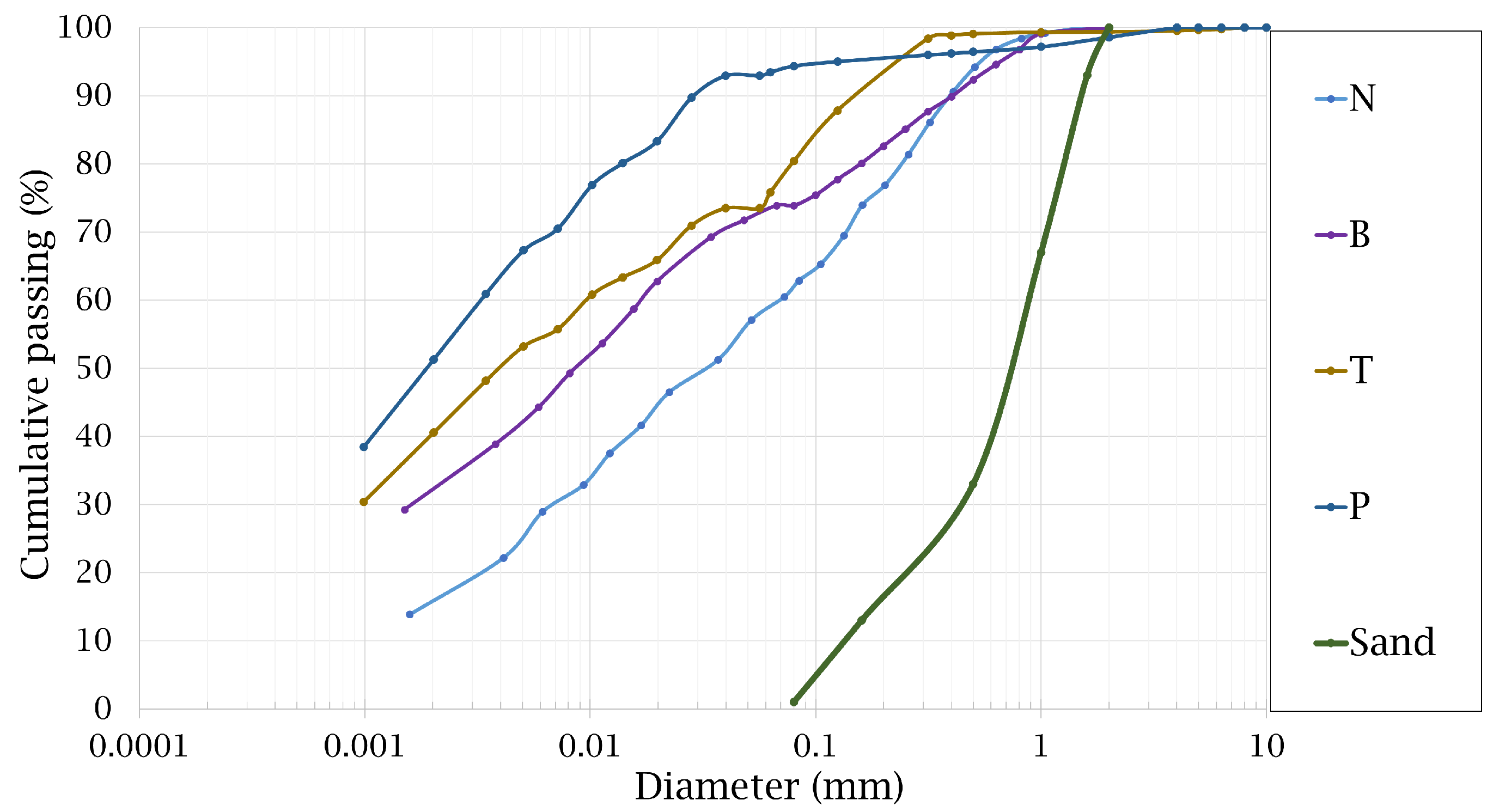
T, used in the study of mortars in the fresh state. These two soils will therefore not be used in the second part of the study. The particle size distribution of the soils is shown in
Figure 1, and the Atterberg limits of the four soils are shown in
Table 1.
Mineralogical analyses were performed by X-ray diffraction (XRD) using a Bruker D8 Advance A25 diffractometer equipped with a vertical goniometer and a LynxEye detector, using Cu Kα radiation (40 kV, 40 mA). Diffractograms of disoriented powder were acquired from dried and ground samples in order to identify the major crystallised phases of the total soil. Mineralogical identification was performed using EVA (Bruker) software, by comparison with the ICDD (JCPDS) and ICSD databases. A specific study of clay minerals was conducted on oriented preparations, with the acquisition of diffractograms in their natural state and after saturation with ethylene glycol, allowing precise identification of clay species, particularly expansive and interstratified phases. The diffractograms were recorded in the angular range 2.5–35° 2θ, covering both the dominant basal lines and diagnostic secondary peaks. Automatic identification of clay minerals was performed using ClayXR software in the 2.5–13° 2θ range.
XRD analyses revealed that the clay fraction of N contains approximately 5.8% kaolinite, 19.7% illite, and 30.6% smectite, whereas B contains 25.1% kaolinite, 41.6% illite, and 0% smectite, and the P soil contains 6.7% kaolinite, 33.7% illite, and 0.0% smectite. This contrast allows the evaluation of mineralogical influence on compaction, shrinkage, and strength.
The soils were air-dried, sieved at 400 µm, and separated into two fractions: (1) the fine fraction (<400 µm) and (2) the coarse fraction (>400 µm). These were later recombined in different proportions to assess the role of the fine fraction.
2.2. Two-Step Methodology
The present study proposes a two-step methodological approach aiming to characterise and optimise the use of fine soil fractions (<400 µm) for earthen construction materials. This approach seeks to establish a rational framework for soil selection and formulation, allowing for faster, less costly, and less material-consuming tests while maintaining scientific robustness and practical relevance.
- 1.
Rheological and cohesive behaviours of the fine fraction
The first stage focuses on the fine soil fraction (<400 µm), which largely governs the cohesion, workability, and strength development in earthen materials. Fine earth mortars were prepared using this fraction to evaluate their rheological and mechanical responses under different mineralogical and moisture conditions. A set of laboratory tests, including flow table tests, yield stress and viscosity measurements, and Atterberg limits, was conducted to determine the relationship between water content, plasticity, and cohesive capacity.
This first step thus provided a rheological characterisation framework linking the fine fraction’s characteristics to its cohesive and plastic behaviour, serving as a basis for defining soil suitability indicators prior to formulation.
- 2.
Mechanical influence of the fine fraction at the material scale
In the second step, the study investigates how variations in the fine fraction content affect the mechanical and physical properties of compacted earth materials. Cylindrical specimens (5 × 10 cm) were fabricated by varying the proportion of particles smaller than 400 µm within the soil. Compression strength, linear shrinkage, and dry density were measured on test specimens manufactured with two different sets of data: (1) an optimal target density and optimal manufacturing water content derived from the test Proctor Normal (PN), and (2) a target density and adjusted manufacturing water content obtained from a Proctor test carried out using the press used to manufacture the cylinders. For the sake of simplicity, this test will be referred to in this study as Proctor Press (PP).
2.3. Experimental Design
2.3.1. Rheology Study
Experimental Protocol for Characterising Fresh Earth Mortar (Fine Fraction + Sand + Water)
The characterisation of the earth mortar in the fresh state was carried out in order to assess the influence of the water content on the workability of the material. The tests were carried out on the fine fraction (<400 µm) of the 4 soils studied, in accordance with the standardised spreading procedure [
28].
The experimental protocol was based on two steps, with preliminary tests carried out on the N soil establishing the link between Atterberg limits and mortar workability.
The soil–water mixtures were prepared with water contents close to the plastic and liquid limits determined for each soil (
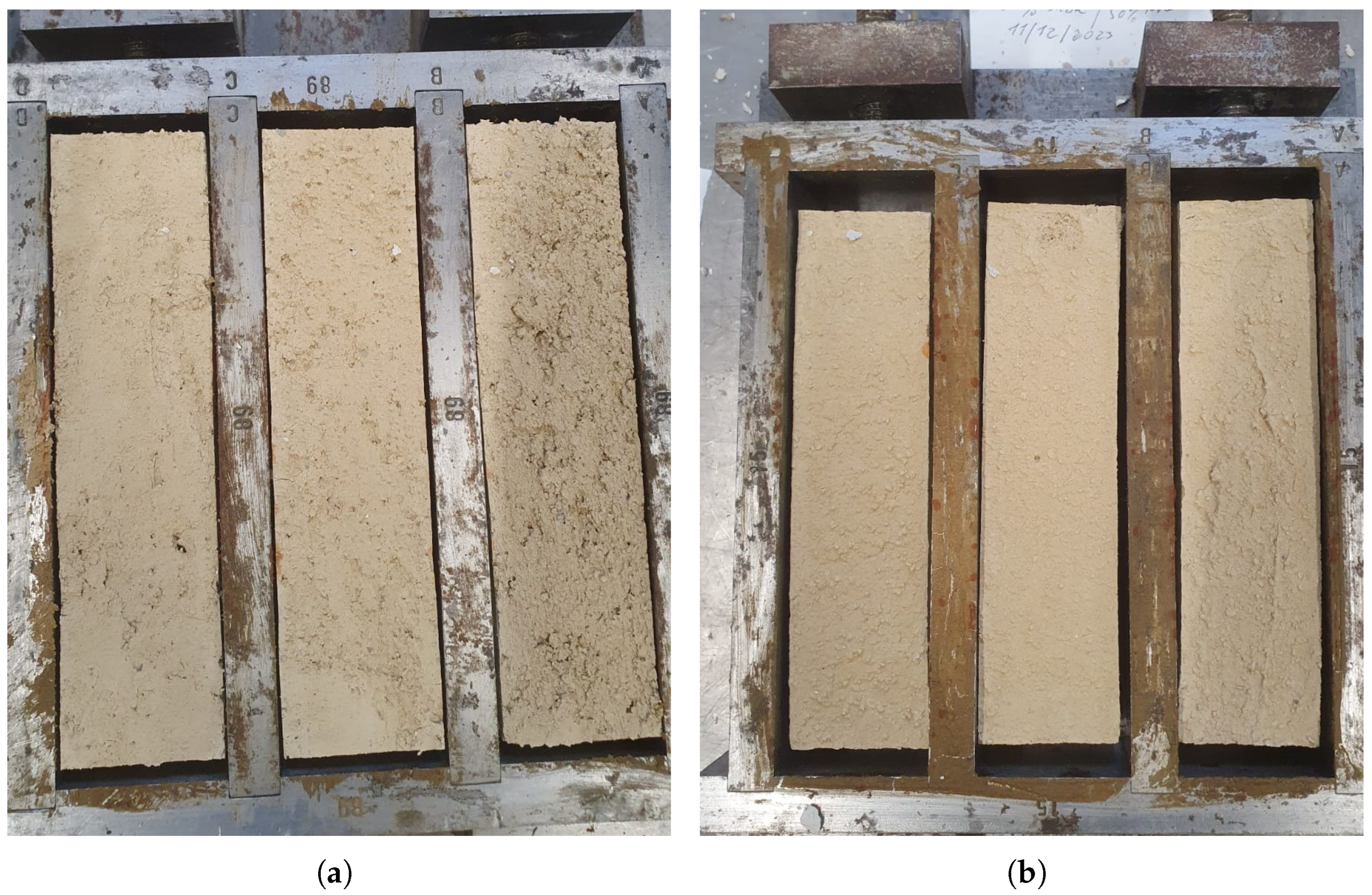
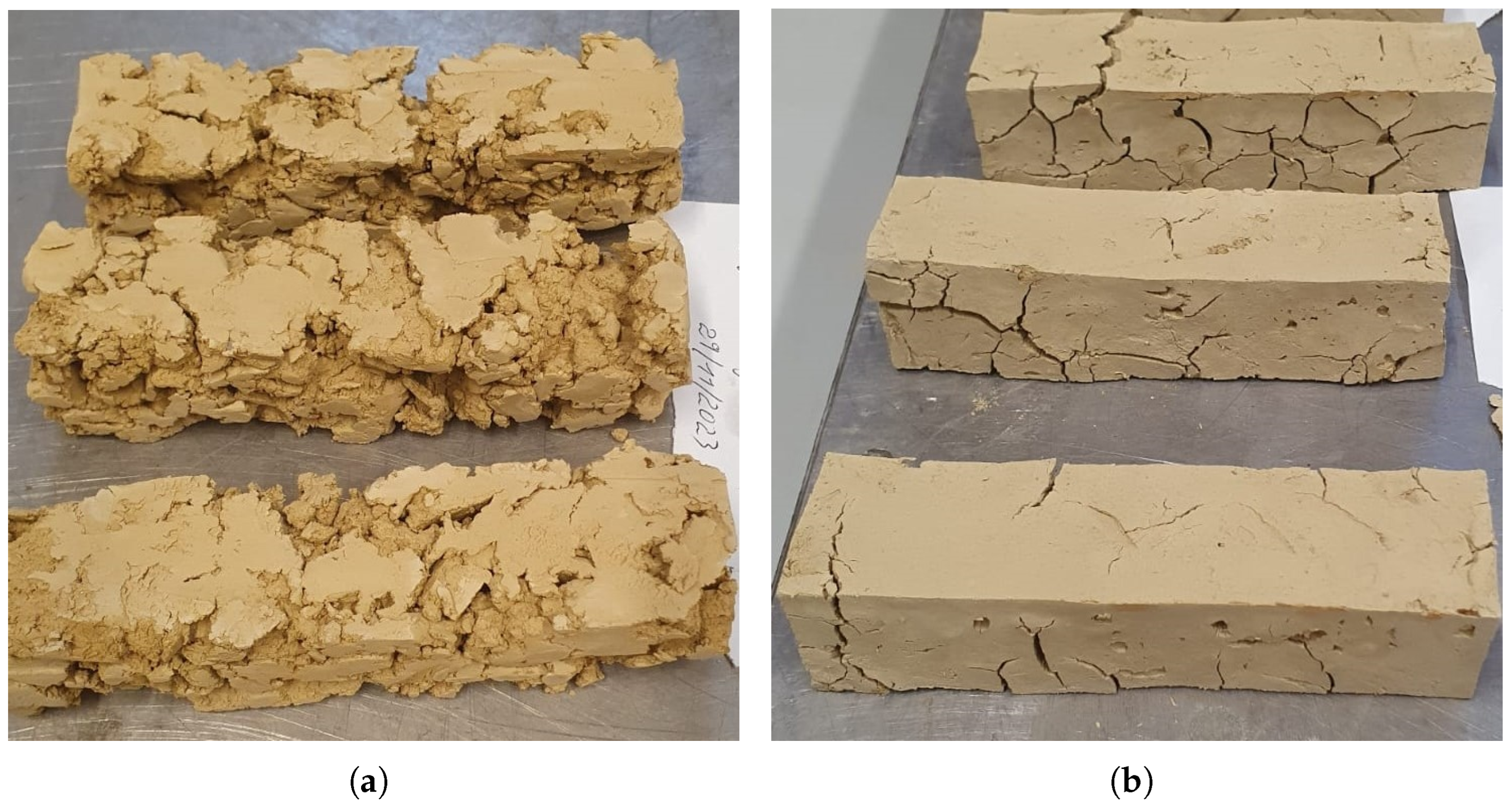
Table 1). These tests showed that an insufficient water content leads to a material that is difficult to place, while an excess of water causes significant shrinkage and cracking during drying (
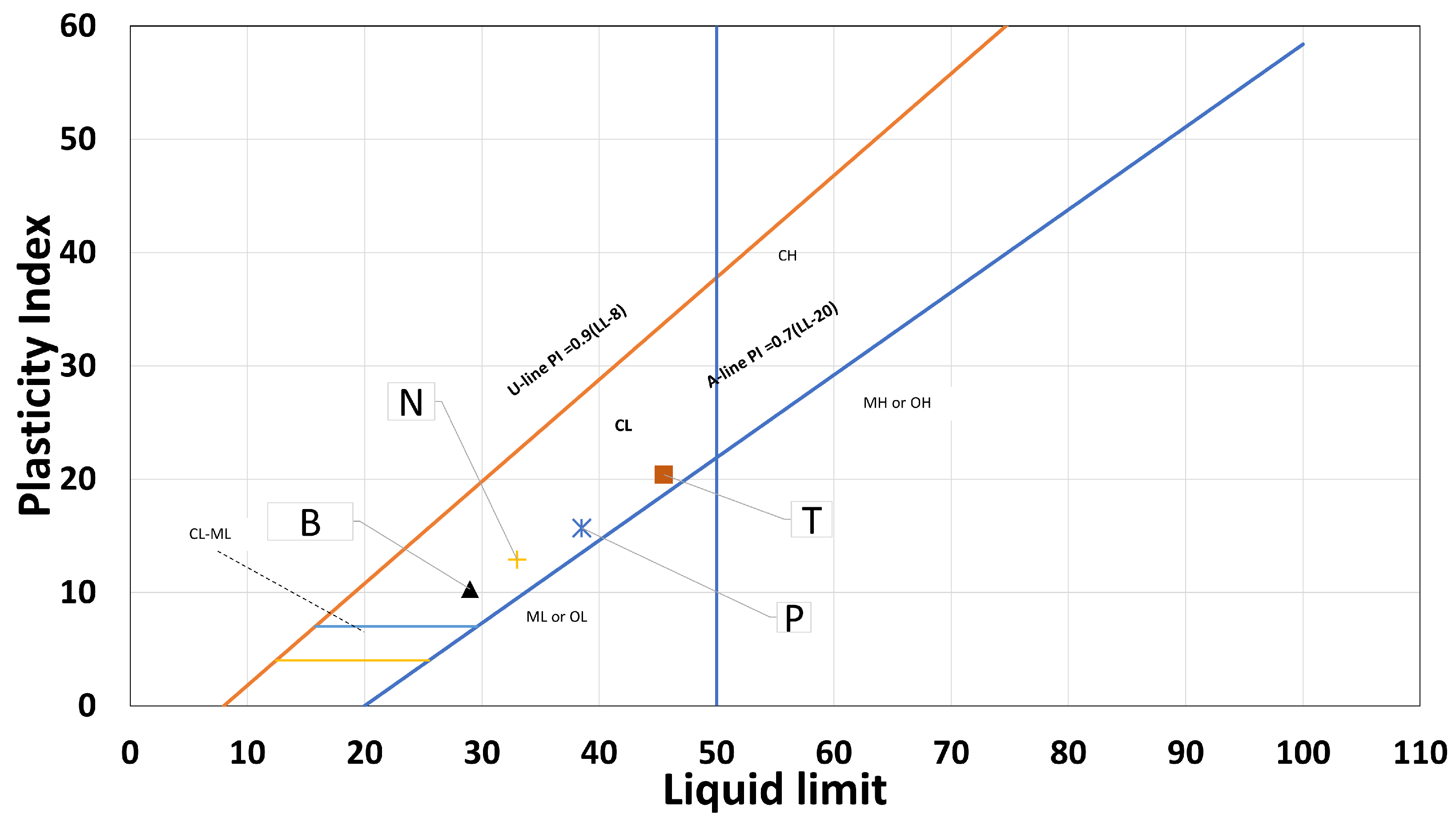
Figure 2). Analysis using the Casagrande plasticity chart (
Figure 3) confirms that the soils studied are highly plastic overall, which justifies their greater sensitivity to water.
Secondly, in order to limit shrinkage and improve dimensional stability, standardised sand (0/2 mm) was incorporated into the mixes. This reduces the proportion of active clay and the amount of water required to achieve the right consistency while forming a rigid granular skeleton that limits shrinkage deformation. The beneficial effect of sand in reducing cracking is illustrated in
Figure 4.
Based on the results of the previous study, the water content was adjusted around the liquid limit for fixed sand contents of 40, 50, and 60%.
For each of these formulations, workability was assessed by the shaking table spread test, following a precise protocol [
28]: filling the truncated cone mould in two packed layers, vertical withdrawal of the mould after 15 s, then application of 30 shakes at a constant frequency of 1 shake per second. The average spreading diameter, measured in two orthogonal directions, was taken as an indicator of consistency.
To compensate for the low flowability of clay materials, the number of impacts was doubled compared with the preliminary tests (30 instead of 15 recommended in standard NF EN 1015-3 [
28]), without increasing the water content. Unlike cementitious mortars, earthen mixtures with high fine fraction content exhibit higher yield stress and structural cohesion, which justifies adapting the compaction energy applied during the spreading test. Furthermore, this adaptation allows for workability without an excessive increase in water content. This methodological adaptation made it possible to choose a target spread interval of between 120 and 170 mm, corresponding to a consistency considered optimal for earth mortars. However, this deviation from the standard protocol also constitutes a limitation of the study, as it may hinder direct quantitative comparison with results reported in the literature strictly following NF EN 1015-3. The proposed adaptation should therefore be interpreted primarily as a relative and comparative tool within the present experimental framework. This experimental approach, based on Atterberg limits and soil plasticity properties, provides a methodological framework for the rational formulation of earth mortars.
Rheological Characterisation: Shear Threshold and Viscosity
Following on from the workability study, an in-depth rheological analysis was carried out to gain a better understanding of the physical mechanisms governing the behaviour of earth mortars in the fresh state. The aim of this approach was to establish a correlation between the formulation parameters (water content, proportion of sand, mineralogical nature) and the internal mechanical properties of the material (cohesion, plasticity, viscosity, and thixotropy).
In order to quantify the associated rheological properties, the shear stress (
) was measured in accordance with standard NF EN ISO 17892-12 [
12] using a cone penetration test. The shear stress was calculated from the depth of cone embedment using Equation (
1):
where m is the mass of the cone (0.08 kg), g is the acceleration of gravity (9.81 m/s
2),
is the angle of the cone (30°), and E is the depth of penetration in mm.
To complete this analysis, calculations of apparent plastic viscosity (
) were carried out using the approach proposed by T. Yong Shin and J. Hong Kim [
13]. Combining shaking table spread tests and the Bingham model. Spreading tests at 5, 15, and 25 shots were carried out on several formulations (different sand/soil ratios and water contents).
where
,
, and
represent the initial, 5-shot, and 25-shot spreading diameters, respectively.
Based on the estimated viscosity, the
values could be calculated using the following empirical model:
This approach allows comparison of the shear threshold values obtained from the impact table and those obtained from cone penetration.
This coupled approach (spreading–cone–rheological modelling) thus provides a robust method for assessing the workability, cohesion, and stability of earth mortar in the fresh state, while linking these parameters to the mineralogical nature of the soil and its water content.
2.3.2. Study of the Influence of the Fine Fraction on Mechanical Performance
To assess the influence of the fine fraction on soil behaviour, eleven formulations were prepared by varying the percentage of the fine fraction from 5% to 100% at 10% intervals. A 10% fine fraction increment was chosen in order to ensure a sufficiently marked difference between two successive formulations while avoiding masking any behavioural transitions linked to excessive spacing between measurement points. For each formulation, manufacturing data from two types of tests were used:
The
Proctor Normal (PN) test—standard energy of 600 kN·m/m. For test specimens produced using “Proctor Normal” approach, the water content of the mixture and the target density are taken for each formulation as indicated in
Table 2. As the term “Proctor Normal” indicates, these values were obtained in accordance with the recommendations of standard NF P94-093 [
29]. The data and curves from the Proctor Normal test for soils N and B are referenced in the works of Bruno and Cuccurullo [
30,
31].
The
Proctor Press (PP) test—mechanical press compaction with an applied load of 10 kN. For the manufacture of test tubes using the “Proctor Press” approach, the water content of the mixture and the target density for each formulation are obtained according to a mixing law as indicated in Equations (
4) and (
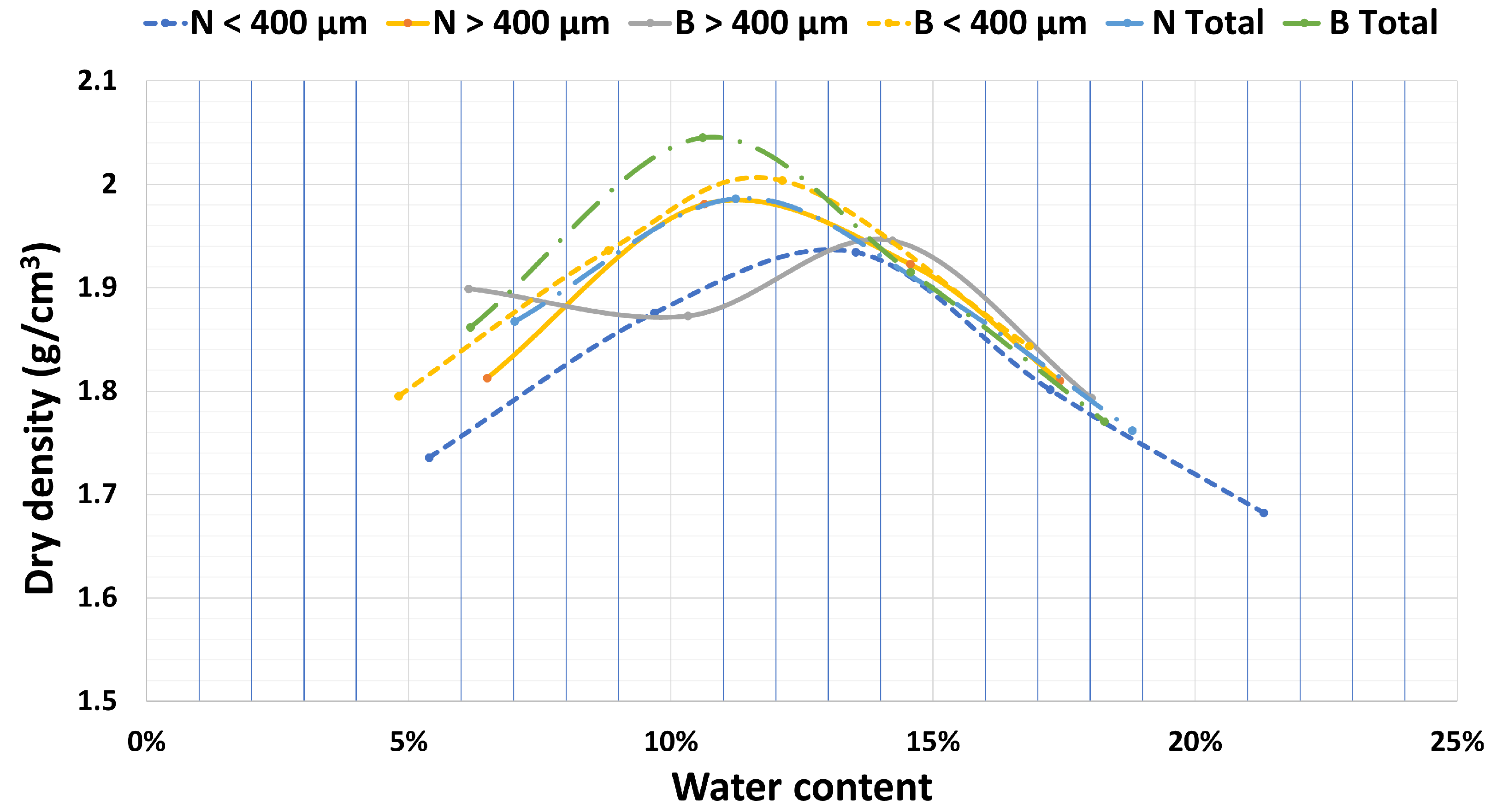
5). The optimal density and water content data obtained for fractions <400 µm and >400 µm (
Figure 5 and
Table 2) are then combined using the mixing law to calculate the optimal water content and density for each of the formulations studied. The optimised water content and density values are summarised in
Table 3.
Each test provided the optimum water content and maximum dry density, used as a reference for specimen fabrication.
where
, the proportion < 400 µm present in the mixture;
, the proportion > 400 µm;
, the optimum density of the fraction < 400 µm obtained with the press; and
, the optimum density of the fraction > 400 µm.
For water content (
, %):
where
, the proportion < 400 µm present in the mixture;
, the proportion > 400 µm;
, the optimum water content of the fraction < 400 µm obtained with the press; and
, the optimum water content of the fraction > 400 µm.
2.4. Sample Preparation and Testing Procedures
Cylindrical specimens (5 cm diameter, 10 cm height) were fabricated in three layers to simulate standard compaction protocols. Each layer was pressed at a constant rate (250 N/s) to a target force of 10 kN, ensuring reproducibility. After compaction, samples were demoulded and oven-dried at 60 °C until mass stabilisation. The choice of drying at 60 °C is made in order to test the samples in a dry state (0% humidity), while limiting the drying speed and thus limiting cracking due to drying. However, drying at 60 °C induces significant microstructural changes in clayey soils, mainly associated with the removal of free and capillary water and the partial collapse of interlayer spaces in expansive clays [
32]. These processes promote particle rearrangement, aggregation of clay platelets, and redistribution of pore structure, which, in the event of rehumidification, may lead to a reduction in clay activity and water sensitivity.
The following tests were performed:
Linear shrinkage test: to quantify volumetric deformation during drying;
Dry density measurement: to assess compaction efficiency;
Unconfined compressive strength (UCS): to evaluate mechanical performance using a 30 kN testing cell at a loading rate of 2 mm/min.
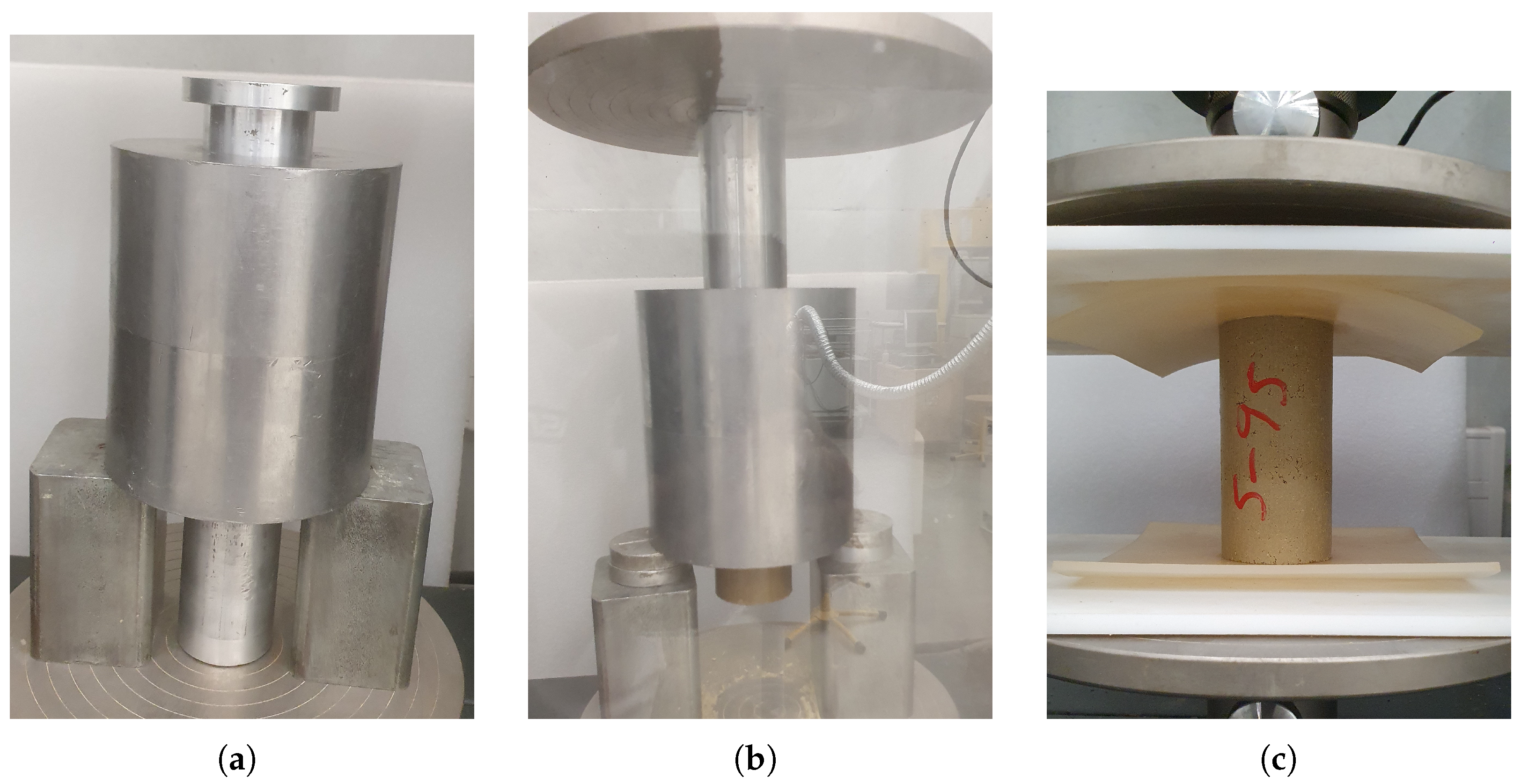
To minimise lateral friction (fretting effects), a 4 mm Teflon plate and a neoprene membrane were placed between the sample and the press plates. This setup ensured nearly uniaxial stress propagation during loading (
Figure 6c). The compressive strength value is calculated using the following formula:
.
is the maximum force measured during the uniaxial compression test, and S is the effective cross-sectional area of the cylinder. For each formulation, an average strength is calculated using the strengths of the three test specimens.
3. Results and Discussion
3.1. Rheological Study
Analysis of the results obtained on earth mortars reveals clear correlations between workability, cohesion, and water content. These three parameters—shaking table spread, shear threshold, and plastic viscosity—together reflect the rheological behaviour of the material in the fresh state and enable its workability to be assessed.
3.1.1. Relationship Between Spread and Water Content
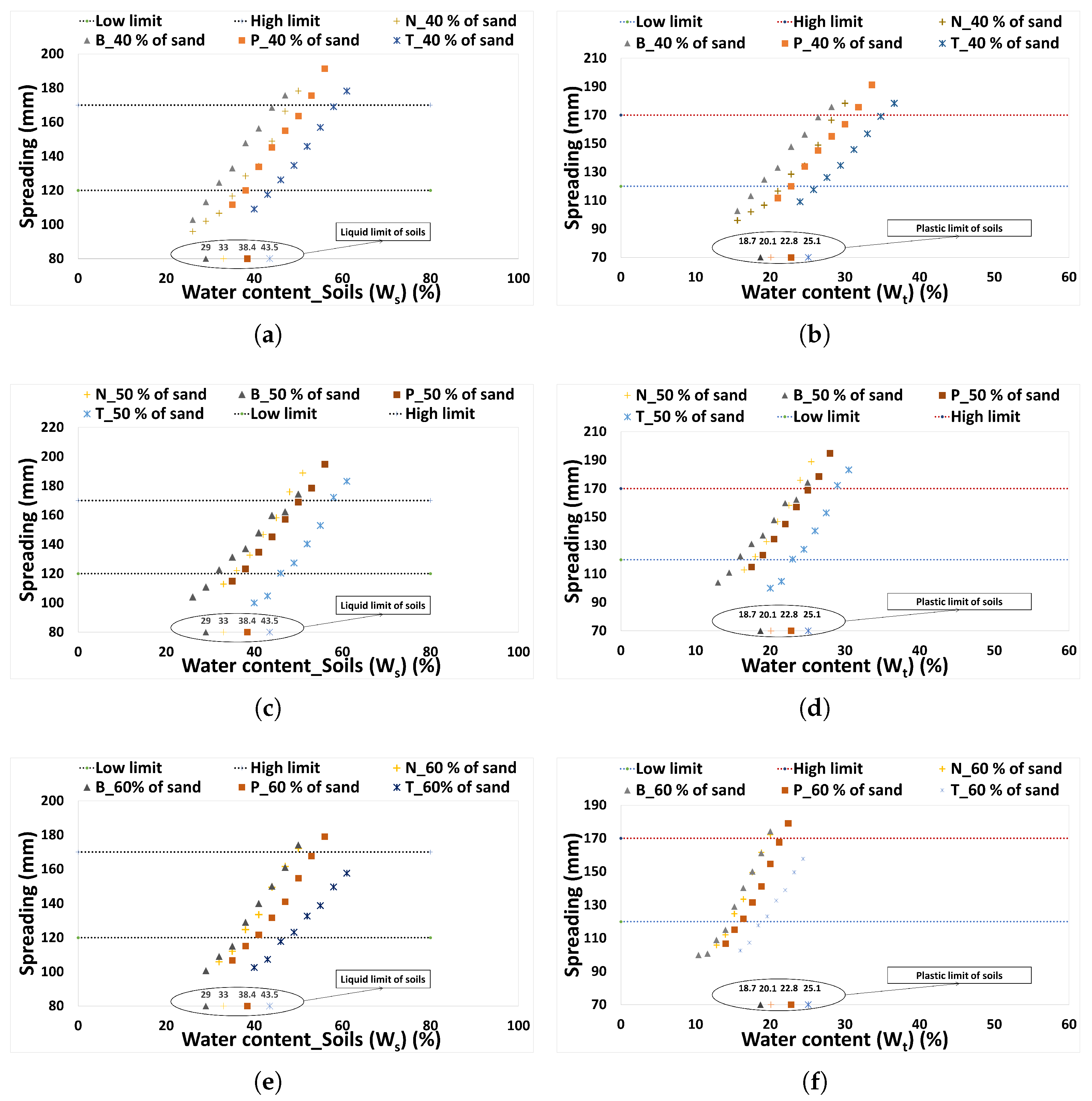
Spreading tests established a quasi-linear relationship between the water content and the spreading diameter of earth mortars (
Figure 7). This trend, observed for all the soils tested, confirms that the workability of the material increases with moisture. Below a certain moisture threshold, the mixture remains rigid and not very workable: the fine particles are not sufficiently lubricated, and capillary forces dominate, giving the material a quasi-plastic behaviour. As the water content increases, the water films adsorbed around the particles thicken, reducing capillary bonds and intergranular friction, resulting in a rapid increase in fluidity. In
Figure 7, two ways of considering the amount of water in the mixture were considered. In the left-hand column, a water content known as “Soil water content (W
s)” was calculated using only the mass of soil present in the mixture without considering the mass of sand. The water content calculated based on the soil fraction is defined as
where
is the mass of water and
is the mass of the soil fraction only. Since the soil represents 60% of the total mixture mass, the soil mass can be expressed as
which leads to:
With this approach, it was possible to see that the water content Ws, for the targeted spread interval between 120 and 170 mm, is between the liquidity limit + 3% and the liquidity limit + 12% (LL + 3 < Ws < LL + 12). For the right-hand column, where the water content is calculated based on the total mass of the mixture (Wt), it was noted that the relationship depended on the proportion of sand. For example, for 50% sand and 50% soil, the water content Wt lies between the plastic limit − 2.5% and the plastic limit + 2.5% (PL − 2.5 < Wt < PL + 2.5).
However, above a critical level, the excess free water no longer improves workability but causes a relaxation of the internal cohesion. The material then tends to behave like a viscous suspension, difficult to shape, with an increased risk of segregation and shrinkage on drying. This observation justifies the definition of an optimum spreading interval (120–170 mm after 30 impacts), corresponding to a compromise between cohesion and workability, consistent with the values reported in the literature [
7,
9,
11].
3.1.2. Correlation Between Spread and Shear Threshold
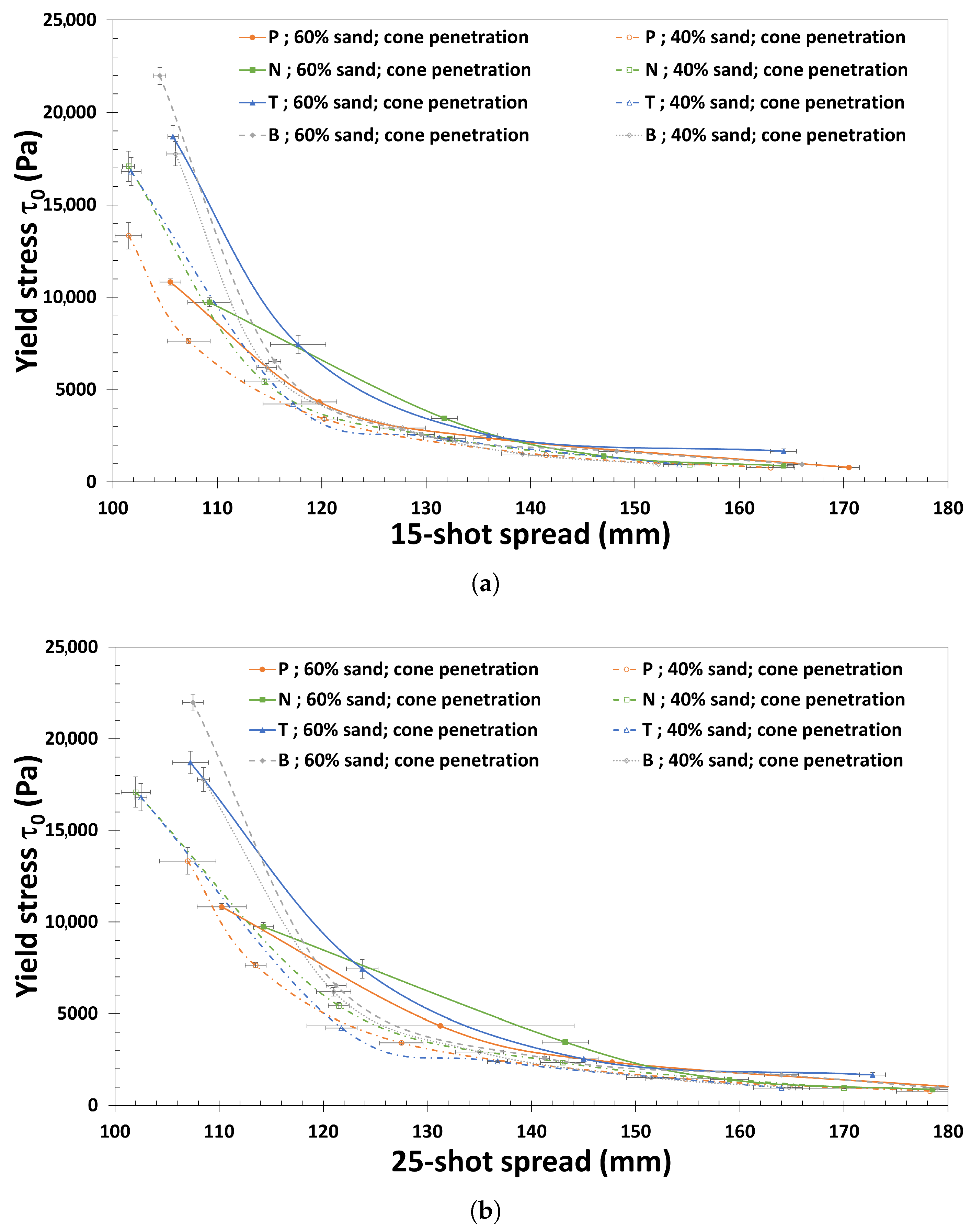
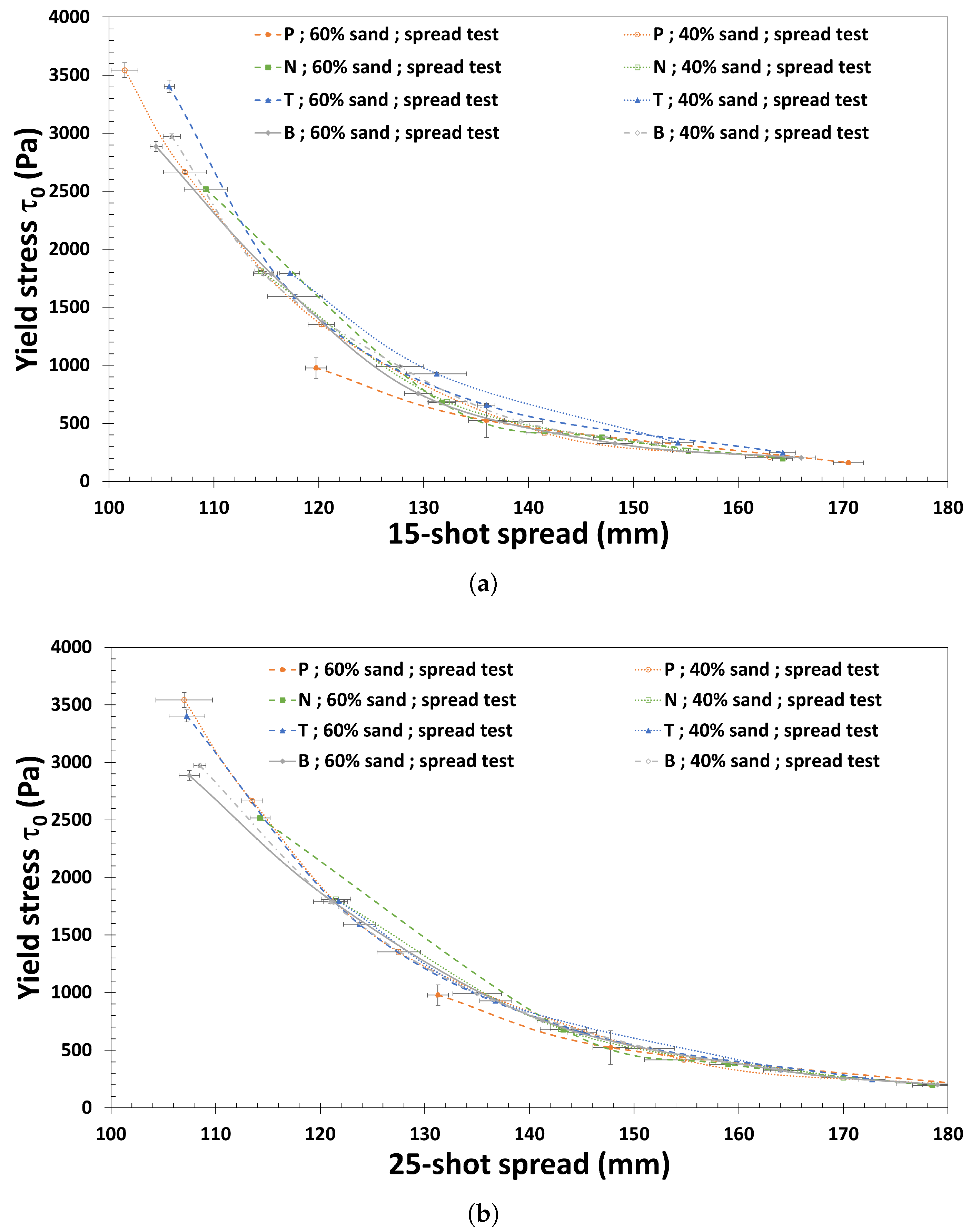
Comparison of the spreading results with the cone penetration measurements revealed an inverse relationship between the spreading diameter and the shear threshold (
). The more the material spreads, the more the shear threshold decreases, reflecting the progressive loss of cohesion as the water content increases (
Figure 8). This evolution can be described by an exponential law of the type:
where
D represents the spreading diameter. This exponential form, which is a better fit than the linear model, reflects the typical behaviour of clay materials with capillary cohesion. At low water content, the capillary bridges linking the particles ensure strong cohesion; as more water is added, these bridges break or dilute, causing a rapid reduction in the mobilisable shear stresses [
13,
20].
This correlation reinforces the idea that the workability of earth mortars is directly linked to the ability of the particulate system to resist shear. The spreading test, often considered empirical, can thus be interpreted as an indirect shear test, where the work done by the shocks of the table is used to overcome the cohesion of the mixture.
3.1.3. The Role of Viscosity and Rheological Behaviour
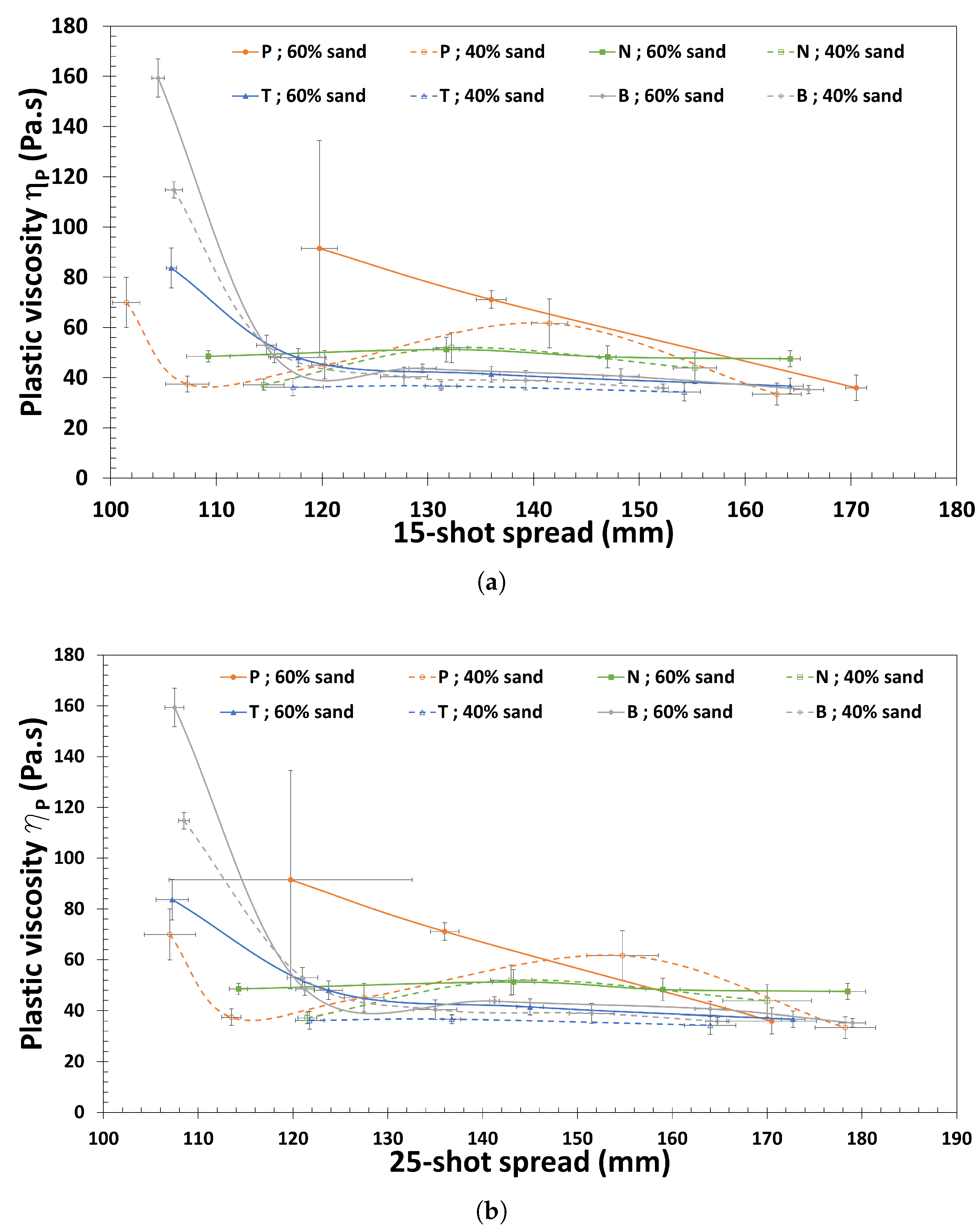
An analysis of the plastic viscosity using the Bingham model, applied to the spreading values at different numbers of impacts (0, 5, and 25 shots), provides additional insight into the dynamics of the mixture. The results show that the viscosity decreases with increasing water content and spreading diameter, reflecting a gradual transition from a pseudo-solid regime to a fluid state (
Figure 9). This evolution is accompanied by a decrease in the shear threshold, which characterises a typical rheofluidising material.
The study of the variation in viscosity for formulations containing different proportions of sand also confirmed a stabilising effect of the granular skeleton. The introduction of sand reduces the fraction of active clay and decreases the specific surface area of the mixture, thereby limiting the formation of thick films of water. The material becomes less sensitive to water content and exhibits more consistent behaviour, with a more stable workability range. This effect is particularly beneficial for formulations intended for processing methods requiring good dimensional stability, such as moulding or compression.
The correlations established between spread, shear threshold, and viscosity consistently illustrate the central role of capillary and electrostatic interactions in the behaviour of earth mortars in the fresh state. At low water content, cohesion is ensured by capillary forces between the fine particles and the water bridges located in the pores. As the water content increases, these forces diminish in favour of increased fluidity, but the stability of the granular skeleton weakens. This regime shift explains why cohesion falls exponentially while workability increases almost linearly (
Figure 10).
Understanding these mechanisms opens the way to the predictive formulation of earth mortars. By knowing the Atterberg limits of a soil, it becomes possible to determine a target water content that ensures both controlled workability and sufficient cohesion. The empirical relationship between spread and shear threshold, validated by experimental measurements, provides an operational tool for rapidly assessing the suitability of soils for construction.
A comparison of the evolution of the shear threshold and plastic viscosity with the spread results obtained at 15 shots (in accordance with standard NF EN 1015-3) and at 25 shots shows that the trends observed remain virtually identical. Indeed, as illustrated in
Figure 8,
Figure 9 and
Figure 10, no significant change in rheological behaviour is observed when the number of shots is increased. Thus, the interpretations relating to the shear threshold and plastic viscosity remain valid and consistent within the framework of this study, including for the spreading protocol adapted to 30 shots adopted in
Section 2.3.1.
In practical terms, this approach has two major advantages:
It allows the water content of the mixture to be adapted to the intended application technique (casting, moulding, extrusion, compaction), without the need for extensive mechanical testing;
It provides a simple, reproducible method for comparing the relative cohesion of different soils using standardised laboratory tests.
Finally, the combined analysis of workability, shear threshold, and viscosity confirms that the fine fraction of the soil controls the rheological behaviour of the earth mortar. The relationships established between these parameters make it possible to link the geotechnical characteristics of the soil (plasticity, mineralogy, clay content) to its processing properties. This integrated understanding provides a solid methodological foundation for the development of formulation protocols based on intrinsic soil properties and paves the way for the definition of simplified suitability criteria for raw earth construction.
3.2. Dry Density
For the density, compression, and linear shrinkage results, a statistical study was conducted. In addition to calculating the mean, standard deviation, and coefficient of variation, an ANOVA test was also performed to reinforce the statistical analysis of the results. For this test, two values (F and P) were calculated and represented in
Table 4,
Table 5 and
Table 6. The F statistic measures the ratio between the variation between groups and the variation within groups. A higher F statistic indicates a more significant difference between group means compared with random variation. The
p-value determines whether the differences between group means are statistically significant. If the
p-value is less than a predefined threshold (usually 0.05, which is also used in this study), the null hypothesis is rejected, and it is concluded that at least one group has a significantly different mean.
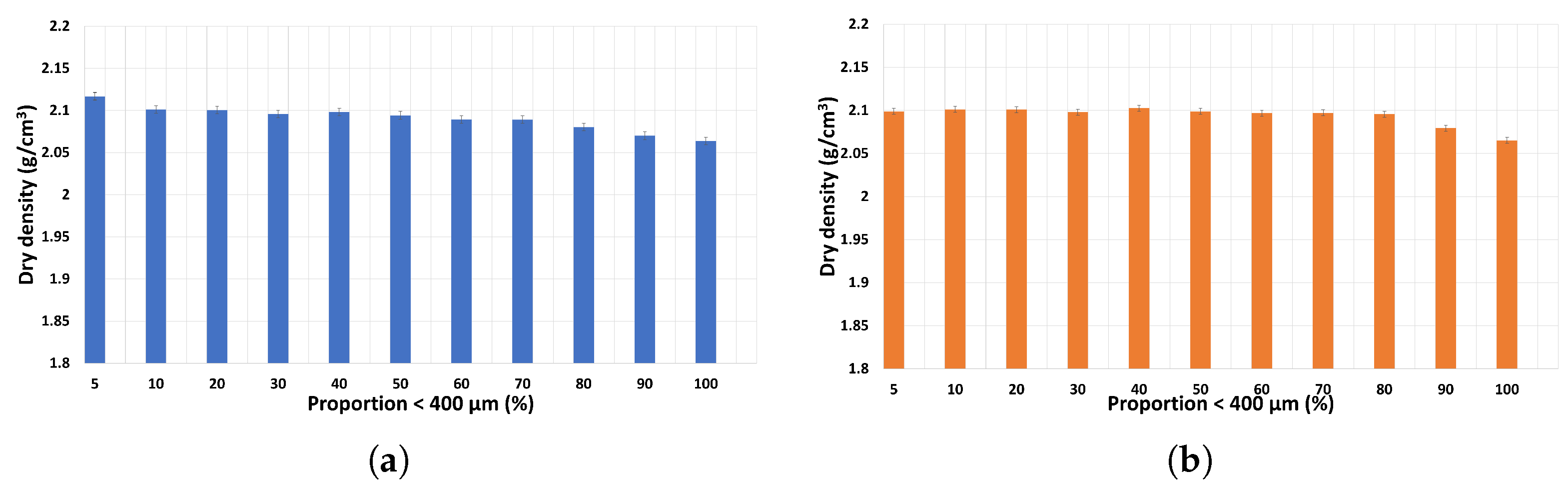
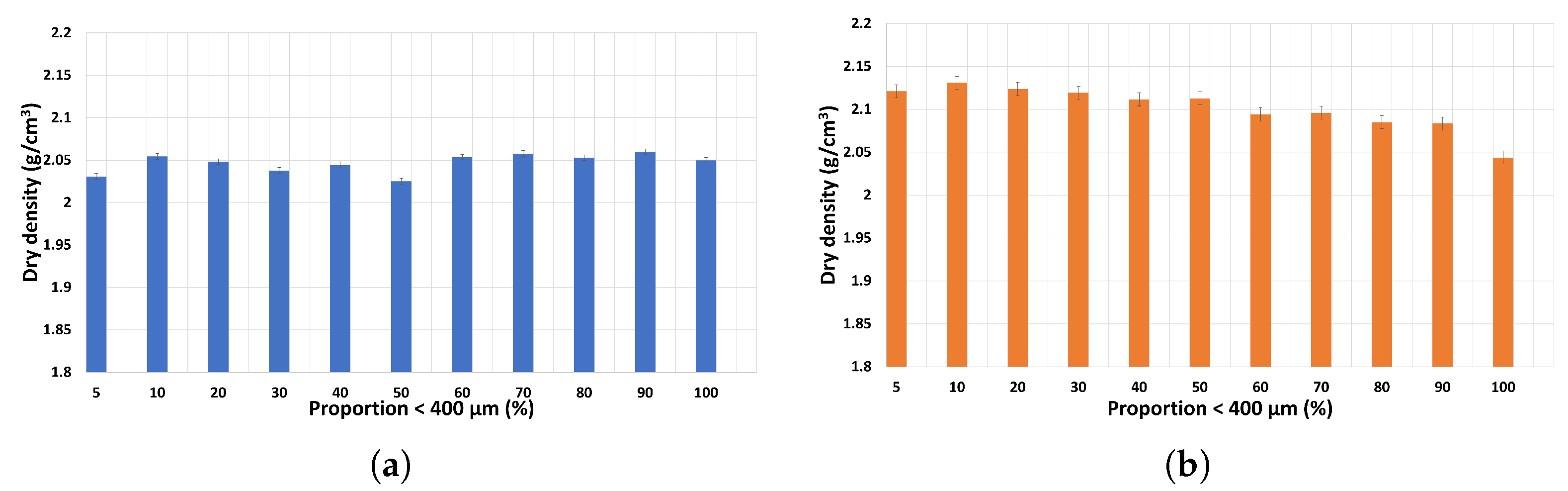
A comparison between specimens manufactured using Proctor Normal (PN) and Proctor Press (PP) reference conditions highlights differences that arise primarily from the fabrication parameters derived from each Proctor procedure. In
Table 4, it can be seen that the difference between the various values does not exceed 0.03 g/cm
3 and the coefficient of variation is at most 1.2%. Therefore, it can be said that adjusting the optimal water content does not have a significant influence on the dry density of the manufactured cylinders. For the N soil, these differences observed are not particularly pronounced. For instance, at 5% fine fraction, the dry density increases from 2.03 g/cm
3 under PN reference conditions (
Figure 11) to 2.10 g/cm
3 under PP reference conditions (
Figure 12), corresponding to an increase of approximately 3.5%. It is practically the same thing for the B soil; the densities obtained under PN and PP reference conditions (
Figure 11 and
Figure 12) remain very close, around 2.10 g/cm
3, indicating a limited sensitivity to the choice of reference water contents.
Analysis of the influence of particle size reveals different behaviours depending on the soil type. For N, the variation in density as a function of the fine fraction remains limited, with values between 2.03 and 2.06 g/cm3 in PN and between 2.07 and 2.10 g/cm3 in PP, with a tendency to decrease from low fine content to high fine content in PP. Conversely, B shows a clear tendency for density to decrease as the proportion of fines increases in PN rather than PP: from 2.13 g/cm3 at 10% fines to 2.04 g/cm3 at 100% in PN (≈−4%). The tendency to decrease from 2.12 to 2.06 g/cm3 in PP is not so clear (≈−3%). This trend suggests that the addition of fines reduces the maximum compactness that can be achieved, possibly due to less favourable granular restructuring and increased water absorption by the clay phase. Although a certain trend can be observed in these values, it is important to note that the difference is not significant. This trend should therefore be interpreted with caution.
The contrasts observed can be directly linked to mineralogy. N has a high smectite content (30.6%), to which is added 19.7% illite and 5.8% kaolinite. Smectites, whose high swelling and water adsorption capacity are well documented, induce a more porous internal structure in PN, which limits the dry density obtained. In PP, on the other hand, the reorganisation of clay particles under high stress reduces interlamellar porosity and compensates for the expansive effect, explaining the higher densities observed. Conversely, B, composed mainly of illite (41.6%) and kaolinite (25.1%) without smectite, has an intrinsically more stable structure. However, beyond a certain proportion, the accumulation of fine particles seems to limit compactness, hence the slight decrease in density observed.
It should be noted that some dry density values slightly exceeding 2.10 g/cm
3 may appear high compared with commonly reported ranges for earthen construction materials, which typically exhibit dry densities between 1.60 and 2.1 g/cm
3 depending on compaction energy and granulometry [
14,
19,
22,
33]. However, these values correspond to laboratory-compacted specimens prepared under controlled conditions, which are known to produce higher dry densities than those typically achieved in field applications. In addition, the studied soils exhibit a high proportion of fine particles and dense mineral phases, particularly smectite-rich assemblages, which can lead to enhanced particle rearrangement and packing efficiency under energetic compaction. Such density levels have also been reported in previous studies dealing with highly compacted earthen materials or fine-grained soils used for compressed earth products. Therefore, the reported densities should be interpreted as reference laboratory values reflecting the combined effects of mineralogy, data, and manufacturing methods, rather than as direct indicators of in situ material density.
Overall, these results highlight the combined influence of particle size, mineralogy, and manufacturing data in determining the dry density of earth materials. Soils rich in smectites, such as N, are significantly influenced by the manufacturing water content, while soils dominated by non-swelling clays, such as B, have initially higher densities but are less sensitive to the implementation process. These trends provide essential information for anticipating the mechanical performance and dimensional stability of earth building materials.
3.3. Linear Shrinkage
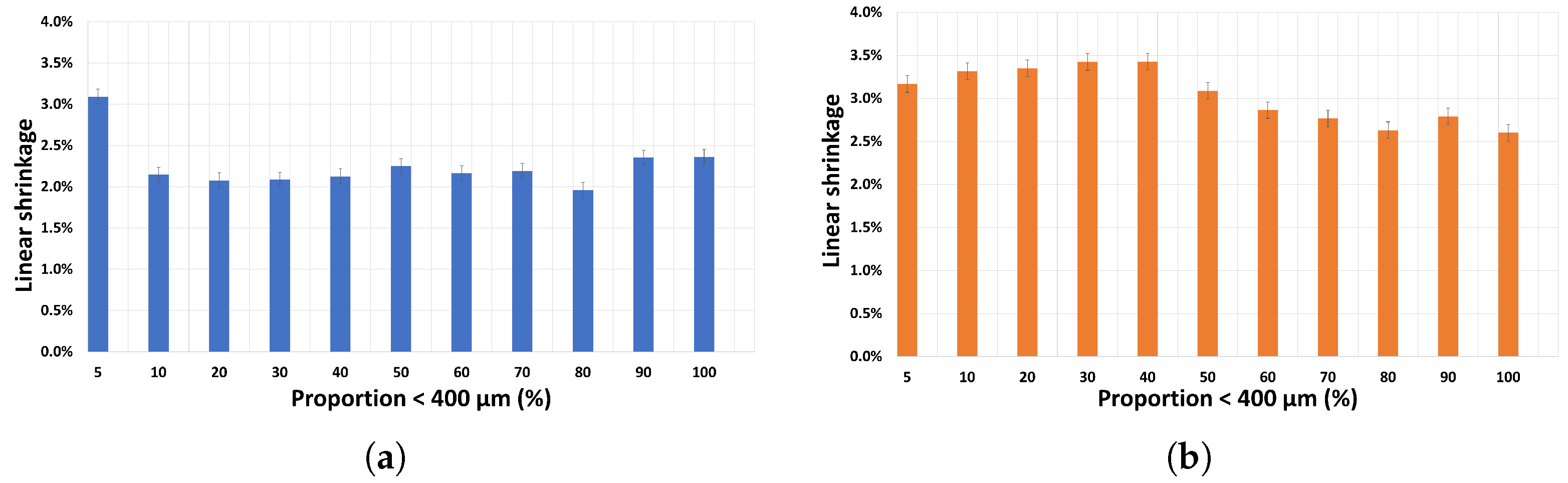
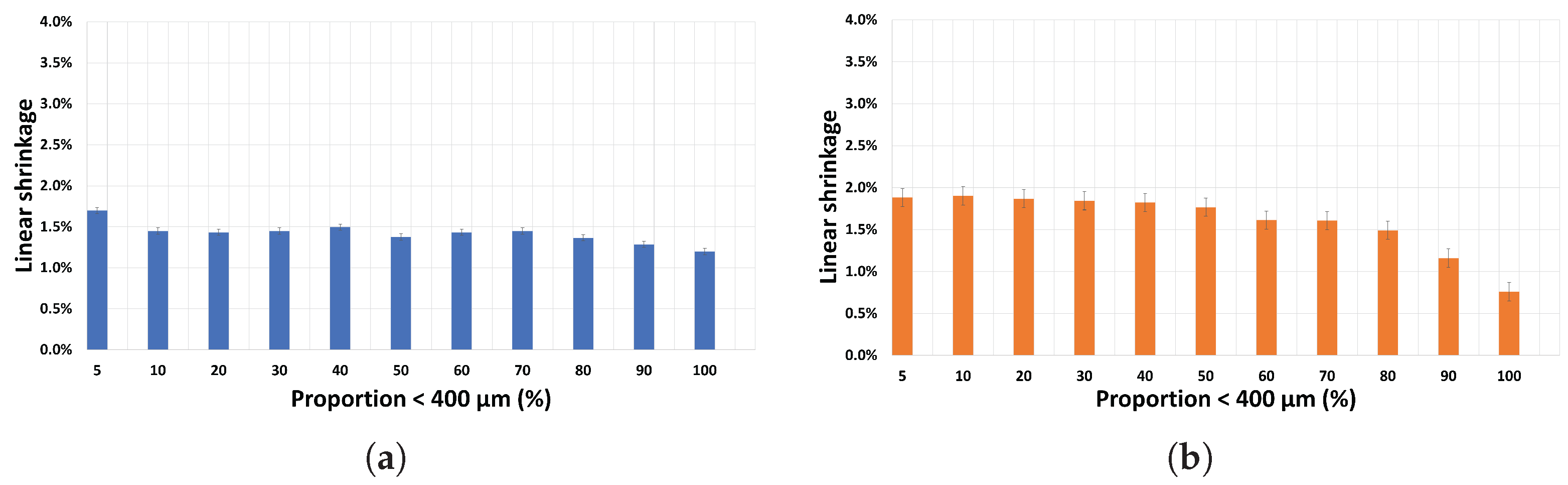
Tests show that adjusted water content significantly reduces shrinkage compared with the optimum Proctor water content, with reductions of up to 70% (e.g., 2.36% → 0.76% for N soil with 100% fines) (
Figure 13). For N, an increase in the fine fraction leads to a surprising decrease in shrinkage, at least for the PP method (
Figure 14). A similar trend is observed for B soil, rich in illite and kaolinite, for the PP method. For both soils, the PN method generates a higher but relatively consistent shrinkage, with higher values for the B soil than for the N soil (
Figure 13). With a fairly high coefficient of variation for both soils, between 9 and 22% (
Table 5). These results need further investigation, as they do not correlate with the mineralogy of the soils. With N having a swelling clay content, it is expected that the shrinkage should be higher for this soil.
The unexpected trends observed for smectite-rich soils under high compaction energy may be interpreted in light of microstructural mechanisms induced by compaction. Energetic compaction is likely to promote particle rearrangement and reorientation of clay platelets, leading to a denser but more anisotropic fabric. In smectitic soils, this process may be accompanied by a partial collapse of interlayer spaces and a reduction in the effective contribution of clay activity to interparticle bonding. Furthermore, the high stresses applied during compaction can generate microcracking within aggregated clay domains or at aggregate–aggregate interfaces, which may not be detectable at the macroscopic scale but can adversely affect mechanical performance. These combined effects—fabric reorientation, densification-induced anisotropy, and potential microcracking—provide a plausible explanation for the non-monotonic or counterintuitive trends observed, particularly for highly active clays. Although direct microstructural observations were not conducted in this study, these interpretations are consistent with mechanisms reported in the literature and highlight the need for complementary microstructural analyses in future work.
The linear shrinkage observed remains below the critical values reported in the literature for raw earth-based materials, generally between 2 and 4% for unstabilised CEB [
34,
35].
In conclusion, controlling linear shrinkage in raw earth depends not only on particle size distribution but, above all, on the interaction between the mineralogical nature of the clays and manufacturing data.
3.4. Compressive Strength
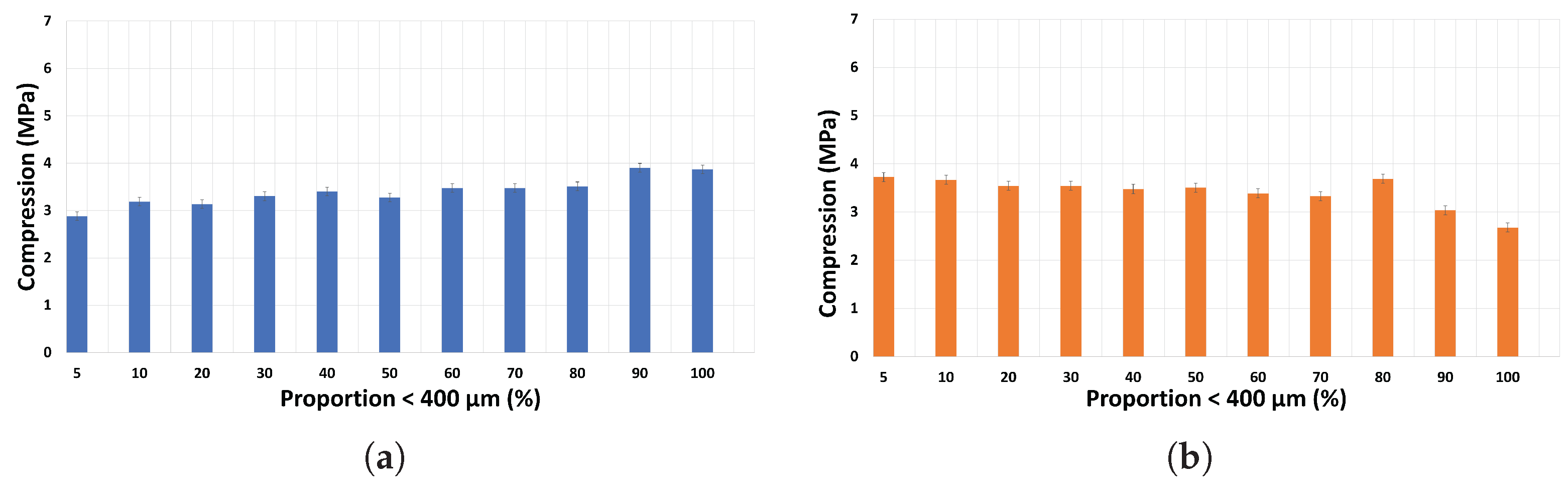
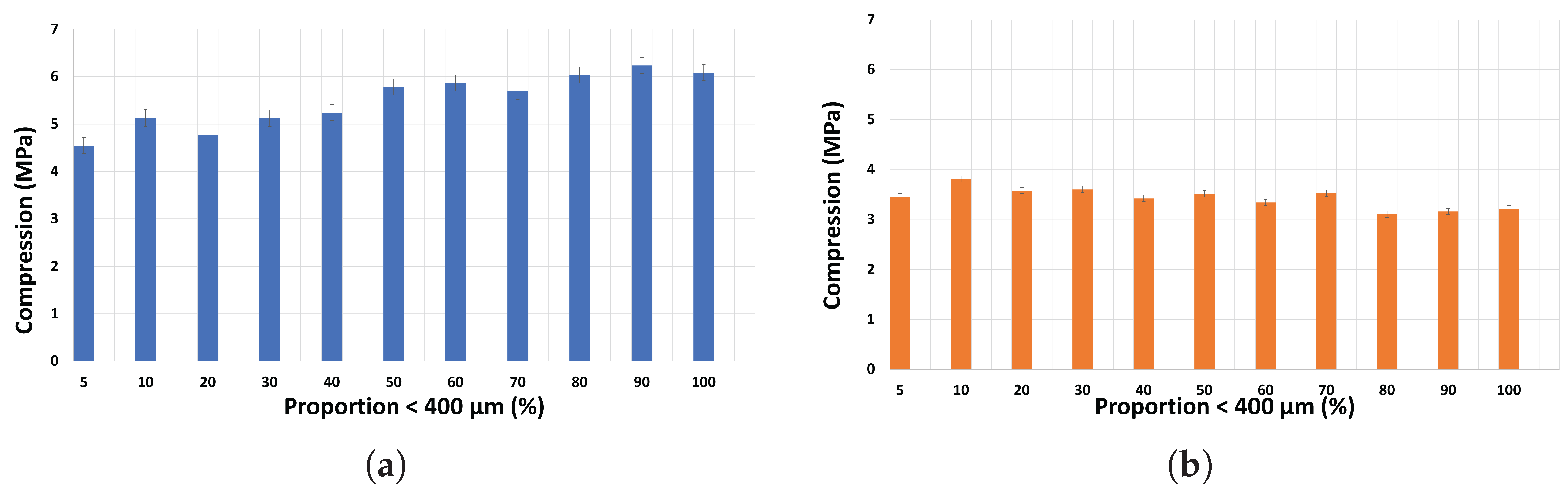
A comparison of tests carried out using the Proctor Normal (PN) (
Figure 15) and Pressed Proctor (PP) (
Figure 16) methods reveals clearly differentiated behaviour depending on the mineralogy of the soils. For N, which is rich in smectites, the resistances measured using the NP method are systematically higher than those obtained using the PP method (up to −40% at 90% fines). Conversely, B, consisting mainly of illite and kaolinite, shows small differences between the two methods (−6.7% at 90% fines), indicating less sensitivity to adjusting the water content.
These differences can largely be explained by the effect of soil preparation and clay activity. After the PN tests, grinding and sieving do not seem to completely separate the aggregates formed in the case of N. Some of the smectitic clays then lose their dispersed state, behaving like quasi-granular particles during the PP tests, which reduces their potential cohesion. This interpretation is consistent with the strength/density ratio, which shows that the performance of N PN is governed by the fine fraction, while B and N PP are more controlled by dry density. However, although this interpretation seems the most plausible, further testing on a wider variety of soils will be required to validate it.
The influence of particle size confirms these trends: N shows a clear increase in strength with the proportion of fines, especially in PN (+38% between 5% and 90% fines with a CV > 10% (
Table 6)), while B shows slight variations in PN (deviation of 0.2 MPa and CV
) and a gradual decrease in strength in PP (−27% between 5% and 100% fines (CV > 9%)).
Except for N PN, where the values are higher than those reported in the literature, the other compressive strength values range between 2.7 and 3.9 MPa and are in good agreement with the performance ranges usually observed for unstabilised CEB, which vary between 1.5 and 4.0 MPa [
14,
15,
36]. According to the French experimental standard XP P13-901 [
17], a minimum strength of 2 MPa is generally considered satisfactory for BTCs intended for secondary load-bearing elements or unreinforced walls.
4. Conclusions
This study proposed and validated a methodological approach to characterise and evaluate the role of the fine fraction (<400 µm) of soils in earthen construction. By applying the framework to two soils with distinct granulometric and plasticity profiles, the study demonstrates its potential robustness across contrasted material conditions while acknowledging that further investigations on a wider soil spectrum are required to fully assess its general applicability. The results demonstrated that:
The validation of a methodology for formulating earth mortars based solely on the fine fraction (<400 µm), enabling simple geotechnical indicators to be linked to the rheological and mechanical behaviour of materials without additives.
Highlighting the key role of water content, sand addition, and shear strength in controlling workability, shrinkage, and mechanical performance.
The fine fraction has a different influence on density, linear shrinkage, and compressive strength;
Mineralogy plays a key role: smectite-rich soils exhibit higher strength and shrinkage sensitivity, while illite–kaolinite soils provide dimensional stability;
The choice of manufacturing data (PN vs. PP) modifies the apparent density and mechanical response, highlighting the need to adapt reference parameters to each fabrication process;
Using the fine fraction as a proxy allows for faster, smaller-scale tests, offering a reliable tool for soil suitability assessment and formulation in low-carbon construction.
Soil preparation can influence the activity of clays and, therefore, the mechanical behaviour of the soil.
These findings contribute to the development of standardised methodologies for earthen materials and support the transition towards locally sourced, sustainable construction practices. Future work will focus on validating this fine-fraction-based approach at the product scale (e.g., compressed earth blocks) and correlating laboratory results with field performance.
Although no direct microstructural observations were performed in this study, the macroscopic mechanical trends are consistent with mechanisms widely reported in clay-based systems. Future work integrating microscopic characterisation techniques (e.g., SEM or X-ray microtomography) would allow direct validation of these hypotheses. Future work should extend the validation of this fine-fraction-based approach to the product scale, particularly for compressed earth blocks and structural elements, in order to confirm its predictive capacity under real manufacturing conditions. Further research should also focus on establishing quantitative correlations between fine fraction properties, rheological indicators, and long-term mechanical performance, including durability, hygrothermal behaviour, and cyclic loading. Finally, integrating this methodology into performance-based design frameworks and coupling it with environmental assessment tools (e.g., life cycle analysis) would strengthen its relevance for sustainable construction and industrial applications.