
Article

How ESG Performance and Sustainability Governance Shape SDGs Disclosure and Firm Value: Evidence from OECD Firms


by
Abdo Aglan Salama
1,
Aida Osman Abdalla Bilal
2,*,
Shadia Daoud Gamer
1,
Azzah Saad Alzahrani
2,
Rola Hussain Jawadi
2 and
Samirah Mohammed Alamri
3
1
Department of Finance, College of Business, Imam Mohammad Ibn Saud Islamic University, Riyadh 11432, Saudi Arabia
2
Department of Accounting, College of Business Administration, Princess Nourah Bint Abdulrahman University, Riyadh 11671, Saudi Arabia
3
Applied College, Shaqra University, Al-Quway’iyah 19257, Saudi Arabia
*
Author to whom correspondence should be addressed.
Sustainability 2026, 18(5), 2474; https://doi.org/10.3390/su18052474
Submission received: 8 January 2026 / Revised: 8 February 2026 / Accepted: 27 February 2026 / Published: 3 March 2026

Abstract

This study examines the impact of corporate sustainability practices on firm performance, sustainable development, and value by focusing on ESG performance, sustainability committees, and sustainability reporting. While prior literature documents a general association between ESG performance and firm value, limited attention has been paid to the role of sustainability governance structures and their contribution to sustainable development outcomes, particularly SDGs disclosure, in a multi-country setting. Sustainable development is proxied by an SDGs disclosure index constructed using firm-level disclosures aligned with the 17 Sustainable Development Goals based on LSEG (Refinitiv) ESG item-level data. The analysis controls for firm size, leverage, profitability, industry-, and country-level institutional factors to ensure robust results. Using panel data comprising 36,438 firm-year observations from 6073 companies across OECD member countries from 2017 to 2022, this study employs a fixed-effects model based on diagnostic tests, including the Hausman and Breusch–Pagan tests. The findings revealed that higher ESG performance scores positively influence both sustainable development outcomes and market value. Moreover, the presence of sustainability committees and broader sustainability reporting further strengthens these relationships. These results highlight the importance of institutional sustainability governance in translating ESG commitments into measurable firm values and SDG-related outcomes. This study provides novel empirical evidence on how sustainability-focused governance mechanisms enhance corporate contributions to sustainable development, offering important implications for managers and policymakers as well as directions for future research.

1. Introduction

Sustainable development is a major concern for governments, regulators, and corporations, as nations hasten the achievement of the United Nations Sustainable Development Goals (SDGs). Over the past few years, investors and policymakers worldwide have focused on the importance of corporate sustainability practices in the formation of social and environmental impacts, particularly in developed economies where regulation principles and reporting policies are stricter than usual [1]. The environment in OECD countries promotes transparency, strong governance processes, and alignment with national sustainability goals, and SDGs disclosure is an important part of responsible corporate behavior [2,3]. Simultaneously, stakeholders are currently asking not only that companies realize sustainability practices but also how these practices contribute to the greater SDGs agenda.
This change has been significant, and growth in environmental, social, and governance (ESG) frameworks has been a factor. According to past studies, companies that perform better in terms of ESG demonstrate a high degree of environmental responsibility, enhanced social practices, and better governance structures, which contribute to a higher orientation toward SDGs [4,5,6]. There is also evidence that plausible ESG engagement improves transparency and promotes active reporting by firms on their way to global development [7,8]. Nevertheless, some researchers have found that the correlation between ESG practices and SDGs results tends to be unstable and varies with differences in regulatory frameworks, institutional strengths, and national environments [9,10]. These ambivalent results point to the fact that ESG mechanisms are not sufficient to account entirely for variations in SDGs disclosure, and the question arises as to what internal governance arrangements can enable firms to transform sustainability promises into valuable public reporting.
The sustainability committee is a governance structure that has received increasing attention. A growing number of companies are implementing board-level committees devoted to sustainability, in which ESG strategy, environmental risk management, social initiatives, and stakeholder engagement responsibilities are involved. According to previous studies, such committees have the ability to enhance sustainability integration, improve monitoring, and widen disclosure practices [11]. Likewise, sustainability reporting systems contribute to a better level of transparency, organization of disclosure activities, and provide the most reliable information on corporate sustainability. However, even following this development, the overall impact of ESG performance, sustainability committees, and sustainability reporting on SDGs disclosure has not been well studied, especially in developed regulatory frameworks such as the OECD.
The importance of this gap is that OECD companies should show a positive example of practices related to sustainability, but there is a lack of empirical data on why certain companies reveal information about SDGs more often than others do. Overall, most of the available literature concentrates on ESG-SDG linkages [7,12] or governance mechanisms and voluntary reporting [13], but few studies combine these strands to explain the disclosure behavior of SDGs. Furthermore, it has been noted that the majority of the literature examines emerging markets or country-specific environments, and there is no evidence on the cross-country context to support more sophisticated economies where institutional and regulatory frameworks are more sophisticated.
This study makes several important theoretical and empirical contributions to the literature on sustainability, corporate governance, and firm value. First, it extends the growing body of SDG-related research by providing one of the few large-scale, cross-country empirical analyses of SDGs disclosure among OECD firms using an extensive panel dataset obtained from LSEG Data and Analytics. By focusing on OECD countries, this study offers insights into sustainability practices within advanced institutional and regulatory environments where stakeholder pressure and disclosure expectations are particularly pronounced. Second, the study advances the existing literature by jointly examining ESG performance, sustainability committees, and sustainability reporting within a single empirical framework. Rather than treating sustainability governance mechanisms as auxiliary controls, this study conceptualizes them as distinct institutional channels through which firms translate ESG performance into structured SDGs disclosures. This integrated approach provides a more nuanced understanding of how internal governance arrangements shape firms’ engagement in global development priorities. Third, from a theoretical perspective, this study contributes to stakeholder theory by demonstrating that firms respond to stakeholder expectations not only through improved ESG performance, but also through the formalization of governance structures and reporting practices that enhance accountability and transparency. The findings show that sustainability committees and sustainability reporting play an independent role in reinforcing firms’ responsiveness to societal demands, thereby extending stakeholder theory beyond outcome-based explanations to governance-based mechanisms. Fourth, the study enriches legitimacy theory by highlighting the role of sustainability governance mechanisms in strengthening the credibility of SDGs disclosure. The results suggest that firms adopt sustainability committees and structured reporting practices as legitimacy-enhancing tools that signal long-term commitment to sustainable development, particularly in institutional contexts characterized by strong regulatory scrutiny and stakeholder oversight. From a stakeholder theory perspective, our findings suggest that firms do not rely solely on ESG outcomes to manage stakeholder relationships; instead, formal governance arrangements serve as active coordination and accountability mechanisms that translate stakeholder demands into structured disclosure and strategic alignment with the SDGs. From a legitimacy theory standpoint, sustainability committees and reporting frameworks operate as institutionalized responses to societal expectations, signaling organizational commitment to global development goals beyond what is captured by ESG scores alone. Finally, the study contributes to the literature on firm value by providing new empirical evidence that ESG performance and sustainability governance mechanisms are associated with higher market valuation. These findings suggest that sustainability integration is not merely symbolic, but can generate tangible economic benefits by improving transparency, reducing information asymmetry, and strengthening market confidence. Overall, this study deepens the understanding of how sustainability performance, governance, and disclosure jointly shape societal outcomes and firm value in mature economies.
The remainder of this paper is organized as follows. The second section outlines the theoretical framework and draws on previous literature pertaining to ESG performance, sustainability committees, sustainability reporting, and SDGs disclosure. This is followed by a methodology that defines the sources of the data, samples, variables, and econometric models. The results of the empirical, correlation, and regression findings are presented in the next section. Finally, the implications of the research are discussed, along with the limitations of the research and avenues for future research.

2. Literature Review

2.1. Impact of ESG Performance on SDGs

The literature generally suggests that strong ESG performance enhances firms’ contributions to sustainable development; however, the strength, scope, and mechanisms of this relationship remain contested across contexts. High ESG scores are commonly interpreted as signals of responsible environmental practices, social investment, and sound governance structures, which collectively support long-term societal well-being [1,4,5,6]. Empirical evidence indicates that firms with robust ESG performance tend to exhibit lower environmental footprint, stronger social responsibility, and higher transparency, all of which facilitate SDG-related outcomes [7,14]. Similar patterns have been documented in ASEAN and other emerging economies, where ESG initiatives contribute to aligning firm-level strategies with national SDGs agendas [15,16].
Despite this generally positive narrative, prior studies increasingly emphasize that the ESG–SDGs nexus is neither uniform nor automatic. ESG frameworks are widely used to assess how firms integrate sustainability concerns into their strategies [17,18], yet their capacity to capture substantive SDGs engagement varies significantly across institutional, regulatory, and sectoral contexts. While some studies argue that effective ESG practices stimulate innovation and strategic alignment with broader sustainability objectives, such as the SDGs [19], others highlight misalignment between ESG ratings and SDGs disclosure, suggesting that these metrics often reflect different dimensions of sustainability performance [9,20]. This divergence raises concerns about whether conventional ESG indicators adequately capture firms’ contributions to sustainable development.
Moreover, the ESG–SDGs relationship appears highly sensitive to country-specific regulatory quality, institutional capacity, and economic structure. Isik et al. (2024) [10] demonstrate that the correlation between ESG performance and SDGs outcomes fluctuates substantially, depending on national governance systems and enforcement mechanisms. Similarly, Soni (2023) [12] finds that, in several emerging economies, ESG performance relates to SDGs primarily through environmental indicators, while social and governance dimensions exhibit weaker or insignificant effects. These findings suggest that ESG components may not contribute equally to SDGs achievement, and that aggregate ESG scores may obscure important internal trade-offs.
The stakeholder theory provides a useful lens for understanding these mixed findings. Firms operate within complex stakeholder networks that shape corporate behavior, disclosure practices, and sustainability priorities [3,21]. When firms respond to stakeholder demands for transparency and ethical conduct, they enhance their legitimacy and trust, which may encourage broader SDGs engagement [21,22]. However, stakeholder pressures themselves vary across institutional environments, potentially explaining why ESG-driven SDGs disclosure is more pronounced in some contexts than in others. Firms with strong ESG performance may also possess superior internal resources and governance mechanisms that enable more structured SDGs adoption and reporting [23], yet such capabilities are unevenly distributed across firms and regions.
Recent empirical research, focusing specifically on ESG disclosure and SDGs reporting, further supports this heterogeneity. Firms with higher ESG disclosure levels are generally more inclined to report SDG-related information, reflecting greater preparedness and commitment to sustainability agendas [8]. This tendency is particularly evident among OECD firms operating under stronger regulatory scrutiny, advanced governance systems, and more mature sustainability reporting frameworks [24,25]. The availability of high-quality ESG data in OECD countries enhances the reliability of empirical assessments that link ESG practices to SDGs outcomes.
Overall, while a substantial body of evidence supports a positive association between ESG performance and SDGs achievement [6,7,12], the literature also reveals important limitations and unresolved debates. Differences in measurement approaches, institutional settings, and ESG component effectiveness suggest that ESG performance alone may be an incomplete proxy for firms’ SDGs contributions [9]. Furthermore, firm-level SDGs disclosure remains relatively underdeveloped compared with ESG reporting, with notable variation across industries and regions ([26,27]). These gaps highlight the need for more systematic cross-country investigations into how ESG performance translates into SDGs disclosure within diverse institutional environments. Based on this discussion, we propose the following hypothesis:
H1: 
ESG performance positively and significantly improves SDGs disclosure.

2.2. Impact of the Sustainability Committee on SDGs

Prior research on sustainability governance emphasizes that formal board-level structures play a critical role in shaping the depth, credibility, and strategic orientation of corporate sustainability reporting. Among these structures, the sustainability committee has received increasing attention as a specialized governance mechanism designed to oversee environmental, social, and governance issues and align corporate activities with stakeholder expectations [28,29]. Unlike general board oversight, sustainability committees provide a dedicated forum for monitoring sustainability performance, coordinating internal processes, and facilitating dialogue between the firm and its stakeholders [11,29,30].
The literature suggests that the presence of a sustainability committee is associated with more extensive and structured sustainability disclosure, as the committee enhances internal control and signals a firm’s commitment to responsible and transparent behavior. However, the relevance of sustainability committees becomes particularly pronounced in the context of SDGs disclosure, which is inherently more complex than traditional non-financial reporting. SDGs reporting requires firms not only to disclose environmental and social performance but also to demonstrate how corporate actions contribute to globally defined development objectives. This complexity increases the demand for formal governance mechanisms capable of integrating sustainability into strategic decision making and ensuring consistency across reporting dimensions.
The effectiveness of sustainability committees is closely linked to their members’ expertise and competencies. Committee members often possess specialized knowledge of sustainability, environmental management, or social issues, enabling them to embed sustainability considerations into corporate strategies and operational processes [31]. Prior studies indicate that such expertise enhances the committee’s ability to translate sustainability principles into actionable policies and measurable outcomes [11,32]. With the growing emphasis on SDGs, firms face heightened reporting expectations that require systematic progress monitoring, evaluation of SDG-related initiatives, and transparent communication with stakeholders. Sustainability committees are therefore well positioned to coordinate SDG-related information flows and review disclosure quality before public reporting [33].
The empirical evidence further supports the role of sustainability committees in improving sustainability performance and disclosure. Orazalin (2020) [34] documented a positive association between board-level sustainability committees and firms’ environmental and social performance, suggesting that such committees function as strategic responses to external pressures and stakeholder demands. From a resource-dependence perspective, sustainability committees also serve as mechanisms through which firms access critical knowledge, legitimacy, and resources that support sustainability initiatives [35]. These findings align with earlier arguments that specialized committees allow directors to better interpret stakeholder expectations and incorporate them into corporate strategies [36].
Legitimacy theory offers additional insights into why firms establish sustainability committees and how these structures influence SDGs disclosure. Firms seek to align their practices with societal values to maintain legitimacy, and the creation of a sustainability committee represents a visible organizational commitment to this alignment [37]. According to Patten (2020) [38], firms pursuing legitimacy are more likely to develop formal governance structures staffed with knowledgeable members to enhance their environmental and social performance and improve their corporate image. Directors with environmental or social expertise, who often serve sustainability committees, contribute to higher-quality deliberations and a more consistent integration of sustainability objectives into corporate reporting. Prior studies suggest that heterogeneity and expertise improve transparency and reduce symbolic disclosure practices.
Another strand of literature highlights the accountability functions of sustainability committees. These committees contribute to monitoring sustainability initiatives, improving data credibility, and reducing the risk of greenwashing by strengthening the internal oversight mechanisms. Enhanced accountability increases firms’ confidence in disclosing detailed SDG-related information, particularly in environments characterized by strong regulatory frameworks or heightened stakeholder scrutiny. The empirical evidence from country-specific studies supports this argument. For example, research conducted in Italy [39] and Australia [40] showed that the presence of sustainability committees is positively associated with SDGs disclosure. However, these findings are largely confined to single-country settings, which limits their generalizability.
Overall, the literature indicates that sustainability committees play a central role in institutionalizing sustainability governance, improving disclosure quality, and facilitating the integration of SDGs into corporate reporting. Nevertheless, their effectiveness may depend on committee characteristics such as independence, expertise, and level of engagement. While the relationship between sustainability committees and general sustainability reporting is relatively well established, empirical research that explicitly examines their impact on SDGs disclosure remains limited, particularly in cross-country contexts. This gap is especially evident in OECD economies where firms operate in diverse institutional and regulatory environments. Addressing this limitation, this study investigates the role of sustainability committees in shaping SDGs disclosure across OECD firms. Based on this discussion, we propose the following hypothesis:
H2: 
Sustainability committees positively and significantly improve SDGs disclosure.

2.3. Impact of Sustainability Reporting on SDGs

In recent years, firms across jurisdictions have increasingly disclosed non-financial information through standalone sustainability reports and integrated financial disclosures [41]. This shift has been largely driven by regulatory pressures, stakeholder demands, and broader national commitments to sustainable development [42,43]. While sustainability-related information is now frequently embedded in annual reports, the literature suggests that standalone sustainability reporting carries a stronger signaling value as it reflects a firm’s deliberate and visible commitment to sustainability and long-term development objectives. Mahoney et al. (2013) [44] argue that separating non-financial disclosures from financial reports enhances credibility by reducing the perception that such information is merely symbolic or compliance-driven.
Corporate sustainability reporting has thus emerged as a primary channel through which firms communicate their sustainability performance and broader contributions to global development agendas, including the SDGs [45]. These reports enable investors and stakeholders to assess firms’ exposure to sustainability-related risks and opportunities as well as their strategic alignment with long-term societal goals. From a theoretical perspective, legitimacy theory provides a strong explanation for reporting behavior. Firms disclose sustainability information to demonstrate conformity with societal expectations and maintain their social licenses to operate [46,47,48,49]. In this context, SDGs disclosure can be viewed as an extension of legitimacy-seeking behavior, as firms increasingly align their reporting narratives with internationally recognized development goals.
Sustainability reporting plays a particularly important role in facilitating SDGs disclosure, because the SDGs framework requires firms to move beyond generic sustainability statements and explicitly link corporate activities to specific development targets. Prior studies suggest that well-developed sustainability reporting systems enhance firms’ capacity to incorporate SDG-related information in a structured and consistent manner [50]. This process has been accelerated by global initiatives aimed at harmonizing sustainability reporting and SDGs frameworks. Notably, the SDGs Compass, introduced by the United Nations in 2016, established a formal link between the SDGs and the Global Reporting Initiative standards, encouraging firms to integrate SDGs into their sustainability disclosures [51,52]. Similarly, developments in integrated reporting have incentivized firms to embed SDGs considerations within broader corporate reporting practices [53,54,55].
The literature also highlights that SDGs disclosure is associated with higher levels of integrated thinking, enabling firms to align sustainability objectives with financial and strategic decision making [56]. Sustainability and CSR reports remain the primary platforms through which firms communicate SDG-related information, reflecting a growing organizational focus on embedding sustainability within core business strategies [57]. Moreover, the credibility and depth of SDGs disclosures are enhanced when sustainability reports are subject to external assurance. Garcia et al. (2022) [58] show that assured sustainability reports are more likely to contain substantive SDG-related information, particularly when the assurance quality is high.
Empirical evidence generally supports a positive relationship between sustainability reporting and SDGs disclosures. For instance, Pizzi et al. (2021) [39] find that standalone sustainability reporting is positively associated with SDGs disclosure in Italy, whereas Bose et al. (2024) [8] document similar findings at the firm level. These studies suggest that sustainability reporting provides the structural foundation necessary for firms to systematically identify, measure, and communicate their contributions to SDGs. However, the existing evidence is largely limited to single-country contexts, and little is known about whether these relationships hold across countries with heterogeneous institutional, regulatory, and reporting environments.
Despite the growing importance of SDGs in corporate reporting, multinational evidence on the role of sustainability reporting in shaping SDGs disclosures remains scarce. This limitation is particularly relevant in OECD countries, where firms operate under diverse regulatory regimes but face increasing pressure to align corporate reporting with global sustainability agendas. To address this gap, the present study examines whether the adoption of standalone sustainability reporting enhances SDGs disclosure among OECD firms. Based on the foregoing discussion, the following hypothesis is proposed.
H3: 
Sustainability reporting positively and significantly improves SDGs disclosure.

2.4. Impact of ESG on Firm Value

Studies on the relationship between ESG performance and firm value are based on several theoretical views and an increasing number of empirical studies that find diverse, but generally positive, impacts. The resource-based view and stakeholder theory claim that good ESG results enable firms to establish customer trust, employee trust, supplier trust, and government trust, reduce conflict and uncertainty, and produce intangible benefits such as reputation, social capital, and human capital that aid in long-term value generation. Signalling and legitimacy lenses enrich this by stating that visible ESG programs signal quality and long-term orientation to the market, whereas agency and risk-management perspectives suggest that ESG mitigates downside risk, regulatory risk, and cost of capital. Altogether, these processes indicate that ESG actions can improve valuation in various ways.
In line with stakeholder theory, companies are supposed to be responsible not only for stockholders, but also for employees, consumers, suppliers, policymakers, and communities Meeting ESG requirements enhances the relationship between these groups and may result in an increase in the value of the firm [59,60]. ESG programs also reduce the information asymmetry between managers and outside investors [61,62]. Inadequate information can lead investors to overvalue a company [63], and experience demonstrates that investors are becoming increasingly concerned about ethical and sustainability standards, rather than focusing solely on financial performance [64,65]. This has led to robust and believable ESG performance becoming an important driver of valuation.
Empirical evidence overwhelms the positive interaction between ESG performance and firm value with variations in outcomes across situations [66]. Numerous studies have reported positive relationships between ESG scores and various market-based indicators including Tobin’s Q [67]. ESG performance is also recorded to decrease idiosyncratic risk and reduce the cost of equity and debt, which helps increase the value of the firm [68]. Additional evidence from China also demonstrates that ESG disclosure boosts firm value to a greater degree, with greater effects on non-state-owned firms, non-heavy-polluting industries, and firms with greater transparency [69]. Nevertheless, other studies observe weak or non-linear relationships, as ESG investments may be unsuccessful in yielding value in the short term when initial extravagant costs are high or when differences in stakeholder expectations and measurement models exist [70]. Although the evidence of a connection between ESG and firm value is substantial, it is still context-dependent, and there is little research on how this relationship will be conducted in larger groups of countries with predominantly strong regulatory environments (e.g., OECD countries). Based on this, we propose the following hypotheses:
H4: 
ESG performance Significantly and Positively Improves the Firm Value.

2.5. Impact of the Sustainability Committee on Firm Value

Having a sustainability committee on the board is an indication that a firm has gone a step ahead to ensure that the sustainability aspect is incorporated in its strategic decision making and reporting of such actions to stakeholders. These committees enhance the governance framework by ensuring that the board pays specific attention to its environment and social concerns by the board [32]. According to stakeholder-agency theory, ESG disclosure made through sustainability committees aids in safeguarding the interests of stakeholders and also provides a better understanding of managerial intents, decreasing information asymmetry, and providing transparency.
According to Garcia-Sanchez et al. (2019) [28], sustainability committees advise boards on social and ecological issues, facilitate sustainability-based strategies, and improve their internal management systems. These committees enable organizations to be more responsive to stakeholders’ expectations by enhancing sustainability planning and communication. Burke et al. (2019) [71] also asserted that sustainability committees produce value by creating opportunities related to sustainability in addition to undertaking monitoring activities to ensure that the current value is not eroded. In line with this, Chen et al. (2018) [72] determined that cost savings can be attained, and even an increase in profitability, because operational efficiency and resource management can be improved when the sustainability committees of firms are active.
Recent empirical research has provided direct evidence of financial benefits. Orazalin et al. (2024) [73] demonstrated that the existence of a board sustainability committee is positively related to market value, indicating that capital markets view committees as a sign of improved governance, risk management, and long-term orientation. Despite these revelations, there is still sparse empirical evidence on the effect of sustainability committees on the value of firms, particularly in a wider international environment. Based on this discussion, we propose the following hypotheses:
H5: 
Sustainability Committee Significantly and Positively Improves the Firm’s Value.

2.6. Impact of Sustainability Reporting on Firm Value

Studies on the relationship between sustainability reporting and firm value have provided mixed results, although several studies have indicated a positive relationship. The stakeholder theory offers the theoretical basis of this relationship by implying that the generation of value by firms occurs because of their sustainable nature in interactions with their stakeholders [74]. This finding is supported by empirical work. Several studies indicate that increased sustainability or environmental reporting amplifies a firm’s performance, because such reports contribute to establishing transparency, confidence, and credibility in the long term. Chang (2015) [75] and Tan et al. (2017) [76] find a strong positive association between environmental disclosure and firm performance and environmental sustainability disclosure and performance outcomes, respectively. Tomsic et al. (2015) [77] found that sustainability disclosures had a positive impact on firm performance in the Slovenian context, whereas Elbardan et al. (2023) [78] discovered a positive relationship between CSR reporting and firm value. Similarly, the evidence presented by Gupta and Gupta (2020) [79] indicated the highly positive influence of environmental sustainability on a firm’s performance.
Nevertheless, the outcomes are not always optimistic. According to some studies, sustainability reporting can be costly or not be translated into an instant value. Cantele and Zardini (2018) [80] find no relationship between sustainability disclosures and firm performance. Friske et al. (2022) [81] demonstrated that there is a negative relationship between sustainability reporting and Tobin’s Q, which means that a high Tobin’s Q is an expensive early-stage marker. Their results also indicate that the correlation becomes increasingly positive with time as companies become more skillful in conveying sustainability plans, and investors become more proficient at decoding such reveals. Similarly, Shah et al. (2025) [82] observed that mandatory disclosure of CSR is negatively related to firm value, and Suhartini et al. (2024) [83] observed that sustainability reporting does not have any direct relationship with firm value.
In general, a mixed picture can be offered throughout the literature, and it can be argued that sustainability reporting can increase the value of firms, as stakeholders develop greater confidence in the company and its long-term reputation. However, in other contexts, short-term expenditure or a lack of tangible financial gains is plausible. Considering these inconsistent and inconclusive results, we formulate a hypothesis based on the assumption of a positive correlation between the sustainability reporting and firm value. Based on this discussion, we propose the following hypotheses:
H6: 
Sustainability reporting significantly and positively improves the firm’s value.
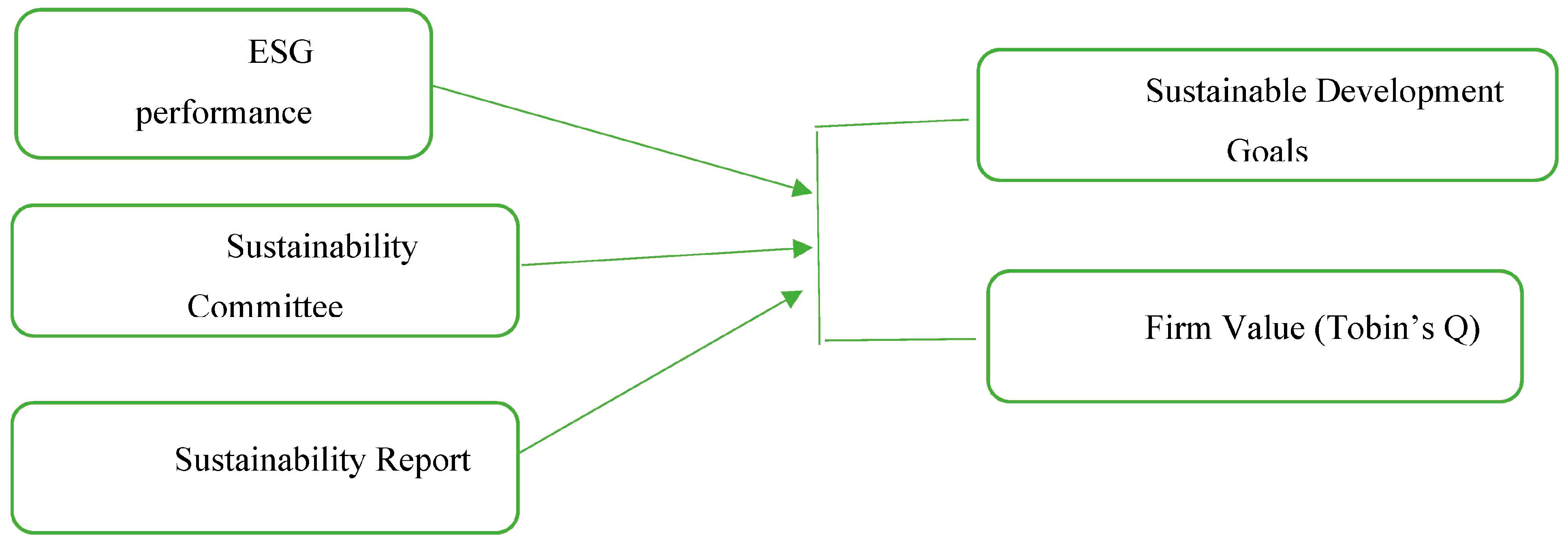
Based on this theoretical discussion, we frame the conceptual framework of this study, as shown in Figure 1.

3. Research Methodology

3.1. Data and Sample

The proposed study relies on firm-level data retrieved from the London Stock Exchange Group (LSEG) Data and Analytics database, which offers a full account of the sustainability indicators, financial traits, and reporting patterns of global listed companies. The sample comprises 36,438 firm-years between 2017 and 2022, from 6073 companies in OECD member countries. Given that the sample period (2017–2022) overlaps with major global disruptions, most notably the COVID-19 pandemic, the empirical specification explicitly controlled for time-specific shocks. Year fixed effects were included in all regression models to account for macroeconomic fluctuations, global crises, and other time-varying factors that may simultaneously affect firms’ sustainability practices, disclosure behavior, and market valuation. By absorbing common shocks across firms within each year, this approach helps to isolate the effects of ESG performance, sustainability governance mechanisms, and sustainability reporting on SDGs disclosure and firm value. In addition, firm-fixed effects are employed to control for unobserved, time-invariant heterogeneity, thereby reducing potential bias arising from structural differences across firms during the pandemic period.
The sample consisted of Australia, Austria, Canada, Chile, Colombian, Costa Rican, Czech, Danish, Estonian, Finnish, French, German, Greek, Hungarian, Iceland, Israeli, Italian, Japanese, the Republic of Korea, Latvian, Luxembourg, Mexico, Netherlands, Norway, Poland, Slovenia, Spain, Sweden, artisans, Switzerland, Turkey, the United Kingdom, and the United States. The empirical analysis is based on firm-level data obtained from LSEG Data & Analytics (Refinitiv) for listed companies operating in OECD member countries from 2017 to 2022. The initial dataset comprises 9733 firms, representing 68,131 firm-year observations across 38 OECD countries. Firms were selected based on the availability of key variables including ESG performance, sustainability governance mechanisms, sustainability reporting, SDGs disclosure, and firm value.
Firms with substantial missing observations were excluded from the analysis to ensure data completeness and consistency. After the screening process, 3660 firms and 31,693 firm-year observations were removed, resulting in a final sample of 6073 firms and 36,438 firm-year observations across 34 OECD countries. Four OECD countries (Ireland, Lithuania, Portugal, and the Slovak Republic) are excluded because of insufficient firm-level data coverage. Although this data-cleaning procedure may introduce potential survivorship bias by retaining firms with more consistent disclosure practices, the use of firm-level fixed effects helps mitigate this concern by controlling for unobserved time-invariant firm characteristics.
The OECD is a good empirical framework through which the association between ESG performance and SDGs disclosure can be analyzed. The organization contributes positively to the implementation of the United Nations’ SDGs through initiatives aimed at sustainable development investment, greater policy coherence, better well-being and inclusive growth, and more data availability [84,85,86]. There are also well-developed regulatory frameworks and institutional mechanisms for advocating responsible business practices and clear sustainability reporting in Organisation for OECD and Development member countries [87]. As emphasized by the existing literature, these nations rank among the world leaders in sustainability governance, which makes them in good condition to conduct research on the relationship between ESG and SDGs [88,89,90]. Their high qualitative regulatory dimensions and attachment to sustainability create fertile ground on which the analysis of the difference in disclosure behavior and performance results can be conducted.
The distribution of firms across sectors is explored to reflect the economic heterogeneity of the sample. The sample represents a wide spectrum of industries, with the largest proportion being technology (15.36%), healthcare (14.91%), industrial (14.76), and Consumer Cyclicals (14.78). Other sectors with large shares include basic materials, finance, and real estate. This broad sectoral dispersion guarantees that the research results are not propagated by industry but rather by large trends within the landscape of OECD corporations. The existence of both low- and high-emission industry companies (Technology and Energy, Basic Materials, etc.) validates the applicability of the sample in terms of sustainability-related studies.

3.2. Variables

This study employed two dependent variables: SDGs disclosure and firm value. The first dependent variable is SDGs disclosure, measured using an SDGs disclosure index constructed based on the 17 Sustainable Development Goals defined by the United Nations. The SDGs-related disclosure data are obtained from Refinitiv ESG, which provides item-level information extracted from firms’ annual sustainability reports. Following prior empirical studies, each SDG item is coded using a binary approach, where a value of 1 indicates the presence of disclosure related to a specific SDG, and 0 indicates non-disclosure. An unweighted aggregation method was applied such that all SDGs were treated as equally important. The SDGs disclosure score for each firm was calculated by summing the disclosed SDG items, dividing by the maximum possible score of 17, and multiplying by 100. Therefore, higher values of the index reflect broader engagement with SDG-related disclosures [8].
The use of an unweighted binary index reflects common practices in SDGs disclosure literature and offers several methodological advantages. First, it enhances transparency and replicability, particularly in large cross-country datasets where subjective weighting schemes may introduce additional bias. Second, given the absence of a universally accepted hierarchy among the 17 SDGs, assigning equal weights avoids normative judgments regarding the relative importance of the individual goals. This approach is consistent with the United Nations’ framing of SDGs as an integrated and indivisible agenda, where progress across goals is interdependent. Nevertheless, this method primarily captures the breadth of SDGs disclosure rather than its depth or qualitative richness. As such, firms that disclose minimally across many SDGs may receive similar scores to firms that provide more detailed disclosures for fewer goals. This limitation is explicitly recognized and addressed through robustness analyses, which help ensure that the main results are not driven solely by the measurement approach. The second dependent variable is firm value, measured using Tobin’s Q. Tobin’s Q is calculated as the ratio of the sum of total market capitalization and total debt to the book value of total assets following Al-Ahdal et al. (2023) [91]. Tobin’s Q is widely used in corporate finance and sustainability literature, as it reflects both market expectations and firm-specific fundamentals.
Primary independent variables of ESG performance, sustainability committee, and sustainability reporting practices. The ESG performance is reflected in the ESG score provided in Refinitiv which follows a scale of 0 to 100 with higher scores being an indicator of good environmental, social, and governance performance. A dummy variable that identifies the presence of a sustainability committee (SUSTCOM) takes a value of 1 (when the firm has a sustainability committee) and 0 (when the firm lacks a sustainability committee). Standalone sustainability reporting (SUSTREPORT) is a binary indicator assigned a value of one if the firm provides separate CSR or sustainability reporting.
The research test included control variables to explain the firm- and country-specific attributes. Operational efficiency is reflected in the ratio of after-tax profit to total assets as return on assets (ROA). Firm Size (FSIZE) is a natural logged total asset as a measure of central tendency. Financial leverage (FINLEV) is calculated by dividing the total debt by the total assets. Growth opportunities (GOP) consider the expansion prospects of firms (in the future), and firms’ financial constraints are expressed as the ratio of market capitalization to total equity. On the macro measure, we have used the natural logarithm of the GDP (in current US dollars) which is incorporated to represent the economic environment which is represented as the total value of goods and services produced in each country, sourced by the World Development Indicators. Table 1 provides a brief description of these variables.

3.3. Statistical Methods

The dataset combines firm-level observations across multiple years, making panel regression techniques particularly suitable for analyzing relationships that vary across firms and time. Panel methods allow us to control for unobserved heterogeneity, capture temporal dynamics, and improve the efficiency of estimators relative to cross-sectional or time-series analyses alone.
We begin by estimating pooled ordinary least squares (OLS), fixed effects, and random effects models to establish the baseline relationships between ESG performance, sustainability governance mechanisms, and the outcomes of SDGs disclosure and firm value. The pooled OLS model assumes that all observations are independent and ignores the potential heterogeneity across firms, which may bias the results in the presence of firm-specific effects. To account for unobserved, time-invariant characteristics of firms, such as culture, managerial style, and long-term strategic orientation, we employ a fixed-effects model. The Hausman (1978) [92] test is applied to formally assess whether the fixed- or random-effects specification is more appropriate. The results of this test strongly favor the fixed-effects approach, indicating that firm-specific effects are correlated with explanatory variables and need to be controlled for to avoid biased coefficient estimates.
In addition, the Breusch–Pagan Lagrange Multiplier (LM) test was conducted to compare the pooled OLS with panel estimators (random- or fixed-effects). The LM test results indicate that panel models are necessary, further validating the use of fixed effects estimation. By controlling for unobserved heterogeneity, the fixed-effects model ensures that the observed relationships are not confounded by time-invariant firm characteristics, thus enhancing the internal validity of the results.
To address the likelihood of cross-sectional dependence and serial correlation, which are common in large panels covering multiple OECD countries and years, we apply the Driscoll–Kraay standard errors. This method corrects for heteroskedasticity, autocorrelation, and contemporaneous correlation across panels, without altering the fixed-effects coefficient estimates. By adjusting the standard errors in this way, we reduce the risk of overestimating the statistical significance, providing more reliable inferences in the presence of correlated shocks across firms or countries.
Recognizing that the relationships between ESG practices, governance structures, SDGs disclosure, and firm value may be endogenous, we also implement a two-step system generalized method of moments (GMM) estimator. Endogeneity may arise due to reverse causality; for example, firms with higher market value may invest more in ESG initiatives, or due to omitted variables that influence both governance practices and firm outcomes. The two-step system GMM addresses these issues by using lagged levels and differences in the explanatory variables as internal instruments, allowing for consistent estimation, even in the presence of dynamic relationships [93]. Additionally, GMM mitigates potential measurement errors and time-invariant omitted variables that could bias traditional fixed effects estimates. Instrument validity and the absence of second-order autocorrelation are confirmed through the AR(2) and Hansen tests, providing assurance that the instruments are strong and that the causal estimates are robust.
Overall, the combination of fixed-effects estimation, Driscoll–Kraay robust standard errors, and two-step system GMM ensures a comprehensive econometric strategy that accounts for firm-level heterogeneity, dynamic relationships, endogeneity, and potential correlations across observations. This approach not only provides robust and reliable coefficient estimates but also enhances the credibility of the causal inferences regarding how ESG performance and sustainability governance influence both SDGs disclosure and firm value across OECD firms.
The models assessed in this study take the following general form:
S D G s i t / T O B I N S Q i t                                                     = β 0 + β 1 E S G i t + β 2 S U S T C O M i t + β 3 S U S T R E P O R T i t                                                     + β 4 F S I Z E i t + β 5 F I N L E V i t + β 6 R O A i t + β 7 G O P i t + β 8 G D P i t                                                     + y e a r e f f e c t s i t + ε i t
where i denotes the firm and t denotes the year. The dependent variable is either SDGs disclosure or firm value (TobinsQ), and the model includes ESG performance, sustainability committee presence (SUSTCOM), and standalone sustainability reporting (SUSTREPORT) as focal independent variables. Firm- and country-level controls are included (firm size (FSIZE), financial leverage (FINLEV), return on assets (ROA), growth opportunities (GOP), gross domestic product (GDP)), and ε i t represents the error term. Additionally, we included year fixed effects in the regression to control for time-specific factors.

4. Results and Discussion

4.1. Descriptive Statistics

Descriptive statistics (Table 2) provides an overview of the distribution and characteristics of the variables used in the study. SDGs disclosure shows a very low average value of 12.56, with a median of zero. This means that most firms disclose very few SDGs items and SDGs reporting is still at an early stage for a large portion of the sample. This pattern suggests a threshold effect, where only firms with established ESG practices or formal governance mechanisms actively disclose SDGs, highlighting the importance of institutionalizing sustainability within corporate structures. The high standard deviation (24.98) reflects the substantial variation across firms and countries. ESG performance had a moderate mean score of approximately 42.95, with values generally concentrated around the median (41.20). This indicates that firms in the sample, on average, maintain mid-level ESG performance. The distribution of sustainability committee presence (SUSCOM) shows a mean of 32.28, again with a median of zero, suggesting that although some firms have well-established committees, a large share still lacks formal sustainability governance structures. Stand-alone sustainability reporting reveals that 45.9 percent of the observations publish a separate sustainability or CSR report. This validates the fact that voluntary reporting practices are not universal, even among listed companies in developed markets.
The average ROA is −0.019 and the median is 0.033. Having a negative mean and positive median implies that a given group of firms has made serious losses, which pull the average of the firm to the left side of the figure. The size of the firms shows low dispersion, as expected, due to the inclusion of a large proportion of medium and large corporations. Descriptive statistics reveal a high standard deviation of Tobin’s Q (2381.24) relative to its mean value (30.392), indicating a substantial dispersion in firm valuation. This dispersion is largely attributable to extreme observations in certain markets, particularly within segments characterized by rapid growth and high market capitalization, such as U.S. technology firms. At the same time, the median value of Tobin’s Q (1.157) suggests that the majority of firms are valued close to their asset replacement costs, indicating that the distribution is highly right-skewed rather than representative of widespread overvaluation. To mitigate the potential bias arising from extreme values, the empirical analysis incorporates several safeguards. First, median-based interpretations are emphasized along with mean values to provide a more representative view of firm valuation. Second, econometric specifications employ estimation techniques that are robust to heteroscedasticity and cross-sectional dependence. Third, additional robustness checks were conducted by re-estimating the models after addressing extreme observations, ensuring that the main findings were not driven by a small subset of highly valued firms. Overall, these steps strengthen the reliability of the results and enhance confidence in the relationship between SDGs disclosure and firm value. The variability in growth opportunities (GOP) is also very high, which is natural in a cross-country sample that varies with the capital structure of the market. The GDP values indicate country-specific distinctions in the size of an economy and correspond to what is anticipated in a dataset on a global scale. In general, the results of the descriptive analysis show significant differences in sustainability practices and firm characteristics, justifying the use of panel regression techniques to assess heterogeneity.
Moreover, the country-level data (Table 3) indicate differences in sustainability practices and firm characteristics in economic and institutional settings. SDGs disclosure is highly variable; Chile, Japan, Turkey, and Mexico have quite high levels of SDGs disclosure, with most scores above 20. Conversely, the disclosure of SDGs in the United States, Iceland, Latvia, and Estonia is very low, implying that there are some differences in regulatory expectations, market pressures, and traditions of reporting.
The highest average ESG performance (ESG) was observed in Mexico, Chile, and Sweden, whereas a low ESG score was observed in Estonia, Latvia, and Iceland. The existence of sustainability committees (SUSCOM) among countries is not homogeneous. Austria, Japan, Chile, and Denmark had higher averages, implying better internal governance frameworks than Iceland, with Latvia scoring almost zero. Unilateral sustainability reporting occurs more frequently in countries where reporting is obligatory or significantly promoted, such as Chile, Mexico, Belgium, and the Netherlands. In contrast, the United States registers the lowest ratio of standalone reports, which is typical of a voluntary reporting culture. The values of average firms in divergent countries change drastically. The mean value is very high in the US because extreme valuations of some companies, especially in the technology industry, are observed. The Tobin’s Q values of many European and Asian countries, including France, Denmark, Korea, and Sweden, are close to 1–3 which points to more stable and mature markets. At the aggregate level, the table indicates a high cross-country diversity in terms of sustainability governance, reporting practices, and firm value. This heterogeneity supports the use of country-level controls and the fact that a fixed-effects regression can be used to address institutional differences.

4.2. Correlation Results

According to the correlation outcomes, SDGs were positively correlated with ESG, SUSCOM, and SUSREPORT, indicating that companies with better ESG performance and more developed sustainability frameworks were more likely to disclose more information related to SDGs (Table 4). ESG also has significant positive correlations with SUSCOM and SUSREPORT, indicating that companies with better ESG performance are more likely to have specific sustainability committees and to publish sustainability reports. There is a strong association between SUSCOM and SUSREPORT, such that firms’ formal sustainability committees are also more likely to report structured sustainability reports. Tobin’s Q exhibits a very weak negative correlation with ESG, SUSCOM, and SUSREPORT; however, these values are very small and have no economic value. Firm size is also positively correlated with all three variables with respect to sustainability, which is understandable, considering that larger firms should have more capacity and incentives to practice formal sustainability. In general, the correlation matrix reveals the existence of a consistent and reasonable relationship between key variables with no signs of harmful multicollinearity.

4.3. Regression Results

Table 5 reports the fixed-effects estimates examining the determinants of SDGs disclosure and firm value. The results provide consistent and economically meaningful evidence that ESG performance, sustainability governance structures, and sustainability reporting practices play a central role in shaping firms’ SDGs transparency and market valuation.
In Model 1, ESG performance exhibits a positive and highly significant association with SDGs disclosures. A coefficient of 0.251 implies that a one-unit improvement in ESG performance is associated with a substantial increase in the SDGs disclosure score, highlighting not only statistical but also practical relevance. This magnitude suggests that firms with stronger ESG engagement disclose more meaningful information related to the SDGs, reflecting a deliberate strategic orientation toward sustainability transparency. This finding aligns with legitimacy and stakeholder theories, which posit that firms with superior ESG practices use disclosure to signal alignment with societal expectations and to strengthen stakeholder trust. This result is consistent with prior empirical evidence showing that intensive ESG engagement enhances the breadth and depth of sustainability disclosures [43,94].
Model 2 shows that the existence of a sustainability committee (SUSCOM) has a large positive effect on SDGs disclosure. A coefficient of 5.163 indicates that firms with a dedicated sustainability committee disclose, on average, substantially more SDG-related information than firms without such a governance structure. This effect size underscores the economic importance of formal sustainability governance mechanisms. Sustainability committees appear to facilitate the monitoring, coordination, and strategic oversight of sustainability initiatives, thereby translating governance structures into more comprehensive disclosure outcomes. This finding is consistent with prior studies, such as that of Peters and Romi (2015) [95], who document that board-level sustainability oversight enhances environmental and sustainability transparency.
Model 3 highlights the role of standalone sustainability reporting (SUSREPORT). The positive and statistically significant coefficient of 2.562 indicates that firms issuing independent sustainability or CSR reports disclose considerably more SDG-related information than do those that do not. From an economic perspective, this suggests that voluntary reporting frameworks materially enhance the depth and scope of SDGs disclosure because standalone reports typically allow for more detailed, structured, and goal-specific sustainability communication. This result supports earlier evidence that voluntary sustainability reporting creates incentives for more extensive disclosure and improves transparency [96]. Across all three SDGs models, the stability of coefficients and significance levels, even after the inclusion of control variables, indicates that the core relationships are robust and insensitive to alternative model specifications.
Turning to firm value, Models 4–6 examine Tobin’s Q as the dependent variable. In Model 4, ESG performance is positively and significantly associated with firm value with a coefficient of 7.316. This sizeable effect suggests that improvements in ESG performance are associated with economically meaningful increases in market valuations. The results indicate that capital markets reward firms with strong ESG profiles, likely because of enhanced reputation, improved risk management, and lower information asymmetry. This finding is in line with stakeholder theory, which argues that responsible corporate behavior reduces perceived risk and strengthens investor confidence and is consistent with prior empirical evidence [91,97].
Model 5 shows that sustainability committees also have a positive effect on Tobin’s Q. Although the coefficient is smaller relative to ESG performance, its positive sign and significance suggest that formal sustainability governance structures contribute to firm value by signaling long-term orientation, improved oversight, and commitment to sustainable practices. This finding supports the argument that governance mechanisms related to sustainability reduce uncertainty in capital markets and enhance firm valuation [95].
Model 6 indicates that standalone sustainability reporting has a positive and statistically significant impact on Tobin’s Q. Despite the scale sensitivity of Tobin’s Q, the magnitude of the coefficient suggests that transparent and detailed sustainability reporting improves investors’ perceptions of firm quality and long-term prospects. This result is consistent with evidence that voluntary sustainability disclosures lower the cost of capital and attract long-term investors [96]. Overall, the consistent signs and significance of ESG performance, sustainability committees, and sustainability reporting across all Tobin’s Q models reinforce the conclusion that sustainability-related practices are not only symbolic but also economically valuable.
Taken together, the fixed effects results strongly support stakeholder and legitimacy theories. Firms with stronger ESG performance and more developed sustainability governance structures are more transparent to SDGs disclosure and enjoy higher market value. This finding suggests that internal sustainability governance enhances both disclosure outcomes and financial performance, reflecting the growing importance of sustainability in contemporary corporate governance.

4.4. Robust Tests

Robustness tests further reinforced these conclusions. Table 6 reports the fixed-effects estimates with Driscoll–Kraay standard errors, which correct for cross-sectional dependence and serial correlation common in large OECD panel datasets. The key relationships observed in the baseline model remain intact. ESG performance, sustainability committees, and sustainability reporting continue to exert positive and statistically significant effects on SDGs disclosure and firm value, although the estimated coefficients are slightly smaller. This reduction in magnitude is expected given the more conservative standard errors; however, the persistence of significance underscores the economic and statistical robustness of the findings. Importantly, these results indicate that common shocks or cross-country dependence do not drive the observed relationships.
The two-step system GMM results reported in Table 7 provide additional support by explicitly addressing the potential endogeneity, reverse causality, and dynamic effects. ESG performance shows an even stronger positive impact on both SDGs disclosure and Tobin’s Q than the fixed-effects estimates, suggesting that static models may underestimate the long-term and cumulative effects of ESG engagement. Similarly, the coefficients for sustainability committees and sustainability reporting are larger and highly significant, indicating that their influence becomes more pronounced when dynamic adjustments and endogeneity concerns are considered. The validity of the GMM estimates is confirmed by the AR(2) and Hansen test results, which indicate no second-order serial correlation or valid instruments.
Overall, the consistency of results across fixed effects, Driscoll–Kraay, and system GMM specifications demonstrates the stability of the findings. The evidence strongly suggests that ESG performance, sustainability governance structures, and sustainability reporting have economically meaningful and robust effects on both SDGs disclosure and firm value, reinforcing the substantive relevance of this study’s conclusions.

5. Discussion and Implications

The empirical findings demonstrate that ESG performance, sustainability committees, and standalone sustainability reporting significantly enhance both SDGs disclosure and firm value. Beyond confirming statistical relationships, the magnitude and stability of these effects offer insights into how sustainability practices function within the OECD institutional context. First, the stronger influence of ESG performance on SDGs disclosure and market value in our sample may reflect the high regulatory standards, investor scrutiny, and stakeholder expectations in OECD countries. Firms in these economies face well-developed legal and reporting frameworks, strong enforcement mechanisms, and active civil society pressure. As a result, ESG engagement not only signals compliance, but also serves as a credible commitment to responsible business conduct, amplifying its effect on disclosure and firm valuation. The amplified impact observed in the GMM results suggests that the benefits of ESG performance are persistent and may compound over time as firms’ sustainability practices and market reputations mature. Second, sustainability committees have emerged as particularly influential in OECD firms, where governance structures are more formalized and board-level oversight is valued. The presence of a dedicated sustainability committee likely strengthens strategic alignment, enhances monitoring, and improves the coordination of reporting practices, translating internal governance into more comprehensive SDGs disclosure. This effect may be less pronounced in countries with weaker governance systems, highlighting the institutional contingency of the effectiveness of sustainability governance. Third, stand-alone sustainability reporting exerts a strong positive effect on both disclosure and market value. In OECD countries, voluntary reporting frameworks such as the GRI, SASB, and integrated reporting guidelines are widely adopted and respected by investors. Firms that utilize such reporting mechanisms provide more detailed, standardized, and comparable information, which enhances transparency and reduces information asymmetry. This transparency is particularly valued by institutional investors and market analysts in OECD economies, which explains the observed economic significance of reporting practices. From a managerial perspective, these findings suggest that investing in ESG practices, establishing formal sustainability committees, and adopting structured sustainability reporting are not merely compliance exercises, they are strategic levers that can enhance both reputational capital and financial performance. Managers should prioritize the integration of ESG considerations into corporate strategy and decision-making while also ensuring that reporting mechanisms are sufficiently comprehensive to reflect meaningful progress toward global sustainability objectives [98]. For policymakers, the results reinforce the importance of institutional frameworks that incentivize ESG engagement and transparent reporting. Regulatory encouragement, standardized disclosure guidelines, and support for board-level sustainability oversight can strengthen the effectiveness of corporate sustainability initiatives. In particular, policies that foster transparency, stakeholder engagement, and board accountability can magnify the positive effects of ESG and governance mechanisms on both SDGs disclosure and firm value [99]. In sum, this study highlights that the effectiveness of ESG performance and sustainability governance mechanisms is context-dependent. OECD institutional characteristics, such as rigorous regulation, investor expectations, and active stakeholder engagement, amplify the economic and informational benefits of sustainability initiatives and offer clear guidance for managers and policymakers seeking to enhance corporate contributions to global development priorities while maintaining market competitiveness.

6. Conclusions and Limitations

6.1. Conclusions

This study examines how ESG performance, sustainability committees, and sustainability reporting influence SDGs disclosure and firm value among firms operating in OECD countries. In an environment characterized by increasing regulatory scrutiny and stakeholder demand for transparency, understanding the internal mechanisms that support credible SDGs reporting is particularly important. Using a large cross-country panel dataset spanning 2017–2022, the findings indicate that firms with stronger ESG performance and more formalized sustainability governance structures are better positioned to disclose their contributions to global development goals.
These results provided several important insights. First, ESG performance is positively associated with SDGs disclosure, suggesting that firms with embedded sustainability practices are more capable of translating operational commitments into transparent reporting outcomes. This finding aligns with stakeholder theory, which posits that firms respond to societal expectations by strengthening their sustainability performance and disclosure practices. Second, the presence of a sustainability committee significantly enhances SDGs disclosure and underscores the importance of board-level oversight in coordinating sustainability initiatives and reporting. Third, sustainability reporting practices have the strongest effect on SDGs disclosure, highlighting the role of structured and formal reporting mechanisms in converting internal sustainability efforts into externally visible commitments.
In addition, this study demonstrates that ESG performance and sustainability governance mechanisms are positively associated with firm value, suggesting that sustainability integration yields tangible economic benefits in mature market settings. These findings reinforce the view that sustainability-oriented governance is not merely symbolic, but contributes to both transparency and market recognition in OECD economies.

6.2. Limitations and Future Research Directions

Despite its contributions, this study had several limitations that warrant careful consideration. First, the analysis relies on secondary data obtained from LSEG Data & Analytics. While this database provides standardized and comparable ESG-related information across countries, it may not fully capture firm-specific qualitative aspects of sustainability engagement such as managerial intent, organizational culture, or the strategic depth of SDGs integration.
Second, the SDGs Disclosure Index is constructed using an unweighted binary approach, which assumes equal importance across all 17 SDGs. Although this method enhances objectivity and cross-country comparability, it does not reflect differences in disclosure quality, intensity, or strategic prioritization of specific SDGs. Future research could address this limitation by developing weighted or quality-adjusted SDGs indices or incorporating textual and content-based disclosure measures.
Third, while empirical models control for a range of firm-level and macroeconomic factors, some potentially relevant variables may remain omitted. Firm-specific cultural attributes, leadership orientation toward sustainability, and long-term strategic priorities may also influence disclosure behavior and market valuation but are difficult to observe in large panel datasets.
Building on these limitations, several avenues have emerged for future research. Future studies should examine the composition, independence, and sustainability expertise of committee members to better understand how governance quality shapes sustainability outcomes. Further research should also explore the role of external assurance in enhancing the credibility and economic relevance of sustainability reports. Additionally, greater attention should be paid to regulatory heterogeneity within OECD countries, investigating how differences in national disclosure mandates and enforcement strength moderate the relationship between ESG and SDGs. Longitudinal and mixed-method approaches may also help uncover the dynamic and qualitative dimensions of corporate engagement with the SDGs.
Notwithstanding these limitations, this study provides robust evidence that ESG performance and sustainability governance mechanisms play a central role in shaping SDGs disclosure and firm value in developed economies. Firms that integrate sustainability into governance structures and reporting systems are more transparent and better positioned to meaningfully contribute to global development agendas.

Author Contributions

Methodology, A.O.A.B.; Software, S.M.A.; Investigation, A.S.A.; Writing—original draft, A.A.S., A.O.A.B. and S.D.G.; Writing—review and editing, S.D.G., R.H.J. and S.M.A.; Supervision, R.H.J.; Project administration, A.S.A. All authors have read and agreed to the published version of the manuscript.

Funding

This research was funded by Princess Nourah bint Abdulrahman University, grant number PNURSP2026R863.

Institutional Review Board Statement

Not applicable.

Informed Consent Statement

Not applicable.

Data Availability Statement

The original contributions presented in this study are included in the article. Further inquiries can be directed to the corresponding author.

Acknowledgments

Princess Nourah bint Abdulrahman University Researchers Supporting Project number (PNURSP2026R863), Princess Nourah bint Abdulrahman University, Riyadh, Saudi Arabia.

Conflicts of Interest

The authors declare no conflicts of interest.

References

  1. Sahu, M.; Mishra, A.; Alahdal, W.M.; Sami, M. ESG performance and audit committee expertise: Advancing sustainable development goals in leading nations. Int. Rev. Econ. Financ. 2025, 103, 104445. [Google Scholar] [CrossRef]
  2. Sahu, M.; Alahdal, W.M.; Baatwah, S.R.; Elbanna, S. Governance and Green Energy: Unveiling Their Impact on Sustainable Development in OECD Countries. Sustain. Dev. 2025, 33, 7185–7209. [Google Scholar] [CrossRef]
  3. Kateb, I.; Alahdal, W.M. Tracing the path to sustainable governance: CSR committees as mediators of board impact on ESG performance in the MENA region. Corp. Gov. 2024, 25, 1272–1300. [Google Scholar] [CrossRef]
  4. Alahdal, W.M.; Abidin, A.F.Z.; Sahu, M.; Alamoudi, M.A.; Hashim, H.A. Exploring the Moderating Effect of Regulatory Quality on the Relationship Between ESG Performance and SDGs Disclosure: Evidence From OECD Countries. Sustain. Dev. 2025, 33, 7934–7950. [Google Scholar] [CrossRef]
  5. Cheng, Y.; Wang, M.; Xiong, Y.; Huang, Z. Towards the United Nations sustainable development goals: Evidence from ESG performance, labor share and environmental governance pressure in China. J. Clean. Prod. 2025, 486, 144465. [Google Scholar] [CrossRef]
  6. Gidage, M.; Bhide, S. ESG and economic growth: Catalysts for achieving sustainable development goals in developing economies. Sustain. Dev. 2024, 33, 2060–2077. [Google Scholar] [CrossRef]
  7. Bekaert, G.; Rothenberg, R.; Noguer, M. Sustainable investment—Exploring the linkage between alpha, ESG, and SDGs. Sustain. Dev. 2023, 31, 3831–3842. [Google Scholar] [CrossRef]
  8. Bose, S.; Khan, H.Z.; Bakshi, S. Determinants and consequences of sustainable development goals disclosure: International evidence. J. Clean. Prod. 2024, 434, 140021. [Google Scholar] [CrossRef]
  9. Anton van Zanten, J.; Huij Robeco, J. Corporate Sustainability Performance: Introducing an SDG Score and Testing Its Validity Relative to ESG Ratings. 2022. Available online: https://worthwhileinc.com/uploads/corporate_sustainability_performance.pdf (accessed on 15 January 2026).
  10. Işık, C.; Ongan, S.; Islam, H.; Pinzon, S.; Jabeen, G. Navigating sustainability: Unveiling the interconnected dynamics of ESG factors and SDGs in BRICS-11. Sustain. Dev. 2024, 32, 5437–5451. [Google Scholar] [CrossRef]
  11. Michelon, G.; Parbonetti, A. The effect of corporate governance on sustainability disclosure. J. Manag. Gov. 2012, 16, 477–509. [Google Scholar] [CrossRef]
  12. Soni, T.K. Demystifying the relationship between ESG and SDG performance: Study of emerging economies. Invest. Manag. Financ. Innov. 2023, 20, 1–12. [Google Scholar] [CrossRef]
  13. Jain, T.; Jamali, D. Looking Inside the Black Box: The Effect of Corporate Governance on Corporate Social Responsibility. Corp. Gov. Int. Rev. 2016, 24, 253–273. [Google Scholar] [CrossRef]
  14. Chien, F. The role of corporate governance and environmental and social responsibilities on the achievement of sustainable development goals in Malaysian logistic companies. Econ. Res.-Ekon. Istraz. 2023, 36, 1610–1630. [Google Scholar] [CrossRef]
  15. Kiran, M.; Naeem, M.A.; Rabbani, M.R. Evolving Dynamics of Ecological Sustainability: Investigating ESG Investments and Governance Quality in G8 Nations. J. Knowl. Econ. 2025, 16, 17755–17783. [Google Scholar] [CrossRef]
  16. Sadiq, M.; Ngo, T.Q.; Pantamee, A.A.; Khudoykulov, K.; Ngan, T.T.; Tan, L.P. The role of environmental social and governance in achieving sustainable development goals: Evidence from ASEAN countries. Econ. Res.-Ekon. Istraz. 2023, 36, 170–190. [Google Scholar] [CrossRef]
  17. Alahdal, W.M.; Pandey, D.K.; Sahu, M.; Nguyen, T.; Hashim, H.A. Environmental, social and governance and earnings management research: Current trends and future research. Account. Res. J. 2025, 38, 527–550. [Google Scholar] [CrossRef]
  18. Dong, R.; Shao, C.; Xin, S.; Lu, Z. A Sustainable Development Evaluation Framework for Chinese Electricity Enterprises Based on SDG and ESG Coupling. Sustainability 2023, 15, 8960. [Google Scholar] [CrossRef]
  19. Loang, O.K. The Road to Sustainable Investing: Corporate Governance, Sustainable Development Goals, and the Financial Market. Inst. Econ. 2023, 15, 33–57. [Google Scholar] [CrossRef]
  20. Hartley, K. Aligning ESG and SDGs at the Urban Level. 2023. Available online: https://www.researchgate.net/publication/373049933 (accessed on 8 February 2026).
  21. Javed, M.; Rashid, M.A.; Hussain, G. When does it pay to be good—A contingency perspective on corporate social and financial performance: Would it work? J. Clean. Prod. 2016, 133, 1062–1073. [Google Scholar] [CrossRef]
  22. Ansari, U.; Alam, S.; de Villiers, C.J.; Barnard, P.; Lawrence, S.S.; Carroll, A.B. The relationship between CSR and tax avoidance. J. Account. Public Policy 2019, 32, 95–127. [Google Scholar]
  23. Chen, Z.; Xie, G. ESG disclosure and financial performance: Moderating role of ESG investors. Int. Rev. Financ. Anal. 2022, 83, 102291. [Google Scholar] [CrossRef]
  24. Van Hoang, T.H.; Pham, L.; Nguyen, T.T.P. Does country sustainability improve firm ESG reporting transparency? The moderating role of firm industry and CSR engagement. Econ. Model. 2023, 125, 106351. [Google Scholar] [CrossRef]
  25. Voulvoulis, N.; Giakoumis, T.; Hunt, C.; Kioupi, V.; Petrou, N.; Souliotis, I.; Vaghela, C.; Rosely, W.B.W. Systems thinking as a paradigm shift for sustainability transformation. Glob. Environ. Change 2022, 75, 102544. [Google Scholar] [CrossRef]
  26. Khovrak, I. ESG-driven approach to managing insurance companies’ sustainable development. Insur. Mark. Co. 2020, 11, 42–52. [Google Scholar] [CrossRef]
  27. Sarkar, S.; Nair, M.M.S.; Datta, A. Role of Environmental, Social, and Governance in Achieving the UN Sustainable Development Goals: A Special Focus on India; John Wiley and Sons Inc.: Hoboken, NJ, USA, 2023. [Google Scholar] [CrossRef]
  28. García-Sánchez, I.M.; Gómez-Miranda, M.E.; David, F.; Rodríguez-Ariza, L. Board independence and GRI-IFC performance standards: The mediating effect of the CSR committee. J. Clean. Prod. 2019, 225, 554–562. [Google Scholar] [CrossRef]
  29. Uyar, A.; Kilic, M.; Koseoglu, M.A.; Kuzey, C.; Karaman, A.S. The link among board characteristics, corporate social responsibility performance, and financial performance: Evidence from the hospitality and tourism industry. Tour. Manag. Perspect. 2020, 35, 100714. [Google Scholar] [CrossRef]
  30. Gallego-Álvarez, I.; Pucheta-Martínez, M.C. Corporate social responsibility reporting and corporate governance mechanisms: An international outlook from emerging countries. Bus. Strategy Dev. 2020, 3, 77–97. [Google Scholar] [CrossRef]
  31. Martínez-Ferrero, J.; Lozano, M.B.; Vivas, M. The impact of board cultural diversity on a firm’s commitment toward the sustainability issues of emerging countries: The mediating effect of a CSR committee. Corp. Soc. Responsib. Environ. Manag. 2021, 28, 675–685. [Google Scholar] [CrossRef]
  32. Amran, A.; Lee, S.P.; Devi, S.S. The influence of governance structure and strategic corporate social responsibility toward sustainability reporting quality. Bus. Strategy Environ. 2014, 23, 217–235. [Google Scholar] [CrossRef]
  33. Zampone, G.; Nicolò, G.; Sannino, G.; De Iorio, S. Gender diversity and SDG disclosure: The mediating role of the sustainability committee. J. Appl. Account. Res. 2024, 25, 171–193. [Google Scholar] [CrossRef]
  34. Orazalin, N. Do board sustainability committees contribute to corporate environmental and social performance? The mediating role of corporate social responsibility strategy. Bus. Strategy Environ. 2020, 29, 140–153. [Google Scholar] [CrossRef]
  35. Abdullah, A.; Yamak, S.; Korzhenitskaya, A.; Rahimi, R.; McClellan, J. Sustainable development: The role of sustainability committees in achieving ESG targets. Bus. Strategy Environ. 2024, 33, 2250–2268. [Google Scholar] [CrossRef]
  36. Hoagland, S.R. Predicting Strategic Orientations of Public Research Universities in Economic Development: A Test of the Resource Dependence Model; Old Dominion University: Norfolk, VA, USA, 1995. [Google Scholar]
  37. Velte, P.; Stawinoga, M. Do chief sustainability officers and CSR committees influence CSR-related outcomes? A structured literature review based on empirical-quantitative research findings. J. Manag. Control 2020, 31, 333–377. [Google Scholar] [CrossRef]
  38. Patten, D.M. Seeking legitimacy. Sustain. Account. Manag. Policy J. 2020, 11, 1009–1021. [Google Scholar] [CrossRef]
  39. Pizzi, S.; Rosati, F.; Venturelli, A. The determinants of business contribution to the 2030 Agenda: Introducing the SDG Reporting Score. Bus. Strategy Environ. 2021, 30, 404–421. [Google Scholar] [CrossRef]
  40. Subramaniam, N.; Akbar, S.; Situ, H.; Ji, S.; Parikh, N. Sustainable development goal reporting: Contrasting effects of institutional and organisational factors. J. Clean. Prod. 2023, 411, 137339. [Google Scholar] [CrossRef]
  41. Impact, K. The Time Has Come: The KPMG Survey of Sustainability Reporting 2020. 2020. Available online: https://assets.kpmg.com/content/dam/kpmg/xx/pdf/2020/11/the-time-has-come.pdf (accessed on 8 February 2026).
  42. Clarkson, M.E. A Stakeholder Framework for Analyzing and Evaluating Corporate Social Performance. Acad. Manag. Rev. 1995, 20, 92–117. [Google Scholar] [CrossRef]
  43. Khan, H.Z.; Bose, S.; Mollik, A.T.; Harun, H. ‘Green washing’ or ‘authentic effort’? An empirical investigation of the quality of sustainability reporting by banks. Account. Audit. Account. J. 2021, 34, 338–369. [Google Scholar] [CrossRef]
  44. Mahoney, L.S.; Thorne, L.; Cecil, L.; LaGore, W. A research note on standalone corporate social responsibility reports: Signaling or greenwashing? Crit. Perspect. Account. 2013, 24, 350–359. [Google Scholar] [CrossRef]
  45. UNEP. Corporate Sustainability Reporting. Available online: https://www.unep.org/explore-topics/resource-efficiency/what-we-do/responsible-industry/corporate-sustainability (accessed on 3 December 2025).
  46. Aggarwal, P.; Singh, A.K. CSR and sustainability reporting practices in India: An in-depth content analysis of top-listed companies. Soc. Responsib. J. 2019, 15, 1033–1053. [Google Scholar] [CrossRef]
  47. Deegan, C. Introduction: The legitimising effect of social and environmental disclosures—A theoretical foundation. Account. Audit. Account. J. 2002, 15, 282–311. [Google Scholar] [CrossRef]
  48. Momin, M.A.; Parker, L.D. Motivations for corporate social responsibility reporting by MNC subsidiaries in an emerging country: The case of Bangladesh. Br. Account. Rev. 2013, 45, 215–228. [Google Scholar] [CrossRef]
  49. Patten, D.M. Exposure, legitimacy, and social disclosure. J. Account. Public Policy 1991, 10, 297–308. [Google Scholar] [CrossRef]
  50. Soysa, R.N.K.; Pallegedara, A.; Kumara, A.S.; Jayasena, D.M.; Samaranayake, M.K.S.M. Construction of a sustainability reporting score index integrating sustainable development goals (SDGs). The case of Sri Lankan listed firms. J. Asian Bus. Econ. Stud. 2024, 31, 190–202. [Google Scholar] [CrossRef]
  51. Global Reporting Initiative; PricewaterhouseCoopers; UN Global Compact. Business Reporting on the SDGs. An analysis of the Goals and Targets. 2017. Available online: https://unglobalcompact.org/library/5361 (accessed on 8 February 2026).
  52. GRI. Linking the SDGs and GRI Standards. GRI Supports the Sustainable Development Goals, No. March, 2020. Available online: https://www.globalreporting.org/media/lbvnxb15/mapping-sdgs-gri-update-march.pdf (accessed on 8 February 2026).
  53. Adams, C.A. The Sustainable Development Goals, Integrated Thinking and the Integrated Report. 2017. Available online: https://www.academia.edu/40214940/The_Sustainable_Development_Goals_integrated_thinking_and_the_integrated_report (accessed on 8 February 2026).
  54. Adams, C.A.; Druckman, P.B.; Picot, R.C. Sustainable Development Goals Disclosure (SDGD) Recommendations. 2020. Available online: https://drcaroladams.net/content/wp-content/uploads/2022/03/Adams_Druckman_Picot_2020_Final_SDGD_Recommendations_updated.pdf (accessed on 3 February 2026).
  55. Guidi, M.; Vitali, S.; Giuliani, M. Exploring companies’ dialogue on Sustainable Development Goals (SDGs) through sustainability reporting and annual general meetings. Sustain. Account. Manag. Policy J. 2025, 16, 218–250. [Google Scholar] [CrossRef]
  56. Rizzato, F.; Tonelli, A.; Fiandrino, S.; Devalle, A. Analysing SDG disclosure and its impact on integrated thinking and reporting. Meditari Account. Res. 2024, 32, 803–831. [Google Scholar] [CrossRef]
  57. Erin, O.A.; Olojede, P. Do nonfinancial reporting practices matter in SDG disclosure? An exploratory study. Meditari Account. Res. 2024, 32, 1398–1422. [Google Scholar] [CrossRef]
  58. Peña, C.G.; Díaz, B.; Muñoz, M.M. Balancing the sustainability in the 2030 agenda: The OECD countries. J. Integr. Environ. Sci. 2022, 19, 243–271. [Google Scholar] [CrossRef]
  59. Lokuwaduge, C.S.D.S.; Heenetigala, K. Integrating Environmental, Social and Governance (ESG) Disclosure for a Sustainable Development: An Australian Study. Bus. Strategy Environ. 2017, 26, 438–450. [Google Scholar] [CrossRef]
  60. Wu, W.; Alkaraan, F.; Le, C. The moderating effects of corporate governance and investment efficiency on the nexus between financial flexibility and firm performance. J. Financ. Report. Account. 2023, 23, 2573–2598. [Google Scholar] [CrossRef]
  61. Buchanan, B.; Cao, C.X.; Chen, C. Corporate social responsibility, firm value, and influential institutional ownership. J. Corp. Financ. 2018, 52, 73–95. [Google Scholar] [CrossRef]
  62. Cui, J.; Jo, H.; Na, H. Does Corporate Social Responsibility Affect Information Asymmetry? J. Bus. Ethics 2018, 148, 549–572. [Google Scholar] [CrossRef]
  63. Wei, Y.; Pujari, D. Does buying green pay off? Stock market reactions to green acquisitions. Ind. Mark. Manag. 2023, 114, 137–151. [Google Scholar] [CrossRef]
  64. Riedl, A.; Smeets, P. Why Do Investors Hold Socially Responsible Mutual Funds? J. Financ. 2017, 72, 2505–2550. [Google Scholar] [CrossRef]
  65. Xie, J.; Nozawa, W.; Yagi, M.; Fujii, H.; Managi, S. Do environmental, social, and governance activities improve corporate financial performance? Bus. Strategy Environ. 2019, 28, 286–300. [Google Scholar] [CrossRef]
  66. Narula, R.; Rao, P.; Rao, A.A. Impact of ESG on firm value: A conceptual review of the literature. J. Soc. Econ. Dev. 2023, 25, 162–179. [Google Scholar] [CrossRef]
  67. Seok, J.; Kim, Y.; Oh, Y.K. How ESG shapes firm value: The mediating role of customer satisfaction. Technol. Forecast. Soc. Change 2024, 208, 123714. [Google Scholar] [CrossRef]
  68. Feng, Z.; Wu, Z. ESG Disclosure, REIT Debt Financing and Firm Value. J. Real Estate Financ. Econ. 2021, 67, 388–422. [Google Scholar] [CrossRef] [PubMed]
  69. An, H.; Ran, C.; Gao, Y. Does ESG information disclosure increase firm value? The mediation role of financing constraints in China. Res. Int. Bus. Financ. 2025, 73, 102584. [Google Scholar] [CrossRef]
  70. Mishra, G.; Patro, A.; Tiwari, A.K. Does climate governance moderate the relationship between ESG reporting and firm value? Empirical evidence from India. Int. Rev. Econ. Financ. 2024, 91, 920–941. [Google Scholar] [CrossRef]
  71. Burke, J.J.; Hoitash, R.; Hoitash, U. The Heterogeneity of Board-Level Sustainability Committees and Corporate Social Performance. J. Bus. Ethics 2019, 154, 1161–1186. [Google Scholar] [CrossRef]
  72. Chen, F.; Ngniatedema, T.; Li, S. A cross-country comparison of green initiatives, green performance and financial performance. Manag. Decis. 2018, 56, 1008–1032. [Google Scholar] [CrossRef]
  73. Orazalin, N.S.; Ntim, C.G.; Malagila, J.K. Board Sustainability Committees, Climate Change Initiatives, Carbon Performance, and Market Value. Br. J. Manag. 2024, 35, 295–320. [Google Scholar] [CrossRef]
  74. Parmar, B.L.; Freeman, R.E.; Harrison, J.S.; Wicks, A.C.; Purnell, L.; de Colle, S. Stakeholder theory: The state of the art. Acad. Manag. Ann. 2010, 4, 403–445. [Google Scholar] [CrossRef]
  75. Chang, K. The impacts of environmental performance and propensity disclosure on financial performance: Empirical evidence from unbalanced panel data of heavy-pollution industries in China. J. Ind. Eng. Manag. 2015, 8, 21–36. [Google Scholar] [CrossRef]
  76. Tan, S.H.; Habibullah, M.S.; Tan, S.K.; Choon, S.W. The impact of the dimensions of environmental performance on firm performance in travel and tourism industry. J. Environ. Manag. 2017, 203, 603–611. [Google Scholar] [CrossRef] [PubMed]
  77. Tomšič, N.; Bojnec, Š.; Simčič, B. Corporate sustainability and economic performance in small and medium sized enterprises. J. Clean. Prod. 2015, 108, 603–612. [Google Scholar] [CrossRef]
  78. Elbardan, H.; Uyar, A.; Kuzey, C.; Karaman, A.S. CSR reporting, assurance, and firm value and risk: The moderating effects of CSR committees and executive compensation. J. Int. Account. Audit. Tax. 2023, 53, 100579. [Google Scholar] [CrossRef]
  79. Gupta, A.K.; Gupta, N. Effect of corporate environmental sustainability on dimensions of firm performance—Towards sustainable development: Evidence from India. J. Clean. Prod. 2020, 253, 119948. [Google Scholar] [CrossRef]
  80. Cantele, S.; Zardini, A. Is sustainability a competitive advantage for small businesses? An empirical analysis of possible mediators in the sustainability–financial performance relationship. J. Clean. Prod. 2018, 182, 166–176. [Google Scholar] [CrossRef]
  81. Friske, W.; Hoelscher, S.A.; Nikolov, A.N. The impact of voluntary sustainability reporting on firm value: Insights from signaling theory. J. Acad. Mark. Sci. 2022, 51, 372–392. [Google Scholar] [CrossRef]
  82. Shah, S.Z.A.; Akbar, S.; Zhu, X. Mandatory CSR disclosure, institutional ownership and firm value: Evidence from China. Int. J. Financ. Econ. 2025, 30, 71–85. [Google Scholar] [CrossRef]
  83. Suhartini, D.; Tjahjadi, B.; Fayanni, Y. Impact of sustainability reporting and governance on firm value: Insights from the Indonesian manufacturing sector. Cogent Bus. Manag. 2024, 11, 2381087. [Google Scholar] [CrossRef]
  84. OECD. Economic Outlook: Statistics and Projections (Database); OECD: Paris, France, 2011. [Google Scholar]
  85. OECD. Survey on Corporate Governance Frameworks in the Middle East and North Africa; OECD: Paris, France, 2019. [Google Scholar] [CrossRef]
  86. OECD. Update on the OECD’s Contribution to the 2030 Agenda for Sustainable Development. 2019. Available online: https://www.oecd.org/en/publications/oecd-contributions-to-the-2030-agenda-and-beyond_69c94bd4-en.html (accessed on 8 February 2026).
  87. Corporate Sustainability|OECD. Available online: https://www.oecd.org/en/topics/sub-issues/corporate-sustainability.html (accessed on 9 January 2025).
  88. Carroll, P.; Kellow, A. The OECD: A Decade of Transformation: 2011–2021; Walter de Gruyter GmbH & Co KG: Berlin, Germany, 2021. [Google Scholar] [CrossRef]
  89. Dsouza, S.; K., K.; Kayani, U.; Nawaz, F.; Hasan, F. Sustainable investing: ESG effectiveness and market value in OECD regions. Cogent Econ. Financ. 2025, 13, 2445147. [Google Scholar] [CrossRef]
  90. Naomi, P.; Akbar, I. Beyond sustainability: Empirical evidence from OECD countries on the connection among natural resources, ESG performances, and economic development. Econ. Sociol. 2021, 14, 89–106. [Google Scholar] [CrossRef]
  91. Al-Ahdal, W.M.; Farhan, N.H.S.; Vishwakarma, R.; Hashim, H.A. The moderating role of CEO power on the relationship between environmental, social and governance disclosure and financial performance in emerging market. Environ. Sci. Pollut. Res. 2023, 30, 85803–85821. [Google Scholar] [CrossRef]
  92. Hausman, J.A. Econometrica—Specification tests in econometrics. J. Econom. Soc. 1978, 46, 1251–1271. [Google Scholar]
  93. Sahu, M.; Prusty, T.; Alahdal, W.M.; Ariff, A.M.; Almaqtari, F.A.; Hashim, H.A. The role of education in moderating the impact of development on environmental sustainability in OECD countries. Discov. Sustain. 2024, 5, 237. [Google Scholar] [CrossRef]
  94. Buallay, A. Is sustainability reporting (ESG) associated with performance? Evidence from the European banking sector. Manag. Environ. Qual. Int. J. 2019, 30, 98–115. [Google Scholar] [CrossRef]
  95. Peters, G.F.; Romi, A.M. The association between sustainability governance characteristics and the assurance of corporate sustainability reports. Auditing 2015, 34, 163–198. [Google Scholar] [CrossRef]
  96. Dhaliwal, D.S.; Li, O.Z.; Tsang, A.; Yang, Y.G. Voluntary nonfinancial disclosure and the cost of equity capital: The initiation of corporate social responsibility reporting. Account. Rev. 2011, 86, 59–100. [Google Scholar] [CrossRef]
  97. Velte, P. Does ESG performance have an impact on financial performance? Evidence from Germany. J. Glob. Responsib. 2017, 8, 169–178. [Google Scholar] [CrossRef]
  98. Al-Ahdal, W.M.; Muhmad, S.N.; Farhan, N.H.S.; Almaqtari, F.A.; Mhawish, A.; Hashim, H.A. Unveiling the impact of firm-characteristics on sustainable development goals disclosure: A cross-country study on non-financial companies in Asia. Borsa Istanb. Rev. 2024, 24, 916–933. [Google Scholar] [CrossRef]
  99. Sahu, M.; Alahdal, W.M.; Pandey, D.K.; Baatwah, S.R.; Bajaher, M.S. Board gender diversity and firm performance: Unveiling the ESG effect. Sustain. Futures 2025, 9, 100493. [Google Scholar] [CrossRef]
Figure 1. Conceptual framework of the study.
Sustainability 18 02474 g001
Table 1. Variable Description.
VariableTypeMeasurement/DefinitionData Source
SDGs Disclosure (SDGs)DependentSDGs indexLSEG Data & Analytics
ESG Performance (ESG)IndependentComposite ESG score capturing environmental, social, and governance performanceLSEG Data & Analytics
Sustainability Committee (SUSCOM)IndependentDummy variable indicating the presence of a board-level sustainability committee (1 = present, 0 = absent)LSEG
Sustainability Reporting Scope (SUSREPORT)IndependentMeasures extent of sustainability/CSR reporting, including standalone reports and integrated reportsLSEG Data & Analytics
Firm Size (FSIZE)ControlNatural logarithm of total assetsLSEG Data & Analytics
Leverage (FINLEV)ControlTotal debt divided by total assetsLSEG Data & Analytics
Growth opportunities (GOP) ControlThe ratio of market capitalization to total equityLSEG Data & Analytics
Country GDP (GDP)ControlAnnual real GDP in USD World Bank
Table 2. Descriptive statistics.
VariableObsMeanStd. Dev.Median1st Quartile3rd Quartile
SDGs36,43812.56324.9840.0000.0000
ESG36,43842.94621.75841.20441.20560.134
SUSCOM36,43832.2836.9090.0000.00070.395
SUSREPORT36,4380.4590.4980.0000.0001
ROA36,438−0.0190.7030.0330.0330.074
FSIZE36,4389.2410.9139.2689.2699.84
FINLEV36,4380.2610.2750.2290.2300.382
TOBINSQ36,43830.3922381.2431.1571.1582.106
GOP36,438−61.4929632.7771.9611.9623.964
GDP36,4381.052 × 10139.921 × 101229.0734.232 × 10122.106 × 1013
Table 3. Country-level Descriptive Statistics.
N%ESG (Avg.)SUSCOM (Avg.)SUSREPORT (Avg.)TOBINSQ (Avg.)SDGs (Avg.)
Australia18245.0140.26931.3450.483.09811.042
Austria1560.4344.97348.5110.6359.85512.896
Belgium3721.0245.53940.1330.5892.00814.137
Canada20525.6339.30838.8030.4481.74410.337
Chile4261.1756.50543.5160.7980.90729.785
Colombia1320.3650.42935.5540.6210.99320.989
Costa Rica180.0551.70243.6910.6671.1420.915
Czech Republic480.1347.06732.3250.7292.00820.343
Denmark3120.8651.85138.6420.6791.29919.042
Estonia300.0824.56036.4520.4331.57110.588
Finland3240.8945.46637.8340.673.06617.03
France18425.0653.00739.9510.6861.43319.225
Germany10382.8546.61931.1310.5791.84515.074
Greece2400.6653.29439.0780.6421.36517.23
Hungary1260.3544.06030.1480.4841.49717.414
Iceland300.0821.73200.1672.265.098
Israel1560.4346.11135.780.5062.51319.005
Italy2520.6944.89733.840.5321.33421.242
Japan2550749.76245.0090.3931.2826.784
Korea; Republic (S. Korea)14103.8750.35240.7480.6041.3922.541
Latvia180.0526.7437.7730.0562.4866.536
Luxembourg120.0339.94342.4220.50.67711.275
Mexico300.0858.13540.3310.7670.52422.941
Netherlands660.1855.68132.4460.6361.21622.014
New Zealand840.2337.55217.5120.51.7068.543
Norway4801.3242.20626.6840.5812.13417.917
Poland7802.1435.62019.4860.4093.64215.573
Slovenia60.0223.28700.1670.9386.863
Spain120.0348.09817.770.4173.629.804
Sweden20645.6650.41936.3270.7021.75720.528
Switzerland2820.7743.47123.3550.4652.27415.144
Turkey3841.0555.42736.4460.5831.0928.278
United Kingdom33609.2244.09635.5620.6341.69513.813
United States of America15,52242.638.38026.530.31768.825.585
Total/Average36,43810044.31131.9160.5323.97616.339
Table 4. Correlation matrix.
(1)(2)(3)(4)(5)(6)(7)(8)(9)(10)
SDGsESGSUSCOMSUSREPORTTOBINSQFSIZEFINLEVROAGOPLGDP
SDGs1.00
ESG0.466 ***1.00
SUSCOM0.381 ***0.613 ***1.00
SUSREPORT0.395 ***0.633 ***0.589 ***1.00
TOBINSQ−0.006−0.015 ***−0.011 **−0.011 **1.00
FSIZE0.301 ***0.604 ***0.476 ***0.419 ***−0.068 ***1.00
FINLEV0.035 ***0.058 ***0.065 ***0.062 ***−0.0050.129 ***1.00
ROA0.045 ***0.088 ***0.072 ***0.082 ***−0.009 *0.15 ***0.021 ***1.00
GOP0.0030.010 *0.0060.0060.0010.0568 ***−0.0040.0041.00
GDP−0.214 ***−0.155 ***−0.103 ***0.228 ***0.011 **−0.035 ***0.064 ***−0.0678 ***−0.0071.00
Notes: *, **, and *** denote statistical significance at the 10%, 5%, and 1% levels, respectively.
Table 5. Fixed effect estimation.
(1)(2)(3)(4)(5)(6)
VARIABLESSDGsSDGsSDGsTobinsQTobinsQTobinsQ
ESG0.251 *** 7.316 ***
(0.0143) (1.8629)
SUSCOM 5.163 *** 74.927
(0.3565) (46.5305)
SUSREPORT 2.562 *** 84.026 *
(0.3323) (43.2621)
FSIZE−5.799 ***−5.317 ***−5.325 ***−2447.595 ***−2432.366 ***−2433.299 ***
(0.4833)(0.4832)(0.4845)(64.7309)(64.6204)(64.6228)
FINLEV−0.0240.0350.039−381.431 ***−378.854 ***−379.645 ***
(0.5416)(0.5425)(0.5438)(70.8700)(70.8815)(70.8829)
ROA−0.138−0.164−0.16821.02520.10020.173
(0.1485)(0.1487)(0.1491)(19.4094)(19.4118)(19.4115)
GOP0.000 *0.000 *0.000 *0.0040.0040.004
(0.0000)(0.0000)(0.0000)(0.0029)(0.0029)(0.0029)
GDP−80.820 ***−81.452 ***−81.253 ***729.146 ***723.636 ***713.735 ***
(1.9271)(1.9312)(1.9371)(251.8978)(252.0736)(252.2152)
Constant2435.164 ***2458.458 ***2454.367 ***1205.9411544.5841836.761
(56.0914)(56.2067)(56.3774)(7330.5520)(7335.1107)(7339.1412)
Year effectIncluded
Observations36,43836,43836,43836,43636,43636,436
R-squared0.3730.3710.3680.0460.0450.045
F-Stat164516301609131.5130.3130.4
Prob > F000000
R-squared0.3730.3710.3680.04550.04510.0451
Hausman test2422.88 ***2911.87 ***3010.83 ***1176.81 ***1201.69 ***1210.26 ***
Breusch Pagan LM test4507.69 ***5283.72 ***5345.32 ***912.33 ***899.79 ***898.39 ***
Standard errors in parentheses. *** p < 0.01, * p < 0.1.
Table 6. Fixed effect estimation with Driscoll-Kray standard error.
(1)(2)(3)(4)(5)(6)
VARIABLESSDGsSDGsSDGsTobinsQTobinsQTobinsQ
ESG0.251 *** 7.316 **
(0.0597) (2.5721)
SUSCOM 5.163 *** 74.927 **
(0.4452) (27.7487)
SUSREPORT 2.562 ** 84.026 **
(0.7542) (27.6994)
FSIZE−5.799 ***−5.317 ***−5.325 ***−2447.595 **−2432.366 **−2433.299 **
(1.1435)(1.0183)(1.0291)(618.4756)(615.8935)(615.0636)
FINLEV−0.0240.0350.039−381.431 **−378.854 **−379.645 **
(0.1624)(0.1524)(0.1503)(129.8097)(128.5472)(128.4762)
ROA−0.138 **−0.164 **−0.168 **21.02520.10020.173
(0.0423)(0.0468)(0.0513)(25.1356)(25.2949)(25.2854)
GOP0.000 ***0.000 ***0.000 ***0.0040.0040.004
(0.0000)(0.0000)(0.0000)(0.0030)(0.0030)(0.0030)
GDP−80.820 **−81.452 **−81.253 **729.146723.636713.735
(22.7001)(22.8059)(22.7196)(445.1637)(439.5756)(440.5706)
Constant2435.163 **2458.457 **2454.366 **1205.9431544.5851836.762
(657.8627)(659.8390)(657.5403)(7489.4273)(7244.7638)(7271.9455)
Year effectIncluded
Observations36,43836,43836,43836,43636,43636,436
F-Stat3094328316251602486.5522.2
Prob > F7.57 × 1096.53 × 1093.79 × 1083.92 × 1087.69 × 1076.45 × 107
R-squared0.3730.3710.3680.04550.04510.0451
Standard errors in parentheses; *** p < 0.01, ** p < 0.05.
Table 7. Two-step system GMM.
(1)(2)(3)(4)(5)(6)
VARIABLESSDGsSDGsSDGsTOBINSQTOBINSQTOBINSQ
ESG4.464 *** 2.641 ***
(0.1373) (0.1728)
SUSCOM 24.167 *** 81.326 ***
(5.2170) (5.6924)
SUSREPORT 24.542 *** 70.301 ***
(6.1627) (5.2847)
FSIZE−55.673 ***156.175 ***160.888 ***−115.369 ***−101.080 ***−96.079 ***
(2.2897)(25.3239)(25.9074)(6.2445)(5.8698)(5.5387)
FINLEV5.109 *−280.947 ***−293.225 ***52.654 ***42.400 ***42.248 ***
(2.9093)(92.5558)(94.2722)(16.6153)(15.9916)(14.7441)
ROA1.226−1076.178 ***−1092.167 ***−13.117−6.196−7.139
(1.7909)(277.7325)(278.6747)(8.9753)(8.5204)(7.3500)
GOP0.000 ***−0.102−0.114−0.002−0.002−0.002
(0.0000)(0.1201)(0.1290)(0.0037)(0.0043)(0.0044)
GDP6.514 ***−33.045 ***−32.843 ***13.682 ***12.369 ***13.730 ***
(0.6587)(6.4482)(6.4648)(1.6185)(1.5508)(1.5427)
Constant157.711 ***−440.987 ***−488.080 ***529.601 ***517.857 ***437.975 ***
(18.5934)(84.9541)(88.6006)(60.3723)(57.5258)(53.3021)
Year effectIncluded
Number of groups607360736073607360736073
Number of instruments161313171717
AR(2) 1.390.090.111.151.151.15
Prob.0.170.930.910.250.250.25
Hansen4.690.290.185.452.092.24
Prob.0.320.590.670.360.840.82
F-stats311.174062.5156.14141.25241.23253.67
Prob.0.0000.0000.0000.0000.0000.000
Standard errors in parentheses. *** p < 0.01, * p < 0.1.
Disclaimer/Publisher’s Note: The statements, opinions and data contained in all publications are solely those of the individual author(s) and contributor(s) and not of MDPI and/or the editor(s). MDPI and/or the editor(s) disclaim responsibility for any injury to people or property resulting from any ideas, methods, instructions or products referred to in the content.