Article

Gamified Micro:Bit for Computational Thinking and Low-Code Programming in Sustainable Mathematics Education


by
Jin Su Jeong
1,*,
Ana Isabel Montero-Izquierdo
1,
Félix Yllana-Prieto
2 and
David González-Gómez
1,*
1
Department of Science and Mathematics Education, Teacher Training College, University of Extremadura, Avd. de la Universidad s/n, 10004 Caceres, Spain
2
Department of Physics and Mathematics, University of Alcala, Pza. San Diego s/n, 28801 Alcala de Henares, Spain
*
Authors to whom correspondence should be addressed.
Sustainability 2026, 18(5), 2430; https://doi.org/10.3390/su18052430
Submission received: 26 January 2026 / Revised: 26 February 2026 / Accepted: 28 February 2026 / Published: 3 March 2026
(This article belongs to the Section Sustainable Education and Approaches)

Abstract

Computational thinking (CT) is increasingly being integrated into educational curricula alongside mathematical thinking (MT) within science, technology, engineering, and mathematics (STEM) education. Physical computing devices now support low-code programming approaches aligned with Sustainable Development Goal 4 (Quality Education) by helping to create engaging and inclusive learning environments for learners, particularly P–12 students and their teachers. However, the use of such devices for low-code programming remains underexplored and insufficiently evaluated. This study investigates the application of low-code programming using a specific physical computing device, the micro:bit, within a gamified context to foster perceive readiness for CT in sustainable mathematics education for P–12 students, while also considering the perspectives of pre-service teachers (PSTs). PSTs often lack adequate preparation to teach related concepts and to manage the affective dimensions that influence learning. Findings indicate that positive emotions increased and negative emotions decreased, except for frustration and boredom, following the intervention. Additionally, interest in and engagement with the development perceive readiness for CT and MT improved among PSTs within a sustainable (STEA)Mathematics education framework. These results suggest that the proposed approach helps address existing gaps and may be adapted across diverse academic and professional domains, supporting continuous knowledge acquisition under both predictable and uncertain conditions.

1. Introduction

Computational thinking (CT) and mathematical thinking (MT) are embedded in most educational curricula, particularly within science, technology, engineering, and mathematics (STEM) courses [1,2]. These courses emphasize the development of skills related to computer science (CS) and problem-solving [3]. In the broader context of science, technology, engineering, arts, and mathematics (STEAM) education, CT and MT also encompass creative and collaborative approaches to problem-solving and knowledge acquisition [4,5]. CS and STE(A)M coursework constitutes an essential component of a well-rounded education. When combined with sustainability-oriented approaches, democratized access to knowledge and technologies such as low-code programming align closely with the concept of an “education for sustainability” model [6,7,8], directly contributing to Sustainable Development Goal (SDG) 4: Quality Education. Despite this, P–12 students are often considered too young to fully grasp coding and CT/MT concepts, and many teachers report insufficient preparation to teach STEAM content effectively. Historically, by-hand computation has been a core element of mathematics education [9,10]. Nevertheless, integrating CT into mathematics education remains challenging because it departs from traditional content organization and pedagogy [9,11]. Successful integration requires a pedagogical shift toward student-centered environments where real-life problems are addressed through social and collaborative engagement [12]. Although a variety of physical and interactive devices now support low-code programming for learners, especially P–12 students and their teachers in sustainable (STEA)Mathematics education, this domain of physical computing remains substantially under-investigated and underutilized.
For learners, a variety of physical computing devices that support CT and MT have been introduced to create learning environments that are more accessible, engaging, and conducive to developing creative and collaborative skills [13,14]. Low-code development platforms enable users with limited information technology (IT) or programming experience to participate meaningfully in design and problem-solving [15,16]. These platforms can build technological confidence, reduce access barriers, and position low-code programming as a transformative skill for sustainable social inclusion [17,18]. In this context, students can design and build with these devices while simultaneously deepening their understanding of their components and functionality [14,19]. Previous studies highlight the robust capabilities and features of the micro:bit in particular [20]. Thus, physical computing involves interactive artifacts equipped with sensors and actuators, coordinated through software, to facilitate human–device interaction [21]. Tangible and manipulative devices provide motivating, hands-on experiences that foster constructive and creative behaviors in educational settings [22]. Specifically, teachers report that the micro:bit is user-friendly, helping students grasp content easily while maintaining high engagement [23]. Additionally, more experienced teachers also note the micro:bit’s applicability for addressing longstanding challenges associated with physical computing devices [14]. Students do not need extensive preparations, and teachers can obtain immediate on-device feedback from the micro:bit, making the overall process more engaging for learners [23]. Furthermore, Lu et al. [4] showed that students apply mathematical concepts and functions within program logic to integrate micro:bit sensors and create projects such as light-art installations.
A common view holds that CT is an individual competency that should be learned, practiced, and educated as such [10]. However, today’s complex problems rarely can be addressed by a single individual within reasonable time frames [24]; accordingly, learners and developers need explicit preparation for collaborative, team-base work [25]. Moreover, because CT is distinct from programming, both teachers and students should recognize it as a problem-solving competency rather than merely a coding skill [26]. For the case of teachers, pre-service and in-service teachers frequently report feeling unprepared and uncomfortable when asked to integrate concepts not covered in their pre-service preparation [27,28]. When teachers leverage CT to design instructional activities, its integration into mathematics education becomes highly relevant [29]. Looking ahead, the application of CT in mathematics education will depend on a broadened vision that combines traditional content-focused lessons with problem-solving and problem-based approaches closely aligned with CT [11]. Within this context, developing CT and low-code programming through physical devices such as the micro:bit, alongside manipulative and empirical tools, offers promising opportunities for P–12 students in sustainable (STEA)Mathematics education. Nevertheless, pre-service teachers (PSTs) must be adequately prepared to teach these concepts effectively.
In academic contexts, the affective dimension of learning has gained increasing importance; in particular, the emotions that students experience while learning are closely linked to learning outcomes and to sustainable development [30]. The interdependence of the cognitive and affective domains is especially salient in mathematics education, where attention to affect has been associated with improved learning outcomes [31]. Within this framework, interest and motivation are tightly connected to engagement and can mutually reinforce one another [32]; indeed, interest is commonly viewed as a precursor to engagement [33,34]. This relationship is especially salient in mathematics education, because mathematics is a core subject taught worldwide [31,35] and is often associated with strong emotional responses, both positive and negative [36,37]. Studies in sustainable mathematics education therefore frequently assess emotions such as enjoyment, interest, boredom, anxiety, and shame [30,38]. In particular, Sentance et al. [23] reported that specific emotions emerged when learners engaged in low-code activities with the micro:bit. In the same study, learners expressed enthusiasm about the device’s ease of use and recommended cross-curricular activities and refinements, reinforcing the view that physical computing is inspiring and appealing for students. Overall, these emotions align with sustainable mathematics education, as students often report high enjoyment and interest in low-code micro:bit activities [4,30,39].
The aim of this research is to examine the use of the micro:bit physical computing device in a gamified learning environment to enhance perceived readiness for CT and low-code programming skills, while enhancing engagement and interest in sustainable mathematics education for P–12 students. A central feature of the design is the affective domain, since interest, engagement, and emotions experienced during learning influence how students develop CT competencies [30]. The study focuses on the perspectives of PSTs, who often lack sufficient preparation to teach these concepts effectively, and examines the role of emotions that promote learning. To achieve this goal, a series of gamified didactic interventions incorporating low-code programming were implemented, complemented by an online questionnaire survey administered to PSTs enrolled in the subject Mathematics and its Didactics during two academic years. This research aligns with Sustainable Development Goal (SDG) 4: Quality Education by leveraging the micro:bit, an affordable, easy-to-use, and open-source device that lowers barriers to entry and broadens access to computational thinking education, which has often been confined to more complex and resource-intensive environments. By reducing cost and complexity, this methodology promotes more equitable participation and scalable implementation in teacher preparation.

2. Materials and Methods

The study involved 123 PSTs enrolled in the course of Mathematics and its Didactics at the Teacher Training School of the authors’ university. These participants were generally not sufficiently prepared to teach CT and low-code programming with the micro:bit to P–12 students. The intervention was conducted during the second semester across two academic years. This study employed a pre-experimental design due to course-level organizational constraints and to ensure that all participants received the same instructional intervention. All participants were informed of the Bioethics and Biosecurity Committee approval (reference number 94/2018 and 200/2024), which ensured confidentiality and limited the use of online questionnaires exclusively to research purposes in a pre-experimental context [31,40,41]. A summary of the demographic characteristics of the sample is presented in Table 1.
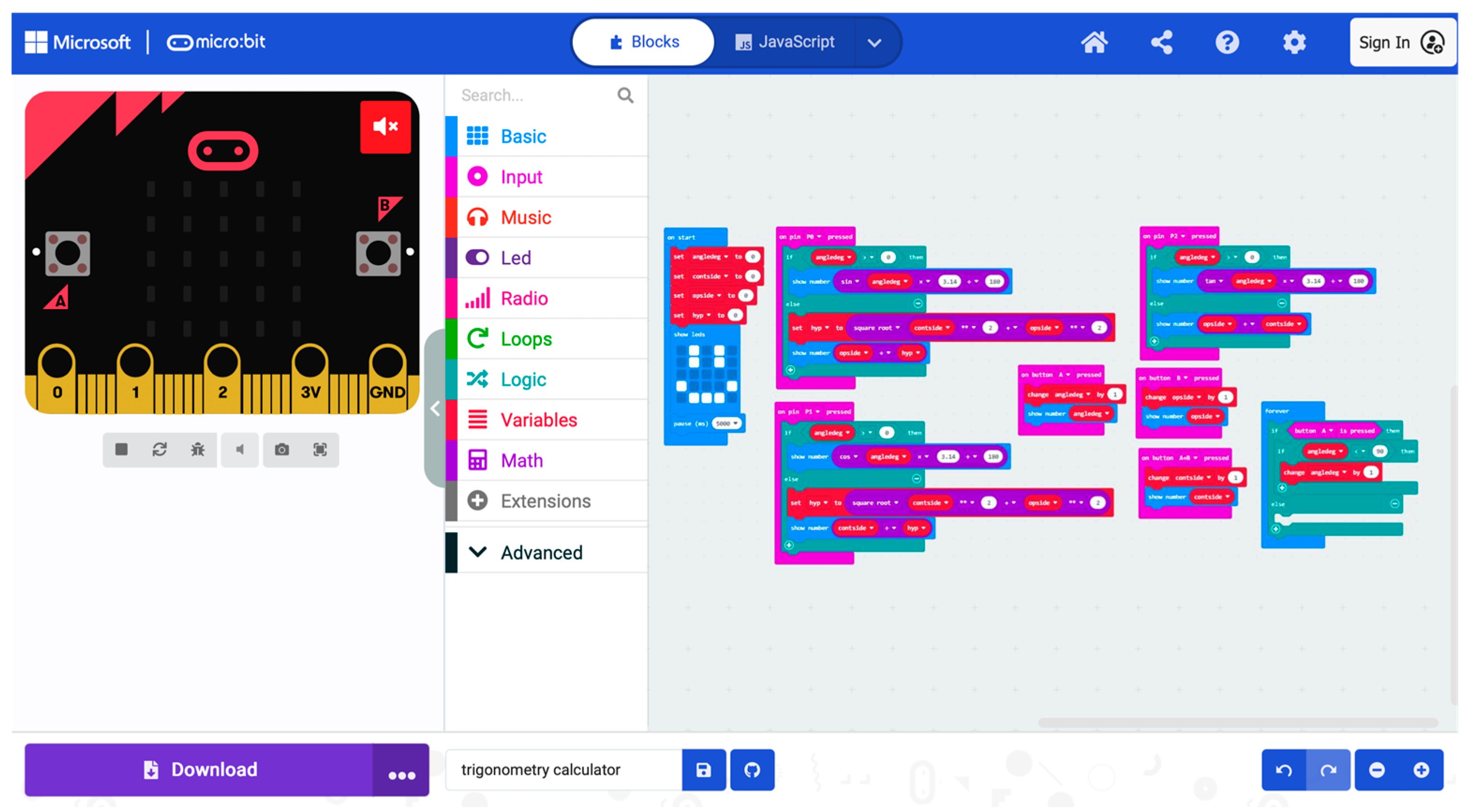
This study was conducted in a course designed to introduce PSTs to CT and low-code programming through a gamified intervention using the micro:bit, situated within the framework of sustainable mathematics education and aligned with SDG 4 (Quality Education). The activity consisted of a series of collaborative challenges that culminated in a final task: programming the micro:bit to function as a trigonometry operator (see Figure 1).
To foster the motivation to complete each challenge, PSTs were awarded with badges that counted toward course assessment. The intervention comprised four parts. First, after a brief online questionnaire serving as a pre-test of interest/engagement and emotions (both positive and negative), the micro:bit, an educational microcontroller board, was introduced to PSTs. As a base for coding and programming, the micro:bit uses a low-code, block-based visual environment to help learners ease into CT, robotics, and coding. Its general structure includes core visual blocks that support common tasks as well as input management (i.e., handling user-provided information to generate outputs). Second, PSTs completed an un-plugged activity along with visual manipulatives, which were made from sustainable and recyclable materials. This activity gradually introduced programming concepts before students created a trigonometry calculator. PSTs had to “code” the sequence of steps with the provided materials without using technology. Third and fourth (plugged activities), each learner used the Microsoft MakeCode web platform on a computer and/or mobile device to design a low-code solution and program the micro:bit to function as a trigonometry operator. Learners drew directly on the procedures developed during the un-plugged activity, again emphasizing sustainable and recyclable materials. Finally, participants built a physical operator incorporating a micro:bit as the low-code product, enabling different operations for sustainable mathematics education. Throughout all activities, participants received “early-bird” badges along with activity points as part of a gamified challenge system [42]. This design aimed to discourage undesirable behaviors, for example, trying to bypass assigned learning activities by seeking “shortcuts”, and to promote timely, genuine engagement with the content. To further energize learners’ commitment, additional “early-bird” badges and activity points were awarded [43].

3. Results and Discussion

Data from the pre- and post-test online survey were analyzed using Jamovi (version 2.6.45.0) and Jasp (version 0.19.3). Descriptive analyses were conducted first to characterize the sample and summarize key variables [44]. For the interest/engagement and emotions scales related to the gamified micro:bit activity supporting CT and low-code learning in sustainable mathematics education (see Table 2), internal consistency was assessed using Cronbach’s alpha, and was found to be good to excellent (α = 0.789 for interest/engagement items, α = 0.923 for positive emotion items, and α = 0.856 for negative emotion items). Because normality assumptions were not met, Mann–Whitney U-tests were applied at various confidence levels to determine the significance of variables, since the data was not normally distributed.
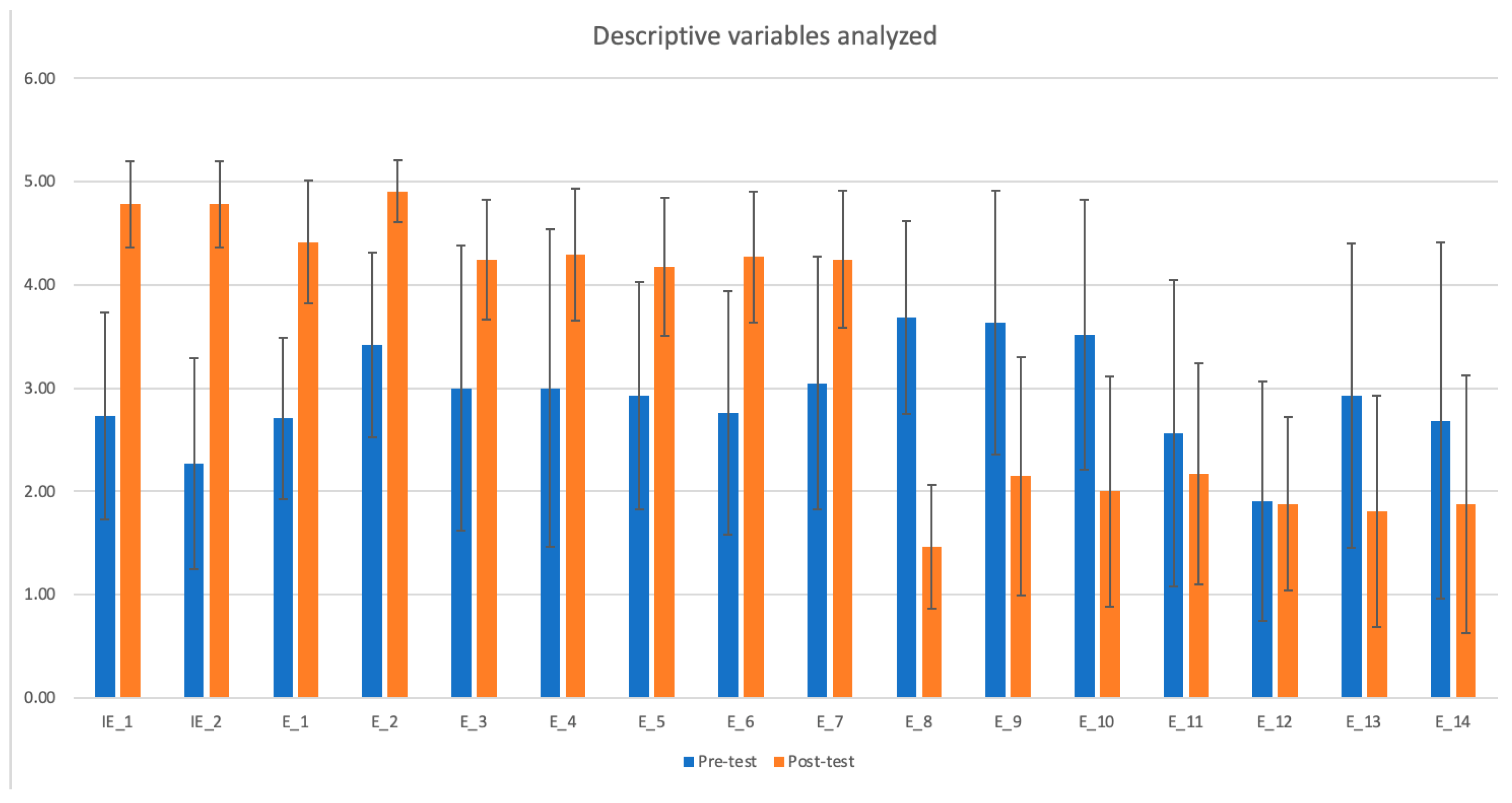
The purpose of this research is to examine how the specific physical computing device called the micro:bit can be used in a gamified manner to support the development of both CT and low-code programming in sustainable mathematics education for P–12 students, from the perspective of PSTs who feel insufficiently prepared to teach related concepts, as well as the emotions that promote their learning. Table 3 summarizes the PSTs’ responses (n = 123) on the five-point Liker-type scale (Strongly disagree (SD), Disagree (D), Neutral (N), Agree (A), and Strongly Agree (SA)) including descriptive statistics (mean value and standard deviation (SD)), and inferential results (p-value and effect size (ES)). In addition, Figure 2 presents the descriptive statistics for participants, including the means and standard deviations for two interest/engagement items, seven positive emotions, and seven negative emotions.
In general, PSTs exhibited increases in interest/engagement and positive emotions when facing new, gamified micro:bit challenges (Table 3; Figure 2). They reported high interest/engagement and predominantly positive emotions in response to the activity. Interest/engagement and all positive emotions showed statistically significant improvements at the p < 0.001, whereas two negative emotions (frustration and boredom) did not change significantly; the remaining negative emotions decreased significantly at the 95% or over the 99% confidence levels. This pattern is consistent with prior findings in gamified learning contexts [45]. Effect sizes indicated that the intervention’s impacts were meaningful wherever significant changes were observed.
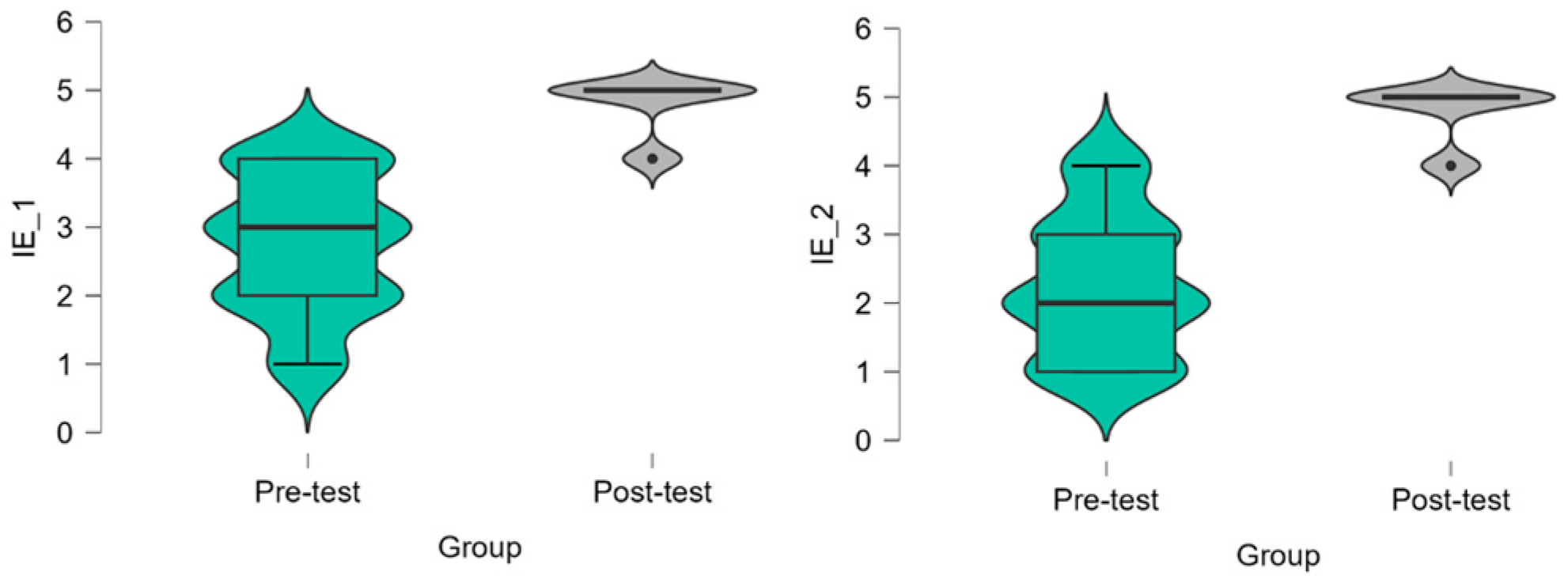
Pre-/post-comparisons of interest/engagement revealed substantial gains: the median for IE_1 and IE_2 increased from 3 and 2 at pre-test to 5 at post-test (Figure 3). Correspondingly, distributions that were spread across 2–4 at pre-test became tightly clustered near 5 at post-test.
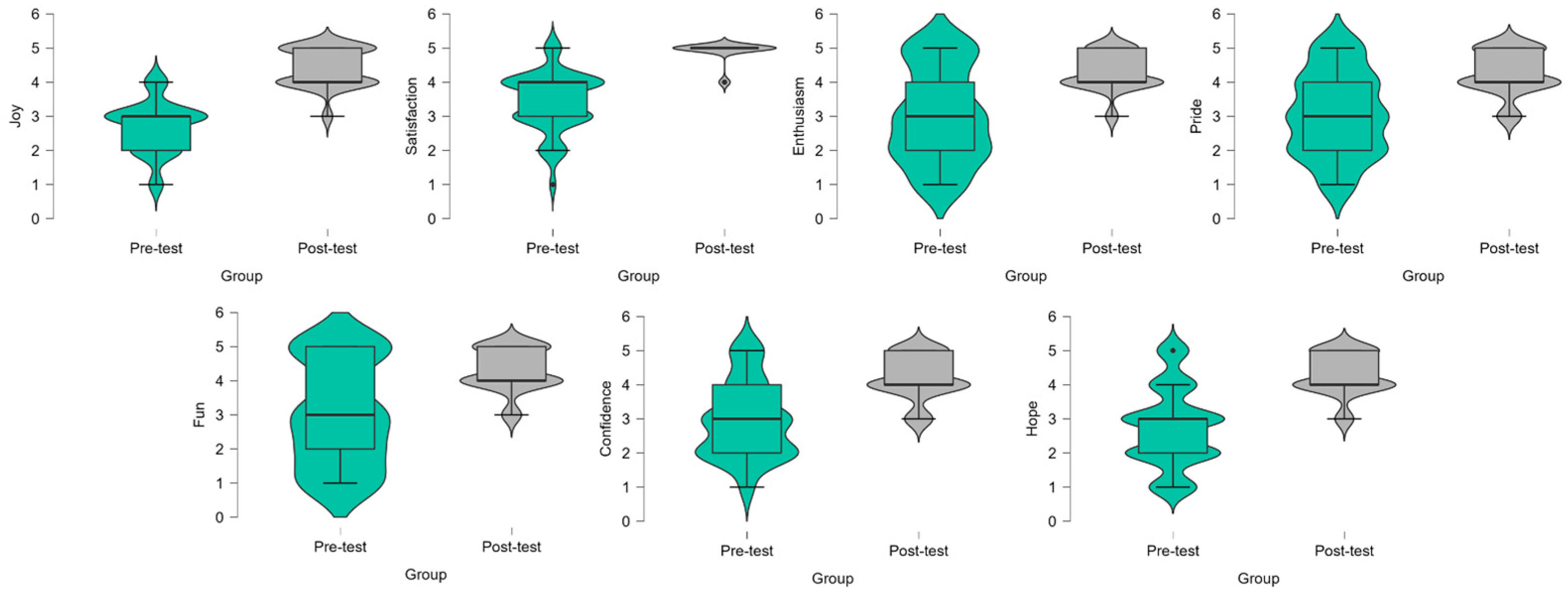
Particularly, for positive emotions, median scores were increased by approximately one point after the intervention, and dispersion was reduced at post-test (Figure 4), indicating less variability and greater agreement in responses.
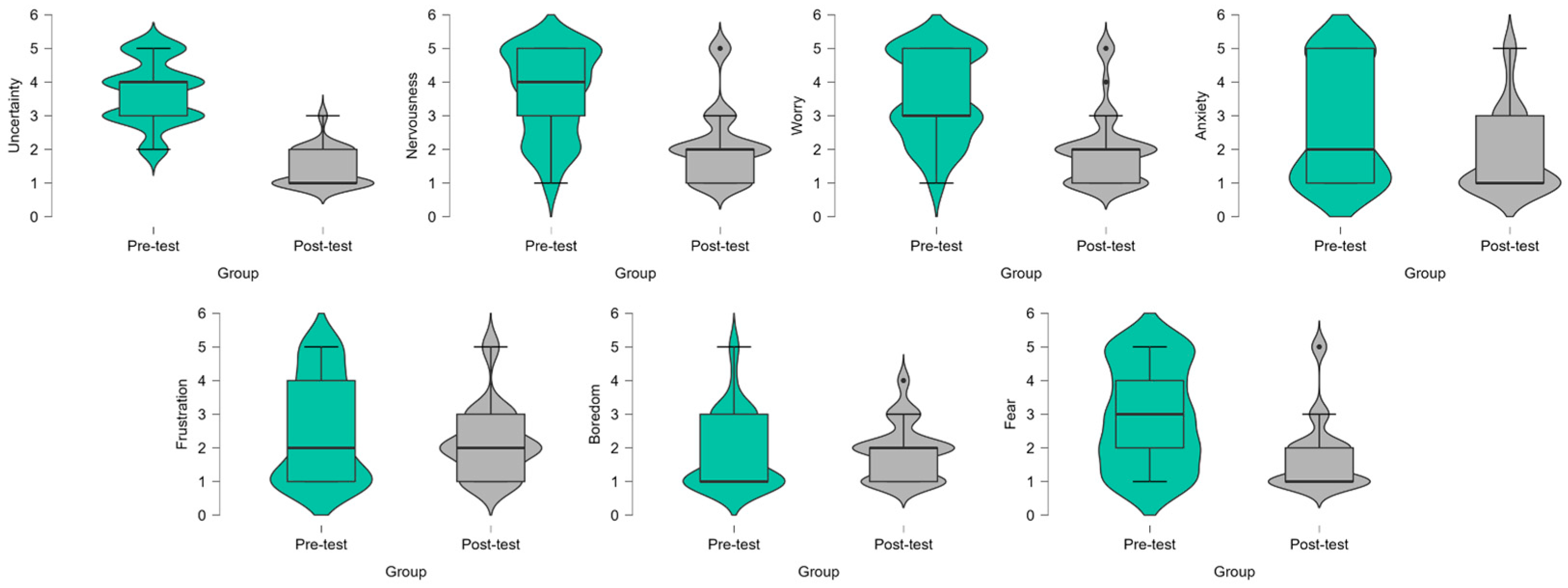
For negative emotions, most medians decreased after the intervention (see Figure 5). Notably, uncertainty decreased from 4 to 1, and nervousness and fear decreased by 2 points on the median. Although negative-emotion data were more dispersed than interest/engagement and positive-emotion data, overall dispersion was lower post-test.
To examine correlations among the emotion items, Pearson correlation coefficients were computed; results are summarized in Table 4. Asterisks denote significance at the p < 0.05, 0.01 or 0.001 level, respectively.
According to the findings, all positive emotions were strongly and positively inter-correlated. Particularly, “enthusiasm” had a highly significant and high degree of correlation with all the other positive emotions. “Hope” and “confidence” are shown to have a high significant association (0.852). With regard of the negative emotions, they also tended to correlate positively with each other, although this correlation was not significant in all cases (see Table 4). Among them, “fear” and “anxiety” were the ones showing the highest association (0.840). Finally, it is noticeable that all the positive emotions were negatively correlated with the negative ones, although the degree of correlation was moderated in all cases.
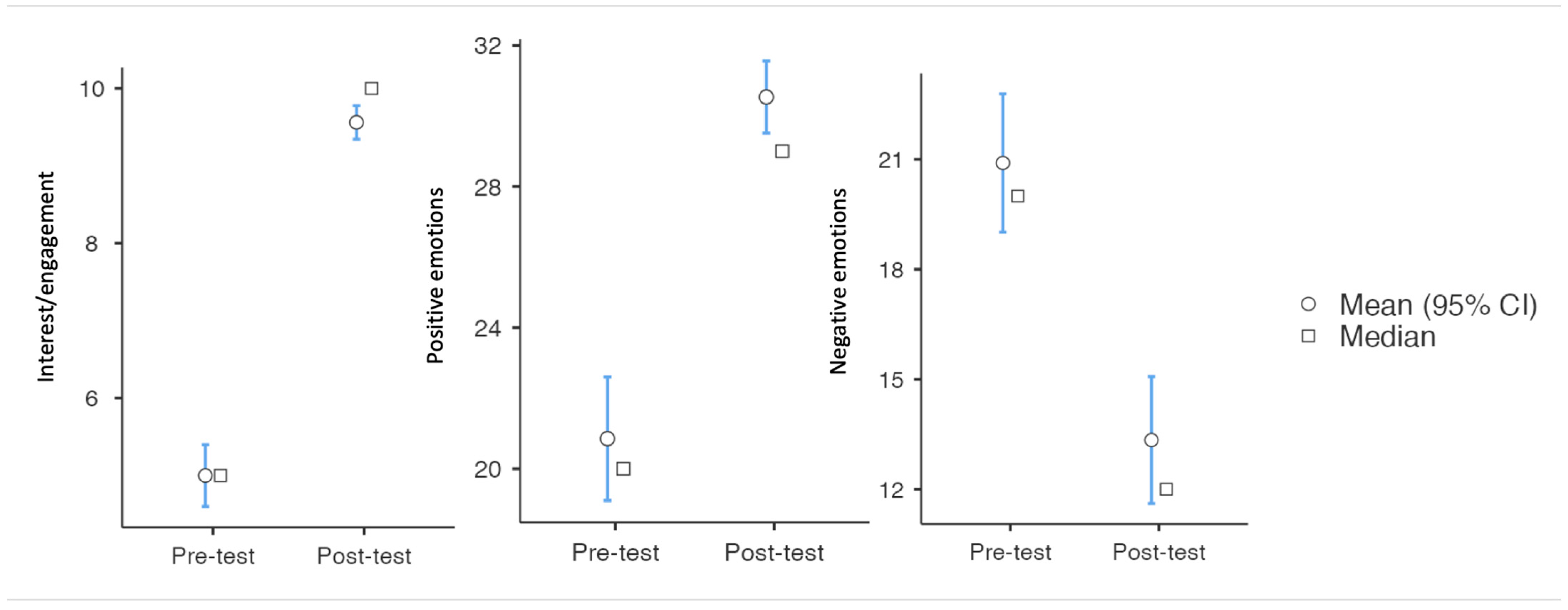
Based on the internal consistency results (Cronbach’s α), pooled (composite) scores were computed for interest/engagement, positive emotions, and negative emotions. Figure 6 graphically represents these new computed variables. These results allow highlighting the positive effect that the intervention had not only in the PSTs’ interest/engagement to complete the different activities but also in fostering the positive emotions associated with the learning while decreasing the negative one. The correlation between computed variables was assessed to evaluate the relationship between them. It was found that the interest/engagement was correlated both with the positive and negative emotions. Precisely, there was a positive correlation between interest/engagement and positive emotions, (r(80) = 0.672), (p < 0.001). On the other hand, interest/engagement and negative emotions were negatively correlated, (r(80) = −0.523), (p < 0.001). Thus, fostering interest/engagement of the students in the activity has significant effects on the affective domain of the learning process. Therefore, these results support that the gamified micro:bit activity of CT and low-coding in sustainable mathematics education contributed to accomplish a substantial learning directly contributing to SDG 4 of Quality Education [46] and to increase the commitment and promise of participants to the activity as an active learner [47,48].
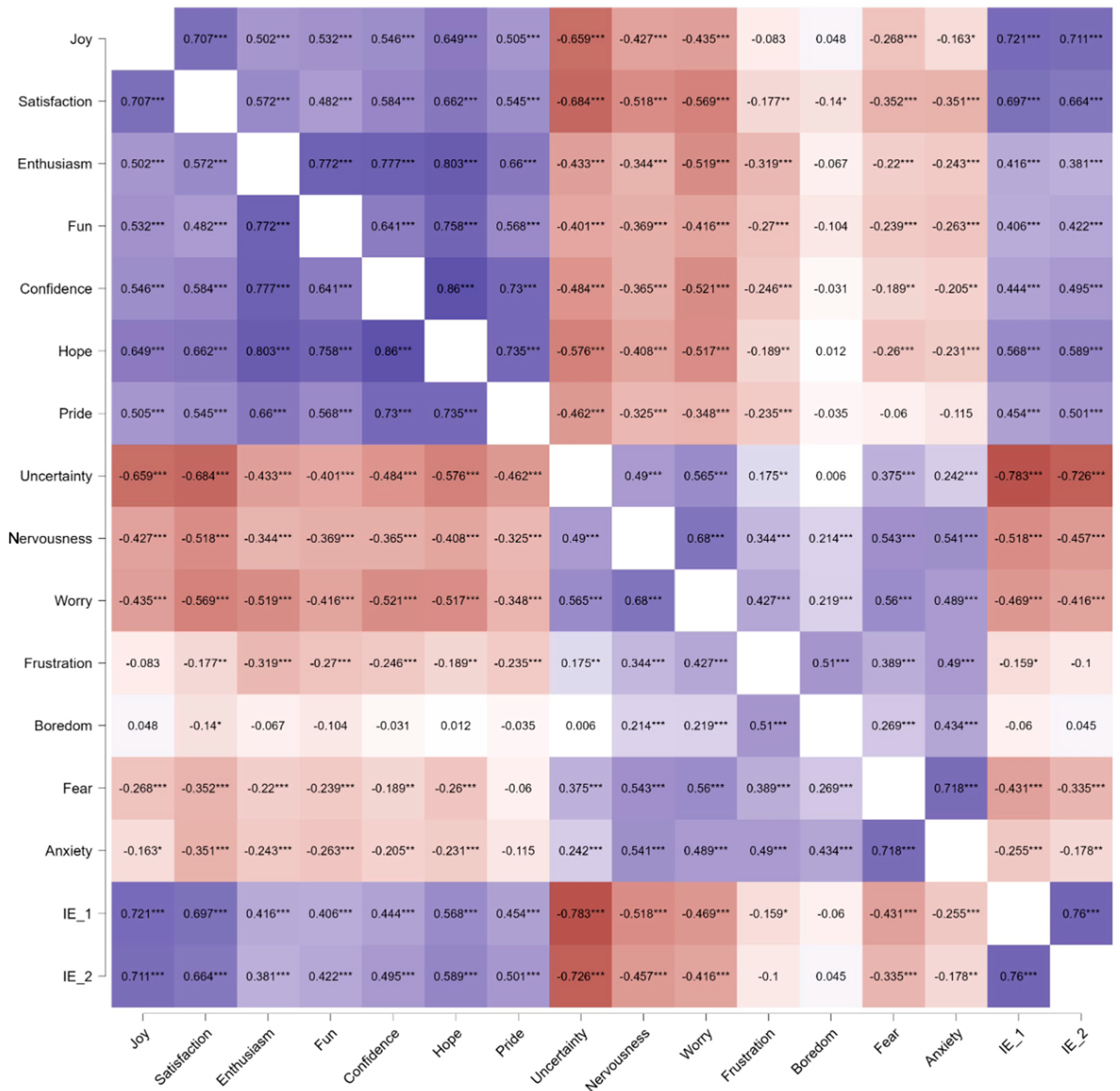
Thus, the heatmap visualizes Spearman’s rank-order correlations (ρ) among the study variables (Figure 7). This graph represents positive correlations in purple color and negative in red, with more saturated colors indicating stronger relationships. The close connections between positive emotions and each other can be observed, as well as the positive relationship between positive emotions and the items of interest/engagement. Negative emotions are grouped in a cluster that is negatively related to positive emotions, and interest/engagement. Most associations are statistically significant (* p < 0.05; ** p < 0.01; *** p < 0.001) and substantial in magnitude (some more than 0.8). The negative correlations are particularly noteworthy. The emotions most strongly and positively associated with interest/engagement are joy (r = 0.721 with IE_1 and r = 0.711 with IE_2) and satisfaction (r = 0.697 with IE_1 and r = 0.664 with IE_2). By contrast, uncertainty shows the strongest negative association with interest/engagement (r = 0.783 with IE_1 and r = 0.726 with IE_2). Here, several authors have noted that these two emotions, although typically classified as negative, should not necessarily be interpreted as such in educational contexts [11,23,26,30]. Without them, the learning process would lack an essential element of challenge and engagement that contributes to students’ enjoyment. In this sense, the present findings align with previous research showing that when learners display emotional responses during a sequence of micro:bit activities, they tend to develop stronger connections with P–12 mathematics education. Accordingly, the results of this study suggest that implementing the micro:bit activity generated significant pre–post improvements in key computational thinking components.
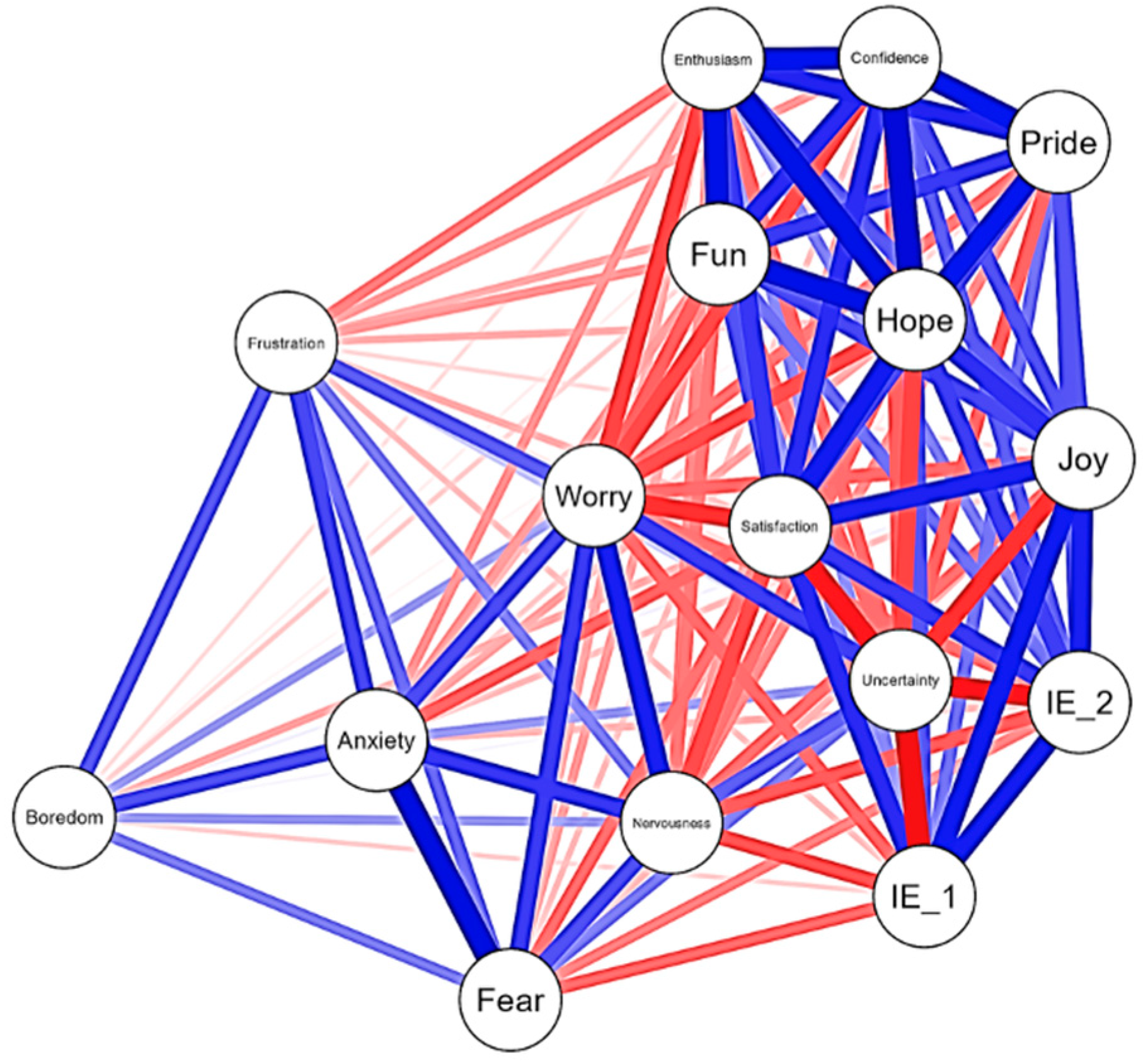
Figure 8 presents a network analysis integrating the relationships between positive and negative emotions and interest/engagement items, providing a systemic perspective of their associations. The network shows strong positive correlations (in blue) among the positive emotions and with interest/engagement (IE_1 and IE_2), and these nodes cluster on the right side of the network. On the other hand, the negative emotions are positioned on the left and show positive correlations, indicating their close affinity. Their associations with the other variables differ. Uncertainty shows a strong negative association (in red) with joy, satisfaction, IE_1, and IE_2. Likewise, worry, which occupies a central position in the network, is negatively associated with all positive emotions and the IE items, especially enthusiasm, fun, and confidence. Nervousness and fear also exhibit significant negative associations with interest/engagement.
Using the gamified micro:bit low-code device for PSTs and P–12 students in sustainable mathematics education to address the challenges mentioned above, previous studies have shown that combining physical computing devices with manipulative tools significantly increases students’ interest and engagement when facing new challenges, which show a key research component (p < 0.001) [23,49,50]. The results of this study follow the same pattern, revealing significant improvements after the didactic intervention. These changes are closely related to positive emotions such as enthusiasm and enjoyment, which also demonstrated significant gains [23]. Overall, research consistently indicates that working with physical devices and manipulative tools evokes predominantly positive emotions [14,23,49]. For instance, all the items of positive emotions had a significant change observed (p < 0.001) after applying the intervention. Students really seem to enjoy physical computing activities, even if they are seen as challenging or somewhat difficult. Conversely, mathematics courses and new activities, particularly those involving CT and low-code programming, are often associated with high levels of negative emotions [30,35,36,37,51,52]. In general terms, considering mean and median values, there were certain decreases in negative emotions; however, there are two items, boredom and frustration, that did not have a significant change, while the rest of the five items had a significant change (p < 0.001 and p < 0.05). Although Tan et al. [50] suggested that CT and manipulative activities reduce boredom and increase engagement among talkative or easily distracted students, our findings revealed no significant change in boredom after the intervention. Further analysis using pooled variables, heatmaps, and network analysis highlighted correlations between interest/engagement and both positive and negative affective domains, demonstrating the impact of the gamified micro:bit intervention on PSTs’ learning outcomes in sustainable (STEA)Mathematics education [49,53]. Undeniably, as CS and (STEA)Mathematics courses are inside of an education as a portion, which is a well-rounded one, the concepts of sustainability approaches to mathematics education, comprehension, democratized knowledge, and technology like low-coding can be the closest to the concept that directly contribute to SDG 4 [8,54,55,56]. Low-code development platforms also facilitate every student without much IT experience and/or programming and coding proficiencies in mathematics education [15,57,58]. Students are authorized with technological confidence and without access barriers to learn low-coding as a transformative skill that allows sustainable social enablement of the “mathematics education as sustainability” model [18,59,60,61].

4. Conclusions

The micro:bit offers a practical means to learn gamified, low-code programming alongside other essential skills through hands-on, physical-computing activities. This study examined the effects of a gamified micro:bit intervention on interest/engagement and emotions within sustainable mathematics education. Data were collected via an online questionnaire from 123 PSTs enrolled in Mathematics and its Didactics at the authors’ university. Most PSTs reported limited preparation to teach CT and low-code programming with micro:bit for P–12. The intervention ran in the second semester across two academic years. Interest/engagement was high when students faced new micro:bit challenges, with both survey items showing significant effects (p < 0.001), suggesting that in-class implementation can promote interactive, collaborative learning and sustainability awareness. All positive emotions increased significantly post-intervention (p < 0.001), with satisfaction reaching 4.9/5. Negative emotions decreased, notably uncertainty (1.46/5 post-test), although boredom and frustration showed no significant change; the remaining five items changed significantly (p < 0.001 or p < 0.05). A significant negative correlation between positive and negative emotions highlights the value of strengthening positive affect to reduce negative states. Analyses of pooled computed variables, heatmaps, and network structures converged in showing that actions fostering interest and engagement, such as the gamified micro:bit intervention, positively influence the affective domain and contribute to improved outcomes in sustainable (STEA)Mathematics education.
Overall, the findings reinforce that affect is tightly linked to learning outcomes and sustainability aims. In mathematics education, interest and motivation precede and reinforce engagement; accessible, appealing low-code micro:bit activities elicited high enjoyment and interest among participants. Strengthening positive affect appears to be a viable route to deeper engagement and better outcomes. More broadly, CT and low-code activities can advance sustainable (STEA)Mathematics education by cultivating curiosity, persistence, and problem-solving mindsets aligned with SDG 4 (Quality Education), supporting growth-oriented mindsets and continuous knowledge sharing for navigating both predictable and uncertain twenty-first-century challenges.
The limitations of the pre-experimental design, including the absence of a control group and the single-site context, are acknowledged, which constrain the generalizability of the results to the participating PSTs. Self-reported measures were used, which may introduce response bias. As explained in the Methodology section, the design was adopted due to course-level organizational constraints and to ensure that the instructional intervention was received by all participants.

Author Contributions

Conceptualization, J.S.J. and D.G.-G.; methodology, J.S.J. and D.G.-G.; software, J.S.J. and D.G.-G.; validation, J.S.J. and D.G.-G.; formal analysis, J.S.J., D.G.-G., A.I.M.-I. and F.Y.-P.; investigation, J.S.J., D.G.-G., A.I.M.-I. and F.Y.-P.; resources, J.S.J. and D.G.-G.; data curation, J.S.J., D.G.-G., A.I.M.-I. and F.Y.-P.; writing—original draft preparation, J.S.J. and D.G.-G.; writing—review and editing, J.S.J. and D.G.-G.; visualization, J.S.J., D.G.-G., A.I.M.-I. and F.Y.-P.; supervision, J.S.J. and D.G.-G.; project administration, J.S.J. and D.G.-G.; funding acquisition, J.S.J. and D.G.-G. All authors have read and agreed to the published version of the manuscript.

Funding

This work was 85% co-financed by the European Union, the European Regional Development Fund and the Regional Government of Extremadura, the Managing Authority and the Ministry of Finance, through project IB24004, to whom the authors express their gratitude.

Institutional Review Board Statement

This study was approved by the Bioethics and Biosecurity Committee of the authors’ university (reference number 94/2018 and 200/2024 approval date 6 July 2018 and 3 October 2024) the two codes correspond to the same study across two approval periods.

Informed Consent Statement

Prior to online survey participation, individuals provided informed consent via an online written form integrated into the questionnaire. The study, which excluded minors, received ethical approval from the Bioethics and Biosecurity Committee (reference number 94/2018 and 200/2024).

Data Availability Statement

The original contributions presented in the study are included in the article; further inquiries can be directed to the corresponding authors.

Conflicts of Interest

The authors declare no conflicts of interest.

References

  1. Pérez, A. A framework for computational thinking dispositions in mathematics education. J. Res. Math. Educ. 2018, 49, 424–461. [Google Scholar] [CrossRef]
  2. Wing, J.M. Computational thinking. Commun. ACM 2006, 49, 33–35. [Google Scholar] [CrossRef]
  3. Kim, C.; Kim, D.; Yuan, J.; Hill, R.B.; Doshi, P.; Thai, C. Robotics to promote elementary education pre-service teachers’ STEM engagement, learning, and teaching. Comput. Educ. 2015, 91, 14–31. [Google Scholar] [CrossRef]
  4. Lu, S.-Y.; Lo, C.-C.; Syu, J.-Y. Project-based learning oriented STEAM: The case of micro:bit paper-cutting lamp. Int. J. Technol. Des. Educ. 2022, 32, 2553–2575. [Google Scholar] [CrossRef]
  5. Ryalat, M.; Franco, E.; Elmoaqet, H.; Almtireen, N.; Al-Refal, G. The integration of advanced mechatronic systems into industry 4.0 for smart manufacturing. Sustainability 2024, 16, 8504. [Google Scholar] [CrossRef]
  6. Chen, M.H.; Wu, Y.J.; Tsai, K.M. Building an industry-oriented business sustainability curriculum in higher education. Sustainability 2018, 10, 4698. [Google Scholar] [CrossRef]
  7. Bartlett, P.W.; Popov, M.; Ruppert, J. Integrating core sustainability metacompetencies and SDGs across the silos in curriculum and professional development. In Sustainable Development Goals and Institutions of Higher Education; Nhamo, G., Mjimba, V., Eds.; Springer: Cham, Switzerland, 2020; pp. 71–85. [Google Scholar]
  8. Bolmsten, J.; Kitada, M. Agile social learning—Capacity-building for sustainable development in higher education. Int. J. Sustain. High. Educ. 2020, 21, 1563–1586. [Google Scholar] [CrossRef]
  9. Kallia, M.; van Borkulo, S.; Drijvers, P.; Barendsen, E.; Toolbom, J. Characterising computational thinking in mathematics education: A literature-informed Delphi study. Res. Math. Educ. 2021, 23, 159–187. [Google Scholar] [CrossRef]
  10. Sneider, C.; Stephenson, C.; Schafer, B.; Flick, L. Exploring the science framework and NGSS: Computational thinking in the science classroom. Sci. Scope 2014, 38, 10–15. [Google Scholar] [CrossRef]
  11. Suherman, S.; Vidákovich, T. Role of creative self-efficacy and perceived creativity as predictors of mathematical creative thinking: Mediating role of computational thinking. Think. Ski. Creat. 2024, 53, 101591. [Google Scholar]
  12. Williams, K.W. John Dewey in the 21st century. J. Inq. Action Educ. 2017, 9, 97–102. [Google Scholar]
  13. Falkner, K.; Vivian, R. A review of computer science resources for learning and teaching with K-12 computing curricula: An Australian case study. Comput. Sci. Educ. 2015, 25, 390–429. [Google Scholar] [CrossRef]
  14. Kalelioglu, F.; Sentence, S. Teaching with physical computing in school: The case of the micro:bit. Educ. Inf. Technol. 2019, 25, 2577–2603. [Google Scholar] [CrossRef]
  15. Elshan, E.; Ebel, P.; Söllner, M.; Leimeister, J.M. Leveraging low code development of smart personal assistants: An integrated design approach with the SPADE method. J. Manag. Inf. Syst. 2023, 40, 96–129. [Google Scholar] [CrossRef]
  16. Khalajzadeh, H.; Crundy, J. Accessibility of low-code approaches: A systematic literature review. Inf. Softw. Technol. 2025, 177, 107570. [Google Scholar] [CrossRef]
  17. Tang, K.-S.; Murcia, K.; Brown, J.; Cross, E.; Mennel, S.; Seitz, J.; Phillips, S.R.P.; Sabatino, D. Exploring the multimodal affordances of digital coding devices in fostering creative thinking in early childhood education. Think. Ski. Creat. 2024, 53, 101602. [Google Scholar] [CrossRef]
  18. Ajimati, M.O.; Carroll, N.; Maher, M. Adoption of low-code and no-code development: A systematic literature review and future research agenda. J. Syst. Softw. 2025, 222, 112300. [Google Scholar] [CrossRef]
  19. Ghosh, A.; Ghosh, L.; Saha, S. Hybrid brain-computer interfacing paradigm for assistive robotics. Robot. Auton. Syst. 2025, 185, 104893. [Google Scholar] [CrossRef]
  20. Shahin, M.; Gonsalvez, C.; Whittle, J.; Chen, C.; Li, L.; Xia, X. How secondary school girls perceive Computational Thinking practices through collaborative programming with the micro:bit. J. Syst. Softw. 2022, 183, 111107. [Google Scholar] [CrossRef]
  21. Banzi, M. Getting Started with Arduino; O’Reilly Media, Inc.: Sebastopol, CA, USA, 2011. [Google Scholar]
  22. Ku, K.H. An exploration of the key determinants for the application of AI-enabled higher education based on a hybrid Soft-computing technique and a DEMATEL approach. Expert Syst. Appl. 2023, 212, 118762. [Google Scholar]
  23. Sentance, S.; Waite, J.; Hodges, S.; MacLeod, E.; Yeomans, L. Creating cool stuff”: Pupils’ experience of the BBC micro:bit. In Proceedings of the 2017 ACM SIGCSE Technical Symposium on Computer Science Education (SIGCSE ‘17); Caspersen, M.E., Edwards, S.H., Barnes, T., García, D.D., Eds.; ACM: New York, NY, USA, 2017; pp. 531–536. [Google Scholar]
  24. Ciancarini, P.; Missiroli, M.; Russo, D. Exploiting agile practices to teach computational thinking. In Software Engineering Aspects of Continuous Development and New Paradigms of Software Production and Deployment; Bruel, J.M., Mazzara, M., Meyer, B., Eds.; Springer: Cham, Switzerland, 2020; pp. 63–83. [Google Scholar]
  25. Edmondson, A.C. Teaming to Innovate; John Wiley & Sons: Hoboken, NJ, USA, 2013. [Google Scholar]
  26. Zurnacı, B.; Turan, Z. Educational robotics or unplugged coding activities in kindergartens? Comparison of the effects on pre-school children’s computational thinking and executive function skills. Think. Ski. Creat. 2024, 53, 101576. [Google Scholar] [CrossRef]
  27. Bartholomew, S.R.; Santana, V.; Yauney, J. Exploring elementary student and teacher perceptions of STEM and CS abilities. J. STEM Teach. Educ. 2022, 57, 2. [Google Scholar] [CrossRef]
  28. National Research Council. Report of a Workshop on the Pedagogical Aspects of Computational Thinking; The National Academies Press: Washington, DC, USA, 2011. [Google Scholar]
  29. Bartolini Bussi, M.G.; Mariotti, M.A. Semiotic mediation in the mathematics classroom: Artifacts and signs after a Vygotskian perspective. In Handbook of International Research in Mathematics Education; Bartolini Bussi, M.G., Jones, G., Lesh, R., Tirosh, D., Eds.; Routledge: New York, NY, USA, 2008; pp. 746–783. [Google Scholar]
  30. Jeong, J.S.; González-Gómez, D. Integrating and developing computational thinking in higher education using micro:bit: Examining the influence on pre-service teachers’ self-perceived content knowledge, attitude, and emotion toward further K-12 mathematics. Front. Psychol. 2026, 17, 1742317. [Google Scholar] [CrossRef]
  31. Jeong, J.S.; González-Gómez, D. Examining the impact of flipped classroom learning (FCL) and gamified-flipped classroom learning (G-FCL) on students’ attitudes and emotions toward learning in a university course. Act. Learn. High. Educ. 2025, 14697874251347184. [Google Scholar] [CrossRef]
  32. Renninger, K.A.; Hidi, S. The Power of Interest for Motivation and Engagement; Routledge: New York, NY, USA, 2016. [Google Scholar]
  33. Jeong, J.S.; González-Gómez, D. AI-driven chatbots in flipped-classroom mathematics education: Enhancing learning achievement and self-efficacy in pre-service primary teachers. In Teaching with Artificial Intelligence: A Guide for Primary and Elementary Educators; Papadakis, S., Ed.; Routledge: London, UK, 2025; pp. 145–161. [Google Scholar]
  34. Jeong, J.S.; González-Gómez, D. Mathematics self-belief comparison and examination of pre-service teacher (PST) through a flipped-open calculation based on numbers (ABN) learning method. Heliyon 2022, 8, e09806. [Google Scholar] [CrossRef]
  35. Ashcraft, M.H. Math anxiety: Personal, educational, and cognitive consequences. Curr. Dir. Psychol. Sci. 2002, 11, 181–185. [Google Scholar] [CrossRef]
  36. Frenzel, A.C.; Pekrun, R.; Goetz, T. Girls and mathematics—A “hopeless” issue? A control-value approach to gender differences in emotions towards mathematics. Eur. J. Psychol. Educ. 2007, 22, 497. [Google Scholar] [CrossRef]
  37. Schukajlow, S.; Rakoczy, K.; Pekrun, R. Emotions and motivation in mathematics education: Theoretical considerations and empirical contributions. ZDM—Math. Educ. 2017, 49, 307–322. [Google Scholar] [CrossRef]
  38. Özdemir, S.; KılıçD, K. Investigating Special Education Teachers’ Views on Mathematics Instruction Process: Sugesstions for Sustainable Special Education in Mathematics Instruction. Sustainability 2023, 15, 3584. [Google Scholar] [CrossRef]
  39. Voštinár, P.; Knežník, J. Education with BBC micro:bit. Int. J. Online Biomed. Eng. 2020, 16, 81–94. [Google Scholar] [CrossRef]
  40. Arnedillo Sánchez, I.; Kommers, P.; Issa, T.; Isaías, P. Proceedings of the International Conferences on Mobile Learning and Educational Technologies; IADIS Press: Lisbon, Portugal, 2021. [Google Scholar]
  41. González-Gómez, D.; Jeong, J.S. The flipped learning model in general science: Effects on students’ learning outcomes and affective dimensions. In Active Learning in College Science: The Case for Evidence-Based Practice; Mintzes, J.J., Walter, E.M., Eds.; Springer: Cham, Switzerland, 2020; pp. 541–549. [Google Scholar]
  42. Baker, R.; Walonoski, J.; Heffernan, N.; Roll, I.; Corbett, A.; Koedinger, K. Why students engage in “gaming the system” behavior in interactive learning environments. J. Interact. Learn. Res. 2008, 19, 185–224. [Google Scholar]
  43. Hew, K.F.; Huang, B.; Chu, K.W.S.; Chiu, D.K. Engaging Asian students through game mechanics: Findings from two experiment studies. Comput. Educ. 2016, 92–93, 221–236. [Google Scholar] [CrossRef]
  44. Etxeberria, J.; Tejedor, F.J. Descriptive Data Analysis in Education; La Muralla: Madrid, Spain, 2005. [Google Scholar]
  45. Corbetta, M.; Shulman, G.L. Control of goal-directed and stimulus-driven attention in the brain. Nat. Rev. Neurosci. 2002, 3, 201–215. [Google Scholar] [CrossRef]
  46. Pintrich, P.R.; Marx, R.W.; Boyle, R.A. Beyond cold conceptual change: The role of motivational beliefs and classroom contextual factors in the process of conceptual change. Rev. Educ. Res. 1993, 63, 167–199. [Google Scholar] [CrossRef]
  47. Jeong, J.S. Study of the Influence of “Flipped-Classroom” Methodologies on Learning Outcomes and Affective-Attitudinal Dimension Towards the Teaching and Learning of Science in Pre-Service Teachers. Ph.D. Thesis, Universidad de Extremadura, Caceres, Spain, 2018. [Google Scholar]
  48. Jeong, J.S.; González-Gómez, D. Sustainable development of STEAM and mathematics education with active and innovative methodology. Sustainability 2024, 16, 591. [Google Scholar] [CrossRef]
  49. Gibson, S.; Bradley, P. A study of Northern Ireland key stage 2 pupils’ perceptions of using the BBC micro:bit in STEM education. STeP J. 2017, 4, 15–41. [Google Scholar]
  50. Tan, A.L.; Gillies, R.; Jamaludin, A. A case study: Using a neuro-physiological measure to monitor students’ interest and learning during a micro:bit activity. Educ. Sci. 2021, 11, 379. [Google Scholar] [CrossRef]
  51. Goetz, T.; Bieg, M.; Lüdtke, O.; Pekrun, R.; Hall, N.C. Do girls really experience more anxiety in mathematics? Psychol. Sci. 2013, 24, 2079–2087. [Google Scholar] [CrossRef]
  52. Hembree, R. The nature, effects, and relief of mathematics anxiety. J. Res. Math. Educ. 1990, 21, 33–46. [Google Scholar] [CrossRef]
  53. Marín, J.; García, P.; Duo, P. Computational thinking and programming with Arduino in education: A systematic review for secondary education. Heliyon 2024, 10, e29177. [Google Scholar] [CrossRef]
  54. González-Gómez, D.; Jeong, J.S. Approaches and methods of science teaching and sustainable development. Sustainability 2022, 14, 1546. [Google Scholar] [CrossRef]
  55. Leal Filho, W.; Shiel, C.; Paço, A.; Mifsud, M.; Avila, L.V.; Brandli, L.L.; Molthan-Hill, P.; Pace, P.; Azeiteiro, U.M.; Vargas, V.R.; et al. Sustainable Development Goals and sustainability teaching at universities: Falling behind or getting ahead of the pack? J. Clean. Prod. 2019, 232, 285–294. [Google Scholar] [CrossRef]
  56. Park, S.; Kim, S. Is Sustainable Online learning possible with gamification?—The effect of gamified online learning on student learning. Sustainability 2021, 13, 4267. [Google Scholar] [CrossRef]
  57. Mintz, K.; Tal, T. The place of content and pedagogy in shaping sustainability learning outcomes in higher education. Environ. Educ. Res. 2018, 24, 207–229. [Google Scholar] [CrossRef]
  58. Suta, A.; Tóth, A. Systematic review on blockchain research for sustainability accounting applying methodology coding and text mining. Clean. Eng. Technol. 2023, 14, 100648. [Google Scholar] [CrossRef]
  59. Cagno, E.; Neri, A.; Howard, M.; Brenna, G.; Trianni, A. Industrial sustainability performance measurement systems: A novel framework. J. Clean. Prod. 2019, 230, 1354–1375. [Google Scholar] [CrossRef]
  60. Cicmil, S.; Gough, G.; Hills, S. Insights into responsible education for sustainable development: The case of UWE, Bristol. Int. J. Manag. Educ. 2017, 15, 293–305. [Google Scholar] [CrossRef]
  61. Jeong, J.S.; González-Gómez, D. Editorial: Cognitive, affective, behavioral, and multidimensional domain research in STEM education: Active approaches and methods towards sustainable development goals (SDGs). Front. Psychol. 2022, 13, 881153. [Google Scholar] [CrossRef]
Figure 1. A trigonometry calculator through low-coding with the micro:bit device to develop perceived readiness for CT.
Sustainability 18 02430 g001
Figure 2. Descriptive variables analyzed for research proposed in survey responses.
Sustainability 18 02430 g002
Figure 3. Box plots of pre- and post-test medians of interest/engagement of PSTs (IE_1 and IE_2).
Sustainability 18 02430 g003
Figure 4. Box plots of pre- and post-test medians of PSTs’ positive emotions (E_1 to E_7).
Sustainability 18 02430 g004
Figure 5. Box plots of pre- and post-test medians of PSTs’ negative emotions (E_8 to E_14).
Sustainability 18 02430 g005
Figure 6. Evolution of the studied pooled variables after and before the intervention.
Sustainability 18 02430 g006
Figure 7. Heatmap about correlations between study variables (positive correlations in purple color and negative in red with more saturated colors indicating stronger relationships; * p < 0.05; ** p < 0.01; *** p < 0.001).
Sustainability 18 02430 g007
Figure 8. Network analysis about correlations between study variables. Edge thickness is proportional to the absolute value of the correlation (strong positive correlations (in blue) and strong negative correlations (in red)).
Sustainability 18 02430 g008
Table 1. Demographic description of the sample that participated into the research.
PST (n)Gender (%)AgeUniversity Access (%)Educational Background (%)GPA * (Max.10)
Female Male High SchoolProfessional SchoolSocial SciencesSciencesTechnologyArts
12336.5863.4220.5690.249.7668.2917.077.327.327.22
* Note. GPA: Grade point average.
Table 2. Survey items used in the research proposed based on five-point Likert-type.
VariablesItems and Questions
Interest
/Engagement
IE_1: The gamified micro:bit proposed would help P–12 students to learn computational thinking and low-coding in sustainable mathematics education
IE_2: The gamified micro:bit proposed helps PSTs to learn computational thinking and low-coding in sustainable mathematics education
EmotionPositive emotionE_1: Joy
E_2: Satisfaction
E_3: Enthusiasm
E_4: Fun
E_5: Confidence
E_6: Hope
E_7: Pride
Negative emotionE_8: Uncertainty
E_9: Nervousness
E_10: Concern
E_11: Frustration
E_12: Boredom
E_13: Fear
E_14: Joy
Table 3. Analyzed variables for research proposed in survey responses after the intervention.
ItemsFrequencyDescriptive AnalysisStatistical Analysis
SDDNASAMeanSDp-ValueES
IE_100027964.780.419<0.0010.9411
IE_200027964.780.419<0.0010.9679
E_100660574.410.591<0.0010.9024
E_2000121114.900.300<0.0010.8769
E_300975394.240.582<0.0010.5205
E_4001263484.290.642<0.0010.4706
E_5001866394.170.667<0.0010.6270
E_6001266454.270.633<0.0010.7026
E_7001563454.240.633<0.0010.5622
E_872456001.460.596<0.0010.9381
E_93657180122.151.150<0.0010.5919
E_10455412392.001.120<0.0010.6264
E_11335427092.171.0700.3640.1130
E_12455418601.880.8420.6270.0589
E_13633912091.801.120<0.0010.4438
E_14721524391.881.2500.0320.2570
Table 4. Pearson correlation matrix among emotion items (positive and negative) for all participants.
ItemsE_1E_2E_3E_4E_5E_6E_7E_8E_9E_10E_11E_12E_13E_14
E_1-
E_20.614 ***-
E_30.498 ***0.625 ***-
E_40.522 ***0.532 ***0.770 ***-
E_50.506 ***0.615 ***0.742 ***0.620 ***-
E_60.597 ***0.677 ***0.758 ***0.770 ***0.852 ***-
E_70.462 ***0.534 ***0.642 ***0.545 ***0.702 ***0.692 ***-
E_8−0.596 ***−0.630 ***−0.476 ***−0.457 ***−0.468 ***−0.563 ***−0.469 ***-
E_9−0.401 ***−0.407 ***−0.407 ***−0.456 ***−0.363 ***−0.433 ***−0.364 ***0.485 ***-
E_10−0.391 ***−0.543 ***−0.598 ***−0.492 ***−0.526 ***−0.520 ***−0.370 ***0.524 ***0.655 ***-
E_11−0.111−0.245 *−0.385 ***−0.258 *−0.288 **−0.246 *−0.251 *0.2080.382 ***0.481 ***-
E_120.001−0.277 *−0.104−0.130−0.068−0.045−0.0550.0280.250 *0.222 *0.408 ***-
E_13−0.267 *−0.433 ***−0.374 ***−0.361 ***−0.233 *−0.334 **−0.1770.363 ***0.601 ***0.611 ***0.489 ***0.435 ***-
E_14−0.187−0.428 ***−0.393 ***−0.351 **−0.250 *−0.295 **−0.1660.256 *0.574 ***0.578 ***0.518 ***0.519 ***0.840 ***-
Note. * p < 0.05, ** p < 0.01, and *** p < 0.001.
Disclaimer/Publisher’s Note: The statements, opinions and data contained in all publications are solely those of the individual author(s) and contributor(s) and not of MDPI and/or the editor(s). MDPI and/or the editor(s) disclaim responsibility for any injury to people or property resulting from any ideas, methods, instructions or products referred to in the content.