


Abstract
Introduction: Assertive communication is a fundamental component of effective teaching, particularly in the context of the increasing shift toward online higher education. Despite its importance, there is a need for validated instruments specifically designed to assess assertive communication in online teaching environments. The present study aims to examine the psychometric properties and factorial structure of the Assertive Communication Scale in Online Teaching (ACSOT). Methods: The study involved 374 students from “Vasile Alecsandri” University of Bacău, Romania. An exploratory factor analysis (EFA) was conducted to investigate the factorial structure of the ACSOT. Correlational analyses were conducted to examine the relationships among the identified dimensions, and group differences were assessed by gender and age. Results: The exploratory factor analysis revealed a three-factor structure comprising expressiveness, communicativeness, and conflict management. Significant positive correlations were found among the three dimensions. Gender differences indicated that women demonstrated stronger conflict management skills than men. Age-related differences showed that older participants reported higher levels of assertive communication in terms of expressiveness and communicativeness compared to younger participants. Conclusions: The findings support the factorial validity of the ACSOT and suggest that the instrument is a reliable tool for assessing assertive communication in online teaching contexts. The identified gender and age differences underscore the importance of considering demographic variables when developing training programs designed to enhance assertive communication skills in higher education.
1. Introduction
Online teaching has become a fundamental component of today’s education system [1]. Within this digital realm, personal and social adaptability skills are essential as students engage with different teaching and learning environments facilitated by digital tools and communication technologies [2]. Effective online learning requires a variety of personal and social competencies, including the perception of social support and assertive communication. Exploring assertiveness within academic contexts is becoming increasingly important, particularly given its role as a predictor of academic achievement (Radmila, 2019) [3]. Assertiveness serves as both a communication approach and a skill that can be learnt and acquired at various stages of life [4]. Online teaching facilitates communication and interaction between students and teachers in higher education [5], allowing them to express ideas and seek clarification without disrupting the learning environment or disturbing other participants.
Given its relatively unexplored nature, the training and development of assertive communication skills within the online academic environment is imperative. Research suggests that assertive teachers play a pivotal role in enhancing student learning outcomes and satisfaction levels [6]. Therefore, teachers must identify innovative teamwork strategies to maintain levels of cooperation and assertiveness among the students engaged in online teaching and learning contexts in higher education. Proficiency in assertive communication skills empowers both students and teachers to navigate online interactions with sensitivity to others’ emotions while expressing requests and criticisms thoughtfully, courteously, yet firmly.
Several benefits of assertive competence training at both personal and professional levels can be highlighted by enhancing psychological resources. Assertive communication involves the ability to interact effectively, openly express genuine feelings and thoughts, resolve issues independently or collaboratively, and cultivate personal skills [7]. Individuals able to communicate assertively can reassert rights to dignity and confidently face life’s challenges by trusting their beliefs [8]. Assertive communication skills facilitate emotional and personal adjustment, effective social, academic, and general interpersonal relationships [9]. Embracing an assertive communication style allows individuals to express their ideas or opinions directly [10]. Moreover, it enables them to assert their own statements confidently without requiring external validation and to share their feelings, rights, and thoughts while respecting the boundaries of others [11]. Therefore, assertive communication fosters conditions favourable to enhanced self-awareness, for both oneself and others. Students equipped with assertive communication skills encounter less pressure from society and peers, thus generating positive effects. Additionally, assertive communication can improve time management skills, bolster self-esteem, and refine the ability to negotiate more effectively [12].
Simultaneously, assertive communication can increase individual motivation and improve academic results [13,14,15]. A deficiency in online communication skills can have a detrimental impact on self-esteem and harmony in social relationships. The challenges in communicating assertively in the online environment stem from various barriers, including the reluctance towards this way of communication and fear of disapproval or disagreement from others [7]. Through assertive communication, both students and teachers interacting online have the opportunity to make and implement choices and take responsibility for their actions. Consequently, assertive communication is indispensable in both face-to-face and online academic learning settings to maintain an optimal relationship.
Assertive communication is recognized as a critical component of successful teaching and learning, encompassing the ability to express one’s thoughts and feelings openly, engage constructively with others, and respectfully manage conflicts. While assertive communication has been widely studied in traditional educational and organizational contexts, the literature reveals a notable gap in validated instruments tailored specifically for online higher education environments. Existing scales do not adequately capture the nuances of digital communication, such as asynchronous discussion, video conferencing, and other mediated interactions. This gap has important implications for both research and practice. Without a context-specific measurement tool, it is difficult to assess students’ digital communication competencies, identify demographic differences, evaluate interventions aimed at improving online collaboration, or investigate the relationships between assertive communication and academic outcomes. Consequently, the development and validation of an online-specific instrument is essential for advancing both theoretical understanding and practical applications. By validating a context-specific instrument and examining its relationships with demographic variables, the study provides both a theoretical contribution to understanding assertive communication in digital learning and a practical tool for enhancing online educational practices.
Despite the recognized importance of assertive communication in online learning, no validated tools exist to assess these skills in digital higher education contexts. Without such an instrument, it is difficult to evaluate demographic differences, design interventions to enhance communication, or explore relationships between assertive communication and academic outcomes such as engagement, collaboration, and conflict management. Therefore, addressing this gap is crucial for both theoretical advancement and practical application in online learning.
The novelty of this research lies in its assessment of students’ online communication skills based on three defined components: expressiveness, communicativeness, and conflict management. The study also highlights differences and correlations between the constructs. The study provides useful insights into the components of assertive communication in online educational contexts and contributes to a better understanding of how to promote assertive communication in the online environment at the level of higher education.
2. Theoretical Framework for Assertive Online Communication
2.1. Current Perspectives on Assertive Communication
Assertive communication constitutes an integral aspect of daily interactions, involving the ability to express our emotions and needs to others without offending or hurting them. It embodies a set of behaviours and concepts, conveyed with empathy, without resorting to passivity or aggression. They lead to a climate of consensus and compromise, fostering effective cooperation and mutual benefit among the participants involved in the interaction. According to Vagos [16], assertiveness entails a bidirectional conduct that emphasises the importance of acknowledging the desires, thoughts, and feelings of both the sender and the recipient of assertive messages.
In terms of communication, assertiveness is about expressing one’s viewpoint clearly and precisely, while respecting and considering others’ opinions and feelings. This type of communication encourages reciprocal behaviour and leads to constructive and mutually beneficial win-win dialogues. Assertive communication is characterised by fluid expression, appropriate modulation of voice volume and word rhythm, direct eye contact, body relaxation, comfortable posture, confident yet natural gestures, and absence of verbal hesitations. Individuals who communicate assertively convey their thoughts directly, express their feelings and opinions clearly, even if they differ from others’, adeptly give and receive compliments, ask and answer questions appropriately, respect their interlocutors’ opinions, and allow them to express their feelings, both positive and negative. They can adapt to various contexts, respond effectively in any situation, and establish fruitful interpersonal connections.
According to Starling [17], assertive communication involves expressing oneself calmly and clearly through direct interaction without interruption, while avoiding mutual manipulation and favouring eye contact. Assertive communication is considered a transactional form of communication, involving respect for others. Baggio [18] describes assertiveness as a continuum between two extreme poles: passivity, represented by the absence of assertiveness and characterised by excessive agreeableness, and aggressiveness, marked by excessive hostility.
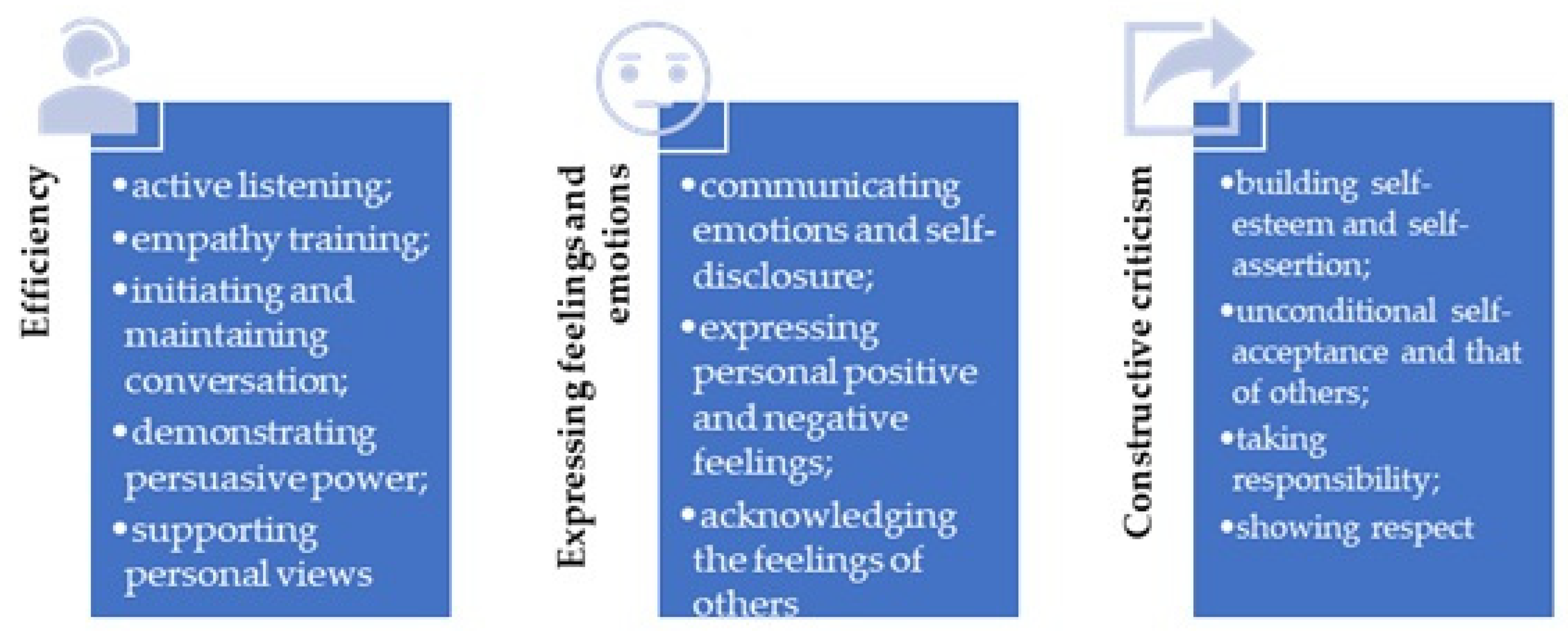
From a psychological viewpoint, assertive communication is rooted in the ability to express emotions and beliefs without undermining others’ rights. Stanton notes [19], p. 9, that the characteristics of assertive verbal and non-verbal communication encompass “clarity and accuracy of expression, naturalness, relaxed and sincere attitude, vocal qualities, pitch, intensity and volume, diction and accent, speech speed, eloquence of speech or narrative, effective use of pauses, etc.” Structurally, assertiveness comprises the following elements: cognitive elements related to communication and judgmental independence, affective elements concerning emotional stability, axiological elements associated with maturity and social adaptability, and conative elements reflecting confident behaviour [20]. The basic components of assertive communication are efficiency, the expression of feelings and emotions, and constructive criticism [21]. Figure 1 illustrates specific elements of these three components of assertive communication.
Figure 1.
Main components of assertive communication.
At the higher education level, studies have focused on analyzing assertive communication skills among both students [22,23] and teachers [24,25]. Research on this topic indicates that interventions focused on developing assertive communication skills aim to reduce stress levels [26], enhance self-esteem and self-efficacy among women in academic environments [27], and improve job satisfaction [28]. Barida et al. [29] developed an innovative tool for assessing assertive communication based on cultural values to evaluate the abilities of students in the Yogyakarta-Central region. Romanian higher education researchers express concerns regarding the exploration of assertiveness [30,31,32].
2.2. The Role of Assertive Communication in Sustainable Online Teaching
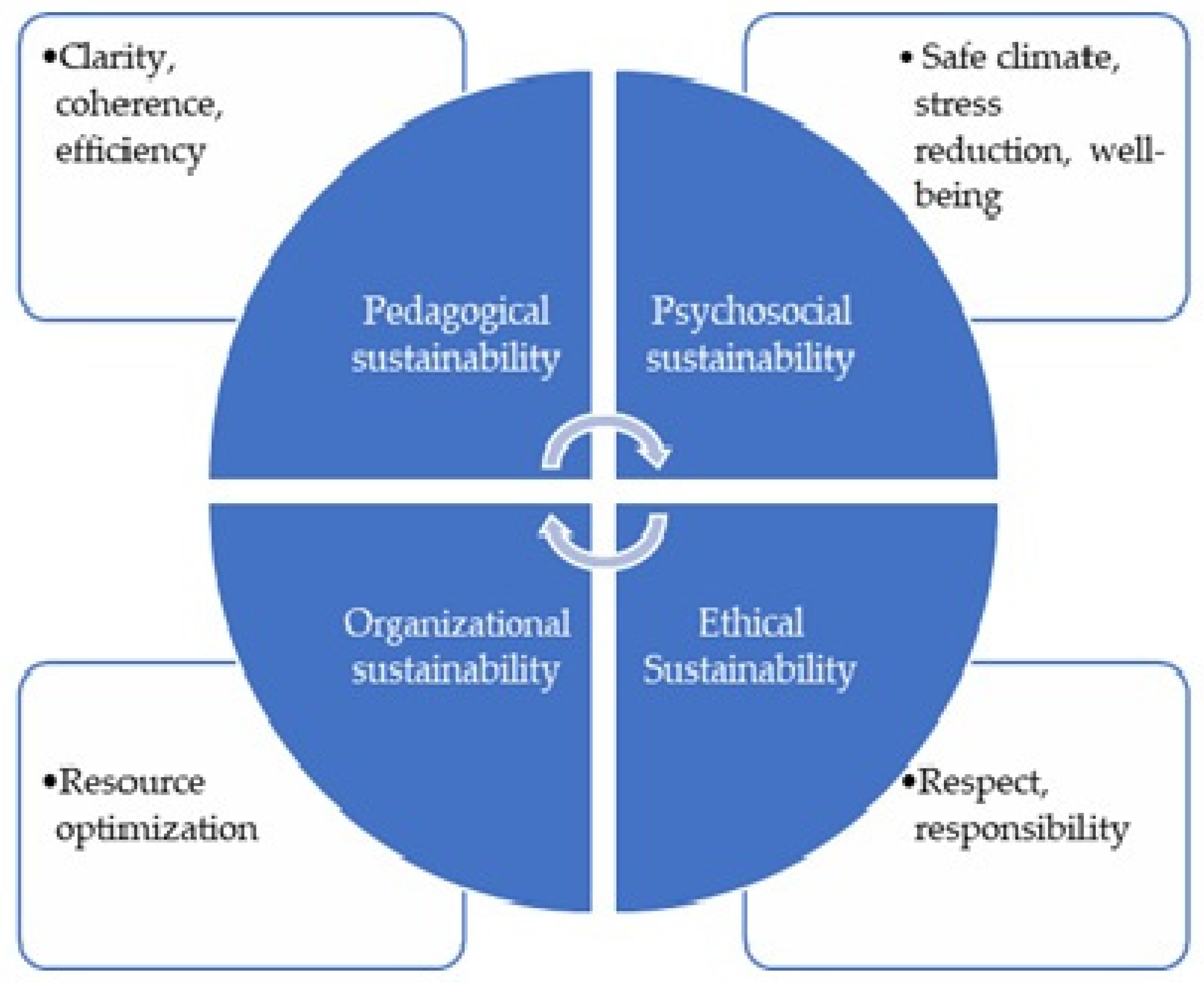
Assertive online communication can also be defined as the ability to express feelings towards individuals engaged in various digital interactions without causing offense. The online teaching-learning process involves a range of digital media and technologies [33], incorporating elements such as graphics, text, sound, animations, and videos. In contrast to passive and aggressive communication styles, assertive online communication within the educational context signifies the ability to interact effectively, openly express real thoughts and emotions, tackle problems independently or collaboratively, enhance life skills, and comprehend shortcomings [7]. The absence of face-to-face interactions in the online educational environment leads to the lack of a positive setting for participants to adaptively engage with one another and with instructors [34]. The role of assertive communication in sustainable online teaching in universities is central, as it supports the quality of education, the well-being of educational actors, and the long-term viability of the teaching process. From a pedagogical perspective, assertive communication helps to clarify learning objectives and assessment criteria, reduce cognitive confusion and information overload, and maintain coherence between activities, content, and assessment. On a psychosocial level, assertive communication is what ensures the creation of a safe and respectful educational climate, reduces conflicts and passive-aggressive behaviors, supports teacher-student relationships based on trust, and facilitates dialogue, feedback, and the expression of difficulties. At the institutional level, assertive communication is the one that optimizes time and resource management, reduces the volume of redundant messages and subsequent clarifications, supports clear policies regarding participation, evaluation, and academic ethics, and facilitates collaboration between teaching staff and administrative structures. Regarding the ethical dimension, through assertive communication, integrity is promoted, responsible digital behaviors are modeled, inclusion and respect for cultural diversity are supported, and active participation and critical dialogue are encouraged. Figure 2 represents the main benefits of assertive communication from the perspective of sustainable online teaching in academia.
Figure 2.
Dimensions of sustainability in online teaching in academia.
Integrating Netiquette guidelines into teaching materials is crucial for improving the quality of online group discussions [35]. These guidelines establish acceptable norms for polite, tolerant, respectful, and harmonious interactions in online courses. There is a limited number of studies focusing on evaluating assertive communication in online environments at the academic level. While communicative styles (aggressive, passive-aggressive, passive, and assertive) on social media have been explored [36], research has also delved into students’ willingness to communicate assertively in the online learning environment during the COVID-19 pandemic in higher education [37]. Additionally, a study conducted by Galinha & João [38] measured the levels of cooperation and assertiveness among students in Portuguese universities within the e-learning framework. However, Di Consiglio et al. [34] found that assertiveness is not typically assessed as an outcome of online interventions. The authors developed ComunicaBene, an Internet-based image-guided training programme aimed at fostering assertiveness among university students.
Assertive communication in online contexts is a skill that can be acquired or improved through practice. A series of recent studies has demonstrated the positive impacts of implementing training programmes on the development of assertive communication skills. Forbes et al. [39] propose sustainable communication strategies in online teaching in the form of an interpersonal and reciprocal approach. Nurmagandi et al. [40] showed the effectiveness of practising these skills in adolescents participating in online gaming. However, some studies have reported either inconsistent findings, with no significant effect observed [41], or improvements noted in specific communication skills without a corresponding increase in overall assertiveness levels [42]. There is a clear need for assertiveness education, which can lead to enhanced communication skills, better management of interpersonal relationships, comfortable expression of feelings, and effective problem-solving abilities [43]. Notably, the absence of validated tools for measuring assertive communication skills in the online environment underlines the necessity for further research.
The transition from face-to-face instruction to online learning environments has significantly altered the dynamics of academic communication. Unlike traditional classroom settings, online education reduces the availability of nonverbal cues, delays immediate feedback, and relies heavily on written or technologically mediated interaction. These structural differences may influence how assertive communication is expressed and perceived. In online contexts, assertiveness may require greater clarity, explicitness, and self-regulation, as misunderstandings can arise more easily in the absence of direct interpersonal cues. From a psychological and educational perspective, assertive communication in online learning environments may influence students’ academic engagement, collaborative efficiency, conflict management, and sense of belonging within the academic community. Despite its relevance, most assertiveness assessment tools were developed for general or face-to-face contexts, with limited attention to the specific demands of digital education. Therefore, investigating the structure and determinants of assertive communication in online higher education is both theoretically necessary and practically relevant for improving digital pedagogical practices.
2.3. Aim of the Present Study
The main objective of this research is to investigate the structure and determinants of assertive communication skills in online higher education and to validate a context-specific assessment instrument.
The research objectives (RO) are defined as follows:
RO1: to examine the factorial structure and psychometric properties of the ACSOT in an online academic context;
RO2: to analyze differences in assertive communication dimensions according to demographic and individual variables (gender, age, experience in online education, residence environment, and level of education).
3. Methodology
3.1. Participants
The study included 374 students enrolled at “Vasile Alecsandri” University of Bacău, Romania. Participants were recruited from multiple academic programs within the university, covering both undergraduate (Bachelor’s) and graduate (Master’s) levels of study. The majority of respondents were aged between 20 and 24 years (59.6%), reflecting the typical age range of undergraduate students. The sample was predominantly female (78.6%), which corresponds to the gender distribution characteristic of the academic fields represented in the study. In terms of educational level, 70.6% of participants were enrolled in Bachelor’s programs, while the remaining participants were pursuing Master’s degrees. The variable of degree level was included in the analysis to examine potential differences in assertive communication skills according to academic stage. Regarding residence environment, 60.4% of participants reported living in urban areas, while the remainder resided in rural areas. Participants indicated a mean duration of prior involvement in online education of 2.4 semesters (SD = 1.06), with a range between 1 and 4 semesters. This variable was considered relevant given that previous exposure to online learning environments may influence the development of assertive communication skills. Detailed sample characteristics are also provided in Table 1.
Table 1.
Sample characteristics.
3.2. Research Methods and Tools
A 22-item questionnaire was initially developed to measure assertive communication in online contexts. Items 1 and 8 were adapted from Lestari [44], while items 5, 7, 11, 12, 18, and 19 were adapted from Gaumer Erickson et al. [45]. Items 2, 3, 6, 10, 14, 15, 16, 17, 20 were adapted from Chalvin [46], and item 13 was adapted from Peterson & Miller [47]. Items 4, 9, 21, and 22 were newly developed. Notably, items 4, 12, 15, 17, and 18 were reverse-scored. The 5-point Likert scale was used, with responses ranging from 1 = “strongly disagree”, 2 = “disagree”, 3 = “neither agree nor disagree”, 4 = “agree”, and 5 = “strongly agree”.
3.3. Data Analysis
The dataset comprised responses from a sample of 374 students who participated in the survey. First, an exploratory factor analysis (EFA) was conducted to identify various dimensions of online assertive communication as measured by the questionnaire. However, the normality test conducted using Shapiro and Wilks revealed non-normally distributed data (p < 0.05) across the measured variables and examined participant groups of students. Consequently, non-parametric methods were applied to complete the analysis. Spearman’s Rho correlation test was used to assess the relationship between pairs of variables, while Mann–Whitney and Kruskal–Wallis were employed to define potential differences between student groups based on gender, age, environment, specialisation, and type of education
3.4. Ethical Considerations
The study was conducted in accordance with internationally accepted ethical standards for research involving human participants. Before data collection, participants were informed about the purpose of the study, the voluntary nature of their participation, and their right to withdraw at any time without any academic consequences. Informed consent was obtained before the completion of the questionnaire. Participants were assured that their responses would remain anonymous and confidential. No identifying information (e.g., names, student ID numbers, IP addresses) was collected. The data were used exclusively for research purposes. To avoid any potential coercion, participation was not linked to course evaluation, academic credit, or other incentives. Students were informed that their decision to participate or decline would not affect their academic standing in any way. All data were stored on password-protected devices accessible only to the research team and handled in accordance with institutional data protection regulations. The study received approval from the Ethics Committee of “Vasile Alecsandri” University of Bacău (Approval No. 31/2//8 August 2023).
4. Results
4.1. Exploratory Factor Analysis and Internal Consistency
The Kaiser-Meyer-Olkin (KMO) analysis confirmed the sample’s adequacy (KMO = 0.904), and additionally, Bartlett’s Test of Sphericity (=2386.965; p < 0.05) revealed the data factorability [48]. The Exploratory Factor Analysis (EFA) employing the Promax extraction method revealed three distinct components comprising 14 items (Table 2). These components collectively accounted for almost 60% of the variance. The final 14-item version retained the strongest indicators for each dimension, resulting in a scale that is psychometrically robust and interpretable (Appendix A). Cronbach’s alpha coefficients for the three dimensions ranged from 0.648 to 0.720, indicating acceptable internal consistency and reliability. This refinement ensures that the ACSOT provides a reliable, valid, and concise tool for assessing assertive communication in online learning environments. The scale can be used both in research to explore relationships with demographic and educational variables, and in practice to inform interventions aimed at enhancing students’ online communication skills.
Table 2.
Extracted components from Exploratory Factor Analysis, factor loadings, and internal consistency values.
All final factor loadings surpassed the 0.5 threshold, indicating that the designated items constitute good measures for their respective factors [49]. The extracted components were interpreted into skill categories relevant to the research context as follows:
- Component 1: expressiveness (i.e., proficiency in expressing personal opinion);
- Component 2: communicativeness (i.e., adeptness in open and comfortable communication);
- Component 3: conflict management skills (e.g., encompassing emotional intelligence, self-regulation, neutrality).
Subsequently, the measurement model underwent validation for internal consistency, with all constructs exhibiting Cronbach alpha values above the accepted threshold of 0.7 [50].
4.2. Descriptive Statistics
Table 3 illustrates the central tendencies, variability, and score distribution across different factors, including means, standard deviation, medians, and quartiles. These results are presented for the entire sample, as well as for distinct student groups categorized by gender, education level, and environment. Table 3 presents the descriptive statistics for the three dimensions of online assertive communication across the total sample and demographic subgroups. Participants reported relatively high levels of assertive communication, with mean scores above the midpoint of the scale for all constructs. Among the three dimensions, conflict management recorded the highest mean score (M = 4.295, SD = 0.519), followed by expressiveness (M = 3.863, SD = 0.720) and communicativeness (M = 3.828, SD = 0.648). Median values and interquartile ranges suggest a relatively homogeneous distribution, with most responses concentrated in the upper range of the scale.
Table 3.
Descriptive statistics of online assertive communication constructs.
Regarding gender differences, female students reported slightly higher levels of communicativeness (M = 3.851) and conflict management (M = 4.330) compared to male students (M = 3.742 and M = 4.165, respectively), whereas expressiveness showed nearly identical mean values across genders. Variability was comparable between groups. In terms of educational level, Master’s students exhibited marginally higher mean scores in expressiveness (M = 3.954) and communicativeness (M = 3.870) compared to Bachelor’s students (M = 3.825 and M = 3.810, respectively), while conflict management scores were nearly identical across levels of study. Differences according to residence environment indicate slightly higher scores among urban students across all three dimensions, particularly in expressiveness (M = 3.930 vs. M = 3.761). However, dispersion indices suggest moderate variability within both groups.
Overall, the descriptive results indicate consistently elevated levels of perceived assertive communication in online settings, with small variations across demographic categories. Across all participants, expressiveness, communicativeness, and conflict management were rated relatively high, with slight variations in means and standard deviations observed across different demographic groups such as gender, educational level, and residence environment. Unlike expressiveness and communication ability, which tend to have consistent mean scores across groups, conflict management shows slight variation. Therefore, individuals generally show similar levels of expressiveness and communicativeness across demographics. However, there was some nuance in how conflict management skills manifested between communicativeness and conflict management, indicating that more communicative students also tend to demonstrate better conflict management skills.
4.3. Correlations and Differences
According to the results in Table 4, there are strong associations among the variables of expressiveness, communicativeness, and conflict management, suggesting that proficiency in one area tends to coincide with competence in the others. The results indicate statistically significant positive associations between all constructs (p < 0.001).
Table 4.
Spearman’s Rho correlations between constructs of online assertive communication.
Expressiveness was strongly correlated with communicativeness (ρ = 0.618), suggesting that students who report greater clarity and openness in expressing their ideas also tend to perceive themselves as more capable of engaging effectively in online interactions. This result indicates that individuals who demonstrate higher levels of expressiveness tend to be more communicative, and vice versa.
A similarly strong positive relationship was observed between expressiveness and conflict management (ρ = 0.575), indicating that the ability to articulate thoughts and feelings clearly may be linked to more constructive handling of disagreements in digital contexts. According to this result, individuals with greater levels of expressiveness also tend to possess enhanced conflict management skills.
The correlation between communicativeness and conflict management was moderate (ρ = 0.460), further supporting the conceptual coherence of the three dimensions while also indicating that they represent related but distinct aspects of assertive communication.
Overall, the pattern of correlations supports the multidimensional yet integrative structure of online assertive communication, as the constructs are significantly interrelated without suggesting redundancy.
Analysis of student group differences revealed that women exhibit significantly higher levels of conflict management skills compared to men, while no discernible gender disparities were detected in communication and expressiveness. Regarding age, significant differences were found in expressiveness and communicativeness, with older age groups (25–49, >50) displaying heightened levels of assertive communication in contrast to their younger counterparts (20–34).
Remarkably, the data related to students’ residence environment did not exhibit any important variations in the assessed constructs of online assertive communication. Equally noteworthy is the absence of significant discrepancies among students of varying levels of experience in online courses, as well as between Bachelor’s and Master’s degree students. Table 5 illustrates the significant differences identified among various student groups. The Mann–Whitney U tests indicated that female students reported significantly higher levels of conflict management compared to male students (Z = −2.526, p = 0.012). No significant gender differences were observed for expressiveness (Z = −0.210, p = 0.834) or communicativeness (Z = −1.744, p = 0.081). These results suggest that, while overall assertive communication is comparable across genders, women may demonstrate a stronger ability to manage disagreements effectively in online contexts.
Table 5.
Differences in online assertive communication constructs.
Kruskal–Wallis tests revealed significant age-related differences in expressiveness (χ2 = 13.833, p = 0.001) and communicativeness (χ2 = 10.073, p = 0.006), with older participants reporting higher levels in both dimensions. No significant differences were found for conflict management (χ2 = 0.575, p = 0.750). These findings indicate that experience and maturity associated with older age may contribute to greater confidence and clarity in expressing ideas and engaging with others in online learning environments.
Overall, the results from Table 5 highlight that demographic factors, particularly gender and age, are associated with specific dimensions of online assertive communication, whereas other constructs remain largely consistent across groups.
5. Discussions
This study aimed to develop and assess the psychometric properties of the ACSOT, a tool designed to evaluate assertive online communication within the Romanian educational context. The scale integrates 14 items, aligning with the current changes in online teaching in higher education. Through exploratory factor analysis, three key components were delineated: expressiveness, communicativeness, and conflict management skills. A related study by Montes de Oca [51] identified assertive communication dimensions more broadly, encompassing effective dialogue, constructive feedback, conflict resolution, and non-verbal communication.
The first factor, expressiveness, includes six elements that reflect the ability to engage in online discourse with teachers, even when in disagreement, to express personal opinions amid disagreement during online courses or with hostile interlocutors, and to confidently ask questions during online learning activities. Findings from research conducted by Eklund and Isotalus [1] underline the significance of relational communication in building trust, which is a pivotal pedagogical objective of online teaching. Additionally, insights from a qualitative study by Mansour et al. [52] showed that building self-confidence is a prerequisite for demonstrating assertive communication skills.
The second factor, communicativeness, encompasses four items, which assess individuals’ ability to engage in interaction during online activities, as well as their capacity to express themselves in online courses to be socially accepted by their peers. Previous studies have shown the positive impact of teacher interaction and participant collaboration on satisfaction [53,54]. Furthermore, research suggests that online interaction facilitates learners’ academic development [55] and serves as an essential catalyst for motivating learners to express themselves and enhancing their engagement in virtual learning environments [56,57].
The third factor, conflict management skills, integrates four items aimed at assessing individuals’ ability to manage emotions when disagreements arise during online courses, recognize that conflicts are not to be taken personally, and demonstrate active listening without interrupting in online class discussions. According to the study conducted by Rahayu [58], the conflicts experienced by students during online learning often revolve around completing group tasks, encountering discriminatory attitudes, and acknowledging others’ work without consent. Moreover, virtual professional development for educational leaders plays an important role in fostering effective conflict management [59]. Standardised online codes of conduct have been developed to manage students’ online presence, mitigating conflicts and providing constructive approaches for resolving disagreements [60].
In terms of investigating differences in assertive online communication, there are few studies specifically focusing on assertiveness alone. Regarding gender, existing research suggests that men display higher levels of assertiveness compared to women [61]. Findings from a study conducted by Samfira and Dragoescu Urlică [33] highlight the disparities in assertiveness among pre-service teachers concerning gender, residence environment, and age. Urban respondents exhibited greater assertiveness levels than rural students, while male respondents showed higher assertiveness than female participants. Additionally, the results indicate that the level of assertiveness increases with age. However, Mollaoğlu and Alptuğ [62] found no significant gender differences in assertiveness among students. Data from our study show that expressiveness, communication, and conflict management received relatively high ratings across all participants, albeit with minor variations in means and standard deviations based on demographics such as gender, educational level, and area of residence.
Furthermore, other important results from our research indicate that there are strong associations between expressiveness, communicativeness, and conflict management. A significant positive correlation exists between expressiveness and communicativeness, as well as between expressiveness and conflict management, suggesting that individuals who exhibit higher levels of expressiveness tend to possess better communication and conflict management skills. The results of the study conducted by Akkaya and Tuzgöl Dost [63] show that the level of assertiveness of university students is closely associated with their personality traits. Additionally, another study [64] demonstrates a positive correlation between self-respect levels and assertiveness.
Other studies highlight the importance of investigating both online and face-to-face communication dynamics. The findings from Said et al. [37] indicate a preference among students for online communication over offline alternatives. Moreover, students report feeling at ease expressing their emotions, opinions, thoughts, and ideas online and tend to favour listening over speaking in online interactions. There is a call for further studies to examine the impact of different variables, such as the level of education, on assertive communication in online teaching. Furthermore, exploring potential correlations between the assertive online communication levels and personality traits, self-efficacy, or academic performance motivation could yield valuable insights.
These findings have important theoretical implications, highlighting that assertive communication manifests similarly in online and face-to-face contexts, but digital modalities may amplify certain dimensions, such as conflict management strategies. Practically, the results indicate that online course design and instructor interventions could be tailored to foster assertiveness, particularly among younger students and male participants. Future studies should investigate how these dimensions influence collaborative learning outcomes, engagement, and academic performance.
6. Conclusions
The present study provides the necessary theoretical framework for understanding the assertiveness component in online communication. Assertive communication is an essential mechanism of sustainable online teaching in higher education, contributing to the quality of the educational process, the well-being of students and teachers, and the institutional viability of digital education in the long term.
Through exploratory factor analysis, expressiveness, communicativeness, and conflict management skills emerged as key components. Participants consistently rated all three highly. Moreover, strong correlations among these variables indicate that proficiency in one area typically corresponds with proficiency in others. The availability of an assessment scale for assertive communication in online teaching with validated psychometric properties presents societal benefits by facilitating effective interventions to enhance assertive communication skills.
7. Limitations and Future Research
Several limitations of the present study should be acknowledged. First, the sample was drawn from a single university, which may limit the generalizability of the findings to other higher education contexts or cultural settings. The study relied on a convenience sample from a single Romanian university, which may limit the generalizability of findings to other higher education contexts, both nationally and internationally. The gender distribution was skewed, with females representing nearly 79% of participants, which could affect the interpretation of gender-related differences in assertive communication. Future studies should aim to recruit more balanced and diverse samples across multiple institutions and regions to strengthen external validity. Second, the study relied on self-reported measures, which may be subject to social desirability or response bias. Third, the cross-sectional design does not allow for causal inferences regarding the relationships between assertive communication dimensions and demographic variables. Finally, although some demographic differences were explored, other potentially influential factors, such as personality traits, prior communication training, or digital literacy, were not assessed.
Future research could address these limitations in several ways. Multi-institutional and cross-cultural studies would increase the external validity of findings. The findings should be interpreted in the context of Romanian academic culture, which may influence students’ assertive communication behaviors. For instance, hierarchical structures in higher education, expectations regarding student-teacher interactions, and social norms around expressing disagreement or managing conflict may shape the way students communicate online. These cultural factors may partially explain the observed gender and age differences and should be considered when applying the ACSOT to other educational contexts. Longitudinal designs could provide insight into the development of assertive communication skills over time and their impact on academic and social outcomes in online learning. Additional variables, such as personality, motivation, or prior experience with digital communication tools, could be incorporated to better understand the determinants of assertive communication. Finally, intervention studies could test strategies to enhance expressiveness, communicativeness, and conflict management in online educational contexts.
Author Contributions
Conceptualization, B.-M.A. and L.M.; methodology, K.T. and L.M.; software, B.-M.A. and C.C.-B.; validation, K.T. and L.M.; formal analysis, K.T.; investigation, B.-M.A., L.M. and C.C.-B.; resources, C.C.-B.; data curation, K.T.; writing—original draft preparation, K.T. and L.M.; writing—review and editing, B.-M.A. and C.C.-B.; visualization, B.-M.A.; supervision, L.M.; project administration, K.T.; funding acquisition, C.C.-B. All authors have read and agreed to the published version of the manuscript.
Funding
This research received no external funding.
Institutional Review Board Statement
The study was conducted in accordance with the Declaration of Helsinki, and approved by the Institutional Review Board of Universitatea Vasile Alecsandri Din BacĂu Subcommittee on Ethics (37/2 8 August 2023), for studies involving humans.
Informed Consent Statement
Informed consent was obtained from all subjects involved in the study.
Data Availability Statement
The original contributions presented in this study are included in the article. Further inquiries can be directed to the corresponding author.
Acknowledgments
All authors made equal contributions to this paper. Katerina Tzafilkou contributed when she was working at the University of Macedonia (2023). The research was conducted at the “Performed” Research Center and GASIE Research Group—INTERSTUD Research Center from “Vasile Alecsandri” University of Bacau, Romania.
Conflicts of Interest
The authors declare no conflicts of interest.
Appendix A. Assertive Communication Scale in Online Teaching
Table A1.
Items of the Assertive Communication Scale in Online Teaching.
References
- Eklund, M.; Isotalus, P. Having it both ways: Learning communication skills in face-to-face and online environments. Front. Educ. 2024, 9, 1270164. [Google Scholar] [CrossRef] [Scilit]
- Carmo, R.O.S.; Franco, A.P. Da docência presencial à docência online: Aprendizagens de professores universitários na educação a distância. Educ. Rev. 2019, 35, e210399. [Google Scholar] [CrossRef] [Scilit]
- Radmila, M. Effects of an Assertive Behavior Program on the Reduction of Anxiety in Future Teachers and Preschool Teachers. Psychol. Psychol. Res. Int. J. 2019, 4, 000202. [Google Scholar] [CrossRef] [Scilit]
- Samfira, E.M. Assertive Communication Skills in Universities. J. Plus Educ. 2020, 26, 361–373. [Google Scholar]
- Neagu, S.N.; Vieriu, A.M. Digital and psychological well-being among technical university students: Exploring the impact of digital engagement in higher education. Educ. Sci. 2025, 15, 1192. [Google Scholar] [CrossRef] [Scilit]
- Aylor, B.; Opplinger, P. Out-of-Class Communication and Student Perceptions of Instructor Humor Orientation and Socio-Communicative Style. Commun. Educ. 2003, 52, 122–134. [Google Scholar] [CrossRef] [Scilit]
- Asrowi, A.; Barida, M. The Effectiveness of Assertive Training to Increase the Communication Skills of High School Students in Surakarta. Dewantara 2013, 1, 95–105. [Google Scholar]
- Rusmana, N.; Hafina, A.; Siddik, R.R.; Nur, L. Self-Esteem Development of Vocational High School Students in Indonesia: Does Group Counseling with Assertive Training Technique Help? Cakrawala Pendidik. 2020, 39, 573–582. [Google Scholar] [CrossRef] [Scilit]
- Parmaksiz, I. Assertiveness as the Predictor of Adjustment to University Life amongst University Students. Int. J. Instr. 2019, 12, 131–148. [Google Scholar] [CrossRef] [Scilit]
- Dasgupta, S.A.; Suar, D.; Singh, S. Impact of managerial communication styles on employees’ attitudes and behaviours. Empl. Relat. 2012, 35, 173–199. [Google Scholar] [CrossRef] [Scilit]
- Sims, C.M. Do the big-five personality traits predict empathic listening and assertive communication? Int. J. List. 2017, 31, 163–188. [Google Scholar] [CrossRef] [Scilit]
- Abed, G.A.; El-Amrosy, S.H.; Atia, M.M. The Effect of Assertiveness Training Program on Improving Self-Esteem of Psychiatric Nurses. J. Nurs. Sci. 2015, 1, 1–8. [Google Scholar]
- Putri, Y.M.; Elmiati, E. Students’ Perception on Teacher’s Communication Style on Students’ Motivation in Learning English. TELL-US J. 2017, 3, 125–140. [Google Scholar] [CrossRef] [Scilit]
- Ogunyemi, K.O.; Olagbaju, O.O. Effects of Assertive and Aggressive Communication Styles on Students’ Self-Esteem and Achievement in English Language. Cross Cult. Commun. 2020, 16, 96–101. [Google Scholar]
- Stanica, I.-C.; Hainagiu, S.M.; Milicu, A.; Dascalu, M.-I.; Portelli, G.-P. Effectiveness of Virtual Reality-Based Multi-Therapy Systems for Physio-Psychological Rehabilitation: A Clinical Study. Appl. Sci. 2024, 14, 9093. [Google Scholar] [CrossRef] [Scilit]
- Vagos, P. Assertividade. In Empreendipédia—Dicionário de Educação Para e Empreendedorismo; Jardim, J., Franco, J.E., Eds.; Gradiva: Lisboa, Türkiye, 2019; pp. 40–42. [Google Scholar]
- Starling, M.V.S. Teachers’ Perception of the Principal’s Communication Style regarding Teacher Retention at a Selected Elementary School. Ph.D. Thesis, Houston Baptist University, Houston, TX, USA, 2020. [Google Scholar]
- Baggio, F. Assertività e Training Assertivo. In Teoria e Pratica per Migliorare le Capacità Relazionali dei Pazienti: Teoria e Pratica per Migliorare le Capacità Relazionali dei Pazienti; Franco Angeli: Milano, Italy, 2013. [Google Scholar]
- Stanton, N. Comunicarea/Communication; Science and Technology Publishing House: Bucharest, Romania, 1995. [Google Scholar]
- Nikolaiev, L.; Herasina, S.; Hrechanovska, O.; Vlasenko, O.; Skliarenko, S.; Hrande, K. The development of assertiveness of the individual as a subject of communication. Rev. Românească Pentru Educ. Multidimens. 2023, 15, 210–228. [Google Scholar] [CrossRef] [Scilit]
- Dafinoiu, I. Elemente de Psihoterapie Integrativă/Elements of Integrative Psychotherapy; Polirom: Iaşi, Romania, 2001. [Google Scholar]
- Hajdu, F.; Barizsné Hadházi, E. Students’ Assertive Communication Skills at University of Debrecen. Ann. Fac. Econ. 2020, 1, 348–355. [Google Scholar]
- Omura, M.; Levett-Jones, T.; Stone, T.E. Evaluating the impact of an assertiveness communication training programme for Japanese nursing students: A quasi-experimental study. Nurs. Open 2018, 6, 463–472. [Google Scholar] [CrossRef] [Scilit]
- Barrios, N.; Maldonado, G.; Nava, M.L. University assertive communication meta-capability: Analysis in nursing teachers. Publicaciones 2022, 52, 320–337. [Google Scholar] [CrossRef] [Scilit]
- Călin, F.M.; Munteanu, D.-R.; Petre, C.; Nica, F.D. The importance of using assertive communication in the educational environment. Black Sea J. Psychol. 2023, 14, 1–14. [Google Scholar]
- Gelberg, S.; Gelberg, H. Stress management interventions for veterinary students. J. Vet. Med. Educ. 2005, 32, 173–181. [Google Scholar] [CrossRef] [Scilit] [PubMed]
- Akbari, B.; Mohamadi, J.; Sadeghi, S. Effect of assertiveness training methods on self-esteem and general self-efficacy female students of Islamic Azad University, Anzali branch. J. Basic Appl. Sci. Res. 2012, 2, 2256–2269. [Google Scholar]
- Lounsbury, J.W.; Loveland, J.M.; Sundstrom, E.D.; Gibson, L.W.; Drost, A.W.; Hamrich, F.L. An investigation of personality traits in relation to career satisfaction. J. Career Assess. 2003, 11, 287–307. [Google Scholar] [CrossRef] [Scilit]
- Barida, M.; Hidayah, N.; Ramli, M.; Taufiq, A.; Sunaryono, S. An investigation of item difficulties in assertive communication based on Yogyakarta cultural values. Pegem J. Educ. Instr. 2021, 11, 100–109. [Google Scholar] [CrossRef] [Scilit]
- Anghel, I.O.; Jitaru, O. Strategies of assertive communication in the teaching profession. In Education Facing Contemporary World Issues, European Proceedings of Social and Behavioural Sciences; Soare, E., Langa, C., Eds.; Future Academy: Singapore, 2019; Volume 67, pp. 90–98. [Google Scholar] [CrossRef] [Scilit]
- Jitaru, O.; Anghel, I.O. Assertiveness in Self-Fulfillment and Professional Success. Interpersonal Dynamics in the Didactic Relation. Psychology 2019, 10, 1235–1247. [Google Scholar] [CrossRef]
- Samfira, E.M.; Dragoescu Urlică, A.A. Differences in the Assertiveness Level of First Year Pre-Service Teachers from a Romanian University of Life Sciences. J. Plus Educ. 2022, 30, 221–242. [Google Scholar]
- Basar, Z.M.; Mansor, A.N.; Jamaludin, K.A.; Alias, B.S. The Effectiveness and Challenges of Online Learning for Secondary School Students—A Case Study. Asian J. Univ. Educ. 2021, 17, 119–129. [Google Scholar] [CrossRef] [Scilit]
- Di Consiglio, M.; Burrai, J.; Mari, E.; Giannini, A.M.; Couyoumdjian, A. Imagine All the People: A Guided Internet-Based Imagery Training to Increase Assertiveness among University Students-Study Protocol for a Randomized Controlled Trial. Healthcare 2023, 11, 1874. [Google Scholar] [CrossRef] [Scilit]
- Mintu-Wimsatt, A.; Kernek, C.; Lozada, H.C. Netiquette: Make it part of your syllabus. J. Online Learn. Teach. 2010, 6, 264–267. [Google Scholar]
- Ramachandiran, C.R. Mahmud Theorizing Communicative Styles on Social Media: An Etymological Shift. IOP Conf. Ser. J. Phys. Conf. Ser. 2019, 1228, 012073. [Google Scholar] [CrossRef] [Scilit]
- Said, M.M.; Rita, F.; Sri Arfani, H.M.; Basri, H.; Weda, S. EFL Students’ Willingness to Communicate in Online Learning at Higher Education in Indonesia. Multicult. Educ. 2021, 7, 340–346. [Google Scholar]
- Galinha, S.; João, R.S. Measuring Levels of Cooperation and Assertiveness in the E-Learning System During a Pandemic Crisis. Psychol. Educ. 2021, 58, 2893–2904. [Google Scholar]
- Forbes, D.; Gedera, D.; Hartnett, M.; Datt, A.; Brown, C. Sustainable Strategies for Teaching and Learning Online. Sustainability 2023, 15, 13118. [Google Scholar] [CrossRef] [Scilit]
- Nurmagandi, N.; Hamid, A.Y.S.; Panjaitan, R.U. The effects of assertive communication training on communication skills of adolescents with online game users. J. Aisyah J. Ilmu Kesehat. 2022, 7, 1297–1302. [Google Scholar] [CrossRef] [Scilit]
- Di Consiglio, M.; Fabrizi, G.; Conversi, D.; La Torre, G.; Pascucci, T.; Lombardo, C.; Violani, C.; Couyoumdjian, A. Effectiveness of NoiBene: A Web-based programme to promote psychological well-being and prevent psychological distress in university students. Appl. Psychol. Health Well-Being 2021, 13, 317–340. [Google Scholar] [CrossRef] [Scilit]
- Kyaw, B.M.; Posadzki, P.; Paddock, S.; Car, J.; Campbell, J.; Tudor Car, L. Effectiveness of digital education on communication skills among medical students: Systematic review and meta-analysis by the digital health education collaboration. J. Med. Internet Res. 2019, 21, e12967. [Google Scholar] [CrossRef] [Scilit]
- Gultekin, A.; Ozdemir, A.A.; Budak, F. The Effect of Assertiveness Education on Communication Skills Given to Nursing Students. Int. J. Caring Sci. 2018, 11, 395–401. [Google Scholar]
- Lestari, I.; Sukmawati, N.A. Analysis of High School Students’ Social Skills on Online Learning During the Covid-19 Pandemic. Adv. Soc. Sci. Educ. Humanit. Res. 2021, 640, 399–403. [Google Scholar]
- Gaumer Erickson, A.S.; Noonan, P.M. Assertiveness Assessment Suite: Technical report. College & Career Competency Framework, 2021. Available online: http://cccframework.org (accessed on 6 January 2026).
- Chalvin, D. L’affirmation de Soi; ESF: Paris, France, 1995. [Google Scholar]
- Peterson, H.; Miller, C.L. Norming the Peterson Assertiveness Questionnaire. 2020. Available online: https://cornerstone.lib.mnsu.edu/it-solutions-pubs/3/ (accessed on 6 January 2026).
- Bartlett, M.S. A note on multiplying factors for various chi-squared approximations. J. R. Stat. Soc. Ser. B (Methodol.) 1954, 16, 296–298. [Google Scholar] [CrossRef] [Scilit]
- Hair, J.; Black, W.; Babin, B.; Anderson, R. (Eds.) Multivariate Data Analysis: A Global Perspective, 7th ed.; Pearson: London, UK, 2010. [Google Scholar]
- Gefen, D.; Straub, D.; Boudreau, M. Structural equation modeling and regression: Guidelines for research practice. Commun. Assoc. Inf. Syst. 2000, 4, 7. [Google Scholar] [CrossRef] [Scilit]
- Montes de Oca, J. Assertive communication and teamwork: Results of an intervention 34 program to the supervisors of a company. Propósitos Y Represent. 2016, 2, 121–196. [Google Scholar] [CrossRef] [Scilit]
- Mansour, M.; Jamama, A.; Al-Madani, M.; Mattukoyya, R.; Al-Anati, A. Reconciling Assertive Communication Skills with Undergraduate Nursing Education: Qualitative Perspectives from British and Saudi Newly-Graduated Nurses. Health Prof. Educ. 2020, 6, 176–186. [Google Scholar] [CrossRef] [Scilit]
- Abuhassna, H.; Al-Rahmi, W.M.; Yahya, N.; Aman, M.; Megat Zakaria, Z.; Kosnin, A.B.M.; Darwish, M. Development of a new model on utilizing online learning platforms to improve students’ academic achievements and satisfaction. Int. J. Educ. Technol. High. Educ. 2020, 17, 38. [Google Scholar] [CrossRef] [Scilit]
- Alqurashi, E. Predicting student satisfaction and perceived learning within online learning environments. Distance Educ. 2019, 40, 133–148. [Google Scholar] [CrossRef] [Scilit]
- Schneider, M.; Preckel, F. Variables associated with achievement in higher education: A systematic review of meta-analyses. Psychol. Bull. 2017, 143, 565–600. [Google Scholar] [CrossRef] [Scilit]
- Martin, D.P.; Rimm-Kaufman, S.E. Do student self-efficacy and teacher-student interaction quality contribute to emotional and social engagement in fifth-grade math? J. Sch. Psychol. 2015, 53, 359–373. [Google Scholar] [CrossRef] [Scilit]
- Miao, J.; Ma, L. Students’ online interaction, self-regulation, and learning engagement in higher education: The importance of social presence to online learning. Front. Psychol. 2022, 13, 815220. [Google Scholar] [CrossRef] [Scilit]
- Rahayu, G.; Maftuh, B.; Malihah, E. An Investigation of Conflict Resolution Strategies for the Students of Elementary School Teacher Education Study in Online Learning during the COVID-19 Pandemic. Mimb. Sekol. Dasar 2021, 8, 281–294. [Google Scholar] [CrossRef] [Scilit]
- Irby, B.J.; Pashmforoosh, R.; Druery, D.M.; Lara-Alecio, R.; Tong, F.; Etchells, M.J.; Algert, N.T. Virtual professional development on conflict management for school leaders. Front. Educ. 2022, 7, 849278. [Google Scholar] [CrossRef] [Scilit]
- Blake, C.; Scanlon, E. Online teaching: Applying distance learning principles to MOOCs. In Handbook of Research on Emerging Priorities and Trends in Distance Education: Communication, Pedagogy, and Technology; Yutzer, T.V., Eby, G., Eds.; IGI Global: Hershey, PA, USA, 2014; pp. 184–201. [Google Scholar]
- Costa, P., Jr.; Terracciano, A.; McCrae, R.R. Gender Differences in Personality Traits Across Cultures: Robust and Surprising Findings. J. Personal. Soc. Psychol. 2001, 81, 322–331. [Google Scholar] [CrossRef]
- Mollaoğlu, H.; Alptuğ, E.C. Investigation of Self-Esteem and Assertiveness Levels of University Students Who Do Sports and Non-Sports (Muğla Sıtkı Koçman University Case). J. Muğla Univ. Inst. Soc. Sci. 2013, 31, 135–143. [Google Scholar]
- Akkaya, M.; Tuzgöl Dost, M. An Examination of University Students’ Level of Assertiveness According to Self Construal and Five-Factor Personality Traits. Kastamonu Educ. J. 2021, 29, 480–489. [Google Scholar] [CrossRef]
- Romanowska-Tolloczko, A.; Nowak, A.; Gnitecka, J. Level of Self-Respect and Assertiveness Skills and Teachers’ Educational Competences. Pedagog. Psychol. Med.-Biol. Probl. Phys. Train. Sports 2015, 19, 67–70. [Google Scholar] [CrossRef] [Scilit]

Disclaimer/Publisher’s Note: The statements, opinions and data contained in all publications are solely those of the individual author(s) and contributor(s) and not of MDPI and/or the editor(s). MDPI and/or the editor(s) disclaim responsibility for any injury to people or property resulting from any ideas, methods, instructions or products referred to in the content. |
© 2026 by the authors. Licensee MDPI, Basel, Switzerland. This article is an open access article distributed under the terms and conditions of the Creative Commons Attribution (CC BY) license.