Article

Comparison of Environmental Impacts of Mediterranean and Western Diets Through Life Cycle Assessment


by
Gökhan Ekrem Üstün
1,*,
Tuğba Can
1,
Çağla Erdoğan Demir
2 and
Metin Güldaş
2,3
1
Environmental Engineering Department, Faculty of Engineering, Görükle Campus, Bursa Uludag University, 16059 Nilüfer-Bursa, Türkiye
2
Nutrition and Dietetics Department, Faculty of Health Sciences, Görükle Campus, Bursa Uludag University, 16059 Nilufer-Bursa, Türkiye
3
Biotechnology Department, Graduate School of Natural and Applied Sciences, Görükle Campus, Bursa Uludag University, 16285 Nilüfer-Bursa, Türkiye
*
Author to whom correspondence should be addressed.
Sustainability 2026, 18(5), 2356; https://doi.org/10.3390/su18052356
Submission received: 12 January 2026 / Revised: 13 February 2026 / Accepted: 14 February 2026 / Published: 28 February 2026
(This article belongs to the Section Sustainable Food)

Abstract

In this study, menus created by considering different food categories by the Mediterranean diet (MD) and Western diet (WD) were evaluated in terms of healthy nutrition, and their environmental footprints were comprehensively compared with life cycle analysis (LCA). The analysis was modeled using SimaPro 9.6, and the EcoInvent 3.10 and Agri-footprint 6.3 databases were used as secondary data sources. In 12 of the 15 environmental impact categories examined, MD had lower environmental impacts than WD. The climate change impact was estimated as 2.19 kg CO2-eq for MD, while it was 3.53 kg CO2-eq for WD. Similarly, freshwater ecotoxicity was 103 CTUe for MD and 418 CTUe for WD. However, MD showed 72% higher human toxicity (cancer) (ΔHTC), 32.5% higher water use (ΔWU), and 12.7% higher mineral-metal resource use (ΔRUM). The findings suggest that MD supports environmental sustainability because of its plant-based structure, whereas WD creates a greater environmental burden due to its high animal-derived content.

1. Introduction

In recent years, many countries, particularly in Western societies, have seen a significant rise in non-communicable diseases, including irregular weight gain, obesity, metabolic syndrome, type 2 diabetes, and non-alcoholic fatty liver disease [1]. The factors contributing to this increase include a fast-paced lifestyle, additives, high consumption of saturated fat and carbohydrates, reduced physical activity, alcohol, and smoking [2]. The rapid increase in non-communicable chronic diseases has led to a shift in nutrition research from examining single nutrients and foods to examining dietary patterns, with the assumption that food combinations may have synergistic and/or antagonistic effects beyond the individual components [3]. As a result, studies have been conducted on diets such as the vegan, vegetarian, gluten-free, ketogenic, and Mediterranean diets. Adherence to the MD, one of the most emphasized dietary patterns today, has been shown in many studies to be protective against the development of various diseases, especially obesity and cardiovascular diseases (CVD) [4]. In a European Union project completed in 2025 in the PRIMA call area (SwitchtoHealthy-2133), factors affecting adherence to the Mediterranean diet, which supports healthy living in Mediterranean communities (as drivers or barriers), were investigated. It was determined that families did not encounter significant difficulties in implementing the MD at home and in purchasing Mediterranean diet foods from local open markets and supermarkets [5].
The concept of healthy MD originated from the long-life expectancy of individuals living in the Mediterranean Basin and is characterized by a low rate of nutrition-related chronic diseases. Therefore, it has gained widespread acceptance and become popular worldwide. However, the MD concept does not simply mean consuming the right foods for a healthy life. It also encompasses social, cultural, family life, physical, economic, and environmental factors and values that reflect a healthy and conscious lifestyle, going beyond the concept of diet and incorporating them into daily life. Sustainability, seasonality, respect for biodiversity and food diversity, and prioritizing local and fresh produce form the foundations of MD [6,7]. The MD concept is also recognized by UNESCO as an intangible cultural heritage, highlighting the interactions between agricultural practices, nutrition, and the environment [7]. MD emphasizes the consumption of local and seasonal vegetables, fruits, whole grains (low-refined), and seeds that are rich in dietary fiber, bioactive compounds, vitamins, and minerals. This diet recommends that the main source of fat be olive oil (especially extra virgin olive oil), that dairy products (preferably cheese and yogurt), poultry, and eggs be consumed in moderate amounts, and that red meat, processed foods, and sugar be reduced. Fish consumption, which is an excellent source of long-chain polyunsaturated fatty acids (PUFAs), especially Omega-3 fatty acids, is highly valued in this diet. In the Mediterranean diet, it is generally recommended that the portion of daily calorie intake from fat should not exceed 30% and that saturated fat should not exceed 8–10%. Attention is also paid to reducing salt consumption and including spices and herbs rich in bioactive components in meals [8].
The rapid increase in industrialization, modernization, and urbanization, along with the spread of a fast-paced lifestyle, has led to the emergence of another definition containing the word “fast”: fast food. This definition, reflecting the fast-paced lifestyle, has led to an increase in the consumption of high-sugar, high-fat, high-calorie packaged foods and fast-cooked meals, particularly in Western societies, and has given rise to the concept of the Western Diet (WD). Characterized by high consumption of processed and refined foods, alcohol, red meat, added sugar, saturated fat, and trans-fat, and low consumption of fruits, vegetables, whole grains, and nuts, WD, in contrast to the principles of the MD, is a highly debated topic in terms of nutrition and health [9,10]. WD is associated with many chronic diseases, including obesity, type 2 diabetes, CVD, intestinal dysfunction, increased intestinal permeability or inflammation, and some cancers, due to the high consumption of high-energy, low-nutrient foods such as fast food, including saturated fats, trans fats, salty foods, sugary drinks, highly processed foods and/or pre-packaged foods [11]. It has been observed that WD, unlike MD, negatively affects both the gut microbiota and the immune system, thereby preparing the ground for chronic diseases [12]. Recently, the impact of dietary habits on the environment has become an important research topic. This is because the energy and water consumption costs, carbon and water footprints, and greenhouse gas (GHG) emissions of food production, preparation, transportation, storage, and marketing processes vary according to the food consumed and the dietary model [13,14,15,16]. The MD has significant implications for the environment and for the sustainability of society. Governments should consider the dietary habits of their societies and their impact on the national economy when determining policy. Adopting and promoting sustainable, environmentally conscious dietary models, such as the MD, is crucial for addressing global concerns about climate change, environmental pollution, and food security. Because the MD prioritizes local and seasonal food raw materials, it enables efficient, environmentally friendly use of GHGs, water resources, and land. Globally, climate change is a significant reality that makes the efficient use of water resources more difficult and reduces food security as temperatures rise. This is because increasing heat jeopardizes clean water resources and adequate sanitation and cleaning services. Climate change not only negatively impacts agricultural productivity but also reduces workforce capacity. In conclusion, global climate change risks cause significant damage to food supply chains, disrupt trade flows, and destabilize markets [17]. In addition, animal products have higher land and energy costs than plant products [18]. To reduce the environmental impact of food production and consumption, a shift to sustainable dietary models such as MD is essential. The MD model involves reducing the consumption of animal foods and increasing the consumption of plant foods. Dietary models significantly affect health and environmental sustainability due to differences in the environmental impacts of various food types. In Western societies, the spread of diets that include fewer animal products and more plant foods, i.e., that consume fewer natural resources, reduces the pressure on the food production system to cause environmental pollution [19].
Food systems are of great importance in controlling global, environmental, social, and economic problems, including resource scarcity, ecosystem degradation, and climate change. The food industry contributes to soil and water pollution, which in turn harms ecosystems, leading to biodiversity loss and increased greenhouse gas emissions. Consequently, ensuring food security through the transition to sustainable food systems has become the focus of agriculture and food-centered research [20]. In response to the food crisis, many countries and the European Union are reassessing their measures and approaches. Supporting agricultural subsidies, initiating resource recycling practices, developing efforts to optimize the water, energy, and food cycles, implementing water consumption and treatment measures, and advancing food security measures are among the initiatives launched in this regard. The Food and Agriculture Organization (FAO) is working on a comprehensive framework aimed at improving agricultural resource systems in developing countries and ensuring the supply and consumption of nutritious food that supports active and healthy living [21].
Life Cycle Assessment (LCA) uses a cradle-to-grave approach to evaluate the environmental impacts of a product or system throughout its life cycle. This process includes all stages, such as raw material acquisition, production, use, end-of-life, waste processing, recycling, and disposal [22]. In LCA studies, defining system boundaries is crucial for impact assessments, as different stages in the life cycle have varying environmental impacts [23]. In recent years, numerous studies have compared and evaluated the environmental footprints of various diet menus using LCA [24,25,26,27].
In this study, the environmental and sustainability impacts of local/regional foods included in two dietary models (Western and Mediterranean diets) were examined using life-cycle assessment from raw materials to consumption across all processing and production stages. The two diets were analyzed using the latest LCA software and databases, such as SimaPro(SimaPro 9.6 LCA software), Ecoinvent, and Agri-footprint, with a unique approach that considers 15 environmental impact categories. Furthermore, the diets’ health effects were compared and interpreted in the context of the literature.

2. Materials and Methods

2.1. Development of Diet Menu Contents

While current food production systems appear to meet the nutritional needs of a rapidly growing global population, meeting individuals’ daily caloric needs does not necessarily translate into a healthy diet. Therefore, healthy and adequate nutrition remains a significant and urgent global challenge. Given that more than half of the world’s population struggles to access healthy food sources, this inevitably has significant impacts on public health, social equity, and the environment. Recent research based on reliable data suggests that similar diets are associated with reduced mortality and chronic disease rates, and improved quality of life. These proposed dietary patterns emphasize a balanced diet composed primarily of plant-based foods, with moderate or minimal inclusion of animal foods, and minimal consumption of added sugars, saturated fat, and salt. Many of these diets appear to align with the requirements of the Mediterranean dietary pattern [28].
The diet menus used in the study were determined by a licensed dietitian, with references drawn from recently recognized, published sources. While the daily nutritional intake and amounts may vary from person to person, similar studies and literature data were used to create a sample menu, which included the diet models considered [29,30,31,32].
The calorie values of the diet menus were estimated at approximately 2000 kcal/day based on similar studies in the literature [33,34] and are presented in Table 1. The MD pyramid was used to determine the MD’s menu content in this study [35]. Based on the principles of the Mediterranean dietary pattern, key characteristics include the consumption of unrefined complex carbohydrates, such as whole-grain bread, whole-grain pasta, and brown rice. The pyramid highlights the importance of consuming fresh fruits, vegetables, nuts, and low-fat dairy products daily. Olive oil is used as the main source of fat, while fish, poultry, potatoes, and eggs are consumed in moderate amounts. The MD also includes reducing intake of red meat, processed foods, and sugar [6,36,37,38]. The traditional MD pattern is primarily plant-based. It promotes the consumption of a variety of whole plant foods, including vegetables, nuts, fruits, olive oil, and whole grains. Additionally, it allows for the moderate intake of animal products such as dairy, fish, poultry, and red meat [36]. The foods selected for the Mediterranean diet menu were chosen within the scope of the SwitchtoHealthy-2133 project, considering the daily dietary preferences of parents and children, based on focus group studies conducted with families [39]. The findings from the focus group study are also supported by an analysis of consumer preferences for the MD conducted between 4 December 2021, and 14 February 2022 [40]. Based on the recommendations outlined in the study, the MD’s daily nutrient intakes are summarized in Table 1. Average macronutrient intakes were determined using research conducted by [41]. Average daily intakes in the MD include 3 to 11 servings of fruit and vegetables, 1 to 13 servings of whole grains, and up to 8 servings of olive oil. Dietary intakes are organized according to these serving sizes.
The WD is markedly different from the MD, characterized by a high intake of energy-dense, nutrient-poor foods. This includes fast food, soft drinks, and ultra-processed products high in added sugars, as well as red meat, salt, and saturated fats. In contrast, the MD emphasizes a higher intake of fruits and vegetables. The WD consumes more white rice, white flour, and white bread than complex carbohydrates. A significant problem with the WD is its excessive fat content, particularly from animal fats, which are high in saturated fat [11,12,42]. Furthermore, a study conducted in the United States as part of the WD showed that dairy products, grains, refined sugars, refined vegetable oils, and alcohol accounted for 72.1% of the total daily energy intake of all people in the United States [43]. A sample menu for the WD was prepared in accordance with these principles. Table 1 compares the daily nutrient content and nutritional characteristics of these diets.
The menu developed based on the principles of the MD (Table 1) is designed to exclude added sugars and red meat while incorporating ample amounts of fruits, vegetables, olive oil, low-glycemic index complex carbohydrates, legumes, and nuts. This MD menu is characterized by a high content of fruits and vegetables, a significant proportion of plant-based fats, a low percentage of animal fats, minimal red meat, and the inclusion of complex grains and low-fat dairy products.
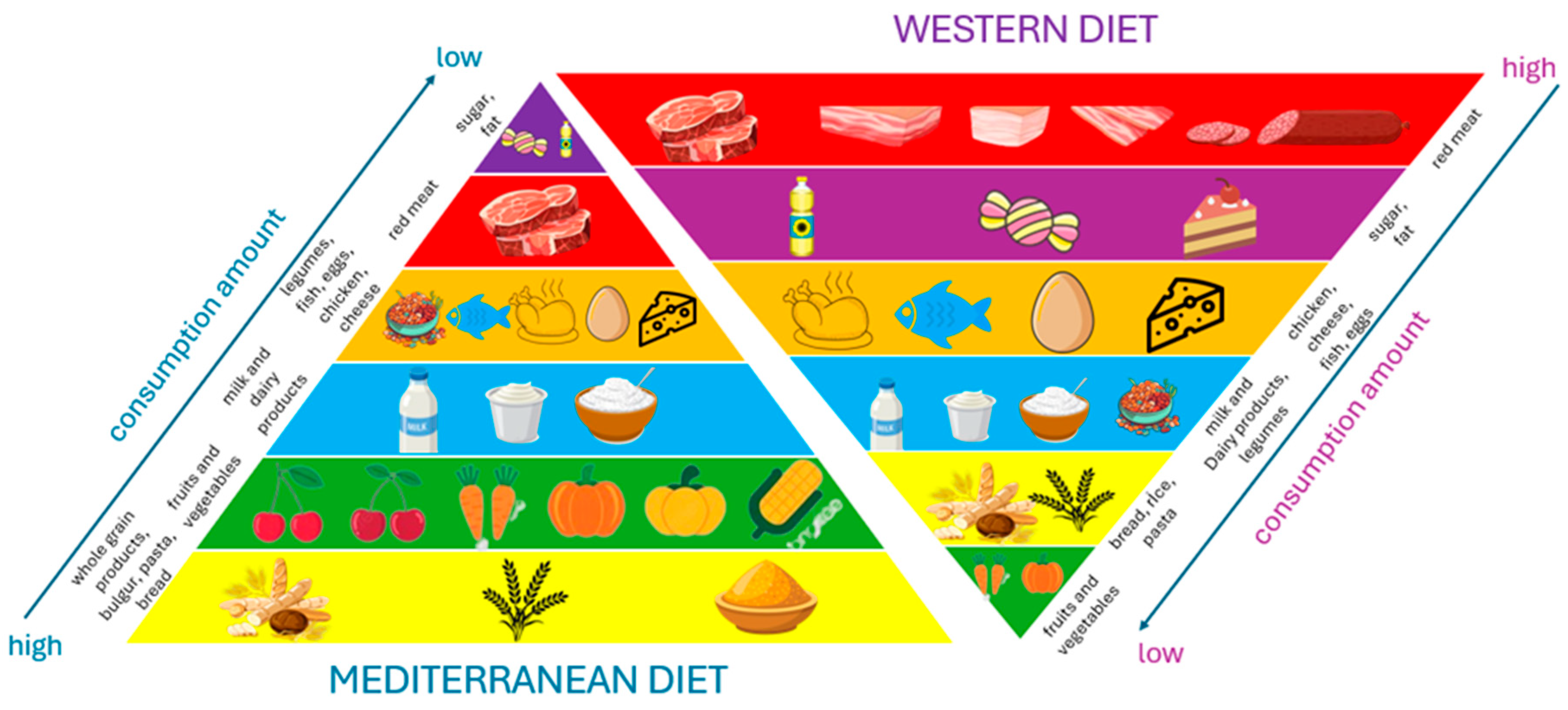
Given its nutritional composition, this menu is considered a potential model for offering protective effects against the diseases mentioned earlier. As shown in Figure 1, foods that are consumed more frequently in the MD are located at the base of the pyramid, while those that should be consumed less often are positioned towards the top. The WD described in this study is characterized by a high intake of red meat and animal fats, the inclusion of simple sugars, and a lack of vegetables, fruits, nuts, and complex carbohydrates. As shown in Figure 1, unlike the MD pyramid, in which vegetables and fruit form the narrow top section, the WD pyramid has red meat as its broadest base. Food consumption decreases from the bottom to the top of the pyramid. Long-term adherence to this dietary pattern may increase the risk of developing non-communicable diseases.

2.2. Goal and Scope Definition

LCA is a standardized methodology defined by two ISO standards, ISO 14040:2006 and ISO 14044:2006 [44,45], that facilitates the assessment of potential environmental impacts associated with products or processes throughout their life cycles. The LCA is a tool used to account for the inputs of resources (e.g., energy, materials, land) and the outputs (e.g., CO2 emissions) of a product or process. It can also be used to measure the environmental impact of the product or process. Despite its initial development for industrial processes, LCA is increasingly used in the agri-food sector, where it is emerging as a prevalent methodology for assessing the potential environmental impacts of dietary habits and patterns. This study used SimaPro 9.6 LCA software, EcoInvent 3.10 (March 2024), and Agri-footprint version 6.3 (September 2022) as secondary data sources. The Environmental Footprint (EF) 3.1 methodology [46] was employed to calculate the life cycle impact assessment (LCIA). Secondary data in the databases are consistent with dietary menu requirements regarding regional relevance and food supply chains. The system boundaries for the selected diets were evaluated using a cradle-to-plate approach that extends from food production to consumption. The production stage of the food used in diets has been assessed because it generally has the greatest environmental impact [47,48,49,50]. Transportation, storage, processing, packaging, and waste were not included in the LCA. When selecting foods for the diet menus, locally sourced and seasonal foods were preferred. 15 impact categories were addressed at the midpoint level. The results of this study are related to the following impact categories: Acidification (ACD), climate change (CC), freshwater ecotoxicity (FET), particulate matter (PM), marine eutrophication (MEU), freshwater eutrophication (FEU), human toxicity-cancer (HTC), human toxicity-non-cancer (HTNC), ionising radiation (IR), land use (LU), ozone depletion (OD), photochemical ozone formation (PCO), resource use- fossils (RUF), resource use- minerals and metals (RUM), and water use (WU).
Figure 1. MD and WD Double Pyramid Model.
Sustainability 18 02356 g001

3. Results

A methodology employed to evaluate the sustainability of diets is LCA. This standardized approach enables the assessment of impacts from all stages of the food supply chain. The LCA methodology can be extended to incorporate stages of the cradle-to-grave process [51,52]. The environmental impact results of MD and WD are given in Table 2. The results were obtained using data from the SimaPro 9.6 LCA software and the Agri-footprint version 6.3 database, and from the EcoInvent 3.10 database as secondary data sources.
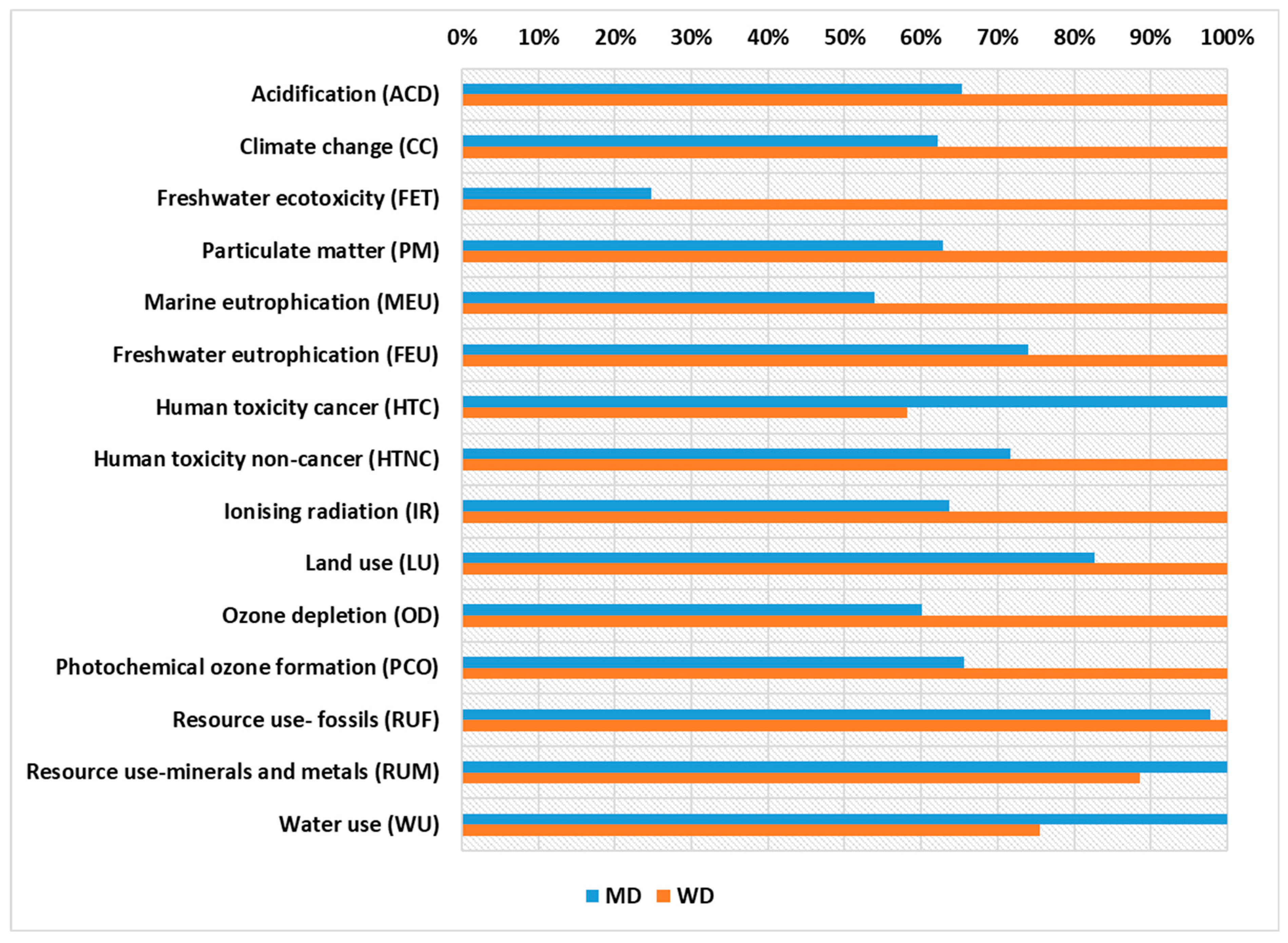
Figure 2 provides a clearer visual analysis of the results, showing that, across 15 environmental impact categories, MD performs better than WD, except in 3 categories: HTC, RUM, and WU.
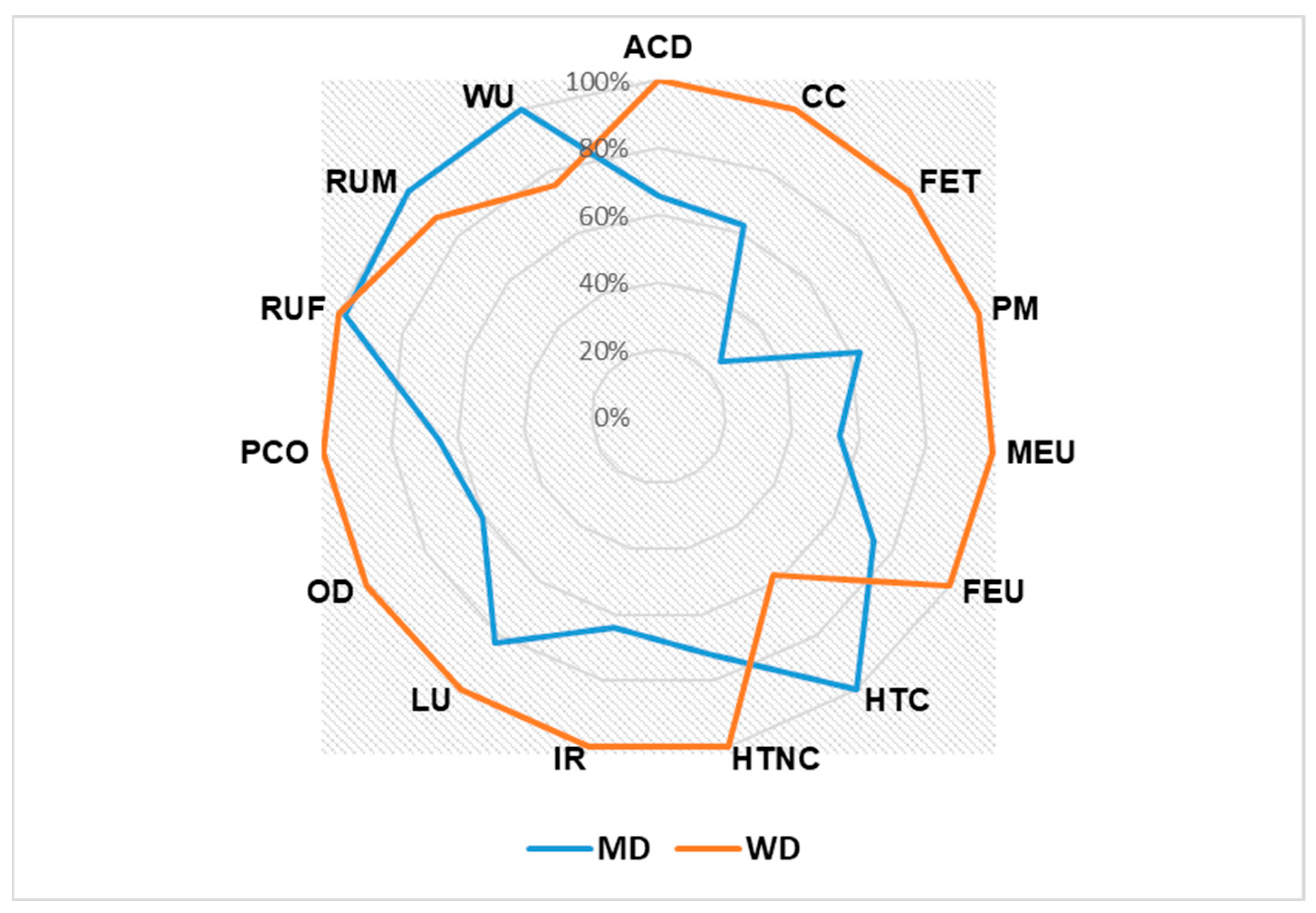
Figure 3 shows the corresponding percentage changes for different environmental impact categories associated with both diet menus and their consequences on life use. Among the environmental impacts considered, WD had higher footprints for 12 of 15 impacts. In comparison, MD showed higher footprints in the HTC, RUM, and WU categories. Furthermore, there is a direct correlation between industrial agriculture and imbalances in biogeochemical nutrient cycles, the depletion of natural resources, and the loss of biodiversity in both aquatic and terrestrial ecosystems [53,54]. Furthermore, in the cases of WU and HTC, MD’s footprint equals or exceeds WD’s, largely due to the production of irrigation-intensive foods. Additionally, fertilizers significantly contribute to environmental toxicity by mobilizing heavy metals [55]. The high CC and LU linked to WD primarily result from excessive consumption of red and processed meats, which account for 60% of the diet’s overall carbon footprint [55,56]. In the following section, evaluations of the environmental impact categories of foods were conducted using Supplementary Materials (Table S1). The HTC effect was significantly higher in MD than in WD, with an increase of ΔHTC = 72.0%. Olive oil and white cheese contribute more to HTC than other nutrients. The literature suggests that olive production and packaging processes significantly impact HTC [57]. Given the plant-based content of the MD, it has been noted that fertilizers and herbicides used in plant cultivation (corn and broccoli) can affect human toxicity, and that these effects can be mitigated through organic farming practices [58]. A study evaluating the dairy farm system, dairy processing, and transport of finished milk products using LCA found that approximately 90% of the impact on the HTC parameter originated from the farm system stage [59]. In the literature, LCA of food products is typically divided into six phases: input production and transportation, agricultural phase, processing, distribution, use, and waste management. The farm production phase is often identified as the primary contributor to many impact categories [60]. Additionally, when the cheese production process in the USA was assessed using LCA, the impacts on HTC were dominated by electricity use (arsenic and other heavy metal emissions from coal mining activities) [61]. In the RUM category, MD was higher than WD, with a ΔRUM of 12.7%. Chicken, grilled meat, olive oil, walnuts, white cheese, and yogurt have a greater contribution to RUM than other foods. In the WU category, MD was significantly higher than WD, with a ΔWU of 32.5%. White cheese, walnuts, pasta, whole grains, bulgur, whole-grain bread, and salad foods contributed more to WU than other food items. In a review study comparing the MD to other diets in terms of WU, the MD was reported to have a higher WU, as in this study, when compared to diets containing less or no animal protein or diets specifically designed to minimize environmental impact (e.g., the EAT-Lancet diet or the NAOS Strategy) [62]. A study comparing diets in terms of WU indicated that the food groups showing the highest WU were dairy products and vegetable oils. In the WD, dairy products contributed slightly more to WU, whereas in the MD, vegetable oils contributed slightly more. Meat ranked third in WU across all diet models, except MD, while nuts and eggs were reported to have a higher contribution in MD [15]. It was emphasized that nuts, almonds, and peanuts, as well as some fruits, require significant WU, especially when grown in arid or semi-arid regions [63]. In this context, it was suggested that sustainable agricultural practices, such as crop rotation, agroecology, drought-resistant crops, and drip irrigation, be promoted to reduce WU [17].
In a study examining the ecological footprint of MD, it was stated that animal proteins contributed to high levels of CC and LU, while fruits and vegetables increased WU, as in this study [64]. In the following section, evaluations of the environmental impact categories of foods were conducted using the Supplementary Materials (Table S2). Consuming WD instead of MD from the created menus increases the compounds that cause acid rain (ΔACD = 34.6%) and the impact on climate change (ΔCC = 38.0%).
In MD, dairy products such as white cheese and yogurt, along with poultry products such as chicken and eggs, contribute most to CC. In WD, dairy products like cheddar cheese and butter, along with meat products such as red meat and ground beef, are the foods that contribute most significantly to CC. In this context, it has been reported that the MD, which is compatible with reduced consumption of animal proteins, does not contribute to reducing GHG emissions [65]. In WD, dairy products (kashar cheese) and meat products (red meat and ground meat) contribute more to ACD. The literature indicates that raw milk production is the most significant contributor to ACD, and that NH3-derived manure management and spread contribute to ACD [15,66].
In the MD, the foods that contribute most to FET include white cheese, grilled chicken, eggs, and yogurt. In contrast, the WD is primarily influenced by sunflower oil, french fries, kashar cheese, and various meat products, such as red meat and ground beef. Overall, it was found that the WD has a 75.3% greater impact on FET compared to the MD. In the literature, sunflower oil production contributes approximately 70% to FET, with agricultural technological processes (50%) and mineral fertilizers (10%) being effective in this process [67]. In the literature, 6 food products (chicken fillet, ground beef, milk, leaf soup, and wheat bread) were evaluated for their potential impact on primary breeding pesticide use-induced FE, and animal food products appeared to have significantly greater potential impact than plant food products [68].
Excessive fertilization of water and soil increases nutrient runoff of nitrogen (N) and phosphorus (P) into aquatic ecosystems [69]. WD contributes to increases of ΔMEU = 46.2% and ΔFEU = 26.1%. In the MEU environmental impact category, white cheese, olive oil, and grilled chicken foods are effective in MD, while kashar cheese, meat products (ground beef and red meat), and butter foods are effective in WD. In the FEU environmental impact category, white cheese, grilled chicken, and carbohydrate products (bread, whole grain, and paste, whole grain) are effective in MD, while kashar cheese, meat products (ground beef and red meat), and french fries contribute more in WD. Globally, food consumption is responsible for more than one quarter of anthropogenic GHG emissions, including those arising from LU and LU change. It is a significant cause of additional environmental consequences, such as terrestrial acidification and freshwater (marine) eutrophication [14,70].
The WD alternative has a significantly lower impact on PM than the MD alternative, with a ΔPM of 37.2%. In the MD, the foods that contribute most to PM include white cheese, grilled chicken, and olive oil. In contrast, the WD is primarily influenced by kashar cheese, animal meat products (red meat and ground beef), and butter. In Brazil, four plants were evaluated, with one plant showing the highest PM emissions. The application of nitrogen-based fertilizers on pastures, crucial for cattle feed, results in the release of ammonia-rich air. Additionally, all production systems showed slight, consistent increases in nitrogen oxides, sulfur dioxide, and PM emissions. This can be attributed to the combustion of fossil fuels in heavy machinery, such as farm tractors, and to electricity generation. These findings indicate that production costs directly influence air quality, while the level of suspended PM emissions that affect human health remains largely unchanged [71]. In Italy, daily meat consumption results in 2.80 kg of CO2 equivalents per person, with beef accounting for 65% of these emissions. The findings indicate that the relative importance of different types of meat remains consistent across several environmental impact categories, including acidification, terrestrial and FEU, and LU. The environmental impacts are primarily associated with cattle meat, followed by pig and poultry [72]. On the other hand, the WD alternative leads to an approximate 40% increase in ΔIR= 36.2% and a 20% increase in ΔLU = 17.2%. In the IR environmental impact category, grilled chicken, white cheese, egg, and olive oil foods are effective in MD, while kashar cheese, meat products (ground beef and red meat), and butter foods are effective in WD. In the LU environmental impact category, white cheese, yogurt, grilled chicken, and eggs are effective in MD, while kashar cheese, butter, and meat products (ground beef and red meat) contribute more to WD. In the HTCN environmental impact category, olive oil, grilled chicken, zucchini dish, white cheese, and eggs are effective in MD, while sunflower oil, kashar cheese, french fries, and meat products (ground beef and red meat) are effective in WD. Additionally, the WD alternative results in a rise in non-cancer human toxicity of about 30% (ΔHTNC = 28.4%). Furthermore, the WD alternative contributes to PCO, showing a ΔPCO of 34.2%, and is nearly 40% more likely to damage the ozone layer than MD (ΔOD = 39.9%). In the PCO environmental impact category, white cheese, grilled chicken, eggs, and whole grain pasta are effective in MD, while kashar cheese, meat products (ground beef and red meat), and butter are effective in WD. In the OD environmental impact category, grilled chicken, walnuts, eggs, and dairy products (yogurt and white cheese) are effective in MD, while meat products (ground beef and red meat), sunflower oil, and butter are effective in WD. Furthermore, the impact of WD on fossil fuel resource usage is very similar to that of MD; however, WD results in a 2.4% increase in ΔRUF. Research indicates that MD exhibits a more favorable ecological footprint, particularly compared with WD [15,73]. The observed ecological advantage stems predominantly from a dietary pattern characterized by greater inclusion of local and seasonal plant-based items and a concomitant decrease in animal product intake. LCA studies in the literature also show that animal-based foods have greater environmental impacts across several categories than plant-based options [74]. According to global LCA meta-analyses, switching to plant-based diets can significantly reduce GHG, LU, and water stress; however, differences in production practices and supply chains may affect the results [14].

4. Discussions

Studies such as the current one that evaluate the environmental impacts of typical dietary patterns generally conclude that shifting to less animal- and more plant-based diets would generally reduce the overall environmental footprint [75,76,77]. In the present study, MD was found to have lower environmental impacts than WD in 12 of 15 environmental impact categories.
Consumer preferences have shifted from unprocessed foods and freshly prepared meals to highly processed convenience foods, driven by changing lifestyles. The fast-food industry has benefited from food globalization, which has made new dietary models more accessible and accelerated the spread of unhealthy diets worldwide [78,79]. The diet has undergone a marked transformation, becoming increasingly similar to WDs in terms of its high consumption of animal-based foods, particularly red meat. This finding further supports the existing body of evidence indicating that, over the past two decades, Mediterranean populations have undergone a gradual shift away from the traditional MD [78,79,80]. The potential effects of a global shift towards a flexitarian diet—primarily plant-based foods with limited animal products—were examined. The findings indicate that significant environmental improvements could be achieved even without eliminating animal foods from our diets, all while promoting consumer health [81]. This assertion is supported by substantial evidence demonstrating that animal-sourced products have a greater environmental impact than plant-sourced alternatives [82].
MD, being predominantly plant-based, has a lower environmental impact than diets that include animal products [83]. It has been contended that the proportion of animal-based foods in one’s dietary composition constitutes a reliable proxy for evaluating the environmental consequences of that diet [84]. A study comparing the environmental impacts of the MD with a WD showed that switching to an MD, which emphasizes vegetables, fruits, legumes, and olive oil, significantly reduced GHG emissions by 72%, LU by 58%, energy use by 52%, and WU by 33%. The environmental burden of the WD, particularly its high meat and dairy consumption, is much greater, leading to increases in all environmental indicators by 12–72%. Therefore, the MD is presented as a sustainable dietary model not only for health but also for natural resource use and for mitigating the effects of CC [15]. Similar to the results of this study, a study in Ireland comparing different dietary menus with LCA indicated that meat-heavy diets had the highest CC and LU environmental impacts, while vegetable (potato)-heavy diets resulted in the highest WU [25]. The environmental impacts of transitioning to sustainable diets have been systematically examined, and the results indicate that diets that reduce animal product consumption (vegan, vegetarian, Mediterranean, pescatarian, etc.) significantly reduce GHGs, LU, and WU. While reductions of 20–30% are possible on average, the most radical changes can achieve reductions of up to 70–80%. The extent of environmental improvement is largely determined by the extent of meat and dairy reductions. A study evaluating the environmental impacts of dietary scenarios using LCA across 11 European countries found that policy strategies promoting reductions in animal product consumption and increases in plant-based food intake have significant potential to simultaneously improve both human and planetary health [85]. Furthermore, modest but positive health effects of these diets have been identified on the risk of CVD and all-cause mortality. However, it is noted that some plant-based foods (especially fruits, vegetables, and nuts) may have a high WU, so reducing WU may not automatically be achieved in all cases. A diet that is less animal-based and more plant-based significantly reduces CC and LU and provides health benefits [86]. Diets high in animal products generally have greater negative impacts on GHGs and LU, while some plant-based diets can lead to higher LU or biodiversity loss. This also demonstrates that the notion that plant-based diets are always more sustainable is not always true [87]. A study comparing animal and plant-based menus using LCA found that shifting from meat, dairy, and other animal products to plant-based meals provides environmental benefits and plays a significant role in mitigating CC and maintaining environmental sustainability [88]. When data from common diets across 10 European countries are combined, it is revealed that meat and dairy consumption account for more than half of total GHGs and approximately two-thirds of total LU [89]. Consumers’ day-to-day food consumption behaviors may play a key role. They can help to alleviate environmental impact. They can also help achieve the environmental goals set out in the EU Green Deal. These goals are also included in other international sustainability policies [90]. Research highlights MD’s significant role in promoting sustainable food systems. Traditional agricultural practices within the MD—such as polyculture, crop rotation, and perennial plants—enhance carbon sequestration and support agroecological resilience [15]. In 2020, the Farm to Fork Strategy established novel objectives to achieve sustainable food systems, which were designated as pivotal components of the EU Green Deal [91]

5. Conclusions

This study aimed to evaluate the environmental impacts of MD and WD by comparing them using the LCA method. The analysis, conducted using the LCA method, determined that the MD had a lower environmental footprint than the WD in 12 of the 15 environmental impact categories examined. MD is particularly advantageous in categories such as CC, ACD, FET, and PCO. This finding demonstrates that the plant-based nature of MD, along with its low consumption of animal products, makes a significant contribution to environmental sustainability.
However, the MD also has some environmental limitations. High WU (32.5% increase) and pesticide requirements, particularly due to vegetable, fruit, and grain production, have led to higher values in impact categories such as WU and HTC. This demonstrates that not only the composition of the diet but also the production processes should be considered for environmental sustainability. The differences in the menus used in the studies on this subject, the regional variability of the databases, the environmental impact categories and calculation methods used, and the boundaries of LCA studies make it difficult to compare the results. Therefore, the results obtained in this study are also valid for the sample menus created and the LCA boundaries. The findings suggest that disseminating plant-based dietary patterns, in line with the European Green Deal and the “Farm to Fork” strategy, can serve both public health and environmental goals.

Supplementary Materials

The following supporting information can be downloaded at: https://www.mdpi.com/article/10.3390/su18052356/s1, Table S1. Specific Impact of Mediterranean Diet Foods. Table S2. Specific Impact of Western Diet Foods.

Author Contributions

G.E.Ü.: Research conception, Visualization, methodology, data collection, formal analysis, writing—original draft, and review. T.C.: Research conception, Visualization, methodology, data collection, formal analysis, writing—original draft. Ç.E.D.: Research conception, Visualization, methodology, data collection, formal analysis, writing—original draft. M.G.: funding acquisition, supervision, writing, review. All authors have read and agreed to the published version of the manuscript.

Funding

This research was funded by the European Union’s Horizon 2020 Research and Innovation program—Partnership for Research and Innovation in the Mediterranean Area (PRIMA), grant number 2133.

Institutional Review Board Statement

Not applicable.

Informed Consent Statement

Not applicable.

Data Availability Statement

The original contributions presented in the study are included in the Supplementary Materials; further inquiries can be directed to the corresponding author.

Conflicts of Interest

The authors declare no conflicts of interest.

References

  1. Adolph, T.E.; Tilg, H. Western Diets and Chronic Diseases. Nat. Med. 2024, 30, 2133–2147. [Google Scholar] [CrossRef]
  2. Iriti, M.; Varoni, E.M.; Vitalini, S. Healthy Diets and Modifiable Risk Factors for Non-Communicable Diseases—The European Perspective. Foods 2020, 9, 940. [Google Scholar] [CrossRef]
  3. Dominguez, L.J.; Di Bella, G.; Veronese, N.; Barbagallo, M. Impact of Mediterranean Diet on Chronic Non-Communicable Diseases and Longevity. Nutrients 2021, 13, 2028. [Google Scholar] [CrossRef]
  4. Muscogiuri, G.; Verde, L.; Sulu, C.; Katsiki, N.; Hassapidou, M.; Frias-Toral, E.; Cucalón, G.; Pazderska, A.; Yumuk, V.D.; Colao, A.; et al. Mediterranean Diet and Obesity-Related Disorders: What Is the Evidence? Curr. Obes. Rep. 2022, 11, 287–304. [Google Scholar] [CrossRef]
  5. Yesildemir, O.; Guldas, M.; Boqué, N.; Calderón-Pérez, L.; Degli Innocenti, P.; Scazzina, F.; Nehme, N.; Abou Abbass, F.; de la Feld, M.; Salvio, G.; et al. Adherence to the Mediterranean Diet Among Families from Four Countries in the Mediterranean Basin. Nutrients 2025, 17, 1157. [Google Scholar] [CrossRef]
  6. Finicelli, M.; Di Salle, A.; Galderisi, U.; Peluso, G. The Mediterranean Diet: An Update of the Clinical Trials. Nutrients 2022, 14, 2956. [Google Scholar] [CrossRef] [PubMed]
  7. Guasch-Ferré, M.; Willett, W.C. The Mediterranean Diet and Health: A Comprehensive Overview. J. Intern. Med. 2021, 290, 549–566. [Google Scholar] [CrossRef] [PubMed]
  8. Martínez-González, M.A.; Gea, A.; Ruiz-Canela, M. The Mediterranean Diet and Cardiovascular Health: A Critical Review. Circ. Res. 2019, 124, 779–798. [Google Scholar] [CrossRef] [PubMed]
  9. Mariotti, F. Animal and Plant Protein Sources and Cardiometabolic Health. Adv. Nutr. 2019, 10, S351–S366. [Google Scholar] [CrossRef]
  10. Salas-Salvadó, J.; Becerra-Tomás, N.; García-Gavilán, J.F.; Bulló, M.; Barrubés, L. Mediterranean Diet and Cardiovascular Disease Prevention: What Do We Know? Prog. Cardiovasc. Dis. 2018, 61, 62–67. [Google Scholar] [CrossRef]
  11. Clemente-Suárez, V.J.; Beltrán-Velasco, A.I.; Redondo-Flórez, L.; Martín-Rodríguez, A.; Tornero-Aguilera, J.F. Global Impacts of Western Diet and Its Effects on Metabolism and Health: A Narrative Review. Nutrients 2023, 15, 2749. [Google Scholar] [CrossRef] [PubMed]
  12. García-Montero, C.; Fraile-Martínez, O.; Gómez-Lahoz, A.M.; Pekarek, L.; Castellanos, A.J.; Noguerales-Fraguas, F.; Coca, S.; Guijarro, L.G.; García-Honduvilla, N.; Asúnsolo, A.; et al. Nutritional Components in Western Diet Versus Mediterranean Diet at the Gut Microbiota–Immune System Interplay. Implications for Health and Disease. Nutrients 2021, 13, 699. [Google Scholar] [CrossRef]
  13. Álvarez-Álvarez, L.; Rubín-García, M.; Vitelli-Storelli, F.; Botella-Juan, L.; Fernández-Villa, T.; Martín-Sánchez, V. The Evolution of Dietary Consumption in the Spanish Adult Population and Its Relationship with Environmental Sustainability. Nutrients 2024, 16, 4391. [Google Scholar] [CrossRef]
  14. Poore, J.; Nemecek, T. Reducing Food’s Environmental Impacts through Producers and Consumers. Science 2018, 360, 987–992. [Google Scholar] [CrossRef]
  15. Sáez-Almendros, S.; Obrador, B.; Bach-Faig, A.; Serra-Majem, L. Environmental Footprints of Mediterranean versus Western Dietary Patterns: Beyond the Health Benefits of the Mediterranean Diet. Environ. Health 2013, 12, 118. [Google Scholar] [CrossRef]
  16. Bjørnarå, H.B.; Torstveit, M.K.; Bere, E. Healthy and Sustainable Diet and Physical Activity: The Rationale for and Experiences from Developing a Combined Summary Score. Scand. J. Public Health 2019, 47, 583–591. [Google Scholar] [CrossRef]
  17. Perrone, P.; Landriani, L.; Patalano, R.; Meccariello, R.; D’Angelo, S. The Mediterranean Diet as a Model of Sustainability: Evidence-Based Insights into Health, Environment, and Culture. Int. J. Environ. Res. Public Health 2025, 22, 1658. [Google Scholar] [CrossRef]
  18. Xu, X.; Sharma, P.; Shu, S.; Lin, T.S.; Ciais, P.; Tubiello, F.N.; Smith, P.; Campbell, N.; Jain, A.K. Global Greenhouse Gas Emissions from Animal-Based Foods Are Twice Those of Plant-Based Foods. Nat. Food 2021, 2, 724–732. [Google Scholar] [CrossRef] [PubMed]
  19. Röös, E.; Bajželj, B.; Smith, P.; Patel, M.; Little, D.; Garnett, T. Greedy or Needy? Land Use and Climate Impacts of Food in 2050 under Different Livestock Futures. Glob. Environ. Change 2017, 47, 1–12. [Google Scholar] [CrossRef]
  20. El Bilali, H.; Callenius, C.; Strassner, C.; Probst, L. Food and Nutrition Security and Sustainability Transitions in Food Systems. Food Energy Secur. 2019, 8, e00154. [Google Scholar] [CrossRef]
  21. Pachapur, P.K.; Pachapur, V.L.; Brar, S.K.; Galvez, R.; Le Bihan, Y.; Surampalli, R.Y. Food Security and Sustainability. Sustain. Fundam. Appl. 2020, 17, 357–374. [Google Scholar] [CrossRef]
  22. Bhatt, A.; Bradford, A.; Abbassi, B.E. Cradle-to-Grave Life Cycle Assessment (LCA) of Low-Impact-Development (LID) Technologies in Southern Ontario. J. Environ. Manag. 2019, 231, 98–109. [Google Scholar] [CrossRef]
  23. Hyland, J.J.; Henchion, M.; McCarthy, M.; McCarthy, S.N. The Climatic Impact of Food Consumption in a Representative Sample of Irish Adults and Implications for Food and Nutrition Policy. Public Health Nutr. 2017, 20, 726–738. [Google Scholar] [CrossRef]
  24. Zhang, M.; Li, H.; Chen, S.; Liu, Y.; Li, S. Interrogating Greenhouse Gas Emissions of Different Dietary Structures by Using a New Food Equivalent Incorporated in Life Cycle Assessment Method. Environ. Impact Assess. Rev. 2023, 103, 107212. [Google Scholar] [CrossRef]
  25. Burke, D.T.; Hynds, P.; Priyadarshini, A. Evaluating the GHG Emissions, Land Use, and Water Use Associated with Contemporary Dietary Patterns in the Republic of Ireland. Environ. Res. 2025, 270, 120974. [Google Scholar] [CrossRef] [PubMed]
  26. Takacs, B.; Kalea, A.Z.; Borrion, A. Menu Dilemmas: An Integrated Assessment of the Nutritional Quality, Environmental Impact, and Cost of Vegan, Vegetarian, and Meat-Based Versions of Meals. Nutrients 2025, 17, 1569. [Google Scholar] [CrossRef]
  27. Üstün, G.E.; Güldaş, M. A Life Cycle Assessment of Snack Bar Prototypes Created with Ingredients Compatible with the Mediterranean Diet. Sustainability 2025, 17, 8195. [Google Scholar] [CrossRef]
  28. Rockström, J.; Thilsted, S.H.; Willett, W.C.; Gordon, L.J.; Herrero, M.; Hicks, C.C.; Mason-D’Croz, D.; Rao, N.; Springmann, M.; Wright, E.C.; et al. The EAT–Lancet Commission on Healthy, Sustainable, and Just Food Systems. Lancet 2025, 406, 1625–1700. [Google Scholar] [CrossRef]
  29. Castañé, S.; Antón, A. Assessment of the Nutritional Quality and Environmental Impact of Two Food Diets: A Mediterranean and a Vegan Diet. J. Clean. Prod. 2017, 167, 929–937. [Google Scholar] [CrossRef]
  30. Ceylan, Z.Ş. Calculation and Comparison of Carbon Footprint, Water Footprint, and Protein Quality in the Mediterranean Diet, Vegan Diet, and the Diet Made with Turkey Nutrition Guide Recommendations; Istanbul Sabahattin Zaim University Graduate Education Institute: İstanbul, Turkey, 2024. [Google Scholar]
  31. Hoscheidt, S.; Sanderlin, A.H.; Baker, L.D.; Jung, Y.; Lockhart, S.; Kellar, D.; Whitlow, C.T.; Hanson, A.J.; Friedman, S.; Register, T.; et al. Mediterranean and Western Diet Effects on Alzheimer’s Disease Biomarkers, Cerebral Perfusion, and Cognition in Mid-Life: A Randomized Trial. Alzheimer’s Dement. 2022, 18, 457–468. [Google Scholar] [CrossRef] [PubMed]
  32. Filippin, D.; Sarni, A.R.; Rizzo, G.; Baroni, L. Environmental Impact of Two Plant-Based, Isocaloric and Isoproteic Diets: The Vegan Diet vs. the Mediterranean Diet. Int. J. Environ. Res. Public Health 2023, 20, 3797. [Google Scholar] [CrossRef]
  33. Poti, J.M.; Mendez, M.A.; Ng, S.W.; Popkin, B.M. Dietary Guidelines Meet NOVA: Developing a Menu for A Healthy Dietary Pattern Using Ultra-Processed Foods. J. Nutr. 2023, 153, 2472–2481. [Google Scholar] [CrossRef]
  34. Alotaibi, N.M.; Alshammari, G.M.; Alabdulkarem, K.B.; Alotaibi, A.A.; Mohammed, M.A.; Alotaibi, A.; Yahya, M.A. A Cross-Sectional Study of Gender Differences in Calorie Labeling Policy among Students: Dietary Habits, Nutritional Knowledge and Awareness. Nutrients 2023, 15, 879. [Google Scholar] [CrossRef]
  35. Bach-Faig, A.; Berry, E.M.; Lairon, D.; Reguant, J.; Trichopoulou, A.; Dernini, S.; Medina, F.X.; Battino, M.; Belahsen, R.; Miranda, G.; et al. Mediterranean Diet Pyramid Today. Science and Cultural Updates. Public Health Nutr. 2011, 14, 2274–2284. [Google Scholar] [CrossRef] [PubMed]
  36. Barber, T.M.; Kabisch, S.; Pfeiffer, A.F.H.; Weickert, M.O. The Effects of the Mediterranean Diet on Health and Gut Microbiota. Nutrients 2023, 15, 2150. [Google Scholar] [CrossRef] [PubMed]
  37. Dominguez, L.J.; Veronese, N.; Di Bella, G.; Cusumano, C.; Parisi, A.; Tagliaferri, F.; Ciriminna, S.; Barbagallo, M. Mediterranean Diet in the Management and Prevention of Obesity. Exp. Gerontol. 2023, 174, 112121. [Google Scholar] [CrossRef] [PubMed]
  38. Staudacher, H.M.; George, E.S. The Mediterranean Diet for Gastrointestinal Conditions—Premature or Panacea? Lancet Gastroenterol. Hepatol. 2024, 9, 598. [Google Scholar] [CrossRef]
  39. Calderón-Pérez, L.; Domingo, A.; Bas, J.M.; Gutiérrez, B.; Crescenti, A.; Rahmani, D.; Sarroca, A.; Gil, J.M.; Goumeida, K.; Zhang Jin, T.; et al. Switching Mediterranean Consumers to Mediterranean Sustainable Healthy Dietary Patterns (SWITCHtoHEALTHY): Study Protocol of a Multicentric and Multi-Cultural Family-Based Nutritional Intervention Study. Nutrients 2024, 16, 3938. [Google Scholar] [CrossRef]
  40. Sgroi, F.; Moscato, C.M.; Moscato, R. Consumer Preferences for the Mediterranean Diet: Results of an Empirical Analysis. J. Agric. Food Res. 2022, 10, 100371. [Google Scholar] [CrossRef]
  41. Davis, C.; Bryan, J.; Hodgson, J.; Murphy, K. Definition of the Mediterranean Diet; A Literature Review. Nutrients 2015, 7, 9139–9153. [Google Scholar] [CrossRef]
  42. Newsome, R.; Yang, Y.; Jobin, C. Western Diet Influences on Microbiome and Carcinogenesis. Semin. Immunol. 2023, 67, 101756. [Google Scholar] [CrossRef]
  43. Bustamante-Sanchez, A.; Villegas-Mora, B.E.; Martínez-Guardado, I.; Tornero-Aguilera, J.F.; Ardigò, L.P.; Nobari, H.; Clemente-Suárez, V.J. Physical Activity and Nutritional Pattern Related to Maturation and Development. Sustainability 2022, 14, 16958. [Google Scholar] [CrossRef]
  44. ISO 14044; Environmental Management—Life Cycle Assessment—Requirements and Guidelines. International Organization for Standardization: Geneva, Switzerland, 2006.
  45. ISO 14040; Environmental Management–Life Cycle Assessment—Principles and Framework. International Organization for Standardization: Geneva, Switzerland, 2006.
  46. Andreasi, B.S.; Biganzoli, F.; Ferrara, N.; Amadei, A.; Valente, A.; Sala, S.; Ardente, F. Updated Characterisation and Normalisation Factors for the Environmental Footprint 3.1 Method; Publications Office of the European Union: Luxembourg, 2023. [Google Scholar] [CrossRef]
  47. Fazeni, K.; Steinmüller, H. Impact of Changes in Diet on the Availability of Land, Energy Demand, and Greenhouse Gas Emissions of Agriculture. Energy Sustain. Soc. 2011, 1, 6. [Google Scholar] [CrossRef]
  48. Van Dooren, C.; Marinussen, M.; Blonk, H.; Aiking, H.; Vellinga, P. Exploring Dietary Guidelines Based on Ecological and Nutritional Values: A Comparison of Six Dietary Patterns. Food Policy 2014, 44, 36–46. [Google Scholar] [CrossRef]
  49. Risku-Norja, H.; Kurppa, S.; Helenius, J. Dietary Choices and Greenhouse Gas Emissions—Assessment of Impact of Vegetarian and Organic Options at National Scale. Prog. Ind. Ecol. 2009, 6, 340–354. [Google Scholar] [CrossRef]
  50. Kim, D.; Parajuli, R.; Thoma, G.J. Life Cycle Assessment of Dietary Patterns in the United States: A Full Food Supply Chain Perspective. Sustainability 2020, 12, 1586. [Google Scholar] [CrossRef]
  51. Muralikrishna, I.V.; Manickam, V. Life Cycle Assessment. In Environmental Management; Butterworth-Heinemann: Woburn, MA, USA, 2017; pp. 57–75. [Google Scholar]
  52. Roy, P.; Nei, D.; Orikasa, T.; Xu, Q.; Okadome, H.; Nakamura, N.; Shiina, T. A Review of Life Cycle Assessment (LCA) on Some Food Products. J. Food Eng. 2009, 90, 1–10. [Google Scholar] [CrossRef]
  53. Chaudhary, A.; Kastner, T. Land Use Biodiversity Impacts Embodied in International Food Trade. Glob. Environ. Change 2016, 38, 195–204. [Google Scholar] [CrossRef]
  54. Springmann, M.; Clark, M.; Mason-D’Croz, D.; Wiebe, K.; Bodirsky, B.L.; Lassaletta, L.; de Vries, W.; Vermeulen, S.J.; Herrero, M.; Carlson, K.M.; et al. Options for Keeping the Food System within Environmental Limits. Nature 2018, 562, 519–525. [Google Scholar] [CrossRef] [PubMed]
  55. Vinci, G.; Maddaloni, L.; Prencipe, S.A.; Ruggeri, M.; Di Loreto, M.V. A Comparison of the Mediterranean Diet and Current Food Patterns in Italy: A Life Cycle Thinking Approach for a Sustainable Consumption. Int. J. Environ. Res. Public Health 2022, 19, 12274. [Google Scholar] [CrossRef]
  56. Godos, J. Decreasing Adherence to the Mediterranean Diet: Health and Environmental Foe. Int. J. Food Sci. Nutr. 2023, 74, 797–798. [Google Scholar] [CrossRef] [PubMed]
  57. Russo, C.; Cappelletti, G.M.; Nicoletti, G.M.; Michalopoulos, G.; Pattara, C.; Antonio, J.; Palomino, P.; Tuomisto, H.L. Product Environmental Footprint in The Olive Oil Sector: State of the Art. Environ. Eng. Manag. J. 2016, 15, 2019–2027. [Google Scholar] [CrossRef]
  58. Shulner, I.; Lati, R.N.; Eizenberg, H.; Asaf, E.; Saadi, I.; Laor, Y.; Bar-Tal, A.; Kissinger, M. Implementing a Life Cycle Assessment (LCA) to Evaluate Organic Farming Weed Control and Fertilizers Environmental Implications. Sci. Total Environ. 2025, 995, 180114. [Google Scholar] [CrossRef]
  59. Famiglietti, J.; Guerci, M.; Proserpio, C.; Ravaglia, P.; Motta, M. Development and Testing of the Product Environmental Footprint Milk Tool: A Comprehensive LCA Tool for Dairy Products. Sci. Total Environ. 2019, 648, 1614–1626. [Google Scholar] [CrossRef]
  60. Dijkman, T.J.; Basset-Mens, C.; Antón, A.; Núñez, M. LCA of Food and Agriculture. In Life Cycle Assess; Springer: Cham, Switzerland, 2017; pp. 723–754. [Google Scholar] [CrossRef]
  61. Kim, D.; Thoma, G.; Nutter, D.; Milani, F.; Ulrich, R.; Norris, G. Life Cycle Assessment of Cheese and Whey Production in the USA. Int. J. Life Cycle Assess. 2013, 18, 1019–1035. [Google Scholar] [CrossRef]
  62. Lorca-Camara, V.; Bosque-Prous, M.; Bes-Rastrollo, M.; O’Callaghan-Gordo, C.; Bach-Faig, A. Environmental and Health Sustainability of the Mediterranean Diet: A Systematic Review. Adv. Nutr. 2024, 15, 100322. [Google Scholar] [CrossRef]
  63. Vanham, D.; Mekonnen, M.M.; Hoekstra, A.Y. Treenuts and Groundnuts in the EAT-Lancet Reference Diet: Concerns Regarding Sustainable Water Use. Glob. Food Secur. 2020, 24, 100357. [Google Scholar] [CrossRef]
  64. Tepper, S.; Kissinger, M.; Avital, K.; Shahar, D.R. The Environmental Footprint Associated with the Mediterranean Diet, EAT-Lancet Diet, and the Sustainable Healthy Diet Index: A Population-Based Study. Front. Nutr. 2022, 9, 870883. [Google Scholar] [CrossRef]
  65. Sanz-Cobena, A.; Lassaletta, L.; Aguilera, E.; Prado, A.; Garnier, J.; Billen, G.; Iglesias, A.; Sánchez, B.; Guardia, G.; Abalos, D.; et al. Strategies for Greenhouse Gas Emissions Mitigation in Mediterranean Agriculture: A Review. Agric. Ecosyst. Environ. 2017, 238, 5–24. [Google Scholar] [CrossRef]
  66. Nunes, Ó.S.; Gaspar, P.D.; Nunes, J.; Quinteiro, P.; Dias, A.C.; Godina, R. Life-Cycle Assessment of Dairy Products—Case Study of Regional Cheese Produced in Portugal. Processes 2020, 8, 1182. [Google Scholar] [CrossRef]
  67. Bernas, J.; Bernasová, T.; Nedbal, V.; Neugschwandtner, R.W. Agricultural LCA for Food Oil of Winter Rapeseed, Sunflower, and Hemp, Based on Czech Standard Cultivation Practices. Agronomy 2021, 11, 2301. [Google Scholar] [CrossRef]
  68. Nordborg, M.; Davis, J.; Cederberg, C.; Woodhouse, A. Freshwater Ecotoxicity Impacts from Pesticide Use in Animal and Vegetable Foods Produced in Sweden. Sci. Total Environ. 2017, 581–582, 448–459. [Google Scholar] [CrossRef]
  69. Jwaideh, M.A.A.; Sutanudjaja, E.H.; Dalin, C. Global Impacts of Nitrogen and Phosphorus Fertiliser Use for Major Crops on Aquatic Biodiversity. Int. J. Life Cycle Assess. 2022, 27, 1058–1080. [Google Scholar] [CrossRef]
  70. Crippa, M.; Solazzo, E.; Guizzardi, D.; Monforti-Ferrario, F.; Tubiello, F.N.; Leip, A. Food Systems Are Responsible for a Third of Global Anthropogenic GHG Emissions. Nat. Food 2021, 2, 198–209. [Google Scholar] [CrossRef]
  71. Santos, H.C.M.; Maranduba, H.L.; de Almeida Neto, J.A.; Rodrigues, L.B. Life Cycle Assessment of Cheese Production Process in a Small-Sized Dairy Industry in Brazil. Environ. Sci. Pollut. Res. 2017, 24, 3470–3482. [Google Scholar] [CrossRef]
  72. Ferronato, G.; Corrado, S.; De Laurentiis, V.; Sala, S. The Italian Meat Production and Consumption System Assessed Combining Material Flow Analysis and Life Cycle Assessment. J. Clean. Prod. 2021, 321, 128705. [Google Scholar] [CrossRef]
  73. Fresán, U.; Sabaté, J. Vegetarian Diets: Planetary Health and Its Alignment with Human Health. Adv. Nutr. 2019, 10, S380–S388. [Google Scholar] [CrossRef] [PubMed]
  74. Cucurachi, S.; Scherer, L.; Guinée, J.; Tukker, A. Life Cycle Assessment of Food Systems. One Earth 2019, 1, 292–297. [Google Scholar] [CrossRef]
  75. Tukker, A.; Goldbohm, R.A.; De Koning, A.; Verheijden, M.; Kleijn, R.; Wolf, O.; Pérez-Domínguez, I.; Rueda-Cantuche, J.M. Environmental Impacts of Changes to Healthier Diets in Europe. Ecol. Econ. 2011, 70, 1776–1788. [Google Scholar] [CrossRef]
  76. Macdiarmid, J.I.; Kyle, J.; Horgan, G.W.; Loe, J.E.; Fyfe, C.; Johnstone, A.; McNeill, G. Livewell: A Balance of Healthy and Sustainable Food Choices; World Wildlife Fund UK: Woking, UK, 2011. [Google Scholar]
  77. Risku-Norja, H.; Kurppa, S.; Helenius, J. Impact of Consumers’ Diet Choices on Greenhouse Gas Emissions. In Helenius Finland Futures Research Centre, Turku School of Economics Proceedings; FFRC: Queensland, Australia, 2009. [Google Scholar]
  78. Bonaccio, M.; Iacoviello, L.; De Gaetano, G. The Mediterranean Diet: The Reasons for Success. Thromb. Res. 2012, 129, 401–404. [Google Scholar] [CrossRef] [PubMed]
  79. Cavaliere, A.; De Marchi, E.; Banterle, A. Exploring the Adherence to the Mediterranean Diet and Its Relationship with Individual Lifestyle: The Role of Healthy Behaviors, Pro-Environmental Behaviors, Income, and Education. Nutrients 2018, 10, 141. [Google Scholar] [CrossRef]
  80. León-Muñoz, L.M.; Guallar-Castillón, P.; Graciani, A.; López-García, E.; Mesas, A.E.; Aguilera, M.T.; Banegas, J.R.; Rodríguez-Artalejo, F. Adherence to the Mediterranean Diet Pattern Has Declined in Spanish Adults, 3. J. Nutr. 2012, 142, 1843–1850. [Google Scholar] [CrossRef]
  81. Himics, M.; Giannakis, E.; Kushta, J.; Hristov, J.; Sahoo, A.; Perez-Dominguez, I. Co-Benefits of a Flexitarian Diet for Air Quality and Human Health in Europe. Ecol. Econ. 2022, 191, 107232. [Google Scholar] [CrossRef]
  82. Clark, M.A.; Springmann, M.; Hill, J.; Tilman, D. Multiple Health and Environmental Impacts of Foods. Proc. Natl. Acad. Sci. USA 2019, 116, 23357–23362. [Google Scholar] [CrossRef]
  83. Burlingame, B.; Gitz, V.; Meybeck, A.; Office of Assistant Director-General (Agriculture Department). Mediterranean Food Consumption Patterns. Diet, Environment, Society, Economy and Health; United Nations Human Settlements Programme (UN-Habitat): Addis Ababa, Ethiopia, 2015; p. 52. [Google Scholar]
  84. Sandström, V.; Valin, H.; Krisztin, T.; Havlík, P.; Herrero, M.; Kastner, T. The Role of Trade in the Greenhouse Gas Footprints of EU Diets. Glob. Food Secur. 2018, 19, 48–55. [Google Scholar] [CrossRef]
  85. Vellinga, R.E.; Sam, M.; van Donkersgoed, G.; van Klaveren, J.; Blaznik, U.; Rauscher-Gabernig, E.; Sokolić, D.; Hamborg Jensen, B.; Crépet, A.; Temme, E.H.M. Harmonised Assessment of Environmental Impacts from Diets and Dietary Scenarios: Sustainability and Protein Intake in Eleven European Countries. Eur. J. Nutr. 2025, 64, 326. [Google Scholar] [CrossRef]
  86. Aleksandrowicz, L.; Green, R.; Joy, E.J.M.; Smith, P.; Haines, A. The Impacts of Dietary Change on Greenhouse Gas Emissions, Land Use, Water Use, and Health: A Systematic Review. PLoS ONE 2016, 11, e0165797. [Google Scholar] [CrossRef] [PubMed]
  87. Ran, Y.; Cederberg, C.; Jonell, M.; Bergman, K.; De Boer, I.J.M.; Einarsson, R.; Karlsson, J.; Potter, H.K.; Martin, M.; Metson, G.S.; et al. Environmental Assessment of Diets: Overview and Guidance on Indicator Choice. Lancet Planet. Health 2024, 8, e172–e187. [Google Scholar] [CrossRef] [PubMed]
  88. Takacs, B.; Stegemann, J.A.; Kalea, A.Z.; Borrion, A. Comparison of Environmental Impacts of Individual Meals—Does It Really Make a Difference to Choose Plant-Based Meals Instead of Meat-Based Ones? J. Clean. Prod. 2022, 379, 134782. [Google Scholar] [CrossRef]
  89. Alves, R.; Perelman, J.; Chang, K.; Millett, C. Environmental Impact of Dietary Patterns in 10 European Countries; a Cross-Sectional Analysis of Nationally Representative Dietary Surveys. Eur. J. Public Health 2024, 34, 992–1000. [Google Scholar] [CrossRef]
  90. Cavaliere, A.; De Marchi, E.; Frola, E.N.; Benfenati, A.; Aletti, G.; Bacenetti, J.; Banterle, A. Exploring the Environmental Impact Associated with the Abandonment of the Mediterranean Diet, and How to Reduce It with Alternative Sustainable Diets. Ecol. Econ. 2023, 209, 107818. [Google Scholar] [CrossRef]
  91. Siddi, M. The European Green Deal: Assessing Its Current State and Future Implementation. UPI Rep. 2021, 114, 14. [Google Scholar]
Figure 2. LCA Impact Assessment: Relative Contributions of MD and WD.
Sustainability 18 02356 g002
Figure 3. Multivariate Assessment of Dietary Environmental Footprints: MD vs. WD Radar Chart.
Sustainability 18 02356 g003
Table 1. Composition and nutritional properties of MD and WD.
(a). Composition of the One-Day Diets
MDWD
FoodAmount (g)FoodAmount (g)
Eggs50White Bread75
White Cheese60Eggs100
Whole Grain Bread125Smoked Turkey45
Olives40Cheddar Cheese30
Peaches150Fried Potatoes80
Apples200Red Meat (cooked)150
Walnuts20Rice60
Tomato Soup300Minced Meat (cooked)30
Grilled Chicken (cooked)90Rice Pudding150
Salad200Pasta (raw)90
Whole Grain Pasta (raw)40Butter15
Lentil Soup300Sunflower Oil20
Zucchini Dish80Sugar20
Low-Fat Yogurt150
Bulgur (raw)90
Olive Oil25
(b). Daily Average Nutritional Characteristics of the One-Day Diets
MDWD
Energy (kcal)20282015
Carbohydrates (%)54.4441.49
Proteins (%)15.3817.87
Fats (%)30.1840.65
Cholesterol (mg)346621
Table 2. Environmental Impacts of MD and WD.
Impact CategoryUnitMDWD
Acidification (ACD)mol H+ eq0.02510.0384
Climate change (CC)kg CO2 eq2.193.53
Freshwater ecotoxicity (FET)CTUe103418
Particulate matter (PM)disease inc.0.0000002140.000000341
Marine eutrophication (MEU)kg N eq0.009850.0183
Freshwater eutrophication (FEU)kg P eq0.0008130.0011
Human toxicity cancer (HTC)CTUh0.000000007520.00000000437
Human toxicity non-cancer (HTNC)CTUh0.0000000490.0000000684
Ionising radiation (IR)kBq U-235 eq0.05730.0899
Land use (LU)Pt524633
Ozone depletion (OD)kg CFC11 eq0.00000005320.0000000884
Photochemical ozone formation (PCO)kg NMVOC eq0.007110.0108
Resource use—fossils (RUF)MJ16.617.0
Resource use—minerals and metals (RUM)kg Sb eq0.00001010.00000896
Water use (WU)m3 depriv.6.564.95
Disclaimer/Publisher’s Note: The statements, opinions and data contained in all publications are solely those of the individual author(s) and contributor(s) and not of MDPI and/or the editor(s). MDPI and/or the editor(s) disclaim responsibility for any injury to people or property resulting from any ideas, methods, instructions or products referred to in the content.