Optimizing Building Sustainability: A Systematic Review of BIM-Based Decision Support Systems


Abstract
1. Introduction
1.1. Motivation
1.2. Purpose and Structure
- Main research question:
- ○
- What scientific approaches to BIM-based decision support for optimizing the sustainability of building structures exist, and how do they differ?
- Sub-research questions:
- ○
- Which sustainability indicators and associated data sources are used in the literature to record ecological, economic and social sustainability aspects, and how do they differ in terms of standardization and availability?
- ○
- How are sustainability data integrated into digital planning processes from a technical and methodological perspective, and what differences exist in terms of the software environments, interfaces and degrees of automation used?
- ○
- What methodological approaches are used to evaluate integrated sustainability data and how do they support decision-making processes relating to sustainable building structures?
2. Methodology
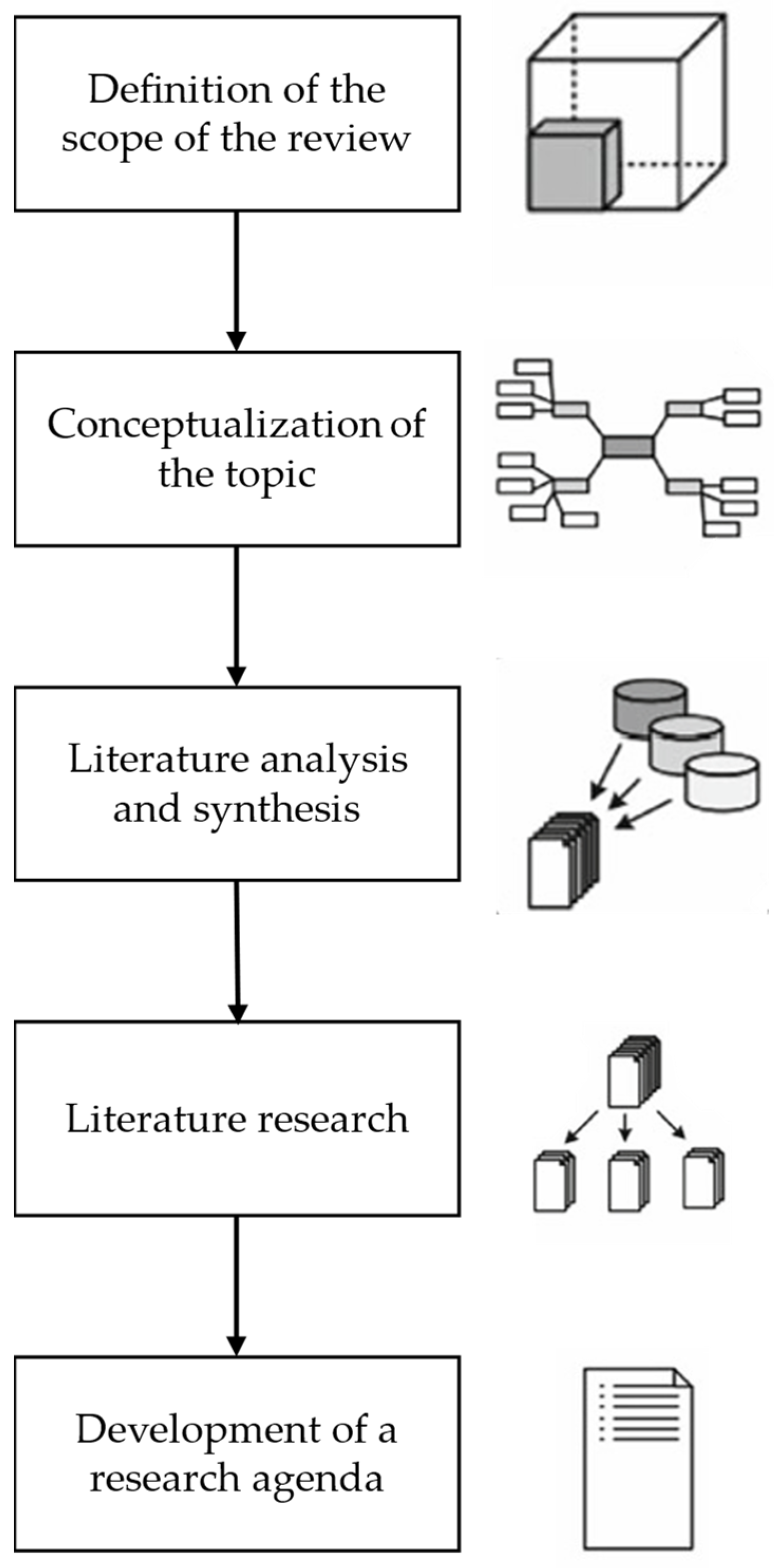
2.1. Search and Selection Strategy (Literature Research)
2.2. Synthesis Methods (Literature Analysis)
3. Results
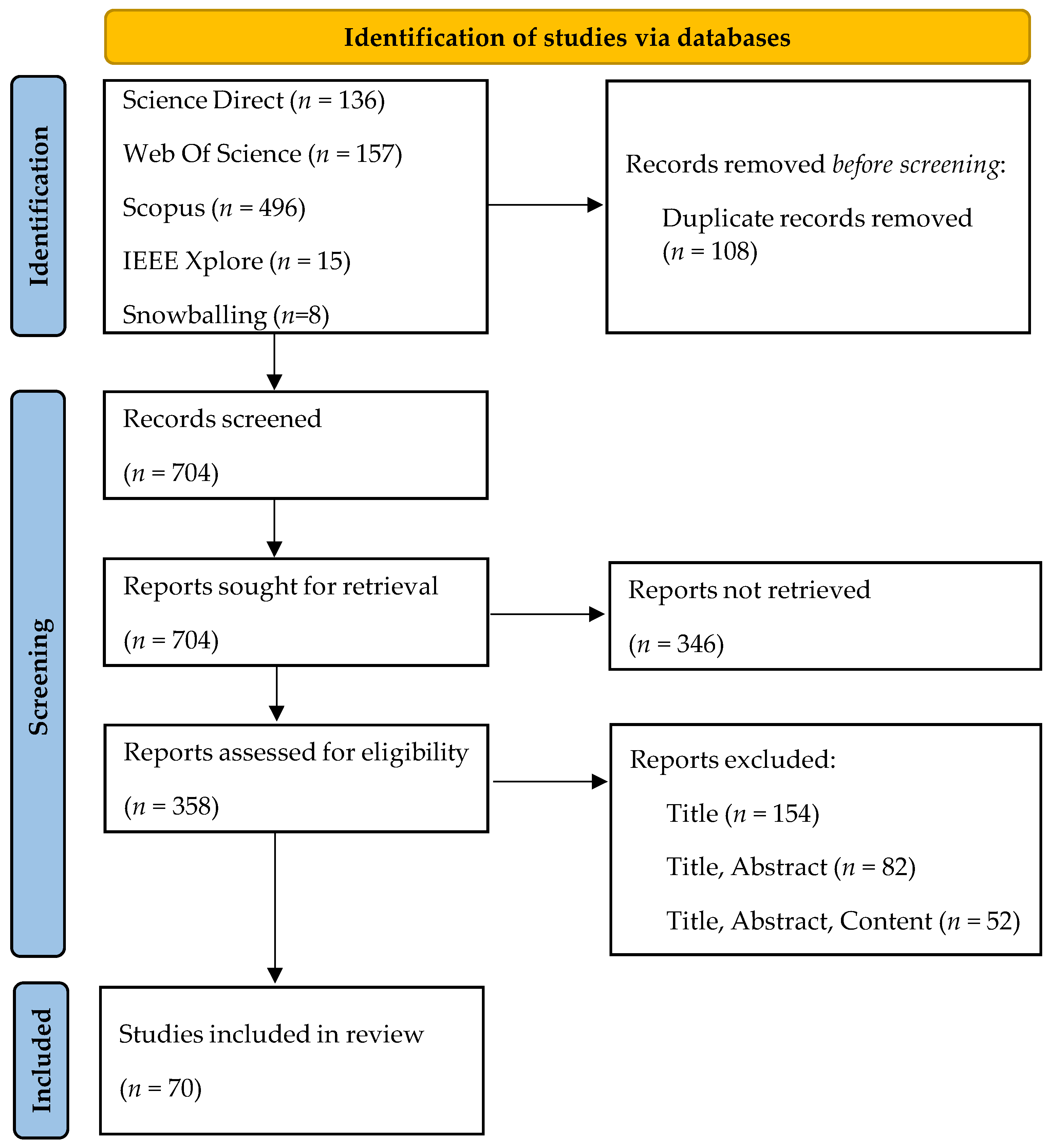
3.1. Study Selection Overview
3.2. Study Characteristics
3.3. Results of Individual Studies
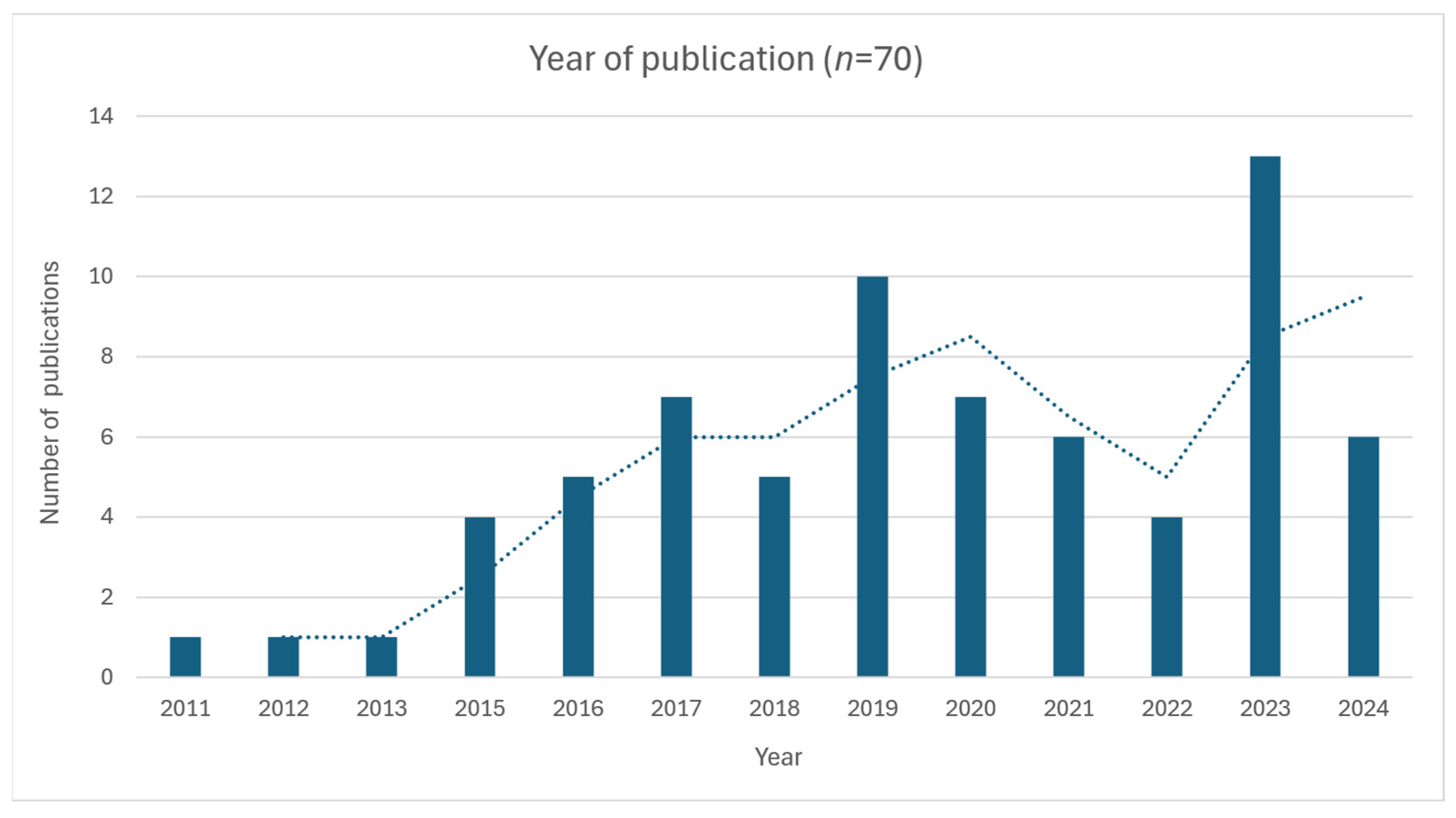
3.3.1. Years of Publication
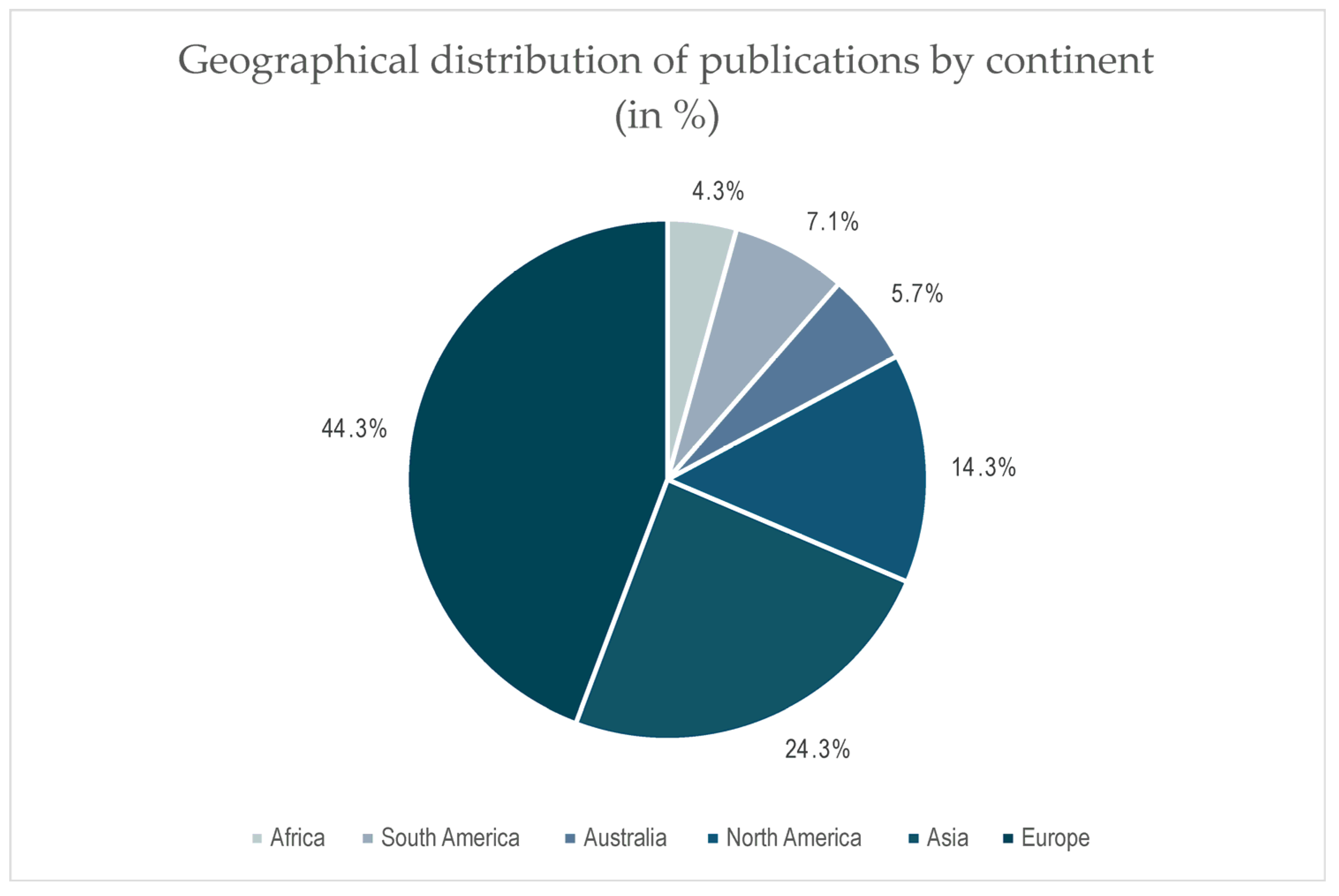
3.3.2. Origin of Publication
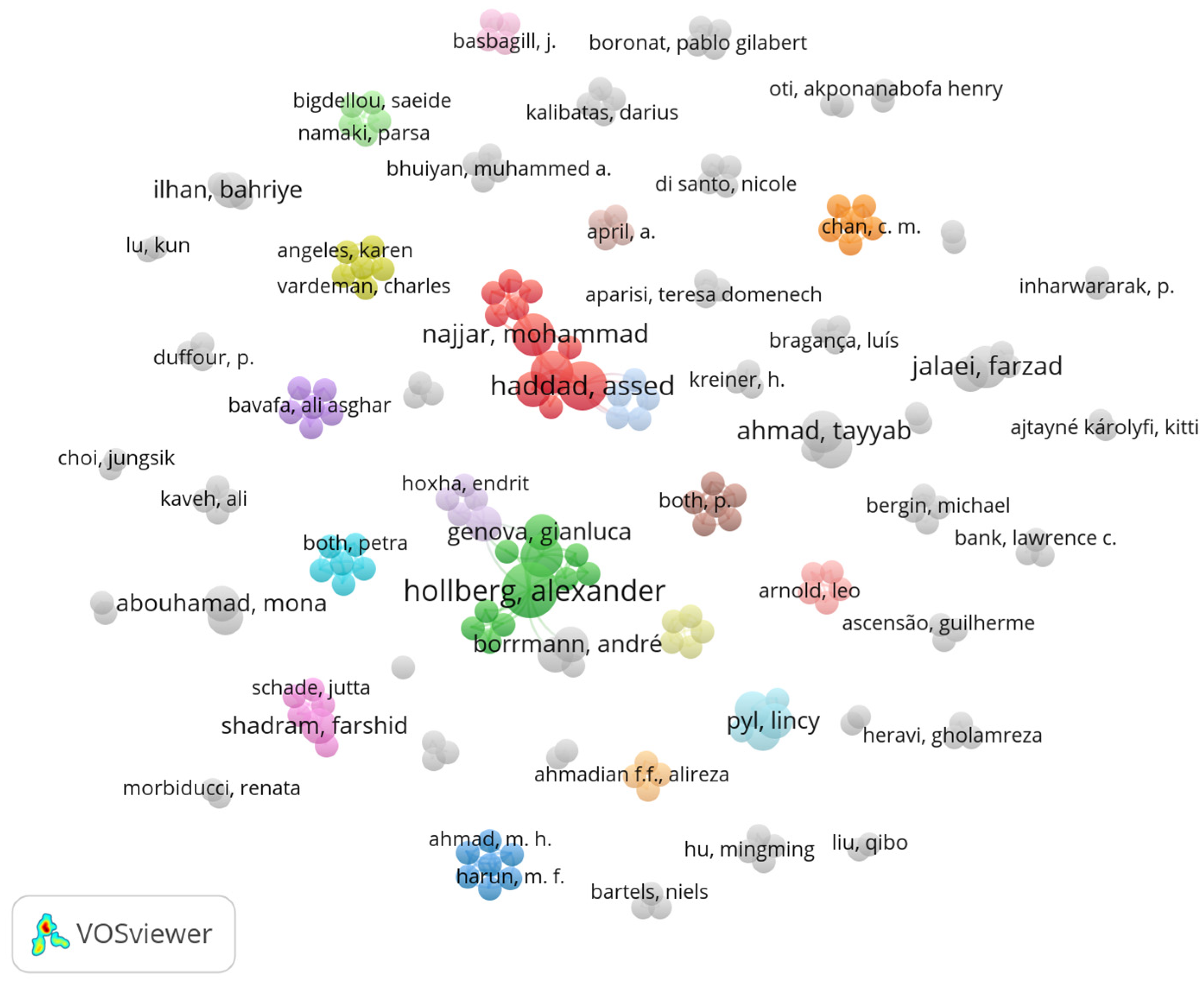
3.3.3. Bibliometric Analysis
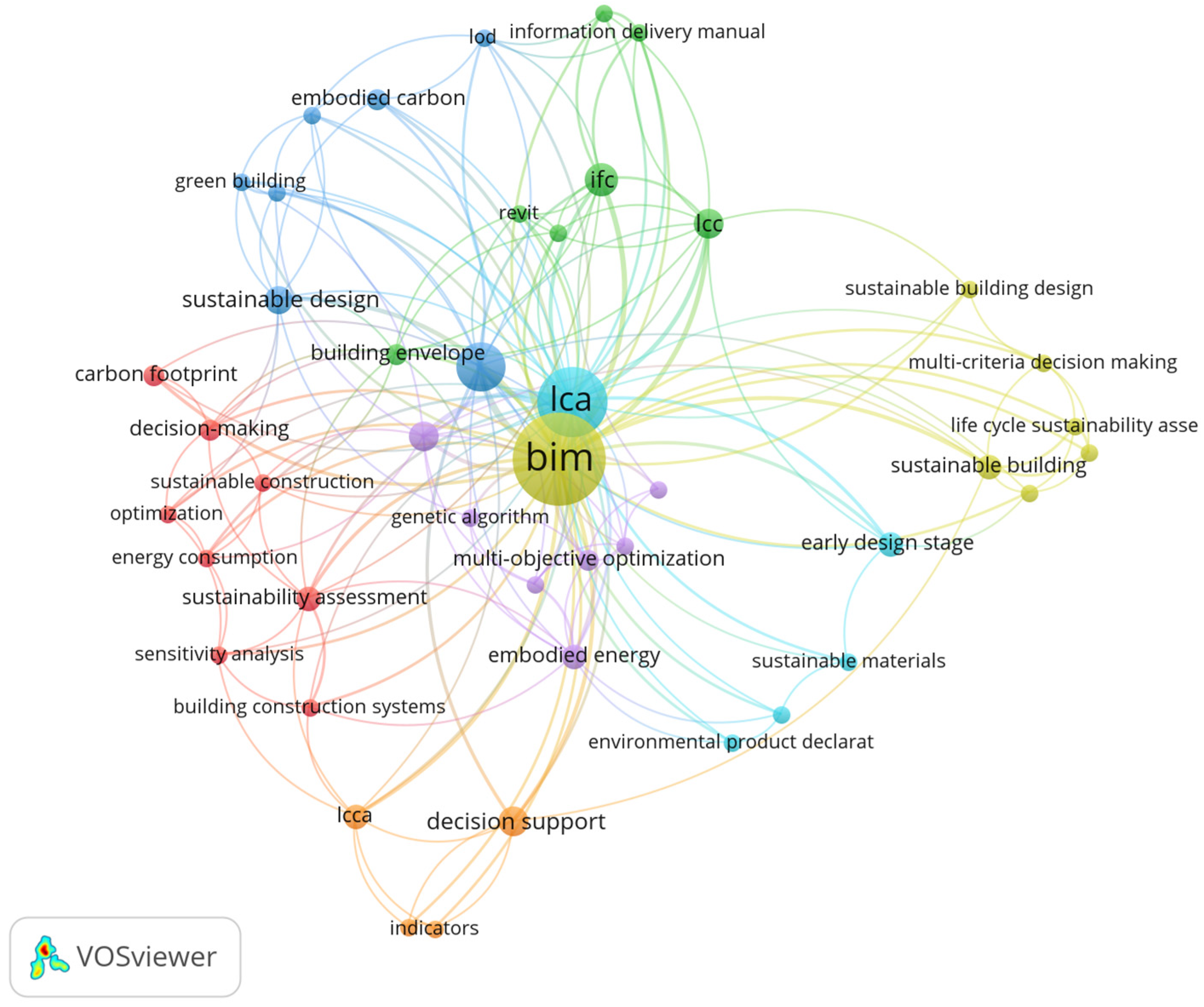
3.3.4. Keywords
3.4. Results of Syntheses
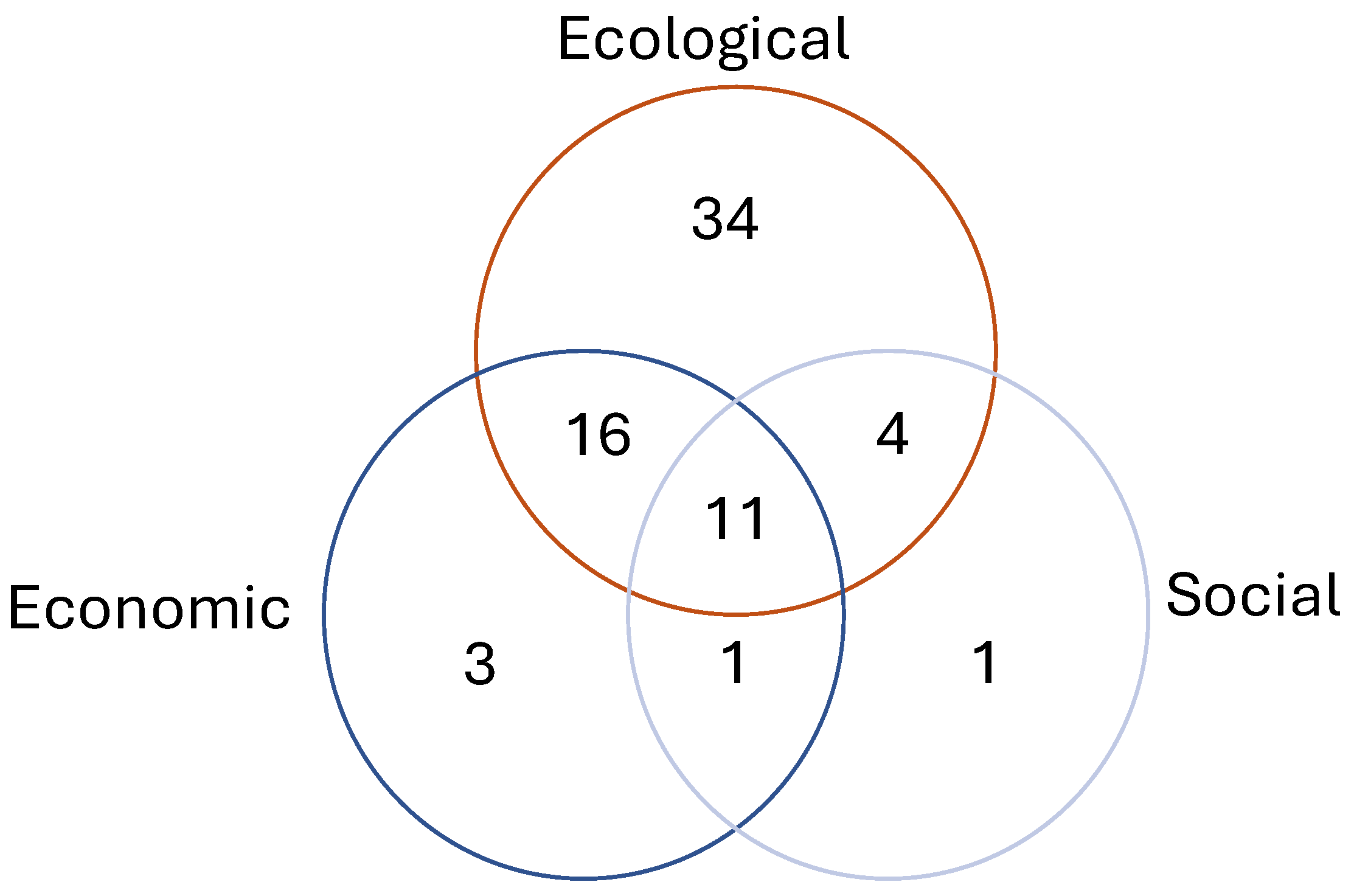
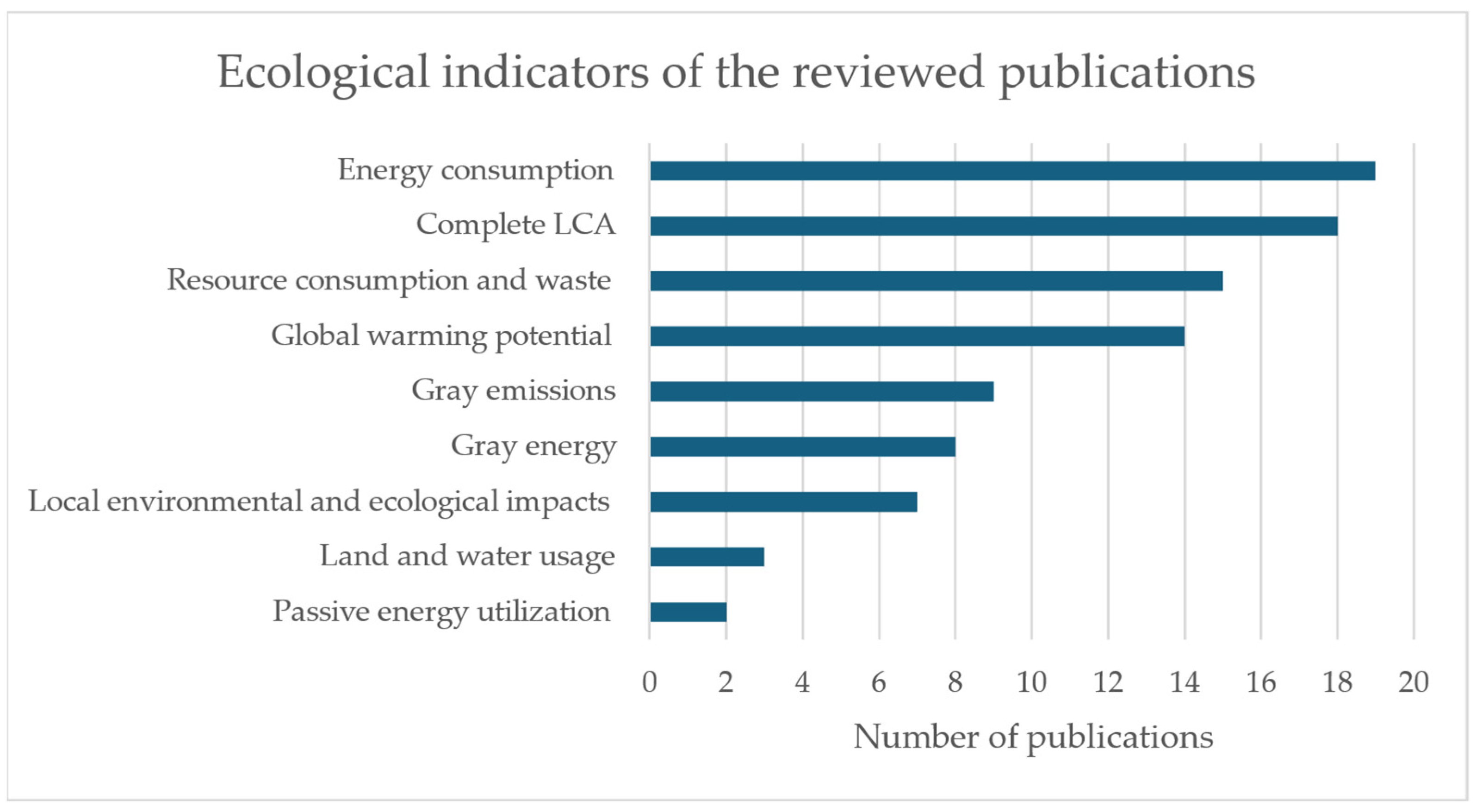
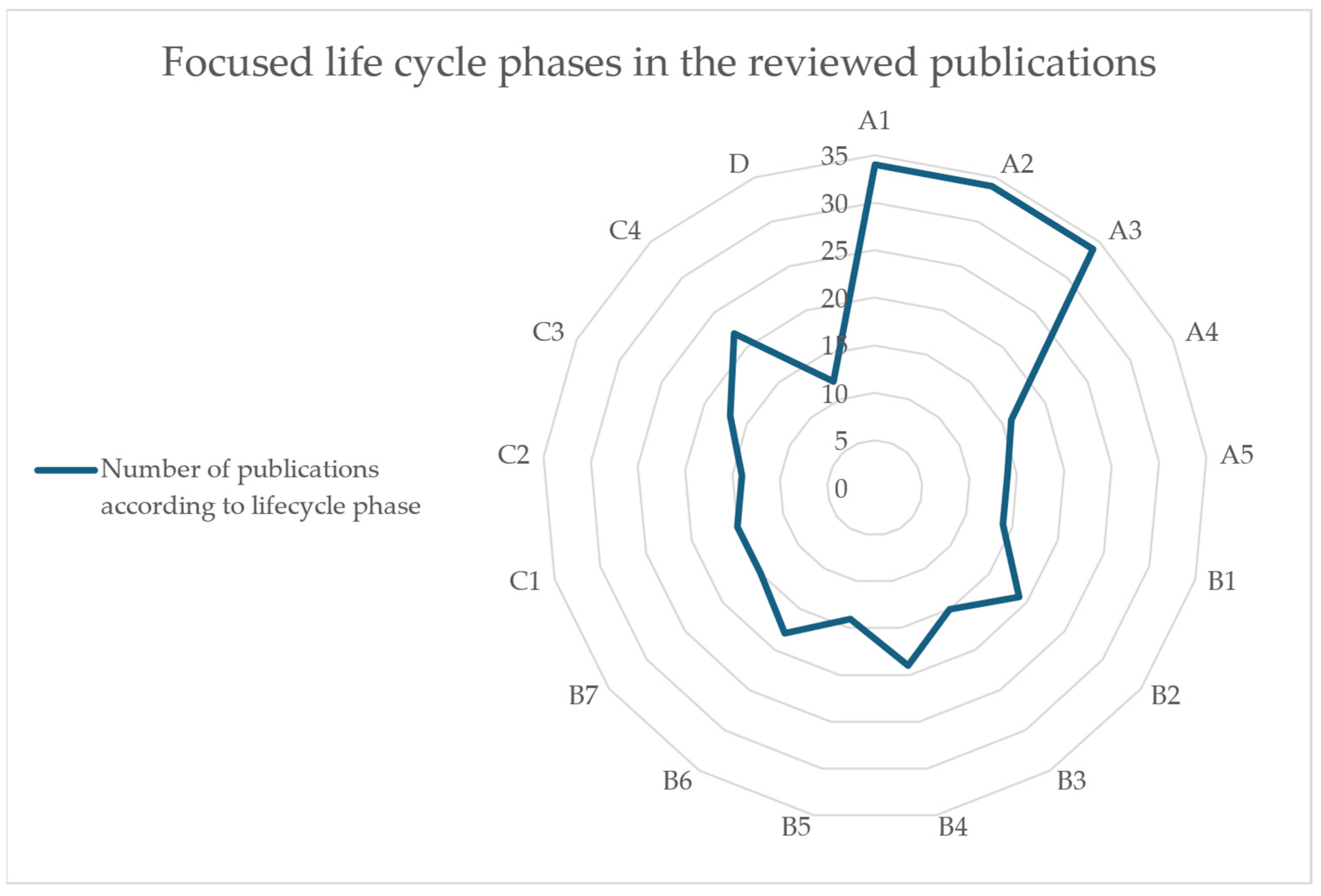
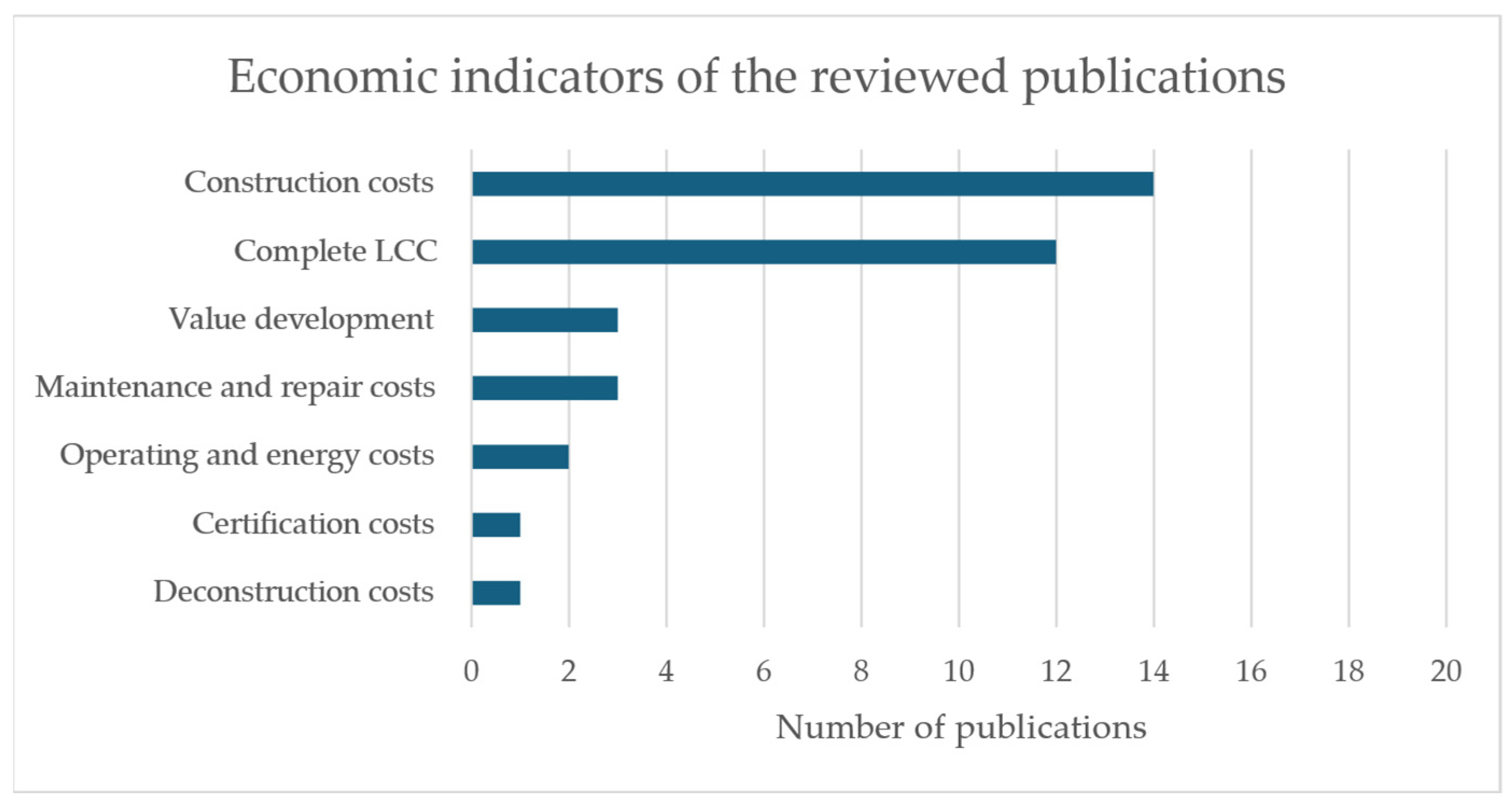
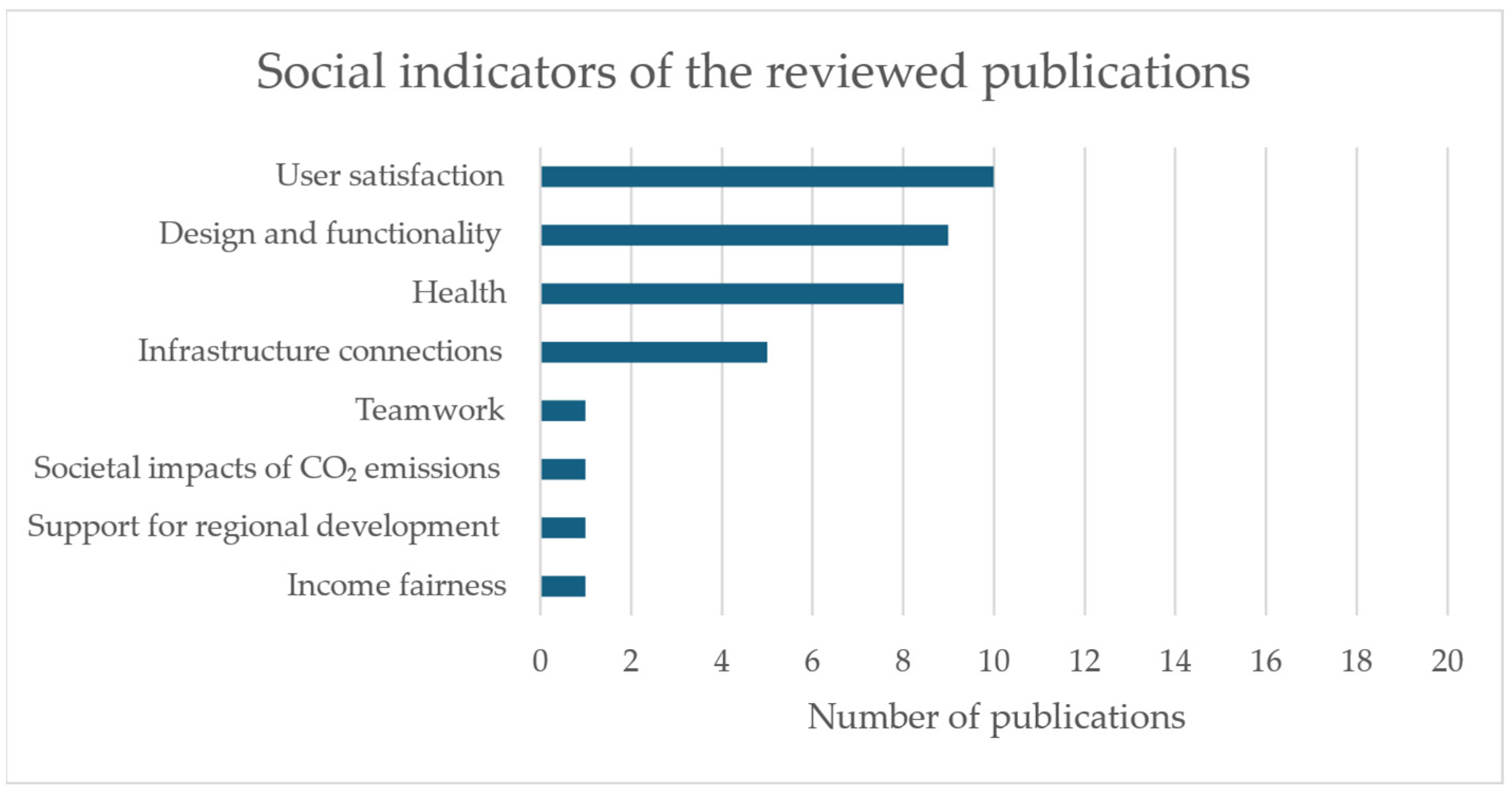
3.4.1. Sustainability Indicators
3.4.2. Sustainability Databases
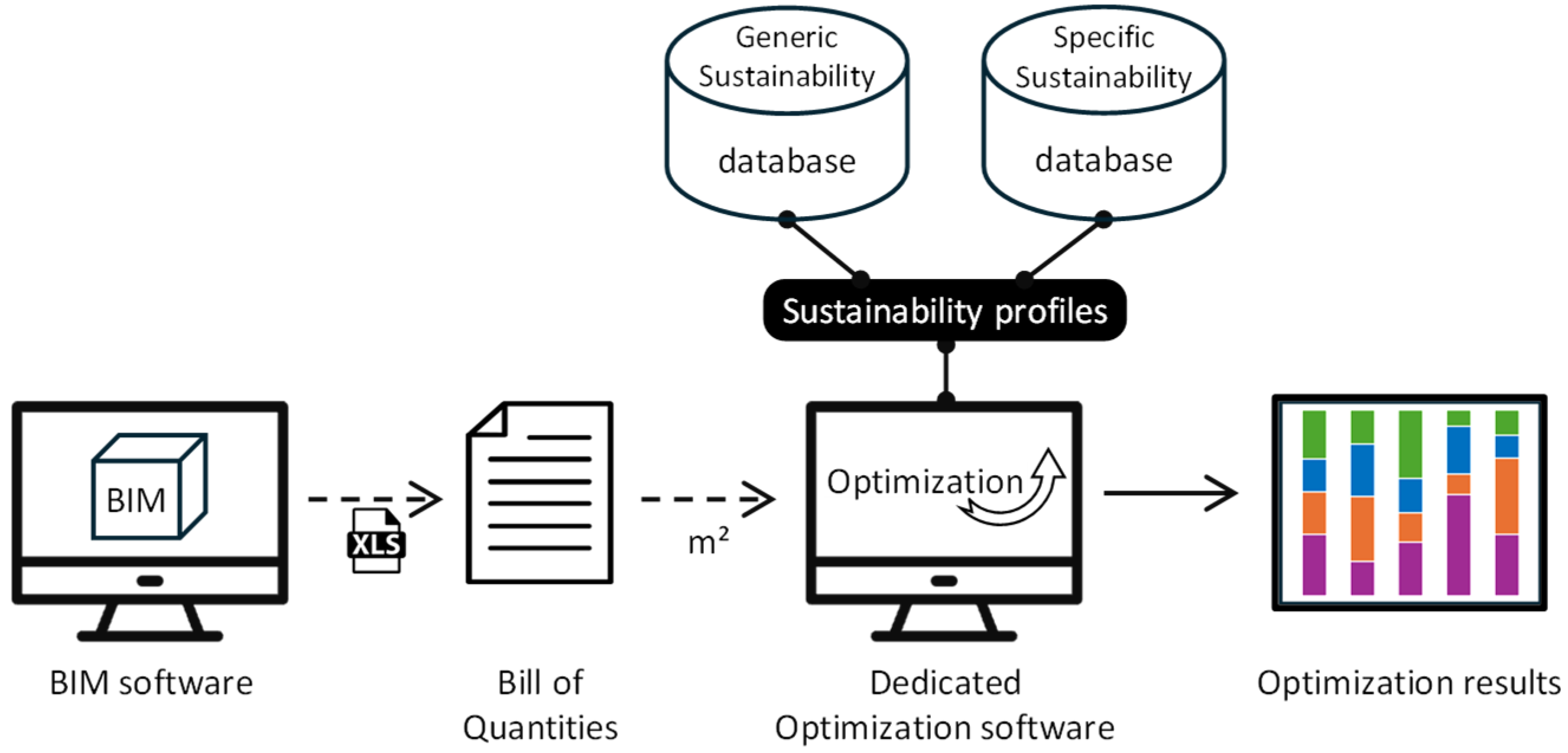
3.4.3. System Architecture for Optimization Within BIM
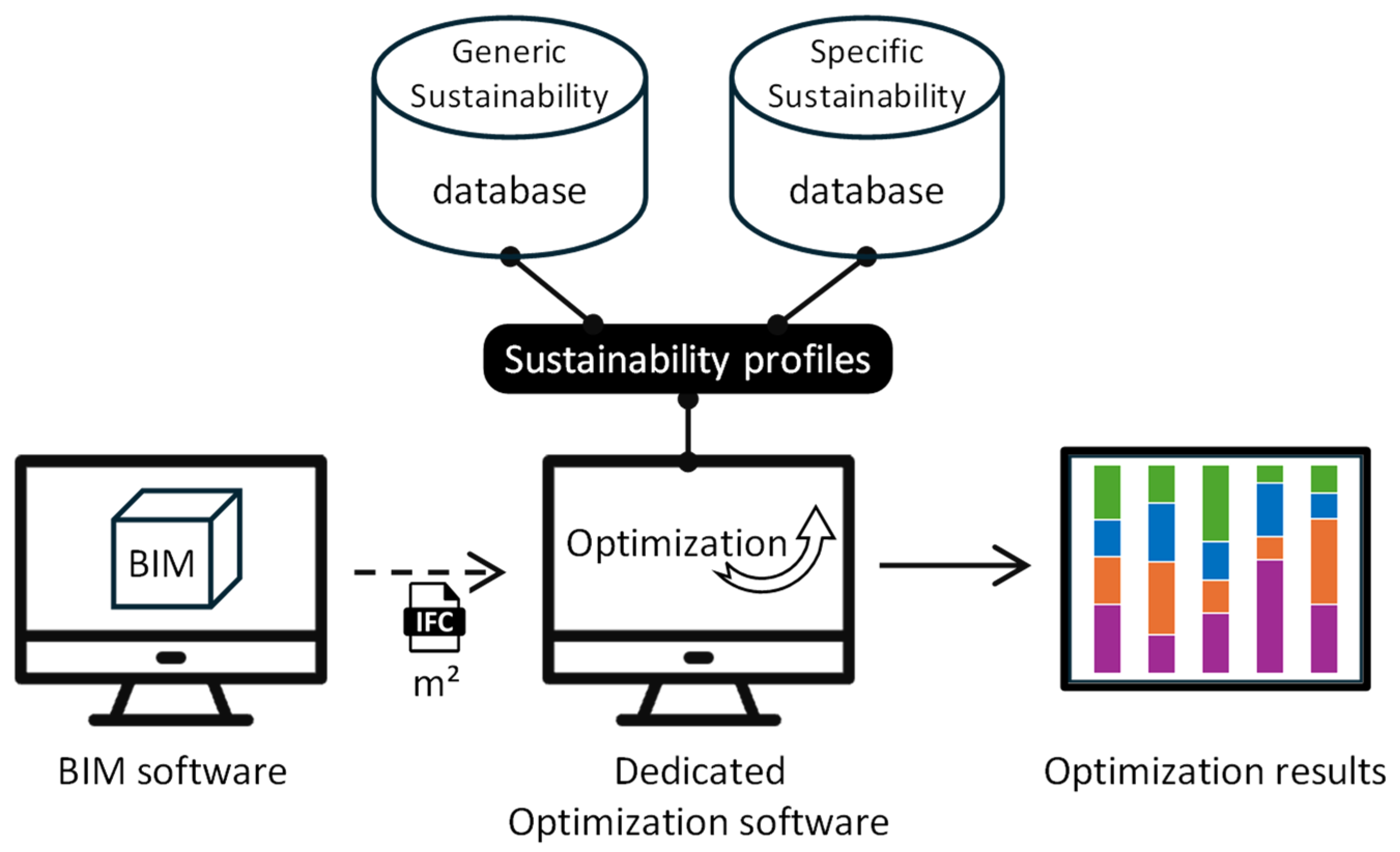
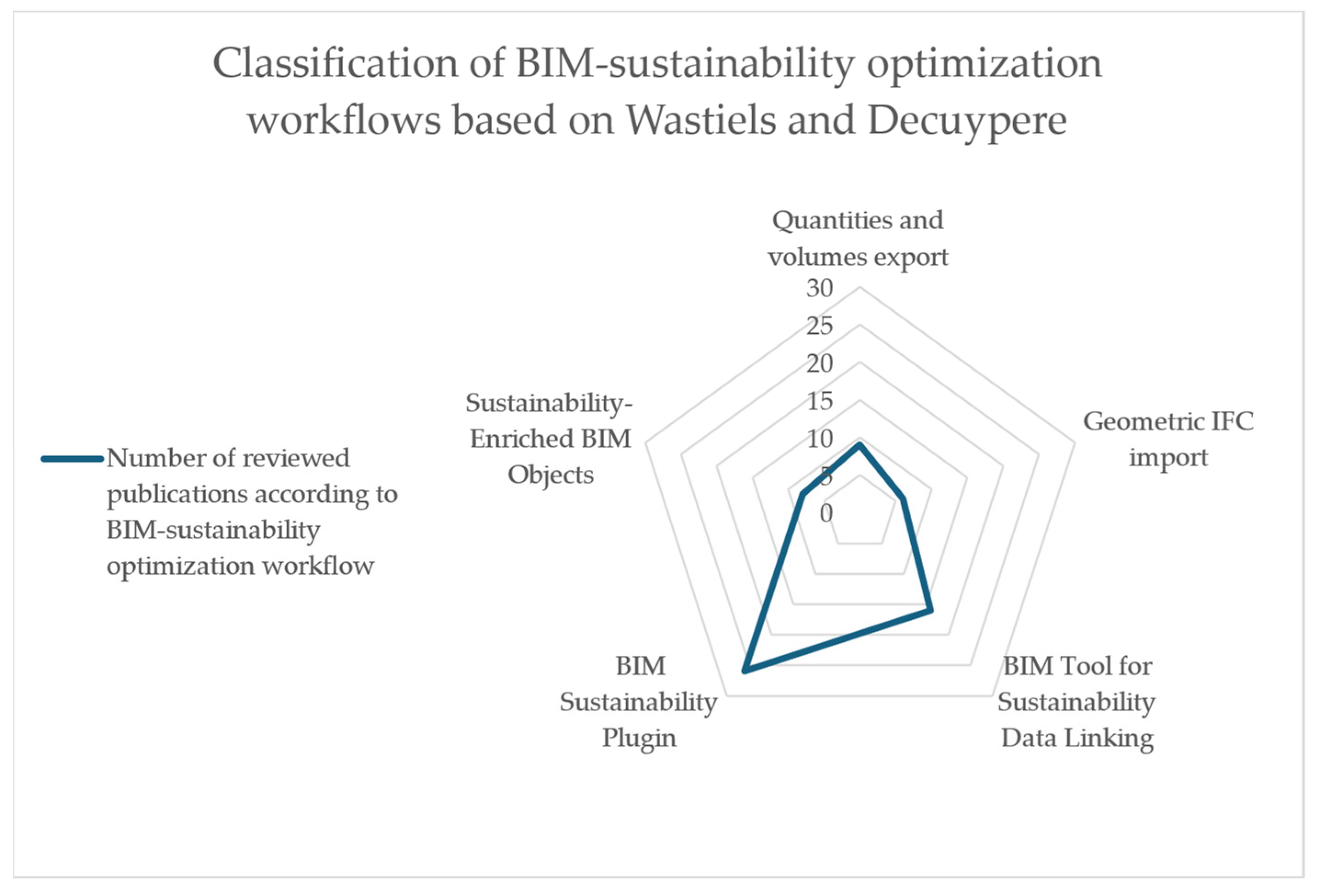
Quantities and Volumes Export
Geometric IFC Model Import
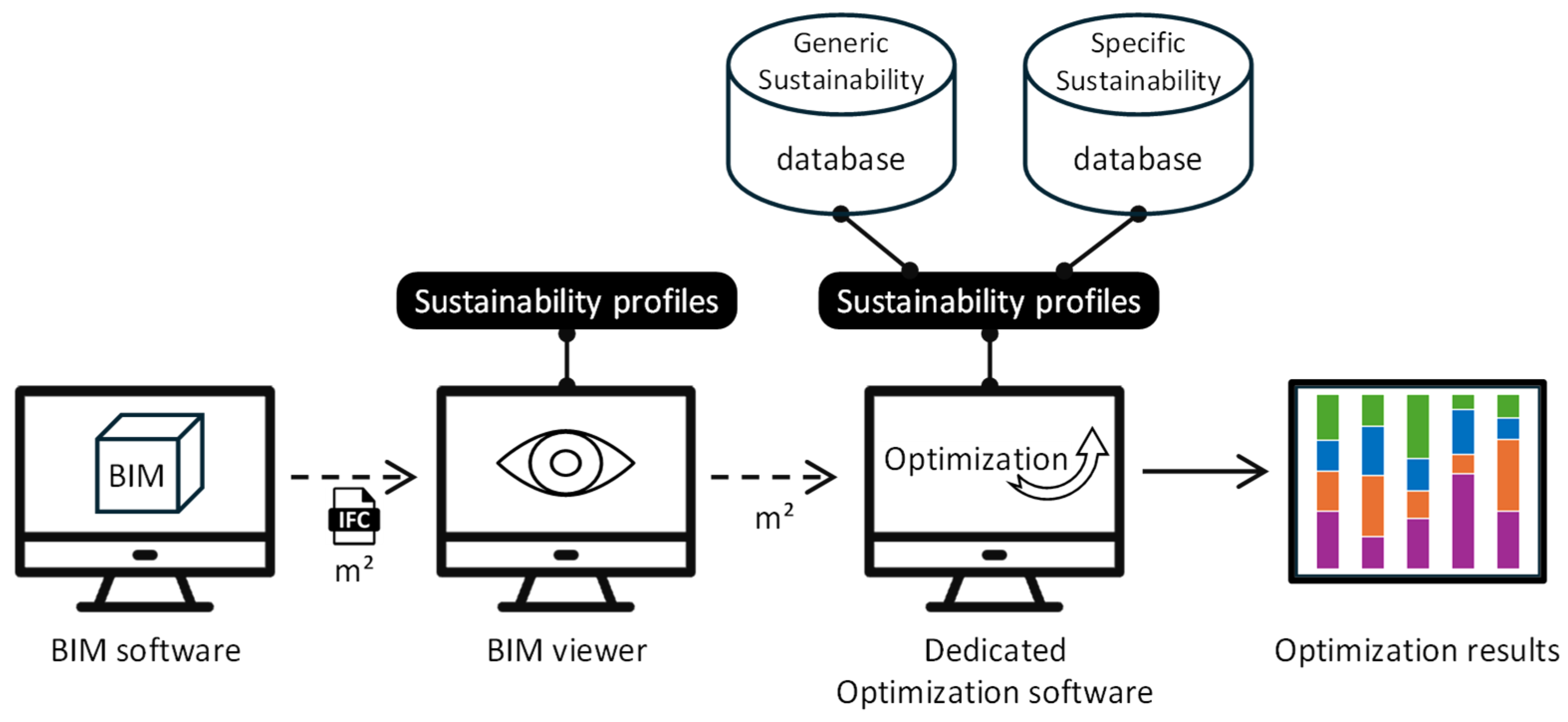
BIM Tool for Sustainability Data Linking
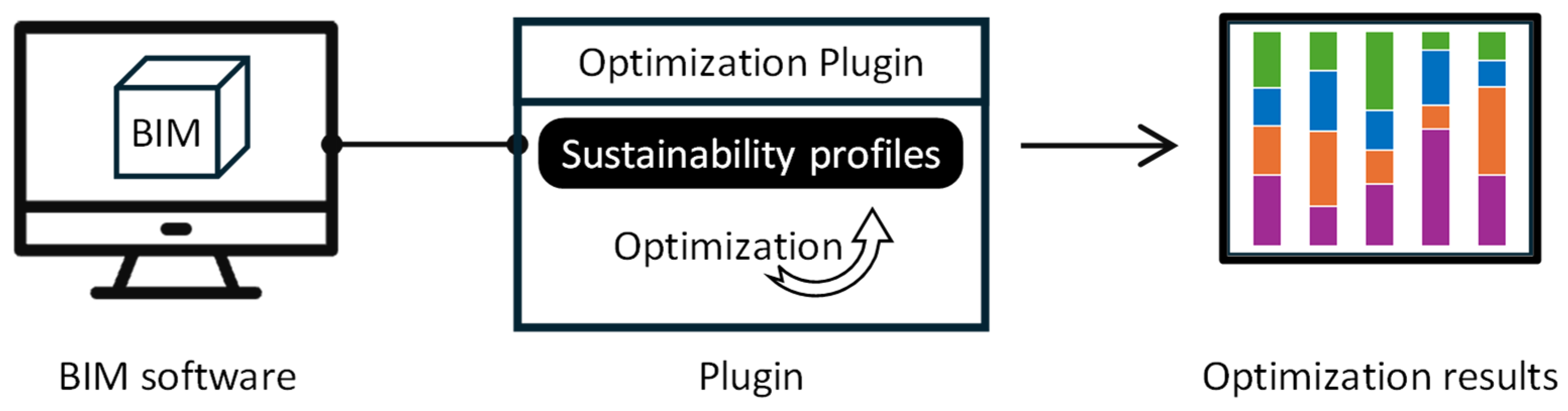
BIM Sustainability Plugin
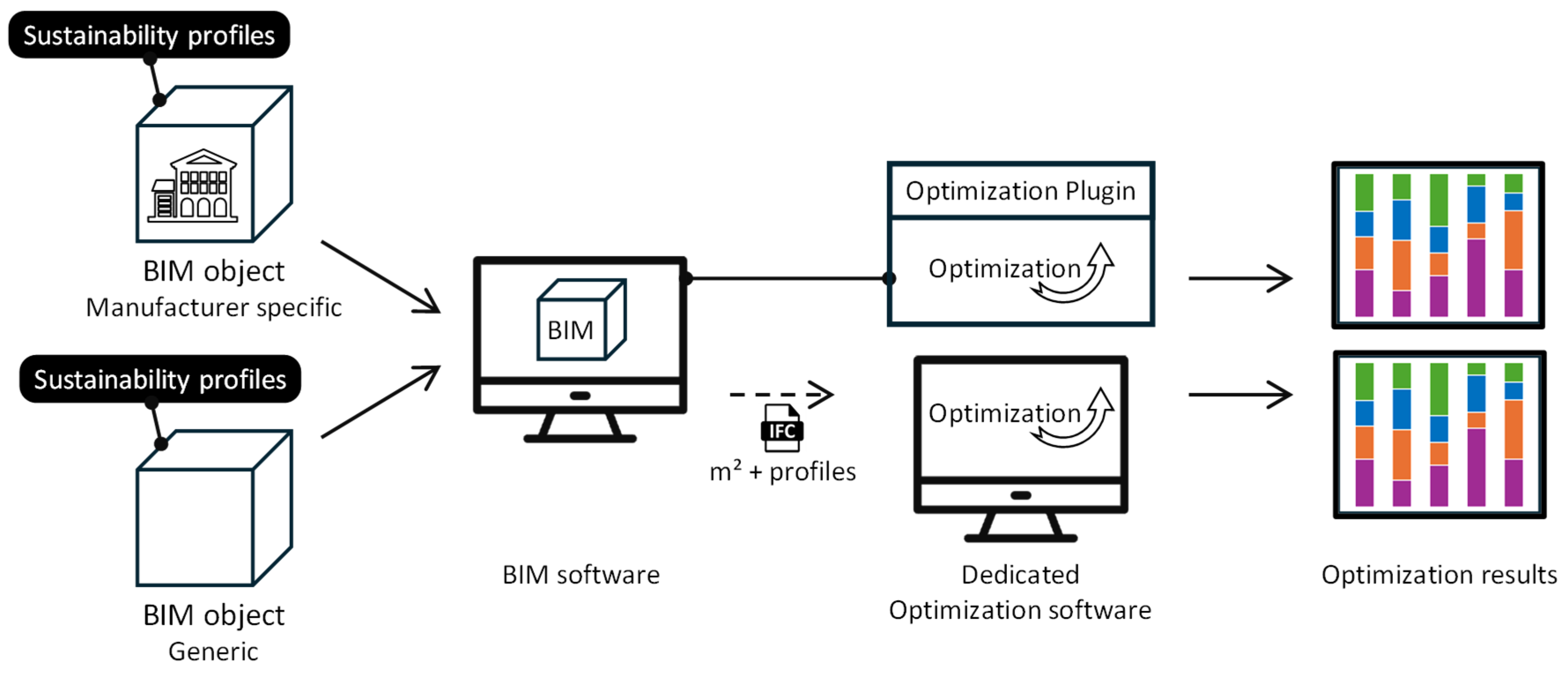
Sustainability-Enriched BIM Objects
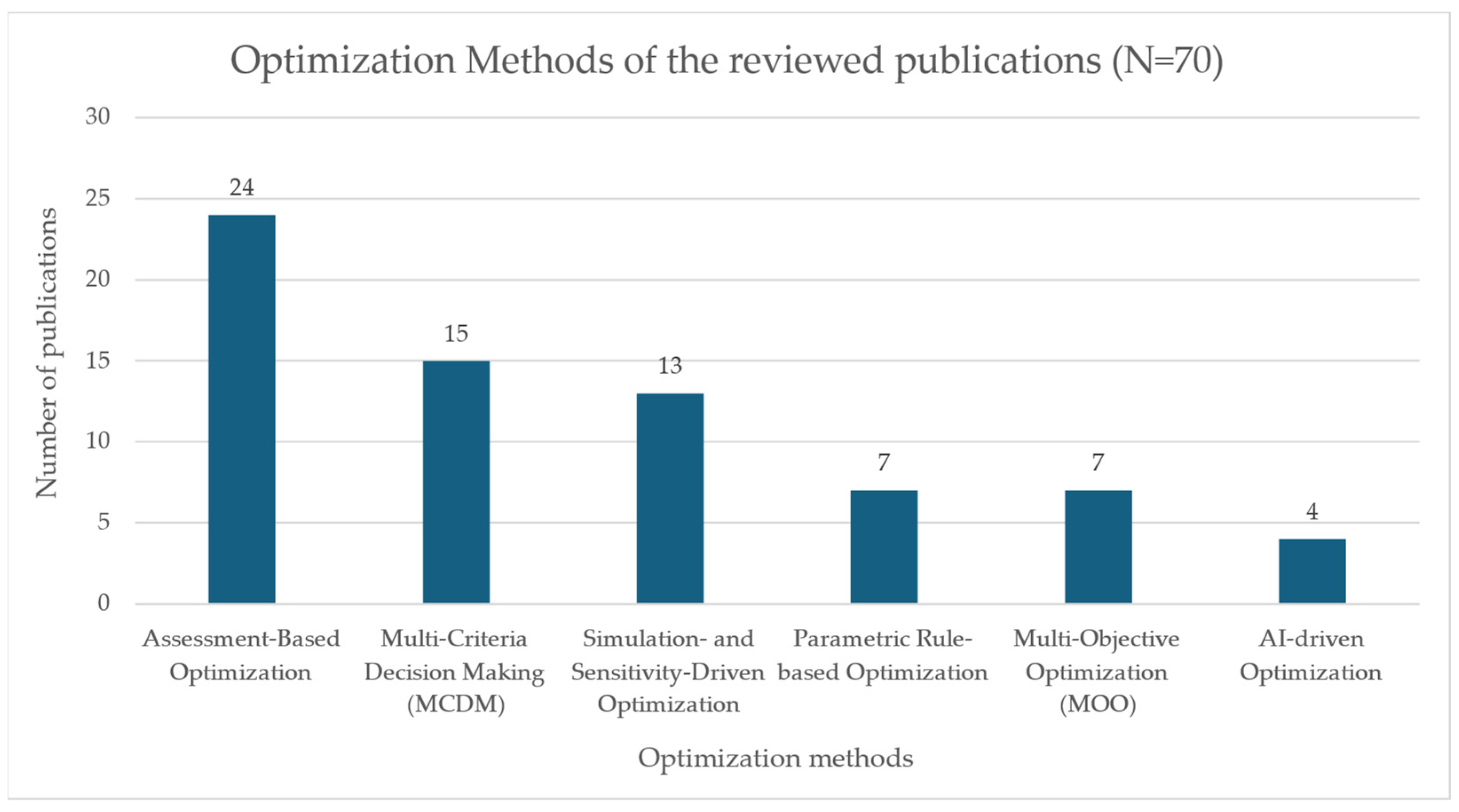
3.4.4. Optimization Methodology
4. Discussion
4.1. General Interpretation of the Results
4.2. Limitations Related to the Review Procedures and Their Outcomes
4.3. Implications for Practice, Policy, and Future Research
Supplementary Materials
Author Contributions
Funding
Institutional Review Board Statement
Informed Consent Statement
Data Availability Statement
Conflicts of Interest
Appendix A

| Author | Year | Title | DOI |
|---|---|---|---|
| AbouHamad & Abu-Hamd | 2019 | Framework for construction system selection based on life cycle cost and sustainability assessment | [58] |
| AbouHamad & Abu-Hamd | 2021 | Life Cycle Assessment Framework for Embodied Environmental Impacts of Building Construction Systems | [59] |
| Ahmad et al. | 2017 | BIM-based Iterative Tool for Sustainable Building Design: A Conceptual Framework | [25] |
| Ahmad & Thaheem | 2017 | Developing a residential building-related social sustainability assessment framework and its implications for BIM | [60] |
| Ahmad & Thaheem | 2018 | Economic sustainability assessment of residential buildings: A dedicated assessment framework and implications for BIM | [49] |
| Ahmadian F.F. et al. | 2017 | BIM-enabled sustainability assessment of material supply decisions | [30] |
| Ajtayné Károlyfi & Szép | 2023 | A Parametric BIM Framework to Conceptual Structural Design for Assessing the Embodied Environmental Impact | [53] |
| Alasmari et al. | 2024 | Utilising BIM on LCC to Enhance the Sustainability of Saudi Residential Projects Through Simulation. A Case Study at the Kingdom of Saudi Arabia | [61] |
| Angeles et al. | 2021 | Advancing the Design of Resilient and Sustainable Buildings: An Integrated Life-Cycle Analysis | [62] |
| Atik et al. | 2023 | The Opportunities and Challenges of Using LCA-Based BIM Plugins in Early-Stage Building Design: An Industry Expert Perspective | [63] |
| Ayman Mohamed et al. | 2023 | Automation of embodied carbon calculation in digital built environment-tool utilizing UK LCI database | [64] |
| Bagul & Katare | 2023 | Comparative Analysis of Various Walling Materials for Finding Sustainable Solutions Using Building Information Modeling | [65] |
| Bank et al. | 2011 | Decision-making tools for evaluating the impact of materials selection on the carbon footprint of buildings | [66] |
| Bartels et al. | 2023 | Life cycle-oriented decision making based on data-driven building models | [67] |
| Basbagill et al. | 2013 | Application of life-cycle assessment to early stage building design for reduced embodied environmental impacts | [50] |
| Carvalho et al. | 2021 | Assessing Life Cycle Environmental and Economic Impacts of Building Construction Solutions with BIM | [32] |
| Choi & Lee | 2023 | A Suggestion of the Alternatives Evaluation Method through IFC-Based Building Energy Performance Analysis | [44] |
| Cornely et al. | 2024 | A Case Study on Integrating an Eco-Design Tool into the Construction Decision-Making Process | [27] |
| Di Santo et al. | 2023 | Holistic Approach for Assessing Buildings’ Environmental Impact and User Comfort from Early Design: A Method Combining Life Cycle Assessment, BIM, and Active House Protocol | [68] |
| Dupuis et al. | 2017 | Method to Enable LCA Analysis through Each Level of Development of a BIM Model | [69] |
| Ebertshäuser et al. | 2019 | Sustainable building information modeling in the context of model-based integral planning | [70] |
| Ebertshäuser et al. | 2018 | BIM-embedded life cycle carbon assessment of RC buildings using optimised structural design alternatives | [71] |
| Figueiredo et al. | 2021 | Sustainable material choice for construction projects: A Life Cycle Sustainability Assessment framework based on BIM and Fuzzy-AHP | [40] |
| Filho et al. | 2022 | Sustainability Assessment of a Low-Income Building: A BIM-LCSA-FAHP Based Analysis | [38] |
| Forth et al. | 2023 | Calculation of embodied GHG emissions in early building design stages using BIM and NLP-based semantic model healing | [72] |
| Forth et al. | 2023 | BIM4EarlyLCA: An interactive visualization approach for early design support based on uncertain LCA results using open BIM | [48] |
| Gan et al. | 2018 | Holistic BIM framework for sustainable low carbon design of high-rise buildings | [73] |
| Gardezi et al. | 2016 | A multivariable regression tool for embodied carbon footprint prediction in housing habitat | [74] |
| Genova | 2019 | BIM-Based LCA throughout the Design Process: a Dynamic Approach | [54] |
| Haruna et al. | 2021 | Building information modelling application for developing sustainable building (Multi criteria decision making approach) | [75] |
| Hollands & Korjenic | 2021 | Evaluation and Planning Decision on Façade Greening Made Easy—Integration in BIM and Implementation of an Automated Design Process | [33] |
| Horn et al. | 2020 | The BIM2LCA Approach: An Industry Foundation Classes (IFC)-Based Interface to Integrate Life Cycle Assessment in Integral Planning | [76] |
| Hunt & Osorio-Sandoval | 2023 | Assessing Embodied Carbon in Structural Models: A Building Information Modelling-Based Approach | [36] |
| Ilhan & Kog | 2020 | BIM and Sustainability Integration: Multi-agent System Approach | [45] |
| Ilhan & Yaman | 2016 | Green building assessment tool (GBAT) for integrated BIM-based design decision | [47] |
| Inharwararak & Stravoravdis | 2023 | Building information modelling-based life cycle assessment (BIM-LCA) for housing estates in Thailand | [29] |
| Jalaei & Jrade | 2015 | Integrating building information modeling (BIM) and LEED system at the conceptual design stage of sustainable buildings | [26] |
| Jalaei et al. | 2022 | A framework for specifying low-carbon construction materials in government procurement: A case study for concrete in a new building investment | [46] |
| Jrade & Jalaei | 2013 | Integrating building information modelling with sustainability to design building projects at the conceptual stage | [77] |
| Khanzadi et al. | 2015 | Optimization of Building Components with Sustainability Aspects in BIM Environment | [57] |
| Kreiner et al. | 2015 | A new systemic approach to improve the sustainability performance of office buildings in the early design stage | [35] |
| Lim et al. | 2018 | BIM and genetic algorithm optimisation for sustainable building envelope design | [56] |
| Lim et al. | 2017 | BIM-based sustainable building design process and decision-making | [78] |
| Liu & Wang | 2022 | Green BIM-based study on the green performance of university buildings in northern China | [43] |
| Lu & Wang | 2019 | Estimation of Building’s Life Cycle Carbon Emissions Based on Life Cycle Assessment and Building Information Modeling: A Case Study of a Hospital Building in China | [79] |
| Masoumi-Hajiagha et al. | 2025 | Development of a Framework for Optimal Selection of Sustainable Building Envelope using BIM | [31] |
| Mowafy et al. | 2023 | Parametric BIM-based life cycle assessment framework for optimal sustainable design | [37] |
| Najjar et al. | 2019 | Integrated optimization with building information modeling and life cycle assessment for generating energy efficient buildings | [39] |
| Najjar et al. | 2017 | Integration of BIM and LCA: Evaluating the environmental impacts of building materials at an early stage of designing a typical office building | [24] |
| Najjar et al. | 2019 | Integrating Parametric Analysis with Building Information Modeling to Improve Energy Performance of Construction Projects | [80] |
| Namaki et al. | 2024 | An Integrated Building Information Modeling and Life-Cycle Assessment Approach to Facilitate Design Decisions on Sustainable Building Projects in Canada | [41] |
| Naneva et al. | 2020 | Integrated BIM-Based LCA for the Entire Building Process Using an Existing Structure for Cost Estimation in the Swiss Context | [81] |
| Oti & Tizani | 2015 | BIM extension for the sustainability appraisal of conceptual steel design | [82] |
| Ozcan-Deniz & Rodovalho | 2024 | Towards carbon-neutral construction: Integrating BIM and energy analysis for sustainable design decision-making | [83] |
| Peng | 2016 | Calculation of a building’s life cycle carbon emissions based on Ecotect and building information modeling | [84] |
| Płoszaj-Mazurek & Ryńska | 2024 | Artificial Intelligence and Digital Tools for Assisting Low-Carbon Architectural Design: Merging the Use of Machine Learning, Large Language Models, and Building Information Modeling for Life Cycle Assessment Tool Development | [55] |
| Rahmani Asl et al. | 2015 | BPOpt: A framework for BIM-based performance optimization | [52] |
| Rezaei et al. | 2019 | Integrating building information modeling and life cycle assessment in the early and detailed building design stages | [85] |
| Röck et al. | 2018 | LCA and BIM: Visualization of environmental potentials in building construction at early design stages | [86] |
| Sadeghifam et al. | 2016 | Energy Analysis of Wall Materials Using Building Information Modeling (BIM) of Public Buildings in the Tropical Climate Countries | [87] |
| Santos et al. | 2020 | Development of a BIM-based Environmental and Economic Life Cycle Assessment tool | [42] |
| Santos et al. | 2019 | Integration of LCA and LCC analysis within a BIM-based environment | [88] |
| Scherz et al. | 2022 | A hierarchical reference-based know-why model for design support of sustainable building envelopes | [34] |
| Serrano-Baena et al. | 2023 | Optimising LCA in complex buildings with MLCAQ: A BIM-based methodology for automated multi-criteria materials selection | [89] |
| Shadram et al. | 2016 | An integrated BIM-based framework for minimizing embodied energy during building design | [28] |
| Shadram & Mukkavaara | 2018 | An integrated BIM-based framework for the optimization of the trade-off between embodied and operational energy | [90] |
| Tushar et al. | 2021 | An integrated approach of BIM-enabled LCA and energy simulation: The optimized solution towards sustainable development | [51] |
| Vilutiene et al. | 2020 | Assessing the Sustainability of Alternative Structural Solutions of a Building: A Case Study | [91] |
| Vite & Morbiducci | 2021 | Optimizing the Sustainable Aspects of the Design Process through Building Information Modeling | [92] |
| Zanni et al. | 2019 | Developing a Methodology for Integration of Whole Life Costs into BIM Processes to Assist Design Decision Making | [93] |
References
- United Nations. Paris Agreement; European Union’s Official Journal (OJ): Luxembourg, 2015; p. 4. [Google Scholar]
- United Nations Environment Programme. 2022 Global Status Report for Buildings and Construction: Towards a Zero-Emission, Efficient and Resilient Buildings and Construction Sector; United Nations: New York, NY, USA, 2022; ISBN 978-92-807-3984-8. [Google Scholar]
- Weidemann, A.; Schüpfer, L. Bewertungssystematik der Nachhaltigkeit in Bauprojekten; PD—Berater der öffentlichen Hand GmbH: Berlin, Germany, 2022. [Google Scholar]
- Bragança, L.; Vieira, S.M.; Andrade, J.B. Early stage design decisions: The way to achieve sustainable buildings at lower costs. Sci. World J. 2014, 2014, 365364. [Google Scholar] [CrossRef] [PubMed]
- Kovacic, I.; Sreckovic, M. Designing the planning process for sustainable buildings: From experiment towards implementation. Eng. Proj. Organ. J. 2013, 3, 51–63. [Google Scholar] [CrossRef]
- Llatas, C.; Soust-Verdaguer, B.; Passer, A. Implementing Life Cycle Sustainability Assessment during design stages in Building Information Modelling: From systematic literature review to a methodological approach. Build. Environ. 2020, 182, 107164. [Google Scholar] [CrossRef]
- Prideaux, F.; Allacker, K.; Crawford, R.H.; Stephan, A. Integrating life cycle assessment into the building design process—A review. Environ. Res. Infrastruct. Sustain. 2024, 4, 22001. [Google Scholar] [CrossRef]
- Görsch, C.; Schönbach, R.; Klemt-Albert, K.; Löhnert, G. Prozessbasierte Analyse zur Integration von Nachhaltigkeitsaspekten in die Methode Building Information Modeling (BIM). Bauingenieur 2021, 96, 60–69. [Google Scholar] [CrossRef]
- Klemt-Albert, K. Optimierung der Nachhaltigkeit von Bauwerken Durch die Integration von Nachhaltigkeitsanforderungen in die Digitale Methode Building Information Modeling; Fraunhofer IRB Verlag: Stuttgart, Germany, 2020; ISBN 978-3-7388-0515-4. [Google Scholar]
- Hasek, A. BIM in the US: What the Data Says. Available online: https://www.planradar.com/us/bim-in-the-us/#:~:text=The%20utilization%20of%20BIM%20software,in%20the%20USA%20use%20BIM (accessed on 1 May 2025).
- Minson, A.; Antoniou, N. The Importance of Environmental Product Declarations in Sustainable Construction. Available online: https://www.pbctoday.co.uk/news/planning-construction-news/the-importance-environmental-product-declarations-sustainable-construction/134374/#:~:text=Environmental%20Product%20Declarations%20in%20sustainable,to%20approximately%2017%2C000%20in%202023 (accessed on 1 May 2025).
- Safari, K.; AzariJafari, H. Challenges and opportunities for integrating BIM and LCA: Methodological choices and framework development. Sustain. Cities Soc. 2021, 67, 102728. [Google Scholar] [CrossRef]
- Theißen, S.; Höper, J.; Wimmer, R.; Zibell, M.; Meins-Becker, A.; Rössig, S.; Goitowski, S.; Lambertz, M. BIM integrated automation of whole building life cycle assessment using German LCA data base ÖKOBAUDAT and Industry Foundation Classes. IOP Conf. Ser. Earth Environ. Sci. 2020, 588, 32025. [Google Scholar] [CrossRef]
- vom Brocke, J.; Simons, A.; Niehaves, B.; Riemer, K.; Plattfaut, R.; Cleven, A. Reconstructing the giant: On the importance of rigour in documenting the literature search process. In Proceedings of the 2009 European Conference on Information Systems, Verona, Italy, 8–10 June 2009. [Google Scholar]
- Töpfer, A. Erfolgreich Forschen; Springer: Berlin/Heidelberg, Germany, 2012; ISBN 978-3-642-34168-7. [Google Scholar]
- Page, M.J.; McKenzie, J.E.; Bossuyt, P.M.; Boutron, I.; Hoffmann, T.C.; Mulrow, C.D.; Shamseer, L.; Tetzlaff, J.M.; Akl, E.A.; Brennan, S.E.; et al. The PRISMA 2020 statement: An updated guideline for reporting systematic reviews. PLoS Med. 2021, 18, e1003583. [Google Scholar] [CrossRef] [PubMed]
- Akram, F.; Ahmad, T.; Sadiq, M. Recommendation systems-based software requirements elicitation process—A systematic literature review. J. Eng. Appl. Sci. 2024, 71, 29. [Google Scholar] [CrossRef]
- Paez, A. Gray literature: An important resource in systematic reviews. J. Evid. Based Med. 2017, 10, 233–240. [Google Scholar] [CrossRef]
- Vestfal, P.; Seduikyte, L. Systematic Review of Factors Influencing Students’ Performance in Educational Buildings: Focus on LCA, IoT, and BIM. Buildings 2024, 14, 2007. [Google Scholar] [CrossRef]
- Wilkinson, M.D.; Dumontier, M.; Aalbersberg, I.J.J.; Appleton, G.; Axton, M.; Baak, A.; Blomberg, N.; Boiten, J.-W.; Da Silva Santos, L.B.; Bourne, P.E.; et al. The FAIR Guiding Principles for scientific data management and stewardship. Sci. Data 2016, 3, 160018. [Google Scholar] [CrossRef]
- Webster, J.; Watson, R.T. Analyzing the past to prepare for the future: Writing a literature review. MIS Q. 2002, 26, xiii–xxiii. [Google Scholar] [CrossRef]
- Centre for Science and Technology Studies. VOSviewer Visualizing Scientific Landscapes. Available online: https://www.vosviewer.com/ (accessed on 13 January 2025).
- Kuckartz, U.; Rädiker, S. Transkriptionsregeln, Hinweise zur Automatischen Transkription. In Qualitative Inhaltsanalyse. Methoden, Praxis, Computerunterstützung; Beltz Juventa in der Verlagsgruppe Beltz. S: Weinheim, Germany, 2022; pp. 199–203. [Google Scholar]
- Najjar, M.; Figueiredo, K.; Palumbo, M.; Haddad, A. Integration of BIM and LCA: Evaluating the environmental impacts of building materials at an early stage of designing a typical office building. J. Build. Eng. 2017, 14, 115–126. [Google Scholar] [CrossRef]
- Ahmad, T.; Aibinu, A.; Thaheem, M.J. BIM-based Iterative Tool for Sustainable Building Design: A Conceptual Framework. Procedia Eng. 2017, 180, 782–792. [Google Scholar] [CrossRef]
- Jalaei, F.; Jrade, A. Integrating building information modeling (BIM) and LEED system at the conceptual design stage of sustainable buildings. Sustain. Cities Soc. 2015, 18, 95–107. [Google Scholar] [CrossRef]
- Cornely, K.; Ascensão, G.; Ferreira, V.M. A Case Study on Integrating an Eco-Design Tool into the Construction Decision-Making Process. Appl. Sci. 2024, 14, 10583. [Google Scholar] [CrossRef]
- Shadram, F.; Johansson, T.D.; Lu, W.; Schade, J.; Olofsson, T. An integrated BIM-based framework for minimizing embodied energy during building design. Energy Build. 2016, 128, 592–604. [Google Scholar] [CrossRef]
- Inharwararak, P.; Stravoravdis, S. Building information modelling-based life cycle assessment (BIM-LCA) for housing estates in Thailand. IOP Conf. Ser. Earth Environ. Sci. 2023, 1261, 12002. [Google Scholar] [CrossRef]
- Ahmadian FF, A.; Rashidi, T.H.; Akbarnezhad, A.; Waller, S.T. BIM-enabled sustainability assessment of material supply decisions. Eng. Constr. Archit. Manag. 2017, 24, 668–695. [Google Scholar] [CrossRef]
- Masoumi-Hajiagha, A.; Heravi, G.; Khosravi, H. Development of a Framework for Optimal Selection of Sustainable Building Envelope using BIM. Iran. J. Sci. Technol. Trans. Civ. Eng. 2024, 49, 1871–1887. [Google Scholar] [CrossRef]
- Carvalho, J.P.; Villaschi, F.S.; Bragança, L. Assessing Life Cycle Environmental and Economic Impacts of Building Construction Solutions with BIM. Sustainability 2021, 13, 8914. [Google Scholar] [CrossRef]
- Hollands, J.; Korjenic, A. Evaluation and Planning Decision on Façade Greening Made Easy—Integration in BIM and Implementation of an Automated Design Process. Sustainability 2021, 13, 9387. [Google Scholar] [CrossRef]
- Scherz, M.; Hoxha, E.; Kreiner, H.; Passer, A.; Vafadarnikjoo, A. A hierarchical reference-based know-why model for design support of sustainable building envelopes. Autom. Constr. 2022, 139, 104276. [Google Scholar] [CrossRef]
- Kreiner, H.; Passer, A.; Wallbaum, H. A new systemic approach to improve the sustainability performance of office buildings in the early design stage. Energy Build. 2015, 109, 385–396. [Google Scholar] [CrossRef]
- Hunt, J.; Osorio-Sandoval, C.A. Assessing Embodied Carbon in Structural Models: A Building Information Modelling-Based Approach. Buildings 2023, 13, 1679. [Google Scholar] [CrossRef]
- Mowafy, N.; El Zayat, M.; Marzouk, M. Parametric BIM-based life cycle assessment framework for optimal sustainable design. J. Build. Eng. 2023, 75, 106898. [Google Scholar] [CrossRef]
- Filho, M.V.A.P.M.; Da Costa, B.B.F.; Najjar, M.; Figueiredo, K.V.; de Mendonça, M.B.; Haddad, A.N. Sustainability Assessment of a Low-Income Building: A BIM-LCSA-FAHP-Based Analysis. Buildings 2022, 12, 181. [Google Scholar] [CrossRef]
- Najjar, M.; Figueiredo, K.; Hammad, A.W.; Haddad, A. Integrated optimization with building information modeling and life cycle assessment for generating energy efficient buildings. Appl. Energy 2019, 250, 1366–1382. [Google Scholar] [CrossRef]
- Figueiredo, K.; Pierott, R.; Hammad, A.W.; Haddad, A. Sustainable material choice for construction projects: A Life Cycle Sustainability Assessment framework based on BIM and Fuzzy-AHP. Build. Environ. 2021, 196, 107805. [Google Scholar] [CrossRef]
- Namaki, P.; Vegesna, B.S.; Bigdellou, S.; Chen, R.; Chen, Q. An Integrated Building Information Modeling and Life-Cycle Assessment Approach to Facilitate Design Decisions on Sustainable Building Projects in Canada. Sustainability 2024, 16, 4718. [Google Scholar] [CrossRef]
- Santos, R.; Aguiar Costa, A.; Silvestre, J.D.; Pyl, L. Development of a BIM-based Environmental and Economic Life Cycle Assessment tool. J. Clean. Prod. 2020, 265, 121705. [Google Scholar] [CrossRef]
- Liu, Q.; Wang, Z. Green BIM-based study on the green performance of university buildings in northern China. Energ. Sustain. Soc. 2022, 12, 12. [Google Scholar] [CrossRef]
- Choi, J.; Lee, S. A Suggestion of the Alternatives Evaluation Method through IFC-Based Building Energy Performance Analysis. Sustainability 2023, 15, 1797. [Google Scholar] [CrossRef]
- Ilhan, B.; Kog, F. BIM and Sustainability Integration: Multi-agent System Approach. In Advances in Building Information Modeling; Ofluoglu, S., Ozener, O.O., Isikdag, U., Eds.; Springer International Publishing: Cham, Switzerland, 2020; pp. 125–136. ISBN 978-3-030-42851-8. [Google Scholar]
- Jalaei, F.; Masoudi, R.; Guest, G. A framework for specifying low-carbon construction materials in government procurement: A case study for concrete in a new building investment. J. Clean. Prod. 2022, 345, 131056. [Google Scholar] [CrossRef]
- Ilhan, B.; Yaman, H. Green building assessment tool (GBAT) for integrated BIM-based design decisions. Autom. Constr. 2016, 70, 26–37. [Google Scholar] [CrossRef]
- Forth, K.; Hollberg, A.; Borrmann, A. BIM4EarlyLCA: An interactive visualization approach for early design support based on uncertain LCA results using open BIM. Dev. Built Environ. 2023, 16, 100263. [Google Scholar] [CrossRef]
- Ahmad, T.; Thaheem, M.J. Economic sustainability assessment of residential buildings: A dedicated assessment framework and implications for BIM. Sustain. Cities Soc. 2018, 38, 476–491. [Google Scholar] [CrossRef]
- Basbagill, J.; Flager, F.; Lepech, M.; Fischer, M. Application of life-cycle assessment to early stage building design for reduced embodied environmental impacts. Build. Environ. 2013, 60, 81–92. [Google Scholar] [CrossRef]
- Tushar, Q.; Bhuiyan, M.A.; Zhang, G.; Maqsood, T. An integrated approach of BIM-enabled LCA and energy simulation: The optimized solution towards sustainable development. J. Clean. Prod. 2021, 289, 125622. [Google Scholar] [CrossRef]
- Rahmani Asl, M.; Zarrinmehr, S.; Bergin, M.; Yan, W. BPOpt: A framework for BIM-based performance optimization. Energy Build. 2015, 108, 401–412. [Google Scholar] [CrossRef]
- Ajtayné Károlyfi, K.; Szép, J. A Parametric BIM Framework to Conceptual Structural Design for Assessing the Embodied Environmental Impact. Sustainability 2023, 15, 11990. [Google Scholar] [CrossRef]
- Genova, G. Bim-Based Lca Throughout the Design Process: A Dynamic Approach. In Building Information Modelling (BIM) in Design, Construction and Operations III; BIM 2019, Seville, Spain, 9–11 October 2019; Wilde, W.P.d, Mahdjoubi, L., Garrigós, A.G., Eds.; WIT Press: Southampton, UK, 2019; pp. 45–56. [Google Scholar]
- Płoszaj-Mazurek, M.; Ryńska, E. Artificial Intelligence and Digital Tools for Assisting Low-Carbon Architectural Design: Merging the Use of Machine Learning, Large Language Models, and Building Information Modeling for Life Cycle Assessment Tool Development. Energies 2024, 17, 2997. [Google Scholar] [CrossRef]
- Lim, Y.-W.; Majid, H.A.; Samah, A.A.; Ahmad, M.H.; Ossen, D.R.; Harun, M.F.; Shahsavari, F. BIM and genetic algorithm optimisation for sustainable building envelope design. Int. J. SDP 2018, 13, 151–159. [Google Scholar] [CrossRef]
- Khanzadi, M.; Kaveh, A.; Moghaddam, M.R.; Pourbagheri, S.M. Optimization of Building Components with Sustainability Aspects in BIM Environment. Period. Polytech. Civil Eng. 2015, 63, 93–103. [Google Scholar] [CrossRef]
- AbouHamad, M.; Abu-Hamd, M. Framework for construction system selection based on life cycle cost and sustainability assessment. J. Clean. Prod. 2019, 241, 118397. [Google Scholar] [CrossRef]
- AbouHamad, M.; Abu-Hamd, M. Life cycle assessment framework for embodied environmental impacts of building construction systems. Sustainability 2021, 13, 461. [Google Scholar] [CrossRef]
- Ahmad, T.; Thaheem, M.J. Developing a residential building-related social sustainability assessment framework and its implications for BIM. Sustain. Cities Soc. 2017, 28, 1–15. [Google Scholar] [CrossRef]
- Alasmari, E.; Martinez-Vazquez, P.; Baniotopoulos, C. Utilising BIM on LCC to enhance the sustainability of Saudi residential projects through simulation: A case study at the Kingdom of Saudi Arabia. In 4th International Conference “Coordinating Engineering for Sustainability and Resilience” and Midterm Conference of CircularB “Implementation of Circular Economy in the Built Environment”; Ungureanu, V., Bragança, L., Baniotopoulos, C., Abdalla, K.M., Eds.; Springer Nature: Cham, Switzerland, 2024; pp. 659–668. ISBN 978-3-031-57799-4. [Google Scholar]
- Angeles, K.; Patsialis, D.; Taflanidis, A.A.; Kijewski-Correa, T.L.; Buccellato, A.; Vardeman, C. Advancing the design of resilient and sustainable buildings: An integrated life-cycle analysis. J. Struct. Eng. 2021, 147. [Google Scholar] [CrossRef]
- Atik, S.; Aparisi, T.D.; Raslan, R. The opportunities and challenges of using LCA-based BIM plugins in early-stage building design: An industry expert perspective. In Proceedings of the 2nd International Civil Engineering and Architecture Conference; Casini, M., Ed.; Springer Nature: Singapore, 2023; pp. 401–408. ISBN 978-981-19-4292-1. [Google Scholar]
- Ayman Mohamed, R.; Alwan, Z.; Salem, M.; McIntyre, L. Automation of embodied carbon calculation in digital built environment: Tool utilizing UK LCI database. Energy Build. 2023, 298, 113528. [Google Scholar] [CrossRef]
- Bagul, A.A.; Katare, V.D. Comparative analysis of various walling materials for finding sustainable solutions using building information modeling. In Recent Trends in Construction Technology and Management; Ranadive, M.S., Das, B.B., Mehta, Y.A., Gupta, R., Eds.; Springer Nature: Singapore, 2023; pp. 315–325. ISBN 978-981-19-2144-5. [Google Scholar]
- Bank, L.C.; Thompson, B.P.; McCarthy, M. Decision-making tools for evaluating the impact of materials selection on the carbon footprint of buildings. Carbon Manag. 2011, 2, 431–441. [Google Scholar] [CrossRef]
- Bartels, N.; Pleuser, J.; Schroeder, T. Life cycle-oriented decision making based on data-driven building models. In Proceedings of the 40th International Symposium on Automation and Robotics in Construction, Chennai, India, 5–7 July 2023; García de Soto, B., Gonzalez-Moret, V., Brilakis, I., Eds.; International Association for Automation and Robotics in Construction (IAARC): Oulu, Finland, 2023. [Google Scholar]
- Di Santo, N.; Guante Henriquez, L.; Dotelli, G.; Imperadori, M. Holistic approach for assessing buildings’ environmental impact and user comfort from early design: A method combining life cycle assessment, BIM, and active house protocol. Buildings 2023, 13, 1315. [Google Scholar] [CrossRef]
- Dupuis, M.; April, A.; Lesage, P.; Forgues, D. Method to enable LCA analysis through each level of development of a BIM model. Procedia Eng. 2017, 196, 857–863. [Google Scholar] [CrossRef]
- Ebertshäuser, S.; Graf, K.; von Both, P.; Rexroth, K.; Di Bari, R.; Horn, R. Sustainable building information modeling in the context of model-based integral planning. IOP Conf. Ser. Earth Environ. Sci. 2019, 323, 012113. [Google Scholar] [CrossRef]
- Eleftheriadis, S.; Duffour, P.; Mumovic, D. BIM-embedded life cycle carbon assessment of RC buildings using optimised structural design alternatives. Energy Build. 2018, 173, 587–600. [Google Scholar] [CrossRef]
- Forth, K.; Abualdenien, J.; Borrmann, A. Calculation of embodied GHG emissions in early building design stages using BIM and NLP-based semantic model healing. Energy Build. 2023, 284, 112837. [Google Scholar] [CrossRef]
- Gan, V.J.; Deng, M.; Tse, K.T.; Chan, C.M.; Lo, I.M.; Cheng, J.C. Holistic BIM framework for sustainable low carbon design of high-rise buildings. J. Clean. Prod. 2018, 195, 1091–1104. [Google Scholar] [CrossRef]
- Gardezi, S.S.S.; Shafiq, N.; Zawawi, N.A.W.A.; Khamidi, M.F.; Farhan, S.A. A multivariable regression tool for embodied carbon footprint prediction in housing habitat. Habitat Int. 2016, 53, 292–300. [Google Scholar] [CrossRef]
- Haruna, A.; Shafiq, N.; Montasir, O.A. Building information modelling application for developing sustainable building (multi criteria decision making approach). Ain Shams Eng. J. 2021, 12, 293–302. [Google Scholar] [CrossRef]
- Horn, R.; Ebertshäuser, S.; Di Bari, R.; Jorgji, O.; Traunspurger, R.; von Both, P. The BIM2LCA approach: An industry foundation classes (IFC)-based interface to integrate life cycle assessment in integral planning. Sustainability 2020, 12, 6558. [Google Scholar] [CrossRef]
- Jrade, A.; Jalaei, F. Integrating building information modelling with sustainability to design building projects at the conceptual stage. Build. Simul. 2013, 6, 429–444. [Google Scholar] [CrossRef]
- Lim, Y.-W. BIM-based sustainable building design process and decision-making. In Proceedings of the 2017 International Conference on Research and Innovation in Information Systems (ICRIIS), Langkawi, Malaysia, 16–17 July 2017; IEEE: New York, NY, USA, 2017; pp. 1–6. ISBN 978-1-5090-3035-4. [Google Scholar]
- Lu, K.; Wang, H. Estimation of building’s life cycle carbon emissions based on life cycle assessment and building information modeling: A case study of a hospital building in China. GEP 2019, 7, 147–165. [Google Scholar] [CrossRef][Green Version]
- Najjar, M.K.; Tam, V.W.Y.; Di Gregorio, L.T.; Evangelista, A.C.J.; Hammad, A.W.A.; Haddad, A. Integrating parametric analysis with building information modeling to improve energy performance of construction projects. Energies 2019, 12, 1515. [Google Scholar] [CrossRef]
- Naneva, A.; Bonanomi, M.; Hollberg, A.; Habert, G.; Hall, D. Integrated BIM-based LCA for the entire building process using an existing structure for cost estimation in the Swiss context. Sustainability 2020, 12, 3748. [Google Scholar] [CrossRef]
- Oti, A.H.; Tizani, W. BIM extension for the sustainability appraisal of conceptual steel design. Adv. Eng. Inform. 2015, 29, 28–46. [Google Scholar] [CrossRef]
- Ozcan-Deniz, G.; Rodovalho, S. Towards carbon-neutral construction: Integrating BIM and energy analysis for sustainable design decision-making. Int. J. Archit. Comput. 2024. [Google Scholar] [CrossRef]
- Peng, C. Calculation of a building’s life cycle carbon emissions based on Ecotect and building information modeling. J. Clean. Prod. 2016, 112, 453–465. [Google Scholar] [CrossRef]
- Rezaei, F.; Bulle, C.; Lesage, P. Integrating building information modeling and life cycle assessment in the early and detailed building design stages. Build. Environ. 2019, 153, 158–167. [Google Scholar] [CrossRef]
- Röck, M.; Hollberg, A.; Habert, G.; Passer, A. LCA and BIM: Visualization of environmental potentials in building construction at early design stages. Build. Environ. 2018, 140, 153–161. [Google Scholar] [CrossRef]
- Nobahar Sadeghifam, A.; Marsono, A.K.; Kiani, I.; Isikdag, U.; Bavafa, A.A.; Tabatabaee, S. Energy analysis of wall materials using building information modeling (BIM) of public buildings in tropical climate countries. J. Teknol. 2016, 78. [Google Scholar] [CrossRef]
- Santos, R.; Costa, A.A.; Silvestre, J.D.; Pyl, L. Integration of LCA and LCC analysis within a BIM-based environment. Autom. Constr. 2019, 103, 127–149. [Google Scholar] [CrossRef]
- Serrano-Baena, M.M.; Ruiz-Díaz, C.; Boronat, P.G.; Mercader-Moyano, P. Optimising LCA in complex buildings with MLCAQ: A BIM-based methodology for automated multi-criteria materials selection. Energy Build. 2023, 294, 113219. [Google Scholar] [CrossRef]
- Shadram, F.; Mukkavaara, J. An integrated BIM-based framework for the optimization of the trade-off between embodied and operational energy. Energy Build. 2018, 158, 1189–1205. [Google Scholar] [CrossRef]
- Vilutiene, T.; Kumetaitis, G.; Kiaulakis, A.; Kalibatas, D. Assessing the sustainability of alternative structural solutions of a building: A case study. Buildings 2020, 10, 36. [Google Scholar] [CrossRef]
- Vite, C.; Morbiducci, R. Optimizing the Sustainable Aspects of the Design Process through Building Information Modeling. Sustainability 2021, 13, 3041. [Google Scholar] [CrossRef]
- Zanni, M.; Sharpe, T.; Lammers, P.; Arnold, L.; Pickard, J. Developing a Methodology for Integration of Whole Life Costs into BIM Processes to Assist Design Decision Making. Buildings 2019, 9, 114. [Google Scholar] [CrossRef]
- Borrmann, A.; König, M.; Koch, C.; Beetz, J. Building Information Modeling; Springer Fachmedien: Wiesbaden, Germany, 2021; ISBN 978-3-658-33360-7. [Google Scholar]
- Hollberg, A.; Genova, G.; Habert, G. Evaluation of BIM-based LCA results for building design. Autom. Constr. 2020, 109, 102972. [Google Scholar] [CrossRef]
- Wastiels, L.; Decuypere, R. Identification and comparison of LCA-BIM integration strategies. IOP Conf. Ser. Earth Environ. Sci. 2019, 323, 12101. [Google Scholar] [CrossRef]


Disclaimer/Publisher’s Note: The statements, opinions and data contained in all publications are solely those of the individual author(s) and contributor(s) and not of MDPI and/or the editor(s). MDPI and/or the editor(s) disclaim responsibility for any injury to people or property resulting from any ideas, methods, instructions or products referred to in the content. |
© 2026 by the authors. Licensee MDPI, Basel, Switzerland. This article is an open access article distributed under the terms and conditions of the Creative Commons Attribution (CC BY) license.
Share and Cite
Rahnama, S.; Heinlein, E.; Mackenbach, S.; Klemt-Albert, K. Optimizing Building Sustainability: A Systematic Review of BIM-Based Decision Support Systems. Sustainability 2026, 18, 2341. https://doi.org/10.3390/su18052341
Rahnama S, Heinlein E, Mackenbach S, Klemt-Albert K. Optimizing Building Sustainability: A Systematic Review of BIM-Based Decision Support Systems. Sustainability. 2026; 18(5):2341. https://doi.org/10.3390/su18052341
Chicago/Turabian StyleRahnama, Shervin, Eva Heinlein, Sven Mackenbach, and Katharina Klemt-Albert. 2026. "Optimizing Building Sustainability: A Systematic Review of BIM-Based Decision Support Systems" Sustainability 18, no. 5: 2341. https://doi.org/10.3390/su18052341
APA StyleRahnama, S., Heinlein, E., Mackenbach, S., & Klemt-Albert, K. (2026). Optimizing Building Sustainability: A Systematic Review of BIM-Based Decision Support Systems. Sustainability, 18(5), 2341. https://doi.org/10.3390/su18052341