1. Introduction
Artificial intelligence is rapidly transforming the foundations of organizational decision-making, resource management, and corporate governance [
1,
2]. As AI systems become embedded across global energy networks, supply chains, critical mineral infrastructures, and agricultural production systems, they are reshaping how organizations anticipate disruptions, allocate resources, and respond to environmental and geopolitical volatility [
3,
4,
5,
6]. These developments signal a structural shift: AI is no longer a peripheral technological tool but a central component of organizational resilience and strategic foresight. Understanding how AI interacts with global resource systems is therefore essential for developing governance models capable of navigating an increasingly complex and interdependent world [
7].
Despite the growing influence of AI, existing governance frameworks remain largely rooted in assumptions developed for pre-algorithmic environments. Traditional models emphasize hierarchical oversight, retrospective reporting, and incremental decision-making approaches that are increasingly inadequate in contexts characterized by real-time data flows, probabilistic forecasting, and automated optimization [
8,
9,
10]. At the same time, AI introduces new forms of systemic risk, including intensified energy consumption, mineral extraction pressures, algorithmic opacity, and concentration of technological power [
11,
12,
13]. These dynamics reveal a widening gap between the capabilities of AI-enabled systems and the governance structures responsible for overseeing them.
This paper addresses that gap by developing the Architecture of Intelligent Governance (AIG), a hybrid governance framework that integrates AI-enabled analytical capabilities with human judgment, ethical reasoning, and strategic foresight. The AIG model is grounded in three theoretical pillars: Agency Theory, Resource Dependence Theory, and Socio-Technical Systems Theory, which together explain how AI reshapes information flows, resource dependencies, and human–machine interactions within organizations. By synthesizing these perspectives, the AIG framework offers a comprehensive approach to governing AI-intensive systems in ways that enhance transparency, accountability, and long-term sustainability.
To ground this framework empirically, the paper examines AI’s role across four critical resource domains: energy systems, supply chains, critical minerals, and agribusiness, along with the emerging governance implications of quantum computing [
14,
15,
16,
17,
18,
19,
20,
21,
22]. These domains illustrate how AI enhances forecasting precision, strengthens operational visibility, and supports more adaptive decision-making in environments marked by volatility and interdependence [
23,
24,
25]. At the same time, the analysis introduces a criticality perspective to examine the risks associated with AI-driven resource systems, including, environmental degradation, geopolitical vulnerability, and the potential erosion of human oversight [
26,
27,
28,
29,
30,
31,
32,
33,
34].
Building on these insights, the paper advances a unified leadership model that positions leadership as the human anchor of intelligent governance. Effective governance in an AI-intensive world requires leaders who possess technological fluency, interpretive judgment, ethical stewardship, cultural competence, and strategic foresight. These competencies enable leaders to translate AI-generated insights into responsible action, mediate between competing priorities, and uphold organizational legitimacy in increasingly automated decision environments.
By integrating resource-system analysis, criticality assessment, and leadership theory, this paper contributes a holistic model of intelligent governance that responds to the opportunities and risks of AI-enabled transformation. The AIG framework offers a pathway toward governance systems that are not only technologically sophisticated but also resilient, transparent, and aligned with long-term sustainability goals.
2. Methodological Foundations and Theoretical Grounding
This section establishes the methodological and conceptual foundations of the Architecture of Intelligent Governance (AIG). In response to the need for methodological transparency in review articles, the paper adopts a narrative–conceptual review design supported by an Integrative Literature Synthesis. This approach is appropriate for emerging, cross-disciplinary fields where empirical evidence is dispersed across heterogeneous domains, including artificial intelligence, quantum computing, corporate governance, and global resource systems, and where the objective is to generate a unifying conceptual framework rather than to aggregate effect sizes or conduct protocol-driven evidence mapping.
The review is guided by three overarching research questions:
- (1)
How do recent developments in AI and quantum computing reshape the informational, structural, and ethical foundations of corporate governance?
- (2)
How do global resource pressures: energy, critical minerals, supply chains, and food systems interact with technological change to redefine governance priorities?
- (3)
What conceptual architecture can integrate these technological and resource dynamics into a coherent model of intelligent governance?
These questions structure the synthesis and provide a basis for evaluating the contribution of the proposed AIG framework relative to existing literature.
2.1. Methodology: Narrative–Conceptual Review and Integrative Literature Synthesis
The methodological strategy combines a narrative review with an integrative synthesis to capture the breadth and complexity of the domains relevant to intelligent governance. Literature was collected between 2016 and early 2026 using Scopus, Web of Science, Google Scholar, and institutional repositories. Search terms included combinations of artificial intelligence, corporate governance, quantum computing, resource systems, critical minerals, energy demand, supply chain resilience, and leadership. Peer-reviewed articles were included when they offered conceptual, empirical, or theoretical insights into governance, AI ethics, risk management, or resource systems. Grey literature, such as reports from the IEA, IMF, OECD and McKinsey, was incorporated to capture real-time data and industry trends, with explicit recognition of its limitations, including methodological opacity, potential commercial bias, and variability in data comparability.
The synthesis proceeded in three stages. First, the literature was grouped into thematic clusters corresponding to governance theory, AI and quantum technologies, and global resource systems. Second, cross-cluster relationships were identified to trace how technological capabilities intersect with resource constraints and governance mechanisms. Third, these relationships were integrated into a conceptual architecture that articulates the structural, informational, and ethical dimensions of intelligent governance. This approach enables the development of a framework that is both theoretically grounded and empirically informed, while acknowledging that the rapid evolution of AI and quantum technologies introduces uncertainties that limit the generalizability of specific projections.
2.2. Theoretical Grounding
The Architecture of Intelligent Governance is anchored in established management and governance theories that illuminate the mechanisms through which AI and quantum computing reshape organizational oversight, decision-making, and resilience. Three theoretical pillars provide the foundation for the framework.
Agency Theory and Information Asymmetry
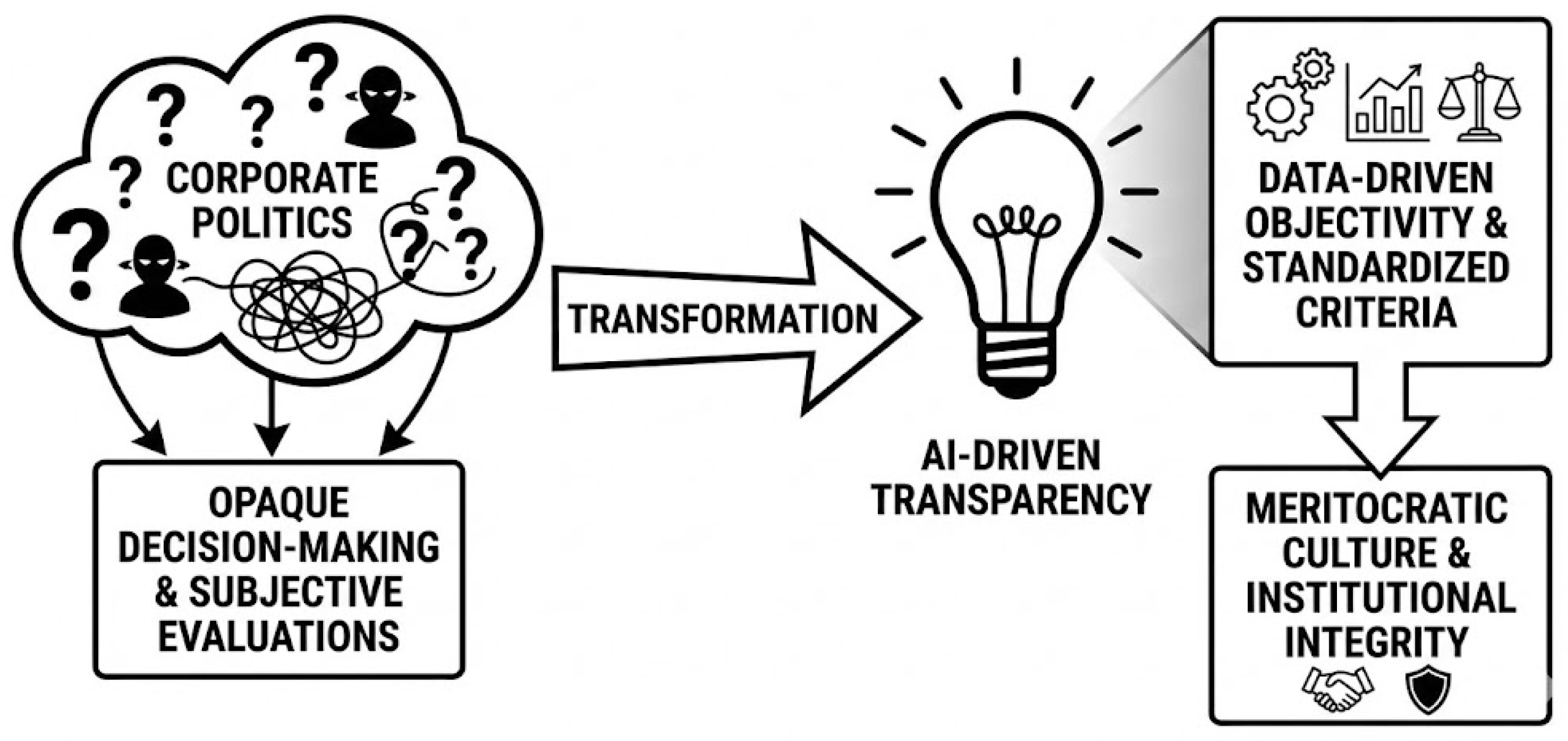
Traditional governance is constrained by persistent information asymmetries between managers and boards, which limit oversight and create opportunities for opportunistic behavior. Within the AIG framework, AI functions as a real-time informational infrastructure that reduces asymmetry through continuous data traceability, anomaly detection, and transparent reporting. Rather than replacing human judgment, AI enhances the board’s monitoring capacity and strengthens accountability mechanisms.
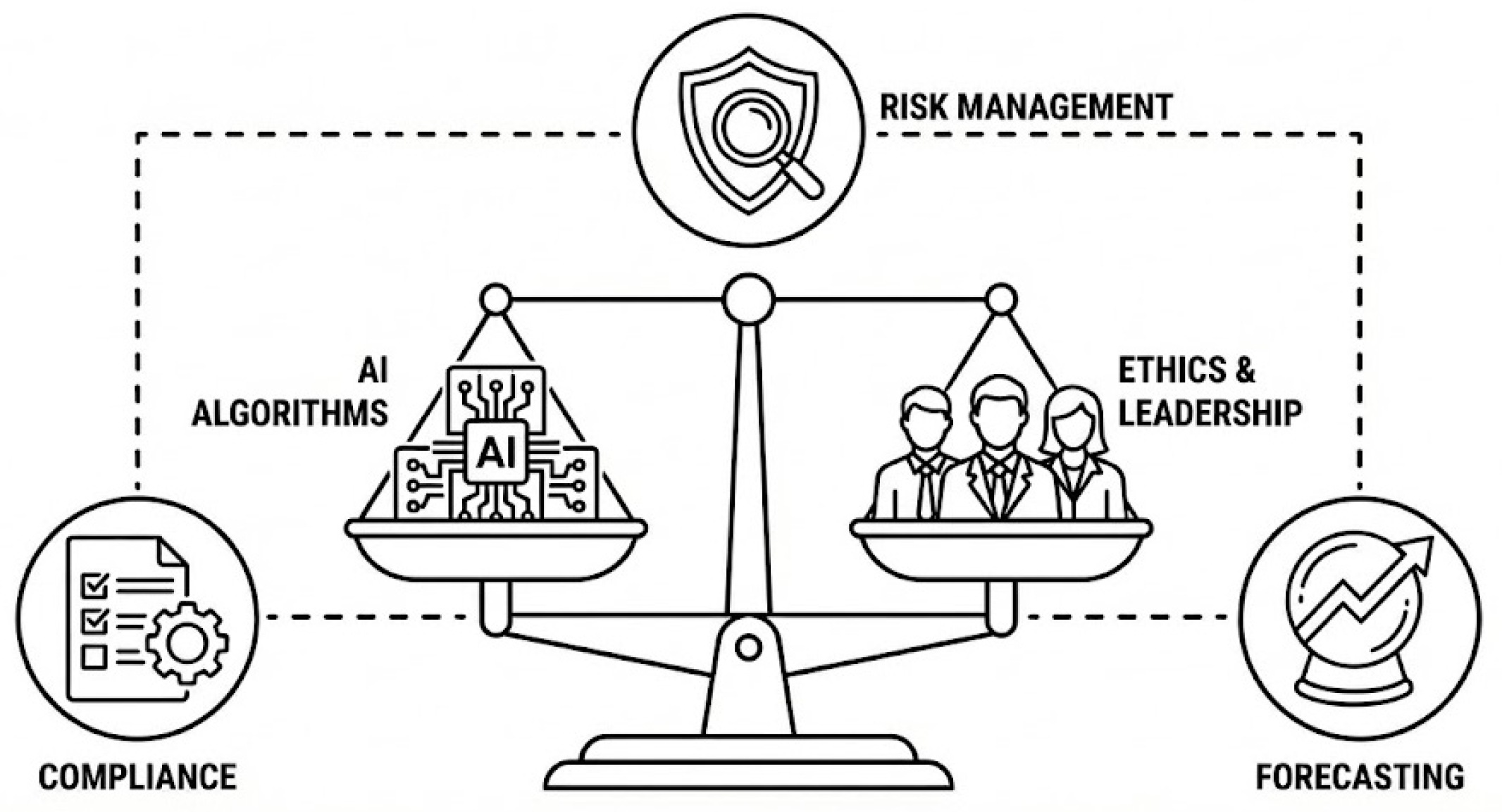
Figure 1 illustrates how AI reduces information asymmetries and strengthens monitoring mechanisms within Agency Theory.
Resource Dependence Theory (RDT)
RDT emphasizes that organizational survival depends on managing external dependencies, particularly in volatile environments. The integration of AI and quantum computing is conceptualized as a strategic response to intensifying resource pressures—ranging from energy demand and critical mineral scarcity to supply chain fragility. These technologies are treated as dynamic capabilities that enable firms to anticipate disruptions, optimize resource allocation, and navigate geopolitical and environmental uncertainty.
Socio-Technical Systems (STSs) Theory
STS theory positions organizations as hybrid systems in which technological infrastructures and human actors co-produce outcomes. The AIG framework adopts this perspective by asserting that intelligent governance requires a deliberate balance between computational efficiency and human moral reasoning. AI and quantum systems provide analytical depth and predictive power, while human leaders supply ethical interpretation, contextual judgment, and normative direction. This socio-technical balance is essential for maintaining legitimacy, trust, and organizational culture.
Together, these theoretical foundations establish the intellectual scaffolding for the Architecture of Intelligent Governance (AIG). They clarify how AI and quantum technologies alter the informational, structural, and ethical dimensions of governance, and they provide a basis for integrating global resource systems into a unified conceptual model. The next sections build on this foundation to articulate the components, mechanisms, and implications of intelligent governance in an era of technological acceleration and resource volatility.
3. AI-Enabled Corporate Governance
AI-enabled corporate governance refers to the strategic integration of artificial intelligence systems into the mechanisms through which organizations establish oversight, allocate resources, manage risks, and uphold ethical and regulatory standards [
35,
36,
37,
38]. Within the Architecture of Intelligent Governance (AIG), AI is conceptualized not as a tool for automating discrete tasks but as an informational and analytical infrastructure that enhances the board’s capacity to interpret complex environments, reduce uncertainty, and strengthen accountability. This perspective positions AI as a complement to human judgment, enabling governance processes that are more anticipatory, transparent, and resilient in the face of global volatility. In this hybrid model, AI augments human decision-making by generating real-time insights, detecting anomalies, and synthesizing large volumes of data that exceed human cognitive limits. These capabilities are particularly valuable in environments characterized by rapid geopolitical shifts, supply chain fragility, and resource constraints, where delays in information processing can lead to strategic blind spots. AI’s contributions span several governance domains, including risk management, compliance, resource allocation, strategic forecasting, and performance evaluation. In risk management, machine-learning systems identify emerging threats through pattern recognition and scenario modeling, enabling boards to adopt proactive mitigation strategies. Compliance functions benefit from continuous monitoring of regulatory changes and automated detection of deviations, reducing exposure to legal and reputational risks. Resource allocation is optimized through predictive analytics that align capital, talent, and operational assets with organizational priorities, while strategic forecasting integrates signals from markets, geopolitics, and environmental systems to support long-term planning.
These applications reflect the theoretical foundations outlined in
Section 2. From an Agency Theory perspective, AI reduces information asymmetries by providing boards with traceable, real-time data streams that enhance oversight integrity. Resource Dependence Theory underscores AI’s role in navigating external dependencies, particularly in sectors exposed to energy volatility, critical mineral shortages, or supply chain disruptions. Socio-Technical Systems theory highlights the need for a balanced governance architecture in which AI’s computational capabilities are integrated with human ethical reasoning, contextual interpretation, and cultural stewardship.
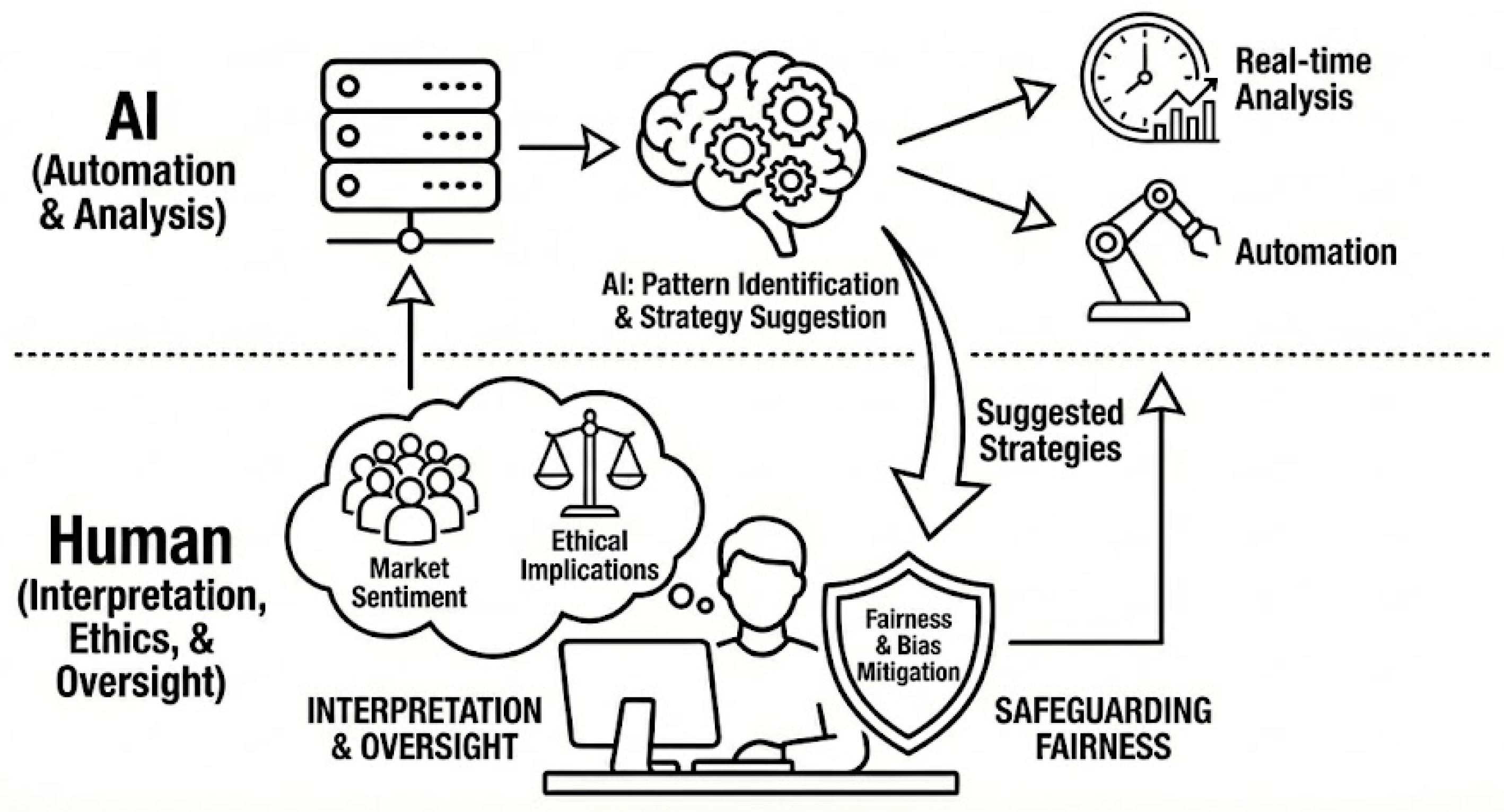
Figure 2 depicts the socio-technical integration required for effective AI governance, emphasizing the interplay between human judgment and automated systems. Together, these theoretical lenses clarify how AI reshapes the informational and structural foundations of governance.
Despite these advantages, the boundaries of AI’s role must be clearly defined to preserve accountability and ethical integrity. AI systems can inform decisions but cannot assume responsibility for outcomes, which remains the domain of human leaders. Ethical judgment requires sensitivity to societal values and stakeholder expectations that algorithms cannot fully replicate. Similarly, the interpretation of ambiguous or conflicting information often demands intuition and contextual awareness that exceed the scope of computational logic. Organizational culture, encompassing trust, collaboration, and inclusivity, also depends on human leadership and cannot be delegated to automated systems. These limitations reinforce the need for governance structures that delineate responsibilities, ensure transparency in AI-assisted decisions, and maintain human oversight as the ultimate arbiter of strategic direction.
The boundary between human and machine judgment therefore emerges as a central design principle within the AIG framework. AI excels at processing data, identifying patterns, and generating probabilistic recommendations, but human leaders must evaluate these outputs considering ethical considerations, long-term implications, and stakeholder impacts. Best-practice guidelines, such as those articulated in the NIST AI Risk Management Framework [
39], emphasize the importance of validity, reliability, safety, security, and accountability in AI-enabled governance. As AI adoption accelerates across industries, establishing these principles becomes essential for ensuring that technological integration enhances rather than undermines organizational legitimacy.
To support this balance, the AIG framework incorporates structured feedback loops between AI systems and human decision-makers. These loops ensure that automated insights are contextualized, validated, and aligned with organizational values before being translated into action. They also provide mechanisms for detecting algorithmic bias, monitoring model drift, and ensuring that AI systems remain transparent and auditable. By embedding this feedback into governance processes, organizations can harness the analytical power of AI while preserving the ethical and interpretive functions that define responsible leadership.
In sum, AI-enabled corporate governance represents a foundational pillar of the Architecture of Intelligent Governance. It reconfigures the informational landscape of decision-making, strengthens oversight mechanisms, and enhances organizational resilience, while simultaneously requiring careful delineation of human and machine roles. The next section builds on this foundation by examining how leadership competencies, cultural norms, and organizational structures must evolve to operate effectively within an AI-intensive governance ecosystem.
4. Strategic Leadership in an AI Ecosystem
Artificial Intelligence does not diminish the importance of leadership; rather, it reconfigures it by shifting the leader’s role from routine oversight toward the orchestration of complex socio-technical systems. As AI assumes responsibility for analytical and operational tasks that once consumed significant human effort, leaders are increasingly required to focus on vision-setting, ethical stewardship, and the integration of technological capabilities into organizational strategy. Within the Architecture of Intelligent Governance (AIG), leadership becomes the interpretive layer that ensures AI-generated insights are aligned with organizational values, long-term objectives, and stakeholder expectations.
Figure 3 presents the Architecture of Intelligent Governance, outlining its core components and theoretical foundations. This shift demands a leadership model grounded in technological fluency, ethical judgment, and systems thinking competencies that enable executives to navigate the opportunities and risks of AI-intensive environments.
As organizations adopt AI across core functions, executive roles evolve accordingly. Leaders must develop a sophisticated understanding of AI’s capabilities and limitations to determine when algorithmic tools should be leveraged for strategic value and when human intuition must take precedence. This requires the ability to formulate incisive questions for AI systems, interrogate underlying assumptions, and synthesize machine-generated insights with contextual knowledge. Rather than relying on AI as a definitive source of truth, leaders must critically evaluate outputs, identify potential biases, and ensure that recommendations align with broader organizational priorities.
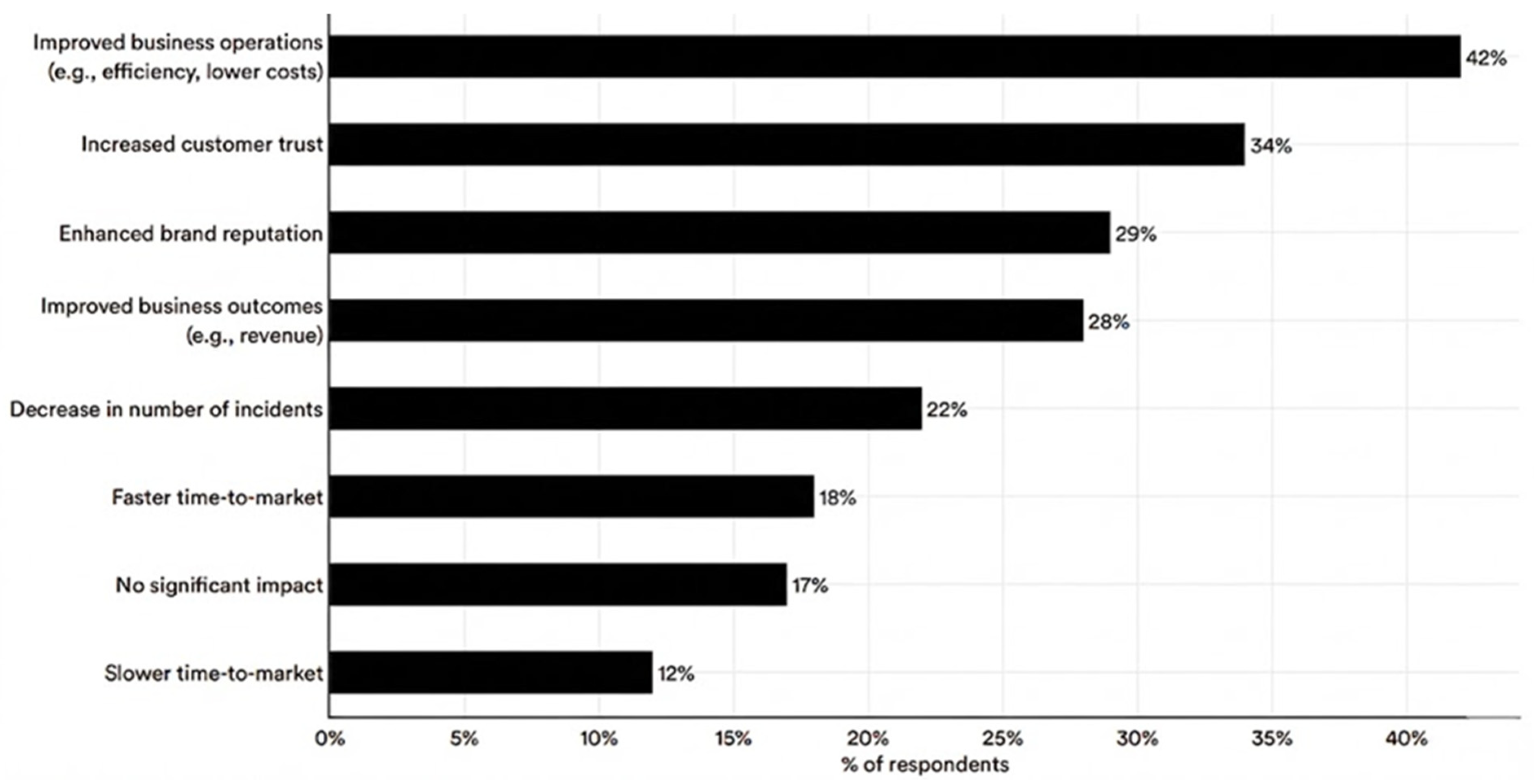
This interpretive function is central to the AIG framework, which positions leadership as the mediator between computational analysis and normative decision-making. Cultivating organizational cultures that support responsible AI adoption is equally essential. Leaders must foster transparency, continuous learning, and psychological safety to ensure that employees engage constructively with AI rather than perceive it as a threat. This cultural stewardship includes communicating clearly about the purpose and limitations of AI systems, encouraging cross-functional collaboration, and establishing norms for ethical experimentation. Evidence from recent industry surveys indicates that organizations with strong leadership engagement in AI governance report higher levels of innovation, improved customer experience, and more effective risk mitigation [
40,
41,
42,
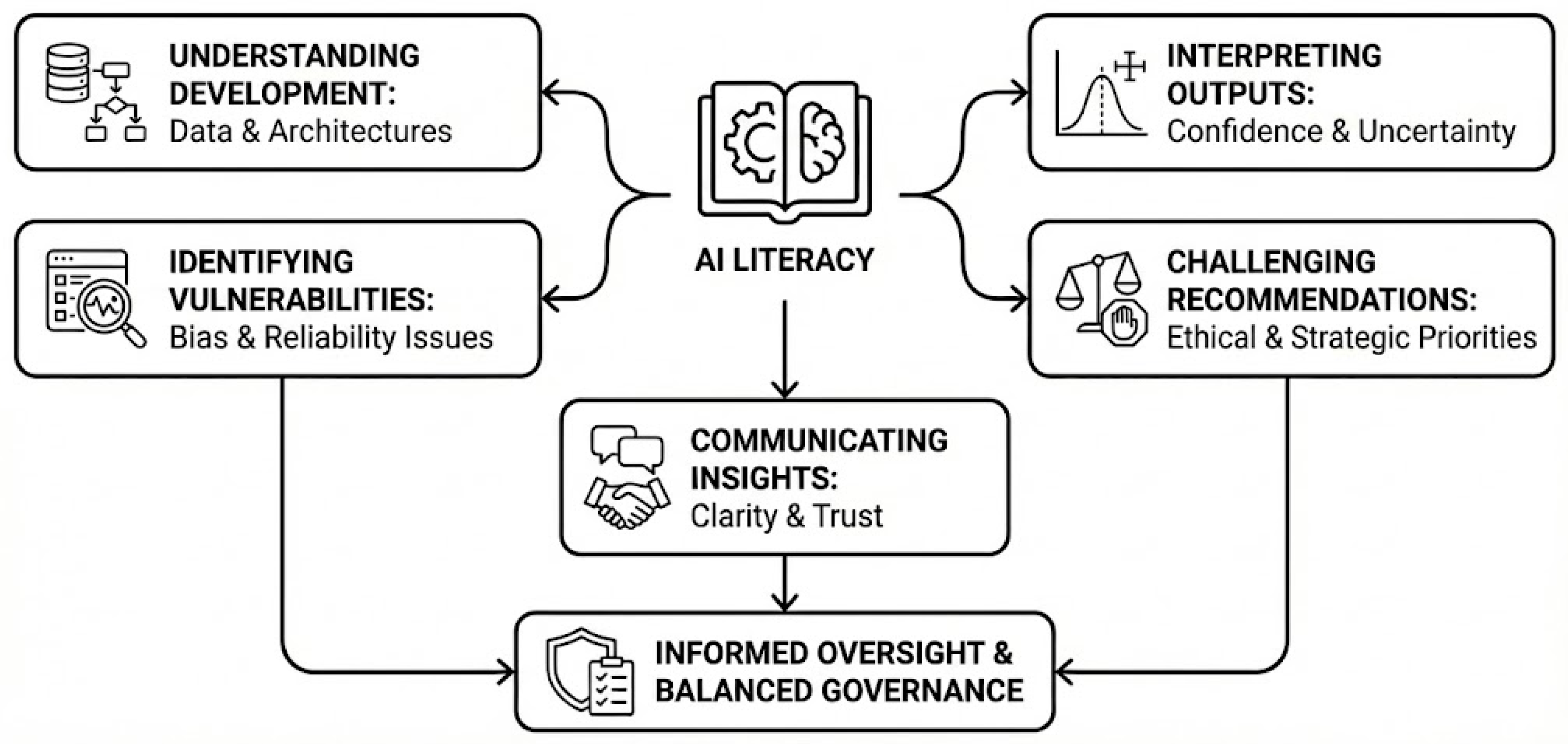
43]. These findings underscore the importance of leadership behaviors that integrate technological competence with human-centered values. AI literacy emerges as a foundational competency within this evolving landscape. While leaders do not need deep technical expertise, they must understand how AI models are developed, how training data shapes outputs, and where vulnerabilities such as bias or model drift may arise. This literacy enables leaders to interpret statistical outputs appropriately, challenge AI recommendations when necessary, and communicate complex insights to stakeholders in accessible terms. Without these skills, leaders risk either over-reliance on opaque systems or underutilization of powerful analytical tools. The AIG framework therefore treats AI literacy as a core component of strategic leadership, essential for maintaining accountability and ensuring that AI systems are deployed responsibly.
Ethical judgment becomes increasingly important as AI permeates decision-making processes [
44,
45]. Leaders must navigate dilemmas involving fairness, transparency, privacy, and the distribution of benefits and risks. Balancing efficiency gains with commitments to equity requires a nuanced understanding of how algorithmic systems can inadvertently reproduce social biases or exacerbate inequalities. Regulatory developments—such as the EU AI Act and emerging national frameworks [
46]—further heighten the need for leaders to integrate legal compliance with ethical foresight. Within the AIG model, ethical judgment is not an adjunct to technical governance but a central pillar that shapes how AI is embedded into organizational structures and practices.
Taken together, these competencies, technological fluency, interpretive judgment, cultural stewardship, AI literacy, and ethical reasoning, define the leadership profile required for intelligent governance. They ensure that AI serves as an enabler of strategic clarity rather than a source of opacity or organizational risk. By positioning leaders as the human anchor within AI-intensive systems, the AIG framework emphasizes that technological sophistication must be matched by human responsibility, foresight, and moral discernment.
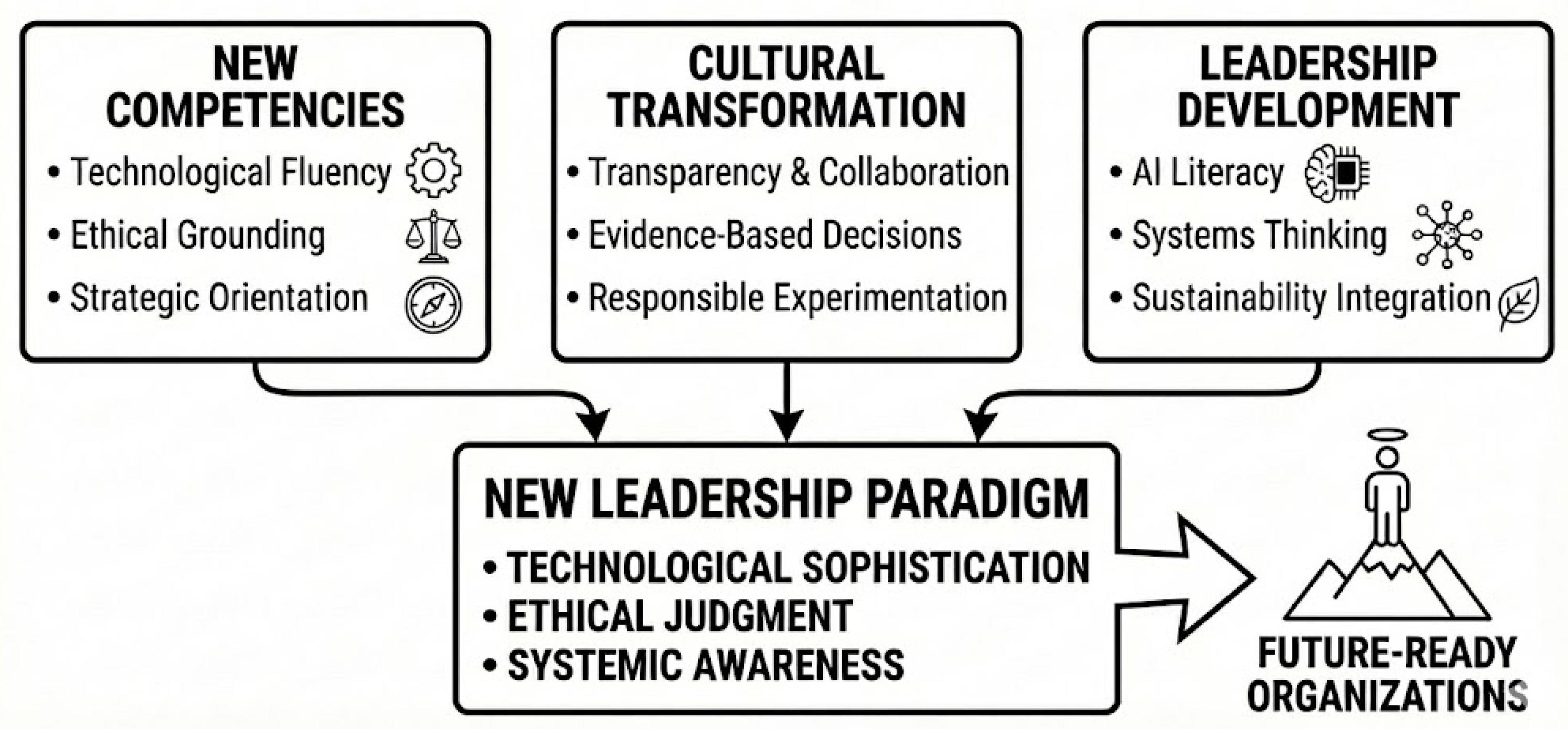
Figure 4 summarizes the governance outcomes enabled by the AIG framework, including resilience, transparency, and long-term sustainability. This alignment between human and machine capabilities forms the basis for resilient, transparent, and ethically grounded governance in an era of accelerating technological change.
5. AI as a Stabilizing Power in Global Resource Systems
Contemporary corporations operate within global resource systems characterized by dense interdependencies and increasing vulnerability to environmental disruptions, geopolitical tensions, and supply chain constraints. Within this volatile landscape, artificial intelligence functions as a critical stabilizing power, providing advanced capabilities for improving forecasting precision, optimizing resource allocation, and reducing inefficiencies across essential operational domains. In the Architecture of Intelligent Governance (AIG), AI is conceptualized as a strategic capability that enables organizations to anticipate systemic shocks, manage external dependencies, and strengthen long-term resilience. This section examines AI’s stabilizing role across energy systems, supply chains, critical minerals, agribusiness, and quantum computing, while explicitly linking each domain to the governance mechanisms and leadership competencies outlined in earlier sections.
5.1. Energy Systems
Global energy systems are experiencing unprecedented strain as artificial intelligence and emerging quantum-computing technologies accelerate computational demand [
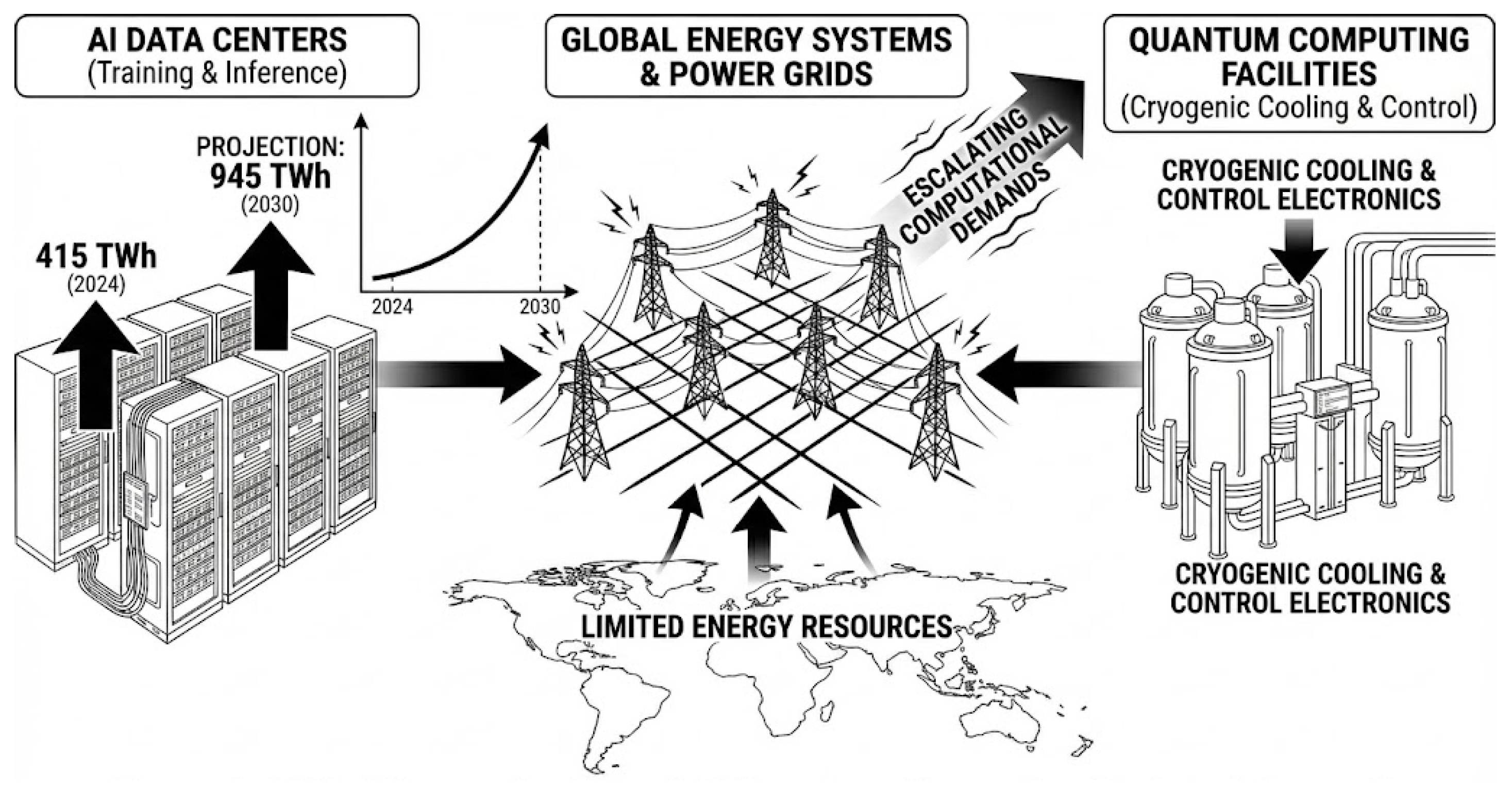
47]. Data centers supporting AI workloads consumed an estimated 415 terawatt-hours (TWh) of electricity in 2024—approximately 1.5% of global electricity demand—and projections indicate that consumption could rise to 945 TWh by 2030, driven primarily by the exponential growth of model training and inference workloads [
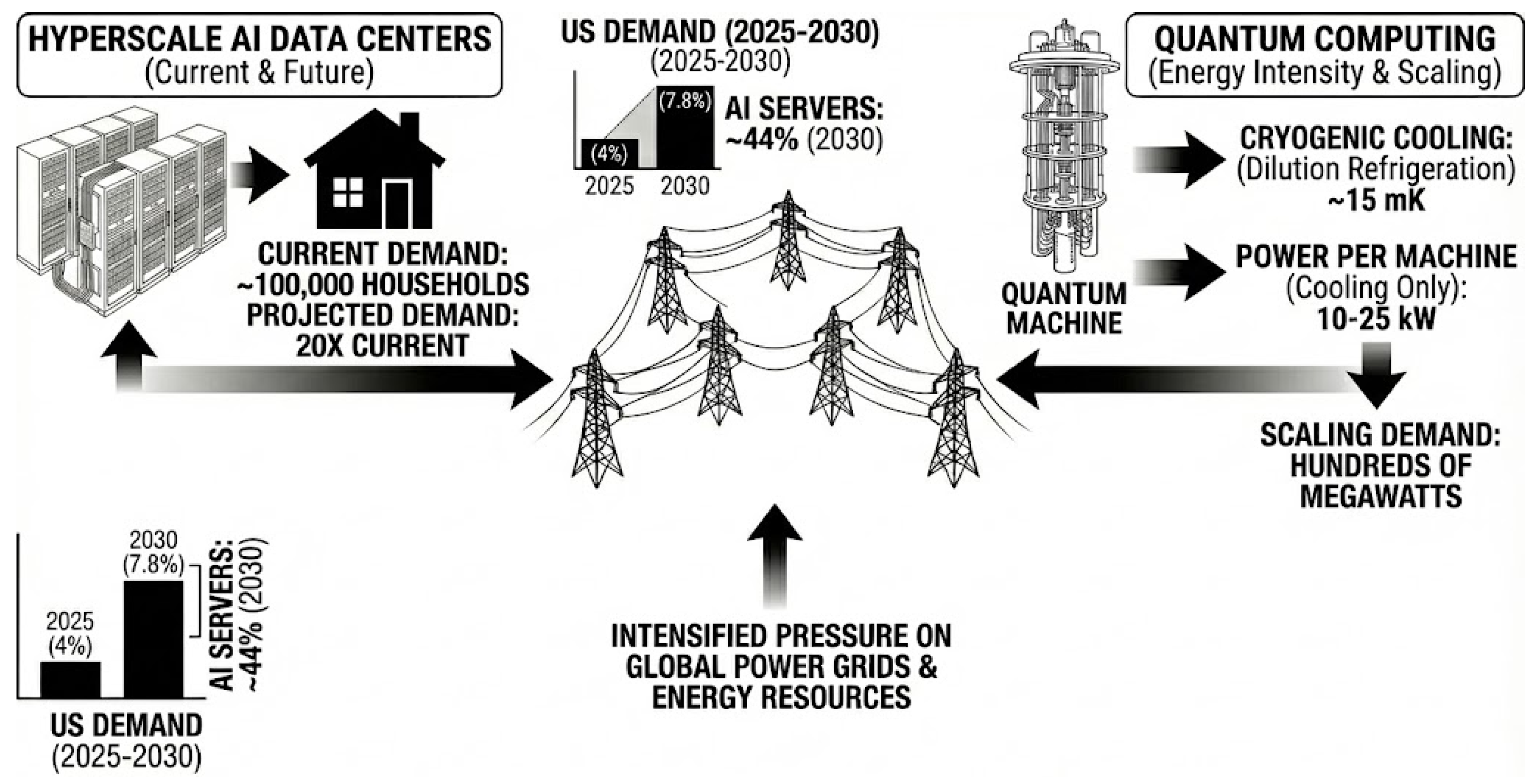
48]. In the United States, data-center electricity demand is expected to increase from 4% to 7.8% of regional consumption between 2025 and 2030, with AI-optimized servers projected to account for 44% of total data-center power use by the end of the decade [
49,
50]. These trends underscore the scale of the energy challenge facing organizations that rely on advanced computational infrastructure. These dynamics are illustrated in
Figure 5, which depicts the projected escalation of AI- and quantum-related electricity demand through 2030.
Quantum computing introduces an additional layer of energy intensity. Although qubit operations themselves require minimal power, superconducting architectures depend on cryogenic cooling systems that maintain temperatures near 15 millikelvins, with refrigeration loads of 10–25 kW per machine. As quantum systems scale toward fault-tolerant architectures comprising millions of qubits, total energy demand could reach hundreds of megawatts, placing them in direct competition with AI systems for limited electricity resources [
50].
Figure 6 provides a comparative visualization of these escalating energy requirements across hyperscale AI and emerging quantum-computing infrastructures. Together, these developments illustrate the dual pressures of rising computational demand and constrained energy supply, forming a critical governance challenge for organizations operating in energy-sensitive sectors.
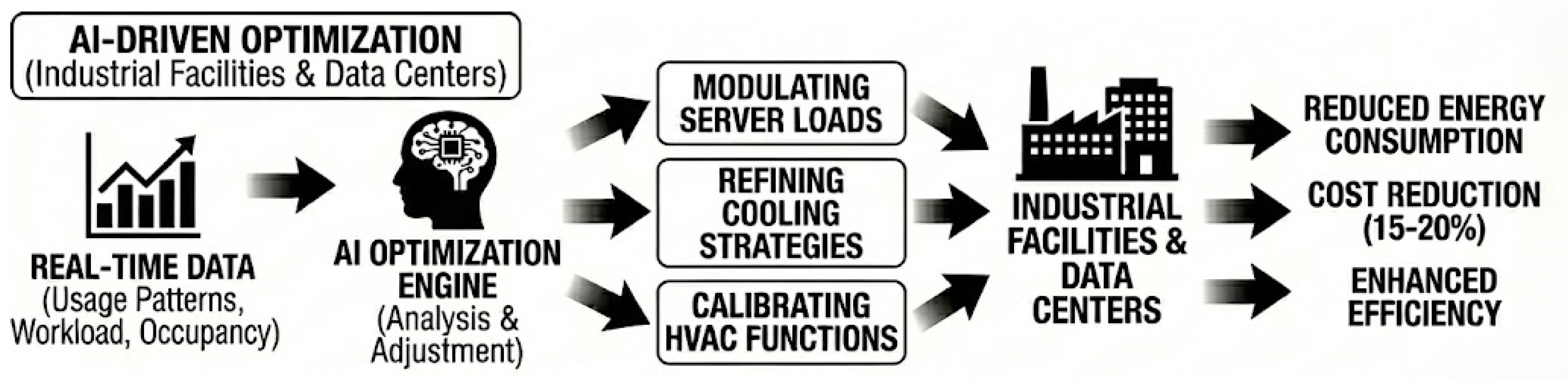
Within the Architecture of Intelligent Governance (AIG), energy resilience becomes a strategic priority rather than a purely operational concern. AI plays a central role in addressing this challenge. AI-enabled energy-optimization systems can reduce consumption in industrial facilities and data centers by 15–20% through real-time analysis of usage patterns, dynamic workload allocation, and adaptive cooling strategies [
51,
52,
53,
54]. These optimization pathways are summarized in
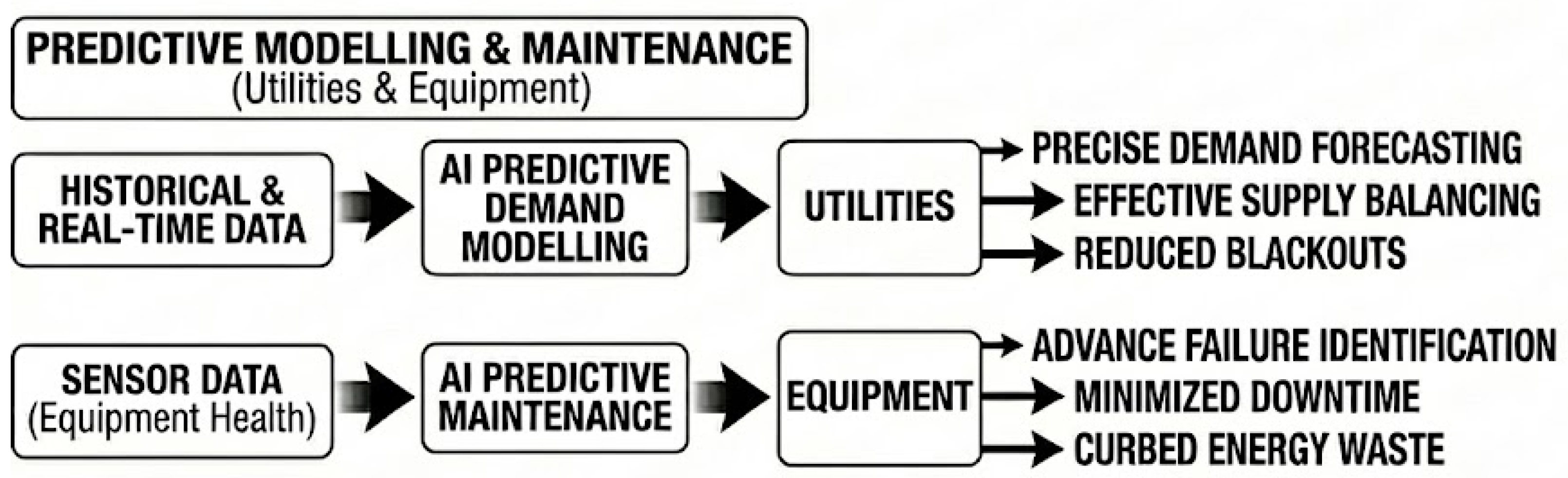
Figure 7, which highlights the primary mechanisms through which AI reduces energy intensity. Predictive modeling enhances grid stability by forecasting demand fluctuations and identifying vulnerabilities before they escalate into disruptions, while AI-driven predictive maintenance reduces downtime and energy waste.
Figure 8 illustrates these predictive-system applications and their implications for grid reliability and equipment performance. These capabilities align with Resource Dependence Theory, enabling organizations to manage external energy dependencies more effectively, and with Agency Theory, improving transparency in energy-related decision-making.
For boards and executive teams, the governance implications are clear: rising computational energy demand must be integrated into long-term strategy, risk oversight, and sustainability planning. AI-enabled monitoring, scenario analysis, and energy-risk dashboards can support informed decision-making, while cross-functional governance structures ensure that energy considerations are embedded into capital allocation, technology procurement, and sustainability reporting. In this way, AI functions not only as a source of energy demand but also as a stabilizing infrastructure that enhances organizational resilience in an increasingly volatile energy landscape.
5.2. Supply Chain Resilience
Global supply chains have become increasingly complex and vulnerable to disruptions arising from natural disasters, geopolitical tensions, labor shortages, and market volatility [
55]. These interdependencies create systemic fragility, where localized shocks can propagate rapidly across production networks [
56,
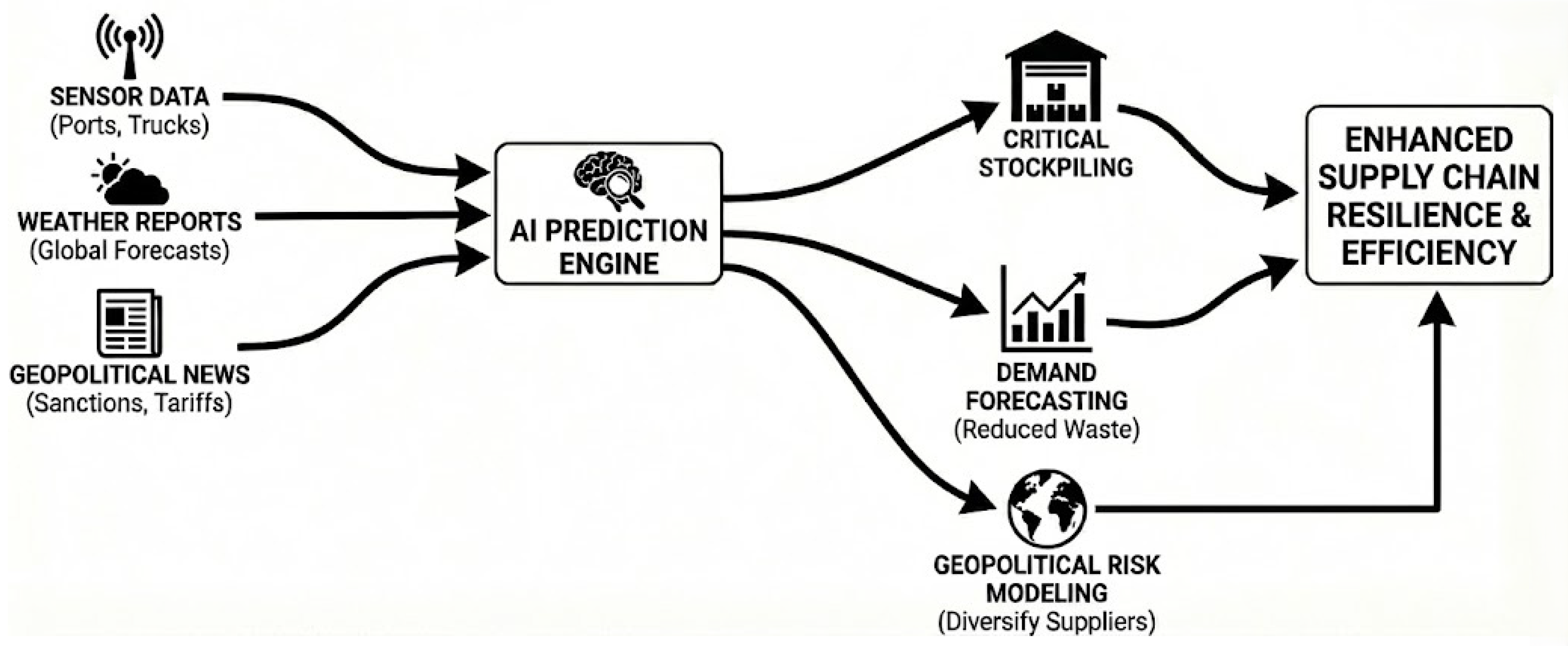
57]. Artificial intelligence enhances supply chain resilience by integrating data from sensors, logistics platforms, weather systems, and geopolitical intelligence to anticipate disruptions before they materialize [
58]. Machine-learning models detect bottlenecks, optimize routing, and improve demand forecasting with greater precision than traditional statistical methods, reducing waste and improving operational continuity. These capabilities are illustrated in
Figure 9, which summarizes the role of AI-enabled predictive analytics in identifying and mitigating supply chain risks
AI-enabled analytics also strengthens procurement and supplier-management functions. Predictive models identify high-risk suppliers, assess exposure to tariffs or sanctions, and support diversification strategies that reduce dependency on single-source regions. Real-time anomaly detection enables organizations to respond quickly to port delays, transportation failures, or inventory imbalances, while generative-AI tools enhance planning quality by simulating alternative sourcing and distribution scenarios. Evidence from recent industry surveys, including ABI Research’s 2025 analysis of 490 supply chain professionals, indicates widespread adoption of AI-driven predictive analytics, with firms using platforms such as RELEX Solutions to navigate inflationary pressures and market volatility [
59].
Within the Architecture of Intelligent Governance (AIG), these capabilities have direct implications for board oversight and strategic risk management. AI-enabled supply chain intelligence reduces information asymmetry by providing directors with real-time visibility into operational vulnerabilities, aligning with Agency Theory’s emphasis on improved monitoring. From a Resource Dependence Theory perspective, AI supports more effective management of external dependencies by identifying geopolitical, environmental, and logistical risks that threaten continuity. Socio-Technical Systems theory further underscores the need for human interpretation of AI-generated insights, ensuring that decisions about supplier relationships, ethical sourcing, and sustainability commitments remain grounded in organizational values.
For boards and executive teams, the governance imperative is clear: supply chain resilience must be integrated into enterprise-risk frameworks, supported by AI-enabled dashboards, scenario analysis, and cross-functional oversight structures. By embedding AI into supply chain governance, organizations can transition from reactive crisis management to proactive resilience planning, strengthening long-term competitiveness in an increasingly volatile global environment.
5.3. Critical Minerals
Critical minerals, including lithium, cobalt, copper, and rare earth elements, form the backbone of clean-energy technologies, advanced electronics, and high-performance computing systems [
60,
61,
62,
63,
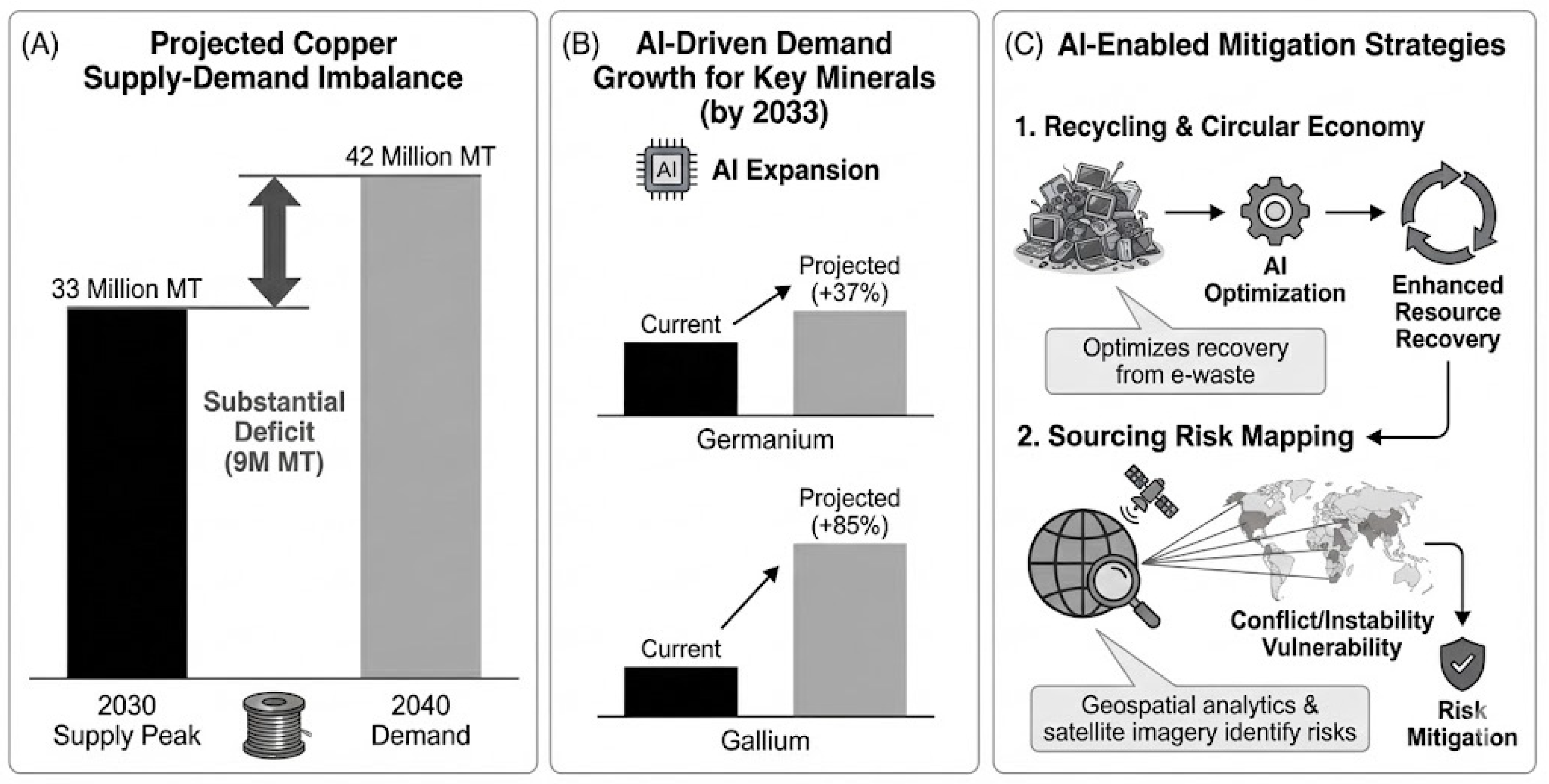
64]. Yet global supply is increasingly constrained by geopolitical tensions, environmental degradation, and accelerating demand from AI, electric vehicles, and renewable-energy infrastructure. Recent projections underscore the scale of these pressures: S&P Global’s 2026 assessment anticipates a significant copper deficit, with global demand expected to reach 42 million metric tons by 2040, while supply is projected to peak at only 33 million metric tons in 2030 [
65]. Similar trends are emerging for germanium and gallium, where AI-driven, technological expansion is expected to increase demand by 37% and 85%, respectively, by 2033 [
66]. These structural imbalances highlight the growing vulnerability of mineral supply chains and the strategic importance of resource governance.
Figure 10 illustrates these projected supply-demand imbalances and highlights the role of AI-enabled mitigation strategies across exploration, sourcing, and recycling.
Artificial intelligence contributes to mitigating these pressures by enhancing visibility, forecasting, and ethical oversight across mineral supply chains. AI-enabled geospatial analytics and satellite imagery identify regions at risk of conflict, governance instability, or environmental degradation, supporting more informed sourcing decisions. Predictive models assess geopolitical dependencies and simulate the impacts of trade restrictions, sanctions, or resource nationalism, enabling organizations to diversify suppliers and reduce exposure to high-risk jurisdictions. Blockchain-integrated audit systems further strengthen responsible procurement by verifying supplier compliance with environmental and social standards, while AI-driven circular-economy strategies improve recovery rates for critical minerals from electronic waste.
These capabilities align closely with the theoretical pillars of the Architecture of Intelligent Governance (AIG). From a Resource Dependence Theory perspective, AI enhances the organization’s ability to manage external dependencies by identifying vulnerabilities in mineral supply chains and informing long-term diversification strategies. Agency Theory is reflected in the increased transparency and traceability that AI provides, reducing information asymmetries between management and boards regarding sourcing risks and sustainability performance. Socio-Technical Systems theory underscores the need for human oversight in interpreting AI-generated insights, particularly when balancing efficiency with ethical considerations such as labor conditions, environmental impacts, and community rights.
Governance implications are substantial. Boards must integrate mineral-supply risks into enterprise-risk frameworks, capital-allocation decisions, and sustainability reporting. AI-enabled dashboards can support real-time monitoring of geopolitical and environmental risks, while cross-functional committees ensure that procurement, sustainability, and risk-management functions are aligned. National strategies reflect similar priorities: the United States’ 2026 Critical Minerals Strategy places heightened emphasis on high-risk elements such as antimony and tungsten, leveraging AI-enabled analytics to support strategic diversification and long-term supply security [
67]. Within the AIG framework, critical mineral governance becomes a core component of organizational resilience, requiring a balance between technological optimization and ethical stewardship.
5.4. Agri-Business and Food-System Resilience
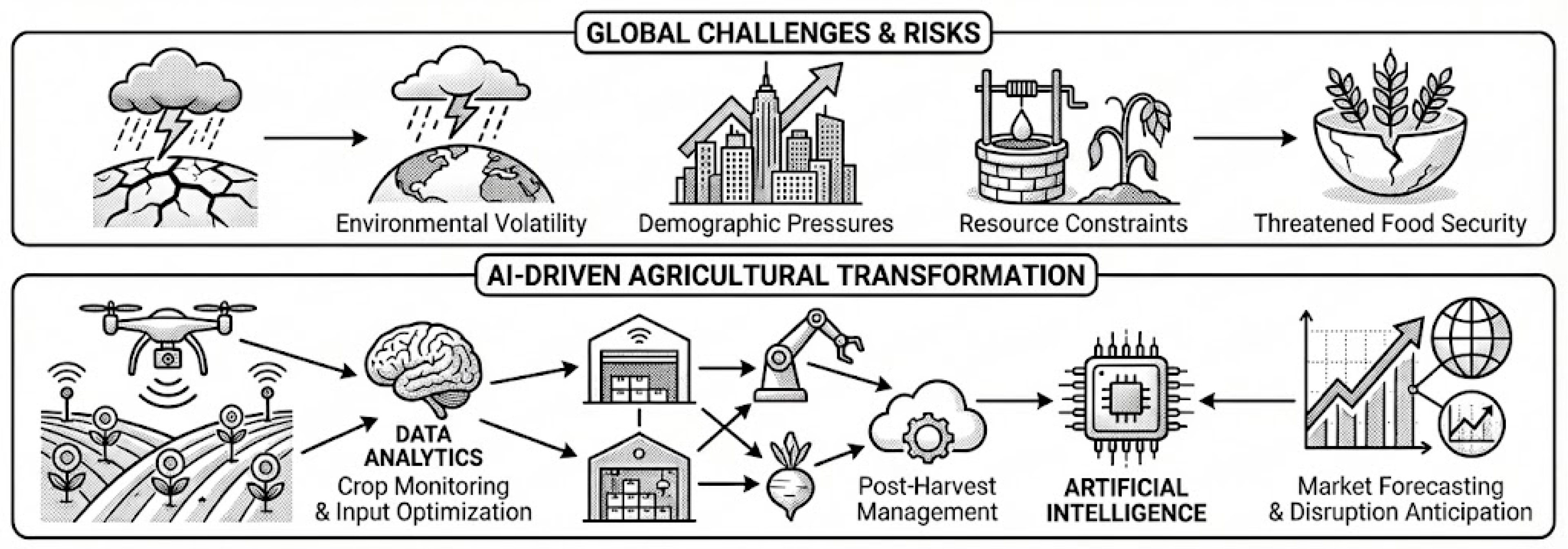
Agribusiness operates at the intersection of environmental volatility, demographic pressures, and resource constraints, making it one of the sectors most exposed to systemic risk. Climate variability, water scarcity, soil degradation, and shifting geopolitical conditions increasingly threaten global food security [
68]. Artificial intelligence plays a transformative role across the agricultural value chain by improving input efficiency, enhancing crop monitoring, and strengthening post-harvest management [
69]. These capabilities enable organizations to anticipate disruptions, optimize resource use, and support more sustainable production systems.
AI’s impact is particularly evident in precision agriculture. By integrating drone imagery, soil-sensor data, and machine-learning models, AI systems can optimize the application of water, fertilizers, and pesticides with high spatial accuracy [
70]. This reduces chemical runoff, improves soil health, and enhances water-use efficiency—an essential capability in drought-prone regions [
71,
72,
73]. Empirical evidence demonstrates the maturity of these technologies. For example, an improved AITP-YOLO model achieved 92.6% precision, 89.7% accuracy, and 87.4% recall in tomato-ripeness detection under real-world field conditions, illustrating how AI can enhance yield prediction and harvest timing [
74]. These advances support more resilient and efficient food-production systems.
Beyond field-level optimization, AI strengthens supply chain continuity and market forecasting within agribusiness. Predictive models integrate climate data, commodity-price trends, and logistics information to anticipate shortages, price volatility, and distribution bottlenecks. AI-enabled monitoring systems also support compliance with sustainability standards by tracking water use, emissions, and land-use impacts across production networks. These capabilities reduce uncertainty and support more informed decision-making across the agricultural value chain.
Figure 11 summarizes these AI-enabled transformations across the agricultural value chain, highlighting their implications for yield optimization, sustainability, and risk management.
Within the Architecture of Intelligent Governance (AIG), agribusiness provides a clear illustration of how AI enhances organizational resilience in resource-dependent sectors. From a Resource Dependence Theory perspective, AI helps organizations manage external dependencies by forecasting climate-related risks, identifying supply chain vulnerabilities, and optimizing resource allocation. Agency Theory is reflected in the increased transparency AI provides to boards regarding sustainability performance, production risks, and compliance obligations. Socio-Technical Systems theory underscores the need for human interpretation of AI-generated insights, particularly when balancing efficiency with ethical considerations such as land stewardship, biodiversity, and community impacts.
For boards and executive teams, the governance implications are significant. AI-enabled forecasting and monitoring tools must be integrated into enterprise-risk frameworks, sustainability reporting, and long-term strategy. Cross-functional oversight structures can ensure that agronomic, technological, and ethical considerations are aligned. By embedding AI into agribusiness governance, organizations can transition from reactive crisis management to proactive resilience planning, strengthening food-system stability in an increasingly unpredictable global environment.
5.5. Quantum Computing and Governance
Quantum computing is emerging as a transformative technological force with significant implications for corporate governance, particularly in sectors exposed to complex risk environments and resource volatility [
75]. Unlike classical computing, which scales linearly, quantum systems leverage superposition and entanglement to solve optimization, simulation, and cryptographic problems at unprecedented speed [
76]. These capabilities position quantum computing as a strategic complement to artificial intelligence, enabling organizations to model systemic risks, optimize resource allocation, and evaluate long-term scenarios that exceed the computational limits of existing systems [
77,
78].
Early applications illustrate this potential. Quantum-enhanced risk modeling has been deployed in financial institutions to simulate portfolio exposures, stress-test market scenarios, and optimize asset allocations under uncertainty [
79]. In supply chain management, quantum algorithms can evaluate millions of routing and sourcing combinations simultaneously, supporting more resilient logistics planning [
80]. Climate and resource-system forecasting also stand to benefit, as quantum systems can process highly complex, nonlinear interactions that underpin energy demand, water scarcity, and agricultural productivity [
81]. These emerging capabilities demonstrate how quantum computing can extend the analytical depth of AI-enabled governance, particularly in domains where uncertainty, interdependence, and volatility are most pronounced.
However, quantum computing also introduces new governance challenges. The energy intensity of quantum systems, driven primarily by cryogenic cooling requirements, creates dependencies on electricity, specialized materials, and advanced infrastructure. Hardware supply chains rely on rare earth elements, superconducting materials, and highly specialized manufacturing processes, amplifying exposure to geopolitical and resource-security risks. Vendor concentration is another concern, as only a small number of firms currently possess the capability to develop and maintain quantum hardware, raising issues of technological dependency and potential lock-in. Quantum-enabled cryptographic threats further complicate the landscape, requiring boards to anticipate future vulnerabilities in data security and regulatory compliance.
Within the Architecture of Intelligent Governance (AIG), quantum computing reinforces the need for a hybrid governance model that integrates advanced computational capabilities with human judgment, ethical oversight, and strategic foresight. From an Agency Theory perspective, quantum-enhanced analytics reduce information asymmetries by providing boards with deeper visibility into systemic risks and long-term scenarios. Resource Dependence Theory highlights the importance of managing new dependencies on quantum vendors, materials, and energy systems, requiring diversification strategies and robust risk-assessment mechanisms. Socio-Technical Systems theory underscores the need for human interpretation of quantum outputs, particularly when decisions involve ethical trade-offs, stakeholder impacts, or long-term sustainability considerations.
For boards and executive teams, the governance implications are substantial. Organizations must develop quantum literacy at the leadership level, ensuring that directors understand the capabilities, limitations, and risks associated with quantum technologies. Risk committees should incorporate quantum-enabled modeling into enterprise-risk frameworks, while cybersecurity oversight must anticipate the transition to post-quantum cryptography. Capital-allocation decisions should account for the long-term infrastructure and energy requirements of quantum systems, and procurement strategies must address potential vendor concentration and material-supply risks. By integrating quantum computing into governance structures, organizations can enhance their capacity for strategic foresight and resilience, positioning themselves to navigate the increasingly complex technological and resource landscape of the coming decade.
5.6. Integrative Implications for the Architecture of Intelligent Governance
Across energy systems, supply chains, critical minerals, and agribusiness, artificial intelligence functions as a stabilizing infrastructure that enhances organizational resilience in the face of global resource volatility. Although each domain presents distinct operational challenges, they collectively reveal a shared pattern: AI enables organizations to anticipate disruptions, manage external dependencies, and strengthen transparency in ways that traditional governance mechanisms cannot achieve alone. These cross-sectoral insights provide empirical grounding for the Architecture of Intelligent Governance (AIG) and clarify how its theoretical pillars operate in practice.
From an Agency Theory perspective, AI reduces information asymmetries by generating real-time, traceable data streams that improve board visibility into operational risks. Whether monitoring energy consumption, supplier vulnerabilities, mineral sourcing risks, or crop-yield variability, AI provides directors with a level of informational granularity that enhances oversight integrity and reduces reliance on delayed or filtered managerial reporting.
Resource Dependence Theory is reflected in AI’s capacity to help organizations navigate external constraints. Energy volatility, mineral scarcity, climate-driven agricultural risks, and geopolitical supply chain disruptions all represent dependencies that can threaten organizational survival. AI-enabled forecasting, scenario modeling, and risk-mapping tools allow firms to anticipate these pressures and diversify strategies, accordingly, transforming resource dependence from a reactive challenge into a proactively managed strategic domain.
Socio-Technical Systems theory underscores the need for human interpretation and ethical judgment in applying AI-generated insights. While AI excels at identifying patterns and optimizing resource flows, decisions about tradeoffs, such as balancing efficiency with environmental stewardship, or cost savings with labor and community impacts, require human values, contextual understanding, and normative reasoning. The AIG framework therefore emphasizes a hybrid governance architecture in which AI provides analytical depth while human leaders ensure ethical alignment and organizational legitimacy.
For boards and executive teams, these integrative insights translate into concrete governance imperatives. Resource-system intelligence must be embedded into enterprise-risk management, sustainability reporting, and long-term strategic planning. Cross-functional committees should oversee AI-enabled monitoring systems, ensuring that technological capabilities are aligned with ethical standards, regulatory requirements, and stakeholder expectations. Metrics derived from AI systems, such as energy-risk indicators, supplier-resilience scores, mineral-dependency indices, and climate-risk forecasts, should inform board deliberations and capital-allocation decisions.
Taken together, these implications demonstrate that intelligent governance is not merely a technological enhancement but a structural transformation of how organizations perceive, interpret, and respond to global resource dynamics. By integrating AI into governance processes, firms can transition from reactive crisis management to proactive stewardship, strengthening resilience, transparency, and sustainability in an increasingly unstable global environment. This integrative perspective sets the stage for the next section, which examines how leadership competencies, organizational culture, and governance structures must evolve to operationalize the AIG framework effectively.
5.7. Criticality: Risks and Governance Vulnerabilities in AI-Driven Resource Systems
While artificial intelligence enhances resilience across energy systems, supply chains, critical minerals, and agribusiness, it also introduces new forms of systemic risk that must be critically examined. These risks arise not only from technological limitations but from the broader political-economic structures in which AI is embedded. The concept of criticality, the point at which resource dependencies, technological acceleration, and governance gaps converge to create structural vulnerability, provides a useful lens for understanding these challenges. This subsection examines the darker side of AI-enabled resource systems, focusing on asymmetric resource, inequality, concentration of power, and governance failures that may undermine the benefits outlined in earlier sections.
AI’s demand for energy, minerals, and computational infrastructure intensifies extractive pressures on already fragile ecosystems and communities. The expansion of data centers increases electricity consumption and water use, often in regions facing resource scarcity. Similarly, the surge in demand for lithium, cobalt, copper, and rare earth elements—driven by AI hardware, batteries, and advanced computing—exacerbates environmental degradation and social conflict in mining regions. These dynamics risk reinforcing an asymmetric resource burden in the digital economy model in which technological progress in advanced economies is built on resource burdens disproportionately borne by the Global South. Without robust governance mechanisms, AI may accelerate rather than mitigate global inequalities.
Concentration of technological power represents another dimension of criticality. AI and quantum computing infrastructures are dominated by a small number of firms with privileged access to data, computational resources, and proprietary models. This concentration creates dependencies that expose organizations, and entire nations, to vendor lock-in, opaque decision-making, and asymmetric control over critical technologies. Such dependencies undermine the transparency and accountability that the Architecture of Intelligent Governance (AIG) seeks to promote. They also raise geopolitical concerns, as states compete for access to advanced chips, quantum hardware, and critical minerals, increasing the risk of supply disruptions and strategic coercion.
AI systems themselves introduce governance vulnerabilities. Algorithmic opacity, model drift, and embedded bias can distort decision-making in ways that are difficult for boards to detect or correct. In resource-intensive sectors such as energy and agribusiness, these distortions can have cascading effects, amplifying environmental risks or misallocating scarce resources. Over-reliance on automated systems may also erode human judgment, weakening the socio-technical balance that the AIG framework emphasizes. Ethical risks, including privacy violations, labor displacement, and inequitable distribution of benefits—further complicate the governance landscape.
Within the AIG framework, addressing criticality requires a shift from technological optimism to structural vigilance. Boards must recognize that AI is not a neutral tool, but a socio-technical system embedded in political, economic, and environmental contexts. This recognition demands governance structures that incorporate ethical oversight, supply chain due diligence, environmental-impact assessments, and scenario planning for resource shocks. It also requires transparency in AI-assisted decisions, diversification of technological dependencies, and investment in responsible innovation practices that prioritize long-term sustainability over short-term efficiency gains.
Ultimately, the critical perspective reinforces the central argument of this paper: intelligent governance is not achieved through technological sophistication alone but through the deliberate integration of ethical reasoning, structural awareness, and human responsibility. By acknowledging and addressing the risks inherent in AI-driven resource systems, organizations can build governance architectures that are not only resilient and efficient but also equitable, transparent, and aligned with broader societal and environmental goals.
6. Leadership for Intelligent Governance in an AI-Intensive World
The accelerating integration of artificial intelligence across global resource systems, supply chains, and organizational processes demands a fundamental reconfiguration of leadership. Traditional leadership models—centered on hierarchical oversight, experience-based judgment, and incremental decision-making—are increasingly insufficient in environments characterized by volatility, interdependence, and algorithmic complexity. Within the Architecture of Intelligent Governance (AIG), leadership becomes the interpretive, ethical, and strategic anchor that ensures AI-enabled systems enhance rather than erode organizational resilience, transparency, and legitimacy.
6.1. The Evolving Role of Leadership in AI-Enabled Governance
AI shifts the locus of leadership from operational control to the orchestration of socio-technical systems. As AI assumes responsibility for data processing, forecasting, and optimization, leaders must focus on vision-setting, ethical stewardship, and the integration of technological capabilities into long-term strategy. This requires a leadership model grounded in systems thinking, technological fluency, and the ability to interpret AI-generated insights within broader organizational and societal contexts. Leaders must also navigate the tension between algorithmic efficiency and human values. AI can optimize resource flows, detect anomalies, and forecast disruptions, but it cannot adjudicate ethical dilemmas, balance competing stakeholder interests, or interpret ambiguous signals. Leadership therefore becomes the site where computational intelligence and human judgment converge, ensuring that AI-enabled decisions remain aligned with organizational purpose and societal expectations.
6.2. Core Competencies for Intelligent Governance
The AIG framework identifies a set of interdependent competencies that define effective leadership in AI-intensive environments. Technological fluency is essential, not in the sense of coding expertise but in the capacity to understand how AI and quantum systems operate, what assumptions underlie their models, and where their vulnerabilities lie. Leaders must be able to interrogate data quality, question algorithmic outputs, and recognize when automated systems may be misaligned with organizational objectives.
Interpretive judgment is equally critical. AI produces probabilistic insights rather than definitive answers, and leaders must synthesize these outputs with contextual knowledge, ethical considerations, and long-term implications. This interpretive function preserves accountability and prevents over-reliance on automated systems. Ethical stewardship further anchors intelligent governance. AI intensifies dilemmas related to fairness, transparency, privacy, and the distribution of benefits and risks. Leaders must ensure that AI-enabled decisions uphold organizational values and societal norms, particularly in sectors where resource extraction, environmental impacts, or labor conditions are at stake.
Cultural and organizational stewardship also plays a central role. AI adoption requires cultures of transparency, learning, and psychological safety. Leaders must cultivate environments in which employees engage constructively with AI, challenge algorithmic outputs, and collaborate across disciplinary boundaries. Finally, strategic foresight becomes indispensable. AI and quantum technologies reshape competitive landscapes, regulatory environments, and resource dependencies. Leaders must anticipate long-term technological trajectories, geopolitical shifts, and sustainability pressures, integrating these insights into strategic planning and risk governance.
Figure 12 illustrates these interdependent leadership competencies and their role within the Architecture of Intelligent Governance.
6.3. Leadership Challenges in AI-Driven Resource Systems
The resource systems analyzed in
Section 5, energy, supply chains, critical minerals, agribusiness, and quantum computing reveal several leadership challenges that transcend sectors. Leaders must manage intensifying resource dependencies driven by AI’s energy and mineral demands, navigate geopolitical volatility in supply chains and technology ecosystems, and balance efficiency with sustainability in industries where environmental and social impacts are significant. They must also ensure transparency in AI-assisted decisions that may be opaque or probabilistic, prevent over-centralization of power in AI vendors and data platforms, and maintain human oversight in systems that increasingly automate critical decisions. These challenges underscore the need for leadership models that integrate technological sophistication with ethical responsibility and structural awareness.
6.4. Leadership as the Human Anchor of the AIG Framework
Within the AIG framework, leadership serves as the human anchor that ensures AI-enabled governance remains accountable, equitable, and aligned with long-term organizational and societal goals. Leaders translate AI-generated insights into strategic action, mediate between competing priorities, and uphold ethical standards in environments where technological acceleration can obscure long-term consequences. This hybrid model of leadership, combining computational intelligence with human judgment, enables organizations to transition from reactive crisis management to proactive stewardship.
Figure 13 visualizes this hybrid governance architecture, positioning leadership as the human anchor that integrates AI capabilities with ethical and strategic oversight. It ensures that AI enhances rather than undermines organizational legitimacy, and that technological innovation is matched by ethical foresight, cultural resilience, and strategic clarity.
6.5. Implications for Boards and Executive Teams
Boards and executive teams must integrate AI-enabled intelligence into enterprise-risk frameworks, establish cross-functional oversight structures for AI governance, and ensure transparency in AI-assisted decisions. They must invest in leadership development that strengthens AI literacy, ethical reasoning, and systems thinking, while embedding sustainability and resource-system intelligence into long-term strategy. These imperatives reflect a broader shift: leadership in the AI era is not about mastering technology, but about governing complexity with integrity, foresight, and responsibility.
7. Conclusions
The accelerating integration of artificial intelligence across global resource systems, supply chains, and organizational processes is reshaping the foundations of corporate governance. This paper has demonstrated that AI functions not merely as an operational tool but as a structural force that reconfigures how organizations anticipate disruptions, manage external dependencies, and pursue long-term resilience. Through an examination of energy systems, supply chain dynamics, critical mineral dependencies, agribusiness, and emerging quantum-computing infrastructures, the analysis shows that AI enhances forecasting precision, strengthens transparency, and supports more adaptive decision-making in environments characterized by volatility and interdependence.
Yet the benefits of AI are accompanied by new forms of systemic risk. Rising energy consumption, intensified mineral extraction, concentrated technological power, and algorithmic opacity create vulnerabilities that can undermine organizational legitimacy and exacerbate global inequalities. The criticality perspective introduced in this paper highlights the need for governance structures that recognize AI as a socio-technical system embedded within political, economic, and environmental contexts. Addressing these risks requires more than technical safeguards; it demands leadership capable of integrating ethical reasoning, structural awareness, and long-term strategic foresight.
The unified leadership framework developed in
Section 6 positions leadership as the human anchor of the Architecture of Intelligent Governance (AIG). Effective governance in an AI-intensive world depends on leaders who possess technological fluency, interpretive judgment, ethical stewardship, cultural and organizational competence, and strategic foresight. These competencies enable leaders to translate AI-generated insights into responsible action, mediate between competing priorities, and uphold transparency and accountability in increasingly automated decision environments. Boards and executive teams must therefore integrate AI-enabled intelligence into enterprise-risk management, sustainability reporting, and strategic planning, while cultivating organizational cultures that support critical engagement with AI systems.
Taken together, the findings of this paper advance a holistic model of intelligent governance that combines computational capabilities with human judgment, ethical responsibility, and structural vigilance. As AI and quantum technologies continue to evolve, organizations that embrace this hybrid governance architecture will be better positioned to navigate resource volatility, geopolitical uncertainty, and societal expectations. The AIG framework offers a pathway toward governance systems that are not only technologically sophisticated but also resilient, transparent, and aligned with long-term sustainability goals.