


Abstract
Under global warming, the intensification of the hydrological cycle highlights evapotranspiration (ET) as a key process governing land–atmosphere water and energy exchanges. Understanding the spatiotemporal variability of ET and its driving mechanisms is essential for regional hydrological and ecological studies. Based on MOD16 evapotranspiration products, meteorological data, and multi-source remote sensing datasets, this study systematically analyzed the spatiotemporal characteristics of evapotranspiration (ET) and its driving mechanisms in the Yellow River Basin during 2001–2022 using trend analysis, correlation analysis, and geographical detector methods. Results showed that ET exhibited a significant increasing trend across the YRB (5.29 mm·year−1), with extremely significant increases (p < 0.01) observed in 61.93% of the basin. Among climatic factors, precipitation, temperature, and wind speed exhibited significant increasing trends. Human activities were characterized by a significant increase in NDVI and land-use transitions toward forest and built-up land. Geographical detector results identified NDVI and precipitation as the strongest explanatory factors controlling ET spatial heterogeneity, with distinct driving mechanisms across the upper, middle, and lower reaches. Interaction effects among factors were stronger than individual effects, indicating that the spatial differentiation of ET is jointly controlled by climatic conditions and human activities. These findings empirically characterize the spatial heterogeneity, temporal trends, factor hierarchy, and interaction strength of ET variability at the basin scale and provide basin-scale evidence for understanding hydrological cycle responses under the combined influences of climate change and anthropogenic activities.
1. Introduction
As an essential element of the land ecosystem water cycle, evapotranspiration (ET) functions as a key pathway for water and energy transfer between the Earth’s surface and the atmosphere [1,2]. The spatial–temporal dynamics of ET influence terrestrial water storage fluctuations and can also alter the balance of climate and land ecosystems [3,4]. ET is primarily composed of vegetation transpiration, evaporation from canopy interception, and soil evaporation [5]. On a global level, ET utilizes nearly half of the incoming solar radiation and contributes over 60% of land precipitation back to the atmosphere [6,7]. In the backdrop of global warming, a growing share of precipitation is allocated to ET instead of runoff. This abnormal transition can intensify the mismatch between water availability and demand, posing challenges to the sustainable development of socio-economic systems [8,9]. As a result, detecting ET trends and understanding their response to climate variability using long-term datasets at regional and global scales has become a key focus in hydrology and climate change research [10,11].
ET is mainly monitored at the site level through eddy covariance (EC) systems and Bowen ratio energy balance (BREB) towers [12]. Nevertheless, ET monitoring sites face multiple constraints, such as sparse distribution, short-term observations, limited spatial coverage, and energy closure problems, which hinder accurate estimation of ET across regional to global scales [13]. The EC method has been widely applied at hundreds of sites worldwide to monitor carbon, water, and energy exchanges between the land surface and the atmosphere, and its datasets (e.g., LaThuile, FLUXNET2015) provide reliable observational records for ET estimation [14,15]. Nevertheless, the Yellow River Basin (YRB) features complex topography and, in some regions (e.g., the source area of the Yellow River), harsh climatic conditions and sparse observation sites. Under such conditions, simulating the spatial distribution of ET remains subject to considerable uncertainty. In contrast, remotely sensed evapotranspiration (ET) products provide spatially continuous estimates from regional to global scales [16,17]. Widely used products include MOD16 [18,19], PML-V2 [20], and GLEAM [21]. These products are generated by integrating multi-source remote sensing observations with land surface process models to produce ET datasets at multiple temporal scales and spatial resolutions, and have been extensively validated using flux tower measurements and watershed water balance approaches [22,23,24,25]. Among them, the MOD16 dataset, created within NASA’s Earth Observing System, has demonstrated 80–90% accuracy at EC flux tower sites and across 232 global river basins [18,19], and has been extensively utilized in large-scale ET studies [26,27]. Hence, this study adopted the MOD16 dataset as the main source for examining the spatial–temporal dynamics of ET.
At present, studies on the spatiotemporal variability of evapotranspiration (ET) and its driving mechanisms have been conducted across multiple spatial scales. At the national scale, studies based on remote sensing datasets such as MODIS and GLEAM have generally reported an overall increasing trend in ET across China, attributing this pattern to the combined effects of climatic factors (e.g., precipitation and temperature) and vegetation changes [9,28,29]. However, other studies employing different data sources and methodological approaches have produced inconsistent results, including a significant nationwide decline in ET during certain periods [30]. These discrepancies indicate that the spatiotemporal evolution of ET and its dominant drivers are highly sensitive to the selected study period, datasets, and analytical methods, highlighting the need for more detailed investigations at specific regional scales. At the basin and regional scales, research focusing on the Tibetan Plateau [31,32,33], the Yellow River source region [34], and the Yellow River Basin as a whole [35] has further demonstrated pronounced spatial heterogeneity in ET dynamics, as well as substantial regional differences in dominant driving factors. For example, air temperature has been identified as the primary driver of ET over the Tibetan Plateau, followed by precipitation and wind speed [31,32,33], whereas in the Yellow River source region, ET variability is predominantly controlled by precipitation [34]. In arid and semi-arid regions, precipitation often serves as the key limiting factor for ET [36], while in areas undergoing ecological restoration, the influence of vegetation changes—such as increases in the normalized difference vegetation index (NDVI)—has become increasingly prominent [37]. Several studies have emphasized the critical role of vegetation in regulating ET dynamics, suggesting that current land–atmosphere coupling (LAC) assessments may underestimate vegetation effects, which could in turn exacerbate the risk of extreme events under a warming climate [38]. Nevertheless, most existing studies have primarily focused on the impacts of climatic variables such as temperature and precipitation, whereas the quantitative contributions of human-induced factors, including vegetation dynamics and land-use changes, remain insufficiently explored.
The Yellow River Basin (YRB), with its highly diverse climate, topography, and vegetation, is one of the most important river basins worldwide. For millennia, it has been recognized as the “birthplace of Chinese civilization” and still holds a pivotal role in China’s development [39]. However, intensified climate change and increasing human interventions have turned water shortage into one of the most critical threats to the basin’s sustainable growth in recent decades [40]. As the YRB enters a period of rapid warming, ecological engineering projects begin to show effects, and multi-source remote sensing datasets become increasingly available, the responses of ET to both climatic and anthropogenic drivers may have shifted [39,41], necessitating systematic analysis. It should be clearly stated that this study is a basin-scale empirical analysis driven by multi-source remote sensing data and does not attempt to evaluate the causal effects of specific ecological engineering projects or policy interventions. The YRB spans multiple climate zones, extending from west to east across arid, semi-arid, semi-humid, and humid regions, with pronounced hydrothermal gradients and distinct regional differentiation. This complex combination of climate, topography, and vegetation makes it difficult for single-scale analyses to fully capture the patterns of evapotranspiration, rendering zonal or subregional analyses a necessary prerequisite for elucidating underlying mechanisms. However, many previous studies have mainly focused either on analyses of the entire basin as a whole or on individual sub-regions; under a unified data source and methodological framework, this study further conducts a sub-regional comparative analysis of driving mechanisms to reveal the spatial heterogeneity of ET controls under different climate–topography–vegetation combinations [34,39,41,42]. Moreover, although some studies have demonstrated that human activities exert an important influence on ET and may even play a dominant role in certain regions [43], most driving-factor analyses still emphasize climatic variables; building upon climate variables, this study further incorporates NDVI and land use type as proxies for human activity, and quantitatively evaluates their explanatory power for the spatial differentiation of ET [9,34].
Based on the above considerations, this study aims to achieve the following objectives: (1) to reveal the spatiotemporal variation trends of evapotranspiration (ET) in the Yellow River Basin at the pixel scale during 2001–2022 using the MOD16 ET dataset; (2) to quantitatively assess the strength and direction of linear relationships between ET and its driving factors, and to analyze the spatiotemporal characteristics of key climatic variables and human activity indicators; and (3) to identify strongest explanatory factors for the spatial differentiation of evapotranspiration (ET) across the entire Yellow River Basin as well as its upper, middle, and lower reaches, and to elucidate their interaction effects. To this end, this study integrated MOD16 ET products, multi-source gridded meteorological data, NDVI, and land-use datasets, and employed trend analysis, correlation analysis, and the geographical detector model to quantitatively disentangle the driving mechanisms of ET variations and their spatial heterogeneity. The findings are expected to provide a scientific basis for a deeper understanding of basin-scale water cycle responses under the synergistic effects of climate change and human activities.
2. Materials and Methods
Based on the research objective, this study established an analytical framework of “characterization–association identification–attribution analysis.” First, trend analysis was applied to identify the spatiotemporal evolution of evapotranspiration (ET) and its influencing factors in the Yellow River Basin. Second, correlation analysis was used to examine the direction and strength of linear associations between ET and climatic as well as human activity–related factors. Finally, the Geographical Detector model was employed to quantitatively identify the strongest explanatory factors for the spatial heterogeneity of ET and to assess their interaction effects.
2.1. Overview of the Study Area
The Yellow River Basin (YRB; 32–42° N, 95–120° E) is located in central China. Rising from the Bayan Har Mountains in Qinghai Province, the river traverses nine provinces such as Qinghai, Sichuan, Gansu, and Ningxia, before discharging into the Bohai Sea. The basin exhibits a west–east terrain gradient and covers an area of about 795,000 km2 (Figure 1). The YRB exhibits highly diverse climatic conditions, spanning multiple climate zones in China, such as temperate continental, temperate monsoon, temperate humid, cold-temperate, arid, and semi-arid climates, characterized by pronounced regional heterogeneity and a distinct hydrothermal gradient [44]. Due to its complex topography, precipitation in the YRB shows marked spatial and temporal variability. Annual mean temperature also varies substantially, with values below 0 °C in the upper reaches and above 10 °C in the lower reaches. According to natural environment and hydrological conditions, the YRB is classified into upper, middle, and lower reaches: the upper section runs from the river’s source to Tuoketuo Town in Inner Mongolia; the middle section extends from Tuoketuo to Huayuankou in Taohuayu, Henan Province; and the lower section flows from Huayuankou to its estuary in Dongying [35]. The upper reaches, situated on the Qinghai–Tibet Plateau, are marked by extensive glaciers and permafrost, with alpine grasslands and forests serving as the main land cover. This region contains several key ecological function zones, including the Sanjiangyuan, Qilian Mountains, and Zoige wetlands. The middle reaches, located on the Inner Mongolia Plateau and the Loess Plateau, have a fragmented land surface with relatively low vegetation coverage, primarily consisting of grasslands and croplands. The lower reaches lie within the North China Plain, featuring flat terrain, intensive agricultural production as one of China’s major grain-producing areas, and densely populated urban settlements [45].
Figure 1.
Overview of the study area. (Note: (a) Geographical location of the YRB; (b) Elevation map of the YRB; (c) Land use types of the YRB in 2022).
2.2. Data Sources
2.2.1. MOD16 Product
The MOD16 dataset is an ET product for terrestrial ecosystems, tailored for vegetated surfaces using MODIS observations. The MOD16 ET algorithm, initially proposed and later refined by Mu et al. [18,19], is grounded in the Penman–Monteith framework [46]. The updated version estimates daytime fluxes first and then derives total ET by combining daytime and nighttime values. It refines vegetation fraction treatment, accounts for soil heat flux, enhances stomatal conductance estimation, differentiates dry canopy from wet surfaces, and distinguishes saturated from moist soil conditions. Input data include land cover (MOD12Q1), FPAR/LAI (MOD15A2), surface albedo (MCD43B2/MCD43B3), and daily meteorological datasets from MERRA GMAO. ET outputs are stored in HDF-EOS2 format, with MOD16A2 and MOD16A3 products provided at 500 m spatial resolution. In this work, MOD16 ET data were obtained from Google Earth Engine (GEE) (Google LLC, Mountain View, CA, USA) via custom scripts. For the MOD16A2 product, each pixel value represents the cumulative daily ET, which includes both daytime and nighttime water fluxes.
A large number of studies have evaluated the performance of the MOD16 ET product in the Yellow River Basin and adjacent regions using in situ measurements, such as flux tower observations and meteorological station data. For example, Pei et al. [47] compared FLUXNET-observed evapotranspiration (ET) with MODIS ET products in the Yellow River Basin during 2000–2011, and found good agreement between the two datasets in terms of seasonal and annual trends as well as interannual variability. Yu et al. [48] validated the accuracy of the MOD16 ET product at both point and regional scales using pan evaporation and precipitation data from 28 meteorological stations in the Guanzhong region of the middle Yellow River Basin and its surrounding areas. Their results showed that MOD16 ET performed well in the Guanzhong region, with a relative error of 10.38% and a correlation coefficient of 0.69, indicating that it meets the requirements for spatiotemporal ET analysis. Jin et al. [49] assessed the accuracy of ET products in the Yellow River Basin and reported a high consistency between the MOD16A2 product and observed data, with a correlation coefficient of 0.82, and a good performance in capturing interannual variability. Multiple independent validation studies have consistently indicated that the MOD16 product is robust in representing the spatial patterns and seasonal variation of ET in the Yellow River Basin and has become one of the widely accepted data sources for ET studies. Therefore, the use of MOD16 data in this study to analyze the spatiotemporal variation and driving factors of ET in the Yellow River Basin is well justified.
2.2.2. Other Data
To accurately capture the spatiotemporal characteristics of ET, we employed annual multi-source heterogeneous datasets, including both remote sensing and vector data (Table 1). The data sources are described as follows:
Table 1.
Data sources.
Remote sensing data: Precipitation and air temperature datasets were obtained from the National Tibetan Plateau Data Center (TPDC, Beijing, China). Wind speed data were acquired from the National Oceanic and Atmospheric Administration (NOAA, Washington, DC, USA). Sunshine duration was acquired from the China Meteorological Administration (CMA, Beijing, China). NDVI data, sourced from the National Aeronautics and Space Administration (NASA, Washington, DC, USA), were used to assess the impacts of human activities on vegetation. Land use type data were derived from the CLCD product through Google Earth Engine platform. Previous studies have demonstrated that CLCD achieves higher accuracy than MODIS, ESA_CCI, and FROM_GLC products [50]. A 30 m resolution DEM was acquired from NASA Earthdata (NASA, Washington, DC, USA) and processed in ArcGIS 10.8 (Esri, Redlands, CA, USA) for mosaicking and vector clipping. Among these datasets, air temperature, wind speed, and NDVI were used as annual means, while precipitation and sunshine duration were aggregated to annual totals. Vector data: The basin boundaries were acquired from the Resource and Environment Science Data Center (RESDC, Beijing, China).
Spatial interpolation of the relevant datasets was performed using the Kriging method in ArcGIS 10.8. The NEAREST resampling method was applied to resample ET, precipitation, temperature, wind speed, sunshine duration, and NDVI data to a unified spatial resolution of 1000 m. Temporal variations in evapotranspiration (ET) and its influencing factors were analyzed based on multi-year averages derived from annual gridded datasets, and the corresponding temporal variation figures were produced using Origin 2022 (OriginLab Corporation, Northampton, MA, USA). Trend analyses of ET and its influencing factors were conducted using annual gridded data, whereas correlation analyses were based on multi-year mean gridded data. Both the trend and correlation analyses were implemented through programming in MATLAB R2022a (MathWorks, Natick, MA, USA). Notably, the processing periods for precipitation, air temperature, wind speed, NDVI, and land use datasets all span 2001–2022, whereas the sunshine duration dataset covers 2001–2020 only, due to data availability constraints; this temporal inconsistency represents one of the limitations of this study. Accordingly, all analyses involving sunshine duration were restricted to the 2001–2020 period. Geographical detector analyses were carried out using RStudio (Version 2023.09.1; RStudio PBC, Boston, MA, USA). For the discretization of continuous variables in the geographical detector model, five methods—“equal,” “natural,” “quantile,” “geometric,” and “sd”—were considered, with the program automatically selecting the optimal discretization scheme for each continuous variable. Among them, the discretization scheme was selected based on maximizing the q-statistic. Specifically, the explanatory power obtained under different discretization methods and class numbers was compared, and the scheme yielding the highest q value was adopted as the optimal stratification result. This rule was uniformly applied to all continuous variables.
2.3. Methods
Based on the research objectives, this study established an analytical framework of “pattern characterization–association identification–attribution analysis.” First, trend analysis was employed to identify the spatiotemporal evolution of evapotranspiration (ET) and its influencing factors in the Yellow River Basin. Second, correlation analysis was used to examine the direction and strength of linear relationships between ET and climatic as well as anthropogenic factors. Finally, the geographical detector model was applied to quantitatively identify the dominant driving factors explaining the spatial differentiation of ET and to reveal their interaction effects. It should be noted that, due to data availability limitations, the analysis period for sunshine duration is uniformly 2001–2020 across all methods.
2.3.1. Trend Analysis
Linear Trend
Simple Linear Regression (SLR) is a widely used parametric method for identifying monotonic trends in time series, particularly for estimating the rate of change in hydro-meteorological variables. In this study, SLR was employed to assess temporal patterns, with ET or other factors as the dependent variable and time as the predictor. The model is formulated as:
where y denotes the response variable (ET or other factors), a represents the trend coefficient, b is the intercept, and t indicates time (year). The slope a is derived using the ordinary least squares (OLS) method. A positive (negative) a reflects an upward (downward) trend in y.
Theil–Sen Estimator
The Theil–Sen Estimator (TSE) [51,52] is a reliable non-parametric approach for detecting trends in time series. It demonstrates strong computational efficiency and is resistant to measurement noise and extreme values, making it highly appropriate for long-term trend assessments. The formula is given by:
where S denotes the median slope of all pairwise estimates for which i ≠ j; xi and xj represent the values of the variable x at years i and j, respectively, and i and j are the indices of the time series. In this context, S > 0 indicates an increasing trend in the time series, whereas S < 0 indicates a decreasing trend.
Mann–Kendall Test
To evaluate the trends in historical hydro-meteorological records, we adopted the non-parametric Mann–Kendall (M–K) test [53,54], a commonly recognized approach for identifying monotonic trends in extended hydro-meteorological time series [9,55]. Often combined with Sen’s slope estimator, it assesses the statistical significance of trends via the standardized normal statistic Z, formulated as:
where Var(S) is the variance of S, and S is computed as:
with:
Here, xi and xj denote the values of variable x in years i and j, and n is the total number of observations in the series. A positive (negative) Z denotes a upward (downward) trend. The trend is regarded as statistically significant at confidence levels of 90%, 95%, and 99% when |Z| exceeds 1.65, 1.96, and 2.58, respectively.
2.3.2. Correlation Analysis
The Pearson correlation coefficient is widely used to measure the strength and direction of the linear relationship between two continuous variables. In this study, the Pearson correlation coefficient was applied to quantify the statistical relationships between evapotranspiration (ET) and climatic factors as well as human activity indicators. The formula is given as:
where Rxy represents the correlation coefficient between variables x and y; xi and yi are their respective values; and are their mean values; and n is the sample size. A positive coefficient indicates a positive correlation, meaning that the two variables tend to increase together, whereas a negative coefficient indicates a negative correlation relationship. The strength of the correlation is classified by |Rxy| as follows: (0, 0.3) = weak, [0.3, 0.6) = moderate, and [0.6, 1] = strong.
2.3.3. Geographical Detector
The Geographical Detector (GeoDetector) approach [56] was utilized to investigate ET spatial heterogeneity and to evaluate the respective contributions of climate and human activity factors (multi-year mean precipitation, temperature, wind speed, sunshine duration, NDVI, and 2022 land use type) in the YRB. GeoDetector is a spatial statistical tool designed to investigate spatially stratified heterogeneity and determine influencing factors. It includes four components: risk detector, factor detector, ecological detector, and interaction detector. In this research, we utilized the factor detector and interaction detector modules. The factor detector measures a factor’s explanatory strength through the q statistic:
Here, h = 1, …, L denotes the stratification of ET or its driving factors; Nh and N correspond to the sample counts in stratum h and in the entire study region, respectively; and represent the variance of ET within stratum h and across the whole basin. The q statistic varies between 0 and 1, with higher values signifying greater explanatory capacity.
The interaction detector evaluates whether the joint impact of two factors (X1 and X2) on ET is stronger or weaker than their separate effects, by comparing q(X1), q(X2), and q(X1 ∩ X2).
3. Results
3.1. Spatiotemporal Variation Characteristics of Actual Evapotranspiration in the YRB
3.1.1. Temporal Variation Characteristics of Actual Evapotranspiration
As illustrated in Figure 2, ET per unit area in the YRB between 2001 and 2022 varied from 230 to 364 mm, averaging 313.14 mm. On the whole, the annual mean ET showed a fluctuating increase, with a significant positive linear trend of 5.29 mm·year−1 (p < 0.05). The minimum ET (230.00 mm) occurred in 2001, while the maximum ET (363.04 mm) was recorded in 2016.
Figure 2.
Temporal trend of ET in the YRB from 2001 to 2022. (Note: The color gradation represents the progression of years, spanning from 2001 to 2022. The unit of the slope is mm·year−1).
On a seasonal scale, ET in spring (March–May), summer (June–August), autumn (September–November), and winter (December–February) all showed fluctuating increases (p < 0.05) with positive linear trends of 1.58 mm·year−1, 3.19 mm·year−1, 0.77 mm·year−1, and 0.13 mm·year−1, respectively (Figure 3). The maximum seasonal ET values were 93.24 mm in spring (2015), 189.78 mm in summer (2018), 81.34 mm in autumn (2016), and 60.56 mm in winter (2016).
Figure 3.
Seasonal trend of ET in the YRB from 2001 to 2022. (Note: The color gradation represents the progression of years, spanning from 2001 to 2022. The unit of the slope in panels (a–d) is mm·year−1).
3.1.2. Spatial Variation Characteristics of Actual Evapotranspiration
As depicted in Figure 4, the multi-year average ET per unit area in the YRB varied between 40.68 and 591.94 mm. By applying the natural breaks classification method in GIS (also used for the driving factors), ET values were divided into six categories, with the lowest interval identified as low-value areas and the highest as high-value areas. The low-value areas were mainly located in the northern basin, whereas the high-value areas were mainly located in the south. ET exhibited marked spatial heterogeneity, with values gradually increasing from north to south.
Figure 4.
Spatial distribution of the multi-year mean ET in the YRB from 2001 to 2022.
Figure 5 illustrated the seasonal spatial distribution of ET from 2001 to 2022, showing clear seasonal variability, with peak values observed in summer. The seasonal order of multi-year mean ET and their proportions to the annual total were: summer (43.78%) > spring (21.77%) > autumn (20.10%) > winter (14.35%). Spatial differences in ET were also evident among seasons: in spring, the high-value ET areas were primarily situated in the southwestern upper reaches, southern middle reaches, and southwestern lower reaches (Figure 5a); in summer, they were concentrated in the south-central midstream (Figure 5b); in autumn, they were primarily found in the southwestern upstream (Figure 5c); and in winter, they were also concentrated in the southwestern upstream (Figure 5d).
Figure 5.
Seasonal spatial distribution of the multi-year mean ET in the YRB from 2001 to 2022.
According to the Mann–Kendall trend analysis, ET in the YRB generally increased between 2001 and 2022, encompassing 96.48% of the basin’s area (Figure 6). Within these categories, the most dominant category was the extremely significant increase (p < 0.01), covering 61.93% of the area and primarily located in the central upstream region as well as across much of the middle and lower reaches. Regions with a non-significant increase (p > 0.1) and significant increase (p < 0.05) accounted for 19.11% and 10.59%, respectively. Regions exhibiting a declining trend represented merely 3.52% of the basin, predominantly scattered across the northern and southwestern parts of the upper reaches and the southern section of the middle reaches.
Figure 6.
Spatial distribution of ET trends in the YRB from 2001 to 2022.
Overall, at the basin scale, mean annual evapotranspiration (ET) exhibited a significant increasing trend at a rate of 5.29 mm·year−1 (p < 0.05) (Figure 2). Spatially, the increasing trend in ET was widespread, with 96.48% of the basin showing an upward tendency, and 61.93% of the area reaching an extremely significant level (p < 0.01) (Figure 6). These results clearly indicate that ET in the Yellow River Basin has undergone a widespread and pronounced increase over the past two decades.
3.2. Analysis of Factors Influencing Actual Evapotranspiration in the YRB
3.2.1. Spatial Correlation Between Evapotranspiration and Influencing Factors
Overall, the exchange of water and energy among soil, vegetation, and the atmosphere is controlled not only by soil water content and solar radiation but also by near-surface temperature and wind velocity [57]. The spatial correlation between ET and each influencing factor in the YRB from 2001 to 2022 was shown in Figure 7 (Note: Due to data availability, the analysis period for sunshine duration is limited to 2001–2020.). ET and precipitation showed a predominantly positive association, with 85.83% of the basin displaying positive correlations, while negative correlations were observed across 14.17% of the area. The most pronounced positive correlations were primarily found in the south-central and northeastern sections of the upper reaches, along with the northeastern areas of the middle and lower reaches. ET and temperature similarly displayed a generally positive relationship, with regions of positive correlation covering 84.68% of the basin and areas of negative correlation comprising 15.32%. The most pronounced positive correlations were primarily located in the southwestern section of the upper reaches (source region of the Yellow River).
Figure 7.
Spatial correlation between ET and influencing factors in the YRB from 2001 to 2022. (Note: Due to data availability, the analysis period for sunshine duration is limited to 2001–2020).
ET and wind speed were generally positively correlated, with positive correlations covering 89.71% of the basin and negative correlations accounting for 10.29%. More pronounced positive correlations occurred in the south-central upper reaches and across large areas of the middle reaches. ET and sunshine duration showed an overall negative correlation, with negatively correlated areas covering 56.17% of the basin and positively correlated areas covering 43.83% (Note: Due to data availability, the analysis period for sunshine duration is limited to 2001–2020). More pronounced positive correlations were primarily located in the southwestern and eastern regions of the basin. ET and NDVI showed a predominantly positive relationship, with 95.61% of the basin displaying positive correlations and only 4.39% showing negative correlations. Stronger positive correlations were primarily located in the central basin.
Overall, ET exhibited positive correlations with precipitation, air temperature, wind speed, and NDVI across most areas of the basin (Figure 7), among which the positive correlation with NDVI was the most widespread, covering 95.61% of the basin. This provided preliminary evidence of a strong spatial coherence between enhanced vegetation activity (increasing NDVI) and increasing ET. In contrast, the relationship between ET and sunshine duration displayed pronounced spatial heterogeneity, with approximately 56% of the basin showing negative correlations (Note: Due to data availability, the analysis period for sunshine duration is limited to 2001–2020).
3.2.2. Temporal Variation Characteristics of ET-Influencing Factors
The temporal variation characteristics of ET influencing factors in the YRB from 2001 to 2022 were statistically significant (Note: Due to data availability, the analysis period for sunshine duration is limited to 2001–2020.) (Figure 8). The mean annual precipitation was 484.37 mm, with a sharp increase in 2003 reaching the maximum value. Precipitation showed a variable yet statistically significant upward trend (p < 0.05), increasing at an average rate of 2.67 mm·year−1. The mean annual temperature over the study period was 6.66 °C, also displaying a fluctuating but significant rise (p < 0.05) at a rate of 0.01 °C·year−1. The average annual wind speed was 2.28 m·s−1, showing a notable rise between 2014 and 2018. Overall, wind speed exhibited a significant upward trend (p < 0.05) at a rate of 0.04 m·s−1·year−1. The mean annual sunshine duration in YRB from 2001 to 2020 was 2548.13 h, exhibiting a fluctuating but significant decreasing trend (p < 0.05), at a rate of −2.78 h·year−1. The mean annual NDVI was 0.32, showing a relatively stable but significant increasing trend (p < 0.05) at a rate of 0.003 year−1.
Figure 8.
Temporal trends of ET-influencing factors in the YRB from 2001 to 2022. (Note: Colors represent increasing numerical values. The unit of the slope in panel (a) is mm·year−1; in panel (b) it is °C·year−1; in panel (c) it is m·s−1·year−1; in panel (d) it is h·year−1; and in panel (e) it is year−1. Additionally, due to data availability, the analysis period for sunshine duration is limited to 2001–2020).
3.2.3. Spatial Variation Characteristics of ET-Influencing Factors
As illustrated in Figure 9, areas with low multi-year average precipitation were primarily located in the northwest of the basin, while regions with high precipitation were clustered in the eastern part. Overall, precipitation exhibited a spatial gradient increasing from northwest to southeast. The low-value zones of mean annual temperature were mainly in the western basin, while the high-value zones occurred in the southeastern basin, showing an increasing gradient from west to southeast. The low-value zones of mean wind speed were located in the southwestern upstream, as well as central and southern midstream areas, while the high-value zones were in the northern basin, with no obvious spatial pattern. Average sunshine duration was minimal in the southeastern basin and maximal in the northwest, showing a spatial increase from southeast to northwest (Note: Due to data availability, the analysis period for sunshine duration is limited to 2001–2020.). Conversely, NDVI values were lowest in the northwest and highest in the southeast, exhibiting a gradient rising from northwest to southeast.
Figure 9.
Spatial distribution of multi-year mean values of ET-influencing factors in the YRB from 2001 to 2022. (Note: Due to data availability, the analysis period for sunshine duration is limited to 2001–2020).
Figure 10 illustrated the spatial patterns of trends in factors affecting ET during the period 2001–2022 (Note: Due to data availability, the analysis period for sunshine duration is limited to 2001–2020). Precipitation exhibited an overall increasing trend across 97.18% of the basin, with non-significant increases dominating (61.94%, p > 0.1). Significant increases (p < 0.05) accounted for 17.12%, mainly in the southern upstream and central midstream. Just 2.79% of the basin displayed a non-significant decline, mainly distributed in the northeastern and southwestern upstream regions.
Figure 10.
Spatial distribution of trends in ET-influencing factors in the YRB from 2001 to 2022. (Note: Due to data availability, the analysis period for sunshine duration is limited to 2001–2020).
Temperature increased across 72.01% of the basin, with non-significant increases dominating (44.80%, p > 0.1). Significant increases (11.85%, p < 0.05) and extremely significant increases (7.36%, p < 0.01) were mainly in the central upstream, southwestern and central midstream, and the downstream basin. Areas with no change (16.66%) were concentrated in the southwestern upstream (e.g., the source region). Decreases occurred in 11.33% of the basin, mainly in the central-southern upstream and southwestern midstream.
Wind speed increased across 99.42% of the basin, with extremely significant increases (73.49%, p < 0.01) dominating, concentrated in the central-southern and northeastern upstream, and most of the midstream. Non-significant increases (11.06%, p < 0.1) and significant increases (10.67%, p < 0.05) accounted for smaller shares.
Sunshine duration decreased across 61.88% of the basin, with non-significant decreases dominating (23.59%, p > 0.1). Extremely significant decreases (20.45%, p < 0.01) and significant decreases (12.83%, p < 0.05) were mainly distributed in the upstream and central-southern midstream. Increases occurred in 31.92% of the basin, primarily in the eastern region. (Note: Due to data availability, the analysis period for sunshine duration is limited to 2001–2020).
NDVI increased across 94.41% of the basin, dominated by extremely significant increases (67.23%, p < 0.01). Significant increases (9.02%, p < 0.05) and non-significant increases (14.48%, p > 0.1) were more prominent outside the southwestern upstream. Only 5.29% of the basin showed decreases, which were sporadically distributed without clear spatial patterns.
Land-use transformation, driven by both environmental shifts and human activities, exerts a substantial influence on hydrological dynamics and regional water balance [58]. Hence, analyzing the attribution of ET changes under land-use change is of considerable importance. The land-use transition matrix for 2001–2022 was shown in Table 2. Grassland made up more than 55% of the entire basin area. In 2001, land-use types ranked by area were: grassland > cropland > forest > bare land > built-up land > shrubland > water > snow/ice > wetland. Between 2001 and 2022, cropland, shrubland, grassland, and bare land areas decreased, whereas forest, water, snow/ice, built-up land, and wetland areas increased. Notably, cropland and bare land decreased substantially, by 14,856.61 km2 and 9890.71 km2, respectively. Forest area increased significantly by 15,283.85 km2, primarily converted from grassland, followed by cropland. Built-up land expanded by 10,032.79 km2, mainly from cropland, followed by grassland, indicating rapid population growth, economic development, urbanization, and intensified human activities. Water area increased by 1235.13 km2, mainly from cropland, followed by grassland.
Table 2.
Land-use transition matrix for the YRB, 2001–2022. (Note: Unit is km2).
GIS-based analysis indicated that the average ET across land-use categories from 2001 to 2022 followed the order: wetland (489.18 mm) > forest (443.53 mm) > shrubland (431.69 mm) > cropland (305.18 mm) > grassland (303.47 mm) > water (269.51 mm) > built-up land (258.56 mm) > snow/ice (202.91 mm) > bare land (160.47 mm). All land-use types showed significant upward ET trends (p < 0.05), with linear rates as follows: cropland 6.82 mm·year−1, forest 6.46 mm·year−1, shrubland 4.19 mm·year−1, grassland 4.39 mm·year−1, water 4.23 mm·year−1, snow/ice 1.2990 mm·year−1, bare land 2.73 mm·year−1, built-up land 5.01 mm·year−1, wetland 3.58 mm·year−1.
Overall, the driving factors themselves also exhibited significant changes (Figure 8, Figure 9 and Figure 10). Precipitation, air temperature, wind speed, and NDVI all showed significant increasing trends, whereas sunshine duration decreased significantly (Note: Due to data availability, the analysis period for sunshine duration is limited to 2001–2020.). The main changes in land-use types were characterized by decreases in cropland and bare land, accompanied by increases in forest and built-up land. The coherent trends among these variables provide a foundation for subsequent analyses of their combined effects on ET variability.
3.3. Driving Factors of Actual Evapotranspiration in the YRB
3.3.1. Single-Factor Geographical Detector Analysis of the Drivers of Spatial Differentiation in Actual Evapotranspiration in the YRB
By applying the factor detector in GeoDetector, the contribution (q-values) of each driver to the spatial variability of ET was assessed for the years 2001, 2005, 2010, 2015, and 2020 (Figure 11). Results showed that NDVI exhibited the highest q-values (0.51–0.61), followed by precipitation (0.35–0.65) and sunshine duration (0.19–0.53). Temperature, wind speed, and land use type had relatively low q-values, indicating limited independent effects.
Figure 11.
q-values of the explanatory power of each influencing factor on ET in 2001, 2005, 2010, 2015, and 2020 (Note: X1 indicates precipitation; X2 indicates temperature; X3 indicates wind speed; X4 indicates sunshine duration; X5 indicates NDVI; X6 indicates land use type. In the figure, the square inside each box represents the mean q-value, while the squares outside the box indicate outliers).
For the entire YRB, the factors’ explanatory strengths ranked as follows: NDVI (0.59) > precipitation (0.55) > wind speed (0.44) > sunshine duration (0.44) > temperature (0.36) > land use type (0.19) (Figure 12). This suggested that NDVI was the strongest explanatory factor of ET spatial variability, followed by precipitation and wind speed. Given the climatic diversity across the basin, separate attribution analyses were conducted for the upper, middle, and lower reaches. Upper reaches: precipitation (0.76) > temperature (0.74) > NDVI (0.65) > sunshine duration (0.58) > wind speed (0.51) > land use type (0.12). Precipitation was the strongest explanatory factor, with temperature and NDVI as secondary drivers. Middle reaches: NDVI (0.74) > precipitation (0.55) > sunshine duration (0.48) > land use type (0.43) > wind speed (0.36) > temperature (0.06). NDVI was the strongest explanatory factor, followed by precipitation and sunshine duration. Lower reaches: NDVI (0.43) > temperature (0.22) > sunshine duration (0.16) > precipitation (0.10) > wind speed (0.08) > land use type (0.06). NDVI was the strongest explanatory factor, followed by temperature and sunshine duration.
Figure 12.
Attribution analysis of ET in the YRB from 2001 to 2022 (Note: (a) represents the Geodetector results for the entire YRB; (b) represents the Geodetector results for the upper reaches; (c) represents the Geodetector results for the middle reaches; (d) represents the Geodetector results for the lower reaches; X1 indicates precipitation; X2 indicates temperature; X3 indicates wind speed; X4 indicates sunshine duration; X5 indicates NDVI; X6 indicates land use type).
For the entire basin, NDVI exhibited the strongest explanatory power for the spatial differentiation of ET (q = 0.59), quantitatively confirming that vegetation cover (NDVI) is currently the primary factor shaping the spatial pattern of ET in the Yellow River Basin, surpassing the influence of traditional climatic factors such as precipitation. However, the driving mechanisms showed pronounced spatial heterogeneity. In the upper reaches of the Yellow River, precipitation was the strongest explanatory factor controlling the spatial differentiation of ET (q = 0.76). In contrast, in the middle and lower reaches of the Yellow River, NDVI ranked as the strongest explanatory factor (with q values of 0.74 and 0.43, respectively).
3.3.2. Geographical Detector–Based Interaction Analysis of Driving Factors of Spatial Differentiation in Evapotranspiration in the YRB
Interactive detection of ET with the six driving factors revealed that the combined effects are always greater than those of single factors, classified as either bivariate enhancement or nonlinear enhancement. Entire basin: strongest interactions involve temperature—temperature ∩ NDVI (0.84), temperature ∩ precipitation (0.81), temperature ∩ sunshine duration (0.78) (Figure 12). Upper reaches: strongest interactions also involve temperature—temperature ∩ sunshine duration (0.89), temperature ∩ precipitation (0.89), temperature ∩ NDVI (0.87), temperature ∩ wind speed (0.85). Middle reaches: strongest interactions involve NDVI—NDVI ∩ temperature (0.81), NDVI ∩ sunshine duration (0.78), NDVI ∩ precipitation (0.76), NDVI ∩ land use type (0.76), NDVI ∩ wind speed (0.76). Lower reaches: strongest interactions involve NDVI—NDVI ∩ temperature (0.55), NDVI ∩ sunshine duration (0.52), NDVI ∩ precipitation (0.50).
Overall, the Geodetector results indicated that NDVI, precipitation, and sunshine duration exhibited strong explanatory power in the spatial differentiation of ET in YRB in this analysis. Although temperature, wind speed, and land use type exhibited weaker independent explanatory power, their interaction with other factors substantially enhances their influence. Among these interactions, the interaction between air temperature and NDVI exhibited the strongest explanatory power for ET across the entire basin (q = 0.836), whereas in the upper reaches of the Yellow River Basin, the interaction between air temperature and sunshine duration was the most influential (q = 0.893). This highlights that ET spatial heterogeneity in the basin is not governed by simple additive effects of single factors but is the result of complex multi-factor interactions and interdependencies.
4. Discussion
Based on MOD16 products and meteorological datasets, this study systematically analyzed the spatiotemporal evolution of evapotranspiration (ET) and its driving factors in the Yellow River Basin using multi-source remote sensing data. The results showed that evapotranspiration (ET) in the Yellow River Basin exhibits pronounced seasonal variability, generally following the order of summer > spring > autumn > winter. This seasonal pattern is closely related to the hydrothermal combination conditions of the basin, highlighting the important influence of the synchronous growth period of heat and water supply (summer) on ET change. This finding aligns well with the simulation results from Wang et al. [59] using the CLM4.5 model. In contrast, Wang et al. [35] reported slightly higher ET in autumn than in spring, a discrepancy that may be attributed to differences in data sources, study periods, and methodological choices. The study found that ET exhibited marked spatial heterogeneity, with values gradually increasing from north to south. This spatial pattern may be related to the basin’s span across multiple climate zones, pronounced climatic regionality, significant hydrothermal gradients, and differences in vegetation cover. At the interannual scale, ET in the Yellow River Basin showed a significant overall increasing trend, while its spatial patterns exhibit marked regional heterogeneity. At the basin scale, NDVI has strong explanatory power for the spatial differentiation of ET, whereas in the high-altitude upper reaches, precipitation is the strongest explanatory factor for the spatial variability of ET in this analysis. These findings indicate that ET dynamics and their controlling factors exhibit pronounced scale dependence; in this relatively water-constrained alpine region, water availability remains the strongest explanatory factor for spatial ET differentiation. It should be emphasized that the strongest explanatory factor analysis in this study is based on statistical explanatory power and spatial correlations, rather than strict causal identification. The impacts of ecological restoration and human activities are characterized through surrogate indicators such as NDVI and land use change, rather than directly based on ecological engineering or management intensity data. Therefore, the explanations related to ecological restoration projects are inferred from indicators rather than direct attribution. Overall, the sustained increase in ET is closely associated with the spatiotemporally coherent changes in climatic conditions and vegetation improvement. In particular, vegetation restoration under large-scale ecological restoration programs may have intensified the upward trend in ET in certain regions, especially in areas with relatively high vegetation cover [60].
This study found that significant changes in precipitation, air temperature, and wind speed were spatiotemporally consistent with the increasing trend in ET. Among these factors, precipitation exhibited a significant positive correlation with ET across most regions, supporting the widely accepted view that water availability is a key limiting factor for ET in semi-arid environments. However, in the source region of the Yellow River, ET showed a certain degree of negative correlation with precipitation, a finding consistent with the results of Chen et al. [42]. This phenomenon may occur because precipitation events under cold and humid conditions are often associated with increased cloud cover and reduced net radiation, which limits the available energy for ET. In addition, when soil moisture approaches saturation, reductions in vegetation stomatal conductance may further suppress transpiration. These results indicate that the response of ET to precipitation varies markedly across different regions of the Yellow River Basin, and that increased precipitation does not necessarily lead to a synchronous enhancement of ET.
The results indicated that evapotranspiration (ET) in the Yellow River Basin exhibited a significant overall increasing trend during 2001–2022 (p < 0.05), with areas showing significant and extremely significant increases accounting for more than 70% of the basin. Notably, previous studies have shown that although precipitation increased in some regions during the same period, its magnitude in certain areas may have been insufficient to fully offset the enhanced water consumption associated with increasing ET, thereby potentially affecting regional water balance [61]. This finding suggests that, under the background of climate change, variations in ET may exacerbate water resource stress in parts of the basin, and their potential hydrological impacts warrant further evaluation in conjunction with runoff and water balance analyses.
The interaction analysis based on the geographical detector further highlights the importance of synergistic effects among climatic and biophysical factors. The results indicated that the interaction between temperature and NDVI (temperature ∩ NDVI) exhibited the highest explanatory power for ET across the entire basin (q = 0.84), suggesting that the coupled variations of temperature and vegetation condition played a crucial role in shaping the spatial differentiation of ET. Mechanistically, this interaction effect may arise from the coupling between air temperature and vegetation growth. On the one hand, rising temperatures increase net radiation and vapor pressure deficit (VPD) [62], thereby enhancing atmospheric evaporative demand. On the other hand, in most regions of the Yellow River Basin—particularly during the growing season—warming tends to prolong the vegetation growing period and improve photosynthetic efficiency, thereby promoting increases in NDVI [63]. An increase in NDVI implies higher leaf area index and vegetation cover, which expands the effective area for plant transpiration and enhances transpiration capacity at the community scale. Together, these processes enhance ET responses to temperature through both energy and biological regulation pathways. This effect is especially evident in ecological restoration areas of the middle and lower reaches.
This study further revealed that the interaction between temperature and precipitation (temperature ∩ precipitation) exhibited high explanatory power across multiple subregions (q = 0.81 for the entire basin), highlighting the critical role of hydrothermal coupling in controlling the spatial differentiation of ET. In the upper reaches and semi-arid middle reaches of the Yellow River Basin, precipitation primarily determines water availability for ET, while air temperature regulates the energy constraint on evaporation; the synergistic effect of these two factors enhances ET during the warm season. Under conditions of insufficient precipitation, ET remains strongly constrained even when temperatures are relatively high. In contrast, in the irrigated agricultural areas of the lower reaches, anthropogenic water supply partially alleviates the limitation imposed by natural precipitation, allowing the warming-induced enhancement of vegetation transpiration to become more pronounced [64], and manifesting as a strengthened temperature effect on ET under relatively sufficient water conditions.
The study also found that the interaction of impact factors on evapotranspiration (ET) had significant spatial heterogeneity. For example, the interaction between air temperature and sunshine duration (temperature ∩ sunshine duration) ranked third in terms of explanatory power for ET across the entire Yellow River Basin (q = 0.77), whereas in the upper reaches it showed the strongest explanatory power (q = 0.89), indicating marked regional differences. At the basin scale, the relatively high explanatory power of the temperature ∩ sunshine duration interaction may be attributed to the fundamental role of solar radiation in the ET process. As the primary energy source for ET, increased sunshine duration can significantly enhance surface net radiation (Rn) [65], thereby providing more energy for soil evaporation and vegetation transpiration and increasing latent heat fluxes. Meanwhile, enhanced sunshine duration is often accompanied by rising surface temperatures, which increase saturation vapor pressure and strengthen the atmospheric demand for evapotranspiration. In addition, sufficient solar radiation favors vegetation photosynthesis and prolongs stomatal opening durations [66], further promoting transpiration and amplifying ET responses to temperature and radiation conditions. In contrast, the temperature ∩ sunshine duration interaction exhibited much stronger explanatory power in the upper reaches of the Yellow River Basin, which may be closely related to the widespread distribution of permafrost and alpine ecosystems in this region. In high-altitude cold regions, sunshine duration directly determines the availability of radiative energy at the land surface and serves as a key control on snow and ice melt as well as soil–vegetation warming processes [67]. Air temperature, in turn, regulates the depth and rate of thawing of the permafrost active layer [68], leading to increased runoff in the Yellow River Basin [69] and subsequently enhancing regional ET. This strong interaction suggests that solar radiation provides the primary energy source for snow and permafrost melt. Rising temperatures further accelerate melting and increase liquid water availability for ET. Simultaneously, the synergistic enhancement of radiation and temperature increases vapor pressure deficit (VPD), jointly intensifying evapotranspiration. This coupled “radiation–temperature–permafrost water release” mechanism may underlie the high sensitivity of ET to hydrothermal conditions in the alpine regions of the upper Yellow River Basin.
The overall increase in ET is influenced not only by natural factors but is also closely associated with ecological restoration and land-use change. To curb grassland degradation in ecologically fragile areas of the YRB, the Chinese government has implemented a series of major ecological protection and restoration projects since 2000, such as the “returning grazing land to grassland” program. Remote sensing monitoring shows that from 2001 to 2020, NDVI increased in 75.89% of the YRB, with human activities contributing 77.48% to this NDVI growth [37]. Therefore, NDVI was adopted in this study as an indicator to capture the ecological effects of human activities within the basin. It should be noted that NDVI data serve merely as one of the driving factors in the empirical analysis at the basin scale, representing an important variable of human impacts on the watershed ecosystem, and do not involve any assessment of the causal effects of specific ecological projects or policy measures. The results indicated that NDVI increased across most areas of the Yellow River Basin, consistent with the findings of Yu et al. [70]. ET exhibited a significant positive correlation with NDVI at the basin scale, and NDVI showed the highest explanatory power for ET in the single-factor analysis, indicating that vegetation dynamics play an important role in the spatial variation of ET in this analysis. This relationship may be closely linked to the sustained increase in NDVI across most regions of the basin during 2001–2022. An increase in NDVI generally reflects enhanced vegetation cover and higher leaf area index (LAI), which expand the effective area for plant transpiration, increase stomatal conductance, and thereby promote transpiration. In addition, the replacement of bare land by vegetation reduces surface albedo, allowing the land surface to absorb more net radiation and providing favorable energy conditions for evapotranspiration. Acting together, these processes may form a positive feedback chain of “ecological restoration–vegetation increase–ET enhancement. Subregional analysis revealed that in the middle and lower reaches of the Yellow River Basin, the explanatory power of NDVI ranked first (with q values of 0.74 and 0.43, respectively). This indicates that in areas more profoundly influenced by human activities, vegetation construction and agricultural practices have become important forces influencing spatial differences in ET by altering the underlying surface properties.
From the perspective of human activities, the strong interaction between air temperature and NDVI (q = 0.84) may result from the deep coupling between vegetation restoration processes—represented by large-scale national ecological restoration projects—and regional climate warming. During the study period, extensive ecological restoration initiatives provided the material basis for vegetation recovery, while climate warming supplied favorable energy conditions. Enhanced vegetation cover, in turn, further modifies local microclimate and energy partitioning [71], thereby strengthening the regulatory effect of temperature on ET. This mechanism helps explain why, in the Yellow River Basin—a region strongly influenced by human activities—the temperature ∩ NDVI interaction exhibited the highest explanatory power for the spatial differentiation of ET. These findings also imply that future changes in basin-scale ET will depend not only on natural climatic trends but will be closely coupled with the sustainability of ecological restoration projects and the long-term adaptability of vegetation communities. The fact that the explanatory power of the temperature ∩ NDVI interaction is markedly higher than that of NDVI alone further reflects the coupled relationship between energy availability and biophysical regulation processes.
Differences in land use types significantly alter the intensity and spatiotemporal patterns of ET. Compared to 2001, the area of cropland, shrubland, grassland, and bare land decreased by 2022, while forest, water, snow/ice, built-up areas, and wetland increased. The ranking of average ET by land use type from 2001 to 2022 followed the order: wetland > forest > shrubland > cropland > grassland > water > built-up area > snow/ice > bare land. Wetland contribute the highest ET due to dual effects of open water evaporation and vegetation transpiration. Forests and shrublands, with deep root systems, access deep soil moisture, enhancing soil evaporation. Compared to shrublands, forests have denser canopies with higher leaf area index (LAI), leading to slightly stronger transpiration. Conversion of some grasslands to forests in the YRB has enhanced transpiration and increased ET. Cropland ET is associated with crop transpiration and irrigation intensity; irrigated areas in the Yellow River irrigation zone show ET peaks comparable to forests, while rainfed cropland ET approaches that of grasslands. High-coverage grasslands increase transpiration by elevating LAI and stomatal conductance. Although water contribute ET via surface evaporation, high albedo limits actual evaporation, resulting in lower ET than vegetated areas. Urban expansion and increased built-up areas have intensified human activities in recent years, raising regional temperatures and consequently ET. Impervious surfaces in built-up areas block soil moisture evaporation but retain partial transpiration from urban vegetation such as street trees and green spaces. In the upper basin, snow and ice areas exhibit low ET due to high albedo, limited soil moisture, and low temperatures; however, in summer, increased temperature accelerates glacier and snow melt, boosting ET. Bare land, relying solely on soil evaporation and characterized by high albedo and limited energy absorption, shows the lowest ET. Overall, human activities indirectly intervene in the interaction network between climatic factors and ET by altering land surface types and vegetation structure. For example, in irrigated agricultural areas, anthropogenic water supply partially reduces the dependence of ET on natural precipitation, making ET more sensitive to rising air temperatures [64]; in contrast, the expansion of built-up land may weaken interactions such as temperature ∩ NDVI by reducing vegetation cover. Consequently, the impacts of different land-use types on ET exhibit pronounced integrative and regional heterogeneity, and are typically governed by the combined effects of multiple natural and anthropogenic factors rather than by any single dominant factor [72,73].
Meteorological stations with ET measurement capabilities are scarce, and field-based ET observations demand substantial time and resources [74]. Additionally, the complex processes of ground ET lead to significant challenges for large-scale and long-term monitoring. Satellite-derived ET products provide essential data for simulating ET spatiotemporal variations over regional to global scales and have been instrumental in related research [9]. Existing research indicates that current MOD16 products have achieved a certain level of accuracy and timeliness, sufficiently satisfying the requirements for large-scale and long-term ET variation analyses [19,75]. However, it should be noted that ET datasets derived from remote sensing algorithms such as MOD16 may exhibit region-dependent biases. These biases are closely related to underlying surface vegetation characteristics, regional climatic regimes, and land–atmosphere energy partitioning processes, and may be particularly pronounced in heterogeneous basins and water-limited environments. Due to the limited availability of long-term and spatially representative eddy covariance flux tower observations within the study region, this study was unable to conduct localized accuracy assessment or parameter calibration of the MOD16 product. This constraint may limit the physical interpretability and regional representativeness of the results in terms of absolute accuracy and constitutes one of the primary limitations of the present study. Moreover, different remote-sensing ET products vary in terms of algorithmic assumptions, input datasets, and spatial resolutions, which may introduce uncertainties in the estimation of ET variability. Therefore, future studies should utilize field observation data for local calibration and systematically compare and analyze the consistency and uncertainties of various ET products in change detection to obtain more reliable conclusions. In addition, due to data availability constraints, the sunshine duration dataset used in this study only covers the period from 2001 to 2020 and does not fully coincide with the complete study period of ET and other driving factors (2001–2022). Although multi-year averages were employed in the driving factor analysis to reduce interannual variability, the temporal mismatch may still weaken the characterization of long-term trends in sunshine duration and its influence on ET. Although this research has analyzed the impacts of precipitation, temperature, wind speed, solar radiation duration, NDVI, and land use on ET in the YRB, it did not consider factors such as air humidity and the CO2 fertilization effect. Future research will focus on comprehensively evaluating the combined effects of various factors on ET. In addition, most of the variables involved in this study, including ET and its influencing factors, exhibited significant increasing trends during 2001–2022. Such common long-term trends may lead to an overestimation of Pearson correlation coefficients, resulting in spurious correlations. In future studies, detrending and partial correlation analyses could be employed to remove the effects of shared trends and to better isolate the intrinsic relationships among variables.
It should be noted that this study used NDVI and land-use change as proxy indicators to represent the influence of human activities on ET. While these indicators effectively capture the core effects of ecological restoration and land-cover transitions, the mechanisms through which human activities affect ET are inherently more complex. Factors such as agricultural irrigation, large-scale water conservancy projects (e.g., reservoir regulation and the South-to-North Water Diversion Project), as well as population agglomeration and associated changes in water demand, can exert substantial influences on ET patterns in the Yellow River Basin—particularly in downstream irrigated areas and key ecological restoration regions in the middle reaches. For example, large-scale Yellow River water diversion for irrigation in the Hetao Irrigation District may significantly increase local ET, while reservoir construction and operation can indirectly affect latent heat fluxes in surrounding areas by regulating runoff and altering downstream hydrological regimes. However, due to the lack of long-term, high-resolution, and spatially continuous publicly available datasets for these factors, their independent quantitative contributions could not be explicitly disentangled within the framework of this study. Future research could integrate station-based irrigation records, water conservancy operation data, and human activity intensity indices derived from nighttime light observations to construct a more comprehensive representation of anthropogenic influences. Such an approach would enable a more refined assessment of the interactions between natural and human drivers of ET, thereby providing stronger scientific support for precision water resource management and climate change adaptation at the basin scale.
5. Conclusions
Based on the MOD16 evapotranspiration product and multi-source datasets including meteorological variables, vegetation indices, and land-use information, this study systematically investigated the spatiotemporal variations of evapotranspiration (ET) in the Yellow River Basin during 2001–2022 and quantitatively identified the strongest explanatory factor and their interaction mechanisms governing the spatial differentiation of ET. The main conclusions are as follows:
(1) During the study period, ET exhibited a significant increasing trend at the basin scale, with a rate of 5.29 mm·year−1 (p < 0.05). Approximately 96.48% of the basin showed increasing ET, among which 61.93% experienced a highly significant increase. ET displayed pronounced seasonal variability, following the order of summer (43.78%) > spring (21.77%) > autumn (20.10%) > winter (14.35%), with all seasons showing upward trends to varying degrees.
(2) In terms of driving factor dynamics, precipitation, air temperature, wind speed, and NDVI generally showed increasing trends across the basin, whereas sunshine duration exhibited a significant declining trend (Note: Due to data availability, the analysis period for sunshine duration is limited to 2001–2020.). Spatial correlation analysis revealed that ET was positively correlated with precipitation, temperature, wind speed, and NDVI over most regions of the basin. Among these factors, NDVI showed the widest spatial extent of positive correlation with ET, indicating strong spatial consistency between enhanced vegetation activity and increasing ET.
(3) Results from the geographic detector analysis indicated that NDVI had the strongest independent explanatory power for ET spatial differentiation at the basin scale (q = 0.59), followed by precipitation and wind speed. However, the strongest explanatory factors varied markedly among sub-regions: precipitation was the strongest explanatory factor in the upper reaches, whereas NDVI exerted the strongest explanatory factor in the middle and lower reaches. These findings highlight the pronounced spatial heterogeneity of ET driving mechanisms.
(4) Interaction analysis further demonstrated that the explanatory power of coupled factors was substantially higher than that of individual factors. At the basin scale, the interactions of temperature ∩ NDVI and temperature ∩ precipitation showed particularly strong explanatory power. In contrast, the interaction between temperature and sunshine duration (temperature ∩ sunshine duration) dominated in the upper reaches, underscoring the critical role of coupled water–energy conditions in regulating ET in high-altitude regions.
Author Contributions
Conceptualization, Z.H. and S.H.; Methodology, G.Y. and S.H.; Software, Z.L. and R.W.; Formal analysis, P.X. and H.T.; Data curation, Z.L., R.W., H.D. and Y.G.; Writing—original draft, G.Y.; Writing—review and editing, Z.H. and L.Z. All authors have read and agreed to the published version of the manuscript.
Funding
The Natural Science Foundation of Henan Province (252300420859); Key Technology Research Project of Water Conservancy Science and Technology of Henan Provincial Water Resources Department (GG202516); National Natural Science Foundation of China (U2243210).
Data Availability Statement
The original data presented in the study are openly available in databases and data platforms. The specific sources are listed as follows. Evapotranspiration (ET) and land use type data are available through the Google Earth Engine (GEE) platform (https://code.earthengine.google.com) (accessed on 2 February 2025). Precipitation and temperature data can be obtained from the TPDC data platform (https://data.tpdc.ac.cn) (accessed on 3 March 2025). Wind speed data are available from the NOAA data center (https://www.ncei.noaa.gov) (accessed on 17 February 2025). Sunshine duration data can be accessed via the CMA platform (https://www.cma.gov.cn/) (accessed on 2 March 2025). NDVI data are available from the NASA Earthdata platform (https://www.earthdata.nasa.gov) (accessed on 9 March 2025). Digital elevation model (DEM) data can be obtained from the NASA SRTM database (http://srtm.csi.cgiar.org/srtmdata/) (accessed on 4 February 2025). Basin boundary data are available from the RESDC platform (http://www.resdc.cn) (accessed on 1 February 2025). Data available on request due to privacy: the derived data presented in this study are available on request from the corresponding author.
Acknowledgments
We would like to express our respect and gratitude to the anonymous reviewers and editors for their professional comments and suggestions.
Conflicts of Interest
Zhe Liu is an employee of China South-to-North Water Diversion Corporation, Central Plains Regional Headquarters. The remaining authors declare that they have no known competing financial interests or personal relationships that could have appeared to influence the work reported in this paper.
Abbreviations
The following abbreviations are used in this manuscript:
| ET | evapotranspiration |
| YRB | The Yellow River Basin |
References
- Chen, J.; Shao, Z.; Deng, X.; Huang, X.; Dang, C. Vegetation as the catalyst for water circulation on global terrestrial ecosystem. Sci. Total Environ. 2023, 895, 165071. [Google Scholar] [CrossRef] [Scilit]
- Lu, X.; Shao, H.; Kan, Y.; Liu, S.; Du, C.; Shao, Q.; Duan, L.; Xiao, H. Estimation of Land Surface Evapotranspiration and Identification of Key Influencing Factors in the Zoige Forest—Grass Transition Zone. Land 2025, 14, 805. [Google Scholar] [CrossRef] [Scilit]
- Yinglan, A.; Wang, G.; Liu, T.; Xu, B.; Kuczera, G. Spatial variation of correlations between vertical soil water and evapotranspiration and their controlling factors in a semi-arid region. J. Hydrol. 2019, 574, 53–63. [Google Scholar] [CrossRef] [Scilit]
- Pan, S.; Tian, H.; Dangal, S.R.S.; Yang, Q.; Yang, J.; Lu, C.; Tao, B.; Ren, W.; Ouyang, Z. Responses of global terrestrial evapotranspiration to climate change and increasing atmospheric CO2 in the 21st century. Earth’s Future 2015, 3, 15–35. [Google Scholar] [CrossRef] [Scilit]
- Wu, C.; Hu, B.X.; Huang, G.; Zhang, H. Effects of climate and terrestrial storage on temporal variability of actual evapotranspiration. J. Hydrol. 2017, 549, 388–403. [Google Scholar] [CrossRef] [Scilit]
- Jin, Y.; Randerson, J.T.; Goulden, M.L. Continental-scale net radiation and evapotranspiration estimated using MODIS satellite observations. Remote Sens. Environ. 2011, 115, 2302–2319. [Google Scholar] [CrossRef] [Scilit]
- Mu, Q.; Zhao, M.; Running, S.W. Evolution of hydrological and carbon cycles under a changing climate. Hydrol. Process. 2011, 25, 4093–4102. [Google Scholar] [CrossRef] [Scilit]
- Hussain, S.; Niyazi, B.; Elfeki, A.; Masoud, M. Forecasting 21st century hydrological challenges in arid regions: Climate-induced shifts in runoff and evapotranspiration. Water Resour. Manag. 2025, 39, 5719–5749. [Google Scholar] [CrossRef] [Scilit]
- Fu, J.; Gong, Y.; Zheng, W.; Zou, J.; Zhang, M.; Zhang, Z.; Qin, J.; Liu, J.; Quan, B. Spatial-temporal variations of terrestrial evapotranspiration across China from 2000 to 2019. Sci. Total Environ. 2022, 825, 153951. [Google Scholar] [CrossRef] [Scilit] [PubMed]
- Mai, Z.; Niu, Z.; Zhao, Y.; Li, P.; Wang, Y.; Lv, Y.; Wang, B.; Zhang, M. Land use and cover change significantly enhanced evapotranspiration in the Yellow River Delta from 2000 to 2023. J. Hydrol. Reg. Stud. 2025, 58, 102220. [Google Scholar] [CrossRef] [Scilit]
- Yu, K.; Liu, J.; Zhang, X.; Li, P.; Li, Z.; Zhang, X.; Zhao, Y. Evapotranspiration fusion and attribution analysis in the upper and middle reaches of the Yellow River Basin. J. Hydrol. Reg. Stud. 2024, 53, 101773. [Google Scholar] [CrossRef] [Scilit]
- Nagler, P.L.; Scott, R.L.; Westenburg, C.; Cleverly, J.R.; Glenn, E.P.; Huete, A.R. Evapotranspiration on western US rivers estimated using the Enhanced Vegetation Index from MODIS and data from eddy covariance and Bowen ratio flux towers. Remote Sens. Environ. 2005, 97, 337–351. [Google Scholar] [CrossRef] [Scilit]
- Wang, S.; Shi, D.; Yang, Z.; Xiang, G.; Li, C.; Wang, Z.; Zhang, M.; Jin, X. Projecting Future Soil Organic Carbon and Soil Total Nitrogen Stocks Under Climate-Land Use Change Scenarios in Tibet, China. Environ. Sustain. Indic. 2025, 27, 100856. [Google Scholar] [CrossRef] [Scilit]
- Walther, S.; Besnard, S.; Nelson, J.A.; El-Madany, T.S.; Migliavacca, M.; Weber, U.; Carvalhais, N.; Ermida, S.L.; Brümmer, C.; Schrader, F.; et al. A view from space on global flux towers by MODIS and Landsat: The FluxnetEO data set. Biogeosciences 2022, 19, 2805–2840. [Google Scholar] [CrossRef] [Scilit]
- Chen, B.; Coops, N.C.; Fu, D.; Margolis, H.A.; Amiro, B.D.; Black, T.A.; Arain, M.A.; Barr, A.G.; Bourque, C.P.A.; Flanagan, L.B.; et al. Characterizing spatial representativeness of flux tower eddy-covariance measurements across the Canadian Carbon Program Network using remote sensing and footprint analysis. Remote Sens. Environ. 2012, 124, 742–755. [Google Scholar] [CrossRef] [Scilit]
- Li, Z.; Tang, R.; Wan, Z.; Bi, Y.; Zhou, C.; Tang, B.; Yan, G.; Zhang, X. A review of current methodologies for regional evapotranspiration estimation from remotely sensed data. Sensors 2009, 9, 3801–3853. [Google Scholar] [CrossRef] [Scilit]
- Zhang, K.; Kimball, J.S.; Running, S.W. A review of remote sensing based actual evapotranspiration estimation. Wiley Interdiscip. Rev. Water 2016, 3, 834–853. [Google Scholar] [CrossRef] [Scilit]
- Mu, Q.; Heinsch, F.A.; Zhao, M.; Running, S.W. Development of a global evapotranspiration algorithm based on MODIS and global meteorology data. Remote Sens. Environ. 2007, 111, 519–536. [Google Scholar] [CrossRef] [Scilit]
- Mu, Q.; Zhao, M.; Running, S.W. Improvements to a MODIS global terrestrial evapotranspiration algorithm. Remote Sens. Environ. 2011, 115, 1781–1800. [Google Scholar] [CrossRef] [Scilit]
- Zhang, Y.; Kong, D.; Gan, R.; Chiew, F.H.S.; McVicar, T.R.; Zhang, Q.; Yang, Y. Coupled estimation of 500 m and 8-day resolution global evapotranspiration and gross primary production in 2002–2017. Remote Sens. Environ 2019, 222, 165–182. [Google Scholar] [CrossRef] [Scilit]
- Yang, X.; Yong, B.; Ren, L.; Zhang, Y.; Long, D. Multi-scale validation of GLEAM evapotranspiration products over China via ChinaFLUX ET measurements. Int. J. Remote Sens. 2017, 38, 5688–5709. [Google Scholar] [CrossRef] [Scilit]
- Paca, V.H.D.M.; Espinoza-Dávalos, G.E.; Hessels, T.M.; Moreira, D.M.; Comair, G.F.; Bastiaanssen, W.G.M. The spatial variability of actual evapotranspiration across the Amazon River Basin based on remote sensing products validated with flux towers. Ecol. Process. 2019, 8, 6. [Google Scholar] [CrossRef] [Scilit]
- Pan, S.; Pan, N.; Tian, H.; Friedlingstein, P.; Sitch, S.; Shi, H.; Arora, V.K.; Haverd, V.; Jain, A.K.; Kato, E.; et al. Evaluation of global terrestrial evapotranspiration using state-of-the-art approaches in remote sensing, machine learning and land surface modeling. Hydrol. Earth Syst. Sci. 2020, 24, 1485–1509. [Google Scholar] [CrossRef] [Scilit]
- Wu, J.; Lakshmi, V.; Wang, D.; Lin, P.; Pan, M.; Cai, X.; Wood, E.F.; Zeng, Z. The reliability of global remote sensing evapotranspiration products over Amazon. Remote Sens. 2020, 12, 2211. [Google Scholar] [CrossRef] [Scilit]
- Guo, X.; Meng, D.; Chen, X.; Li, X. Validation and comparison of seven land surface evapotranspiration products in the Haihe River Basin, China. Remote Sens. 2022, 14, 4308. [Google Scholar] [CrossRef] [Scilit]
- Cheng, L.; Yang, M.; Wang, X.; Wan, G. Spatial and temporal variations of terrestrial evapotranspiration in the upper Taohe River Basin from 2001 to 2018 based on MOD16 ET data. Adv. Meteorol. 2020, 2020, 3721414. [Google Scholar] [CrossRef] [Scilit]
- Ersi, C.; Bayaer, T.; Bao, Y.; Bao, Y.; Yong, M.; Zhang, X. Temporal and spatial changes in evapotranspiration and its potential driving factors in Mongolia over the past 20 years. Remote Sens. 2022, 14, 1856. [Google Scholar] [CrossRef] [Scilit]
- Zheng, H.; Miao, C.; Li, X.; Kong, D.; Gou, J.; Wu, J.; Zhang, S. Effects of vegetation changes and multiple environmental factors on evapotranspiration across China over the past 34 years. Earth’s Future 2022, 10, e2021EF002564. [Google Scholar] [CrossRef] [Scilit]
- Li, X.; Yue, H.; Zeng, Z.; Lian, X.; Wang, X.; Du, M.; Jia, G.; Li, Y.; Ma, Y.; Tang, Y.; et al. Spatiotemporal pattern of terrestrial evapotranspiration in China during the past thirty years. Agric. For. Meteorol. 2018, 259, 131–140. [Google Scholar] [CrossRef] [Scilit]
- Yusupukadier, Z.; Zhang, T.; Yang, M.; Liu, Y.; Wang, Z.; Wen, Z. Characteristics and drivers of spatial and temporal evolution of evapotranspiration and components in four major climate zones in China, 1982–2021. Acta Ecol. Sin. 2025, 45, 7780–7792. [Google Scholar] [CrossRef]
- Wang, L.; He, X.; Ding, Y. Characteristics and influence factors of the evapotranspiration from alpine meadow in central Qinghai Tibet Plateau. J. Glaciol. Geocryol. 2019, 41, 801–808. [Google Scholar] [CrossRef]
- Mingyue, C.; Junbang, W.; Shaoqiang, W.; Hao, Y.; Yingnian, L. Temporal and spatial distribution of evapotranspiration and its influencing factors on Qinghai-Tibet Plateau from 1982 to 2014. J. Resour. Ecol. 2019, 10, 213–224. [Google Scholar] [CrossRef] [Scilit]
- Yu, W.; Zhao, L.; Li, Y.; Nan, Z.; Zhao, Y. Spatial-temporal variation of evapotranspiration based on the complementary relationship principle and its influencing factors on the Qinghai-Tibet Plateau. Acta Ecol. Sin. 2024, 44, 5024–5039. [Google Scholar] [CrossRef]
- Ye, H.; Zhang, T.; Yi, G.; Li, J.; Bie, X.; Liu, D.; Luo, L. Spatio-temporal characteristics of evapotranspiration and its relationship with climate factors in the source region of the Yellow River from 2000 to 2014. Acta Geogr. Sin. 2018, 73, 2117–2134. [Google Scholar] [CrossRef]
- Wang, Q.; Su, X.; Chu, J.; Hu, X.; Zhang, T. Analysis of actual evapotranspiration and its spatio-temporal evolution characteristics in the Yellow River Basin based on GRACE data reconstruction. Water Resour. Prot. 2024, 40, 112–121. [Google Scholar] [CrossRef]
- Bai, P.; Cai, C. Attribution analysis of changes in terrestrial evapotranspirationin China during 1982–2019. Acta Geogr. Sin. 2023, 78, 2750–2762. [Google Scholar] [CrossRef]
- Feng, X. Analysis of Spatio-Temporal Variation and Driving Factors Influencing Vegetation Coverage in the Yellow River Basin from 2001 to 2020 Based on kNDVI. Master’s Thesis, Ningxia University, Ningxia, China, 2024. [Google Scholar] [CrossRef]
- Huang, X.; Liang, S.; Ziegler, A.D.; Zeng, Z. Decoupling vegetation and soil-moisture interaction in evapotranspiration interannual variability. iScience 2025, 28, 113008. [Google Scholar] [CrossRef] [Scilit] [PubMed]
- Jiang, Z.; Yang, Z.; Zhang, S.; Liao, C.; Hu, Z.; Cao, R.; Wu, H. Revealing the spatio-temporal variability of evapotranspiration and its components based on an improved Shuttleworth-Wallace model in the Yellow River Basin. J. Environ. Manag. 2020, 262, 110310. [Google Scholar] [CrossRef] [Scilit]
- Zhang, C.; Oki, T. Water transfer contributes to water resources management: Crisis mitigation for future water allocation in the Yellow River basin. iScience 2024, 27, 110586. [Google Scholar] [CrossRef] [Scilit] [PubMed]
- Tong, R.; Yang, X.; Ren, L.; Liu, R.; Ma, M. Temporal and spatial characteristics of evapotranspiration in the Yellow River Basin during 1961–2012 and analysis of its influence factors. Water Resour. Prot. 2015, 31, 16–21. [Google Scholar] [CrossRef]
- Chen, Y.; Wen, J.; Liu, R.; Lu, X.; Chen, Y. Study on the Spatial-temporal Distribution Pattern of Land Surface Evapotranspiration over the Source Region of the Yellow River. Plateau Mt. Meteorol. Res. 2021, 41, 35–42. [Google Scholar] [CrossRef]
- Guo, X.; Meng, D.; Jiang, B.; Zhu, L.; Gong, J. Spatio-temporal change and influencing factors of evapotranspiration in the Huaihe River Basin based on MODIS evapotranspiration data. Hydrogeol. Eng. Geol. 2021, 48, 45–52. [Google Scholar] [CrossRef]
- Wang, S.; Zhao, G.; Wang, M.; Fan, X.; Wang, C. Characteristics of Climate Change in the Yellow River Basin from 1961 to 2020. Meteorol. Environ. Sci. 2021, 44, 1–8. [Google Scholar] [CrossRef]
- He, H.; Dong, X.; Ding, J. Multi-scenario Simulation of Evolution of Production-Living-Ecological Space and Carbon Stock Assessment in the Yellow River Basin Based on the PLUS-InVEST Model. Environ. Sci. 2025, 1–18. [Google Scholar] [CrossRef] [Scilit]
- Allen, R.G.; Pereira, L.S.; Raes, D.; Smith, M. Crop evapotranspiration-Guidelines for computing crop water requirements-FAO Irrigation and drainage paper 56. Fao Rome 1998, 300, D05109. [Google Scholar]
- Pei, T.; Wu, X.; Li, X.; Zhang, Y.; Shi, F.; Ma, Y.; Wang, P.; Zhang, C. Seasonal divergence in the sensitivity of evapotranspiration to climate and vegetation growth in the Yellow River Basin, China. J. Geophys. Res. Biogeosci. 2017, 122, 103–118. [Google Scholar] [CrossRef] [Scilit]
- Yu, Y.; Bai, J.; Wang, J.; Wei, H. Analysis on spatio-temporal characteristics of ET based on MOD16 in Guanzhong Region. Agric. Res. Arid Areas 2015, 33, 245–253. [Google Scholar] [CrossRef]
- Jin, L.; Chen, S.; Yang, H.; Zhang, C. Evaluation and drivers of four evapotranspiration products in the Yellow River Basin. Remote Sens. 2024, 16, 1829. [Google Scholar] [CrossRef] [Scilit]
- Zhang, M.; Li, G.; He, T.; Zhai, G.; Guo, A.; Chen, H.; Wu, C. Reveal the severe spatial and temporal patterns of abandoned cropland in China over the past 30 years. Sci. Total Environ. 2023, 857, 159591. [Google Scholar] [CrossRef] [Scilit] [PubMed]
- Theil, H. A rank-invariant method of linear and polynomial regression analysis. Indag. Math. 1950, 12, 173. [Google Scholar]
- Sen, P.K. Estimates of the regression coefficient based on Kendall’s tau. J. Am. Stat. Assoc. 1968, 63, 1379–1389. [Google Scholar] [CrossRef]
- Mann, H.B. Nonparametric tests against trend. Econom. J. Econom. Soc. 1945, 13, 245–259. [Google Scholar] [CrossRef] [Scilit]
- Kendall, M.G. Rank Correlation Methods; Charles Griffin: London, UK, 1948. [Google Scholar]
- Fisher, J.B.; Melton, F.; Middleton, E.; Hain, C.; Anderson, M.; Allen, R.; McCabe, M.F.; Hook, S.; Baldocchi, D.; Townsend, P.A.; et al. The future of evapotranspiration: Global requirements for ecosystem functioning, carbon and climate feedbacks, agricultural management, and water resources. Water Resour. Res. 2017, 53, 2618–2626. [Google Scholar] [CrossRef] [Scilit]
- Wang, J.; Xu, C. Geodetector: Principle and prospective. Acta Geogr. Sin. 2017, 72, 116–134. [Google Scholar] [CrossRef]
- Katul, G.G.; Oren, R.; Manzoni, S.; Higgins, C.; Parlange, M.B. Evapotranspiration: A process driving mass transport and energy exchange in the soil-plant-atmosphere-climate system. Rev. Geophys. 2012, 50, RG3002. [Google Scholar] [CrossRef] [Scilit]
- Kundu, S.; Khare, D.; Mondal, A. Past, present and future land use changes and their impact on water balance. J. Environ. Manag. 2017, 197, 582–596. [Google Scholar] [CrossRef] [Scilit]
- Wang, D.; Wang, D.; Yang, Q.; Ji, M.; Mo, C.; Liu, S.; Lin, Z. Evaluation of the performances of CLM4.5 in ET simulation driven by different meteorological forcing datasets over Yellow River Basin. Water Sav. Irrig. 2023, 12, 66–73. [Google Scholar] [CrossRef]
- Zhang, F.; Geng, M.; Wu, Q.; Liang, Y. Study on the spatial-temporal variation in evapotranspiration in China from 1948 to 2018. Sci. Rep. 2020, 10, 17139. [Google Scholar] [CrossRef] [Scilit]
- Zhou, J.; Liu, Q.; Liang, L.; He, J.; Yan, D.; Wang, X.; Sun, T.; Li, S. More portion of precipitation into soil water storage to maintain higher evapotranspiration induced by revegetation on China’s Loess Plateau. J. Hydrol. 2022, 615, 128707. [Google Scholar] [CrossRef] [Scilit]
- Zhu, N.; Wang, J.; Luo, D.; Wang, X.; Shen, C.; Wu, N.; Zhang, N.; Tian, B.; Gai, A. Unveiling evapotranspiration patterns and energy balance in a subalpine forest of the Qinghai–Tibet Plateau: Observations and analysis from an eddy covariance system. J. For. Res. 2024, 35, 53. [Google Scholar] [CrossRef] [Scilit]
- Li, H.; Zhang, H.; Feng, Z.; Zhao, J.; Chen, H.; Guo, X.; Wang, T.; Liu, Y. Climate change influences on vegetation photosynthesis in the Northern Hemisphere. J. Environ. Manag. 2025, 380, 124976. [Google Scholar] [CrossRef] [Scilit] [PubMed]
- Tang, Q.; Oki, T.; Kanae, S.; Hu, H. The influence of precipitation variability and partial irrigation within grid cells on a hydrological simulation. J. Hydrometeorol. 2007, 8, 499–512. [Google Scholar] [CrossRef] [Scilit]
- Suehrcke, H.; Bowden, R.S.; Hollands, K.G.T. Relationship between sunshine duration and solar radiation. Sol. Energy 2013, 92, 160–171. [Google Scholar] [CrossRef] [Scilit]
- Matthews, J.S.A.; Vialet-Chabrand, S.; Lawson, T. Role of blue and red light in stomatal dynamic behaviour. J. Exp. Bot. 2020, 71, 2253–2269. [Google Scholar] [CrossRef] [Scilit]
- Barry, R.G. Mountain Weather and Climate; Cambridge University Press: Cambridge, UK, 2013. [Google Scholar]
- Li, G.; Zhang, M.; Pei, W.; Melnikov, A.; Khristoforov, I.; Li, R.; Yu, F. Changes in permafrost extent and active layer thickness in the Northern Hemisphere from 1969 to 2018. Sci. Total Environ. 2022, 804, 150182. [Google Scholar] [CrossRef] [Scilit]
- Gao, H.; Zhang, Y. Evolution characteristics and influencing factors of the measured runoff in the main stream of the Yellow River. Res. Soil Water Conserv. 2025, 32, 1–13. [Google Scholar] [CrossRef]
- Yu, H.; Yang, Q.; Jiang, S.; Zhan, B.; Zhan, C. Detection and attribution of vegetation dynamics in the yellow river basin based on long-Term kernel NDVI data. Remote Sens. 2024, 16, 1280. [Google Scholar] [CrossRef] [Scilit]
- Duveiller, G.; Hooker, J.; Cescatti, A. The mark of vegetation change on Earth’s surface energy balance. Nat. Commun. 2018, 9, 679. [Google Scholar] [CrossRef] [Scilit]
- Huang, K.; Lu, Y.; Wei, Z.; Chen, H.; Zhang, B.; Ma, W. Effects of land use and climate change on spatiotemporal changes of evapotranspiration in Haihe River Basin. J. Geo-Inf. Sci. 2019, 21, 1888–1902. [Google Scholar]
- Li, M.; Chu, R.; Shen, S.; Islam, A.R.M.T. Dynamic analysis of pan evaporation variations in the Huai River Basin, a climate transition zone in eastern China. Sci. Total Environ. 2018, 625, 496–509. [Google Scholar] [CrossRef] [Scilit]
- Núñez, P.Á.; Silva, B.; Schulz, M.; Rollenbeck, R.; Bendix, J. Evapotranspiration estimates for two tropical mountain forest using high spatial resolution satellite data. Int. J. Remote Sens. 2021, 42, 2940–2962. [Google Scholar] [CrossRef] [Scilit]
- Cheng, M.; Jiao, X.; Jin, X.; Li, B.; Liu, K.; Shi, L. Satellite time series data reveal interannual and seasonal spatiotemporal evapotranspiration patterns in China in response to effect factors. Agr. Water Manag. 2021, 255, 107046. [Google Scholar] [CrossRef] [Scilit]
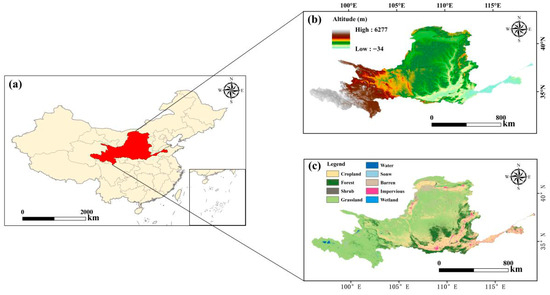
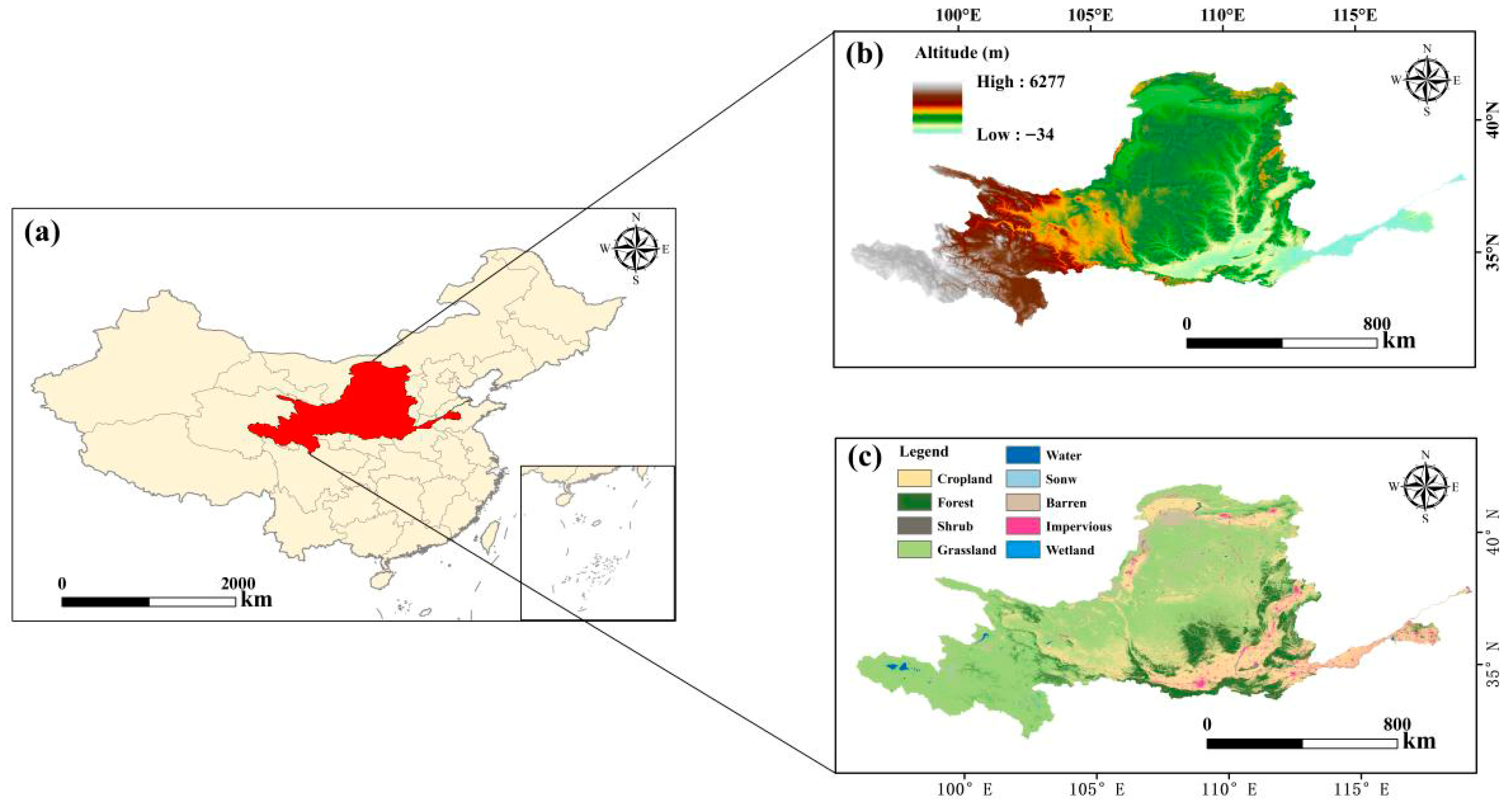
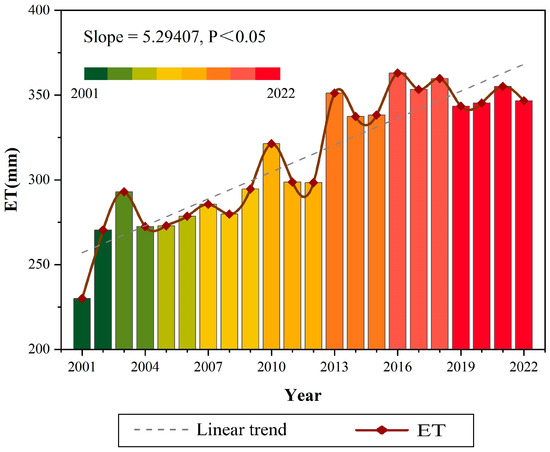
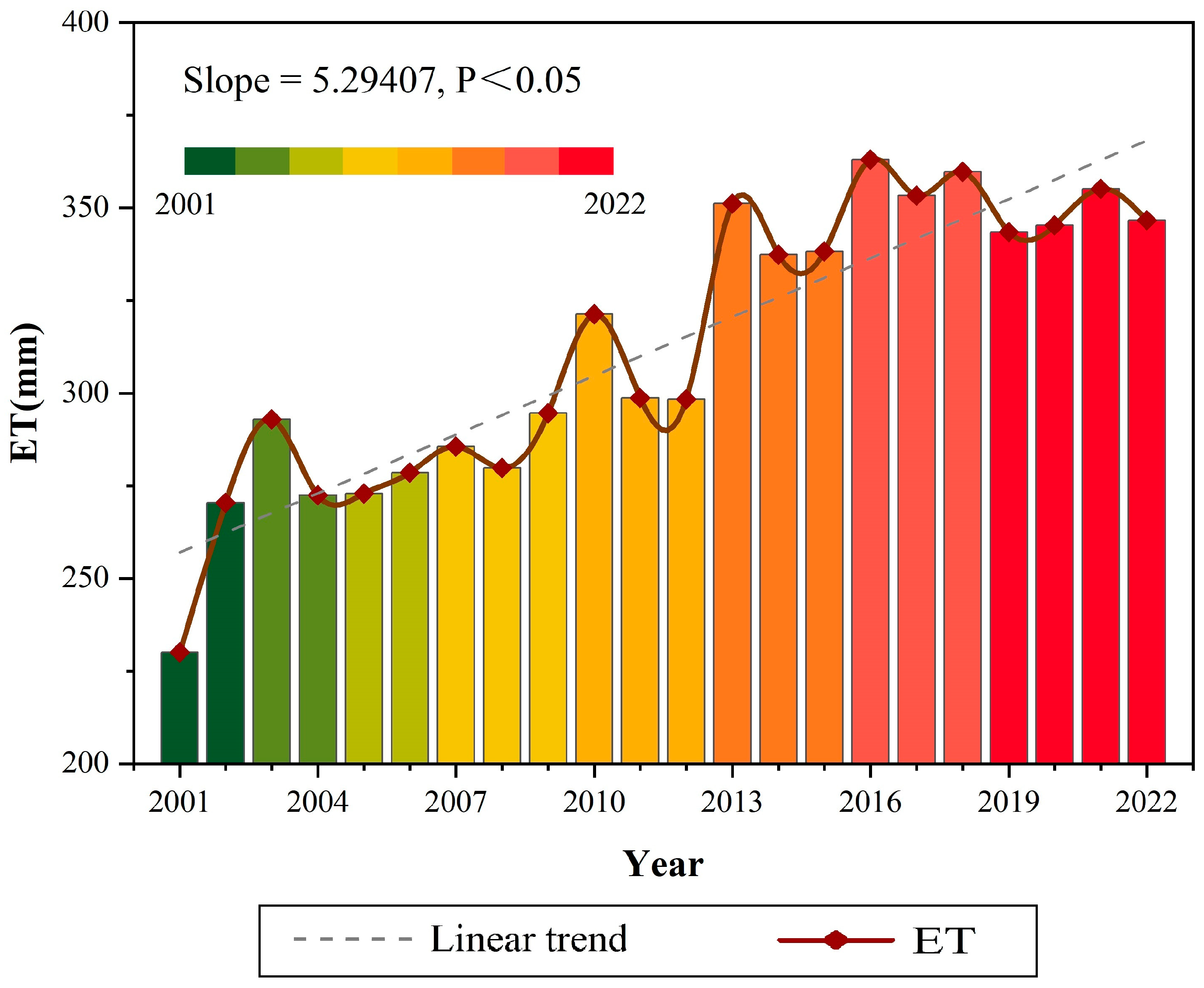
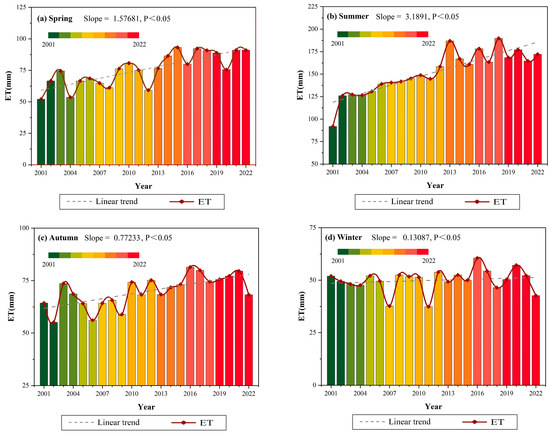
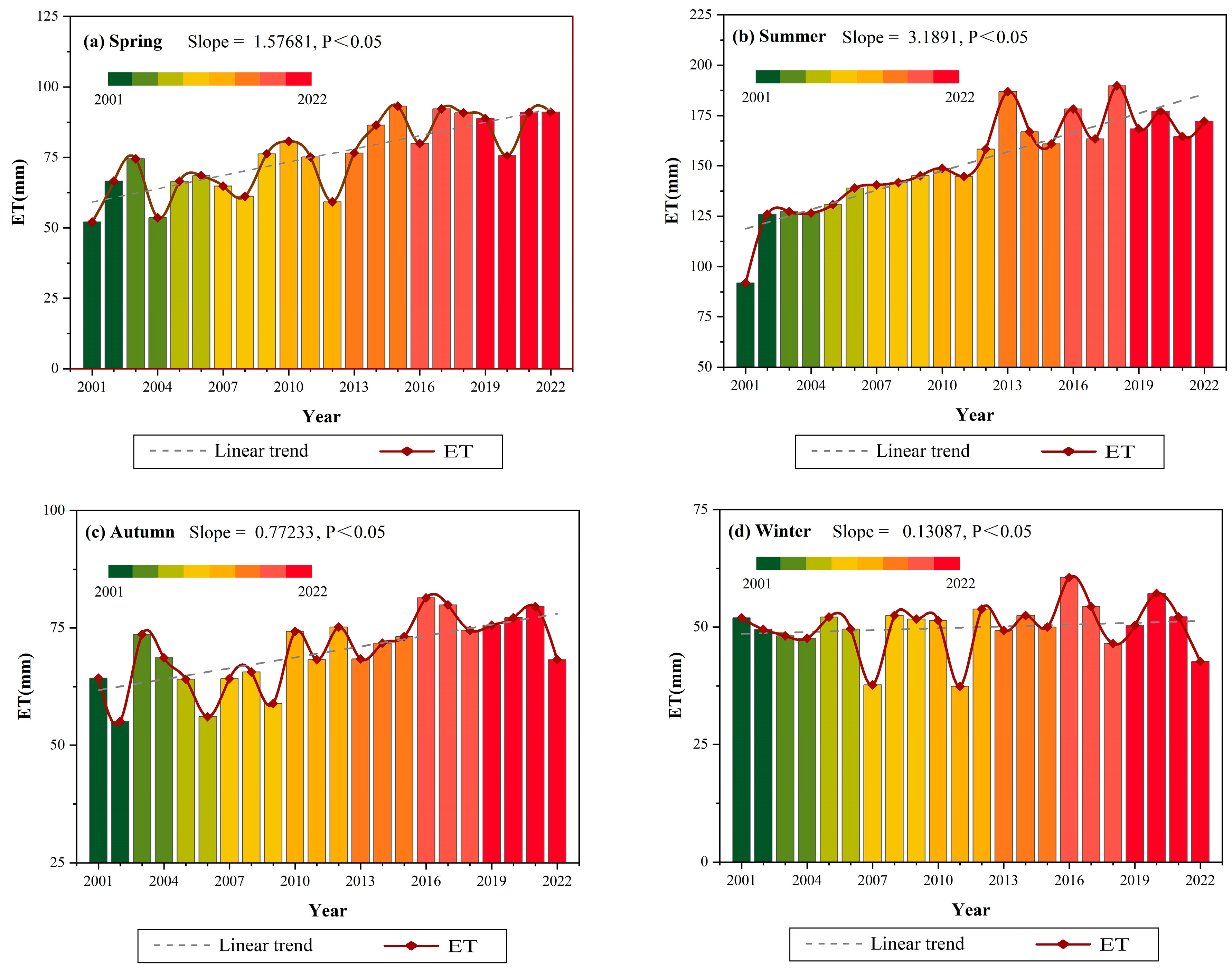
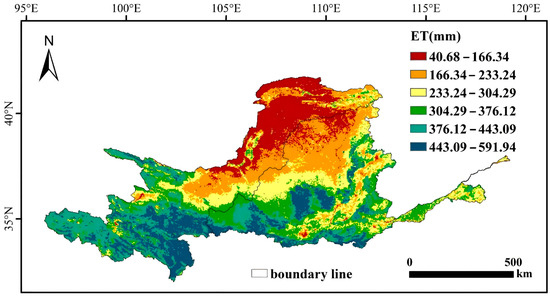
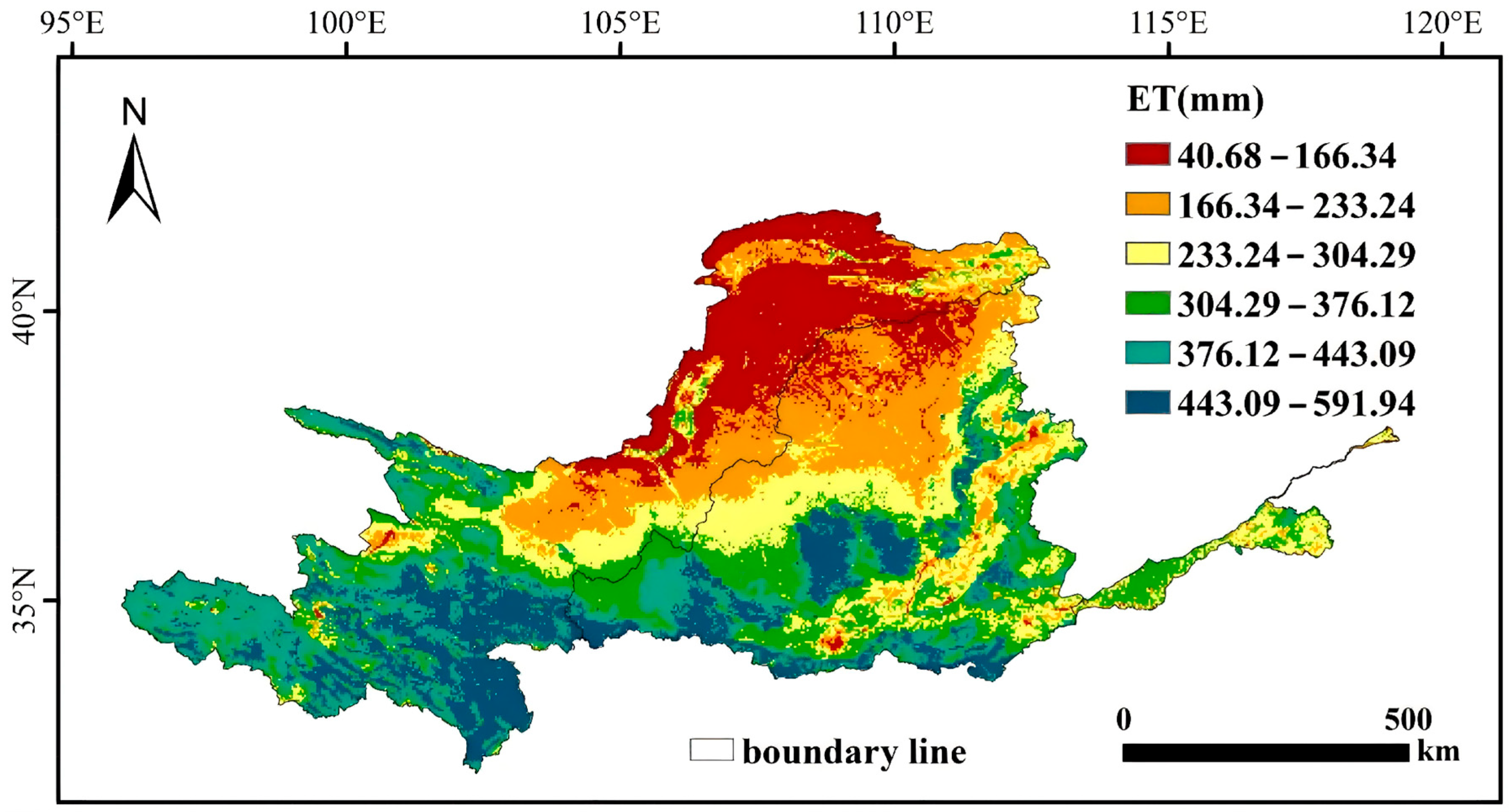
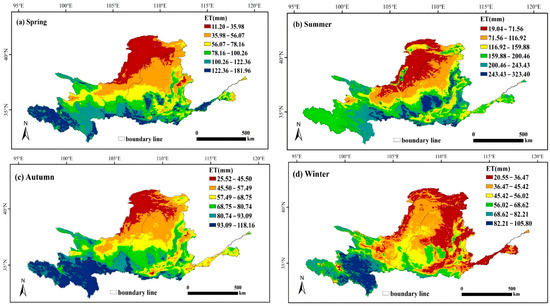
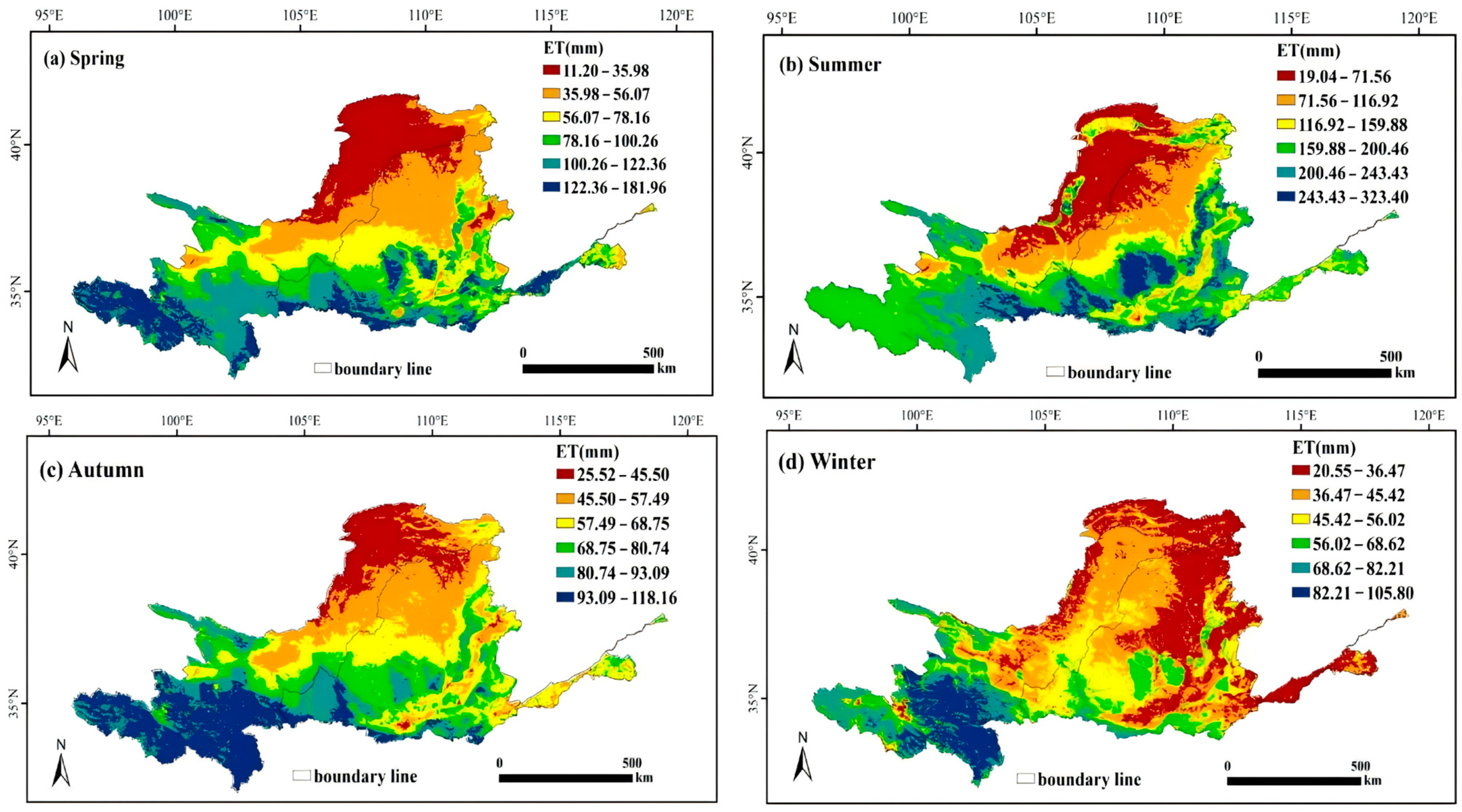
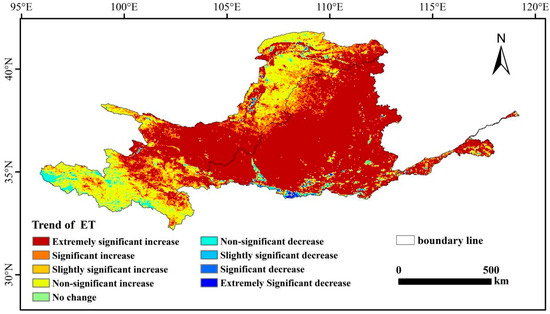
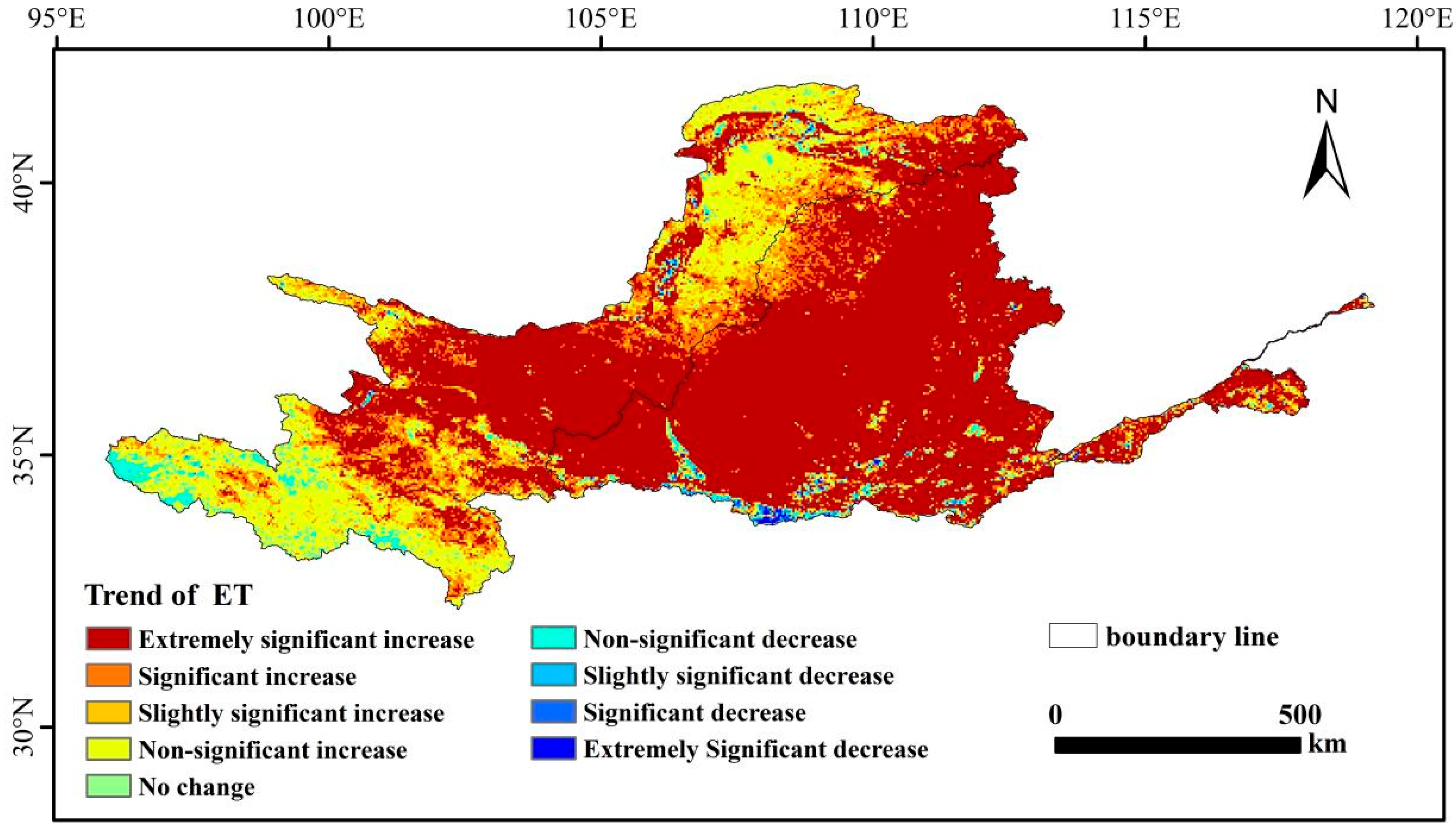
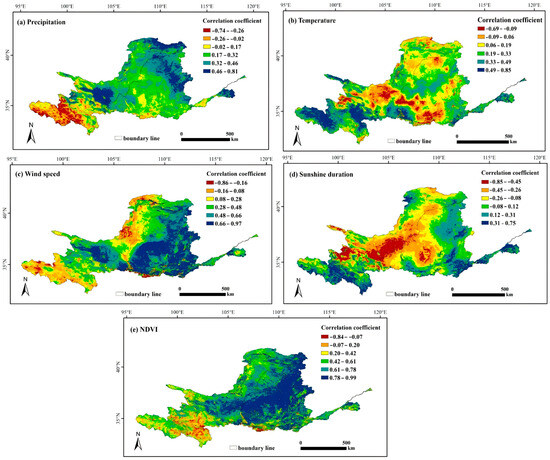
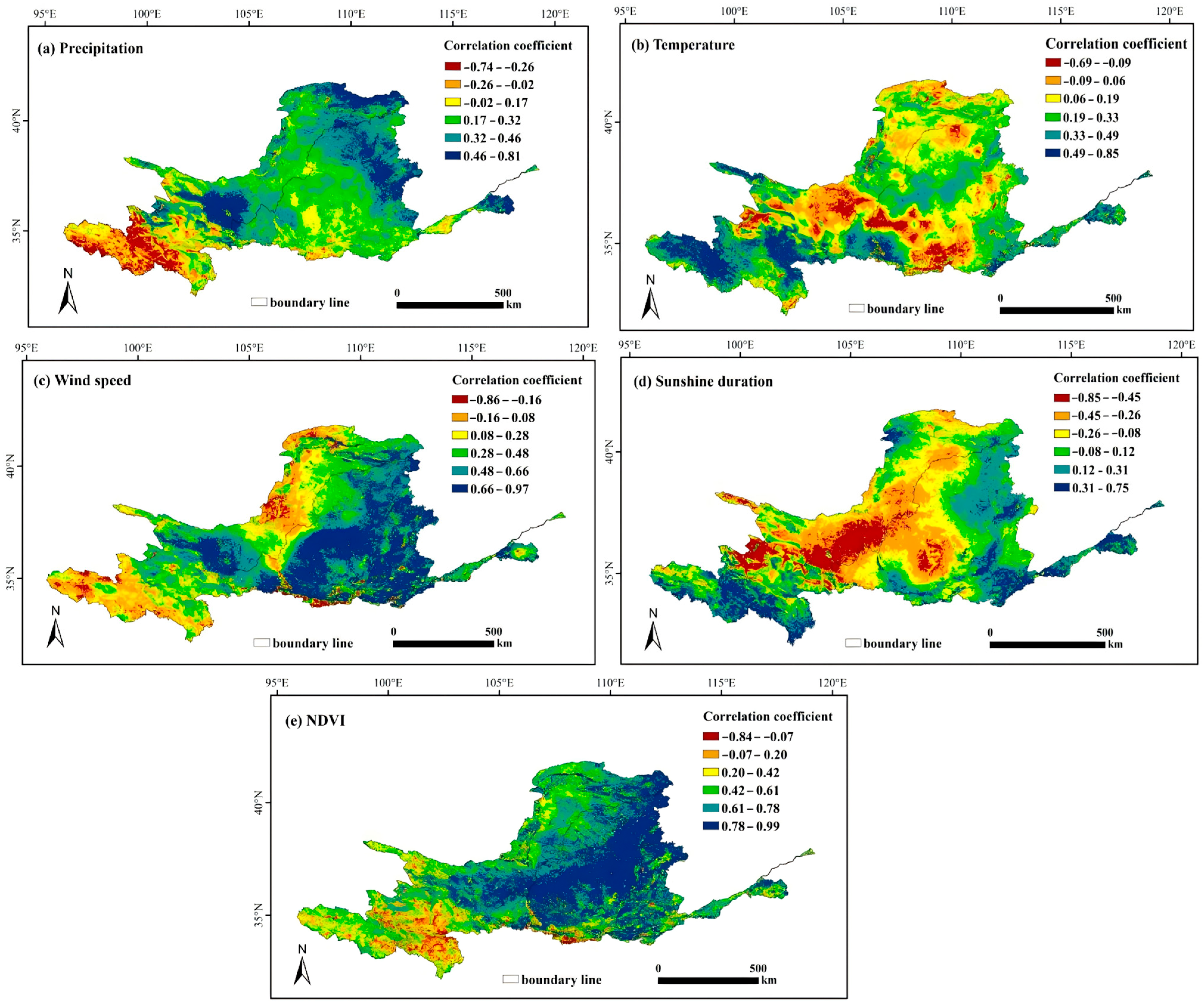
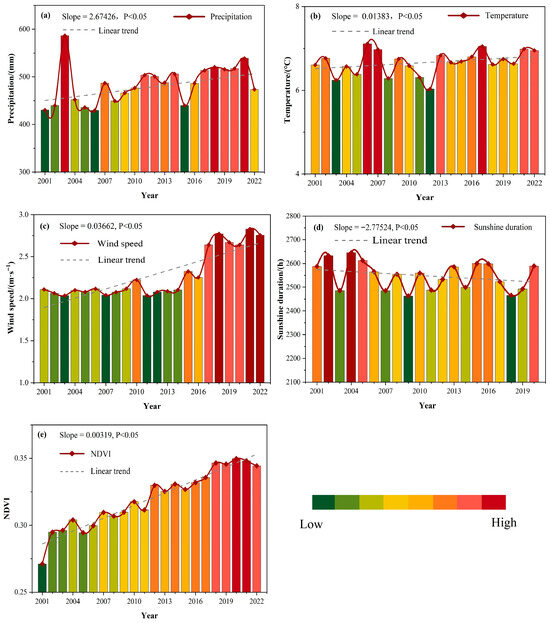
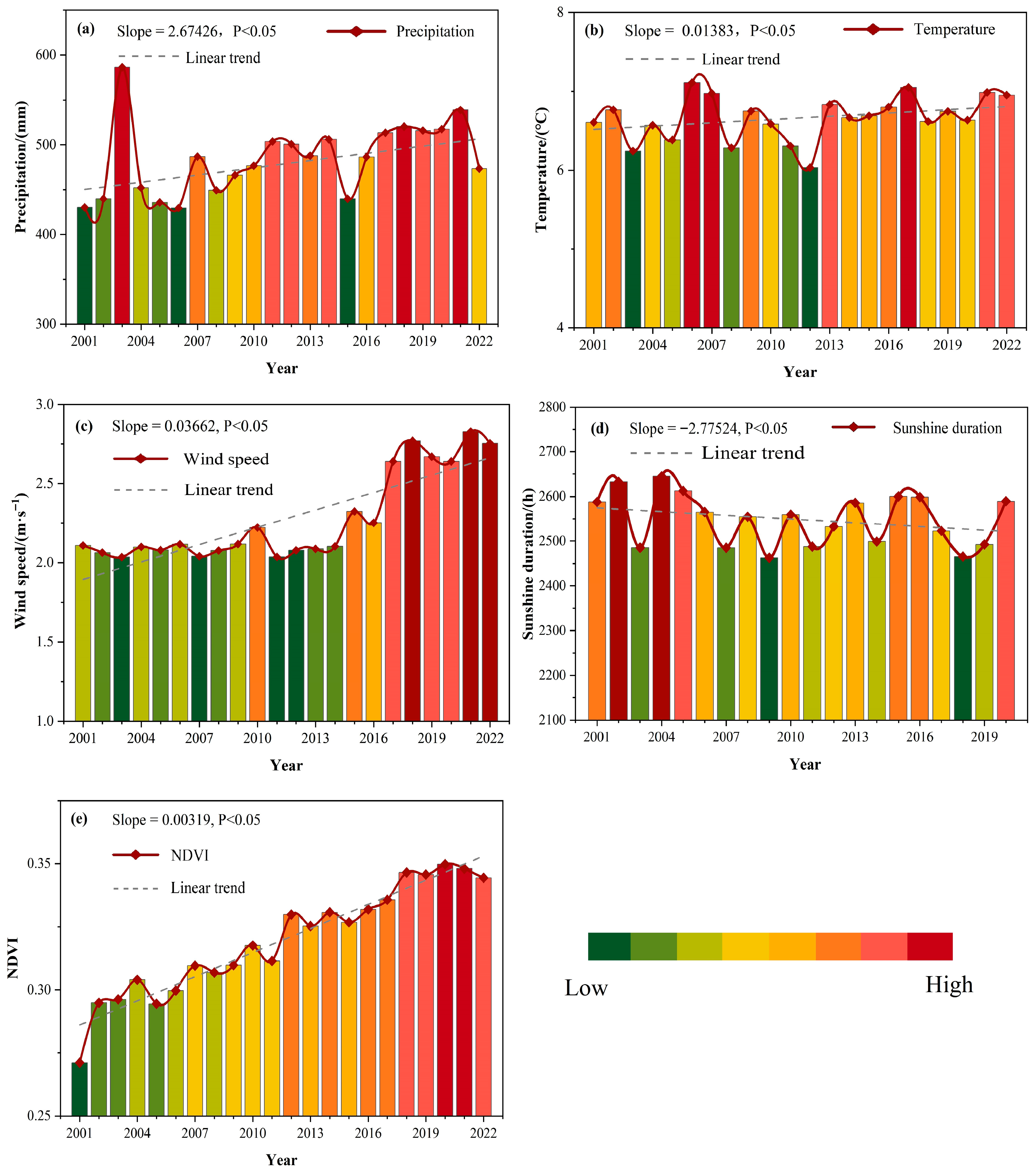
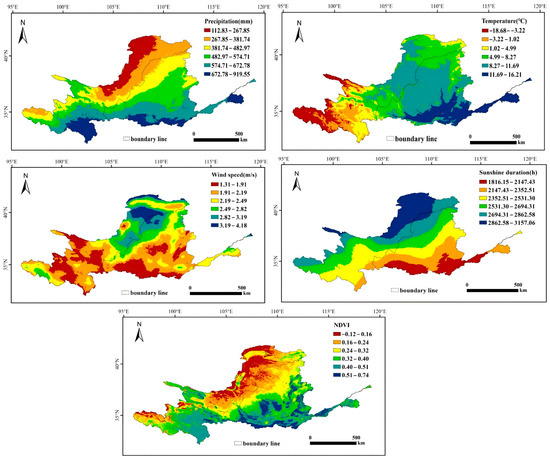
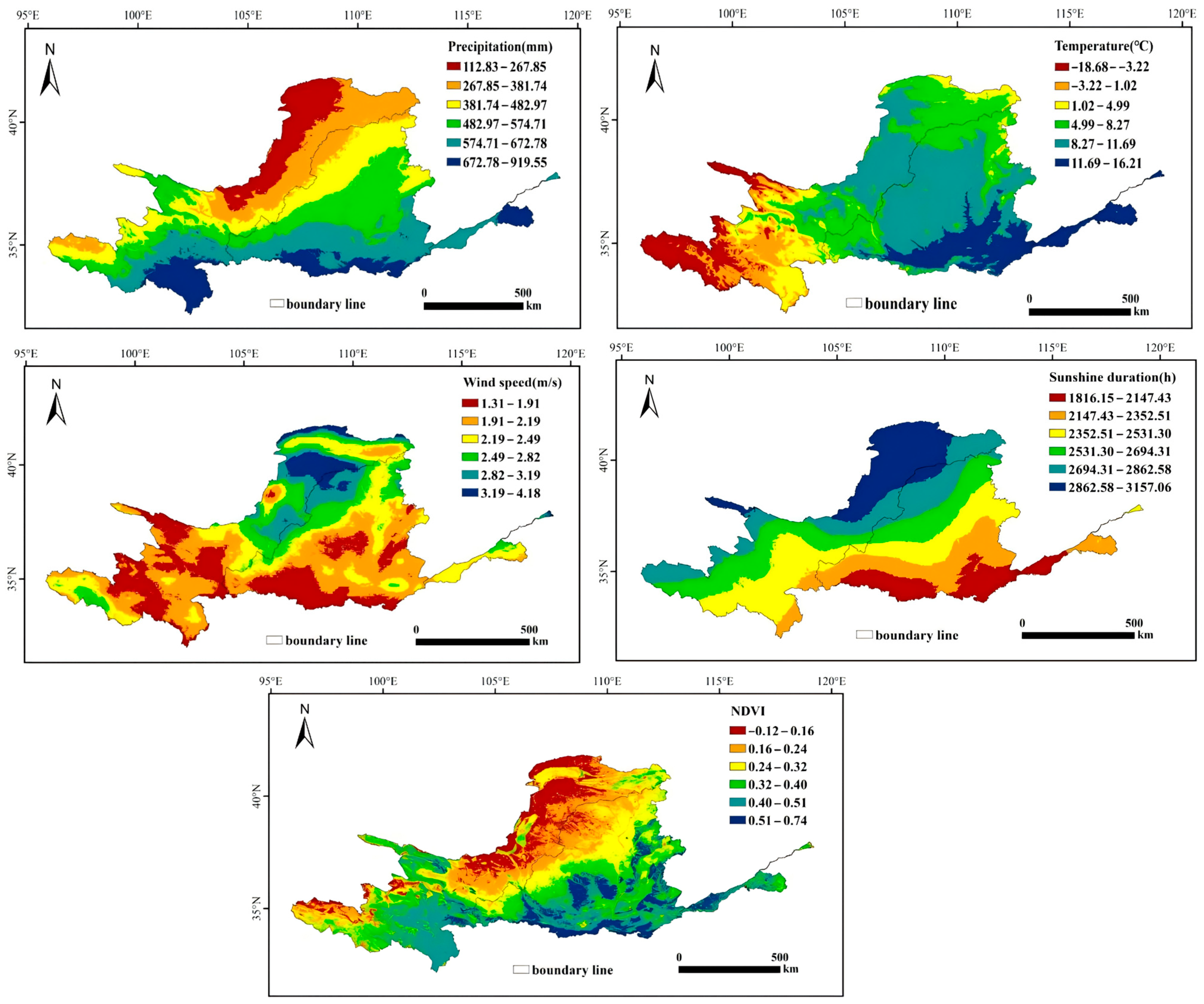
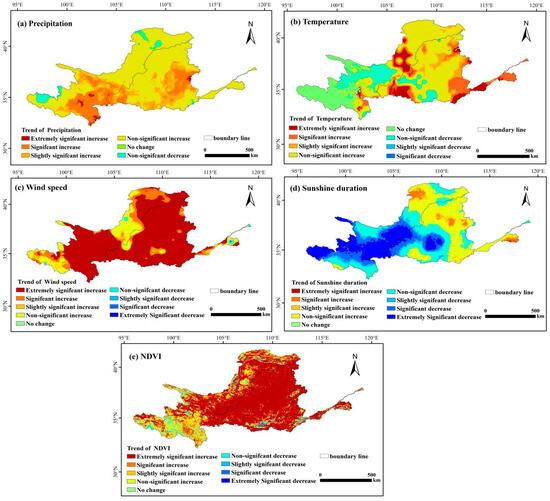
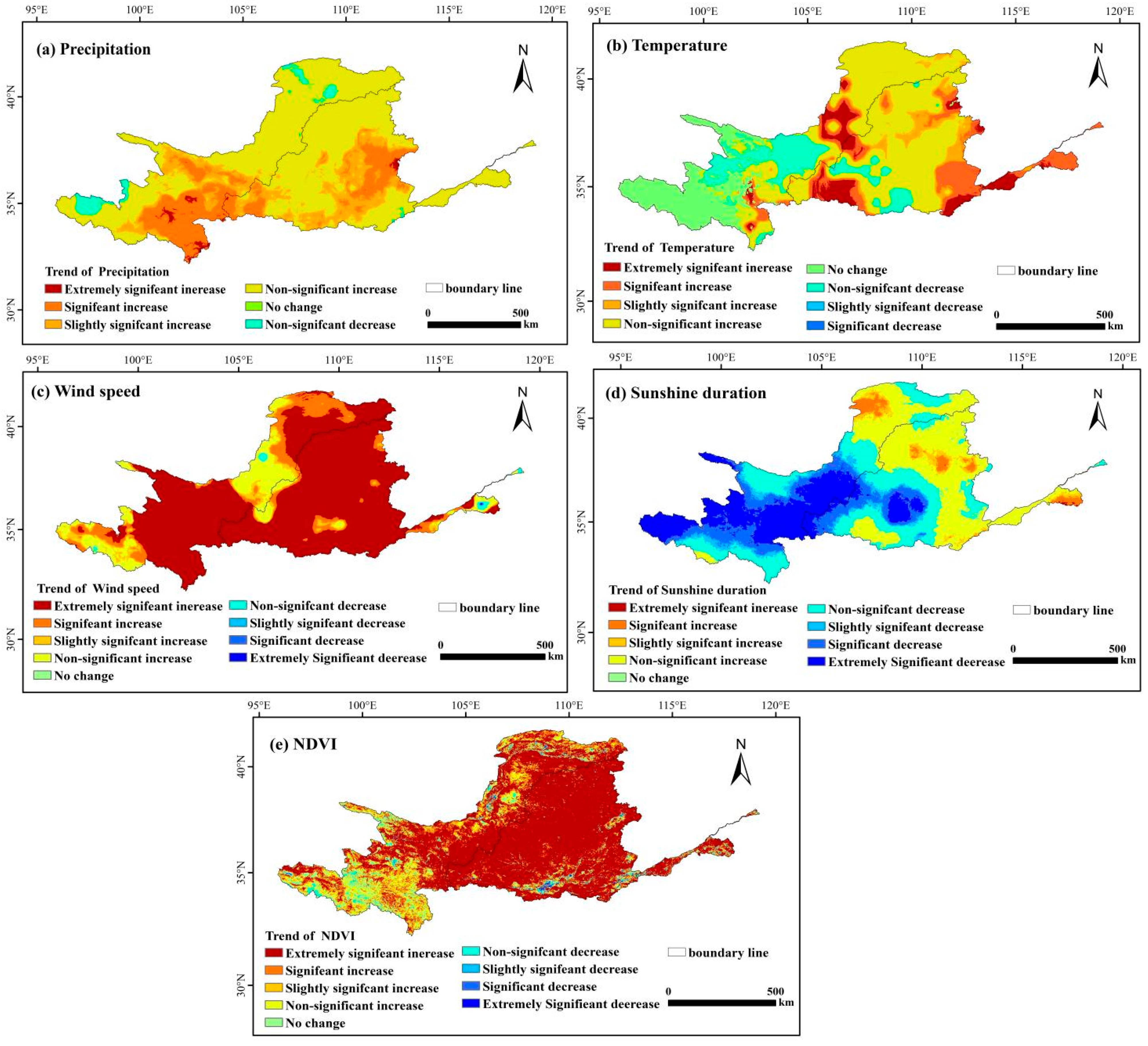
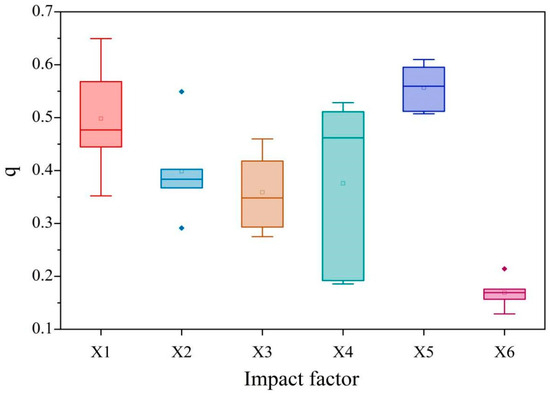
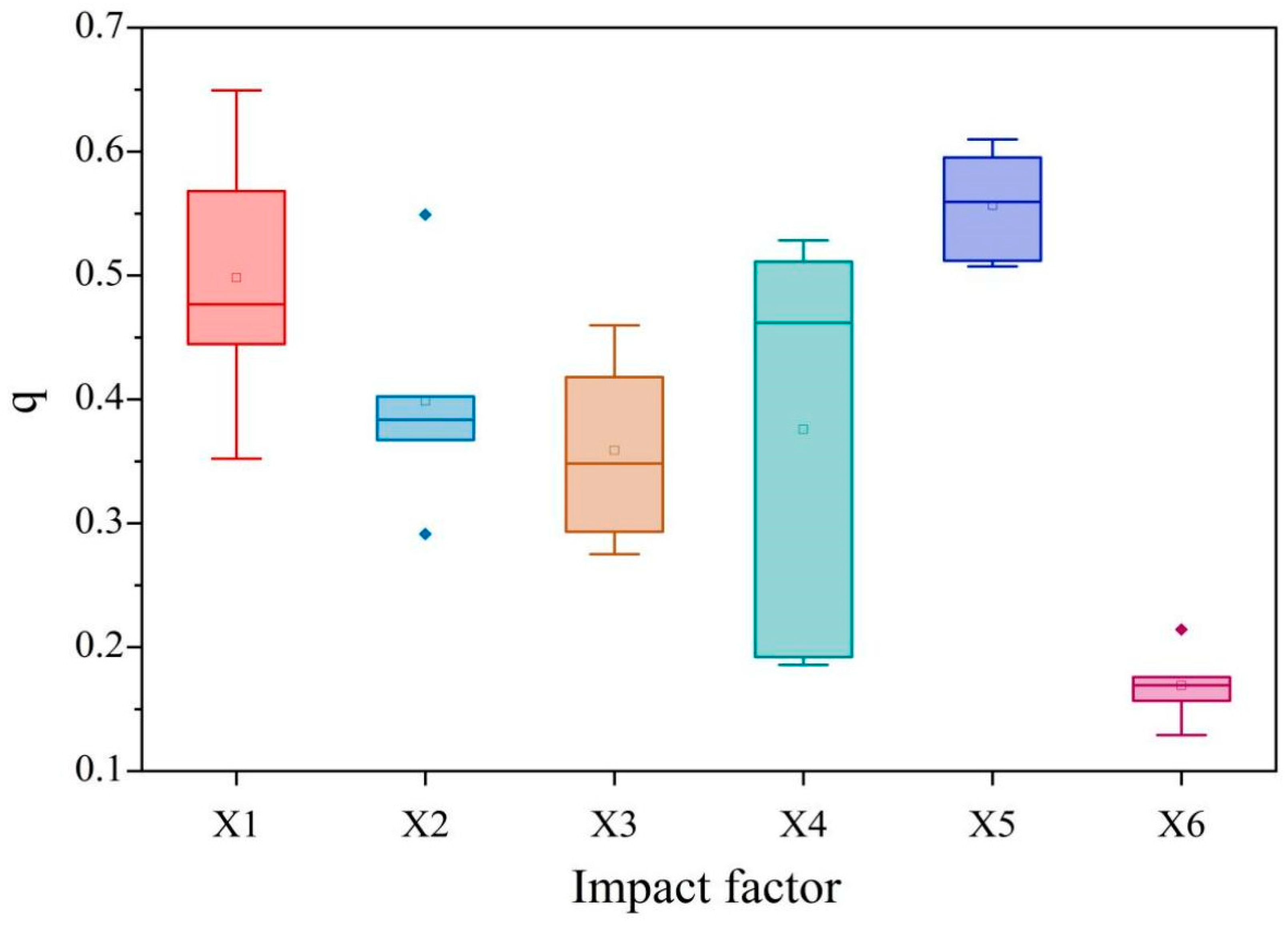
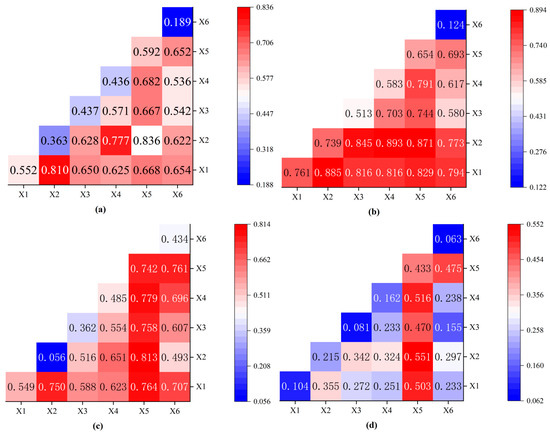
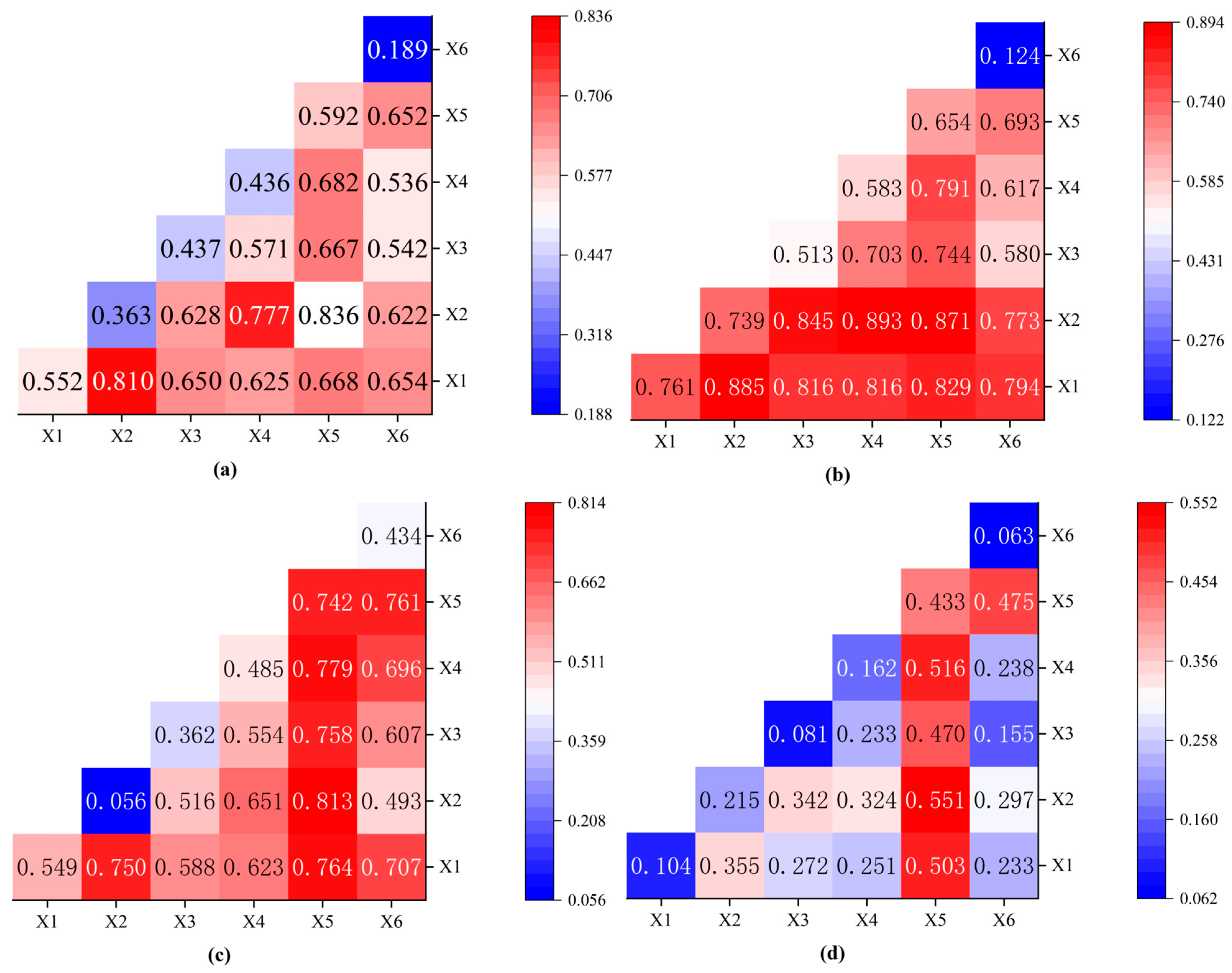

Disclaimer/Publisher’s Note: The statements, opinions and data contained in all publications are solely those of the individual author(s) and contributor(s) and not of MDPI and/or the editor(s). MDPI and/or the editor(s) disclaim responsibility for any injury to people or property resulting from any ideas, methods, instructions or products referred to in the content. |
© 2026 by the authors. Licensee MDPI, Basel, Switzerland. This article is an open access article distributed under the terms and conditions of the Creative Commons Attribution (CC BY) license.