1. Introduction
The Belt and Road Initiative has propelled China’s construction enterprises toward comprehensive engineering contracting for overseas projects. The multicultural environments, complex technical standards, and stringent compliance requirements of cross-border projects demand multidisciplinary competencies from sustainability-oriented construction professionals. Existing research indicates that while the initiative significantly accelerates the international expansion of contracting firms, its impact on design and consulting firms remains limited, reflecting imbalances in talent capability structures [
1]. Concurrently, it drives enterprises to accelerate improvements in green innovation, environmental investment, and governance transparency, intensifying demand for talent with green, compliance, and ethical competencies [
2]. International frameworks such as RIBA and NAAB clearly list these competencies as core indicators of professional ability. Research shows that international certification standards help standardize curriculum content. They also improve graduates’ readiness for international employment and enhance their practical competitiveness. In response to this global transformation trend, international authoritative frameworks such as RIBA and NAAB have identified competencies, including “green design, collaborative modeling, ethical practice, and cross-cultural communication” as core indicators for the international professional competence of architectural talent. Empirical comparative studies indicate that global architectural certification standards not only provide direction in curriculum design but also enhance graduates’ professional readiness and competitiveness in international employment [
3]. In this study, the Belt and Road Initiative is operationally defined as the policy and project framework through which Chinese architectural and construction professionals engage in overseas design, construction, and management activities, particularly in sustainability-oriented projects across participating regions.
While China’s architectural talent cultivation system has accumulated expertise in foundational technical domains, it exhibits significant gaps in core competency alignment for international practice scenarios in overseas projects: Building Information Modeling (BIM) instruction remains largely confined to modeling software training, lacking holistic collaborative training across construction and operations phases [
4]; interpretation of international codes remains at conceptual understanding, failing to develop practical application skills for differentiated standards across countries along the Belt and Road; cross-cultural collaboration and ethical literacy mostly stay at foundational awareness, lacking project management and ethical negotiation capabilities in multicultural contexts, and failing to deeply cover overseas compliance management and collaborative practices in multicultural settings [
5]. Professional ethics training emphasizes foundational moral awareness but inadequately addresses practical requirements like overseas project compliance management and social responsibility implementation. These issues ultimately hinder talent from rapidly meeting overseas job demands, constraining enterprises’ long-term overseas business expansion and the sustainable advancement of cross-border projects.
However, despite the growing application of natural language processing techniques in education–labour market alignment studies, existing research remains limited in several respects. First, many studies rely on surface-level keyword matching or single-dimensional similarity measures, which are insufficient to capture the complex, multi-layered competency structures required for internationally oriented architectural practice. Second, the specific context of sustainability-oriented overseas employment under the Belt and Road Initiative has rarely been examined through a systematic semantic alignment framework. As a result, the structural characteristics and underlying causes of competency mismatch between architectural education and international job requirements remain insufficiently understood.
Addressing these gaps requires a methodological approach that goes beyond descriptive comparisons and enables the quantitative examination of semantic alignment between educational supply and job demand across multiple competency dimensions. In particular, a framework that integrates international competency standards, educational curricula, and overseas job requirements is necessary to reveal not only the degree of alignment but also the structural patterns and systemic sources of mismatch.
Based on the above context, the main objective of this study is to quantitatively examine the degree of alignment between architectural education and overseas job requirements under the sustainability-oriented framework of the Belt and Road Initiative. Specifically, this study aims to:
- (1)
Construct a tripartite analytical framework integrating international competency frameworks, educational supply, and overseas job demand;
- (2)
Quantitatively measure semantic alignment and mismatch across key sustainability-related competency dimensions using text semantic analysis methods; and
- (3)
Identify the structural characteristics and systemic causes of competency misalignment in the cultivation of internationally oriented architectural talent.
Accordingly, this study proposes the following hypotheses:
H1: There exists a significant semantic mismatch between domestic architectural education and overseas sustainability-oriented job requirements under the Belt and Road Initiative.
H2: The degree of semantic alignment varies across competency dimensions, with foundational technical competencies exhibiting higher alignment than sustainability-oriented competencies such as BIM collaboration, international standard adaptation, cross-cultural cooperation, and professional ethics.
H3: The observed mismatch represents a systemic issue within the current training framework rather than isolated differences among individual institutions.
These objectives and hypotheses provide the logical foundation for the subsequent research design, methodological approach, and empirical analysis.
2. Research Methods and Technical Approach
This study quantitatively examines the alignment between sustainability-oriented competency cultivation in architectural education and overseas job requirements within the Belt and Road Initiative (BRI) context. Given the heterogeneity of educational curricula, international competency frameworks, and job postings across languages and institutional settings, purely frequency-based or rule-driven comparison methods are insufficient to capture latent semantic correspondence.
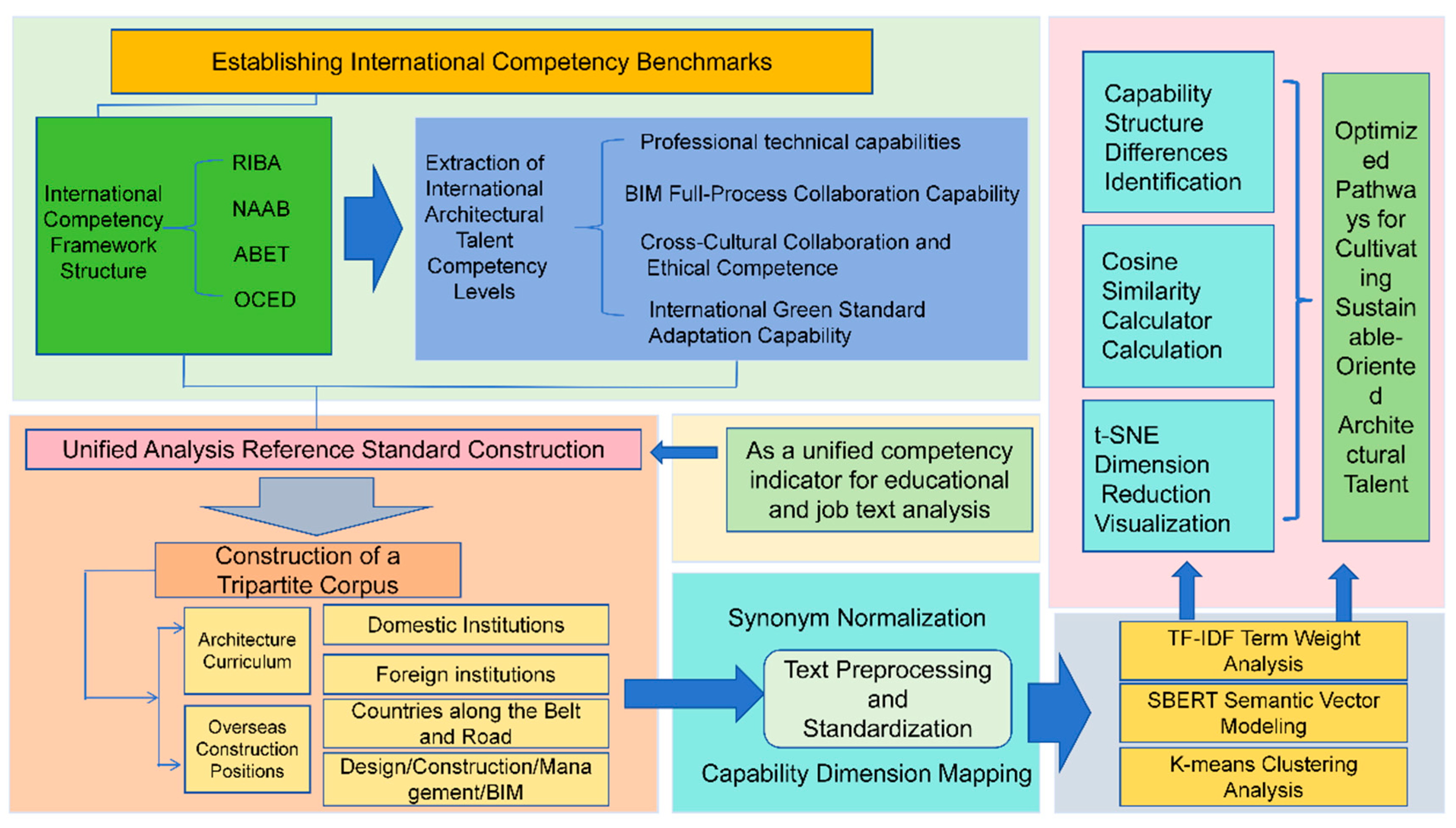
Accordingly, a tripartite analytical framework, “international competency frameworks–educational supply–job demand”, is constructed, integrating terminological weighting, contextual semantic embedding, unsupervised clustering, and visual validation (
Figure 1). The methodological design follows a progressive logic from explicit term-level signals to implicit semantic structures, balancing interpretability and analytical rigor.
2.1. Text Construction and Standardized Preprocessing Methods
2.1.1. Corpus Construction
To achieve a semantic quantitative comparison between educational supply and job demand, the study first constructed three types of text corpora:
Based on internationally recognized standards, four sustainability-related competency dimensions—technical expertise, digital collaboration, cross-cultural cooperation, and professional ethics—were extracted as semantic anchors for subsequent analysis in
Table 1.
2.1.2. Multilingual Preprocessing and Normalization
The corpus consists of Chinese and English texts. To ensure semantic comparability while avoiding translation-induced distortion, no full-text machine translation was applied. Instead, language-specific preprocessing was conducted prior to semantic embedding.
Chinese texts were segmented using Jieba (a Python-based open-source library for Chinese text segmentation, originally developed by Sun Junyi (fxsjy), with its latest stable version as of early 2025 being 0.42.1.), supplemented by a domain-specific architectural lexicon. English texts were processed using SpaCy ((version 3.8.2) is an English NLP library from Explosion AI in Berlin, Germany). For both languages, the following standardized steps were applied: deduplication, tokenization, stopword removal, part-of-speech filtering, synonym normalization, and domain-specific terminology mapping.
Text inputs were segmented at the paragraph level, rather than using entire documents as single units. This segmentation strategy reduces length bias, improves semantic resolution, and ensures comparability between curriculum descriptions and job advertisement sections with different structural lengths.
2.2. Algorithm Analysis Methodology Framework
To address the limitations of surface-level keyword matching and capture both explicit and latent competency representations, this study employs a combination of terminological weighting, contextual semantic embedding, and structural validation methods:
2.2.1. TF-IDF Term Weight Analysis
During the terminology layer analysis phase, the term frequency–inverse document frequency (TF-IDF) method was employed to extract keywords from three types of corpora: international competency frameworks, domestic and international architecture training programs, and overseas job postings.
Compared with simple term frequency methods, TF-IDF emphasizes terms that are both locally significant and globally distinctive, making it suitable for revealing differences in emphasis and coverage breadth among educational, institutional, and occupational texts [
6].
The standard formula for TF-IDF is as follows:
Here,
denotes the term
frequency of in document
,
represents the total number of documents in the corpus, and
is the number of documents containing the term. A higher TF-IDF value indicates greater importance of the term within the document [
7].
TF-IDF results were not used for direct matching, but rather as a pre-screening mechanism to guide semantic-level modeling and reduce noise from low-informative terms.
2.2.2. SBERT Semantic Matching Analysis
To capture contextual semantic alignment beyond surface-level vocabulary overlap, this study adopted Sentence-BERT (SBERT) for sentence- and paragraph-level embedding [
8]. SBERT was selected over traditional Word2Vec or Doc2Vec models due to its superior performance in semantic textual similarity tasks and its ability to encode medium- to long-length competency descriptions.
The pre-trained multilingual SBERT model (paraphrase-multilingual-MiniLM-L12-v2) was employed to encode Chinese and English texts into a shared semantic space, producing 768-dimensional embeddings. No task-specific fine-tuning was conducted to preserve generalizability and replicability. All experiments were implemented in Python 3.10 using Sentence-Transformers v2.2.2 with fixed random seeds.
Semantic similarity between text pairs was computed using cosine similarity:
A and
B represent the vector representations of two text segments, where values closer to 1 indicate higher semantic alignment [
9].
Similarity Threshold Definition and Sensitivity: Similarity scores were categorized into three levels: high (≥0.60), medium (0.40–0.60), and low (<0.40). These thresholds were initially informed by prior SBERT-based semantic matching studies in education and labor market research, where cosine similarity values around 0.6 typically indicate strong semantic correspondence.
To avoid arbitrariness, a sensitivity analysis was conducted by testing alternative threshold sets (±0.05). The overall distribution trends and comparative conclusions remained stable across threshold variations, indicating robustness of the classification scheme.
2.2.3. K-Means Clustering and t-SNE Visualization
To reveal the distributional patterns and latent differences in semantic structures between educational texts and job-related texts, we employed K-Means clustering and t-SNE dimensionality reduction algorithms to partition the semantic space into clusters and visualize it in two dimensions. K-Means is a typical partitioning-based unsupervised clustering algorithm whose objective is to minimize the sum of squared Euclidean distances (SSE) between all sample points and their respective cluster centers:
Here,
denotes the centroid of the cluster
. To enhance stability and clustering quality, the algorithm employs a K-Means++ initialization strategy and incorporates multiple local searches inspired by global K-Means to optimize cluster center distributions. The optimal number of clusters
\(K = 5
\) is determined using the elbow rule [
10].
For visualization, t-SNE maps the 768-dimensional semantic vectors generated by SBERT into a two-dimensional space. This algorithm constructs similarity distributions
for point pairs in the high-dimensional and low-dimensional spaces, respectively, and minimizes the Kullback–Leibler divergence between them:
Among them, , , , is the original vector, and , is the coordinate after two-dimensional mapping.
Ultimately achieving a clear visual representation of semantic spatial structures, this approach assists in assessing the degree of semantic convergence or divergence between educational texts and job-specific texts in terms of competency descriptions, thereby providing visual support for verifying systematic biases. It should be noted that t-SNE is used for exploratory visualization rather than inferential comparison.
2.3. Technical Approach
Combining the above methods, the overall technical process comprises the following four steps:
- (1)
Benchmark anchoring: extracting sustainability-related competency dimensions from international frameworks;
- (2)
Terminological screening: identifying emphasis differences using TF–IDF;
- (3)
Semantic modeling: quantifying alignment between educational supply and job demand using SBERT-based similarity;
- (4)
Structural validation: verifying semantic divergence through clustering and visualization.
All parameter settings, model versions, and processing steps are explicitly reported to ensure methodological transparency and replicability. This integrated approach enables systematic identification of sustainability competency gaps in architectural education and provides a robust methodological foundation for subsequent policy and curriculum optimization.
3. Results and Analysis
Based on the research questions and analytical framework established in this study, this section moves beyond descriptive reporting to interpret how observed semantic alignment patterns reflect structural characteristics of architectural talent cultivation and their implications for sustainability-oriented overseas employment. The analysis addresses three interrelated issues:
- (1)
Whether systematic alignment deviations exist between education and overseas job demand;
- (2)
How such deviations manifest across competency dimensions and job types; and
- (3)
Whether these deviations indicate isolated institutional differences or systemic structural constraints.
3.1. Basic Characteristics of the Tripartite Corpus
After standardized preprocessing, the tripartite corpus—comprising international competency frameworks, educational supply texts, and overseas job postings—includes 45 institutional documents (25 domestic programs, 10 foreign programs, and 4 international frameworks) and 200 overseas job advertisements, with a total word volume of approximately 128,000 tokens. The corpus spans multiple educational systems, job categories, and international standards, ensuring analytical representativeness.
Beyond scale, the corpus exhibits clear functional differentiation. International competency frameworks emphasize a balanced and sustainability-oriented capability structure, with professional ethics (18.2%), specialized technical skills (16.5%), cross-cultural collaboration (12.3%), and green standard adaptation (9.7%) forming a relatively even distribution. By contrast, domestic education texts are strongly skewed toward design theory (22.7%), while practice-oriented sustainability competencies—such as BIM collaboration (3.1%), sustainability-oriented professional ethics (2.5%), and international green standards (1.9%)—remain marginal. Overseas job postings demonstrate a contrasting pattern, prioritizing full-process BIM collaboration (17.5%), international green codes (15.3%), and sustainability-related project management (13.8%).
Importantly, references to the Sustainable Development Goals (SDGs) account for 18.5% of the total TF–IDF–weighted sustainability-related terms across the three text types.
This percentage was calculated by aggregating TF-IDF weights of all SDG-related keywords (e.g., “SDGs,” “sustainable development,” “carbon neutrality,” “climate responsibility”) and normalizing them against the total TF-IDF weight of sustainability-relevant terms within each corpus.
This result indicates that sustainability discourse is widely present across education, standards, and employment texts. Therefore, the observed misalignment does not arise from the absence of sustainability-related language, but from differences in how sustainability concepts are translated into operational competencies.
3.2. Characteristics of Competency Structure Differences
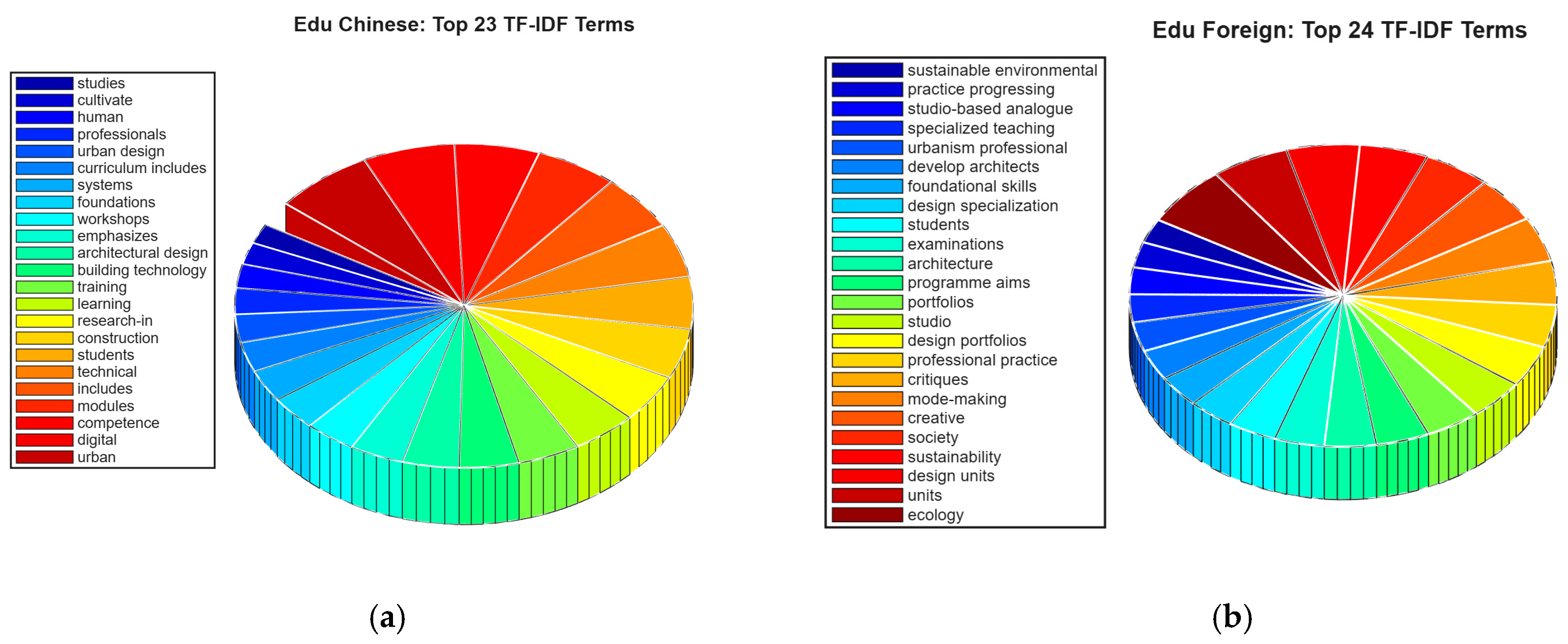
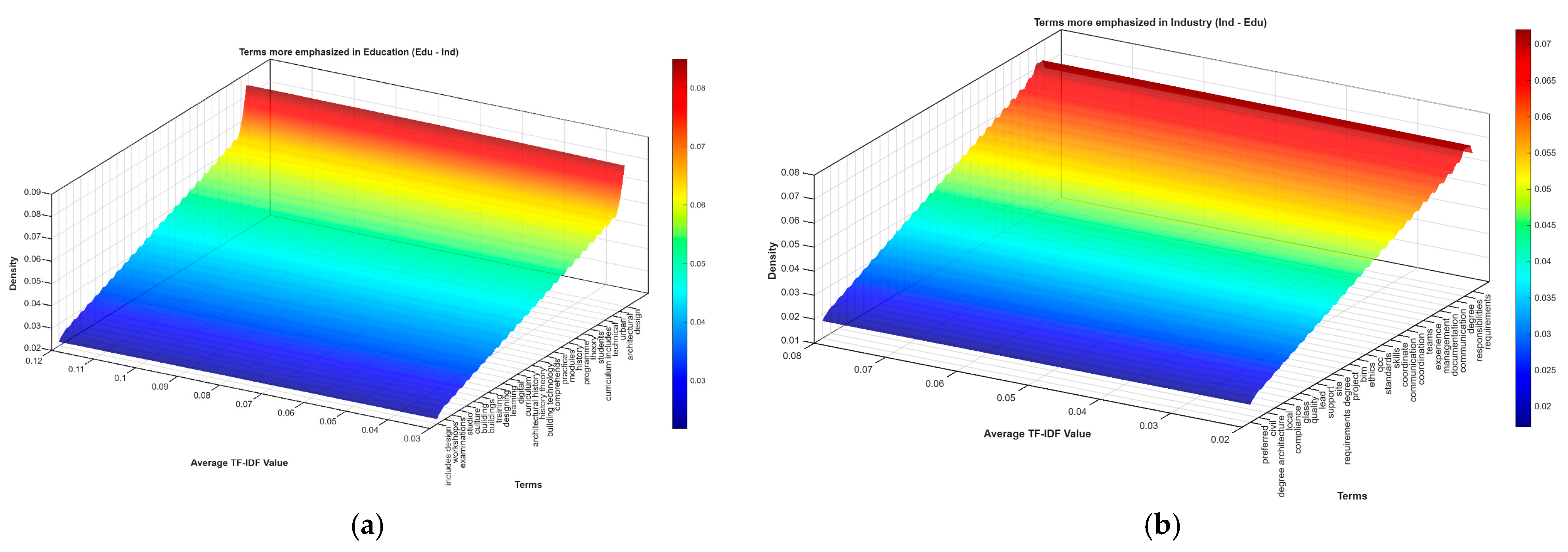
In both figures, TF-IDF weights reflect the relative importance of competency-related terms within each corpus, rather than raw frequency, thereby reducing bias caused by document length or repetitive phrasing.
Figure 2 and
Figure 3 compare TF–IDF-weighted competency terms across domestic education, foreign education, and industry demand under a unified term-weighting scheme, ensuring comparability.
The results indicate that while domestic programs nominally cover all four core competency dimensions, their effective coverage of sustainability-related sub-dimensions is substantially weaker. Coverage rates for digital collaboration (42.3%) and cross-cultural cooperation (38.7%) fall far below those observed in international frameworks (85.6% and 79.2%) and overseas job requirements (78.5% and 72.4%). Here, “coverage rate” refers to the proportion of curriculum documents in which at least one high-weight competency term associated with the given dimension appears, as identified through TF-IDF ranking and expert-guided term grouping. Practical sustainability-oriented professional ethics indicators account for less than 15% of domestic curricula, suggesting that ethical training remains largely conceptual rather than operational.
From a talent formation perspective, this imbalance implies that domestic education prioritizes what architects should know, whereas overseas practice increasingly evaluates what architects can collaboratively implement under sustainability and compliance constraints. This structural divergence helps explain why graduates may perform well in theoretical design contexts but struggle to meet the integrative demands of overseas projects.
Furthermore, expression intensity analysis reveals that domestic programs concentrate 60% of their highest-weighted terms on foundational technical concepts, while overseas job postings emphasize applied and process-oriented sustainability competencies. Similarity scores between domestic curricula and international frameworks are particularly low in digital collaboration (0.35) and sustainability-oriented professional ethics (0.32), indicating that misalignment is not merely quantitative, but structural in nature, concentrated in practice-oriented competency cultivation.
3.3. Semantic Alignment Level Quantification Results
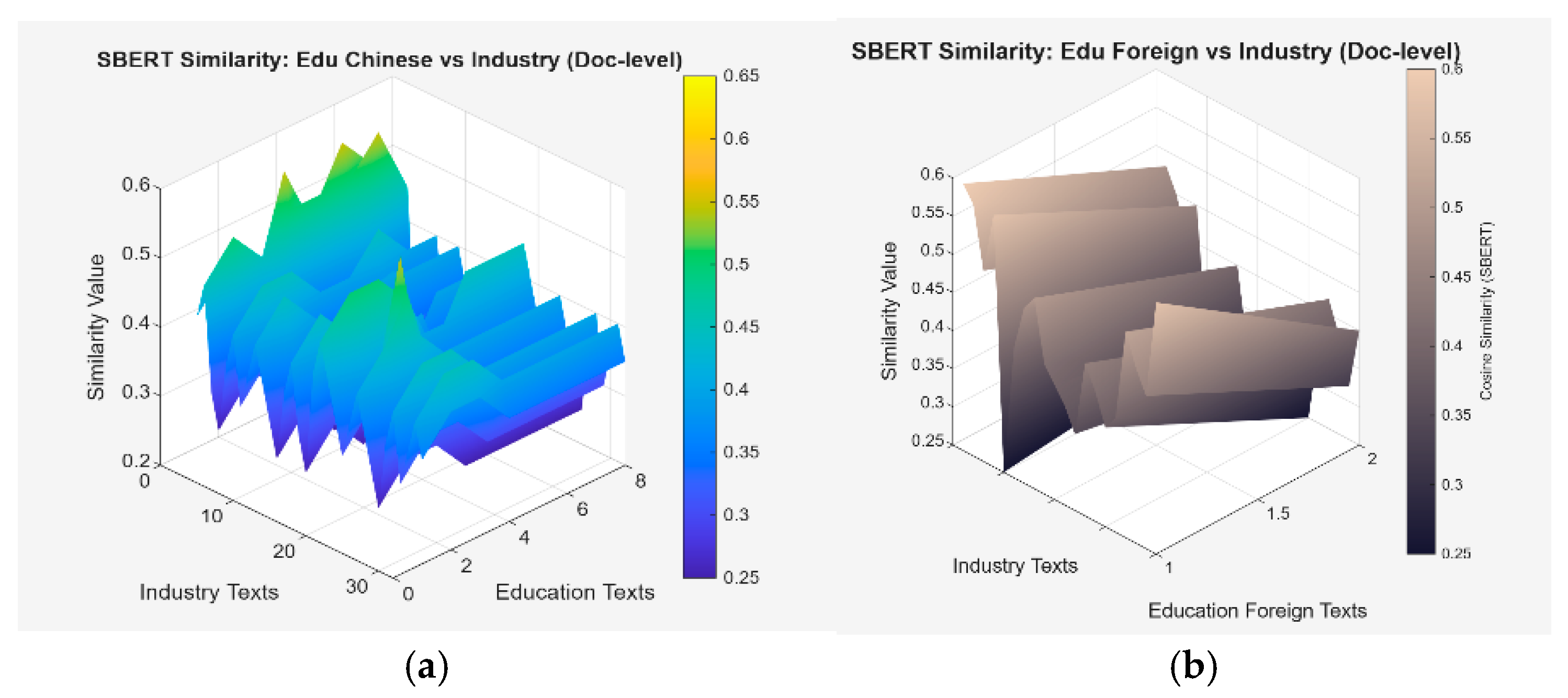
To assess alignment at the semantic level, SBERT-based cosine similarity was calculated under identical model configurations, embedding dimensions, and threshold settings for domestic and foreign programs, ensuring a controlled comparative logic.
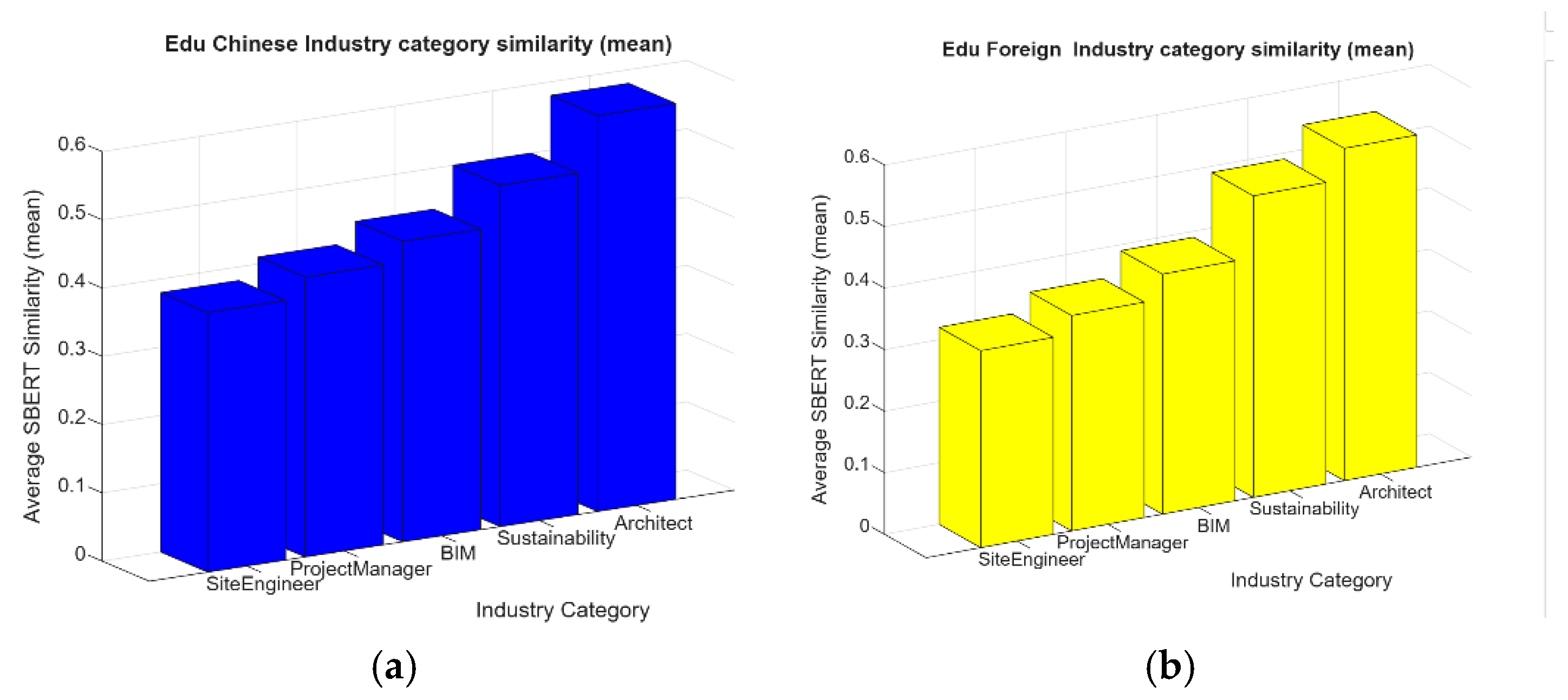
As shown in
Figure 4, the average semantic similarity between domestic education and overseas sustainability-oriented job requirements is 0.48, corresponding to moderate alignment. In contrast, foreign education programs achieve a similarity of 0.67, indicating high alignment under the same analytical conditions. This difference suggests that foreign programs more effectively translate sustainability discourse into competencies that are recognizable and valued in overseas labor markets.
Sub-dimensional analysis (
Figure 5) further clarifies the source of this gap. Design theory and fundamental technology show relatively high alignment (0.58–0.62), reflecting the strength of domestic education in traditional technical domains. However, BIM full-process collaboration (0.38), international green standard adaptation (0.35), cross-cultural collaboration (0.33), and sustainability-oriented professional ethics (0.31) all fall into the low-alignment range. Notably, sub-dimensions such as “BIM-based sustainable operation and maintenance” and “application of international LEED standards” exhibit similarity scores below 0.30.
All similarity calculations were conducted under identical embedding dimensions, pretrained model parameters, and cosine similarity thresholds to ensure that differences reflect corpus characteristics rather than model configuration effects. When controlling for job type, design-oriented positions show moderate alignment (0.52), while construction (0.38) and management roles (0.43) approach low alignment. This pattern indicates that misalignment intensifies as job roles shift from design-centric to coordination- and management-intensive functions, underscoring a structural gap in preparing graduates for sustainability governance and cross-cultural project execution.
3.4. Deviation, Stability, and Fundamental Insights
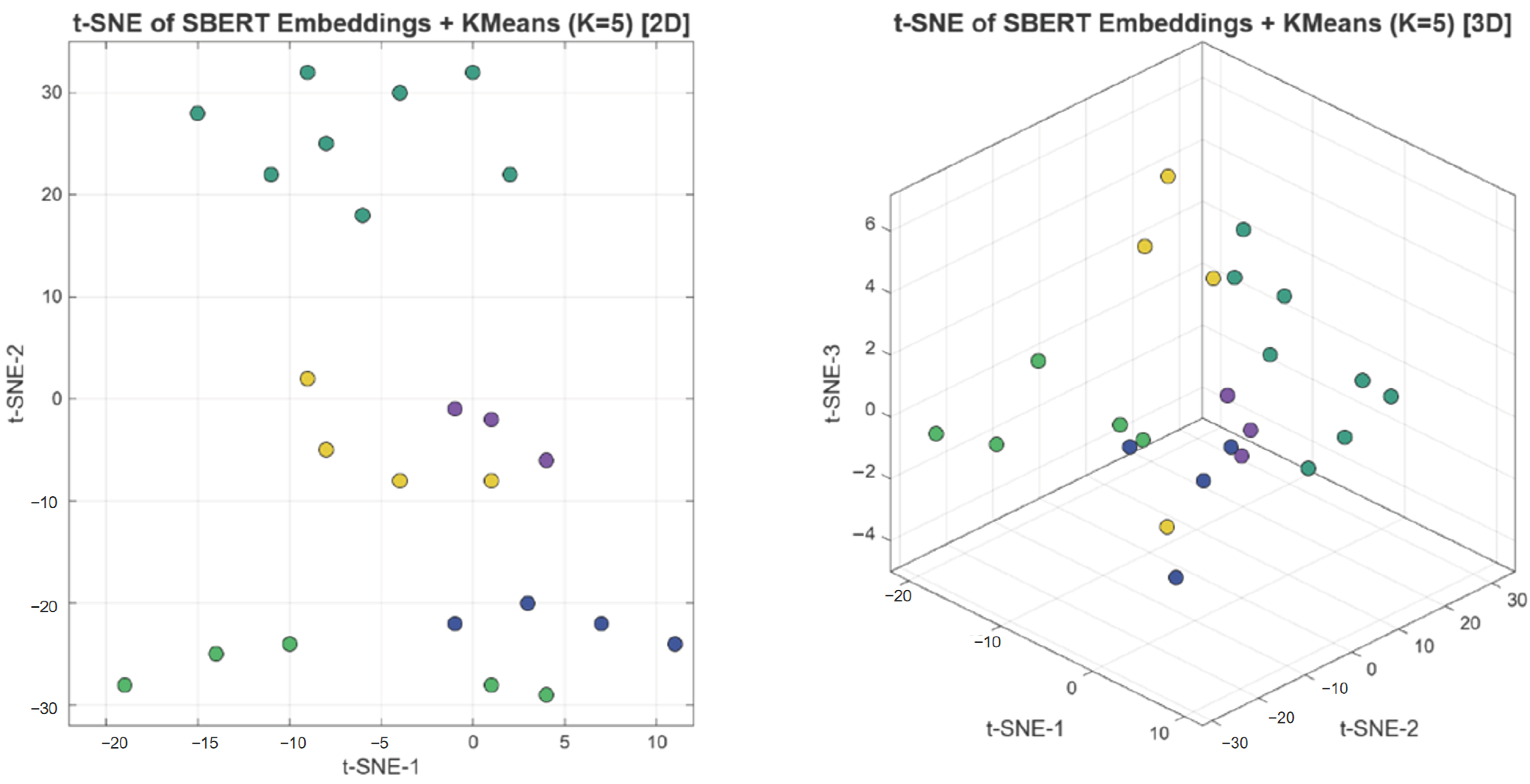
Figure 6 visualizes semantic clustering results based on SBERT embeddings using K-Means (K = 5) and t-SNE projection. Domestic training programs cluster predominantly within two semantic groups—“design theory” and “fundamental technical application”—whereas overseas job requirements are distributed across four clusters. International competency frameworks consistently span all five clusters, reflecting their integrative orientation.
Importantly, deviation coefficients across domestic institutions vary only between 0.03 and 0.05, indicating minimal inter-institutional differentiation. This stability suggests that the observed mismatch is not attributable to individual program deficiencies but rather reflects system-level structural constraints embedded within the prevailing educational model.
Substantively, the results point to a persistent dominance of a design-theory-centered training paradigm that is misaligned with the composite competency demands of sustainability-oriented overseas projects—particularly in digital collaboration, cross-cultural coordination, ethical practice, and regulatory adaptation. The gap between domestic education and internationally recognized competency frameworks further indicates that sustainability challenges in overseas practice require not incremental curricular adjustments, but a reconfiguration of how competencies are structured and integrated within architectural education.
It should be noted that overseas job demand data were primarily collected from mainstream international recruitment platforms such as LinkedIn and Indeed. To mitigate potential platform bias, job postings were sampled across multiple countries and regions involved in the Belt and Road Initiative, covering design, construction, and management roles, and limited to English-language postings to ensure semantic comparability.
While platform-specific preferences cannot be entirely eliminated, the consistency of observed misalignment patterns across job types and competency dimensions suggests that the results reflect structural differences in competency emphasis rather than platform-induced distortions.
4. An Explanation of the Competency Structure for Internationalized Architectural Professionals Under the Guiding Principle of Sustainable Development
The quantitative findings in
Section 3 reveal a clear and systematic gap between domestic architectural education and the sustainability-oriented competencies required by overseas positions under the Belt and Road Initiative. This misalignment is especially evident in digital collaboration, cross-cultural coordination, professional ethics, and practical sustainability skills. Rather than relying solely on semantic similarity scores, the following discussion interprets these gaps by combining evidence from curriculum observations, semantic analysis results, and relevant literature on architectural education and sustainability training. This approach helps explain why these competency gaps persist and provides a conceptual basis for an ideal sustainability-oriented competency framework.
4.1. Analysis of the Causes of Competency Structure Deviations
4.1.1. Path Dependence in Education Traditions
The dominance of design theory and foundational technical training in domestic architectural education reflects long-standing educational path dependence rather than isolated curricular decisions.
Within the curriculum samples analyzed in this study, design-oriented courses generally account for a relatively high proportion of total credits (commonly exceeding 30%), whereas sustainability-related courses—such as green building technologies and low-carbon engineering practices—are typically positioned as electives and collectively account for a much smaller share, often below 5%. These figures represent observational statistics derived from the sampled curricula, rather than nationwide averages.
This structural configuration corresponds closely with the empirical findings in
Section 3, where domestic programs demonstrate higher semantic alignment in design theory and fundamental technology but significantly lower alignment in sustainability-oriented applied dimensions. The results suggest that sustainability concepts are more frequently introduced at a conceptual level, with limited integration into applied studios, technical workflows, or project-based learning [
11]. As a consequence, graduates may exhibit strong theoretical competence while facing difficulties in meeting the integrative and practice-oriented demands of overseas sustainability-focused professional contexts.
4.1.2. Lag in Aligning with International Sustainability Standards
The low semantic similarity observed between domestic curricula and international competency frameworks in sustainability-related dimensions indicates a fragmented alignment pattern rather than a complete absence of sustainability awareness. International frameworks such as RIBA and NAAB embed sustainability as a cross-cutting competency spanning technical standards, ethical responsibility, and collaborative practice.
By contrast, sustainability content within the analyzed domestic curricula appears unevenly distributed and lacks a stable internal logic, often being introduced through isolated courses or brief modules rather than through coherent competency pathways.
This fragmentation is reflected in the lower similarity scores observed across dimensions such as digital collaboration, international green standard adaptation, and professional ethics. Importantly, these findings should be interpreted as evidence of structural inconsistency in curricular integration, rather than as a normative judgment on educational quality. Existing studies similarly note that sustainability education in architecture programs often suffers from weak curricular coherence and insufficient linkage between standards and practice [
12].
4.1.3. Inadequate Transmission of Sustainable Demand in the Industry
Another explanatory factor concerns the incomplete transmission of sustainability-oriented demand from overseas industry to educational institutions. Overseas job postings analyzed in this study explicitly emphasize competencies related to green standards interpretation, low-carbon construction coordination, and cross-cultural project management. However, curriculum revision cycles—typically spanning three to five years—limit the responsiveness of educational programs to rapidly evolving international sustainability requirements [
13].
This temporal lag helps explain why semantic alignment declines more sharply for management- and coordination-oriented roles than for design-focused roles. The observed misalignment thus reflects not only curricular content selection, but also institutional constraints on updating and translating industry demand into stable teaching structures.
4.1.4. Lack of Sustainable Teaching Resources and Faculty
To further contextualize the alignment gaps, this study introduces a course coverage indicator to assess the presence of sustainability-related competency components within the sampled curricula.
Here, “coverage rate” is defined as the proportion of analyzed curricula that include at least one course explicitly addressing a given sub-competency, calculated as:
As shown in
Table 2, coverage rates for BIM-based collaboration, international standard adaptation, cross-cultural cooperation, and professional ethics remain limited. These results indicate that while relevant courses exist, they are not systematically embedded across programs. Such competencies typically require instructors with interdisciplinary expertise and overseas project experience, which remains unevenly distributed within current teaching staff structures [
14].
As a result, sustainability-related competencies are often addressed through theoretical instruction rather than scenario-based or project-embedded training, helping to explain persistently low semantic alignment in applied sub-dimensions such as sustainable operations management and cross-cultural ethical decision-making.
4.2. Implications for Sustainability-Oriented Competency Structuring
Building on the empirical results and interpretative analysis above, this subsection does not propose prescriptive curriculum reforms. Instead, it outlines analytical implications regarding how sustainability-oriented competencies are structured and recognized across educational, standard-setting, and industry contexts.
The findings suggest that effective sustainability-oriented competency formation exhibits a multi-dimensional and integrative structure, in which technical knowledge, digital collaboration, ethical responsibility, and project-level sustainability management are interdependent rather than isolated. This integrative pattern is consistently reflected in international competency frameworks and overseas job requirements, whereas domestic curricula show greater segmentation between conceptual instruction and applied practice.
Accordingly, the proposed “four-dimensional” competency configuration should be understood as a reference framework derived from observed alignment patterns, rather than as a direct curricular prescription. Its value lies in providing an interpretative lens for understanding alignment gaps and in offering a structured basis for future empirical research on education–industry coordination under sustainability imperatives.
5. Conclusions and Outlook
5.1. Key Research Findings
This study examines the alignment between domestic architectural education and overseas job requirements oriented toward sustainable development under the Belt and Road Initiative. By constructing a tripartite analytical framework—international competency frameworks, educational provision, and overseas job demands—and applying semantic analysis and visualization methods, the study identifies both the strengths and structural gaps in current talent training.
The results show a clear imbalance across competency dimensions. Domestic architecture programs demonstrate relatively high alignment with overseas demands in design theory and basic technical skills, reflecting long-term educational emphasis in these areas. In contrast, competencies closely related to sustainability-oriented international practice—such as BIM-based full-process collaboration, adaptation to international green standards, cross-cultural teamwork, and sustainability-related professional ethics—exhibit consistently low alignment [
15].
This gap is particularly evident in management- and construction-oriented positions, which require direct engagement with sustainability compliance, coordination, and international collaboration. Importantly, the consistency of semantic patterns across institutions suggests that this misalignment is systemic rather than school-specific, indicating a broader structural issue in the current education–industry linkage.
5.2. Research Innovation and Methodological Value
This study contributes to existing research in two main ways.
First, at the framework level, it integrates international competency standards, educational curricula, and job requirements into a unified analytical system. Using sustainability-related indicators from established international frameworks (such as RIBA and NAAB) as common reference points reduces inconsistencies in evaluation criteria and improves comparability across education and employment contexts.
Second, at the methodological level, the study applies semantic embedding and clustering techniques to transform qualitative descriptions of competencies into quantifiable indicators. This approach allows alignment gaps to be identified and compared systematically, reducing reliance on subjective judgment and offering a replicable method for future studies on education–industry matching in sustainability-oriented fields.
5.3. Optimal Pathways for Talent Development Oriented Toward Sustainable Development
Based on the findings, three reform directions are proposed. These pathways are conceptually feasible, but their effectiveness depends on whether they can be translated into clear and measurable implementation outcomes.
First, curriculum systems should be reorganized around sustainability as a core competency rather than a supplementary topic. This includes increasing required courses related to sustainable BIM collaboration, international green standards, and overseas project management. To ensure real impact, reforms could be monitored using indicators such as the proportion of sustainability-focused BIM courses, the number of design–build projects explicitly addressing sustainability goals, or the share of practice-oriented credits within the curriculum.
Second, closer alignment with international sustainability standards should guide educational objectives and assessment methods. Rather than a symbolic reference to frameworks like RIBA or NAAB, alignment should be reflected in learning outcomes and evaluation criteria. Possible indicators include the extent to which international green codes are embedded in course syllabi or the number of project-based courses evaluated against international sustainability benchmarks. Transnational education (TNE) practices have demonstrated positive effects in addressing fragmented curricula and enhancing cultural sensitivity and ethical awareness [
16].
Third, university–industry collaboration should be strengthened to bridge the gap between education and real-world sustainable practice. Partnerships with international engineering and construction firms can provide case-based teaching, internships, and joint studios. The effectiveness of such collaboration could be assessed through metrics such as the number of industry-led sustainability projects, student participation in overseas or cross-border collaborative training, or hours of structured cross-cultural and professional ethics training. Existing university practices indicate that curriculum frameworks emphasizing global competencies, inclusive learning environments, and assessable learning outcomes are effective in cultivating internationally adaptable sustainability-oriented professionals [
17].
Introducing such measurable indicators would make reform outcomes more transparent and would support continuous evaluation and adjustment.
5.4. Research Limitations and Future Prospects
Several limitations of this study should be acknowledged.
First, the sample of educational programs is concentrated on research-oriented universities, and job data are primarily drawn from major international recruitment platforms. This may limit the representation of vocational institutions and localized labor markets in some Belt and Road regions.
Second, at the methodological level, the use of semantic embedding models introduces potential language- and domain-related bias. Differences in professional terminology, linguistic expression styles, and disciplinary conventions may affect similarity calculations, even when underlying competencies are conceptually related.
Third, the analysis relies on fragmented textual data from curricula and job postings. Such fragmentation may weaken the capture of implicit competencies that are not explicitly stated in course descriptions or recruitment texts.
Finally, the study lacks external validation through expert interviews, employer evaluations, or direct comparison with graduate performance indicators. As a result, the findings should be interpreted as evidence of semantic and structural alignment patterns, rather than direct measures of graduate competence.
Future research could address these limitations by incorporating expert judgment, longitudinal graduate outcome data, and mixed-method validation strategies. Expanding samples across different educational levels and regional contexts would also help refine sustainability-oriented competency models and support more targeted curriculum optimization.