Sustainability-Oriented Assessment of the Governance Capacity of China’s Intangible Cultural Heritage Policies: A Hybrid BERTopic-PMC Systematic Analysis

Abstract
1. Introduction
2. Literature Review
2.1. Sustainable Governance and the Policy Turn in ICH Governance
2.2. China’s ICH Policy System
2.3. Public Policy Text Mining and Evaluation
2.4. Research Questions
3. Research Design
3.1. Data Sources and Preprocessing
3.2. Evaluation Framework Design
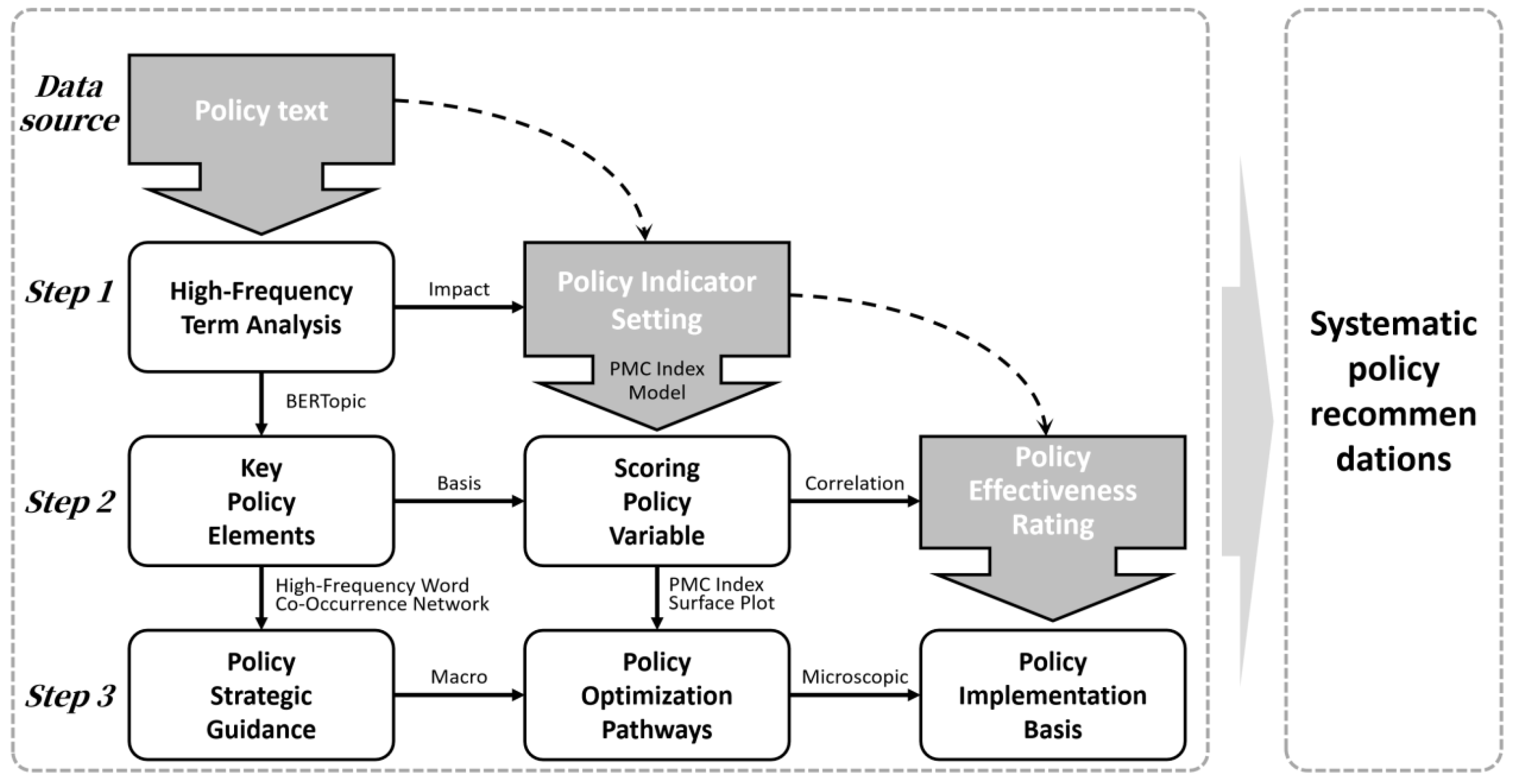
3.3. Research Methods
3.3.1. BERTopic Model
3.3.2. Construction of the PMC Index Model
3.4. Research Hypotheses
4. Results
4.1. Macro-Level Analysis of Policy Texts
4.1.1. Term-Frequency Results
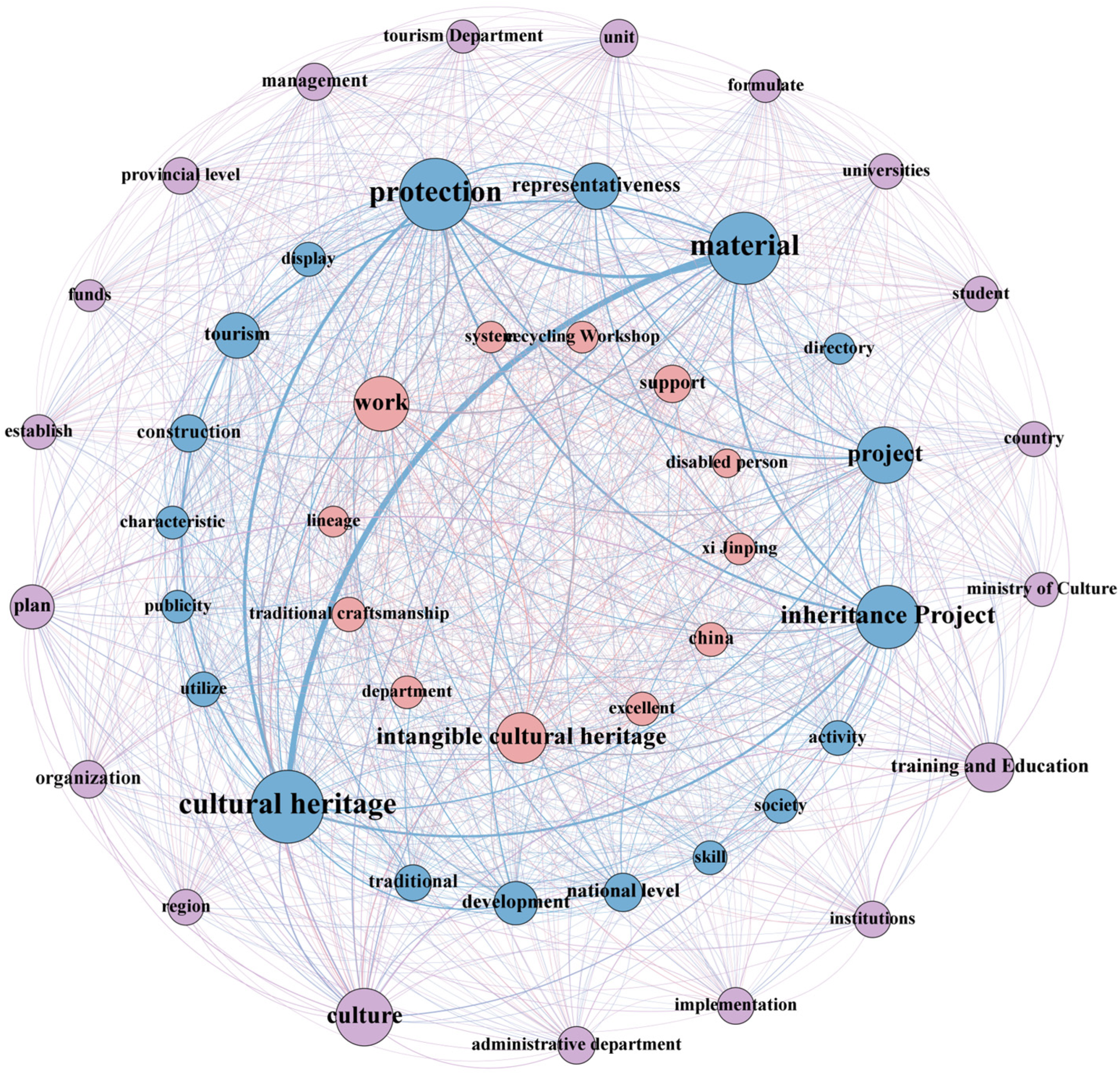
4.1.2. Semantic Network Topic Clustering Analysis
4.2. Topic Identification and Evolution of China’s ICH Safeguarding Policies
4.2.1. Topic Identification and Validation of Topic Representations
4.2.2. Topic Structure Relations and Semantic Associations
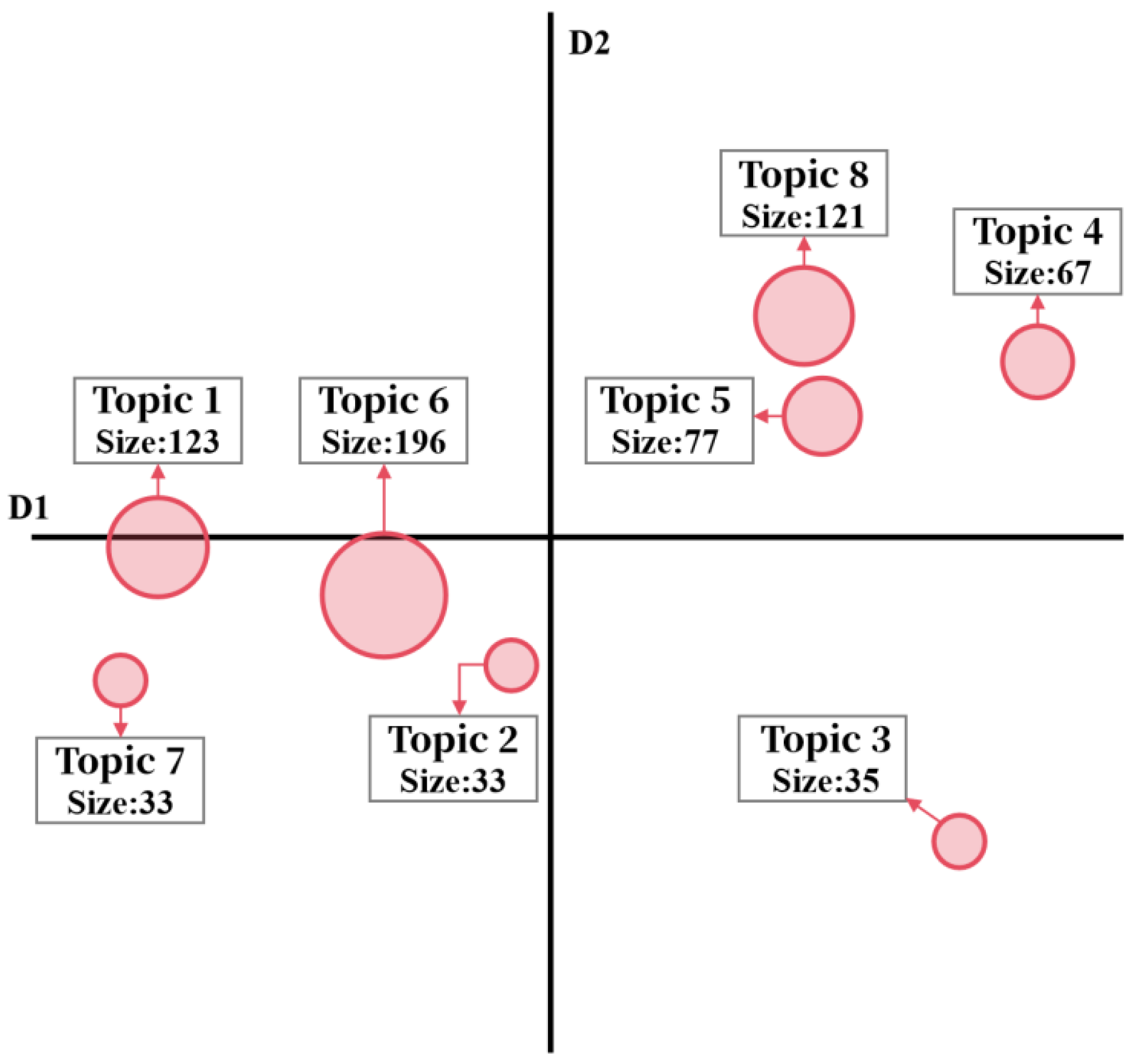
Topic Space Distribution and Hierarchical Clustering Structure
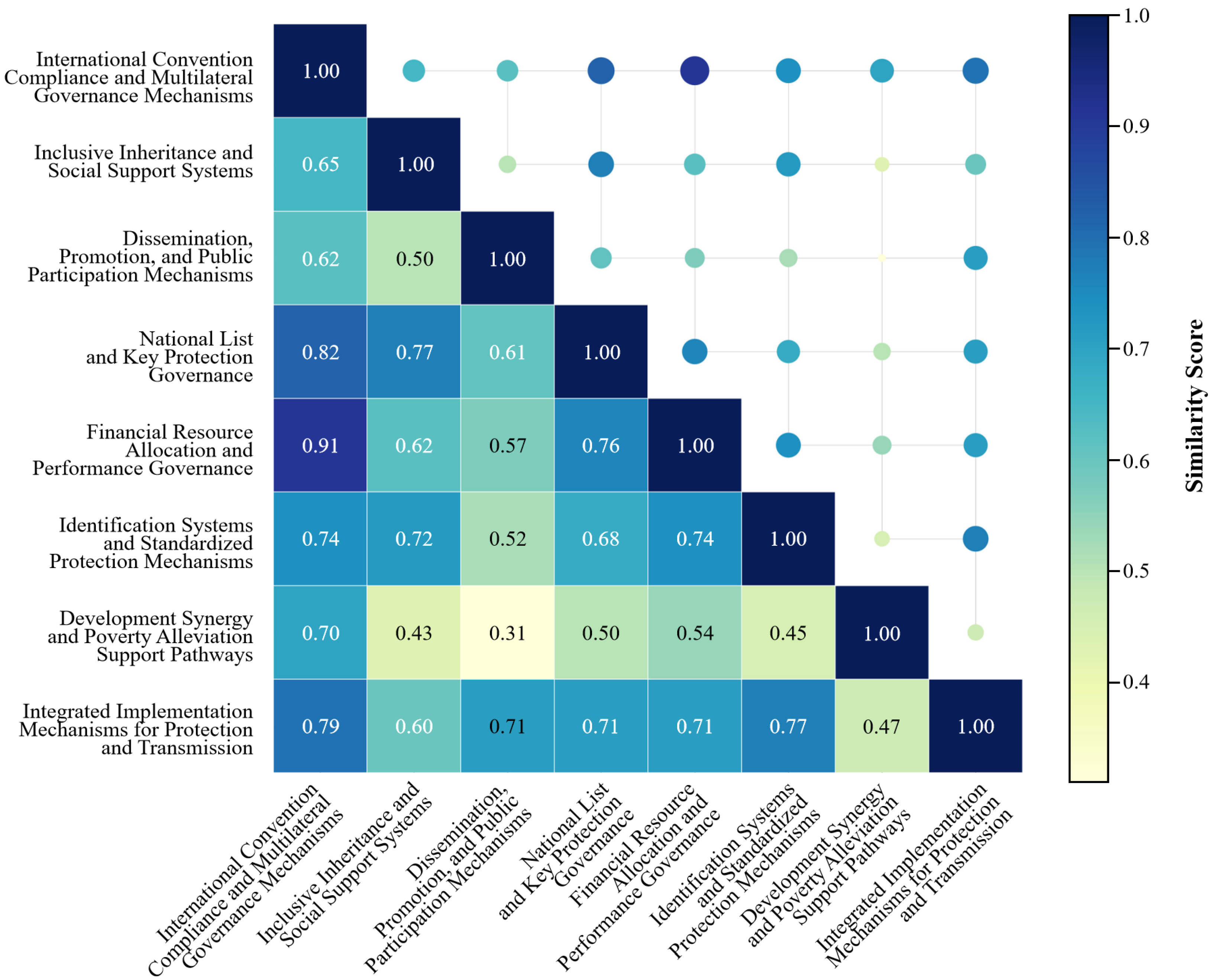
Topic Similarity Matrix and Association Strength
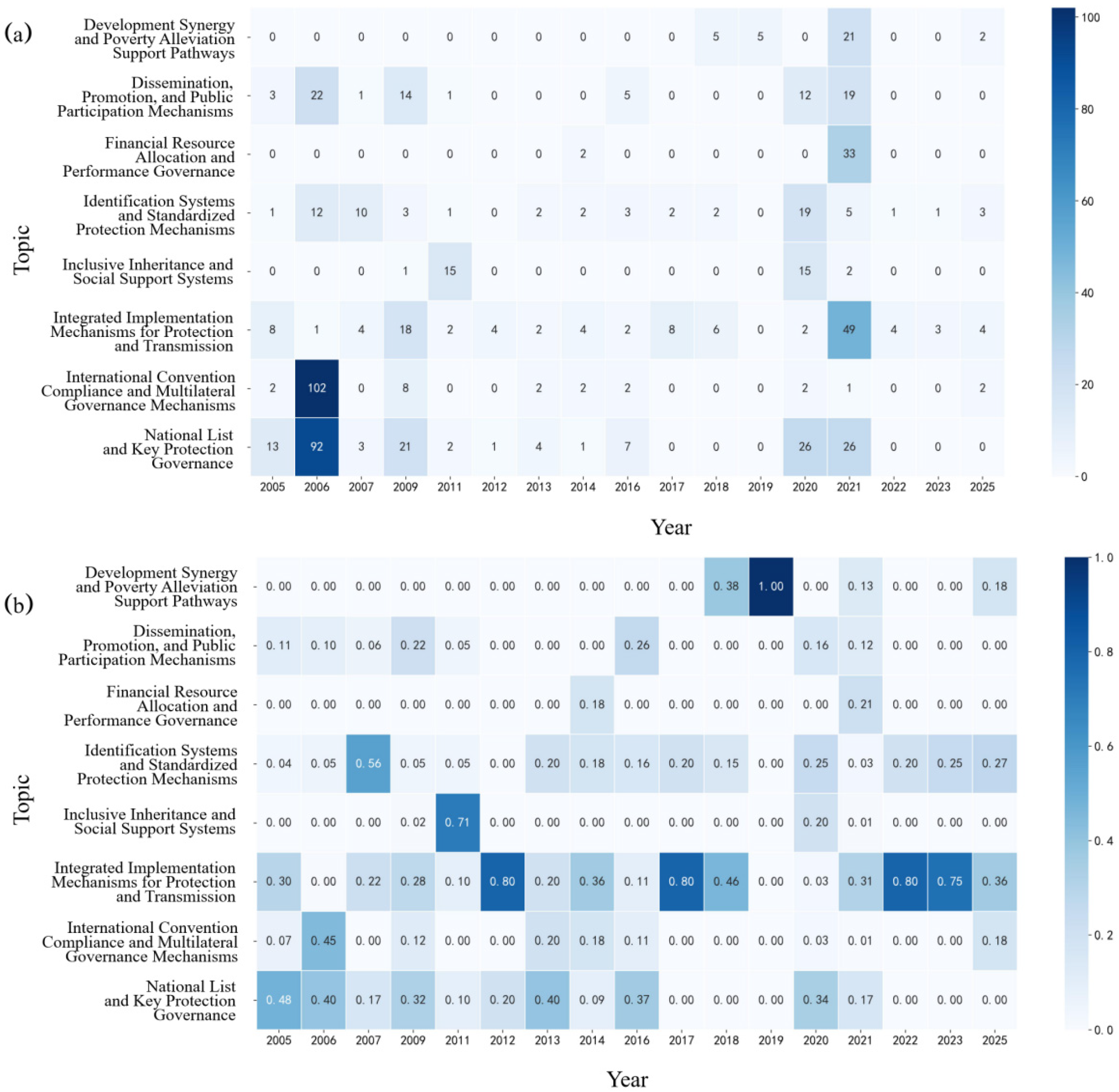
Temporal Topic Evolution and Stage-Wise Distributions
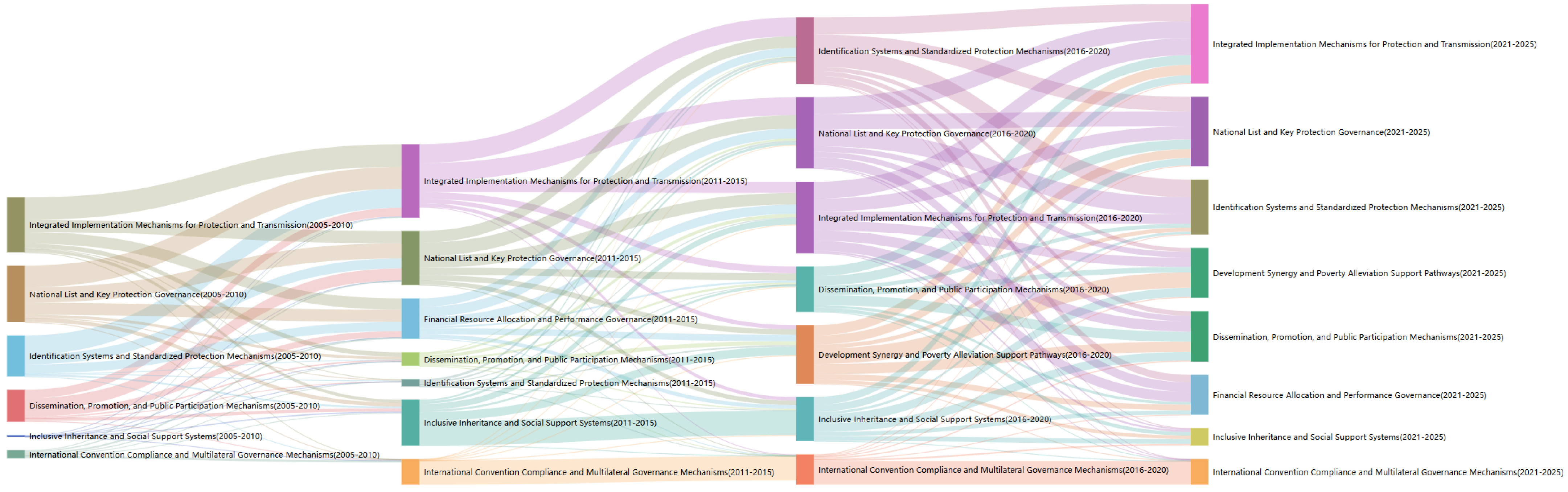
4.2.3. Topic Evolution Trajectories and Agenda Succession Paths
4.3. PMC-Based Evaluation Results and Analysis
4.3.1. PMC Policy Index
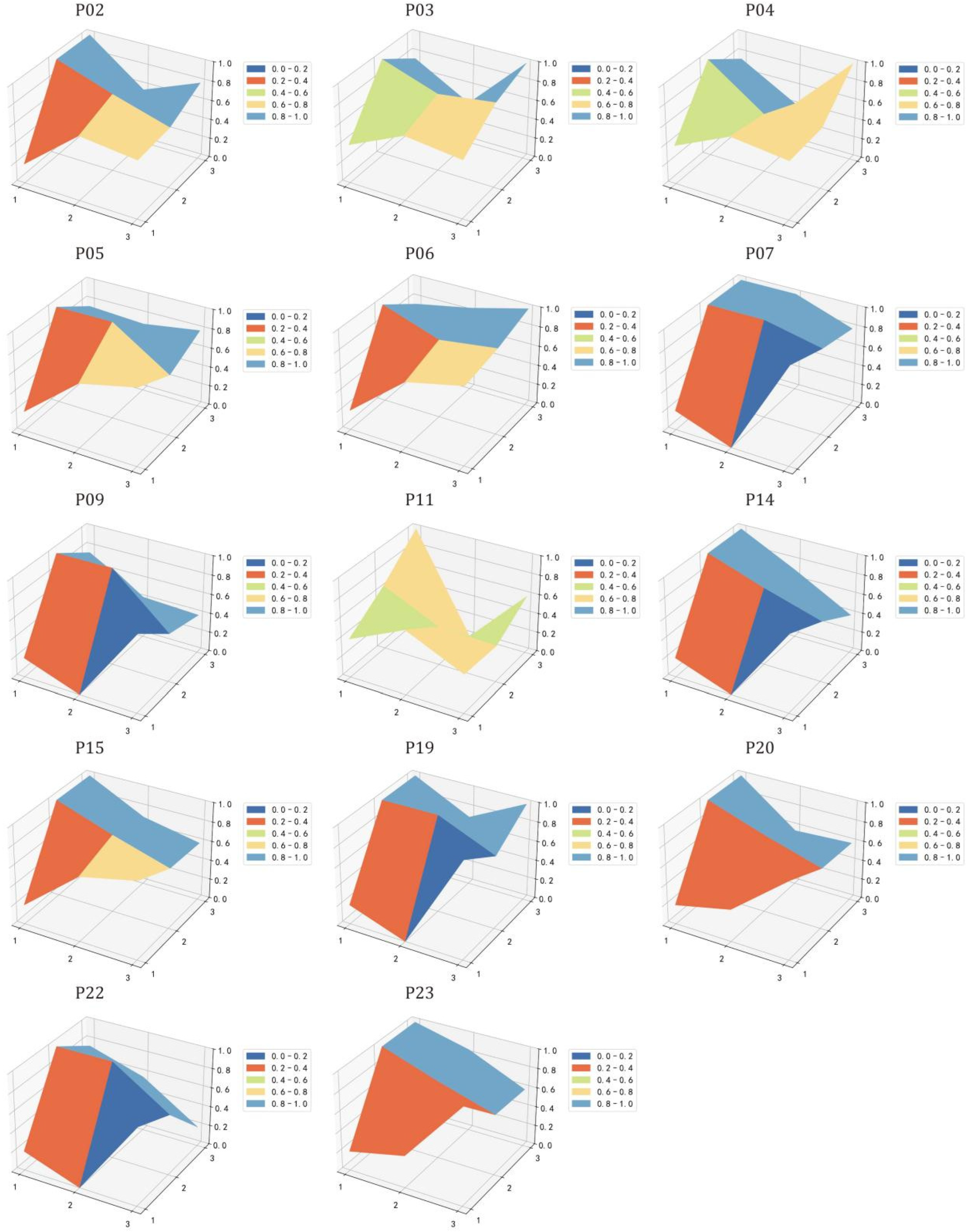
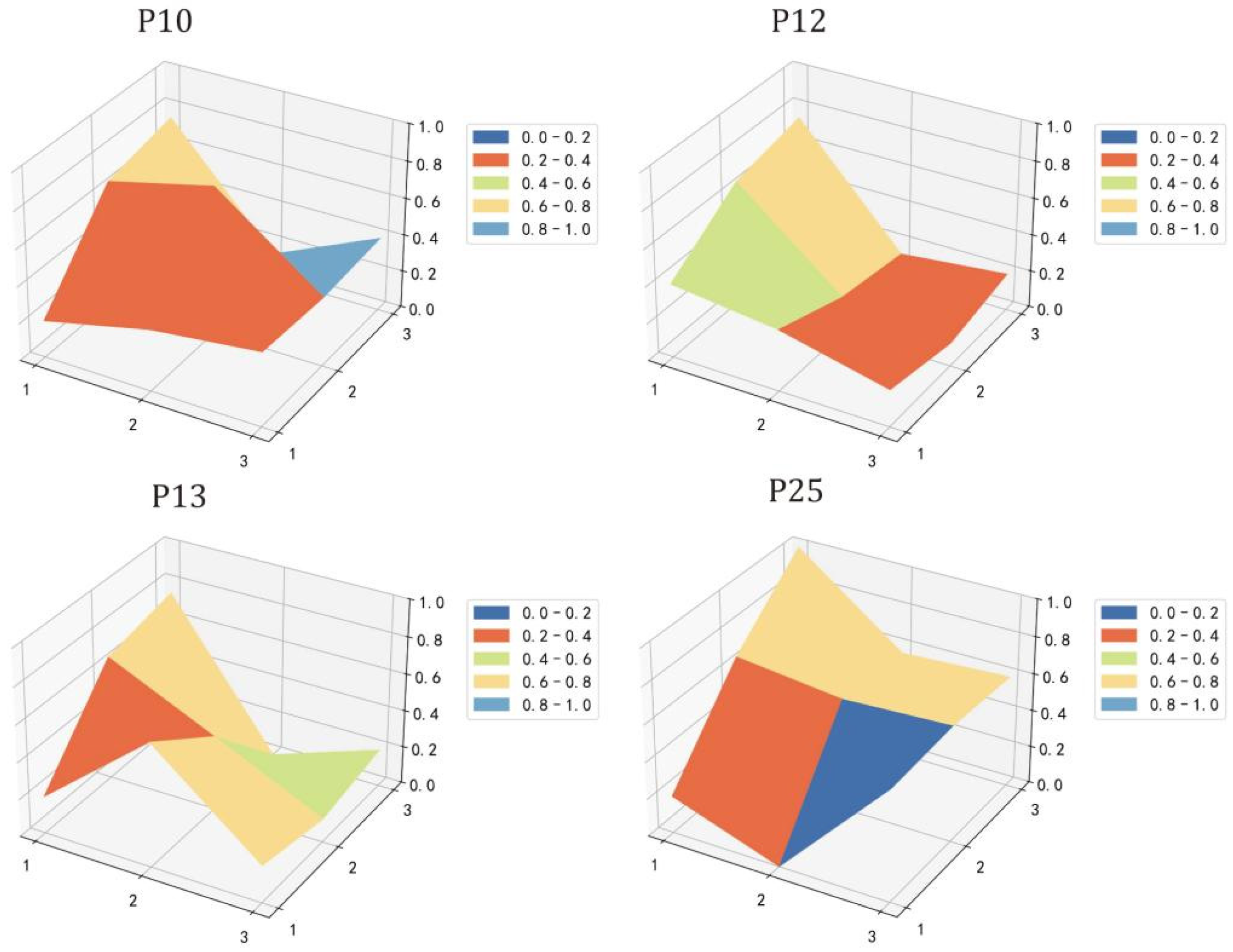
4.3.2. Visualization with PMC Surfaces
5. Discussion
6. Conclusions
Supplementary Materials
Author Contributions
Funding
Institutional Review Board Statement
Informed Consent Statement
Data Availability Statement
Conflicts of Interest
References
- Labadi, S.; Giliberto, F.; Rosetti, I.; Shetabi, L.; Yildirim, E. Heritage and the Sustainable Development Goals: Policy Guidance for Heritage and Development Actors; International Council on Monuments and Sites (ICOMOS): Paris, France, 2021. [Google Scholar]
- Tavares, D.S.; Alves, F.B.; Vásquez, I.B. The relationship between intangible cultural heritage and urban resilience: A systematic literature review. Sustainability 2021, 13, 12921. [Google Scholar] [CrossRef]
- Zabulis, X.; Partarakis, N.; Zidianakis, E.; Kaplanidi, D. A Critical Review of the Function of Intangible Cultural Heritage as a Driver for Social Resilience and Cohesion. Encyclopedia 2025, 5, 189. [Google Scholar] [CrossRef]
- Maags, C. State Institutions as Building Blocks of China’s Infrastructures of Memory-The Case of Intangible Heritage. J. Curr. Chin. Aff. 2023, 52, 163–184. [Google Scholar] [CrossRef]
- Meissner, M. Intangible Cultural Heritage and Sustainable Development; Springer: Berlin/Heidelberg, Germany, 2021. [Google Scholar]
- Smeets, R. The Reorientation of a Convention: UNESCO, intangible heritage, and sustainable development. In Intangible Cultural Heritage and Sustainable Development; Routledge: London, UK, 2023; pp. 36–54. [Google Scholar]
- Gökbulut, B.; Yeniasır, M. The Impact of the Sustainability of Intangible Cultural Heritage Elements (ICH) and the Awareness of the Ministry of Culture Personnel on the Safeguarding and Sustainability of Cultural Heritage. Heritage 2025, 8, 138. [Google Scholar] [CrossRef]
- Li, J.; Wu, X.; Du, Y. Reframing Cultural Heritage Policy Through Place-Based Perspectives: The Evolution of China’s ICH Governance Amid Historical Continuity and Global Convergence. Land 2025, 14, 1425. [Google Scholar] [CrossRef]
- Farah, P.D.; Tremolada, R. Conflict between intellectual property rights and human rights: A case study on intangible cultural heritage. Or. Law Rev. 2015, 94, 125. [Google Scholar]
- Esfehani, M.H.; Albrecht, J.N. Planning for intangible cultural heritage in tourism: Challenges and implications. J. Hosp. Tour. Res. 2019, 43, 980–1001. [Google Scholar] [CrossRef]
- Zhu, Y.; Liu, J. Intangible Cultural Heritage as Co-Creation: Challenges, Pathways and Conditions. In Collaboration and Co-Creation in Museums, Heritage, and the Arts; Routledge: London, UK, 2025; pp. 276–286. [Google Scholar]
- Boswell, R. Challenges to sustaining intangible cultural heritage. Herit. Soc. 2011, 4, 119–124. [Google Scholar] [CrossRef]
- UNESCO. Lists of Intangible Cultural Heritage. Available online: https://ich.unesco.org/en/lists?text=&country[]=00045&multinational=3#tabs (accessed on 9 January 2026).
- National Cultural Heritage Administration Platform. Available online: https://ncha.gjzwfw.gov.cn/ (accessed on 9 January 2026).
- Yan, W.-J.; Chiou, S.-C. The safeguarding of intangible cultural heritage from the perspective of civic participation: The informal education of Chinese embroidery handicrafts. Sustainability 2021, 13, 4958. [Google Scholar] [CrossRef]
- Dang, Q.; Luo, Z.; Ouyang, C.; Wang, L.; Xie, M. Intangible cultural heritage in China: A visual analysis of research hotspots, frontiers, and trends using CiteSpace. Sustainability 2021, 13, 9865. [Google Scholar] [CrossRef]
- Chen, Y.; Lei, P.; Su, X.; Ma, Y.; Zhang, S. Research on the transmission mechanisms of global intangible cultural heritage: A case study of Chinese Oolong tea production techniques. Sci. Rep. 2025, 16, 1491. [Google Scholar] [CrossRef] [PubMed]
- Sun, C.; Chen, H.; Liao, R. Research on incentive mechanism and strategy choice for passing on intangible cultural heritage from masters to apprentices. Sustainability 2021, 13, 5245. [Google Scholar] [CrossRef]
- Eichler, J. Intangible cultural heritage, inequalities and participation: Who decides on heritage? Int. J. Hum. Rights 2021, 25, 793–814. [Google Scholar] [CrossRef]
- Valentina, L.Z. Community participation in Intangible Cultural Heritage safeguarding. Правoведение 2020, 64, 23–34. [Google Scholar]
- Liu, M.; Karin, K. The role of local government in the preservation, promotion and transmission of the intangible cultural heritage. Int. J. Interdiscip. Civ. Political Stud. 2022, 17, 83. [Google Scholar]
- Wasela, K. The role of intangible cultural heritage in the development of cultural tourism. Int. J. Eco-Cult. Tour. Hosp. Plan. Dev. 2023, 6, 15–28. [Google Scholar] [CrossRef]
- Rodzi, N.I.M.; Zaki, S.A.; Subli, S.M.H.S. Between tourism and intangible cultural heritage. Procedia-Soc. Behav. Sci. 2013, 85, 411–420. [Google Scholar] [CrossRef]
- Wang, Q. The digitisation of intangible cultural heritage oriented to inheritance and dissemination under the threshold of neural network vision. Mob. Inf. Syst. 2022, 2022, 6323811. [Google Scholar] [CrossRef]
- Yan, Z.; Lim, C.K.; Hu, D.; Ahmed, M.F.; Halim, S.A.; Li, L. Construction of digital dissemination effects evaluation indicator system of traditional techniques of intangible cultural heritage. NPJ Herit. Sci. 2025, 13, 224. [Google Scholar] [CrossRef]
- Gündoğdu, H.; Aytekin, A. Effects of sustainable governance to sustainable development. Oper. Res. Eng. Sci. Theory Appl. 2022, 5, 117–151. [Google Scholar] [CrossRef]
- Mezentseva, E.; Baysaeva, M.; Fayzullaev, N. The Impact of Sustainable Development on Economic Growth: Balancing Environmental, Social and Economic Factors. Reliab. Theory Appl. 2024, 19, 1269–1274. [Google Scholar]
- Spijkers, O. Intergenerational equity and the sustainable development goals. Sustainability 2018, 10, 3836. [Google Scholar] [CrossRef]
- Summers, J.K.; Smith, L.M. The role of social and intergenerational equity in making changes in human well-being sustainable. Ambio 2014, 43, 718–728. [Google Scholar] [CrossRef]
- Liu, N.; Zhang, L. Research on Network Relationships and Collaborative Governance of Multiple stakeholders in Urban Renewal. In Proceedings of the 2024 Portland International Conference on Management of Engineering and Technology (PICMET), Portland, OR, USA, 4–8 August 2024; pp. 1–12. [Google Scholar]
- Yunling, F.; Xia, W.; Huiping, Z. Governance Path of the Rural Human Settlements Environment under the Concepts of Co-construction, Co-Governance and Shared Benefits—A Case Study of Xizhuang Village, Hebei Province. J. Resour. Ecol. 2025, 16, 1721–1730. [Google Scholar] [CrossRef]
- Leal Filho, W.; Platje, J.; Gerstlberger, W.; Ciegis, R.; Kääriä, J.; Klavins, M.; Kliucininkas, L. The role of governance in realising the transition towards sustainable societies. J. Clean. Prod. 2016, 113, 755–766. [Google Scholar] [CrossRef]
- Emerson, K.; Nabatchi, T.; Balogh, S. An integrative framework for collaborative governance. J. Public Adm. Res. Theory 2012, 22, 1–29. [Google Scholar] [CrossRef]
- Ansell, C.; Gash, A. Collaborative governance in theory and practice. J. Public Adm. Res. Theory 2008, 18, 543–571. [Google Scholar] [CrossRef]
- Bingham, L.B. The next generation of administrative law: Building the legal infrastructure for collaborative governance. Wis. Law Rev. 2010, 2, 297. [Google Scholar]
- Jacobi, P.R.; Peres, U.D. Urban environmental management and governance: Challenges for the 21st century. Disp-Plan. Rev. 2016, 52, 26–34. [Google Scholar] [CrossRef]
- Bai, X.; McAllister, R.R.; Beaty, R.M.; Taylor, B. Urban policy and governance in a global environment: Complex systems, scale mismatches and public participation. Curr. Opin. Environ. Sustain. 2010, 2, 129–135. [Google Scholar] [CrossRef]
- Badach, J.; Dymnicka, M. Concept of ‘good urban governance’ and its application in sustainable urban planning. In Proceedings of the IOP Conference Series: Materials Science and Engineering; IOP Publishing: Bristol, UK, 2017; p. 082017. [Google Scholar]
- Swilling, M.; Hajer, M. Governance of urban transitions: Towards sustainable resource efficient urban infrastructures. Environ. Res. Lett. 2017, 12, 125007. [Google Scholar] [CrossRef]
- Ghosh Mitra, S.; Chandra, A.; Ramaprasad, A. The Ontology of Urban Governance: A Framework for Pathways to Sustainable Urban Transition. Urban Sci. 2024, 8, 38. [Google Scholar] [CrossRef]
- McGuirk, P.; Baker, T.; Dowling, R.; Maalsen, S.; Sisson, A. Enacting urban governance innovation: Beyond strategic pathways to incremental “muddling through”. Urban Geogr. 2025, 46, 1539–1563. [Google Scholar] [CrossRef]
- Da Cruz, N.F.; Rode, P.; McQuarrie, M. New urban governance: A review of current themes and future priorities. J. Urban Aff. 2019, 41, 1–19. [Google Scholar] [CrossRef]
- Caciora, T.; Herman, G.V.; Ilieș, A.; Baias, Ș.; Ilieș, D.C.; Josan, I.; Hodor, N. The use of virtual reality to promote sustainable tourism: A case study of wooden churches historical monuments from Romania. Remote Sens. 2021, 13, 1758. [Google Scholar] [CrossRef]
- Barbe, N.; Chauliac, M.; Tornatore, J.-L. Intangible cultural heritage exposed to public deliberation: A participatory experience in a Regional Nature Park. In Between Imagined Communities and Communities of Practice; Adell, N., Bendix, R.F., Bortolotto, C., Tauschek, M., Eds.; Universitätsverlag Göttingen: Göttingen, Germany, 2015; p. 201. [Google Scholar]
- Kato, K. Community, connection and conservation: Intangible cultural values in Natural Heritage—The case of Shirakami-sanchi World Heritage Area. Int. J. Herit. Stud. 2006, 12, 458–473. [Google Scholar] [CrossRef]
- Blake, J. Engaging “communities, groups and individuals” in the International mechanisms of the 2003 Intangible Heritage Convention. Int. J. Cult. Prop. 2019, 26, 113–137. [Google Scholar] [CrossRef]
- Ilieș, A.; Apopei, A.I.; Ilieș, G.; Berdenov, Z.; Manea, V.C.; Ilieș, D.C.; Caciora, T.; Barbu-Tudoran, L.; Hodor, N.; Alfehaid, M.M. Archaeometric study of a Romanian cave dwelling: Mineral composition and conservation aspects. NPJ Herit. Sci. 2026, 14, 75. [Google Scholar] [CrossRef]
- Blake, J. UNESCO’s 2003 Convention on Intangible Cultural Heritage: The implications of community involvement in ‘safeguarding’. In Intangible Heritage; Routledge: London, UK, 2008; pp. 59–87. [Google Scholar]
- Lenzerini, F. Intangible cultural heritage: The living culture of peoples. Eur. J. Int. Law 2011, 22, 101–120. [Google Scholar] [CrossRef]
- Labadi, S. UNESCO, cultural heritage, and outstanding universal value: Value-based analyses of the World Heritage and Intangible Cultural Heritage Conventions. Int. J. Herit. Stud. 2013, 21, 528–530. [Google Scholar]
- Zhang, Z.; Cui, Z.; Fan, T.; Ruan, S.; Wu, J. Spatial distribution of intangible cultural heritage resources in China and its influencing factors. Sci. Rep. 2024, 14, 4960. [Google Scholar] [CrossRef] [PubMed]
- Chen, Y.; Zhao, J.; Zhao, X.; Wang, Z.; Xu, Z.; Li, S.; Liu, W. Study on the Spatial Distribution Characteristics and Influencing Factors of Intangible Cultural Heritage Along the Great Wall of Hebei Province. Sustainability 2025, 17, 6962. [Google Scholar] [CrossRef]
- Wu, Z.; Hou, S. Heritage and discourse. In The Palgrave Handbook of Contemporary Heritage Research; Springer: Berlin/Heidelberg, Germany, 2015; pp. 37–51. [Google Scholar]
- Su, J. Conceptualising the subjective authenticity of intangible cultural heritage. Int. J. Herit. Stud. 2018, 24, 919–937. [Google Scholar] [CrossRef]
- Qing, L.; Wang, H. A Study of the Construction Approaches to a Multimodal Narrative Discourse System for Lingnan Intangible Cultural Heritage. J. Humanit. Arts Soc. Sci. 2024, 8, 2430–2436. [Google Scholar] [CrossRef]
- Chen, Y.-S.; Wu, S.-T. Social networking practices of Viennese coffeehouse culture and intangible heritage tourism. J. Tour. Cult. Change 2019, 17, 186–207. [Google Scholar] [CrossRef]
- Konach, T. Intangible cultural heritage projects-National policies and strategies. The creation of intangible cultural heritage inventories. ENCATC J. Cult. Manag. Policy 2015, 5, 67–79. [Google Scholar] [CrossRef]
- Wang, J.; Zaibon, S.B. Safeguarding intangible cultural heritage in China: Policy evolution and challenges. J. Creat. Ind. Sustain. Cult. 2024, 3, 136–150. [Google Scholar] [CrossRef]
- Xu, Y.; Tao, Y. Religion-related intangible cultural heritage safeguarding practices and initiatives of the contemporary Chinese state. Religions 2022, 13, 687. [Google Scholar] [CrossRef]
- Tu, B.; Chen, Y. Research on the Realization Path of Intangible Cultural Heritage Inheritance from the Perspective of Public Cultural Services: A Case Study of Yao Long-Drum Dance in S Town. Humanit. Soc. Sci. Res. 2025, 8, 30. [Google Scholar] [CrossRef]
- He, F. Dispute Resolution Paradigm for Intangible Cultural Heritage and Its Cultural Interpretation under Intellectual Property Framework. Int. J. Front. Sociol. 2025, 7, 9–14. [Google Scholar] [CrossRef]
- Tian, W.; Buarabha, H.; Indraragumhaeng, L.; Wang, K. Safeguarding the Intangible Heritage of Yunnan Spinning Tops: A Study from the Perspective of Living Heritage Theory. Arts Manag. J. 2025, 9, 102–120. [Google Scholar]
- Xue, Q.; Huang, Y. The spatial relationship and influence mechanism of traditional villages and intangible cultural heritage: A case study of the upper reaches of the Yellow River Basin. Humanit. Soc. Sci. Commun. 2025, 12, 142. [Google Scholar] [CrossRef]
- He, Q.; Tan, G.; Zhang, W. Residents’ Perceptions and Behaviors Regarding the Policy of Integrating Intangible Cultural Heritages into the Tourism Industry: Evidence from Dali, China. Sustainability 2025, 17, 795. [Google Scholar] [CrossRef]
- Wang, F.; Zhang, T.; Zhang, S. MGWR reveals scale heterogeneity shaping intangible cultural heritage distribution in China. NPJ Herit. Sci. 2025, 13, 367. [Google Scholar] [CrossRef]
- Ch, Z. Current Situation and Development Trend of China’s Cultural Products Trade. Рoссийские Региoны Фoкусе Перемен Сбoрник Дoкладoв-2024.-Екатеринбург 2025, 2025, 100–102. [Google Scholar]
- Zhu, Y.; Zheng, L.; Lu, Y.; Qian, L. Research on the Strategy of Integrating Wuzhen Bamboo Weaving Intangible Cultural Heritage into Rural Tourism Industry Oriented to Common Prosperity. Mediterr. Archaeol. Archaeom. 2025, 25, 1782. [Google Scholar]
- Boros, A.; Korcsmáros, E. DEVELOPMENT PROSPECTS OF RURAL TOURISM ALONG THE DANUBE: Key Factors of Satisfaction and the Role of Sustainability. Folia Geogr. 2024, 66, 5. [Google Scholar]
- Miao, H. The dilemma between innovation and authenticity in safeguarding intangible cultural heritage: Community agency in preserving Suzhou pingtan. China Inf. 2025, 39, 323–345. [Google Scholar] [CrossRef]
- Del Barrio, M.J.; Devesa, M.; Herrero, L.C. Evaluating intangible cultural heritage: The case of cultural festivals. City Cult. Soc. 2012, 3, 235–244. [Google Scholar] [CrossRef]
- Yang, X.; Luo, W.; Chen, H.; Lin, J.; Wang, M.; Zhu, H.; Kang, L.; Zhou, J.; Sun, Y.; Ge, L. Innovative protection, inheritance and utilization ofintangible cultural heritage in the New Era: System, pathways, and challenges. J. Nat. Resour. 2025, 40, 2297–2315. [Google Scholar]
- Hou, Y.; Kenderdine, S.; Picca, D.; Egloff, M.; Adamou, A. Digitizing intangible cultural heritage embodied: State of the art. J. Comput. Cult. Herit. (JOCCH) 2022, 15, 1–20. [Google Scholar]
- Khan, M. Enacting and Safeguarding Digital Intangible Heritage with Emerging Technologies and Speculative Design. Ph.D. Thesis, Charles Sturt University, Bathurst, Australia, 2022. [Google Scholar]
- Cao, T.L. Platforming Digital Cultural Heritage: History, Curation, and Platform Governance on Google Arts & Culture. Ph.D. Thesis, The University of Texas at Austin, Austin, TX, USA, 2024. [Google Scholar]
- Wagner, A.; de Clippele, M.-S. Safeguarding cultural heritage in the digital era—A critical challenge. Int. J. Semiot. Law-Rev. Int. Semiot. Jurid. 2023, 36, 1915–1923. [Google Scholar]
- Banović, B.; Milenković, M.; Milenković, M. Inclusive intangible cultural heritage safeguarding in museums: Professionalism vs. ethnic attribution in a Western Balkan setting. Mus. Manag. Curatorship 2025, 40, 512–531. [Google Scholar] [CrossRef]
- Giglitto, D.; Ciolfi, L.; Bosswick, W. Building a bridge: Opportunities and challenges for intangible cultural heritage at the intersection of institutions, civic society, and migrant communities. Int. J. Herit. Stud. 2022, 28, 74–91. [Google Scholar] [CrossRef]
- Fan, L.L. Canonic texts in public policy studies: A quantitative analysis. J. Public Aff. Educ. 2013, 19, 681–704. [Google Scholar] [CrossRef]
- Rich, R.C.; Brians, C.L.; Manheim, J.B.; Willnat, L. Empirical Political Analysis: Quantitative and Qualitative Research Methods; Routledge: London, UK, 2018. [Google Scholar]
- Grimmer, J.; Stewart, B.M. Text as data: The promise and pitfalls of automatic content analysis methods for political texts. Political Anal. 2013, 21, 267–297. [Google Scholar] [CrossRef]
- Dun, L.; Soroka, S.; Wlezien, C. Dictionaries, supervised learning, and media coverage of public policy. In Computational Political Communication; Routledge: London, UK, 2024; pp. 140–157. [Google Scholar]
- Palanichamy, Y.; Zolfagharinia, H.; Kargar, M. Unveiling two decades of environmental policy research trends: Topic modeling-based machine learning insights. Manag. Environ. Qual. Int. J. 2025, 37, 107–126. [Google Scholar] [CrossRef]
- Debnath, R.; Bardhan, R. India nudges to contain COVID-19 pandemic: A reactive public policy analysis using machine-learning based topic modelling. PLoS ONE 2020, 15, e0238972. [Google Scholar] [CrossRef]
- Meng, Y.; Zhang, Y.; Huang, J.; Zhang, Y.; Han, J. Topic discovery via latent space clustering of pretrained language model representations. In Proceedings of the ACM Web Conference 2022; Association for Computing Machinery: New York, NY, USA, 2022; pp. 3143–3152. [Google Scholar]
- Grootendorst, M. BERTopic: Neural topic modeling with a class-based TF-IDF procedure. arXiv 2022, arXiv:2203.05794. [Google Scholar]
- Ma, X.-F.; Ruan, Y.-F. How to Evaluate Green Development Policy Based on the PMC Index Model: Evidence from China. Int. J. Environ. Res. Public Health 2023, 20, 4249. [Google Scholar] [CrossRef]
- Turnpenny, J.; Radaelli, C.M.; Jordan, A.; Jacob, K. The policy and politics of policy appraisal: Emerging trends and new directions. J. Eur. Public Policy 2009, 16, 640–653. [Google Scholar] [CrossRef]
- Ramos, H.; Stoddart, M.C.; Chafe, D. Assessing the tangible and intangible benefits of tourism: Perceptions of economic, social, and cultural impacts in Labrador’s Battle Harbour Historic District. Isl. Stud. J. 2016, 11, 209–226. [Google Scholar] [CrossRef]
- Ruiz Estrada, M.A. The Policy Modeling Research Consistency Index (PMC-Index); Available at SSRN 1689475; Vizja University: Warsaw, Poland, 2010. [Google Scholar]
- Yang, M.; Adomavicius, G.; Burtch, G.; Ren, Y. Mind the gap: Accounting for measurement error and misclassification in variables generated via data mining. Inf. Syst. Res. 2018, 29, 4–24. [Google Scholar] [CrossRef]
- Price, M.N.; Arkin, A.P. PaperBLAST: Text mining papers for information about homologs. mSystems 2017, 2, 10. [Google Scholar] [CrossRef]
- Wiedemann, G. Text Mining for Qualitative Data Analysis in the Social Sciences; Springer: Berlin/Heidelberg, Germany, 2016. [Google Scholar]
- Estrada, M.A.R. Policy modeling: Definition, classification and evaluation. J. Policy Model. 2011, 33, 523–536. [Google Scholar] [CrossRef]
- Zhang, Y.; Geng, Z. The Quantitative Evaluation of Regional Science and Technology Innovation Policy: Based on the index of PMC Model. Sci. Technol. Manag. Res. 2015, 35, 26–31. [Google Scholar]
- Chen, S.; Yang, H.; Zhang, N. Identification and Development Trend Assessment of Key Core Technologies in Industrial Chains Based on Guided BERTopic Model: A Case Study of the Future Industrial Internet. Sci. Manag. Res. 2024, 42, 35–44. [Google Scholar] [CrossRef]
- Liu, Y.; Li, J.; Xu, Y. Quantitative Evaluation of High-Tech Industry Policies Based on the PMC-Index Model: A Case Study of China’s Beijing-Tianjin-Hebei Region. Sustainability 2022, 14, 9338. [Google Scholar] [CrossRef]
- Zhang, Q.; Chen, C.; Zheng, J.; Chen, L. Quantitative evaluation of China’s shipping decarbonization policies: The PMC-Index approach. Front. Mar. Sci. 2023, 10, 1119663. [Google Scholar] [CrossRef]
- Peters, B.G. Policy capacity in public administration. Policy Soc. 2015, 34, 219–228. [Google Scholar] [CrossRef]
- Höchtl, J.; Parycek, P.; Schöllhammer, R. Big data in the policy cycle: Policy decision making in the digital era. J. Organ. Comput. Electron. Commer. 2016, 26, 147–169. [Google Scholar] [CrossRef]
- Moynihan, D.P.; Soss, J. Policy feedback and the politics of administration. Public Adm. Rev. 2014, 74, 320–332. [Google Scholar] [CrossRef]
- Smismans, S. Policy evaluation in the EU: The challenges of linking ex ante and ex post appraisal. Eur. J. Risk Regul. 2015, 6, 6–26. [Google Scholar] [CrossRef]
- Howlett, M. The criteria for effective policy design: Character and context in policy instrument choice. J. Asian Public Policy 2018, 11, 245–266. [Google Scholar] [CrossRef]
- Wilts, H.; O’Brien, M. A policy mix for resource efficiency in the EU: Key instruments, challenges and research needs. Ecol. Econ. 2019, 155, 59–69. [Google Scholar] [CrossRef]
- Labrador, A.M. Integrating ICH and education: A review of converging theories and methods. Int. J. Intang. Herit. 2022, 17, 18–36. [Google Scholar]
- Yuan, C.; Gan, L.; Zhuo, H. Coupling mechanisms and development patterns of revitalizing intangible cultural heritage by integrating cultural tourism: The case of Hunan Province, China. Sustainability 2022, 14, 6994. [Google Scholar] [CrossRef]
- Zhao, H.; Zhao, X.; Elahi, E.; Wang, F. Policy evaluation of drama-related intangible cultural heritage tourism for boosting green industry: An empirical analysis based on quasi-natural experiment. Sustainability 2022, 14, 5380. [Google Scholar] [CrossRef]
- Müller, R.; Pemsel, S.; Shao, J. Organizational enablers for project governance and governmentality in project-based organizations. Int. J. Proj. Manag. 2015, 33, 839–851. [Google Scholar] [CrossRef]
- Rahbari Bonab, M.; Rajabi, F.; Vedadhir, A.; Majdzadeh, R. Sustainable political commitment is necessary for institutionalizing community participation in health policy-making: Insights from Iran. Health Res. Policy Syst. 2024, 22, 23. [Google Scholar] [CrossRef]









| Primary Variable | Secondary Variable | Definition Observation Point | Coding Criterion |
|---|---|---|---|
| X1 Policy legal status | X1-1 Law | Laws, administrative regulations, ordinances | The title or document number clearly indicates “Law/Ordinance/Administrative Regulation”, etc. |
| X1-2 Ministerial regulation normative document | Ministerial rules, administrative measures, provisions | The text is titled “Measures/Provisions/Rules/Implementing Rules”, and carries general binding force. | |
| X1-3 Plan outline scheme | Medium- to long-term plans; action schemes | The text is titled “Plan/Outline/Scheme/Action Plan” and specifies a task framework. | |
| X1-4 Opinions notices guiding document | Policy orientation and task deployment | The text is titled “Opinions/Notice/Guiding Opinions/Measures”, etc. | |
| X1-5 Policy interpretation guideline | Interpretive guidance on implementation | The text is titled “Interpretation/Q&A/Guideline/Guide” and corresponds to a specific policy document. | |
| X2 Policy time horizon and validity | X2-1 Explicit start-end dates or validity period | Validity; implementation term (for time-bounded instruments) | For plans/outlines/programs/implementation schemes, the text specifies an explicit validity period or implementation term (e.g., “effective from…until…/valid for … years”). For laws/regulations/normative opinions intended to remain effective until superseded, the absence of an end date is not regarded as a deficiency under this item. |
| X2-2 Explicit staged arrangement timetable | Phased goals; milestones (for plan-type documents) | For plans/outlines/programs/implementation schemes, the text specifies time nodes (e.g., “by 2025/2030”), phased tasks, milestones, or annual work plans. For laws/regulations without staged timetables by design, this item is not required. | |
| X2-3 Explicit dynamic revision rolling update | Post-evaluation revision mechanism (applicable to all document types) | The text specifies periodic review, revision, rolling adjustment, or timely updates (e.g., review cycles, revision triggers, post-evaluation update mechanisms). | |
| X3 Policy target groups | X3-1 Government agencies with explicit responsibilities | Division of labor; responsibility chain | Specific agencies are named and assigned tasks (e.g., culture and tourism, education, finance). |
| X3-2 Bearers safeguarding units | Support for key actors | The text specifies bearers, safeguarding units, training bases, etc., with concrete measures. | |
| X3-3 Communities and civil society organizations | Community and social forces | The text specifies mechanisms/roles for communities, associations, NGOs, volunteer groups, etc. | |
| X3-4 Market actor culture-tourism enterprises | Industry and utilization actors | Enterprises/platforms/culture-tourism operators are specified with boundaries or responsibilities. | |
| X3-5 Public school media | Targets of education and communication | The text specifies public education, school curricula, media dissemination arrangements, etc. | |
| X4 Policy perspective | X4-1 Supply-side capacity building | Resources, facilities, talent, platforms | The text provides for funding, institutions, talent, platforms, inventory system building, etc. |
| X4-2 Demand-side public services and participation | Public services, cultural consumption, participation | The text specifies public cultural services, education/communication, participation mechanisms, supply-demand matching. | |
| X4-3 Enabling environment: Institutions and regulation | Standards, oversight, risk governance | The text specifies standards, regulation/enforcement, risk prevention, accountability mechanisms, etc. | |
| X5 Policy focus | X5-1 Survey and inventory management | Census, documentation, dynamic inventory management | The text specifies surveys, databases, nomination/review, exit/adjustment mechanisms, etc. |
| X5-2 Transmission system and capacity building | Bearer development; transmission practices | The text specifies bearer accreditation, training, transmission bases, apprenticeship systems, etc. | |
| X5-3 Safeguarding and responsible utilization | Use boundaries; transformation pathways | The text specifies culture-tourism integration, productization with boundary control, intellectual property, etc. | |
| X5-4 Communication, education, and public awareness | Education, display, dissemination | The text specifies curricula, performances/exhibitions, media communication, popularization activities, etc. | |
| X5-5 Digitization and information-based safeguarding | Digital recording; platform governance | The text specifies digital archives, platforms, data standards, digital exhibitions, etc. | |
| X6 Policy instruments | X6-1 Fiscal funding instruments | Special funds, subsidies, service procurement | The text specifies concrete mechanisms such as subsidies, earmarked funds, awards/subsidies, government procurement of services. |
| X6-2 Tax and financial support | Tax incentives, credit, funds | The text specifies tax relief, financing/loans, funds, interest subsidies, etc. | |
| X6-3 Talent and bearer support | Allowances, appraisal, training system | The text specifies bearer subsidies, professional-title appraisal, training programs, etc. | |
| X6-4 Infrastructure and platform building | Venues, bases, digital platforms | The text specifies building venues/stations, transmission workshops, exhibition centers, digital platforms, etc. | |
| X6-5 Standards, norms, and guidelines | Standards, specifications, operating procedures | The text specifies standards, guidelines, norms, checklists, etc. | |
| X6-6 Combined incentives and constraints | Rewards/penalties, accountability, licensing boundaries | The text specifies incentives/penalties, negative lists, sanctions, or accountability. | |
| X6-7 Information disclosure and public communication | Disclosure; dissemination strategy | The text specifies disclosure arrangements, publicity plans, education systems, etc. | |
| X6-8 Coordination instruments | Cross-sector linkage; collaboration mechanisms | The text specifies joint conferences, coordination platforms, cross-department task division mechanisms, etc. | |
| X7 Content quality assessment | X7-1 Adequate problem diagnosis | Context, tensions, risks | The text identifies concrete problems (e.g., transmission rupture, commercialization risk, digital risk). |
| X7-2 Clear and verifiable objectives | Clear goals/indicators/scope | The text specifies checkable objectives, quantitative indicators, or clearly bounded scope. | |
| X7-3 Clear implementation pathway | Tasks, steps, responsibility chain | The text specifies task lists, roadmaps, and responsible actors. | |
| X7-4 Monitoring and evaluation arrangements | Evaluation, supervision, feedback | The text specifies indicators, evaluation frequency, supervision mechanisms, and corrective-action loops. | |
| X8 Sustainable-governance assessment | X8-1 Intergenerational transmission mechanisms | Long-term learning and transmission chain | The text specifies bearer pipeline, apprenticeship, curriculum systems, school-based transmission, etc. |
| X8-2 Community participation and co-governance | Multi-actor participation; deliberative mechanisms | The text specifies community deliberation, participatory safeguarding, co-management, benefit negotiation, etc. | |
| X8-3 Protection of authenticity and integrity | Cultural context and process integrity | The text specifies preventing distortion, maintaining context, safeguarding craft/process integrity, etc. | |
| X8-4 Sustainable use and risk control | Boundary governance between safeguarding and development | The text specifies tourism carrying capacity, commercialization boundaries, overdevelopment risks, negative lists, etc. | |
| X8-5 Equity and inclusion | Cultural rights of vulnerable/marginalized groups | The text specifies benefit mechanisms/accessibility for ethnic minorities, rural areas, vulnerable groups. | |
| X8-6 Digital safeguarding and open sharing | Digital archives and data governance | The text specifies digital archives, open platforms, data standards, copyright and sharing rules. | |
| X8-7 Monitoring, evaluation, and adaptive governance | Dynamic adjustment and learning mechanisms | The text specifies dynamic monitoring, annual evaluations, rolling revisions, corrective mechanisms, etc. | |
| X9 Policy safeguards | X9-1 Leadership and coordination mechanisms | Lead agency, coordination, linkage | The text specifies leading groups, joint meetings, lead units, coordination mechanisms. |
| X9-2 Resource guarantees | Funding, land/space, facilities | The text specifies earmarked funding, resource pooling, space/facility, etc. | |
| X9-3 Rule of law and accountability | Responsibility, sanctions, accountability | The text specifies legal liabilities, penalties, accountability, audit/oversight, etc. | |
| X9-4 Data and statistical support | Reporting, information systems | The text specifies reporting systems, statistical indicators, information-system support, etc. | |
| X9-5 Performance and incentive mechanisms | Performance appraisal; evaluation linkage | The text links appraisal results to resource allocation, project adjustments, incentives, etc. |
| Main Indicators | Secondary Indicators | |||||||
|---|---|---|---|---|---|---|---|---|
| X1 | X1:1 | X1:2 | X1:3 | X1:4 | X1:5 | |||
| X2 | X2:1 | X2:2 | X2:3 | |||||
| X3 | X3:1 | X3:2 | X3:3 | X3:4 | X3:5 | |||
| X4 | X4:1 | X4:2 | X4:3 | |||||
| X5 | X5:1 | X5:2 | X5:3 | X5:4 | X5:5 | |||
| X6 | X6:1 | X6:2 | X6:3 | X6:4 | X6:5 | X6:6 | X6:7 | X6:8 |
| X7 | X7:1 | X7:2 | X7:3 | X7:4 | ||||
| X8 | X8:1 | X8:2 | X8:3 | X8:4 | X8:5 | X8:6 | X8:7 | |
| X9 | X9:1 | X9:2 | X9:3 | X9:4 | X9:5 | |||
| PMC Index | 0–4.99 | 5–6.99 | 7–8.99 | 9–10 |
|---|---|---|---|---|
| Evaluation Level | Poor | Average | Good | Excellent |
| Number | Name | Frequency | Number | Name | Frequency |
|---|---|---|---|---|---|
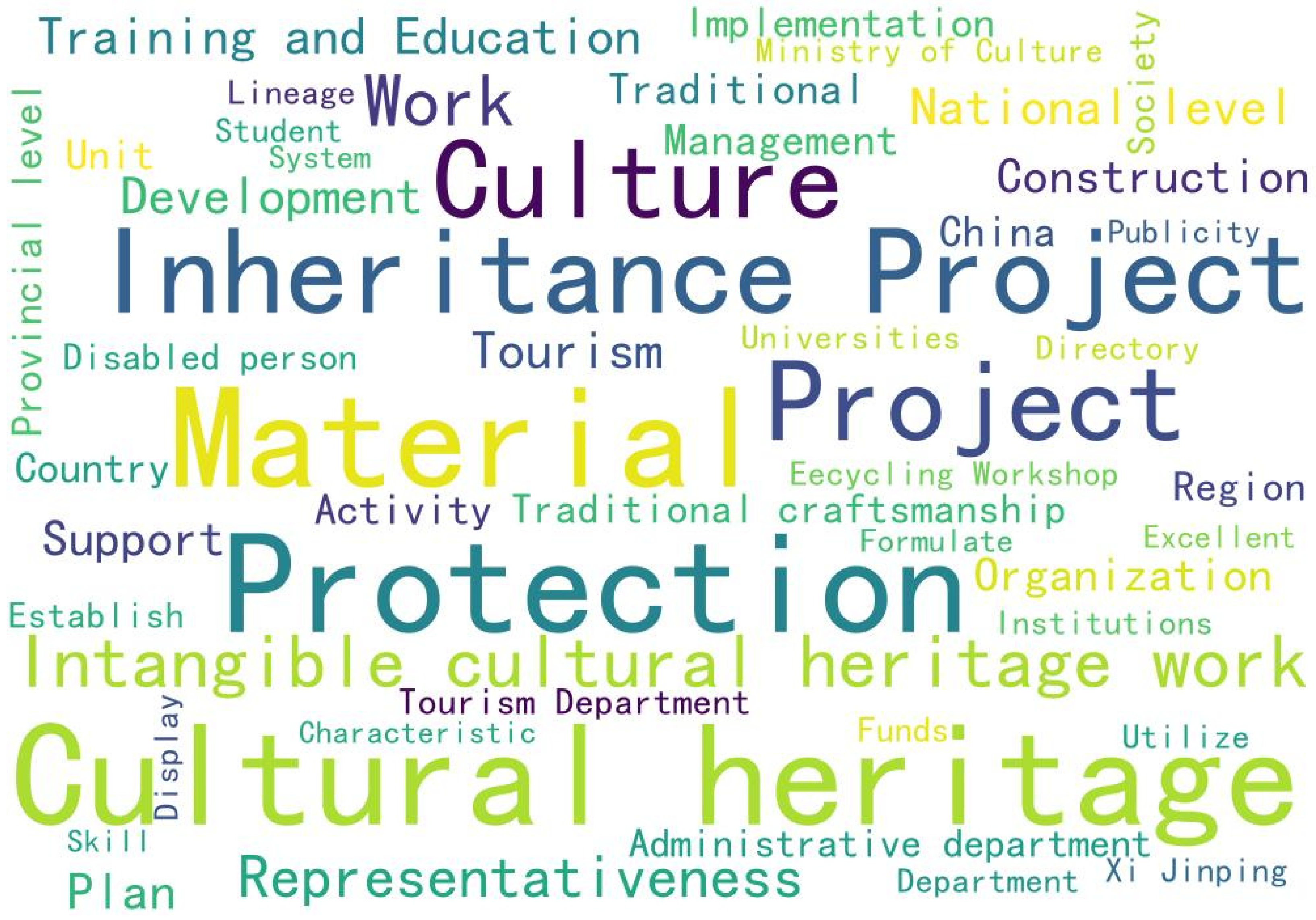
| 01 | Cultural heritage | 851 | 26 | Region | 121 |
| 02 | Material | 841 | 27 | Traditional craftsmanship | 121 |
| 03 | Protection | 819 | 28 | Administrative department | 121 |
| 04 | Inheritance Project | 584 | 29 | Society | 115 |
| 05 | Project | 507 | 30 | Disabled person | 108 |
| 06 | Culture | 490 | 31 | Tourism Department | 104 |
| 07 | Intangible cultural heritage work | 488 | 32 | Establish | 102 |
| 08 | Work | 451 | 33 | Funds | 96 |
| 09 | Representativeness | 291 | 34 | Utilize | 91 |
| 10 | National level | 214 | 35 | Xi Jinping | 89 |
| 11 | Development | 212 | 36 | Eecycling Workshop | 89 |
| 12 | Training and Education | 207 | 37 | Directory | 87 |
| 13 | Tourism | 203 | 38 | Institutions | 84 |
| 14 | Plan | 191 | 39 | Student | 84 |
| 15 | Support | 186 | 40 | Display | 84 |
| 16 | Construction | 178 | 41 | Lineage | 83 |
| 17 | Organization | 167 | 42 | Department | 82 |
| 18 | China | 140 | 43 | Ministry of Culture | 81 |
| 19 | Management | 140 | 44 | Universities | 81 |
| 20 | Traditional | 137 | 45 | Formulate | 76 |
| 21 | Country | 132 | 46 | System | 75 |
| 22 | Activity | 132 | 47 | Publicity | 75 |
| 23 | Unit | 131 | 48 | Excellent | 73 |
| 24 | Provincial level | 131 | 49 | Skill | 70 |
| 25 | Implementation | 131 | 50 | Characteristic | 70 |
| Topic Name | Data Proportion | |
|---|---|---|
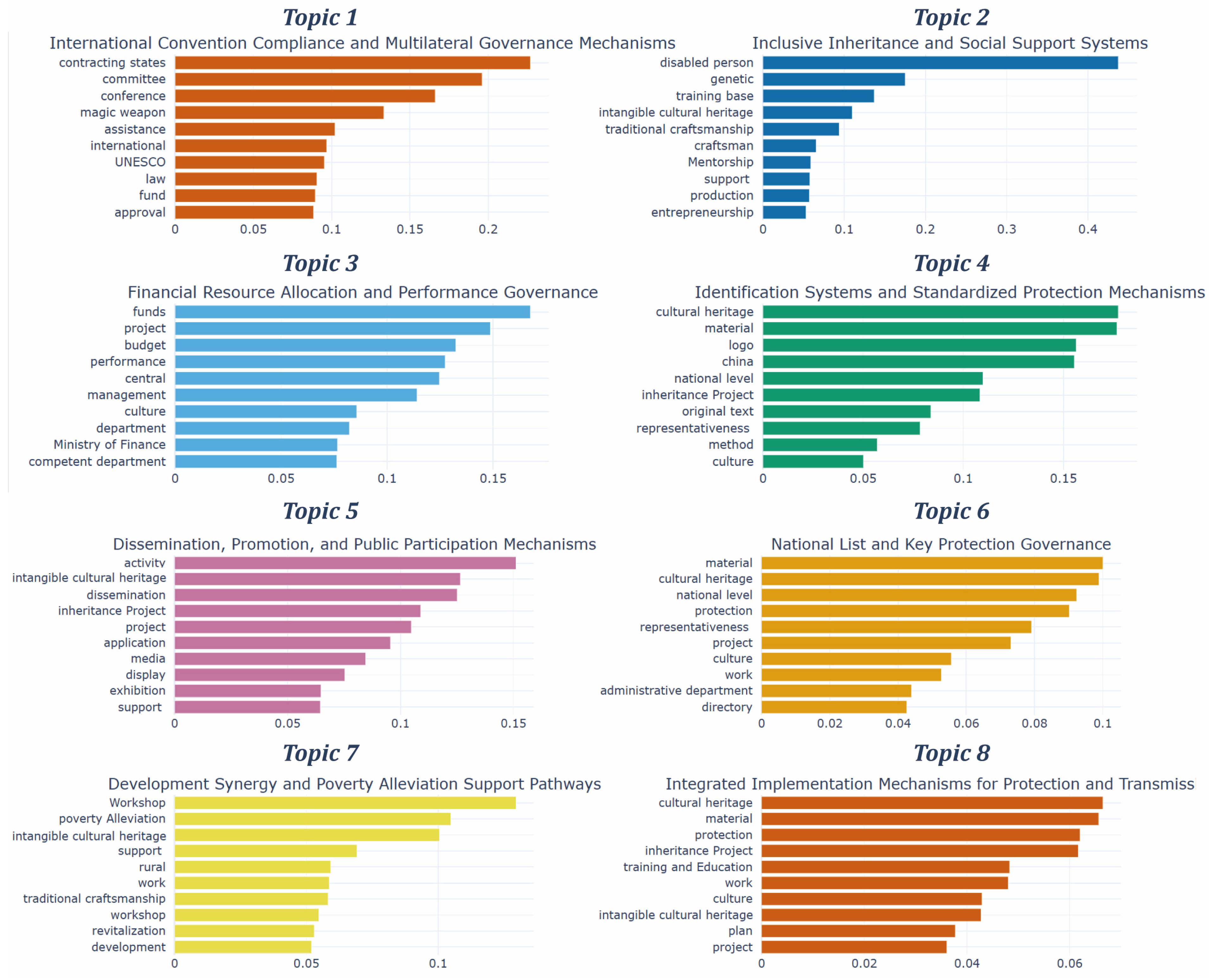
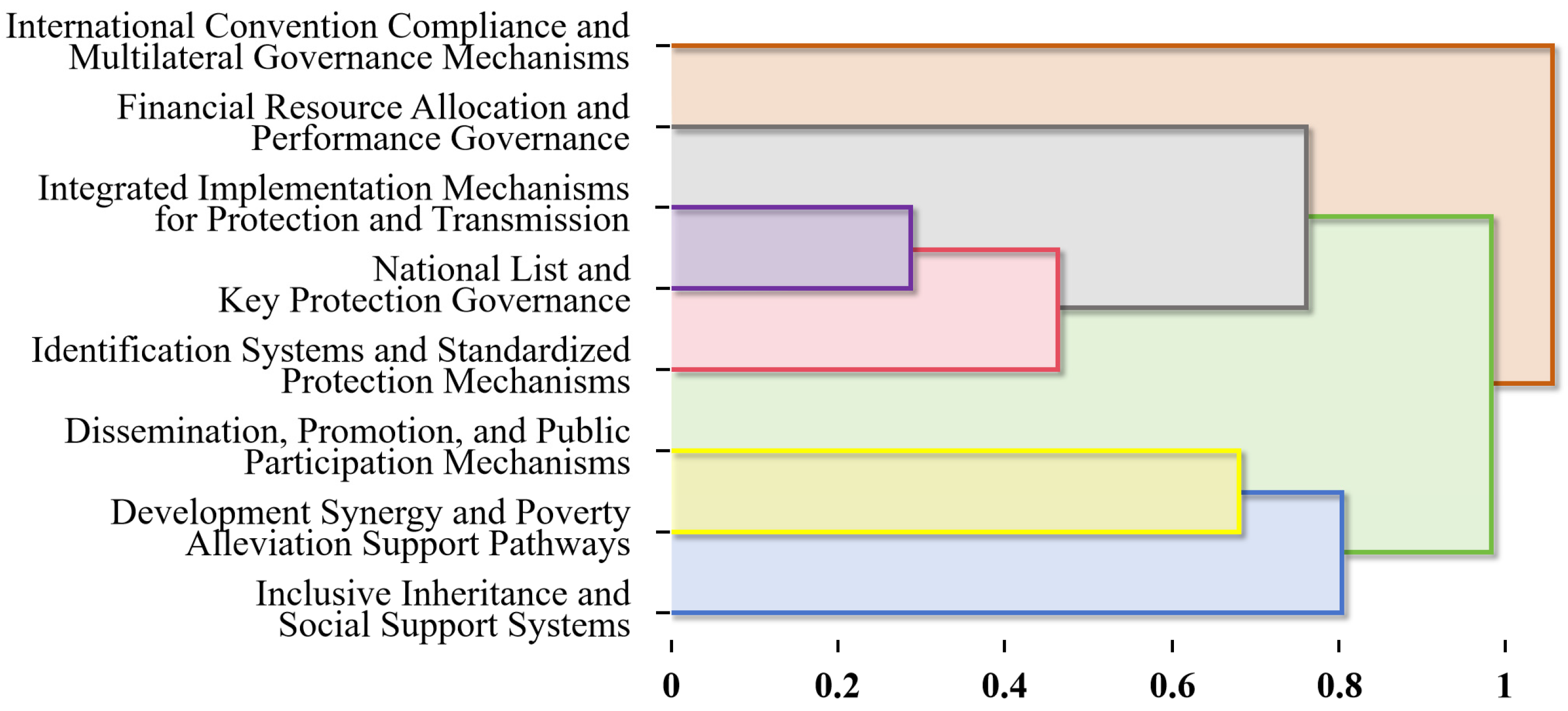
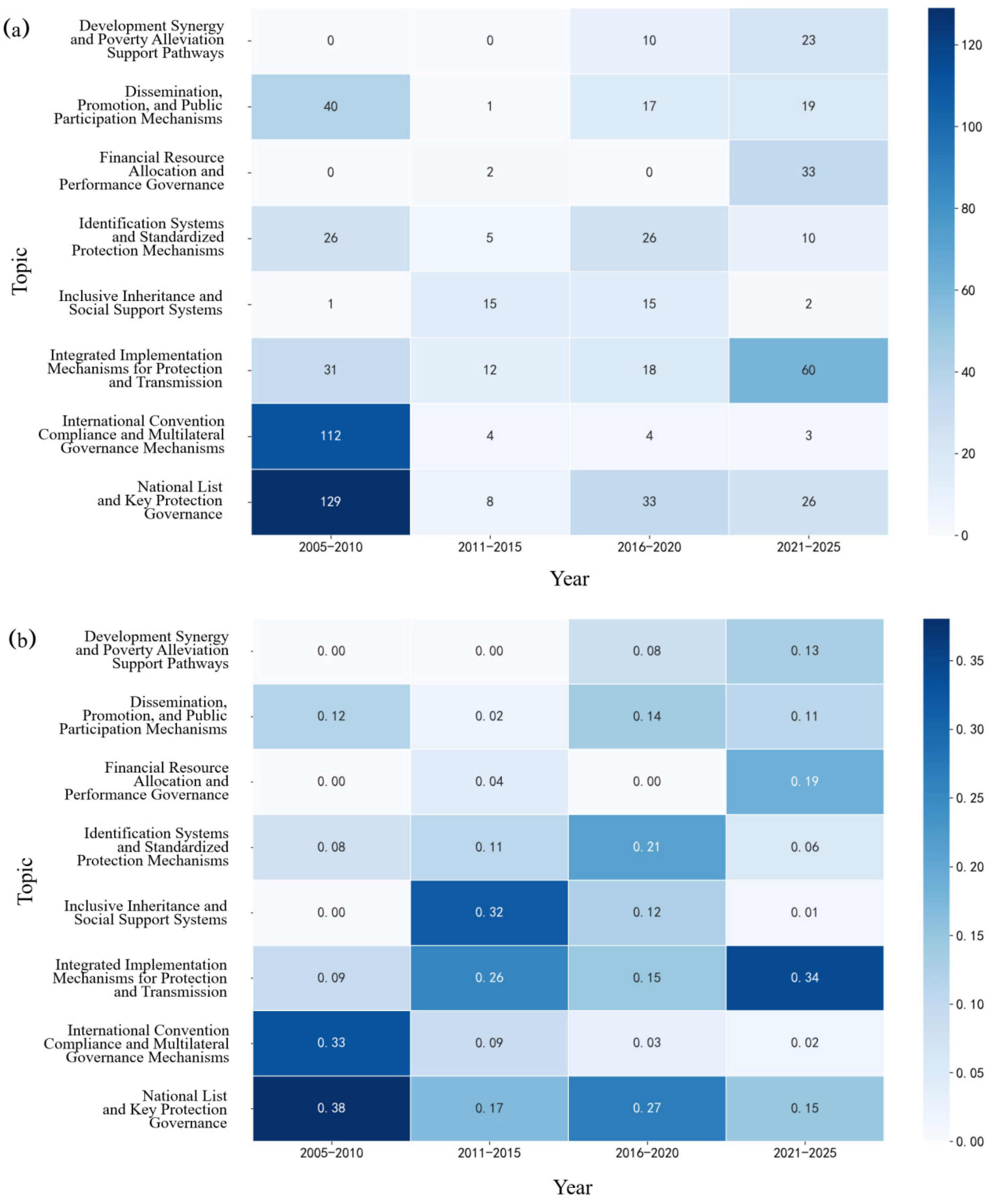
| Topic 1 | International Convention Compliance and Multilateral Governance Mechanisms | 123 |
| Topic 2 | Inclusive Inheritance and Social Support Systems | 33 |
| Topic 3 | Financial Resource Allocation and Performance Governance | 35 |
| Topic 4 | Identification Systems and Standardized Protection Mechanisms | 67 |
| Topic 5 | Dissemination, Promotion, and Public Participation Mechanisms | 77 |
| Topic 6 | National List and Key Protection Governance | 196 |
| Topic 7 | Development Synergy and Poverty Alleviation Support Pathways | 33 |
| Topic 8 | Integrated Implementation Mechanisms for Protection and Transmission | 121 |
| X1 | X2 | X3 | X4 | X5 | X6 | X7 | X8 | X9 | PMC Score | Rank | Level | |
|---|---|---|---|---|---|---|---|---|---|---|---|---|
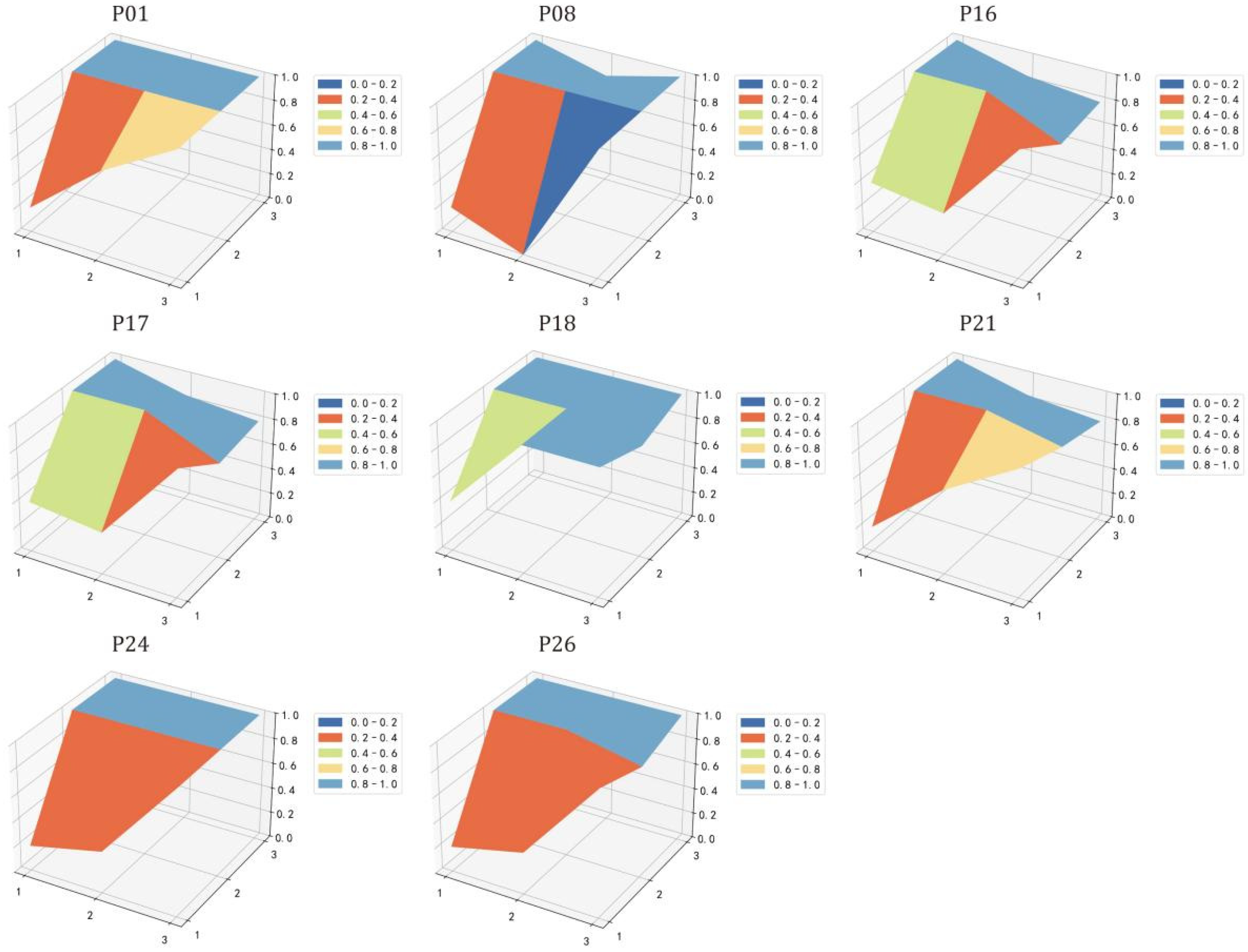
| P1 | 0.200 | 0.667 | 1.000 | 1.000 | 1.000 | 1.000 | 1.000 | 1.000 | 1.000 | 7.867 | 2 | Good |
| P2 | 0.200 | 0.667 | 0.600 | 1.000 | 0.800 | 0.625 | 1.000 | 0.571 | 0.800 | 6.263 | 17 | Average |
| P3 | 0.400 | 0.667 | 0.600 | 1.000 | 0.800 | 0.875 | 0.750 | 0.429 | 1.000 | 6.520 | 14 | Average |
| P4 | 0.400 | 0.667 | 0.600 | 1.000 | 0.600 | 0.625 | 0.750 | 0.429 | 1.000 | 6.070 | 18 | Average |
| P5 | 0.200 | 0.667 | 0.800 | 1.000 | 1.000 | 0.625 | 0.750 | 0.714 | 0.800 | 6.556 | 13 | Average |
| P6 | 0.200 | 0.667 | 0.800 | 1.000 | 0.800 | 0.875 | 0.750 | 0.857 | 1.000 | 6.949 | 10 | Average |
| P7 | 0.200 | 0.000 | 1.000 | 1.000 | 1.000 | 0.875 | 1.000 | 1.000 | 0.800 | 6.875 | 11 | Average |
| P8 | 0.200 | 0.000 | 1.000 | 1.000 | 1.000 | 1.000 | 1.000 | 0.857 | 1.000 | 7.057 | 9 | Good |
| P9 | 0.200 | 0.000 | 0.800 | 1.000 | 1.000 | 0.500 | 0.750 | 0.429 | 0.400 | 5.079 | 22 | Average |
| P10 | 0.200 | 0.333 | 0.400 | 0.667 | 0.800 | 0.375 | 0.750 | 0.143 | 0.400 | 4.068 | 25 | Poor |
| P11 | 0.400 | 0.667 | 0.400 | 0.667 | 0.400 | 0.375 | 1.000 | 0.000 | 0.600 | 4.508 | 24 | Average |
| P12 | 0.400 | 0.333 | 0.200 | 0.667 | 0.200 | 0.125 | 0.750 | 0.143 | 0.200 | 3.018 | 27 | Poor |
| P13 | 0.200 | 0.667 | 0.200 | 0.667 | 0.400 | 0.125 | 0.750 | 0.000 | 0.200 | 3.208 | 26 | Poor |
| P14 | 0.200 | 0.000 | 0.800 | 1.000 | 0.800 | 0.625 | 1.000 | 0.714 | 0.400 | 5.539 | 20 | Average |
| P15 | 0.200 | 0.667 | 0.800 | 1.000 | 0.800 | 0.625 | 1.000 | 0.714 | 0.600 | 6.406 | 16 | Average |
| P16 | 0.400 | 0.333 | 1.000 | 1.000 | 1.000 | 0.750 | 1.000 | 0.857 | 0.800 | 7.140 | 7 | Good |
| P17 | 0.400 | 0.333 | 1.000 | 1.000 | 1.000 | 0.750 | 1.000 | 0.857 | 0.800 | 7.140 | 7 | Good |
| P18 | 0.400 | 1.000 | 1.000 | 1.000 | 1.000 | 0.875 | 1.000 | 1.000 | 1.000 | 8.275 | 1 | Good |
| P19 | 0.200 | 0.000 | 1.000 | 1.000 | 1.000 | 0.750 | 1.000 | 0.714 | 1.000 | 6.664 | 12 | Average |
| P20 | 0.200 | 0.333 | 0.800 | 1.000 | 0.800 | 0.625 | 1.000 | 0.571 | 0.600 | 5.930 | 19 | Average |
| P21 | 0.200 | 0.667 | 1.000 | 1.000 | 1.000 | 0.875 | 1.000 | 0.857 | 0.800 | 7.399 | 6 | Good |
| P22 | 0.200 | 0.000 | 0.800 | 1.000 | 1.000 | 0.625 | 0.750 | 0.571 | 0.200 | 5.146 | 21 | Average |
| P23 | 0.200 | 0.333 | 1.000 | 1.000 | 0.800 | 0.625 | 1.000 | 0.857 | 0.600 | 6.415 | 15 | Average |
| P24 | 0.200 | 0.333 | 1.000 | 1.000 | 1.000 | 1.000 | 1.000 | 1.000 | 1.000 | 7.533 | 4 | Good |
| P25 | 0.200 | 0.000 | 0.600 | 0.667 | 0.600 | 0.625 | 1.000 | 0.571 | 0.600 | 4.863 | 23 | Poor |
| P26 | 0.200 | 0.333 | 1.000 | 1.000 | 1.000 | 0.875 | 1.000 | 1.000 | 1.000 | 7.408 | 5 | Good |
Disclaimer/Publisher’s Note: The statements, opinions and data contained in all publications are solely those of the individual author(s) and contributor(s) and not of MDPI and/or the editor(s). MDPI and/or the editor(s) disclaim responsibility for any injury to people or property resulting from any ideas, methods, instructions or products referred to in the content. |
© 2026 by the authors. Licensee MDPI, Basel, Switzerland. This article is an open access article distributed under the terms and conditions of the Creative Commons Attribution (CC BY) license.
Share and Cite
Xu, J.; Li, Y.; Shao, S.; Ke, X. Sustainability-Oriented Assessment of the Governance Capacity of China’s Intangible Cultural Heritage Policies: A Hybrid BERTopic-PMC Systematic Analysis. Sustainability 2026, 18, 2177. https://doi.org/10.3390/su18052177
Xu J, Li Y, Shao S, Ke X. Sustainability-Oriented Assessment of the Governance Capacity of China’s Intangible Cultural Heritage Policies: A Hybrid BERTopic-PMC Systematic Analysis. Sustainability. 2026; 18(5):2177. https://doi.org/10.3390/su18052177
Chicago/Turabian StyleXu, Junfeng, Yilei Li, Shanshan Shao, and Xigang Ke. 2026. "Sustainability-Oriented Assessment of the Governance Capacity of China’s Intangible Cultural Heritage Policies: A Hybrid BERTopic-PMC Systematic Analysis" Sustainability 18, no. 5: 2177. https://doi.org/10.3390/su18052177
APA StyleXu, J., Li, Y., Shao, S., & Ke, X. (2026). Sustainability-Oriented Assessment of the Governance Capacity of China’s Intangible Cultural Heritage Policies: A Hybrid BERTopic-PMC Systematic Analysis. Sustainability, 18(5), 2177. https://doi.org/10.3390/su18052177