Article

Design Application of Transparent Wood in Pop-Up Exhibition Spaces Based on AIGC–AHP–FCE Approach

1
College of Art and Design, Nanjing Forestry University, Nanjing 210037, China
2
Edinburgh College of Art, The University of Edinburgh, Edinburgh EH3 9DF, UK
3
College of Furnishings and Art Design, Central South University of Forestry and Technology, Changsha 410004, China
4
Green Furniture Engineering Technology Research Center, Changsha 410004, China
5
Green Home Engineering Technology Research Center, Changsha 410004, China
*
Authors to whom correspondence should be addressed.
Sustainability 2026, 18(5), 2169; https://doi.org/10.3390/su18052169
Submission received: 26 December 2025 / Revised: 12 February 2026 / Accepted: 14 February 2026 / Published: 24 February 2026

Abstract

Transparent wood possesses advantages such as light weight, high strength, translucency, thermal insulation, acoustic performance, and sustainability, demonstrating significant development potential. Its properties are highly compatible with the demands of pop-up commercial spaces, which are characterized by pop-up, low energy consumption, and strong visual expression. Based on Artificial Intelligence-Generated Content (AIGC) technologies, this study takes an urban greenhouse installation as a case study and develops a systematic design methodology for applying transparent wood in modern pop-up exhibition spaces. Through field research, questionnaire surveys, and the integration of design requirements using AIGC, the study employs the Analytic Hierarchy Process (AHP) to construct an evaluation system encompassing esthetic performance, structural safety, sustainability, and exhibition experience. In addition, a Fuzzy Comprehensive Evaluation (FCE) method is adopted for quantitative assessment. The results indicate that transparent wood not only meets the requirements of lightweight structures and full life-cycle environmental performance, but also enhances spatial transparency and immersive atmosphere. This research proposes a standardized evaluation framework and a reproducible design reference for material selection in pop-up exhibition spaces.

1. Introduction

With the rapid development of information and intelligent technologies, the design of exhibition spaces is gradually moving beyond traditional models and evolving toward pop-up, immersion, and intelligence. Among these, pop-up exhibition spaces are characterized by flexible construction, short-term operation, and strong visual impact, and have attracted widespread global attention due to their combined commercial value and cultural communication functions [1]. At the same time, transparent wood has emerged in recent years as an advanced material of growing interest. In addition to retaining the natural texture of wood and exhibiting excellent light transmittance and thermal insulation performance [2,3,4,5], its mechanical strength can meet the requirements of building wall structures, thus offering new possibilities for exhibition space design. The application of transparent wood in exhibition spaces not only satisfies the dual demands of spatial esthetics and structural safety, but also aligns with the contemporary trend toward green and sustainable development. Against this background, the development of AIGC technology has brought new momentum to the design industry by enabling the rapid generation of diverse spatial schemes. When combined with multi-criteria decision-making methods, such as the Analytic Hierarchy Process (AHP) and Fuzzy Comprehensive Evaluation (FCE), AIGC allows for systematic evaluation of design schemes from both qualitative and quantitative perspectives. This integrated approach provides a scientific analytical framework and decision-making basis for the application of transparent wood in pop-up exhibition spaces. Based on the AIGC–AHP–FCE research framework, this study investigates the application value and feasibility of transparent wood in pop-up exhibition design. The study aims to promote the innovative application of new materials in exhibition spaces and to provide theoretical and practical references for the interdisciplinary integration of artificial intelligence and multi-criteria evaluation methods.

2. Analysis of Current Research Status

2.1. Analysis of AIGC Development

The design industry is undergoing a profound transformation from human-led processes to human–machine collaboration. As an innovative technology based on artificial intelligence, Artificial Intelligence-Generated Content (AIGC) can not only rapidly generate exhibition-related texts, images, and spatial design schemes through keyword input, but also dynamically adjust results based on audience feedback and market trends, thereby enabling greater flexibility and more personalized experiences in exhibition spaces [6]. By leveraging AI-generated tools such as Stable Diffusion (SD) and Midjourney (MJ), designers can efficiently guide models to produce diverse design schemes through the input of scenario requirements, keywords, and design constraints. This process provides rich inspiration and innovative directions for the creative workflow, enhancing both the efficiency and exploratory depth of exhibition space design [7].

2.2. Current Research on Pop-Up Exhibition Spaces

Pop-up exhibition spaces are characterized by their pop-up nature, flexibility, and immersive experience. They are often used for brand promotion, art exhibitions, and public education. Their features of rapid construction and environmental requirements impose higher demands on new materials and intelligent design approaches. Li Haoyu et al. pointed out that the use of new materials is an inevitable trend in the development of interactive design for pop-up stores, and that such applications are a natural outcome of modern scientific and technological advancement [8]. In pop-up store design, renewable or recyclable materials can be used effectively to save resources. New materials can generally be categorized into three main types. The first type includes detachable and reusable materials; the second consists of renewable natural materials; and the third involves the application of technological approaches to convert energy generated from natural resources, such as solar and wind energy, into usable forms of energy. The adoption of new materials not only reduces resource waste and supports sustainable development, but also raises public awareness of recyclability and reuse, while enhancing the expressive quality of spatial displays. Consequently, the application of new materials represents an important future development direction for pop-up stores [9]. Tao Jing et al. further suggested that using environmentally friendly and highly sustainable materials to replace less sustainable ones can effectively address issues of ecological resource depletion and energy consumption. In terms of material substitution strategies, recyclable and biodegradable materials should be considered, allowing for post-use disposal of non-reusable materials after the pop-up store’s operation without causing environmental pollution [10].

2.3. Current Research on Transparent Wood

As a novel bio-based and environmentally friendly material that combines both light transmittance and mechanical strength, transparent wood has been regarded as an important alternative to glass and plastics due to its lightweight nature, safety, and excellent thermal insulation and energy-saving properties. It aligns well with the development trend of green architecture and low-carbon environmental protection. In recent years, numerous scholars have conducted in-depth studies in this field, though most have focused on the material’s intrinsic performance advantages. Liu et al. [11] encapsulated lignin-derived carbon dots and polyvinyl alcohol within a delignified wood framework, successfully fabricating a luminescent transparent building material. The material achieves an optical transmittance of 85% and exhibits adjustable room-temperature phosphorescence and ratiometric fluorescence emission, enabling the monitoring of indoor air pollutants, temperature, and humidity. Wang Qian et al. investigated a new green building material—“phase-change transparent wood.” The material is produced by chemically treating natural wood to make it transparent and impregnating it with phase-change materials, endowing it with phase-change capabilities. This approach effectively enhances building energy efficiency, alleviates current energy and electricity shortages, and holds great significance for promoting the development of green architecture in China [12]. Chen Luwei et al. synthesized a new composite material, Cs2ZrCl6:Te4+ transparent wood, which possesses high mechanical strength and can withstand significant external impact without noticeable fracture. Such properties allow the composite material to reduce production, safety, and energy consumption costs in construction, providing considerable advantages in the field of building materials and aligning with the concept of energy conservation and environmental protection [13].
Existing research thus demonstrates that transparent wood has the objective conditions required for application in green architecture. However, how to organically integrate it into architectural spaces from a design perspective, and how to incorporate AIGC technology as a guiding tool in design applications, remains largely unexplored [14]. Current studies on AIGC, transparent wood, and pop-up exhibition spaces tend to exist independently within their respective domains. Overall, the existing research shows a fragmented tendency and lacks a comprehensive framework and practical cases for interdisciplinary integration of “AIGC + Transparent Wood + Pop-up Exhibition Spaces.” This gap presents both opportunities and potential for innovation. Against this background, how to effectively combine the content generation capabilities of AIGC with the eco-friendly characteristics of transparent wood to support innovative practices in pop-up exhibition design has become an important direction worthy of further exploration.

3. Design Method and Construction of Design Pathway

3.1. Analysis of Design Methods

To systematically evaluate the feasibility of applying transparent wood in pop-up exhibition spaces, this study constructs a comprehensive evaluation model based on the Analytic Hierarchy Process (AHP) and the Fuzzy Comprehensive Evaluation (FCE) method—two quantitative analysis approaches commonly used in risk management [15]. First, the AHP method is employed to establish a multi-level indicator system and determine the weight of each indicator, ensuring the scientific validity and rationality of the evaluation process. Then, the FCE method is integrated to address the fuzziness and uncertainty among the indicators, forming a comprehensive evaluation result. Through the organic combination of AHP and FCE, the applicability and potential value of transparent wood in pop-up exhibition design can be analyzed comprehensively from both qualitative and quantitative perspectives.

3.1.1. Analytic Hierarchy Process (AHP)

The Analytic Hierarchy Process (AHP) is a multi-criteria decision-making method that integrates both qualitative and quantitative analysis. Combining principles of mathematics and psychology, its core concept is to decompose complex problems into multiple levels and factors, construct a judgment matrix, and calculate the weight of each indicator to provide theoretical and data support for scheme selection [16,17,18,19]. In practical application, AHP typically includes the following steps: first, constructing a hierarchical structure model in which the research objective, criteria, and indicators are decomposed level by level; second, building a judgment matrix and calculating the weight vector; and finally, conducting a consistency test to ensure the scientific validity and rationality of the weight results, thereby completing the overall hierarchical ranking.

3.1.2. Fuzzy Comprehensive Evaluation (FCE)

The Fuzzy Comprehensive Evaluation (FCE) method is a multi-index decision-making approach based on the principles of fuzzy mathematics. It is characterized by strong systematicity and clear results. Grounded in the theory of membership functions in fuzzy mathematics, FCE transforms qualitative judgments into quantitative analyses, thereby enabling an overall evaluation of complex objects influenced by multiple factors and effectively addressing uncertainty [20,21,22,23]. The advantages of FCE lie in its ability to handle problems involving uncertainty and fuzziness. Its basic process includes the following steps: determining the set of evaluation factors and evaluation grades; establishing the membership function and constructing the fuzzy relation matrix; and finally, performing fuzzy operations combined with the weight vector to obtain a comprehensive evaluation result.

3.2. Construction of the Design Pathway

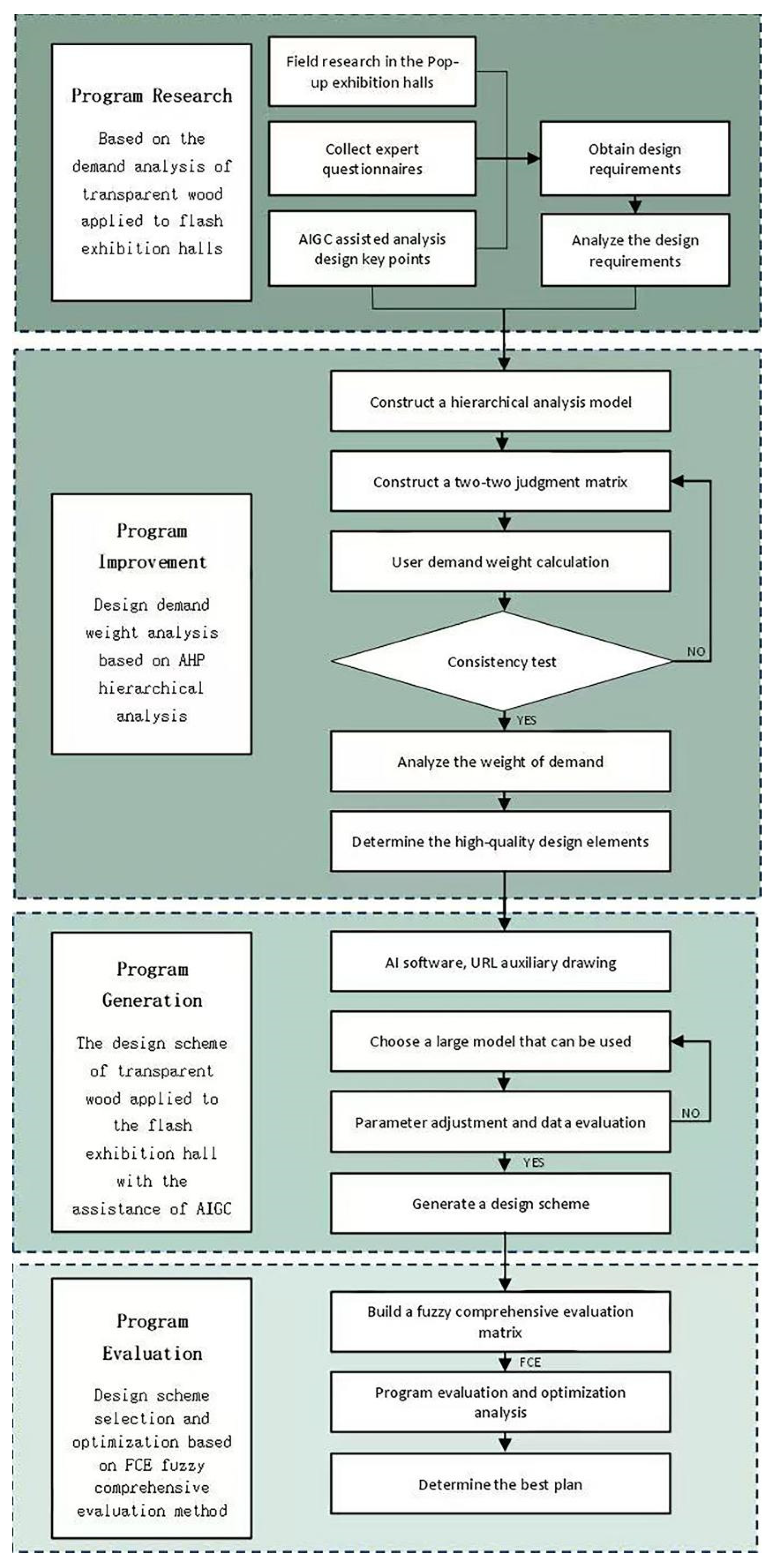
This study employs AIGC-assisted techniques to explore the design of pop-up exhibition spaces. Taking pop-up exhibition spaces as the research context, a human–machine collaborative design approach is adopted to construct a complete design workflow, which is then applied to the design of an urban pop-up greenhouse. The research framework is illustrated in Figure 1 and consists of four stages: scheme investigation, scheme optimization, scheme generation, and scheme evaluation [24,25,26].
(1)
Scheme investigation stage:
At this stage, on-site investigations are conducted to identify the actual operational requirements of pop-up exhibition spaces. Expert questionnaires are used to collect professional insights, and AIGC techniques are applied for auxiliary analysis and design inspiration by inputting keywords such as “transparent wood + pop-up space.” Through the integration of field research, expert input, and AIGC-assisted exploration, four core design dimensions—form, structure, cost, and environmental performance—are identified, providing a foundation for the construction of the evaluation index system.
(2)
Scheme optimization stage:
Based on the clarified design requirements, an AHP hierarchical structure model is established. Judgment matrices are constructed using expert questionnaire data, and the weights of indicators at each level are calculated. Consistency testing (CR ≤ 0.1) is performed to ensure the scientific validity and reliability of the weight results. Indicators with relatively high weights, such as ease of disassembly, maintenance cost, and indoor environmental health, are ultimately identified as key optimization factors to guide the subsequent scheme generation process.
(3)
Scheme generation stage:
High-weight indicators are translated into keywords and parameters for AIGC tools, such as Midjourney (e.g., “transparent wood + easy disassembly + non-toxic”), to generate batches of preliminary design concept images. If the generated schemes fail to meet the requirements of core indicators—for example, insufficient structural detailing—the parameters are adjusted and multiple rounds of generation are conducted until a pool of candidate schemes aligned with the weighted criteria is obtained.
(4)
Scheme evaluation stage:
A Fuzzy Comprehensive Evaluation (FCE) model is constructed to conduct a systematic and quantitative evaluation of the candidate schemes, incorporating the indicator weights determined by AHP. If the evaluation results do not reach the “A (excellent)” level, evaluation feedback—such as identified weaknesses—is fed back into the scheme generation stage. AIGC parameters are then adjusted, or manual refinements are applied, forming a closed-loop iterative process of “requirements → weighting → generation → evaluation” until the optimal design scheme is finalized.

4. Design Practice: A Pop-Up Urban Greenhouse Exhibition as a Case Study

4.1. Data Collection Strategy

To ensure the scientific validity of the evaluation system and the practical applicability of the design scheme, the data collection process in this study is divided into two interrelated stages, serving indicator weight calculation and scheme performance evaluation.

4.1.1. Expert Consultation and Indicator Identification

First, a literature review was conducted by searching databases such as CNKI and Web of Science using keywords including “pop-up exhibition,” “temporary exhibition space,” “exhibition design evaluation,” and “transparent wood.” Relevant studies published within the past five years were reviewed to extract high-frequency evaluation indicators. In parallel, policy documents such as the Code for Design of Exhibition Buildings (JGJ 218–2010) [27] and the Green Building Evaluation Standard (GB/T 50378-2019) [28] were consulted to identify mandatory constraint indicators. Based on this process, an initial indicator pool consisting of 25 indicators was established.
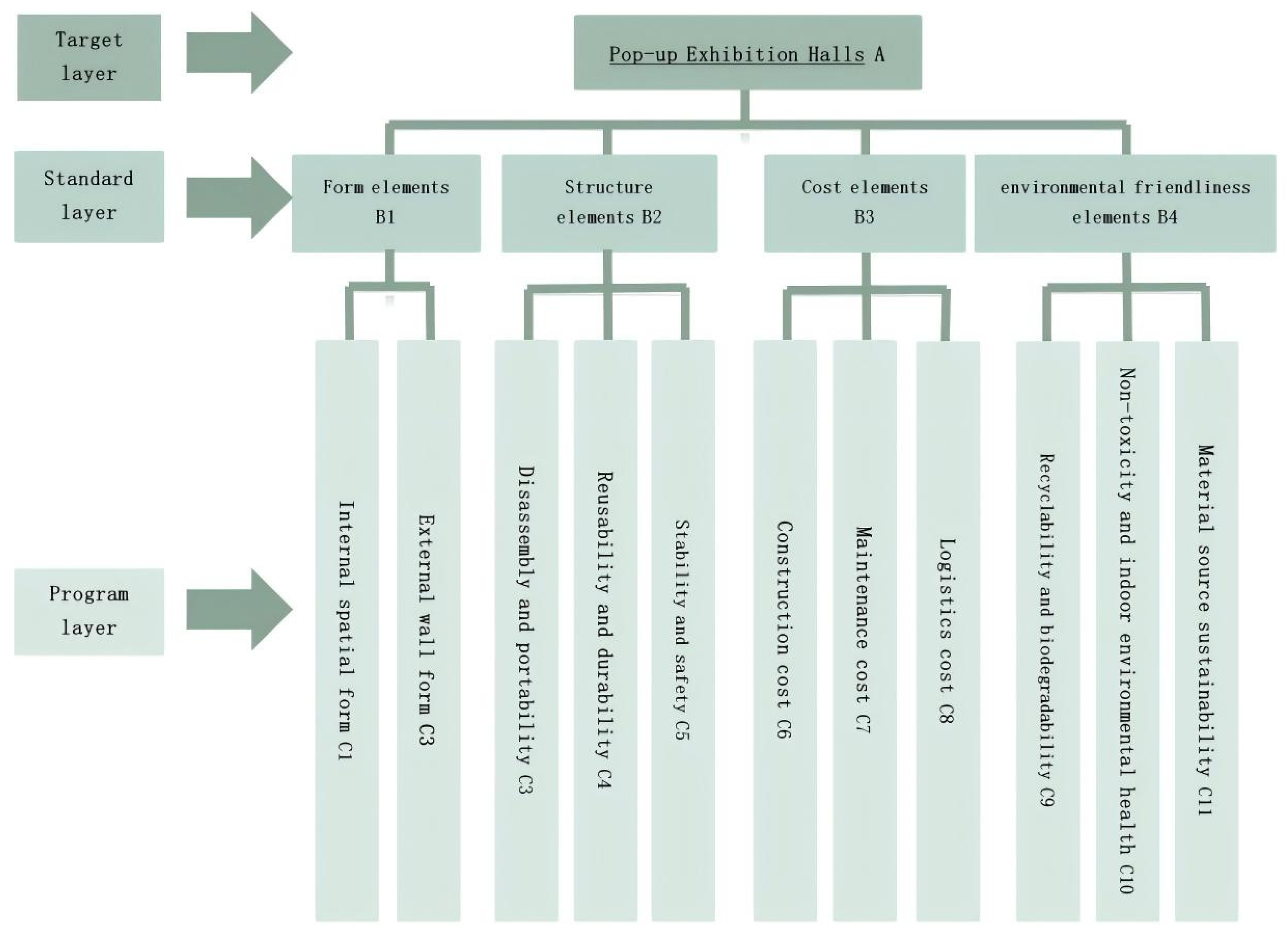
Subsequently, interviews were conducted with 5 experts who had more than five years of professional experience in exhibition design, architectural design, or environmental art design (including 2 senior professor-level engineers and 3 senior engineers), as well as 15 students majoring in architecture and environmental design (9 undergraduate students and 6 postgraduate students). An open-ended questionnaire was used to assess the importance of each indicator on a five-point Likert scale (1–5). Indicators with an average score below 3.5 were eliminated. Correlation analysis was then performed, and indicators with high correlation (Pearson correlation coefficient > 0.8) were considered redundant and removed. As a result, a final evaluation system comprising four criterion-level dimensions and eleven indicator-level factors was established, as follows:
(1)
Criterion layer:
Form-related factors (B1), structural factors (B2), cost-related factors (B3), and environmental performance factors (B4).
(2)
Indicator layer:
Internal spatial form (C1), external wall form (C2); ease of disassembly and transportation (C3), reusability and durability (C4), stability and safety (C5), construction cost (C6), maintenance cost (C7), logistics cost (C8), recyclability and biodegradability (C9), non-toxicity and indoor environmental health (C10), and sustainability of material sources (C11).

4.1.2. Data Collection and Analysis

To ensure the scientific rigor and reliability of the data, the data collection and analysis process was conducted as follows:
(1)
Expert selection:
A purposive sampling method was adopted to select 15 experts with more than five years of professional experience in relevant fields or with senior professional titles. The distribution of expertise was as follows: 4 experts in architectural and structural design, 4 in green new material research and development, 4 in exhibition space and pop-up design, and 3 in sustainable design and evaluation.
(2)
Questionnaire design and distribution:
Based on the Analytic Hierarchy Process (AHP) indicator system (Figure 2), a structured questionnaire was designed, covering the four criterion-level dimensions—form, structure, cost, and environmental performance—and the eleven indicator-level factors. Pairwise comparisons were conducted using the 1–9 scale method shown in Table 1. The questionnaires were distributed via email over the period from 6 October to 10 October 2025. A total of 15 questionnaires were collected, yielding a response rate of 100%.
(3)
Data preprocessing:
Logical consistency checks were performed on the collected questionnaires, and responses with obvious inconsistencies were excluded. Ultimately, all 15 questionnaires were retained as valid samples. The data were entered into Excel, and the geometric mean method (Equation (2)) was applied to aggregate expert judgments, forming the basis for subsequent weight calculations.
(4)
Supplementary validation:
Three senior industry experts who did not participate in the initial scoring process were invited to review the aggregated indicator importance rankings. After confirming the absence of significant bias, the study proceeded to the AHP weight calculation stage (Table 1).

4.2. AHP Weight Calculation

First, construct judgment matrices and calculate weights:
Construct the relevant judgment matrix A :
A = a i j n × n = a 11 a 12 a 1 n a 21 a 22 a 2 n a n 1 a n 2 a n n
Among them, a ij > 0 and a ji  =  1 a ij , the matrix satisfies the positive and negative reciprocity, and the diagonal element a ii = 1.
Calculate the geometric mean for each row element M i :
M i = exp 1 n j = 1 n lna ij
Normalize the geometric mean:
W i = M i k = 1 n M k
To ensure the scientificity of the evaluation results, a consistency check is required. When CR is less than or equal to 0.1, the judgment matrix passes the consistency check.
Consistency check:
Calculate the maximum eigenvalue λ max :
λ max = 1 n i = 1 n j = 1 n a ij W j W i
Calculate the consistency index CI :
CI = λ max n n 1
CR = CI RI
The results indicate that the design of pop-up exhibition spaces should place greater emphasis on the innovation and functionality of interior spatial form, enhancing the flexibility of spatial layout and the quality of visual experience. Structurally, the design should strengthen the ease of assembly, disassembly, and transportation to meet the high mobility requirements of pop-up exhibitions (Table 2 and Table 3). In addition, material selection should fully consider maintenance costs, environmental performance, and health attributes—favoring non-toxic, low-pollution, recyclable, and biodegradable materials. This ensures indoor environmental safety and comfort while achieving the sustainable design goals of pop-up exhibition spaces.

4.3. AIGC-AHP-FCE-Assisted Visualization

AIGC-assisted visual renderings not only rapidly demonstrate the spatial composition, light–shadow variations, and material texture of transparent wood within pop-up exhibition spaces, but also provide data-informed evidence of its comprehensive advantages in terms of sustainability, structural performance, and esthetic expression.
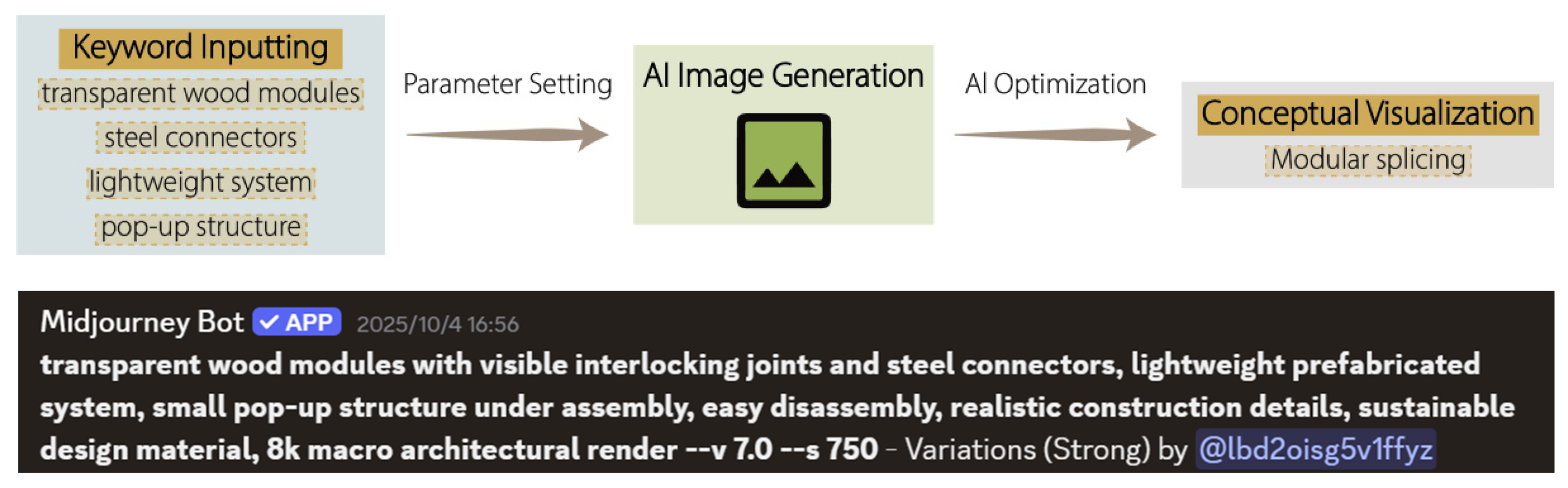
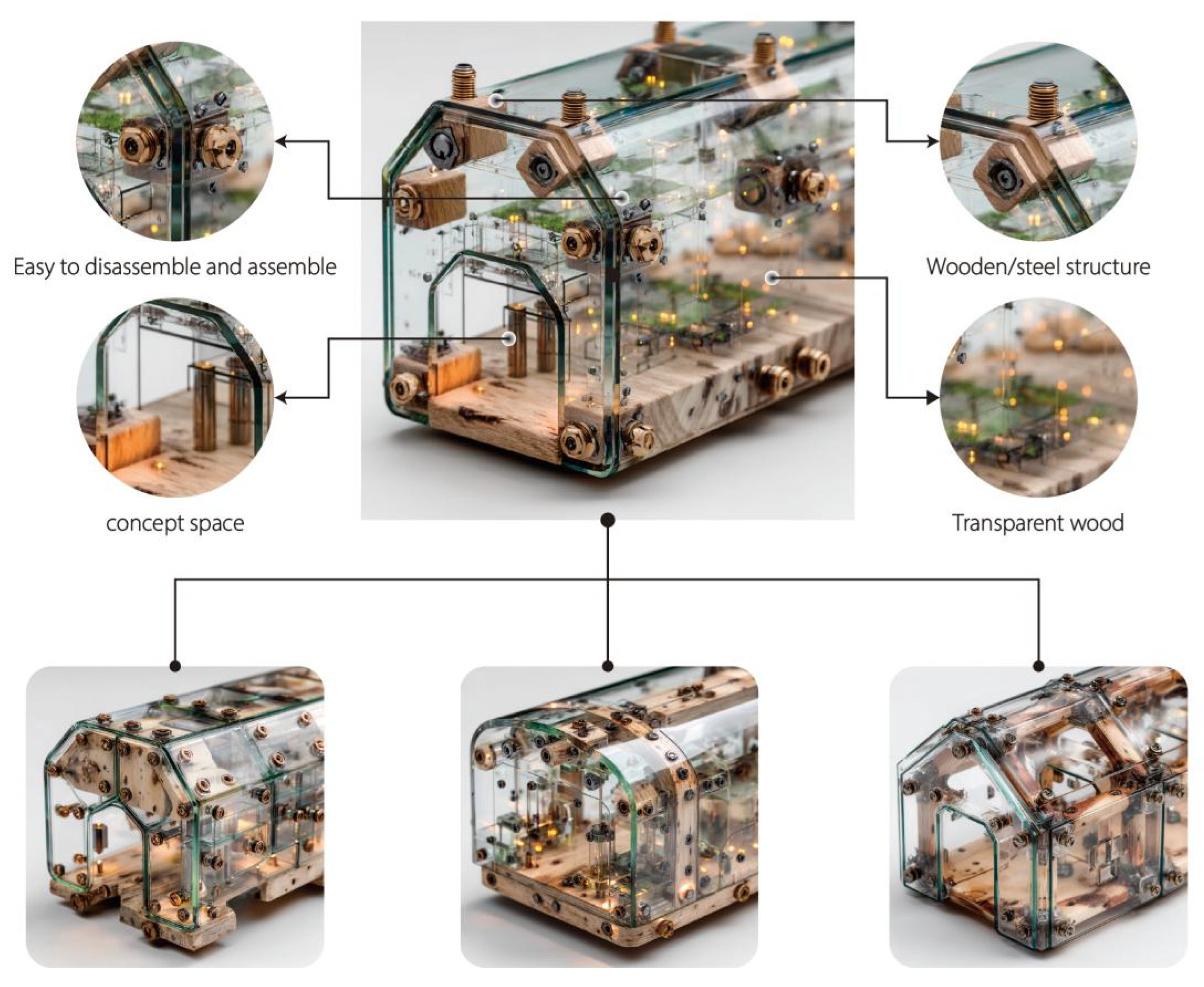
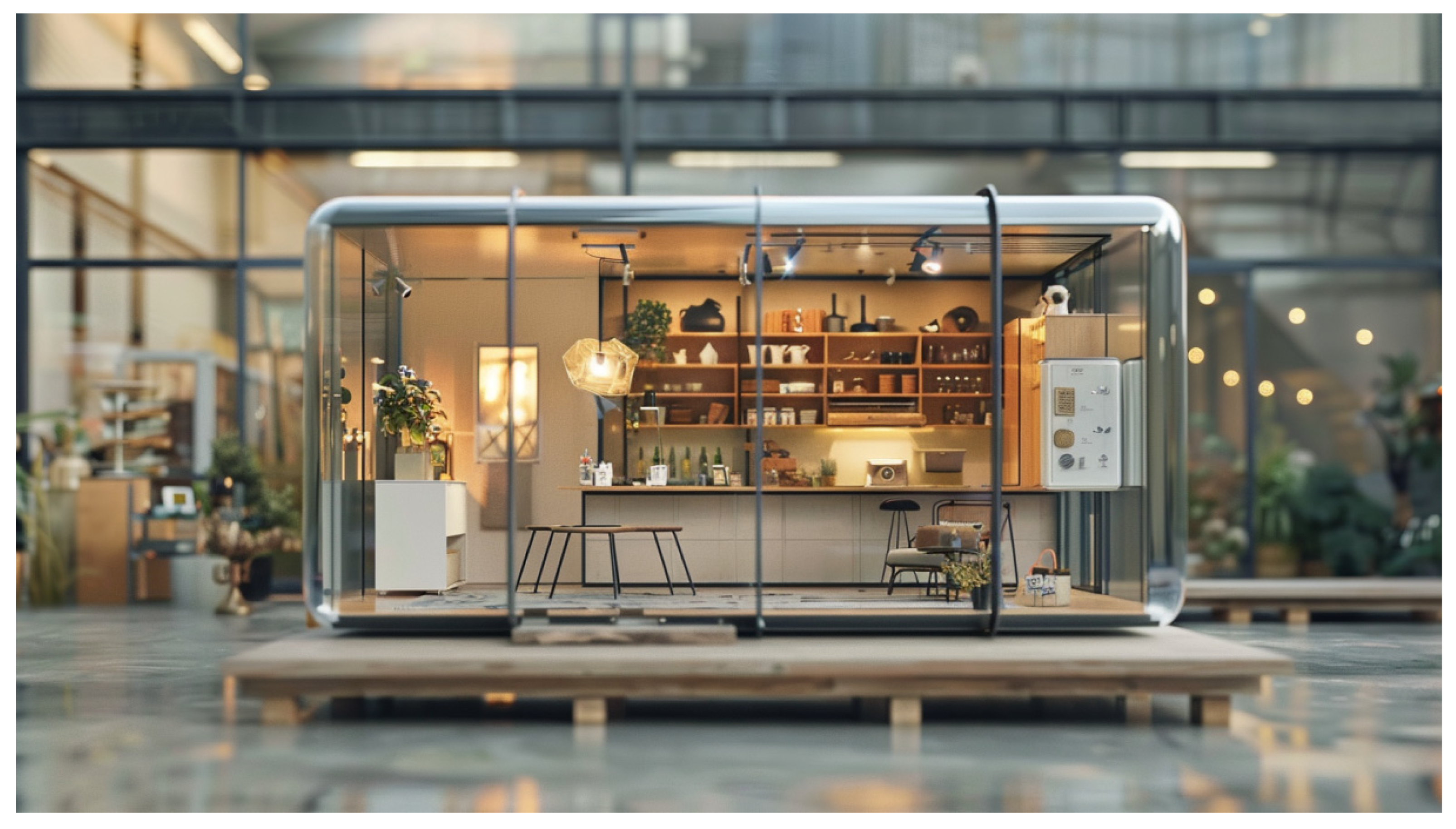
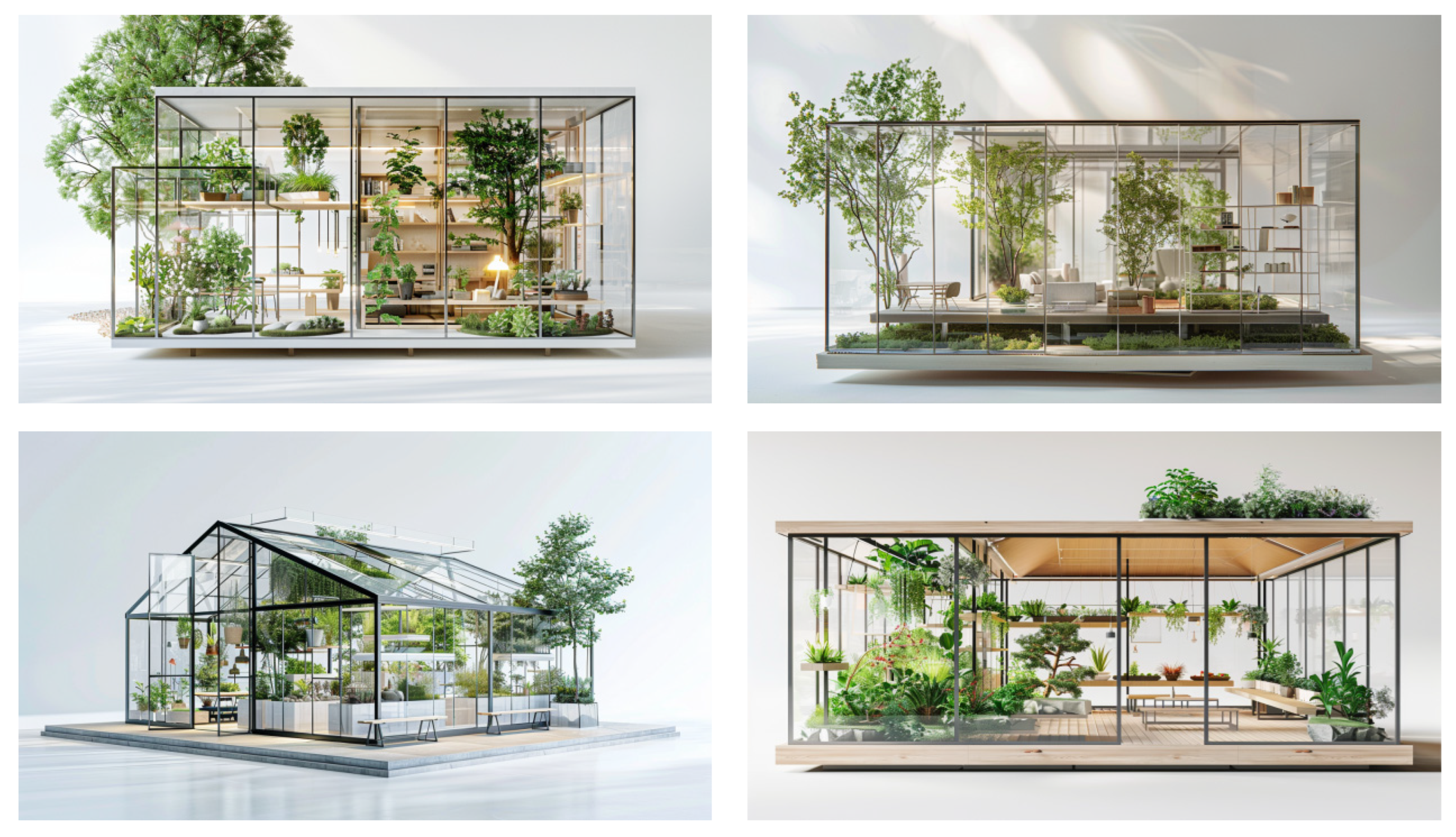
Figure 3 and Figure 4, respectively, present the process of image generation parameters and the final output effect. During the image generation process, the visual generation tool Midjourney (MJ) based on AIGC was mainly used for the conceptual exploration of the renderings. Firstly, semantic control over the spatial theme, material characteristics, and light and shadow atmosphere was achieved through keyword inputting. Keywords included “transparent wood modules”, “steel connectors”, “lightweight system”, “pop-up structure”, etc., aiming to precisely capture the visual semantic features of “transparent wood” and “modular pop-up exhibition”. For immature images, further refinement was carried out, such as setting image parameters (Parameter Setting). In the generation stage (AI Image Generation), the system output multiple candidate images, and then the algorithm optimization function (Al Optimization) was used to further refine the preferred images, enabling the AI to maintain the original structural logic while enhancing the texture details of the transparent wood and the reflection effect of the ambient light. The Midjourney 7.0 version algorithm deeply learned about light refraction, structural joints, and transparency levels during this process. Finally, in the output stage (Conceptual Visualization), the satisfactory conceptual renderings were selected.
The final concept rendering is centered on the core concept of “modular assembly”, combining transparent wood with lightweight wood structures and steel structures to form a framework system that can be quickly assembled and disassembled. The overall appearance presents a logical structure like building blocks, clearly demonstrating the semi-transparent texture and construction logic of the transparent wood components under light, providing a direct visual reference and technical basis for subsequent structural refinement and material application design.
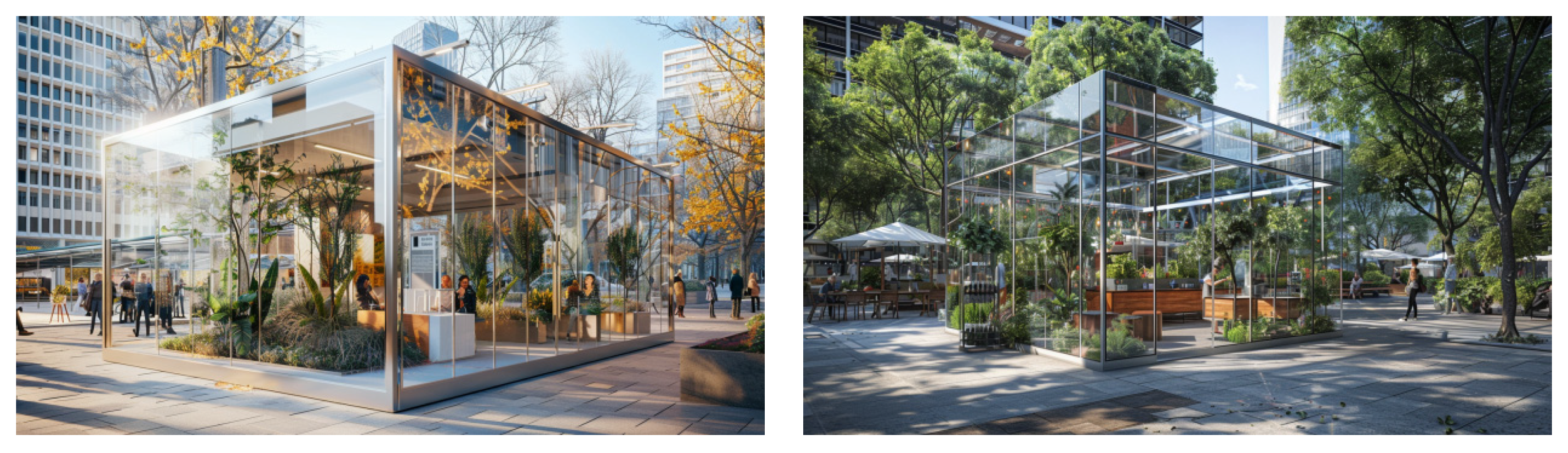
Figure 5 presents the integrated rendering of the “Urban Greenhouse Pop-up Pavilion” generated through AIGC technology, guided by keywords such as “urban greenhouse,” “transparent wood,” and “pop-up exhibition space.” The rendering takes a real urban market as its background scene, incorporating core design concepts such as lightweight modular design, temporary construction, and ease of assembly and disassembly. Realistic lighting and reflection effects are simulated within the model, giving the overall space a stronger sense of liveliness and realism. However, the current AI-generated results still exhibit certain limitations in terms of spatial proportion, structural detailing, and the physical logic of material reflection. Further optimization of parameters and manual adjustments are required in subsequent research to more accurately reflect the structural characteristics and realistic construction potential of transparent wood.
Figure 6 illustrates that the pop-up exhibition space themed “Urban Sunlight Greenhouse” presents a more complete volumetric relationship and richer light–shadow hierarchy in the generated results. The enhancement of interior detailing makes the material texture and structural logic of the space clearer. However, the generated images still lack the integration of human figures and specific usage scenarios, resulting in limited liveliness and interactivity of the spatial atmosphere, which makes it difficult to fully reflect the social and humanistic characteristics of the pop-up exhibition space.
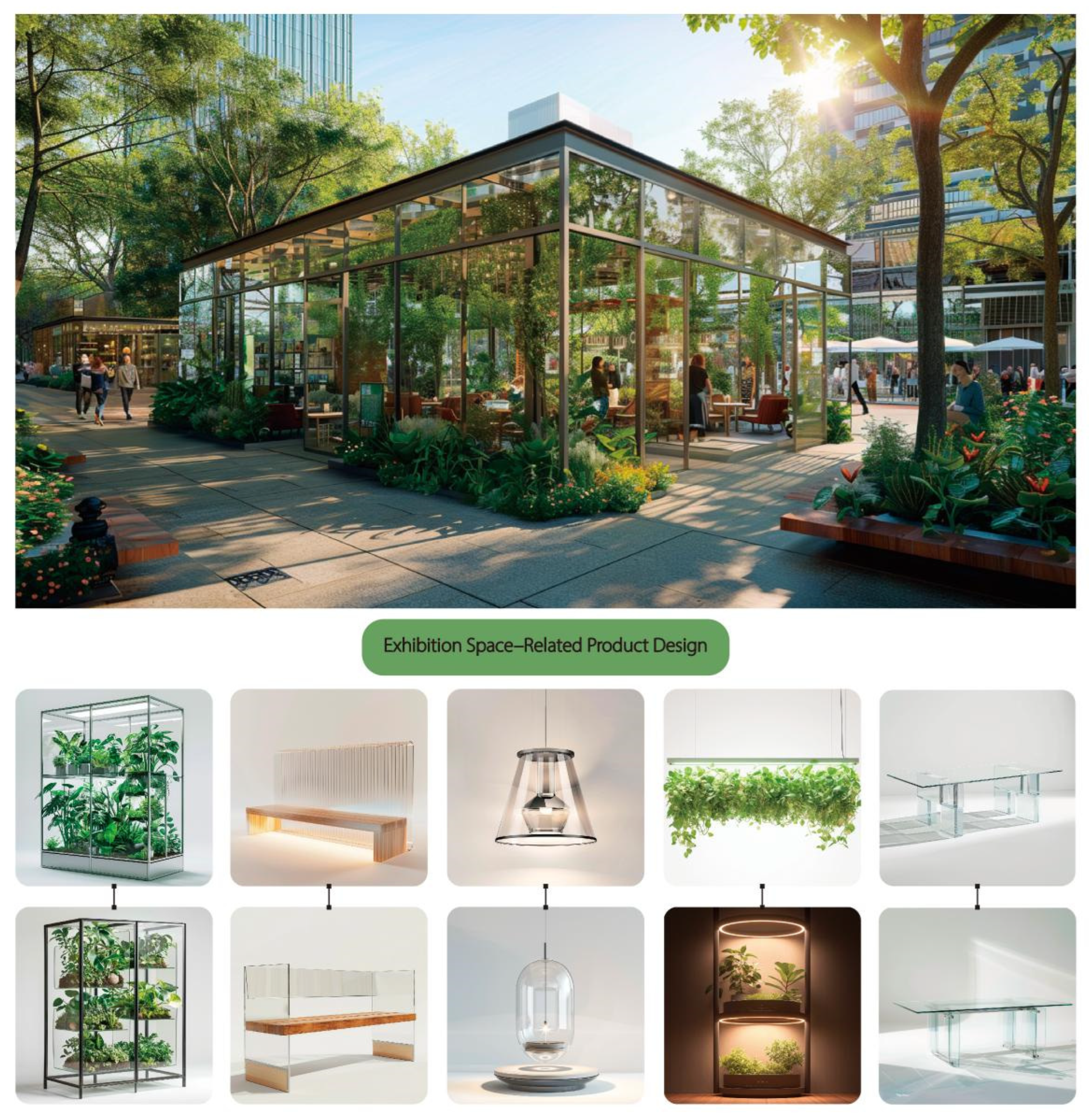
In the subsequent design optimization, as shown in Figure 7 and Figure 8, the introduction of elements such as human activities, exhibition objects, and usage contexts further refines the spatial narrative and experiential quality [29]. Meanwhile, the application of transparent wood extends from the structural level to detailed design components—such as plant display cabinets and full-spectrum lighting installations—allowing the overall space to achieve a more unified and transparent visual effect under the dynamic interplay of light and shadow. Through a hybrid approach combining AI-generated modeling and manual post-production, the design maintains structural authenticity while enhancing the dynamic representation of the scene, enabling viewers to intuitively perceive the changing spatial atmosphere of transparent wood under the interweaving of natural light and human movement. Such adjustments not only enrich the visual layering but also help explore the emotional connection and public value of pop-up architecture within real urban contexts.
Through a series of concept and thematic renderings generated by AIGC (Figure 4, Figure 5, Figure 6, Figure 7 and Figure 8), this study visually demonstrates the multidimensional design potential and application value of transparent wood in pop-up exhibition spaces. AIGC not only provides an efficient visualization tool in the early conceptualization stage but also employs algorithms to intelligently simulate material textures, lighting ambience, structural logic, and human–environment interactions—transforming abstract design ideas into tangible and perceivable expressions. Combined with the quantitative analysis models of AHP and FCE, the research achieves a complete closed loop from visual generation to scientific evaluation, offering an objective basis for design decision-making. This technical framework breaks through the traditional linear design process of “experience–hand drawing–modeling” and instead establishes a cyclical system of “semantic input–AI generation–data evaluation–scheme optimization.” It not only enhances design efficiency and representational precision but also provides a new methodological pathway for exploring sustainable material applications in such pop-up spaces.

4.4. Internal Review and Screening of AIGC-Generated Schemes

After obtaining multiple rounds of AIGC-generated design schemes (Figure 4, Figure 5, Figure 6, Figure 7 and Figure 8), an internal review and screening process was conducted to determine the candidate schemes for subsequent formal Fuzzy Comprehensive Evaluation (FCE). Three team members responsible for architecture, materials, and curatorial design were invited to act as reviewers. The evaluation focused on the three indicators with the highest weights—C1 (internal spatial form), C3 (ease of disassembly and transportation), and C7 (maintenance cost)—based on the indicator weights calculated using the AHP method in Section 4.2 (see Table 2).
The evaluation criteria for each indicator were defined as follows:
C1 (Internal spatial form): Assessed according to the spatial transparency, sense of hierarchy, and overall esthetic quality presented in the renderings.
C3 (Ease of disassembly and transportation): Evaluated based on the regularity of components and the clarity of connection methods within the scheme.
C7 (Maintenance cost): Estimated according to the complexity of material composition and the extent of specialized structural details involved.
For each scheme, the average score of the three indicators was calculated. Each average score was then multiplied by its corresponding AHP weight, and the weighted values were summed to obtain a “weighted priority score” for each scheme. The results indicate that the scheme sequence represented by Figure 6 and Figure 7 shows a progressive increase in weighted priority scores. Among them, the final optimized scheme (Figure 7) achieved the highest scores in both “ease of disassembly” and “internal spatial form.”
Based on the review results and the characteristics of the highest-scoring scheme, the team adjusted the AIGC input keywords by incorporating descriptions such as “modular units,” “standardized interfaces,” and “uniform light transmittance.” These refined inputs were used to guide the generation of the final candidate scheme (Figure 8), which was subsequently archived and prepared for formal FCE.
The purpose of this stage was to utilize the indicator weights obtained through AHP to efficiently narrow down a large number of AIGC-generated outcomes to schemes with higher potential, enabling an objective assessment of feasibility and optimization effectiveness while providing clear direction for subsequent refinement.

4.5. Design Evaluation

Based on the previously established importance evaluation indicators for the application of transparent wood in pop-up exhibition construction, and the calculated weights of each hierarchical factor, this section employs the Fuzzy Comprehensive Evaluation (FCE) method to assess the overall performance of pop-up exhibition spaces designed with transparent wood. The evaluation system includes indicators such as internal spatial form, external wall form, ease of assembly and transportation, reusability and durability, stability and safety, construction cost, maintenance cost, logistics cost, recyclability and degradability, non-toxicity and indoor environmental health, and material source sustainability. Through comprehensive fuzzy evaluation, the final assessment results for the application of transparent wood in pop-up exhibition construction are obtained.
The evaluation grades for each indicator are defined as a comment set:
V = {A, B, C, D, F}
The data collection and processing procedure for the Fuzzy Comprehensive Evaluation (FCE) is described as follows.
Ten experts who had previously participated in the questionnaire survey were invited to conduct a second round of evaluation. The same ten experts involved in the earlier AHP questionnaire were retained, covering the four core fields mentioned above, in order to ensure consistency in evaluation criteria across different stages of the study.
Based on the eleven specific indicators at the scheme level, a five-level rating questionnaire was designed, corresponding to the A–F evaluation grades shown in Table 4. The criteria for each grade were clearly defined in the questionnaire. For example, “A (excellent)” indicates that the scheme fully meets the requirements of pop-up exhibition spaces with little or no need for further improvement; “C (moderate)” indicates that the basic requirements are met but minor optimization is required; and “F (poor)” indicates that the scheme fails to meet the relevant requirements.
The rating questionnaires were distributed and collected through an online survey platform, and ten valid responses were successfully obtained. The number of experts assigning each evaluation grade (A–F) to each indicator was recorded, and the corresponding frequencies were calculated, as shown in Table 5. These frequency data were directly used to construct the fuzzy relation matrices (RB1, RB2, RB3, and RB4), providing robust data support for the subsequent fuzzy comprehensive evaluation process.
After statistical compilation of the scoring data, the indicator evaluation statistics table was obtained.
According to the questionnaire survey statistical results, the fuzzy evaluation matrices for form (B1), structure (B2), cost (B3), and environmental friendliness (B4) are obtained.
R B 1 = 0.5 0.2 0.3 0 0 0.4 0.3 0.2 0.1 0
R B 2 = 0.8 0.2 0 0 0 0.5 0.3 0.2 0 0 0.2 0.2 0.3 0.2 0
R B 3 = 0.4 0.3 0.3 0.2 0 0.4 0.3 0.2 0.1 0 0.6 0.2 0.3 0 0
R B 4 = 0.7 0.2 0.1 0 0 0.5 0.3 0.1 0.1 0 0.5 0.2 0.2 0.1 0
The comprehensive fuzzy evaluation model is as follows:
B i = W i · R Bi
where B is the comprehensive evaluation result vector; W is the weight vector; R is the fuzzy relation matrix.
The membership degree judgment matrix is obtained using this model (Table 6).
From the table, it can be seen that for the 11 indicators—internal spatial form (C1), external wall form (C2), ease of disassembly and portability (C3), reusability and durability (C4), stability and safety (C5), construction cost (C6), maintenance cost (C7), logistics cost (C8), recyclability and biodegradability (C9), non-toxicity and indoor environmental health (C10), and material source sustainability (C11)—a fuzzy comprehensive evaluation is conducted with the 5 comments (A, B, C, D, F), using the principal factor prominent model M (teri operator for research.
First, from the evaluation indicator weight vector, an 11 × 5 weight judgment matrix R is constructed. Finally, after analysis, the membership degrees for the 5 comment sets are obtained, which are 0.262, 0.262, 0.256, 0.189,and 0.031. Therefore, it can be concluded that the weight for the comment “A” is the highest. According to the maximum membership degree principle, the final comprehensive evaluation result is “A”, evaluated as “Excellent”.

5. Conclusions

This study systematically explores the application pathways and evaluation methods of transparent wood in pop-up exhibition space design, with AIGC, AHP, and FCE serving as the core methodological support. By integrating artificial intelligence-based generation, quantitative decision-making, and sustainable design principles, the research establishes an interdisciplinary framework that spans from theoretical analysis to design practice, thereby verifying the feasibility and innovative potential of combining AIGC technologies with emerging green materials.
The results indicate that AIGC technology is capable of efficiently generating spatial schemes and visual representations at the early design stage, significantly enhancing design exploration efficiency. Transparent wood demonstrates a balanced performance in terms of structural properties, visual experience, and environmental performance, exhibiting distinctive spatial expressiveness and sustainable advantages when applied in pop-up exhibition spaces. Furthermore, the quantitative analysis based on AHP and FCE confirms the comprehensive superiority of transparent wood across multiple dimensions, including esthetics, structural safety, economic feasibility, and environmental performance.
Overall, this study not only provides a scientific theoretical foundation and methodological guidance for the application of transparent wood in pop-up exhibition spaces, but also offers new perspectives and methodological insights into the practical integration of artificial intelligence technologies within sustainable material design. However, certain limitations should be acknowledged. In the application of AIGC, the generated exhibition schemes primarily focus on visual effects and spatial form, with limitations in image precision and the accurate representation of material physical properties. As a result, the generated outputs may not fully satisfy the refined requirements of actual construction and material fabrication. In addition, the evaluation and practical scenarios examined in this study are limited to conventional pop-up exhibition spaces, leading to a relatively narrow range of research samples and application contexts. Consequently, the indicator weights and applicability of the AHP–FCE system remain context-dependent.
Future research may further expand the application of AIGC in material performance simulation, structural optimization, and user experience evaluation, overcoming current constraints in generation accuracy and physical simulation. Large-scale implementation tests and multi-scenario empirical studies are also recommended to enhance the generalizability and precision of the interdisciplinary evaluation framework. Ultimately, such efforts may contribute to the development of a more intelligent, low-carbon, and human-centered design system for pop-up exhibitions, providing robust theoretical and practical support for the integrated advancement of green architecture and intelligent design.

Author Contributions

Conceptualization, J.G. and X.H.; methodology, J.G. and Z.W.; formal analysis, J.G.; investigation, X.H. and Z.W.; resources, J.G.; data curation, J.G., X.H. and Z.W.; writing—original draft preparation, X.H. and Z.W.; writing—review and editing, J.G., X.H., Z.W., G.G., Y.G., H.F., Z.Z. (Zunling Zhu) and Z.Z. (Zhongfeng Zhang); supervision, Z.Z. (Zhongfeng Zhang); funding acquisition, Z.Z. (Zunling Zhu) and Z.Z. (Zhongfeng Zhang). All authors have read and agreed to the published version of the manuscript.

Funding

This research was funded by 2025 Nanjing Forestry University Young Teachers’ Teaching Ability Improvement Project; 2025 Nanjing Forestry University Industry-University Cooperation Joint Course Project; 2025 Provincial Association for Science and Technology Society Capability Improvement Special Plan Project; National Promotion Project of Forestry and Grassland Science and Technology Achievements (2023133138); Leading Talent in Science and Technology Innovation of Hunan Province (2021RC4033); Research Project for the Introduction of High-level Innovative Talents from Abroad in Hebei Province (2021HBOZYCXY011); National Forestry and Grassland Administration Science and Technology Innovation Team.

Institutional Review Board Statement

Not applicable.

Informed Consent Statement

Not applicable.

Data Availability Statement

The original contributions presented in this study are included in the article. Further inquiries can be directed to the corresponding author.

Acknowledgments

During the process of conducting this research, the author utilized ChatGPT-4, Midjourney-V7 and Stable Diffusion-3.5 to assist in completing the work. We organized the collected data using these tools. After using these tools, all the content was carefully reviewed and revised by the author. The author assumes full responsibility for the accuracy, completeness and final presentation form of the content in this publication.

Conflicts of Interest

The authors declare no conflicts of interest.

References

  1. Rosenbaum, M.S.; Edwards, K.; Ramirez, G.C. The benefits and pitfalls of contemporary pop-up shops. Bus. Horiz. 2021, 64, 93–106. [Google Scholar] [CrossRef]
  2. Chen, Z.H.; Zhang, J.F.; Zhang, S.B. Research Status and Prospect of Preparing Environment-friendly Composites From Wood Veneer Bonded With Plastic Film. J. Wildland Fire Sci. 2021, 39, 1–6. (In Chinese) [Google Scholar]
  3. Li, J.; Gan, W.T.; Wang, L.J. Research Progress on Wood Biomimetic Intelligent Materials. Chin. J. Wood Sci. Technol. 2021, 35, 1–14. (In Chinese) [Google Scholar]
  4. Gao, J.S.; Zhu, L.; Gao, Y.; Zhang, Y.L.; Zhang, Z.F. Research on the Performance of Transparent Wood and Its Application and Prospect in Product Design. China For. Prod. Ind. 2023, 60, 57–61. (In Chinese) [Google Scholar] [CrossRef]
  5. Tang, Q.H.; Zhang, L.; Zou, M.; Chang, L.; Guo, W.J. Research Progress and Difficulties in Industrialized Application Transparent Wood and Transparent Bamboo. Chin. J. Wood Sci. Technol. 2022, 36, 1–12. (In Chinese) [Google Scholar]
  6. Zhu, T.T.; Han, H.Y.; Zhang, J.J.; Li, Z.; Chang, X.Y.; Zhang, Y. Design of Mongolian saddle-shaped seat based on Kansei Engineering and AIGC. J. For. Eng. 2024, 9, 197–206. (In Chinese) [Google Scholar] [CrossRef]
  7. Dong, Q.; Zhao, L.; Jiang, B.; Sang, Y.; Fu, Y.Q. Urban Furniture Design Method Integrated with Entropy-Weighted TOPSIS-AHP-VIKOR from the Perspective of AIGC. Furnit. Inter. Des. 2025, 32, 1–8. (In Chinese) [Google Scholar] [CrossRef]
  8. Li, H.Y. Research on Interactive Experience Design of Pop-up Stores. J. Sci. Educ. 2023, 584, 185–188. (In Chinese) [Google Scholar] [CrossRef]
  9. Goldhahn, C.; Cabane, E.; Chanana, M. Sustainability in wood materials science: An opinion about current material development techniques and the end of lifetime perspectives. Philos. Trans. R. Soc. A Math. Phys. Eng. Sci. 2021, 379, 20200339. [Google Scholar] [CrossRef] [PubMed]
  10. Geiser, K. Materials Matter: Toward a Sustainable Materials Policy; MIT Press: Cambridge, MA, USA, 2001. [Google Scholar]
  11. Liu, Y.; Yang, H.; Ma, C.; Luo, S.; Xu, M.; Wu, Z.; Li, W.; Liu, S. Luminescent Transparent Wood Based on Lignin-derived Carbon Dots as a Building Material for Dual-channel, Real-time, and Visual Detection of Formaldehyde Gas. ACS Appl. Mater. Interfaces 2020, 12, 36628–36638. [Google Scholar] [CrossRef]
  12. Wang, Q. Preparation and Performance Research of PCM Transparent Wood for Building Energy Conservation. Master’s Thesis, Dalian University of Technology, Dalian, China, 2023. (In Chinese) [Google Scholar] [CrossRef]
  13. Chen, L.W. Study on the Optical Properties of Perovskite Transparent Wood and the Properties of Its Building Materials. Master’s Thesis, Kunming University of Science and Technology, Kunming, China, 2023. (In Chinese) [Google Scholar] [CrossRef]
  14. Wu, J.F.; Cai, Y.T.; Sun, T.Y.; Ma, K.; Lu, C.F. Integrating AIGC with design: Dependence, application, and evolution—A systematic literature review. J. Eng. Design 2025, 36, 758–796. [Google Scholar] [CrossRef]
  15. Dai, X.M.; Zhang, W. Analysis of the Impact on Civil Aviation Operation Safety in the Post-Pandemic Era Based on AHP-FCE. Jiangsu Commer. Forum 2025, 52–58. (In Chinese) [Google Scholar] [CrossRef]
  16. Lei, Y.Z.; Wang, J.Y. Design Method and Evaluation of Packaging for Home Gardening Seeds Based on Nature Deficit Disorder. Furnit. Inter. Des. 2025, 32, 32–38. (In Chinese) [Google Scholar] [CrossRef]
  17. Wu, Z.Z. Research on Co-Working Office Furniture Design Based on the Integrated Innovative Design Method. Furnit. Inter. Des. 2025, 32, 36–41. (In Chinese) [Google Scholar] [CrossRef]
  18. Zandi, P.; Rahmani, M.; Khanian, M.; Mosavi, A. Agricultural risk management using fuzzy TOPSIS analytical hierarchy process (AHP) and failure mode and effects analysis (FMEA). Agriculture 2020, 10, 504. [Google Scholar] [CrossRef]
  19. Yaralioglu, I.; Kara, C. Sustainable Urban Design Approach for Public Spaces Using an Analytical Hierarchy Process (AHP). Land 2025, 14, 19. [Google Scholar] [CrossRef]
  20. Li, Z.; Gao, H.M. Discussion on the use evaluation of safe medical record vehicle based on AHP-FCE method. China Plant Eng. 2025, 17, 102–104. (In Chinese) [Google Scholar] [CrossRef]
  21. Xu, X.Y.; Yu, F.S.; Pedrycz, W.; Du, X. Multi-source fuzzy comprehensive evaluation. Appl. Soft Comput. 2023, 135, 110042. [Google Scholar] [CrossRef]
  22. Hou, J.; Gao, T.; Yang, Y.; Wang, X.; Yang, Y.; Meng, S. Battery inconsistency evaluation based on hierarchical weight fusion and fuzzy comprehensive evaluation method. J. Energy Storage 2024, 84, 110878. [Google Scholar] [CrossRef]
  23. Zhang, B.L. Innovative Design of Waiting Seats for High-Speed Rail Stations Based on AHP/QFD/FBS/FCE Integration Theory. Furnit. Inter. Des. 2024, 31, 59–64. (In Chinese) [Google Scholar] [CrossRef]
  24. Meng, S.; Zhang, J.; Lin, K.; Tzeng, G.-H. Using Multi-Attribute Decision Analysis to Examine the Impact of Social Fitness of Shaded Public Space on Older Persons’ Depression. Sustainability 2026, 18, 539. [Google Scholar] [CrossRef]
  25. Muñoz-Sanguinetti, C.; Vega-Coloma, M.; Letelier, V.; Marrero, M.; García-Alvarado, R.; Wegertseder-Martinez, P. Environmental Footprint of 3D-Printed Concrete Using Recycled Materials. Sustainability 2026, 18, 288. [Google Scholar] [CrossRef]
  26. Zhu, L.; Xiang, N. A Sustainable Intelligent Design Framework: Integrating AIGC with AHP-QFD-TRIZ for Product Development. Sustainability 2025, 17, 9260. [Google Scholar] [CrossRef]
  27. JGJ 218-2010; Design Code for Exhibition Buildings. China Architecture & Building Press: Beijing, China, 2010.
  28. GB/T 50378-2019; Assessment Standard for Green Building. China Architecture & Building Press: Beijing, China, 2019.
  29. Haluza, D.; Ortmann, J.; Lazic, T.; Hillmer, J. Urban Gardening and Public Health—A Bibliometric Analysis. Sustainability 2025, 17, 1309. [Google Scholar] [CrossRef]
Figure 1. Research framework and workflow.
Sustainability 18 02169 g001
Figure 2. Hierarchical structure for optimal design selection of pop-up exhibition spaces.
Sustainability 18 02169 g002
Figure 3. MJ output process.
Sustainability 18 02169 g003
Figure 4. AIGC Concept Effect Diagram.
Sustainability 18 02169 g004
Figure 5. Flash Exhibition Hall Design with the Theme of “Urban Sunlight Greenhouse” (preliminary).
Sustainability 18 02169 g005
Figure 6. Flash Exhibition Hall Design with the Theme of “Urban Sunlight Greenhouse” (Improve).
Sustainability 18 02169 g006
Figure 7. Flash Exhibition Hall Design with the Theme of “Urban Sunlight Greenhouse” (Optimize 1).
Sustainability 18 02169 g007
Figure 8. Flash Exhibition Hall Design with the Theme of “Urban Sunlight Greenhouse” (Optimize 2).
Sustainability 18 02169 g008
Table 1. AHP evaluation scale method.
Factor i than Factor jQuantitative Value
Equally important1
slightly important3
stronger important5
strongly important7
extremely important9
the middle value of two adjacent judgments2, 4, 6, 8
inverse a ji = 1 a ij
Table 2. Demand weight analysis.
Weight LevelAttribute ComparisonWeight
Standard layerAB1B2B3B4Wi
B111/31/220.1713
B2311/230.3284
B322120.3792
B41/21/31/210.1211
Modeling weightB1C1C2 Wi
C112 0.6667
C21/21 0.3333
Structural weightB2C3C4C5 Wi
C3138 0.6817
C41/313 0.2363
C51/81/31 0.0820
Cost weightB3C6C7C8 Wi
C611/31/2 0.1634
C7312 0.5396
C821/21 0.2970
Environmental protection weightB4C9C10C11 Wi
C921/22 0.3108
C10212 0.4934
C1111/21/2 0. 1958
Table 3. Eigenvalue calculation and consistency test results.
DataAB1B2B3B4
λ max 4.2152.0003.0023.0093.054
RI 0.88200.5250.5250.525
CR 0.08100.0010.0090.051
Table 4. Comments and numerical sets.
Evaluation LevelABCDF
Corresponding levelExcellentGoodMediumPassPoor
Corresponding score9080706050
Table 5. Evaluation statistics.
IndicatorsEvaluation Levels
ABCDF
Internal spatial form (C1)52300
External wall form (C2)43210
Ease of disassembly and portability (C3)82000
Reusability and durability (C4)53200
Stability and safety (C5)22321
Construction cost (C6)43210
Maintenance cost (C7)43300
Logistics cost (C8)62200
Recyclability and biodegradability (C9)72100
Non-toxicity and indoor environmental health (C10)53110
Material source sustainability (C11)52210
Table 6. Affiliation judgment matrix.
ABCDF
Degree of affiliation0.68170.68170.66670.49340.082
Naturalization of affiliation (Weight)0.2620.2620.2560.1890.031
Disclaimer/Publisher’s Note: The statements, opinions and data contained in all publications are solely those of the individual author(s) and contributor(s) and not of MDPI and/or the editor(s). MDPI and/or the editor(s) disclaim responsibility for any injury to people or property resulting from any ideas, methods, instructions or products referred to in the content.