Article

From WebGIS to a Digital Twin for Sustainable Water Governance and Climate-Resilient River Basin District Planning: The AUBAC Case in Central Italy

Department of Planning, Design, and Technology of Architecture (PDTA), Sapienza University of Rome, 00185 Rome, Italy
Sustainability 2026, 18(5), 2168; https://doi.org/10.3390/su18052168
Submission received: 3 February 2026 / Revised: 17 February 2026 / Accepted: 18 February 2026 / Published: 24 February 2026

Abstract

Climate change is reshaping territorial safety and water-resource management, calling for digital tools that integrate heterogeneous datasets, enable advanced analyses, and enhance decision-making transparency. This article documents the three-year digital transformation (2022–2025) of the Central Apennine River Basin District Authority (AUBAC), covering > 42,000 km2 and serving 8.6 million residents in central Italy. Through an incremental methodology across three releases, AUBAC developed an integrated WebGIS consolidating 613 geospatial layers and near-real-time monitoring from 1844 IoT sensors, implementing a Level 1 (Diagnostic) Digital Twin. Measured results include 141,569 platform visits, an approximately 60% reduction in administrative burden, a 70–80% reduction in plan-processing times, over 5000 users participating in public consultations, and a 40–60% increase in perceived risk understanding. The article presents the research design, platform architecture, evaluation framework, challenges encountered, and recommendations for replicability. The platform supports climate adaptation, disaster-risk reduction, and integrated water-resource management, contributing to SDGs 6, 11, and 13. The experience demonstrates that territorial Digital Twins can deliver tangible operational gains within public administration while establishing a foundation for evolution toward predictive capabilities.

1. Introduction

Climate change is profoundly reshaping the foundations of territorial safety and water-resource management in Italy. Extreme weather events—once regarded as exceptional—have become recurring manifestations of a rapidly evolving climate system. Flash floods triggered by short-duration, high-intensity rainfall increasingly alternate with heatwaves and prolonged droughts, undermining water availability, agriculture, and river and lake ecosystems [1,2,3,4]. These trends also increase climate- and water-related risks for communities and ecosystems, with clear implications for sustainable development.
In this context, traditional territorial planning—often based on static analyses, paper maps, and deterministic models calibrated on historical records—is becoming less effective at capturing the complexity and variability of contemporary hazards. At the same time, limited accessibility and interoperability of technical data across practitioners, public administrations, and citizens undermine informed participation and reduce transparency in decision-making.
Addressing climate-driven challenges therefore requires a substantial renewal of tools and methods for data acquisition, visualization, and analysis, with the goal of establishing a comprehensive and continuously updated knowledge base to support effective and sustainable water governance and land protection. Advances in terrestrial and satellite remote sensing, GIS, Digital Twin technology, and artificial intelligence increasingly enable the development of digital replicas of territories capable of monitoring—and progressively anticipating—the interactions between natural processes and human activities. These capabilities can improve situational awareness and support prevention, mitigation, and adaptation strategies.
Against this backdrop, the Central Apennine River Basin District Authority (AUBAC)—the public body responsible for land protection planning and water-resource management across an area of more than 42,000 km2 and serving 8.6 million residents in central Italy—initiated a comprehensive digitalization program in October 2022 to modernize basin planning processes and tools. Across three successive releases (2023–2025), AUBAC developed an integrated WebGIS platform that consolidates static and dynamic data within a single environment for consultation and analysis, thereby implementing a Level 1 (Diagnostic) Digital Twin [5,6].
AUBAC’s experience shows that digital transformation is not merely aspirational, but a feasible and scalable pathway that delivers tangible gains in operational efficiency, planning quality, and administrative transparency. By enabling climate adaptation, disaster-risk reduction, and integrated water-resource management, the platform contributes to the 2030 Agenda, particularly SDG 6 (Clean Water and Sanitation), SDG 11 (Sustainable Cities and Communities), and SDG 13 (Climate Action). The resulting model can serve as a reference for other Italian and European institutions seeking to strengthen territorial safety and climate resilience in the era of climate change.
This study contributes to the scientific literature in four ways. First, it documents the design and implementation of a territorial Digital Twin at the district scale (>42,000 km2), a context characterized by multi-hazard complexity and multilevel governance that remains underrepresented in the literature compared to urban- and city-scale applications. Second, it presents an explicit incremental methodology for transitioning from legacy WebGIS to a Diagnostic Digital Twin within the operational constraints of public administration, including a replicable research protocol. Third, it provides empirical evidence on how the integration of IoT sensor networks and Earth Observation services within a governance-oriented WebGIS platform can improve the efficiency of regulatory processes—reducing plan-processing times and administrative burden—while enhancing risk understanding among both technical users and non-expert stakeholders. Fourth, it offers a transparent evaluation framework with quantified results, documented limitations, and transferable recommendations, addressing the recognized gap between experimental Digital Twin demonstrators and institutionally sustainable operational systems.
This article is organized into eight sections. Following this introduction, Section 2 presents AUBAC, its territory, institutional mandate, and the hydrogeological-risk context motivating the urgency of digital transformation. Section 3 describes basin planning, with particular attention to information requirements and institutional, functional, and communication needs. Section 4 discusses spatial computing technologies and reviews the state of the art through comparable international experiences. Section 5 outlines the adopted methodology, detailing the incremental approach, strategic objectives, development phases, and methodological limitations. Section 6 documents the platform’s technical architecture and content. Section 7 reports results, discusses challenges, and provides recommendations to support replicability. Finally, Section 8 draws conclusions and outlines an evolutionary roadmap toward a predictive Digital Twin (2026–2028).

2. AUBAC: Mission, Mandate, and Territory

The Central Apennine River Basin District Authority (AUBAC) is the public body responsible for planning, programming, and supporting policy implementation for territorial safety and the protection, management, and governance of land and water resources across the Central Apennine River Basin District. Established under Legislative Decree 152/2006 (the Environmental Code) and the subsequent institutional reorganization introduced by Ministerial Decree 294/2016 [7,8], AUBAC consolidates the former regional and interregional basin authorities operating in central Italy and acts as the district-level strategic coordination body, consistent with the principles set out in the Water Framework Directive (2000/60/EC) and the Floods Directive (2007/60/EC) [9,10].
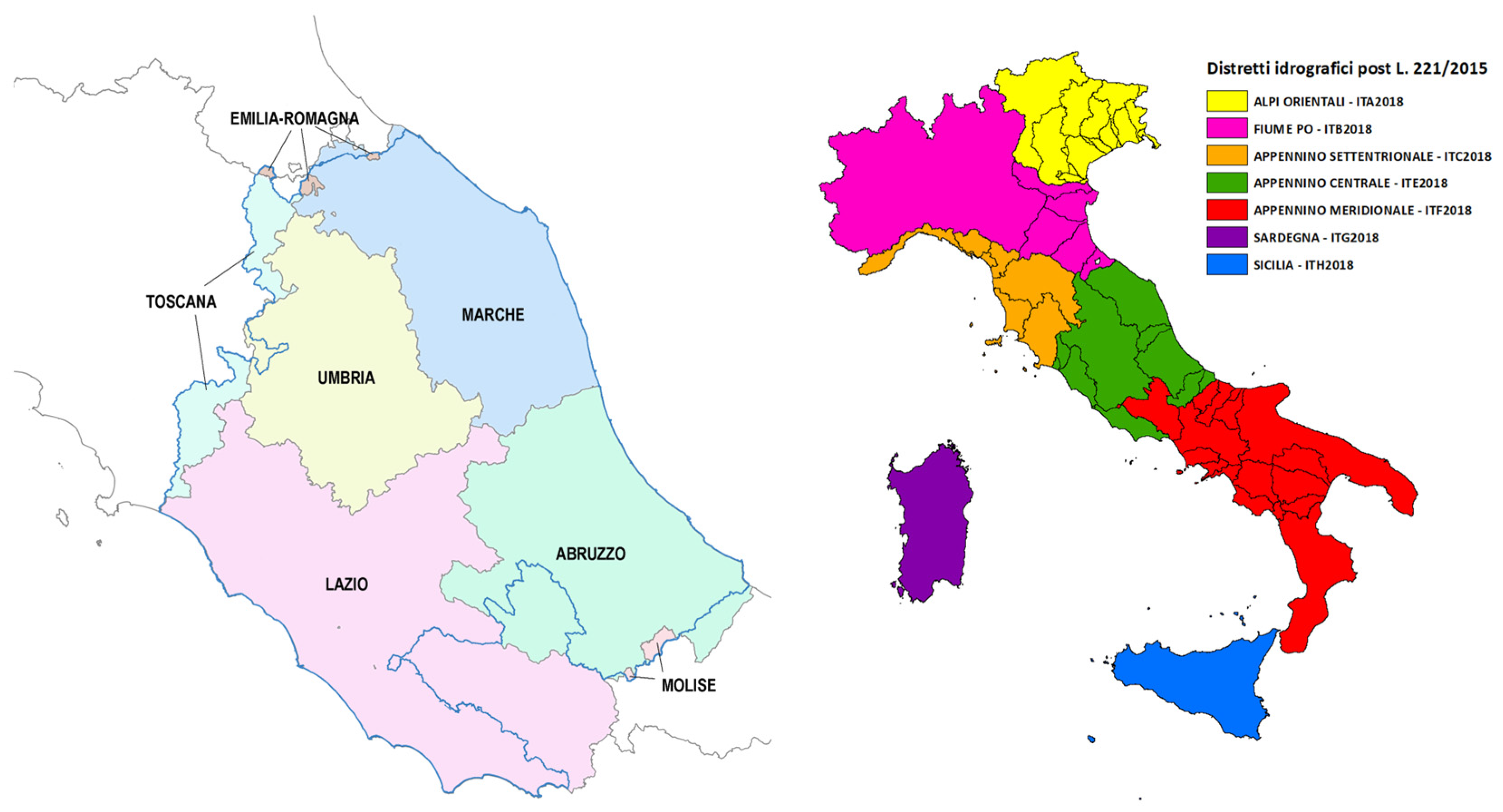
The district covers more than 42,000 km2 and has a perimeter exceeding 1700 km, around 770 km of which coincide with the Tyrrhenian and Adriatic coastlines (Table 1). The district includes all or parts of seven regions in central Italy—Emilia-Romagna, Tuscany, Umbria, Marche, Lazio, Abruzzo, and Molise (Figure 1).
This extensive area includes major river basins—most notably the Tiber (catchment ~17,375 km2)—along with numerous Adriatic and Tyrrhenian watercourses, Apennine mountain landscapes (peaks > 2900 m), major lake systems, and the metropolitan area of Rome, creating exceptionally complex management needs [11].
The district hosts more than 8.6 million residents across 901 municipalities and 22 provinces (Table 1), spanning from sparsely populated Apennine inner areas to the Rome metropolitan region, forming an exceptionally complex multilevel governance setting [11].
In the broader national context, Italy is among the European countries with the highest levels of hydrogeological risk, with more than 620,000 mapped landslides and over 8 million people exposed to landslide or flood risk; within this framework, the Central Apennine district stands out as particularly critical [12].
Geologically, the district is highly complex, with alternations of carbonate and flysch formations that make it prone to widespread gravitational instability. More than 151,000 landslides have been recorded (approximately 25% of the national total [12]), corresponding to 13.3% of the territory classified as at landslide risk and approximately 600,000 people exposed. High seismicity (78% of the district in medium- and high-seismicity zones) further amplifies hazard conditions.
The Central Apennine river basins exhibit morphometric characteristics conducive to rapid hydrological response and flash flooding. Flood-prone areas account for 4.2% of the district (1763 km2), with around 650,000 exposed people. Recent severe events include the Misa River flood (September 2022) and the Emilia-Romagna flooding (May–June 2023).
Drought represents the other side of the hydrological crisis affecting the Apennines. Over the past two decades, the district has experienced a marked warming trend, with more frequent and intense heatwaves alongside shifting precipitation regimes. Rainfall is increasingly characterized by lower annual totals, fewer rainy days, and a stronger concentration of precipitation into a limited number of high-intensity events. As a result, water-stress episodes affecting both drinking-water supply and irrigation are becoming more frequent [11].
AUBAC’s mandate—defined by national and European legislation—covers three interlinked domains: (i) soil protection and hydrogeological risk mitigation through Hydrogeological Asset Plans (PAI) that delineate hazard areas, establish land-use requirements, and program mitigation measures; (ii) quantitative and qualitative protection of water resources through Water Management Plans (WMPs; Italian: PGA) aligned with the Water Framework Directive, including environmental monitoring, water-use regulation, and drought management via the Permanent Observatory on Water Uses; and (iii) flood risk management through Flood Risk Management Plans (FRMPs; Italian: PGRA) aligned with the Floods Directive, mapping hydraulic hazards under multiple probability scenarios.
It is important to emphasize that AUBAC’s responsibilities primarily concern planning and programming and are distinct from civil-protection operational functions. The Authority produces hydraulic and geomorphological hazard maps, defines risk scenarios—including water depths and velocities—and transfers this technical basis to the Civil Protection System to support operational warning and response procedures. AUBAC does not manage real-time monitoring for alerting purposes, nor does it hold responsibilities for emergency response. Its use of monitoring data focuses on day-to-day analytical assessment—trend detection, perimeter validation, and support for intervention planning—rather than the operational management of ongoing events.
AUBAC works closely with ISPRA, regional environmental agencies (ARPAs), universities, and research centers on data and modeling activities, and maintains continuous coordination with the Ministry of the Environment and Energy Security, the Department of Civil Protection, regions, provinces, municipalities, consortia, and other district-level governance bodies.
The Authority faces a growing set of interrelated challenges: accelerating climate change and the intensification of extremes; persistent land take despite containment policies; aging hydraulic and water infrastructure; conflicts among competing water uses (domestic, agricultural, industrial, and environmental); fragmented administrative responsibilities; and the need to engage citizens and stakeholders effectively in decision-making. The digital transformation pursued by AUBAC—through advanced GIS systems, public-facing WebGIS services, and, in the near future, Digital Twin and immersive visualization tools—is therefore not an optional technological upgrade but a strategic necessity to fulfill its institutional mission effectively in a rapidly evolving environmental and socioeconomic context.

3. Basin Planning

3.1. The Basin Plan and Sectoral Plans

One of the core responsibilities of River Basin District Authorities is the preparation and periodic update of the District Basin Plan (Legislative Decree 152/2006, Art. 65) [7]. The Plan is a knowledge-based, regulatory, and technical–operational instrument through which actions and spatial-planning rules are defined and coordinated to ensure: (i) soil conservation, protection, and enhancement; (ii) the sustainable use of water resources; and (iii) the safeguarding of related environmental components.
The Basin Plan is legally binding. Its provisions are immediately enforceable by public administrations and public bodies and prevail over any conflicting municipal or provincial spatial-planning instruments. This hierarchical precedence reflects the need to ensure coherent management of hydrographic systems that extend across multiple administrative jurisdictions.
Given the inherent complexity of an instrument that must integrate multidisciplinary knowledge, coordinate expertise distributed across several institutional levels, and address technically diverse domains, the legal framework allows the Plan to be implemented through sectoral plans. These plans address specific thematic areas—such as hydrogeological risk, water quality, and flood risk—each with its own timetable and procedures—while retaining full legal validity as integral components of the overall Plan. Despite their different thematic focus, sectoral plans share a common methodological structure: (i) a territorial knowledge base; (ii) identification of critical issues, pressures, or drivers; (iii) definitions of objectives; (iv) selection of measures; and (v) a binding regulatory framework.
Future developments point toward the progressive integration of sectoral plans into a single, dynamic digital instrument—the District Digital Twin—capable of overcoming the traditional fragmentation among planning tools. By integrating hydrogeological risk, water quality, water uses, and environmental protection within a coherent, continuously updated information system, such a framework enables integrated analyses and automated consistency checks. This represents a key evolutionary horizon for basin planning in the digital era.

3.2. Information Requirements for Basin Planning

The scale and complexity of basin plans generate extensive and highly diversified information needs. Planning effectiveness depends on the availability, quality, and integration of multiple categories of data, including:
  • Topographic and morphometric data: High-resolution Digital Terrain Models (DTMs) derived from LiDAR surveys are essential for basin delineation, morphometric parameter estimation, hydrological and hydraulic modeling, and the identification of potentially flood-prone areas.
  • Geological and geomorphological data: Geological mapping—including lithology, stratigraphy, and geotechnical properties—provides the basis for landslide-susceptibility assessment. Landslide inventories, including type and activity status, feed predictive models and support the delineation of PAI perimeters.
  • Hydrological and hydraulic data: Long-term time series of rainfall, temperature, and river-stage measurements are fundamental for characterizing hydrological regimes, estimating flood discharges, and calibrating models used to map flood-prone areas.
  • Land-use data and exposed elements: Up-to-date land-use maps support runoff-coefficient estimation and land-take assessment, while databases of buildings, infrastructure, and population are needed for risk assessment, with particular attention to sensitive facilities and critical infrastructure.
  • Earth observation and in situ monitoring data: Continuous streams from IoT sensors (rain gauges, hydrometric stations, piezometers) and multispectral and radar satellite imagery support (i) monitoring of climate, hydrological variables, and vegetation conditions; (ii) post-event mapping of inundated areas; and (iii) detection of ground deformation.
  • Regulatory data and climate scenarios: The spatial delineation of restrictions, administrative boundaries, archives of planning documents, and climate projections are required to assess the evolving frequency and intensity of extreme events.
Managing this large volume of heterogeneous information in an integrated manner is a challenge that can be addressed effectively only through advanced geospatial data management technologies. This need is precisely what led AUBAC to invest in the development of an integrated WebGIS platform capable of aggregating, structuring, and making its entire information base accessible to support planning activities.

3.3. Institutional, Functional, and Communication Needs

River Basin District Authorities operate under multiple converging pressures that make digital transformation a strategic necessity.
Regulatory compliance and transparency: The European and national framework imposes growing requirements for accessibility and interoperability of territorial data. The Water Framework and Floods Directives call for planning information to be made publicly available; the INSPIRE Directive requires standardized web services; and the Digital Administration Code promotes open, reusable data. Without digital tools, verifying whether a parcel falls within an area subject to land-use restrictions may still require in-person access to offices and consultation of paper archives—incurring time and costs that weaken the effective right of access to environmental information.
Service delivery and inter-institutional coordination: The district includes more than 900 municipalities, many with technical offices operating under limited resources, yet required to verify the consistency of local spatial-planning instruments with PAI/PGRA provisions. Multilevel governance—with responsibilities distributed across the State, regions, provinces, municipalities, land reclamation consortia, and water-service operators—often leads to information fragmentation. In the absence of shared platforms, each verification may require formal requests and weeks-long delays, while document exchanges between agencies can suffer from limited traceability and poor version control.
Public participation and risk communication: Plan approval procedures include consultation phases during which municipalities, citizens, and associations may submit observations. Without accessible visualization tools, consultations risk becoming formal exercises with limited participation. Risk communication is also constrained by the difficulty of translating traditional technical maps into formats that are understandable to non-specialist audiences.
Operational efficiency and monitoring: Prior to digital transformation, technical staff frequently worked with fragmented datasets stored on individual workstations, duplicated information, and persistent synchronization problems. Updating hazard perimeters could require weeks of manual data collection across heterogeneous sources. Effective management of territorial safety and water resources requires timely, up-to-date information (e.g., rainfall, river stages, and reservoir levels) that, without integrated systems, remains scattered across different institutions and cannot be interpreted through an integrated, basin-wide view of conditions.

4. The Evolution of Spatial Computing Technologies

4.1. From GIS to WebGIS to the Digital Twin

Technologies for processing, analyzing, visualizing, and interacting with georeferenced data—commonly referred to as spatial computing—have evolved markedly over the past fifteen years [13,14,15,16], significantly enhancing the operational capabilities of organizations involved in territorial planning and management.
Desktop GIS has long been the core of this technological ecosystem, evolving from standalone cartographic tools into high-performance analytical platforms. Contemporary desktop GIS environments integrate advanced geostatistics, 3D analysis, and machine learning workflows, supported by parallel computing architectures that enable the handling of massive datasets, such as LiDAR point clouds and multitemporal satellite image time series [17,18,19,20,21].
WebGIS emerged as an architectural extension of desktop GIS, introducing a clear separation between (i) the production and validation of geographic data and (ii) the dissemination and consultation of information [19]. Its widespread adoption has been enabled by the standardization of geospatial web services promoted by the Open Geospatial Consortium (OGC), the maturation of spatial databases, and the rise in cloud architectures [22,23]. Advanced WebGIS solutions combine static layers (maps, administrative boundaries, and infrastructure) with dynamic information acquired in near real time from distributed sensor networks [24], marking the transition from purely descriptive systems to diagnostic, operational platforms.
This evolution has paved the way for territorial Digital Twins, in which the information-centric dimension of WebGIS is complemented by simulation and predictive capabilities [25,26]. Territorial Digital Twins aim to overcome the limitations of traditional tools when dealing with dynamic, nonlinear processes such as hydrogeological hazards, drought, and climate-change impacts [27,28,29]. The emerging requirement is for systems able to integrate continuous observations, physics-based models, and predictive algorithms, thereby supporting decisions under uncertainty [30,31].
Within this architecture, desktop GIS retains its role as a scientific environment for modeling and validation; WebGIS functions as a platform for sharing, consultation, and interaction; and the Digital Twin represents the highest cognitive and computational layer, integrating observations, models, and artificial intelligence into a dynamic, continuously evolving system [25,26].

4.2. Territorial Digital Twins

The concept of the Digital Twin, originally introduced within Product Lifecycle Management and later formalized as a paradigm for managing complex systems [32], has matured through the systematic definition of its key components [33,34].
Its development has been enabled by the convergence of three technology families: IoT and distributed sensing for continuous monitoring, cloud computing for scalable computational capacity, and artificial intelligence to support forecasting and advanced analytics [35,36,37,38].
Territorial Digital Twins represent the most advanced extension of this paradigm [24,39]. They model entire geographic regions by representing physical elements (water bodies, soils, and infrastructure), environmental processes (hydrological cycle and erosion), anthropogenic dynamics (withdrawals and urbanization), and their interactions across space and time [27,28,40,41].
The literature proposes several Digital Twin maturity models. The classification originally popularized by Gartner [5] distinguishes four levels based on analytical capability: Descriptive, Diagnostic, Predictive, and Prescriptive Twins. Building on this baseline, subsequent adaptations in systems engineering and environmental sciences introduced extended scales that explicitly include intermediate analytical capabilities and fully autonomous operation [6,42,43,44]. In this study, the adopted maturity framework is articulated across five levels, from a basic georeferenced inventory (Level 0: Descriptive) to fully autonomous systems (Level 4: Autonomous) (Table 2).
Most existing implementations lie between Level 1 (Diagnostic) and Level 2 (Analytical), and significant technological and organizational barriers remain to reach higher levels. Recent reviews have examined Digital Twins for natural disaster risk management, highlighting both their promise (scenario simulation and decision support) and persistent challenges (integration of heterogeneous data, scalability, and accessibility) [45]. Frameworks for Landscape Digital Twins have proposed multi-hazard approaches that jointly consider hydraulic, geomorphological, and seismic risks [46]—a particularly relevant perspective for highly heterogeneous territories such as the AUBAC district.
Caprari et al. (2022) drew a key distinction between Smart City Platforms—data infrastructures that deliver services primarily through sensor-based data acquisition—and full Digital Twins, which include simulation and predictive functionality [26]. Chioni et al. (2023) introduced the concept of a Territorial Digital Twin (TDT) tailored to fragile inland and mountainous areas, noting that most experiments have focused on urban contexts, while applications at an intermediate territorial scale remain comparatively underdeveloped [47].
Among large-scale initiatives, the Digital Twin of the Earth’s hydrological cycle (DTE Hydrology), documented by Brocca et al. (2024) [27] and developed within the Destination Earth framework, represents one of the most advanced efforts to create a high-resolution digital replica of the terrestrial water cycle. The project integrates satellite observations, in situ data, and physics-based hydrological models into an operational platform (https://platform.dtehydrology.org/; accessed on 15 February 2026) with applications across Europe, including Italy. DTE Hydrology targets predictive capability at the continental scale, complementing governance-oriented approaches such as AUBAC’s by providing the process-level modeling layer that institutional platforms can leverage for scenario analysis and forecasting.
Overall, there is a clear need for operational approaches that can translate the Territorial Digital Twin paradigm into implementable, scalable, and institutionally sustainable architectures, particularly at the catchment and river-basin scales, where multiple hazards coexist.

4.3. International and National Experiences with WebGIS and Territorial Digital Twins

Internationally, several initiatives provide well-established reference points for the evolution of WebGIS and Digital Twin systems applied to territorial management.
In the Netherlands, Rijkswaterstaat has developed one of the world’s most advanced Digital Twins for integrated management of the national water system. In a country where roughly 26% of the land surface lies below sea level, the system integrates more than 17,000 sensors with real-time hydraulic forecasting models and decision-support tools for emergency management [48,49].
Virtual Singapore, launched in 2014, integrates 3D models of the entire city-state with dynamic data on traffic, energy use, and water management. While its spatial extent (~730 km2) differs substantially from that of a river-basin district, the project has contributed to global benchmarks in architecture and governance for digital urban systems [50,51].
In the United Kingdom, the Environment Agency Flood Map for Planning enables online consultation of flood risk, combining hazard mapping with climate-change allowances and scenarios. Its emphasis on accessibility and the democratization of information provides an important benchmark for communication objectives similar to those pursued by AUBAC [52,53].
At the river-basin scale, Garcia Andarcia et al. (2024) documented a Digital Twin for the Limpopo Basin (~400,000 km2), implemented as a cloud-based platform integrating Earth Observation data with what-if simulation capabilities [54]. Hajisheko et al. (2025) developed a WebGIS-based decision-support system for the Guder Basin (Ethiopia), combining the RUSLE model with the Sentinel-2 and CHIRPS datasets through methodological approaches comparable to those adopted by AUBAC [55].
In Europe, the French Agences de l’Eau provide web portals for consultation of SDAGE and PGRI, highlighting shared challenges in multilevel governance; however, the technological solutions are generally less advanced than AUBAC’s enterprise-oriented approach [56].
In Italy, the Emilia-Romagna regional geoportal was upgraded following the May 2023 floods, introducing services explicitly designed for emergency management [57]. This experience shows how disasters can accelerate digital transformation and underscores the value of having robust WebGIS infrastructures already in place during the prevention phase. Among basin authorities, the Po River Basin Authority has developed the PAI Online portal and an INSPIRE-compliant PGRA geoportal, while the Eastern Alps Basin Authority has implemented systems with a focus on snow monitoring. However, no Italian basin authority has publicly documented a structured pathway toward a district-scale Digital Twin featuring dynamic data integration, enterprise architecture, and an explicit roadmap toward predictive capability comparable to the approach proposed by AUBAC.

4.4. Summary of the State of the Art

Table 3 provides a comparative analysis of key WebGIS and Digital Twin platforms at the international and national levels. For each case, it highlights the territorial scale, system typology, dynamic data integration, the presence of physics-based models and predictive functionality, and the maturity level according to the five-level scale adopted in this study.
Overall, the comparison indicates that, despite the increasing diffusion of WebGIS solutions and early implementations of territorial Digital Twins, most initiatives remain at early diagnostic or initial analytical maturity. Urban-scale systems (e.g., Virtual Singapore) and highly specialized national-scale infrastructures (e.g., Rijkswaterstaat) show more advanced development, whereas district-scale applications that integrate multiple hazards remain relatively rare. The positioning and originality of the AUBAC contribution within this landscape are discussed in Section 8 in light of the results achieved.

5. Objectives and Methodology

5.1. General Strategy

AUBAC’s digital transformation program was designed as a single-case study [59,60] and implemented through an incremental, iterative approach inspired by Agile project management and adapted to the constraints and governance of public administration [61]. Rather than pursuing a “big-bang” deployment, AUBAC adopted short development cycles with progressive releases, continuous user validation, and ongoing reprioritization based on operational feedback.
This strategy was driven by: (i) uncertainty in the pace and direction of technological change; (ii) the need to demonstrate measurable benefits within timeframes compatible with public-sector planning and budgeting cycles; and (iii) the opportunity to build internal capacity through learning-by-doing. The incremental pathway reduced implementation risk and helped generate the institutional consensus required to sustain multiyear investment.
The research design is structured as follows:
  • Case study rationale: This article documents the author’s own institutional experience as a practitioner case study. AUBAC’s digital transformation is scientifically relevant because it combines features that are underrepresented in the Digital Twin literature: (i) a large territorial scale (>42,000 km2) with high morphological, climatic, and administrative heterogeneity; (ii) multi-hazard exposure (landslides, floods, drought, coastal erosion); (iii) multilevel governance involving seven regions and over 900 municipalities; and (iv) a complete three-year transformation trajectory from legacy systems to an operational Digital Twin, offering a longitudinal perspective rarely available in the literature;
  • Units of analysis: The primary unit is the WebGIS/Digital Twin platform as a socio-technical system. Embedded units include: the geospatial data infrastructure (613 layers across 10 thematic families); the IoT monitoring integration (1844 sensors); the institutional processes affected by digital transformation (plan updates, public consultations, administrative procedures); and the user interactions documented through platform analytics and structured questionnaires;
  • Data sources: Evidence was collected through methodological triangulation [62]: (i) platform analytics (ArcGIS Enterprise usage logs); (ii) administrative records (protocol registries, case files, and formal requests); (iii) structured questionnaires administered during training and consultation events (n = 127, 2023–2025); and (iv) documentary evidence (secretarial decrees, technical reports, and project documentation);
  • Validation: Internal validity was pursued through triangulation across quantitative, qualitative, and documentary sources. External validity is addressed through detailed documentation of context, methods, and constraints to enable analytical generalization [59] rather than statistical generalization. Reliability is supported by the transparency of data sources, calculation methods, and acknowledged limitations (Section 5.5).
The program is structured into two macro-phases. The first (2022–2025), documented in this article, resulted in a Level 1 (Diagnostic) Digital Twin. The second (2026–2028) targets the evolution of the platform toward analytical and predictive capabilities (Levels 2–3).

5.2. Reference Framework

The methodological framework integrates elements from various sources:
  • Digital Twin maturity models: The five-level maturity scale proposed in the literature [5,6,42] was adapted to the territorial domain. In this study, Level 0 (Descriptive) corresponds to static repositories; Level 1 (Diagnostic) to systems integrating near-real-time data and continuous monitoring; Level 2 (Analytical) to platforms enabling what-if simulation; and Level 3 (Predictive) to systems incorporating ML/AI models. AUBAC set the transition to Levels 2–3 as a target for 2026–2028.
  • Interoperability standards: Compliance with INSPIRE and OGC standards was treated as a non-negotiable design constraint to ensure interoperability with external geospatial infrastructures. Harmonization of datasets according to INSPIRE specifications is planned for completion by 2026.
  • AgID guidelines and European directives: Architectural choices and priority functionalities were guided by the Agency for Digital Italy (AgID) guidelines as well as by the requirements of the Water Framework Directive (2000/60/EC) and the Floods Directive (2007/60/EC).
  • Co-design principles: Consistent with the Aarhus Convention, interface design and feature prioritization were conducted with the active involvement of representative user groups through co-design sessions [63] and usability testing.

5.3. Institutional and Strategic Objectives

The WebGIS program was conceived as the strategic response to the needs outlined in Section 3.3, serving a dual function: (i) an external transparency tool and (ii) an internal territorial-intelligence system supporting core institutional processes.
Project objectives were organized into seven macro-categories, comprising a total of 16 priority objectives (Table 4). Table 5 summarizes, for each category, the number of objectives, the prevailing dimensions, and the main regulatory references.

5.4. Stages of the Transformation Process

The WebGIS platform was designed as a continuously evolving system, intended to be progressively enriched with new layers, analytical tools, and dynamic data streams. The first macro-phase (2022–2025), documented in this article, was articulated into four sub-phases—an assessment and three successive releases—each defined by specific objectives and measurable success criteria. The second macro-phase (2026–2028) will begin with a consolidation year dedicated to interoperability prerequisites (RNDT, INSPIRE, and NIS2), followed by further evolution toward analytical and predictive capabilities. Table 6 summarizes the relationship between phases, objectives activated or prioritized in each phase (while previously activated objectives remained operational and were progressively consolidated), and Digital Twin maturity levels, while Table 7 details the progression of each objective across the three releases.

5.4.1. Assessment and Infrastructure Consolidation (October–December 2022)

This initial sub-phase focused on baseline assessment and the establishment of core technological foundations:
  • Benchmarking: review of international and national experiences; assessment of AUBAC’s information systems; inventory of available geospatial datasets.
  • Requirements definition: appraisal of internal capabilities; identification of training gaps; definition of functional requirements and phase-specific KPIs.
  • Platform selection: migration from QGIS to ArcGIS Enterprise to enable multi-user geodatabase workflows, versioning, and web services.
  • Cloud migration: adoption of Microsoft Azure, enabling the hybrid on-premises/cloud deployment model described in Section 6.5.
  • Enterprise geodatabase: implementation on PostgreSQL/PostGIS in a master–replica architecture, consolidating previously fragmented datasets.

5.4.2. Public WebGIS Development—First Release (January–May 2023)

Between January and May 2023, AUBAC developed and published the first public release of the platform. This release corresponded to Level 0 (Descriptive) on the Digital Twin maturity scale: a static data repository with basic consultation and query functions. Key activities included:
  • Interface co-design: engagement of municipal technicians, professionals, and citizens to collect requirements and validate prototypes.
  • Core functionalities: map visualization, navigation, spatial queries, and data download, with a strong focus on usability and accessibility.
  • Publication of priority layers: district boundary, administrative units, catchments, WFD water body status, PAI perimeters (nine plans), PGRA maps, and flood-defense works.
  • Public launch: the platform went live on 12 May 2023, supported by publication on the institutional website, communications to local authorities, and dissemination through conferences.

5.4.3. Functional Expansion and Near-Real-Time Integration (September 2023–May 2024)

This sub-phase delivered a substantial functional expansion, introducing dynamic components and advanced visual analytics. With the integration of near-real-time feeds and interactive dashboards, Release 2 (May 2024) achieved Level 1 (Diagnostic) maturity.
Release 2 introduced four additional thematic domains (Hydrology, Environmental Monitoring, Coastal Management, and Transport Infrastructure), expanding the catalog to more than 350 layers. Its most significant innovation was the integration of IoT monitoring networks comprising 1844 meteorological and hydrological stations, transforming the platform from a static repository into a dynamic system updated daily.
From a functional standpoint, Release 2 added 3D web visualization (WebGL), a drone-to-map workflow for photogrammetric surveys, dynamic dashboards for climate monitoring and risk assessment, and animated time-enabled maps for meteorological and climate variables.

5.4.4. Catalog Completion and Earth Observation Integration (September 2024–May 2025)

This sub-phase brought the platform to its current operational configuration (Release 3), completing the thematic catalog and structurally integrating Earth Observation data. Release 3 (May 2025) consolidated Level 1 (Diagnostic) maturity.
Three new thematic families (Urban Planning and Territory, Facilities, Satellite Imagery) completed the information architecture, bringing the total to 613 layers grouped into ten macro-families.
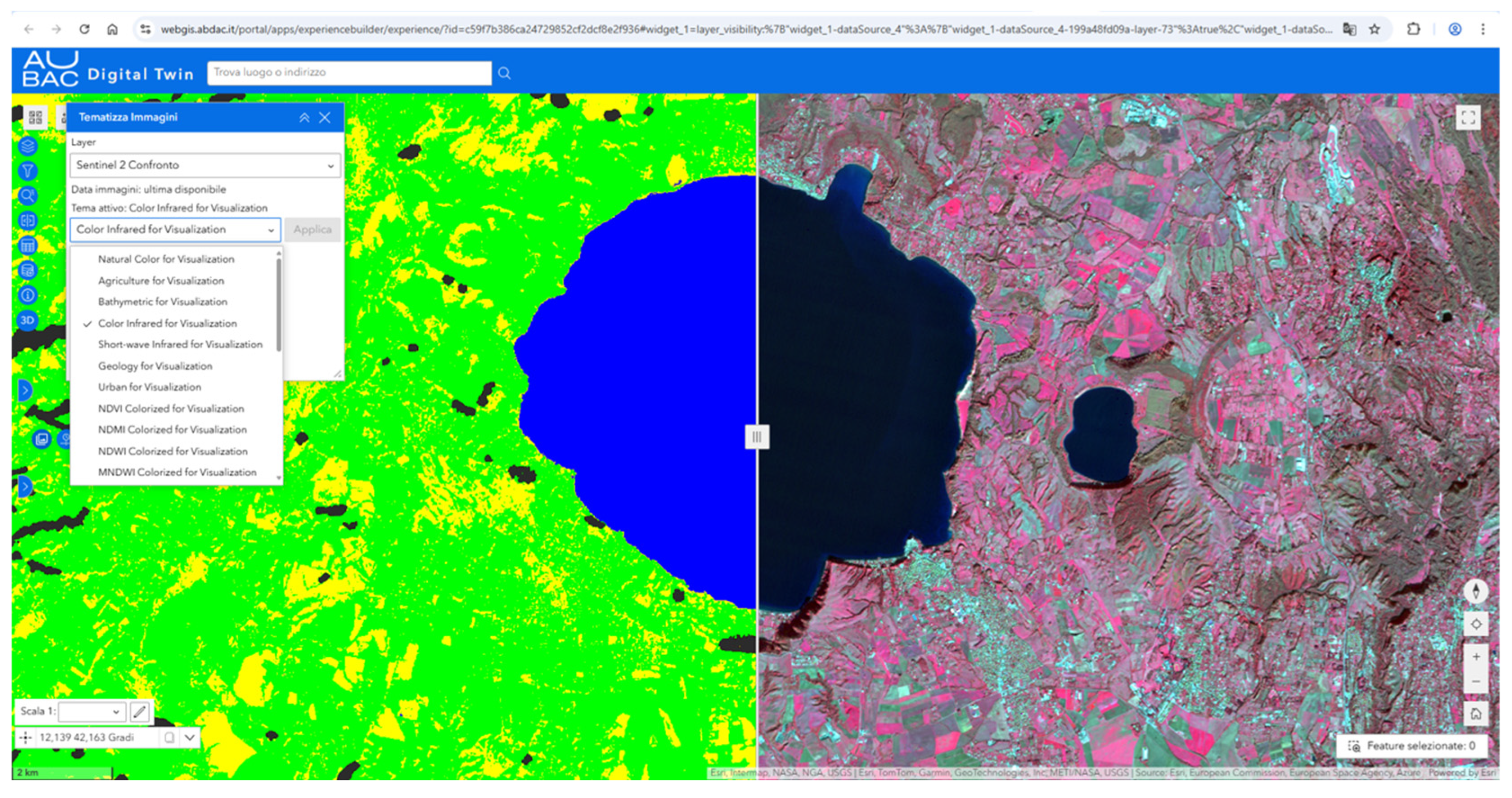
The most relevant technological step was the integration of Copernicus Sentinel-2 services, adding 37 EO layers—including multispectral composites, spectral indices, and derived products—supporting operational applications such as change detection and monitoring of territorial dynamics. The swipe tool enables interactive multitemporal comparison between acquisitions from different dates.
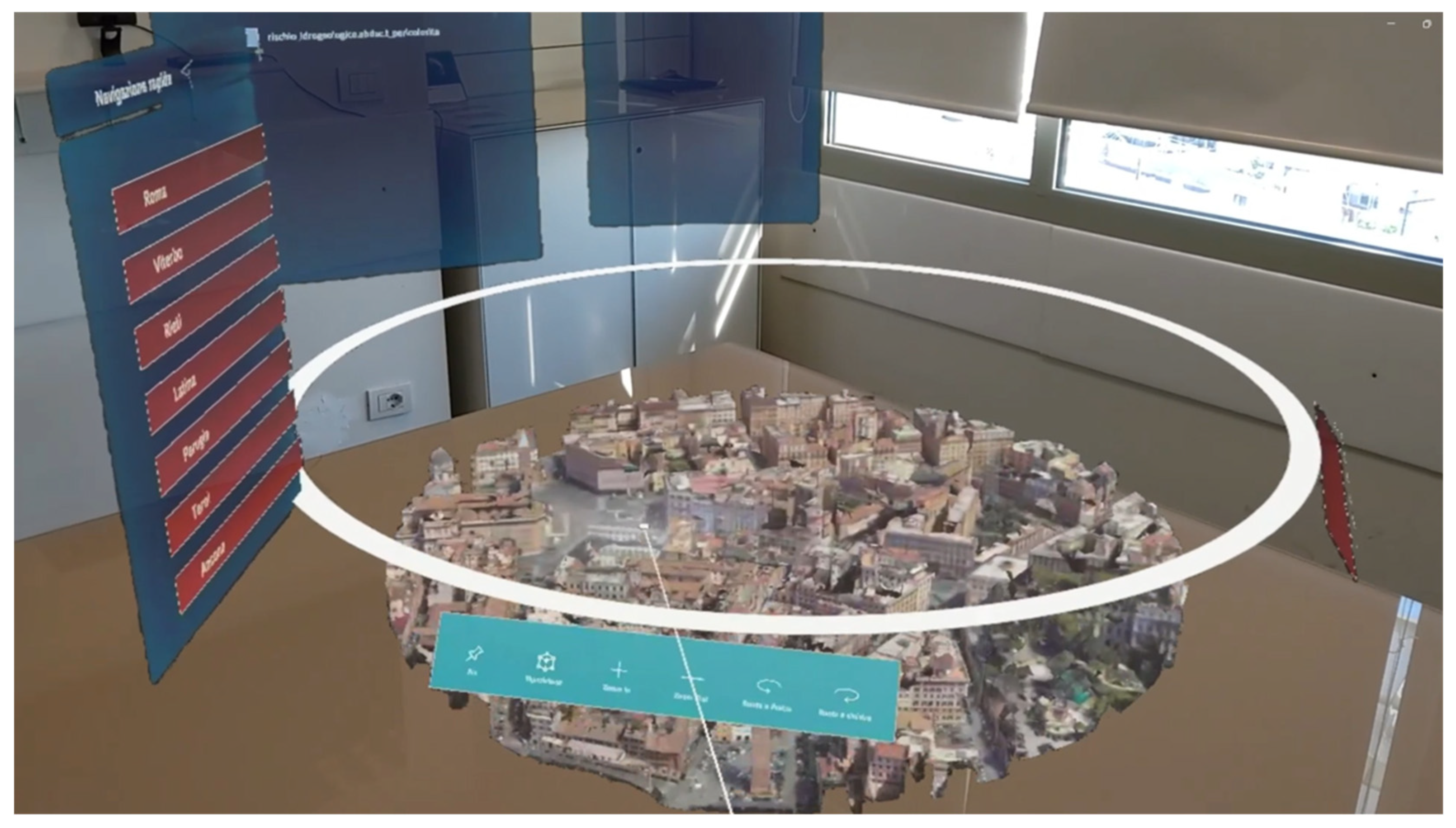
Release 3 also incorporated dashboards for quantitative water resource management (withdrawals, water schemes, monthly consumption). Additionally, it introduced, on a pilot basis, Extended Reality applications (Mixed Reality on HoloLens 2 and Virtual Reality on Meta Quest 3) for immersive territorial visualization, developed under the ACQUACENTRO project (FSC 2014–2020 Environment Operational Plan).

5.4.5. Future Developments (2026–2028)

The second macro-phase (2026–2028) aims to evolve the platform from Level 1 (Diagnostic) to Level 2 (Analytical) by 2027, introducing what-if simulation, semantic reasoning, and alternative scenario analysis. Level 3 (Predictive) is targeted for 2028 through the integration of ML/AI forecasting models, adaptive climate-planning capabilities, and support for predictive maintenance of flood-defense and water infrastructure.
Before progressing toward a predictive Digital Twin, AUBAC plans to complete key enabling infrastructure components during the first year (RNDT, INSPIRE, and NIS2), the consolidation of which is considered a prerequisite for subsequent upgrades.

5.5. Evaluation Methods and Indicators

Results were assessed through a combination of quantitative and qualitative methods [63] across four complementary evaluation dimensions: platform performance, organizational impact, stakeholder outcomes, and benchmarking (Table 8).
Quantitative metrics were derived from three primary data sources: (i) platform analytics (ArcGIS Analytics for usage; automated health checks for availability); (ii) administrative records (protocol registries for requests and georeferenced observations; case files for observation-processing and investigation times, and for plan-processing times); and (iii) structured questionnaires administered during public meetings to assess self-reported risk understanding and usability outcomes (n = 127 respondents across six sessions, 2023–2025). Benchmarking compared AUBAC’s functional scope with other Italian basin authorities and selected international experiences. Where pre-implementation baselines were not originally recorded, values were reconstructed from retrospective administrative series. Sample sizes for case-based indicators were determined by data availability and selected to ensure comparability across plan types and territorial contexts. Given the exploratory nature of this embedded operational single-case study, the analysis is descriptive and no inferential statistics are applied. Percentage reductions and other indicators are therefore reported as approximate ranges rather than point estimates, reflecting operational variability, limited sample sizes, and the absence of a control group.

5.6. Methodological Limitations

Several limitations should be acknowledged to support correct interpretation of the results.
  • Single-case-study limitations: As this work documents an operational experience rather than a controlled experiment, it lacks a control group; observed improvements may partly reflect concurrent factors. Transferability is also conditioned by AUBAC’s specific scale and complexity (>42,000 km2; >900 municipalities; seven regions).
  • Data-collection limitations: Indicators originate from operational monitoring systems not designed for research. Baseline conditions rely partly on retrospective estimates; percentage reductions should be interpreted as approximate magnitudes. Some qualitative inputs derive from internal surveys and may be subject to confirmation bias.
  • Qualitative-assessment limitations: User perceptions can be influenced by contextual factors. Structured feedback is weighted toward institutional users, with relatively limited representation of citizens and private professionals. A novelty effect cannot be excluded.
  • Time limitations: The program is ongoing; the 2026–2028 phase is planned but not yet implemented. Certain benefits (e.g., reduced litigation and improved territorial resilience) require longer observation periods.
  • Mitigations adopted: To address these limitations, this study applies triangulation across quantitative, qualitative, and documentary evidence; maintains methodological transparency; avoids unwarranted generalization; provides sufficient documentation to enable independent verification; and manages uncertainty primarily through data-quality controls (Section 6.2.2) and transparent reporting of indicator ranges. Formal uncertainty propagation is outside the scope of this operational case study.

6. Platform Architecture and Content

6.1. Access and Functionality

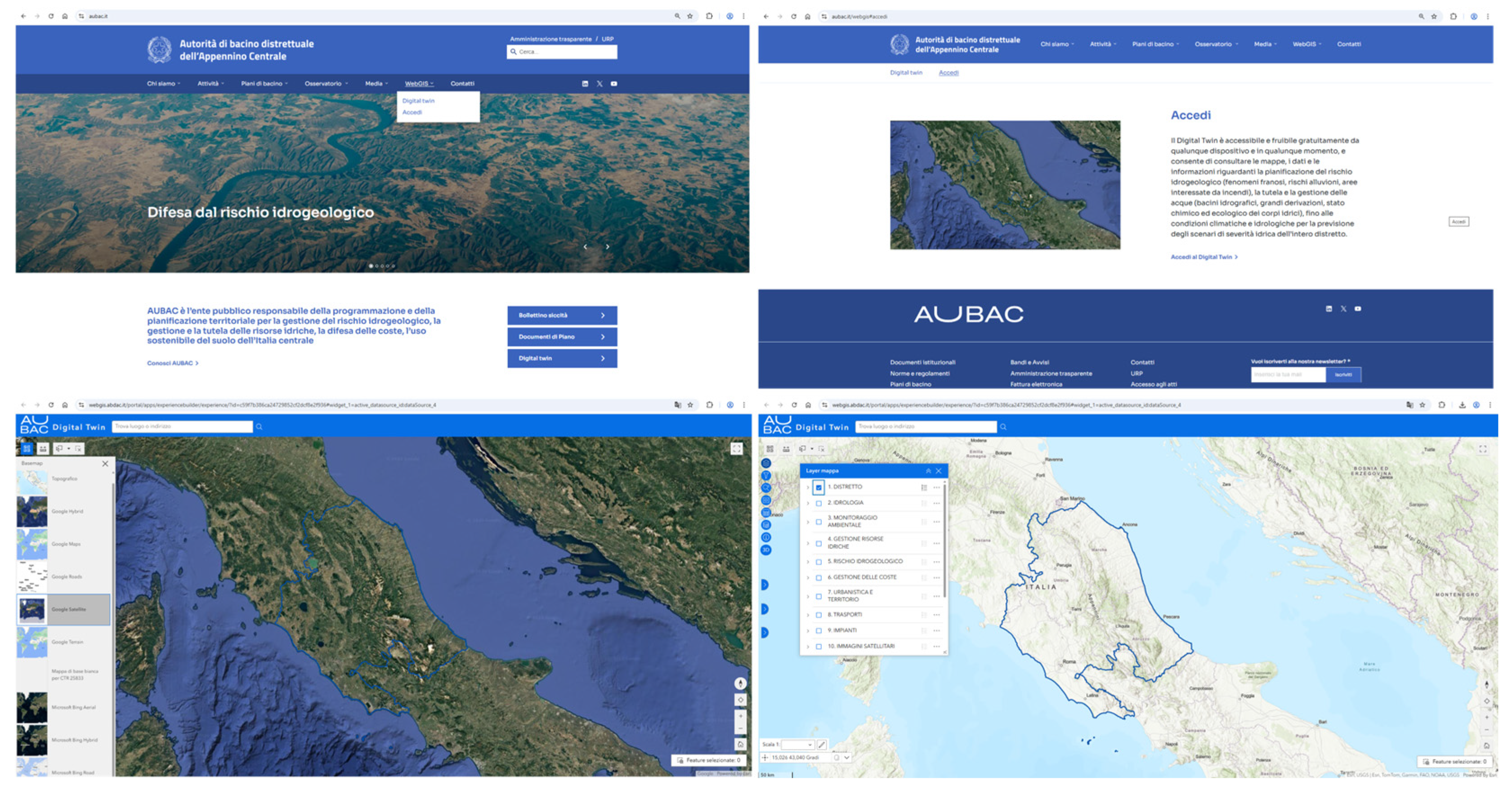
The AUBAC WebGIS platform is fully operational and publicly accessible through the Authority’s institutional portal at [64] (Figure 2). The WebGIS link has been widely disseminated via the official website, formal communications to local administrations, and presentations at technical conferences and professional events, supporting broad awareness and adoption.

6.1.1. User Interface and Navigation Tools

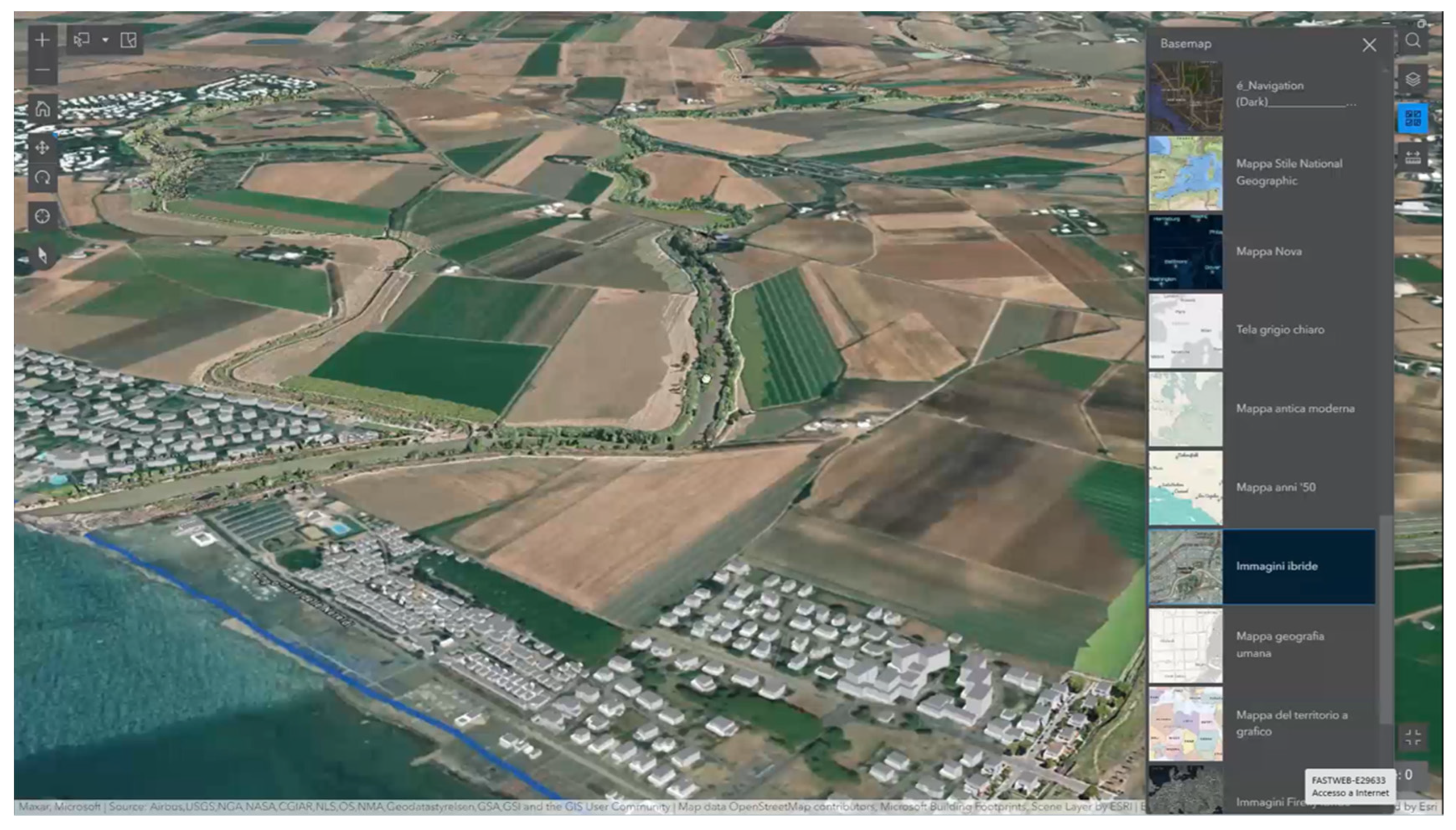
The user interface was designed to be intuitive for non-specialist audiences while still providing advanced capabilities for technical users. The platform offers multiple basemap options (topographic, satellite, hybrid, and shaded relief), enabling users to select the most appropriate background for their specific consultation needs.
Navigation is supported by a location search function that allows rapid retrieval of municipalities, localities, addresses, and geographic coordinates and automatically centers the map on the selected area of interest.
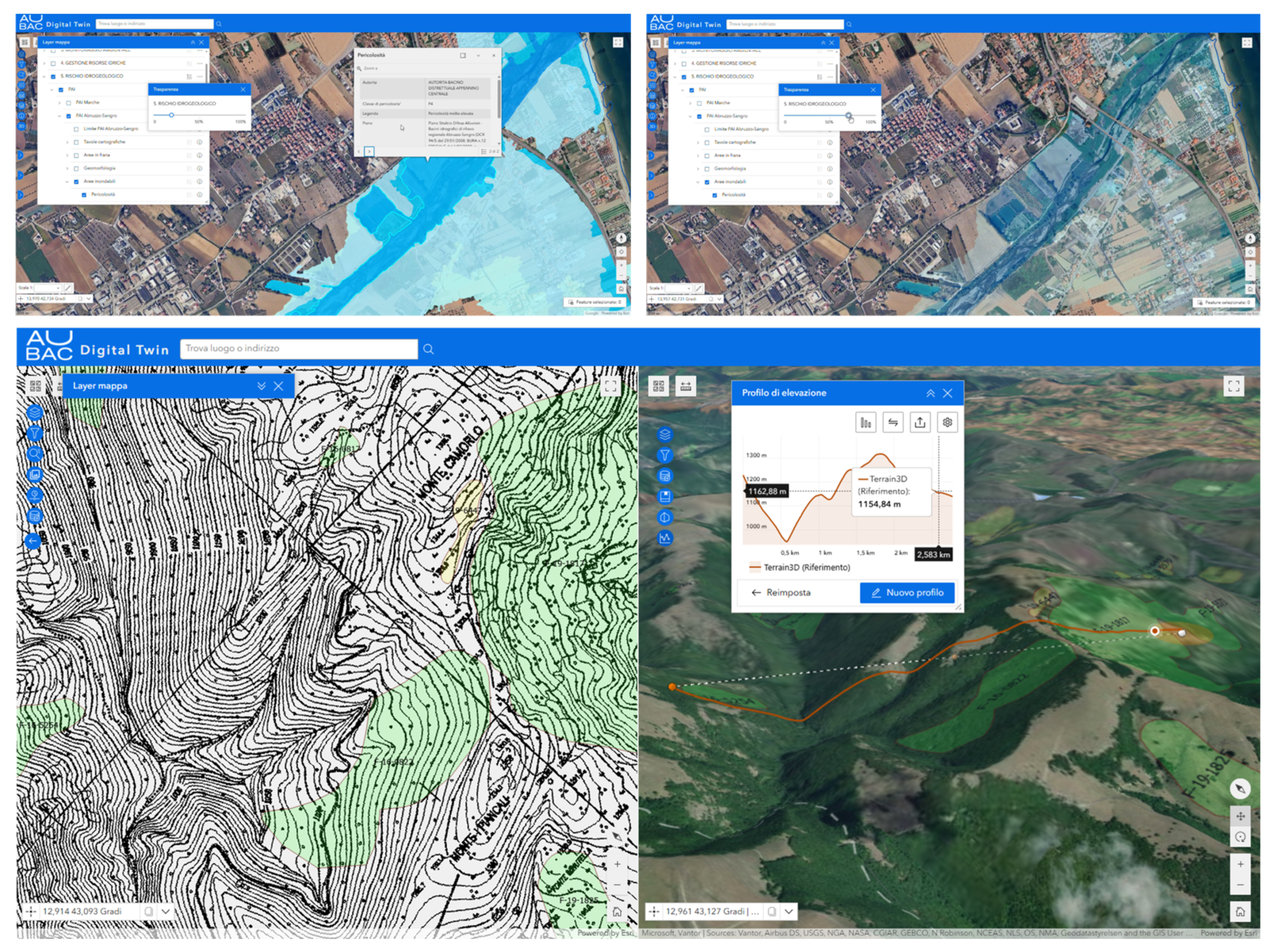
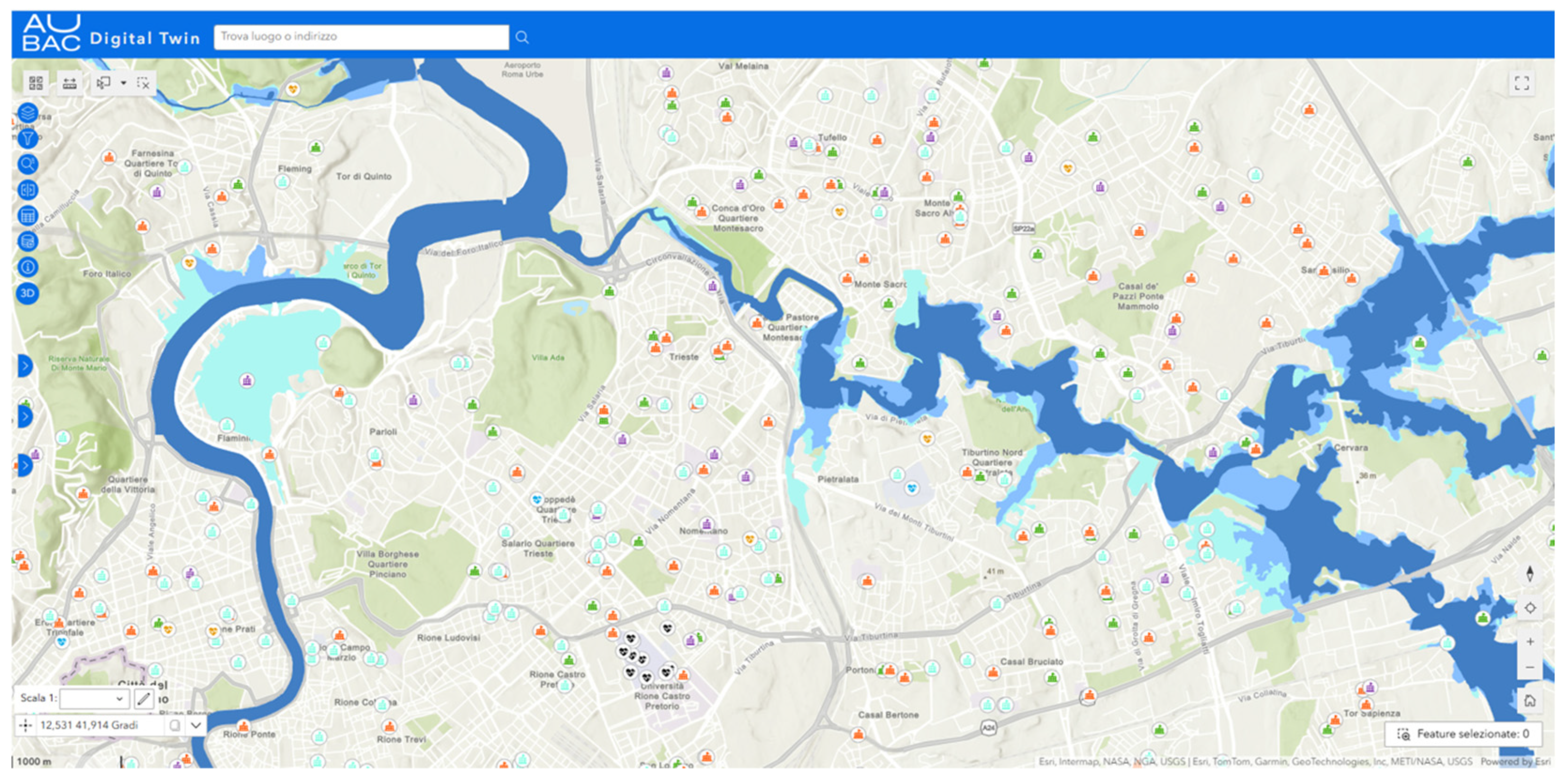
Among the visualization tools, users can adjust layer transparency to support overlay and visual comparison across multiple information layers. A swipe tool enables side-by-side comparison of two different layers—or two acquisition dates of the same layer—through an interactive horizontal slider, immediately highlighting spatial and temporal differences. In addition, 3D terrain visualization, implemented through WebGL, supports immersive exploration of territorial morphology; a synchronized 2D/3D split-view mode is also available, allowing the two perspectives to remain aligned during navigation (Figure 3).

6.1.2. Measurement and Analysis Tools

Built-in measurement tools allow users to compute linear distances and surface areas directly on the map. The elevation profile function supports the creation of transects and returns the terrain profile along user-defined paths, automatically extracting values from the Digital Terrain Model (Figure 3).
Spatial query tools allow users to select features and inspect their attributes, run queries by attribute and/or spatial criteria, and download datasets in standard formats. Capabilities that traditionally require specialized desktop GIS software are therefore available directly through a web browser, without requiring software installation or advanced technical skills.

6.2. Informative Content

6.2.1. Organization into Thematic Families

AUBAC’s WebGIS structures its information assets through a modular, hierarchical framework organized into ten thematic macro-families, each grouping layers that are homogeneous in operational purpose and data type. This organization follows a consolidated design logic: it supports intuitive user navigation, enables differentiated management of access permissions (public, institutional, and restricted layers), improves performance by loading only the data needed for specific analyses, and facilitates incremental updates by specialized teams.
In Release 3, the platform comprises 613 distinct layers, representing a geospatial asset of exceptional value for integrated planning across the Central Apennine hydrographic district. The catalog consolidates, within a single interoperable system, both datasets produced directly by AUBAC and information sourced from a wide range of institutional providers: ministries; national agencies and research bodies (ISPRA, ISTAT, AGEA, CREA, and CNR); public companies (GSE, TERNA, and ANAS); regional and local authorities; the forestry police; port authorities; land reclamation consortia; integrated water-service operators; and European programs such as Copernicus and EUSeaMap. Beyond static map layers, the platform also includes extensive interactive dashboards. Updates occur according to predefined schedules (daily, monthly, or annually) or on an event-driven basis, depending on data type.
Consolidating 613 layers within a single platform directly enables the integrated planning logic required by Basin Plan methodologies. For instance, updates to flood-hazard perimeters (Hydrogeological Risk family) can now be immediately cross-referenced with exposed-population datasets (District family), sensitive facilities (Urban Planning and Territory family), critical infrastructure (Transport Infrastructure and Facilities families), and water-service networks (Water Resource Management family)—analyses that previously required weeks of manual data collection and harmonization (Figure 4). This integration shifts WebGIS from a visualization tool to an operational decision-support system capable of producing the complex territorial assessments demanded by European directives and national legislation.
The strategic relevance of this integration is substantial. Basin planning under the Water Framework Directive (2000/60/EC) and the Floods Directive (2007/60/EC) inherently requires a multidisciplinary approach that considers hydrological, environmental, socioeconomic, and territorial dimensions simultaneously. Prior to the WebGIS implementation, these information domains were dispersed across institutional silos, formats, and reference systems, making integrated analysis extremely difficult and often forcing planners to work with incomplete datasets or to undertake time-consuming manual harmonization. Table 9 summarizes the thematic families, main data sources, and update frequencies.
The content of each family is outlined below:
  • District (13 layers): the administrative and governance reference framework, including the district boundary; basin boundaries as defined under Legislative Decree 152/2006; ISTAT 2023 administrative units; and the organizational structure of water services (ATO and integrated water-service operators).
  • Hydrology (48 layers): physical characterization of the water system, including basin hierarchy, surface hydrographic networks, dam inventories, and regional hydrogeological mapping (springs, aquifer complexes, and piezometric surfaces).
  • Environmental Monitoring (49 layers): real-time sensor networks; WFD-based water body quality assessments; hydro-meteorological event archives (2019–2024); wildfire mapping; and Urban Heat Island analyses for the Rome metropolitan area.
  • Water Resource Management (119 layers): the second-largest thematic group, integrating WFD status classifications; full water-balance accounting (abstractions, returns, discharges); network topologies for integrated water services and irrigation; AGEA agricultural land-use data with crop-specific water-demand indicators; and detailed infrastructure mapping for seven regional water-service operators.
  • Hydrogeological Risk (169 layers): the central planning core, consolidating nine Hydrogeological Risk Management Plans (PAI) with landslide and flood hazard/risk mapping; the Flood Risk Management Plan (PGRA) with inventories of exposed elements; hydraulic defense works; the RenDIS intervention register; and high-resolution topographic surveys for 18 river systems acquired through collaborations with universities (L’Aquila), research institutes (CNR-IRPI and IRS), and European programs (Copernicus).
  • Coastal Management (49 layers): maritime spatial planning; multitemporal coastline monitoring (2000–2006–2020); EUSeaMap habitat classifications; and offshore energy infrastructure.
  • Urban Planning and Territory (103 layers): land-use mapping; protected areas; inventories of sensitive facilities (health, education, and security); ISPRA land-take time series; contaminated sites; and geological and seismic characterization.
  • Transport Infrastructure (9 layers) and Facilities (17 layers): multimodal transport networks and inventories of industrial and strategic sites, completing the territorial overview.
  • Satellite Imagery (37 layers): Earth Observation integration through Copernicus Sentinel-2 services, enabling multispectral visualization with temporal navigation and a 10 m Land Use/Land Cover classification with eleven thematic classes, supporting change detection and environmental monitoring. The Satellite Imagery family is described in detail in Section 6.2.3.

6.2.2. Integration of Dynamic Data from IoT Networks

The platform’s most significant and transformative integration occurred with the second release through the introduction of the Environmental Monitoring thematic family, which incorporates data from IoT sensor networks distributed across the district. AUBAC connected the meteorological and hydrological monitoring stations operated by the Regional Hydrographic Services (1844 sensors) and its own dedicated installations (four hydrometric sensors on the main lakes in Lazio) to the Authority’s information system (Figure 5).
These stations transmit hourly measurements; data are refreshed daily, including air temperature, cumulative precipitation (rain and snow), relative humidity, water levels for major rivers and for natural and artificial lakes, river discharge where rating curves are available, and piezometric levels of deep aquifers monitored through dedicated well networks. Integrating these continuous data streams into the WebGIS fundamentally changed the nature of the platform—from a static repository of historical information and consolidated maps to a dynamic system that represents the district’s current status and is continuously updated. Data are refreshed automatically each morning (09:30 CET) from seven Regional Functional Centers. Temporary upstream server outages may occasionally cause short-term data gaps in the dashboards; however, all data are systematically recovered once the source servers are restored, ensuring continuity of time series.
Quality control follows a two-stage process. At the first stage, Regional Functional Centers apply their own validation procedures to raw sensor data, including consistency checks and post hoc corrections in the days following initial transmission. At the second stage, AUBAC applies additional filters based on predefined valid-value ranges for each monitored variable, flagging or discarding readings that fall outside physically plausible thresholds. When Regional Functional Centers issue corrected datasets—for example, following the identification of sensor malfunctions or calibration errors—the updated data are retransmitted to AUBAC and reloaded into the system, replacing the previously ingested values.
Specifically, AUBAC applies the following procedures: (i) variable-specific physical plausibility thresholds (defined per sensor and variable; e.g., non-negative precipitation) are used to automatically flag implausible readings, which are retained as flagged in the source log but excluded from downstream indicators and visualizations; (ii) missing data due to sensor downtime or transmission failures are preserved as gaps (no interpolation), and dashboards display “no data” where applicable; (iii) when upstream corrections are issued by data providers, affected records are replaced in full and propagated to dashboards at the next scheduled refresh cycle. All timestamps are normalized to CET/CEST and stored in ISO 8601 format.

6.2.3. Earth Observation Integration

The Satellite Imagery thematic family introduced in Release 3 integrates Earth Observation data through Copernicus Sentinel-2 services, providing 37 layers that support monitoring obligations established under Directives 2007/60/EC and 2000/60/EC. Layers are organized into three categories:
  • Multispectral visual composites (Natural Color, Agriculture, Color Infrared, Shortwave Infrared, Geology, Urban, Bathymetric);
  • Spectral indices in both colorized and raw formats (NDVI, NDMI, NDWI, MNDWI, NBR, NDBI, MSAVI), including Vegetation Red Edge variants for enhanced sensitivity in vegetation characterization;
  • Level-2A derived products (Scene Classification, Water Vapor, Aerosol Optical Thickness) supporting atmospheric correction and quality control.
The system also includes the Sentinel-2 10 m Land Use/Land Cover time series, with eleven distinct thematic classes (e.g., Bare Ground, Built Areas, Crops, Flooded Vegetation, Rangelands, Trees, Water), enabling operational applications for change detection and monitoring of territorial dynamics.
A multitemporal comparison function (swipe tool) allows two images acquired on different dates to be displayed simultaneously. Through an interactive slider, users can immediately highlight morphological changes, land-cover transitions, and the effects of major events. This capability supports the validation of change-detection workflows, pre- and post-event comparison, verification of intervention effectiveness, and monitoring of channel and floodplain evolution (Figure 6).

6.2.4. Preparing for Semantic Evolution

To enable the development of a territorial ontology in subsequent phases—through explicit definition of semantic relationships (hierarchical and part–whole relations; functional and operational relations; and risk and vulnerability relations)—and to support the evolution of WebGIS into a District Digital Twin in Macro-Phase 2 (2026–2028), the entire information asset was organized into structured categories:
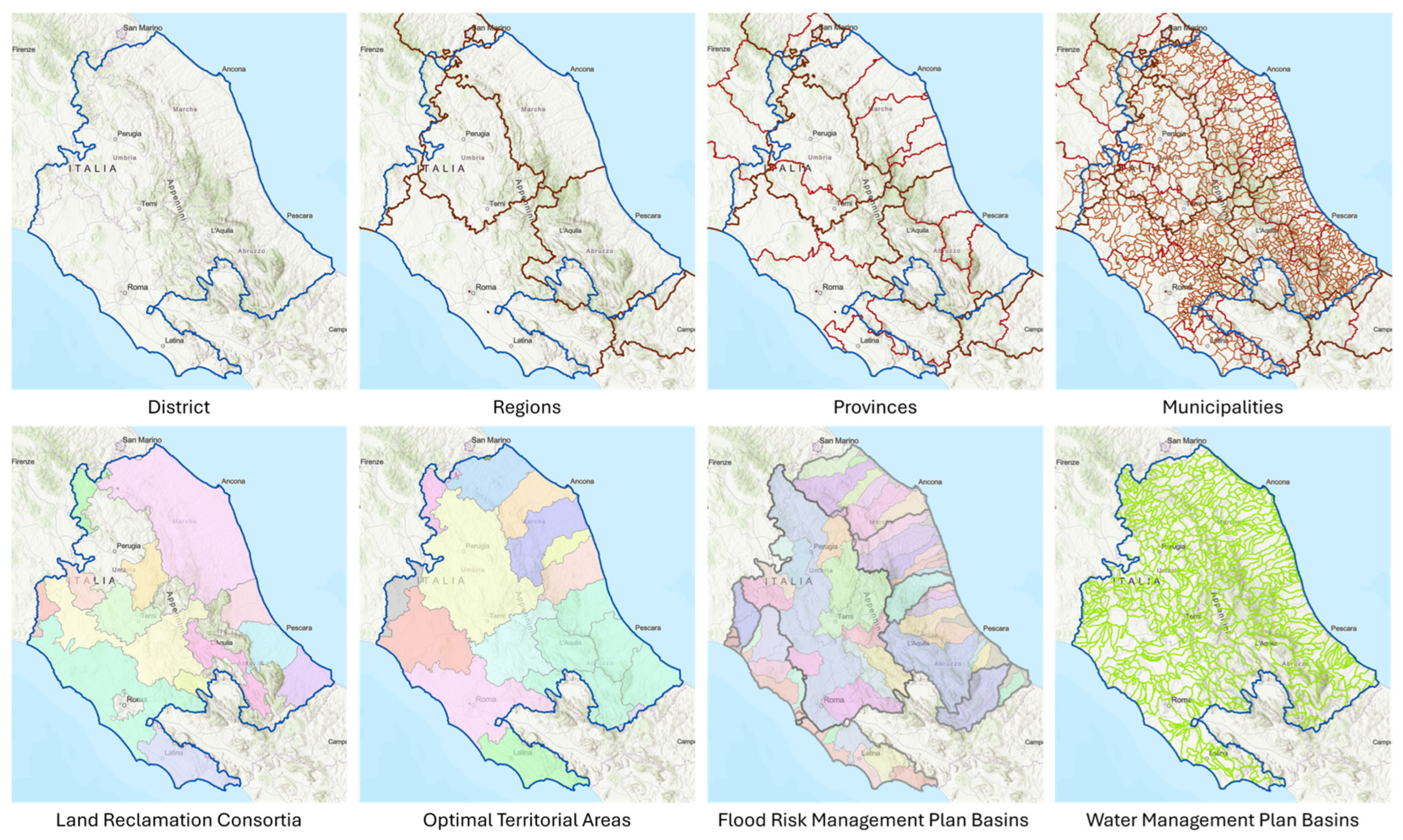
  • Territorial Areas: District, Regions, Provinces, Municipalities, Basins, ATO, and Consortia (Figure 7);
  • Physical Territorial Objects: natural hydrographic features, hydraulic infrastructure, monitoring devices, instability phenomena, flood-prone areas, sensitive exposed elements, protected areas, and strategic infrastructure;
  • Monitored Variables: meteorological and climate parameters, hydrometric levels, and water consumption;
  • Documents and Regulatory Acts: secretarial decrees, cartographic sheets, technical reports, Technical Implementation Standards, and documentary photographs.

6.3. Platform Evolution (2023–2025)

The current structure and content reflect progressive growth through three successive releases delivered over the 2023–2025 period, during which new thematic families, layers, dashboards, and functionalities were introduced. Table 10 summarizes the evolution of content and features across releases.

6.4. Advanced Tools

6.4.1. Interactive Dashboards

Beyond map layers, the platform provides interactive dashboards that convert raw data into actionable information for decision-making.
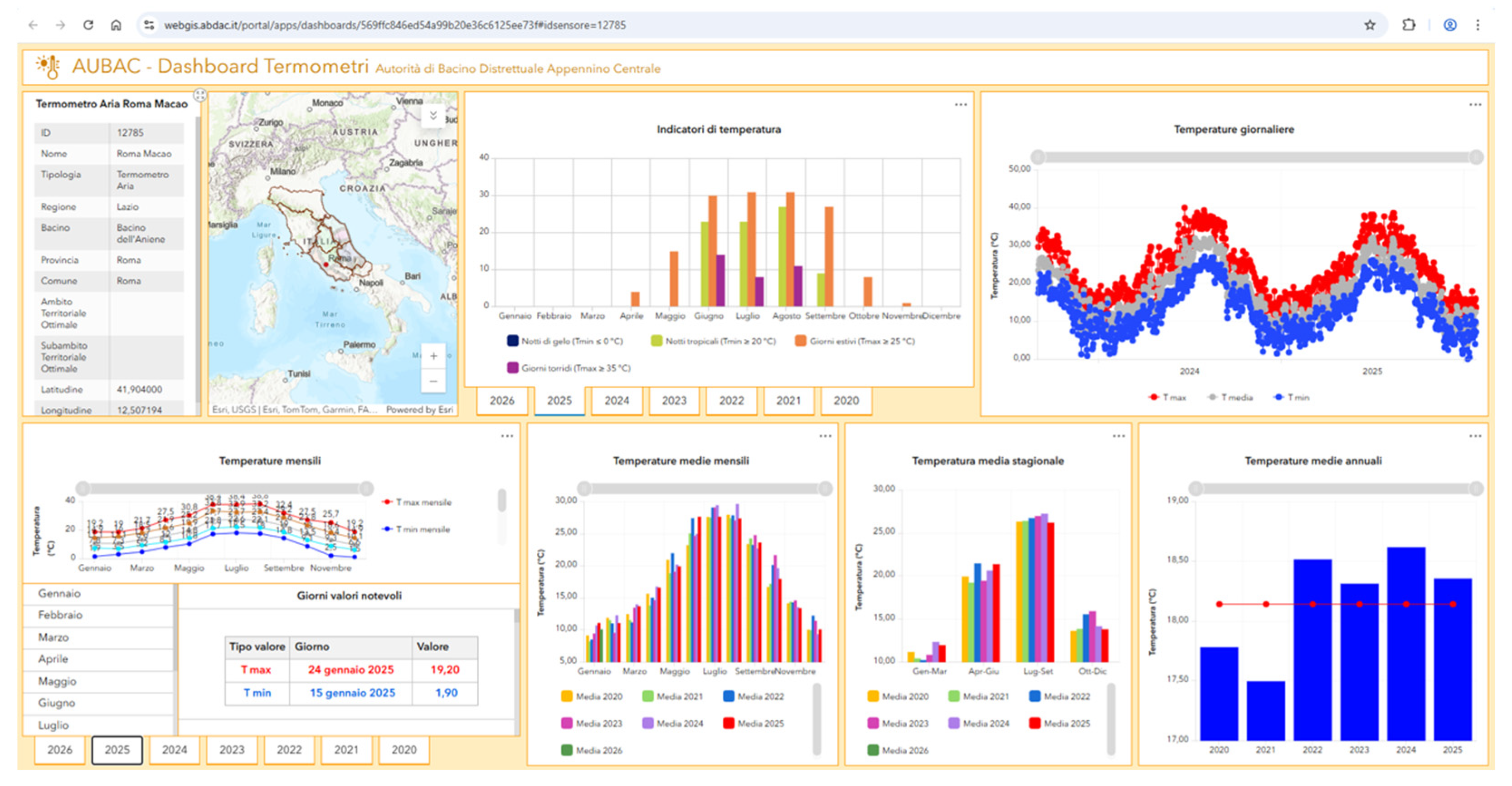
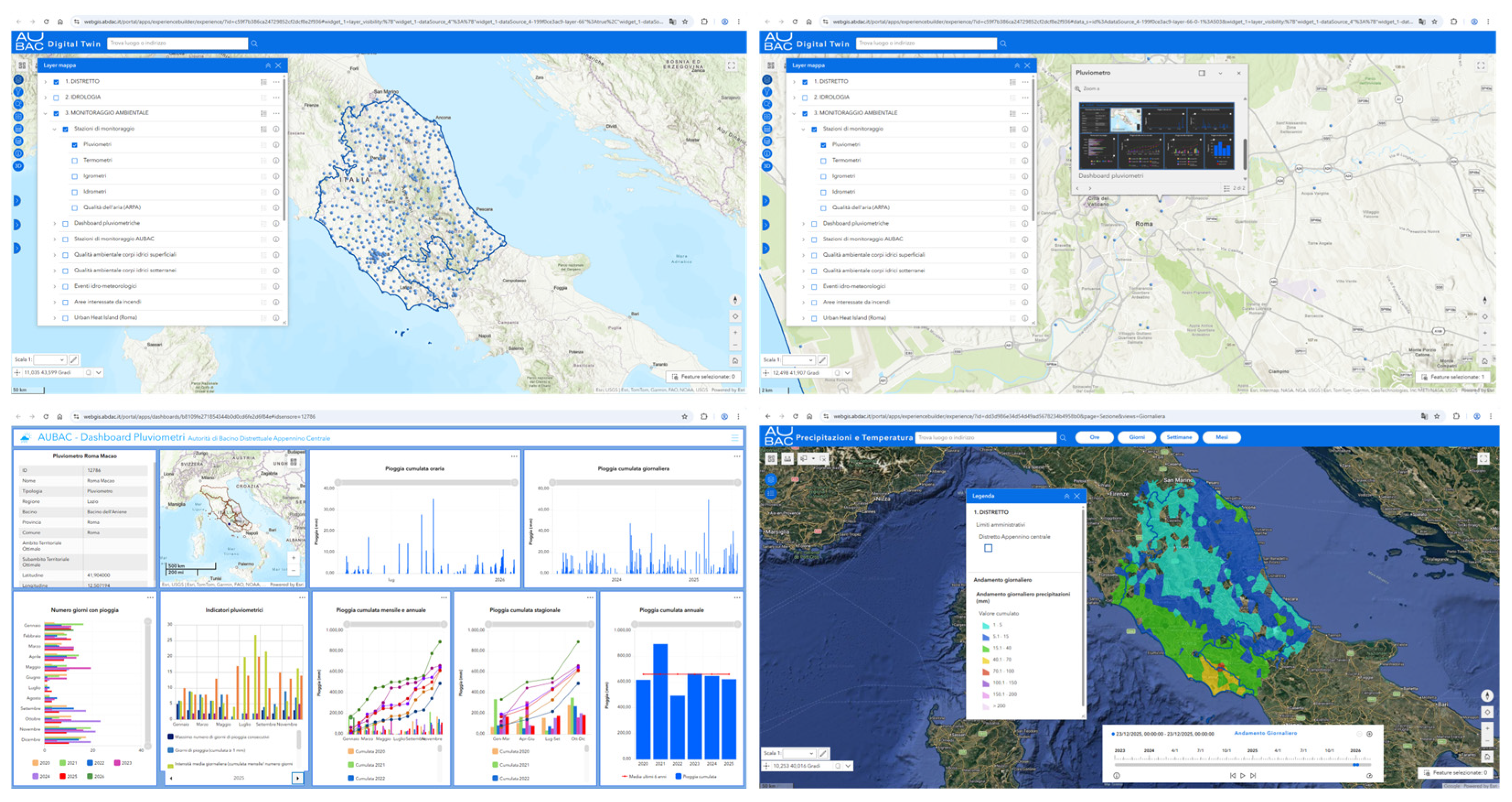
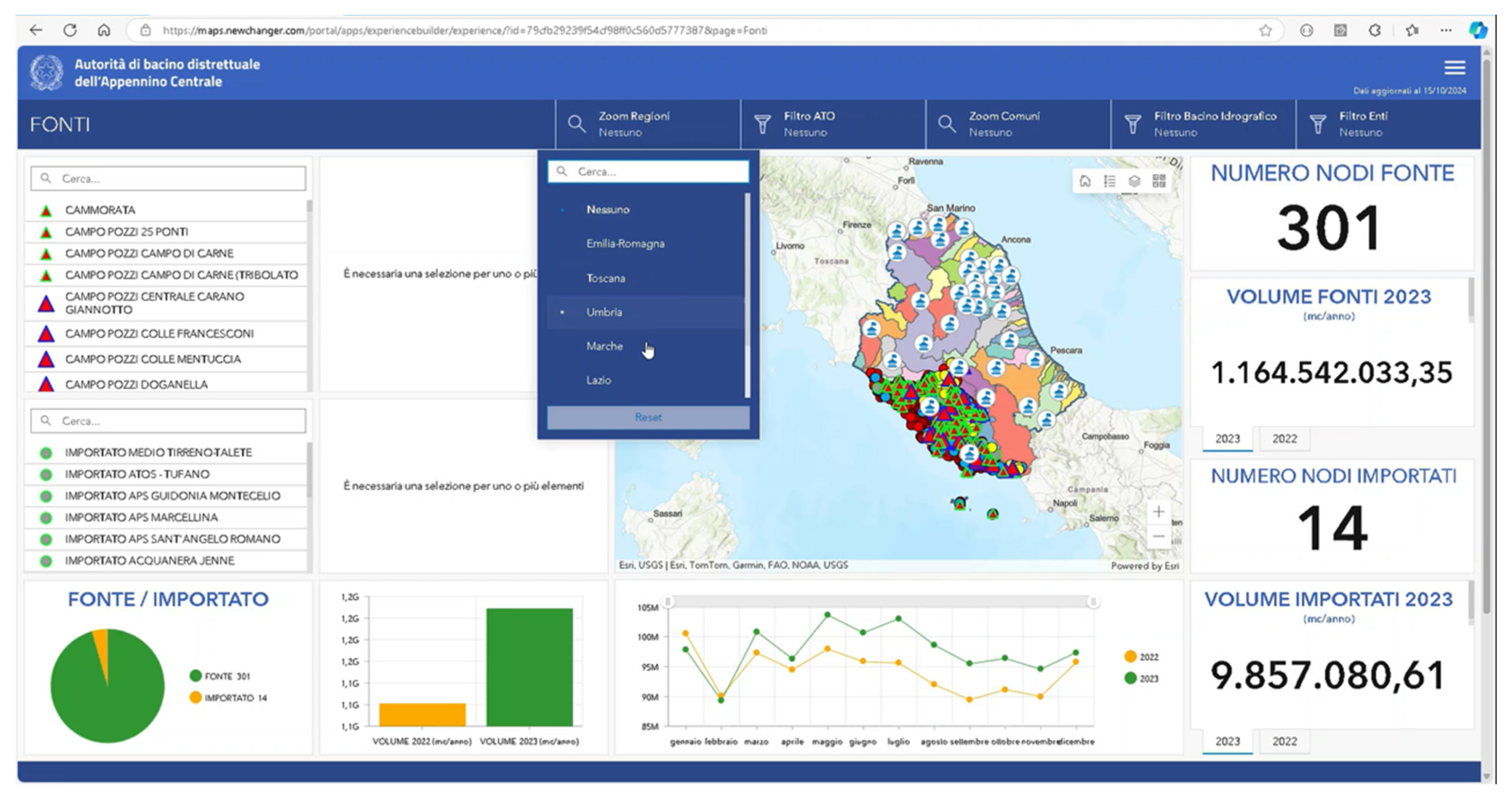
Sensor and climate dashboards: For each of the 1844 integrated sensors (rain gauges, thermometers, hygrometers, hydrometers, and water-quality stations), a dedicated dashboard provides hourly/daily values, customizable time series, monthly/seasonal/annual averages, and derived climate indicators (Figure 8). Additional dashboards deliver precipitation statistics at multiple administrative and hydrological scales (region, province, municipality, or basin), enabling immediate spatial and temporal comparison. Based on these datasets, AUBAC produces calculations at different territorial scales (district, region, basin, province, or municipality), including precipitation and temperature anomalies relative to the 1991–2020 baseline, river discharge metrics, climate indicators (rainy days, frost days, and tropical nights), and drought indices (SPI and SPEI). The purpose is to characterize the hydrological year, estimate impacts on surface and groundwater resources, and anticipate water-stress scenarios. Return periods for extremes and the frequency of adverse meteorological conditions are also computed to support hydrogeological-risk planning.
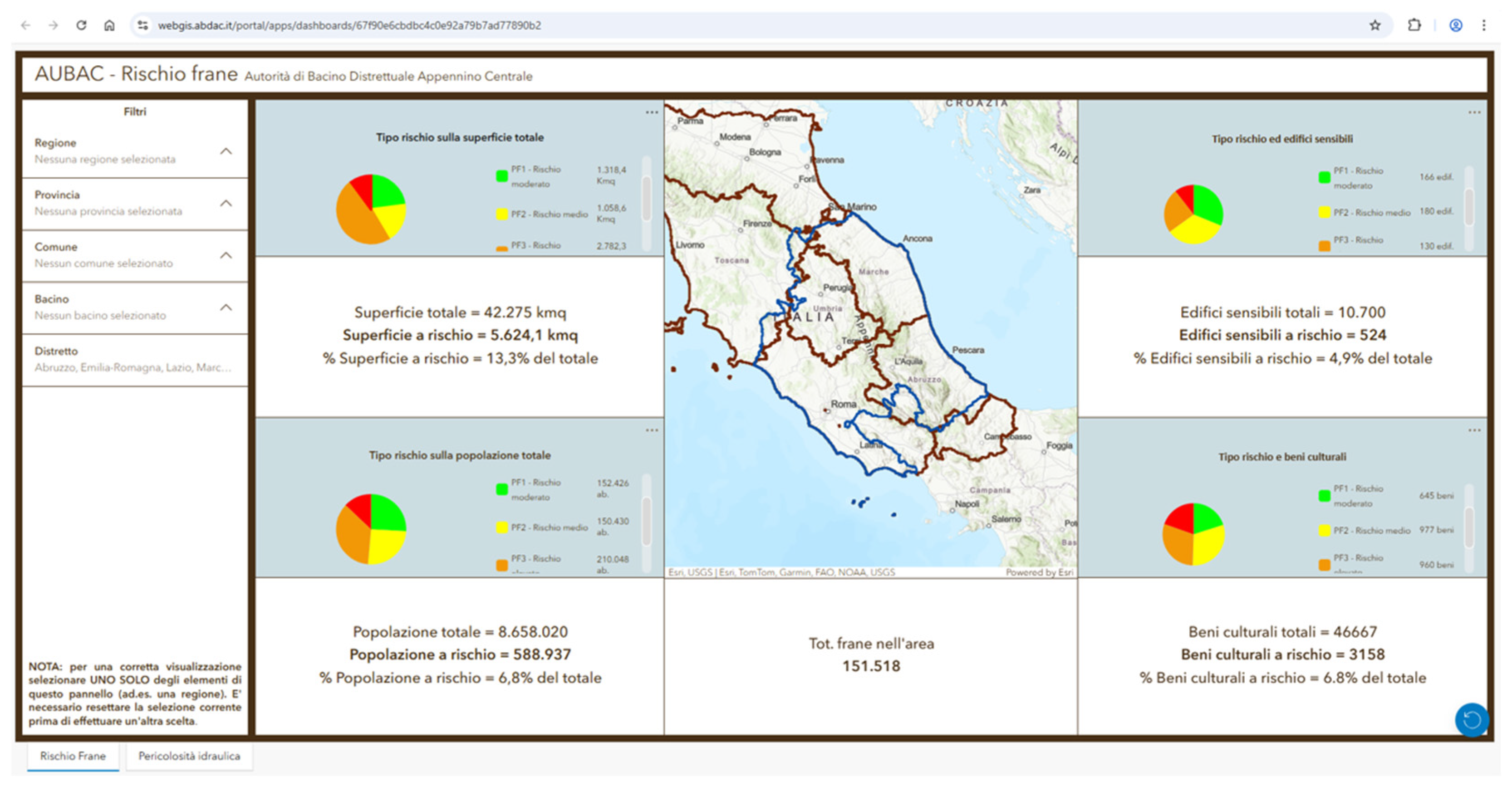
Risk assessment dashboards: Two specialized dashboards compute, for each spatial unit (district, region, province, municipality, and basin), the percentage of territory within landslide- or flood-risk areas and quantify exposed population, archaeological assets, and sensitive facilities (schools, hospitals, and civil protection sites) intersecting hazard perimeters (Figure 9). These dashboards translate geospatial information into immediate decision indicators, enabling rapid risk quantification without requiring specialist GIS skills.
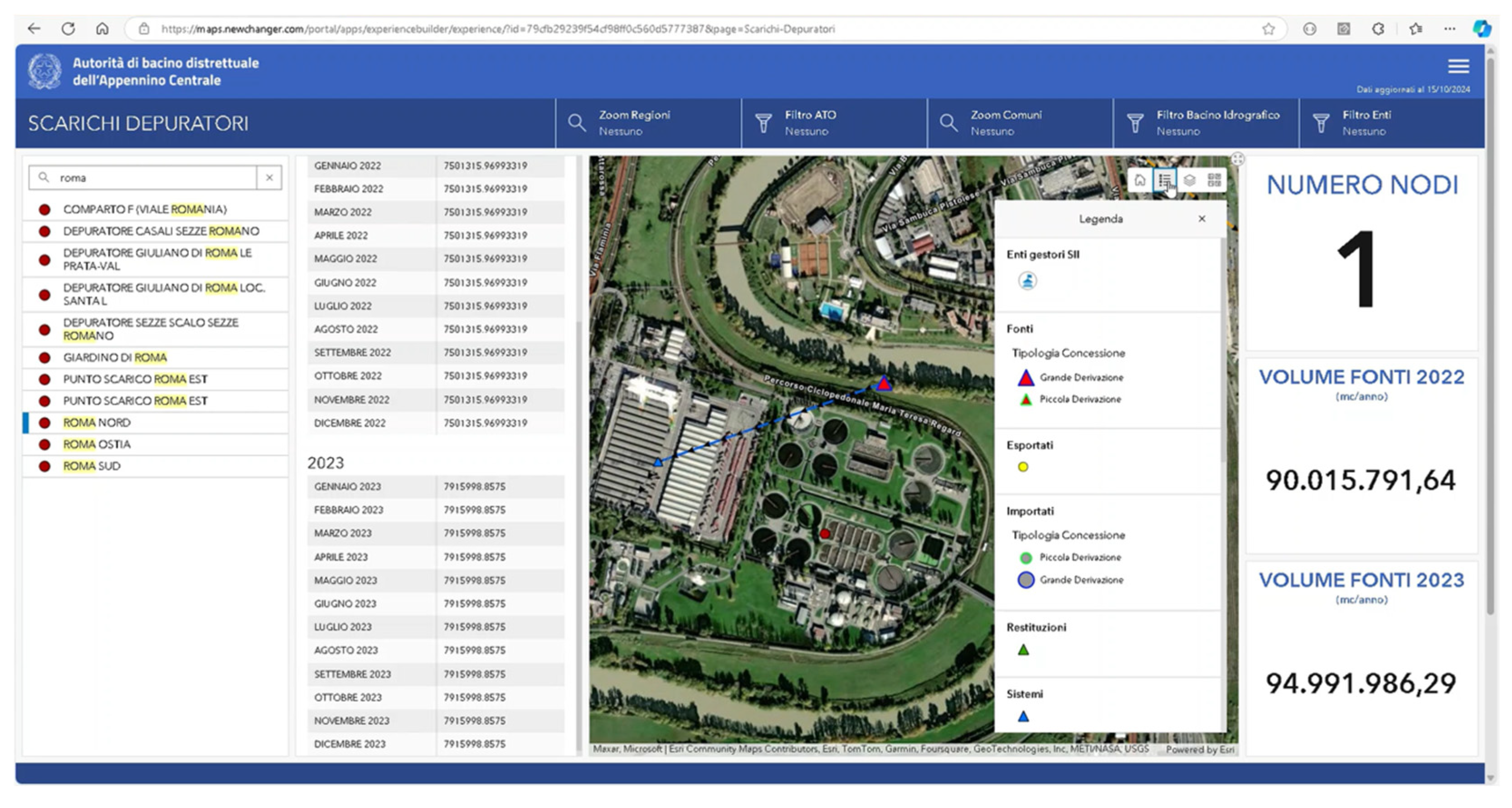
Water resource management dashboards: Release 3 introduced dashboards supporting quantitative water-resource management, enabling monitoring of drinking-water and irrigation abstractions, as well as supply and distribution schemes across the district (Figure 10 and Figure 11). Abstraction data are uploaded directly by integrated water-service operators and by land reclamation and irrigation consortia through a dedicated web application.

6.4.2. High-Resolution Surveys with RPAS

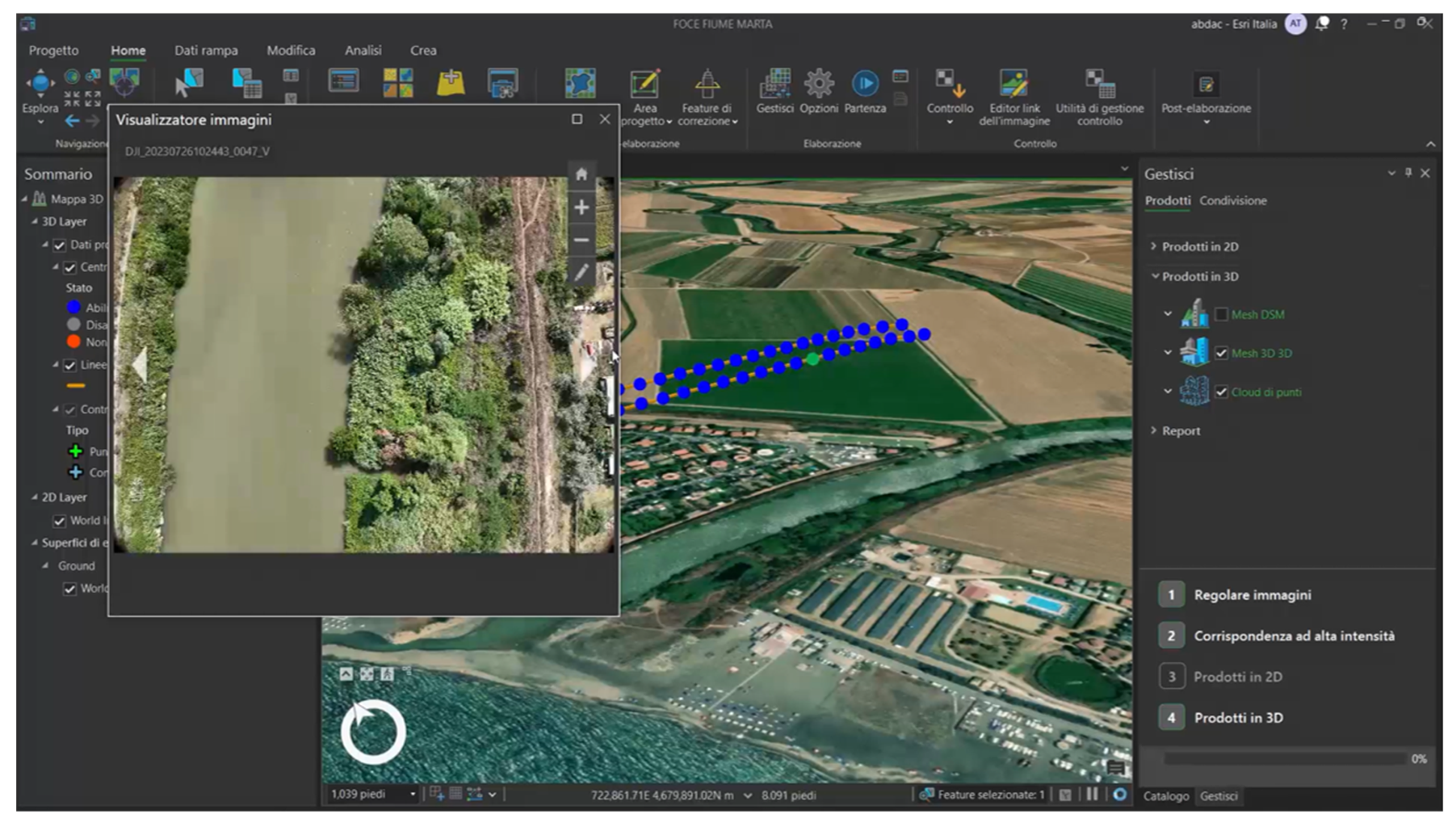
For selected priority areas—typically critical river reaches, strategic hydraulic structures, and unstable slopes—AUBAC has integrated very high-resolution cartographic products derived from drone surveys (RPAS: Remotely Piloted Aircraft Systems; also referred to as Uncrewed Aircraft Systems, UASs) into the WebGIS platform. Using Esri Drone2Map, imagery collected during flights is processed through Structure-from-Motion (SfM) photogrammetry to produce:
  • georeferenced orthophotos with centimeter-level ground sampling distance (GSD 2–5 cm), far exceeding typical regional orthophotos (generally 20–50 cm);
  • high-density Digital Surface Models (DSMs) capturing terrain morphology, riparian vegetation, and hydraulic structures in detail;
  • textured 3D meshes enabling photorealistic three-dimensional visualization of surveyed areas (Figure 12).
These outputs are integrated both into the 2D WebGIS (as raster layers overlaying the basemap) and into the platform’s 3D environment, where meshes enable immersive “virtual flights” along river corridors and over unstable areas (Figure 13). This approach has proven particularly effective for documenting the baseline condition of river sections targeted for maintenance or hydraulic works, tracking morphological evolution of active landslides, and rapidly collecting post-event information in areas affected by flooding or slope failures—thereby enriching the platform with timely, high-resolution updates.

6.4.3. 3D Modeling and Risk Communication

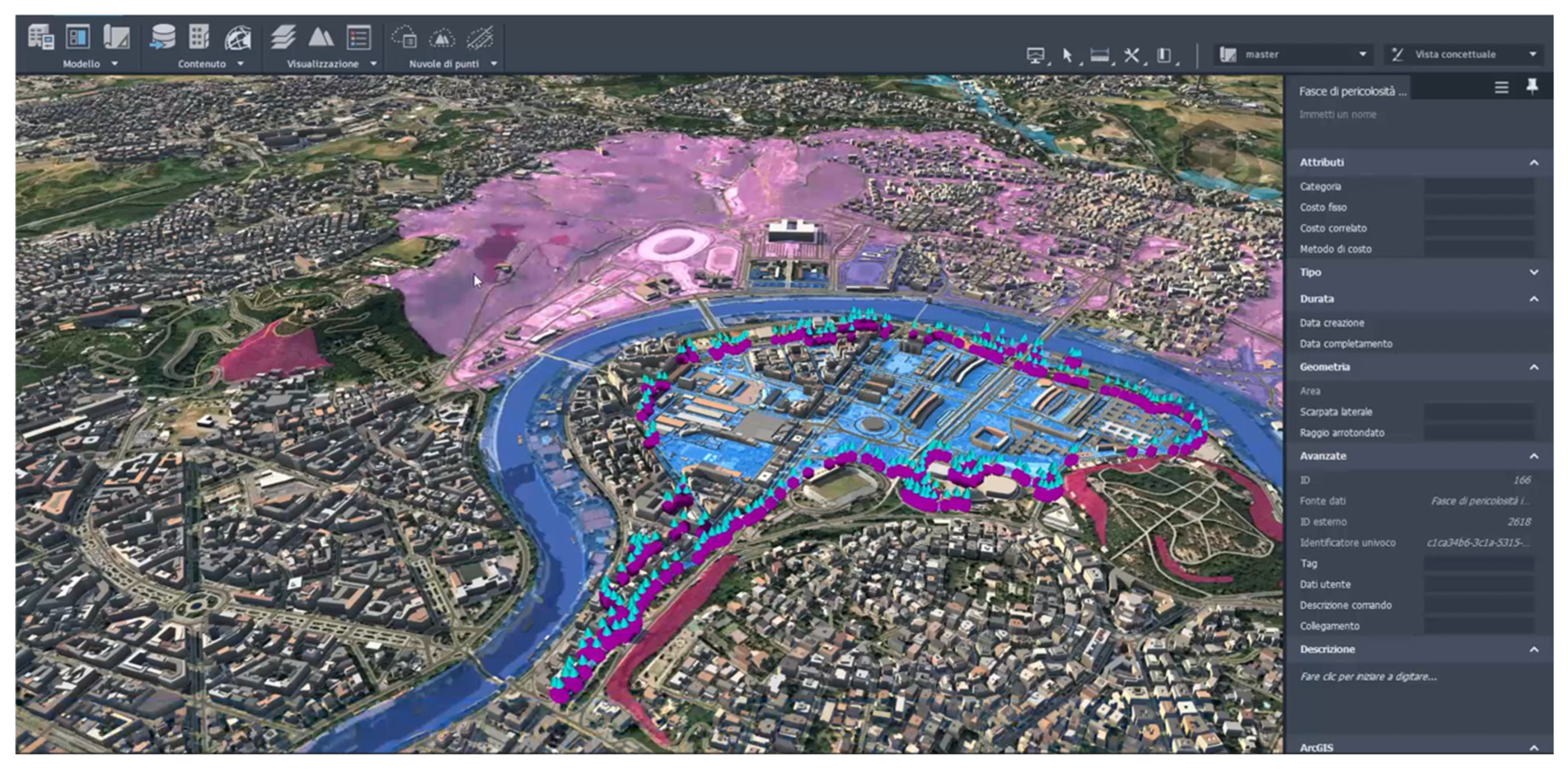
To strengthen communication with non-technical stakeholders and support decision-making through immediately interpretable representations, AUBAC developed a 3D territorial-modeling workflow based on Autodesk InfraWorks. This environment supports the creation of a georeferenced 3D model that integrates:
  • the Digital Terrain Model (DTM) as the base surface;
  • GIS layers (PAI/PGRA perimeters, land use, buildings, roads) rendered in three dimensions;
  • LiDAR or photogrammetric point clouds of hydraulic infrastructure (levees, weirs, check dams, flood-control reservoirs), reproducing existing geometries with centimeter-scale precision.
Scenario selection is driven by ongoing planning activities: areas are prioritized when they are subject to flood or landslide hazard reassessment studies, though the workflow can be applied to any area within the district using data already available in the WebGIS. All geospatial layers published on the platform can serve as input to InfraWorks, enabling the 3D visualization of hazard perimeters, exposed elements, and planned or existing mitigation works for the selected area.
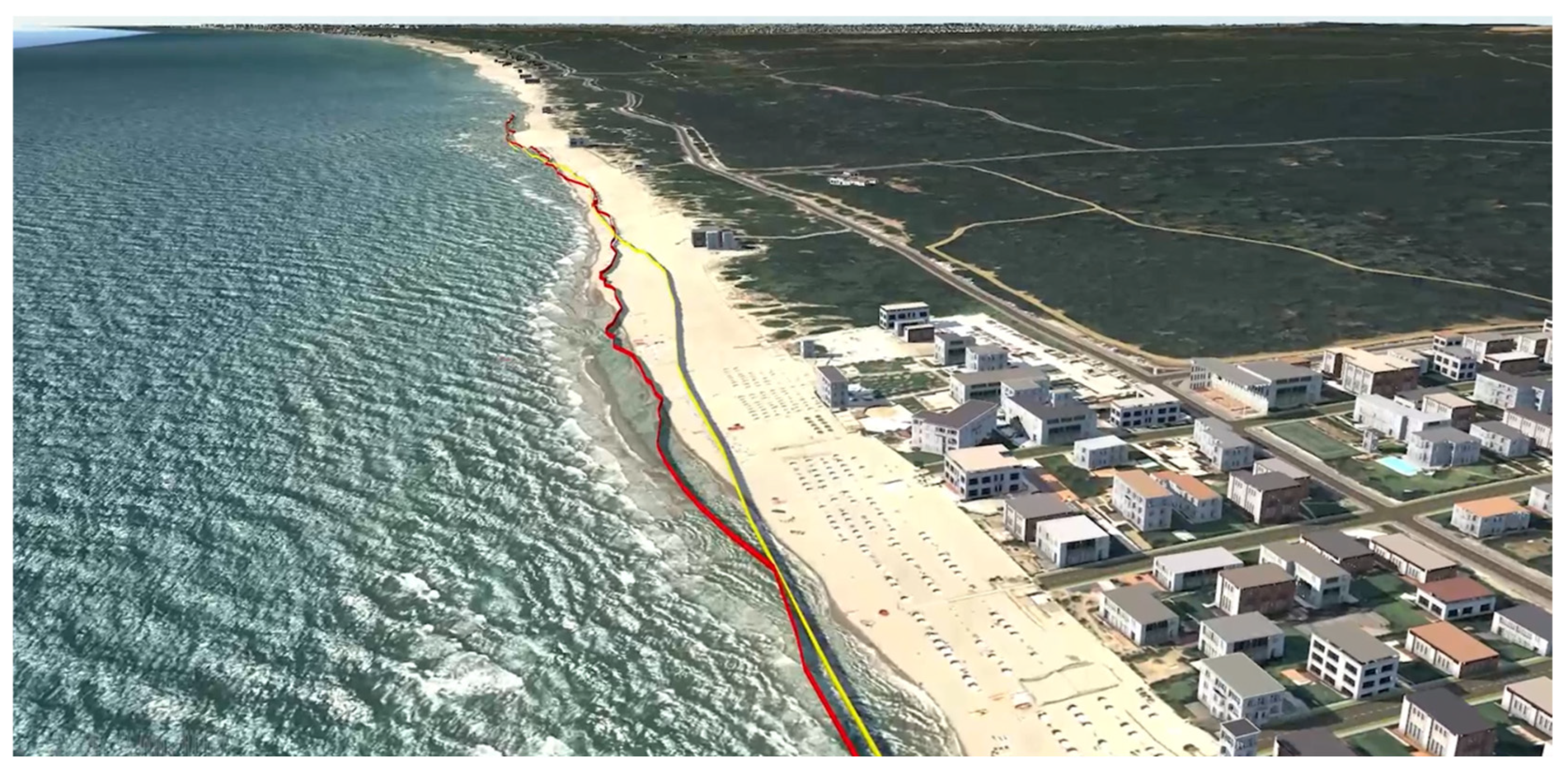
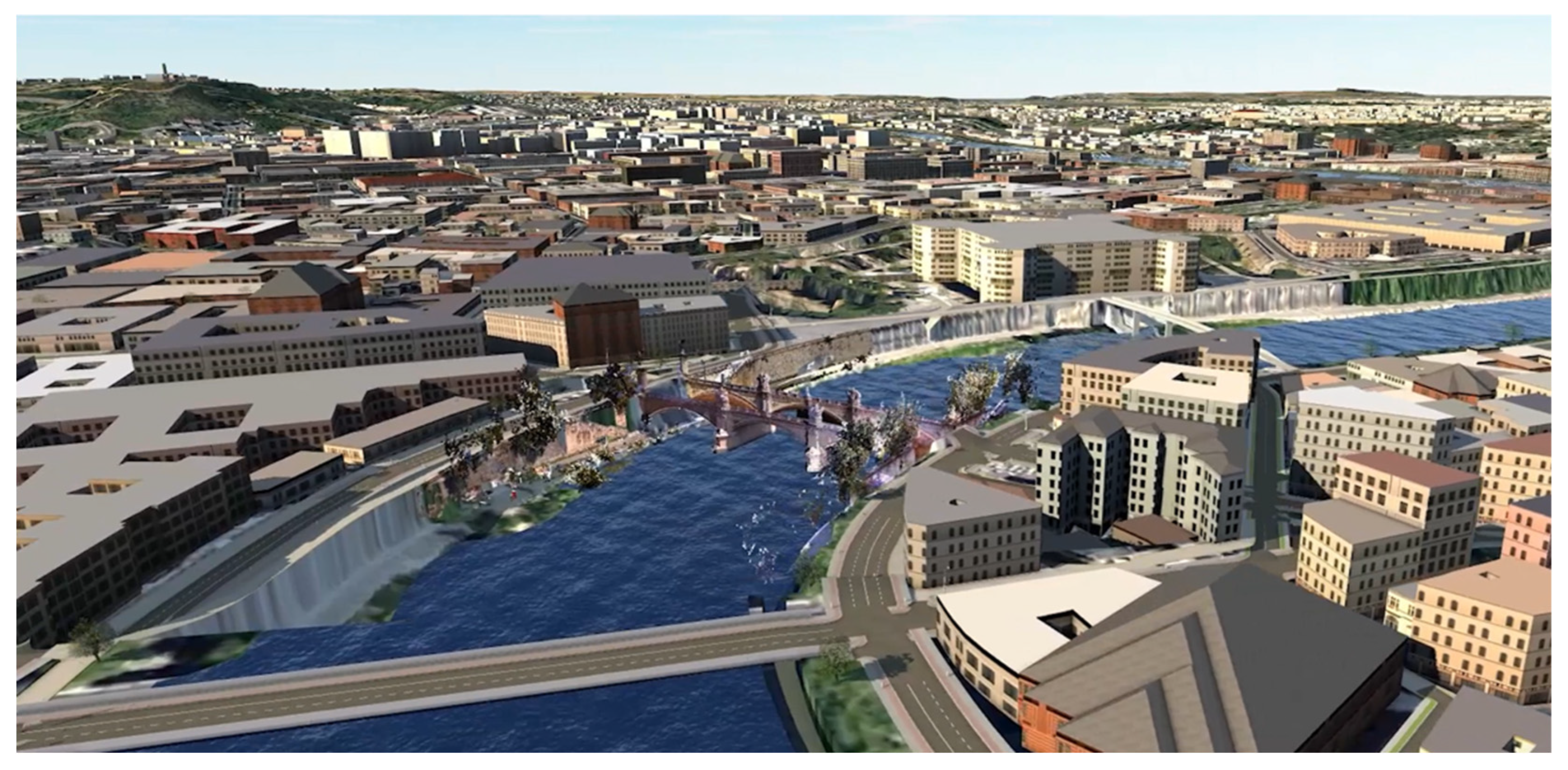
The resulting integrated model enables the production of animated 3D videos simulating flyovers of priority areas, including river reaches with flood zones highlighted for multiple probability scenarios (P1, P2, and P3 as defined by the PGRA), unstable slopes with landslides and exposed elements, and existing or planned hydraulic works embedded in their territorial context. These visual products are used during public meetings with administrators and citizens to explain risk scenarios, illustrate territorial restrictions, and present mitigation measures under design or evaluation—overcoming comprehension barriers typical of 2D technical cartography and supporting more informed public participation (Figure 14, Figure 15 and Figure 16). Feedback collected from both AUBAC’s technical staff and external participants in these sessions consistently indicates that 3D visualization significantly improves the understanding of hazard dynamics compared to traditional 2D maps, as further documented through the structured questionnaires described in Section 5.5.
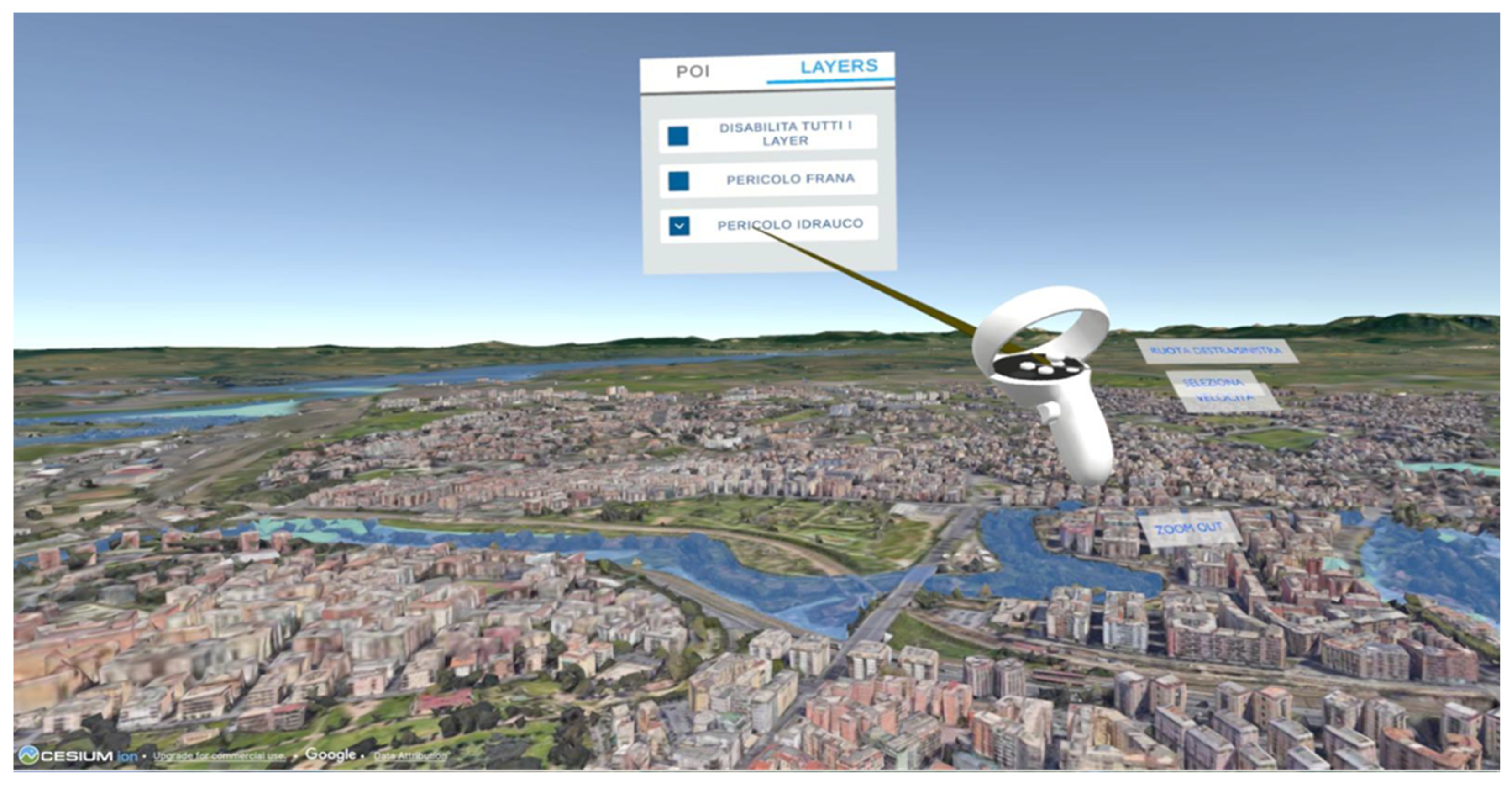
Most recently, Release 3 introduced experimental Extended Reality (XR) capabilities. Mixed Reality applications on Microsoft HoloLens 2 enable collaborative visualization, allowing multiple users to explore and interact with territorial data simultaneously in shared physical spaces, while Virtual Reality experiences on Meta Quest 3 provide fully immersive exploration of flood scenarios and risk areas (Figure 17 and Figure 18). A structured evaluation of XR effectiveness is planned for Macro-Phase 2, including task-based comprehension tests and standardized usability questionnaires administered to both technical and non-technical users.

6.5. Technical Architecture

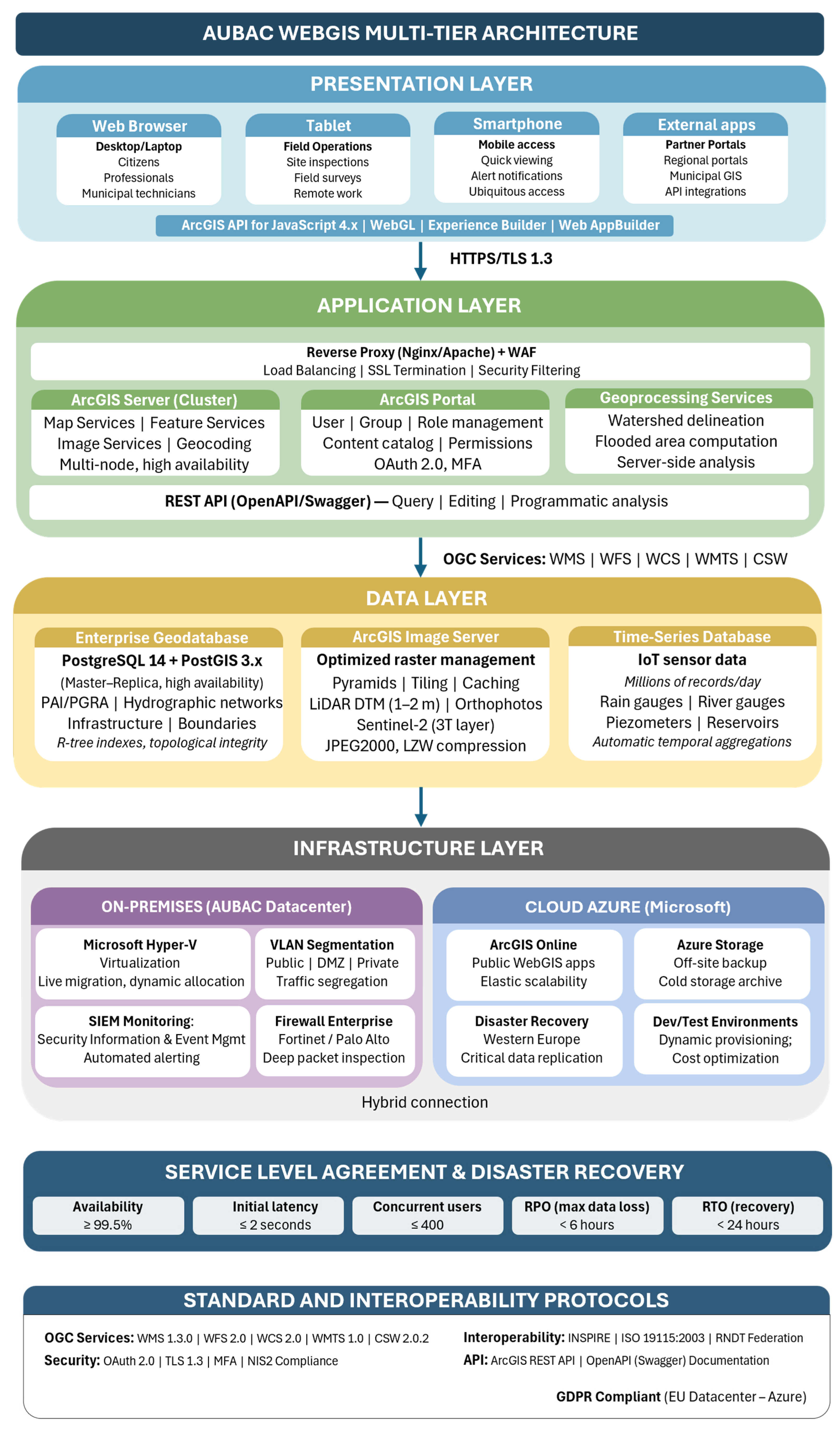
AUBAC’s WebGIS is built on a multi-tier architecture that logically and physically separates system functions, ensuring scalability, maintainability, security, and high performance (Table 11). This separation enables each tier to be updated, replaced, or scaled independently as needs evolve, without affecting the stability of the overall system.
Interoperability is ensured through the rigorous adoption of OGC standards (WMS, WFS, WCS, WMTS, CSW) and INSPIRE specifications, complemented by modern security protocols (OAuth 2.0, TLS 1.3) and RESTful APIs documented using the OpenAPI specification. The cybersecurity framework is aligned with the NIS2 Directive (EU 2022/2555) and includes network segmentation, multi-factor authentication, SIEM-based monitoring, and dedicated governance arrangements.
The Service Level Agreement (SLA) targets include ≥ 99.5% annual availability, median latency ≤ 2 s for initial loading and ≤ 500 ms for subsequent requests, and the capacity to handle up to 400 concurrent users.

6.5.1. Multi-Layer Structure

The architecture is organized into four primary layers: Presentation (client-side), Application (application server), Data (data layer), and Infrastructure (infrastructure services) (Figure 19). The system is complemented by a hybrid on-premises/cloud deployment model designed to balance control, security, cost efficiency, and scalability and by a multi-region disaster-recovery configuration with RPO < 6 h and RTO < 24 h.

6.5.2. Deployment Model

AUBAC has adopted a hybrid on-premises/cloud deployment approach to combine operational control with elastic scalability (Table 12).
Critical components that manage sensitive information are hosted on AUBAC-owned infrastructure within the Authority’s data center—namely the enterprise geodatabase, the ArcGIS Server cluster providing core services, identity and user-management systems, and primary storage. This configuration guarantees full control over security policies, low latency, and independence from cloud providers for mission-critical services.
Components benefiting from elastic scaling, or primarily serving external users, are deployed on Microsoft Azure (selected for public-administration pricing under AgID framework agreements and for EU-based data centers supporting GDPR compliance). These include ArcGIS Online for public WebGIS applications, virtual machines supporting development and testing environments, and Azure Storage for off-site backup and cold storage.
To ensure business continuity in the event of major incidents, AUBAC is implementing a multi-region architecture with a disaster-recovery instance hosted in a geographically distant Azure region (primary data center in central Italy; DR region in Western Europe). Critical datasets are continuously replicated, and documented procedures enable full failover within 24 h (RTO < 24 h) while limiting maximum data loss to six hours (RPO < 6 h).

6.5.3. Interoperability Standards and Protocols

Interoperability is ensured through strict compliance with OGC standards and INSPIRE specifications (Table 13). Access to protected services relies on OAuth 2.0 and TLS 1.3, while REST APIs are documented according to OpenAPI to facilitate integration by third-party developers.
AUBAC is finalizing its registration in the RNDT, harmonizing datasets to INSPIRE specifications, and ensuring metadata compliance with ISO 19115:2003, with completion targeted for 2026. This rigorous adoption of standards constitutes a strategic investment: interoperable, quality-certified data improves analytical reliability, reduces the risk of decision errors, and strengthens information sharing with institutional partners.

6.5.4. Cybersecurity and Critical Infrastructure Protection

Because the WebGIS manages information related to critical infrastructure (dams, reservoirs, water networks, and flood-defense works), it requires a structured cybersecurity approach consistent with the NIS2 Directive (EU 2022/2555).
AUBAC has implemented a multi-layer security framework (Table 14), including network segmentation into differentiated security zones, multi-factor authentication for critical systems, SIEM solutions for real-time monitoring and automated alerting, mandatory training programs, and periodic penetration testing.
Governance arrangements include the appointment of a Digital Transition Manager with responsibility for cybersecurity, independent annual audits, and coordination with the national cybersecurity ecosystem (ACN/national CSIRT). End-to-end encryption for IoT data flows and strong authentication of sensor devices are being completed (2026) under a dedicated project funded by the National Cybersecurity Agency (ACN) within the PNRR framework. This program aims to strengthen the security posture of all AUBAC systems, including the WebGIS platform. Key SLA and disaster-recovery metrics are reported in Table 15 (RPO < 6 h and RTO < 24 h).

7. Results Achieved and Discussion

7.1. Results and Measured Impacts

This section reports measured outcomes and impacts, distinct from the platform architecture and functionalities documented in Section 6.
AUBAC’s 2022–2025 digital transformation—spanning the migration from QGIS to ArcGIS Enterprise, the public WebGIS launch, and the consolidation of a Level 1 (Diagnostic) Digital Twin—produced measurable impacts across usage, operational efficiency, participation, communication, and monitoring, thereby strengthening institutional service delivery (Table 16). Indicators are reported as approximate ranges based on platform analytics, administrative records, and structured questionnaires, as described in Section 5.5.
Since its first deployment (12 May 2023), the platform has experienced sustained and diversified growth in usage, reaching 141,569 visits as of 31 December 2025, with an average of more than 4500 visits per month. User-profile analysis based on platform analytics, combined with qualitative categorization from training/consultation events and institutional feedback, indicates a heterogeneous audience: technical professionals (geologists, engineers, architects, and urban planners) using the platform during preliminary design and due-diligence phases; municipal technicians supporting planning and building-control activities; public administrators involved in territorial governance; university students and researchers studying hydrogeological risk; and users verifying the status of properties or areas under consideration for purchase. Collected feedback indicates that the initial objectives were met in terms of interface clarity, information completeness, and ease of use, including for non-specialist users.
The platform’s ubiquitous accessibility—available from any location (office, remote work, and field inspections via tablet or smartphone)—has changed day-to-day workflows for AUBAC’s technical staff. Users can now rapidly access the Authority’s information base, overlay projects under review on PAI/PGRA constraints, verify mapped landslides, consult historical flood-event records, inspect hydraulic cross-sections, and compare multitemporal orthophotos to assess territorial evolution.
Centralizing datasets within a single environment has accelerated routine technical assessments while improving their quality and completeness. The resulting reduction in administrative burden is estimated at approximately 60%, using the annual number of formal certification and map-extract requests as a proxy, based on a comparison before (2020–2022 baseline: ~2400 requests/year) and after WebGIS deployment (~950 requests/year in 2024–2025). It has also strengthened the timeliness and evidentiary basis of technical evaluations and formal outputs and, together with broader process standardization, may reduce interpretive ambiguity and potential disputes.
Process acceleration was equally significant: case sampling of perimeter-update procedures (n = 15 post-WebGIS vs. n = 12 pre-WebGIS) indicates a 70–80% reduction in PAI processing times, from an average of 8–12 weeks under traditional workflows to 2–3 weeks with the centralized geodatabase and automated geometry-extraction tools. Processing time is defined here as the elapsed time from procedure initiation to issuance of the finalized perimeter-update output.
The WebGIS has likewise enhanced coordination with external partner institutions. Regions, provinces, technical services, ISPRA, regional ARPAs, and land-reclamation consortia can be granted role-based access to selected information levels, view ongoing work, and provide specialist inputs within a shared platform—reducing repeated email exchanges of cartographic files and mitigating traceability and version-control issues. This has made inter-institutional cooperation for plans spanning multiple administrative jurisdictions more fluid and efficient.
In terms of public participation, the platform enabled a qualitative shift in how planning instruments are consulted. During the district PAI update process, more than 5000 users accessed WebGIS to view proposed new boundaries, compare them against current versions, and check the status of their properties. The 200+ formal observations received displayed a notably higher level of detail and supporting documentation—photographs, historical evidence, georeferenced reports—than is typical of traditional consultation processes, thereby contributing to the refinement of hazard perimeters. The ability to automatically georeference observations and provide immediate access to contextual datasets also contributed to shorter processing and response times.
Risk communication to non-specialist audiences benefited from enhanced visualization features. Three-dimensional terrain representation—enabling virtual flyovers of unstable slopes and the overlay of flood-prone areas onto the built environment—was perceived as more effective than traditional two-dimensional static maps. Questionnaires administered during public meetings (n = 127 respondents across six sessions, 2023–2025) indicate a substantial improvement in self-reported understanding of hazard processes, measured on a five-point Likert scale before and after 3D visualization presentations, corresponding to an approximate relative increase of ~40–60% over baseline scores.
The integration of continuous data streams from distributed IoT networks (1844 meteorological, hydrometric, and piezometric monitoring stations) transformed the platform from an archive of consolidated maps into a dynamic, near-real-time representation of the district’s status. This integrated monitoring capability was found valuable for both drought management—supporting territorially differentiated water-use measures based on local resource availability—and flood-event characterization, accelerating post-event reconnaissance and validation of mapped perimeters. In the adopted maturity framework, Level 1 (Diagnostic) is justified by three minimum criteria: (i) integration of continuous near-real-time monitoring streams; (ii) process-oriented dashboards supporting operational workflows; and (iii) sustained use embedded in statutory planning, consultation, and inter-institutional governance. By contrast, Levels 2–3 require what-if simulations, data assimilation, and predictive models (ML/AI), which are not yet implemented and are therefore addressed in the 2026–2028 roadmap.
Finally, the structural integration of Copernicus Earth Observation services further expanded analytical capacity, enabling operational, screening-level change-detection workflows and monitoring of territorial dynamics that previously required external, ad hoc manual processing.
It should be noted that the reported improvements reflect the combined effect of technological deployment and concurrent organizational changes—including workflow standardization, staff training, and enhanced inter-institutional coordination. These factors cannot be fully disentangled in a single-case-study design; percentage reductions should therefore be interpreted as approximate magnitudes rather than isolated platform effects.
Table 17 summarizes outcomes against each of the 16 strategic objectives, grouped within the seven macro-categories defined in Section 5.3, through a comparison of pre-implementation conditions and current performance, including quantified improvement indicators.

7.2. Positioning Relative to the State of the Art

The results described above should be interpreted within a rapidly evolving international landscape. As the review in Section 4 shows, WebGIS and Digital Twin applications for natural-hazard and water-resource management are expanding quickly; however, most documented initiatives focus on individual segments of the information cycle—data consultation, risk communication, or support for specific sectoral analyses—or operate within limited and relatively homogeneous territorial contexts.
Against this background, the AUBAC case stands out through a combination of features that together constitute an original contribution to the state of the art.
Territorial scale and complexity: AUBAC operates at an intermediate district scale (>42,000 km2) characterized by strong morphological, climatic, and socioeconomic heterogeneity and by the coexistence of multiple hazards (hydrogeological, hydraulic, drought, coastal erosion). This scale—typical of European river-basin governance—remains comparatively underrepresented in the Digital Twin literature, which has largely emphasized urban contexts (e.g., Virtual Singapore and Smart City initiatives) or highly specialized national systems (e.g., Rijkswaterstaat for Dutch water management). Applying the Digital Twin paradigm to a predominantly mountainous and hilly territory, involving more than 900 municipalities and seven regions, is therefore a distinctive aspect.
WebGIS–Digital Twin continuity: Unlike many initiatives where WebGIS is treated as a cartographic viewer and the Digital Twin as a separate experimental layer, AUBAC positions WebGIS as the backbone for data governance, administrative transparency, and multi-stakeholder access, while the Digital Twin represents a higher cognitive layer progressively enriched by dynamic data, physics-based models, and—within the roadmap—predictive algorithms. The outcomes documented in Section 7.1 (141,569 visits; ~60% reduction in administrative burden; 5000+ citizens engaged in consultations) show that this continuity generates concrete operational value beyond demonstrative pilots.
Process-oriented perspective: The system is not limited to static assets and regulatory boundaries: it integrates key environmental processes—hydrological cycle, slope dynamics, water balance, drought—within a space–time framework. The integration of 1844 sensors with regular updates and 37 Sentinel-2 layers supports a transition beyond descriptive mapping toward dynamic monitoring aligned with adaptive planning needs. Evidence from drought management and flood-event characterization (Section 7.1) confirms the operational relevance of this approach.
Explicit maturity roadmap: While many implementations remain implicitly at diagnostic levels without an articulated development trajectory, AUBAC transparently states its current positioning (consolidated Level 1 Diagnostic) and its evolution targets toward analytical and predictive capability (Levels 2–3 by 2028). This methodological clarity supports replicable assessment and comparability over time.
Institutional and operational orientation. Unlike many Digital Twins developed in industrial, academic, or experimental settings, the AUBAC platform is designed as an operational system for a river basin district authority subject to real governance constraints: inter-agency interoperability, regulatory compliance (INSPIRE, NIS2), and usability for non-technical users. The documented outcomes—particularly reductions in processing times, improved inter-institutional coordination, and increased qualified public participation—indicate that the Digital Twin paradigm can be translated into implementable, scalable, and sustainable solutions within public administration, addressing a major gap frequently highlighted in the literature.
Overall, as summarized in Table 3 (Section 4.4), AUBAC represents one of the first district-scale experiences to systematically integrate an institutional WebGIS, dynamic data streams, Earth Observation services, and a documented roadmap toward predictive governance capabilities. Rather than offering “another” Digital Twin application, the contribution is positioned as an operational and potentially replicable framework for implementing territorial Digital Twins at the river-basin scale.

7.3. Scientific Collaboration and Research Perspectives

The platform’s development benefits from a continuous connection with the academic world, as the digitalization program was designed within a research-informed framework that draws on the scientific literature on spatial computing, Digital Twins, and territorial governance. Scientific and professional collaboration is also embedded in AUBAC’s core planning processes: updates to flood and landslide hazard maps are routinely carried out in partnership with universities and specialized engineering firms, whose study outputs are formally adopted through secretarial decrees and subsequently published on the WebGIS—both as approved maps and, during consultation phases, as proposals open to public observations. However, the scientific community has not yet been structurally involved in the design and technological evolution of the platform itself.
The transition toward Levels 2–3 (Analytical–Predictive) will require broader engagement with the research community, particularly in physics-based and ML/AI modeling, advanced Earth Observation products, data assimilation, and validation frameworks. Integration with large-scale scientific initiatives—such as DTE Hydrology (Brocca et al., 2024) [27] —represents a promising direction. AUBAC intends to formalize these partnerships through dedicated research agreements within the 2026–2028 roadmap.

7.4. Limitations and Challenges Encountered

Despite the results reported above, AUBAC’s digital transformation faced significant technical, organizational, and financial challenges. Making these limitations explicit is essential to provide a realistic account of the experience and to support other organizations considering similar pathways. The main challenges and adopted mitigation strategies are summarized in Table 18.

7.4.1. Technical Challenges

Integrating heterogeneous datasets required substantial harmonization effort. Historical data inherited from former regional basin authorities—produced under different methodologies, scales, and reference systems—needed extensive remediation, conversion, and validation, absorbing considerable resources in the early phases. Uneven source-data quality inevitably affects current system quality: some areas are well covered with up-to-date information, while others still exhibit gaps that can only be filled progressively.
Integration with regional monitoring networks also revealed interoperability issues among independently designed systems. The lack of uniform standards for transmission protocols, data formats, and descriptive metadata required custom connectors and dedicated validation procedures for each data source—resulting in higher development and maintenance costs than initially expected.

7.4.2. Organizational and Usability Challenges

Digital transformation required a substantial shift in technical work practices. The adoption of new tools, workflow standardization, and systematic procedure documentation initially met resistance but was progressively addressed through ongoing training, operational support, and demonstration of concrete benefits. Nonetheless, reliance on specialized competencies concentrated in a small number of key individuals remains an organizational vulnerability, which AUBAC is addressing through structured knowledge-transfer programs and expanded procedural documentation.
Coordination with external entities (regions, ARPAs, technical services) to ensure consistent data provision and updates required lengthy negotiations and formal agreements that did not always deliver the expected timeliness or completeness of information flows. The multilevel governance structure typical of water management in Italy remains a structural complexity that technology alone cannot resolve.
The platform’s organization of 613 layers across ten thematic families provides comprehensive coverage but imposes a hierarchical navigation structure that requires multiple interactions to access specific datasets. This can present usability challenges, particularly for first-time or infrequent users. Planned improvements include quick-access shortcuts for frequently consulted layers, thematic bookmarks for common workflows, and pre-configured views tailored to different user profiles. Some interface customization options are additionally constrained by the ArcGIS Experience Builder framework.

7.4.3. Economic Challenges

Investments required to adopt an enterprise platform, develop server and storage infrastructure, train staff, and build custom components were substantial and demanded multi-year financial planning. Recurring costs—software licenses, infrastructure maintenance, and continuous upskilling—represent an ongoing commitment that must be sustainably embedded within the Authority’s ordinary budget. Organizations with more limited financial capacity may need to pursue open-source alternatives, accepting higher integration overhead and reduced economies of scale.

7.5. Lessons Learned and Recommendations for Replicability

AUBAC’s outcomes are not automatically transferable to other settings. Territorial factors (size, orographic complexity, urbanization patterns), organizational factors (staffing, existing competencies, culture), financial constraints (investment capacity and recurring costs), and institutional conditions (relationships with local authorities and political support for digitalization) strongly influence feasibility and results.
Based on AUBAC’s experience, the following minimum requirements can be identified for organizations seeking to implement a similar pathway: (i) institutional commitment at leadership level, with a clear mandate and sustained political support for multi-year digital investment; (ii) a baseline geospatial data infrastructure, even if fragmented, that can serve as the foundation for progressive integration; (iii) at least one technically skilled internal team capable of managing GIS environments and coordinating with external providers; (iv) access to IoT data streams from existing monitoring networks operated by regional or national agencies; and (v) a regulatory framework that incentivizes or mandates digital accessibility of planning information. The absence of any one of these conditions does not preclude implementation, but significantly increases risk, cost, and timeline.
Nevertheless, consistent with international best practices in the digitalization of infrastructure and public administration [65,66,67,68,69], AUBAC’s experience yields lessons and methodological principles that can help other basin authorities and local administrations reduce risk and increase the likelihood of success:
  • Adopt an incremental approach anchored in priority use cases. Avoid “big-bang” programs. Identify a limited set of high-priority use cases aligned with urgent operational needs and visible benefits (e.g., online publication of PAI/PGRA constraints to reduce certification requests; integration of rainfall/levels data to strengthen event characterization). Deliver targeted solutions, consolidate internal capacity, and then expand functionality.
  • Invest in training and internal capacity before (and during) technology adoption. Technology is an enabler; effectiveness depends on users. Invest in GIS and spatial analysis, workflow automation (e.g., Python), statistics and ML basics, and geodatabase management. Build multidisciplinary teams combining IT, domain expertise (hydrology, geology, hydraulics), and communication skills.
  • Ensure interoperability through open standards (OGC, INSPIRE) from the outset. Avoid architectures that hinder future integration. From the earliest stages, adopt OGC services and INSPIRE-compliant metadata/specifications. This discipline protects investments and enables federation and reuse over the long term.
  • Co-design services with stakeholders and citizens. Do not develop systems in isolation. Engage municipal representatives, professionals, and associations to capture real needs; prototype interfaces; test with representative users; iterate based on feedback; and communicate progress continuously.
  • Monitor and evaluate impacts systematically. Define success metrics early (usage volumes, processing-time reductions, fewer certification requests, service availability). Track them routinely and conduct periodic impact assessments (before/after comparisons, surveys, and targeted cost–benefit checks). Evidence-based evaluation is essential to ensure digital transformation creates value rather than technology adoption for its own sake.
  • Consider developing dedicated thematic applications alongside the comprehensive platform. For large-scale systems managing hundreds of layers, topic-specific applications (e.g., focused on hydrogeological risk verification, real-time monitoring, or water-resource management) can significantly improve loading performance and user experience by loading only the data relevant to each use case, while the full platform remains available for integrated cross-domain analyses.

8. Conclusions

AUBAC’s pathway toward the progressive integration of spatial computing technologies—from desktop GIS to an integrated WebGIS platform—offers an illustrative case study of public-sector digital transformation in water-resource management and land protection. The experience provides empirical evidence that these technologies are not merely cartographic visualization tools, but strategic enablers for strengthening territorial safety and building the resilience needed to address climate change and the intensification of extreme events.
The results achieved across multiple operational domains—planning efficiency, quality of technical analysis, administrative transparency, inter-institutional coordination, risk communication, and knowledge support for emergency-management organizations—indicate a substantial qualitative leap in the Authority’s capacity for institutional planning and programming.
AUBAC’s experience also shows that developing an enterprise-grade Digital Twin for the governance of a river basin district is not a project with a fixed beginning and end, but a continuous evolutionary process. The adopted strategy followed three successive phases: (1) foundation consolidation, with the establishment of a robust, standardized, and interoperable data infrastructure; (2) core functionality, focused on integration, visualization, and monitoring; and (3) progressive enhancement, with the gradual introduction of advanced analytical capabilities and a roadmap toward predictive capability.
These results should be interpreted within a rapidly evolving international landscape. As noted in the systematic review by Daud et al. (2024), Italy is among the leading countries in applying WebGIS to natural-hazard risk management [70], and the AUBAC experience contributes to consolidating this position through an operational implementation at the river basin district scale. The platform’s evolutionary trajectory toward a Territorial Digital Twin aligns with the conceptualizations proposed by Chioni et al. (2023) for fragile inland and mountainous areas [47] and with river-basin Digital Twin implementations such as the Limpopo case documented by Garcia Andarcia et al. (2024) [54].
Looking ahead, the integration of what-if simulation and the incorporation of AI-based predictive models—identified by Dreksler et al. (2025) as emerging technological trends [71]—define the primary directions for system evolution. AUBAC’s experience supports the need to move beyond the Smart City Platform paradigm, as highlighted by Caprari et al. (2022) [26], toward systems that enable not only consultation, but also simulation and prediction. In this perspective, the transition from Level 1 (Diagnostic) to Levels 2–3 (Analytical–Predictive) within the adopted maturity framework represents the strategic objective for 2026–2028, consistent with European digital-transition priorities and Green Deal objectives.
The transition toward dynamic, intelligent, and predictive digital systems inevitably entails technical, organizational, and financial challenges. Yet the documented acceleration of extreme hydrometeorological and hydrogeological phenomena associated with climate change means that this evolution can no longer be deferred: for institutions responsible for land governance and community protection, it is increasingly a strategic necessity.
In its most advanced form, the Digital Twin that AUBAC is progressively building represents a technological frontier of territorial planning: a system designed to anticipate phenomena, adapt dynamically to changing boundary conditions, and support effective crisis response—shifting governance from a largely reactive posture to a substantially proactive one.
Realizing this vision will require sustained and structured collaboration among universities and research institutions, technology providers, and public administrations. Only through such multi-stakeholder synergy can these innovations be consolidated and disseminated at scale, contributing concretely to the resilience of Italy and Europe in the face of the profound challenges posed by global climate change.
Finally, AUBAC’s approach directly supports the achievement of the 2030 Agenda Sustainable Development Goals [72], in particular SDG 6 (Clean Water and Sanitation) through integrated water-resource management; SDG 11 (Sustainable Cities and Communities) by enabling resilient spatial planning; and SDG 13 (Climate Action) through tools supporting adaptation and risk reduction. The experience demonstrates that the future of land governance is not a utopian vision, but an already operational and continuously evolving reality—potentially replicable and adaptable across contexts—capable of accelerating the collective transition toward scientifically grounded, technologically advanced, democratically transparent, and climate-resilient territorial management.

Funding

This research was funded by the Central Apennine River Basin District Authority (AUBAC) through the following sources: (1) AUBAC’s ordinary institutional budget dedicated to digital transformation (2022–2025); (2) the ACQUACENTRO project (FSC Environment Operational Plan 2014–2020), which supported technological partnerships and external services for WebGIS and Digital Twin development; and (3) funds allocated to AUBAC by the Italian National Cybersecurity Agency (ACN) under the National Recovery and Resilience Plan (PNRR), supporting the cybersecurity infrastructure protecting the platform.

Institutional Review Board Statement

This study does not require ethical approval. Since this study did not involve experimental research on human subjects or animals. The WebGIS platform is a public transparency tool and does not collect personally identifiable information from users. Platform analytics are aggregated and anonymized, recording visit counts, session durations, and layer-access frequencies without individual user identification. Structured questionnaires (n = 127) were administered in anonymous form during public consultation and training events; participation was voluntary and no personal data were stored beyond aggregate statistical summaries. Geospatial layers containing potentially sensitive information are accessible only through authenticated institutional accounts with role-based access controls. Platform analytics are retained only as long as necessary for operational monitoring and security purposes, in line with data minimization principles; no individual user tracking or profiling is performed. The platform’s cybersecurity framework, including NIS2 compliance and GDPR-aligned data governance, is described in Section 6.5.4.

Informed Consent Statement

Structured questionnaires (n = 127) were administered anonymously on a voluntary basis during public consultation and training events. Respondents were informed of the purpose of data collection. No personally identifiable data were collected, and formal informed consent was not required under applicable regulations.

Data Availability Statement

Publicly available datasets were analyzed in this study and can be accessed at: https://webgis.abdac.it/portal/apps/experiencebuilder/experience/?id=c59f7b386ca24729852cf2dcf8e2f936 (accessed on 15 February 2026). Additional data are available from the corresponding author upon reasonable request.

Acknowledgments

The author thanks AUBAC’s technical staff for their commitment to the digital transformation program, in particular the teams of the Remote Sensing and Territorial Information Systems Division, the Information Systems and Digital Technologies Division, and the Environmental Observatory and Climate Change Division, for their contributions to platform development and data integration. The author also acknowledges Esri Italia for technical support on ArcGIS Enterprise and Microsoft Italia for cloud infrastructure (Azure) and cybersecurity services delivered within the ACN/PNRR program. Further thanks are extended to the Regional Functional Centers for access to IoT sensor data, and to the district’s Land Reclamation and Irrigation Consortia and Integrated Water Service Operators for their collaboration in data sharing. Appreciation is finally extended to the municipalities, provinces, and regional administrations of the Central Apennines district for their cooperation in data provision and platform testing. During the preparation of this manuscript, the author used ChatGPT (OpenAI, GPT-5.2; accessed in January 2026) to support language refinement and improve the clarity of presentation. The author reviewed and edited the output and takes full responsibility for the content.

Conflicts of Interest

The author declares a potential conflict of interest: Marco Casini serves as Secretary General of AUBAC, the institution whose digital transformation project is documented in this article. This manuscript reports an institutional case study, and the author’s role is disclosed for transparency. Limitations and challenges are explicitly discussed to support balanced interpretation and replicability. The funders had no role in the design of the study; in the collection, analyses, or interpretation of data; in the writing of the manuscript; or in the decision to publish the results.

Abbreviations

The following abbreviations are used in this manuscript:
AUBACCentral Apennine River Basin District Authority
ACNItalian National Cybersecurity Agency
AgIDAgency for Digital Italy
AIArtificial Intelligence
ATOOptimal Territorial Area
CHIRPSClimate Hazards Group InfraRed Precipitation with Station Data
CSIRTComputer Security Incident Response Team
CSWCatalog Service for the Web
DTDigital Twin
DTMDigital Terrain Model
DSMDigital Surface Model
EOEarth Observation
FRMPFlood Risk Management Plan
GSDGround Sampling Distance
GISGeographic Information System
IoTInternet of Things
INSPIREInfrastructure for Spatial Information in Europe
LiDARLight Detection and Ranging
MLMachine Learning
MRMixed Reality
NIS2Network and Information Security Directive 2
NBRNormalized Burn Ratio
NDBINormalized Difference Built-up Index
NDMINormalized Difference Moisture Index
NDVINormalized Difference Vegetation Index
NDWINormalized Difference Water Index
OGCOpen Geospatial Consortium
PAIHydrogeological Asset Plan (Piano di Assetto Idrogeologico)
PGAWater Management Plan (Piano di Gestione delle Acque)
PGRAFlood Risk Management Plan (Piano di Gestione del Rischio di Alluvioni)
PNRRNational Recovery and Resilience Plan
RESTRepresentational State Transfer
RNDTNational Territorial Data Repository
RPASRemotely Piloted Aircraft System(s)
RPORecovery Point Objective
RTORecovery Time Objective
RUSLERevised Universal Soil Loss Equation
SDGSustainable Development Goal
SDISpatial Data Infrastructure
SfMStructure-from-Motion
SIEMSecurity Information and Event Management
SLAService Level Agreement
SPIStandardized Precipitation Index
SPEIStandardized Precipitation Evapotranspiration Index
TLSTransport Layer Security
VRVirtual Reality
WCSWeb Coverage Service
WebGISWeb Geographic Information System
WFDWater Framework Directive
WFSWeb Feature Service
WMPWater Management Plan
WMSWeb Map Service
WMTSWeb Map Tile Service
XRExtended Reality

References

  1. IPCC. Climate Change 2021: The Physical Science Basis. Contribution of Working Group I to the Sixth Assessment Report; Cambridge University Press: Cambridge, UK, 2021. [Google Scholar]
  2. Copernicus Climate Change Service (C3S); World Meteorological Organization (WMO). European State of the Climate 2024; Copernicus: Reading, UK, 2025. [Google Scholar] [CrossRef]
  3. World Meteorological Organization. State of the Global Climate 2024; WMO-No. 1368; WMO: Geneva, Switzerland, 2025. [Google Scholar]
  4. World Meteorological Organization. State of Global Water Resources 2024; WMO-No. 1380; WMO: Geneva, Switzerland, 2025. [Google Scholar] [CrossRef]
  5. Kart, L.; Linden, A.; Schulte, W.R. Extend Your Portfolio of Analytics Capabilities; Gartner Report G00255239; Gartner, Inc.: Stamford, CT, USA, 2013. [Google Scholar]
  6. Madni, A.M.; Madni, C.C.; Lucero, S.D. Leveraging Digital Twin Technology in Model-Based Systems Engineering. Systems 2019, 7, 7. [Google Scholar] [CrossRef]
  7. Legislative Decree No. 152 of 3 April 2006. Environmental Regulations. Official Gazette of the Italian Republic 2006, No. 88 (Supplement). Available online: https://www.gazzettaufficiale.it/eli/id/2006/04/14/006G0171/sg (accessed on 15 February 2026).
  8. Decree of the Minister of the Environment No. 294 of 25 October 2016. Establishment of the Central Apennine River Basin District Authority. Official Gazette of the Italian Republic 2016, No. 27. Available online: https://www.gazzettaufficiale.it/eli/id/2017/02/02/17A00710/sg (accessed on 15 February 2026).
  9. European Commission. Directive 2000/60/EC of the European Parliament and of the Council Establishing a Framework for Community Action in the Field of Water Policy. Off. J. Eur. Union 2000, L327, 1–73. [Google Scholar]
  10. European Commission. Directive 2007/60/EC on the Assessment and Management of Flood Risks. Off. J. Eur. Union 2007, L288, 27–34. [Google Scholar]
  11. Casini, M. Climate Data and Water Resources—Report 2024; AUBAC: Rome, Italy, 2025. [Google Scholar]
  12. ISPRA. Hydrogeological Instability in Italy: Hazards and Risk Indicators. Edition 2024; Reports 415/2025; ISPRA: Rome, Italy, 2025. [Google Scholar]
  13. Zhou, C. Exploring Future GIS Visions in the Era of the Scientific and Technological Revolution. Inf. Geogr. 2025, 1, 100007. [Google Scholar] [CrossRef]
  14. Goodchild, M.F. Building Geospatial Infrastructure. Geo-Spat. Inf. Sci. 2019, 22, 1–9. [Google Scholar] [CrossRef]
  15. Liu, Y.; Timo de Vries, W.; Zhang, G.; Cui, X. From Tradition to Smart: A Comprehensive Review of the Evolution and Prospects of Land Use Planning Tools. Heliyon 2024, 10, e40857. [Google Scholar] [CrossRef] [PubMed]
  16. Li, Z.; Ning, H. GIScience in the Era of Artificial Intelligence: A Research Agenda towards Autonomous GIS. Ann. GIS 2025, 31, 501–536. [Google Scholar] [CrossRef]
  17. Longley, P.A.; Goodchild, M.F.; Maguire, D.J.; Rhind, D.W. Geographic Information Science and Systems, 4th ed.; Wiley: Hoboken, NJ, USA, 2015. [Google Scholar]
  18. Goodchild, M.F. Reimagining the History of GIS. Ann. GIS 2018, 24, 1–8. [Google Scholar] [CrossRef]
  19. Pierdicca, R.; Paolanti, M. GeoAI: A Review of Artificial Intelligence Approaches for the Interpretation of Complex Geomatics Data. Geosci. Instrum. Methods Data Syst. 2022, 11, 195–218. [Google Scholar] [CrossRef]
  20. Li, W. GeoAI: Where Machine Learning and Big Data Converge in GIScience. J. Spat. Inf. Sci. 2020, 20, 71–77. [Google Scholar] [CrossRef]
  21. Mirzaei, K.; Arashpour, M.; Asadi, E.; Masoumi, H.; Bai, Y.; Behnood, A. 3D Point Cloud Data Processing with Machine Learning for Construction and Infrastructure Applications: A Comprehensive Review. Adv. Eng. Inform. 2022, 51, 101501. [Google Scholar] [CrossRef]
  22. Agrawal, S.; Gupta, R.D. Web GIS and Its Architecture: A Review. Arab. J. Geosci. 2017, 10, 518. [Google Scholar] [CrossRef]
  23. Castillo-Rosas, J.D.; Acosta-Velázquez, J.; Vázquez-Jiménez, R.; Gómez-Albores, M.A. Geographic Information Systems (GISs) Based on WebGIS Architecture: Bibliometric Analysis of the Current Status and Research Trends. Sustainability 2024, 16, 6439. [Google Scholar] [CrossRef]
  24. Safari Bazargani, J.; Sadeghi-Niaraki, A.; Choi, S.-M. A Survey of GIS and IoT Integration: Applications and Architecture. Appl. Sci. 2021, 11, 10365. [Google Scholar] [CrossRef]
  25. Batty, M. Digital Twins in City Planning. Nat. Comput. Sci. 2024, 4, 192–199. [Google Scholar] [CrossRef]
  26. Caprari, G.; Castelli, G.; Montuori, M.; Camardelli, M.; Malvezzi, R. Digital Twin for Urban Planning in the Green Deal Era: A State of the Art and Future Perspectives. Sustainability 2022, 14, 6263. [Google Scholar] [CrossRef]
  27. Brocca, L.; Barbetta, S.; Camici, S.; Ciabatta, L.; Dari, J.; Filippucci, P.; Massari, C.; Modanesi, S.; Tarpanelli, A.; Bonaccorsi, B.; et al. A Digital Twin of the Terrestrial Water Cycle: A Glimpse into the Future through High-Resolution Earth Observations. Front. Sci. 2024, 1, 1190191. [Google Scholar] [CrossRef]
  28. Henriksen, H.J.; Schneider, R.; Koch, J.; Ondracek, M.; Troldborg, L.; Seidenfaden, I.K.; Kragh, S.J.; Bøgh, E.; Stisen, S. A New Digital Twin for Climate Change Adaptation, Water Management, and Disaster Risk Reduction (HIP Digital Twin). Water 2023, 15, 25. [Google Scholar] [CrossRef]
  29. Barrile, V.; Genovese, E.; Calluso, S.; Maesano, M.P.; Manti, C. Developing an Urban Digital Twin for Environmental and Risk Assessment: A Case Study on Public Lighting and Hydrogeological Risk. Future Internet 2025, 17, 110. [Google Scholar] [CrossRef]
  30. Zhang, L.; Li, D.Q.; Chen, G.; Cao, Z.J.; Dong, Y. Development of a Slope Digital Twin for Predicting Temporal Variation of Rainfall-Induced Slope Instability. J. Rock Mech. Geotech. Eng. 2024, 16, 2048–2061. [Google Scholar] [CrossRef]
  31. Piciullo, L.; Abraham, M.T.; Drøsdal, I.N.; Paulsen, E.S. An Operational IoT-Based Slope Stability Forecast Using a Digital Twin. Environ. Model. Softw. 2025, 183, 106228. [Google Scholar] [CrossRef]
  32. Grieves, M.; Vickers, J. Digital Twin: Mitigating Unpredictable, Undesirable Emergent Behavior in Complex Systems. In Transdisciplinary Perspectives on Complex Systems; Kahlen, F.-J., Flumerfelt, S., Alves, A., Eds.; Springer: Cham, Switzerland, 2017; pp. 85–113. [Google Scholar] [CrossRef]
  33. Jones, D.; Snider, C.; Nassehi, A.; Yon, J.; Hicks, B. Characterizing the Digital Twin: A Systematic Literature Review. CIRP J. Manuf. Sci. Technol. 2020, 29, 36–52. [Google Scholar] [CrossRef]
  34. Lim, K.Y.H.; Zheng, P.; Chen, C.-H. A State-of-the-Art Survey of Digital Twin: Techniques, Engineering Product Lifecycle Management and Business Innovation Perspectives. J. Intell. Manuf. 2020, 31, 1313–1337. [Google Scholar] [CrossRef]
  35. Kaur, M.J.; Mishra, V.P.; Maheshwari, P. The Convergence of Digital Twin, IoT, and Machine Learning: Transforming Data into Action. In Digital Twin Technologies and Smart Cities; Farsi, M., Daneshkhah, A., Hosseinian-Far, A., Jahankhani, H., Eds.; Springer: Cham, Switzerland, 2020; pp. 3–17. [Google Scholar] [CrossRef]
  36. Liu, M.; Fang, S.; Dong, H.; Xu, C. Review of Digital Twin about Concepts, Technologies, and Industrial Applications. J. Manuf. Syst. 2021, 58, 346–361. [Google Scholar] [CrossRef]
  37. Casini, M. Construction 4.0: Advanced Technology, Tools and Materials for the Digital Transformation of the Construction Industry, 1st ed.; Woodhead Publishing Series in Civil and Structural Engineering; Elsevier: Cambridge, UK, 2022; ISBN 978-0-12-821797-9. [Google Scholar]
  38. Ai, Q.; Ziehl, P. Digital Twin Fundamentals and Applications in Civil Engineering: A Comprehensive Review. J. Intell. Constr. 2025, 3, 9180083. [Google Scholar] [CrossRef]
  39. Shahat, E.; Hyun, C.T.; Yeom, C. City Digital Twin Potentials: A Review and Research Agenda. Sustainability 2021, 13, 3386. [Google Scholar] [CrossRef]
  40. Morlot, T.; Rigon, R.; Formetta, G.; Bancheri, M.; Tubini, N. The Digital Twin of the Adige River Basin: A Prototype. J. Hydrol. 2024, 630, 130114. [Google Scholar] [CrossRef]
  41. Pal, D.; Marttila, H.; Ala-Aho, P.; Lotsari, E.; Ronkanen, A.-K.; Gonzales-Inca, C.; Croghan, D.; Korppoo, M.; Kämäri, M.; van Rooijen, E.; et al. Blueprint Conceptualization for a River Basin’s Digital Twin. Hydrol. Res. 2025, 56, 197–212. [Google Scholar] [CrossRef]
  42. Metcalfe, B.; Boshuizen, H.C.; Bulens, J.; Koehorst, J.J. Digital Twin Maturity Levels: A Theoretical Framework for Defining Capabilities and Goals in the Life and Environmental Sciences. F1000Research 2023, 12, 961. [Google Scholar] [CrossRef]
  43. Li, T.; Rui, Y.; Zhao, S.; Zhang, Y.; Zhu, H.; Li, X.; Lu, L. A Quantitative Digital Twin Maturity Model for Underground Infrastructure Based on D-ANP. Tunn. Undergr. Space Technol. 2024, 145, 105612. [Google Scholar] [CrossRef]
  44. Son, S.; Kim, H.; Kwon, K.; Han, S. From Simulation to Autonomy: Reviews of the Integration of Artificial Intelligence and Digital Twins. Int. J. Precis. Eng. Manuf.-Green Technol. 2025, 12, 1597–1628. [Google Scholar] [CrossRef]
  45. Ariyachandra, M.R.M.F.; Wedawatta, G. Digital Twin Smart Cities for Disaster Risk Management: A Review of Evolving Concepts. Sustainability 2023, 15, 11910. [Google Scholar] [CrossRef]
  46. Ugliotti, F.M.; Osello, A.; Daud, M.; Yilmaz, O.O. Enhancing Risk Analysis toward a Landscape Digital Twin Framework: A Multi-Hazard Approach in the Context of a Socio-Economic Perspective. Sustainability 2023, 15, 12429. [Google Scholar] [CrossRef]
  47. Chioni, C.; Pezzica, C.; Favargiotti, S. Territorial Digital Twins: A Key for Increasing the Community Resilience of Fragile Mountain Inner Territories? Sustain. Dev. 2023, 32, 1548–1563. [Google Scholar] [CrossRef]
  48. Rijkswaterstaat. Digital Twin Rijkswaterstaat: Towards a Digital Water System; Ministry of Infrastructure and Water Management: The Hague, The Netherlands, 2023. [Google Scholar]
  49. Ponsioen, L.A.; Jonkman, S.N.; Bakker, A.M.R.; Nederend, J.M. Investigation and Development of a Digital Twin for the Maeslant Barrier: Exploring the Application of Digital Twins in the Maintenance and Operation of Storm Surge Barriers. Ph.D. Thesis, Delft University of Technology, Delft, The Netherlands, 2023. [Google Scholar]
  50. Singapore Land Authority; Government Technology Agency. Virtual Singapore: A 3D Digital Twin of Singapore; Smart Nation Singapore: Singapore, 2018. [Google Scholar]
  51. Farsi, M.; Daneshkhah, A.; Hosseinian-Far, A.; Jahankhani, H. Digital Twin Technologies and Smart Cities; Springer: Cham, Switzerland, 2020. [Google Scholar]
  52. Environment Agency. Thames Estuary 2100 Plan; Environment Agency: Bristol, UK, 2012. [Google Scholar]
  53. Environment Agency. Flood Map for Planning; Environment Agency: Bristol, UK, 2024. Available online: https://flood-map-for-planning.service.gov.uk/ (accessed on 31 January 2026).
  54. Garcia Andarcia, M.; Dickens, C.; Silva, P.; Matheswaran, K.; Koo, J. Digital Twin for Management of Water Resources in the Limpopo River Basin: A Concept; CGIAR Initiative on Digital Innovation; International Water Management Institute (IWMI): Colombo, Sri Lanka, 2024. [Google Scholar]
  55. Hajisheko, K.K.; Suryabhagavan, K.V.; Soumya, K. WebGIS-Based Decision Support System for Soil Erosion Risk Assessment for Guder River Catchment, Ethiopia. Geosyst. Geoenviron. 2025, 4, 100387. [Google Scholar] [CrossRef]
  56. Rhône-Méditerranée-Corse Water Agency. SDAGE 2022-2027—Master Plan for Water Development and Management; Water Agency: Lyon, France, 2022. [Google Scholar]
  57. Emilia-Romagna Region. Geoportal of the Emilia-Romagna Region. Available online: https://geoportale.regione.emilia-romagna.it/ (accessed on 31 January 2026).
  58. Po River Basin District Authority. Po District Geoportal—PAI and PGRA. Available online: https://webgis.adbpo.it/ (accessed on 31 January 2026).
  59. Yin, R.K. Case Study Research and Applications: Design and Methods, 6th ed.; SAGE Publications: Thousand Oaks, CA, USA, 2018. [Google Scholar]
  60. Eisenhardt, K.M. Building Theories from Case Study Research. Acad. Manag. Rev. 1989, 14, 532–550. [Google Scholar] [CrossRef]
  61. Mergel, I.; Gong, Y.; Bertot, J. Agile Government: Systematic Literature Review and Future Research. Gov. Inf. Q. 2018, 35, 291–298. [Google Scholar] [CrossRef]
  62. Creswell, J.W.; Creswell, J.D. Research Design: Qualitative, Quantitative, and Mixed Methods Approaches, 5th ed.; SAGE Publications: Thousand Oaks, CA, USA, 2018; ISBN 978-1506386706. [Google Scholar]
  63. Sanders, E.B.-N.; Stappers, P.J. Co-Creation and the New Landscapes of Design. CoDesign 2008, 4, 5–18. [Google Scholar] [CrossRef]
  64. Central Apennine River Basin District Authority. AUBAC WebGIS Portal; AUBAC: Rome, Italy, 2025; Available online: https://webgis.abdac.it/portal/apps/experiencebuilder/experience/?id=c59f7b386ca24729852cf2dcf8e2f936 (accessed on 31 January 2026).
  65. Bolpagni, M.; Gavina, R.; Ribeiro, D. (Eds.) Industry 4.0 for the Built Environment: Methodologies, Technologies and Skills; Springer: Cham, Switzerland, 2022. [Google Scholar]
  66. World Economic Forum. Shaping the Future of Construction: A Breakthrough in Mindset and Technology; WEF: Cologny, Switzerland, 2016. [Google Scholar]
  67. European Construction Sector Observatory. Digitalization in the Construction Sector; Analytical Report; European Commission: Brussels, Belgium, 2021. [Google Scholar]
  68. Joint Research Centre. Digital Transformation in Transport, Construction, Energy, Government and Public Administration; JRC: Brussels, Belgium, 2019. [Google Scholar]
  69. McKinsey & Company. Smart Cities: Digital Solutions for a More Livable Future; McKinsey Global Institute: New York, NY, USA, 2018. [Google Scholar]
  70. Daud, M.; Ugliotti, F.M.; Osello, A. Comprehensive Analysis of the Use of Web-GIS for Natural Hazard Management: A Systematic Review. Sustainability 2024, 16, 4238. [Google Scholar] [CrossRef]
  71. Dreksler, B.; Rędzińska, K.; Rędziński, P.; Nalbandian, S. The Diffusion of Digital Technologies in Landscape Planning—A Scoping Literature Review. Land Use Policy 2025, 154, 107549. [Google Scholar] [CrossRef]
  72. United Nations. Transforming Our World: The 2030 Agenda for Sustainable Development; A/RES/70/1; United Nations: New York, NY, USA, 2015. [Google Scholar]
Figure 1. Central Apennine River Basin District and the seven regions (left), and the River Basin Districts of Italy (right).
Sustainability 18 02168 g001
Figure 2. AUBAC Digital Twin platform: institutional homepage with navigation menu and quick-access links to key services (top left); Digital Twin landing page (top right); map interface with satellite basemap (bottom left); thematic layer tree organized into the ten families listed in Table 9 (bottom right).
Sustainability 18 02168 g002
Figure 3. Platform visualization and analysis tools: flood hazard areas with adjustable transparency and attribute pop-up query over satellite basemap (top left); same area with swipe tool for layer comparison (top right); landslide hazard map with contour lines in 2D view (bottom left); 3D terrain view with elevation profile tool displaying ground height along a user-defined transect (bottom right). Note: The platform interface uses Italian locale conventions (comma as decimal separator).
Sustainability 18 02168 g003
Figure 4. Overlay of flood hazard areas and sensitive buildings (schools and hospitals) in Rome.
Sustainability 18 02168 g004
Figure 5. IoT monitoring integration: spatial distribution of rain gauge stations across the district with layer tree (top left); single-station detail with real-time data panel (top right); interactive rain gauge dashboard showing hourly and cumulative precipitation, monthly and annual totals, number of rainy days, and consecutive dry/wet day indicators (bottom left); district-wide precipitation and temperature interpolation map with legend and temporal navigation (bottom right).
Sustainability 18 02168 g005
Figure 6. Sentinel-2 swipe tool: Scene Classification Map (left) and Color Infrared composite (right).
Sustainability 18 02168 g006
Figure 7. Territorial structure of the Digital Twin: river basins and administrative boundaries.
Sustainability 18 02168 g007
Figure 8. Temperature monitoring dashboard for a selected station (Roma Macao): station metadata and location map (top left); monthly temperature indicators including frost days, tropical nights, and hot days with year-by-year navigation (top center); daily temperature time series with maximum, mean, and minimum values (top right); monthly temperature range (bottom left); monthly mean temperatures (bottom center-left); seasonal mean temperatures (bottom center-right); annual mean temperature trend (bottom right); and notable extreme values table.
Sustainability 18 02168 g008
Figure 9. Landslide risk assessment dashboard: interactive summary at district level with drill-down filters by region, province, municipality, and basin (left panel). The dashboard displays risk distribution by area (top left), sensitive buildings at risk (top right), population at risk (bottom left), and cultural heritage assets at risk (bottom right), each disaggregated by PAI risk class (PF1–PF3). A toggle allows switching between landslide risk and flood hazard views.
Sustainability 18 02168 g009
Figure 10. Water resource management dashboard: inventory of abstraction sources (301 source nodes) and imported supply nodes (14) with associated annual volumes (2022–2023), filterable by region, ATO, municipality, river basin, and water-service operator. The dashboard displays the spatial distribution of sources across the district (center map), source vs. imported volume breakdown (bottom left pie chart), comparative annual volume bar charts, and monthly consumption trends.
Sustainability 18 02168 g010
Figure 11. Wastewater treatment plant discharge monitoring dashboard: list of discharge points with monthly volume records (2022–2023) for a selected water-service operator (left panel); spatial distribution of sources, exported/imported nodes, and discharge points with concession type legend (center map), filterable by region, ATO, municipality, river basin, and operator; summary statistics showing number of nodes and annual discharge volumes (right panel).
Sustainability 18 02168 g011
Figure 12. Production workflow of georeferenced orthophotos from a drone survey using Esri Drone2Map.
Sustainability 18 02168 g012
Figure 13. 3D meshes and three-dimensional visualization of rivers.
Sustainability 18 02168 g013
Figure 14. WebGIS-to-InfraWorks 3D modeling: coastal erosion scenario (Roman coastline).
Sustainability 18 02168 g014
Figure 15. WebGIS-to-InfraWorks 3D modeling: flood and landslide scenario simulation.
Sustainability 18 02168 g015
Figure 16. 3D modeling in Autodesk InfraWorks: integration of a LiDAR-surveyed bridge (Ponte S. Angelo in Rome).
Sustainability 18 02168 g016
Figure 17. AUBAC Digital Twin collaborative Mixed Reality visualization with Microsoft HoloLens 2.
Sustainability 18 02168 g017
Figure 18. AUBAC Digital Twin immersive Virtual Reality exploration with Meta Quest 3.
Sustainability 18 02168 g018
Figure 19. AUBAC WebGIS/Digital Twin platform architecture.
Sustainability 18 02168 g019
Table 1. Characteristics of the Central Apennine River Basin District.
CharacteristicValue
Territory
Area42,275 km2
Perimeter1786 km
Coastline771 km
Islands5
Administration
Regions7
Provinces22
Municipalities901
Other sovereign entitiesVatican City
Population (ISTAT 2023)8,658,020
Water governance
Optimal Territorial Areas (ATO)18
Land reclamation and irrigation consortia17
Integrated Water Service Operators29
Water system
Priority river basins49
Main watercourses47
Lakes39
Large dams52
Hydrogeological risk
Recorded landslides151,518
Area at landslide risk13.3%
Area at flood risk4.2%
Total exposed population (landslides + floods)1,237,834
Table 2. Maturity levels of territorial Digital Twins (adapted from [5,6,42]).
LevelNameCharacteristicsCapacity
0DescriptiveStatic georeferenced inventory; no dynamic integrationDescribe what exists
1DiagnosticNear real-time monitoring (e.g., IoT); dashboards with KPIs; comparison with historical thresholdsUnderstand what is happening
2AnalyticalWhat-if simulation; physics-based or hybrid models; scenario assessmentAssess what could happen under scenarios
3PredictiveStatistical and ML/AI models for forecasting; probabilistic outputsPredict what will happen
4AutonomousClosed-loop operation (sensor → decision → action → feedback); automated decision execution where applicableSelf-management with minimal supervision
Table 3. Comparative analysis of WebGIS and territorial Digital Twin platforms.
Case Study/EntityScaleTypeRT DataModelsAIDT LevelRef
Rijkswaterstaat (NL)NationalWater Digital TwinYesYesLimited2–3[48,49]
Virtual SingaporeCity-stateUrban/Territorial DTYesPartialExperimental2[50,51]
Environment Agency (UK)NationalPublic WebGISNoNoNo1[52,53]
Limpopo BasinTransboundaryTerritorial DTPartialYesYes2[54]
Guder Basin (ET)BasinWebGIS + DSSNoYesNo1–2[55]
Agences de l’Eau (FR)National basinsInstitutional WebGISNoNoNo1[56]
Po River Basin Authority (IT)DistrictPAI/PGRA WebGISNoNoNo1[58]
Emilia-Romagna Region (IT)RegionalAdvanced WebGISPartialNoNo1–2[57]
DTE Hydrology (EU/IT)Continental/NationalHydrological DTYesYesYes2–3[27]
AUBACDistrictWebGIS + Level 1 TDTYesPartial (offline outputs)Under development1 (roadmap to 2–3)This study
Table 4. Categories and objectives.
CategoryObjectives
Transparency and complianceObj. 1—24/7 web accessibility of PAI/PGRA content; Obj. 2—Compliance with interoperability obligations (OGC, INSPIRE)
Service to external stakeholdersObj. 3—Operational support to municipalities for planning/building checks; Obj. 4—Public participation via georeferenced observations; Obj. 5—Risk communication through 3D visualization; Obj. 6—Training for municipal technicians
Administrative efficiencyObj. 7—Reduction in certification requests and administrative burden; Obj. 8—Acceleration of plan processing and turnaround times
Technical quality of planningObj. 9—Immediate availability of DTM, orthophotos, inventories; Obj. 10—Multicriteria analysis and automated spatial queries; Obj. 11—Dynamic validation using post-event data
Inter-institutional coordinationObj. 12—Centralized enterprise geodatabase with versioning; Obj. 13—Federated services to support multilevel governance
Monitoring and resourcesObj. 14—Integration of near real-time IoT monitoring; Obj. 15—Support to quantitative water-resource management and drought phases
Earth ObservationObj. 16—Integration of Copernicus Sentinel-2 services
Table 5. Summary of objectives by category.
CategoryNo. of ObjectivesPrevailing DimensionsRegulatory References
Transparency and compliance2Institutional/regulatoryItalian Digital Administration Code (CAD), INSPIRE, Legislative Decree 33/2013
Service to external stakeholders4Operational/socialAarhus Convention, Legislative Decree 1/2018
Administrative efficiency2ManagementLaw 241/1990
Technical quality of planning3Technical/scientificDirective 2007/60/EC
Inter-institutional coordination2OrganizationalINSPIRE, Legislative Decree 152/2006
Monitoring and resources2Technical/operationalDirective 2000/60/EC
Earth Observation1Technical/scientificRegulation (EU) 2021/696
Table 6. Relationship between phases, objectives, and Digital Twin (DT) levels.
PhasePeriodObjectivesDT Level
Macro-phase 120222025--
1. AssessmentOct–Dec 2022Definition of Objectives 1–16N/A
2. Release 1Jan–May 2023Obj. 1, 2, 3, 7, 8, 9, 12 (newly activated)0 (Descriptive)
3. Release 2Sep 2023–May 2024Obj. 4–6, 10–11, 13–15 (newly activated)1 (Diagnostic)
4. Release 3Sep 2024–May 2025Obj. 16 (newly activated); Obj. 1–15 (consolidated)1 (Consolidated)
Macro-phase 220262028--
5. Prerequisites2026Obj. 2, 12, 13 (prioritized: RNDT, INSPIRE, NIS2)1 (Consolidated)
6. DT evolution2027–2028New development objectives2–3 (Analytical–Predictive)
Table 7. Relationship between objectives and releases.
ObjectiveRelease 1 (2023)Release 2 (2024)Release 3 (2025)
Obj. 1—24/7 accessibility●●●●●●●●
Obj. 2—European interoperability compliance●●●●
Obj. 3—Municipal support●●●●●
Obj. 4—Public participation●●●●●
Obj. 5—Risk communication●●●●●
Obj. 6—Training●●
Obj. 7—Reduced administrative burden●●●●●
Obj. 8—Accelerated plan processing●●●●●
Obj. 9—Data availability (DTM/orthophotos/inventories)●●●●●
Obj. 10—Multicriteria analysis●●●●●
Obj. 11—Post-event validation●●
Obj. 12—Enterprise geodatabase & versioning●●●●●●●●
Obj. 13—Federated services●●
Obj. 14—IoT integration●●●●●
Obj. 15—Water-resource management dashboards●●
Obj. 16—Earth Observation (Sentinel-2)●●●
Key: ○ Not available|● Partial|●● Operational|●●● Consolidated.
Table 8. Summary of evaluation indicators, operational definitions, and potential biases.
AreaIndicatorOperational DefinitionMethod/SourceTemporal WindowPotential Biases
Platform performanceTotal and monthly accessesUnique sessions (30-min inactivity threshold)ArcGIS AnalyticsMay 2023—Dec 2025Bot traffic not fully filtered; internal visits included
Platform performanceService availabilityPercentage uptime measured by automated health checksAutomatic health checksContinuousPlanned maintenance excluded from calculation
Organizational impactReduction in administrative burdenPercentage decrease in formal certification/map-extract requests via protocolHistorical series of requestsBaseline 2020–2022 vs. 2024–2025Concurrent factors may contribute; retrospective baseline
Organizational impactReduction in PAI processing timesElapsed days from procedure initiation to finalized outputCase sampling (n = 15 post vs. n = 12 pre)Pre-2023 vs. 2023–2025Small samples; variable case complexity
Organizational impactInvestigation times for observationsElapsed days from observation receipt to technical responsePre/post comparisonPre-2023 vs. 2023–2025Process changes concurrent with platform deployment
Stakeholder outcomesUsers involved in consultationUnique platform sessions during formal consultation windowsAccess count (ArcGIS Analytics)Consultation periods 2023–2025Sessions ≠ distinct individuals
Stakeholder outcomesGeoreferenced observationsObservations submitted with geographic coordinates via a participation moduleFormal protocol records2023–2025Self-selected participants; possible urban bias
Stakeholder outcomesRisk understanding (3D vs. 2D)Self-reported improvement on a 5-point Likert scaleQuestionnaires (n = 127, 6 events)2023–2025Self-selection; social desirability; novelty effect
BenchmarkingPublished layers; integrated IoT sensorsCount of active layers and sensor connections in the platformInventoryAs of Dec 2025Availability ≠ data quality
BenchmarkingStandards complianceVerified conformity with INSPIRE/OGC specificationsINSPIRE/OGC verificationAs of Dec 2025Self-assessed; no external audit
Table 9. Summary of WebGIS-layer thematic families with main data sources and update frequencies.
IDThematic FamilyDescriptionMain SourcesUpdate FrequencyN
1DistrictAdministrative boundaries and water governanceISTAT, Legislative Decree 152/2006, AUBACAnnual/event-driven13
2HydrologyBasins, hydrography, dams, terrain modelsLegacy datasets, Regions, Esri Living AtlasStatic/event-driven48
3Environmental MonitoringSensor networks, WFD water quality, hydro-meteorological events, Urban Heat Island analysesARPAs, AUBAC, ISPRA, CopernicusNear real-time/annual49
4Water Resource ManagementWFD status, water balance, integrated water/irrigation networks, agricultural water usePGA, AGEA, ARERA, operators/consortiaSix-year cycle/annual119
5Hydrogeological RiskNine PAI plans, PGRA maps, flood-defense works, topographic surveysAUBAC, ISPRA (ReNDiS), universitiesEvent-driven/six-year cycle169
6Coastal ManagementMaritime spatial planning, coastline monitoring, habitats, offshore energyMASE, EUSeaMap, national datasetsMulti-year49
7Urban Planning and TerritoryLand use, protected areas, sensitive facilities, land take, geology/seismicityISPRA, ISTAT, CORINE, Ministry of Culture, CREAAnnual/variable103
8Transport InfrastructurePorts, airports, railways, roadsOpenStreetMap, ANAS, legacy datasetsContinuous/static9
9FacilitiesEnergy, waste, extraction, IPPC plantsISPRA, GSE, national registersAnnual17
10Satellite ImagerySentinel-2 composites, indices, 10 m LULC (11 classes)Copernicus (ESA) via Esri Living Atlas5-day revisit (Sentinel-2)37
TOTAL 613
Table 10. Progression of content and features across the 2023–2025 releases.
FeaturesR1 (2023)R2 (2024)R3 (2025)
Thematic families—District
Thematic families—Hydrology
Thematic families—Environmental Monitoring●●
Thematic families—Water Resource Management●●
Thematic families—Hydrogeological Risk
Thematic families—Coastal Management
Thematic families—Urban Planning and Territory
Thematic families—Transport Infrastructure
Thematic families—Facilities
Thematic families—Satellite Imagery
Display—Multiple basemaps
Display—Layer transparency
Display—Location search
Display—3D visualization
Display—Synchronized 2D/3D view
Display—Multitemporal swipe tool
Analysis—Distance/area measurement
Analysis—Elevation profile
Analysis—Spatial queries
Dynamic data—Near real-time IoT feeds
Dashboards—Climate indicators
Dashboards—Time-enabled climate layers●●
Dashboards—Hydrogeological risk metrics
Dashboards—Water-use and consumption
Advanced tools—Drone-to-map workflow
Advanced tools—InfraWorks / GeoBIM workflow
Advanced tools—VR/MR pilots
DT maturity level0 (Descriptive)1 (Diagnostic)1 (Consolidated)
Key: ○ Not available|● Operational|●● Significant evolution.
Table 11. Summary of the technical architecture.
LevelComponentsTechnologiesMain Features
Presentation (client-side)Web user interfaceArcGIS API for JavaScript 4.x; WebGL; Experience Builder; Web AppBuilder2D/3D map display; navigation; querying; thematic widgets; low-code applications
Application (server)Mapping services engineArcGIS Server (cluster); ArcGIS Portal; Geoprocessing Services; Nginx/Apache; WAFRequest orchestration; business logic; authentication/authorization; load balancing
Data (data layer)Geospatial database and raster servicesPostgreSQL 14; PostGIS 3.x; ArcGIS Image Server; Azure StorageVector storage with topological integrity; optimized raster management; time-series storage for IoT feeds
InfrastructureCompute and network resourcesMicrosoft Hyper-V; segmented VLANs; enterprise firewall; Microsoft AzureVirtualization; traffic segregation; perimeter security; cloud backup; disaster recovery
Table 12. Hybrid deployment model.
ComponentLocationRationale
Enterprise geodatabaseOn-premises (AUBAC data center)Security control, low latency, cloud independence
ArcGIS Server cluster (core PAI/PGRA/PGA services)On-premisesGuaranteed performance for mission-critical services
User management and access controlOn-premisesSecurity and regulatory compliance
Primary storageOn-premisesFull operational control
ArcGIS Online (public WebGIS applications)Esri-hosted cloud (EU)Elastic scalability for external users
Development and testing environmentsMicrosoft Azure (EU)Dynamic provisioning and cost optimization
Off-site backup and cold storageMicrosoft Azure (EU)Resilience and disaster recovery
Disaster recovery instanceMicrosoft Azure (Western Europe)Geographically distributed business continuity
Table 13. Standards and protocols implemented.
CategoryStandard/ProtocolVersionApplication
OGC mapping servicesWMS1.3.0Maps rendered as raster images
WFS2.0Vector data access; spatial queries; editing (WFS-T)
WCS2.0Multidimensional raster data access
WMTS1.0Distribution of pre-rendered map tiles
CSW2.0.2Metadata catalog; federation with RNDT
SecurityOAuth 2.0Third-party application authorization
TLS1.3HTTPS communication encryption
Multi-factor authenticationAdditional protection for critical systems
InteroperabilityINSPIREDataset harmonization (completion targeted for 2026)
ISO 19115:2003Geographic metadata
APIREST/OpenAPIDocumented programmatic access (OpenAPI/Swagger)
Table 14. Cybersecurity framework.
DomainMeasures ImplementedRegulatory Reference
Network segmentationDedicated VLANs (public, DMZ, private); firewalls between zonesNIS2 (EU 2022/2555)
Access controlMulti-factor authentication; OAuth 2.0; granular roles and permissionsEU GDPR; NIS2
MonitoringReal-time SIEM; anomaly detection; automated alertingNIS2
Perimeter protectionWeb Application Firewall (WAF); deep packet inspection; enterprise firewallNIS2
Training and awarenessMandatory periodic training; phishing simulationsNIS2
Testing and assurancePeriodic penetration testing; independent annual auditsNIS2
GovernanceDigital Transition Manager; ACN/CSIRT coordination; documented incident proceduresCAD; NIS2
Developments in progress (2026)End-to-end encryption of IoT flows; sensor device authenticationNIS2
Table 15. SLA and disaster-recovery metrics.
MetricTargetDescription
Annual availability≥99.5%Maximum 43 h of unplanned downtime per year
Initial loading latency≤2 sInitial page response time
Subsequent request latency≤500 msCached map tiles and responses
Concurrent users≤400No significant performance degradation up to target load
Recovery Point Objective (RPO)<6 hMaximum data loss in the event of a disaster
Recovery Time Objective (RTO)<24 hTime to restore full functionality
Table 16. Summary of key performance indicators.
AreaIndicatorValue
UsageTotal WebGIS visits141,569
UsageAverage monthly visits4500+
EfficiencyReduction in administrative burden60%
EfficiencyReduction in PAI processing times70–80%
EfficiencyProcessing time for public observations60–90 → 30–45 days
ParticipationUsers accessing PAI consultation5000+
ParticipationGeoreferenced observations received200+
CommunicationIncrease in perceived risk understanding40–60%
MonitoringIntegrated IoT sensors1844
Earth ObservationIntegrated Sentinel-2 layers37
Table 17. Results achieved: comparison of pre-implementation conditions and current results by strategic objective.
Macro-CategoryObj.ObjectivePrevious SituationResults AchievedQuantitative Indicator
Transparency and regulatory compliance1Transparency and accessibilityIn-person access; formal requests; long wait times; access largely limited to specialized technicians; barriers for small municipalities24/7 public WebGIS with direct access and dataset download; diverse user base (professionals, municipal technicians, administrators, citizens, researchers)141,569 visits (May 2023–Dec 2025); average 4500+ per month; positive usability feedback
Transparency and regulatory compliance2European complianceProprietary formats; limited interoperable services; incomplete or missing metadataOperational OGC services (WMS 1.3.0, WFS 2.0, WMTS 1.0); INSPIRE harmonization and RNDT cataloging initiatedINSPIRE and RNDT compliance targeted for completion in 2026
Service to external stakeholders3Support for local authoritiesFormal requests for each verification; weeks-long waiting; projects designed in restricted areas, leading to costly redesignIndependent preliminary verification of PAI/PGRA restrictions; access to baseline datasets (geology, geomorphology, inventories, hydrology)Verification time reduced from weeks to days; fewer non-compliant designs
Service to external stakeholders4Public participationConsultations with limited participation; generic, weakly documented commentsMap visualization and version comparison; parcel/project overlay; georeferenced submissions with supporting documentation5000+ users engaged; 200+ submissions with technical documentation
Service to external stakeholders5Risk communicationStatic 2D briefings; limited understanding among non-technical audiencesImmersive 3D visualization; virtual flyovers; overlay of flood-prone areas on the built environment40–60% increase in perceived understanding (questionnaires)
Service to external stakeholders6Training and capacity buildingLimited expertise in hydrogeological risk; difficulty interpreting constraints; dependence on AUBAC for assessmentsPeriodic workshops and guided use of WebGIS tools; knowledge transfer on PAI classes, risk interpretation, and query workflowsExpanded network of trained municipal technicians; increased autonomy
Administrative efficiency7Procedural efficiencyHigh volume of certifications and map extracts absorbed significant resources; interpretive ambiguity generating disputesStandardized information independently accessible; staff reallocated to higher-value tasks; reduced ambiguity and disputes60% reduction in administrative burden; fewer disputes/appeals
Administrative efficiency8Process accelerationPerimeter updates required weeks; observations processed in 60–90 days; technical opinions required weeksCentralized enterprise geodatabase; automated geometry extraction/imports; automatic georeferencing of observations70–80% reduction in PAI processing time; observations reduced to 30–45 days; opinions reduced from weeks to days
Technical quality of planning9Planning qualityFragmented information; subjective assessments; manual geometry extraction with metric uncertainty; residual topology errorsIntegrated 3D/multisource visualization; LiDAR-derived DTM; automated topological validationImproved reliability (dataset-dependent); fewer geometric/topological errors
Technical quality of planning10Multicriteria analysisManual processing over days; higher error risk; limited reproducibilityAutomated spatial queries and reproducible outputs; automatic generation of georeferenced priority listsExecution in minutes instead of days; reproducible outputs
Technical quality of planning11Knowledge validationSporadic post-event checks; limited empirical evidence; difficult support for plan revisionsSystematic integration of post-event datasets; evidence-based perimeter checksStructured post-event validation workflow; improved evidence for revisions
Inter-institutional coordination12Internal efficiencyData fragmented across workstations; duplication; synchronization issues; manual version management; access often limited to office PCsCentralized enterprise geodatabase; traceable versioning (operator, date, rationale); access from any deviceReduced duplication; full edit history; ubiquitous access
Inter-institutional coordination13Multilevel governanceInformation fragmented across regions and municipalities; email-based file exchange; dispersed modeling outputs; version-control issuesShared platform for multiple entities; OGC services integrable in regional GIS; standardized sharing workflowsImproved coordination; progressive accumulation of shared knowledge assets
Monitoring and resources14Near real-time monitoringData fragmented across agencies; no integrated view; manual, labor-intensive post-event reconnaissanceIntegration of 1844 IoT stations; combined visualization of precipitation, levels, thresholds; faster post-event mappingContinuous situational awareness; accelerated post-event workflows
Monitoring and resources15Water-resource managementDecisions based on partial, non-integrated information; difficulty coordinating drought measuresIntegration of abstractions, piezometry, reservoir volumes; early detection of depletion trends; monitoring of measure effectivenessTerritorially differentiated ordinances; activation of emergency interconnections
Earth Observation16EO integrationOccasional access to satellite imagery; external manual processing; unsystematic change analysis37 integrated Sentinel-2 layers (composites, indices, Level-2A products, 10 m LULC); multitemporal swipe toolOperational change detection; post-event validation; monitoring of territorial dynamics
Table 18. Summary of challenges encountered and mitigation strategies.
CategoryMain ChallengeMitigation Strategy
TechnicalHeterogeneous legacy datasets (formats, reference systems, methods)Manual remediation, conversion, and progressive validation
TechnicalInteroperability issues across regional sensor networksCustom connectors and dedicated validation procedures
OrganizationalResistance to changeContinuous training, coaching, and progressive demonstration of benefits
OrganizationalSpecialized skills concentrated in few individualsKnowledge-transfer programs and expanded procedural documentation
OrganizationalCoordination with external entitiesFormal agreements, negotiations, and shared governance mechanisms
EconomicSignificant upfront investmentMulti-year financial planning
UsabilityHierarchical navigation across 613 layers requiring multiple clicksPlanned development of quick-access shortcuts, thematic bookmarks, and user-profile-based landing pages
EconomicRecurring costs (licenses, maintenance, skills updating)Embedded into the Authority’s baseline budget
Disclaimer/Publisher’s Note: The statements, opinions and data contained in all publications are solely those of the individual author(s) and contributor(s) and not of MDPI and/or the editor(s). MDPI and/or the editor(s) disclaim responsibility for any injury to people or property resulting from any ideas, methods, instructions or products referred to in the content.