Article

Research on the Impact Mechanism of Forestry-Related Leading Enterprises’ Viability on Corporate Sustainable Survival

1
College of Economics and Management, Inner Mongolia Agricultural University, Hohhot 010011, China
2
School of Business, Inner Mongolia University of Finance and Economics, Hohhot 010010, China
3
China Construction Bank Inner Mongolia Autonomous Region Branch, Hohhot 010020, China
4
Department of Crop Sciences, University of Illinois at Urbana-Champaign, Urbana, IL 61801, USA
*
Authors to whom correspondence should be addressed.
Sustainability 2026, 18(4), 1958; https://doi.org/10.3390/su18041958
Submission received: 20 January 2026 / Revised: 12 February 2026 / Accepted: 12 February 2026 / Published: 13 February 2026

Abstract

Under strict environmental regulations and intense market competition, resource-dependent enterprises face severe survival challenges. Achieving sustainable survival through the construction of internal capabilities, particularly in the absence of long-term external subsidies, represents an urgent conundrum for forestry enterprises. Integrating relevant economic and management theories, this study aims to elucidate the mechanism by which the “viability” of forestry-related leading enterprises influences their sustainable survival. Using a sample of 179 forestry-related leading enterprises in Inner Mongolia—a typical resource-rich region in China—and based on panel data from 2021 to 2023, we constructed a viability evaluation system encompassing factor endowment, technological innovation, and entrepreneurial traits, and conducted empirical analysis using statistical models. The results indicate that: (1) Enterprise viability is the core driving force promoting sustainable survival; (2) E-commerce adoption serves as a critical bridge connecting internal capabilities with external survival performance, playing a significant mediating role; (3) The higher the degree of external openness and the stronger the regional industrial comparative advantage, the more pronounced the promoting effect of viability. Furthermore, this promoting effect is significantly stronger in regions with lower ecological constraints and higher industrial agglomeration. This study suggests that policy formulation should shift from simple financial support to the cultivation of enterprises’ endogenous capabilities. By supporting technological innovation, digital transformation, and optimizing the business environment, policies can facilitate the long-term sustainable survival of enterprises.

1. Introduction

As the mainstay of terrestrial ecosystems, forestry not only bears the global mission of mitigating climate change and protecting biodiversity but also serves as a vital engine for regional economic growth. In China, the intersection of two national strategies—“Ecological Civilization” and “Rural Revitalization”—has endowed the high-quality development of the forestry industry with new historical significance. As the micro-foundations of this industry, forestry enterprises’ capacity for sustainable survival and development is critical to the sector’s high-quality advancement.
From the Plan for the Development of the Forestry and Grassland Industry (2021–2025) to successive “No. 1 Central Documents,” and the Research Report on Analysis and Strategic Planning of China’s Forestry Development (2025–2030), national policies have explicitly positioned leading enterprises as key market entities connecting ecological protection, industrial revitalization, and farmer income generation. However, in reality, leading forestry enterprises face a shrinking development space due to external constraints—such as increasingly strict ecological red lines, rigid constraints on forest resources, and the fragmentation of forest property rights caused by collective forest tenure reform—as well as severe market competition driven by product homogeneity. Simultaneously, the inherent characteristics of the forestry industry, characterized by long investment return cycles and high operational risks [1,2], severely suppress the innovation willingness and capabilities of these enterprises when facing survival pressure. The interweaving of these complex external pressures and internal attributes has led to a widespread predicament of stagnant income growth and insufficient innovation. In this context, relying solely on external policy support has shown its limitations; the fundamental solution lies in stimulating and cultivating the endogenous growth dynamics of enterprises, using this internal momentum to drive their sustainable survival capability.
Although academia has long focused on firm survival, existing theoretical frameworks struggle to explain forestry-related enterprises that are deeply constrained by both resources and institutions. The Resource-Based View (RBV), which posits that valuable and rare resources are the source of competitive advantage, has dominated survival research [3]. However, RBV is often criticized for its static perspective [4,5], assuming resources have intrinsic value while ignoring the decisive constraints of the external institutional environment on realizing that value. In forest regions with strict ecological regulations, abundant forest resources—if unable to be developed through compliant channels—cannot be transformed into competitive assets and may instead devolve into heavy sunk costs. This indicates that discussing resource endowments in isolation from the institutional context can no longer explain the true survival state of forestry-related enterprises.
To bridge this perspective gap, New Structural Economics (NSE) emphasizes that enterprises should follow the comparative advantage of their factor endowment structure to minimize production costs [6]. However, this theory is currently used primarily as an analytical tool for macro-industrial policy [7]. When measuring the viability of micro-enterprises, it often relies on whether a firm can earn the industry’s average profit as a proxy [8], lacking a systematic evaluation system for viability [9]. For forestry enterprises burdened by institutional constraints and market pressure, a single profit indicator is one-sided and fails to reveal how the comparative advantage of viability is transformed into tangible sustainable survival capability through specific operational behaviors.
Furthermore, regarding the definition of sustainable survival, the Triple Bottom Line (TBL) theory provides theoretical guidance [10]. While TBL advocates for a balanced pursuit of Profit, People, and Planet, thereby promoting the sustainable development of enterprises, for forestry enterprises caught between resource risks and market competition, these three are not parallel but strictly hierarchical. The economic bottom line (Profit) is the cornerstone and prerequisite for sustainable survival. Only after accumulating sufficient financial slack can an enterprise possess the material basis to fulfill social responsibilities; conversely, financial distress forces firms to retrench social investments [11]. Similarly, proactive environmental strategies depend on ample capital support, with financial performance directly determining the ceiling of green transformation capabilities [12]. Therefore, financial survival capability is the first line of defense against external shocks [13]. Without a robust economic foundation, enterprises cannot bear the costs of technological innovation, let alone fulfill the social responsibilities of ecological conservation and farmer engagement. In other words, only by first ensuring the economic viability of the micro-subject in market competition can the higher-level goals of Ecological Civilization (Planet) and Social Responsibility (People) find a material carrier. Regrettably, existing empirical studies mostly focus on listed “star” companies, ignoring the vast number of non-listed SMEs that are deeply constrained by resources and capital [14] and often on the brink of survival. This blind spot may lead to survivorship bias in our understanding of the underlying survival logic of the forestry industry.
Based on these theoretical gaps and practical concerns, this study attempts to break through the limitations of traditional perspectives. Rather than focusing solely on the possession of scarce resources, we shift our focus to how enterprises build comprehensive viability and effectively utilize the external environment to achieve sustainable survival capability at the economic level, thereby laying the foundation for long-term sustainable development. Using a sample of 179 leading forestry enterprises in Inner Mongolia—a typical region with intertwined ecological fragility and resource abundance—and utilizing panel data from 2021 to 2023, this paper constructs an evaluation index system for viability incorporating factor endowments, technological innovation, and entrepreneurship. This study aims to reveal how viability drives sustainable survival capability, specifically examining how E-commerce (as a channel innovation) acts as a critical mediator in transforming static internal resources into dynamic external performance. We also explore the boundary conditions of the external environment that affect the translation of viability into sustainable survival capability.
Compared with existing research, the marginal contributions of this paper are threefold: First, it overcomes the limitations of New Structural Economics in using single indicators to evaluate viability. By constructing a measurable evaluation index system for viability, it provides a replicable analytical tool for assessing the endogenous dynamics of non-listed leading forestry enterprises. Second, addressing the criticism of the Resource-Based View as a “black box,” this paper confirms that E-commerce is a critical path for forestry enterprises to translate internal viability into external sustainable survival performance, clarifying that in the digital economy era, dynamic resource orchestration is essential to realize the value of static resources. Third, this paper comprehensively examines the composite effects of external market openness, industrial agglomeration, and regional institutional environments on firm survival. The study finds that increased foreign trade dependence amplifies the income-generating effect of viability, verifying that the learning effects and competitive pressures from international markets promote the conversion of viability into sustainable survival capability. Meanwhile, enterprises within industrial parks benefit from agglomeration effects and knowledge spillovers, showing significantly higher conversion efficiency than those outside. Furthermore, regional heterogeneity analysis reveals a mismatch between resources and institutions; in the eastern forest areas with the strictest ecological regulations, pure resource endowment advantages fail to translate significantly into survival performance. These findings effectively revise the simple linear assumptions in traditional theories, proving that the tightness of the institutional environment, the strength of industrial agglomeration, and the level of market openness act as boundary conditions for the transformation of micro-resource advantages into sustainable survival advantages.

2. Theoretical Analysis and Research Hypotheses

Leading forestry enterprises confront the dual pressures of rigid resource constraints and institutional restrictions, posing significant challenges to their sustainable survival capability. Consequently, the core research questions addressed in this paper are: In a context lacking long-term external subsidies, through what mechanisms does an enterprise’s viability translate into sustainable survival capability? Furthermore, what boundary conditions constrain this transformation process?
This section aims to construct a theoretical framework to elucidate the impact of leading forestry enterprises’ viability on their sustainable survival capability. We first define the core composition of viability, then proceed to analyze the relationship through both direct and indirect effects, subsequently proposing the core hypotheses of this study. Drawing upon the Resource-Based View (RBV), Innovation Theory, and Upper Echelons Theory, the following section provides an in-depth analysis of the transmission mechanisms through which the various elements of viability influence sustainable survival capability.

2.1. Analysis of the Direct Effect of Viability on Sustainable Survival Capability

2.1.1. Analysis of the Promoting Effect of Viability on Sustainable Survival Capability

Revisiting enterprise viability from a micro-level perspective reveals that it is not merely an ideal theoretical characteristic, but an intrinsic mechanism through which enterprises achieve survival by relying on their own strength amidst strict resource and institutional constraints. For leading forestry enterprises, viability is not an abstract macro-concept but a micro-level organic whole composed of factor endowments, technological innovation, and entrepreneurial traits (The basis for constructing the indicator system is elaborated in the variable setting section). These three dimensions—representing the material foundation, value-added momentum, and strategic orientation, respectively—collectively determine an enterprise’s ability to survive and profit in an environment without external subsidies.
From the perspective of the Resource-Based View (RBV), an enterprise is essentially a bundle of heterogeneous resources, and those possessing value and scarcity constitute the source of competitive advantage [3]. For forestry enterprises, this advantage manifests as cost benefits derived from resource endowments. Abundant factor endowments imply that the enterprise occupies a “cost depression” at the starting line of production and operations, creating greater space for subsequent profitability [15].
However, relying solely on resources is insufficient to cope with fierce industry competition and the rigid constraints of ecological red lines. Schumpeter’s Innovation Theory points out that innovation is the sole source of breaking old equilibriums and obtaining excess profits [16]. In this context, technological innovation becomes the critical variable for enterprises to break through resource ceilings. Through process improvement and industrial chain extension, enterprises can utilize factor endowments more efficiently. Whether by obtaining more output with less input or increasing product added value, technological innovation directly optimizes the enterprise’s cost-revenue structure and significantly expands profit margins [17].
Nevertheless, static resources and potential technologies require human agency for activation. Upper Echelons Theory posits that an enterprise’s strategic choices and performance outcomes are reflections of the cognitive bases and values of its top management [18]. Excellent entrepreneurs can identify market demands, lead the correct direction of technological innovation, and effectively integrate internal and external resources, ensuring that production activities translate into effective market sales and robust financial returns. They are the ultimate decision-makers and executors who transform the enterprise’s “production potential” into “market performance” [19].
The entrepreneur’s ability to dynamically orchestrate resources serves as the best embodiment of resource agency. In summary, factor endowment provides the foundation of “capacity” (what can be done), technological innovation determines “efficiency” (how well it can be done), and entrepreneurial characteristics guide the “strategy” (what should be done). The synergistic interaction of these three elements constitutes the enterprise’s viability. Stronger viability implies higher factor allocation efficiency and greater economic resilience against external shocks in a subsidy-free environment. This enhancement of intrinsic capability inevitably externalizes in operational results as expanded market share and growth in revenue scale, thereby consolidating the foundation of corporate survival. Based on this analysis, we propose the following hypothesis:
H1: 
The viability of leading forestry enterprises has a significant positive driving effect on their sustainable survival capability.

2.1.2. Analysis of Contextual Conditions for the Transformation of Viability into Sustainable Survival Capability

According to the core tenets of New Structural Economics, while an enterprise’s viability serves as the micro-foundation for its survival, the effective release of this capability exhibits significant “contextual dependence” [7]. Specifically, the resource endowment structure—constrained by the institutional environment—and the industrial organization environment constitute the external boundaries of enterprise survival. This causes the efficiency with which the same viability transforms into survival performance to vary significantly across different contexts [20,21].
(1)
Heterogeneity Analysis Based on Geographical Location
From a geographical dimension, Inner Mongolia presents significant differences in resource distribution from east to west. Although Resource Dependence Theory suggests that abundant natural resources are typically viewed as a natural barrier for enterprise survival, from the perspective of Institutional Economics, the rigidity of institutional regulations often offsets the dividends of resource abundance [20]. Specifically, while the Eastern Forest Region possesses the richest stock of forest resources, as a national key ecological function zone, it faces the strictest ecological redline controls and logging quotas. In contrast, although the Central Region possesses fewer total resources than the East, it benefits from a more complete transportation and logistics network, higher market vitality, and relatively flexible policies regarding the sand industry and economic forests. Meanwhile, the harsh natural conditions in the Western Region result in a relatively scarce usable resource base.
Based on this, the following hypothesis is proposed:
H2a: 
The promoting effect of viability on the sustainable survival of forestry-related leading enterprises exhibits geographical heterogeneity.
Forestry-related leading enterprises in different regions may exhibit varying efficiencies in the conversion of viability due to disparities in regional resource endowments.
(2)
Heterogeneity Analysis Based on Industrial Parks
Industrial parks represent the concrete manifestation of industrial clusters in the agricultural sector, integrating industrial chain resources through geospatial agglomeration effects. As important carriers for modern agricultural development, these parks systematically integrate core production factors such as land, capital, technology, and talent to build an intensive and specialized industrial ecosystem. As a critical component of the external environment for agricultural leading enterprises, industrial clusters reduce innovation costs through knowledge spillover and technology diffusion effects. Furthermore, specialized division of labor networks form economies of scale, and competition-cooperation mechanisms drive upgrades in product quality; such agglomeration effects help leading enterprises expand market share, thereby driving income growth [22]. Empirical evidence suggests that industrial clusters have a significant positive impact on technical efficiency, with leading enterprises within clusters demonstrating higher technical efficiency than those outside [23]. In other words, industrial parks construct a micro-ecosystem conducive to enterprise survival. Conversely, non-park enterprises operating in isolation often face higher information search costs and infrastructure constraints, making it difficult for their internally accumulated technical and managerial advantages to be rapidly translated into market share.
Based on this, the following hypothesis is proposed:
H2b: 
The promoting effect of viability on the sustainable survival of forestry-related leading enterprises exhibits industrial agglomeration heterogeneity.
Compared to non-park enterprises, enterprises located in industrial parks benefit from agglomeration effects and resource sharing, making the promoting effect of viability on sustainable survival more significant.

2.2. Analysis of Indirect Effects of Viability on Sustainable Survival Capability

The impact of viability on sustainable survival capability is not merely direct; it is also realized through specific corporate strategic choices (mediation mechanisms) and is subject to the regulation of the external environment (moderation mechanisms).

2.2.1. Analysis of the Mediating Effect of E-Commerce Business

Drawing on Dynamic Capabilities Theory and Transaction Cost Theory, this paper posits that e-commerce business plays a critical mediating role in the process by which the viability of leading forestry enterprises enhances their sustainable survival capability.
First, the enhancement of enterprise viability serves as the prerequisite foundation for the initiation and deepening of e-commerce business. According to Dynamic Capabilities Theory, digital transformation requires enterprises to reconfigure internal resource allocations to adapt to environmental changes. Specifically, in the digital era, channel innovation constitutes a critical link for value realization. For leading forestry enterprises, which are typically located in remote areas and constrained by traditional supply chains, e-commerce is not merely a sales tool but a strategic capability [24]. Enterprises with robust viability typically possess more abundant capital for platform construction and digital marketing investment, as well as stronger technical strength to support online operational systems [25]. Their entrepreneurs tend to be more forward-looking and willing to embrace new business models [26]. Consequently, stronger viability acts as the premise and guarantee for the successful implementation of e-commerce. E-commerce effectively breaks geographical limitations, pushing characteristic under-forest products directly to broader national and even global markets. This not only shortens the circulation chain and reduces intermediary costs but also enables enterprises to obtain direct consumer feedback through online interactions, facilitating precision marketing and brand building, which directly leads to sales growth and profit margin improvement [27].
Second, from the perspective of transaction costs, e-commerce significantly enhances transaction efficiency and profit space through relatively flattened channel structures. By reducing information asymmetry, it lowers search and negotiation costs. For leading forestry enterprises, the adoption of e-commerce represents more than a mere expansion of sales channels; it serves as a critical pathway for overcoming geographical constraints and reconstructing their survival space. Viability, by driving enterprises to embrace digitalization, opens a passage from remote forest areas to the national market. This expansion of market boundaries directly translates into the capability to acquire survival resources. In summary, enterprise viability realizes value release and monetization through the critical pathway of “e-commerce business.” Superior resource endowments, technological innovation, and entrepreneurial talent are first transformed into competitive advantages in digital channels—endowing the firm with the capacity to conduct e-commerce. Subsequently, through the cost-saving and market-expansion effects of e-commerce channels, the enterprise achieves an effective transmission from internal intrinsic capability to external survival performance.
Therefore, this paper argues that viability transforms internal potential into external market performance by promoting the strategic behavior of adopting and successfully operating e-commerce. Based on this, we propose the following hypothesis:
H3: 
E-commerce business plays a mediating role in the impact of viability on the sustainable survival capability of leading forestry enterprises.

2.2.2. Analysis of the Moderating Roles of External Environments on Viability

The efficiency with which an enterprise’s viability translates into sustainable survival capability is not static; rather, it is significantly influenced by the external macro-environment in which the enterprise operates. Active participation in international trade confers both “learning effects” and “competition effects” upon enterprises. On one hand, enterprises can acquire advanced technologies and management expertise through imports. On the other hand, an export orientation compels enterprises to confront global competition, forcing them to accelerate technological innovation and management upgrading [28]. This process significantly enhances production efficiency, thereby catalyzing the transformation of viability into financial performance [29]. Therefore, this paper proposes the following hypothesis:
H4: 
Foreign trade dependence positively moderates the relationship between viability and sustainable survival capability; that is, the higher the degree of foreign trade dependence, the stronger the positive impact of viability on sustainable survival capability.
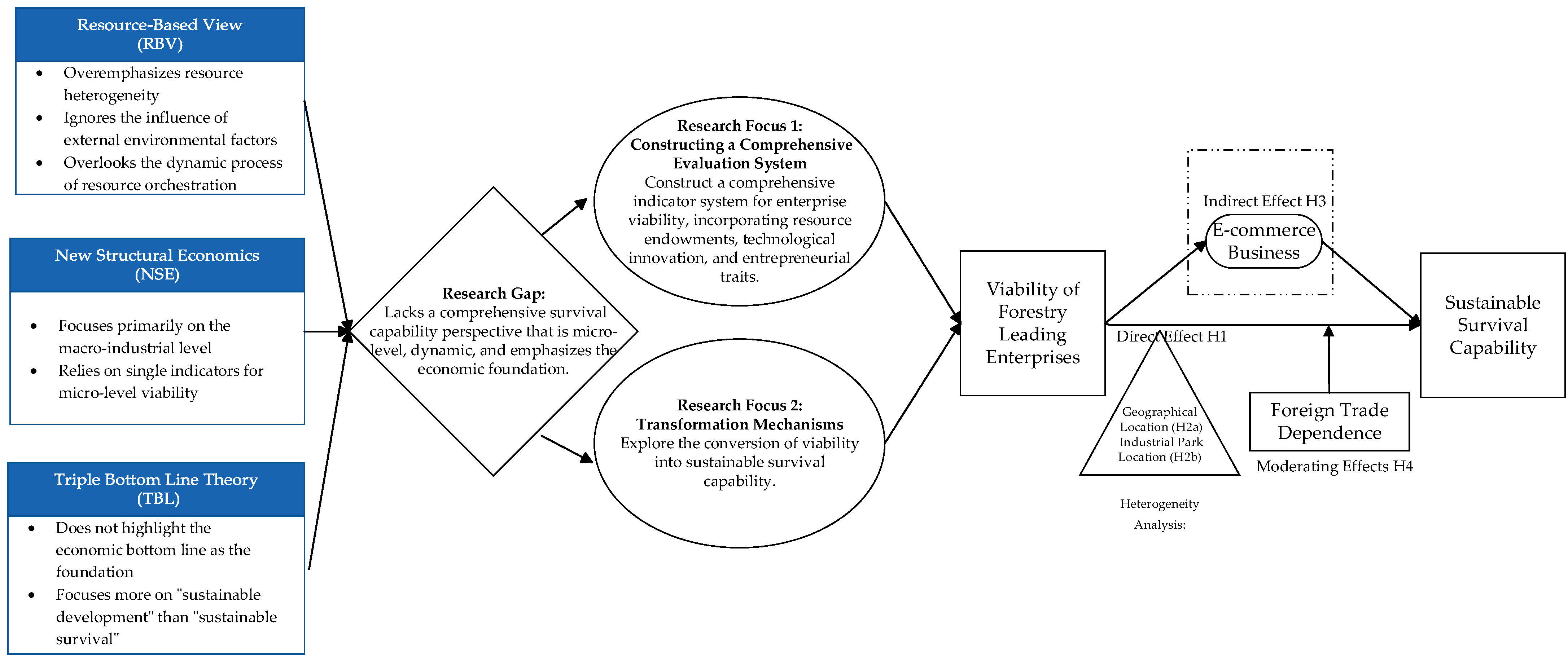
Based on the analysis above, the research logic regarding the impact of viability on the sustainable survival capability of leading forestry enterprises is illustrated in Figure 1.

3. Data and Methodology

3.1. Data Sources

This study focuses on the Inner Mongolia region, utilizing enterprise-level data derived from the Survey Report on Leading Enterprises in Agricultural and Animal Husbandry Industrialization in Inner Mongolia. Specifically, sample selection followed the Industrial Classification for National Economic Activities standards. The scope was expanded from strictly forestry and grassland leading enterprises to include “forestry-related agricultural industrialization leading enterprises” whose core business activities encompass: seedling cultivation and plant protection services; the planting and processing of key products such as flowers, oil-bearing crops, fruits, and Chinese medicinal herbs; wood processing, storage, and transport; economic forest development, planting, and protection; the processing of wood, bamboo, and rattan; edible fungi (dry/fresh mixed), tea, grapes, and apples; as well as landscaping, barren mountain governance, ecological construction, and agro-forestry development. All surveyed enterprises have been accredited as Leading Enterprises in Agricultural and Animal Husbandry Industrialization of Inner Mongolia Autonomous Region. Notably, the sample includes 33 dual-accredited enterprises that are also recognized as Key Leading Enterprises in Forestry and Grassland.
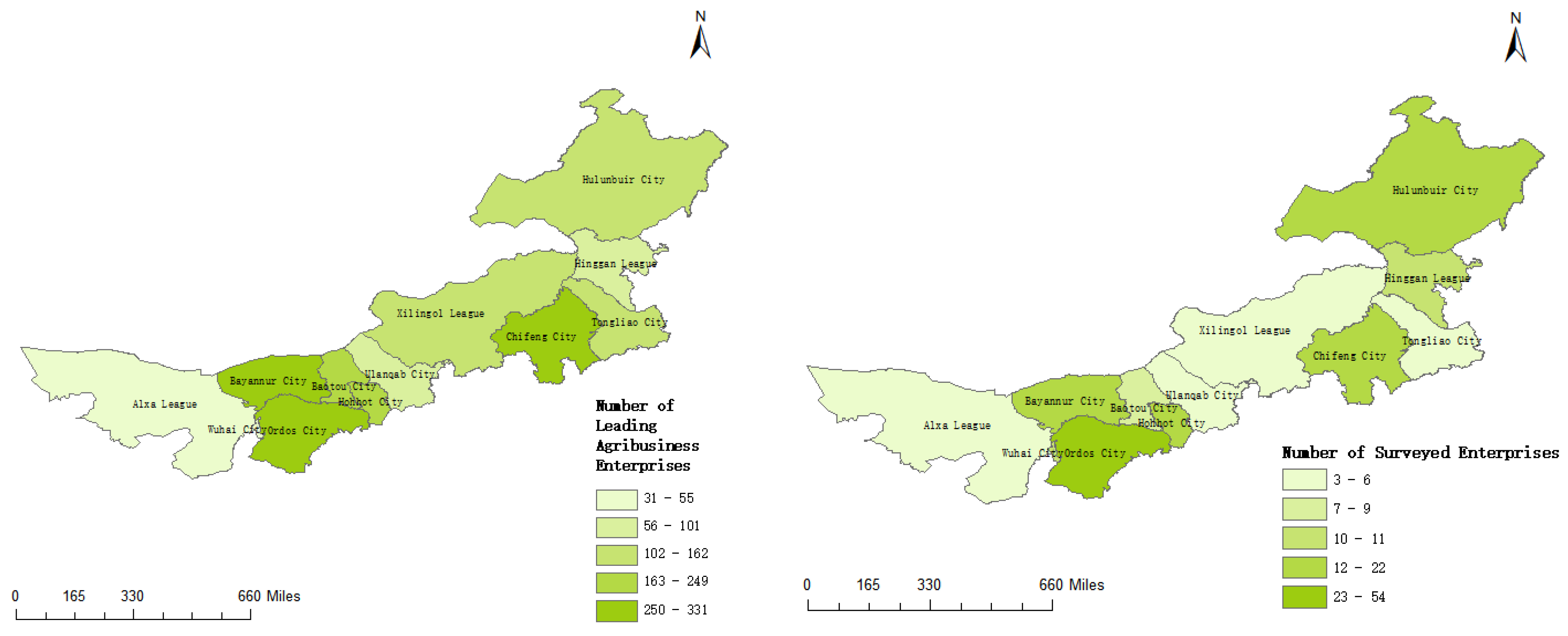
Sample selection adhered to the fundamental principles of stratified proportional sampling. Based on the total count of accredited leading enterprises within each of the 12 leagues and municipalities of the Inner Mongolia Autonomous Region (Figure 2, Left), the initial objective was to select approximately 10% of forestry-related leading enterprises as the research sample. However, in practice, this target proportion was dynamically adjusted contingent upon the actual regional distribution of these enterprises and the final availability of survey data. Ultimately, the sampling proportion was maintained at around 10% for most regions. The specific sample distribution is illustrated in Figure 2 (Right).
We retained 179 forestry-related leading enterprises that qualified through monitoring for three consecutive years, covering survey data from 2021 to 2023, which yielded a total of 537 observations. To address specific research needs, a supplementary survey was conducted on these enterprises from July 2024 to January 2025, thereby establishing the foundational dataset for this paper. The macro-level data involved in this study were sourced from the Inner Mongolia Statistical Yearbook and the Department of Natural Resources of Inner Mongolia Autonomous Region.
To ensure data quality, continuous variables were subjected to 1% winsorization to mitigate the influence of outliers. Furthermore, to eliminate the impact of data dimensions (units of measurement) on the regression results, all variables underwent standardization.

3.2. Variable Selection and Statistical Analysis

3.2.1. Variable Selection

  • Dependent Variable
The core dependent variable in this study is the sustainable survival capability of forestry-related leading enterprises. However, survival capability is a multidimensional latent variable that is difficult to observe directly. Drawing upon the Triple Bottom Line (TBL) theory and Viability theory discussed earlier, economic survival constitutes the prerequisite for corporate sustainable development. For forestry enterprises grappling with the dual pressures of market transformation and resource constraints, the robustness of their economic standing directly determines their capacity to survive sustainably in the market.
While enterprise economic levels can be evaluated using single indicators or composite index systems, they are most commonly reflected through financial performance. Although the majority of scholars typically employ return on assets (ROA) as a proxy for financial performance, this study adopts operating revenue (Rev) for the following strategic reasons:
Avoidance of Multicollinearity: In constructing the explanatory variable (the viability evaluation index system), we have already incorporated total assets to measure enterprise scale. Using ROA (which includes assets in the denominator) as the dependent variable could introduce potential endogeneity and multicollinearity issues, thereby biasing the estimation.
Industry Specificity and Social Responsibility: Forestry-related leading enterprises exhibit a unique financial pattern: continuous growth in operating revenue accompanied by relatively low—or even negative—net profits [30]. Beyond potential mismanagement caused by external factors, a critical underlying reason is that these enterprises bear the specific policy mandate of linking smallholders to markets. The costs associated with fulfilling this social responsibility are deducted from net profits, causing net profit figures to underestimate the firm’s true value creation and social contribution. However, the economic activities driven by this mandate are fully captured in operating revenue. Consequently, net profit—after the deduction of these quasi-social costs—fails to accurately reflect the enterprise’s capacity to drive farmer engagement.
Considering the dual mandates of economic operation and social responsibility (farmer support), along with the specific accounting characteristics of the industry, operating revenue serves as a more robust proxy. It more accurately captures the main effects of the driving mechanism, facilitates stable cross-temporal comparisons, and econometrically reduces interferences from collinearity and outliers. Therefore, drawing on previous research [31,32], this paper selects operating revenue (Rev) as the proxy variable for sustainable survival capability.
2.
Explanatory Variable
Viability is the primary explanatory variable in this study. Grounded in the viability theory of New Structural Economics (NSE) and integrated with subsequent scholarly literature, we constructed a comprehensive evaluation index system comprising 21 indicators across three dimensions: factor endowment, technological innovation, and entrepreneurial characteristics. This system is designed to reflect the level of enterprise viability. To objectively reflect the level of enterprise viability, this study utilizes the entropy weight method (EWM) to calculate the composite index based on the constructed indicator system.
(1)
Construction of the Viability Evaluation Index System
First, based on the core theory of enterprise viability within NSE [33], this study theoretically defined the macro-factors influencing enterprise survival and development, which include comparative advantages matched with the factor endowment structure, an effective market, and a facilitating government. Building on this theoretical foundation, we employed literature mining and aggregation analysis to systematically retrieve and analyze 51 authoritative academic papers regarding enterprise viability across various fields. By statistically analyzing the frequency of factors influencing viability in the literature, we categorized these factors into two major groups: endogenous and exogenous (Table A1).
Ultimately, adherence to the principle that a viability evaluation system must strictly reflect its endogenous nature—that is, it must measure internal capabilities controllable by the enterprise itself—guided our final selection. Consequently, the final index system focuses on three core endogenous dimensions: factor endowment, technological innovation, and entrepreneurial characteristics. First, factor endowment serves as the material foundation and starting point for value creation, determining the firm’s initial cost structure and scale potential [34]. Second, building on this foundation, technological innovation acts as the critical instrument for transcending resource constraints and enhancing factor utilization efficiency, thereby generating new value for the enterprise [16]. Ultimately, the entrepreneur—functioning as the core agentic resource—activates and orchestrates the former two elements through strategic vision, risk preference, and decision-making capabilities. It is the entrepreneur who precisely aligns the firm’s resource advantages and innovative capabilities with market opportunities [35]. Furthermore, entrepreneurs’ subjective decision-making attributes—such as cognitive structures, preferences, and values—can be inferred to a certain extent from demographic characteristics, including age, gender, educational background, industry experience, and social background [36]. In essence, it is entrepreneurial decision-making that dictates how factor endowments are allocated and which technological paths are selected, thereby transforming the firm’s intrinsic potential into realized market competitiveness. Drawing upon existing research regarding various indicator frameworks, we constructed the final viability evaluation index system, as presented in Table A2.
(2)
Calculation of the Viability Index
Based on the constructed indicator system, this study employs the entropy method to comprehensively measure the viability of forestry-related leading enterprises. The entropy method is an objective weighting approach based on information theory, originally proposed by Shannon in 1948 [37]. Its core logic involves measuring the amount of information by calculating the degree of dispersion in the indicator data, thereby determining the weight of each indicator. Compared to subjective weighting methods, this approach effectively avoids the interference of subjective human factors, ensuring that the evaluation results are more objective and scientific [38].
The specific calculation steps are as follows: First, the range method is adopted to standardize the 21 original indicators measuring factor endowment, technological innovation, and entrepreneurship, aiming to eliminate differences in dimensions and magnitudes across indicators. Second, based on the principle of information entropy, the entropy value and redundancy of each indicator are calculated. The greater the degree of variation in the indicator values, the smaller the information entropy; this implies a larger amount of information carried by the indicator and, consequently, a higher weight in the comprehensive evaluation. Finally, a linear weighted comprehensive evaluation model is constructed. The standardized indicator values are multiplied by their corresponding objective weights and aggregated to obtain the final composite index measuring the level of enterprise viability [39]. This method fully utilizes the implicit information within the raw data, thereby objectively and accurately reflecting the enterprise’s comprehensive competitive advantages across the three primary dimensions.
3.
Control Variables
Numerous factors influence the sustainable survival capability of enterprises. Drawing on the theoretical framework and existing literature [32,40,41,42,43], this chapter selects the following as control variables: enterprise nature (ownership type), enterprise age, enterprise size, brand construction, regional resources (measured by regional afforested area and regional highway mileage), subsidy intensity, and financing channels. Specifically, brand construction is operationalized as a dummy variable. It is assigned a value of 1 if the enterprise possesses at least one of the following: a registered trademark, “Green Food” certification, “Organic Agricultural Product” certification, or “Agro-product Geographical Indication”; otherwise, it is assigned a value of 0.
4.
Mediating Variable
Drawing upon the previous research [44], this study identified e-commerce adoption (whether to conduct e-commerce) as the mediating variable. However, considering the methodological constraints imposed by binary variables in the second step of mechanism testing, and to avoid altering the regression model specification which could compromise the reliability of the results, this paper employs total e-commerce revenue as a proxy variable.
5.
Moderating Variables
Drawing upon the previous research [45], this paper selects Foreign trade dependence as the indicator to measure the moderating effect of international trade levels on the transformation of enterprise viability into sustainable survival capability, with total import and export volume serving as the proxy variable.
6.
Instrumental Variable
Regional mean of viability drawing on the previous research [46,47], this study calculates the mean viability of other forestry-related leading enterprises within the same region, industry, and year to serve as the instrumental variable. The rationale is that the viability level of peer enterprises in the same industry and region during the same period is closely correlated with the individual enterprise’s viability (satisfying the relevance condition), yet it is unlikely to have a direct correlation with the operating revenue of a single specific enterprise (satisfying the exogeneity condition).
The selection results and specific definitions of all variables are presented in Table 1:

3.2.2. Descriptive Statistics

Table 2 presents the descriptive statistics for the main variables used in this study. The mean value of operating revenue is 6332 (104 CNY), while the standard deviation reaches 19,241. Notably, the maximum value of 291,143 is more than 45 times the mean, indicating that while a minority of enterprises in the surveyed sample possess extremely high revenues, the majority are relatively small in scale, reflecting a skewed distribution. Viability exhibits a minimum value of −0.663 and a maximum of 5.609, with a standard deviation of 0.51, similarly indicating the presence of extreme values. Regarding control variables, the mean for firm nature is 0.047, suggesting that only approximately 4.7% of the sampled enterprises are state-controlled, with the vast majority being private or collective holdings (only one enterprise is foreign-controlled). The mean value for brand construction—indicating the possession of “Two Staples and One Label” certifications or registered trademarks—is 0.695, implying that nearly 70% of the enterprises are actively pursuing brand development. The substantial span in regional highway Mileage reflects certain disparities in regional infrastructure. Finally, the regional afforestation area shows a mean of 4.35 and a standard deviation of 2.83, displaying a relatively symmetric distribution without extreme outliers.

3.3. Model Specification

Based on the preceding theoretical analysis, this paper constructs the following econometric models to empirically test the impact of enterprise viability on operating revenue.

3.3.1. Main Effect Model Specification

To examine the direct impact of viability on sustainable survival capability, the main effect model is established as follows:
R e v i t = β 0 + β 1 V i a b i l i t y i t + β k X i t + μ i + λ t + ε i t
In Equation (1): R e v i t represents the dependent variable, the operating revenue of the forestry-related leading enterprise; V i a b i l i t y i t denotes the core explanatory variable, the viability composite index; X i t represents the set of control variables, including firm nature (Own), firm age (Age), firm size (Size), brand construction (Brand), regional afforestation area (Forest), and regional highway mileage (Road), total fiscal subsidies (Sub), year-end bank loan balance (Bank); μ i denotes individual fixed effects (Firm FE); λ t denotes year fixed effects (Year FE); ε_it is the random disturbance term; subscripts i and t denote the sample enterprise and the observation year, respectively.

3.3.2. Mediating Effect Model Specification

Based on the preceding literature review and theoretical analysis, the engagement of forestry-related leading enterprises in e-commerce business is postulated to mediate the relationship between enterprise viability and sustainable survival capability. To empirically test this mechanism, we construct the mediating effect models as shown in Equations (2) and (3), where Mit represents the mediating variable, E-commerce Business ( E c o m i t ).
R e v i t = γ 0 + γ 1 V i a b i l i t y i t + γ 2 E c o m i t + β k X i t + μ i + λ t + ε i t
E c o m i t = β 0 + β 1 V i a b i l i t y i t + β k X i t + μ i + λ t + ε i t

3.3.3. Moderating Effect Model Specification

Drawing upon the theoretical framework, foreign trade dependence (Trade) is hypothesized to moderate the transmission mechanism from enterprise viability to sustainable survival capability. To verify this moderating effects, interaction term (Viability × Trade) is introduced into the baseline Equation (1). The specific moderating effect models are established as Equation (4).
R e v i t = ϑ 0 + ϑ 1 V i a b i l i t y i t + ϑ 2 V i a b i l i t y i t T r a d e i t + ϑ k X i t + μ i + λ t + ε i t
In these equations: β ,   γ ,   σ ,   ϑ are the coefficients to be estimated; X i t represents the set of control variables defined in Table 1; μ i   a n d   λ t represent individual and year fixed effects, respectively; ε i t is the error term.

4. Empirical Analysis

4.1. Model Selection

In panel data regression, selecting the appropriate estimation method is critical. The three primary approaches available are the Fixed Effects (FE) model, the Random Effects (RE) model, and the Pooled Ordinary Least Squares (OLS) model. Given that the Pooled OLS model fails to capture unobserved individual and time-specific heterogeneity, the selection process typically necessitates a choice between the FE and RE models. To determine the optimal specification, this study employed the Hausman specification test using Stata 18 software. The test yielded a p-value (p < 0.01), leading to the rejection of the null hypothesis (which favors the Random Effects model) at the 1% significance level. Consequently, the Fixed Effects model was selected for the subsequent empirical analysis. The detailed results of the Hausman test are presented in Table 3.
In this study, all fixed effects estimations employ a High-Dimensional Fixed Effects (HDFE) model. By explicitly controlling for both firm and year fixed effects, this approach effectively accounts for unobserved individual heterogeneity and time-specific shocks, thereby significantly enhancing the reliability of causal identification. Furthermore, to address potential serial correlation and heteroscedasticity, standard errors are clustered at the firm level.

4.2. Baseline Regression Analysis

Based on the fixed effects model specified in Equation (2), the regression analysis was conducted using Stata 18 software. The results are presented in Table 4. Columns (1) and (2) report the estimation results without and with control variables, respectively. The comprehensive results indicate that viability exerts a significant positive impact on operating revenue (Rev), regardless of whether control variables are included. Specifically, in the full model (Column 2), the coefficient of viability is 0.0832 and is significant at the 5% level. This implies that for every one-unit increase in the viability index, the enterprise’s operating revenue significantly improves. Although the inclusion of control variables slightly attenuates the magnitude of the viability coefficient (from 0.0878 to 0.0832), the direction and significance of the effect remain robust. This confirms that enterprises possessing stronger viability—through optimized factor allocation and technological innovation—are better positioned to expand their market survival space. These findings empirically support the argument that viability is a core driver for the sustainable survival of forestry-related leading enterprises. Thus, Hypothesis H1 is verified.
Regarding the control variables, the regression results indicate that firm nature exerts a significant negative impact on sustainable survival capability. This disparity is primarily attributed to the fact that State-Owned Enterprises (SOEs) often bear substantial “policy burdens,” including employment guarantees and regional economic balancing, which divert resources from purely economic objectives. In the forestry sector specifically, SOEs are mandated to prioritize non-market functions—such as ecological protection and maintaining social stability in forest regions—forcing them to invest heavily in low-return public welfare projects. Furthermore, strict regulatory constraints, such as harvesting quotas and ecological red lines, limit their operational flexibility to adapt to market demands. Compounded by legacy social costs and rigid management structures that stifle innovation and efficiency [48], these factors collectively result in slower revenue growth for SOEs compared to their private counterparts.
Additionally, firm age (Age) shows a negative correlation with sustainable survival capability. This phenomenon suggests that as companies age, they are prone to organizational rigidity and path dependence, which leads to diminishing marginal efficiency in innovation, accumulated historical cost burdens, and a lagged response to market changes, ultimately eroding profitability [49,50]. In contrast, regional afforestation area has a positive effect on the operating revenue of forestry-related leading enterprises. This is likely because many of these enterprises rely directly on forest resources for production; thus, an increase in afforestation area allows for scale-intensive operations that reduce unit production and maintenance costs. Moreover, abundant forest land resources not only enhance the enterprise’s resource reserves but may also facilitate access to government subsidies and potential carbon sink trading channels, thereby boosting overall revenue [51].
Notably, the impact of brand construction on operating revenue is significantly negative, indicating that the process of brand development may temporarily constrain revenue growth. A plausible explanation is that brand construction is a long-cycle undertaking. The initial surge in investment for brand building and marketing creates a “crowding-out effect” on operating revenue, characterized by immediate suppression followed by a lagged release of benefits. Simultaneously, consumer brand recognition involves a distinct time lag, which often places pressure on current revenue performance. Research suggests that the positive effects of corporate branding typically manifest only after several years of consistent development [52]. Furthermore, enterprises exhibit varying degrees of willingness when utilizing different geographical indication brands [53]. Additionally, compared to other industries or developed nations, the forestry sector still lags significantly in product standardization and brand management; this gap serves as a critical factor contributing to low production efficiency and weak brand recognition for forestry products [54]. Consequently, direct economic benefits are often not immediately realized during the initial stages of brand development. As a core intangible asset, the value accumulation of a brand is easily overlooked by managers focused on short-term financial metrics. Therefore, enterprises must cultivate a consciousness of long-term brand asset management, transcending the myopic pursuit of immediate profits. Fundamentally, brand construction involves shaping consumer experience through the continuous provision of high-quality products and services, thereby gradually enhancing reputation and fostering brand loyalty. It is this sustainable competitive advantage, transformed from brand value, that constitutes the vital source of long-term sustainable survival capability.

4.3. Robustness Checks

To ensure the reliability of the estimated results regarding the impact of viability on the sustainable survival capability of forestry-related leading enterprises, this study conducts the following robustness checks.

4.3.1. Alternative Measures

(1)
Substitution of the Explanatory Variable
Considering that “sustainable survival” is a multidimensional process, and firms may enhance their survival probability by managing earnings to avoid decreases and losses [55], relying solely on the absolute value of operating revenue may suffer from omitted variable bias. Such a single metric struggles to fully capture firm stability amidst dynamic competition. Furthermore, the drastic volatility in operating revenue growth rates within the raw data may introduce measurement error, leading to biased estimation results.
To address this, we introduce a discrete variable reflecting the direction of performance fluctuation to enhance the depth and robustness of our indicators. We transformed the continuous growth rate indicator into a binary dummy variable (0/1) representing the state of “sustainable survival” versus “decline” (assigning 1 for positive growth and 0 for negative growth). This approach effectively filters out data noise caused by environmental factors and re-verifies the driving effect of viability on the sustainable survival of forestry-related leading enterprises from the supplementary dimension of survival stability.
Given the change in the nature of the dependent variable, we adjusted the regression method to a Probit model to more precisely characterize the impact of viability on the probability of sustainable survival. Compared with linear models, the Probit model relies on the assumption of a normal distribution and constrains predicted values within the [0,1] interval. This allows for a more rigorous interpretation of how much the likelihood of achieving positive revenue growth increases for every unit increase in viability, thereby providing more robust empirical support for our conclusions. The regression results, as shown in Column (2) of Table 5, indicate that the impact of enterprise viability on sustainable survival capability remains significantly positive.
(2)
Substitution of the Explanatory Variable and Estimation Method
To validate the robustness of the baseline results and mitigate the limitations of absolute financial metrics—which are susceptible to external environmental shocks—this study introduces relative market share as an alternative proxy for corporate sustainable survival capability. This metric is calculated as the ratio of an individual enterprise’s operating revenue to the aggregate operating revenue of the entire sample in a given year.
The rationale for selecting this indicator is threefold: First, as a relative metric, it effectively filters out common industry-wide shocks and eliminates the interference of systematic risks, thereby precisely capturing the firm’s competitive advantage relative to its peers. Second, drawing on previous research [56], in forestry markets characterized by high product homogeneity, market share serves as a comprehensive, multifaceted metric of strategic effectiveness and innovation potential, objectively reflecting a firm’s survival status within a competitive landscape. Finally, this metric aligns with the theoretical predictions of New Structural Economics [57], which posit that the cost advantages derived from viability inevitably manifest as market share expansion. Furthermore, given the representative nature of our stratified sampling data, variations in relative market share further corroborate the intrinsic logic governing the impact of viability on sustainable survival capability.
Consequently, upon substituting operating revenue with relative market share, the regression results presented in Column (3) of Table 5 indicate that the impact of viability on sustainable survival capability remains significantly positive.

4.3.2. Quantile Regression

Quantile regression allows for the examination of the distribution of the dependent variable corresponding to each explanatory variable, expressed as a series of quantiles. In this study, we set the quantile points at 0.25 (P25), 0.50 (P50), and 0.75 (P75). The results are reported in Columns (4), (5), and (6) of Table 5. The findings demonstrate that the impact of viability on sustainable survival capability is significantly positive across all three quantile points, further verifying the robustness of the main effect. Notably, the regression results reveal that the coefficient of viability increases with the quantile level (0.0661 < 0.0943 < 0.2331). This suggests that the stronger the enterprise’s existing capability, the greater the impact of viability on its sustainable survival. It reflects where “the strong get stronger”—meaning that enterprises with higher initial endowments derive greater marginal benefits from viability in enhancing their sustainable survival capability.

4.4. Endogeneity Test

4.4.1. Causal Identification Strategy

Although the main effect model employs high-dimensional fixed effects to control for some endogeneity issues, the relationship between the study’s core variable—viability—and the sustainable survival capability of enterprises may still suffer from endogeneity.
First, there is the issue of reverse causality. While high viability contributes to enterprise survival, enterprises with superior survival performance in long-term operations often possess more abundant cash flow and resource accumulation. This, in turn, may promote the optimization of their factor structure, thereby enhancing their viability. Second, there is the issue of omitted variable bias. Despite the inclusion of multidimensional control variables, there may still be unobservable factors (such as corporate culture or specific management capabilities). These factors can simultaneously influence both the construction of an enterprise’s viability and its survival performance, leading to biased OLS estimation results.
To overcome these endogeneity challenges and accurately identify the net causal effect of viability on sustainable survival capability, this paper adopts the Instrumental Variable (IV) method for estimation. Drawing on the research of previous research [47], we calculate the mean viability of other forestry-related leading enterprises in the same region, industry, and year to serve as the instrumental variable.
The selection of this instrumental variable is based on strict causal identification logic and satisfies the following two core assumptions:
First, Relevance. According to New Structural Economics, an enterprise’s viability essentially reflects the degree to which its micro-business structure matches the macro-factor endowment structure. Forestry enterprises within the same administrative region (League/City) operate under similar natural geographical and institutional environments and face convergent factor market prices. Therefore, the average viability level of other enterprises in the region can powerfully map the region’s potential factor endowment characteristics, making it highly correlated with the viability of the enterprise in question.
Second, Exclusion Restriction. Primarily, as an aggregated macro-group indicator, the mean value of other enterprises in the same region is strictly exogenous to a single micro-enterprise. Theoretically, the operating conditions of other firms do not directly enter the production function of the focal enterprise or determine its survival performance, unless through the common channel of the regional factor environment. Furthermore, the construction of the variable excludes the data of the focal enterprise itself. This approach statistically severs the direct link between the instrumental variable and the focal enterprise’s specific omitted variables or random disturbance terms. Consequently, the instrument affects sustainable survival capability solely through the channel of influencing the enterprise’s viability, thereby satisfying the exclusion restriction.

4.4.2. IV Regression Results and Diagnostics

Table 6 reports the estimation results using the Two-Stage Least Squares (2SLS) method. In the first-stage regression, the regression coefficient of the instrumental variable on the endogenous variable is 1.9978 and is statistically significant. This indicates that the regional factor endowment structure has a significant peer effect on individual enterprise viability, verifying the relevance of the instrumental variable. To ensure the statistical validity of the instrument, strict weak instrument diagnostics were conducted. The results show that the first-stage Kleibergen-Paap rk Wald F statistic is 12.31. This value exceeds the Empirical value of 10 at the 10% maximal IV bias level [58], indicating that there is no weak instrument problem. Additionally, the Kleibergen-Paap rk LM statistic is 10.49 (p < 0.1), rejecting the null hypothesis of under-identification and further confirming the validity of the instrument.
The second-stage regression results show that after addressing the endogeneity issue, the coefficient of viability remains significantly positive (0.2047, p < 0.1). In summary, the promoting effect of viability on the sustainable survival capability of forestry-related leading enterprises remains robust after eliminating endogeneity interference.

4.5. Heterogeneity Analysis

4.5.1. Heterogeneity Based on Geographical Location

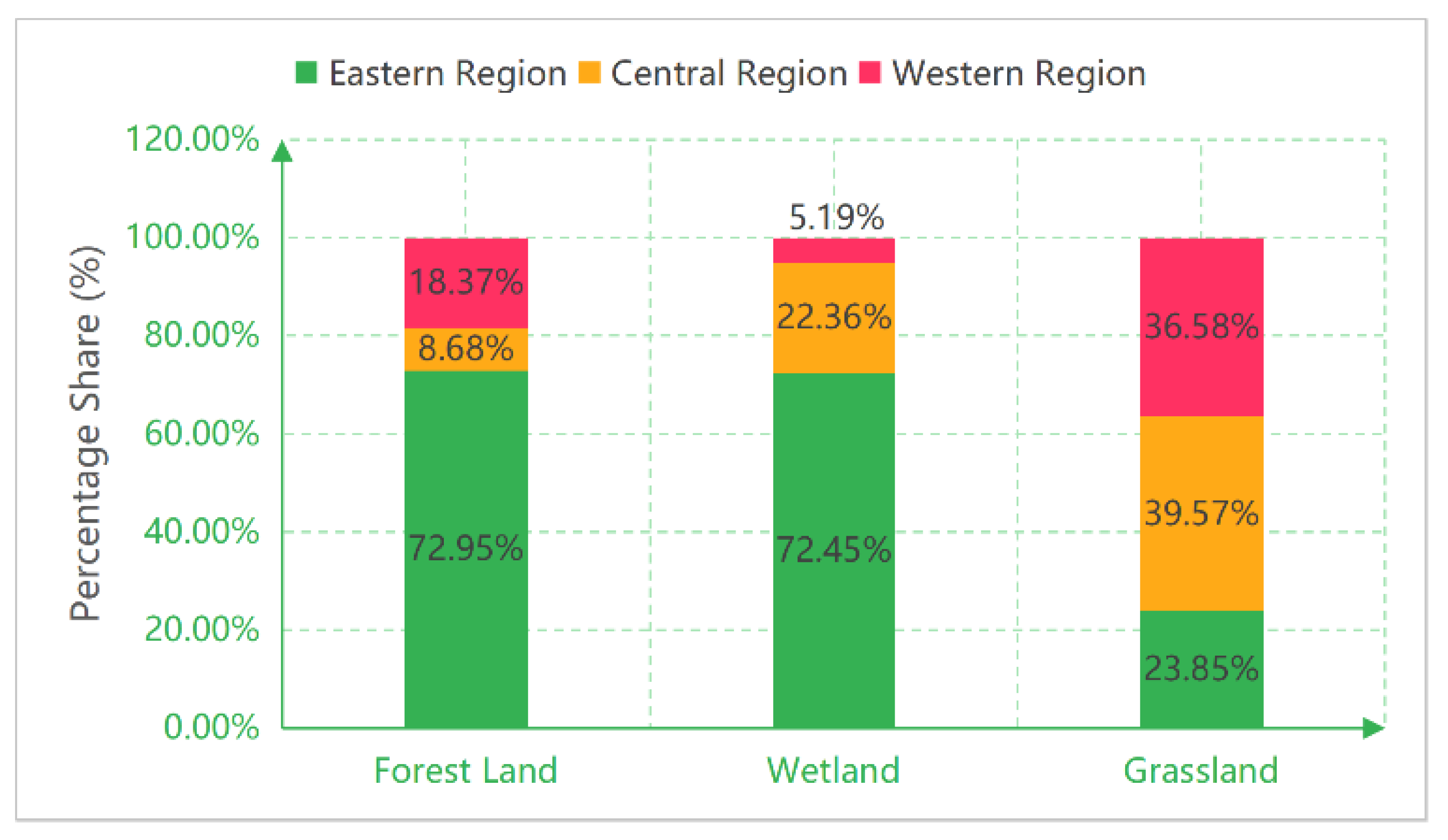
Approximately 77.3% of Inner Mongolia’s forest area is distributed in the Eastern region and 19.4% in the Central region, whereas the Western region accounts for only 3.3% [59]. The Eastern region benefits from abundant precipitation, with natural forests primarily concentrated in the primitive forest zones of the Greater Khingan Range and 11 secondary forest areas in the southern mountains, while artificial forests are widely distributed throughout the entire autonomous region. Conversely, with the exception of the Hetao Plain, the majority of the Western region lies within an inland arid zone characterized by scarce rainfall, where grassland is the dominant vegetation type (The People’s Government of Inner Mongolia Autonomous Region. Overview of Inner Mongolia. Available online: https://www.nmg.gov.cn/asnmg/ (accessed on 15 December 2025)).
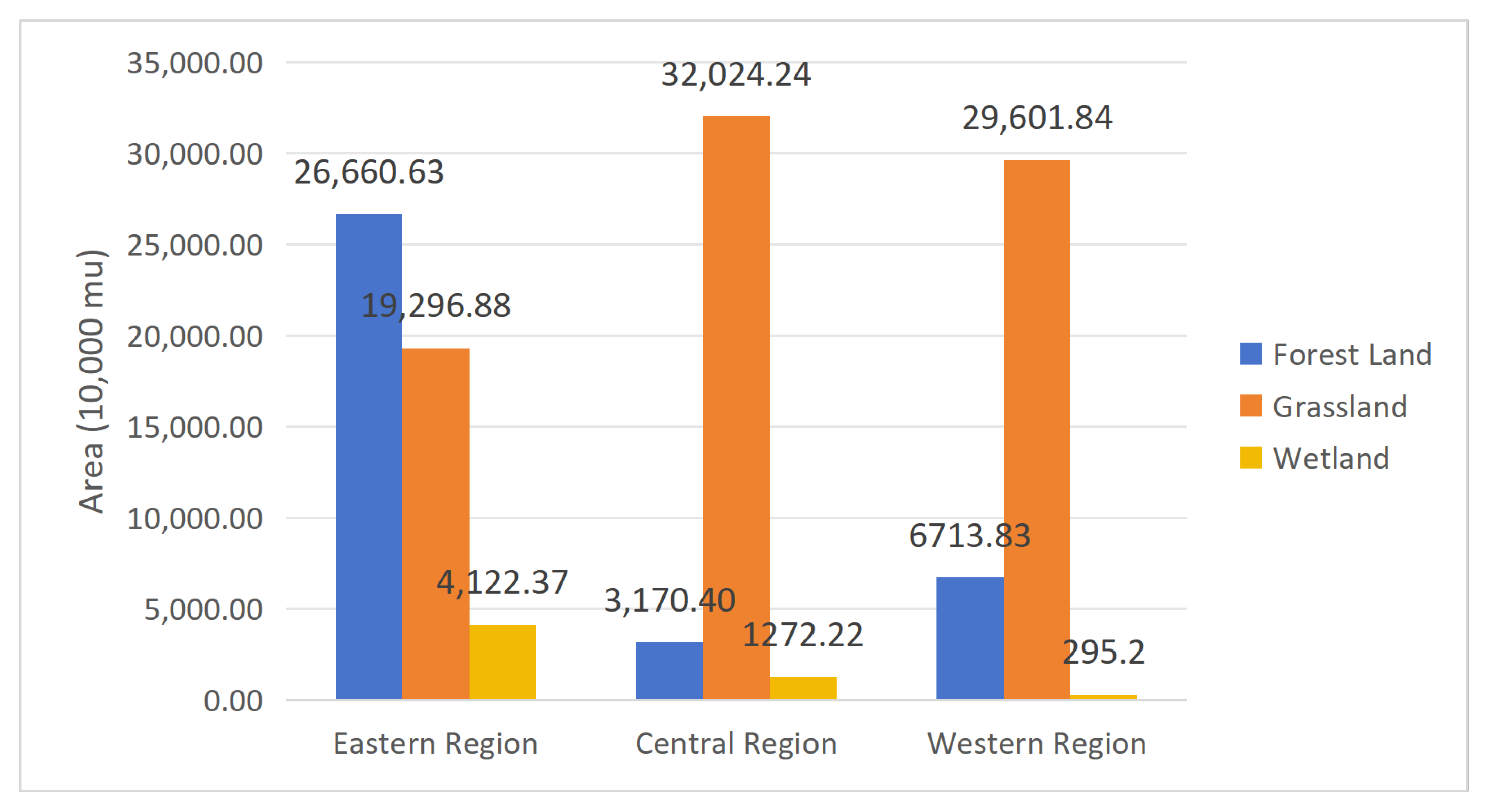
The distribution of natural resources across the leagues and cities of Inner Mongolia exhibits a typical pattern characterized by high forest coverage in the East, abundant grassland resources in the Central region, and vast expanses of sandy land in the West (Figure 3), providing robust data support for examining regional heterogeneity. According to 2023 survey data, forest land reserves in the Eastern region reached 266 million mu, which is more than 2.7 times the total of the Central and Western regions combined. Additionally, the East possesses the vast majority of the region’s wetland resources. As illustrated in Figure 3 and Figure 4, the distribution of forest and grass resources is extremely unbalanced across the three regions. This implies that forestry-related leading enterprises in the East operate within a completely different factor environment compared to their counterparts in the Central and Western regions.
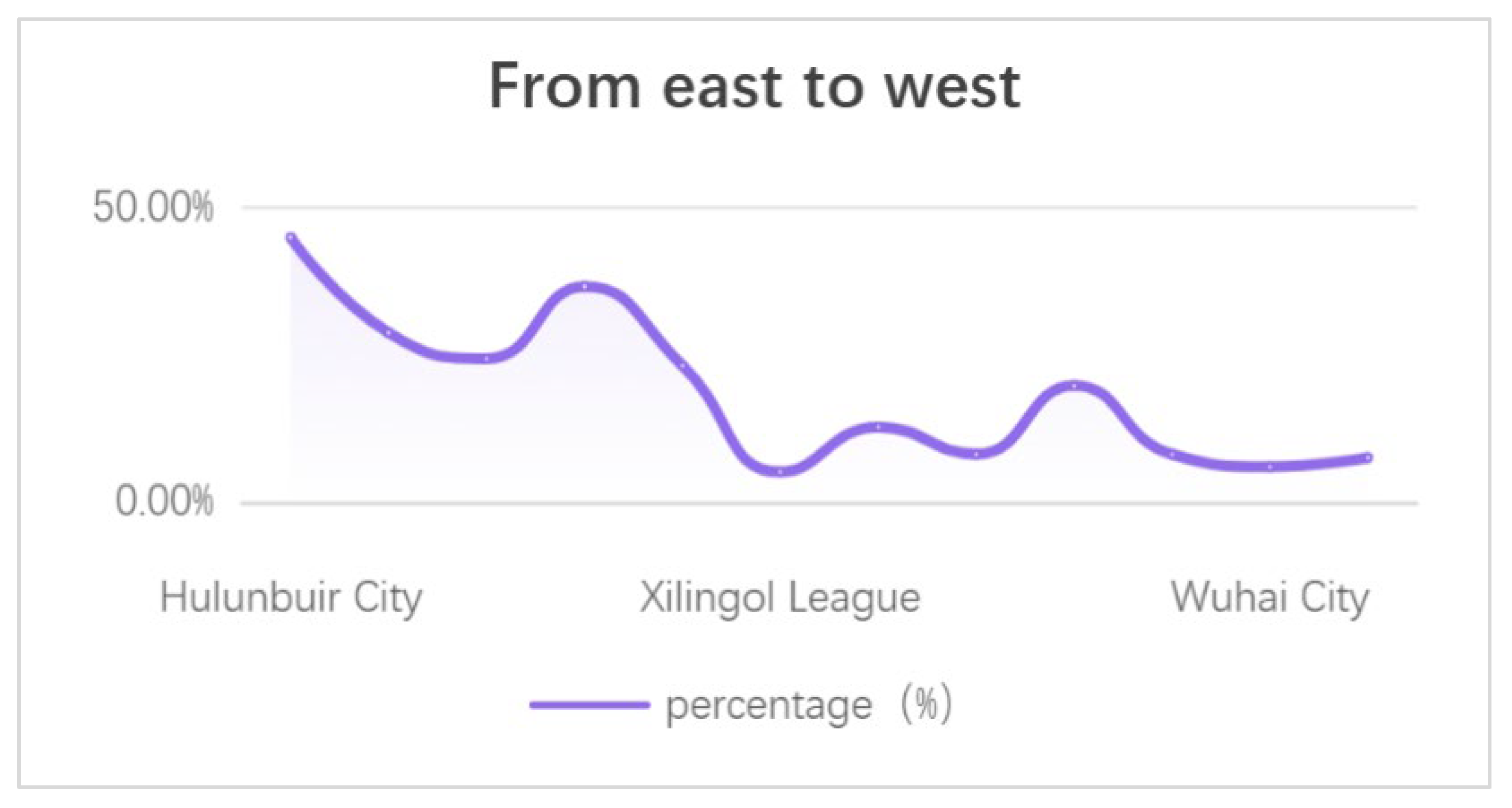
Figure 5 shows that the proportion of forest land area to total administrative land area decreases gradually from east to west. The comparative advantage of high resource stocks (large-scale forest land) in the East is often accompanied by rigid ecological protection constraints. In contrast, development in the Central and Western regions is driven more by the dual imperatives of market demand and environmental restoration.
Based on the above analysis and considering geographical, cultural, and economic differences, this study classifies the study area into three regions: the Eastern Region (comprising Chifeng, Tongliao, Hinggan League, and Hulunbuir); the Central Region (including Hohhot, Ulanqab, and Xilingol League); and the Western Region (consisting of Baotou, Ordos, Wuhai, Bayannur, and Alxa League). Consequently, the heterogeneity analysis is conducted across these three distinct regions.
The regression results are presented in Table 7. The results indicate that in the Eastern region, the coefficient for the impact of the viability of forestry-related leading enterprises on operating revenue is 0.0700, but it failed to pass the significance test. In contrast, the Central region exhibits the largest impact coefficient, reaching 0.2061, which is significant at the 5% level. The regression results for the Western region show an impact coefficient of 0.0454, which is significant at the 10% level. These findings demonstrate the existence of significant regional heterogeneity, identifying the Central region as the optimal area for converting the viability of forestry enterprises into economic benefits.
A possible explanation is that although the Eastern region of Inner Mongolia possesses abundant forest resources and high forest coverage, as a national key ecological function zone, it faces the strictest logging quota systems and ecological red line controls. Strict ecological protection policies objectively constrain the revenue growth potential of local leading enterprises. These firms are required to invest heavily in forest conservation and ecological restoration. This paradox of “resource abundance amidst policy constraints” hinders the direct translation of their viability into economic benefits.
By comparison, although the Central and Western regions possess fewer natural forest resources than the East, they benefit from abundant plantation resources and relatively flexible industrial policies. This allows leading enterprises to more effectively utilize composite business models—such as the sand industry and eco-tourism—to navigate strict resource constraints. Furthermore, as the core region for economic development in Inner Mongolia, the Central region boasts well-developed infrastructure and high market vitality. This enables enterprises with high viability to fully enjoy policy dividends and market premiums, thereby achieving an efficient conversion of viability into operating revenue. While the Western region demonstrates a significant positive trend, it remains constrained by the natural environment, resulting in overall conversion efficiency and stability that are weaker than those in the Central region. Thus, Hypothesis H2a is verified.

4.5.2. Heterogeneity Based on Industrial Park Location

This study conducts a heterogeneity analysis based on whether enterprises are located within industrial parks to investigate the differential impact of viability on the sustainable survival capability of forestry-related leading enterprises inside and outside such parks. The sample enterprises were divided into two groups based on whether they are located in any of the following: agricultural product processing parks, industrial parks (including food parks), agricultural science and technology parks, or e-commerce industrial parks. Grouped regressions were performed using the firm individual fixed effects model, and the regression results are presented in Table 8.
Column (1) presents the results for enterprises not located in any park, showing that the impact of viability on sustainable survival capability is not significant. Column (2) displays the estimation results for enterprises located within an industrial park, indicating that viability has a significantly positive impact on sustainable survival capability at the 10% level. These results demonstrate that the impact of viability on sustainable survival is more pronounced for enterprises located within industrial parks compared to those outside.
The primary reasons for these results are as follows: Forestry industrial clusters rely on foundational factors such as natural resource reserves and locational transportation advantages; economic factors including industrial scale effects, labor market maturity, and regional economic levels; as well as the soft and hard environments constituted by regional cultural traditions and infrastructure facilities. Through spatial spillover effects, these factors form a symbiotic system for regional forestry enterprises. This not only reduces the operating costs of individual firms but also drives the enhancement of the entire cluster’s competitiveness through knowledge diffusion and technology spillovers, ultimately promoting the overall development level of neighboring forestry enterprises [60]. Furthermore, the spatial agglomeration effects of factor inputs and industrial structure upgrading have already exerted a significant impact on forestry economic growth, primarily manifesting in the form of knowledge spillovers [61]. Forestry industrial agglomeration can promote the improvement of industrial technical efficiency, thereby driving the development of the regional forestry industry [62].
Therefore, against the backdrop of increasingly strict ecological constraints, demonstration parks offer an intensive and efficient mode of resource utilization, opening up a development path for enterprises that balances ecological benefits with economic benefits. Different types of industrial parks gather innovation elements to provide technical support and facilitate resource sharing for enterprises within the park. This contributes to improving corporate technical efficiency, which in turn promotes enterprise income growth. Thus, Hypothesis H2b is verified.

4.6. Mechanism Analysis

Following the approach proposed by previous research [63], this study employs a two-step procedure to test the mediating mechanism.
Step 1: Regress the dependent variable (Rev) on the independent variable (Viability). The results are shown in Column (1) of Table 9 (consistent with the baseline regression).
Step 2: Regress the mediating variable (E-com) on the independent variable (Viability). The results are shown in Column (2) of Table 9.
In Table 9, Column (1), the positive impact of viability on operating revenue is verified, with a coefficient of 0.0832, significant at the 5% level. In Column (2), the estimated coefficient for viability is 0.5119 and is also significant at the 10% level. This result indicates that viability has a significant positive influence on the likelihood of adopting e-commerce; specifically, the stronger the enterprise’s viability, the higher its willingness to engage in e-commerce business. Combining these findings with existing literature—which posits that a higher degree of e-commerce development in leading enterprises contributes to improved operating performance [64]—it can be inferred that enhanced viability fosters the adoption of e-commerce, which in turn boosts sustainable survival capability. Thus, Hypothesis H3 is verified.
Following the standard two-step procedure proposed by previous research [63], it is necessary to sequentially test the endogeneity of the independent variable on the dependent variable (which has been verified previously) and on the mediating variable. Consistent with the preceding analysis, this section employs the mean viability of other forestry-related leading enterprises within the same region, industry, and year as the instrumental variable to address the endogeneity issue in this regression step.
The test results are presented in Table 10. Column (1) reports the results of the instrumental variable test (first stage), while Column (2) displays the regression results for e-commerce business. The findings indicate that the results remain robust even after controlling for endogeneity.

4.7. Moderating Effect Analysis

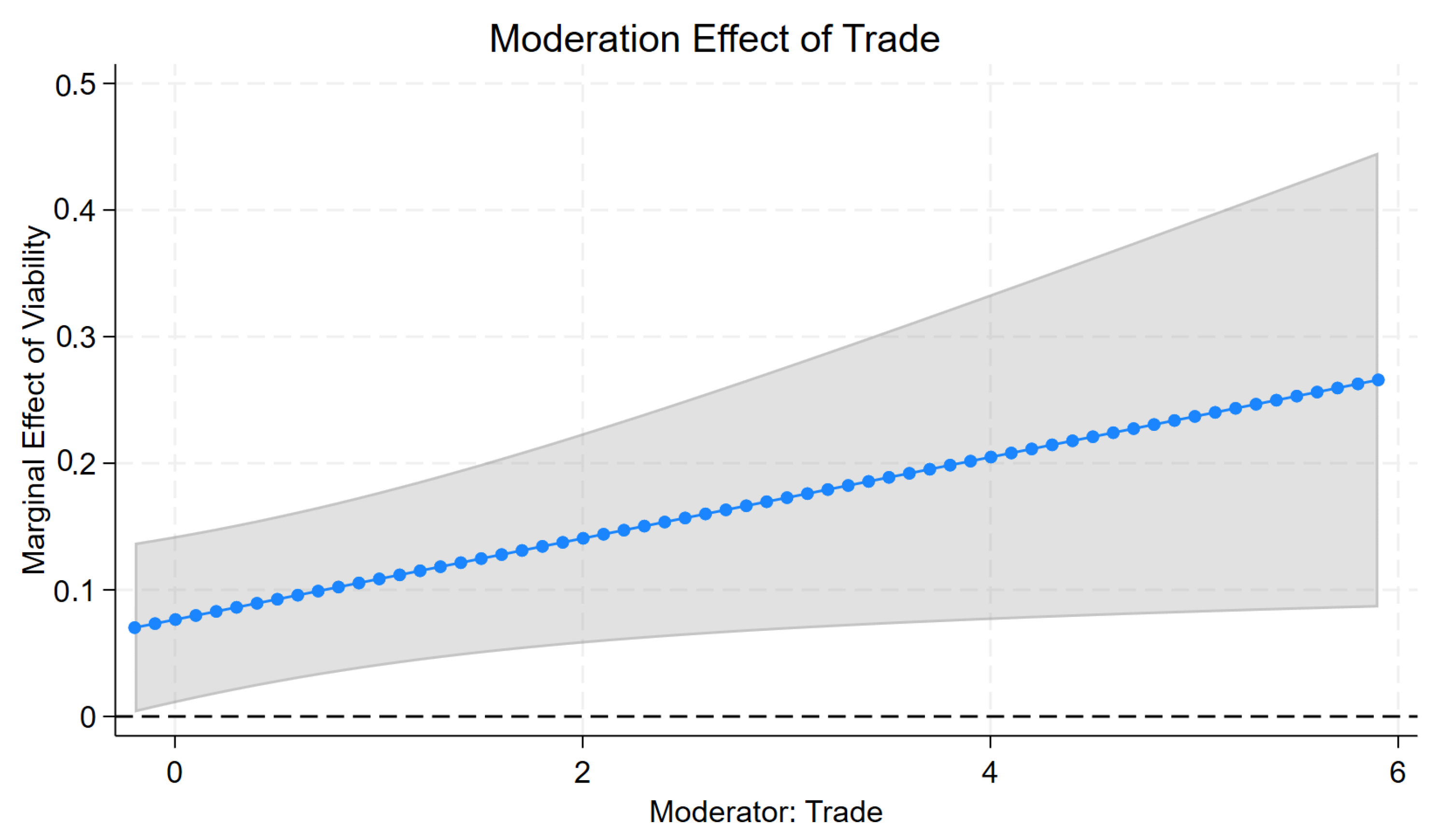
To examine the moderating role of foreign trade dependence, this study utilizes the enterprise’s total import and export volume as a proxy variable. The interaction term between total import/export volume and viability was included in the regression equation. As shown in Table 11, the interaction term exhibits a positive coefficient of 0.0321, which is significant at the 5% level. This finding indicates that foreign trade dependence exerts a significant positive moderating effect. The positive sign suggests that a higher degree of engagement in international trade amplifies the positive contribution of viability to the enterprise’s sustainable survival capability. Thus, Hypothesis H4 is verified.
Figure 6 further intuitively illustrates the moderating role of foreign trade dependence through a marginal effects plot. As depicted in the figure, the marginal effect of the core explanatory variable—viability—on sustainable survival capability rises significantly as foreign trade dependence increases. Notably, the 95% confidence interval consistently excludes zero throughout the range.
This confirms a significant positive moderating effect: the higher a firm’s foreign trade dependence, the stronger the enhancing effect of its viability on sustainable survival capability. This finding suggests that participation in international markets provides enterprises with a broader scope for resource allocation, thereby reinforcing the positive contribution of internal capabilities to corporate survival and development.

5. Discussions

This study aims to elucidate the intrinsic mechanisms and boundary conditions through which the viability of forestry-related leading enterprises translates into sustainable survival capability under the influence of the external environment. Unlike previous studies that focused on macro-policy support, the micro-level evidence presented herein confirms that intrinsic enterprise viability is the critical determinant of long-term survival in a complex market environment.

5.1. Interpretation of Findings

5.1.1. Viability as the Micro-Foundation for Sustainable Enterprise Survival

This study empirically confirms that micro-viability, constituted by factor endowments, technological innovation, and entrepreneurial traits, acts as the core driving force for forestry-related leading enterprises to achieve sustainable survival in contexts lacking long-term external subsidies. This finding not only provides micro-level empirical evidence from forestry enterprises for the macro-proposition of New Structural Economics (NSE) that “enterprise viability is the micro-foundation of an economy” [33], but also refines the assumptions of the traditional Resource-Based View (RBV) within specific contexts. Although Barney emphasized that valuable and rare static resources are the source of competitive advantage [3], in the forestry context focused on in this study, the mere possession of natural resources does not guarantee survival. The results indicate that under the dual pressures of strict ecological regulations and market competition, static resources must be transformed into dynamic viability through entrepreneurial resource orchestration and technological innovation to realize economic performance. This responds to criticisms from Kraaijenbrink and Sirmon regarding the “black box” perspective of RBV theory [4,5], positing that resources do not automatically generate value; rather, their value realization depends on the construction of dynamic capabilities within specific institutional environments.

5.1.2. E-Commerce Channel Innovation Empowers Sustainable Enterprise Survival

By revealing the mediating role of e-commerce, this study further elucidates how forestry-related leading enterprises overcome the high transaction costs associated with geographical disadvantages. This conclusion resonates with the views of Zhu and Kraemer, who regard e-commerce as a strategic dynamic capability [44]. The study finds that enterprises with strong viability are more inclined to utilize digital means to reconstruct their value chains. This mechanism indicates that for forestry enterprises typically located at the end of supply chains and deep inland, e-commerce is not merely a sales tool but a critical pathway for breaking geographical limitations and matching restricted specific factor endowments (such as characteristic forest products in remote areas) with broad market demand. This finding extends the argument by Elia et al. that digitalization can compensate for the resource disadvantages of small and medium-sized enterprises [65], confirming that in the digital economy era, channel innovation is an important means for resource-dependent enterprises to achieve leapfrog survival [66].

5.1.3. The Dual Context of the External Environment’s Impact on Viability Conversion

The heterogeneity and moderating effect analyses in this study profoundly reveal the constraining role of the external environment on the conversion efficiency of viability, providing an institutional-level explanation for the “resource curse.” The research shows that in the eastern region of Inner Mongolia, where forest resources are most abundant, high resource stocks have not significantly translated into high survival performance. This result supports research conducted by Mehlum et al. from an institutional perspective, suggesting that under strict ecological redline constraints, rigid institutional regulations sever the conventional path of transforming resource advantages into economic output, leading to a “resource-institution” mismatch [20]. In contrast, enterprises within industrial parks exhibit higher viability conversion efficiency, verifying Krugman’s theory that industrial agglomeration reduces operating costs and enhances survival probability through knowledge spillover effects [22]. Furthermore, the positive moderating effect of foreign trade dependence indicates that the “learning by exporting” effect brought about by embedding in global value chains is an important external incentive condition catalyzing the realization of internal capabilities. This further perfects the analytical framework of enterprise survival logic: assessing the survival capability of resource-based enterprises cannot isolate resource endowments from the tightness of the regional institutional environment and the degree of market openness.

5.2. Theoretical Implications

The theoretical contribution of this study is primarily reflected in deepening the micro-level expression of New Structural Economics (NSE) regarding enterprise viability. Although NSE emphasizes that viability is the core of stable economic development [33], previous studies have often treated it macroscopically or used “whether average profit is obtained” as a single proxy variable. By constructing a comprehensive evaluation system incorporating factor endowments, technological innovation, and entrepreneurial traits, this study confirms that viability is not an abstract macro-state but a set of measurable and cultivatable composite capabilities within the enterprise. This descends the theoretical perspective of NSE from macro-industrial policy to the level of micro-enterprise management, verifying that the match between micro-operational structure and macro-factor endowment structure is the fundamental logic for enterprises to achieve sustainable survival in a subsidy-free environment.
On this basis, the finding regarding the mediating effect of e-commerce further enriches the theoretical connotation of the Resource-Based View in the digital economy era. Traditional Resource-Based View [3] often regards geographical location as a static constraint difficult to change, but this study confirms that digital capability is a dynamic capability capable of reconstructing geographical boundaries. This conclusion is mutually corroborative with research on Italian manufacturing based on the RBV, which suggests that digital export performance is determined not by enterprise size, but by the quality of digital technological resources and digital capabilities [65]. This supplements the Resource-Based View with an explanation of how digital resources activate traditional sunk resources. Additionally, based on empirical evidence from Inner Mongolia, China, this study resonates deeply with conclusions from research on the forestry sector in transition economies in Southeast Europe. Specifically, when policy dividends recede, the survival logic of enterprises reverts to “entrepreneurial persistence” and “niche market-based innovation” [67], providing an important theoretical reference for cross-border enterprise survival research.

5.3. Practical Implications

5.3.1. Implications for Policy Guidance

The study confirms that viability is fundamental to enterprise survival, requiring a shift in policy formulation logic from simple external financial subsidies to the cultivation of enterprise viability. First, the government should focus on correcting the “resource-institution” mismatch and implement differentiated industrial guidance policies based on regional endowments. For the Eastern Forest Region with rigid ecological redline constraints, enterprises should be guided to avoid path dependence on timber harvesting and instead develop non-consumptive industries such as the under-forest economy and forest wellness. For the Central and Western Regions, support should focus on the sand industry and deep processing of forest fruits, reducing the policy burden on enterprises caused by violating factor structures by aligning with comparative advantages. Second, addressing the significant agglomeration effect of industrial parks, policy resources should lean towards public infrastructure in industrial demonstration parks. By perfecting logistics and environmental protection supporting facilities, policies can promote knowledge spillover and technology sharing among enterprises within the park, constructing a micro-ecology conducive to reducing institutional transaction costs. Furthermore, given the critical role of e-commerce in overcoming geographical marginalization, the government should accelerate digital infrastructure construction in remote forest areas. By providing intellectual support such as specialized training for digital talent, the government can help enterprises bridge the digital divide, replacing traditional financial support with technological empowerment.

5.3.2. Implications for Enterprise Management

For forestry-related leading enterprises, the key to achieving sustainable survival lies in breaking through the static constraints of natural resource stocks and building composite viability. Enterprise managers must first strengthen dynamic resource orchestration capabilities, transforming mere resource possession into a comprehensive competitive advantage of “resources + technology + management,” particularly by enhancing product added value through deep processing technological innovation to withstand cost pressures from rigid resource constraints. Simultaneously, enterprises should elevate digital transformation to a core survival strategy, utilizing e-commerce as a channel innovation to reconstruct the value chain. By directly connecting to the terminal market through new models such as live streaming and community marketing, enterprises can transform comparative advantages on the production end into competitive advantages on the market end. Finally, qualified enterprises should actively integrate into the new “dual circulation” development pattern, utilizing competitive pressure from international markets to force internal management upgrades and technological iteration. Through international competition effects, enterprises can continuously strengthen their self-development capabilities, thereby establishing long-term survival resilience in an uncertain external environment.

6. Conclusions

6.1. Main Conclusions

Based on the theoretical frameworks of the Resource-Based View, New Structural Economics, and the Triple Bottom Line, this study utilizes micro-panel data of forestry-related leading enterprises in Inner Mongolia to empirically examine the survival logic of enterprises under resource constraints. Based on micro-empirical evidence from these enterprises, this study confirms that viability is the fundamental endogenous driving force for forestry-related leading enterprises to achieve sustainable survival in a subsidy-free environment. Its significant positive driving effect on sustainable survival capability marks a fundamental shift in enterprise survival logic from dependence on external policy to reliance on internal resource allocation efficiency. This release of internal momentum does not occur in isolation but depends on e-commerce business as a critical mediating transmission mechanism. Through digital channel innovation, e-commerce effectively breaks the locking effect of geographical location, closely connecting the production end in remote forest areas with broad market demand, thereby achieving the leap from endogenous capability to external market performance. Further boundary condition analysis indicates that the openness of the external environment and institutional arrangements profoundly constrain conversion efficiency: the deepening of foreign trade dependence amplifies the income-generating dividend of viability through the “learning by exporting” effect, while the knowledge spillover effect of industrial agglomeration and the heterogeneity of the regional institutional environment reveal the inhibitory effect of “resource-institution” mismatch on enterprise survival performance. This proves that under strict ecological regulations, pure resource endowment advantages do not necessarily translate into economic output.

6.2. Limitations and Future Prospects

Although this study provides micro-evidence for understanding enterprise survival mechanisms under resource constraints, the following limitations must be considered when interpreting the results, which also point to directions for future academic exploration. First, limited by data availability, this study only observed short panel data from 2021 to 2023. However, the enhancement of enterprise survival capability by technological innovation and brand building often has significant time lag effects. Future research acquiring longer-cycle longitudinal data will help capture the long-term returns of R&D investment, thereby more precisely revealing the dynamic evolutionary trajectory of the impact of various viability dimensions on enterprise survival. On this basis, given that existing evaluation indicators rely heavily on conventional financial and statistical data and have limitations in reflecting entrepreneurs’ dynamic adjustment capabilities, future exploration should not stop at generalized measurement but should be dedicated to the deconstruction and optimization of the evaluation system. Subsequent studies could attempt to use statistical tools such as Principal Component Analysis (PCA) and Factor Analysis to scientifically screen and reduce the dimensionality of the indicator system. This will not only clarify the intrinsic mechanisms of corporate sustainable survival but also precisely identify key shortcomings driving survival. Finally, with the deepening of ecological civilization construction, the definition of “sustainable survival” should extend from a single economic dimension to multi-dimensional value synergy. Although economic survival is a precondition for enterprises to fulfill higher-level responsibilities, forestry-related leading enterprises, as micro-subjects of the ecosystem, naturally possess externalities in their value creation. Therefore, future research frameworks should further incorporate environmental performance (Planet) and social performance (People), exploring how enterprises can use initial economic survival as a foundation to gradually transition and upgrade to comprehensive sustainable development including ecological restoration and community well-being, thereby answering the ultimate proposition of how resource-based enterprises move from “surviving” to “thriving”.

Author Contributions

Conceptualization, Z.W. and M.U.A.; Data curation, Z.W.; Investigation, Z.W., F.W. and P.B.; Writing—original draft, Z.W. and H.L.; Visualization, Z.W.; Supervision, Q.B.; Funding acquisition, Q.B.; Project administration, Q.B. and H.L.; Formal analysis, H.L. and Z.W.; Validation, M.U.A.; Writing—review and editing, Q.B., H.L. and P.B. All authors have read and agreed to the published version of the manuscript.

Funding

This research was funded by the Key Project of the National Social Science Fund of China (25AGL036), Inner Mongolia Autonomous Region universities directly under the basic research funds project science and technology innovation team construction project (No. BR231301), Major Research Project of Inner Mongolia University of Finance and Economics (No.: NCXKY25004).

Institutional Review Board Statement

The study was conducted in accordance with the Declaration of Helsinki, and approved by the Special Committee on Scientific Research and Academic Ethics of Inner Mongolia Agricultural University (NNDKY2025002, 30 December 2025).

Informed Consent Statement

Informed consent was obtained from all subjects involved in the study.

Data Availability Statement

The data used in this study are restricted data. The original database is owned by the Department of Agriculture and Animal Husbandry of Inner Mongolia Autonomous Region and is accessible only to government departments, industry associations, and research institutes for enterprise management and academic research purposes; it is not open to the public. Data are available from the corresponding author upon reasonable request and with permission from the third party (data owner).

Conflicts of Interest

Author P.B. was employed by the company China Construction Bank Inner Mongolia Autonomous Region Branch. The remaining authors declare that the research was conducted in the absence of any commercial or financial relationships that could be construed as a potential conflict of interest.

Appendix A

Appendix A.1

Table A1. Influencing Factors of Viability.
CategoryPrimary DimensionsLiterature CountSecondary IndicatorsLiterature Count
Endogenous FactorsTechnological
Innovation
19Innovation Inputs and Outputs19
Enterprise
Management
25Entrepreneurial
Characteristics
9
Production and
Transaction Efficiency
8
Incentive Mechanisms or Property Rights8
Factor
Endowment
17Capital, Land, and Labor17
Exogenous FactorsGovernment and Market18Effective Market8
Facilitating Government8
Industrial Environment2
Note: Compiled by the authors. Since some papers encompass multiple dimensions, the cumulative frequency of indicators exceeds the total number of papers analyzed.

Appendix A.2

Table A2. Evaluation Index System for Viability of Forestry-Related Leading Enterprises.
Primary
Dimensions
Secondary
Dimensions
Tertiary Indicators
(Measurement/Description)
Factor
Endowment
LandArea of self-built production bases
Area of contract-farming production bases
Area of raw material bases for certified green food
and organic agricultural products
LaborTotal number of employees
Number of production personnel
CapitalNet value of fixed assets
Total assets
Registered capital
Technological
Innovation
Innovation
Input
Number of R&D personnel
R&D expenditure
Independent R&D investment
Number of R&D institutions at or above the provincial level
Innovation OutputCumulative number of valid invention patents
Cumulative number of valid utility model patents
Science and technology innovation awards at or above the provincial level
Entrepreneurial CharacteristicsPersonal
Attributes
Gender of enterprise head (Male = 1, Female = 0)
Age of enterprise head (21–30 = 1, 31–40 = 2, 41–50 = 3, 51–60 = 4, 61–70 = 5, >70 = 6)
Educational BackgroundEducation level of enterprise head (Junior high & below = 1, High school = 2, Technical secondary = 3, Junior college = 4, Bachelor’s = 5, Master’s = 6, Doctoral = 7)
Industry
Experience
Founder status (Is the head the founder? Yes = 1, No = 0)
Social NetworkPolitical participation (Does the head participate in political affairs? Yes = 1, No = 0)
Incentive MechanismEquity incentives (Are equity incentives provided to management? Yes = 1, No = 0)
Note: Compiled by the authors.

References

  1. Du, J. Research progress on forest growth and yield prediction models. World For. Res. 1999, 20–23. [Google Scholar] [CrossRef]
  2. Xie, H.; Xu, D.; He, Y.; Wang, P.; He, Y.; Qin, Q. Systematic analysis and optimization of natural forest protection policy in China. Acta Ecol. Sin. 2024, 44, 11347–11358. [Google Scholar] [CrossRef]
  3. Barney, J. Firm resources and sustained competitive advantage. J. Manag. 1991, 17, 99–120. [Google Scholar] [CrossRef]
  4. Kraaijenbrink, J.; Spender, J.C.; Groen, A.J. The resource-based view: A review and assessment of its critiques. J. Manag. 2010, 36, 349–372. [Google Scholar] [CrossRef]
  5. Sirmon, D.G.; Hitt, M.A.; Ireland, R.D. Managing firm resources in dynamic environments to create value: Looking inside the black box. Acad. Manag. Rev. 2007, 32, 273–292. [Google Scholar] [CrossRef]
  6. Lin, J.Y.; Cai, J.; Xia, J. Comparative advantage industrial policy and corporate emission reduction: From the perspective of new structural economics. Reform 2023, 1–17. Available online: https://kns.cnki.net/kcms2/article/abstract?v=nRANE_nPmUrLs7RId8di5BhZZTWBoWwn-4c6BGtokyjP7VlLa56JpGOk8Grf_5SZiSSfTkd0mtN9wbLGHk7oeDXK1wb6xwshS49Y9WQjkfCajflryHusGGVNAbAmTGfNvZyUTzB7GC0FFvcqEPWrI0Femc0-ycykMSzTdfrdScHKi-ZpYY43IBn9NLXoKvch&uniplatform=NZKPT&language=CHS (accessed on 25 December 2025).
  7. Lin, J.Y. New Structural Economics (Collector’s Edition); Peking University Press: Beijing, China, 2012. [Google Scholar]
  8. Lin, J.Y.; Tan, G. Viability, policy burdens, accountability, and soft budget constraints. Comp. Econ. Soc. Syst. 2000, 54–58. Available online: https://kns.cnki.net/kcms2/article/abstract?v=nRANE_nPmUrCmLzbAzyZ8EUxRarrnaetx_bzjDncI-qRWk0yrJKydf0vdntV5dEdXGodO2HDba_Yf98zePC6jzCxzwsBLbksj6XFkhBrOCTG251qu0vfkbvq65Fs7A7WRxXGz_OE0coXWIlrgVX7vWQo4Rn1663O6XrIeyBrgwU5rv0jBvJnEr5imeEbsZrT&uniplatform=NZKPT&language=CHS (accessed on 25 December 2025).
  9. Zhao, X.; Zhou, X. A review and enlightenment of the theoretical research on firm viability in China. J. Tech. Econ. Manag. 2014, 59–62. Available online: https://kns.cnki.net/kcms2/article/abstract?v=nRANE_nPmUoT56dXrZyLNnR1jgbgue5piawLM9h4h2JtaON4SLiu0908tcik1vzqCXuc9UbzDHsxJm7erfj0HeTRHalBurFA2zXapAuCuS0kixWLYUqd_cerHJR0LQRnFcpLQq3wicNKR7B7OQlrrZ0h4PDaRRtIDOuiCUAwTVFIkGC4FJWYQ4iJITQIkQk0&uniplatform=NZKPT&language=CHS (accessed on 25 December 2024).
  10. Elkington, J. Cannibals with Forks: The Triple Bottom Line of 21st Century Business; Capstone: Oxford, UK, 1999. [Google Scholar]
  11. Waddock, S.A.; Graves, S.B. The corporate social performance-financial performance link. Strateg. Manag. J. 1997, 18, 303–319. [Google Scholar] [CrossRef]
  12. Clarkson, P.M.; Li, Y.; Richardson, G.D.; Vasvari, F.P. Does it really pay to be green? Determinants and consequences of proactive environmental strategies. J. Account. Public Policy 2011, 30, 122–144. [Google Scholar] [CrossRef]
  13. Ayadi, R.; Abid, I.; Guesmi, K. Survival of reorganized firms in France. Financ. Res. Lett. 2021, 38, 101434. [Google Scholar] [CrossRef]
  14. Eggers, F. Masters of disasters? Challenges and opportunities for SMEs in times of crisis. J. Bus. Res. 2020, 116, 199–208. [Google Scholar] [CrossRef] [PubMed]
  15. Wernerfelt, B. Invited editorial: The use of resources in resource acquisition. J. Manag. 2011, 37, 1369–1373. [Google Scholar] [CrossRef]
  16. Schumpeter, J.A. The Theory of Economic Development; Harvard University Press: Cambridge, MA, USA, 1934. [Google Scholar]
  17. Johl, S.K.; Toha, M.A. The nexus between proactive eco-innovation and firm financial performance: A circular economy perspective. Sustainability 2021, 13, 6253. [Google Scholar] [CrossRef]
  18. Hambrick, D.C.; Mason, P.A. Upper echelons: The organization as a reflection of its top managers. Acad. Manag. Rev. 1984, 9, 193–206. [Google Scholar] [CrossRef]
  19. Zhu, H.; Zhang, Z. Research on the contribution of Zhejiang entrepreneurs’ talent to enterprise performance: Based on the background of industrial transformation and upgrading. Zhejiang Soc. Sci. 2011, 2011, 25–29. [Google Scholar] [CrossRef]
  20. Mehlum, H.; Moene, K.; Torvik, R. Institutions and the resource curse. Econ. J. 2006, 116, 1–20. [Google Scholar] [CrossRef]
  21. Li, Y.; Li, L.; Liu, J. Competent government, effective market and high-quality development: An empirical study based on moderation and threshold effects. J. Shanxi Univ. Financ. Econ. 2022, 44, 16–30. [Google Scholar] [CrossRef]
  22. Krugman, P. Increasing returns and economic geography. J. Political Econ. 1991, 99, 483–499. [Google Scholar] [CrossRef]
  23. Wang, Y.; Wang, L. Impact of industrial clusters on technical efficiency of agricultural enterprises: Based on data of leading enterprises. J. Agrotech. Econ. 2017, 109–119. [Google Scholar] [CrossRef]
  24. Wang, L.; Fan, K.; You, W. Current situation and prospects of forest products e-commerce research. Issues For. Econ. 2015, 35, 562–567. [Google Scholar] [CrossRef]
  25. Wu, Q.; Han, T.; Du, Y.; Li, M. Research on the resilience enhancement of platform innovation ecosystem enabled by digital technology. Econ. Manag. Res. 2025, 46, 112–127. [Google Scholar] [CrossRef]
  26. Cao, X.; Deng, M. E-commerce policy and entrepreneurial spirit. World Econ. 2024, 47, 31–64. [Google Scholar] [CrossRef]
  27. Chen, P.; Zhang, W. Does e-commerce going to the countryside help agricultural enterprise entrepreneurship? Econ. Manag. Res. 2025, 46, 99–116. [Google Scholar] [CrossRef]
  28. Wang, Z.; Mei, J.; Zheng, S. Export controls and corporate innovation performance: From the perspective of technological innovation types. Nankai Bus. Rev. 2025, 1–29. Available online: https://link.cnki.net/urlid/12.1288.F.20250707.1724.007 (accessed on 25 December 2025).
  29. Yuan, Q.; Zhu, X.; Shang, H. Empirical analysis of the impact of export and innovation on the viability of private enterprises. Int. Bus. 2014, 5–14. [Google Scholar] [CrossRef]
  30. Zhang, Y.; Wang, M.; Qian, J.; Liao, Y. Development characteristics, problems and thoughts on China’s agricultural industrialization leading enterprises. Issues Agric. Econ. 2021, 135–144. [Google Scholar] [CrossRef]
  31. Qu, H. Political connections, fiscal subsidies and enterprise performance. Mod. Financ. Econ. 2018, 38, 60–71. [Google Scholar] [CrossRef]
  32. Yue, S.; Chen, B. Empirical analysis of the impact of value-added tax on corporate profits and revenue. Tax. Res. 2020, 5–11. [Google Scholar] [CrossRef]
  33. Lin, J.Y. Development strategy, viability, and economic convergence. Econ. Dev. Cult. Change 2003, 51, 277–308. [Google Scholar] [CrossRef]
  34. Wernerfelt, B. A resource-based view of the firm. Strateg. Manag. J. 1984, 5, 171–180. [Google Scholar] [CrossRef]
  35. Deng, Y.; Wu, Z.; Qiu, H.; Luo, L. How entrepreneurial spirit in the agricultural field promotes the development of new agricultural business entities. China Rural Surv. 2024, 62–79. [Google Scholar] [CrossRef]
  36. Hambrick, D.C. Upper echelons theory: An update. Acad. Manag. Rev. 2007, 32, 334–343. [Google Scholar] [CrossRef]
  37. Shannon, C.E. A mathematical theory of communication. Bell Syst. Tech. J. 1948, 27, 379–423. [Google Scholar] [CrossRef]
  38. Guo, Y. Comprehensive Evaluation Theory, Methods and Applications, 2nd ed.; Science Press: Beijing, China, 2007. [Google Scholar]
  39. Chen, C.; Zhang, H. Evaluation of green development level of Mianyang agriculture, based on the entropy weight method. Sustainability 2023, 15, 7589. [Google Scholar] [CrossRef]
  40. Guo, T.; Wang, G.; Wu, Y.; Ding, X. Impact of entrepreneurs’ background characteristics on performance of technology-based startups. Sci. Technol. Prog. Policy 2018, 35, 65–72. [Google Scholar]
  41. Xie, Y.; Chen, R.; Li, M. Impact of organizational resilience on business ecosystem advantage of new energy vehicle enterprises. Sci. Technol. Prog. Policy 2025, 42, 108–117. [Google Scholar]
  42. Chowdhury, M.A.S.; Chuanmin, S.; Sokolová, M.; Akbar, A.; Ali, Z.; Ali, H. Assessing the empirical linkage among access to finance, firm quality, and firm performance: New insight from Bangladeshi SMEs. Front. Psychol. 2022, 13, 865733. [Google Scholar] [CrossRef]
  43. Pérez-Méndez, J.A.; Pérez-Urdiales, M.; Roibas, D. Evaluating the effect of subsidies for rural development on agri-food and forestry firms. Appl. Econ. Anal. 2019, 27, 150–167. [Google Scholar] [CrossRef]
  44. Zhu, K.; Kraemer, K.L. Post-adoption variations in usage and value of e-business by organizations. Inf. Syst. Res. 2005, 16, 61–84. [Google Scholar] [CrossRef]
  45. Zhang, Z. Endogenous innovation, import and export behavior and firm performance. J. Int. Trade 2017, 87–97. [Google Scholar] [CrossRef]
  46. Bai, F.; Liu, D.; Dong, K. How digital transformation affects corporate financial performance: A multi-mediation analysis. East China Econ. Manag. 2022, 36, 75–87. [Google Scholar] [CrossRef]
  47. Xiao, H.; Yang, Z.; Liu, M. The promoting effect of corporate digitalization on social responsibility. Econ. Manag. 2021, 43, 52–69. [Google Scholar]
  48. Wang, Y. Analysis of financial control factors from the perspective of forestry company governance. For. Ind. 2023, 60, 99–100. [Google Scholar]
  49. Bianchini, S.; Pellegrino, G.; Tamagni, F. Innovation strategies and firm growth: New longitudinal evidence from Spanish firms. Res. Policy 2019, 48, 1738–1763. [Google Scholar]
  50. Evans, D.S. The relationship between firm growth, size, and age: Estimates for 100 manufacturing industries. J. Ind. Econ. 1987, 35, 567–583. [Google Scholar] [CrossRef]
  51. Ma, Q.; Ni, H.; Li, W. Analysis of spatial differentiation characteristics and influencing factors of Chinese forestry enterprises. J. Nanjing Norm. Univ. (Nat. Sci. Ed.) 2024, 47, 39–47. [Google Scholar]
  52. Yuan, S.; Huang, X.; Hu, J. Research on the impact of brand value on corporate financial performance. Friends Account. 2020, 128–135. Available online: https://link.cnki.net/urlid/14.1063.F.20200702.1628.042 (accessed on 25 December 2025).
  53. Chen, F.; Xiao, T.; Xiong, X.; Wu, Q. Research on the willingness of multi-origin agricultural enterprises to use geographical indication brands. Econ. Geogr. 2021, 41, 174–184. [Google Scholar] [CrossRef]
  54. Zhang, H.; Wang, Z. Basis, theory and path for building a strong forestry nation. Issues For. Econ. 2025, 45, 1–8. [Google Scholar] [CrossRef]
  55. Burgstahler, D.; Dichev, I. Earnings management to avoid earnings decreases and losses. J. Account. Econ. 1997, 24, 99–126. [Google Scholar] [CrossRef]
  56. Usoltceva, N.; Tian, G.; Chang, S. The competitiveness of the wood forest product trade and its sustainable development. Forests 2025, 16, 207–229. [Google Scholar] [CrossRef]
  57. Vučković, V.; Lin, J.Y. New structural economics: A framework for rethinking development and policy. Croat. Econ. Surv. 2014, 16, 161–165. [Google Scholar] [CrossRef]
  58. Staiger, D.; Stock, J.H. Instrumental variables regression with weak instruments. Econometrica 1997, 65, 557–586. [Google Scholar] [CrossRef]
  59. Huang, X.; Xin, C.; Hu, Z.; Li, G.; Zhang, T.; Zhao, W. Carbon storage and its spatial distribution in forest ecosystems of Inner Mongolia. Chin. J. Plant Ecol. 2016, 40, 327–340. [Google Scholar]
  60. Cui, Z.; Zhang, Y.; Li, L.; Zhao, Y. Spatio-temporal pattern and spatial spillover effect of forestry industrial clusters in China. Issues For. Econ. 2024, 44, 80–88. [Google Scholar] [CrossRef]
  61. Zhang, B.; Lyu, J. Analysis of spatial effects of factor input drive, industrial structure upgrading and forestry economic growth: A case study of key state-owned forest areas in Heilongjiang Province. Sci. Silvae Sin. 2020, 56, 142–151. [Google Scholar]
  62. Wei, X.; Zhang, M. Mechanism of forestry industrial agglomeration on forest total factor productivity in China. World For. Res. 2019, 32, 67–72. [Google Scholar] [CrossRef]
  63. Jiang, T. Mediation and moderation effects in empirical research of causal inference. China Ind. Econ. 2022, 100–120. [Google Scholar] [CrossRef]
  64. Zhang, Y.; Wang, M.; Liao, Y. Can entering agricultural industrial parks improve firm performance? Chin. Rural Econ. 2022, 126–144. Available online: https://link.cnki.net/urlid/11.1262.F.20220507.1651.014 (accessed on 25 December 2025).
  65. Elia, S.; Giuffrida, M.; Mariani, M.M.; Bresciani, S. Resources and digital export: An RBV perspective on the role of digital technologies and capabilities. J. Bus. Res. 2021, 132, 158–169. [Google Scholar] [CrossRef]
  66. Lin, J.; Li, L.; Li, T. Research on the impact of agricultural e-commerce capability on firm performance. Chin. J. Manag. 2018, 15, 608–615. [Google Scholar]
  67. Živojinović, I.; Nedeljković, J.; Stojanovski, V.; Japelj, A.; Nonić, D.; Weiss, G. Non-timber forest products in transition economies: Innovation cases. For. Policy Econ. 2017, 81, 18–29. [Google Scholar] [CrossRef]
Figure 1. Research logic of the impact of viability on sustainable survival capability in leading forestry enterprises. Note: Sustainability 18 01958 i001 represent the independent, dependent, and moderating variables; Sustainability 18 01958 i002 represents the mediating variable; Sustainability 18 01958 i003 denote the direct hypothesized relationships (H1, H3), pointing to the horizontal path; Sustainability 18 01958 i004 indicates the moderating effects (H4); Sustainability 18 01958 i005 encapsulates the indirect transmission mechanism; and △ represents the heterogeneity test (H2a,H2b).
Sustainability 18 01958 g001
Figure 2. Distribution of total and sampled enterprises.
Sustainability 18 01958 g002
Figure 3. Regional disparities in forestry and grassland resource scale in Inner Mongolia (2023). Data Source: Official websites of local Natural Resources Bureaus. Note: Data for Tongliao is from 2022 due to the unavailability of its 2023 statistical bulletin.
Sustainability 18 01958 g003
Figure 4. Composition of resource holdings in the eastern, central, and western regions of Inner Mongolia (2023). Data Source: Official websites of local Natural Resources Bureaus. Note: Data for Tongliao is from 2022 due to the unavailability of its 2023 statistical bulletin.
Sustainability 18 01958 g004
Figure 5. Ratio of forest land to total administrative area across Inner Mongolia’s leagues and cities (2023). Data Source: Official websites of local Natural Resources Bureaus. Note: Data for Tongliao is from 2022 due to the unavailability of its 2023 statistical bulletin, Inner Mongolia Statistical Yearbook.
Sustainability 18 01958 g005
Figure 6. The moderating effect of foreign trade dependence on the relationship between viability and corporate sustainable survival capability.
Sustainability 18 01958 g006
Table 1. Variable definitions.
Variable TypeVariable NameSymbolDefinition/Measurement
Dependent
Variable
Sustainable survival capabilityRevOperating Revenue (Rev)
Core Explanatory VariableViabilityViabilityComposite index calculated via Entropy Weight Method
Control VariablesFirm ageAgeCalculated as (2025—Registration Year). Categorized as: 1–5 years = 1, 6–10 years = 2, 11–15 years = 3, 16–20 years = 4, 21–25 years = 5, >25 years = 6.
Firm natureOwnDummy variable: State-controlled = 1, Private-controlled = 0.
Firm sizeSizeTotal value of newly added fixed assets (104 CNY).
Brand constructionBrandDummy variable: Equals 1 if the firm holds at least one of the following: Registered Trademark, “Green Food”, “Organic Agricultural Product”, or “Agro-product Geographical Indication”; 0 otherwise.
Regional resourcesForestRegional afforestation area (10,000 hectares).
RoadRegional highway mileage (km).
Subsidy intensitySubTotal fiscal subsidies (104 CNY)
Financing channelsBankYear-end bank loan balance (104 CNY)
Moderating
Variables
Foreign trade
dependence
TradeTotal import and export volume (104 CNY).
Mediating
Variable
E-commerce
business
E-comDummy variable: Conducts e-commerce business = 1, No = 0.
Instrumental
Variable
m_ViabilityIV_ViaThe mean viability of forestry-related leading enterprises in the same region, industry, and year.
Note: Compiled by the authors.
Table 2. Descriptive statistics of main variables.
VariablesObsMeanSDMinMax
Rev (104 CNY)537633219,2410.1291,143
Viability5370.000.51−0.6635.609
Age5373.051.15516
Own5370.0470.21101
Size (104 CNY)537292.6904.4011,283
Forest (104 ha)5374.3542.8320.0018.98
Road (km)53720,2898852106730,028
Brand (yes = 1)5370.6950.46101
Sub (104 CNY)5372701.9919,000.830300,000
Bank (104 CNY)537135.40511109.96022,311.74
Note: Calculated by the authors based on survey data.
Table 3. Hausman test results.
Test Statistic (χ2)p-ValueResult
93.090.000 ***Reject H0 (Random Effects)
Note: *** represents significant at the 1% level.
Table 4. Baseline regression results.
(1)(2)
VariablesRevRev
Viability0.0878 **0.0832 **
(0.0391)(0.0348)
Own-−0.2752 ***
-(0.0218)
Age-−0.0511 *
-(0.0264)
Size-0.0246
-(0.0304)
Forest-0.0616 *
-(0.0332)
Road-0.2233
-(0.6568)
Brand-−0.0384 **
-(0.0190)
Sub-−0.0180
-(0.0139)
Bank-0.0117
-(0.0231)
Firm FEYESYES
Year FEYESYES
_cons−0.0000 ***0.1953 **
(0.0000)(0.0842)
N537537
adj.R20.9670.967
Note: * represents significant at the 10% level, ** represents significant at the 5% level, and *** represents significant at the 1% level.
Table 5. Robustness test results.
VariablesBaselineAlt.ExplanatoryAlt.ExplanatoryQ-Reg
(1)(2)(3)(4)(5)(6)
RevRev
(Method: Probit)
Rev
(Relative
Market Share)
(P25)(P50)(P75)
Viability0.0878 **0.1685 ***0.0009 **0.0661 ***0.0943 ***0.2331 ***
(0.0391)(0.0636)(0.0004)(0.0104)(0.0252)(0.0492)
ControlsYESYESYESYESYESYES
Year FEYES-YES---
Firm FEYES-YES---
_cons−0.0000 ***0.2981 *0.0062 ***−0.5871 ***−0.3775 ***−0.1969 **
(0.0000)(0.1737)(0.0012)(0.0711)(0.0937)(0.0899)
N537537537537537537
adj.R20.9670.01770.9530.06760.15510.2468
Note: * represents significant at the 10% level, ** represents significant at the 5% level, and *** represents significant at the 1% level.
Table 6. Endogeneity test results (2SLS).
Variables(1) First Stage(2) Second Stage
ViabilityRev
Viability-0.2047 *
-−0.1151
IV_Via1.9978 *-
−0.5694-
ControlsYESYES
Firm FEYESYES
Year FEYESYES
adj.R2-0.0281
N537537
Clusters179179
Kleibergen-Paap rk Wald F-12.31
Kleibergen-Paap rk LM-10.49 *
Anderson-Rubin Wald Test-2.95 *
Note: * represents significant at the 10% level.
Table 7. Heterogeneity test results based on geographical location.
VariablesEastern RegionCentral RegionWestern Region
RevRevRev
Viability0.07000.2061 **0.0454 *
(0.1173)(0.0883)(0.0239)
ControlsYESYESYES
Firm FEYESYESYES
Year FEYESYESYES
_cons0.7667 ***0.1809−0.1528 **
(0.1839)(0.2249)(0.0652)
N15696285
WithinR20.16030.31920.0369
Note: * represents significant at the 10% level, ** represents significant at the 5% level, and *** represents significant at the 1% level.
Table 8. Heterogeneity test results based on industrial park location.
(1) Non-Park(2) Inside Park
VariablesRevRev
Viability0.07650.0715 *
(0.0570)(0.0364)
ControlsYESYES
Firm FEYESYES
Year FEYESYES
_cons−0.00000.5983 ***
(0.0726)(0.1938)
N395142
WithinR20.0541 0.3627
Note: * represents significant at the 10% level, and *** represents significant at the 1% level.
Table 9. Test results of the mediating effect of e-commerce business (E-com).
Variables (1)(2)
RevE-com
Viability0.0832 **0.5119 *
(0.0348)(0.2719)
ControlsYESYES
Firm FEYESYES
Year FEYESYES
_cons0.1953 **0.3204
(0.0842)(0.4222)
N537537
adj. R20.9670.4089
Note: * represents significant at the 10% level, ** represents significant at the 5% level.
Table 10. Endogeneity test results of the mediating variable.
Variables(1) First Stage(2) Second Stage
ViabilityE-com
Viability (Instrumented)-0.9029 *
-(0.5472)
IV_Via2.0168 *-
(0.5745)-
ControlsYESYES
Firm FEYESYES
Year FEYESYES
adj.R2-0.1115
N537537
Clusters179179
Kleibergen-Paap rk Wald F-12.33
Kleibergen-Paap rk LM-10.62 *
Anderson-Rubin Wald Test-1.87
Note: * represents significant at the 10% level.
Table 11. Estimation results of the moderating effects.
Variables(1)
Rev
Viability0.0765 **
(0.0337)
ControlsYES
Firm FEYES
Year FEYES
Trade0.0346 ***
(0.0085)
Viability × Trade0.0321 **
(0.0152)
_cons0.1977 **
(0.0837)
N537
adj. R20.968
Note: ** represents significant at the 5% level, and *** represents significant at the 1% level.
Disclaimer/Publisher’s Note: The statements, opinions and data contained in all publications are solely those of the individual author(s) and contributor(s) and not of MDPI and/or the editor(s). MDPI and/or the editor(s) disclaim responsibility for any injury to people or property resulting from any ideas, methods, instructions or products referred to in the content.