Review

Copernicus Data for Offshore Wind Energy: Capabilities, Applications and Emerging Trends

1
Centro de Innovación Tecnológica en Edificación e Ingeniería Civil (CITEEC), University of A Coruna, Campus de Elvina, 15071 A Coruna, Spain
2
Centro de Investigación en Tecnologías Navales e Industriales (CITENI), University of A Coruna, Campus Industrial de Ferrol, 15403 Ferrol, Spain
*
Author to whom correspondence should be addressed.
Sustainability 2026, 18(4), 1949; https://doi.org/10.3390/su18041949
Submission received: 26 December 2025 / Revised: 30 January 2026 / Accepted: 6 February 2026 / Published: 13 February 2026

Abstract

This paper presents the main parts in the Copernicus Program and how it supports the offshore wind sector through its satellite missions, reanalysis and other marine and climate products and services. Data from Sentinel-1, Sentinel-2, Sentinel-3 and Sentinel-6, together with CMEMS, C3S and CLMS datasets, provide consistent observations of wind, waves, sea level, currents and coastal conditions that are widely used for site selection, design assessment, operations and environmental monitoring. Additionally, current limitations are highlighted, including reduced accuracy in near-coastal areas, gaps in in situ measurements and the need for greater user expertise. At the same time, emerging technologies like AI-based processing, cloud platforms and Digital Twins are creating new ways to enhance data accessibility and practical use. To date, no comprehensive review has been published addressing the application of Copernicus data in the offshore wind sector, and the available information is dispersed across multiple references. The goal of this review is to identify successful application cases, flag limitations and highlight emerging trends in the Copernicus data usage in the offshore wind energy sector. Overall, the findings show that Copernicus is becoming an increasingly valuable framework for improving the efficiency, reliability and sustainability of offshore wind development.

1. Introduction

Fossil-fuel-based energy sources such as coal, oil and natural gas are still widely used around the world to meet growing energy needs, contributing significantly to climate change and global warming [1]. In response to these challenges, the transition to a low-carbon energy system has become essential. Offshore wind energy is emerging as a key contributor to achieve this shift [2]. Wind energy itself is one of the most accessible and environmentally friendly resources, which has been used by humans for thousands of years [3]. Reflecting its growing importance, the European Union has set ambitious plans to expand offshore wind capacity from about 20 GW in 2023 to more than 300 GW by 2050 [4,5]. At present, there is still limited knowledge about the characteristics of the atmospheric boundary layer in offshore locations due to the scarcity of data away from the coasts [6]. However, effective planning and operation of wind energy infrastructure in Europe relies on access to high-quality data that captures how environmental and weather conditions vary across the region, and the Copernicus services provide these essential data [7].
The Copernicus Program [8] is the European initiative that develops an operational system gathering a comprehensive set of data to monitor our planet, and identify, react and adapt to global phenomena. Copernicus has a space component that includes the Sentinel satellite families, an in situ component that comprises atmospheric and Earth-based monitoring systems, and a services component that turns the space and in situ data into high-value information services. The domains of the services component are land, ocean, atmosphere, climate change, emergency response and security. The Copernicus Program is making a deep impact on different sectors, companies, policy makers and finally, on citizens. For example, in [9], the benefits associated with the Sentinels are studied based on 20 application cases adopting a bottom-up approach, also assessing non-monetary benefits such as societal, environmental or innovation–entrepreneurship-related ones.
As the offshore wind sector increasingly depends on high-quality data from Earth Observation (EO) systems, strengthening user skills and knowledge becomes essential to ensure that these datasets can be effectively applied in real planning and operational contexts. Building user capacity is therefore a central challenge, particularly because the offshore wind industry requires a solid understanding of Earth observation, ocean data and digital analysis tools. However, to date no comprehensive review has been published addressing specifically how the Copernicus Earth Observation data are being applied in the offshore energy sector and what the research avenues being explored are nowadays. So far, the information is dispersed across multiple references that focus only on certain parts of the program such as the Copernicus Marine Environment Monitoring Service (CMEMS) [10], specific applications like wind resource assessment [11,12] or targeted datasets like Sentinel-1 wind data [13].
In this work, a narrative/scoping review methodology is adopted. The literature survey has mainly focused on recent publications due to the dynamic environment in EO applications, targeting peer-reviewed journal articles published mainly between 2021 and 2025, Copernicus service documentation and official use-case reports. The main databases consulted were Scopus, Google Scholar and ResearchGate, complemented by targeted searches of Copernicus Marine Service, Copernicus Climate Change Service, ESA and EU Mission websites. Search terms included combinations of keywords such as “Copernicus”, “offshore wind”, “marine data”, “reanalysis”, “Sentinel”, “machine learning”, “digital twin”, “O&M” and “environmental impact”. Studies and application cases were included in the review if they (i) explicitly used Copernicus satellite, reanalysis or service-level products, and (ii) demonstrated relevance to offshore wind assessment, planning monitoring or decision support. Purely methodological studies without a clear offshore or marine application were excluded. The selected examples therefore represent illustrative and well-documented application cases rather than an exhaustive inventory. They were chosen to highlight the diversity of Copernicus data usage across the offshore wind value chain. Therefore, the fundamental goals of this review are introducing the taxonomy for the different components, services and products within the Copernicus environment, as well as identifying those databases, products and services that may be of interest for the offshore wind industry. Furthermore, a broad range of application cases are reviewed, identifying usage patterns, limitations and future trends in applications, for the Copernicus data leverage. A list of commonly used acronyms in the field is provided in Appendix A.
The next section provides a detailed description of its overall structure, including the space component, the in situ component, and the full range of Copernicus services and products. This expanded overview is included here because offshore wind applications draw on data from many parts of the program, and understanding this taxonomy is essential before examining specific datasets and application cases. After outlining the general structure of Copernicus, the paper presents the Sentinel missions, highlighting the characteristics of each mission and their relevance for offshore wind and environmental monitoring. This is followed by a description of the Copernicus marine and climate services that are most relevant for wind resource assessment, ocean state evaluation, and long-term climate analysis. The subsequent sections provide practical examples of how Copernicus datasets support site selection, operations and maintenance (O&M) and environmental or regulatory assessments. Finally, the paper discusses current limitations, emerging opportunities, and areas where further integration of Copernicus data could support future offshore wind development. The overarching goal of this review is to identify successful application cases in the offshore wind energy sector, flagging current limitations and delineating innovative institutional initiatives and research activities being developed nowadays, representing the roadmap for future policy and industrial applications.

2. Copernicus Program and Data Services

2.1. Structure of the Copernicus Program

Copernicus-related outputs follow a common data-level structure that shows how raw measurements are transformed into ready-to-use information. The process begins with Level 0, which contains the unprocessed satellite telemetry. After calibration and geolocation, these become Level 1 products. Level 2 products translate these measurements into geophysical variables, such as sea-surface temperature, wind speed, or atmospheric composition. When observations are merged or averaged across time or space, they form Level 3 products. The most advanced datasets, known as Level 4, combine observations with numerical models to produce complete and consistent environmental fields such as reanalysis, forecasts, and long-term climate records. This structure helps users understand how each dataset has been generated and how it can be applied in different scientific and operational contexts [14,15,16,17].
In the space component, the Sentinel missions provide many of the Level 1 and Level 2 datasets used across Copernicus. Sentinel-1 supplies C-band SAR (Synthetic Aperture Radar) measurements that support a range of marine and land applications. Sentinel-2 offers multispectral optical observations, which form the basis for surface reflectance products used in land and coastal monitoring. Sentinel-3 extends this capability by measuring key ocean and land variables such as sea-surface topography, sea-surface temperature and ocean and land color [18]. These satellite observations serve as essential inputs for climate and environmental modeling. For example, the ERA5 global reanalysis produced by the Copernicus Climate Change Service is a Level 4 product that assimilates a wide range of Level 1 and Level 2 satellite data including radiances, altimeter measurements, scatterometry winds and other geophysical variables together with in situ observations, to generate a consistent global reconstruction of the atmosphere, land surface and ocean waves from 1950 onward [19].
The in situ component mimics the satellite system data processing structure, beginning with raw sensor readings collected at weather stations, ocean buoys, ships, river gauges and other monitoring networks. These measurements are quality-checked and harmonized before they are used in higher-level products or combined with model output [20]. In reanalysis systems such as ERA5, in situ observations play a key role in constraining and correcting the model [19]. These observations are particularly important in regions where satellite coverage is limited. They are also essential for specialized land datasets such as ERA5-Land, which downscales ERA5 atmospheric forcing and uses extensive in situ validation to improve soil moisture, snow, river, and surface-temperature information at finer spatial resolution [20].
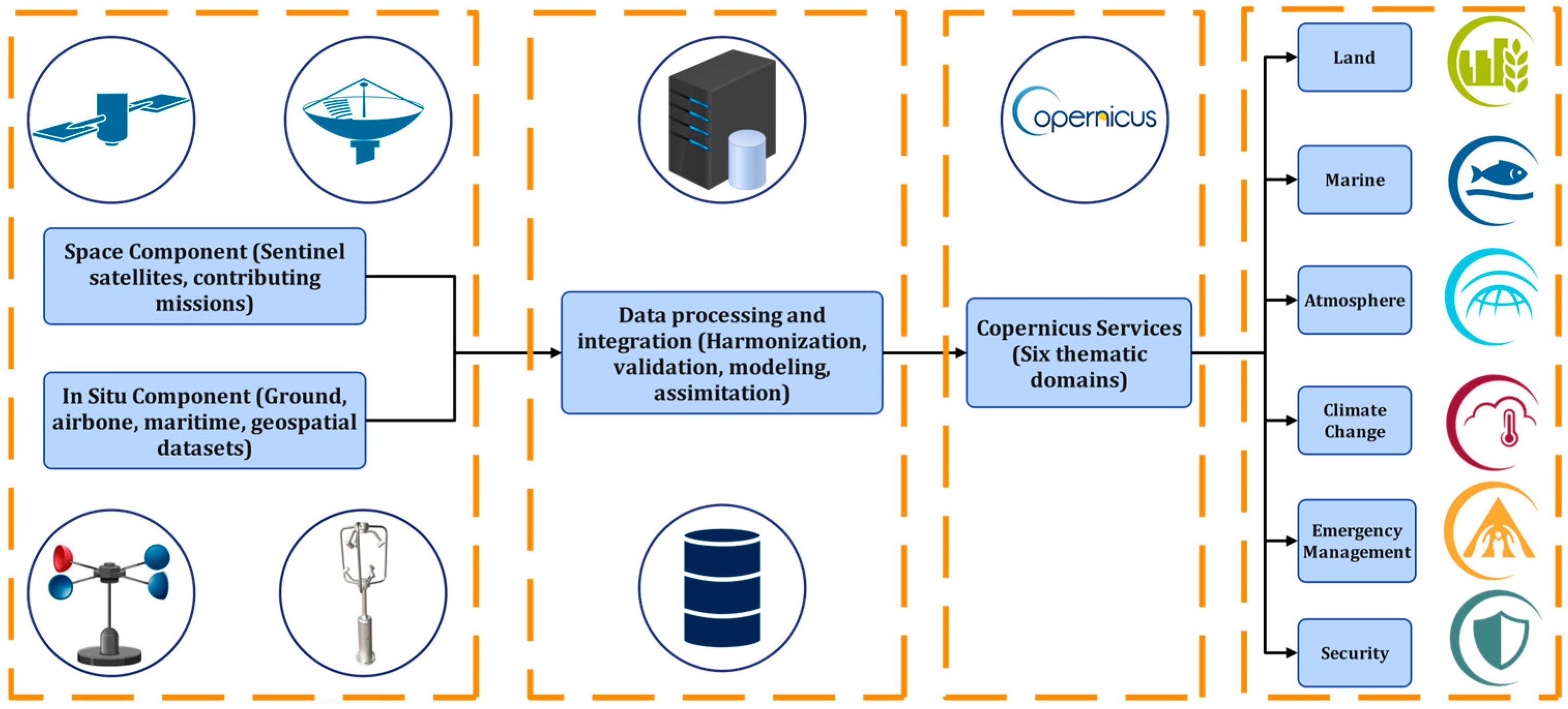
Copernicus services rely heavily on higher data levels (Level 2, Level 3 and Level 4). The Copernicus Atmosphere Monitoring Service (CAMS) is another example, adopting satellite retrievals of ozone, aerosols, CO, and NO2 together with atmospheric models to produce global air-quality analyses and forecasts. Inness et al. [17] explain how the CAMS reanalysis provides time-consistent atmospheric composition fields that are suitable for climatology, trend studies and model evaluation. The Copernicus Marine Service (CMEMS) merges satellite and in situ ocean observations into multi-sensor Level 3 datasets and Level 4 analyses. The Copernicus Climate Change Service (C3S) uses a combination of satellite data, in situ networks and modeling to produce long-term climate datasets, reanalysis and sector-specific indicators [21]. Figure 1 depicts how Copernicus data progress from the space component and in situ component into data processing and integration, and then into the services component, which delivers outputs across the six thematic domains.

2.2. Sentinel Missions

In the following, the different sentinel missions are reviewed, putting the focus on those aspects related to the offshore wind characterization and environmental assessment, which are of bigger interest for the renewable energy sector. Sentinel-1, with its C-band Synthetic Aperture Radar (SAR), is the most suitable for wind mapping, providing high-resolution (∼1 km or finer) surface wind fields and wave information regardless of cloud cover or daylight [22,23,24]. Its ability to capture spatial wind variability across coastal and offshore zones makes it essential for wind resource assessment and meteorological model validation. Sentinel-3 complements the former one with oceanographic variables such as sea surface temperature (SST), wave height, and surface currents observed with its altimeter and radiometer instruments [15]. Sentinel-6 (Jason Continuity of Service/Jason-CS) carries a Poseidon-4 radar altimeter operating in both conventional pulse-limited and SAR modes. It provides sea surface height, significant wave height, and wind speed measurements with improved coastal sampling, maintaining backward compatibility with earlier Jason missions [25]. In contrast, Sentinel-2 provides high-resolution optical imagery that is less relevant for direct wind estimation but valuable for coastal and site characterization, such as mapping seabed features, sediment plumes, and environmental conditions [26]. A detailed description is provided next for each sentinel mission.

2.2.1. Sentinel-1: SAR Application Cases for Ocean Surface Wind and Waves

The Copernicus Sentinel-1 mission consists of two identical satellites, Sentinel-1A and Sentinel-1B, each carrying a C-band Synthetic Aperture Radar instrument for all-weather, day-and-night imaging. Together, the two satellites operate as a constellation to provide frequent and consistent global coverage [27]. Sentinel-1 data have become a cornerstone for coastal and offshore wind assessment due to their high spatial resolution and ability to detect fine-scale surface roughness linked to wind speed.
  • Application cases
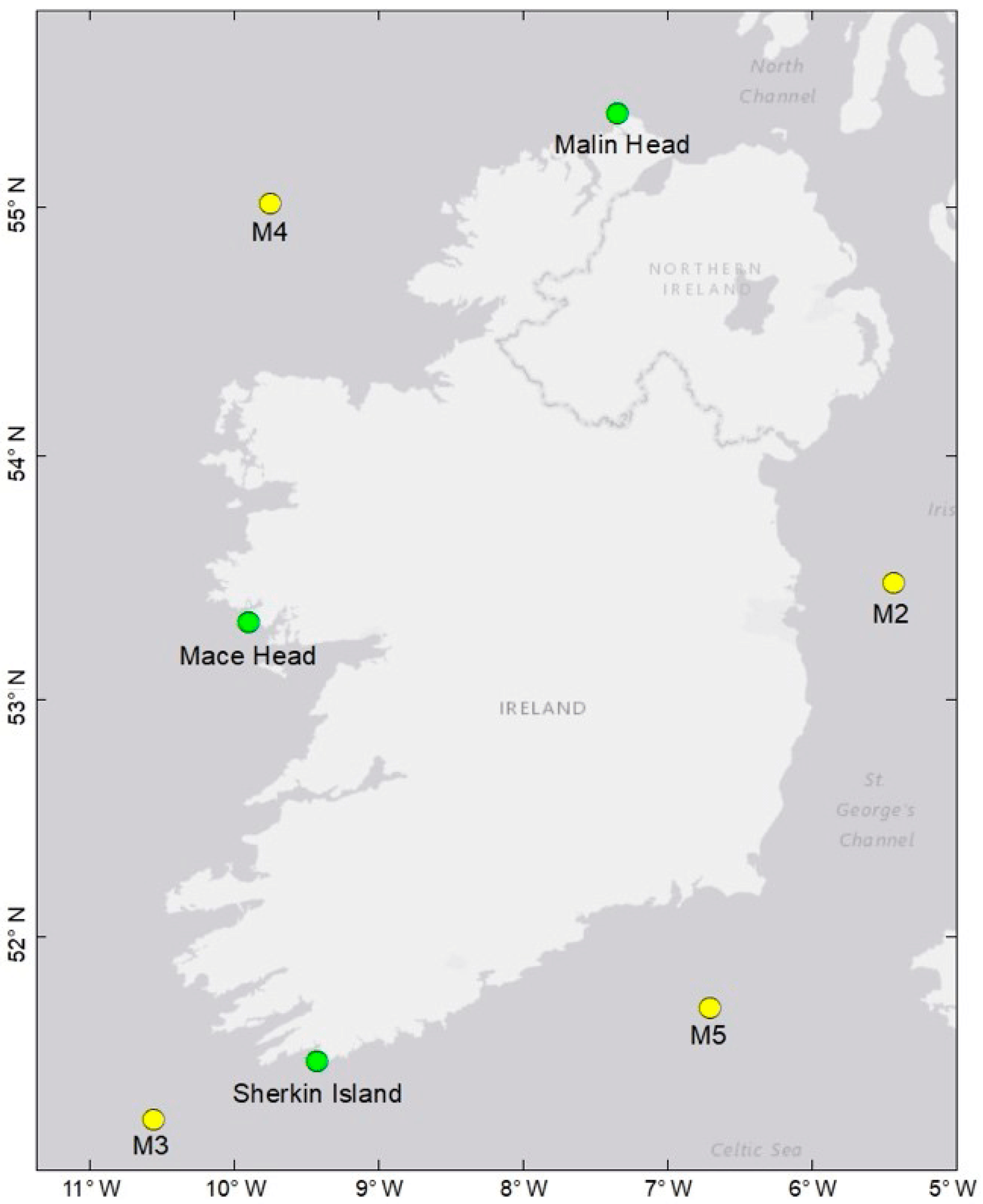
De Montera et al. [23] evaluated the performance of Sentinel-1 SAR data for offshore wind assessment around Ireland. They compared surface wind speeds from the Sentinel-1 Ocean (OCN) Level 2 product, which provides 1 km resolution wind fields over the ocean surface, with observations from four offshore weather buoys equipped with anemometers and three coastal onshore weather stations. The comparison used 1544 collocated measurements collected between May 2017 and May 2019. The in situ wind consisted of 10-min mean measurements recorded at heights of 3 m on weather buoys and at about 20 m at coastal stations with buoy data extrapolated to 10 m for consistency. In contrast, the Sentinel-1 dataset provides 10-m wind estimates averaged over a 1 km × 1 km grid cell, rather than at local point measurements. The study found that Sentinel-1 winds showed a small underestimation bias of about 0.4 m/s for wind magnitude, which decreased as wind speed increased. When applying a Weibull-based statistical method to estimate wind power, the resulting errors were around 10% taking buoys data as reference, and 5% for wind data provided by coastal weather stations. The results showed that Sentinel-1 SAR data can effectively capture the spatial variability of mean wind speed and wind power, even in nearshore areas about 1 km from the coast. Figure 2 shows the location of the buoys and weather stations in [23].
Khan et al. [24] developed a high-resolution ocean surface wind dataset using the two Sentinel-1 satellites. The dataset spans 2017–2021 and delivers 10-m wind speed and direction at ~1 km resolution, retrieved with a consistent CMOD5.N geophysical model function and uniform processing chain across both satellites. To ensure accuracy, the SAR winds were first calibrated against collocated MetOp-A and MetOp-B ASCAT scatterometer measurements. Afterwards, data were independently validated with CryoSat-2, Jason-2, Jason-3 and SARAL altimeter winds. These comparisons showed strong agreement, with high correlation and no indication of long-term calibration drift. The final result of this piece of research captures coastal and offshore wind features that are not resolved by lower-resolution reanalysis and scatterometer datasets.
In a recent comparison study, Khachatrian et al. [28] evaluated Sentinel-1 winds against the Copernicus Arctic Regional Reanalysis (CARRA) and ERA5 for East Iceland’s fjord and offshore environments. The authors used the Sentinel-1 Level-2 OCN Ocean Wind Field (OWI) product, which is an operational dataset that provides 10-m wind vectors retrieved from SAR backscatter using the CMOD-IFR2 geophysical model function. They found that ERA5 provided results similar to CARRA and Sentinel-1 in offshore areas. However, ERA5 underestimated wind speeds and misrepresented wind directions in areas close to complex coastlines and fjords. In those cases, root mean squared difference (RMSD) values up to 3.98 m/s were reported. In contrast, CARRA’s finer resolution enabled a more reliable characterization of the coastal wind dynamics showing good agreement with Sentinel-1. Furthermore, Sentinel-1 resolved the highly complex local atmospheric flow, like katabatic winds within fjords, with higher accuracy.
Recent studies have also focused on improving the accuracy of Sentinel-1 SAR wind retrievals using both polarization-based and machine learning methods. Gao et al. [29] proposed a new method to estimate 10 m ocean surface wind speeds from Sentinel-1 dual-polarized (VV and VH) radar data. Using multiple regression with satellite and aircraft observations, they developed simple models that accurately retrieved instantaneous wind speeds without needing wind direction. The approach performed well up to 30 m/s and captured fine storm details such as hurricane eyes and eyewalls. Complementing this, Sun et al. [30] introduced a convolutional neural network to estimate wind speed from Sentinel-1 wave-mode images without requiring external wind direction input. Their method achieved lower bias and root mean square error (RMSE) relative to CMOD5.N, demonstrating improved generalization across different sea states.
Sun et al. [31] evaluated the accuracy of Sentinel-1 SAR-derived wave spectra over the period between 2016 and 2021, by comparing the ocean swell wave spectra (OSW) product estimated from Level-1 SAR images with observations from U. S. National Data Buoy Center (NDBC), CMEMS buoys, and ERA5 reanalysis data. They focused on the significant wave height, which represents the average height of the highest one-third of waves, and on the overall spectral energy distribution, which describes how wave energy is spread across different frequencies and directions. The study found that Sentinel-1 reproduced the general shape of observed wave spectra well, with correlation coefficients above 0.7 in many cases, but tended to underestimate spectral energy, particularly during high-sea or strong-wind conditions. For significant wave heights, Sentinel-1 showed a mean negative bias of about 0.5–0.7 m and an RMSE of 0.9–1.0 m compared to buoys and ERA5, performing best in moderate sea states (RMSE ≈ 0.54 m). The authors also noted spatial, seasonal, and wind-speed-dependent differences, and recommended applying bias corrections when using Sentinel-1 data in regions or periods dominated by high waves or strong winds.

2.2.2. Sentinel-2: Optical Data for Coastal Ecosystems and Turbidity

The Sentinel-2 multispectral mission provides high-resolution optical data that are especially useful for monitoring coastal ecosystems and water quality, which is important for assessing environmental impacts of offshore wind projects.
  • Application cases
Sebastiá-Frasquet et al. [32] used red-edge reflectance bands to retrieve turbidity and suspended sediments in shallow lagoons and showed a good match with field measurements.
Kong et al. [33] applied simpler empirical retrievals (i.e., directly relating on Sentinel-2 reflectance) and machine-learning (random forest) models to assess turbidity in coastal waters off Los Angeles, finding that the random-forest approach improved prediction accuracy, with R2, which is the coefficient of determination, raising from ~0.45 to ~0.63.
In the domain of habitat mapping, Zoffoli et al. [34] used spectral indices derived from Sentinel-2 bands (e.g., green, red, near-infrared reflectance) to distinguish intertidal seagrass meadows from surrounding sediment and algae.
Traganos et al. [35] developed a scalable workflow for large-scale seagrass mapping using 1045 Sentinel-2 tiles (100 km × 100 km each) to cover coastal waters in the Aegean and Ionian Seas, corresponding to a total survey area of 40,951 km2. The processing comprised a sequence of pre-classification steps including cloud and land masking, image compositing, atmospheric and sunlight correction and depth-invariant indices to prepare the data for analysis. A support vector machine classifier was then applied to a 10-m resolution Sentinel-2 composite to delineate Posidonia Oceanica meadows at depths of 0–40 m. Validation against 322 independent in situ points yielded an overall mapping accuracy of 72%.

2.2.3. Sentinel-3: Altimetry, SST and Ocean Color

Altimetry and Wave–Wind Measurements
Sentinel-3 refers to two satellites, Sentinel-3A and 3B, that carry onboard the SAR Altimeter (SRAL) and an advanced Microwave Radiometer (MWR), which provide precise measurements of sea surface height (SSH), significant wave height (SWH) and surface wind speed. These parameters are important for understanding sea state and assessing design conditions for offshore wind farms. It is to be noted that Sentinel-3 offers wind data at a coarser resolution relative to Sentinel-1.
  • Application cases
Validation studies, meaning comparisons between satellite estimates and independent in situ or model data, have confirmed the accuracy of Sentinel-3 altimetry. For example, Yang et al. [36] showed that Sentinel-3A and Sentinel-3B altimeter measurements reproduced SWH with an RMSE of about 0.3 m based on comparisons with NDBC buoys, using a spatial scale of 25 km and a temporal scale of 30 min.
In a follow-up study using the same spatial and temporal scales, Yang et al. [37] compared Sentinel-3 data with Jason-3, which is a separate high-precision U.S.–European radar-altimeter mission, and with a buoy network. The consistent performance was confirmed, but a slight underestimation of SWH at high wind speeds (>15 m s−1) and wave heights (>4 m) was noted.
More recently, the work by Aldarias et al. [38] extended this analysis to near-coastal regions, showing that Sentinel-3A coastal sea level data sampled at 80 Hz (80 measurements per second along the satellite track, with roughly 80–90 m spacing) achieve RMSE values of about 6–8 cm within 5–20 km of the coast. The study also noted that accuracy decreases closer to land due to radar interference (caused by land contamination of the radar footprint) and geometry effects, such as changes in surface topography and incidence angle that distort radar returns near the shoreline.
Wind speed measurements based on Sentinel-3 imagery have shown an overall bias of up to −0.23 m/s relative to moored buoys data, improving the −0.5 m/s bias of Jason-3 [37]. Data from Sentinel-3A/3B were compared with moored buoys in southwestern Spain [39] showing similar performance.
Sea Surface Temperature (SST)
The Sea and Land Surface Temperature Radiometer (SLSTR) onboard Sentinel-3 measures global sea surface temperature (SST), a key parameter for understanding air–sea energy exchange. SST directly influences atmospheric stability near the surface, affecting turbulence and vertical wind shear, which are critical for characterizing and forecasting offshore wind conditions.
  • Application cases
Mao, Good and Worsfold [40] evaluated how Sentinel-3 SLSTR data can be integrated into the Operational Sea Surface Temperature and Sea Ice Analysis (OSTIA) system, which is an operational product developed by the UK Met Office and used within CMEMS. They found that SST values obtained from sole SLSTR inputs provided slightly higher global SST magnitudes (mean bias of about +0.06 °C), but combining SLSTR with the Visible Infrared Imaging Radiometer Suite (VIIRS)—a NOAA/NASA instrument—resulted in more consistent results, reducing the bias to around +0.02 °C when compared with Argo float observations. Argo floats are autonomous ocean profilers that measure temperature and salinity through the upper 2000 m of the ocean.
In a complementary study, Gao et al. [41] developed an uncertainty-based validation framework for Sentinel-3 SLSTR surface temperature products using ground-based measurements at four sites in China. Their method accounted for factors such as sensor noise, atmospheric water vapor and viewing geometry—the angle and direction at which the satellite sensor observes the surface—leading to improved uncertainty characterization. They found that SLSTR SST estimates typically agree with in situ observations within about 0.2–0.4 °C, confirming the instrument’s high accuracy and stability.
Ocean Color Monitoring
The Ocean and Land Color Imager (OLCI) onboard Sentinel-3 measures visible and near-infrared reflectance, providing information on water quality, sediment concentrations, and biological activity. These “ocean color” products are relevant for offshore wind because they allow monitoring turbidity, sediment resuspension, and chlorophyll levels that influence ecological conditions around wind farms.
  • Application cases
Kalakoski et al. [42] validated the Level 2 Integrated Water Vapor (IWV) product derived from OLCI reflectance, which represents the total amount of water vapor in a column of air. IWV is used to improve atmospheric corrections as this is an essential step for retrieving accurate ocean color and sea surface temperature fields.
More recently, Caballero et al. [43] introduced the Sentinel-3 Coastal Analysis Ready Data (S3CARD) framework, which applies radiative-transfer atmospheric correction alongside glint and adjacency corrections tailored for coastal waters. Its validation against 860 in situ matchup observations from 15 AERONET-OC stations showed strong performance, with R2 values up to 0.81 in the visible bands. In a coastal case study, a hybrid regression machine learning model applied to S3CARD successfully retrieved turbidity and Secchi depth, achieving R2 values around 0.72–0.73, highlighting the framework’s promise for coastal water-quality applications.

2.2.4. Sentinel-6: Sea Level and Altimetry

The Sentinel-6 Michael Freilich mission, launched in 2020 under the Copernicus Program, continues the satellite sea-level observation missions established previously by the TOPEX/Poseidon and Jason programs. It carries the Poseidon-4 radar altimeter, which can operate in both Low-Resolution Mode (LRM) and SAR mode at the same time and MWR. This design improves the spatial detail of sea surface measurements while keeping the compatibility of data with the older climate records [44]. However, for wind measurements, the spatial resolution is coarser relative to Sentinel-1 data, but similar to Sentinel-3.
  • Application cases
Early performance assessment of the Sentinel-6 Poseidon-4 altimeter was provided by Jiang et al. [45], who evaluated significant wave height, sea surface height, and wind speed measurements against NDBC buoy data and crossover comparisons with Sentinel-3 and Jason-3. They reported strong agreement, with RMSE values of approximately 0.36 m for the significant wave height and 1.2 m/s for wind speed in SAR mode, with slightly lower errors when LRM was adopted. This reduction in error arises because LRM uses conventional pulse-limited altimetry with a circularly symmetric footprint, which is less sensitive to wave direction and Doppler-related variability, whereas SAR mode, with its elongated Doppler-focused footprint, can exhibit higher measurement variability under certain sea-state conditions.
Jiang et al. [45] also found high consistency in sea surface height at crossover points, with a standard deviation of ~3.8 cm. Building on this, Dinardo et al. [46] provided early mission performance results for the Sentinel-6 Michael Freilich Poseidon-4 altimeter. They showed that both LRM and High-Resolution Mode, also known as UnFocused-Synthetic Aperture Radar or UF-SAR chains, meet mission accuracy requirements in open-ocean conditions. Their results indicate that UF-SAR generally provides lower noise levels, particularly in SSH and SWH at higher sea states, while LRM ensures continuity with the Jason-class climate record. Additionally, UF-SAR shows enhanced capability in coastal regions due to its finer along-track resolution, improving SSH retrievals closer to the shore.
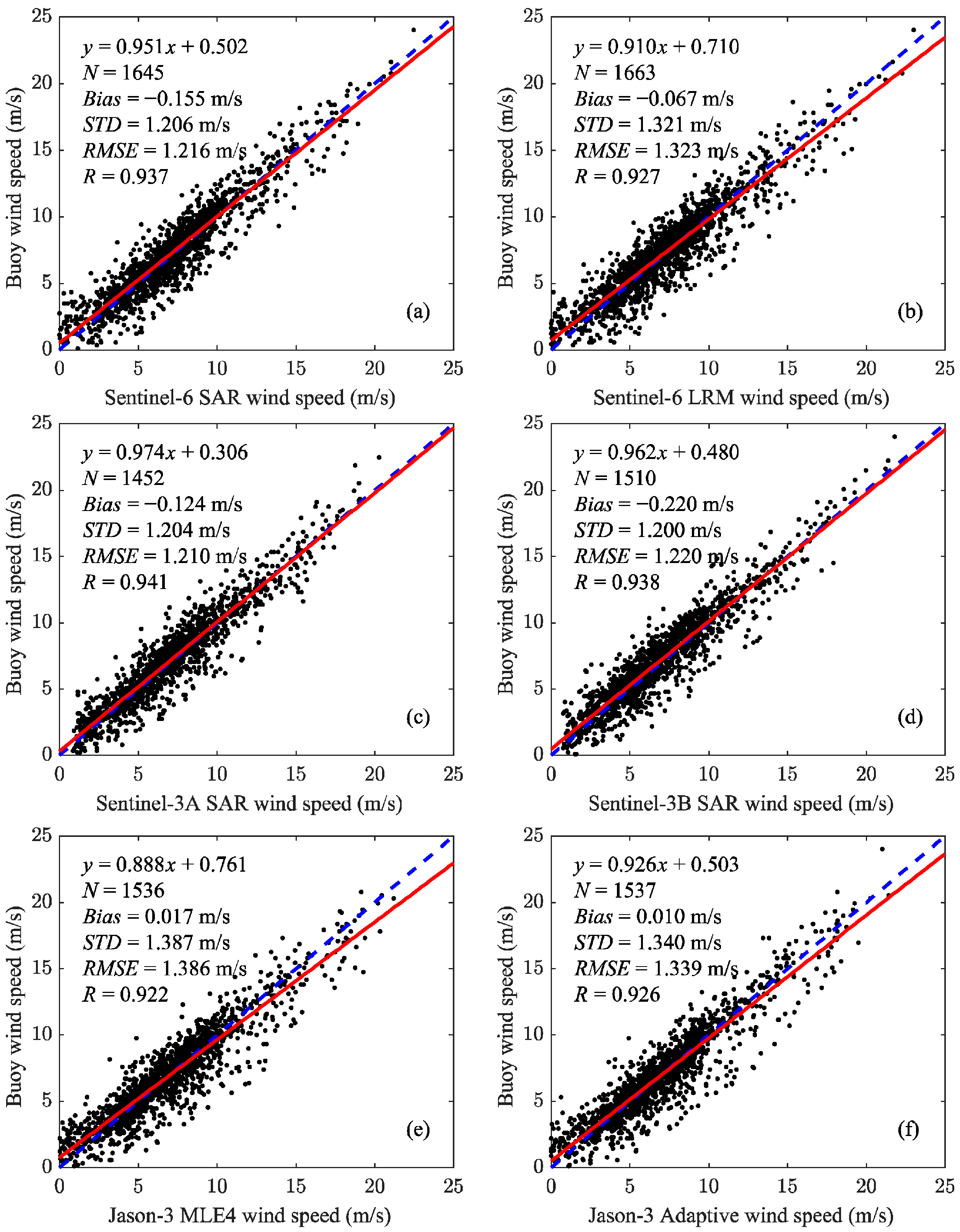
Figure 3 compares wind speed measurements from Sentinel-6, Sentinel-3A/B, and Jason-3 satellites with data taken from collocated NDBC buoys [45]. Wind speeds retrieved by Sentinel-6, Sentinel-3A/B and Jason-3 represent satellite-derived equivalent neutral wind speeds at 10 m height, computed from radar backscatter over an area-averaged ocean surface footprint. Sentinel-6 SARM provides an effective along-track resolution of ~300 m, whereas LRM and Jason-3 provide ~7 km footprint-averaged values. To ensure comparability, NDBC buoy wind speeds measured at 4 m height were converted to 10 m height following standard boundary-layer scaling. Therefore, the satellite and buoy measurements represent the same reference height, but differ in spatial sampling areas, with buoys measuring point values and altimeters representing spatial averages, which contributes to the observed scattering in the comparisons. For Sentinel-6 SARM, the bias, standard deviation (STD), root mean square error (RMSE) and correlation coefficient (R) are −0.155 m/s, 1.206 m/s, 1.216 m/s, and 0.937, respectively. Sentinel-3A and Sentinel-3B SARM show very similar performance, with small negative biases (−0.124 m/s and −0.220 m/s) and RMSEs around 1.21–1.22 m/s. Sentinel-6 LRM has slightly higher dispersion (STD = 1.321 m/s, RMSE = 1.323 m/s) but a smaller bias (−0.067 m/s). Overall, SARM measurements consistently show smaller biases and STDs compared to LRM results.
The recent tandem flight study by Magalhães et al. [47] offers fresh insights into how Sentinel-6 SAR and conventional altimetry modes behave when observing Internal Solitary Waves (ISWs), which are sharp, high-frequency ocean features that challenge altimeter performance. By flying Sentinel-6 in tandem with Jason-3 over the same tracks, the authors compared how both types of altimeters sense abrupt roughness transitions on the sea surface. They found that Sentinel-6 SAR mode better resolves detailed structures of these waves, showing backscatter and sea surface height anomalies that are sometimes out of phase with Jason’s conventional altimetry. Their results highlight that even standard Level-2 data from Sentinel-6 carry enhanced sensitivity to small-scale ocean signals.
Cadier et al. [48] examined new retracking and processing techniques for Sentinel-6, which help improve data quality in rough sea conditions and near-coastal zones where radar signals are more complex.
Table 1 summarizes the datasets of interest for the offshore wind energy sector, the main offshore activities that may benefit from the gathered data, earth-based instrumentation used for reference and validation, along with accuracy indicators, for the Sentinel missions introduced in Section 2.2. This facilitates a comparative analysis of these key assets in the Copernicus space component.

2.3. Copernicus Services for Marine and Offshore Energy Applications

2.3.1. CMEMS (Copernicus Marine Environment Monitoring Service): Currents, Salinity, Waves, Biogeochemistry

The performance, reliability and associated environmental impacts of floating offshore wind farms are strongly influenced by coupled oceanographic and biogeochemical processes. Currents influence the hydrodynamic loads on fixed-bottom structures, floating foundations and moorings, while also driving horizontal transport of heat, salt and nutrients [49]. Salinity, through its effect on density stratification, controls vertical mixing and the stability of the upper ocean, thereby shaping subsurface turbulence levels and shear profiles relevant for turbine dynamics [50,51]. Furthermore, waves govern the dominant surface forcing on floating structures, jackets and monopiles, affecting fatigue, survivability and accessibility for operations and maintenance (O&M) [52,53]. Biogeochemical processes, including nutrient cycling and primary production, influence water quality and ecosystem conditions around wind farms, with implications for environmental impact assessments and co-location with other marine activities [54,55]. Ultimately, the rate of biofouling on floating offshore structures is significantly affected by ocean currents, salinity levels and sea temperature [56].
CMEMS is designed to provide continuous, reliable and high-quality information on the state of the global ocean and European regional seas. CMEMS integrates data from space-based observations (satellites measuring sea level, temperature, color and winds) and in situ networks (buoys, ships and Argo floats measuring temperature, salinity and currents) with numerical ocean models. The resulting products deliver analyses, forecasts and reanalysis of key ocean variables that support marine safety, climate monitoring, coastal management and scientific research [10]. One of the key activities by CMEMS is the publication of the yearly Ocean State Reports. These reports bring together reanalysis products, in situ measurements, and satellite observations to give a consistent picture of the state of the global and regional oceans [21].
  • Application cases
Exploiting the available CMEMS-curated data, Ravdas et al. [57] presented the CMEMS Mediterranean wave forecasting system (Med-waves), based on the application of the WAM model. This is a third-generation ocean wave prediction system that simulates the evolution of wave spectra using physically based source functions, without relying on empirical assumptions about spectral shape, as described by the WAMDI Group [58]. The WAM model is nested from the Atlantic into the Mediterranean Sea and coupled with CMEMS surface currents. The system delivers 5-day forecasts for significant wave height, mean period, directional spectra and Stokes drift at 1/24° resolution. Validation against buoy and satellite data shows good accuracy for wave height (RMSE ~0.2 m) and reasonable performance for wave period, with better accuracy offshore than near coasts.
The Copernicus use case “Met-Ocean studies and key environmental parameters for floating offshore wind” demonstrates how CMEMS physical products (currents, temperature and salinity from 1955–2015) were applied to the Eoliennes Flottantes du Golfe du Lion pilot farm in the French Mediterranean. NOVELTIS, which is a French company working in Space technology applications, used these datasets to derive statistics of circulation patterns in the area for site characterization, supporting design and environmental assessments for floating offshore wind projects [59].
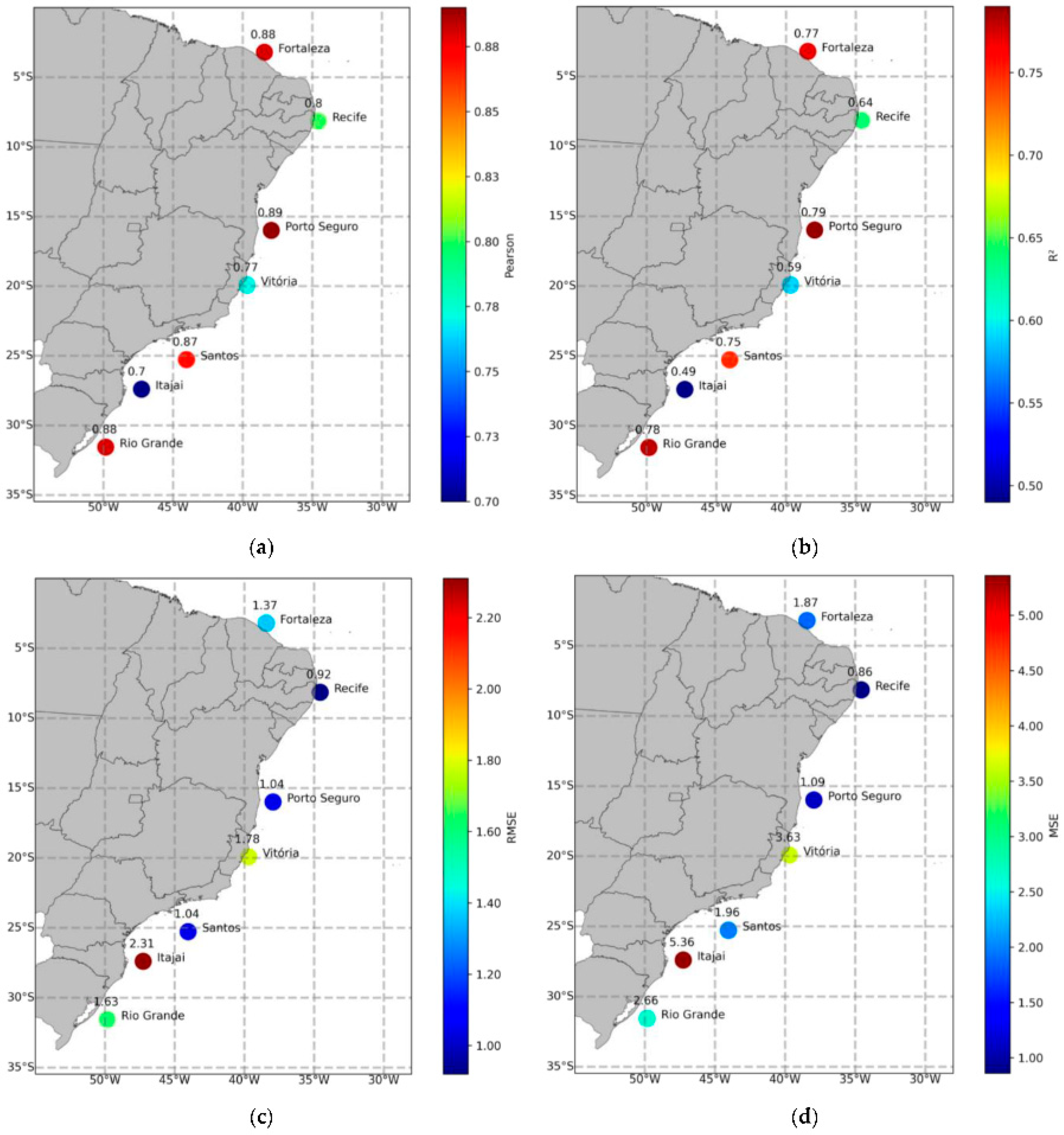
Freitas et al. [60] evaluated CMEMS global reanalysis products of 10 m height wind (with spatial resolutions of 0.25°, and a temporal resolution of 6 h) and significant wave height (with spatial resolutions of 0.2°, and a temporal resolution of 3 h) against seven buoy stations along Brazil’s east coast over the period of 2011–2018. They found correlation coefficients R > 0.70 for wind speed (RMSE up to ~2.31 m/s) and R > 0.91 for wave height (RMSE ≤ ~0.28 m). In the study, it was observed that CMEMS tends to underpredict high wind speeds. The probability density functions, Weibull distribution fits, and energy density estimates (352–526 W/m2) derived from CMEMS and buoy data generally agree, demonstrating that CMEMS reanalysis is suitable for offshore wind resource assessment, with due caution for bias correction in high-wind regimes.
Kong et al. [61] developed and validated the Hong Kong Observatory’s Operational Marine Forecasting System (OMFS), which provides forecasts of waves, currents and sea temperature for the South China Sea and Hong Kong waters. The system uses the ROMS ocean model coupled with WaveWatch III and SWAN, and it relies on GLORYS reanalysis data from Mercator Ocean, that uses CMEMS data for its initial and boundary conditions. Using CMEMS data ensures realistic large-scale ocean states to drive local forecasts. The results showed strong agreement between model forecasts and buoy observations, with wave height predictions achieving R2 values around 0.7 and RMSE below 0.2 m up to 72 h ahead. Current speed forecasts also performed reasonably well, with R2 between 0.4 and 0.6 and RMSE of about 8–11 cm/s.
In early 2022, an unusual deep-water formation event in the southeastern Mediterranean caused strong vertical mixing, which brought nutrients up to the surface and led to a large phytoplankton bloom. Using data from the CMEMS and satellite observations, Teruzzi et al. [62] measured this combined physical and biological response. They found that surface chlorophyll levels were about 50% higher than average values, and that primary production of phytoplankton increased by around 35%. The study is a good example of how CMEMS reanalysis and modeling tools can help reveal connections between ocean processes, like mixing, changes in water layers and ecosystem effects.

2.3.2. C3S (Climate Change Service): Wind Climatology, Variability and Long-Term Projections

The Copernicus Climate Change Service provides a range of climate datasets and operational products that are directly relevant to assessing wind resources under current and future climate conditions. Through the C3S Energy Operational Service, long-term climate projections deliver, for instance, wind speed information at 10 m and 100 m heights and energy indicators from 2005 to 2100, supporting energy system planning and offshore wind development [63]. The wind speed fields at 10 m and 100 m represent instantaneous values, available at 3-hourly or daily intervals for the dataset projections, while the historical dataset (pre-2005) is available at hourly, 3-hourly, daily, monthly and yearly resolutions. The data are provided on a 0.25° × 0.25° (~31 km) grid across Europe and also aggregated to regional and country-level scales, allowing for both detailed spatial analysis and broader regional assessments [64]. Regional climate projections available via the C3S Climate Data Store (e.g., CMIP5/6 and CORDEX) extend this capability, allowing evaluation of wind climatology under multiple emissions scenarios (C3S, Climate projections). Baseline climatology and interannual variations in wind conditions are regularly summarized in the European State of the Climate annual reports using the ERA5 reanalysis dataset, which serves as the main reference for historical wind patterns [64]. The ERA5 reanalysis provides hourly estimates of near-surface winds at 10 m height, based on the horizontal wind components (u and v) on single levels, from which wind speed and direction are derived. The spatial resolution for the hourly near surface wind fields is approximately 0.25° × 0.25° (~ 31 km × ~31 km at mid latitudes) [65]. For climate change assessment, monthly mean fields from the ERA5 Monthly Averaged Data on Single Levels product is typically used. This dataset provides specific parameters, including the 10 m u and v components of wind, the derived 10 m wind speed and the maximum 10 m wind gusts, defined as the highest 3 s gusts within each time step [66]. In addition to these monthly climatology datasets, derived ERA5 products provide daily statistics such as daily means, minima, maxima and wind gusts, which allow the analysis of both average conditions and short-term extremes [67]. For extreme events, windstorm footprints (synoptic-scale extratropical cyclones (ETCs)) and tracks derived from ERA5 provide essential information on storm frequency and intensity across Europe (C3S, European windstorm reanalysis).
It is of utmost relevance in the context of this review analysis to showcase applications where the C3S service has been levered to make projections about offshore energy generation and management in future scenarios considering the evolution of wind, waves and solar radiation in the context of climate change. Some contributions are remarked next.
  • Application cases
Dubus et al. [68] introduced the C3S Energy (C3S-E) service, developed within the Copernicus Climate Change Service to offer consistent, climate-based indicators of electricity demand and renewable power generation across Europe. Using ERA5 reanalysis as the main climate input and national demand and generation data from the ENTSO-E databases for calibration, the system models electricity demand, hydropower, solar PV and onshore and offshore wind generation. These models are applied across Europe, with results available at country level and, for wind and solar, also at regional and 0.25° grid levels. The historical dataset covers 1979 to the present, while additional streams provide seasonal forecasts and long-term climate projections extending to the end of the century. Outputs are expressed as capacity factors and they are delivered at multiple spatial and temporal scales, enabling consistent analysis across regions and energy generation sources. In Table 2 the climate variables used to assess energy demand and generation modes are summarized for reference. Validation against observed data showed that C3S-E successfully reproduced the main patterns of energy supply and demand variability. Although the models prioritize spatial consistency over fine-scale accuracy, the service represents an important step toward integrating Copernicus climate data services with energy modeling, offering a valuable resource for assessing the impacts of climate variability and long-term change on Europe’s power systems.
To explore how wind conditions may change under future climate scenarios, users often combine ERA5 reanalysis with bias-corrected CMIP6 climate projections, both of which are available through the Copernicus Climate Change Service (C3S). ERA5 provides a consistent historical baseline of atmospheric conditions, while CMIP6, as an international set of global climate model simulations [69], offers future climate scenarios that are statistically adjusted to match ERA5. These bias-corrected CMIP6 datasets are then processed within the C3S framework to create products that extend wind analysis into the future. This combined approach allows researchers to study historical wind variability and assess long-term offshore wind energy trends in a coherent and climate-consistent way.
Deng et al. [70] analyzed offshore wind speed changes around China using ERA5 and CMIP6 data and found that current models reproduce observed seasonal wind patterns well. Specifically, the study evaluated climatological patterns (1981–2010) and long-term trends of wind speed at 10 m derived from monthly mean outputs, aggregated to represent seasonal averages. Their results show that wind speeds in the South China Sea have generally increased in both summer and winter, while in the East China Sea, summer winds have strengthened but winter winds have weakened. These contrasting seasonal trends are linked to future changes in monsoon circulation, highlighting the role of regional climate dynamics in shaping offshore wind variability.
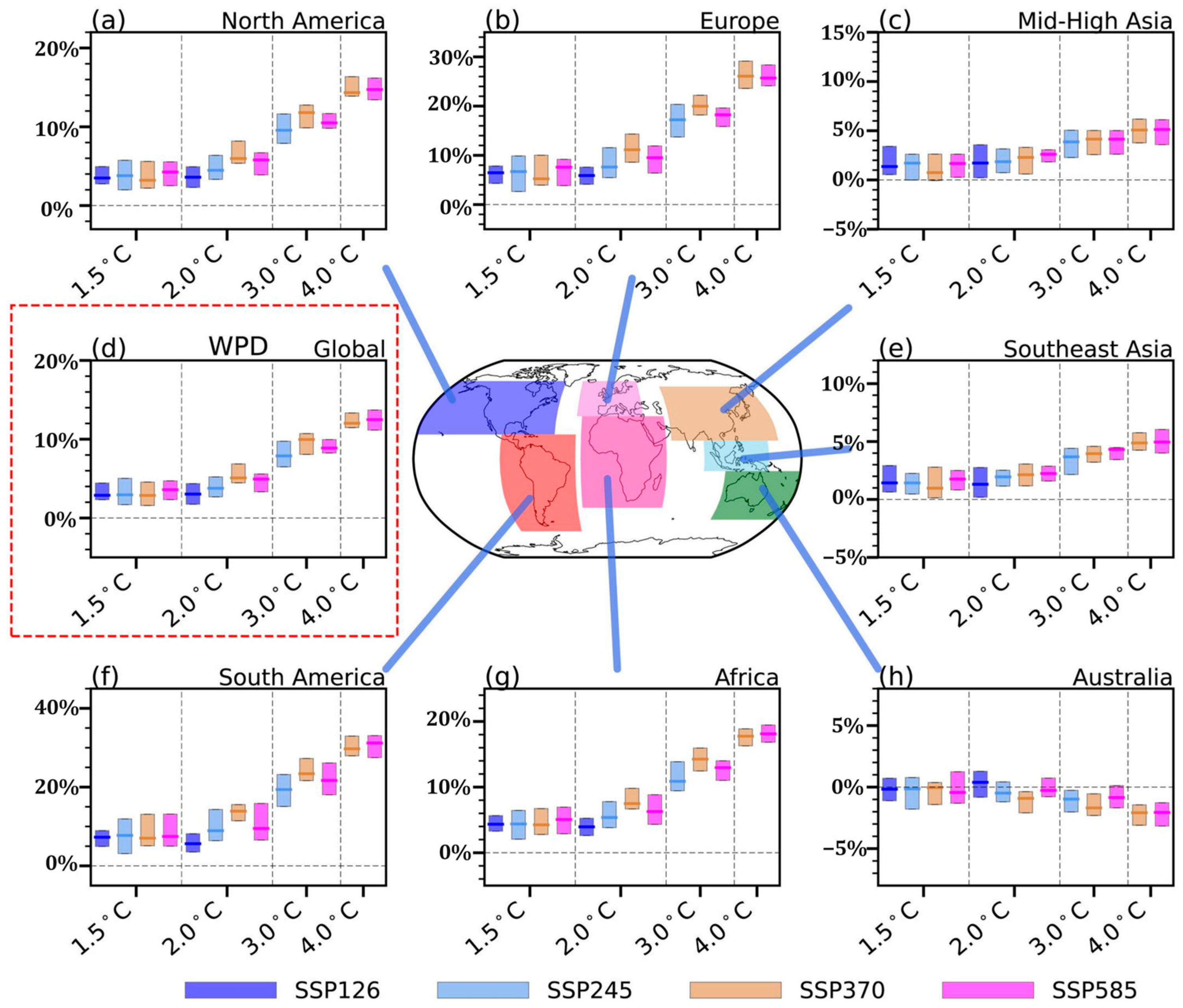
On a broader scale, Shen et al. [71] applied a similar C3S-based workflow, using ERA5 as a baseline and bias-corrected CMIP6 projections, to assess global changes in offshore wind power density (WPD). They found that many regions, particularly in northern Europe, could see increases of up to 25% under high-emission scenarios (SSP5-8.5, a fossil-fuel-intensive pathway with strong warming) by 2100. However, some tropical and mid-latitude areas were projected to experience declines due to shifts in large-scale circulation patterns. Figure 4 summarizes continental changes in offshore WPD under different warming levels and emissions scenarios. Most continents exhibit increasing WPD with higher temperatures, especially Europe and North America, where the gains are most pronounced under SSP5-8.5 and 4 °C warming from 1995 to 2014.
Other recent studies, for instance Ibarra-Berastegui et al. [72], used CMIP6 simulations to assess global offshore wind and wave patterns, showing consistent long-term changes in wind speed and energy potential across many ocean basins.
Regional analyses such as Hahmann et al. [73] for the North Sea similarly demonstrate how CMIP6 models can capture future shifts in wind energy resources under different emissions scenarios. In addition, Costoya et al. [74] highlight the importance of bias correction—often performed using reanalysis datasets like ERA5—for improving the reliability of wind-energy projections derived from climate models.
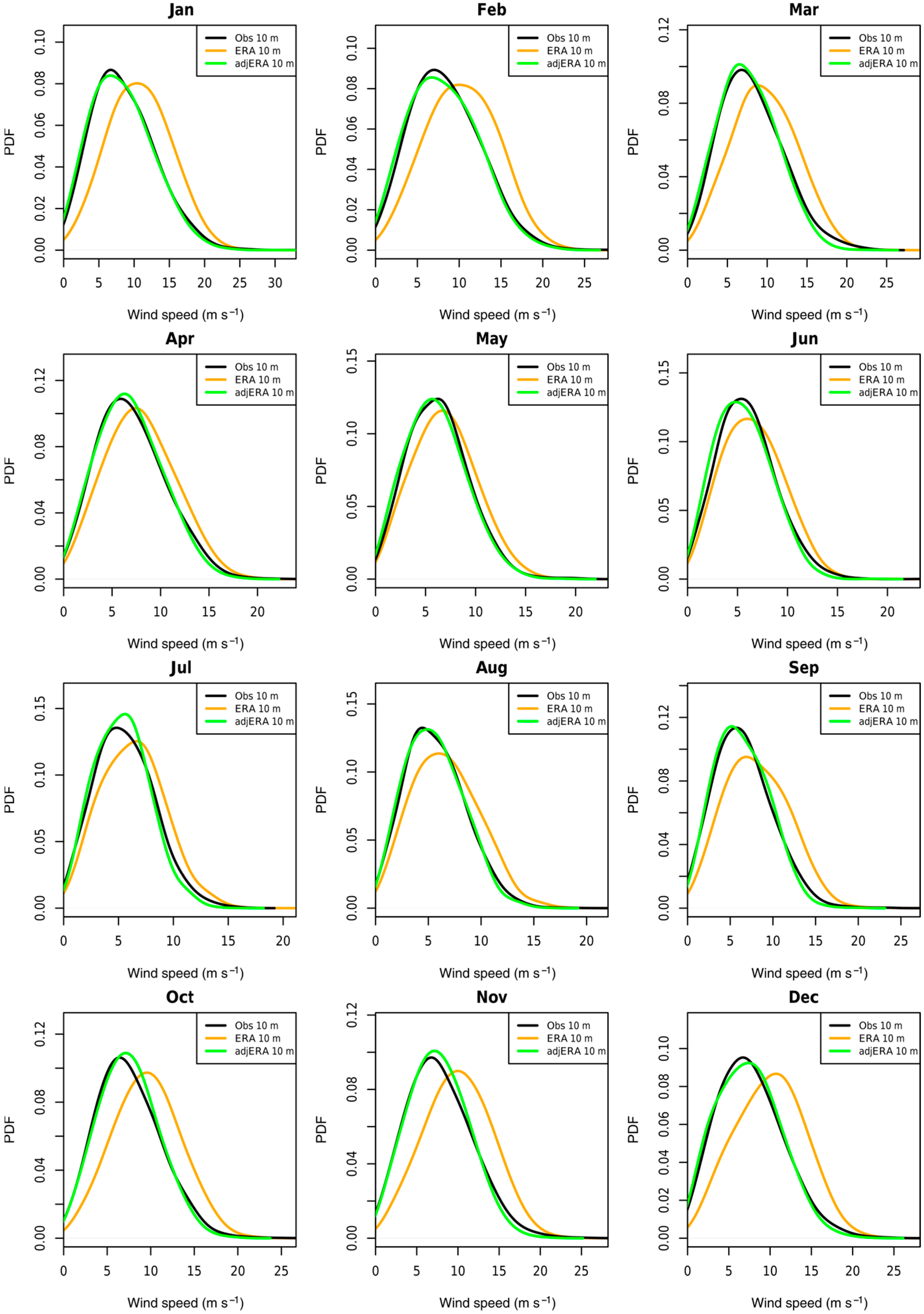
Jones et al. [75] described a methodology to construct bias-adjusted climate datasets for near-surface variables relevant to the energy sector (e.g., wind speed, temperature and solar radiation) using the ERA-Interim reanalysis dataset combined with in situ observational records. At the time, ERA-Interim—produced by ECMWF, an inter-governmental research organization that develops advanced numerical weather-prediction models and data-assimilation systems [65,76]—was the main global reanalysis available. In their work, the authors applied variable-specific statistical adjustments to the original ERA-Interim fields, modifying parameters such as the mean, variance, and distribution shape so that the data better matched observations. These adjustments were based on the HadISD station dataset, a quality-controlled global collection of sub-daily weather-station measurements. These bias-adjusted datasets were then made available via the Copernicus Climate Data Store (CDS; additional information in Section 2.4) and serve as baseline climatologies—long-term statistical descriptions of typical climate conditions—used in energy-sector analyses, including the creation of realistic wind speed records for infrastructure planning and modeling. Figure 5 presents the smoothed monthly wind speed distributions based on HadISD observations, the original ERA-Interim data, and its bias-adjusted version for Kirkwall, an onshore meteorological site in Orkney, Scotland. Figure 5 illustrates how the correction procedure improves agreement with observed conditions.

2.3.3. CLMS (Land Monitoring Service): Coastal Land and Habitat Monitoring

The Copernicus Land Monitoring Service (CLMS) provides essential datasets for monitoring terrestrial and coastal land use dynamics. Through products such as the CORINE Land Cover (CLC) and the evolving CLC+, CLMS enables the assessment of long-term land use trends, urban expansion and habitat change across Europe.
  • Application cases
Recent advances using Sentinel-2 imagery have improved the spatial detail of the CLC2018 mapping, enabling more accurate delineation of coastal infrastructure, including ports, harbors and renewable energy facilities, which supports environmental impact assessments near offshore wind sites [77]. In that study, based on the UK’s CORINE dataset, Cole et al. found that land classified as industrial or commercial units increased significantly due to the expansion of renewable energy infrastructure, such as onshore wind farms and solar parks. It was found that many of these changes occur in vegetated and semi-natural coastal areas. This information may be used for logistical planning and as such land-cover transitions are crucial indicators for assessing ecological pressures and supporting sustainable coastal zone management.
Complementary CLMS products, including the Coastal Zone Land Cover (CZLC) dataset and High-Resolution Layers (HRLs) for wetlands, forests and grasslands, enhance understanding of human–environment interactions and habitat changes along Europe’s coasts. Together, these datasets provide a robust foundation for sustainable coastal planning and the siting of offshore and nearshore wind infrastructure [78,79].
The main characteristics of the services and products introduced in Section 2.3 are summarized in Table 3.

2.4. Data Access and User Uptake

One key aspect to consider is the identification of barriers for the uptake in key industrial sectors of Copernicus products and services. The Copernicus Academy and Copernicus Relays networks help addressing the need for user training and upskilling by linking universities, research institutions, SMEs and public authorities with Earth observation expertise that support practical use of Copernicus data for environmental management and renewable-energy planning [80]. Complementing these networks, the Copernicus MOOC and Skills Program provides open online training on data access, satellite interpretation and application development [81]. These initiatives have been shown to increase user uptake, particularly when technical instruction is paired with hands-on exercises tailored to specific application domains [14]. However, despite clear progress and a growing Copernicus user community, capacity-building gaps remain. Recent European projects like e-Shape and EO4Society have begun to address these gaps by offering localized training materials and real-world case studies that connect Copernicus data to applications in energy, climate and coastal management [82].
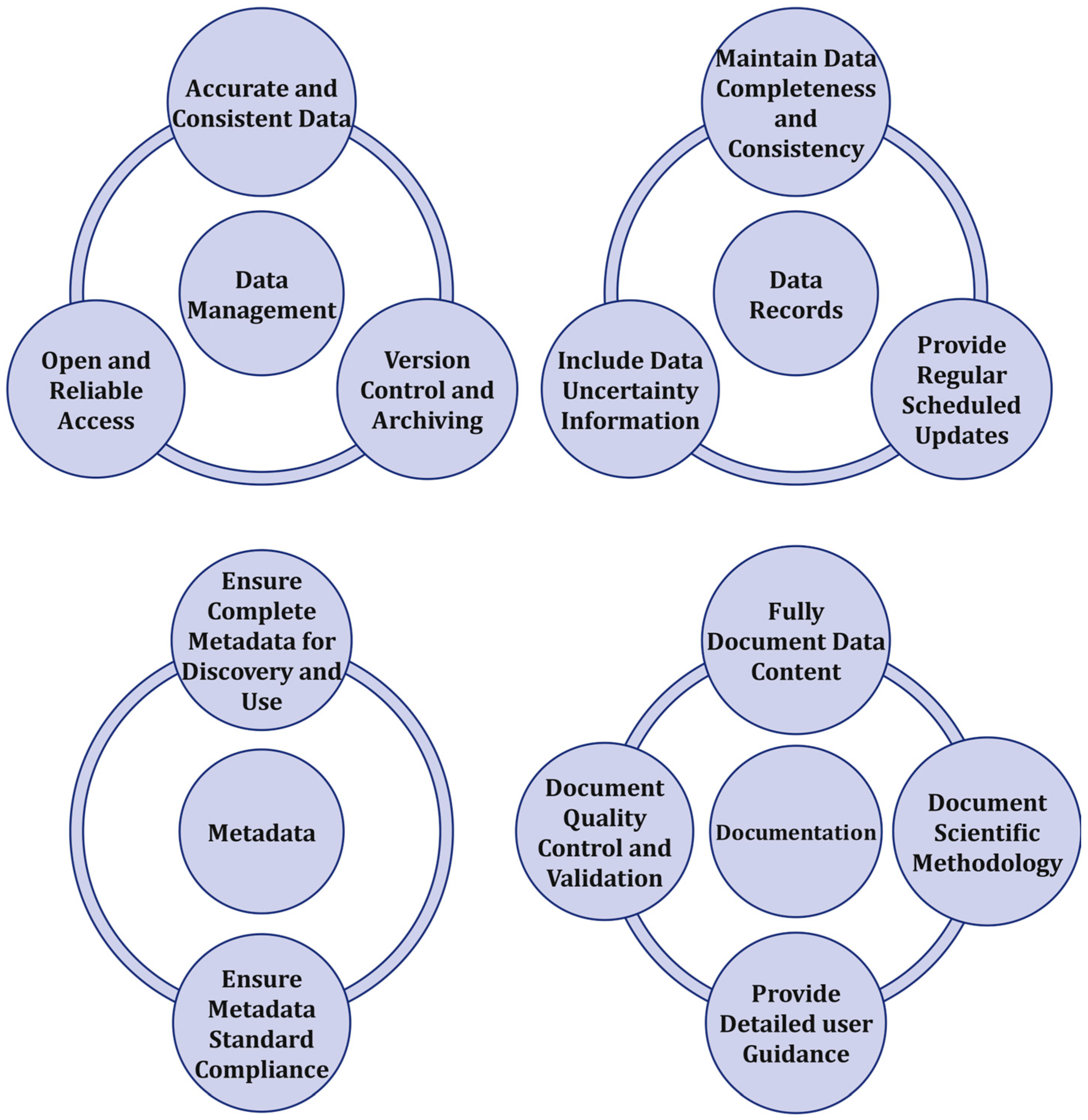
Alongside training and capacity-building efforts, the availability of accessible online platforms and tools is equally important for enabling users to work effectively with Copernicus data. The Copernicus platforms, including the Climate Data Store (CDS) at https://climate.copernicus.eu (accessed on 2 December 2025) and the Copernicus Marine Service portal at https://marine.copernicus.eu (accessed on 2 December 2025), offer access to climate and marine datasets relevant to offshore wind assessment. The CDS integrates observations, reanalysis, forecasts and climate projections under an open-access policy, allowing users to obtain long-term datasets on wind, waves and sea-level conditions without needing specialized computing infrastructure [83] Figure 6 provides an overview of the main technical requirements for CDS datasets, grouped into four categories with several subcategories, highlighting the diversity of resources available to users. Recent studies emphasize that although these services are technically robust, applied users would benefit from clearer workflows, sector-specific tools and improved support for handling large data volumes. These considerations are directly relevant to offshore wind planning and analysis [84].
Copernicus Data and Information Access Services (DIAS) platforms such as WEkEO, CREODIAS and Mundi, provide cloud-based access to Copernicus data, tools and processing resources, which makes it easier for users and developers to work with large met-ocean and satellite datasets [85]. These platforms provide centralized access to Copernicus data and offer ready-to-use virtual environments with pre-installed tools [14]. Cloud-based environments also allow data to be processed directly where they are stored, reducing download time and enabling near-real-time analytics [86]. Furthermore, application-specific geoportals built on Copernicus data increasingly make use of DIAS infrastructure to deliver tailored tools and data visualization for decision-makers, showing that these platforms support not only data access but also the development of added value services [87].

3. Examples of Offshore Wind Development Applications

3.1. Site Selection and Planning

Effective site selection for offshore wind development may leverage the integration of Copernicus EO datasets that capture wind and sea state characterization, other physical and biological environmental variables, bathymetry, climate variability and coastal morphology, as demonstrated in recent studies [88,89].
Over the years, wind resource assessment has been a key application, with Copernicus reanalysis datasets (e.g., ERA5 and CERA-20C) providing high-resolution wind climatology spanning several decades. Soukissian et al. [90] used ERA-Interim data for the period 1979–2014 to analyze long-term offshore wind behavior across the Mediterranean. They examined wind speed and direction on annual, seasonal and monthly scales, looked at how speed and direction were statistically linked, and estimated trends in both variables. Their work revealed well-known local winds like the Mistral in the Gulf of Lion and the Etesians over the Aegean Sea, as well as areas of high variability in the western Mediterranean, Adriatic and Levantine seas. They also identified regions with rising wind speeds (e.g., Ionian, northern Tyrrhenian, western Alboran) and others with declining trends (e.g., central Aegean).
On a broader scale, Neubacher, Witthaut and Wohland [91] used the CERA-20C reanalysis (1900–2010) to study how offshore wind power potential in Europe may change over multi-decadal timescales. They focused on detrended wind power time series and used spectral analysis and singular spectrum analysis (SSA) to detect low-frequency (decadal-scale) variability. Their results show significant multi-decadal cycles in many locations (e.g., Portugal, Greece, North Sea) and reveal that combining wind farms across spatially separated zones (e.g., between Portugal and Germany) can reduce the variance of aggregated power output by a factor ranging from three up to ten compared to relying on single locations alone.
Building on these regional and long-term analyses, additional studies have shown how Copernicus datasets can be used in offshore wind site selection workflows. Patel and co-workers [92] applied ERA5 reanalysis data to evaluate wind and wave patterns along the Indian coastline, producing detailed maps of wind potential and seasonal variability that assisted in the identification of areas suitable for offshore wind installation. Their study demonstrated that Copernicus climate products can support early-stage screening of offshore sites even in data-sparse regions.
Similarly, Freitas et al. [61] compared CMEMS reanalysis data for wind speed and significant wave height with buoy observations off Brazil, finding high agreement as mentioned in Section 2.3.1. Figure 7 displays the Pearson correlation, coefficient of determination, root-mean-square error (RMSE) and mean-square error (MSE) for buoy-measured hourly wind speed (adjusted to 10 m height) compared with the CMEMS reanalysis.
The Copernicus Marine Service supported the development of OASIS, a GIS-based decision-support tool created by WavEC Offshore Renewables for offshore wind site screening. OASIS integrates CMEMS wind, wave and current data with bathymetry, distance-to-grid, environmental constraints and estimated costs to identify suitable areas for offshore wind development. The tool was developed for Portuguese waters, where it helps to compare alternative sites based on resource quality and installation feasibility, and it illustrates how CMEMS data can support downstream planning activities [93].
Similar methodologies can be applied for wind resource assessment leveraging EO data provided by other satellites along with in situ measurements and meteorological models as reported in [94] for the Rio de la Plata and the Atlantic Ocean shelf.

3.2. Operations and Maintenance

O&M activities in offshore wind farms rely heavily on accurate and up-to-date environmental information. As an example, Table 4 shows how downtime is distributed between the different components in the operation of a wind turbine relative to the total downtime in [95]. O&M crews must access wind turbines according to scheduled operations, or as soon as possible in case of fault, to minimize downtime. However, the transfer of staff between ships and wind turbines platforms is a risky operation that requires accurate local forecasts for sea and wind conditions to identify operative windows below certain thresholds to guarantee its safety. An accurate short and mid-term forecasting of ocean and atmospheric conditions at the location of the wind turbines is key in reducing downtimes and efficient O&M operations. Copernicus services provide key datasets such as wind, wave and current forecasts that assist operators in planning safe and efficient maintenance activities. The Copernicus application for the offshore wind farm O&M sector demonstrates how these data can be used to model turbine failure rates, plan vessel accessibility, and account for environmental constraints over the entire project lifecycle. The Copernicus Offshore Wind Farm O&M use case shows how these data can be used to model turbine failure rates, vessel accessibility and environmental constraints throughout the project lifecycle [96]. In floating wind farms especially, the timing of maintenance depends on calm seas and manageable wave heights. As Ramachandran et al. [97] noted, short weather-related time windows and rough conditions often delay offshore maintenance activities, making reliable met-ocean forecasts crucial for reducing downtime and ensuring crew safety. A comparison of component-level LCOE contributions for fixed-bottom and floating offshore wind farms is presented in Table 5. The results show that operation and maintenance (O&M) represent the largest cost component in both configurations.
Additional detailed modeling studies have demonstrated how Copernicus datasets can directly support O&M decision-making. Avanessova et al. [98] simulated different maintenance strategies for floating wind farms, comparing the use of Service Operation Vessels (SOVs) and Offshore Maintenance Bases (OMBs) by driving their models with ERA5 and ERA-20C reanalysis data. Their results showed that the best strategy depends strongly on local weather conditions, the correct definition of wave height thresholds, and transfer limits, which is the maximum sea state and wind conditions under which crew and equipment can safely move from vessels to wind turbine platforms. In practice, these limits are typically around 1.5–2.0 m SWH for crew transfer vessels (CTV), and 2.5–3.5 m when using SOVs equipped with motion-compensated walk-to-work gangways above which transfers are delayed or canceled altogether. As a result, the authors showed that, in many cases, overall cost and operational availability depend more on the length and frequency of weather windows that allow safe access than on the distance between the site and the maintenance port.
Donnelly et al. [99] likewise demonstrated that, for a representative 15 MW floating offshore wind turbine, O&M performance is strongly constrained by met-ocean accessibility.
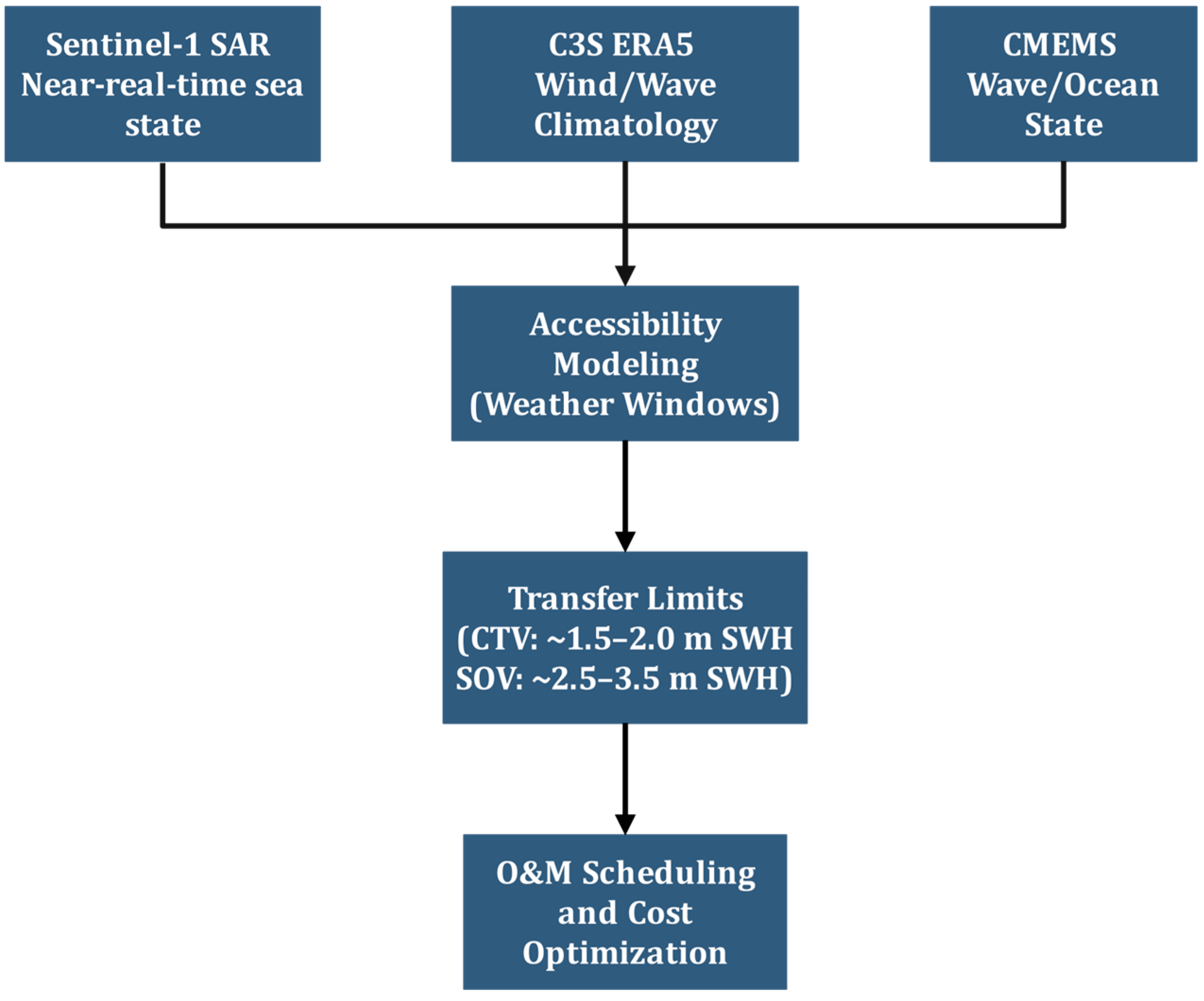
The O&M operations can be assessed and optimized using ERA5 wind and wave data together with CMEMS sea state fields. Figure 8 illustrates the workflow by which Copernicus datasets (Sentinel-1 SAR, C3S ERA5 and CMEMS ocean state products) are used to evaluate weather windows, crew transfer limits and vessel access constraints to support offshore wind O&M scheduling and cost optimization.
Beyond logistics, advances in monitoring and predictive maintenance are transforming offshore operations. Kou et al. [95] highlighted the value of integrating Sentinel-1 SAR sea surface roughness imaging with C3S ERA5 wind reanalysis and CMEMS wave and ocean state datasets, combined with machine learning, to detect early indicators of equipment wear and environmental anomalies. Such systems enable operators to shift from reactive to predictive maintenance, reducing unplanned downtime.

3.3. Environmental and Regulatory Monitoring

Environmental and regulatory monitoring is an essential component of offshore wind development, ensuring that projects comply with environmental directives, minimizing negative impacts on marine ecosystems. Copernicus datasets, particularly those derived from the Sentinel-2 and Sentinel-3 missions, are increasingly used to assess and monitor environmental effects caused by wind farm construction and operation, considering both spatial and temporal dimensions. For example, Traganos et al. [35] and Zoffoli et al. [34] showcased how high-resolution Sentinel-2 imagery can detect and map seagrass meadows such as Zostera noltei across Mediterranean and Aegean coastal waters. These studies demonstrated how optical remote sensing supports habitat mapping and the identification of sensitive ecosystems near offshore wind sites.
Satellite observations have helped reveal how offshore wind turbines affect the surrounding environment, especially sediment movement. Vanhellemont and Ruddick [100] were some of the first researchers to show turbid wakes (clouds of suspended sediment) forming downstream of turbine foundations in the North Sea, using Landsat-8 imagery. These wakes followed tidal currents and suggested that turbine structures disturb local hydrodynamics. More recently, Lecordier et al. [101] used Sentinel-2 (and Landsat-8/9) imagery to quantify suspended-sediment wakes downstream of offshore wind turbine foundations, introducing a geospatial method that enables consistent, high-resolution assessment of wake intensity across sites and seasons. Similarly, the S3CARD product, validated by Caballero et al. [43] allows consistent tracking of turbidity and chlorophyll levels, providing a useful tool to monitor sediment plumes from seabed disturbance, cable trenching, or foundation installation activities. There is also potential in applications related to planning and monitoring of land usage, as pioneeringly demonstrated in [78], specifically in areas such as logistics and interconnections with onshore networks.
Beyond optical monitoring, Copernicus marine data products are also applied for modeling and assessing anthropogenic environmental impacts, such as underwater noise generated during offshore wind construction and operation. The Coastal Ocean Noise use case from the Copernicus Marine Service demonstrates how CMEMS wind, wave and ocean current fields can be combined with seabed and bathymetry information to drive the Quonops© noise propagation model for MSFD D11 environmental assessments [102]. A related pilot demonstration applies the same workflow to shipping noise in coastal environments, further documenting the use of Copernicus products in regulatory noise management chains [103]. In the scientific literature, studies such as Baldacchini et al. [104] and Stöber and Thomsen [105] provide methodological foundations and ecological context for underwater noise modeling in offshore wind settings. However, these studies do not make explicit use of Copernicus marine data. This suggests that, although Copernicus products are already recognized as suitable and valuable for met-ocean applications relevant to offshore operations, their systematic integration into underwater noise impact assessments has not yet been broadly demonstrated in peer-reviewed research, indicating a promising avenue for future applied studies.

4. Challenges, Emerging Trends and Avenues for Usage Uptake

4.1. Current Limitations

Despite the unique information that EO can provide and its general availability within the Copernicus framework challenges remain, requiring further research and integration efforts. Some limitations are commented upon next, putting the focus on offshore wind energy applications.

4.1.1. Near-Coastal Data Resolution and Accuracy

Accurate environmental monitoring near the coast remains one of the main challenges for applying Copernicus datasets to offshore wind assessment. While missions such as Sentinel-1 and Sentinel-3 provide excellent open-ocean coverage, with bias well below 1 m/s [23,37], their performance often deteriorates within a few kilometers of the shoreline because the satellite imagery pixels start to include both land and sea. This mixed signal, sometimes referred to as land contamination, can distort the satellite measurement and reduce its reliability in coastal areas, especially where complex optical or radar conditions occur. Studies such as Abele et al. [106] and Carret et al. [107] show that even advanced radar altimeters like Sentinel-3A’s SRAL experience increased range noise and degraded precision near land, limiting their reliability for assessing coastal sea level or wave height variability.
Similarly, optical instruments such as the Sentinel-2 Multispectral Instrument (MSI), and Sentinel-3 OLCI face difficulties retrieving turbidity, and chlorophyll content in shallow or high-turbidity environments, where atmospheric correction and pixel adjacency introduce large uncertainties [108,109]. Recent developments, including the S3CARD coastal processing framework and improved matchup validation methods, are capable of reducing these errors, enabling more reliable coastal products for operational use [32,75,110,111]. Nonetheless, achieving consistent high-resolution data for coastal zones will require further algorithm refinement, increased in situ validation, and integration of Copernicus data with regional models to better capture fine-scale dynamics, which is critical for offshore wind sitting and monitoring [31,108]. Table 6 summarizes the spatial and temporal resolution of key Copernicus datasets commonly used in offshore wind studies, including C3S reanalysis products (e.g., ERA5, CERA-20C) and CMEMS marine reanalysis products, such as the Global Ocean Physics Reanalysis (GLOBAL_REANALYSIS_PHY_001_031) and the Global Wave Reanalysis (GLOBAL_REANALYSIS_WAV_001_032), alongside satellite missions (Sentinel-1, -2, -3, and -6), each providing complementary information on wind, waves, sea level and surface ocean properties at different spatial and temporal scales. For the offshore wind energy, the resolution in space and time are key aspects to consider for a more reliable analysis and forecasting of variables of interest like wind speed, SWH or optical data.

4.1.2. Integration with In Situ Measurements

Integrating Copernicus satellite products with in situ observations remains a key challenge for improving the accuracy and usability of offshore wind assessments. Although Copernicus reanalysis and satellite missions deliver global coverage, their performance near coasts and in dynamic marine environments still depends heavily on reliable in situ reference data. Within the Copernicus Marine Service, the In Situ Thematic Assembly Centre (In Situ TAC) maintains a coordinated strategy and roadmap detailing the observational requirements for buoy networks, tide gauges, gliders and autonomous Argo profiling floats, which are essential for model data assimilation and satellite validation [119]. The documents published by In Situ TAC (e.g., the CMEMS QUID series) emphasize the importance of traceable measurements, standardized calibration and sustained observational coverage [119]. However, station density in many potential offshore wind development regions, particularly in deep and harsh waters, remains low, limiting cross-validation opportunities for Copernicus wind, wave and SST products [120].
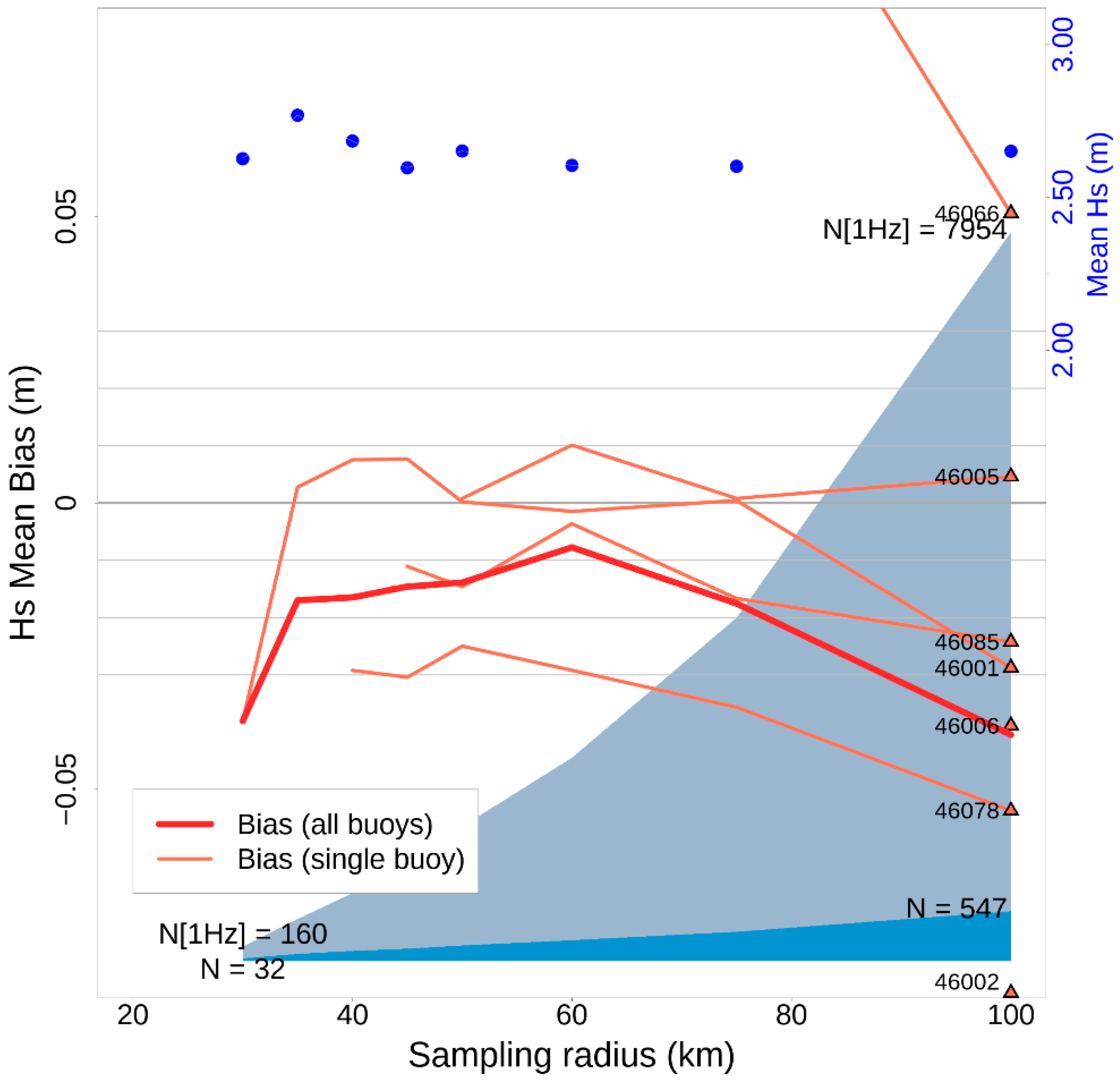
To address these limitations, recent work has focused on standardizing matchup protocols and uncertainty handling. Lawson et al. [111] introduced the SAVANT framework, which provides a consistent protocol for satellite–in situ validation of ocean color variables (e.g., chlorophyll-a, suspended particulate matter, remote-sensing reflectance) by harmonizing spatial/temporal colocation, quality control and reporting standards. González Vilas et al. [121] expanded this approach by incorporating richer metadata and traceability information to improve reproducibility in coastal water validation studies. For sea surface temperature, Gao et al. [41] and the Ships4SST initiative have implemented uncertainty-aware validation using traceable shipborne radiometer data, strengthening confidence in SLSTR and Visible Infrared Imaging Radiometer Suite (VIIRS) SST retrievals. VIIRS is a scanning radiometer flown on NOAA’s Suomi-NPP and NOAA-20/21 satellites that collects visible and infrared imagery and radiometric measurements over the land, atmosphere, cryosphere and oceans, and is therefore widely used for operational SST monitoring [122,123]. In wind and wave monitoring, de Montera et al. [23] and Timmermans et al. [124] remarked the influence of spatial mismatch and sampling representativeness when comparing satellite and buoy observations. This circumstance also applies to the different resolution between satellite data and reanalysis grids (see Table 4). Figure 9 illustrates this idea for the Sentinel-6 Michael Freilich Poseidon-4 altimeter in Low-Resolution Mode (S6-MF LR), where the thick red line represents the bias for S6-MF LR, while the thin orange lines represent the bias for each individual buoy as a function of sampling radius. The study shows that the mean significant wave height (SWH) bias varies with sampling radius: the smallest bias occurs near ~60 km, but variability increases at smaller radii due to limited buoy coverage and sampling uncertainty.

4.1.3. Limited Awareness and Technical Expertise Among End-Users

Despite the vast amount of free and open data made available by the Copernicus Program, awareness and technical expertise among downstream users remain significant hurdles. Apicella et al. [14] noted that, although many organizations are aware of Copernicus data, actual use in thematic applications remains low due to a lack of tailored workflows and domain-specific training. The 2016 Copernicus User Uptake Report similarly documented that many public agencies, SMEs and sectoral users did not fully integrate Earth-observation data because it requires specialist skills or additional processing steps [125]. This situation may be considered logical, given the absence of EO-related content in the general engineering curricula.
To bridge this gap, recent surveys highlight the need for simplified tools, guided workflows and domain-specific support. Dee et al. [84] evaluated the Copernicus Climate Data Store and recommended improved documentation and low-barrier toolchains for industry users, including the wind energy sector. Empirical studies such as Filippi et al. [126] and the NEREUS regional survey (2017) demonstrate that local and regional authorities and SMEs often struggle to exploit earth observation (EO) data due to limited human and economic resources, as well as specific expertise [127]. Nevertheless, this review shows how data within the Copernicus environment is being used more extensively in the offshore wind sector, in increasingly broad and complex application cases. It is expected that as the number of offshore energy projects grows the uptake of EO data will dramatically increase, remarkably, in the context of tight competition between developers.

4.1.4. Gaps in Recorded Data

Data gaps in measurement campaigns remain one of the most persistent limitations for offshore wind development, especially when these gaps occur in harsh, remote marine environments. In their study of three European offshore sites, Gottschall and Dörenkämper [128] found that device failures, logger outages or accessibility issues led to long measurement gaps which affected the estimation of siting parameters such as mean wind speed, direction and Weibull parameters. Meanwhile, Alvarez, Watson and Gottschall [129] more recently quantified how measurement gaps of up to 180 days in offshore campaigns introduced only small mean-wind-speed deviations (<0.04 m/s) but still represent a source of uncertainty requiring mitigation in long-term extrapolations. A study published in Körner et al. [130] introduced gradient-boosting machine algorithms as a universal gap-filling tool, demonstrating that multi-variable regression techniques can reconstruct missing measurement intervals with higher fidelity than basic interpolation. Rouholahnejad et al. [131] also examined the broader implications of measurement gaps for marine resource forecasting and offshore wind, arguing that developing a robust framework for data-gap assessment, reporting and mitigation is crucial for reliable resource estimation and monitoring. These findings highlight that while gap-filling and modeling approaches can reduce error, the underlying absence of continuous in situ data remains a documented challenge in the offshore wind sector.

4.2. Emerging Trends

4.2.1. AI/ML Integration for Resource Forecasting and Anomaly Detection

The increasing availability of Copernicus satellite and reanalysis data has encouraged the use of machine learning to improve offshore wind forecasting and monitoring. Models trained on datasets such as ERA5 reanalysis winds and Sentinel-1 SAR wind fields show that AI can reduce systematic bias and better capture short-term variability than traditional statistical or numerical methods. For example, Cavaiola et al. [132] and Hardy and Finney [133] demonstrated that machine-learning post-processing of reanalysis winds can improve hub-height wind prediction, which is relevant for turbine performance forecasting.
AI and deep learning have also emerged as tools for monitoring and anomaly detection, where Copernicus SAR imagery offers high spatial detail. Xu et al. [134] and Ding et al. [135] used Sentinel-1 to automatically detect offshore wind turbine locations and their evolution over time, supporting asset mapping and infrastructure surveillance. Staneva et al. [136], highlighted that AI is increasingly being integrated into coastal forecasting systems, and the Copernicus Marine Service Evolution Strategy (2024) identifies AI as a priority for future coastal and operational services [137].
Another emerging application of AI/ML is gap-filling satellite-derived ocean surface fields, especially where cloud cover or limited revisit time affects continuity. For example, Shin et al. [138] developed a gap-free daily sea surface salinity (SSS) product for the East China Sea by combining GOCI-derived SSS maps with satellite and model variables using ensemble machine-learning regressors. They trained fine trees, boosted trees and bagged trees to reconstruct missing SSS values. The authors demonstrated that the bagged-tree model performed best, producing realistic spatial gradients and capturing features such as the seasonal spread of Changjiang diluted water, which is the low-salinity plume (<31 psu) formed by mixing of the Changjiang (Yangtze) River discharge with the ambient seawater in the East China Sea. However, not all gap-filling or enhancement techniques used alongside Copernicus data involve machine learning. A good example is the multiple-point geostatistical simulation (MPS) approach of Hadjipetrou et al. [139], which reconstructs missing Sentinel-1 offshore wind speed “images” by conditioning fine-scale SAR patterns on coarser regional reanalysis (UERRA) and sampling realistic spatial motifs from training images. The method explicitly preserves small-scale structure, generates ensembles to quantify uncertainty and is well-suited for irregular SAR revisit and partial coastal coverage—common issues in offshore wind datasets.

4.2.2. Regional Data Hubs and Digital Twins of the Ocean

A major emerging opportunity for offshore wind development is the creation of regional data hubs and Digital Twins of the Ocean (DTOs), which combine Copernicus datasets with advanced modeling and cloud-based infrastructure to provide real-time ocean information. The European Digital Twin Ocean (EU DTO), launched under the EU Mission “Restore Our Ocean and Waters”, is designed as a dynamic, high-resolution digital model of the ocean that integrates Copernicus Marine, EMODnet, and in situ data to support science-based decision-making [140,141]. EMODnet, the European Marine Observation and Data Network, is an EU-run initiative that brings together marine data from many national and regional providers., These digital twins merge information from satellites, models and local sensors to represent key marine variables such as sea level, currents and temperature, providing an advanced platform for coastal and offshore applications, including wind resource assessment and environmental monitoring [140,142,143]. During the Copernicus Marine General Assembly 2024, the DTO initiative was presented as a cornerstone of the European ocean-data ecosystem, emphasizing its potential to enhance marine forecasting and blue-economy resilience [142,143]. Tanhua et al. [144] further highlight that the Digital Twin Ocean builds upon Europe’s existing ocean-observing and forecasting systems, noting that programs such as EDITO and the European Ocean Observing System (EOOS) provide the sustained data foundation required for the operational development of useful digital ocean models. The ongoing EDITO project continues to strengthen this framework by promoting open data access, interoperability and cloud-based processing through platforms such as WEkEO [145].

4.2.3. Cross-Border Initiatives for Shared EO-Based Services

Cross-border collaboration is becoming an essential part of how Copernicus data is used to support offshore wind and marine environmental management. Initiatives such as e-Shape have demonstrated the value of coordinated, user-driven, pilot services that integrate Copernicus Sentinel data and regional forecasting systems to serve marine and energy sectors across Europe [146]. At the same time, regional and intergovernmental networks like those promoted by the Network of European Regions Using Space Technologies (NEREUS) are encouraging shared access to Copernicus information, promoting interoperability and joint EO-based service development among coastal regions [147]. Within the marine domain, the Copernicus “In Situ Support Project” coordinated by EUMETNET strengthens cross-border observation networks and harmonizes data standards, improving the consistency of marine and atmospheric datasets used for offshore wind planning [148]. Furthermore, the strategic collaboration with the National Oceanic and Atmospheric Agencia of the USA (NOAA), that addresses aspects like data sharing [149], must be highlighted.

5. Conclusions

The offshore wind energy is a relatively new sector in which the application of EO technologies is consistently gaining penetration. Therefore, this paper reviewed the current state of the art in this topic by outlining the main parts of the Copernicus Program, describing several application cases addressing, for instance, resource assessment, ocean conditions forecasting or environmental monitoring. This provided a general view about how the wide range data provided by the Copernicus Program in an open access framework is contributing to safer and more reliable offshore energy projects. Finally, application trends have been identified based on recent publications, which show a very high potential for improved and more intensive use of Copernicus data in the future by leveraging data-driven design and the Digital Twin of the Ocean concept.
Based on the reviewed information, the different capabilities of the Sentinels in the space components were identified. Sentinel-1 provides higher resolution data for wind speed measurements than Sentinels 3 and 6, while Sentinel-3 excels in providing reliable values for significant wave height and sea surface temperature. Sentinel-2 offers high quality optical data that enables efficient habitat mapping and environmental monitoring.
The integration of EO data with earth-based measurements and numerical models enables the delivery of a wide range of user-oriented services such as CMEMS for marine monitoring, C3S, which addresses climate change projections, including the ERA5 reanalysis product, or CLMS enabling land use monitoring. The products in these services have a wider, even continuous, coverture in space and time, than satellite imagery thanks to the integration of data and a range of different models. However, resolution is typically coarser and eventually accuracy in local variables may decrease. These services are instrumental for enabling user uptake, as has been demonstrated by the wide range of application cases introduced in Section 2 and Section 3. The most frequent use of Copernicus reanalysis data is in wind resource assessment, SWH characterization and site selection, with applications that are more sophisticated as confidence in the data increases. Furthermore, optical monitoring has demonstrated its suitability for environmental assessment and land usage planning. At this moment, the suitability of Copernicus data for resource assessment, sea state characterization and environmental monitoring may be considered well stablished. Accuracy and coverture will only increase as the AI approaches and the DTO concept further mature and are incorporated in the general workflows of offshore wind companies.
Although limitations and uncertainties exist, such as poor accuracy in the satellite data in the vicinity of the coastline, or the difficulty in the integration with earth-based monitoring systems featuring heterogeneous spatial and temporal resolutions, the Copernicus Program has enabled a new paradigm in the monitoring, analysis, forecast and reanalysis of atmospheric and oceanic interactions. The main hurdle at this moment is in the limited general technical expertise in the offshore wind energy sector related to the use of EO data. This prevents the full exploitation of the available capability and infrastructure. However, decisive action is being taken through dedicated upskilling programs to facilitate the offshore industry uptake. The expected development of the floating technology will act as a strong incentive in the forthcoming years. Consequently, a more general leverage of Copernicus capabilities in the overall offshore renewable sector is expected. The possibilities associated with data-driven approaches based on Machine Learning and Deep Learning are enabling more useful and reliable products. Furthermore, there is a decisive institutional push at European Union level for the implementation of the Digital Twins of the Ocean concept, with deep implications for the management and protection of European sea basins. Furthermore, the institutional collaboration between different agencies is mutually reinforcing the accuracy, coverage and confidence of the data made available to the public.
The examination of the different application cases mentioned in this review permits delineating a basic generic Copernicus data workflow, consisting in the following stages:
  • Identification of the area of interest.
  • Identification of the variables of interest (ocean, atmospheric, biological, etc.).
  • Identification of the time frame of interest (short term analysis, forecast, climate projection, etc.).
  • Selection of databases and preparation of the data for analysis.
  • Validation with alternative or complementary data sources (other satellite-based data, in situ measurements, etc.).
  • Exploitation of the data.
EO technology is already deeply impacting the offshore sector, not only for site planning and resource assessment, but very importantly for environmental monitoring and the balancing of production and demand at large regional scale, such as the European one. In conclusion, the Copernicus Program is becoming a key enabler in the fight against climate change, the achievement of energy independence and guarantee of the environmental protection in Europe and other regions in the world.

Author Contributions

Conceptualization, F.N. and P.P.; methodology, P.P. and A.J.Á.; formal analysis, P.P., F.N. and V.D.-C.; investigation, P.P., F.N. and A.J.Á.; resources, V.D.-C. and F.N.; data curation, P.P. and A.J.Á.; writing—original draft preparation, P.P.; writing—review and editing, F.N., A.J.Á. and V.D.-C.; visualization, P.P.; supervision, F.N. and V.D.-C.; project administration, F.N. and V.D.-C.; funding acquisition, V.D.-C. and F.N. All authors have read and agreed to the published version of the manuscript.

Funding

This research was co-funded by the European Union through Program Interreg VI-A Spain-Portugal (POCTEP) 2021–2027.

Institutional Review Board Statement

Not applicable.

Informed Consent Statement

Not applicable.

Data Availability Statement

The original contributions presented in this study are included in the article. Further inquiries can be directed to the corresponding author(s).

Conflicts of Interest

The authors declare no conflicts of interest. The funders had no role in the design of the study; in the collection, analyses, or interpretation of data; in the writing of the manuscript; or in the decision to publish the results.

Appendix A. Selection of Acronyms and Definitions Used in the Study

AcronymFull NameDescription/RelevanceReference
ArgoProfiling float arrayGlobal array of profiling floats providing real-time temperature and salinity profiles to 2000 m every 10 days; essential for constraining ocean analyses and improving forecast skill.[150]
ASCATAdvanced ScatterometerC-band scatterometer measuring ocean surface backscatter to retrieve 10-m wind speed and direction using a three-beam geometry.[151]
CAMSCopernicus Atmosphere Monitoring ServiceGlobal atmospheric composition and air-quality data.[83]
C3SCopernicus Climate Change ServiceDelivers climate reanalysis, projections, and indicators.[152]
CDSClimate Data StoreMain portal for accessing C3S climate datasets such as ERA5.[153]
CERA-20CCoupled 20th Century ReanalysisLong-term climate reanalysis with limited observations.[91,113]
CLMSCopernicus Land Monitoring ServiceLand-cover and land-use datasets.[77]
CMEMSCopernicus Marine Environment Monitoring ServiceProvides ocean observations, forecasts, reanalysis.[10,21]
CMIP6Climate Model Intercomparison Project Phase 6Global multi-model framework coordinating standardized climate experiments to study past, present and future climate change.[69,70,71,72,73]
CORDEXCoordinated Regional Downscaling ExperimentHigh-resolution regional climate downscaling framework used to assess future wind speed and wind energy changes over Europe.[154]
CREODIASCREODIAS PlatformCloud storage and processing for Copernicus data.[155]
CTVCrew Transfer VesselSmall crew transfer vessels used to transport technicians to turbines, limited by weather and distance.[98]
DIASData and Information Access ServicesCloud-based platforms for accessing Copernicus data.[85]
ECMWFEuropean Centre for Medium-Range Weather ForecastsDevelops and operates numerical weather prediction and reanalysis systems such as ERA5.[19,76,133]
EMODnetEuropean Marine Observation and Data NetworkPan-European portal providing access to near-real-time and historical marine physical data.[156]
ENTSO-EEuropean Network of Transmission System Operators for ElectricityPan-European datasets for electricity demand, installed capacity and generation used in C3S-E energy models.[68]
EOOSEuropean Ocean Observing SystemFramework coordinating Europe’s ocean-observing infrastructures.[144]
ERA-InterimECMWF Reanalysis (2006–2019)Global atmospheric reanalysis from 1979 onward used in climate and energy applications.[75,76]
ERA5Fifth Generation ECMWF Reanalysis/ERA5 Atmospheric ReanalysisGlobal atmospheric, land and wave reanalysis from 1950 onward, providing wind, waves, soil and surface variables using advanced data assimilation.[19,71,73,132,133,157]
ERA5-LandHigh-Resolution Land-Surface ReanalysisLand-surface reanalysis downscaled from ERA5, providing hourly soil, snow and surface condition variables.[20]
ESAEuropean Space AgencyDevelops and operates the Sentinel missions and Copernicus space component.[18]
ETIPWind/ETIP OceanEuropean Technology and Innovation Platform on Wind/Ocean EnergyPlatform coordinating R&I priorities for wind and ocean energy across Europe.[4,5]
GRDGround Range DetectedLevel-1 SAR imagery from Sentinel-1.[22]
IWVIntegrated Water VaporTotal column water vapor derived from Sentinel-3 OLCI.[42]
MSIMultiSpectral InstrumentSentinel-2 optical instrument.[18]
MSFDMarine Strategy Framework DirectiveEU directive aiming to achieve Good Environmental Status of marine waters.[158]
MundiMundi DIAS PlatformCloud access to Sentinel data and services.[159]
NDBCUS National Data Buoy CenterNetwork of U.S. buoys providing high-quality in situ wave spectra.[31]
OASISOcean Site SelectionGIS-based decision tool for offshore renewable energy site selection.[93]
OCNSentinel-1 SAR Level 2 OceanLevel-2 SAR product providing ocean surface wind fields.[23]
OLCIOcean and Land Color ImagerOcean color and coastal monitoring instrument on Sentinel-3.[42,160]
OMFSOperational Marine Forecasting SystemCoupled ocean–wave forecasting system using ROMS, WaveWatch III, and SWAN.[61]
OSTIAOperational Sea Surface Temperature and Sea Ice AnalysisSST and sea ice analysis used in CMEMS modelling and validation.[161]
Poseidon-4Sentinel-6 Radar AltimeterDual-frequency radar altimeter providing precise sea surface height, wave height and wind.[46]
ROMSRegional Ocean Modeling SystemHigh-resolution, terrain-following regional ocean circulation model.[162]
S1/S2/S3/S6Sentinel MissionsCore Sentinel missions covering SAR, optical, ocean color, SST and sea level.[18,61,135,139]
S3CARDSentinel-3 Coastal Analysis Ready DataCoastal analysis-ready surface reflectance data from Sentinel-3 OLCI.[43]
SARSynthetic Aperture RadarRadar imaging for wind, ice, wave and surface roughness.[18,135,139]
SLSTRSea and Land Surface Temperature RadiometerThermal infrared radiometer providing SST and LST from Sentinel-3.[40,160]
SOVService Operation VesselFloating offshore maintenance base for far-offshore wind farms.[98]
SPMSuspended Particulate MatterParticulate matter influenced by winds, waves, ice and hydrodynamics.[163]
SRALSAR Radar AltimeterProvides sea-level, wave height and wind from Sentinel-3.[38,106]
SWANSimulating Waves NearshoreThird-generation coastal wave model for shallow and nearshore regions.[164]
SYNOPSurface Synoptic ReportNear-surface meteorological observations assimilated in ERA5.[19]
WAMWave ModelThird-generation spectral wave model solving the 2D wave spectrum.[57,58,165]
WaveWatch IIIWave ModelThird-generation global wave model for open and ice-covered seas.[166]
WEkEOWEkEO DIASCloud access to CMEMS, C3S and CAMS datasets.[167]

References

  1. Tahir, Z.U.R.; Abdullah, M.; Ahmad, S.; Kanwal, A.; Farhan, M.; Bin Saeed, U.; Ali, T.; Amin, I. An approach to assess offshore wind power potential using bathymetry and near-hub-height reanalysis data. Ocean Eng. 2023, 280, 114458. [Google Scholar] [CrossRef]
  2. Stranddorf, L.; Ladenburg, J.; Rönnblom, A.; Landström, L.; Olsen, S.I. Evaluating environmental impacts and public preferences in offshore wind farm decommissioning. Environ. Impact Assess. Rev. 2026, 118, 108253. [Google Scholar] [CrossRef]
  3. Saidur, R.; Rahim, N.A.; Islam, M.R.; Solangi, K.H. Environmental impact of wind energy. Renew. Sustain. Energy Rev. 2011, 15, 2423–2430. [Google Scholar] [CrossRef]
  4. ETIPWind. European Technology & Innovation Platform on Wind Energy. 2025. Available online: https://etipwind.eu/ (accessed on 2 December 2025).
  5. ETIP Ocean. European Technology & Innovation Platform for Ocean Energy. 2025. Available online: https://www.etipocean.eu/ (accessed on 2 December 2025).
  6. Dhomé, U.; Kuttenkeuler, J.; Segalini, A. Observation of the atmospheric boundary layer over the Atlantic and its effects for wind propulsion. J. Wind. Eng. Ind. Aerodyn. 2025, 258, 106014. [Google Scholar] [CrossRef]
  7. Copernicus Climate Change Service. Copernicus: Data to Optimise Europe’s Wind Energy Output. Copernicus. 26 September 2022. Available online: https://climate.copernicus.eu/copernicus-data-optimise-europes-wind-energy-output (accessed on 2 December 2025).
  8. Jutz, S.; Milagro-Pérez, M.P. Copernicus: The European Earth Observation programme. Rev. Teledetección 2020, 56, 5–11. [Google Scholar] [CrossRef]
  9. Sawyer, G.; Mamais, E.; Papadakis, D. The six dimensions of value associated to the use of Copernicus Sentinel data: Key findings from the Sentinel Benefits Study. Front. Environ. Sci. 2022, 10, 804862. [Google Scholar] [CrossRef]
  10. Le Traon, P.Y.; Reppucci, A.; Alvarez Fanjul, E.; Aouf, L.; Behrens, A.; Belmonte, M.; Bentamy, A.; Bertino, L.; Brando, V.E.; Kreiner, M.B.; et al. From observation to information and users: The Copernicus Marine Service Perspective. Front. Mar. Sci. 2019, 6, 234. [Google Scholar] [CrossRef]
  11. de Montera, L.; Berger, H.; Husson, R.; Appelghem, P.; Guerlou, L.; Fragoso, M. High-resolution offshore wind resource assessment at turbine hub height with Sentinel-1 synthetic aperture radar (SAR) data and machine learning. Wind Energy Sci. 2022, 7, 1441–1453. [Google Scholar] [CrossRef]
  12. Hasager, C.B.; Hahmann, A.N.; Ahsbahs, T.; Karagali, I.; Sile, T.; Badger, M.; Mann, J. Europe’s offshore winds assessed with synthetic aperture radar, ASCAT and WRF. Wind Energy Sci. 2020, 5, 375–390. [Google Scholar] [CrossRef]
  13. Khachatrian, E.; Asemann, P.; Zhou, L.; Birkelund, Y.; Esau, I.; Ricaud, B. Exploring the Potential of Sentinel-1 OceanWind Field Product for Near-Surface OffshoreWind Assessment in the Norwegian Arctic. Atmosphere 2024, 15, 146. [Google Scholar] [CrossRef]
  14. Apicella, L.; De Martino, M.; Quarati, A. Copernicus User Uptake: From Data to Applications. ISPRS Int. J. GeoInf. 2022, 11, 121. [Google Scholar] [CrossRef]
  15. Donlon, C.; Berruti, B.; Buongiorno, A.; Ferreira, M.-H.; Féménias, P.; Frerick, J.; Goryl, P.; Klein, U.; Laur, H.; Mavrocordatos, C.; et al. The Global Monitoring for Environment and Security (GMES) Sentinel-3 mission. Remote Sens. Environ. 2012, 120, 37–57. [Google Scholar] [CrossRef]
  16. Fennig, K.; Schröder, M.; Andersson, A.; Hollmann, R. A Fundamental Climate Data Record of SMMR, SSM/I, and SSMIS brightness temperatures. Earth Syst. Sci. Data 2020, 12, 647–681. [Google Scholar] [CrossRef]
  17. Inness, A.; Ades, M.; Agustí-Panareda, A.; Barré, J.; Benedictow, A.; Blechschmidt, A.-M.; Dominguez, J.J.; Engelen, R.; Eskes, H.; Flemming, J.; et al. The CAMS reanalysis of atmospheric composition. Atmos. Chem. Phys. 2019, 19, 3515–3556. [Google Scholar] [CrossRef]
  18. Aschbacher, J.; Milagro-Pérez, M.P. The European Earth monitoring (GMES) programme: Status and perspectives. Remote Sens. Environ. 2012, 120, 3–8. [Google Scholar] [CrossRef]
  19. Hersbach, H.; Bell, B.; Berrisford, P.; Hirahara, S.; Horányi, A.; Muñoz-Sabater, J.; Nicolas, J.; Peubey, C.; Radu, R.; Schepers, D.; et al. The ERA5 global reanalysis. Q. J. R. Meteorol. Soc. 2020, 146, 1999–2049. [Google Scholar] [CrossRef]
  20. Muñoz-Sabater, J.; Dutra, E.; Agustí-Panareda, A.; Albergel, C.; Arduini, G.; Balsamo, G.; Boussetta, S.; Choulga, M.; Harrigan, S.; Hersbach, H.; et al. ERA5-Land: A state-of-the-art global reanalysis dataset for land applications. Earth Syst. Sci. Data 2021, 13, 4349–4383. [Google Scholar] [CrossRef]
  21. von Schuckmann, K.; Le Traon, P.-Y.; Alvarez-Fanjul, E.; Axell, L.; Balmaseda, M.; Breivik, L.-A.; Brewin, R.J.W.; Bricaud, C.; Drevillon, M.; Drillet, Y.; et al. The Copernicus Marine Environment Monitoring Service Ocean State Report. J. Oper. Oceanogr. 2016, 9, S235–S320. [Google Scholar] [CrossRef]
  22. Torres, R.; Snoeij, P.; Geudtner, D.; Bibby, D.; Davidson, M.; Attema, E.; Potin, P.; Rommen, B.; Floury, N.; Brown, M.; et al. GMES Sentinel-1 mission. Remote Sens. Environ. 2012, 120, 9–24. [Google Scholar] [CrossRef]
  23. De Montera, L.; Remmers, T.; O’Connell, R.; Desmond, C. Validation of Sentinel-1 offshore winds and average wind power estimation around Ireland. Wind Energy Sci. 2020, 5, 1023–1036. [Google Scholar] [CrossRef]
  24. Khan, S.; Young, I.; Ribal, A.; Hemer, M. High-resolution calibrated and validated Synthetic Aperture Radar Ocean surface wind data around Australia. Sci. Data 2023, 10, 163. [Google Scholar] [CrossRef] [PubMed]
  25. Scharroo, R.; Bonekamp, H.; Ponsard, C.; Parisot, F.; von Engeln, A.; Tahtadjiev, M.; de Vriendt, K.; Montagner, F. Jason continuity of services: Continuing the Jason altimeter data records as Copernicus Sentinel-6. Ocean Sci. 2016, 12, 471–479. [Google Scholar] [CrossRef]
  26. Drusch, M.; Del Bello, U.; Carlier, S.; Colin, O.; Fernandez, V.; Gascon, F.; Hoersch, B.; Isola, C.; Laberinti, P.; Martimort, P.; et al. Sentinel-2: ESA’s optical high-resolution mission for GMES operational services. Remote Sens. Environ. 2012, 120, 25–36. [Google Scholar] [CrossRef]
  27. European Space Agency. Sentinel-1–Radar Vision for Copernicus. ESA. Available online: https://www.esa.int/Applications/Observing_the_Earth/Copernicus/Sentinel-1 (accessed on 24 November 2025).
  28. Khachatrian, E.; Birkelund, Y.; Marinoni, A. Coastal Wind in East Iceland Using Sentinel-1 and Model Data Reanalysis. Atmosphere 2025, 16, 962. [Google Scholar] [CrossRef]
  29. Gao, Y.; Wang, Y.; Wang, W. A New Approach for Ocean Surface Wind Speed Retrieval Using Sentinel-1 Dual-Polarized Imagery. Remote Sens. 2023, 15, 4267. [Google Scholar] [CrossRef]
  30. Sun, R.; Wang, C.; Jiang, Z.; Kong, X. Deep Learning-Based Wind Speed Retrieval from Sentinel-1 SAR Wave Mode Data. J. Mar. Sci. Eng. 2025, 13, 1751. [Google Scholar] [CrossRef]
  31. Sun, F.; Yang, J.; Cui, W. Accuracy Evaluation of Ocean Wave Spectra from Sentinel-1 SAR Based on Buoy Observations and ERA5 Data. Remote Sens. 2024, 16, 987. [Google Scholar] [CrossRef]
  32. Sebastiá-Frasquet, M.T.; Aguilar-Maldonado, J.A.; Santamaría-Del-ángel, E.; Estornell, J. Sentinel 2 analysis of turbidity patterns in a coastal lagoon. Remote Sens. 2019, 11, 2926. [Google Scholar] [CrossRef]
  33. Kong, Y.; Jimenez, K.; Lee, C.M.; Winter, S.; Summers-Evans, J.; Cao, A.; Menczer, M.; Han, R.; Mills, C.; McCarthy, S.; et al. Monitoring coastal water turbidity using Sentinel-2—A case study in Los Angeles. Remote Sens. 2025, 17, 201. [Google Scholar] [CrossRef]
  34. Zoffoli, M.L.; Gernez, P.; Rosa, P.; Le Bris, A.; Brando, V.E.; Barillé, A.-L.; Harin, N.; Peters, S.; Poser, K.; Spaias, L.; et al. Sentinel-2 remote sensing of Zostera noltei-dominated intertidal seagrass meadows. Remote Sens. Environ. 2020, 251, 112020. [Google Scholar] [CrossRef]
  35. Traganos, D.; Aggarwal, B.; Poursanidis, D.; Topouzelis, K.; Chrysoulakis, N.; Reinartz, P. Towards global-scale seagrass mapping and monitoring using Sentinel-2 on Google Earth Engine: The case study of the Aegean and Ionian Seas. Remote Sens. 2018, 10, 1227. [Google Scholar] [CrossRef]
  36. Yang, J.; Zhang, J. Validation of sentinel-3A/3B satellite altimetry wave heights with buoy and jason-3 data. Sensors 2019, 19, 2914. [Google Scholar] [CrossRef]
  37. Yang, J.; Zhang, J.; Jia, Y.; Fan, C.; Cui, W. Validation of Sentinel-3A/3B and Jason-3 altimeter wind speeds and significant wave heights using buoy and ASCAT data. Remote Sens. 2020, 12, 2079. [Google Scholar] [CrossRef]
  38. Aldarias, A.; Gómez-Enri, J.; Laiz, I.; Tejedor, B.; Vignudelli, S.; Cipollini, P. Validation of Sentinel-3A SARAL Coastal Sea Level Data at High Posting Rate: 80 Hz. IEEE Trans. Geosci. Remote Sens. 2020, 58, 3809–3821. [Google Scholar] [CrossRef]
  39. Mulero-Martínez, R.; Román-Cascón, C.; Mañanes, R.; Izquierdo, A.; Bruno, M.; Gómez-Enri, J. The use of Sentinel-3 altimetry data to assess wind speed from the Weather Research and Forecasting (WRF) model: Application over the Gulf of Cadez. Remote Sens. 2022, 14, 4036. [Google Scholar] [CrossRef]
  40. Mao, C.; Good, S.; Worsfold, M. Use of SLSTR Sea Surface Temperature Data in OSTIA as a Reference Sensor: Implementation and Validation. Remote Sens. 2024, 16, 3396. [Google Scholar] [CrossRef]
  41. Gao, C.; Liu, J.; Ma, H.; Zhao, E.; Wang, R.; Han, Q.; Xu, Z.; Li, W.; Duan, S.-B. An uncertainty-based validation method for surface temperature products derived from Sentinel-3/SLSTR using ground measurements. IEEE Trans. Geosci. Remote Sens. 2024, 62, 5003320. [Google Scholar] [CrossRef]
  42. Kalakoski, N.; Sofieva, V.F.; Preusker, R.; Henocq, C.; Denisselle, M.; Dransfeld, S.; Scifoni, S. Validation of Copernicus Sentinel-3/OLCI Level 2 Land Integrated Water Vapour product. Atmos. Meas. Tech. 2022, 15, 5129–5140. [Google Scholar] [CrossRef]
  43. Caballero, C.B.; Martins, V.S.; Paulino, R.S.; Lima, T.M.A.; Butler, E.; Sparks, E. Sentinel-3 Coastal Analysis Ready Data (S3CARD): An operational framework for coastal water applications. Water Res. 2025, 287, 124432. [Google Scholar] [CrossRef]
  44. Donlon, C.J.; Cullen, R.; Giulicchi, L.; Vuilleumier, P.; Francis, C.R.; Kuschnerus, M.; Simpson, W.; Bouridah, A.; Caleno, M.; Bertoni, R.; et al. The Copernicus Sentinel-6 mission: Enhanced continuity of satellite sea level measurements from space. Remote Sens. Environ. 2021, 258, 112395. [Google Scholar] [CrossRef]
  45. Jiang, M.; Xu, K.; Wang, J. Evaluation of Sentinel-6 Altimetry Data over Ocean. Remote Sens. 2022, 15, 12. [Google Scholar] [CrossRef]
  46. Dinardo, S.; Maraldi, C.; Cadier, E.; Rieu, P.; Aublanc, J.; Guerou, A.; Boy, F.; Moreau, T.; Picot, N.; Scharroo, R. Sentinel-6 MF Poseidon-4 radar altimeter: Main scientific results from S6PP LRM and UF-SAR chains in the first year of the mission. Adv. Space Res. 2024, 73, 337–375. [Google Scholar] [CrossRef]
  47. Magalhaes, J.M.; Lapa, I.G.; Santos-Ferreira, A.M.; da Silva, J.C.B.; Piras, F.; Moreau, T.; Amraoui, S.; Passaro, M.; Schwatke, C.; Hart-Davis, M.; et al. Using a Tandem Flight Configuration between Sentinel-6 and Jason-3 to Compare SAR and Conventional Altimeters in Sea Surface Signatures of Internal Solitary Waves. Remote Sens. 2023, 15, 392. [Google Scholar] [CrossRef]
  48. Cadier, E.; Courcol, B.; Prandi, P.; Quet, V.; Moreau, T.; Maraldi, C.; Bignalet-Cazalet, F.; Dinardo, S.; Martin-Puig, C.; Donlon, C.; et al. Assessment of Sentinel-6MF low resolution numerical retracker over ocean: Continuity on reference orbit and improvements. Adv. Space Res. 2025, 75, 30–52. [Google Scholar] [CrossRef]
  49. Elobeid, M.; Pillai, A.C.; Tao, L.; Ingram, D.; Hanssen, J.E.; Mayorga, P. Implications of wave–current interaction on the dynamic responses of a floating offshore wind turbine. Ocean Eng. 2024, 292, 116571. [Google Scholar] [CrossRef]
  50. Yang, Z.; Wang, T. Modeling the Effects of Tidal Energy Extraction on Estuarine Hydrodynamics in a Stratified Estuary. Estuaries Coasts 2013, 38, 187–202. [Google Scholar] [CrossRef]
  51. Li, X.; Geyer, W.R.; Zhu, J.; Wu, H. The transformation of salinity variance: A new approach to quantifying the influence of straining and mixing on estuarine stratification. J. Phys. Oceanogr. 2018, 48, 607–623. [Google Scholar] [CrossRef]
  52. Buljac, A.; Kozmar, H.; Yang, W.; Kareem, A. Concurrent wind, wave and current loads on a monopile-supported offshore wind turbine. Eng. Struct. 2022, 255, 113950. [Google Scholar] [CrossRef]
  53. Hilo, A.K.; Nieto, F.; Ahn, B.-K.; Alvarez, A.J.; Kozmar, H. A Surrogate Model for Hydrodynamic Loads on Offshore Monopiles. In Proceedings of the 35th International Ocean and Polar Engineering Conference, Seoul, Republic of Korea, 1–6 June 2025; p. ISOPE-I-25-362. [Google Scholar]
  54. Dorrell, R.M.; Lloyd, C.J.; Lincoln, B.J.; Rippeth, T.P.; Taylor, J.R.; Caulfield, C.-C.P.; Sharples, J.; Polton, J.A.; Scannell, B.D.; Greaves, D.M.; et al. Anthropogenic Mixing in Seasonally Stratified Shelf Seas by Offshore Wind Farm Infrastructure. Front. Mar. Sci. 2022, 9, 830927. [Google Scholar] [CrossRef]
  55. Serivichyaswat, P.T.; Scholte, T.; Wilms, T.; Stranddorf, L.; van der Valk, T. Metagenomic biodiversity assessment within an offshore wind farm. Sci. Rep. 2025, 15, 16786. [Google Scholar] [CrossRef]
  56. Poozesh, P.; Nieto, F.; Fernández, P.M.; Ríos, R.; Díaz-Casás, V. Biofouling on Offshore Wind Energy Structures: Characterization, Impacts, Mitigation Strategies, and Future Trends. J. Mar. Sci. Eng. 2025, 13, 1363. [Google Scholar] [CrossRef]
  57. Ravdas, M.; Zacharioudaki, A.; Korres, G. Implementation and validation of a new operational wave forecasting system of the Mediterranean Monitoring and Forecasting Centre in the framework of the Copernicus Marine Environment Monitoring Service. Nat. Hazards Earth Syst. Sci. 2018, 18, 2675–2695. [Google Scholar] [CrossRef]
  58. The WAMDI Group. The WAM Model—A Third Generation Ocean Wave Prediction Model. J. Phys. Oceanogr. 1988, 18, 1775–1810. [Google Scholar] [CrossRef]
  59. Copernicus Marine Service. Met-Ocean Studies and Key Environmental Parameters for Floating Offshore Wind (Nov-eltis/ENGIE Use Case). 2016. Available online: https://marine.copernicus.eu/print/pdf/node/1859 (accessed on 25 September 2025).
  60. de Freitas, I.G.F.; Gomes, H.B.; Peña, M.; Mitsopoulos, P.; Vila Nova, T.S.; da Silva, K.M.R.; Calheiros, A.J.P. Evaluation of Wind and Wave Estimates from CMEMS Reanalysis for Brazil’s Offshore Energy Resource Assessment. Wind 2022, 2, 586–598. [Google Scholar] [CrossRef]
  61. Kong, W.; Lam, C.-C.; Lau, D.-S.; Chow, C.-K.; Chong, S.-N.; Chan, P.-W.; Leung, N.-C. Model validation and applications of wave and current forecasts from the Hong Kong Observatory’s Operational Marine Forecasting System. Ocean Model. 2024, 190, 102393. [Google Scholar] [CrossRef]
  62. Teruzzi, A.; Aydogdu, A.; Amadio, C.; Clementi, E.; Colella, S.; Di Biagio, V.; Drudi, M.; Fanelli, C.; Feudale, L.; Grandi, A.; et al. Anomalous 2022 deep-water formation and intense phytoplankton bloom in the Cretan area. State Planet 2024, 4-osr8, 1–15. [Google Scholar] [CrossRef]
  63. Copernicus Climate Change Service. Climate and Energy Indicators for Europe from 2005 to 2100 Derived from Climate Projections (C3S Energy Operational Service). Available online: https://cds.climate.copernicus.eu/datasets/sis-energy-derived-projections (accessed on 25 September 2025).
  64. Copernicus Climate Change Service (C3S). Knowing Which Way the Wind Blows. Climate.Copernicus.eu. 2024. Available online: https://climate.copernicus.eu/c3s-data-know-which-way-wind-blows (accessed on 2 December 2025).
  65. European Centre for Medium-Range Weather Forecasts (ECMWF). ERA5: Fifth Generation of ECMWF Atmospheric Reanalyses of the Global Climate. ECMWF. 2017. Available online: https://www.ecmwf.int/en/forecasts/dataset/ecmwf-reanalysis-v5 (accessed on 2 December 2025).
  66. Copernicus Climate Data Store (CDS). ERA5 Monthly Averaged Data on Single Levels. 2024. Available online: https://cds.climate.copernicus.eu/datasets/reanalysis-era5-single-levels-monthly-means (accessed on 2 December 2025).
  67. Copernicus Climate Data Store (CDS). ERA5 Derived Daily Statistics on Single Levels. 2024. Available online: https://cds.climate.copernicus.eu/datasets/derived-era5-single-levels-daily-statistics (accessed on 2 December 2025).
  68. Dubus, L.; Saint-Drenan, Y.-M.; Troccoli, A.; de Felice, M.; Moreau, Y.; Ho-Tran, L.; Goodess, C.; Amaro e Silva, R.; Sanger, L. C3S Energy: A climate service for the provision of power supply and demand indicators for Europe based on the ERA5 reanalysis and ENTSO-E data. Meteorol. Appl. 2023, 30, e2145. [Google Scholar] [CrossRef]
  69. Eyring, V.; Bony, S.; Meehl, G.A.; Senior, C.A.; Stevens, B.; Stouffer, R.J.; Taylor, K.E. Overview of the Coupled Model Intercomparison Project Phase 6 (CMIP6) experimental design and organization. Geosci. Model Dev. 2016, 9, 1937–1958. [Google Scholar] [CrossRef]
  70. Deng, K.; Yang, S.; Liu, W.; Li, H.; Chen, D.; Lian, T.; Zhang, G.; Zha, J.; Shen, C. The offshore wind speed changes in China: An insight into CMIP6 model simulation and future projections. Clim. Dyn. 2024, 62, 3305–3319. [Google Scholar] [CrossRef]
  71. Shen, C.; Li, Z.B.; Yuan, H.S.; Yu, Y.; Lei, Y.; Chen, D. Increases of Offshore Wind Potential in a Warming World. Res. Lett. 2024, 51, e2024GL109494. [Google Scholar] [CrossRef]
  72. Ibarra-Berastegui, G.; Sáenz, J.; Ulazia, A.; Sáenz-Aguirre, A.; Esnaola, G. CMIP6 projections for global offshore wind and wave energy production (2015–2100). Sci. Rep. 2023, 13, 18046. [Google Scholar] [CrossRef]
  73. Hahmann, A.N.; García-Santiago, O.; Peña, A. Current and future wind energy resources in the North Sea according to CMIP6. Wind Energy Sci. 2022, 7, 2373–2391. [Google Scholar] [CrossRef]
  74. Costoya, X.; Rocha, A.; Carvalho, D. Using bias-correction to improve future projections of offshore wind energy resource: A case study on the Iberian Peninsula. Appl. Energy 2020, 262, 114562. [Google Scholar] [CrossRef]
  75. Jones, P.D.; Harpham, C.; Troccoli, A.; Gschwind, B.; Ranchin, T.; Wald, L.; Goodess, C.M.; Dorling, S. Using ERA-Interim reanalysis for creating datasets of energy-relevant climate variables. Earth Syst. Sci. Data 2017, 9, 471–495. [Google Scholar] [CrossRef]
  76. Dee, D.P. ECMWF reanalyses: Diagnosis and application. In Proceedings of the ECMWF Seminar on Diagnosis of Forecasting and Data Assimilation Systems, Reading, UK, 7–10 September 2009; pp. 111–119. [Google Scholar]
  77. Cole, B.; Smith, G.; de la Barreda-Bautista, B.; Hamer, A.; Payne, M.; Codd, T.; Johnson, S.C.M.; Chan, L.Y.; Balzter, H. Dynamic Landscapes in the UK Driven by Pressures from Energy Production and Forestry—Results of the CORINE Land Cover Map 2018. Land 2022, 11, 192. [Google Scholar] [CrossRef]
  78. Copernicus Land Monitoring Service (CLMS). High Resolution Layers and Coastal Zone Land Cover Products. Copernicus Land Service Documentation. 2024. Available online: https://land.copernicus.eu/en (accessed on 2 December 2025).
  79. European Environment Agency (EEA). Copernicus Land Monitoring Service–CLC+ and High-Resolution Layers. EEA Technical Reference. 2023. Available online: https://www.eea.europa.eu/en/datahub (accessed on 2 December 2025).
  80. European Union. Roles and Responsibilities of the Copernicus Academy. Copernicus. October 2020. Available online: https://www.copernicus.eu/sites/default/files/2021-04/CopAcadamy_Factsheet_1.0_2020_0.pdf (accessed on 2 December 2025).
  81. European Commission. Copernicus MOOC, Copernicus.eu. Available online: https://www.copernicus.eu/en/opportunities/education/copernicus-mooc (accessed on 21 October 2025).
  82. European Space Agency. Copernicus RUS Training Materials, eo Science for Society. Available online: https://eo4society.esa.int/resources/copernicus-rus-training-materials/ (accessed on 21 October 2025).
  83. Buontempo, C.; Burgess, S.N.; Dee, D.; Pinty, B.; Thépaut, J.-N.; Rixen, M.; Almond, S.; Armstrong, D.; Brookshaw, A.; Lopez Alos, A.; et al. The Copernicus Climate Change Service Climate Science in Action. Bull. Am. Meteorol. Soc. 2022, 103, E2669–E2687. [Google Scholar] [CrossRef]
  84. Dee, D.; Obregon, A.; Buontempo, C. Are Our Climate Data Fit for Your Purpose? Bull. Am. Meteorol. Soc. 2024, 105, E1723–E1733. [Google Scholar] [CrossRef]
  85. European Commission. Copernicus DIAS Factsheet. June 2018. Available online: https://www.copernicus.eu/sites/default/files/Copernicus_DIAS_Factsheet_June2018.pdf (accessed on 2 December 2025).
  86. Ciliberti, S.; Coro, G. Distributed environments for ocean forecasting: The role of cloud computing. State Planet Discuss. 2025, 5, 1–12. [Google Scholar] [CrossRef]
  87. Markowska, A.; Paradowski, K. Use of Copernicus data for developing a geoportal to support agricultural management monitoring in Poland. Pol. Cartogr. Rev. 2025, 57, 21–39. [Google Scholar] [CrossRef]
  88. Medina-Lopez, E.; McMillan, D.; Lazic, J.; Hart, E.; Zen, S.; Angeloudis, A.; Bannon, E.; Browell, J.; Dorling, S.; Dorrell, R.M.; et al. Satellite data for the offshore renewable energy sector: Synergies and innovation opportunities. Remote Sens. Environ. 2021, 264, 112588. [Google Scholar] [CrossRef]
  89. Hoeser, T.; Feuerstein, S.; Kuenzer, C. DeepOWT: A global offshore wind turbine data set derived with deep learning from Sentinel-1 data. Earth Syst. Sci. Data 2022, 14, 4251–4270. [Google Scholar] [CrossRef]
  90. Soukissian, T.; Karathanasi, F.; Axaopoulos, P.; Voukouvalas, E.; Kotroni, V. Offshore wind climate analysis and variability in the Mediterranean Sea. Int. J. Climatol. 2018, 38, 384–402. [Google Scholar] [CrossRef]
  91. Neubacher, C.; Witthaut, D.; Wohland, J. Multi-decadal offshore wind power variability can be mitigated through optimized European allocation. Adv. Geosci. 2021, 54, 205–215. [Google Scholar] [CrossRef]
  92. Patel, R.P.; Nagababu, G.; Kachhwaha, S.S.; Surisetty, V.A.K. A revised offshore wind resource assessment and site selection along the Indian coast using ERA5 near-hub-height wind products. Ocean Eng. 2022, 254, 111341. [Google Scholar] [CrossRef]
  93. Copernicus Marine Service. OASIS-Optimizing Offshore Energy Site Selection. Available online: https://marine.copernicus.eu/services/use-cases/oasis-optimizing-offshore-energy-site-selection (accessed on 10 November 2025).
  94. Silveira, V.; Sarazola, I.; Gutiérrez, A.; Fosssati, M. Offshore surface wind map in Río de la Plata and Atlantic Ocean shelf. J. Wind. Eng. Ind. Aerodyn. 2025, 259, 106002. [Google Scholar] [CrossRef]
  95. Kou, L.; Li, Y.; Zhang, F.; Gong, X.; Hu, Y.; Yuan, Q.; Ke, W. Review on Monitoring, Operation and Maintenance of Smart Offshore Wind Farms. Sensors 2022, 22, 2822. [Google Scholar] [CrossRef] [PubMed]
  96. Copernicus Climate Change Service. Offshore Wind Farm Operations and Maintenance. Available online: https://climate.copernicus.eu/offshore-wind-farm-operations-and-maintenance (accessed on 3 October 2025).
  97. Ramachandran, R.C.; Desmond, C.; Judge, F.; Serraris, J.J.; Murphy, J. Floating wind turbines: Marine operations challenges and opportunities. Wind Energy Sci. 2022, 7, 903–924. [Google Scholar] [CrossRef]
  98. Avanessova, N.; Gray, A.; Lazakis, I.; Thomson, R.C.; Rinaldi, G. Analysing the effectiveness of different offshore maintenance base options for floating wind farms. Wind Energy Sci. 2022, 7, 887–901. [Google Scholar] [CrossRef]
  99. Donnelly, O.; Anderson, F.; Carroll, J. Operation and maintenance cost comparison between 15MW direct-drive and medium-speed offshore wind turbines. Wind Energy Sci. 2024, 9, 1345–1362. [Google Scholar] [CrossRef]
  100. Vanhellemont, Q.; Ruddick, K. Turbid wakes associated with offshore wind turbines observed with Landsat 8. Remote Sens. Environ. 2014, 1, 105–115. [Google Scholar] [CrossRef]
  101. Lecordier, E.M.; Gernez, P.; Mazik, K.; York, K.; Forster, R.M. Quantification of turbid wakes in offshore wind farms using satellite remote sensing. Sci. Total Environ. 2025, 967, 178814. [Google Scholar] [CrossRef]
  102. Copernicus Marine Service. Coastal Ocean Noise Service in Support to the Impact Assessment of Offshore Windfarms in the Mediterranean Sea. Copernicus. Available online: https://marine.copernicus.eu/services/use-cases/coastal-ocean-noise-service-support-impact-assessment-offshore-windfarms (accessed on 8 November 2025).
  103. Copernicus Marine Service. Pilot Demonstration of Coastal Ocean Noise Operational Service to Support the EU Marine Strategy Framework Directive in the Mediterranean Sea. Copernicus. Available online: https://marine.copernicus.eu/services/use-cases/pilot-demonstration-coastal-ocean-noise-operational-service-support-eu-marine (accessed on 8 November 2025).
  104. Baldachini, M.; Burns, R.D.J.; Buscaino, G.; Papale, E.; Racca, R.; Wood, M.A.; Pace, F. Modeling the Underwater Sound of Floating Offshore Windfarms in the Central Mediterranean Sea. J. Mar. Sci. Eng. 2024, 12, 1495. [Google Scholar] [CrossRef]
  105. Stöber, U.; Thomsen, F. How could operational underwater sound from future offshore wind turbines impact marine life? J. Acoust. Soc. Am. 2021, 149, 1791–1795. [Google Scholar] [CrossRef]
  106. Abele, A.; Royston, S.; Bamber, J. The Impact of Altimetry Corrections of Sentinel-3A Sea Surface Height in the Coastal Zone of the Northwest Atlantic. Remote Sens. 2023, 15, 1132. [Google Scholar] [CrossRef]
  107. Carret, A.; Birol, F.; Estournel, C.; Zakardjian, B. Assessing the capability of three different altimetry satellite missions to observe the Northern Current by using a high-resolution model. Ocean Sci. 2023, 19, 903–921. [Google Scholar] [CrossRef]
  108. Zhang, S.; Wang, D.; Gong, F.; Xu, Y.; He, X.; Zhang, X.; Fu, D. Evaluating Atmospheric Correction Methods for Sentinel-2 in Low-to-High-Turbidity Chinese Coastal Waters. Remote Sens. Environ. 2023, 15, 2353. [Google Scholar] [CrossRef]
  109. Caballero, I.; Stumpf, R.P. Confronting turbidity, the major challenge for satellite-derived coastal bathymetry. Sci. Total. Environ. 2023, 870, 161898. [Google Scholar] [CrossRef] [PubMed]
  110. Concha, J.A.; Bracaglia, M.; Brando, V.E. Assessing the influence of different validation protocols on Ocean Colour match-up analyses. Remote Sens. Environ. 2021, 259, 112415. [Google Scholar] [CrossRef]
  111. Lawson, A.; Bowers, J.; Ladner, S.; Crout, R.; Wood, C.; Arnone, R.; Martinolich, P.; Lewis, D. Analyzing satellite ocean color match-up protocols using the satellite validation navy tool (SAVANT) at MOBY and two AERONET-OC sites. Remote Sens. 2021, 13, 2673. [Google Scholar] [CrossRef]
  112. Dee, D.P.; Uppala, S.M.; Simmons, A.J.; Berrisford, P.; Poli, P.; Kobayashi, S.; Andrae, U.; Balmaseda, M.A.; Balsamo, G.; Bauer, P.; et al. The ERA-Interim reanalysis: Configuration and performance of the data assimilation system. Q. J. R. Meteorol. Soc. 2011, 137, 553–597. [Google Scholar] [CrossRef]
  113. Laloyaux, P.; de Boisseson, E.; Balmaseda, M.; Bidlot, J.-R.; Brönnimann, S.; Buizza, R.; Dahlgren, P.; Dee, D.; Haimberger, L.; Hersbach, H.; et al. CERA-20C: A Coupled Reanalysis of the Twentieth Century. J. Adv. Model. Earth Syst. 2018, 10, 1172–1195. [Google Scholar] [CrossRef]
  114. Lellouche, J.-M.; Greiner, E.; Bourdallé-Badie, R.; Garric, G.; Melet, A.; Drévillon, M.; Bricaud, C.; Hamon, M.; Le Galloudec, O.; Regnier, C.; et al. The Copernicus Global 1/12° Oceanic and Sea Ice GLORYS12 Reanalysis. Front. Earth Sci. 2021, 9, 698876. [Google Scholar] [CrossRef]
  115. Law-Chune, S.; Aouf, L.; Dalphinet, A.; Levier, B.; Drillet, Y.; Drevillon, M. WAVERYS: A CMEMS global wave reanalysis during the altimetry period. Ocean Dyn. 2021, 71, 357–378. [Google Scholar] [CrossRef]
  116. Zhang, X.; Zhang, J.; Meng, J.; Fan, C.; Wang, J. Observation of internal waves with OLCI and SRAL on board Sentinel-3. Acta Oceanol. Sin. 2020, 39, 56–62. [Google Scholar] [CrossRef]
  117. Boumahdi, M.; García-Pedrero, A.; Lillo-Saavedra, M.; Gonzalo-Martin, C. A new benchmark for spatiotemporal fusion of Sentinel-2 and Sentinel-3 OLCI images. Earth Sci. Informatics 2025, 18, 349. [Google Scholar] [CrossRef]
  118. Montenbruck, O.; Hackel, S.; Wermuth, M.; Zangerl, F. Sentinel-6A precise orbit determination using a combined GPS/Galileo receiver. J. Geodesy 2021, 95, 109. [Google Scholar] [CrossRef]
  119. Drévillon, M.; Lellouche, J.-M.; Régnier, C.; Garric, G.; Bricaud, C.; Hernandez, O.; Bourdallé-Badie, R. Quality Information Document for Global Ocean Reanalysis Products: GLOBAL_REANALYSIS_PHY_001_030, Issue 1.6, Copernicus Marine Service, November 2023. Available online: https://documentation.marine.copernicus.eu/QUID/CMEMS-GLO-QUID-001-030.pdf (accessed on 2 December 2025).
  120. Tilinina, N.; Ivonin, D.; Gavrikov, A.; Sharmar, V.; Gulev, S.; Suslov, A.; Fadeev, V.; Trofimov, B.; Bargman, S.; Salavatova, L.; et al. Wind waves in the North Atlantic from ship navigational radar: SeaVision development and its validation with the Spotter wave buoy and WaveWatch III. Earth Syst. Sci. Data 2022, 14, 3615–3633. [Google Scholar] [CrossRef]
  121. Vilas, L.G.; Brando, V.E.; Concha, J.A.; Goyens, C.; Dogliotti, A.I.; Doxaran, D.; Dille, A.; van der Zande, D. Validation of satellite water products based on HYPERNETS in situ data using a Match-up Database (MDB) file structure. Front. Remote Sens. 2024, 5, 1330317. [Google Scholar] [CrossRef]
  122. Wimmer, W.; Nightingale, T.; Hyer, J.; Piolle, J.-F.; Kelliher, H.; Wilson, R.; Dransfeld, S.; Scifoini, S. Sentinel-3 SLSTR SST Validation Using a Fiducial Reference Measurements (FRM) Service, Presented at GHRSST XX, ID 135, ships4sst.org. Available online: https://ships4sst.org/sites/default/files/documents/ISAR_poster_wwimmer.pdf (accessed on 2 December 2025).
  123. Cao, C.; Deluccia, F.; Qiu, S.; NOAA JPSS Program Office. NOAA JPSS Visible Infrared Imaging Radiometer Suite (VIIRS) Sensor Data Record (SDR) from IDPS. NOAA National Centers for Environmental Information. 7 February 2012. Available online: https://www.ncei.noaa.gov/access/metadata/landing-page/bin/iso?id=gov.noaa.ncdc%3AC00864& (accessed on 2 December 2025).
  124. Timmermans, B.W.; Gommenginger, C.P.; Donlon, C.J. Uncertainty in Sea State Observations from Satellite Altimeters and Buoys during the Jason-3/Sentinel-6 MF Tandem Experiment. Remote Sens. 2024, 16, 2395. [Google Scholar] [CrossRef]
  125. SpaceTec Partners. Copernicus User Uptake: Engaging with Public Authorities, the Private Sector and Civil Society, European Commission, Directorate-General for Internal Market, Industry, Entrepreneurship and SMEs, Brussels, Belgium. February 2016. Available online: https://www.copernicus.eu/sites/default/files/2018-10/Copernicus_User_Uptake_Engaging_with_Users_0.pdf (accessed on 2 December 2025).
  126. Filippi, E.; Aiello, A. Barriers, Benefits, and Influential Factors of Adopting Earth Observation Satellite Data at Local and Regional Levels: The Case of the Italian LRAs. Sustainability 2024, 17, 145. [Google Scholar] [CrossRef]
  127. Schumacher, N.; d’Auria, I.; Ayazi, R. Improving Copernicus Take-Up Among Local and Regional Authorities via Dedicated Thematic Workshops, Final Report Ver. 3.0, ESA/NEREUS Collaboration, European Space Agency Contract No. 4000110850/14/I-BG, Brussels, Belgium, June 2016. Available online: https://www.nereus-regions.eu/wp-content/uploads/2017/11/Analysis.pdf (accessed on 2 December 2025).
  128. Gottschall, J.; Dörenkämper, M. Understanding and mitigating the impact of data gaps on offshore wind resource estimates. Wind Energy Sci. 2021, 6, 505–520. [Google Scholar] [CrossRef]
  129. Alvarez, M.G.J.; Watson, W.; Gottschall, J. Understanding the impact of data gaps on long-term offshore wind resource estimates. Wind Energy Sci. 2024, 9, 2217–2233. [Google Scholar] [CrossRef]
  130. Körner, P.; Kronenberg, R.; Genzel, S.; Bernhofer, C. Introducing Gradient Boosting as a universal gap filling tool for meteorological time series. Meteorol. Z. 2018, 27, 369–376. [Google Scholar] [CrossRef]
  131. Rouholahnejad, F.; Santos, P.; Hung, L.Y.; Gottschall, J. Machine learning for predicting offshore vertical wind profiles. J. Phys. Conf. Ser. 2023, 2626, 012023. [Google Scholar] [CrossRef]
  132. Cavaiola, M.; Tuju, P.E.; Ferrari, F.; Casciaro, G.; Mazzino, A. Ensemble Machine Learning greatly improves ERA5 skills for wind energy applications. Energy AI 2023, 13, 100269. [Google Scholar] [CrossRef]
  133. Hardy, L.; Finney, I. Leveraging state-of-the-art AI models to forecast wind power generation using deep learning. Meteorol. Appl. 2025, 32, e70038. [Google Scholar] [CrossRef]
  134. Xu, Z.; Zhang, H.; Wang, Y.; Wang, X.; Xue, S.; Liu, W. Dynamic detection of offshore wind turbines by spatial machine learning from spaceborne synthetic aperture radar imagery. J. King Saud. Univ.-Comput. Inf. Sci. 2022, 34, 1674–1686. [Google Scholar] [CrossRef]
  135. Ding, Q.; Tian, B.; Chen, C.; Hu, Y.; Li, X. Identifying the spatio-temporal distribution characteristics of offshore wind turbines in China from Sentinel-1 imagery using deep learning. GISci. Remote Sens. 2024, 61, 2407389. [Google Scholar] [CrossRef]
  136. Staneva, J.; Melet, A.; Veitch, J.; Matte, P. Solving coastal dynamics: Introduction to high-resolution ocean forecasting services. State Planet 2025, 5, 1–16. [Google Scholar] [CrossRef]
  137. Copernicus Marine Service Scientific and Technical Advisory Committee. Copernicus Marine Service Evolution Strategy: R&D Priorities. Version 9. 2024. Available online: https://marine.copernicus.eu/sites/default/files/media/pdf/2025-04/CMEMS%20Service_evolution_strategy_RD_priorities-v9-December-2024.pdf (accessed on 10 November 2025).
  138. Shin, J.; Kim, D.W.; Kim, S.H.; Lee, G.S.; Khim, B.K.; Jo, Y.H. Gap-filling techniques applied to the GOCI-derived daily sea surface salinity product for the Changjiang diluted water front in the East China Sea. Earth Syst. Sci. Data 2024, 16, 3193–3211. [Google Scholar] [CrossRef]
  139. Hadjipetrou, S.; Mariethoz, G.; Kyriakidis, P. Gap-Filling Sentinel-1 Offshore Wind Speed Image Time Series Using Multiple-Point Geostatistical Simulation and Reanalysis Data. Remote Sens. 2023, 15, 409. [Google Scholar] [CrossRef]
  140. European Commission. European Digital Twin of the Ocean (European DTO). European Commission Research and Innovation. 2023. Available online: https://research-and-innovation.ec.europa.eu/funding/funding-opportunities/funding-programmes-and-open-calls/horizon-europe/eu-missions-horizon-europe/restore-our-ocean-and-waters/european-digital-twin-ocean-european-dto_en (accessed on 2 December 2025).
  141. European Commission. Restore Our Ocean and Waters–EU Mission. European Commission Research and Innovation. 2023. Available online: https://research-and-innovation.ec.europa.eu/funding/funding-opportunities/funding-programmes-and-open-calls/horizon-europe/eu-missions-horizon-europe/restore-our-ocean-and-waters_en (accessed on 2 December 2025).
  142. Copernicus Marine Service. Copernicus Marine General Assembly 2024. Copernicus Marine Service Events. 2024. Available online: https://events.marine.copernicus.eu/copernicus-marine-general-assembly-2024 (accessed on 2 December 2025).
  143. Copernicus Marine Service. Digital Twin of the Ocean Overview. Copernicus Marine General Assembly 2024. 2024. Available online: https://events.marine.copernicus.eu/copernicus-marine-general-assembly-2024/content/dto (accessed on 2 December 2025).
  144. Tanhua, T.; Le Traon, P.-Y.; Köstner, N.; Eparkhina, D.; Navarro, G.; Dunbar, M.B.; Speich, S.; Pascual, A.; von Schuckmann, K.; Liguori, G.; et al. Towards a sustained and fit-for-purpose European ocean observing and forecasting system. Front. Mar. Sci. 2024, 11, 1394549. [Google Scholar] [CrossRef]
  145. Project, E.D.T. European Digital Twin of the Ocean (EDITO). European DTO Portal. 2024. Available online: https://www.edito.eu/ (accessed on 2 December 2025).
  146. e-Shape Consortium. About e-shape. e-shape.eu. Available online: https://e-shape.eu/index.php/about (accessed on 12 November 2025).
  147. Copernicus for Regions. NEREUS–Network of European Regions Using Space Technologies. 2018. Available online: https://www.nereus-regions.eu/wp-content/uploads/2017/10/PUBLICATION_Copernicus4regions_2018.pdf (accessed on 12 November 2025).
  148. EUMETNET. Copernicus In-situ Support. EUMETNET External Projects. Available online: https://eumetnet.eu/external-projects/copernicus-in-situ-support/ (accessed on 12 November 2025).
  149. Copernicus Marine Service. US NOAA OceanWatch and European Copernicus Programme: A Win-Win Collaboration. 2019. Available online: https://marine.copernicus.eu/news/us-noaa-oceanwatch-and-european-copernicus-programme-win-win-collaboration (accessed on 19 January 2026).
  150. Turpin, V.; Remy, E.; Le Traon, P.Y. How essential are argo observations to constrain a global ocean data assimilation system? Ocean Sci. 2016, 12, 257–274. [Google Scholar] [CrossRef]
  151. Stoffelen, A.; Verspeek, J.A.; Vogelzang, J.; Verhoef, A. The CMOD7 Geophysical Model Function for ASCAT and ERS Wind Retrievals. IEEE J. Sel. Top. Appl. Earth Obs. Remote Sens. 2017, 10, 2123–2134. [Google Scholar] [CrossRef]
  152. Thépaut, J.-N.; Pinty, B.; Dee, D.; Engelen, R. The Copernicus Programme and its Climate Change Service. In Proceedings of the IGARSS 2018—2018 IEEE International Geoscience and Remote Sensing Symposium, Valencia, Spain, 22–27 July 2018; pp. 1591–1593. [Google Scholar]
  153. Raoult, B.; Bergeron, C.; Alós, A.L.; Thépaut, J.-N.; Dee, D. Climate service develops user-friendly data store. ECMWF Newsl. 2017, 151, 22–27. [Google Scholar] [CrossRef]
  154. Moemken, J.; Reyers, M.; Feldmann, H.; Pinto, J.G. Future Changes of Wind Speed and Wind Energy Potentials in EURO-CORDEX Ensemble Simulations. J. Geophys. Res. Atmos. 2018, 123, 6373–6389. [Google Scholar] [CrossRef]
  155. CREODIAS. Cloud Services and Earth Observation Data Access. 2025. Available online: https://creodias.eu/ (accessed on 2 December 2025).
  156. Novellino, A.; Gorringe, P.; Schaap, D.; Pouliquen, S.; Rickards, L.; Manzella, G. European Marine Observation Data Network-EMODnet Physics. In OCEANS 2015-Genova; IEEE: Toulouse, France, 2015. [Google Scholar] [CrossRef]
  157. Tarek, M.; Brissette, F.P.; Arsenault, R. Evaluation of the ERA5 reanalysis as a potential reference dataset for hydrological modelling over North America. Hydrol. Earth Syst. Sci. 2020, 24, 2527–2544. [Google Scholar] [CrossRef]
  158. Brennan, J.; Fitzsimmons, C.; Gray, T.; Raggatt, L. EU Marine Strategy Framework Directive (MSFD) and marine spatial planning (MSP): Which is the more dominant and practicable contributor to maritime policy in the UK? Mar. Policy 2014, 1, 359–366. [Google Scholar] [CrossRef]
  159. Copernicus Data Space Ecosystem. Mundi: Copernicus Data Space Ecosystem Services. 2025. Available online: https://dataspace.copernicus.eu/ecosystem/services/mundi (accessed on 2 December 2025).
  160. Mertikas, S.; Partsinevelos, P.; Tripolitsiotis, A.; Kokolakis, C.; Petrakis, G.; Frantzis, X. Validation of Sentinel-3 OLCI integrated water vapor products using regional GNSS measurements in Crete, Greece. Remote Sens. 2020, 12, 2606. [Google Scholar] [CrossRef]
  161. Donlon, C.J.; Martin, M.; Stark, J.; Roberts-Jones, J.; Fiedler, E.; Wimmer, W. The Operational Sea Surface Temperature and Sea Ice Analysis (OSTIA) system. Remote Sens. Environ. 2012, 1, 140–158. [Google Scholar] [CrossRef]
  162. AShchepetkin, A.F.; McWilliams, J.C. The regional oceanic modeling system (ROMS): A split-explicit, free-surface, topography-following-coordinate oceanic model. Ocean Model. 2005, 9, 347–404. [Google Scholar] [CrossRef]
  163. Charkin, A.N.; Dudarev, O.V.; Shakhova, N.E.; Semiletov, I.P.; Pipko, I.I.; Pugach, S.P.; Sergienko, V.I. Peculiarities of the formation of suspended particulate matter fields in the Eastern Arctic seas. Dokl. Earth Sci. 2015, 462, 626–630. [Google Scholar] [CrossRef]
  164. Booij, N.; Ris, R.C.; Holthuijsen, L.H. A third-generation wave model for coastal regions: 1. Model description and validation. J. Geophys. Res. Oceans 1999, 104, 7649–7666. [Google Scholar] [CrossRef]
  165. Günther, H.; Hasselmann, S.; Janssen, P. The WAM Model Cycle 4; Deutsches Klimarechenzentrum (DKRZ): Hamburg, Germany, 1992. [Google Scholar]
  166. Liu, D.; Tsarau, A.; Guan, C.; Shen, H.H. Comparison of ice and wind-wave modules in WAVEWATCH III® in the Barents Sea. Cold Reg. Sci. Technol. 2020, 172, 103008. [Google Scholar] [CrossRef]
  167. Raoult, B.; Albinson, L.; Correa, R.; Grau, G.; Romero, L.; Schick, M. WEkEO DIAS Moves Towards Operational Release. ECMWF Newsletter, 161. 2019. Available online: https://www.ecmwf.int/en/newsletter/161/computing/wekeo-dias-moves-towards-operational-release (accessed on 2 December 2025).
Figure 1. Copernicus data flow from space and in situ components to thematic services across six domains.
Sustainability 18 01949 g001
Figure 2. Locations of Met-Ocean buoys (shown in yellow) and coastal weather stations (shown in green) utilized to validate surface wind data from Sentinel-1 SAR [23]. Original figure licensed under CC BY 4.0 (https://creativecommons.org/licenses/by/4.0/ accessed on 26 December 2025).
Sustainability 18 01949 g002
Figure 3. Scatterplots showing wind speed measurements from (a) Sentinel-6 SARM, (b) Sentinel-6 LRM, (c) Sentinel-3A SARM, (d) Sentinel-3B SARM, (e) Jason-3 MLE4 and (f) Jason-3 adaptive modes compared with corresponding NDBC buoy observations [45]. Original figure licensed under CC BY 4.0) (https://creativecommons.org/licenses/by/4.0/ accessed on 26 December 2025).
Sustainability 18 01949 g003
Figure 4. Variations in Annual Offshore Wind Power Density Across Warming Scenarios Panel (a) illustrates the percentage change in North America’s annual offshore wind power density compared to the historical baseline (1995–2014), under global warming levels of 1.5 °C, 2 °C, 3 °C and 4 °C. These changes are shown across four emission scenarios: SSP1–2.6 (blue), SSP2–4.5 (light blue), SSP3–7.0 (orange) and SSP5–8.5 (pink). Panels (bh) present equivalent data for Europe, mid-to-high latitude Asia, the global average, Southeast Asia, South America, Africa and Australia, respectively. Based on [71]. Original figure licensed under CC BY 4.0 (https://creativecommons.org/licenses/by/4.0/ accessed on 26 December 2025).
Sustainability 18 01949 g004
Figure 5. Statistical distribution of 10 m wind speed in Kirkwall, Scotland, comparing observational data (black), ERA-Interim reanalysis (orange) and its bias-adjusted counterpart (green), using all 6-hourly records from 1981 to 2010. In the vertical axis, PDF is the Probability Density Function based on [75]. Original figure licensed under CC BY 3.0 (https://creativecommons.org/licenses/by/3.0/ accessed on 26 December 2025).
Sustainability 18 01949 g005
Figure 6. Main technical requirements for all CDS datasets (based on [84]).
Sustainability 18 01949 g006
Figure 7. Comparison of buoy and CMEMS reanalysis data for wind speed, showing (a) correlation, (b) coefficient of determination, (c) RMSE and (d) MSE [60]. Original figure licensed under CC BY 4.0 (https://creativecommons.org/licenses/by/4.0/ accessed on 26 December 2025).
Sustainability 18 01949 g007
Figure 8. Schematic representation of the operational decision workflow for offshore wind O&M. Copernicus datasets provide the environmental basis for accessibility planning: Sentinel-1 SAR captures local sea surface roughness used to infer near-real-time wave and wind conditions; C3S ERA5 provides long-term wind and wave climatologies for estimating weather windows and transfer probability; and CMEMS delivers ocean state variables such as wave spectra and currents for vessel routing and safety assessment. These data inform crew transfer limits (e.g., Hs ≈ 1.5–2.0 m for CTVs, ≈ 2.5–3.5 m for SOVs) and thereby determine the timing, cost and feasibility of maintenance interventions.
Sustainability 18 01949 g008
Figure 9. The overall and individual buoy SWH mean biases for the S6-MF LR data across different sampling radii. The plot also displays data density through blue shading and highlights reference SWH means with blue dots [124]. For each buoy, orange triangles show the bias value for 100 km sampling. Numbers like 46078 or 46066 are the identification code of each buoy as per Figure 1 in [124]. Original figure licensed under CC BY 4.0 (https://creativecommons.org/licenses/by/4.0/ accessed on 26 December 2025).
Sustainability 18 01949 g009
Table 1. Main characteristics of Sentinels.
SatelliteData ProvidedValidation CheckingReference AccuracyOffshore Energy ActivityReferences
Sentinel-1Wind Speed
SWH
Wind Lidars
Weather Buoys
Weather Stations
Reanalysis
Aircraft Observations
Bias Wind Speed: −0.4 m/s
Bias Wind Speed Extreme Value: −0.89 m/s
Bias SWH: −0.52 m.
Site Assessment and Planning
Design and Engineering
Installation
O&M
[11,23,29,30,31]
Sentinel-2Optical ObservationIn Situ MeasurementsTurbidity R2 = 0.45
ML-improved R2 = 0.63
Environmental Studies
Normative Compliance
[33,34,35]
Sentinel-3 (Wave Height)SWHBuoys
Other Satellite Missions
RMSE < 0.3 m
Deteriorates close to coastline
Site Assessment and Planning
Design and Engineering
Installation
O&M
[36,37,38]
Sentinel-3 (Wind Speed)Wind SpeedBuoysBias: −0.23 m/s (Sentinel-3B relative to moored buoys)Site Assessment and Planning
Design and Engineering
Installation
O&M
[37]
Sentinel-3 (Sea Surface Temperature)SSTArgo Floats
Weather Stations
Bias: (−2 °C, 1.56 °C)Installation
O&M
[40,41]
Sentinel-3 (Ocean Color)Visible and near-infrared reflectanceRadio-soundings
AERNET-OC
Bias: 7–10%Site Assessment and Planning
Environmental Studies
Normative Compliance
[42,43]
Sentinel-6Wind Speed
SWH
Sea Surface Height (SSH)
Buoys
Other Satellite Missions
Bias Wind: −0.155 m/s
Bias SWH: 0.254 m
SSH RMSE: 0.038 m
Site Assessment and Planning
Design and Engineering
Installation
O&M
[45,46]
Table 2. Energy metrics provided by C3S Energy and the associated climate variables used to drive them. It should be emphasized that ERA5 reports air temperature and wind speed as instantaneous hourly values, whereas precipitation and solar radiation are provided as totals accumulated over the preceding hour.
Electricity DemandWind On- and OffshoreSolar PhotovoltaicsHydropower Reservoir and Run-Off-River
Air temperature at 2 m × × ×
Global horizontal irradiation × ×
Wind speed at 10 m ×
Wind speed at 100 m ×
Precipitation ×
Calendar data × ×
Table 3. Main characteristics of Copernicus services related to offshore wind energy.
Product/ServiceData ProvidedValidation CheckingReference AccuracyOffshore Energy ActivityReferences
CMEMSTemperature
Currents
Salinity Level
Sea level
Waves
Chlorophyll Oxygen and others
Analysis
Reanalysis
Forecasts
Buoys
Satellite data
Forecasted Wave Height Bias: <−5%
Forecasted Wind Speed RMSE: 0.1 m/s
Reanalysis SWH RMSE: 0.28 m
Reanalysis Wind Speed RMSE: 2.31 m/s
Site assessment and planning
O&M
Design and engineering
Installation
[10,57,60,61]
C3SClimate information
Electricity demand and Power Generation
Observations
Reanalysis
Forecasts
Climate Projections
Earth-based data integrated into reanalysis products
ENTSO-E data for national demand and generation of electricity
Qualitative agreement for electricity demand at country levelSite assessment and planning
O&M
Design and engineering
Installation
Decommission
[63,64,68]
CLMSLand Use Imagery Site assessment and planning
Installation
Decommission
[77,78]
Table 4. Downtime distribution to overall downtime for different components of a wind turbine [95].
Turbine ComponentTowerGeneratorGearboxBladesFoundationOthers
Downtime distribution29.4%9.5%14.5%24.9%5.8%15.9%
Table 5. Component-level contribution to the levelized cost of energy (LCOE) for fixed-bottom and floating offshore wind farms operating over a 25-year lifetime, based on [97]. Percentages represent the share of total lifecycle costs attributed.
ComponentFixed Bottom (%)Floating (%)
Turbine21.017.2
Development2.22.2
Project Management1.12.2
Substructure and Foundation13.219.0
Port/Staging/Logistics/Transportation0.90.6
Electrical Infrastructure12.313.0
Assembly and Installation3.25.8
Lease Price0.71.0
Plant Commissioning0.40.7
Decommissioning0.72.9
Contingency5.15.1
Construction Finance3.02.9
Insurance During Construction0.70.7
Soft Costs10.410.4
O&M34.329.5
Table 6. Spatial and temporal resolution of major Copernicus datasets relevant to offshore wind resource assessment and marine environmental monitoring.
Dataset (Product)LevelSpatial ResolutionTemporal ResolutionReference
ERA5 (C3S reanalysis)Reanalysis
(L4 equivalent)
~31 km (0.25° × 0.25°)Hourly[19]
ERA5-LandReanalysis
(L4 equivalent)
~9 km (0.1° × 0.1°)Hourly[20]
ERA-InterimReanalysis
(L4 equivalent)
~79 km (0.75° × 0.75°)6-hourly[112]
CERA-20CReanalysis
(L4 equivalent)
~125 km (1.125° × 1.125°)3-hourly[113]
CMEMS Global Reanalysis (GLORYS12)Reanalysis
(L4 ocean state)
~8 km (1⁄12° × 1⁄12°)Daily/Monthly[114]
CMEMS Wave Reanalysis (WAVERYS)Reanalysis
(L4 wave field)
~20 km (0.2° × 0.2°)Hourly[115]
Sentinel-1 SAR (OCN and GRD products)L1 (GRD), L2 (OCN wind)1 km (OCN wind field)
HR: ~20 m range × 22 m azimuth (GRD)
MR: ~88 m range × 89 m azimuth (GRD)
6–12 days (depending on orbit) 1[22,23]
Sentinel-2 MSIL1C (Top-of-Atmosphere), L2A (Surface Reflectance)10–60 m (depending on band)5 days[26]
Sentinel-3 SRALL2 (Geophysical retrieval: SSH, SWH, wind)300 m27-day repeat cycle[116]
Sentinel-3 SLSTRL2 (SST)1 kmDaily[15]
Sentinel-3 OLCIL2 (Chl-a, turbidity, SPM)300 mNear-daily[117]
Sentinel-6 Poseidon-4L2 (SSH, SWH, wind)300 m10-day repeat cycle[44,118]
1 For satellite missions (e.g., Sentinel-1, Sentinel-2, Sentinel-3, Sentinel-6), the values reported correspond to the orbit revisit cycle (i.e., how often the sensor passes over approximately the same ground location). This is different from temporal resolution, which refers to the frequency at which measurements are acquired once the satellite is observing the area. Reanalysis products (e.g., ERA5, CMEMS reanalysis), by contrast, provide continuous time series and therefore list true temporal resolution (e.g., hourly, daily).
Disclaimer/Publisher’s Note: The statements, opinions and data contained in all publications are solely those of the individual author(s) and contributor(s) and not of MDPI and/or the editor(s). MDPI and/or the editor(s) disclaim responsibility for any injury to people or property resulting from any ideas, methods, instructions or products referred to in the content.