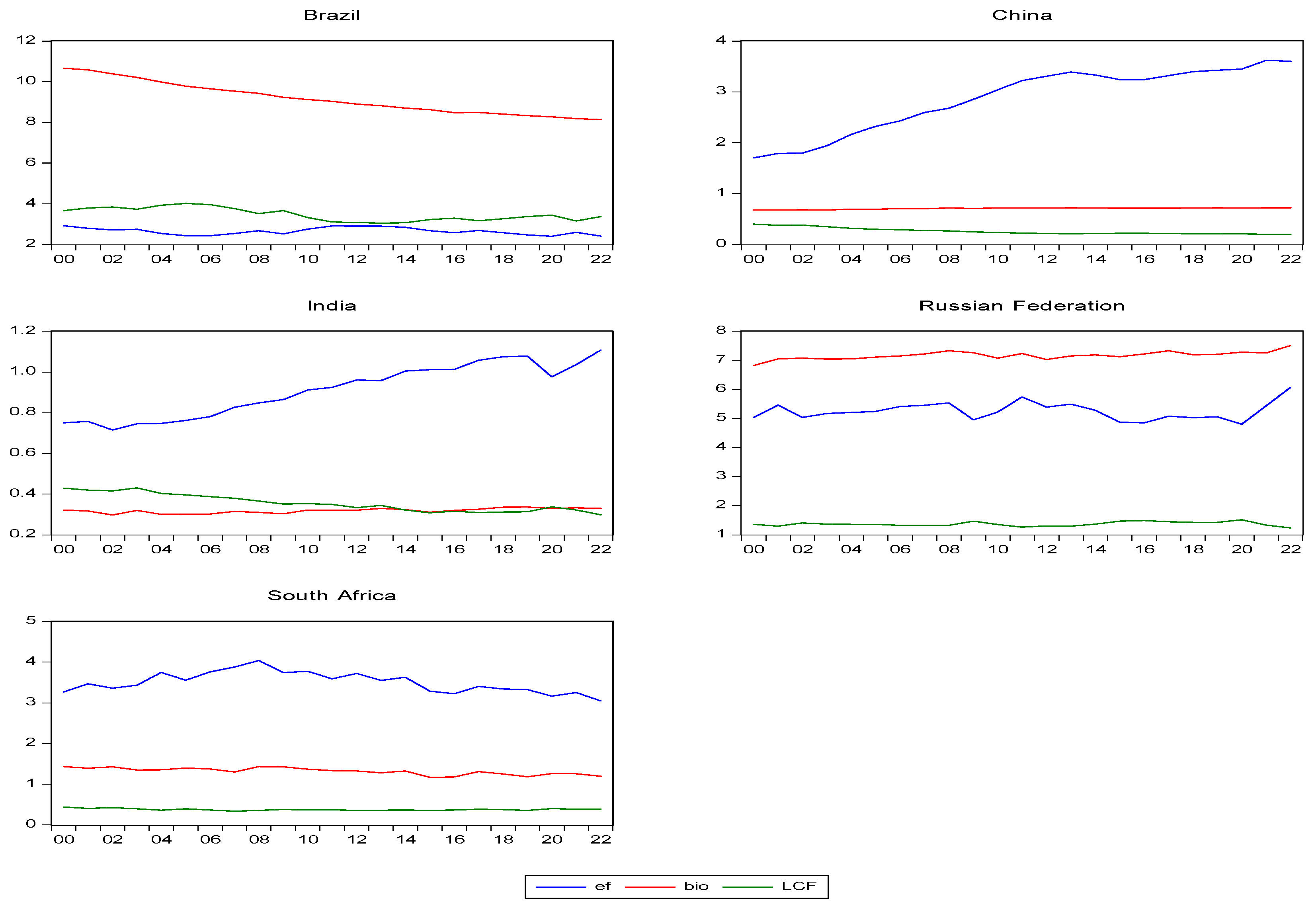
1. Introduction
One of the most critical causes of environmental degradation is the unsustainable overuse of fossil fuels [
1]. The rapid industrialization, socioeconomic development, and population growth of countries based on fossil fuels have led to a relentless increase in energy consumption [
2]. This situation has also spurred global initiatives for the transition to sustainable energy, making it imperative to create policies and invest in this direction to ensure environmental quality. Environmental degradation has become a critical issue for academics and policymakers to address on a global scale. In connection with this, a radical transformation process is underway in energy systems in line with global climate change, energy security, and the Sustainable Development Goals (SDG 7, SDG 13). Green energy and green technology, at the heart of this transformation, aim to reduce dependence on fossil fuels and improve environmental quality. In this context, the load capacity factor, a critical indicator in measuring environmental quality, stands out as an important tool in evaluating the effectiveness of the green energy transition and green technology.
The increasing environmental problems and the urgency of the need to compensate for the irreparable damage of climate change have made green energy sources, which are abundant and environmentally friendly in nature, a fundamental solution tool for ensuring environmental quality. Literature on the impact of forested areas on environmental quality [
3,
4,
5] shows that increased forested areas significantly contribute to improving environmental quality. In these studies, forest areas are likened to “lungs,” emphasizing their vital importance. Literature on the impact of forested area on environmental quality [
3,
4,
5] shows that increased forested area significantly contributes to improved environmental quality. Forests act as carbon sinks by removing CO
2 from the atmosphere, which helps reduce greenhouse gas emissions. This view emphasizes the central role of forest ecosystems in improving environmental quality by increasing the load capacity factor. This view also aligns with the findings of [
6], which considered BRICS countries. The study shows that forests, which provide habitats for many species, protect biodiversity and ecological balance, and that expanding forest areas will increase environmental benefits and promote the conservation of biodiversity. Despite significant geographical and climatic differences among BRICS countries, a third factor, forest cover, has been included in the study, considering the importance of forest cover as described above. On the path to greening the BRICS countries, the impact of the “forest arena,” which has been overlooked and neglected in previous studies but is essential for sustainability, on environmental quality has been examined.
There are several reasons for conducting this study in BRICS countries. The BRICS group of countries accounts for one-fifth of the world’s energy consumption, produces one-third of global GDP, has a population of over two billion, and is among the world’s fastest-growing economies [
7]. The four members of the BRICS group of countries—China, India, Russia, and Brazil—are among the world’s five largest emitters of greenhouse gases and also possess a high ecological footprint. South Africa, another member, is the largest emitter on the African continent [
8]. BRICS countries are responsible for a significant portion of global carbon emissions due to both their rapid economic growth and increasing energy needs. At the same time, these countries are playing a decisive role in the global energy transition through large-scale investments in renewable energy capacity and green technology policies. China, in particular, stands out among BRICS economies due to its significant increase in production-based income and living standards. Despite investing heavily in renewable energy development and becoming one of the world’s largest producers and users of renewable energy, China’s use of energy from coal, oil, and other fossil fuels remains much higher [
9]. BRICS economies face a policy challenge in transitioning from fossil fuel-based energy systems and improving environmental quality under the threat of climate change. This necessitates urgent policy changes in the outdated energy infrastructure in BRICS countries. However, there is still a policy gap regarding how countries in the BRICS, a category of economies notable for their rapid development, can grow their economies within the context of the Sustainable Development Goals. The BRICS group of countries offers an ideal field of study for both examining the impacts of green energy, green technology, and forest areas on environmental quality in developing economies and for evaluating national and global energy policies.
The BRICS economies, under the threat of climate change, face a policy challenge in transitioning from fossil-fuel-based energy systems and improving environmental quality. This necessitates urgent policy changes in the outdated energy infrastructure of BRICS countries. However, there is still a policy gap regarding how countries in the category of rapidly developing economies, like BRICS, can grow their economies within the framework of Sustainable Development Goals. The aim of our study is to investigate the impact of green energy, green technology, and forest cover on environmental quality in BRICS countries. To the study’s objective, several hypotheses were formulated. First, “In BRICS countries, the use of renewable energy contributes to the reduction in environmental degradation.” The second hypothesis is, “Green technology causes an increase in environmental pollution.” Finally, forest cover contributes to the reduction in environmental degradation. In the study conducted in BRICS countries between 2000 and 2022, the analysis was carried out using a panel regression approach and machine learning (ML) techniques. The research focuses particularly on understanding the impacts of achieving a renewable energy transition, developing green technologies, and forest areas on environmental quality. This study examines BRICS countries at the group level, employing machine learning (ML) methodologies to mitigate endogeneity and heterogeneity issues. Existing studies investigating the impact of green energy, green technology, and forest areas on the load capacity factor are largely limited to traditional econometric methods based on linear assumptions and mostly adopt the OLS approach. However, the complex and nonlinear relationships between energy systems, technological advancements, economic conditions, and environmental regulations necessitate the use of more flexible analytical approaches. In this context, it is important to analyze these relationships not only with classical econometric techniques but also with ML methods that can reveal nonlinear structures. While panel data analysis allows for testing causal relationships by considering inter-country heterogeneity and the time dimension [
10], ML techniques increase the depth of the analysis by revealing nonlinear relationships, complex interactions, and possible threshold effects between variables. Furthermore, ML methods offer strong predictive performance by reducing the risk of error and are increasingly used in the field of environmental sustainability [
11].
This research contributes to the field of environmental studies in several ways: Firstly, while numerous previous studies [
12,
13,
14,
15] have empirically examined the relationship between environmental variables and green initiatives, the impact of green initiatives on the load capacity factor has been overlooked. The role of green energy, green technology, and forest areas as green initiatives on the load capacity factor has not been sufficiently investigated in the current literature. While ecological footprint and carbon emission pollution indicators reflect the demand side of the ecosystem, the load capacity factor takes into account both the supply and demand of the ecosystem [
16]. Ref. [
17] suggested that an indicator reflecting both the supply and demand aspects of nature would be more effective in analyzing environmental quality. The load capacity factor only reflects the environmental degradation caused by human demand for natural resources and ignores how nature meets environmental requirements, i.e., biological capacity. The load capacity factor (LCF) provides an environmental assessment through supply and demand channels and fully reflects the sustainability criterion [
18]. In this study, the load capacity factor (LCF) is preferred due to these advantages, thus allowing for a comprehensive assessment of environmental pressure. In this respect, the study presents the total impact of green energy and green technology on environmental quality in a more holistic framework.
Secondly, while BRICS countries are considered at the group level in this study, machine learning (ML) methodologies are used to reduce endogeneity and heterogeneity problems. Existing studies examining the impact of green energy, green technology, and forest areas on the load capacity factor are largely limited to traditional econometric methods based on linear assumptions and mostly adopt the OLS approach. However, the complex and nonlinear relationships between energy systems, technological advancements, economic conditions, and environmental regulations necessitate the use of more flexible analytical approaches. In this context, it is important to analyze these relationships not only with classical econometric techniques but also with ML methods that can reveal nonlinear structures. This study aims to fill this gap in the literature by examining the impact of green energy, green technology, and forest areas on the load capacity factor in BRICS countries using a combination of panel data analysis and machine learning methods. Panel data analysis allows for testing causal relationships by considering inter-country heterogeneity and the time dimension [
10], while ML techniques increase the depth of the analysis by revealing nonlinear relationships, complex interactions, and possible threshold effects between variables. Furthermore, ML methods offer strong prediction performance by reducing the risk of error and are increasingly used in the field of environmental sustainability [
11].
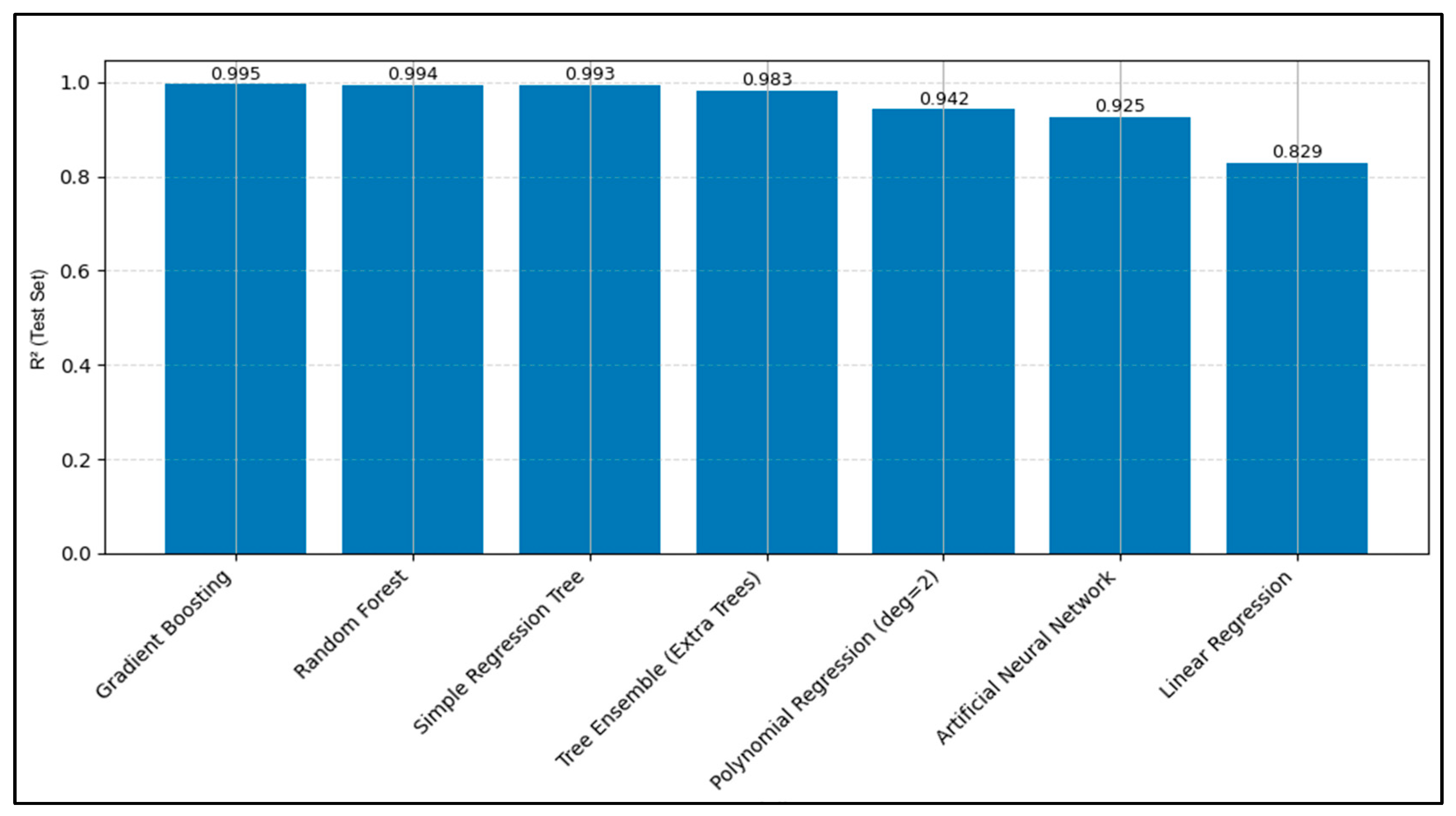
In this study, the performance of different ML algorithms in predicting the load capacity factor is compared; countries are classified as “winners” and “losers” using an ensemble decision tree model. This approach guides policymakers in developing targeted environmental policies and disseminating best practices. The combined use of panel data analysis and ML methods strengthens the methodological contribution of the study and allows for a holistic evaluation of energy, technology, economics, and environmental policies. The rest of the study is structured as follows:
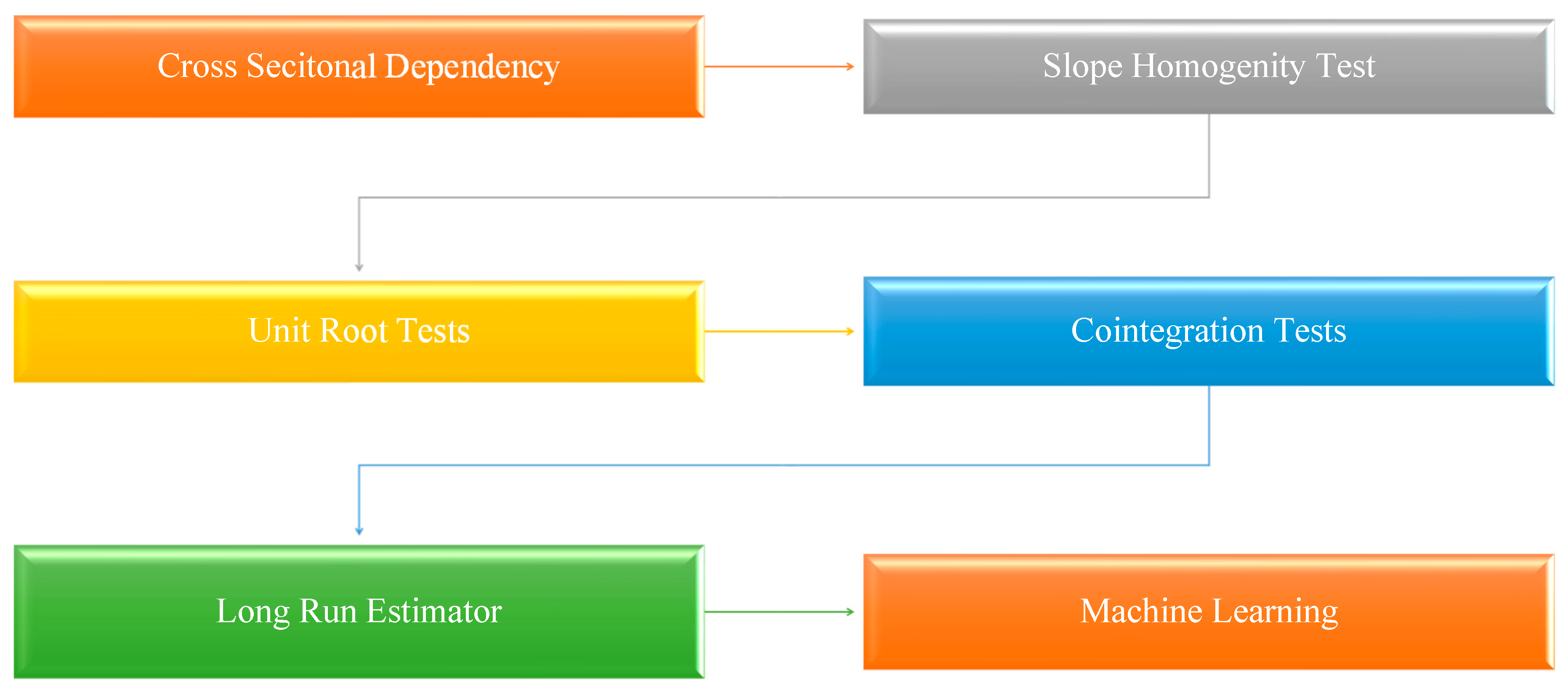
Section 2 presents a literature review consistent with the policy gap that this research aimed to address. The outline of the empirical model, dataset, and methods are presented in
Section 3.
Section 4 presents the panel data and machine learning results of the study and discusses the findings. Finally,
Section 5 concludes the study by outlining policy implications based on the results, listing the limitations of the study, and offering some areas for future research.
5. Conclusions and Policy Implications
5.1. Conclusions
While the relationship between CO
2 emissions, ecological footprint, and green initiatives has generally been empirically studied, the impact of green initiatives on the load capacity factor has been overlooked. These studies have typically used various econometric methods and have not incorporated machine learning into the process. This study addresses this research gap by focusing on the green energy transition and green technology, which are preferred for their various advantages and significant contributors to the load capacity factor. To analyze this relationship in BRICS economies between 2000 and 2022 [
55], the Augmented Mean Group (AMG) estimator, and Machine Learning algorithms were used. “The complex and nonlinear relationships between energy systems, technological advancements, economic conditions, and environmental regulations necessitate the use of more flexible analytical approaches. In this context, it is important to analyze these relationships not only with classical econometric techniques but also with ML methods that can reveal nonlinear structures. This study aims to fill this gap in the literature by examining the impact of green energy, green technology, and forest areas on the load capacity factor in BRICS countries using panel data analysis and machine learning methods together. This is because machine learning techniques increase the depth of the analysis by revealing nonlinear relationships, complex interactions, and possible threshold effects between variables. In addition, ML methods offer strong predictive performance by reducing the risk of error and are increasingly used in the field of environmental sustainability [
11].”
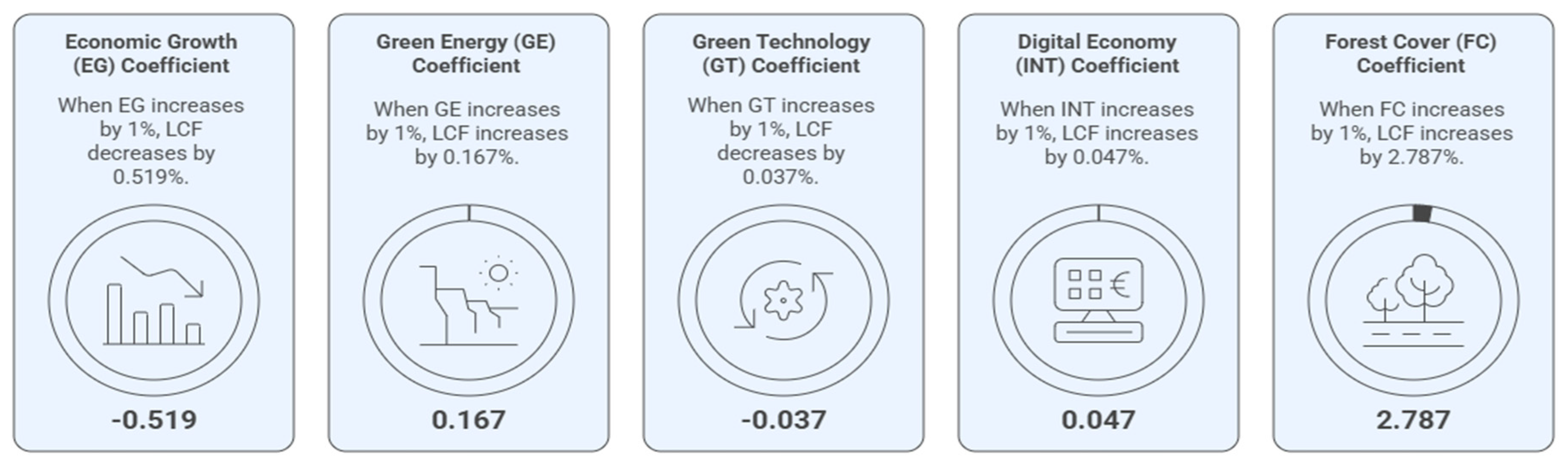
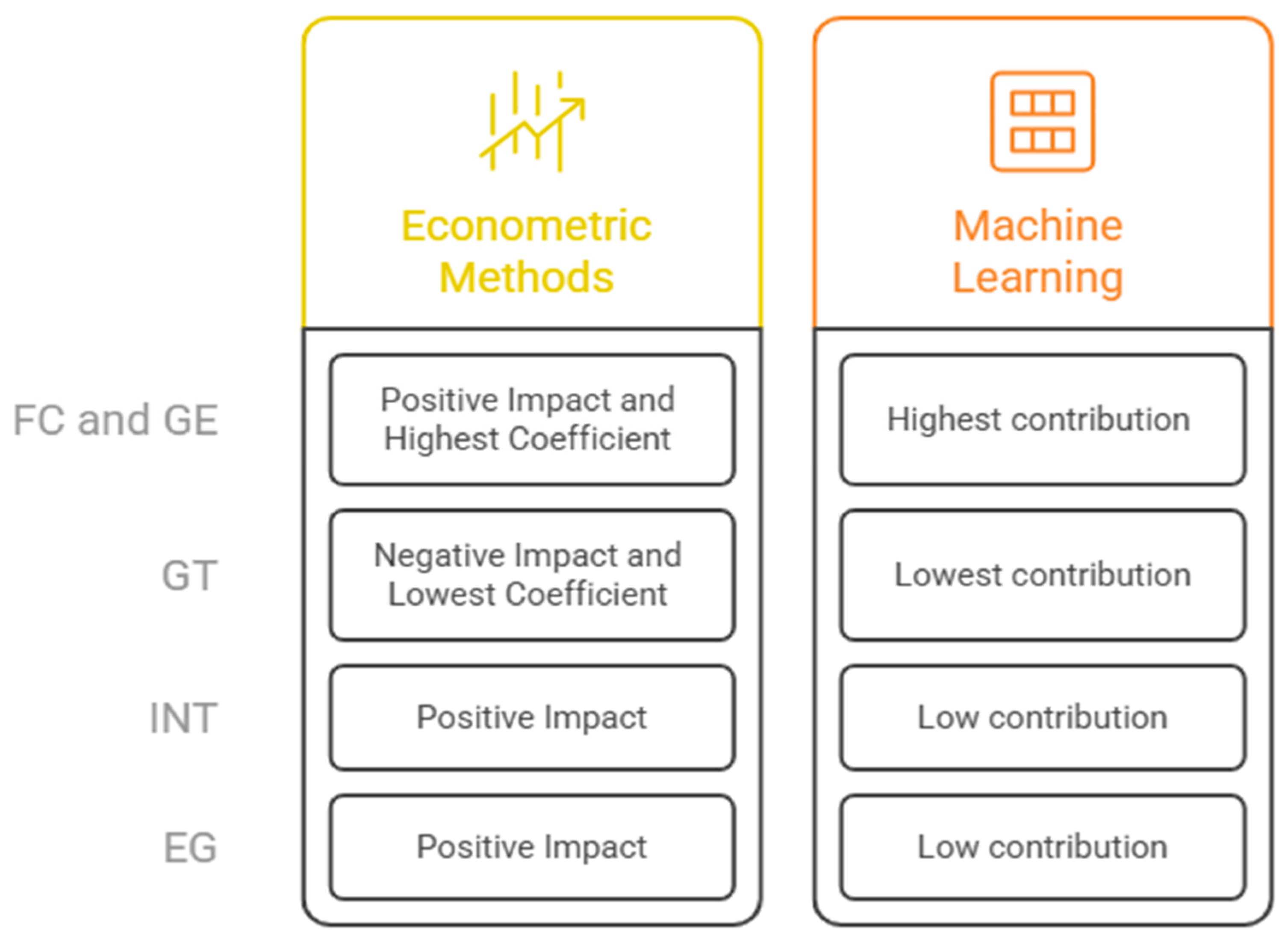
The results show strong evidence of a positive relationship between green energy, the digital economy, forested areas, and the load capacity factor, while a negative relationship exists between green technology, growth, and the load capacity factor. Based on robust empirical findings, renewable energy sources emerge as a key element in promoting clean energy adoption and ultimately helping to increase the load capacity factor in BRICS economies. The results also imply that since developments in green technological innovation in BRICS countries are still in their early stages, investments in green technologies for a sustainable environment need to be qualitatively increased. This finding that green technology reduces environmental quality confirms the hypothesis of the study. The study’s findings are consistent with those of [
8], who examined BRICS countries. According to this conclusion, firstly, the intermittent operation characteristic inherent in some green energy sources such as solar, hydroelectric, and wind makes it difficult to ensure consistency in energy supply, thus limiting LCF (Low-Consumption Function). Secondly, current technology is insufficient to fully meet energy storage and distribution requirements, leading to imbalances between energy demand and supply and negatively impacting LCF. Similarly, according to [
61], developments related to green technological innovation in BRICS countries are still in their early stages. According to [
62], the level of innovation in green technology has not yet reached a point that would allow for a significant reduction in environmental pollution. Furthermore, this means that these innovations are not produced in sufficient quantity or quality to slow down the trend of environmental pollution. This situation is explained by the fact that the traditional economic development model, consisting of high energy consumption, high pollution, and high emissions, leads to intense environmental pollution due to excessive resource consumption. This finding is consistent with the results of [
34,
35].
The study found that green energy improves environmental quality. This result confirms the hypothesis of the study that “green energy positively affects environmental quality.” These findings show that renewable energy, a form of energy that is recyclable in nature, does not produce emissions, is environmentally friendly, and clean, has a positive effect in mitigating global climate change by improving environmental quality. The transition to green energy sources reduces dependence on fossil fuels such as coal and oil, increases energy security, and has a positive effect in increasing employment in the renewable energy sector. This finding is consistent with the findings of [
59,
60]. This result shows that the transition to renewable energy can be used as a useful tool in achieving environmental quality.
The study also shows that increased forest cover significantly contributes to improving environmental quality in BRICS countries. This finding confirms the study’s hypothesis that “forest cover improves environmental quality.” This finding supports the findings of [
3,
4,
5]. According to the view put forward in [
38], forests act as carbon sinks by removing CO
2 from the atmosphere, which helps reduce greenhouse gas emissions. This view emphasizes the central role of forest ecosystems in improving environmental quality by increasing the load capacity factor. It also coincides with the findings of [
6], which examined BRICS countries.
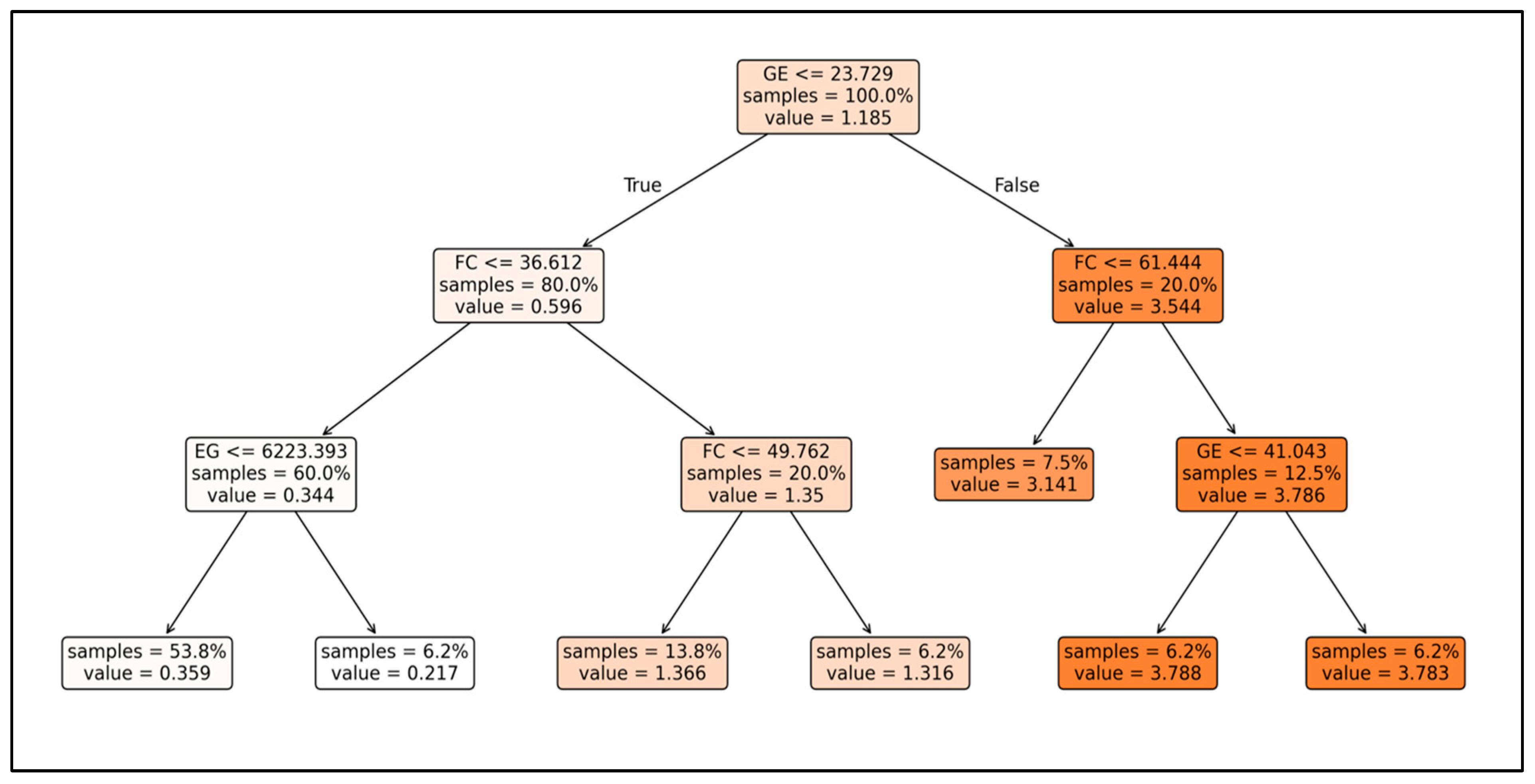
Furthermore, we use an ensemble decision tree model, a machine learning approach, to determine which countries are winners and losers in terms of the estimated load capacity factor. Our results show that among BRICS countries, only the Russian Federation is classified as a “winner” country, relatively limiting the deterioration in its environmental carrying capacity. In contrast, Brazil, South Africa, China, and India are among the “loser” countries, experiencing a decline in their environmental carrying capacity. “In recent years, China has made significant progress in environmental protection and green low-carbon initiatives, as mentioned in many studies. However, among the BRICS economies, China stands out particularly for its significant increase in production-based income and living standards. Despite investing heavily in renewable energy development and becoming one of the world’s largest producers and users of renewable energy, China’s reliance on coal, oil, and other fossil fuels remains significantly higher than its current renewable energy consumption [
9]. The winner-loser country analysis findings reveal that environmental quality performance does not follow a symmetrical process among countries and diverges significantly over time. Overall, the machine learning findings show that environmental quality cannot be explained solely by economic growth or technological progress; renewable energy transition and forest area must be considered together [
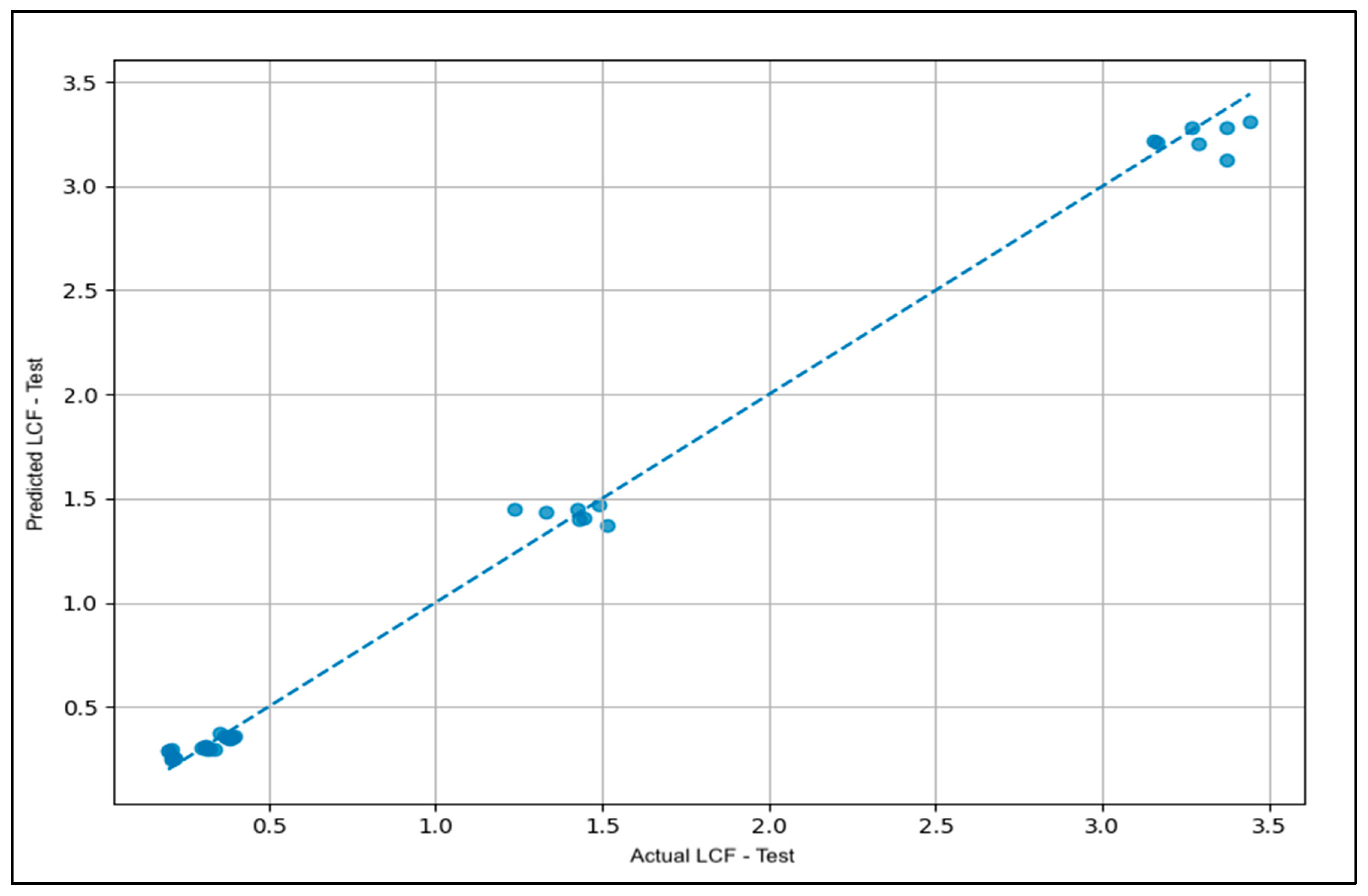
63]. In particular, the superior performance of tree-based and ensemble methods confirms that the LCF (Lower Environmental Capacity Factor), an indicator of environmental quality, has a nonlinear, interactive, and threshold-based structure. These findings are consistent with the results obtained in the econometric section of the study and offer a more detailed perspective on the conditions under which environmental sustainability is strengthened, going beyond average impacts.
This research contributes to the field of environmental studies in several ways: Firstly, while numerous previous studies [
12,
13,
14,
15] have empirically examined the relationship between environmental variables and green initiatives, the impact of green initiatives on the load capacity factor has been overlooked. The role of green energy, green technology, and forest areas as green initiatives on the load capacity factor has not been sufficiently investigated in the existing literature. In this study, the load capacity factor (LCF), chosen due to its advantages, allows for a comprehensive assessment of environmental pressure. In this respect, the study presents the total impact of green energy and green technology on environmental quality within a more holistic framework. Secondly, while BRICS countries are considered at the group level in this study, machine learning (ML) methodologies are used to reduce endogeneity and heterogeneity issues. Existing studies examining the impact of green energy, green technology, and forest areas on the load capacity factor are largely limited to traditional econometric methods based on linear assumptions and mostly adopt the OLS approach. However, the complex and nonlinear relationships between energy systems, technological advancements, economic conditions, and environmental regulations necessitate the use of more flexible analytical approaches. In this context, it is important to analyze these relationships not only with classical econometric techniques but also with ML methods that can reveal nonlinear structures. While panel data analysis allows for testing causal relationships by considering inter-country heterogeneity and the time dimension [
10], ML techniques increase the depth of the analysis by revealing nonlinear relationships, complex interactions, and possible threshold effects between variables. In addition, ML methods offer strong prediction performance by reducing the risk of error and are increasingly used in the field of environmental sustainability [
11]. In this study, the performance of different ML algorithms in predicting the load capacity factor was compared; countries were classified as “winners” and “losers” using an ensemble decision tree model. This approach guides policymakers in developing targeted environmental policies and disseminating best practices. The combined use of panel data analysis and ML methods strengthens the methodological contribution of the study and allows for a holistic evaluation of energy, technology, economics, and environmental policies.
5.2. Policy Implications
This study provides valuable insights into supporting sustainable energy transitions and green technological development by presenting quantitative evidence to sustainable development stakeholders within the context of BRICS countries. The emphasis on green energy and green technology aligns with the global sustainable development agenda and contributes particularly to Sustainable Development Goals 7 and 13. Based on the findings, various policy recommendations have been developed to support green energy transitions and increase the potential of technological investments. The econometric analysis results show that green energy statistically significantly and positively impacts environmental quality. This finding indicates that policymakers should prioritize renewable energy investments and create a clear roadmap for a phased exit from fossil fuel-based production. In this context, tax advantages, investment incentives, low-interest green loans, and easier access to finance can be provided to firms using renewable energy. At the individual level, it is important to increase awareness of renewable energy through education and awareness programs and to promote the widespread use of rooftop solar energy systems in residential buildings. In addition, internalizing carbon costs through mechanisms such as carbon taxes or emission trading systems can make renewable energy more competitive by making fossil fuels more expensive. The development of domestic and innovative technologies through energy storage systems, smart grids, and university-industry collaborations will also support this process.
However, the findings show that the current application of green technology increases environmental pollution. This situation reveals that expanding green technology investments without sufficient environmental standards and effective monitoring mechanisms does not create the expected positive impact. Therefore, green technology policies should be redesigned to prioritize technology quality, life cycle impacts, and application conditions instead of investment amount; and should be supported by carbon pricing and binding emission limits.
The impact of forested areas on environmental quality is statistically significant and positive. The increase in forest areas contributes to the improvement of environmental quality in BRICS countries and confirms that deforestation is one of the key factors reducing the load capacity factor. Forests act as carbon sinks, contributing to the reduction in greenhouse gas emissions and the conservation of biodiversity. Therefore, the protection and expansion of forests should be addressed in coordination with environmental policies.
Finally, it is observed that economic growth negatively affects environmental quality, while the digital economy positively affects the load capacity factor. Digitalization can limit environmental degradation by reducing physical mobility and increasing energy efficiency. Encouraging R&D activities in environmentally friendly digital technologies, along with remote work, digital commerce, smart city and transportation applications, will support this process.
5.3. Limitations and Future Research Directions
This study is limited to examining the impact of green energy and green technology on the load capacity factor within the context of BRICS countries for the data period studied. The generalizability of the findings can be improved by comparatively testing them across different country groups (developed, developing, and low-income countries). Firstly, sectoral decomposition analyses could be conducted to better understand the mechanisms affecting the load capacity factor. Finally, future studies could consider more control variables such as trade deficit, urbanization, and education, as they influence the transition process.




 ,
,