Article

The Conditional Effect of Trust on Generation Z’s Environmental Behaviour: A Path Analysis Perspective


1
Department of Political Science and International Relations, Faculty of Law and Social Sciences, University of New York Tirana, 1000 Tirana, Albania
2
Department of Economy and Rural Development Policies, Faculty of Economy and Agribusiness, Agriculture University of Tirana, 1029 Tirana, Albania
3
Department of Food Science and Biotechnology, Agriculture University of Tirana, 1001 Tirana, Albania
*
Author to whom correspondence should be addressed.
Sustainability 2026, 18(4), 1871; https://doi.org/10.3390/su18041871
Submission received: 15 December 2025 / Revised: 28 January 2026 / Accepted: 30 January 2026 / Published: 12 February 2026

Abstract

This study examines the conditional effects of trust on Generation Z’s environmental behaviour using a climate change risk perception framework within an input–output model. Climate change awareness initiates the process, while generalised trust (GT), institutional trust (IT), and community engagement mediate the relationship with environmental behaviour. Results show that individual trust plays a more significant role than institutional trust; however, their synergistic interaction is essential for developing climate change risk perceptions and community engagement. In low-trust contexts, community engagement emerges as a critical driver of positive environmental behaviour, underscoring the importance of trust alignment across individual and institutional levels. The findings underscore the need for strategies that address trust deficits and emphasise community-based engagement. Future research should explore the impact of cognitive biases, such as temporal discounting and status quo bias, to bridge the gap between awareness and action among Generation Z.

1. Introduction

As a global challenge, climate change requires coordinated efforts to foster sustainable solutions and mitigate its impact [1]. Effective environmental participation and conservation rely heavily on social capital, which underpins trust, collaboration, and collective action [2,3]. Trust, cultivated through community engagement and participation, is critical for fostering the social cohesion needed for environmental stewardship [4]. Furthermore, it is a cornerstone for creating equitable, accountable, and effective institutions that can drive climate action [5].
Trust not only influences relationships within communities but also shapes perceptions of institutional reliability, often influenced by the salience effect—where people extrapolate the trustworthiness of public leaders to broader societal trust [6,7]. This dynamic underlines the importance of trust as a prerequisite for citizen engagement and achieving collective goals [1,6].
The significance of environmental concern and behaviour varies across age groups. Generation Z, often referred to as the “first global generation,” is widely regarded as a transformative force in addressing climate change. Growing up in a hyperconnected world characterised by digital technology, globalised communication, and shared social trends, Generation Z’s approach to environmental issues is marked by an emphasis on authenticity, transparency, and purpose-driven action [8].
In Albania, where Generation Z experiences similar global influences, this demographic can play a pivotal role in advancing climate change policy responses by engaging in online and offline communities. However, understanding their environmental behaviour requires examining how trust—both institutional and interpersonal—shapes their actions. This connection is particularly relevant in a digitised environment where the mobilisation of communities often transcends geographic boundaries [9].
Despite these broad insights, a notable gap remains in the regional literature. Studies conducted in the Western Balkans have generally focused on broad population samples of university students but rarely analyse how social capital, trust, and climate-related attitudes interact within Generation Z. As a result, the dynamics shaping climate engagement among young people in the region remain underexplored. Within this context, Albanian Generation Z represents a distinct and theoretically important case: they are highly digital, socially networked, and situated in a society characterised by comparatively low institutional trust, yet they will become central to future environmental and political decision-making. Understanding how this cohort forms climate attitudes and behavioural intentions is therefore crucial for designing effective climate communication and policy interventions. Addressing this gap offers empirical value by providing evidence from an underexamined national context, and theoretical value by testing trust and social capital mechanisms in a setting where these operate differently from those in most Western or EU contexts.
This study integrates Watkins’s Youth Environmental Engagement Model (YEEP) [10] and the Climate Change Risk Perception Model into a conceptual input–output framework to analyse the conditional influence of trust on Generation Z’s environmental behaviour [10]. By examining the dual dimensions of institutional and interpersonal trust, this research aims to provide insights into how trust and community involvement shape Generation Z’s environmental engagement. By integrating the Climate Change Risk Perception Model (CCRPM) with the Youth Environmental Engagement Model (YEEP), this study extends existing trust–behaviour research by jointly capturing cognitive awareness, experiential risk perception, and participatory engagement within a single analytical framework. While prior studies often examine trust as a direct antecedent of pro-environmental behaviour, this integration allows us to distinguish the conditional pathways through which awareness translates into behaviour depending on trust-mediated risk perception and community engagement. This approach provides a more nuanced understanding of why heightened awareness does not always translate into greater environmental action among Generation Z.
The remainder of the paper is organised as follows: The next section outlines the theoretical foundation and constructs derived from the two models within the input–output framework. Section 3 presents research methodology, including the instrument and statistical approach. Section 4 details the results, and Section 6 discusses the findings and their implications, concluding with recommendations for future research and policy.

2. Literature Review and Research Background

As previously mentioned, this study integrates insights from two theoretical models to analyse Generation Z’s environmental behaviour in Albania: the Climate Change Risk Perception Model (CCRPM) [11,12,13] and the Youth Environmental Engagement Model (YEEP). The CCRPM focuses on understanding how individuals perceive climate change risks, emphasising cognitive evaluations, emotional responses, and sociocultural influences [14,15]. Its dimensions include cognitive assessments, experiential processing, social norms, and socio-demographics. Meanwhile, YEEP highlights the factors influencing youth engagement with environmental issues, such as personal motivations, social influences, and opportunities for participation [16,17,18,19,20]. Both models offer complementary frameworks for analysing the dynamic relationship among awareness, risk perception, and pro-environmental behaviour within a given demographic segment, such as Generation Z.

2.1. Theoretical Integration and Proposed Research Hypotheses

The CCRPM and YEEP focus on understanding and promoting climate action through psychological and behavioural insights [10]. CCRPM emphasises knowledge of the causes, impacts, and solutions of climate change, as well as personal experiences of extreme weather events [10,14]. At the same time, YEEP underscores the role of community engagement and youth-driven environmental stewardship [21,22]. Combining these models provides a comprehensive approach to understanding Generation Z’s behaviour toward climate change, emphasising the interplay among awareness, risk perception, trust, and engagement.
The term “input–output framework” is used here as a conceptual heuristic to structure the relationships between variables, where climate change awareness represents the input, environmental behaviour the output, and risk perception and community engagement operate as intermediate mechanisms. Methodologically, the empirical analysis relies on a moderated mediation model estimated using PROCESS (Model 11). Thus, the input–output terminology does not denote a distinct statistical technique but rather serves to guide the interpretation of the mediation and moderation structure.
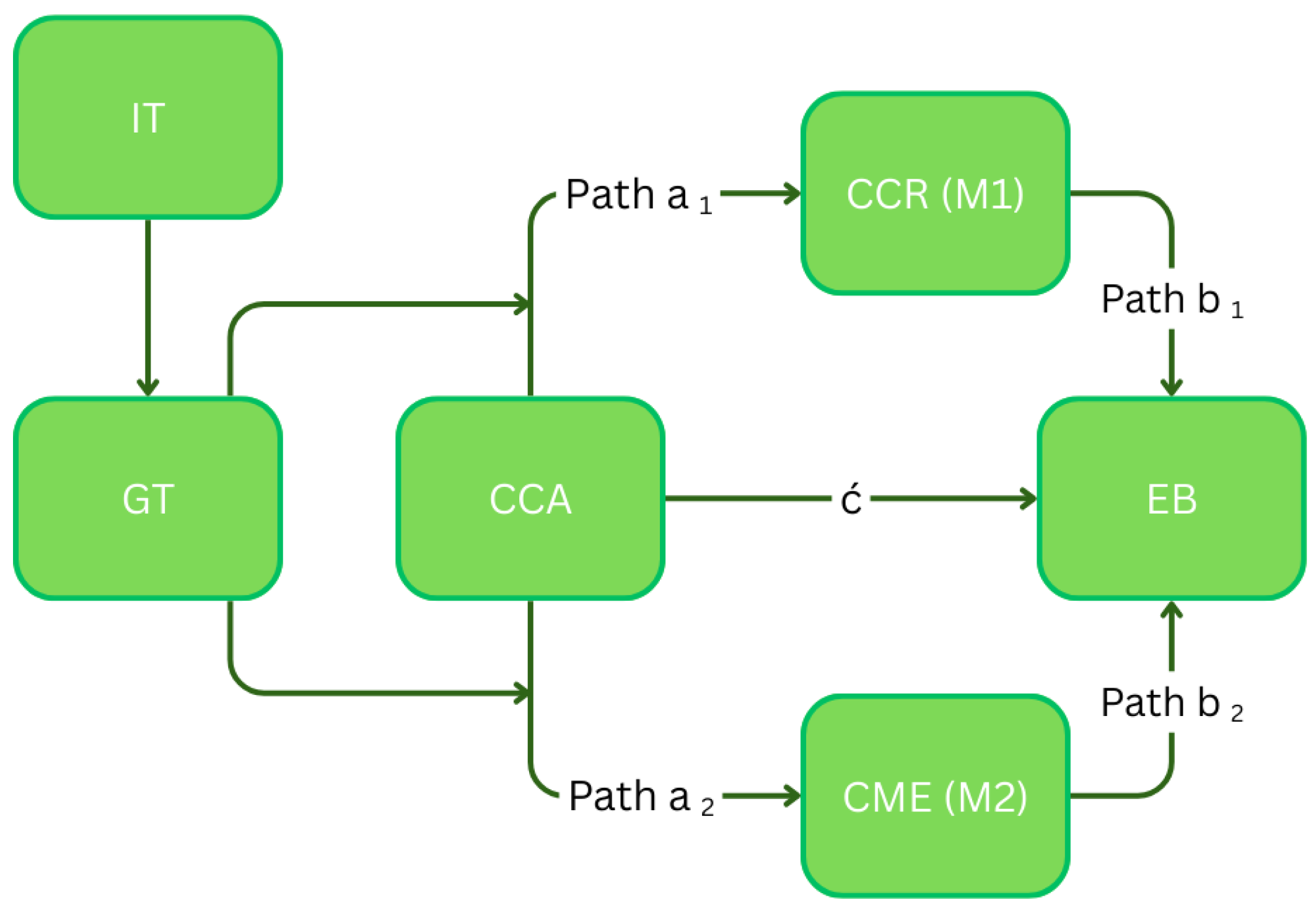
The proposed model uses Climate Change Awareness (CCA) as the initiating factor, representing the cognitive element that triggers climate change concerns (See Figure 1). Climate Change Risk (CCR) and Community Engagement (CME) act as mediators, capturing experiential and participatory dimensions influencing environmental behaviour—social norms, analysed through trust, function as moderators, influencing the strength of these pathways. The outcome is Environmental Behaviour (EB), operationalised as the willingness to pay for environmentally friendly products. This input–output framework aims to test several hypotheses related to Generation Z in Albania, where environmental challenges like pollution, biodiversity loss, and climate change are critical issues [23].
Although the proposed model does not introduce additional standalone psychological or sociocultural constructs, these mechanisms are implicitly embedded within the selected variables. Climate change risk perception captures affective and experiential responses, community engagement reflects social norms and participatory orientations, and trust represents a core sociocultural mechanism shaping collective action. This parsimonious operationalisation allows the model to retain theoretical coherence while remaining empirically tractable.

2.2. Research Hypotheses

To guide the reader through the proposed hypotheses, the conceptual model is organised into three sequential components. First, climate change awareness (CCA) is conceptualised as the initial cognitive input that influences both climate change risk perception (CCR) and community engagement (CME). Second, CCR and CME are expected to mediate the relationship between awareness and environmental behaviour (EB). Third, institutional trust (IT) and generalised trust (GT) are introduced as moderating conditions shaping the strength of these pathways. This structure allows us to examine not only whether awareness translates into behaviour, but also under which trust conditions this translation occurs.

2.2.1. Climate Change Awareness (CCA) as Initiator

CCA is a critical precursor to environmental behaviour [24]. Research shows that understanding the causes and impacts of climate change correlates strongly with expressed intentions to mitigate its effects [24]. Similarly, research indicates a strong correlation between Generation Z’s higher awareness of climate change and increased risk perceptions regarding its impacts [25,26]. This study explores whether this link holds among Generation Z in Albania.
H1. 
Higher awareness of climate change is linked to increased risk perception of climate change (a1 pathway).

2.2.2. Climate Change Risk (CCR) as a Mediator

CCR captures the experiential dimension, reflecting how individuals perceive and respond to climate risks [10]. Factors such as personal experience with extreme weather events and the perceived severity of climate impacts shape these perceptions [10]. Individuals who perceive climate change as a risk are more likely to engage in pro-environmental behaviours [27]. Similarly, higher CCR is also linked to positive environmental behaviour among Generation Z. In the same vein, we propose the following hypothesis:
H2. 
Higher perceived climate change risk is linked to positive environmental behaviour (b1 pathway).
Despite this expected role of risk perception, prior research has shown that the awareness–behaviour relationship remains complex and inconsistent.
Evidence suggests that while heightened climate change awareness has catalysed more significant public discourse and political action, it has not yet bridged the persistent “attitude-behaviour gap” to drive widespread sustainable behavioural changes in key consumption areas [24]. Additionally, results do not provide strong evidence to support the claim that climate change awareness directly affects behaviour without mediating perceived climate change risk [27]. However, Generation Z is highly exposed to information through digital media and education systems that emphasise environmental issues and sustainability [28]. This constant exposure can foster a deeper understanding and awareness of climate change, which can translate directly into positive environmental actions [26]. In that regard, we assume that for Generation Z, CCA is directly linked to positive environmental behaviour. To account for the possibility that awareness may influence behaviour independently of perceived risk, particularly among highly informed youth, a direct pathway is also considered:
H3. 
Higher climate change awareness is directly linked to positive environmental behaviour (c’ pathway).

2.2.3. Community Engagement (CME) as a Mediator

In addition to CCR, Community Engagement (CME) represents a participatory mechanism through which environmental awareness may translate into positive environmental behaviour among Generation Z [21,28,29]. Community-based adaptation strategies, such as sustainable land management practices, water conservation initiatives, and disaster risk reduction programmes, empower communities to withstand climate-related challenges and enhance their capacity to cope with future environmental issues [30]. Thus, we expect that, firstly, a higher climate change awareness will increase community engagement, and the latter is linked with positive environmental behaviour as follows:
H4. 
Higher climate change awareness is linked to increased community engagement (a2 pathway).
H5. 
Higher community engagement is linked to positive environmental behaviour (b2 pathway).

2.2.4. Institutional and Individual Trust as Moderators

The relationship between climate change awareness and behaviour change is complex and influenced by trust, local relevance, and supportive policy frameworks [6,31]. Individuals may hesitate to make personal sacrifices when they lack trust in institutions and others, thereby undermining the collective good [5,6,32,33,34]. This challenge is particularly pronounced among Generation Z, who, despite their emotional engagement with climate issues [8,26,35], may prioritise immediate convenience over future benefits [36,37,38]. Lack of trust in those addressing climate change—people, businesses, and institutions—further exacerbates this social trap protection [1,23,39]. In this study, we explore two types of trust (IT = institutional trust and GT = generalised trust (trust in others)) as pathway moderators: a1b1 (CCA-CCR-EB) and a2b2 (CCA-CME-EB) (see Figure 1).
Accordingly, trust is not treated as a direct predictor of environmental behaviour, but as a conditioning factor that shapes whether and how awareness is translated into risk perception and community engagement.
H6. 
Trust moderates the pathway between CCA and CCR:
H6.1. 
High institutional trust positively conditions the CCA-CCR pathway.
H6.2. 
High generalised trust positively conditions the CCA-CCR pathway.
As previously noted, social traps are situations in which individuals or groups fail to cooperate for mutual benefit due to distrust and a lack of social capital [1]. These are intricately linked to institutional and generalised trust, but scholarly analyses suggest that institutional trust is more pivotal in perpetuating or alleviating social traps [40]. Similarly, generalised trust—the belief in the trustworthiness of others—is essential for social cohesion; its development is often contingent upon the performance of institutions [41]. Critiques the view that social capital emerges solely from civil society, emphasising the role of institutions in cultivating generalised trust instead. Without trustworthy institutions, efforts to build social capital through civil society may be insufficient to overcome social traps. Additionally, while institutions play a role in shaping trust, a society with high generalised trust holds institutions to a higher standard, thereby influencing their trustworthiness. The relevance of these trust mechanisms is particularly pronounced in the Albanian context.
As a transitional society characterised by evolving institutions and uneven trust in governance structures, Albania presents conditions under which institutional trust may play a heightened role in shaping collective environmental action. For Generation Z, whose environmental concern often coexists with scepticism toward institutions, trust becomes a critical conditioning factor in translating awareness into engagement and behavioural commitment.
The two types of trust work together and predict civic engagement, especially among the younger population [42], arguing that institutional trust provides the framework, whereas interpersonal trust motivates civic action.
To that end, we propose the following:
H7. 
Trust moderates the pathway between CCA and CME:
H7.1. 
High institutional trust positively conditions the CCA-CME pathway.
H7.2. 
High individual trust positively conditions the CCA-CME pathway.
While the present study focuses on Generation Z in Albania, the proposed framework lends itself to cross-country and cross-cultural extensions. Comparative analyses could further examine whether the conditional role of trust in bridging awareness and behaviour operates similarly across different institutional and cultural contexts. Such extensions are beyond the scope of the current study but represent a promising avenue for future research.

3. Method and Data

3.1. Survey Instrument

A structured, closed-ended questionnaire was designed for this study and organised into three sections. Section 1 collected socio-demographic information, including gender, age, educational level, employment status, and monthly income. Section 2 measured social capital, operationalised through institutional trust, generalised trust, and community engagement. Institutional trust was assessed using Likert-type statements capturing confidence in political actors and public institutions. Generalised trust was measured using a scenario-based indicator adapted from the World Bank social capital framework, asking respondents whom they would trust to safeguard their home if they were forced to leave. This approach is particularly suitable in collectivist and transitional societies such as Albania, as scenario-based measures reduce abstraction bias and social desirability effects often associated with direct Likert-type trust questions. Community engagement was measured using items that captured perceptions of civic responsibility and participation in collective and environmental activities.
Section 3 assessed climate change awareness (CCA), climate change risk perception (CCR), and environmental behaviour (EB). Climate change awareness items were designed to capture the breadth of awareness across multiple environmental domains—including air and water pollution, vehicle emissions, chemical fertilisers and pesticides, green space loss, and land degradation—rather than technical or scientific depth. This operationalisation aligns with the Climate Change Risk Perception Model (CCRPM), which conceptualises general cognitive awareness as a precursor to risk perception and behavioural engagement. Climate change risk perception measured the perceived seriousness of climate-related impacts on respondents’ lives, including extreme weather events, geological hazards, vegetation loss, and water scarcity.
Environmental behaviour was operationalised as respondents’ willingness to incur personal financial costs for environmental protection, measured by their willingness to pay an environmental tax and to make personal financial sacrifices for environmental initiatives. While willingness to pay (WTP) captures only one dimension of pro-environmental behaviour and does not reflect the full range of everyday environmental practices (e.g., waste sorting or low-carbon mobility), it represents a particularly meaningful indicator within the present conceptual framework. Specifically, WTP reflects a readiness to bear personal costs for collective environmental benefits, which is central to the study’s focus on trust, social capital, and collective action dilemmas. Compared to low-cost habitual behaviours, financial commitment signals a higher level of behavioural engagement and is well-suited to the moderated mediation structure of the proposed model. The use of WTP as a behavioural proxy is also consistent with similar empirical studies conducted in the Albanian context [23,43]. Future research could extend this approach by incorporating multidimensional behavioural indices alongside financial contribution measures. The full questionnaire is provided in Supplementary Material.

3.2. Sampling and Data Collection

The study’s sample consisted of 260 respondents, as shown in the demographic distribution in Table 1. Data were gathered in Tirana, Albania, between 10 December 2023 and 10 March 2024 through an online questionnaire. This distribution method aligns with the study’s target population—Generation Z—who predominantly engage with digital platforms and spend significant time on social media. In line with widely used demographic classifications, Generation Z is defined in this study as individuals born between 1997 and 2012; accordingly, the sample focuses on respondents aged 18–25 at the time of data collection. As such, an online survey was considered the most efficient and contextually appropriate method for capturing their perceptions and behaviours. However, the sampling strategy also introduces certain limitations. First, although a sample size of 260 is commonly acceptable for structural equation modelling, it is at the lower boundary for a complex moderated-mediation framework involving multiple mediators and interaction terms. A preliminary power assessment indicates that while the sample has sufficient power to detect medium effect sizes, smaller interaction effects—especially three-way interactions such as CCA × IT × GT—may require larger samples for more robust estimation. Future research could therefore benefit from larger or probability-based samples to strengthen statistical power. Second, exclusive reliance on online recruitment through social media and university networks may introduce selection bias. Digitally active individuals tend to be better informed about environmental issues, potentially resulting in higher climate awareness and engagement scores than the broader Albanian Generation Z population. Although this mode of data collection aligns with our target group’s communication habits and maximises response rates, it may limit generalizability. Alternative approaches—such as mixed-mode surveys or stratified sampling—could reduce bias but were not selected for this study due to resource constraints and the need to reach a population that is natively digital. Finally, collaboration with students from the Agricultural University of Tirana in developing and piloting the questionnaire ensured that the instrument reflected the interests, communication style, and behavioural patterns of Albanian Generation Z. Despite the limitations, the chosen method provides a valid and efficient means of capturing theoretically relevant insights into this demographic’s environmental perceptions and behaviours, which is central to the study’s aims.
Online recruitment may over-represent digitally active and environmentally aware members of Generation Z. This type of selection bias is likely to influence the average levels of key constructs (e.g., awareness and engagement) more than the underlying relationships among variables. Nevertheless, it may affect the estimated strength of some pathways: heightened awareness among respondents could intensify links between awareness and engagement (or risk perception), while reduced variability in awareness may limit the detectability of smaller and more complex interaction effects. Accordingly, the findings should be interpreted as conditional patterns within a digitally connected segment of Albanian Generation Z rather than as population-level estimates.
Given that the sample is concentrated in Tirana and data were collected through an online survey, the findings should be interpreted with caution. While this approach is appropriate for capturing perceptions and behaviours of a digitally active Generation Z population, it may limit the generalisability of the results to the broader Albanian youth population. Accordingly, the estimated relationships should be interpreted as conditional patterns within an urban, digitally connected segment of Generation Z rather than as population-level effects.

3.3. Data Analysis

Before analysing the results, a reliability test of the used constructs was conducted. The results (Table 2) show that Cronbach’s Alpha for the construct under consideration exceeds 0.785, indicating acceptable reliability. The use of mediators in the proposed conceptual model is justified.

3.4. Statistical Approach

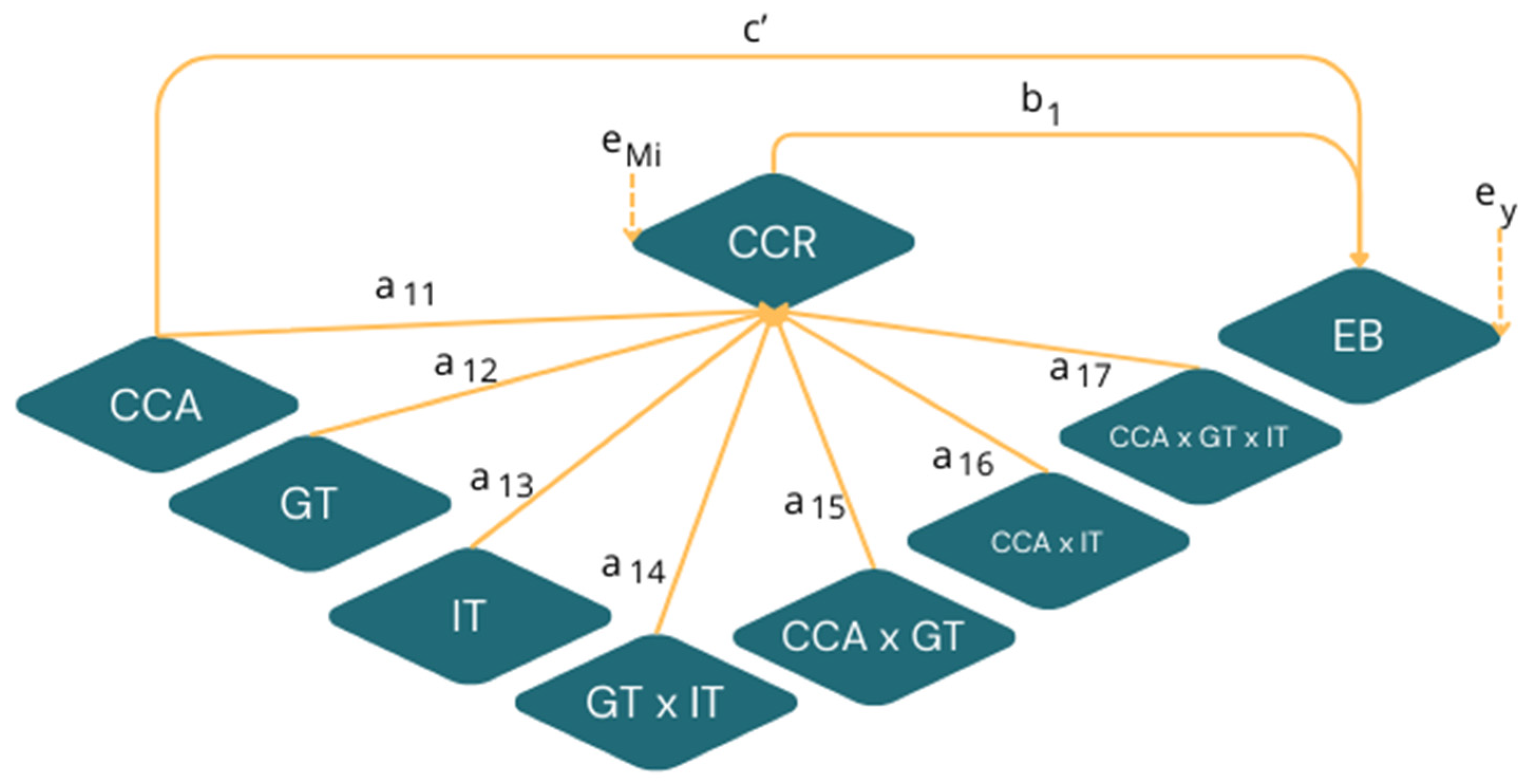
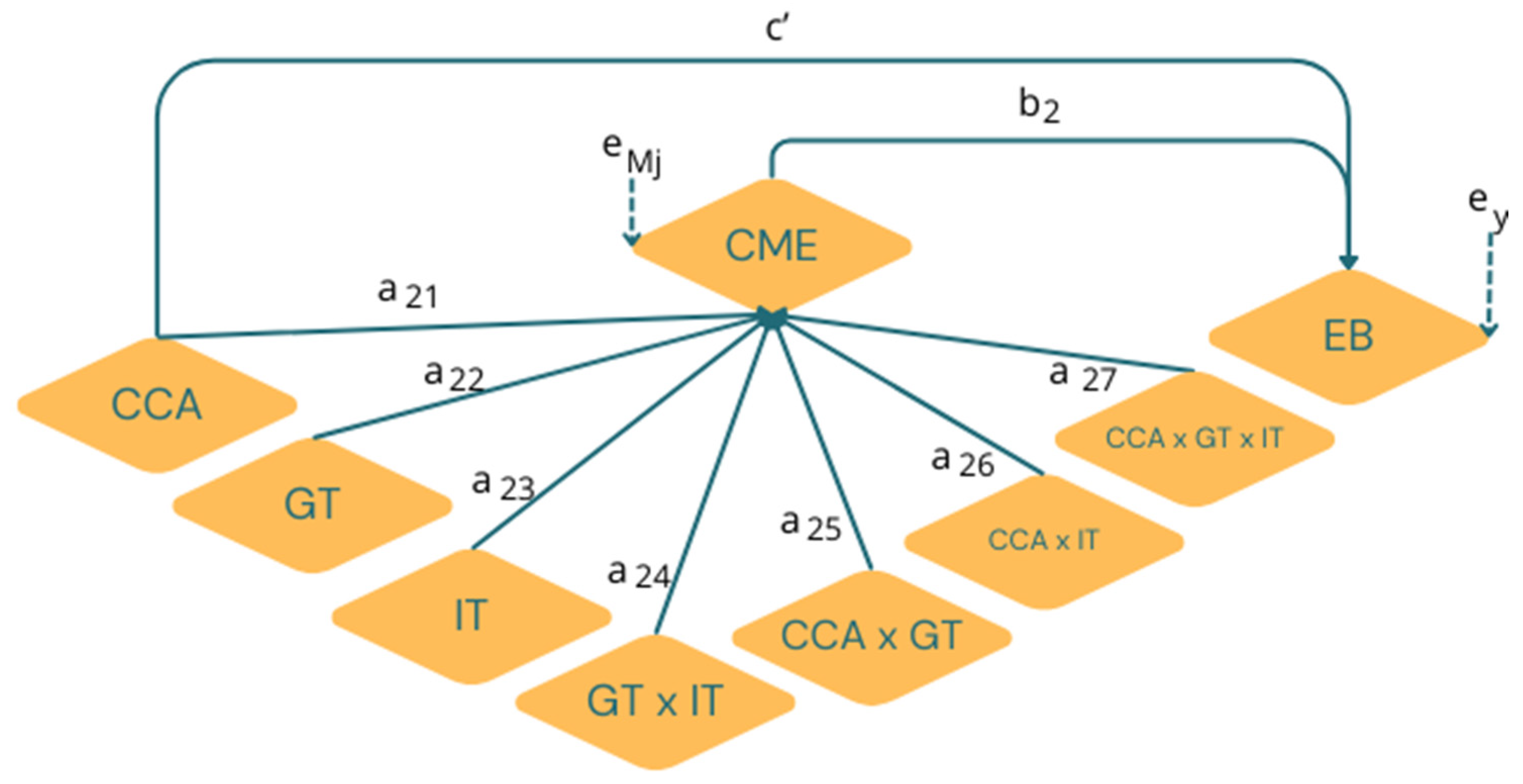
The moderated mediation model 11 employed in this study is appropriate for investigating complex interactions among variables, particularly when examining the indirect effects of an independent variable on an outcome via multiple mediators and moderators. The “PROCESS” macro by Hayes (2013) in SPSS vs 24, is a robust tool widely used in psychology and social sciences for such analyses, providing reliable estimates with bootstrapped confidence intervals to enhance the validity of the findings [44,45,46,47]. The direct and indirect effects identified in the model highlight how CCA influences EB via CCR and CME, with IT and GT moderating these effects. It allows us to understand the conditional processes that underline the observed relationships, providing insights into how institutional trust and generalised trust modify the impact of climate change awareness on environmental behaviour. Figure 1, Figure 2 and Figure 3 present the statistical model equations.
As shown in Figure 1, Figure 2 and Figure 3, the mediation in the direct pathways is expressed through Equations (1) and (2)
CCR = a0 + a1CCA + e1
CME = a0 + a2CCA + e2
Through the Indirect Paths: CCA → CCR → EB, CCA → CME → EB, we can calculate the effect of CCA on CCR (with moderation by IT and GT) by Equation (3), see Figure 2:
CCR = a11CCA + a12GT + a13IT + a14(GT × IT) + a15(CCA × GT) + a16(CCA × IT) + a17(CCA × IT × GT) + e1
and the effect of CCA on CME (with moderation by IT and GT) is shown in Figure 3 using Equation (4):
CME = a21CCA + a22GT + a23IT + a24(GT × IT) + a25(CCA × GT) + a26(CCA × IT) + a27(CCA × IT × GT) + e2
The direct effects of the mediators on environmental behaviour, calculated through the b pathways, are given by Equations (5)–(7) (See Figure 1).
EB = b1⋅CCR + e3
EB = b2⋅CME + e4
EB = c′⋅CCA + e5
The Hayes Model 11 allows measurement of the combined effect of the mediators and the trust variables on the model outcome, environmental behaviour, as shown in Equation (8).
EB = c′⋅CCA + b1CCR + b2CME + b3IT + b4GT + b5 (IT × GT) + e6
Additionally, we can calculate the conditional indirect effect of CCA on EB through both CCR and CME (with IT and GT as moderators) as presented by Equations (9) and (10):
Indirect Effect through CCR,
EB = b1(a11CCA + a12GT + a13IT + a14(GT × IT) + a15(CCA × GT) + a16(CCA × IT) + a17(CCA × IT × GT)) + e7
and indirect effect through CME-
EB = b2 a21CCA + a22GT + a23IT + a24(GT × IT) + a25(CCA × GT) + a26(CCA × IT) + a27(CCA × IT × GT)) + e7
Finally, the combined direct and indirect effects of CCA on EB through the mediators CCR and CME, while considering the moderating roles of IT and GT, are calculated through Equation (11):
EB = b1⋅(a11CCA + a15(CCA × GT) + a16⋅(CCA × IT)) + b2⋅(a21CCA + a25(CCA × GT) + a26⋅(CCA × IT)) + c′⋅CCA + e6

4. Results

The environmental benefits of raising awareness, understanding, and engagement among communities about climate change can be achieved only through broader community action. Similarly, cooperation at large scales (such as cities, regions, and countries) is conditioned by cooperation at smaller scales, and the latter is conditioned by trust. In the present study, trust in institutions among Generation Z respondents presents a complex picture. There is a general belief that politicians are driven by personal gain (See Table 3). Additionally, there needs to be greater trust in the government’s ability to make sound decisions and manage tax revenues effectively. This scepticism may hamper environmental initiatives that rely on government support and funding. A recent study shows that this finding also holds for other population segments in Albania [23]. Similar to the institutional trust results, limited interpersonal trust is evident: 67% of respondents would be willing to leave their home with their parents or other immediate family members, 15% with their closest neighbour, and the remaining 40% would not leave their home with anyone. This limited trust can affect collective action on environmental issues, as trust between community members is crucial for successful cooperation. With high levels of agreement on the importance of voting (4.7), monitoring government activities (4.8) and participating in community affairs (4.6), respondents show a strong sense of active citizenship. There is also considerable commitment to paying taxes (4.8) and helping others (4.7). Protecting the environment is particularly important (4.9), reflecting a proactive stance. These findings suggest that encouraging community engagement can help promote sustainable environmental behaviour among Generation Z.

4.1. Moderated–Moderated Mediation Analysis

Climate change awareness (CCA) was specified as the focal predictor, climate change risk perception (CCR) and community engagement (CME) as parallel mediators, environmental behaviour (EB) as the outcome variable, generalised trust (GT) as moderator W, and institutional trust (IT) as moderator Z. Unstandardised coefficients are reported throughout.

4.1.1. Prediction of Climate Change Risk Perception (CCR)

The regression model predicting climate change risk perception (CCR) was statistically significant (see Table 4); R2 = 0.145, F (7, 250) = 6.07, p < 0.001). The direct effect of climate change awareness (CCA) on CCR was not statistically significant (β = 0.063, SE = 0.312, p = 0.841). Neither generalised trust (GT; β = −0.242, SE = 0.610, p = 0.692) nor institutional trust (IT; β = 1.010, SE = 0.571, p = 0.078) exhibited significant direct effects on CCR.
The two-way interaction terms CCA × GT (β = 0.091, SE = 0.149, p = 0.542), CCA × IT (β = −0.192, SE = 0.138, p = 0.163), and GT × IT (β = −0.446, SE = 0.280, p = 0.113) were not statistically significant. The three-way interaction term CCA × GT × IT was also not statistically significant (β = 0.074, SE = 0.067, p = 0.272). These results indicate that the relationship between climate change awareness and risk perception was not conditionally moderated by generalised trust, institutional trust, or their interaction.

4.1.2. Prediction of Community Engagement (CME)

The regression model predicting community engagement (CME) was statistically significant (R2 = 0.209, F(7, 250) = 9.45, p < 0.001). Climate change awareness exerted a significant positive effect on CME (β = 1.643, SE = 0.381, p < 0.001). Institutional trust also showed a significant positive direct effect on CME (β = 2.635, SE = 0.695, p < 0.001), while the direct effect of generalised trust was marginally significant (β = 1.401, SE = 0.744, p = 0.061). All interaction terms involving CCA and trust variables were statistically significant. The interaction between CCA and generalised trust (CCA × GT) was negative and significant (β = −0.455, SE = 0.181, p = 0.013), as was the interaction between CCA and institutional trust (CCA × IT; β = −0.740, SE = 0.168, p < 0.001). The interaction between generalised trust and institutional trust (GT × IT) was also negative and significant (β = −1.005, SE = 0.342, p = 0.004). Importantly, the three-way interaction term CCA × GT × IT was positive and statistically significant (β = 0.282, SE = 0.082, p < 0.001), indicating that the effect of climate change awareness on community engagement was jointly conditioned by generalised and institutional trust.

4.1.3. Prediction of Environmental Behaviour (EB)

The regression model predicting environmental behaviour (EB) was statistically significant (R2 = 0.141, F(3, 254) = 13.84, p < 0.001). Climate change awareness exhibited a significant positive direct effect on environmental behaviour (β = 0.404, SE = 0.074, p < 0.001). Community engagement showed a positive but marginally significant effect on environmental behaviour (β = 0.124, SE = 0.072, p = 0.088). In contrast, climate change risk perception did not significantly predict environmental behaviour (β = −0.074, SE = 0.089, p = 0.410).

4.2. Conditional Indirect Effects

Bootstrap analyses revealed that the conditional indirect effects of climate change awareness on environmental behaviour, mediated by climate change risk perception, were not statistically significant across all combinations of generalised and institutional trust. The index of moderated–moderated mediation for the pathway CCA → CCR → EB was not significant (Index = −0.005, BootLLCI = −0.035, BootULCI = 0.013).
In contrast, the conditional indirect effects of climate change awareness on environmental behaviour through community engagement varied across levels of trust. The index of moderated–moderated mediation for the pathway CCA → CME → EB was positive but not statistically significant at the 95% confidence level (Index = 0.035, BootLLCI = −0.009, BootULCI = 0.083). Conditional indirect effects were larger at higher levels of institutional trust, although confidence intervals included zero for several trust combinations.

4.3. SuEvaluation of the Conceptual Model

Table 5 summarises the hypothesis-testing results derived from the moderated–moderated mediation analysis. Direct effects hypotheses related to climate change awareness predicting environmental behaviour and community engagement were supported, whereas hypotheses involving climate change risk perception as a mediator were not supported. Moderation hypotheses related to the joint role of generalised and institutional trust were supported for the community engagement pathway but not for the risk perception pathway.

5. Discussion

5.1. The Awareness–Risk Perception Gap in Generation Z

This study set out to test, rather than explore, the conditional pathways linking climate change awareness, risk perception, trust, community engagement, and environmental behaviour among Generation Z in Albania. The first key finding is the absence of a significant direct relationship between climate change awareness (CCA) and climate change risk perception (CCR) (H1 rejected; Table 5). Contrary to dominant assumptions in risk-based climate models, higher awareness does not translate into heightened perceived climate risk among Generation Z. This finding is theoretically meaningful and aligns with growing behavioural evidence that knowledge alone does not necessarily increase perceived urgency [10,48,49,50]. Several behavioural mechanisms help contextualise this result. First, psychological distance may lead young individuals to cognitively acknowledge climate change while perceiving it as temporally, spatially, or socially distant [36,37]. Second, optimism bias may cause Generation Z, despite being highly informed, to underestimate personal exposure to climate risks [14]. Third, repeated exposure to climate-related information in digital environments may contribute to risk normalisation or desensitisation, reducing emotional responsiveness rather than amplifying concern [10,24,51]. The findings suggest an awareness–risk perception gap, indicating that informational strategies alone may be insufficient to mobilise climate action among Generation Z, particularly in contexts characterised by institutional scepticism [52].

5.2. Risk Perception as a Weak Driver of Environmental Behaviour

The second major finding confirms that climate change risk perception does not significantly predict environmental behaviour (H2 rejected; Table 5). This result reinforces the limited behavioural role of perceived risk within the examined model and supports previous evidence showing that risk awareness does not automatically translate into action, especially among younger cohorts [53]. From a theoretical perspective, these findings challenge linear interpretations of CCRPM that assume risk perception as the central behavioural trigger. Instead, it suggests that in low-trust and post-transitional contexts such as Albania, risk perception may be psychologically neutralised when individuals lack confidence in institutions or perceive climate impacts as abstract. The absence of a CCR → EB effect also highlights a social trap in which individuals remain informed but inactive due to low perceived efficacy or delegated responsibility [10,23].

5.3. Direct Role of Awareness in Shaping Environmental Behaviour

Despite the weak role of risk perception, climate change awareness shows a strong and positive direct association with environmental behaviour (H3 supported; Table 5). This finding indicates that awareness can motivate pro-environmental behaviour independently of perceived risk, particularly when behaviour is operationalised as willingness to pay for environmental protection. This result supports the model’s input–output logic, in which awareness serves as a cognitive input that may bypass affective risk pathways and directly influence behaviour through values, norms, or perceived responsibility. At the same time, the findings caution against oversimplifying this pathway. Awareness appears to be necessary but not sufficient, reinforcing the importance of intermediate social mechanisms, particularly community engagement, in shaping behavioural outcomes.

5.4. Community Engagement as the Central Behavioural Mechanism

One of the study’s interesting contributions is identifying community engagement (CME) as the dominant behavioural pathway linking awareness to environmental behaviour. Climate change awareness significantly predicts community engagement (H4 supported), and community engagement shows a positive, though marginal, association with environmental behaviour (H5 marginal; Table 5). This pattern is highly consistent with the Youth Environmental Engagement Model (YEEP), which emphasises participatory and collective dimensions of youth climate action [21,22]. Unlike risk perception, engagement captures social norms, collective efficacy, and participatory orientation, which appear to be more salient drivers of action for Generation Z in Albania. In collectivist and post-socialist societies, environmental issues are often framed as public or institutional responsibilities rather than individual ones [2,54]. Within this context, community engagement provides a socially legitimate pathway for action, allowing individuals to participate without assuming full personal responsibility for systemic problems.

5.5. The Conditional Role of Trust: Understanding Institutional and Generalised Trust

A central contribution of this study lies in unpacking how trust conditionally shapes the awareness–engagement pathway rather than acting as a uniform facilitator of environmental behaviour. The results show that trust does not significantly condition the awareness–risk perception relationship (H6 rejected across all specifications), reinforcing the limited behavioural relevance of risk perception within this context. This finding aligns with growing evidence that risk perception alone is an unstable driver of behavioural change, particularly among younger cohorts exposed to persistent and abstract climate narratives [36].
In contrast, trust plays a decisive, asymmetrical role in shaping community engagement. Both two-way interaction effects, CCA × Institutional Trust (IT) and CCA × Generalised Trust (GT), exert negative effects on community engagement (H7.1 and H7.2 supported). This indicates that when trust is uneven or operates in isolation, higher awareness does not necessarily translate into active engagement. In collective societies, such as Albania, higher trust may paradoxically foster responsibility delegation, whereby individuals assume that institutions or the broader community will act on their behalf, thereby reducing personal involvement. Empirical evidence from Albania and similar post-transitional contexts shows that environmental responsibility is frequently externalised and framed as a public or governmental duty rather than an individual one [43,55].
The three-way interaction (CCA × IT × GT) is positive and statistically significant (H7 supported), demonstrating that synergistic trust is required for awareness to translate into engagement. Neither institutional trust nor interpersonal trust alone is sufficient; meaningful engagement emerges only when both are present. This finding refines trust-based theories of environmental behaviour by showing that trust operates as a configurational mechanism rather than a linear or additive one. In low-trust settings, fragmented trust structures may suppress engagement, whereas aligned trust across social and institutional domains can activate collective efficacy and shared responsibility.

5.6. Generation Z in Low-Trust, Post-Transitional Context

Focusing on Generation Z in Albania provides important contextual insights into how youth environmental behaviour unfolds in low-trust, post-transitional societies. Unlike older cohorts shaped directly by authoritarian governance and institutional erosion, Generation Z’s trust orientations are more strongly embedded in peer networks, informal communities, and digitally mediated social relations. However, the findings suggest that the legacy of collectivist norms persists, reinforcing the diffusion of responsibility even among younger generations.
For Generation Z, high climate change awareness coexists with status quo bias, optimism bias, and cognitive overload, particularly in digitally saturated environments [56,57]. Continuous exposure to climate-related information through social media may increase awareness while simultaneously reducing emotional salience and perceived urgency, a phenomenon well documented in behavioural and decision-making literature [10,58]. In such contexts, awareness becomes superficial rather than transformative, and engagement requires supportive social and institutional conditions to overcome inertia.
The results indicate that Generation Z’s environmental behaviour in Albania is less driven by fear or perceived risk and more by opportunities for collective engagement legitimised by trust. Institutional trust remains essential not as a primary motivator, but as a legitimising force that amplifies interpersonal trust and enables coordinated action. This positions community-based and trust-building strategies as particularly effective tools for mobilising youth climate action in the Western Balkans and similar post-transitional regions.

5.7. Implications and Contribution

Overall, this study demonstrates that environmental behaviour among Generation Z is not primarily risk-driven but engagement-driven, and that engagement itself is conditionally shaped by trust configurations. By empirically testing—rather than assuming—the mechanisms of the Climate Change Risk Perception Model (CCRPM) and the Youth Environmental Engagement Model (YEEP) in a low-trust context, the study advances a more nuanced and context-sensitive understanding of youth climate behaviour.
Importantly, the presence of null and non-significant pathways, particularly in the awareness–risk perception chain, should not be interpreted as weaknesses. Instead, they reveal boundary conditions of established models and highlight the limitations of information- and risk-centred approaches in digitally saturated, low-trust societies. These findings contribute to the growing literature questioning the effectiveness of awareness-based environmental interventions when cognitive biases, trust deficits, and collective action dilemmas remain unaddressed.
From a policy and educational perspective, the results underscore the need to move beyond information provision toward strategies that foster trust, collective efficacy, and community engagement. In post-transitional societies, strengthening the alignment between institutional credibility and interpersonal trust may be more effective in mobilising Generation Z than amplifying climate risk messages alone. By foregrounding the conditional effect of trust, this study positions community engagement as a critical leverage point for overcoming social traps and translating climate awareness into sustained environmental behaviour.

5.8. Study Limitations

Despite the valuable insights provided, this study has several limitations that should be acknowledged when interpreting the findings. First, the sample is concentrated primarily in Tirana and relies on an online, social media–based survey. While this approach is appropriate for accessing Generation Z, it may over-represent digitally active and environmentally aware individuals, thereby limiting the generalisability of the results to the broader Generation Z population in Albania or other contexts. As discussed earlier, this sampling strategy is more likely to affect mean levels of awareness or engagement than the structural relationships between variables; nonetheless, the findings should be interpreted as conditional relationships within a specific, digitally connected segment of youth.
Second, the study relies on self-reported measures, including environmental behaviour operationalised as willingness to pay. Although willingness to pay is a widely used and theoretically meaningful indicator of pro-environmental behaviour, particularly in studies focused on collective action and trust, it captures only one behavioural dimension and may be subject to social desirability or hypothetical bias. Future research could strengthen behavioural measurement by incorporating multidimensional behavioural indices or behavioural observations.
Third, the cross-sectional design restricts causal inference. While the theoretical ordering of variables is grounded in the CCRPM and YEEP frameworks, the observed associations cannot establish temporal or causal directionality. Longitudinal or experimental designs would allow future studies to examine how awareness, trust, engagement, and behaviour evolve over time and how trust dynamics may shift in response to institutional or societal changes.
Finally, while the study focuses deliberately on trust and social capital to preserve model parsimony, other contextual factors—such as economic constraints, policy exposure, cultural narratives, and media framing—may also influence environmental behaviour. Future research could extend this framework by incorporating additional psychological constructs or by testing its applicability across different national and cultural contexts, thereby assessing the generalisability of the trust-conditioned pathways identified in this study.

6. Conclusions

This study examined the conditional effect of trust on Generation Z’s environmental behaviour using a path analysis perspective grounded in the integration of the Climate Change Risk Perception Model (CCRPM) and the Youth Environmental Engagement Model (YEEP). By applying a moderated–mediation model in a low-trust, post-transitional context, the study provides new empirical insights into how climate change awareness translates—or fails to translate—into environmental action among young people.
The findings demonstrate that environmental behaviour among Generation Z in Albania is not primarily driven by perceptions of climate change risk. Climate change awareness does not significantly increase perceived risk, nor does risk perception directly predict environmental behaviour. These null effects are theoretically informative, indicating clear boundary conditions for risk-based models of climate action in digitally saturated and institutionally sceptical contexts. Awareness alone, even when relatively high, does not guarantee perceived urgency or behavioural commitment.
In contrast, community engagement emerges as the central pathway linking awareness to environmental behaviour. Climate change awareness strongly predicts engagement, and engagement, in turn, is associated with pro-environmental behaviour. Crucially, this pathway is conditionally shaped by trust. Institutional trust and generalised trust do not operate as simple facilitators; rather, they function together. When trust is uneven or operates in isolation, higher awareness may lead to responsibility delegation rather than engagement. Only when interpersonal and institutional trust are jointly present does awareness translate into meaningful collective engagement.
By focusing on Generation Z in Albania, this study extends the literature beyond high-income, high-trust settings and highlights the persistence of collectivist norms and trust legacies even among younger cohorts. The results suggest that, in low-trust societies, engagement-driven strategies supported by trust-building may be more effective than risk amplification or information-based approaches alone.
Overall, this study contributes to a more nuanced understanding of youth environmental behaviour by showing that trust conditions, not risk perception, determine whether awareness leads to action. These findings have important implications for environmental education and policy, particularly in post-transitional societies, where fostering collective efficacy, institutional credibility, and community engagement may be key to mobilising Generation Z toward sustained climate action.

Supplementary Materials

The following supporting information can be downloaded at: https://www.mdpi.com/article/10.3390/su18041871/s1, Questionnaire Used in the Study.

Author Contributions

Conceptualization, A.D. and E.K.; methodology, O.Z.; validation, E.K.; writing—original draft preparation, A.D.; writing—review and editing, K.S.G. All authors have read and agreed to the published version of the manuscript.

Funding

This research received no external funding.

Institutional Review Board Statement

Ethical review and approval were waived for this study by Institution Committee due to national regulations and institutional research practices in Albania, as well as with the principles of the Declaration of Helsinki and data protection requirements.

Informed Consent Statement

Informed consent for participation was obtained from all subjects involved in the study.

Data Availability Statement

The original contributions presented in this study are included in the article/Supplementary Material. Further inquiries can be directed to the corresponding author.

Conflicts of Interest

The authors declare no conflicts of interest.

Abbreviations

CCAClimate Change Awareness
CCRClimate Change Risk
CCRPMClimate Change Risk Perception Model
CMECommunity Engagement
EBEnvironmental Behaviour
EUEuropean Union
GTGeneralised Trust (interpersonal trust)
IMMMIndex of Moderated–Moderated Mediation
ITInstitutional Trust
SEMStructural Equation Modelling
WTPWillingness to Pay
YEEPYouth Environmental Engagement Model

References

  1. Smith, E.K.; Mayer, A. A social trap for the climate? Collective action, trust and climate change risk perception in 35 countries. Glob. Environ. Change 2018, 49, 140–153. [Google Scholar] [CrossRef]
  2. Adger, W.N. Social Capital, Collective Action, and Adaptation to Climate Change. In Der Klimawandel; Voss, M., Ed.; VS Verlag für Sozialwissenschaften: Wiesbaden, Germany, 2010; pp. 327–345. [Google Scholar]
  3. Bamberg, S.; Rees, J.; Seebauer, S. Collective climate action: Determinants of participation intention in community-based pro-environmental initiatives. J. Environ. Psychol. 2015, 43, 155–165. [Google Scholar] [CrossRef]
  4. Slovic, P. Perception of risk. Science 1987, 236, 280–285. [Google Scholar] [CrossRef]
  5. Fairbrother, M. Trust and Public Support for Environmental Protection in Diverse National Contexts. Sociol. Sci. 2016, 3, 359–382. [Google Scholar] [CrossRef]
  6. Bonfanti, R.C.; Ruggieri, S.; Schimmenti, A. Psychological Trust Dynamics in Climate Change Adaptation Decision-Making Processes: A Literature Review. Sustainability 2024, 16, 3984. [Google Scholar] [CrossRef]
  7. Dimitrova, R.; Musso, P.; Naudé, L.; Zahaj, S.; Solcova, I.P.; Stefenel, D.; Uka, F.; Jordanov, V.; Jordanov, E.; Tavel, P. National collective identity in transitional societies: Salience and relations to life satisfaction for youth in South Africa, Albania, Bulgaria, the Czech Republic, Kosovo and Romania. J. Psychol. Afr. 2017, 27, 150–158. [Google Scholar] [CrossRef]
  8. Salguero, R.B.; Bogueva, D.; Marinova, D. Australia’s university Generation Z and its concerns about climate change. Sustain. Earth Rev. 2024, 7, 8. [Google Scholar] [CrossRef]
  9. Spadaro, G.; Gangl, K.; Van Prooijen, J.W.; Van Lange, P.A.M.; Mosso, C.O. Enhancing feelings of security: How institutional trust promotes interpersonal trust. PLoS ONE 2020, 15, e0237934. [Google Scholar] [CrossRef] [PubMed]
  10. van Eck, C.W.; Mulder, B.C.; van der Linden, S. Climate Change Risk Perceptions of Audiences in the Climate Change Blogosphere. Sustainability 2020, 12, 7990. [Google Scholar] [CrossRef]
  11. van der Linden, S. On the relationship between personal experience, affect and risk perception: The case of climate change. Eur. J. Soc. Psychol. 2014, 44, 430–440. [Google Scholar] [CrossRef]
  12. van der Linden, S. The social-psychological determinants of climate change risk perceptions: Towards a comprehensive model. J. Environ. Psychol. 2015, 41, 112–124. [Google Scholar] [CrossRef]
  13. van der Linden, S.; Leiserowitz, A.; Rosenthal, S.; Maibach, E. Inoculating the Public against Misinformation about Climate Change. Glob. Chall. 2017, 1, 1600008. [Google Scholar] [CrossRef]
  14. Farrokhi, M.; Khankeh, H.; Amanat, N.; Kamali, M.; Fathi, M. Psychological aspects of climate change risk perception: A content analysis in Iranian context. J. Educ. Health Promot. 2020, 9, 346. [Google Scholar] [CrossRef] [PubMed]
  15. Sattler, D.N.; Graham, J.M.; Whippy, A.; Atienza, R.; Johnson, J. Developing a Climate Change Risk Perception Model in the Philippines and Fiji: Posttraumatic Growth Plays Central Role. Int. J. Environ. Res. Public Health 2023, 20, 1518. [Google Scholar] [CrossRef] [PubMed]
  16. Davis, L.F.; Ramírez-Andreotta, M.D. Participatory Research for Environmental Justice: A Critical Interpretive Synthesis. Environ. Health Perspect. 2021, 129, 026001. [Google Scholar] [CrossRef]
  17. Oinonen, I.; Paloniemi, R. Understanding and measuring young people’s sustainability actions. J. Environ. Psychol. 2023, 91, 102124. [Google Scholar] [CrossRef]
  18. Riemer, M.; Lynes, J.; Hickman, G. A model for developing and assessing youth-based environmental engagement programmes. Environ. Educ. Res. 2014, 20, 552–574. [Google Scholar] [CrossRef]
  19. Stuart, D.; Gunderson, R.; Petersen, B. The climate crisis as a catalyst for emancipatory transformation: An examination of the possible. Int. Sociol. 2020, 35, 433–456. [Google Scholar] [CrossRef]
  20. Stuart, D.; Petersen, B.; Gunderson, R. Shared pretenses for collective inaction: The economic growth imperative, COVID-19, and climate change. Globalizations 2022, 19, 408–425. [Google Scholar] [CrossRef]
  21. Almeida, P.; González, L.R.; Flores, E.O.; Curry, V.; Padilla, A. The building blocks of community participation in local climate meetings. npj Clim. Action 2023, 2, 37. [Google Scholar] [CrossRef]
  22. Fergen, J.T.; Bergstrom, R.D.; Steinman, A.D.; Johnson, L.B.; Twiss, M.R. Community capacity and climate change in the Laurentian Great Lakes Region: The importance of social, human, and political capital for community responses to climate-driven disturbances. J. Environ. Plan. Manag. 2022, 67, 993–1012. [Google Scholar] [CrossRef]
  23. Kaçani, K.; Kokthi, E.; López-Bonilla, L.M.; González-Limón, M. Social tipping and climate change: The moderating role of social capital in bridging the gap between awareness and action. J. Int. Dev. 2024, 36, 2537–2556. [Google Scholar] [CrossRef]
  24. Ariestya, A.; Paramitha, G.; Elmada, M.A.G. Climate change awareness of gen z: The influence of frame and jargon on online news. J. Studi Komun. 2022, 6, 753–770. [Google Scholar] [CrossRef]
  25. Juma-Michilena, I.J.; Ruiz-Molina, M.E.; Gil-Saura, I.; Belda-Miquel, S. An analysis of the factors influencing pro-environmental behavioural intentions on climate change in the university community. Econ. Res.-Ekon. Istraživanja 2023, 36, 2264373. [Google Scholar] [CrossRef]
  26. Juma-Michilena, I.J.; Ruiz-Molina, M.E.; Gil-Saura, I.; Belda-Miquel, S. Pro-environmental behaviours of generation Z: A cross-cultural approach. Int. Rev. Public Nonprofit Mark. 2024, 21, 1–29. [Google Scholar] [CrossRef]
  27. Venghaus, S.; Henseleit, M.; Belka, M. The impact of climate change awareness on behavioral changes in Germany: Changing minds or changing behavior? Energy Sustain. Soc. 2022, 12, 8. [Google Scholar] [CrossRef]
  28. Tao, W.; Tian, S.; Sunny Tsai, W.H.; Seelig, M.I. The Power of Emotional Appeal in Motivating Behaviors to Mitigate Climate Change among Generation Z. J. Nonprofit Public Sect. Mark. 2024, 36, 37–64. [Google Scholar] [CrossRef]
  29. Spychalski, B. Socio-cultural factors shaping the attitude of Generation Z and Generation Alpha youth towards quality. J. Sustain. Dev. Transp. Logist. 2023, 8, 298–311. [Google Scholar] [CrossRef]
  30. Restrepo-Mieth, A.; Perry, J.; Garnick, J.; Weisberg, M. Community-based participatory climate action. Glob. Sustain. 2023, 6, e14. [Google Scholar] [CrossRef]
  31. Baum, C.M.; Gross, C. Sustainability policy as if people mattered: Developing a framework for environmentally significant behavioral change. J. Bioecon. 2017, 19, 53–95. [Google Scholar] [CrossRef]
  32. Elia, A. Interactive effects of citizen trust and cultural values on pro-environmental behaviors: A time-lag study from Indonesia. Heliyon 2022, 8, e09139. [Google Scholar]
  33. Harring, N.; Jagers, S.C. Should we trust in values? Explaining public support for pro-environmental taxes. Sustainability 2013, 5, 210–227. [Google Scholar] [CrossRef]
  34. Marquart-Pyatt, S.T. Environmental Trust: A Cross-Region and Cross-Country Study. Soc. Nat. Resour. 2016, 29, 1032–1048. [Google Scholar] [CrossRef]
  35. Kartseva, A.; Minin, V.; Ranta-Korhonen, T.; Nurmi, E.; Belyakov, V. Environmental education of Z generation students for sustainable development of rural areas (the example of the Russian-Finnish project Luga-Balt-2). E3S Web Conf. 2021, 296, 08017. [Google Scholar] [CrossRef]
  36. Loy, L.S.; Spence, A. Reducing, and bridging, the psychological distance of climate change. J. Environ. Psychol. 2020, 67, 101388. [Google Scholar] [CrossRef]
  37. Maiella, R.; La Malva, P.; Marchetti, D.; Pomarico, E.; Di Crosta, A.; Palumbo, R.; Cetara, L.; Di Domenico, A.; Verrocchio, M.C. The Psychological Distance and Climate Change: A Systematic Review on the Mitigation and Adaptation Behaviors. Front. Psychol. 2020, 11, 568899. [Google Scholar] [CrossRef] [PubMed]
  38. Spence, A.; Poortinga, W.; Pidgeon, N. The Psychological Distance of Climate Change: Psychological Distance of Climate Change. Risk Anal. 2012, 32, 957–972. [Google Scholar] [CrossRef]
  39. Druen, P.B.; Zawadzki, S.J. Escaping the Climate Trap: Participation in a Climate-Specific Social Dilemma Simulation Boosts Climate-Protective Motivation and Actions. Sustainability 2021, 13, 9438. [Google Scholar] [CrossRef]
  40. Rabaa, S.; Geisendorf, S.; Wilken, R. Why Change Does (not) Happen: Understanding and Overcoming Status Quo Biases in Climate Change Mitigation. Z. Umweltpolit. Umweltr. 2022, 45, 100–134. [Google Scholar]
  41. Daskalopoulou, I. Individual-Level Evidence on the Causal Relationship Between Social Trust and Institutional Trust. Soc. Indic. Res. 2019, 144, 275–298. [Google Scholar] [CrossRef]
  42. Torney-Purta, J. Patterns in the Civic Knowledge, Engagement, and Attitudes of European Adolescents: The IEA Civic Education Study. Eur. J. Educ. 2002, 37, 129–141. [Google Scholar] [CrossRef]
  43. Kaçani, K.; Kokthi, E.; González-Limón, M.; López-Bonilla, L.M. From Collective Norms to Personal Responsibility: Integrating TPB and SDT to Explain Green Banking Behaviors in a Transitional Society. Bus. Strategy Dev. 2025, 8, e70229. [Google Scholar] [CrossRef]
  44. Coutts, J.J.; Hayes, A.F.; Jiang, T. Easy Statistical Mediation Analysis with Distinguishable Dyadic Data. J. Commun. 2019, 69, 612–649. [Google Scholar] [CrossRef]
  45. Hayes, A.F.; Montoya, A.K. A Tutorial on Testing, Visualizing, and Probing an Interaction Involving a Multicategorical Variable in Linear Regression Analysis. Commun. Methods Meas. 2017, 11, 1–30. [Google Scholar] [CrossRef]
  46. Hayes, A.F. Partial, conditional, and moderated moderated mediation: Quantification, inference, and interpretation. Commun. Monogr. 2018, 85, 4–40. [Google Scholar] [CrossRef]
  47. Igartua, J.J.; Hayes, A.F. Mediation, Moderation, and Conditional Process Analysis: Concepts, Computations, and Some Common Confusions. Span. J. Psychol. 2021, 24, e49. [Google Scholar] [CrossRef]
  48. Bradley, G.L.; Babutsidze, Z.; Chai, A.; Reser, J.P. The role of climate change risk perception, response efficacy, and psychological adaptation in pro-environmental behavior: A two nation study. J. Environ. Psychol. 2020, 68, 101410. [Google Scholar] [CrossRef]
  49. Karlsson, S.; Lindström, A. Is Knowledge Enough?: A Qualitative Study Investigating the Knowledge-Action Gap of Environmental Science Students. 2020. Available online: https://www.diva-portal.org/smash/record.jsf?pid=diva2:1448520 (accessed on 14 December 2025).
  50. Ricart, S.; Gandolfi, C.; Castelletti, A. Climate change awareness, perceived impacts, and adaptation from farmers’ experience and behavior: A triple-loop review. Reg. Environ. Change 2023, 23, 82. [Google Scholar] [CrossRef]
  51. Jacobson, L.; Åkerman, J.; Giusti, M.; Bhowmik, A. Tipping to Staying on the Ground: Internalized Knowledge of Climate Change Crucial for Transformed Air Travel Behavior. Sustainability 2020, 12, 1994. [Google Scholar] [CrossRef]
  52. Margariti, K.; Hatzithomas, L.; Boutsouki, C. Elucidating the Gap between Green Attitudes, Intentions, and Behavior through the Prism of Greenwashing Concerns. Sustainability 2024, 16, 5108. [Google Scholar] [CrossRef]
  53. Steynor, A.; Pasquini, L. Using a Climate Change Risk Perceptions Framing to Identify Gaps in Climate Services. Front. Clim. 2022, 4, 782012. [Google Scholar] [CrossRef]
  54. Kokthi, E.; Guri, G.; Muco, E. Assessing the applicability of geographical indications from the social capital analysis perspective: Evidences from Albania. Econ. Sociol. 2021, 14, 32–53. [Google Scholar] [CrossRef]
  55. Barnett, J.; Adger, W.N. Climate change, human security and violent conflict. Political Geogr. 2007, 26, 639–655. [Google Scholar] [CrossRef]
  56. Bassiouni, D.H.; Hackley, C. “Generation Z” children’s adaptation to digital consumer culture: A critical literature review. J. Cust. Behav. 2014, 13, 113–133. [Google Scholar] [CrossRef]
  57. Trittin-Ulbrich, H.; Scherer, A.G.; Munro, I.; Whelan, G. Exploring the dark and unexpected sides of digitalization: Toward a critical agenda. Organization 2021, 28, 8–25. [Google Scholar] [CrossRef]
  58. Gifford, R. The dragons of inaction: Psychological barriers that limit climate change mitigation and adaptation. Am. Psychol. 2011, 66, 290–302. [Google Scholar] [CrossRef] [PubMed]
Figure 1. Conditional moderation of Institutional Trust in the relationship CCA-EB.
Sustainability 18 01871 g001
Figure 2. The direct and indirect effects of CCA on EB through CCR.
Sustainability 18 01871 g002
Figure 3. The direct and indirect effects of CCA on EB through CME.
Sustainability 18 01871 g003
Table 1. Demographics.
DemographicsValueFrequencyFrequency Percentage
GenderFemale15660
Male10440
Age18–2522486
Over 253614
Educational LevelHigh School5220.2
Graduate18872.9
Postgraduate187
Employment statusUnemployed8432
Employed10239
Students7428
Monthly incomes in Albanian Lek (ALL)15,000–30,000249.3
31,000–60,0005019.4
61,000–90,0006826.4
91,000–120,0005019.4
120,000+6625.6
Table 2. Reliability Analysis.
ConstructNumber of ItemsCronbach’s Alpha
Community engagement (CME)60.789
Climate change awareness (CCA)60.909
Climate change risk perceptions (CCR)40.789
Environmental behaviour20.859
Table 3. Statistics on Social capital and environmental behaviour indicators.
VariablesMeanSt Deviation
Institutional trust (IT) is analysed through the following statements (1 = strongly disagree to 5 strongly agree):
Most politicians are in politics only for personal gain 3.871.197
Most of the time you believe the government is doing what is right. 2.311.254
State institutions manage tax revenues effectively 2.381.165
To be a good citizen is important to (CME)
Always participate in voting3.141.295
Monitoring of government activities3.671.146
Being active in community affairs4.121.102
Pay taxes regularly4.160.986
To help other citizens who are in worse condition than you are3.641.295
To protect the environment4.520.809
The generalised trust—Suppose someone from the village/town/city had to go away for a while, along with their family. In whose charge could they leave “their house”?2.050.652
Climate change awareness (CCA) (1 = Not at all aware, 5 = Very much aware)
Are you aware of the dangers posed by vehicle emissions to people’s health?3.611.298
Are you aware that using chemical fertilisers and pesticides will cause environmental damage?3.731.295
Are you aware of the dangers of air pollution?4.121.102
Are you informed about the dangers of water pollution?4.021.126
Are you aware of the dangers of insufficient green space?3.761.265
Are you informed about the damage caused by the degradation of cultivated land quality?3.231.358
Climate change and risk perceptions (CCR) (1 = not serious at all, 5 = very serious)
If extreme weather occurs in your area, how serious is the impact on your life?3.321.254
If a geological disaster occurs in your area, how serious is the impact on your life?3.551.308
If vegetation destruction occurs in your area, how serious is the impact on people’s lives?3.411.251
If there is a water shortage in your area, how serious is the impact on your life? 4.400.904
Environmental behaviour EB (1 = strongly to disagree to 5 = strongly agree)
I would agree to pay an environmental contribution if the money were to be used for the environment3.601.352
I would agree to pay an environmental tax if the money were to be used for the environment3.681.314
Table 4. Results of Moderated–Moderated Mediation Analysis.
OutcomePredictorβSEtp
CCRCCA0.0630.3120.20.841
GT−0.2420.61−0.400.692
IT1.010.5711.770.078
CCA × GT0.0910.1490.610.542
CCA × IT−0.1920.138−1.400.163
GT × IT−0.4460.28−1.590.113
CCA × GT × IT0.0740.0671.10.272
Model R20.145
CMECCA1.6430.3814.32<0.001
GT1.4010.7441.880.061
IT2.6350.6953.79<0.001
CCA × GT−0.4550.181−2.510.013
CCA × IT−0.7400.168−4.41<0.001
GT × IT−1.0050.342−2.940.004
CCA × GT × IT0.2820.0823.44<0.001
Model R20.209
EBCCA0.4040.0745.47<0.001
CCR−0.0740.089−0.820.41
CME0.1240.0721.710.088
Model R20.141
Source: PROCESS v4.1, Model 11, N = 258, 5000 bootstrap samples.
Table 5. Summary of Hypothesis Testing.
HypothesisPathwayExpected EffectResultDecision
H1CCA → CCR+β = 0.063, p = 0.841Rejected
H2CCR → EB+β = −0.074, p = 0.410Rejected
H3CCA → EB+β = 0.404, p < 0.001Supported
H4CCA → CME+β = 1.643, p < 0.001Supported
H5CME → EB+β = 0.124, p = 0.088Not supported (marginal)
H6.1CCA × IT → CCR+β = −0.192, p = 0.163Rejected
H6.2CCA × GT → CCR+β = 0.091, p = 0.542Rejected
H6CCA × IT × GT → CCR+β = 0.074, p = 0.272Rejected
H7.1CCA × IT → CMEβ = −0.740, p < 0.001Supported
H7.2CCA × GT → CMEβ = −0.455, p = 0.013Supported
H7CCA × IT × GT → CME+β = 0.282, p < 0.001Supported
Disclaimer/Publisher’s Note: The statements, opinions and data contained in all publications are solely those of the individual author(s) and contributor(s) and not of MDPI and/or the editor(s). MDPI and/or the editor(s) disclaim responsibility for any injury to people or property resulting from any ideas, methods, instructions or products referred to in the content.