Article

Enhancing Livelihood Resilience Through Specialty Agriculture: A Study of Daylily Farmers in Northern China’s Agro-Pastoral Ecotone

1
College of Resource and Environment, Shanxi Agricultural University, Taigu 030801, China
2
Datong Daylily Industrial Development Research Institute, Datong 037004, China
*
Author to whom correspondence should be addressed.
Sustainability 2026, 18(4), 1861; https://doi.org/10.3390/su18041861
Submission received: 7 January 2026 / Revised: 3 February 2026 / Accepted: 10 February 2026 / Published: 11 February 2026

Abstract

As global climate change intensifies and economic transformation progresses, the agro-pastoral ecotone of northern China faces dual challenges of stopping ecological degradation and enhancing farmers’ livelihoods. Yunzhou District in Shanxi Province represents a typical ecologically fragile area, where the daylily industry contributes significantly to improving livelihood resilience. This study categorized farmers into three types based on their dependence on daylily income: major-job farmers (50–90% income from daylily), sole agriculture farmers (≥90%), and side-job farmers (<50%). Using questionnaire survey data and the optimal parameter-based geographical detector method, we evaluated and compared the livelihood resilience levels of these farmer types and identified their key explanatory factors. The results showed that (1) major-job farmers exhibited the highest livelihood resilience index (0.165), followed by sole agriculture farmers (0.152), whereas side-job farmers exhibited the lowest (0.138); (2) significant differences in livelihood resilience existed across farmer types (p < 0.05); and (3) health status was a common key factor across all types, while factors such as traffic accessibility, policy awareness, social security, and information acquisition capability exhibited differential effects among groups. These findings provide empirical evidence to guide targeted livelihood interventions and sustainable transitions in the agro-pastoral ecotone.

1. Introduction

The agro-pastoral ecotone of northern China is located in an arid and semi-arid region and serves as a key transition zone for China’s shift from agriculture to animal husbandry [1]. For a long time, the region’s ecosystem has been degrading owing to natural factors, such as surface structure and climate, as well as the cumulative effects of unsustainable human resource use. This has resulted in increased soil erosion, greater land fertility, and declining land use efficiency. The growing conflict between the ecological environment and human activities has become a significant obstacle to long-term regional development. As extreme weather events become more frequent, Chinese agriculture is confronted with significant climate risks [2]. Meanwhile, the rapid transformation of the economy and society has led to changes in both the economic and industrial structure in the agro-pastoral ecotone in northern China, thus presenting significant challenges to the sustainability of farmers’ livelihoods. Extreme climate events have intensified the ecological degradation in the region [3] and directly threatened the stability of agricultural production. However, many farmers lack the capacity to adapt to these external shocks, such as volatile climate variations, fluctuating commodity prices, and economic crises, further increasing their livelihood vulnerability [4]. Therefore, strengthening farmers’ capacity to sustain their livelihoods amid external challenges has become a key topic in addressing developmental challenges in agro-pastoral ecotones. Examining how specialty agriculture can be leveraged to build livelihood resilience constitutes a critical research frontier for achieving sustainable development in these vulnerable regions.
Daylily (Hemerocallis) is a perennial herb with significant economic and cultural value that is widely used in food, horticulture, and other industries. China is the primary origin of daylily farming and boasts the world’s most extensive cultivation area [5]. Yunzhou District, a part of Shanxi Province, located in the central part of northern China’s agro-pastoral ecotone, has been cultivating daylily for over 600 years. As one of China’s major daylily production regions, Yunzhou is known for this agricultural specialization. Daylily cultivation in Yunzhou maximizes the use of land resources [6] and offers farmers a more effective approach to increasing their income compared to other crops. Specialty agriculture has recently emerged as a key approach to enhancing farmers’ livelihoods and promoting ecological conservation [7,8]. The promotion of modern agricultural technologies [9] and growing market demand have contributed to the continued expansion of the daylily industry in Yunzhou, making it a key pillar of the regional economy and significantly influencing local livelihood patterns [10,11]. The escalating climate risks and livelihood vulnerabilities in this region [1] necessitate urgent assessments of its adaptive strategies, particularly through specialty agriculture such as daylily farming, which is valued for its economic stability and drought tolerance.
The concept of livelihood resilience has evolved significantly since Holling’s [12] seminal work on ecological systems. Initially applied to natural ecosystems, resilience theory was later extended to social-ecological systems [13,14], emphasizing adaptive cycles and transformability. This conceptual expansion enabled its application to environmental hazards [15,16], climate change [17,18], and livelihood research [19,20]. The primary emphasis is on how systems can adjust and evolve in response to shocks. Recently, strengthening resilience has become a key objective in numerous developing nations [21]. Livelihood resilience, a key tool for analyzing how farmers enhance their ability to cope with external risks, has gradually gained attention in academic circles. Research indicates that livelihood resilience levels significantly influence the sustainability of farmers’ livelihoods and stability of regional development [22,23]. Contemporary research has crystallized around four key domains: (1) In-depth comprehension of the concept. Livelihood resilience is generally defined as the ability of a livelihood system to adjust and recover from environmental, economic, or social disturbances, thereby enabling adaptation and improvement. Scholars not only focus on returning to the previous state but also emphasize the continuous optimization of livelihood strategies to effectively cope with changes and challenges [24,25]. (2) Construction of analytical frameworks. These frameworks are built from multiple dimensions and focus on the integration of different capacities. For example, Quandt [26] developed the household livelihood resilience approach by integrating five types of capital using a sustainable livelihood approach. Speranza et al. [27] proposed an analytical framework built upon buffer, self-organization, and learning capacities, and it has been extensively applied in related research [28,29,30]. Livelihood resilience has been conceptualized into three core aspects, namely, absorptive, adaptive, and transformative capacities by Smith and Frankenberger [31]. Liu et al. [32] developed a structural dynamics framework to assess livelihood resilience that integrated four dimensions, namely, livelihood quality, livelihood promotion, livelihood provision, and disaster stress. (3) Assessment of livelihood resilience levels. Studies focus on examining the adaptation and recovery capacities of different regions and groups when facing multiple challenges, such as climate disasters, environmental changes, and socioeconomic pressures, analyzing their response strategies, and improving their livelihood patterns under complex disturbances [33,34,35]. (4) Systematic analysis of influencing factors. Studies have revealed the roles of various factors in shaping farmers’ livelihood resilience, showing that factors such as climate change, policy measures, and information dissemination have significant impacts in different regions and contexts [36,37,38]. These factors influence farmers’ access to resources, decision-making processes, and coping capacities, thereby affecting their recovery performance in the face of disasters and socioeconomic changes. While these frameworks provide a robust foundation, their application to understanding resilience dynamics within specialized agricultural systems, particularly those centered on high-value perishable crops like daylily, remains limited.
In summary, promoting sustainable livelihoods in the agro-pastoral ecotone requires a nuanced understanding of resilience within its emerging specialty agriculture sectors. Although livelihood resilience frameworks offer valuable tools and daylily farming demonstrates clear socio-economic potential, key questions persist: (1) How does resilience systematically differ among farmers with varying levels of specialization within the same specialty crop system? (2) What are the precise, group-specific factors and their interactions that influence resilience in this context? (3) How can advanced analytical methods be best deployed to uncover these complex, spatially heterogeneous relationships? Addressing these questions is essential for moving beyond generic policy recommendations and developing targeted, effective interventions.
To provide answers to these specific questions, it is necessary to first recognize key limitations in the current body of research. First, while livelihood resilience frameworks have been widely applied, empirical studies focusing specifically on the agro-pastoral ecotone of northern China remain scarce. Consequently, little attention has been paid to how resilience might systematically differ across distinct livelihood types within its emerging specialty agriculture systems, a gap that obscures the heterogeneous characteristics between farmer groups. Second, comprehensive assessments and in-depth analyses of the mechanisms through which specialty agriculture, such as daylily farming, enhances livelihood resilience in this vulnerable region are still required. Third, methodologically, although the optimal parameter-based geographical detector (OPGD) model has proven effective in detecting spatial heterogeneity [39,40], its application to livelihood resilience analysis remains underdeveloped. This gap hinders the precise, data-driven identification of group-specific factors and their interactions, which is crucial for moving beyond generic insights. These gaps collectively hinder the development of targeted policies for sustainable transitions in vulnerable regions. Therefore, this study aims to extend the existing livelihood resilience literature by providing a nuanced understanding of how livelihood diversification aligned with the extended industrial chain of a specialty crop like daylily differentially shapes resilience across heterogeneous farmer groups. Methodologically, we advance the application of the OPGD model to livelihood resilience analysis, enabling a robust, data-driven detection of group-specific explanatory factors and their interactions, which is often obscured in conventional regression-based approaches. This study not only offers a context-specific empirical contribution but also provides a conceptual refinement to diversification theory by demonstrating that resilience in specialty agriculture systems depends not merely on income source plurality but on the functional integration of complementary activities within the industry chain. This critical distinction between the quantity and the qualitative alignment of diversified activities remains undertheorized in standard livelihood frameworks, which typically treat diversification as a unidimensional asset count rather than a strategically structured process. To address the aforementioned gaps, this study specifically aims to (1) assess livelihood resilience variations among daylily farmers across different livelihood types (sole agriculture, major-job, and side-job farmers) in the agro-pastoral ecotone of northern China and (2) identify key factors associated with livelihood resilience across different farmer types and examine interactions among these factors. By doing so, it seeks to provide both a refined analytical framework and actionable insights for developing sustainable livelihood approaches in fragile agro-pastoral ecosystems.

2. Materials and Methods

2.1. Study Area

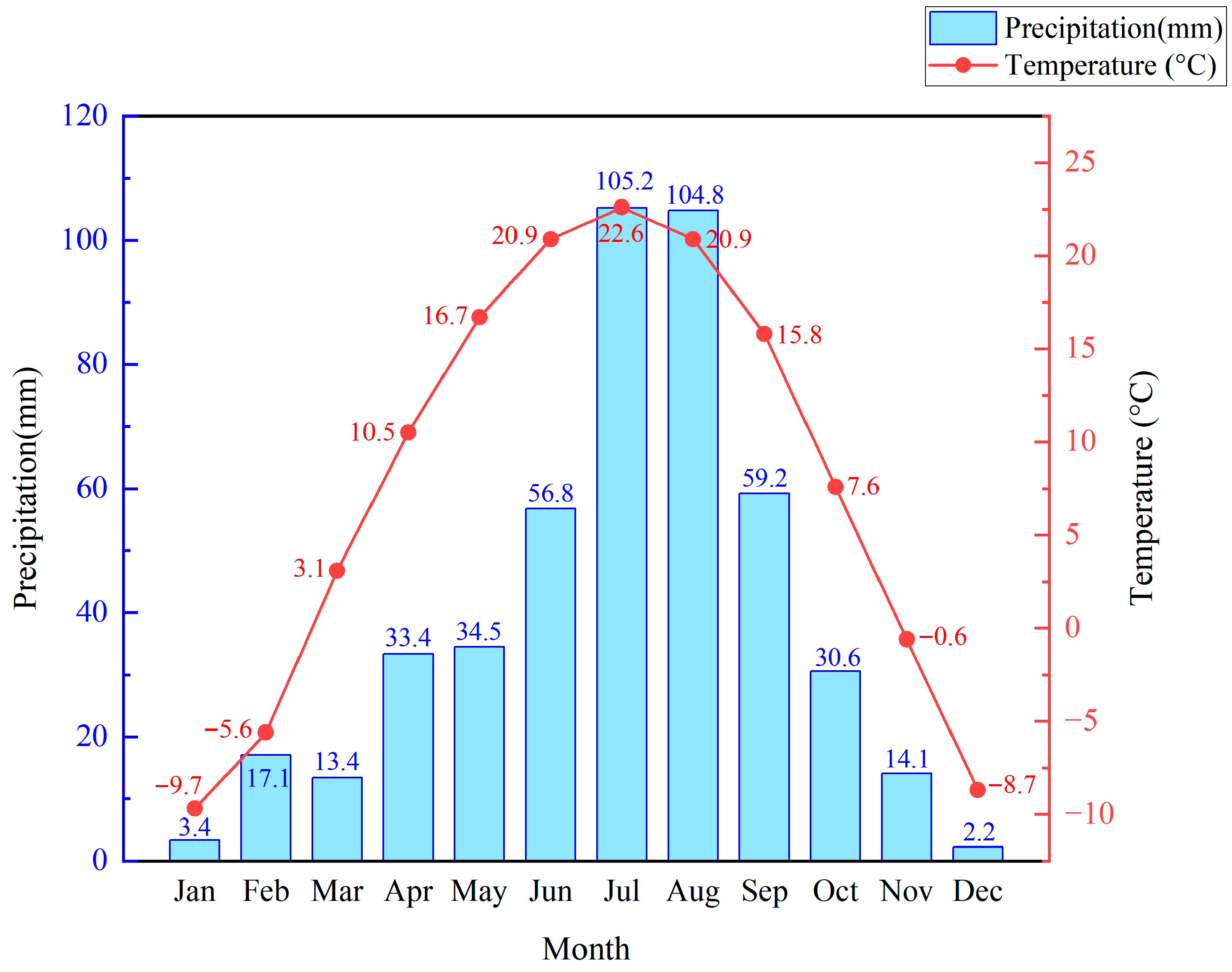
Yunzhou District, situated in northern Shanxi Province (113°20′ E–113°55′ E, 39°43′ N–40°16′ N), has a temperate continental monsoon climate, with an annual average temperature of 7.8 °C, average annual precipitation of 474.6 mm, and frost-free period of 125 d. The monthly patterns of precipitation and temperature are shown in Figure 1. The terrain slopes from the northwest to the southeast, with elevations ranging from 891.7 m to 2167.1 m, and it is prone to natural disasters, such as hailstorms. Yunzhou covers a total area of 1478 km2 and includes 486.67 km2 of arable land. The district is divided into nine towns and 128 administrative villages.

2.2. Data Source

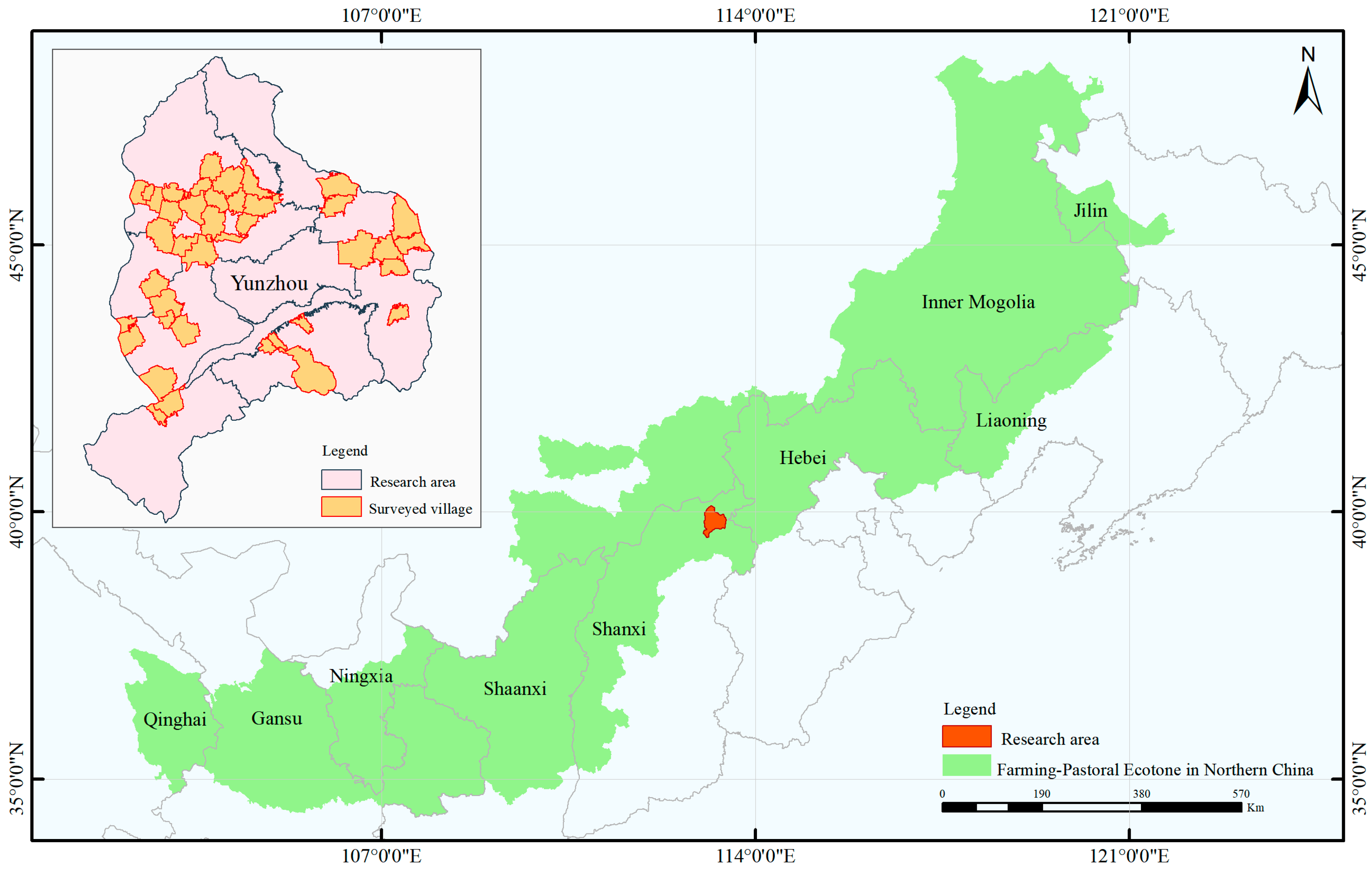
Empirical data for this research were gathered through a livelihood survey of farmers undertaken in the Yunzhou District between July and August 2024. Based on the development of the local daylily industry, 40 administrative villages were selected as survey sample points (Figure 2). To ensure representativeness, 10 farmers were randomly selected from each village, with randomization aimed at covering different demographics and farming practices. This approach aimed to minimize bias and ensure a more comprehensive understanding of the farmers’ livelihood conditions. Of these, 377 were deemed valid, achieving a response rate of 94.25%. To address potential biases, such as non-response bias and inaccuracies in responses, enumerators underwent thorough training, and the questionnaire was pre-tested to enhance its clarity and reliability. The questionnaire covered four capital dimensions: (1) personal capital (age, education level, etc.); (2) natural/physical capital (land area, production means, etc.); (3) financial capital, with detailed income disaggregation (primary daylily sales, value-added activities, non-integrated income); and (4) social capital (knowledge transfer, trust networks, etc.).
This study was conducted after obtaining formal ethical approval from the College of Resources and Environment, Shanxi Agricultural University. The research protocol, including the questionnaire and informed consent procedure, was reviewed and approved through the institutional ethics review process of the College (Approval Document dated: 3 June 2024). All procedures involving human participants were performed in accordance with the ethical standards of this institutional review and with the 1964 Helsinki Declaration and its later amendments. Informed consent was obtained from all individual participants included in this study prior to the survey commencement.

2.3. Methodology

2.3.1. Classification of Farmers’ Livelihood Types

To systematically assess livelihood resilience across daylily farming households, this study employed an income-based classification framework adapted from Han et al. [41], with modifications to align with Yunzhou’s specialized agricultural context. Although the original classification thresholds were maintained, operational definitions were refined to focus exclusively on daylily-derived income and distinguish it from broader agricultural categories in the reference study. Accordingly, farmers were categorized into three distinct types based on the proportion of total household income obtained from daylily cultivation: (1) sole agriculture farmers: households obtaining ≥90% of their income from selling fresh daylily buds; (2) major-job farmers: households deriving 50–90% of their income from selling fresh daylily buds, with the remainder coming from value-added activities related to daylily, such as deep processing and agritourism; and (3) side-job farmers: households earning <50% of their income from daylily-related sources, with the majority predominantly from non-agricultural sectors (e.g., migrant wage labor). Hereafter, we refer to these groups collectively as farmers and individually by the terms defined above: sole agriculture, major-job, and side-job.
While operationally defined by income thresholds, each farmer category corresponds to a distinct livelihood strategy with implications for risk and adaptive capacity. (1) Sole agriculture farmers pursue a specialization strategy, characterized by deep commitment to and dependence on the daylily value chain. (2) Major-job farmers embody a within-sector diversification strategy, combining core daylily production with value-added activities. (3) Side-job farmers follow an off-farm labor strategy, where daylily farming plays a supplementary role. This conceptual distinction is crucial for interpreting resilience differences, as it shifts the analytical focus from a mere accounting of income composition to an understanding of the underlying strategic choices that shape adaptive capacity. Consequently, this strategic framework provides the lens through which the observed variation in resilience levels across groups can be meaningfully explained.
An analysis of 377 validated questionnaires revealed a balanced distribution across the three types: sole agriculture farmers accounted for 33.16%, major-job farmers for 36.34%, and side-job farmers for 30.50%. This representative distribution, where each category exceeds 30% prevalence, ensures comprehensive coverage of the diverse livelihood strategies present in Yunzhou’s daylily farming community while preserving methodological comparability through consistent application of the established income thresholds.

2.3.2. Framework for the Evaluation Index System

The selection of the buffer—self-organization—learning capacity framework proposed by Speranza et al. [27] for this study is theoretically grounded in the distinctive characteristics of specialty agriculture systems, particularly daylily farming in fragile ecotones. Specialty agriculture in such contexts presents a set of distinct challenges and opportunities, including high product perishability, labor-intensive practices, and tight coupling with complex value chains. These features necessitate a resilience framework that captures not only static asset buffers (buffer capacity) but also the dynamic capacities for collective adjustment (self-organization capacity) and knowledge-based renewal (learning capacity). To operationalize this framework into measurable indicators, we drew upon and adapted established measurement approaches from related livelihood resilience studies [42,43]. Building on this foundation and contextualized to daylily farming, we selected evaluation indicators across the three dimensions as presented in Table 1.
To determine the relative importance of these three critical dimensions in constructing a composite resilience index, we argue for their equal weighting based on the distinctive socio-ecological attributes of daylily farming. We posit that buffer, self-organization, and learning capacities are equally fundamental and interdependent in this context. First, buffer capacity provides the immediate shock absorption crucial for a perishable commodity like daylily, where production or climatic setbacks cannot be easily offset by storage. Second, self-organization capacity is critical for navigating complex and often volatile value chains, requiring collective action for coordinated marketing, quality control, and accessing niche markets. Third, learning capacity is indispensable for sustaining competitiveness in this high-value sector. Farmers must continually acquire and apply precise knowledge on cultivar selection, pest and disease management specific to daylily, efficient harvesting windows, and post-harvest processing techniques to preserve quality and meet market standards. The failure in any one dimension can critically undermine the entire livelihood system, which supports the theoretical premise of their co-equal importance. Therefore, the equal weighting (1/3 each) assigned to these dimensions in our composite index is primarily grounded in this contextual theoretical rationale. The operational robustness of this weighting scheme is further empirically confirmed by the sensitivity analysis presented in Section 2.3.3.
Having established the theoretical rationale for the framework and its weighting, we detail its operationalization into measurable indicators. The selection and definition of specific indicators were contextualized to reflect the unique socio-ecological and economic characteristics of daylily farming in Yunzhou. Buffer capacity was measured through seven indicators representing key livelihood capitals (natural, human, physical, financial) that enable farmers to absorb shocks. These include foundational assets critical for daylily production, such as per capita cultivated area and soil quality, as well as household financial and labor resources. Self-organization capacity was assessed via seven indicators capturing farmers’ ability to navigate and leverage institutional and social structures. Self-organization capacity was assessed via seven indicators capturing farmers’ ability to navigate and leverage institutional and social structures. This dimension emphasizes factors such as integration into cooperatives, awareness of supportive policies, satisfaction with social security provisions, physical access to markets, engagement in community affairs, and the strength of local trust and support networks, all of which are vital for collective adaptation in a specialized agricultural system. Learning capacity was evaluated using seven indicators that reflect the acquisition and application of knowledge and skills. Given the technical and market-oriented nature of daylily farming, this dimension focuses on educational attainment, experiential learning through previous work, training participation, daily information exchange, knowledge transfer from others, and entrepreneurial willingness, all of which are essential for continuous adaptation and innovation. This tailored set of 21 indicators provides a comprehensive basis for quantifying and comparing livelihood resilience across the three defined farmer types.

2.3.3. Assessment of Livelihood Resilience Index

The range standardization method was first applied to normalize the data. Subsequently, the entropy weight method, which is an objective weighting technique based on information entropy, was used to calculate the weights of individual indices [44]. Following the theoretical rationale established in Section 2.3.2, equal weights (1/3 each) were assigned to aggregate the indicator scores into the three composite dimension indices. Finally, farmers’ overall livelihood resilience was assessed using the composite index method [41], as expressed in the following formulae:
B i = W b j = 1 7 ω j X i j *
S i = W s j = 8 14 ω j X i j *
L i = W l j = 15 21 ω j X i j *
R i = B i + S i + L i
where X i j * denotes the standardized livelihood resilience value for the i-th farmer, and ω j denotes the corresponding weight; W b , W s , and W l are the weights for buffer, self-organization, and learning capacities, respectively; B i , S i , and L i refer to the buffer, self-organization, and learning capacities of the i-th farmer, respectively; and R i represents the livelihood resilience index.
To validate the robustness of the equal-weight assumption for the three dimensions, we conducted a sensitivity analysis by adjusting the weight of the buffer capacity by +20%, adjusting the weight of the learning capacity by −20%, and proportionally redistributing the remaining weights to other dimensions. The results confirmed that the livelihood resilience ranking remained unchanged, with all index fluctuations within ±5% of the original values (Supplementary Table S1). This supports the stability of our conclusions under plausible weight variations.

2.3.4. Optimal Parameter-Based Geographical Detector Model

To identify the group-specific factors associated with livelihood resilience and their interactions, we employed the optimal parameter-based geographical detector (OPGD) model [45]. This method extends the standard geographical detector model [46], which quantifies the explanatory power (q-value) of factors on a spatial outcome, by automating a critical but subjective step: the discretization of continuous variables. The OPGD algorithm iteratively tests combinations of classification methods (e.g., natural breaks, quantile) and interval numbers, selecting the parameter set that maximizes the q-value for each explanatory variable. This data-driven optimization ensures the robustness of detecting spatially stratified heterogeneity by minimizing arbitrariness in parameter choice.
We implemented the OPGD model using the GD package in R. For each continuous variable, five discretization methods (natural breaks, equal interval, quantile, geometric interval, and standard deviation) were tested with 2 to 5 break intervals; the model automatically selected the optimal combination per factor. Categorical variables were analyzed in their original form. This analysis was conducted separately for each farmer type (sole agriculture, major-job, side-job) to isolate group-specific explanatory factors of resilience. The full optimization results are provided in Supplementary Materials (Table S2). Furthermore, to uncover synergistic or antagonistic effects between factors, we applied the interaction detector module of the OPGD model. This module evaluates whether the combined influence of two factors on resilience is nonlinear (enhancing or weakening) or independent relative to their individual effects. Thus, the OPGD model provided a robust, spatially explicit framework essential for achieving our second research objective: to move beyond average effects and precisely identify the explanatory factors and interactive mechanisms of livelihood resilience across heterogeneous farmer groups.

2.3.5. Methodological Caveat

It is important to acknowledge methodological considerations related to our indicators and their interpretation within the OPGD analysis. First, the indicator system integrates both stock variables (e.g., means of production and living, X4) and flow variables (e.g., per capita income, X2). While this follows the sustainable livelihoods approach to capture multifaceted capital, it conflates different temporal dynamics of livelihood assets. Second, several variables rely on farmers’ self-reported assessments using ordinal scales (e.g., soil capability index, X5; policy awareness, X12). Although common in survey-based research, such measures are subject to potential recall bias, subjective interpretation, and scale coarseness.
These potential sources of measurement error warrant caution when interpreting the explanatory power (q-values) derived from the OPGD model. A high q-value for a self-reported or ordinally scaled variable robustly indicates its strong perceived or reported association with resilience within our dataset. However, the absolute magnitude of the q-value may be influenced by the consistency of subjective reporting or the coarseness of the measurement scale, in addition to the underlying substantive relationship. Therefore, while the OPGD analysis effectively identifies factors that are empirically salient in stratifying resilience, the results should be interpreted as revealing robust patterns of association within the context of our measurement approach, rather than as precise, bias-free estimates of causal strength. The use of multiple indicators and the focus on comparative resilience across pre-defined farmer types help to mitigate the risk that the overarching conclusions are driven solely by measurement artifacts.

2.3.6. Group Difference Analysis

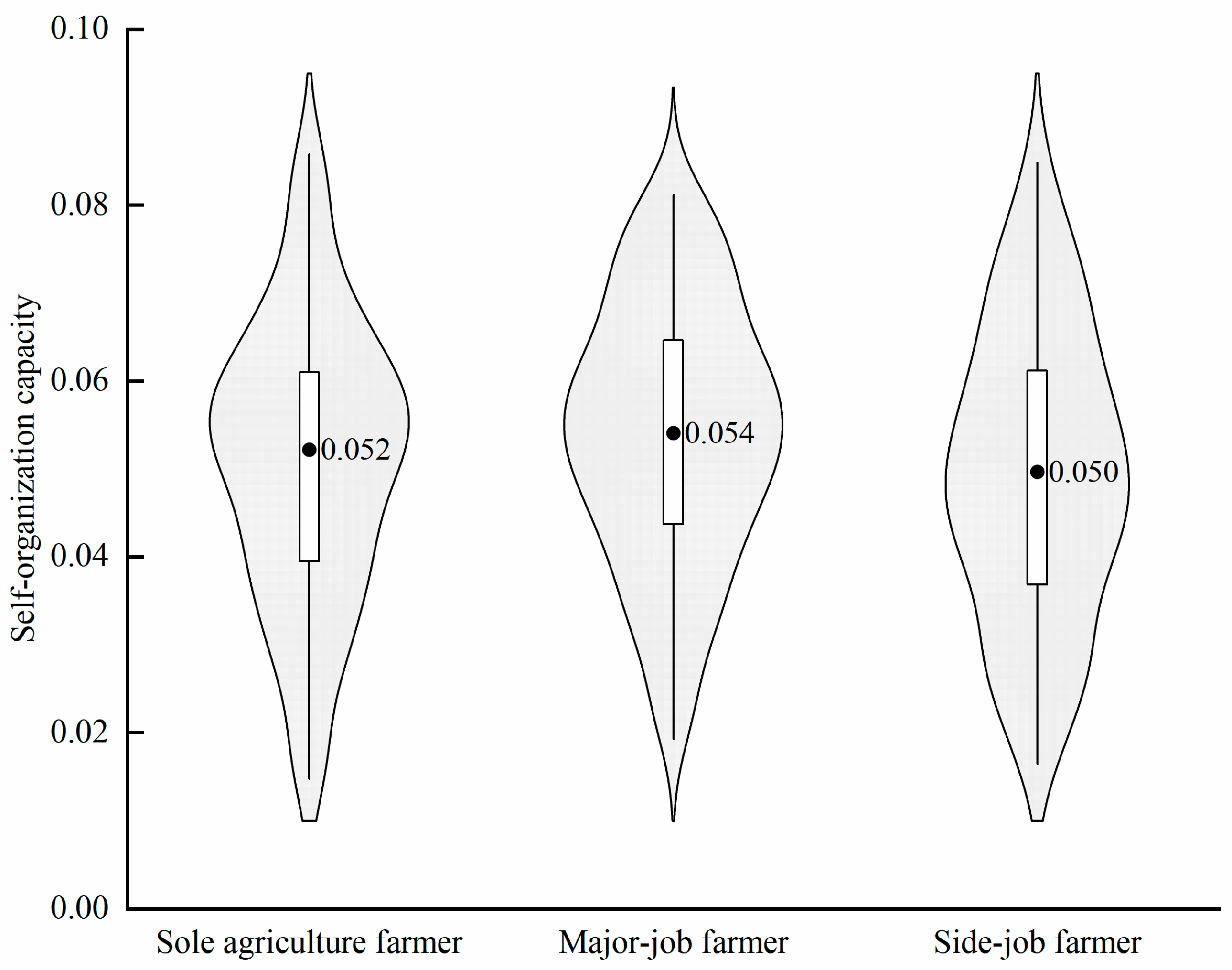
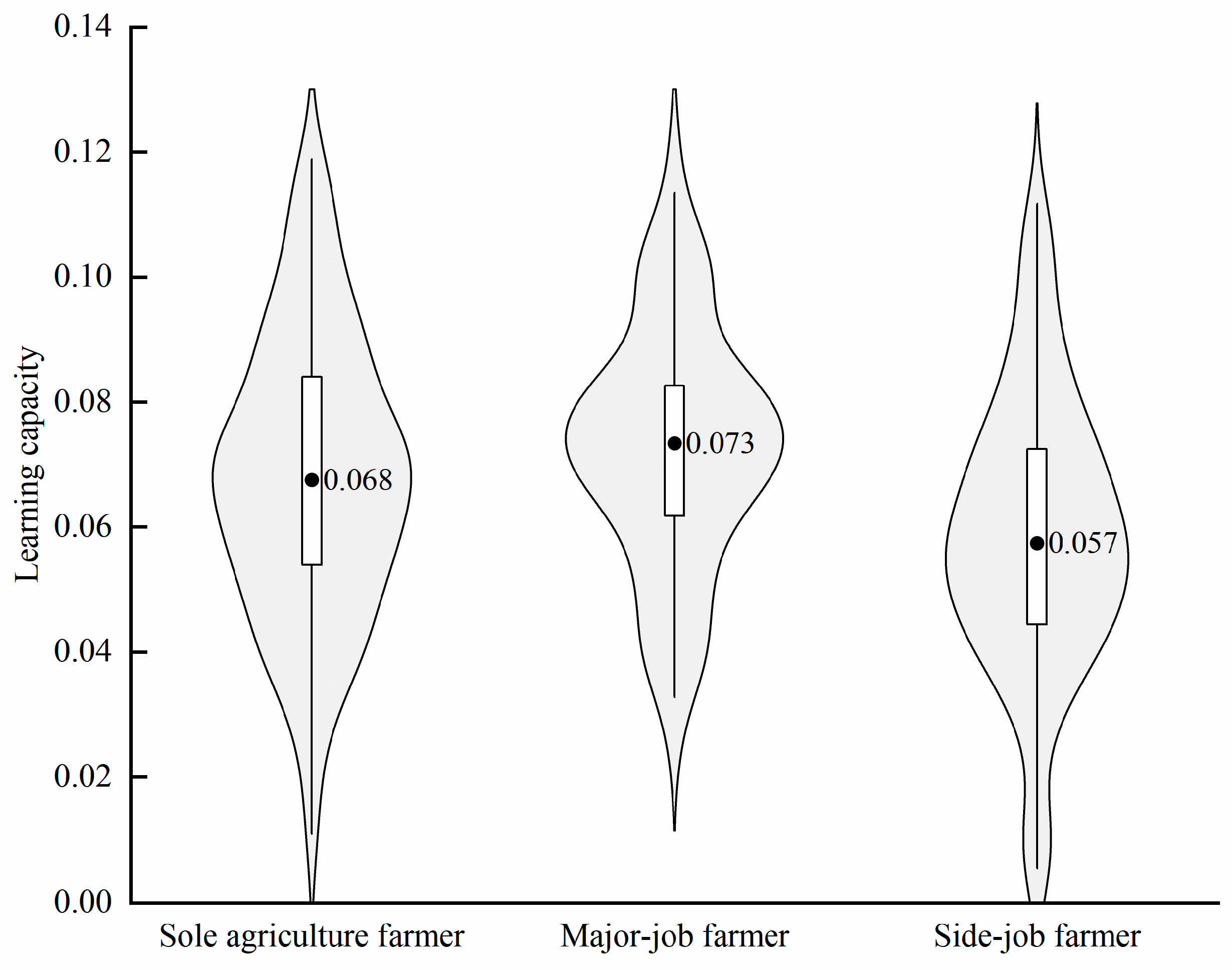
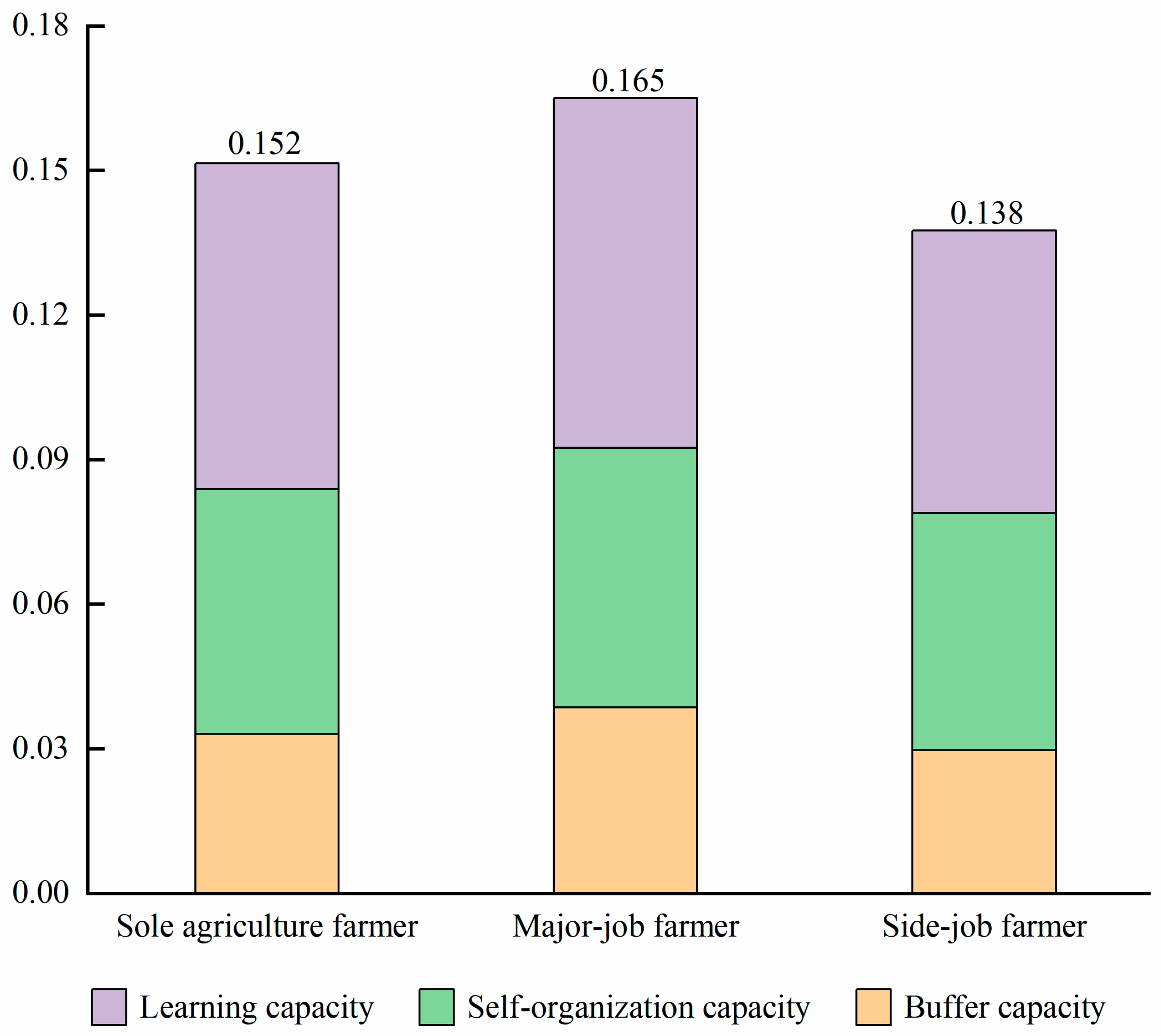
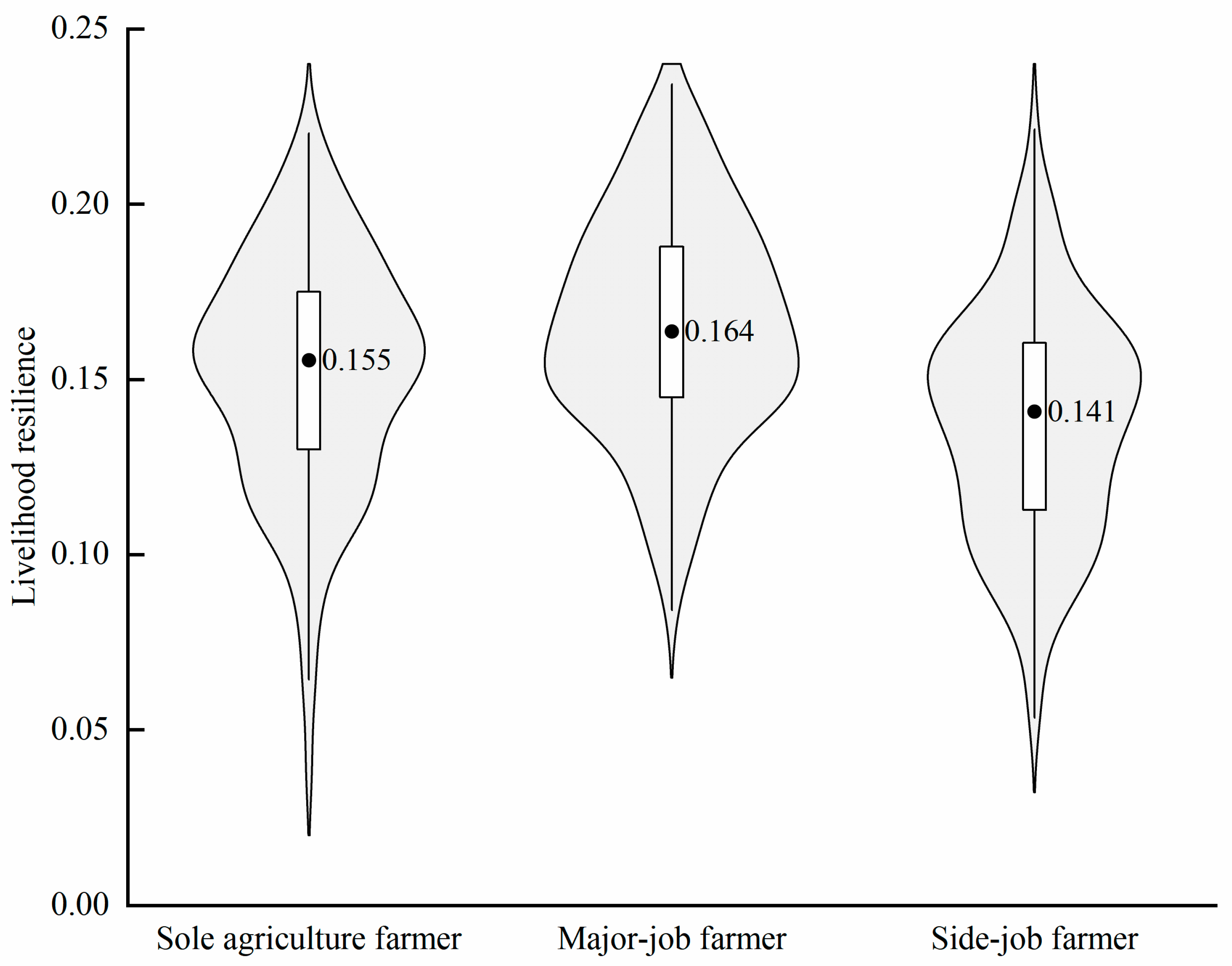
A one-way analysis of variance (ANOVA) was performed to examine the differences in livelihood resilience and its dimensions (buffer, self-organization, and learning capacities) among the different types of farmers. Prior to conducting the ANOVA, normality and homogeneity of variance were assessed using the Kolmogorov–Smirnov test and Levene’s test, respectively. The data showed that all datasets followed a normal distribution (p > 0.05) and fulfilled the variance homogeneity assumption (p > 0.05), thus satisfying the prerequisites for ANOVA. SPSS (version 27.0) was used to perform the ANOVA on the buffer capacity, self-organization capacity, learning capacity, and overall livelihood resilience index. A significance level of 0.05 was adopted for all statistical tests. Violin plots with box elements were used to visualize differences in the capacity indices, whereas a stacked bar chart was used to illustrate variations in the livelihood resilience index.

3. Results

3.1. Livelihood Resilience Assessment

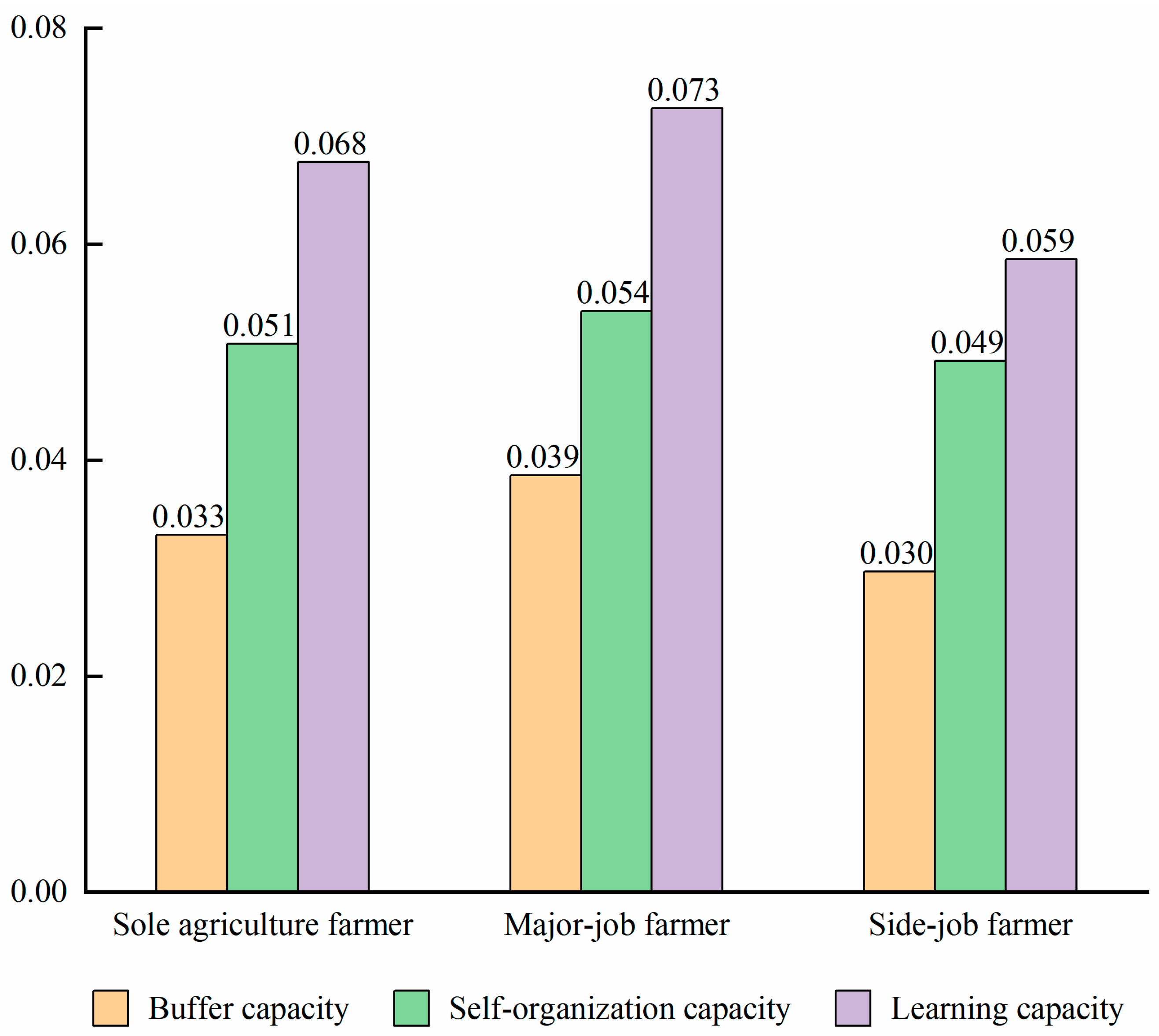
The buffer, self-organization, and learning capacities indices for different types of daylily farmers in Yunzhou District were calculated based on Formulas (1)–(3). Figure 3 shows that, across all dimensions, the learning capacity index was highest among the three types of farmers, followed by self-organization capacity, with buffer capacity the lowest. This indicates an imbalance in the livelihood development of daylily farmers, which highlights the need to enhance farmers’ abilities to cope with external risks in a comprehensive manner.
The analysis revealed significant differences in buffer and learning capacities across different types of farmers (p < 0.05). The magnitude of these differences, quantified as the percentage by which major-job farmers (the highest group) exceeded side-job farmers (the lowest group), was substantial: +30.0% for buffer capacity and +23.7% for learning capacity. Similarly, the overall livelihood resilience of major-job farmers was 19.6% higher than that of side-job farmers (p < 0.05). In contrast, significant differences were not observed for self-organization capacity (p > 0.05), though the observed value for major-job farmers was 10.2% higher than that for side-job farmers. Detailed results for Levene’s test for equality of variances and one-way ANOVA are presented in Table 2. These findings are visually represented in Figure 4, Figure 5, Figure 6, Figure 7 and Figure 8, which illustrate the patterns of variation across dimensions using violin plots and stacked bar charts.

3.1.1. Buffer Capacity

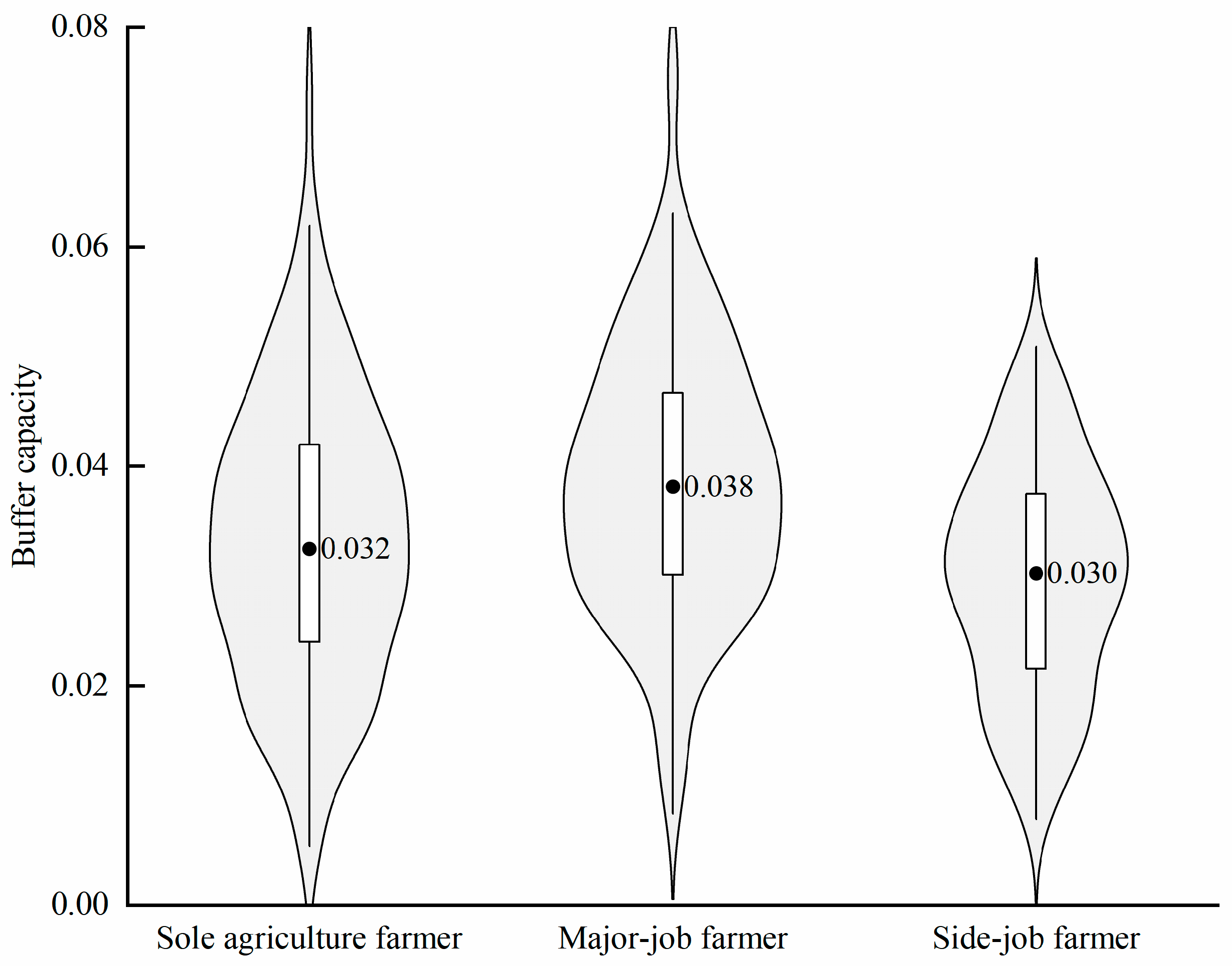
Major-job farmers exhibited the highest buffer capacity (0.039), followed by sole agriculture farmers (0.033), with side-job farmers showing the lowest capacity (0.030) (Figure 4). This represents a 30.0% higher buffer capacity for major-job farmers compared to side-job farmers, and an 18.2% advantage over sole agriculture farmers. These differences were highly significant (p < 0.001; Table 2). This hierarchy aligns with their varying degrees of engagement with and economic dependence on the daylily industry. The major-job group also displayed the most homogeneous distribution of capacity (Figure 3), indicating a more uniform endowment of the key productive assets that constitute buffer capital. In contrast, sole agriculture farmers showed greater internal variability, likely reflecting disparities in operational scale, resource access, or management practices among specialized households. The comparatively low and less variable buffer capacity of side-job farmers underscores their peripheral engagement in and limited accumulation of assets from the local agricultural economy. Together, these patterns suggest that buffer capacity is intrinsically linked to the depth and nature of integration into the specialty agriculture system.

3.1.2. Self-Organization Capacity

Major-job farmers exhibited the highest self-organization capacity (0.054), followed by sole agriculture farmers (0.051), and side-job farmers (0.049) (Figure 3). These values indicate that major-job farmers’ self-organization capacity was 10.2% higher than that of side-job farmers and 5.9% higher than that of sole agriculture farmers. However, a one-way ANOVA revealed that these differences were not statistically significant (p > 0.05; Table 2). Visually, the distributions were broadly similar, though the side-job farmers group exhibited slightly greater variability (Figure 5).
The lack of significant divergence in self-organization capacity may reflect the pervasive influence of institutional and social structures within Yunzhou’s specialized daylily economy. The widespread promotion of farmer cooperatives, strong pre-existing kinship and community networks, and uniform access to basic infrastructure likely provide a common institutional scaffold that supports a baseline level of social integration and collective action capability for all farmers engaged in the sector, regardless of their degree of specialization. Consequently, while major-job and sole agriculture farmers might derive slightly higher benefits due to their deeper immersion, the fundamental capacity for self-organization appears to be a shared characteristic across the farmer spectrum, shaped more by the common local context than by individual livelihood strategy.

3.1.3. Learning Capacity

Learning capacity displayed a clear hierarchical order: major-job farmers scored highest (0.073), followed by sole agriculture farmers (0.068), and side-job farmers lowest (0.059) (Figure 3). This translates to a 23.7% higher learning capacity for major-job farmers relative to side-job farmers, and a 7.4% advantage over sole agriculture farmers. This gradient was statistically significant (p < 0.001; Table 2). Distributionally, major-job farmers exhibited a tight, high-scoring cluster, whereas sole agriculture and side-job farmers showed more dispersed and lower-scoring profiles (Figure 6). This pronounced stratification underscores that learning capacity is sensitive to livelihood strategy. Major-job farmers’ within-industry diversification likely immerses them in a rich information ecosystem, systematically fostering higher and more uniform capacity. In contrast, the specialization of sole agriculture farmers may confine learning to a narrower, production-centric scope, while for side-job farmers, skill development is naturally deprioritized in favor of wage labor competencies. Thus, the depth of integration into the specialty agriculture system appears to influence the level of learning capacity.

3.1.4. Livelihood Resilience

The composite livelihood resilience index integrated the three-dimensional capacities, revealing a definitive hierarchy consistent with the patterns observed in buffer and learning capacities. Major-job farmers achieved the highest overall resilience (0.165), followed by sole agriculture farmers (0.152), with side-job farmers exhibiting the lowest resilience (0.138) (Figure 7). Quantitatively, major-job farmers’ overall resilience was 19.6% higher than that of side-job farmers and 8.6% higher than that of sole agriculture farmers. These group differences were statistically significant (p < 0.001; Table 2). The distribution of the resilience index further differentiated the groups (Figure 8). Major-job farmers’ scores were centered in the mid-to-high range, indicating consistently robust outcomes. Sole agriculture farmers showed a concentration around the median, while side-job farmers were clustered at the lower end of the scale.
This integrated result underscores that livelihood resilience is systematically stratified by livelihood strategy. The superior resilience of major-job farmers arises from their leading position across all underlying capacities (Figure 3), showcasing the compound advantage of strategic, within-value-chain diversification. Sole agriculture farmers’ intermediate resilience reflects the strength of specialization, albeit without the additional boost from engaging in complementary value-added activities. The constrained resilience of side-job farmers confirms the vulnerability inherent in a peripheral relationship to the specialty agriculture system, where limited gains are made in any of the core capacity domains.

3.2. Explanatory Factors of Livelihood Resilience

3.2.1. Individual Explanatory Factors

The factor detector of the OPGD model was used to calculate the q-value for each indicator, identifying those that exhibit significant spatially stratified heterogeneity in relation to livelihood resilience across farmer types. The q-value quantifies a factor’s explanatory power, representing the strength of spatial association. In essence, it measures how well a factor’s spatial distribution explains the spatial distribution of resilience. Consistent with the methodological caveat (Section 2.3.6), these q-values should be interpreted as measures of salient empirical association within our study landscape, not as direct estimates of causal effect. Unobserved confounders (e.g., intrinsic motivation) or endogenous relationships (e.g., reciprocal influence between social networks and resilience) may underlie the observed associations. The results are presented in Table 3. To capture the most salient factors, we focus our discussion on the top five ranked explanatory factors (highest q-values) for each farmer type.
Analysis of the top factors reveals both commonalities and strategic differentiations in the factors associated with resilience across groups (Table 3). Health status (X3) emerged as the predominant factor associated with resilience across all farmer types, with the highest q-values (0.568–0.724), underscoring its non-substitutable role as fundamental human capital for agrarian livelihoods. Beyond this universal foundation, the factor structures diverge, reflecting each group’s distinct livelihood strategy. For sole agriculture farmers, resilience is closely associated with factors linked to specialized production and risk buffering: traffic accessibility (X10) for market linkage, policy awareness (X12) for navigating regulations, and social network support (X9) for mutual aid. The prominence of knowledge transfer capability (X21) highlights their reliance on peer learning to optimize specialized practices. For major-job farmers, the factors associated with resilience reflect their dual engagement in production and value-added activities. While traffic accessibility (X10) and policy awareness (X12) remain important, social security (X14) stands out as particularly salient, potentially mitigating the risks inherent in their more diversified but still agriculture-centric strategy. Information acquisition capability (X18) is also strongly associated with resilience, supporting adaptive management across a broader set of activities. For side-job farmers, the factor profile aligns with a strategy anchored outside agriculture. Social security (X14) and information acquisition (X18) are strongly linked to navigating the non-farm labor market. The significance of neighborhood trust (X11) and entrepreneurial willingness (X19) points to the importance of local social cohesion and adaptive flexibility for a group whose primary income and security lie beyond the daylily value chain.

3.2.2. Interaction Detection Among Factors

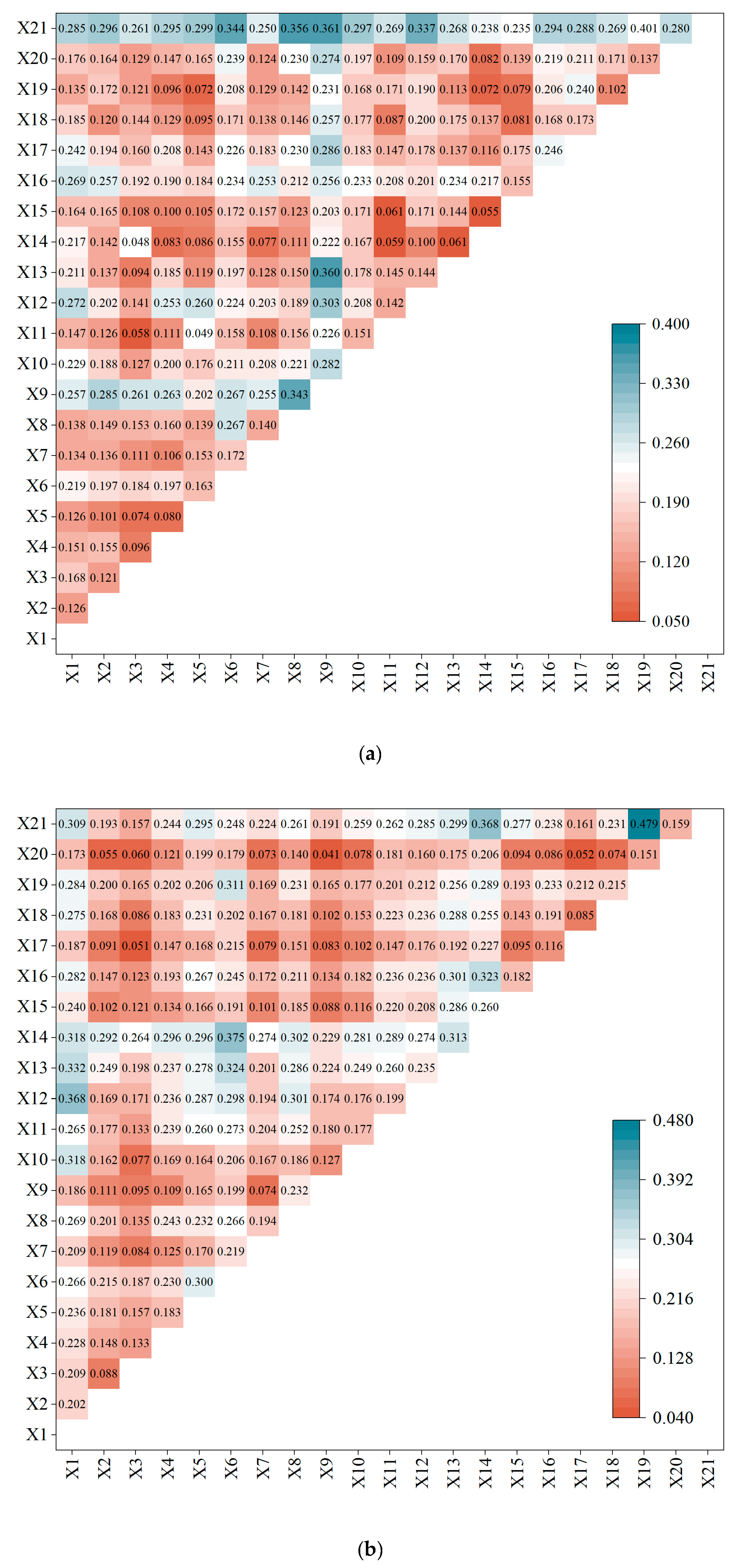
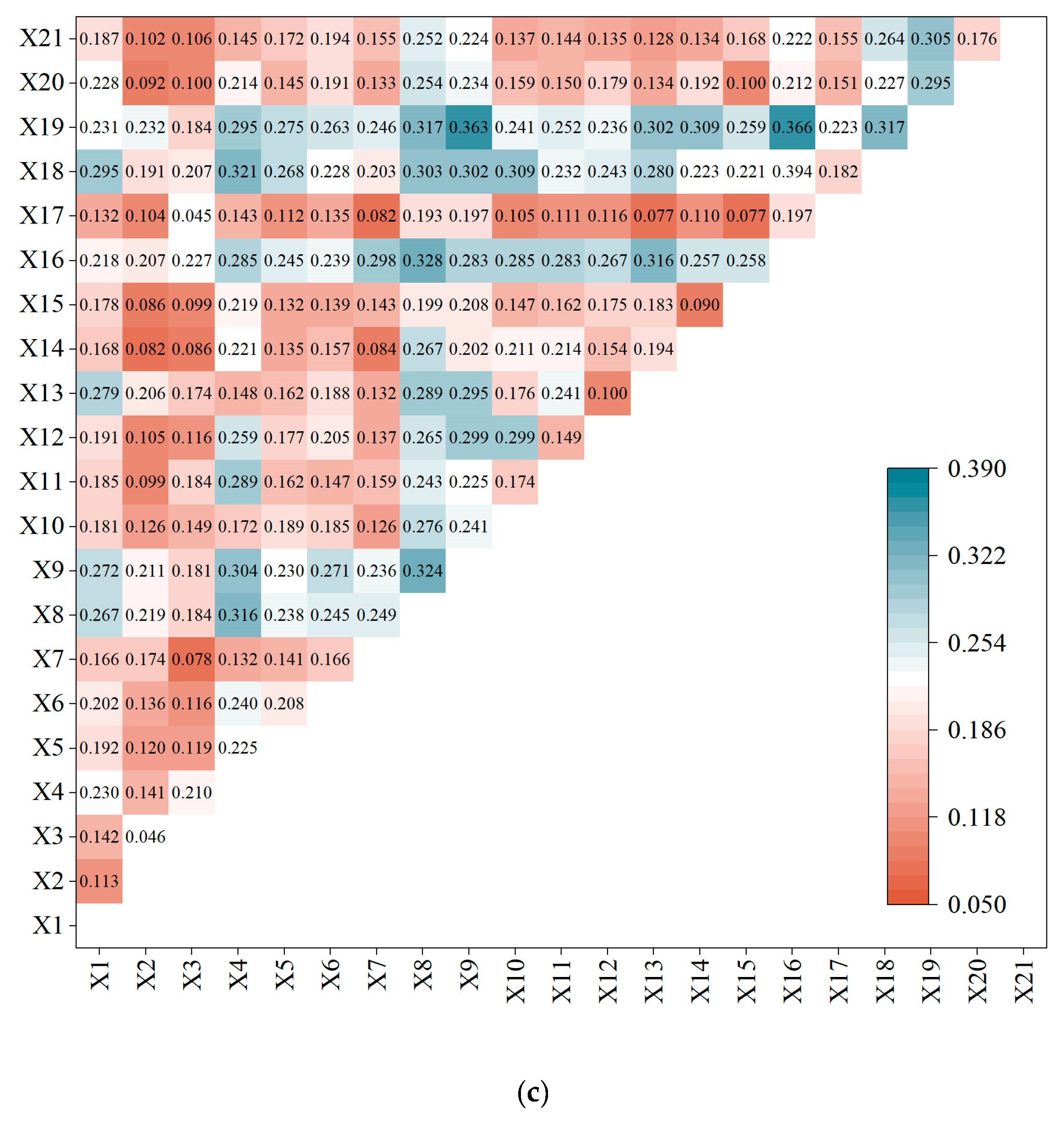
The interaction detector analysis revealed widespread non-linear associations among factors related to livelihood resilience across all farmer types, with no independent relationships observed (Figure 9). This pattern indicates that resilience outcomes are closely linked to interconnected factor synergies rather than isolated effects. Among the numerous interactions detected, two pairs for each farmer type stand out due to their exceptional combined strength of association (q-value) and their clear alignment with the group’s distinctive livelihood strategy.
For sole agriculture farmers (Figure 9a), resilience shows a particularly strong joint association with entrepreneurial willingness (X19) and knowledge transfer capability (X21) (q = 0.401). This pattern suggests a potential mechanism whereby exposure to successful practices through peer networks may stimulate entrepreneurial intent. A second key synergy exists between social network support (X9) and collective affairs participation (X13) (q = 0.360), pointing to the interconnected roles of strong interpersonal ties and collective action for specialized farmers. For major-job farmers (Figure 9b), the strongest joint association is between loan opportunities (X6) and social security (X14) (q = 0.375). This pairing indicates that access to formal credit and robust social safety nets are strongly and non-linearly linked in their relation to resilience for this diversified group. Furthermore, the interaction between per capita cultivated area (X1) and policy awareness (X12) (q = 0.368) highlights how tangible resource endowments and the knowledge to leverage supportive policies are jointly associated with resilience. For side-job farmers (Figure 9c), resilience is most strongly jointly associated with daily communication (X16) and information acquisition capability (X18) (q = 0.394). This underscores that frequent social exchange and information access are closely intertwined in their relation to resilience for this externally oriented group. Additionally, the synergy between social network support (X9) and entrepreneurial willingness (X19) (q = 0.363) suggests that strong community bonds and entrepreneurial intent may reinforce each other as complementary resources.

4. Discussion

4.1. Differential Resilience Patterns and Policy Priorities Across Farmer Types

This study reveals a hierarchy in livelihood resilience aligned with strategic engagement in the daylily value chain. Major-job farmers exhibited the highest resilience (0.165). This superior outcome is explained by their within-industry diversification strategy, which functionally integrates core production with value-added activities, creating synergistic buffers and enhancing adaptive learning within the familiar industrial ecosystem. In contrast, sole agriculture farmers showed moderate resilience (0.152) through specialization, yet their limited involvement in complementary activities constrained further enhancement. Side-job farmers had the lowest (0.138), as their reliance on disconnected non-farm labor failed to harness the systemic benefits of the specialty agriculture sector. These findings refine conventional diversification paradigms [47,48] demonstrating that resilience in specialty agriculture depends not merely on income source plurality but on the functional alignment of activities within the extended industrial chain.
Examining dimensional scores reveals a critical structural imbalance: learning capacity was highest across all types, yet buffer capacity was consistently the lowest. Survey data corroborate this bottleneck: 34% of respondents cited insufficient production tools (linked to X4) as a barrier to adopting techniques, and 22% reported a lack of credit access (X6) despite high training participation. This mismatch explains why high potential for learning does not automatically translate into enhanced resilience; foundational assets are a prerequisite for applying knowledge effectively. Therefore, policy interventions should adopt a sequential, capacity-building approach grounded in this explanatory framework: first, strengthening the foundational buffer capacity; second, leveraging the existing high learning capacity to convert skills and information into practical, adaptive actions; and third, fostering self-organization to institutionalize collective and sustainable resilience. This sequence logically progresses from securing basic livelihood stability to optimizing adaptive potential and finally embedding resilience in social structures.

4.2. Synergistic Mechanisms of Factor Interactions

The strong factor interactions identified in Section 3.2.2 point to underlying social and practical mechanisms that differentially shape resilience. Interpreting these synergies reveals how combined factors operate within each group’s strategic context. For sole agriculture farmers, the synergy between entrepreneurial willingness (X19) and knowledge transfer (X21) suggests a knowledge-driven opportunity activation mechanism. Peer learning reduces the perceived risk of new ventures by providing tangible models, thereby catalyzing entrepreneurial action. This is illustrated by a farmer’s comment: “I saw my neighbors making money by drying daylilies, so I learned and started doing the same.” (from open-ended responses). Concurrently, the link between social network support (X9) and collective affairs participation (X13) reflects network-facilitated collective governance. Dense trust networks enable effective participation in cooperatives, which in turn formalizes mutual aid to manage risks that exceed individual coping capacity.
For major-job farmers, the interaction between loan opportunities (X6) and social security (X14) indicates a risk-buffered investment mechanism. A robust social safety net mitigates the personal downside of investment failure, thereby encouraging the use of credit for diversification. Simultaneously, the synergy of per capita cultivated area (X1) and policy awareness (X12) exemplifies resource-policy leveraging. Policy knowledge allows farmers to strategically deploy their land assets to access subsidies or certifications, amplifying the returns from their resource base. As one farmer noted, “The village meetings told us about government subsidies and insurance for planting daylily, which made us feel secure to farm.” (from open-ended responses).
For side-job farmers, the interplay between daily communication (X16) and information acquisition (X18) operates via socially embedded information filtering. Active information-seeking skills enhance the utility of the constant information flow within village communication networks, which is critical for securing non-farm labor. A respondent’s experience captures this: “After finishing odd jobs, I heard from others about a factory hiring, so I went there.” (from open-ended responses). Furthermore, the combination of social network support (X9) and entrepreneurial willingness (X19) demonstrates socially facilitated entrepreneurial experimentation. Strong community support lowers the barriers and risks for small-scale entrepreneurial trials, making this supplementary strategy more viable for a group primarily dependent on external wage labor.

4.3. Policy Implications

The identified hierarchy of resilience and the explanatory factors point to a logical policy pathway: enhancing livelihood resilience requires a sequential approach that first secures basic livelihood foundations (buffer capacity), then enables adaptive responses (learning capacity), and finally is sustained by supportive institutions (self-organization capacity). Accordingly, interventions should be prioritized as follows.
Strengthening foundational buffer capacity is the immediate priority. This is directly driven by the finding that health status (X3) was the most powerful and universal factor associated with resilience (Table 3). Policies must therefore prioritize safeguarding this fundamental human capital, for instance, through enhanced primary healthcare services. Enhancing adaptive capacity requires leveraging and expanding learning strengths. Information acquisition capability (X18) was a key factor for multiple groups, indicating a core need to improve information access and flow. This can be complemented by addressing group-specific learning factors: supporting knowledge transfer (X21), salient for sole agriculture farmers, and encouraging entrepreneurial willingness (X19), important for side-job farmers. However, the effectiveness of these adaptive efforts also requires addressing critical constraints related to self-organization capacity. Our data highlight two such constraints: traffic accessibility (X10) and social security (X14). Improving physical infrastructure addresses the market linkage barrier for sole agriculture and major-job farmers, while strengthening social safety nets mitigates risks for major-job and side-job farmers. In summary, this evidence-based framework explicitly links interventions to the specific factors that shape resilience across farmer types, providing a targeted blueprint for sustainable development in the study region.

4.4. Limitations and Future Research Directions

Beyond the immediate context of Yunzhou District, our findings offer insights with varying degrees of transferability to other regions. Some mechanisms are likely context-specific to daylily farming in Yunzhou. For instance, the resilience advantage associated with major-job farmers is tied to a value-chain structure that capitalizes on this crop’s unique dual attributes: its perishable fresh buds that require swift sale or processing, and its cultural significance that supports agritourism. This specific synergy may not be directly replicable with crops that have different shelf-lives or cultural associations. Conversely, broader patterns such as the foundational importance of health status, the critical role of information access, and the sequential capacity-building pathway may hold relevance for specialty-crop systems with similar attributes or agro-pastoral regions facing similar climate risks and market integration challenges.
This study’s limitations are fourfold. First, its geographical focus on a single district constrains the generalizability of specific empirical results, necessitating validation across broader agro-pastoral ecotones. Second, the cross-sectional data design limits analysis of resilience dynamics over time, highlighting the need for longitudinal research. Third, the micro-level focus on household data omits broader community and regional factors that shape livelihood contexts; integrating macro-level data would yield a more systemic understanding. Finally, while the OPGD model robustly detected spatial heterogeneity, its reliance on the q-statistic for optimization does not establish causality, and its application requires adequate sample sizes per stratum.

5. Conclusions

This study systematically examined livelihood resilience and its explanatory factors among daylily farmers in the agro-pastoral ecotone of northern China, focusing on Yunzhou District, Shanxi Province. Using a survey-based approach and the optimal parameter-based geographical detector model, we assessed resilience across three farmer types categorized by their dependence on daylily income: sole agriculture, major-job, and side-job farmers. The findings yield several key conclusions.
First, livelihood resilience exhibited a clear hierarchical structure aligned with farmers’ strategic engagement in the daylily value chain. Major-job farmers demonstrated the highest resilience, benefiting from a within-industry diversification strategy that integrates production with value-added activities. Sole agriculture farmers exhibited moderate resilience through specialization, whereas side-job farmers showed the lowest resilience due to their reliance on disconnected non-farm labor. Across all groups, learning capacity was the strongest dimension, followed by self-organization capacity, while buffer capacity remained the weakest, indicating a structural imbalance that constrains the translation of knowledge into resilient outcomes.
Second, significant differences in resilience were observed between farmer types, particularly in buffer and learning capacities. Self-organization capacity did not differ significantly across groups, suggesting that institutional and social scaffolds in Yunzhou provide a common baseline of collective capacity regardless of livelihood strategy.
Third, the key factors explaining resilience varied distinctively among farmer types, reflecting their divergent strategic contexts. Health status emerged as the most universal and powerful factor across all groups. For sole agriculture farmers, resilience was most strongly associated with market accessibility, policy awareness, and peer learning. For major-job farmers, social security, information access, and market linkage were key explanatory factors. For side-job farmers, social security, local trust, and entrepreneurial initiative played prominent explanatory roles. Interaction analysis further revealed that resilience is explained not by isolated factors but through synergistic mechanisms, such as knowledge-driven opportunity activation for sole agriculture farmers and risk-buffered investment for major-job farmers. This underscores the complex, non-linear associations through which resilience is linked to its explanatory factors.
These findings underscore that resilience in specialty agriculture systems is not merely a function of income diversification but depends critically on the functional alignment of activities within the industrial chain. This study thus advances both theoretical understanding and practical policy design by demonstrating the need for targeted, sequential interventions that strengthen foundational buffer capacity, leverage existing learning strengths, and foster supportive institutional environments. Future research should extend this framework to other crops and regions, employ longitudinal designs to capture resilience dynamics, and integrate multi-scale data to further unravel the complex interplay between livelihood strategies and resilience outcomes.

Supplementary Materials

The following supporting information can be downloaded at: https://www.mdpi.com/article/10.3390/su18041861/s1, Table S1: Sensitivity of the livelihood resilience index to weight adjustments; Table S2: Optimal discretization parameters (q-value maximized) by livelihood type.

Author Contributions

X.R.: Writing—original draft, formal analysis, investigation, visualization. M.H.: Conceptualization, supervision, resources, writing—review and editing. Z.Y.: Investigation, data curation, validation, writing—review and editing. P.L.: Investigation, data curation, methodology, writing—review and editing. H.L.: Conceptualization, supervision, writing—review and editing. R.B.: Writing—review and editing, supervision, project administration, methodology. All authors have read and agreed to the published version of the manuscript.

Funding

This study was funded by the National Key Research and Development Program of China (2021YFD1600301) and the Datong Daylily Industrial Development Research Institute Scientific Research Cooperation Project (2022QT003-4).

Institutional Review Board Statement

Ethical approval for this study was granted following an ethical review by the College of Resources and Environment, Shanxi Agricultural University (Approval Document dated: 3 June 2024). This study was conducted in accordance with the ethical guidelines established by this review and the Declaration of Helsinki. The research involved anonymous, non-sensitive surveys on rural livelihood resilience, with no collection of personally identifiable information.

Informed Consent Statement

Informed consent was obtained from all individual participants involved in this study prior to the survey commencement. All participants were informed of the academic purpose of the research and voluntarily agreed to respond.

Data Availability Statement

The data supporting the findings of this study are available upon reasonable request from the corresponding author.

Conflicts of Interest

The authors declare no conflicts of interest.

References

  1. Huang, Z.; Li, S.; Peng, J.; Ma, X.; Ding, H.; Cheng, F.; Bi, R. Assessing ecosystem service dynamics and drivers for sustainable management in the agro-pastoral ecotone of northern China: A spatiotemporal analysis. Ecol. Indic. 2024, 165, 112213. [Google Scholar] [CrossRef]
  2. Mao, H.; Sun, Z.; Chai, A.; Fang, L.; Shi, C. Extreme weather, agricultural insurance and farmer’s climate adaptation technologies adoption in China. Ecol. Econ. 2025, 228, 108456. [Google Scholar] [CrossRef]
  3. Dai, L.; Tang, H.; Pan, Y.; Zhang, L. Assessment of ecosystem stability in the agro-pastoral transitional zone for local sustainable management: A case study in Duolun County, northern China. Ecol. Indic. 2024, 162, 112018. [Google Scholar] [CrossRef]
  4. Zhang, Y.; Zhao, W. Social capital’s role in mitigating economic vulnerability: Understanding the impact of income disparities on farmers’ livelihoods. World Dev. 2025, 177, 106515. [Google Scholar] [CrossRef]
  5. Guo, X.; Xun, Z.; Xu, L.; Li, Y.; Wang, Y.; Guo, S. Constructed the metabolic compound accumulation profiles of daylily at different main producing areas using multi-omics techniques. Food Biosci. 2024, 59, 104128. [Google Scholar] [CrossRef]
  6. Wang, H.; Zhao, M.; Wu, Z.Z.; Qin, N.; Fu, Y.; Guo, S. Nutrient composition and functional constituents of daylily from different producing areas based on widely targeted metabolomics. Food Chem. X 2024, 21, 101239. [Google Scholar] [CrossRef]
  7. Qin, Y.; Shi, X.; Li, X.; Yan, J. Geographical indication agricultural products, livelihood capital, and resilience to meteorological disasters: Evidence from kiwifruit farmers in China. Environ. Sci. Pollut. Res. Int. 2021, 28, 65832. [Google Scholar] [CrossRef]
  8. Xu, X.; Sakai, A. The impact on ecosystem services from rural revitalization activity in China Shandong Province, from a human well-being perspective of local residential. Environ. Sustain. Indic. 2024, 23, 100419. [Google Scholar] [CrossRef]
  9. Hu, M.; Wang, J.; Yang, P.; Li, P.; He, P.; Bi, R. Estimation of Daylily Leaf Area Index by Synergy Multispectral and Radar Remote-Sensing Data Based on Machine-Learning Algorithm. Agronomy 2025, 15, 456. [Google Scholar] [CrossRef]
  10. Peng, J.; Li, S.; Ma, X.; Ding, H.; Fang, W.; Bi, R. Spatial Distribution and Influencing Factors of Daylily Cultivation in the Farming–Pastoral Ecotone of Northern China. Land 2024, 13, 439. [Google Scholar] [CrossRef]
  11. Ma, X.; Wang, L.; Zhu, H.; Peng, J.; Bi, R. Impact of Soil Factors on the Yield and Agronomic Traits of Hemerocallis citrina Baroni in the Agro-Pastoral Ecotone of Northern China. Agronomy 2024, 14, 967. [Google Scholar] [CrossRef]
  12. Holling, C.S. Resilience and stability of ecological systems. Annu. Rev. Ecol. Syst. 1972, 4, 1. [Google Scholar] [CrossRef]
  13. Li, T.; Dong, Y.; Liu, Z. A review of social-ecological system resilience: Mechanism, assessment and management. Sci. Total Environ. 2020, 723, 138113. [Google Scholar] [CrossRef] [PubMed]
  14. Wu, J.; Xiao, Y.; Liu, S.; Zuo, J.; Yin, N.; Xie, W. Evaluation of farmers’ livelihood resilience and analysis of obstacle factors in ethnic tourism villages: A case study of 10 villages in the Wuling Mountain area of Hunan and Hubei Provinces. Econ. Geogr. 2024, 44, 174–184. (In Chinese) [Google Scholar]
  15. Dunning, K.H. Building resilience to natural hazards through coastal governance: A case study of Hurricane Harvey recovery in Gulf of Mexico communities. Ecol. Econ. 2020, 176, 106759. [Google Scholar] [CrossRef]
  16. Yang, X.; Li, X.; Lu, K.; Peng, Z.-R. Integrating rural livelihood resilience and sustainability for post-disaster community relocation: A theoretical framework and empirical study. Nat. Hazards 2022, 116, 1775. [Google Scholar] [CrossRef]
  17. Poelma, T.; Bayrak, M.M.; Van Nha, D.V.; Tran, T.A. Climate change and livelihood resilience capacities in the Mekong Delta: A case study on the transition to rice–shrimp farming in Vietnam’s Kien Giang Province. Clim. Change 2021, 164, 9. [Google Scholar] [CrossRef]
  18. Zamora-Pereira, J.C.; Hanewinkel, M.; Yousefpour, R. Robust management strategies promoting ecological resilience and economic efficiency of a mixed conifer-broadleaf forest in Southwest Germany under the risk of severe drought. Ecol. Econ. 2023, 209, 107825. [Google Scholar] [CrossRef]
  19. Galarza-Villamar, J.A.; Leeuwis, C.; Cecchi, F. Rice farmers and floods in Ecuador: The strategic role of social capital in disaster risk reduction and livelihood resilience. Int. J. Disaster Risk Reduc. 2024, 104, 104332. [Google Scholar] [CrossRef]
  20. Pagnani, T.; Gotor, E.; Caracciolo, F. Adaptive strategies enhance smallholders’ livelihood resilience in Bihar, India. Food Secur. 2021, 13, 419. [Google Scholar] [CrossRef]
  21. Bekele, A.E.; Drabik, D.; Dries, L.; Heijman, W. Resilience of Ethiopian agropastoral households in the presence of large-scale land investments. Ecol. Econ. 2022, 200, 107543. [Google Scholar] [CrossRef]
  22. Mazumder, M.S.U. Do climate-smart agricultural practices impact the livelihoods of vulnerable farmers in the Southern part of Bangladesh? Clim. Serv. 2024, 36, 100524. [Google Scholar] [CrossRef]
  23. Tohidimoghadam, A.; PourSaeed, A.; Bijani, M.; Samani, R.E. Towards farmers’ livelihood resilience to climate change in Iran: A systematic review. Environ. Sustain. Indic. 2023, 19, 100266. [Google Scholar] [CrossRef]
  24. Carr, E.R. Resilient livelihoods in an era of global transformation. Glob. Environ. Change 2020, 64, 102155. [Google Scholar] [CrossRef]
  25. Tanner, T.; Lewis, D.; Wrathall, D.; Bronen, R.; Cradock-Henry, N.; Huq, S.; Lawless, C.; Nawrotzki, R.; Prasad, V.; Rahman, M.A.; et al. Livelihood resilience in the face of climate change. Nat. Clim. Change 2015, 5, 23. [Google Scholar] [CrossRef]
  26. Quandt, A. Measuring livelihood resilience: The Household Livelihood Resilience Approach (HLRA). World Dev. 2018, 107, 253. [Google Scholar] [CrossRef]
  27. Speranza, C.I.; Wiesmann, U.; Rist, S. An indicator framework for assessing livelihood resilience in the context of social–ecological dynamics. Glob. Environ. Change 2014, 28, 109. [Google Scholar] [CrossRef]
  28. Yan, D.; Yang, X.; Sun, W. How do ecological vulnerability and disaster shocks affect livelihood resilience building of farmers and herdsmen: An empirical study based on CNMASS data. Front. Environ. Sci. 2022, 10, 998527. [Google Scholar] [CrossRef]
  29. Hu, C.; Dong, J. Measuring livelihood resilience of farmers and diagnosing obstacle factors under the impact of COVID-19 in Jiangsu Province, China. Front. Sustain. Food Syst. 2023, 7, 1250564. [Google Scholar] [CrossRef]
  30. Sun, Y.; Wang, Y.; Huang, C.; Tan, R.; Cai, J. Measuring farmers’ sustainable livelihood resilience in the context of poverty alleviation: A case study from Fugong County, China. Humanit. Soc. Sci. Commun. 2023, 10, 75. [Google Scholar] [CrossRef]
  31. Smith, L.C.; Frankenberger, T.R. Recovering from severe drought in the drylands of Ethiopia: Impact of Comprehensive Resilience Programming. World Dev. 2022, 156, 105829. [Google Scholar] [CrossRef]
  32. Liu, H.; Pan, W.; Su, F.; Huang, J.; Luo, J.; Tong, L.; Fang, X.; Fu, J. Livelihood Resilience of Rural Residents under Natural Disasters in China. Sustainability 2022, 14, 8540. [Google Scholar] [CrossRef]
  33. Bauer, T.; de Jong, W.; Ingram, V.; Arts, B.; Pacheco, P. Thriving in turbulent times: Livelihood resilience and vulnerability assessment of Bolivian Indigenous forest households. Land Use Policy 2022, 119, 106146. [Google Scholar] [CrossRef]
  34. Kapruwan, R.; Saksham, A.K.; Bhadoriya, V.S.; Kumar, C.; Goyal, Y.; Pandey, R. Household livelihood resilience of pastoralists and smallholders to climate change in Western Himalaya, India. Heliyon 2024, 10, e24133. [Google Scholar] [CrossRef]
  35. Ssennoga, M.; Kisira, Y.; Mugagga, F.; Nadhomi, D. Resilience of persons with disabilities to climate induced landslide hazards in the vulnerable areas of Mount Elgon, Uganda. Int. J. Disaster Risk Reduc. 2022, 80, 103212. [Google Scholar] [CrossRef]
  36. Campbell, D. Environmental change and the livelihood resilience of coffee farmers in Jamaica: A case study of the Cedar Valley farming region. J. Rural Stud. 2021, 81, 220–234. [Google Scholar] [CrossRef]
  37. Phuong, H.T.; Tan, N.Q.; Nga, P.T.Q.; Vuong, L.Q.; Chau, D.T.M.; Chan, N.; Win, K.; Swe, K.N. Climate change, livelihood resilience, and gender: An intersectional analysis of Vietnam’s forest-dependent communities. Environ. Dev. 2024, 52, 101072. [Google Scholar] [CrossRef]
  38. Wang, Y.; Yan, J.; Wu, Y. Impact of policy measures on smallholders’ livelihood resilience: Evidence from Hehuang Valley, Tibetan Plateau. Ecol. Indic. 2024, 158, 111351. [Google Scholar] [CrossRef]
  39. Xie, Y.; Zhu, S.; Wu, P.; Li, X.; Wei, X. Identifying driving factors and their interacting effects on accumulation of heavy metals in cultivated soils based on optimal parameter geographic detector model. J. Geochem. Explor. 2024, 266, 107573. [Google Scholar] [CrossRef]
  40. Yao, X.; Ye, B.; Lan, Y.; Lin, Z.; Zhu, Z.; Yang, F.; Zeng, X. Diurnal contrast of urban park cooling effects in a “Furnace city” using multi-source geospatial data and optimal parameters-based geographical detector model. Sustain. Cities Soc. 2024, 114, 105765. [Google Scholar] [CrossRef]
  41. Han, Z.; Youn, Y.-C.; Kim, S.; Choe, H. Improving farmer livelihood resilience to climate change in rural areas of Inner Mongolia, China. Agriculture 2023, 13, 2030. [Google Scholar] [CrossRef]
  42. Liu, W.; Li, J.; Xu, J. Effects of disaster-related resettlement on the livelihood resilience of rural households in China. Int. J. Disaster Risk Reduc. 2020, 49, 101649. [Google Scholar] [CrossRef]
  43. Liu, W.; Li, J.; Ren, L.; Xu, J.; Li, C.; Li, S. Exploring livelihood resilience and its impact on livelihood strategy in rural China. Soc. Indic. Res. 2020, 150, 977. [Google Scholar] [CrossRef]
  44. Li, T.; Cai, S.; Singh, R.K.; Cui, L.; Fava, F.; Tang, L.; Xu, Z.; Li, C.; Cui, X.; Du, J.; et al. Livelihood resilience in pastoral communities: Methodological and field insights from Qinghai-Tibetan Plateau. Sci. Total Environ. 2021, 838, 155960. [Google Scholar] [CrossRef]
  45. Song, Y.; Wang, J.; Ge, Y.; Xu, C. An optimal parameters-based geographical detector model enhances geographic characteristics of explanatory variables for spatial heterogeneity analysis: Cases with different types of spatial data. GIScience Remote Sens. 2020, 57, 593–610. [Google Scholar] [CrossRef]
  46. Wang, J.; Xu, C. Geographic detector: Principle and prospects. Acta Geogr. Sin. 2017, 72, 116–134. (In Chinese) [Google Scholar]
  47. Uddin, M.S.; Haque, C.E.; Khan, M.N.; Doberstein, B.; Cox, R.S. “Disasters threaten livelihoods, and people cope, adapt and make transformational changes”: Community resilience and livelihoods reconstruction in coastal communities of Bangladesh. Int. J. Disaster Risk Reduct. 2021, 63, 102444. [Google Scholar] [CrossRef]
  48. Wang, R.; Zhao, X. Can Multiple Livelihood Interventions Improve Livelihood Resilience of Out-of-poverty Farmers in Mountain Areas? A Case Study of Longnan Mountain Area, China. Chin. Geogr. Sci. 2023, 5, 898. [Google Scholar] [CrossRef]
Figure 1. Monthly average precipitation and temperature in Yunzhou District.
Sustainability 18 01861 g001
Figure 2. Study area.
Sustainability 18 01861 g002
Figure 3. Index of different dimensions for each type of farmer.
Sustainability 18 01861 g003
Figure 4. Internal differences in buffer capacity among farmers. The central dot indicates the median value.
Sustainability 18 01861 g004
Figure 5. Internal differences in self-organization capacity among farmers. The central dot indicates the median value.
Sustainability 18 01861 g005
Figure 6. Internal differences in learning capacity among farmers. The central dot indicates the median value.
Sustainability 18 01861 g006
Figure 7. Farmer livelihood resilience index.
Sustainability 18 01861 g007
Figure 8. Internal differences in livelihood resilience among farmers. The central dot indicates the median value.
Sustainability 18 01861 g008
Figure 9. Results of the interaction detector analysis: (a) sole agriculture farmer, (b) major-job farmer, and (c) side-job farmer.
Sustainability 18 01861 g009aSustainability 18 01861 g009b
Table 1. Indicator system for evaluating farmer livelihood resilience.
DimensionIndicatorsDefinitionWeight
Buffer capacity
0.333
Per capita cultivated area (X1)Household-owned farmland area (km2)/total household population0.043
Per capita income (X2)Total annual household income/total household population0.055
Health status (X3)Number of healthy individuals/total household population0.018
Means of production and living (X4)Durable goods quantity possessed by the household, including TVs, washing machines, refrigerators, air conditioners, and cars.0.026
Soil capability index (X5)Soil quality rating (1 = poor, 2 = moderate, 3 = excellent)0.047
Loan opportunities (X6)Bank loan accessibility (1 = no, 2 = yes)0.090
Household laborers (X7)Number of household laborers × 1 + Number of household semi-labor × 0.50.024
Self-organization capacity
0.333
Specialized cooperatives (X8)Whether household members are members of a cooperative society (1 = no, 2 = yes)0.074
Social network support (X9)Whether the household can receive assistance from close ties in terms of resources when problems occur (1 = no, 2 = yes)0.071
Traffic accessibility (X10)Distance from household to nearest market (1 = >1.5 km, 2 = 1–1.5 km, 3 = 0.5–1 km, 4 = ≤0.5 km)0.036
Neighborhood trust (X11)Degree of mutual trust among neighbors (1 = no trust, 2 = minimal trust, 3 = neutral, 4 = moderate trust, 5 = full trust)0.017
Policy awareness (X12)Household members’ knowledge of social and industrial policies (1 = None, 2 = Minimal, 3 = Moderate, 4 = Adequate, 5 = Comprehensive)0.023
Collective affairs participation (X13)Frequency of participation in collective affairs (1 = very few, 2 = few, 3 = average, 4 = often, 5 = very often)0.028
Social security (X14)Satisfaction with rural social security policies (1 = Strongly Discontent, 2 = Discontent, 3 = Neutral, 4 = Content, 5 = Highly Content)0.011
Learning capacity
0.333
Education of household head (X15)Household head education attainment (1 = literacy, 2 = primary school, 3 = junior high school, 4 = senior high school, 5 = college or above)0.020
Daily communication(X16)Number of individuals with whom there is regular communication0.042
Skills training opportunities (X17)Participated in technical training (1 = no, 2 = yes)0.059
Information acquisition capability (X18)Number of daily channels through which household members access market and other information0.034
Entrepreneurial willingness (X19)Whether the household has the intention to engage in entrepreneurial activities (1 = no, 2 = yes)0.098
Previous work experience (X20)Years of involvement in daylily cultivation (1 = <5 years, 2 = 6~10 years, 3 = 11~15 years, 4 = 16~20 years, 5 = >20 years)0.084
Knowledge transfer capability (X21)Whether learn new ideas or practices from other farmers or professionals (1 = no, 2 = yes)0.100
Table 2. Analysis of differences in farmer livelihood resilience.
DimensionLevene’s Test for Equality of VariancesOne-Way ANOVA
Levene Statisticp-ValueSum of SquaresMean SquareF-Valuep-Value
Buffer capacity2.4150.0910.0050.00317.979<0.001
Self-organization capacity0.8680.4210.0010.0012.7720.064
Learning capacity1.4080.2460.0120.00613.371<0.001
Livelihood resilience0.1010.9040.0470.02422.538<0.001
Table 3. Results of the factor detector analysis.
Farmer Livelihood TypesFactorq-Value
Sole agriculture farmersHealth status (X3)0.568
Traffic accessibility (X10)0.331
Policy awareness (X12)0.249
Knowledge transfer capability (X21)0.222
Social network support (X9)0.184
Major-job farmersHealth status (X3)0.724
Traffic accessibility (X10)0.371
Social security (X14)0.360
Information acquisition capability (X18)0.289
Policy awareness (X12)0.286
Side-job farmersHealth status (X3)0.680
Social security (X14)0.364
Information acquisition capability (X18)0.306
Neighborhood trust (X11)0.187
Entrepreneurial willingness (X19)0.177
Disclaimer/Publisher’s Note: The statements, opinions and data contained in all publications are solely those of the individual author(s) and contributor(s) and not of MDPI and/or the editor(s). MDPI and/or the editor(s) disclaim responsibility for any injury to people or property resulting from any ideas, methods, instructions or products referred to in the content.