Article

Tool for the Assessment of Irrigation Water Quality and Its Economic Impact on Crop Production: Jordan Valley Case Study
by
Ebraheem Al-Taha’at
1,* and
Mohamed M. Elsharkawy
2
1
Agricultural Extension and Marketing Department, Faculty of Agriculture, Ajloun National University, Ajloun 26810, Jordan
2
Soil and Water Sciences Department, Faculty of Agriculture, Beni-Suef University, Beni-Suef 62514, Egypt
*
Author to whom correspondence should be addressed.
Sustainability 2026, 18(4), 1837; https://doi.org/10.3390/su18041837
Submission received: 8 December 2025 / Revised: 16 January 2026 / Accepted: 20 January 2026 / Published: 11 February 2026

Abstract

Irrigation water quality is a critical factor of sustainable agricultural development in arid and semi-arid regions such as Jordan. This study investigates how irrigation water quality impacts the economics of wheat and tomato farming in the Jordan Valley. The Inverse Distance Weighting (IDW) method was used for mapping physicochemical characteristics of irrigation water. We quantified how spatial variations in the Irrigation Water Quality Index (IWQI) directly influence agricultural performance by integrating crop yield and net profit calculations with IWQI. Correlation analysis and comparative yield–profit assessments were conducted across six major agricultural zones. The findings showed that Al-Kafrain and Sharhabil regions had significantly greater yields and substantially higher net profits particularly for tomatoes compared to the King Talal area. The Irrigation Water Quality Index (IWQI) showed a strong positive correlation with yield and profits with coefficients for all parameters exceeding 0.89. The results showed a significant profitability difference between regions, exceeding 200%, demonstrating that irrigation water quality is a key staple in the northwest part of Jordan Valley’s economic outcomes. It was revealed that improving irrigation water quality and aligning suitable crop choices with Jordanian water conditions are essential for enhancing agricultural profitability in arid and semi-arid environments.

1. Introduction

Irrigation water quality is a key factor determining agricultural productivity and land use sustainability [1]. Chemical properties of water, such as electrical conductivity (EC), sodium (Na), carbonate (HCO3), chloride (Cl) and sodium exchange capacity (SAR), directly affect crop growth and soil quality [2]. Geospatial methods such as remote sensing (RS) and geo-information system techniques (GIS) are accurate tools that have been widely utilized for mapping crops [3] also for soil and water quality [4,5,6,7]. Satellite imagery provides an accurate and cost-effective means of creating detailed feature maps across large scales [8]. Geographic Information Systems (GISs) are used to collect, process, and integrate spatial reference datasets for spatial modeling [9,10]. For spatial inference, Inverse Distance Weighting (IDW) stands out among the known deterministic methods. IDW is particularly useful when data points are scarce and evenly distributed [11]. In most of the arid and semi-arid regions, usually farmers depend on groundwater resources for agricultural irrigation operations. However, continued groundwater depletion has led to declining recharge rates and salinity problems [12]. Saline groundwater negatively affects soil flow, disrupts soil structure and increases soil salinity [13]. Unsuitable irrigation water due to highly saline or containing harmful ions causes damage to cultivated crops and soil [14]. Poor irrigation water quality can lead to soil salinization, reduced infiltration capacity, nutrient imbalance and ion toxicity [15,16,17]. These effects collectively impair crop growth, reduce yields, increase the need for soil amendments and leaching practices, and ultimately decrease farm profitability [18,19,20,21,22,23,24]. Irrigation Water Quality Indices are used to explain the irrigation water impacts on crop yields. Researchers developed many quantitative methods to improve these indicators. In 2024, Johnston et al. [25] and Anyango et al. [26] reviewed current water quality indices, and they highlighted a substantial variation in assessment methods. They emphasized the need for standardized evaluation approaches. Misaghi et al. [27] developed an Irrigation Water Quality Index based on chemical water characteristics of the Qezel Ozan River and its suitability for irrigation. Islam and Mostafa [28] developed an integrated Irrigation Water Quality Index model (IIWQIndex) that combines many water quality parameters into a reliable Irrigation Water Quality Index. In Jordan, Abualhaija and Mohammad [29] applied water quality indices to investigate the Kufranja Dam. They found seasonal changes in water quality. Abualhaija et al. [30] studied water pollution levels in reservoirs across Jordan, and they found that both human activities and topographic features significantly influence contamination patterns. Numerous methods have been developed to assess irrigation water quality, including EC–SAR classification systems, composite Irrigation Water Quality Indices (IWQIs) and integrated models combining physicochemical parameters with GIS-based spatial analysis [31,32,33,34,35,36]. These approaches enable the identification of irrigation suitability zones, assessment of salinity and sodicity risks and support decision making for crop selection and land management [15,37]. Meireles et al. [38] proposed a new Irrigation Water Quality Index (IWQI) using a flexible mathematical framework to identify water quality risks. They classified irrigation water as very poor-quality, poor-quality, moderate-quality, neutral-quality and high-quality water. Agriculture in Jordan faces many challenges due to the water scarcity and climate [39,40]. Approximately 90% of the eastern part of country land is classified as semi-arid zones; hence, water is key to agricultural productivity [41]. Jordan suffers from a decline in water resources, particularly over the last six years, due to low rainfall [42]. Climate change including rising temperatures and reduced or scarce rainfall also accelerates evaporation and salt accumulation in cultivated lands especially in drought periods [43]. This groundwater becomes increasingly saline over time leading to soil salinity and desertification. Surface runoff of rainwater in mountain areas like Ajloun also erodes soil and uproots crops, threatening soil fertility [44]. Jordan faces significant water resource challenges with water quality varying considerably between dams, which directly impact the productivity of staple crops such as wheat, tomatoes, cucumbers, bananas and olives. Some dams like King Talal have highly saline water, while the waters of Al-Waala and Sharhabil dams are more moderately saline, offering different opportunities for crop cultivation [45]. Jordan experiences chronic water scarcity due to limited renewable resources, declining precipitation, and increasing demand, as documented by national and international water assessments [42]. The Climate Risk Profile Jordan report indicates that annual precipitation in parts of Jordan is expected to decrease by up to 20–28% by 2050. With rising temperatures, evaporation rates will increase, thereby reducing the amount of water retained in reservoirs [46]. Also, it announced that Jordan’s annual water needs are approximately 1.4 billion cubic meters, while the available supply does not exceed 950 million cubic meters, leaving a deficit of nearly 400 million cubic meters annually [42]. This gap is exacerbated by high evaporation rates, which can reach up to 93% of annual rainfall. This places Jordan 172nd out of 180 countries globally in terms of rainfall levels, according to World Bank data. Last winter, rainfall decreased by up to 50%, deepening Jordan’s water crisis [47]. King Talal Dam, despite its capacity of 70 million cubic meters, is mainly fed by treated water from the Khirbet al-Samra station in the center of the country, which raises questions about the quality of the water in light of the decrease in rainfall that improves the quality of the water reaching the dam [48]. Despite extensive research on irrigation water quality in arid and semi-arid environments, limited studies have quantitatively linked irrigation water quality indices with both crop productivity and farm-level profitability in Jordan. In particular, the northwestern Jordan Valley lacks integrated assessments combining irrigation water quality, spatial analysis, and economic performance of key crops. Unlike previous studies that primarily focus on environmental suitability, this study quantitatively links irrigation water quality with both crop yield and farm-level profitability, offering a practical decision-support framework for farmers and policymakers in arid regions. This work aims to study the economic impact of irrigation water quality on wheat and tomato productivity and to assess the quality of irrigation water using IWQI [38] for the northwest part of the Jordan Valley region.

2. Materials and Methods

2.1. Study Area

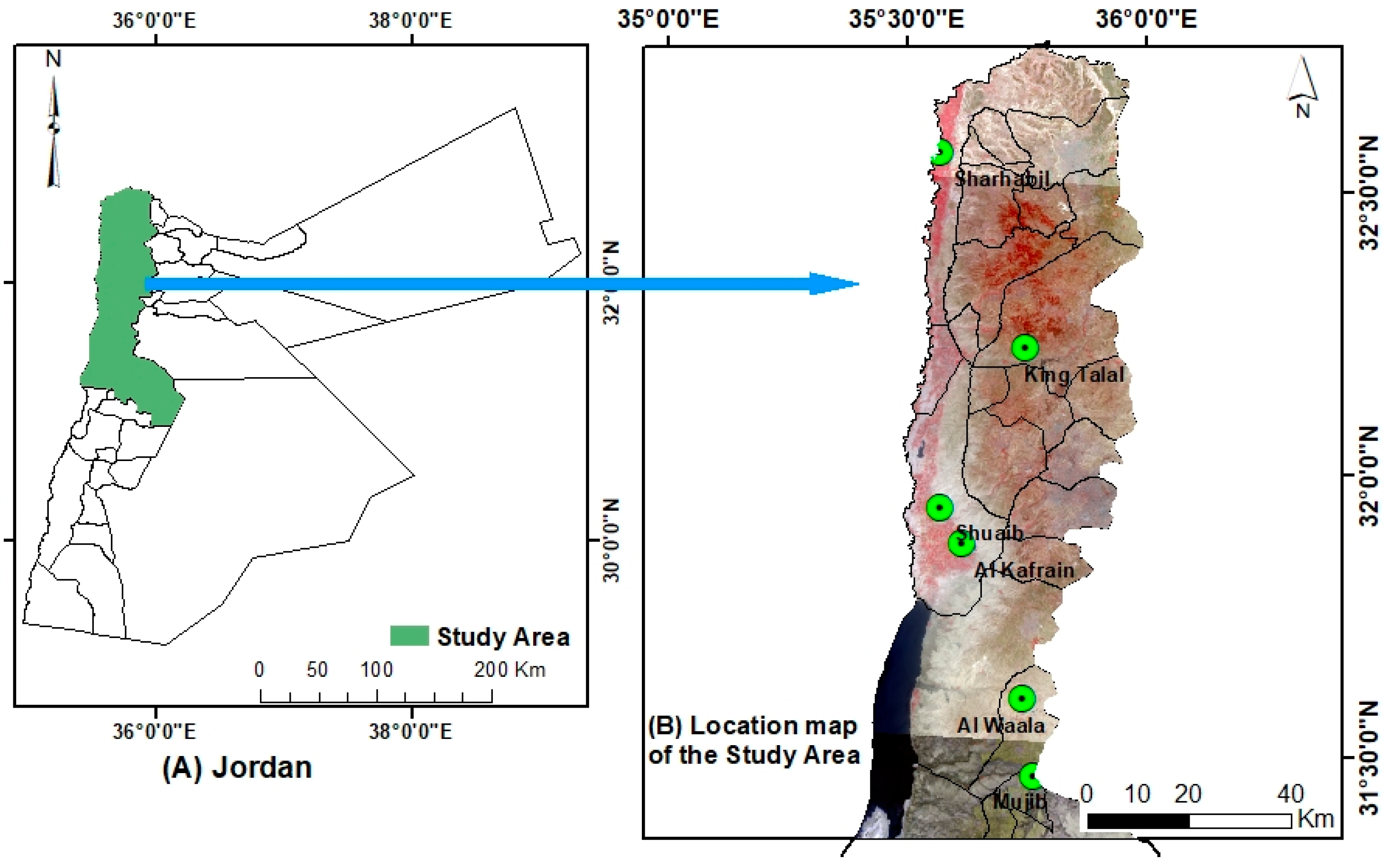
The study area is located in the northwestern Jordan Valley, Jordan within longitude of 35°30′00″ E–36°20′00″ E and latitudes of 31°00′00″ N–33°05′00″ N and covers an area of about 300 km2, Figure 1. The location is dominated by Entisols and Inceptisols [49] as well as Aridisols only in some areas. The Jordan Valley region has a warm, subtropical climate [50]. This region contains the main Jordanian water reservoirs dams, namely, Al Kafrain, Al-Waala, King Talal, Mujib, Sharhabil and Shuaib. Historically this region is a major site for wheat, tomatoes, and garlic production and many other irrigated vegetables. Irrigation water in the study area is derived from multiple sources, including surface water from major dams, treated wastewater particularly in the King Talal Dam and groundwater abstraction. The contribution of each source varies spatially across the Jordan Valley.

2.2. Irrigation Water Quality Evaluation

The water suitability classes for irrigation were adopted from the national irrigation water quality criteria in Jordan [51], which follow the framework of the FAO guidelines [52]. Water samples were collected during the 2024 irrigation season with monthly sampling conducted from March to September. A total of 48 sampling points were selected to represent spatial variability across the study area. Sampling points were concentrated around active irrigation zones and water delivery infrastructure. While this may introduce spatial clustering, it reflects actual agricultural water use patterns in the region. Water quality data were collected from 48 representative sampling points, including groundwater wells, irrigation canals and dam outlets across the study area. These data were spatially interpolated using the Inverse Distance Weighting (IDW) method to generate continuous maps of irrigation water quality parameters over the 300 km2 study area. The chemical analyses of the studied water included electrical conductivity (EC), pH, dissolved anions and cations. We calculated the sodium adsorption rate (SAR) index to determine the irrigation water effect on the balance of sodium, calcium and magnesium in the soil due to their effects in soil capability of water absorption. Also, we calculated the concentration of bicarbonates in irrigation water due to its effect on the chemical properties of the soil as the concentration of bicarbonates should be monitored to prevent soil degradation. The Magnesium Hazard Index helps determine the effect of water on the nutrient balance in the soil, as does the Irrigation Water Quality Index.

2.3. Calculating Crop Productivity per Dunum

In order to estimate the net profit per unit area, we calculated yield per dunum for wheat and tomato crops. Then we standardized the data for all the factors into units to enable comparing and multiplying processes as agricultural production data is typically reported at farm level; therefore, standardizing the data on a per dunum basis is essential to ensure comparability between sites and production systems. Data standardization enabled us to assess land productivity accurately and allows for valuable comparisons between farms exposed to different water quality conditions. The price per ton was determined based on the average local prices for wheat and tomato according to data from the Ministry of Agriculture and local markets. Production costs per dunam were calculated based on all agricultural inputs according to data from the Ministry of Agriculture including seeds, fertilizers, labor, irrigation water and energy consumption. The wheat and tomato net profits calculated by subtracting total production costs from total revenue net profit as shown in Equation (1):
N e t P r o f i t ( J D / d u n u m ) = ( Y i e l d ( t o n / d u n u m ) × P r i c e ( J D / t o n ) ) P r o d u c t i o n   C o s t   ( J D / d u n u m )
Yi = β0 + β1Wi + β2ECi + β3IWQIi + β4 (Wi × ECi) + β5Fi + β6Li + εi
where
yi is the crop productivity.
wi is the irrigation water quantity.
eci is the water salinity (electrical conductivity).
iwqii is the Irrigation Water Quality Index.
fi is the fertilizer quantity.
li is the labor.
wi × eci is the interaction between water amount and salinity.
εi is the random error term.
This metric provides an indicator of the economic performance of each crop under varying production conditions and water quality by determining profitability per dunum, thus enabling precise comparisons between locations and production conditions.

2.4. Estimation of Irrigation Water Quality Index

The Irrigation Water Quality Index model was developed by [38] for evaluating irrigation water quality using multivariate analysis. To estimate how much each factor contribute in the model, the relative weights of the various factors were derived from irrigation water quality data following the guidelines from [53]. Only parameters included in the original IWQI framework were used in this study to maintain methodological consistency; therefore, sulfate concentrations were not considered. The main factors are EC (dS/m), dissolved sodium (meq/L), chlorides (meq/L) and dissolved bicarbonates (meq/L). Also, the adjusted percentage of absorbed sodium [54] was calculated according to [55] as shown in Equation (3):
S A R ° = N a + C a 2 + + M g 2 + 2
where Na+ is the sodium concentration, and Ca2+ and Mg2+ = the dissolved calcium and magnesium in irrigation water (meq/L).
To estimate the irrigation water quality values (qi) and the relative weight (wi), we used Equation (4) as follows:
q i = q m a x ( q i a m p x i j x i n f x a m p )
where qi is the estimated value for water quality (Table 1); qmax is the max value for the different classes. Xi is the measured values of each factor, Xinf is the measured parameters’ minimum values, qiamp is the capacity of each water quality class and Xamp is the class corresponding capacity values that the parameter estimates.
Table 2 shows the weight importance (Wi) of the IWQI model parameters which explains the total change in water quality as follows:
The IWQI values calculated using Equation (5) range between 0 and 100. Table 3 describes the different categories of irrigation water. These categories depend on the limitations of irrigation water use like water salinity, reduced soil infiltration and toxic effects on plants as outlined by [56].
I W Q I = i = 1 n q i w i

2.5. Spatial Distribution Maps of Irrigation Water Characteristics

Two Sentinel-2 satellite images covering the study area were acquired in 2024. Physiographic characteristics and topographical features were then identified based on the satellite imagery. The spatial distribution maps of chemical properties were produced using the Inverse Distance Weighted (IDW) method within a Geographic Information System (GIS) environment by ArcGIS 10.8 software, developed by the Environmental Systems Research Institute (ESRI) [57]. This method is used to create accurate maps and is described as a technique for estimating values at unsaved points based on values at adjacent points. It is ideal when data are unevenly distributed across a geographic area, as the model relies on statistics such as variance and spatial correlation between points [11].
Z   ( x 0 ) = i = 1 h n x i β i j i = 1 h n 1 β i j

3. Results

This section presents the spatial variability of irrigation water quality parameters, IWQI classification, and their relationships with crop yield and net profit across the study area.

3.1. The Physicochemical Properties of Irrigation Water

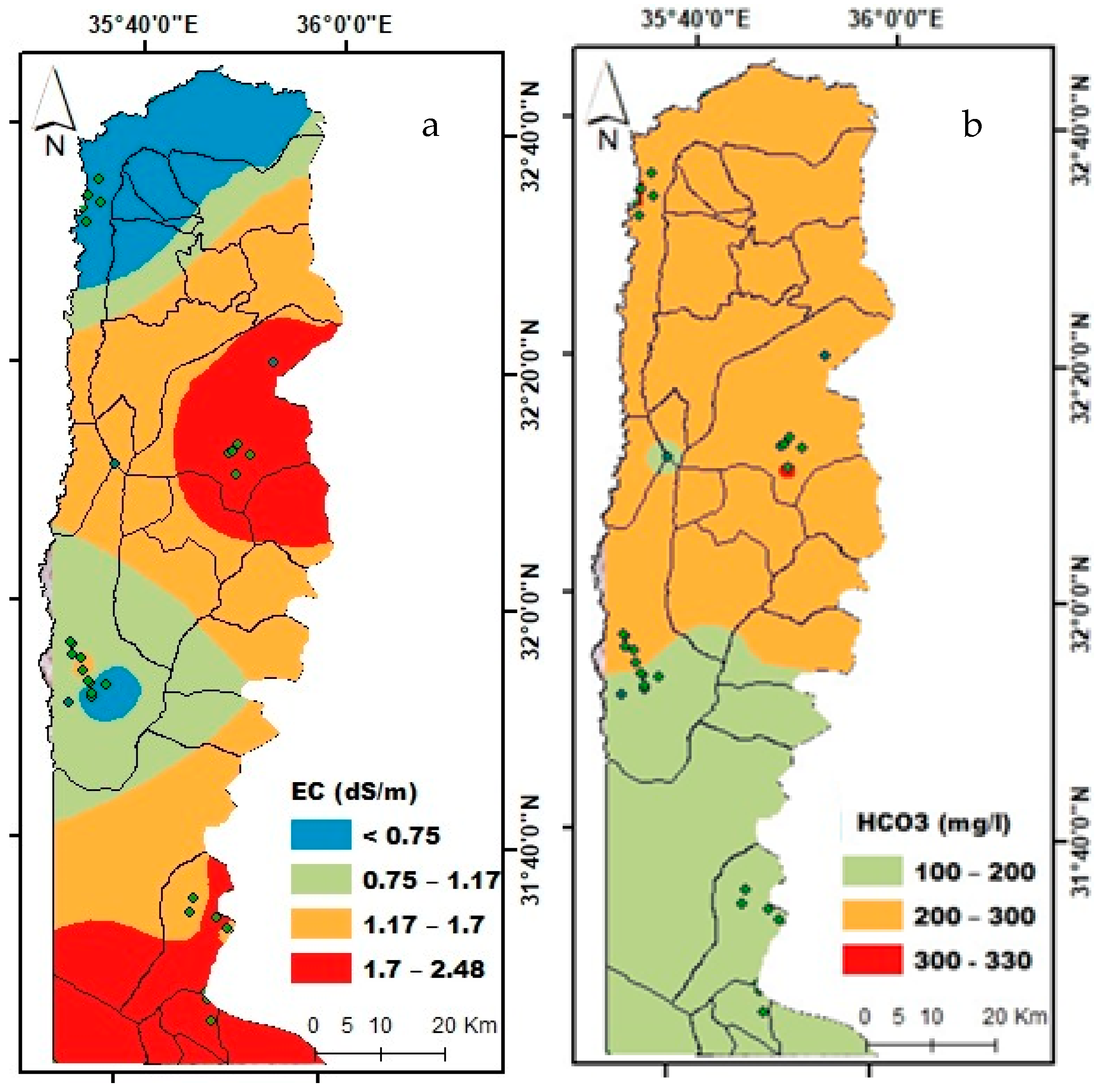
The results of electrical conductivity (EC) values are shown in Figure 2a. EC is divided into four categories. The first: very low salinity covers about 10% of the area mainly in the northwest. Next, slight salinity scattered through the central and northern sections covers about 25% of the region. The third group classified as moderate takes up the largest share, about 45%. This level can start to harm crops if not managed properly. Finally, high salinity covers about 20% of the area, clustered in the northeast. In these high-salinity areas, careful soil and water management is crucial for sustaining agriculture. Figure 2b highlights where bicarbonate (HCO3) concentrations are found, which is a critical factor for soil and water quality. The HCO3 categories range from very low, which covers less than 1% of the study area, up to high concentrations (>300 mg/L) covering about 3% of the region mainly in the east. Most of the study area is located in the relatively high range (58%) especially in the central and northern lands. The low HCO3 category covers 38% in the south. High bicarbonate levels make it harder for crops to take up nutrients; therefore, the areas with the highest values need close attention to prevent soil damage.
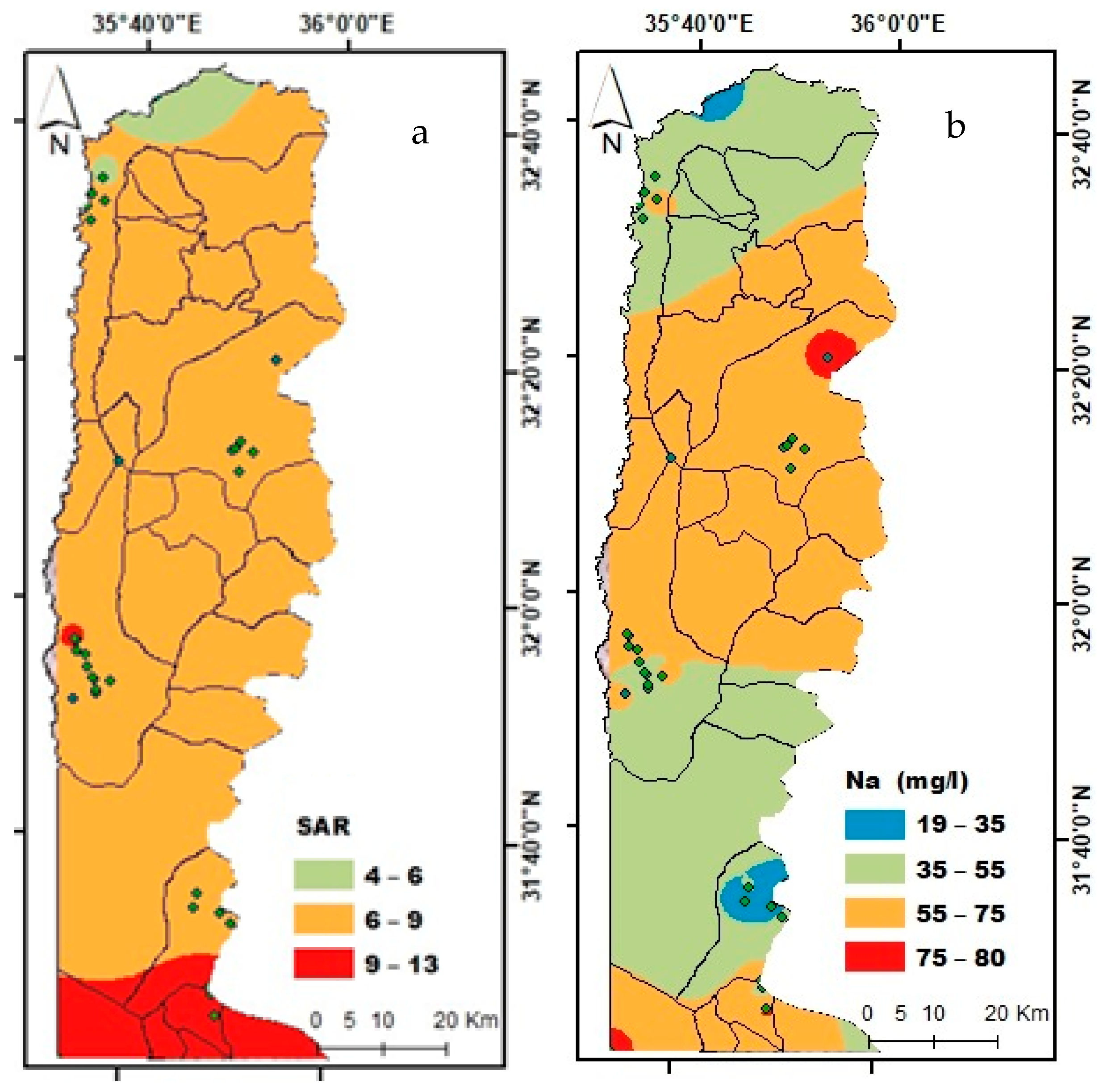
The spatial distribution of sodium concentrations is shown in Figure 3a. About 35% of the area falls in the moderate level of sodium, which is not immediately concerning but raises concerns about the long-term effects on soil and water quality. The majority of the region has sodium concentrations between 55 and 75 mg/L. Only about 5% of the total study area has the highest sodium concentrations, which may damage soil structure and restrict water movement. Managing sodium levels is essential if we want to maintain healthy soil. Figure 3b shows the sodium adsorption ratio. About 7% of the region has a SAR between 4 and 6 where the water is mostly safe, but there is some risk, and most of the area (77%) has a SAR between 6 and 9, which indicates a significant risk of soil degradation due to sodium.

3.2. Water Quality Assessment Using IWQI

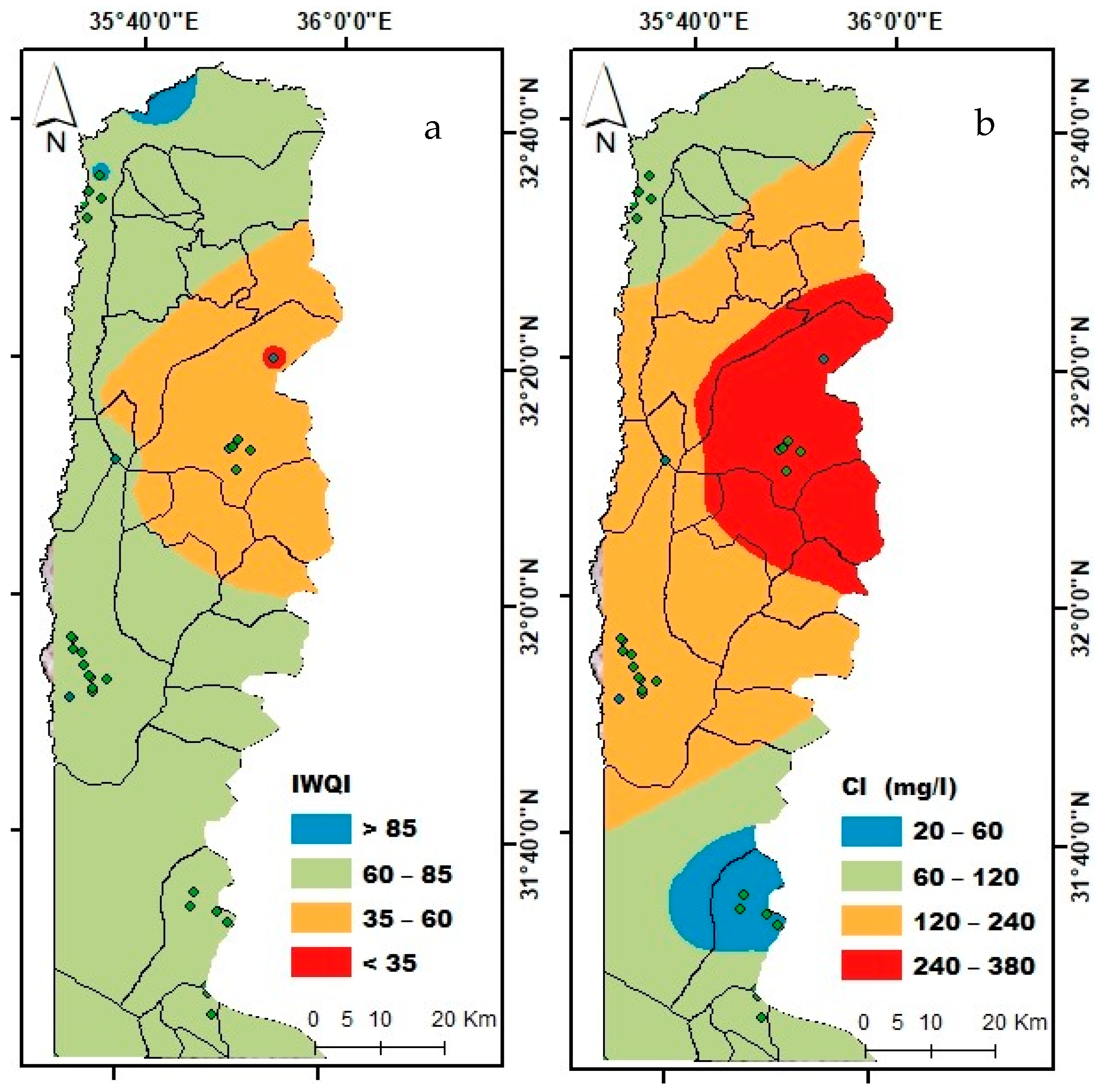
The results showed significant variation in water quality across different areas (Figure 4). The water in the King Talal area recorded the lowest IWQI values (25–33) indicating unsuitability for most salt-sensitive crops such as tomatoes and cucumbers. Areas like Al-Kafrain and Sharhabil exhibited the highest water quality (48–67) making it suitable for most crops. The water in the Al-Mujib area showed average quality (44–58) necessitating the selection of salt-tolerant crops. The water in the Al-Waala area showed slightly higher quality than Al-Mujib (56–64) due to drought, which reduced salt accumulation in the soil, but it was still lower than that of Al-Kafrain. The Shuaib region irrigation water quality showed significant variation across locations, which ranged from 40 to 56, requiring careful evaluation of each location before crop selection. Based on mean IWQI values, the regions were ranked as follows: Al-Kafrain > Sharhabil > Al-Waala > Al-Mujib > Shuaib > King Talal, reflecting a clear gradient of irrigation water suitability across the study area.

3.3. Correlation Between Water Quality and Crop Yield

The results showed that water quality had a direct impact on wheat and tomatoes yield. Sensitive crops such as tomatoes and cucumbers were significantly affected by poor water quality, recording very low productivity in King Talal compared to Al-Kafrain and Sharhabil. Bananas despite their sensitivity showed moderate productivity in Al-Waala and Al-Kafrain but declined in Al-Mujib and King Talal.
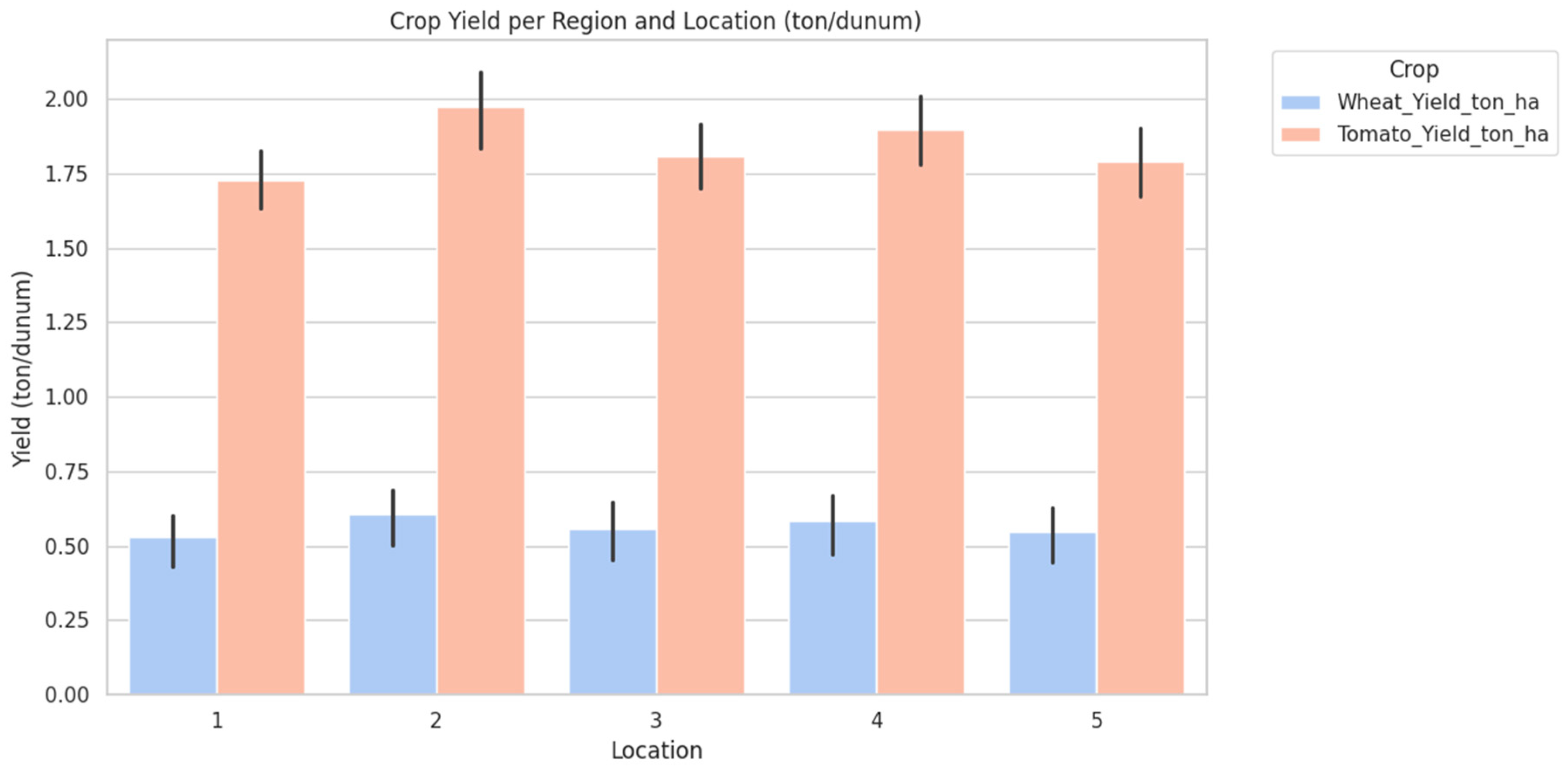
Figure 5 shows wheat and tomatoes yield in the Sharhabil Dam area. Yield values presented in Figure 5 are standardized per dunum to ensure comparability between sampling locations. Tomato production consistently surpasses wheat at each site. Scatter plots showed a significant correlation between the IWQI and crop yield. Bar plots also showed variations in productivity between locations within each area reflecting the impact of local water quality on agricultural production. Sites 3 and 4 are notable, recording the highest yields for both crops. Essentially, certain sites provide better conditions, with tomatoes benefiting the most.
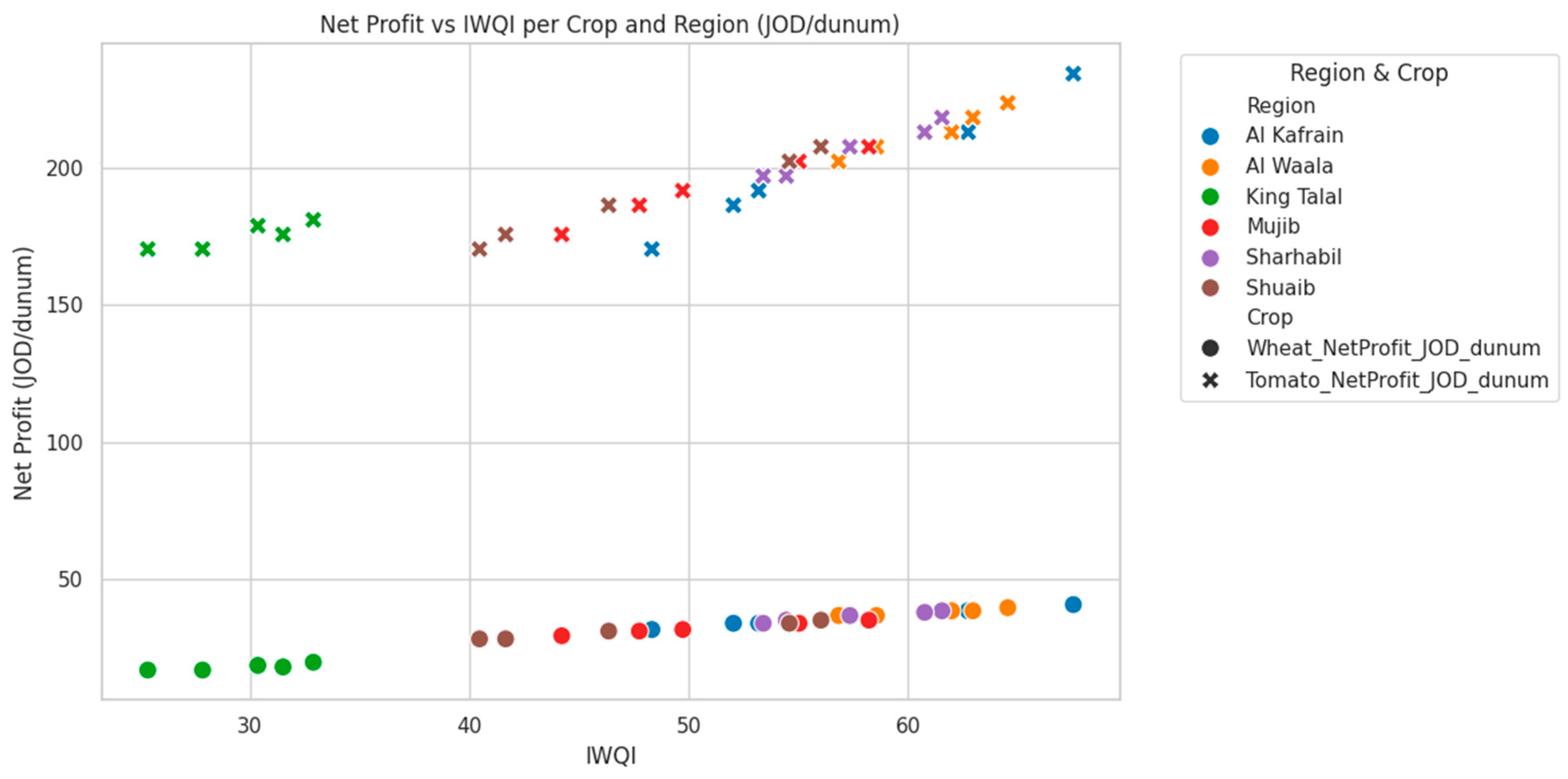
In Figure 6, net profits are compared to irrigation water quality for each crop. The pattern is clear: better water quality leads to higher profits, especially for tomatoes. In areas like Al-Waala and Al Kafrain, profits exceed two hundred dinars per dunum. Moreover, crop net profits decreased sharply where irrigation water quality drops such as in Al-Waala and Shuaib regions.
Most wheat points are low on the chart—low yield, low IWQI. Tomatoes dominate the upper end, thriving where the IWQI is higher. Al Kafrain stands out for tomato yields, while Mujib and King Talal are lower. Tomatoes show a strong relationship: higher water quality means better yields. The same pattern holds for net profits for both wheat and tomatoes. Water quality does not just improve yields; it increases profits, too.
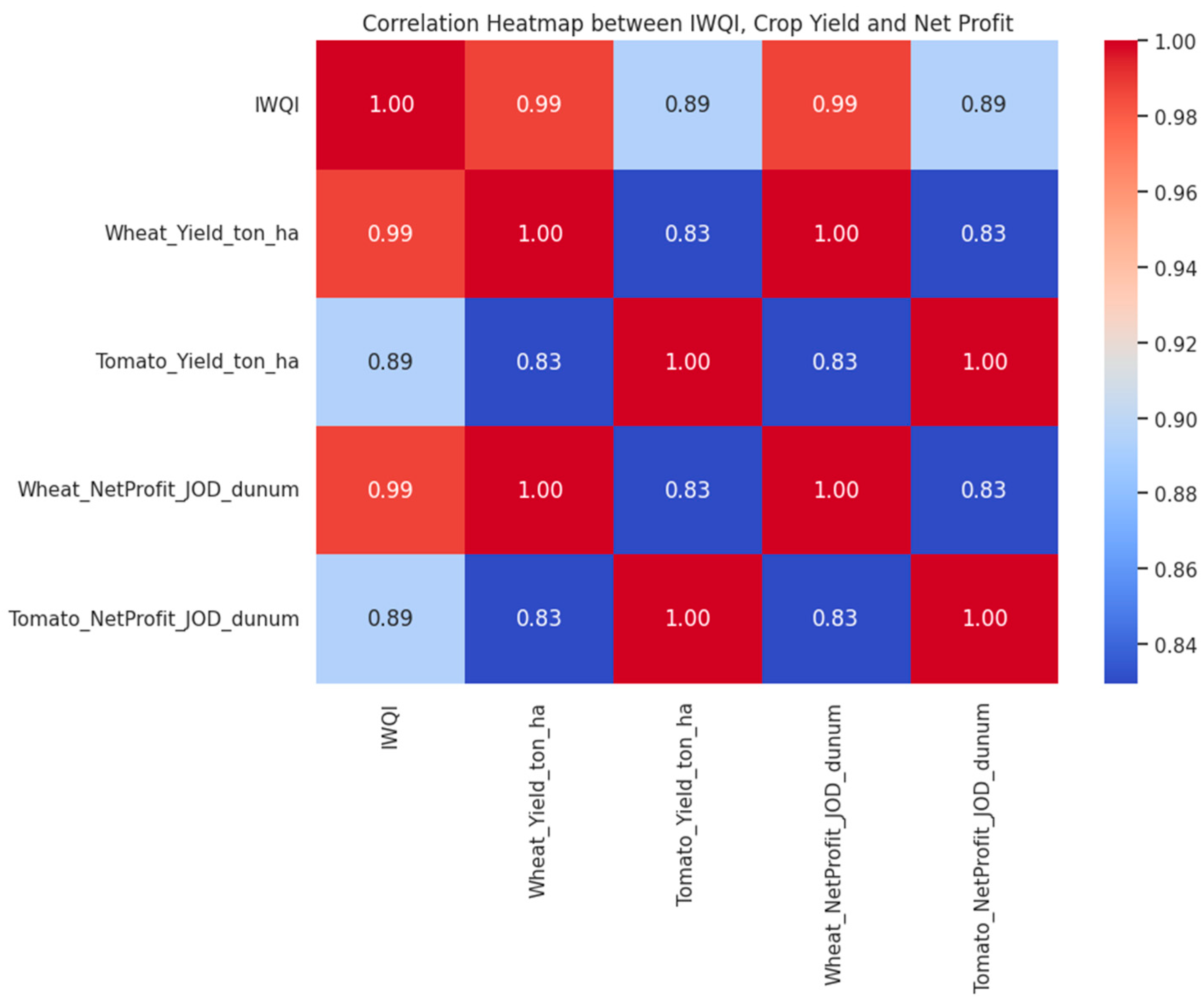
Figure 7 illustrates the relationship between net profit (JOD/dunum) and the IWQI for both wheat and tomatoes across different regions. Also, crops like wheat show a significant correlation with increased net profit as IWQI increases, with areas having better water quality showing higher profits. Tomato yield also increased in net profits in regions with a good IWQI but still lower than wheat yield.

4. Discussion

The Jordan Valley faces serious challenges regarding irrigation water quality, with high electric conductivity (EC) levels of salt and chloride, as well as high SAR, which can negatively impact soil quality and the economics of agricultural crops. While soil properties and seasonal climatic variability influence crop performance, this study isolates irrigation water quality as a dominant explanatory factor by standardizing crop management practices across sites. Farmers here need practical solutions to maintain the quality of their water and the productivity of their land. Monitoring IWQI is important to control the increasing salinity levels due to declining rainfall and climate change in the region. Also, measuring IWQI continuously can ensure the sustainability of agricultural water resources in the region. Extreme drought conditions during the study period likely intensified salinity accumulation, increasing IWQI variability compared to typical precipitation years. However, the IWQI framework captures spatial contrasts rather than interannual trends. Irrigation water characteristics shifted across the study region, and these changes are reflected in the Irrigation Water Quality Index. The results demonstrated that the IWQI in the Jordan Valley determines not only how much wheat and tomatoes farmers can produce but also how much income they earn from those crops. Where the IWQI drops, both yields and profits decline. Measured EC, SAR, Na+, Cl, and HCO3 concentrations were compared with FAO-recommended irrigation thresholds. Exceedances were most pronounced in the King Talal and Shuaib regions, explaining the observed reductions in crop yield and profitability. There is a direct link between water quality and the long-term economic well-being of agriculture; here a pattern is seen in earlier studies as well, especially in dry zones like this one [50].
Regarding the land surrounding the King Talal Dam, high salinity and sodium levels make it difficult for farmers to grow healthy crops, and they face many difficulties in keeping crops productive and profitable. Gharaibeh et al. [45] observed similar results as they indicated that drainage and treated wastewater degrade water quality in King Talal reservoir, reducing its usefulness for salt-sensitive crops. Higher electric conductivity (EC) and SAR values especially in the northeast region negatively affect soil permeability; hence, it reduces the plants’ ability to access essential nutrients causing a decrease in crop productivity. Al-Taani et al. [58] observed similar results as they assessed the water quality of King Talal dam reservoir and found moderate to poor water quality at times due to nutrient enrichment and pollution inputs, highlighting the need for continuous monitoring and improving watershed management.
The effect of increased EC and SAR on soil permeability and vegetation health is well established; researchers like Ayers and Westcot [52] and Malakar et al. [1] have documented it for years. In contrast, regions such as Al-Kafrain and Sharhabil, with better water and higher IWQI scores, achieve higher crop outputs and greater profits. This strongly supports the importance of chemical water quality for sustaining agriculture.
The crop yields echo this pattern. Tomatoes respond quickly to shifts in water quality. As IWQI rises, their yields increase. Tomatoes are particularly sensitive to salt; Zaman et al. [2] stated that even minor declines in water quality reduce fruit size, lower fruit set, and push market prices down. Wheat is less reactive, consistent with its moderate salt tolerance under national standards [51]. Therefore, yield differences across the valley are less about farm management, which is fairly consistent, and more about the water quality gradient.
Economically, water quality stands out as the main factor shaping profit. The data reveals a strong positive relationship between IWQI and net profit of 0.99 for wheat and 0.89 for tomatoes. Water quality is not just one factor; it is the central one. Johnston et al. [25] found much the same: water quality indices predict farm economics, especially in water-limited settings. In top areas like Al-Kafrain and Al-Waala, tomato profits exceed JOD 200 per dunum, while, in the worst areas, they drop below JOD 50. That is a difference of over 400%, an economic gap that determines the future of farming in the Jordan Valley.
But it is not only about yield. Water quality also affects production costs and the market value of crops. When farmers use low-quality irrigation water, this leads to increased spending by these farmers on leaching, soil amendments, and other fixes, as Anyango et al. [26] and Ayers and Westcot [52] have reported worldwide. At the same time, higher salinity reduces fruit quality, so market prices drop even if yields stay the same. This double impact lowers yields and reduces product quality hits tomatoes hardest, since they are a high-value crop, much more so than wheat.
Using GIS and the IDW interpolation method allowed us to identify precisely where water physicochemical properties are most damaging to agriculture. Raihan [3] notes that these mapping tools are essential for effective agricultural planning. Using GIS-IDW mapping, policymakers can delineate agro-management zones. Elsharkawy et al. [4] identify high-risk zones and select crops that match both water quality and market needs.
Economic analysis of the impact of irrigation water quality on wheat and tomato productivity demonstrated the importance of assessing irrigation water quality indicators and shows why IWQI should be a key factor in regional agricultural policy. High concentrations of dissolved sodium and bicarbonate often pose challenges for farmers. The overlap between sodium and bicarbonate hotspots and low-profit areas highlighting the importance of water physicochemical indicators for wheat and tomato crop production in the northwest part of Jordan Valley. Regarding the IWQI the economic analysis showed that irrigation water quality not only affects environmental conditions and crop health but also directly impacts farmers’ income, their choice of economically profitable crops and influences the long-term sustainability of agriculture in the Jordan Valley. These findings align with the recommendations of experts in Jordan and globally, as effective irrigation water quality management improves agricultural sustainability in the face of persistent water scarcity especially in arid and semi-arid areas [42,43,47].

5. Conclusions

The results emphasize the important role of irrigation water quality in determining agric-economic benefits in the western Jourdan area. Wheat and tomato yields were directly impacted by the variations in water quality indicators such as water salinity, bicarbonates and SAR, which led to many variations in IWQI across the study region. Regarding low-IWQI zones, wheat showed moderate economic losses but still significant losses in productivity and economic return in those areas. Although wheat exhibits greater tolerance to poor water quality, tomatoes generate higher yields and net profits under favorable IWQI conditions, making them more economically rewarding but also more vulnerable to water quality degradation. Strong statistical relationships between the IWQI, yield, and net profit attest to the fact that water quality is a crucial economic factor for farmers as well as an environmental one. Significant profit differences seen throughout the valley highlight the need for focused water management techniques, better water quality monitoring, and flexible crop planning based on local water characteristics. Hence, enhancing irrigation water quality and optimizing crop selection presents a powerful tool to strengthen agricultural resilience, increase farmer income and support sustainable development in Jordan Valley, which suffers from a highly stressed water environment.

Author Contributions

Conceptualization, E.A.-T. and M.M.E.; methodology, M.M.E.; software, M.M.E.; validation, E.A.-T. and M.M.E.; formal analysis, E.A.-T. and M.M.E.; investigation, E.A.-T.; resources, E.A.-T.; data curation, E.A.-T.; writing—original draft preparation, E.A.-T. and M.M.E.; writing—review and editing, E.A.-T. and M.M.E.; visualization, E.A.-T. and M.M.E.; supervision, E.A.-T.; project administration, M.M.E.; funding acquisition, M.M.E. All authors have read and agreed to the published version of the manuscript.

Funding

This research received no external funding.

Institutional Review Board Statement

Not applicable.

Informed Consent Statement

Not applicable.

Data Availability Statement

Data are available upon request from the authors.

Acknowledgments

The Authors would like to extend their gratitude to Ajloun National University staff, particularly to the Faculty of Agriculture staff, for providing the ideal environment and support for conducting this study. Our sincere thanks also go to the faculty, administrative staff and all participants for their valuable time and cooperation. Without their contribution, this research would not have been possible. The authors have reviewed and edited the output and take full responsibility for the content of this publication.

Conflicts of Interest

The authors declare no conflicts of interest.

Abbreviations

The following abbreviations are used in this manuscript:
ECElectric Conductivity
ESRIEnvironmental Systems Research Institute
GISGeographic Information System
IWQIIrrigation Water Quality Index
IIWQ IndexIntegrated Irrigation Water Quality Index Model
IDWInverse Distance Weighting
JODJordanian Dinar
SARSodium Adsorption Ratio

References

  1. Malakar, A.; Snow, D.D.; Ray, C. Irrigation Water Quality—A Contemporary Perspective. Water 2019, 11, 1482. [Google Scholar] [CrossRef]
  2. Zaman, M.; Shahid, S.A.; Heng, L. Irrigation Water Quality. In Guideline for Salinity Assessment, Mitigation and Adaptation Using Nuclear and Related Techniques; Springer: Berlin/Heidelberg, Germany, 2018; pp. 113–131. [Google Scholar]
  3. Raihan, A. A Systematic Review of Geographic Information Systems (GIS) in Agriculture for Evidence-Based Decision Making and Sustainability. Glob. Sustain. Res. 2024, 3, 1–24. [Google Scholar] [CrossRef]
  4. Elsharkawy, M.M.; Sheta, A.E.A.S.; D’Antonio, P.; Abdelwahed, M.S.; Scopa, A. Tool for the Establishment of Agro-Management Zones Using GIS Techniques for Precision Farming in Egypt. Sustainability 2022, 14, 5437. [Google Scholar] [CrossRef]
  5. AbdelRahman, M.A.E.; Farg, E.; Saleh, A.M.; Sayed, M.; Abutaleb, K.; Arafat, S.M.; Elsharkawy, M.M. Mapping of Soils and Land-Related Environmental Attributes in Modern Agriculture Systems Using Geomatics. Sustain. Water Resour. Manag. 2022, 8, 116. [Google Scholar] [CrossRef]
  6. Abutaleb, M.M.; Arafat, S.M. Geomatics-Based Mapping of Hydraulic Soil Properties for Agricultural Management. Ann. Agric. Sci. Moshtohor 2022, 60, 225–238. [Google Scholar] [CrossRef]
  7. Saleh, A.M.; Elsharkawy, M.M.; AbdelRahman, M.A.E.; Arafat, S.M. Evaluation of Soil Quality in Arid Western Fringes of the Nile Delta for Sustainable Agriculture. Appl. Environ. Soil Sci. 2021, 2021, 1434692. [Google Scholar] [CrossRef]
  8. Boori, M.S.; Choudhary, K.; Paringer, R.; Kupriyanov, A. Spatiotemporal Ecological Vulnerability Analysis with Statistical Correlation Based on Satellite Remote Sensing in Samara, Russia. J. Environ. Manag. 2021, 285, 112138. [Google Scholar] [CrossRef] [PubMed]
  9. Uzuner, Ç.; Dengiz, O. Desertification Risk Assessment in Turkey Based on Environmentally Sensitive Areas. Ecol. Indic. 2020, 114, 106295. [Google Scholar] [CrossRef]
  10. Xiaodan, W.; Xianghao, Z.; Pan, G. A GIS-Based Decision Support System for Regional Eco-Security Assessment and Its Application on the Tibetan Plateau. J. Environ. Manag. 2010, 91, 1981–1990. [Google Scholar] [CrossRef]
  11. Azpurua, M.A.; Dos Ramos, K. A Comparison of Spatial Interpolation Methods for Estimation of Average Electromagnetic Field Magnitude. Prog. Electromagn. Res. M 2010, 14, 135–145. [Google Scholar] [CrossRef]
  12. Albadr, M.; El-Kammar, A.M.; El-Kammar, M.M.; Yehia, M.M.; Abu Salem, H.S. Hydrogeological Characteristics of the Quaternary Aquifer in Beni Suef Area, Egypt. Egypt. J. Geol. 2021, 65, 73–89. [Google Scholar] [CrossRef]
  13. Chidiac, S.; El Najjar, P.; Ouaini, N.; El Rayess, Y.; El Azzi, D. A Comprehensive Review of Water Quality Indices (WQIs): History, Models, Attempts and Perspectives. Rev. Environ. Sci. Biotechnol. 2023, 22, 349–395. [Google Scholar] [CrossRef]
  14. Heleika, M.A.; Toney, S.; Ismail, E. Mapping of Groundwater Opportunities for Multi-Purposes Use in Beni-Suef Province, Egypt. Arab. J. Geosci. 2021, 14, 784. [Google Scholar] [CrossRef]
  15. Baghel, S.; Tripathi, M.P. Crop Selection and Management Strategies for Poor Quality Irrigation Water. In Surface Water and Groundwater Quality for Sustainable Utilization: Advanced Methods and Technology; Springer: Berlin/Heidelberg, Germany, 2025; pp. 261–279. [Google Scholar]
  16. Mohanavelu, A.; Naganna, S.R.; Al-Ansari, N. Irrigation Induced Salinity and Sodicity Hazards on Soil and Groundwater: An Overview of Its Causes, Impacts and Mitigation Strategies. Agriculture 2021, 11, 983. [Google Scholar] [CrossRef]
  17. Oster, J.D. Irrigation with Poor Quality Water. Agric. Water Manag. 1994, 25, 271–297. [Google Scholar] [CrossRef]
  18. Yang, P.; Wu, L.; Cheng, M.; Fan, J.; Li, S.; Wang, H.; Qian, L. Review on Drip Irrigation: Impact on Crop Yield, Quality, and Water Productivity in China. Water 2023, 15, 1733. [Google Scholar] [CrossRef]
  19. Dotaniya, M.L.; Meena, V.D.; Saha, J.K.; Dotaniya, C.K.; Mahmoud, A.E.D.; Meena, B.L.; Meena, M.D.; Sanwal, R.C.; Meena, R.S.; Doutaniya, R.K. Reuse of Poor-Quality Water for Sustainable Crop Production in the Changing Scenario of Climate. Environ. Dev. Sustain. 2023, 25, 7345–7376. [Google Scholar] [CrossRef] [PubMed]
  20. Nangia, V.; de Fraiture, C.; Turral, H. Water Quality Implications of Raising Crop Water Productivity. Agric. Water Manag. 2008, 95, 825–835. [Google Scholar] [CrossRef]
  21. Yadav, R.K.; Dagar, J.C. Innovations in Utilization of Poor-Quality Water for Sustainable Agricultural Production. In Innovative Saline Agriculture; Springer: Berlin/Heidelberg, Germany, 2016; pp. 219–263. [Google Scholar]
  22. Quemada, M.; Baranski, M.; Nobel-de Lange, M.N.J.; Vallejo, A.; Cooper, J.M. Meta-Analysis of Strategies to Control Nitrate Leaching in Irrigated Agricultural Systems and Their Effects on Crop Yield. Agric. Ecosyst. Environ. 2013, 174, 1–10. [Google Scholar] [CrossRef]
  23. Okorogbona, A.O.M.; Denner, F.D.N.; Managa, L.R.; Khosa, T.B.; Maduwa, K.; Adebola, P.O.; Amoo, S.O.; Ngobeni, H.M.; Macevele, S. Water Quality Impacts on Agricultural Productivity and Environment. In Sustainable Agriculture Reviews 27; Springer: Berlin/Heidelberg, Germany, 2018; pp. 1–35. [Google Scholar]
  24. Bauder, J.W.; Brock, T.A. Irrigation Water Quality, Soil Amendment, and Crop Effects on Sodium Leaching. Arid. Land Res. Manag. 2001, 15, 101–113. [Google Scholar] [CrossRef]
  25. Johnston, N.; Rolfe, J.; Flint, N. A Systematic Review of Agricultural Use Water Quality Indices. Environ. Sustain. Indic. 2024, 23, 100417. [Google Scholar] [CrossRef]
  26. Anyango, G.W.; Bhowmick, G.D.; Bhattacharya, N.S. A Critical Review of Irrigation Water Quality Index and Water Quality Management Practices in Micro-Irrigation for Efficient Policy Making. Desalination Water Treat. 2024, 318, 100304. [Google Scholar] [CrossRef]
  27. Misaghi, F.; Delgosha, F.; Razzaghmanesh, M.; Myers, B. Introducing a Water Quality Index for Assessing Water for Irrigation Purposes: A Case Study of the Ghezel Ozan River. Sci. Total Environ. 2017, 589, 107–116. [Google Scholar] [CrossRef] [PubMed]
  28. Islam, M.S.; Mostafa, M.G. Development of an Integrated Irrigation Water Quality Index (IIWQIndex) Model. Water Supply 2022, 22, 2322–2337. [Google Scholar] [CrossRef]
  29. Abualhaija, M.; Mohammad, A.-H. Assessing Water Quality of Kufranja Dam (Jordan) for Drinking and Irrigation: Application of the Water Quality Index. J. Ecol. Eng. 2021, 22, 159–175. [Google Scholar] [CrossRef]
  30. Abualhaija, M.M.; Abu Hilal, A.H.; Shammout, M.W.; Mohammad, A.H. Assessment of Reservoir Water Quality Using Water Quality Indices: A Case Study from Jordan. Int. J. Eng. Res. Technol. 2020, 13, 397–406. [Google Scholar] [CrossRef]
  31. Gaagai, A.; Aouissi, H.A.; Bencedira, S.; Hinge, G.; Athamena, A.; Heddam, S.; Gad, M.; Elsherbiny, O.; Elsayed, S.; Eid, M.H. Application of Water Quality Indices, Machine Learning Approaches, and GIS to Identify Groundwater Quality for Irrigation Purposes: A Case Study of Sahara Aquifer, Doucen Plain, Algeria. Water 2023, 15, 289. [Google Scholar] [CrossRef]
  32. Al-Mashreki, M.H.; Eid, M.H.; Saeed, O.; Székács, A.; Szűcs, P.; Gad, M.; Abukhadra, M.R.; AlHammadi, A.A.; Alrakhami, M.S.; Alshabibi, M.A. Integration of Geochemical Modeling, Multivariate Analysis, and Irrigation Indices for Assessing Groundwater Quality in the Al-Jawf Basin, Yemen. Water 2023, 15, 1496. [Google Scholar] [CrossRef]
  33. El Behairy, R.A.; El Baroudy, A.A.; Ibrahim, M.M.; Kheir, A.M.S.; Shokr, M.S. Modelling and Assessment of Irrigation Water Quality Index Using GIS in Semi-Arid Region for Sustainable Agriculture. Water Air Soil Pollut. 2021, 232, 352. [Google Scholar] [CrossRef]
  34. Das, A. Geographical Information System–Driven Intelligent Surface Water Quality Assessment for Enhanced Drinking and Irrigation Purposes in Brahmani River, Odisha (India). Environ. Monit. Assess. 2025, 197, 629. [Google Scholar] [CrossRef]
  35. Şimşir, M.; Yıldız, S.; Karakuş, C.B.; Özbek, D.Ü. Suitability of Water Quality for Irrigation Purposes Using GIS-Based Irrigation Water Quality Index. Irrig. Drain. 2025, 74, 1103–1116. [Google Scholar] [CrossRef]
  36. Simsek, C.; Gunduz, O. IWQ Index: A GIS-Integrated Technique to Assess Irrigation Water Quality. Environ. Monit. Assess. 2007, 128, 277–300. [Google Scholar] [CrossRef] [PubMed]
  37. Shin, S.; Aziz, D.; El-Sayed, M.E.A.; Hazman, M.; Almas, L.; McFarland, M.; El Din, A.S.; Burian, S.J. Systems Thinking for Planning Sustainable Desert Agriculture Systems with Saline Groundwater Irrigation: A Review. Water 2022, 14, 3343. [Google Scholar] [CrossRef]
  38. Meireles, A.C.M.; de Andrade, E.M.; Chaves, L.C.G.; Frischkorn, H.; Crisostomo, L.A. A New Proposal of the Classification of Irrigation Water. Rev. Ciência Agronômica 2010, 41, 349–357. [Google Scholar] [CrossRef]
  39. Abu-Sharar, T.M. The Challenges of Land and Water Resources Degradation in Jordan: Diagnosis and Solutions. In Desertification in the Mediterranean Region: A security Issue; Springer: Berlin/Heidelberg, Germany, 2006; pp. 201–226. [Google Scholar]
  40. World Bank; Ministry of Agriculture and Ministry of Environment of the Hashemite Kingdom of Jordan and Partnership for Market Readiness (PMR). Climate-Smart Agriculture Action Plan for Jordan; World Bank: Washington, DC, USA, 2021. [Google Scholar]
  41. Al-Bakri, J.T.; Salahat, M.; Suleiman, A.; Suifan, M.; Hamdan, M.R.; Khresat, S.; Kandakji, T. Impact of Climate and Land Use Changes on Water and Food Security in Jordan: Implications for Transcending “the Tragedy of the Commons”. Sustainability 2013, 5, 724–748. [Google Scholar] [CrossRef]
  42. Al-Addous, M.; Bdour, M.; Alnaief, M.; Rabaiah, S.; Schweimanns, N. Water Resources in Jordan: A Review of Current Challenges and Future Opportunities. Water 2023, 15, 3729. [Google Scholar] [CrossRef]
  43. Oroud, I.M. The Impacts of Climate Change on Water Resources in Jordan. In Climatic Changes and Water Resources in the Middle East and North Africa; Springer: Berlin/Heidelberg, Germany, 2008; pp. 109–123. [Google Scholar]
  44. AlMahasneh, L.; Abuhamoor, D.; Al Sane, K.; Haddad, N.J. Assessment and Mapping of Flash Flood Hazard Severity in Jordan. Int. J. River Basin Manag. 2023, 21, 311–325. [Google Scholar] [CrossRef]
  45. Gharaibeh, M.A.; Albalasmeh, A.A.; Obeidat, M.M. Assessment of Water Quality of Key Dams in Jordan for Irrigation Purposes with Insights on Parameter Thresholds. Water 2024, 16, 1726. [Google Scholar] [CrossRef]
  46. Jordan Weathering Risk Climate Risk Profile; Jordan. 2022. Available online: https://www.weatheringrisk.org/en/publication/climate-risk-profile-jordan (accessed on 16 November 2025).
  47. Talafha, M.; Aburamadan, R.F.; Hamarneh, Q. Rainwater Harvesting in Jordan: Inherited Resilience and Adaptability. In Rainwater Harvesting for the 21st Century; CRC Press: Boca Raton, FL, USA, 2024; pp. 75–102. [Google Scholar]
  48. Alissa, M.E.; Al-Harahshah, S.; Ibrahim, M. Monitoring of Surface Water Quality in King Talal Dam Using GIS: A Case Study. Iraqi Geol. J. 2023, 36–47. [Google Scholar] [CrossRef]
  49. Lucke, B.; Ziadat, F.; Taimeh, A. The Soils of Jordan. In Atlas of Jordan; Ababsa, M., Ed.; Presses de l’Ifpo: Beirut, Lebanon, 2013; Volume 1. [Google Scholar]
  50. Abu-Ghazalah, S.; Alshboul, A.A.; Dayyed, N.A.; Ghanimeh, A.A. Climate in Jordan. Archivio. 2011. Available online: https://www.nuova-energia.com/index.php?option=com_content&task=view&id=736&Itemid=128 (accessed on 10 November 2025).
  51. JS 1766:2014; Irrigation Water Quality Guidelines, 1st ed. Ministry of Water and Irrigation (MWI): Amman, Jordan, 2014. (In Arabic)
  52. Ayers, R.S.; Westcot, D.W. Water Quality for Agriculture; Food and Agriculture Organization of the United Nations Rome: Rome, Italy, 1985; Volume 29, ISBN 9251022631. [Google Scholar]
  53. Ayers, R.S.; Westcot, D.W. Water Quality for Agriculture, 2nd ed.; FAO Irrigation and Drainage Paper No. 29; Food and Agriculture Organization of the United Nations: Rome, Italy, 1999. [Google Scholar]
  54. Suarez, D.L. Relation between PHc and Sodium Adsorption Ratio (SAR) and an Alternative Method of Estimating SAR of Soil or Drainage Waters. Soil Sci. Soc. Am. J. 1981, 45, 469–475. [Google Scholar] [CrossRef]
  55. Lesch, S.M.; Suarez, D.L. A Short Note on Calculating the Adjusted SAR Index. Trans. ASABE 2009, 52, 493–496. [Google Scholar] [CrossRef]
  56. Holanda, J.S.; Amorim, J.A. Management and Control Salinity and Irrigated Agriculture Water. In Proceedings of the Congresso Brasileiro de Engenharia Setting, Campina Grande, Brazil, 21–25 July 1997; Sociedade Brasileira de Engenharia Agrícola: Campina Grande, Brazil, 1997; Volume 26, pp. 137–169. [Google Scholar]
  57. Environmental Systems Research Institute (ESRIA). ArcGIS; Environmental Systems Research Institute (ESRI): Redlands, CA, USA, 2012. [Google Scholar]
  58. Al-Taani, A.A.; El-Radaideh, N.M.; Al Khateeb, W.M. Status of Water Quality in King Talal Reservoir Dam, Jordan. Water Resour. 2018, 45, 603–614. [Google Scholar] [CrossRef]
Figure 1. Location of the study area.
Sustainability 18 01837 g001
Figure 2. The spatial distribution of (a). electrical conductivity (EC) and (b). bicarbonate (HCO3) concentrations of the irrigation water; the green squares indicate the locations of the sample points used to produce the map.
Sustainability 18 01837 g002
Figure 3. The spatial distribution of (a). sodium ratio and (b). sodium concentrations (Na+) of the irrigation water; the green squares indicate the locations of the sample points used to produce the map.
Sustainability 18 01837 g003
Figure 4. The spatial distribution of (a). Irrigation Water Quality Index (IWQI) and (b). chloride concentrations (Cl) of the irrigation water; the green squares indicate the locations of the sample points used to produce the map.
Sustainability 18 01837 g004
Figure 5. Wheat and tomato crop production by region (tons/dunum); Locations 1 to 5 represent five sampled farms within the Sharhabil irrigation area, selected to capture spatial variability in irrigation water quality and corresponding crop productivity. Yield values are standardized per dunum to ensure comparability between sampling locations.
Sustainability 18 01837 g005
Figure 6. Net profit versus Irrigation Water Quality Index (IWQI) per crop and region.
Sustainability 18 01837 g006
Figure 7. Correlation heatmap between IWQI, crop yields, and net profit.
Sustainability 18 01837 g007
Table 1. Calculated water quality (qi) values according to different criteria.
qECSARHCO3ClNa+
ppmmeq/L
85 to 100200 to 7501–1.5less than 42–32–3
60 to 85750 to 15001.5 to 4.54 to 73 to 63 to 6
35 to 601500 to 30004.5 to 8.57 to 106 to 96 to 12
less than 35above 3000above 8.5above 10above 9above 12
Table 2. Weight importance (Wi) for different water quality characteristics.
Parameter(Wi) ValueParameter(Wi) Value
EC (dS·m−1)0.2110.194Cl (meq·L−1)
Na (meq·L−1)0.204SAR°0.189
HCO3 (meq·L−1)0.202
Total1
Table 3. Weight importance (Wi) for different characteristics.
IWQI ValueDegree of RestrictionRecommendations
85 to 100--Suitable for use across all soil classes and crop varieties
70 to 85LowNot recommended for use in heavy-textured soils or with salinity-intolerant crops
55 to 70NormalRecommended for use in moderately structured soils with continuous leaching practices
40 to 55HighRecommended for loose, sandy soils without subsurface compaction layers
0 to 40Very highUnsuitable for use where conventional irrigation is applied
Disclaimer/Publisher’s Note: The statements, opinions and data contained in all publications are solely those of the individual author(s) and contributor(s) and not of MDPI and/or the editor(s). MDPI and/or the editor(s) disclaim responsibility for any injury to people or property resulting from any ideas, methods, instructions or products referred to in the content.