1. Introduction
The imperative to address climate change has positioned environmental policy at the forefront of the global governance agenda. Following the Paris Agreement of 2015, nations committed to limiting the rise in global average temperature to well below 2 °C above pre-industrial levels, with the aim of limiting warming to 1.5 °C [
1]. Achieving these targets requires coordinated action across multiple policy dimensions, encompassing greenhouse gas mitigation, adaptation to climate impacts, economic transformation, and institutional capacity building [
2]. However, evaluating and comparing national climate policy performance presents substantial methodological challenges, as countries pursue diverse pathways shaped by their unique economic structures, resource endowments, and governance capabilities [
3].
The multidimensional nature of climate policy defies simple ranking approaches. A country may demonstrate exceptional performance in renewable energy deployment while lagging in emissions reduction or exhibit strong governance frameworks without commensurate adaptation capacity. This complexity necessitates analytical frameworks that integrate heterogeneous criteria, accommodate trade-offs among competing objectives, and provide transparent, theoretically grounded comparisons [
4]. Multi-criteria decision analysis (MCDA) methods offer promising approaches to address these challenges, yet their application to cross-national climate policy evaluation remains underdeveloped [
5].
This paper develops and applies a Multi-Attribute Utility Theory (MAUT) framework for evaluating national climate policy performance across 187 countries. Drawing on established decision-theoretic foundations [
6,
7] and leveraging publicly available data from the Global Carbon Project, ND-GAIN Index, and World Bank, the proposed Climate Policy Performance Index (CPPI) integrates four fundamental dimensions: mitigation effectiveness, adaptation capacity, economic readiness, and governance quality. The framework advances beyond existing indices by providing explicit utility functions, axiomatic foundations, and comprehensive sensitivity analysis.
Multi-Attribute Utility Theory emerged from the foundational work of von Neumann and Morgenstern [
8] on expected utility and was systematically developed by Keeney and Raiffa [
6] in their seminal treatise on decisions with multiple objectives. The theory provides a rigorous framework for constructing preference functions over alternatives characterised by multiple attributes, enabling decision-makers to quantify trade-offs and aggregate diverse criteria into coherent evaluations. Central to MAUT are axioms of preferential independence and utility independence, which permit decomposition of complex multi-attribute utility functions into tractable additive or multiplicative forms [
9].
Dyer [
10] provides a comprehensive review of MAUT methodology, emphasising the distinction between value functions that measure the strength of preference under certainty and utility functions that capture risk attitudes under uncertainty. The additive utility model,
U(
x) = Σ
wᵢuᵢ(
xᵢ), remains the most widely applied form, requiring mutual preferential independence among attributes—a condition under which preferences over any subset of attributes are independent of the fixed levels of remaining attributes [
6]. When this condition holds, single-attribute utility functions can be assessed independently and aggregated through weighted summation, substantially simplifying practical application.
Applications of MAUT span diverse domains, including infrastructure planning [
11], healthcare resource allocation [
12], and environmental management [
13]. Ananda and Herath [
14] applied MAUT to evaluate public risk preferences in forest land-use choices, demonstrating the methodology’s capacity to integrate stakeholder values with technical performance metrics. In the energy sector, MCDA approaches have been extensively employed for technology assessment [
15], renewable energy planning [
16], and sustainability evaluation [
17]. However, the systematic application of MAUT to cross-national comparisons of climate policy remains notably absent from the literature.
Several indices currently assess national climate performance, each with distinct methodological approaches and coverage. The Climate Change Performance Index (CCPI), developed by Germanwatch, the NewClimate Institute, and the Climate Action Network, evaluates 63 countries and the European Union across four categories: greenhouse gas emissions (40%), renewable energy (20%), energy use (20%), and climate policy (20%) [
18]. Published annually since 2005, the CCPI combines quantitative indicators from the International Energy Agency and UNFCCC with qualitative expert assessments of national climate policies. Notably, no country has achieved the highest performance category, with Denmark consistently ranking fourth (the highest occupied position) in recent editions [
19].
The Notre Dame Global Adaptation Initiative (ND-GAIN) Country Index takes a complementary approach, measuring climate vulnerability and adaptation readiness across 185 countries [
20]. Vulnerability assessment encompasses six life-supporting sectors—food, water, health, ecosystem services, human habitat, and infrastructure—while readiness captures the economic, governance, and social dimensions that enable investment in adaptation [
21]. The ND-GAIN methodology employs 45 indicators aggregated through simple averaging, providing comprehensive coverage but lacking explicit preference modelling or trade-off analysis.
Additional frameworks include the Environmental Performance Index (EPI) from Yale and Columbia Universities, which tracks environmental health and ecosystem vitality across 180 countries [
22], and the Low Carbon Economy Index from PwC, which focuses specifically on the decarbonisation progress of G20 nations [
23]. While these indices provide valuable comparative information, they share common methodological limitations, including reliance on ad hoc weighting schemes without theoretical justification, absence of explicit utility or preference modelling, limited sensitivity analysis, and restricted country coverage (particularly the CCPI’s focus on major emitters only).
Multi-criteria decision analysis has gained substantial traction in sustainability assessment, though applications predominantly focus on project or technology evaluation rather than cross-national comparison. Estévez et al. [
24] reviewed MCDA applications in renewable energy, identifying the analytic hierarchy process (AHP) as the most frequently employed method, used in nearly 50% of studies that incorporate social criteria. Løken [
25] surveys decision analysis approaches in energy planning, noting the growing use of outranking methods (ELECTRE and PROMETHEE) alongside value-based techniques for accommodating incommensurable criteria.
Recent applications demonstrate MCDA’s utility for sustainability assessment at various scales. Wulf et al. [
26] developed the tool, implementing multiple MCDA methods for energy technology sustainability assessment, emphasising the need for transparent criteria weighting and sensitivity analysis. Davidsdottir et al. [
27] combined systems dynamics modelling with MCDA and stakeholder engagement for Icelandic energy transition planning, illustrating the methodology’s potential for integrating diverse sustainability themes. Shmelev and Rodríguez-Labajos [
28] applied MCDA to evaluate sustainable development indicators across European cities, though without the explicit utility-theoretic foundations that characterise MAUT.
In the context of climate policy evaluation, Konidari and Mavrakis [
29] proposed a multi-criteria framework for assessing climate change mitigation policy instruments, applying AHP to weight environmental effectiveness, economic efficiency, and political feasibility. Roumasset and colleagues [
30] developed a social welfare approach to climate adaptation investment prioritisation, incorporating economic efficiency alongside equity considerations. However, these applications typically address policy instrument selection within individual countries rather than systematic cross-national performance comparison.
Despite substantial progress in both MAUT methodology and climate performance assessment, a significant gap exists at their intersection. Existing climate indices lack the theoretical rigour of utility-based frameworks and rely on ad hoc weighting schemes without axiomatic justification or explicit preference modelling. Conversely, MAUT applications in sustainability remain confined to project-level analysis, with no systematic application to cross-national climate policy evaluation. Furthermore, the integration of adaptation capacity and governance quality with mitigation performance remains underdeveloped in existing frameworks.
This paper addresses these gaps through three principal contributions. First, we develop a comprehensive MAUT framework explicitly designed for climate policy evaluation, providing axiomatic foundations, specified utility functions, and transparent aggregation procedures. Second, we construct the Climate Policy Performance Index (CPPI) covering 187 countries—substantially expanding coverage beyond the 63-country CCPI—by leveraging open-source data from established repositories. Third, we conduct extensive sensitivity analysis across alternative weighting schemes, utility function specifications, and aggregation methods, demonstrating the robustness and limitations of the proposed framework.
2. Methodology
2.1. Data
This study integrates multiple open-access datasets to construct a comprehensive framework for evaluating national climate policies across mitigation and adaptation dimensions. The final sample comprises 187 countries with complete data for the core multi-attribute utility analysis, covering approximately 98% of global CO2 emissions and 96% of the world population.
Emissions and climate data. Carbon dioxide and greenhouse gas emissions data were obtained from the Global Carbon Budget 2024 [
31]. This dataset provides internationally comparable emissions estimates based on territorial production, including CO
2 from fossil fuel combustion and cement production, methane (CH
4), and nitrous oxide (N
2O) emissions. The emissions data cover the period of 1990–2023, with 2023 values used for the cross-sectional analysis.
Energy system indicators. Energy consumption and renewable energy deployment data were sourced from the Energy Institute Statistical Review of World Energy 2024, which is also available via Our World in Data. Key indicators include the share of renewable energy in total primary energy consumption, the degree of dependence on fossil fuels, and the carbon intensity of electricity generation. The most recent complete data are for 2022, covering 77 countries and providing comprehensive energy statistics. For countries without renewable energy data, the Mitigation dimension (D1) was calculated using CO2 per capita alone, with the within-dimension weight reallocated proportionally to the available indicator. No imputation was performed.
Climate adaptation and vulnerability. The Notre Dame Global Adaptation Initiative (ND-GAIN) Country Index provides standardised measures of climate vulnerability and adaptation readiness from 1995 to 2023 [
20]. The ND-GAIN framework integrates 45 indicators across six vulnerability sectors (food, water, health, ecosystem services, human habitat, and infrastructure) and three readiness dimensions (economic, governance, and social). We used the 2023 index release.
Economic indicators. Gross domestic product (GDP) in current US dollars and population data were obtained from the World Bank’s World Development Indicators, with 2022 values used to calculate GDP per capita and to classify income groups according to World Bank thresholds.
Table 1 presents the key variables employed in the multi-attribute utility analysis, organised by evaluation dimension.
Table 2 presents descriptive statistics for the key variables included in the analysis. The sample exhibits substantial heterogeneity across all dimensions, reflecting the diverse economic development levels and climate policy approaches of the countries examined.
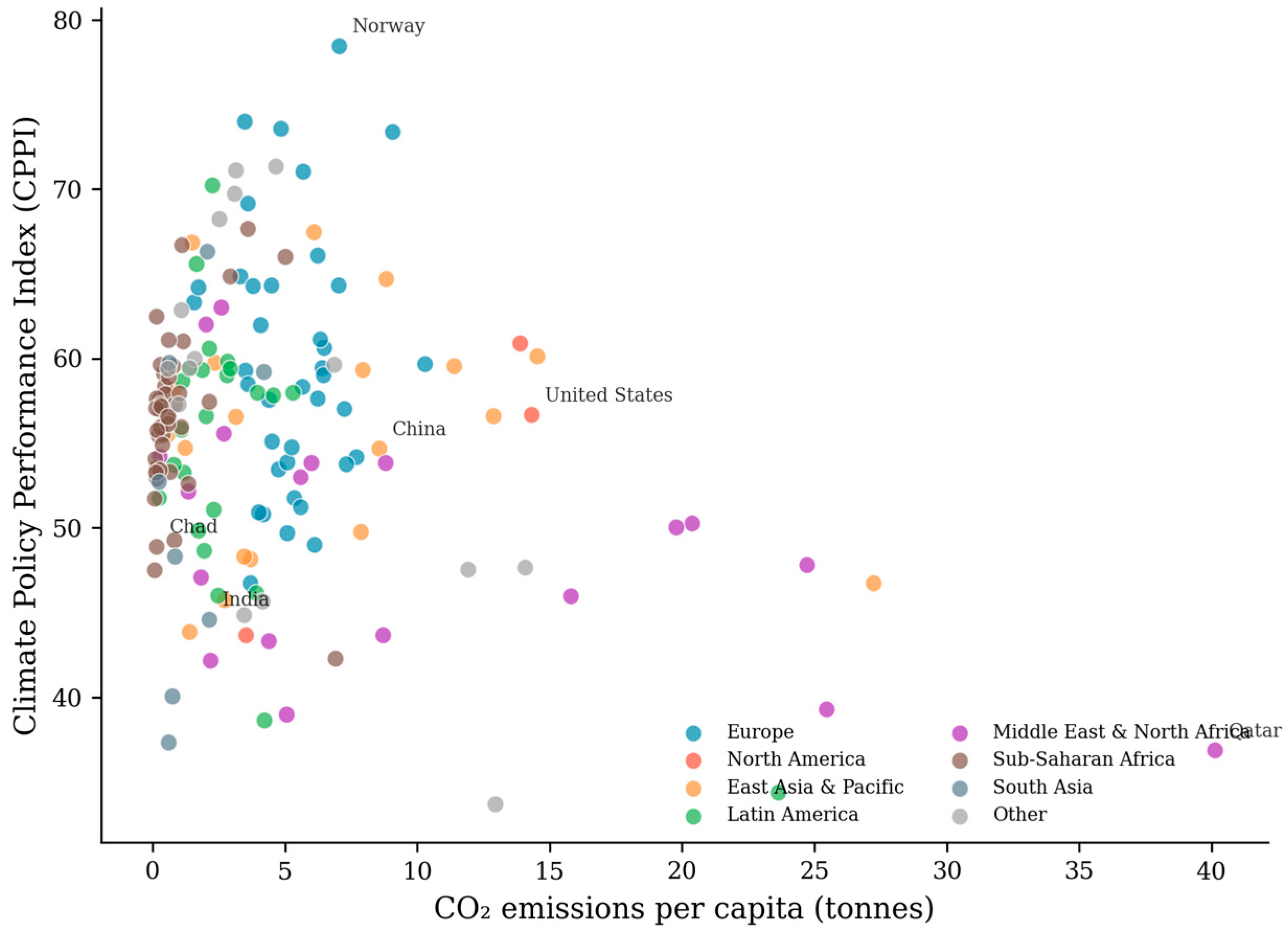
Per capita CO2 emissions range from 0.06 tonnes in Burundi to 40.13 tonnes in Qatar, with a mean of 4.61 tonnes. The share of renewable energy ranges from near zero in several oil-exporting economies to 82% in Iceland. The ND-GAIN Index spans from 24.99 (Chad) to 76.79 (Norway), indicating substantial variation in climate adaptation capacity across countries.
Table 3 presents mean values by World Bank income classification, revealing systematic patterns in climate policy performance across development levels.
High-income countries exhibit significantly higher per capita emissions (7.64 t) but also demonstrate greater adaptation capacity (ND-GAIN = 58.57) and lower vulnerability (0.35). Conversely, low-income countries show minimal emissions (0.12 t per capita) but face the highest vulnerability scores (0.56), highlighting the climate justice dimension of the policy evaluation framework.
Regional analysis (
Table 4) reveals that Europe has the highest average ND-GAIN score (60.83) and substantial renewable energy deployment (22.09%), whereas Sub-Saharan Africa exhibits the lowest adaptation capacity (38.17) despite minimal per capita emissions (0.87 t).
Table 5 presents the correlation matrix for the key variables, which informs the independence assumptions underlying the additive multi-attribute utility function.
The strong positive correlation between CO2 per capita and GDP per capita (r = 0.73) reflects the emissions–development nexus, while the moderate negative correlation between CO2 emissions and vulnerability (r = −0.45) indicates that higher-emitting countries generally possess greater adaptive capacity. The strong correlations among the ND-GAIN Index, readiness, and GDP per capita (r > 0.80) suggest that economic development remains a primary determinant of adaptation capacity, thereby motivating the inclusion of GDP-adjusted utility specifications in the sensitivity analysis.
Several limitations should be acknowledged. First, the renewable energy data coverage is limited to 77 countries, potentially introducing selection bias toward larger and more developed economies. The final sample of 187 countries represents the intersection of territories with complete data across the ND-GAIN Index, Global Carbon Project, and World Bank databases, covering approximately 96% of UN Member States.
Second, the use of territorial emissions does not account for consumption-based emissions embedded in international trade. Third, the ND-GAIN vulnerability assessments are based on exposure and sensitivity indicators that may not fully capture country-specific climate risks. Fourth, the cross-sectional design does not account for dynamic policy trajectories Future research should extend this framework to panel data analysis. Despite these limitations, the integrated dataset provides the most comprehensive openly available foundation for multi-criteria evaluation of national climate policies.
2.2. Theoretical Framework
This study employs Multi-Attribute Utility Theory (MAUT) to develop a comprehensive index for evaluating the performance of national climate policy. MAUT provides a rigorous axiomatic foundation for aggregating multiple, potentially conflicting criteria into a single measure of overall utility [
6,
32]. The approach is particularly suited for climate policy evaluation, where decision-makers must balance mitigation efforts, adaptation investments, economic costs, and social equity considerations.
The fundamental premise of MAUT is that an overall utility function
U(
x) can be decomposed into component utility functions for individual attributes, provided certain independence conditions are satisfied. For a decision alternative characterised by n attributes (
x1,
x2, …,
xₙ), the overall utility is expressed as follows:
where
uᵢ(xᵢ) represents the single-attribute utility function for attribute i, scaled to the [0, 1] interval.
2.2.1. Attribute Hierarchy
Following the structure of climate policy evaluation frameworks [
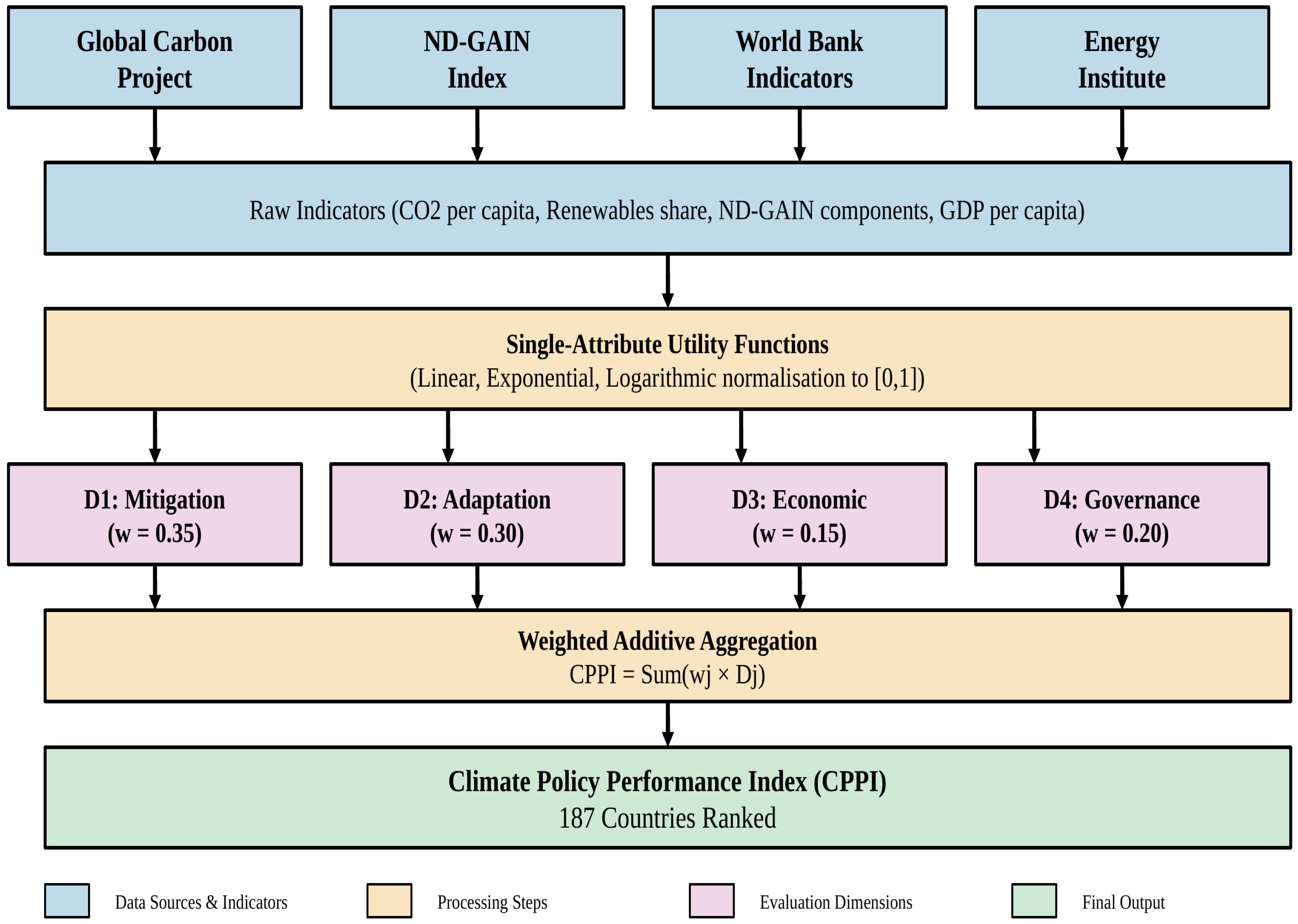
2], we organise the assessment into a three-level hierarchy (detailed workflow presented on
Figure 1):
Level 1: Overall Climate Policy Performance Index (CPPI)
Level 2: Four evaluation dimensions—D1: Mitigation performance—D2: Adaptation capacity—D3: Economic efficiency—D4: Governance quality
Level 3: Specific indicators (attributes)
Table 6 presents the complete attribute hierarchy with corresponding variables.
2.2.2. Single-Attribute Utility Functions
For each attribute, we specify a utility function uᵢ(xᵢ) that maps raw indicator values to the normalised utility scale [0, 1]. Following the multi-criteria decision analysis (MCDA) methodological approach [
33,
34], we employ both linear and nonlinear functional forms, depending on the attributes’ characteristics.
2.2.3. Linear Utility Functions
For attributes exhibiting approximately constant marginal utility across the observed range, we apply linear normalisation:
For attributes where higher values are preferred (+ direction):
For attributes where lower values are preferred (− direction):
where
and
represent the minimum and maximum observed values across all countries in the sample.
2.2.4. Nonlinear Utility Functions
For certain attributes, theoretical considerations suggest diminishing marginal utility. Following the functional forms established in utility theory [
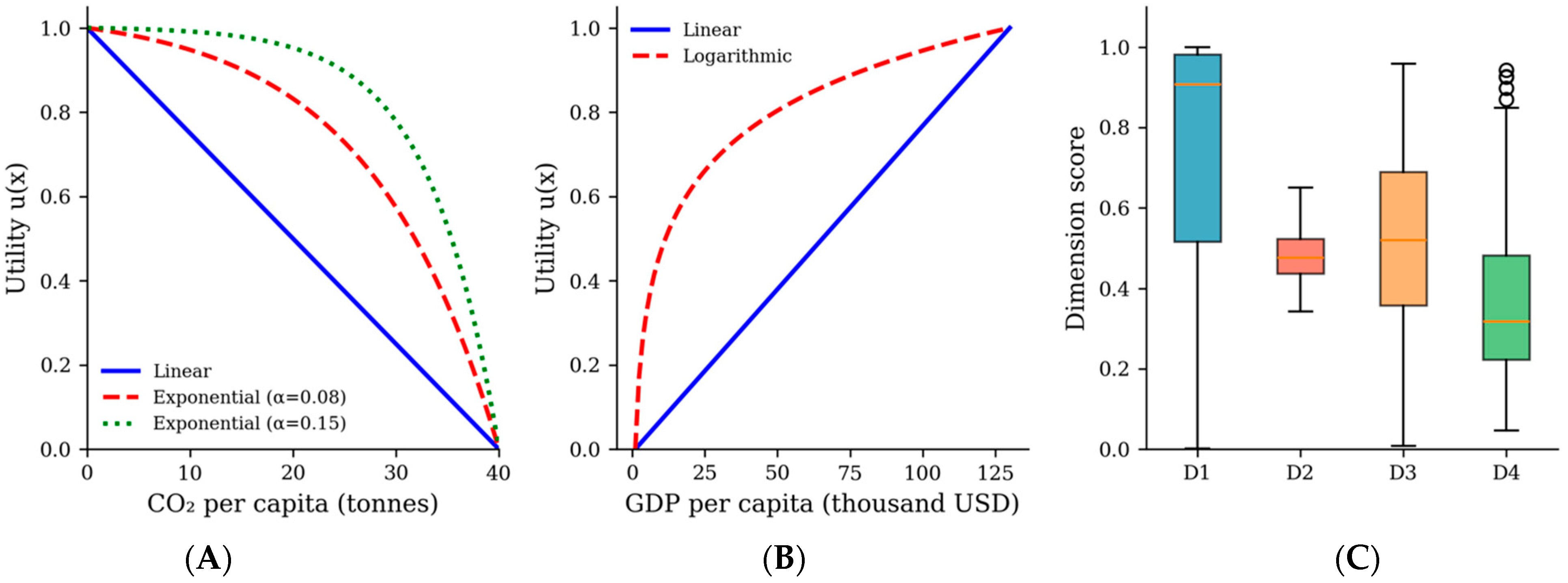
35], we specify exponential utility functions for emissions-related attributes:
where α > 0 is the risk aversion parameter controlling the degree of curvature. Higher values of α imply stronger diminishing marginal utility, reflecting the principle that initial emissions reductions yield greater utility gains than equivalent reductions at already low levels.
For the CO2 per capita attribute, we calibrate α based on the assumption that reducing emissions from 10 to 5 tonnes per capita yields approximately 1.5 times the utility gain of reducing from 5 to 0 tonnes. This yields α ≈ 0.15.
2.2.5. Logarithmic Transformation for GDP
For GDP per capita, we apply a logarithmic transformation prior to linear scaling, consistent with the established relationship between income and well-being [
34]:
This specification implies that proportional increases in income yield constant utility gains, regardless of the initial income level.
2.2.6. Aggregation Model
Under the assumption of mutual preferential independence among attributes [
6], we employ the additive aggregation model:
where:
and
U(
x) is the overall Climate Policy Performance Index for country
x,
wⱼ is the weight assigned to dimension
j (
∑wⱼ = 1),
Dⱼ(
x) is the dimension-level score, wⱼᵢ is the weight of attribute i within dimension
j (
∑wⱼᵢ = 1 for each j), and
uⱼᵢ(
xⱼᵢ) is the utility value for attribute i of dimension j.
The additive form assumes that trade-offs between dimensions are constant across all performance levels—i.e., a unit improvement in mitigation has the same value regardless of adaptation performance. We test this assumption through sensitivity analysis with a multiplicative specification.
2.2.7. Weight Elicitation
Determining appropriate weights is a critical challenge in multi-criteria evaluation. We employ three complementary approaches to ensure robustness:
As a baseline specification, we assign equal weights across all dimensions and attributes:
Equal weighting provides a transparent benchmark and avoids imposing subjective value judgments on the relative importance of climate policy dimensions.
Based on the structure of the Paris Agreement and UNFCCC framework, which emphasises both mitigation and adaptation while recognising common but differentiated responsibilities, we specify policy-aligned weights (
Table 7). The weights reflect the relative emphasis placed on each dimension in international climate policy frameworks, with mitigation receiving the highest weight, consistent with the Paris Agreement’s primary focus on emissions reduction.
2.2.8. Analytic Hierarchy Process (AHP)
For the robustness analysis, we derive weights using the analytic hierarchy process [
36]. AHP structures weight elicitation as a series of pairwise comparisons, with consistency checks to ensure a coherent preference ordering.
The pairwise comparison matrix A for the four dimensions is constructed based on the relative policy emphasis in international climate frameworks, particularly the Paris Agreement and UNFCCC architecture:
Weights are obtained as the normalised principal eigenvector of A, with consistency verified through the consistency ratio (CR < 0.10).
2.2.9. Handling Missing Data
Given the incomplete coverage of certain indicators (particularly renewable energy share), we implement the following approach:
Core analysis: Conducted on the subset of 77 countries with complete data across all attributes.
Extended analysis: For countries with missing renewable energy data, we estimate dimension scores using available attributes and adjust weights proportionally:
where
denotes the set of observed attributes for dimension 1.
Imputation sensitivity: Future research could examine robustness using multiple imputations by region and income group.
2.2.10. Sensitivity and Robustness Analysis
To assess the stability of country rankings, we conduct a comprehensive sensitivity analysis.
We systematically vary dimension weights within ±50% of baseline values and compute the rank correlation (Spearman’s ρ) between baseline and perturbed rankings, as follows:
where dᵢ is the difference in ranks for country
i.
We compare results across three utility function specifications: linear normalisation (baseline); exponential (risk-averse) specification; and power function: , with γ ∈ {0.5, 1, 2}.
As an alternative to the additive model, we test a multiplicative specification that penalises unbalanced performance:
This formulation implies that zero performance on any dimension yields zero overall utility, reflecting a non-compensatory perspective on climate policy evaluation.
2.2.11. Comparison with Existing Indices
To validate the proposed index, we compare country rankings with established climate performance measures:
Climate Change Performance Index (CCPI): Produced by Germanwatch, the NewClimate Institute, and the Climate Action Network, covering 63 countries.
ND-GAIN Index: The adaptation-focused index that serves as input to our framework.
Environmental Performance Index (EPI): Yale University’s biennial assessment of environmental health and ecosystem vitality.
We compute rank correlations and identify systematic differences to assess the value-added of the MAUT-based approach.
All analyses were conducted using Python 3.11 with the following packages: pandas (data manipulation), NumPy (numerical computation), SciPy (optimisation and statistical tests), and Matplotlib and seaborn (visualisation). The complete analytical code and data are available upon reasonable request from the corresponding author.
4. Discussion
4.1. Summary of Key Findings
This study developed and applied a Multi-Attribute Utility Theory framework to evaluate the performance of national climate policies across 187 countries. The resulting Climate Policy Performance Index (CPPI) integrates four dimensions—mitigation, adaptation, economic capacity, and governance—providing a theoretically grounded alternative to existing ad hoc indices. Several key findings emerge from the analysis.
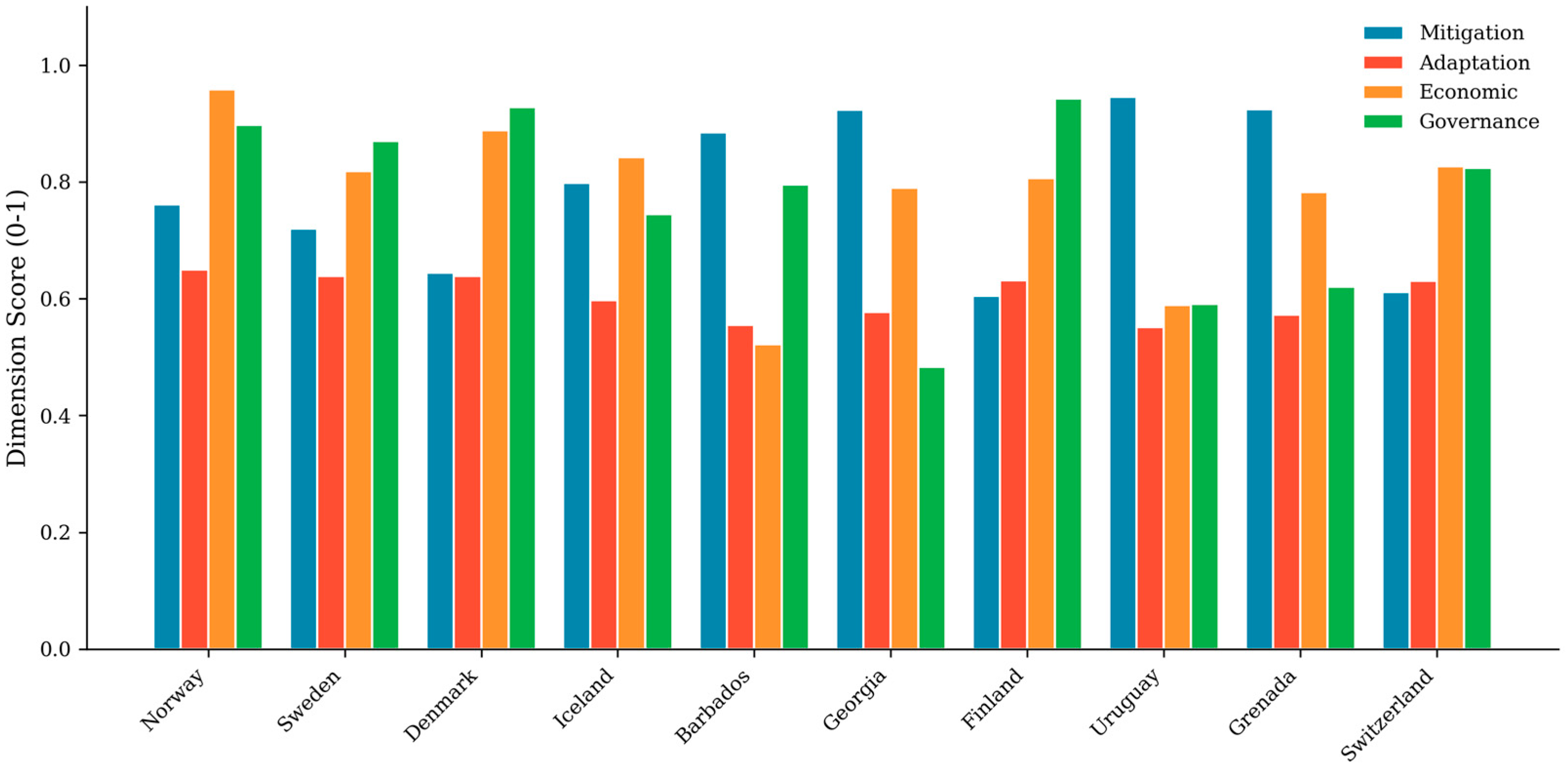
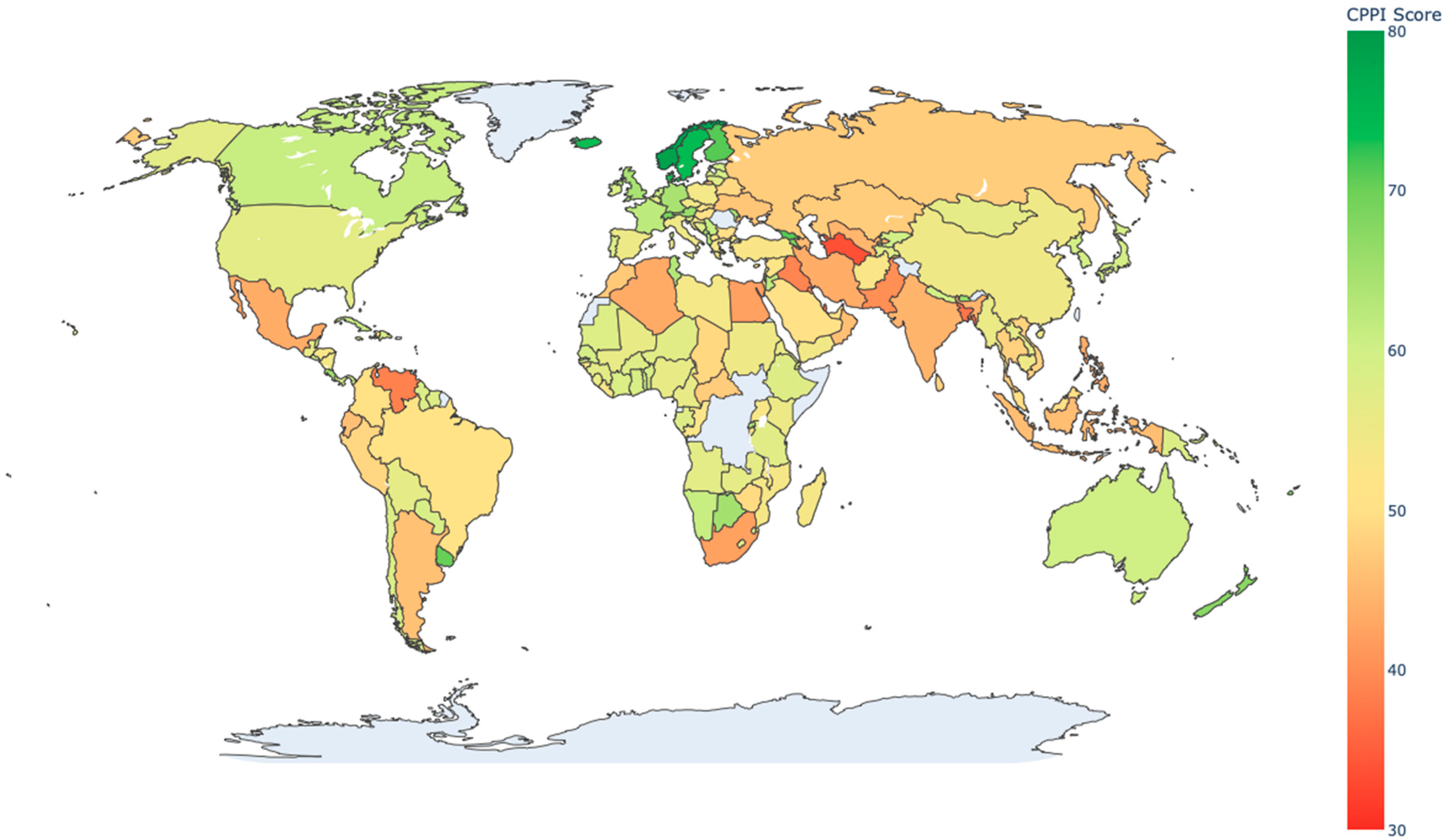
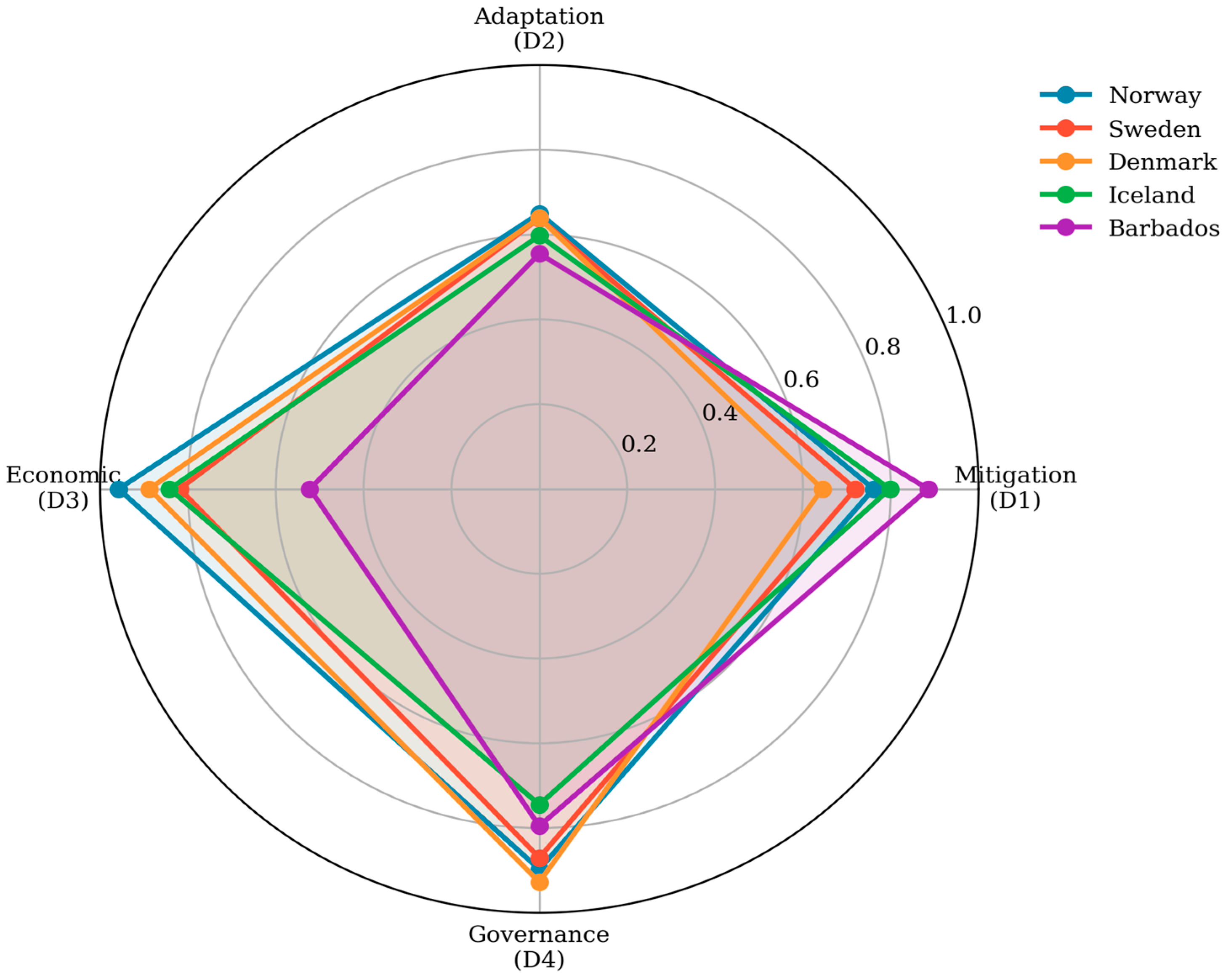
First, Norway emerges as the global leader (CPPI = 78.46), followed by Sweden, Denmark, and Iceland. These Nordic countries achieve high scores by balancing excellence across four dimensions: moderate-to-low emissions, strong deployment of renewable energy, robust adaptation capacity, and high-quality governance institutions. This finding contrasts with indices that focus solely on emissions, in which low-income countries with minimal industrial activity often rank highest despite limited institutional capacity for sustained climate action.
Second, the analysis reveals distinct performance archetypes among high-ranking countries. Norway and Denmark exemplify the ‘balanced performer’ archetype with consistently high scores across dimensions. Uruguay represents the ‘mitigation leader’ pathway, achieving exceptional D1 scores (0.945) through low emissions and high renewable penetration, compensating for moderate governance capacity. Singapore illustrates an alternative ‘governance–economy’ pathway, where world-class institutions (D4 = 0.926) and economic readiness (D3 = 0.955) offset weaker mitigation performance (D1 = 0.393). These diverse pathways underscore that climate policy success admits multiple configurations, challenging one-size-fits-all policy prescriptions.
Third, the bottom of the ranking reveals two distinct failure modes. Fossil fuel-dependent economies (Qatar, Kuwait, and Trinidad and Tobago) exhibit near-zero mitigation scores despite strong economic indicators, whereas countries facing governance deficits (Turkmenistan and Venezuela) perform poorly across multiple dimensions. This bifurcation suggests that remedial strategies must be tailored to specific national circumstances—emissions reduction for petrostates versus institutional strengthening for governance-challenged countries.
4.2. Comparison with Existing Climate Indices
The CPPI both converges with and diverges from established indices in instructive ways. Compared with the Climate Change Performance Index (CCPI), our framework identifies Nordic countries as leaders but yields notably different rankings for several country groups. The CCPI’s exclusive focus on major emitters (63 countries) excludes many small island states and low-income countries that perform well under CPPI’s broader coverage. Moreover, the CCPI deliberately leaves its top three positions vacant to signal that no country meets the Paris Agreement targets—a normative stance that our utility-theoretic approach does not impose.
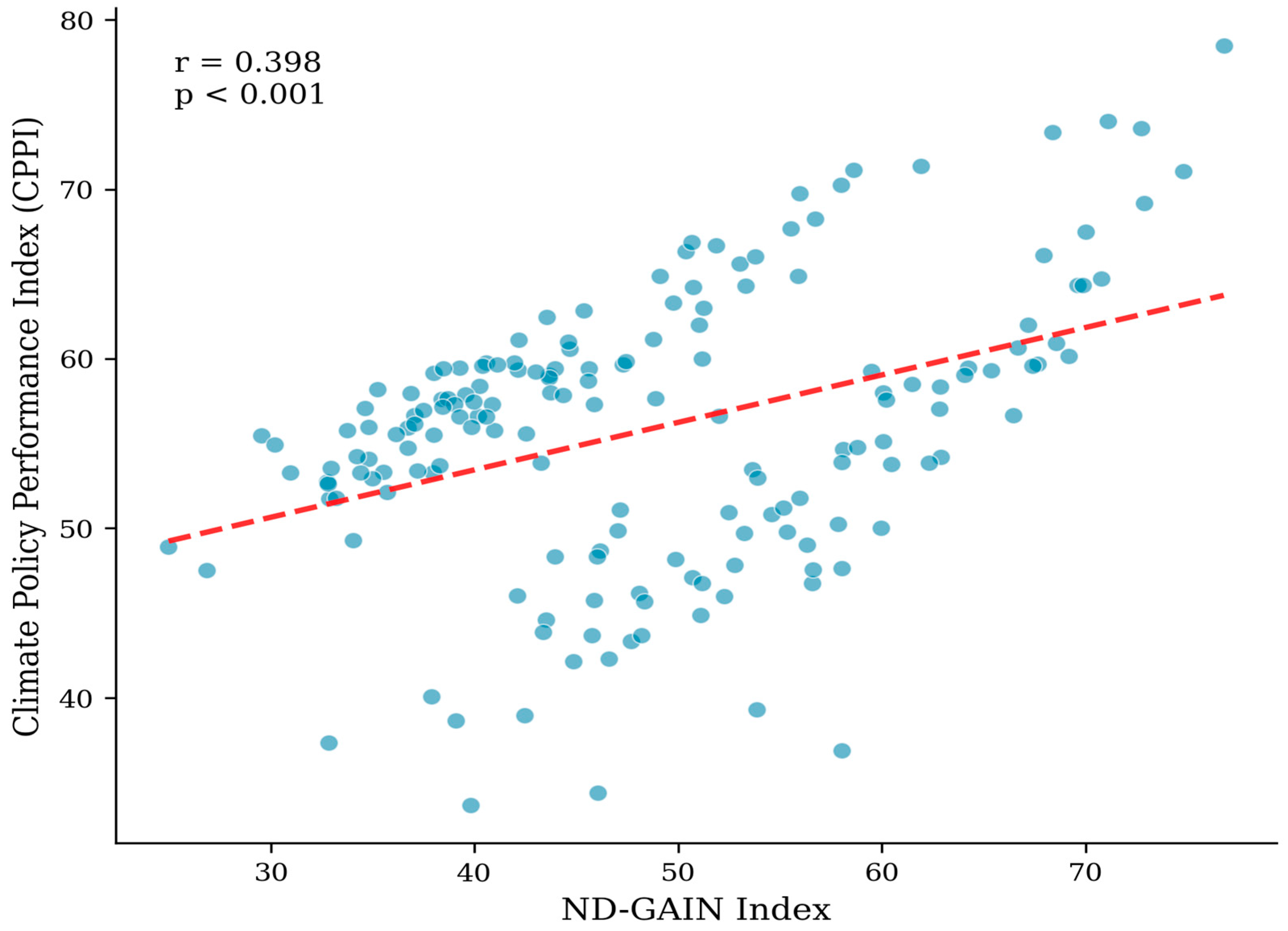
The moderate correlation between CPPI and ND-GAIN (r = 0.398) indicates that these indices capture related but distinct constructs. ND-GAIN emphasises vulnerability and adaptation readiness without explicit mitigation assessment, while CPPI integrates both dimensions. Countries with high ND-GAIN scores but moderate CPPI rankings (e.g., Singapore and Australia) typically exhibit strong adaptation capacity, but this capacity is undermined by high emissions. Conversely, low-emission developing countries (Rwanda and Bhutan) achieve higher CPPI rankings than their ND-GAIN positions would suggest, reflecting the credit CPPI assigns to mitigation performance.
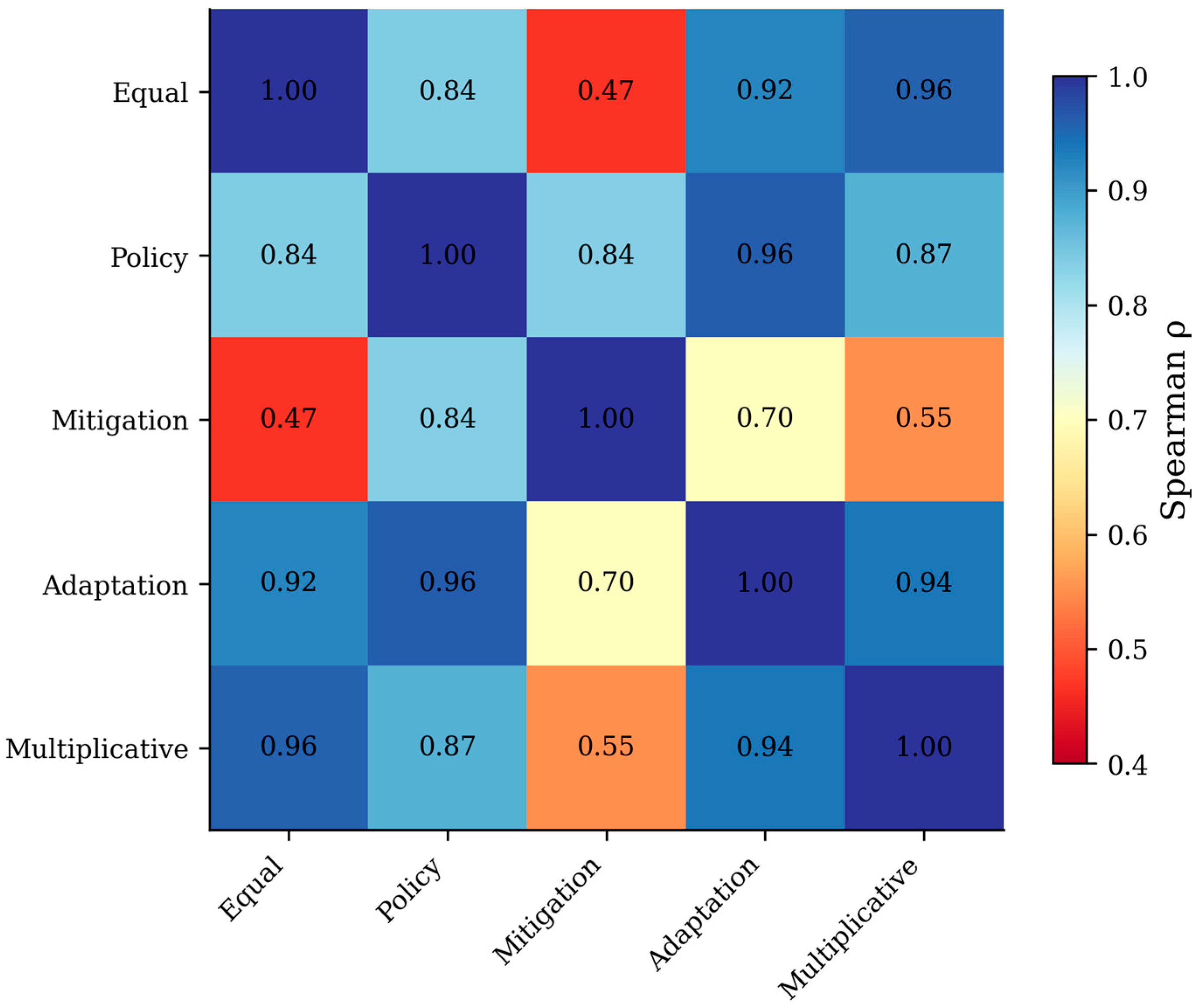
A critical methodological distinction concerns the transparency of weighting. Existing indices typically employ fixed, expert-determined weights without systematic sensitivity analysis. The CPPI framework explicitly models weight uncertainty through four alternative schemes (equal, policy-aligned, mitigation-focused, and adaptation-focused) and multiplicative aggregation. The high rank correlations among most schemes (ρ > 0.83) provide reassurance that rankings are reasonably robust, while the lower correlation with mitigation-focused weights (ρ = 0.47 vs. equal) reveals the substantive impact of normative choices regarding dimension priority.
4.3. Regional Patterns and the Development–Climate Nexus
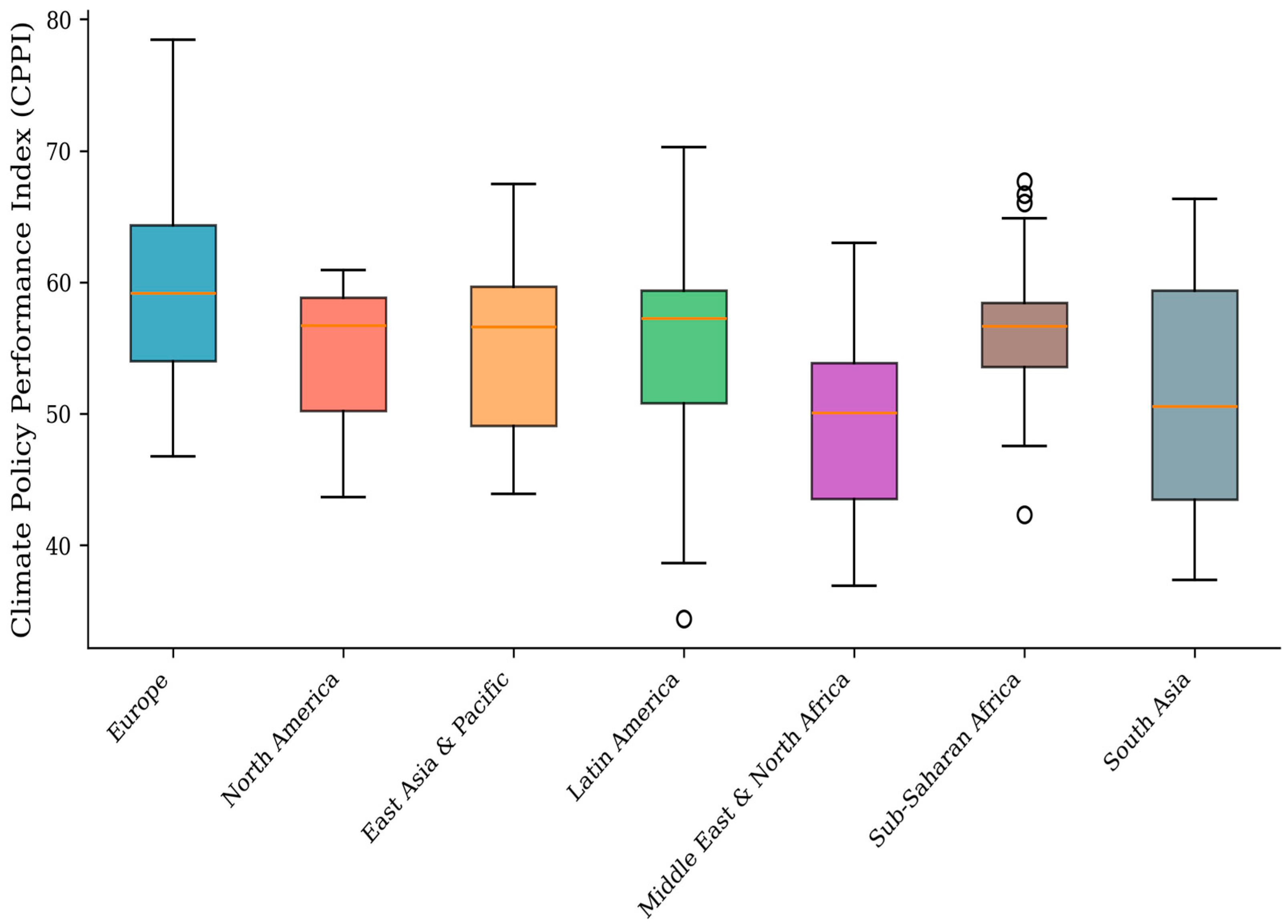
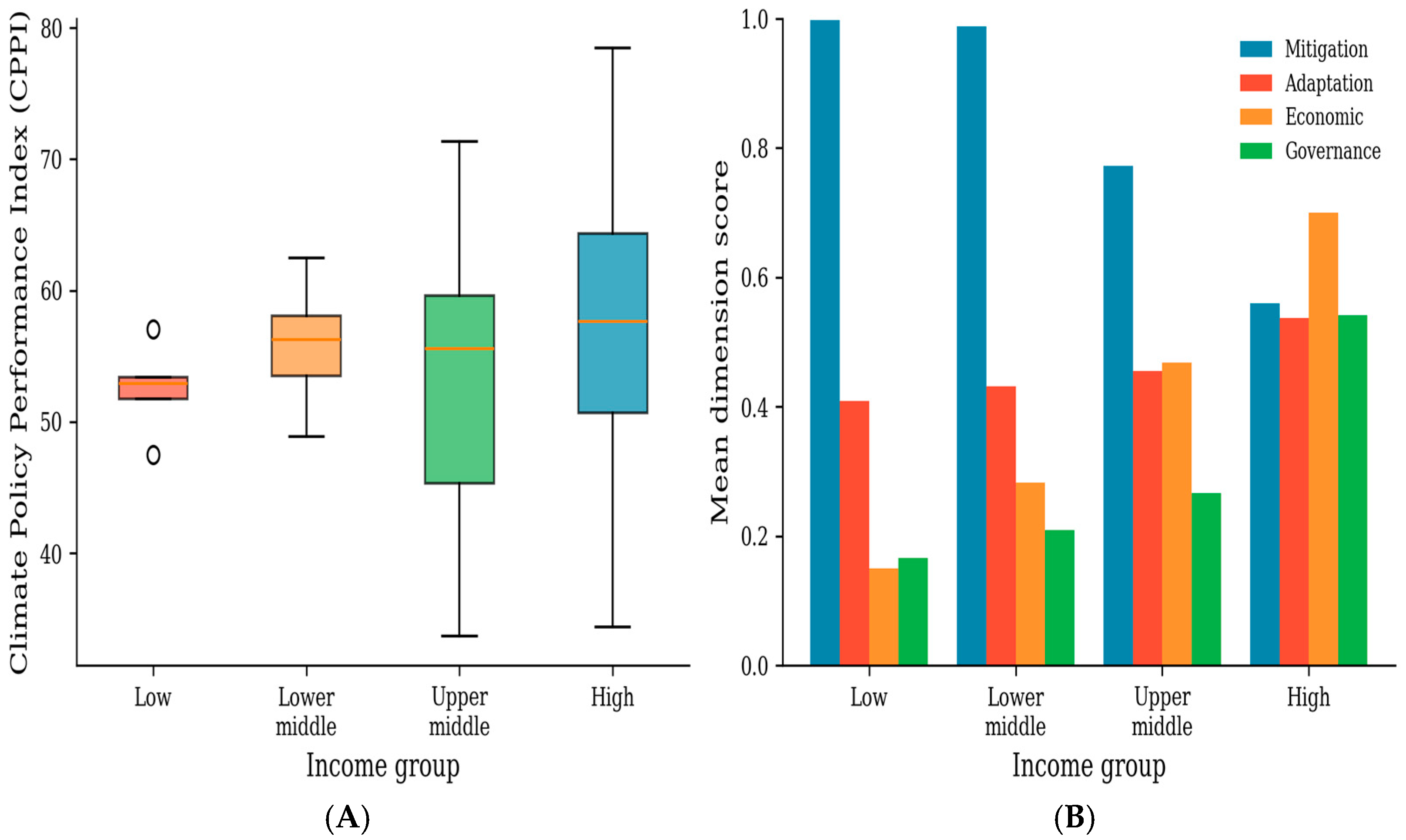
The regional analysis reveals a nuanced relationship between development status and climate performance. Europe leads with the highest mean CPPI (59.92), driven primarily by strong governance and adaptation capacity rather than emissions performance alone. Sub-Saharan Africa achieves the third-highest regional mean (56.56) through exceptional mitigation scores (D1 = 0.971) that compensate for weaker institutional dimensions—a pattern reflecting low per capita emissions rather than deliberate climate policy success. This finding cautions against interpreting high mitigation scores in low-income contexts as policy achievements, as they often reflect development deficits rather than climate leadership.
The Middle East and North Africa region ranks lowest (CPPI = 49.12), primarily due to weak mitigation performance in fossil fuel-exporting economies. This regional pattern aligns with broader research on the relationship between resource dependence and climate policy ambition. The ‘resource curse’ literature suggests that hydrocarbon wealth creates structural barriers to decarbonization through vested interests, Dutch disease effects, and reduced incentives for economic diversification [
37]. Our findings provide empirical support for this hypothesis at the national level.
The non-monotonic relationship between income and CPPI merits particular attention. High-income countries achieve the highest mean score (57.09) but exhibit substantial internal variation, with Qatar and Kuwait among the lowest performers globally. Lower-middle-income countries achieve comparable aggregate performance (56.05) through fundamentally different dimension profiles. This finding challenges simplistic narratives that frame climate action as a luxury of wealthy nations, as institutional quality and policy commitment appear at least as important as economic resources in determining climate performance.
4.4. European Union Performance and Policy Coherence
The EU-27 analysis reveals considerable internal heterogeneity despite common policy frameworks. Nordic members (Sweden, Denmark, and Finland) occupy top-10 positions globally, whereas Central and Eastern European members cluster in the middle ranks. This variation persists despite uniform exposure to EU climate directives, suggesting that supranational policy frameworks interact with national institutional capacity to produce divergent outcomes. Recent research on EU decarbonisation pathways confirms this heterogeneity, identifying distinct national trajectories shaped by energy system path dependencies and governance effectiveness [
38].
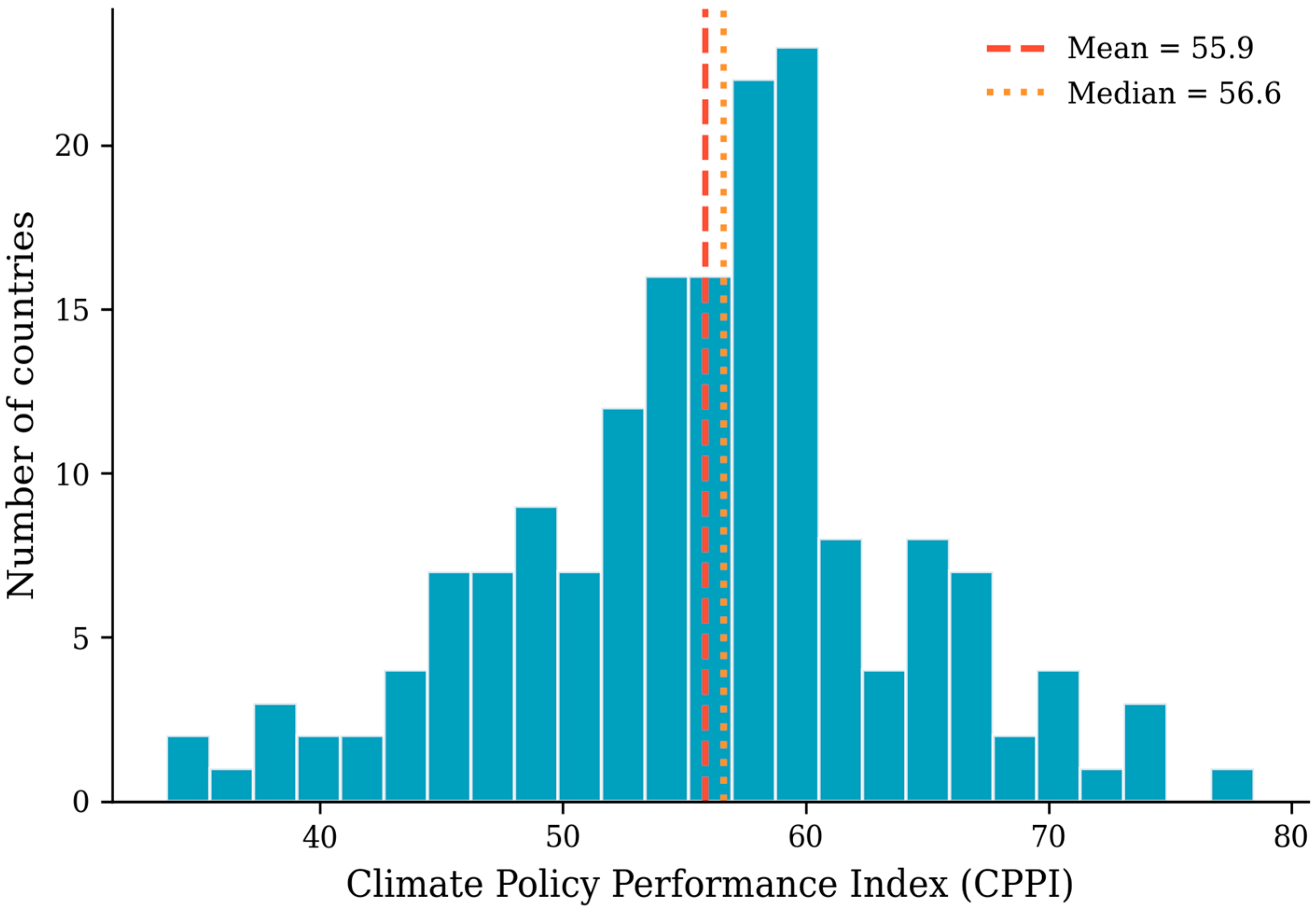
The EU-27 mean CPPI of 58.12 significantly exceeds the global average (55.86), confirming the region’s relative climate leadership. However, the within-EU standard deviation (6.94) indicates that this aggregate performance masks substantial variation across member states. Bulgaria and Hungary score below 51, while Nordic leaders exceed 71—a 20-point gap within a nominally integrated policy space. This dispersion has implications for EU climate governance, suggesting that uniform targets may impose disproportionate burdens on lower-capacity members while leaving higher-capacity members insufficiently challenged.
The dimension-level analysis reveals that EU performance advantages are concentrated in governance (D4) and adaptation (D2) rather than in mitigation (D1). Several EU member states exhibit moderate mitigation scores despite strong institutional frameworks, reflecting continued reliance on fossil fuels in their national energy mixes. Research on EU energy transitions indicates that policy discourse often outpaces actual decarbonisation progress, with rhetorical commitments exceeding observed emission reductions [
39]. The CPPI results corroborate this discourse–action gap, identifying countries where strong governance has not yet translated into proportionate emissions performance.
4.5. Policy Implications
The CPPI framework yields several policy-relevant insights. First, the identification of multiple high-performance pathways suggests that effective climate policy need not follow a single template. Countries with limited governance capacity but favourable renewable resources (e.g., Uruguay and Costa Rica) can achieve strong aggregate performance through mitigation excellence, whereas governance-strong countries can leverage institutional quality to offset historical emissions burdens. This finding supports differentiated national strategies within common global targets.
Second, the sensitivity analysis reveals that weight selection substantively affects country rankings, particularly for nations with unbalanced dimension profiles. Policymakers should recognise that index rankings reflect implicit value judgments about the relative importance of mitigation versus adaptation, current performance versus institutional capacity. The CPPI framework makes these trade-offs explicit, enabling informed interpretation rather than treating rankings as objective facts.
Third, the contribution of the governance dimension to aggregate performance underscores the importance of institutional quality for climate outcomes. Countries cannot purchase climate performance through wealth alone, as effective governance translates resources into policy implementation. This finding aligns with research demonstrating that governance quality mediates the relationship between economic capacity and development outcomes [
40]. Climate policy interventions should therefore attend to institutional strengthening alongside technical measures.
Fourth, the framework’s global coverage (187 countries) enables assessment of nations excluded from major emitter-focused indices. Small island developing states, low-income African nations, and post-Soviet states are systematically evaluated, revealing both unexpected leaders (Barbados, Georgia, and Armenia) and underperformers (Turkmenistan) that escape scrutiny in narrower indices. This expanded coverage supports more equitable global climate governance by including all parties to international agreements.
Fifth, the CPPI offers practical applications for international climate governance. For the UNFCCC Global Stocktake process, the index provides a standardised methodology for assessing collective progress across mitigation, adaptation, and means of implementation—the three pillars of the Paris Agreement. National governments can use the framework for benchmarking against peer countries, identifying dimension-specific gaps, and prioritise policy interventions. The transparent weighting structure enables policymakers to adjust priorities according to national circumstances whilst maintaining cross-national comparability.
4.6. Limitations
Several limitations warrant acknowledgement. First, the framework relies exclusively on publicly available data, constraining indicator selection to variables with broad country coverage. Important climate policy dimensions—including policy implementation quality, climate finance flows, and technological innovation capacity—lack consistent cross-national measurement and therefore remain unrepresented. The renewable energy indicator, available for only 77 countries with complete data, particularly limits the comprehensiveness of the mitigation dimension. More broadly, whilst the CPPI provides a useful comparative framework, comprehensive policy evaluation requires complementary analysis of implementation processes, political economy factors, and equity dimensions that lie beyond the scope of outcome-based indices.
Second, the additive utility model assumes preferential independence among dimensions—a condition under which preferences over one attribute can be assessed independently of the levels of other attributes. This is distinct from statistical independence: high correlations among indicators (e.g., ND-GAIN readiness and GDP per capita, r ≈ 0.8) do not violate MAUT assumptions, although they may lead to implicit overweighting of correlated constructs. Our sensitivity analysis excluding D3 (ρ = 0.886) indicates that this concern does not substantially affect rankings. Countries achieving high scores through compensation (high mitigation offsetting weak governance) may represent fundamentally different policy configurations than balanced performers. The multiplicative aggregation variant partially addresses this concern by penalising unbalanced profiles, but more sophisticated interaction modelling could more accurately capture dimension complementarities.
Third, the weight elicitation procedures remain normatively contested. While we present four alternative schemes and conduct extensive sensitivity analysis, the ‘correct’ weights ultimately depend on value judgments about climate policy priorities. Stakeholder-based weight elicitation through the analytic hierarchy process or swing weighting could enhance legitimacy but would introduce additional complexity and potential inconsistency.
Fourth, the min–max normalisation approach is sensitive to extreme values. Outliers such as Qatar’s exceptionally high per capita emissions (40.13 tonnes CO2) compress the scale for the majority of countries clustered at lower emission levels, potentially reducing discrimination in the middle of the distribution. Nonlinear utility functions partially mitigate this concern, but alternative normalisation methods (z-scores and percentile ranks) could be explored in future research.
Fifth, the cross-sectional design captures a single temporal snapshot, precluding assessment of performance trajectories or policy effectiveness over time. Countries undertaking ambitious but recent reforms may score poorly on current indicators despite promising trends. A longitudinal extension of the CPPI framework could address this limitation, although data availability constraints may require the use of shorter time series for some indicators.
Sixth, consumption-based emissions accounting—which allocates emissions to final consumers rather than territorial producers—might yield substantially different mitigation rankings for trade-intensive economies. Countries that have outsourced emissions-intensive production while maintaining high consumption levels may appear stronger under territorial accounting than their true climate footprint warrants. Data limitations preclude consumption-based analysis at present, although this remains an important direction for methodological refinement.
5. Conclusions
This paper developed a Multi-Attribute Utility Theory framework for evaluating national climate policy performance and applied it to construct the Climate Policy Performance Index covering 187 countries. The CPPI integrates four dimensions—mitigation, adaptation, economic capacity, and governance—using explicit utility functions and transparent aggregation procedures grounded in established decision theory. Key findings include: (1) Nordic countries lead global rankings through balanced excellence across dimensions; (2) multiple high-performance pathways exist, with countries achieving strong aggregate scores through different dimension configurations; (3) the development–climate relationship is non-monotonic, with institutional quality mediating economic resources’ translation into climate outcomes; and (4) rankings demonstrate reasonable robustness across alternative weighting schemes, though mitigation-focused weights produce substantially different orderings.
The principal methodological contribution is demonstrating that formal utility theory can be productively applied to cross-national climate policy evaluation, thereby providing axiomatic foundations missing from existing indices. By making weighting choices explicit and conducting systematic sensitivity analysis, the framework enables transparent interpretation of rankings as value-laden constructions rather than objective facts. The expanded country coverage (187 versus 63 in CCPI) includes nations previously excluded from major assessments, thereby supporting more equitable global climate governance. In sum, the CPPI advances both the science and practice of climate policy assessment: methodologically, by grounding composite index construction in formal decision theory, and practically, by providing policymakers with a transparent, comprehensive tool for benchmarking national performance and identifying targeted areas for improvement.
A longitudinal extension would enable trajectory analysis, distinguishing improving from deteriorating performers and identifying countries achieving rapid progress. By calculating the CPPI annually using consistent methodology, the framework could track whether the global community is collectively advancing toward Paris Agreement targets, which dimensions are improving fastest, and which countries serve as models of accelerated climate action. Such dynamic application would complement the UNFCCC Global Stocktake by providing continuous rather than periodic assessment. Consumption-based emissions accounting could address the limitations of territorial accounting in trade-intensive economies. Stakeholder-based weight elicitation would enhance normative legitimacy. Finally, integration with scenario modelling could support forward-looking assessments of policy pathways consistent with the Paris Agreement targets. The CPPI framework provides a foundation for these extensions, contributing to the broader agenda of evidence-based global climate governance.




 ,
,