Article

Barriers to Sustainable Procurement in Dutch Higher Education Institutions

1
Faculty of Management & Organisation, The Hague University of Applied Sciences, 2501 EH The Hague, The Netherlands
2
Academy of Facility Management, Zuyd University of Applied Sciences, 6200 AP Maastricht, The Netherlands
3
Institute of Facility Management, Hanze University of Applied Sciences, 9747 AS Groningen, The Netherlands
4
Research Centre Business Innovation, Rotterdam University of Applied Sciences, 3015 EK Rotterdam, The Netherlands
*
Author to whom correspondence should be addressed.
Sustainability 2026, 18(4), 1722; https://doi.org/10.3390/su18041722
Submission received: 8 December 2025 / Revised: 21 January 2026 / Accepted: 5 February 2026 / Published: 7 February 2026

Abstract

Higher Education Institutions (HEIs) are increasingly recognized as strategic contributors to a sustainable society. Although sustainable procurement is widely acknowledged as a key mechanism for advancing sustainability goals, many HEIs encounter persistent barriers to its effective implementation. Within the academic research, sustainable procurement in HEIs is a largely overlooked topic. This study explores an often neglected perspective: the experiences of staff-level employees involved in procurement processes. Through focus group research conducted among staff members at five universities of applied sciences in the Netherlands, we identified barriers at the organizational and functional levels. Findings underscore the critical importance of (other) top management priorities, financial considerations and the lack of clear goals and guidelines for implementing sustainable procurement. Focus group participants identified the invisibility of sustainable procurement’s impact as a key challenge in generating buy-in and enthusiasm among colleagues. This invisibility is closely linked to difficulties in measurement and to inadequate monitoring systems. In addition, contract and supplier management appear to be blind spots within HEIs. Staff-level employees feel that they could greatly benefit from the experiences of peers in other institutions. The results of this study highlight untapped potential for advancement in both professional practice and academic research.

1. Introduction

The world is facing significant environmental challenges, prompting a global shift toward sustainability. The Paris Agreement marked a pivotal moment, with many countries committing to reduce greenhouse gas emissions and limit global warming. In response, governments have set ambitious climate targets for 2030 and 2050 [1], and sustainability has become a strategic priority for numerous organizations [2]. Sustainable procurement is widely recognized as a powerful instrument to promote environmentally and socially responsible practices across both public and private sectors [3].
Higher Education Institutions (HEIs) are increasingly acknowledged as key actors in advancing sustainable development. By embedding sustainability into their procurement practices, HEIs can serve as transformative agents [4]. The 2030 Agenda for Sustainable Development and the 17 Sustainable Development Goals (SDGs) adopted by the United Nations [5] provide a global framework that guides HEIs in aligning their operations with pressing environmental and social challenges [6]. However, HEIs also contribute significantly to carbon emissions and ecological degradation through their on- and off-campus activities [7]. HEIs generate CO2 emissions in several ways [8]. The most important sources of emissions include energy use, business travel and commuting (both students and employees), and procurement [9,10,11]. Other important categories are equipment, ICT and facility services [12]. Other less intensive, but still significant sources are food, waste and water use [9,11]. Most of these categories can be influenced by procurement when choosing for (more) sustainable options.
Institutional procurement and supply chains represent a dominant yet often under-calculated share of carbon emissions for HEIs, typically accounting for over half of their total carbon footprint. For instance, the procurement activity of the University of Edinburgh accounts for approximately one-third of the University’s turnover and over half of its greenhouse gas emissions [13]. Considering the impact on supply chains, procurement emissions are largely “embodied,” meaning they occur during the manufacturing, extraction, and transport of products before they reach the campus. Embodied carbon represents the millions of tons of carbon emissions released during the lifecycle of building materials, including extraction, manufacturing, transport, construction, and disposal. Concrete, steel, and insulation are all examples of materials that contribute to embodied carbon emissions [14].
Universities of applied sciences hold a unique position within societies. They are expected to contribute to a sustainable development by generating and disseminating knowledge through education and research [7]. As educators of future professionals, they are expected to prepare students for sustainability challenges [8]. This responsibility implies that HEIs must lead by example, integrating sustainable practices into their own operations in accordance with the principle of “practice what you preach” [15]. Yet, HEIs face unique sustainability challenges and priorities, which means that lessons learned from other sectors cannot be directly applied [16].
According to the World Higher Education Database, there are approximately 20,000 accredited HEIs across 196 countries [17], educating an estimated 264 million students by 2025 [18]. Reports from the OECD indicate that average spending on tertiary education reached around $20,500 per full-time student in 2025 [19]. In the Netherlands, universities of applied sciences reported a total expenditure of €6.8 billion in 2025 [20]. It is estimated that around 20% of this expenditure is allocated to procurement, amounting to approximately €824 million in 2025 [21]. Public institutions are encourage to ensure that at least of their procurement meets sustainability criteria, according to sectoral guidelines and the ambitions outlined in the Dutch National Circular Economy Programme [22]. Despite the economic and societal relevance of HEIs, there is a lack of publicly available data on the actual share of sustainable procurement within their budgets. It is therefore assumed that while large sums are involved, the extent to which these are spent sustainably remains unclear.
Despite the growing awareness of the importance of sustainable procurement, many HEIs face substantial barriers in implementing it effectively [4,23,24]. Financial considerations often take precedence over sustainability goals [25], and implementation is frequently hindered by persistent structural and organizational barriers [16,26]. Limited knowledge and awareness among staff are also commonly cited as obstacles [26]. The limited academic research on sustainable procurement in HEIs highlights a gap between the recognized importance of sustainability and the actual efforts and impact observed in practice [7,16]. This gap underscores the need for further research into the practical barriers that hinder effective implementation.
In many HEIs, procurement is decentralized, with purchasing responsibilities distributed across various departments and staff members [16,26,27,28,29]. Consequently, the success of sustainable procurement initiatives often depends on the behaviour and decisions of individual employees [30], complicating the implementation of sustainable procurement significantly. However, existing studies tend to overlook this individual level of analysis [27]. This observation stands in stark contrast to the vast majority of academic research, which is limited to interviewing management and, at most, senior-level buyers. This contrast represents a significant gap in the existing body of knowledge, so that greater insight into the perspective of operational-level employees can make a significant contribution to the field. Revez et al. [28] emphasize the importance of examining everyday procurement practices, which are often fragmented and underdeveloped in terms of sustainability. Similarly, Elser and Michael [30] argue that the purchasing decisions of staff-level employees remain underexplored in the literature. This study addresses that gap by investigating the barriers to sustainable procurement as experienced by support and staff employees within HEIs.
The purpose of this study is to provide results and recommendations that are relevant to the academic world (body of knowledge) and that are relevant to practitioners at HEIs who are involved in sustainable procurement. The objective of the study is to provide insight into the barriers that staff members encounter when implementing sustainable procurement practices in HEIs. To this end, we conducted an exploratory study among employees at five universities of applied sciences in the Netherlands. Using a small-scale survey and focus group discussions, we identified the barriers experienced in daily procurement practices.

2. Literature Review

In Section 2 we discuss the most important literature related to the purpose and the aim of our study. The justification for using Google Scholar as database is the uncovering of specific content, including grey literature that is relevant for our study. Another advantage of Google Scholar is the coverage of social sciences and humanities. We do not want to miss out on relevant publications, although we acknowledge the qualities of other database. Section 2.1 introduces the concept of sustainable procurement concept, linking it to the Sustainable Development Goals. Section 2.2 provides a comprehensive overview of barriers to sustainable procurement at HEIs, as reported in academic research. Section 2.3 and Section 2.4 further discuss and categorize these barriers by organizational and purchasing level.

2.1. Sustainable Procurement

Basically, sustainable procurement is concerned with sourcing decisions to mitigate environmental, social and economic concerns [29]. Sustainable procurement combines environmental and socially responsible behaviours with efficiency and profitability goals [31]. In its simplest form sustainable procurement is understood as environmentally and socially responsible purchasing [32]. However, sustainable procurement involves a broad spectrum of practices, including social issues such as diversity, working conditions, human rights, occupational safety, philanthropy, community involvement [33]. It also covers supplier management such as buying locally from small-scale suppliers, ethical sourcing, assessing vendors on their environmental performance, supplier development, and fair trade principles [4,34]. In addition, it encompasses and operations management such as adopting energy-efficient technologies, developing/buying eco-friendlier products, carbon emissions associated with transportation, and waste management [35].
Organizations are increasingly expected to take responsibility and pursue sustainability goals. Expectations are high when it comes to the possibilities and effectiveness of sustainable procurement [27]. Sustainable procurement is considered the most effective tool for achieving environmental, social, and economic goals [36], and is a crucial strategy to address environmental and social challenges [37]. According to Johnsen et al. [38], sustainable procurement lies at the heart of this transition, constituting a key lever for achieving sustainability goals.
Sustainable procurement is receiving a great deal of attention, especially within the public sector. Governments can integrate sustainability into their purchasing and tendering policies, as well as make their own business operations more sustainable. For instance, the Dutch government emphatically sees sustainable procurement as an effective instrument to reduce CO2 emissions, environmental pollution and the use of raw materials, and also to tackle social abuses. A number of important themes and goals of sustainable procurement have been elaborated in a national plan [39]—see Table 1.
HEIs have the potential to particularly advance SDG 4 (Quality Education), SDG 11 (Sustainable Cities and Communities), and SDG 13 (Climate Action) through knowledge creation and dissemination [15]. We recognize that there is a tension between the goals set by a national government, such as the Dutch one, and their feasibility or specific relevance and impact for SDGs within specific sectors [26]. We do not resolve this inconsistency in our article; in our view, it merely reinforces the notion that there can be considerable optimism in policymaking regarding the effectiveness of something like sustainable procurement and the insights and critical perspective that scientific researchers have on the same phenomenon within a HEI context.

2.2. Barriers to Sustainable Procurement at HEIs

For many years, there has been considerable interest in sustainability within the academic community, resulting in approximately five million publications (source: Google Scholar. August 2025, measured without a starting date). About 3 million manuscripts have been published in journals. Within this vast number of publications, only a small minority relate to sustainable procurement, yet still constitute over 22,000 articles. While sustainable public procurement (SPP) research within the broader public sector offers valuable insights, its generalization to the education sector is problematic. HEIs operate under distinct governance structures, procurement practices, and sustainability priorities. Their decentralized purchasing, unique product categories, and emphasis on educational impact rather than regulatory compliance necessitate a sector-specific approach. Therefore, applying SPP findings from other public domains to education without contextual adaptation risks misalignment and ineffective implementation [16].
Research often emphasizes the importance of sustainability, while there are relatively few studies on the integration and implementation of sustainable procurement within the procurement processes of HEIs [40]. Narrowing the scope to “sustainable procurement in HEIs,” only approximately 35 academic publications have appeared in the past ten years. Of these articles, 16 explicitly report on barriers to sustainable procurement at HEIs. With these figures, we want to illustrate the striking disbalance between the research on sustainability and the research on barriers to sustainable procurement at HEIs. The observation that there is little research on this topic is relevant, since many HEIs do have ambitions in the area of sustainable procurement, but apparently struggle with these barriers.
Table 2 provides an overview of studies on barriers to sustainable procurement, as specifically found within Higher Education Institutions.
This overview confirms the earlier observation that the roles and experiences of various staff members who are closely involved in purchasing processes within decentralized organizations are rarely considered. Scholars interview primarily purchasing professionals and department directors.
What stands out in Table 2 is the wide diversity of barriers identified in the empirical studies. These barriers can be broadly categorized into factors operating at the organizational level and those specific to the purchasing function.

2.3. Barriers at the Organizational Level

At the level of the entire organization, we regularly encounter the concept of ‘organizational inertia’ [16]. The slowness and sluggishness of decision-making is sometimes attributed to resistance to change [51], even at the institutional level [53]. The elusive concept of organizational culture is sometimes used to characterize slow, bureaucratic ways of working [44].
Another issue related to top management concerns the provision of clear guidelines for the implementation and objectives of sustainable procurement. Ojijo [47] for example, concluded that the lack of clear guidelines and policies leads to inefficiencies in decision-making on sustainability and supplier selection. In research by Chyn and Chuing [40], the lack of guidelines was also identified as the main barrier to sustainable procurement.
Other barriers are directly related to the performance of (senior) management. Sustainable procurement is not always high (enough) on the strategic agenda. Policy ambiguity can arise, making it unclear where the true priorities lie [53]. Management at educational institutions traditionally views procurement as an operational function, not a strategic one, so this perception does not contribute to support for and implementation of sustainable procurement [16]. Top management support is often seen as a necessary condition for implementing sustainable procurement, although this is not always achieved [53]. Within organizations, reference is made to the importance of economic efficiency in this regard [52].

2.4. Barriers at the Level of the Purchasing Function

Barriers to sustainable procurement can also exist at the level of the (decentralized) purchasing function. Many HEIs have a decentralized purchasing function [30]. This means that purchasing activities and decisions are spread across various staff members within the organization. It is striking that this perspective is almost entirely absent from current academic research [27]. Working with decentralized budgets certainly does not always encourage sustainable procurement [42]. Decentralized decision-making on sustainable procurement can also lead to inconsistent policies and less focus on sustainable procurement [43].
Research shows that staff members involved lack experience implementing sustainable procurement [53]. Training is not offered, resulting in a lack of the necessary knowledge [43,45]. More generally, decision makers at the functional level have to deal with all kinds or resource constraints [16], especially with financial constraints [40].
A striking barrier is the lack of sustainability requirements within procurement processes. Sustainability specifications are not always specified as requirements. This clearly does not promote improved sustainable procurement performance. In line with this, another barrier refers to the lack of monitoring, or to the problems and limitations of monitoring [28,51]. Inadequate reporting mechanisms are also highlighted in this context [26]. Table 3 provides a brief overview of the barriers we encountered in the HEI literature when it comes to sustainable procurement.
Given the limited existing knowledge on barriers at the staff level, our study adopts a primarily exploratory design. As will be elaborated in the following sections, respondents were deliberately not asked to reflect on barriers identified in the literature. Instead, the study was designed to elicit respondents’ own experiences and interpretations, which were subsequently conceptualized as barriers by the researchers. These empirically driven barriers are then discussed in relation to those identified in the literature review.

3. Research Method

The empirical part of our study is exploratory in nature, identifying the main limitations and barriers to sustainable procurement, specifically as experienced by staff members of HEIs in the Netherlands. The research was carried out by a consortium of five collaborating universities of applied sciences in the Netherlands, namely The Hague University of Applied Science (THUAS), Zuyd University of Applied Sciences (Zuyd UAS), Hanze University of Applied Sciences (Hanze UAS), Rotterdam University of Applied Sciences RUAS) and Amsterdam University of Applied Sciences (AUAS). The collection of data was done in two phases.
Initially, as a preliminary study, a questionnaire was drawn up, which was sent to representatives of the participating universities of applied sciences. The questionnaire was intended to identify themes and issues that the facilitator could later use for the group discussions. It is explicitly a preliminary study, the results of which were used as input, not as output of the final group discussion. The questions directly relate to the problem definition, as the focus is on barriers that hinder the achievement of sustainability goals. The moderator has clearly indicated the topics of discussion and the research’s purpose. The guidelines for focus group discussion participants are consistent with those of Saunders et al. [54]. The respondents were able to indicate their experiences and opinions regarding sustainable procurement in their own university of applied sciences. This survey asked about the following themes:
  • The state of sustainable procurement (the status quo).
  • Barriers within the university of applied sciences that hinder the realisation of sustainability ambitions.
  • Barriers ‘in one’s own daily practice’ that hinder the realization of these ambitions.
Subsequently, research was done by means of focus group research, in which participants could discuss the problem and respond to each other. A focus group design offers specific advantages. Group dynamics encourages discussion and information sharing among participants [54]. This qualitative way of collecting data also makes it possible for participants to go deeper into the matter and also answer the how and why questions, which is not possible with, for example, a survey study.
All participating institutions operate under decentralized procurement systems, which implies that various employees are likely to be involved in the procurement function. At the operational staff level, we have identified four professional groups, each known to influence and be involved in (sustainable) procurement processes in their own way. Advisory and initiating roles are primarily reserved for sustainability coordinators, operational purchasers, and employees from business operations (i.e., facility management). Procurement teachers are also involved in the research, as they often fulfil the role of user, but in some cases also play an informal, advisory role. Participants were chosen using non-probability sampling. Involvement in sustainable procurement, in whatever way, was necessary to investigate the issues at hand. The focus group research involved staff level employees from each institute The level to which the empirical part of our research pertains is the operational, executive level within HEIs. This involves staff members who do not have the authority to make final decisions, but who are responsible for preparing and initiating them. More specifically, this primarily concerns operational purchasers (with a primarily advisory role), sustainability coordinators, and employees from business operations (i.e., facility management).
Two online sessions were organised in the spring of 2024 with a total of 23 participants. The design and results of the questionnaire research were used as guidelines. The first session was on 30 May and lasted 2 h, the second session was on 7 June and lasted 1 h and 20 min. The interviews were recorded, transcribed and coded for analysis [55]. An inductive approach was applied to identify the key themes and barriers to sustainable procurement. Open coding was performed iteratively, allowing for the emergence of new insights and categories [54]. In the first phase of the analysis we used open coding to identify the categories for barriers to sustainable procurement. We found common points that emerged from the interviews that could be used for labelling the categories. In an iterative process, the open coding process resulted in six categories of barriers. To increase the validity of findings, the analysis was done and discussed with three researchers. The barriers are further explained and discussed in Section 4, including some illustrative and representative quotes.

4. Results

In the small-scale sample, we observed significant differences between universities of applied sciences when it comes to ambitions and activities in the field of sustainable procurement. Not all institutions have placed sustainable procurement high on their strategic agenda, although some institutions have a strategic plan or programme that focuses on sustainable procurement in business operations. Still, it seems that sustainable procurement is often still in its infancy with mainly good intentions and first steps in the right direction.
According to the respondents, there are several barriers that hinder a wider implementation. Insufficient prioritization and financial resources are important limitations. In line with this, the lack of concrete tools and monitoring is pointed out. For example, there are internal clients who give less or no priority to sustainability. For employees who really want to work on sustainability, this can be very frustrating. One respondent reported: “I need to have many conversations with many people to make a very small step towards purchasing more sustainably.” Buyers often have an advisory role, which can lead to nothing being done with good, despite their ambitious ideas for sustainable procurement.
Other barriers concern the outcomes and performance achieved. Questions arise about the long-term impact of these initiatives: Are contracts being properly implemented, and are the intended results materializing? A further challenge lies in insufficient monitoring and measurability of sustainable performance indicators. Moreover, an overarching issue appears to be the perceived lack of commitment from senior management regarding sustainable procurement.
In the research focus group, participants engaged in an open discussion and brainstorming session about the barriers encountered in business practice regarding sustainable procurement. A recurring, overarching theme was the tension between ambitions and achievements. Staff employees felt that they have (too) little control over the implementation and success of sustainable procurement. The research revealed a number of concrete obstacles. Analysis of the conversation input led to a clear number of themes and barriers.
Barrier 1. Other top management priorities
Top management is not always aware of the possibilities of sustainable procurement. Usual clients for procurement and tendering are directors of faculties and the Executive Board. It is said that they know very explicitly what they want at an early stage, so that there is little room for the input of others, especially in the field of sustainability. Procurement specialists have an advisory role, where there are also situations with few options or appreciation. An interviewed purchasing consultant was once told: “I am going to fold a paper plane from your advice.”
“People are still afraid that sustainable procurement will have negative consequences for business operations, risks and costs. Maybe it’s our job to remove that uncertainty.”
—(Teacher and program leader sustainability)
Barrier 2. Unclear goals and guidelines
Many universities of applied sciences have outspoken, high sustainability ambitions. These ambitions are included in institutional plans and policy plans. The gap between ambitions and achievements is regularly mentioned. The subject of sustainable procurement is not always prominently placed on the agenda. Translating ambitions into concrete procurement plans turn often out to be problematic. Universities of applied sciences are struggling to formulate clear goals for sustainable procurement, with the result that it is not clear exactly what needs to be achieved. Illustrative quotes:
“As a university of applied sciences, we can think quite well in terms of long-term ambitions. What we are less good at is translating them into interim objectives.”
—(Staff employee facility management)
and
“I started at this institute because I would serve a social purpose. In practice, I notice that sustainability is sometimes quite hard to find.”
—(Senior purchasing)
In line with this, it has been observed that some clients provide little or no guidance and guidelines. As a result, the implementation of the sustainability policy must be based on enthusiasm and voluntariness.
“Universities of applied sciences don’t choose sustainability departments with enforcers who say, you’re not doing it right or you should do it that way. We want everyone to feel their own responsibility for sustainability, but employees often feel that sustainability only makes their work more difficult.”
—(Staff employee facility management)
Barrier 3. Poor measurability and monitoring
There is a need for measurable goals, but there is also scepticism about the effectiveness of common methods. Not everything has been crystallized into standards, and it is also difficult to work with relevant, qualitative goals.
“What developments can we take as universities of applied sciences in the field of sustainability, and can we perhaps find a standard that can be applied in the field?”
—(Tactical buyer)
If performance indicators are agreed at all, the question is whether they are actually monitored and evaluated. Monitoring is often experienced as difficult, and no lessons are learned for subsequent processes. This state of affairs makes it very difficult to convincingly highlight the impact of sustainable procurement.
Barrier 4. Invisible impact
What makes sustainable procurement challenging for staff is that its impact is not always visible to colleagues and directors. Monitoring progress is difficult, and measuring actual impact is even more so. Improving communication could help address this issue. Increased awareness and visibility of the impact of sustainable procurement are seen as opportunities to strengthen support and motivation for such initiatives.
“For example, you set the depreciation period for mobile phones from two to 3 years. Then you calculate how many fewer phones you need and with key figures you can see how much CO2 you save. Yes, then you make it visible, and people start thinking in a different way.”
—(Purchasing professional)
“I hope that we come to the table before a choice is made: yes, I want to buy something and that I then have to talk about sustainability as a kind of missionary.”
—(Senior purchasing consultant)
Barrier 5. Poor performance and contract management
In the preliminary phase of procurement and tendering, much attention is paid to specifications, selection of suppliers and contracts. This is much less true for the post-contractual phase, where it comes to performance and contract management. In practice, it often happens that a supplier promises all kinds of things but later fails to deliver. Within the universities of applied sciences, this is mentioned by the respondents as a relatively blind spot. It is not always clear who the contract owner is and how suppliers are managed. Apparently, it is not always checked whether sustainable criteria are actually complied with:
“I think the biggest challenge is in contract management. How are we going to motivate a contractor to work together on real improvements? That’s quite a challenge. It requires more knowledge than is currently available in contract management.”
—(Staff employee facility management)
Barrier 6. Little collaboration and knowledge sharing
There is a clear need for institutes to share knowledge and experiences, enabling mutual learning and joint initiatives. The idea that sharing knowledge multiplies knowledge is widely supported, along with the principle of avoiding the need to reinvent the wheel.
“I get to make business operations more sustainable within my institute, which is also a big challenge. Money is an issue for what you want, so I try to do smart things and increase knowledge together. And yes, not reinventing the wheel six times every time.”
—(Purchasing manager)
The findings presented above provide the foundation for a deeper interpretation of the underlying dynamics and implications of sustainable procurement within universities of applied sciences. The following section discusses these results in relation to the extant literature and highlights their broader significance.

5. Discussion

The relevance and theoretical contribution of our study reside in its integration of an exploratory staff-level perspective on barriers to sustainable procurement [27,28] with an empirical focus on HEIs, a sector that differs in important respects from other (service) sectors [16]. By foregrounding the experiences of staff-level actors embedded in decentralized procurement systems, this study contributes to the growing body of literature that emphasizes the role of organizational practices and micro-level agency in advancing sustainability transitions.
HEIs perform specific functions, requiring different resources for the teaching and learning environment [56]. Although sustainability and sustainable procurement have been widely examined, research has largely overlooked the barriers encountered by staff-level employees operating within complex, decentralized purchasing structures. Addressing this gap, the present study provides empirically grounded insights into how such barriers emerge and are negotiated in practice, thereby extending existing theoretical understandings of sustainable procurement implementation in institutional contexts [30].
This study provides insight into the feelings and experiences of staff-level employees at universities of applied science—an angle that has rarely been explored by scholars. HEIs are known to operate decentralized purchasing structures, which implies that, within the framework of top management policies, many employees are involved in and influence the sustainability of procurement processes. Our exploratory research reveals several barriers to sustainable procurement, some of which align with existing literature.
Participants—comprising purchasers, sustainability coordinators, and business operations staff—consistently emphasized the critical role of top management. A key limitation identified was that top management priorities often differ from sustainability goals, with financial considerations frequently taking precedence [52], leaving little room for sustainable initiatives. Another major barrier was the lack of clear goals and guidelines for implementing sustainable procurement [40], leading to ambiguity and organizational inertia [16], particularly within decentralized purchasing structures [43].
Focus group participants identified the invisibility of sustainable procurement’s impact as a key challenge in generating buy-in and enthusiasm among colleagues. Without clear evidence of its effects, support is unlikely to grow [57]. This invisibility is closely linked to difficulties in measurement and to inadequate or even absent monitoring systems [28,51].
With purchasers operating in an advisory role within a decentralised purchasing structure, contract and supplier management appear to be underdeveloped or fragmented. The importance of active and effective contract and supplier management seems self-evident, but in practice, there appears to be considerable room for improvement [28]. Contract and supplier management appear to be blind spots within HEIs, but also within (academic) research on barriers to sustainable procurement. This research clearly demonstrates that there are untapped opportunities here.
Another underexplored barrier concerns the limited collaboration and knowledge exchange among HEIs. Staff-level employees acknowledge that considerable benefits could be realized by drawing on the experiences—both successes and failures—of peers confronting similar challenges. This highlights untapped potential for advancement in both professional practice and academic research.
Our findings indicate that barriers to sustainable procurement at HEIs consist of a combination of factors: poor top management commitment (1) and limited or insufficient knowledge of targeting, measuring, and monitoring (2). Implementing sustainable procurement at HEIs proves to be complex and challenging [30], partly due to working with decentralized procurement functions where tasks and responsibilities are spread across various staff members [16,26,42]. With these results, we contribute to explaining the uncomfortable gap between the strong sustainability ambitions of HEIs and the disappointing results in sustainable procurement.

6. Conclusions

Sustainable procurement is widely regarded as an essential instrument for advancing the transition toward future-proof and socially responsible universities of applied sciences. Although, ambitions are high, actual progress remains limited. Notably, relatively little research has addressed the barriers to sustainable procurement within HEIs, and studies have largely focused on interviews with directors and (purchasing) managers. The results of this study reveal a wide range of barriers. Given that universities of applied sciences operate with decentralized purchasing structures involving many staff-level employees, this exploratory research provides valuable insight into the barriers encountered in daily practice.
Sustainable procurement offers universities of applied sciences a significant opportunity to contribute to social and environmental objectives. However, as our findings confirm, its implementation proves complex and challenging. While there is generally strong commitment, realizing and implementing sustainable procurement in practice remains difficult.
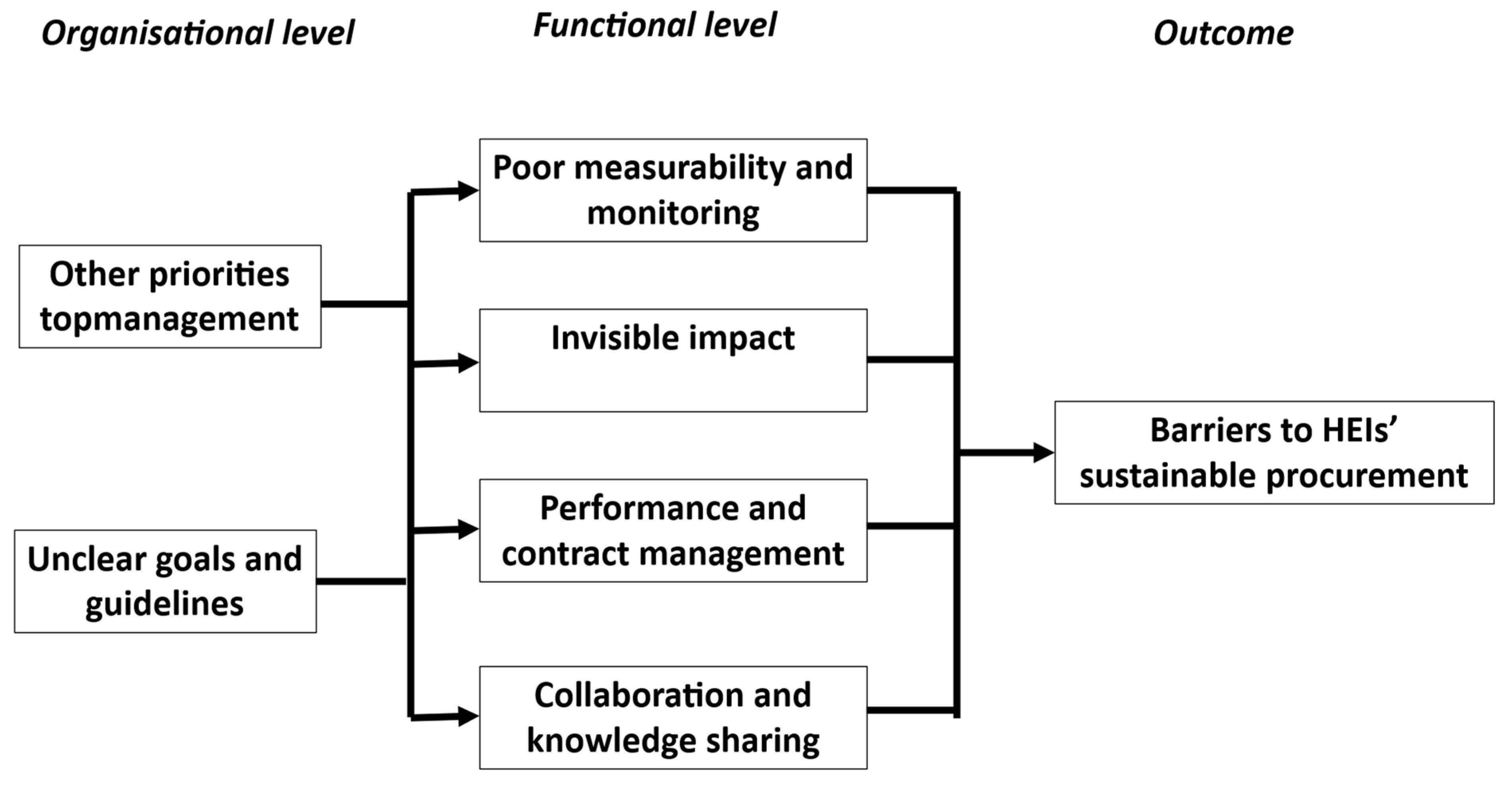
Barriers can be observed at two levels: the organizational level and the functional level. At the organizational level, issues primarily concern top management and institutional governance. These include the absence of clear, measurable objectives for sustainable procurement, its limited position on the strategic agenda, and the lack of concrete implementation guidelines.
At the functional level, barriers relate to the operational aspects of the procurement process. Sustainable options—such as reuse or demand reduction—are not always systematically considered. Measuring and monitoring outcomes after contract completion emerge as major challenges, resulting in limited clarity regarding actual impact. Consequently, support for sustainable procurement often depends on individual commitment and, to some extent, voluntarism. Furthermore, supplier performance is seldom monitored after contracts are concluded, indicating ambiguities in performance and supplier management. In line with these findings, purchasers express a need for stronger networks and enhanced knowledge sharing among universities of applied sciences.
In line with these findings, purchasers express a need for stronger networks and enhanced knowledge sharing among universities of applied sciences. Overall, the findings highlight that realizing sustainable procurement within universities of applied sciences requires not only clear strategic direction and measurable objectives but also stronger operational support, monitoring, and collaboration across institutions. The findings underscore that achieving truly sustainable procurement within HEIs requires not only structural and procedural improvements, but also a cultural shift toward shared responsibility, leadership commitment, and systematic learning.
We have developed a conceptual framework that draws upon the model of Brammer and Walker [32] that conceptualized the impact of several influences on the implementation of sustainable within the context of the national policy context. We adopted the model for our purposes, although we copied the idea of a two level influence which constitutes in our research the organizational and the functional level, see Figure 1.

7. Recommendations for Practice

The results of this study provide grounds for recommendations for practitioners. It may seem self-evident, although it is not uncommon for top management to fail to set clear, measurable sustainability targets for environmental and social impact, or to provide concrete guidelines for implementing sustainable procurement. For instance, all actors involved should have clarity about how to weigh the various procurement requirements, including sustainability criteria. Sustainability criteria should be included for all the stages of the procurement process, including drafting specifications, requesting and evaluating quotations, selecting suppliers, negotiating/contracting, and performance evaluations. Moreover, sustainable procurement should be integrated into HEIs’ overall institutional strategy [22]. These measures can act as a catalyst for change, as they improve the visibility and transparency of sustainable procurement, thereby increasing commitment and internal collaboration. Several scholars emphasize that the effective transition to sustainable procurement requires strong, transformational leadership [2,28,51,52].
Finally, this study emphasizes the crucial role of staff members involved in the operational implementation of sustainable procurement. In decentralized procurement organizations, these employees often function as informal networks. HEIs should therefore recognize that teamwork is essential for the effective sustainable procurement. At the operational level, informal “sustainability leaders” can act as key change agents [58]. It is therefore recommended that top-level decision-makers acknowledge and support these highly motivated employees, empowering them to foster the transition toward more sustainable HEIs.

8. Limitations and Recommendations for Future Research

This study has several limitations. Data was collected from a limited number of Dutch universities of applied sciences. Research in other settings could, of course, lead to different results. The focus group research involved HEIs staff who are interested and motivated to contribute to the sustainability of their institution. In addition, the sample size does not allow for any statistical generalization whatsoever. Despite these limitations, the paper contributes to the body of knowledge in providing insights into the barriers to sustainable procurement at HEIs as experienced by staff level employees who are involved in the implementation of purchasing processes.
This study identified perceived barriers among staff members. A useful follow-up study would be to present these insights to top management at HEIs, so they can become more aware of the issues within their organizations. Explicitly reflecting on barriers to sustainable procurement can serve as a starting point for a comprehensive improvement process that further utilizes sustainable procurement opportunities.
Future research could adopt a quantitative design to statistically examine the relationship between perceived barriers and sustainable procurement performance. This research would allow to pinpoint the most critical barriers that limit the possibilities and effectiveness of sustainable procurement initiatives. In addition, it would be useful to investigate the progression from output to outcome to impact, where output refers to the research results, outcome includes the translation into tools and recommendations, which are intended to change policies and behaviours structurally (impact). Such a complex study requires a longitudinal, action-based research design.
From another perspective, we recommend conducting in-depth case studies, investigating the actual course of procurement processes and how sustainability is incorporated within them. Within the decentralized purchasing organization at HEIs, various disciplines and employees are involved in (sustainable) procurement practices. Case studies could therefore focus on the interaction and interplay between various staff members, such as purchasers, lawyers, contract managers, department heads, program managers, sustainability coordinators, and lecturers/users. The RASCI model can be used to clarify roles and responsibilities, ultimately aimed at removing confusion and improving collaboration. The model distinguishes between participants who are Responsible, Accountable, Supportive, Consulted and Informed [59].

Author Contributions

Conceptualization, M.K. and C.J.G.; methodology, M.K.; validation, C.J.G. and W.B.; formal analysis, C.J.G. and J.V.H.; investigation, M.K., A.D.V., J.V.H. and K.v.I.; writing—original draft preparation, C.J.G.; writing—review and editing, M.K., C.J.G. and W.B.; supervision, M.K.; project administration, M.K. All authors have read and agreed to the published version of the manuscript.

Funding

This research received no external funding.

Institutional Review Board Statement

This study is waived for ethical review as following the policy at The Hague University of Applied Science, ethical permission needs to be requested for specific kinds of research, such as working with vulnerable participants, participants that are unaware of their participation (like observations in public spaces) or collection of data that can identify participants. These conditions are not applicable for this research proposal. As such, prior permission was not required. The Ethics Advisory Committee provided an assessment after the study was conducted (20251217-01).

Informed Consent Statement

Verbal informed consent was obtained from the participants. Verbal consent was obtained rather than written consent to protect participants’ privacy, as the results cannot be traced back to individuals. Participants agreed to the use of the results in a (public) research report.

Data Availability Statement

The original contributions presented in this study are included in the article. Further inquiries can be directed to the corresponding author.

Acknowledgments

We thank the participants of the focus group sessions for their input and collaboration in this research project.

Conflicts of Interest

The authors declare no conflicts of interest.

Abbreviations

The following abbreviations are used in this manuscript:
SPPsustainable public procurement
HEIsHigher Education Institutions

References

  1. European Commission. Public Procurement for a Circular Economy: Good Practice and Guidance. 2017. Available online: https://commission.europa.eu/index_en (accessed on 10 April 2025).
  2. AlNuaimi, B.K.; Singh, S.K.; Harney, B. Unpacking the role of innovation capability: Exploring the impact of leadership style on green procurement via a natural resource-based perspective. J. Bus. Res. 2021, 134, 78–88. [Google Scholar] [CrossRef]
  3. Halonen, K.-M. Public procurement fit for reaching sustainability goals? A law and economics approach to green public procurement. Maastricht J. Eur. Comp. Law 2021, 28, 4. [Google Scholar] [CrossRef]
  4. Yeboah, S.A.; Kumi, K.P. Sustainable Procurement Practices: A Holistic Framework for Ethical, Green, and Social Impact. 2025. Available online: www.researchgate.net (accessed on 10 August 2025).
  5. United Nations General Assembly. Transforming Our World: The 2030 Agenda for Sustainable Development; Division for Sustainable Development Goals; World Health Organization: New York, NY, USA, 2015.
  6. Bueno, G.; De Blas, M.; Pérez-Iribarren, E.; Zuazo, I.; Torre-Pascual, E.; Erauskin, A.; Etxano, I.; Tamayo, U.; García, M.; Barrio, I.; et al. The environmental and social footprint of the university of the Basque Country UPV/EHU. J. Clean. Prod. 2021, 315, 128019. [Google Scholar] [CrossRef]
  7. Prasad, M.K.; Reddy, D.R.; Jyothi, K. A Critical Review on Carbon Footprint of Universities. Spec. Ugdym 2022, 1, 3892–3919. [Google Scholar]
  8. Leal Filho, W.; Vidal, D.G.; Dinis, M.A.P.; Lambrechts, W.; Vasconcelos, C.R.; Molthan-Hill, P.; Abubakar, I.R.; Dunk, R.M.; Salvia, A.L.; Sharifi, A. Low carbon futures: Assessing the status of decarbonisation efforts at universities within a 2050 perspective. Energy Sustain. Soc. 2023, 13, 5. [Google Scholar] [CrossRef]
  9. Lancien, I. Deep Dive: How Universities Take Climate Action. 2020. Available online: https://blog.nexioprojects.com/dutch-universities-climate-action (accessed on 10 August 2025).
  10. Ozawa-Meida, L.; Brockway, P.; Letten, K.; Davies, J.; Fleming, P. Measuring carbon performance in a UK University through a consumption-based carbon footprint: De Montfort University case study. J. Clean. Prod. 2013, 56, 185–198. [Google Scholar] [CrossRef]
  11. Lambrechts, W.; Van Liedekerke, L. Using ecological footprint analysis in higher education: Campus operations, policy development and educational purposes. Ecol. Indic. 2014, 45, 402–406. [Google Scholar] [CrossRef]
  12. Herth, A.; Blok, K. Quantifying universities’ direct and indirect carbon emissions–the case of Delft University of Technology. Int. J. Sustain. High. Educ. 2022, 24, 21–52. [Google Scholar] [CrossRef]
  13. The University of Edinburgh. Procurement Strategy 2030. 2024. Available online: https://procurement.ed.ac.uk (accessed on 9 January 2026).
  14. Rempher, A.; Esau, R.; Weir, M. How to Eliminate the Emissions Hidden in Concrete, Steel, Insulation, and Other Building Materials. 2023. Available online: https://rmi.org/embodied-carbon-101 (accessed on 9 January 2026).
  15. Waas, T.; Hugé, J.; Ceulemans, K.; Lambrechts, W.; Vandenabeele, J.; Lozano, R.; Wright, T. Sustainable Higher Education. Understanding and Moving Forward; Vlaamse Overheid—Departement Leefmilieu, Natuur en Energie: Brussel, Belgium, 2012. [Google Scholar]
  16. Leal Filho, W.; Skouloudis, A.; Brandli, L.L.; Salvia, A.L.; Avila, L.V.; Rayman-Bacchus, L. Sustainability and procurement practices in higher education institutions: Barriers and drivers. J. Clean. Prod. 2019, 231, 1267–1280. [Google Scholar] [CrossRef]
  17. International Association of Universities (IAU). “The World Higher Education Database (WHED)”. 2025. Available online: https://iau.global/whed (accessed on 15 August 2025).
  18. Organisation for Economic Co-Operation and Development (OECD). “Education Financing”. 2025. Available online: https://www.oecd.org/en/topics/education-financing.html (accessed on 12 December 2025).
  19. United Nations Educational, Scientific and Cultural Organization (UNESCO). “Record Number of Higher Education Students Highlights Global Need for Recognition of Qualifications”. 2025. Available online: https://www.unesco.org/en/articles/record-number-higher-education-students-highlights-global-need-recognition-qualifications (accessed on 15 August 2025).
  20. Ministerie van Financiën. “Uitgaven Begroting 2025: Hoger Beroepsonderwijs”. 2025. Available online: https://www.rijksfinancien.nl/begroting/U/2025/VIII/6 (accessed on 12 December 2025).
  21. Peo Mereor. “Inkoop bij Onderwijsorganisaties nog Onvoldoende op de Kaart”. 2025. Available online: https://www.pro-mereor.nl/kennisportaal/interviews (accessed on 12 December 2025).
  22. The Ministry of Infrastructure and Water Management. National Circular Economy Programme 2023–20230. 2023. Available online: www.rijksoverheid.nl (accessed on 11 August 2025).
  23. Bhandari, S.; Lopes, M.; Pires, S.M. A systematic review of factors influencing green public procurement in higher education institutions. Discov. Sustain. 2025, 6, 720. [Google Scholar] [CrossRef]
  24. Ferrari, E.; Reyes-Carrasco, P.M.; Barron Ruiz, A.; Ruiz, C. Testing an instrument to assess the perception of climate change policies in universities: The case of Salamanca University. J. Sustain. High. Educ. 2023, 24, 160–178. [Google Scholar] [CrossRef]
  25. Dauda, L.; Adeniran, A.O.; Akanmu, M.A. Barriers to sustainable procurement implementation in higher education: A developing country perspective. Int. J. Procure. Manag. 2023, 16, 57–72. [Google Scholar]
  26. Basheer, N.; Ahmed, V.; Bahroun, Z.; Anane, C. Sustainability assessment in higher education institutions: Exploring indicators, stakeholder perceptions, and implementation challenges. Discov. Sustain. 2025, 6, 252. [Google Scholar] [CrossRef]
  27. Hinterhuber, A.; Khan, O. What drives sustainable procurement? Insights from the theory of planned behavior. Int. J. Oper. Prod. Manag. 2025, 45, 28–52. [Google Scholar] [CrossRef]
  28. Revez, A.; Kirrane, M.; Thomson, F. Greening procurement: Exploring evolving practices in an Irish university. Heliyon 2023, 9, e21787. [Google Scholar] [CrossRef]
  29. Carter, C.R.; Rogers, D.S. A framework of sustainable supply chain management: Moving toward new theory. Int. J. Phys. Distrib. Logist. Manag. 2008, 38, 360–387. [Google Scholar] [CrossRef]
  30. Elser, N.; Michael, J. Sustainability in Higher Education Procurement: The Role of Employee Paper Purchasing Decisions. In Educating the Sustainability Leaders of the Future; Springer: Cham, Switzerland, 2023; pp. 473–491. [Google Scholar]
  31. Basiru, J.O.; Ejiofor, C.L.; Onukwulu, E.C.; Attah, R.U. Sustainable procurement in multinational corporations: A conceptual framework for aligning business and environmental goals. Int. J. Multidiscip. Res. Growth Eval. 2023, 4, 774–787. [Google Scholar] [CrossRef]
  32. Brammer, S.; Walker, H. Sustainable procurement in the public sector: An international comparative study. Int. J. Oper. Prod. Manag. 2011, 31, 452–476. [Google Scholar] [CrossRef]
  33. Walker, H.; Brammer, S. Sustainable procurement in the United Kingdom public sector. Supply Chain Manag. Int. J. 2009, 14, 128–137. [Google Scholar] [CrossRef]
  34. Islam, M.S.; Liu, G.; Xu, D.; Chen, Y.; Li, H.; Chen, C. University-campus-based zero-carbon action plans for accelerating the zero-carbon city transition. Sustainability 2023, 15, 13504. [Google Scholar] [CrossRef]
  35. Okogwu, C.; Agho, M.O.; Adeyinka, M.A.; Odulaja, B.A.; Eyo-Udo, N.L.; Daraojimba, C.; Banso, A.A. Exploring the integration of sustainable materials in supply chain management for environmental impact. Eng. Sci. Technol. Int. J. 2023, 4, 49–65. [Google Scholar]
  36. Patel, K.; Feng, H.; Ruparathna, R. Rethinking Sustainable procurement: Investigating the Impact of System Boundary on Building Proposal Selection. Sustainability 2025, 17, 1408. [Google Scholar] [CrossRef]
  37. Okonta, D.E. The scientometric analysis and visualization of sustainable procurement. Heliyon 2023, 9, e20985. [Google Scholar] [CrossRef]
  38. Johnsen, T.E.; Caniato, F.; Meqdadi, O.; Miandar, T. Swimming against the tide: Supplier bridging roles in diffusing sustainability upstream and downstream in supply networks. Int. J. Oper. Prod. Manag. 2022, 42, 1605–1629. [Google Scholar] [CrossRef]
  39. Ministerie van Infrastructuur en Waterstaat. “Opdrachtgeven Met Ambitie, Inkopen Met Impact. Nationaal Plan Maatschappelijk Verantwoord Inkopen 2021–2025”. 2021. Available online: https://open.overheid.nl/documenten/ronl-9b2a4acf-f5ec-4ee8-8407-88de7b3506bc/pdf (accessed on 15 August 2025).
  40. Chyn, E.T.K.; Chuing, L.S. Fostering sustainable development: A study on implementing green procurement in higher education institutions. In QS-MPM Research Symposium; Department of Quantity Surveying Faculty of Built Environment: Johor, Malaysia, 2024; pp. 51–57. [Google Scholar]
  41. Awizie, B.; Emuze, F. Enabling sustainable procurement of built assets in African universities: Perspectives of facilities’ directors. J. Constr. Proj. Manag. Inno 2016, 6, 1548–1562. [Google Scholar]
  42. Young, S.; Nagpal, S.; Adams, C.A. Sustainable procurement in Australian and UK universities. Public Manag. Rev. 2016, 18, 993–1016. [Google Scholar] [CrossRef]
  43. Ayarkwa, J.; Agyekum, K.; Opoku, D.G.J.; Appiagyei, A.A. Barriers to the implementation of environmentally sustainable procurement in public universities. Int. J. Procure. Manag. 2020, 13, 24–41. [Google Scholar] [CrossRef]
  44. das Graças Pinto, J.H.; Maceno, M.M.C. Sustainable Procurement Process: A Case Study at a Public Higher Education Institution in Brazil. In Integrating Social Responsibility and Sustainable Development; World Sustainability Series; Leal Filho, W., Tortato, U., Frankenberger, F., Eds.; Springer: Berlin/Heidelberg, Germany, 2021. [Google Scholar]
  45. Mendonça, R.C.; Pedrosa, I.V.; Camara, M.A.O. Sustainable public procurement in a Brazilian higher education institution. Environ. Dev. Sustain. 2021, 2311, 17094–17125. [Google Scholar] [CrossRef]
  46. Shaikh, A.R.; Channa, K.A. Drivers and deterrents of sustainable procurement practices–an exploratory study in context of Pakistani HEIs. J. Public Procur. 2022, 22, 289–313. [Google Scholar] [CrossRef]
  47. Ojijo, A.D. Effect of Sustainable Supplier Selection on Procurement Performance of Chartered Public Universities in Kenya. Int. J. Manag. Account. Econ. 2023, 10, 108. [Google Scholar]
  48. Masoud, Y. Barriers to sustainable procurement in higher learning institutions construction projects in the Dar es Salaam Region. Int. J. Res. Bus. Soc. Sc. 2023, 12, 500–512. [Google Scholar] [CrossRef]
  49. Agyekum, A.K.; Fugar, F.D.K.; Agyekum, K.; Akomea-Frimpong, I.; Pittri, H. Barriers to stakeholder engagement in sustainable procurement of public works. Eng. Const. Arch. Man. 2023, 30, 3840–3857. [Google Scholar] [CrossRef]
  50. Sulistiani, D.; Hasanah, S.M.R.; Cholifah, N.; Sholihah, I.H. Implementation of green public procurement in higher education institutions. J. Law Sustain. Dev. 2024, 12, e3517. [Google Scholar] [CrossRef]
  51. Rekha, R.; Preetha, T.; Ravi, S.; Suhashini, A.; Patel, M.R.; Jose, P. Green Supply Chain Management Practices in Higher Educational Institutions. J. Inform. Educ. Res. 2024, 4, 2524–2531. [Google Scholar]
  52. Jin, X.; Azam, S.F.; Tham, J. Challenges of sustainable public procurement in Chinese higher education institutions: A Delphi study. J. Public Procur. 2024, 24, 371–392. [Google Scholar] [CrossRef]
  53. Shih, Y.H.; Hsu, M.C.; Chang, C.L. Sustainability Transformations in Higher Education: Global Perspectives on The Challenges and Solutions. Int. J. Educ. Hum. 2025, 5, 126–139. [Google Scholar] [CrossRef]
  54. Saunders, M.; Thornhill, A.; Lewis, P. Research Methods. Business Students, 8th ed.; Pearson education limited: England, UK, 2019. [Google Scholar]
  55. Miles, M.B.; Huberman, A.M. Qualitative Data Analysis: An Expanded Sourcebook; Sage Publications: Thousand Oaks, CA, USA, 1994. [Google Scholar]
  56. Robinson, O.J.; Tewkesbury, A.; Kemp, S.; Williams, I.D. Towards a universal carbon footprint standard: A case study of carbon management at universities. J. Clean. Prod. 2018, 172, 4435–4455. [Google Scholar] [CrossRef]
  57. Testa, F.; Annunziata, E.; Iraldo, F.; Frey, M. Drawbacks and opportunities of green public procurement: An effective tool for sustainable production. J. Clean. Prod. 2016, 112, 1893–1900. [Google Scholar] [CrossRef]
  58. Blanco-Portela, N.; R-Pertierra, L.; Benayas, J.; Lozano, R. Sustainability leaders’ perceptions on the drivers for and the barriers to the integration of sustainability in Latin American higher education institutions. Sustainability 2018, 10, 2954. [Google Scholar] [CrossRef]
  59. Project Management Institute. A Guide to the Project Management Body of Knowledge (PMBOK® Guide)—Seventh Edition and The Standard for Project Management; Project Management Institute: Newtown Square, PA, USA, 2021. [Google Scholar]
Figure 1. Framework for barriers to HEIs’ sustainable procurement at the organizational and the functional level.
Sustainability 18 01722 g001
Table 1. Goals and themes of sustainable procurement of the Dutch government [39].
GoalsThemesLink with Sustainable Development Goals
Reducing environmental pollutionNitrogen emissions, air pollution, use of harmful substances, protection of biodiversity, reduction of food waste, water use and energy useSDG 14 and 15
Reducing climate changePreventing or minimizing emissions of CO2 and other greenhouse gases, making a positive contribution to energy savings and transition to sustainable energy sourcesSDG 13
Stimulating circularityLifetime extension and reusability and replacement of fossil fuelsSDG 6, 8, 9, 12, 13, 14 and 15
Stimulating supply chain responsibilityPreventing and addressing abuses in working conditions, human rights and the environment cf. OECD guidelinesSDG 1,2, 3, 8, 12
Promoting diversity and inclusionCombating discrimination, making use of diverse talents and abilities in the labour market SDG 10
Promoting Social returnStimulating labour participation and employment for people with fewer opportunities on the labour marketSDG 8
Table 2. Reported barriers to sustainable procurement at HEIs. Source: own work.
StudyInstitution, CountryData CollectionBarriers
Awizie & Emuze (2016) [41]HEIs in Sub-Saharan AfricaInterviews with faculty directors and facility managersLack of top management support. Little knowledge of SP.
Lack of expertise. Non-specification of sustainable requirements in contracts.
Young et al. (2016) [42]Universities in Australia and the UKFocus groups and interviews with procurement professionalsInconsistency in decision-making, purchasing policy and weighting of sustainability criteria. Decentralized budgets.
Lack of top management support.
Leal Filho et al. (2019) [16]HEIs from unspecified countriesSurvey instrument mailed to HEI representativesOperational focus. Resource constraints. Organizational inertia. Lack of implementation guidelines.
Ayarkwa et al. (2020) [43]A University in GhanaInterviews with procurement expertsInconsistencies in centralized-decentralised decision making. Difficulty in imposing change. Collusion among stakeholders. Lack of planning and budgetary allocation. Inadequate training of procurement professionals and suppliers.
das Graças Pinto & Maceno (2021) [44]A Public HEI, BrazilDocument analysisBureaucratic procurement process. No clear criteria for sustainable procurement.
Mendonça et al. (2021) [45]A Public HEI, BrazilInterviews with purchases, requesters and suppliersLack of training.
Economic viability.
Shaikh & Channa (2022) [46]Pakistani HEIsInterviews with informantsLack of interdepartmental cooperation. Lack of environmental laws. Resistance to change.
Ojijo (2023) [47]Ten public universities, KenyaInterviews with procurement department employeesAbsence of clear guidelines and policies on sustainable procurement.
Masoud (2023) [48]HEIs in the Dar es Salaam region, TanzaniaSurvey instrument mailed to estate officers and procurement specialistsManagement support. Legal framework. Staff knowledge.
Supplier awareness.
Agyekum et al. (2023) [49]HEIs in GhanaSurvey instrument mailed to procurement expertsRelational and information sharing processes. Attitudinal and stakeholder fatigue. Organisational structures. Knowledge driven barriers.
Revez et al. (2023) [28]An Irish universityInterviews with procurement staffPoor monitoring, post-award evaluation and supplier management. Lack of transformational leadership.
Sulistiani et al. (2024) [50]Three Islamic HEIs, IndonesiaInterviews with procurement officialsRegulatory, resource and provider constraints.
Chyn & Chuing (2024) [40]A public and a private HEI, MalysiaInterviews with procurement directorsLack of specified guidelines.
Lack of awareness.
Financial constraints.
Rekha et al. (2024) [51]HEIs from unspecified countriesSurvey instrument mailed to respondents from educational institutionsFinancial constraints, resistance to change, institutional inertia, lack of standardized metrics, and external policy barriers.
Jin et al. (2024) [52]HEIs in Jiangsu Province, ChinaGroup interviews with procurement supervisors and expertsFocus on economic efficiency. Policy ambiguity. Limited experience of procurement staff. Less suitable leadership attitudes.
Basheer et al. (2025) [26]American University of Sharjah, United Arab EmiratesSurvey of students, educators and administrative staffFragmented indicators.
Stakeholder misalignment.
Implementation barriers.
Table 3. Barriers at the organizational and functional level.
Organisational levelOrganisational inertia, bureaucracy
Other top management priorities
Lack of goals and implementation guidelines
Functional levelDecentralized budgets and decision-making
Resource and financial constraints
Lack of knowledge and experience
Non-specification of sustainability requirements
Inadequate monitoring
Disclaimer/Publisher’s Note: The statements, opinions and data contained in all publications are solely those of the individual author(s) and contributor(s) and not of MDPI and/or the editor(s). MDPI and/or the editor(s) disclaim responsibility for any injury to people or property resulting from any ideas, methods, instructions or products referred to in the content.