Article

Exchange Rate Movements and the Sustainability of Long-Run Economic Growth

Department of Business Administration, Faculty of Social and Human Sciences, Cyprus Health and Social Sciences University, Morphou 99750, Turkey
*
Author to whom correspondence should be addressed.
Sustainability 2026, 18(3), 1682; https://doi.org/10.3390/su18031682
Submission received: 29 December 2025 / Revised: 26 January 2026 / Accepted: 3 February 2026 / Published: 6 February 2026

Abstract

The Turkish economy has been affected by recurring populist cycles and resultant economic crises, which have, in turn, unfavorably influenced the growth performance of the country. Inspired by the Turkish experience, this study attempts to investigate the effects of changes in exchange rate on the growth performance of the Turkish economy by using the production function framework. The data is sourced from the World Development Indicators and Penn World Table. Modern time series techniques are utilized to estimate the production function. Our findings reveal that there is a long-term but unfavorable relationship between changes in the exchange rate and economic growth in Turkey over the 1980–2019 period. Beyond its macroeconomic implications, the findings highlight that persistent exchange rate instability undermines macroeconomic sustainability by distorting the price mechanism, weakening investment incentives, and reducing long-term productive capacity. In this context, exchange rate stability emerges as a critical prerequisite for achieving sustainable economic growth in emerging economies such as Turkey.

1. Introduction

The economic effects of exchange rate fluctuations on the Turkish economy and its growth performance are among the most debated topics in the literature. Especially when combined with unstable political decisions and the economic measures and steps taken, they are of vital importance for the Turkish economy. One of the most important factors is changes in the exchange rate, which has a crucial effect on the performance of economies of developed and developing countries [1]. Furthermore, the exchange rate has a key role in international trade and finance. For instance, changes in exchange rate may cause an imbalance in countries’ current and financial account balances; hence, such imbalances, in turn, affect the economy in many ways. One of the crucial effects is on inflation, which causes uncertainty in economic growth. In other words, exchange rate fluctuations increase macroeconomic stability [2].
Despite repeated episodes of exchange rate depreciation, Turkey has failed to achieve sustained productivity-led growth. Rather than supporting export competitiveness, persistent exchange rate instability has amplified production costs, weakened investment incentives, and eroded long-run productive capacity. This study is motivated by the question of whether exchange rate movements in Turkey operate as a driver of sustainable growth or, instead, function as a structural constraint by undermining total factor productivity. This study attempts to explain the effect of changes in the exchange rate on economic growth. Previous studies revealed that developing countries are more affected by changes in exchange rate. The most important reason is the low variety and rate of production. Developing countries are highly dependent on foreign resources regarding production and consumption. Increasing exchange rates lead to an increase in import prices and cost of production [3]. The reason is that developing countries import the intermediate goods and raw materials that are used in production.
One of the most important factors influencing economic growth is labor and the workforce. Nowadays, efficient labor has an undeniable impact on economic growth. Effective labor refers not only to physical labor but also to quality labor. In other words, it means labor combined with education and skills. Unlike skilled labor, effective labor encompasses all physical labor available in the economy, taking its qualities into account. The higher productivity of effective labor is therefore among the factors that directly affect economic growth.
Turkey is one of the developing countries mostly affected by changes in the exchange rate because Turkey has a recurring instability and inflation problem. The increasing exchange rates combined with the frequent unsound macroeconomic policies implemented by the Turkish government have caused inflation spurts and chronic instability episodes in Turkey [4]. Macroeconomic instability causes uncertainty in the economy. Volatility and uncertainty, in turn, affect the economy negatively in different ways, e.g., via employment growth, economic growth and foreign trade. Investments are also unfavorably affected by volatile exchange rates because they increase risk which influences interest rates [5].
To sum up, developing countries remain vulnerable to increases in exchange rates and the associated inflation and this, in turn, harms economic growth. The main motivation of this study is to investigate and explain the effect of changing exchange rates on Turkey’s economic growth in the long run through inflation and hence instability from 1980 to 2019. As of 2019, the COVID pandemic, which affected the entire world, had a negative impact on countries in all areas. Undoubtedly, national economies were also affected to a very large extent by this pandemic. The panic created by the pandemic became a risk factor and harmed countries’ economies; moreover, during this period, countries were unable to collect and analyze economic data accurately. For all these reasons, in order to prevent the extraordinary conditions created by the COVID pandemic from affecting the results of the study, and because post-COVID data are not fully available, it was decided to conduct this study using data from 1980 to 2019. Therefore, in this study, the effects of exchange rate on the Turkish economy were analyzed using the production function. The Penn World Table and World Bank’s World Development Indicators data are used. Since the most important foreign exchange currency is the dollar in Turkey, the exchange rate of dollar is preferred in this study.
The rest of the study is organized as follows: The first chapter is the introduction. Chapter 2 explains the theoretical background and provides the literature review. The third chapter provides the Model Specification and Methodology, and the fourth chapter presents the results. The last chapter provides the conclusion of the study.
From a sustainability perspective, persistent exchange rate volatility poses a serious challenge to long-term economic sustainability by increasing uncertainty, discouraging productive investment, and weakening Total Factor Productivity. Sustainable economic growth requires not only short-term macroeconomic stabilization but also a stable and credible policy environment that supports long-term planning and resource allocation. Therefore, analyzing the growth effects of exchange rate movements is essential for understanding the sustainability of economic development in emerging economies.
This study contributes to the literature in three important ways. First, unlike conventional growth regressions that focus on output per capita, this paper adopts a production function framework expressed in per effective labor units, allowing exchange rate movements to be interpreted as productivity-related shocks rather than demand-side fluctuations. Second, by focusing on the long-run period from 1980 to 2019, the analysis captures multiple policy regimes and crisis episodes, offering a comprehensive assessment of the sustainability implications of exchange rate dynamics. Third, the study explicitly links exchange rate instability to macroeconomic sustainability by highlighting its persistent effects on total factor productivity, investment behavior, and long-run productive capacity in an emerging economy context.
Against this background, the following section reviews the literature on exchange rate dynamics and economic growth, with particular emphasis on contractionary depreciation and productivity-related channels in emerging economies.

2. Review of the Literature

2.1. Theoretical Arguments on the Effects of Exchange Rate

The main aim of this study is to investigate the long-term effect of changes in the exchange rate on economic growth in Turkey. Therefore, this section mainly focuses on the effects of exchange rate on economic growth. Exchange rates affect economic growth in two different ways: trade and financing channels [6].
Considering the trade channel, in recent years, depreciation of the domestic currency has made domestic goods and services cheaper; therefore, it is expected to increase net exports and decrease imports according to Marshall–Lerner conditions. According to these conditions, if a country has a zero trade deficit, the depreciation of domestic currency improves the trade balance because imports become more expensive and exports become cheaper. The condition is met of the absolute sum of a country’s import and export demand elasticities is greater than one.
On the other hand, appreciation of the foreign currency increases import prices and directly affects the production costs measured in domestic currency. This, in turn, increases the inflation of countries which depend on foreign resources like Turkey. Another negative effect is that companies have debts that are 80% in foreign currencies [6]. This makes the debts more difficult to pay and results in trade, production and exports being affected adversely. Turkey has a highly dependent production mechanism and imports lots of basic intermediate goods, which are used to produce final goods. This prevents an increase in the expected net export income, while increasing inflation dramatically because Turkey must buy raw materials and intermediate goods from foreign countries. Therefore, imports increase and produced products’ prices grow, causing higher inflation. Increasing inflation, on the other hand, increases the prices of domestic goods and services, which should be cheaper due to the depreciation of the domestic currency, causing a decrease in export revenue. In the financing channel, accelerating financial globalization has resulted in the integration of many countries into the international financial system. This integration has resulted in a high level of foreign borrowing denominated in foreign currency. With the depreciation of the Turkish lira, foreign debts (in TL) increased day by day and more domestic resources began to be spent to pay these debts. When borrowing is in the public sector, it causes an increase in government debt, and when it is in the financial and private sectors, it causes a decrease in economic activities because of a credit contraction. As a result of rising and unpaid debts, there were attempts by the government to reduce and limit borrowing. The financial channel dominates in the case of Turkey.
These initiatives also constrain productivity and companies’ growth initiatives. Therefore, production and national income are negatively affected. To sum up, considering the trade and financial channels, increases and fluctuations in exchange rate are a problem that should be prevented for the sake of the development of developing countries such as Turkey. The most fundamental and unfavorable dimension of the effect of changes in exchange rate is their effects on inflation. As rising and fluctuating exchange rates increase the price of both imported products and raw materials used in production, this leads to a distortion of the price mechanism of the country [4]. Moreover, increasing inflation accelerates dollarization and diminishes the demand for domestic currency.
According to Fischer, the best indicator of instability is inflation, and it reflects the government’s ability to manage the economy [7]. There are many policy-induced macroeconomic indicators in the economy. Inflation rate, GNP ratio and external debt-to-GNP are examples of these indicators [7,8]. An increase in macroeconomic instability means that one of these indicators increases. Macroeconomic instability negatively affects economic growth since it creates uncertainty. An increase in instability also causes a further increase in inflation. According to Fischer and Agenor, increasing uncertainty reduces the efficiency of the price system and negatively affects growth rates [7,8]. In addition, the fact that the uncertainty is directly proportional to the risk causes private investments to be affected and the expected profit to decrease [7,8]. Ultimately, uncertainty leads to decreased capital accumulation. If instability problems become chronic, the level of foreign direct investment decreases, affecting income distribution.
A growing body of the literature emphasizes the contractionary effects of exchange rate depreciation on economic activity, particularly in developing and import-dependent economies. Contrary to the traditional expansionary view that depreciation stimulates growth through increased export competitiveness, several studies argue that currency depreciation may instead exert a negative impact on output via multiple transmission channels. These include higher import costs and production input prices, inflationary pressures, tighter monetary policy responses, increased debt burdens for firms with foreign currency liabilities, and heightened macroeconomic uncertainty that discourages private investment. Empirical evidence suggests that when these adverse effects dominate the trade competitiveness channel, exchange rate depreciation can lead to lower aggregate demand and slower economic growth. This contractionary perspective provides a relevant theoretical framework for analyzing the exchange rate–growth nexus in Turkey, where strong import dependency, high exchange rate pass-through to inflation, and financial dollarization may amplify the negative real effects of currency fluctuations [9].
Consequently, increases and fluctuations in foreign exchange rate are detrimental to Turkey’s economic growth because Turkey has a recurring chronic inflation and macroeconomic instability problem.

2.2. Production Function Approach

This study utilizes the production function framework. The production function reveals how much the input affects the output, in other words, the relationship between input and output. The key elements in the production function are capital, labor and total factor productivity (TFP).
According to Solow, TFP, which represents a combination of increases in efficiency in the utilization of those inputs and improvements in technology, is one of the most important variables in growth accounting. Growth studies, therefore, divide the contributions of changes in factor inputs and a residual (TFP) from observable output growth. The Cobb–Douglas production function, e.g., like the following standard form, is usually utilized by many researchers [10].
Y = A·Kα·L(1−α)
A, K and L indicate TFP, physical capital and labor, respectively. The effects of inputs (K, L) and TFP on the output can be analyzed with this production function. In general, almost all previous studies agree on the existence of the effect of human capital on economic growth. Human capital is incorporated in the production function as an additional input in neoclassical growth models. Endogenous growth models, on the other hand, posit that investment in human capital positively affects economic growth. In previous research, increases in the average educational attainment of labor increases the production and income per worker. In this study, human capital is used as an input.
Y = A·Kα·(Lh)β
where h is the Human Capital Index.
To formalize this channel, we assume that total factor productivity is not purely exogenous but is affected by macroeconomic instability arising from exchange rate movements. Formally, exchange rate movements are conceptualized as efficiency shocks embedded in total factor productivity. In economies with high import dependence, exchange rate depreciation increases the domestic cost of intermediate inputs and capital goods, thereby reducing the efficiency with which capital and labor are transformed into output. In this framework, exchange rate volatility affects economic growth not by altering factor accumulation directly, but by lowering the productivity parameter At, which captures the overall efficiency of the production process. This interpretation is consistent with growth models in which macroeconomic instability distorts price signals, increases uncertainty, and weakens technology adoption and investment decisions. Specifically, exchange rate volatility can be interpreted as a negative efficiency shock that distorts price signals, increases uncertainty, and reduces the effectiveness with which capital and labor are transformed into output. Accordingly, the productivity term can be expressed as
At = exp(θ0 + θ1ERt + θ2I·N·Ft),
where ERt denotes the percentage change in the exchange rate, and I·N·Ft captures inflation-related instability. A depreciation or higher volatility of the exchange rate is therefore expected to reduce At, reflecting lower productive efficiency rather than changes in factor accumulation. Substituting this expression into the Cobb–Douglas production function yields a per effective labor formulation in which exchange rate movements operate through total factor productivity.
The physical and human capital factors affecting output per worker are equally weighted [11]. It has also been demonstrated that the time people spend on education, training, and developing and learning new skills has a positive effect on the output per worker. The time people spend to improve themselves is put in the production function as an index. In other words, skilled labor is not ignored in this model. Skilled labor causes an acceleration and increase in production. Therefore, Human Capital Index and number of persons engaged data were used while creating variable ‘H’ in this model. H is formed by multiplying these two variables. After deriving the variable H, the dependent variable Y and the independent variable K were divided by H to derive the model in per effective labor form. The dependent variable became Y/H, which is output per effective labor, while the independent variable became K/H, which is capital per effective capital.
(Y/H) = eθ01·e+θ2·inf·(K/H)α
where A = eθ01·e+θ2·inf.
In conclusion, the above production function forms the basis of this study. The motivation of the model is to discover the effect of change in exchange rates on economic growth, which probably causes a decrease in total factor productivity (A) by causing instability via disrupting the price mechanism. Unsound macroeconomic policies are one of the important causes of uncertainty and instability in Turkey [4]. These policies, which were implemented to achieve short-term benefits, have unfavorably affected the country’s economy in the long run. Undoubtedly, they also affect exchange rates and further contribute to a rise in uncertainty. This study, using the model above, is aiming to investigate how exchange rate effect is reflected on economic growth within the framework of the production function in Turkey.

2.3. Literature Review

The dramatic increase and volatility in exchange rates have affected Turkey’s economy negatively. The change in exchange rates, which has a considerable effect on the economy of not only Turkey but also other countries, has been discussed and analyzed in many studies. A study was conducted on the impact of imbalance in foreign exchange on the Turkish economy between 1998 and 2019 [12]. The main aim of the study was to investigate how exchange rates affect the economic growth of Turkey by using the ARDL method. As a result of the analysis, it has been revealed that the volatility in exchange rates has a negative effect on Turkey’s economic growth. While exports and investments affected Turkey’s real GDP positively, volatility in exchange rates and imports affected the GDP negatively. Moreover, the exchange rate is used as a policy decision tool. The volatility in exchange rates caused uncertainty. The most important problem was that Turkey’s production was dependent on imports, which resulted in an increase in inflation. This study suggested in order to reduce inflation and instability, local production should be developed and diversified.
A study focused on how uncertainty in exchange rates affects Turkey’s exports [13]. Cointegration and error correction methods were used. The standard deviation of the growth of the real and nominal exchange rates was used as a proxy of the change in exchange rates. The long-run relationship was analyzed by using cointegration. As a result, it was revealed that there is a long-term relationship between them. The two most important factors affecting exports are the currencies of the trade partners and the fluctuation in the real effective exchange rate. As a result, it was revealed that there is a positive relationship between exports and volatile exchange rates. There are other studies which also concluded with similar results.
The relationship between exchange rate and economic growth in Turkey between the years 1960 and 1990 was analyzed [14]. Regression analysis was used to investigate the relationship. The negative effect was expressed in another perspective. The study showed that the devaluations had a positive effect on economic growth. In other words, depreciation in the real exchange rate has a positive effect on the economic growth of developing countries (such as Turkey) [14,15].
Yildiz, Ide, and Malik conducted another study which investigated how changes in exchange rates affect Turkey’s economic growth. Contrary to other studies, different approaches about the volatility and effects of exchange rates were discussed. The aim of the study was to facilitate the analysis and assist the country’s strategic decisions. Changes in exchange rate affect the economies of developed and developing countries differently. Undoubtedly, developing countries are more affected by exchange rate movements because their production and consumption are import-based; in other words, they depend on foreign sources [3]. In developing countries such as Turkey, fluctuations in exchange rates make economic factors more fragile, which causes the economy to be adversely affected. Exchange rate volatility leads to capital movements, international trade and production vulnerability. Hence, this study emphasized that exchange rates should be monitored, with timely interventions if necessary. Developing countries should apply different strategies to accelerate their growth. Export-led growth is the most popular method. The balance of payment is vital for this strategy. Therefore, an imbalance in exchange rates should not be allowed to create instability. According to this study, the exchange rate can change unexpectedly or spontaneously, and the future value is very difficult to determine today. The best way to control this is to minimize the risk by analyzing the future value of the currency by using risk management techniques. The reason for Turkey’s current economic condition is the unsound macroeconomic decisions taken after 1980 [4]. Nowadays, some factors are vital for the future of the Turkish economy, which are interest rates, foreign policies, economic growth and the current account deficit. The insufficient domestic savings of the Turkish economy causes a current account deficit, which can be compensated by using foreign savings. As a result, the volatility and the instability in exchange rate affects the Turkish economy negatively.
Another study investigated the effect of exchange rate fluctuation on the Turkish economy. It investigated how the Turkish economy was affected by growth of employment. Manufacturing factories are amongst those most negatively affected by changes in exchange rate. It has been statistically proven that an imbalance of exchange rate negatively affects the employment growth of manufacturing firms [16]. Among these affected companies, the worst effect is found with the companies with a higher export share and indebtedness. Despite the 6.6% growth in real GDP between 2002 and 2007, employment growth was −0.26%, because output is constantly increasing but employment growth is falling independently of this increase [16]. Employment elasticity was used to explore this. Employment elasticity decreased from 0.38 in the early 1990s to 0.30 in the early 2000s. This was a chronic problem for the Turkish economy and has gotten worse over time. This problem can be seen in many developing countries because it causes the use of informal and subcontracted labor. For example, unregistered employment in Turkey constitutes almost half of employment. Large firms as well as small firms employ more subcontractors to avoid exchange rate fluctuations. This creates both an economic problem and allows it to be used politically. The proposed solution to this issue is the use of capital controls. When capital controls are used, both foreign investors are encouraged and foreign-currency-denominated debts can be controlled. Furthermore, applying quantitative restrictions on markets can improve the local financial system and enable current account deficits to be controlled. To summarize, the problems created by the fluctuation in the exchange rate of developing countries such as Turkey are inevitable.
To better analyze how change and imbalance in the exchange rate affect the economy, it is useful to look at the analyses in other countries too. Pakistan, which is a developing country like Turkey, is also one of the countries affected by the exchange rate. The volatility in exchange rates and economic growth was investigated between 1982 and 2007 [17]. Firstly, the relationship between manufacturing products and economic growth was analyzed, and it was proven that there was a positive relationship between manufacturing products and economic growth. On the other hand, an increase in the money in the domestic reserves affected economic growth negatively because the increase in domestic reserves decreased the international reserves and slowed economic growth. As theoretically expected, an increase in imports reduces economic growth. According to analysis, money in reserves and exchange rate have a negative relationship with growth in the long run, but import and export variables are insignificant. In the short run, however, these relationships yielded different results in different regressions. In some regressions, positive correlations were observed, while in others, negative relationships were observed, although there was no significant relationship between economic growth and the exchange rate. All these analyses show that exchange rates are vital for economic growth in the long run.
While the existing literature extensively examines the relationship between exchange rate fluctuations and economic growth, relatively fewer studies explicitly address this relationship from a macroeconomic sustainability perspective. Exchange rate instability may generate short-term growth episodes; however, by amplifying inflationary pressures, financial fragility, and policy uncertainty, it can undermine the sustainability of long-term growth. This study contributes to the literature by integrating exchange rate dynamics into a production function framework and evaluating their implications for sustainable economic growth in an emerging economy.

2.4. Growth and Stability Dynamics of the Turkish Economy

In this section, a brief overview of the growth history and instability of the Turkish economy will be provided for the period of 1980–2019. In 1980, there was a coup in Turkey, and the government headed by Süleyman Demirel was overthrown. Later, the Turkish government, which was led by Turgut Özal, switched to an export-led growth strategy. Between January 1980 and May 1981, a Crawling Band regime was applied. Two policies were implemented: export-oriented and liberalized economy. The main goals of these policies were to reduce inflation, bring fiscal discipline to the economy, and create a sustainable economy and economic growth. Long-term growth was aimed at taking steps to increase exports instead of import substitution policy with comprehensive reforms and policies [18]. With these policies implemented, when economic growth increased, domestic debts decreased. Inadequate financial market systems and inspections while applying these policies caused problems in some sectors. Firstly, the industrial sector was affected; then, some problems arose in the banking sector. When an imbalance in the public sectors caused by political instability was added to these problems, a serious and permanent macroeconomic instability emerged during the late 1980s and 1990s [19].
A Managed Float regime was followed by the Turkish government between May 1981 and December 1999. The Turkish government announced that banks would be able to regulate exchange rates by 1990. By 1990, banks were allowed to determine exchange rates in their operations. Changes in interest rates, capital inflows, and the use of the exchange rate as an anti-inflationary policy tool slowed down the continuous depreciation [18]. The need for public sector borrowing and short-term domestic borrowing increased in the early 1990s, and Turkey switched to domestic borrowing policies. Although there was an appreciation in the TL, it caused an external deficit, unsustainable fiscal balances, debt-rollover problems and monetization. As a result, devaluation expectations increased by the end of 1993.
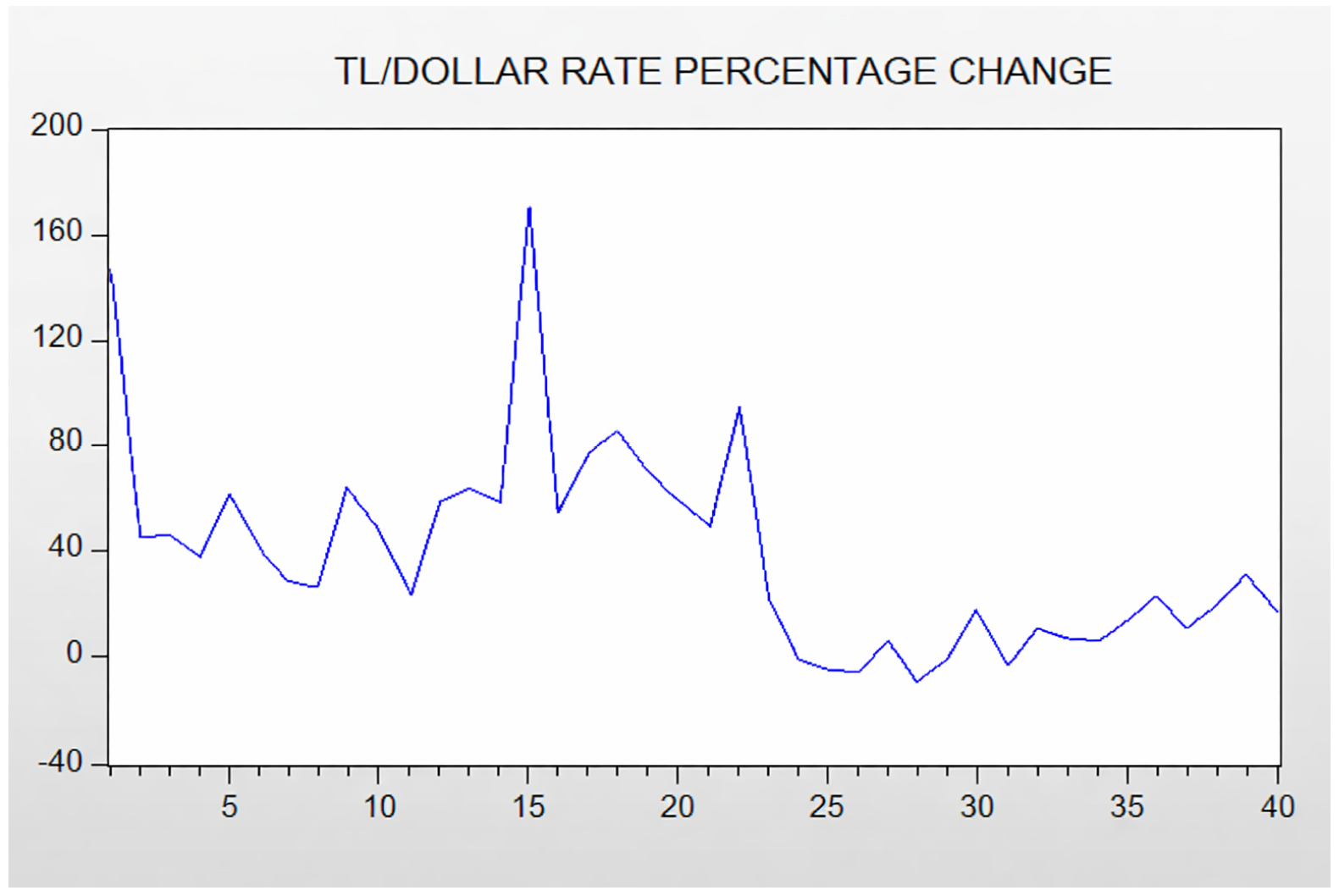
In 1994, a new stabilization program was implemented since the financial crises had slowed down when short-term monetary measures were taken, interest rates increased, and excessive reserve losses occurred. Inflation increased to 106.5%, and depreciation against the dollar reached 170.4% [4]. As a result of this crisis, the macroeconomic instability index reached 0.687. The most important sector affected by this crisis was the banking sector. The main reason for the instabilities and problems in the banking sector was the rise in interest rates on domestic debts. These problems created an environment in which holding government bonds was more profitable than financing private investment projects. In addition, the politicization of the banks in Turkey decreased the competition of the banking sector and weakened the system. When the weak banking rules were added to them, the bankruptcy of the banks was inevitable.
In 1999, Turkey implemented a disinflation program containing a foreign exchange anchor to reduce inflation and support the weakening banking sectors. It established the Banking Regulatory and Supervisory Authority (BRSA). The goal was to regulate and supervise the banking sector independently, but this could not prevent the crisis in 2001, and eventually, the Turkish economy contracted by 5.7% [2,3,4].
After the 2001 crisis, a stabilization program called “The Programme for Strengthening the Turkish Economy” was implemented which relied on fiscal austerity, a free floating regime and structural pillars. The banking sector suffered serious damage after the crisis, and these policies were implemented to prevent further damage and strengthen the banking sector in Turkey. The applied reforms were successful in reducing both the financial instability of the state and the inflation rate. The development in the two main factors revealed fiscal discipline. Turkey had a more stable economy after 2002 and achieved its lowest value in the instability index since 1980 during the 2002–2006 period [2]. (See Figure 1 below which shows the Macroeconomic Instability Index).
After the global financial crisis in 2008, there was a recovery in economic growth with financial incentives in 2010–2011. Significant decreases were observed in real interest rates. These were achieved by an increase in government expenditures, and at the end of this period, the contribution of government expenditures to GDP growth reached 25%, but the positive effect was short-lived. At the point reached after 2006, the biggest problem was experienced in productivity. Productivity had almost reached zero point. Total Factor Productivity growth, which measures productivity via total production and inputs such as labor and capital, was around 0% [20].
With the coup attempt in 2016, which added to the political and economic instability and uncertainty, the Turkish economy continued to turn upside down, and there was a considerable reduction in economic growth. Moreover, there were dramatic rises in unemployment and inflation. The government aimed to increase domestic demand by increasing expenditure again, in order to reduce unemployment and inflation. However, after the short-term positive effects, the economy deteriorated again. Foreign direct investment, capital ventures and tourism revenues suffered severely from these unsound decisions. Furthermore, a dramatic increase in the exchange rate, in other words, the great value that the Turkish lira lost against the dollar, and the change in the exchange rate combined with a foreign-dependent economy like the Turkish economy, meant that the economic collapse was inevitable. Investments fell, mainly due to increased exchange rates and restrictions on bank loans. The decrease in investments led to an increase in unemployment [20].
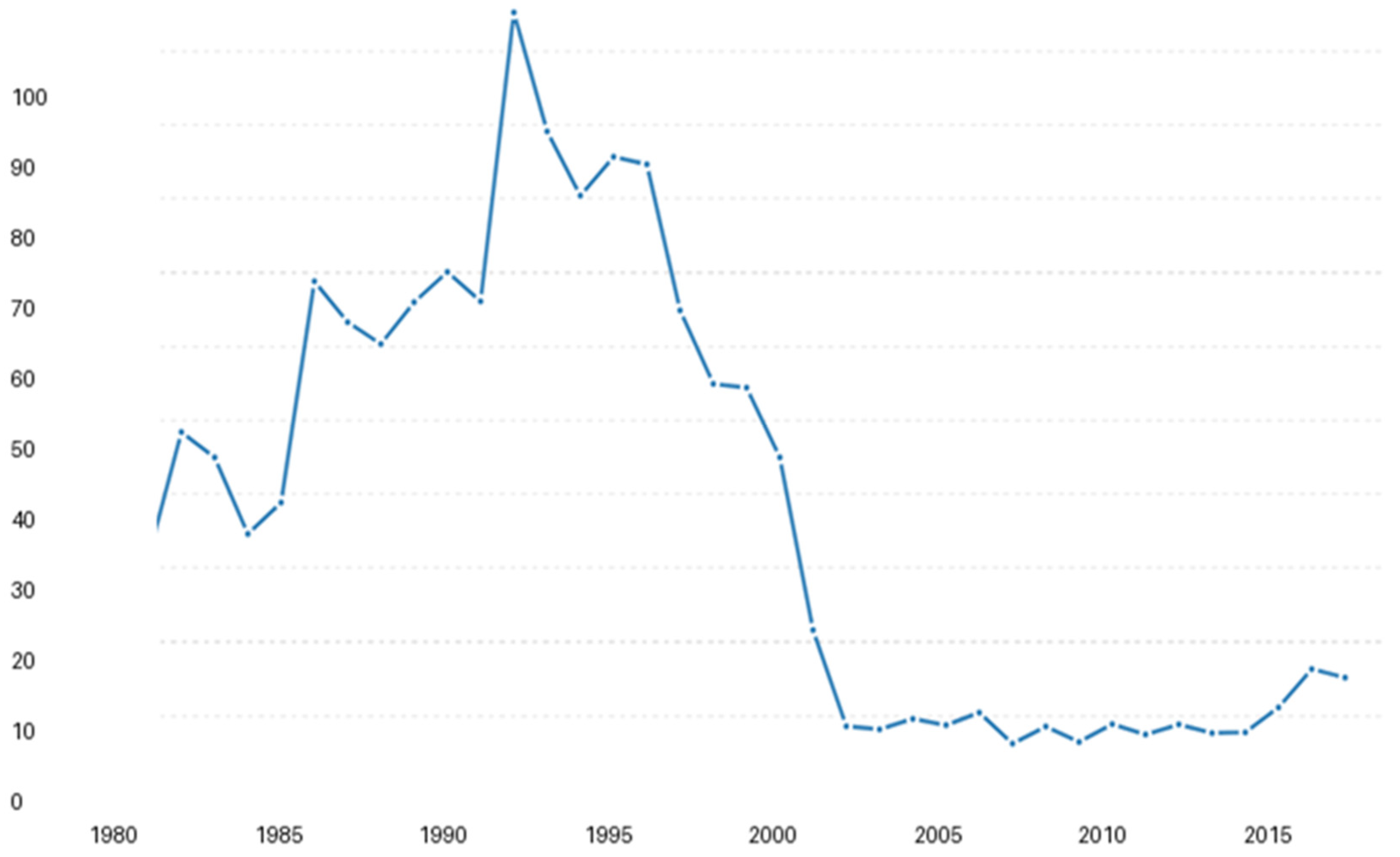
Figure 2 shows Turkey’s inflation from 1980 to 2019. The inflation rate, which was around 8% in 2016, doubled in 2019 because of political and economic uncertainties and imbalances and reached 16%. According to the Turkish government, the reason for the elevation in exchange rates was interest rates, and the result was increased inflation. However, most economists in other countries argued that inflation was the reason and the result was the interest rates. The Turkish government, which applied policies to reduce interest rates, could not prevent the increase in exchange rates and inflation, and the economy continued to worsen.
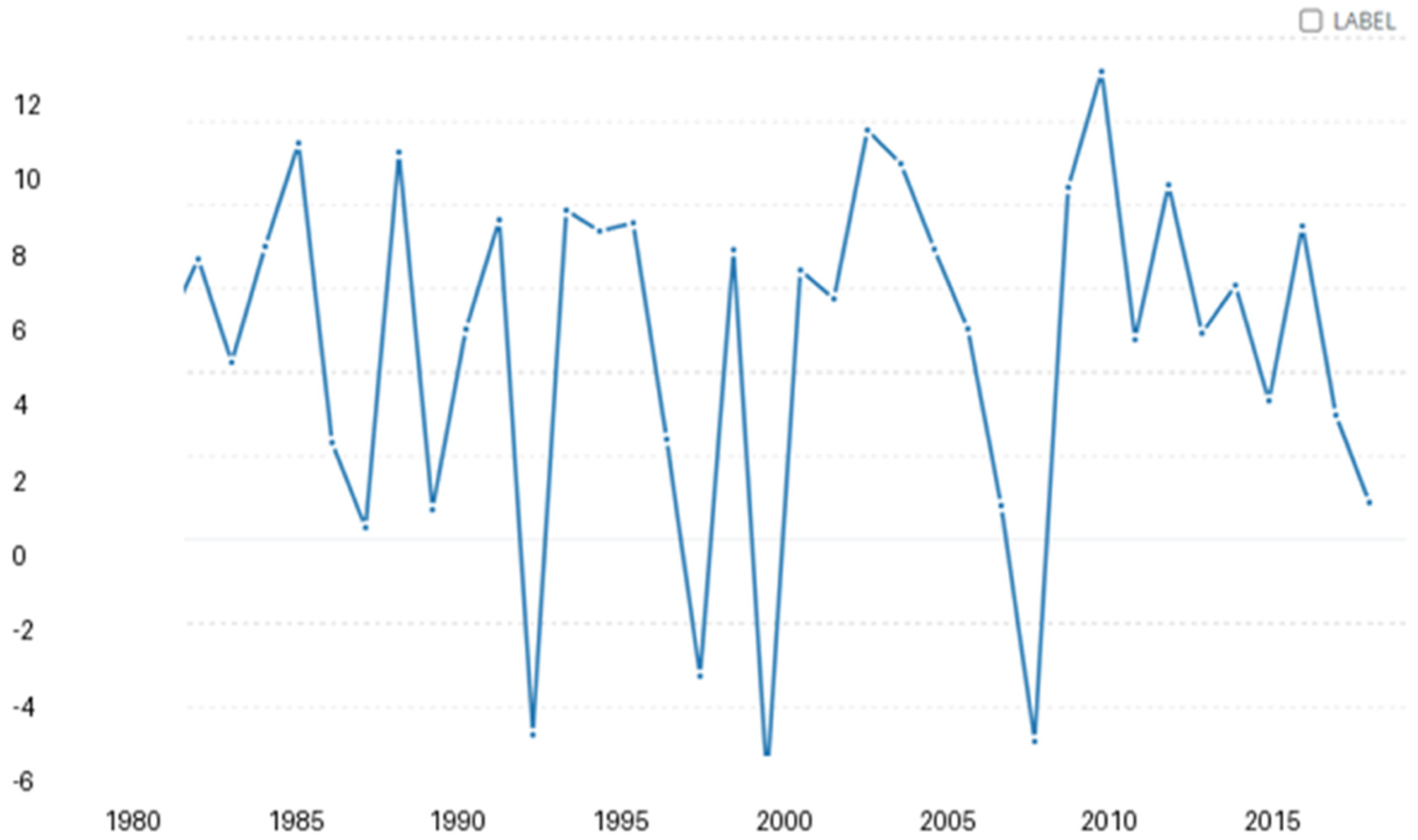
The Turkish economy has lost its economic stability since the mid-1970s. Policies implemented to achieve short-term gains and populist macroeconomic policies caused the decrease and volatility in the growth performance of the Turkish economy. The unsound macroeconomic policies applied have caused budget deficits, increased debts, and resulted in high and volatile inflation rates. Fiscal imbalances and increased inflation have both led to economic crises and became a chronic problem for the Turkish economy. Moreover, economic crises have further increased macroeconomic instability [4]. Figure 3 shows the GDP Growth Rate (Annual%).
In conclusion, unsound macroeconomic policies, which were pursued for short-term benefits or to prevent short-term shocks, increased uncertainty and volatility in the Turkish economy.

3. Model Specification and Methodology

One of the most important assumptions of the framework of the production function model is to assume that the production process features a constant return to scale. This is a standard assumption in many growth studies. Moreover, it was determined that there was a high level of multicollinearity in the data. Considering all this, the model was converted to per capita form. Furthermore, the resultant model was augmented by adding inflation and the percentage change in exchange rate (via TFP or A) and dividing the variables K and Y with H to derive a model of per effective labor. The following is the benchmark model used in this study:
(Y/H) = eθ01·e+θ2·inf(K/H)α
Y/H: Output per effective labor
K/H: Capital per effective labor
A: eθ01·er+θ2·inf
After taking the logarithm, the final form of the model is as follows:
ln (Y/H) = θ0 + θ1·e + θ2·inf + α·(ln K/H)
The main goal when establishing the model was to identify the effect of the change in exchange rates on the output per effective labor. As noted earlier most of Turkey’s production and consumption depends on foreign resources. Turkey’s weakness in domestic production results in importing many raw materials and goods and services. Excessive dependence on imports causes the country’s economy to be severely affected by exchange rates. Rises in exchange rate are expected to affect the Turkish economy negatively in the long run. Inflation is included in the model not as a determinant of economic growth, but as a control variable capturing macroeconomic instability. While alternative measures such as inflation uncertainty or composite uncertainty indices would be desirable, data limitations and the long-run annual structure of the analysis restrict their use in the present study. Inflation, which is included as a control variable capturing macroeconomic instability, is expected to be associated with adverse growth outcomes. Trade openness indicates how integrated a country’s economy is into global trade. This ratio is calculated by dividing the sum of exports and imports by the gross domestic product (GDP), revealing how the country’s economy participates in international competition. It was initially planned to be used as a control variable because of its potential effect on economic growth; however, since no statistically significant relationship was found, it was not used as a control variable. The last variable, capital per effective labor, is expected to have a positive effect on economic growth.

3.1. Time Series Techniques

3.1.1. Stationarity and Cointegration

Time series (TS) tools were used while empirically analyzing the model. Stationarity and cointegration are vital for time series studies. Stationarity variables are those where the mean, variance and covariance of the variables do not change over time. Stationarity must be tested in time series because it directly affects the results of models. Having non-stationary variables in the regression will cause statistical problems in the results. Non-stationary variables are analyzed using cointegration techniques. Cointegration tests whether there is a long-run equilibrium relationship between variables and analyses the long-run correlation of two or more non-stationary time series [21].
Cointegration implies that the series can be considered cointegrated if at least two series are not stationary but their linear combination is stationary. In other words, when two or more series have similar or related long-run trends, they are said to be cointegrated. This shows that individual TS variables may be unstable and diverge in the short run while converging towards dynamic equilibrium in the long run. Cointegration is vital as it provides a method to control the spurious regression problem in non-stationary series. It also helps to differentiate both long- and short-term relationships [21].
A unit root test is used to determine whether the time series variables are stationary or non-stationary. The null hypothesis states that the time series variable is non-stationary and has a unit root, while the alternative hypothesis indicates that the time series variable is stationary with no unit root. Unit root tests are generally performed by using the Augmented Dickey–Fuller test.

3.1.2. ARDL Approach

According to the unit root test results, the ARDL method should be used in estimating the model if the data contains a mix of variables with and without unit roots. The ARDL method, which is based on the Ordinary Least Squares (OLS) method, is not only suitable for stationary variables but also for non-stationary variables. The ARDL approach separates the long-term relationship from the short-term dynamics and enables them to identify more realistic long-term results. Moreover, the ARDL approach helps to explain both [22].
Just as the exchange rate affects economic growth, low economic growth also leads to depreciation in the exchange rate. A slowdown in a country’s economic growth implies a decline in demand for that country. As foreign investment decreases, the supply of foreign currency begins to fall, which in turn leads to depreciation pressure on the exchange rate. A decline in production and export demand indicates a loss of investor confidence; this decline increases risk premiums and exerts additional pressure on the exchange rate.
The ARDL method does not require the variables to be stationary at the same level. A Bounds Test is used to examine whether a long-run relationship exists among these variables, and if a long-run relationship is detected, it is supported by coefficient estimates. In summary, the ARDL method enables the statistical analysis of the causal relationship between two variables in both the short and long run.
The ARDL method uses cointegration techniques to clarify the long-term (cointegration) relationship. While testing for the existence of cointegration, there are two limits: the upper limit and lower limit. The upper limit assumption is that all variables have a unit root in [I(1)]. Conversely, the lower limit assumes that all variables have no unit root in [I(0)]. The null hypothesis suggests that there is no long-term relationship, while the alternative hypothesis states that there is a long-term relationship. To reject the null hypothesis, the calculated F-statistics value must be higher than the 5% upper limit. On the other hand, if the value is below the 5% lower limit, the null hypothesis is not rejected, and it is revealed that there is no cointegration. If a value is in between the two limits, the test result is uncertain. For the empirical results of the model to be meaningful (not spurious), the null hypothesis must be rejected [22].

3.1.3. Diagnostic and Stability Checks

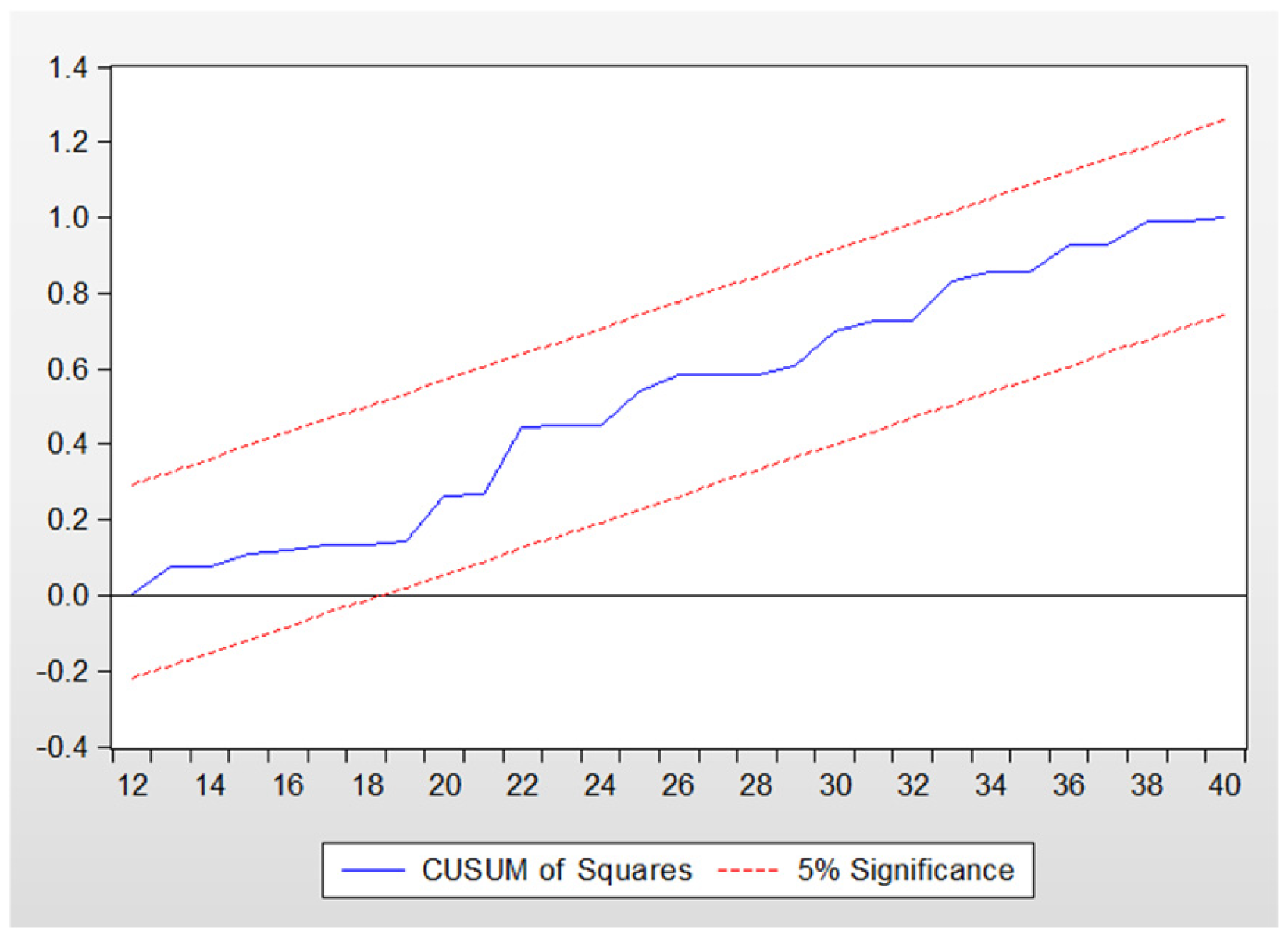
A series of tests are performed to diagnose the problems of the ARDL model and test its stability. The diagnostic tests are the Normality Test (Jarque–Bera), Serial Correlation (LM) Test, White Test and Ramsey Rest Test. While the Normality Test confirms that the errors are normally distributed, the LM Test determines whether the autocorrelation problem has affected the model or not. The White Test is applied to investigate the heteroscedasticity problem, and the Ramsey Reset Test is used to investigate the misspecification problem [23]. In addition to the diagnostic tests, stability tests were performed also. As Brown applied in his study in 1975, CUSUM (Cumulative Sum) and CUSUMSQ (Cumulative Sum Square) tests were used to test stability [24].

3.1.4. SUTVA and International Spillovers

Although the ARDL approach is appropriate for single-country time series analysis, it implicitly assumes that domestic economic outcomes are not affected by shocks originating in other economies. In the case of Turkey, this assumption may be partially violated due to strong trade and financial linkages with global markets. International spillovers—such as global financial conditions or external policy shocks—may simultaneously influence exchange rate movements and economic growth. Therefore, the estimated long-run relationship should be interpreted with caution, as it may partly reflect the impact of common external shocks.

4. Results

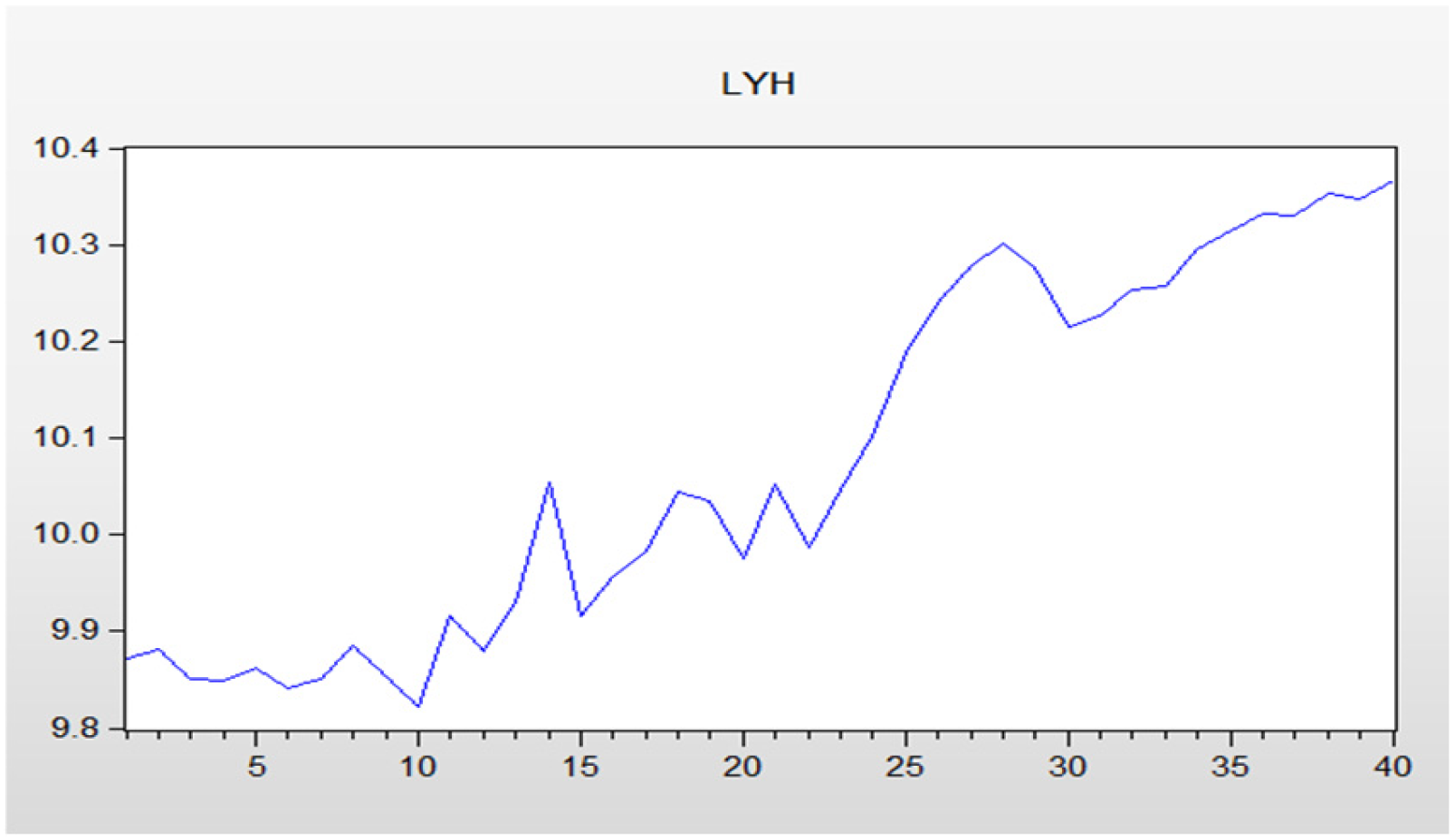
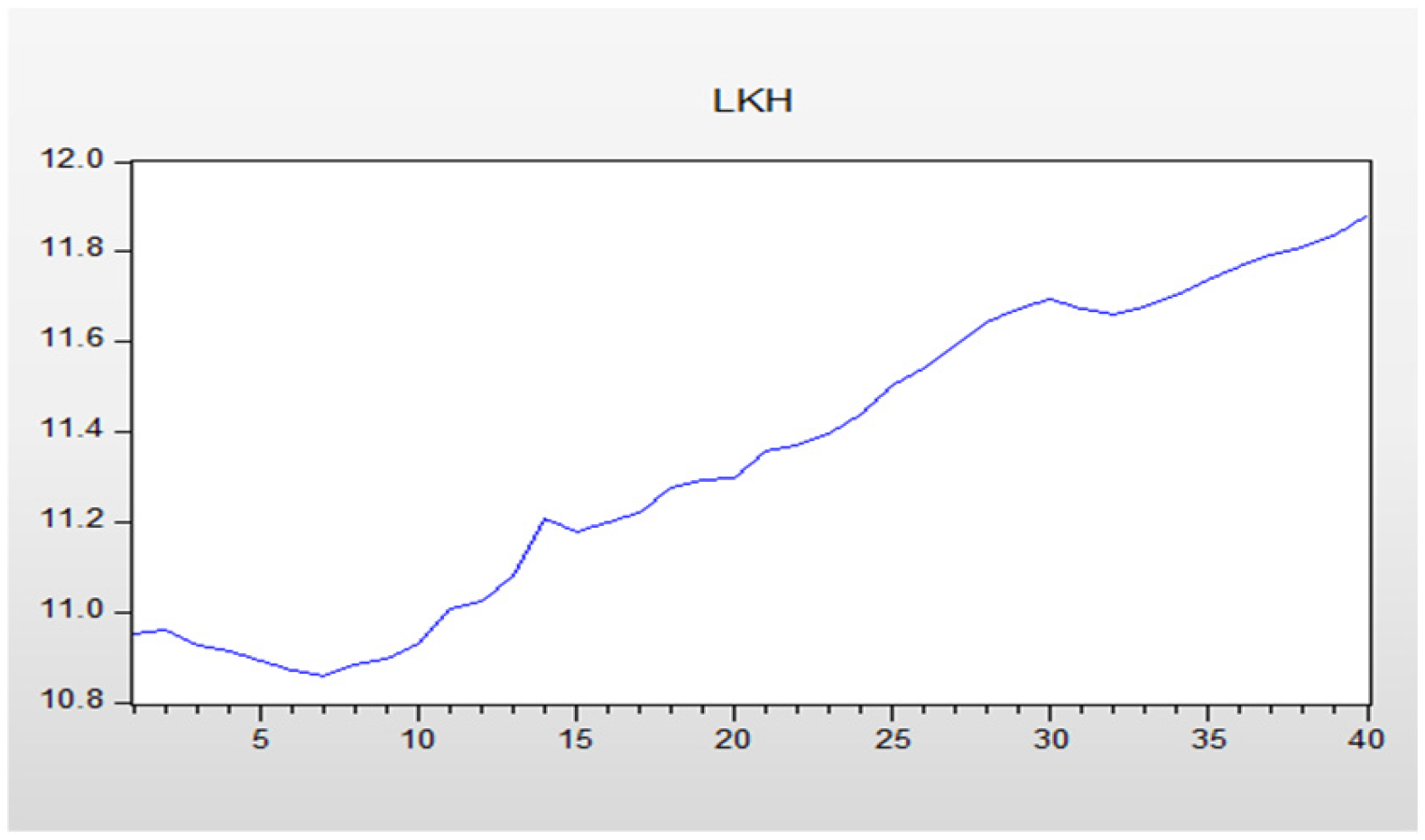
In the model, Y is real GDP at constant 2017 national prices (in mil.), K is capital stock at constant 2017 national prices (in mil.) and H is derived by multiplying the Human Capital Index and the number of persons engaged (in millions), which is indicated by L. LYH. (ln Y/H) is output per effective labor, which is used as the dependent variable, while LKH (ln of K/H), which is capital per effective labor, INF (inflation, consumer prices (annual%)) and E (percentage change in TL/dollar rate) are used as independent variables. Table 1 shows the variable definition table.
Descriptive statistics shown in Table 2.

4.1. Time Plots of the Data

When the time plots of the LYH and LKH variables are examined, a positive but unstable trend is seen from 1980 to 2019. The increase in these variables over time shows that they are possibly non-stationary at the level. Although graphical analysis is useful, utilizing only the result obtained from the graphs is not sufficient. Therefore, unit root tests should be applied.
Figure 4, Figure 5, Figure 6 and Figure 7 below show the time plots between 1980 and 2019.

4.2. Augmented Dickey–Fuller (ADF) Results

Table 2 shows the ADF test results. The null hypothesis indicates that the data has a unit root, while the alternative hypothesis is that there is no unit root. Table 3 below also includes the test statistics and p-values.
According to the results, apart from the variable LYH, there is no variable that rejects the null hypothesis of unit root at the level. The variable LYH is trend stationary at 10% (exactly at 6.73% significance level). All variables reject the null hypothesis at first difference. Finding the possibility of the mix of both I(0) and I(1) variables, the ARDL method should be used in this study.

4.3. Empirical Results

When using the ARDL model, Schwarz information criteria are chosen as the model selection criteria. A Bounds Test is applied to analyze whether there is a long-term relationship or not. According to the results of the test, the F-statistics value is 5.965, and this value is greater than the critical limit values at the 5% significance level. Therefore, there is a meaningful long-run relationship. Table 4 below shows the Bounds Test results of the model.
Table 5 shows the long-run results of the model.
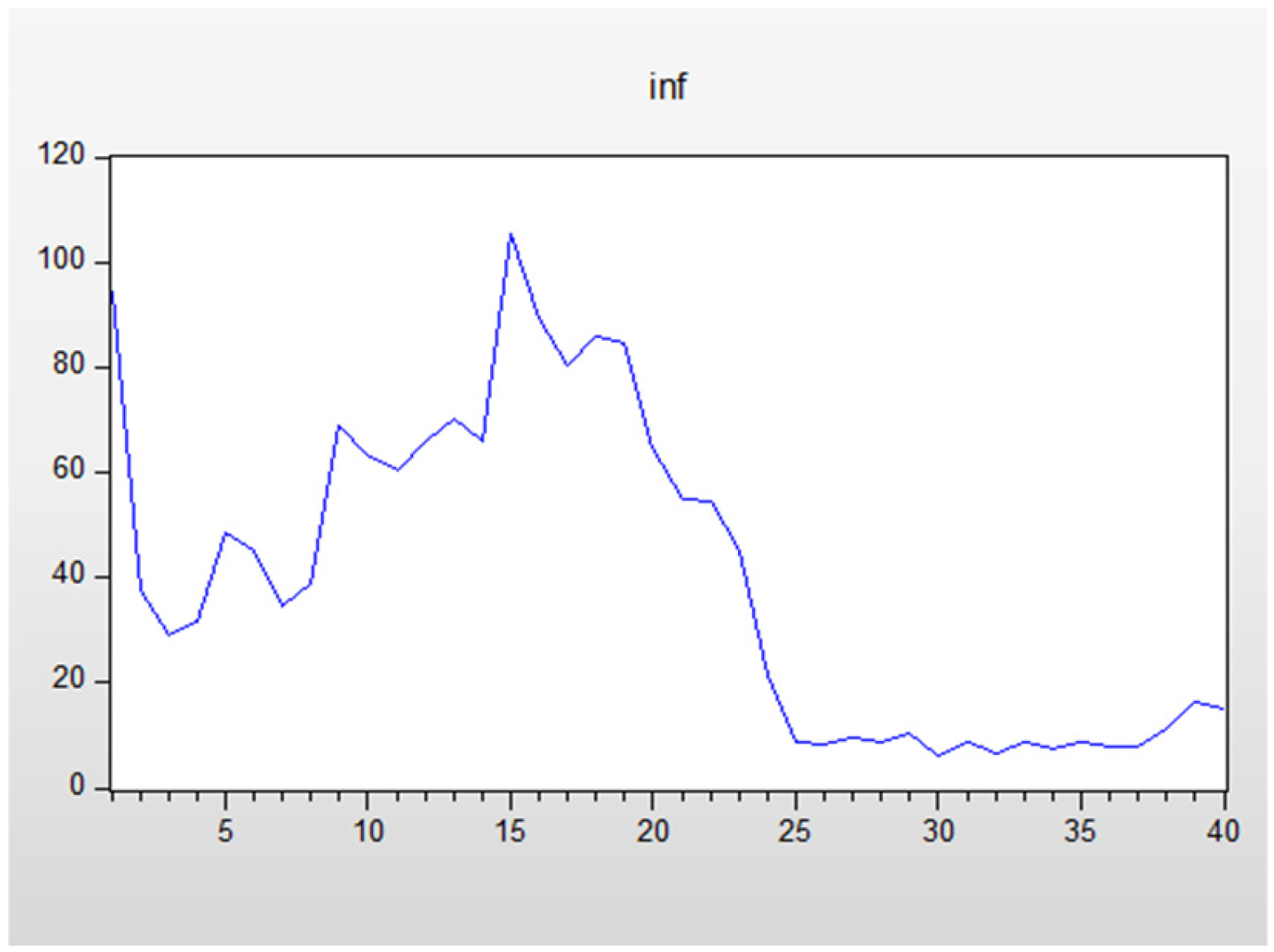
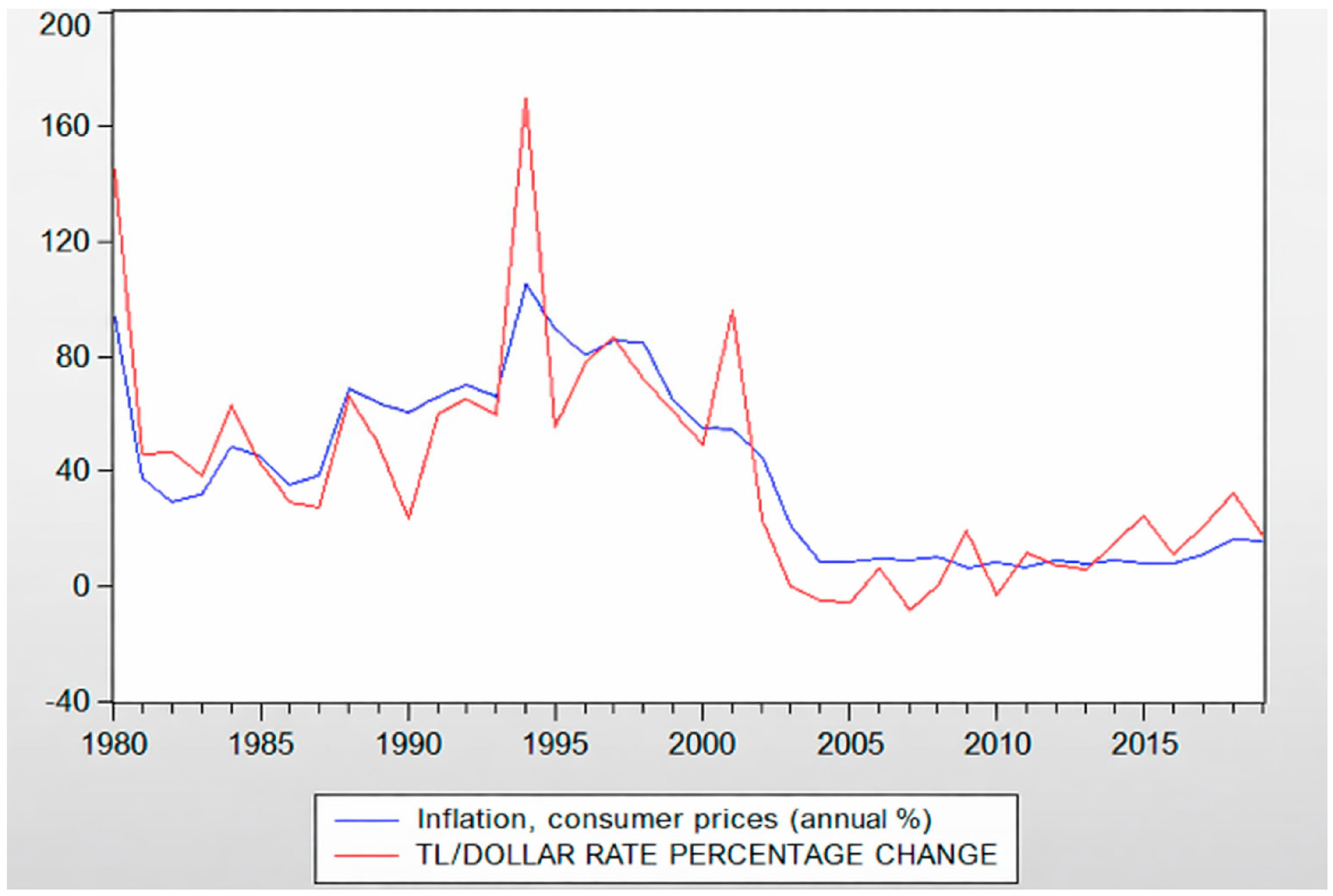
According to the long-run results, the coefficient of LKH is 0.499634, and its p-value is 0.000. As expected, it is statistically significant. This means that a 1% increase in capital per effective labor will increase output per effective labor by 0.50% while holding all other variables constant. In other words, there is a positive relationship between output per effective labor and capital per effective labor. The variable ‘E’ is the main variable of interest. The p-value of this variable is 0.0269, which indicates that the variable is statistically significant. This is in line with the theoretical arguments as explained. According to the results, a one percentage point increase in the exchange rate reduces the output per effective labor by 0.12%, ceteris paribus. In contrast, the inflation is not statistically significant. The change in exchange rate is explained by the difference between Turkey’s inflation and the US’s inflation via Purchasing Power Parity (PPP). According to PPP, this can be shown as E = πTurkey − πUS. Due to the use of dollars in this study, the difference between Turkey’s inflation and the US’s inflation is used to explain the alteration in the exchange rate. The US’s inflation is stable and has not changed dramatically for a long time. Therefore, Turkey’s fluctuations in inflation are naturally reflected in the exchange rate changes. Inflation and percentage change in exchange rate graphs are shown below, and there is a common trend between the two variables. To address the possibility that inflation and exchange rate movements jointly capture macroeconomic instability, additional specifications were estimated by excluding each variable alternately. The results indicate that exchange rate movements retain their statistical significance when inflation is excluded, whereas inflation becomes insignificant once exchange rates are included, suggesting that exchange rate dynamics subsume the instability channel captured by inflation in the long run. Figure 8 shows the change in inflation and the percentage change in TL/dollar rate.
It can be said that inflation turns out to be statistically insignificant because of the tight relation between the exchange rate and inflation. Percentage change in exchange rate and inflation is used in the models separately, and the coefficients are almost the same, and it is seen that the effect on growth is negative and significant. According to the results of the estimated models, the strong relation between exchange rates and inflation could be the reason for the statistically insignificant inflation. Therefore, the baseline specification focuses on exchange rate movements as the primary instability channel, while inflation is retained only for robustness checks. The models are presented in Table 6 and Table 7.
Inflation and exchange rate variables react simultaneously to economic movements. Inflation is generally fueled by exchange rate movements. At the same time, exchange rate movements affect inflation, clearly demonstrating their strong correlation. Furthermore, their similar trends over time lead to inflation appearing insignificant in the ARDL model. In other words, the exchange rate indirectly captures the effect of inflation. Mediation analysis was applied to analyze this.
These findings suggest that the impact of exchange rate movements on economic growth operates mainly through direct channels rather than via inflationary transmission mechanisms.
The high degree of correlation between exchange rate and inflation can weaken the statistical significance of inflation by leading to multicollinearity when both variables are included together in the regression model. Overall, these findings indicate that the impact of exchange rate fluctuations on economic growth in Turkey occurs primarily through direct mechanisms, and inflation does not play a statistically significant mediating role in this relationship. This provides a consistent and theoretical explanation for why inflation becomes insignificant while the exchange rate remains significant within the same regression framework.
When we return to the main results, there is a long-term negative relationship between the change in exchange rate and GDP per effective labor. As noted earlier, according to Fischer, the best indicator of instability is inflation. Inflation is a great problem, especially in developing countries that depend on foreign resources [7,8]. Undoubtedly, inflation is one of the most important problems in Turkey. In many of the studies conducted in the past, it is revealed that one of the most important factors that increased inflation in Turkey is the unsound macroeconomic policies implemented by the government. These policies have increased uncertainty day by day and distorted Turkey’s price mechanism. First, it was expected that the increase in exchange rate would make domestic goods cheaper and exports increase, but it was not as expected. This is partly due to exchange rates passing through to inflation. Turkey’s production mechanism, which is highly dependent on imports, contrary to expectations, prevented domestic products from becoming cheaper, and the expected income could not be obtained. Moreover, it increased inflation. As noted earlier, companies have debts that are 80% in foreign currencies. Companies’ debts continued to increase, making it difficult to engage in domestic production due to the difficulty of meeting their foreign-currency-based debts. The depreciation of the Turkish lira (TL) leads to an increase in government debts and a decrease in economic activities. Since the debts are difficult to pay, credit contraction was applied by the government, decreasing the economic activity of the companies. In addition, this not only caused the price of the products imported from abroad to increase, but also the prices of the products produced. When production became more expensive, the prices of the goods sold increased dramatically, and the purchasing power of the people began to decrease day by day. To sum up, the main factor behind all these factors is the chronic problem of Turkey, inflation, and inflation increases the instability of the economy. This change in exchange rates caused a dramatic increase in inflation, which severely affected Turkey’s economic growth negatively.
The decrease in the value of the domestic currency did not cause an increase in exports or a decrease in imports, contrary to expectations [6]. The increasing dollar exchange rate increased import prices and production costs, which causes dramatic inflation. Debts failed to be paid, and the government had to use its own resources to pay them. Furthermore, the demand for domestic currency decreased and continues to decrease. As a result, instability was observed in the economy, and the price mechanism of the country distorted. This instability is also reflected in interest rates and has seriously affected investments.
These results show that, in general, exchange rate fluctuations negatively affect Turkey’s economic growth. Turkey’s situation is more fragile than many similar developing countries [25]. One of the main reasons is that exchange rate increases are quickly reflected in prices. Countries with stronger central bank credibility can weather exchange rate pass-through better, such as Poland and Mexico. In addition, Turkey has a very high level of intermediate goods imports, which directly leads to increased production costs from exchange rate increases [26]. Countries with deep supply chains, such as China, suffer less from the cost increase resulting from exchange rate increases, and the impact on growth is less than in Turkey. In summary, Turkey’s high level of foreign currency debt, dependence on imported inputs, and high exchange rate pass-through make it more susceptible to exchange rate fluctuations than many other developing countries.
To summarize, the rising exchange rate adversely affected two main factors: instability and inflation. It distorted the price mechanism and affected economic growth via financial and trade channels negatively. Furthermore, the findings suggest that exchange rate depreciation does not merely reduce output in the long run but also weakens the sustainability of economic growth by increasing production costs and enabling persistent macroeconomic instability [27].
In addition to the long-run relationship, the short-run relationship should be analyzed by using an Error Correction Model. Table 8 shows the Error Correction Model.
The dependent variable is LYH, which stands for the change difference in output per effective labor. The CointEq(−1) [error correction term] value is −0.639263, and since it is between 0 and −1, it is statistically significant. This confirms that the model has an error correction mechanism. According to the results, there is no short-term relationship between the percentage change in exchange rate and economic growth. Although inflation has a statistically significant short-run positive relationship, it is negatively affecting economic growth in the long run. This result is in agreement with the slogan regarding unsound policies that provide short-run gain but long-run pain.

4.4. Diagnostic Tests

Results are shown in Table 9.
In the LM Test, the null hypothesis specifies that there is no autocorrelation. The p-value of the test is more than the 5% critical value, indicating that the null hypothesis cannot be declined, and there is no autocorrelation problem. The second row of the table shows the White Test, which tests heteroscedasticity. The p-value is higher than the 5% significance level, indicating that we cannot reject the homoscedasticity described in the null hypothesis. Consequently, there is no heteroscedasticity problem in this model. The Ramsey Reset Test shows whether there is a misspecification, while the Normality (Jarque–Bera) Test determines if the error terms are normally distributed. The p-values of both tests are greater than the 5% critical value, indicating that there is no misspecification problem, and the error terms are not normally distributed.

4.5. Stability Tests

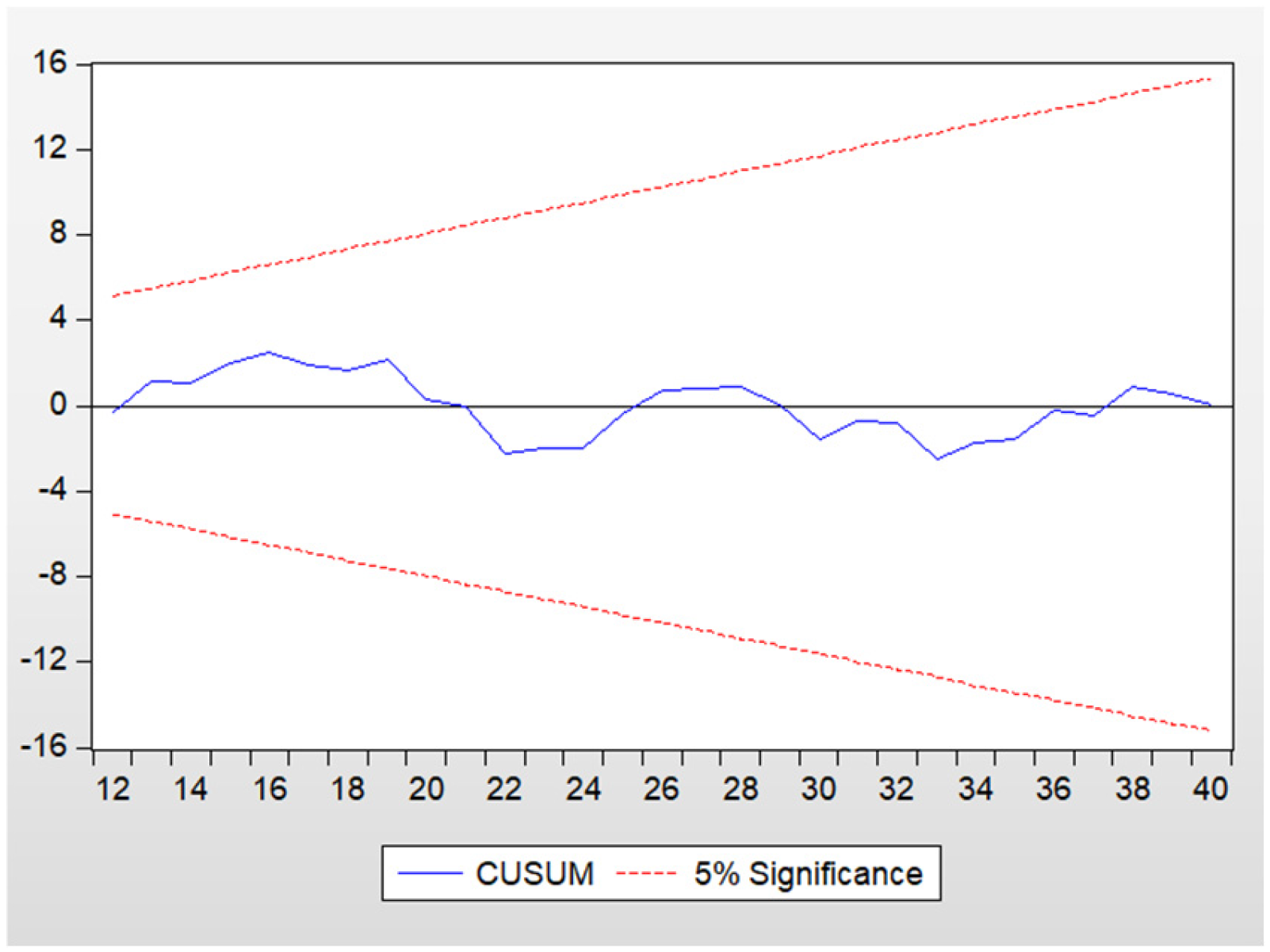
Two stability tests were performed, CUSUM and CUSUM SQUARE, which allow to interpret the stability of model. Figure 9 and Figure 10 show the graph of the results. The dashed lines indicate the confidence bounds at the 5% significance level. The values of the test results (solid lines) are within the lines, which denotes the stability of the ARDL model.
The following discussion interprets these empirical findings within the context of exchange rate instability, productivity dynamics, and macroeconomic sustainability.

5. Conclusions

One of the fundamental factors that the Turkish economy must keep under control is inflation. Central bank independence is one of the key factors that supports lower and more stable inflation. Central bank independence is essential for maintaining price stability and reducing exchange rate volatility, which supports long-run growth sustainability.
While policies aimed at exchange rate stability and central bank independence support long-run growth and macroeconomic sustainability, they may generate distributional effects that complicate policy implementation. Export-oriented firms with high import dependence and households facing rising living costs benefit from greater price stability, whereas actors that gain from short-term currency depreciation—such as debtors with domestic currency revenues or politically connected sectors—may resist such reforms. This political economy dimension helps explain the persistence of exchange rate instability in Turkey and highlights that achieving sustainable growth requires not only sound economic policies but also institutional commitment and political credibility [28].
The Central Bank of the Republic of Turkey operates under a floating exchange rate regime. In this regime, the value of the Turkish lira is determined by market conditions, and the central bank intervenes in the market in cases of excessive volatility. In addition to this regime, a basket of currencies regime could be considered. A basket of currencies refers to a weighted exchange rate index composed of multiple foreign currencies, used to measure the value of a currency. This method has both advantages and disadvantages. Although it can reduce exchange rate volatility, lower exchange rate pass-through to inflation, and enhance policy credibility, it also reduces the independence of monetary policy. Being a less flexible system, it increases the need for foreign exchange reserves and may lead to a significant rise in risk for an economy like Turkey’s, which has difficulty responding to shocks and is characterized by low reserves and high inflation. Therefore, if this method is preferred, it would entail both gains and losses [29].
According to the main result of this study, the most important policy suggestion is that to obtain optimum results over the long-run, in the short-run, unstable policies should not be followed. This is because such unsound policies increase uncertainty in the economy in the long-run, and increased uncertainty negatively affects the investments and overall productivity (TFP) in the country. Central bank independence is essential for Turkey’s long-term growth and development. This study has several limitations. One of the limitations is that the percentage change in TL/dollar rate was used as the main variable. Most European countries have introduced the use of the Euro since 1999. This study includes data from approximately 40 years, between 1980 and 2019. Therefore, long-term relationship analysis methods were used to accurately analyze the results of the study. Further research can be done using other currencies or a basket of foreign currencies when quarterly data is available on key variables.
From a sustainability standpoint, the results indicate that exchange rate instability represents a major obstacle to sustainable economic growth in Turkey. Short-term and unsound policy interventions may temporarily stimulate economic activity; however, they ultimately generate long-term costs by increasing uncertainty, weakening total factor productivity, and undermining institutional credibility. In this regard, ensuring central bank independence and maintaining a predictable and stable macroeconomic framework are essential not only for growth but also for the sustainability of economic development.

Author Contributions

Conceptualization, O.Z.; Methodology, O.Z.; Software, O.Z.; Formal analysis, O.Z.; Investigation, O.Z.; Data curation, O.Z.; Writing—original draft, O.Z.; Writing—review & editing, A.A.; Visualization, O.Z.; Supervision, A.A. All authors have read and agreed to the published version of the manuscript.

Funding

This research received no external funding.

Institutional Review Board Statement

Not applicable.

Informed Consent Statement

Not applicable.

Data Availability Statement

The data presented in this study are openly available in [World Bank’s World Development Indicators] at [https://databank.worldbank.org/source/world-development-indicators, accessed on 30 November 2025].

Conflicts of Interest

The authors declare no conflict of interest.

References

  1. Adeniyi, A.P.; Olasunkanmi, A.O. Impact of exchange rate volatility on economic growth in Nigeria (1980–2016). Int. J. Manag. Stud. Soc. Sci. Res. 2019, 1, 6–14. [Google Scholar]
  2. Ismihan, M.; Dinçergök, B.; Cilasun, S.M. Revisiting the finance–growth nexus: The Turkish case, 1980–2010. Appl. Econ. 2017, 49, 1737–1750. [Google Scholar] [CrossRef]
  3. Yildiz, H.; Ide, G.; Malik, S. The relationship between exchange rate volatility and economic growth: An example of Turkey. Int. J. Arts Commer. 2016, 47–61. [Google Scholar]
  4. Ismihan, M. The Role of Politics and Instability in Macroeconomic Performance: Theory and Lessons from Turkish Experience; VDM Publishing: Saarbrücken, Germany, 2009. [Google Scholar]
  5. Hargrave, A. Trends in the economy. In The Future of Scotland; Routledge: London, UK, 2021; pp. 110–118. [Google Scholar]
  6. Ozkan, F.G. Can Economic Policy Be Made Without Considering the Exchange Rate? 2020. T24Newspaper. Available online: https://t24.com.tr/yazarlar/gulcin-ozkan/doviz-kuruna-bakmadan-ekonomi-politikasi-yapilabilir-mi,28270 (accessed on 30 November 2025).
  7. Fischer, S. The Role of Macroeconomic Factors in Growth. J. Monet. Econ. 1993, 32, 485–512. [Google Scholar] [CrossRef]
  8. Fischer, S. Does Macroeconomic Policy Matter?: Evidence from Developing Countries; ICEG Occasional Papers, No. 27; Ics Pr: Singapore, 1993. [Google Scholar]
  9. Gumede, V.; Moyo, C.; Bonga-Bonga, L. Exchange Rate Volatility, Inflation and Economic Growth in Developing Countries: Panel Data Approach for SADC. Economies 2022, 10, 67. [Google Scholar] [CrossRef]
  10. Solow, R.M. Technical change and the aggregate production function. Rev. Econ. Stat. 1957, 39, 312–320. [Google Scholar] [CrossRef]
  11. Mankiw, N.G.; Romer, D.; Weil, D.N. A contribution to the empirics of economic growth. Q. J. Econ. 1992, 107, 407–437. [Google Scholar] [CrossRef]
  12. Ozata, E. The effect of exchange rate volatility on economic growth in Turkey. J. Bus. Econ. Financ. 2020, 9, 42–51. [Google Scholar] [CrossRef]
  13. Kasman, A.; Kasman, S. Exchange rate uncertainty in Turkey and its impact on export volume. METU Stud. Dev. 2005, 32, 41–58. [Google Scholar]
  14. Domac, I. Are devaluations contractionary? Evidence from Turkey. J. Econ. Dev. 1997, 22, 145–163. [Google Scholar]
  15. Rodrik, D. The real exchange rate and economic growth. Brook. Pap. Econ. Act. 2008, 2008, 365–412. [Google Scholar] [CrossRef]
  16. Demir, F. Exchange rate volatility and employment growth in developing countries: Evidence from Turkey. World Dev. 2010, 38, 1127–1140. [Google Scholar] [CrossRef]
  17. Javed, Z.; Farooq, M. Economic growth and exchange rate volatility in the case of Pakistan. Pak. J. Life Soc. Sci. 2009, 7, 112–118. [Google Scholar]
  18. Kasman, S.; Ayhan, D. Macroeconomic volatility under alternative exchange rate regimes in Turkey. Cent. Bank Rev. 2006, 6, 37–58. [Google Scholar]
  19. Ismihan, M.; Metin-Ozcan, K.; Tansel, A. The role of macroeconomic instability in public and private capital accumulation and growth: The case of Turkey 1963–1999. Appl. Econ. 2005, 37, 239–251. [Google Scholar] [CrossRef]
  20. Karahan, Ö. Influence of exchange rate on the economic growth in the Turkish economy. Financ. Assets Invest. 2020, 11, 21–34. [Google Scholar] [CrossRef]
  21. Jalil, A.; Rao, N.H. Time series analysis (stationarity, cointegration, and causality). In Environmental Kuznets Curve (EKC); Academic Press: Cambridge, MA, USA, 2019; pp. 85–99. [Google Scholar]
  22. Boluk, G.; Mert, M. The renewable energy, growth and environmental Kuznets curve in Turkey: An ARDL approach. Renew. Sustain. Energy Rev. 2015, 52, 587–595. [Google Scholar] [CrossRef]
  23. Shukur, G.; Mantalos, P. Size and power of the RESET test as applied to systems of equations: A bootstrap approach. J. Mod. Appl. Stat. Methods 2004, 3, 370–385. [Google Scholar] [CrossRef]
  24. Turner, P. Power properties of the CUSUM and CUSUMSQ tests for parameter instability. Appl. Econ. Lett. 2010, 17, 1049–1053. [Google Scholar] [CrossRef]
  25. Akçelik, Y.; Öğünç, F.; Sarıkaya, Ç. Large Exchange Rate Shocks and Pass-Through Dynamics in Turkey; Working Paper, No. 23/03; Central Bank of the Republic of Turkey: Ankara, Turkey, 2023.
  26. OECD. Trade in Value Added (TiVA) Database: 2023 Edition; OECD Publishing: Paris, France, 2023. [Google Scholar]
  27. Syafril, S.S.; Nikensari, S.I.; Zahra, S.F. The Effect of Economic Growth, Inflation, and the COVID-19 Pandemic as Control Variables on Unemployment in Indonesia, 2018–2021. Int. J. Curr. Econ. Bus. Ventur. 2022, 2, 73–83. [Google Scholar]
  28. Iskandar, A.S.; Muhajir, M.N.A.; Hamida, A.; Erwin, E. The Effects of Institutions on Economic Growth in East Asia. J. Ekon. Studi Pembang. 2025, 15, 87–100. [Google Scholar] [CrossRef]
  29. Agénor, P.R. The Economics of Adjustment and Growth; Academic Press: Cambridge, MA, USA, 2020. [Google Scholar]
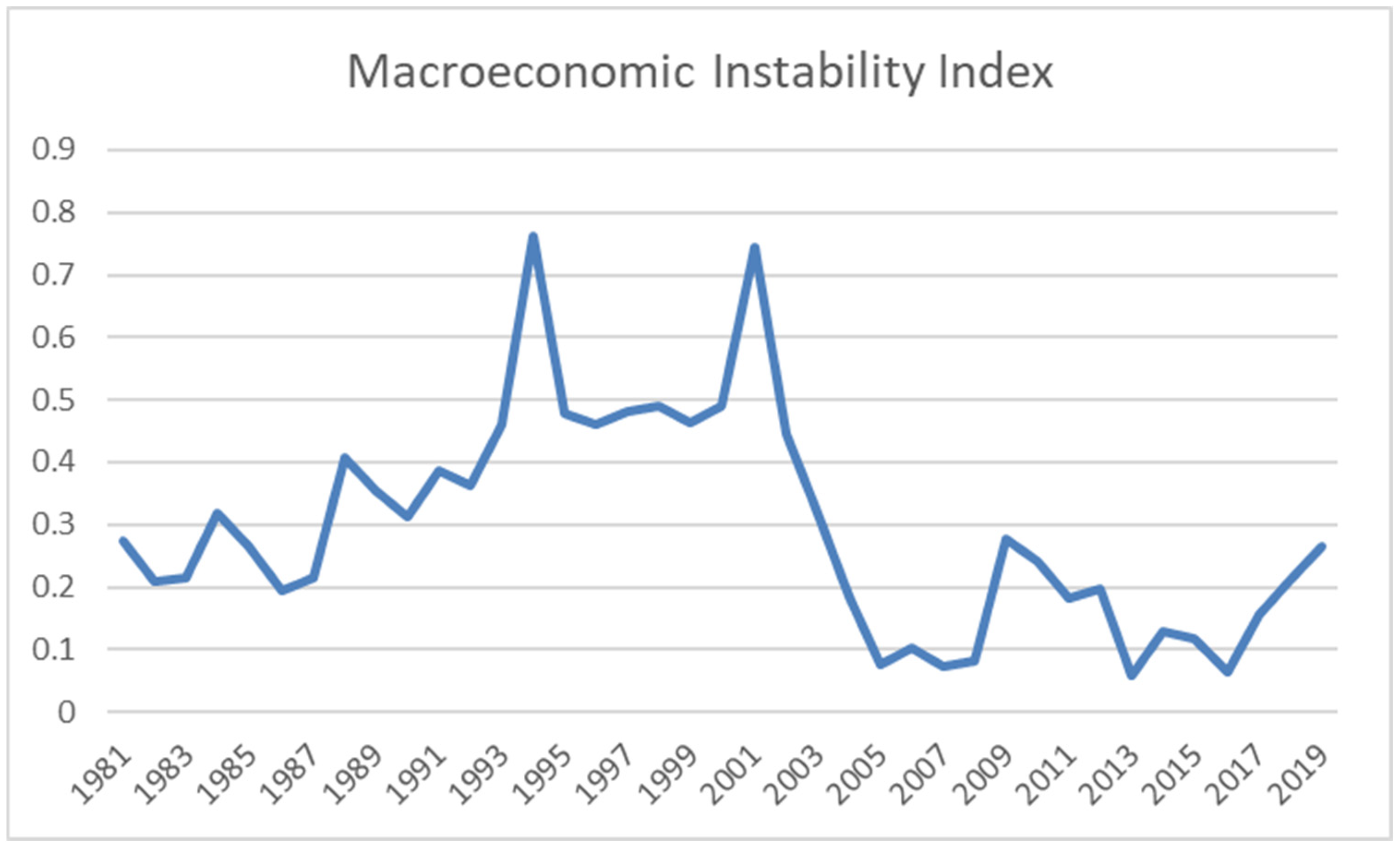
Figure 1. Macroeconomic Instability Index.
Sustainability 18 01682 g001
Figure 2. Inflation (Consumer Prices) of Turkey (World Bank Indicators).
Sustainability 18 01682 g002
Figure 3. GDP Growth (Annual%) (World Development Indicators).
Sustainability 18 01682 g003
Figure 4. Time Plot of LYH.
Sustainability 18 01682 g004
Figure 5. Time plot of LKH.
Sustainability 18 01682 g005
Figure 6. Time plot of E.
Sustainability 18 01682 g006
Figure 7. Time plot of INF.
Sustainability 18 01682 g007
Figure 8. Graph of Inflation and the Percentage Change in Tl/dollar Rate.
Sustainability 18 01682 g008
Figure 9. CUSUM Test Result.
Sustainability 18 01682 g009
Figure 10. CUSUM SQUARE Test.
Sustainability 18 01682 g010
Table 1. Variable Definition Table.
Yreal GDP at constant 2017 national prices (in mil.)
Kcapital stock at constant 2017 national prices (in mil.)
Hmultiplying Human Capital Index and number of persons engaged (in millions)
ln Y/Houtput per effective labor
ln K/Hcapital per effective labor
Infinflation, consumer prices (annual%)
Epercentage change in TL/dollar rate
Table 2. Descriptive Statistics.
VariableMinimumMaximumMeanStandard Deviation
E0.0000765.6738191.07971.3754
Inf6.251105.21539.74430.4699
H1.4692.51431.9930.2799
K389,636.312,242,8471,061,523.21551,738.98
Y1,147,90010,213,8204,076,1252,650,949
Table 3. Unit Root Test Results.
Augmented Dickey–Fuller Test
VariablesLevel First DifferenceThe Order of Integration
With Trend No TrendWithout Trend
LYH−3.390801−0.426755−7.900748I(1)
(0.0673)(0.8945)(0.0000) [I(0) at 10%]
LKH−2.9494860.831750−4.656580I(1)
(0.1590)(0.9934)(0.0006)
Inf -----−1.963839−7.321983I(1)
-----(0.3009)(0.0000)
E-----−2.223553−10.33937I(1)
-----(0.2016)(0.0000)
Note: Trends are excluded for Inf and E since they do not have an apparent deterministic trend. This is also in line with the theoretical expectations.
Table 4. The Bounds Test Results.
VariableCoefficientStd. Errort-StatisticProb
LKH0.4996340.002845817.557070.0000
INF0.0001920.0006310.3043880.7630
E−0.0012100.000519−2.3305400.0269
C4.4431780.32853213.524350.0000
EC = LYH − (0.4966 × LKH + 0.0002INF − 0.0012 × E + 4.4432
F-Bounds Test StatisticsValue Signif.I(0)I(1)
F-statistic
k
5.9652233Asymptotic: n = 1000
10% 2.373.2
5% 2.79 3.67
2.5% 3.15 4.08
1% 3.65 4.66
Actual Sample Size38Finite Sample: n = 40
10% 2.592 3.454
5% 3.1 4.088
1% 4.31 5.544
Finite Sample: n = 35
10% 2.618 3.532
5% 3.164 4.194
1% 4.428 5.816
Table 5. Long-Run Results (Dependent Variable = LYH).
VariableCoefficientStd. Errort-Statisticsp-Value
LKH0.4996340.02845817.557070.000
INF0.0001920.0006310.3043880.7630
E−0.0012100.000519−2.3305400.0269
C4.4431780.32853213.524350.000
Table 6. Model with exchange rate.
VariableCoefficientStd. Errort-StatisticProb
LKH0.4524300.04206810.754650.0000
INF−0.0014450.000477−3.0314860.0048
C4.9837180.48684310.236810.0000
EC = LYH − (0.4524 × LKH − 0.0014INF + 4.9837)
F-Bounds TestValueSignif.I(0)I(1)
F-statistic
k
3.7319322Asymptotic: n = 1000
10%2.633.35
5%3.1 3.87
2.5% 3.554.38
1%4.13 5
Actual Sample Size38Finite Sample: n = 40
10%2.835 3.585
5% 3.435 4.26
1% 4.775.855
Finite Sample: n = 35
10%2.8453.623
5% 3.4784.335
1% 4.948 6.028
Table 7. Model with inflation.
VariableCoefficientStd. Errort-StatisticProb
LKH0.4553590.03598812.653120.0000
E−0.0014330.000417−3.3489980.0016
C4.9454190.41536711.906160.0000
EC = LYH − (0.4564 × LKH − 0.0014E + 4.9454)
F-Bounds TestValueSignif.I(0)I(1)
F-statistic
k
12.833212Asymptotic: n = 1000
10%2.633.35
5% 3.13.87
2.5% 3.554.38
1%4.135
Actual Sample Size38Finite Sample: n = 40
10%2.835 3.585
5%3.435 4.26
1%4.775.855
Finite Sample: n = 35
10%2.845 3.623
5% 3.4784.335
1% 4.948 6.028
Table 8. Error Correction Model (Dependent variable: dLYH).
VariableCoefficientStd. Error t-Statisticsp-Value
D(LYH(−1))0.2400520.1012392.3711340.0246
D(LKH)1.0565180.1172539.0106000.0000
D(LKH(−1))−0.5602060.152119−3.6826870.0009
D(INF)0.0013820.0004553.0385510.0050
CointEq(−1) *−0.6392630.109729−5.8258100.0000
*: Error Correction Term. Note: D represents the difference (change) operator.
Table 9. Diagnostic Test Results.
Diagnostic Test p-Values
Serial Correlation (LM Test)0.3660
White Test 0.9788
Ramsey Reset Test 0.5475
Normality (Jarque–Bera)0.223775
Disclaimer/Publisher’s Note: The statements, opinions and data contained in all publications are solely those of the individual author(s) and contributor(s) and not of MDPI and/or the editor(s). MDPI and/or the editor(s) disclaim responsibility for any injury to people or property resulting from any ideas, methods, instructions or products referred to in the content.