1. Introduction
Establishing protected areas is an effective way to protect biodiversity and an important measure for maintaining regional and global ecological security [
1,
2,
3]. National parks are a type of protected area, as well as a way to transform the developmental pattern. The construction and management goals of national parks are to achieve effective protection and rational utilization of ecosystems [
3,
4,
5]. However, in national parks, the effective transformation of ecological value and the sustainability of rational utilization face numerous challenges [
4,
5,
6]. For example, China is at a critical stage of establishing a protected area system, with national parks as its main body. In 2021, China established its first batch of five national parks: Three-River-Source National Park, Giant Panda National Park, Northeast China Tiger and Leopard National Park, Hainan Tropical Rainforest National Park, and Wuyishan National Park [
7]. However, large populations live in and around the Chinese national parks, and collectively owned land constitutes a relatively high proportion of the land in most of these parks. Moreover, original residents often rely strongly on the natural resources on the collectively owned land to maintain and improve their living standards [
8,
9,
10,
11]. The contradiction between national park resource utilization and protection is significant. In order to handle the relationship between resource protection and the development of original residents, China has made a series of important systems and arrangements, such as ecological compensation and concessions in national parks, to achieve a mode of development with balanced interests and compatible incentives [
12,
13,
14,
15]. Among them, as an important strategy for market-based financing of ecological protection, a concession is a lease, license, easement, or permit for an operation that is undertaken by any party other than the park and protected area agency (The World Bank Group) [
16].
The concept of national park concessions first appeared in the United States [
17]. The concession system focuses on the ecological and environmental protection goals of national parks, gives full play to the leading role of the government, improves the efficiency of the market mechanism, relieves the pressure on public finance, creates employment opportunities for local communities, and provides good infrastructure and tourism services [
18,
19]. New Zealand, for instance tried to achieve environmental protection and obtain financial contributions from concessionaires by relaxing the rules and approval procedures for concessions [
20]. In Canada, the development of national park concessions has undergone a transformation from the original single ecological attribute to a diversified mode featuring economic and social attributes, which has opened up a broader space for the expansion of concessions [
21]. Although government departments promote concessions to advance the rational development and utilization of national park resources, there is a potential conflict between the implementation of concession activities and the protection goals of national parks [
22,
23]. Specifically, the resources and assets that are owned by communities in national parks may become the means of production to support concession activities. And, the income generated from these means of production due to national park concessions should also be shared by community residents [
24,
25,
26]. Therefore, residents are indispensable stakeholders in the process of formulating and implementing the national park concession system. The National Parks Law of the People’s Republic of China, issued in 2025, clearly states that “for the operation of commercial services in the national park area, the national park agency may select service providers through a competitive method” and “encourage the original residents in the national park area to participate in the service activities mentioned above”. However, how to advance the transition of national park concession from “system establishment” to “system efficiency improvement” remains the core issue in system optimization. System credibility serves as an important theoretical foundation for analyzing system sustainability and optimizing system improvement. So, the key to solving the core issue is to analyze how stakeholders of national parks evaluate the credibility of concession systems.
Actors’ perception of a system is an important standard for measuring its credibility, which plays a role in measuring the rationality and effectiveness of the relevant policy [
27,
28,
29]. The effectiveness of a system does not lie in the “correctness” of its form, but in its actual function. This also emphasizes the need to pay attention to the system itself, as well as the interaction between the system and its stakeholders. Through a literature review, this study found that the system credibility thesis is currently mainly applied to national systems, forms of property rights, water resource management, and farmland and grassland resource management [
30,
31,
32,
33,
34,
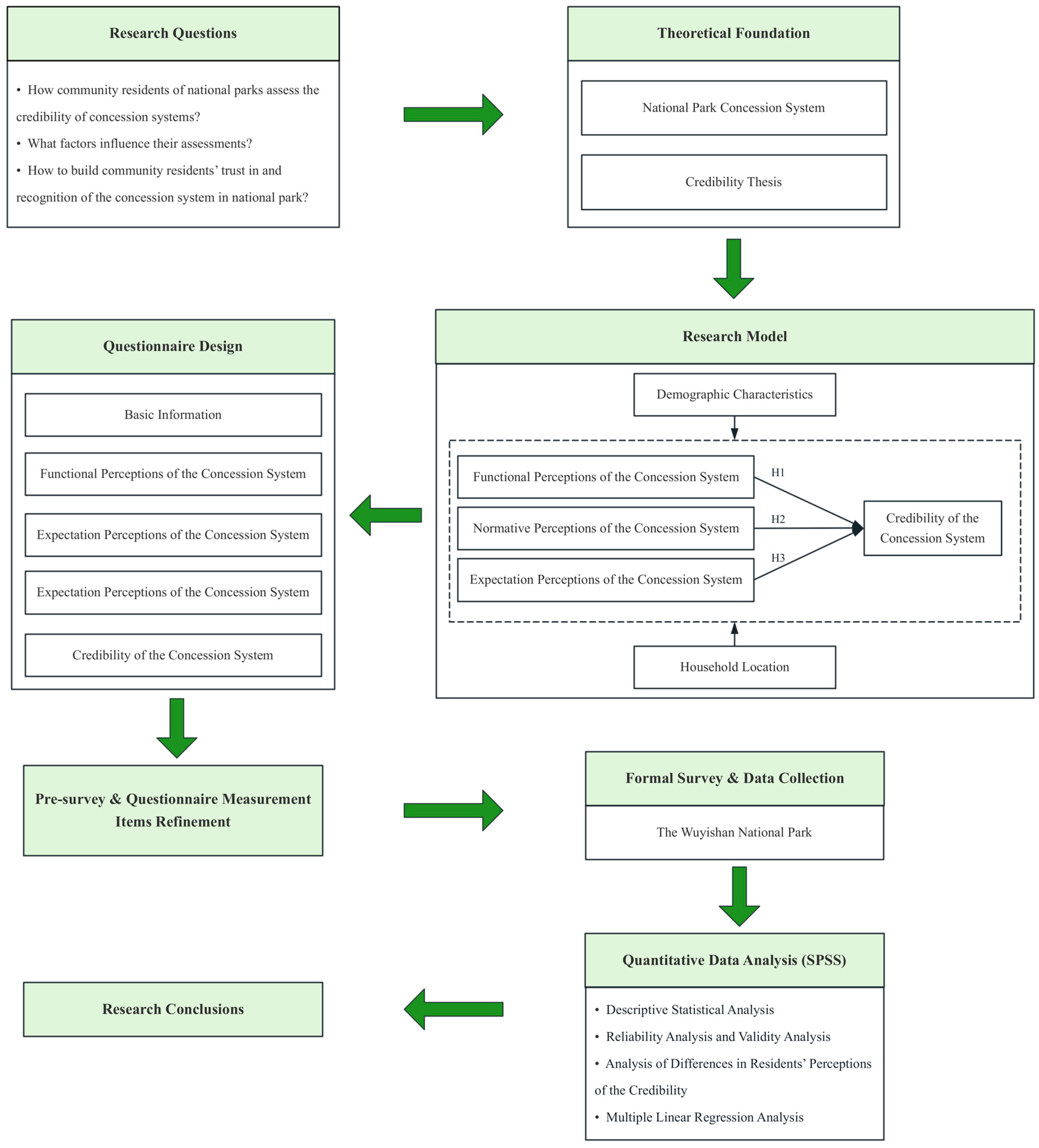
35]. Yet, existing studies on the evaluation of system credibility often treat stakeholders as homogeneous, failing to fully account for group or locational differences, which limits the applicability of their conclusions. And, a significant gap remains in applying the credibility thesis to national park concession system, especially in residents’ micro-level perceptions and evaluations of the concession system are still lacking. In view of this, the present study draws upon the credibility thesis and selects national parks as a case study. Focusing on the community residents as a key stakeholder group, this study aims to explore the following questions: How do residents within the national park evaluate the credibility of the concession system? What factors influence their assessments? How to build community residents’ trust in and recognition of the concession system in national park? To address these questions, this study employs a questionnaire survey to collect data on the perceptions of residents in communities surrounding Wuyishan National Park toward the concession system. By developing and validating a measurement instrument for institutional credibility applicable to this context, the data are analyzed to empirically identify key factors affecting residents’ perceptions of concession system. The steps of the methodological approach are illustrated in
Figure 1.
The contributions of this study are reflected in the following aspects. First, it introduces the credibility thesis into the specific context of community governance in China’s national parks, validating its applicability in the fields of protected area management. It provides a novel theoretical perspective and analytical framework for understanding the sustainability of the national park concession system. Second, from the perspective of refined analysis, this study conducts a comparative analysis of different groups and location to assess the credibility of the national park concession system, offering methodological reference for future empirical research in related areas. These works not only enrich academic discussions on the management of national park concessions, but also provide a practical basis for enhancing institutional acceptance and optimizing community participation mechanisms in sustainable management practices.
2. Research Hypotheses and Theoretical Model
In reality, even if some systems are complete in form, they will not be used by the public because of their low efficiency, thus becoming “empty systems” [
27]. However, systems with incomplete forms but functional effects in actual applications are supported by the public and retained [
36]. For example, the household land contract system in China, although it is an imperfect system, has been in place for decades and has achieved good results, simply because farmers believe in its credibility. This phenomenon cannot be explained by traditional property rights theory [
28]. The credibility thesis successfully explains why some seemingly imperfect or vaguely defined property rights systems have continued to be in existence and are well-supported, while some seemingly perfect systems achieve poor practical results. The credibility thesis states that when certain system arrangements have existed for a long time, they must perform certain functions in society [
37]. Therefore, social actors have a certain perception and degree of support for such systems and consider them credible. It argues that the function of the system performs in a specific time and space, which reflects a collective understanding of social actors of the specific functions, quality, and performance of its arrangements. Peter Ho proposed to evaluate system credibility from three perspectives: social actors’ perception of systems, social actors’ perception of disputes, and the structural changes in property rights systems [
38,
39]. Among these, social actors’ perception of systems is measured by interviewing the social actors about whether they consider the formal system, the actual system, and the targeted system to be credible [
40,
41].
The perception of system credibility refers to residents’ judgment and evaluation of the rationality and effectiveness of a system [
42]. Residents can infer whether the concession system in national parks aligns with their collective interests by considering the changes in their own living conditions and thus make a judgment on the policy’s credibility [
43].
Generally speaking, a positive perception of a national park concession system’s functions and ought-to-be and positive expectations among community residents will enhance their perception of its credibility. The functional perceptions of a system focus on residents’ evaluations of its practical outcomes and effectiveness, specifically, the benefits, services, and problem-solving capacities it generates during implementation. Generally, when residents personally experience or broadly recognize that the national park concession system delivers concrete and positive outcomes, such as promoting community economic development, enhancing welfare, and improving the ecological environment, they are more likely to perceive gains, thereby strengthening their perception of the system’s credibility. Accordingly, this study proposes Hypothesis 1.
H1: The functional perceptions of a concession system in national parks have a significant positive impact on its credibility.
Perceptions of normative refer to residents’ understanding and expectations regarding the ideal state of the system. That is, the values, social functions, and objectives the system should embody and achieve. When residents hold a positive view of the normative dimension of the national park concession system, it can enhance their acceptance of and trust in the system, thereby strengthening their overall perception of its credibility. Accordingly, this study proposes Hypothesis 2.
H2: The normative perceptions of a concession system in national parks have a significant positive impact on its credibility.
Perceptions of future expectations reflect residents’ predictions and judgments regarding the system’s future performance and development trajectory, based on current information and past experience. According to credibility thesis, the long-term sustainability of an institution depends not only on its current normative legitimacy and practical effectiveness, but also on social actors’ belief in its future stability and positive evolution. When residents hold an optimistic outlook for the future development of the national park concession system, their concerns about institutional uncertainty are reduced, and their willingness to rely on and support the system over the long term is strengthened, thereby positively influencing their overall perception of its credibility. Accordingly, this study proposes Hypothesis 3.
H3: The expectation perceptions of a concession system in national parks have a significant positive impact on its credibility.
3. Materials and Methods
3.1. The Study Region
Among the first batch of established national parks in China, Wuyishan National Park (WNP) implemented a generally standardized, scientific, and complete national park concession system relatively early. In 2020, the General Office of the Fujian Provincial People’s Government issued the Interim Measures for the Concession Management of WNP, which stipulate the scope of concessions and the methods for selecting concessioners, as well as relevant agreements and liability issues. It also guides local residents to participate in concessions, tourism services, and supervision and management (“Incorporate projects such as bamboo rafting on the Nine-Bend Stream, environmentally-friendly sightseeing buses, and rafting trips into the scope of concession and implement catalog management”; “Encourage and guide eligible original residents and ecological migrants within and adjacent to the national park to participate in the bidding for concession rights”; “Establish a reporting and supervision mechanism, and use the media and the Internet platforms, and hire people with broader-group representativeness as social supervisors to allow the public to engage in the supervision of concession activities and promote standardized operation and harmonious development”.) Issued in 2023, The Overall Plan for WNP (2023–2030) outlines key community-prioritizing measures [
44]. It states the importance of “guiding and supporting capable original residents to engage in ecological tourism and characteristic nature education services through concessions”, and of “giving hiring priority to original community residents within the national park under the right of first refusal”. These provisions thus guarantee community residents priority in both business operations and benefits.
This study focuses on five administrative villages located in the eastern part of WNP, adjacent to the Wuyishan Scenic Area. This area serves as the primary operational base for key concession projects within the national park, such as the Nine-bend Stream bamboo raft tours and eco-friendly sightseeing buses. Consequently, residents in these five villages generally possess a relatively in-depth understanding of the concession system. Selecting them as the research subjects provides a representative sample for examining the interactive relationship between the community and the concession operations.
3.2. Questionnaire Design and Data Collection
To ensure that the measurement items adequately cover the theoretical constructs and exhibit sound content validity, the questionnaire was initially designed based on a comprehensive literature analysis and subsequently reviewed by experts in the relevant fields. Then, the research group first conducted a pre-survey using the questionnaire. They distributed 12 questionnaires to local residents to understand the basic situation regarding local concessions. The research group then modified the measurement items in the questionnaire that did not align with the actual situation or were difficult to understand, making it easier for local residents to understand and complete the questionnaire. Finally, the research group developed a formal questionnaire for subsequent distribution. The research questionnaire for investigating community residents’ perception of the national park concession system includes five parts: perception of the credibility of the concession system, the functional perceptions of a concession system, the normative perceptions of a concession system, the expectation perceptions of a concession system, and demographic characteristics of the respondents (gender, age, educational level, and administrative village that they belong to) [
42,
43,
45].
Firstly, the measurement items for the perception of the credibility of the national park concession system include “I think the interest distribution in the operation and management of the national park conforms to the collective interests and can exist permanently,” “I think the interest compensation in the operation and management of the national park conforms to the collective interests and can exist permanently,” and “I think the participation of villagers in the operation and management of the national park conforms to the collective interests and can exist permanently.” Secondly, the measurement items for the functional perceptions of the national park concession system include “The local business operation environment has become better,” “My employment opportunities have increased,” “My family’s and my income have increased,” and “The welfare provided by the village/town government to villagers has improved.” Thirdly, The measurement items for the normative perceptions of the national park concession system include “The ecological environment should be strictly protected while promoting economic development,” “The business activities in the national park should drive the growth of local residents’ economic income,” “Residents should participate in the business investment’s operation, decision-making, and supervision involving the national park,” and “The business activities in the national park should fully carry forward the local excellent traditional culture.” Fourthly, the measurement items for the expectation perceptions of the national park concession system include “More people will participate in the ecological protection of national parks in the future”, “There will be more opportunities for people to participate in the business operations such as bamboo rafting on the Nine-Bend Stream and environmentally-friendly sightseeing buses in the future”, “More local residents will successfully participate in the business operations such as bamboo rafting on the Nine-Bend Stream and environmentally-friendly sightseeing buses in the future”, and “More local residents will be willing to participate in the commercial activities related to the national park tourism and services in the future”. A five-point Likert-type scale was adopted to evaluate the above measurement items (5 = strongly agree; 1 = strongly disagree).
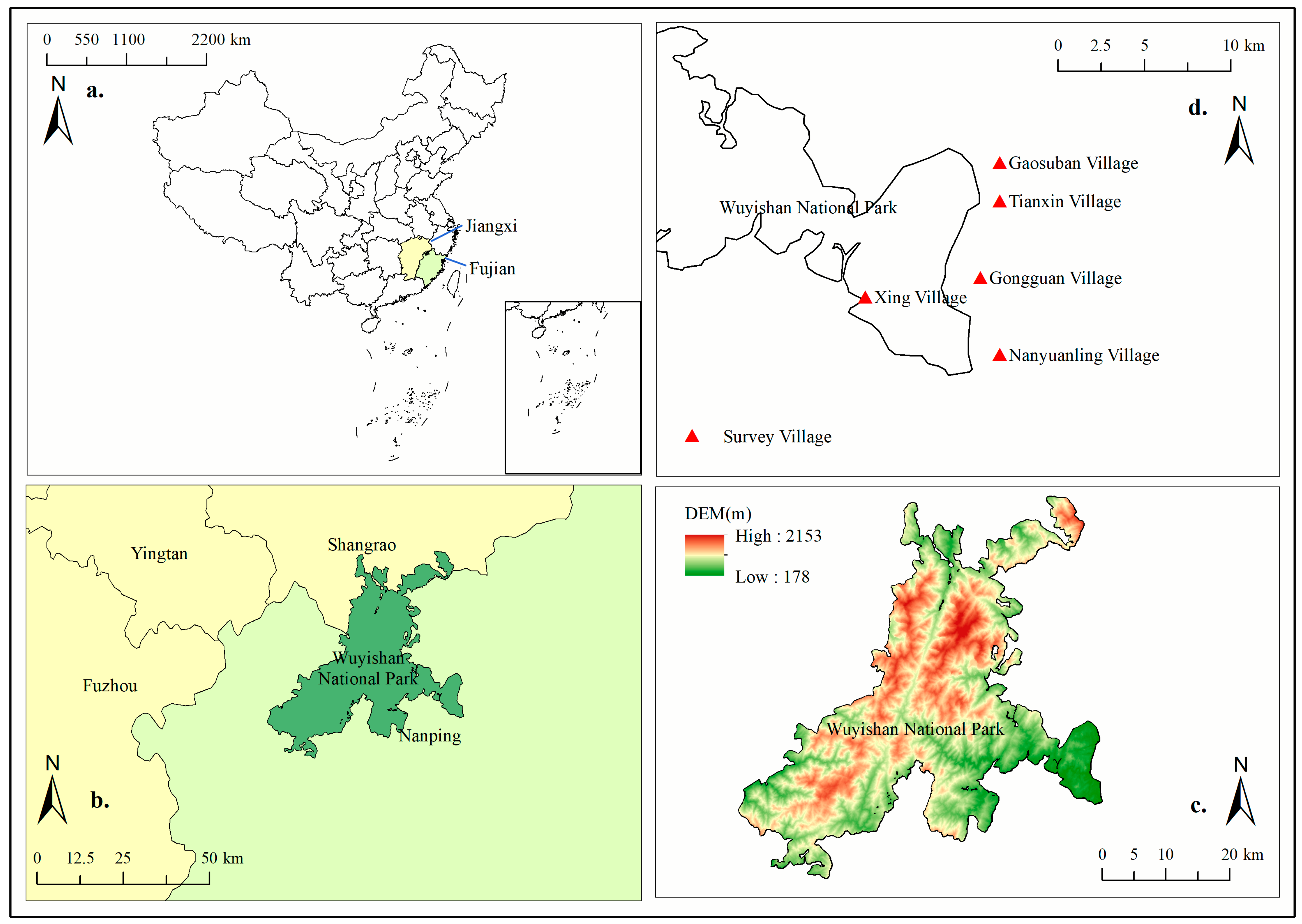
In March 2024, the research group (a total of 7 people) carried out a household-to-household questionnaire survey, with this process lasting three days. The survey focused on the residents of five administrative villages around WNP: Xing Village, Nanyuanling Village, Tianxin Village, Gaosuban Village, and Gongguan Village (
Figure 2). The research area of this study is mainly concentrated into five administrative villages in the eastern part of WNP, which are adjacent to the Wuyishan Scenic Area. The Wuyishan Scenic Area is the main operational area for the concession projects in WNP, including bamboo rafting on the Nine-Bend Stream and environmentally friendly sightseeing buses. Therefore, residents in these five administrative villages generally have a relatively in-depth understanding of the concession system. Xing Village and Nanyuanling Village are key entrance communities in the eastern part of WNP, serving as important bridges and links between the inside and outside of the national park. The economy of these two villages mainly relies on the tourism industry. Tianxin Village is close to the northern entrance of the Wuyishan Scenic Area. It has a rock tea-refining factory and is a well-known rock tea village. Most local residents in this village are engaged in the tea-making and tea-selling industries. Gaosuban Village is located far from the entrance to the Wuyishan Scenic Area. Its main industries focus on tea, flowers, planting, and breeding. Gongguan Village faces the Wuyishan Scenic Area across a river, which creates a unique geographical location. By virtue of this, the village has successfully built Sangu Tourist Resort (belonging to the National Tourism Resort), showing a promising tourism development trend. A total of 118 formal questionnaires were distributed, and 118 were recovered. After eliminating 10 invalid questionnaires with obvious logical errors, identical answers, and obvious random filling, there were a total of 108 valid questionnaires, yielding a valid response rate of 91.53%.
3.3. Demographic Characteristics and Descriptive Statistical Analysis
SPSS 26.0 was used to conduct a descriptive analysis of the data from the valid questionnaires. The demographic characteristics of the community residents around WNP were obtained, as shown in
Table 1. In the sample of this questionnaire survey, there were 42 male residents and 66 female residents, accounting for 38.9% and 61.1%, respectively. In terms of age distribution, the surveyed community residents were mainly 31–45 years old, accounting for 47.2%. The age groups of 19–30 years old and 46–60 years old followed, accounting for 26.9% and 18.5%, respectively. The educational level of the residents was mainly composed of the “college/bachelor’s degree or above” category, accounting for 43.5% of the total number of respondents. Residents with a “middle school” and “high school” education accounted for 25.9% and 24.1%, respectively. Among all the respondents, 19.4% and 10.2% were from Xing Village and Nanyuanling Village, the key entrance communities in the eastern part of WNP. Meanwhile, 44.4% of the respondents were from Gongguan Village, where the famous Sangu Tourist Resort is located, and the tourism development level is relatively high. Residents from Tianxin Village and Gaosuban Village accounted for 8.3% and 17.6% of the total, respectively.
Overall, community residents are relatively satisfied with the national park’s concession system (mean = 3.75), but their perceptions vary along the different dimensions of the system’s credibility. Among these, the average score for the normative perceptions of the concession system is the highest (mean = 4.22), followed by the expectations of the concession system (mean = 3.83) and the perceptions of the concession system’s function (mean = 3.56). This indicates that most residents hold a positive view of the current national park concession system and believe that it can lead to favorable results, aligns with their collective interests, and can be permanent.
3.4. Scale Reliability and Validity Tests
The reliability test can be used to examine the stability and reliability of a scale [
46]. This study used Cronbach’s alpha coefficient for analysis. The results obtained by using SPSS 26.0 show that the reliability values of all specific indicators are greater than 0.8, and the overall reliability value of the scale is 0.897, which meets the requirement of exceeding 0.7, indicating that the scale for measuring perceptions of the national park concession system’s credibility demonstrates good internal consistency.
Validity analysis is conducted to examine the effectiveness and accuracy of the measurement scale [
46]. To evaluate the validity of the scale measuring perceptions of the national park concession system’s credibility, this study assesses its convergent validity and discriminant validity. As shown in
Table 2, the standardized factor loadings of the observed variables range from 0.65 to 0.86, the average variance extracted (AVE) values range from 0.50 to 0.67, and the composite reliability (CR) values range from 0.80 to 0.86. Based on these indicators, it can be concluded that each dimension of the scale exhibits satisfactory convergent validity. The results for discriminant validity, presented in
Table 3, show that the square root of the AVE for each dimension is greater than the absolute value of its correlation with any other dimension, indicating that the scale possesses good discriminant validity.
4. Results
4.1. Analysis of Differences in Residents’ Perceptions of the Credibility
One-way analysis of variance (ANOVA) and
t-tests are methods used to examine differences in sample means. The
t-test can only be applied to compare means between two samples, such as analyzing differences in evaluations between gender groups (two groups). For comparing means across multiple samples, such as analyzing differences in evaluations among age/education level groups (three or more groups), one-way ANOVA must be used. Specific application cases include: using a
t-test to analyze the relationship between gender (two groups) and travel behavior, thus conducting an analysis of the differences in interest in visiting specified attractions by gender [
47]; using ANOVA to compare differences in holiday destination attribute preferences among 11 types of vacationers (three or more groups) [
48].
Thus, the one-way ANOVA test was used to analyze the differences in perceptions of the credibility of the national park concession system among residents of different villages, age groups, and educational levels. As shown in
Table 4, there are no significant differences in perception among residents from different villages. However, there are significantly different perceptions among age groups and participants with different educational levels. Specifically, the scores from residents over 60 years in relation to the credibility of the concession system function and credibility are below 3 points. This shows that residents over 60 years of age have significant discontent and distrust towards the concession system in the national park. In terms of education, as the educational level gradually increases, residents’ understanding of the credibility of the concession system will deepen accordingly. Residents with college/bachelor’s degree or above give the highest scores, reaching over 4 points. This indicates that this group of residents believe that the concession system conforms to the collective interests and can be permanent. In contrast, residents with a primary school education or below award the lowest scores, mostly 3 points or below, indicating that this group of residents is skeptical or even negative about the future development of the concession system.
And, the independent-sample
t-test was used to analyze the credibility of the national park concession system among residents of different genders. As shown in
Table 4, the
p values of the variables are all greater than 0.05, indicating that there are no significant differences in perception among male and female residents.
4.2. Analysis of Factors Influencing the Perception of the Credibility of the National Park Concession System
When analyzing the factors influencing the perception of the credibility of the concession system in national parks, the system’s credibility is set as the explained variable. The core explanatory variables are selected as the functional perceptions of the concession system, normative perceptions of the concession system, and expectation perceptions of the concession system. A linear regression analysis was conducted on the scale data. Based on the results of the earlier demographic analysis, which indicated significant differences in residents’ perceptions of institutional credibility across age and educational attainment, these two variables were included as control variables in the regression model for further analysis.
According to the results presented in
Table 5, the baseline Model 1, which includes only the three core independent variables, yields an R
2 value of 0.441. This indicates that these three variables collectively explain 44.1% of the variance in the dependent variable. The analysis of variance test confirms that the regression model is statistically significant (F = 29.089,
p = 0.000 < 0.001), establishing a significant linear relationship between the explanatory variables and the dependent variable. The standardized regression coefficients for all three independent variables are positive, suggesting a positive influence on the credibility of the concession system. Among them, “normative perceptions of the concession system” has the largest absolute coefficient, indicating it possesses the strongest explanatory power for the credibility of the concession system, followed by “expectation perceptions of the concession system”. However, the regression coefficient for “functional perceptions of the concession system” is not statistically significant. After incorporating the control variables, which were transformed into dummy variables, into Model 1 to create Model 2 and conducting a further linear regression, it can be observed that while some degree of multicollinearity exists among certain control variables, the sign, significance, and magnitude of the core independent variables remain largely stable. This indicates that the primary conclusions hold after controlling for demographic variables, thereby providing support for hypothesis2 and hypothesis 3: the normative perceptions and expectation perceptions of the national park concession system have a significant positive impact on its credibility.
5. Discussion
National parks serve not only as tourism destinations but also as protected areas that fulfill multiple functions, including ecological conservation and sustainable development. Normative perceptions of the system demonstrate strong explanatory power regarding its credibility, underscoring the importance of procedural fairness and value alignment in the concession system within national park governance. When residents perceive that the rules and procedures of the concession system are just and that its value orientation effectively balances conservation and development, they may assign higher credibility to the system based on their recognition of its legitimacy, regardless of their perceived benefits.
Residents’ expectation perceptions of the national park concession system demonstrate a significant positive impact on its credibility, which contrasts with findings from some prior studies [
42]. This difference stems from variations in research contexts. As the concession system involves long-term resource use rights and benefit-sharing arrangements, residents’ positive expectations regarding the future direction of the system can effectively mitigate their concerns over uncertainty, thereby fostering long-term trust. Such future-oriented trust is particularly critical during the initial stages of national park governance, where property rights or entitlements may not yet be fully clarified.
The non-significance of functional perceptions may indicate a gap between the current operational outcomes of the concession system and residents’ expectations. While residents may acknowledge the system’s intended objectives and long-term value, its tangible results, such as specific shares of benefits distributed and substantial growth in employment opportunities, may not yet have met widespread satisfaction. This could be attributed to an imperfect benefit distribution mechanism and insufficient community reinvestment of operational profits.
The evaluation of the credibility of the national park concession system by residents is a very complex issue, which not only involves the degree and scope of interaction between different stakeholders in the region, but also involves subjective judgment issues such as local residents’ system awareness and analytical abilities. The research design of the paper has the following shortcomings: firstly, the research design fails to effectively control the moderating variables. Specifically, what other factors influence the evaluation on the credibility of the national park concession system for community residents? Will residents’ familiarity with the system have a moderating effect on the relationship between these influencing factors and the credibility of the system? How does it moderate? However, these issues were not considered in the design of this study. Secondly, the lack of consideration for the timing of survey data collection in the research design results in a lack of external validity for the conclusions of this study. Specifically, as time goes by, there has been a “non-synchronous two-way interaction” between the promotion of the national park concession system and the evaluation of the system credibility by the residents. However, the data obtained from the sampling survey designed in this study is cross-sectional data obtained from a single survey, and no diachronic analysis has been conducted for the evaluation of the credibility of the national park concession system among residents. Whether the research conclusions are applicable to other time periods still needs to be verified. Thirdly, the sample size is geographically concentrated, as the data were primarily collected from residents in five administrative villages on the eastern side of WNP, which may introduce selection bias. The data and analytical results obtained in this research may not be fully applicable to concession systems in other national parks.
6. Conclusions
By analyzing residents’ perceptions of the credibility of the national park concession system, the empirical results of this study confirm the following: (1) Most residents express satisfaction across different dimensions of the current concession system. They perceive the system as having beneficial impacts, aligning with collective interests, and likely to be sustained over the long term. (2) The normative perceptions and expectation perceptions of the concession system in national parks have a significant positive impact on its credibility. Furthermore, age and educational attainment significantly influence residents’ perceptions of the system’s credibility. The impact of household location on the credibility of national park concession systems is not significant. These research conclusions can provide a basis for decision-making during the formulation and implementation of sustainable concession policies for national parks.
Residents’ normative perceptions serve as the cornerstone of institutional credibility. Therefore, in key stages such as concession project bidding, agreement signing, and benefit distribution, government authorities should establish standardized procedures that are open, transparent, and subject to oversight. Additionally, measures such as community announcements and public hearings should be implemented to safeguard residents’ right to information and participation. Positive resident expectations regarding the system’s future are key to building long-term trust. Consequently, a diversified feedback mechanism should be established for the national park concession system. Active communication and interaction between residents and managers/management departments will not only help improve the flexibility and operability of the concession system in the national park but also enhance residents’ trust in it, thereby laying a solid foundation for its long-term and sound development. Furthermore, the implementation of the concession system in national parks should be strengthened. In the process of implementing the system, national park management departments should prioritize residents’ interests, encourage them to participate in activities related to the concession system, and enhance their sense of benefits and support. Meanwhile, the implementation process should be open and transparent to ensure the accurate and full implementation of the concession system. It is noteworthy that differentiated publicity strategies should be formulated for different groups of residents. This is especially important for elderly residents and those with lower education levels, who have relatively low levels of acceptance of and adaptability to the new system.
Building on the findings and limitations of this study, future research could expand the sampling scope by exploring different types of national parks, selecting communities from various locations within and across provinces for comparative analysis, and incorporating a broader range of socioeconomic and control variables to enhance the robustness and generalizability of the findings. Furthermore, future studies may complement quantitative analysis with qualitative methods such as in-depth interviews and participatory observation, thereby gaining a richer understanding of residents’ attitudes and behavioral logic.
Author Contributions
Conceptualization, P.Y.; Methodology, Q.L.; Validation, Q.L.; Resources, P.Y.; Data curation, Q.L.; Writing—original draft, Q.L.; Writing—review & editing, J.G. and G.R.; Supervision, P.Y. and J.G.; Funding acquisition, P.Y. All authors have read and agreed to the published version of the manuscript.
Funding
This research was funded by National Natural Science Foundation of China [grant number: 42301245] And The APC was funded by the National Natural Science Foundation of China.
Institutional Review Board Statement
Ethical review and approval were waived for this study by Institution Committee due to Official document name: Interpretation of the “Regulations on Ethical Review of Human Life Sciences and Medical Research”.
Informed Consent Statement
Informed consent for participation was obtained from all subjects involved in the study.
Data Availability Statement
The original contributions presented in this study are included in the article. Further inquiries can be directed to the corresponding author.
Conflicts of Interest
The authors declare no conflict of interest.
References
- Cumming, G.S. Protected area management has significant spillover effects on vegetation. Nature 2025, 4, 1–10. [Google Scholar] [CrossRef]
- Zeng, Y.; Koh, L.P.; Wilcove, D.S. Gains in biodiversity conservation and ecosystem services from the expansion of the planet’s protected areas. Sci. Adv. 2022, 8, eabl9885. [Google Scholar] [CrossRef] [PubMed]
- Liu, Y.; Ziegler, A.D.; Wu, J.; Liang, S.; Wang, D.; Xu, R.; Duangnamon, D.; Li, H.; Zeng, Z. Effectiveness of protected areas in preventing forest loss in a tropical mountain region. Ecol. Indic. 2022, 136, 108697. [Google Scholar] [CrossRef]
- Naughton-Treves, L.; Alix-Garcia, J.; Chapman, C.A. Lessons about parks and poverty from a decade of forest loss and economic growth around Kibale National Park, Uganda. Proc. Natl. Acad. Sci. USA 2011, 108, 13919–13924. [Google Scholar] [CrossRef] [PubMed]
- Ghimire, K.B. Parks and people: Livelihood issues in national parks management in Thailand and Madagascar. Dev. Change 1994, 25, 195–229. [Google Scholar] [CrossRef]
- Campos-Silva, J.V.; Peres, C.A.; Hawes, J.E.; Haugaasen, T.; Freitas, C.T.; Ladle, R.J.; Lopes, P.F. Sustainable-use protected areas catalyze enhanced livelihoods in rural Amazonia. Proc. Natl. Acad. Sci. USA 2021, 118, e2105480118. [Google Scholar] [CrossRef]
- Dai, P.; Wang, Y.; Ye, J.; Chen, J.; Li, R.; Cheng, X. Evolution and attribution analysis of habitat quality in China’s first batch of national parks. Land 2024, 14, 33. [Google Scholar] [CrossRef]
- Duan, W.; Wen, Y. Impacts of protected areas on local livelihoods: Evidence of giant panda biosphere reserves in Sichuan Province, China. Land Use Policy 2017, 68, 168–178. [Google Scholar] [CrossRef]
- Stone, M.T.; Nyaupane, G.P. Protected areas, tourism and community livelihoods linkages: A comprehensive analysis approach. J. Sustain. Tour. 2016, 24, 673–693. [Google Scholar] [CrossRef]
- Yu, P.; Zhang, J.; Wang, Y.; Wang, C.; Zhang, H. Can tourism development enhance livelihood capitals of rural households? Evidence from Huangshan National Park adjacent communities, China. Sci. Total Environ. 2020, 748, 141099. [Google Scholar] [CrossRef]
- Li, S.; Yang, J.; Wei, R.; Qiu, M. The impact and mechanism of national park construction on county-level livelihood and well-being—A case study in Wuyishan National Park, China. Land 2025, 14, 1521. [Google Scholar] [CrossRef]
- Yi, Z.; Li, D.; Lu, M. Ecological compensation for national parks based on carbon sink and ecosystem services. J. Environ. Manag. 2026, 397, 128294. [Google Scholar] [CrossRef]
- Chai, G.; Guo, J.; Lei, Y.; Su, Y. Ecological sustainability: A “natural-social-digital” analysis framework for China’s national park policy. J. Environ. Manag. 2025, 391, 126400. [Google Scholar] [CrossRef]
- Mo, L.; Yang, H.; Li, C.; Luo, P.; Luo, C.; Hou, R.; Wu, W.; Gu, X.; Gu, H.; Huang, F.; et al. Coordinating habitat protection and local development in Giant panda national park: An ecological carrying capacity perspective. Ecol. Indic. 2025, 178, 113945. [Google Scholar] [CrossRef]
- Rao, D.; Wang, J.; Liu, M.; Ma, N.; Li, Z.; Bai, Y. Research on ecological compensation of national parks based on tourism concession mechanism. Sustainability 2022, 14, 6463. [Google Scholar] [CrossRef]
- World Bank Group. Stimulating Sustainable Development Through Tourism Concessions. Available online: https://documents1.worldbank.org/curated/en/643981564580916089/pdf/Stimulating-Sustainable-Development-Through-Tourism-Concessions-Case-Studies-on-How-Tourism-Can-Benefit-the-Environment-and-Communities-Living-in-and-Around-Protected-Areas.pdf (accessed on 4 January 2026).
- Cullinan, T.; Mathews, B. The concession system in United States national parks. Tour. Recreat. Res. 1984, 9, 34–35. [Google Scholar] [CrossRef]
- Estima, D.C.; Ventura, M.A.M.; Rabinovici, A.; Martins, F.M.C.P.F. Concession in tourism services and partnerships in the Marine National Park of Fernando de Noronha, Brazil. Rev. Gestão Costeira Integr.-J. Integr. Coast. Zone Manag. 2014, 14, 215–232. [Google Scholar] [CrossRef]
- Coghlan, A.; Castley, J.G. A matter of perspective: Residents’, regulars’ and locals’ perceptions of private tourism ecolodge concessions in Kruger National Park, South Africa. Curr. Issues Tour. 2013, 16, 682–699. [Google Scholar] [CrossRef]
- Dinica, V. Tourism concessions in national parks: Neo-liberal governance experiments for a conservation economy in New Zealand. J. Sustain. Tour. 2017, 12, 1811–1829. [Google Scholar] [CrossRef]
- Soverel, N.O.; Coops, N.C.; White, J.C.; Wulder, M.A. Characterizing the forest fragmentation of Canada’s national parks. Environ. Monit. Assess. 2010, 164, 481–499. [Google Scholar] [CrossRef]
- Mantell, M. Preservation and use: Concessions in the National Parks. Ecol. Law Q. 1979, 8, 1–54. [Google Scholar]
- Wyman, M.; Barborak, J.R.; Inamdar, N.; Stein, T. Best practices for tourism concessions in protected areas: A review of the field. Forests 2011, 2, 913–928. [Google Scholar] [CrossRef]
- Fisher, K.A.; Donnelly, M.R.; Adams, C. The rise of community-based natural resource management strategies as explained by transaction costs. Undergrad. Econ. Rev. 2022, 18, 5. [Google Scholar]
- Thouless, C.; Diggle, R.W.; Sikoppo, C. New tourism concessions in National Parks to benefit community conservancies in Namibia. Oryx 2014, 48, 327–328. [Google Scholar] [CrossRef][Green Version]
- Kong, K.; Li, P. National park community concession: Practical logic, model comparison and policy suggestions. J. Nat. Resour. 2024, 39, 2259–2275. [Google Scholar] [CrossRef]
- Ho, P. The ‘credibility thesis’ and its application to property rights: (In) Secure land tenure, conflict and social welfare in China. Land Use Policy 2014, 40, 13–27. [Google Scholar] [CrossRef]
- Ho, P.; Spoor, M. Whose land? The political economy of land titling in transitional economies. Land Use Policy 2006, 23, 580–587. [Google Scholar] [CrossRef]
- Ho, P. An endogenous theory of property rights: Opening the black box of institutions. J. Peasant Stud. 2016, 43, 1121–1144. [Google Scholar] [CrossRef]
- Tzfadia, E.; Meir, A.; Roded, B.; Atzmon, E. Gray local governance and Israeli Indigenous Bedouin: Credibility, functionality and the politics of refusal. Cities 2020, 97, 102484. [Google Scholar] [CrossRef]
- Easthope, H.; van den Nouwelant, R.; Thompson, S. Apartment ownership around the world: Focusing on credible outcomes rather than ideal systems. Cities 2020, 97, 102463. [Google Scholar] [CrossRef]
- Zhang, Y. The credibility of slums: Informal housing and urban governance in India. Land Use Policy 2018, 79, 876–890. [Google Scholar] [CrossRef]
- Mollinga, P.P. Secure rights and non-credibility: The paradoxical dynamics of canal irrigation in India. In An Endogenous Theory of Property Rights; Routledge: Abingdon, UK, 2018; pp. 190–211. [Google Scholar]
- Zhao, H.; Rokpelnis, K. Local perceptions of grassland degradation in China: A socio-anthropological reading of endogenous knowledge and institutional credibility. J. Peasant Stud. 2016, 43, 1206–1223. [Google Scholar] [CrossRef]
- You, H.; Zhang, J.; Song, Y. Assessing conflict of farmland institutions using credibility theory: Implications for socially acceptable land use. Land Use Policy 2022, 112, 105817. [Google Scholar] [CrossRef]
- Nor-Hisham, B.M.S.; Ho, P. A conditional trinity as ‘no-go’ against non-credible development? Resettlement, customary rights and Malaysia’s Kelau Dam. In An Endogenous Theory of Property Rights; Routledge: Abingdon, UK, 2018; pp. 57–85. [Google Scholar]
- Ho, P.; Zevenbergen, J.; Tan, R. The credibility thesis, a decade onwards: A review of the theoretical field, findings and future. Land Use Policy 2024, 146, 107232. [Google Scholar] [CrossRef]
- Ho, P. Institutional function versus form: The evolutionary credibility of land, housing and natural resources. Land Use Policy 2018, 75, 642–650. [Google Scholar] [CrossRef]
- Fan, S.; Yang, J.; Liu, W.; Wang, H. Institutional credibility measurement based on structure of transaction costs: A case study of Ongniud Banner in the Inner Mongolia Autonomous Region. Ecol. Econ. 2019, 159, 212–225. [Google Scholar] [CrossRef]
- Arvanitidis, P.A.; Papagiannitsis, G. Urban open spaces as a commons: The credibility thesis and common property in a self-governed park of Athens, Greece. Cities 2020, 97, 102480. [Google Scholar] [CrossRef]
- Wang, W.; Liu, J. Lessons of government centralization and credibility: A qualitative case-study of administrative change in Jiuzhaigou Nature Reserve, China (1982–2018). Land Use Policy 2022, 113, 105907. [Google Scholar] [CrossRef]
- Yu, Z.; Tan, Y.; Lian, K.; Wu, C. The credibility of fallow system for heavy metal-contaminated farmland: A study based on farmers’ perceptions. Chin. Rural. Econ. 2019, 3, 96–110. [Google Scholar]
- Yang, J. Research on Community Participation Mechanism in the Management of Three-River-Source National Park. Master’s Thesis, Beijing Forestry University, Beijing, China, 2019. [Google Scholar]
- Wuyishan National Park. The National Forestry and Grassland Administration approved the “Overall Planning of Wuyishan National Park (2023–2030)”. Available online: http://wysgjgy.fujian.gov.cn/zwgk/jcgh/202312/t20231214_6330883.htm (accessed on 4 January 2026).
- Munanura, I.E.; Backman, K.F.; Hallo, J.C.; Powell, R.B. Perceptions of tourism revenue sharing impacts on Volcanoes National Park, Rwanda: A sustainable livelihoods framework. J. Sustain. Tour. 2016, 24, 1709–1726. [Google Scholar] [CrossRef]
- Yang, D.; Song, J.; Yang, Z.; Chen, D.; Ma, T.; Song, C. Settlers’ and nomads’ insights into willingness to participate in national park construction: Implications of the theory of planned behavior. J. Geogr. Sci. 2025, 35, 2708–2730. [Google Scholar] [CrossRef]
- Frew, E.A.; Shaw, R.N. The relationship between personality, gender, and tourism behavior. Tour. Manag. 1999, 20, 193–202. [Google Scholar] [CrossRef]
- Ryan, C.; Glendon, I. Application of leisure motivation scale to tourism. Ann. Tour. Res. 1998, 25, 169–184. [Google Scholar] [CrossRef]
| Disclaimer/Publisher’s Note: The statements, opinions and data contained in all publications are solely those of the individual author(s) and contributor(s) and not of MDPI and/or the editor(s). MDPI and/or the editor(s) disclaim responsibility for any injury to people or property resulting from any ideas, methods, instructions or products referred to in the content. |