Article

Proximity-Based Accessibility of Urban Green Spaces Using WHO Indicators in Timișoara, Romania: Spatial Distance, Walking Time, and Green Space Area per Capita


1
Department of Sustainable Development and Environmental Engineering, Faculty of Agriculture, University of Life Sciences “King Mihai I”, 300645 Timisoara, Romania
2
Doctoral School, University of Life Sciences “King Mihai I”, 300645 Timisoara, Romania
3
Doctoral School, University of Petroșani, 332006 Petrosani, Romania
*
Author to whom correspondence should be addressed.
Sustainability 2026, 18(3), 1651; https://doi.org/10.3390/su18031651
Submission received: 1 January 2026 / Revised: 29 January 2026 / Accepted: 2 February 2026 / Published: 5 February 2026

Abstract

The assessment of the degree of accessibility of urban green spaces for the population of the city of Timișoara (Romania) was carried out by taking into account the recommendations of the World Health Organization (WHO). These recommendations address the proximity accessibility of urban green spaces, operationalized through two main indicators: (1) proximity accessibility defined through two metrics–spatial distance and walking time between urban green spaces and residents’ dwellings; and (2) proximity accessibility defined by the area of urban green space available per urban resident capita. Based on the distance and walking time between residential areas and urban green spaces, accessibility classes were established, according to which the city’s green spaces were classified into distinct categories. Even under a simplified Euclidean centroid-to-centroid approach, the measured distances of urban green space accessibility exceed the World Health Organization’s recommended 300 m threshold for optimal access by a factor of 2 to 9 in the city of Timișoara. The measurements showed that none of the 48 studied neighborhoods of the city of Timișoara benefits from access to a public urban green space located at a distance of less than 200 m from the dwelling, according to the classification used in this study, and that only a single neighborhood has access to a public urban green space located at a distance of up to 300 m, as recommended by the WHO. The analysis indicated that for each resident of the city of Timișoara, an area of 8.4 m2 of urban green space is allocated, a value below the WHO recommendation of 9 m2 and below the legal threshold of 26 m2 established by Romanian national legislation. Consequently, the city of Timișoara does not meet either the values established by national legislation or the authoritative international recommendations (WHO) regarding the standard of urban green space per capita, nor the accessibility criteria expressed as distance and walking time from residents’ dwellings to the nearest public urban green space. The results of the study show that, in relation to international standards and national obligations, Timișoara faces a severe deficit of urban green space, which affects the ecological, social, and health functions of the city. The obtained values highlight both a quantitative problem and a structural one, characterized by an uneven distribution and reduced accessibility of green spaces in most neighborhoods, with green spaces concentrated in the central area and limited access for many residents. This situation underscores the need for a strategic reconfiguration of urban policies, oriented toward increasing green capital and ensuring balanced, sustainable urban development aligned with contemporary standards. Urban policy implications include the strategic development of new green spaces in underserved neighborhoods, the establishment of pedestrian and green corridors to reduce travel time, and the redesign of pedestrian connectivity to major parks. These interventions would help reduce territorial inequalities and strengthen the city’s resilience.

1. Introduction

Human strategies for remaining connected to nature have often been shaped, over time, by economic interests. At the same time, abundant evidence from the art, the literature, music, and other cultural expressions highlights the profound spiritual dimension of the human–nature relationship. The long evolution of Homo sapiens has taken place in close connection with natural environments, a relationship conceptualized through the notion of biophilia [1], which has been widely documented as a fundamental contributor to human well-being and subjective happiness [2]. Within anthropogenic and human-inhabited environments (oecumenes), plants occupy a central role, as they contribute not only to the maintenance of essential biogeochemical cycles but also to the mitigation of some of the most pressing challenges of contemporary urbanization, including climate change, global warming, and the increasing pressure on finite space and resources [3]. Urban biodiversity softens the technical and built character of cities and fulfills both economic and psycho-social functions. Scientific studies demonstrate that visual exposure to vegetation, water surfaces, and even plant-related olfactory stimuli [4] can generate multisensory experiences that promote calmness, mental restoration, and overall well-being. These insights have informed inclusive urban planning approaches, such as sensory gardens and universally accessible green spaces, which facilitate interaction with vegetation through visual, tactile, and olfactory pathways [2,5]. The Botanical Garden of Tallinn, the capital of Estonia, inaugurated in 2013 a “garden of the senses”, intended especially for people with special needs and visual impairments, where visitors could touch and taste plants. The space was conceived in the spirit of providing the possibility of access also to these categories of people; therefore, it was designed inclusively, with pathways easily accessible to persons with visual or motor impairments and with fragrant, edible, and medicinal plants within users’ reach [6,7]. However, beyond this example, there are also other such green spaces in different parts of the world, reflecting concern that urban greenery should be equitably accessible to all city residents: the Fragrance Garden of the Brooklyn Botanic Garden (New York, USA)–one of the first gardens (1955) dedicated to smell and touch, with raised planting beds at an appropriate height to be smelled or touched by people using wheelchairs and with species identification labels written in Braille; the Garden of Fragrance of the San Francisco Botanical Garden (USA) conceived in the 1960s; the Fragrance and Touch Garden of the Botanical Garden Berlin (Germany, 1984); the Fragrant Garden of the Singapore Botanic Gardens (Singapore, 2013); the Fragrant Garden of the Wellington Botanic Garden (New Zealand); the Jardin des Cinq Sens (The Garden of Five Senses) (Yvoire, France, 1988); the Jardin des Senteurs et du Toucher (Scent and Touch Garden) of the Conservatoire et Jardin Botaniques de Genève (Switzerland, 1990); and others. These projects demonstrate the concern of municipal authorities for the universal accessibility of urban green spaces by the population and are based precisely on the proven importance of nature as a therapeutic instrument for social integration and psychological well-being, not only for aesthetic and recreational purposes. As an indicator of progress toward sustainable, inclusive, and accessible urbanization, the accessibility of urban green spaces has been increasingly incorporated into planning guidelines and policy frameworks grounded in the concept of health equity. One of the most widely discussed recent proposals is the 3–30–300 rule [8,9], formulated as a guiding principle rather than a universally applicable standard. This rule was inspired in part by the COVID-19 pandemic and was proposed by an expert in urban forestry. However, other entities, such as governments and organizations, regularly update the list of proposals for integrating vegetation into urban sustainability and city resilience. This rule emphasizes the visibility of trees and the neighborhood-level tree canopy cover, as follows: each resident should see at least three trees of considerable size from their dwelling, as the visibility of nearby green spaces has positive effects on mental health, well-being, and creativity; each neighborhood should have a minimum of 30% tree canopy cover, as studies show that this threshold ensures significant benefits in terms of ecosystem services provided (physical and mental health, urban cooling, improved microclimates, and support for other biodiversity elements, pollution reduction); a maximum of 300 m to the nearest park or green space of at least one hectare, a recommendation and at the same time an objective, based on scientific studies. Although the distance component has generated debate due to contextual variability, it builds on earlier international commitments. For instance, at the Fifth Ministerial Conference on Environment and Health (Parma, Italy, 2010), WHO’s European Region Member States committed to ensuring by 2020 that child citizens have access to kindergartens, schools, and green spaces for play and physical activities within walkable or cyclable distances [10,11]. WHO guidance further operationalized this vision through accessibility indicators, including access to green spaces within a 5-min walking distance (approximately 300 m) from residences [11], which overlaps with the logic of the 3–30–300 rule. In Romania, these principles are reflected in Sustainable Development Goal 11.7 of the national Sustainable Development Strategy, which aims to ensure “by 2030, universal access to safe, inclusive and accessible, green and public spaces, in particular for women and children, older persons and persons with disabilities”.
Beyond their recognized ecological and economic ecosystem services, urban green spaces raise critical questions regarding equity and urban sustainability. Unequal access to green spaces has been associated with the amplification of environmental and health inequalities, affecting benefits such as urban cooling, air quality, and mental well-being. Urban green spaces are essential for the protection of population health, including the mitigation of heat-related morbidity and mortality during extreme events. These considerations represent challenges for both legislators and urban managers when it comes to the green infrastructure of cities. Investments in urban vegetation can generate measurable public health and economic benefits; for example, modest per capita investments have been linked to improvements in health outcomes and pollution-related cost reductions [12], and pollutant removal by tree species has been associated with substantial annual benefits [13,14]. By planting trees, we practically plant healthy air in cities and invest in human health by reducing related expenditures. A study from 2016 showed that an investment in trees of only 4 USD per resident could bring significant improvements to the health of millions of people living in urban environments [12], while another study from 2017 showed that the removal of pollutants through purification provided by tree species can reach 139 t/year, corresponding to monetary benefits of 4.3–6.2 million USD [13,14].
Urban green spaces play an essential role both as ecological infrastructures [15,16,17] and as social spaces for urban populations. They contribute to citizens’ health and recreation, which is why their equitable distribution across urban areas becomes both a priority and a challenge for urban managers. People’s decisions to visit urban green spaces depend on their attractiveness and on the effort required to reach them, expressed as the physical distance that must be covered and as the time cost.
Against this background, this study addresses the following research question: How equitably accessible are urban green spaces across neighborhoods in the city of Timișoara, and which areas are structurally underserved in terms of proximity and travel-time-based access? The primary objective is to evaluate the accessibility of urban green spaces for the population of Timișoara (Romania) using spatial indicators of distance and travel (walking) time, and to assess the results in relation to WHO recommendations, in order to support sustainable urban planning directions. Specifically, the study aims to (i) map spatial patterns of green space accessibility at the neighborhood level, (ii) identify areas with systematically low accessibility, and (iii) provide a spatial diagnostic that can inform planning and policy discussions on equitable green infrastructure provision.
While the analysis is grounded in a single-city case study, the contribution of this research extends beyond a descriptive local assessment. This study represents the first systematic, spatially explicit evaluation of urban green space accessibility conducted in Timișoara and, to the authors’ knowledge, in Romania. More importantly, it demonstrates how a standardized accessibility framework aligned with WHO indicators can be applied as a diagnostic planning tool in data-constrained contexts, offering a replicable approach relevant to other medium-sized cities in Romania and Eastern Europe facing similar urbanization pressures and comparability limitations across data sources. By emphasizing spatial accessibility inequalities rather than only green space provision, the study provides transferable methodological insights that can support future comparative analyses and evidence-informed local policy development.

2. Materials and Methods

2.1. The Legal Framework in Romania

In Romania, population access to green spaces is regulated by Law No. 24/2007 on the regulation and administration of green spaces in urban areas [18], regarding the regulation and administration of green spaces within the built-up areas of localities, which was amended and supplemented by Law No. 313/2009 amending and supplementing Law No. 24/2007 on the regulation and administration of green spaces in urban areas [19]. Article 2 of this law stipulates that “The State recognizes the right of every individual to a healthy environment, free access for recreation to publicly owned green spaces, the right to contribute to the arrangement of green spaces, to the creation of alignments of trees and shrubs, under the conditions of compliance with the provisions of the legislation in force”.
On the basis of this legislation, but not only, the present study aimed to determine the degree of accessibility of the population of the city of Timișoara (Romania) to urban green spaces, as well as the area of urban green space per resident citizen. The motivation of the study stemmed from the question of whether the recommended standard of green space per inhabitant is ensured in this city. Although information from non-academic sources as well as media reports circulated the hypothesis that this standard is not met, it was considered necessary to verify this hypothesis through concrete measurements, which would reveal the real situation on the ground. Timișoara is an Eastern European city and the third largest city in Romania, with a population of approximately 250,000 inhabitants [20]. The city has a major economic, cultural, and academic role and is also recognized for its ethnic diversity and multicultural character. From an urban planning perspective, Timișoara is a city with a polycentric structure, in which neighborhoods are organized radially around the historic center. The city has a moderate temperate continental climate and benefits from a network of parks and street alignments with both native and adapted and acclimatized vegetation [15]; however, internal national information sources have stated that these are insufficient in relation to some internationally recognized recommendations (for example, WHO recommendations [11] or to the 3–30–300 rule [8,9]) or to the country’s internal legislation [21]. Thus, following an inspection carried out in 2024 by the National Environmental Guard on several cities in the country [22] it was found that one out of two of the inspected cities does not ensure for its citizens the mandatory green space area of 26 m2 per inhabitant imposed by the Romanian Government Emergency Ordinance No. 195/2005 on environmental protection, which should have been achieved by 31 December 2013. For example, in the case of the capital city, Bucharest, a value of only 8 m2 of green space per inhabitant was recorded. Romania does not have a National Unified Register of Green Spaces (although this is mandatory by law according to Law No. 24/2007 on the regulation and administration of green spaces in urban areas [18], which requires that local green space registers be established and updated within the territory of administrative-territorial units), nor does it have clear criteria for the classification of urban green spaces, or clear and uniform national criteria for reporting the dynamics of urban green space areas. This means that even the limited existing data may not be reliable and may have been erroneously reported by authorities, as it was found by an audit of the Court of Accounts in 2014 in the case of Romania’s capital, Bucharest, where when reporting the total urban green space area, privately owned green spaces were also included, leading to a declared value of 23.21 m2 of green space per inhabitant instead of the actual, real 8 m2. This situation was revealed by the national press only in 2021 [23]. In the case of the city of Timișoara, according to data communicated by the city administration to date, at the moment of March 2025, there is still no local register of green spaces that has been made public and can be accessed, although the city administration announced at the end of 2024 that it had scanned and inventoried 100,000 trees in Timișoara [24]. Nevertheless, it should be noted that tree scanning is only one of the many stages involved in establishing an urban green space register.

2.2. Definition of the Term “Urban Green Space”

The establishment of the research methodology involved, as a first step, defining the notion of “urban green space” based on the World Health Organization (WHO) [11] guidelines, which define urban green spaces as areas within the city covered by vegetation, regardless of type. For the present study, only urban parks and playgrounds within the city of Timișoara that contain vegetation and are publicly accessible for recreational or social use were considered. Consequently, areas such as cemeteries, private gardens, and other restricted-access green areas were excluded from the analysis, as they do not provide equitable or universal accessibility to the urban population. These categories of green spaces were also included in the study because other studies have shown that public green spaces are the most attractive to the population [25]. However, the main justification lies in the fact that the Romanian state has the obligation, through the legislation mentioned above, to ensure them for the population.

2.3. Spatial Delimitation of Urban Green Spaces

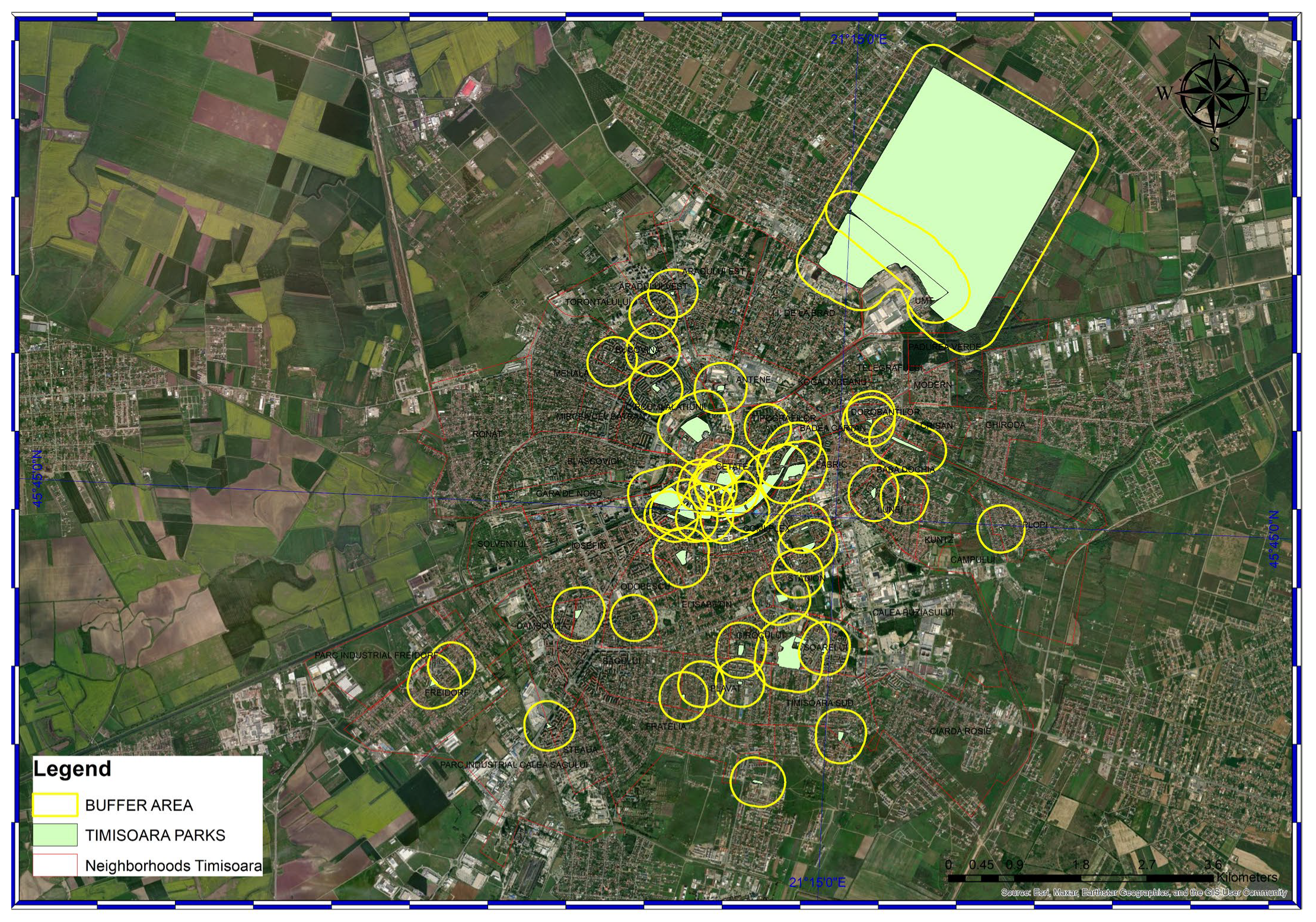
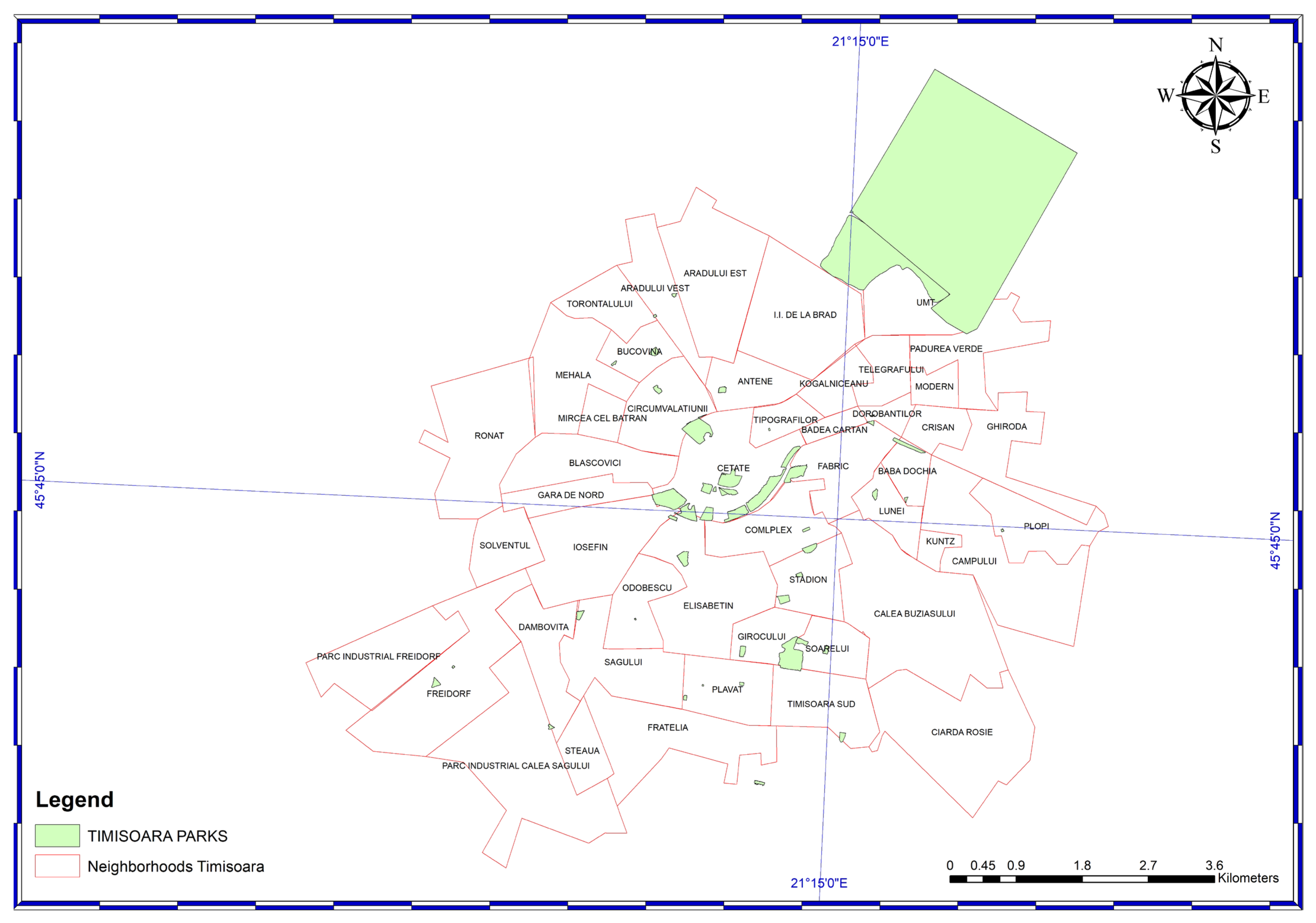
The spatial delimitation of Timișoara’s neighborhoods and the identification of public green spaces were carried out using Geographic Information Systems (GIS) methodology and buffer zone analysis (Figure 1).
Geographic Information Systems (GIS) represent essential tools for spatial analysis and for improving the decision-making process in urban planning. For the processing and 2D visualization of data regarding the spatial distribution of urban green spaces within the administrative-territorial unit of the Municipality of Timișoara, a specialized GIS software was used, namely ArcGIS 10.8, developed by the American company Esri (Environmental Systems Research Institute). For the three-dimensional (3D) representation of the same data, the ArcScene application was used, which is part of the same Esri 10.8 software suite. For the creation of the GIS maps, vector data regarding the boundary of the administrative-territorial unit of Timișoara, as well as the delimitation of public green spaces, were used. These data were obtained from the open-source portal OpenStreetMap. The vector data are accompanied by a series of attributes stored in spatial databases, such as the name of each green space and its area. These data were overlaid on the orthophotomap of the city of Timișoara. The projection system used to report these data is the national Stereographic 1970 system. The spatial analyses used in this study were: (1) buffer analysis, used to delineate buffer zones of 300 m around the geometric center of each green space in order to evaluate population accessibility to urban green spaces based on physical distance, considering that the park is reached when the person arrives at its center; (2) spatial intersection, used to determine the distance between the center of each neighborhood of Timisoara and the center of each park. Following the GIS spatial analyses, thematic maps were produced that provide a clear image of the degree of equity in the distribution of green spaces across the city, as well as the identification of priority areas for the development of new public green spaces.

2.4. Indicators Used for Assessing the Proximity Accessibility

For measuring the degree of accessibility of urban green spaces (UGS) for the population of the city of Timișoara, the recommendations of the World Health Organization (WHO) [11] were taken into account, as well as those of certain European urban ecology good practice rules formulated by experts in the field (the 3–30–300 rule) [8,9], which have also been used in other similar international studies [26]. These recommendations address the proximity accessibility of urban green spaces, operationalized through two indicators: (1) the spatial distance (expressed as metric distance and walking time) between green space and the resident’s dwelling, and (2) the urban green space area available per capita. Approaches based on these indicators vary in the specialized literature (Table 1).

2.5. Proximity Accessibility Defined Through Two Metrics: Spatial Distance and Walking Time Between Urban Green Space and Residents’ Dwelling

2.5.1. Proximity Accessibility Defined Through Spatial Distance Between Urban Green Spaces and Residents’ Dwellings

It was intended to determine the proportion of the population that has access to a public green space located at a maximum distance of 300 m from the dwelling, regardless of the size of the green space, thus abandoning the restrictive criterion of a minimum park size of at least 1 ha recommended by the WHO [36]. The abandonment of the 1 ha threshold represents a necessary methodological adaptation to the urban specificity of Timișoara and better reflects the reality of population access to green spaces in this city. In Timișoara, most public parks and squares are smaller than 1 ha, and if this restrictive minimum area criterion were applied, a significant part of urban reality would be excluded from the analysis, and the role of small vegetated parks would be underestimated. Maintaining this threshold would lead to irrelevant or distorted results, as it would create the impression that the population has almost no access to green spaces. However, this would be far from the truth, since even small parks and squares that contain vegetation, especially tree vegetation, play a crucial role in urban life: these provide spaces for daily recreation, social interaction, children’s play, and relaxation for the elderly, as well as other types of ecosystem services, such as cool oases during hot summer days. Although they do not offer the same ecological or recreational advantages as the large parks, their fragmented distribution correlates more adequately with the daily routines of the population (sports, morning or evening walks), highlighting the fundamental importance of microscale green networks in ensuring spatial equity. This finding suggests that a dense configuration of small-scale but evenly distributed green spaces can effectively contribute to reducing inequalities in access to the benefits of urban green spaces [35]. WHO’s recommendations [11,36] show that proximity and ease of access are more relevant indicators for population health than the size of the accessed green space. Even some more recent European recommendations, such as the 3–30–300 rule, acknowledge that small and evenly distributed green spaces have a significant impact on health and urban ecosystem resilience. Moreover, based on these same arguments, the WHO recommendation stating that, where it is not possible to have parks of 1 ha, green spaces of at least 0.5 ha or even micro-spaces may be considered if they are frequently used [11] was kept, mainly because it was concluded that the restrictive criterion of size would disadvantage the population of dense neighborhoods, where residents depend on these small green spaces for contact with nature. Therefore, for the present study, any green space that presented vegetation was taken into account, especially since all of them also featured woody and tree vegetation.
The accessibility of UGS expressed as the walking until reaching it was evaluated using the method proposed by Zuo Yiqiu et al. [34], which establishes a classification into five levels of UGS accessibility, namely I, II, III, IV, and V, corresponding to distances of <200 m, 200–400 m, 400–600 m, 600–800 m, and 800–1000 m, respectively. This classification was adapted to the context of the present study, and a sixth level was added, corresponding to distances greater than 1000 m. A limitation of this method is related to the way in which the distance between UGS and residents’ dwellings is measured, according to which the closest distance is the linear (Euclidean) distance. This approach, although also used in other similar studies [34], does not represent distances as accurately as when they are measured along pedestrian street routes.

2.5.2. Proximity Accessibility Defined Through Walking Time Between Urban Green Space and Residents’ Dwelling

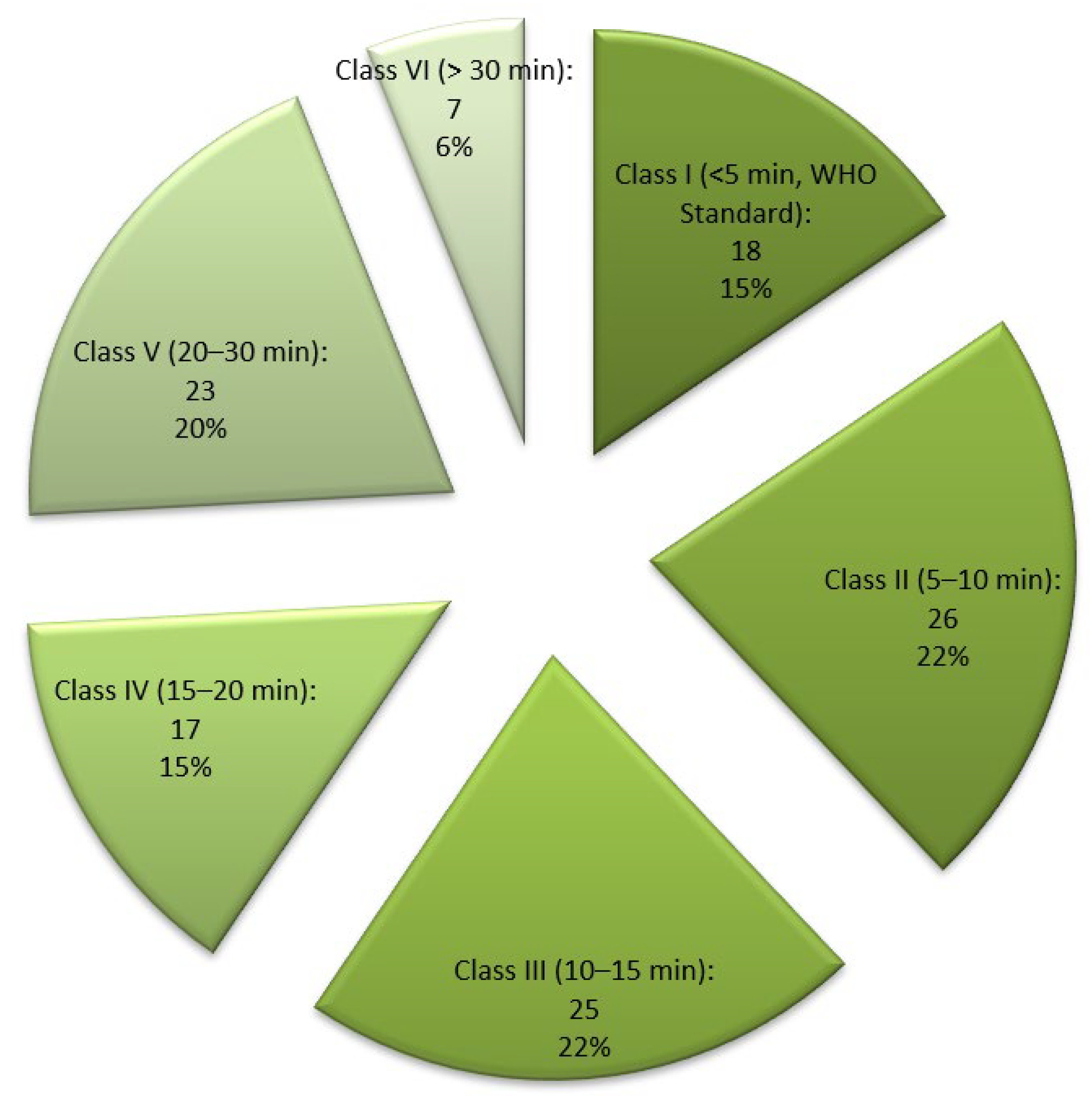
The correspondence between the distance to an urban green space and the time required to walk this distance was established by considering an average walking speed of 85 m per minute for a healthy person, also used in other similar studies [37]. Based on the walking time between residential areas and green spaces, accessibility classes were established, according to which the city’s green spaces were classified into six distinct categories, starting with (1) the category of green spaces with the fastest accessibility (WHO standard, <5 min of walking), followed by green spaces accessible within (2) 5–10 min, (3) 10–15 min, (4) 15–20 min, (5) 20–30 min, and (6) more than 30 min of walking [34].
Thus, using this algorithm consisting of two metrics, representative public urban green spaces were identified in terms of the “proximity walkability” attribute in the city of Timișoara. The WHO defines the accessibility criterion as the presence of an urban green space within a 5-min walking distance (or approximately 300 m) from the place of residence, which is regarded as an acceptable threshold for ensuring equitable access to green infrastructure [11]. Based on this recommendation, within the present study, those green spaces with the highest degree of accessibility within a given spatial and temporal walking interval were considered representative, namely those located at distances reachable within a maximum of 5 min of walking and a maximum of 300 m.

2.6. Proximity Accessibility Defined by the Urban Green Space Area Available per Urban Resident Capita

The study also aimed to measure the total surface area of public urban green space (classified according to the criteria outlined above) in relation to the number of inhabitants (an indicator expressed as m2 of urban green space per urban resident). For this purpose, the entire surface area of public urban green space was divided by the number of inhabitants of the city. The WHO establishes a minimum standard of 9 m2 per person and an ideal value of 50 m2 per person for the surface of urban green space per inhabitant capita [38], while the Romanian legislation (Romanian Government Emergency Ordinance No. 195/2005 on Environmental Protection) [21] stipulates a mandatory green space area of 26 m2 per inhabitant.

3. Limitations of the Research Methodology

The method used in this study, based on measuring the Euclidean distance between the centroids of neighborhoods and those of parks, provides an initial exploratory estimate of the accessibility of urban green spaces. The choice of this approach was determined by its simplicity and by the lack of detailed data regarding actual park entrances or the pedestrian network; however, it is important to note that it does not accurately reflect the real routes traveled by residents and may lead to over- or underestimations of accessibility levels. In the specialized literature, Euclidean distances have been used in similar preliminary analyses, but numerous authors emphasize the need to apply more robust methods, such as street network analysis, service areas (isochrones), or 2SFCA-type indicators [30,35], in order to more realistically capture the interaction between the population and green infrastructure. In our study, Euclidean distances were employed with the aim of identifying relative spatial patterns of green space accessibility and comparing disparities between neighborhoods, rather than estimating actual individual-level pedestrian accessibility. We consider this approach appropriate for the objectives and scale of the analysis and conducive to comparability with recent benchmark studies in the field. Thus, the results presented here should be understood as a starting point, contributing to the identification of spatial trends and disparities, while future research should deepen the analysis by integrating network-based accessibility models and population-weighted distributions.
The use of the geometric centroid of each park as a reference point for defining access to green space was adopted as an operational and standardized solution, appropriate to the scale of analysis and to the primary objective of the research. This objective focused on identifying relative spatial patterns of accessibility and comparing these patterns across neighborhoods, rather than on estimating individual-level access behavior with high precision. This approach is commonly applied in the scientific literature, particularly in comparative studies and at urban or regional scales, where detailed and consistently available information on park access points is often lacking. To assess the potential influence of this assumption on the results, we examined the distribution of park sizes included in the study and found that park sizes are strongly concentrated toward small green spaces, with only a limited number of larger parks. Although the use of centroids for large parks may introduce more pronounced local-level errors, their relatively small proportion within the overall sample makes it unlikely that this assumption substantially alters the relative spatial patterns of accessibility or the classification of neighborhoods into the reported accessibility classes.
Nevertheless, the obtained results represent the first estimation of this type for the city of Timișoara and reveal a major discrepancy between international recommendations and the local situation. Even when using simplified Euclidean distances, as applied in this study, between the centroid of the neighborhood and that of the park, the measured values exceed by a factor of 2 to 9 the reference distance of 300 m recommended by the World Health Organization for optimal access to green spaces in the urban environment. This consistent deviation highlights the existence of a major inequity in the spatial distribution of urban parks, which makes the present analysis relevant and convincing even when based on a simple, baseline evaluation method such as the measurement of Euclidean distances.
Euclidean distance remains valid and policy-relevant despite data limitations. Even this simplified assessment reveals large discrepancies relative to recommended thresholds (2–9× the 300 m reference), indicating a structural problem unlikely to be explained solely by measurement error. Euclidean-distance analyses are appropriate for city-scale screening and for identifying priority areas when fine-scale data are unavailable. The recommended strategic measures (creating green spaces in underserved neighborhoods, establishing pedestrian/green corridors, prioritizing interventions and resource allocation) do not critically depend on moderate differences between the Euclidean and network distances. The overall pattern—central concentration of green space and peripheral deficit—is robust to small errors in park entry locations or street layout. Nevertheless, we stress that conclusions are provisional and recommend follow-up network-based and population-weighted analyses to refine and guide detailed interventions.
This study focuses on spatial and quantitative indicators of access to urban green spaces, including distance, travel time, and green space area per capita, and is limited to a single-city case study (Timișoara, Romania). This focus was adopted to enable a detailed, locally verifiable assessment in the absence of a coherent national database and given the limited comparability of available data sources across Romania. As a result, the analysis does not incorporate fine-scale sociodemographic variables, such as population density, age-group structure, or the presence of vulnerable groups, which constrains the interpretation of the results in terms of distributive environmental justice and limits their generalizability to other cities in Romania or Eastern Europe.
More specifically, the assessment of equity in green space accessibility concentrates on spatial (morphological) inequalities in the physical distribution and proximity of green spaces across neighborhoods, rather than on population-weighted or socio-demographic measures of equity. This analytical choice was driven by both the study objectives and data constraints: detailed, spatially consistent population data at the neighborhood level were not available for the study area. Consequently, the findings reflect relative differences in spatial accessibility between neighborhoods, rather than differences in population exposure, use, or health-related vulnerability. While this approach provides a valuable first-order diagnostic for identifying structurally underserved areas in terms of green space provision, it does not capture distributive environmental justice in a demographic sense. Future research should therefore integrate neighborhood-level population data or appropriate density proxies and apply additional analytical approaches (e.g., stratified analyses or population-weighted spatial regression models) to enable more nuanced assessments of accessibility inequalities. Moreover, extending the analysis to multi-city comparative frameworks and incorporating local population registers and fine-scale sociodemographic data would enhance the generalizability and scientific novelty of the findings, allow testing of regional variability, and support the formulation of more targeted inter-urban policy recommendations for improving urban green space equity.

4. Results and Discussion

A total of 41 public urban green spaces were evaluated in terms of accessibility for the population of 48 neighborhoods in the city of Timișoara, Romania. The geographic coordinates (latitude and longitude), surface area, and the percentage that each of the 41 public urban green spaces represents of the total urban green space area of the city are presented in Table 2 and respectively in Appendix ATable A1.

4.1. Proximity Accessibility Defined Through Spatial Distance Between Urban Green Space and Residents’ Dwelling

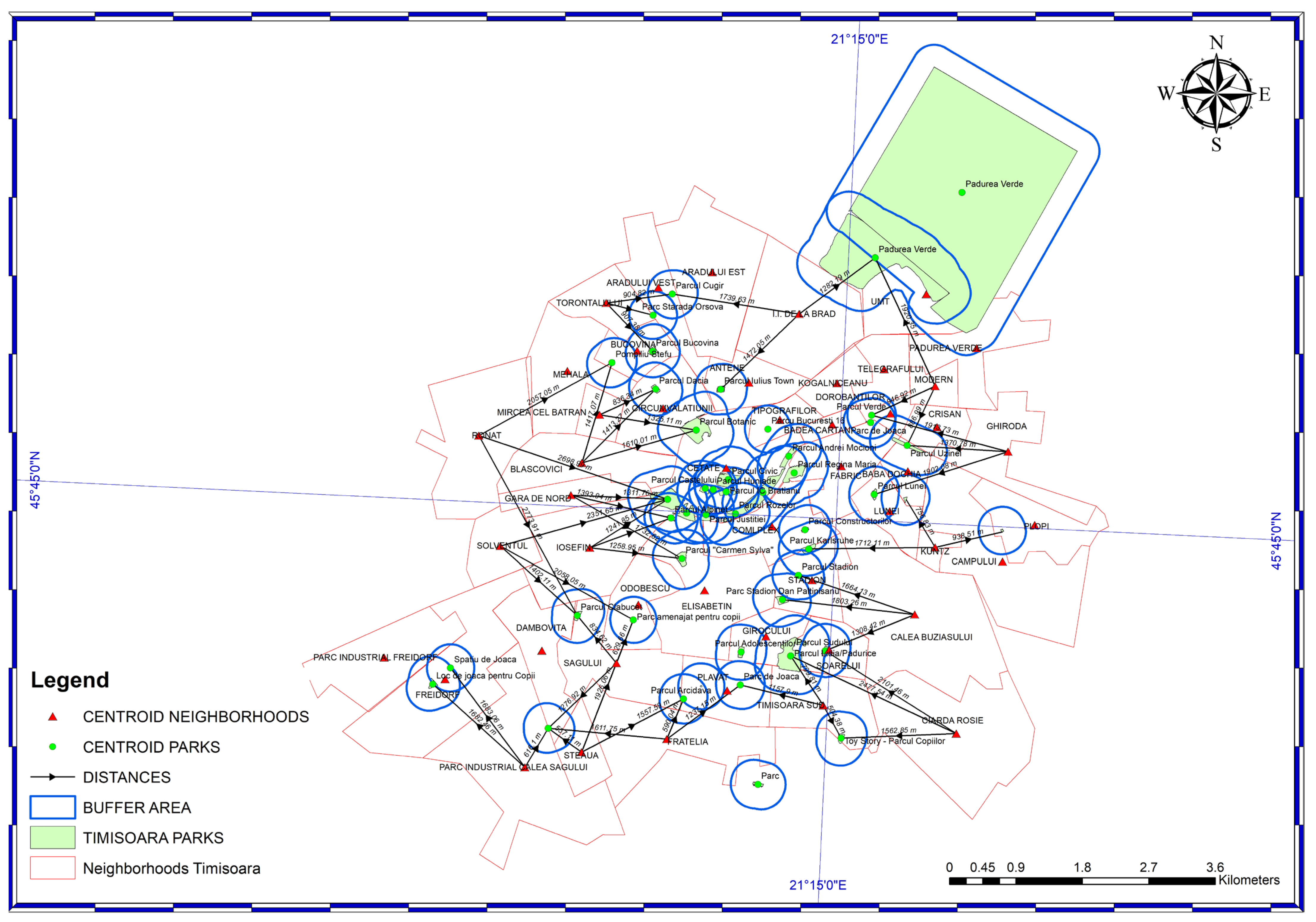
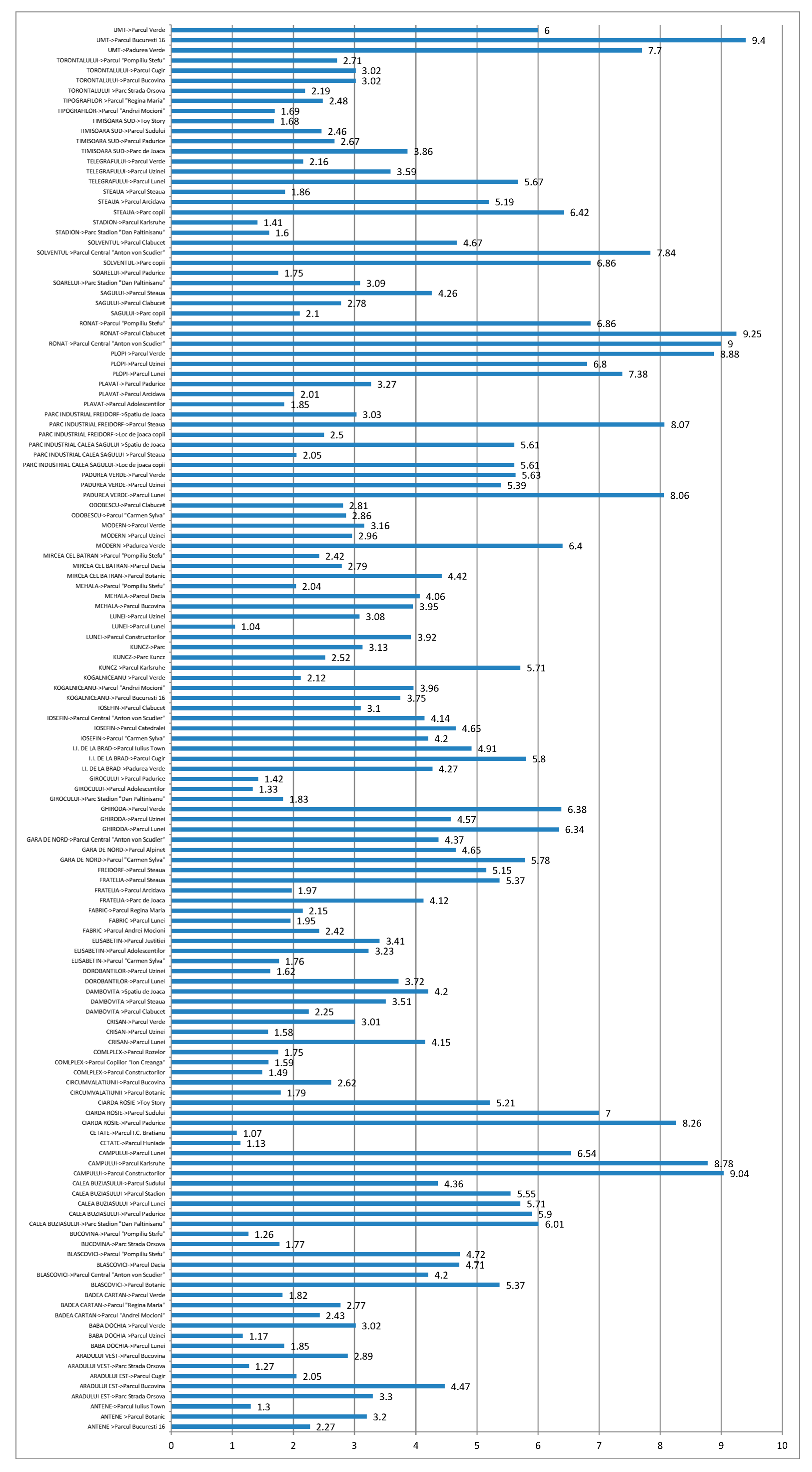
To determine the proximity accessibility, generally three Euclidean distance measurements were performed, and more rarely four or five (Figure 2, Table 3, Appendix ATable A2) from the centroid corresponding to each neighborhood to the centroid of each UGS, with the intention of determining the average access distance of the population of each studied neighborhood to the nearest urban green space (Figure 2).
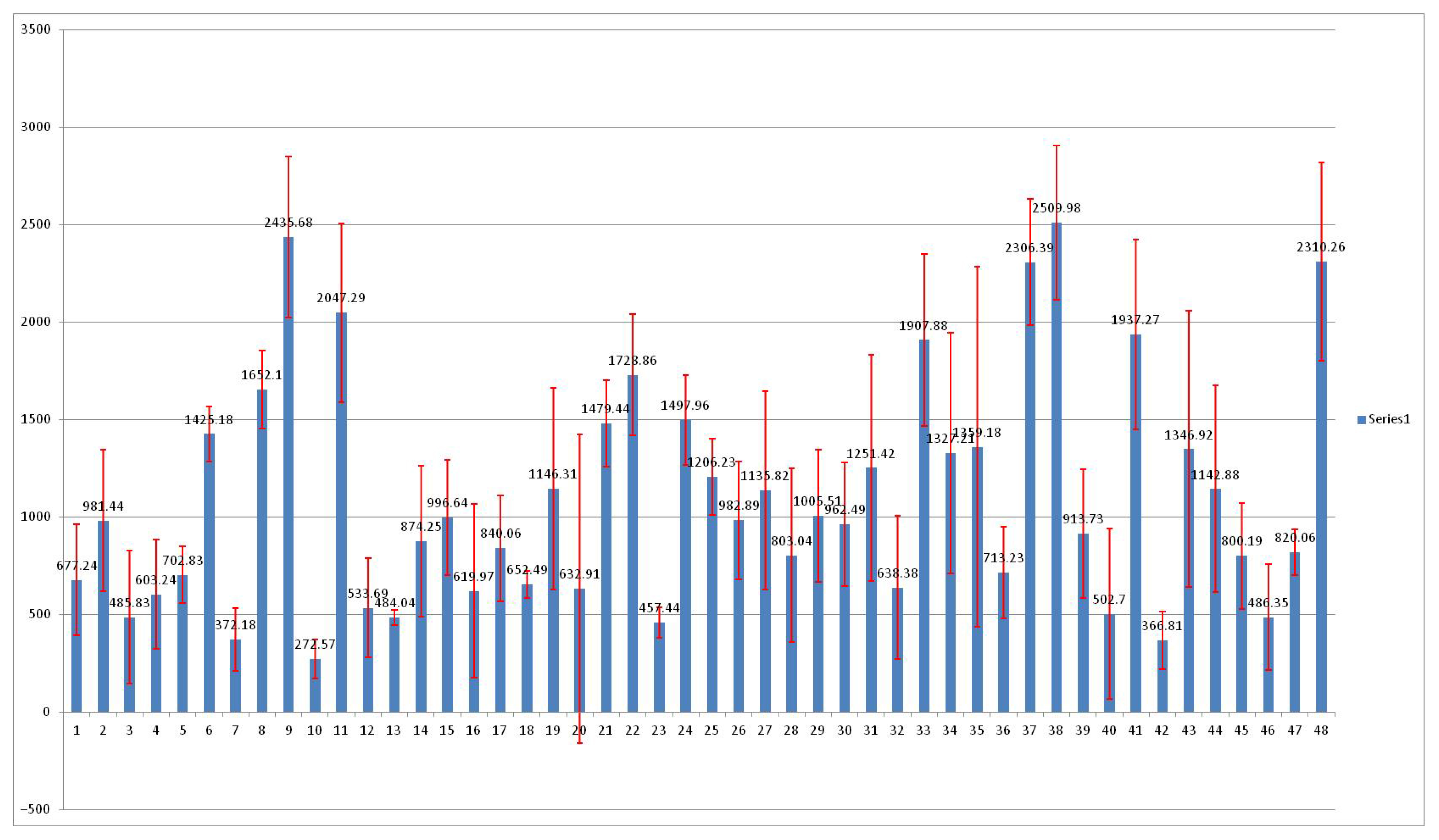
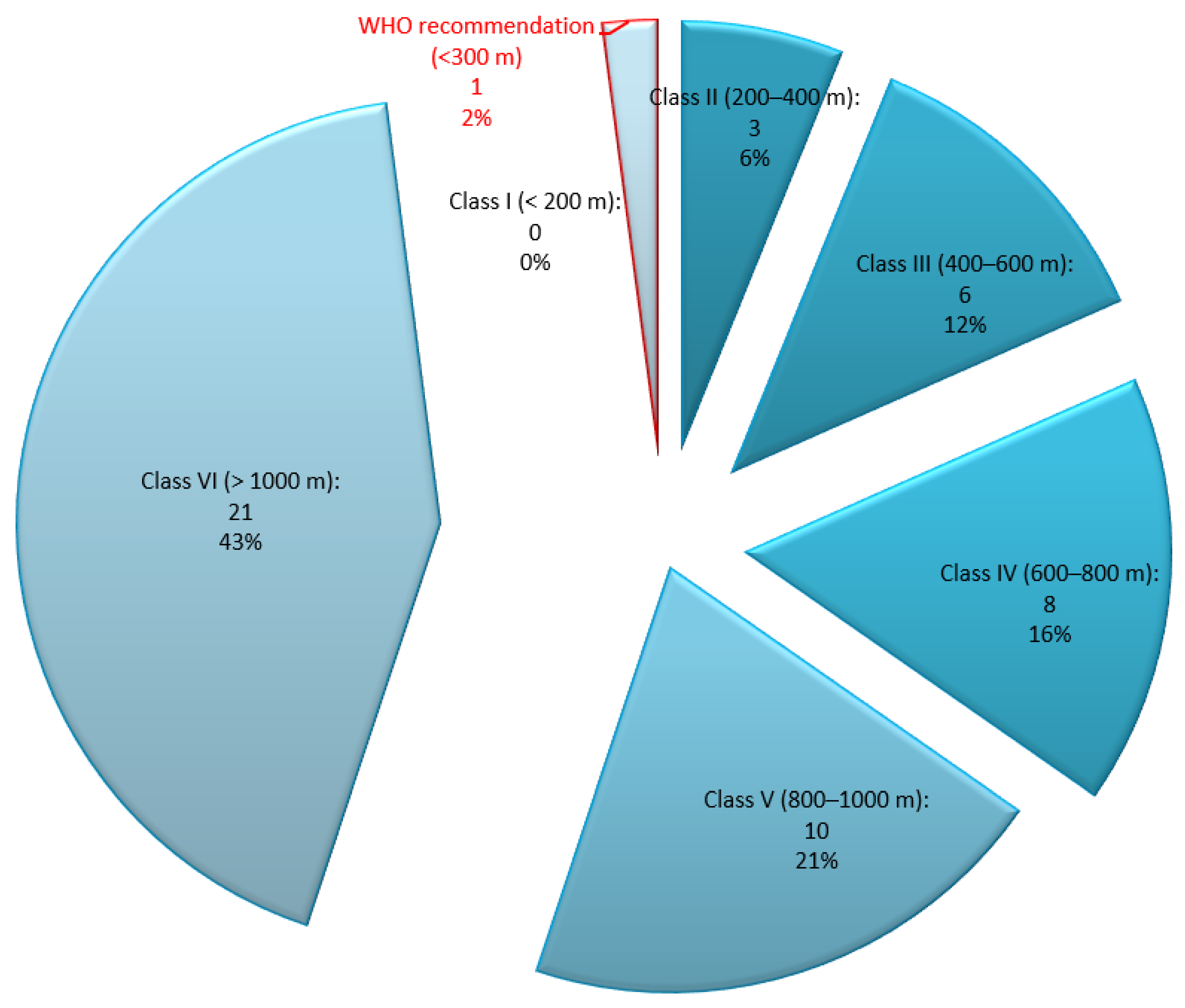
The measurements showed that none of the 48 studied neighborhoods of the city of Timișoara has access to a public urban green space located within a distance of less than 200 m from the place of residence (Table 4, Figure 3), according to the classification used in this study [11], and that only a single neighborhood has access to a public urban green space within a maximum distance of 300 m (Figure 4), as recommended by the WHO [11]. This concerns the residents of the city center, namely the Cetate neighborhood, who have access to three central parks: Civic, Huniade, and I.C. Brătianu. Although Cetate is the only neighborhood that complies with the WHO recommendation of having a public urban green space within a maximum distance of 300 m, this fact is not representative of the real situation of the city’s residents. The Cetate neighborhood has a small population. It is primarily a functional rather than a residential area, being dominated by cultural functions (museums, theaters), commercial and recreational activities (cafés, restaurants, shops, tourism and leisure spaces), and administrative functions specific to a historic city center, which leads to a distortion of the measured distance indicator. The actual number of people permanently residing in this area is much lower than in peripheral neighborhoods. Therefore, the fact that the only neighborhood with access to an urban green space within <300 m is one with a small population makes it unrepresentative at the city level. The Civic, Huniade, and I.C. Brătianu parks, located in proximity to the city center, primarily serve an urban and metropolitan role, being used by the population of the entire city and by tourists, not only by local residents. Thus, the situation of the Cetate neighborhood does not reflect the real situation of the city’s residents, but rather the particularities of a historic area. These three parks are emblematic spaces with a metropolitan function and therefore cannot be considered a model of local accessibility, as defined in the WHO framework. Moreover, the urban structure of the historic center is not replicable in the rest of the city. In general, historic city centers have a high density of services and public spaces, but few dwellings, few schools, and few vulnerable groups (children, elderly) that directly benefit from proximity to green spaces. Even if the city center performs “very well” in terms of green spaces, this does not compensate for its deficit in densely populated neighborhoods, where proximity accessibility to parks for residents is very low. The WHO recommends the accessibility indicator precisely in order to identify spatial inequities. And, in Timișoara, the major problem occurs in the large neighborhoods, not in the historic center. Therefore, the <300 m accessibility indicator does not reflect the needs of the residential population, and relevant conclusions should be oriented toward densely populated neighborhoods, where the deficit of green spaces is truly significant. Nevertheless, the situation identified in Timișoara remains the opposite of that found in other European cities, where central areas are characterized by small-sized urban green spaces (e.g., Bologna, Italy) [26,39].
The measured distances exceed by a factor of 2 to 9 the reference distance of 300 m recommended by the WHO for optimal access to green spaces in the urban environment (Figure 5). It results that, from this perspective, the city of Timișoara faces an inequity in access to public urban green spaces for its residents.
When urban residents assess their own interest in accessing an urban green space, their perception focuses not only on its proximity to their dwelling, but also on aspects related to cleanliness, level of maintenance, the tranquility and safety it offers–qualities that are very important and challenging as well for urban managers seeking to achieve them [40,41]–as well as on their presence in certain specific areas or areas with particular significance within the city [35]. Although the WHO recommendation is a maximum distance of 300 m from the dwelling to the park, depending on their expectations regarding one of the aforementioned indicators, urban citizens may choose to travel longer distances to reach a particular place if it offers a service or a specific characteristic they are seeking [42]. Natural conditions related to a city’s physical geography (such as the presence of mountains or lakes), as well as human-dependent conditions (such as a low level of development of access infrastructure), may be factors that limit the proximity of urban green spaces to the residences of urban inhabitants [35].

4.2. Proximity Accessibility Defined Through Walking Time Between Urban Green Space and Residents’ Dwelling

The transformation of the measured distance (m) between the urban green space and the resident’s dwelling into the time (min and s) required to walk this distance was carried out by considering an average walking speed of 85 m/min for a healthy person, also used in other similar studies [37]. This value was used to divide the measured distance, and the obtained results showed the walking time of the population of the studied neighborhoods to the nearest UGS (Table 5, Figure 6).
Thus, it was found that only 14 of the 48 neighborhoods in the city of Timișoara have access to at least one public UGS within less than 5 min of walking, in accordance with the WHO recommendation. This represents approximately 30% of the total. These neighborhoods are usually located in the central area of the city, which is well represented in terms of the presence of urban green spaces. This situation differs from that encountered in other cities. For example, a study of the city of Baotou (Mongolia) [34] showed that approximately 80% of the central residential population has to walk up to 20 min to reach a green park.
Three neighborhoods in Timișoara have access to public UGS belonging to accessibility classes III–IV (i.e., more than 10 min and more than 15 min of walking time, respectively): Blașcovici, Iosefin, and Modern. Seven neighborhoods have access to public UGS belonging to accessibility classes IV–V (i.e., more than 15 min and more than 20 min of walking time, respectively): Calea Buziașului, Ciarda Roșie, Gara de Nord, Ghiroda, Ion Ionescu de la Brad, Pădurea Verde, and Solventul. Four neighborhoods have access to public UGS belonging to accessibility classes V–VI (i.e., more than 20 min and more than 30 min of walking time, respectively): Constructorilor, Plopi, Ronaț, and UMT (Table 5). This last category is the most disadvantaged, since, in practice, the population’s ability to access a public UGS is very limited due to the distance involved. These data may indicate a lack of correlation between urban development and green planning, likely due to the expansion of residential construction without adequate prior integration of green infrastructure. Neighborhoods in Timișoara, such as Constructorilor, Plopi, Ronaț, or UMT, may represent areas where increasing residential density has not been accompanied by proportional investments in public green spaces easily accessible to the population.
The statistics from the measurements carried out in the present study show significant disparities in the territorial distribution of green spaces in the city of Timișoara, and that certain neighborhoods are structurally disadvantaged in terms of urban environmental quality. The fact that residents of these areas must walk considerable distances to reach a green space indicates a deficit of local green infrastructure and describes a spatial gradient of urban equity, in which certain neighborhoods are poorly connected to public UGS. Such data highlight not only a problem of accessibility to green infrastructure and unequal distribution of urban resources, but also potential consequences for health, well-being, and social cohesion in these neighborhoods, underscoring the urgency of urban policies aimed at reducing these inequalities and ensuring a more balanced distribution of green spaces throughout the city. The lack of easy access to public green spaces may lead to significant socio-ecological consequences. International studies show that walking more than 15–20 min to the nearest park significantly reduces its use, with the population feeling discouraged from accessing that public UGS. Therefore, in the Timisoara neighborhoods in accessibility classes V–VI, a decrease in outdoor recreational activities is expected, which may affect the physical and mental health of residents, especially vulnerable groups (children, the elderly, and persons with reduced mobility). The case of the Cetate neighborhood illustrates a key distinction between the metropolitan/service function of central green spaces and the residential accessibility needs of the urban population. Although Cetate meets the WHO proximity threshold, it is primarily a functional center with few permanent residents but high daytime and tourist flows; its large parks (Civic, Huniade, I.C. Brătianu) serve the whole city and beyond rather than the local residential community. Consequently, metrics based on spatial presence or per capita area can be misleading if they do not account for functional roles and resident distribution: a high central provision does not compensate for severe deficits in densely populated peripheral neighborhoods where daily access is limited. Recognizing this distinction refines the equity analysis and supports policy recommendations that prioritize interventions in densely residential areas (creation of small, distributed green spaces, improved pedestrian connections), rather than assuming that central parks alone ensure equitable green-space provision.
Another relevant aspect revealed by the data provided by the present study is that areas with very low accessibility tend to remain isolated in terms of ecological connectivity. The lack of nearby green spaces not only makes it difficult for residents to access them, affecting their well-being, but also raises concerns about urban sustainability—the ability of a city to function as an ecosystem. For instance, one of such issues is fragmented green corridors at the city level, which limit biodiversity interactions and the capacity of the urban ecosystem to provide ecosystem services.
Accessibility of urban green spaces in terms of access time acquires a very interesting dimension of high pragmatism and impact when considering their role as refuge areas in the event of natural disasters in urban environments, which require population movement toward them as gathering places. There are urban areas worldwide exposed to natural disaster risks, and the management of population mobility in the event of such disasters is part of resilient urban planning strategies. From this perspective, the spatial accessibility of urban green spaces represents a special function provided by these spaces and has been analyzed in several studies [43], showing that although green spaces may predominate in certain urban areas, they are not effectively accessible to the population for occupation as shelter areas in the event of disasters such as seismic events, with accessibility decreasing as distance from them increases. Thus, the hierarchy of the road network and the integration of green spaces become key factors in defining the physical structure of cities, integrating other types of land use as well, in order to build cities resilient to natural risks and to improve urban planning.
The more difficult it is for the population to access an urban green space as the distance from the place of residence increases, the more a constraint effect emerges due to the time required to access it, manifested in three aspects: time consumption, energy expenditure, and economic input [34].
The results of similar studies (the city of Baotou, Mongolia) [34] have shown that central urban areas remain those with good accessibility and high attractiveness among the population, covering more than 80% of the central urban area, while approximately 70% of all green spaces located in the central area are accessible within a time interval of 0–10 min, and only 2% of UGS are accessible at more than 30 min of walking distance. This situation is also characteristic of the city of Timișoara, as indicated by the data of the present study. It follows that the most accessible UGS in terms of proximity are those located in neighborhoods situated in the central area and its adjacent zones.
Evidence predominantly suggests that the relationship between proximity to green spaces and the level of physical activity that users feel encouraged to engage in, through this proximity perceived as easier accessibility to urban green space, although uneven, is a positive one [44]. In some cases, accessibility is compensated for by attractiveness as an indicator of park quality. In the evaluation of urban green space accessibility, the access distance relative to the user’s dwelling is not always the only relevant factor. Although park quality indices and accessibility measurements are most often developed from perspectives such as landscape planning or land-use and transport planning, it has been observed that for certain young age groups (2–18 years), the set of facilities and activities offered by a green space is what matters, regardless of its location [45]. In this context, it is relevant to mention the QUINPY index (QUality INdex of Parks for Youth), known in the specialized literature as an indicator with high reliability for assessing the quality of urban green spaces from the perspective of children’s and adolescents’ needs [46], based on five essential criteria (diversity of structured play areas, nature, size, safety, maintenance), using publicly available data (GIS), thus providing a specific score for a park. There are also other sets of characteristics that determine residents’ use of urban green spaces, such as infrastructure, facilities, safety, aesthetics, nature, and landscape [47]. However, the concept of accessibility of an urban green space goes beyond the individual evaluation of a park and, through the more recent (2025) CIPQAY index (Combined Index of Parks Quality and Accessibility for Youth) [45], becomes a criterion for evaluating an urban region, reflecting the real experience of a person living in an area and their possibility to use multiple parks, not only the nearest one, by taking into account all parks that an individual can reach from a given location within a predefined time or distance interval. The result is a score calculated for a residential location, which reflects the cumulative quality of parks accessible to young people in that area.
Accessibility to parks is most frequently assessed using cumulative-opportunity indicators [48], which quantify the number or surface area of urban green spaces accessible from a point of origin within a given time or distance. Existing studies have employed a variety of methods–from accessible surface areas [49] to the number of available parks [50]–but most have neglected aspects related to urban green space quality and the facilities they offer. More recent research has begun to integrate specific facilities, such as playgrounds, picnic areas, or youth preferences, using methods such as the floating catchment area approach [51]. This approach can avoid the limitation of individual UGS analysis, which may lead to irrelevant results, since what often matters is the cumulative presence of facilities across the set of accessible parks rather than the average characteristics of each park considered separately. Zhang et al. (2021) [52] showed that an indicator of peri-urban park quality can be given by the combination of park size and travel time; however, the analysis in that study was still conducted at the level of each individual UGS.

4.3. Proximity Accessibility Defined by the Urban Green Space Area Available per Urban Inhabitant Capita

The study included public urban green spaces, namely those that contain vegetation (Figure 7). In addition, an urban forest (Pădurea Verde) was also included in the study; this is a large public green structure whose total surface area (737 hectares [53]) includes both a part of the city of Timișoara and, in the north-eastern part of the city, a portion of a rural locality neighboring the city (Figure 2). However, for the purposes of this study, only the part of Pădurea Verde located within the built-up area of the studied city (Timișoara) was considered, namely 133.7 hectares (Table 2). The measurements carried out within this study showed that the surface area of public-type green spaces in the city of Timișoara amounts to 210.91 ha (Table 2, Figure 2). This value could not be compared with those of other cities in Romania, because the National Institute of Statistics of Romania–the entity that centralizes urban green space areas in Romania–includes in the category of urban green spaces not only green spaces arranged as parks, public gardens, or public squares and urban forests, but also plots with trees and flowers, cemeteries, and sports facilities and grounds [54], that is, green spaces that do not meet the criteria pursued in the monitoring carried out in this study (namely, being public and attractive and targeted by the population for relaxation). However, this value is extremely low when compared with other cities worldwide that have analyzed public urban green space, such as Sacramento, USA [55], and San Luis Potosí, Mexico [25]. Moreover, this value was also due to the inclusion of the urban forest Pădurea Verde (Figure 2) in the statistics and its quantification in the present study as a public UGS, which increased the value of public green space per inhabitant for the city of Timișoara. But this urban forest is located at the periphery of the city and is difficult to access for most of the city’s population, except for neighborhoods in its immediate vicinity; in addition, it is discouraging to access because, in recent years, it has deteriorated in terms of maintenance and management. We conducted a sensitivity analysis excluding “Pădurea Verde” (133.7 ha) to assess the influence of large, peripheral green areas on the per capita metric. Without this forest, the total public green-space area falls from 210.91 ha (2,109,100 m2) to 77.21 ha (772,100 m2). For a city population of 250,849, the green-space-per-capita indicator therefore decreases from ≈8.40 m2/person to ≈3.08 m2/person. This substantial reduction indicates that inclusion of large but poorly accessible peripheral areas can markedly inflate the apparent availability of green resources; consequently, the per capita metric should be interpreted alongside accessibility measures (distance/time and network-based analyses) to better reflect the green spaces effectively available to residents. This strategy of including urban forests to increase the surface area of public UGS per inhabitant (though they are difficult to access) is also characteristic of other cities. For example, in the case of the city of San Luis Potosí, Mexico, this strategy nearly doubled the green space per inhabitant [25], which may look favorable in reporting, but, in practice, serves the urban population very little.
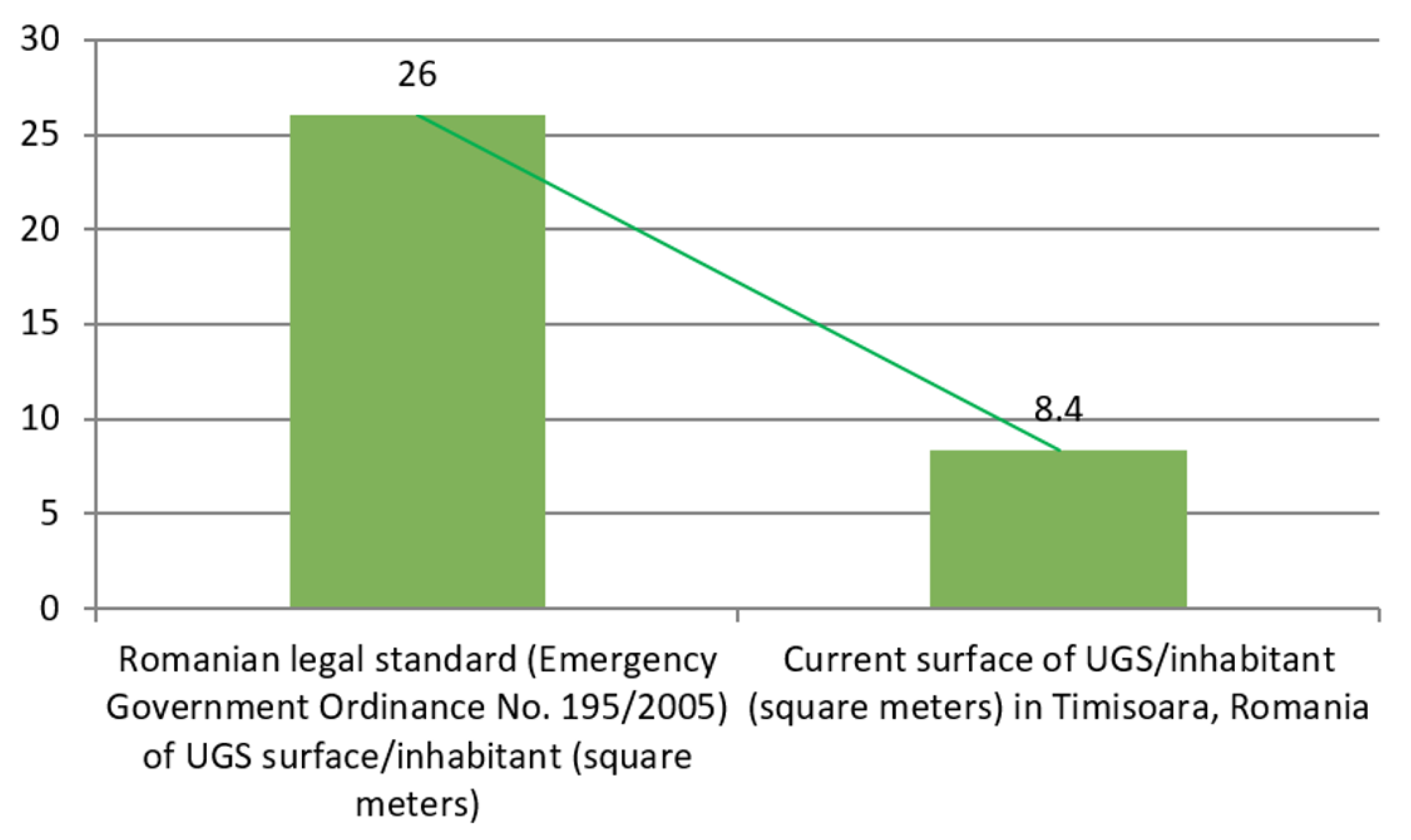
The urban green space area per inhabitant was calculated by dividing the total surface area of public urban green space by the number of inhabitants of the city. According to the latest national census in Romania, as of 1 December 2021, the city of Timișoara had a population of 250,849 inhabitants [20]. The results show that each resident of the city of Timișoara is allocated an area of 8.4 m2 of public urban green space (Figure 8).
This value was compared with WHO recommendations, which indicate an optimal value of 50 m2 of urban green space per inhabitant and a minimum value of 9 m2 of urban green space per inhabitant. It can be observed that the city of Timișoara does not meet the WHO recommendations, neither in the optimal range nor in the minimum range. Moreover, the city does not comply even with Romanian national legislation regarding public urban green spaces, namely the value of 26 m2 per inhabitant imposed by Emergency Government Ordinance No. 195/2005 on environmental protection, which should have been achieved by 31 December 2013. This value, when compared with international (WHO) and national standards, generates a series of observations and raises issues related to urban environmental quality, spatial equity, and urban planning. WHO’s recommendations are based on and associated with the consistent benefits for the physical and mental health of the population provided by urban green spaces, as well as with the capacity of urban ecosystems to ensure their minimum functionality and resilience. Thus, by comparison, the value of 8.4 m2 per inhabitant in Timișoara does not reach even the WHO-recommended minimum, indicating an evident quantitative deficit of green space for the city’s residents. The situation becomes more concerning when considering increasing built density, real estate pressure, and urban climatic phenomena (heat islands, pollution). In terms of public health and climate adaptation, this gap highlights that the city’s green infrastructure does not yet respond to the real needs of the population. Non-compliance with Romanian legislation also raises a structural issue, especially since the threshold of 26 m2 of urban green space per inhabitant should have been reached as early as 2013. Failure to achieve this legal objective raises questions regarding the capacity of local authorities to implement coherent policies, the lack of effective legal instruments for enforcing constraints, and the real difficulties of generating new green spaces in a city of major importance in Romania and therefore subject to high land-use pressure. This non-compliance may also be interpreted as a symptom of a deficit in long-term strategic planning or as the result of an urban development paradigm predominantly oriented toward construction rather than toward urban environmental quality. However, the indicator “m2 of green space per inhabitant” also has limitations, as even if the citywide average appears acceptable or meets expectations, it may fail to capture the quality of green spaces. For example, regarding vegetation cover in urban green spaces, some studies have shown that vegetation quality—which determines the effectiveness of providing environmental and ecosystem benefits—is very important [25] and not always determined by UGS size. For the present study, in the case of Timișoara, this surface-area limitation becomes particularly relevant because the accessibility analysis based on distance and time has already shown that certain neighborhoods fall into the most disadvantaged classes (V–VI), confirming that the problem is not only quantitative, but also spatial.
The results of the measurements carried out show that the city of Timișoara presents areas with a higher presence of green spaces, namely the central areas of the city, as opposed to other areas located farther from the center or even peripheral areas, where green spaces are poorly represented or even absent (Figure 7). This is a situation encountered in many other cities worldwide. For example, a similar study conducted in an Asian city (Shenzhen, China) [35] showed that there are clear spatial differences between central urban areas, which offer a greater variety of green spaces (six types) and easier and more diverse access, while peripheral areas provide fewer options. Thus, within a 15-min walking distance, more than 88% of dwellings had access to at least three types of green spaces, while within a 30-min walking distance, the percentage reached almost 100%, with some buildings having access to as many as six types. The lack of green spaces in certain urban areas has led to their designation as “blind areas” in other similar studies [34] and causes increased pressure of use by the population (overcrowding) on green spaces located in other parts of the city, while the quality of the benefits resulting from the ecosystem services provided by urban vegetation decreases. Inequality in access to urban green spaces, found to be high in other cities worldwide as well, is in some cases associated with their peripheral and suburban location or with their specific function (cultural, sports-related). Many urban residents have different preferences regarding the type of green space they access, favoring built-up green spaces over parks or natural areas [35]. According to De Luca et al. (2021) [26], when the value falls below 9 m2 of UGS per inhabitant, this pressure becomes high. Measurements have shown that in Timișoara, the surface area of public green space per inhabitant is 8.40 m2, well below the WHO optimal recommendation (50 m2), as well as far below values recorded in other European cities. For example, in the city of Porto (Portugal), the green space area per inhabitant is approximately 54.8 m2 [56], which not only complies with WHO recommendations but is also almost seven times higher than in Timișoara. This indicates lower pressure on green spaces, since, as some studies have shown, values higher than 17 square meters of UGS per urban inhabitant are equivalent to reduced pressure on urban green spaces in terms of their capacity to provide regulatory ecosystem services [26]. Although urban green spaces in the center of Timișoara are more numerous and more generous in terms of surface area, and through their location are closely integrated into the daily life of the community and contribute to increasing residents’ quality of life, they may also favor overcrowding, resulting in a large number of users accessing them simultaneously and thereby diminishing the benefits they provide. The explanation of the situation of urban green spaces in Timișoara may also stem from another aspect: differences in the area of urban green spaces per inhabitant are highly heterogeneous across European cities, which warrants further analysis. Thus, a study by the European Environment Agency [6] revealed that northern and western European cities generally have more green areas than those in Southern and Eastern Europe. The differences in the value and perception of urban green space between Northern and Eastern European cities stem from a mix of historical, economic, social, and environmental factors. Northern Europe (e.g., Sweden, Denmark, Germany, and The Netherlands) has a long tradition of integrating green spaces into city planning since the 19th century [14]. However, these countries also have stronger economies than the Eastern European countries, which were dominated for a long period by a socialist regime. It is known that prosperity and economic well-being allow more room for environmental sustainability policies [57], as well as for cultural attitudes [58], with the environment being a lower priority in poorer countries [59,60], because more often the priorities are the infrastructure, housing, basic services, and the green space investment can lag. Eastern European cities face challenges from post-socialist urban transformation. The Eastern European cities were focused more on rapid industrialization and housing during the socialist era, aiming to build large blocks of flats and standardized neighborhoods. Although green spaces were planned, they were often not prioritized. Also, weaker governance and corruption reduce both the quantity and the perceived value of green space. In Northern Europe, green space is seen as a public right and part of quality of life; citizens often not only use it, but also demand it, while in Eastern Europe green spaces are sometimes undervalued or neglected, reflecting weaker civic engagement [60] or lack of trust in local authorities [61]. In some cities, they are even converted into commercial or residential developments, which shows the poor ecological education of the population and authorities [61,62]. At the same time, this is a paradox, as cities in this part of Europe experience stronger urban heat island effects and higher pollution levels. Yet, the green space is less available or unevenly distributed, often concentrated in wealthier neighborhoods, while the marginalized groups (ethnic communities, low-income residents) often live in areas with little or no quality green space. A study conducted in a city in China showed that approximately 70% of the city’s green surface area (mainly in peripheral areas) offers a reduced provision of ecosystem services compared to central areas, where green spaces covering only 10% of the area provide a high level of ecosystem services [63].
Recommendations for urban planning in the city of Timișoara should consider that the identified deficit of green spaces has direct consequences for public health (increased risk of diseases associated with sedentary lifestyles, stress, and exposure to pollution), social equity (populations in disadvantaged neighborhoods remain with limited opportunities for recreational activities), and climate resilience (reduced capacity of the city to manage extreme phenomena such as heat waves) [64,65]. In this context, the value of 8.4 m2 of urban green space per inhabitant is not merely a statistical indicator, but a warning signal, highlighting the need for the expansion and diversification of green infrastructure, the reconversion of underutilized land, the prioritization of sustainable urban developments, and increased investment in parks, green corridors, and micro-green spaces. To enhance proximity-based accessibility to urban green spaces for urban populations, the limited spatial resources allocated to them can be compensated for by applying spatial optimization models based on genetic algorithms, which can be used both in the design of urban green spaces, such as parks, and in the planning of conservation areas and urban ecological corridors. As a conceptual example of its application to UGS accessibility in Timișoara, a genetic algorithm could (1) encode candidate solutions as selections of potential parcels and/or corridor segments; (2) use a multi-objective fitness function combining population coverage within ≤300 m/≤5 min, estimated cost, and ecological connectivity (or an equity metric such as population-weighted mean distance); (3) enforce constraints (available land, budget, regulations, species protection) via penalties or feasibility filters; and (4) validate outputs with network-based accessibility metrics (shortest-path/isochrones), sensitivity analysis, and stakeholder review. Implementing such a model requires fine-scale parcel, population, and cost data, as well as expertise in computational optimization. Therefore, we propose GA development as future work or an interdisciplinary collaboration.
From a planning and policy perspective, the results of this study provide a spatially explicit diagnosis of urban green space accessibility, which can support more targeted, context-sensitive interventions. Neighborhoods classified in the lowest accessibility classes should be considered priority areas for action, as they exhibit structurally limited proximity to existing green spaces. In these areas, compact, small-scale interventions—such as pocket parks, schoolyard greening, or the conversion of small vacant or underutilized plots—may be feasible strategies to improve local accessibility in densely built environments with limited land availability. Conversely, in areas where accessibility deficits are primarily driven by spatial fragmentation rather than absolute green space scarcity, planning measures aimed at improving connectivity, such as linear green corridors or pedestrian-oriented green linkages, may be more effective. Rather than prescribing rigid quantitative targets, which would require population-weighted analyses and detailed information on land use, ownership, and regulatory constraints beyond the scope of this study, the findings are framed in relation to internationally recognized benchmarks, such as World Health Organization recommendations, as indicative reference points for future planning scenarios. Accordingly, the proposed recommendations should be interpreted as a strategic planning framework that translates spatial accessibility diagnostics into actionable planning directions, rather than as a prescriptive implementation plan. The integration of demographic data, land availability information, and regulatory constraints in future research would enable the refinement of these directions into quantitative targets and site-specific design solutions.

5. Conclusions

The city of Timișoara does not meet the values established by national legislation, nor the internationally authoritative recommendations (WHO), regarding the standards for urban green space per inhabitant and accessibility, expressed as distance and walking time from residents’ dwellings to the nearest public urban green space.
As a result of this study, a coherent and realistic statistical overview of the situation of urban green spaces in Timișoara was obtained (surface area, distance-based accessibility, time-based accessibility), which synthesizes the information and provides support that facilitates decision-makers’ access to data on green spaces in the managed city, while also enabling the civil community to remain informed and to intervene in the process of sustainable urban planning through access to information.
The data provided by this study highlight the need for strategic urban planning interventions: the development of new green spaces within deficient neighborhoods; the creation of pedestrian and green corridors to reduce the effective access time to green spaces; and the rethinking of pedestrian mobility and connections between neighborhoods and the city’s main parks.
The insufficiency of urban green space per capita in Timișoara contradicts WHO recommendations and relevant legislation and has direct negative effects on quality of life, population health, and urban resilience. The concentration of green spaces in the central area limits accessibility for a large proportion of residents, generating time, effort, and cost constraints that reduce their actual use. At the same time, low accessibility diminishes the role of green spaces as refuge areas in the event of disasters, exacerbating the city’s vulnerabilities and territorial inequalities.

Author Contributions

Conceptualization: M.I. and M.V.H.; methodology: M.I., I.G. and M.V.H.; validation: M.I.; formal analysis: M.I.; investigation: A.W., M.I., I.G. and M.V.H.; resources: A.W., M.I., I.G. and M.V.H.; data curation: A.W., M.I., I.G. and M.V.H.; writing—original draft preparation: A.W., M.I., I.G. and M.V.H.; writing—review and editing: M.I., A.W. and M.V.H.; supervision: M.I. All authors have read and agreed to the published version of the manuscript.

Funding

The article publishing charge is supported by the University of Life Sciences “King Mihai I” from Timisoara, Romania.

Institutional Review Board Statement

Not applicable.

Informed Consent Statement

Not applicable.

Data Availability Statement

The data supporting the findings of the study are available within the article.

Acknowledgments

The publication fee of the manuscript is supported by the University of Life Sciences “King Mihai I” of Timisoara, Romania.

Conflicts of Interest

The authors declare no conflicts of interest.

Appendix A

Table A1. Identification attributes of the analyzed public urban green spaces in Timișoara, Romania (park acronym, park name (in Romanian), and spatial coordinates).
No.Urban Green Space (Acronym and Local Romanian Name)Coordinates
LatitudeLongitude
1UGS 1–Loc de joaca copii45°43′39.47″ N21°10′52.49″ E
2UGS 2–Padurea Verde45°46′56.43″ N21°15′45.86″ E
3UGS 3–Parc45°43′2.47″ N21°14′18.99″ E
4UGS 4–Parc copii45°44′11.87″ N21°12′56.03″ E
5UGS 5–Parc de Joaca45°43′45.64″ N21°14′4.78″ E
6UGS 6–Parc Kuncz45°44′58.54″ N21°16′44.35″ E
7UGS 7–Parc Stadion Dan Paltinisanu45°44′23.91″ N21°14′28.98″ E
8UGS 8–Parc Strada Orsova45°46′25.72″ N21°12′59.42″ E
9UGS 9–Parcul “Bucuresti 16”45°45′38.07″ N21°14′14.58″ E
10UGS 10–Parcul “Carmen Sylva”45°44′39.76″ N21°13′24.68″ E
11UGS 11–Parcul Adolescentilor45°43′59.78″ N21°14′4.52″ E
12UGS 12–Parcul Alpinet45°44′57.24″ N21°13′16.62″ E
13UGS 13–Parcul “Andrei Mocioni”45°45′26.88″ N21°14′28.32″ E
14UGS 14–Parcul Arcidava45°43′38.35” N21°13′29.66″ E
15UGS 15–Parcul Botanic45°45′36.89″ N21°13′31.03″ E
16UGS 16–Parcul Bucovina45°46′9.83″ N21°13′0.16″ E
17UGS 17–Parcul Catedralei45°45′0.26″ N21°13′26.26″ E
18UGS 18–Parcul Central “Anton von Scudier”45°45′5.10″ N21°13′14.89″ E
19UGS 19–Parcul Civic45°45′14.95″ N21°13′51.19″ E
20UGS 20–Parcul Clabucet45°44′12.71″ N21°12′20.98″ E
21UGS 21–Parcul Constructorilor45°44′54.81″ N21°14′40.91″ E
22UGS 22–Parcul Copiilor “Ion Creanga”45°45′9.65″ N21°14′13.17″ E
23UGS 23–Parcul Cugir45°46′35.33″ N21°13′10.74″ E
24UGS 24–Parcul Dacia45°45′53.29″ N21°13′3.44″ E
25UGS 25–Parcul Huniade45°45′10.53″ N21°13′42.19″ E
26UGS 26–Parcul I.C. Bratianu45°45′10.09″ N21°13′50.43″ E
27UGS 27–Parcul Iulius Town45°45′54.65″ N21°13′44.11″ E
28UGS 28–Parcul Justitiei45°44′59.12″ N21°13′38.09″ E
29UGS 29–Parcul Karlsruhe45°44′46.50″ N21°14′43.83″ E
30UGS 30–Parcul Padurice45°43′59.93″ N21°14′35.81″ E
31UGS 31–Parcul Lunei45°45′11.80″ N21°15′23.12″ E
32UGS 32–Parcul “Regina Maria”45°45′19.59″ N21°14′32.63″ E
33UGS 33–Parcul Rozelor45°45′0.81″ N21°13′57.14″ E
34UGS 34–Parcul Stadion45°44′34.89″ N21°14′37.85″ E
35UGS 35–Parcul Steaua45°43′22.88″ N21°12′5.98″ E
36UGS 36–Parcul Sudului45°44′2.47″ N21°14′57.18″ E
37UGS 37–Parcul Uzinei45°45′33.68″ N21°15′43.31″ E
38UGS 38–Parcul Verde45°45′46.40″ N21°15′19.17″ E
39UGS 39–Parcul “Pompiliu Stefu”45°46′4.04″ N21°12′35.18″ E
40UGS 40–Spatiu de Joaca45°43′47.08″ N21°11′3.05″ E
41UGS 41–Toy Story45°43′24.33″ N21°15′9.52″ E
Table A2. Assessment of urban green space accessibility in Timișoara neighborhoods using Euclidean distance.
No.Neighborhood (Local Romanian Name)UGS Possibly to Be Accessed According to the Distance Proximity Criterion (Romanian Name and Acronym)Measured Proximity-Based Access Distances (m)
1ANTENEParcul “Bucuresti 16”–UGS 9679.61
2Parcul Botanic–UGS 15960.76
3Parcul Iulius Town–UGS 27391.35
4ARADULUI ESTParc Strada Orsova–UGS 8989.34
5Parcul Bucovina–UGS 161339.95
6Parcul Cugir–UGS 23615.04
7ARADULUI VESTStrada Orsova–UGS 8381.32
8Parcul Bucovina–UGS 16867.70
9Parcul Cugir–UGS 23208.48
10BABA DOCHIAParcul Lunei–UGS 31554.76
11Parcul Uzinei–UGS 37350.40
12Parcul Verde–UGS 38904.54
13BADEA CARTANParcul “Andrei Mocioni”–UGS 13728.74
14Parcul “Regina Maria”–UGS 32832.40
15Parcul Verde–UGS 38547.35
16BLASCOVICIParcul Botanic–UGS 151610.01
17Parcul Central “Anton von Scudier”–UGS 181260.38
18Parcul Dacia–UGS 241413.27
19Parcul “Pompiliu Stefu”–UGS 391417.07
20BUCOVINAParc Strada Orsova–UGS 8530.28
21Parcul Bucovina–UGS 16208.57
22Parcul “Pompiliu Stefu”–UGS 39377.69
23CALEA BUZIASULUIParc Stadion “Dan Paltinisanu”–UGS 71803.26
24Parcul Padurice–UGS 301770.60
25Parcul Lunei–UGS 311714.11
26Parcul Stadion–UGS 341664.13
27Parcul Sudului–UGS 361308.42
28CAMPULUIParcul Constructorilor–UGS 212711.80
29Parcul Karlsruhe–UGS 292632.51
30Parcul Lunei–UGS 311962.71
31CETATEParcul Civic–UGS 19157.03
32Parcul Huniade–UGS 25339.58
33Parcul I.C. Bratianu–UGS 26321.10
34CIARDA ROSIEParcul Padurice–UGS 302477.54
35Parcul Sudului–UGS 362101.46
36Toy Story–UGS 411562.85
37CIRCUMVALATIUNIIParcul Botanic–UGS 15535.52
38Parcul Bucovina–UGS 16785.67
39Parcul Dacia–UGS 24279.89
40COMLPLEXParcul Constructorilor–UGS 21447.98
41Parcul Copiilor “Ion Creanga”–UGS 22477.72
42Parcul Rozelor–UGS 33526.42
43CRISANParcul Lunei–UGS 311245.66
44Parcul Uzinei–UGS 37475.04
45Parcul Verde–UGS 38902.04
46DAMBOVITAParcul Clabucet–UGS 20675.07
47Parcul Steaua–UGS 351053.97
48Spatiu de Joaca–UGS 401260.87
49DOROBANTILORParcul Lunei–UGS 311116.76
50Parcul Uzinei–UGS 37485.57
51Parcul Verde–UGS 38257.57
52ELISABETINParcul “Carmen Sylva”–UGS 10527.88
53Parcul Adolescentilor–UGS 11967.96
54Parcul Justitiei–UGS 281024.35
55FABRICParcul “Andrei Mocioni”–UGS 13725.42
56Parcul Lunei–UGS 31586.41
57Parcul “Regina Maria”–UGS 32645.65
58FRATELIAParc de Joaca–UGS 51237.15
59Parcul Arcidava–UGS 14590.04
60Parcul Steaua–UGS 351611.75
61FREIDORFLoc de joaca Copii–UGS 1181.32
62Parcul Steaua–UGS 351545.98
63Spatiu de Joaca–UGS 40171.44
64GARA DE NORDParcul “Carmen Sylva”–UGS 101732.62
65Parcul Alpinet–UGS 121393.94
66Parcul Central “Anton von Scudier”–UGS 181311.76
67GHIRODAParcul Lunei–UGS 311902.08
68Parcul Uzinei–UGS 371370.78
69Parcul Verde–UGS 381913.73
70GIROCULUIParc Stadion “Dan Paltinisanu”–UGS 7547.81
71Parcul Adolescentilor–UGS 11398.72
72Parcul Padurice–UGS 30425.78
73I.I. DE LA BRADPadurea Verde–UGS 21282.19
74Parcul Cugir–UGS 231739.63
75Parcul Iulius Town–UGS 271472.05
76IOSEFINParcul “Carmen Sylva”–UGS 101258.95
77Parcul Catedralei–UGS 171393.93
78Parcul Central “Anton von Scudier”–UGS 181241.85
79Parcul Clabucet–UGS 20930.21
80KOGALNICEANUParcul “Bucuresti 16”–UGS 91125.81
81Parcul “Andrei Mocioni”–UGS 131187.26
82Parcul Verde–UGS 38635.62
83KUNCZParcul Karlsruhe–UGS 291712.11
84Parc Plopi–UGS 7756.83
85Parc–UGS 3938.51
86LUNEIParcul Constructorilor–UGS 211175.37
87Parcul Lunei–UGS 31310.72
88Parcul Uzinei–UGS 37923.04
89MEHALAParcul Bucovina–UGS 161184.28
90Parcul Dacia–UGS 241219.04
91Parcul “Pompiliu Stefu”–UGS 39613.21
92MIRCEA CEL BATRANParcul Botanic–UGS 151325.11
93Parcul Dacia–UGS 24836.34
94Parcul “Pompiliu Stefu”–UGS 39726.02
95MODERNPadurea Verde–UGS 21920.35
96Parcul Uzinei–UGS 37886.99
97Parcul Verde–UGS 38946.92
98ODOBESCUParc copii–UGS 4216.47
99Parcul “Carmen Sylva”–UGS 10857.02
100Parcul Clabucet–UGS 20841.64
101PADUREA VERDEParcul Lunei–UGS 312417.23
102Parcul Uzinei–UGS 371618.45
103Parcul Verde–UGS 381687.96
104PARC INDUSTRIAL CALEA SAGULUILoc de joaca copii–UGS 11682.46
105Parcul Steaua–UGS 35616.10
106Spatiu de Joaca–UGS 401683.06
107PARC INDUSTRIAL FREIDORFLoc de joaca copii–UGS 1749.00
108Parcul Steaua–UGS 352420.05
109Spatiu de Joaca–UGS 40908.49
110PLAVATParcul Adolescenților–UGS 11555.21
111Parcul Arcidava–UGS 14602.61
112Parcul Padurice–UGS 30981.88
113PLOPIParcul Lunei–UGS 312214.37
114Parcul Uzinei–UGS 372039.79
115Parcul Verde–UGS 382665.01
116RONATParcul Central “Anton von Scudier”–UGS 182698.99
117Parcul Clabucet–UGS 202773.91
118Parcul “Pompiliu Stefu”–UGS 392057.05
119SAGULUIParc copii–UGS 4629.66
120Parcul Clabucet–UGS 20834.62
121Parcul Steaua–UGS 351276.92
122SOARELUIParc Stadion “Dan Paltinisanu”–UGS 7927.48
123Parcul Padurice–UGS 30526.03
124Parcul Sudului–UGS 3654.61
125SOLVENTULParc copii–UGS 42058.05
126Parcul Central “Anton von Scudier”–UGS 182351.65
127Parcul Clabucet–UGS 201402.11
128STADIONParc Stadion “Dan Paltinisanu”–UGS 7478.84
129Parcul Karlsruhe–UGS 29423.78
130Parcul Stadion–UGS 34197.82
131STEAUAParc copii–UGS 41926.06
132Parcul Arcidava–UGS 141557.59
133Parcul Steaua–UGS 35557.11
134TELEGRAFULUIParcul Lunei–UGS 311702.33
135Parcul Uzinei–UGS 371078.06
136Parcul Verde–UGS 38648.25
137TIMISOARA SUDParc de Joaca–UGS 51157.90
138Parcul Padurice–UGS 30799.81
139Parcul Sudului–UGS 36738.66
140Toy Story–UGS 41504.38
141TIPOGRAFILORParcul “Bucuresti 16”–UGS 9206.32
142Parcul “Andrei Mocioni”–UGS 13508.40
143Parcul “Regina Maria”–UGS 32744.33
144TORONTALULUIParc Strada Orsova–UGS 8655.91
145Parcul Bucovina–UGS 16907.38
146Parcul Cugir–UGS 23904.82
147Parcul “Pompiliu Stefu”–UGS 39812.13
148UMTPadurea Verde–UGS 22311.01
149Parcul “Bucuresti 16”–UGS 92819.37
150Parcul Verde–UGS 381800.41

References

  1. Wilson, E.O. Biophilia; Harvard University Press: Cambridge, MA, USA, 1984. [Google Scholar]
  2. Hepcan, S.; Hepcan, Ç.; Johnson, B.; Takma, Ç. Optimizing multifunctionality and ecosystem services supply in Eugene’s green spaces. Carpathian J. Earth Environ. Sci. 2025, 20, 255–264. [Google Scholar] [CrossRef]
  3. Broitman, D.; Koomen, E. The attraction of urban cores: Densification in Dutch city centres. Urban Stud. 2020, 57, 1920–1939. [Google Scholar] [CrossRef]
  4. Wang, C.; Gao, B.; Hao, Z.; Li, L.; Yang, L.; Chen, W.; Pei, N. Plant smellscape: A key avenue to connect nature and human well-being. Urban For. Urban Green. 2025, 107, 128757. [Google Scholar] [CrossRef]
  5. Porteous, J. Smellscape. Prog. Hum. Geogr. 1985, 9, 356–378. [Google Scholar] [CrossRef]
  6. European Environment Agency. Who Benefits from Nature in Cities? Social Inequalities in Access to Urban Green and Blue Spaces Across Europe. 2022. Available online: https://www.eea.europa.eu/en/analysis/publications/who-benefits-from-nature-in-cities-social-inequalities-in-access-to-urban-green-and-blue-spaces-across-europe (accessed on 9 December 2025).
  7. Romania’s Sustainable Development Strategy 2030; Paideia: Bucureşti, Romania. 2018. Available online: https://dezvoltaredurabila.gov.ro/obiectivul-11-orase-si-comunitati-durabile (accessed on 9 December 2025).
  8. Konijnendijk, C. The 3-30-300 Rule for Urban Forestry and Greener Cities. Biophilic Cities J. 2021, 4, 2. [Google Scholar]
  9. Konijnendijk, C. Evidence-based guidelines for greener, healthier, more resilient neighbourhoods: Introducing the 3-30-300 rule. J. For. Res. 2023, 34, 821–830. [Google Scholar] [CrossRef]
  10. Fifth Ministerial Conference on Environment and Health in Parma, Italy Parma Declaration, p. 2. 2010. Available online: https://iris.who.int/server/api/core/bitstreams/c68ca91a-b6cc-4808-8c23-f4c31f1277aa/content (accessed on 9 December 2025).
  11. World Health Organization-Regional Office for Europe. Urban Green Space Interventions and Health—A Review of Impacts and Effectiveness, pp. 6+7+14. 2017. Available online: https://cdn.who.int/media/docs/librariesprovider2/euro-health-topics/environment/urban-green-space-intervention.pdf (accessed on 9 December 2025).
  12. Annual Report “Planting Healthy Air” of The Nature Conservancy. Planting Healthy Air, 2016—A Global Analysis of the Role of Urban Trees in Addressing Particulate Matter Pollution and Extreme Heat. The Nature Conservancy. 2016. Available online: https://www.nature.org/content/dam/tnc/nature/en/documents/20160825_PHA_ExSummary_Final.pdf (accessed on 9 December 2025).
  13. Bodnaruk, E.; Kroll, C.; Yang, Y.; Hirabayashi, S.; Nowak, D.; Endreny, T. Where to plant urban trees? A spatially explicit methodology to explore ecosystem service tradeoffs. Landsc. Urban Plan. 2017, 157, 457–467. [Google Scholar] [CrossRef]
  14. Godoi, N.; Gomes, R.; Longo, R. Contributions of urban green spaces to cities: A literature review. Sustain. Environ. 2025, 11, 2464418. [Google Scholar] [CrossRef]
  15. Iordache, M.; Zamfir, L.; Becherescu, A.; Chis, A. Exploring Dendroflora Diversity and Ecology in an Urban Arboretum from Western Romania: The Role of Plant Life-Form and Plant Family in Urban Woody Phytocoenosis. Plants 2025, 14, 717. [Google Scholar] [CrossRef]
  16. Iordache, M.; Gaica, I. Ecological study of earthworms (Oligochaeta: Lumbricidae) diversity in the Botanic Park of Timisoara, Romania. Sci. Pap.-Ser. A-Agron. 2021, 64, 400–405. [Google Scholar]
  17. Iordache, M.; Tudor, C.; Brei, L. Earthworms Diversity (Oligochaeta: Lumbricidae) and Casting Chemical Composition in an Urban Park from Western Romania. Pol. J. Environ. Stud. 2021, 30, 645–654. [Google Scholar] [CrossRef]
  18. Romanian Law No. 24/2007 on the Regulation and Administration of Green Spaces in the Urban Areas. Available online: https://legislatie.just.ro/Public/DetaliiDocumentAfis/78673 (accessed on 9 December 2025).
  19. Romanian Law No. 313/2009 on the Amendment and Supplementation of Law No. 24/2007 on the Regulation and Management of Green Spaces in Urban Areas. Available online: https://legislatie.just.ro/Public/DetaliiDocumentAfis/112268 (accessed on 9 December 2025).
  20. National Romanian Institute of Statistics. Rezultate Privind Recensamantul Populatiei si Locuintelor. 2021. Available online: https://www.recensamantromania.ro/rezultate-rpl-2021/rezultate-definitive-caracteristici-demografice/ (accessed on 9 December 2025). (In Romanian)
  21. Romanian Government Emergency Ordinance No. 195/2005 on Environmental Protection. Available online: https://bwcimplementation.org/sites/default/files/resource/RO_195-2005%20Environmental%20Protection_EN1.pdf (accessed on 9 December 2025).
  22. 1 of 2 Cities in Romania Checked by the Environmental Guard do not Provide Citizens with the Mandatory Surface of Green Space. 2024. PressOne. Available online: https://pressone.ro/exclusiv-1-din-2-orase-din-romania-verificate-de-garda-de-mediu-nu-asigura-cetatenilor-suprafata-obligatorie-de-spatiu-verde (accessed on 9 December 2025). (In Romanian)
  23. How Much Green Space (Do) the Inhabitants of Large Cities (Not) Have. The Big Hoax from Bucharest Europa Libera Romania. 2021. Available online: https://romania.europalibera.org/a/c%C3%A2t-spa%C8%9Biu-verde-nu-au-locuitorii-marilor-ora%C8%99e-marea-minciun%C4%83-de-la-bucure%C8%99ti/31259488.html (accessed on 9 December 2025). (In Romanian)
  24. Timișoara Risks Being Left Without the Green Register and, Consequently, may Receive New Fines Renasterea Banateana. 2025. Available online: https://renasterea.ro/timisoara-risca-sa-ramana-fara-registrul-verde-si-implicit-poate-primi-noi-amenzi/ (accessed on 9 December 2025). (In Romanian)
  25. Ramos-Palacios, C.; Banda-Escalante, M.; Barba-Romo, C.; Cisneros-Vidales, A.; Rodríguez-Herrera, J. Effective green cover and equipment-infrastructure attributes of public green spaces in a Mexican metropolitan area. Front. Sustain. Cities 2024, 6, 1470693. [Google Scholar] [CrossRef]
  26. De Luca, C.; Libetta, A.; Conticelli, E.; Tondelli, S. Accessibility to and Availability of Urban Green Spaces (UGS) to Support Health and Wellbeing During the COVID-19 Pandemic—The Case of Bologna. Sustainability 2021, 13, 11054. [Google Scholar] [CrossRef]
  27. Iraegui, E.; Augusto, G.; Cabral, P. Assessing Equity in the Accessibility to Urban Green Spaces According to Different Functional Levels. ISPRS Int. J. Geo-Inf. 2020, 9, 308. [Google Scholar] [CrossRef]
  28. Zhang, R.; Huang, L.; Wang, H. Accessibility Improvement and Renewal of Urban Park Green Space for the Elderly and the Disabled. Forests 2023, 14, 1801. [Google Scholar] [CrossRef]
  29. Luo, S.; Jiang, H.; Yi, D.; Liu, R.; Qin, J.; Liu, Y.; Zhang, J. PM2SFCA: Spatial Access to Urban Parks, Based on Park Perceptions and Multi-Travel Modes. A Case Study in Beijing. ISPRS Int. J. Geo-Inf. 2022, 11, 488. [Google Scholar] [CrossRef]
  30. Sun, Y.; Tian, D.; Zhang, M.; Hou, Y. Spatial Green Space Accessibility in Hongkou District of Shanghai Based on Gaussian Two-Step Floating Catchment Area Method. Buildings 2023, 13, 2477. [Google Scholar] [CrossRef]
  31. Sun, Y.; Saha, S.; Tost, H.; Kong, X.; Xu, C. Literature Review Reveals a Global Access Inequity to Urban Green Spaces. Sustainability 2022, 14, 1062. [Google Scholar] [CrossRef]
  32. Cimini, A.; De Fioravante, P.; Marinosci, I.; Congedo, L.; Cipriano, P.; Dazzi, L.; Marchetti, M.; Mugnozza, G.S.; Munafò, M. Green Urban Public Spaces Accessibility: A Spatial Analysis for the Urban Area of the 14 Italian Metropolitan Cities Based on SDG Methodology. Land 2024, 13, 2174. [Google Scholar] [CrossRef]
  33. Giuliani, G.; Petri, E.; Interwies, E.; Vysna, V.; Guigoz, Y.; Ray, N.; Dickie, I. Modelling Accessibility to Urban Green Areas Using Open Earth Observations Data: A Novel Approach to Support the Urban SDG in Four European Cities. Remote Sens. 2021, 13, 422. [Google Scholar] [CrossRef]
  34. Zuo, Y.; Ding, X.; Wei, Y.; Wang, W.; Wang, M. GIS-based accessibility analysis of urban park green space landscape. Sci. Rep. 2025, 15, 28498. [Google Scholar] [CrossRef]
  35. Chang, F.; Huang, Z.; Liu, W.; Huang, J. A Novel Framework for Assessing Urban Green Space Equity Integrating Accessibility and Diversity: A Shenzhen Case Study. Remote Sens. 2025, 17, 2551. [Google Scholar] [CrossRef]
  36. World Health Organization (WHO)-Regional Office for Europe. Urban Green Spaces: A Brief for Action 2017. Available online: https://iris.who.int/bitstream/handle/10665/344116/9789289052498-eng.pdf (accessed on 9 December 2025).
  37. Willberg, E.; Fink, C.; Toivonen, T. The 15-minute city for all?-Measuring individual and temporal variations in walking accessibility. J. Transp. Geogr. 2023, 106, 103521. [Google Scholar] [CrossRef]
  38. World Health Organization. Urban Planning, Environment and Health: From Evidence to Policy Action; World Health Organization: Geneva, Switzerland, 2010; Available online: https://www.cabidigitallibrary.org/doi/full/10.5555/20103308516 (accessed on 12 May 2025).
  39. Martins, B.; Pereira, A. Index for evaluation of public parks and gardens proximity based on the mobility network: A case study of Braga, Braganza and Viana do Castelo (Portugal) and Lugo and Pontevedra (Spain). Urban For. Urban Green. 2018, 34, 134–140. [Google Scholar] [CrossRef]
  40. Bertram, C.; Rehdanz, K. Preferences for cultural urban ecosystem services: Comparing attitudes, perception, and use. Ecosyst. Serv. 2015, 12, 187–199. [Google Scholar] [CrossRef]
  41. Stessens, P.; Canters, F.; Huysmans, M.; Khan, A.Z. Urban green space qualities: An integrated approach towards GISbased assessment reflecting user perception. Land Use Policy 2020, 91, 104319. [Google Scholar] [CrossRef]
  42. Grunewald, K.; Richter, B.; Meinel, G.; Herold, H.; Syrbe, R.U. Proposal of Indicators Regarding the Provision and Accessibility of Green Spaces for Assessing the Ecosystem Service “Recreation in the City” in Germany. Int. J. Biodivers. Sci. Ecosyst. Serv. Manag. 2017, 13, 26–39. [Google Scholar] [CrossRef]
  43. Körmecli, P. Investigating the green space accessibility for assembly areas of the urban road in case of disaster: Kastamonu case study. Ain Shams Eng. J. 2025, 16, 103663. [Google Scholar] [CrossRef]
  44. Ramezanghorbani, N.; Djalalinia, S.; Khonsari, N.M.; Payab, M.; Kasaeian, A.; Abdar, M.E.; Mahdavi-Gorabi, A.; Qorbani, M. Association of greenspaces accessibility and proximity with physical activity: A systematic review. Sport Sci. Health 2025, 21, 1011–1019. [Google Scholar] [CrossRef]
  45. El Murr, K.; Cournoyer, F.; Waygood, E.; Boisjoly, G. How good is your basket of parks? A combined index of park quality and accessibility for youth. Urban For. Urban Green. 2025, 112, 128927. [Google Scholar] [CrossRef]
  46. Rigolon, A.; Nemeth, J. 2018—AQUality INdex of Parks for Youth (QUINPY): Evaluating urban parks through geographic information systems. Environ. Plan. B Plan. Des. 2018, 45, 275–294. [Google Scholar]
  47. Ahn, J.; Kim, Y.; Lucio, J.; Corley, E.; Bentley, M. Green spaces and heterogeneous social groups in the US. Urban For. Urban Green. 2020, 49, 126637. [Google Scholar] [CrossRef]
  48. Zhang, Y.; Jie, W.; Yang, C.; Ye, J. An assessment of urban parks distribution from multiple dimensions at the community level: A case study of Beijing. Environ. Impact Assess. Rev. 2021, 91, 106663. [Google Scholar] [CrossRef]
  49. Zhang, Y.; Zhang, J.; Shi, X.; Dai, Y. Accessibility analysis and optimization strategies of green spaces for enhancing climate resilience: Equity-oriented insights from megacities. Environ. Sci. Policy 2025, 173, 104234. [Google Scholar] [CrossRef]
  50. Cournoyer, F.; Waygood, E.O.D.; Boisjoly, G. Calculated and perceived accessibility: A path analysis to evaluate satisfaction with access to green spaces. J. Transp. Geogr. 2026, 130, 104475. [Google Scholar] [CrossRef]
  51. Fang, C.; Kwan, M.; Zhou, L.; Chen, R.; Liu, X.; Ge, S. Quasi-individual-level analysis of urban green space accessibility: Disparities, determinants, and equity across neighborhoods. Urban For. Urban Green. 2025, 114, 129164. [Google Scholar] [CrossRef]
  52. Zhang, J.; Cheng, Y.; Zhao, B. How to accurately identify the underserved areas of peri-urban parks? An integrated accessibility indicator. Ecol. Indic. 2021, 122, 107263. [Google Scholar] [CrossRef]
  53. Ciupa, V. Cadrul Natural şi Peisagistic al Municipiului Timişoara. Volumul I, pp. 24–25. 2010. Available online: https://hcl.civicul.ro/view-hcl/hcl_124_30.03.2010/attachment/001_cadrul_natural_vol.1.pdf (accessed on 9 December 2025). (In Romanian)
  54. National Romanian Institute of Statistics. Suprafata Spatiilor Verzi in Municipii si Orase, pe Macroregiuni, Regiuni de Dezvoltare si Judete. 2025. Available online: http://statistici.insse.ro/tempoins/index.jsp?page=tempo3&lang=ro&ind=GOS103B (accessed on 9 December 2025). (In Romanian)
  55. Akbari, H.; Rose, L.; Taha, H. Analyzing the land cover of an urban environment using high-resolution orthophotos. Landsc. Urban Plan. 2003, 63, 1–14. [Google Scholar] [CrossRef]
  56. Lopes, H.; Vidal, D.; Cherif, N.; Silva, L.; Remoaldo, P. Green infrastructure and its influence on urban heat island, heat risk, and air pollution: A case study of Porto (Portugal). J. Environ. Manag. 2025, 376, 124446. [Google Scholar] [CrossRef]
  57. Wang, X. The New Development Philosophy: Guiding Principles for China’s Economic Growth. Sci. Soc. 2025, 89, 577–585. [Google Scholar] [CrossRef]
  58. Yayla, I.; Pamukcu, H.; Türkoglu, T.; Baydeniz, Ü. Bibliometric analysis of literature on intangible cultural heritage. Milli Folk. 2025, 145, 61–73. [Google Scholar] [CrossRef]
  59. Wang, F.; Wong, W.; Wang, Z.; Albasher, G.; Alsultan, N.; Fatemah, A. Emerging pathways to sustainable economic development: An interdisciplinary exploration of resource efficiency, technological innovation, and ecosystem resilience in resource-rich regions. Resour. Policy 2023, 85, 103747. [Google Scholar] [CrossRef]
  60. Giannico, V.; Spano, G.; Elia, M.; D’Este, M.; Sanesi, G.; Lafortezza, R. Green spaces, quality of life, and citizen perception in European cities. Environ. Res. 2021, 196, 110922. [Google Scholar] [CrossRef]
  61. Kronenberg, J.; Haase, A.; Laszkiewicz, E.; Antal, A.; Baravikova, A.; Biernacka, M.; Dushkova, D.; Filcak, R.; Haase, D.; Ignatieva, M.; et al. Environmental justice in the context of urban green space availability, accessibility, and attractiveness in postsocialist cities. Cities 2020, 106, 102862. [Google Scholar] [CrossRef]
  62. Khaynatskaya, T. The Shaping of Environmental Identity in Germany and Italy: Actors and Practices. Contemp. Eur.-Sovrem. Evropa 2021, 6, 201–210. [Google Scholar] [CrossRef]
  63. Li, M.; Wang, G.; Li, H.; Chen, T.; Tang, S. Identifying the optimization potential for urban GI by linking supply and demand of ecosystem services under multi-scenarios: A case study of Tianjin, China. Ecol. Indic. 2023, 154, 110570. [Google Scholar] [CrossRef]
  64. Lin, J.; Zeng, Y.; He, Y. Spatial Optimization with Morphological Spatial Pattern Analysis for Green Space Conservation Planning. Forests 2023, 14, 1031. [Google Scholar] [CrossRef]
  65. Slave, A.R.; Popa, A.M.; Onose, D.A.; Esmail, B.A.; Albert, C.; Hossu, C.A.; Ioja, I.C.; Gradinaru, S.R. Evaluating trends in the consideration of urban green spaces in strategic spatial planning: Insights from Romania. Landsc. Urban Plan. 2025, 263, 105425. [Google Scholar] [CrossRef]
Figure 1. Measuring distance-based accessibility of the population of the city of Timișoara (Romania) to urban green spaces–GIS buffer-analysis.
Sustainability 18 01651 g001
Figure 2. Assessment of urban green space accessibility in Timișoara neighborhoods using Euclidean distance.
Sustainability 18 01651 g002
Figure 3. Mean access distances (m) to public urban green spaces for the population of 48 neighborhoods in the city of Timișoara, Romania. The measurements (means with Std. Dev.) showed that none of the 48 studied neighborhoods has access to a public urban green space located within a distance of less than 200 m from the place of residence.
Sustainability 18 01651 g003
Figure 4. Classes of distance-based accessibility (m) to urban public green spaces (UGS) across the studied neighborhoods, based on Euclidean distance measurements. Only a single neighborhood has access to a public urban green space within a maximum distance of 300 m, as recommended by WHO.
Sustainability 18 01651 g004
Figure 5. Access to urban green spaces in the city of Timișoara: exceedance (multiples) of the WHO-recommended 300 m distance from the dwelling to the nearest urban green space. The accessibility distances exceed by a factor of 2 to 9 the reference distance of 300 m recommended by the WHO for optimal access to green spaces in the urban environment.
Sustainability 18 01651 g005
Figure 6. Classes of spatial distribution of walking-time accessibility (min) to urban public green spaces (UGS) across the studied neighborhoods, based on Euclidean distance measurements.
Sustainability 18 01651 g006
Figure 7. Public urban green spaces in Timisoara (Romania).
Sustainability 18 01651 g007
Figure 8. Difference between the standard of 26 m2 of urban green space per inhabitant (imposed by the Romanian Government Emergency Ordinance on environmental protection No. 195/2005 and required to be achieved by 31 December 2013) and the current urban green space area per inhabitant in the city of Timisoara.
Sustainability 18 01651 g008
Table 1. Methodologies used in the study of the proximity accessibility of urban green spaces.
SourceProximity Threshold UsedMeasurement MethodLocation/ContextMain Findings
De Luca et al., 2021 [26]300 m (WHO recommendation) + hierarchical thresholds by park typeMeasurement of distances along pedestrian networksItaly (medium-sized city)The WHO recommendation of 300 m represents the baseline reference, but large parks justify greater distances.
Iraegui et al., 2020 [27]300–500 mGIS analysis + walking distanceSpain (Basque Country)Proximity = the most important predictor of UGS use.
Zhang et al., 2023 [28]10 min walking time (elderly), 500 m proximity distance (persons with disabilities)Accessibility assessment based on network analysis + population dataChina (large city)Adapted thresholds significantly increase coverage for vulnerable groups.
Luo et al., 2022 [29]Variably (depending on local perceptions)PM2SFCA (multimodal, including residents’ perceptions)Urban ChinaPerceived proximity differs from actual proximity, corrected through the integration of feedback.
Sun et al., 2023 [30]300–800 mGaussian 2SFCA (G2SFCA)Cities in ChinaIdentifies major inequalities between districts, especially in relation to the 300 m (WHO) threshold.
Sun et al., 2022 (review) [31]300 m is the most commonly used proximity threshold, but varies between 200 and 1000 mMeta-analysis of more than 200 studiesGlobal analysisRevealed inequalities: vulnerable groups generally have reduced proximity access.
Cimini et al., 2024 [32]300 m (WHO)Network analysis + WHO dataEuropean metropolitan areas<30% of the population has a park within 300 m of the dwelling; unequal access between neighborhoods.
Giuliani et al., 2021 [33]300 m (WHO) and 500 mEarth Observation (EO) (remote sensing) + crowdsourcing + GISFour European citiesThe combination of EO and participatory data provides more accurate accessibility estimates.
Zuo et al. (2025) [34]Good accessibility threshold set as a maximum of 500 mALOS remote sensing, Buffer zone analysis method, Gravity index method, ArcGIS 10.0 software (Euclidean Distance) used to calculate the service distance of urban green spaceBaotou city (located in the western part of the Inner Mongolia Autonomous Region)45.57% of UGS have very good accessibility.
22.41% of UGS have good accessibility.
Recommended proximity for evaluation: 300–500 m
Chang et al. (2025) [35]Walking time to UGS (15–30 min)The Gaussian 2SFCA method is used to measure the walking accessibility of UGSs
Gini coefficient applied to quantitatively assess the equity of UGS accessibility and UGS diversity (ranging from 0 = perfect equality to 1 = perfect inequality)
Shenzhen City, China (the city’s natural geography often includes mountains, lakes, and large reservoirs between green spaces, especially in peripheral areas; a city with a nature-dominated spatial pattern, in which natural green spaces account for approximately 75.5% of the total, functioning as essential elements of the urban ecosystem due to mountainous and coastal topography)Most residential buildings have access to at least three types of UGSs, and the number of accessible types increases with the expansion of walking distance.
Within a 15-min walking radius, over 88% of residential buildings have access to three or more types of UGS.
Within a 30-min walking radius, 99.9% of residential buildings have access to three or more types of UGS.
Zuo et al. (2025) [34]Walking time to UGS: maximum 20 minMultiple GIS methods: buffer zone analysis, gravity model, cost-weighted distance, minimum traffic cost, and minimum proximity methodThe study analyzes the accessibility of urban green spaces in the city of Baotou, Mongolia, taking into account proximity, attractiveness, terrain, and transport networks; however, the authors point out methodological limitations, such as the lack of consideration of the socio-cultural dimension of accessibility and of the diversity of transport modes.Relatively equitable access to the distribution of parks.
Approximately 80% of the central residential area falls within a maximum walking distance of 20 min to a UGS.
Table 2. Location characteristics and surface area of the analyzed public urban green spaces in Timișoara, Romania.
No.Urban Green Space (Acronym)Surface Area (ha)Percentage (%) of the Total Public Urban Green Space Area
1UGS 10.830.39
2UGS 2133.763.39
3UGS 30.510.24
4UGS 40.040.02
5UGS 50.560.27
6UGS 60.10.05
7UGS 71.40.66
8UGS 80.120.06
9UGS 90.060.03
10UGS 101.960.93
11UGS 110.960.46
12UGS 120.490.23
13UGS 132.241.06
14UGS 140.270.13
15UGS 157.843.72
16UGS 160.970.46
17UGS 173.561.69
18UGS 188.373.97
19UGS 194.892.32
20UGS 200.830.39
21UGS 210.330.16
22UGS 2283.79
23UGS 230.230.11
24UGS 240.730.35
25UGS 250.210.10
26UGS 261.680.80
27UGS 270.730.35
28UGS 282.441.16
29UGS 291.460.69
30UGS 3011.145.28
31UGS 310.730.35
32UGS 323.881.84
33UGS 333.481.65
34UGS 340.410.19
35UGS 350.310.15
36UGS 360.620.29
37UGS 371.920.91
38UGS 380.060.03
39UGS 390.210.10
40UGS 400.080.04
41UGS 410.810.38
Total210.91 (hectares)100 (%)
Table 3. Assessment of urban green space accessibility in Timișoara neighborhoods using Euclidean distance.
No.Neighborhood (Local Name)Proximity-Based Access Distances (m), Mean ± SDClass of Accessibility by Distance (m)
1ANTENE677.24 ± 284.71IV
2ARADULUI EST981.44 ± 362.52V
3ARADULUI VEST485.83 ± 341.81III
4BABA DOCHIA603.24 ± 280.23IV
5BADEA CARTAN702.83 ± 144.28IV
6BLASCOVICI1425.18 ± 143.21VI
7BUCOVINA372.18 ± 160.92II
8CALEA BUZIASULUI1652.1 ± 199.37VI
9CAMPULUI2435.68 ± 411.51VI
10CETATE272.57 ± 100.49II
11CIARDA ROSIE2047.29 ± 459.75VI
12CIRCUMVALATIUNII533.69 ± 252.89III
13COMLPLEX484.04 ± 39.6III
14CRISAN874.25 ± 386.06V
15DAMBOVITA996.64 ± 297.08V
16DOROBANTILOR619.97 ± 445.08IV
17ELISABETIN840.06 ± 271.83V
18FABRIC652.49 ± 69.76IV
19FRATELIA1146.31 ± 516.88VI
20FREIDORF632.91 ± 790.75IV
21GARA DE NORD1479.44 ± 223.08VI
22GHIRODA1728.86 ± 310.17VI
23GIROCULUI457.44 ± 79.42III
24I.I. DE LA BRAD1497.96 ± 229.82VI
25IOSEFIN1206.23 ± 196.18VI
26KOGALNICEANU982.89 ± 302.32V
27KUNCZ1135.82 ± 507.28VI
28LUNEI803.04 ± 444.64V
29MEHALA1005.51 ± 340.19VI
30MIRCEA CEL BATRAN962.49 ± 318.84V
31MODERN1251.42 ± 580.09VI
32ODOBESCU638.38 ± 365.46IV
33PADUREA VERDE1907.88 ± 442.48VI
34PARC INDUSTRIAL CALEA SAGULUI1327.21 ± 615.83VI
35PARC INDUSTRIAL FREIDORF1359.18 ± 922.2VI
36PLAVAT713.23 ± 233.86IV
37PLOPI2306.39 ± 322.61VI
38RONAT2509.98 ± 394.04VI
39SAGULUI913.73 ± 330.8V
40SOARELUI502.7 ± 436.9II
41SOLVENTUL1937.27 ± 486.16VI
42STADION366.81 ± 148.92II
43STEAUA1346.92 ± 708.38VI
44TELEGRAFULUI1142.88 ± 530.02VI
45TIMISOARA SUD800.19 ± 270.34V
46TIPOGRAFILOR486.35 ± 269.68III
47TORONTALULUI820.06 ± 118.07V
48UMT2310.26 ± 509.48VI
Table 4. Distance-based accessibility (m) of urban green spaces for the population of Timișoara (Romania): exceedance multiples of the WHO-recommended 300 m distance from residence to the nearest urban green space.
No.NeighborhoodUGS Possibly to Be Accessed According to the Distance Proximity CriterionComparison Threshold–WHO Standard (m)By What Percentage (%) the WHO Comparison Threshold Was ExceededBy How Many Times the WHO Comparison Threshold Was Exceeded
UGS (Local Name and Acronym)Access Distance (m)
1ANTENEParcul “Bucuresti 16”–UGS 9679.61300126.542.27
2Parcul Botanic–UGS 15960.76300220.253.2
3Parcul Iulius Town–UGS 27391.3530030.451.3
4ARADULUI ESTParc Strada Orsova–UGS 8989.34300229.783.3
5Parcul Bucovina–UGS 161339.95300346.654.47
6Parcul Cugir–UGS 23615.04300105.012.05
7ARADULUI VESTStrada Orsova–UGS 8381.3230027.111.27
8Parcul Bucovina–UGS 16867.70300189.232.89
9Parcul Cugir–UGS 23208.48300−30.51The threshold was not exceeded
10BABA DOCHIAParcul Lunei–UGS 31554.7630084.921.85
11Parcul Uzinei–UGS 37350.4030016.801.17
12Parcul Verde–UGS 38904.54300201.513.02
13BADEA CARTANParcul “Andrei Mocioni”–UGS 13728.74300142.912.43
14Parcul “Regina Maria”–UGS 32832.40300177.472.77
15Parcul Verde–UGS 38547.3530082.451.82
16BLASCOVICIParcul Botanic–UGS 151610.01300436.675.37
17Parcul Central “Anton von Scudier”–UGS 181260.38300320.134.2
18Parcul Dacia–UGS 241413.27300371.094.71
19Parcul “Pompiliu Stefu”–UGS 391417.07300372.364.72
20BUCOVINAParc Strada Orsova–UGS 8530.2830076.761.77
21Parcul Bucovina–UGS 16208.57300−30.48The threshold was not exceeded
22Parcul “Pompiliu Stefu”–UGS 39377.6930025.901.26
23CALEA BUZIASULUIParc Stadion “Dan Paltinisanu”–UGS 71803.26300501.096.01
24Parcul Padurice–UGS 301770.60300490.205.9
25Parcul Lunei–UGS 311714.11300471.375.71
26Parcul Stadion–UGS 341664.13300454.715.55
27Parcul Sudului–UGS 361308.42300336.144.36
28CAMPULUIParcul Constructorilor–UGS 212711.80300803.939.04
29Parcul Karlsruhe–UGS 292632.51300777.508.78
30Parcul Lunei–UGS 311962.71300554.246.54
31CETATEParcul Civic–UGS 19157.03300−47.66The threshold was not exceeded
32Parcul Huniade–UGS 25339.5830013.191.13
33Parcul I.C. Bratianu–UGS 26321.103007.031.07
34CIARDA ROSIEParcul Padurice–UGS 302477.54300725.858.26
35Parcul Sudului–UGS 362101.46300600.497
36Toy Story–UGS 411562.85300420.955.21
37CIRCUMVALATIUNIIParcul Botanic–UGS 15535.5230078.511.79
38Parcul Bucovina–UGS 16785.67300161.892.62
39Parcul Dacia–UGS 24279.89300−6.70The threshold was not exceeded
40COMLPLEXParcul Constructorilor–UGS 21447.9830049.331.49
41Parcul Copiilor “Ion Creanga”–UGS 22477.7230059.241.59
42Parcul Rozelor–UGS 33526.4230075.471.75
43CRISANParcul Lunei–UGS 311245.66300315.224.15
44Parcul Uzinei–UGS 37475.0430058.351.58
45Parcul Verde–UGS 38902.04300200.683.01
46DAMBOVITAParcul Clabucet–UGS 20675.07300125.022.25
47Parcul Steaua–UGS 351053.97300251.323.51
48Spatiu de Joaca–UGS 401260.87300320.294.2
49DOROBANTILORParcul Lunei–UGS 311116.76300272.253.72
50Parcul Uzinei–UGS 37485.5730061.861.62
51Parcul Verde–UGS 38257.57300−14.14The threshold was not exceeded
52ELISABETINParcul “Carmen Sylva”–UGS 10527.8830075.961.76
53Parcul Adolescentilor–UGS 11967.96300222.653.23
54Parcul Justitiei–UGS 281024.35300241.453.41
55FABRICParcul “Andrei Mocioni”–UGS 13725.42300141.812.42
56Parcul Lunei–UGS 31586.4130095.471.95
57Parcul “Regina Maria”–UGS 32645.65300115.222.15
58FRATELIAParc de Joaca–UGS 51237.15300312.384.12
59Parcul Arcidava–UGS 14590.0430096.681.97
60Parcul Steaua–UGS 351611.75300437.255.37
61FREIDORFLoc de joaca Copii–UGS 1181.32300−39.56The threshold was not exceeded
62Parcul Steaua–UGS 351545.98300415.335.15
63Spatiu de Joaca–UGS 40171.44300−42.85The threshold was not exceeded
64GARA DE NORDParcul “Carmen Sylva”–UGS 101732.62300477.545.78
65Parcul Alpinet–UGS 121393.94300364.654.65
66Parcul Central “Anton von Scudier”–UGS 181311.76300337.254.37
67GHIRODAParcul Lunei–UGS 311902.08300534.036.34
68Parcul Uzinei–UGS 371370.78300356.934.57
69Parcul Verde–UGS 381913.73300537.916.38
70GIROCULUIParc Stadion “Dan Paltinisanu”–UGS 7547.8130082.601.83
71Parcul Adolescentilor–UGS 11398.7230032.911.33
72Parcul Padurice–UGS 30425.7830041.931.42
73I.I. DE LA BRADPadurea Verde–UGS 21282.19300327.404.27
74Parcul Cugir–UGS 231739.63300479.885.8
75Parcul Iulius Town–UGS 271472.05300390.684.91
76IOSEFINParcul “Carmen Sylva”–UGS 101258.95300319.654.2
77Parcul Catedralei–UGS 171393.93300364.644.65
78Parcul Central “Anton von Scudier”–UGS 181241.85300313.954.14
79Parcul Clabucet–UGS 20930.21300210.073.1
80KOGALNICEANUParcul “Bucuresti 16”–UGS 91125.81300275.273.75
81Parcul “Andrei Mocioni”–UGS 131187.26300295.753.96
82Parcul Verde–UGS 38635.62300111.872.12
83KUNCZParcul Karlsruhe–UGS 291712.11300470.705.71
84Parc Plopi–UGS 7756.83300152.282.52
85Parc–UGS 3938.51300212.843.13
86LUNEIParcul Constructorilor–UGS 211175.37300291.793.92
87Parcul Lunei–UGS 31310.723003.571.04
88Parcul Uzinei–UGS 37923.04300207.683.08
89MEHALAParcul Bucovina–UGS 161184.28300294.763.95
90Parcul Dacia–UGS 241219.04300306.354.06
91Parcul “Pompiliu Stefu”–UGS 39613.21300104.402.04
92MIRCEA CEL BATRANParcul Botanic–UGS 151325.11300341.704.42
93Parcul Dacia–UGS 24836.34300178.782.79
94Parcul “Pompiliu Stefu”–UGS 39726.02300142.012.42
95MODERNPadurea Verde–UGS 21920.35300540.126.4
96Parcul Uzinei–UGS 37886.99300195.662.96
97Parcul Verde–UGS 38946.92300215.643.16
98ODOBESCUParc copii–UGS 4216.47300−27.84−0.72
99Parcul “Carmen Sylva”–UGS 10857.02300185.672.86
100Parcul Clabucet–UGS 20841.64300180.552.81
101PADUREA VERDEParcul Lunei–UGS 312417.23300705.748.06
102Parcul Uzinei–UGS 371618.45300439.485.39
103Parcul Verde–UGS 381687.96300462.655.63
104PARC INDUSTRIAL CALEA SAGULUILoc de joaca copii–UGS 11682.46300460.825.61
105Parcul Steaua–UGS 35616.10300105.372.05
106Spatiu de Joaca–UGS 401683.06300461.025.61
107PARC INDUSTRIAL FREIDORFLoc de joaca copii–UGS 1749.00300149.672.5
108Parcul Steaua–UGS 352420.05300706.688.07
109Spatiu de Joaca–UGS 40908.49300202.833.03
110PLAVATParcul Adolescenților–UGS 11555.2130085.071.85
111Parcul Arcidava–UGS 14602.61300100.872.01
112Parcul Padurice–UGS 30981.88300227.293.27
113PLOPIParcul Lunei–UGS 312214.37300638.127.38
114Parcul Uzinei–UGS 372039.79300579.936.8
115Parcul Verde–UGS 382665.01300788.348.88
116RONATParcul Central “Anton von Scudier”–UGS 182698.99300799.669
117Parcul Clabucet–UGS 202773.91300824.649.25
118Parcul “Pompiliu Stefu”–UGS 392057.05300585.686.86
119SAGULUIParc copii–UGS 4629.66300109.892.1
120Parcul Clabucet–UGS 20834.62300178.212.78
121Parcul Steaua–UGS 351276.92300325.644.26
122SOARELUIParc Stadion “Dan Paltinisanu”–UGS 7927.48300209.163.09
123Parcul Padurice–UGS 30526.0330075.341.75
124Parcul Sudului–UGS 3654.61300−81.80−5.49
125SOLVENTULParc copii–UGS 42058.05300586.026.86
126Parcul Central “Anton von Scudier”–UGS 182351.65300683.887.84
127Parcul Clabucet–UGS 201402.11300367.374.67
128STADIONParc Stadion “Dan Paltinisanu”–UGS 7478.8430059.611.6
129Parcul Karlsruhe–UGS 29423.7830041.261.41
130Parcul Stadion–UGS 34197.82300−34.06−1.51
131STEAUAParc copii–UGS 41926.06300542.026.42
132Parcul Arcidava–UGS 141557.59300419.205.19
133Parcul Steaua–UGS 35557.1130085.701.86
134TELEGRAFULUIParcul Lunei–UGS 311702.33300467.445.67
135Parcul Uzinei–UGS 371078.06300259.353.59
136Parcul Verde–UGS 38648.25300116.082.16
137TIMISOARA SUDParc de Joaca–UGS 51157.90300285.973.86
138Parcul Padurice–UGS 30799.81300166.602.67
139Parcul Sudului–UGS 36738.66300146.222.46
140Toy Story–UGS 41504.3830068.131.68
141TIPOGRAFILORParcul “Bucuresti 16”–UGS 9206.32300−31.23−1.45
142Parcul “Andrei Mocioni”–UGS 13508.4030069.471.69
143Parcul “Regina Maria”–UGS 32744.33300148.112.48
144TORONTALULUIParc Strada Orsova–UGS 8655.91300118.642.19
145Parcul Bucovina–UGS 16907.38300202.463.02
146Parcul Cugir–UGS 23904.82300201.613.02
147Parcul “Pompiliu Stefu”–UGS 39812.13300170.712.71
148UMTPadurea Verde–UGS 22311.01300670.347.7
149Parcul “Bucuresti 16”–UGS 92819.37300839.799.4
150Parcul Verde–UGS 381800.41300500.146
Table 5. Accessibility of urban green spaces for the population of Timișoara (Romania) by walking time (min) from residence.
No.NeighborhoodUGS Possibly to Be Accessed According to the Distance Proximity CriterionWalking Time (85 m/min)Accessibility in Walking Time (min and s)Class of Accessibility by Walking Time
UGS (Local Name and Acronym)Access Distance (m)
1ANTENEParcul “Bucuresti 16”–UGS 9679.617.997 min 59.7 sII
2Parcul Botanic–UGS 15960.7611.3011 min 18.18 sIII
3Parcul Iulius Town–UGS 27391.354.604 min 36.24 sI
4ARADULUI ESTParc Strada Orsova–UGS 8989.3411.6311 min 38.34 sIII
5Parcul Bucovina–UGS 161339.9515.7615 min 45.84 sIV
6Parcul Cugir–UGS 23615.047.237 min 14.16 sII
7ARADULUI VESTStrada Orsova–UGS 8381.324.484 min 29.16 sI
8Parcul Bucovina–UGS 16867.7010.2010 min 12.48 sIII
9Parcul Cugir–UGS 23208.482.452 min 27.18 sI
10BABA DOCHIAParcul Lunei–UGS 31554.766.526 min 31.62 sII
11Parcul Uzinei–UGS 37350.404.124 min 7.32 sI
12Parcul Verde–UGS 38904.5410.6410 min 38.52 sIII
13BADEA CARTANParcul “Andrei Mocioni”–UGS 13728.748.578 min 34.38 sII
14Parcul “Regina Maria”–UGS 32832.409.799 min 47.58 sII
15Parcul Verde–UGS 38547.356.436 min 26.34 sII
16BLASCOVICIParcul Botanic–UGS 151610.0118.9418 min 56.46 sIV
17Parcul Central “Anton von Scudier”–UGS 181260.3814.8214 min 49.68 sIII
18Parcul Dacia–UGS 241413.2716.6216 min 37.62 sIV
19Parcul “Pompiliu Stefu”–UGS 391417.0716.6716 min 40.26 sIV
20BUCOVINAParc Strada Orsova–UGS 8530.286.236 min 14.34 sII
21Parcul Bucovina–UGS 16208.572.452 min 27.24 sI
22Parcul “Pompiliu Stefu”–UGS 39377.694.444 min 26.58 sI
23CALEA BUZIASULUIParc Stadion “Dan Paltinisanu”–UGS 71803.2621.2121 min 12.90 sV
24Parcul Padurice–UGS 301770.6020.8320 min 49.86 sV
25Parcul Lunei–UGS 311714.1120.1620 min 9.96 sV
26Parcul Stadion–UGS 341664.1319.5719 min 34.68 sIV
27Parcul Sudului–UGS 361308.4215.3915 min 23.58 sIV
28CAMPULUIParcul Constructorilor–UGS 212711.8031.9031 min 54.24 sVI
29Parcul Karlsruhe–UGS 292632.5130.9730 min 58.26 sVI
30Parcul Lunei–UGS 311962.7123.0923 min 5.46 sV
31CETATEParcul Civic–UGS 19157.031.841 min 50.82 sI
32Parcul Huniade–UGS 25339.583.993 min 59.70 sI
33Parcul I.C. Bratianu–UGS 26321.103.773 min 46.68 sI
34CIARDA ROSIEParcul Padurice–UGS 302477.5429.1429 min 8.88 sV
35Parcul Sudului–UGS 362101.4624.7224 min 43.38 sV
36Toy Story–UGS 411562.8518.3818 min 23.16 sIV
37CIRCUMVALATIUNIIParcul Botanic–UGS 15535.526.306 min 18.00 sII
38Parcul Bucovina–UGS 16785.679.249 min 14.58 sII
39Parcul Dacia–UGS 24279.893.293 min 17.58 sI
40COMLPLEXParcul Constructorilor–UGS 21447.985.275 min 16.20 sII
41Parcul Copiilor “Ion Creanga”–UGS 22477.725.625 min 37.20 sII
42Parcul Rozelor–UGS 33526.426.196 min 11.58 sII
43CRISANParcul Lunei–UGS 311245.6614.6514 min 39.30 sIII
44Parcul Uzinei–UGS 37475.045.585 min 35.34 sII
45Parcul Verde–UGS 38902.0410.6110 min 36.72 sIII
46DAMBOVITAParcul Clabucet–UGS 20675.077.947 min 56.52 sII
47Parcul Steaua–UGS 351053.9712.4012 min 24.00 sIII
48Spatiu de Joaca–UGS 401260.8714.8314 min 50.04 sIII
49DOROBANTILORParcul Lunei–UGS 311116.7613.1313 min 8.28 sIII
50Parcul Uzinei–UGS 37485.575.715 min 42.78 sII
51Parcul Verde–UGS 38257.573.033 min 1.80 sI
52ELISABETINParcul “Carmen Sylva”–UGS 10527.886.216 min 12.60 sII
53Parcul Adolescentilor–UGS 11967.9611.3811 min 23.28 sIII
54Parcul Justitiei–UGS 281024.3512.0512 min 3.06 sIII
55FABRICParcul “Andrei Mocioni”–UGS 13725.428.538 min 32.04 sII
56Parcul Lunei–UGS 31586.416.896 min 53.94 sII
57Parcul “Regina Maria”–UGS 32645.657.597 min 35.76 sII
58FRATELIAParc de Joaca–UGS 51237.1514.5514 min 33.30 sIII
59Parcul Arcidava–UGS 14590.046.946 min 56.52 sII
60Parcul Steaua–UGS 351611.7518.9618 min 57.72 sIV
61FREIDORFLoc de joaca Copii–UGS 1181.322.132 min 7.98 sI
62Parcul Steaua–UGS 351545.9818.1818 min 11.28 sIV
63Spatiu de Joaca–UGS 40171.442.012 min 1.02 sI
64GARA DE NORDParcul “Carmen Sylva”–UGS 101732.6220.3820 min 23.04 sV
65Parcul Alpinet–UGS 121393.9416.3916 min 23.94 sIV
66Parcul Central “Anton von Scudier”–UGS 181311.7615.4315 min 25.92 sIV
67GHIRODAParcul Lunei–UGS 311902.0822.3722 min 22.62 sV
68Parcul Uzinei–UGS 371370.7816.1216 min 7.62 sIV
69Parcul Verde–UGS 381913.7322.5122 min 30.90 sV
70GIROCULUIParc Stadion “Dan Paltinisanu”–UGS 7547.816.446 min 26.70 sII
71Parcul Adolescentilor–UGS 11398.724.694 min 41.46 sI
72Parcul Padurice–UGS 30425.785.005 min 0.54 sII
73I.I. DE LA BRADPadurea Verde–UGS 21282.1915.0815 min 5.10 sIV
74Parcul Cugir–UGS 231739.6320.4620 min 27.96 sV
75Parcul Iulius Town–UGS 271472.0517.3117 min 19.08 sIV
76IOSEFINParcul “Carmen Sylva”–UGS 101258.9514.81114 min 48.66 sIII
77Parcul Catedralei–UGS 171393.9316.3916 min 23.94 sIV
78Parcul Central “Anton von Scudier”–UGS 181241.8514.6114 min 36.60 sIII
79Parcul Clabucet–UGS 20930.2110.9410 min 56.64 sIII
80KOGALNICEANUParcul “Bucuresti 16”–UGS 91125.8113.2413 min 14.70 sIII
81Parcul “Andrei Mocioni”–UGS 131187.2613.9613 min 58.08 sIII
82Parcul Verde–UGS 38635.627.477 min 28.68 sII
83KUNCZParcul Karlsruhe–UGS 291712.1120.1420 min 8.52 sV
84Parc Plopi–UGS 7756.838.908 min 54.24 sII
85Parc–UGS 3938.5111.0411 min 2.46 sIII
86LUNEIParcul Constructorilor–UGS 211175.3713.8213 min 49.68 sIII
87Parcul Lunei–UGS 31310.723.653 min 39.36 sI
88Parcul Uzinei–UGS 37923.0410.8510 min 51.54 sIII
89MEHALAParcul Bucovina–UGS 161184.2813.9313 min 55.98 sIII
90Parcul Dacia–UGS 241219.0414.3414 min 20.52 sIII
91Parcul “Pompiliu Stefu”–UGS 39613.217.217 min 12.84 sII
92MIRCEA CEL BATRANParcul Botanic–UGS 151325.1115.5815 min 35.34 sIV
93Parcul Dacia–UGS 24836.349.839 min 50.34 sII
94Parcul “Pompiliu Stefu”–UGS 39726.028.548 min 32.46 sII
95MODERNPadurea Verde–UGS 21920.3522.5922 min 35.52 sV
96Parcul Uzinei–UGS 37886.9910.4310 min 26.10 sIII
97Parcul Verde–UGS 38946.9211.1411 min 8.40 sIII
98ODOBESCUParc copii–UGS 4216.472.542 min 32.82 sI
99Parcul “Carmen Sylva”–UGS 10857.0210.0810 min 4.98 sIII
100Parcul Clabucet–UGS 20841.649.909 min 54.12 sII
101PADUREA VERDEParcul Lunei–UGS 312417.2328.4328 min 26.28 sV
102Parcul Uzinei–UGS 371618.4519.0419 min 2.46 sIV
103Parcul Verde–UGS 381687.9619.8519 min 51.48 sIV
104PARC INDUSTRIAL CALEA SAGULUILoc de joaca copii–UGS 11682.4619.7919 min 47.64 sIV
105Parcul Steaua–UGS 35616.107.247 min 14.88 sII
106Spatiu de Joaca–UGS 401683.0619.8019 min 48.06 sIV
107PARC INDUSTRIAL FREIDORFLoc de joaca copii–UGS 1749.008.818 min 48.72 sII
108Parcul Steaua–UGS 352420.0528.4728 min 28.26 sV
109Spatiu de Joaca–UGS 40908.4910.6810 min 41.28 sIII
110PLAVATParcul Adolescenților–UGS 11555.216.536 min 31.92 sII
111Parcul Arcidava–UGS 14602.617.097 min 5.40 sII
112Parcul Padurice–UGS 30981.8811.5511 min 33.12 sIII
113PLOPIParcul Lunei–UGS 312214.3726.0526 min 3.06 sV
114Parcul Uzinei–UGS 372039.7923.9923 min 59.88 sV
115Parcul Verde–UGS 382665.0131.3531 min 21.18 sVI
116RONATParcul Central “Anton von Scudier”–UGS 182698.9931.7531 min 45.18 sVI
117Parcul Clabucet–UGS 202773.9132.6332 min 38.04 sVI
118Parcul “Pompiliu Stefu”–UGS 392057.0524.2024 min 12.06 sV
119SAGULUIParc copii–UGS 4629.667.407 min 24.48 sII
120Parcul Clabucet–UGS 20834.629.819 min 49.14 sII
121Parcul Steaua–UGS 351276.9215.0215 min 1.38 sIV
122SOARELUIParc Stadion “Dan Paltinisanu”–UGS 7927.4810.9110 min 54.72 sIII
123Parcul Padurice–UGS 30526.036.186 min 11.34 sII
124Parcul Sudului–UGS 3654.610.64<1 min 38.52 sI
125SOLVENTULParc copii–UGS 42058.0524.2124 min 12.72 sV
126Parcul Central “Anton von Scudier”–UGS 182351.6527.6627 min 40.02 sV
127Parcul Clabucet–UGS 201402.1116.4916 min 29.70 sIV
128STADIONParc Stadion “Dan Paltinisanu”–UGS 7478.845.635 min 37.98 sII
129Parcul Karlsruhe–UGS 29423.784.984 min 59.16 sI
130Parcul Stadion–UGS 34197.822.322 min 19.62 sI
131STEAUAParc copii–UGS 41926.0622.6622 min 39.60 sV
132Parcul Arcidava–UGS 141557.5918.3218 min 19.50 sIV
133Parcul Steaua–UGS 35557.116.556 min 33.24 sII
134TELEGRAFULUIParcul Lunei–UGS 311702.3320.0220 min 1.62 sV
135Parcul Uzinei–UGS 371078.0612.6812 min 40.98 sIII
136Parcul Verde–UGS 38648.257.627 min 37.56 sII
137TIMISOARA SUDParc de Joaca–UGS 51157.9013.6213 min 37.32 sIII
138Parcul Padurice–UGS 30799.819.419 min 24.60 sII
139Parcul Sudului–UGS 36738.668.698 min 41.40 sII
140Toy Story–UGS 41504.385.935 min 56.04 sII
141TIPOGRAFILORParcul “Bucuresti 16”–UGS 9206.322.422 min 25.62 sI
142Parcul “Andrei Mocioni”–UGS 13508.405.985 min 58.86 sII
143Parcul “Regina Maria”–UGS 32744.338.758 min 45.42 sII
144TORONTALULUIParc Strada Orsova–UGS 8655.917.717 min 43.02 sII
145Parcul Bucovina–UGS 16907.3810.6710 min 40.50 sIII
146Parcul Cugir–UGS 23904.8210.6410 min 38.70 sIII
147Parcul “Pompiliu Stefu”–UGS 39812.139.559 min 33.24 sII
148UMTPadurea Verde–UGS 22311.0127.1827 min 11.28 sV
149Parcul “Bucuresti 16”–UGS 92819.3733.1633 min 10.14 sVI
150Parcul Verde–UGS 381800.4121.1821 min 10.86 sV
Disclaimer/Publisher’s Note: The statements, opinions and data contained in all publications are solely those of the individual author(s) and contributor(s) and not of MDPI and/or the editor(s). MDPI and/or the editor(s) disclaim responsibility for any injury to people or property resulting from any ideas, methods, instructions or products referred to in the content.