1. Introduction
In recent decades, the growing urgency of climate change has transformed it from a scientific concern into one of the most critical global challenges of our time. The accumulation of greenhouse gases (GHGs), primarily carbon dioxide (CO
2) from fossil fuel combustion, has led to a steady rise in global temperatures, contributing to more frequent extreme weather events, sea level rise, and widespread ecological and socioeconomic disruptions [
1,
2]. Recent assessments confirm that fossil CO
2 emissions increased again in 2023 (+1.3%) and remained at record levels in 2024 [
3].
The latest UNEP Emissions Gap Report 2025 highlights how current national policies remain insufficient to meet the Paris Agreement goals. Even if all existing commitments were fully implemented, the world would still be on track for a temperature rise well above 2.5 °C, exposing the persistent and widening gap between pledged mitigation actions and required emission reductions [
4]. This gap is strongly influenced by inequality in global emissions: a small group of high-emitting countries accounts for the majority of global GHGs, while many low-income countries contribute minimally yet face the most severe climate impacts.
Addressing this crisis requires more than technological breakthroughs; it demands a systemic understanding of the underlying drivers of global emissions [
1]. Energy transitions, economic development, and population dynamics are deeply interconnected, and without a clear analytical framework to untangle these complex relationships, it is nearly impossible to design effective and targeted decarbonization strategies [
5,
6,
7].
Recent research shows that structural socioeconomic inequalities play an increasingly central role. For instance, wealth concentration significantly amplifies emissions, as the richest deciles within and across countries account for a disproportionate share of global CO
2 output [
8]. Similar findings are emerging in Europe, where high-inequality countries exhibit markedly different emission–productivity dynamics from more equal ones [
9]. At the national scale, the Organization for Economic Co-operation and Development (OECD) evidence confirms that gross domestic product (GDP) per capita increases carbon inequality, further widening the gap between high and low emitters even within advanced economies [
10].
Recent studies applying the Kaya Identity have increasingly focused on cross-country heterogeneity, emission inequality, and the differentiated role of economic growth and technological change. Empirical evidence shows that, while improvements in energy and emission intensity have contributed to partial decoupling in some advanced economies, these gains have often been offset by rising economic activity and uneven structural transformations across regions [
9,
10,
11]. This growing body of literature highlights the continued relevance of the Kaya framework for interpreting divergent national emission pathways.
These disparities appear not only between population groups but also across countries. According to Filonchyk et al. (2024) the world’s largest emitters (China, the United States, India, Russia, and others) collectively account for around 64% of global GHG emissions, with substantial divergences in per capita output and sectoral contributions [
11]. The Emissions Gap Report 2025 [
4] also highlights that many emerging economies are experiencing rapidly increasing emissions, while several industrialized countries show stagnation or moderate declines, illustrating profound structural asymmetries in global mitigation trajectories.
In this context, the Kaya Identity [
12] provides a well-established and intuitive framework for decomposing carbon emissions into their key demographic, economic, and technological components, namely population, GDP per capita, energy intensity, and emission intensity.
From a theoretical perspective, the Kaya Identity represents an accounting-based decomposition framework that links environmental pressure directly to these structural drivers. Unlike econometric models, it does not estimate causal relationships but provides a transparent structure for attributing changes in emissions to their underlying drivers, making it particularly suitable for comparative and policy-oriented analyses. Its relevance has further increased as recent IPCC-assessed scenarios indicate higher electrification rates, declining fossil fuel shares even in baseline trajectories, and rapidly falling low-carbon technology costs, all of which directly affect the evolution of energy and emission intensity [
13].
By examining the individual and combined trends of these variables, the Kaya Identity not only helps to diagnose the root causes of emissions growth, but also to identify where and how emissions reductions are most achievable. It effectively bridges the gap between macroeconomic development and climate policy, making it an essential framework for both researchers and decision-makers engaged in the energy transition [
14]. Understanding these emission drivers is also essential for monitoring progress under the Sustainable Development Goals (SDGs), particularly SDG 13 (Climate Action), which remains one of the goals most severely off track according to recent United Nations assessments. Global greenhouse gas concentrations reached new record highs, while progress toward climate mitigation has largely stagnated [
15,
16]. Analytical tools such as the Kaya Identity therefore contribute directly to identifying priority areas for action within SDG 13.
Despite the extensive use of the Kaya Identity in emission analysis, existing studies often focus on single countries, specific periods, or individual drivers, providing limited comparative insights across major emitters within a unified analytical framework. Moreover, the explicit linkage between Kaya-based decomposition, emission inequality, and the monitoring of progress toward the SDG remains underdeveloped. This study aims to address these gaps by offering a consistent comparative analysis of the Kaya components across major emitting regions from 1990 to 2020. The objective is to identify common patterns and structural divergences in emission drivers and to assess their implications for climate-mitigation strategies aligned with SDG 13.
The remainder of the paper is structured as follows.
Section 2 presents the data sources and the methodological framework based on the Kaya Identity.
Section 3 reports the main results of the decomposition analysis at the global and national levels and discusses the findings in relation to the existing literature and their policy implications.
Section 4 concludes by summarizing the main insights, outlining the limitations of the study, and highlighting its relevance for supporting SDG 13.
2. Materials and Methods: The Kaya Identity Framework
To address the escalating global climate crisis, one of the most pressing challenges is the urgent transformation of our energy systems [
17]. Reducing GHG emissions requires more than just technological advancements; it demands a deep understanding of the fundamental drivers of emissions [
1,
18,
19]. Before effective, targeted interventions can be designed, it is essential to identify and quantify the socioeconomic and technological factors that shape both national and global emission patterns. The analysis also provides indicators relevant for tracking progress toward SDG 13 (Climate Action), specifically target 13.2 concerning integration of climate measures into national strategies.
The analysis is based on harmonized international datasets. Energy consumption, CO
2 emissions, and energy mix data are primarily sourced from the Energy Institute, Statistical Review of World Energy 2024 [
20]. Socioeconomic indicators, including population and GDP per capita, are obtained from the World Bank World Development Indicators database [
21,
22]. These sources ensure consistency and comparability across countries and over time. All data processing and calculations were performed using standard spreadsheet and scripting tools. No specialized or proprietary software was required for the implementation of the Kaya Identity and the associated indicators.
This section introduces one of the most effective tools in this regard: the Kaya Identity. By decomposing CO2 emissions into four fundamental and measurable factors, the Kaya Identity offers a transparent analytical framework for understanding emissions dynamics and guiding climate and energy policy at all levels.
Introduced by Japanese energy economist Yoichi Kaya in 1990, the Kaya Identity provides a mathematical expression for CO
2 emissions, defined as the product of four key quantities [
12]:
or symbolically:
where:
A(t): Population—A demographic metric reflecting growth trends and the effectiveness of national social policies.
B(t): GDP per capita—Economic output per person, commonly used as an indicator of national development.
C(t): Energy Intensity—Energy consumed per unit of GDP, a key indicator of energy efficiency.
D(t): Carbon Intensity—CO2 emissions per unit of energy consumed, reflecting the sustainability of the national energy mix, especially the integration of Renewable Energy Sources (RESs).
These four factors are not abstract. They are measurable, dynamic, and directly influenced by policy decisions, making the Kaya Identity a unique tool for modelling past trends, assessing current conditions, and forecasting future emissions pathways [
12,
14].
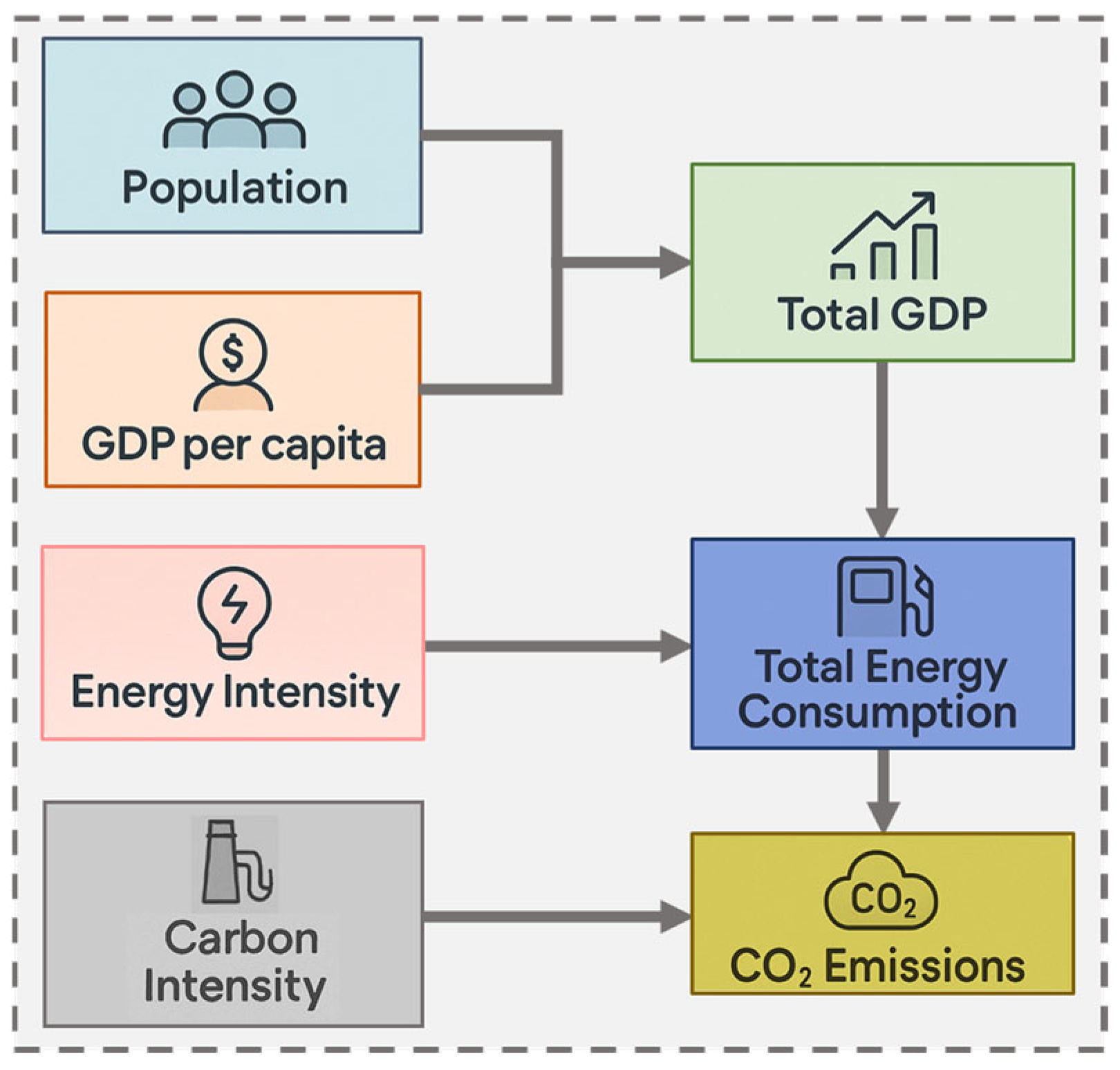
Figure 1 illustrates the concept: population and GDP per capita determine total economic output, which, combined with energy intensity, results in total energy consumption. Depending on the carbon intensity of the energy mix, this ultimately drives total CO
2 emissions.
Beyond its basic formulation, the Kaya Identity leads to several additional valuable expressions:
These relationships establish a direct link between socioeconomic trends, energy policies, and broader environmental impacts, such as atmospheric CO2 concentrations and global temperature rise.
The Kaya Identity is powerful because it dissects emissions into distinct, actionable variables. Each of these can be addressed through targeted policies, enabling policymakers and researchers to [
23]:
Pinpoint where emissions reductions are most feasible, such as through improvements in energy efficiency (C) or a shift to low-carbon energy sources (D).
Understand how population growth and economic development (A and B) exert upward pressure on emissions trajectories.
Design coherent and realistic decarbonization pathways that balance developmental goals with environmental imperatives.
Ultimately, the Kaya Identity transforms emissions from a distant consequence into a diagnosable and actionable outcome, supporting more informed and strategic climate policymaking.
A clear application of the Kaya Identity is seen in the quantification of global emission drivers, as shown in
Table 1 [
20].
In a “business-as-usual” global economy, Population (A) and GDP per capita (B) typically grow exponentially, with average annual rates of [
21,
24,
25]:
As these factors multiply, their growth rates combine additively in the logarithmic derivative of emissions:
To stabilize or reduce emissions, improvements in energy efficiency (C) and carbon intensity (D) must at least compensate for the growth of A and B:
This relationship makes it clear that emissions will only decline if the combined annual reduction in C and D exceeds the growth in A and B.
To stabilize emissions in a growing world, C and D must collectively decline by at least 5% per year.
To prevent further global warming, far deeper cuts are necessary, potentially requiring an immediate 90% reduction in current global emissions.
This highlights the critical urgency of global decarbonization. Stabilizing emissions is insufficient because CO
2 lingers in the atmosphere for decades to centuries, leading to ongoing accumulation. The impact on climate is not determined by annual emissions alone, but by their cumulative total over time [
27]. Delaying emission cuts risks not only worsening climate change but also triggering irreversible planetary tipping points. The scientific consensus is clear: the window for action is rapidly closing [
1,
18,
26].
Because it links emissions directly to tangible economic and technological levers, the Kaya Identity serves as a practical tool in climate strategy [
12,
14,
23,
28]. It enables decision-makers to:
Forecast future emissions under varying socioeconomic and technological scenarios.
Set achievable, evidence-based targets for decarbonization.
Identify priority intervention points, such as reducing carbon intensity via clean energy transitions or improving energy efficiency.
Most importantly, it reframes emissions not as an uncontrollable outcome, but as the direct result of policy choices, encompassing demographics, development paths, industrial structures, and energy strategies. In this light, the Kaya Identity remains a cornerstone of climate analysis and policy planning.
2.1. Kaya Factors: A—Population & Demographic Considerations
To better understand the behavior of each Kaya Identity factor and their implications for future emissions, we begin with Population (A), the most fundamental and typically least flexible variable. Population dynamics define the overall scale of potential energy demand, economic activity, and CO2 emissions. This section examines recent and historical global demographic trends to provide insights into future developments.
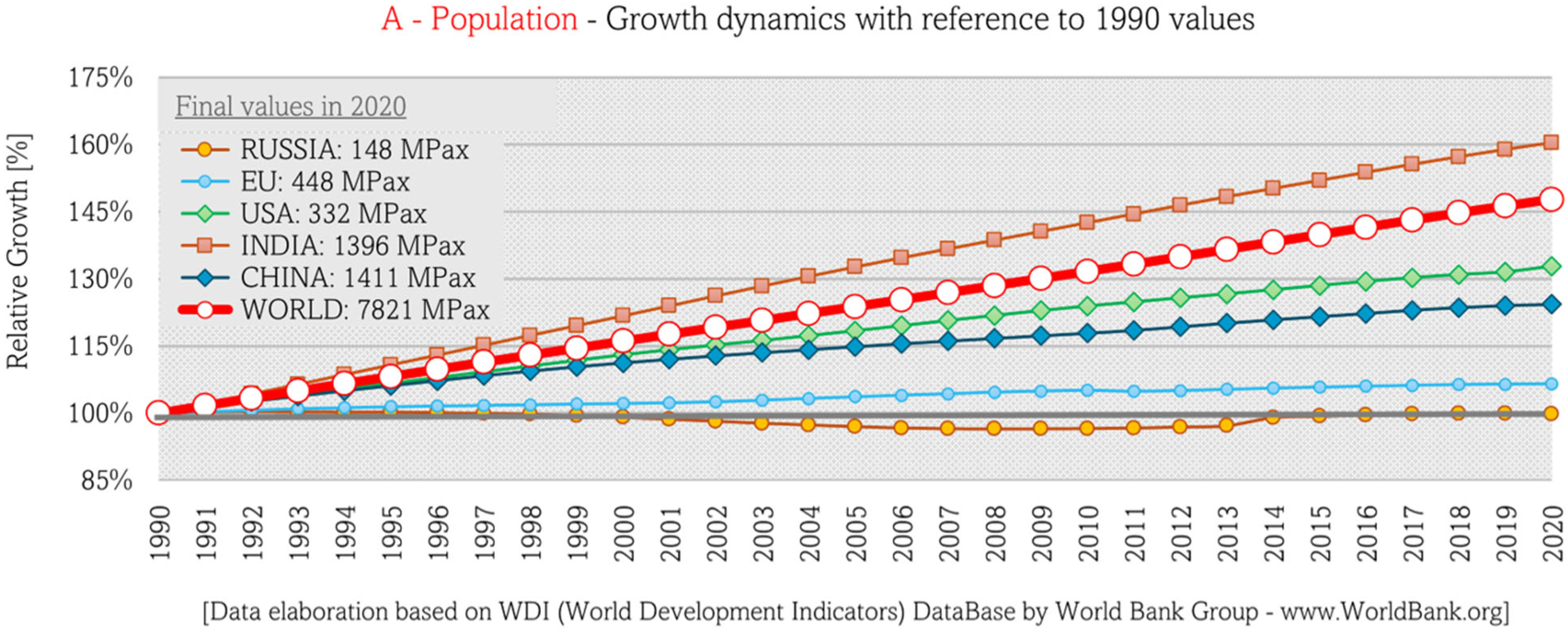
Figure 2 illustrates population growth patterns for the world and several key geopolitical entities between 1990 and 2020 [
22]. The panel displays normalized growth trajectories, facilitating direct comparison of relative increases across regions.
Over this 30-year period, the global population expanded by over 45%, reaching approximately 7.8 billion people (denoted as 7.8 GPax). Noteworthy developments include:
India experienced the most significant increase, expanding by more than 60% to nearly 1.4 GPax.
China and the United States also recorded substantial growth.
By contrast, Europe and the Russian Federation exhibited near-stable population levels.
The global average annual population growth rate during this period was approximately 1.5% per year.
These trends are critical because population growth inherently scales up total energy demand and, consequently, CO2 emissions, unless offset by equally ambitious reductions in other Kaya variables, specifically energy intensity (C) and carbon intensity (D).
Within the Kaya Identity framework, Population (A) directly multiplies the other three factors to determine total emissions. Population growth, particularly in fast-developing regions, intensifies energy demand and infrastructure expansion, reinforcing the urgent need to improve energy efficiency (C) and reduce carbon intensity (D) to sustain progress toward climate goals. However:
In high-income countries, declining birth rates and demographic aging could contribute to emissions stabilization.
This demographic shift creates policy space to pursue accelerated technological innovation and expanded adoption of renewable energy systems.
Ultimately, demographic insights are indispensable for crafting effective energy and climate strategies. A one-size-fits-all approach is insufficient: policies must be tailored to the specific demographic and developmental contexts of each nation or region. Given that population is largely inflexible in the short term, this reality further underscores the urgency of focusing efforts on C and D, the most immediate levers for decarbonization.
2.2. Kaya Factors: B—GDP per Capita and Economic Development
Following population, the second term of the Kaya Identity, GDP per capita (B), represents the economic output generated per person within a country or region. This factor serves as both a key indicator of national development and a major driver of energy consumption and emissions. Economic growth generally correlates with increased production, mobility, industrialization, and service expansion, all of which require substantial energy input.
In the Kaya framework, total GDP is calculated as the product of Population (A) and GDP per capita (B). As such, rising GDP per capita amplifies the emissions potential of a growing population, unless mitigated by improvements in energy efficiency (C) or carbon intensity (D).
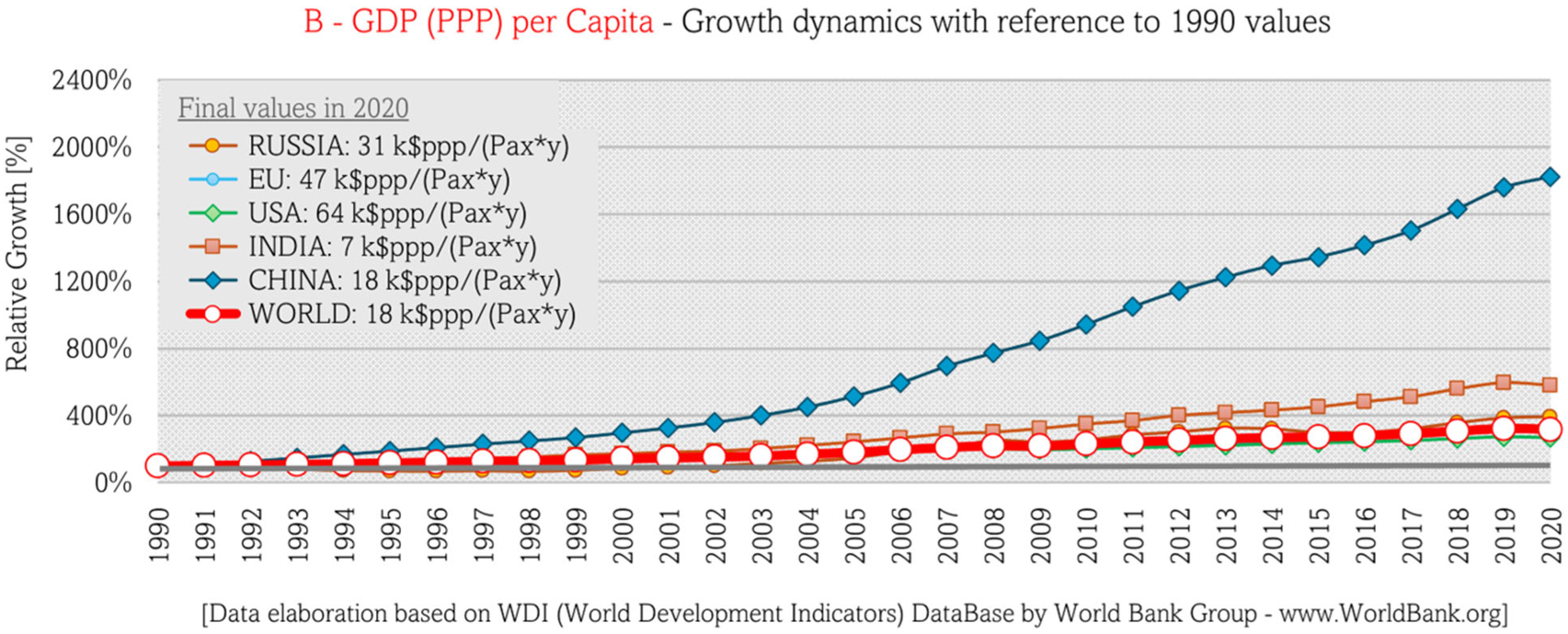
Figure 3 presents the dynamics of GDP per capita (in purchasing power parity, PPP) for major global economies and the world average over the period 1990–2020 [
22].
Key observations include:
China experienced extraordinary growth, with GDP per capita rising nearly 18-fold, reaching approximately 18 k$/year, now aligning with the global average.
India also saw substantial growth, though at a slower pace, reaching 7 k$/year.
In contrast, developed regions such as the EU and USA experienced more moderate growth, maintaining high absolute GDP per capita values of approximately 47 k$/year and 64 k$/year, respectively (more than two to three times the world average).
Annual growth rates reveal China’s sustained high performance over most of the period, while the US and EU displayed more stable, moderate increases, consistent with mature economies.
These patterns are especially significant for climate policy. While economic development typically drives higher emissions, wealthier nations are generally better positioned to invest in low-carbon technologies, energy system transformation, and innovation, provided the political will is present.
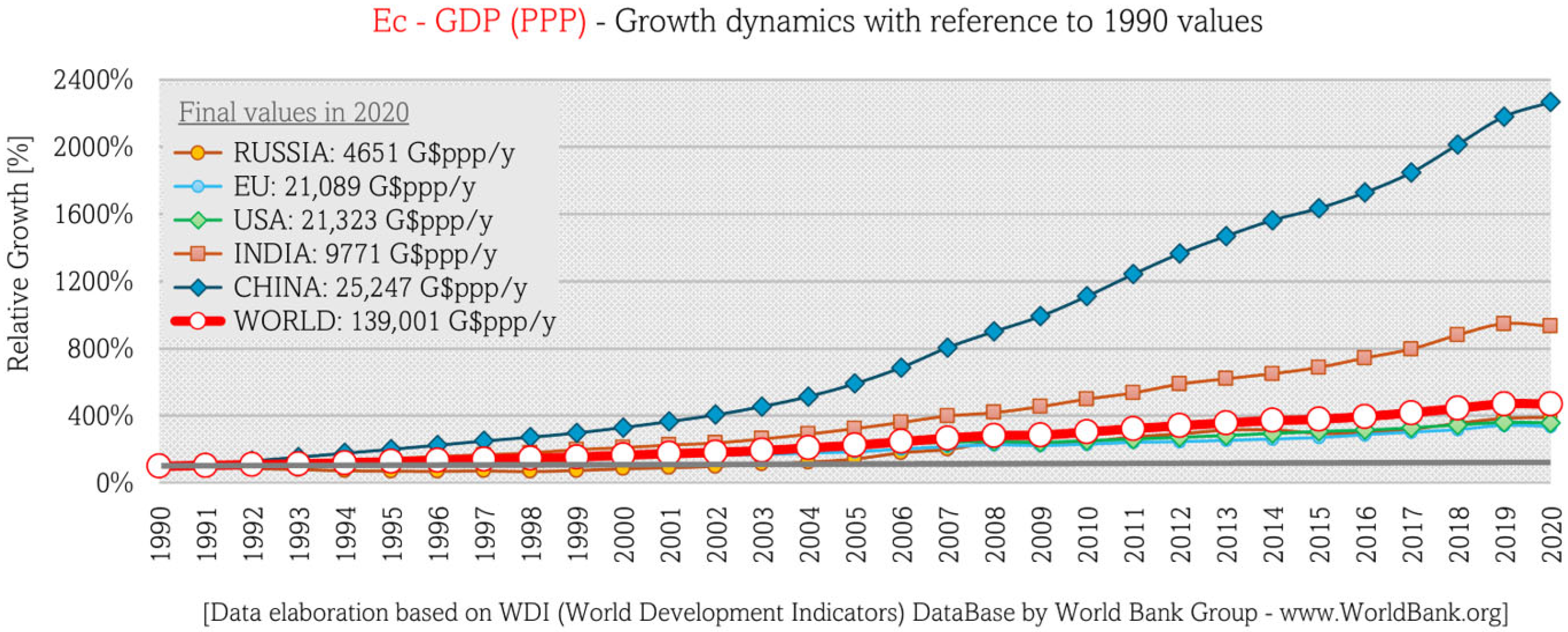
Figure 4 illustrates total national economic output, which combines population size with per capita productivity [
22]. This reflects each country’s macroeconomic weight within the global system.
As of 2020:
China emerged as the world’s largest economy (by PPP), with a GDP of approximately 25 trillion $/year.
The United States and European Union followed, each producing around 21 trillion $/year.
Collectively, China, the EU, and the US accounted for over 50% of global GDP, despite representing only a fraction of the global population.
A particularly striking observation is that the US and EU, with just 10% of the global population, generate nearly one-third of global GDP. This disparity highlights global economic inequality, which directly influences emissions responsibility and decarbonization potential. Growth patterns also reveal interesting structural transitions:
China’s rapid ascent is clear, with high year-on-year growth until recent stabilization, reflecting a shift toward consumption- and innovation-driven development rather than solely industrial expansion.
India’s economy has also accelerated, but remains behind China.
Developed nations like the US and EU show slower but steady GDP increases, consistent with their post-industrial economic profiles.
In the Kaya framework, GDP per capita is a double-edged sword:
On one hand, rising income levels lead to greater resource consumption, often increasing emissions.
On the other hand, higher incomes expand the capacity to invest in low-carbon technologies, infrastructure, and sustainable practices.
These distinctions are central to climate negotiations and energy justice:
High-income nations, with historically higher emissions and greater financial capacity, bear a heightened responsibility to lead on decarbonization through both domestic policies and international support.
Emerging economies, like China and India, face the dual challenge of sustaining growth while decoupling it from emissions. Success will require not only strong national policies but also technological transfer and financial support through global partnerships.
Understanding GDP per capita within this context reveals the complex interplay between economic development and environmental sustainability, reinforcing the need for tailored decarbonization strategies suited to diverse national and regional circumstances.
2.3. Kaya Factors: C—Energy Intensity & Efficiency Policies
The third component of the Kaya Identity, Energy Intensity (C), measures the amount of energy consumed per unit of GDP. It is widely recognized as a key indicator of energy efficiency within an economy. A lower energy intensity means greater economic output is achieved for each unit of energy consumed, reflecting advancements in technology, improved processes, or structural transitions toward less energy-intensive sectors. Crucially, unlike Population (A) and GDP per capita (B), energy intensity is highly responsive to policies, innovation, and market mechanisms in the short to medium term.
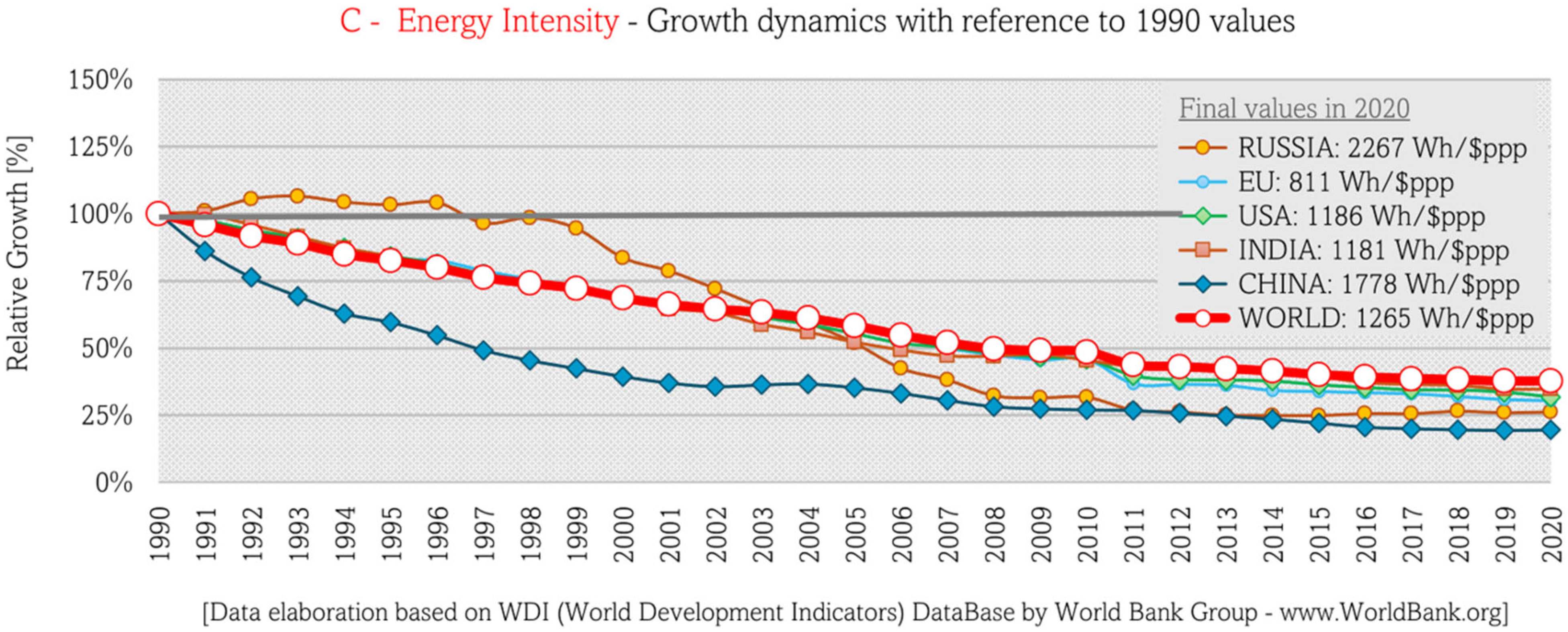
Figure 5 illustrates the evolution of energy intensity for major global economies and the global average from 1990 to 2020 [
22]. The panel depicts relative changes compared to 1990 values.
Key observations:
Globally, energy intensity has declined by approximately 60% over the past three decades. Today, less than half the energy is required to produce the same unit of GDP compared to 1990.
All major economies have made significant progress. For instance, both the EU and USA reduced their energy intensity to below 1200 Wh/$PPP by 2020.
Russia remains an outlier, with the highest energy intensity (~2267 Wh/$PPP), largely due to its industrial structure and dependence on energy-intensive activities.
China and India have also achieved notable improvements, though their levels remain above the global average.
These global advances are more substantial than commonly recognized. While public discourse often prioritizes renewable energy expansion, efficiency improvements have silently but significantly curbed emissions at scale. However, it is important to acknowledge that these improvements were not driven solely by climate concerns. In many cases, market dynamics and competitive pressures encouraged companies and governments to adopt energy-saving technologies, given that energy costs are a major input across industrial and service sectors.
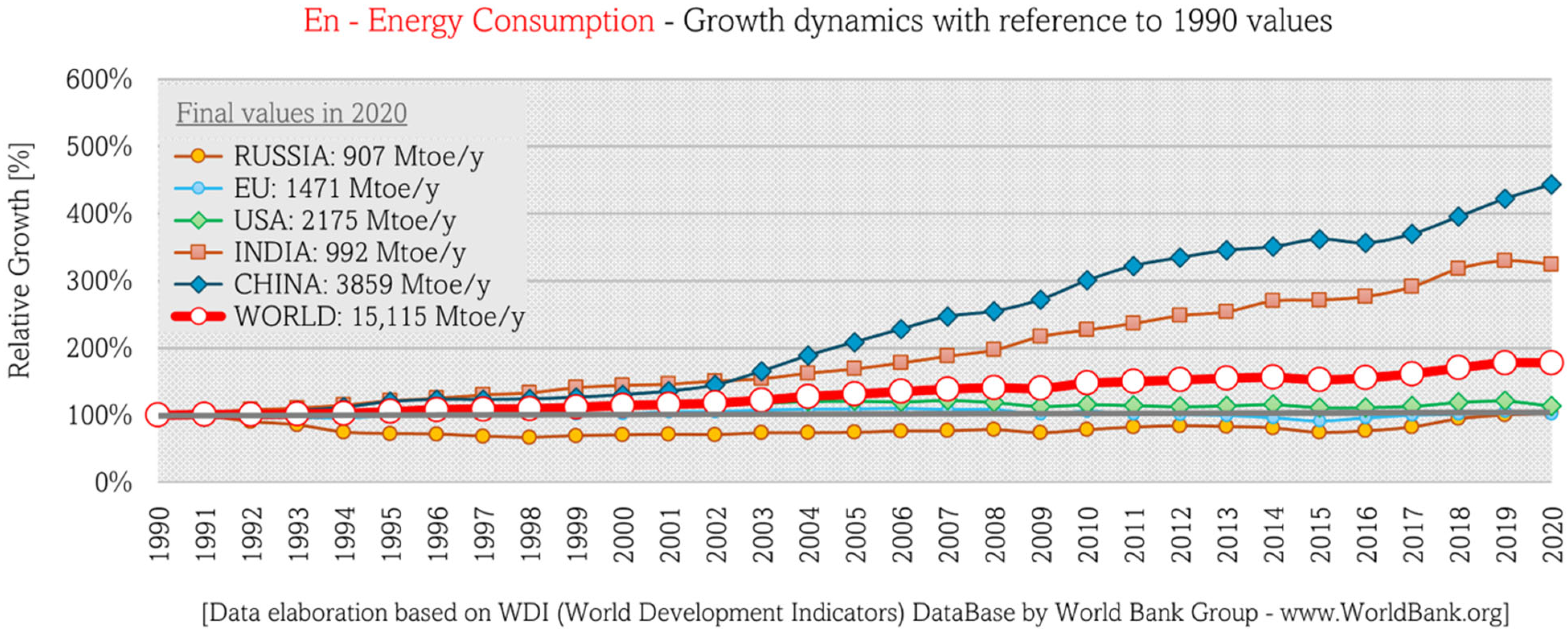
Yet, the reduction in energy intensity must be contextualized alongside concurrent growth in Population (A) and GDP per capita (B). When these factors grow faster than the decline in energy intensity, total energy consumption still rises. This interplay is captured in
Figure 6 [
22].
Between 1990 and 2020:
Global energy consumption nearly doubled, reaching around 15,115 Mtoe/year.
China’s energy demand increased by a factor of 4.5, while India’s grew by a factor of 3.2.
Conversely, OECD countries, including the US and EU, maintained relatively stable energy consumption levels despite ongoing economic growth, which is a positive indicator of relative decoupling.
This outcome underscores a fundamental challenge: efficiency gains are necessary but insufficient. If overall energy demand continues to rise, particularly in emerging economies, improvements in energy intensity alone will not suffice to achieve the emissions reductions needed for global climate goals.
The trends reveal several critical insights for effective decarbonization strategies:
Efficiency improvements must continue to accelerate, especially in high-growth countries.
Without concurrent decarbonization of energy supply (reducing D), even efficient energy consumption will sustain high emissions if fossil fuels remain prevalent.
Effective management of global energy demand will require multi-faceted interventions, combining efficiency standards, electrification, clean technology deployment, and behavioral change.
There is an urgent need to scale up innovations that not only enhance efficiency but redefine how energy services are delivered (for example, through digitalization, smart grids, and circular economy models).
From a policy perspective, governments must avoid complacency. Energy efficiency has made quiet yet significant progress; however, without matching ambition in reducing carbon intensity, these gains risk being overtaken by growing global energy demand.
2.4. Kaya Factors: D—Emission Intensity & Decarbonization
The fourth and final Kaya factor, Emission Intensity (D), is a direct measure of the CO2 emissions per unit of energy consumed, typically expressed in grams of CO2 per kilowatt-hour (gCO2/kWh). It reflects the carbon footprint of a nation’s energy mix and is thus one of the clearest indicators of progress in decarbonization. This section examines emission intensity trends and their impact on total emissions.
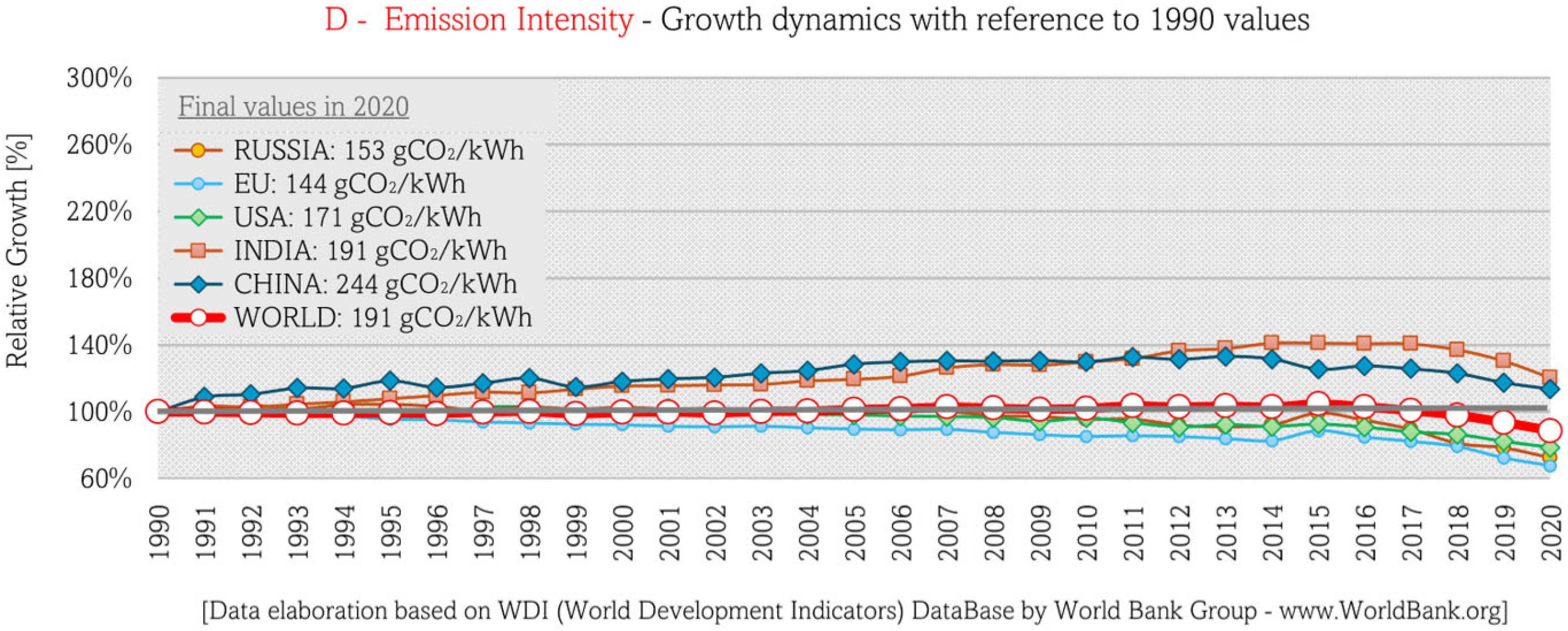
Figure 7 highlights that global emission intensity remained largely stable until the mid-2010s and only began to decline meaningfully during the last few years, a change partly due to the economic slowdown caused by the COVID-19 pandemic [
22].
Key insights from the data:
The European Union shows steady, long-term progress, reducing its emission intensity to 144 gCO2/kWh, thanks to proactive decarbonization policies.
In contrast, China (244 gCO2/kWh) and India (191 gCO2/kWh) maintain higher emission intensities, reflecting their heavy reliance on coal.
Globally, average emission intensity remains high at 191 gCO2/kWh, underscoring that full decarbonization remains distant.
Emission intensity is fundamentally tied to the energy mix, a balance of fossil fuels, renewables, and nuclear power in national energy systems [
29]. However, no energy source is completely “carbon-free” when assessed from a life-cycle perspective (LCA) [
30]. Every renewable energy installation (wind, solar, etc.) requires energy for:
If these processes rely on fossil fuels, even renewable projects embed emissions in their lifecycle [
31]. Thus, the true impact of deploying new renewable infrastructure depends partly on the emission intensity of the existing energy system.
A real-world example is Italy, which imports around 7% of its electricity from neighboring countries, much of it low-carbon or zero-carbon [
32,
33]. Should Italy expand domestic renewables to replace these imports (rather than its domestic fossil production), its national emission intensity could paradoxically rise, unless renewables displace fossil-based generation.
Emission intensity also transcends national borders. Shutting down fossil-fuel power plants reduces:
Such indirect benefits highlight the importance of a global perspective in emissions accounting and mitigation strategies.
To better understand emissions by fuel type, consider the stoichiometric combustion reaction for hydrocarbons (C
nH
m):
From this, the CO
2 mass emitted per gram of fuel burned is calculated as:
This shows that fuels with higher hydrogen-to-carbon (H/C) ratios emit less CO
2 per gram of fuel combusted [
35]. Accordingly, estimated emission intensities for various fuels used in power generation (considering only final combustion in thermoelectric plants) are shown in
Table 2.
These values show that natural gas is approximately 3–4 times less CO2-intensive than coal, highlighting how the choice of fuel dramatically influences emission intensity.
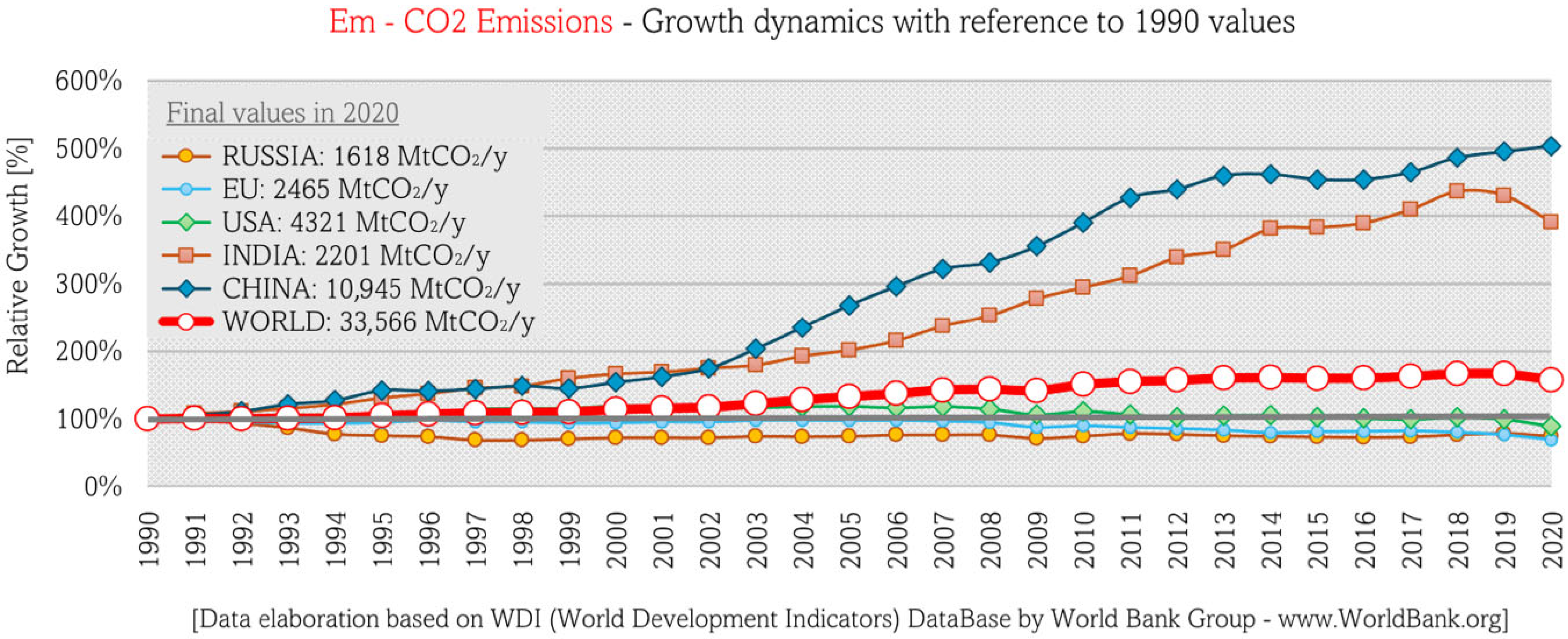
Figure 8 illustrates the combined outcome of all Kaya factors [
22].
Between 1990 and 2020:
Global CO2 emissions rose by 58% between 1990 and 2020, reaching 33.5 GtCO2/year.
China’s emissions multiplied fivefold, now representing nearly 30% of global emissions.
The United States and European Union show relative stabilization or even decline.
While emission intensity (D) has declined in some regions, the overwhelming rise in energy demand (especially in emerging economies) has outweighed these gains.
Figure 7 and
Figure 8 collectively illustrate the urgent need for accelerated decarbonization:
The current pace of decline in emission intensity is far too slow to offset rising energy demand.
Coal dependence, particularly in China and India, remains a major obstacle to achieving global climate targets.
Lifecycle emissions, cross-border effects, and fuel type disparities require comprehensive policy frameworks.
The European Union demonstrates what is possible through coordinated action, but global success hinges on:
Accelerated coal phase-out;
Cross-border coordination;
Financial and technological support to enable developing nations to decouple growth from emissions.
Without faster, globally coordinated reductions in emission intensity, climate goals will remain out of reach, risking severe and irreversible impacts on the planet’s future.
3. Results and Discussion: Global and National Kaya Identity Dynamics
Having examined the four Kaya Identity factors individually, this section integrates the empirical results and their interpretation to better understand the collective dynamics of CO2 emissions at both global and national scales. This combined results and discussion approach allows for a coherent presentation of the observed patterns alongside their implications in light of existing literature and policy debates.
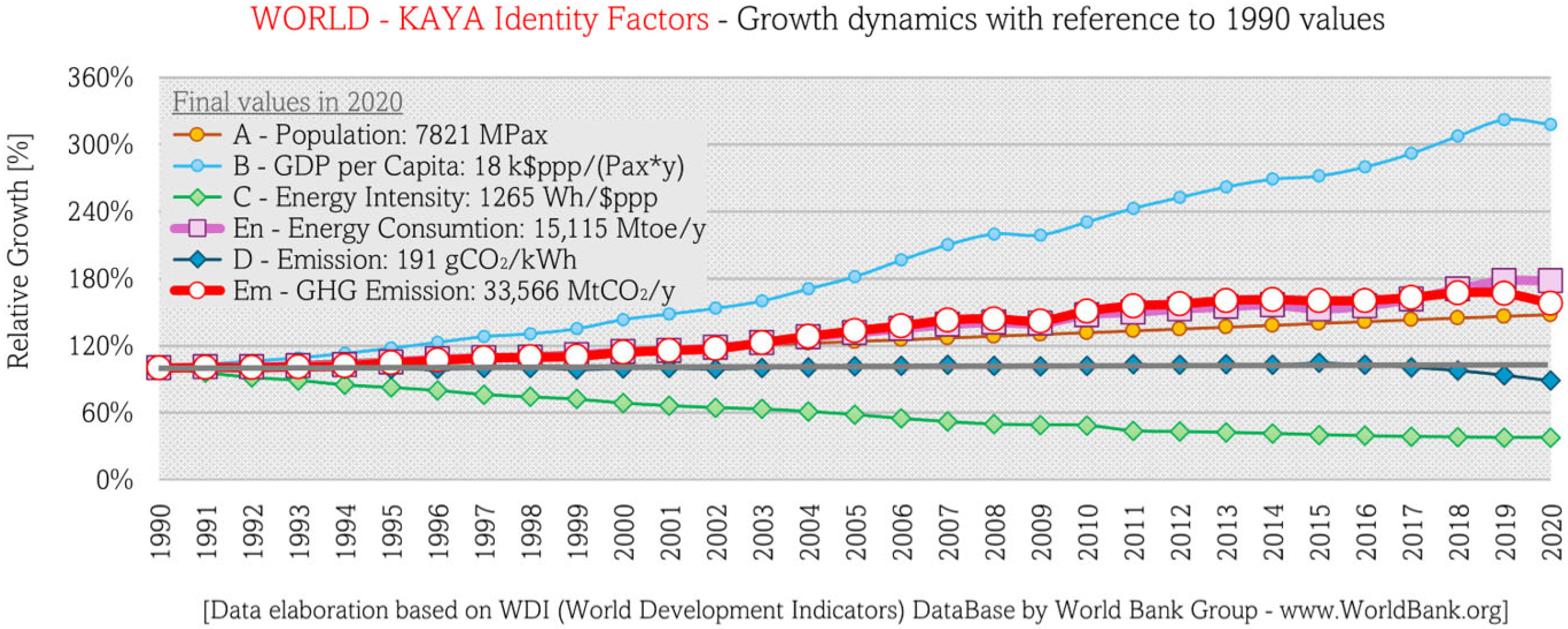
Figure 9 presents the global evolution of all Kaya factors from 1990 to 2020 [
22].
From a global perspective, several key dynamics emerge:
Both Population (A) and GDP per capita (B) increased significantly, exerting strong upward pressure on emissions.
The Energy Intensity (C) factor declined steadily (a positive trend driven by efficiency improvements) but this decline was insufficient to counterbalance the combined growth of A and B.
Consequently, total Energy Consumption (En) nearly doubled over three decades, illustrating the reinforcing effect of rising prosperity and population.
Although Emission Intensity (D) began to decrease more noticeably toward the end of the period (especially during the COVID-19 pandemic) the cumulative outcome was a substantial 58% increase in global CO2 emissions compared to 1990.
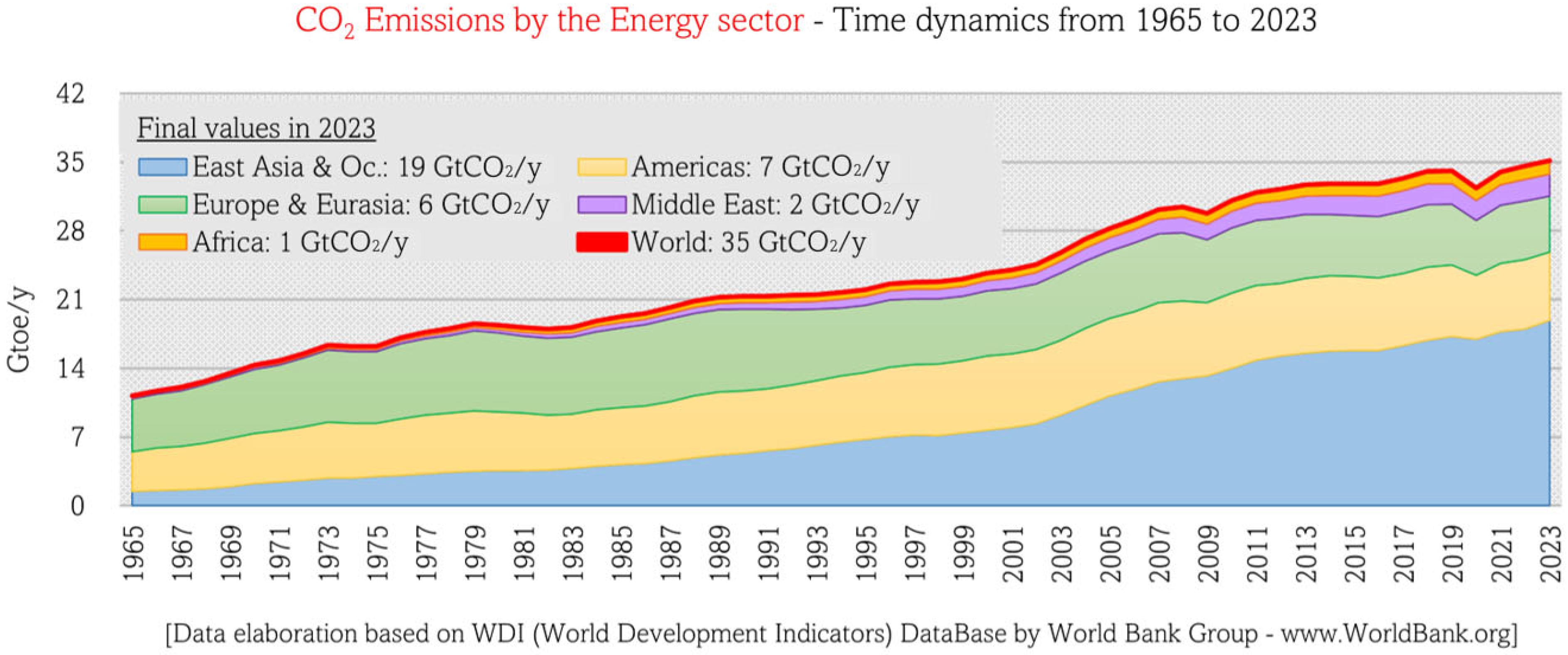
To place these trends in a longer historical context,
Figure 10 illustrates global energy-related CO
2 emissions from 1965 to 2023, disaggregated by region [
22].
Figure 10 highlights an extraordinary shift in regional responsibility:
In 1965, East Asia accounted for only 13% of global emissions.
By 2023, East Asia’s share had soared to over 54%, largely driven by China’s rapid, coal-intensive industrialization.
This profound transformation emphasizes the pivotal role of Asia in future global decarbonization efforts. As regional emission patterns diversify, climate responsibility is no longer concentrated in historically industrialized countries, requiring more regionally nuanced strategies.
Because CO
2 remains in the atmosphere for decades, its impact is determined not only by yearly emissions but by their cumulative accumulation. Using the simplified formulas from
Section 2, we estimate the warming effect of historical emissions in
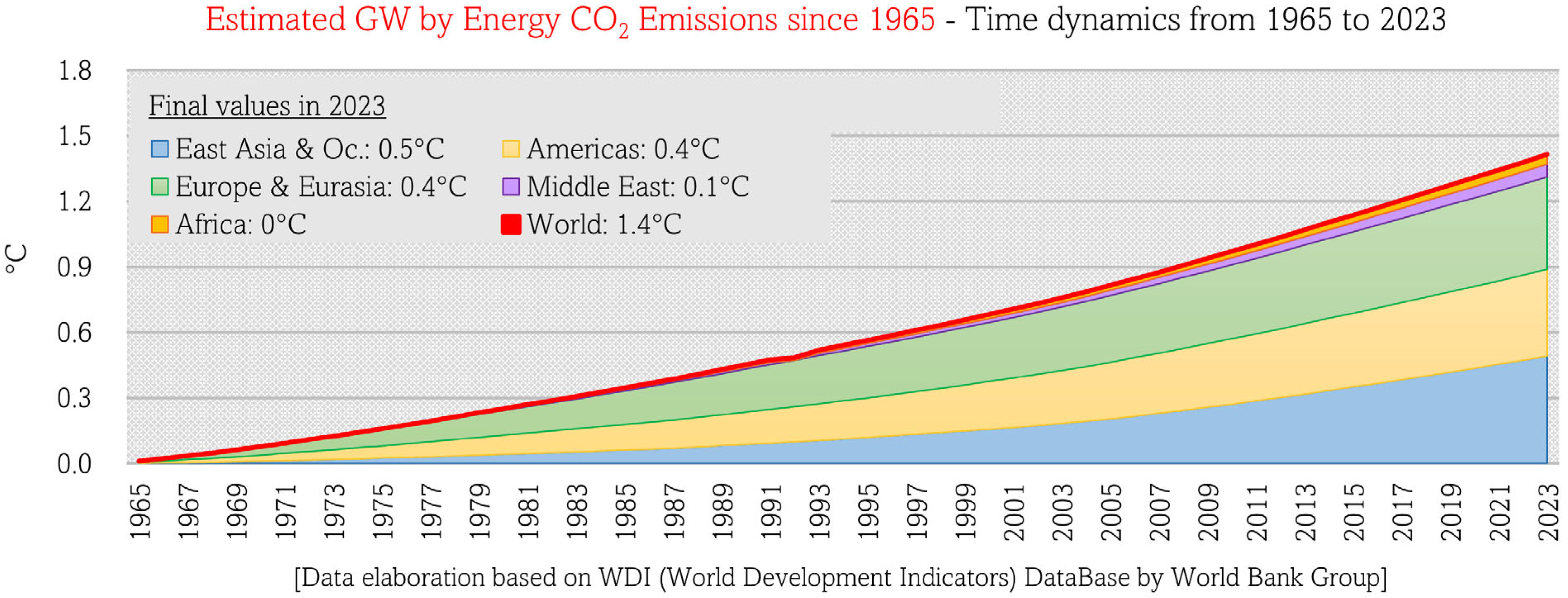
Figure 11 [
22].
The world is now responsible for approximately +1.4 °C of warming above pre-industrial levels.
East Asia emerges as the dominant contributor, closely followed by Europe and the Americas.
This context is critical for assessing progress toward international climate goals such as the Paris Agreement, which seeks to limit warming to 1.5 °C.
To deepen the analysis,
Table 3 synthesizes 2020 data, comparing the Kaya factors across the world’s major economies and regional aggregates [
22].
Key takeaways from this synthesis include:
China and India represent over 36% of the global population, yet their per capita GDP remains below the global average, revealing substantial development gaps.
The US and EU, accounting for only 10% of the global population, are responsible for nearly 20% of global emissions, reflecting their historically higher consumption patterns.
China alone is now accountable for nearly 30% of global CO2 emissions, a dominant share that shapes international climate negotiations.
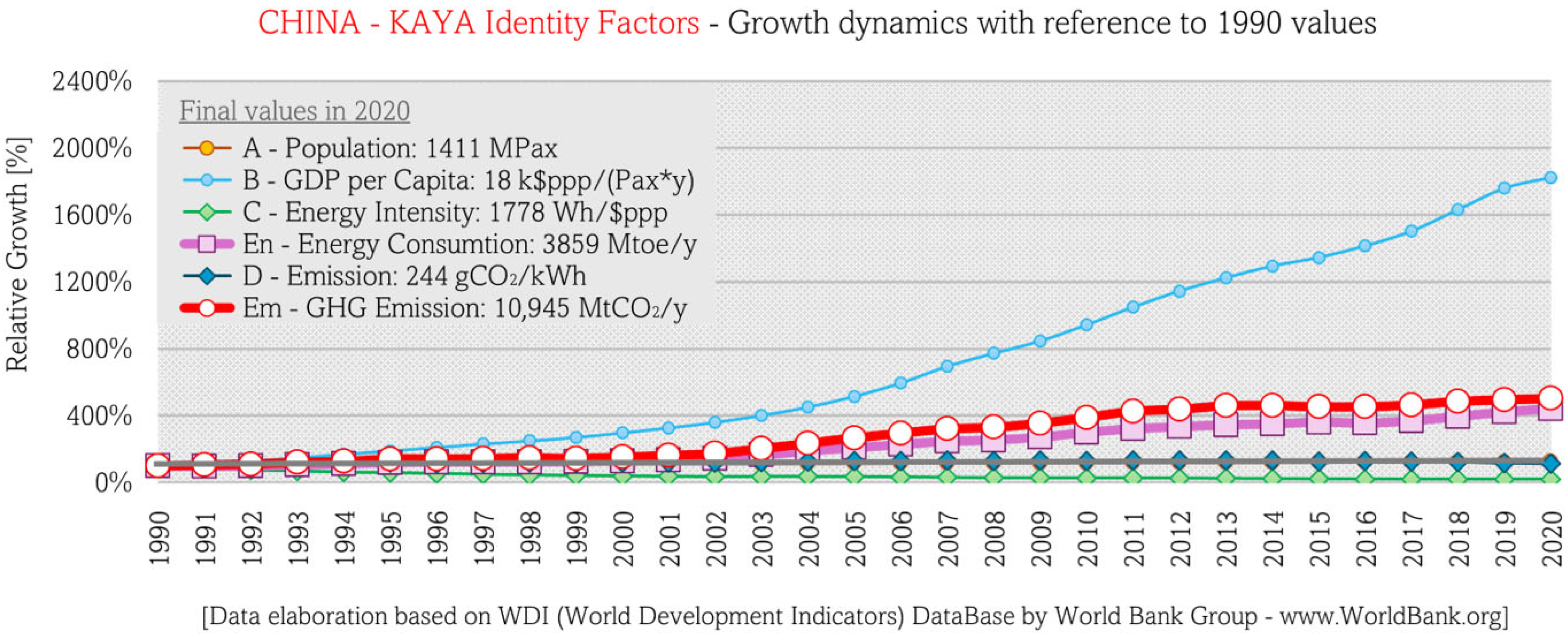
Figure 12 shows that China’s CO
2 emission growth is primarily driven by a very rapid increase in GDP per capita, while population growth plays a more limited role. Declining energy and emission intensity partially mitigate this expansion, but not enough to offset the strong upward pressure generated by economic growth.
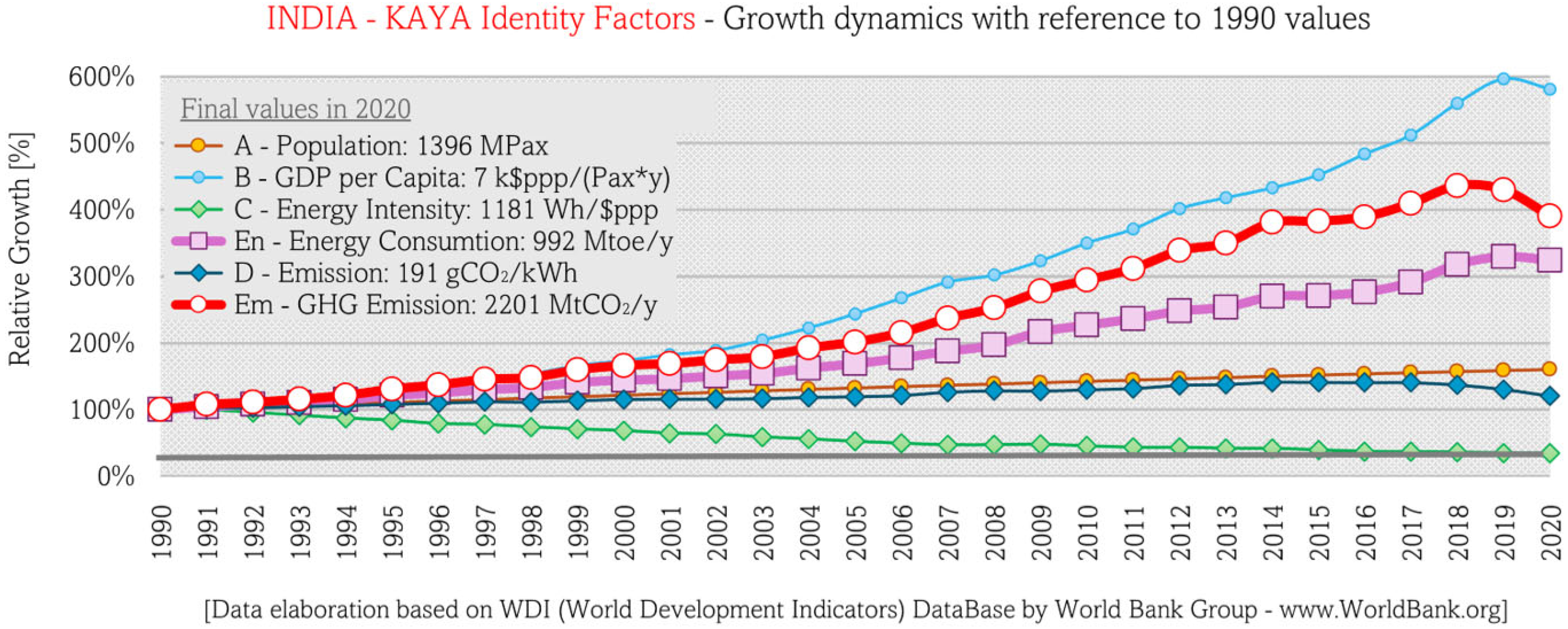
Figure 13 highlights that India’s emission trajectory reflects the combined effect of sustained population growth and rising GDP per capita. Improvements in energy intensity are visible but remain insufficient to counterbalance the simultaneous expansion of economic activity and energy consumption.
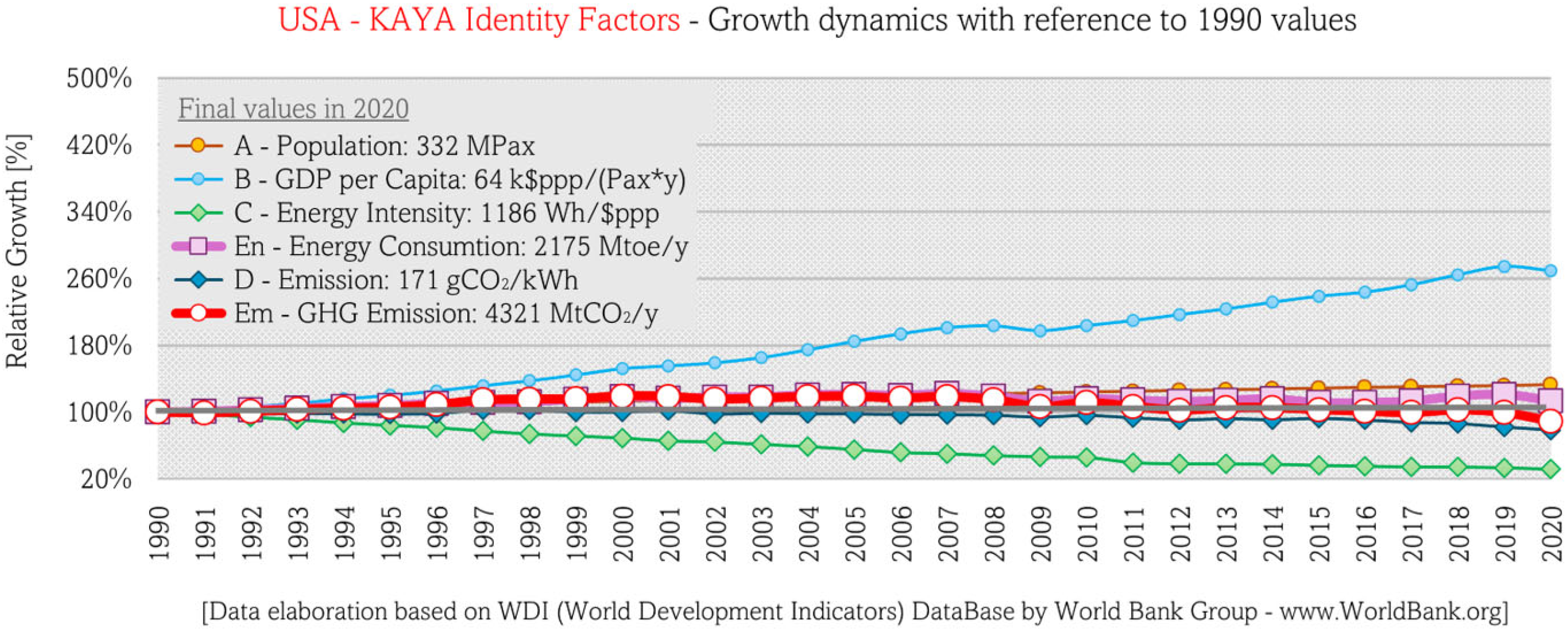
Figure 14 illustrates that in the United States economic growth has been partially decoupled from CO
2 emissions, mainly due to declining energy and emission intensity. Despite this relative decoupling, absolute emission levels remain high over the period.
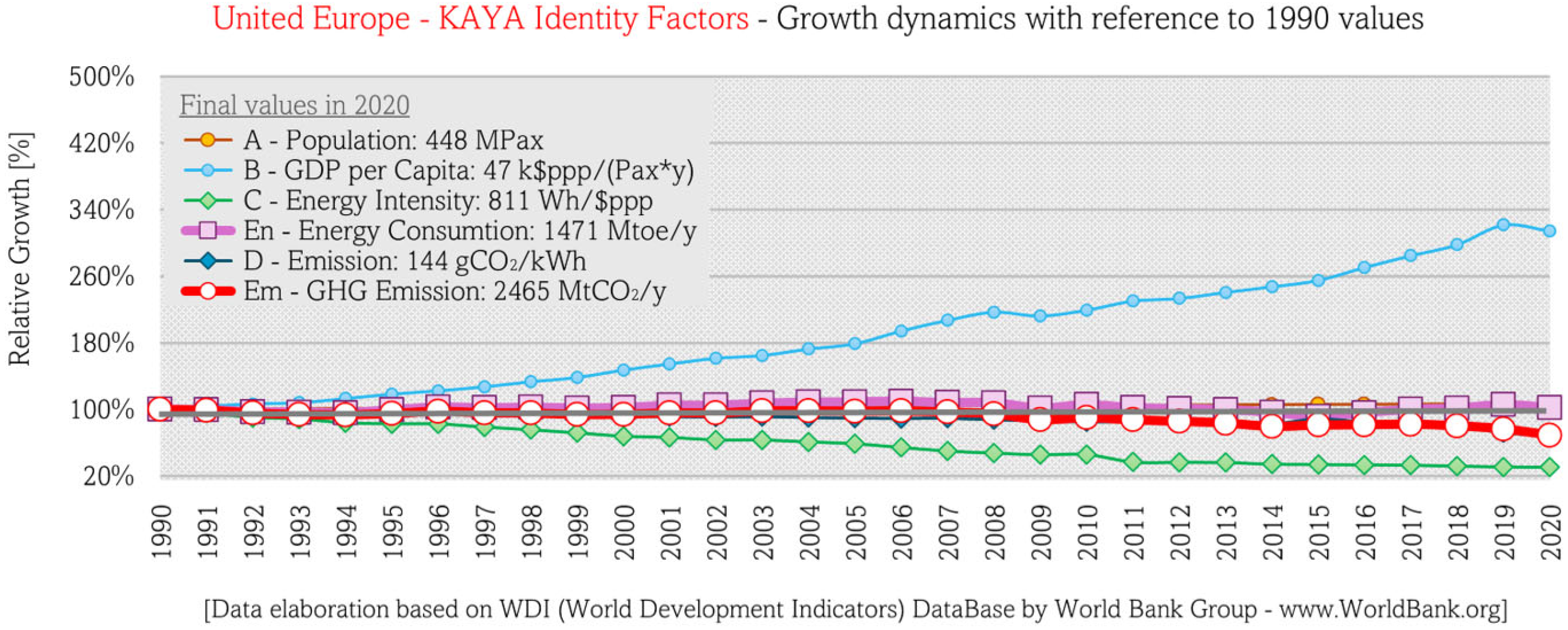
Figure 15 shows a sustained decline in both energy intensity and emission intensity in the European Union, which contributes to a stabilization and gradual reduction in CO
2 emissions despite continued economic growth.
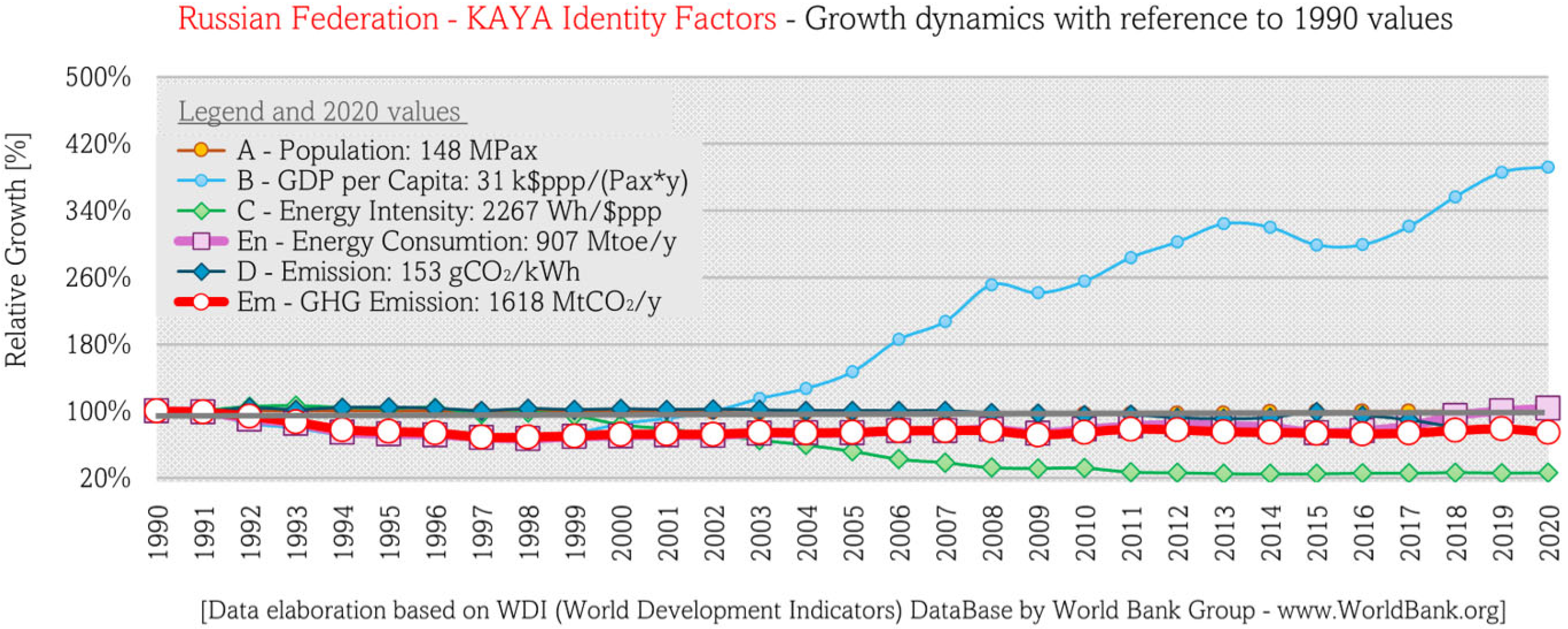
Figure 16 indicates a volatile emission trajectory for the Russian Federation, characterized by a sharp contraction during the 1990s followed by renewed growth driven by fossil-fuel-based economic activity. Energy and emission intensity remain comparatively high throughout the period.
Key insights from national trajectories:
China and India both witnessed extraordinary economic growth, with GDP per capita increasing by +1700% and +480%, respectively. However, energy efficiency improvements only partially offset this expansion, driving CO2 emissions up by approximately 350% in both countries. Encouragingly, both nations are now investing heavily in renewables, with China emerging as a global leader in clean energy markets.
United States and European Union maintained economic growth without proportionally increasing energy consumption or emissions, a sign of successful partial decoupling. The EU, in particular, demonstrates a clear decarbonization trend. However, its relative impact on global emissions is waning as Asia’s share rises to 58%. Politically, this creates a paradox: the less a nation emits, the smaller its influence may be in global climate policymaking.
Russian Federation experienced economic collapse in the 1990s, followed by growth driven by fossil fuel exports, especially methane supplies to the EU. Geopolitical tensions, culminating in the Russia–Ukraine crisis and war (2020), have since disrupted this trajectory.
The Kaya Identity framework reveals that while some nations have achieved progress, particularly in energy efficiency and decarbonization, global emissions remain predominantly driven by population growth and economic expansion.
The decomposition results show several points of convergence with recent international assessments. As shown by the results presented in
Section 3, the decomposition highlights clear differences in the relative contribution of Kaya factors across countries and over time. Economic activity remains the strongest driver of CO
2 emissions, particularly in emerging economies, reflecting patterns observed in OECD and non-OECD countries where rising GDP per capita is associated with increasing carbon inequality [
10]. This is consistent with global evidence showing that fossil CO
2 emissions reached record levels in 2024 and continued to rise in 2025 under existing policy trajectories [
3,
4]. This pattern reflects the central role of economic structure and consumption-based growth models, whereby increases in income levels translate into higher energy demand and material throughput when efficiency and decarbonization improvements do not progress sufficiently fast.
Energy intensity shows notable improvements in many economies, in line with rising electrification rates, efficiency gains, and declining fossil fuel shares documented in recent scenario literature [
13]. These improvements are largely attributable to technological progress, structural shifts toward less energy-intensive sectors, and efficiency policies, highlighting the role of energy intensity as a key leverage point for mitigation. However, reductions in emission intensity remain uneven across countries. The persistence of high emission intensity in several regions reflects continued reliance on fossil-based energy systems and delayed deployment of low-carbon technologies, which limits the effectiveness of energy efficiency gains alone. While some regions exhibit measurable decoupling between energy use and emissions, others remain dependent on carbon-intensive systems, as highlighted in comparative analyses of major emitting economies [
11]. The UNEP Emissions Gap Report 2025 similarly notes that improvements in emission intensity are insufficient to counterbalance the scale of global economic expansion [
4].
Population growth continues to contribute to rising emissions, though its relative influence has diminished compared to earlier decades. Updated demographic projections and recent IPCC-assessed pathways indicate slower future population growth, which moderates its long-term impact on emissions [
13]. This indicates that, while population dynamics remain relevant, their contribution increasingly interacts with economic and technological factors, reinforcing the importance of integrated policy approaches.
Inequality also plays an increasingly important role in shaping emission trends. Wealth concentration and income disparities amplify both national and global CO
2 outputs [
8], while European evidence shows that inequality significantly affects the relationship between productivity, energy use, and emissions [
9]. Although not explicitly included in the Kaya Identity, the decomposition patterns mirror these dynamics, with faster emission growth observed in more carbon-intensive and unequal economic systems. These findings suggest that inequality acts as a multiplier of emission pressures, shaping how economic growth translates into energy use and emissions across and within countries.
Country-level differences further illustrate heterogeneous emission drivers. These patterns are consistently reflected in the country-specific decomposition results presented in
Section 3, which show distinct temporal trajectories for each major emitter. China’s emissions remain closely linked to GDP growth despite recent declines in emission intensity. The United States shows moderate improvements in intensity indicators but maintains high absolute emissions. The European Union demonstrates the strongest reductions in energy and emission intensity, driven by sustained climate policies and accelerated coal phase-out. India’s trajectory remains shaped by rapid GDP and population growth, while Russia continues to exhibit high emission intensity linked to fossil-fuel dependence. These observations align with sectoral analyses of the world’s largest emitters [
11].
Policy divergence reinforces these structural patterns. The UNEP Emissions Gap Report 2025 identifies the European Union as one of the few regions broadly aligned with its 2030 climate commitments, whereas most G20 economies show substantial gaps between pledges and implementation. Many emerging economies have expanded renewable energy targets, yet continued reliance on coal limits the pace of decarbonization [
4]. Recent global shocks occurring after 2020, including the COVID-19 pandemic, the energy crisis triggered by geopolitical tensions, and the acceleration of digitalization and artificial intelligence, are likely to have affected short-term emission trajectories. However, these developments do not overturn the structural relationships identified through the Kaya decomposition, which remain relevant for interpreting long-term emission drivers and policy priorities.
The differentiated trajectories observed across countries reflect a broader global trend highlighted in the GSDR 2023, which emphasizes that progress on climate mitigation remains among the slowest across all SDGs and that transformative energy, industrial, and land-use transitions are essential for realigning global pathways with SDG 13 targets [
15]. The decomposition results indicate where structural transitions are advancing and where they remain insufficient.
Managerial and policy implications emerge clearly from the differentiated Kaya decomposition patterns observed across countries. From a managerial perspective, the results highlight the central role of energy efficiency improvements and low-carbon energy deployment as key operational levers for emissions reduction. Firms and infrastructure managers operating in energy-intensive sectors are shown to face structurally different decarbonization challenges depending on national energy mixes and regulatory environments, reinforcing the importance of context-specific strategies rather than uniform mitigation approaches. Investments in energy efficiency, electrification, and renewable integration appear particularly effective in regions where economic growth remains strong, but emission intensity reductions lag behind.
From a policy perspective, the results underscore that decarbonization pathways are strongly shaped by institutional frameworks, long-term planning capacity, and social acceptance of energy transitions. The heterogeneous national trajectories identified in this study indicate that progress toward SDG 13 (Climate Action) cannot be assessed uniformly across countries. While some regions, such as the European Union, demonstrate relatively strong alignment between policy commitments and structural improvements in energy and emission intensity, other major emitters continue to rely on fossil-based growth models that limit progress toward climate targets.
The findings also highlight the importance of sustainable communities in achieving climate objectives. Energy transitions are not only driven by national-level policies but also by local governance, urban planning, and community-level engagement, which directly influence energy demand, infrastructure deployment, and social acceptance of decarbonization measures. Differences in SDG performance across countries therefore reflect not only technological and economic conditions but also the capacity of communities to adopt sustainable practices and support long-term climate strategies. In this sense, the Kaya-based decomposition provides a valuable framework for linking macro-level emission drivers with micro-level sustainability outcomes and SDG performance.
The Kaya-based decomposition highlights the importance of contextual and place-based factors that shape how national emission trajectories translate into progress toward the Sustainable Development Goals. In this perspective, the role of sustainable communities and the differentiated performance of SDGs at the country level becomes particularly relevant. Recent comparative studies show that SDG achievement is highly uneven across countries and regions, with persistent disparities between high-income economies and lower-income or structurally constrained contexts [
36]. These differences reflect not only economic capacity, but also governance quality, institutional effectiveness, social cohesion, and community-level engagement in sustainability transitions.
Evidence from recent SDG monitoring frameworks indicates that progress on SDG 13 (Climate Action) is closely intertwined with outcomes in other goals, notably SDG 7 (Affordable and Clean Energy), SDG 11 (Sustainable Cities and Communities), and SDG 12 (Responsible Consumption and Production). Countries that exhibit stronger performance in sustainable urban development, energy access, and resource efficiency tend to achieve more consistent reductions in energy and emission intensity, reinforcing the leverage points identified through the Kaya decomposition. Conversely, economies characterized by fragmented governance, high inequality, or fossil-fuel-dependent development pathways often display weaker SDG performance alongside persistent carbon-intensive trajectories [
37,
38].
Recent cross-country analyses further emphasize that SDG progress is not only a national issue but also shaped by international spillovers, whereby the consumption patterns and energy choices of high-emitting countries affect the sustainability outcomes of others [
36,
39,
40]. This dimension is particularly relevant for climate action, as decarbonization efforts concentrated in a limited number of regions may be offset by carbon leakage or growing demand elsewhere. In this sense, the Kaya Identity complements SDG-based assessments by offering a structural explanation of why some countries advance faster toward climate-related goals, while others lag despite formal commitments.
Integrating Kaya decomposition results with SDG performance indicators therefore provides a more comprehensive interpretation of national sustainability pathways. It highlights that achieving SDG 13 cannot be decoupled from the development of sustainable communities, inclusive institutions, and coordinated policy frameworks. This integrated perspective supports recent findings showing that accelerating progress toward the SDGs requires not only technological change but also place-specific strategies that align energy transitions, social equity, and governance capacity across countries and regions.
Overall, the comparison with the literature reveals strong agreement in identifying economic growth and structural inequality as dominant emission drivers, while confirming that improvements in intensity indicators, although evident in several regions, remain inadequate to offset rising global demand. The decomposition highlights significant national heterogeneity, underscoring how policy choices and institutional contexts shape the pace and direction of decarbonization. These patterns collectively reinforce that accelerating the decline in energy and emission intensity remains the most effective and policy-sensitive route to meeting global climate goals.
4. Conclusions
The Kaya Identity provides a powerful and transparent framework for understanding the structural drivers of global CO2 emissions. By decomposing emissions into population, GDP per capita, energy intensity, and emission intensity, it enables a clear assessment of emission sources, their evolution over time, and the relative effectiveness of different mitigation levers across countries and regions.
This historical analysis shows that while global population and economic output have continued to rise, improvements in energy intensity (C) and emission intensity (D) have been too slow and uneven to counterbalance these upward pressures. Consequently, global CO2 emissions have increased by nearly 60% since 1990, with particularly rapid growth in emerging economies such as China and India. These patterns exist within a broader landscape of asymmetry: high-income countries generally possess greater technological and financial capacity for decarbonization, yet have contributed disproportionately to cumulative emissions, while emerging economies face the dual challenge of sustaining development and reducing carbon intensity.
The findings underscore that time is a critical constraint. Because CO2 accumulates in the atmosphere and drives long-term warming, delaying mitigation actions leads to disproportionate and potentially irreversible impacts. Stabilizing emissions alone is no longer sufficient. Rapid reductions in both energy intensity and emission intensity are essential, supported by technological innovation, targeted investment, and coordinated international action that explicitly accounts for regional and developmental differences. To remain within safe planetary boundaries, the results indicate the urgent need for accelerated reductions in carbon intensity, stronger global coordination, particularly involving major emerging economies, and a rethinking of growth models to effectively decouple prosperity from emissions.
This study is subject to several limitations that should be acknowledged. First, the empirical analysis relies on historical data up to 2020 and therefore does not fully capture the effects of recent global shocks, including the COVID-19 pandemic, the subsequent energy crisis, and the escalation of geopolitical conflicts in the post-2020 period. Ongoing international tensions and wars have reshaped energy markets and supply chains, reinforcing concerns over energy security and strategic autonomy. While these developments may have influenced short-term emission trajectories, they do not fundamentally alter the structural relationships identified through the Kaya Identity. Rather, they underscore the continued reliance of major economies on fossil fuels as a means to sustain economic growth and pursue energy independence, reinforcing the relevance of the long-term drivers analyzed in this study.
Second, the Kaya framework focuses on aggregate drivers and does not explicitly account for emerging sources of energy demand. In this regard, future research should pay particular attention to the rapidly growing energy consumption associated with digitalization and artificial intelligence, including data centers, cloud computing, and AI-driven services. As these technologies expand, they may significantly affect both energy intensity and emission intensity, thereby reshaping future decarbonization pathways. Extending the Kaya decomposition to explicitly incorporate such dynamics represents a promising direction for further investigation.
Beyond its analytical contributions, this study directly supports progress toward the Sustainable Development Goals, particularly SDG 13 (Climate Action), by providing a quantitative framework that clarifies the most actionable drivers of emissions and supports evidence-based climate policy design. By highlighting differentiated national trajectories and structural constraints, the analysis also contributes to broader SDG interactions, including SDG 7 (Affordable and Clean Energy) and SDG 10 (Reduced Inequalities), emphasizing that effective climate action requires integrated, context-specific strategies that align environmental objectives with social and economic development.