Article

Driving Mechanisms of High-Quality Urban Development: Evidence from Lianyungang City, China

Key Laboratory of Eco-Industry of Ministry of Ecology and Environment, Chinese Research Academy of Environmental Sciences, Beijing 100012, China
*
Author to whom correspondence should be addressed.
These authors contributed equally to this work.
Sustainability 2026, 18(3), 1220; https://doi.org/10.3390/su18031220
Submission received: 9 December 2025 / Revised: 12 January 2026 / Accepted: 20 January 2026 / Published: 26 January 2026

Abstract

The global consensus on sustainable development hinges on the coordinated advancement of economic, social, and environmental dimensions, with high-quality development serving as China’s pivotal pathway for practical implementation. As the primary implementers, cities are confronted with the dual challenge of defining the level of high-quality development and mapping out clear actionable pathways. Therefore, unraveling the driving mechanisms of high-quality urban development is significant. This study constructed a high-quality development evaluation index system, employing a sustainable development index to measure Lianyungang City’s development level from 2008 to 2023. The interrelationships among driving factors were revealed through the coupling coordination degree model, entropy weight method, and Pearson correlation coefficient. The study indicated that innovation stood out as the primary contributor, with contribution rising from 0.09 (2008–2017) to 0.10 (2017–2023). High-tech enterprises and valid invention patents were core drivers of the innovation index’s rise, with weights of 30.35% and 28.92%. Innovation investment promoted the transformation of cities toward technology-intensive development models while effectively supporting Sustainable Development Goals such as industrial upgrading, environmental improvement, and livelihood enhancement. Overall, advancing high-quality urban development required focusing on innovation-driven strategies while catalyzing other areas of development to achieve Sustainable Development Goals.

1. Introduction

Since the latter half of the 20th century, global reflection on traditional industrialization models had deepened, giving rise to the concept of sustainable development, which had gradually become a widely accepted consensus within the international community [1]. From the first explicit definition in the report Our Common Future to the subsequent advancement of 21st century, the United Nations Millennium Development Goals and the Sustainable Development Goals emphasized meeting the needs of the present without compromising the ability of future generations to meet their own needs, pursuing harmonious integration across the three dimensions of economy, society, and environment [2,3]. In 2015, the United Nations General Assembly adopted 17 Sustainable Development Goals, to which 193 countries made commitments [4]. However, countries were varied in their levels of development, resulting in disparities in progress toward achieving the Sustainable Development Goals. Moreover, with the overall improvement in sustainable development levels across countries, different sustainable development goals could be pursued by adjusting development pathways. For instance, Rwanda had nearly achieved Climate Action but was struggling to make substantial progress on No Poverty and Quality Education. In contrast, Russia had followed a starkly opposite trajectory in sustainable development: while effectively achieving Sustainable Development Goals in poverty eradication and quality education, progress in advancing climate action had been limited [5]. Egypt’s capital city faced increasing challenges in achieving sustainable development goals due to the lack of effective urban management [6].
Within this grand narrative, urbanization held pivotal significance as the dominant trend in global development [7]. By 2030, over 60% of the global population would be projected to reside in urban settlements [8], and the Sustainable Development Goals would have explicitly enshrined cities as the core focus of Goal 11—entitled “Make cities and human settlements inclusive, safe, resilient, and sustainable.” [9]. Cities served as both the economic engines generating the majority of the world’s wealth and the primary sources of resource depletion, environmental pollution, and carbon emissions [10,11]. Simultaneously, cities were focal points for both social challenges and innovative vitality. Consequently, the trajectory of cities directly determines the success or failure of global sustainable development goals, making the transition toward a sustainable urban paradigm a core agenda for nations worldwide [12]. A recent study analyzing 121 cities across Latin America and the Caribbean, Europe, and other regions found significant disparities in how cities review their progress toward the Sustainable Development Goals [13]. For instance, African cities tend to focus their attention on addressing immediate needs within the Sustainable Development Goals, with Sustainable Development Goal 6 (Clean Water and Sanitation) being the most prioritized objective. An additional study evaluating the sustainable development indices of 254 Chinese cities found that smaller cities generally exhibited lower overall sustainable development performance [14].
Based on China’s specific stage of development and national conditions, and drawing on global wisdom in sustainable development, the Chinese government had creatively put forward the major strategic proposition of “high-quality development” in 2017 [15]. This strategic proposition marked China’s economic transition from a phase of high-speed growth to a new stage focused on development quality and efficiency [16]. The essence of high-quality development involved innovation as the primary driving force, coordination as an inherent attribute, green development as the universal form, openness as the inevitable path, and shared benefits as the fundamental goal. Global sustainable development emphasized economic prosperity, social inclusion, and environmental friendliness. The shared objective of high-quality development and global sustainable development was to achieve the coordinated advancement of economic growth, social equity, and ecological conservation, thereby promoting the long-term prosperity and sustainable development of human society [15,17,18]. China had undergone the world’s largest and most rapid urbanization process [19]. High-quality urban development represented the concrete implementation of the five dimensions of high-quality development at the city level [20]. Therefore, high-quality urban development within the Chinese context could be viewed as the organic integration of local action and global sustainable development principles. Examining the transformations in China’s high-quality urban development and its driving mechanisms holds significant reference value for advancing global sustainable development.
Current research on high-quality urban development primarily focused on two aspects: first, the spatial-temporal disparities within urban clusters [20,21,22,23,24,25,26,27]; second, the interplay between high-quality urban development and other factors [28,29,30]. The high-quality development of the Beijing–Tianjin–Hebei urban cluster exhibited a spatial pattern radiating from the center toward the southeastern periphery [20]. The high-quality development indexes of urban agglomerations in the middle and lower reaches of the Yellow River basin were higher than those of urban agglomerations in the middle and upper reaches [22]. High concentrations of resilience and high-quality development emerged in eastern coastal agglomerations through constructing a causal influence network framework [30]. Previous studies aimed to reflect the level of high-quality urban development by constructing evaluation indicator systems to calculate high-quality urban development indices. Most research adopted the five core dimensions of high-quality development as its framework [21,22,24], with some studies making minor modifications—such as adding an efficiency dimension [30] or splitting the green dimension into cultural and economic dimensions [28]. A standardized and unified evaluation indicator system had not yet been established, but some common specific indicators had emerged in existing research, such as innovation inputs (e.g., Research and Development expenditure) [31], innovation outputs (e.g., invention patents) [20], urban–rural coordination, industrial structure coordination, pollutant reduction, total import and export volume, resident income, and access to infrastructure. However, little systematic analysis existed regarding the driving mechanisms and intrinsic logic of high-quality urban development, particularly how multiple factors interacted and collectively shaped the development process. Furthermore, the formulation of high-quality urban development policies and practical implementation efforts suffered from insufficient theoretical underpinnings, which also limited the relevance of development pathway choices. Therefore, clarifying a clear, operable, and context-adaptive development pathway holds crucial guiding significance for promoting the sustainable and in-depth development of individual cities, while also providing valuable experience and reference for other cities facing similar development challenges in pursuit of high-quality development.
This study constructed a multidimensional evaluation index system for high-quality urban development based on the five core elements of high-quality development. With Lianyungang City selected as a case study, the temporal changes in the comprehensive high-quality development index over the years, the variations in the indices across various dimensions, and the evolution of their coupled coordination have been measured and systematically analyzed. Through the adoption of the entropy weight method and absolute difference analysis of contribution values, the impact and driving effect of various factors on high-quality development were systematically investigated. Moreover, through the employment of the Pearson correlation coefficient model, a comprehensive analysis of the interplay between these various factors was conducted. Therefore, this study delved into the high-quality development mechanisms of Lianyungang City to elucidate a referenceable pathway for high-quality development. The clear pathway not only provided guidance for China’s high-quality urban development but also offered insights and references for other nations worldwide facing sustainable development challenges, thereby promoting global sustainable development.
This study would be organized into four sections: Materials and Methods, Results, Discussion, and Conclusions. The Materials and Methods section introduces the case study city and describes the construction of the evaluation index system for high-quality urban development, along with the mathematical methods employed. Data results were calculated based on the evaluation index system and methodology, with trend analysis conducted in the Results section. Based on data analysis results and comparison with existing literature, the pathways and driving mechanisms of high-quality urban development were systematically identified while providing actionable recommendations for other cities in the Discussion section. Finally, the core findings of this study are summarized in the Conclusions section.

2. Materials and Methods

2.1. Spatial Scope of Research and Data Sources

The spatial scope of the research was Lianyungang, a coastal city in China, covering the time span from 2008 to 2023. Lianyungang actively promoted industrial transformation and upgrading in sectors such as new energy and new materials, exploring synergistic development with traditional petrochemical industries. As a core city at the intersection of the Belt and Road Initiative and multiple strategic platforms, the city’s path to high-quality development held representative and reference significance. Data sources were drawn from the Lianyungang Statistical Yearbook, with a small number of missing data points filled in using interpolation methods.

2.2. Methodology

2.2.1. Multi-Indicator Comprehensive Evaluation

Based on the five core elements of high-quality development, this study constructed a comprehensive evaluation index system with these five elements as its dimensions. While considering both data availability and indicator coverage, specific indicators within this study’s indicator system were established by referencing common indicators from previous literature. For innovation development, most current studies focused on two aspects: innovation input and innovation output. Conventional indicators included funding investment and talent investment [32]. This study expanded upon the two indicators of Research and Development (R&D) funding investment and talent proportion by adding two additional indicators—university faculty and students—to reflect a city’s level of talent cultivation. In terms of innovation output, in addition to the commonly used number of invention patents, the study had also added the number of high-tech enterprises, revenue from new products, and the number of trademarks.
Coordinated development was reflected in two core dimensions: the coordination of industrial structures and urban–rural integrated coordination [33]. This involved the transformation and upgrading of the primary sector toward the tertiary sector, alongside the gradual narrowing of the urban–rural gap. Green development was reflected in increasingly robust pollutant treatment capabilities, enhanced recycle and reuse, gradually decreasing pollutant emission intensity, and reduced energy consumption intensity. In the dimension of open development, three key indicators collectively characterized the level of urban opening-up from distinct perspectives: total import and export volume quantified the breadth and depth of a city’s engagement in international trade from a quantitative standpoint; actual utilized foreign capital reflected the international recognition of a city’s business environment and its technological spillover potential when viewed through the lens of capital attraction capacity; and the foreign trade dependency ratio elucidated a city’s reliance on the international market as well as the structural attributes of its economic development model [34]. Shared development primarily manifested in cities’ efforts to improve and enhance people’s lives, including providing employment opportunities, raising income levels, increasing convenience in daily living, and improving residential environments [35].
Therefore, the study constructed a comprehensive evaluation index system. This system encompassed five major dimensions—innovation, coordination, green development, openness, and sharing—along with 29 specific indicators (Table 1). The indicators span interdisciplinary fields including ecology, economics, and urban planning. Within this framework, the indicators under the shared development dimension clearly were aligned with the sustainable development goal of improving people’s living standards. Similarly, the indicators under the green development dimension corresponded to environmental objectives within sustainable development. Furthermore, the indicators under the innovative development dimension, along with the tertiary industry proportion under the coordinated development dimension, were consistent with the Sustainable Development Goal 9: Industry, Innovation, and Infrastructure. Additionally, the urban–rural income ratio under the coordinated development dimension resonated with the Sustainable Development Goal of reducing inequalities. The above indicators would also align with the Sustainable Development Goal 11: Sustainable Cities and Communities. Moreover, the high-quality urban development indicator system incorporated the dimension of open development to foster mutually beneficial international cooperation, thereby contributing to the achievement of global sustainable development goals.

2.2.2. Comprehensive Evaluation Method

Previous studies predominantly assigned different weights to indicators using various weighting methods, then normalized the indicators using the minimum-maximum scaling method, and finally calculated the high-quality development index through weighted summation [22,24]. However, different weightings amplified the impact of indicators on the high-quality development index. Following the methodology of United Nations Sustainable Development Goals Index (SDG Index) and grounded in the essence of high-quality development, each dimension should be equally significant. Therefore, all indicators were assigned equal weighting. The indices for each dimension were the dimension-specific average of the dimensionless numerical values across all indicators within that dimension. The high-quality urban development(U-HQD) index was the average of the indices across all dimensions. The contribution of each dimension to the composite index was reflected by proportion within the composite index. A balanced proportion indicated that all dimensions contributed equally to high-quality development. However, the optimal proportion across dimensions could not be directly derived from index. Future research may explore whether an optimal proportion exists among the dimensions by integrating multi-objective optimization models.
The Minimum-Maximum method ensured comparability among different indicators, while equal weighting eliminated uneven influence of each indicator on the city’s high-quality development index. Consequently, the index objectively quantified the level of high-quality development in cities. However, since the Minimum-Maximum method determined an indicator’s position between its maximum and minimum values within a selected time period, the index could only reflect relative changes in high-quality development levels during that specific period. The relative changes in a city’s high-quality development level could objectively reflect the city’s developmental shifts over a given period without affecting the analysis of underlying development mechanisms.
For indicators with positive effects:
y f t = Y f t m i n ( Y 1 t , Y m t ) max Y 1 t , Y m t m i n ( Y 1 t , Y m t )
For indicators with negative effects:
y f t = m a x ( Y 1 t , Y m t ) Y f t max Y 1 t , Y m t m i n ( Y 1 t , Y m t )
where yft represents the normalized variable. Yft represents the actual variable. Max (Y1t, …, Ymt) represents the maximum value of data within this indicator. Min (Y1t, …, Ymt) represents the minimum value of data within this indicator.
The index of year-f in the ith dimension through the weighted average was evaluated.
Q f i = 1 a t = 1 a y f t
The index of year-f through the weighted average was evaluated.
Q f = 1 5 i = 1 5 Q f i

2.2.3. Coupling Coordination Calculation

First, the coupling degree C was calculated.
C = 5 ( i = 1 5 Q i ) 1 5 i = 1 5 Q i
Second, coordination degree T was calculated.
T = i = 1 5 θ i Q i
where θi represents distribution coefficient, according to the principle of average distribution, the value is 0.25.
Finally, the coupling coordination degree D was calculated.
D = C T

2.2.4. Entropy Method

The entropy method determined the weight of each evaluation index by calculating its information entropy, which had the advantage of fully respecting the actual situation of the data and obtaining the objective weight. It could fully reflect the impact of each indicator.
In the first step, the range method was used to standardize the data, eliminate the dimensional differences in each index, and compress the values of each index within the range of [0–1].
Suppose that the original data matrix Y consists of m years and n indicators, Y = (Yft)m × n:
Y = Y 11 Y 1 n Y m 1 Y m n
For indicators with positive effects:
y f t = Y f t m i n ( Y 1 t , Y m t ) max Y 1 t , Y m t m i n ( Y 1 t , Y m t )
For indicators with negative effects:
y f t = m a x ( Y 1 t , Y m t ) Y f t max Y 1 t , Y m t m i n ( Y 1 t , Y m t )
where, yft represents the normalized variable. Yft represents the actual variable. Max (Y1t, …, Ymt) represents the maximum value of data within this indicator. Min (Y1t, …, Ymt) represents the minimum value of data within this indicator.
The result was a new data matrix:
y = y 11 y 1 n y m 1 y m n
Second, the weight t of the tth indicator for the fth years was calculated.
P f t = y f t f = 1 m y f t ( f = 1 , 2 , , m ;   t = 1 , 2 , n )
Third, the entropy of the tth indicator was calculated.
e t = f = 1 m P f t × l n ( P f t ) l n ( m )
Fourth, the coefficient of variation was calculated.
d t = 1 e t ( t = 1 , 2 , , n )
Fifth, the weight of the evaluation indicators was calculated.
w t = d t t = 1 n d t

3. Results

3.1. Evolution of High-Quality Development Levels

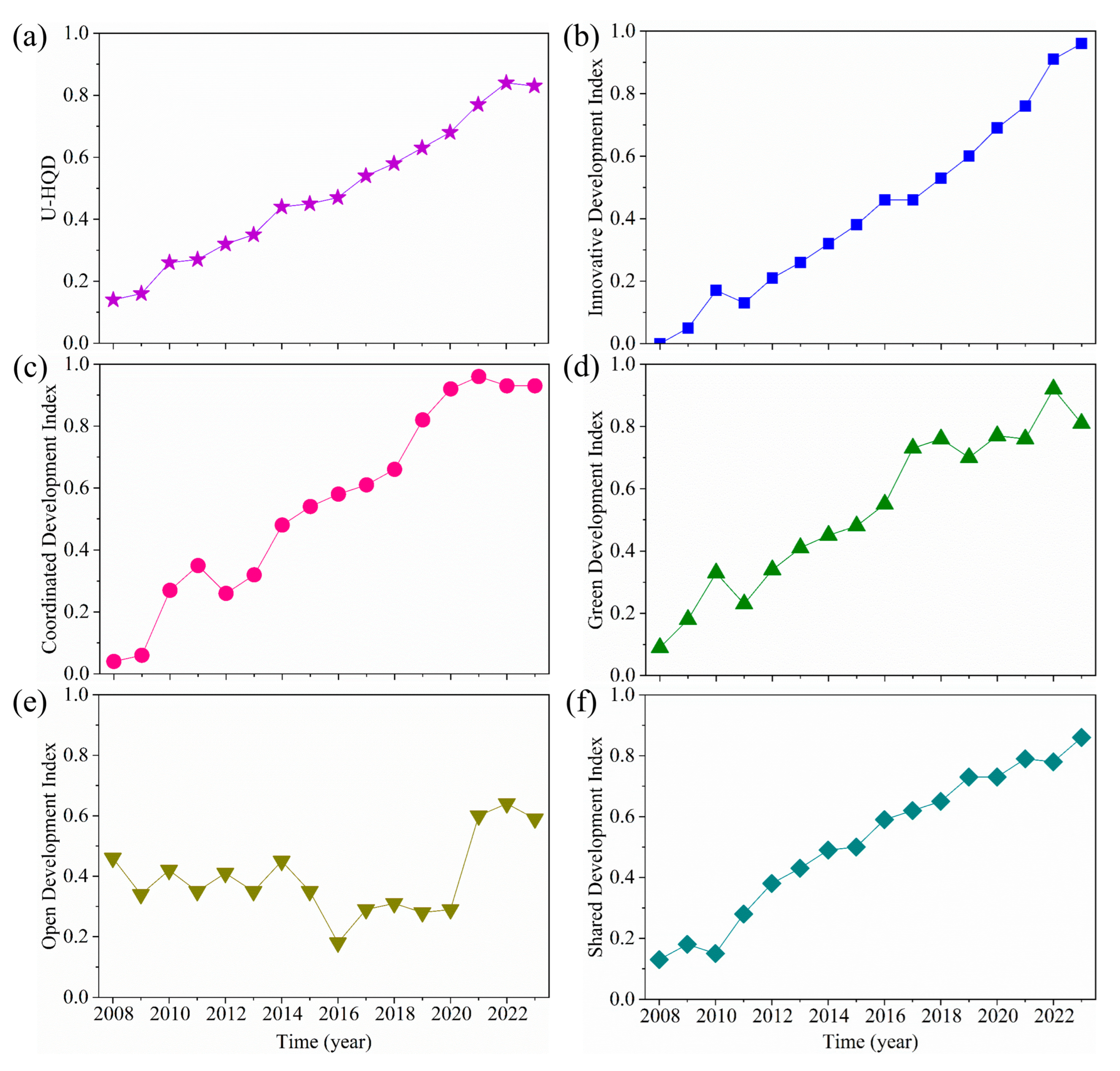
Lianyungang’s high-quality development index had shown a rapid upward trend, rising from 0.14 in 2008 to 0.83 in 2023—a sixfold increase (Figure 1). From 2003 to 2016, the growth rate was fluctuated, alternating between periods of steady and rapid increase. From 2016 to 2017, the index experienced rapid growth, rising from 0.47 to 0.54. Following this, the index sustained a steady upward momentum, achieving 0.84 in 2022. Nevertheless, the index registered a slight downturn in 2023, and the high-quality development index came in at 0.83.
Specifically examining each dimension, the innovation and shared development dimensions maintained the closest alignment with U-HQD. The Innovation Development Index rose from 0 in 2008 to 0.96 in 2023, accelerating at a faster pace than the U-HQD. Moreover, the innovation index for 2008 was 0, indicating that all indicators under the innovation development dimension reached their lowest levels in 2008. The Shared Development Index fluctuated between 2008 and 2023, showing slight declines in 2010 and 2022. However, the Shared Development Index was maintained an overall stable upward trend, rising from 0.13 in 2008 to 0.86 by 2023. The Coordinated Development Index and Green Development Index also showed an overall upward trend, but with significant fluctuations in between. From 2008 to 2011, the Coordinated Development Index skyrocketed from 0.04 to 0.35, followed by a modest downturn to 0.26 before it re-entered an upward trajectory. The index hit a peak of 0.96 in 2021, slipped to 0.93 in 2022, and maintained stability at that level in 2023. Rising from 0.09 in 2008 to 0.73 in 2017, the Green Development Index remained relatively stable at around 0.76 until 2021, then jumped to 0.92 in 2022 and slipped to 0.81 in 2023. The Open Development Index fluctuated around 0.4 with moderate volatility from 2008 to 2015. After dropping sharply to 0.18 in 2016, the Open Development Index recovered to 0.29 and maintained a stable trajectory through 2021, prior to surging to 0.6. Subsequently, the Open Development Index stabilized at 0.59 in 2023, marking a relatively modest increase against the 2008 level.

3.2. Evolution of Coupling Coordination Degree in High-Quality Development

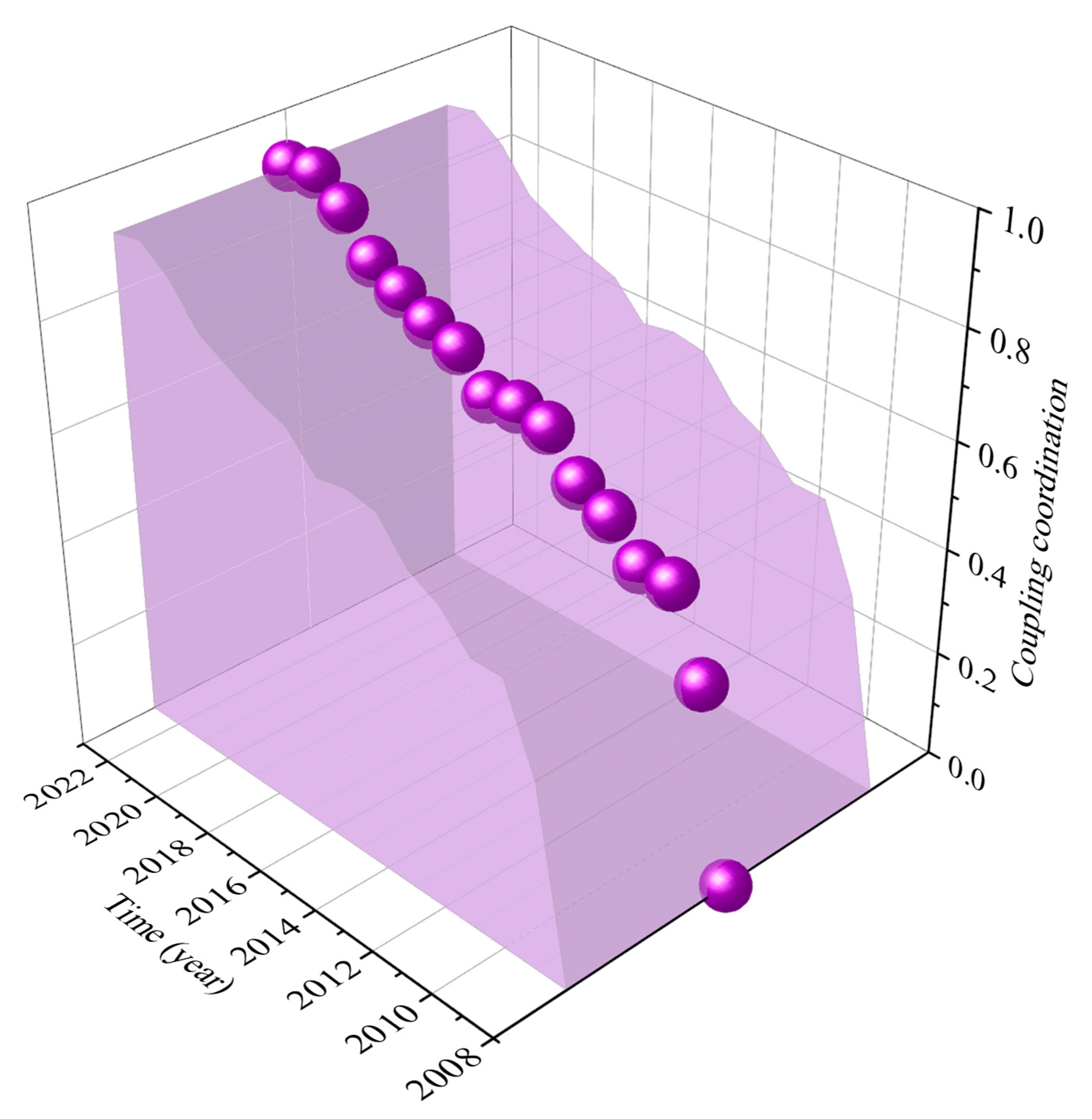
Lianyungang’s high-quality development coupling coordination had gradually improved, rising from 0 in 2008 to 0.90 in 2023 (Figure 2). Based on previous research [36], the coupling coordination level was categorized into grades. The coupling coordination index of 0 in 2008 was primarily due to the innovation index being 0, resulting in an extreme value. The coupling coordination index gradually increased thereafter, reaching 0.5 by 2010, indicating a transition from a state of imbalance to one of coordination. By 2014, the coupling coordination index had risen to 0.66, indicating that Lianyungang’s high-quality development had begun to achieve preliminary coordination. After three years of stability, the coupling coordination index gradually rose again. In 2017, the index surpassed 0.7, registering a value of 0.72 and marking its entry into the intermediate stage of coordination. By 2020, Lianyungang’s high-quality coupling coordination index had reached 0.8, signifying the achievement of a state of good coordination. From 2020 to 2022, the coupling coordination index climbed sharply to 0.91, signifying that Lianyungang had entered a period of excellent coordination. In 2023, the index experienced a modest downturn but stayed at 0.9, retaining excellent coordination phase. Overall, Lianyungang’s high-quality development had progressed from imbalance to coordination, ultimately achieving excellent coordination.

3.3. Analysis of Factors Influencing High-Quality Development

3.3.1. Analysis of Changes in the High-Quality Development Phase

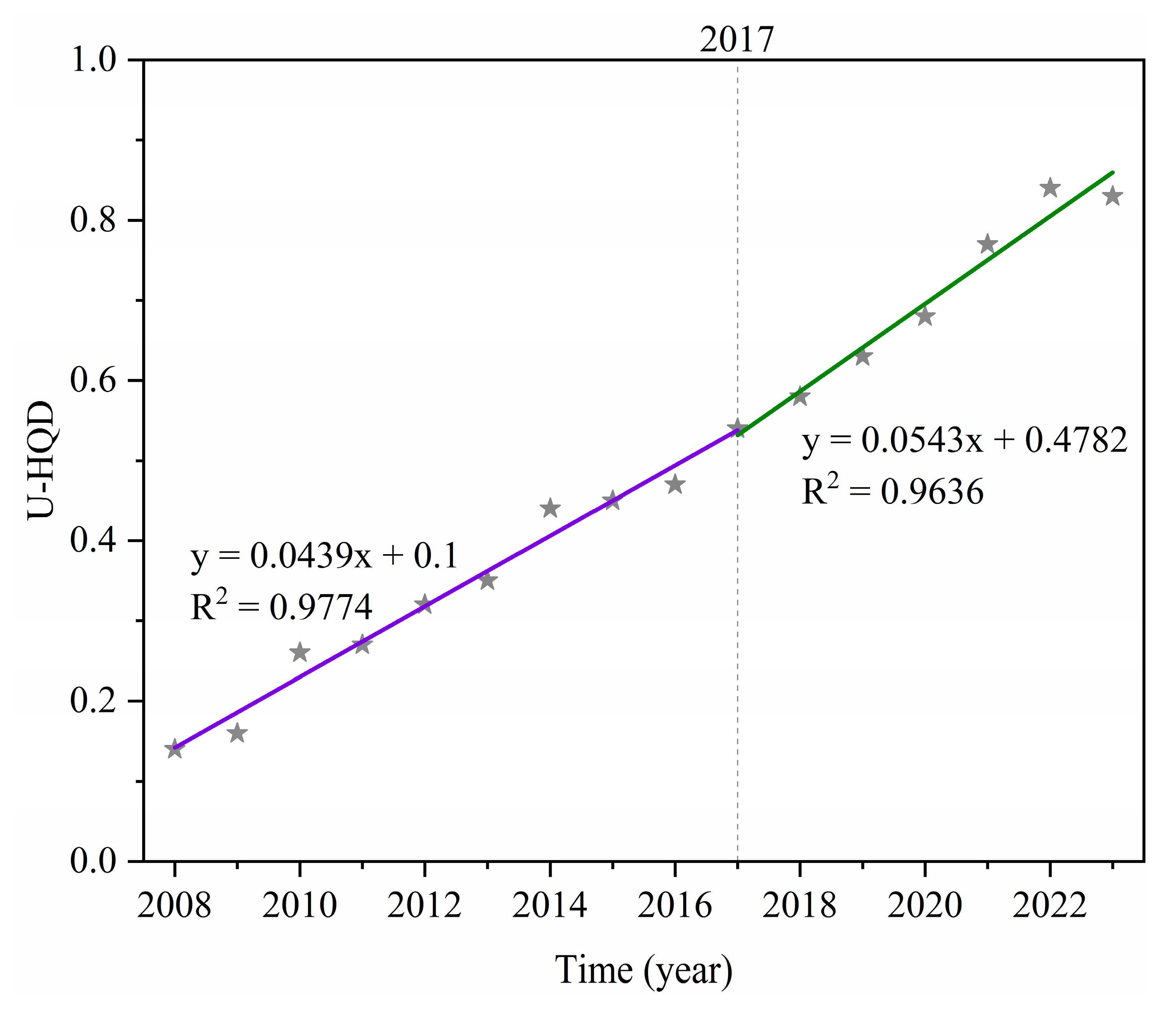
The concept of high-quality development was first proposed by China in 2017. Therefore, using 2017 as the point, the changes in Lianyungang’s high-quality development were analyzed. Linear fitting was performed for each of the two phases, with R2 values exceeding 0.96 for both (Figure 3), which indicated that the fitting results for both phases adequately reflected the actual conditions of high-quality development. The upward trend observed in both phases indicated that Lianyungang’s progress toward high-quality development had been remarkably stable throughout these stages. However, the slopes of the two phases were differed. The fitted slope for the first phase (2008–2017) was 0.439, while that for the second phase (2017–2023) reached 0.543. The result indicated that Lianyungang’s high-quality development achieved a faster growth rate in the second phase than in the first phase, aligning with the national-level initiative that explicitly proposed the concept of high-quality development. The explicit proposal of the concept of high-quality development had defined the national policy direction, and Lianyungang had closely followed the national policy direction.

3.3.2. The Evolution of Each Dimension’s Impact on the Composite Index

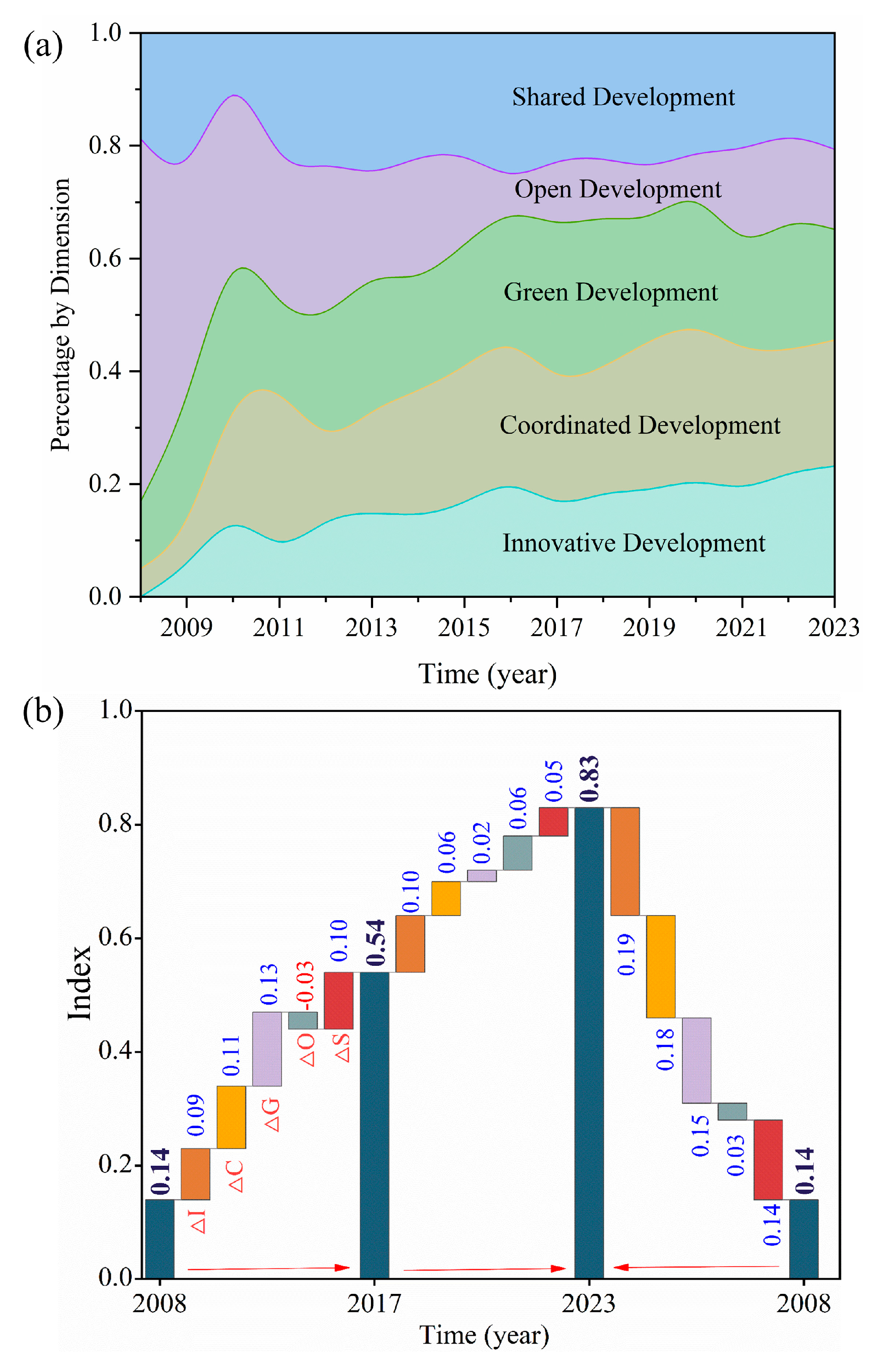
In 2008, the proportions across the five dimensions varied significantly, with the Openness Dimension accounting for the largest share at 64.38%, while the Innovation Dimension accounted for 0% (Figure 4a). Subsequently, the proportion of the Open Dimension declined rapidly, falling to 19.58% by 2013 and ranking third among the five dimensions. The proportions of the Coordination Dimension and the Green Dimension rose from 4.97% and 11.90% in 2008 to 17.96% and 23.20% in 2013, which was consistent with industrial structure upgrading and strict environmental pollution control. The Innovation Dimension remained the lowest but had risen to 14.81%, with the proportion gaps between the five dimensions narrowing significantly. By 2017, the Green Dimension had become the highest contributor at 26.90%, followed by the Shared and Coordination Dimensions at 22.91% and 22.52%, respectively. The Innovation Dimension rose to 17.01%, while the Openness Dimension fell to 10.66%, the lowest among all dimensions. Subsequently, the proportion of the Innovation Dimension continued to rise gradually, reaching its highest share of 23.18% by 2023. The Coordination Dimension remained stable at 22.37%, while the Green and Shared Dimensions saw slight declines to 19.61% and 20.66%, respectively. These results indicated that the Innovation Dimension continued to grow, while the Coordination, Green, and Shared Dimensions had all reached a relatively stable high level. The Openness Dimension continued to hold the smallest share at 14.19%. Concurrently, the disparity in proportions among the five dimensions narrowed further.
Since U-HQD was derived from the average of each dimension’s index, the absolute difference between the indices reflected the contribution of each dimension to the composite index. From 2008 to 2017, the Green Dimension made the greatest contribution to the increase in the high-quality development index, indicating that green development served as the primary driving force during Phase Ⅰ. The contribution of the Coordination Dimension followed closely behind the Green Dimension at 0.11, while the Contributions of the Sharing Dimension and Innovation dimension were very close, at 0.1 and 0.09, respectively (Figure 4b). Meanwhile, the Openness Dimension exhibited a negative contribution. From 2017 to 2023, the Innovation Dimension accounted for the largest share (35%) of the total contribution, with the Coordination and Openness Dimensions ranking next; the Green Dimension, by contrast, contributed relatively little. Throughout the entire process, Innovation Dimension emerged as the primary contributor, accounting for 0.19 of the total contribution and representing 27.5% of the contribution ratio.
Based on an analysis of both proportional changes and contribution variations, innovation-driven development has been the primary driver of Lianyungang’s high-quality growth. Since 2017, the driving force of innovation-driven development has become increasingly significant. From a phased perspective, the driving force behind high-quality development had shifted from green development to innovation-driven development. Coordinated development served as the second major driver of Lianyungang’s high-quality development whether viewed in stages or as a whole. Although its contribution in phase Ⅱ had decreased, the Coordinated development index still held the second-largest share. The contribution levels for Green development and Shared development both decreased, yet the development indices for both dimensions remained relatively high, indicating that Lianyungang’s progress in these areas had entered a stable phase. Meanwhile, Lianyungang’s open development experienced a decline followed by an increase, suggesting significant policy adjustments in this sector.

3.3.3. Analysis of the Driving Impact of Specific Indicators

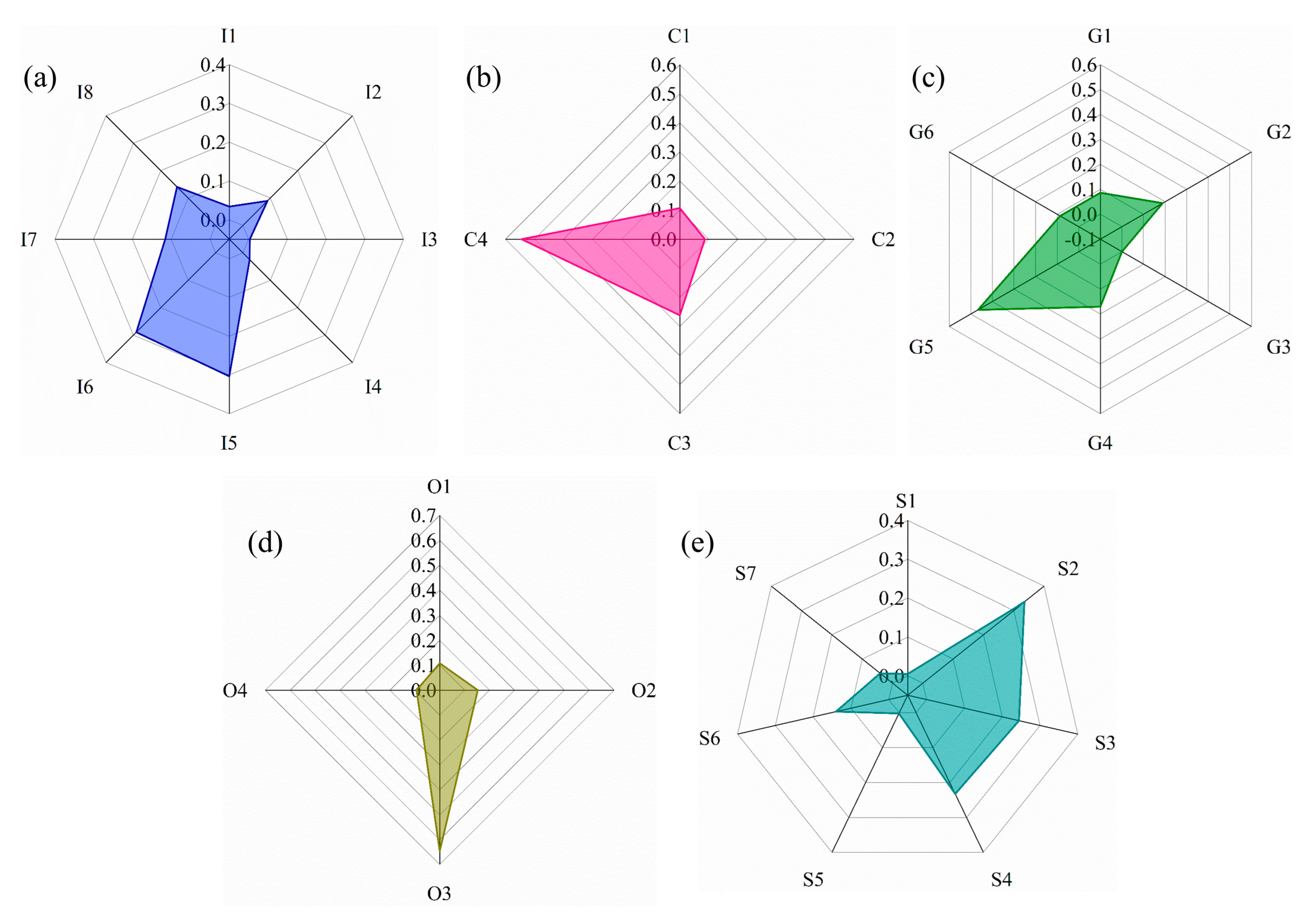
The weight of each indicator within its dimension reflected the degree of data dispersion for that indicator between 2008 and 2023, thereby indicating the extent to which each indicator influenced the dimension index within the same dimension. The weightings for the eight indicators under the Innovation Dimension varied significantly. The indicator with the highest weight was the number of high-tech enterprises, at 30.35%, followed by the number of valid invention patents, with a weight of 28.92% (Figure 5a). The weightings for these two indicators were substantially greater than those for the other indicators. The weights assigned to new product sales revenue and the number of registered trademarks also exceeded those of the four innovation input indicators. Based on actual data, all these indicators showed an upward trend, indicating that Lianyungang City had achieved remarkable innovation outcomes with a highly efficient input-output ratio. Notably, the rapid growth of high-tech enterprises has driven increases in other outputs, making significant contributions to Lianyungang’s innovation-driven development.
In the Coordination Dimension, the weights assigned to the four indicators also varied significantly. The urban–rural income ratio carried the highest weight at 54.47%, indicating that the urban–rural gap in Lianyungang City was narrowing rapidly and that coordinated urban–rural development was progressing well (Figure 5b). Two indicators related to industrial structure coordination—the proportion of the tertiary industry in regional GDP and the proportion of tertiary industry employees—carried relatively low weights, indicating minimal fluctuations in their data. Actual dates revealed that both indicators initially showed an upward trend before stabilizing around 40%, suggesting that Lianyungang City’s industrial structure had achieved a stable and coordinated state. In the Green Dimension, the weight of industrial sulfur dioxide emissions per 10,000 CNY of GDP was the highest at 46.71%, far exceeding that of industrial wastewater discharge per 10,000 CNY of GDP (Figure 5c). This indicated that Lianyungang City had made significant efforts in air pollution prevention and control, aligning with China’s national air pollution prevention and control initiatives. The weighting for the comprehensive utilization rate of general industrial solid waste was as low as 0.02%, indicating that Lianyungang City had consistently maintained a high level of solid waste utilization.
In terms of Openness, the weighting difference between the two indicators—total imports and total exports—was significant, at 64.63% and 15.27% respectively (Figure 5d). This indicates that the growth rate of total imports far exceeds that of total exports. The relatively stable changes in both the actual utilization of foreign capital and the foreign trade dependency ratio indicated that Lianyungang City still needed to strengthen its efforts in both expanding its global presence and attracting foreign investment. In the Sharing Dimension, per capita disposable income for all residents carried the highest weight at 33.52%, indicating significant improvements in residents’ income levels in Lianyungang City (Figure 5e). Additionally, the number of physicians per 10,000 people and the number of hospital beds per 10,000 people also held relatively high weights at 24.45% and 23.25%, respectively, demonstrating substantial progress in healthcare accessibility for the population. The weighting factor for mobile phones per thousand people stood at 13.98%, indicating that Lianyungang City was closely aligned with contemporary developments in ensuring universal access to the internet. The weights for road mileage per 10,000 people and per capita park green space area were both relatively low at 0.22% and 4.09%, respectively, indicating that Lianyungang had reached a stable stage of development in terms of infrastructure sharing.

3.3.4. The Correlation Effect Between Indicators

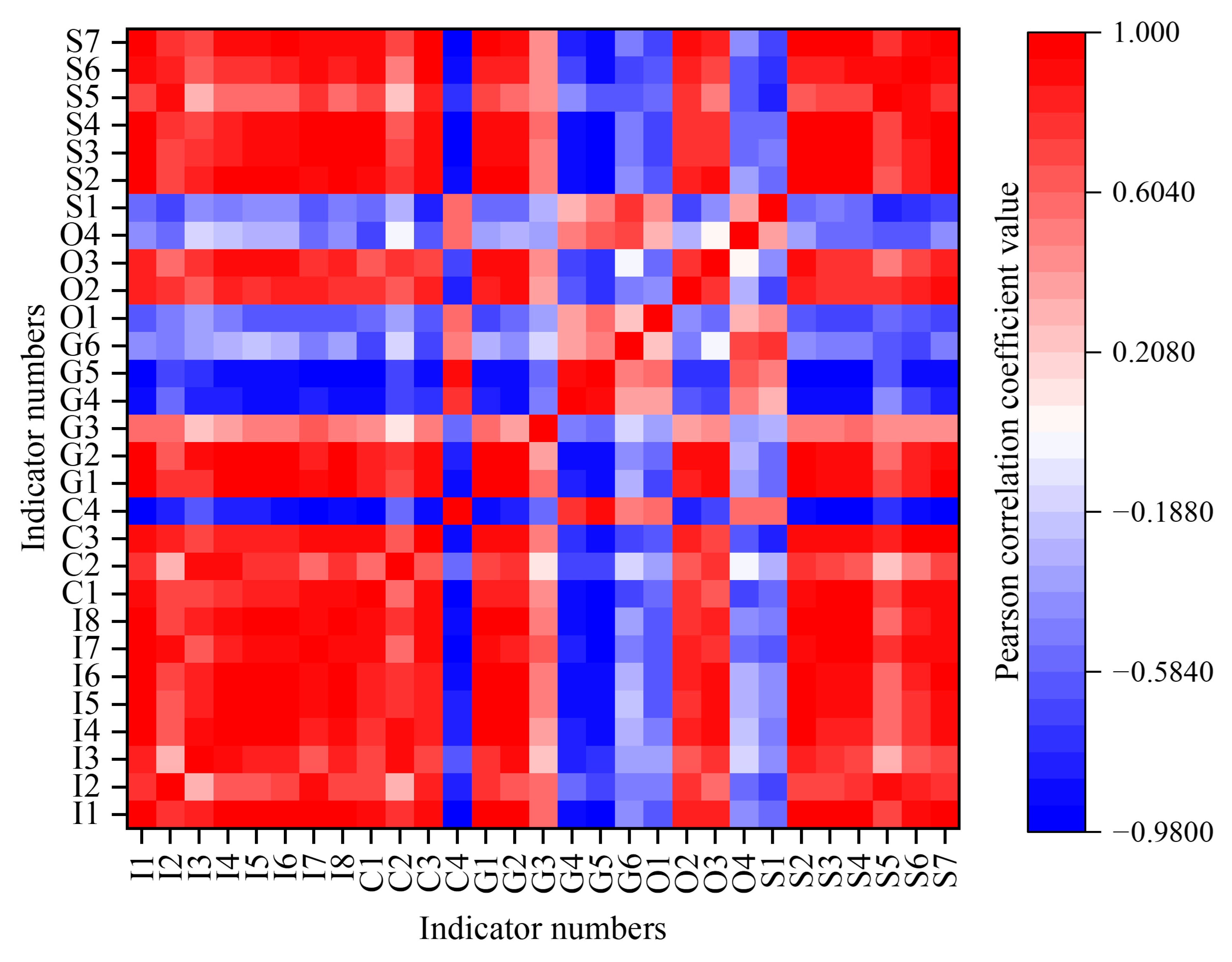
By conducting comprehensive pairwise correlation analysis of all selected indicators using Pearson’s correlation coefficient, the inherent interdependencies among them—including the magnitudes of linear correlation, directional associative patterns (positive or negative)—could be systematically delineated and quantitatively characterized. A larger absolute value of the correlation coefficient signified a stronger association between the two indicators.
Notably, R&D expenditure as a percentage of GDP exhibits strong correlations with numerous other indicators. Specifically, the correlation coefficients between R&D expenditure as a percentage of GDP and several innovation output indicators—including the number of high-tech enterprises, valid invention patents, new product sales revenue, and registered trademarks—were 0.98, 0.98, 0.95, and 0.98, respectively (Figure 6). These results revealed a strong positive correlation, indicating that R&D investment exerted a significant driving effect on innovation performance. The correlation coefficient between R&D expenditure as a percentage of GDP and the urban–rural income ratio was −0.92, denoting a strong and significant negative correlation. This finding suggested that while innovation investment drove development, it positively contributed to narrowing the urban–rural income gap. The correlation coefficients between R&D expenditure as a percentage of GDP and daily sewage treatment capacity, as well as between R&D expenditure as a percentage of GDP and waste harmless treatment capacity, were 0.98 and 0.96, respectively. This indicated that innovation and pollutant treatment infrastructure development progressed in tandem. In addition, R&D expenditure as a percentage of GDP exhibited correlation coefficients of −0.88 and −0.96 with industrial wastewater discharge per 10,000 CNY of GDP and industrial sulfur dioxide emissions per 10,000 CNY of GDP, respectively. This demonstrated that as innovation progressed rapidly, pollutant control capacities were notably strengthened. The underlying reason lies in enterprises’ adoption of innovation-driven process upgrading to reduce industrial pollutant emissions, coupled with their utilization of advanced technologies to enhance the operational efficiency of waste gas treatment facilities. Furthermore, two key indicators—per capita disposable income of all residents and the number of physicians per 10,000 people—demonstrated a highly significant positive correlation with R&D expenditure as a percentage of GDP, with Pearson correlation coefficients of 0.99 and 0.97, respectively. This study demonstrated that innovation not only fueled high-quality economic development by upgrading technological innovation capabilities and improving total factor productivity but also cultivated high-caliber professionals—including medical practitioners—promoted the upgrading of healthcare service standards, and effectively safeguards people’s well-being and quality of life.
The number of valid invention patents exhibited a significant negative correlation with both wastewater discharge per 10,000 CNY of GDP and sulfur dioxide emissions per 10,000 CNY of GDP. This further indicated that enterprises, through advancements in innovative technologies, achieved improvements in production process standards and enhanced pollutant control levels. R&D investments had not only successfully translated into tangible scientific and technological achievements (such as patents), but had concurrently delivered significant reductions in pollutant emissions. Consequently, pollutant emission intensity could decrease even as the economy grows. The correlation between total imports and total exports was not particularly strong and exhibited a negative correlation with the actual utilization of foreign capital. This further indicated that Lianyungang’s development in both attracting foreign investment and expanding overseas operations was uneven. Per capita disposable income of all residents and the number of employees exhibited a negative correlation, further reflecting the high-quality development driven by innovation. This shift from labor-intensive industries to technology-driven sectors corresponded with the rise and stabilization of Lianyungang’s tertiary industry share, indicating that the city had advanced to a stage of high-quality development.
Overall, R&D investment served as the core foundational driver propelling the industry’s transformation and upgrading toward a technology-intensive, low-pollution model. Consequently, regional scientific research and innovation capabilities were enhanced, accelerating the iteration and practical application of green technologies while elevating the quality of life and sense of well-being for the citizens.

4. Discussion

4.1. Mechanism for High-Quality Urban Development

Based on the above analysis, over the 16-year period from 2008 to 2023, Lianyungang City had achieved rapid advancement in its high-quality development. Particularly since 2017, the growth rate of its comprehensive high-quality development index has accelerated beyond previous levels, indicating the city’s proactive alignment with policy directives. In 2017, the concept of high-quality development was formally proposed, with innovation placed at the forefront. Reviewing Lianyungang’s development trajectory, innovation has consistently been a core theme. Furthermore, when compared to the other dimensions, innovation-driven development had emerged as the most rapidly advancing one. By 2023, the innovation-driven development dimension had also become the largest contributor to high-quality development, further establishing innovation as the core driving force. Moreover, in phase I, innovation development ranked fourth in terms of contribution volume. By phase II, innovation development contribution volume far exceeded that of the other four dimensions. This reflected the strengthening of innovation’s driving force. The green dimension made the greatest contribution in phase I, with its contribution diminishing in phase II. This indicated that intensive pollution control efforts were underway during phase I, aligning precisely with the requirements of the policy documents “Action Plan for Air Pollution Prevention and Control” and “Action Plan for Water Pollution Prevention and Control.” By phase II, significant progress had been achieved, leaving limited potential for further emission reductions. The contribution of the coordination dimension, which rapidly increased in phase I, remained stable in phase II. This was related to the historical stage of industrial restructuring, where the economy was transitioning from primary to tertiary industries. The smaller the gap in the proportion of the five dimensions indicated that Lianyungang was more balanced across these five dimensions of high-quality development. Consequently, Lianyungang had achieved increasingly coordinated development across five dimensions. Following rapid development in the first phase, the industry completed its transformation and upgrading while addressing severe pollution. In the second phase, pollutant emissions reached very low levels and infrastructure became well-established, limiting further improvement potential. Consequently, growth in the coordination, green, and shared dimensions was slowed.
When other dimensions had reached a high level of maturity, innovation became even more essential for further development. The rapid growth of high-tech enterprises and the substantial increase in valid invention patents, both manifestations of innovative development, were key contributing indicators driving the rise in the innovation index. This indicated that the transformation and output of scientific and technological achievements had played a crucial role, aligning with the research’s proposal that governments should focus on the output of scientific and technological achievements to enhance innovation capabilities [37]. Investment in innovation, particularly R&D funding, had driven improvements in pollution control and living standards. Innovation investments had driven technological advancements in enterprises, including improvements in production processes and enhanced efficiency of pollution control facilities [38,39]. Consequently, pollution intensity had decreased alongside economic development. Additionally, during phase I, the contribution of innovation-driven development was lower than that of green development. This indicated that while innovation drove green technological progress, green development was also driven by stringent environmental policies, such as phasing out high-pollution projects.
The negative correlation between the number of employed persons and per capita disposable income further confirms that Lianyungang had transitioned toward technology-intensive industries with high added value. Moreover, the income gap between urban and rural residents had narrowed, consistent with prior research indicating that technological innovation reduces income inequality and enhances economic resilience [40]. The proportion of tertiary industry GDP had stabilized and reached a balanced level, marking the city’s entry into a mature stage of high-quality development. This demonstrated that innovation-driven development could propel the transformation and upgrading of industrial structures [41]. As the industrial structure shifted toward technology-intensive sectors, corresponding demand for high-level talent was created. Leveraging talent circulation, Lianyungang identified and retained high-quality professionals commanding competitive salaries. Technological progress coupled with urbanization narrowed the urban–rural development gap in Lianyungang, driving the city steadily toward coordinated development. However, it was noteworthy that Lianyungang exhibited fluctuating trends in open development, particularly characterized by a widening import-export gap and a declining appeal to foreign investment. The underlying causes of this phenomenon warranted further in-depth investigation.
Overall, unlike previous studies that focused on spatial changes across different cities [11,22,25] or the impact of individual factors on high-quality development [41], the study centered on a single city to comprehensively analyze the influence of multiple high-quality development factors and examined their interactions, thereby elucidating the intrinsic mechanisms of high-quality development. A city’s development was significantly driven by policy, with innovation consistently serving as a key factor in propelling high-quality growth. This aligns with previous research indicating that innovation was the core driver of high-quality development [42]. Once the industrial structure was stabilized, further advancement across other dimensions became increasingly challenging, making the role of innovation-driven development even more crucial.

4.2. Recommendations for Other Cities

The study quantified the evolution of Lianyungang’s high-quality development level from 2008 to 2023. By employing multiple mathematical methodologies to analyze the impact of various factors on high-quality development, the study identified Lianyungang’s development pathways and underlying driving mechanisms, and offered valuable insights for other cities pursuing high-quality development. As these studies indicated [20,22], the levels of high-quality development varied across cities, and the driving factors are inconsistent. Therefore, it was crucial to clearly understand the stage of development in which a city finds itself. For high-quality urban development, the first step was to establish a clear evaluation framework with measurable indicators. This framework should quantify the city’s current level of high-quality development, identify areas needing improvement, clarify its developmental stage, and provide guidance for future progress. The high-quality urban development indicator system constructed in the study encompassed multiple disciplines, including economics, environment, and society, aligning with the interdisciplinary approach advocated in prior research [43]. Furthermore, all specific indicators were based on accessible data, thereby ensuring high practical applicability—an attribute that aligned closely with the emphasis on pragmatic sustainability proposed in previous studies [44]. The high-quality urban development evaluation framework developed in the study offered a valuable reference for other cities.
Innovation served as the cornerstone of high-quality urban development, influencing progress across all four dimensions. Innovation development aligned closely with Sustainable Development Goal 9: Industry, Innovation and Infrastructure. Moreover, innovation could contribute to the achievement of all Sustainable Development Goals by promoting industrial upgrading and other means. Therefore, cities should actively encourage innovation investment—such as implementing incentive policies to foster corporate innovation—as innovative development drives a cascade of positive outcomes. Cities with relatively low levels of high-quality development indicated that their industries had yet to complete transformation and upgrading, remaining in the early stages of development with inadequate pollutant management. Such cities must leverage innovation to enhance technologies, ensuring a transition from the initial stage to a state of coordinated development across all three sectors while achieving significant reductions in pollutant intensity. Based on their respective industrial types, regions should pursue appropriate outward-oriented development while progressively enhancing coordinated urban–rural development and shared prosperity for residents. This approach would achieve the integrated and coordinated development across the five dimensions of high-quality development.
For cities at the intermediate stage of development, it was essential to increase investment in innovation and encourage the commercialization of scientific and technological achievements to accelerate the pace of advancement toward higher levels. Furthermore, urban management authorities could enact relevant green development policies, such as phasing out existing high-pollution projects from enterprises and providing financial subsidies to enterprises upgrading pollution control facilities. For cities that have already reached a high level of development, building sustainable innovation network hubs may be the next strategic focus. This strategic focus involved enhancing the technological sophistication of the tertiary sector itself, aligning with trends in digital and artificial intelligence development, further optimizing production processes to explore potential for carbon reduction and pollution mitigation, and coordinating outward expansion with inward investment in the backdrop of opening-up. While ensuring the material quality of residents’ lives, exploration must also be undertaken to enhance cultural and other spiritual dimensions. This domain represented uncharted territory, requiring joint planning by researchers and cities alike.

5. Conclusions

This study integrated a sustainable development perspective to construct a multidimensional evaluation system for high-quality urban development and conducted an in-depth analysis of the driving mechanisms behind high-quality urban development. With Lianyungang City selected as a case study, this study carried out a 16-year-long measurement and analytical study. The pace of high-quality development had accelerated, and the coupling coordination across five dimensions had shifted from incoordination to excellent coordination. Innovation gradually became the primary contributor, with technological transformation of innovations, high-tech enterprises, and valid invention patents emerging as the most critical drivers. Innovation investment, reduced pollutant intensity, urban–rural coordination, and residents’ income and living standards were closely intertwined, propelling green, coordinated, and shared development. Lianyungang’s path to high-quality development offered valuable insights for other cities. Moreover, this study would contribute to achieving Sustainable Development Goal 11: Sustainable Cities and Communities.

Author Contributions

Y.S. and J.W. contributed equally to this study and share first authorship. Conceptualization, J.L. (Jingyang Liu) and J.W.; methodology, J.W. and J.L. (Jianhui Li); validation, Y.S., J.W. and J.L. (Jianhui Li); formal analysis, Y.S.; investigation, J.W.; data curation, J.W.; writing—original draft preparation, J.W.; writing—review and editing, Y.S. All authors have read and agreed to the published version of the manuscript.

Funding

This research was funded by the Fundamental Research Funds for the Central Public-interest Scientific Institution (2024YSKY-05) and the Open Research Fund of Key Laboratory of Eco-industry of Ministry of Ecology and Environment, Chinese Research Academy of Environmental Sciences (2024KFF-12).

Institutional Review Board Statement

Not applicable.

Informed Consent Statement

Not applicable.

Data Availability Statement

The raw data supporting the conclusions of this article will be made available by the authors on request.

Conflicts of Interest

The authors declare no conflicts of interest.

References

  1. Zhao, Y.; Yang, S.; Zhu, Z. Managing Risks for Urban Sustainable Development: A Multidimensional SDG11 Assessment Based on Dynamic Bayesian Networks. Sustain. Cities Soc. 2025, 134, 106957. [Google Scholar] [CrossRef]
  2. Peng, Y.; Liu, J.; Wang, Y. Urban Sustainable Development Policy and Corporate Carbon Emissions. Financ. Res. Lett. 2025, 86, 108506. [Google Scholar] [CrossRef]
  3. Chen, S.; Cui, C.; Dong, J.; Qu, A.; Shao, C. Implementation of the Sustainable Development Goals in Urban Agglomeration: Progress and Synergies. Environ. Impact Assess. Rev. 2026, 116, 108102. [Google Scholar] [CrossRef]
  4. Xu, Z.; Chen, X.; Jiang, Q.; Wu, X.; Bhattarai, N.; Mullen, J.; Li, Z.B.; Gurney, G.G.; Li, S.; Li, C.; et al. Assessing Global Sustainability Performance, Imbalance, and Coordination over Space and Time. Nat. Commun. 2025, 16, 9186. [Google Scholar] [CrossRef]
  5. Ma, F.; Wang, H.; Tzachor, A.; Hidalgo, C.A.; Schandl, H.; Zhang, Y.; Zhang, J.; Chen, W.-Q.; Zhao, Y.; Zhu, Y.-G.; et al. The Disparities and Development Trajectories of Nations in Achieving the Sustainable Development Goals. Nat. Commun. 2025, 16, 1107. [Google Scholar] [CrossRef]
  6. Nasr, A.M.; Bayoumi, B.H.; Yousef, W.M. The Urban Sustainability of the Egyptian Capital. Sustainability 2023, 15, 2329. [Google Scholar] [CrossRef]
  7. Sáez, L.; Heras-Saizarbitoria, I.; Rodríguez-Núñez, E. Sustainable City Rankings, Benchmarking and Indexes: Looking into the Black Box. Sustain. Cities Soc. 2020, 53, 101938. [Google Scholar] [CrossRef]
  8. Jain, G.; Espey, J. Lessons from Nine Urban Areas Using Data to Drive Local Sustainable Development. NPJ Urban Sustain. 2022, 2, 7. [Google Scholar] [CrossRef]
  9. Michalina, D.; Mederly, P.; Diefenbacher, H.; Held, B. Sustainable Urban Development: A Review of Urban Sustainability Indicator Frameworks. Sustainability 2021, 13, 9348. [Google Scholar] [CrossRef]
  10. Bibri, S.E.; Krogstie, J. Smart Sustainable Cities of the Future: An Extensive Interdisciplinary Literature Review. Sustain. Cities Soc. 2017, 31, 183–212. [Google Scholar] [CrossRef]
  11. An, X.; Li, Y.; Wang, L.; Dong, G.; Dai, B.; Liang, M. The Spatial and Temporal Distribution of High-Quality Urbanization Development in Yellow River Basin Provinces. Sustainability 2022, 14, 10355. [Google Scholar] [CrossRef]
  12. Chen, Y.; Zhang, D. Evaluation and Driving Factors of City Sustainability in Northeast China: An Analysis Based on Interaction among Multiple Indicators. Sustain. Cities Soc. 2021, 67, 102721. [Google Scholar] [CrossRef]
  13. Ortiz-Moya, F.; Yang, Y. Cities’ Review of the Sustainable Development Goals and Insights from Voluntary Local Reviews. npj Urban Sustain. 2025, 5, 58. [Google Scholar] [CrossRef]
  14. Liu, Y.; Huang, B.; Guo, H.; Liu, J. A Big Data Approach to Assess Progress towards Sustainable Development Goals for Cities of Varying Sizes. Commun. Earth Environ. 2023, 4, 66. [Google Scholar] [CrossRef]
  15. Liu, W.; He, F. Index System Construction and International Comparative Study of High-quality Development of Chinese Economy. Inq. Econ. Issues 2023, 9, 15–33. [Google Scholar]
  16. Zhang, S.; Chen, X.; Wei, J. Evaluation on National High-Quality Development Policies: A Quantitative Analysis of Policy Texts. East. China Econ. Manag. 2024, 38, 61–72. [Google Scholar] [CrossRef]
  17. Song, Y.; Wang, Q.; Zhang, L. Evaluation and Spatiotemporal Characteristic Analysis of China’s High-quality Development Level. Stat. Decis. 2024, 40, 111–117. [Google Scholar] [CrossRef]
  18. Wang, J.; Huang, L.; Zhou, W. Evolution Characteristics and Influencing Factor Identification of China’s High-quality Development Level. Stat. Decis. 2023, 39, 95–100. [Google Scholar] [CrossRef]
  19. Zhou, Y. How Can Comprehensive Land Management Promote the Urban Sustainable Development from the Perspective of Environmental Sociology?–Based on an Empirical Study of 269 Cities in China. Land. Use Policy 2025, 158, 107719. [Google Scholar] [CrossRef]
  20. Ke, W.; Li, W.; Yan, J. Measurement and Temporal-Spatial Differentiation of Beijing-Tianjin-Hebei(JJJ) City Cluster’s Quality Development. Resour. Ind. 2024, 26, 1–14. [Google Scholar] [CrossRef]
  21. Hu, Z.; Yang, Z.; Wu, J. Selection of High-quality Development Variables and Spatiotemporal Synergy of Cities along The Belt and Road in China. J. Stat. Inf. 2020, 35, 35–43. [Google Scholar]
  22. Ma, H.; Xu, X. High-Quality Development Assessment and Spatial Heterogeneity of Urban Agglomeration in the Yellow River Basin. Econ. Geogr. 2020, 40, 11–18. [Google Scholar] [CrossRef]
  23. Wu, A.; Lü, S.; Li, G. Innovation-Driven Development Mechanism for Three Major Coastal Urban Agglomerations to Play the Role of Engine of High-quality Economic Growth. Econ. Geogr. 2024, 44, 17–24+180. [Google Scholar] [CrossRef]
  24. Fu, R.; Yang, Z. Spatio-temporal differentiation and influencing factors of high-quality development of cities in China. Acta Geogr. Sin. 2024, 79, 819–836. [Google Scholar]
  25. Shi, B.; Zhang, B. Measurement and Analysis of High-quality Economic Development of China’s Cities at Prefecture Level and Above. Soc. Sci. Res. 2019, 3, 19–27. [Google Scholar]
  26. Guo, Y.; Jiang, X.; Zhu, Y.; Zhang, H. Measurement and Spatial Correlation Analysis of High-Quality Development Level: A Case Study of the Yangtze River Delta Urban Agglomeration in China. Heliyon 2024, 10, e29209. [Google Scholar] [CrossRef]
  27. Shi, Y.; Liu, X.; Zhang, J. A Dynamic QCA of New Quality Productivity Driving High Quality Economic Development in the Yellow River Basin. Sci. Rep. 2025, 15, 41565. [Google Scholar] [CrossRef] [PubMed]
  28. Yang, B.; Ma, X.; Li, J.; Yu, H.; Sui, H.; Chen, F.; Tan, L. The Relationship between High-Quality Development and Ecosystem Health in China’s Urban Agglomerations. J. Environ. Manag. 2025, 377, 124720. [Google Scholar] [CrossRef]
  29. Chen, X.; Di, Q.; Jia, W.; Hou, Z. Spatial Correlation Network of Pollution and Carbon Emission Reductions Coupled with High-Quality Economic Development in Three Chinese Urban Agglomerations. Sustain. Cities Soc. 2023, 94, 104552. [Google Scholar] [CrossRef]
  30. Yang, Y.; Jing, T.; Wang, H.; Zhong, Y.; Yu, W.; Zhou, H. Causal Network of High-Quality Development and Urban Resilience in Chinese Cities Based on Transfer Entropy: Structure and Determinants. Sustain. Cities Soc. 2025, 133, 106875. [Google Scholar] [CrossRef]
  31. Yang, X.; Feng, Z.; Chen, Y. Evaluation and Obstacle Analysis of High-Quality Development in Yellow River Basin and Yangtze River Economic Belt, China. Humanit. Soc. Sci. Commun. 2023, 10, 757. [Google Scholar] [CrossRef]
  32. Luo, C.; Wei, D.; Su, W.; Lu, J. Association between Regional Digitalization and High-Quality Economic Development. Sustainability 2023, 15, 1909. [Google Scholar] [CrossRef]
  33. Liu, Z.; Zhang, H.; Guo, C.; Yang, Y. New Quality Productive Forces Enabling High-Quality Development: Mechanism, Measurement, and Empirical Analysis. Sustainability 2025, 17, 8146. [Google Scholar] [CrossRef]
  34. Qi, Y.; Liu, Y. Technology Spillovers, Collaborative Innovation and High-Quality Development—A Comparative Analysis Based on the Yangtze River Delta and Beijing-Tianjin-Hebei City Clusters. Sustainability 2025, 17, 5587. [Google Scholar] [CrossRef]
  35. Qin, X.; Qin, X. Research on the Level of High-Quality Urban Development Based on Big Data Evaluation System: A Study of 151 Prefecture-Level Cities in China. Sustainability 2025, 17, 836. [Google Scholar] [CrossRef]
  36. Ge, Y.; Hu, S.; Song, Y.; Zheng, H.; Liu, Y.; Ye, X.; Ma, T.; Liu, M.; Zhou, C. Sustainable Poverty Reduction Models for the Coordinated Development of the Social Economy and Environment in China. Sci. Bull. 2023, 68, 2236–2246. [Google Scholar] [CrossRef] [PubMed]
  37. Zhao, J. How Do Innovation Factor Allocation and Institutional Environment Affect High-Quality Economic Development? Evidence from China. J. Innov. Knowl. 2024, 9, 100475. [Google Scholar] [CrossRef]
  38. Luo, G.; Guo, J.; Yang, F.; Wang, C. Environmental Regulation, Green Innovation and High-Quality Development of Enterprise: Evidence from China. J. Clean. Prod. 2023, 418, 138112. [Google Scholar] [CrossRef]
  39. Zhang, X.; Song, Y.; Zhang, M. Exploring the Relationship of Green Investment and Green Innovation: Evidence from Chinese Corporate Performance. J. Clean. Prod. 2023, 412, 137444. [Google Scholar] [CrossRef]
  40. Deng, Q.; Long, Y.; Ni, X.; Jiang, Y. How Does Technological Innovation Affect Urban Economic Resilience? Evidence from 276 Chinese Cities. Humanit. Soc. Sci. Commun. 2025, 12, 1897. [Google Scholar] [CrossRef]
  41. Zhang, Y.; Huang, B. Research on Pathways for Innovation-Driven Industrial Structure Upgrading. Inq. Econ. Issues 2015, 3, 107–112. [Google Scholar]
  42. Dai, H.; Liu, Y.; Li, H.; Cao, A. Depth and Width of Collaborative Innovation Networks and High-Quality Development. Sustainability 2024, 16, 5909. [Google Scholar] [CrossRef]
  43. D’Adamo, I.; Gastaldi, M.; Nallapaneni, M.K. Europe Moves toward Pragmatic Sustainability: A More Human and Fraternal Approach. Sustainability 2024, 16, 6161. [Google Scholar] [CrossRef]
  44. D’Adamo, I.; Lupi, G. Sustainability and Resilience after COVID-19: A Circular Premium in the Fashion Industry. Sustainability 2021, 13, 1861. [Google Scholar] [CrossRef]
Figure 1. Comprehensive Index of High-Quality Development and Five-Dimensional Index: (a) Comprehensive Index of High-Quality Development; (b) Innovative Development Index; (c) Coordinated Development Index; (d) Green Development Index; (e) Open Development Index; (f) Shared Development Index.
Sustainability 18 01220 g001
Figure 2. Changes in Coupling Coordination Degree.
Sustainability 18 01220 g002
Figure 3. Stagewise Linear Fitting of the High-Quality Development Index: Phase I (2008–2017); Phase II (2017–2023).
Sustainability 18 01220 g003
Figure 4. Changes in Contribution Across Dimensions: (a) Annual Proportion of Each Dimension Index in the Composite Index; (b) Contribution of Each Dimension to Changes in the Composite Index by Phase.
Sustainability 18 01220 g004
Figure 5. Weighting of indicators across five dimensions: (a) Innovation dimension; (b) Coordination dimension; (c) Green dimension; (d) Openness dimension; (e) Shared dimension.
Sustainability 18 01220 g005
Figure 6. Pearson Correlation Coefficient Plot Between Pairs of Indicators. Both horizontal and vertical axes represent indicator numbers, with the legend displaying the Pearson correlation coefficients between each pair of indicators.
Sustainability 18 01220 g006
Table 1. Evaluation indicator system for high-quality urban development.
Target LayerDimensional LayerNumberIndicator LayerUnitIndicator Attributes
High-Quality Urban Development IndexInnovative DevelopmentI1R&D Expenditure as a Percentage of GDP%positive
I2R&D Personnel as a Percentage of the Workforce%positive
I3Number of Teachers per 10,000 PeoplePeoplepositive
I4Number of college students per 10,000 peoplePeoplepositive
I5Number of high-tech enterprisesHouseholdpositive
I6Number of valid invention patentsItemspositive
I7Sales revenue from new products10,000 CNYpositive
I8Number of registered trademarksItemspositive
Coordinated DevelopmentC1Tertiary Industry Share in Regional GDP%positive
C2Tertiary Industry Share in Employment%positive
C3Urbanization Rate%positive
C4Urban–Rural Income Ratio/negative
Green DevelopmentG1Daily Sewage Treatment Capacity10,000 m3positive
G2Waste Harmless Treatment Capacitytons/daypositive
G3Comprehensive Utilization Rate of General Industrial Solid Waste%positive
G4Industrial Wastewater Discharge per 10,000 CNY of GDPTons/10,000 CNYnegative
G5Industrial Sulfur Dioxide Emissions per 10,000 CNY of GDPKilograms/10,000 CNYnegative
G6Industrial Comprehensive Energy Consumption per 10,000 CNY of GDPTons/10,000 CNYnegative
Open DevelopmentO1Actual Utilization of Foreign CapitalUS$ millionpositive
O2Total ExportsUS$ millionpositive
O3Total ImportsUS$ millionpositive
O4Foreign Trade Dependency Ratio/positive
Shared DevelopmentS1Number of Employees10,000 peoplepositive
S2Per capita disposable income of all residentsCNYpositive
S3Number of physicians per 10,000 peoplepersonpositive
S4Number of hospital beds per 10,000 peoplesheetpositive
S5Road mileage per 10,000 kmkilometerpositive
S6Number of mobile phones per 1000 peopledepartmentpositive
S7Per capita park green space aream2positive
Disclaimer/Publisher’s Note: The statements, opinions and data contained in all publications are solely those of the individual author(s) and contributor(s) and not of MDPI and/or the editor(s). MDPI and/or the editor(s) disclaim responsibility for any injury to people or property resulting from any ideas, methods, instructions or products referred to in the content.